Article

Digitalization in Air Pollution Control: Key Strategies for Achieving Net-Zero Emissions in the Energy Transition


1
School of Economics and Management, Hezhou University, Hezhou 542899, China
2
School of Digital Economics and Management, Wuxi University, Wuxi 214105, China
3
Department of Economics and Finance, The School of Business, Royal Melbourne Institute of Technology (RMIT University), Ho Chi Minh City 70000, Vietnam
4
Department of Economics and Finance, College of Business Administration, Taif University, Taif 21944, Saudi Arabia
5
Department of Economics, College of Business Administration, King Saud University, Riyadh 11587, Saudi Arabia
*
Author to whom correspondence should be addressed.
Atmosphere 2025, 16(12), 1370; https://doi.org/10.3390/atmos16121370
Submission received: 12 September 2025 / Revised: 9 November 2025 / Accepted: 28 November 2025 / Published: 2 December 2025

Abstract

Air pollution, a critical environmental threat, has worsened alongside urbanization and industrialization, particularly in rapidly developing economies like India. Despite efforts to curb emissions, the concurrent rise in energy consumption, industrial activity, and digitalization complicates the fight against air pollution. This study examines the interplay between air pollution, economic growth, clean energy transition, digitalization, and urbanization in India from 1990Q1 to 2020Q4. Using advanced econometric techniques, including multivariate quantile-on-quantile regression (MQQR) and the quantile ADF and quantile KPSS tests, we investigate the complex, non-linear relationships across these factors. Our findings suggest that while economic growth exacerbates air pollution, the clean energy transition can mitigate its impact, especially when integrated with digitalization. However, the effects of digitalization are nuanced, potentially increasing pollution unless paired with green energy policies. The study demonstrates that the combined strategies of promoting clean energy and digitalization can provide a sustainable pathway for reducing air pollution in India. This work offers novel insights into the role of digital technologies in enhancing environmental sustainability and highlights the need for policy interventions that balance economic growth with climate resilience. The results present a roadmap for India’s sustainable development, emphasizing the integration of clean energy, digital innovation, and urban planning.

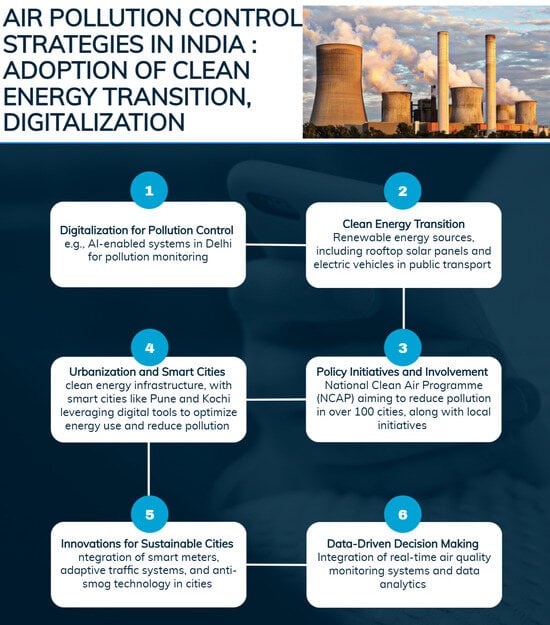
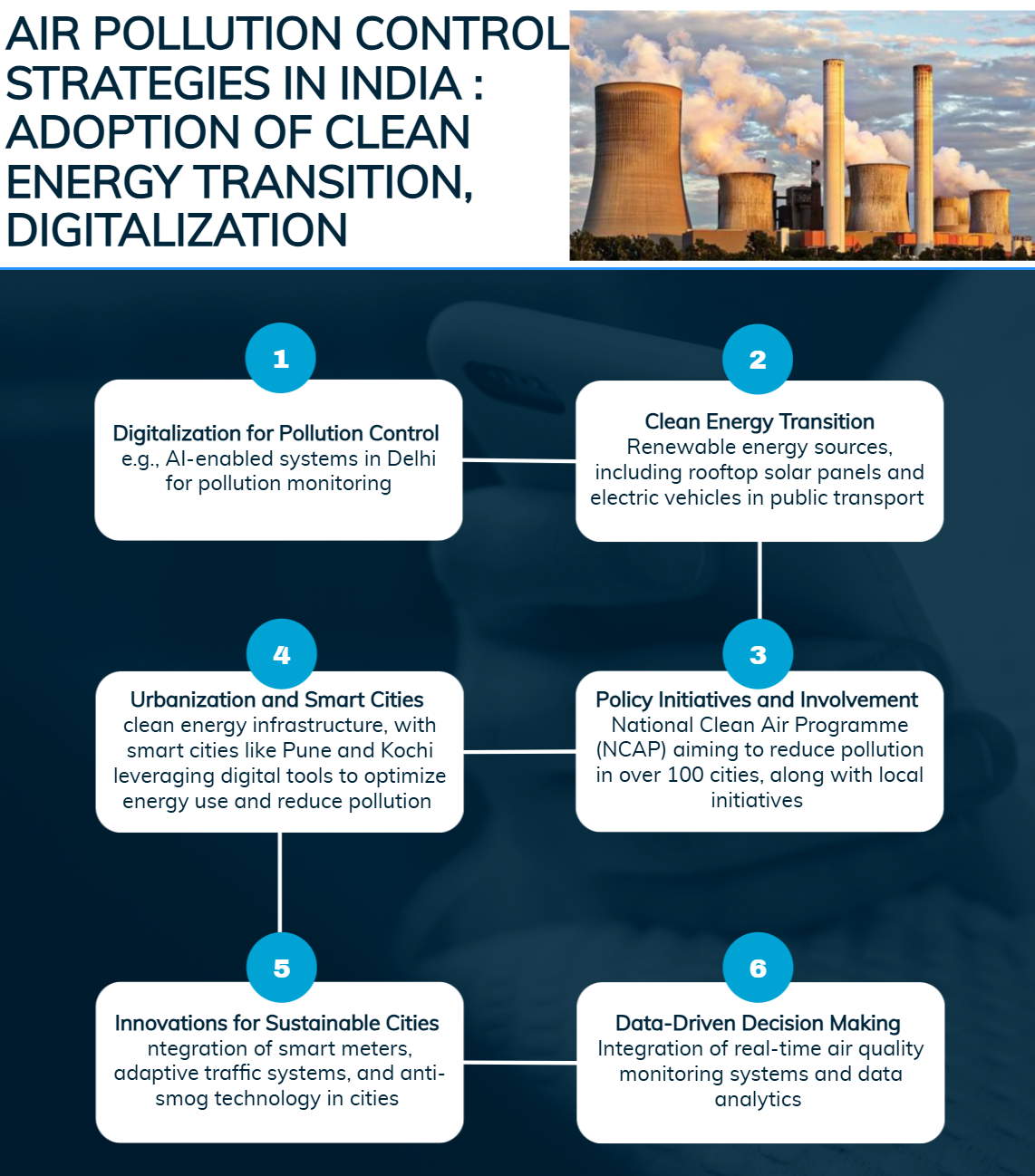
Graphical Abstract

1. Introduction

The World Health Organization [1] estimates that over 99 percent of the world’s population lives in places where at least one kind of pollutant is present at levels higher than those advised by the WHO, with high-density areas having the greatest impact. According to the Health Effects Institute [2], air pollution has terrible health consequences and is thought to be a contributing factor in 8.1 million premature deaths globally. The two most significant risk factors for early death across the globe are high blood pressure and air pollution, which account for 58% of air-pollution-related deaths. Additionally, the life expectancy of human beings decreases by approximately 1.8 years due to air pollution [3].
Recent studies have indicated a growing number of air pollution peaks per year in densely populated urban areas, and PM (PM10, PM2.5) exceeding hazardous standards [4]. An air pollution event is considered as the concentration of a pollutant exceeding a threshold level for a particular duration [4]. However, little is known about the temporal and spatial distribution of these events because the air quality monitoring network is poorly distributed in many places. There are two types of air pollution incidents: single pollutant, when a single pollutant crosses the threshold level and the rest of the contaminants remain below the threshold levels, and multi-pollutant, when more than one pollutant crosses threshold levels simultaneously (the concentration of the rest of the contaminants remains under the threshold level) [5].
Air quality assessment, which also considers the health effects of air pollution exposure, is hampered by inadequate spatial and temporal monitoring. People living in areas with poor air quality are usually exposed to a variety of air pollutants, but the associated health effects are not well understood [6]. Recently, evidence has emerged suggesting that the health effects of exposure to multiple pollutants simultaneously can exceed the sum of individual impacts. For example, simultaneous exposure to PM2.5 and O3 has been linked to increased respiratory diseases and death [7]. As the understanding of the risks associated with complex air pollution exposure grows, examining both single-pollutant and multi-pollutant exceedances is becoming increasingly important in analysis and policy [8].
Furthermore, India presents an interesting case for the rest of the world to examine the causal links between air pollution and renewable and non-renewable energy sources. The world’s second-largest economy, India, has experienced rapid growth in its economy, which has so far been mainly powered by vast fossil fuel combustion [9]. Studying the impact of renewable and non-renewable energy sources on air pollution in India can provide valuable insights into their contributions and, in this way, allow for the assessment of different energy source strategies for mitigating air pollution and promoting sustainable development amidst environmental risks. There is emerging evidence that air pollution, such as PM2.5, is spreading outside of India’s crowded locales (Delhi, Maharashtra, Kolkata). Additionally, especially during the winter months, India’s air pollution concentration is rising faster than that of both industrialized nations (like the United States or Western Europe) and emerging nations (like Pakistan) [10,11]. It should be noted that air circulation may enable air pollutants to cross national boundaries [12]. Thus, the worldwide problem of air pollution is intimately related to the air pollution problem in India.
Climate change mitigation measures and digital innovation (DTI) are important during these difficult times [13]. Technical innovations must be translated into climate action. A force capable of re-engineering society and determining the paths of global economic advancement, the digital tsunami, has emerged as a symbol of revolutionary socio-economic transformation, rising like a point on the horizon of machines [14,15]. Because of the enormous possibilities it offers, Industry 4.0 holds great promise for future business shares and innovation. The latest cutting-edge technologies, including big data, artificial intelligence (AI), machine learning (ML), the Internet of Things (IoT), and other cutting-edge technologies, have made it possible to implement new trends in the paradigms of the fourth industrial revolution [16]. DTI appears in every area of economic and non-economic activity. It drives productivity, raises efficiency, and fosters competitiveness in virtually all sectors of the economy—commerce, agriculture, services, and car bazaars. It has also created jobs in both the old brick-and-mortar economy and the new digital economy [17]. DTI is a powerful instrument for enhancing quality of life and human well-being, and for enabling access to education, information, entertainment, social networking, poverty reduction, reducing inequalities, gender development, financial inclusion [18], and healthcare services [19].
Based on existing research exploring the effects of DTI on economic development, renewable energy, and air quality, it was found that most previous studies have concentrated on these impacts at a single-country level. According to Shen and Zhang [20], Ma et al. [21], and Zheng and Wong [22], there has been limited research on the impact of ICT development on China’s economy. Lin and Ullah [22] tried to show the effect of green business and economic progress on air pollution in Pakistan. Jo [23] explored the function of technology innovations in climate technology innovations (CTIs), while Tan et al. [24] explored the association between fintech and the preservation of natural resources in BRI nations. This research provides a solid foundation for an extensive analysis of the relationship between DTI and air pollution in both industrialized and developing countries, which can be achieved using a panel method. DTI’s newfound significance is still very evident, and its consequences have even been used as supporting documentation in many economic and environmental challenges.
In addition, our analysis provides three significant insights about sustainability and air pollution in India. It examines the relationships between air pollution and India’s shift to clean energy, including how the increased use of renewable energy sources affects air quality. This is especially crucial for an economy that is growing quickly, since energy use and the ensuing environmental damage are already rising significantly. Second, by providing a comparative viewpoint with other developed and developing nations that use digital and smart grid monitoring, this research has shown that digitization has the ability to influence the mitigation of air pollution, which may result in management that is ecologically focused. Our analysis provides a thorough review of the strategies India may use to accomplish its many air-pollution-related goals by examining these two external factors, uncontrolled for variance: digitalization and the clean energy transition. Third, the authors utilize the multivariate quantile-on-quantile method to demonstrate that this model enables us to assess the air pollution effects of these variables across the entire distribution. To enable policymakers to take more focused responses at varying levels of air pollution, this model provides a more detailed depiction of the interaction between digitalization, clean energy, and air pollution. Together, these contributions underline trade-offs between digitization, clean energy, and pollution. This instance could serve as an illustration of sustainable development in India.

2. Theoretical Framework

Air pollution is one of the most difficult environmental issues facing the world and is rapidly developing countries such as India. It is difficult to estimate the harmful impact of air pollution on human health, the environment, and economic development. Exposure to environmental pollution, PM2.5, nitrogen oxides, and sulfur dioxide has been associated with increasingly high rates of lung disease, heart disease, and premature death, and the pollution from the air can impact the poorest the most [25]. Air pollution is additionally a leading cause of global climate change, exacerbating greenhouse gases and affecting climate challenges including rising temperatures, altered weather patterns, and more frequent extreme weather events. In highly populated and industrialized nations like India, where the environmental load is increased owing to fast industrial and urban expansion, the negative impacts of pollution on health and the economy highlight the need to establish effective intervention strategies.
Utilizing cleaner, renewable energy sources is one of the best ways to combat air pollution. According to the CET hypothesis, this work can achieve equally dramatic reductions in human emissions of primarily man-made air pollution and produce dramatic improvements in human health by drastically reducing or eliminating all use of natural gas and, more importantly, all use of other fossil fuels, like coal and oil for power. These can then be replaced with non-combustion, renewable sources of energy, such as solar, wind, and hydro. The shift away from conventional electricity to renewables is not simply about clean air—at least not in India, where power plants still rely primarily on coal for fuel. In the long term, it is an issue of environmental survival. By reducing emissions of airborne particulate matter and other pollutants linked to burning fossil fuels, which is one of the primary sources of these microscopic, dangerous particles, switching to more renewable energy sources might also provide cleaner air. India has a new option to satisfy its energy demands in a less destructive manner by switching to sustainable energy. Therefore, according to our model, a significant increase in the generation of renewable energy would have an impact on air pollution, improving public health and air quality [26].
Digitalization and Its Impact on Mitigating Air Pollution: In addition to the shift to sustainable energy, digitization is another crucial component in the fight against air pollution. The core tenet of digital environmentalism is the idea that digital solutions can maximize pollution and energy efficiency in both new and current systems. Energy consumption and pollution levels may be more precisely managed with the use of digital technologies (such as smart grids, IoT pollution sensors, and real-time air quality monitoring). For instance, using data analytics, machine learning models may estimate pollution levels, increase energy usage, and assist in making more educated choices about energy supply. Digital technology may help reduce energy usage and encourage cleaner processes for industrial production in a range of industries in India, where energy demand is increasing at an unprecedented rate. According to our model, by facilitating increased system efficiencies from renewable energy sources, digitalization and the clean energy transition might further cut air pollution [27].
Integration of Clean Energy Transition and Digitalization: There is a great opportunity to reduce air pollution when digitalization and the transition to sustainable energy are combined. Digital technologies are making it easier to connect renewable energy sources, particularly local solar and wind power, to national energy grids. This enhances the efficiency of these resources. The Green ICT (information and communication technology) framework facilitates this process by using digital infrastructure to improve grid management, reduce waste, and encourage energy efficiency. Smart meters are technological tools that can be used to control many aspects of energy efficiency. Predictive maintenance and automated energy management systems are two tactics that reduce energy losses and improve the reliability and efficiency of renewable energy systems. Digital tools also facilitate the administration of renewables, making it easier for nations to integrate these energy sources into their national grids. This helps to reduce emissions while also increasing the energy system’s efficiency. For long-run results, these techniques can help us produce renewable energy on a broader scale, without generating the air pollution from energy production. The true strength of this strategy lies in this co-benefit: first, emissions are directly reduced as a result of renewable energy systems’ increased efficiency; second, this effort focuses on the instruments required for on-the-ground pollution control rather than on theoretical forecasts. By improving policy coordination and overall air quality management, these technologies will enable us to react to pollution more quickly.

3. Materials and Methods

3.1. Data Collection and Model Construction

The metric used to measure air pollution is PM2.5. Air pollution is measured in micrograms per cubic meter (μg/m3) per year. It gives an estimate of the amount of fine particulate matter (PM2.5) that is particularly detrimental to cardiovascular and respiratory health each year. The World Development Indicators provided the data for PM2.5 levels (WDI, 2023) [28]. GDP per capita is a measure of economic growth that is stated in constant 2015 US dollars. This indicator, which accounts for inflation, gives information on a nation’s economic performance and living standards by reflecting the total economic output per person. National economic statistics are compiled by [28] WDI (2023), the source of the GDP data. The percentage of clean energy is determined by the share of renewables in total energy consumption. With low-carbon sources like solar, wind, hydro, biomass, and geothermal, this indicator shows the proportion of renewable energy in a nation’s energy supply. Our World in Data is the source of the data for this variable [29] (OWID, 2023). To quantify digitalization, we need to look at the number of mobile phone subscriptions per 100 people. This measures the level of access to, and usage of, information and communication technology (ICT) in a community or nation. This statistic shows the extent to which digital connection and mobile service technologies are widely used. Mobile phone subscription data is provided by OWID (2023) [29]. The percentage of the population that lives in urban areas is a measure of urbanization. This metric measures the extent of out-migration to metropolitan areas in connection with social structure changes and economic advancement. The urbanization data is sourced from [28] WDI (2023). See Table 1 for a detailed description.

3.2. Model Construction

In the next phase, we constructed the following baseline model to facilitate our main goals:
A i r   P o l l u t i o n = f ( G D P + C l e a n   E n e r g y + D i g i t a l i z a t i o n + U r b a n i z a t i o n )
We also write Equation (1) as follows, with the respective coefficient:
A i r   P o l l u t i o n = β 0 + β 1 ( G D P ) t + β 2 ( C l e a n   E n e r g y ) t + β 3 ( D i g i t a l i z a t i o n ) t + β 4 ( U r b a n i z a t i o n ) t + ϵ t
where Equation (2) indicates
  • β 0  is the intercept (constant term);
  • β 1 β 2 β 3 β 4  are the coefficients for each independent variable (GDP, clean energy, digitalization, and urbanization);
  • ϵ  indicates the error term.

3.3. Empirical Methods

To combat the problem of stationarity, this study makes use of the state-of-the-art novel quantile augmented Dickey–Fuller (QADF) and quantile Kwiatkowski–Phillips–Schmidt–Shin (KPSS) tests proposed by Adebayo and Özkan [30]. Having the ability to test stationarity at various quantiles is hugely important, as it allows stationarity to be tested across quantiles to provide some insight into the behavior of the data across its distribution: straight tail, fat tail, etc. The resulting strategy was used to design the test since it properly accounts for the condition of heterogeneity present in the data while revealing the stationary behaviors neglected by the ADF and KPSS tests. At the same time, the non-linear dynamics of the selected variables were investigated through the Brock–Dechert–Scheinkman (BDS) test proposed by Brock et al. [31].
Once these initial tests were executed, the methods were used to benchmark our final regression model. As the independent and dependent variables may have different relationships depending on their quantiles due to the potential presence of non-linearity [32], we focused on the relationship between the quantiles of the independent and dependent variables. This constitutes our motivation for using a non-parametric approach in derived M-QQR, which provides reliable and robust results in both linear and non-linear environments. Although the [33] original model is built upon a bivariate framework estimating the interaction of two variables, it does not include possibly relevant factors. If they are not taken into consideration, this introduces omitted variable bias (as explained in previous sections), which can lead to exposing the estimates to endogeneity and result in a violation of the OLS estimation conditions. This caveat has been highlighted in earlier studies, specifically referring to bivariate models [34]. Thus, to address this problem, the bivariate framework was extended by adding more exogenous variables, thereby transforming the model into a multivariate one. This change provides an estimate of the average of the selection-adjusted relationship between the variables using the multivariate quantile-on-quantile regression (M-QQR) framework, which resists omitted variable bias and endogeneity problems.
l t = p λ ( c t ) + ω λ n ( J t ) + π λ n ( c t J t ) + τ λ
In Equation (3), l is the dependent variable air pollution, c is the independent variable, and J is the vector of other explanatory variables. τ is an actual unobservable, λ-quantile disturbance term. Equation (3) can be broken down as follows:
l t = p λ + π λ n J t c t + ω λ n ( J t ) + τ λ l t = v λ ( c t ) + ω λ n ( J t ) + τ λ τ t h
In Equation (4), since the effect of the dependent variable on l is not observed, this is approximated by ν. λ. In order to have the tail dependence between air pollution end, the τth of forecaster quantiles of the first-order expansion of νλ for the forecaster variable c are taken:
v λ ( c t ) v λ ( c τ ) + υ λ ( c τ ) ( c t c τ )
The above mathematical form in Equation (5) shows that νλct and vλ′ cτ both have indices, τ and λ, while cτ has index τ. Furthermore, the first-order expansion of πλ Jt leads to πλJτ and πλ′Jτ being indexed by λ and τ as well. Based on the properties of the nested function, νλcτ and νλ′cτ, which are the nested functions of ρλ and ωλ Jt, can be expressed as v0λτ and v1λτ. For Equation (4), we can write:
l t = υ ο ( λ , τ ) + υ 1 ( c t c λ ) + ω λ n ( J t ) + τ λ Ω
In Equation (6), λ and τ are the quantiles (5–95%) of the predictions and the predicted variables, respectively; moreover, τλ is in Equation (6), where the error term is a0λ-λ-quantile. In addition, Ω throughout the whole equation is the functional form of the predictor when it is a predictor in relation to the dependent variable in this model. With the initial model (Equation (2), which does not depend on many variables), the quantile technique of Equation (2) is not applicable because it is not a flexible enough model for the unobserved heterogeneities that the covariates might have in common. Therefore, the previous model is used (Equation (2) to construct a multivariate QQR model. That means first choosing the values of c1, c2,…, cn and l as the predictor and response parameters. This information is consolidated, and the quantile sequences are formulated (5th to 95th, denoted by _). The multivariate QQR model can be written as follows:
l t = υ ο ( λ , τ 1 , τ 2 . τ n ) + υ 1 ( λ , τ 1 ) c 1 t c λ 1 + υ 2 ( λ , τ 2 ) c 2 t c 2 λ 2 + + υ n ( λ , τ n ) c n t c n λ n + ω n ( λ ) ( J t ) + τ λ
In Equation (7) above, τ1, τ2…….τn are respective quantiles of c1, c2…….cn, whereas λ reproduces the quantile of the response variable l. Moreover, v1, v2…….vn are the estimates of the corresponding quantiles of the predictor and predicted variables.
Why MQQR? Key Advantages: The choice of MQQR over other econometric techniques, such as OLS or standard quantile regression (QR), is supported by several distinct advantages:
Comprehensive Distributional Analysis: MQQR is more general and informative than traditional QR approaches, which are restricted to mean effects, as in OLS, and avoids the effect where a change in the means of an independent variable affects the quantile of the dependent variable (e.g., Liu et al. [34]). This approach covers a broad variety of interactions. It gives us more accurate knowledge of the data behavior by allowing us to examine the whole dependency structure between two variables in more depth, looking at various quantiles of their distributions.
Robustness and Flexibility: MQQR is particularly useful for regime changes and asymmetric atmospheres. As shown by its relative performance when outliers are present and with a variety of data sources, including cross-sectional and time series data, this makes it a versatile model. The method’s flexibility is intended to improve its ability to handle data variability and lessen multi-collinearity difficulties, which are often seen as challenges in traditional econometric processes. Methodological Advantages: MQQR offers many desired characteristics and some of the benefits of both OLS and quantile regression. (i) It is a richer study of quantiles because, while quantile regression does not make such claims, it may sometimes quantify the uncertainty of the connection between the variables. (ii) By employing local regression principles and concentrating on each observation’s close neighbors, it lessens the curse of dimensionality in non-parametric estimation. (iii) By combining linear regression with non-parametric techniques, the method is more versatile and broader, as it enables the inspection of correlations between variables outside of quantiles.

4. Results and Discussion

Descriptive statistics of air pollution, GDP, Clean Energy, digitalization, and urbanization: The following section provides a comprehensive view of the average, spread, and shape of their distributions. The findings reported in Table 2 show that GDP has the highest average (3.1345), while urbanization has the lowest (1.4357). The median statistics are close to the mean values; that is, the distributions across the variables appear to be close to symmetric. The Min and Max values indicate the range of each variable. As we can see, GDP has the highest range of 3.3770, and urbanization has the lowest range of 1.3732. The standard deviation shows variability in the data, where digitalization is the most variable (0.2002), and air pollution and urbanization are comparably more stable. The skewness statistics indicate that air pollution and clean energy are left-skewed variables, while GDP, digitalization, and urbanization are weakly right-skewed. The kurtosis statistics reveal that most distributions exhibit tails that are lighter than those of a normal distribution, with air pollution possesses even higher kurtosis (3.7881), indicative of a more peaked distribution. Ultimately, the results of the Jarque–Bera tests, with p-values of less than 0.05 in most variables, indicate that the data for air pollution, GDP, clean energy, and urbanization depart from normality. At the same time, the effect of digitalization is only marginally significant effect (p-value = 0.0535). Correlation, bar plot, and other plots are indicated in Figure 1.

4.1. Quantile–Quantile Normality Assessment

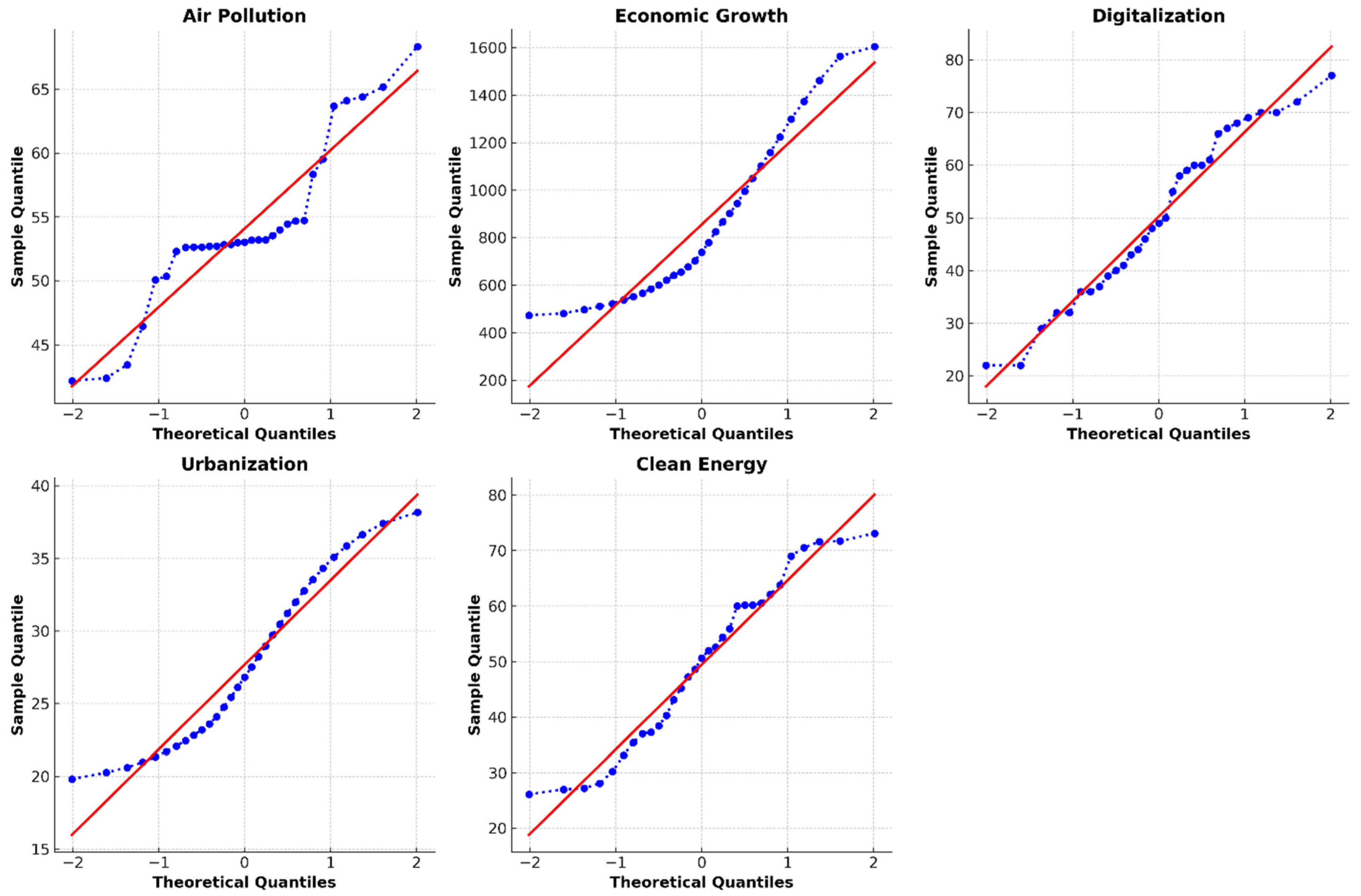
As the methodologies used in the study are based on the quantile approach (MQQR), it is also essential to assess the normality of the data series through a quantile–quantile normality test. Specifically, the QQ plots of the empirical distribution of each variable should be compared to the hypothetical normal distribution. The results are shown in Figure 2, where the data series for each quantile exhibits significant deviation from the normal distribution, as evidenced by the attempts to generate parallel distribution lines. It is also evident that different quantiles have dissimilar radical patterns. In turn, the above demonstrates the dataset’s complexity, as well as the likely presence of asymmetrical relationships. As the mean-based regressions are overconfident, we disregarded asymmetrical relationships between variables in classical regression testing. The severity of such patterns renders traditional regression methods ineffective, as the findings are not generalizable.
The BDS test was also performed to cross-validate the non-linear behavior of the parameters. There is a need to avoid biased estimations and modelling, whatever their form. The BDS test statistics are presented in Table 3. The BDS test takes normality as the null hypothesis. The test is statistically significant at the 1% level (i.e., can obviously reject the null of normality). Therefore, it requires an econometric method that can accommodate the asymmetric relationships among these variables. The non-linearity between the parameters can be expressed by the multivariate QQR approach.

4.2. Quantile ADF and KPSS Test Results

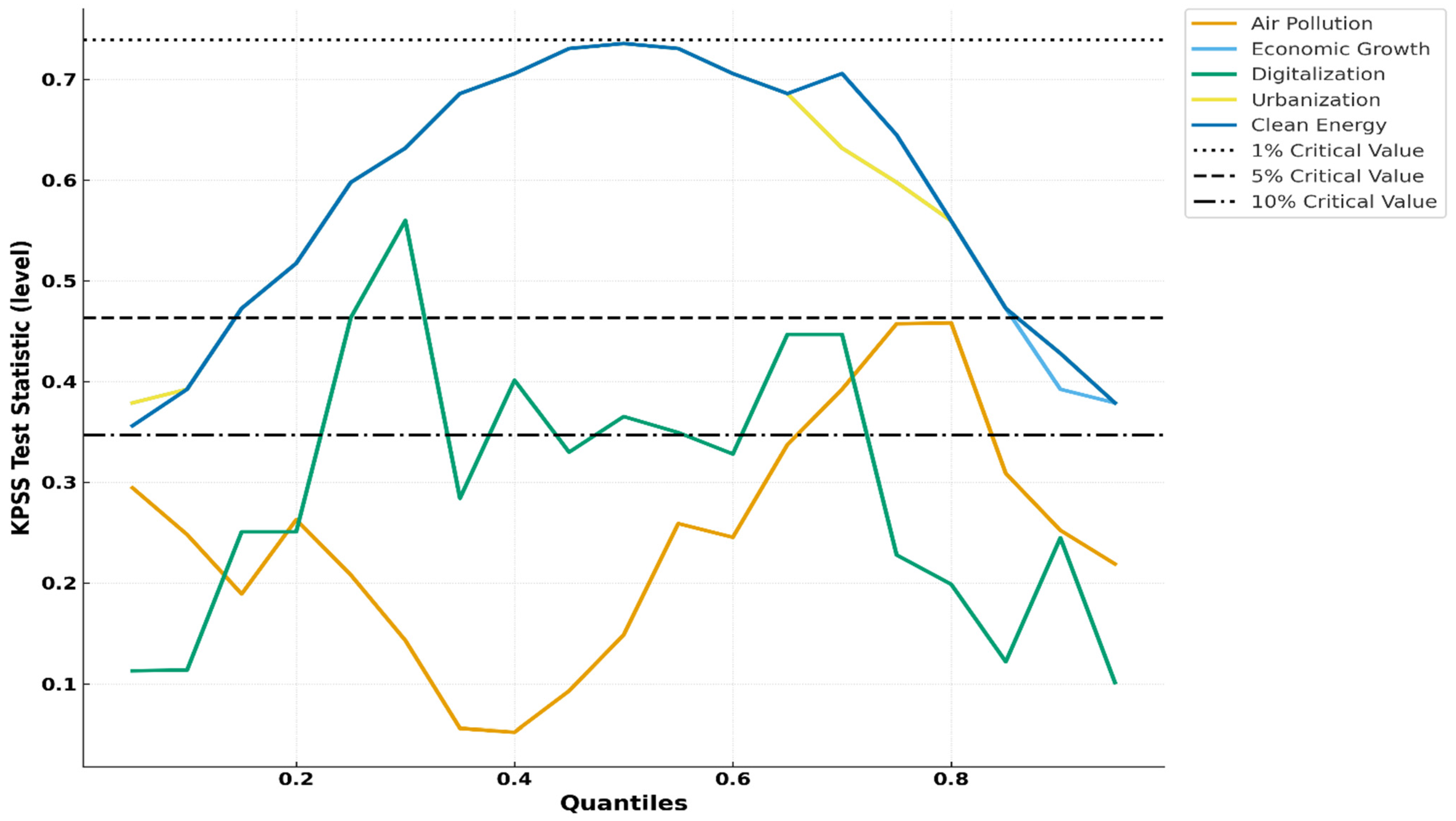
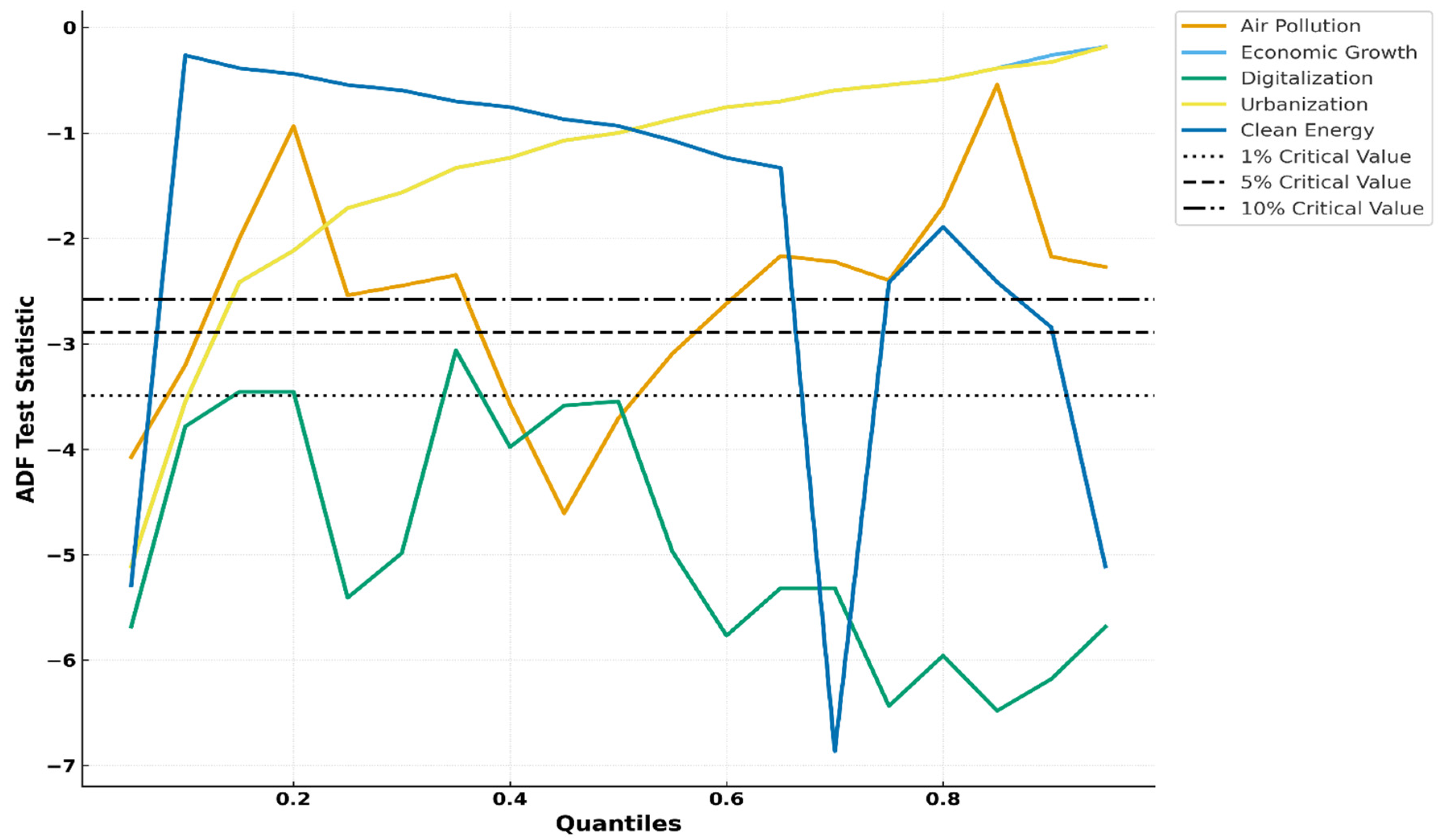
Quantile ADF test statistics for the factors air pollution, economic growth, digitalization, urbanization, and clean energy across the quantile levels are presented in Figure 3. The figure also compares the statistics against critical values (such as 1%, 5%, and 10%). Economic growth and air pollution remain above critical values; therefore, the numbers indicate stationarity. In contrast, the series for digitalization and urbanization appear to be more mixed, which is indicative of less stationarity. Clean energy exhibits oscillations, displaying varying levels of stationarity across different quantiles. Figure 4 shows the quantile KPSS test statistics for air pollution, economic growth, digitalization, urbanization, and clean energy at different quantiles. The Quantile KPSS test statistics are plotted along the x-axis, and the quantiles are on the y-axis. Horizontal lines represent critical value thresholds (1%, 5%, 10%). Economic growth (blue) and clean energy (light blue) have time series that show stationary behavior (the test statistics are persistently below the critical values). All the variables belong to the stationary field, since the test statistics of the quantile ADF and quantile KPSS tests fall within the essential thresholds of value in all the considered quantiles. The test results suggest that one can reject the null hypothesis of a unit root, i.e., the series are not generating stochastic trends. Hence, the variables are stationary at the same order and can therefore be considered for analysis without differencing.

4.3. Key Results from the Multivariate QQR Method

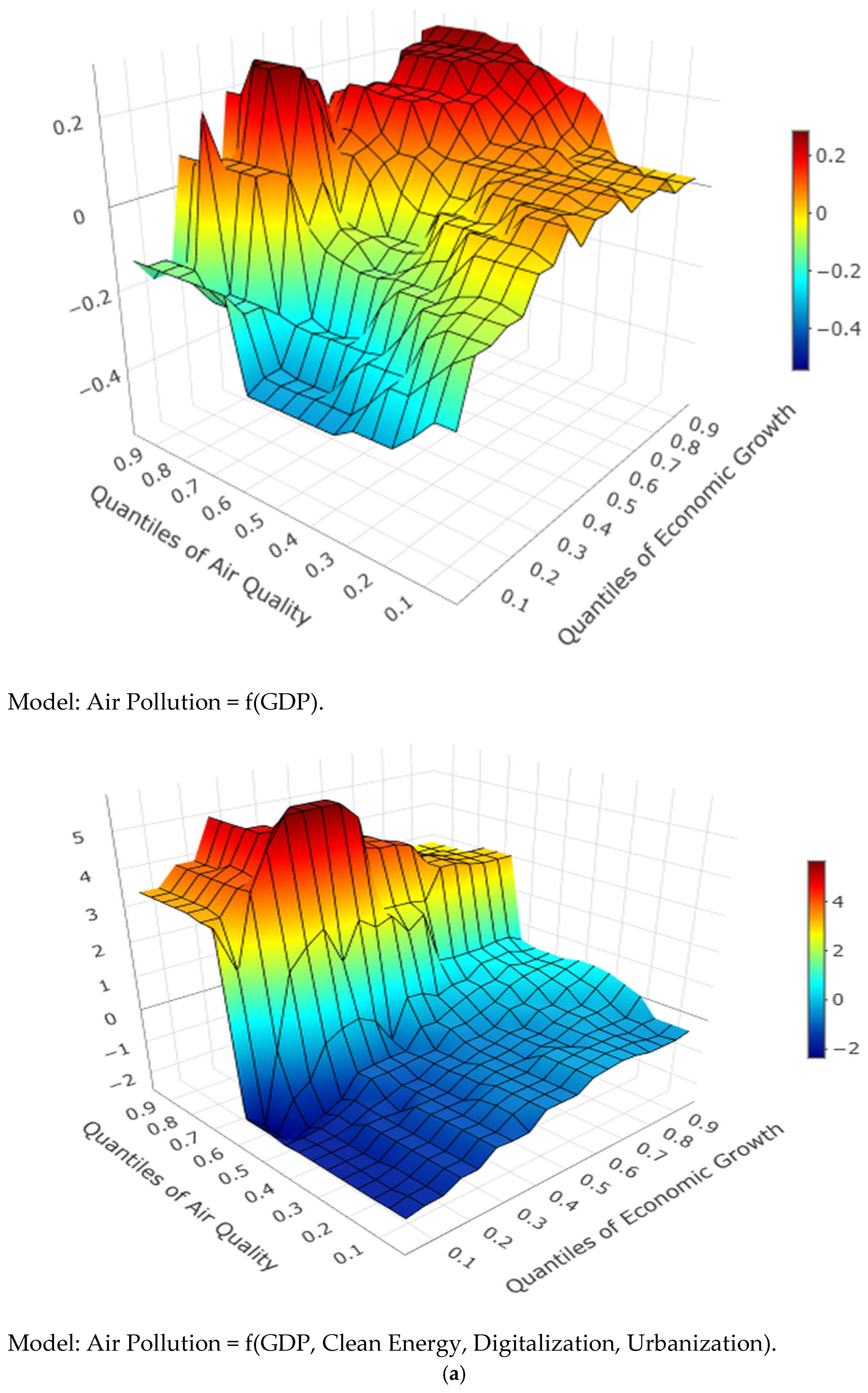
Figure 5a displays M-QQR plots illustrating the relationship between air pollution and various economic and social indicators in India. The figure on the left represents the relationship between air pollution and economic growth (GDP), indicating that higher GDP is generally, but not always, associated with higher levels of air pollution. This implies that as the Indian economy grows, its air becomes more polluted, in part due to the expansion of industrial activity, transport, and energy use. In the right plot, more detailed regression results are shown for four inputs, such as economic growth and clean energy (digitalization and urbanization do not have a significant effect in this example). The results illustrate that, although urbanization and digitalization can bring about economic growth, they can also contribute to the intensification of air pollution through infrastructure construction, transportation, and increased energy consumption. Nevertheless, the inclusion of clean energy in the broader model appears to have a mitigating effect, suggesting that clean energy can also play a significant role in reducing air pollution, even as urbanization and industrialization increase.
These findings have important policy implications for India. First, clean energy is the key to breaking the cycle between economic growth and environmental damage. Investment in renewables, such as wind, solar, and hydroelectric power, as well as in programs for energy efficiency, would lead to a considerable reduction in carbon emissions. First, India needs to promote green solutions in urban settings, such as green infrastructure, public transportation services, and waste management. These steps will help mitigate the environmental impact of urban growth. Third, in the field of economic development, while digitization is a driving force, it is necessary to mitigate the potential environmental burden by promoting green digital technologies and energy-saving data centers. Additionally, stricter control over polluting industries is needed. Lower emissions limits, carbon pricing, and the promotion of cleaner manufacturing technologies will ensure less industrial pollution. Increasing public awareness about the significance of air quality and eco-friendly measures can lead to collective action. These policy proposals suggest potential mechanisms through which India can achieve sustainable economic development and reduce air pollution levels by leveraging the power of innovative technologies, urbanization processes, digitalization, and robust environmental standards.
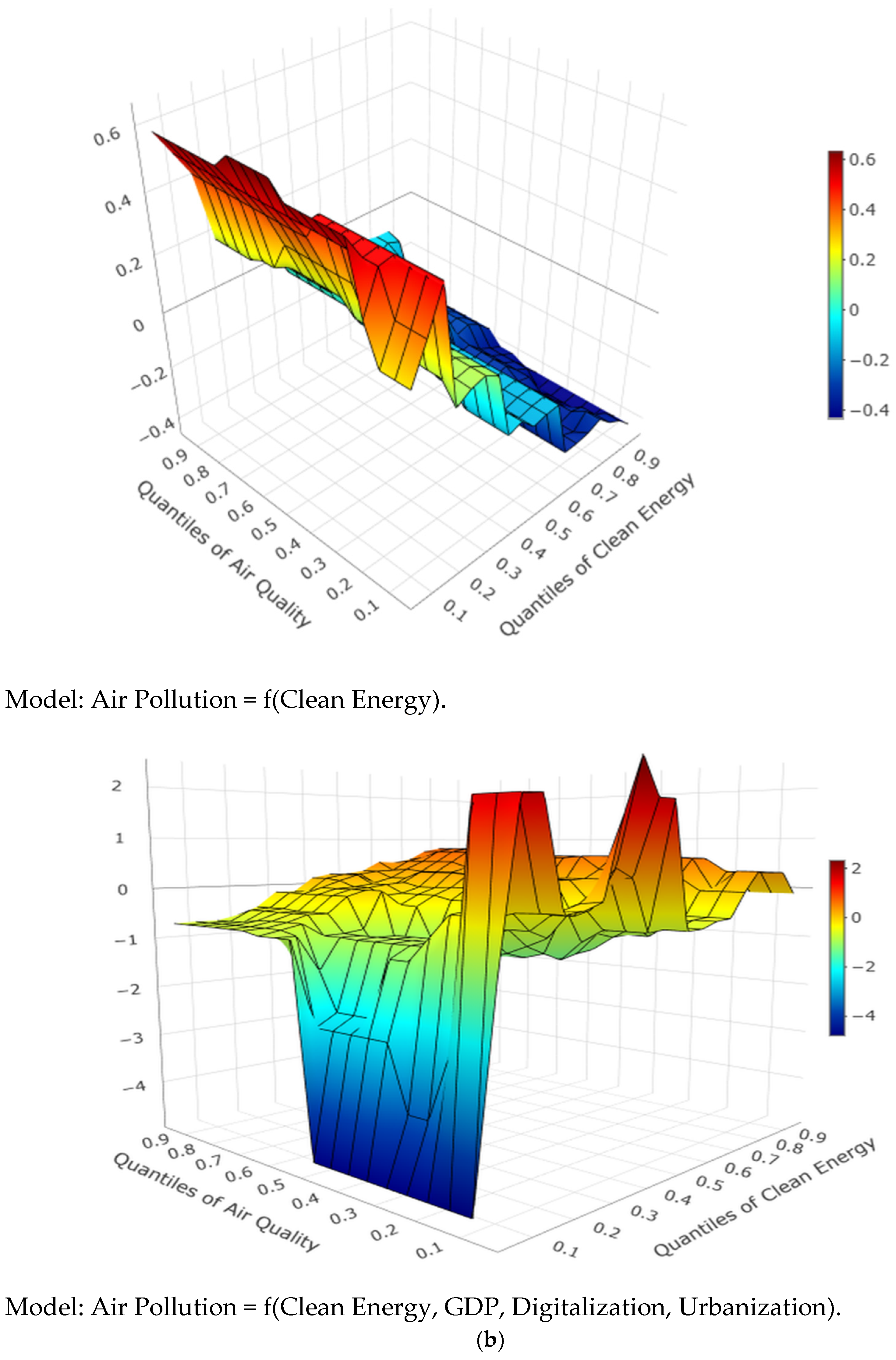
Figure 5b shows M–QQR plots for clean energy and air pollution. The left plot illustrates the direct effect of air pollution and clean energy, with air quality is plotted on the X-axis and clean energy on the Y-axis. The plot suggests a negative relationship between clean energy and air pollution, as expected; clean energy sources tend to reduce emissions. The color scale represents the strength of this correlation, where darker colors mean a stronger correlation. The right-hand side represents improved air quality, clean energy, economic growth (GDP), digitalization, and urbanization. The model demonstrates that clean energy has played a positive role in reducing air pollution; however, the effects of other factors, such as GDP, urbanization, and digitalization, were also found to be significant. These factors intersect on the plot’s surface, which is more dynamically shaped by variations in each factor, indicating that clean energy’s influence on air pollution is intertwined with deeper socio-economic and technological shifts. These findings highlight the benefits of clean energy for reducing air pollution. Yet, they also stress the need for an integrated approach to managing economic growth, urbanization, digitalization, and the promotion of clean energy. In India, this means that planners and politicians will have to integrate clean energy policies into sustainable urban planning, digital innovation, and economic strategies in ways that achieve more than just reduced air pollution. This comprehensive approach to such innovative work will enable the pursuit of the clean energy transition; it will not only be information and technology, but also the social economy, that unites economic, financial, and social aspects.
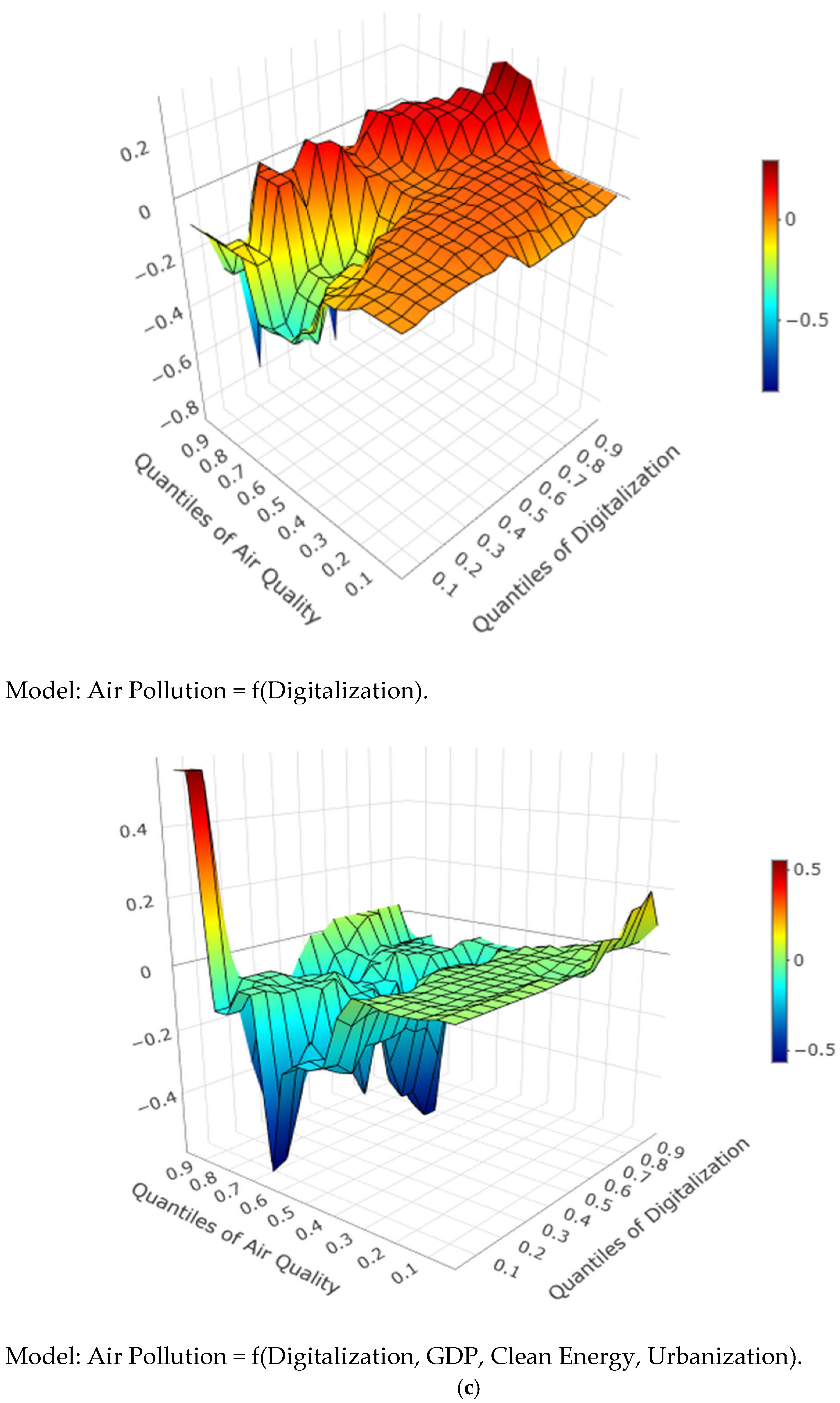
Figure 5c illustrates M-QQR plots for air pollution, digitalization, and clean energy. The left graph illustrates the direct effect of air pollution and digitalization, showing a varying effect as the digitalization level increases. High levels of digitalization are associated with higher pollution in some cases, particularly when air quality was already poor. The plot utilizes a color scale to represent the intensity of this relationship, with darker colors indicating stronger associations. On the right-hand side, air pollution and digitalization are considered in conjunction with other variables, including GDP, clean energy, and urbanization. This model suggests that digitalization, along with other factors such as GDP, clean energy, and urbanization, has a complex influence on air pollution. Digital transformation could increase pollution, but only if clean energy and other socio-economic factors are not in place. These conflicts suggest that pursuing digitalization without regard to its environmental impact might, unless paired with parallel policies on clean energy and sustainable urbanization, merely exacerbate air pollution.
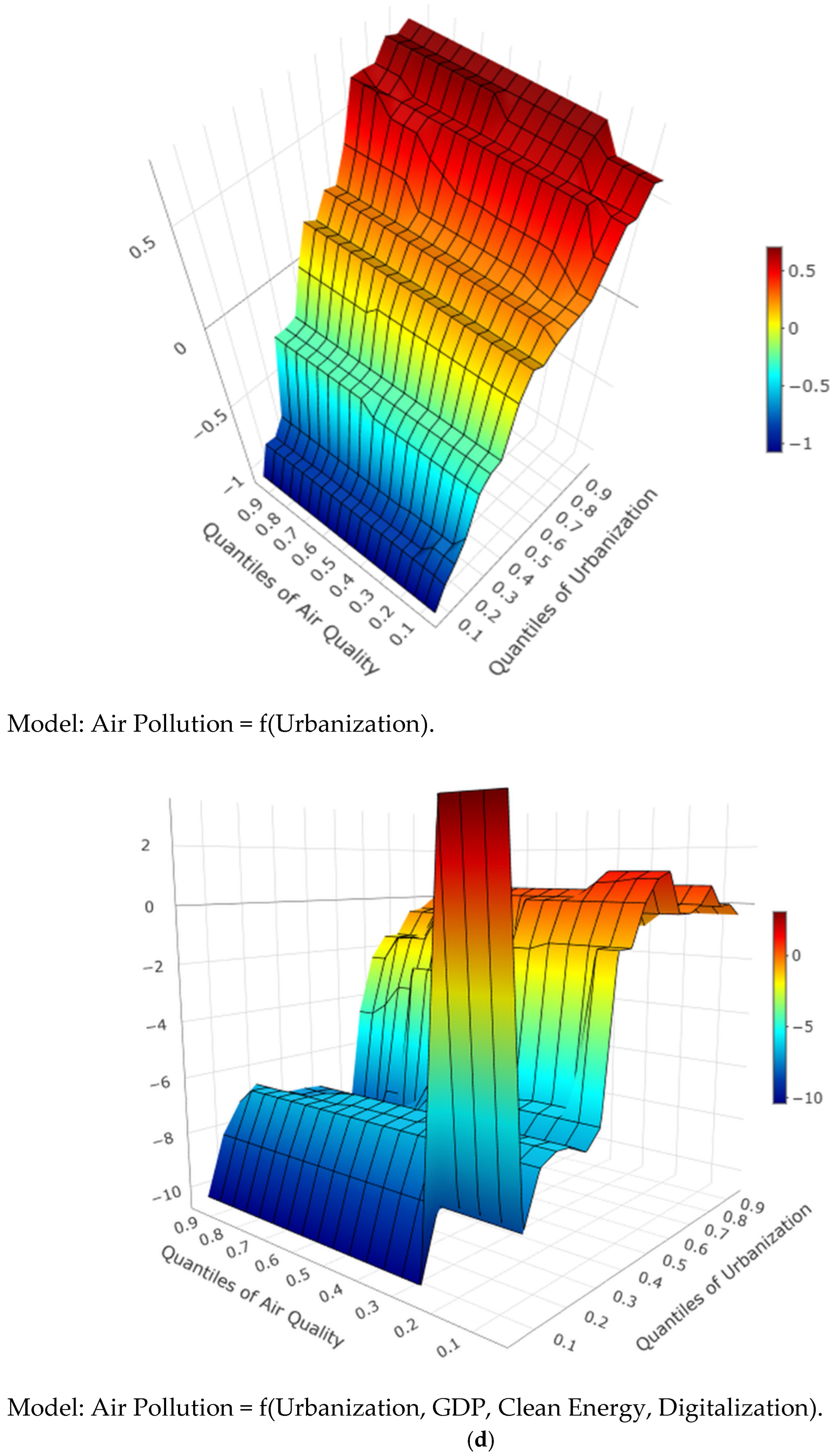
Figure 5d displays M-QQR plots illustrating the relationship between air pollution and urbanization in India. The plot on the left examines the relationship between air pollution and urbanization; the x-axis indicates the intensity of air quality, and the y-axis represents urbanization. The plot suggests a positive relationship between urbanization and air pollution: as urbanization changes, air pollution changes in a manner that aligns with the direction of the two variables. This is not surprising because urbanization is associated with higher industrial growth, increased transportation load, and higher energy consumption, which ultimately lead to increased pollution. The color represents the strength of this association; the red color indicates a stepwise relationship, with real-time air contamination in more urbanized areas. The right subgraph also includes regressors aside from air pollution and urbanization, such as GDP, clean energy, and digitalization. This model suggests that while urbanization remains a significant contributor to air pollution, the introduction of new factors, including clean energy, economic growth, and digitalization, complicates the picture. Urbanization interacts with these factors, leading to complex interplay between urbanization and air pollution. At the local scale, clean energy is at least offsetting the impacts of urbanization on air quality. This suggest that the ill effects of urbanization on air pollution in India can be mitigated by forming policies which enable clean energy, sustainable economic growth, and digital innovation. For India, the implication of these results is the imperative for an integrated approach to urbanization and environmental and energy policies. Amid continuing urbanization, it is necessary to invest in clean energy, good urban planning, and sustainable industrial development to soften the negative effect on the environment from growing metropolitan areas. In addition, the economy should be developed in the direction of green technologies, and digitalization measures need to target technology use that contributes to higher energy efficiency and lower emissions. Such a coordinated strategy may be one of the most efficient routes to ensure that urbanization serves as a lever for social and economic development and the net impact on air quality is confined to a minimum.
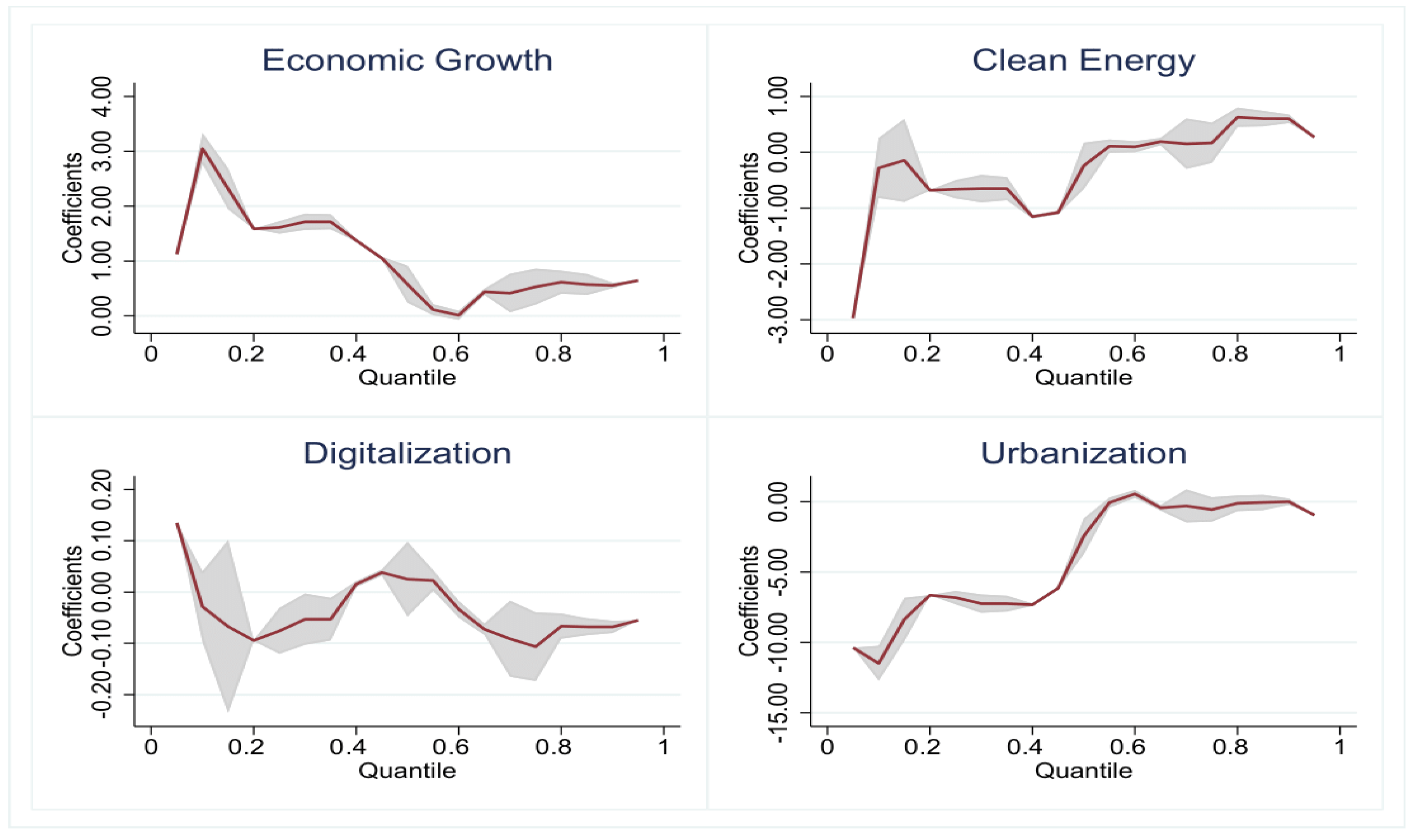
Economic growth and air pollution: The fact that pollution levels increase as the economy grows indicates a direct relationship between these two variables, which can be attributed to the rise in industrialization, transportation, and energy requirements that accompany economic growth. To counteract these effects, India must promote “green growth” policies. This means explicitly supporting clean industries, energy efficiency technologies, and green infrastructure, which will reduce emissions while also growing our economy. Clean Energy Promotion: Figure 6 highlights that clean energy plays a role in mitigating atmospheric pollution levels. Decision-makers need to increase spending on renewable sources of energy, such as wind, solar, and hydroelectric power, and reduce dependence on fossil fuels. On the other hand, providing incentives for industries to switch to energy-efficient technologies or adopt cleaner production methods can cause carbon emissions to fall even as the economy grows. Digitalization and environmental performance: Findings reveal that digitalization, although it contributes to economic growth, may increase air pollution if not properly managed. Hence, India should focus on “smart” digital technologies that contribute to energy efficiency, such as digital platforms for energy management, smart grids, and the establishment of eco-friendly digital infrastructures, e.g., green data centers. There should also be policies in place to promote the development of digital applications that enable us to monitor and manage pollution within cities. Urbanization is a significant factor contributing to air pollution, as cities often have higher concentrations of industrial plants, traffic, and development (Figure 6). To offset this, urban planning must consider sustainable measures, including green architecture, improved public transportation networks, and the integration of clean energy sources in cities. Moreover, local authorities need to invest in air quality monitoring networks and introduce more stringent emission criteria for industries and traffic. India needs a combined growth–environment strategy. Clean energy, digital innovation, and sustainable urbanization policies are needed to curb air pollution and sustain economic growth. If India can make it happen and harness the power of the common good, it would be able to reconcile the clear trade-off between economic growth and environmental health without compromising the ecosystem.

4.4. Robustness Checks: Comparison of QR vs. QQR

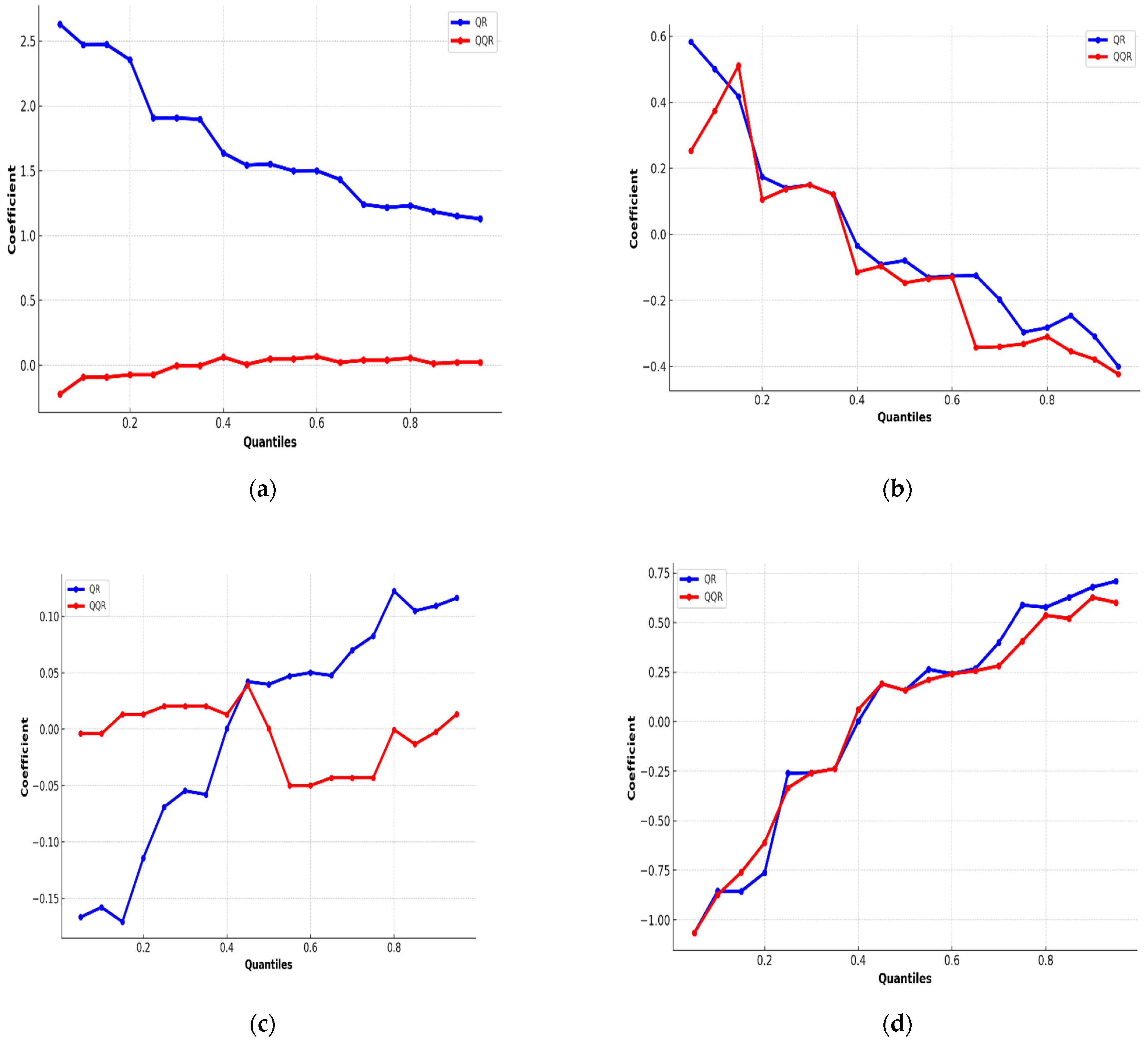
Compared to quantile-on-quantile (QQR), which is more unstable and unpredictable in forecasts, quantile regression (QR) is smoother and produced more reliable predictions across quantiles for all variables in Figure 7. This suggests that compared to QR, QQR could be more susceptible to the impact of changes in quantiles. These findings show how India is affected differently by economic–environmental issues such as GDP, renewable energy, urbanization, and digitalization. The different characteristics of QR’s and QQR’s behavior demonstrate how these measurements’ results might differ significantly throughout the quantile of interest. The disparate impacts of QR and QQR on GDP suggest that Indian authorities should use highly adaptable quantile-based models to estimate the potential impacts of economic expansion on air pollution across different social classes (rural and urban). According to the QQR model, current clean energy policies are implemented ad hoc, which emphasizes the need for focused strategies for clean energy penetration, particularly in regions with higher levels of energy consumption and air pollution susceptibility. According to this digitalization crossover trend, the Indian digitalization strategy should prioritize technological solutions that can monitor and reduce air pollution, particularly in high-pollution metropolitan regions. Last but not least, the increasing rate of urbanization necessitates the implementation of urban planning regulations to control air pollution as well as the development of green and sustainable infrastructure to alleviate the growing pressures of urbanization on Indian cities.

5. Conclusions and Policy Implications

The purpose of this work is to examine the complex connections that exist in India between air pollution, clean energy, economic growth, digitalization, and urbanization. To investigate these dynamics at various quantiles, it uses a variety of empirical methods, such as the quantile ADF unit root test, the quantile KPSS unit root test, and MQQR (multivariate quantile-on-quantile regression). The MQQR model’s findings demonstrate the importance of air pollution’s impact on urbanization and economic growth. However, the connections between digitalization, renewable energy, and air pollution are more intricate and need to be thoroughly investigated. The results suggest that while economic expansion can harm air quality, affordable, publicly funded investments in clean energy could be a vital tool for reducing air pollution. Furthermore, digitalization may enhance pollution rather than lessen it in certain circumstances, especially if clean energy rules are not rigorously implemented.

5.1. Policy Implications

Air pollution and clean energy policy should reflect the need to significantly increase the use of renewable energy sources to reduce pollution. India must also encourage businesses to adopt energy efficiency and focus investments on renewable energy technologies like hydro, solar, and wind. Naturally, such initiatives will not lower CO2 emissions. However, they will also help move India closer to a more sustainable and resilient energy system, which is another vital component for the nation’s long-term climate prospects. Implementing renewable energy in urban areas can also contribute to making cities cleaner, greener, and more resilient to pollution, thereby reducing the negative environmental impacts of urbanization.
Conversely, the relationship between air pollution and digitalization requires a more subtle touch. Although digitalization and new digital technologies can contribute to economic growth and energy efficiency, they can also result in increased energy use, thereby increasing pollution. India should adopt strategies of “green digitalization”, promoting technologies that contribute to improving energy efficiency, including smart grids, energy management platforms, green data centers, and more. Policymakers should encourage the adoption of digital technologies in pollution control monitoring and management to enable digitalization rather than doom environmental sustainability. These suggestions must be directly linked to India’s existing frameworks, such as the National Clean Air Programme (NCAP 2024)1 and its emission reduction goals, in order to be implemented and successful. This situation requires a more thoughtful, rational approach that separates short-term from medium-term activities.
  • Strengthening the Air Quality Monitoring Networks: To improve real-time monitoring of PM 2.5 and other pollutants, one of the most important urgent actions should be to enhance the air quality monitoring networks under NCAP. This will help focus emission reduction initiatives where the marginal benefits of improved air quality are greatest and enable faster responses to high pollution conditions.
  • Industrial Energy Efficiency: Policies should focus on improving energy efficiency in essential industrial sectors and/or those that contribute significantly to emissions in the near term. Promoting the use of clean technology in industry and offering incentives to make it greener are two ways to achieve this. The National Mission on Enhanced Energy Efficiency (NMEEE) in India already includes these sorts of programs; it could be expanded to more strictly enforce energy-efficient behaviors.
  • Control of Polluting Industries: Industrial pollution could be immediately reduced by enforcing strict emission standards and providing incentives for investment in cleaner technology. Carbon pricing and the development of incentives for clean manufacturing techniques are other possible policy measures.
Long-term measures:
  • Infrastructure for Digital Energy: India should concentrate on creating digital energy infrastructure that integrates renewable energy sources, such as solar, wind, and hydroelectric power, in order to support the long-term transition to clean energy. Among the digital technologies that may help manage energy consumption properly and reduce emissions are smart grids, Internet of Things pollution sensors, and real-time air quality monitoring.
  • Green Digitalization: All industries should support and implement a “horizonal” approach to green digital technology. By increasing energy efficiency using tools like green data centers and by using energy management platforms, for example, the digitalization path can and should be coupled with the green energy transition. A simultaneous approach to digitalization and clean energy may maximize their respective environmental potential, leading to a more technologically sophisticated and sustainable economy.
  • Green Infrastructure and Urban Planning: One of the main causes of pollution is urbanization. The development of green infrastructure in Indian cities, such as green roofs, eco-friendly urban transit options, and integrated renewable power production, should be a part of the country’s long-term urban planning. More of a push for energy-efficient buildings and stricter regulations on transportation emissions should go hand in hand with all of this.
  • Long-term vision: Emphasize that, despite the challenges of transitioning to clean energy and digitalization, particularly in providing equal access to technology and infrastructure, the long-term benefits of transitioning India’s economy to a cleaner and more sustainable one cannot be overstated. This indicates that these strategies can synergistically contribute to cleaner air, better public health, and a climate-safe future for India in the global fight against climate change.

5.2. Future Direction and Limitation

This work has some limitations. First, the data used in the analysis are combined at the national level, which may not capture local variations in either air pollution or energy consumption. Second, although the MQQR technique provides a durable tool for investigating non-linear relationships, the complexity of socio-economic structures and policy interventions in a rapidly growing economy like India may still necessitate model elaborations, including the inclusion of additional variables such as behavioral changes and technological progress, as is the case in China. Finally, the constrained use of past data limits the ability to capture any fluctuations in air pollution dynamics, especially in a dynamic era of digitalization and the ongoing adoption of clean energy. Future work could address these gaps by employing more dynamic modeling methods and integrating real-time environmental data. In the future, it may be worthwhile to investigate the long-term implications of the clean energy transition and digitization on air pollution in India, including the combined effect of these factors over extended periods. Additionally, considering the interplay of different pollutants and their joint effects on public health and the environment, more comprehensive explanations could be sought for the multi-pollutant exposure problem, which remains poorly understood. Furthermore, future studies could develop more real-time and fine-scale spatial analyses to better understand the regional heterogeneity of pollution and the effectiveness of local policies. It would be useful to replicate this research to see how these results might be applicable to other areas with different economic and energy settings. The insights could provide actionable solutions to air pollution across diverse contexts globally.

Author Contributions

Writing and drafting the manuscript, S.T.H.; analysis, W.L.; reviewing and editing, H.F.; methodology, K.I.; reviewing and editing, M.U.H. Supervision, S.T.H.; Software, W.L.; Validation, H.F.; Resources, M.U.H. All authors have read and agreed to the published version of the manuscript.

Funding

The authors appreciate the support of their ongoing research funding program (ORF-2025-997), King Saud University, Riyadh, Saudi Arabia.

Institutional Review Board Statement

Not applicable.

Informed Consent Statement

Not applicable.

Data Availability Statement

The raw data supporting the conclusions of this article will be made available by the authors on request.

Conflicts of Interest

The authors declare no conflicts of interest.

References

  1. Ambient (Outdoor) Air Pollution. Available online: https://www.who.int/news-room/fact-sheets/detail/ambient-(outdoor)-air-quality-and-health (accessed on 29 August 2025).
  2. New State of Global Air Report Finds Air Pollution Is Second Leading Risk Factor for Death Worldwide|Health Effects Institute. Available online: https://www.healtheffects.org/announcements/new-state-global-air-report-finds-air-pollution-second-leading-risk-factor-death (accessed on 29 August 2025).
  3. Data Review: How Many People Die from Air Pollution?—Our World in Data. Available online: https://ourworldindata.org/data-review-air-pollution-deaths (accessed on 29 August 2025).
  4. Lai, H.-C.; Dai, Y.-T.; Mkasimongwa, S.W.; Hsiao, M.-C.; Lai, H.-C.; Dai, Y.-T.; Mkasimongwa, S.W.; Hsiao, M.-C.; Lai, L.-W. The Impact of Atmospheric Synoptic Weather Condition and Long-Range Transportation of Air Mass on Extreme PM10 Concentration Events. Atmosphere 2023, 14, 406. [Google Scholar] [CrossRef]
  5. Song, J.; Stettler, M.E.J. A Novel Multi-Pollutant Space-Time Learning Network for Air Pollution Inference. Sci. Total Environ. 2022, 811, 152254. [Google Scholar] [CrossRef]
  6. Chen, Z.Y.; Petetin, H.; Méndez Turrubiates, R.F.; Achebak, H.; Pérez García-Pando, C.; Ballester, J. Population Exposure to Multiple Air Pollutants and Its Compound Episodes in Europe. Nat. Commun. 2024, 15, 2094. [Google Scholar] [CrossRef] [PubMed]
  7. Rentschler, J.; Leonova, N. Global Air Pollution Exposure and Poverty. Nat. Commun. 2023, 14, 4432. [Google Scholar] [CrossRef]
  8. Chen, L.; Duan, L. Can Informal Environmental Regulation Restrain Air Pollution?—Evidence from Media Environmental Coverage. J. Environ. Manag. 2025, 377, 124637. [Google Scholar] [CrossRef]
  9. Lin, B.; Zhu, J. The Role of Renewable Energy Technological Innovation on Climate Change: Empirical Evidence from China. Sci. Total Environ. 2019, 659, 1505–1512. [Google Scholar] [CrossRef]
  10. Liang, J.; Wu, D. Heatwaves Worsen the Air Pollution from Energy Systems: Empirical Evidence from Balancing Authorities in the United States. Energy Econ. 2025, 148, 108677. [Google Scholar] [CrossRef]
  11. Zhu, Y.; Wang, Z.; Yang, J.; Zhu, L. Does Renewable Energy Technological Innovation Control China’s Air Pollution? A Spatial Analysis. J. Clean. Prod. 2020, 250, 119515. [Google Scholar] [CrossRef]
  12. Das, S.; Debanth, A. Impact of CO2 Emission on Life Expectancy in India: An Autoregressive Distributive Lag (ARDL) Bound Test Approach. Future Bus. J. 2023, 9, 5. [Google Scholar] [CrossRef]
  13. Crespo, N.F.; Crespo, C.F.; Silva, G.M.; Nicola, M.B. Innovation in Times of Crisis: The Relevance of Digitalization and Early Internationalization Strategies. Technol. Forecast. Soc. Change 2023, 188, 122283. [Google Scholar] [CrossRef]
  14. Dwivedi, Y.K.; Hughes, L.; Kar, A.K.; Baabdullah, A.M.; Grover, P.; Abbas, R.; Andreini, D.; Abumoghli, I.; Barlette, Y.; Bunker, D.; et al. Climate Change and COP26: Are Digital Technologies and Information Management Part of the Problem or the Solution? An Editorial Reflection and Call to Action. Int. J. Inf. Manag. 2022, 63, 102456. [Google Scholar] [CrossRef]
  15. Liu, Y.; Zhang, X.; Shen, Y. Technology-Driven Carbon Reduction: Analyzing the Impact of Digital Technology on China’s Carbon Emission and Its Mechanism. Technol. Forecast. Soc. Change 2024, 200, 123124. [Google Scholar] [CrossRef]
  16. Javaid, M.; Haleem, A.; Singh, R.P.; Suman, R.; Gonzalez, E.S. Understanding the Adoption of Industry 4.0 Technologies in Improving Environmental Sustainability. Sustain. Oper. Comput. 2022, 3, 203–217. [Google Scholar] [CrossRef]
  17. Lv, L.; Chen, Y. The Collision of Digital and Green: Digital Transformation and Green Economic Efficiency. J. Environ. Manag. 2024, 351, 119906. [Google Scholar] [CrossRef]
  18. The Impact of Digital Technologies|United Nations. Available online: https://www.un.org/en/un75/impact-digital-technologies (accessed on 29 August 2025).
  19. Lakhan, A.; Hamouda, H.; Abdulkareem, K.H.; Alyahya, S.; Mohammed, M.A. Digital Healthcare Framework for Patients with Disabilities Based on Deep Federated Learning Schemes. Comput. Biol. Med. 2024, 169, 107845. [Google Scholar] [CrossRef]
  20. Shen, Y.; Zhang, X. Intelligent Manufacturing, Green Technological Innovation and Environmental Pollution. J. Innov. Knowl. 2023, 8, 100384. [Google Scholar] [CrossRef]
  21. Ma, Y.; Wei, X.; Yan, G.; He, X. The Impact of Fintech Development on Air Pollution. Int. J. Environ. Res. Public Health 2023, 20, 3387. [Google Scholar] [CrossRef]
  22. Lin, B.; Ullah, S. Towards the Goal of Going Green: Do Green Growth and Innovation Matter for Environmental Sustainability in Pakistan. Energy 2023, 285, 129263. [Google Scholar] [CrossRef]
  23. Karam, J.; Jo, K. The Role of Digital Technology in Climate Technology Innovation. KDI J. Econ. Policy 2023, 45, 21–50. [Google Scholar] [CrossRef]
  24. Tan, Q.; Yasmeen, H.; Ali, S.; Ismail, H.; Zameer, H. Fintech Development, Renewable Energy Consumption, Government Effectiveness and Management of Natural Resources along the Belt and Road Countries. Resour. Policy 2023, 80, 103251. [Google Scholar] [CrossRef]
  25. Szewczyk, E.; Lupa, M.; Zaręba, M.; Eglí Nska, W.; Danek, T.; Mishra, A.K.; Pl, A.K.M. Emergency Medical Interventions in Areas with High Air Pollution: A Case Study from Małopolska Voivodeship, Poland. Atmosphere 2025, 16, 983. [Google Scholar] [CrossRef]
  26. Ike, G.N.; Obieri, O.C.; Usman, O. Modelling the Air Pollution Induced Health Effects of Energy Consumption across Varied Spaces in OECD Countries: An Asymmetric Analysis. J. Environ. Manag. 2024, 349, 119550. [Google Scholar] [CrossRef]
  27. Zhang, X.; Tan, Y. Digital Empowerment: Unlocking the “synergy Barrier” of Government-Enterprise-Public Air Pollution Control. Energy Rep. 2025, 13, 4846–4865. [Google Scholar] [CrossRef]
  28. World Development Indicators (WDI) 2023. Available online: https://Databank.Worldbank.Org/Source/World-Development-Indicators (accessed on 11 September 2025).
  29. OWID. Our World in Data. 2023. Available online: https://ourworldindata.org/ (accessed on 11 September 2025).
  30. Adebayo, T.S.; Özkan, O. Evaluating the Role of Financial Globalization and Oil Consumption on Ecological Quality: A New Perspective from Quantile-on-Quantile Granger Causality. Heliyon 2024, 10, e24636. [Google Scholar] [CrossRef] [PubMed]
  31. Broock, W.A.; Scheinkman, J.A.; Dechert, W.D.; LeBaron, B. A Test for Independence Based on the Correlation Dimension. Econom. Rev. 1996, 15, 197–235. [Google Scholar] [CrossRef]
  32. Sim, N.; Zhou, H. Oil Prices, US Stock Return, and the Dependence between Their Quantiles. J. Bank. Financ. 2015, 55, 1–8. [Google Scholar] [CrossRef]
  33. Ashley, R.; Granger, C.W.J.; Schmalensee, R. Advertising and Aggregate Consumption: An Analysis of Causality. Econometrica 1980, 48, 1149. [Google Scholar] [CrossRef]
  34. Liu, Y.; Lin, B.; Xu, B. Modeling the Impact of Energy Abundance on Economic Growth and CO2 Emissions by Quantile Regression: Evidence from China. Energy 2021, 227, 120416. [Google Scholar] [CrossRef]
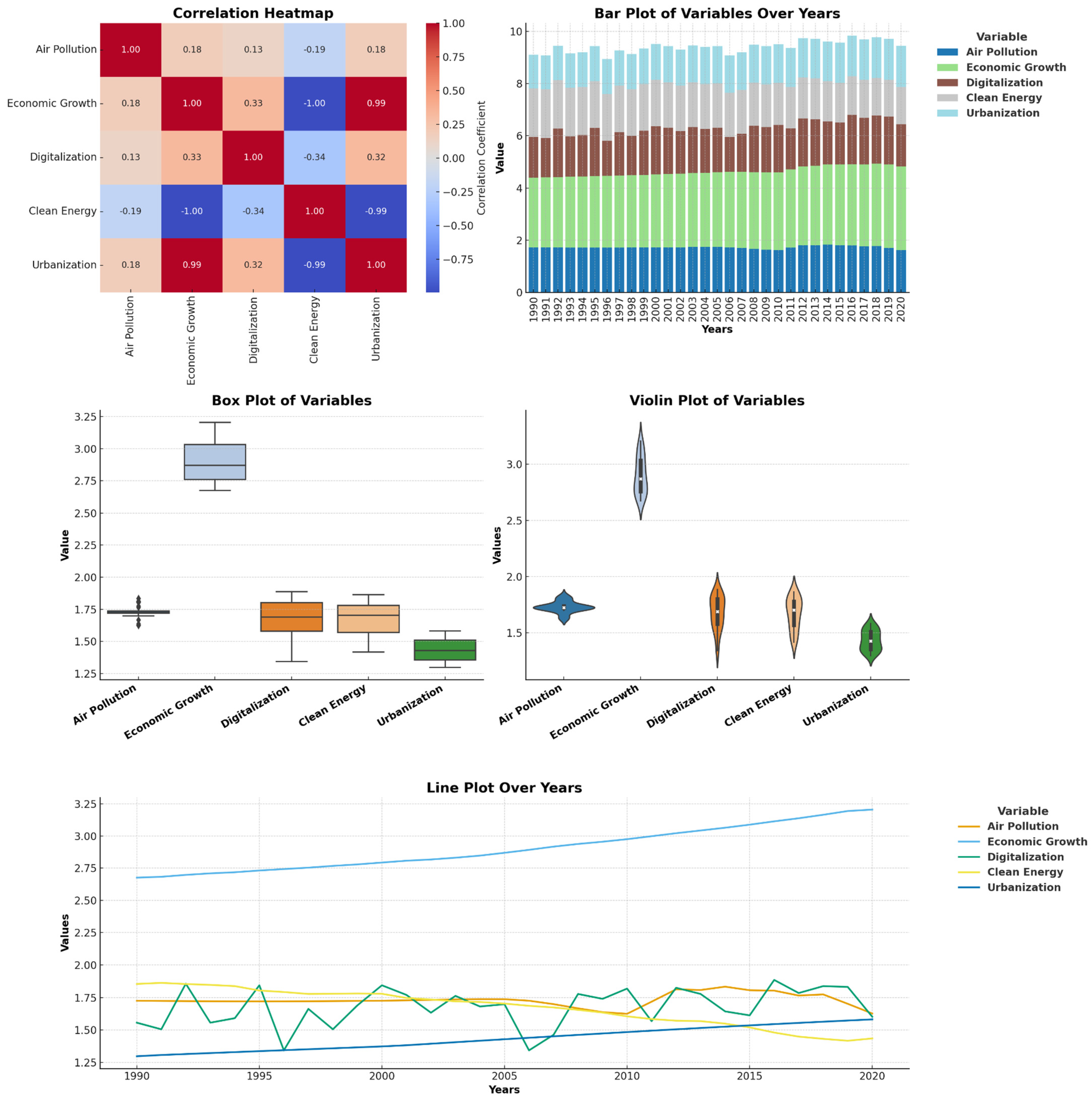
Figure 1. A heat plot, a bar plot, and a box plot.
Atmosphere 16 01370 g001
Figure 2. Q-Q plot.
Figure 2. Q-Q plot.
Atmosphere 16 01370 g002
Figure 3. The quantile ADF unit root test.
Atmosphere 16 01370 g003
Figure 4. The quantile KPSS unit root test.
Atmosphere 16 01370 g004
Figure 5. (a). M-QQR plots for GDP; (b). M-QQR plots for clean energy; (c). M-QQR plots for digitalization; (d). M-QQR plots for urbanization.
Atmosphere 16 01370 g005aAtmosphere 16 01370 g005bAtmosphere 16 01370 g005cAtmosphere 16 01370 g005d
Figure 6. Quantile regression.
Atmosphere 16 01370 g006
Figure 7. A comparison of QR vs. QQR. (a) Comparison of QR and QQR results for GDP. (b) Comparison of QR and QQR results for clean energy. (c) Comparison of QR and QQR results of digitalization. (d) Comparison of QR and QQ results of urbanization.
Atmosphere 16 01370 g007
Table 1. Data sources and measurements.
VariablesDescriptionMeasurementsSources
Air PollutionPM2.5 air pollutionPM2.5 air pollution, mean annual exposure (micrograms per cubic meter)WDI [28]
GDPEconomic growthPer capita (constant 2015 US dollars)WDI (2023) [28]
Clean EnergyRenewable energy consumption% of total energy consumptionOWID [29]
DigitalizationICT Mobile phone subscriptions per 100 peopleOWID [29]
UrbanizationPopulation growth % Of total PopulationWDI (2023) [28]
Table 2. Descriptive statistics.
Air PollutionGDPClean EnergyDigitalizationUrbanization
Mean1.6946063.1344941.6968861.9601961.435748
Median1.6977223.1103251.7052221.9513381.432685
Maximum1.7760853.3770261.8149132.3106931.508466
Minimum1.5847242.9230871.5696661.6481161.373229
Std. Dev.0.0418480.1466660.0746150.2001850.040764
Skewness−0.5587770.267597−0.1884100.1056730.180249
Kurtosis3.7880811.7004091.9311841.9564751.783475
Jarque–Bera9.66167410.206086.6358685.8569958.317769
Probability0.0079800.0060780.0362280.0534770.015625
Table 3. Non-linearity check outcomes (BDS test).
DimensionsAir PollutionGDPClean EnergyDigitalizationUrbanization
M217.89250.09149.44946.87253.142
M317.91253.41752.49448.92056.582
M418.87757.88156.58251.83961.283
M518.15864.59362.76156.54968.423
M621.45773.79071.40563.90878.316
Disclaimer/Publisher’s Note: The statements, opinions and data contained in all publications are solely those of the individual author(s) and contributor(s) and not of MDPI and/or the editor(s). MDPI and/or the editor(s) disclaim responsibility for any injury to people or property resulting from any ideas, methods, instructions or products referred to in the content.