Article

Big L Days in GNSS TEC Data

1
Institute of Applied Physics, University of Bern, 3012 Bern, Switzerland
2
Oeschger Centre for Climate Change Research, University of Bern, 3012 Bern, Switzerland
3
National Astronomical Observatories, Chinese Academy of Sciences, Beijing 100101, China
*
Author to whom correspondence should be addressed.
Atmosphere 2025, 16(10), 1191; https://doi.org/10.3390/atmos16101191
Submission received: 19 September 2025 / Revised: 10 October 2025 / Accepted: 13 October 2025 / Published: 16 October 2025
(This article belongs to the Special Issue Ionospheric Disturbances and Space Weather)

Abstract

Big L days are days when the lunar semidiurnal variation M2 in the ionosphere is strongly enhanced by a factor of 2 or more. The worldwide network of ground-based receivers for the Global Navigation Satellite System (GNSS) has monitored the ionospheric total electron content (TEC) since 1998. The derived world maps of TEC are provided by the International GNSS Service (IGS) and allow the study of the characteristics of big L days in TEC. In the data analysis, the signal of the lunar semidiurnal variation M2 in TEC is separated from the solar semidiurnal variation S2 by means of windowing in the spectral domain. The time series of the M2 amplitude often shows enhancements of M2 (big L days) a few days after sudden stratospheric warmings (SSWs). The M2 amplitude can reach values of 8 TECU. The M2 composite of all SSWs from 1998 to 2024 shows that the M2 amplitude is enhanced after the central date of the SSW. Regions in Southern China and South America show stronger effects of big L days. Generally, the effects of big L days on TEC show latitudinal and longitudinal dependencies.

1. Introduction

The gravitational and centrifugal forces of the Earth–Moon system induce a westward propagating lunar semidiurnal tide M2 with a period of 12.4206 h and a zonal wavenumber 2 in the Earth’s ocean and atmosphere. The lunar atmospheric tide is maximal at low latitudes where the small surface air pressure variation has amplitudes from 5 to 10 Pa [1,2,3]. While lunar tidal winds are about 0.03 m/s at the Earth’s surface, they increase to amplitudes of 10 m/s or more in the ionospheric E region [1,4,5,6]. During sudden stratospheric warmings (SSWs), the lunar tide is amplified, and wind amplitudes of 40 to 50 m/s can occur in the dynamo region [6]. The ionospheric effects of the lunar tide are most obvious in the equatorial ionosphere [7,8]. Generally, lunar tides should be taken into account in space weather models [6,9]. The electric field variations induced by the M2 tide in the E region (100 to 110 km altitude) are projected along the geomagnetic field lines from the E region into the F region. The E × B plasma drift causes an electrodynamic lifting of the F region plasma at low magnetic latitudes leading to a periodic variation in the equatorial ionization anomaly (EIA) [6,10]. It was observed that parameters of the EIA crest in TEC are periodically influenced by the Moon phase with a period of 14.77 days. This is due to the beat of the solar and lunar semidiurnal tides in the ionosphere [11]. The eccentricity of the Moon orbit causes an additional modulation of the lunar tide in TEC with the period of the anomalistic month (27.55455 days, which is the average time between two perigee transits of the Moon) [12]. The equilibrium theory of tides shows that the lunar tide at apogee is smaller than the lunar tide at perigee.
The term “big L days” was first reported by Bartels and Johnston in 1940 [13], who analyzed ground-based magnetic observations (horizontal intensity of geomagnetic field) at Huancayo in Peru. On big L days, the lunar influence in the ionospheric equatorial electrojet was considerably large and even comparable to the solar effects. The research works on the possible causes of the big L days in ground-based magnetometer data have been summarized by Siddiqui et al. [14]. Generally, longitudinal and latitudinal dependences of the effects of big L days in ground-based magnetic observations are present, which can be due to both geographical variations in the vertical atmosphere profiles (affecting the upward propagation of the lunar tide) and horizontal gradients of electric conductivity in the lower ionosphere. Pekeris [15] explained that the atmosphere is resonant for the solar semidiurnal tide where the strength of the resonance effect depends on the vertical profile of temperature. Following this resonance theory of Pekeris, Forbes and Zhang [5] investigated the influence of the SSW of January 2009 on the lunar tide. They found that the resonance period of the atmosphere shifts to the period of the lunar semidiurnal tide, when a sudden stratospheric warming occurs. Thus, a SSW is able to amplify the lunar tide by a factor of 3 to 6, which was observed and simulated in case of the SSW of January 2009 [5]. The amplification of the lunar tide by SSWs explains the reported correlation of big L days with the occurrence of SSWs [14]. Both big L days and SSWs mostly happen during Northern hemispheric winter [14]. The modification of the lunar semidiurnal tide by SSWs was firstly simulated by [16], who found that a SSW changes the phase of the lunar tide. This simulation result agreed with radar observations of the lunar tide in the mesosphere.
While there are many studies about big L days in ground-based magnetic data, there are no studies about big L days in TEC data yet. Big L days in TEC are different from big L days in ground-based magnetic data since the excitation process of the lunar variation in TEC involves the electrodynamic lifting of the F region plasma of the EIA. The present study is an initial study which gives a first impression on big L days in GNSS TEC. An investigation of the relationship between big L days in magnetometer data and big L days in GNSS TEC data is certainly an interesting topic for a future study but is not investigated in the following. The long-term data set of world maps of GNSS TEC, established since 1998 and provided by the IGS, is a unique opportunity to study the characteristics of big L days in TEC. It was already found that the semidiurnal tide in TEC is enhanced after SSW events [17,18]; however, a separation between the lunar and solar tidal variation in TEC was not performed. Here, we focus on the lunar M2 variation in TEC. An open question also concerns whether there are other reasons for big L days than the occurence of SSWs.
Section 2 describes the TEC dataset and the time series analysis. The results are shown in Section 3, while Section 4 contains the discussion and conclusions.

2. GNSS TEC, Data Analysis, and SSW Events

2.1. GNSS TEC Maps

The ground stations of the Global Navigation Satellite System (GNSS) receive the satellite navigation signals. These measurements can be used for derivation of TEC. The International GNSS Service (IGS) has distributed world maps of TEC since June 1998. The spatial resolution of the TEC maps is 5 degrees and 2.5 degrees in longitude and latitude, respectively. The temporal resolution is 2 h. TEC estimations from different independent analytical centers worldwide are included in the final TEC maps of IGS [19]. The present study analyses TEC data from the time between June 1998 and October 2024. The calculation and the error assessment of the TEC maps were described by [19]. A cross-validation with coincident satellite altimeter observations indicated that the relative error of the GNSS TEC maps is less than 20%. The time series of GNSS TEC maps are appropriate for the analysis of lunar tides in TEC [11,20,21].

2.2. Data Analysis

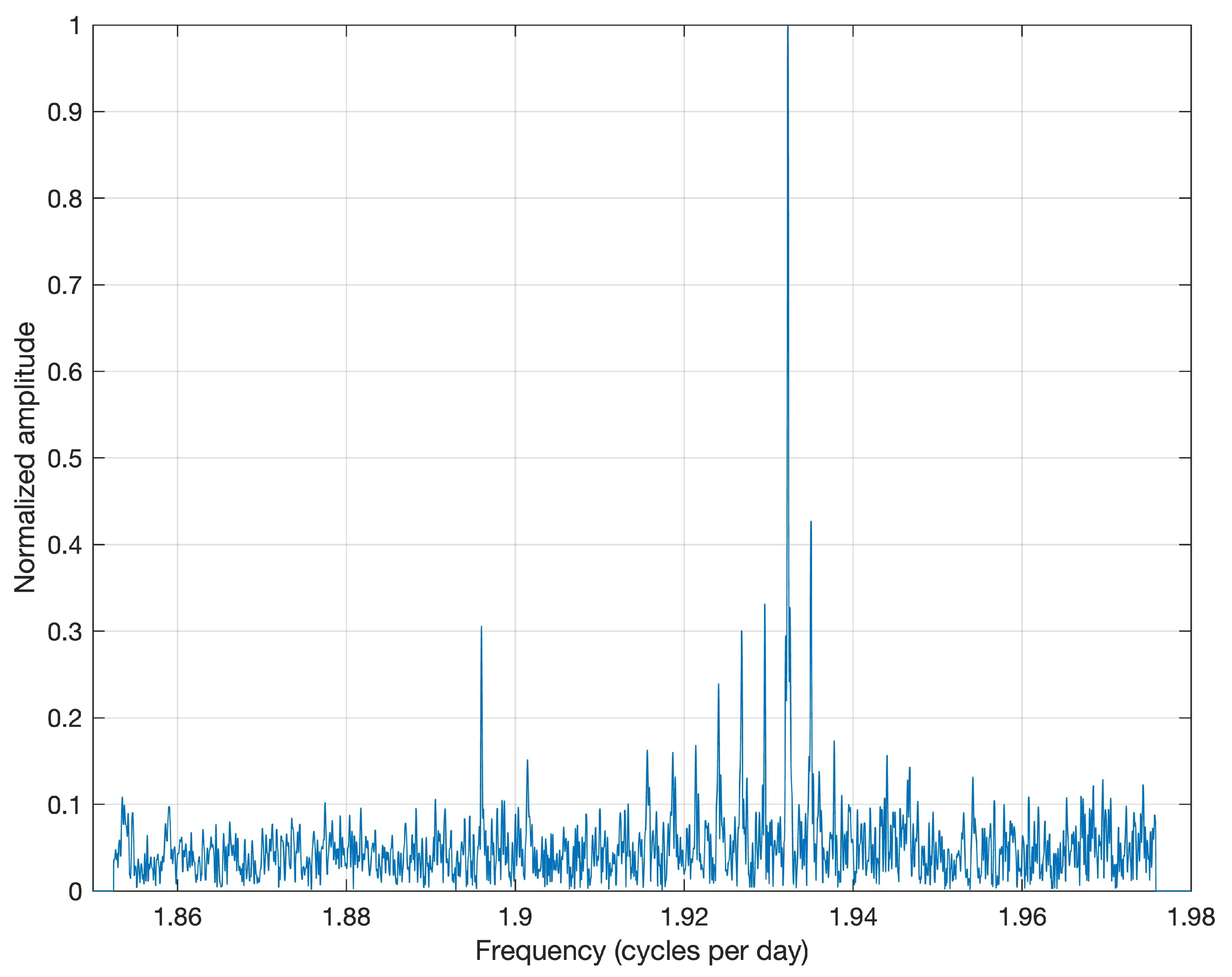
The data analysis involves Fast Fourier Transform (FFT) spectral analysis and digital filtering. The data analysis is firstly applied to the grid point 25° N latitude and 110° E longitude which is near to the EIA in Southern China where the lunar influence on the ionosphere is strong [12]. Many GNSS receivers are located in this region, so the TEC values can be regarded as reliable. The FFT spectrum is derived for the selected TEC series from June 1998 to October 2024. The analysis applies a Hamming window as well as zero padding, where the zero padding increased the data segment by a factor of 5. This leads to an improvement in the frequency resolution by the same factor. The separation of the lunar semidiurnal variation from the solar semidiurnal variation is performed by windowing of the FFT spectrum. Figure 1 depicts the TEC spectrum in Southern China within the frequency interval of the M2 variation.
Beside the M2 peak, an isolated minor peak with an amplitude of 0.3 occurs at about 1.896 cpd. This peak belongs to the modulation of M2 by the anomalistic month [12]. The FFT spectrum is set to zero, except in the selected positive and negative frequency segments of the FFT spectrum containing the information of the M2 variation. Inverse Fourier transform yields the time series of the M2 variation ( Δ TEC) with its modulations from the solar cycle to weekly variations. Due to the windowing in the frequency domain, the time resolution of the resulting M2 time series is about 10 days. This is a penalty for the separation of S2 from M2. Since the M2 amplitude is determined in the time domain (after the inverse Fourier transform), the effect of the zero padding on the amplitude is only at the edges of the time series, which are removed. A simple division of the time series by the Hamming window restores the unattenuated time series of the retrieved M2 variation. Thus, the effects of zero padding and the Hamming window are excluded here.
The modulations of the M2 variations and the envelope of the M2 amplitude are investigated by means of filtering of the Δ TEC series. The digital non-recursive, finite impulse response bandpass filter is run in forward and reverse directions in order to ensure zero-phase filtering. The filter contains a Hamming window. The number of filter coefficients is equal to a time window of three times of the central period. Thus, the bandpass filter has a fast response time to temporal changes in the data series. The bandpass cut-off frequencies are at the frequency of M2 ± 10 % , so the bandpass is open for all frequencies of the selected segment of the M2 variation, as shown in Figure 1. Ref. [22] describes the bandpass filtering in more detail. The time resolution of the bandpass-filtered series is about 1.5 days. The frequency interval of the bandpass can be broad since the Δ TEC was previously limited by a narrow frequency region, as shown in Figure 1. The calculation of the envelope of the M2 amplitude of the filtered Δ TEC series was described by [22].

2.3. SSW Events

Palmeiro et al. [23] derived the central dates of major SSWs by means of the fifth-generation ECMWF atmospheric reanalysis (ERA5, [24]). The central date is defined by the reversal of the zonal wind in the stratosphere from an eastward to westward direction. We obtain about 17 central dates of major SSWs in the time from 1998 to 2024 by using Table 1 from [23]. These SSW events fulfill the U60 criterium (reversal of zonal wind U at 60° N). Since Table 1 from [23] ends in January 2021, we added four major SSWs which happened from 2022 to 2024. The central dates of the 21 SSW events are shown in Table 1.

3. Results

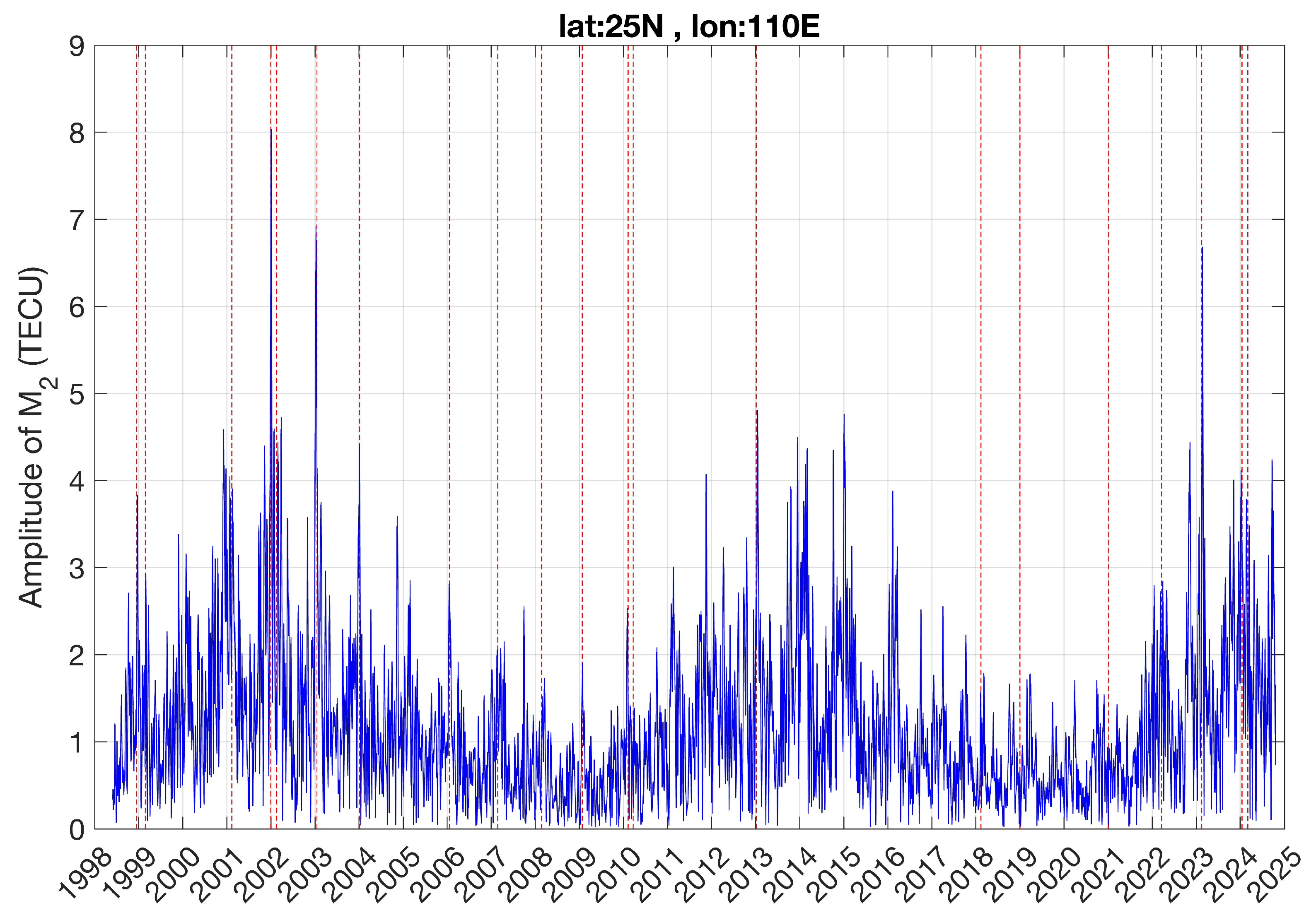
The derived time series of the M2 amplitude in TEC in Southern China (25° N, 110° E) is depicted in Figure 2. It can be seen that the M2 amplitude increases during solar maximum and also in northern hemispheric winter. There are some spikes which we like to call big L days. These big L days often occur shortly after SSW events, which are indicated by the vertical red dashed lines in Figure 2. The maximal M2 amplitude is about 8 TECU and it is reached on 2 January 2002, three days after the SSW of 30 December 2001. The absolute amplitude might be not a necessary criterium for a big L day. For example, there is a small M2 peak just after the SSW of 24 January 2009. We would also consider this peak a big L day. Indeed, the amplification of the M2 tide after the SSW of 2009 was the subject of the studies by [5,6]. Thus, we suggest that every M2 peak which is larger by a factor of 2 or more than its vicinity (e.g., monthly mean) might be considered as a big L day. Figure 2 shows that some big L days are not accompanied by SSW events. Thus, an amplification of M2 in TEC might be possible due to atmospheric and ionospheric processes other than SSW.
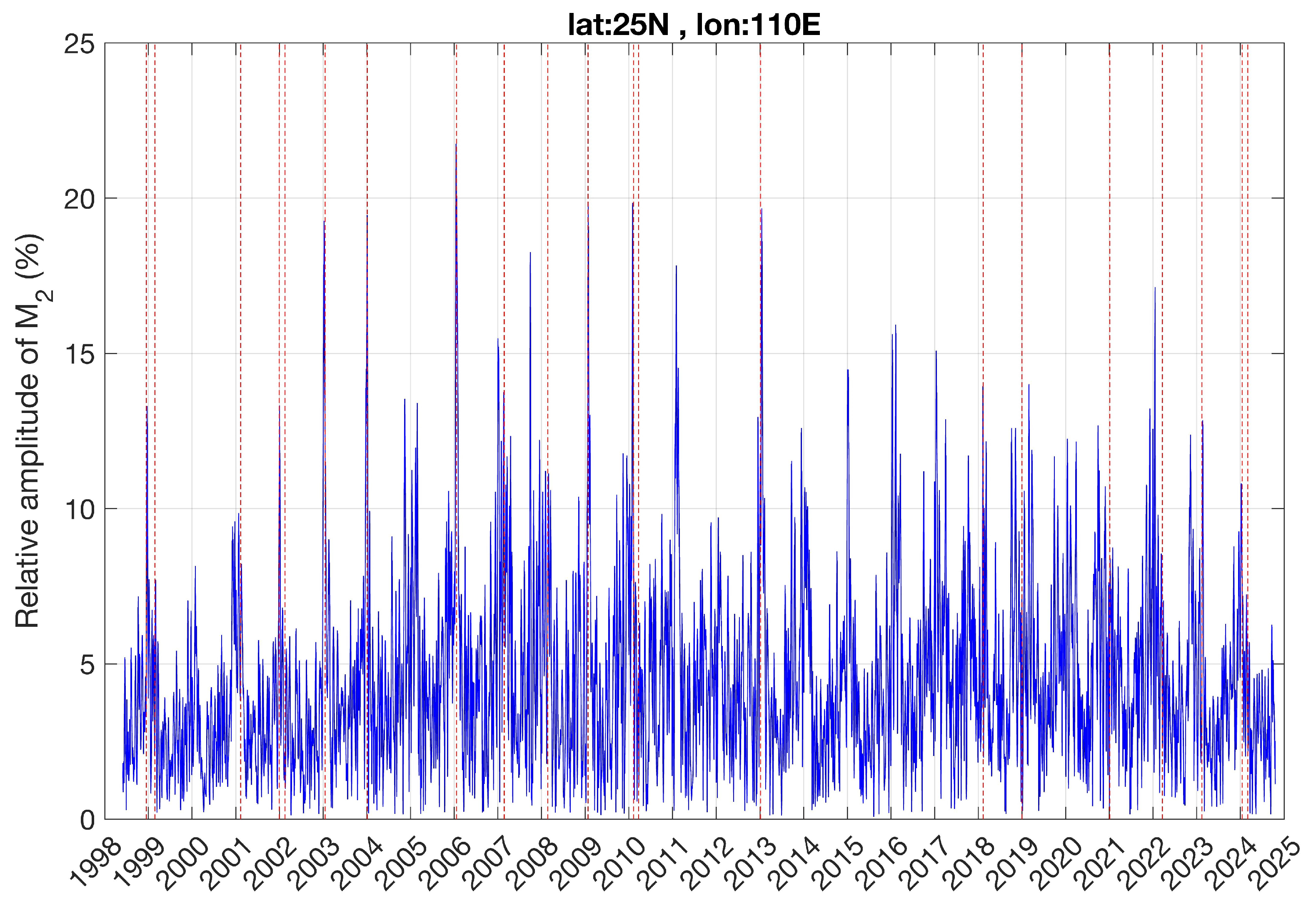
Past studies of lunar tides often discussed the relative amplitude of M2 in TEC, where the relative variation was calculated with respect to a daily zonal mean or a monthly climatological mean [5,25,26]. Figure 3 shows the relative M2 amplitude in percent (with respect to the monthly mean of TEC) in Southern China (25° N, 110° E). The series of the monthly mean was determined by means of a 30-day low pass filter, which was applied to the TEC series at the selected location. The relative amplitude reaches amplitudes of about 20%, for example, at the SSWs of 2006 and 2009. The mean relative amplitude from 1994 to 2024 was 4.5%. This value is comparable with the relative M2 amplitudes of 6 to 7%, as reported by [26] for Brazil and by [25] for the EIA region. Figure 3 shows that the relative M2 variation increases from about 4.5% to about 20% for several SSW events. This agrees with the amplification factor of 3 to 6 for the M2 tide, which was found for the major SSW of 2009 by [5] when analyzing CHAMP satellite observations and Global Scale Wave Model (GSWM) simulations of the thermosphere and ionosphere.
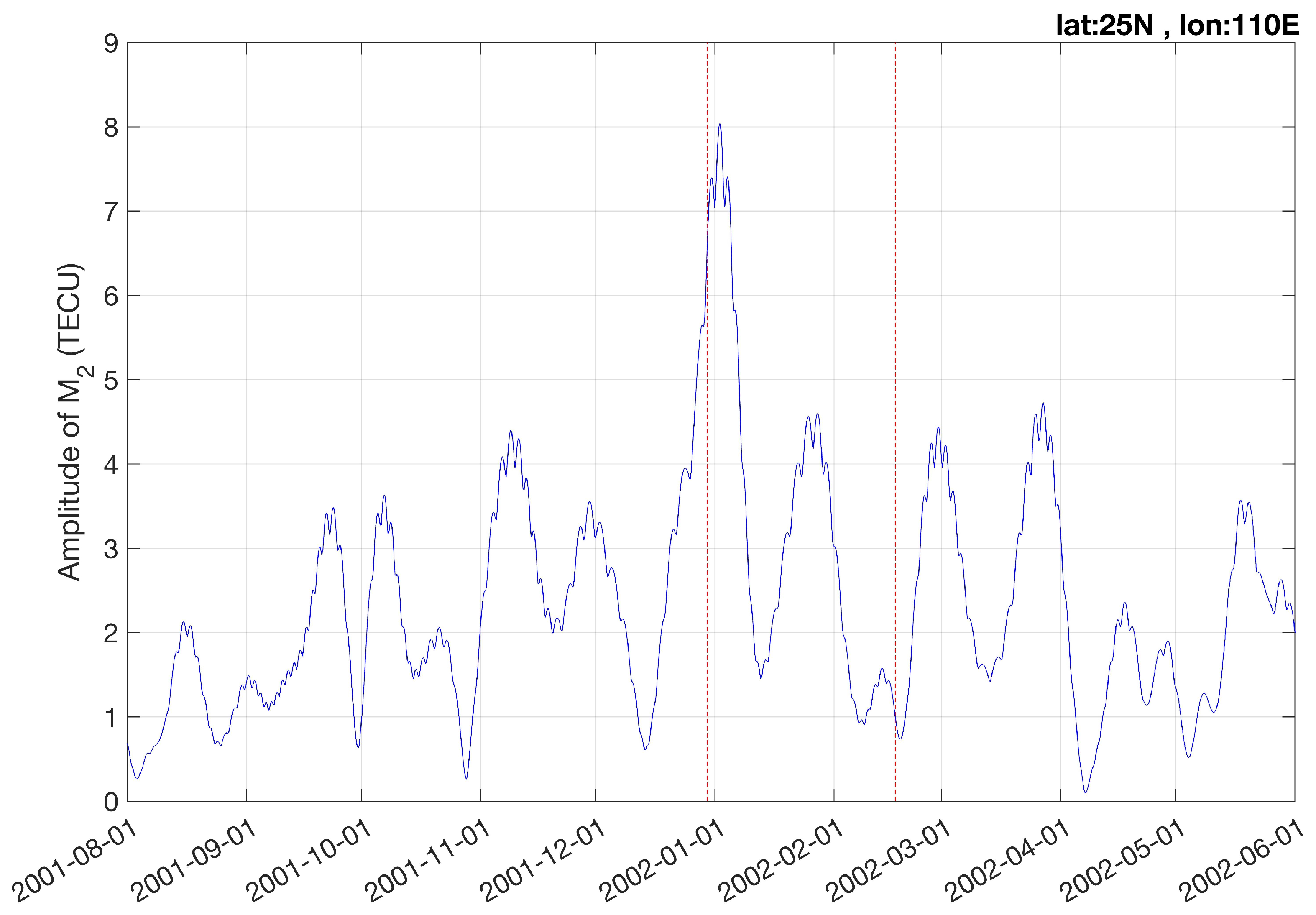
Figure 4 depicts a zoom of the M2 amplitude in northern hemispheric winter 2001/2002. It is obvious that the M2 peak just occurs after the SSW event of 30 December 2001. However, there is no clear M2 peak related to the other SSW on 17 February 2002. So, an SSW can happen without an obvious effect on the M2 amplitude. Figure 4 also shows that the time resolution of the M2 amplitude series is about 10 days. There are some small fluctuations with periods less than 10 days; however, this is just noise due to imperfect amplitude determination or small retrieval errors. The separation of the S2 variation from the M2 variation causes the limitation in the time resolution. It would be an interesting topic for future research if other data analysis methods could enhance the time resolution of the M2 amplitude series. Chau et al. [27] fitted sine waves of lunar and solar tides to mesospheric wind data and synthetic data. The results suggested that a data segment length of 21 days is the best choice. Shorter data window lengths of 11 and 15 days provided sometimes undesired artifacts in the retrieved parameters of the synthetic dataset.
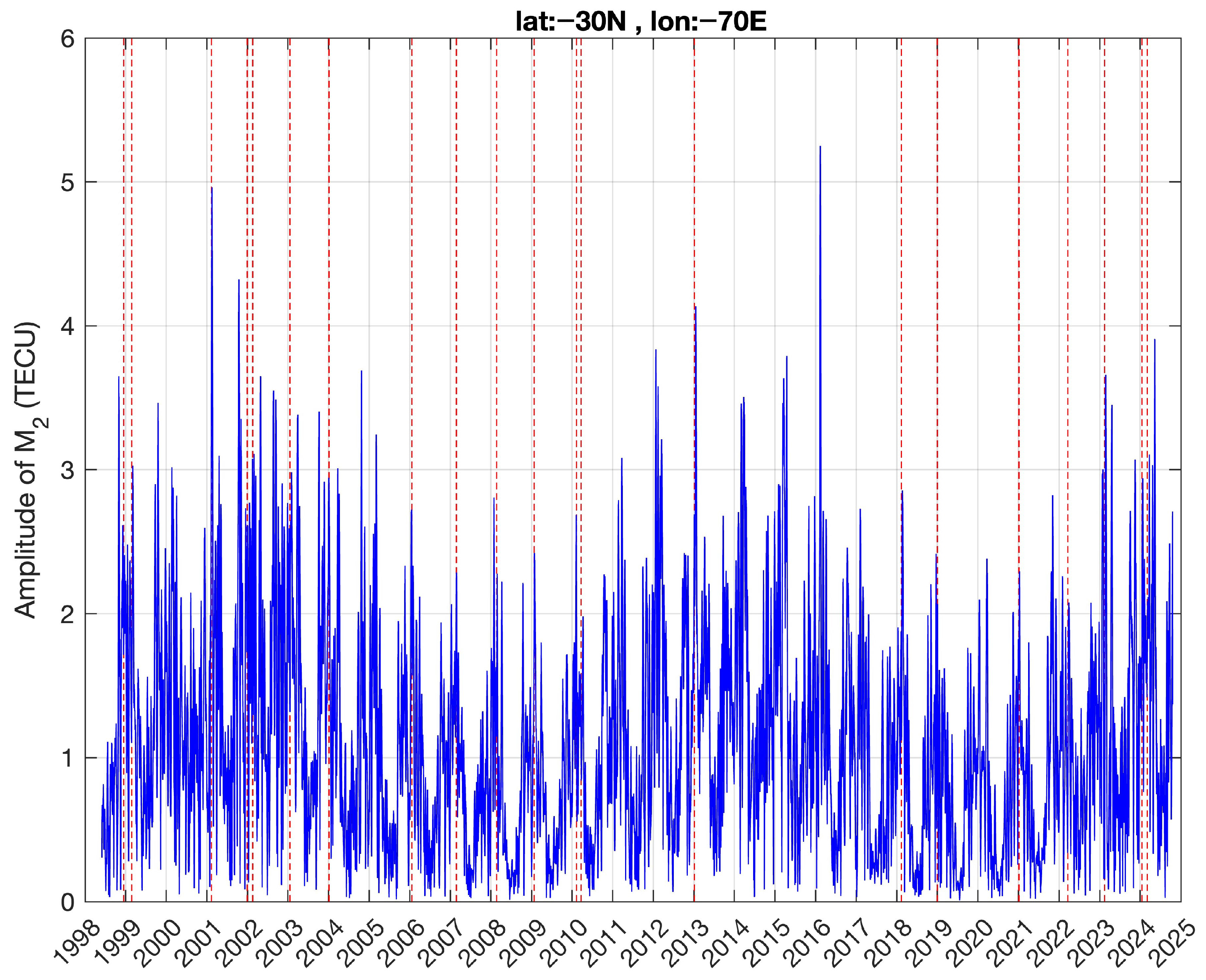
The time series of the M2 amplitude in TEC strongly depends on latitude and longitude. Thus, big L days can occur at one place while they do not happen at other places. As an example, we show the M2 amplitude series in Chile (−30° N, −70° E) in Figure 5. The maximal amplitude occurs on 12 February 2016. This big L day was not accompanied by a SSW event, and it was not obvious in the M2 amplitude series in Southern China (Figure 2). This example shows that the term big L day can be only used in a regional context.
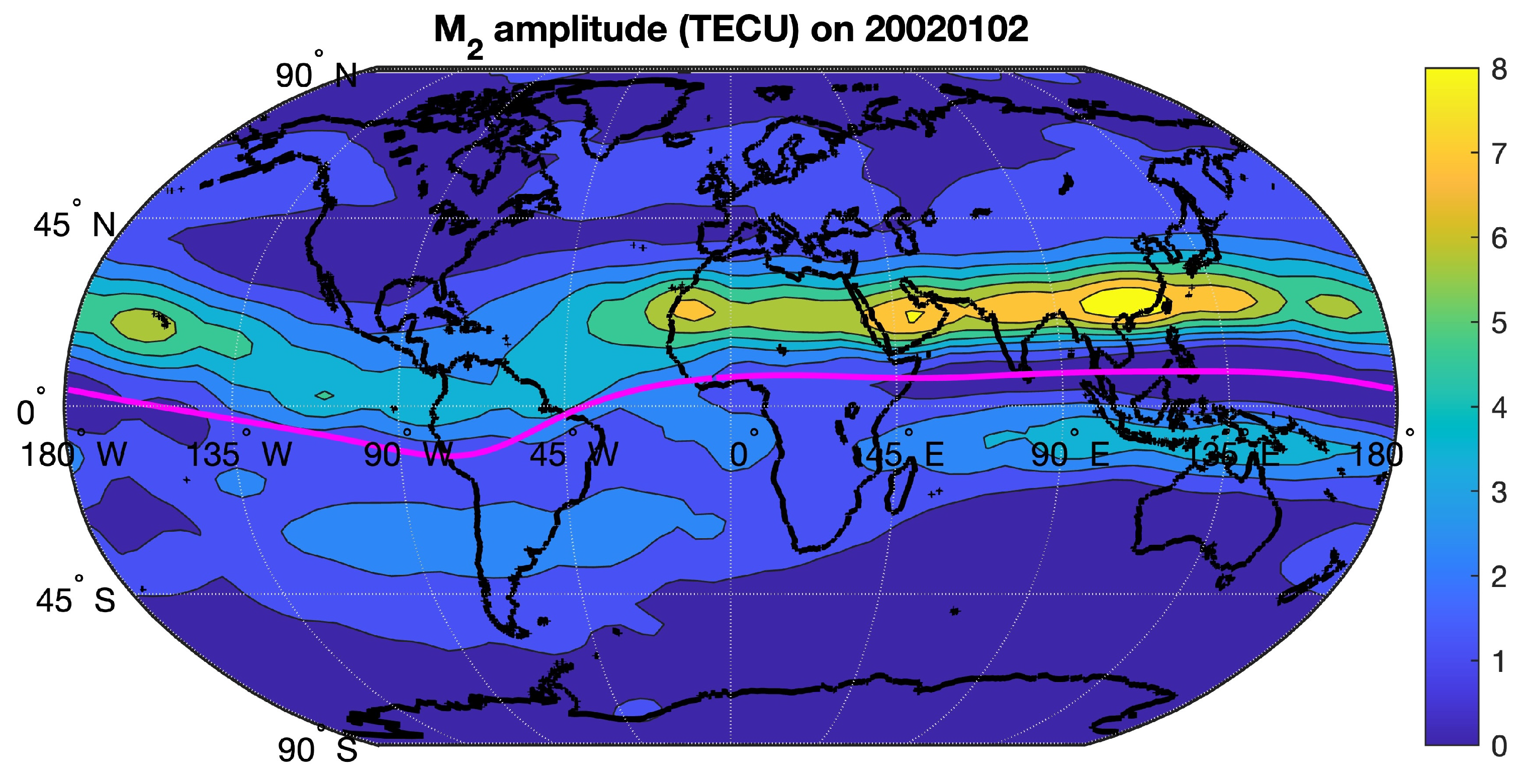
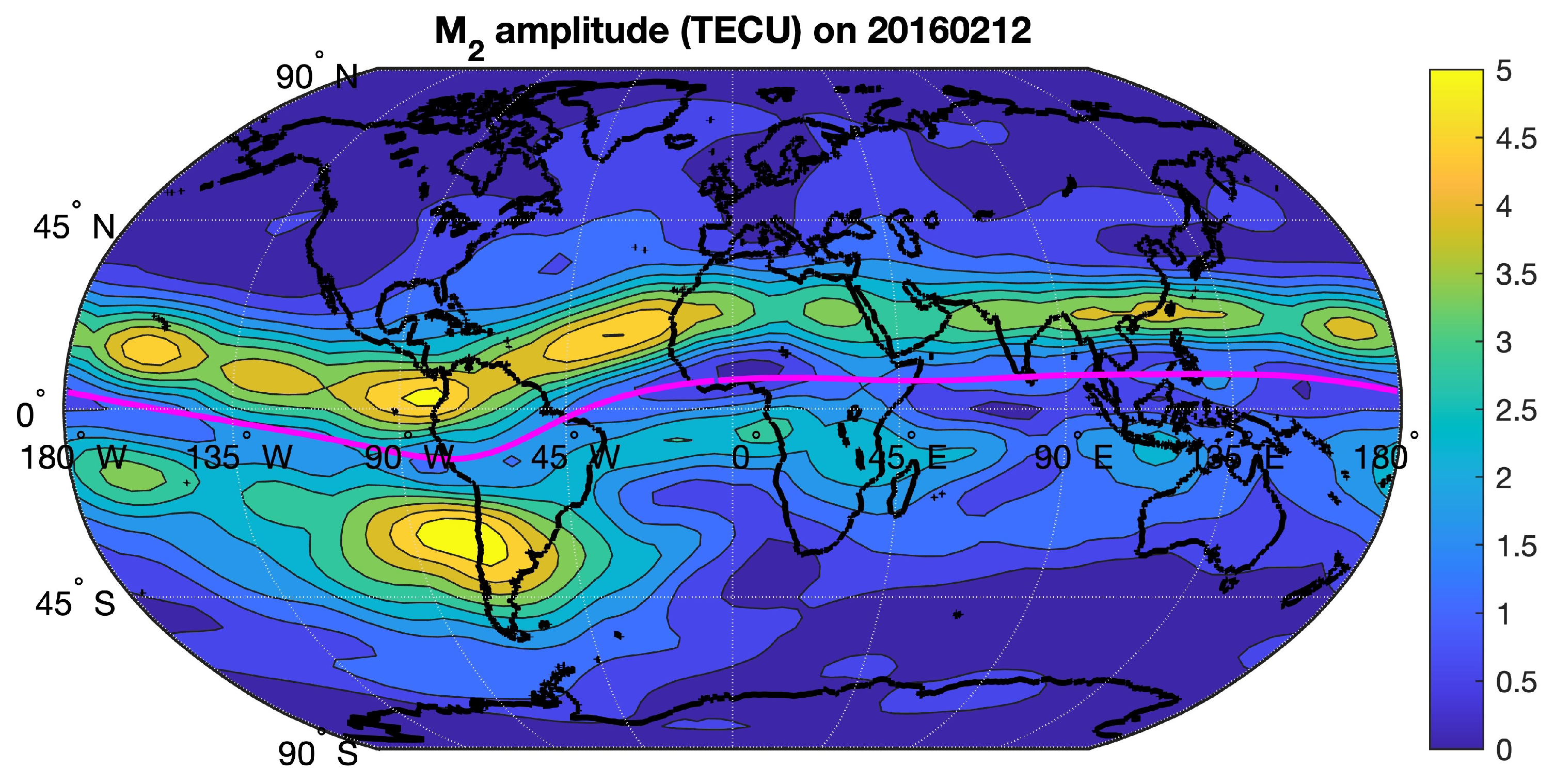
Figure 6 shows the geographical distribution of the M2 amplitude on the big L day of 2 January 2002. Large amplitudes are reached in the northern hemisphere close to the EIA. There are longitudinal variations with amplification of M2 amplitude over Hawaii, North Africa, Arabia and Southern China. The maximum of about 8 TECU occurs in Southern China. A similar plot is shown in Figure 7 for the big L day of 12 February 2016. Now, the maximum of the M2 amplitude occurs above Chile where a value of 5 TECU and more is reached. Figure 6 and Figure 7 show that the geographical distribution of the M2 amplitude can be quite different on different big L days.
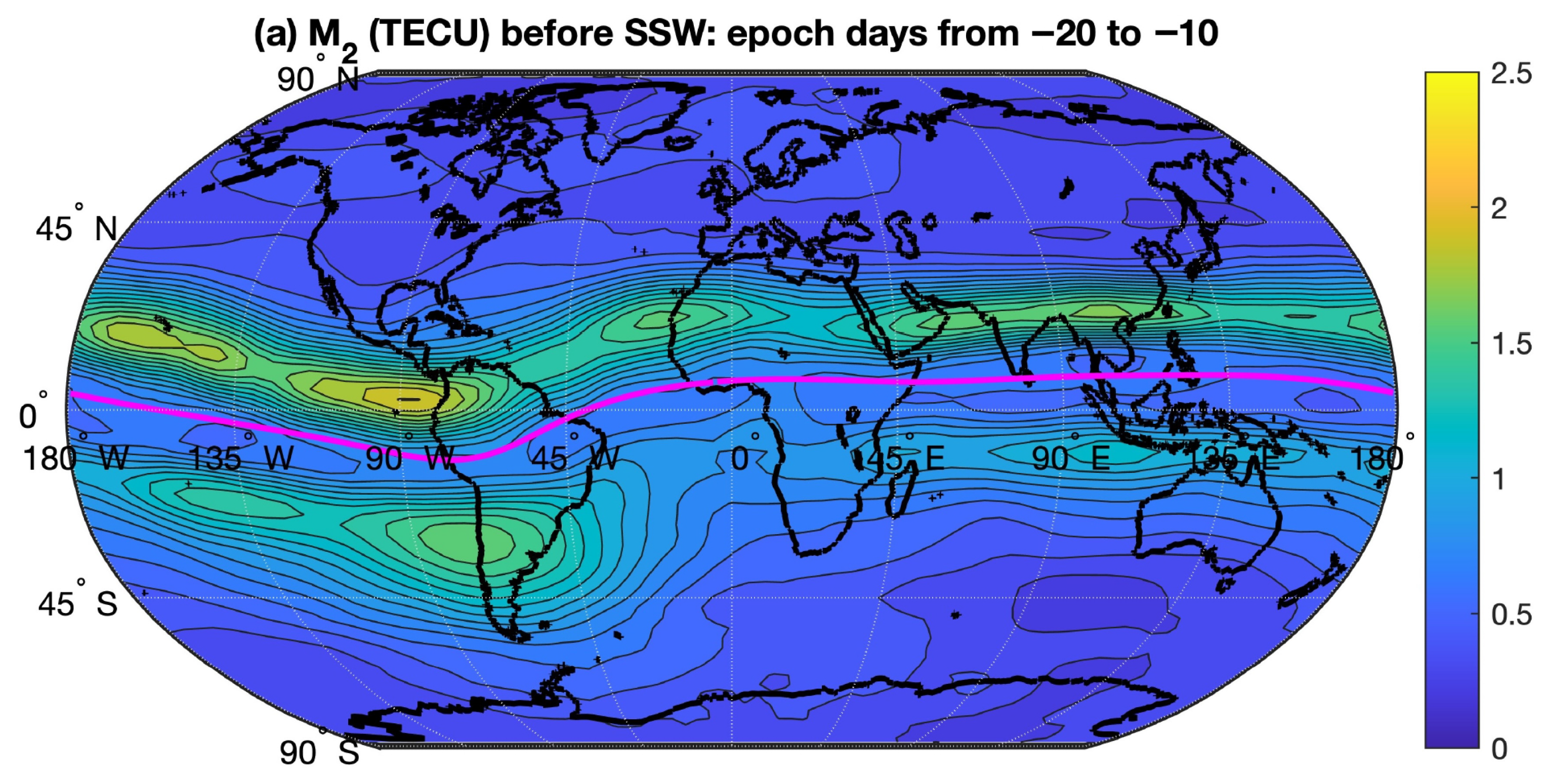
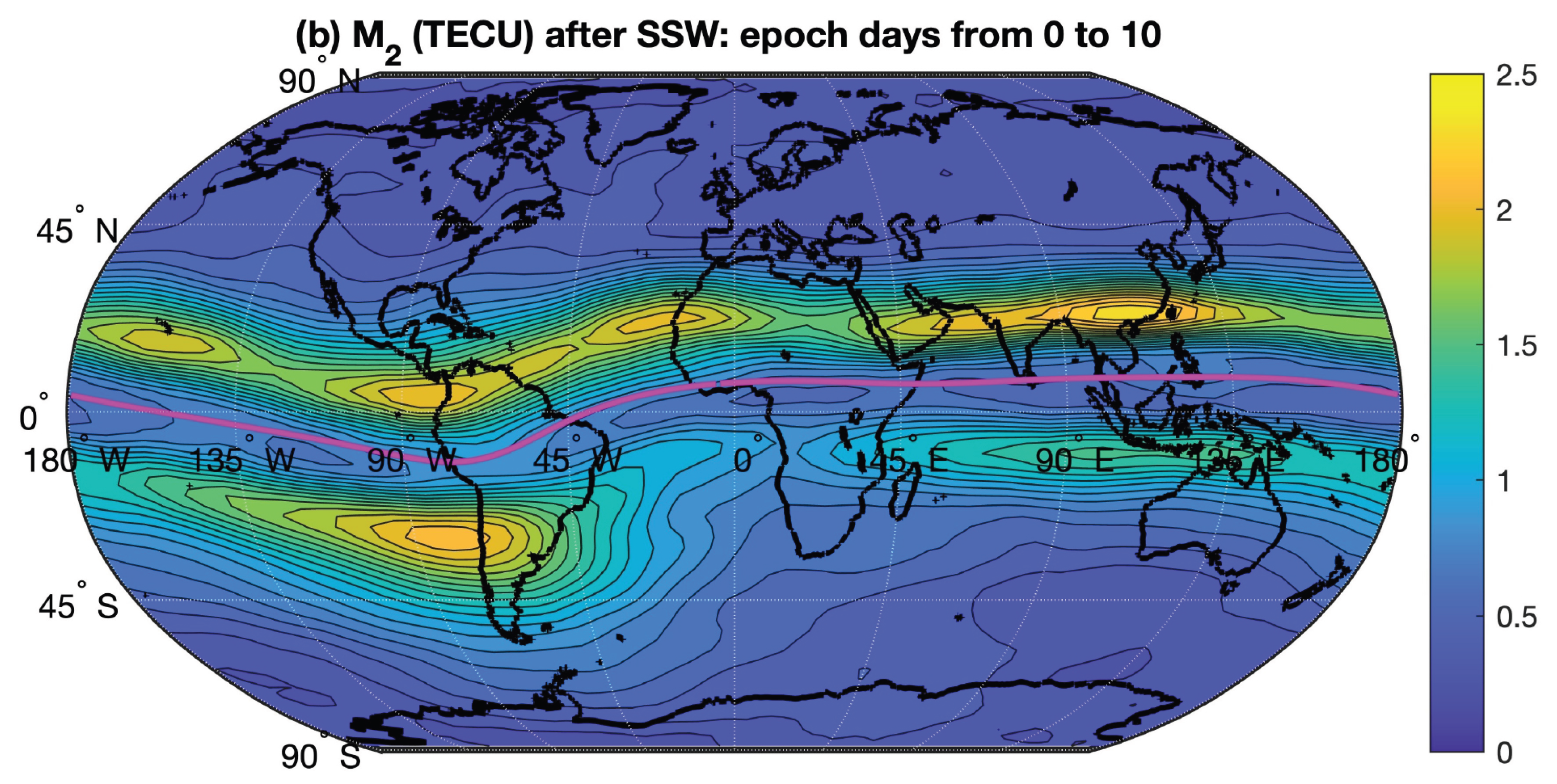
It was obvious that big L days often occur after SSW events. Thus, it makes sense to compute composites of the M2 amplitude with respect to epoch days, where epoch day 0 refers to the central date of the SSW. The composites contain the average results of the 21 major SSWs listed in Table 1. Figure 8a shows the M2 amplitude averaged for the time interval of 20 to 10 days before the SSW event. Figure 8b shows the M2 amplitude averaged from epoch day 0 to 10 after the SSW. It is obvious that the M2 amplitude is stronger after the SSW than before the SSW. Generally, the M2 amplitude is strong along the EIA with maxima over the American longitude sector and Southern China.
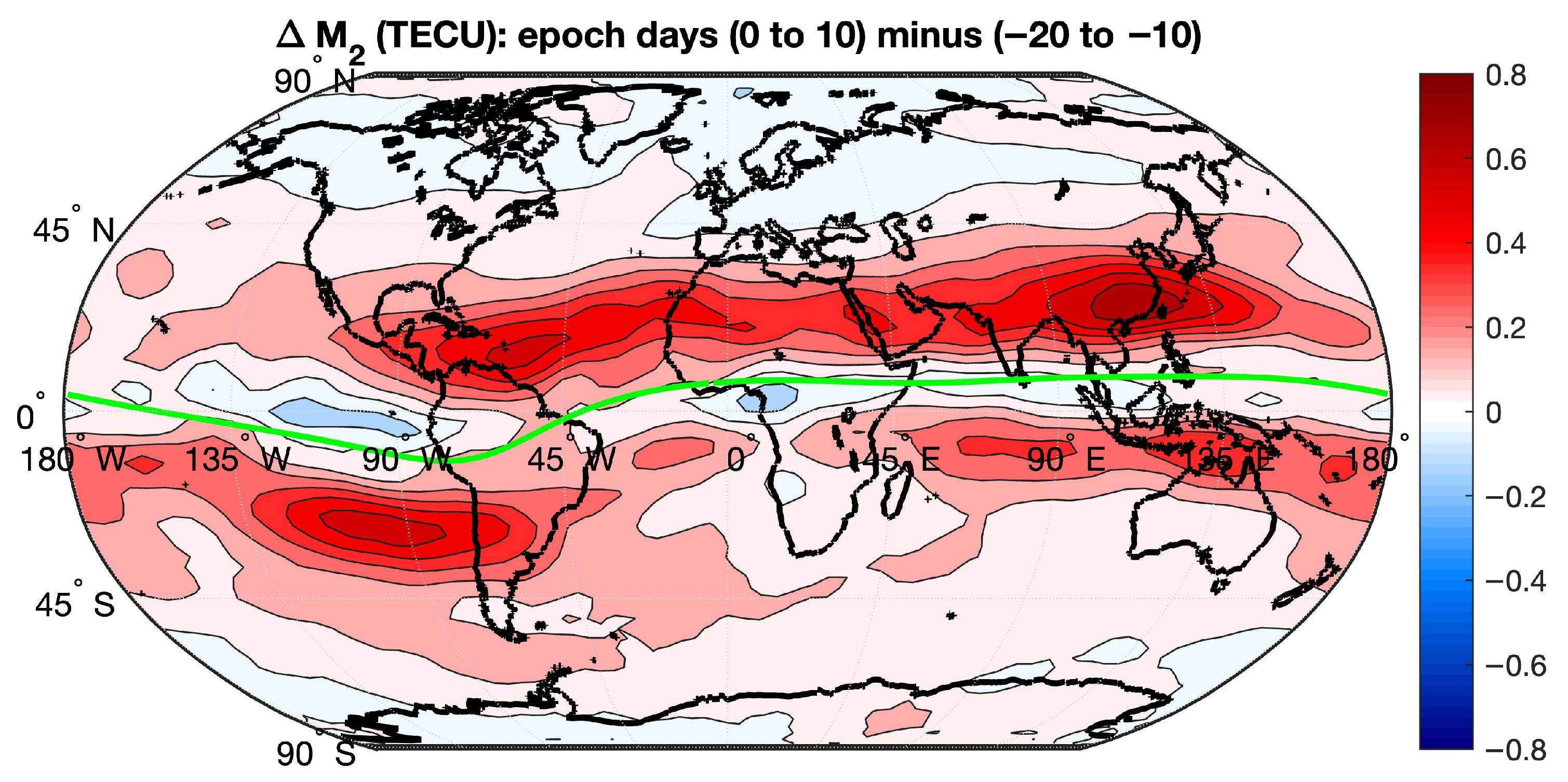
Figure 9 shows the difference of the composites before SSW (Figure 8b minus Figure 8a). The largest increase in the M2 amplitude occurs after the SSW with about 0.8 TECU in Southern China.

4. Discussion and Conclusions

In the past, research on big L days was restricted to the horizontal intensity of the geomagnetic field observed by ground-based magnetometers. It was supposed that the different vertical propagation conditions of the atmospheric tide M2 and differences in the electric conductivity in the E region were responsible for the geographical distribution of the M2 amplitude [14]. In particular, a strong lunar M2 variation was observed in Peru. The results of the magnetometer data cannot be directly transfered to the GNSS TEC results, since the generation of the lunar TEC variations further depend on the electrodynamic lifting processes of the equatorial ionospheric plasma and transport processes in the F region. Thus, it is worth studying the topic of big L days in GNSS TEC. Some of the obtained results are a bit similar to the results from the magnetometer data, since the electric field variations in the E region also play a crucial role in the GNSS TEC lunar variations.
The analysis of the GNSS TEC time series from 1998 to 2024 yielded the result that M2 amplitudes of up to 8 TECU can be achieved during big L days. A higher value is likely, since the time resolution of our analysis was limited to about 10 days. However, there are other studies suggesting that a higher time resolution may cause artifacts [27]. The amplitude values of the relative M2 variations roughly agree with previous studies by [5,25,26]. A mean value of about 4.5% was found for Southern China from 1998 to 2024. During several SSW events (e.g., SSWs of 2006 and 2009), the M2 amplitude increased from about 4.5% to about 20%. Such an amplification of about 4 was also reported by [5] for the SSW of 2009 and explained by means of the Pekeris resonance effect, since the resonance period of the atmosphere can shift to the period of the lunar semidiurnal tide during an SSW event.
Defining a big L day is difficult since the M2 amplitude largely depends on the solar cycle and the seasonal cycle, with maximal values at solar maximum and northern hemispheric winter. It also makes a difference if one looks at the absolute or relative variations in the M2 amplitude (Figure 2 and Figure 3). It seems that the relationship between big L day and SSW event is better seen in the relative M2 amplitude. We suggest that a sudden increase in the M2 amplitude by a factor of 2 or more (relative to the monthly mean) at a certain location would indicate a big L day at this location. As an example, we found a big L day in Chile (12 February 2016) which was not extraordinary in Southern China. Further, there was a big L day in Southern China (2 January 2002) which was not strong in Chile.
By looking at the time series of the M2 amplitude, it is evident that big L days often occur a few days after SSW events. It is likely that SSWs change the vertical propagation condition of the lunar tide, leading to stronger electric field variations in the dynamo region [5,6]. An amplification factor of 3 to 6 for the M2 tide by an SSW, as reported by [5], agrees with the spikes in the time series of Figure 3 in the present study.
However, we found several SSWs which were not accompanied by big L days. Also, big L days can happen without a preceding SSW event. This indicates the existence of other reasons for big L days. In addition, the circulation changes in the middle atmosphere might be different for different SSW events, so some SSWs can amplify the lunar tide more than others. In spite of these considerations, the composite analysis of 21 major SSWs clearly shows that the M2 amplitude after the SSW event is larger than before the SSW event. We also found that the maximal SSW-induced increase in the M2 amplitude occurs in Southern China.
Generally, our study showed that big L days in GNSS TEC are an important topic. Because of the sudden amplification of the M2 amplitude by a factor of 4 or more and large absolute values of the M2 amplitude of up to 8 TECU, big L days should be considered in space weather research. The worldwide maps of GNSS TEC, available since 1998, provide excellent material for investigating the characteristics of big L days for case studies. Lunar effects are usually not included in atmospheric models. A characterization of big L days in TEC leads to progress in ionospheric research. The GNSS TEC data could help to verify the propagation of lunar tides in future space weather models. Another interesting target would be to characterize the differences and similarities of big L days in ground-based magnetometer data and TEC data.


Author Contributions

Conceptualization, K.H. and G.M.; methodology, K.H.; software, K.H. and G.M.; formal analysis, K.H. and G.M.; writing—original draft preparation, K.H.; writing—review and editing, K.H. and G.M. All authors have read and agreed to the published version of the manuscript.

Funding

This research received no external funding.

Institutional Review Board Statement

Not applicable.

Informed Consent Statement

Not applicable.

Data Availability Statement

The TEC maps of the IGS are available at CDDIS, NASA’s archive of space geodesy data (https://cddis.nasa.gov/, accessed on 18 September 2025). The IGS is calculating these TEC maps [19].

Acknowledgments

We thank The International GNSS Service (IGS) for providing TEC maps. We thank the three reviewers and the editor for their corrections and improvements that enhanced the manuscript.

Conflicts of Interest

The authors declare no conflicts of interest.

References

  1. Schindelegger, M.; Sakazaki, T.; Green, M. Chapter 16—Atmospheric tides—An Earth system signal. In A Journey Through Tides; Green, M., Duarte, J.C., Eds.; Elsevier: Amsterdam, The Netherlands, 2023; pp. 389–416. [Google Scholar] [CrossRef]
  2. Hagan, M.; Forbes, J.; Richmond, A. Atmospheric tides. In Encyclopedia of Atmospheric Sciences; Holton, J.R., Ed.; Academic Press: Oxford, UK, 2003; pp. 159–165. [Google Scholar] [CrossRef]
  3. Lindzen, R.S.; Chapman, S. Atmospheric tides. Space Sci. Rev. 1969, 10, 3–188. [Google Scholar] [CrossRef]
  4. Zhang, J.T.; Forbes, J.M. Lunar tidal winds between 80 and 110 km from UARS/HRDI wind measurements. J. Geophys. Res. Space Phys. 2013, 118, 5296–5304. [Google Scholar] [CrossRef]
  5. Forbes, J.M.; Zhang, X. Lunar tide amplification during the January 2009 stratosphere warming event: Observations and theory. J. Geophys. Res. Space Phys. 2012, 117, A12312. [Google Scholar] [CrossRef]
  6. Pedatella, N.M.; Liu, H.L.; Sassi, F.; Lei, J.; Chau, J.L.; Zhang, X. Ionosphere variability during the 2009 SSW: Influence of the lunar semidiurnal tide and mechanisms producing electron density variability. J. Geophys. Res. Space Phys. 2014, 119, 3828–3843. [Google Scholar] [CrossRef]
  7. Yamazaki, Y.; Stolle, C.; Matzka, J.; Siddiqui, T.A.; Luehr, H.; Alken, P. Longitudinal Variation of the Lunar Tide in the Equatorial Electrojet. J. Geophys. Res. Space Phys. 2017, 122, 12,445–12,463. [Google Scholar] [CrossRef]
  8. Yamazaki, Y.; Richmond, A.D.; Yumoto, K. Stratospheric warmings and the geomagnetic lunar tide: 1958–2007. J. Geophys. Res. Space Phys. 2012, 117, A04301. [Google Scholar] [CrossRef]
  9. Zhang, J.T.; Forbes, J.M.; Zhang, C.H.; Doornbos, E.; Bruinsma, S.L. Lunar tide contribution to thermosphere weather. Space Weather 2014, 12, 538–551. [Google Scholar] [CrossRef]
  10. Yamazaki, Y.; Richmond, A.D. A theory of ionospheric response to upward-propagating tides: Electrodynamic effects and tidal mixing effects. J. Geophys. Res. Space Phys. 2013, 118, 5891–5905. [Google Scholar] [CrossRef]
  11. Wu, T.Y.; Liu, J.Y.; Lin, C.Y.; Chang, L.C. Response of Ionospheric Equatorial Ionization Crests to Lunar Phase. Geophys. Res. Lett. 2020, 47, e2019GL086862. [Google Scholar] [CrossRef]
  12. Hocke, K. Modulation of the lunar semidiurnal tide in GNSS TEC by the variable Earth-Moon distance. Front. Astron. Space Sci. 2025, 12, 1585247. [Google Scholar] [CrossRef]
  13. Bartels, J.; Johnston, H.F. Geomagnetic tides in horizontal intensity at Huancayo. Terr. Magn. Atmos. Electr. 1940, 45, 269–308. [Google Scholar] [CrossRef]
  14. Siddiqui, T.A.; Stolle, C.; Lühr, H. Longitude-dependent lunar tidal modulation of the equatorial electrojet during stratospheric sudden warmings. J. Geophys. Res. Space Phys. 2017, 122, 3760–3776. [Google Scholar] [CrossRef]
  15. Pekeris, C.L. Atmospheric oscillations. Proc. Roy. Soc. London 1937, 158A, 650–671. [Google Scholar] [CrossRef]
  16. Stening, R.J.; Forbes, J.M.; Hagan, M.E.; Richmond, A.D. Experiments with a lunar atmospheric tidal model. J. Geophys. Res. Atmos. 1997, 102, 13465–13471. [Google Scholar] [CrossRef]
  17. Ma, G.; Hocke, K. Effects of sudden stratospheric warmings on the global ionospheric total electron content using a machine learning analysis. Atmos. Chem. Phys. 2025, 25, 5009–5020. [Google Scholar] [CrossRef]
  18. Hocke, K.; Wang, W.; Ma, G. Influences of sudden stratospheric warmings on the ionosphere above Okinawa. Atmos. Chem. Phys. 2024, 24, 5837–5846. [Google Scholar] [CrossRef]
  19. Hernández-Pajares, M.; Juan, J.M.; Sanz, J.; Orus, R.; Garcia-Rigo, A.; Feltens, J.; Komjathy, A.; Schaer, S.C.; Krankowski, A. The IGS VTEC maps: A reliable source of ionospheric information since 1998. J. Geod. 2009, 83, 263–275. [Google Scholar] [CrossRef]
  20. Hocke, K.; Wang, W.; Cahyadi, M.N.; Ma, G. Quasi-Diurnal Lunar Tide O1 in Ionospheric Total Electron Content at Solar Minimum. J. Geophys. Res. Space Phys. 2024, 129, e2024JA032834. [Google Scholar] [CrossRef]
  21. Hocke, K.; Pedatella, N.M.; Yamazaki, Y. Nonlinear Interaction of the Lunar Tide M2 and the Diurnal Variation of Electron Density in the Ionosphere. J. Geophys. Res. Space Phys. 2025, 130, e2024JA033482. [Google Scholar] [CrossRef]
  22. Studer, S.; Hocke, K.; Kämpfer, N. Intraseasonal oscillations of stratospheric ozone above Switzerland. J. Atmos.-Sol.-Terr. Phys. 2012, 74, 189–198. [Google Scholar] [CrossRef]
  23. Palmeiro, F.M.; Garcia-Serrano, J.; Ruggieri, P.; Batte, L.; Gualdi, S. On the Influence of ENSO on Sudden Stratospheric Warmings. J. Geophys. Res. Atmos. 2023, 128, e2022JD037607. [Google Scholar] [CrossRef]
  24. Hersbach, H.; Bell, B.; Berrisford, P.; Hirahara, S.; Horanyi, A.; Munoz-Sabater, J.; Nicolas, J.; Peubey, C.; Radu, R.; Schepers, D.; et al. The ERA5 global reanalysis. Q. J. R. Meteorol. Soc. 2020, 146, 1999–2049. [Google Scholar] [CrossRef]
  25. Pedatella, N.M.; Forbes, J.M. Global structure of the lunar tide in ionospheric total electron content. Geophys. Res. Lett. 2010, 37, L06103. [Google Scholar] [CrossRef]
  26. Paulino, A.R.; Lima, L.M.; Almeida, S.L.; Batista, P.P.; Batista, I.S.; Paulino, I.; Takahashi, H.; Wrasse, C.M. Lunar tides in total electron content over Brazil. J. Geophys. Res. Space Phys. 2017, 122, 7519–7529. [Google Scholar] [CrossRef]
  27. Chau, J.L.; Hoffmann, P.; Pedatella, N.M.; Matthias, V.; Stober, G. Upper mesospheric lunar tides over middle and high latitudes during sudden stratospheric warming events. J. Geophys. Res. Space Phys. 2015, 120, 3084–3096. [Google Scholar] [CrossRef]
Figure 1. Frequency segment of the TEC spectrum in Southern China (25° N, 110° E, 1998–2024) containing the lunar tide M2 and its modulation peaks. The amplitude is normalized by the maximum of the M2 amplitude. The influence of the solar semidiurnal tide is marginal in the selected frequency segment.
Atmosphere 16 01191 g001
Figure 2. Time series of the M2 amplitude in TEC in Southern China (25° N, 110° E). The vertical red dashed lines indicate the central dates of all major SSW events. The peaks in the M2 amplitude (big L days) often correlate with the SSW events.
Atmosphere 16 01191 g002
Figure 3. Time series of the relative M2 amplitude in percent (with respect to the monthly mean of TEC) in Southern China (25° N, 110° E). The vertical red dashed lines indicate the central dates of all major SSW events. The peaks in the M2 amplitude (big L days) often correlate with the SSW events. The mean of the relative M2 amplitude is 4.5% for the time interval 1998 to 2024.
Atmosphere 16 01191 g003
Figure 4. Zoom of the time series of the M2 amplitude in TEC in Southern China (25° N, 110° E). The vertical red dashed lines indicate the central dates of the SSW events on 30 December 2001 and 17 February 2002. The peak in the M2 amplitude (big L day) occurs on 2 January 2002, a few days after the first SSW event. The fluctuations show that the time resolution of the M2 amplitude is not better than 10 days.
Atmosphere 16 01191 g004
Figure 5. Time series of the M2 amplitude in TEC in Chile (−30° N, −70° E). The vertical red dashed lines indicate the central dates of all major SSW events. The peaks in the M2 amplitude (big L days) often correlate with the SSW events. The largest M2 peak occurs on 12 February 2016 when no SSW event is present.
Atmosphere 16 01191 g005
Figure 6. M2 amplitude in TEC on the big L day of 2 January 2002. The maximal value of 8 TECU is reached in Southern China. The big L day effect (large amplitude) is restricted to the northern hemisphere. The magenta line indicates the magnetic equator.
Atmosphere 16 01191 g006
Figure 7. M2 amplitude in TEC on the big L day of 12 February 2016. Maximal values are reached in Chile. The big L day effect (large amplitude) is more associated with the American longitude sector. The magenta line indicates the magnetic equator.
Atmosphere 16 01191 g007
Figure 8. Composites of the M2 amplitude in TEC with respect to the central dates of 21 major SSW events: (a) 20 to 10 days before SSW, and (b) 0 to 10 days after SSW. The M2 amplitude after SSW (b) is increased in many regions compared to the M2 amplitude before the SSW (a).
Atmosphere 16 01191 g008aAtmosphere 16 01191 g008b
Figure 9. Difference in composites of the M2 amplitude in TEC (from Figure 8): 0 to 10 days after SSW minus 20 to 10 days before SSW.
Atmosphere 16 01191 g009
Table 1. Central dates of the selected 21 major SSWs in the Northern Hemisphere from 1998 to 2024.
19981215199902252001021120011230
20020217200301182004010520060120
20070224200802222009012420100209
20100323201301062018021120190101
20210104202203202023021420240116
20240304
Disclaimer/Publisher’s Note: The statements, opinions and data contained in all publications are solely those of the individual author(s) and contributor(s) and not of MDPI and/or the editor(s). MDPI and/or the editor(s) disclaim responsibility for any injury to people or property resulting from any ideas, methods, instructions or products referred to in the content.