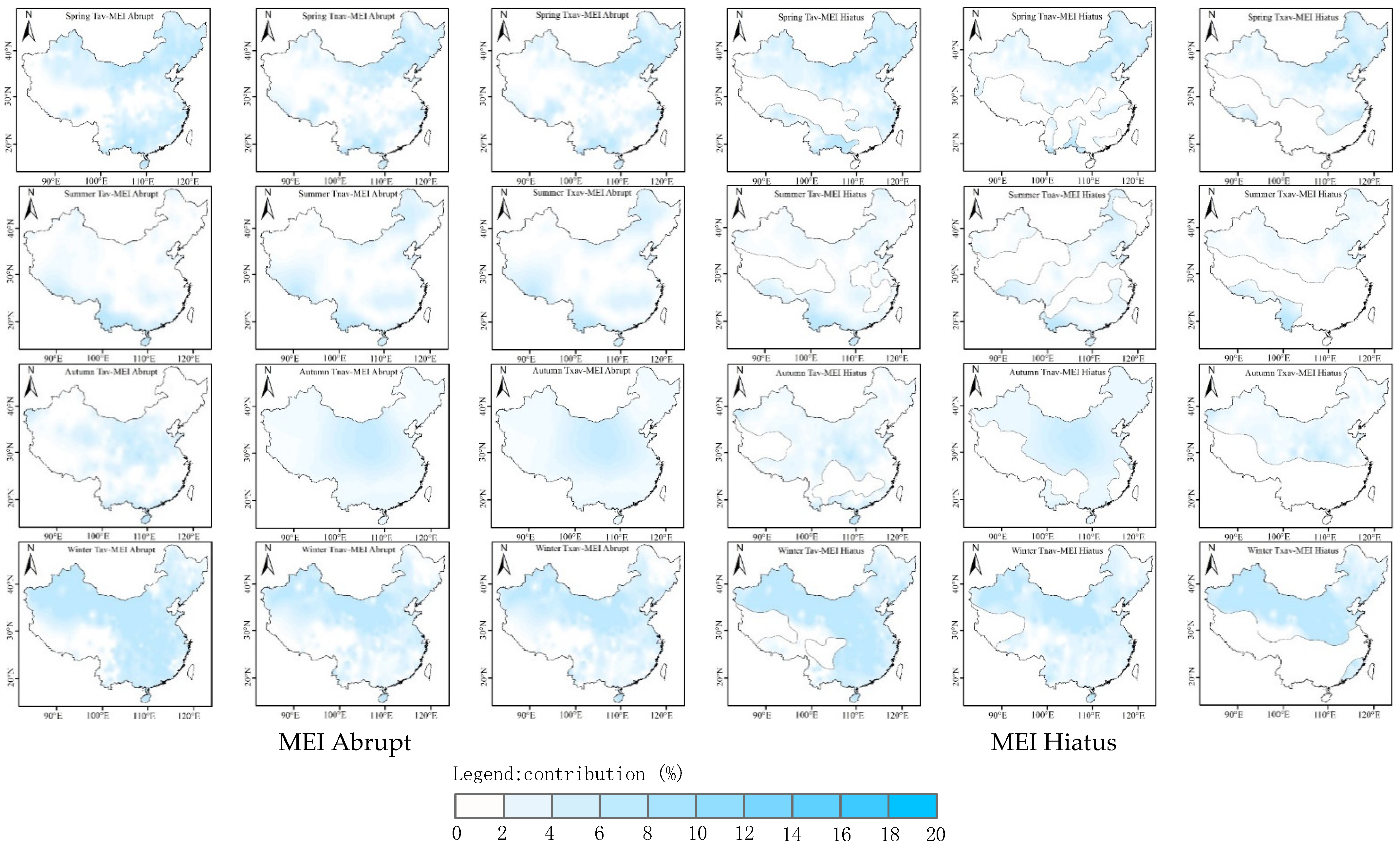

Quantitative Mechanisms of the Responses of Abrupt Seasonal Temperature Changes and Warming Hiatuses in China to Their Influencing Factors
Abstract
1. Introduction
2. Overview of the Study Area, Data and Methods
2.1. Overview of the Study Area
2.2. Data Sources
2.3. Data Processing and Utilization Methods
- (1)
- To ensure consistent time series data for the temperature metrics and influencing factors, the missing measurements were filled in through interpolation based on correlation and regression analysis [23].
- (2)
- The Mann–Kendall nonparametric test was used to detect abrupt changes in the temperature metrics and their influencing factors [24].
- (3)
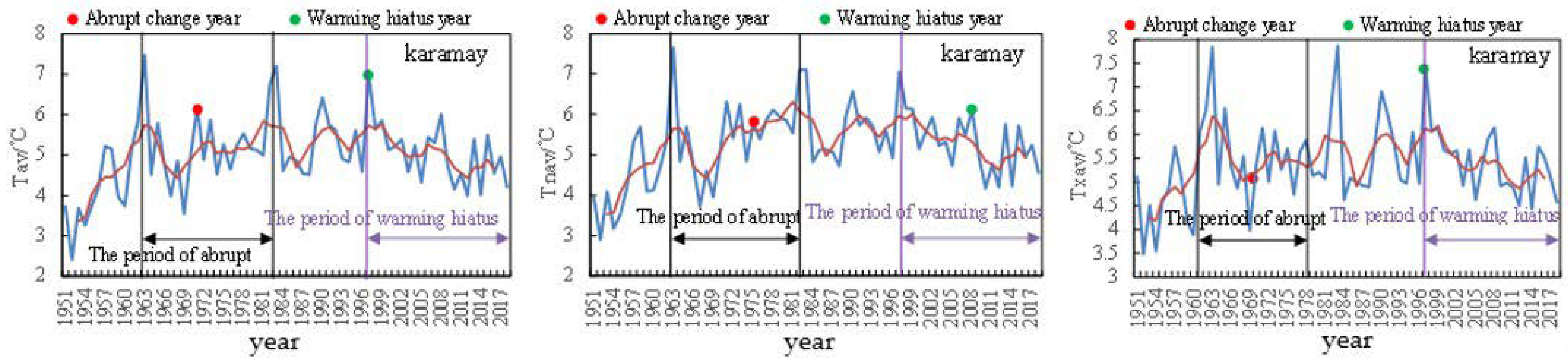
- Based on previous research [25], each year in which a warming hiatus started after an abrupt temperature change (referred to as a warming hiatus year) was identified by analysing the temperature series and its stagewise trend line in combination with the sliding value series for 3 to 5 years and its stagewise trend line. A year was considered a warming hiatus year if it met the following criteria: (1) the climate tendency rate in the year in question reached the relative maximum value after an abrupt temperature change; (2) and the climate tendency rate did not exceed 0.1 °C/10a from the year in question to the end of the series (i.e., 2018) or up to a certain year before the end of the series.
- (4)
- The trends of the time series for the temperature metrics and their influencing factors were analysed based on the climate tendency rate.
- (5)
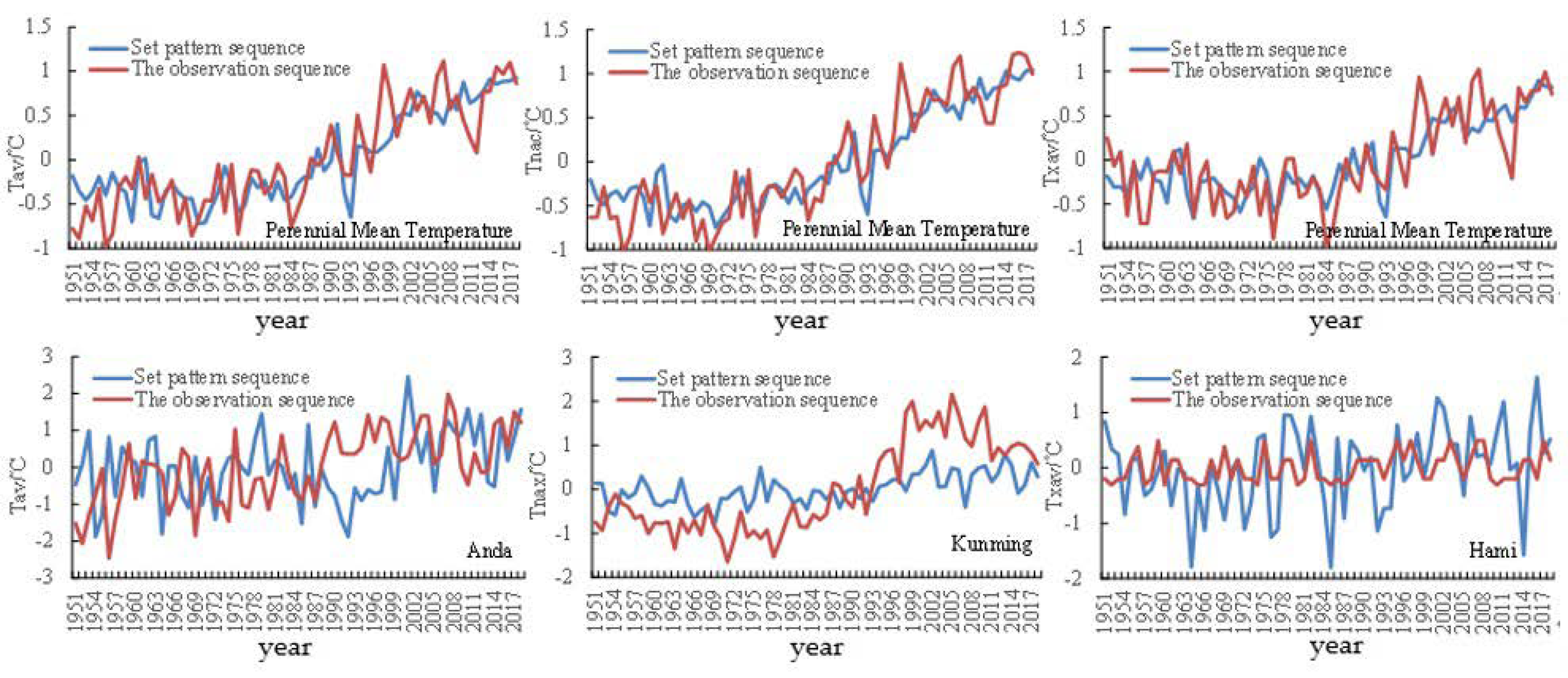
- The contribution of the natural variability to the temperature metrics was determined using the detrending method [26]. Specifically, the contribution of human activity to the change in each temperature field in China was removed based on the data generated using the CMIP6 models (referred to as CMIP6 model data) to yield the corresponding temperature field for which the natural variability was responsible. The conventional detrending method removes inherent trends in observational data. Because the CMIP6 model data reflected the effects of external forcings, we used the aggregated time series generated using the CMIP6 models to eliminate the effects of human activity on the observed temperature fields in China. The specific procedure was as follows. The abovementioned seven models were ranked based on their temporal and spatial simulation performance. The weight of each model was calculated. A weighted aggregation of the results produced by the models was then produced. Letbe the mean observed temperature anomaly field series for China, where F is the external forcings and I is the internal climate variability, that is, natural variability. The mean aggregated model-generated series contained the response to the majority of the external forcing fields over the historical period and almost none of the response to the internal climate variability and fit relatively reasonably to the warming trends (correlation coefficient R between ( and = 0.72). Let , where is the coefficient of the following regression equation: (residual term). Then, the nonexternal forcing part can be estimated as follows: . This ensures that and are uncorrelated (R = 0.03). While contains the changes in the majority of the external forcings in the historical data, may still contain some external forcing-related information that is missing in the aggregated model-generated series. Thus, is considered the primary part of the natural variability. Based on this principle, the temperature at station i in the nth year, T(n,i), can be expressed as follows:The temperature change has four components, namely the contribution of the external forcings , the contribution of the natural variability , the contribution of the local response to the external forcings , and the contribution of the local response to the natural variability . The last two terms have a nonsignificant impact on the long-term interdecadal temperature change and are thus negligible; therefore, only the impact of the first two terms is considered. Then, we havewhere is the regression coefficient obtained from the regression of the observed temperature upon . In the above equations, the temperature anomaly field (relative to the period 1951–1990) is used to eliminate the errors in the values simulated using the models for the reference period, with the goal of minimizing the overall error.
- (6)
- The three temperature fields were decomposed via EOF analysis [27]. The principle of EOF analysis is to decompose a meteorological element field into multiple independent linear combinations of time coefficients and spatial vectors, thereby basically reflecting the information contained in the original meteorological element field.
- (7)
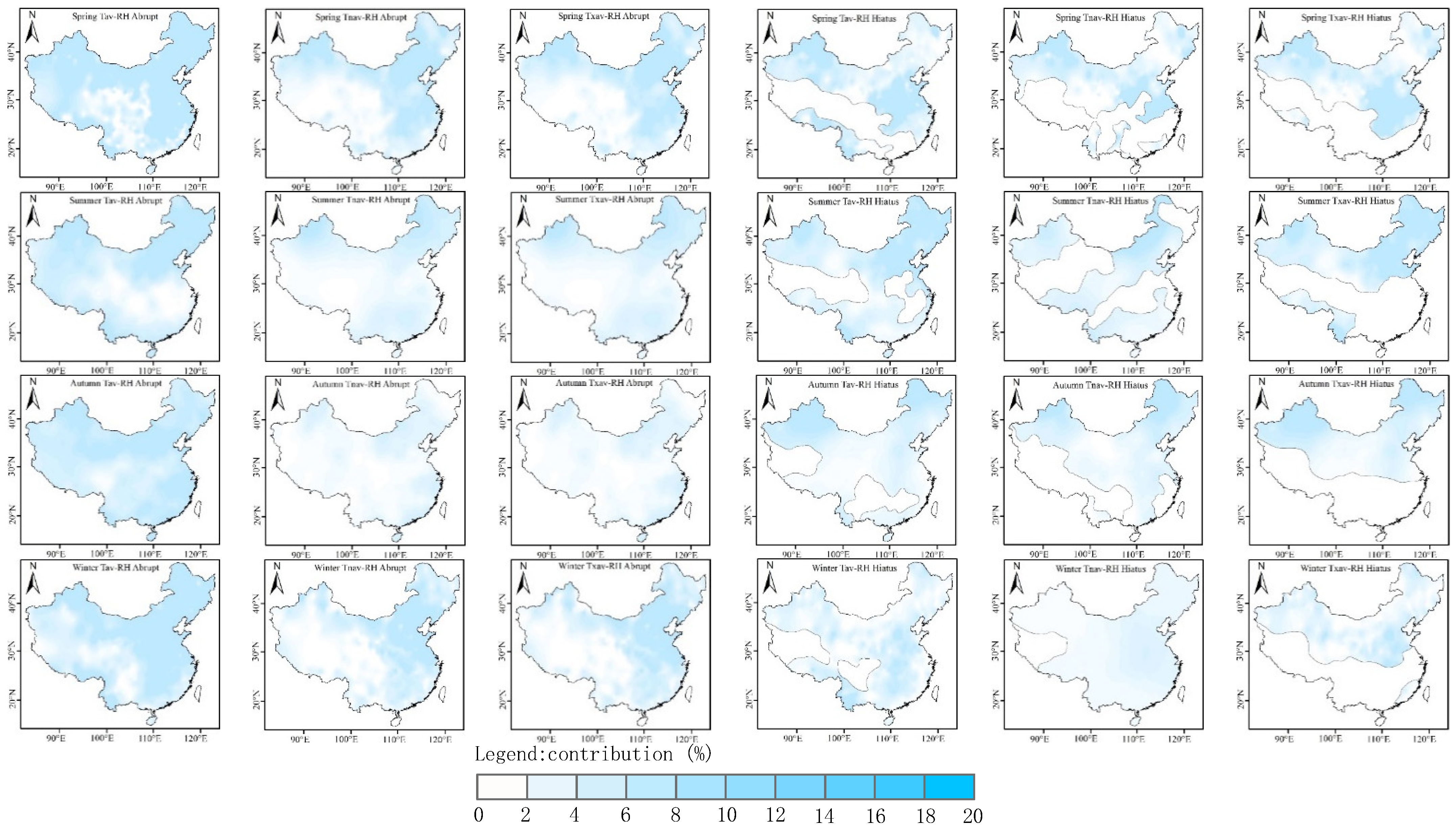
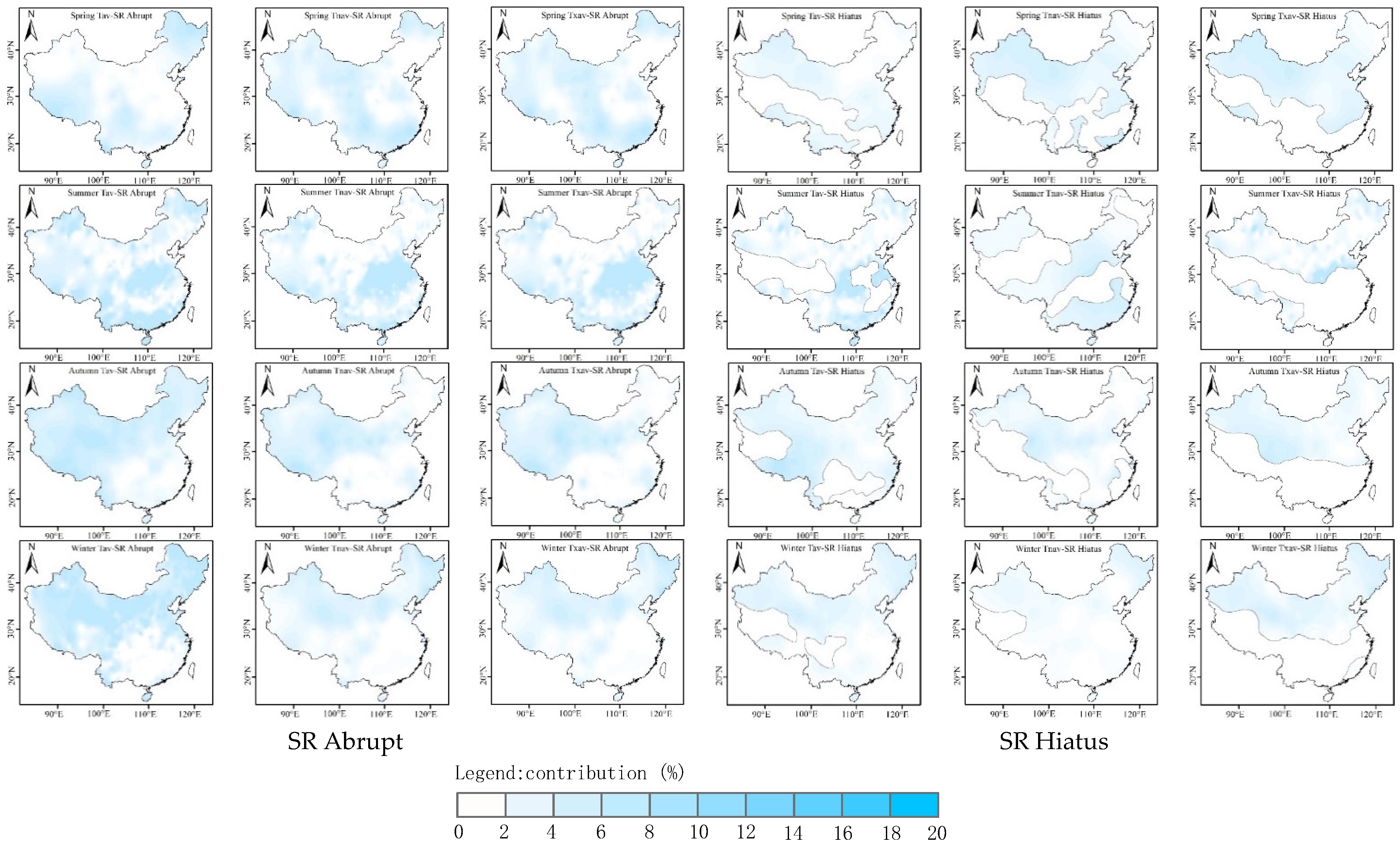
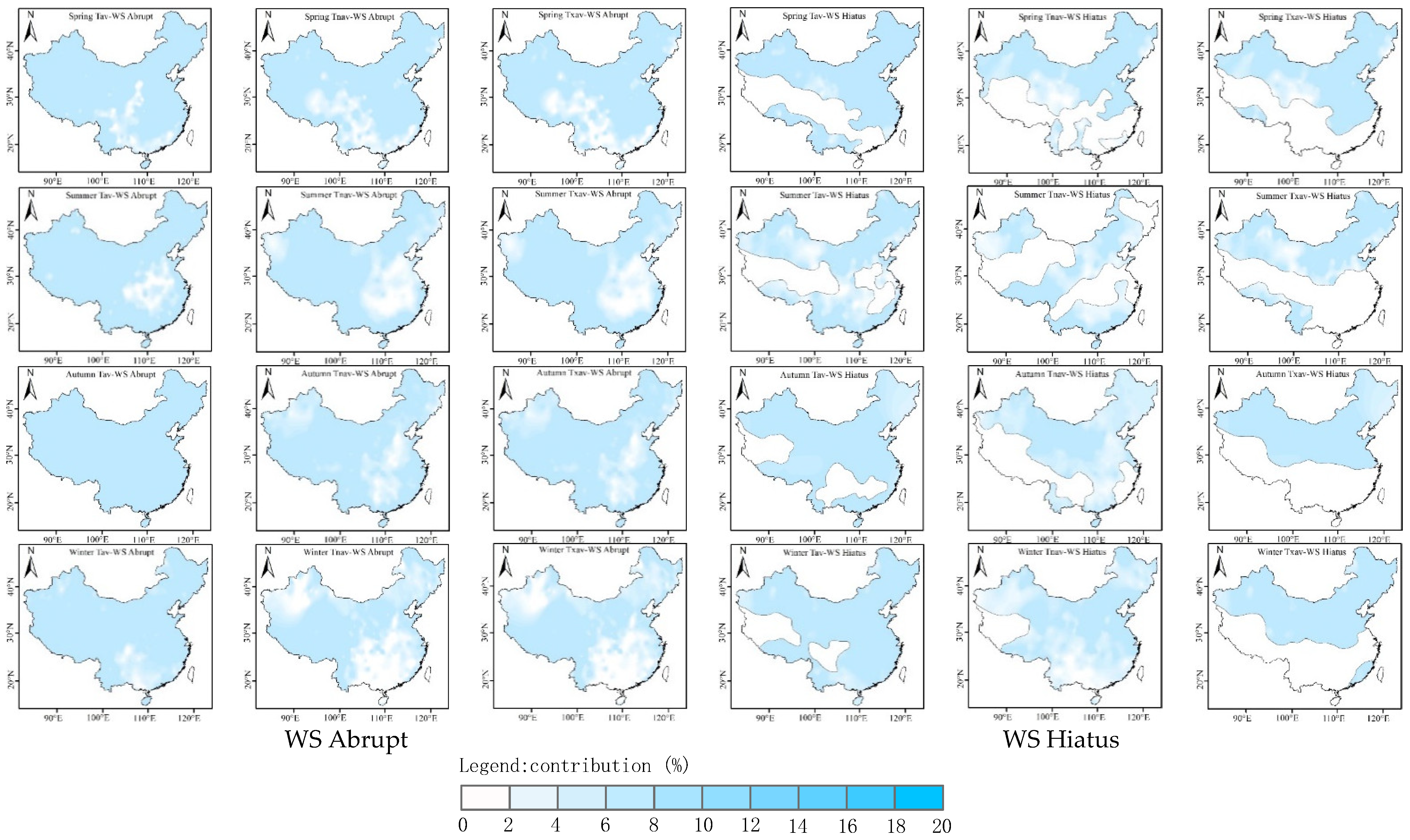
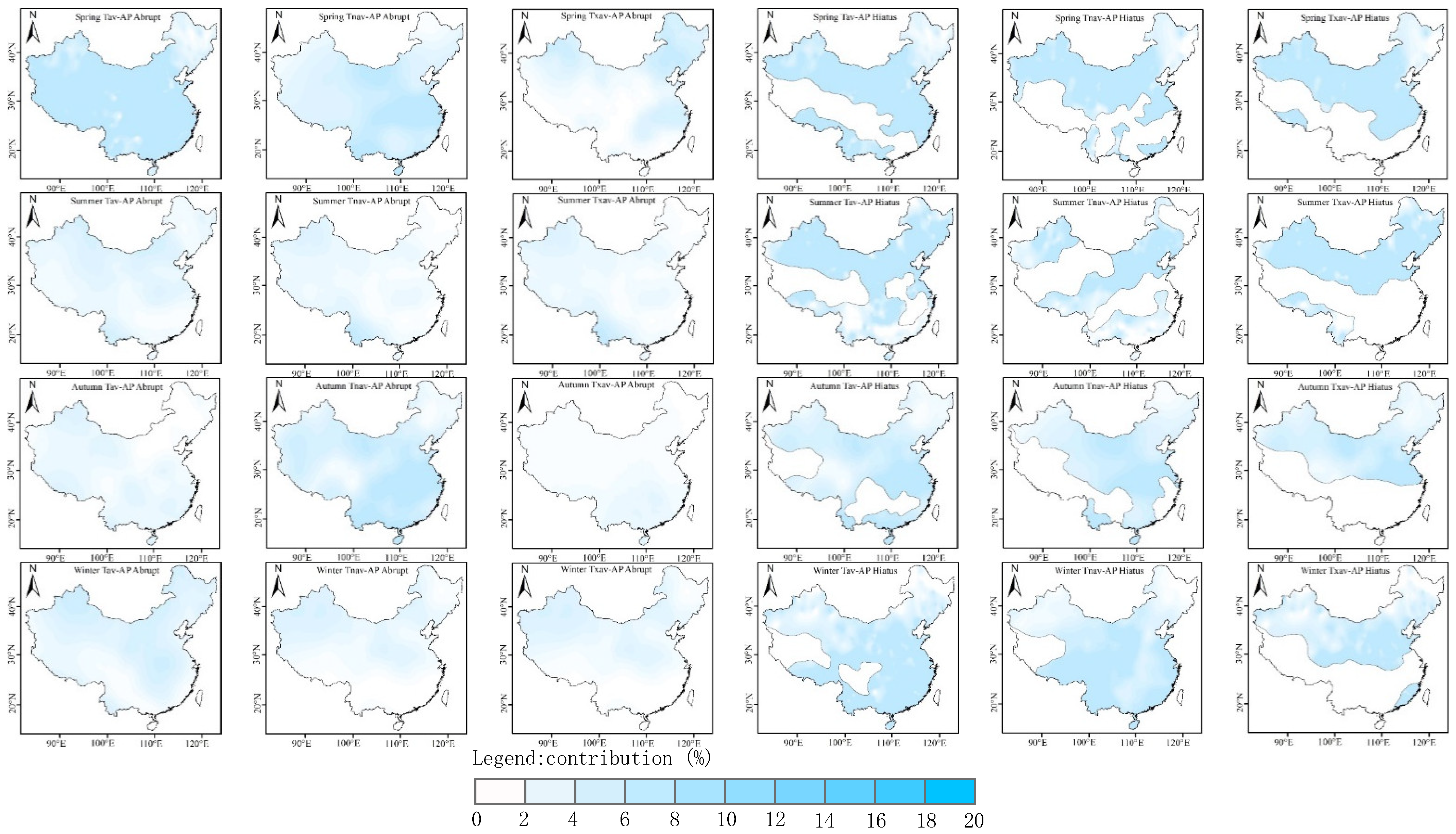
- A temperature change is the result of the combined action of multiple factors. Observational information contains both information on the internal natural changes within the climate system and information on the response to natural and anthropogenic external forcing factors. Therefore, producing accurate estimates of the relative contributions of various external forcing factors to climate change is fairly difficult. If (1) the effects of anthropogenic factors are first removed from the observation data based on the CMIP6 model data and (2) the response of the observed temperature fields to various types of natural variability is assumed to be independent and linear, then the following stepwise regression approach can be used to estimate the relative contribution of the natural variability to the abrupt temperature changes and warming hiatuses in China:where y is the detrended observed temperature; , …, are the regression coefficients of the influencing factors at the meteorological station (which are estimated based on the annual mean anomaly time series in an order based on the magnitude of the explained variance of each influencing factor at each station for the observed temperature); and is the residual term. This approach can ensure that the sum of the contributions of different influencing factors to abrupt temperature changes and warming hiatuses is less than the observed changes.
- (8)
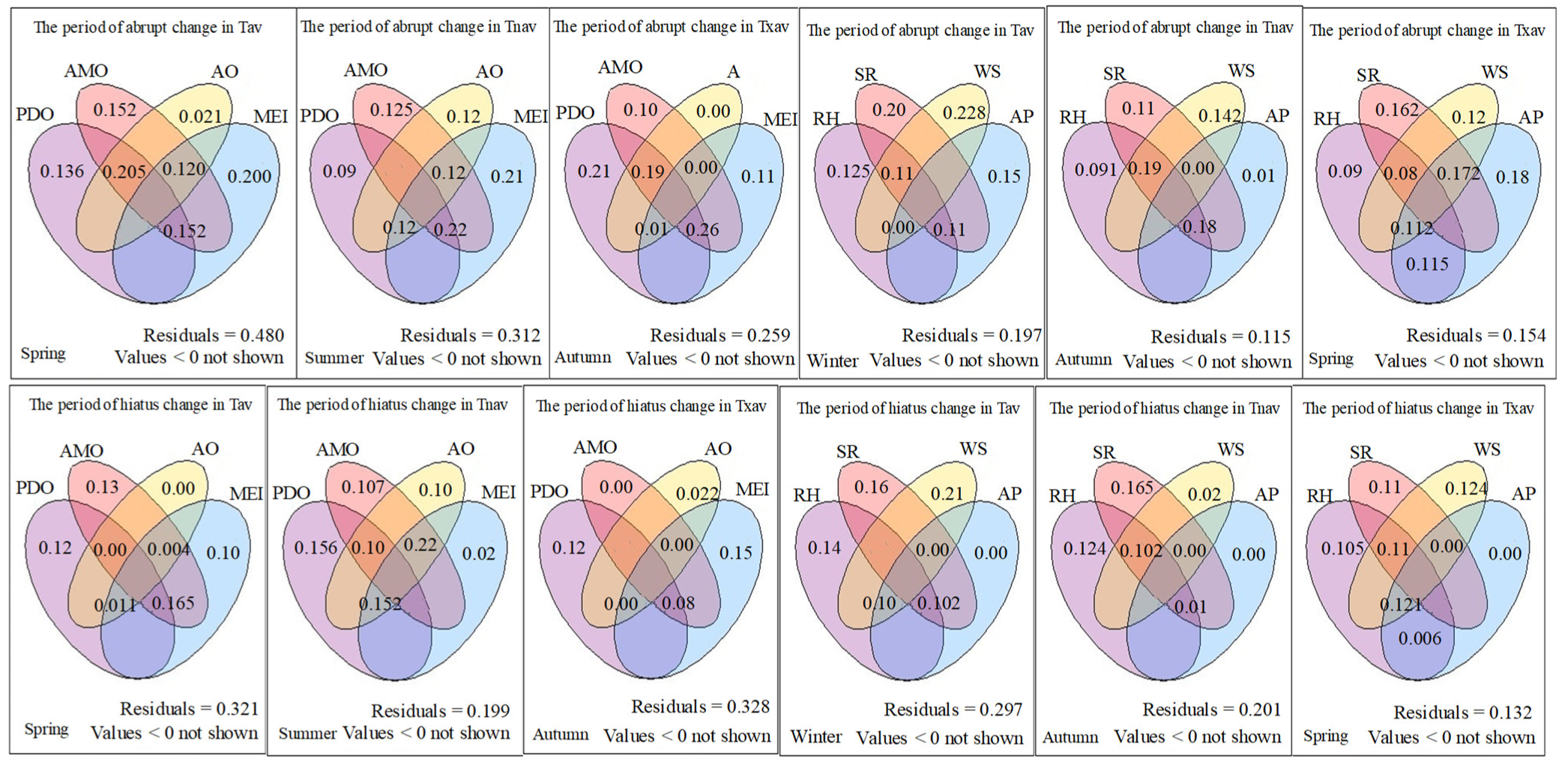
- Linear model-based RDA
3. Analysis and Results
3.1. Spatial Distribution of Seasonal Temperature Abrupt Change Years and Warming Hiatus Years Relationships between the Influencing Factors and Tav, Tnav, and Txav in China
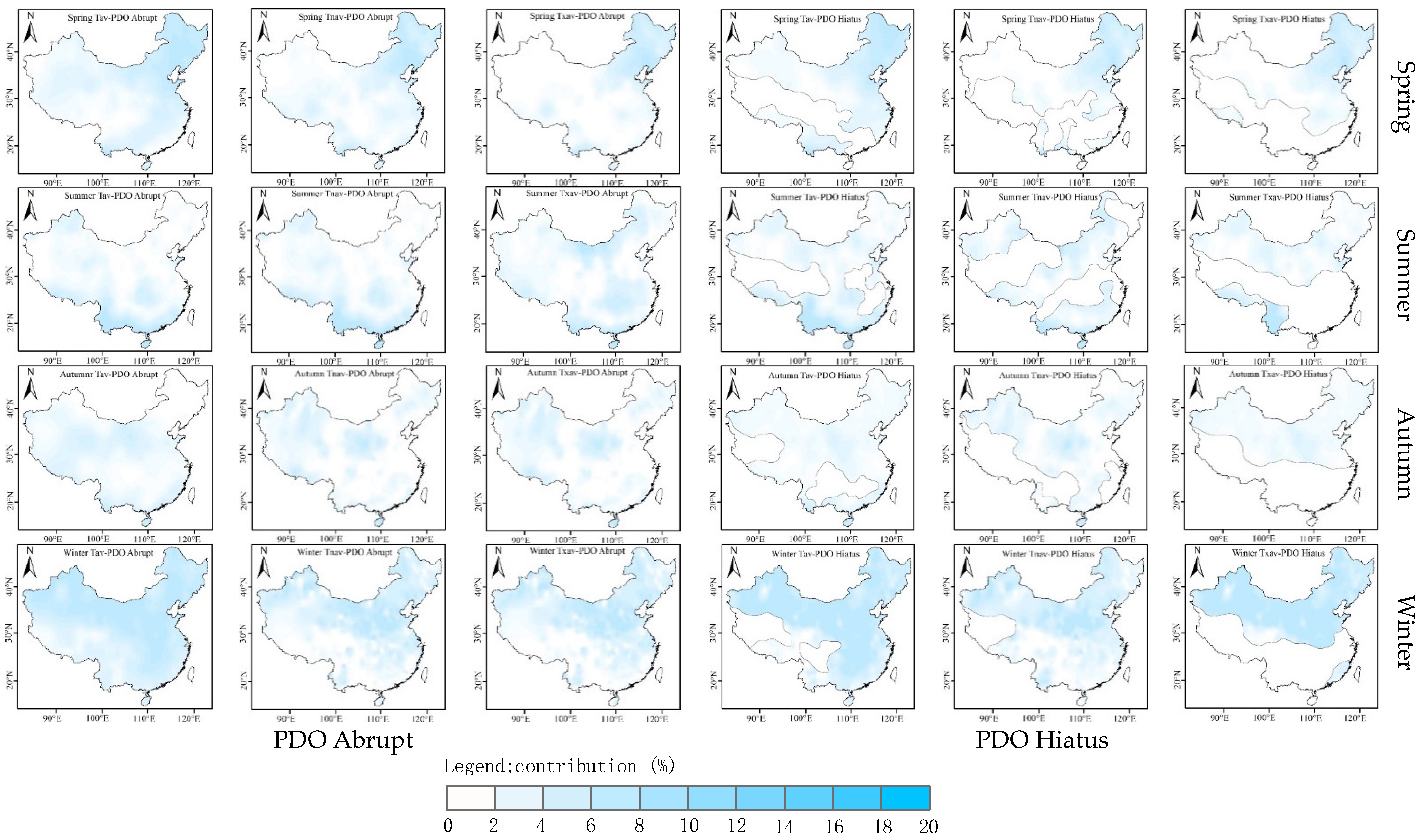
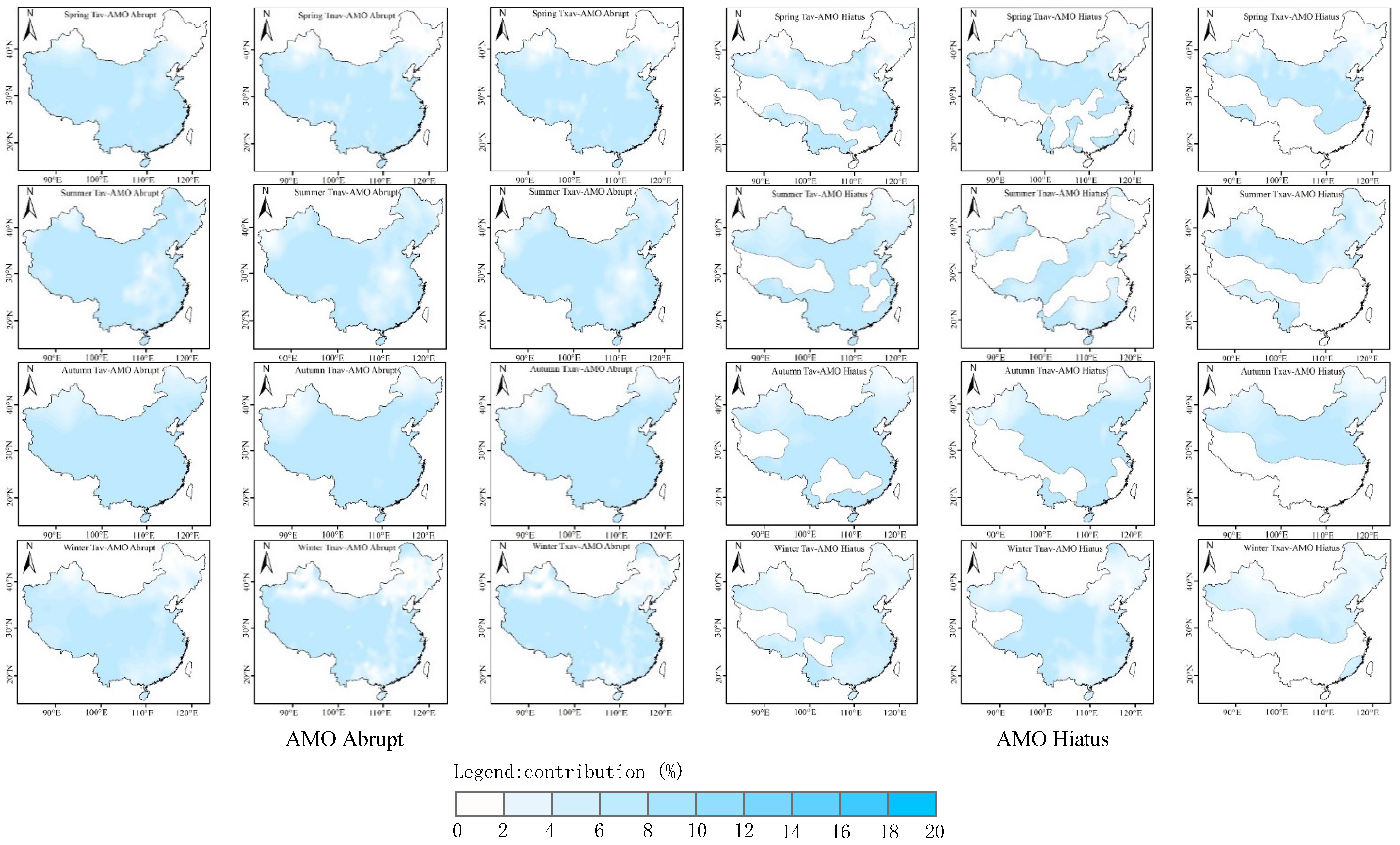
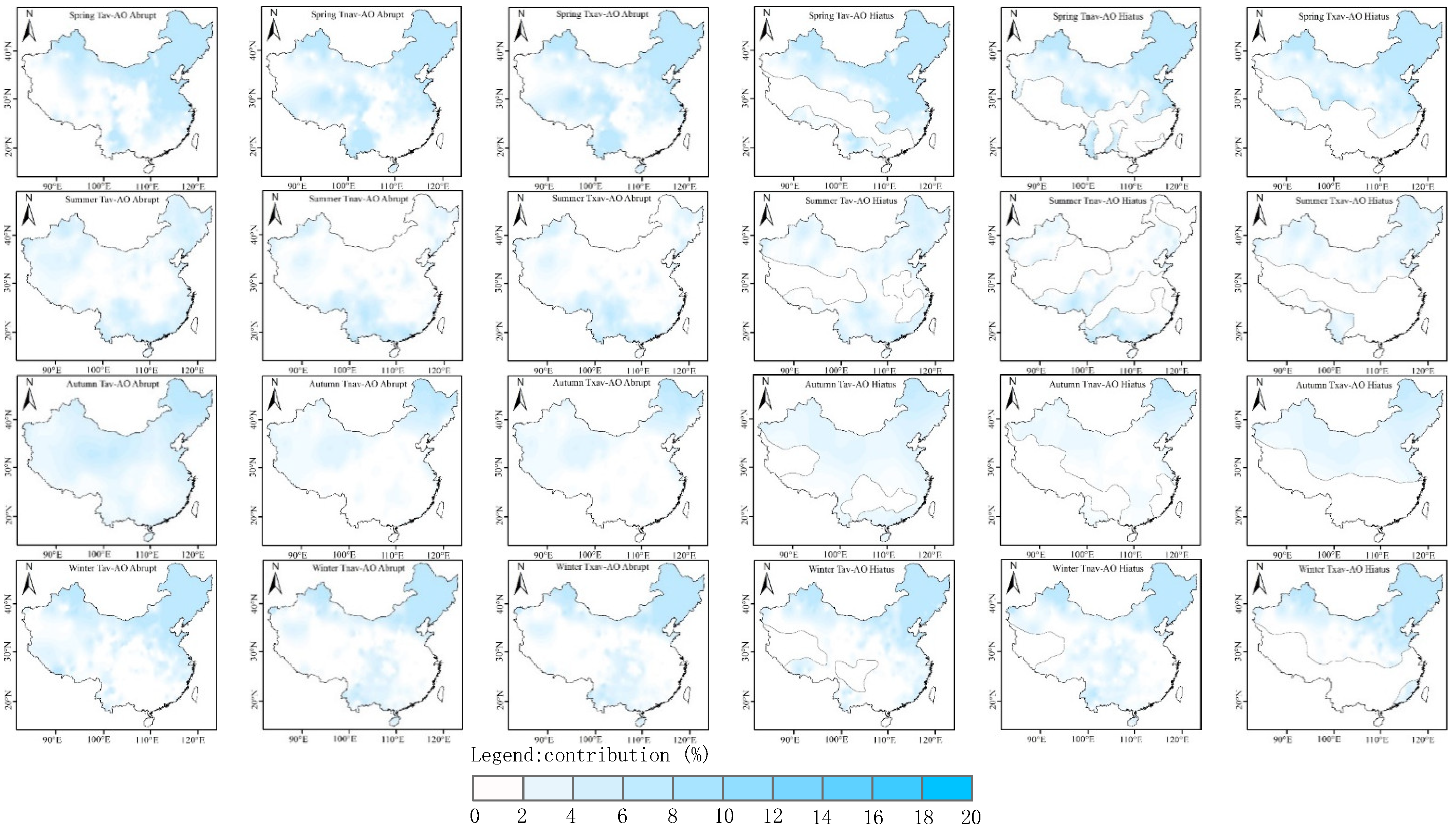
3.2. Quantitative Response Mechanisms of Abrupt Temperature Changes and Warming Hiatuses
3.3. The Comprehensive Responses of Seasonal Temperature Abrupt Changes and Warming Hiatuses to Influencing Factors
4. Conclusions and Discussion
Author Contributions
Funding
Institutional Review Board Statement
Informed Consent Statement
Data Availability Statement
Conflicts of Interest
Ethics Approval
References
- Fu, C.; Diaz, H.F.; Dong, D.; Fletcher, J.O. Changes in atmospheric circulation over northern hemisphere oceans associated with the rapid warming of the 1920s. Int. J. Climatol. 2015, 19, 581–606. [Google Scholar] [CrossRef]
- He, W.P.; Wang, Q.G.; Wu, Q.; Zhang, W.; Zhang, Y. Comparison of characteristics of moving detrended fluctuation analysis with that of approximate entropy method in detecting abrupt dynamic change. Acta Phys. Sin. 2009, 38, 2862–2871. [Google Scholar]
- Wang, Q.G.; Zhang, Z.P. The research of detecting abrupt climate change with approximate entropy. Acta Phys. Sin. 2008, 57, 1976–1983. [Google Scholar] [CrossRef] [Scilit]
- Wang, G.; Zhang, Q.; Luo, M.; Singh, V.P.; Xu, C.-Y. Fractional contribution of global warming and regional urbanization to intensifying regional heatwaves across Eurasia. Clim. Dyn. 2022, 59, 1521–1537. [Google Scholar] [CrossRef] [Scilit]
- Wang, B.; Biasutti, M.; Byrne, M.P.; Castro, C.; Chang, C.P.; Cook, K.; Fu, R.; Grimm, A.M.; Ha, K.-J.; Hendon, H.; et al. Monsoons climate change assessment. Bull. Amer. Meteor. Soc. 2021, 102, E1–E19. [Google Scholar] [CrossRef] [Scilit]
- Kim, Y.H.; Kim, M.K.; Lau, W.K.; Kim, K.M.; Cho, C.H. Possible mechanism of abrupt jump in winter surface air temperature in the late 1980s over the Northern Hemisphere. J. Geophys. Res. Atmos. 2015, 120, 12474–12485. [Google Scholar] [CrossRef] [Scilit] [PubMed]
- Wang, B.; Jin, C.H.; Liu, J. Understanding future change of global monsoons projected by CMIP6 models. J. Clim. 2020, 33, 6471–6489. [Google Scholar] [CrossRef] [Scilit]
- King, M.A.; Bingham, R.J.; Moore, P.; Whitehouse, P.L.; Bentley, M.J.; Milne, G.A. Lower satellite-gravimetry estimates of Antarctic sea-level contribution. Nature 2012, 491, 586–589. [Google Scholar] [CrossRef] [Scilit]
- Qin, W.; Haijun, Y. Investigating the role of the Tibetan Plateau in the formation of Pacific meridional overturning circulation. J. Clim. 2020, 33, 3603–3617. [Google Scholar]
- Xiao, D.; Li, J.P. Spatial and temporal characteristics of the decadal abrupt changes of atmosphere-ocean system in 1970s. J. Geophys. Res. 2007, 112, D24S22. [Google Scholar] [CrossRef] [Scilit]
- Zhang, Q.; Wu, Z.; Yu, H.; Zhu, X.; Shen, Z. Variable urbanization warming effects across metropolitans of China and relevant driving factors. Remote Sens. 2020, 12, 1500. [Google Scholar] [CrossRef] [Scilit]
- Zhenyu, H.; Bo, W.; Xiaoge, X. Decadal prediction skill of the global sea surface temperature in the BCC-CSM1.1 climate model. Adv. Earth Sci. 2017, 32, 396–408. [Google Scholar] [CrossRef]
- Delworth, T.L.; Zeng, F.; Rosati, A.; Vecchi, G.A.; Wittenberg, A.T. A link between the Hiatus in global warming and North American drought. J. Clim. 2015, 28, 3834–3845. [Google Scholar] [CrossRef] [Scilit]
- Ueda, H.; Kamae, Y.; Hayasaki, M.; Kitoh, A.; Watanabe, S.; Miki, Y.; Kumai, A. Combined effects of recent Pacific cooling and Indian Ocean warming on the Asian monsoon. Nat. Commun. 2015, 6, 8854. [Google Scholar] [CrossRef] [Scilit]
- Jiuwei, Z.; Ruifen, Z.; Yuqing, W. Global warming hiatus contributed to the increased occurrence of intense tropical cyclones in the coastal regions along East Asia. Sci. Rep. 2018, 8, 6023. [Google Scholar] [CrossRef] [Scilit]
- Johnson, N.C.; Xie, S.P.; Kosaka, Y.; Li, X. Increasing occurrence of cold and warm extremes during the recent global warming slowdown. Nat. Commun. 2018, 9, 1724. [Google Scholar] [CrossRef] [Scilit]
- Wang, X.; Xiao, J.; Li, X.; Cheng, G.; Ma, M.; Zhu, G.; Arain, M.A.; Black, T.A.; Jassal, R.S. No trends in spring and autumn phenology during the global warming hiatus. Nat. Commun. 2019, 10, 2389. [Google Scholar] [CrossRef] [Scilit]
- Huang, J.; Xie, Y.; Guan, X.; Li, D.; Ji, F. The dynamics of the warming hiatus over the Northern Hemisphere. Clim. Dyn. 2017, 48, 429–446. [Google Scholar] [CrossRef] [Scilit]
- Sun, S.; Zhang, Q.; Singh, V.P.; Shi, C.; Wang, G.; Wu, W.; Shen, Z. Increased moist heat stress risk across China under warming climate. Sci. Rep. 2022, 12, 22548. [Google Scholar] [CrossRef] [Scilit]
- Xing, Z.; Tianjun, Z.; Wenxia, Z.; Lixia, Z. Global Monsoon Simulated by FGOALS-g3 Climate System Model: A Comparison with the Previous Version and Influences of Air–Sea Coupling. Chin. J. Atmos. Sci. 2003, 47, 470–486. (In Chinese) [Google Scholar] [CrossRef]
- Karl, T.R.; Arguez, A.; Huang, B.; Lawrimore, J.H.; McMahon, J.R.; Menne, M.J.; Peterson, T.C.; Vose, R.S.; Zhang, H. Possible artifacts of data biases in the recent global surface warming hiatus. Science 2015, 348, 1469–1472. [Google Scholar] [CrossRef] [Scilit]
- Xiang, L.Y.; Chen, X. Regional and Seasonal Features of Abrupt Temperature Change in China in Recent 55 Years. Meteorological 2006, 32, 44–47. [Google Scholar]
- Wang, H.; Chen, Y.; Xun, S.; Lai, D.; Fan, Y.; Li, Z. Changes in daily climate extremes in the arid area of northwestern China. Theor. Appl. Climatol. 2013, 112, 15–28. [Google Scholar] [CrossRef] [Scilit]
- Zhang, X.L.; Hua, L.J.; Jiang, D.B. Assessment of CMIP6 model performance for temperature and precipitation in Xinjiang, China. Atmos. Oceanic Sci. Lett. 2022, 15, 100128. [Google Scholar] [CrossRef] [Scilit]
- Fyfe, J.C.; Meehl, G.A.; England, M.H.; Mann, M.E.; Santer, B.D.; Flato, G.M.; Hawkins, E.; Gillett, N.P.; Xie, S.P.; Kosaka, Y. Making sense of the early-2000s warming slow-down. Nat. Clim. Chang. 2016, 6, 224–228. [Google Scholar] [CrossRef] [Scilit]
- Dai, A.; Fyfe, J.C.; Xie, S.P.; Dai, X. Decadal modulation of global surface temperature by internal climate variability. Nat. Clim. Chang. 2015, 5, 555–559. [Google Scholar] [CrossRef] [Scilit]
- Nan, S.; Li, J. The relationship between the summer precipitation in the Yangtze River valley and the boreal spring Southern Hemisphere annular mode. Geophys. Res. Lett. 2003, 30, 2266. [Google Scholar] [CrossRef] [Scilit]
- Meehl, G.A.; Hu, A.; Santer, B.D.; Xie, S.P. Contribution of the Interdecadal Pacific Oscillation twenieth-century global surface temperature trends. Nat. Clim. Chang. 2016, 6, 1005–1008. [Google Scholar] [CrossRef] [Scilit]
- Zuo, J.Q. Relationship between AO/NAO and ENSO and Their Impact on Climate Anomalies in China. Ph.D. Thesis, Lanzhou University, Lanzhou, China, 2011. [Google Scholar]
- Li, L.; Yu, Y.; Tang, Y.; Lin, P.; Xie, J.; Song, M.; Dong, L.; Liu, L.; Wang, L.; Pu, Y.; et al. The flexible global ocean–atmosphere–land system model grid-point version 3 (FGOALS-g3): Description and evaluation. J. Adv. Model. Earth Syst. 2020, 12, e2019MS002012. [Google Scholar] [CrossRef] [Scilit]
- Thompson, D.W.; Lee, S.; Baldwin, M.P. Atmospheric processes governing the northern hemisphere annular mode/North Atlantic oscillation. North Atl. Oscil. Clim. Significance Environ. Impact 2003, 134, 81–112. [Google Scholar] [CrossRef] [Scilit]
- Fan, Y.; Ying, C. Research progress summarization for the impacts of global climate change to the regional water resoueces. J. Water Resour. Water Eng. 2008, 19, 92–97+102. [Google Scholar]
- Wang, D.; Sun, Y.C.; You, Q.L. Contribution of Pacific Decadal Oscillation to interdecadal variability of winter minimum temperature in China. Clim. Chang. Res. 2020, 16, 70–77. [Google Scholar]
- Ding, R.; Ha, K.; Li, J. Interdecadal shift in the relationship between the East Asian summer monsoon and the tropical Indian Ocean. Clim. Dyn. 2010, 34, 1059–1071. [Google Scholar] [CrossRef] [Scilit]
- Wang, L.; Chen, W.; Huang, R.H. Interdecadal modulation of PDO on the impact of ENSO on the East Asian winter monsoon. Geophys. Res. Lett. 2008, 35, L20702. [Google Scholar] [CrossRef] [Scilit]
- Junhui, Y.; Quansheng, G.; Jingyun, Z. Reconstruction and Analysis on the Series of Winter-half-year Temperature Change during the Qing Dyn asty in the Northern China Region. Prog. Geogr. 2012, 31, 1426–1432. [Google Scholar]
- Andrews, T. Using an AGCM to diagnose historical effective radiative forcing and mechanisms of recent decadal climate change. J. Climate 2014, 27, 1193–1209. [Google Scholar] [CrossRef] [Scilit]
- Kamae, Y.; Shiogama, H.; Watanabe, M.; Kimoto, M. Attributing the increase in Northern Hemisphere hot summers since the late 20th century. Geophys. Res. Lett. 2014, 41, 5192–5199. [Google Scholar] [CrossRef] [Scilit]
- Chen, L.; Zhu, W.; Zhou, X.; Zhu, W.Q. Variation of atmospheric aerosol depth in China during recent 52 years. J. Geo. Phy. Res. 2004, 27, 634–646. [Google Scholar]
- Wu, B.Y.; Su, J.Z.; Zhang, R.H. Effects of autumn-winter Arctic sea ice on winter Siberian High. Chin. Sci. Bull. 2011, 56, 3220–3228. [Google Scholar] [CrossRef] [Scilit]
- Gao, Y.; Cuo, L.; Zhang, Y. Changes in moisture flux over the Tibetan Plateau during 1979–2011 and possible mechanisms. J. Clim. 2014, 27, 1876–1893. [Google Scholar] [CrossRef] [Scilit]
- Pepin, N.; Bradley, R.S.; Diaz, H.F.; Baraër, M.; Caceres, E.B.; Forsythe, N.; Fowler, H.; Greenwood, G.; Hashmi, M.Z.; Liu, X.D.; et al. Elevation-dependent warming in mountain regions of the world. Nat. Clim. Chang. 2015, 5, 424–430. [Google Scholar]
- Yunfeng, L.; Weiliang, L.; Xiuji, Z.; Qing, H.; Jizu, Q. Analysis of the atmospheric aerosol optical depth over China in 1980s. Acta Meteor Sin. 2000, 14, 490–502. [Google Scholar]
- Huang, X.; Ma, L.; Liu, T.; Sun, B.; Zhou, Y.; Yang, C.; Qiao, Z. Spatial and temporal variability of the abrupt interannual temperature change and warming hiatus in China, 1951–2016. Meteorol. Appl. 2020, 27, e1911. [Google Scholar] [CrossRef] [Scilit]


| Data Type | Data Source | Time Series |
|---|---|---|
| mean temperature | China Meteorological data network (http://data.cma.cn/) (accessed on 30 June 2022) | 1951–2018 |
| mean maximum temperature | China Meteorological data network (http://data.cma.cn/) (accessed on 30 June 2022) | 1951–2018 |
| mean minimum temperature | China Meteorological data network (http://data.cma.cn/) (accessed on 30 June 2022) | 1951–2018 |
| atmospheric pressure | China Meteorological data network (http://data.cma.cn/) (accessed on 30 June 2022) | 1951–2018 |
| Wind speed | China Meteorological data network (http://data.cma.cn/) (accessed on 30 June 2022) | 1951–2018 |
| relative humidity | China Meteorological data network (http://data.cma.cn/) (accessed on 30 June 2022) | 1951–2018 |
| solar radiation | China Meteorological data network (http://data.cma.cn/) (accessed on 30 June 2022) | 1959–2018 |
| CO2/AGG | NOAA Earth System Research Laboratory (Physical Sciences Division) | 1979–2018 |
| Pacific Decadal Oscillation | NOAA Earth System Research Laboratory (Physical Sciences Division) | 1951–2018 |
| Atlantic multidecadal Oscillation | NOAA Earth System Research Laboratory (Physical Sciences Division) | 1951–2018 |
| Multivariate ENSO Index | NOAA Earth System Research Laboratory (Physical Sciences Division) | 1951–2018 |
| Arctic oscillation | NOAA Earth System Research Laboratory (Physical Sciences Division) | 1951–2018 |
| BCC-CSM2 | CMIP6 mode data | 1951–2018 |
| CanESM5 | CMIP6 mode data | 1951–2018 |
| CMCC-ESM2 | CMIP6 mode data | 1951–2018 |
| EC-Earth3 | CMIP6 mode data | 1951–2018 |
| MIROC6 | CMIP6 mode data | 1951–2018 |
| MPI-ESM1-2-HR | CMIP6 mode data | 1951–2018 |
| MPI-ESM1-2-LR | CMIP6 mode data | 1951–2018 |
Disclaimer/Publisher’s Note: The statements, opinions and data contained in all publications are solely those of the individual author(s) and contributor(s) and not of MDPI and/or the editor(s). MDPI and/or the editor(s) disclaim responsibility for any injury to people or property resulting from any ideas, methods, instructions or products referred to in the content. |
© 2023 by the authors. Licensee MDPI, Basel, Switzerland. This article is an open access article distributed under the terms and conditions of the Creative Commons Attribution (CC BY) license (https://creativecommons.org/licenses/by/4.0/).
Share and Cite
Huang, X.; Ma, L.; Liu, T.; Sun, B.; Chen, Y.; Qiao, Z. Quantitative Mechanisms of the Responses of Abrupt Seasonal Temperature Changes and Warming Hiatuses in China to Their Influencing Factors. Atmosphere 2023, 14, 1090. https://doi.org/10.3390/atmos14071090
Huang X, Ma L, Liu T, Sun B, Chen Y, Qiao Z. Quantitative Mechanisms of the Responses of Abrupt Seasonal Temperature Changes and Warming Hiatuses in China to Their Influencing Factors. Atmosphere. 2023; 14(7):1090. https://doi.org/10.3390/atmos14071090
Chicago/Turabian StyleHuang, Xing, Long Ma, Tingxi Liu, Bolin Sun, Yang Chen, and Zixu Qiao. 2023. "Quantitative Mechanisms of the Responses of Abrupt Seasonal Temperature Changes and Warming Hiatuses in China to Their Influencing Factors" Atmosphere 14, no. 7: 1090. https://doi.org/10.3390/atmos14071090
APA StyleHuang, X., Ma, L., Liu, T., Sun, B., Chen, Y., & Qiao, Z. (2023). Quantitative Mechanisms of the Responses of Abrupt Seasonal Temperature Changes and Warming Hiatuses in China to Their Influencing Factors. Atmosphere, 14(7), 1090. https://doi.org/10.3390/atmos14071090