
Article

Spatio-Temporal Variation and Influencing Factors of Ozone Pollution in Beijing
1
Institute of Forestry and Pomology, Beijing Academy of Agriculture and Forestry Sciences, Beijing 100093, China
2
College of Forestry, Hebei Agriculture University, Baoding 071001, China
*
Authors to whom correspondence should be addressed.
Atmosphere 2022, 13(2), 359; https://doi.org/10.3390/atmos13020359
Submission received: 31 December 2021 / Revised: 30 January 2022 / Accepted: 17 February 2022 / Published: 21 February 2022
(This article belongs to the Special Issue Ozone Pollution in East Asia: Factors and Sources)

Abstract

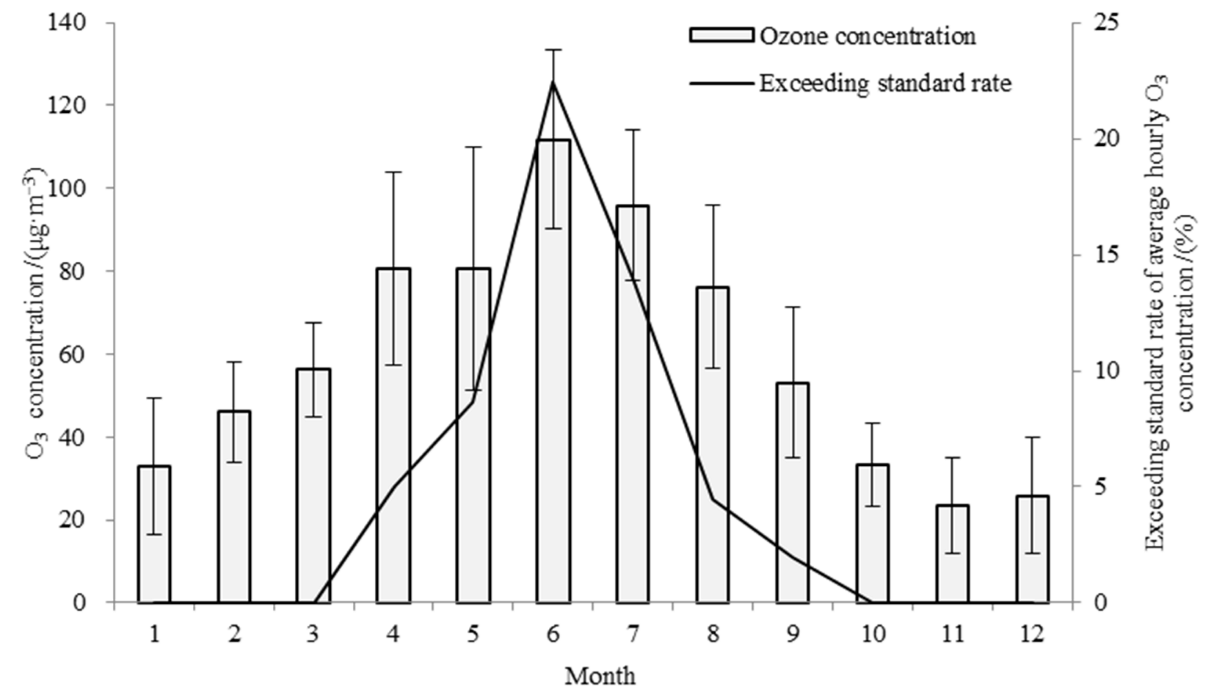
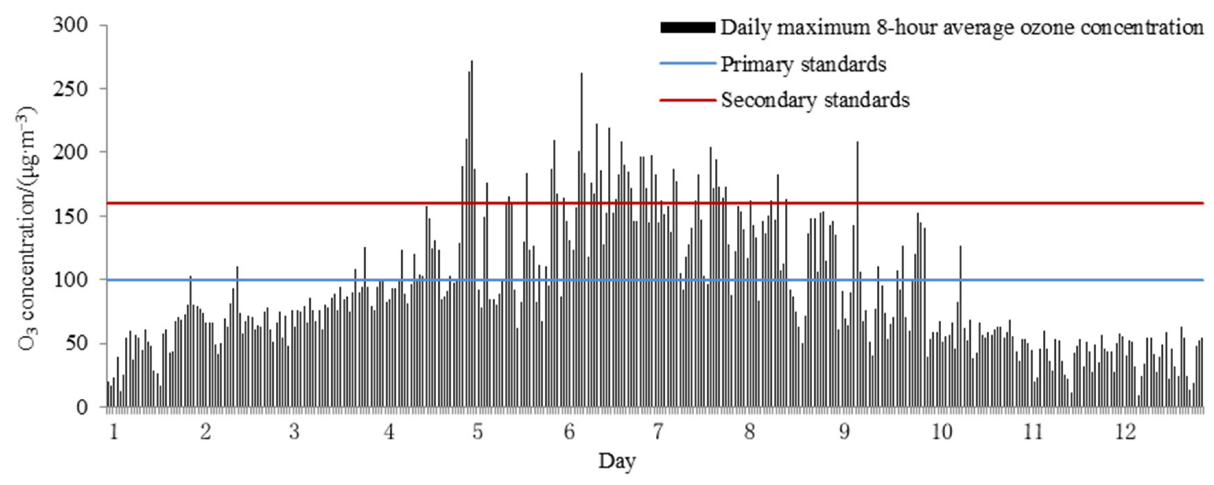
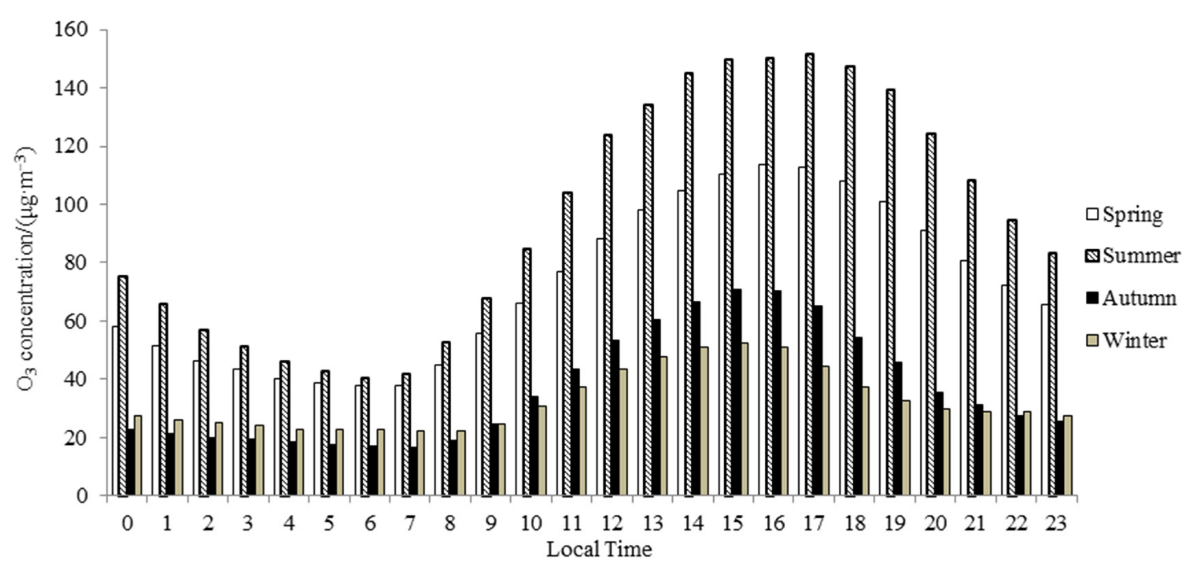
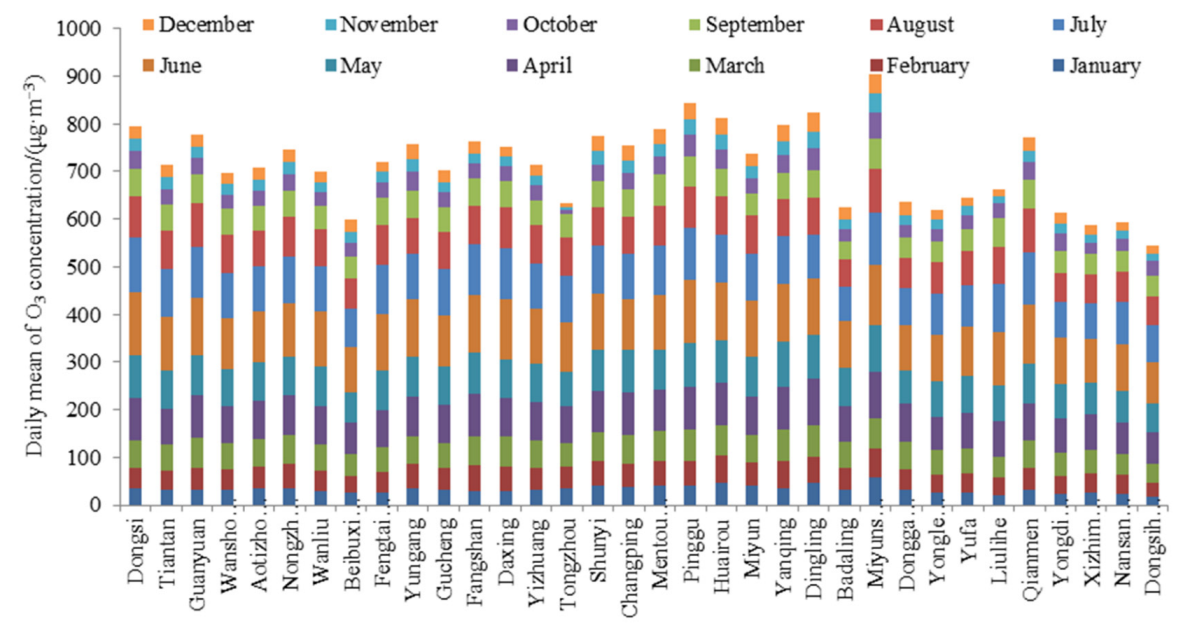
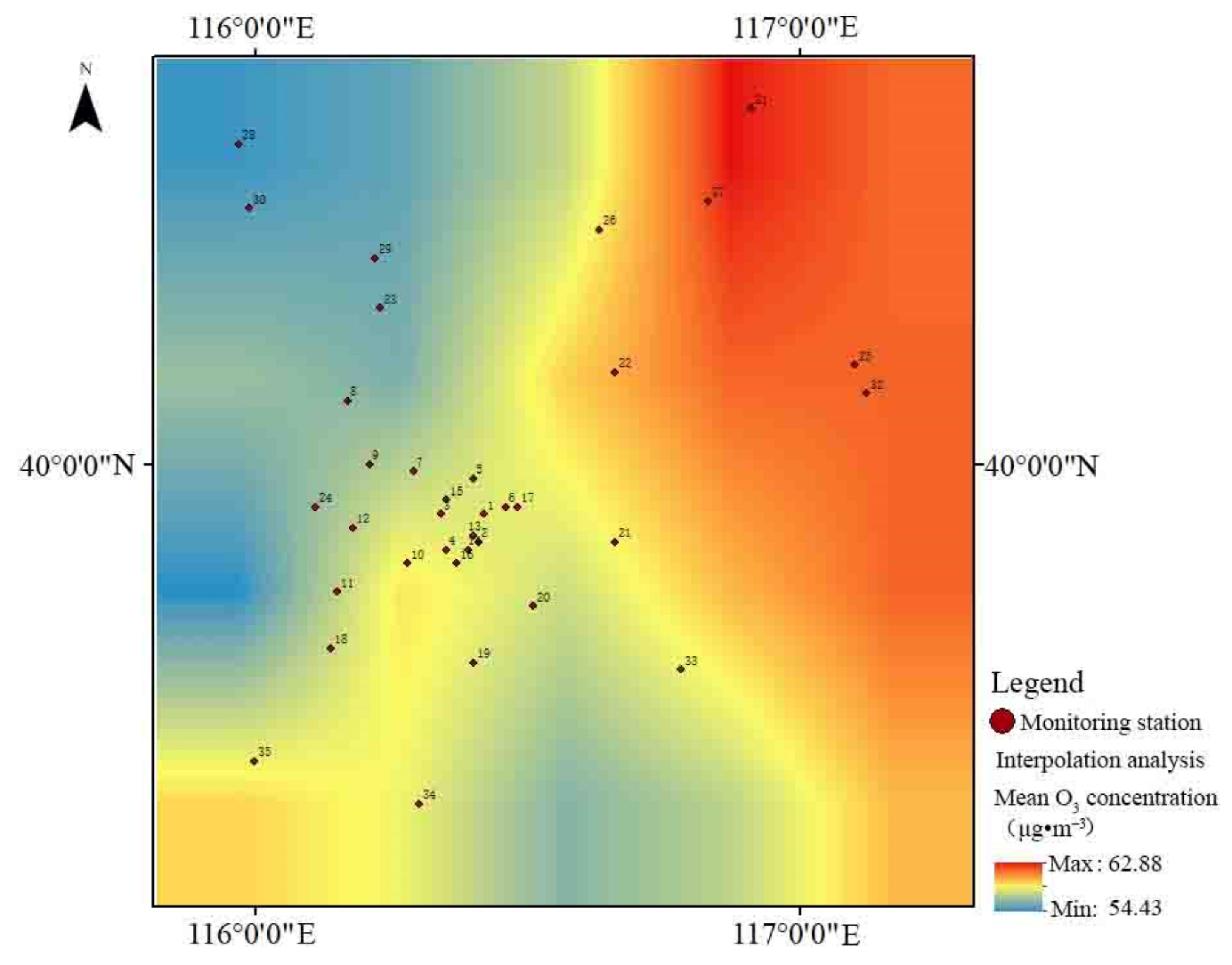
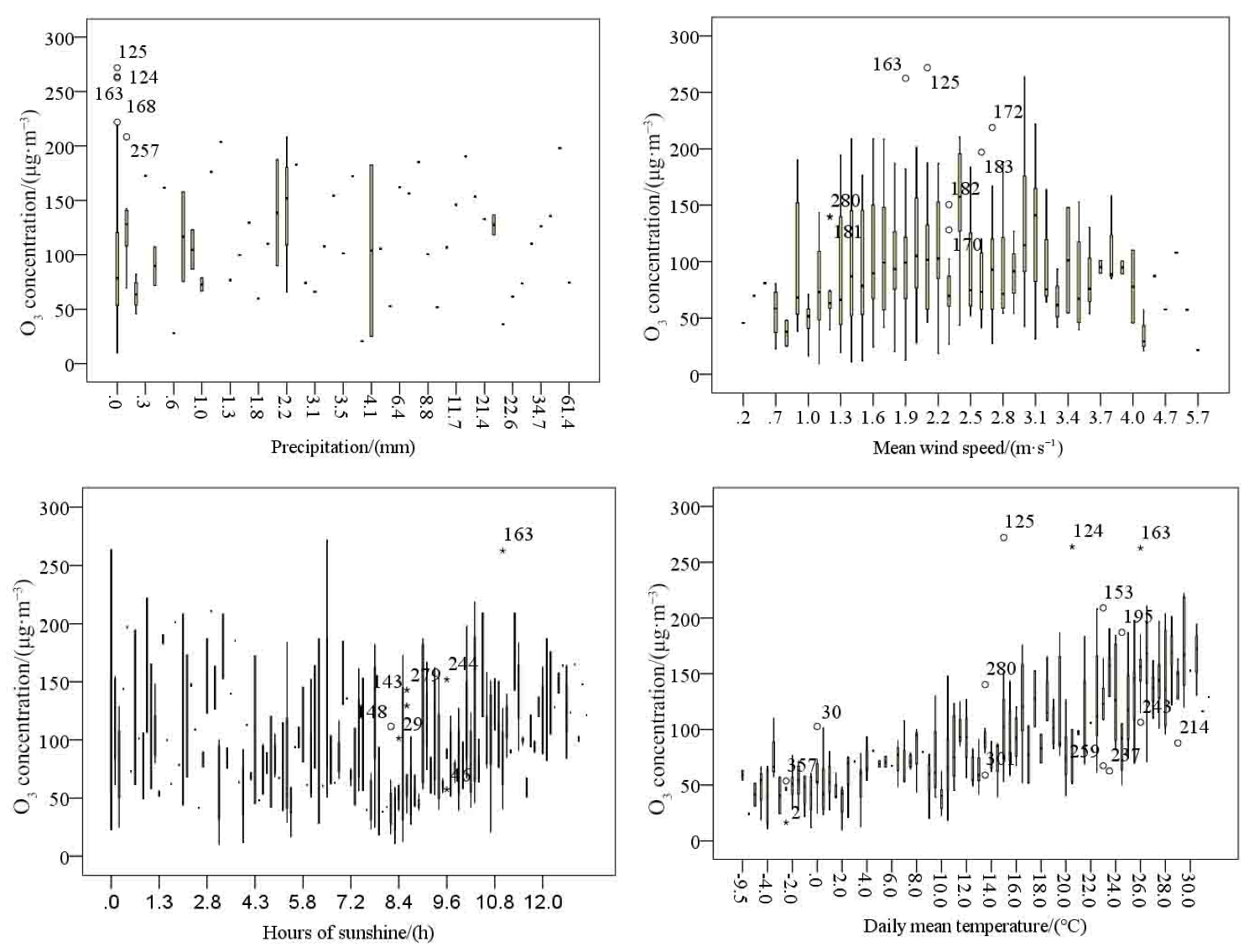
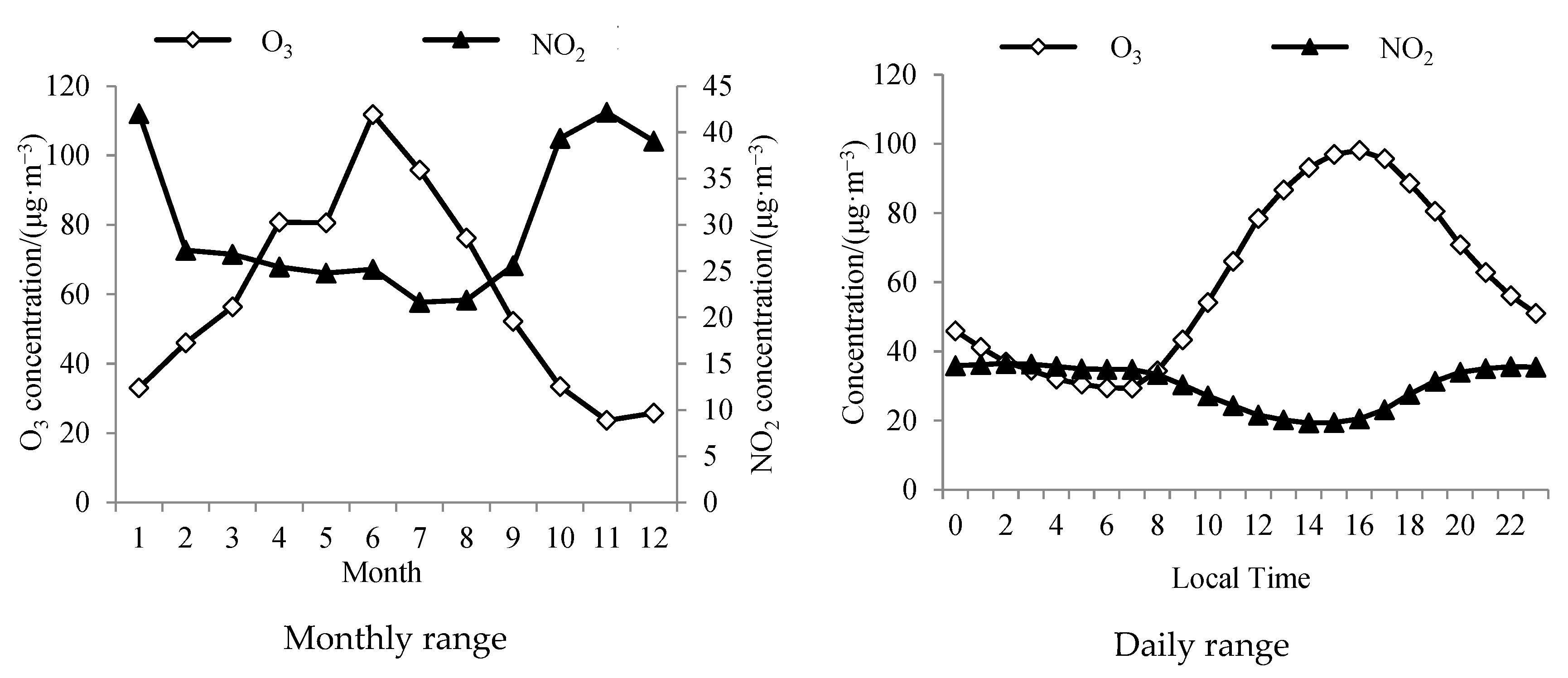
The temporal and spatial distribution and variation characteristics of ozone (O3) in Beijing, China, are investigated using hourly monitoring data from 2020. Kriging interpolation analysis and correlation analysis are applied to describe the spatial-temporal distribution and to identify associated influencing factors. The average concentration of O3 was found to be 59.58 μg·m−3. The daily maximum sliding 8 h average ozone concentration values exceeded the primary standard (100 μg·m−3) for 129 days and exceeded the secondary standard (160 μg·m−3) for 48 days. Temporally, the general pattern of daily maximum 8 h average O3 concentration was high in spring and summer and low in autumn and winter. Monthly average values showed a maximum in June. The highest daily concentrations appeared between 13:00 and 18:00 local time, and O3 concentrations had a distinct weekly pattern of variability with daily average concentrations at weekends higher than those during working days. Spatially, annual average O3 concentrations were highest in the northeast and lowest in the southeast of the city, and the seasonal variation of O3 was most significant in the southwest of the city. In relation to city districts and counties, the annual average O3 concentrations in the Miyun District were the highest, while those in the Haidian District were the lowest. On the whole, annual average O3 concentrations in Beijing were higher in the suburbs than in central areas. Based on daily average values, there was no significant correlation between O3 concentrations and rainfall (p > 0.05), but there were significant correlations between O3 concentration and sunshine hours, wind speed, maximum temperature and minimum temperature (p < 0.05), with correlation coefficients of 0.158, 0.267, 0.724 and 0.703, respectively. O3 concentrations increased with an increasing number of sunshine hours, first increased and then decreased with increasing wind speed and increased with increasing temperature. O3 concentrations were correlated with SO2 concentrations (0.05 < p > 0.001), CO concentrations (p < 0.001) and NO2 concentrations (p < 0.001), the latter having the highest correlation coefficient of −0.553 and exhibiting opposite trends in daily and monthly variations to O3 variations. Analysis of ozone pollution sources showed that automobile exhaust, coal and oil combustion and volatile organic compounds released by industrial plants were the main sources. Terrain affected the distribution of ozone, as well as human activities and industry.
Keywords: ozone pollution; spatio-temporal variation; urban areas; causative factors ozone pollution; spatio-temporal variation; urban areas; causative factors