Article

FastICA Algorithm Applied on Black Sea Water-Level Ultrasound Measurements

by
Cristian Ghita
1,*,
Leontin Tuta
2,*,
Iren-Adelina Moldovan
1,
Constantin Ionescu
1 and
Mircea Nicolaescu
3
1
National Institute for Earth Physics, Calugareni 12, 077125 Magurele, Romania
2
Centre of Excellence in Communications and Information Technologies, Military Technical Academy “Ferdinand I”, 39-49 George Coșbuc Blvd, 5th District, 050141 Bucharest, Romania
3
Faculty of Electrocnics, Telecommunications and Information Technology, Politechnica, University of Bucharest Splaiul Independenței 313, 060042 Bucharest, Romania
*
Authors to whom correspondence should be addressed.
Atmosphere 2022, 13(12), 1973; https://doi.org/10.3390/atmos13121973
Submission received: 11 October 2022 / Revised: 2 November 2022 / Accepted: 23 November 2022 / Published: 25 November 2022
(This article belongs to the Section Atmospheric Techniques, Instruments, and Modeling)

Abstract

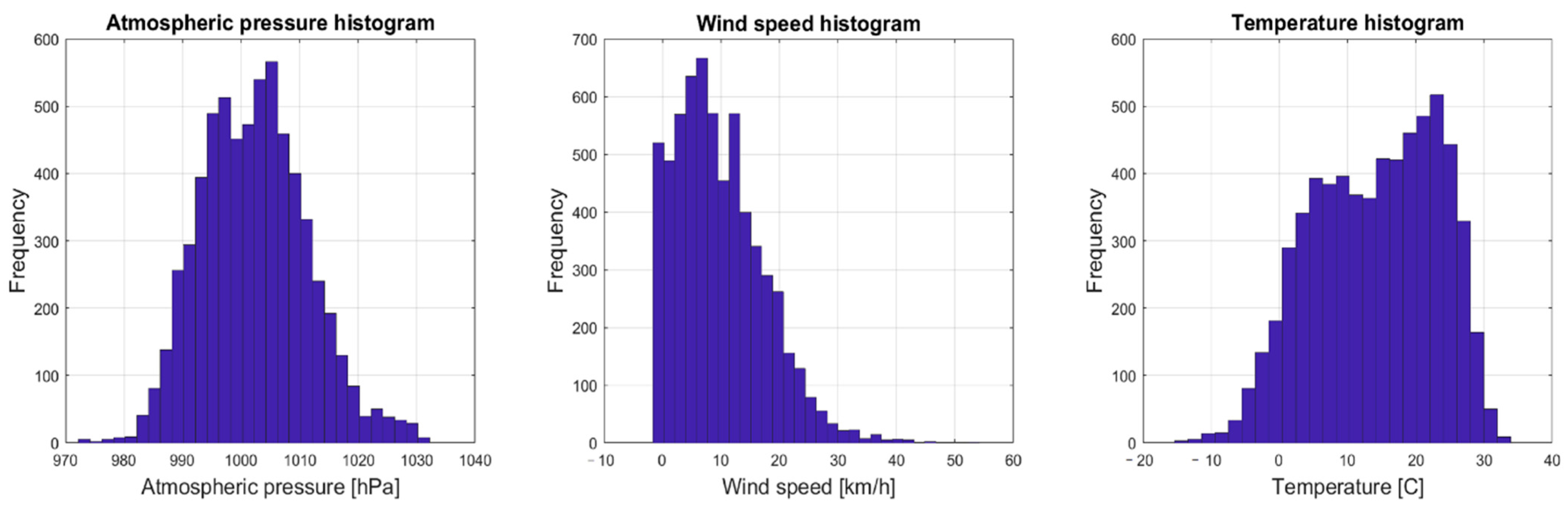
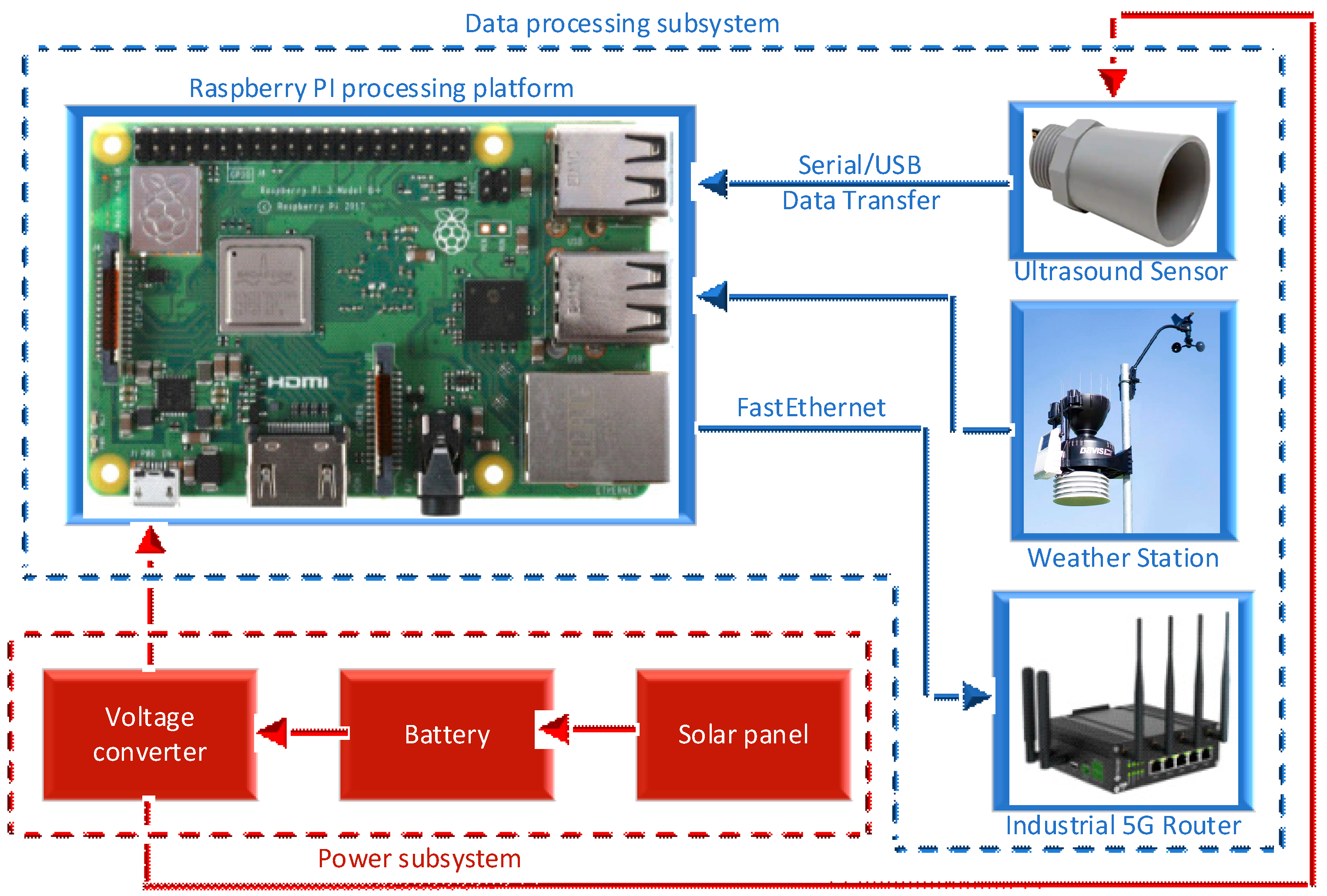
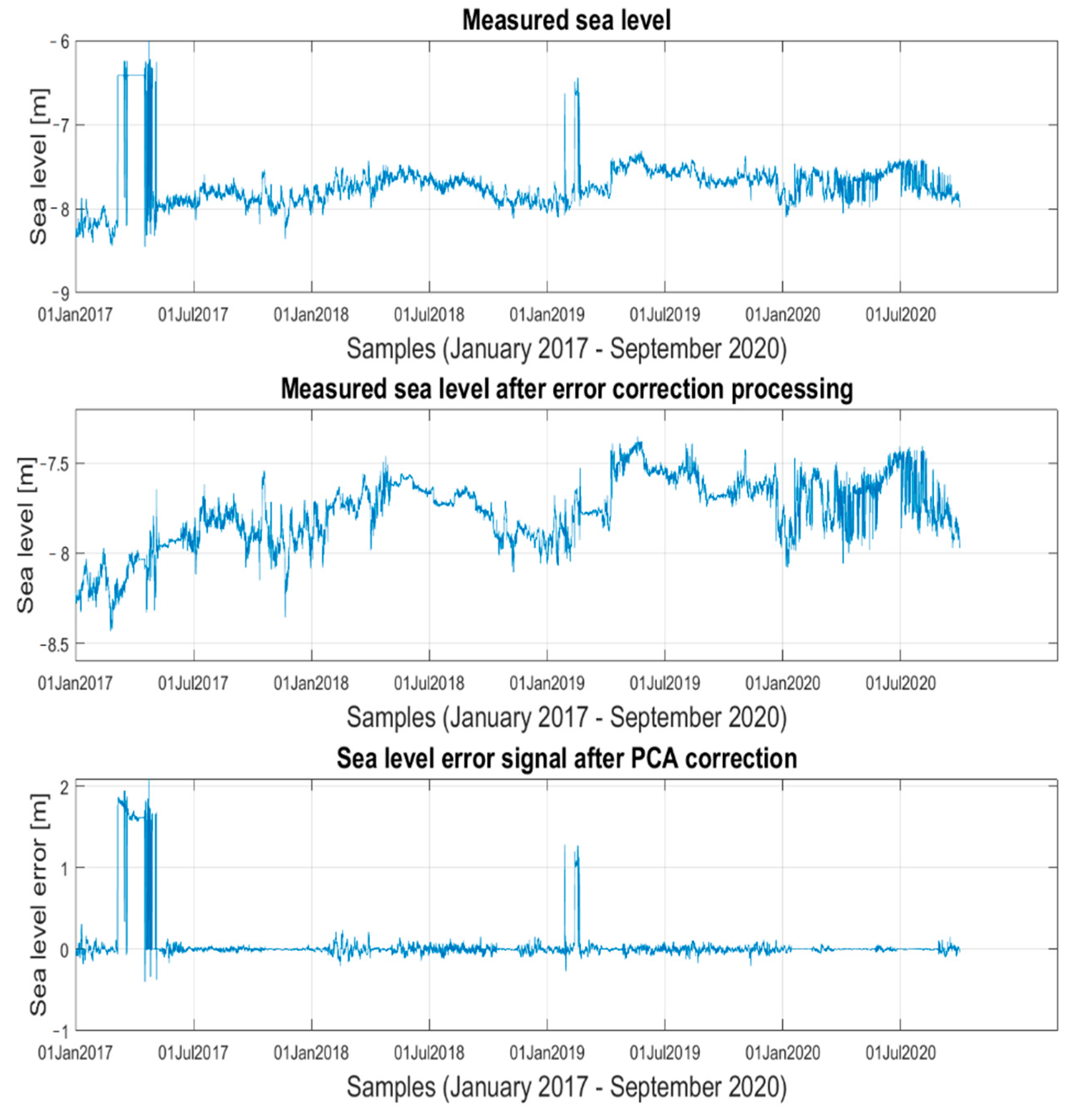
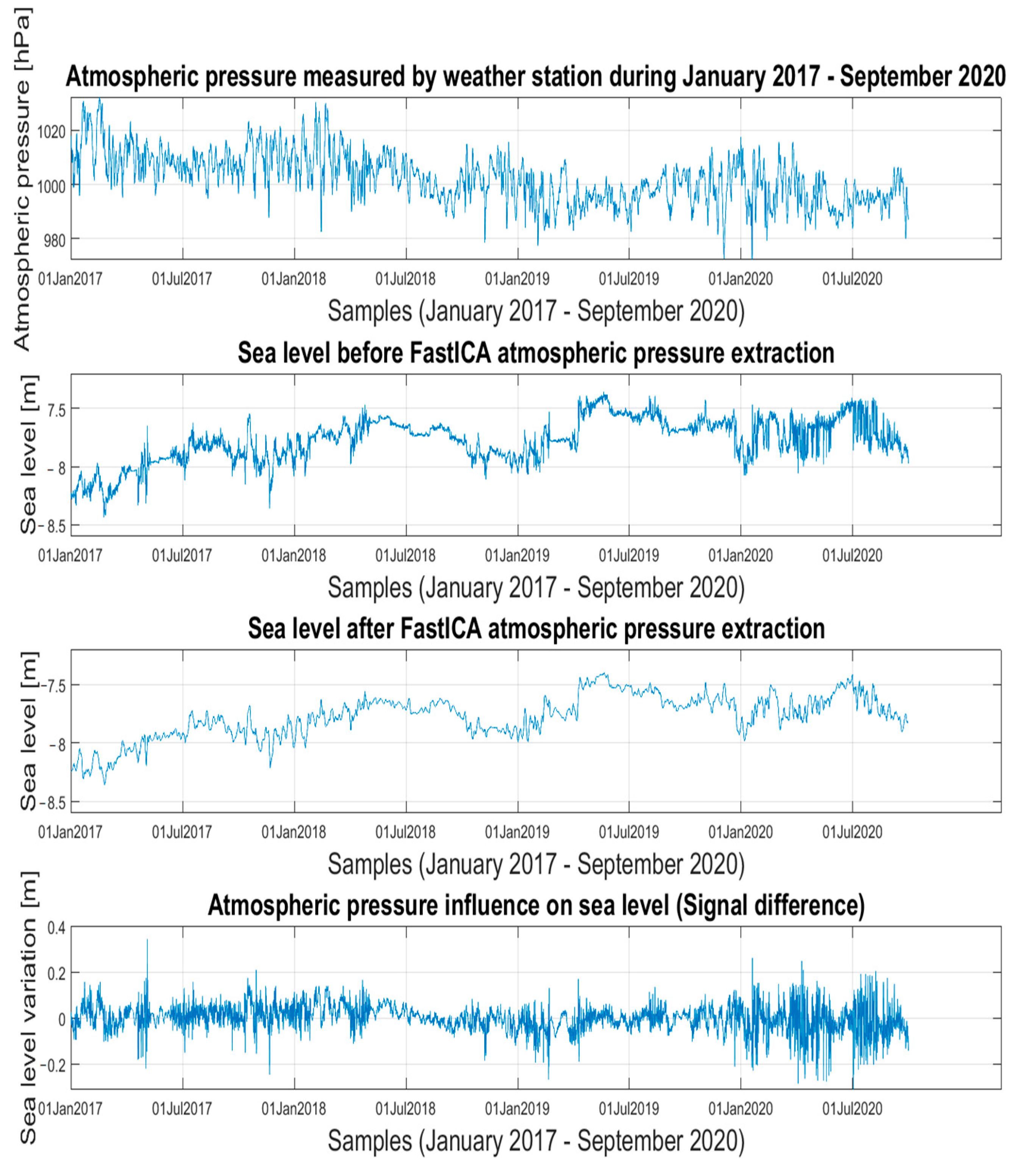
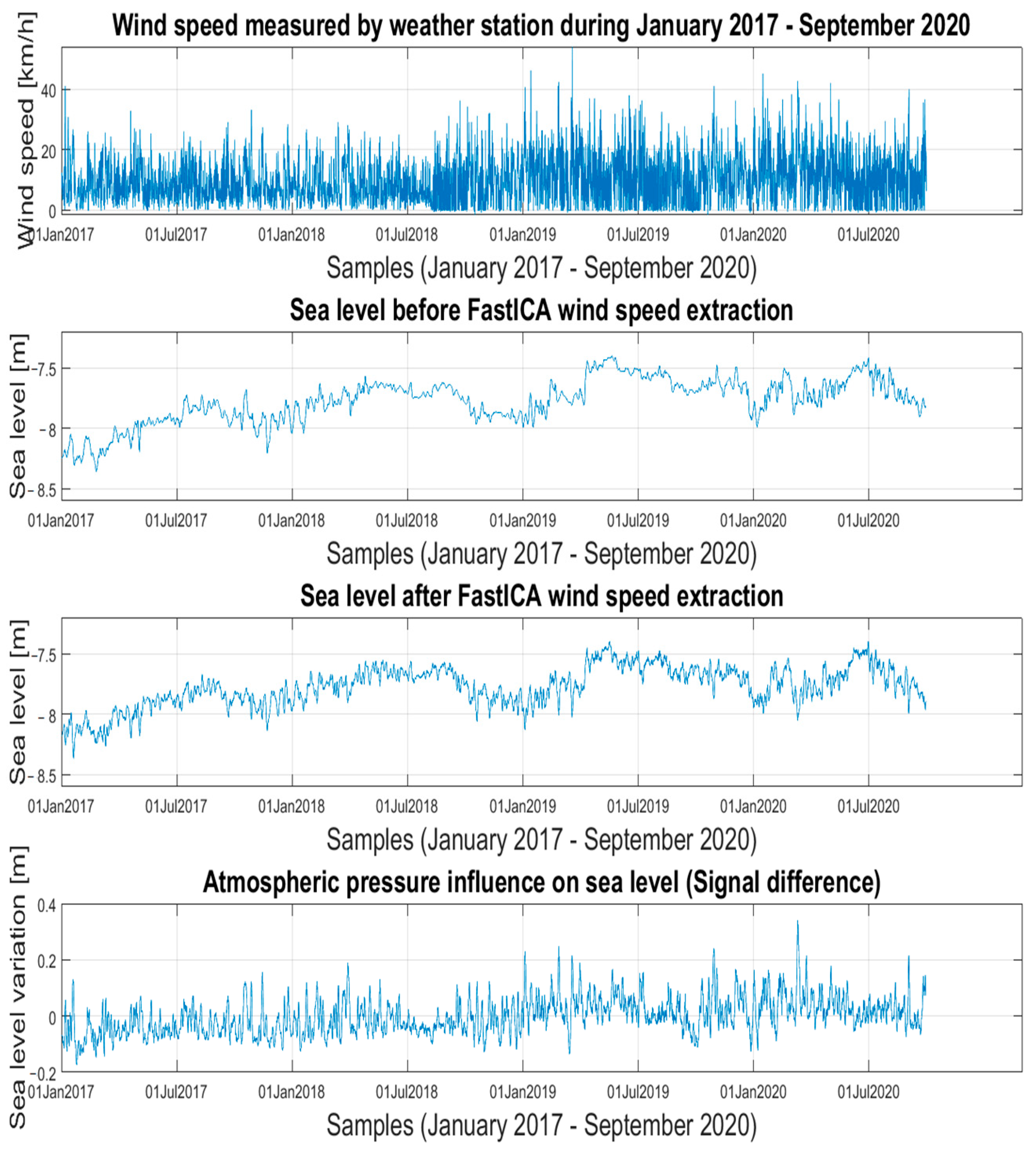
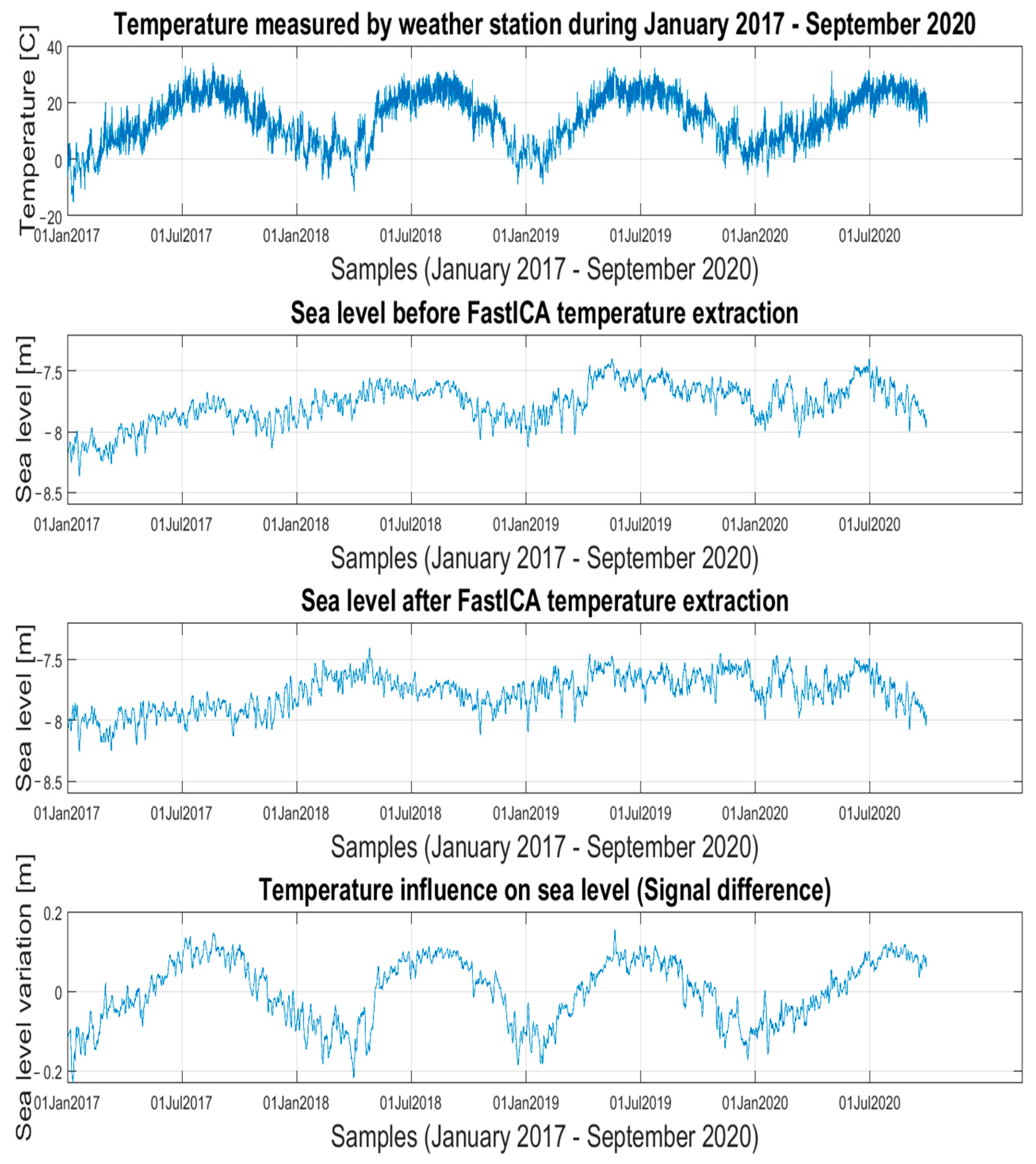
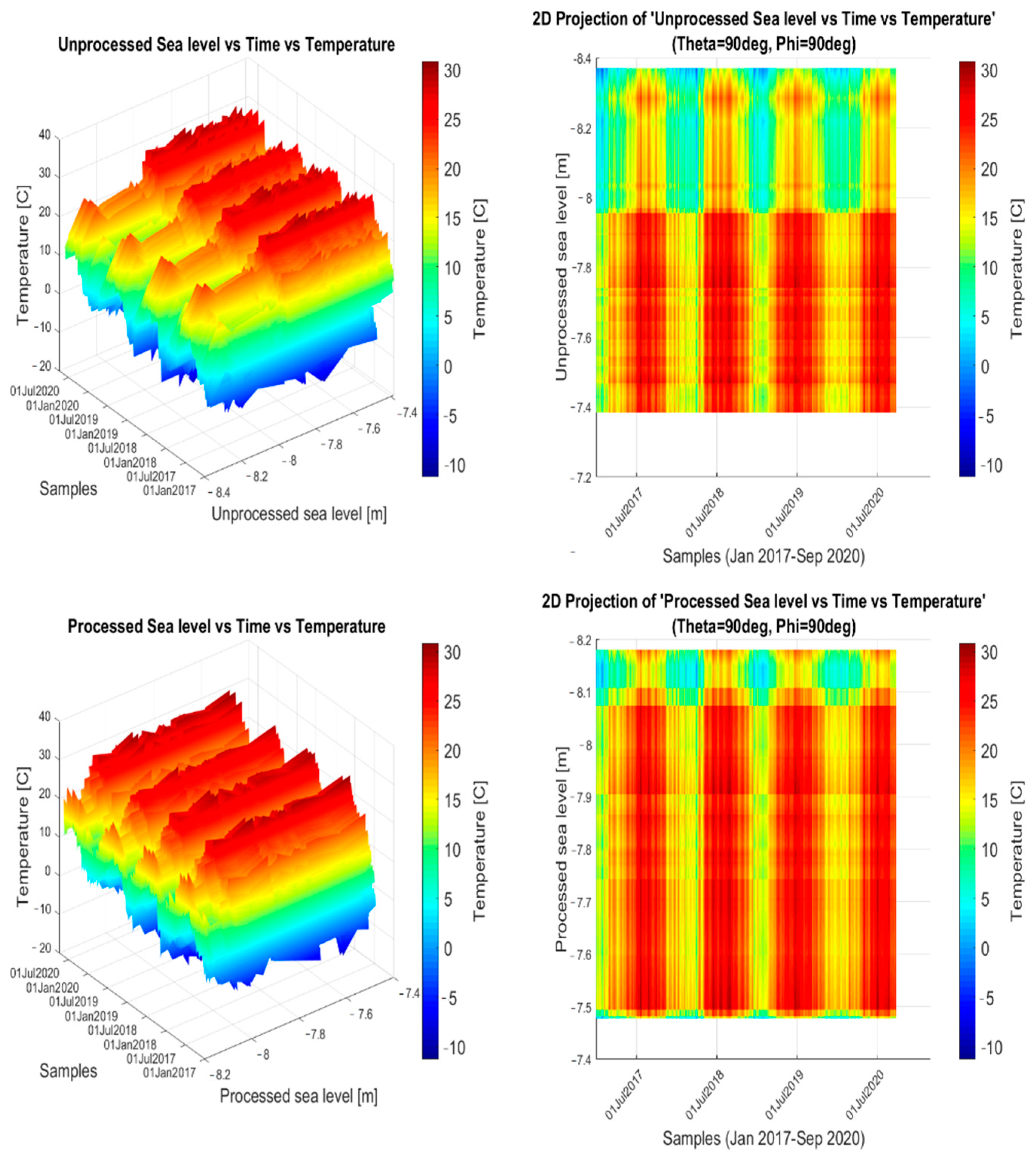
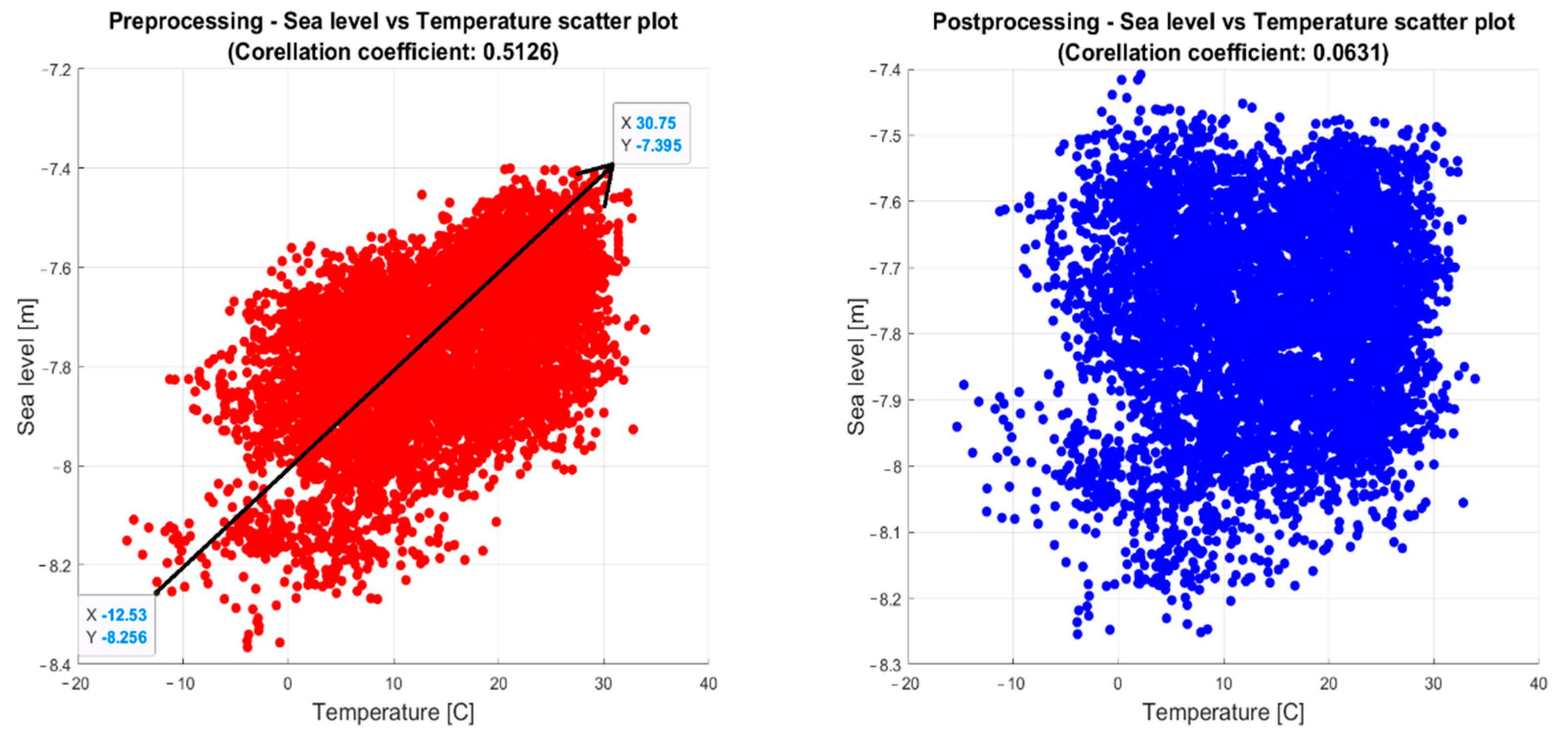
The parameters influencing the sea level measured with ultrasonic devices that are analyzed in this paper are the air temperature, atmospheric pressure and wind speed. As these variations are independent to each other and to the sea level, they can be removed from the measured sea level by applying a filtering algorithm based on independent component analysis (FastICA), adapted and improved for this application. The sound speed increases with temperature, so an internal temperature sensor is required to compensate for the sound-speed variation. Though this may improve the measurement accuracy, it is not enough to achieve the best results because there is a discrepancy between the internal sensor and the actual environment temperature. For high accuracy measurements, an external temperature sensor is required. In our case, we imported temperature datasets from a weather station, along with other datasets regarding atmospheric pressure and wind speed. The use of these external datasets, along with an algorithm based on principal component analysis (PCA) for error removal and the filtering algorithm based on FastICA for environmental phenomena extraction, allows us to achieve more accurate values for the Black Sea level in Constanta (2017–2020), independent of external influences.
Keywords: atmospheric pressure; air temperature; wind speed; water level; FastICA; PCA atmospheric pressure; air temperature; wind speed; water level; FastICA; PCA