Review

Inorganic Nitrogen Transport and Assimilation in Pea (Pisum sativum)
1
Biochemistry & Metabolism Department, John Innes Centre, Norwich Research Park, Norwich NR4 7UH, UK
2
CAS-JIC Centre of Excellence for Plant and Microbial Science (CEPAMS), Shanghai Institutes for Biological Sciences, Chinese Academy of Sciences (CAS), Shanghai 200032, China
3
National Key Laboratory of Plant Molecular Genetics, CAS Center for Excellence in Molecular Plant Sciences, Chinese Academy of Sciences (CAS), Shanghai 200032, China
*
Author to whom correspondence should be addressed.
Genes 2022, 13(1), 158; https://doi.org/10.3390/genes13010158
Submission received: 23 November 2021 / Revised: 4 January 2022 / Accepted: 6 January 2022 / Published: 17 January 2022
(This article belongs to the Special Issue Pea Genetics and Breeding)

Abstract

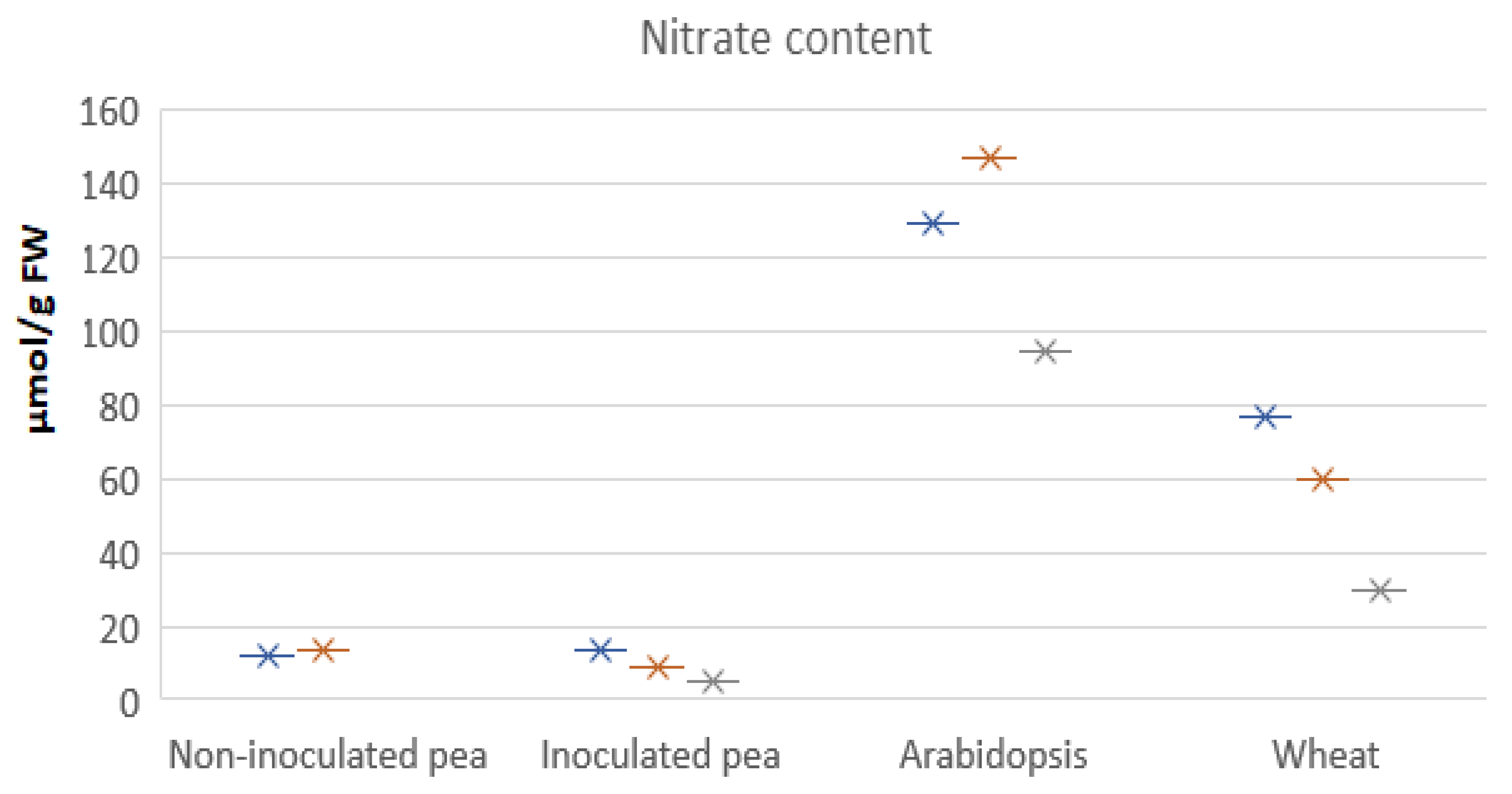
The genome sequences of several legume species are now available allowing the comparison of the nitrogen (N) transporter inventories with non-legume species. A survey of the genes encoding inorganic N transporters and the sensing and assimilatory families in pea, revealed similar numbers of genes encoding the primary N assimilatory enzymes to those in other types of plants. Interestingly, we find that pea and Medicago truncatula have fewer members of the NRT2 nitrate transporter family. We suggest that this difference may result from a decreased dependency on soil nitrate acquisition, as legumes have the capacity to derive N from a symbiotic relationship with diazotrophs. Comparison with M. truncatula, indicates that only one of three NRT2s in pea is likely to be functional, possibly indicating less N uptake before nodule formation and N-fixation starts. Pea seeds are large, containing generous amounts of N-rich storage proteins providing a reserve that helps seedling establishment and this may also explain why fewer high affinity nitrate transporters are required. The capacity for nitrate accumulation in the vacuole is another component of assimilation, as it can provide a storage reservoir that supplies the plant when soil N is depleted. Comparing published pea tissue nitrate concentrations with other plants, we find that there is less accumulation of nitrate, even in non-nodulated plants, and that suggests a lower capacity for vacuolar storage. The long-distance transported form of organic N in the phloem is known to be specialized in legumes, with increased amounts of organic N molecules transported, like ureides, allantoin, asparagine and amides in pea. We suggest that, in general, the lower tissue and phloem nitrate levels compared with non-legumes may also result in less requirement for high affinity nitrate transporters. The pattern of N transporter and assimilatory enzyme distribution in pea is discussed and compared with non-legumes with the aim of identifying future breeding targets.
Keywords: pea; Pisum sativum; inorganic nitrogen; transport; assimilation pea; Pisum sativum; inorganic nitrogen; transport; assimilation