Review

Protein-Related Circular RNAs in Human Pathologies


by
Olga Wawrzyniak
1,†,
Żaneta Zarębska
2,†,
Konrad Kuczyński
2,3,
Anna Gotz-Więckowska
1 and
Katarzyna Rolle
2,*
1
Department of Ophthalmology, Poznan University of Medical Sciences, 60569 Poznan, Poland
2
Department of Molecular Neurooncology, Institute of Bioorganic Chemistry Polish Academy of Sciences, 61704 Poznan, Poland
3
NanoBioMedical Centre, Adam Mickiewicz University, 61614 Poznan, Poland
*
Author to whom correspondence should be addressed.
These authors contributed equally to this paper.
Cells 2020, 9(8), 1841; https://doi.org/10.3390/cells9081841
Submission received: 25 June 2020 / Revised: 2 August 2020 / Accepted: 5 August 2020 / Published: 6 August 2020
(This article belongs to the Special Issue Circular RNAs: Non-canonical Observations on Non-canonical RNAs)

Abstract

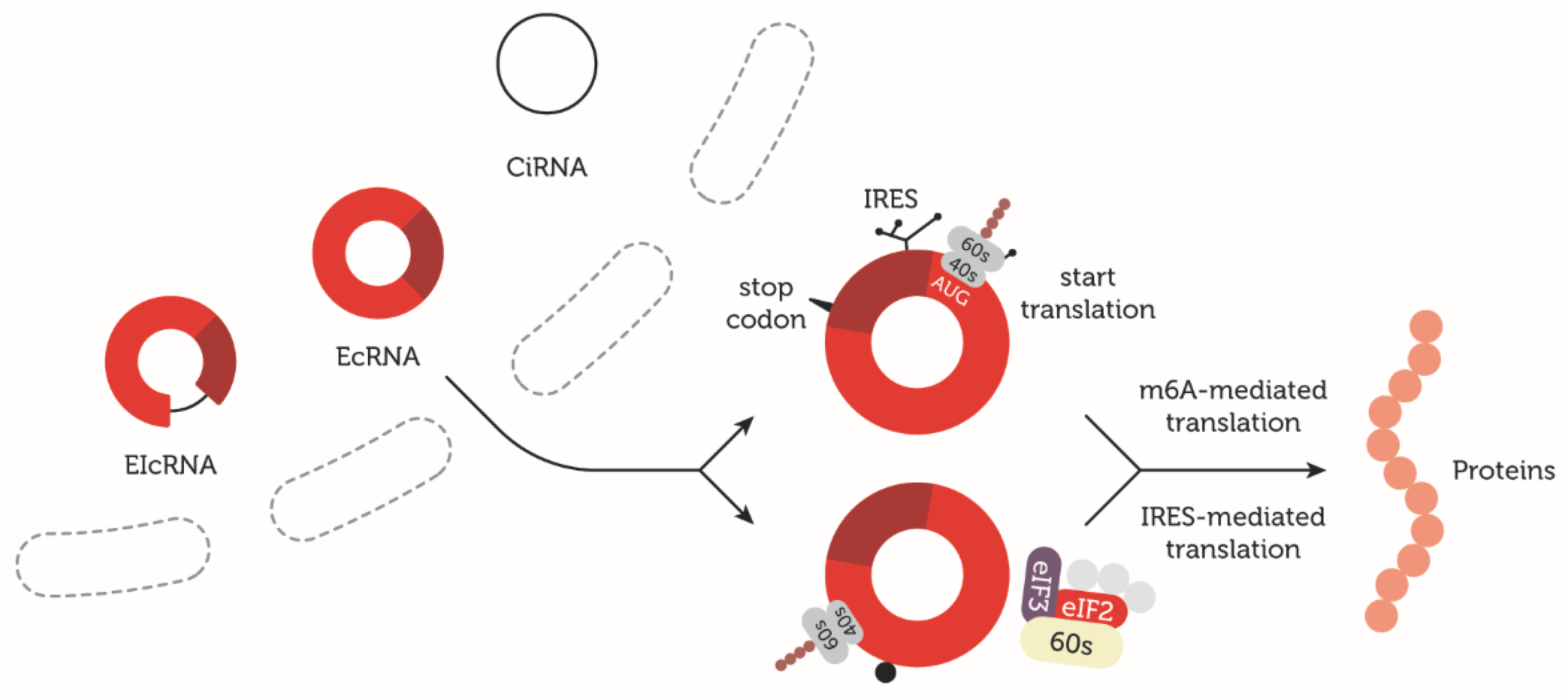
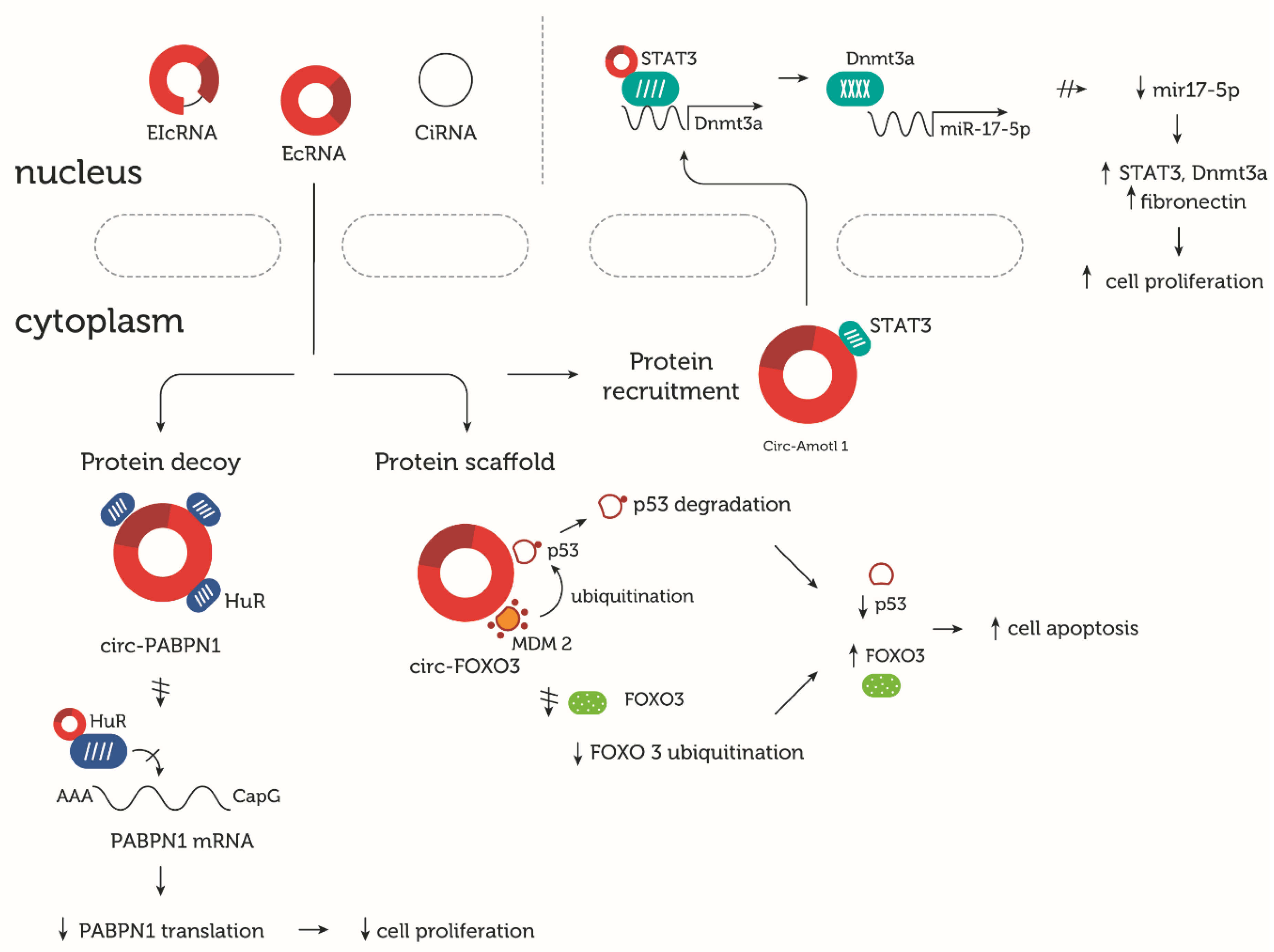
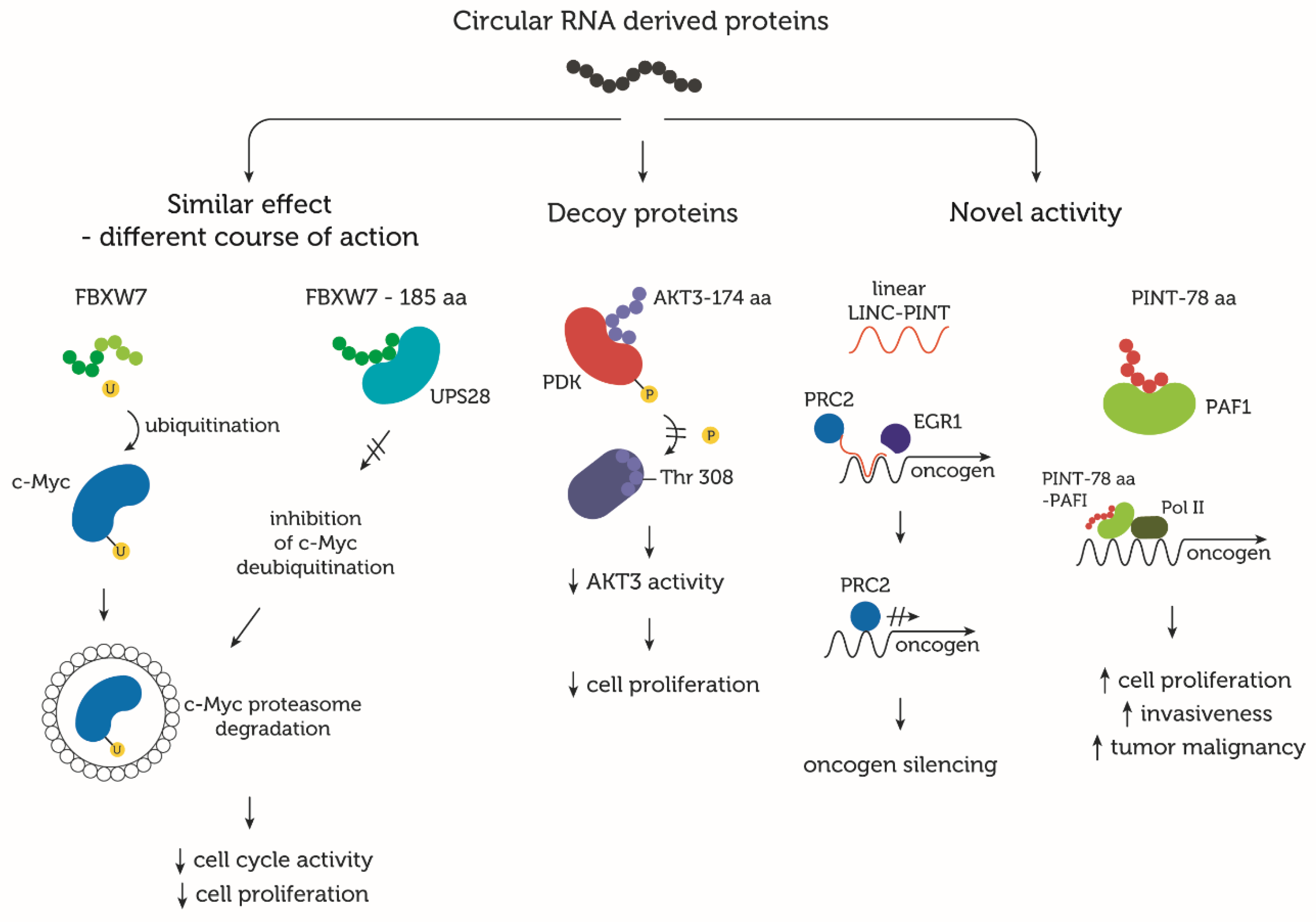
Circular RNAs (circRNAs) are a distinct family of RNAs derived from alternative splicing which play a crucial role in regulating gene expression by acting as microRNA (miRNA) and RNA binding protein (RBP) sponges. However, recent studies have also reported the multifunctional potential of these particles. Under different conditions, circRNAs not only regulate protein synthesis, destination, and degradation but can serve as protein scaffolds or recruiters and are also able to produce short peptides with active biological functions. circRNAs are under ongoing investigation because of their close association with the development of diseases. Some circRNAs are reportedly expressed in a tissue- and development stage-specific manner. Furthermore, due to other features of circRNAs, including their stability, conservation, and high abundance in bodily fluids, they are believed to be potential biomarkers for various diseases, including cancers. In this review, we focus on providing a summary of the current knowledge on circRNA–protein interactions. We present the properties and functions of circRNAs, the possible mechanisms of their translation abilities, and the emerging functions of circRNA-derived peptides in human pathologies.
Keywords: circRNAs; cancer; human disorders; translation; backsplicing circRNAs; cancer; human disorders; translation; backsplicing