Article

Mycobacterium avium subsp. paratuberculosis MAP1889c Protein Induces Maturation of Dendritic Cells and Drives Th2-Biased Immune Responses

Department of Microbiology and Department of Medical Science, College of Medicine, Chungnam National University, Daejeon 35015, Korea
*
Author to whom correspondence should be addressed.
The authors contributed equally to this work.
Cells 2020, 9(4), 944; https://doi.org/10.3390/cells9040944
Submission received: 16 March 2020 / Revised: 9 April 2020 / Accepted: 9 April 2020 / Published: 11 April 2020
(This article belongs to the Section Cellular Immunology)

Abstract

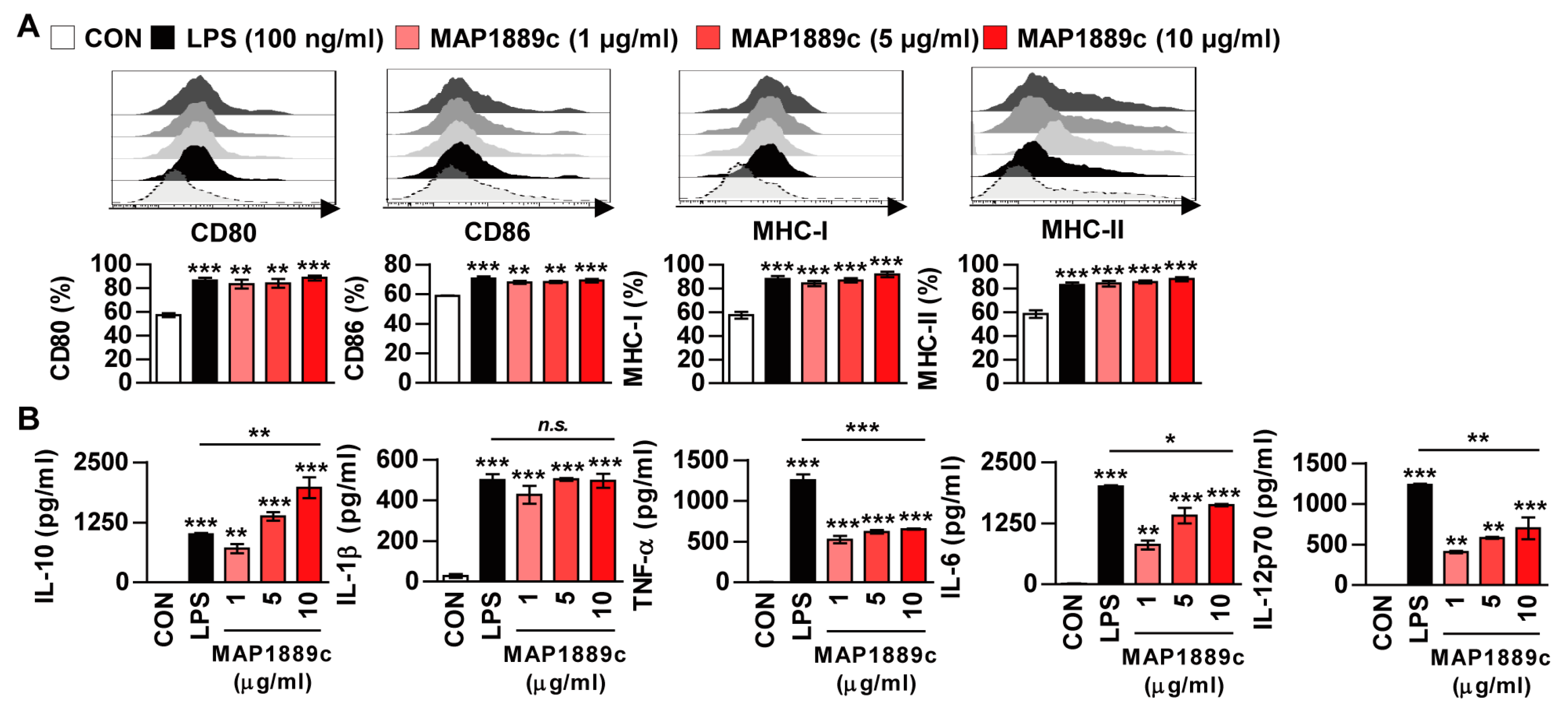
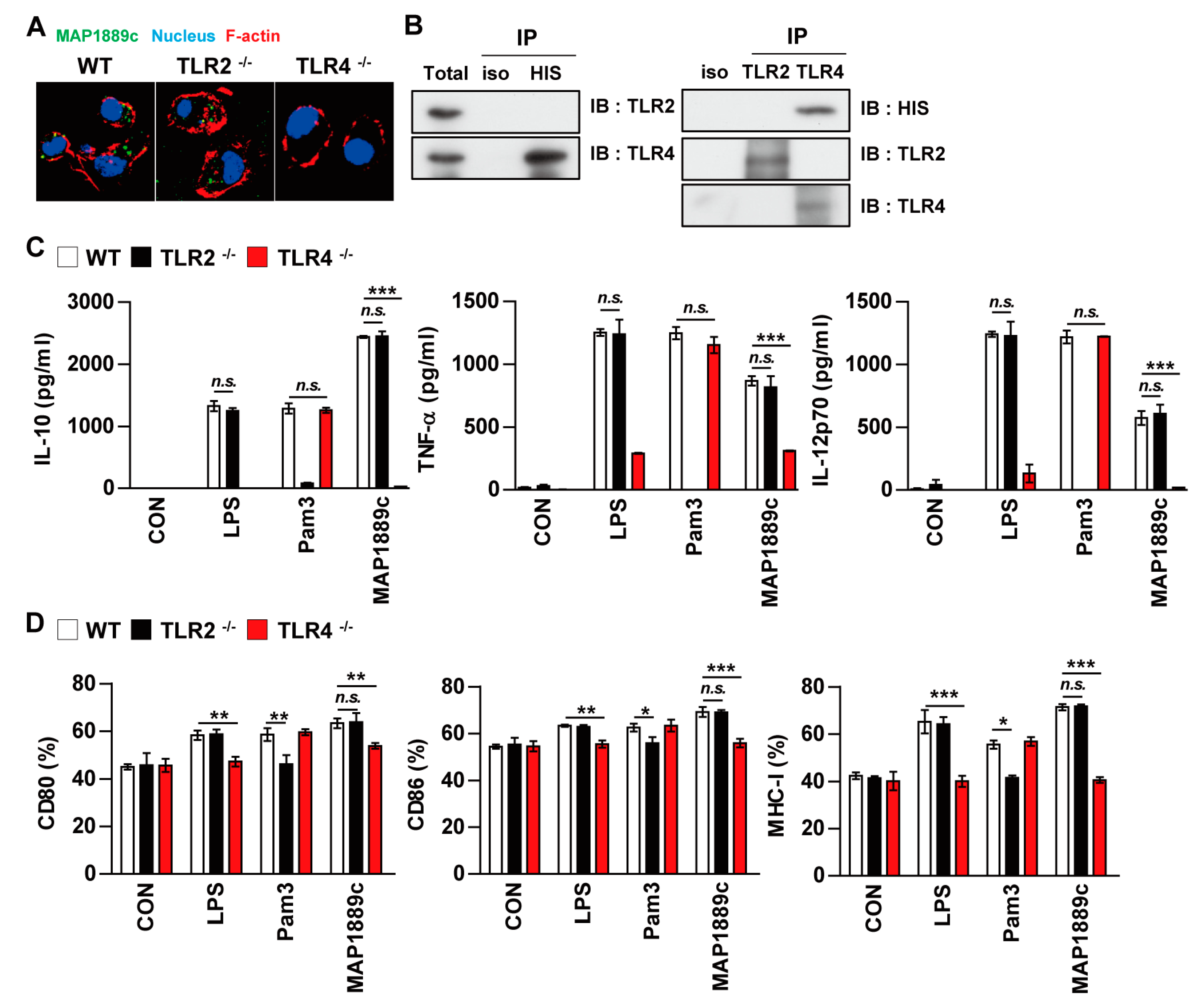
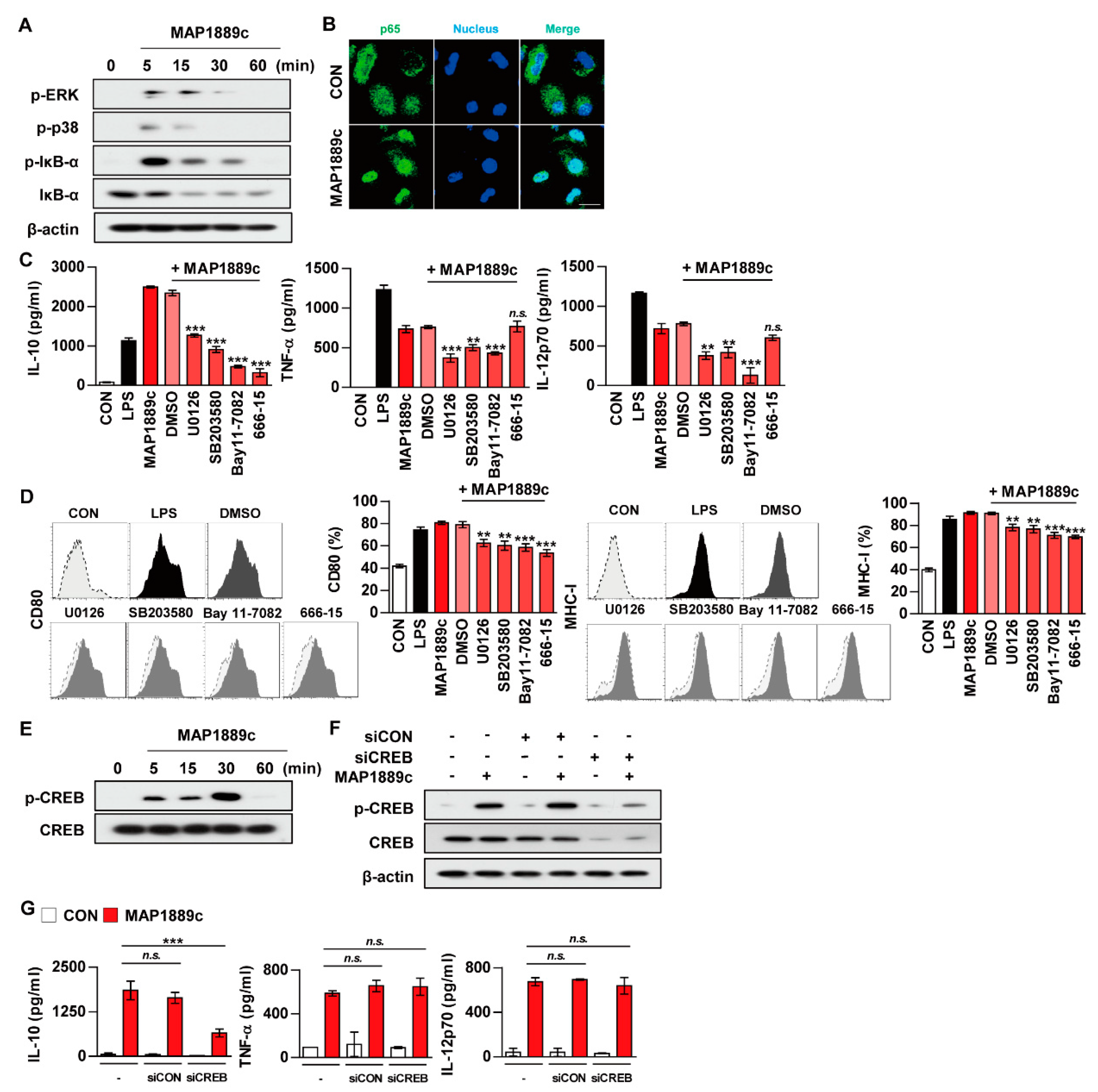
Mycobacterium avium subsp. paratuberculosis (MAP) is a causative agent of chronic granulomatous bowel disease in animals and is associated with various autoimmune diseases in humans including Crohn’s disease. A good understanding of the host-protective immune response and antibacterial immunity controlled by MAP and its components may contribute to the development of effective control strategies. MAP1889c was identified as a seroreactive antigen in Crohn’s disease patients. In this study, we investigated the immunological function of MAP1889c in dendritic cells (DCs). MAP1889c stimulated DCs to increase expression of co-stimulatory molecules (CD80 and CD86) and major histocompatibility complex (MHC) class molecules and to secret higher interleukin (IL)-10 and moderate IL-6, tumor necrosis factor (TNF)-α, and IL-12p70 levels through the Toll-like receptor (TLR) 4 pathway. MAP1889c-induced DC activation was mediated by mitogen-activated protein kinases (MAPKs), cAMPp-response element binding protein (CREB), and nuclear factor kappa B (NF-κB). In particular, the CREB signal was essential for MAP1889c-mediated IL-10 production but not TNF-α and IL-12p70. In addition, MAP1889c-matured DCs induced T cell proliferation and drove the Th2 response. Production of lipopolysaccharide (LPS)-mediated pro-inflammatory cytokines and anti-inflammatory cytokines was suppressed and enhanced respectively by MAP1889c pretreatment in DCs and T cells. Furthermore, treatment of MAP1889c in M. avium-infected macrophages promoted intracellular bacterial growth and IL-10 production. These findings suggest that MAP1889c modulates the host antimycobacterial response and may be a potential virulence factor during MAP infection.
Keywords: Mycobacterium avium subsp. paratuberculosis; MAP1889c protein; interleukin-10; dendritic cells Mycobacterium avium subsp. paratuberculosis; MAP1889c protein; interleukin-10; dendritic cells