Article

Conformational States of Exchange Protein Directly Activated by cAMP (EPAC1) Revealed by Ensemble Modeling and Integrative Structural Biology


1
Sealy Center for Structural Biology and Molecular Biophysics, The University of Texas Medical Branch, Galveston, TX 77555, USA
2
Department of Biochemistry and Molecular Biology, The University of Texas Medical Branch, Galveston, TX 77555, USA
3
Department of Pharmacology and Toxicology, The University of Texas Medical Branch, Galveston, TX 77555, USA
4
Department of Integrative Biology & Pharmacology, University of Texas Health Science Center at Houston, Houston, TX 77030, USA
5
Texas Therapeutics Institute, Institute of Molecular Medicine, University of Texas Health Science Center at Houston, Houston, TX 77030, USA
*
Authors to whom correspondence should be addressed.
Cells 2020, 9(1), 35; https://doi.org/10.3390/cells9010035
Submission received: 1 November 2019 / Revised: 16 December 2019 / Accepted: 18 December 2019 / Published: 21 December 2019
(This article belongs to the Special Issue New Advances in Cyclic AMP Signalling)

Abstract

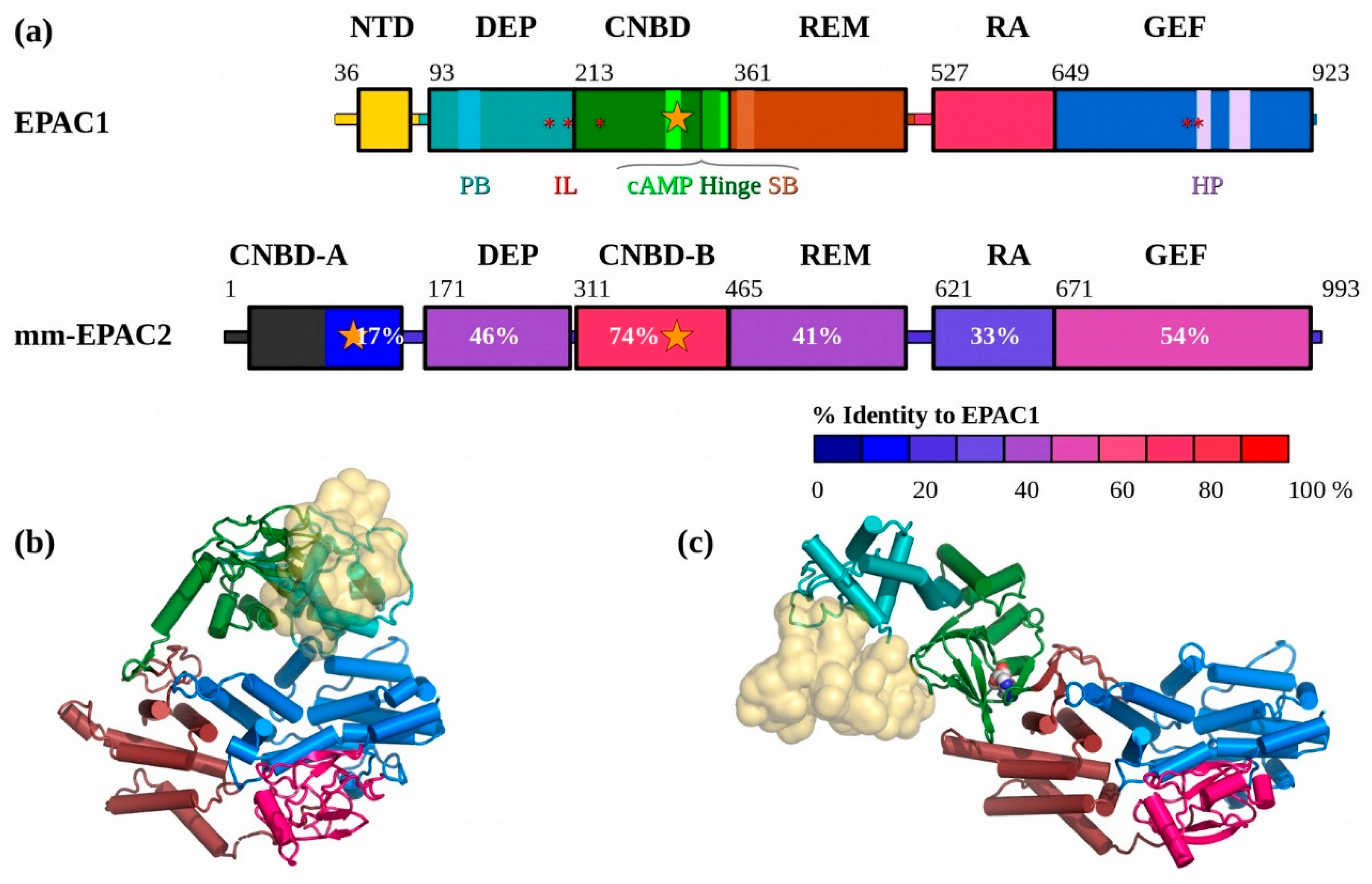
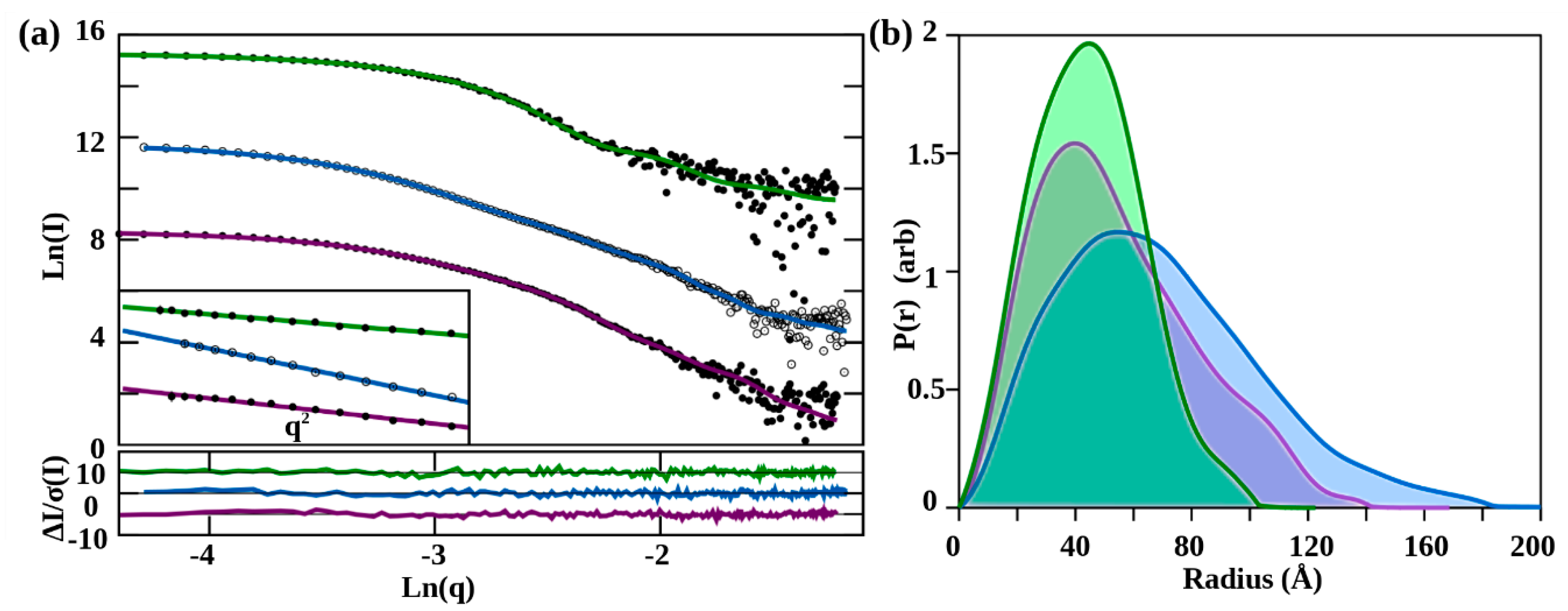
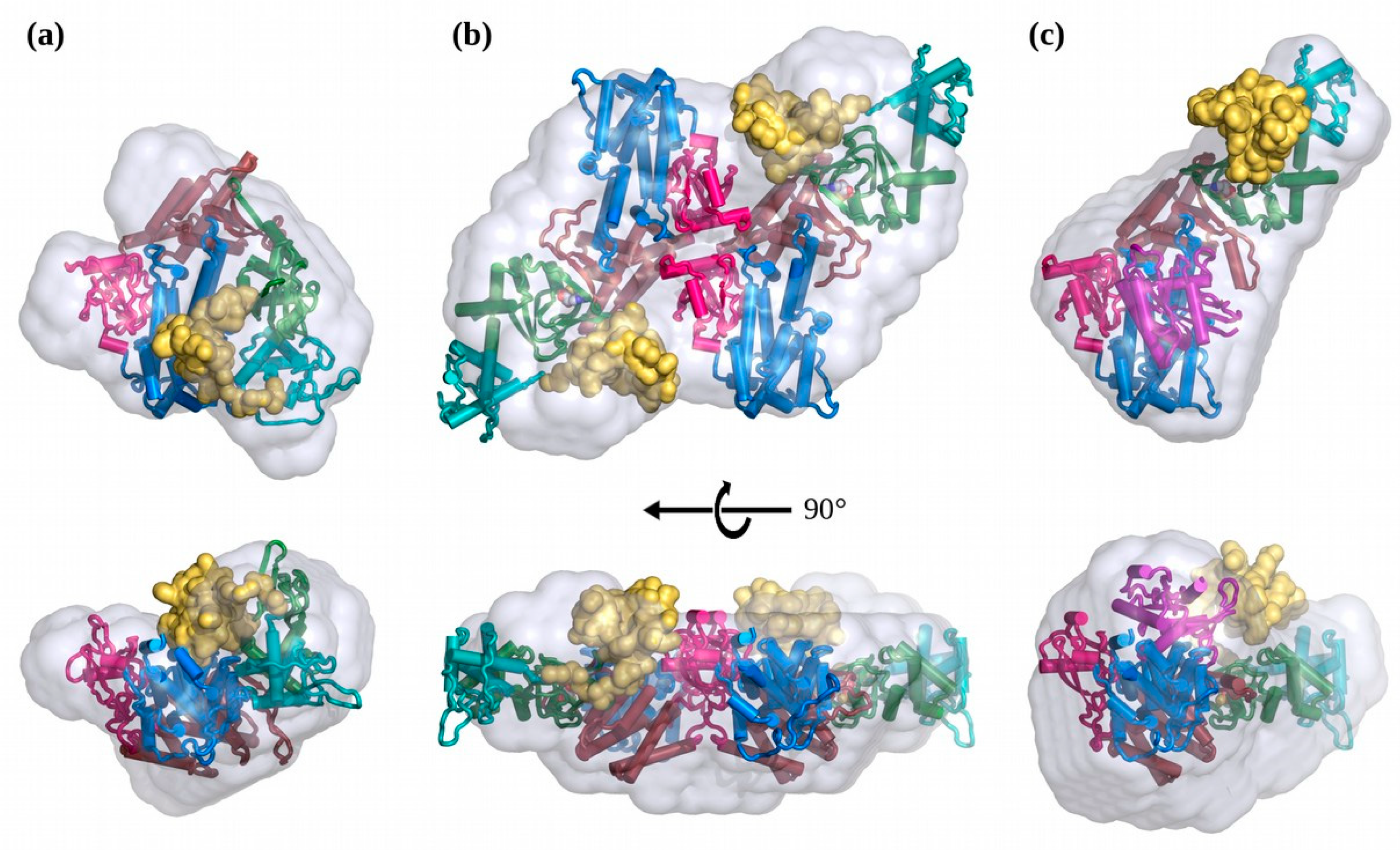
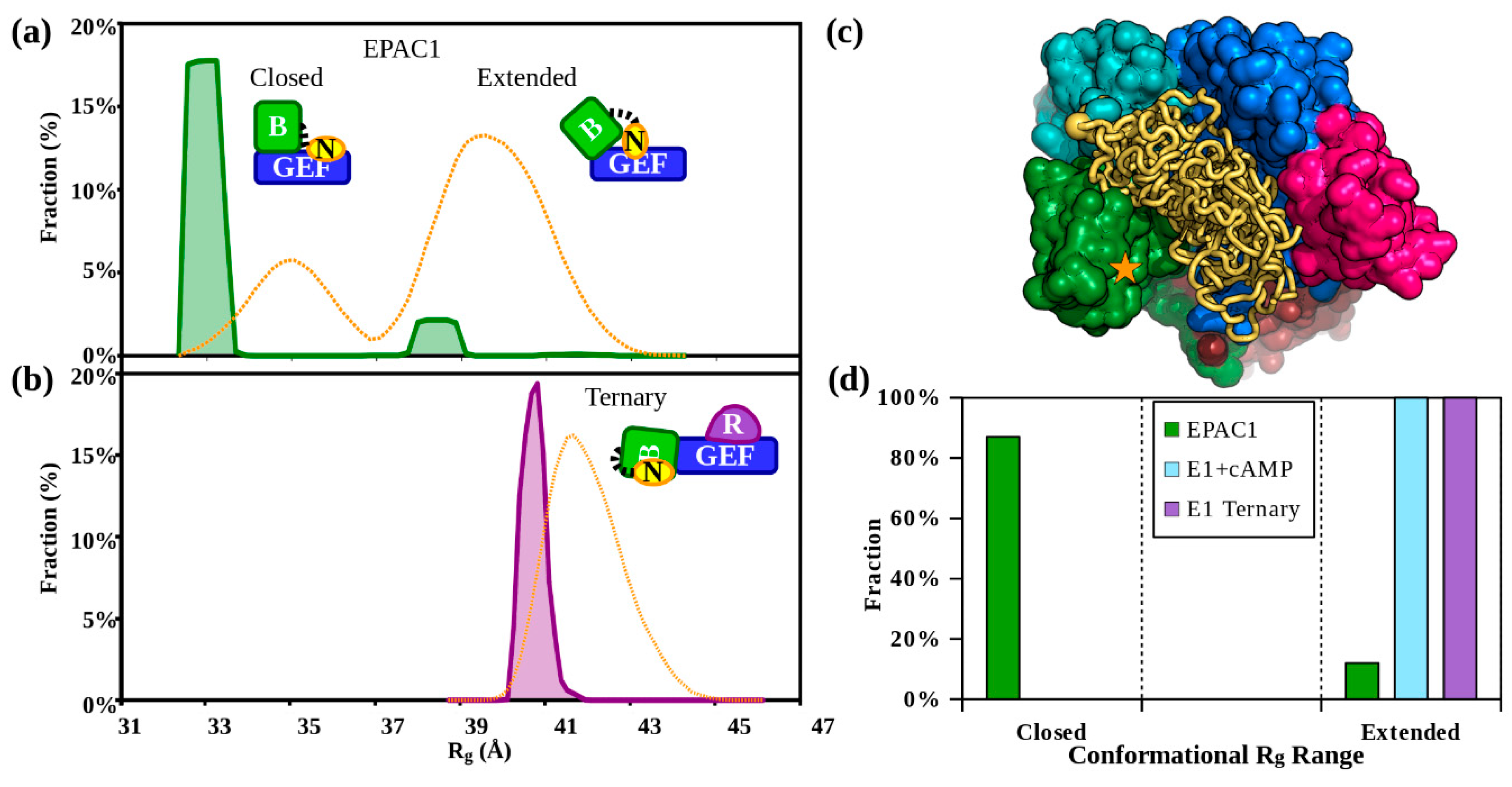
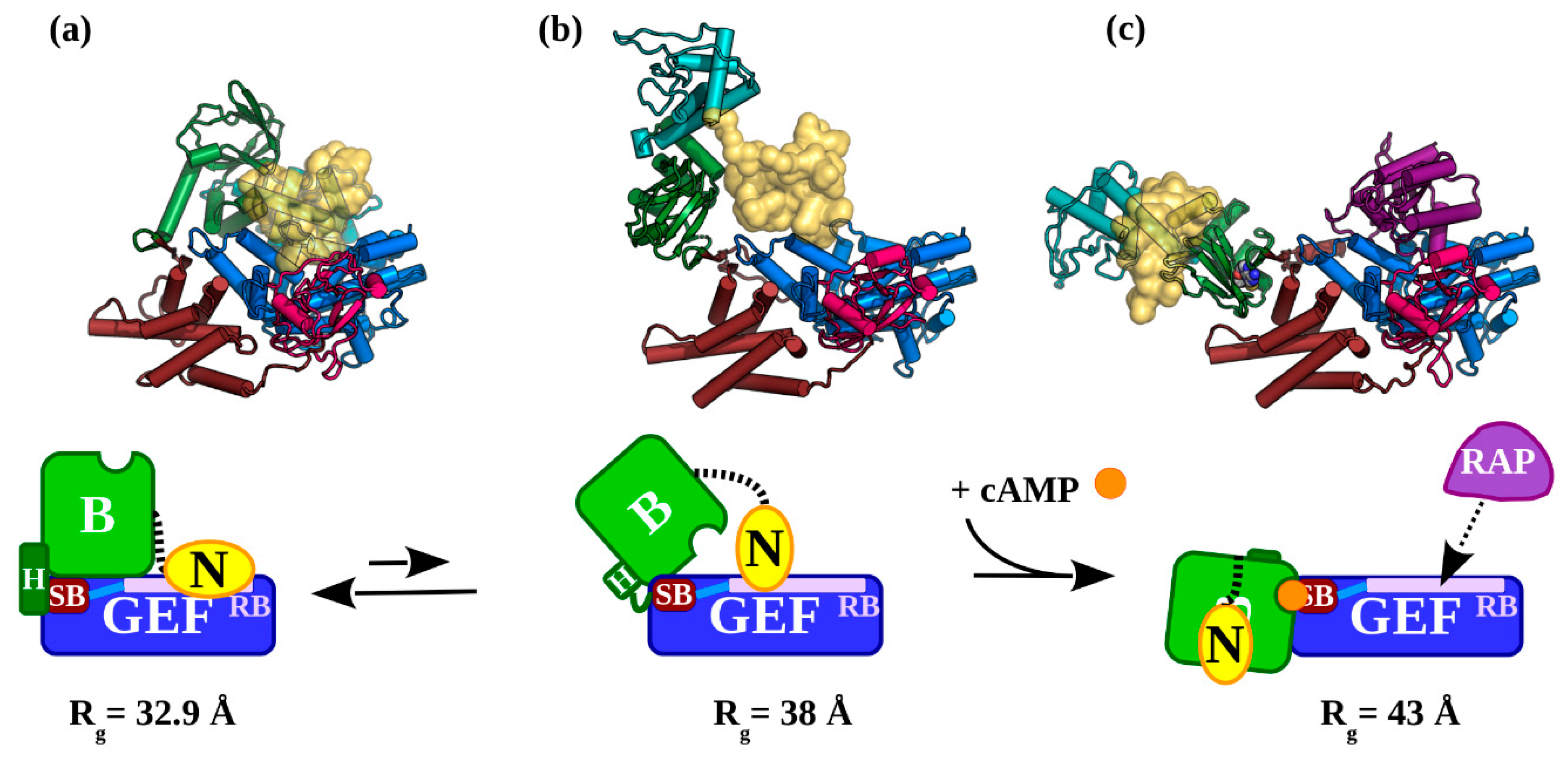
Exchange proteins directly activated by cAMP (EPAC1 and EPAC2) are important allosteric regulators of cAMP-mediated signal transduction pathways. To understand the molecular mechanism of EPAC activation, we performed detailed Small-Angle X-ray Scattering (SAXS) analysis of EPAC1 in its apo (inactive), cAMP-bound, and effector (Rap1b)-bound states. Our study demonstrates that we can model the solution structures of EPAC1 in each state using ensemble analysis and homology models derived from the crystal structures of EPAC2. The N-terminal domain of EPAC1, which is not conserved between EPAC1 and EPAC2, appears folded and interacts specifically with another component of EPAC1 in each state. The apo-EPAC1 state is a dynamic mixture of a compact (Rg = 32.9 Å, 86%) and a more extended (Rg = 38.5 Å, 13%) conformation. The cAMP-bound form of EPAC1 in the absence of Rap1 forms a dimer in solution; but its molecular structure is still compatible with the active EPAC1 conformation of the ternary complex model with cAMP and Rap1. Herein, we show that SAXS can elucidate the conformational states of EPAC1 activation as it proceeds from the compact, inactive apo conformation through a previously unknown intermediate-state, to the extended cAMP-bound form, and then binds to its effector (Rap1b) in a ternary complex.
Keywords: EPAC1; EPAC2; Small-Angle X-ray Scattering (SAXS); guanine nucleotide exchange factor EPAC1; EPAC2; Small-Angle X-ray Scattering (SAXS); guanine nucleotide exchange factor