Article

Impact of Tumour Hypoxia on Evofosfamide Sensitivity in Head and Neck Squamous Cell Carcinoma Patient-Derived Xenograft Models


1
Auckland Cancer Society Research Centre, University of Auckland, Auckland 1023, New Zealand
2
Maurice Wilkins Centre for Molecular Biodiscovery, University of Auckland, Auckland 1010, New Zealand
3
Department of Pharmacology and Clinical Pharmacology, University of Auckland, Auckland 1023, New Zealand
4
LabPLUS, Auckland City Hospital, Auckland 1023, New Zealand
5
Department of Otolaryngology–Head and Neck Surgery, Auckland City Hospital, Auckland 1023, New Zealand
6
Department of Radiation Oncology, Auckland City Hospital, Auckland 1023, New Zealand
*
Author to whom correspondence should be addressed.
Cells 2019, 8(7), 717; https://doi.org/10.3390/cells8070717
Submission received: 20 June 2019 / Revised: 11 July 2019 / Accepted: 11 July 2019 / Published: 13 July 2019

Abstract

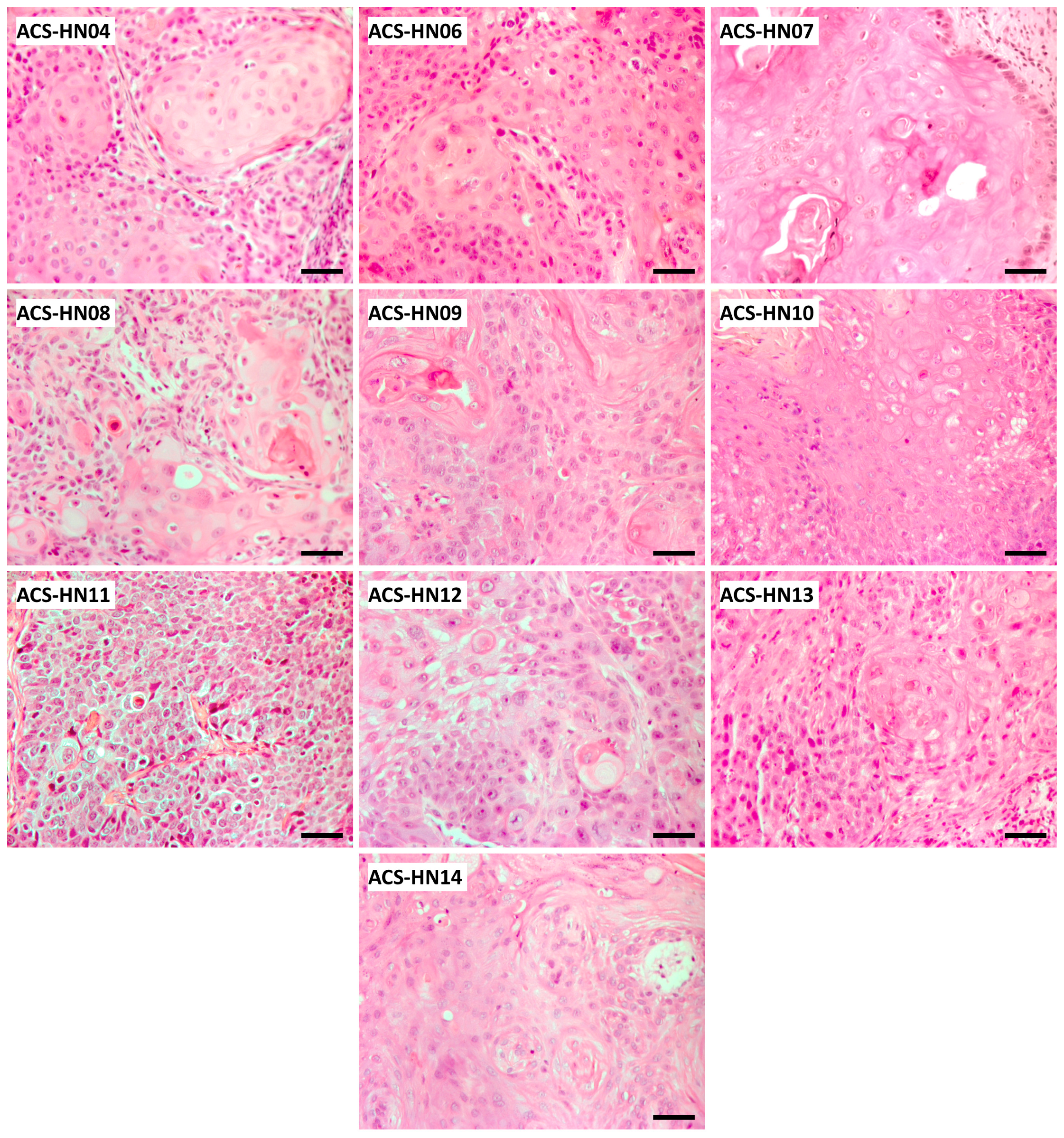
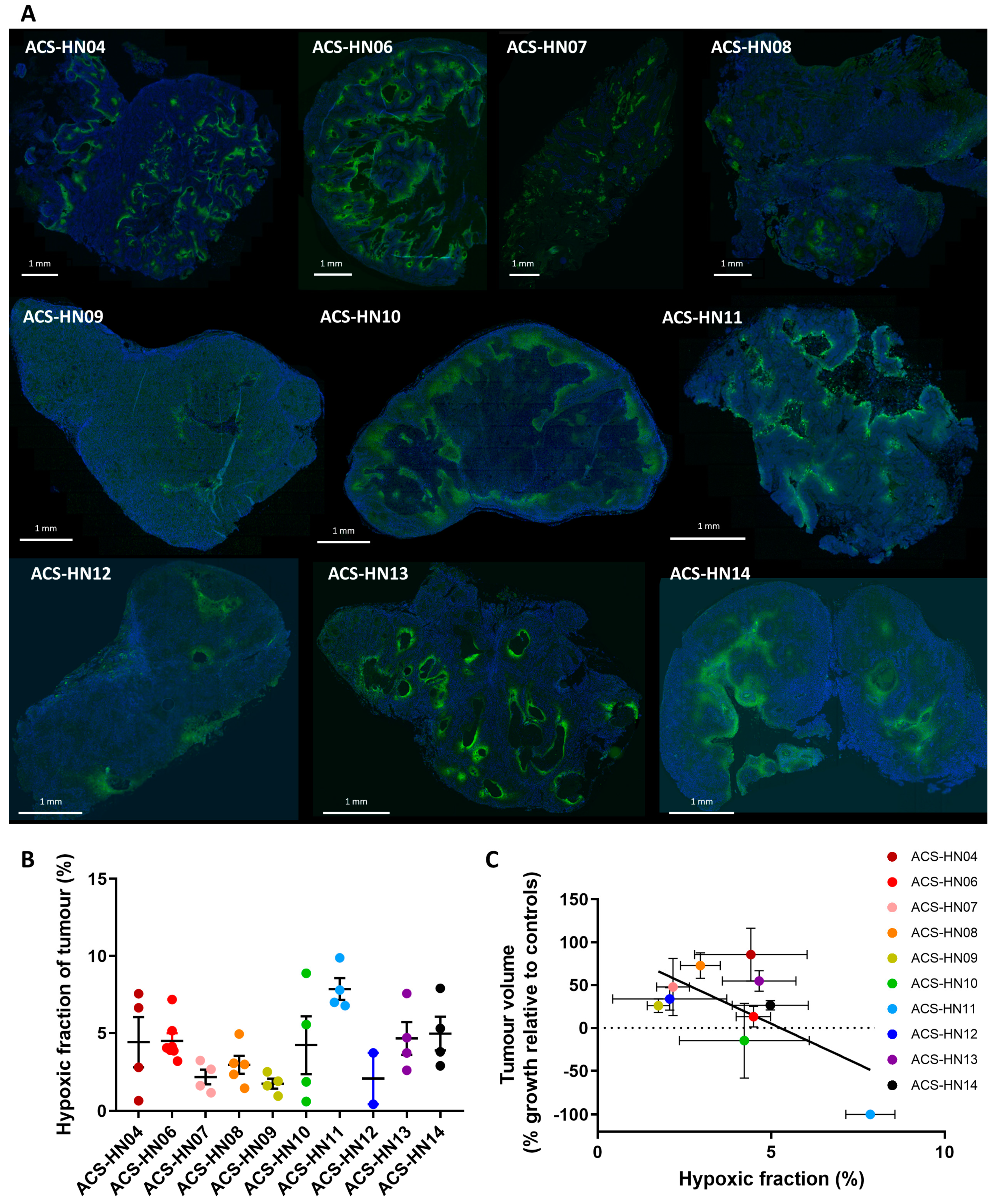
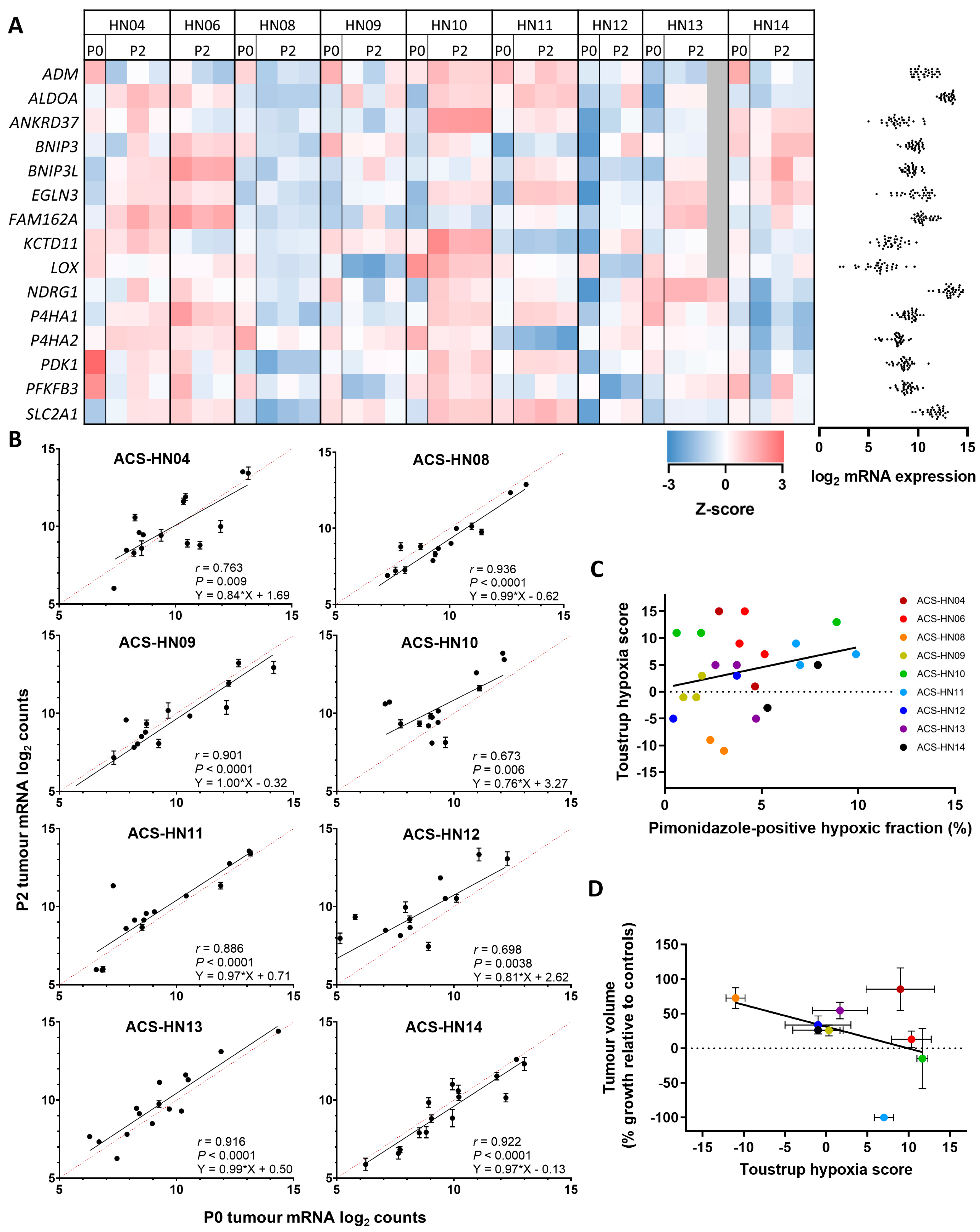
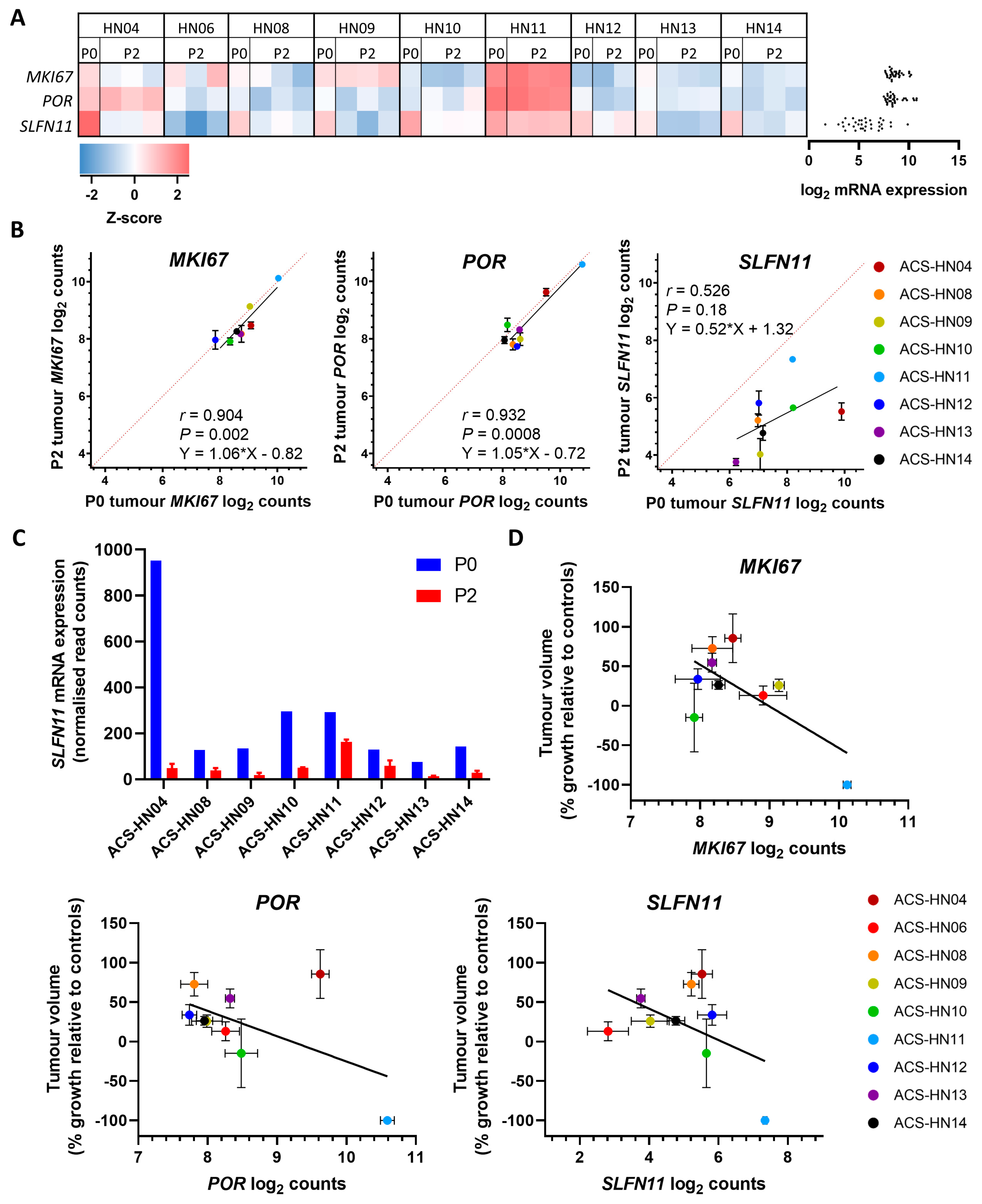
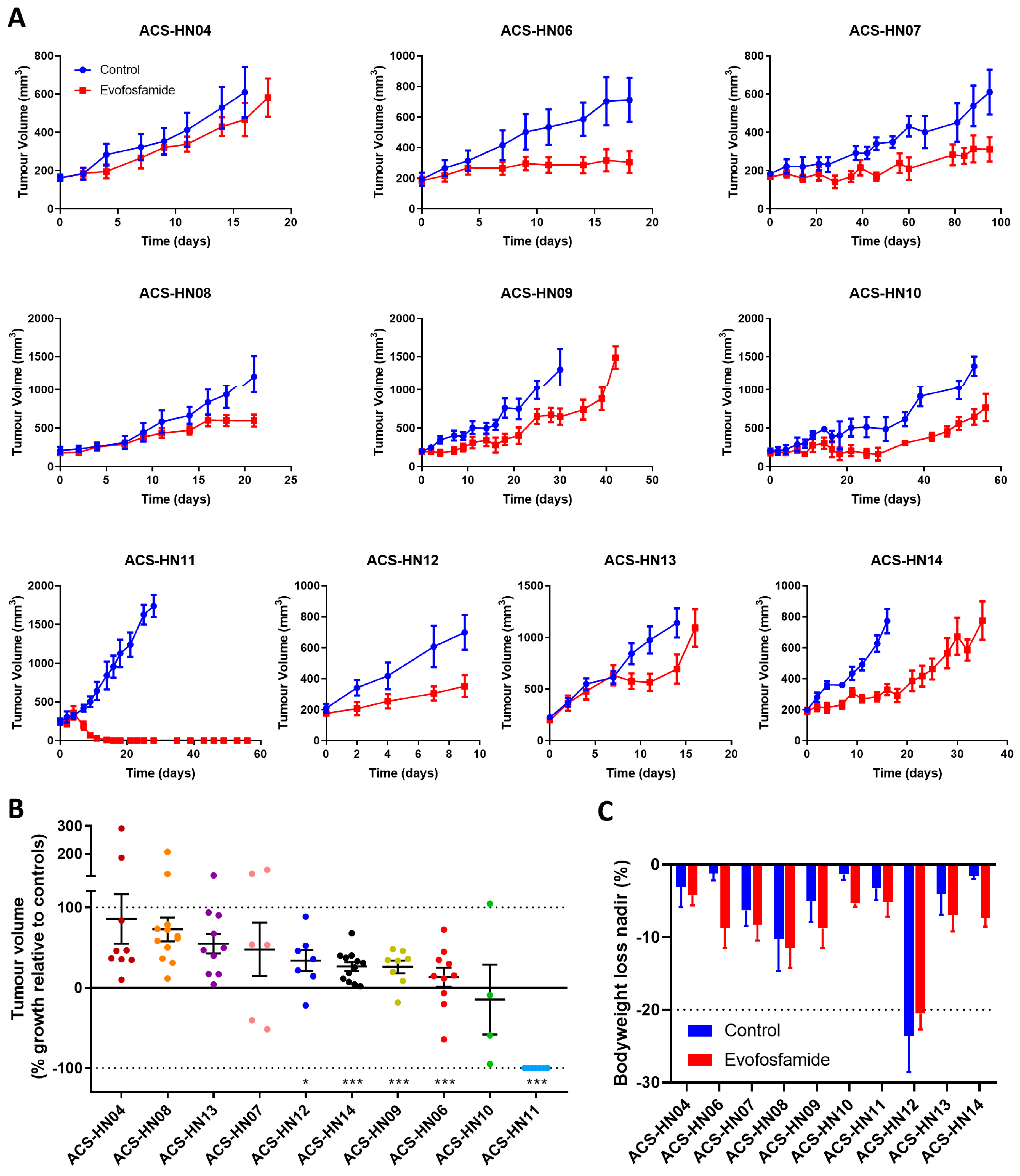
Tumour hypoxia is a marker of poor prognosis and failure of chemoradiotherapy in head and neck squamous cell carcinoma (HNSCC), providing a strategy for therapeutic intervention in this setting. To evaluate the utility of the hypoxia-activated prodrug evofosfamide (TH-302) in HNSCC, we established ten early passage patient-derived xenograft (PDX) models of HNSCC that were characterised by their histopathology, hypoxia status, gene expression, and sensitivity to evofosfamide. All PDX models closely resembled the histology of the patient tumours they were derived from. Pimonidazole-positive tumour hypoxic fractions ranged from 1.7–7.9% in line with reported HNSCC clinical values, while mRNA expression of the Toustrup hypoxia gene signature showed close correlations between PDX and matched patient tumours, together suggesting the PDX models may accurately model clinical tumour hypoxia. Evofosfamide as a single agent (50 mg/kg IP, qd × 5 for three weeks) demonstrated antitumour efficacy that was variable across the PDX models, ranging from complete regressions in one p16-positive PDX model to lack of significant activity in the three most resistant models. Despite all PDX models showing evidence of tumour hypoxia, and hypoxia being essential for activation of evofosfamide, the antitumour activity of evofosfamide only weakly correlated with tumour hypoxia status determined by pimonidazole immunohistochemistry. Other candidate evofosfamide sensitivity genes—MKI67, POR, and SLFN11—did not strongly influence evofosfamide sensitivity in univariate analyses, although a weak significant relationship with MKI67 was observed, while SLFN11 expression was lost in PDX tumours. Overall, these data confirm that evofosfamide has antitumour activity in clinically-relevant PDX tumour models of HNSCC and support further clinical evaluation of this drug in HNSCC patients. Further research is required to identify those factors that, alongside hypoxia, can influence sensitivity to evofosfamide and could act as predictive biomarkers to support its use in precision medicine therapy of HNSCC.
Keywords: tumour hypoxia; head and neck squamous cell carcinoma (HNSCC); evofosfamide; patient-derived xenograft (PDX); pimonidazole; POR; MKI67; SLFN11 tumour hypoxia; head and neck squamous cell carcinoma (HNSCC); evofosfamide; patient-derived xenograft (PDX); pimonidazole; POR; MKI67; SLFN11