Review

The Centrosome and the Primary Cilium: The Yin and Yang of a Hybrid Organelle


by
Vladimir Joukov
1,* and
Arcangela De Nicolo
2
1
N.N. Petrov National Medical Research Center of Oncology, 197758 Saint-Petersburg, Russia
2
Veneto Institute of Oncology IOV-IRCCS, 35128 Padua, Italy
*
Author to whom correspondence should be addressed.
Cells 2019, 8(7), 701; https://doi.org/10.3390/cells8070701
Submission received: 4 June 2019 / Revised: 4 July 2019 / Accepted: 6 July 2019 / Published: 10 July 2019
(This article belongs to the Special Issue Molecular Regulation of Mitosis and Its Role in Disease)

Abstract

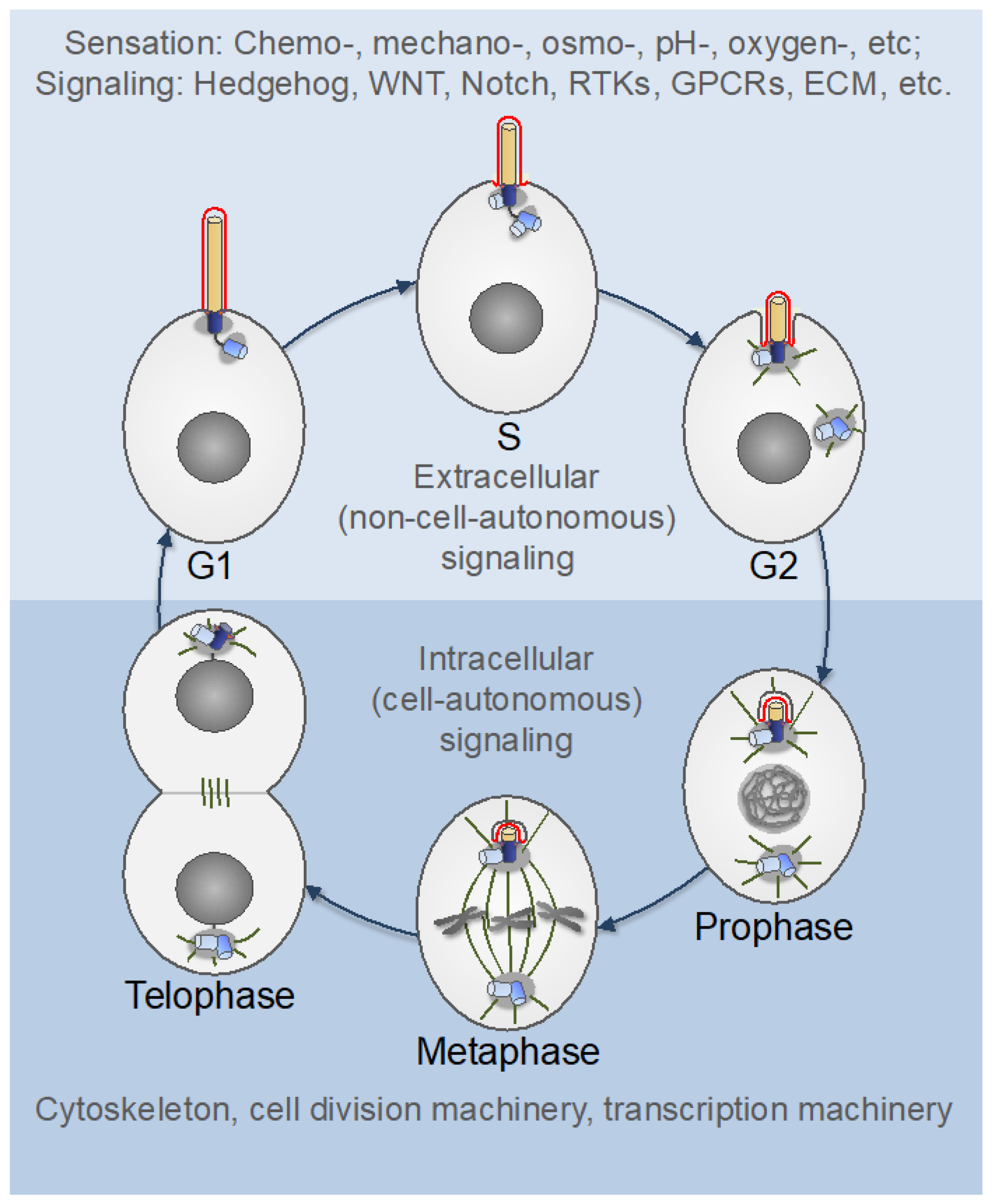
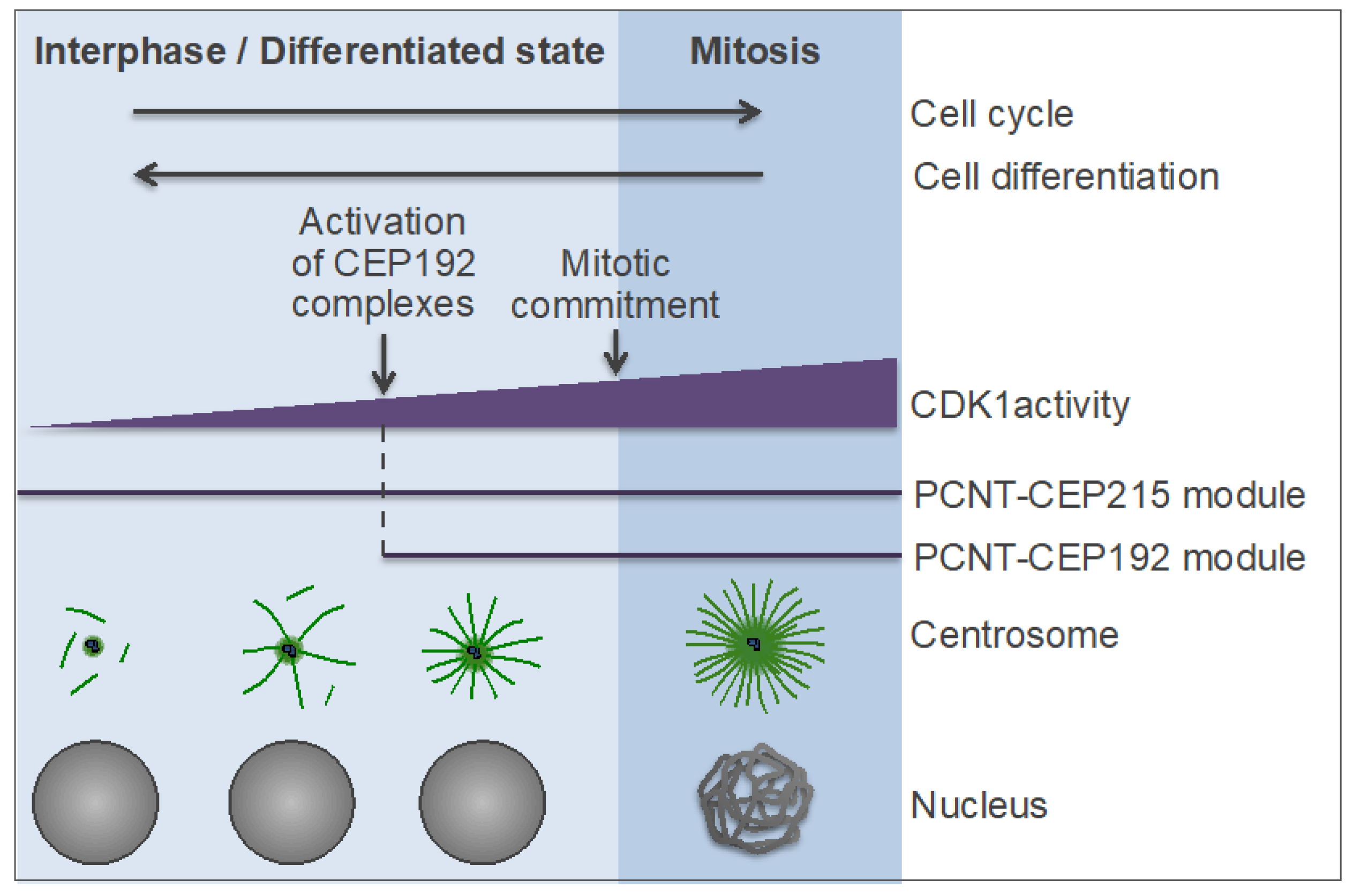
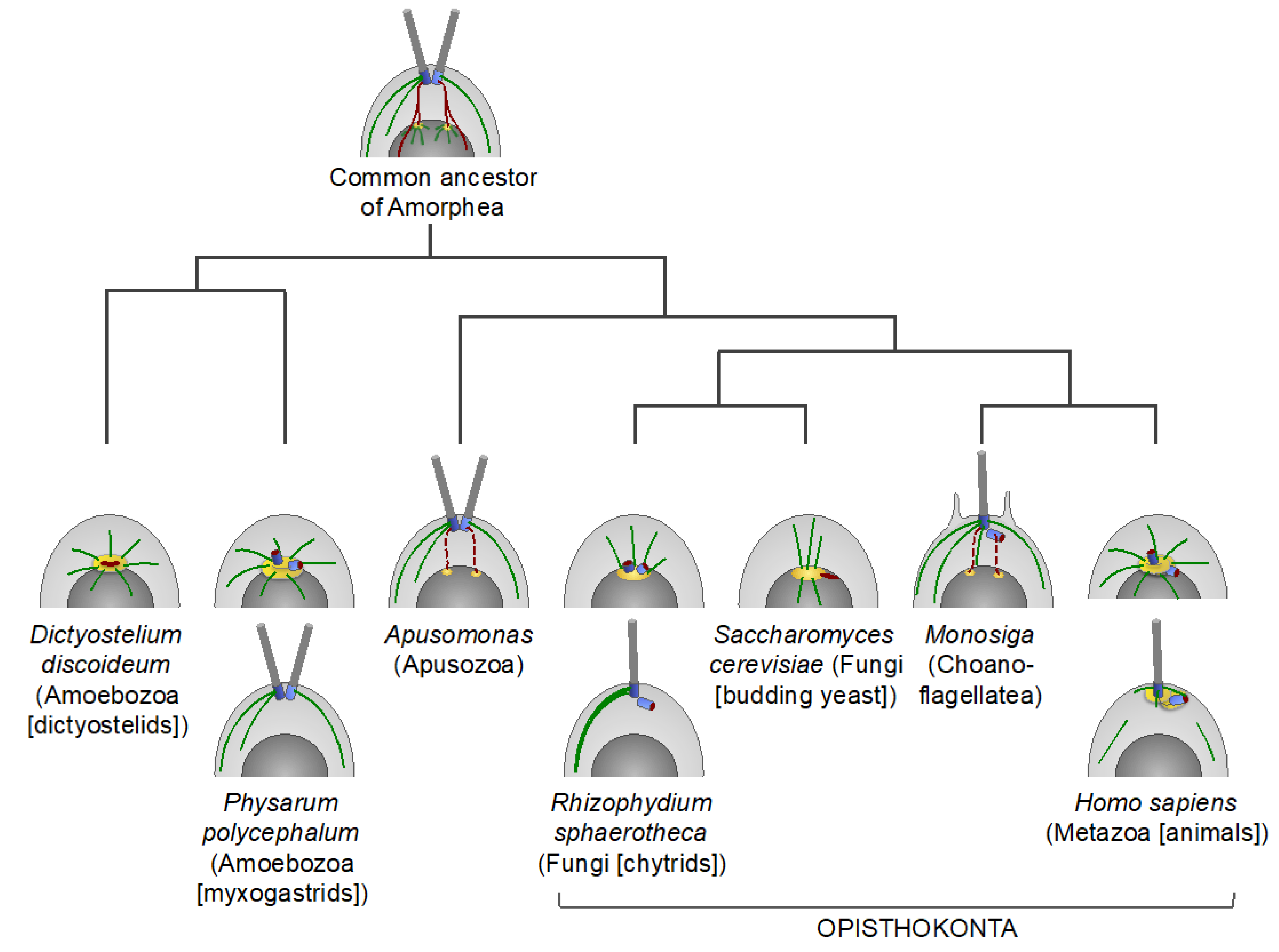
Centrosomes and primary cilia are usually considered as distinct organelles, although both are assembled with the same evolutionary conserved, microtubule-based templates, the centrioles. Centrosomes serve as major microtubule- and actin cytoskeleton-organizing centers and are involved in a variety of intracellular processes, whereas primary cilia receive and transduce environmental signals to elicit cellular and organismal responses. Understanding the functional relationship between centrosomes and primary cilia is important because defects in both structures have been implicated in various diseases, including cancer. Here, we discuss evidence that the animal centrosome evolved, with the transition to complex multicellularity, as a hybrid organelle comprised of the two distinct, but intertwined, structural-functional modules: the centriole/primary cilium module and the pericentriolar material/centrosome module. The evolution of the former module may have been caused by the expanding cellular diversification and intercommunication, whereas that of the latter module may have been driven by the increasing complexity of mitosis and the requirement for maintaining cell polarity, individuation, and adhesion. Through its unique ability to serve both as a plasma membrane-associated primary cilium organizer and a juxtanuclear microtubule-organizing center, the animal centrosome has become an ideal integrator of extracellular and intracellular signals with the cytoskeleton and a switch between the non-cell autonomous and the cell-autonomous signaling modes. In light of this hypothesis, we discuss centrosome dynamics during cell proliferation, migration, and differentiation and propose a model of centrosome-driven microtubule assembly in mitotic and interphase cells. In addition, we outline the evolutionary benefits of the animal centrosome and highlight the hierarchy and modularity of the centrosome biogenesis networks.
Keywords: centrosome; centriole; primary cilia; mitosis; cell cycle; microtubule cytoskeleton; microtubule nucleation; cell differentiation; organelle biogenesis; cell signaling centrosome; centriole; primary cilia; mitosis; cell cycle; microtubule cytoskeleton; microtubule nucleation; cell differentiation; organelle biogenesis; cell signaling