Epigenetic Regulation of Galectin-1 and Galectin-3 in Osteoporosis: A Pilot Study in Patients Undergoing Total Joint Arthroplasty
 , , , , ,
  , and
, and
Highlights
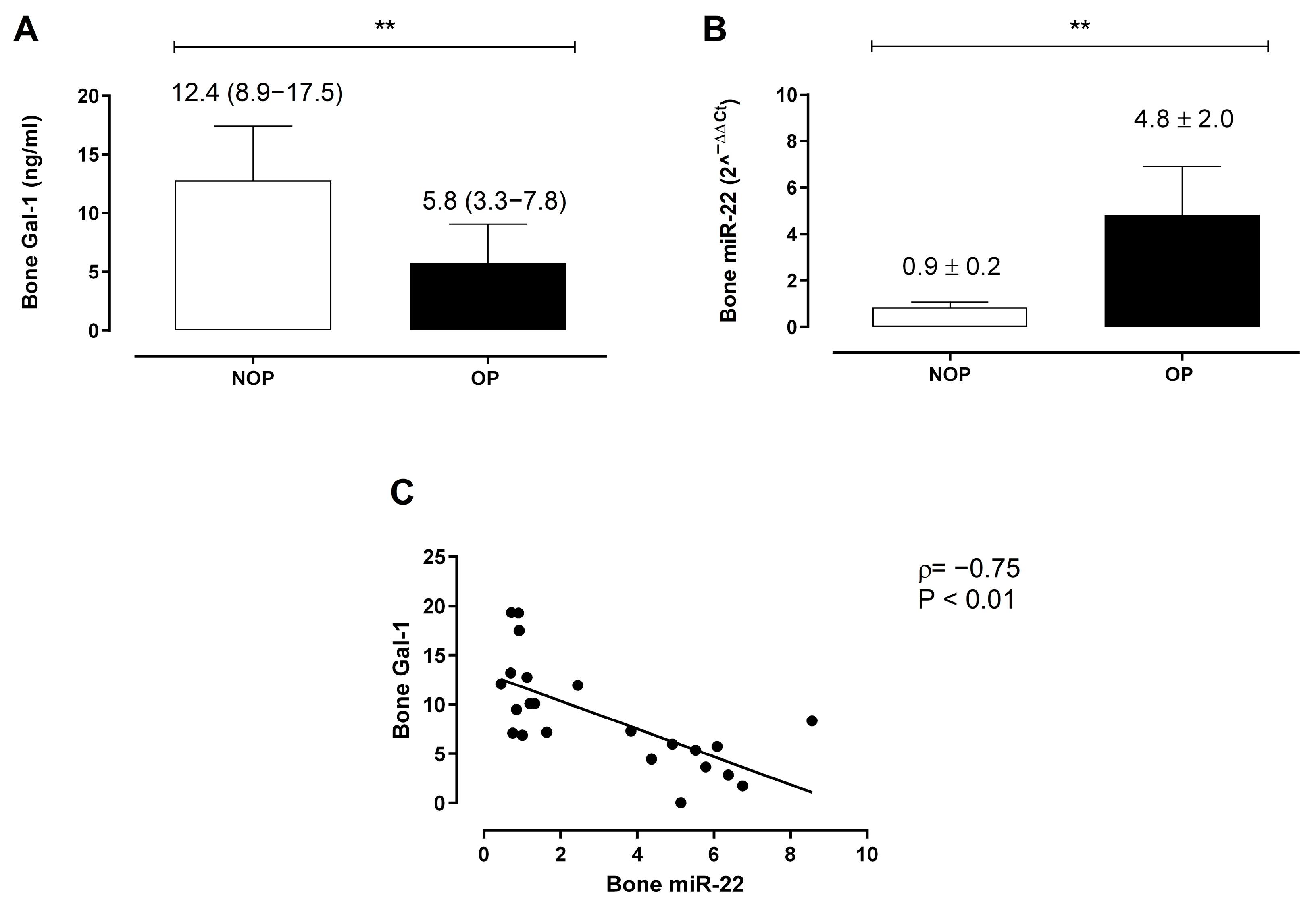
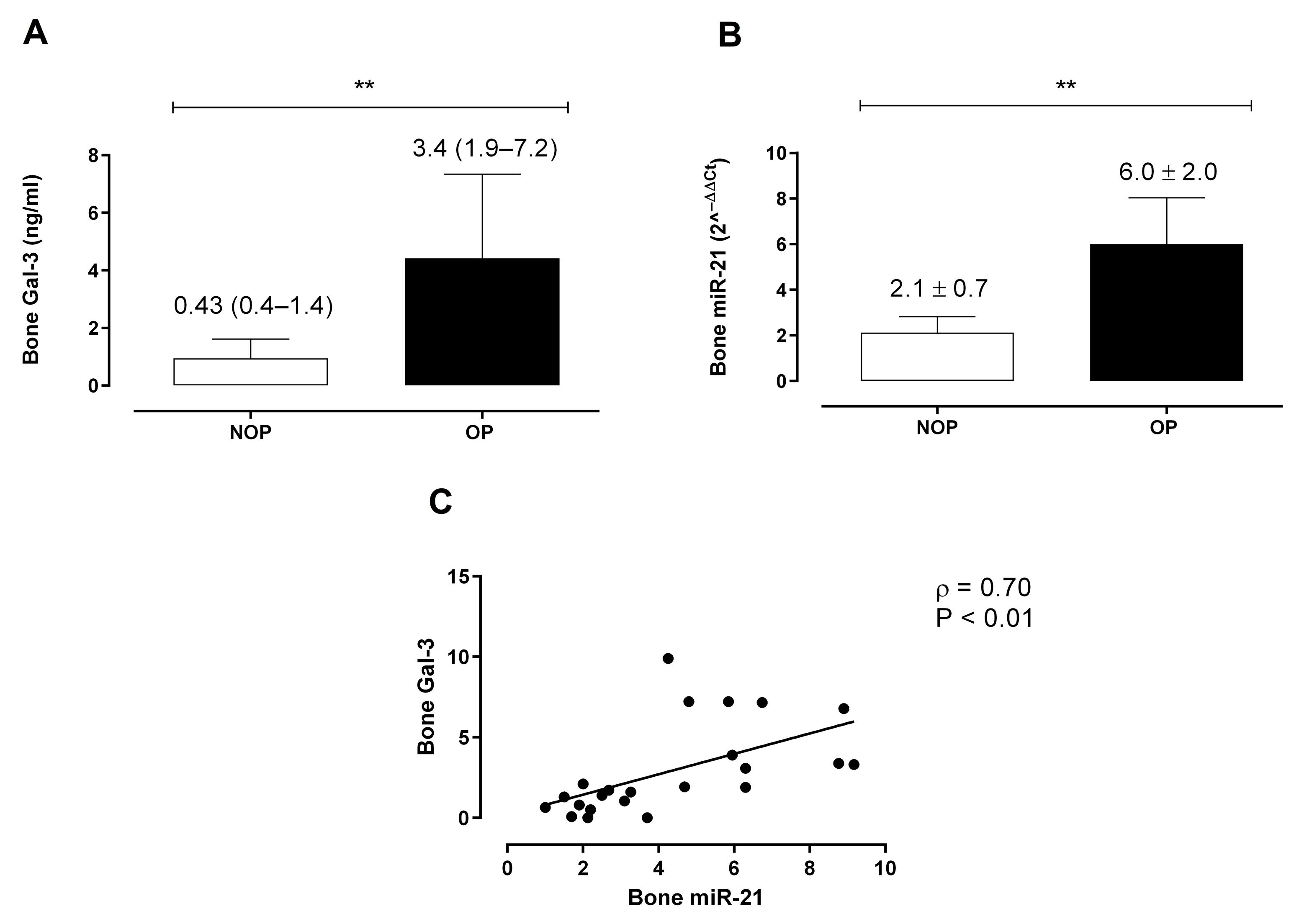
- Bones from osteoporotic patients showed reduced Gal-1 and increased miR-22 levels, together with increased Gal-3 and miR-21 levels.
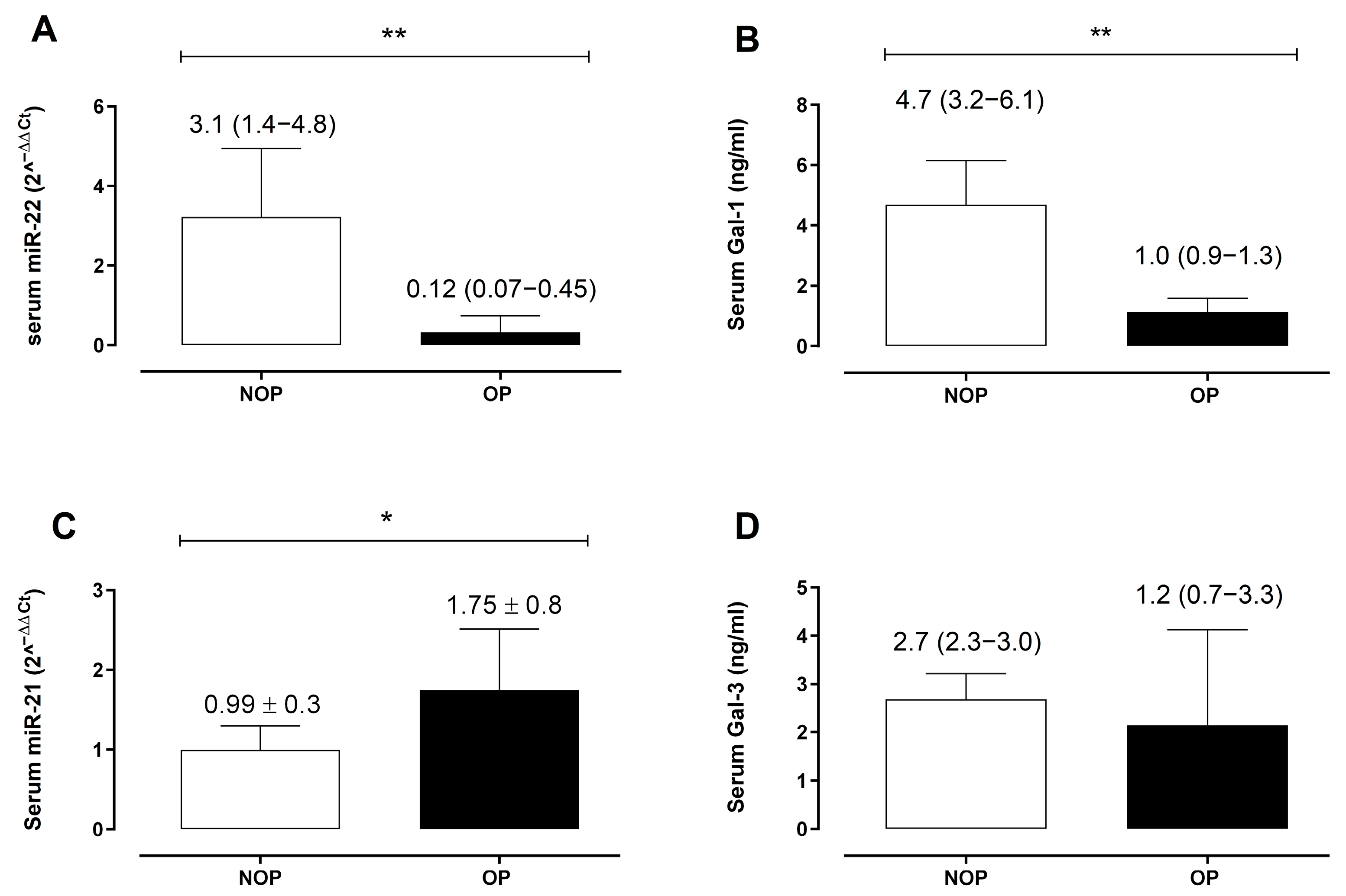
- Serum analyses showed decreased Gal-1 and miR-22 and increased miR-21 in osteoporotic patients.
- These observed co-dysregulation patterns of miR-22, Gal-1, miR-21, and Gal-3 in osteoporotic bone may be associated with alterations in bone remodeling processes in osteoporosis.
- These Galectin–miRNA signatures could be putative molecular indicators potentially associated with osteoporosis-related bone alterations.
Abstract
1. Introduction
2. Materials and Methods
2.1. Study Design
2.2. Collection of Blood Samples
2.3. Collection and Processing of Bone Biopsies
2.4. Enzyme-Linked Immunosorbent Assays (ELISAs)
2.5. Real-Time Polymerase Chain Reaction (qPCR) for miRNA Quantization
2.6. Statistical Analysis
3. Results
3.1. Multivariate Analysis of Group Effects on Mediator Profiles
3.2. Bone miR-22/Gal-1 Co-Dysregulation
3.3. Bone miR-21/Gal-3 Co-Dysregulation
3.4. Serum Levels of miR-22, Gal-1, miR-21 and Gal-3
3.5. Univariate Analyses of Biomarker Differences Between Groups
4. Discussion
Supplementary Materials
Author Contributions
Funding
Institutional Review Board Statement
Informed Consent Statement
Data Availability Statement
Conflicts of Interest
Abbreviations
| β-CTX-I | β-isomerized form of CTX |
| ρ | Spearman Coefficient |
| ALP | Alkaline phosphatase |
| AntagomiRs | anti-miRNA oligonucleotides |
| BPs | Bisphosphonates |
| BMD | Bone Mineral Density |
| BMI | Body Mass Index |
| BMSCs | Bone Marrow Mesenchymal Stem Cells |
| BTMs | Bone Turnover Markers |
| CBR | Cortical Bone Ratio |
| CTX | C-terminal telopeptide of type I collagen |
| DFCI | Distal femoral cortical index |
| DXA | Dual-energy X-ray absorptiometry |
| ELISA | Enzyme-linked immunosorbent assay |
| ER | Estrogen Receptor |
| FRAHS | FRActure Health Search |
| FRAX | Fracture Risk Assessment Tool |
| FVIII | Human Factor VIII |
| Gal-1 | Galectin 1 |
| Gal-3 | Galectin 3 |
| IQR | Interquartile Range |
| KO | Knock-out |
| miRNAs | microRNAs |
| NF-κB | nuclear kappa-light-chain-enhancer of activated B cells |
| NTX | the N-terminal telopeptide of type I collagen |
| OC | Osteocalcin |
| OP | Osteoporosis |
| OPG | Osteoprotegerin |
| P1NP | N-terminal propeptide of type I procollagen |
| PBMCs | Peripheral blood mononuclear cells |
| PBS | Phosphate-buffered saline |
| PTH | Parathyroid hormone |
| qPCR | Real-time polymerase chain reaction |
| r | Pearson Coefficient |
| RANK | Receptor activator of NF-κB |
| RANKL | Receptor activator of NF-κB ligand |
| RT | Reverse Transcription |
| SD | Standard Deviation |
| SERMS | Selective Estrogen Receptor Modulators |
| SOST | Sclerostin |
| THA | Total Hip Arthroplasty |
| TKA | Total Knee Arthroplasty |
| TRAP-5b | Tartrate-resistant acid phosphatase 5b |
| WHO | World Health Organization |
References
- Kanis, J.A.; Melton, L.J.; Christiansen, C.; Johnston, C.C.; Khaltaev, N. The Diagnosis of Osteoporosis. J. Bone Mineral. Res. 1994, 9, 1137–1141. [Google Scholar] [CrossRef] [PubMed]
- Lane, N.E. Epidemiology, Etiology, and Diagnosis of Osteoporosis. Am. J. Obstet. Gynecol. 2006, 194, S3–S11. [Google Scholar] [CrossRef] [PubMed]
- Cummings, S.R.; Melton, L.J. Epidemiology and Outcomes of Osteoporotic Fractures. Lancet 2002, 359, 1761–1767. [Google Scholar] [CrossRef] [PubMed]
- Nih Consensus Development Panel On Osteoporosis Prevention, Diagnosis, And Therapy Osteoporosis Prevention, Diagnosis, and Therapy. JAMA J. Am. Med. Assoc. 2001, 285, 785–795. [CrossRef] [PubMed]
- Cecere, A.B.; Toro, G.; De Cicco, A.; Braile, A.; Paoletta, M.; Iolascon, G.; Schiavone Panni, A. How to Improve the Outcomes of Surgically Treated Proximal Humeral Osteoporotic Fractures? A Narrative Review. Orthop. Rev. 2020, 12, 8529. [Google Scholar] [CrossRef] [PubMed]
- Toro, G.; Braile, A.; De Cicco, A.; Pezzella, R.; Ascione, F.; Cecere, A.B.; Schiavone Panni, A. Fragility Fractures of the Acetabulum: Current Concepts for Improving Patients’ Outcomes. JOIO 2022, 56, 1139–1149. [Google Scholar] [CrossRef] [PubMed]
- Friedman, S.M.; Mendelson, D.A. Epidemiology of Fragility Fractures. Clin. Geriatr. Med. 2014, 30, 175–181. [Google Scholar] [CrossRef] [PubMed]
- Tarantino, U.; Iolascon, G.; Cianferotti, L.; Masi, L.; Marcucci, G.; Giusti, F.; Marini, F.; Parri, S.; Feola, M.; Rao, C.; et al. Clinical Guidelines for the Prevention and Treatment of Osteoporosis: Summary Statements and Recommendations from the Italian Society for Orthopaedics and Traumatology. J. Orthop. Traumatol. 2017, 18, 3–36. [Google Scholar] [CrossRef] [PubMed]
- Amarnath, S.S.; Kumar, V.; Das, S.L. Classification of Osteoporosis. JOIO 2023, 57, 49–54. [Google Scholar] [CrossRef] [PubMed]
- Earnshaw, S.A.; Cawte, S.A.; Worley, A.; Hosking, D.J. Colles’ Fracture of the Wrist as an Indicator of Underlying Osteoporosis in Postmenopausal Women: A Prospective Study of Bone Mineral Density and Bone Turnover Rate. Osteoporos. Int. 1998, 8, 53–60. [Google Scholar] [CrossRef] [PubMed]
- Camacho, P.M.; Petak, S.M.; Binkley, N.; Diab, D.L.; Eldeiry, L.S.; Farooki, A.; Harris, S.T.; Hurley, D.L.; Kelly, J.; Lewiecki, E.M.; et al. American Association of Clinical Endocrinologists/American College of Endocrinology Clinical Practice Guidelines for the Diagnosis and Treatment of Postmenopausal Osteoporosis—2020 Update. Endocr. Pract. 2020, 26, 1–46. [Google Scholar] [CrossRef] [PubMed]
- Toro, G.; Braile, A.; Liguori, S.; Moretti, A.; Landi, G.; Cecere, A.B.; Conza, G.; De Cicco, A.; Tarantino, U.; Iolascon, G. The Role of the Fracture Liaison Service in the Prevention of Atypical Femoral Fractures. Ther. Adv. Musculoskelet. 2023, 15, 1759720X231212747. [Google Scholar] [CrossRef] [PubMed]
- Tarantino, U.; Greggi, C.; Visconti, V.V.; Cariati, I.; Bonanni, R.; Gasperini, B.; Iundusi, R.; Gasbarra, E.; Tranquilli Leali, P.; Brandi, M.L. Fracture Liaison Service Model: Project Design and Accreditation. Osteoporos. Int. 2023, 34, 339–348. [Google Scholar] [CrossRef] [PubMed]
- Vondracek, S. Clinical Challenges in the Management of Osteoporosis. Clin. Interv. Aging 2008, 3, 315–329. [Google Scholar] [CrossRef] [PubMed]
- Aibar-Almazán, A.; Voltes-Martínez, A.; Castellote-Caballero, Y.; Afanador-Restrepo, D.F.; Carcelén-Fraile, M.D.C.; López-Ruiz, E. Current Status of the Diagnosis and Management of Osteoporosis. Int. J. Mol. Sci. 2022, 23, 9465. [Google Scholar] [CrossRef] [PubMed]
- Choksi, P.; Jepsen, K.J.; Clines, G.A. The Challenges of Diagnosing Osteoporosis and the Limitations of Currently Available Tools. Clin. Diabetes Endocrinol. 2018, 4, 12. [Google Scholar] [CrossRef] [PubMed]
- Lems, W.F.; Raterman, H.G. Critical Issues and Current Challenges in Osteoporosis and Fracture Prevention. An Overview of Unmet Needs. Ther. Adv. Musculoskelet. 2017, 9, 299–316. [Google Scholar] [CrossRef] [PubMed]
- Herath, M.; Langdahl, B.; Ebeling, P.R.; Milat, F. Challenges in the Diagnosis and Management of Glucocorticoid-induced Osteoporosis in Younger and Older Adults. Clin. Endocrinol. 2022, 96, 460–474. [Google Scholar] [CrossRef]
- Wu, C.-H.; Chang, Y.-F.; Chen, C.-H.; Lewiecki, E.M.; Wüster, C.; Reid, I.; Tsai, K.-S.; Matsumoto, T.; Mercado-Asis, L.B.; Chan, D.-C.; et al. Consensus Statement on the Use of Bone Turnover Markers for Short-Term Monitoring of Osteoporosis Treatment in the Asia-Pacific Region. J. Clin. Densitom. 2021, 24, 3–13. [Google Scholar] [CrossRef] [PubMed]
- Schini, M.; Vilaca, T.; Gossiel, F.; Salam, S.; Eastell, R. Bone Turnover Markers: Basic Biology to Clinical Applications. Endocr. Rev. 2023, 44, 417–473. [Google Scholar] [CrossRef] [PubMed]
- Bhattoa, H.P.; Vasikaran, S.; Trifonidi, I.; Kapoula, G.; Lombardi, G.; Jørgensen, N.R.; Pikner, R.; Miura, M.; Chapurlat, R.; Hiligsmann, M.; et al. Update on the Role of Bone Turnover Markers in the Diagnosis and Management of Osteoporosis: A Consensus Paper from The European Society for Clinical and Economic Aspects of Osteoporosis, Osteoarthritis and Musculoskeletal Diseases (ESCEO), International Osteoporosis Foundation (IOF), and International Federation of Clinical Chemistry and Laboratory Medicine (IFCC). Osteoporos. Int. 2025, 36, 579–608. [Google Scholar] [CrossRef] [PubMed]
- Patel, N.; Ganti, L. The Treatment and Monitoring of Osteoporosis Using Bone Turnover Markers. Orthop. Rev. 2025, 17. [Google Scholar] [CrossRef] [PubMed]
- Biver, E. Use of Bone Turnover Markers in Clinical Practice. Curr. Opin. Endocrinol. Diabetes Obes. 2012, 19, 468–473. [Google Scholar] [CrossRef] [PubMed]
- Russo, M.; Lepre, C.C.; Itro, A.; Martin, G.; Conza, G.; Trotta, M.C.; Puticiu, M.; Hermenean, A.; Gimigliano, F.; D’Amico, M.; et al. Inflammaging-Driven Osteoporosis: Is a Galectin-Targeted Approach Needed? Int. J. Mol. Sci. 2025, 26, 6473. [Google Scholar] [CrossRef] [PubMed]
- Chen, Y.; Liu, Y.; Zhang, Y.; Yu, J.; Tang, L. Galectin-1 Deletion in Mice Causes Bone Loss via Impaired Osteogenic Differentiation Potential of BMSCs. FASEB J. 2022, 36, e22516. [Google Scholar] [CrossRef] [PubMed]
- Mercer, N.; Ahmed, H.; McCarthy, A.D.; Etcheverry, S.B.; Vasta, G.R.; Cortizo, A.M. AGE-R3/Galectin-3 Expression in Osteoblast-like Cells: Regulation by AGEs. Mol. Cell Biochem 2004, 266, 17–24. [Google Scholar] [CrossRef] [PubMed]
- Nakajima, K.; Kho, D.H.; Yanagawa, T.; Harazono, Y.; Hogan, V.; Chen, W.; Ali-Fehmi, R.; Mehra, R.; Raz, A. Galectin-3 Cleavage Alters Bone Remodeling: Different Outcomes in Breast and Prostate Cancer Skeletal Metastasis. Cancer Res. 2016, 76, 1391–1402. [Google Scholar] [CrossRef] [PubMed]
- Nakajima, K.; Kho, D.H.; Yanagawa, T.; Harazono, Y.; Gao, X.; Hogan, V.; Raz, A. Galectin-3 Inhibits Osteoblast Differentiation through Notch Signaling. Neoplasia 2014, 16, 939–949. [Google Scholar] [CrossRef] [PubMed]
- Dawoud, A.; Abaza, T.; Youssef, Y.; Seada, D.A.; Mohamed, A.H.; Ragab, M.F.; Fahmy, J.M.; El Masry, H.E.H.; Sabry, M.G.; Fawzy, M.P.; et al. Galectins: A Promising Arsenal of Novel Immunotherapeutic Weapons in Oncology Tunned by an Array of Non-Coding RNAs. Crit. Rev. Biochem. Mol. Biol. 2025, 256–286. [Google Scholar] [CrossRef] [PubMed]
- Karadzov Orlic, N.; Joksić, I. Preeclampsia Pathogenesis and Prediction - Where Are We Now: The Focus on the Role of Galectins and miRNAs. Hypertens. Pregnancy 2025, 44, 2470626. [Google Scholar] [CrossRef] [PubMed]
- Plotkin, L.I.; Wallace, J.M. MicroRNAs and Osteocytes. Bone 2021, 150, 115994. [Google Scholar] [CrossRef] [PubMed]
- Trojniak, J.; Sendera, A.; Banaś-Ząbczyk, A.; Kopańska, M. The MicroRNAs in the Pathophysiology of Osteoporosis. Int. J. Mol. Sci. 2024, 25, 6240. [Google Scholar] [CrossRef] [PubMed]
- Zhang, X.; Xu, N.; Zhou, Y.; Xu, J. A Novel miRNA-TF-mRNA Regulatory Network Associated with Cellular Senescence in Osteoporosis. Stem Cell Rep. 2025, 20, 102672. [Google Scholar] [CrossRef] [PubMed]
- Li, P.; Mao, W.; Zhang, S.; Zhang, L.; Chen, Z.; Lu, Z. MicroRNA-22 Contributes to Dexamethasone-induced Osteoblast Differentiation Inhibition and Dysfunction through Targeting Caveolin-3 Expression in Osteoblastic Cells. Exp. Ther. Med. 2021, 21, 336. [Google Scholar] [CrossRef] [PubMed]
- Sugatani, T.; Vacher, J.; Hruska, K.A. A microRNA Expression Signature of Osteoclastogenesis. Blood 2011, 117, 3648–3657. [Google Scholar] [CrossRef] [PubMed]
- Chen, C.; Liu, Y.-M.; Fu, B.-L.; Xu, L.-L.; Wang, B. MicroRNA-21: An Emerging Player in Bone Diseases. Front. Pharmacol. 2021, 12, 722804. [Google Scholar] [CrossRef] [PubMed]
- You, Y.; Tan, J.-X.; Dai, H.-S.; Chen, H.-W.; Xu, X.-J.; Yang, A.-G.; Zhang, Y.-J.; Bai, L.-H.; Bie, P. MiRNA-22 Inhibits Oncogene Galectin-1 in Hepatocellular Carcinoma. Oncotarget 2016, 7, 57099–57116. [Google Scholar] [CrossRef] [PubMed]
- Kim, J.Y.; Lee, J.H.; Jung, E.J.; Son, Y.S.; Park, H.J.; Kim, J.M.; Park, T.; Jeong, S.-H.; Lee, J.; Kim, T.H.; et al. Therapeutic Targeting of the Galectin-1/miR-22-3p Axis Regulates Cell Cycle and EMT Depending on the Molecular Subtype of Breast Cancer. Cells 2025, 14, 310. [Google Scholar] [CrossRef] [PubMed]
- Hu, Y.; Setayesh, T.; Wei, D.; Testerman, T.; Ji, Y.; Wan, Y.-J.Y. Multi-Pathway Targeted Therapy of MASH-HCC Using miR-22. Cell Biosci. 2025, 15, 20. [Google Scholar] [CrossRef] [PubMed]
- Hu, Z.; Zhang, Y.; Chen, J.; Luo, M.; Wang, N.; Xiao, Y.; He, Q. Testosterone Attenuates Senile Cavernous Fibrosis by Regulating TGFβR1 and Galectin-1 Signaling Pathways through miR-22-3p. Mol. Cell Biochem 2023, 478, 1791–1802. [Google Scholar] [CrossRef] [PubMed]
- Tomaniak, M.; Sygitowicz, G.; Błaszczyk, O.; Kołtowski, Ł.; Puchta, D.; Malesa, K.; Kochanowski, J.; Sitkiewicz, D.; Filipiak, K.J. miR-1, miR-21, and Galectin-3 in Hypertensive Patients with Symptomatic Heart Failure and Left Ventricular Hypertrophy. Kardiol. Pol. 2018, 76, 1009–1011. [Google Scholar] [CrossRef] [PubMed]
- Sygitowicz, G.; Tomaniak, M.; Błaszczyk, O.; Kołtowski, Ł.; Filipiak, K.J.; Sitkiewicz, D. Circulating Microribonucleic Acids miR-1, miR-21 and miR-208a in Patients with Symptomatic Heart Failure: Preliminary Results. Arch. Cardiovasc. Dis. 2015, 108, 634–642. [Google Scholar] [CrossRef] [PubMed]
- Wang, L.; Li, M.; Zheng, M.; Tang, Y.; Yang, Z.; Ma, G.; Zheng, Q.; Li, L.; Wang, Y.; Ma, F.; et al. Diagnostic Value of Galectin-3, Fractalkine, IL-6, miR-21 and Cardiac Troponin I in Human Ischemic Cardiomyopathy. Aging 2024, 16, 10539–10545. [Google Scholar] [CrossRef] [PubMed]
- Al-Hayali, M.A.; Sozer, V.; Durmus, S.; Erdenen, F.; Altunoglu, E.; Gelisgen, R.; Atukeren, P.; Atak, P.G.; Uzun, H. Clinical Value of Circulating Microribonucleic Acids miR-1 and miR-21 in Evaluating the Diagnosis of Acute Heart Failure in Asymptomatic Type 2 Diabetic Patients. Biomolecules 2019, 9, 193. [Google Scholar] [CrossRef] [PubMed]
- Jia, X.; Yang, M.; Hu, W.; Cai, S. Overexpression of miRNA-22-3p Attenuates Osteoporosis by Targeting MAPK14. Exp. Ther. Med. 2021, 22, 692. [Google Scholar] [CrossRef] [PubMed]
- Weilner, S.; Skalicky, S.; Salzer, B.; Keider, V.; Wagner, M.; Hildner, F.; Gabriel, C.; Dovjak, P.; Pietschmann, P.; Grillari-Voglauer, R.; et al. Differentially Circulating miRNAs after Recent Osteoporotic Fractures Can Influence Osteogenic Differentiation. Bone 2015, 79, 43–51. [Google Scholar] [CrossRef] [PubMed]
- Suarjana, I.N.; Isbagio, H.; Soewondo, P.; Rachman, I.A.; Sadikin, M.; Prihartono, J.; Malik, S.G.; Soeroso, J. The Role of Serum Expression Levels of Microrna-21 on Bone Mineral Density in Hypostrogenic Postmenopausal Women with Osteoporosis: Study on Level of RANKL, OPG, TGFβ-1, Sclerostin, RANKL/OPG Ratio, and Physical Activity. Acta Med. Indones. 2019, 51, 245–252. [Google Scholar] [PubMed]
- Al-Rawaf, H.A.; Gabr, S.A.; Iqbal, A.; Alghadir, A.H. MicroRNAs as Potential Biopredictors for Premenopausal Osteoporosis: A Biochemical and Molecular Study. BMC Women’s Health 2023, 23, 481. [Google Scholar] [CrossRef] [PubMed]
- Mohammadisima, N.; Farshbaf-khalili, A.; Ostadrahimi, A. Up-Regulation of Plasma miRNA-21 and miRNA-422a in Postmenopausal Osteoporosis. PLoS ONE 2023, 18, e0287458. [Google Scholar] [CrossRef] [PubMed]
- Sun, Z.; Shi, J.; Yang, C.; Chen, X.; Chu, J.; Chen, J.; Wang, Y.; Zhu, C.; Xu, J.; Tang, G.; et al. Identification and Evaluation of Circulating Exosomal miRNAs for the Diagnosis of Postmenopausal Osteoporosis. J. Orthop. Surg. Res. 2023, 18, 533. [Google Scholar] [CrossRef] [PubMed]
- Xu, W.; Ni, C.; Wang, Y.; Zheng, G.; Zhang, J.; Xu, Y. Age-Related Trabecular Bone Loss Is Associated with a Decline in Serum Galectin-1 Level. BMC Musculoskelet. Disord. 2021, 22, 394. [Google Scholar] [CrossRef] [PubMed]
- Kellgren, J.H.; Lawrence, J.S. Radiological Assessment of Osteo-Arthrosis. Ann. Rheum. Dis. 1957, 16, 494–502. [Google Scholar] [CrossRef] [PubMed]
- Yeung, Y.; Chiu, K.Y.; Yau, W.P.; Tang, W.M.; Cheung, W.Y.; Ng, T.P. Assessment of the Proximal Femoral Morphology Using Plain Radiograph-Can It Predict the Bone Quality? J. Arthroplast. 2006, 21, 508–513. [Google Scholar] [CrossRef] [PubMed]
- He, Q.-F.; Sun, H.; Shu, L.-Y.; Zhu, Y.; Xie, X.-T.; Zhan, Y.; Luo, C.-F. Radiographic Predictors for Bone Mineral Loss: Cortical Thickness and Index of the Distal Femur. Bone Jt. Res. 2018, 7, 468–475. [Google Scholar] [CrossRef] [PubMed]
- Toro, G.; Bothorel, H.; Saffarini, M.; Jacquot, L.; Chouteau, J.; Rollier, J.-C. Uncemented Total Hip Arthroplasty in Octogenarian and Nonagenarian Patients. Eur. J. Orthop. Surg. Traumatol. 2019, 29, 103–110. [Google Scholar] [CrossRef] [PubMed]
- Magrey, M.N.; Lewis, S.; Asim Khan, M. Utility of DXA Scanning and Risk Factors for Osteoporosis in Ankylosing Spondylitis—A Prospective Study. Semin. Arthritis Rheum. 2016, 46, 88–94. [Google Scholar] [CrossRef] [PubMed]
- Japanese Society for Oral and Maxillofacial Radiology; Taguchi, A.; Tanaka, R.; Kakimoto, N.; Morimoto, Y.; Arai, Y.; Hayashi, T.; Kurabayashi, T.; Katsumata, A.; Asaumi, J. Clinical Guidelines for the Application of Panoramic Radiographs in Screening for Osteoporosis. Oral Radiol. 2021, 37, 189–208. [Google Scholar] [CrossRef] [PubMed]
- Trotta, M.C.; Gesualdo, C.; Russo, M.; Lepre, C.C.; Petrillo, F.; Vastarella, M.G.; Nicoletti, M.; Simonelli, F.; Hermenean, A.; D’Amico, M.; et al. Changes in Circulating Acylated Ghrelin and Neutrophil Elastase in Diabetic Retinopathy. Medicina 2024, 60, 118. [Google Scholar] [CrossRef] [PubMed]
- Faraldi, M.; Mangiavini, L.; Conte, C.; Banfi, G.; Napoli, N.; Lombardi, G. A Novel Methodological Approach to Simultaneously Extract High-Quality Total RNA and Proteins from Cortical and Trabecular Bone. Open Biol. 2022, 12, 210387. [Google Scholar] [CrossRef] [PubMed]
- Alford, A.I.; Stephan, C.; Kozloff, K.M.; Hankenson, K.D. Compound Deletion of Thrombospondin-1 and -2 Results in a Skeletal Phenotype Not Predicted by the Single Gene Knockouts. Bone 2021, 153, 116156. [Google Scholar] [CrossRef] [PubMed]
- Lyon, S.M.; Mayampurath, A.; Rogers, M.R.; Wolfgeher, D.J.; Fisher, S.M.; Volchenboum, S.L.; He, T.-C.; Reid, R.R. A Method for Whole Protein Isolation from Human Cranial Bone. Anal. Biochem. 2016, 515, 33–39. [Google Scholar] [CrossRef] [PubMed]
- Trotta, M.C.; Herman, H.; Balta, C.; Rosu, M.; Ciceu, A.; Mladin, B.; Gesualdo, C.; Lepre, C.C.; Russo, M.; Petrillo, F.; et al. Oral Administration of Vitamin D3 Prevents Corneal Damage in a Knock-Out Mouse Model of Sjögren’s Syndrome. Biomedicines 2023, 11, 616. [Google Scholar] [CrossRef] [PubMed]
- Guzow-Krzemińska, B.; Gąsior, T.; Szalewska-Pałasz, A. Phylogenetic Relationship of the Stringent Response-Related Genes of Marine Bacteria. Acta Biochim Pol. 2015, 62, 773–783. [Google Scholar] [CrossRef] [PubMed]
- Ferrari, C.H.; De Carvalho, L.S.; Rocha, C.T.; Abu Hasna, A. Correlation between Tooth Position Parameters and Apical Fenestration: A Cone-Beam Computed Tomography Study. Methods Protoc. 2024, 7, 14. [Google Scholar] [CrossRef] [PubMed]
- Madadi, S.; Soleimani, M. Comparison of miR-16 and cel-miR-39 as Reference Controls for Serum miRNA Normalization in Colorectal Cancer. J. Cell. Biochem. 2019, 120, 4802–4803. [Google Scholar] [CrossRef] [PubMed]
- Platania, C.B.M.; Maisto, R.; Trotta, M.C.; D’Amico, M.; Rossi, S.; Gesualdo, C.; D’Amico, G.; Balta, C.; Herman, H.; Hermenean, A.; et al. Retinal and Circulating Mi RNA Expression Patterns in Diabetic Retinopathy: An in Silico and in Vivo Approach. Br. J. Pharmacol. 2019, 176, 2179–2194. [Google Scholar] [CrossRef] [PubMed]
- Trotta, M.C.; Esposito, D.; Carotenuto, R.; Di Fraia, R.; Selvaggio, L.D.; Allosso, F.; Russo, M.; Accardo, G.; Alfano, R.; D’Amico, M.; et al. Thyroid Dysfunction in Hashimoto’s Thyroiditis: A Pilot Study on the Putative Role of miR-29a and TGFβ1. Endocrine 2024, 86, 1090–1096. [Google Scholar] [CrossRef] [PubMed]
- Giordano, M.; Trotta, M.C.; Ciarambino, T.; D’Amico, M.; Schettini, F.; Sisto, A.D.; D’Auria, V.; Voza, A.; Malatino, L.S.; Biolo, G.; et al. Circulating miRNA-195-5p and -451a in Patients with Acute Hemorrhagic Stroke in Emergency Department. Life 2022, 12, 763. [Google Scholar] [CrossRef] [PubMed]
- Roberts, T.C.; Coenen-Stass, A.M.L.; Wood, M.J.A. Assessment of RT-qPCR Normalization Strategies for Accurate Quantification of Extracellular microRNAs in Murine Serum. PLoS ONE 2014, 9, e89237. [Google Scholar] [CrossRef] [PubMed]
- Madadi, S.; Soleimani, M. U6 as a microRNA Normalizer in Serum of Patients with Hepatocellular Carcinoma. Ann. Clin. Biochem 2019, 56, 623. [Google Scholar] [CrossRef] [PubMed]
- Mitchell, P.S.; Parkin, R.K.; Kroh, E.M.; Fritz, B.R.; Wyman, S.K.; Pogosova-Agadjanyan, E.L.; Peterson, A.; Noteboom, J.; O’Briant, K.C.; Allen, A.; et al. Circulating microRNAs as Stable Blood-Based Markers for Cancer Detection. Proc. Natl. Acad. Sci. USA 2008, 105, 10513–10518. [Google Scholar] [CrossRef] [PubMed]
- Benz, F.; Roderburg, C.; Vargas Cardenas, D.; Vucur, M.; Gautheron, J.; Koch, A.; Zimmermann, H.; Janssen, J.; Nieuwenhuijsen, L.; Luedde, M.; et al. U6 Is Unsuitable for Normalization of Serum miRNA Levels in Patients with Sepsis or Liver Fibrosis. Exp. Mol. Med. 2013, 45, e42. [Google Scholar] [CrossRef] [PubMed]
- Xiang, M.; Zeng, Y.; Yang, R.; Xu, H.; Chen, Z.; Zhong, J.; Xie, H.; Xu, Y.; Zeng, X. U6 Is Not a Suitable Endogenous Control for the Quantification of Circulating microRNAs. Biochem. Biophys. Res. Commun. 2014, 454, 210–214. [Google Scholar] [CrossRef] [PubMed]
- Su, P.; Li, M.; Xiao, J.; Bai, L. Correction: Effectiveness of Anabolic and Anti-Resorptive Agents for Preventing Postmenopausal Osteoporosis Fractures: A Systematic Review and Network Meta-Analysis. J. Orthop. Surg. Res. 2025, 20, 818. [Google Scholar] [CrossRef] [PubMed]
- Elahmer, N.R.; Wong, S.K.; Mohamed, N.; Alias, E.; Chin, K.-Y.; Muhammad, N. Mechanistic Insights and Therapeutic Strategies in Osteoporosis: A Comprehensive Review. Biomedicines 2024, 12, 1635. [Google Scholar] [CrossRef] [PubMed]
- Kostenuik, P.J.; Binkley, N.; Anderson, P.A. Advances in Osteoporosis Therapy: Focus on Osteoanabolic Agents, Secondary Fracture Prevention, and Perioperative Bone Health. Curr. Osteoporos. Rep. 2023, 21, 386–400. [Google Scholar] [CrossRef] [PubMed]
- Chen, N.; Danalache, M.; Liang, C.; Alexander, D.; Umrath, F. Mechanosignaling in Osteoporosis: When Cells Feel the Force. Int. J. Mol. Sci. 2025, 26, 4007. [Google Scholar] [CrossRef] [PubMed]
- Hamdy, N.A.T. Targeting the RANK/RANKL/OPG Signaling Pathway: A Novel Approach in the Management of Osteoporosis. Curr. Opin. Investig. Drugs 2007, 8, 299–303. [Google Scholar] [PubMed]
- Shi, V.; Morgan, E.F. Estrogen and Estrogen Receptors Mediate the Mechanobiology of Bone Disease and Repair. Bone 2024, 188, 117220. [Google Scholar] [CrossRef] [PubMed]
- Falsetti, I.; Palmini, G.; Aurilia, C.; Donati, S.; Iantomasi, T.; Brandi, M.L. Selective Estrogen Receptor Modulators in Post-Menopausal Osteoporosis. Int. J. Bone Fragility 2022, 2, 93–96. [Google Scholar] [CrossRef]
- Yang, X.; Jin, Q.; Guo, L. MiR-217 Participates in the Progression of Postmenopausal Osteoporosis by Regulating the OPG/RANKL/RANK Pathway. J. Orthop. Surg. Res. 2025, 20, 600. [Google Scholar] [CrossRef] [PubMed]
- Chen, C.; Cheng, P.; Xie, H.; Zhou, H.-D.; Wu, X.-P.; Liao, E.-Y.; Luo, X.-H. MiR-503 Regulates Osteoclastogenesis via Targeting RANK. J. Bone Mineral. Res. 2014, 29, 338–347. [Google Scholar] [CrossRef]
- Shi, C.; Qi, J.; Huang, P.; Jiang, M.; Zhou, Q.; Zhou, H.; Kang, H.; Qian, N.; Yang, Q.; Guo, L.; et al. MicroRNA-17/20a Inhibits Glucocorticoid-Induced Osteoclast Differentiation and Function through Targeting RANKL Expression in Osteoblast Cells. Bone 2014, 68, 67–75. [Google Scholar] [CrossRef] [PubMed]
- Mao, Z.; Zhu, Y.; Hao, W.; Chu, C.; Su, H. MicroRNA-155 Inhibition Up-regulates LEPR to Inhibit Osteoclast Activation and Bone Resorption via Activation of AMPK in Alendronate-treated Osteoporotic Mice. IUBMB Life 2019, 71, 1916–1928. [Google Scholar] [CrossRef] [PubMed]
- Ke, K.; Sul, O.-J.; Rajasekaran, M.; Choi, H.-S. MicroRNA-183 Increases Osteoclastogenesis by Repressing Heme Oxygenase-1. Bone 2015, 81, 237–246. [Google Scholar] [CrossRef] [PubMed]
- Liu, G.; Lu, Y.; Mai, Z.; Liu, R.; Peng, Z.; Chen, L.; Chen, Z.; Wang, R.; Ai, H. Suppressing MicroRNA-30b by Estrogen Promotes Osteogenesis in Bone Marrow Mesenchymal Stem Cells. Stem Cells Int. 2019, 2019, 7547506. [Google Scholar] [CrossRef] [PubMed]
- Xu, X.; Zhang, P.; Li, X.; Liang, Y.; Ouyang, K.; Xiong, J.; Wang, D.; Duan, L. MicroRNA Expression Profiling in an Ovariectomized Rat Model of Postmenopausal Osteoporosis before and after Estrogen Treatment. Am. J. Transl. Res. 2020, 12, 4251–4263. [Google Scholar] [PubMed]
- Hu, L.; Chen, W.; Qian, A.; Li, Y.-P. Wnt/β-Catenin Signaling Components and Mechanisms in Bone Formation, Homeostasis, and Disease. Bone Res. 2024, 12, 39. [Google Scholar] [CrossRef] [PubMed]
- Song, L.; Liu, M.; Ono, N.; Bringhurst, F.R.; Kronenberg, H.M.; Guo, J. Loss of Wnt/β-Catenin Signaling Causes Cell Fate Shift of Preosteoblasts from Osteoblasts to Adipocytes. J. Bone Mineral. Res. 2012, 27, 2344–2358. [Google Scholar] [CrossRef] [PubMed]
- Li, Y.; Luo, Y.; Huang, D.; Peng, L. Sclerostin as a New Target of Diabetes-Induced Osteoporosis. Front. Endocrinol. 2024, 15, 1491066. [Google Scholar] [CrossRef] [PubMed]
- Liao, C.; Liang, S.; Wang, Y.; Zhong, T.; Liu, X. Sclerostin Is a Promising Therapeutic Target for Oral Inflammation and Regenerative Dentistry. J. Transl. Med. 2022, 20, 221. [Google Scholar] [CrossRef] [PubMed]
- Liu, F.-T.; Stowell, S.R. The Role of Galectins in Immunity and Infection. Nat. Rev. Immunol. 2023, 23, 479–494. [Google Scholar] [CrossRef] [PubMed]
- Dings, R.; Miller, M.; Griffin, R.; Mayo, K. Galectins as Molecular Targets for Therapeutic Intervention. Int. J. Mol. Sci. 2018, 19, 905. [Google Scholar] [CrossRef] [PubMed]
- Iacobini, C.; Fantauzzi, C.B.; Pugliese, G.; Menini, S. Role of Galectin-3 in Bone Cell Differentiation, Bone Pathophysiology and Vascular Osteogenesis. Int. J. Mol. Sci. 2017, 18, 2481. [Google Scholar] [CrossRef] [PubMed]
- Clevers, H.; Nusse, R. Wnt/β-Catenin Signaling and Disease. Cell 2012, 149, 1192–1205. [Google Scholar] [CrossRef] [PubMed]
- Zhang, Y.; Li, Z.; Chen, X. The Role of Galectin-3 in Bone Homeostasis: A Review. Int. J. Biol. Macromol. 2024, 278, 134882. [Google Scholar] [CrossRef] [PubMed]
- Duan, P.; Bonewald, L.F. The Role of the Wnt/β-Catenin Signaling Pathway in Formation and Maintenance of Bone and Teeth. Int. J. Biochem. Cell Biol. 2016, 77, 23–29. [Google Scholar] [CrossRef] [PubMed]
- O’Sullivan, J.M.; Jenkins, P.V.; Rawley, O.; Gegenbauer, K.; Chion, A.; Lavin, M.; Byrne, B.; O’Kennedy, R.; Preston, R.J.S.; Brophy, T.M.; et al. Galectin-1 and Galectin-3 Constitute Novel-Binding Partners for Factor VIII. Arterioscler. Thromb. Vasc. Biol. 2016, 36, 855–863. [Google Scholar] [CrossRef] [PubMed]
- Battafarano, G.; Lancellotti, S.; Sacco, M.; Rossi, M.; Terreri, S.; Di Gregorio, J.; Di Giuseppe, L.; D’Agostini, M.; Porzio, O.; Di Gennaro, L.; et al. Effects of Coagulation Factors on Bone Cells and Consequences of Their Absence in Haemophilia a Patients. Sci. Rep. 2024, 14, 25001. [Google Scholar] [CrossRef] [PubMed]
- Cadé, M.; Muñoz-Garcia, J.; Babuty, A.; Fouassier, M.; Heymann, M.-F.; Monahan, P.E.; Heymann, D. FVIII at the Crossroad of Coagulation, Bone and Immune Biology: Emerging Evidence of Biological Activities beyond Hemostasis. Drug Discov. Today 2022, 27, 102–116. [Google Scholar] [CrossRef] [PubMed]
- Abbaspour, M.; Ghafourian Boroujerdnia, M.; Tahoori, M.T.; Oraki Kohshour, M.; Ghasemi Dehcheshmeh, M.; Amirzadeh, S.; Amari, A. Poly (I:C) Increases the Expression of Galectin 1, 3, 9 and HGF Genes in Exosomes Isolated from Human Wharton’s Jelly Mesenchymal Stem Cells. Heliyon 2024, 10, e35343. [Google Scholar] [CrossRef] [PubMed]
- Reesink, H.L.; Sutton, R.M.; Shurer, C.R.; Peterson, R.P.; Tan, J.S.; Su, J.; Paszek, M.J.; Nixon, A.J. Galectin-1 and Galectin-3 Expression in Equine Mesenchymal Stromal Cells (MSCs), Synovial Fibroblasts and Chondrocytes, and the Effect of Inflammation on MSC Motility. Stem Cell Res. Ther. 2017, 8, 243. [Google Scholar] [CrossRef] [PubMed]
- Jenhani, F. Expression Profile of Galectins (Gal-1, Gal-9, Gal-11 and Gal-13) in Human Bone Marrow Derived Mesenchymal Stem Cells in Different Culture Mediums. In Stem Cell Biology in Normal Life and Diseases; Alimoghaddam, K., Ed.; InTech: London, UK, 2013; ISBN 978-953-51-1107-8. [Google Scholar]
- Gao, Q.; Wang, L.; Wang, S.; Huang, B.; Jing, Y.; Su, J. Bone Marrow Mesenchymal Stromal Cells: Identification, Classification, and Differentiation. Front. Cell Dev. Biol. 2022, 9, 787118. [Google Scholar] [CrossRef] [PubMed]
- Takeuchi, T.; Oyama, M.; Tamura, M.; Arata, Y.; Hatanaka, T. Reduced Form of Galectin-1 Suppresses Osteoclastic Differentiation of Human Peripheral Blood Mononuclear Cells and Murine RAW264 Cells In Vitro. Biomolecules 2024, 14, 121. [Google Scholar] [CrossRef] [PubMed]
- Andersen, H.; Jensen, O.N.; Moiseeva, E.P.; Eriksen, E.F. A Proteome Study of Secreted Prostatic Factors Affecting Osteoblastic Activity: Galectin-1 Is Involved in Differentiation of Human Bone Marrow Stromal Cells. J. Bone Mineral. Res. 2003, 18, 195–203. [Google Scholar] [CrossRef] [PubMed]
- Hsieh, H.-H.; Tien, N.; Lin, C.-L.; Wong, W.-H.; Lee, W.-Y.; Chen, C.-H.; Tsai, F.-J.; You, B.-J.; Fang, Y.-J.; Lim, Y.-P. Impact of Anti-Osteoporotic Treatments on Hyperlipidemia Risk in Osteoporosis Patients: Evidence from a Population-Based Retrospective Cohort Study. Eur. J. Med. Res. 2025, 30, 852. [Google Scholar] [CrossRef] [PubMed]
- Shao, L.; Luo, S.; Zhao, Z. Lipid Metabolites Are Associated with the Risk of Osteoporotic Fractures. Sci. Rep. 2024, 14, 19245. [Google Scholar] [CrossRef] [PubMed]
- Chen, H.-M.; Hsu, C.-Y.; Pan, B.-L.; Huang, C.-F.; Chen, C.-T.; Chuang, H.-Y.; Lee, C.-H. Association of Decreased Bone Density and Hyperlipidemia in a Taiwanese Older Adult Population. J. Endocr. Soc. 2024, 8, bvae035. [Google Scholar] [CrossRef] [PubMed]
- Panella, R.; Petri, A.; Desai, B.N.; Fagoonee, S.; Cotton, C.A.; Nguyen, P.K.; Lundin, E.M.; Wagshal, A.; Wang, D.-Z.; Näär, A.M.; et al. MicroRNA-22 Is a Key Regulator of Lipid and Metabolic Homeostasis. Int. J. Mol. Sci. 2023, 24, 12870. [Google Scholar] [CrossRef] [PubMed]
- Thibonnier, M.; Esau, C.; Ghosh, S.; Wargent, E.; Stocker, C. Metabolic and Energetic Benefits of microRNA-22 Inhibition. BMJ Open Diab Res. Care 2020, 8, e001478. [Google Scholar] [CrossRef] [PubMed]
- Tintut, Y.; Morony, S.; Demer, L.L. Hyperlipidemia Promotes Osteoclastic Potential of Bone Marrow Cells Ex Vivo. Arterioscler. Thromb. Vasc. Biol. 2004, 24, e6–e10. [Google Scholar] [CrossRef] [PubMed]
- Seeliger, C.; Karpinski, K.; Haug, A.T.; Vester, H.; Schmitt, A.; Bauer, J.S.; Van Griensven, M. Five Freely Circulating miRNAs and Bone Tissue miRNAs Are Associated With Osteoporotic Fractures. J. Bone Mineral. Res. 2014, 29, 1718–1728. [Google Scholar] [CrossRef] [PubMed]
- Sheng, J.; Liang, W.-D.; Xun, C.-H.; Xu, T.; Zhang, J.; Sheng, W.-B. Downregulation of miR-21 Promotes Tibial Fracture Healing in Rabbits through Activating ERK Pathway. Eur. Rev. Med. Pharmacol. Sci. 2019, 23, 10204–10210. [Google Scholar] [CrossRef] [PubMed]
- Zhang, Y.; Tian, Y.; Yang, X.; Zhao, Z.; Feng, C.; Zhang, Y. MicroRNA-21 Serves an Important Role during PAOO-facilitated Orthodontic Tooth Movement. Mol. Med. Rep. 2020, 22, 474–482. [Google Scholar] [CrossRef] [PubMed]
- Hu, C.-H.; Sui, B.-D.; Du, F.-Y.; Shuai, Y.; Zheng, C.-X.; Zhao, P.; Yu, X.-R.; Jin, Y. Author Correction: miR-21 Deficiency Inhibits Osteoclast Function and Prevents Bone Loss in Mice. Sci. Rep. 2022, 12, 21627. [Google Scholar] [CrossRef] [PubMed]
- Li, H.; Yang, F.; Wang, Z.; Fu, Q.; Liang, A. MicroRNA-21 Promotes Osteogenic Differentiation by Targeting Small Mothers against Decapentaplegic 7. Mol. Med. Rep. 2015, 12, 1561–1567. [Google Scholar] [CrossRef] [PubMed]
- Lian, F.; Zhao, C.; Qu, J.; Lian, Y.; Cui, Y.; Shan, L.; Yan, J. Icariin Attenuates Titanium Particle-induced Inhibition of Osteogenic Differentiation and Matrix Mineralization via miR-21-5p. Cell Biol. Int. 2018, 42, 931–939. [Google Scholar] [CrossRef] [PubMed]
- Oka, S.; Li, X.; Zhang, F.; Tewari, N.; Ma, R.; Zhong, L.; Makishima, M.; Liu, Y.; Bhawal, U.K. MicroRNA-21 Facilitates Osteoblast Activity. Biochem. Biophys. Rep. 2021, 25, 100894. [Google Scholar] [CrossRef] [PubMed]
- Maupin, K.A.; Weaver, K.; Bergsma, A.; Christie, C.; Zhong, Z.A.; Yang, T.; Williams, B.O. Enhanced Cortical Bone Expansion in Lgals3-Deficient Mice during Aging. Bone Res. 2018, 6, 7. [Google Scholar] [CrossRef] [PubMed]
- Simon, D.; Derer, A.; Andes, F.T.; Lezuo, P.; Bozec, A.; Schett, G.; Herrmann, M.; Harre, U. Galectin-3 as a Novel Regulator of Osteoblast-Osteoclast Interaction and Bone Homeostasis. Bone 2017, 105, 35–41. [Google Scholar] [CrossRef] [PubMed]
- Rho, J.-Y.; Kuhn-Spearing, L.; Zioupos, P. Mechanical Properties and the Hierarchical Structure of Bone. Med. Eng. Phys. 1998, 20, 92–102. [Google Scholar] [CrossRef] [PubMed]
- Seeman, E. Bone Modeling and Remodeling. Crit. Rev. Eukar Gene Expr. 2009, 19, 219–233. [Google Scholar] [CrossRef] [PubMed]
- Robling, A.G.; Castillo, A.B.; Turner, C.H. Biomechanical and molecular regulation of bone remodeling. Annu. Rev. Biomed. Eng. 2006, 8, 455–498. [Google Scholar] [CrossRef] [PubMed]
- Blondal, T.; Jensby Nielsen, S.; Baker, A.; Andreasen, D.; Mouritzen, P.; Wrang Teilum, M.; Dahlsveen, I.K. Assessing Sample and miRNA Profile Quality in Serum and Plasma or Other Biofluids. Methods 2013, 59, S1–S6. [Google Scholar] [CrossRef] [PubMed]
- Messner, Z.; Carro Vázquez, D.; Haschka, J.; Grillari, J.; Resch, H.; Muschitz, C.; Pietschmann, P.; Zwerina, J.; Hackl, M.; Kocijan, R. Circulating miRNAs Respond to Denosumab Treatment After 2 Years in Postmenopausal Women with Osteoporosis—The MiDeTe Study. J. Clin. Endocrinol. Metab. 2023, 108, 1154–1165. [Google Scholar] [CrossRef] [PubMed]
- Li, X.; Xu, R.; Ye, J.-X.; Yuan, F.-L. Suppression of Bone Remodeling Associated with Long-Term Bisphosphonate Treatment Is Mediated by microRNA-30a-5p. Bioengineered 2022, 13, 9741–9753. [Google Scholar] [CrossRef] [PubMed]
- Zhao, S.-L.; Wen, Z.-X.; Mo, X.-Y.; Zhang, X.-Y.; Li, H.-N.; Cheung, W.-H.; Fu, D.; Zhang, S.-H.; Wan, Y.; Chen, B.-L. Bone-Metabolism-Related Serum microRNAs to Diagnose Osteoporosis in Middle-Aged and Elderly Women. Diagnostics 2022, 12, 2872. [Google Scholar] [CrossRef] [PubMed]
- Yalaev, B.I.; Kaletnik, E.I.; Karpova, Y.S.; Belaya, Z.E.; Minniakhmetov, I.R.; Mokrysheva, N.G.; Khusainova, R.I. The Role of microRNA in the Regulation of Differentiation and the Functionality of Osteoblasts, Osteoclasts, and Their Precursors in Osteoporosis. ncRNA 2025, 11, 14. [Google Scholar] [CrossRef] [PubMed]
- Chen, R.; Liao, X.; Chen, F.; Wang, B.; Huang, J.; Jian, G.; Huang, Z.; Yin, G.; Liu, H.; Jin, D. Circulating microRNAs, miR-10b-5p, miR-328-3p, miR-100 and Let-7, Are Associated with Osteoblast Differentiation in Osteoporosis. Int. J. Clin. Exp. Pathol. 2018, 11, 1383–1390. [Google Scholar] [CrossRef] [PubMed]
- Lino, M.; Garcia-Martin, R.; Muñoz, V.R.; Ruiz, G.P.; Nawaz, A.; Brandão, B.B.; Dreyfus, J.; Pan, H.; Kahn, C.R. Multi-Step Regulation of microRNA Expression and Secretion into Small Extracellular Vesicles by Insulin. Cell Rep. 2024, 43, 114491. [Google Scholar] [CrossRef] [PubMed]
- Sugatani, T.; Hruska, K.A. Down-regulation of miR-21 Biogenesis by Estrogen Action Contributes to Osteoclastic Apoptosis. J. Cell. Biochem. 2013, 114, 1217–1222. [Google Scholar] [CrossRef] [PubMed]
- Hermenean, A.; Oatis, D.; Herman, H.; Ciceu, A.; D’Amico, G.; Trotta, M.C. Galectin 1—A Key Player between Tissue Repair and Fibrosis. Int. J. Mol. Sci. 2022, 23, 5548. [Google Scholar] [CrossRef] [PubMed]
- Oatis, D.; Simon-Repolski, E.; Balta, C.; Mihu, A.; Pieretti, G.; Alfano, R.; Peluso, L.; Trotta, M.C.; D’Amico, M.; Hermenean, A. Cellular and Molecular Mechanism of Pulmonary Fibrosis Post-COVID-19: Focus on Galectin-1, -3, -8, -9. Int. J. Mol. Sci. 2022, 23, 8210. [Google Scholar] [CrossRef] [PubMed]
- Dong, H.; Wang, Z.-H.; Zhang, N.; Liu, S.-D.; Zhao, J.-J.; Liu, S.-Y. Serum Galectin-3 Level, Not Galectin-1, Is Associated with the Clinical Feature and Outcome in Patients with Acute Ischemic Stroke. Oncotarget 2017, 8, 109752–109761. [Google Scholar] [CrossRef] [PubMed]
- Brubel, R.; Polgar, B.; Szereday, L.; Balogh, D.B.; Toth, T.; Mate, S.; Csibi, N.; Dobo, N.; Hudelist, G.; Acs, N.; et al. Alteration of Serum Gal-3 Levels in Endometrium-Related Reproductive Disorders. Int. J. Mol. Sci. 2025, 26, 1630. [Google Scholar] [CrossRef] [PubMed]
- He, X.-W.; Li, W.-L.; Li, C.; Liu, P.; Shen, Y.-G.; Zhu, M.; Jin, X.-P. Serum Levels of Galectin-1, Galectin-3, and Galectin-9 Are Associated with Large Artery Atherosclerotic Stroke. Sci. Rep. 2017, 7, 40994. [Google Scholar] [CrossRef] [PubMed]
- Aranda, J.F.; Madrigal-Matute, J.; Rotllan, N.; Fernández-Hernando, C. MicroRNA Modulation of Lipid Metabolism and Oxidative Stress in Cardiometabolic Diseases. Free Radic. Biol. Med. 2013, 64, 31–39. [Google Scholar] [CrossRef] [PubMed]
- Fryk, E.; Rodrigues Silva, V.R.; Strindberg, L.; Strand, R.; Ahlström, H.; Michaëlsson, K.; Kullberg, J.; Lind, L.; Jansson, P.-A. Metabolic Profiling of Galectin-1 and Galectin-3: A Cross-Sectional, Multi-Omics, Association Study. Int. J. Obes. 2024, 48, 1180–1189. [Google Scholar] [CrossRef] [PubMed]
- Özcan, M.; Akarsu, M.; Aydin Yoldemir, Ş.; Altun, Ö.; Kutlu, O.; Kalyon, S.; Yürüyen, G.; Özkan Gümüşkaya, P.; Özsoy, N.; Eruzun, H.; et al. Serum Galectin-3 Levels and Vitamin D Relationship in Heart Failure. J. Surg. Med. 2021, 5, 1046–1049. [Google Scholar] [CrossRef]
- Giangreco, A.A.; Nonn, L. The Sum of Many Small Changes: microRNAs Are Specifically and Potentially Globally Altered by Vitamin D3 Metabolites. J. Steroid Biochem. Mol. Biol. 2013, 136, 86–93. [Google Scholar] [CrossRef] [PubMed]



| Inclusion Criteria | Exclusion Criteria |
|---|---|
|
|
|
|
|
| Patients Enrolled, n | 23 |
|---|---|
| Males; N (%) | 12 (52%) |
| Females; N (%) | 11 (48%) |
| THA vs. TKA; N (%) | 13 (57%) vs. 10 (43%) |
| NOP; N (%) | 10 (43%) |
| OP; N (%) | 13 (57%) |
| Males vs. Females—NOP; N (%) | 5 (50%) vs. 5 (50%) |
| Males vs. Females—OP; N (%) | 6 (46%) vs. 7 (54%) |
| Age, Years; (Mean ± SD) | 69.4 ± 7.5 |
| Age—NOP, Years; (Mean ± SD) | 67.3 ± 8.4 |
| Age—OP, Years; (Mean ± SD) | 71.2 ± 6.9 |
| BMI, Kg/m2 (Mean ± SD) | 31.7 ± 5.4 |
| BMI—NOP, Kg/m2 (Mean ± SD) | 31.6 ± 6.0 |
| BMI—OP, Kg/m2 (Mean ± SD) | 31.8 ± 5.1 |
| Hypovitaminosis D; N (%) | 16 (69%) |
| Hypovitaminosis D—OP; N (%) | 9 (56%) |
| Calcium Blood Levels; (Mean ± SD) | 9.2 ± 0.5 mg/dL |
| Smoking; N (%) | 8 (35%) |
| ALP; U/L (Mean ± SD) | 90 ± 33 |
| Hypertension; N (%) | 17 (74%) |
| Diabetes; N (%) | 10 (43%) |
| Hyperlipidemia; N (%) | 11 (48%) |
| Hyperlipidemia—OP; N (%) | 8 (72%) |
| Lung Diseases; N (%) | 6 (26%) |
| Autoimmune Diseases; N (%) | 6 (26%) |
| Bone Gal-1 | Bone miR-22 | |
|---|---|---|
| Gender | ρ = −0.40; p = 0.06 | r = 0.03; p = 0.89 |
| Age | ρ = 0.11; p = 0.61 | r = 0.26; p = 0.25 |
| Blood calcium levels | ρ = −0.42; p = 0.08 | r = 0.16; p = 0.46 |
| Hypovitaminosis D | ρ = −0.14; p = 0.54 | r = 0.28; p = 0.21 |
| BMI | ρ = −0.50; p = 0.07 | r = 0.43; p = 0.07 |
| Smoking | ρ = −0.47; p = 0.08 | r = 0.41; p = 0.06 |
| ALP | ρ = 0.27; p = 0.25 | r = 0.06; p = 0.80 |
| Hypertension | ρ = −0.24; p = 0.28 | r = 0.06; p = 0.79 |
| Diabetes | ρ = 0.22; p = 0.32 | r = −0.34; p = 0.17 |
| Hyperlipidemia | ρ = −0. 22; p = 0.32 | r = 0.50; p < 0.05 |
| Lung Diseases | ρ = −0.27; p = 0.23 | r = 0.15; p = 0.51 |
| Autoimmune Diseases | ρ = −0.27; p = 0.22 | r = 0.11; p = 0.62 |
| Bone Gal-3 | Bone miR-21 | |
|---|---|---|
| Gender | ρ = 0.01; p = 0.95 | r = −0.10; p = 0.99 |
| Age | ρ = 0.19; p = 0.40 | r = 0.18; p = 0.43 |
| Blood Calcium Levels | ρ = 0.05; p = 0.80 | r = 0.26; p = 0.23 |
| Hypovitaminosis D | ρ = −0.01; p = 0.97 | r = −0.13; p = 0.56 |
| BMI | ρ = 0.14; p = 0.54 | r = 0.39; p = 0.07 |
| Smoking | ρ = 0.18; p = 0.42 | r = 0.21; p = 0.33 |
| ALP | ρ = −0.19; p = 0.43 | r = 0.08; p = 0.72 |
| Hypertension | ρ = −0.15; p = 0.49 | r = −0.07; p = 0.74 |
| Diabetes | ρ = −0.21; p = 0.35 | r = −0.09; p = 0.68 |
| Hyperlipidemia | ρ = 0.14; p = 0.52 | r = 0.42; p = 0.06 |
| Lung Diseases | ρ = 0.21; p = 0.34 | r = 0.16; p = 0.54 |
| Autoimmune Diseases | ρ = −0.11; p = 0.62 | r = 0.15; p = 0.49 |
Disclaimer/Publisher’s Note: The statements, opinions and data contained in all publications are solely those of the individual author(s) and contributor(s) and not of MDPI and/or the editor(s). MDPI and/or the editor(s) disclaim responsibility for any injury to people or property resulting from any ideas, methods, instructions or products referred to in the content. |
© 2026 by the authors. Licensee MDPI, Basel, Switzerland. This article is an open access article distributed under the terms and conditions of the Creative Commons Attribution (CC BY) license.
Share and Cite
Russo, M.; Conza, G.; Lepre, C.C.; Martin, G.; Itro, A.; Braile, A.; Grossi, G.; Tangredi, N.; D’Amico, M.; Hermenean, A.; et al. Epigenetic Regulation of Galectin-1 and Galectin-3 in Osteoporosis: A Pilot Study in Patients Undergoing Total Joint Arthroplasty. Cells 2026, 15, 1119. https://doi.org/10.3390/cells15121119
Russo M, Conza G, Lepre CC, Martin G, Itro A, Braile A, Grossi G, Tangredi N, D’Amico M, Hermenean A, et al. Epigenetic Regulation of Galectin-1 and Galectin-3 in Osteoporosis: A Pilot Study in Patients Undergoing Total Joint Arthroplasty. Cells. 2026; 15(12):1119. https://doi.org/10.3390/cells15121119
Chicago/Turabian StyleRusso, Marina, Gianluca Conza, Caterina Claudia Lepre, Gabriele Martin, Annalisa Itro, Adriano Braile, Gerardo Grossi, Nicoletta Tangredi, Michele D’Amico, Anca Hermenean, and et al. 2026. "Epigenetic Regulation of Galectin-1 and Galectin-3 in Osteoporosis: A Pilot Study in Patients Undergoing Total Joint Arthroplasty" Cells 15, no. 12: 1119. https://doi.org/10.3390/cells15121119
APA StyleRusso, M., Conza, G., Lepre, C. C., Martin, G., Itro, A., Braile, A., Grossi, G., Tangredi, N., D’Amico, M., Hermenean, A., Trotta, M. C., & Toro, G. (2026). Epigenetic Regulation of Galectin-1 and Galectin-3 in Osteoporosis: A Pilot Study in Patients Undergoing Total Joint Arthroplasty. Cells, 15(12), 1119. https://doi.org/10.3390/cells15121119