1. Introduction
Glioblastoma (GBM) is an extremely aggressive and incurable malignancy characterized by diffusely infiltrative growth. Its invasive nature leads to a high recurrence rate and short survival, typically less than two years, making it extremely challenging to treat [
1]. Targeting the migratory and invasive phenotype of GBM may reduce the spread of residual tumor cells after surgical resection, increase survival, and facilitate surgical re-resection in the recurrence setting. However, the biology of malignant cells at the GBM invasive front, despite its significance, has not been elucidated in detail.
The aldehyde dehydrogenase (ALDH) family is a group of enzymes that consists of 19 isoforms in humans and are localized in the cytoplasm, nucleus or mitochondria. The main biological functions of ALDHs include the irreversible metabolism of endogenous and exogenous aldehydes to carboxylic acids and reducing lipid peroxidation as a reactive oxygen species (ROS) scavenger thereby attenuating oxidative stress. ALDH1A3 is a member of the ALDH family and shows higher enzyme activity in GBM than other family members [
2]. It serves as a stem cell marker and is a key driver of proneural-to-mesenchymal transition (PMT); accordingly, it is widely recognized as a marker of glioma stem cells and mesenchymal GBM, the most aggressive type of GBM [
3,
4]. In cell-based functional assays, downregulation of ALDH1A3 diminished cell proliferation, invasion, glycolysis and self-renewal capacity, and reduced expression of mesenchymal markers [
2,
5,
6]. Xenograft models have demonstrated that high ALDH1A3 activity is involved in tumor initiation, invasiveness, angiogenesis, glycolysis, and therapy resistance [
2,
5]. In human GBM, ALDH1A3 expression is associated with aggressive biology and poor clinical outcome as shown by reduced responses to ionizing radiation [
6], and to postoperative chemoradiotherapy in ALDH1A3-high GBM [
7]. Although ALDH1A3 has been linked to several aggressive GBM phenotypes, it remains unclear how it is connected to the regulation of GBM cell migration and invasion.
Plasminogen activator inhibitor-1 (PAI-1) is a protein long implicated in GBM invasion. Multiple studies have shown that diverse upstream cues, including SMAD2/3 signaling, regulate PAI-1 to trigger cell migration and invasion [
8]. Genetic or pharmacological inhibition of PAI-1 reduces GBM cell invasiveness in orthotopic models [
9]. However, it remains unknown whether it serves as a downstream mediator linking ALDH1A3-related RA signaling to GBM cell mobility.
We have reported that ALDH1A3 resides predominantly at the invasive front of GBM and was negatively associated with patients’ overall survival time, highlighting its potential prognostic and clinical relevance [
10]. Moreover, we have recently shown that ALDH1A3 promotes tumor angiogenesis through multiple proangiogenic factors, including PAI-1 [
11]. Given the major biological function of ALDH1A3 in catalyzing the irreversible oxidation of retinaldehyde to retinoic acid (RA) [
12], it is therefore of great interest to explore whether ALDH1A3-associated RA signaling is associated with PAI-1-dependent GBM cell mobility and, if so, how ALDH1A3 regulates PAI-1 through RA/RAR signaling in GBM cells. We hypothesized that ALDH1A3 may drive a signaling axis involving RA and PAI-1 in the activation of GBM cell migration and invasion. To this end, the present study uses genetically engineered GBM cells in various in vitro and in vivo models to address the role of the ALDH1A3-RA/RAR-PAI-1 signaling in GBM cell mobility. The present study provides both functional evidence and a mechanistic framework for understanding the crucial role of ALDH1A3 in GBM cell migration and invasion.
2. Materials and Methods
2.1. Cell Culture and Generation of Ev/oxALDH1A3 GBM Cell Lines
U373 and LN229 cells were maintained in a growth medium consisting of Dulbecco’s Modified Eagle Medium (DMEM, cat# 61965026, Gibco, Waltham, MA, USA), 10% fetal bovine serum (FBS) and 1% sodium pyruvate at 37 °C in a humidified incubator with 5% CO
2. ALDH1A3-overexpressing (ox) and empty-vector (ev) GBM cell lines were generated by lentiviral transduction as previously described [
11]. These transduced cells were cultured in the growth medium supplemented with blasticidin (5 μg/mL; cat# A1113902; Thermo Fisher, Waltham, MA, USA) as selection medium.
2.2. CRISPR/Cas9-Mediated PAI-1 Knockout
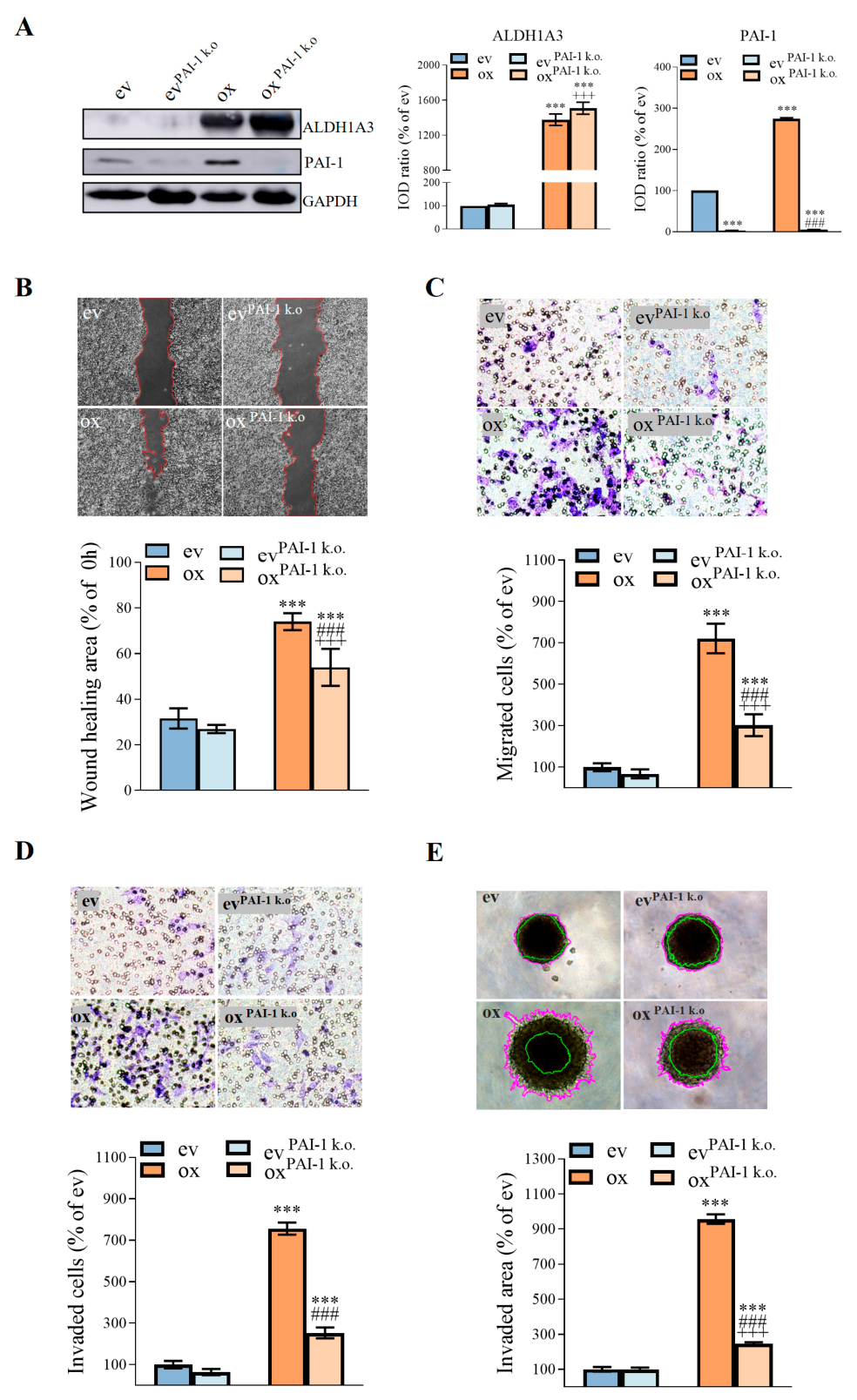
The PAI-1 gene was knocked out in ALDH1A3-overexpressing (ox) and empty-vector (ev) U373 cells by CRISPR/Cas9-mediated genome editing. Briefly, ribonucleoprotein (RNP) complexes were assembled by incubating 180 pmol predesigned synthetic guide RNA CRISPRevolution sgRNA SERPINE1-101128416 GCCCAGGACUAGGCAGGUGA (Synthego; Redwood City, CA, USA) targeting human PAI-1 with 20 µM TrueCut™ Cas9 Protein v2 (Thermo Fisher). For nucleofection of the RNP complex, 3 × 10⁵ cells (ev-/oxU373) per reaction were pelleted by centrifugation and resuspended in 20 µL SF Cell Line 4D-Nucleofector buffer (Lonza, Basel, Switzerland). Cell suspension and RNP complexes were mixed and nucleofected in 16-well strips using program DS-138 on a 4D-Nucleofector device (Lonza). Following nucleofection, cells were transferred into two 12-well plates and cultured until approximately 60% confluency. One well was used for genotyping of the edited pool, while the second well was expanded for subsequent single-cell cloning.
Knockout efficiency was assessed by genomic DNA extraction using QuickExtract DNA Extraction Solution (Biozym, Hessisch Oldendorf, Germany), PCR amplification of the targeted locus (PAI_F: AAGATTCCCACAGGGCAAGA; PAI_R: CTGCTTGAATCTGCTGCTGG), followed by Sanger sequencing (PAI_Seq: ACCTGCTTGCAGGAAACAAG; Eurofins Genomics, Ebersberg, Germany) and ICE analysis (Inference of CRISPR Edits) [
13]. Potential off-target sites for the selected guide RNA were assessed in silico using CRISPOR against the human hg38 reference genome. The guide RNA showed an off-target profile of 0-0-2-31-284, with no predicted off-target sites containing 0 or 1 mismatch. The two predicted 2-mismatch candidate sites were located in intronic regions and had low CFD scores of 0.17 and 0.12, respectively, indicating a low predicted risk of coding off-target cleavage. Pools with knockout efficiencies greater than 90% were expanded and subjected to single-cell dispensing into 96-well plates using the F.sight single-cell dispenser (Cytena, Freiburg, Germany). Single-cell clones were expanded and genotyped as described above and the PAI-1 k.o. was further validated by Western blotting.
2.3. Lentiviral GFP Transfection in GBM Cell Lines
HEK293T cells were transfected with 6 µg of GFP-expressing plasmid (pCL7EGwo; kindly provided by Dr. H. Hanenberg) using polyethyleneimine (PEI, branched; Sigma-Aldrich, St. Louis, MO, USA; 45 µg) as previously described [
14]. The medium was replaced 24 h after transfection with IMDM (Gibco, Waltham, MA, USA) supplemented with 10% FCS and 1% penicillin/streptomycin. Viral supernatants were collected 48 h post-transfection, filtered (0.45 µm), and cryopreserved. For stable GFP labeling, GBM cells were seeded in 6-well plates (1 × 10
5 cells/well) and incubated for 24 h with GFP-lentiviral supernatant in the presence of polybrene (10 µg/mL; H9268; Sigma-Aldrich, St. Louis, MO, USA). After 24 h, the medium was replaced with 2 mL selection medium. Cells were subcultured for expansion after reaching 70% confluence.
2.4. TCGA Dataset Analysis
Transcriptomic and clinical data for the TCGA-GBM cohort were obtained from the GlioVis data portal [
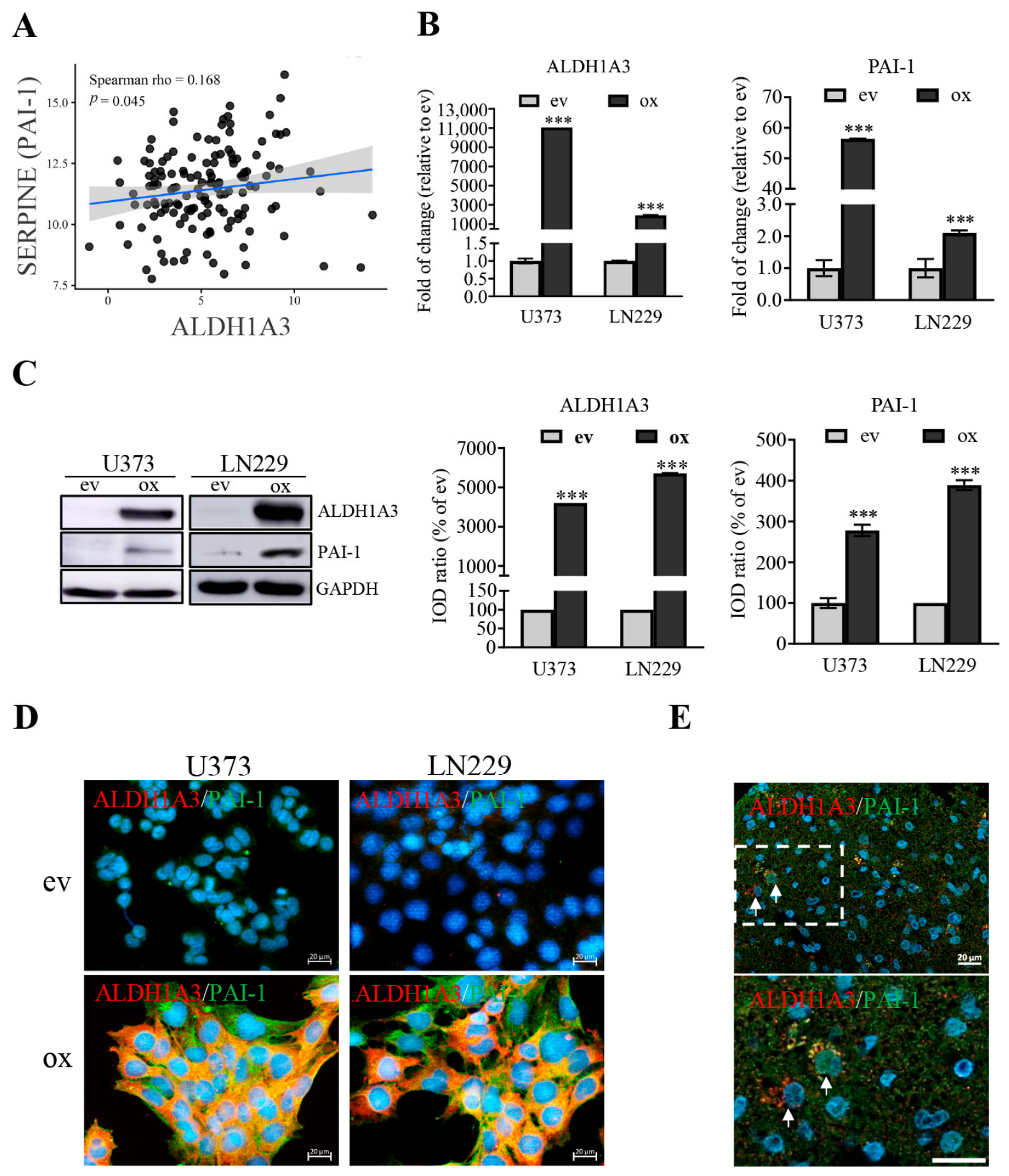
15]. For correlation analysis, samples annotated as glioblastoma (GBM) in the histology category of the GlioVis TCGA_GBM RNA-seq platform were downloaded (
n = 153). Cases annotated as IDH-mutant or without available IDH annotation were excluded (
n = 11), and the remaining IDH-wildtype GBM (
n = 142) cases were used for correlation analysis. Correlations between ALDH1A3 and SERPINE1/PAI-1 expression were assessed in RStudio (v2026.1.1.403) using Spearman’s rank correlation analysis. For survival analyses, the TCGA-GBM HG-U133A platform available in GlioVis was additionally used, and analyses were performed for all included cases and for the IDH-wildtype subgroup where annotation was available. Patients were stratified according to ALDH1A3 or SERPINE1/PAI-1 expression. High- and low-expression groups were defined using the lower-quartile expression cut-off implemented in GlioVis, i.e., the low-expression group included patients within the lowest 25% of expression values, whereas the high-expression group included the remaining 75% of patients above this lower-quartile cut-off. Kaplan–Meier survival curves were compared between the high- and low-expression groups using the log-rank test, and hazard ratios (HRs) with 95% confidence intervals (CIs) were obtained using Cox proportional hazards regression, as implemented in GlioVis.
2.5. Double Immunofluorescence (IF) Staining
Double IF staining was performed as previously described [
16]. The following antibody mixtures were applied: rabbit anti-ALDH1A3 (1:250; cat# NBP2-15339; Novus Biologicals, Centennial, CO, USA) combined with mouse anti-PAI-1 (1:200; cat#: 66261-1-Ig; Proteintech, Wuhan, China). Cell nuclei were counterstained with DAPI (Thermo Fisher Scientific, Schwerte, Germany). Images were acquired using an AxioImager M.2(Carl Zeiss AG, Oberkochen, Germany) microscope under identical acquisition settings across groups.
2.6. Western Blotting
Protein extraction, electrophoresis, and immunoblotting were performed as previously described [
11]. Membranes were blocked with 5% non-fat milk and incubated overnight at 4 °C with primary antibodies: ALDH1A3 (1:1000; cat# NBP2-15339; Novus Biologicals, Centennial, CO, USA), PAI-1 (1:1000; cat# 66261-1-Ig; Proteintech, Wuhan, China) and GAPDH (1:2000; cat# 2118; Cell Signaling Technology, Danvers, MA, USA). For semi-quantitative analysis, the integrated optical density (IOD) of immunoreactive bands was measured using ImageJ software (v1.1.53t). Protein expression was normalized to GAPDH, and values were presented as a percentage relative to the control.
2.7. Scratch Assay
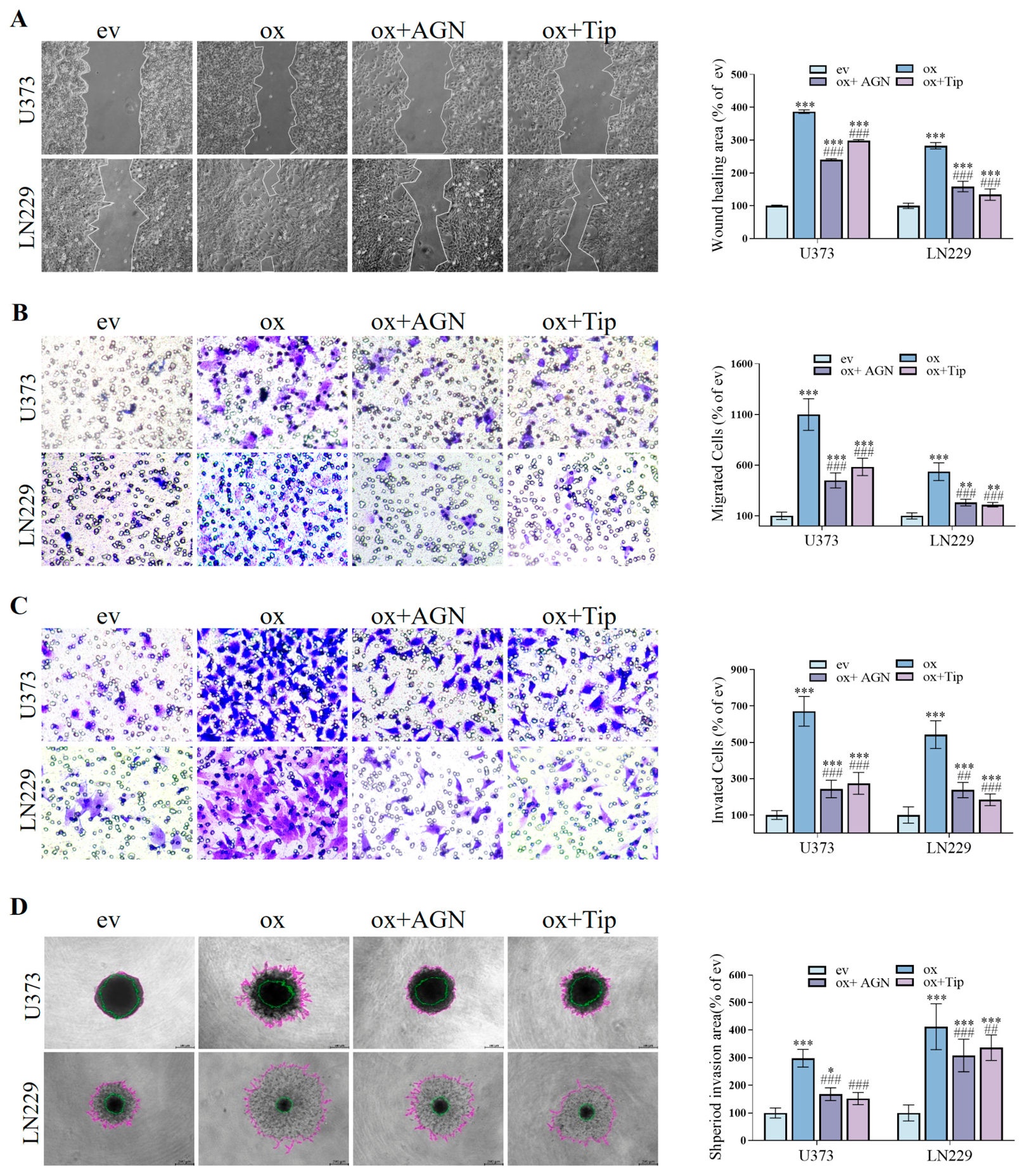
Cell migration was assessed using a scratch assay as previously described [
16]. Briefly, 5 × 10
5 GBM cells were seeded in a 6-well plate and incubated overnight. A uniform scratch was introduced using a sterile 100 µL pipette tip, and wound closure was monitored at 12 h and 24 h under a microscope (5× objective). The wound healing area was quantified as the percentage of the uncovered scratched area compared to 0 h using ImageJ.
2.8. Transwell Migration and Invasion Assay
Cell migration and invasion were measured using 24-well plates with inserts (8 μm pore) (cat# 3422; Corning, NY, USA). For the migration assay, inserts were used uncoated. For the invasion assay, inserts were pre-coated with Matrigel (0.5 mg/mL; cat# 356234; Corning) and allowed to solidify at 37 °C for 1 h (coating volume: 100 μL/insert).
For each assay, 5 × 10⁴ cells suspended in 200 μL DMEM were seeded into the upper chamber. The lower chamber was filled with 700 μL complete medium (DMEM + 10% FBS) as a chemoattractant, with or without pharmacological inhibitors as indicated. Cells were incubated for 12 h (migration) or 24 h (invasion) at 37 °C. Following incubation, non-migrated or non-invaded cells were removed using a cotton swab, and cells on the underside were fixed with 4% paraformaldehyde and stained with 0.5% crystal violet. Images were acquired under a 20× objective, and cells were quantified by counting five randomly selected fields per insert.
2.9. Spheroid Invasion Assay
Three-dimensional cell invasion was assessed using a spheroid-based invasion assay, with modifications as previously described [
11]. GBM cells were suspended in 25 μL selection medium containing 20% methylcellulose and seeded into a 96-well U-bottom plate. After incubation overnight, formed spheroids were embedded in 50 μL Matrigel-containing medium (40% Matrigel) and incubated at 37 °C for 60 min. Subsequently, 50 μL fresh selection medium with or without inhibitors was added per well. Invasion was monitored at 48 h and 72 h post-embedding. Images of six spheroids per group were acquired using a microscope equipped with a 5× objective, and the invaded area was quantified using ImageJ.
2.10. In Silico Motif Analysis
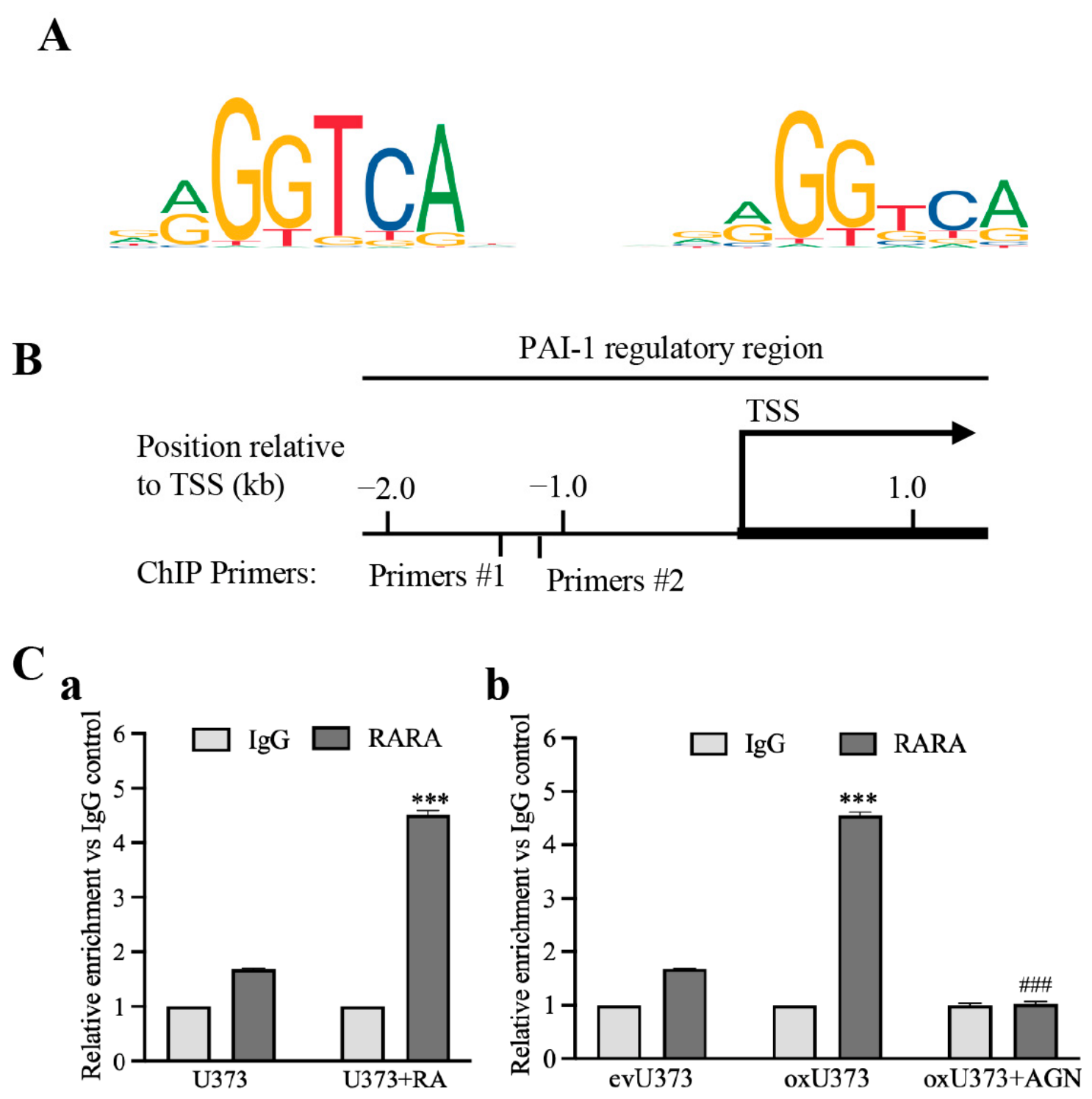
The PAI-1 regulatory region (±2 kb of the transcription start site, hg38) was analyzed by in silico motif prediction using the JASPAR web interface. Predicted RAR/RXR binding motifs were identified by scanning JASPAR position weight matrices (PWMs) for RARα: RXR heterodimers, and the top-scoring sites were selected for downstream analyses. Motif locations and scores were exported from the JASPAR output for figure preparation.
2.11. Chromatin Immunoprecipitation-Quantitative PCR (ChIP-qPCR)
ChIP assays were performed using the SimpleChIP Enzymatic Chromatin IP Kit (cat# 9002; Cell Signaling Technology, Danvers, MA, USA) according to the manufacturer’s instructions. Cells were cross-linked with 1% formaldehyde for 10 min at room temperature and quenched with 125 mM glycine. Nuclei were isolated and chromatin was digested with micrococcal nuclease, followed by brief sonication to generate DNA fragments of approximately 200–500 bp. Chromatin was immunoprecipitated with anti-RARα (cat# 62294; Cell Signaling Technology, Danvers, MA, USA) or normal rabbit IgG as a negative control. Immunoprecipitated DNA was purified and analyzed by quantitative PCR using primers spanning the retinoic acid response element (RARE) within the PAI-1 regulatory region. Data were normalized to input and presented as fold enrichment relative to the IgG control.
2.12. Real-Time RT-PCR (RT2-PCR)
Total RNA extraction, cDNA synthesis and RT
2-PCR were performed as described before [
11]. Primers and corresponding annealing temperatures are listed in
Table 1. Relative expression levels were calculated using the 2
−ΔΔCT method and normalized to a reference gene, RPS13.
2.13. In Vivo Invasion Model
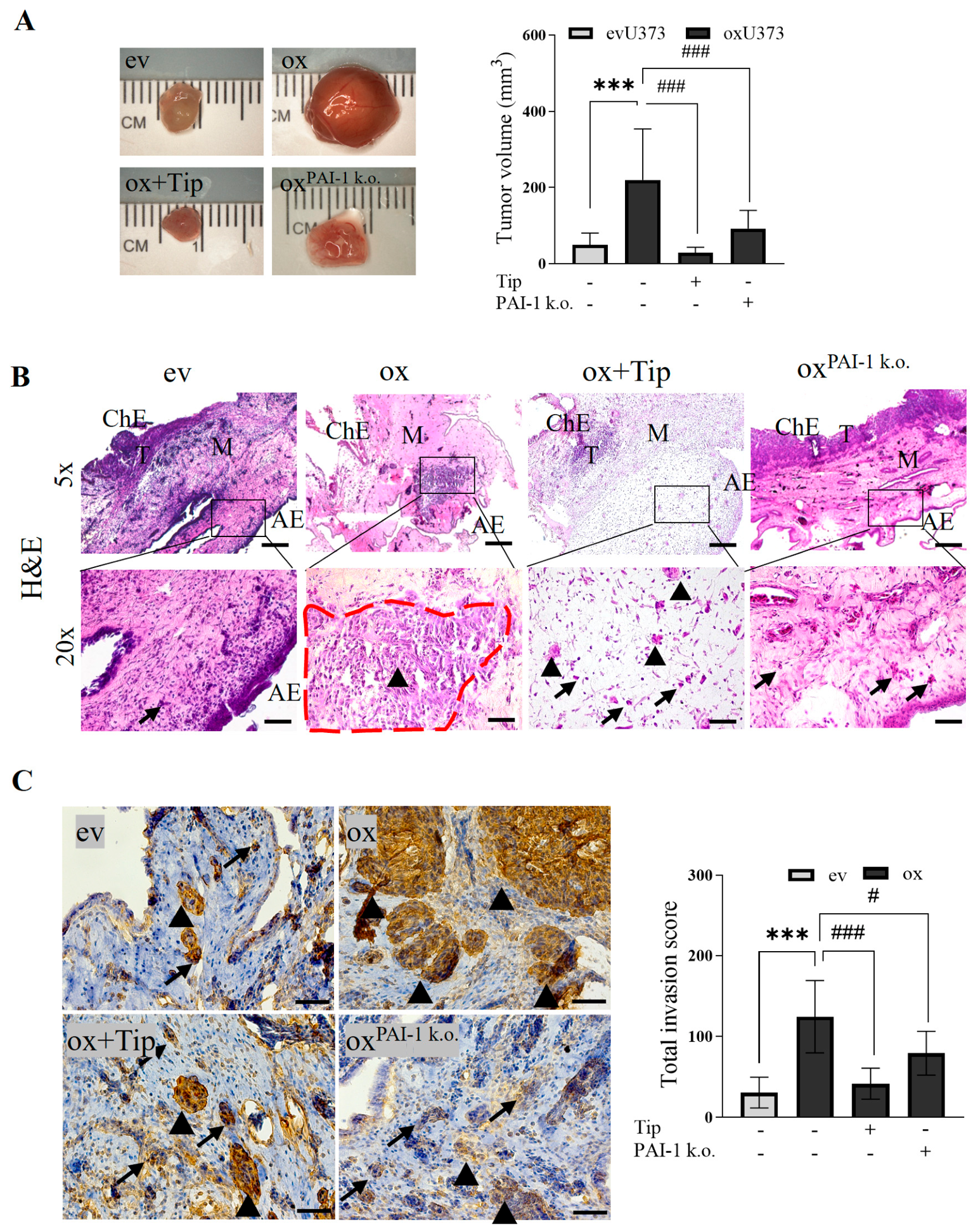
The in vivo invasion model was performed by implantation of tumor cells on the chorioallantoic membrane (CAM) of the chick embryo followed by the analysis of the invasiveness of the implanted cells on the CAM as described previously [
14,
17]. Briefly, fertilized chicken eggs were incubated in a humidified rotary incubator at 38 °C and 50% humidity for 10 days. At embryonic day 10 (ED10), eggs were candled to visualize major vessels. The chorioallantoic vein was positioned, and a square was marked approximately 1 cm away from the vein’s branching point. A hole was drilled through the blunt end of the egg into the air sac, and a window within the marked square was opened to expose the CAM. GFP-transfected GBM cells (1 × 10
6) were suspended in 50 μL growth medium with or without tiplaxtinin (Tip, 30 μM) and then implanted onto the CAM. Vehicle (0.3% DMSO) served as control (
n ≥ 10 per group). The window was sealed, and eggs were incubated for an additional 7 days. At ED17, tumors were excised and gross tumors were imaged using a Nikon ECLIPSE E600 microscope and NIS-Elements Imaging software (v5.20.02; Nikon, Düsseldorf, Germany). Tumor length and width were measured using a digital caliper, and tumor volume was calculated using the formula: volume = (length × width
2)/2. For histological analyses, samples were fixed in 4% paraformaldehyde, paraffin-embedded, and sectioned at 4 μm thickness for hematoxylin and eosin (H&E) and for immunohistochemistry (IHC) staining of GFP using a specific rabbit anti-GFP antibody (1:250; cat# 66002-1; Proteintech, Wuhan, China). Images were acquired and analyzed using an AxioImager M.2 microscope (Carl Zeiss AG, Oberkochen, Germany) followed by quantitative analysis of tumor cell invasion.
Structurally, the CAM is composed of multiple layers including chorionic epithelium (ChE), mesenchymal layer (M) and allantoic epithelium (AE). To evaluate tumor cell invasion, six fields in each section (20×) with at least two adjacent sections per tumor were randomly captured on IHC-stained sections in the following areas: adjacent to ChE, mid-M, and adjacent to AE. Aggregates of tumor cells with a diameter larger than 50 μm were defined as a cluster. Tumor invasion was quantified using a semi-quantitative scoring system based on invasion depth (
D) and tumor cluster size (
S). For each sample, six random microscopic fields were selected for evaluation. The invasion score for each field was calculated as:
The number (
n) represents the number of tumor clusters. If a single cluster occupied >60% of the field, a ceiling score of 20 was assigned. The total invasion score for each sample was defined as the aggregate sum of the scores from all six fields (
Table 2).
2.14. Evaluation of the Cytotoxicity of Inhibitors
GBM cells were treated with AGN193109 (2 µM) or tiplaxtinin (30 µM) for 24 h, which is the same condition used for the functional assays. After treatment, cells were harvested, mixed with trypan blue solution (0.4%), and analyzed using a hemocytometer. Cell viability was calculated as the percentage of viable cells (unstained) among the total counted cells (unstained and stained) and was normalized to the corresponding vehicle-treated control groups.
2.15. Statistics
All data are presented as mean ± standard deviation (SD) from at least three independent experiments unless otherwise stated. Statistical analyses were performed using GraphPad Prism 9 (GraphPad Software, San Diego, CA, USA). Differences between the two groups were compared using a two-tailed Student’s t-test. Comparisons among multiple groups were analyzed by one-way ANOVA followed by Tukey’s post hoc test. A p-value < 0.05 was considered statistically significant.
4. Discussion
ALDH1A3 is a stem cell marker in various types of cancer such as breast cancer, non-small cell lung cancer, melanoma, colorectal cancer, and pancreatic ductal adenocarcinoma [
18,
19,
20,
21,
22]. In GBM, ALDH1A3 expression has been recognized as a hallmark of the aggressive mesenchymal subtype, which is characterized by increased invasion and poor prognosis [
5,
23,
24]. However, the detailed function and the underlying mechanism of ALDH1A3 in regulating GBM cell migration and invasion remain unclear. Here, we provide in vitro and in vivo evidence for the crucial role of ALDH1A3 in activating GBM cell migration and invasion, which is consistent with our earlier findings in GBM patient sections where ALDH1A3 was dominantly expressed in the infiltration zone of the tumor. By using multiple approaches including genetic overexpression and knockdown as well as by pharmacological interventions, we identified PAI-1 as a key mediator relaying downstream of ALDH1A3-RA/RAR signaling for regulating GBM cell mobility.
ALDH1A3 is a member of the ALDH family and catalyzes the oxidation of retinaldehyde to RA, the final step of RA biosynthesis [
23,
24]. In mesenchymal glioma stem cells, Li et al. showed that, among ALDH family members, ALDH1A3 is a major catalytic enzyme responsible for RA production and that ALDH1A3 inhibition reduces RA synthesis together with mesenchymal growth-related programs, including clonogenic growth and expression of mesenchymal regulators such as CD44, C/EBPβ, and TAZ [
23]. Canonical RA signaling starts with binding to RAR/RXR heterodimers. Upon RA binding, the RAR-RXR heterodimer undergoes ligand-dependent conformational rearrangement that facilitates corepressor release, coactivator recruitment, and transcriptional activation at RA-responsive target loci [
25,
26]. In this context, RARα serves as an important transcriptional effector of RA signaling, whereas RXR functions as its canonical heterodimeric partner for DNA binding and transcriptional control [
25,
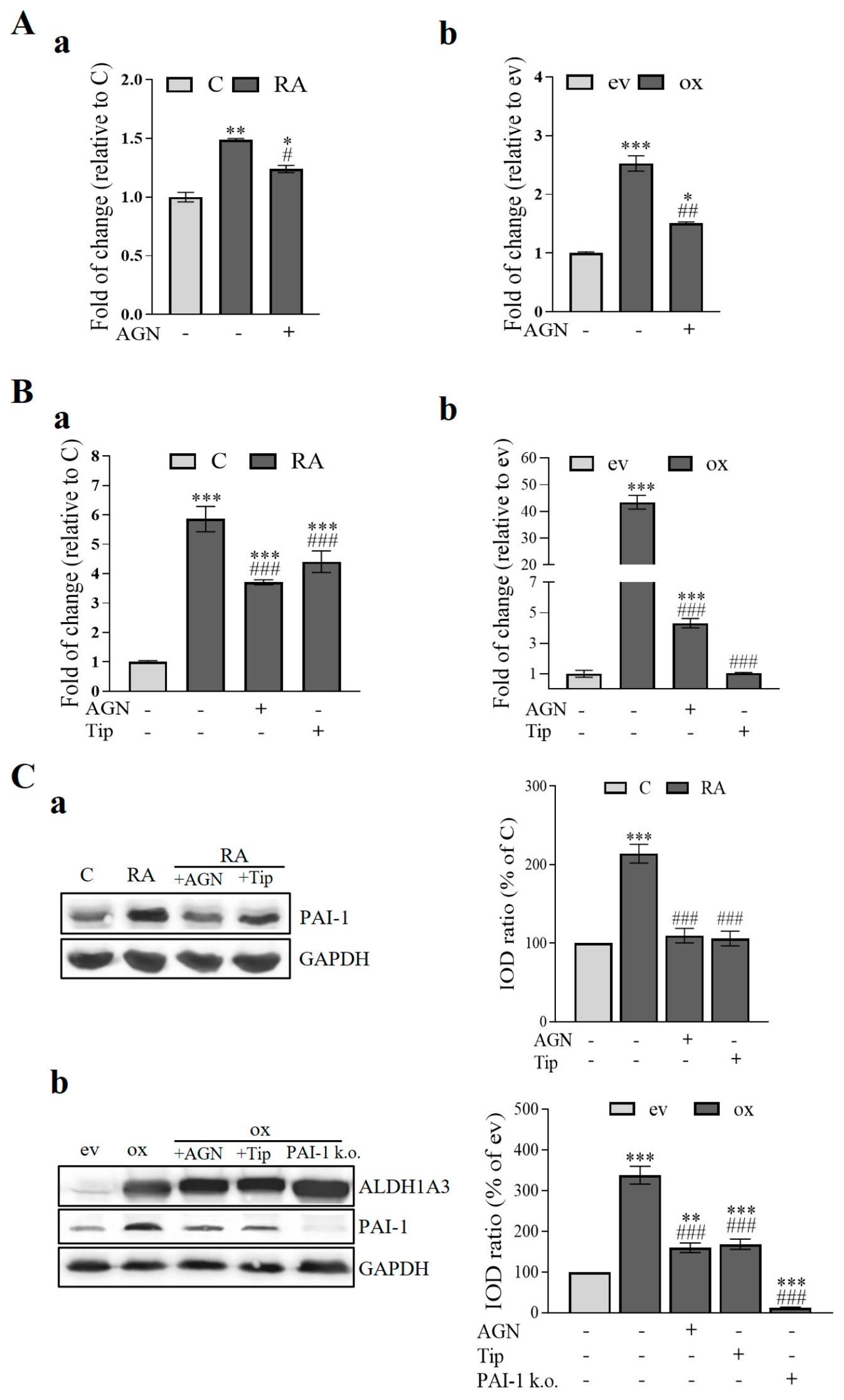
27]. In the present study, we demonstrated the link between ALDH1A3 and RA/RAR-mediated PAI-1 transcription under various conditions. In wild-type GBM cells with low endogenous ALDH1A3 expression (U373), RA treatment increased the RARα occupancy at the PAI-1 regulatory region, followed by the upregulation of DHRS3, a canonical RA/RAR-responsive readout, and increased PAI-1 expression (
Figure 5 and
Figure 6); ALDH1A3 overexpression showed effects similar to those observed in RA-treated wild-type cells. The effects observed in both types of cells were diminished by the RAR inhibition. As additional support, in T98g cells, which naturally express high levels of ALDH1A3, the specific ALDH1A3 inhibitor KOTX1 reduced endogenous expression of ALDH1A3 and subsequently downregulated DHRS3 and PAI-1 expression, accompanied by suppressed migration and invasion (
Supplementary Figure S3). These findings collectively defined an ALDH1A3-RA/RAR-PAI-1 signaling axis in mediating migration and invasion of GBM cells.
PAI-1 was originally defined as an inhibitor of the uPA/uPAR/plasmin system. Increasing evidence indicates that PAI-1 can promote tumor cell migration and invasion through several complementary mechanisms [
28,
29]. PAI-1 regulates pericellular proteolysis and extracellular matrix remodeling. It also modulates cell–matrix interactions through vitronectin, uPAR, integrins, and LRP1, thereby affecting adhesion turnover and the repeated detachment steps required for efficient cell motility [
30]. In GBM, PAI-1 has been associated with mesenchymal characteristics, poor prognosis, tumor cell dispersal, and orthotopic invasiveness [
9]. More recently, GBM migration and invasion were shown to depend on a SMAD2/3-PAI-1 signaling axis [
8]. Studies in other tumor types further support a pro-invasive role for PAI-1. In breast cancer, tumor-derived PAI-1 promoted invasion and metastasis by inducing adipocyte-associated collagen remodeling [
31]. In lung cancer, PAI-1 has been linked to EMT-associated plasticity, including osimertinib-tolerant states in EGFR-mutated tumors [
32]. In esophageal squamous cell carcinoma, PAI-1 promoted migration and invasion through LRP1-dependent AKT/ERK signaling and related stromal crosstalk [
29]. TCGA database analysis supported the association between ALDH1A3 and PAI-1 expression and both were associated with shorter overall survival in GBM patients. Experimentally, besides the above-mentioned various models used to establishing the signaling axis and the related functional role in GBM cell mobility, we validated PAI-1 as pivotal mediator in ALDH1A3 signaling by application of a specific PAI-1 inhibitor and specifically by CRISPR/Cas9-mediated PAI-1 knockout in ALDH1A3 overexpression GBM cells in multiple in vitro cell behavior assays (
Figure 2 and
Figure 3) and in signaling studies (
Figure 5 and
Figure 6) we well as in vivo CAM model (
Figure 4). These studies highlight PAI-1 as an important molecule involved in ALDH1A3-activated signaling and GBM motility. It will be important to further explore how ALDH1A3-associated PAI-1 regulates GBM cell behavior. Our previous findings may shed light on this point. We reported that ALDH1A3 overexpression promoted GBM tumor angiogenesis through paracrine induction of a group of proangiogenic factors including PAI-1 [
11]. Thus, ALDH1A3-associated increase in PAI-1 release may stimulate GBM cell activity through microenvironment-mediated mechanisms. Further study is ongoing in our laboratory.
The CAM model is a widely used model to assess tumor growth, invasion, angiogenesis and early drug response in vivo in cancer research including GBM [
33,
34]. To confirm the role of ALDH1A3 in GBM cell invasion observed in two- and three-dimensional in vitro models, we applied this model by implanting genetically edited GBM cells (GFP-transfected ev-/oxU373 cells and oxU373
PAI-1 k.o. cells) and by treatment with specific inhibitors. Based on the microscopically visible CAM structure, we quantitatively analyzed the infiltration depth and extent of the implanted GBM cells. We found that, compared with the evU373 group, oxU373 cells formed significantly larger tumor clusters and displayed a more aggressive invasion pattern characterized by broad sheet-like invasion into deeper CAM layers. By contrast, PAI-1 inhibition or PAI-1 knockout not only reduced tumor growth but also markedly attenuated the extent of tumor cell invasion. These in vivo findings are consistent with those from in vitro models (
Figure 2 and
Figure 3), supporting a crucial role of ALDH1A3 and its mechanism in GBM cell mobility.
Meanwhile, we are aware of the limitations of the CAM model, as it cannot fully represent the mammalian brain microenvironment and does not reproduce the blood–brain barrier and immune context of orthotopic GBM. Therefore, further validation in patient-derived GBM cell models or orthotopic mouse models will be required in future studies. In addition, PAI-1 promoter-reporter assays under both wild-type and retinoic acid response element (RARE)-mutant conditions should be performed to confirm the functional relevance of the predicted RA-responsive regulatory element.
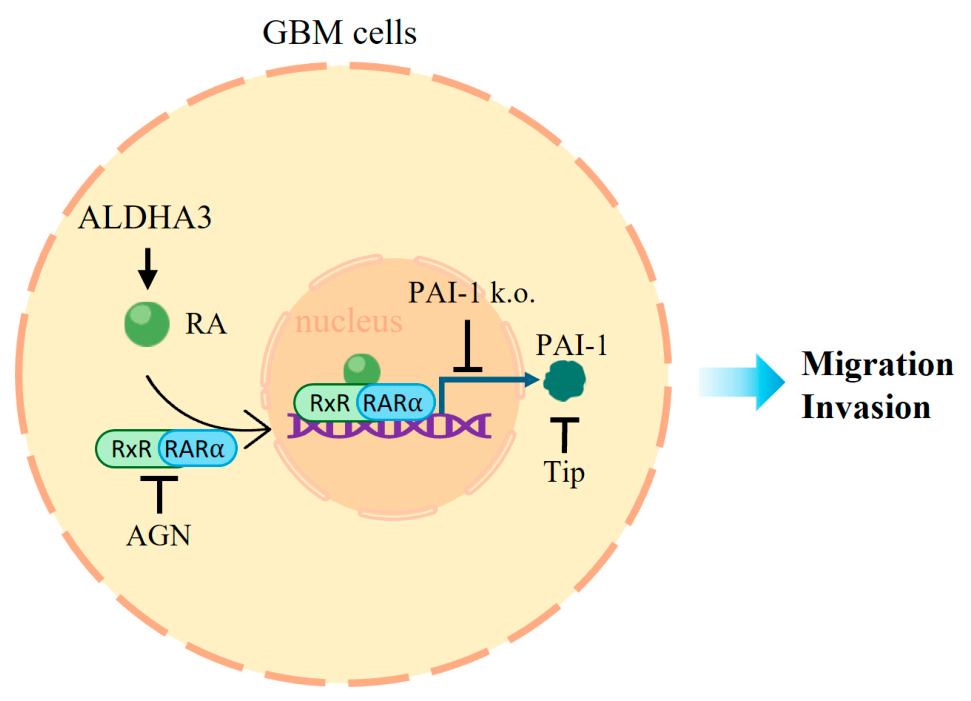
We schematically summarize the major findings of the present study as shown in
Figure 7. Collectively, our findings support ALDH1A3 as a key driver of GBM cell migration and invasion via a mechanism involving RA/RAR-PAI-1 signaling.




 ,
,