Review

Pericyte–Glioblastoma Cell Interaction: A Key Target to Prevent Glioblastoma Progression

by
Ana Pombero
1,†,
Raquel Garcia-Lopez
1,† and
Salvador Martínez
1,2,*
1
Instituto de Neurociencias, Universidad Miguel Hernández–CSIC, Campus de San Juan, Avda. Ramón y Cajal sn, 03550 Alicante, Spain
2
Centro de Investigación Biomédica en Red en Salud Mental, CIBERSAM-ISCIII, 46010 Valencia, Spain
*
Author to whom correspondence should be addressed.
These authors contributed equally to this work.
Cells 2023, 12(9), 1324; https://doi.org/10.3390/cells12091324
Submission received: 13 March 2023 / Revised: 25 April 2023 / Accepted: 3 May 2023 / Published: 5 May 2023

Abstract

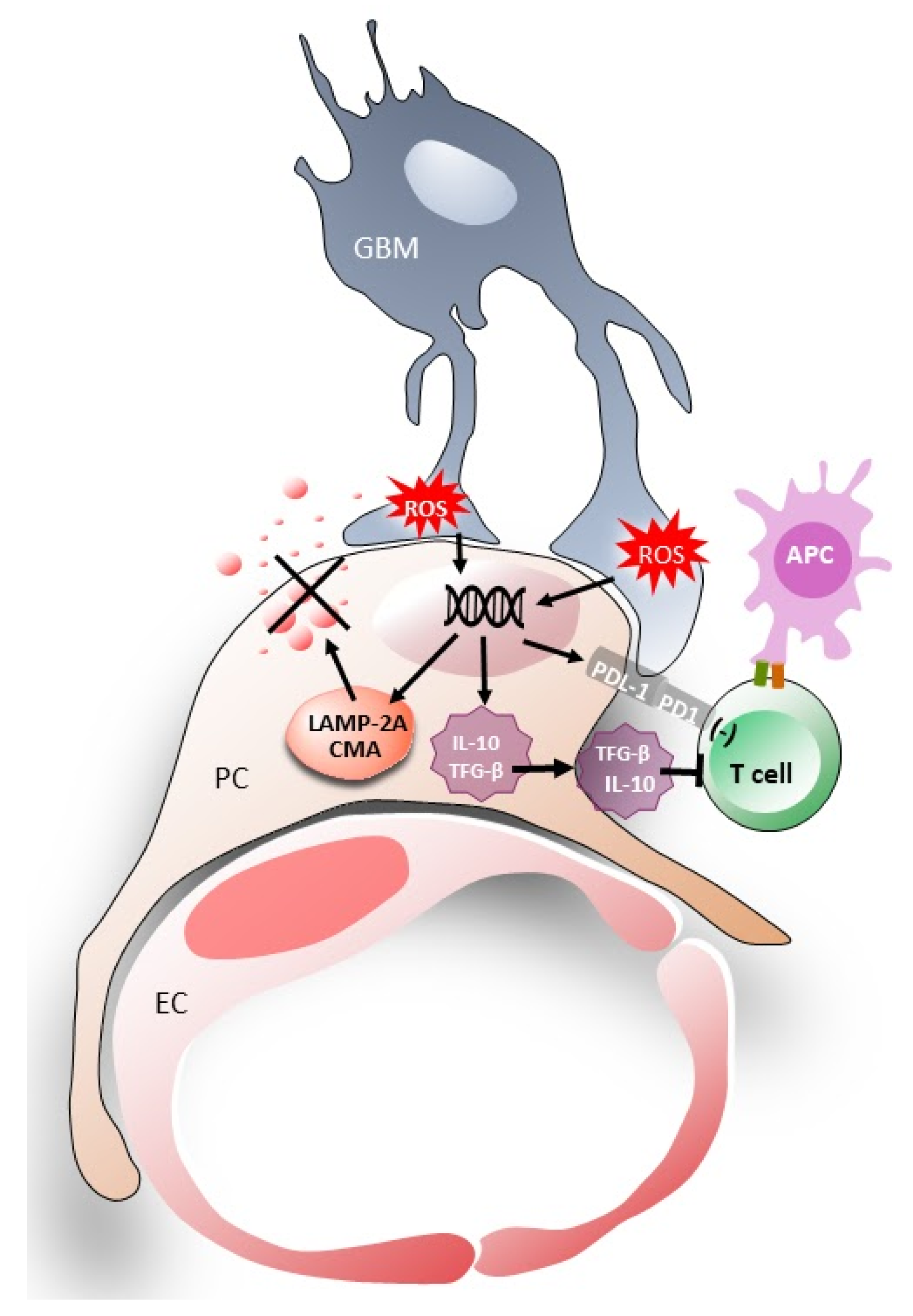
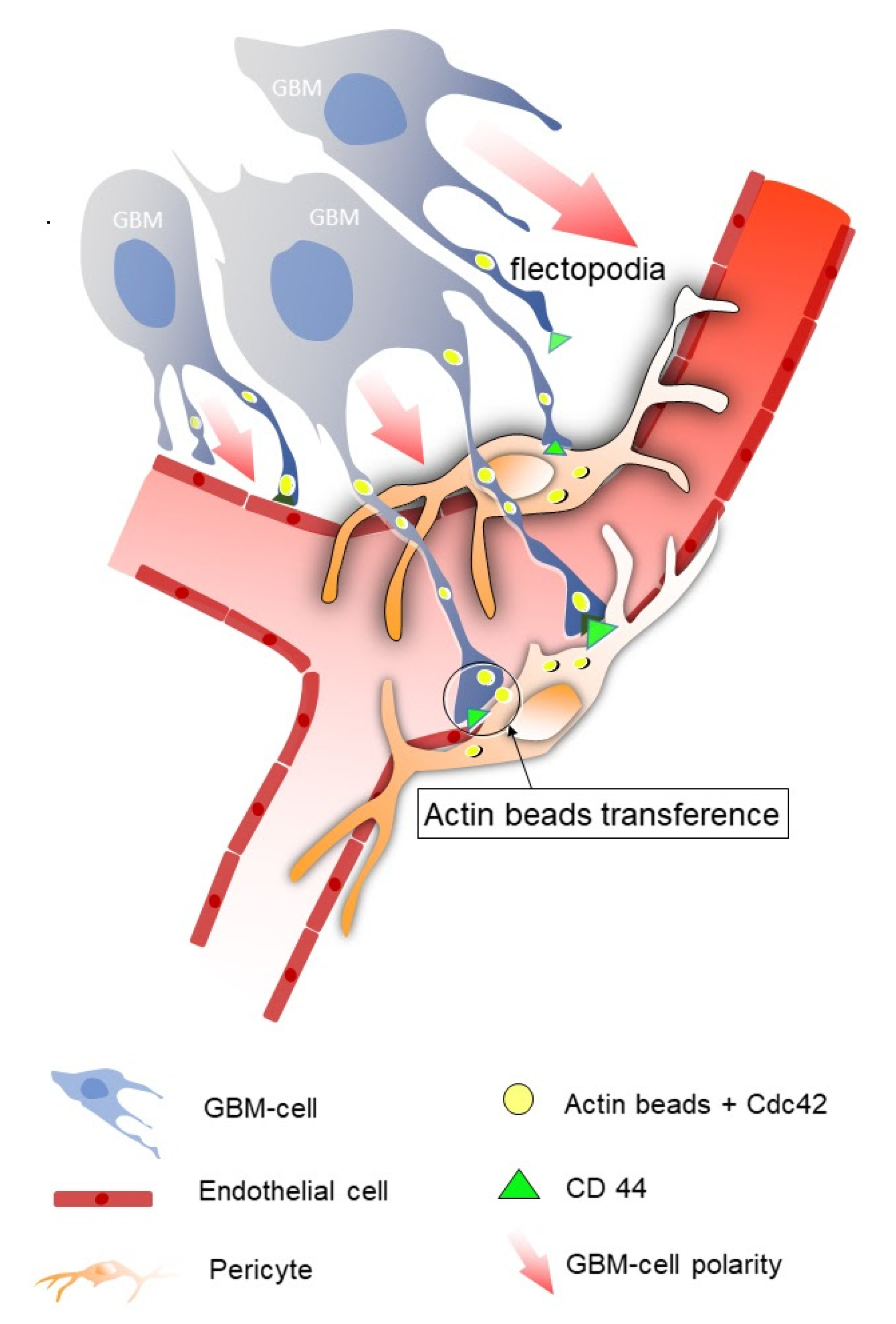
Multiple biological processes rely on direct intercellular interactions to regulate cell proliferation and migration in embryonic development and cancer processes. Tumor development and growth depends on close interactions between cancer cells and cells in the tumor microenvironment. During embryonic development, morphogenetic signals and direct cell contacts control cell proliferation, polarity, and morphogenesis. Cancer cells communicate with cells in the tumor niche through molecular signals and intercellular contacts, thereby modifying the vascular architecture and antitumor surveillance processes and consequently enabling tumor growth and survival. While looking for cell-to-cell signaling mechanisms that are common to both brain development and cancer progression, we have studied the infiltration process in glioblastoma multiforme (GBM), which is the most malignant primary brain tumor and with the worst prognosis. Cell-to-cell contacts, by means of filopodia-like structures, between GBM cells and brain pericytes (PCs) are necessary for adequate cell signaling during cancer infiltration; similarly, contacts between embryonic regions, via cytonemes, are required for embryo regionalization and development. This GBM–PC interaction provokes two important changes in the physiological function of these perivascular cells, namely, (i) vascular co-option with changes in cell contractility and vascular malformation, and (ii) changes in the PC transcriptome, modifying the microvesicles and protein secretome, which leads to the development of an immunosuppressive phenotype that promotes tumor immune tolerance. Moreover, the GTPase Cdc42 regulates cell polarity across organisms, from yeast to humans, playing a central role in GBM cell–PC interaction and maintaining vascular co-option. As such, a review of the molecular and cellular mechanisms underlying the development and maintenance of the physical interactions between cancer cells and PCs is of particular interest.
Keywords: cell–cell contact; filopodia; pericytes; glioblastoma; high-grade glial neoplasm cell–cell contact; filopodia; pericytes; glioblastoma; high-grade glial neoplasm