Article

Continuous Percoll Gradient Centrifugation of Erythrocytes—Explanation of Cellular Bands and Compromised Age Separation

1
Dynamics of Fluids, Experimental Physics, Saarland University, 66123 Saarbrücken, Germany
2
Red Blood Cell Research Group, Institute of Veterinary Physiology, University of Zürich, CH-8057 Zürich, Switzerland
3
Laboratories of Biochemistry, Department of Biology and Biotechnology “L Spallanzani”, University of Pavia, I-27100 Pavia, Italy
4
Physics and Materials Science Research Unit, University of Luxembourg, L-1511 Luxembourg, Luxembourg
5
Theoretical Medicine and Biosciences, Medical Faculty, Saarland University, 66421 Homburg, Germany
*
Author to whom correspondence should be addressed.
Cells 2022, 11(8), 1296; https://doi.org/10.3390/cells11081296
Submission received: 1 March 2022 / Revised: 6 April 2022 / Accepted: 7 April 2022 / Published: 11 April 2022
(This article belongs to the Collection Advances in Red Blood Cells Research)

Abstract

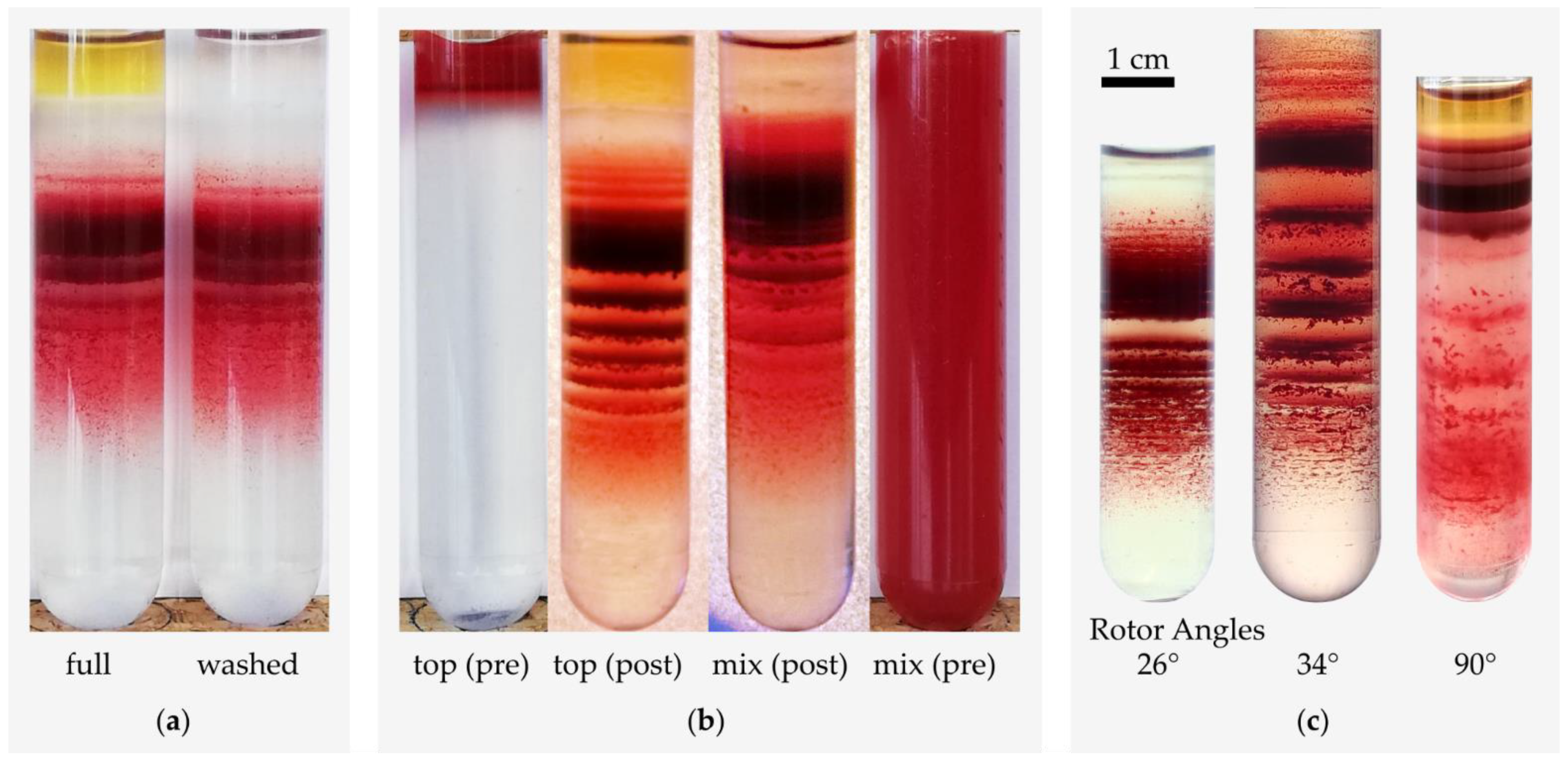
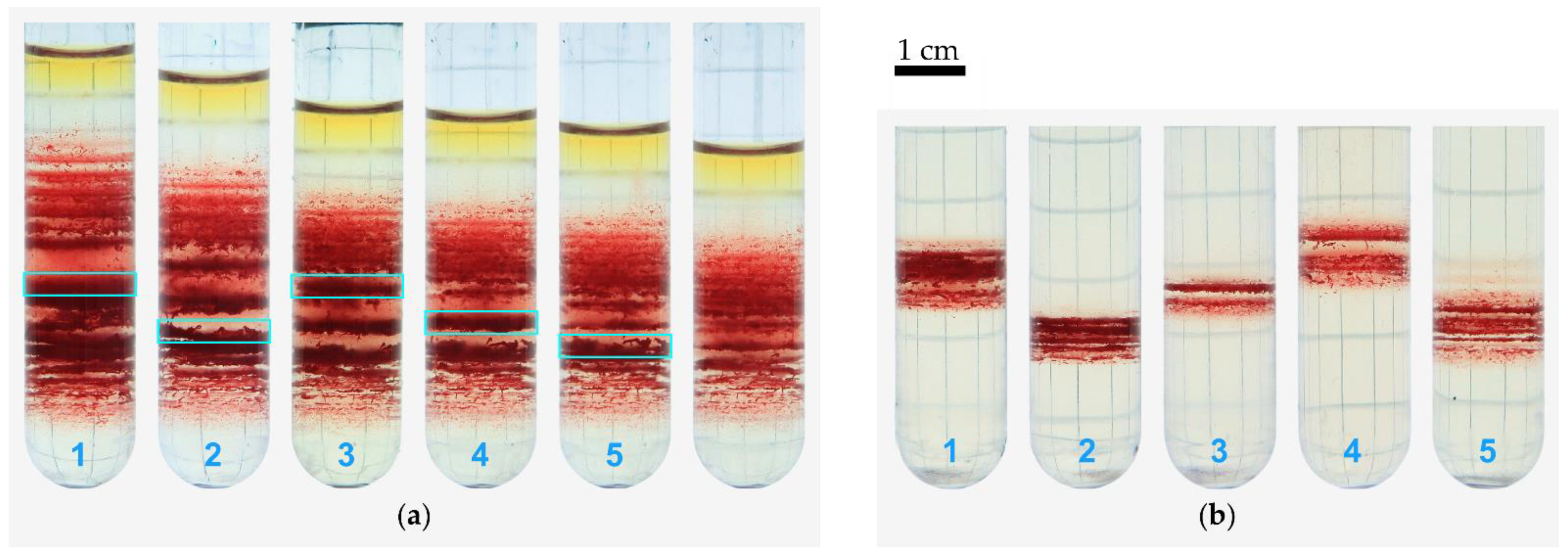
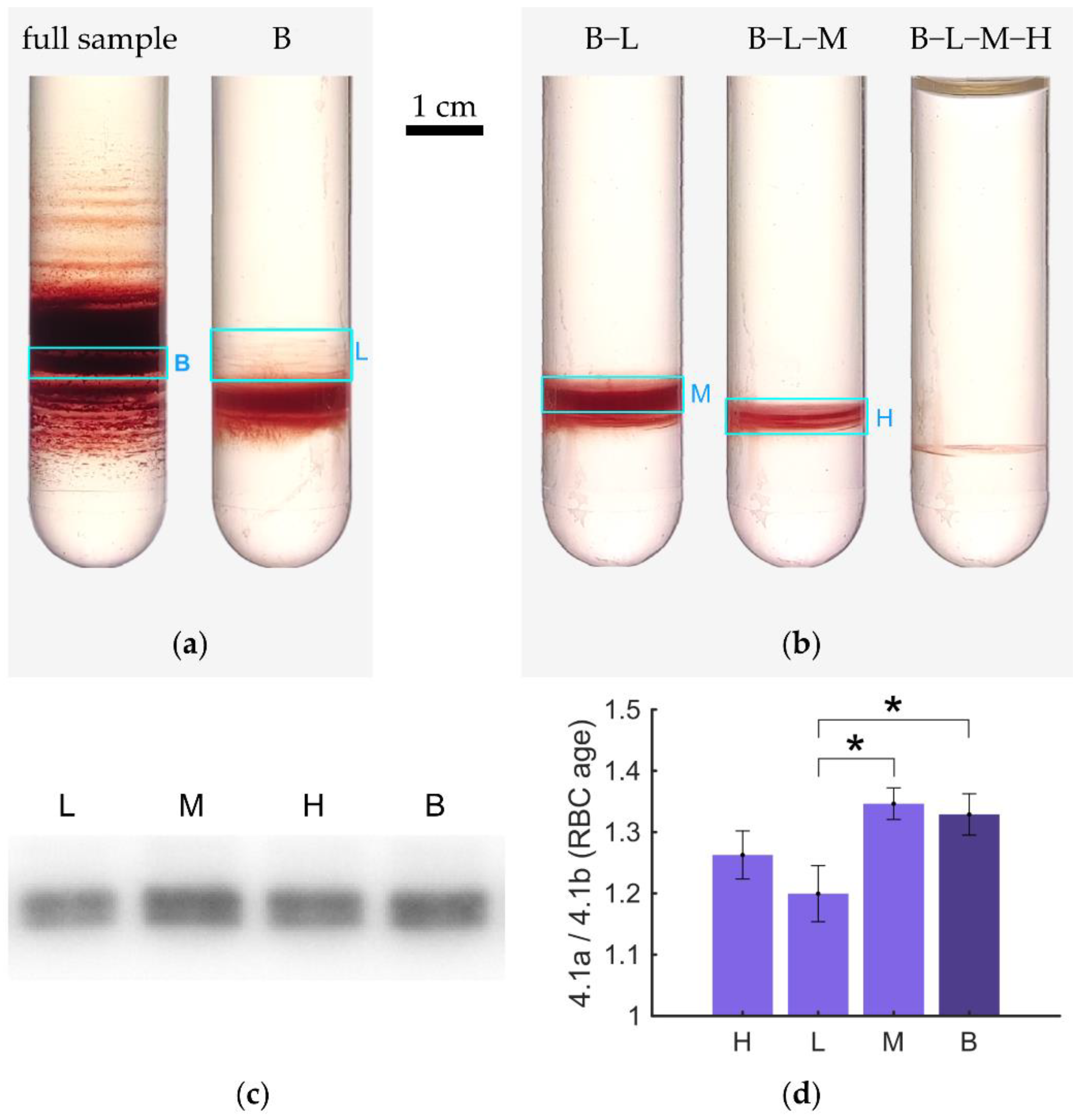
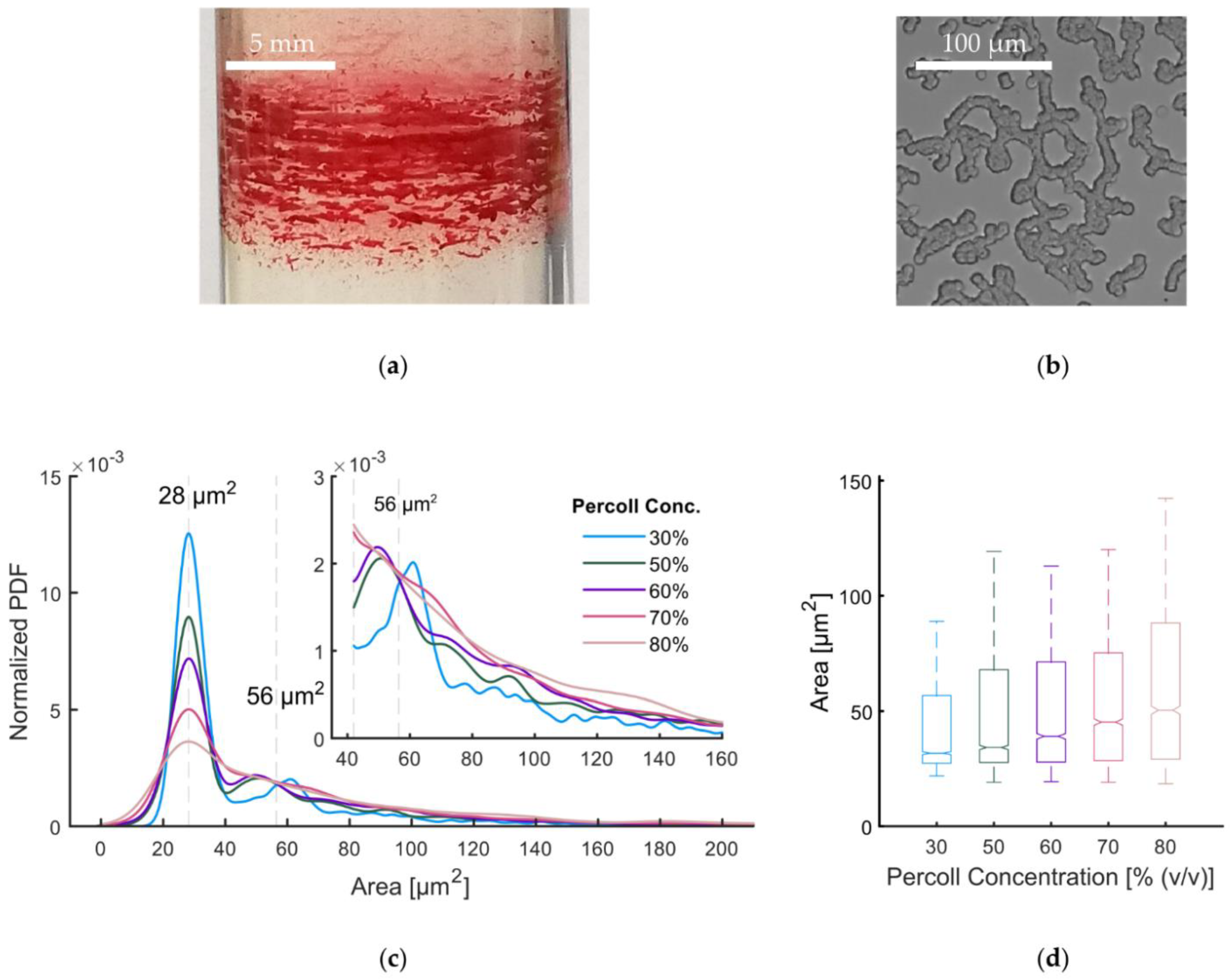
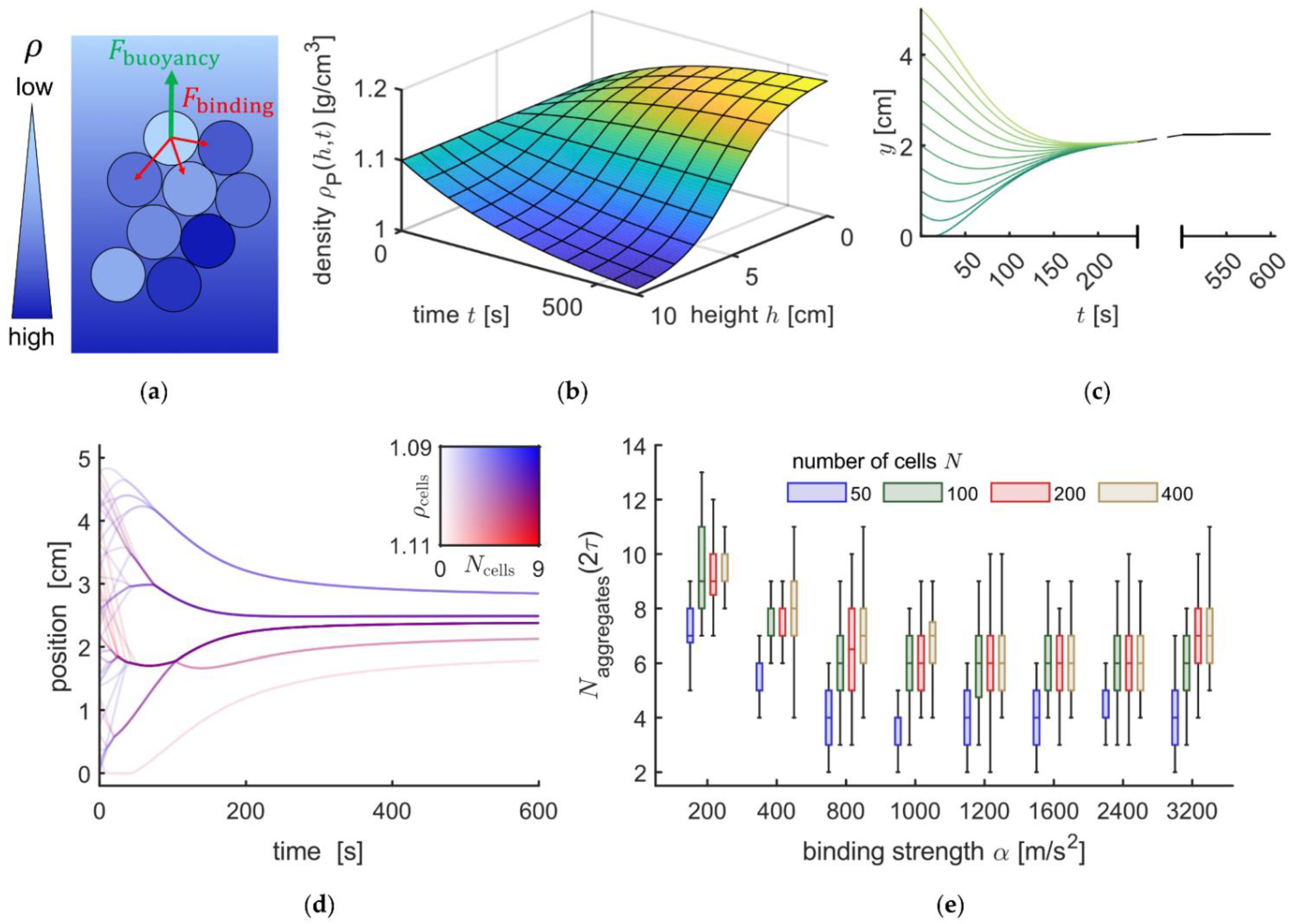
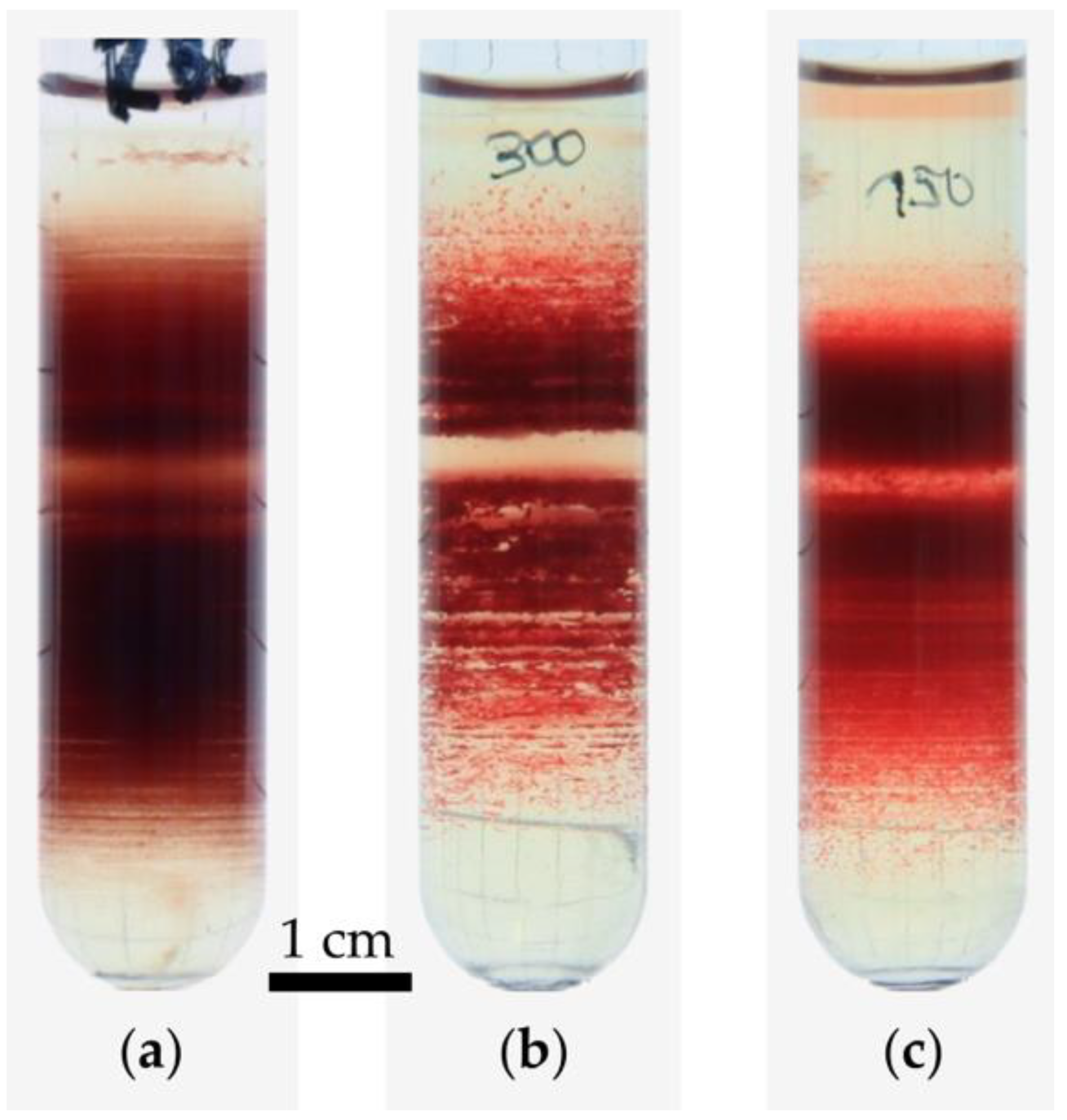
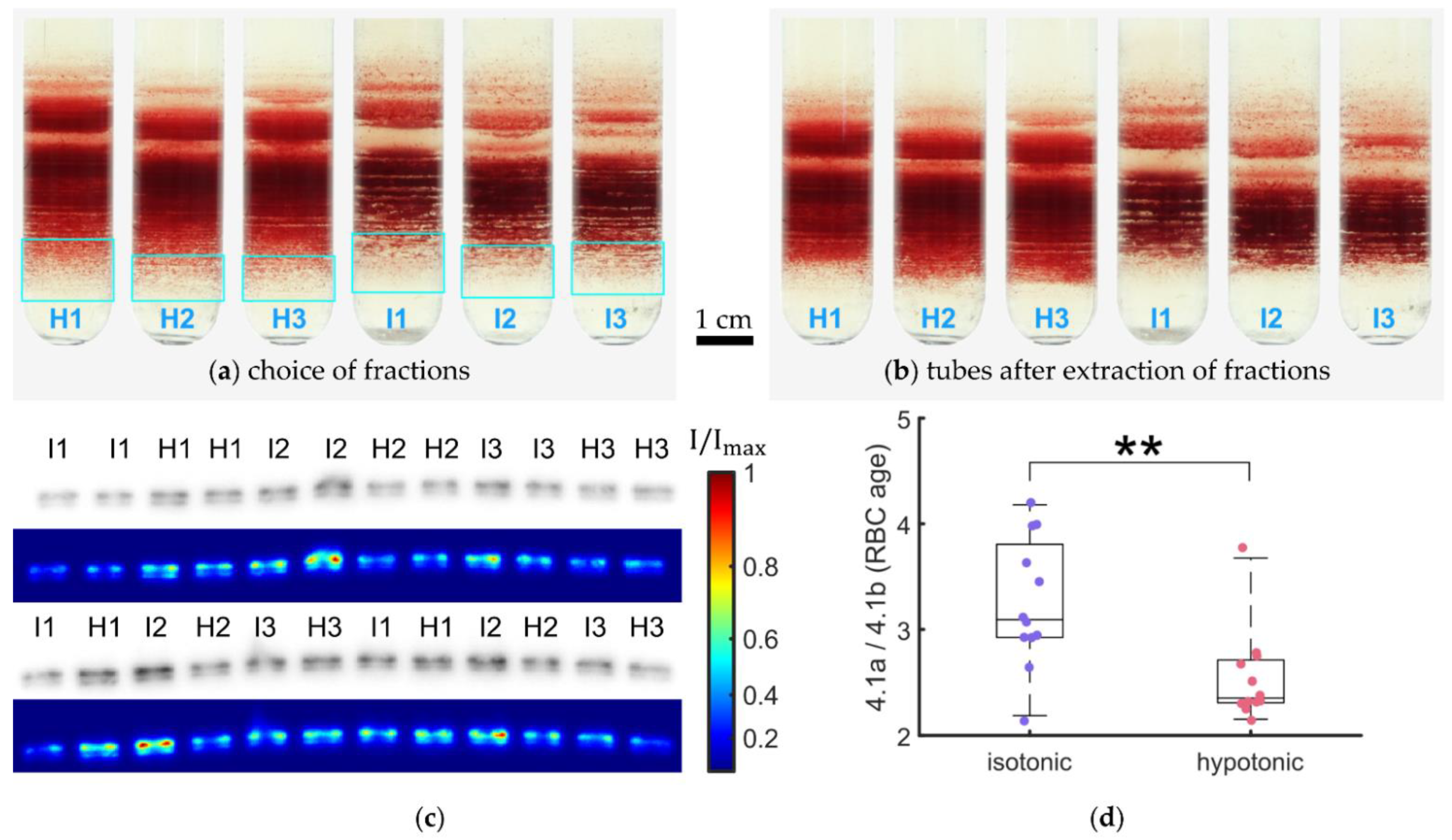
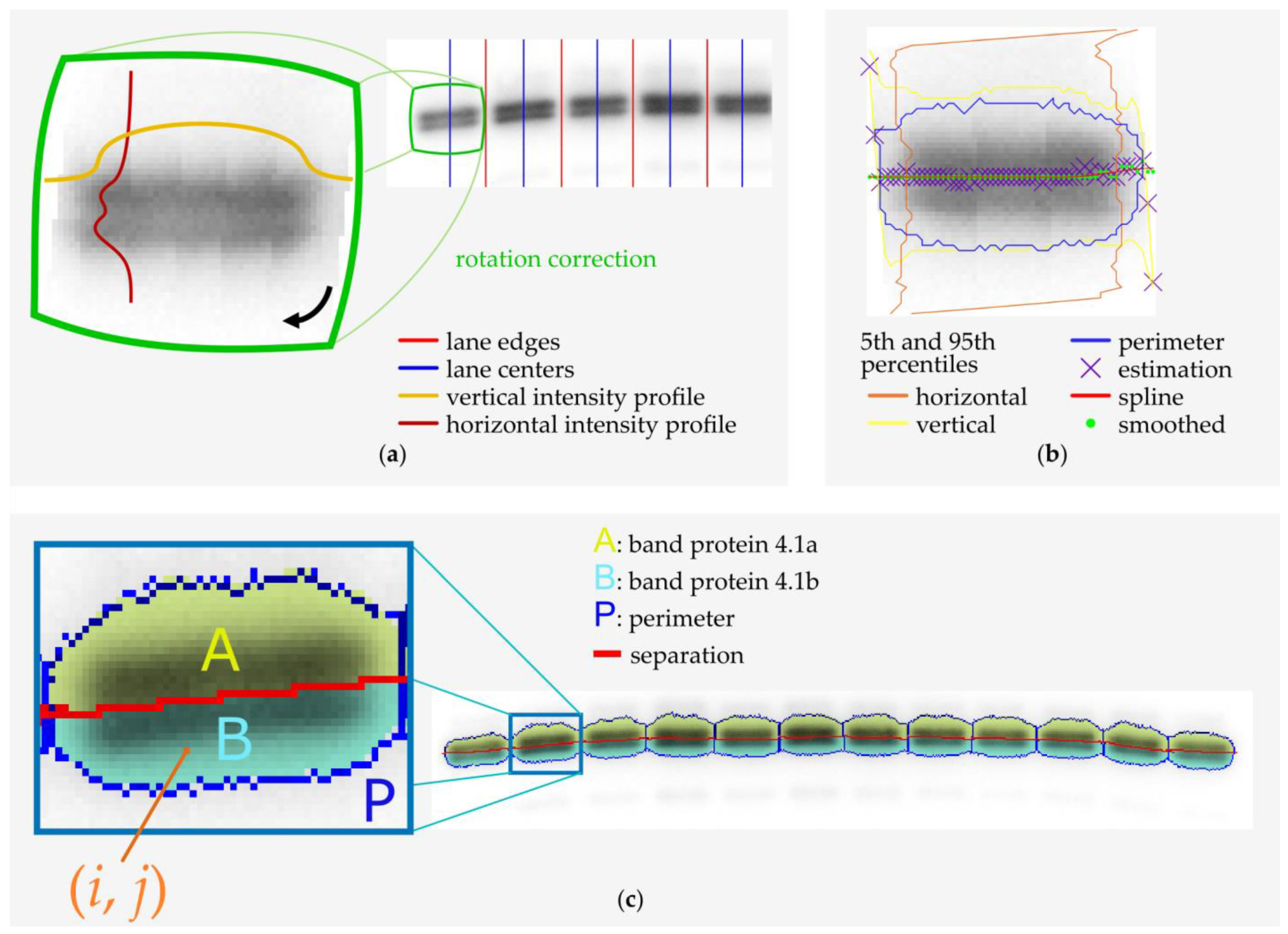
(1) Background: When red blood cells are centrifuged in a continuous Percoll-based density gradient, they form discrete bands. While this is a popular approach for red blood cell age separation, the mechanisms involved in banding were unknown. (2) Methods: Percoll centrifugations of red blood cells were performed under various experimental conditions and the resulting distributions analyzed. The age of the red blood cells was measured by determining the protein band 4.1a to 4.1b ratio based on western blots. Red blood cell aggregates, so-called rouleaux, were monitored microscopically. A mathematical model for the centrifugation process was developed. (3) Results: The red blood cell band pattern is reproducible but re-centrifugation of sub-bands reveals a new set of bands. This is caused by red blood cell aggregation. Based on the aggregation, our mathematical model predicts the band formation. Suppression of red blood cell aggregation reduces the band formation. (4) Conclusions: The red blood cell band formation in continuous Percoll density gradients could be explained physically by red blood cell aggregate formation. This aggregate formation distorts the density-based red blood cell age separation. Suppressing aggregation by osmotic swelling has a more severe effect on compromising the RBC age separation to a higher degree.
Keywords: red blood cells; Percoll; age separation; density gradient; band formation; aggregation; band 4.1 protein; blood sedimentation; complex fluids; micromechanical modeling red blood cells; Percoll; age separation; density gradient; band formation; aggregation; band 4.1 protein; blood sedimentation; complex fluids; micromechanical modeling