Article

Drought-Tolerant Barley: II. Root Tip characteristics in Emerging Roots


by
Andrea Y. Carter
1,
Michael J. Ottman
1,
Gilberto Curlango-Rivera
1,
David A. Huskey
2,
Brooke A. D’Agostini
3 and
Martha C. Hawes
2,*
1
School of Plant Sciences, University of Arizona, Tucson, AZ 85721, USA
2
Soil, Water, and Environmental Sciences, University of Arizona, Tucson, AZ 85721, USA
3
Department of Molecular and Cellular Biology, University of Arizona, Tucson, AZ 85721, USA
*
Author to whom correspondence should be addressed.
Agronomy 2019, 9(5), 220; https://doi.org/10.3390/agronomy9050220

Submission received: 11 February 2019 / Revised: 4 April 2019 / Accepted: 28 April 2019 / Published: 30 April 2019
(This article belongs to the Special Issue Root-Soil Interactions)

Abstract

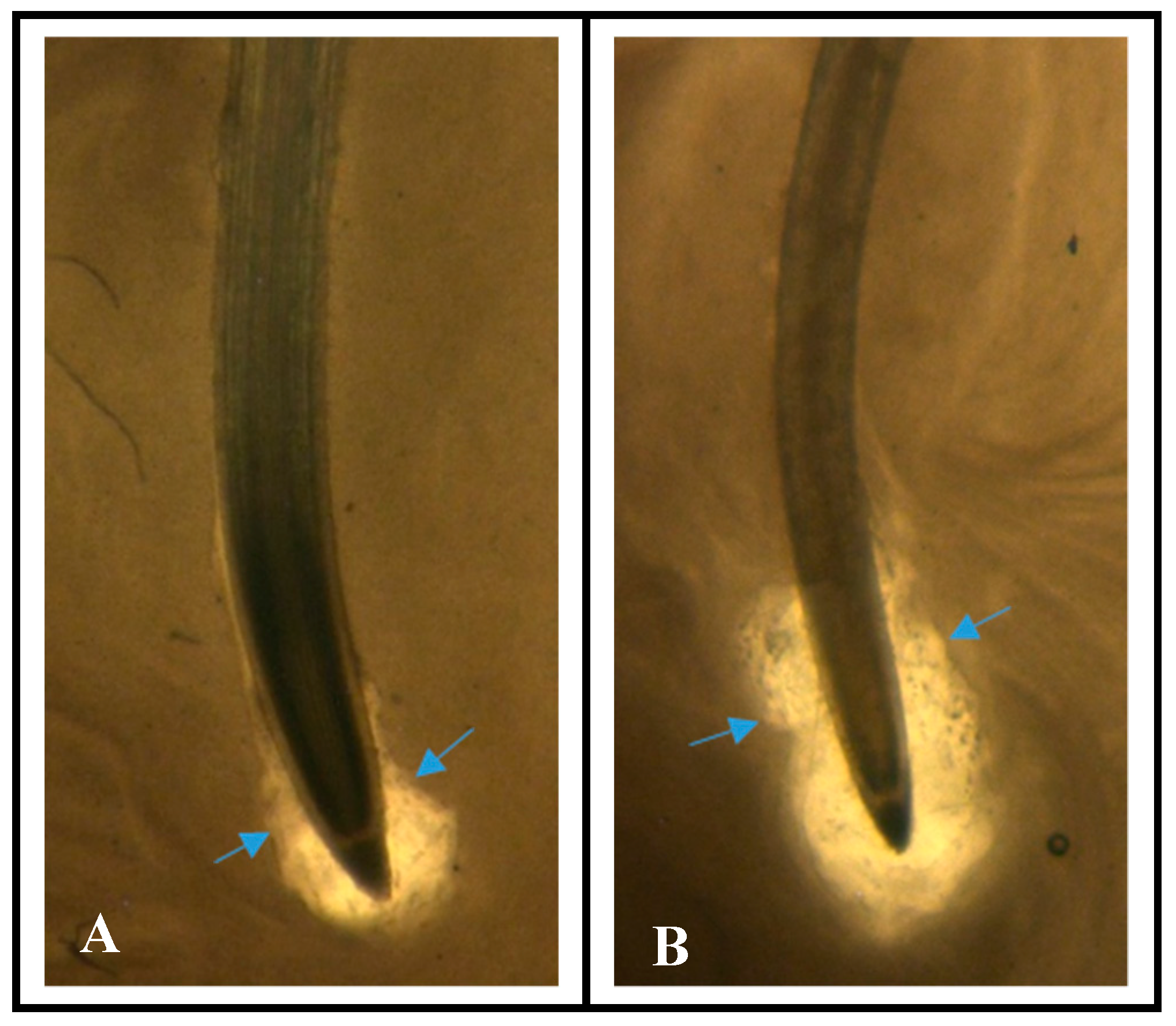
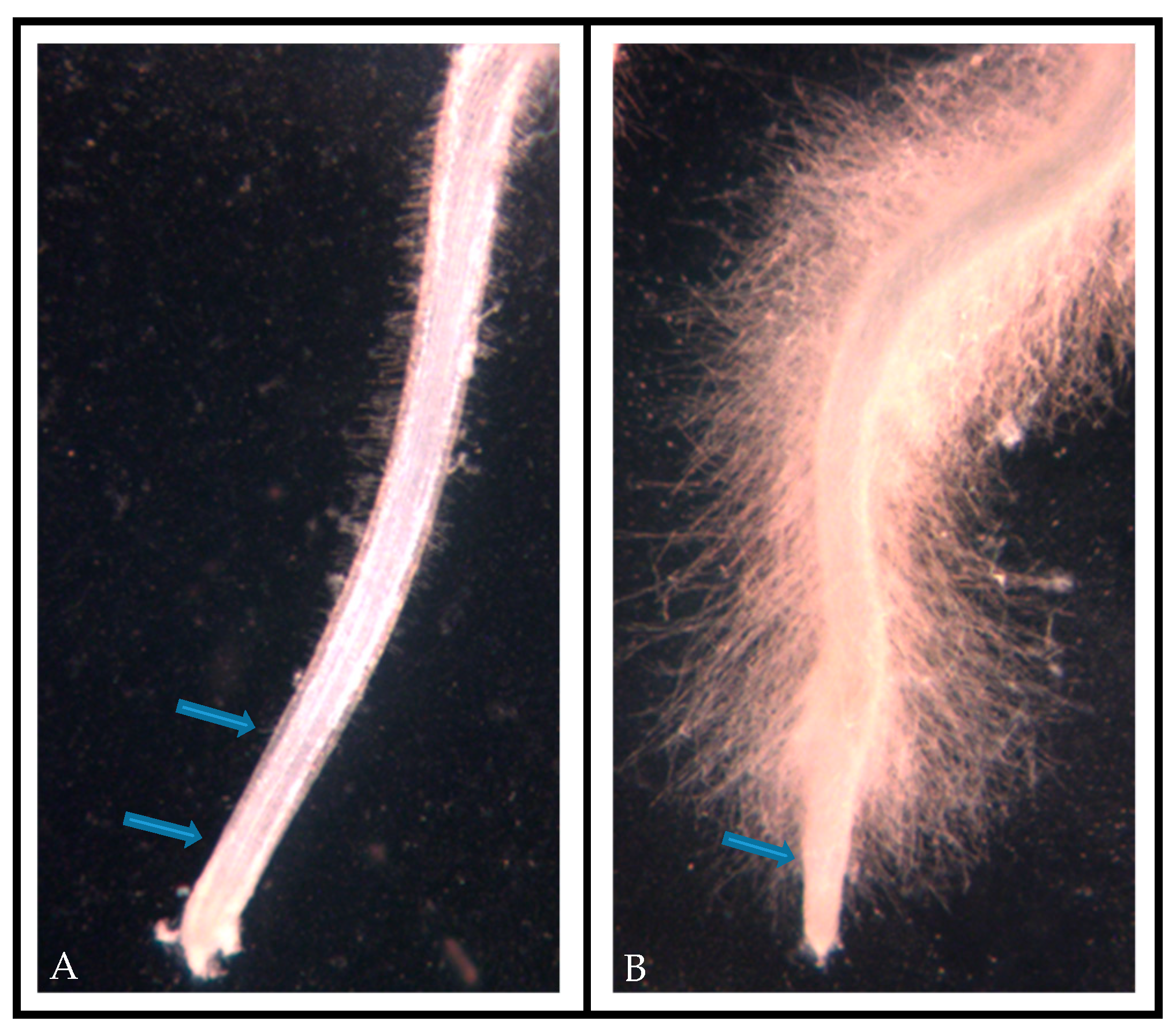
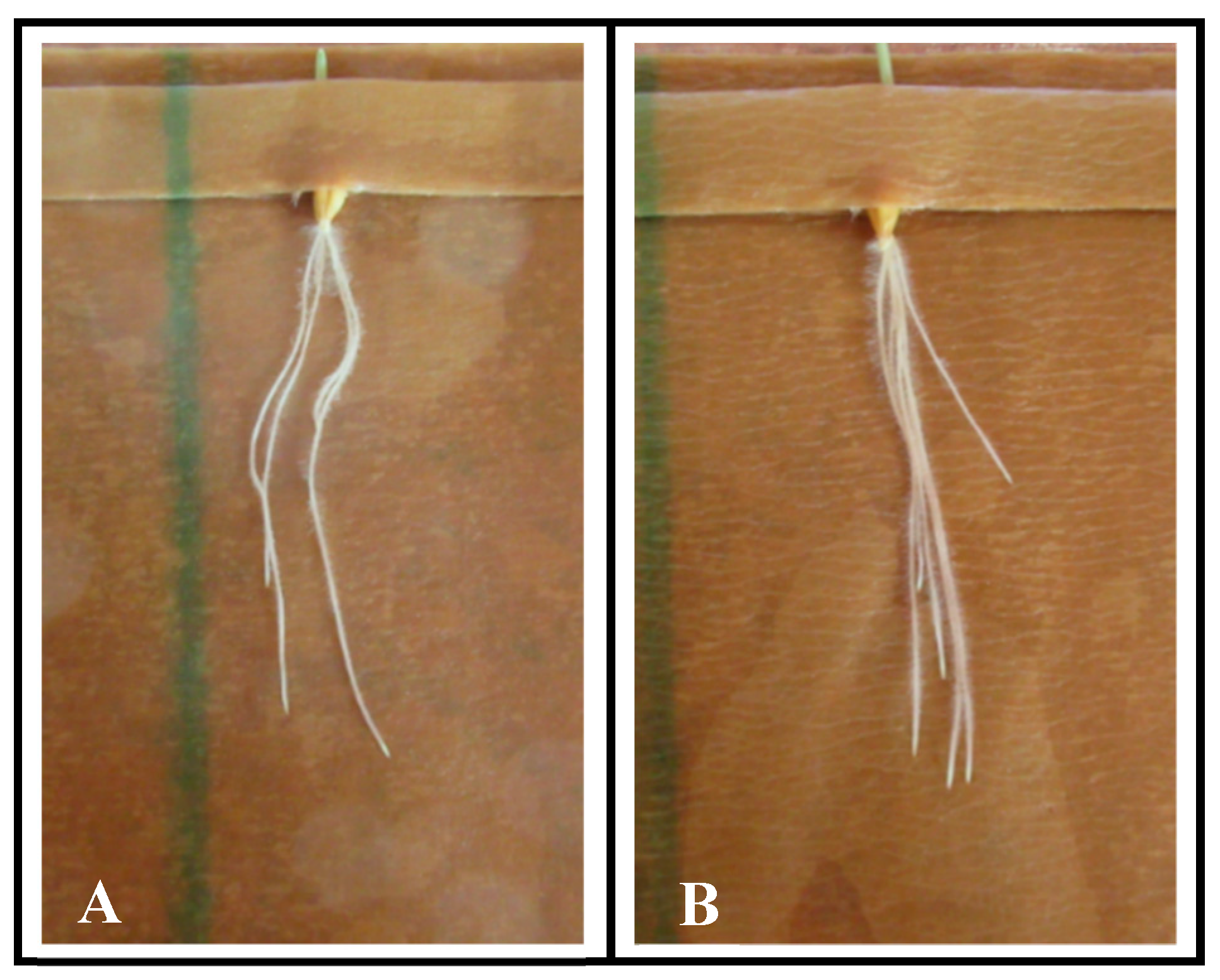
Reduced water resources are of increasingly urgent global concern. One potential strategy to address the crisis is the use of drought tolerant crops in agriculture. Barley varieties developed for reduced irrigation (“Solum” and “Solar”) use significantly less water than conventional varieties (“Cochise” and “Kopious”). The underlying mechanism of this drought tolerance is unknown but root structure and function play a key role in plant water uptake. In this study, an empirical survey compared early root development between drought tolerant and conventional varieties. Traits associated with root meristem-regulated cell division including rate of seed germination, border cell number and root cap mucilage production, and root hair emergence were quantified during root emergence. Preliminary results revealed that drought tolerant varieties exhibited faster seed germination and root hair production than conventional varieties. Border cell number and mucilage production in the drought tolerant varieties also were higher than in the conventional variety “Kopious,” but lower than in “Cochise”. Each trait, if found to be linked to the observed drought tolerance, could yield a simple, rapid, and inexpensive tool to screen for new crop varieties. Further detailed studies are needed.
Keywords: drought tolerance; root traits; border cells; mucilage; barley drought tolerance; root traits; border cells; mucilage; barley