Article

Life History, Larval and Pupal Morphology of Neoplinthus tigratus porculus (Fabricius, 1801) (Coleoptera: Curculionidae: Molytinae) Associated with Hop


1
Group Function of Invertebrate and Plant Biodiversity in Agro-Ecosystems, Czech Agrifood Research Center, 161 00 Prague 6-Ruzyně, Czech Republic
2
Independent Researcher, 783 57 Tršice, Czech Republic
3
Zoological Museum, Faculty of Biology and Biotechnology, Maria Curie-Skłodowska University, Akademicka 19, 20-033 Lublin, Poland
*
Author to whom correspondence should be addressed.
Agronomy 2026, 16(9), 891; https://doi.org/10.3390/agronomy16090891
Submission received: 27 March 2026 / Revised: 18 April 2026 / Accepted: 23 April 2026 / Published: 28 April 2026
(This article belongs to the Special Issue Pests, Pesticides, Pollinators and Sustainable Farming—2nd Edition)

Abstract

The immature stages and biology of Neoplinthus tigratus porculus (Fabricius, 1801) (Coleoptera: Curculionidae: Molytinae) associated with common hop (Humulus lupulus L.) are described for the first time. Biological observations show that the species develops mainly within the root collar and roots of Humulus lupulus, where larvae feed internally and older instars overwinter. Infested plants are characterized by swollen and weakened roots, often containing multiple larvae. The species should be considered a potential pest of common hop, an economically important crop; however, the current observations indicate that its populations are generally very low, consistent with the status of several related Molytinae and Cleonini taxa, which are predominantly regarded as rare or locally occurring under contemporary agricultural conditions. Nevertheless, changes in agroecosystem management may significantly alter its abundance, as documented in other weevil taxa, where reductions in plant protection measures have led to local pest outbreak. The morphology and diagnostic characters of mature larvae and pupae are documented and compared with related Molytinae and selected Cleonini (Lixinae). The mature larva generally fits the diagnostic characters of Molytinae larvae but differs in several traits, particularly the very short endocranial line and the relative length of frontal setae (fs1–5), with fs4 distinctly shorter than fs5.

1. Introduction

Weevils (Curculionidae) represent one of the most species-rich groups of insects, with more than 60,000 described species worldwide and an estimated diversity that is considerably higher [1,2]. Weevils are herbivorous and are closely associated with specific host plants, often exhibiting a high degree of specialization [2,3]. From an agronomic perspective, this group includes numerous economically important pests affecting agricultural, horticultural, and forestry systems [4,5,6]. In temperate regions such as Central Europe, a wide range of weevil species also contribute to crop and forest damage. For example, species of the genus Anthonomus are known to damage generative organs in orchards, Ceutorhynchus species are associated with oilseed rape and other Brassicaceae crops, and Otiorhynchus species include root-feeding larvae affecting a broad spectrum of cultivated and ornamental plants [4,7,8]. In forest ecosystems, important pest taxa include representatives of Scolytinae, as well as genera such as Hylobius and Magdalis, which can significantly affect tree regeneration and timber production [6,9]. These examples illustrate only a small fraction of the economically important weevil species, highlighting the broad impact of this group across different agroecosystems. In most cases, the primary damage is caused by larval stages, which are typically endophagous and develop concealed within plant tissues [10]. Larvae feed internally in roots, stems, leaves, seeds, or fruits, making their detection and control difficult and often leading to substantial hidden losses before symptoms become apparent [10]. This cryptic mode of life represents a major challenge for integrated pest management, particularly in perennial crops and forestry systems, where early detection is crucial.
The subfamily Molytinae is one of the largest and most ecologically diverse groups within Curculionidae [11] and includes numerous species occurring in Central European semi-natural habitats and also agroecosystems [12]. Within this subfamily, two sizes of groups can be recognized in Central Europe: the relatively small taxa classified within Cryptorhynchini and Leisomini; and a group of generally larger-bodied species with different life history traits. While some representatives, such as species of Hylobius, are well known due to their economic importance [9], other genera including Liparus, Minoyps, Plinthus, and Neoplinthus are typically considered rare and are only sporadically recorded [12]. A similar pattern is also observed in the tribe Cleonini (subfamaily Lixinae), which includes both rare and locally abundant species with potential economic relevance [13]. Despite their diversity, the biology of many Molytinae and Cleonini species remains insufficiently known, particularly with respect to immature stages. The available data indicate that larvae of these taxa are predominantly associated with roots and stems, where they complete their development in a concealed environment. However, detailed morphological descriptions and biological data are available only for a limited number of taxa, e.g., Molytinae [14,15,16,17] and Cleonini: [18,19,20], which restricts both the accurate identification and assessment of their potential economic impact.
Many species from these groups are included in regional Red Lists due to their rarity and habitat specificity, e.g., [21]. However, rarity does not preclude economic relevance. In cases where host plants are of agronomic importance, even infrequently recorded species may locally reach pest status. This has been documented in some members of Cleonini associated with cultivated or economically valuable plants, e.g., [13]. The host plant of Neoplinthus tigratus porculus (Fabricius, 1801) has been confirmed as Humulus lupulus L., a crop of high economic importance in many regions of Central Europe, based on observations and identification by F. Trnka. This finding highlights a potential shift in the perception of this previously overlooked species, which may under certain conditions represent a localized pest. Given the limited knowledge of its immature stages and biology, the present study aims to provide a detailed description of the larva and pupa of Neoplinthus tigratus, together with new data on its life history, host association, and potential relevance in agroecosystems.

2. Materials and Methods

2.1. Insect Collection

Neoplinthus tigratus porculus (Fabricius, 1801)

Material examined: CZECH REPUBLIC: Štětí; roadside ruderal vegetation at an altitude of approximately 170 m a. s. l.; 28.X.2016 (19 mature larvae and 5 pupae, all larvae on Humulus lupulus leg. & det. F. Trnka, coll. J. Skuhrovec). This material was used for morphological description. During field sampling, the author (F.T.) identified the host plant and habitat in which the species occurred and subsequently monitored its life cycle both in the field and under laboratory rearing conditions, based on a total of 40 individuals collected in autumn 2016.

2.2. Morphological Descriptions

The larvae and pupae collected in the field and consequently used for morphological studies were first preserved in Pampel fixation liquid [19]. In the laboratory, they were examined under an optical stereomicroscope (Olympus SZ60, SZ11, BX40 (Olympus, Tokyo, Japan) and Nikon Eclipse 80i (Nikon, Minato, Tokio Prefecture, Japan)) with calibrated oculars. The following measurements of mature larvae were made: body length (larvae in a C-shape were measured in segments), body width at the metathorax, and head capsule width. Pupal measurements included body length, body width at the level of the second pair of legs, head width at the level of the eyes, rostrum length, and pronotum width. Slide preparation basically followed the procedure proposed by May [22]. Larvae selected for microscopic studies were decapitated; mouthparts were separated then separately cleared in 10% potassium hydroxide (KOH) at a temperature of 50 °C. Next, the material was rinsed in distilled water and mounted on permanent microscope slides in Faure–Berlese fluid (50 g gum arabic and 45 g chloral hydrate dissolved in 80 g distilled water and 60 cm3 glycerol) [23]. For the first 5 to 7 days, the slides were dried in a laboratory incubator at a temperature of 45 °C.
Photographs were taken using a HIROX digital microscope (RH-2000) (HIROX, Limonest, France) and Olympus BX63 microscope (Olympus, Tokyo, Japan) and processed with Olympus cellSens Dimension software (version 1.18) and computer software (Corel Photo–Paint X7, Corel Draw X7). Larvae selected for SEM imaging (scanning electron microscope) were first dried in absolute ethanol (99.8%), rinsed in acetone, subjected to CPD (Critical Point Drying), and finally gold-plated. TESCAN Vega 3 SEM (Tescan, Brno, Czech Republic) was used to examine selected structures.
Terminology and abbreviations for larval and pupal setae follow Anderson [24], May [22,25], Marvaldi [26,27] and Scherf [14]; the terminology of antennae follows Chaika and Tomkovich [28] and Zacharuk [29].

3. Results

3.1. Descriptions

3.1.1. Description of Mature Larva

Measurements (in mm). Body length: 11.30–12.50 (avg.: 12.20). The widest body region (second abdominal segment) measures up to 3.30. Head width: 2.25–2.40 (avg.: 2.32), head height: 1.85–2.25 (avg.: 2.15).
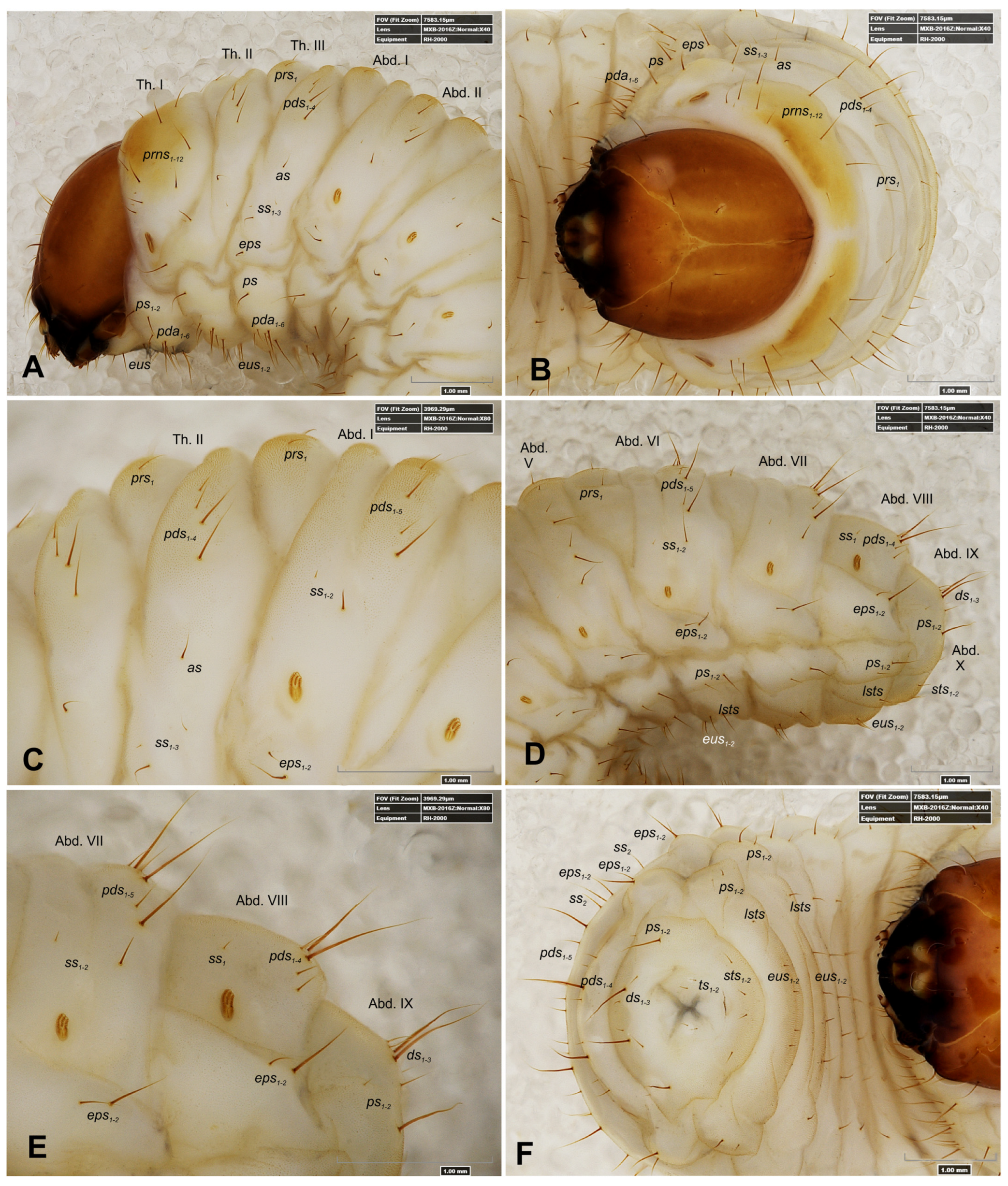
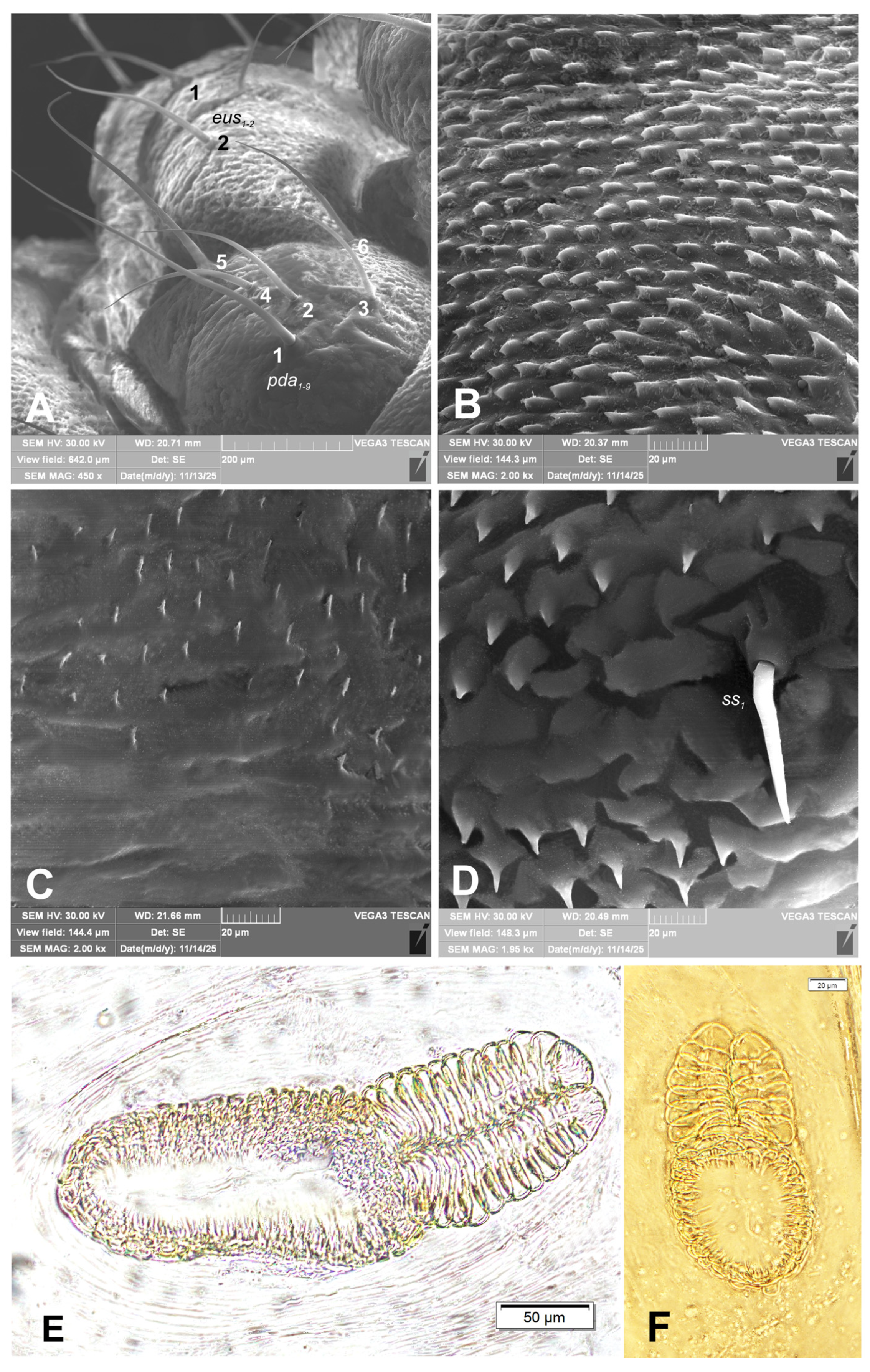
Coloration. Brown to dark brown head (Figure 1A,B). All thoracic and abdominal segments white to yellowish. Cuticle of the body densely covered with thorn-like asperities (Figure 2B,D). Ventral and ventrolateral body part (especially on abdominal segments VI–X) light yellow less dense covered with asperities. Pronotal sclerite irregular shape, weakly isolated, dark yellowish pigmented, smooth (Figure 1A,B and Figure 2C).
General. Body rather stout, almost C-shaped, rounded in cross section. Prothorax prominent, wider than meso- and metathorax; both are equal size. Abdominal segments I–VI of almost equal length, segments VII to IX decreasing gradually to the terminal parts of the body (Figure 1A–E). Abdominal segment X reduced to four anal lobes of equal size (Figure 1F). Abdominal segments I–VII dorsally divided into three lobes of unequal size (the medial fold the smallest); segments VIII and IX dorsally undivided (Figure 1C–E). Pedal area, epipleural, pleural and eusternal lobes of abdominal segments conical, weakly isolated (Figure 1A–F and Figure 2A). All spiracles bicameral, the thoracic placed between the pro- and mesothorax, the abdominal spiracles (I–VII) located mediolaterally, on abdominal segment VIII placed dorsolaterally (Figure 1A–E and Figure 2E,F).
Chaetotaxy of body. All setae hair-like, dark brown, various in length (short, medium to elongated) (Figure 1A–F). Thorax. Prothorax with 12 prns (4 elongated, 6 medium and 2 short), 8 of them placed on premental sclerite, 4 below sclerite; 2 elongated ps and 1 medium eus (Figure 1A,B). Meso- and metathorax each with 1 short prs; 2 medium and 2 elongated pds; 1 medium as; 2 short and 1 medium ss; 1 elongated eps; 1 elongated ps; and 2 medium eus (Figure 1A–C). Each pedal area of thoracic segments weakly separated, with 6 various in length pda (3 elongated and 3 medium) (Figure 1A and Figure 2A). Abdomen. Abdominal segments I–VII with 1 medium prs; 5 pds (first, second and fourth medium, third and fifth elongated); 1 min and 1 elongated ss; 1 medium and 1 elongated eps; 1 medium and 1 elongated ps; 1 elongated lsts; and 2 medium eus (Figure 1C–E). Abdominal segment VIII (Figure 1C–F) without prs, 4 pds (first, third and fourth medium, second elongated); 1 min ss; 1 medium and 1 elongated eps; 1 medium and 1 elongated ps; 1 elongated lsts; and 2 medium eus. Abdominal segment IX with 3 ds (first and third minute, second elongated); 1 min and 1 elongated ps; and 2 medium sts. Each of lateral lobes of abdominal segment X with 2 min setae (Figure 1D,F).
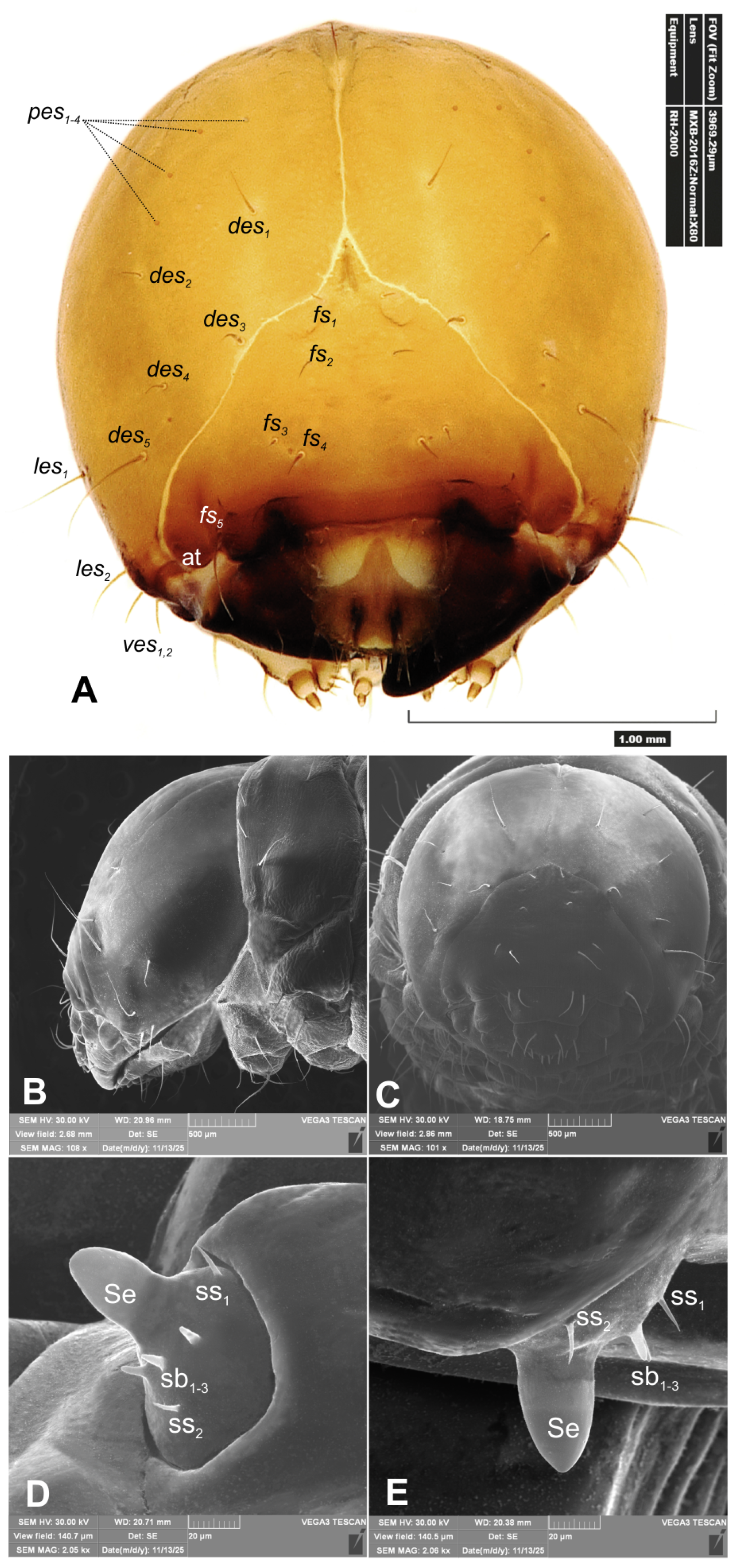
Head capsule. Head almost rounded, endocranial line very short, as long as 1/10 of the frons. Frontal sutures on head distinct, extended to antennae. Stemmata invisible. All setae of the head hair-like, dark pigmented, except semitransparent, conical pes. Des1 elongated, located in the central part of epicranium; des2 medium, placed mediolaterally; des3 elongated, located near to frontal suture; des4 medium, des5 elongated, located anteromedially (Figure 3A). Fs1–3 short, placed medially, fs4 medium, located mediolaterally, and very long fs5 located anterolaterally, close to the epistome. Les1 medium, les2 elongated; and ves1–2 medium. Epicranial area with 4 postepicranial setae (pes1–4) and 3 pores (Figure 3A–C).
Antennae located at the end of the frontal suture on each side (Figure 3A), membranous and slightly convex basal article bearing conical elongated sensorium; basal membranous article with 5 sensillae: two styloconicum ss, and three basiconicum sb (Figure 3D,E).
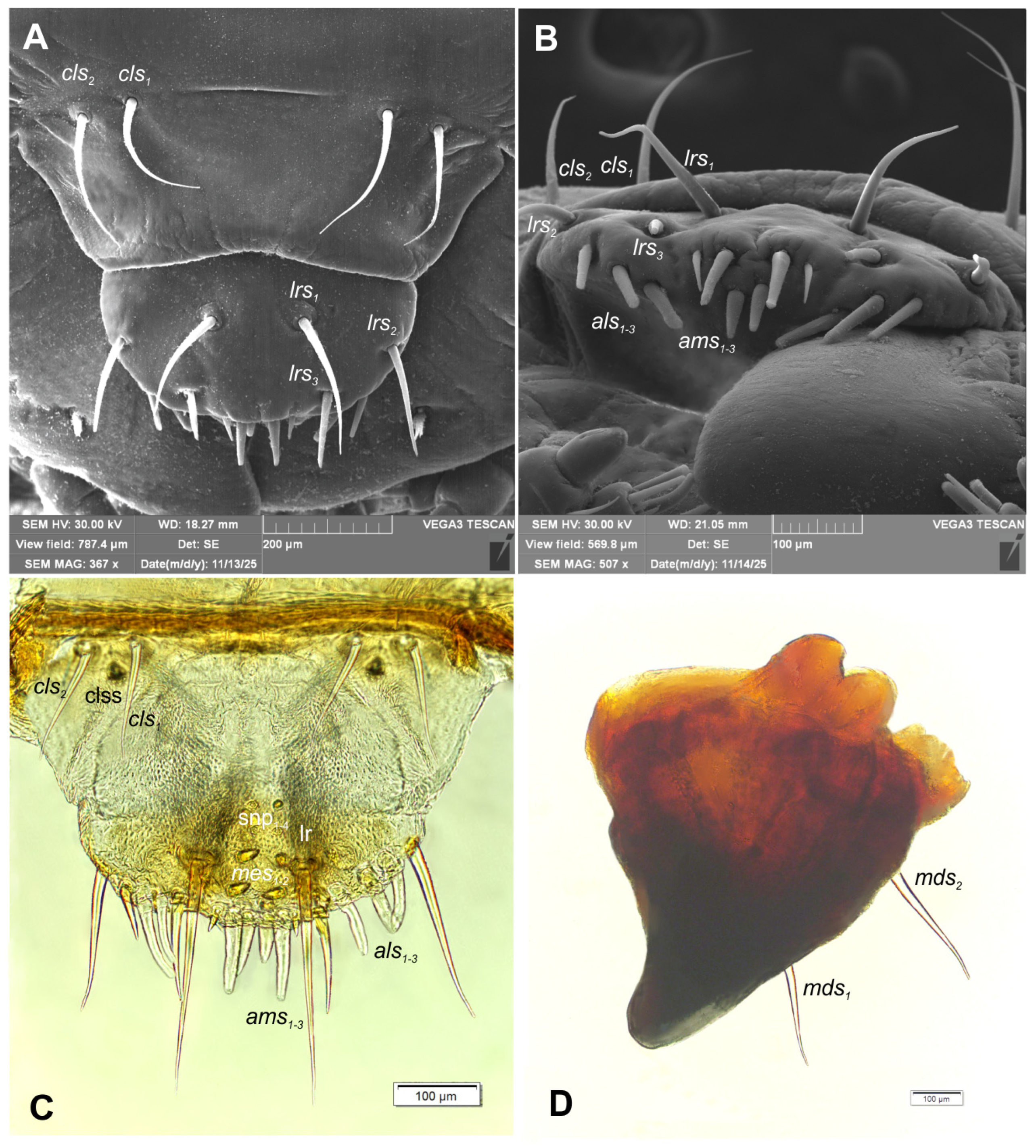
Clypeus approx. 2.5 times as wide as long with two pairs of elongated cls, localized posterolaterally, and 1 sensillum (clss) placed between the setae; anterior margin slightly rounded to the inside (Figure 4A).
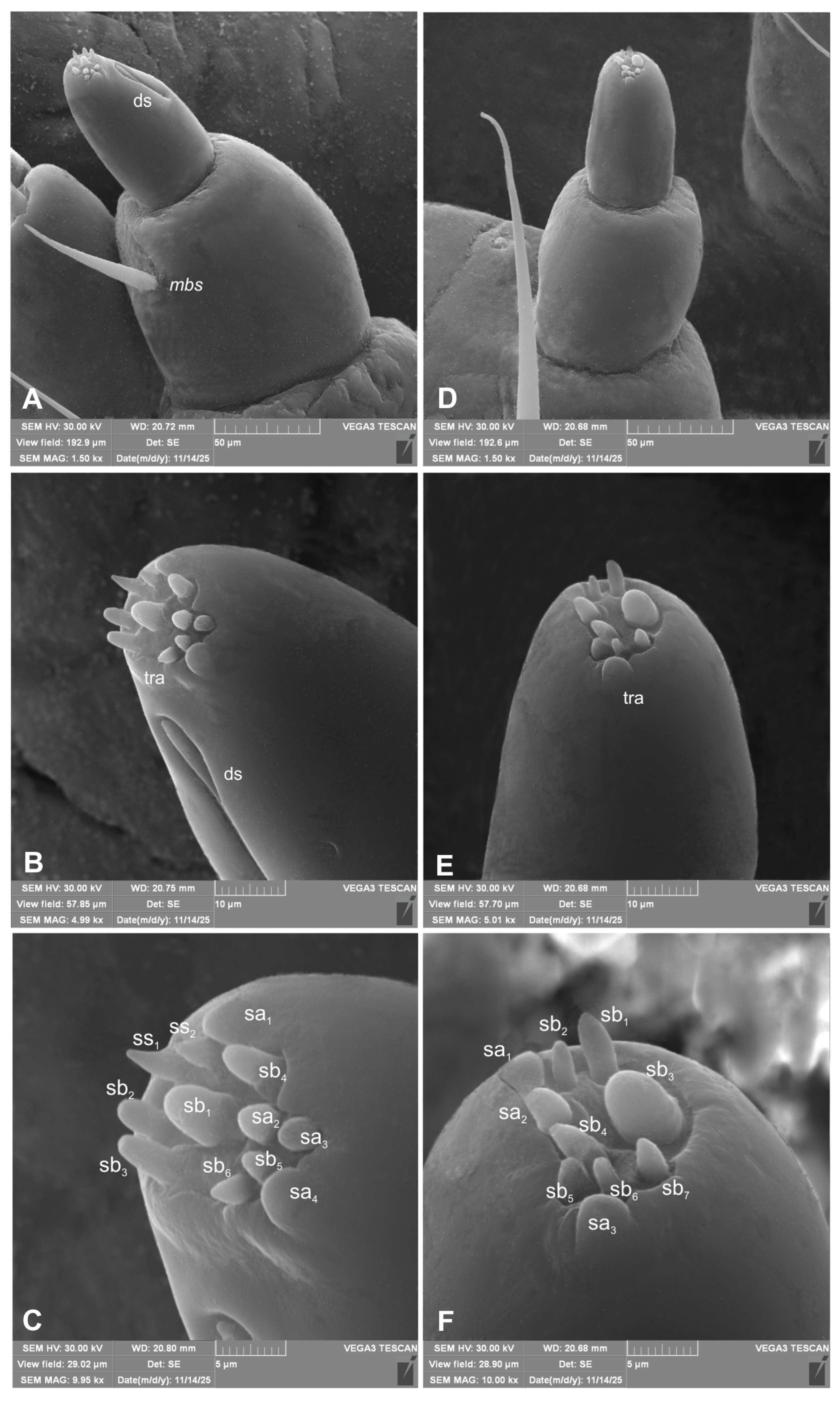
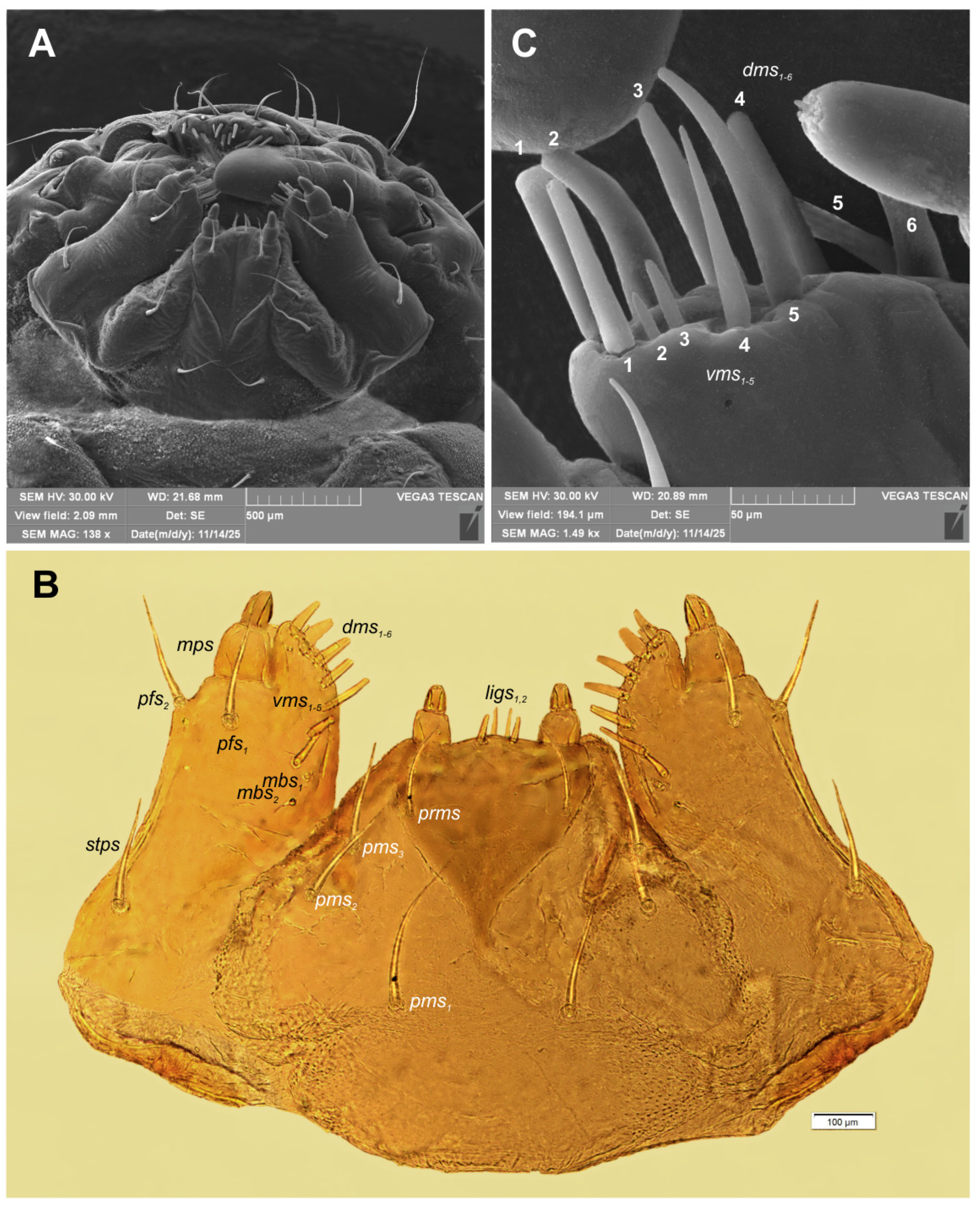
Mouth parts. Labrum approximately 2.2 times as wide as long, with 3 hairform lms: lms1 elongated, placed posteromedially, close to the margin with clypeus, lms2 elongated, located anteromedially and lms3 medium, located anteromedially; anterior margin rounded (Figure 4A,B). Epipharynx with 3 medium, digitate als, almost equal in length; 3 various in shape ams: first medium, digitate, second digitate, elongated, third hair-like, short; and 2 short, digitate mes, and 4 sensoric pores snp; labral rods (lr) elongated, irregular, or close to kidney-shaped, apical part more sclerotized. Whole surface of epipharynx covered with cuticular processes (Figure 4B,C). Mandibles distinctly broad, undivided, tooth; slightly truncate; the inner edge smooth. Both mds hairform, medium, located mediolaterally (Figure 4D). Maxilla stipes with 1 elongated stps, 2 elongated pfs1,2, and minute 2 short mbs (Figure 5A,B); mala with 6 bacilliform dms, almost equal in length; 5 vms various in length (first elongated, second and third short, fourth and fifth elongated) (Figure 5C). Praelabium heart-shaped, with 1 relatively long prms; ligula with sinuate margin and 2 hairform, medium ligs, unequal in length; premental sclerite weakly visible. Postlabium with 3 elongated pms: pms1 located anteromedially, pms2 placed mediolaterally, and pms3 placed anterolaterally; surface of postlabium partly covered by thorn-like cuticular processes (Figure 5C). Maxillary palpi with two palpomeres; basal palpomere with 1 very short mps and two sensilla; length ratio of basal and distal palpomeres: 1:0.6; distal palpomere with one digitiform sensillum and 12 sensillae (4 ampullaceum, 2 styloconicume, 6 basiconicum) on terminal receptive area tra (Figure 6A–C). Labial palpi two-segmented; each palpomere with 1 sensillum; length ratio of basal and distal palpomeres: 1:0.8; distal palpomere with 10 sensillae (3 ampullaceum, 7 basiconicum) on terminal receptive area tra (Figure 6D–F).

3.1.2. Description of Pupa

Measurements (in mm). Body length: 11.20–10.30 (avg.: 10.53); body width: 5.16–5.53 (avg.: 5.20); thorax width: 3.40–3.63 (avg.: 3.58); rostrum length ♂ and ♀ up to 2.61.
The widest place in the body is commonly between the apex of the meso- or metafemora.
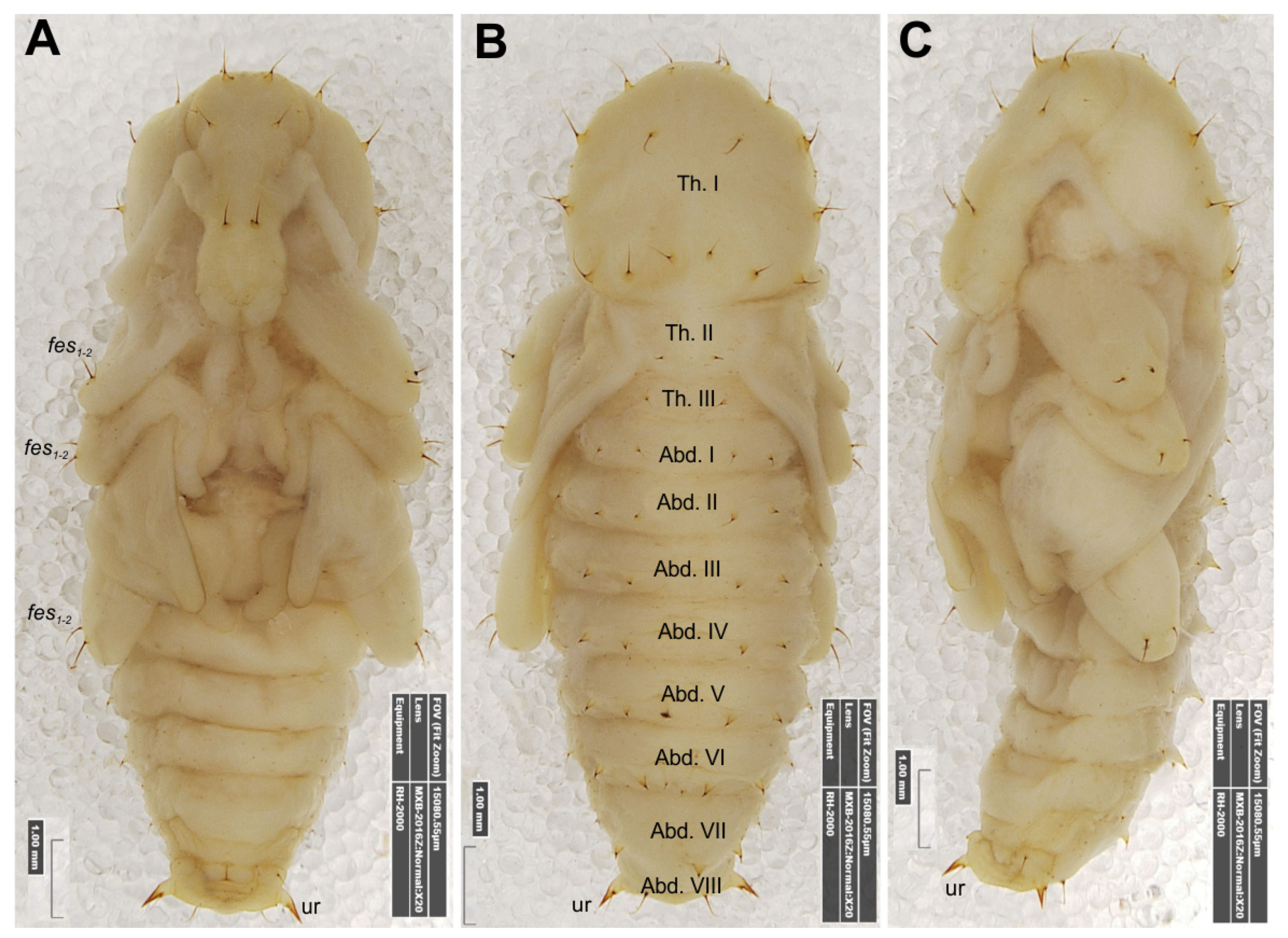
Coloration. Body yellowish, spots around setae dark brown pigmented (Figure 7A–C).
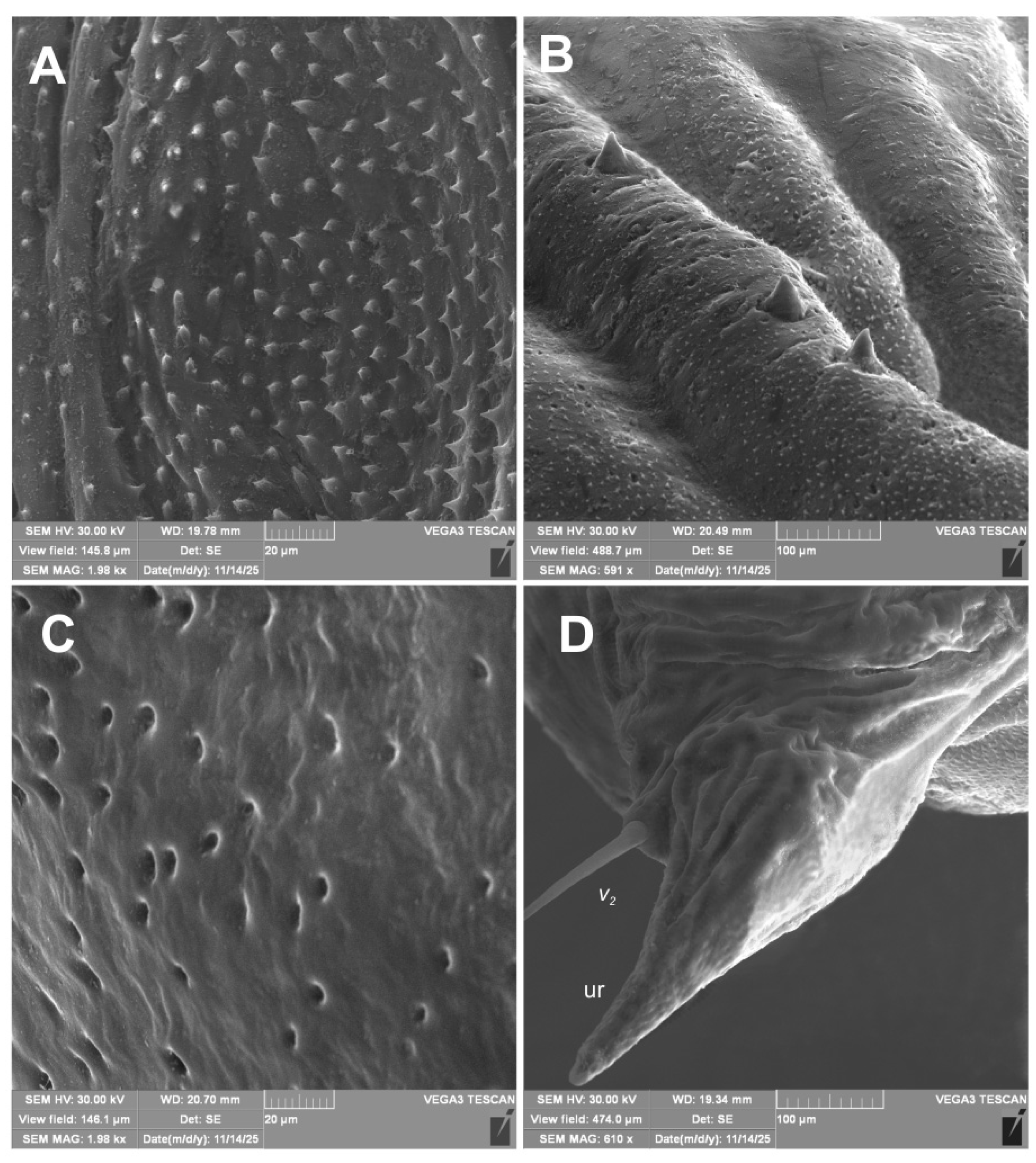
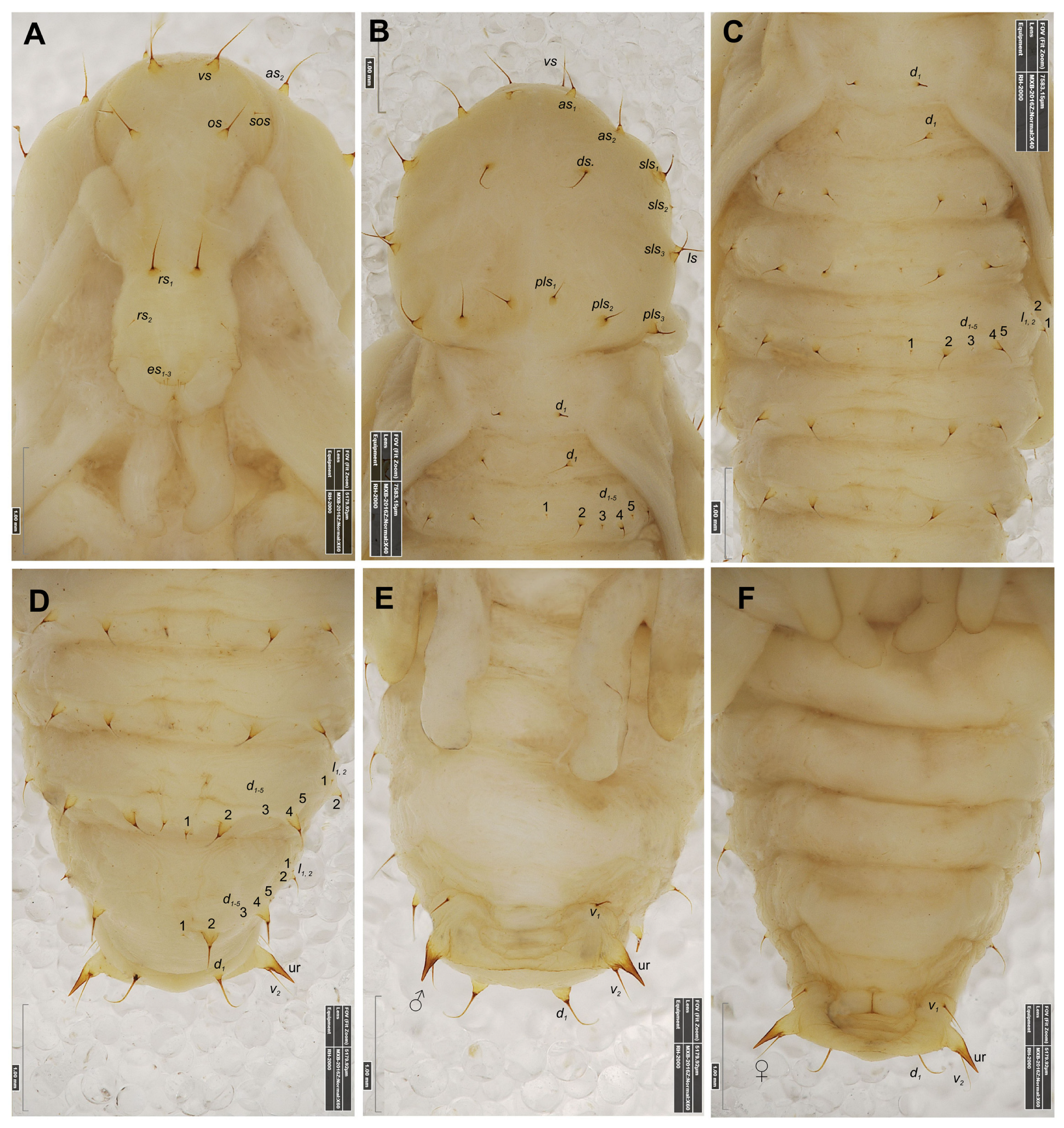
Morphology. Body rather elongated, straight, cuticle including elytra sparsely covered with fine asperities or smooth (Figure 8A–C). Urogomphia moderately elongated, conical, sharp, dark sclerotized (Figure 8D). Rostrum moderately long, approximately 2.2 times as long as wide, extended to procoxae. Antennae relatively long and stout. Pronotum 1.25 as wide as long. Meso- and metanotum of almost equal length. Abdominal segments I–VI almost equal in length, segment VII semicircular, segments VIII and IX distinctly smaller than other abdominal segments. Gonotheca (abdominal segment IX) in females divided, in male undivided (Figure 9E,F). Spiracles on lateral parts of abdominal segments I–V function, on segment VI atrophied, on next abdominal segments invisible.
Chaetotaxy. Setae well visible, hair-like, elongated to minute, yellow or brown. Elongated setae of the head and body placed on conical protuberances. Head capsule includes 1 elongated ves, 1 elongated os and 1 min sos. Rostrum with 1 elongated and 1 short rs. Epistoma with 3 min setae es. Pronotum with 2 elongated as, 1 elongated ds, 2 elongated and 1 min sls, 1 elongated ls, and 3 elongated pls (Figure 9A,B). Each meso- and metathorax dorsomedially with single medium seta. Abdominal segments I–VII each with 5 setae: first, third and fifth minute, second and fourth elongated. Abdominal segment VIII with 1 elongated seta placed medially. Abdominal segment IX without setae dorsally. Dorsal setae increasing gradually form segment I to VII. Each abdominal segment I–VII with 1 min and 1 elongated setae laterally. Ventral parts of abdominal segments I–VII without setae. Abdominal segment IX with 2 elongated setae ventrally: first placed mediolaterally, second on urogomphus (Figure 9D–F). Each apex of femora with 2 elongated fes (Figure 7A–C).

3.2. Biological Observations

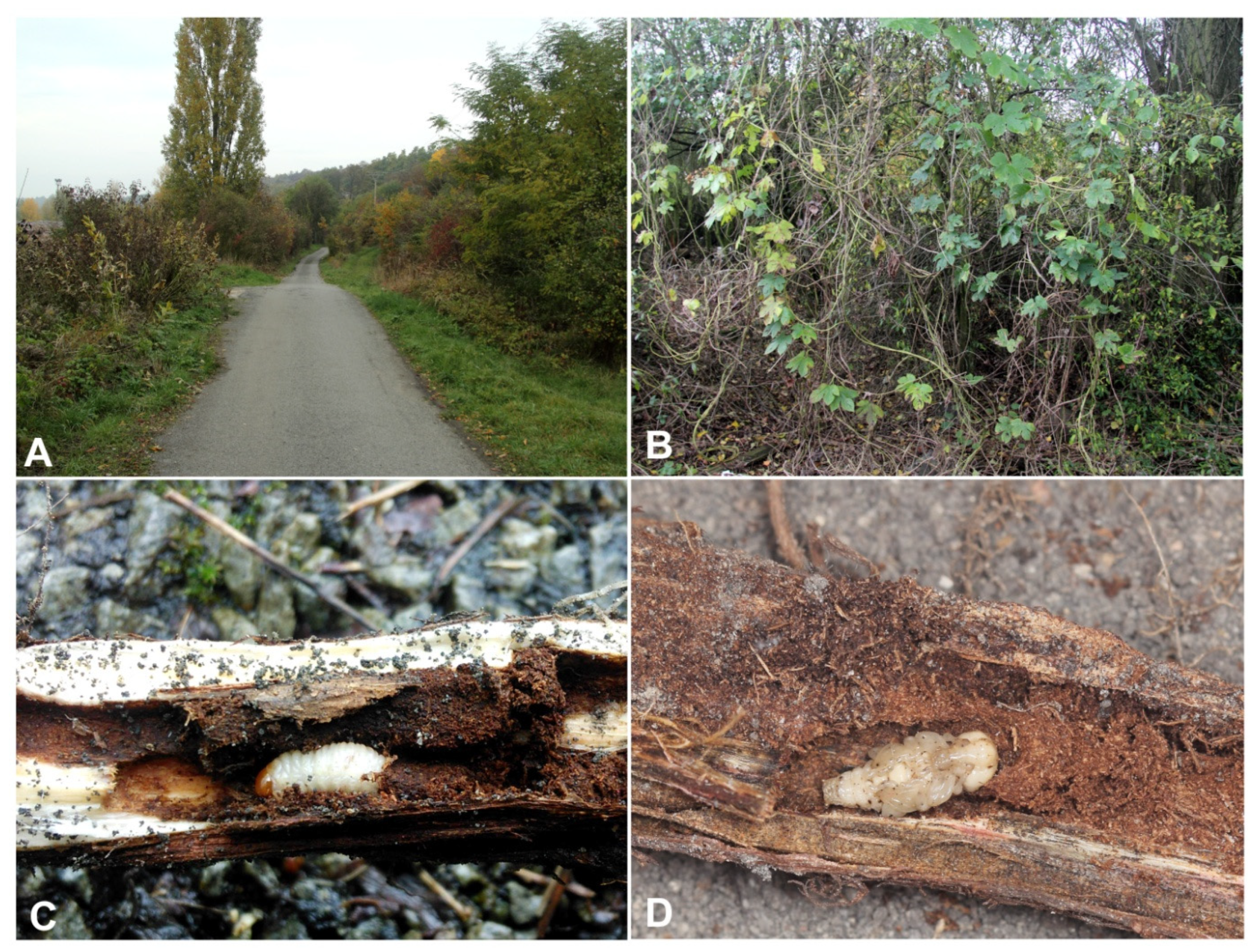
Habitats. Both adults and larvae occur in natural as well as cultivated environments, primarily in moist habitats with dense stands of host plants (Figure 10A). Typical sites include shrub vegetation, ruderal habitats, alluvial forests, open stands of black locust (Robinia pseudoacacia L.), and forest margins adjoining agricultural land. These habitats are consistently associated with the proximity of watercourses, particularly rivers and streams.
Adult behavior. Adults are cryptic and spend most of their time hidden within vegetation or near the base of host plants, making them difficult to detect during field surveys. Interestingly, they are most frequently observed on roads or paths, where they move relatively quickly and are easier to notice. Adult activity has been recorded from mid-April until September, with a clear peak in abundance during May and June. Monitoring of adult presence can be conducted effectively using pitfall traps placed along habitat edges or near host plant stands. Another useful, although more targeted, method is the manual extraction of host plants in order to detect individuals associated with the root system (see Life cycle).
Host plants. Available observations suggest that the species is most likely monophagous, developing primarily on common hop (Humulus lupulus) (Figure 10B).
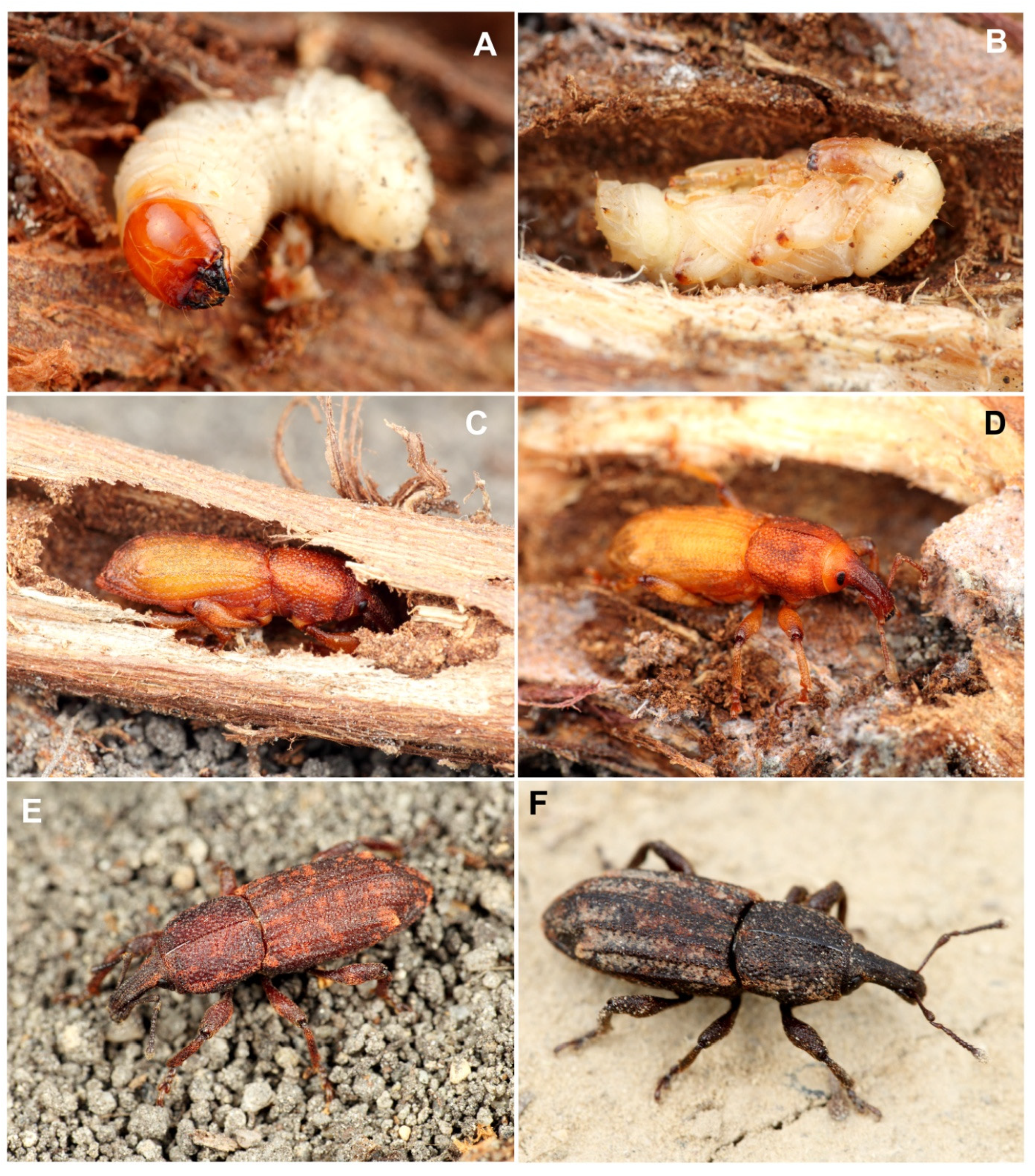
Life cycle. Older larval instars overwinter inside the roots of host plants, where they remain protected from external conditions (Figure 10C,D). During searches for larvae, partially decomposed bodies or remains of dead adults are occasionally found inside the plants as well. Larvae may be present within the roots throughout the year, indicating a prolonged developmental period.
Plants infested by larvae show distinctive characteristics that facilitate detection. Infected plants are fragile and tend to break easily at the root collar when attempts are made to pull them from the soil. The roots themselves are strongly swollen along their entire length and may reach thicknesses of up to approximately three centimeters. Multiple larvae are often present within a single root system, which can extend several meters in length. In contrast, non-infested plants typically possess thinner, more regular roots that are firmly anchored in the soil and difficult to extract even with considerable force.
Under natural conditions, pupation most likely occurs during spring, with adults emerging in April. Egg laying probably follows shortly after adult emergence, when beetles leave their host plant and begin reproductive activity. Although details of oviposition behavior remain insufficiently documented, it is assumed that eggs are deposited in close proximity to suitable host plants.
To gain further insight into the development of larvae, a small laboratory study was conducted. Forty larvae were collected on 28 October 2016 (Figure 11A). Half of the individuals were kept at room temperature, while the remaining larvae were placed outdoors for two weeks at temperatures around or below freezing before being transferred indoors. Only one larva maintained continuously at room temperature pupated and successfully produced an adult (Figure 11B–F). In contrast, more than half of the larvae exposed to cold conditions pupated afterward, suggesting that a period of low temperature may play an important role in triggering pupation. The rearing of younger larval instars proved difficult, mainly because the host plant tissue gradually shrinks and dries during laboratory maintenance, which can crush or otherwise damage the larvae developing inside.

4. Discussion

4.1. Comparison with Immature Stages of Other Molytinae and Also Cleonini

According to Marvaldi [26], mature larvae of the subfamily Molytinae can be diagnosed using a combination of the following characters: (1) the presence of epicranial seta 3 (des3) on the epicranium; (2) frontal seta 5 (fs5) that are well developed and either equal in length to fs4 or distinctly shorter than fs4; (3) labral rods separated or convergent; (4) postoccipital condyles present; (5) the head capsule not maculate and the body whitish; (6) abdominal spiracle VIII located dorsally; and (7) the anal segment divided into four lobes. More recently, Wijesinghe et al. [30] proposed an additional diagnostic character for Molytinae larvae, namely (8) abdominal segment IX bearing two or three dorsal setae (ds), usually of unequal length. However, these authors did not address character (2)—the relative length of fs4 and fs5. Notably, in Cylindralcides takahashii (Kôno, 1930) (tribe Mecysolobini), described in this paper, fs4 is absent, which represents a deviation from the condition previously considered typical for the subfamily.
The larval description of Neoplinthus tigratus generally fits with the diagnostic characters proposed for the subfamily Molytinae, with only a minor exception. It is consistent with previously published descriptions of larvae from several other tribes within the subfamily [31]. The main difference concerns the relative length of frontal setae fs4 and fs5. In all species compared by Torres et al. [31], fs5 is reported to be either equal in length to fs4 or distinctly shorter than fs4. In Neoplinthus tigratus, however, fs4 is short and distinctly shorter than fs5. At the same time, Neoplinthus tigratus fits also with the additional character proposed by Wijesinghe et al. [30], as abdominal segment IX bears two or three dorsal setae (ds). Moreover, this character (segment IX with two or three ds varied in length) is also present on Mitoplinthus caliginosus caliginosus (Fabricius, 1775) [32]. Also, a lack of stemmata and the presence of five fs are observed on both Neoplinthus and Mitoplinthus larvae.
Several morphological characters appear to be particularly useful for distinguishing genera or tribes within Molytinae [31]. One of these is the presence or absence of the endocranial line. In Neoplinthus tigratus, the endocranial line is very short, whereas in most described Molytinae larvae it is either well developed and distinct or completely absent. For example, larvae of the genus Conotrachelus possess a distinct endocranial line of variable length [31]. This condition is also known from representatives of several tribes with described larvae, including Acicinemidini, Aminyopini, Pissodini, and some genera within Hylobiini (e.g., Aclees and Pimlocerus), as well as Phrynixini (Phrynixus) and Trypetidini (Arecophaga) [31]. In contrast, larvae of other genera within Molytinae lack an endocranial line entirely (e.g., Mitoplinthus) [31,32]. From a taxonomic perspective, the situation within Molytinae remains problematic, as the current tribal classification of the subfamily likely does not fully reflect the true relationships among tribes or genera. This makes the interpretation of larval characters in a broader phylogenetic context more difficult.
Another potentially informative character is the number of frontal setae on the epicranium. The larvae of Neoplinthus and Mitoplinthus possess five fs, similar to larvae of the tribes Acicinemidini, Aminyopini, and Pissodini, as well as some genera of Hylobiini (e.g., Aclees and Pimlocerus), Phrynixini (Phrynixus), and Trypetidini (Arecophaga). In contrast, the larvae of species of Conotrachelus have only three frontal setae [31,32].
Taken together, the combination of the three characters observed in Neoplinthus tigratus, (1) the ratio between fs4 and fs5 and (2) the presence of a very short endocranial line (as opposed to long or absent), represents a distinctive set of features that are useful for the differential diagnosis of this species within the subfamily Molytinae. These characters therefore appear to have potential value for comparisons among genera and for improving the identification of Molytinae larvae.
In addition, both the larval and pupal stages exhibit a cuticle sparsely covered with fine asperities, a condition that also extends to the elytra in the pupa. This feature appears to be highly unusual within Molytinae. A superficially similar condition has been reported in Eucoeliodes mirabilis (A. Villa & G. B. Villa, 1835) [33], although the structure and likely function differ; in the present case, the functional significance remains unknown.
A comparison with representatives of the tribe Cleonini (subfamily Lixinae), which are often similar in body size and partly also in aspects of their biology, provides additional context for interpreting these characters. In general, larvae of Molytinae and Lixinae differ in several morphological features [27], but some features overlap and may complicate identification. When considering the three characters discussed above, the situation in Cleonini appears comparatively more uniform. Based on the available descriptions ([18] and references therein), the endocranial line in Cleonini larvae may be either present or absent, indicating some variability similar to that observed in Molytinae. Most described species, however, possess five fs. In addition, the relative length of fs4 and fs5 is usually similar, with fs5 typically equal in length to fs4 or only slightly shorter. This condition has been reported, for example, in Cleonis [19], Adosomus [18], and Coniocleonus [20], where fs5 is described as equal to or only slightly shorter than fs4. In contrast, the condition observed in Neoplinthus, particularly the distinctly shorter fs4 relative to fs5 in combination with a very short endocranial line, differs from the pattern typically reported for Cleonini larvae. Therefore, although some individual characters may overlap between Molytinae and Lixinae, the particular combination of these larval features in Neoplinthus may further support its differentiation within Molytinae.
Knowledge of immature stages and life histories is important not only for taxonomy but also for applied and conservation-oriented research, as it can contribute both to the early detection of potential pest species and also to the protection of endangered species. The detailed description of larvae and pupae presented here, together with comparisons with previously published descriptions, demonstrates that this species can be reliably identified at the immature stages, as has already been shown for several other groups of Curculionidae (e.g., Hyperini [34,35] and Lixinae: [18,36]). This approach is particularly valuable because, when the species’ biology is well understood, larvae are often easier to detect in the field than adults. This is largely due to their limited mobility, as larval development occurs within plant tissues, which they do not leave during this stage; consequently, the presence of the species can be reliably inferred by locating infested host plants. This is important both for pest monitoring and for studies of rare or endangered species.
At the same time, comparisons based on pupal morphology remain more complicated, as relatively few detailed descriptions of pupae or younger larval instars (e.g., [37]) are currently available for many groups, including Molytinae. Therefore, additional studies focusing on immature stages, especially comprehensive descriptions of larvae and also pupae, the development of precise identification keys, and detailed comparative analyses at the generic level will be essential for improving our understanding of the relationships within this group and for supporting future phylogenetic analyses [36]. Such knowledge is highly relevant for several areas of entomology, including agriculture, biological control, and the conservation of threatened species.

4.2. Biological Specificity

Historical sources report the species as a pest in hop-growing regions [38], indicating that it may occasionally reach economically relevant densities in cultivated hop fields. More recently, damage to hop crops has also been documented in Slovenia [39], suggesting that this association persists in modern agricultural landscapes. In the studied localities, the species has so far been recorded only from wild populations of Humulus lupulus. However, systematic inspections of declining or damaged plants have not been routinely carried out in the past, and therefore the current knowledge of its occurrence in hop stands remains incomplete. From an economic point of view, the eradication of brushes with wild hop (natural reservoirs of N. tigratus) seems to be the simplest and most efficient solution for the protection of industrial hop cultivation. However, brushes with wild hop often act as refuges for protected species and build biodiversity. Hence, regular monitoring seems to be the best possible solution.
Based on field observations, the species appears to develop inside the root collar and basal parts of the plant, where larvae feed internally. This cryptic mode of development makes detection difficult and may explain why the species is rarely recorded despite potentially being locally present. For this reason, the targeted inspection of suspicious plants during field surveys is recommended. In particular, plants showing signs of decay or collapse, where the primary damage clearly originates from the stem base or root system, should be examined in more detail. In such cases, the root collar and roots should be cut open to verify the possible presence of larvae or other developmental stages of the species.
A comparable ecological situation is known for several species of the tribe Cleonini (Curculionidae: Lixinae), whose population dynamics are strongly linked to the abundance of their host plants, e.g., [40,41,42]. Historically, some species were considered significant pests when their host plants were widely cultivated; however, their importance declined when agricultural practices changed and the host plants became less common [13]. In recent years, some of these species have begun to reappear in parts of Europe, likely in response to changes in land use, crop distribution, or environmental conditions. A similar pattern could potentially occur in the case of Humulus lupulus. If the availability or management of hop (both cultivated and wild populations) changes in the future, it may influence the occurrence and population size of this species as well.
The available literature suggests that the host plant range of the species may be broader than currently observed in the studied region, although this requires further confirmation. In Italy, the species was reared from Euphorbia esula L., and a specimen was also recorded on Euphorbia myrsinites L., while in Romania successful rearing has been reported for Euphorbia virgata Waldst. & Kit. [43]. These records suggest that the species may not be strictly monophagous and that regional differences in host plant use may occur. In this context, the existence of described subspecies should also be taken into consideration, as subspecific differentiation may reflect ecological variability within the species, including potential differences in host plant associations. Similar patterns have been documented in other weevil genera, for example within the genus Larinus, where populations in Europe may differ in host plant specialization and ecological preferences [43,44]. It is therefore possible that populations associated with Humulus lupulus and those reported from Euphorbia represent ecologically differentiated forms or biotypes, although this hypothesis requires further study.
Overall, the currently available data indicate that the species is associated with moist habitats and develops within the root collar and root system of its host plant. However, the limited number of confirmed observations in the region and the existence of records from alternative host plants elsewhere in Europe suggest that its ecological range may be wider than currently documented. Further targeted surveys focusing on damaged host plants, particularly in both wild and cultivated hop stands, and potential alternative hosts will be essential for a better understanding of its biological specificity and potential economic significance.

5. Conclusions

The larval morphology of Neoplinthus tigratus largely conforms to the diagnostic characters of the subfamily Molytinae, with only a minor exception in the relative length of the frontal setae, and is otherwise consistent with larvae described from other tribes within the group. However, the current taxonomic framework of Molytinae remains problematic, as it likely does not fully reflect evolutionary relationships, which complicates the broader interpretation of larval characters. In this context, knowledge of immature stages and life histories is essential not only for taxonomy but also for applied research, including pest detection and species conservation, although comparisons, particularly of pupae, are still limited by the lack of detailed data. Further studies focused on immature stages, including comprehensive descriptions of larvae and pupae and the development of identification tools, are therefore needed to improve our understanding of this group. Available data indicate that N. tigratus is associated with moist habitats and develops within the root collar and root system of its host plant; however, limited observations and records from alternative hosts suggest that its ecological range may be broader than currently recognized. Additional targeted surveys, especially in both wild and cultivated hop stands and on potential alternative host plants, will be necessary to clarify its ecological specificity and possible economic significance.

Author Contributions

Conceptualization and methodology: F.T., J.S. and R.G.; field and laboratory research and data curation: F.T.; writing—original draft preparation: F.T., J.S. and R.G.; and writing—review and editing and visualization: F.T., J.S. and R.G. All authors have read and agreed to the published version of the manuscript.

Funding

The study of J.S. was also supported by the Ministry of Agriculture of the Czech Republic, institutional support MZE-RO0426.

Data Availability Statement

The original contributions presented in this study are included in the article. Further inquiries can be directed to the corresponding author.

Acknowledgments

We would like to express our gratitude for the valuable comments provided by the reviewers.

Conflicts of Interest

The authors declare no conflicts of interest.

References

  1. Oberprieler, R.G.; Marvaldi, A.E.; Anderson, R.S. Weevils, weevils, weevils everywhere. Zootaxa 2007, 520, 491–520. [Google Scholar] [CrossRef]
  2. Li, Y.D.; Engel, M.S.; Tihelka, E.; Cai, C. Phylogenomics of weevils revisited: Data curation and modelling compositional heterogeneity. Biol. Lett. 2023, 19, 20230307. [Google Scholar] [CrossRef]
  3. McKenna, D.D.; Sequeira, A.S.; Marvaldi, A.E.; Farrell, B.D. Temporal lags and overlap in the diversification of weevils and flowering plants. Proc. Natl. Acad. Sci. USA 2009, 106, 7083–7088. [Google Scholar] [CrossRef] [PubMed]
  4. Alford, D.V. Biocontrol of Oilseed Rape Pests; Wiley-Blackwell: Oxford, UK, 2014; pp. 1–355. [Google Scholar]
  5. Barratt, B.I.P.; Cock, M.J.W.; Oberprieler, R.G. Weevils as Targets for Biological Control, and the Importance of Taxonomy and Phylogeny for Efficacy and Biosafety. Diversity 2018, 10, 73. [Google Scholar] [CrossRef]
  6. Vega, F.E.; Hofstetter, R.W. Bark Beetles: Biology and Ecology of Native and Invasive Species; Elsevier: London, UK; Academic Press: London, UK, 2015; pp. 1–640. [Google Scholar]
  7. Tonina, L.; Zanettin, G.; Miorelli, P.; Puppato, S.; Cuthbertson, A.G.S.; Grassi, A. Anthonomus rubi on Strawberry Fruit: Its Biology, Ecology, Damage, and Control from an IPM Perspective. Insects 2021, 12, 701. [Google Scholar] [CrossRef]
  8. Fezza, E.; Roberts, J.M.; Bruce, T.J.A.; Walsh, L.E.; Gaffney, M.T.; Pope, T.W. Optimising Vine Weevil, Otiorhynchus sulcatus F. (Coleoptera: Curculionidae), Monitoring Tool Design. Insects 2022, 13, 80. [Google Scholar] [CrossRef] [PubMed]
  9. Conord, C.; Lempérière, G.; Taberlet, P. Genetic structure of the forest pest Hylobius abietis on conifer plantations at different spatial scales in Europe. Heredity 2006, 97, 46–55. [Google Scholar] [CrossRef]
  10. Oberprieler, R.G.; Caldara, R.; Skuhrovec, J.; Marvaldi, A.E.; Lanteri, A.A.; del Río, M.G.; Meregalli, M.; Lyal, C.H.C.; Hespenheide, H.A.; Franz, N.M.; et al. Curculionidae Latreille, 1802. In Handbook of Zoology. Arthropoda: Insecta. Coleoptera, Beetles. Volume 3: Morphology and Systematics (Phytophaga); Leschen, R.A.B., Beutel, R.G., Eds.; De Gruyter: Berlin, Germany; Boston, MA, USA, 2014; pp. 423–648. [Google Scholar]
  11. Lyal, C.H.C. Molytinae Schoenherr, 1832. In Handbook of Zoology. Arthropoda: Insecta. Coleoptera, Beetles. Volume 3: Morphology and Systematics (Phytophaga); Leschen, R.A.B., Beutel, R.G., Eds.; De Gruyter: Berlin, Germany; Boston, MA, USA, 2014; pp. 529–570. [Google Scholar]
  12. Rheinheimer, J.; Hassler, M. Die Rüsselkäfer Baden-Württembergs; LUBW: Karlsruhe, Germany, 2010; pp. 1–940. [Google Scholar]
  13. Holy, K.; Skuhrovec, J. Sugar beet Weevil—Pest of sugar beet from the red list. Listy Cukrov. A Repar. 2020, 136, 371–375. [Google Scholar]
  14. Scherf, H. Die Entwicklungsstadien der Mitteleuropäischen Curculioniden (Morphologie, Bionomie, Ökologie). Abh. Senckenberg. Nat. Ges. 1964, 506, 1–335. [Google Scholar]
  15. Nazarenko, V.Y. A contribution to the larval morphology of a weevil Minyops carinatus (Coleoptera, Curculionidae). Vestn. Zool. 1995, 29, 81–85. (In Russian) [Google Scholar]
  16. Nazarenko, V.Y. The morphology of old-stage larva of the weevil Plinthus tischeri (Coleoptera, Curculionidae). Vestn. Zool. 2003, 37, 71–74. (In Russian) [Google Scholar]
  17. Arzanov, Y.G. Morphology of the immature stages of the weevil Plinthus (Caucasoplinthus) alternans Reitter, 1888 (Coleoptera: Curculionidae: Molytinae). Cauc. Entomol. Bull. 2016, 12, 131–134. (In Russian) [Google Scholar] [CrossRef]
  18. Trnka, F.; Stejskal, R.; Skuhrovec, J. Biology and morphology of immature stages of Adosomus roridus (Coleoptera: Curculionidae: Lixinae). Zootaxa 2015, 4021, 433–446. [Google Scholar] [CrossRef]
  19. Skuhrovec, J.; Volovnik, S.; Gosik, R.; Stejskal, R.; Trnka, F. Cleonis pigra (Scopoli, 1763) (Coleoptera: Curculionidae: Lixinae): Morphological Re-Description of the Immature Stages, Keys, Tribal Comparisons and Biology. Insects 2019, 10, 325. [Google Scholar] [CrossRef]
  20. Stejskal, R.; Trnka, F.; Skuhrovec, J. Biology and morphology of immature stages of Coniocleonus nigrosuturatus (Coleoptera: Curculionidae: Lixinae). Acta Entomol. Musei Natl. Pragae 2014, 54, 337–354. [Google Scholar]
  21. Benedikt, S.; Borovec, R.; Krátký, J.; Schön, K.; Skuhrovec, J.; Stejskal, R. Komentovaný seznam nosatcovitých brouků (Coleoptera: Curculionoidea bez Scolytinae a Platypodinae) České republiky a Slovenska. 2. díl. Nový seznam. Komentáře k Brentidae: Apioninae a Curculionidae: Cossoninae, Entiminae, Lixinae, Mesoptiliinae, Molytinae. Dodatkové komentáře k 1. dílu (Annotated checklist of weevils (Coleoptera: Curculionoidea, excluding Scolytinae and Platypodinae) of the Czech Republic and Slovakia. Part 2. New checklist. Comments on Brentidae: Apioninae and Curculionidae: Cossoninae, Entiminae, Lixinae, Mesoptiliinae, Molytinae. Supplementary comments to Part 1). Klapalekiana 2022, 58, 205–567. [Google Scholar]
  22. May, B.M. An introduction to the immature stages of Australian Curculionoidea. In Australian Weevils (Coleoptera: Curculionoidea) II: Brentidae, Eurhynchidae, Apionidae and a Chapter on Immature Stages by Brenda May; Zimmerman, E.C., Ed.; CSIRO: Melbourne, Australia, 1994; Volume 2, pp. 365–755. [Google Scholar]
  23. Hille Ris Lambers, D. On mounting aphids and other soft–skinned insects. Entomol. Ber. 1950, 13, 55–58. [Google Scholar]
  24. Anderson, W.H. A terminology for the anatomical characters useful in the taxonomy of weevil larvae. Proc. Entomol. Soc. Wash. 1947, 49, 123–132. [Google Scholar]
  25. May, B.M. Immature stages of Curculionidae: Larvae of soil dwelling weevils of New Zealand. J. R. Soc. N. Z. 1977, 72, 189–228. [Google Scholar] [CrossRef]
  26. Marvaldi, A.E. Morfología larval en Curculionidae. Acta Zool. Lilloana 1999, 45, 7–24. [Google Scholar]
  27. Marvaldi, A.E. Key to larvae of the South American subfamilies of weevils (Coleoptera, Curculionoidea). Rev. Chil. Hist. Nat. 2003, 76, 603–612. [Google Scholar] [CrossRef]
  28. Chaika, S.Y.; Tomkovich, K.P. Sensory organs of the weevil larvae (Coleoptera, Curculionidae). Entomol. Rev. 1997, 77, 486–496. [Google Scholar]
  29. Zacharuk, R.Y. Antennae and Sensilla. In Comprehensive Insect Physiology, Chemistry and Pharmacology; Kerkut, G.A., Gilbert, L.I., Eds.; Pergamon Press: Oxford, UK, 1985; pp. 1–69. [Google Scholar]
  30. Wijesinghe, D.D.; Park, S.; Kim, D.S.; Hong, K.J. Redescription of Cylindralcides takahashii (Kôno) (Coleoptera, Curculionidae, Molytinae, Mecysolobini) damaged on the Thunberg’s bay-tree. J. Asia-Pac. Entomol. 2025, 28, 102492. [Google Scholar] [CrossRef]
  31. Torres, B.C.P.; Skuhrovec, J.; Marín-Cevada, V.; Elizalde-González, M.P. Conotrachelus dimidiatus Champion, 1904 (Coleoptera: Curculionidae: Molytinae): Morphological re-description of the immature stages, keys, tribal comparisons and biology. Zootaxa 2018, 4433, 127–140. [Google Scholar] [CrossRef]
  32. Sprick, P.; Gosik, R. Biology and morphology of the mature larva of Mitoplinthus caliginosus caliginosus (Curculionidae, Molytinae). Snudebiller 2014, 229, 1–10. [Google Scholar]
  33. Skuhrovec, J.; Stejskal, R.; Trnka, F.; di Giulio, A. Velcro-Like System Used to Fix a Protective Faecal Shield on Weevil Larvae. PLoS ONE 2017, 12, e0170800. [Google Scholar] [CrossRef] [PubMed]
  34. Skuhrovec, J. Descriptions of larvae of the tribe Hyperini (Coleoptera: Curculionidae): III. Mature larvae of the genus Donus Jekel, 1865. Zootaxa 2007, 1606, 1–28. [Google Scholar] [CrossRef]
  35. Skuhrovec, J.; Bogusch, P. The morphology of the immature stages of Metadonus vuillefroyanus (Capiomont, 1868) (Coleoptera, Curculionidae, Hyperini) and notes on its biology. ZooKeys 2016, 589, 123–142. [Google Scholar] [CrossRef]
  36. Skuhrovec, J.; Caldara, R.; Gosik, R.; Trnka, F.; Stejskal, R. On the Affinities and Systematic Position of Lachnaeus Schoenherr and Rhinocyllus Germar in the Tribe Lixini (Coleoptera: Curculionidae: Lixinae) Based on the Morphological Characters of the Immature Stages. Insects 2021, 12, 489. [Google Scholar] [CrossRef] [PubMed]
  37. Skuhrovec, J. Identification of instars of Hypera postica by using chaetotaxy. J. Econ. Entomol. 2006, 99, 2216–2218. [Google Scholar] [CrossRef]
  38. Balthasar, V. Řád brouci—Coleoptera. In Třásnokřídlí, Blanokřídlí, Řásnokřídlí, Brouci; Balthasar, V., Bouček, Z., Günther, V., Šedivý, J., Pelikán, J., Eds.; Nakladatelství Československé Akademie Věd: Praha, Czech Republic, 1957; pp. 419–703. [Google Scholar]
  39. Rak Cizej, M.; Poličnik, F. Zmanjševanje populacije hmeljevega rilčkarja Neoplintus tigratus porcatus (Panzer) na hmejlu (Humulus lupulus L.). Hop. Bull. 2021, 28, 16–25. [Google Scholar]
  40. Dieckmann, L. Beiträge zur Insektenfauna der DDR: Coleoptera—Curculionidae (Tanymecinae, Leptopiinae, Cleoninae, Tanyrhynchinae, Cossoninae, Raymondionyminae, Bagoinae, Tanysphyrinae). Beitr. Ent. 1983, 33, 257–381. [Google Scholar]
  41. Stejskal, R.; Trnka, F. Nosatci tribu Cleonini a rodu Lixus (Coleoptera: Curculionidae, Lixinae) v České republice. (Weevils of the tribe Cleonini and the genus Lixus (Coleoptera: Curculionidae, Lixinae) in the Czech Republic). Klapalekiana 2013, 49, 111–184. [Google Scholar]
  42. Arzanov, Y.G.; Grebennikov, V.V. Cleonini (Coleoptera: Curculionidae: Lixinae) are monophyletic and flightless: Tribe overview, rampant adult homoplasy and illustrated global diversity. Zootaxa 2017, 4329, 1–63. [Google Scholar] [CrossRef]
  43. Campobasso, G.; Colonnelli, E.; Knutson, L.; Terragitti, G.; Cristofaro, M. Wild Plants and Their Associated Insects in the Palearctic Region, Primarily Europe and the Middle East; ARS-147; Agricultural Research Service: Washington, DC, USA, 1999; pp. 1–243. [Google Scholar]
  44. Zwölfer, H.; Frick, K.E.; Andres, L.A. A study of the host plant relationships of European members of the genus Larinus (Col.: Curculionidae). Techn. Bull. Commonw. Inst. Biol. Control 1971, 13, 97–143. [Google Scholar]
Figure 1. Neoplinthus tigratus porculus (Fabricius, 1801), mature larva, habitus and chaetotaxy: (A)—lateral view of thoracic segments; (B)—frontal view of the body; (C)—lateral view of third thoracic and first abdominal segment (magnification); (D)—lateral view of abdominal segments V–X; (E)—lateral view of abdominal segments VII–IX (magnification); (F)—ventral view (Abd. I–X—number of abdominal segments, Th. I–III—number of thoracic segments, setae: as—alar, ds—dorsal, eps—epipleural, eus—eusternal, ps—pleural, pda—pedal, pds—postdorsal, prns—pronotal, prs—prodorsal, ss—spiracular, sts—sternal) (photos by J. Skuhrovec).
Agronomy 16 00891 g001
Figure 2. Neoplinthus tigratus porculus (Fabricius, 1801), mature larva, magnification of selected body parts and spiracles: (A)—pedal and eusternal area; (B)—magnification of cuticle of lateral part of abdominal segment II; (C)—pronotum of thoracic segment I; (D)—magnification of spiracular area of abdominal segment; (E)—thoracic spiracle; (F)—abdominal spiracle (setae: eus—eusternal, pda—pedals, ss—spiracular) (photos by R. Gosik).
Agronomy 16 00891 g002
Figure 3. Neoplinthus tigratus porculus (Fabricius, 1801), mature larva, head and antenna: (A)—head dorsal view (photo); (B)—head lateral view (SEM); (C)—head dorsal view (SEM); (D,E)—antenna (SEM) (at—antenna; setae: des—dorsal epicranial, fs—frontal epicranial, les—lateral epicranial, pes—postepicranial, ves—ventro-epicranial, sb—sensillum basiconicum, ss—sensillum styloconicum, Se—sensorium) (photos by J. Skuhrovec and R. Gosik).
Agronomy 16 00891 g003
Figure 4. Neoplinthus tigratus porculus (Fabricius, 1801), mature larva: (A)—labrum and clypeus dorsal view (SEM); (B)—labrum frontal view (SEM); (C)—epipharynx (photo); (D)—left mandible (photo); (clss—clypeal sensillum, lr—labral rods, snp—sensory pore, setae: als—anterolateral, ams—anteromedial, cls—clypeal, lrs—labral, mds—mandible, mes—median) (photos by R. Gosik).
Agronomy 16 00891 g004
Figure 5. Neoplinthus tigratus porculus (Fabricius, 1801), mature larva: (A)—mouthparts general view (SEM); (B)—maxillolabial complex ventral view (photo); (C)—maxilla, apical part magnification (SEM); (setae: dms—dorsal malar, ligs—ligular, mbs—basioventral, mps—maxillary palps, pfs—palpiferal, pms—postmental, prms—premental, stps—stipital, vms—ventral malar) (photos by R. Gosik).
Agronomy 16 00891 g005
Figure 6. Neoplinthus tigratus porculus (Fabricius, 1801), mature larva, palps (SEM): (A)—maxillary palps general view; (B)—maxillary palps magnification; (C)—maxillary palp apical part; (D)—labial palps general view; (E)—labial palps magnification; (F)—labial palp apical part; (ds–sensillum digitiform, sa—sensillum ampullaceum, sb—sensillum basiconicum, ss—sensillum styloconicum, tra—terminal receptive area) (photos by R. Gosik).
Agronomy 16 00891 g006
Figure 7. Neoplinthus tigratus porculus (Fabricius, 1801), pupa, habitus and chaetotaxy: (A)—ventral view; (B)—dorsal view; (C)—lateral view (Abd. I–VIII—number of abdominal segments, Th. I–III—number of thoracic segments, ur—urogomphus, fes—femoral s.) (photos by J. Skuhrovec).
Agronomy 16 00891 g007
Figure 8. Neoplinthus tigratus porculus (Fabricius, 1801), pupa magnification of selected body parts: (A)—elytra, cuticle; (B)—elytra, cuticular processes; (C)—prodorsum, cuticle; (D)—urogomphus (ur—urogomphus, v—ventral s.) (photos by R. Gosik).
Agronomy 16 00891 g008
Figure 9. Neoplinthus tigratus porculus (Fabricius, 1801), pupa, chaetotaxy: (A)—head and rostrum; (B)—dorsal part of thorax and first abdominal segment; (C)—dorsal part of thoracic and abdominal segments; (D)—dorsal part of abdominal segments; (E)—ventral part of abdominal segments (male); (F)—ventral part of abdominal segments (female) (setae: as—apical, d—dorsal, ds—discal, es—epistomal, fes—femoral, l—lateral, os—orbital, pls—posterolateral, rs—rostral, sls—superlateral, sos—superorbital v—lateral, ur—urogomphus) (photos by J. Skuhrovec).
Agronomy 16 00891 g009
Figure 10. Habitat, host plant and immature stages of Neoplinthus tigratus porculus (Fabricius, 1801): (A)—habitat; (B)—roadside bushes with common hop; (C)—larva feeding in root of hop; (D)—pupa in root of hop (photos by F. Trnka).
Agronomy 16 00891 g010
Figure 11. Neoplinthus tigratus porculus (Fabricius, 1801): (A)—larva in root of hop; (B)—pupa in chamber; (C,D)—fresh imago leaving chamber; (E)—fresh imago outside chamber; (F)—imago (photos by F. Trnka).
Agronomy 16 00891 g011
Disclaimer/Publisher’s Note: The statements, opinions and data contained in all publications are solely those of the individual author(s) and contributor(s) and not of MDPI and/or the editor(s). MDPI and/or the editor(s) disclaim responsibility for any injury to people or property resulting from any ideas, methods, instructions or products referred to in the content.