Article

Genome-Wide Identification, Characterization, and Expression Profiling of the HvLEA Family Genes Under Salt Stress, and Prediction of Their Protein–Protein Interaction Networks in Barley (Hordeum vulgare L.)

1
Key Laboratory of Plant Functional Genomics of the Ministry of Education, Yangzhou University, Yangzhou 225009, China
2
Jiangsu Key Laboratory of Crop Genomics and Molecular Breeding, Yangzhou University, Yangzhou 225009, China
3
Jiangsu Co-Innovation Center for Modern Production Technology of Grain Crops, Yangzhou University, Yangzhou 225009, China
4
Joint International Research Laboratory of Agriculture and Agri-Product Safety of Ministry of Education of China, Yangzhou University, Yangzhou 225009, China
*
Author to whom correspondence should be addressed.
These authors contributed equally to this work.
Agronomy 2026, 16(8), 836; https://doi.org/10.3390/agronomy16080836
Submission received: 25 March 2026 / Revised: 8 April 2026 / Accepted: 14 April 2026 / Published: 21 April 2026

Abstract

Salt stress is a major abiotic factor that significantly limits crop yields worldwide. Late embryogenesis abundant (LEA) proteins, which are widely present across diverse organisms, play critical and multifaceted roles in plant responses to abiotic stress. However, only a few salt tolerance-related HvLEA genes have been identified in barley. In this study, we characterized 107 HvLEA proteins in barley, which were classified into eight groups and found to be distributed across all seven chromosomes. RNA-Seq analysis of root and leaf tissues from the cultivar “Golden Promise” at 12, 48, and 120 h after salt stress treatment identified 69 differentially expressed HvLEA genes across both tissues. Among these, 41 HvLEA genes were commonly differentially expressed in leaves and roots. Six genes (HvDHN2, HvDHN5, HvDHN10, HvLEA1.1, HvLEA1.6, and HvSMP2) were extremely up-regulated after salt stress in both roots and leaves, with log2FC values exceeding 10, indicating their potential key roles in salt stress response. qPCR validation of selected genes confirmed expression trends consistent with the RNA-Seq data. Database predictions and co-expression network analysis suggested that, in addition to potential protein interactions within the same family, these genes may interact with partners such as cysteine-rich receptor kinases, zinc finger proteins, calcium-binding EF-hand family proteins, NAC domain-containing proteins, and glycosyltransferases. This study identified key HvLEA genes involved in salt stress response and provided valuable genetic resources for improving barley tolerance through molecular breeding.

1. Introduction

In the course of plant evolution, the grass family has diversified to include approximately 12,000 species [1]. These cereal crops originate from various continents and environments, displaying rich genetic diversity and significant variation in salt tolerance [2]. Salt stress is one of the major abiotic stresses that affect the yields of various crops globally. Barley (Hordeum vulgare L.) holds a significant position as the fourth largest cereal crop crop globally, playing a crucial role in agriculture. As a diploid crop, barley is a model crop for triticeae crop research and is one of the most salt-tolerant cereal crops, capable of withstanding up to 250 mM NaCl (approximately 50% of seawater salinity). Beyond this concentration, its survival rate drops significantly [3]. However, to date, only a few QTLs associated with sodium accumulation or salinity tolerance in barley, namely, HvNax3 [4] and qS7.1 [5] on chromosome 7H and HvNax4 [6] on chromosome 1H, have been fine-mapped to relatively narrow genomic regions. Furthermore, the number of salt-tolerance genes with clearly identified functions remains very limited, including HvHKT1;5 [7], HvHKT1;4 [8], HvCaM1 [9], HVP10 [10], HvCBP60-8 [11], and HvNAC92 [2].
Late embryogenesis abundant protein (abbreviated as LEA) was first discovered in the late stages of cotton seed embryo development in the 1980s by Dure and Croud [1]. Subsequent studies have shown that members of the LEA family appear to be ubiquitous throughout the plant kingdom [12]. LEA proteins have been isolated from vascular to non-vascular plants. Their presence has been confirmed not only in angiosperms and gymnosperms but also in seedless vascular plants, bryophytes, pteridophytes, and algae [13]. Over three decades of extensive research has demonstrated that the accumulation of hydrophilic LEA proteins is not restricted to embryonic tissues alone but is also common in vegetative plant tissues under water deficit conditions. When plants are exposed to severe environmental stresses such as drought, low or high temperatures, and salinity, the expression levels of LEA proteins increase significantly [14].
LEA proteins are predominantly low-molecular-weight proteins, with molecular weights generally ranging from 10 to 30 kDa [15]. A large number of hydrophilic amino acids, such as glycine and lysine, are arranged in an orderly manner in specific repetitive sequences. This arrangement endows LEA proteins with extremely high hydrophilicity and thermal stability [16]. LEA proteins play crucial and diverse roles in plants. These roles include protecting cells from dehydration, stabilizing biomolecules and cell membrane structures, participating in ion homeostasis regulation, scavenging reactive oxygen species, and serving as molecular chaperones [17]. According to the amino acid sequence, homology, and conserved motifs, LEA proteins have been categorized into eight groups: LEA-1, LEA-2, LEA-3, LEA-4, LEA-5, LEA-6, dehydrin, and seed maturation protein (SMP) [18]. LEA family members have been comprehensively identified and characterized at the genome-wide level in a wide variety of species. In numerous species, the reported gene counts vary dramatically, ranging from 34 to 179 [19,20,21,22,23,24,25,26,27,28]. The significant differences in the numbers of LEA genes among species suggest variations in their functional diversity and the necessity of studying LEA genes in multiple species.
An increasing number of studies have reported the function of LEA genes in plants’ response to abiotic stress. By introducing or enhancing the expression of specific LEA genes, such as LEA12OR and AhDHN1, in crops, it is possible to increase the crops’ resistance to salinity stress [29,30]. Only one gene, HVA1, an LEA gene from barley, has been subjected to functional research under salt stress conditions in barley. Overexpression of HVA1 from barley in wheat and rice confers tolerance to abiotic stress [31,32,33,34]. In this study, the aim was to (i) systematically identify and classify HvLEA gene family members in the barley genome; (ii) analyze their phylogenetic relationships, gene structures, and conserved motifs; (iii) analyze their expression profiles under salinity stress conditions; (iv) predict potential interacting proteins of HvLEA and analyze their expression profiles under salt stress. Our findings will facilitate the mining of potential HvLEA genes that function under salinity stress and promote their potential application in barley salinity tolerance breeding.

2. Materials and Methods

2.1. Identification of HvLEA Gene Families in Barley

The genome of barley (Hordeum vulgare L.) was downloaded from Ensembl Plants (https://ftp.ensemblgenomes.ebi.ac.uk/pub/plants/release-60/fasta/hordeum_vulgare/dna/, access date 10 January 2026). Based on the 51 LEA protein sequences in Arabidopsis, the HvLEA protein candidate genes with high homology (E-value cutoff of 1 × 10⁻²⁰) were searched using the website Phytozome14 (https://phytozome-next.jgi.doe.gov/blast-results/1697314, access date 10 January 2026). All the putative HvLEA genes were obtained by searching the barley genome using the Hidden Markov Model profiles of HvLEA proteins with accession numbers PF04927 (SMP), PF00257 (DHN), PF03760 (LEA-1), PF03168 (LEA-2), PF03242 (LEA-3), PF02987 (LEA-4), PF00477 (LEA-5), and PF10714 (LEA-6). All identified HvLEA candidate genes were examined using SMART (SMART: Main page, access date 10 January 2026) to confirm the presence of HvLEA conserved structural domains. The genes jointly identified by the above methods were recognized as HvLEA family genes. Biochemical parameters of all HvLEA proteins were calculated with the online tool ProtParam (https://web.expasy.org/protparam/, access date 10 January 2026). The subcellular localization of all HvLEA proteins was predicted by Wolf Psort (https://www.genscript.com/wolf-psort.html/, access date 10 January 2026). HvLEA genes were localized to the chromosomes using TBtools-II (v2.056).

2.2. Phylogenetic Tree, Gene Structure, and Chromosome Localization Analyses of HvLEA Genes in Barley

The phylogenetic tree analysis of HvLEA genes was conducted using MEGA7.0 software based on the neighbor-joining method, with 1000 bootstrap replications. The exon–intron structure of the HvLEA gene family was analyzed via the Gene Structure Display Server (GSDS) website (http://gsds.cbi.pku.edu.cn/, access date 16 January 2026). The conserved structures of the HvLEA gene family were analyzed using the Multiple EM for Motif Elicitation (MEME) website (http://meme-suite.org/tools/meme, access date 16 January 2026).
A section of 2000 bp upstream of the start codon of the HvLEA family genes was extracted from the barley genome. The promoter cis-acting elements were analyzed using the PlantCARE database (http://bioinformatics.psb.ugent.be/webtools/plantcare/html/) and visualized using TBtools-II software.

2.3. Analysis of HvLEA Gene Expression Patterns

The expression of HvLEA in root, leaf, seed, and inflorescence was obtained from BarleyExp (http://barleyexp.com/, access date 10 January 2026). FPKM values (fragments per kilobase of exon model per million mapped fragments) were log2-normalized, and a heatmap was generated using TB tools.

2.4. Plant Growth Conditions and Salinity Stress Treatments

The highly transformable barley cultivar “Golden Promise” (GP) was used as the plant material in this study. The seeds were pre-germinated in a controlled environment growth chamber under the following conditions: constant temperature of 22 °C, relative humidity 70%, and a photoperiod of 16 h light (cool-white fluorescent tubes, 250 μmol m−2 s−1)/8 h dark. The filter paper was kept moist with distilled water throughout the germination period. Sprouted seeds were sown in small pots (6 × 6 × 12 cm) with four seeds per pot (filled with pine bark/loam-based potting mixture) in a conventional glasshouse at 25/15 (±5) °C with natural daylight cycles. A sublethal concentration of 200 mM NaCl was selected to significantly inhibit seedling growth without causing death, and it was applied when the seedlings reached the three-leaf stage.

2.5. RNA-Seq Analysis of Barley Under Salinity Stress

The roots and leaves of GP under salinity stress and control conditions at 12 h, 48 h, and 120 h were collected and rapidly frozen in liquid nitrogen. Total RNA extraction and RNA sequencing were commissioned to Biomarker Technologies Co., LTD, Beijing, China. To ensure high-quality RNA samples for transcriptome sequencing, a NanoDrop 2000 spectrophotometer (Thermo Fisher Scientific, Wilmington, DE, USA) was used to measure RNA purity, and a LabChip GX assay(Agilent Technologies, CA, USA) was used to assess RNA integrity.
After the RNA samples were qualified, library construction was carried out (the concentration of RNA samples should be more than 1 ng/μL). Subsequently, the Qsep400 high-throughput analysis system was used to detect the size distribution of the library fragments, and qPCR was used to accurately quantify the effective concentration of the library. After the cDNA libraries passed the quality control, PE150 mode sequencing was performed using a high-throughput sequencing platform. To identify the significantly differentially expressed genes (DEGs) in the roots and leaves, the samples under control and salinity stress conditions were analyzed based on the criteria of FDR < 0.01 and |Fold Change| ≥ 2 using DESeq2. Using StringTie with the maximum flow algorithm, normalization was performed using FPKM as an indicator for measuring transcript or gene expression levels. The experiment included three independent biological replicates per condition (control and salinity).

2.6. Analysis of the Dynamics Expression of HvLEA Under Salt Stress

Samples of roots and leaves were collected under control conditions and at 6 h, 12 h, 24 h, 48 h, 96 h, and 120 h after salt stress treatment for RNA extraction using an RNA isolation kit (cat. no. RC411–01; vazyme Biotech Co., Ltd., Nanjing, China). Reverse transcription was conducted using the HiScript® III RT SuperMix (cat. no. R223; vazyme Biotech Co., Ltd.). Gene expression was quantified via quantitative reverse transcription PCR (qRT-PCR) using the ChamQ Universal SYBR® qPCR Master Mix (cat. no. Q711; vazyme Biotech Co., Ltd.). Primer sequences for HvLEA qPCR analysis are presented in Table S5. The relative expression levels were calculated using the 2−ΔCt method, with normalization to stable internal reference genes (GADPH and α-Tubulin) [35].

2.7. Identification of HvLEA Putative Interacting Proteins

Each full-length LvLEA protein sequence was searched in the STRING database to identify known and predicted interactions, with the minimum required interaction score set to medium confidence (0.4).

2.8. Statistical Analysis

Statistical analysis was conducted using SPSS Statistics 19.0 software. Student’s t-test was employed to assess the significance of differences between the salinity-tolerant and sensitive groups. Significant differences were denoted by an asterisk (p < 0.05) or two asterisks (p < 0.01).

3. Results

3.1. Identification of the HvLEA Gene Family, Subcellular Localization, and Prediction of Protein Physicochemical Properties

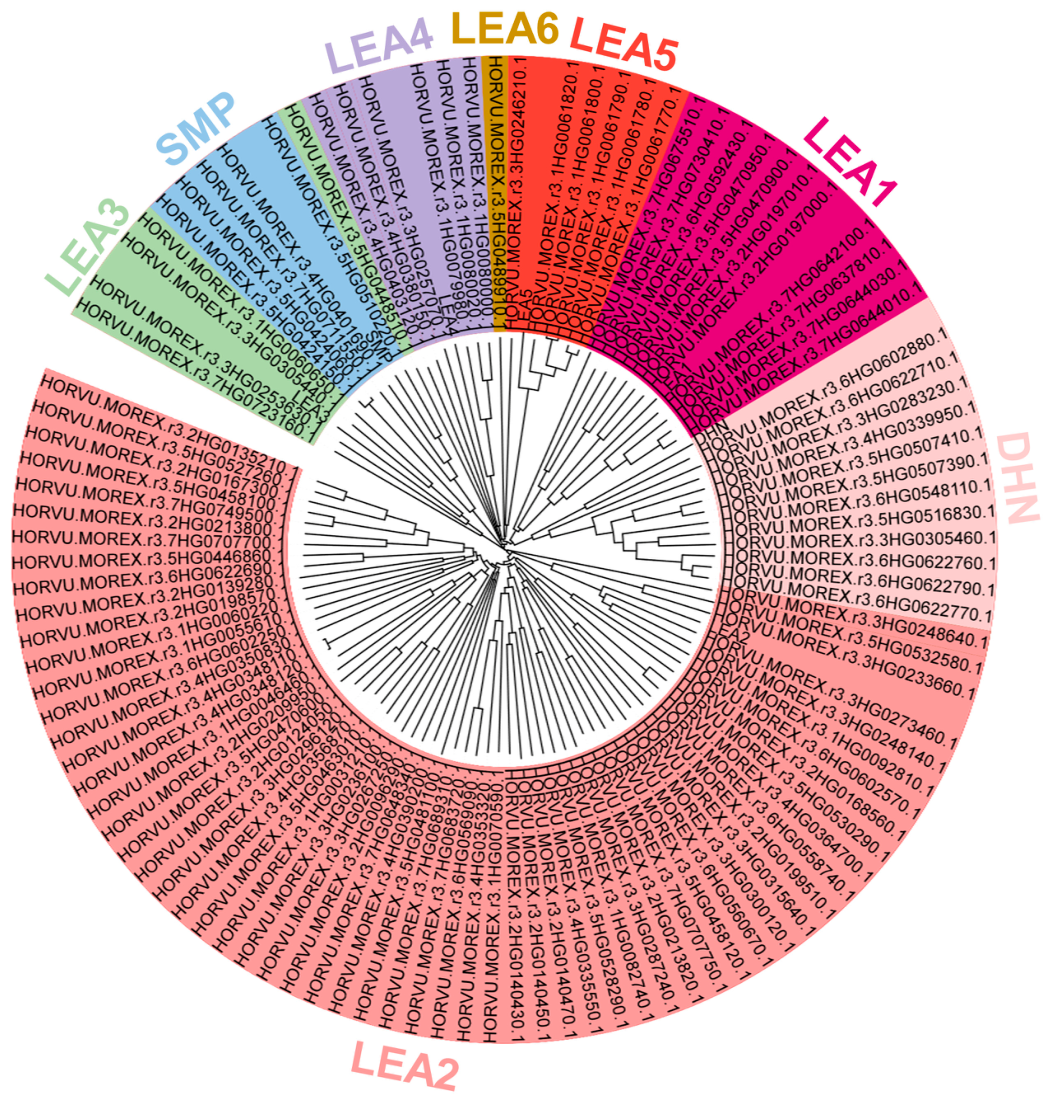
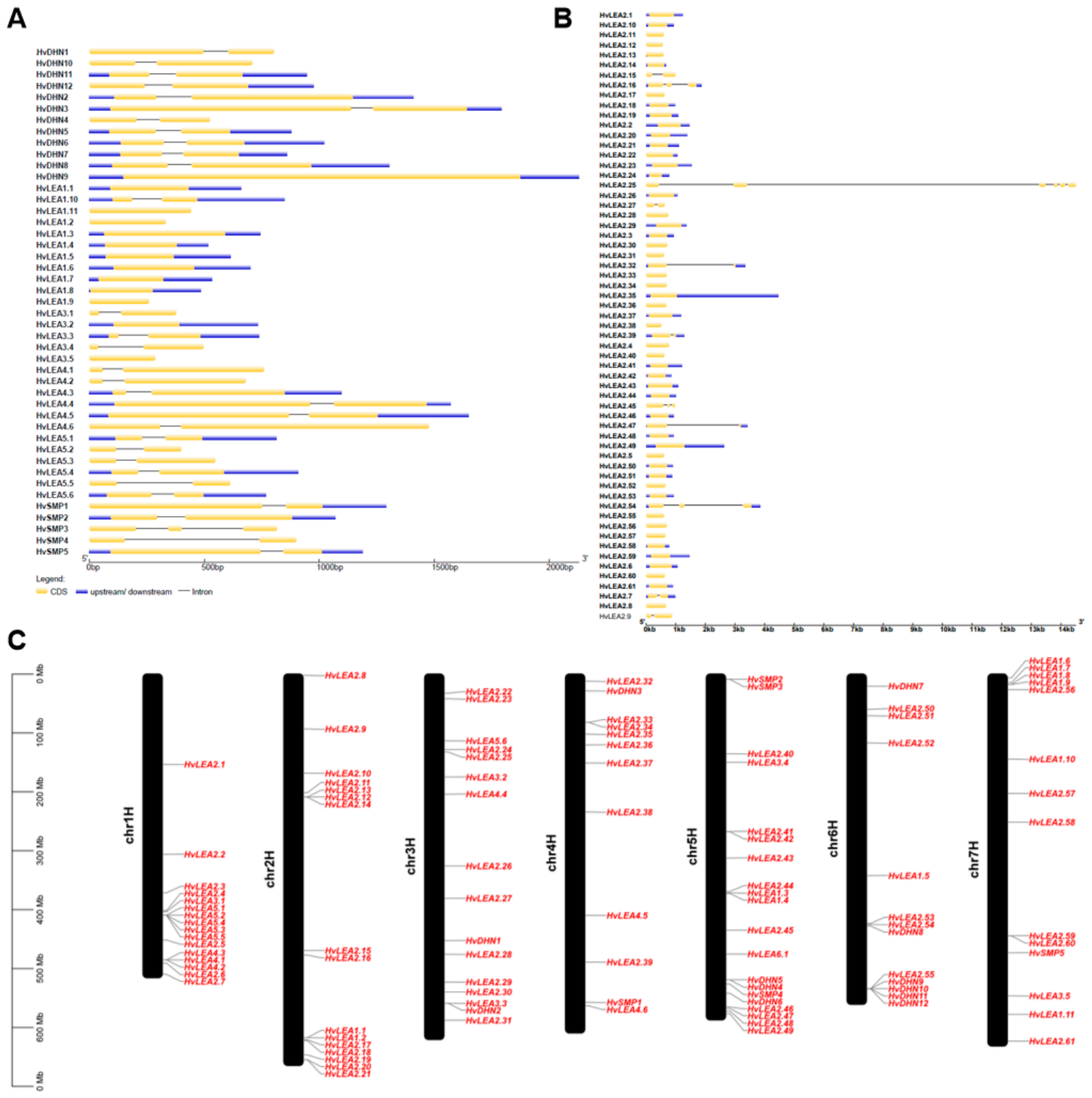
Based on the barley genome MorexV3, a total of 107 HvLEA members containing complete domains were obtained. According to phylogenetic tree and Pfam domains, eight subfamilies harboring SMP, DHN, LEA-1, LEA-2, LEA-3, LEA-4, LEA-5, and LEA-6 domains were identified, including 5, 12, 11, 61, 5, 6, 6, and 1 members, respectively (Figure 1, Table S1). They were named according to the structural domain and locations on chromosomes. The number of amino acids of HvLEAs ranged from 80 bp (HvLEA1.10) to 575 bp (HvDHN9) with a molecular weight varying from 8.68 kDa (HvLEA1.10) to 62.04 kDa (HvLEA2.25) (Table S1). Moreover, the isoelectric point (pI) values of HvLEA proteins ranged from 4.29 (HvSMP5) to 10.92 (HvLEA2.5) (Table S1). Subcellular localization analysis of the HvLEA proteins showed that most genes were distributed in chlo (28), followed by the nucl (26), cyto (23), mito (11), E.R. (9), extr (4), pero (3), vacu (2), and plas (1) (Table S1). Chromosomal localization analysis of the HvLEAs showed that the HvLEAs were distributed on all seven chromosomes of barley (Figure 2C).

3.2. Gene Structures of HvLEA Family Genes

The gene structure analysis showed that the HvLEA genes have relatively simple structures, where 63 of the HvLEA genes possess no introns, 39 of the HvLEA genes have one intron, 4 genes have two introns, and only 1 gene has five introns. Furthermore, the most closely clustered HvLEA genes have similar numbers of exons and introns. All members of the HvDHN subfamily of genes have an intron, except HvDHN9, which has no intron. All members of the HvLEA1 subfamily of genes lack introns, except HvLEA1.10, which has an intron. Of the 61 members of the HvLEA2 subfamily, 50 are all devoid of introns. All other subfamilies, HvLEA3, HvLEA4, HvLEA5, HvLEA6, and HvSMP1, are dominated by a single intron (Figure 2A,B).

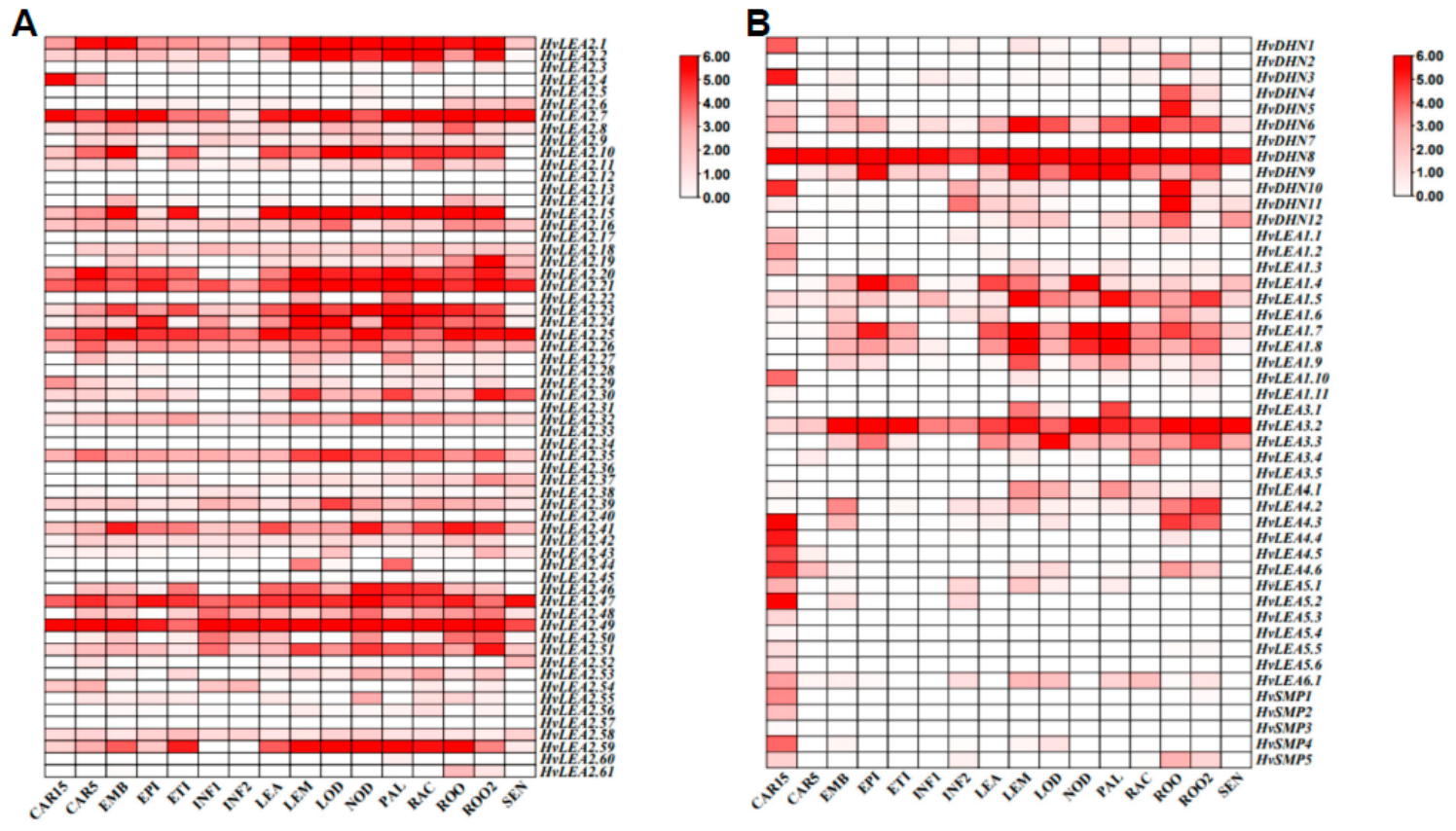
3.3. Analysis of the Expression Patterns of HvLEA Family Members in Barley Tissues

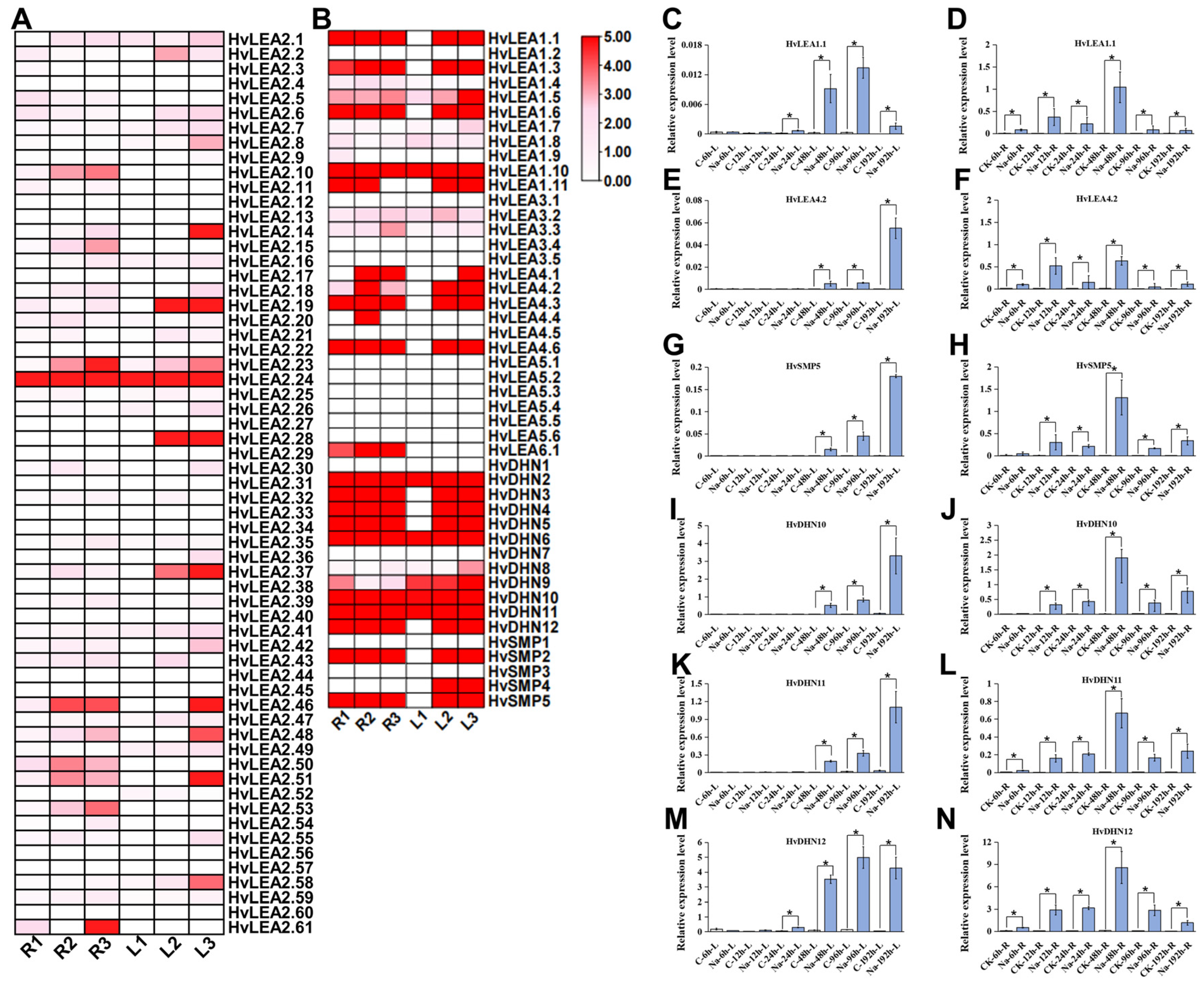
Figure 3 shows normalized FPKM values (Figure 3, Table S2). Among all HvLEA genes, 17 genes, namely, HvDHN7, HvLEA1.11, HvLEA2.12, HvLEA2.13, HvLEA2.17, HvLEA2.31, HvLEA2.33, HvLEA2.34, HvLEA2.36, HvLEA2.40, HvLEA2.45, HvLEA2.5, HvLEA2.57, HvLEA2.60, HvLEA3.5, HvLEA5.4, and HvSMP3, exhibited FPKM values below 1 across all the tested tissues. And 11 genes, namely, HvLEA2.16, HvLEA2.26, HvLEA2.35, HvLEA2.41, HvLEA2.47, HvLEA2.25, HvLEA2.1, HvLEA2.21, HvLEA3.2, HvLEA2.49, and HvDHN8, showed FPKM values greater than 1 across all the tested tissues. Twelve genes, namely, HvLEA5.6, HvLEA5.5, HvLEA5.3, HvSMP2, HvLEA1.2, HvSMP1, HvSMP4, HvDHN1, HvLEA4.5, HvLEA4.4, HvDHN3, and HvLEA2.4, were expressed only in CAR (developing grain), with HvLEA2.4 showing the highest expression level. HvLEA2.22, HvLEA2.44, HvLEA4.1, and HvLEA3.1 were only expressed in inflorescences, and HvLEA2.61, HvDHN2, and HvDHN4 were only expressed in roots.

3.4. Analysis of HvLEA Family Gene Expression Under Salt Stress

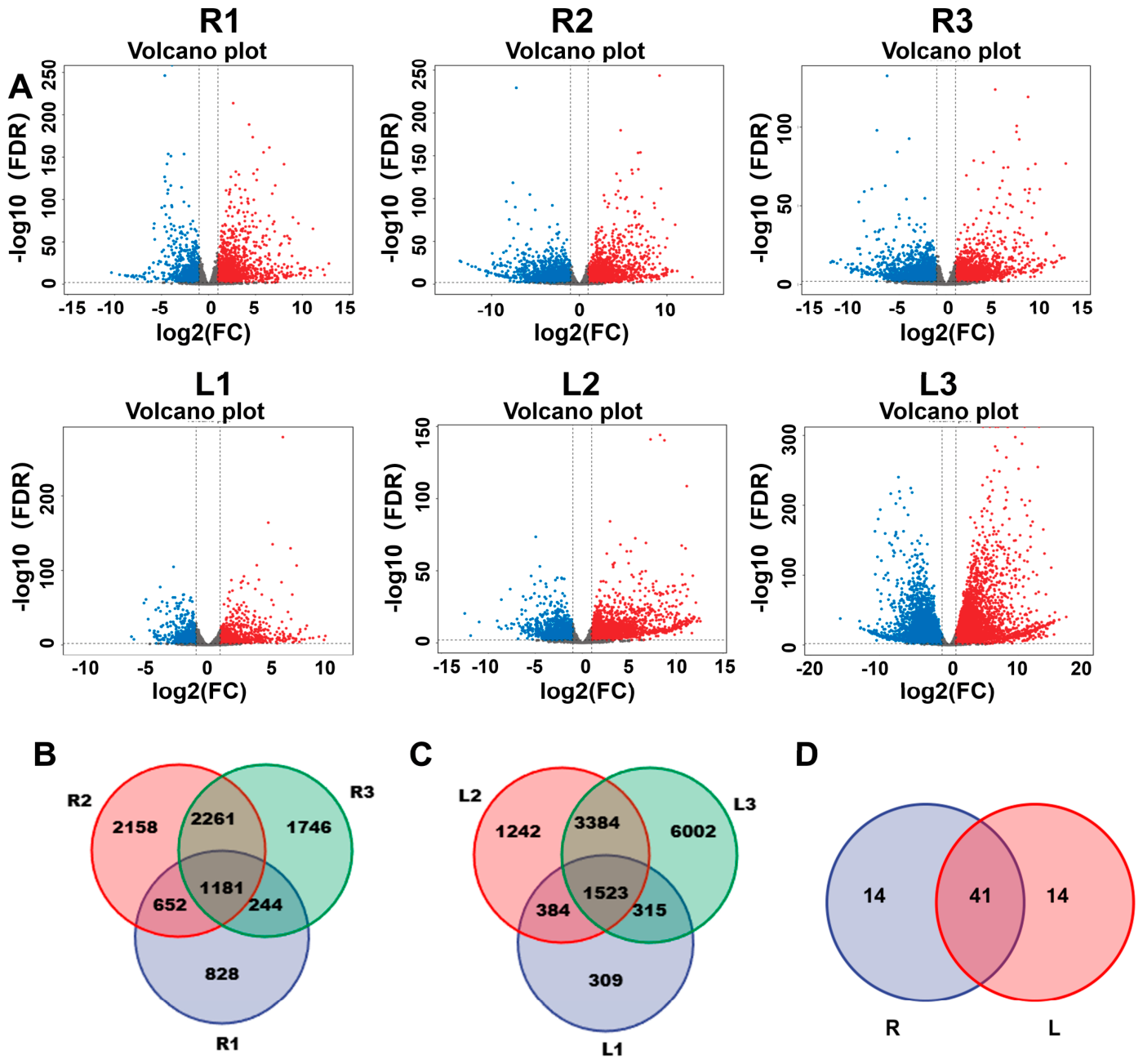
RNA-seq analysis was completed for 36 samples, yielding a total of 231.36 Gb of clean data. Each sample achieved a clean data volume of 6.03 Gb, with a Q30 base percentage of 94.70% or higher. The alignment efficiency of reads against the reference genome for all samples ranged from 86.31% to 94.77%. In roots, 2905 (1780 up-regulated and 1125 down-regulated genes), 6252 (2748 up-regulated and 3504 down-regulated genes), and 5432 (2538 up-regulated and 2894 down-regulated genes) DEGs were detected through comparing the gene expression levels in GP under control and salinity stress for 12 h, 48 h, and 120 h, respectively (Figure 3A,B). In leaves, 2531 (1413 up-regulated and 1118 down-regulated genes), 6533 (3556 up-regulated and 1977 down-regulated genes), and 11,224 (5650 up-regulated and 5574 down-regulated genes) DEGs were detected through comparing the gene expression levels in GP under control and salinity stress for 12 h, 48 h, and 120 h, respectively (Figure 4A,B). The Venn diagram results showed that there were 1181 genes consistently exhibiting significant differential expression across all three salt stress time points in root tissues, while 1523 such genes were identified in leaf tissues (Figure 4B,C). In both the root and leaf tissues, the number of differentially expressed HvLEA genes was 55, among which 41 showed significant differential expression in both tissue types (Figure 4D).
In root tissues, salt treatment significantly induced six genes, with log2FC values exceeding 10, including HvDHN2, HvLEA1.6, HvDHN5, HvLEA1.1, HvSMP2, and HvDHN10 (Figure 5A,B, Table S3). And a total of seventeen genes were markedly up-regulated in leaves, comprising HvDHN2, HvLEA2.19, HvLEA4.1, HvDHN12, HvDHN5, HvSMP2, HvSMP4, HvLEA1.1, HvSMP5, HvLEA1.6, HvDHN11, HvDHN10, HvLEA1.10, HvLEA4.3, HvLEA4.6, and HvDHN4 (Figure 5A,B, Table S3). Additionally, under salt stress, the expression of several genes was suppressed. Genes including HvLEA2.61, HvLEA2.23, HvLEA2.46, HvLEA2.53, HvLEA2.10, HvLEA2.15, HvLEA2.51, HvLEA2.50, HvLEA2.48, HvLEA2.14, HvLEA2.1, and HvLEA2.18 were down-regulated in roots. Similarly, genes such as HvLEA2.51, HvLEA2.46, HvLEA2.37, HvLEA2.48, HvLEA2.58, HvLEA2.23, HvLEA2.42, HvLEA2.1, HvLEA2.41, HvLEA2.18, HvLEA2.7, HvLEA2.26, HvLEA2.55, HvLEA2.30, and HvLEA3.3 showed reduced expression in leaves (Figure 5A,B, Table S3).

3.5. Dynamic Transcriptional Responses of Six HvLEA Genes with Strong Response to Salt Stress

To verify the RNA-Seq results of the transcriptome data, we selected six genes (HvLEA1.1, HvLEA4.2, HvSMP5, HvDHN10, HvDHN11, and HvDHN12) for qPCR analysis and studied their temporal dynamics under salt stress, examining their expression patterns at different time points. The results revealed that six genes exhibited dynamic and fluctuating transcriptional responses, and are significantly up-regulated in both salt-stressed roots and leaves. In roots, the six genes responded very rapidly to salt stress, with significant up-regulation detected as early as 6 h post-treatment. Their transcript abundance peaked at 48 h and subsequently declined (Figure 4D,F,H,J,L,N). In leaves, the up-regulated expression was first detected at 12 h. Notably, these genes exhibited different peak expression times in the leaves: the expression levels of HvLEA1.1 and HvDHN12 reached their maximum at 96 h post-stress, whereas the expression levels of the remaining four genes continued to increase up to 120 h (Figure 4C,E,G,I,K,M).

3.6. Analysis of HvLEA Potential Interacting Proteins and Their Expression Under Salt Stress

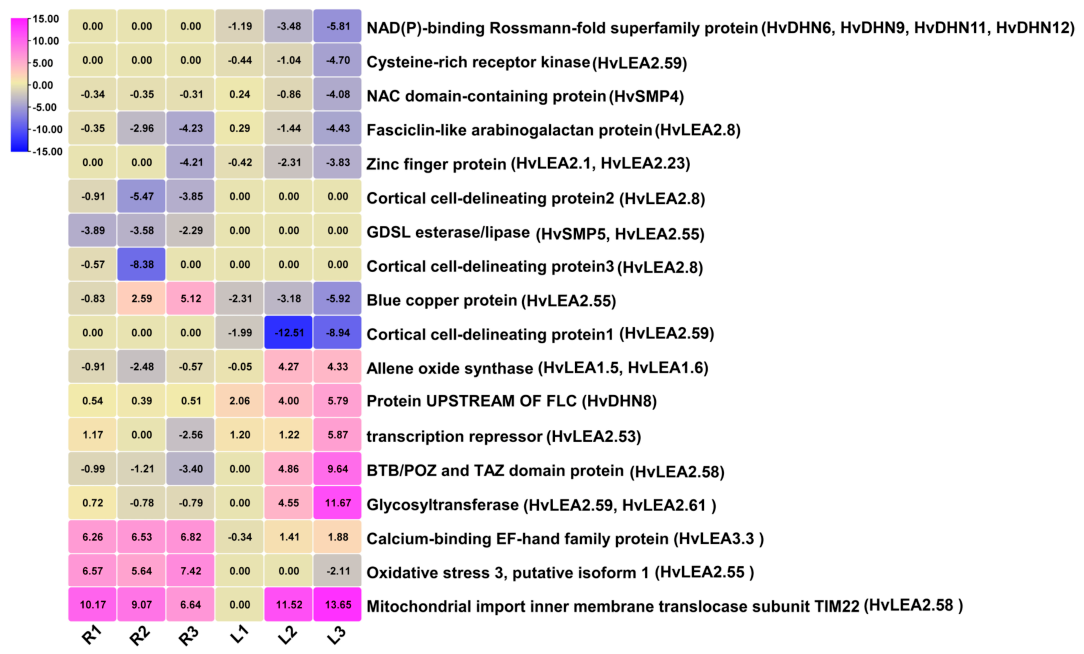
To explore the potential interaction network of HvLEA, we performed an in silico analysis using the STRING database. To examine the expression patterns of these predicted interactors under salt stress, we retrieved their transcriptome profiles. Based on sequence homology and co-expression evidence, we identified 423 putative interactions involving 46 differentially expressed HvLEA genes (Table S4). Among the predicted interacting partners, several showed strong responses to salt stress, including cortical cell-delineating protein, blue copper protein, cysteine-rich receptor kinase, zinc finger protein, calcium-binding EF-hand family protein, BTB/POZ, TAZ domain protein, glycosyltransferase, mitochondrial import inner membrane translocase subunit TIM22, NAD(P)-binding Rossmann-fold superfamily protein, NAC domain-containing protein, and protein upstream of flc (Figure 6). These predicted interactions are based on computational evidence and require experimental validation for confirmation.
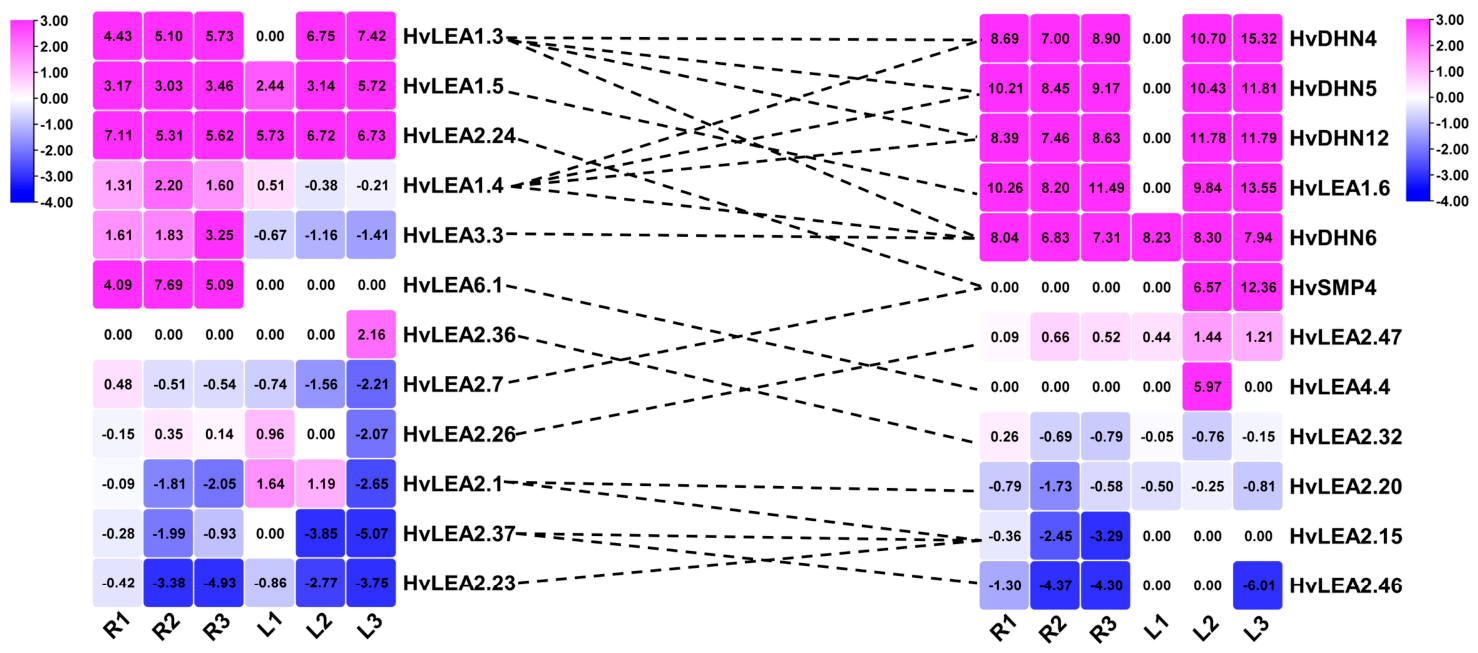
As depicted in Figure 6, LvLEA family proteins were predicted to interact with each other. Several predicted interacting genes exhibited highly similar expression patterns, such as HvLEA1.3/HvLEA1.4-HvDHN4/5/6/12, HvLEA2.37/HvLEA2.23-HvLEA2.15, HvLEA2.24-HvSMP4, HvLEA3.3-HvDHN6, and HvLEA1.5-HvLEA1.6, which are the focus of subsequent studies on salt tolerance function and molecular mechanisms (Figure 7, Table S4).

4. Discussion

Over the course of long-term evolution, plants have evolved diverse regulatory mechanisms to respond to or withstand abiotic stress. LEA proteins play crucial roles in maintaining membrane stability and integrity, binding to metal ions, DNA, and RNA, scavenging reactive oxygen species (ROS), and preventing other functional proteins or enzymes from being rendered inactive by aggregation, thus defending against abiotic stress [36,37]. In rice, OsLEA3-2, an abiotic stress-induced gene, plays a key role in salt and drought tolerance [38]. The group 5 LEA gene, OsLea14-A, enhanced tolerance against multiple stresses including high salinity in rice, which makes it a potential gene for genetic improvement of salinity tolerance [39]. In other species, there have also been several reports indicating that the overexpression of LEA genes could enhance salt tolerance. For instance, transgenic Arabidopsis and yeast overexpressing AtLEA14 both exhibited enhanced tolerance to high salinity, indicating that AtLEA14 had important protective functions under salt stress conditions in Arabidopsis [40]. The overexpression of a dehydrin gene, tas14, improves the osmotic stress imposed by drought and salinity in tomato. The overexpression of the key gene LEA3 could significantly increase drought and salinity tolerance in cotton [41]. Under salt stress, transgenic tobacco overexpressing the melon Y3SK2-type LEA gene CmLEA-S exhibited significantly higher germination rates, fresh weights, and root lengths compared to wild-type plants. The salinity tolerance of Escherichia coli and salvia miltiorrhiza overexpressing SmLEA plants were significantly enhanced. Additionally, the plants showed greater superoxide dismutase activity and a higher glutathione concentration [42]. Two dehydrins, PpDHNA and PpDHNC, from the moss Physcomitrella, have been shown to enhance the salt resistance of transgenic Arabidopsis [43]. However, the functions of HvLEA genes in barley remain largely unknown. Only HVA1 has been functionally linked to abiotic stress tolerance. Specifically, its overexpression in rice and wheat has been shown to enhance salinity tolerance [31,32,33,34]. In this study, an HVA1, namely, HvLEA4.3, exhibited a robust transcriptional response to salt stress in both the leaves and roots of barley, with log2FC values of 14.06 in leaves and 8.73 in roots following 120 h of NaCl treatment. Unfortunately, we were unable to identify potential interacting protein partners for HvLEA4.3. In this study, we identified the HvLEA genes at the genome-wide level by bioinformatics analysis and analyzed their expression levels under salt stress by transcriptome sequencing analysis. Although extreme fold changes may originate from low-expression noise, this analysis effectively controlled the false positive rate through fold shrinkage using DESeq2, pre-filtering of low-expressing genes, and FDR correction. Furthermore, all extreme FC genes in this study exhibited medium-to-high expression levels (mean FPKM > 5), supporting their reliability. Therefore, multiple HvLEA genes were highly induced by salt stress, including HvDHN2, HvLEA1.6, HvDHN5, HvLEA1.1, HvSMP2, and HvDHN10, which represent promising targets for the genetic improvement of salt tolerance in barley.
Screening and predicting interacting proteins is a crucial approach for uncovering the intricate relationships among proteins, which can generate hypotheses for further experimental validation. Current research on LEA interacting proteins and their molecular mechanisms regulating salt tolerance systems remains limited. Two studies have reported that LEA can interact with kinases to regulate plant salt tolerance. In rice, LEA12OR maintains the kinase stability of OsSAPK10 under salt stress, thereby conferring salinity tolerance in rice by promoting the biosynthesis and accumulation of abscisic acid [29]. Moreover, GsPM30, a soybean LEA protein, interacts with a receptor like cytoplasmic kinase GsCBRLK conferring greater tolerance to high salinity at both the young and adult seedling stages [44]. In this study, while direct experimental evidence is lacking, our analysis has identified several candidate proteins that may interact with HvLEA family members, providing a foundation for dissecting the molecular mechanisms of barley salt tolerance. A calcium-binding EF-hand family protein was predicted as a potential interactor of HvLEA3.3, and both genes were significantly up-regulated in barley roots under salt stress. Ca2+, as a critical signaling molecule in salt stress response, plays a pivotal role in salt tolerance regulation through its binding proteins. For instance, a naturally occurring 4 bp deletion/insertion mutation in maize affects the function of the EF-hand calcium-binding protein ZmNSA1, thereby conferring salt tolerance to the plant. The mechanism involves Ca2+ binding to ZmNSA1 protein, triggering its degradation via the 26S proteasome pathway, which subsequently up-regulates the transcription levels of plasma membrane H+-ATPases (MHA2 and MHA4), ultimately enhancing root sodium ion excretion mediated by the SOS1 sodium–hydrogen cotransporter [45]. Similarly, our predictive analysis suggested potential interactions between cysteine-rich receptor-like kinases (CRKs) and HvLEA2.59, as well as between glycosyltransferases and HvLEA2.59/2.61. Cysteine-rich receptor-like kinases (CRKs), a large family of receptor-like kinases containing DUF26 domains, play crucial roles in immunity, abiotic stress responses, and growth development [46]. Previous studies have demonstrated that overexpression of CRK4 and CRK41 in Arabidopsis significantly improves salt tolerance [47,48], and glycosyltransferase genes (UGT2, GSA1) in rice participate in salt tolerance regulation [49,50]. Regarding zinc finger proteins, our analysis predicted their interaction with HvLEA2.1 and HvLEA2.23, which showed significant down-regulation under salt stress. Zinc finger proteins are central to salt tolerance regulation in multiple species [51,52]. Notably, the C2H2-type zinc finger protein HvZFP1 in barley promotes reactive oxygen scavenging by regulating antioxidant enzyme activity, thereby mitigating salt-induced oxidative damage and maintaining critical physiological processes such as root morphology and stomatal conductance, ultimately enhancing salt tolerance [53]. Furthermore, an NAC transcription factor was predicted to interact with HvSMP4. Existing research has indicated that barley HvNAC92 binds to two key elements in the HvHKT1;5 promoter, activating its expression to mediate sodium ion transport from roots to above-ground parts and negative regulation salt tolerance. Furthermore, we detected potential interactions within the same or different subfamilies of HvLEA in barley [2]. These HvLEA genes might collaborate to withstand salt stress via synergistic effects which poses potential targets for genetic improvement of salt tolerance in barley.
These predictions, along with previously reported interactions between LEA proteins and kinases in rice and soybean [29,44], indicate that HvLEA proteins may operate within complex regulatory networks during the salinity response. However, all interactions in this study proposed here are currently computational predictions. Future research will focus on experimentally verifying these predicted interactions and analyzing their biological function by constructing genetic plants, thereby providing a theoretical basis and genetic resources for improving salt tolerance in barley.

5. Conclusions

A total of 107 HvLEA proteins were identified in barley and classified into eight groups. Among them, 69 HvLEA genes were differentially expressed under salt stress, with six genes (HvDHN2, HvDHN5, HvDHN10, HvLEA1.1, HvLEA1.6, and HvSMP2) showing extremely high up-regulation (log2FC > 10) in both roots and leaves. These key genes, along with their predicted interaction partners, represent valuable genetic resources for improving salt tolerance in barley through molecular breeding.

Supplementary Materials

The following supporting information can be downloaded at https://www.mdpi.com/article/10.3390/agronomy16080836/s1, Table S1: Physicochemical properties of HvLEA gene family members in barley; Table S2: Transcript data of HvLEA gene family members in different tissues of barley; Table S3: Expression response of LEA gene family members in barley to salt stress in roots and leaves; Table S4: Analysis of potential interacting proteins of HvLEA and expression under salt stress; Table S5: qPCR primers used in this study.

Author Contributions

J.Z. designed the research; J.Z., Y.M., N.L., D.Z., L.L., and A.Q. assisted in sample collection, RNA extraction, qPCR analysis, genotyping; Y.Y., J.W., X.Z., and Y.H. conducted data collection from website, J.Z., C.L., B.G., and F.W. performed bioinformatics analysis. J.Z. wrote the first draft of the manuscript. R.X. critically reviewed and improved the MS. All authors have read and agreed to the published version of the manuscript.

Funding

This research was funded by the national natural science foundation of China (32301871), the Jiangsu province higher education institutions college students’ innovation and entrepreneurship training program (202411117241Y), , the national modern agriculture industry technology system, China (CARS-05), and the priority academic program development of Jiangsu higher education institutions (PAPD).

Data Availability Statement

The original contributions presented in this study are included in the article/Supplementary Material. Further inquiries can be directed to the corresponding author.

Conflicts of Interest

The authors declare no conflicts of interest.

References

  1. Dure, L., 3rd; Greenway, S.C.; Galau, G.A. Developmental biochemistry of cottonseed embryogenesis and germination: Changing messenger ribonucleic acid populations as shown by in vitro and in vivo protein synthesis. Biochemistry 1981, 20, 4162–4168. [Google Scholar] [CrossRef]
  2. Kuang, L.; Zhou, H.; Zhang, T.; Gao, F.; Yan, T.; Chen, Z.; Shen, Q.; Zhang, G.; Li, L.; Wu, D. MicroRNA164d suppresses the HvNAC92-HvHKT1;5 module to enhance salinity tolerance in barley. Proc. Natl. Acad. Sci. USA 2025, 122, e2514555122. [Google Scholar] [CrossRef] [PubMed]
  3. Hanin, M.; Ebel, C.; Ngom, M.; Laplaze, L.; Masmoudi, K. New insights on plant salt tolerance mechanisms and their potential use for breeding. Front. Plant Sci. 2016, 7, 1787. [Google Scholar] [CrossRef] [PubMed]
  4. Shavrukov, Y.; Gupta, N.K.; Miyazaki, J.; Baho, M.N.; Chalmers, K.J.; Tester, M.; Langridge, P.; Collins, N.C. HvNax3—A locus controlling shoot sodium exclusion derived from wild barley (Hordeum vulgare ssp. spontaneum). Funct. Integr. Genom. 2010, 10, 277–291. [Google Scholar] [CrossRef]
  5. Zhu, J.; Zhou, H.; Fan, Y.; Guo, Y.; Zhang, M.; Shabala, S.; Zhao, C.; Lv, C.; Guo, B.; Wang, F.; et al. HvNCX, a prime candidate gene for the novel qualitative locus qS7.1 associated with salinity tolerance in barley. Theor. Appl. Genet. 2023, 136, 9. [Google Scholar] [CrossRef]
  6. Rivandi, J.; Miyazaki, J.; Hrmova, M.; Pallotta, M.; Tester, M.; Collins, N.C. A SOS3 homologue maps to HvNax4, a barley locus controlling an environmentally sensitive Na+ exclusion trait. J. Exp. Bot. 2010, 62, 1201–1216. [Google Scholar] [CrossRef]
  7. Huang, L.; Kuang, L.H.; Wu, L.Y.; Shen, Q.F.; Han, Y.; Jiang, L.X.; Wu, D.Z.; Zhang, G.P. The HKT Transporter HvHKT1;5 negatively regulates salt tolerance. Plant Physiol. 2020, 182, 584–596. [Google Scholar] [CrossRef] [PubMed]
  8. Zhu, J.; Sun, C.; Zhang, Y.; Zhang, M.; Zhao, C.; Lv, C.; Guo, B.; Wang, F.; Zhou, M.; Xu, R. Functional analysis on the role of HvHKT1.4 in barley (Hordeum vulgare L.) salinity tolerance. Plant Physiol. Biochem. 2024, 215, 109061. [Google Scholar] [CrossRef]
  9. Shen, Q.; Fu, L.; Su, T.; Ye, L.; Huang, L.; Kuang, L.; Wu, L.; Wu, D.; Chen, Z.; Zhang, G. Calmodulin HvCaM1 negatively regulates salt tolerance via modulation of HvHKT1s and HvCAMTA4. Plant Physiol. 2020, 183, 1650–1662. [Google Scholar] [CrossRef]
  10. Fu, L.; Wu, D.; Zhang, X.; Xu, Y.; Kuang, L.; Cai, S.; Zhang, G.; Shen, Q. Vacuolar H+-pyrophosphatase HVP10 enhances salt tolerance via promoting Na+ translocation into root vacuoles. Plant Physiol. 2022, 188, 1248–1263. [Google Scholar] [CrossRef]
  11. Xu, Y.; Liu, L.; Shen, L.; Wan, B.; Sun, H.; Hu, Z.; Zhang, G.; Shen, Q. A transcription factor HvCBP60-8 confers salt tolerance in barley. Plant J. 2025, 124, e70535. [Google Scholar] [CrossRef] [PubMed]
  12. Tunnacliffe, A.; Hincha, D.K.; Leprince, O.; Macherel, D. LEA Proteins: Versatility of Form and Function; Springer: Berlin/Heidelberg, Germany, 2010; Volume 21, pp. 91–108. [Google Scholar]
  13. Amara, I.; Zaidi, I.; Masmoudi, K.; Ludevid, M.D.; Pagès, M.; Goday, A.; Brini, F. Insights into late embryogenesis abundant (LEA) proteins in plants: From structure to the functions. Am. J. Plant Sci. 2014, 5, 3440–3455. [Google Scholar] [CrossRef]
  14. Athar, H.R.; Zulfiqar, F.; Moosa, A.; Ashraf, M.; Zafar, Z.U.; Zhang, L.; Ahmed, N.; Kalaji, H.M.; Nafees, M.; Hossain, M.A.; et al. Salt stress proteins in plants: An overview. Front. Plant Sci. 2022, 13, 999058. [Google Scholar] [CrossRef]
  15. Shao, H.B.; Liang, Z.S.; Shao, M.A. LEA proteins in higher plants: Structure, function, gene expression and regulation. Colloids Surf. B Biointerfaces 2005, 45, 131–135. [Google Scholar]
  16. Battaglia, M.; Olvera-Carrillo, Y.; Garciarrubio, A.; Campos, F.; Covarrubias, A.A. The enigmatic LEA proteins and other hydrophilins. Plant Physiol. 2008, 148, 6–24. [Google Scholar] [CrossRef]
  17. Jia, C.; Guo, B.; Wang, B.; Li, X.; Yang, T.; Li, N.; Wang, J.; Yu, Q. The LEA gene family in tomato and its wild relatives: Genome-wide identification, structural characterization, expression profiling, and role of SlLEA6 in drought stress. BMC Plant Biol. 2022, 22, 596. [Google Scholar] [CrossRef]
  18. Hunault, G.; Jaspard, E. LEAPdb: A database for the late embryogenesis abundant proteins. BMC Genomics 2010, 11, 221. [Google Scholar] [CrossRef]
  19. Wang, X.S.; Zhu, H.B.; Jin, G.L.; Liu, H.L.; Wu, W.R.; Zhu, J. Genome-scale identification and analysis of LEA genes in rice (Oryza sativa L.). Plant Sci. 2007, 172, 414–420. [Google Scholar] [CrossRef]
  20. Zhang, Y.; Zhang, X.; Zhu, L.; Wang, L.; Zhang, H.; Zhang, X.; Xu, S.; Xue, J. Identification of the maize LEA gene family and its relationship with kernel dehydration. Plants 2023, 12, 3674. [Google Scholar] [CrossRef]
  21. Altunoglu, C.Y.; Baloglu, P.; Yer, E.N.; Pekol, S.; Baloglu, M.C. Identification and expression analysis of LEA gene family members in cucumber genome. Plant Growth Regul. 2016, 80, 225–241. [Google Scholar] [CrossRef]
  22. Liang, Y.; Xiong, Z.; Zheng, J.; Xu, D.; Zhu, Z.; Xiang, J.; Gan, J.; Raboanatahiry, N.; Yin, Y.; Li, M. Genome-wide identification, structural analysis and new insights into late embryogenesis abundant (LEA) gene family formation pattern in Brassica napus. Sci. Rep. 2016, 6, 24265. [Google Scholar] [CrossRef]
  23. Zan, T.; Li, L.; Li, J.; Zhang, L.; Li, X. Genome-wide identification and characterization of late embryogenesis abundant protein-encoding gene family in wheat: Evolution and expression profiles during development and stress. Gene 2020, 736, 144422. [Google Scholar] [CrossRef]
  24. Geng, W.; Wang, Y.; Zhang, J.; Liu, Z.; Chen, X.; Qin, L.; Yang, L.; Tang, H. Genome-wide identification and expression analyses of late embryogenesis abundant (LEA) gene family in tobacco (Nicotiana tabacum L.) reveal their function in abiotic stress responses. Gene 2022, 836, 146665. [Google Scholar] [CrossRef] [PubMed]
  25. Wang, Q.; Lei, X.; Wang, Y.; Di, P.; Meng, X.; Peng, W.; Rong, J.; Wang, Y. Genome-wide identification of the LEA gene family in Panax ginseng: Evidence for the role of PgLEA2-50 in plant abiotic stress response. Plant Physiol. Biochem. 2024, 212, 108742. [Google Scholar] [CrossRef]
  26. Li, Z.; Chi, H.; Liu, C.; Zhang, T.; Han, L.; Li, L.; Pei, X.; Long, Y. Genome-wide identification and functional characterization of LEA genes during seed development process in linseed flax (Linum usitatissimum L.). BMC Plant Biol. 2021, 21, 193. [Google Scholar] [CrossRef] [PubMed]
  27. Jin, X.; Cao, D.; Wang, Z.; Ma, L.; Tian, K.; Liu, Y.; Gong, Z.; Zhu, X.; Jiang, C.; Li, Y. Genome-wide identification and expression analyses of the LEA protein gene family in tea plant reveal their involvement in seed development and abiotic stress responses. Sci. Rep. 2019, 9, 14123. [Google Scholar] [CrossRef] [PubMed]
  28. Huang, R.; Xiao, D.; Wang, X.; Zhan, J.; Wang, A.; He, L. Genome-wide identification, evolutionary and expression analyses of LEA gene family in peanut (Arachis hypogaea L.). BMC Plant Biol. 2022, 22, 155. [Google Scholar] [CrossRef]
  29. Ge, Y.; Chen, G.; Cheng, X.; Li, C.; Tian, Y.; Chi, W.; Li, J.; Dai, Z.; Wang, C.; Duan, E.; et al. The superior allele LEA12(OR) in wild rice enhances salt tolerance and yield. Plant Biotechnol. J. 2024, 22, 2971–2984. [Google Scholar] [CrossRef]
  30. Ghanmi, S.; Zaidi, I.; Ebel, C.; Hanin, M. The Atriplex halimus dehydrin AhDHN1 enhances growth, seed size, and yield under salt and drought stress in Arabidopsis. Plant Sci. 2026, 364, 112938. [Google Scholar] [CrossRef]
  31. Xu, D.; Duan, X.; Wang, B.; Hong, B.; Ho, T.; Wu, R. Expression of a late embryogenesis abundant protein gene, HVA1, from barley confers tolerance to water deficit and salt stress in transgenic rice. Plant Physiol. 1996, 110, 249–257. [Google Scholar] [CrossRef]
  32. Habib, I.; Shahzad, K.; Rauf, M.; Ahmad, M.; Alsamadany, H.; Fahad, S.; Saeed, N.A. Dehydrin responsive HVA1 driven inducible gene expression enhanced salt and drought tolerance in wheat. Plant Physiol. Biochem. 2022, 180, 124–133. [Google Scholar] [CrossRef] [PubMed]
  33. Chen, Y.S.; Lo, S.F.; Sun, P.K.; Lu, C.A.; Ho, T.H.; Yu, S.M. A late embryogenesis abundant protein HVA1 regulated by an inducible promoter enhances root growth and abiotic stress tolerance in rice without yield penalty. Plant Biotechnol. J. 2015, 13, 105–116. [Google Scholar] [CrossRef]
  34. Samtani, H.; Sharma, A.; Khurana, P. Overexpression of HVA1 enhances drought and heat stress tolerance in Triticum aestivum doubled haploid plants. Cells 2022, 11, 912. [Google Scholar] [CrossRef]
  35. Zhu, J.; Zhang, Y.; Zhang, M.; Hong, Y.; Sun, C.; Guo, Y.; Yin, H.; Lv, C.; Guo, B.; Wang, F.; et al. Natural variation and CRISPR/Cas9 gene editing demonstrate the role of a group VII ethylene response factor, HvERF62, in regulation of barley waterlogging tolerance. J. Exp. Bot. 2025, 76, 5071–5085. [Google Scholar] [CrossRef]
  36. Koubaa, S.; Bremer, A.; Hincha, D.K.; Brini, F. Structural properties and enzyme stabilization function of the intrinsically disordered LEA_4 protein TdLEA3 from wheat. Sci. Rep. 2019, 9, 3720. [Google Scholar] [CrossRef] [PubMed]
  37. Mohanty, S.; Hembram, P. An overview of LEA genes and their importance in combating abiotic stress in rice. Plant Mol. Biol. Report. 2025, 43, 337–351. [Google Scholar] [CrossRef]
  38. Duan, J.; Cai, W. OsLEA3-2, an abiotic stress induced gene of rice plays a key role in salt and drought tolerance. PLoS ONE 2012, 7, e45117. [Google Scholar] [CrossRef]
  39. Hu, T.; Liu, Y.; Zhu, S.; Qin, J.; Li, W.; Zhou, N. Overexpression of OsLea14-A improves the tolerance of rice and increases Hg accumulation under diverse stresses. Environ. Sci. Pollut. Res. 2019, 26, 10537–10551. [Google Scholar] [CrossRef]
  40. Jia, F.; Qi, S.; Li, H.; Liu, P.; Li, P.; Wu, C.; Zheng, C.; Huang, J. Overexpression of late embryogenesis abundant 14 enhances arabidopsis salt stress tolerance. Biochem. Biophys. Res. Commun. 2014, 454, 505–511. [Google Scholar] [CrossRef]
  41. Shiraku, M.L.; Magwanga, R.O.; Zhang, Y.; Hou, Y.; Kirungu, J.N.; Mehari, T.G.; Xu, Y.; Wang, Y.; Wang, K.; Cai, X.; et al. Late embryogenesis abundant gene LEA3 (Gh_A08G0694) enhances drought and salt stress tolerance in cotton. Int. J. Biol. Macromol. 2022, 207, 700–714. [Google Scholar] [CrossRef] [PubMed]
  42. Wu, Y.; Liu, C.; Kuang, J.; Ge, Q.; Zhang, Y.; Wang, Z. Overexpression of SmLEA enhances salt and drought tolerance in Escherichia coli and Salvia miltiorrhiza. Protoplasma 2014, 251, 1191–1199. [Google Scholar] [CrossRef] [PubMed]
  43. Li, Q.; Zhang, X.; Lv, Q.; Zhu, D.; Qiu, T.; Xu, Y.; Bao, F.; He, Y.; Hu, Y. Physcomitrella patens dehydrins (PpDHNA and PpDHNC) confer salinity and drought tolerance to transgenic arabidopsis plants. Front. Plant Sci. 2017, 8, 1316. [Google Scholar] [CrossRef] [PubMed]
  44. Sun, M.; Shen, Y.; Yin, K.; Guo, Y.; Cai, X.; Yang, J.; Zhu, Y.; Jia, B.; Sun, X. A late embryogenesis abundant protein GsPM30 interacts with a receptor like cytoplasmic kinase GsCBRLK and regulates environmental stress responses. Plant Sci. 2019, 283, 70–82. [Google Scholar] [CrossRef]
  45. Cao, Y.; Zhang, M.; Liang, X.; Li, F.; Shi, Y.; Yang, X.; Jiang, C. Natural variation of an EF-hand Ca2+-binding-protein coding gene confers saline-alkaline tolerance in maize. Nat. Commun. 2020, 11, 186. [Google Scholar] [CrossRef]
  46. Zhang, Y.; Tian, H.; Chen, D.; Zhang, H.; Sun, M.; Chen, S.; Qin, Z.; Ding, Z.; Dai, S. Cysteine-rich receptor-like protein kinases: Emerging regulators of plant stress responses. Trends Plant Sci. 2023, 28, 776–794. [Google Scholar] [CrossRef] [PubMed]
  47. Zhou, S.; Luo, Q.; Nie, Z.; Wang, C.; Zhu, W.; Hong, Y.; Zhao, J.; Pei, B.; Ma, W. CRK41 modulates microtubule depolymerization in response to salt stress in Arabidopsis. Plants 2023, 12, 1285. [Google Scholar] [CrossRef]
  48. Jang, Y.J.; Oh, S.D.; Kin, K.; Lee, S.K.; Chang, A.; Yun, D.W.; Kim, C.M.; Lee, B. Overexpression of CRK4, the cysteine-rich receptor-like protein kinase of Arabidopsis, regulates the resistance to abiotic stress and abscisic acid responses. Plant Biotechnol. Rep. 2024, 18, 735–742. [Google Scholar] [CrossRef]
  49. Wang, T.; Li, X.K.; Liu, X.; Yang, X.Q.; Li, Y.J.; Hou, B.K. Rice glycosyltransferase gene UGT2 functions in salt stress tolerance under the regulation of bZIP23 transcription factor. Plant Cell Rep. 2023, 42, 17–28. [Google Scholar] [CrossRef]
  50. Dong, N.Q.; Sun, Y.; Guo, T.; Shi, C.L.; Zhang, Y.M.; Kan, Y.; Xiang, Y.H.; Zhang, H.; Yang, Y.B.; Li, Y.C.; et al. UDP-glucosyltransferase regulates grain size and abiotic stress tolerance associated with metabolic flux redirection in rice. Nat. Commun. 2020, 11, 2629. [Google Scholar] [CrossRef]
  51. Liu, J.; Zhang, X.; Liu, Y.; Li, Z.; Liu, Y.; Chen, C.; Yang, Z.; Chen, Y. Overexpression of CdZFP3, a Cynodon dactylon zinc finger protein gene, enhanced salt tolerance in Arabidopsis thaliana. Plant Growth Regul. 2025, 105, 2247–2257. [Google Scholar] [CrossRef]
  52. Yang, Z.; Zhang, Z.; Qiao, Z.; Guo, X.; Wen, Y.; Zhou, Y.; Yao, C.; Fan, H.; Wang, B.; Han, G. The RING zinc finger protein LbRZF1 promotes salt gland development and salt tolerance in Limonium bicolor. J. Integr. Plant Biol. 2024, 66, 787–809. [Google Scholar] [CrossRef] [PubMed]
  53. Admas, T.; Shu, J.; Bimpong, D.; Pan, R.; Zhang, W. Identification of C2H2 zinc finger proteins revealed that HvZFP1 plays a regulatory role for ROS detoxification in response to salt stress in barley. Int. J. Biol. Macromol. 2026, 355, 151511. [Google Scholar] [CrossRef] [PubMed]
Figure 1. The phylogenetic tree of HvLEA genes in barley. HvLEA gene subfamilies are distinguished by different colors.
Agronomy 16 00836 g001
Figure 2. The gene structure, and chromosomal distribution of HvLEA genes in barley. (A,B) Gene structure analysis of HvLEA genes. Exons are shown in yellow, UTRs in blue, and introns are represented by black lines. (C) Distribution of HvLEA genes on the seven chromosomes of barley.
Agronomy 16 00836 g002
Figure 3. Expression analysis of HvLEA family genes in different tissues of barley. (A) Heatmap of the HvLEA2 subfamily expression in different tissues of barley; (B) heatmap of the HvLEA subfamily (excluding HvLEA2) expression in different tissues of barley.
Agronomy 16 00836 g003
Figure 4. Analysis of the transcriptomes of leaves and roots following GP salt stress at 12, 48, and 120 h time points. (A) The volcano plot showing the differentially expressed genes (DEGs) in GP. Red color represents up-regulated DEGs, blue color represents down-regulated DEGs, and gray color represents non-differentially expressed genes. R1, R2, and R3 represent root tissues at 12, 48, and 120 h after salt stress, respectively; L1, L2, and L3 represent leaf tissues at 12, 48, and 60 h after salt stress, respectively; (B) Venn diagram showing DEGs in root tissues at 12, 48, and 120 h after salt stress; (C) Venn diagram showing DEGs in root tissues at 12, 48, and 120 h after salt stress; (D) Venn diagram displaying all differentially expressed genes in root and leaf tissues under salt stress.
Agronomy 16 00836 g004
Figure 5. Transcriptional response analysis of HvLEA to salt stress. (A) Heatmap of the response of the HvLEA2 subfamilies to salt stress (based on log2FC). (B) Heatmap of the response of the HvLEA subfamilies (excluding HvLEA2) to salt stress (based on log2FC). (CN) Dynamic transcriptional response of HvLEA genes to salt stress in GP leaves and roots across time points. (C) HvLEA1.1 in leaves. (D) HvLEA1.1 in roots. (E) HvLEA4.2 in leaves. (F) HvLEA4.2 in roots. (G) HvSMP5 in leaves. (H) HvSMP5 in roots. (I) HvDHN10 in leaves. (J) HvDHN10 in roots. (K) HvDHN11 in leaves. (L) HvDHN11 in roots. (M) HvDHN12 in leaves. (N) HvDHN12 in roots. * indicates significance at the 0.01 level.
Agronomy 16 00836 g005
Figure 6. The HvLEA predicted interacting proteins with significant salt stress responses.
Agronomy 16 00836 g006
Figure 7. Predicted interactions among HvLEA family proteins.
Agronomy 16 00836 g007
Disclaimer/Publisher’s Note: The statements, opinions and data contained in all publications are solely those of the individual author(s) and contributor(s) and not of MDPI and/or the editor(s). MDPI and/or the editor(s) disclaim responsibility for any injury to people or property resulting from any ideas, methods, instructions or products referred to in the content.