How Novel Biostimulants Enhance Resilience and Quality in Hydroponic Crop Production—A Review

 ,
,  ,
, 
Abstract
1. Introduction
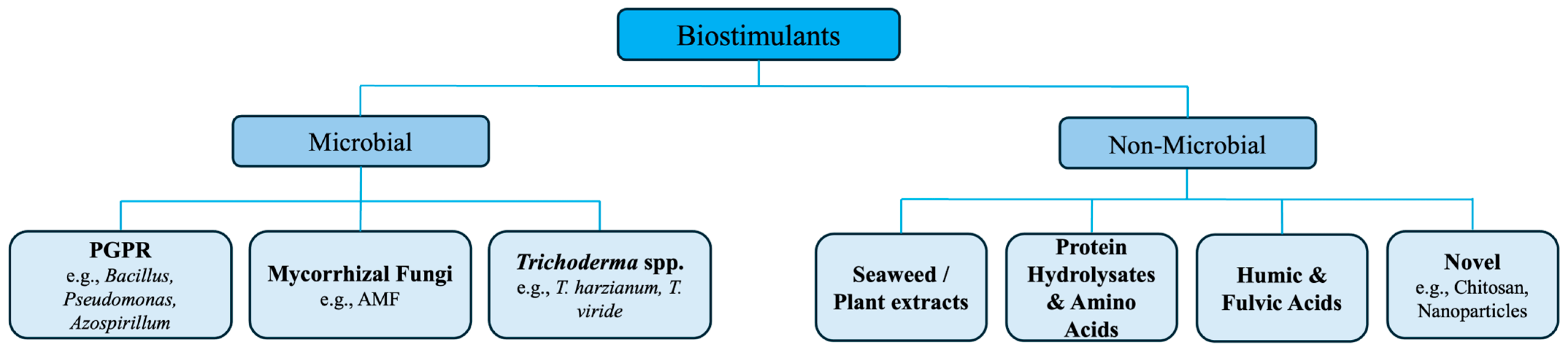
2. Classification and Mechanisms of Biostimulants in Hydroponics
2.1. Microbial Biostimulants
2.1.1. PGPR
2.1.2. Mycorrhizal Fungi
2.1.3. Trichoderma spp.
2.2. Non-Microbial Biostimulants
2.2.1. Seaweed and Plant Extracts
2.2.2. Protein Hydrolysates & Amino Acid-Based Biostimulants

| Crops | Biostimulant | Key Outcomes | References |
|---|---|---|---|
| Carrot & dill microgreens | Enzymatic hydrolysate of leguminous biomass | Increased biomass and antioxidant content. | [67] |
| Basil | Vegetal protein hydrolysate | Improved yield and phenolics under reduced nutrients. | [68] |
| Tomato, cucumber | Protein hydrolysate (enzymatic hydrolysate of legume seeds) | Alleviated iron deficiency stress. | [71] |
| Lettuce | Milk protein hydrolysate | Increased biomass and mineral uptake; reduced nitrate. | [69] |
| Free amino acids (L-Met, L-Gly, L-Trp) | L-Met promoted growth; others inhibited dose-dependently. | [70] | |
| Amino acid-based biostimulant | Improved yield and physiological performance under salinity. | [25] |
2.2.3. Humic and Fulvic Acids
2.2.4. Novel Biostimulants
3. Effects of Biostimulants on High-Value Hydroponic Crops
3.1. Leafy Greens
3.2. Herbs
3.3. Fruiting Vegetable Crops
3.4. Berries
4. Advantages of Biostimulants in Hydroponics
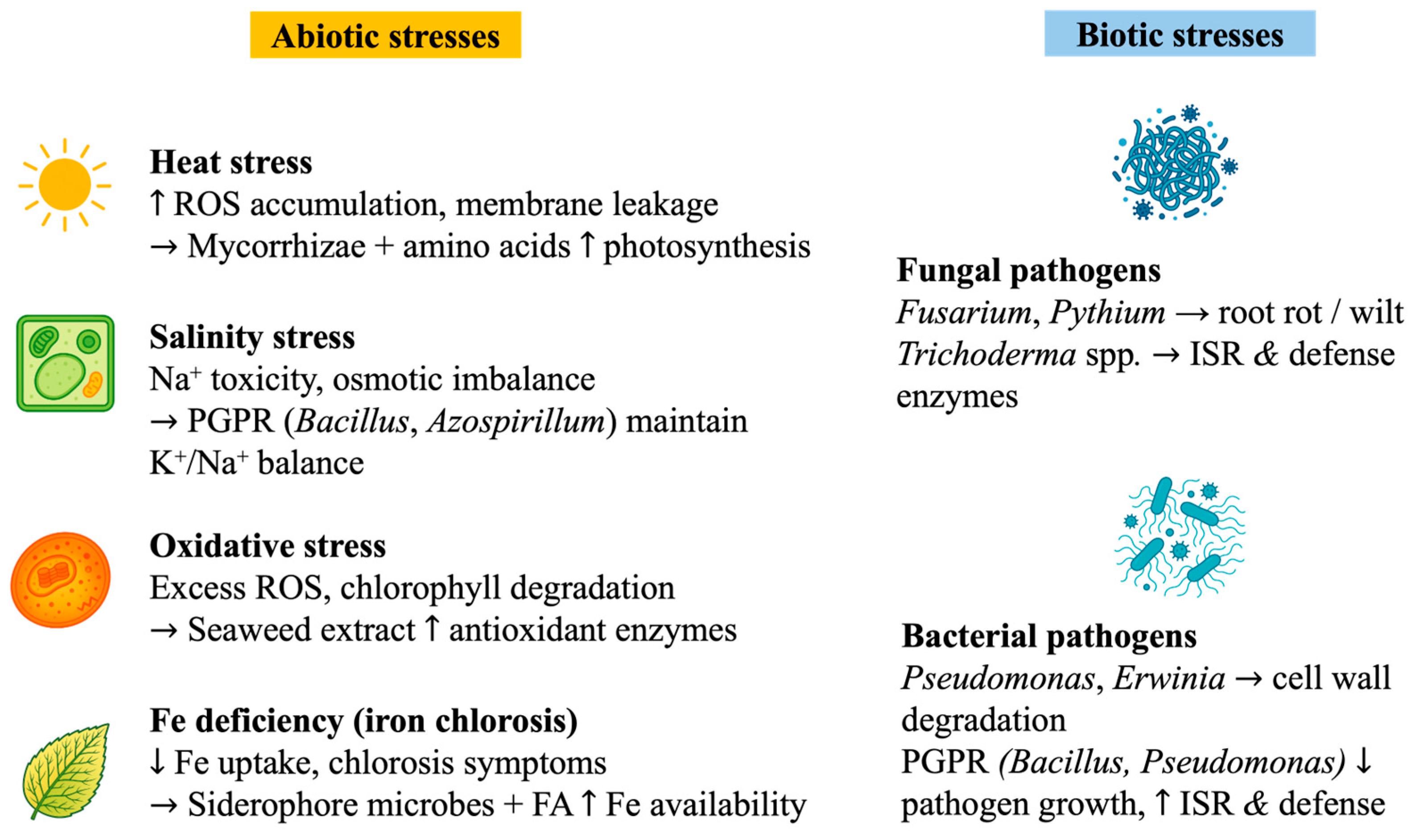
4.1. Abiotic and Biotic Stress Mitigation
4.2. Biostimulants Are Needed for Hydroponic Organic Production
4.3. Post-Harvest Quality Improvements
4.4. Economic & Environmental Benefits
5. Challenges and Future Perspectives
5.1. Knowledge Gaps
5.2. Commercialization Barriers
5.3. Emerging Trends
5.4. Policy and Sustainability Implications
6. Conclusions
Author Contributions
Funding
Data Availability Statement
Conflicts of Interest
References
- Wang, M.; Wan, D.; Xie, X.; Bai, Z.; Wang, R.; Zhang, X.; Gao, Y.-Z.; Tan, Z.; Yin, Y. Crop-livestock integration: Implications for food security, resource efficiency and greenhouse gas mitigation. Innov. Life 2024, 2, 10.59717. [Google Scholar] [CrossRef]
- Rajendran, S.; Domalachenpa, T.; Arora, H.; Li, P.; Sharma, A.; Rajauria, G. Hydroponics: Exploring innovative sustainable technologies and applications across crop production, with Emphasis on potato mini-tuber cultivation. Heliyon 2024, 10, e26823. [Google Scholar] [CrossRef]
- Velazquez-Gonzalez, R.S.; Garcia-Garcia, A.L.; Ventura-Zapata, E.; Barceinas-Sanchez, J.D.O.; Sosa-Savedra, J.C. A review on hydroponics and the technologies associated for medium-and small-scale operations. Agriculture 2022, 12, 646. [Google Scholar] [CrossRef]
- Ezzahoui, I.; Ait Abdelouahid, R.; Taji, K.; Marzak, A. Hydroponic and Aquaponic Farming: Comparative Study Based on Internet of things IoT technologies. Procedia Comput. Sci. 2021, 191, 499–504. [Google Scholar] [CrossRef]
- Sela Saldinger, S.; Rodov, V.; Kenigsbuch, D.; Bar-Tal, A. Hydroponic agriculture and microbial safety of vegetables: Promises, challenges, and solutions. Horticulturae 2023, 9, 51. [Google Scholar] [CrossRef]
- van Delden, S.H.; SharathKumar, M.; Butturini, M.; Graamans, L.J.A.; Heuvelink, E.; Kacira, M.; Kaiser, E.; Klamer, R.S.; Klerkx, L.; Kootstra, G.; et al. Current status and future challenges in implementing and upscaling vertical farming systems. Nat. Food 2021, 2, 944–956. [Google Scholar] [CrossRef]
- Baudoin, W.; Nono-Womdim, R.; Lutaladio, N.; Hodder, A.; Castilla, N.; Leonardi, C.; De Pascale, S.; Qaryouti, M.; Duffy, R. Good Agricultural Practices for Greenhouse Vegetable Crops: Principles for Mediterranean Climate Areas; Food and Agriculture Organization of the United Nations: Rome, Italy, 2013. [Google Scholar]
- Rajaseger, G.; Chan, K.L.; Tan, K.Y.; Ramasamy, S.; Khin, M.C.; Amaladoss, A.; Haribhai, P.K. Hydroponics: Current trends in sustainable crop production. Bioinformation 2023, 19, 925. [Google Scholar] [CrossRef] [PubMed]
- Kumar, P.; Singh, J. Hydroponic: An Eco-friendly Future. In Hydroponics and Environmental Bioremediation; Kumar, N., Ed.; Springer Water; Springer Nature: Cham, Switzerland, 2024; pp. 223–267. [Google Scholar]
- George, P.; George, N. Hydroponics-(soilless cultivation of plants) for biodiversity conservation. Int. J. Mod. Trends Eng. Sci. 2016, 3, 97–104. [Google Scholar]
- Wahome, P.K.; Oseni, T.O.; Masarirambi, M.T.; Shongwe, V.D. Effects of different hydroponics systems and growing media on the vegetative growth, yield and cut flower quality of gypsophila (Gypsophila paniculata L.). World J. Agric. Sci. 2011, 7, 692–698. [Google Scholar]
- Du Jardin, P. Plant biostimulants: Definition, concept, main categories and regulation. Sci. Hortic. 2015, 196, 3–14. [Google Scholar] [CrossRef]
- Halpern, M.; Bar-Tal, A.; Ofek, M.; Minz, D.; Muller, T.; Yermiyahu, U. The use of biostimulants for enhancing nutrient uptake. Adv. Agron. 2015, 130, 141–174. [Google Scholar]
- Sible, C.N.; Seebauer, J.R.; Below, F.E. Plant biostimulants: A categorical review, their implications for row crop production, and relation to soil health indicators. Agronomy 2021, 11, 1297. [Google Scholar] [CrossRef]
- Ali, A.; Niu, G.; Masabni, J.; Ferrante, A.; Cocetta, G. Integrated nutrient management of fruits, vegetables, and crops through the use of biostimulants, soilless cultivation, and traditional and modern approaches—A mini review. Agriculture 2024, 14, 1330. [Google Scholar] [CrossRef]
- Adedayo, A.A.; Babalola, O.O. The potential of biostimulants on soil microbial community: A review. Front. Ind. Microbiol. 2023, 1, 1308641. [Google Scholar] [CrossRef]
- Backer, R.; Rokem, J.S.; Ilangumaran, G.; Lamont, J.; Praslickova, D.; Ricci, E.; Subramanian, S.; Smith, D.L. Plant growth-promoting rhizobacteria: Context, mechanisms of action, and roadmap to commercialization of biostimulants for sustainable agriculture. Front. Plant Sci. 2018, 9, 1473. [Google Scholar] [CrossRef]
- López-Bucio, J.; Pelagio-Flores, R.; Herrera-Estrella, A. Trichoderma as biostimulant: Exploiting the multilevel properties of a plant beneficial fungus. Sci. Hortic. 2015, 196, 109–123. [Google Scholar] [CrossRef]
- de Andrade, L.A.; Santos, C.H.B.; Frezarin, E.T.; Sales, L.R.; Rigobelo, E.C. Plant growth-promoting rhizobacteria for sustainable agricultural production. Microorganisms 2023, 11, 1088. [Google Scholar] [CrossRef]
- Pappalettere, L.; Bartolini, S.; Toffanin, A. Auxin-producing bacteria used as microbial biostimulants improve the growth of tomato (Solanum lycopersicum L.) seedlings in hydroponic systems. BioTech 2024, 13, 32. [Google Scholar] [CrossRef] [PubMed]
- Moncada, A.; Vetrano, F.; Miceli, A. Alleviation of salt stress by plant growth-promoting bacteria in hydroponic leaf lettuce. Agronomy 2020, 10, 1523. [Google Scholar] [CrossRef]
- Yasmin, H.; Naeem, S.; Bakhtawar, M.; Jabeen, Z.; Nosheen, A.; Naz, R.; Keyani, R.; Mumtaz, S.; Hassan, M.N. Halotolerant rhizobacteria Pseudomonas pseudoalcaligenes and Bacillus subtilis mediate systemic tolerance in hydroponically grown soybean (Glycine max L.) against salinity stress. PLoS ONE 2020, 15, e0231348. [Google Scholar] [CrossRef]
- Svenson, A.; Kaj, L.; Björndal, H. Aqueous photolysis of the iron (III) complexes of NTA, EDTA and DTPA. Chemosphere 1989, 18, 1805–1808. [Google Scholar] [CrossRef]
- Handreck, K.A. Relative effectiveness of iron sources for an iron-inefficient species growing in a soilless medium. J. Plant Nutr. 1992, 15, 179–189. [Google Scholar] [CrossRef]
- İkiz, B.; Dasgan, H.Y.; Balik, S.; Kusvuran, S.; Gruda, N.S. The use of biostimulants as a key to sustainable hydroponic lettuce farming under saline water stress. BMC Plant Biol. 2024, 24, 808. [Google Scholar] [CrossRef]
- Radzki, W.; Gutierrez Mañero, F.; Algar, E.; Lucas García, J.; García-Villaraco, A.; Ramos Solano, B. Bacterial siderophores efficiently provide iron to iron-starved tomato plants in hydroponics culture. Antonie Leeuwenhoek 2013, 104, 321–330. [Google Scholar] [CrossRef] [PubMed]
- Zhang, Q.; Masabni, J.; Niu, G. Microbial biostimulants and seaweed extract synergistically influence seedling growth and morphology of three onion cultivars. Horticulturae 2024, 10, 800. [Google Scholar] [CrossRef]
- Mendez, A.; Martinez, S.; Hernandez, A.; García, J.; Sánchez, M. Synergism of microorganisms and seaweed extract on vegetative growth, yield and quality of cucumber fruit. Not. Bot. Horti Agrobot. Cluj-Napoca 2023, 51, 12888. [Google Scholar] [CrossRef]
- Keskin, B.; Akhoundnejad, Y.; Dasgan, H.Y.; Gruda, N.S. Fulvic acid, amino acids, and vermicompost enhanced yield and improved nutrient profile of soilless iceberg lettuce. Plants 2025, 14, 609. [Google Scholar] [CrossRef]
- Parniske, M. Arbuscular mycorrhiza: The mother of plant root endosymbioses. Nat. Rev. Microbiol. 2008, 6, 763–775. [Google Scholar] [CrossRef]
- Choi, J.; Summers, W.; Paszkowski, U. Mechanisms underlying establishment of arbuscular mycorrhizal symbioses. Annu. Rev. Phytopathol. 2018, 56, 135–160. [Google Scholar] [CrossRef]
- Othman, Y.A.; Alananbeh, K.M.; Tahat, M.M. Can Arbuscular Mycorrhizal Fungi Enhance Crop Productivity and Quality in Hydroponics? A Meta-Analysis. Sustainability 2024, 16, 3662. [Google Scholar] [CrossRef]
- Shaik, A.; Singh, S. Influence of arbuscular mycorrhizal fungi on physiology and yield of eggplant in organic soilless production system. HortScience 2022, 57, 759–768. [Google Scholar] [CrossRef]
- Zou, Y.; Wu, Q. Sodium chloride stress induced changes in leaf osmotic adjustment of trifoliate orange (Poncirus trifoliata) seedlings inoculated with mycorrhizal fungi. Not. Bot. Horti Agrobot. Cluj-Napoca 2011, 39, 64–69. [Google Scholar] [CrossRef]
- Das, D.; Torabi, S.; Chapman, P.; Gutjahr, C. A flexible, low-cost hydroponic co-cultivation system for studying arbuscular mycorrhiza symbiosis. Front. Plant Sci. 2020, 11, 63. [Google Scholar] [CrossRef]
- Hawkins, H.-J.; George, E. Hydroponic culture of the mycorrhizal fungus Glomus mosseae with Linum usitatissimum L., Sorghum bicolor L. and Triticum aestivum L. Plant Soil 1997, 196, 143–149. [Google Scholar] [CrossRef]
- Spaepen, S.; Vanderleyden, J.; Remans, R. Indole-3-acetic acid in microbial and microorganism-plant signaling. FEMS Microbiol. Rev. 2007, 31, 425–448. [Google Scholar] [CrossRef] [PubMed]
- Vega-Celedón, P.; Canchignia Martínez, H.; González, M.; Seeger, M. Biosíntesis de ácido indol-3-acético y promoción del crecimiento de plantas por bacterias. Cultiv. Trop. 2016, 37, 33–39. [Google Scholar]
- Jalal, A.; Oliveira, C.E.d.S.; Freitas, L.A.; Galindo, F.S.; Lima, B.H.; Boleta, E.H.M.; Da Silva, E.C.; Nascimento, V.d.; Nogueira, T.A.R.; Buzetti, S. Agronomic biofortification and productivity of wheat with soil zinc and diazotrophic bacteria in tropical savannah. Crop Pasture Sci. 2022, 73, 817–830. [Google Scholar] [CrossRef]
- Singh, B.N.; Dwivedi, P.; Sarma, B.K.; Singh, G.S.; Singh, H.B. Trichoderma asperellum T42 reprograms tobacco for enhanced nitrogen utilization efficiency and plant growth when fed with N nutrients. Front. Plant Sci. 2018, 9, 163. [Google Scholar] [CrossRef] [PubMed]
- Hernández-Huerta, J.; Guerrero, B.I.; Acevedo-Barrera, A.A.; Balandrán-Valladares, M.I.; Yañez-Muñoz, R.M.; De Dios-Avila, N.; Gutiérrez-Chávez, A. Biostimulant effects of Trichoderma asperellum in hydroponic spinach production. Life 2025, 15, 428. [Google Scholar] [CrossRef] [PubMed]
- Gutiérrez-Chávez, A.; Robles-Hernández, L.; Guerrero, B.I.; González-Franco, A.C.; Medina-Pérez, G.; Acevedo-Barrera, A.A.; Hernández-Huerta, J. Potential of Trichoderma asperellum as a growth promoter in hydroponic lettuce cultivated in a floating-root system. Plants 2025, 14, 382. [Google Scholar] [CrossRef]
- Ali, O.; Ramsubhag, A.; Jayaraman, J. Biostimulant properties of seaweed extracts in plants: Implications towards sustainable crop production. Plants 2021, 10, 531. [Google Scholar] [CrossRef] [PubMed]
- Sakakibara, H. Cytokinins: Activity, biosynthesis, and translocation. Annu. Rev. Plant Biol. 2006, 57, 431–449. [Google Scholar] [CrossRef] [PubMed]
- Woodward, A.W.; Bartel, B. Auxin: Regulation, action, and interaction. Ann. Bot. 2005, 95, 707–735. [Google Scholar] [CrossRef]
- Yamaguchi, S. Gibberellin metabolism and its regulation. Annu. Rev. Plant Biol. 2008, 59, 225–251. [Google Scholar] [CrossRef]
- Kim, S.Y. Recent advances in ABA signaling. J. Plant Biol. 2007, 50, 117–121. [Google Scholar] [CrossRef]
- Chen, T.H.; Murata, N. Glycinebetaine protects plants against abiotic stress: Mechanisms and biotechnological applications. Plant Cell Environ. 2011, 34, 1–20. [Google Scholar] [CrossRef]
- Park, E.-J.; Jeknic, Z.; Chen, T.H. Exogenous application of glycinebetaine increases chilling tolerance in tomato plants. Plant Cell Physiol. 2006, 47, 706–714. [Google Scholar] [CrossRef]
- Ahmad, R.; Lim, C.J.; Kwon, S.-Y. Glycine betaine: A versatile compound with great potential for gene pyramiding to improve crop plant performance against environmental stresses. Plant Biotechnol. Rep. 2013, 7, 49–57. [Google Scholar] [CrossRef]
- Aremu, A.O.; Masondo, N.A.; Rengasamy, K.R.; Amoo, S.O.; Gruz, J.; Bíba, O.; Šubrtová, M.; Pěnčík, A.; Novák, O.; Doležal, K. Physiological role of phenolic biostimulants isolated from brown seaweed Ecklonia maxima on plant growth and development. Planta 2015, 241, 1313–1324. [Google Scholar] [CrossRef]
- Zhang, Y.; Yin, H.; Zhao, X.; Wang, W.; Du, Y.; He, A.; Sun, K. The promoting effects of alginate oligosaccharides on root development in Oryza sativa L. mediated by auxin signaling. Carbohydr. Polym. 2014, 113, 446–454. [Google Scholar] [CrossRef] [PubMed]
- Miceli, A.; Vetrano, F.; Moncada, A. Influence of Ecklonia maxima extracts on growth, yield, and postharvest quality of hydroponic leaf lettuce. Horticulturae 2021, 7, 440. [Google Scholar] [CrossRef]
- Chrysargyris, A.; Xylia, P.; Anastasiou, M.; Pantelides, I.; Tzortzakis, N. Effects of Ascophyllum nodosum seaweed extracts on lettuce growth, physiology and fresh-cut salad storage under potassium deficiency. J. Sci. Food Agric. 2018, 98, 5861–5872. [Google Scholar] [CrossRef]
- Ramdin, T.-M.; Ali, O.; Ramsubhag, A.; Jayaraman, J. Sargassum spp. and Ascophyllum nodosum seaweed extract formulations improve plant growth and alter the bacterial dynamics in hydroponically cultivated lettuce. J. Appl. Phycol. 2024, 36, 3769–3782. [Google Scholar] [CrossRef]
- Kilowasid, L.M.H.; Arsani, S.F.; Rakian, T.C.; Hasid, R.; Hisein, W.S.A.; Nurmas, A. Use of Seaweed Liquid Extract and Cow Urine for Lettuce Growth in Hydroponic System. E3S Web Conf. 2022, 361, 04027. [Google Scholar] [CrossRef]
- Montecillo, M.J.G.; Catubis, K.M.L.; Cabillo, R.A.; Pascual, P.R.L. Growth and Yield Response of Red Leaf Lettuce (Lactuca sativa L. cv. Merlot) Substituted with Seaweed Extract as Hydroponic Nutrient Solution. Mindanao J. Sci. Technol. 2024, 22, 20–36. [Google Scholar] [CrossRef]
- Fan, D.; Hodges, D.M.; Critchley, A.T.; Prithiviraj, B. A commercial extract of brown macroalga (Ascophyllum nodosum) affects yield and the nutritional quality of spinach in vitro. Commun. Soil Sci. Plant Anal. 2013, 44, 1873–1884. [Google Scholar] [CrossRef]
- Laribi, B.; Annabi, H.A.; Bettaieb, T. Effects of Ulva intestinalis Linnaeus seaweed liquid extract on plant growth, photosynthetic performance and water status of two hydroponically grown Lamiaceae species: Peppermint (Mentha × piperita L.) and purple basil (Ocimum basilicum var. purpurascens Benth.). S. Afr. J. Bot. 2023, 158, 63–72. [Google Scholar]
- Rouphael, Y.; Giordano, M.; Cardarelli, M.; Cozzolino, E.; Mori, M.; Kyriacou, M.; Bonini, P.; Colla, G. Plant- and Seaweed-Based Extracts Increase Yield but Differentially Modulate Nutritional Quality of Greenhouse Spinach through Biostimulant Action. Agronomy 2018, 8, 126. [Google Scholar] [CrossRef]
- Sun, W.; Shahrajabian, M.H.; Kuang, Y.; Wang, N. Amino acids biostimulants and protein hydrolysates in agricultural sciences. Plants 2024, 13, 210. [Google Scholar] [CrossRef]
- Pasković, I.; Popović, L.; Pongrac, P.; Polić Pasković, M.; Kos, T.; Jovanov, P.; Franić, M. Protein hydrolysates—Production, effects on plant metabolism, and use in agriculture. Horticulturae 2024, 10, 1041. [Google Scholar] [CrossRef]
- Ranasingha, R.; Perera, A.; Baghalian, K.; Gerofotis, C. Amino acid-based biostimulants and microbial biostimulants promote the growth, yield and resilience of strawberries in soilless glasshouse cultivation. J. Sustain. Agric. Environ. 2024, 3, e12113. [Google Scholar] [CrossRef]
- Casadesús, A.; Pérez-Llorca, M.; Munné-Bosch, S.; Polo, J. An enzymatically hydrolyzed animal protein-based biostimulant (Pepton) increases salicylic acid and promotes growth of tomato roots under temperature and nutrient stress. Front. Plant Sci. 2020, 11, 953. [Google Scholar] [CrossRef]
- Alfosea-Simón, M.; Zavala-Gonzalez, E.A.; Camara-Zapata, J.M.; Martínez-Nicolás, J.J.; Simón, I.; Simón-Grao, S.; García-Sánchez, F. Effect of foliar application of amino acids on the salinity tolerance of tomato plants cultivated under hydroponic system. Sci. Hortic. 2020, 272, 109509. [Google Scholar] [CrossRef]
- Khan, S.; Yu, H.; Li, Q.; Gao, Y.; Sallam, B.N.; Wang, H.; Liu, P.; Jiang, W. Exogenous application of amino acids improves the growth and yield of lettuce by enhancing photosynthetic assimilation and nutrient availability. Agronomy 2019, 9, 266. [Google Scholar] [CrossRef]
- El-Nakhel, C.; Ciriello, M.; Formisano, L.; Pannico, A.; Giordano, M.; Gentile, B.R.; Fusco, G.M.; Kyriacou, M.C.; Carillo, P.; Rouphael, Y. Protein hydrolysate combined with hydroponics divergently modifies growth and shuffles pigments and free amino acids of carrot and dill microgreens. Horticulturae 2021, 7, 279. [Google Scholar] [CrossRef]
- Ciriello, M.; Formisano, L.; Kyriacou, M.C.; Colla, G.; Graziani, G.; Ritieni, A.; De Pascale, S.; Rouphael, Y. Biostimulatory action of vegetal protein hydrolysate compensates for reduced strength nutrient supply in a floating raft system by enhancing performance and qualitative features of “Genovese” Basil. Front. Plant Sci. 2022, 13, 906686. [Google Scholar] [CrossRef]
- Zahra, A.M.; Uthairatanakij, A.; Laohakunjit, N.; Jitareerat, P.; Kaisangsri, N.; Tira-Umphon, A. Valorization of Expired Milk into Protein Hydrolysate as a Plant Biostimulant: Characterization and Application on Hydroponically Grown Cos Lettuce. Crops 2025, 5, 56. [Google Scholar] [CrossRef]
- Khan, S.; Iqbal, M.Z.; Solangi, F.; Azeem, S.; Bodlah, M.A.; Zaheer, M.S.; Niaz, Y.; Ashraf, M.; Abid, M.; Gul, H. Impact of amino acid supplementation on hydroponic lettuce (Lactuca sativa L.) growth and nutrient content. Sci. Rep. 2025, 15, 15829. [Google Scholar] [CrossRef] [PubMed]
- Celletti, S.; Astolfi, S.; Guglielmo, N.; Colla, G.; Cesco, S.; Mimmo, T. Evaluation of a legume-derived protein hydrolysate to mitigate iron deficiency in plants. Agronomy 2020, 10, 1942. [Google Scholar] [CrossRef]
- Canellas, L.P.; Olivares, F.L.; Aguiar, N.O.; Jones, D.L.; Nebbioso, A.; Mazzei, P.; Piccolo, A. Humic and fulvic acids as biostimulants in horticulture. Sci. Hortic. 2015, 196, 15–27. [Google Scholar] [CrossRef]
- Chen, Y.; Clapp, C.; Magen, H. Mechanisms of plant growth stimulation by humic substances: The role of organo-iron complexes. Soil Sci. Plant Nutr. 2004, 50, 1089–1095. [Google Scholar] [CrossRef]
- Bocanegra, M.; Lobartini, J.C.; Orioli, G.A. Plant uptake of iron chelated by humic acids of different molecular weights. Commun. Soil Sci. Plant Anal. 2006, 37, 239–248. [Google Scholar] [CrossRef]
- Rose, M.T.; Patti, A.F.; Little, K.R.; Brown, A.L.; Jackson, W.R.; Cavagnaro, T.R. A meta-analysis and review of plant-growth response to humic substances: Practical implications for agriculture. Adv. Agron. 2014, 124, 37–89. [Google Scholar]
- Mora, V.; Baigorri, R.; Bacaicoa, E.; Zamarreno, A.M.; García-Mina, J.M. The humic acid-induced changes in the root concentration of nitric oxide, IAA and ethylene do not explain the changes in root architecture caused by humic acid in cucumber. Environ. Exp. Bot. 2012, 76, 24–32. [Google Scholar] [CrossRef]
- Nardi, S.; Pizzeghello, D.; Muscolo, A.; Vianello, A. Physiological effects of humic substances on higher plants. Soil Biol. Biochem. 2002, 34, 1527–1536. [Google Scholar] [CrossRef]
- Trevisan, S.; Francioso, O.; Quaggiotti, S.; Nardi, S. Humic substances biological activity at the plant-soil interface: From environmental aspects to molecular factors. Plant Signal. Behav. 2010, 5, 635–643. [Google Scholar] [CrossRef]
- Nardi, S.; Carletti, P.; Pizzeghello, D.; Muscolo, A. Biological activities of humic substances. In Biophysico-Chemical Processes Involving Natural Nonliving Organic Matter in Environmental Systems; John Wiley & Sons: Hoboken, NJ, USA, 2009; Volume 2, pp. 305–339. [Google Scholar]
- El-Helaly, M. Effect of foliar application of humic and fulvic acids on yield and its components of some carrot (Daucus carota L.) cultivars. J. Hortic. Sci. Ornam. Plants 2018, 10, 159–166. [Google Scholar]
- Farahi, M.H.; Aboutalebi, A.; Eshghi, S.; Dastyaran, M.; Yosefi, F. Foliar application of humic acid on quantitative and qualitative characteristics of ‘aromas’ strawberry in soilless culture. Agric. Commun. 2013, 1, 13–16. [Google Scholar]
- Haghighi, M.; Teixeira Da Silva, J.A. Amendment of hydroponic nutrient solution with humic acid and glutamic acid in tomato (Lycopersicon esculentum Mill.) culture. Soil Sci. Plant Nutr. 2013, 59, 642–648. [Google Scholar] [CrossRef]
- Magnabosco, P.; Masi, A.; Shukla, R.; Bansal, V.; Carletti, P. Advancing the impact of plant biostimulants to sustainable agriculture through nanotechnologies. Chem. Biol. Technol. Agric. 2023, 10, 117. [Google Scholar] [CrossRef]
- Munaro, D.; Mazo, C.H.; Bauer, C.M.; da Silva Gomes, L.; Teodoro, E.B.; Mazzarino, L.; da Rocha Veleirinho, M.B.; e Silva, S.M.; Maraschin, M. A novel biostimulant from chitosan nanoparticles and microalgae-based protein hydrolysate: Improving crop performance in tomato. Sci. Hortic. 2024, 323, 112491. [Google Scholar] [CrossRef]
- He, R.; Tan, X.; Gao, M.-F.; Zhang, Y.-T.; Song, S.-W.; Su, W.; Liu, H.-C. Effects of different concentrations of seaweed extract on growth and quality of Chinese kale in hydroponics. J. Plant Nutr. Fertil. 2020, 26, 2051–2059. [Google Scholar]
- El-Nakhel, C.; Cozzolino, E.; Ottaiano, L.; Petropoulos, S.A.; Nocerino, S.; Pelosi, M.E.; Rouphael, Y.; Mori, M.; Di Mola, I. Effect of biostimulant application on plant growth, chlorophylls and hydrophilic antioxidant activity of spinach (Spinacia oleracea L.) grown under saline stress. Horticulturae 2022, 8, 971. [Google Scholar] [CrossRef]
- Admane, N.; Cavallo, G.; Hadjila, C.; Cavalluzzi, M.M.; Rotondo, N.P.; Salerno, A.; Cannillo, J.; Difonzo, G.; Caponio, F.; Ippolito, A. Biostimulant formulations and moringa oleifera extracts to improve yield, quality, and storability of hydroponic lettuce. Molecules 2023, 28, 373. [Google Scholar] [CrossRef] [PubMed]
- Dasgan, H.Y.; Kacmaz, S.; Arpaci, B.B.; İkiz, B.; Gruda, N.S. Biofertilizers improve the leaf quality of hydroponically grown baby spinach (Spinacia oleracea L.). Agronomy 2023, 13, 575. [Google Scholar] [CrossRef]
- Plocek, G.; Rueda Kunz, D.; Simpson, C. Impacts of Bacillus amyloliquefaciens and Trichoderma spp. on Pac Choi (Brassica rapa var. chinensis) grown in different hydroponic systems. Front. Plant Sci. 2024, 15, 1438038. [Google Scholar] [CrossRef]
- Dewi, A.; Rahayu, S.; Dwimahyani, I.; Khairunnisa, N.; Suryadi, E. The combination of irradiation biofertilizer of rhizosphere microbes consortium inoculant (IMR) and inorganic fertilizer on the growth of kale in a floating raft hydroponic system. IOP Conf. Ser. Earth Environ. Sci. 2021, 924, 012007. [Google Scholar] [CrossRef]
- Aktsoglou, D.-C.; Kasampalis, D.S.; Sarrou, E.; Tsouvaltzis, P.; Chatzopoulou, P.; Martens, S.; Siomos, A.S. Protein hydrolysates supplement in the nutrient solution of soilless grown fresh peppermint and spearmint as a tool for improving product quality. Agronomy 2021, 11, 317. [Google Scholar] [CrossRef]
- Santini, G.; Rodolfi, L.; Biondi, N.; Sampietro, G.; Tredici, M.R. Effects of cyanobacterial-based biostimulants on plant growth and development: A case study on basil (Ocimum basilicum L.). J. Appl. Phycol. 2022, 34, 2063–2073. [Google Scholar] [CrossRef]
- Abdelkader, M.M.; Gaplaev, M.S.; Terekbaev, A.A.; Puchkov, M.Y. The influence of biostimulants on tomato plants cultivated under hydroponic systems. J. Hortic. Res. 2021, 29, 107–116. [Google Scholar] [CrossRef]
- Dasgan, H.Y.; Aksu, K.S.; Zikaria, K.; Gruda, N.S. Biostimulants enhance the nutritional quality of soilless greenhouse tomatoes. Plants 2024, 13, 2587. [Google Scholar] [CrossRef] [PubMed]
- Dash, P.K.; Guo, B.; Leskovar, D.I. Biostimulants Alleviate Heat Stress in Organic Hydroponic Tomato Cultivation: A Sustainable Approach. HortScience 2025, 60, 344–352. [Google Scholar] [CrossRef]
- Parađiković, N.; Vinković, T.; Vinković Vrček, I.; Žuntar, I.; Bojić, M.; Medić-Šarić, M. Effect of natural biostimulants on yield and nutritional quality: An example of sweet yellow pepper (Capsicum annuum L.) plants. J. Sci. Food Agric. 2011, 91, 2146–2152. [Google Scholar] [CrossRef]
- Parađiković, N.; Vinkovic, T.; Vrček, I.V.; Tkalec, M. Natural biostimulants reduce the incidence of BER in sweet yellow pepper plants (Capsicum annuum L.). Agric. Food Sci. 2013, 22, 307–317. [Google Scholar] [CrossRef]
- Zamljen, T.; Šircelj, H.; Veberič, R.; Hudina, M.; Slatnar, A. Impact of two brown seaweed (Ascophyllum nodosum L.) biostimulants on the quantity and quality of yield in cucumber (Cucumis sativus L.). Foods 2024, 13, 401. [Google Scholar] [CrossRef] [PubMed]
- García-Cano, C.; Ferrández-Gómez, B.; Jordá, J.D.; Pablo, Ó.; Cerdán, M.; Sánchez-Sánchez, A. Enhanced growth of cucumber (Cucumis sativus L.) through amino acids and seaweed extracts for the use in organic agriculture. J. Plant Growth Regul. 2024, 44, 3205–3218. [Google Scholar] [CrossRef]
- Abdelgalil, S.H.; Abdallah, E.; Jiang, W.; Sallam, B.N.; Yu, H.; Liu, P. Effect of different plant bio-stimulants in improving cucumber growth under soilless culture. Eur. J. Biol. Res. 2021, 11, 146–155. [Google Scholar]
- Ribeiro, V.; Vendruscolo, E.P.; Conceição, J.S.; Lima, S.F.d.; Binotti, F.F.d.S.; Bortolheiro, F.P.d.A.P.; Oliveira, C.E.d.S.; Costa, E.; Lafleur, L. Plant–Vitamin–Microorganism Interaction in Hydroponic Melon Cultivation. Horticulturae 2024, 10, 1329. [Google Scholar] [CrossRef]
- Soppelsa, S.; Kelderer, M.; Casera, C.; Bassi, M.; Robatscher, P.; Matteazzi, A.; Andreotti, C. Foliar applications of biostimulants promote growth, yield and fruit quality of strawberry plants grown under nutrient limitation. Agronomy 2019, 9, 483. [Google Scholar] [CrossRef]
- Antoniou, O.; Chrysargyris, A.; Xylia, P.; Tzortzakis, N. Effects of selenium and/or arbuscular mycorrhizal fungal inoculation on strawberry grown in hydroponic trial. Agronomy 2021, 11, 721. [Google Scholar] [CrossRef]
- Makonya, G.M.; Bryla, D.R.; Hardigan, M.A.; Hoashi-Erhardt, W.; DeVetter, L.W. Biostimulants with glycine betaine or kelp extract alleviate heat stress in red raspberry (Rubus idaeus). Sci. Rep. 2025, 15, 2251. [Google Scholar] [CrossRef] [PubMed]
- Choi, S.; Colla, G.; Cardarelli, M.; Kim, H.-J. Effects of plant-derived protein hydrolysates on yield, quality, and nitrogen use efficiency of greenhouse grown lettuce and tomato. Agronomy 2022, 12, 1018. [Google Scholar] [CrossRef]
- Khan, M.N.E.A.; Masabni, J.; Niu, G. Temperature-Dependent Effects of Foliar Applications of Potassium Silicate on Strawberry Growth, Yield, and Fruit Quality. HortScience 2025, 60, 2310–2316. [Google Scholar] [CrossRef]
- Ranasingha, R.; Perera, A.; Tabugbo, K.; Vasilev, V. Enhancing Plant Growth and Yield Under Reduced Water and Nutrient Conditions: The Role of Biostimulants in Improving Irrigation Efficiency and Drought Resilience in Soilless Strawberry Cultivation Under Glasshouse Conditions. J. Sustain. Agric. Environ. 2025, 4, e70082. [Google Scholar] [CrossRef]
- Trejo-Téllez, L.I.; Gómez-Merino, F.C. Nutrient solutions for hydroponic systems. In Hydroponics: A Standard Methodology for Plant Biological Researches; Books on Demand: Norderstedt, Germany, 2012; Volume 1, pp. 1–22. [Google Scholar]
- Farooq, M.; Hussain, M.; Wakeel, A.; Siddique, K.H. Salt stress in maize: Effects, resistance mechanisms, and management. A review. Agron. Sustain. Dev. 2015, 35, 461–481. [Google Scholar] [CrossRef]
- Giordano, M.; Petropoulos, S.A.; Rouphael, Y. Response and defence mechanisms of vegetable crops against drought, heat and salinity stress. Agriculture 2021, 11, 463. [Google Scholar] [CrossRef]
- Shehzad, M.; Gul, R.S.; Rauf, S.; Clarindo, W.R.; Al-Khayri, J.M.; Hussain, M.M.; Munir, H.; Ghaffari, M.; Nazir, S.; Hussain, M. Development of a robust hydroponic method for screening of sunflower (Helianthus annuus L.) accessions for tolerance to heat and osmotic stress. Sci. Rep. 2021, 11, 1677. [Google Scholar] [CrossRef]
- Haghighi, M.; Abolghasemi, R.; da Silva, J.A.T. Low and high temperature stress affect the growth characteristics of tomato in hydroponic culture with Se and nano-Se amendment. Sci. Hortic. 2014, 178, 231–240. [Google Scholar] [CrossRef]
- Oliveira, E.R.; Nunes, A.; Dutra, F.d.S.; Azevedo, G.Z.; Schneider, A.R.; Santos, B.R.d.; Munaro, D.; Moura, S.; Lima, G.P.P.; Maraschin, M. Marine and terrestrial biostimulant elicitors of tolerance to cold stress. Front. Plant Sci. 2025, 16, 1569516. [Google Scholar] [CrossRef] [PubMed]
- Babazadeh, B.A.; Sadeghzadeh, N.; Hajiboland, R. The impact of algal extract as a biostimulant on cold stress tolerance in barley (Hordeum vulgare L.). J. Appl. Phycol. 2023, 35, 2919–2933. [Google Scholar] [CrossRef]
- Albano, J.P.; Miller, W.B. Photodegradation of FeDTPA in nutrient solutions. I. Effects of irradiance, wavelength, and temperature. HortScience 2001, 36, 313–316. [Google Scholar] [CrossRef]
- Arcas, A.; Valverde, S.; Lucena, J.J.; López-Rayo, S. Photocatalytic degradation of iron chelates fertilizers under UV light: A rapid evaluation for hydroponic growing systems. Chem. Biol. Technol. Agric. 2025, 12, 96. [Google Scholar] [CrossRef]
- Vadas, T.M.; Zhang, X.; Curran, A.M.; Ahner, B.A. Fate of DTPA, EDTA, and EDDS in hydroponic media and effects on plant mineral nutrition. J. Plant Nutr. 2007, 30, 1229–1246. [Google Scholar] [CrossRef]
- Azizoglu, U.; Yilmaz, N.; Simsek, O.; Ibal, J.C.; Tagele, S.B.; Shin, J.H. The fate of plant growth-promoting rhizobacteria in soilless agriculture: Future perspectives. 3 Biotech 2021, 11, 382. [Google Scholar] [CrossRef]
- Stegelmeier, A.A.; Rose, D.M.; Joris, B.R.; Glick, B.R. The Use of PGPB to Promote Plant Hydroponic Growth. Plants 2022, 11, 2783. [Google Scholar] [CrossRef]
- Gül, A.; Özaktan, H.; Kıdoğlu, F.; Tüzel, Y. Rhizobacteria promoted yield of cucumber plants grown in perlite under Fusarium wilt stress. Sci. Hortic. 2013, 153, 22–25. [Google Scholar] [CrossRef]
- Amaradasa, B.S.; Mei, C.; He, Y.; Chretien, R.L.; Doss, M.; Durham, T.; Lowman, S. Biocontrol potential of endophytic Pseudomonas strain IALR1619 against two Pythium species in cucumber and hydroponic lettuce. PLoS ONE 2024, 19, e0298514. [Google Scholar] [CrossRef] [PubMed]
- Anderson, A.J.; Guerra, D. Responses of bean to root colonization with Pseudomonas putida in a hydroponic system. Phytopathology 1985, 75, 992–995. [Google Scholar] [CrossRef]
- Van Peer, R.; Niemann, G.; Schippers, B. Induced resistance and phytoalexin accumulation in biological control of Fusarium wilt of carnation by Pseudomonas sp. strain WCS 417 r. Phytopathology 1991, 81, 728–734. [Google Scholar] [CrossRef]
- Gertsson, U.; Alsanius, B. Plant response of hydroponically grown tomato to bacterization. In Proceedings of the International Symposium on Growing Media and Hydroponics; International Society for Horticultural Science (ISHS): Leuven, Belgium, 2001; pp. 583–588. [Google Scholar]
- Mubeen, B.; Hasnain, A.; Jie, W.; Zheng, H.; Peijnenburg, W.J.; Rozali, S.E.; Rasool, R.; Naqvi, S.A.H.; Rao, M.J.; Sohail, M.A. Enhanced production of active photosynthetic and biochemical molecules in Silybum marianum L. using biotic and abiotic elicitors in hydroponic culture. Molecules 2023, 28, 1716. [Google Scholar] [CrossRef] [PubMed]
- Fakraoui, A.; Kthiri, Z.; Hamada, W.; Krida, G. Using natural biostimulants for enhancing defense response of tomatoes against aphids. PLoS ONE 2026, 21, e0340827. [Google Scholar] [CrossRef]
- Corrado, C.L.; Tungadi, T.; Taglienti, A.; Donati, L.; Dragone, I.; Murphy, A.; Bruce, T.; Bertin, S. Role of organic biostimulants in the integrated management of cucurbit crops: Effects on the interaction between potyvirus-infected plants and aphid vectors. Pest Manag. Sci. 2026, 82, 3312–3322. [Google Scholar] [CrossRef]
- Di Gioia, F.; Rosskopf, E. Organic hydroponics: A US reality challenging the traditional concept of “organic” and “soilless” cultivation. In Proceedings of the III International Symposium on Soilless Culture and Hydroponics: Innovation and Advanced Technology for Circular Horticulture; International Society for Horticultural Science (ISHS): Leuven, Belgium, 2021; pp. 275–282. [Google Scholar]
- Park, Y.; Williams, K.A. Organic hydroponics: A review. Sci. Hortic. 2024, 324, 112604. [Google Scholar] [CrossRef]
- Regulation EU. 848 of the European Parliament and of the Council of 30 May 2018 on organic production and labelling of organic products and repealing Council Regulation (EC) No 834/2007. Off. J. Eur. Union 2018, 61, 1–92.
- Jan, S.; Rashid, Z.; Ahngar, T.A.; Iqbal, S.; Naikoo, M.A.; Majeed, S.; Bhat, T.A.; Gul, R.; Nazir, I. Hydroponics–A review. Int. J. Curr. Microbiol. Appl. Sci. 2020, 9, 1779–1787. [Google Scholar] [CrossRef]
- Schnitzler, W. Urban hydroponics for green and clean cities and for food security. In Proceedings of the International Symposium on Soilless Cultivation; International Society for Horticultural Science (ISHS): Leuven, Belgium, 2012; pp. 13–26. [Google Scholar]
- Parsaee, M.; Kiani, M.K.D.; Karimi, K. A review of biogas production from sugarcane vinasse. Biomass Bioenergy 2019, 122, 117–125. [Google Scholar] [CrossRef]
- Yatoo, A.M.; Ali, M.N.; Baba, Z.A.; Hassan, B. Sustainable management of diseases and pests in crops by vermicompost and vermicompost tea. A review. Agron. Sustain. Dev. 2021, 41, 7. [Google Scholar] [CrossRef]
- Churilova, E.V.; Midmore, D.J. Vermiliquer (Vermicompost Leachate) as a complete liquid fertilizer for hydroponically-grown pak choi (Brassica chinensis L.) in the tropics. Horticulturae 2019, 5, 26. [Google Scholar] [CrossRef]
- Arancon, N.Q.; Owens, J.D.; Converse, C. The effects of vermicompost tea on the growth and yield of lettuce and tomato in a non-circulating hydroponics system. J. Plant Nutr. 2019, 42, 2447–2458. [Google Scholar] [CrossRef]
- Abdullahi, U.A.; Khandaker, M.M.; Alias, N.; Shaari, E.M.; Alam, M.A.; Badaluddin, N.A.; Mohd, K.S. Seaweed effects on plant growth and environmental remediation: A review. J. Phytol 2021, 13, 122–129. [Google Scholar] [CrossRef]
- Szekely, I.; Jijakli, M.H. Bioponics as a promising approach to sustainable agriculture: A review of the main methods for producing organic nutrient solution for hydroponics. Water 2022, 14, 3975. [Google Scholar] [CrossRef]
- Illera-Vives, M.; Labandeira, S.S.; Brito, L.; López-Fabal, A.; López-Mosquera, M. Evaluation of compost from seaweed and fish waste as a fertilizer for horticultural use. Sci. Hortic. 2015, 186, 101–107. [Google Scholar] [CrossRef]
- Green, B.W. Fertilizer use in aquaculture. In Feed and Feeding Practices in Aquaculture; Elsevier: Amsterdam, The Netherlands, 2022; pp. 29–63. [Google Scholar]
- Shaji, H.; Chandran, V.; Mathew, L. Organic fertilizers as a route to controlled release of nutrients. In Controlled Release Fertilizers for Sustainable Agriculture; Elsevier: Amsterdam, The Netherlands, 2021; pp. 231–245. [Google Scholar]
- McClintic, N.; Chen, Z.; Park, Y. Evaluating organic fertilizers and microbial inoculation for soilless and hydroponic crop production. HortScience 2024, 59, 552–560. [Google Scholar] [CrossRef]
- Kano, K.; Kitazawa, H.; Suzuki, K.; Widiastuti, A.; Odani, H.; Zhou, S.; Chinta, Y.D.; Eguchi, Y.; Shinohara, M.; Sato, T. Effects of organic fertilizer on bok choy growth and quality in hydroponic cultures. Agronomy 2021, 11, 491. [Google Scholar] [CrossRef]
- Zhang, Q.; Liu, J.; Jeong, S.J.; Masabni, J.; Niu, G. Biostimulants Applied in Seedling Stage Can Improve Onion Early Bulb Growth: Cultivar-and Fertilizer-Type-Specific Positive Effects. Horticulturae 2025, 11, 402. [Google Scholar] [CrossRef]
- Liu, J.; Masabni, J.; Niu, G. Intermittent Flow Alleviated Root Zone Stress and Increased Organic Lettuce Yield in Nutrient Film Technique. HortScience 2025, 60, 1208–1217. [Google Scholar] [CrossRef]
- Hooks, T.; Masabni, J.; Sun, L.; Niu, G. Effects of organic fertilizer with or without a microbial inoculant on the growth and quality of lettuce in an NFT hydroponic system. Technol. Hortic. 2022, 2, 1. [Google Scholar] [CrossRef]
- Zeffa, D.M.; Perini, L.J.; Silva, M.B.; de Sousa, N.V.; Scapim, C.A.; Oliveira, A.L.M.d.; Amaral Júnior, A.T.d.; Azeredo Gonçalves, L.S. Azospirillum brasilense promotes increases in growth and nitrogen use efficiency of maize genotypes. PLoS ONE 2019, 14, e0215332. [Google Scholar] [CrossRef]
- Fukami, J.; Cerezini, P.; Hungria, M. Azospirillum: Benefits that go far beyond biological nitrogen fixation. Amb Express 2018, 8, 73. [Google Scholar] [CrossRef]
- Cassán, F.; Diaz-Zorita, M. Azospirillum sp. in current agriculture: From the laboratory to the field. Soil Biol. Biochem. 2016, 103, 117–130. [Google Scholar] [CrossRef]
- Lopes, M.J.d.S.; Dias-Filho, M.B.; Gurgel, E.S.C. Successful plant growth-promoting microbes: Inoculation methods and abiotic factors. Front. Sustain. Food Syst. 2021, 5, 606454. [Google Scholar] [CrossRef]
- Souza, R.d.; Ambrosini, A.; Passaglia, L.M. Plant growth-promoting bacteria as inoculants in agricultural soils. Genet. Mol. Biol. 2015, 38, 401–419. [Google Scholar] [CrossRef] [PubMed]
- Batista, B.D.; Singh, B.K. Realities and hopes in the application of microbial tools in agriculture. Microb. Biotechnol. 2021, 14, 1258–1268. [Google Scholar] [CrossRef]
- Duell, E.; Baum, K.; Wilson, G. Drought reduces productivity and anti-herbivore defences, but not mycorrhizal associations, of perennial prairie forbs. Plant Biol. 2024, 26, 204–213. [Google Scholar] [CrossRef]
- Antón-Herrero, R.; García-Delgado, C.; Antón-Herrero, G.; Mayans, B.; Delgado-Moreno, L.; Eymar, E. Design of a hydroponic test to evaluate the biostimulant potential of new organic and organomineral products. Sci. Hortic. 2023, 310, 111753. [Google Scholar] [CrossRef]
- Sousa, R.d.; Bragança, L.; da Silva, M.V.; Oliveira, R.S. Challenges and solutions for sustainable food systems: The potential of home hydroponics. Sustainability 2024, 16, 817. [Google Scholar] [CrossRef]
- Sambo, P.; Nicoletto, C.; Giro, A.; Pii, Y.; Valentinuzzi, F.; Mimmo, T.; Lugli, P.; Orzes, G.; Mazzetto, F.; Astolfi, S.; et al. Hydroponic Solutions for Soilless Production Systems: Issues and Opportunities in a Smart Agriculture Perspective. Front. Plant Sci. 2019, 10, 923. [Google Scholar] [CrossRef]
- Almeida, M.L.B.; Moura, C.F.H.; Innecco, R.; dos Santos, A. Postharvest shelf-life and fruit quality of strawberry grown in different cropping systems. Afr. J. Agric. Res. 2015, 10, 4053–4061. [Google Scholar] [CrossRef]
- Ziogas, V.; Bravos, N.; Hussain, S.B. Preharvest foliar application of Si–Ca-based biostimulant affects postharvest quality and shelf-life of clementine mandarin (Citrus clementina Hort. Ex Tan). Horticulturae 2022, 8, 996. [Google Scholar] [CrossRef]
- Sandepogu, M.; Shukla, P.S.; Asiedu, S.; Yurgel, S.; Prithiviraj, B. Combination of Ascophyllum nodosum extract and humic acid improve early growth and reduces post-harvest loss of lettuce and spinach. Agriculture 2019, 9, 240. [Google Scholar] [CrossRef]
- Arnao, M.B.; Hernández-Ruiz, J. Melatonin as a plant biostimulant in crops and during post-harvest: A new approach is needed. J. Sci. Food Agric. 2021, 101, 5297–5304. [Google Scholar] [CrossRef]
- Cristofano, F.; El-Nakhel, C.; Pannico, A.; Giordano, M.; Colla, G.; Rouphael, Y. Foliar and root applications of vegetal-derived protein hydrolysates differentially enhance the yield and qualitative attributes of two lettuce cultivars grown in floating system. Agronomy 2021, 11, 1194. [Google Scholar] [CrossRef]
- Rajabi Hamedani, S.; Rouphael, Y.; Colla, G.; Colantoni, A.; Cardarelli, M. Biostimulants as a tool for improving environmental sustainability of greenhouse vegetable crops. Sustainability 2020, 12, 5101. [Google Scholar] [CrossRef]
- Álvarez-Gil, M.; Blanco-Vieites, M.; Suárez-Montes, D.; Casado-Bañares, V.; Delgado-Ramallo, J.F.; Rodríguez, E. Revolutionizing agriculture: Leveraging hydroponic greenhouse wastewater for sustainable microalgae-based biostimulant production. Sustainability 2023, 15, 14398. [Google Scholar] [CrossRef]
- Renganathan, P.; Puente, E.O.R.; Sukhanova, N.V.; Gaysina, L.A. Hydroponics with microalgae and cyanobacteria: Emerging trends and opportunities in modern agriculture. BioTech 2024, 13, 27. [Google Scholar] [CrossRef]
- Xu, L.; Geelen, D. Developing biostimulants from agro-food and industrial by-products. Front. Plant Sci. 2018, 9, 1567. [Google Scholar] [CrossRef]
- Rouphael, Y.; Colla, G. Biostimulants in agriculture. Front. Plant Sci. 2020, 11, 40. [Google Scholar] [CrossRef]
- Yakhin, O.I.; Lubyanov, A.A.; Yakhin, I.A.; Brown, P.H. Biostimulants in Plant Science: A Global Perspective. Front. Plant Sci. 2016, 7, 2049. [Google Scholar] [CrossRef]
- Bulgari, R.; Franzoni, G.; Ferrante, A. Biostimulants Application in Horticultural Crops under Abiotic Stress Conditions. Agronomy 2019, 9, 306. [Google Scholar] [CrossRef]
- Colla, G.; Hoagland, L.; Ruzzi, M.; Cardarelli, M.; Bonini, P.; Canaguier, R.; Rouphael, Y. Biostimulant action of protein hydrolysates: Unraveling their effects on plant physiology and microbiome. Front. Plant Sci. 2017, 8, 2202. [Google Scholar] [CrossRef]
- Dutta, S.; Bhattacharya, S.; Sadhukhan, R.; Sengupta, S.; Chatterjee, R.; Roy Choudhury, M.; Das, S. Transforming Agriculture and Securing Food Using Digital Technologies: Past Evolution, Present Practices and Challenges, and Future Perspectives. SSRN 2023. [Google Scholar] [CrossRef]
- Calvo, P.; Nelson, L.; Kloepper, J.W. Agricultural uses of plant biostimulants. Plant Soil 2014, 383, 3–41. [Google Scholar] [CrossRef]
- Smith, A. Hydroponic capital: Socionatural innovation and the intensification of glasshouse agrifood production. Econ. Geogr. 2023, 99, 363–389. [Google Scholar] [CrossRef]
- Mishra, S.J.; Rout, D.; Sahoo, D. Analysing the economic viability of hydroponic farming: A comparative cost-benefit analysis. Int. J. Progress. Res. Eng. Manag. Sci. 2024, 4, 1806–1811. [Google Scholar]
- Choorappulakkal, J.; Jaglan, P.; Kaushal, S. Optimizing Hydroponics Farming: A Comprehensive Review of AI and IoT Integration for Enhanced Efficiency and Sustainability. Arch. Curr. Res. Int. 2024, 24, 366–374. [Google Scholar] [CrossRef]
- Varia, J.; Kamaleson, C.; Lerer, L. Biostimulation with phycocyanin-rich Spirulina extract in hydroponic vertical farming. Sci. Hortic. 2022, 299, 111042. [Google Scholar] [CrossRef]
- Renganathan, P.; Astorga-Eló, M.; Gaysina, L.A.; Puente, E.O.R.; Sainz-Hernández, J.C. Nitrogen Fixation by Diazotrophs: A Sustainable Alternative to Synthetic Fertilizers in Hydroponic Cultivation. Sustainability 2025, 17, 5922. [Google Scholar] [CrossRef]
- Chatterjee, A.; Ghosh, P.; Winkler, B.; Debnath, S.; Cichocki, J.; Trenkner, M.; Vanicela, B.; Riethmueller, C.; Walz, M.; Chandra, S. Demystifying the integration of hydroponics cultivation system reinforcing bioeconomy and sustainable agricultural growth. Sci. Hortic. 2025, 341, 113973. [Google Scholar] [CrossRef]
- Mofatteh, S.; Khanali, M.; Akram, A.; Afshar, M. Progressing environmental sustainability in hydroponic greenhouse systems: Embracing circular bioeconomy through compost and biochar pathways. J. Clean. Prod. 2024, 475, 143600. [Google Scholar] [CrossRef]


| Crops | Source | Application Methods | Key Benefits | Mechanism | Reference |
|---|---|---|---|---|---|
| Lettuce | Kappaphycus alvarezii (red seaweed) | Added to nutrient solution | Maintained/increased biomass with 50% fertilizer replacement. | Direct nutrient supply plus hormone-like biostimulant activity that promotes growth processes. | [56] |
| Ascophyllum nodosum (brown seaweed) | Foliar spray | Mitigated K deficiency and improved fresh-cut lettuce quality. | Strengthened antioxidant defence and reactive oxygen species homeostasis and improved photosynthetic function under K limitation. | [54] | |
| Ascophyllum nodosum (brown seaweed) | Added to nutrient solution | Enhanced growth and beneficial microbiomes. | By shifting microbial community structure toward taxa linked to higher productivity and nutrient cycling. | [55] | |
| Eucheuma cottonii (red seaweed) | Partial replacement of nutrient solution | Reduced fertilizer use while maintaining yield. | Driven by changes in nutrient solution strength and ion supply as replacement rate increases. | [57] | |
| Ecklonia maxima (brown seaweed) | Added to nutrient solution | Increased biomass/leaf area and extended shelf life. | Improved resource use efficiency and delayed senescence processes that slow postharvest deterioration. | [53] | |
| Peppermint (Mentha × piperita); Purple basil (O. basilicum var. purpurascens) | Ulva intestinalis (green seaweed) | Liquid extract (10% v/v) added to nutrient solution | Enhanced peppermint growth and chlorophyll. | Through species-specific effects on pigment metabolism, photosystem performance, and plant water relations. | [59] |
| Spinach (Spinacia oleracea L.) | Ascophyllum nodosum (brown seaweed) | Soluble powder; incorporated into growth medium (0.1–0.5 g L−1) | Increased shoot biomass/chlorophyll and enhanced antioxidant traits. | Through activation of antioxidant and phenylpropanoid metabolism and regulation of redox and osmotic adjustment pathways. | [58] |
| Crops | Biostimulant | Biostimulant Effects | References |
|---|---|---|---|
| Lettuce | PGPR (Bacillus subtilis, Bacillus amyloliquefaciens, Azospirillum brasilense) | Increased growth and biomass; improved salt-stress tolerance. | [21] |
| Seaweed extract (Kappaphycus alvarezii) | Improved yield and leaf quality; enhanced chlorophyll and antioxidant activity. | [85] | |
| Vegetal protein hydrolysate | Increased biomass; enhanced phenolics and antioxidant capacity. | [25,86] | |
| Moringa oleifera leaf extract | Promoted leaf growth; increased phenolics and antioxidant capacity. | [87] | |
| Spinach | PGPR and AMF | Improved nutrient uptake; reduced nitrate; enhanced chlorophyll under salinity. | [88] |
| Microalgae (Chlorella vulgaris) | Increased chlorophyll and antioxidant activity; reduced nitrate. | [25] | |
| Bok choy | Bacillus amyloliquefaciens and Trichoderma harzianum | Bacillus improved growth and N uptake; Trichoderma enhanced P/Ca uptake with variable growth response. | [89] |
| Kale | Rhizosphere microbial consortium | Improved plant growth and yield; maintained N-use efficiency. | [90] |
| Seaweed extract (Kappaphycus alvarezii) | Increased chlorophyll and antioxidant activity. | [85] | |
| Mint | Left-handed amino acids | Reduced leaf nitrate; enhanced pigments and essential oil yield. | [91] |
| Basil | Cyanobacteria hydrolysate (Nostoc sp.) | Promoted vegetative growth and secondary metabolite accumulation. | [92] |
| Tomato | Seaweed extract, amino acids, polysaccharides, glycosides, and mineral elements | Enhanced flowering/fruit set; increased yield and fruit quality traits. | [93] |
| PGPR, HA/FA, chitin derivatives, seaweed extracts, amino acids | Improved yield and/or antioxidant-related quality, depending on treatment. | [94] | |
| Seaweed extract, AMF | Advanced flowering; improved fruit set; enhanced firmness and flavor. | [95] | |
| Amino acids, organic carbon compounds, vitamins, and bioactive substances | Increased yield and photosynthetic/pigment status; improved antioxidant-related quality under heat stress. | [96] | |
| Amino acids, organic carbon compounds, vitamins, and bioactive substances | Increased yield; improved mineral content; reduced blossom-end rot. | [97] | |
| Cucumber | Brown algae extracts | Slight yield reduction but improved fruit quality and antioxidant-related traits. | [98] |
| Amino acids, seaweed | Enhanced vegetative growth and root development. | [99] | |
| Putrescine | Improved seedling vigor and vegetative growth. | [100] | |
| Melon | Nicotinamide | Improved photosynthesis and fruit quality/yield under salinity stress. | [101] |
| Strawberry | Alfalfa protein hydrolysate, B-group vitamins, chitosan, and silicon | Improved soluble solids and postharvest quality. | [102] |
| AMF | Enhanced fruit firmness and antioxidant-related compounds. | [103] | |
| Raspberry | Glycine betaine, kelp extract | Improved photosynthesis and anthocyanin accumulation under heat stress. | [104] |
Disclaimer/Publisher’s Note: The statements, opinions and data contained in all publications are solely those of the individual author(s) and contributor(s) and not of MDPI and/or the editor(s). MDPI and/or the editor(s) disclaim responsibility for any injury to people or property resulting from any ideas, methods, instructions or products referred to in the content. |
© 2026 by the authors. Licensee MDPI, Basel, Switzerland. This article is an open access article distributed under the terms and conditions of the Creative Commons Attribution (CC BY) license.
Share and Cite
Wu, G.; Li, T.; Niu, G.; Barickman, T.C.; Masabni, J.; Zhang, Q. How Novel Biostimulants Enhance Resilience and Quality in Hydroponic Crop Production—A Review. Agronomy 2026, 16, 827. https://doi.org/10.3390/agronomy16080827
Wu G, Li T, Niu G, Barickman TC, Masabni J, Zhang Q. How Novel Biostimulants Enhance Resilience and Quality in Hydroponic Crop Production—A Review. Agronomy. 2026; 16(8):827. https://doi.org/10.3390/agronomy16080827
Chicago/Turabian StyleWu, Gaosheng, Tongyin Li, Genhua Niu, T. Casey Barickman, Joseph Masabni, and Qianwen Zhang. 2026. "How Novel Biostimulants Enhance Resilience and Quality in Hydroponic Crop Production—A Review" Agronomy 16, no. 8: 827. https://doi.org/10.3390/agronomy16080827
APA StyleWu, G., Li, T., Niu, G., Barickman, T. C., Masabni, J., & Zhang, Q. (2026). How Novel Biostimulants Enhance Resilience and Quality in Hydroponic Crop Production—A Review. Agronomy, 16(8), 827. https://doi.org/10.3390/agronomy16080827