Article

Sensory Profiling of Advanced Bulgarian Mutant Potato Lines After Steaming and Oven-Frying

1
Institute of Food Preservation and Quality, 154 Vasil Aprilov Blvd, 4003 Plovdiv, Agricultural Academy, Sofia, Bulgaria
2
Maritsa Vegetable Crops Research Institute, 32 Brezovsko Shosse St, 4003 Plovdiv, Agricultural Academy, Sofia, Bulgaria
*
Author to whom correspondence should be addressed.
Agronomy 2026, 16(8), 826; https://doi.org/10.3390/agronomy16080826
Submission received: 27 February 2026 / Revised: 13 April 2026 / Accepted: 15 April 2026 / Published: 17 April 2026

Abstract

Potato sensory quality is a key determinant of consumer acceptance and processing suitability; however, it remains insufficiently explored in Bulgarian potato breeding programs. This study aimed to characterize the sensory profiles of advanced Bulgarian mutant potato lines developed through induced mutagenesis, in comparison with their parental genotypes and untreated controls, after steaming and oven-frying. A trained descriptive sensory panel evaluated attributes related to appearance, aroma, flavor, texture, taste, and aftertaste, and the resulting data were explored using principal component analysis (PCA). Steamed samples were mainly associated with potato identity, earthy and raw potato peel aromatics, and potato-like flavor, whereas oven-fried samples were more strongly associated with overall sweet impression, buttery, earthy, and potato flavors, together with nutty aftertaste. Texture-related attributes were expressed in both culinary preparations, while undesirable bitter, sour, and astringent aftertastes occurred less frequently and were mainly linked to specific genotypes rather than to the overall sensory profile. Exploratory PCA supported the visualization of genotype-related sensory tendencies across both datasets. Several mutant lines showed favorable sensory profiles aligned with desirable parental characteristics, whereas others were more often associated with less favorable attributes, including increased bitter and astringent aftertastes. Overall, steaming emphasized inherent potato like, earthy, and raw-related notes, whereas oven-frying enhanced color development, sweet–buttery flavor impressions, and richer texture expression.

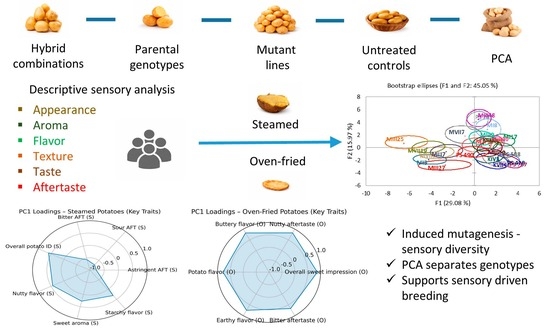
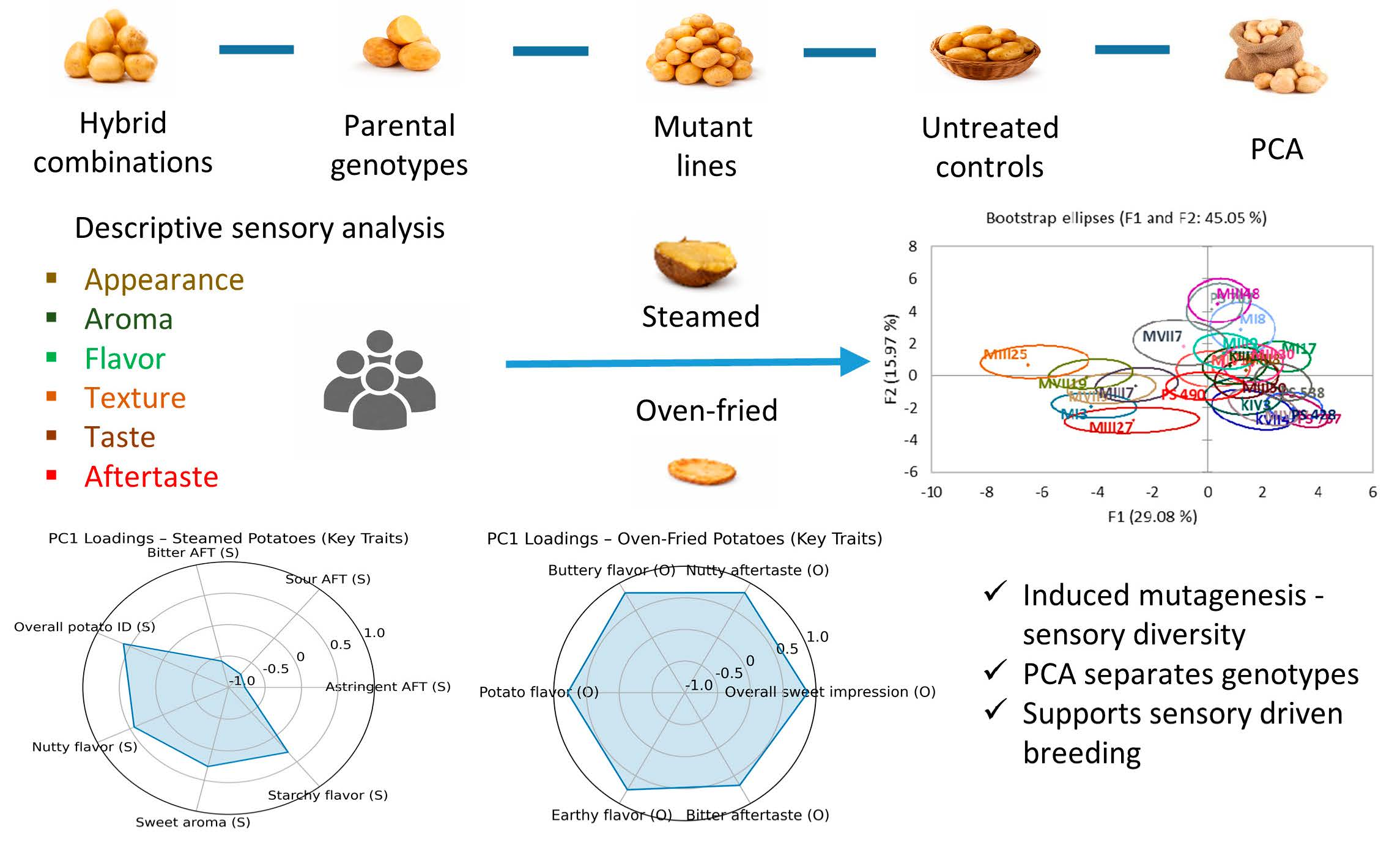
Graphical Abstract

1. Introduction

The quality of foods of plant origin is determined not only by their nutritional value but also by favorable sensory characteristics, which strongly influence consumer acceptance. Potato production is important both economically and nutritionally. In response to changing market demands and increasing consumer interest in fresh and palatable products, potato breeding can employ both conventional and non-conventional methods to generate novel genetic variability and improve end-use quality [1].
In Bulgaria, potatoes occupy a major share of the total cultivated vegetable area as well as of overall vegetable production. Average yields fluctuate considerably, as they are directly dependent on specific weather conditions. Consequently, potato breeding programs have been focused primarily on yield improvement, resistance, and final quality. Potato breeding goals, breeding line evaluation, resistance screening, and both conventional and mutation-based crop improvement approaches have been described by a number of researchers [2,3,4,5,6,7,8,9]. Quality-related studies have been mainly linked to the processing industry and to the suitability of potato breeding lines and cultivars for different production directions, as determined by end-product characteristics and productivity [10,11]. Some authors [10] evaluated potato breeding material intended for French-fry processing on the basis of technological selection criteria. Other studies addressed potato breeding for organic production, while some variety-oriented investigations also reported sensory or taste-related characteristics [7,12]. The suitability of potato cultivars and breeding lines for fresh consumption and chip processing has also been a focus of research [11,13]. Additional studies have applied correlation analysis in combination with a hedonic scale to evaluate the overall sensory quality of boiled potatoes, including appearance, aroma, color, texture, friability, starch taste, sourness, sweetness, and overall taste [14].
Conventional and non-conventional potato breeding methods are well established and widely applied; however, the sensory aspects of Bulgarian elite potato genotypes have been relatively neglected. While several studies have reported sensory characteristics, none have provided standardized sensory definitions or evaluation protocols. Moreover, many sensory attributes used in previous studies were not defined; some of the descriptors were non-discriminative and/or more appropriate for consumer language.
Therefore, the objectives of the present study were (i) to characterize the sensory profiles of advanced Bulgarian mutant potato lines obtained through induced mutagenesis after steaming and oven-frying; (ii) to compare these profiles with those of their parental genotypes and untreated controls; and (iii) to use principal component analysis (PCA) as an exploratory multivariate tool to visualize general sensory tendencies related to genotype and culinary treatment, thereby supporting potato breeding and selection from a sensory quality perspective.

2. Materials and Methods

2.1. Plant Material and Genotype Selection

Potato genotypes (Solanum tuberosum L.) from the collection of the Institute of Vegetable Crops “Maritsa”, Plovdiv, were used as plant material. Mutation induction was performed on F1 hybrid potato seeds using 0.3% ethyl methane sulfonate (EMS). The treated seeds were sown to produce M1 plants, and tubers harvested from each individual M1 plant were recorded separately as distinct mutant lines and subsequently propagated vegetatively. Untreated F1 hybrid seeds from the same hybrid combinations were sown under identical conditions and served as controls, with tubers collected and documented individually [9].
The mutant material included in the present study was selected on the basis of previously evaluated agronomic and yield-related traits, including vegetation period length, plant height, number of stems per plant, number and weight of standard and nonstandard tubers per plant, total tuber number and weight per plant, and average weight of standard size tubers. Additional morphological and preliminary sensory observations were also considered. On this basis, sixteen advanced mutant lines with favorable plant and tuber phenotypes and enhanced productivity at the M1V8 generation were selected from the first (I), third (III), fourth (IV), and seventh (VII) hybrid combinations (Table 1): M-I-3, M-I-8, M-I-17, M-III-7, M-III-8, M-III-9, M-III-25, M-III-27, M-III-30, M-III-48, M-III-50, M-IV-14, M-IV-17, M-VII-7, M-VII-9, and M-VII-19. These mutant lines, together with five parental genotypes and three control samples, were included in the sensory profiling. Tubers (1.5–2.5 kg per genotype) were packed in paper bags and stored under controlled conditions (22–25 °C, dark environment) at the Sensory Analysis Laboratory of the Institute of Food Preservation and Quality, Plovdiv, until sensory evaluation.

2.2. Culinary Sample Preparation

Potatoes can be prepared using a range of culinary methods, with quality evaluation traditionally focusing on color and texture [15]. In the present study, steaming was selected because preliminary trials indicated that it preserved the inherent potato flavor while maintaining a relatively simple texture profile, whereas oven-frying was chosen to enhance browning and caramelization attributes [16].
Representatives of each parental genotype, mutant line, and untreated control were randomly selected, washed, and scrubbed to remove surface dirt. The samples were prepared with the skin intact, and the served potato pieces were standardized by size and weight before evaluation. Each served piece was approximately 7 cm in length and 4 cm in thickness. For steamed preparation, tubers were cooked at 100 °C for 20 min, cut longitudinally into equal halves, and served to the panelists on white plates at 40–60 °C [15]. Each panelist received two equal pieces of the corresponding steamed sample. For oven-fried preparation, samples were initially handled in the same manner, then cut into halves, mixed with 7 g sunflower oil and 0.7 g salt, and placed cut side up in aluminum trays. The samples were baked in a convection oven at 185 °C for 45 min until golden brown. Each panelist received two equal pieces of the corresponding oven-fried sample.

2.3. Sensory Panel Selection, Training, and Lexicon Development

The sensory panel consisted of non-smoking adult assessors who were regular potato consumers and free from known food allergies or intolerances. Following screening for taste and aroma recognition ability, seven assessors were selected and trained in descriptive sensory analysis.
Panel training was conducted according to the methodology of Meilgaard et al. [17] over four days (2 h/day). Commercial potato cultivars were used during training to develop and refine the sensory lexicon. Calibration was performed using basic taste solutions and attribute-specific reference standards, and intensity ratings were recorded on the Spectrum™ 150 mm unstructured line scale [18]. The agreed attribute definitions, intensity references, and scale anchors are presented in Table 2 and Table 3.

2.4. Sensory Evaluation Procedure

Sensory evaluations were carried out separately for each culinary treatment in environmentally controlled, partitioned sensory booths under white incandescent lighting. Water and unsalted crackers were provided for palate cleansing between samples.
The sensory assessment of parental genotypes, mutant lines, and untreated controls under both culinary preparations included attributes related to appearance (color, glossiness, brownness, yellowness), aroma (overall potato identity, sweet, sour, earthy, raw potato, buttery), flavor (potato flavor and taste, nutty, overall sweet impression, buttery, earthy, musty–earthy, starchy, raw potato), texture (mealiness, smoothness/creaminess, grittiness, adhesiveness of mass, chewiness), taste (sweet, salty, sour, bitter), and aftertaste (starchy, bitter, chestnut, sour, astringent).
A standardized score ballot including all agreed descriptors was developed during training and used in the evaluations. Sensory testing was performed in 2 h sessions across three consecutive weeks, with each sample evaluated in three independent replicate sessions by the same seven assessors. Each evaluation session included 1 h of panel calibration and discussion, followed by the assessment of six randomly coded samples and one control sample presented in randomized monadic order.
During each session, the seven panelists first evaluated the samples individually and recorded their scores on the standardized ballots. The panel then discussed the results for each descriptor and, when necessary, panelists with clearly deviating scores were asked by the moderator to reassess the relevant attribute against the agreed reference standards. This procedure was used to reduce outlying ratings and maintain panel alignment before establishing the final corrected consensus score for each sample and descriptor in each replicate session.

2.5. Statistical Analysis

Data obtained from the consensus-based descriptive sensory analysis were explored using principal component analysis (PCA) in XLSTAT software (XLSTAT 2025.2.0, Addinsoft, Paris, France). Although individual assessor scores were recorded during evaluation and used during panel discussion and alignment, the multivariate analysis presented in this study was conducted on the final corrected panel consensus scores obtained for each sample, descriptor, and treatment.
PCA was applied as an exploratory multivariate tool to summarize the sensory dataset and to visualize general relationships and tendencies among sensory attributes, genotypes, hybrid groups, and culinary treatments. The analysis was based on the correlation matrix in order to standardize the variables and minimize scale-related effects. Genotype names were used as observation labels, while the hybrid group was included as a supplementary qualitative variable and did not contribute to the computation of the principal components. Accordingly, the PCA results were interpreted cautiously and used only as supportive graphical evidence rather than as a confirmatory method for precise varietal discrimination or formal classification.

3. Results

3.1. Sensory Evaluation of Potato Parental Genotypes, Mutant Lines and Controls Under Two Culinary Preparations

3.1.1. Sensory Attributes and Relationships in Steamed and Oven-Fried Potatoes

The sensory profiles of the steamed and oven-fried potato samples differed in the attributes most strongly expressed under each culinary treatment. Steamed samples were mainly characterized by overall potato identity, earthy and raw potato peel aromatics, potato taste, and texture-related attributes such as mealiness and grittiness. In contrast, oven-fried samples were more strongly associated with yellow and brown appearance, glossy surface, overall sweet impression, potato and buttery flavor, and texture descriptors such as chewiness, mealiness, creaminess, and adhesiveness. Negative sensory attributes, including bitter, sour, and astringent perceptions, occurred less frequently and were mainly linked to specific genotypes rather than with the overall sensory profile.
Four key descriptors were used to characterize sample appearance: color, glossiness, yellowness, and brownness. In oven-fried samples, yellow and brown color were very strongly correlated (r = 0.86), showing that these visual attributes increased concurrently during cooking. Yellow color was strongly and positively associated with chewy (r = 0.79), mealy (r = 0.92), creamy (r = 0.65), and adhesive (r = 0.66) texture, while similar relationships were observed for brown color and glossy appearance, suggesting that visually appealing oven-fried samples tended to be darker, glossier, and showed stronger texture expression. Glossiness was also linked to textural perception.
In steamed samples, color was moderately to strongly negatively correlated with bitter taste (r = −0.59), indicating that lighter colored samples were more often associated with bitter perceptions (Table S1). Sour taste was also strongly and positively correlated with bitter taste (r = 0.67), suggesting that these negative taste perceptions tended to occur together in steamed potatoes. Grittiness was positively correlated with mealiness (r = 0.46), sour taste (r = 0.42), and adhesiveness of mass (r = 0.26), indicating that a coarse, particulate mouthfeel in steamed potatoes is connected to more intense and often undesirable taste perceptions (Table S1).
Strong and very strong relationships were also identified among aroma, flavor, and aftertaste descriptors (Table S2). In oven-fried samples, potato flavor showed very strong positive correlations with overall sweet impression (r = 0.89) and buttery flavor (r = 0.84), and a strong correlation with chestnut aftertaste (r = 0.82). Overall sweet impression was also strongly associated with buttery flavor (r = 0.96) and chestnut aftertaste (r = 0.83), while buttery flavor also had a strong association with chestnut aftertaste (r = 0.81). Additional strong correlations were identified between overall sweet impression and earthy flavor (r = 0.68), buttery and earthy flavor (r = 0.63), and earthy flavor and raw potato flavor (r = 0.68). Raw potato flavor was strongly associated with bitter aftertaste (r = 0.71), and earthy flavor showed a particularly strong relationship with bitter aftertaste (r = 0.76), indicating that favorable and less favorable flavor notes could coexist in some oven-fried genotypes. A strong positive correlation was also observed between chestnut (nutty) aftertaste and overall sweet impression (r = 0.83).
For steamed samples, strong positive correlations were observed between overall potato identity aromatics and nutty flavor (r = 0.55). Earthy aromatics were strongly associated with sour aromatics (r = 0.72) and raw potato peel aromatics (r = 0.58). Raw potato peel aromatics were further correlated with potato taste (r = 0.61), while potato taste had a strong relationship with musty–earthy flavor (r = 0.56). In addition, overall sweet impression was positively associated with starchy flavor (r = 0.51), and a strong positive relationship was found between astringent and sour aftertaste (r = 0.73). These results indicate that the steamed samples expressed a broader profile of inherent potato-like, earthy, and aftertaste-related sensations than the oven-fried samples.
The sensory vocabulary used in the present study covered appearance, aroma, flavor, texture, taste, and aftertaste descriptors relevant to both culinary preparations. The numbers of genotypes in which these descriptors were identified are summarized below. For steamed samples: Color (6), glossy appearance (7); overall potato identity (11), earthy (11), raw potato peel (9), sour (7), sweet (6), and buttery aroma (2); potato taste (13), nutty (13), musty-earthy (6), starchy (5), raw potato (5), and sweet flavor (5); mealy (14), smooth (5), gritty (12) texture and adhesiveness (very weak contribution); sour (2), sweet (5), bitter (9), and salty (4) taste; and starchy (7), bitter (6), astringent (6), and sour (6) aftertaste. For oven-fried samples: Yellow (14) brown (14), and glossy appearance (14); overall sweet impression (10), potato (10), buttery (10), earthy (14), and raw potato flavor (12); chewy (14), mealy (14), creamy (14) texture, and adhesiveness (14); and bitter (14), and nutty (10) aftertaste (Table S3).

3.1.2. Aroma, Flavor, and Aftertaste Profiles of Steamed and Oven-Fried Samples

The aroma, flavor, and aftertaste descriptors used in the present study were selected on the basis of established sensory literature on potatoes and refined through panel training and consensus. Their application in the sensory profiling revealed clear differences between the steamed and oven-fried preparations and among individual genotypes.
Panelists evaluated the extent to which each sample expressed a characteristic potato- like sensory profile based on their trained sensory reference for potato identity. Samples that deviated most strongly from this expected potato like-profile included M-I-3, M-III-7, M-III-25, M-III-27, M-VII-9, M-VII-19, PS 490, and KIII2 (Table S3). These genotypes were less frequently associated with favorable potato-like aroma and flavor notes and more often showed atypical or less desirable sensory impressions.
Sweet-associated notes were not dominant across the full sample set, but a number of genotypes demonstrated a more pronounced overall sweet impression. Positive sweet-related sensory impressions in both culinary preparations were observed for M-IV-17, PS 428, PS 757, KIV3, and KVII4, while M-I-17, M-III-8, M-III-30, M-III-50, and PS 538 showed such characteristics mainly after oven-frying. In contrast, M-III-7, M-III-9, M-III-25, M-III-27, M-III-48, M-VII-7, M-VII-9, M-VII-19, and KIII2 were consistently rated as lacking sweet flavor characteristics (Table S3). This indicated that oven-frying promoted stronger sweet-related flavor impressions in selected genotypes, whereas steamed samples generally retained a milder and more restrained flavor profile.
Less favorable sensory notes were also genotype-dependent. In the steamed preparation, pronounced sour taste was observed particularly in M-III-25 and PS 707, while negative aftertaste perceptions were more frequently associated with M-I-3, M-III-7, M-III-25, M-III-27, M-VII-9, and M-VII-19 (Table S3). Bitter, sour, and astringent aftertastes were not dominant across the entire dataset, but their occurrence in specific genotypes contributed to less favorable sensory profiles and distinguished these samples from lines with more balanced aroma and flavor characteristics.
Overall, the profiling of aroma, flavor, and aftertaste highlighted that steaming tended to preserve inherent potato-like, earthy, and raw-related notes, whereas oven-frying more often enhanced sweet, buttery, and roasted flavor impressions. At the genotype level, some mutant lines displayed profiles closely aligned with favorable parental sensory characteristics, while others were characterized by weaker potato identity and a higher frequency of undesirable taste and aftertaste perceptions.

3.2. Exploratory Multivariate Analysis of Sensory Attributes

Principal component analysis (PCA) was used as an exploratory multivariate tool to summarize the sensory dataset and to visualize general relationships among sensory attributes, potato genotypes, hybrid groups, and culinary treatments. The PCA plots were interpreted as supportive graphical representations of broad sensory tendencies rather than as a confirmatory basis for precise genotype classification.

3.2.1. Aroma, Flavor, and Aftertaste

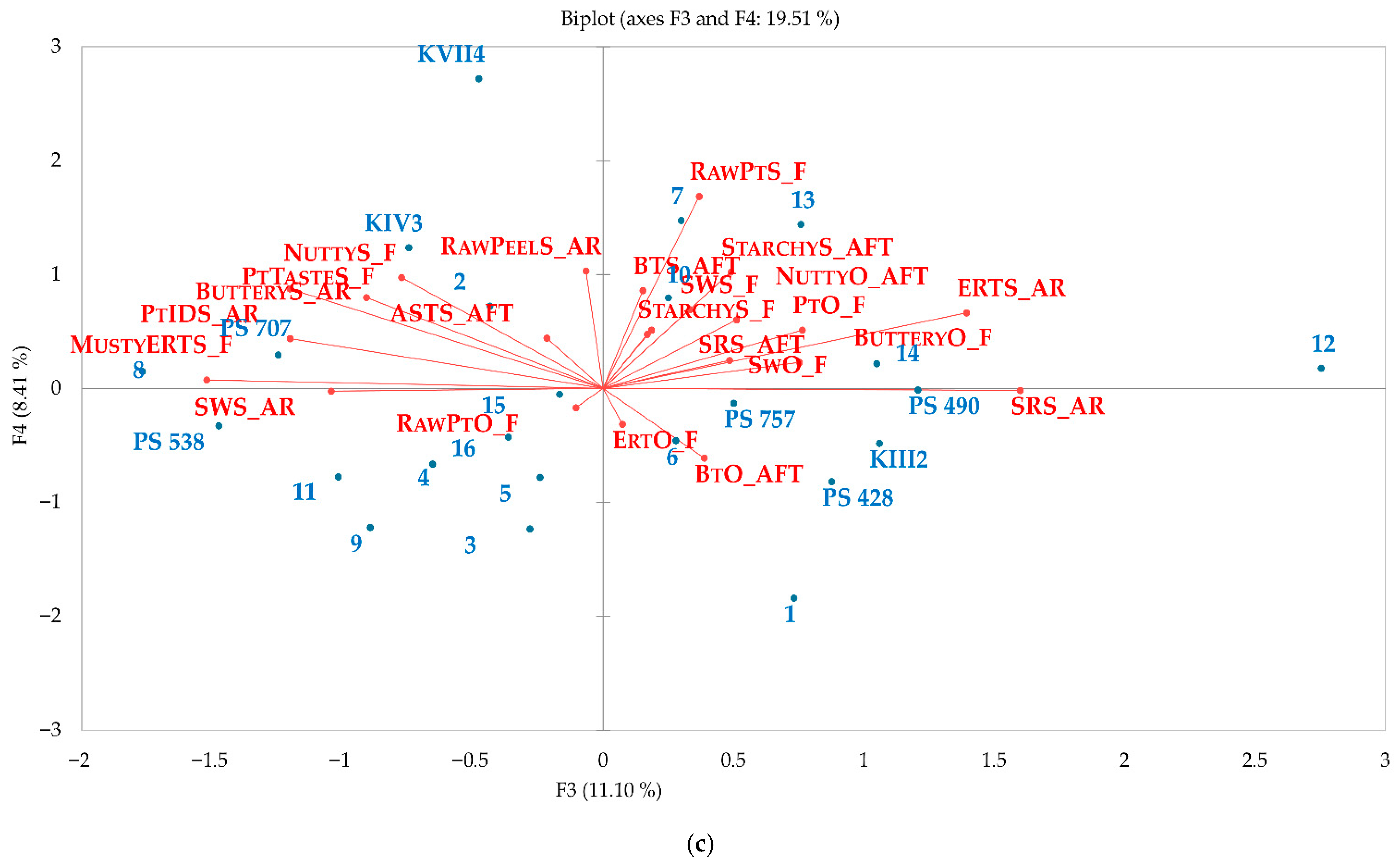
As shown in Figure 1a, the first principal component (PC1, 29.08%) and the second principal component (PC2, 15.97%) together explained 45.05% of the total variance in the sensory dataset. Inclusion of the third and fourth components increased the cumulative explained variance to 64.56%, with PC3 and PC4 accounting for an additional 19.51% (Figure 1b,c). These results indicated that variation in the sensory dataset was distributed across several dimensions and that the first two components provided only a partial two-dimensional representation of the observed variation. The observation plot suggested broad differences in sensory tendencies among the studied genotypes.
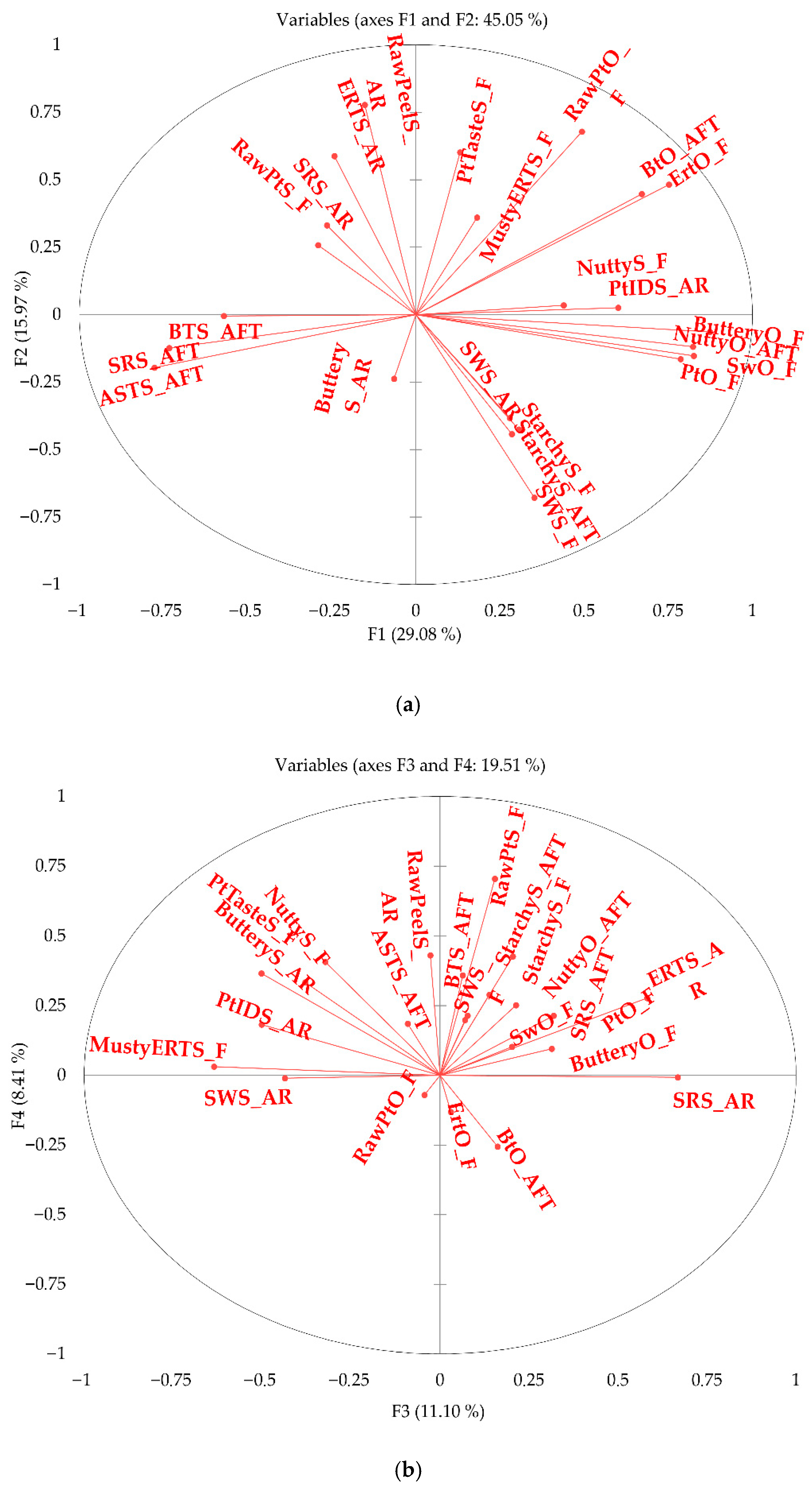
Mutant lines such as M-I-3, M-III-7, M-VII-9, and M-VII-19 clustered together on the negative side of PC1 in the third quadrant, whereas M-I-17, M-III-8, and M-III-30 were located on the positive side of PC1 in the first quadrant, suggesting contrasting sensory tendencies between these groups; M-III-25, positioned in the second quadrant, was opposed to genotypes such as PS 757 and PS 428, which clustered together in the fourth quadrant along with PS 538 and M-III-50. On PC2, M-I-8, M-III-9, M-III-48, and PS 707 showed relatively high positive scores, while the parental genotypes and controls KIV3 and KVII4 were positioned mainly in the fourth quadrant. KIII2 was located in the first quadrant together with PS 707, whereas PS 490 appeared in the third quadrant. The relationships between the retained components and the original sensory variables are shown in the loading plots and tables (Figure A1a, Table A1). Attributes with larger vector lengths and stronger absolute loadings contributed more strongly to the positioning of samples along the principal components. Along PC1, oven-fried potato flavor attributes including potato flavor, overall sweet impression, buttery and earthy flavor, as well as bitter and nutty aftertastes which aligned positively with the axis and exhibited relatively high loading magnitudes, indicating that they contributed strongly to the positioning of samples on this dimension. Steamed potato descriptors such as overall potato identity aromatics and nutty flavor loaded in the same direction, although with somewhat smaller magnitudes. In contrast, negative PC1 loadings were associated mainly with less favorable steamed aftertaste attributes, particularly bitter, astringent, and sour aftertastes. Thus, PC1 may be interpreted as reflecting a broad contrast between more positive flavor-related characteristics and less desirable aftertaste-related sensations.
For PC2, steamed sensory attributes such as earthy and raw potato peel aromatics and potato taste flavor, along with oven-fried raw potato flavor and both earthy and bitter aftertaste, loaded positively with high to moderate magnitudes, indicating their relevance in the positioning of samples along this axis. In contrast, overall sweet impression, starchy flavor, and starchy aftertaste were negative on this axis. Accordingly, PC2 can be interpreted as reflecting a contrast between earthy/raw/potato-related sensory notes and sweeter or starch-related impressions. PC3 (11.10% of the variance) was more closely connected to sour and earthy aromatics in steamed potatoes, whereas PC4 (8.41% of the variance) was associated mainly with steamed raw potato flavor, starchy aftertaste, raw potato peel aromatics, and nutty flavor (Figure A1b, Table A1).
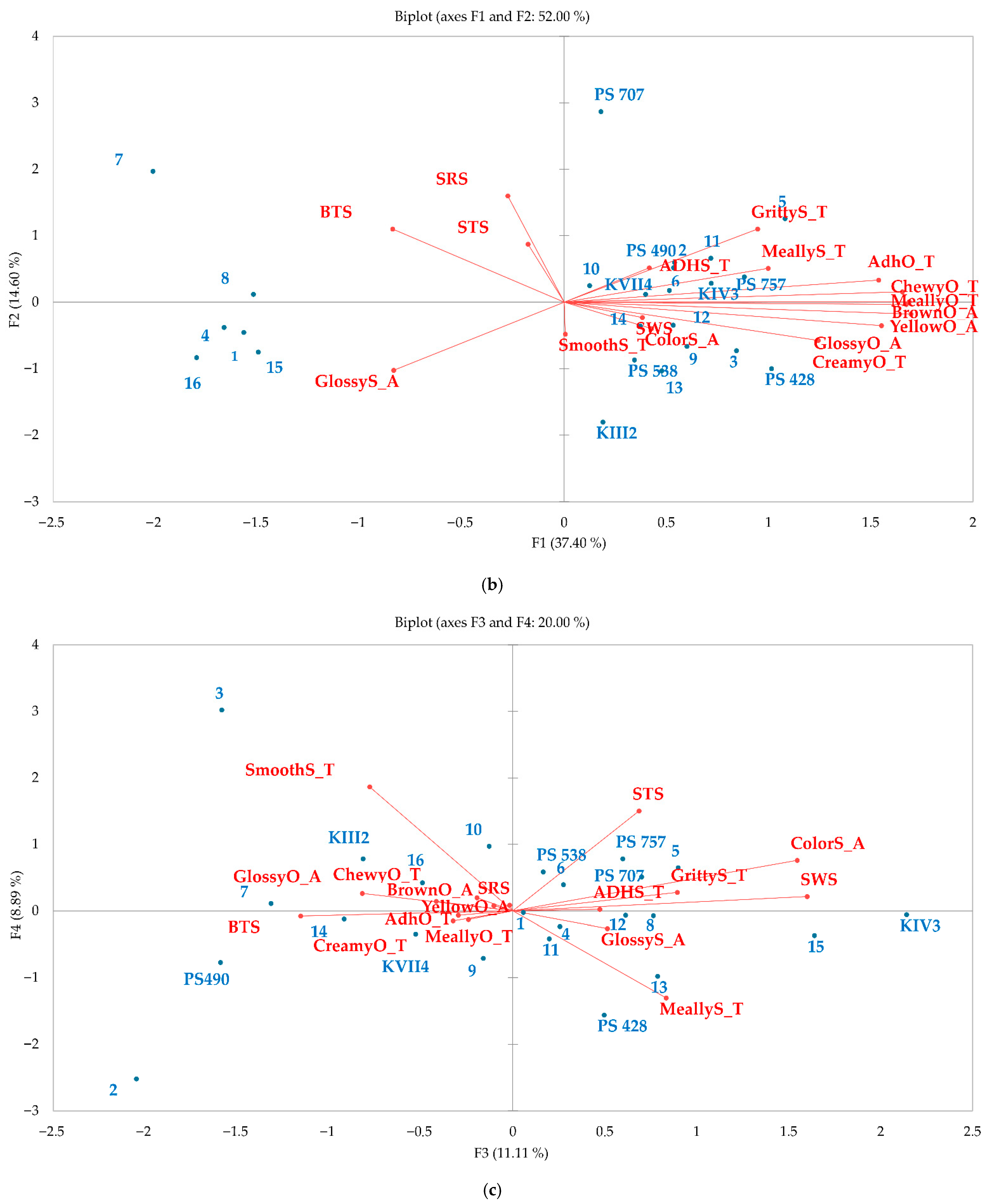
The PCA biplot provided a visual overview of how the different genotypes were linked to these sensory tendencies (Figure 1b). As shown in Figure 1b, six mutant lines (M-I-3, M-III-7, M-III-25, M-III-27, M-VII-9, M-VII-19) clustered in the region associated with undesirable steamed potato attributes, particularly bitter, sour, and astringent aftertastes. In contrast, PS 707 and M-III-48 were with positive loadings for steamed earthy and raw potato peel aromatics, potato taste, and moderate musty earthy flavor, as well as oven-fried raw potato flavor and moderate earthy and bitter aftertaste. Mutant lines such as M-III-50 and PS 538 were more closely aligned with favorable oven-fried sensory attributes, including potato flavor, overall sweet impression, buttery flavor, and nutty aftertaste, together with steamed potato identity aromatics and moderate nutty flavor; M-III-8, M-III-30, and M-I-17 aligned more with earthy flavor and bitter aftertaste and the remaining oven-fried flavor traits, while still displaying nutty flavor and potato identity aromatics in the steamed preparations.
Among the parental and control genotypes, PS 757, PS 428, and M-IV-17 were more closely associated with overall sweet impression, moderate starchy characteristics, and sweet notes. Along PC2, PS 707 and M-III-48 grouped closely, while M-I-8 and M-III-9 aligned with steamed earthy and raw potato peel aromatics, potato taste, and moderate musty–earthy flavor, together with oven-fried raw potato and earthy flavor, and bitter aftertaste. M-VII-7 was also associated with steamed earthy and raw peel aromatics, potato taste, and moderate musty–earthy flavor, along with a weaker link to oven-fried raw potato flavor. On PC3, M-IV-14, together with the control KIII2 and the parent PS 490, demonstrated higher contributions from steamed sour and earthy aromatics and weaker oven-fried potato and buttery flavor. On PC4, M-III-25 aligned with steamed raw potato flavor as well as moderate raw peel aromatics and starchy aftertaste. Among the controls, KIV3 exhibited raw peel and buttery aromatics and nutty flavor, and KVII4 showed raw potato flavor, raw peel aromatics, nutty flavor, buttery aromatics and starchy aftertaste.
Overall, the exploratory PCA supported the descriptive sensory profiling by demonstrating broad genotype and hybrid-related tendencies across the two culinary treatments. However, these multivariate patterns were interpreted cautiously and used only as supportive graphical evidence alongside the mean sensory profiles and comparisons with parental genotypes and controls.

3.2.2. Appearance, Texture and Taste

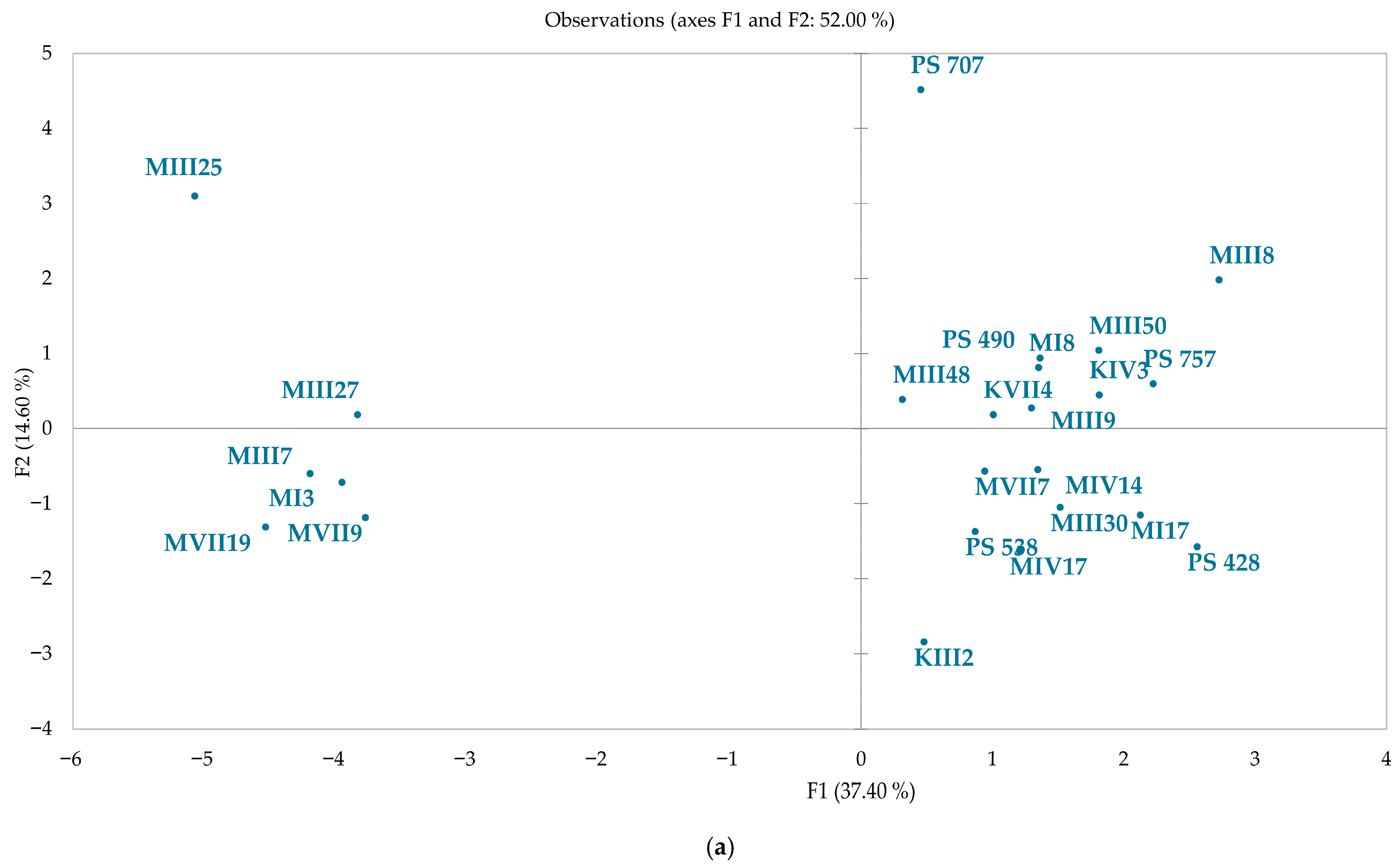
Principal component analysis (PCA) was used as an exploratory tool to summarize the appearance, texture, and taste attributes of the potato genotypes after steaming and oven-frying. As shown in Figure 2a, the first principal component (PC1, 37.40%) and the second principal component (PC2, 14.60%) together explained 52.00% of the total variance in this sensory subset. The first four components had eigenvalues greater than one and accounted for a substantial proportion of the total variability, while PC1-PC4 are presented in the Appendix A and Appendix B for complementary interpretation (Table A2; Figure A2a,b). The score plot suggested broad differences in sensory tendencies among the studied genotypes. Mutant lines M-I-3, M-III-7, M-VII-9, and M-VII-19 were grouped on the negative side of PC1, while M-III-27 and M-III-25 occupied a similar PC1 position but were distinguished by higher positive scores on PC2. In contrast, PS 757, PS 428, M-I-17, M-III-8, M-III-30, and M-III-50 were located on the positive side of PC1, mainly in the first and fourth quadrants; PS 707 showed the highest positive score on PC2, whereas the control KIII2 was positioned at the negative extreme of this axis.
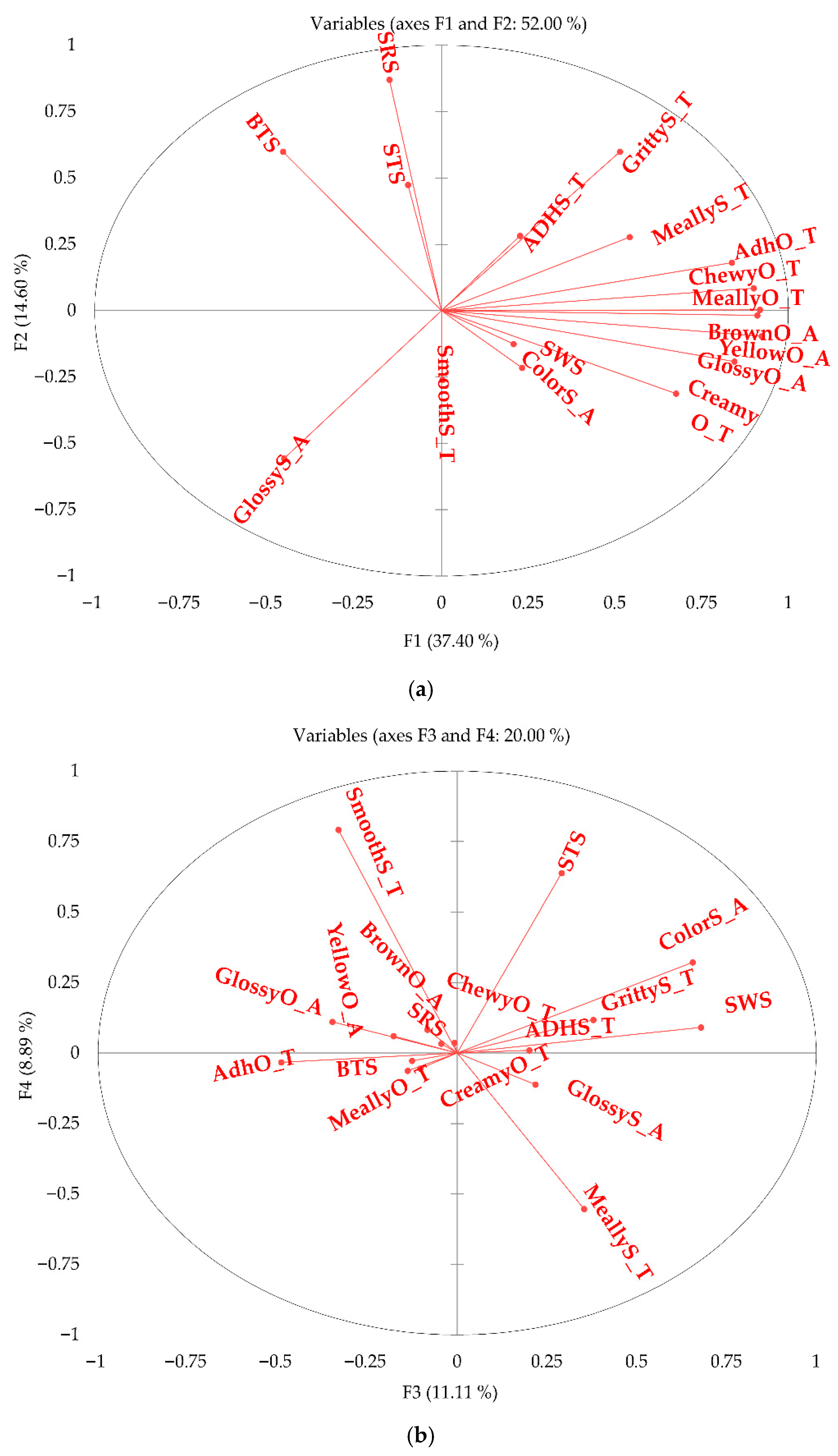
The loading plots (Figure A2a) indicated that PC1 was associated mainly with oven-fried appearance and texture descriptors, including yellow and brown color, glossy appearance, and chewy, mealy, creamy, and adhesive texture. In contrast, the glossy appearance of steamed samples loaded in the opposite direction, contributing to the main contrast represented by this component. PC2 was more closely linked to steamed texture and taste attributes, particularly sour, bitter, and salty taste together with gritty texture, whereas smooth texture and glossy appearance of steamed potatoes loaded negatively on this axis. Thus, PC1 may be interpreted as reflecting broad variation connected to oven-fried appearance and texture expression, while PC2 reflected variation in steamed texture and taste characteristics.
The biplot (Figure 2b) provided a visual overview of the relationships between genotypes and sensory descriptors. Mutant lines positioned on the negative side of PC1, including M-I-3, M-III-7, M-VII-9, M-VII-19, M-III-27, and M-III-25, were located closer to the sensory region associated with steamed sour and bitter taste and glossy appearance, suggesting less favorable appearance and taste tendencies. In contrast, most parental genotypes, controls, and several mutant lines positioned on the positive side of PC1 were more closely associated with oven-fried appearance and texture descriptors, including yellow and brown color, glossy appearance, chewy and mealy texture, creamy mouthfeel, and adhesiveness. PS 707 was positioned distinctly along PC2, indicating a distinct steamed texture and taste profile, while KIII2 was located opposite to the region associated with steamed sour and gritty attributes. The PC3-PC4 biplot (Figure 2c) was included for completeness and complementary interpretation, as these components contributed less to the overall explained variance and were not central to the main discussion.
Overall, the exploratory PCA supported the descriptive sensory profiling by showing broad genotype-related tendencies in appearance, texture, and taste across the two culinary treatments. However, these multivariate patterns were interpreted cautiously and used only as supportive graphical evidence alongside the mean sensory profiles and comparisons with parental genotypes and controls.

4. Discussion

The present study demonstrated that the sensory profiles of advanced Bulgarian mutant potato lines differed according to both genotype and culinary treatment. Similar genotype-dependent differences in potato flavor and sensory quality have been reported previously in baked, boiled, and other cooked potato materials [21,26,27,28,29,30,31]. In the current work, steaming tended to preserve more intrinsic potato-like, earthy, and raw-related notes, whereas oven-frying was associated with stronger yellow/brown appearance, sweeter and more buttery flavor impressions, and a richer texture profile. These results indicated culinary preparation can substantially influence the expression and perception of sensory traits, supporting the value of assessing breeding material under more than one processing condition when sensory quality is an important selection criterion. This interpretation is consistent with earlier studies showing that thermal processing affects the formation of volatile and non-volatile compounds in potato, thereby contributing to differences in aroma, flavor, texture, and aftertaste perception [26,27,28,29,30].
Beyond the effects of culinary treatment, the sensory profiling also revealed clear differences among mutant lines in their resemblance to the parental genotypes and control cultivars. Several lines retained sensory profiles that were relatively close to the more desirable parental characteristics, particularly in terms of clear potato identity, favorable flavor notes, and balanced texture attributes. In contrast, other lines were more frequently associated with less desirable traits, including bitter, sour, or astringent aftertastes, weaker potato identity, and a less balanced overall flavor profile. These findings suggest that induced mutagenesis generated substantial sensory variation within the studied breeding material. Importantly, this variation could be characterized in a manner relevant to breeding, allowing sensory profiling to support the identification of lines with more favorable eating quality.
Under steamed conditions, the sensory profiles were more strongly associated with overall potato identity, earthy and raw potato peel aromatics, potato taste, and selected texture attributes such as mealiness and grittiness. In contrast, oven-fried samples were more frequently linked to yellow and brown appearance, glossy surface, overall sweet impression, buttery and potato flavor, nutty aftertaste, and a more pronounced texture profile. From a breeding perspective, these results suggest that genotypes expressing favorable sensory characteristics under one culinary treatment may not necessarily show the same advantages under another. Accordingly, sensory evaluation based on a single preparation method may provide only a partial view of the quality potential of advanced breeding material. This interpretation is in accord with previous studies claiming that culinary preparation influences the sensory expression of potato samples and that appearance, flavor, and texture descriptors vary across the preparation manner [15,16]. The stronger yellow and brown appearance observed in the oven-fried samples is also broadly consistent with reports indicating that potato color is affected by both inherent pigment composition and processing-related changes associated with cooking method [32,33,34,35]. In addition, previous Bulgarian work has highlighted the importance of color and related sensory traits in the evaluation of boiled potatoes, supporting the inclusion of appearance attributes in breeding oriented sensory assessment [36].
Comparison with the parental genotypes provided additional context for interpreting the sensory performance of the mutant lines. In general, the parental lines were more often associated with classic and desirable potato sensory characteristics, particularly clear potato identity, favorable flavor expression, and attractive oven-fried appearance and texture. However, the parental material did not perform uniformly across all culinary treatments, and some less positive sensory notes were also observed under specific preparation conditions. The untreated controls were generally less closely associated with the more favorable sensory regions, supporting their use primarily as comparative baselines rather than as quality standards. Against this background, several mutant lines showed promising sensory expression that approached or partially retained desirable parental characteristics, whereas others diverged toward less favorable profiles.
Although the present study focused on individual mutant lines, some broader tendencies were also apparent at the level of hybrid origin. Mutant lines derived from Hybrids III and I more often exhibited favorable sensory tendencies, particularly in relation to potato identity, nutty or sweet-associated flavor expression, and positive oven-fried sensory traits. Hybrid IV showed a more intermediate pattern, with sensory expression appearing to depend more strongly on culinary treatment. In contrast, lines derived from Hybrid VII were more frequently connected to reduced potato identity and less favorable taste and aftertaste characteristics. These group level tendencies should, however, be interpreted with caution and regarded as secondary patterns rather than primary outcomes because substantial variation remained evident among individual mutant lines within the same hybrid background.
Exploratory PCA further supported the visualization of these general sensory tendencies by showing how genotypes and sensory descriptors were positioned relative to one another across the two culinary treatments. In this context, PCA was useful for providing a broad graphical overview of the sensory space and for illustrating associations between more favorable flavor-related attributes and less desirable aftertaste-related sensations. However, the PCA results were interpreted cautiously and were not used as a confirmatory basis for precise varietal discrimination or formal classification. The main conclusions of this study were therefore drawn from the observed sensory profiles themselves and from comparisons among mutant lines, parental genotypes, and controls.
The descriptive relationships among sensory attributes also supported the interpretation of the profiles obtained. In steamed samples, more negative taste and aftertaste perceptions tended to occur together, whereas in oven-fried samples attractive visual and textural properties were more often accompanied by favorable flavor impressions such as sweet, buttery, and potato-like notes. The contrast observed here between smoother/waxier and mealier/grittier texture dimensions is broadly consistent with earlier sensory descriptions of potato texture and with studies demonstrating that texture perception is linked to compositional differences in the tuber [15,26,37]. Likewise, previous work has shown that waxier texture profiles were associated with differences in saccharides, sugar acids, and amino acids, supporting the view that sensory texture and flavor perception in potato were shaped by underlying chemical composition [38].
These relationships suggest that sensory quality in potatoes is not determined by a single trait, but rather by combinations of appearance, texture, aroma, flavor, taste, and aftertaste that are expressed differently depending on both genotype and processing method. This multidimensional nature of sensory quality reinforces the value of a descriptive profiling approach when evaluating breeding material.
The present results also provide a practical breeding perspective. Mutant lines that combined stronger potato identity, favorable oven-fried flavor development, balanced texture, and lower intensities of bitterness or astringency appeared to be the most promising candidates for further selection. At the same time, the variability observed among mutant lines indicated that sensory improvement through mutagenesis was possible, but not uniform, and therefore required careful evaluation at the level of individual genotypes. In this context, the inclusion of both parental genotypes and controls was especially valuable, as it allowed clearer distinction between lines that retained or improved desirable sensory characteristics and those that diverged from them. The occurrence of bitter, sour, and astringent perceptions in some genotypes was broadly consistent with previous reports showing that undesirable potato taste and aftertaste attributes may be associated with glycoalkaloids and other non-volatile constituents, including phenolic and organic acid-related compounds [38,39,40,41,42,43]. Because these compounds were not quantified in the present study, however, such biochemical interpretations should be regarded as tentative.
Our previous metabolomics study [43] provides additional context for the sensory diversity observed in the present work. That study indicated that advanced mutant lines may differ substantially in metabolite composition, including phenolic profiles and antioxidant capacity. However, because the chemical composition of the sensory tested samples was not determined in the present experiment, no direct metabolite/sensory relationships can be established here. Accordingly, this biochemical context should be regarded as supportive and hypothesis-generating rather than as a direct explanation of the sensory results. Even so, the broader interpretation is in agreement with earlier studies [30,34], which showed that potato sensory attributes may be aligned with underlying metabolite composition and genotype-dependent differences in flavor-related compounds. Similarly, the more desirable sweet, buttery, and potato-like impressions observed in some oven-fried samples may be related to variation in flavor precursor composition and cooking-related aroma formation, as suggested by some other previous work [38,44] on potato flavor chemistry. Accordingly, the biochemical context is best regarded as supportive and hypothesis-generating rather than as a direct explanation of the sensory results.
Overall, the findings demonstrate that sensory profiling can yield useful breeding-relevant information for advanced Bulgarian mutant potato lines. Steaming and oven-frying revealed different aspects of sensory quality, and several mutant lines showed favorable profiles that aligned with desirable parental characteristics. At the same time, some lines were more strongly associated with less favorable taste and aftertaste attributes, indicating that sensory quality remains highly genotype-dependent. These results support the value of descriptive sensory profiling as an informative tool in the evaluation and selection of potato breeding material intended for consumer acceptable culinary use.

5. Conclusions

The present study revealed that the sensory profiles of advanced Bulgarian mutant potato lines were strongly influenced by both genotype and culinary treatment. Steaming emphasized inherent potato-like, earthy, and raw-related sensory notes, whereas oven-frying enhanced yellow/brown appearance, sweet–buttery flavor impressions, and richer texture expression. Comparisons with parental genotypes and untreated controls demonstrated several mutant lines retained or approached desirable parental sensory characteristics, while others were more frequently associated with less favorable attributes, including bitter, sour, and astringent aftertastes.
Overall, the results indicated that descriptive sensory profiling could provide breeding relevant information for the evaluation of advanced potato mutant lines. Several lines showed favorable combinations of potato identity, flavor, appearance, and texture, indicating potential for further selection, whereas others expressed less desirable sensory tendencies. Broader patterns were also apparent at the level of hybrid origin, with lines from Hybrids III and I more often exhibiting favorable sensory expression, Hybrid IV displaying intermediate potential, and Hybrid VII more often associated with less favorable attributes. These findings support the value of integrating sensory profiling into potato breeding programs aimed at improving consumer relevant culinary quality.

Supplementary Materials

The following supporting information can be downloaded at: https://www.mdpi.com/article/10.3390/agronomy16080826/s1, Table S1: Pearson correlation matrix of standardized appearance, texture, and taste sensory attributes of 24 potato genotypes evaluated after steaming (S) and oven-frying (O). Table S2: Pearson correlation matrix of standardized aroma, flavor, and aftertaste sensory attributes of 24 potato genotypes evaluated after steaming (S) and oven-frying (O). Table S3: Summary of PCA-based sensory profiles of potato hybrid groups, based on the directional association of key sensory attributes along PC1–PC4 dimensions, after steaming (S) and oven-frying (O).

Author Contributions

Conceptualization, D.I. and N.T.; methodology, D.I.; software, D.I.; validation, D.I. and N.T.; formal analysis, D.I.; investigation, D.I.; resources, N.T., E.N. and D.I.; data curation, D.I.; writing—original draft preparation, D.I.; writing—review and editing, D.I. and N.T.; visualization, D.I.; supervision, N.T. and D.I.; project administration, N.T.; funding acquisition, N.T. All authors have read and agreed to the published version of the manuscript.

Funding

This research received no external funding.

Data Availability Statement

The original contributions presented in this study are included in the article/Supplementary Materials. Further inquiries can be directed to the corresponding author.

Acknowledgments

The authors gratefully acknowledge the financial and technical support provided by the International Atomic Energy Agency (IAEA) through Technical Cooperation Project BUL5020 as well as the administrative and technical support provided by the Agricultural Academy of Bulgaria during the study.

Conflicts of Interest

The authors declare no conflicts of interest.

Appendix A

The following tables and figures belong to Appendix A and Appendix B: Table A1. Principal component analysis (PCA) results of percentage of variance explained and loadings of sensory descriptors (aroma, flavor, aftertaste) for 24 potato genotypes evaluated after steaming and oven-frying. Table A2. Principal component analysis (PCA) results of percentage of variance explained and loadings of sensory descriptors (appearance, texture, taste) for 24 potato genotypes evaluated after steaming and oven-frying. Figure A1. Representation of (a) loading plot demonstrating the sensory traits defining the first and second principal components (PC1; PC2); (b) loading plot demonstrating the sensory traits defining the third and fourth principal components (PC3; PC4) of 16 promising potato mutant lines, five parental genotypes, and three controls after steaming and oven-frying and the associated aroma, flavor, and aftertaste descriptors. Figure A2. Representation of (a) loading plot demonstrating the sensory traits defining the first and second principal components (PC1; PC2); (b) loading plot demonstrating the sensory traits defining the third and fourth principal components (PC3; PC4) of 16 promising potato mutant lines, five parental genotypes, and three controls after steaming and oven-frying and the associated appearance, texture, and taste descriptors.
Table A1. Percentage of variance explained and loadings of aroma, flavor, and aftertaste descriptors in the PCA of 24 potato genotypes evaluated after steaming and oven-frying.
PCPC1PC2PC3PC4
Variance explained, %29.0815.9711.108.41
Descriptive attributes 1
Overall potato ID s0.6010.026−0.5010.182
Sweet
aromatics s
0.279−0.383−0.436−0.010
Sour
aromatics s
−0.2640.3310.668−0.007
Earthy
aromatics s
−0.2420.5880.5820.278
Raw potato peel aromatics s−0.1520.777−0.0270.431
Buttery
aromatics s
−0.065−0.238−0.3790.334
Potato
taste s
0.1310.601−0.5020.365
Nutty
flavor s
0.4390.035−0.3230.407
Overall sweet impression s0.352−0.6780.1390.289
Musty–earthy flavor s0.1820.360−0.6350.031
Starchy
flavor s
0.306−0.4250.0700.199
Raw potato
flavor s
−0.2910.2580.1540.704
Starchy
aftertaste s
0.285−0.4430.2050.427
Bitter
aftertaste s
−0.571−0.0050.0640.359
Astringent
aftertaste s
−0.777−0.197−0.0900.185
Sour
aftertaste s
−0.733−0.1240.0780.214
Potato
Flavor o
0.787−0.1650.3190.214
Overall sweet impression o0.873−0.0640.2020.102
Buttery
Flavor o
0.823−0.1190.3140.095
Earthy
Flavor o
0.7520.4820.031−0.131
Raw potato
Flavor o
0.4940.678−0.044−0.070
Bitter
Aftertaste o
0.6710.4470.162−0.255
Nutty
Aftertaste o
0.826−0.1530.2140.252
1 The suffixes s and o indicate steamed and oven-fried samples, respectively.
Table A2. Percentage of variance explained and loadings of appearance, texture, and taste descriptors in the PCA of 24 potato genotypes evaluated after steaming and oven-frying.
PCPC1PC2PC3PC4
Variance explained, %37.4014.5911.108.89
Descriptive attributes 1
Color s0.232−0.2160.6560.323
Glossy s−0.454−0.5570.218−0.112
Mealy s0.5430.2770.354−0.553
Smooth s0.003−0.261−0.3310.791
Gritty s0.5150.5990.3790.118
Adhesive s0.2260.2820.2010.010
Salty s−0.0960.4740.2910.637
Sour s−0.1500.870−0.0440.033
Sweet s0.208−0.1260.6790.091
Bitter s−0.4570.599−0.490−0.033
Yellow o0.923−0.097−0.0080.036
Brown o0.911−0.018−0.0830.083
Glossy o0.844−0.192−0.3480.111
Chewy o0.9060.1810.089−0.174
Mealy o0.9280.089−0.070−0.223
Creamy o0.691−0.007−0.153−0.150
Adhesive o0.8770.189−0.161−0.046
1 The suffixes s and o indicate steamed and oven-fried samples, respectively.

Appendix B

Figure A1. Loading plots of aroma, flavor, and aftertaste descriptors from the PCA of 16 advanced potato mutant lines, five parental genotypes, and three untreated controls after steaming and oven-frying. (a) Loadings on PC1 and PC2. (b) Loadings on PC3 and PC4. Variable loadings correspond to the values reported in Table A1.
Agronomy 16 00826 g0a1
Figure A2. Loading plots of appearance, texture, and taste descriptors from the PCA of 16 advanced potato mutant lines, five parental genotypes, and three untreated controls after steaming and oven-frying. (a) Loadings on the first and second principal components (PC1 and PC2). (b) Loadings on the third and fourth principal components (PC3 and PC4). Variable loadings correspond to the values reported in Table A2.
Agronomy 16 00826 g0a2

References

  1. Kumari, M.; Kumar, M.; Solankey, S. Breeding potato for quality improvement. In Potato: From Incas to All over the World; Yildiz, M., Ed.; IntechOpen: London, UK, 2018; Chapter 1; pp. 37–61. [Google Scholar]
  2. Jovović, Z.; Dolijanović, Ž.; Kovačević, D.; Velimirović, A.; Biberdžić, M. The productive traits of different potato genotypes in mountainous region of Montenegro. Genetika 2012, 44, 389−397. [Google Scholar] [CrossRef]
  3. Sapakhova, Z.; Abilda, Z.; Toishimanov, M.; Daurov, D.; Daurova, A.; Raissova, N.; Sidorik, A.; Kanat, R.; Zhambakin, K.; Shamekova, M. Early Generation Selection of Potato Breeding Lines. Horticulturae 2024, 10, 1121. [Google Scholar] [CrossRef]
  4. Masheva, S.; Mihov, M. Trends of the Research Work in Vegetable Crops and Potatoes in Bulgaria. In Acta Horticulturae. Proceedings of the IVth Balkan Symposium on Vegetables and Potatoes, Plovdiv, Bulgaria, 17 June 2009; Krasteva, L., Panayotov, N., Eds.; ISHS: Plovdiv, Bulgaria, 2009; pp. 397–404. [Google Scholar] [CrossRef]
  5. Fang, G.; Yang, S.; Ruan, B.; Ye, G.; He, M.; Su, W.; Zhou, Y.; Wang, J.; Yang, S. Research Progress on Physiological, Biochemical, and Molecular Mechanisms of Potato in Response to Drought and High Temperature. Horticulturae 2024, 10, 827. [Google Scholar] [CrossRef]
  6. Przetakiewicz, A.; Milczarek, D. Evaluation of potato cultivars and breeding lines for resistance to Globodera rostochiensis and Globodera pallida. Plant Breed. Seed Sci. 2017, 76, 3–8. [Google Scholar] [CrossRef]
  7. Nacheva, E.; Pevicharova, G. Evridika—A new potato variety for mid-early production. J. Mt. Agric. Balkans 2022, 25, 409–421. [Google Scholar]
  8. Tomlekova, N.B. Induced mutagenesis for crop improvement in Bulgaria. Plant Mutat. Rep. 2010, 2, 4–27. [Google Scholar]
  9. Nacheva, E.; Tomlekova, N.; Petkova, V. Induced mutagenesis in F1 hybrid seeds of potato. Bulg. J. Ecol. Sci. 2012, 11, 30–35. [Google Scholar]
  10. Ozkaynak, E. Revolutionizing Narrow scope potato breeding: Using dry matter and PVY as selection criteria for high quality cultivars. Turk. J. Field Crops. 2025, 30, 352−363. [Google Scholar] [CrossRef]
  11. Wayumba, B.O.; Choi, H.S.; Seok, L.Y. Selection and evaluation of 21 potato (Solanum tuberosum) breeding clones for cold chip processing. Foods 2019, 8, 98. [Google Scholar] [CrossRef]
  12. Keijzer, P.; Lammerts van Bueren, E.T.; Engelen, C.J.M.; Hutten, R.C.B. breeding late blight resistant potatoes for organic farming—A collaborative model of participatory plant breeding: The Bioimpuls Project. Potato Res. 2022, 65, 349−377. [Google Scholar] [CrossRef]
  13. Nacheva, E.; Pevicharova, G.; Petkova, V.; Samaliev, H. Pavelsko—A new Bulgarian potato variety suitable for chips. Turk. J. Agric. Nat. Sci. 2014, 1, 1554–1558. [Google Scholar]
  14. Pevicharova, G. Correlations between sensory traits of boiled potatoes. Bulg. J. Agric. Sci. 2015, 21, 877–881. [Google Scholar]
  15. Seefeldt, H.F.; Tønning, E.; Thybo, A.K. Exploratory sensory profiling of three culinary preparations of potatoes (Solanum tuberosum L.). J. Sci. Food Agric. 2011, 91, 104–112. [Google Scholar] [CrossRef]
  16. Sharma, C.; Chambers, E., IV; Jayanty, S.S.; Sathuvalli, V. Development of a lexicon to describe the sensory characteristics of a wide variety of potato cultivars. J. Sens. Stud. 2020, 35, e12577. [Google Scholar] [CrossRef]
  17. Meilgaard, M.; Civille, G.; Carr, B. Sensory Evaluation Techniques, 4th ed.; CRC Press: Boca Raton, FL, USA, 2006; p. 464. [Google Scholar] [CrossRef]
  18. Meilgaard, M.; Civille, G.; Carr, B. The Spectrum™ descriptive analysis method. In Sensory Evaluation Techniques, 3rd ed.; CRC Press: Boca Raton, FL, USA, 1999; p. 416. [Google Scholar] [CrossRef]
  19. Meilgaard, M.C. Testing for sensory threshold of added substances. J. Am. Soc. Brew. Chem. 1991, 49, 128–135. [Google Scholar] [CrossRef]
  20. Civille, G.V.; Lyon, B.G. Aroma and Flavor Lexicon for Sensory Evaluation: Terms, Definitions, References, and Examples; ASTM International: Madison, WI, USA, 1996. [Google Scholar]
  21. Jansky, S.H. Potato flavor. Am. J. Potato Res. 2010, 87, 209–217. [Google Scholar] [CrossRef]
  22. Chu, C.; Resurreccion, A.V.A. Development and optimization of a chocolate peanut spread using response surface methodology. In Proceedings of the 2002 Annual Meeting and Food Expo, Anaheim, CA, USA, 15–19 June 2002. [Google Scholar]
  23. Plemmons, L.E.; Resurreccion, A.V.A. A warm-up sample improves reliability of responses in descriptive analysis. J. Sens. Stud. 1998, 13, 359–376. [Google Scholar] [CrossRef]
  24. Walker, J.C.; Jennings, R.A. Comparison of odor perception in humans and animals. In The Human Sense of Smell; Laing, D.G., Doty, R.L., Breipohl, W., Eds.; Springer: Berlin, Germany, 1991; pp. 261–280. [Google Scholar]
  25. Grosso, N.R.; Resurreccion, A.V.A. Predicting consumer acceptance ratings of cracker-coated and roasted peanuts from descriptive analysis and hexanal measurements. J. Food Sci. 2002, 67, 1530–1537. [Google Scholar] [CrossRef]
  26. Jansky, S.H. Genotypic and environmental contributions to baked potato flavor. Am. J. Potato Res. 2008, 85, 455–465. [Google Scholar] [CrossRef]
  27. Bough, R.; Holm, D.; Jayanty, S. Evaluation of cooked flavor for fifteen potato genotypes and the correlation of sensory analysis to instrumental methods. Am. J. Potato Res. 2020, 97, 63–77. [Google Scholar] [CrossRef]
  28. Morris, W.; Shepherd, T.; Verrall, S.; McNicol, J.; Taylor, M. Relationships between volatile and non-volatile metabolites and attributes of processed potato flavour. Phytochemistry 2010, 71, 1765–1773. [Google Scholar] [CrossRef]
  29. McKenzie, M.; Corrigan, V. Potato flavor. In Advances in Potato Chemistry and Technology, 2nd ed.; Singh, J., Kaur, L., Eds.; Academic Press: London, UK, 2016; pp. 339–368. [Google Scholar]
  30. Ulrich, D.; Hoberg, E.; Neugebauer, W.; Tiemann, H.; Darsow, U. Investigation of the boiled potato flavor by human sensory and instrumental methods. Am. J. Potato Res. 2000, 77, 111–117. [Google Scholar] [CrossRef]
  31. Duckham, S.C.; Dodson, A.T.; Bakker, J.; Ames, J.M. Volatile flavour components of baked potato flesh: A comparison of eleven potato cultivars. Food 2001, 45, 317–323. [Google Scholar] [CrossRef]
  32. Costell, E.; Carbonell, I.; Tárrega, A.; Bayarri, S. Sensory quality control of fresh produce. In Sensory Analysis for Food and Beverage Quality Control: A Practical Guide; Kilcast, D., Ed.; Woodhead Publishing: Cambridge, UK, 2010; pp. 276–292. [Google Scholar] [CrossRef]
  33. Delgado-Vargas, F.; Jiménez, A.; Paredes-López, O. Natural Pigments: Carotenoids, Anthocyanins, and Betalains—Characteristics, Biosynthesis, Processing, and Stability. Crit. Rev. Food Sci. Nutr. 2000, 40, 173–289. [Google Scholar] [CrossRef]
  34. Hejtmánková, K.; Kotíková, Z.; Hamouz, K.; Pivec, V.; Vacek, J.; Lachman, J. Influence of flesh colour, year and growing area on carotenoid and anthocyanin content in potato tubers. J. Food Compos. Anal. 2013, 32, 20–27. [Google Scholar] [CrossRef]
  35. Blessington, T.; Nzaramba, M.N.; Scheuring, D.C.; Hale, A.L.; Reddivari, L.; Miller, J.C. Cooking methods and storage treatments of potato: Effects on carotenoids, antioxidant activity, and phenolics. Am. J. Potato Res. 2010, 87, 479–491. [Google Scholar] [CrossRef]
  36. Nantongo, J.S.; Tinyiro, S.E.; Nakitto, M.; Serunkuma, E.; Namugga, P.; Ayetigbo, O.; Mayanja, S.; Moyo, M.; Ssali, R.; Mendes, T. End-user preferences to enhance prospects for varietal acceptance and adoption in potato breeding in Uganda. J. Sci. Food Agric. 2024, 104, 4606–4614. [Google Scholar] [CrossRef] [PubMed]
  37. Thygesen, L.; Thybo, A.; Engelsen, S. Prediction of sensory texture quality of boiled potatoes from low-field 1H NMR of raw potatoes: The role of chemical constituents. LWT-Food Sci. Technol. 2001, 34, 469–477. [Google Scholar] [CrossRef]
  38. Drapal, M.; De Boeck, B.; Lindqvist-Kreuze, H.; Fraser, P.D. Identification of metabolites associated with boiled potato sensory attributes in freshly harvested and stored potatoes. J. Food Compos. Anal. 2023, 115, 104934. [Google Scholar] [CrossRef]
  39. Maga, J.A. Potato flavor. Food Rev. Int. 1994, 10, 1–48. [Google Scholar] [CrossRef]
  40. Spear, R.R.; Holden, Z.J.; Ross, C.F.; Weddell, B.J.; Pavek, M.J. Sensory evaluation of eleven baked Russet-type potato varieties and clones. Am. J. Potato Res. 2018, 95, 92–100. [Google Scholar] [CrossRef]
  41. Johns, T.; Alonso, J.G. Glycoalkaloids change in potatoes during cooking: Effects on bitterness. J. Food Sci. 1990, 55, 874–877. [Google Scholar]
  42. Sinden, S.L.; Sanford, L.L.; Osman, S.F.; Dimick, P.S. Glycoalkaloids and potato flavor. J. Food Sci. 1991, 56, 124–128. [Google Scholar]
  43. Gomez-Urios, C.; Kalaydzhiev, H.; Blesa, J.; Esteve, M.J.; Nacheva, E.; Iserliyska, D.; Tomlekova, N. Green assessment of phenolic acid composition and antioxidant capacity of advanced potato mutant lines through UPLC-qTOF-MS/MS quantification. Foods 2023, 12, 2616. [Google Scholar] [CrossRef]
  44. Petersen, M.A.; Poll, L.; Larsen, L.M. Comparison of volatiles in raw and boiled potatoes using a mild extraction technique combined with GC odour profiling and GC-MS. Food Chem. 1998, 61, 461–466. [Google Scholar] [CrossRef]
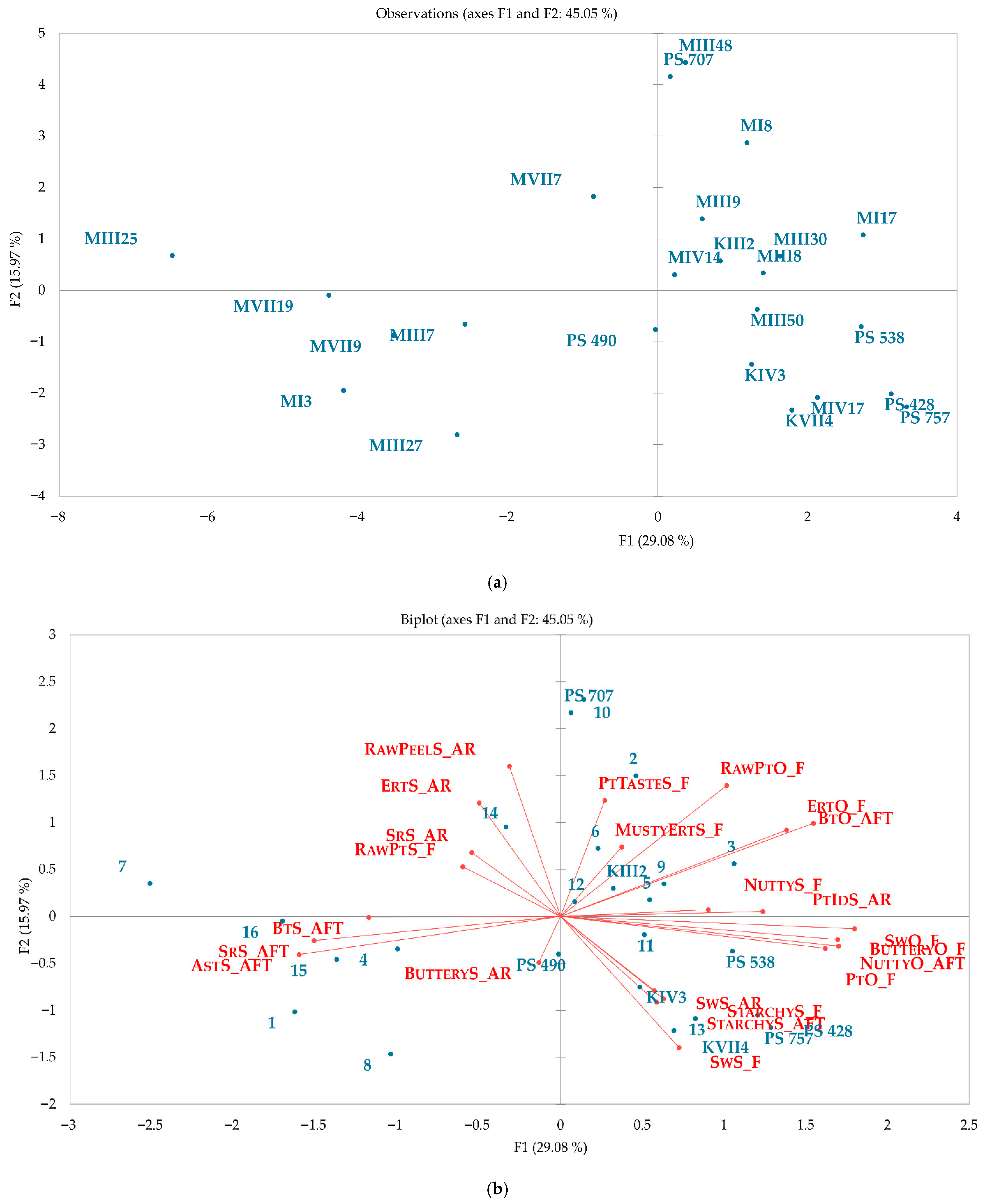
Figure 1. Principal component analysis (PCA) of aroma, flavor, and aftertaste descriptors of 16 advanced mutant potato lines, 5 parental genotypes, and 3 untreated controls after steaming (S) and oven-frying (O). (a) Score plot of genotype distribution on the first two principal components. (b,c) Biplots showing the relationships between genotypes (blue) and sensory descriptors (red). Mutant line codes indicate hybrid origin: MI = Hybrid I, MIII = Hybrid III, MIV = Hybrid IV, and MVII = Hybrid VII; PS = parental genotypes; K = untreated controls.
Agronomy 16 00826 g001aAgronomy 16 00826 g001b
Figure 2. Principal component analysis (PCA) of appearance, texture, and taste descriptors of 16 advanced mutant potato lines, 5 parental genotypes, and 3 untreated controls after steaming (S) and oven-frying (O). (a) Score plot of genotype distribution on the first two principal components. (b,c) Biplots showing the relationships between genotypes (blue) and sensory descriptors (red). Mutant line codes indicate hybrid origin: MI = Hybrid I, MIII = Hybrid III, MIV = Hybrid IV, and MVII = Hybrid VII; PS = parental genotypes; K = untreated controls.
Agronomy 16 00826 g002aAgronomy 16 00826 g002b
Table 1. Potato cultivars used for lexicon development.
Hybrid GroupM1V8 Mutant LinesHybrid
Combination
OriginControls
Hybrid I1M-I-3PS 428 × PS 490“Nadezhda” ×
I 75.127 N
2M-I-8
3M-I-17
Hybrid III4M-III-7PS 692 * × PS 490 “Orlik” ×
I 75.127 N
KIII2
5M-III-8
6M-III-9
7M-III-25
8M-III-27
9M-III-30
10M-III-48
11M-III-50
Hybrid IV12M-IV-14PS 707 × PS 428“Olza” × “Nadezhda”KIV3
13M-IV-17
Hybrid VII14M-VII-7PS 757 × PS 538E 402 × “Karlena”KVII4
15M-VII-9
16M-VII-19
* The PS 692 parental line was not available for this study, and neither was the control sample from the first hybrid combination.
Table 2. Definitions of attributes used by the trained panel to describe steamed and oven-fried potatoes.
Attribute 1Definition
Appearance
Color sThe typical color intensity from white to brown on the surface or inside.
Glossiness s,o [15,19]The intensity of reflection on the cut side of boiled potato.
Yellowness o [15,16]The intensity of yellow color on the surface or inside.
Brownness s [15]The intensity of brown color on the surface.
Aromatics
Overall potato ID s [16]The starchy, slightly metallic, cooked vegetable like character associated with the meat of a cooked potato.
Sweet s [16,20]The aromatics associated with sweet materials such as caramel, vanilla, molasses, fruit.
Sour s [16,20]Aromas associated with the impression of sour substances.
Earthy s [16,21]Somewhat sweet, heavy aromas associated with decaying vegetation and damp black soil.
Raw potato peel s [16]Musty/dusty, slightly green, and damp impression aroma associated with fresh potato peels.
Buttery s [15,16,21]The aromatic associated with butter.
Flavor
Potato oThe intensity of potato flavor.
Potato taste s [22]The intensity of potato flavor.
Nutty s [21]The intensity of nutty flavor.
Overall sweet impression s,o [16]A combination of sweet taste and all sweet aromatics.
Buttery oThe flavor associated with butter.
Earthy oSomewhat sweet, heavy aromas associated with decaying vegetation and damp black soil.
Musty-earthy s
[16,21]
The aromatics associated with raw potatoes and damp humus, slightly musty notes.
Starchy s [16]Flavor associated with starch and starch-based ingredients.
Raw potato s,o [16]Aromatics that provide the impression of being uncooked.
Texture
Mealy/Mealiness s,o [15,16]Dry and particulate mouthfeel of mealy potatoes/The intensity of mealiness and dryness in the mouth.
Creaminess/Smoothness s,o [15,16]The intensity of creaminess and smoothness in the mouth/Degree to which the sample feels smooth and free of lumps/particulates as opposed to lumpy, rough, grainy, gritty, and/or sandy.
Graininess/Gritty s
[15]
The perception of small, hard, sharp particles reminiscent of sand, or granules in pears/The intensity of grainy and particularly perception in the mouth.
Adhesiveness of mass s,o [15,16,19]Degree to which the product sticks to the roof of the mouth or teeth.
Chewiness o [15,19]Force required to masticate the sample, at a constant rate of force application, to reduce it to a consistency suitable for swallowing.
Taste
Sweet s [15,16,20]The taste on the tongue associated with sugars.
Salty s [15,16,20]The taste on the tongue associated with sodium chloride.
Sour s [16,20]The taste on the tongue associated with sour agent such as citric acid.
Bitter s [15,16,20]The taste on the tongue associated with bitter agent such as caffeine.
Aftertaste
Starchy s [16]Degree to which sample mixes with saliva to form a starchy, pasty slurry that coats mouth surfaces during mastication.
Chestnut oThe intensity of chestnut flavor.
Bitter s [15,16,20]The taste on the tongue associated with bitter agent such as caffeine.
Sour s [16,20]The taste on the tongue associated with sour agent such as citric acid.
Astringent s
[15,16,20,21,22]
Drying, puckering or tingling sensation on the surface and/or edges of the lips, tongue, and mouth.
s—stands for steam; o—stands for oven. 1 Attribute listed in order as perceived by panelists.
Table 3. Standard reference intensity ratings used in descriptive tests of steamed and oven-fried potatoes.
Attribute 1ReferencesIntensity b
Appearance
Color sWhite paper (Color coordinates in the CIELAB space: L* = 91.42, a* = −0.22, b* = 0.04) [23]0
Raw peeled peanut [23]30
Roasted peeled peanuts prepared in a peanut roaster for 1.5 to 2 h at 127 °C [23]66
Cardboard (L* = 49.2, a* = 9.7, b* = 222.4) [24]109
Glossiness s,oPhiladelphia Cream Cheese (The Kraft Heinz Company, Chicago, IL, USA)13
Full-fat yogurt (Pilos, Lidl private label)30
Salted crackers (Lidl private label)130
Yellowness oWhite paper [23]0
Raw peeled peanut [23]30
Roasted peeled peanuts prepared in a peanut roaster for 1.5 to 2 h at 127 °C [23]66
Dark roasted peeled peanuts (L* = 45) [23]80
Brownness sWhite paper [23]0
Roasted peeled peanuts prepared in a peanut roaster for 1.5 to 2 h at 127 °C [23]66
Cardboard (L* = 49.2, a* = 9.7, b* = 222.4) [24]109
Aromatics
Overall potato ID sBoiled potato90
Standard solutions (sweet, salty, sour, bitter)
Sweet sCaramel sauce (Schwartauer Werke GmbH & Co. KG, Bad Schwartau, Germany) [25]65
Standard solutions (sweet)
Sour sDamp black soil50
Standard solutions (sour)
Earthy sDamp black soil110
Raw potato peel sFresh potato peel30
Buttery sButter (Deutsche Markenbutter; Fude + Serrahn Milchprodukte GmbH & Co. KG, Hamburg, Germany)110
Flavor
Potato oOven-baked potato88
Potato taste sOven-baked potato90
Standard solutions (sweet, salty, sour, bitter)
Nutty sWheat germs (Bobs Red Mill Wheat Germ, Lidl Ltd. Bob’s Red Mill Natural Foods, Milwaukie, OR, USA)75
Overall sweet impression s,o1.5% solution of brown sugar (Demerara brown sugar; Guyana Sugar Corporation Inc. (GuySuCo), La Bonne Intention, Guyana)20
Buttery oButter (Deutsche Markenbutter)110
Earthy oDump black soil110
Musty-earthy sRaw mushrooms110
Starchy sBoiled pasta (Barilla Penne Rigate, Barilla, Parma, Italy)80
Raw potato s,oRaw potato80
Texture
Mealy/Mealiness s,oBoiled pear40
Creaminess/Smoothness s,oPhiladelphia Cream Cheese100
Graininess/Gritty sWater solution of corn starch (ZoyaBG, Ltd.). (fine corn starch, Biovegan GmbH, Aschaffenburg, Germany) 20
Adhesiveness
of mass s,o
Roasted peeled peanuts prepared in a peanut roaster for 1.5 to 2 h at 127 °C20
Peanut butter (Bulgarian nuts Co.) (Bulgarian Nuts Ltd., Mezhden, Bulgaria)100
Chewiness oSoft caramel candy (Sugar factories Ltd., Bulgaria) (Zaharni Zavodi AD, Gorna Oryahovitsa, Bulgaria)70
Taste
Sweet s2.0% sucrose solution20
5.0% sucrose solution50
10.0% sucrose solution100
16.0% sucrose solution
(“Sladeya”, Sugar factories, Ltd., Bulgaria) (“Sladeya” sugar, Zaharni Zavodi AD, Gorna Oryahovitsa, Bulgaria).
150
Salty s0.2% sodium chloride solution25
0.35% sodium chloride solution50
0.5% sodium chloride solution (Fisher Chemical) (Fisher Chemical, Thermo Fisher Scientific, Waltham, MA, USA)85
Sour s0.05% citric acid20
0.08% citric acid50
0.15% citric acid
(Fisher Chemical)
100
Bitter s0.05% caffeine solution20
0.08% caffeine solution50
0.15% caffeine solution (Fisher Chemical)100
Aftertaste
Starchy sBoiled pasta (Barilla Penne Rigate)80
Chestnut oChestnut puree (Clement Faugier, France) (Clément Faugier, Privas Cedex, France)45
Bitter s0.05% caffeine solution20
0.08% caffeine solution50
0.15% caffeine solution
(Fisher Chemical)
100
Sour s0.05% citric acid20
0.08% citric acid50
0.15% citric acid
(Fisher Chemical)
100
Astringent sGrape juice (Happy Day, RAUCH Fruchtsäfte GmbH & Co OG, Rankweil, Austria) [24,25]70
s—stands for steam; o—stands for oven. b Intensity ratings are based on 150 mm unstructured line scales. 1 Attribute listed in order as perceived by panelists.
Disclaimer/Publisher’s Note: The statements, opinions and data contained in all publications are solely those of the individual author(s) and contributor(s) and not of MDPI and/or the editor(s). MDPI and/or the editor(s) disclaim responsibility for any injury to people or property resulting from any ideas, methods, instructions or products referred to in the content.