Article

Identification of Stomatal Opening Enhancers in Vetch and Alfalfa and a Preliminary Investigation into Their Potential for Yield Improvement

1
Cereal Crops Research Institute, Henan Academy of Agricultural Sciences, Zhengzhou 450002, China
2
The National Forestry and Grassland Administration Engineering Research Center for Germplasm Innovation and Utilization of Warm-Season Turfgrasses, Jiangsu Key Laboratory for Conservation and Utilization of Plant Resources, Institute of Botany, Jiangsu Province and Chinese Academy of Sciences (Nanjing Botanical Garden Mem. Sun Yat-Sen), Nanjing 210014, China
3
Department of Life Sciences and Food Engineering, Huaiyin Institute of Technology, Huaian 223003, China
4
Department of Agronomy and Horticulture, Jiangsu Vocational College of Agriculture and Forest, Jurong 212400, China
5
School of Environmental Science and Engineering, Yancheng Institute of Technology, Yancheng 224051, China
*
Author to whom correspondence should be addressed.
Agronomy 2026, 16(7), 714; https://doi.org/10.3390/agronomy16070714
Submission received: 4 March 2026 / Revised: 25 March 2026 / Accepted: 27 March 2026 / Published: 29 March 2026

Abstract

Screening for stomatal opening enhancers and their application via foliar spraying represents a feasible strategy to increase CO2 assimilation flux by augmenting stomatal aperture, thereby enhancing photosynthesis and promoting plant growth. However, the lack of relevant research on forage crops has significantly limited the implementation of this strategy in forage production. In this study, using vetch (Vicia sativa) and alfalfa (Medicago sativa) as experimental materials, we first established a stable observation system tailored for evaluating stomatal opening regulation in forages: incubating abaxial epidermal peels in a solution containing 0.5% KCl (pH 6.0) under light conditions for 4 h resulted in stably opened stomata. Utilizing this system, we systematically screened the regulatory effects of 14 stomatal opening modulators, including signaling molecules, phytohormones, and amino acids. The results indicated that stomatal opening in both vetch and alfalfa exhibited pronounced concentration-dependent and species-specific responses to the modulators. Supplementation with appropriate concentrations of EGTA, GA3, MT, His, and Pro significantly promoted stomatal opening in vetch, with increases ranging from 21% to 35%. In contrast, appropriate concentrations of Ca2+, H2O2, MJ, His, Glu, Met, Arg, and Ala effectively enhanced stomatal opening in alfalfa, with increases of 8% to 34%. To further validate the reliability of the screening system, we selected Met, which showed no regulatory effect on vetch stomata but enhanced opening in alfalfa, for foliar application validation. The results demonstrated that Met treatment had no significant effect on stomatal aperture in vetch but significantly increased it in alfalfa, consistent with the initial screening results. This consistency further confirmed the reliability of our established screening system for identifying stomatal opening enhancers in forages. Correspondingly, foliar Met application did not affect vetch growth but significantly promoted alfalfa growth, increasing biomass by 18%. In conclusion, this study established a stable screening system for stomatal opening enhancers specifically for vetch and alfalfa and successfully identified several species-specific enhancers using this system. Foliar application of these species-specific enhancers effectively increased stomatal aperture and promoted growth in target forage species, demonstrating promising potential for enhancing forage yield.

1. Introduction

Stomata are pore-like structures on the leaf epidermis of plants, formed by a pair of guard cells. As the primary gateway for gas exchange and water transpiration between plants and the external environment, they play several critical roles in plant growth and development. First, stomata serve as entry points for CO2 during photosynthesis, and their aperture directly regulates the rate of CO2 supply. Given that 90–95% of plant biomass is derived from photosynthetic carbon assimilation [1], stomatal aperture influences photosynthetic efficiency and thereby controls plant growth. Second, water transpired through stomata generates a transpirational pull, which facilitates the upward transport of water and minerals through the xylem from the roots, supporting normal plant growth [2,3]. Additionally, water evaporation through stomata dissipates significant amounts of heat, thereby reducing leaf temperature and preventing scorching under high-light conditions [4]. Under sufficient water and nutrient supply, elevated atmospheric CO2 concentrations simulated using FACE platforms effectively enhance plant photosynthetic rates, thereby promoting plant growth [5,6]. This indicates that insufficient CO2 uptake remains a key factor limiting high photosynthetic rates in plants. Given that the agronomic practice of directly using dry ice to increase CO2 supply exacerbates greenhouse gas emissions and is detrimental to achieving the national strategies of “carbon neutrality” and “carbon peaking,” an alternative strategy has emerged as a promising application approach. This strategy involves increasing CO2 assimilation flux by enlarging the aperture of the CO2 uptake pores—the stomata—thereby enhancing photosynthesis and increasing yield [7,8,9]. Previous studies have shown that foliar application of stomatal opening enhancers can effectively increase plant stomatal aperture, enhance photosynthetic rate, and ultimately promote growth and yield [10,11,12]. Forage crops constitute a crucial component of the “Greater Food” approach, yet China still faces immense production pressure in this sector. The annual shortfall of high-quality alfalfa in China remains stable at over 1.7 million tons, with a self-sufficiency rate of less than half, necessitating heavy reliance on imports [13,14] (USDA, https://www.fas.usda.gov/data/china-alfalfa-demand-northern-china-market-trends-challenges-and-outlook, accessed on 1 March 2026). The application of stomatal opening enhancers to forage crops holds promise for helping to address this issue by enhancing per-unit yield. However, existing research has primarily focused on model plants, staple crops, and vegetables [15,16,17,18], with a lack of systematic studies on stomatal regulation in forage grasses. This gap has limited the application of related strategies in forage production.
Previous studies have shown that during the development of stomatal opening regulation systems for two herbaceous species and one leafy vegetable, significant differences existed among species in the required methods for stomatal isolation, incubation solution formulations, and light duration [18,19,20]. Therefore, to systematically investigate the regulatory characteristics of stomatal opening in forage crops, it is a prerequisite to first establish a stable and reliable research system tailored to the target species. Secondly, research has demonstrated that stomatal opening is regulated by multiple factors, including light intensity, potassium ion concentration, signaling molecules, plant hormones, and amino acids. Moreover, these responses often exhibit concentration-dependent and species-specific characteristics [18,20,21,22,23]. For instance, Ca2+ promotes stomatal opening in some species [18] while inhibiting it in others [24]. Consequently, it is essential to systematically evaluate the regulatory effects of various stomatal opening modulators based on the established forage stomatal opening regulation system, thereby enabling the targeted screening of effective stomatal opening enhancers. Finally, the screened stomatal opening enhancers should be applied to forage crops via foliar spraying to assess the feasibility of enhancing yield by increasing stomatal aperture. Against this background, the present study selected vetch (Vicia sativa) and alfalfa (Medicago sativa) as experimental materials. Initially, by investigating the effect of light duration on stomatal opening in the abaxial epidermal peels of both species, the optimal light incubation time was determined, and a stable and reliable stomatal opening regulation system was established for vetch and alfalfa. Subsequently, utilizing this system, the regulatory effects of 14 stomatal opening modulators on both forage species were systematically evaluated to screen for stomatal opening enhancers. Furthermore, the selected enhancers were applied to both forage species via foliar spraying to validate the reliability of the established regulation system and to assess their application potential for promoting forage growth under field conditions. This study is expected to provide a reliable technical platform for research on stomatal opening regulation in forage crops, screen multiple stomatal opening enhancers with application potential, and furnish a theoretical basis and technical support for the strategy of enhancing forage yield by promoting stomatal opening through foliar application of enhancers, thereby increasing CO2 assimilation flux and improving photosynthetic capacity under favorable water and nutrient conditions.

2. Materials and Methods

2.1. Plant Growth Condition

This experiment used vetch and alfalfa as experimental materials. Their seeds were sown in plug trays, with three seeds per cell. Ten days after sowing, thinning was performed, leaving one robust and uniformly growing seedling per cell. After one month of cultivation in the trays, the newly fully expanded penultimate leaves were selected for stomatal aperture regulation experiments.
The plant growth conditions were set as follows: temperature 28 °C, relative humidity 70%, light intensity 500 µmol·m−2·s−1, and a photoperiod of 12 h light/12 h dark. After thinning, the plants were irrigated weekly with 1/2 Hoagland nutrient solution, applying 1 L per tray to ensure adequate nutrient supply.

2.2. A Research System Developed Specifically for Investigating the Regulatory Effects on Stomatal Opening in Vetch and Alfalfa

The experiment was conducted based on our previously established research system for investigating the regulatory effects on stomatal opening [18], with modifications. The brief procedure is as follows: The direct epidermal peeling method was used to peel the abaxial epidermis from leaves using fine-tipped forceps. Four epidermal strips from four leaves were floated on a Petri dish containing 20 mL of basic opening solution (0.5% KCl, pH adjusted to 6.0 with MES) and incubated under light for 4 h. The 4 h illumination duration was determined by analyzing the response characteristics of stomatal aperture in vetch and alfalfa to light exposure. Specifically, the lower epidermis of these two plants was placed in an opening solution and treated for 0, 2, 4, and 6 h, after which the stomatal aperture was measured. The photosynthetic photon flux density was set at 500 µmol·m−2·s−1. After the treatment period, the epidermal strips were immediately prepared as temporary slides. Images were captured under a 40x microscope using the Mshot software version 1.16. Each treatment included 12 images (3 images per epidermal strip × 4 replicates). Stomatal length and width were measured using the ImageJ software version 1.54p. The stomatal aperture was calculated using the formula
S t o m a t a l   a p e r t u r e = S t o m a t a l   w i d t h S t o m a t a l   l e n g t h

2.3. Effects of Exogenous Substances on Stomatal Aperture

Utilizing the research system developed in Section 2.2 for investigating the regulatory effects on stomatal opening in vetch and alfalfa, various stomatal opening modulators were evaluated for their regulatory effects on the two forage species. This was achieved by adding different concentrations of the modulators to the basal incubation solution and subsequently comparing the differences in stomatal aperture between treated and untreated conditions. A total of 14 substances (including hormones, signaling molecules, and amino acids) were tested. The pH of the test solutions was adjusted to 6.0 using MES/Tris. The specific concentrations were as follows:
Ca2+: 0 μM, 1000 μM;
EGTA: 0 μM, 25 μM;
H2O2: 0 µM, 5 µM, 20 µM, 200 µM, 500 µM;
CTK: 0 µM, 10 µM, 100 µM;
GA3: 0 µM, 1 µM, 10 µM, 100 µM;
MT: 0 µM, 1 µM, 10 µM;
SA: 0 µM, 0.2 µM, 10 µM;
MJ: 0 µM, 10 µM, 100 µM;
His: 0 mM, 0.1 mM, 1 mM;
Glu: 0 mM, 0.1 mM, 1 mM;
Met: 0 mM, 0.1 mM, 1 mM;
Arg: 0 mM, 0.1 mM, 1 mM;
Pro: 0 mM, 0.1 mM, 1 mM;
Ala: 0 mM, 0.1 mM, 1 mM.
The concentrations applied above were based on our previous experiments [19]. Each concentration was replicated four times independently. The specific experimental method was the same as that described in Section 2.2.

2.4. Effects of Foliar Application of Met on the Growth of Vetch and Alfalfa

Vetch and alfalfa seeds were sown in seedling trays filled with nutrient soil. Seven days after emergence, uniform individuals were transplanted into small pots. After an additional 14 days of growth, each pot was supplemented with 50 mL of half-strength Hoagland’s nutrient solution. The experiment included two treatments: foliar application of Met and a control without Met application. For the Met treatment, plants were uniformly sprayed with 10 mL of 1 mM Met solution per pot using a sprayer [25]. Both the nutrient solution application and foliar Met spraying were performed once a week. After 15 days of treatment, newly fully expanded leaves were collected from each treatment for stomatal aperture measurement. The lower epidermis was peeled and incubated in a solution containing 0.5% KCl (pH 5.8) under light conditions for 4 h. Temporary mounts were then prepared to photograph stomatal status and measure stomatal aperture, following a method similar to that described in Section 2.2. Additionally, aboveground parts of vetch and alfalfa were harvested and weighed to determine biomass. Each treatment was replicated four times. The plant growth conditions were maintained at 28 °C, 70% relative humidity, a light intensity of 500 µmol·m−2·s−1, and a photoperiod of 12 h light/12 h dark.

2.5. Statistical Analysis and Graphing

All data were subjected to one-way analysis of variance (ANOVA) with Duncan’s multiple comparison test (p < 0.05). Graphs were created using GraphPad Prism 9.5, and the data shown are scatter points.

3. Results

3.1. Establishment of an Optimal Observation Method for Evaluating the Regulatory Effects on Stomatal Opening in Vetch and Alfalfa

To establish the optimal conditions for observing stomatal opening in vetch and alfalfa, we first investigated the time-dependent stomatal response of both species in an incubation solution containing 0.5% KCl. The results showed that stomatal aperture in both vetch and alfalfa increased progressively with longer incubation times, reaching a maximum after 4 h of light exposure and subsequently remaining stable (Figure 1). Compared to the stomatal aperture at 0 h, the apertures in vetch increased by 40.0%, 161.3%, and 150.2% at 2, 4, and 6 h, respectively; in alfalfa, the apertures increased by 28.8%, 74.9%, and 81.3% at the corresponding time points. Therefore, incubating abaxial epidermal peels of vetch and alfalfa in a solution containing 0.5% KCl (pH 6.0) under light conditions for 4 h was determined to be the optimal condition for subsequent stomatal opening regulation assays. This time point was selected because shorter incubation periods result in stomatal apertures that are still dynamically changing, precluding the acquisition of stable and reliable data, whereas longer incubation times unnecessarily delay the experiment and impede high-throughput observation of stomatal regulatory effects. All subsequent experiments were conducted under these basal conditions.

3.2. Effects of Exogenous Ca2+, EGTA, and H2O2 on Stomatal Opening in Vetch and Alfalfa

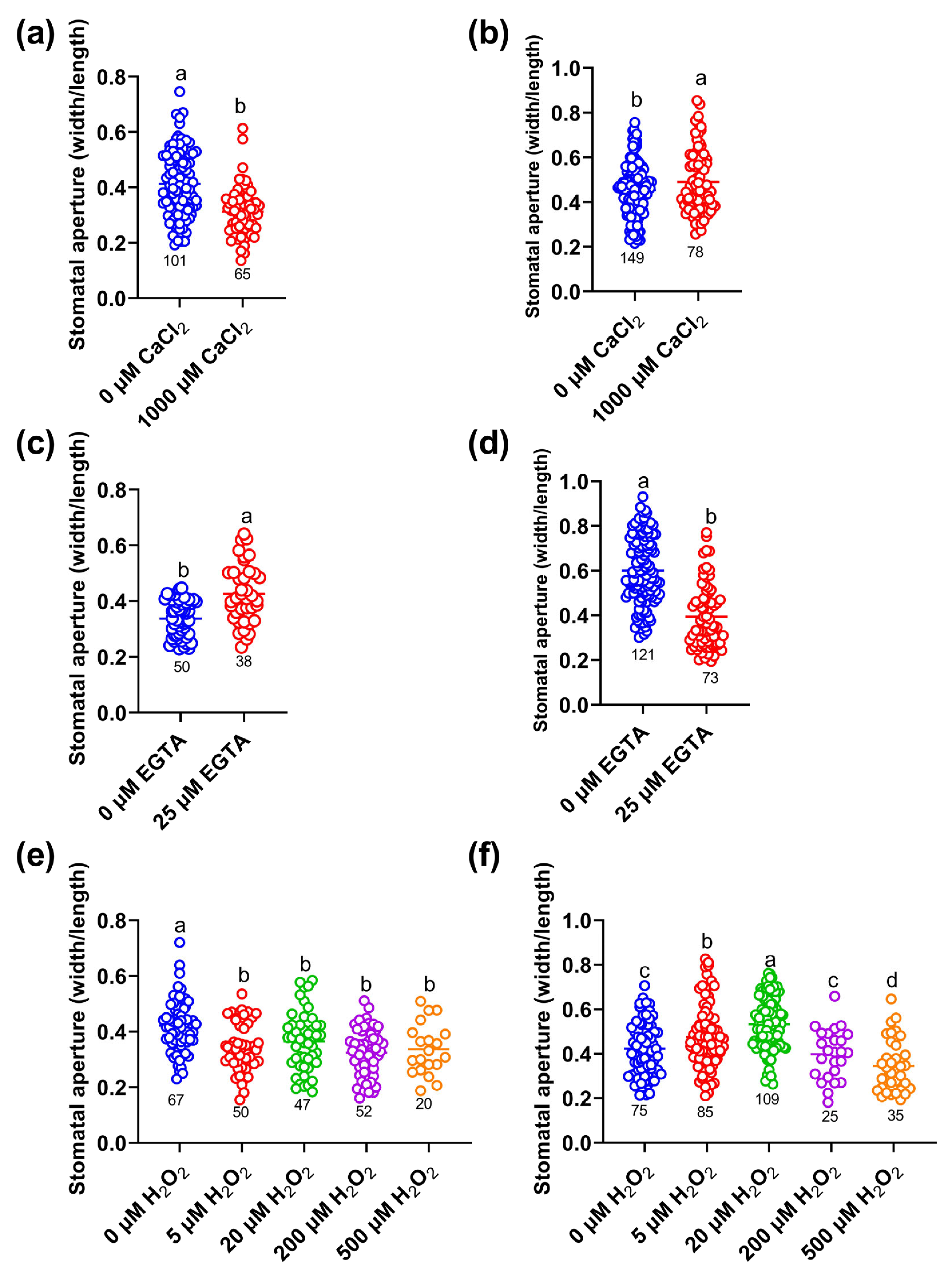
Ca2+ and H2O2 are signaling molecules that regulate stomatal aperture [26,27]. We first investigated the regulatory effects of these two signaling molecules on stomatal aperture. The results showed that the stomatal aperture of vetch decreased with increasing concentrations of exogenously applied Ca2+ (a reduction of 24%), while in alfalfa, stomatal aperture exhibited an increase with rising Ca2+ concentration (an increase of 8%) (Figure 2a,b). EGTA, a Ca2+ chelator that effectively reduces cellular Ca2+ levels, efficiently increased vetch stomatal aperture by 26% (Figure 2c,d). In contrast, EGTA reduced alfalfa stomatal aperture by 35%. The results from both increasing and decreasing Ca2+ levels collectively demonstrate that vetch and alfalfa exhibit opposite response patterns to Ca2+: it inhibits stomatal opening in vetch while promoting stomatal opening in alfalfa.
We next investigated the regulatory effects of another signaling molecule, H2O2. The results showed that the stomatal aperture of vetch decreased with increasing concentrations of exogenously applied H2O2, plateauing at the 5 μM treatment (Figure 2e). Compared to the control without H2O2 (0 μM), exogenous H2O2 application reduced vetch stomatal aperture by 20%. In alfalfa, stomatal aperture exhibited an initial increase followed by a decrease with rising H2O2 concentrations, reaching maximum opening at 20 μM H2O2 and minimum opening at 500 μM H2O2 (Figure 2f). Compared to the control without H2O2 (0 μM), exogenous application of 20 μM H2O2 increased alfalfa stomatal aperture by 26%.

3.3. Effects of Exogenous CTK, GA3, MT, SA, and MJ Applications on Stomatal Opening in Vetch and Alfalfa

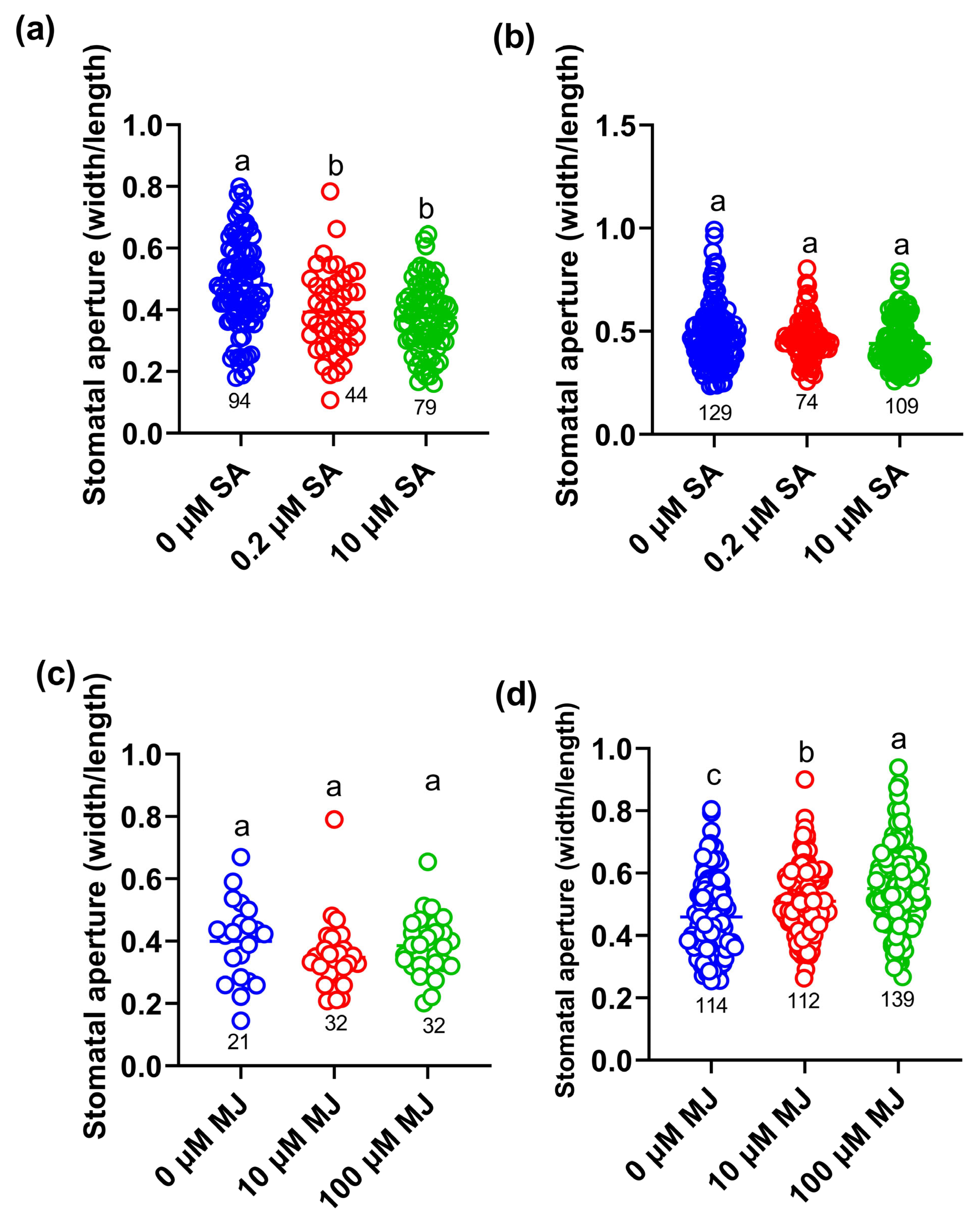
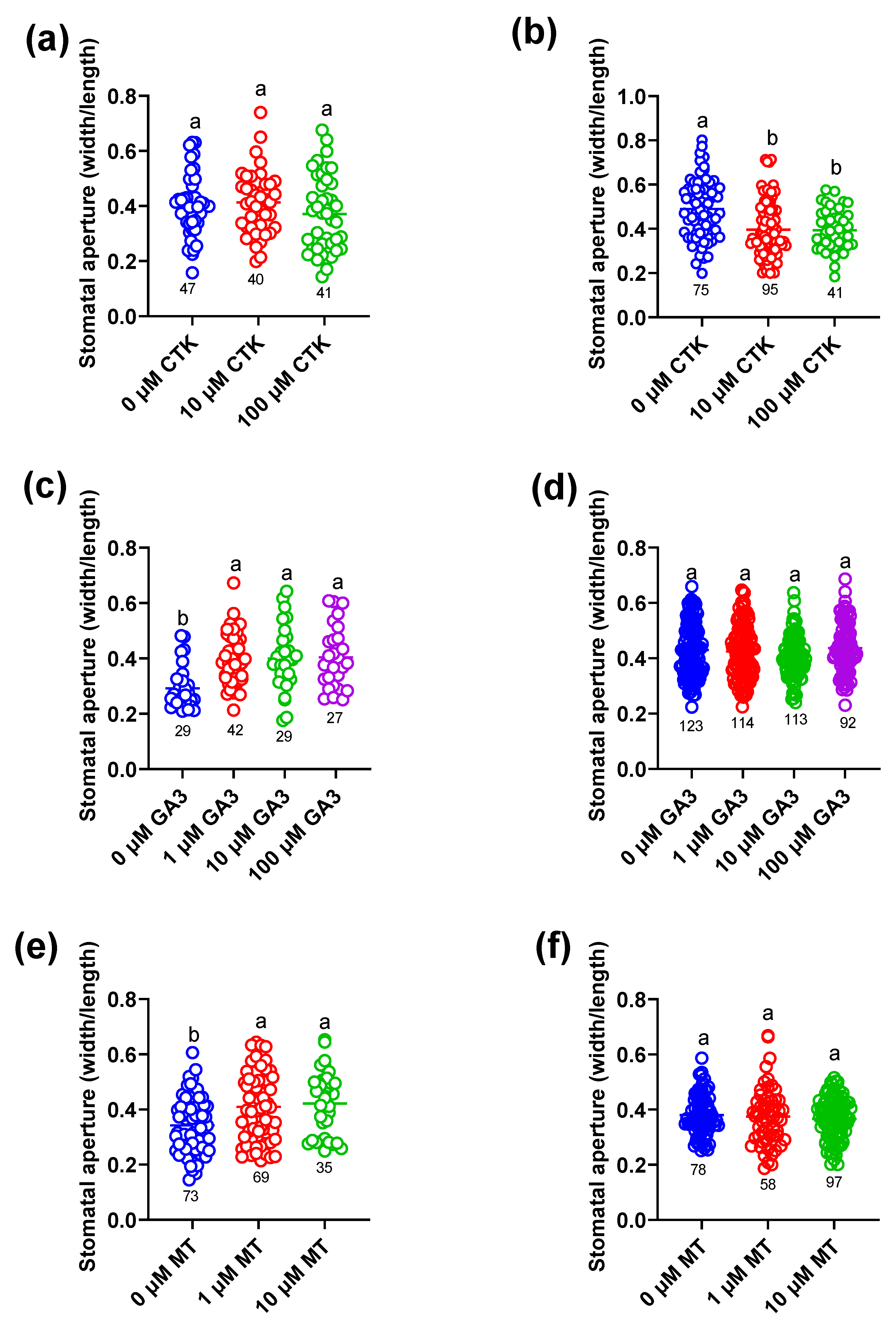
Hormones play important roles in regulating stomatal opening in plants [28,29]. We tested the effects of five hormones—CTK, GA3, MT, SA, and MJ—on stomatal aperture in vetch and alfalfa. The results showed that exogenous application of CTK had no effect on stomatal aperture in vetch (Figure 3a) but significantly inhibited stomatal aperture in alfalfa, with the magnitude of inhibition not increasing further at higher exogenous CTK concentrations (Figure 3b). Exogenous application of GA3 and MT significantly increased stomatal aperture in vetch, and this promoting effect did not increase further with higher exogenous concentrations (Figure 3c,e). Compared to control conditions, the GA3 and MT treatments increased stomatal aperture in vetch by 35% and 21%, respectively. In contrast, at all tested concentrations, exogenous application of GA3 and MT had no effect on stomatal aperture in alfalfa (Figure 3d,f). Exogenous application of SA significantly inhibited stomatal aperture in vetch, with the magnitude of inhibition being independent of the applied concentration (Figure 4a). However, exogenous application of SA had no effect on stomatal aperture in alfalfa (Figure 4b). Exogenous application of MJ had no effect on stomatal aperture in vetch, but significantly increased stomatal aperture in alfalfa, and this promoting effect increased with higher applied concentrations (Figure 4c,d). Compared to control conditions, the 10 μM and 100 μM MJ treatments increased stomatal aperture in alfalfa by 8% and 18%, respectively.

3.4. Effects of Exogenous Amino Acids on Stomatal Opening in Vetch and Alfalfa

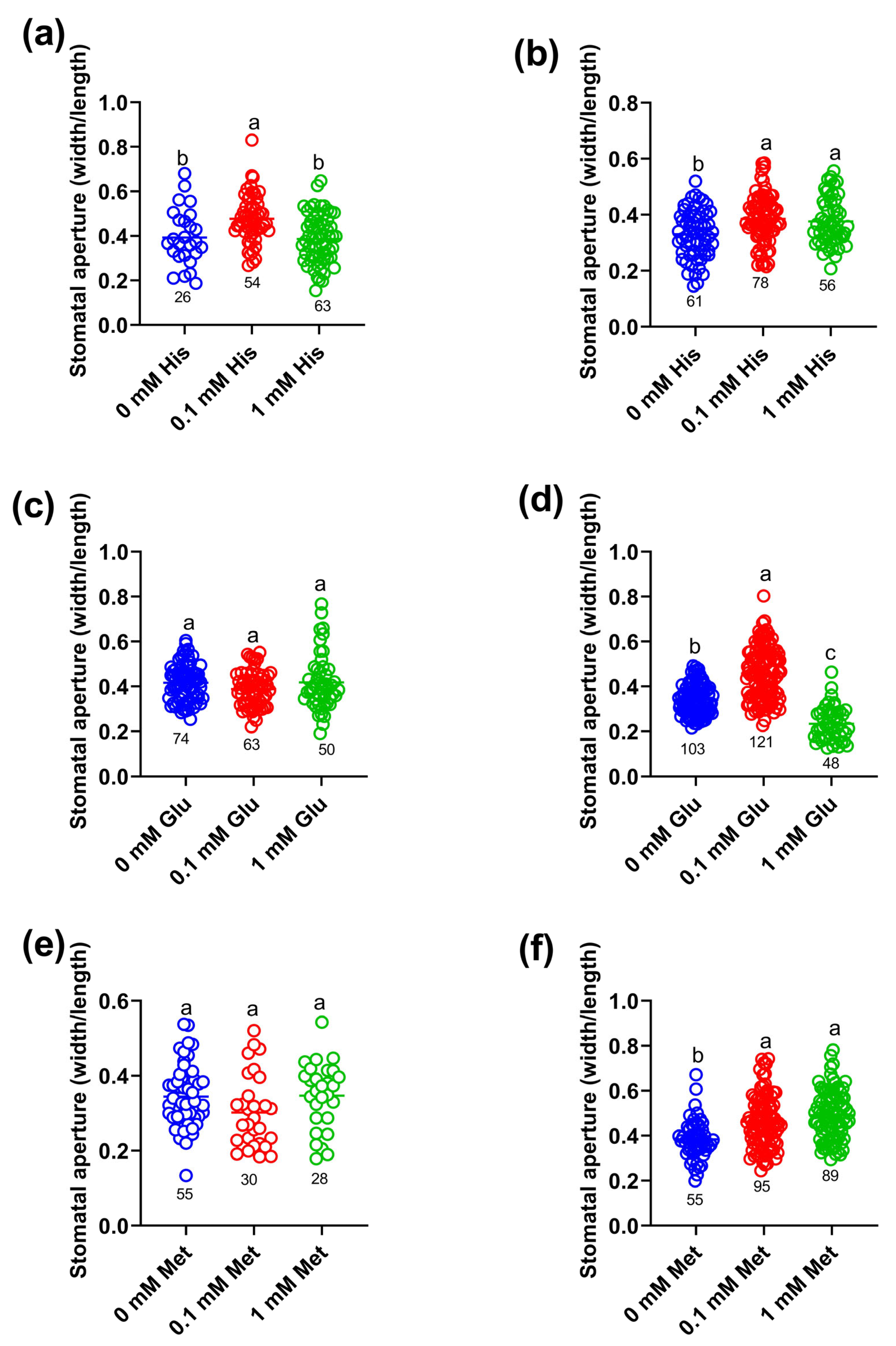
Given that stomatal aperture in plants is also regulated by amino acids [30,31,32], we examined the regulatory effects of six amino acids on stomatal aperture in vetch and alfalfa. The results showed that stomatal aperture in vetch exhibited a trend of first increasing and then decreasing with increasing concentrations of exogenously applied His, reaching its maximum in the 0.1 mM His treatment (Figure 5a). Compared to control conditions, this represented an increase of 21%. Exogenous application of His significantly increased stomatal aperture in alfalfa, and this enhancing effect did not increase further with higher applied concentrations (Figure 5b), with an increase of 16% compared to control conditions.
Exogenous application of Glu had no effect on stomatal aperture in vetch (Figure 5c). However, stomatal aperture in alfalfa showed a trend of first increasing and then decreasing with increasing concentrations of exogenously applied Glu, reaching its maximum at 0.1 mM Glu (an increase of 34%) (Figure 5d).
Exogenous application of Met had no effect on stomatal aperture in vetch (Figure 5e). However, exogenous application of Met significantly increased stomatal aperture in alfalfa, and this increasing effect did not increase further with higher applied concentrations of Met (Figure 5f). Compared to control conditions, the increase reached 28%.
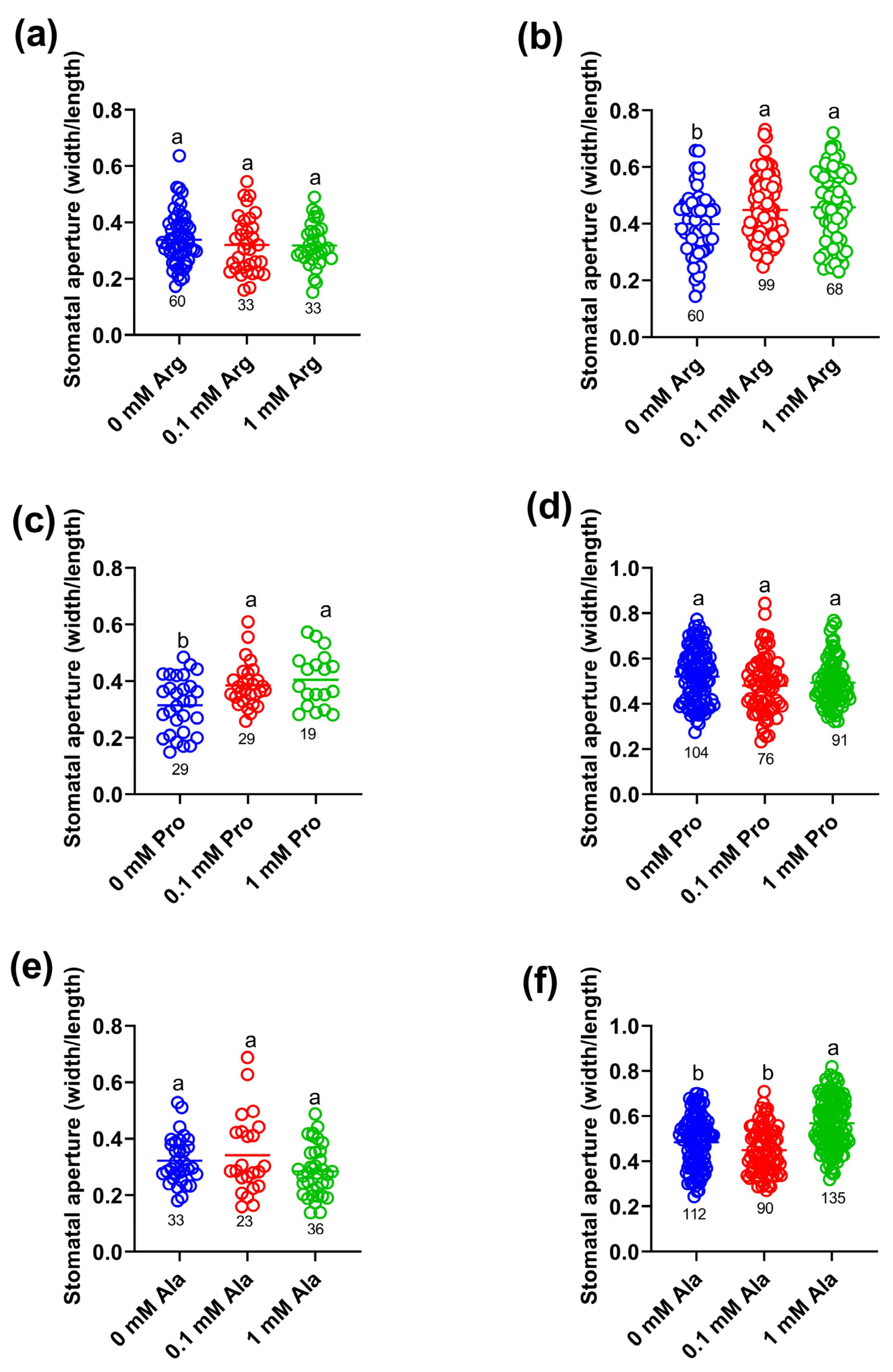
Exogenous application of Arg had no effect on stomatal aperture in vetch (Figure 6a) but significantly increased stomatal aperture in alfalfa, and this increasing effect did not increase further with higher applied concentrations (Figure 6b). Compared to control conditions, Arg increased stomatal aperture in alfalfa by 15%.
Exogenous application of Pro significantly increased stomatal aperture in vetch, and this increasing effect did not increase further with higher applied concentrations (Figure 6c). Compared to control conditions, Pro increased stomatal aperture in vetch by 22%. However, exogenous application of Pro had no effect on stomatal aperture in alfalfa (Figure 6d).
Exogenous application of Ala had no effect on stomatal aperture in vetch (Figure 6e). In contrast, although exogenous application of Ala had no effect on stomatal aperture in alfalfa at low concentrations, it increased stomatal aperture at high concentrations. Compared to control conditions, exogenous application of 1 mM Ala increased stomatal aperture in alfalfa by 17% (Figure 6f).

3.5. Effect of Foliar Spraying with Met on the Growth of Vetch and Alfalfa

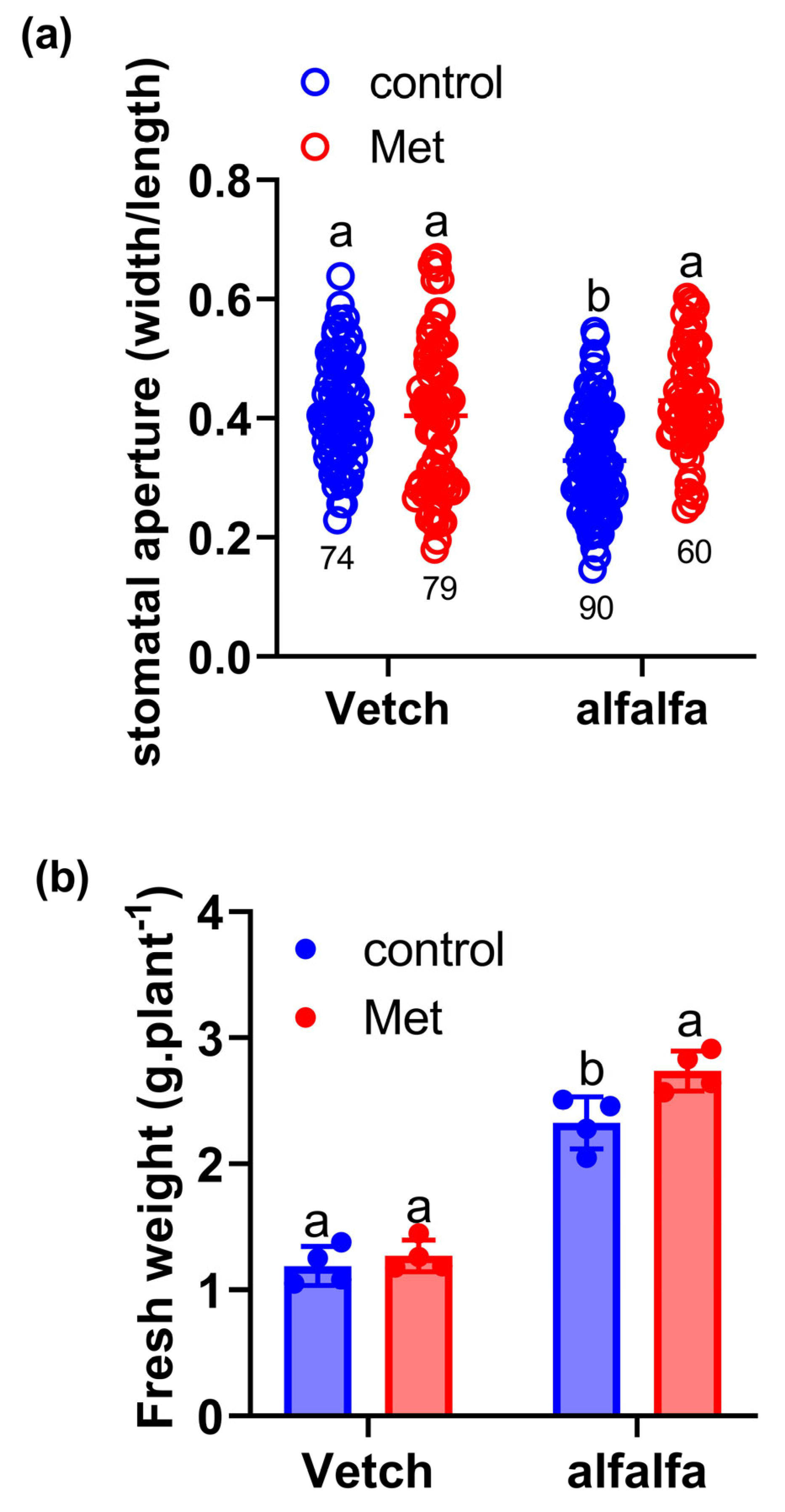
To test whether the stomatal opening modulators identified above could influence plant growth, we selected Met—which specifically enhances stomatal aperture in alfalfa but has no effect on stomatal opening in vetch—and sprayed it onto the leaves of both species. The results showed that foliar application of Met had no effect on stomatal aperture in vetch but significantly increased it in alfalfa (Figure 7a,b), consistent with our previous findings on the regulatory effects of Met on stomatal opening in these two species (Figure 6a,b). Subsequent biomass determination revealed that foliar spraying with Met did not affect vetch biomass but significantly increased alfalfa biomass (Figure 7a,b), with an increase of 18%.

4. Discussion

Screening for stomatal opening enhancers and applying them via foliar spraying represents a theoretically feasible technical strategy to increase stomatal aperture, thereby enhancing CO2 assimilation flux, improving photosynthesis, and ultimately promoting plant growth. Implementing this strategy to increase per-unit yield in forage crops could help alleviate the practical challenge of insufficient forage supply in China [33,34]. However, the lack of research on stomatal opening enhancers in forage species has severely hindered the implementation of this approach. This is because plant responses to the same stomatal opening modulator often exhibit species-specific differences [18,20]. For instance, a substance that acts as a stomatal opening enhancer in some species may instead function as a stomatal opening inhibitor when applied to others [18,24]. Therefore, although stomatal opening enhancers have been reported in multiple species, with occasional successful applications documented [11], the stomatal opening enhancers identified in other species cannot be directly and simply applied to forage crops. Addressing this issue necessitates the targeted screening of stomatal opening enhancers specifically in forage species.
To address this issue, we first established a research system for investigating the regulation of stomatal opening specifically in vetch and alfalfa. This system was achieved by directly peeling the abaxial epidermis, incubating the epidermal strips in an incubation solution containing 0.5% KCl, and then exposing them to light for 4 h, which resulted in stably opened stomata (Figure 1). The establishment of this system provided a methodological foundation for subsequent evaluations of the regulatory effects of various stomatal opening modulators on vetch and alfalfa. Notably, the time required for stomatal opening to reach stability differs among species: 1.5 h in centipedegrass [20], 5 h in leafy vegetables [18], and 1–2 h in Arabidopsis [35]. These findings further underscore the species-specific differences in the time needed for stomatal opening to stabilize [36] and highlight the necessity of establishing a dedicated stomatal opening regulation research system for vetch and alfalfa prior to conducting regulatory experiments.
Based on the research system established above, we investigated the regulatory effects of 14 commonly used stomatal opening modulators on stomatal aperture in vetch and alfalfa. The results revealed that the stomatal responses of both species to these substances exhibited concentration-dependent and species-specific characteristics. Specifically, only five substances—EGTA, GA3, MT, His, and Pro—functioned as stomatal opening enhancers in vetch (increasing aperture by 21–35%), whereas eight substances—Ca2+, H2O2, MJ, His, Glu, Met, Arg, and Ala—promoted stomatal opening in alfalfa (increasing aperture by 8–34%), with efficacy dependent on application at appropriate concentrations (Figure 2, Figure 3, Figure 4, Figure 5 and Figure 6). Previous studies have demonstrated that different plant species can respond quite differently to the same stomatal regulator [18,20]. For example, Ca2+ promotes stomatal opening in some species [18] while inhibiting it in others [24]; H2O2 can induce stomatal opening under certain conditions [35] yet suppress it under others [37]; and similarly, exogenous SA may either promote [38] or inhibit stomatal opening [39]. The species-specific stomatal opening enhancers identified in vetch and alfalfa in this study further underscore the necessity of conducting targeted screening for stomatal opening enhancers in these forage species.
To validate the application potential of the screened stomatal opening enhancers in enhancing forage yield, we selected Met—which has no effect on stomatal opening in vetch but promotes it in alfalfa—as the foliar spray agent. By comparing the effects of the same substance on the growth of both plant species, we aimed to clarify this issue. The results showed that foliar application of Met increased stomatal aperture and biomass in alfalfa but had no effect on either parameter in vetch (Figure 7). These findings demonstrate, on the one hand, the reliability of our previously established stomatal opening enhancers screening system. On the other hand, they substantiate that foliar application of species-specific stomatal opening enhancers is an effective strategy for increasing stomatal aperture, thereby enhancing CO2 assimilation flux, improving photosynthesis, and ultimately promoting forage growth under conditions of superior water and fertilizer supply. It should be noted that increasing stomatal conductance generally enhances CO2 uptake, but it also leads to greater water loss through transpiration, which may increase the risk of water stress. Moreover, if Rubisco is already saturated with CO2, further increases in CO2 availability will not necessarily result in higher photosynthetic rates. Finally, Met emerges as a key substance for increasing alfalfa yield. Previous studies have reported that exogenous GA3 increases stomatal aperture and biomass in lettuce [10,40]; exogenous Pro enhances stomatal aperture, photosynthetic rate, and yield in mustard [41]; exogenous Trp increases biomass in bitter melon [42]; and foliar application of MT enhances photosynthesis and increases biomass in mustard [43]. However, no reports have documented Met increasing yield by enhancing stomatal aperture to improve photosynthetic rate. Therefore, the identification of Met represents a new addition to the repertoire of plant stomatal opening enhancers. It should be noted that it cannot be excluded that this positive effect may also be mediated through additional biochemical or physiological processes beyond stomatal regulation alone. Future research should, on one hand, conduct field plot experiments to evaluate the yield-enhancing effect of Met, ultimately contributing to the improvement of alfalfa per-unit yield. On the other hand, the other stomatal opening enhancers identified in this study should be validated through both pot experiments and field plot trials, thereby developing additional convenient agronomic measures for increasing the per-unit yield of vetch and alfalfa.

5. Conclusions

Screening for stomatal opening enhancers and applying them via foliar spraying represents a theoretically feasible technical pathway to increase stomatal aperture, thereby enhancing CO2 assimilation flux, improving photosynthesis, and ultimately promoting plant growth. Implementing this strategy to increase per-unit yield in forage crops offers a promising approach to addressing the pressing challenge of insufficient forage supply in China. However, the lack of relevant research on forage species has significantly limited the practical application of this strategy in forage production. In this study, using vetch and alfalfa as experimental materials, we first established a stomatal opening observation system suitable for forage crops: incubating abaxial epidermal peels in an incubation solution containing 0.5% KCl (pH 5.8) under light conditions for 4 h yielded stably opened stomata. Based on this system, we screened and identified five stomatal opening enhancers for vetch (EGTA, GA3, MT, His, and Pro) and eight for alfalfa (Ca2+, H2O2, MJ, His, Glu, Met, Arg, and Ala). Foliar application of one of these screened enhancers significantly increased stomatal aperture in the forage species, with corresponding increases in biomass. In conclusion, this study established a stable screening system for stomatal opening enhancers specifically targeting vetch and alfalfa and successfully identified multiple species-specific stomatal opening enhancers using this system. Foliar application of these species-specific enhancers effectively promotes forage growth by increasing stomatal aperture, thereby providing new technical support for improving per-unit yield and ensuring the supply security of forage crops in China.

Author Contributions

Conceptualization, P.-P.Z. and D.-L.H.; investigation, methodology, software, and data curation, P.-P.Z., J.-B.C., J.-Y.Z. (Jun-Yi Zhai), Z.-L.G. and C.C.; writing (original draft), P.-P.Z.; investigation, visualization, writing—review and editing, formal analysis and validation, J.-Y.Z. (Jin-Yan Zhou) and Y.Z. Supervision, D.-L.H. All authors have read and agreed to the published version of the manuscript.

Funding

This research was funded by the National Key Research and Development Program of China (2025YFD2300502) and the National Nature Science Foundation of China (32271758).

Data Availability Statement

The original contributions presented in this study are included in the article. Further inquiries can be directed to the corresponding author.

Conflicts of Interest

The authors declare no conflicts of interest.

Abbreviations

Ca2+, calcium; EGTA, ethylene glycol-bis(2-aminoethyl ether)-N,N,N′,N′-tetraacetic acid; H2O2, hydrogen peroxide; CTK, cytokinin; GA3, gibberellic acid 3; MT, melatonin; SA, salicylic acid; MJ, methyl jasmonate; His, histidine; Glu, glutamic acid; Met, methionine; Arg, arginine; Pro, proline; Ala, alanine.

References

  1. Patrick, J.W.; Colyvas, K. Crop yield components—Photoassimilate supply- or utilisation limited-organ development? Funct. Plant Biol. FPB 2014, 41, 893–913. [Google Scholar] [CrossRef] [Scilit] [PubMed]
  2. Lawson, T.; Vialet-Chabrand, S. Speedy stomata, photosynthesis and plant water use efficiency. New Phytol. 2019, 221, 93–98. [Google Scholar] [CrossRef] [Scilit] [PubMed]
  3. Lawson, T.; Blatt, M.R. Stomatal size, speed, and responsiveness impact on photosynthesis and water use efficiency. Plant Physiol. 2014, 164, 1556–1570. [Google Scholar] [CrossRef] [Scilit] [PubMed]
  4. Gommers, C. Keep Cool and Open Up: Temperature-Induced Stomatal Opening. Plant Physiol. 2020, 182, 1188–1189. [Google Scholar] [CrossRef] [Scilit]
  5. Usui, Y.; Sakai, H.; Tokida, T.; Nakamura, H.; Nakagawa, H.; Hasegawa, T. Rice grain yield and quality responses to free-air CO2 enrichment combined with soil and water warming. Glob. Change Biol. 2016, 22, 1256–1270. [Google Scholar] [CrossRef] [Scilit]
  6. Dier, M.; Meinen, R.; Erbs, M.; Kollhorst, L.; Baillie, C.K.; Kaufholdt, D.; Kucke, M.; Weigel, H.J.; Zorb, C.; Hansch, R.; et al. Effects of free air carbon dioxide enrichment (FACE) on nitrogen assimilation and growth of winter wheat under nitrate and ammonium fertilization. Glob. Change Biol. 2018, 24, e40–e54. [Google Scholar] [CrossRef] [Scilit]
  7. Kimura, H.; Hashimoto-Sugimoto, M.; Iba, K.; Terashima, I.; Yamori, W. Improved stomatal opening enhances photosynthetic rate and biomass production in fluctuating light. J. Exp. Bot. 2020, 71, 2339–2350. [Google Scholar] [CrossRef] [Scilit]
  8. Papanatsiou, M.; Petersen, J.; Henderson, L.; Wang, Y.; Christie, J.M.; Blatt, M.R. Optogenetic manipulation of stomatal kinetics improves carbon assimilation, water use, and growth. Science 2019, 363, 1456–1459. [Google Scholar] [CrossRef] [Scilit]
  9. Wang, Y.; Noguchi, K.; Ono, N.; Inoue, S.; Terashima, I.; Kinoshita, T. Overexpression of plasma membrane H+-ATPase in guard cells promotes light-induced stomatal opening and enhances plant growth. Proc. Natl. Acad. Sci. USA 2014, 111, 533–538. [Google Scholar] [CrossRef] [Scilit]
  10. Miceli, A.; Moncada, A.; Sabatino, L.; Vetrano, F. Effect of Gibberellic Acid on Growth, Yield, and Quality of Leaf Lettuce and Rocket Grown in a Floating System. Agronomy 2019, 9, 382. [Google Scholar] [CrossRef] [Scilit]
  11. Sun, K.; Zhang, J.; Wang, Y.; Qian, W.; Gong, S.; Li, Z.; Song, Y.; Yin, X.; Ding, Z.; Fan, K. Foliar spraying KH2PO4 promotes shoot development by inducing stomatal opening and sugar transport in tea leaves. Sci. Hortic. 2024, 337, 113588. [Google Scholar] [CrossRef] [Scilit]
  12. Pecka, J.; Kraus, K.; Zelený, M.; Hniličková, H. Exogenous Proline Modulates Physiological Responses and Induces Stress Memory in Wheat Under Repeated and Delayed Drought Stress. Agronomy 2025, 15, 1370. [Google Scholar] [CrossRef] [Scilit]
  13. Zhang, S.; Wei, Z.; Cui, C.; Wang, M. Evolution of the Global Forage Products Trade Network and Implications for China’s Import Security. Agriculture 2025, 15, 2073. [Google Scholar] [CrossRef] [Scilit]
  14. Wang, Q.; Zou, Y. China’s alfalfa market and imports: Development, trends, and potential impacts of the U.S.–China trade dispute and retaliations. J. Integr. Agric. 2020, 19, 1149–1158. [Google Scholar] [CrossRef] [Scilit]
  15. Ji, H.F.; Qi, Y.X.; Zhang, X.; Yang, G.P. Effect of L-Histidine on Photosynthesis of Maize under Salt Stress. Appl. Ecol. Environ. Res. 2024, 22, 3233–3248. [Google Scholar] [CrossRef] [Scilit]
  16. Soda, M.N.; Hayashi, Y.; Takahashi, K.; Kinoshita, T. Tryptophan synthase ss subunit 1 affects stomatal phenotypes in Arabidopsis thaliana. Front. Plant Sci. 2022, 13, 1011360. [Google Scholar] [CrossRef] [Scilit]
  17. Prodhan, M.Y.; Munemasa, S.; Nahar, M.N.; Nakamura, Y.; Murata, Y. Guard Cell Salicylic Acid Signaling Is Integrated into Abscisic Acid Signaling via the Ca(2+)/CPK-Dependent Pathway. Plant Physiol. 2018, 178, 441–450. [Google Scholar] [CrossRef] [Scilit]
  18. Zhou, J.-Y.; Hao, D.-L.; Gu, Z.-C. Screening of Positive Regulatory Stimuli for Stomatal Opening in Chinese Cabbage. Agronomy 2025, 15, 914. [Google Scholar] [CrossRef] [Scilit]
  19. Hao, D.-L.; Qu, J.; Zong, J.-Q.; Wang, Z.-Y.; Hao, J.-S.; Lu, H.-L.; Zhao, Y.; Sun, D.-J.; Yang, S.-N.; Liu, J.-X.; et al. Identification of stomatal opening positive regulators in augustinegrass. Hortic. Environ. Biotechnol. 2025, 67, 251–261. [Google Scholar] [CrossRef] [Scilit]
  20. Hao, D.L.; Zhou, J.Y.; Qu, J.; Lu, H.L.; Li, L.; Yao, X.; Chen, J.B.; Liu, J.X.; Guo, H.L.; Zong, J.Q. Screening of environmental stimuli for the positive regulation of stomatal aperture in centipedegrass. Plant Physiol. Biochem. PPB 2024, 213, 108838. [Google Scholar] [CrossRef] [Scilit]
  21. Kollist, H.; Zandalinas, S.I.; Sengupta, S.; Nuhkat, M.; Kangasjarvi, J.; Mittler, R. Rapid Responses to Abiotic Stress: Priming the Landscape for the Signal Transduction Network. Trends Plant Sci. 2019, 24, 25–37. [Google Scholar] [CrossRef] [Scilit] [PubMed]
  22. Hetherington, A.; Woodward, F. The role of stomata in sensing and driving environmental change. Nature 2003, 424, 901–908. [Google Scholar] [CrossRef] [Scilit] [PubMed]
  23. Shimazaki, K.; Doi, M.; Assmann, S.M.; Kinoshita, T. Light regulation of stomatal movement. Annu. Rev. Plant Biol. 2007, 58, 219–247. [Google Scholar] [CrossRef] [Scilit] [PubMed]
  24. Kostaki, K.I.; Coupel-Ledru, A.; Bonnell, V.C.; Gustavsson, M.; Sun, P.; McLaughlin, F.J.; Fraser, D.P.; McLachlan, D.H.; Hetherington, A.M.; Dodd, A.N.; et al. Guard Cells Integrate Light and Temperature Signals to Control Stomatal Aperture. Plant Physiol. 2020, 182, 1404–1419. [Google Scholar] [CrossRef] [Scilit]
  25. Hao, D.; Zhou, J.; Li, X.; Qu, J.; Kong, W.; Chen, R.; Li, D.; Li, J.; Guo, H.; Liu, J.; et al. A higher stomatal aperture is associated with the growth promotion of centipedegrass (Eremochloa ophiuroides (Munro) Hack.) under high concentrations of ammonium. J. Soil. Sci. Plant Nutr. 2024, 24, 3298–3314. [Google Scholar] [CrossRef] [Scilit]
  26. Brandt, B.; Munemasa, S.; Wang, C.; Nguyen, D.; Yong, T.; Yang, P.G.; Poretsky, E.; Belknap, T.F.; Waadt, R.; Aleman, F.; et al. Calcium specificity signaling mechanisms in abscisic acid signal transduction in Arabidopsis guard cells. eLife 2015, 4, e03599. [Google Scholar] [CrossRef] [Scilit]
  27. Klusener, B.; Young, J.J.; Murata, Y.; Allen, G.J.; Mori, I.C.; Hugouvieux, V.; Schroeder, J.I. Convergence of calcium signaling pathways of pathogenic elicitors and abscisic acid in Arabidopsis guard cells. Plant Physiol. 2002, 130, 2152–2163. [Google Scholar] [CrossRef] [Scilit]
  28. Munemasa, S.; Hauser, F.; Park, J.; Waadt, R.; Brandt, B.; Schroeder, J.I. Mechanisms of abscisic acid-mediated control of stomatal aperture. Curr. Opin. Plant Biol. 2015, 28, 154–162. [Google Scholar] [CrossRef] [Scilit]
  29. Acharya, B.R.; Assmann, S.M. Hormone interactions in stomatal function. Plant Mol. Biol. 2009, 69, 451–462. [Google Scholar] [CrossRef] [Scilit]
  30. Yoshida, R.; Mori, I.C.; Kamizono, N.; Shichiri, Y.; Shimatani, T.; Miyata, F.; Honda, K.; Iwai, S. Glutamate functions in stomatal closure in Arabidopsis and fava bean. J. Plant Res. 2016, 129, 39–49. [Google Scholar] [CrossRef] [Scilit]
  31. Kong, D.; Hu, H.C.; Okuma, E.; Lee, Y.; Lee, H.S.; Munemasa, S.; Cho, D.; Ju, C.; Pedoeim, L.; Rodriguez, B.; et al. L-Met Activates Arabidopsis GLR Ca(2+) Channels Upstream of ROS Production and Regulates Stomatal Movement. Cell Rep. 2016, 17, 2553–2561. [Google Scholar] [CrossRef] [Scilit]
  32. Chater, C.C.C.; Oliver, J.; Casson, S.; Gray, J.E. Putting the brakes on: Abscisic acid as a central environmental regulator of stomatal development. New Phytol. 2014, 202, 376–391. [Google Scholar] [CrossRef] [Scilit]
  33. Wang, W.; Liang, Y.; Ru, Z.; Guo, H.; Zhao, B. World Forage Import Market: Competitive Structure and Market Forces. Agriculture 2023, 13, 1695. [Google Scholar] [CrossRef] [Scilit]
  34. Zhang, J.; Mao, Y.; Wang, G.; Luo, D.; Cao, Q.; Siddique, K.H.M.; Mirzaei, M.; Saunders, M.; Aghamir, F.; Radicetti, E.; et al. Enhancing lucerne (Medicago sativa) yield and nutritional quality: A meta-analysis of fertilization types and environmental factors in China. Front. Plant Sci. 2024, 15, 1405180. [Google Scholar] [CrossRef] [Scilit] [PubMed]
  35. Shi, W.; Liu, Y.; Zhao, N.; Yao, L.; Li, J.; Fan, M.; Zhong, B.; Bai, M.Y.; Han, C. Hydrogen peroxide is required for light-induced stomatal opening across different plant species. Nat. Commun. 2024, 15, 5081. [Google Scholar] [CrossRef] [Scilit] [PubMed]
  36. Zhang, N.; Berman, S.R.; Joubert, D.; Vialet-Chabrand, S.; Marcelis, L.F.M.; Kaiser, E. Variation of Photosynthetic Induction in Major Horticultural Crops Is Mostly Driven by Differences in Stomatal Traits. Front. Plant Sci. 2022, 13, 860229. [Google Scholar] [CrossRef] [Scilit]
  37. Zhang, L.; Li, D.; Yao, Y.; Zhang, S. H2O2, Ca2+, and K+ in subsidiary cells of maize leaves are involved in regulatory signaling of stomatal movement. Plant Physiol. Biochem. PPB 2020, 152, 243–251. [Google Scholar] [CrossRef] [Scilit]
  38. Lajeunesse, G.; Roussin-Leveillee, C.; Boutin, S.; Fortin, E.; Laforest-Lapointe, I.; Moffett, P. Light prevents pathogen-induced aqueous microenvironments via potentiation of salicylic acid signaling. Nat. Commun. 2023, 14, 713. [Google Scholar] [CrossRef] [Scilit]
  39. Murata, Y.; Mori, I.C.; Munemasa, S. Diverse stomatal signaling and the signal integration mechanism. Annu. Rev. Plant Biol. 2015, 66, 369–392. [Google Scholar] [CrossRef] [Scilit]
  40. Falcioni, R.; Moriwaki, T.; Benedito, E.; Bonato, C.M.; de Souza, L.A.; Antunes, W.C. Increased gibberellin levels enhance light capture efficiency in tobacco plants and promote dry matter accumulation. Theor. Exp. Plant Physiol. 2018, 30, 235–250. [Google Scholar] [CrossRef] [Scilit]
  41. Wani, A.S.; Faraz, A.; Faizan, M.; Ahmad, A.; Hayat, S.; Tahir, I. Foliar Spray of Proline Enhanced the Photosynthetic Efficiency and Antioxidant System in Brassica juncea. Not. Bot. Horti Agrobot. Cluj-Napoca 2017, 45, 112–119. [Google Scholar] [CrossRef] [Scilit]
  42. Peña Calzada, K.; Olivera Viciedo, D.; Habermann, E.; Calero Hurtado, A.; Lupino Gratão, P.; De Mello Prado, R.; Lata-Tenesaca, L.F.; Martinez, C.A.; Ajila Celi, G.E.; Rodríguez, J.C. Exogenous Application of Amino Acids Mitigates the Deleterious Effects of Salt Stress on Soybean Plants. Agronomy 2022, 12, 2014. [Google Scholar] [CrossRef] [Scilit]
  43. Mir, A.R.; Siddiqui, H.; Alam, P.; Hayat, S. Melatonin modulates photosynthesis, redox status, and elemental composition to promote growth of Brassica juncea-a dose-dependent effect. Protoplasma 2020, 257, 1685–1700. [Google Scholar] [CrossRef] [Scilit]
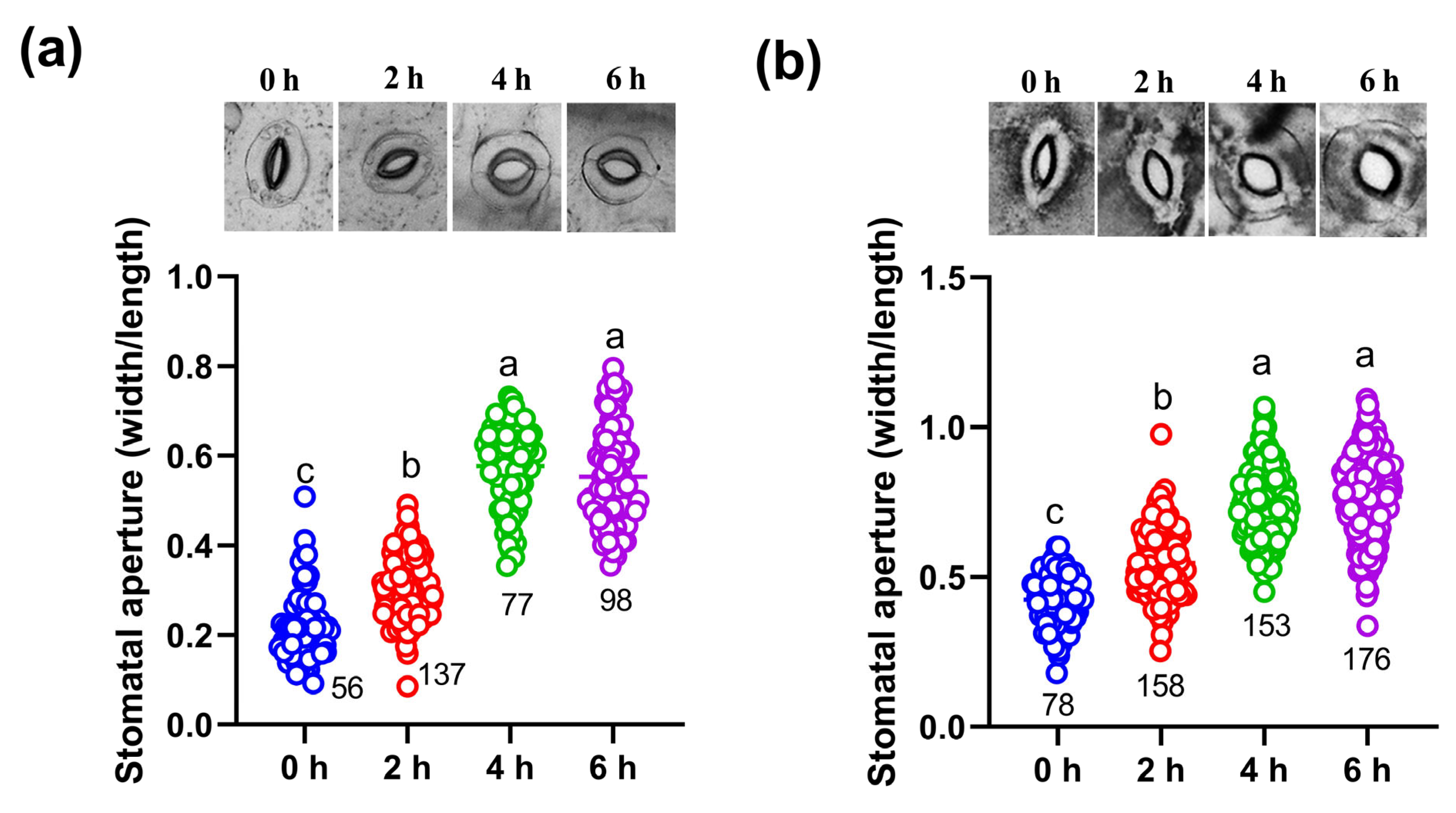
Figure 1. Screening of optimal incubation time for stomatal opening regulation experiments in vetch and alfalfa. (a,b) Time-dependent stomatal opening in vetch (a) and alfalfa (b). Representative images (upper panel) and statistical results (lower panel) of stomatal opening in the lower epidermis of vetch and alfalfa leaves incubated in an opening buffer containing 0.5% KCl under light conditions for 0, 2, 4, and 6 h are shown. Different letters above the scatter points indicate significant differences among treatments (p < 0.05, LSD), while the numbers below the points represent the stomata count.
Agronomy 16 00714 g001
Figure 2. Effects of exogenous application of Ca2+, EGTA, and H2O2 on the stomatal aperture of vetch and alfalfa. (af) Stomatal aperture of vetch (a,c,e) and alfalfa (b,d,f) treated with different concentrations of Ca2+, EGTA, and H2O2. Different letters above the scatter points indicate significant differences among treatments (p < 0.05, LSD), while the numbers below the points represent the stomata count.
Agronomy 16 00714 g002
Figure 3. Effects of exogenous application of CTK, GA3, and MT on the stomatal aperture of vetch and alfalfa. (af) Stomatal aperture of vetch (a,c,e) and alfalfa (b,d,f) treated with different concentrations of CTK, GA3, and MT. Different letters above the scatter points indicate significant differences among treatments (p < 0.05, LSD), while the numbers below the points represent the stomata count.
Agronomy 16 00714 g003
Figure 4. Effects of exogenous application of SA and MJ on the stomatal aperture of vetch and alfalfa. (ad) Stomatal aperture of vetch (a,c) and alfalfa (b,d) treated with different concentrations of SA and MJ. Different letters above the scatter points indicate significant differences among treatments (p < 0.05, LSD), while the numbers below the points represent the stomata count.
Agronomy 16 00714 g004
Figure 5. Effects of exogenous application of His, Glu, and Met on the stomatal aperture of vetch and alfalfa. (ad) Stomatal aperture of vetch (a,c,e) and alfalfa (b,d,f) treated with different concentrations of His, Glu, and Met. Different letters above the scatter points indicate significant differences among treatments (p < 0.05, LSD), while the numbers below the points represent the stomata count.
Agronomy 16 00714 g005
Figure 6. Effects of exogenous application of Arg, Pro, and Ala on the stomatal aperture of vetch and alfalfa. (a,b) Stomatal aperture of vetch (a,c,e) and alfalfa (b,d,f) treated with different concentrations of Arg, Pro, and Ala. Different letters above the scatter points indicate significant differences among treatments (p < 0.05, LSD), while the numbers below the points represent the stomata count.
Agronomy 16 00714 g006
Figure 7. Effect of foliar spraying with Met on the growth of vetch and alfalfa. (a,b) Effects of foliar application of 1 mM Met on stomatal aperture (a) and fresh weight (b) of vetch and alfalfa. The number of stomata analyzed for vetch and alfalfa was n > 70 and n > 90, respectively. For biomass measurements, n = 4. Different letters above the bars indicate significant differences among treatments (p < 0.05, LSD), while the numbers below the points represent the stomata count.
Agronomy 16 00714 g007
Disclaimer/Publisher’s Note: The statements, opinions and data contained in all publications are solely those of the individual author(s) and contributor(s) and not of MDPI and/or the editor(s). MDPI and/or the editor(s) disclaim responsibility for any injury to people or property resulting from any ideas, methods, instructions or products referred to in the content.