Article

Integrative Metabolomic and Transcriptomic Analyses Reveal Mechanisms of Hexavalent Chromium Toxicity in Contrasting Rapeseed Cultivars


1
Institute of Crop Science, Ministry of Agriculture and Rural Affairs Key Laboratory of Spectroscopy Sensing, Zhejiang University, Hangzhou 310058, China
2
Zhejiang Institute of Subtropical Crops, Zhejiang Academy of Agricultural Sciences, Wenzhou 325005, China
3
College of Life Sciences and Medicine, Zhejiang Sci-Tech University, Hangzhou 310018, China
4
Department of Agronomy, University of Agriculture, Faisalabad 38000, Pakistan
*
Authors to whom correspondence should be addressed.
Agronomy 2025, 15(12), 2892; https://doi.org/10.3390/agronomy15122892

Submission received: 17 November 2025 / Revised: 8 December 2025 / Accepted: 10 December 2025 / Published: 16 December 2025

Abstract

Brassica napus is a key oilseed crop with potential for cultivation in contaminated soils. However, the molecular mechanisms underlying chromium (Cr) toxicity and tolerance are not well-defined. This study aimed to elucidate these mechanisms by analyzing two contrasting cultivars, ZS758 and ZD622, under 50 μM Cr stress using a hydroponic experiment for physiological assessments, transcriptomics, and metabolomics. Cr exposure significantly increased tissue Cr content and severely inhibited plant growth, photosynthesis, and mineral nutrient uptake. Multi-omics analysis revealed extensive transcriptional and metabolic reprogramming. Specifically, we identified 15,882 and 13,371 differentially expressed genes (DEGs) and 256 and 136 differentially expressed metabolites (DEMs) identified in ZS758 and ZD622, respectively. These changes were primarily enriched in carbohydrate and amino acid metabolism pathways. The tolerant cultivar ZS758 exhibited more robust activation of defense-related pathways, including cell wall biosynthesis, hormone signaling, and transporter activity. Our integrative analysis reveals that Cr tolerance in rapeseed associated with cultivar-specific physiological and molecular adaptations. These insights provide potential targets and pathways for developing Cr-resistant varieties for sustainable agriculture in contaminated environments.

1. Introduction

Soil pollution by heavy metals is a critical global environmental challenge. Metals such as copper (Cu), cadmium (Cd), chromium (Cr), lead (Pb), and arsenic (As) are among the most hazardous pollutants due to their toxicity, persistence, and tendency to bioaccumulate in ecosystems [1]. Rapid agricultural and industrial expansion has exacerbated heavy metal contamination in agricultural soils worldwide, including China [2]. Although Cr pollution accounts for a relatively small proportion of total contamination, it still affects substantial areas. For example, an estimated 15 million tons of soil are contaminated by Cr nationwide in China [3]. The European Union (E.U.) has specifically raised concerns about Cr pollution, particularly from leather tanning industries, which are a major source of soil and groundwater contamination [4]. In China, heavy metal pollution especially Cr contamination poses a significant threat to soil health and crop quality. According to the 2014 National Soil Pollution Survey Bulletin, the overall over-standard rate of soil pollution in China was 16.1%, with Cr contributing to 1.1% of the contamination [5]. The distribution of Cr pollution varies significantly across regions in China. For instance, in Ningbo City, Cr has been identified as a major contaminant in stem vegetables. Studies revealed that 45.0% of the collected vegetable samples were contaminated with Cr, with an exceedance rate of 13.2% [6,7,8,9].
This contamination threatens agricultural productivity by degrading soil quality, reducing nutrient availability, and impairing plant growth [10]. Moreover, the accumulation of heavy metals in edible plant parts and their subsequent transfer through the food chain endanger human and animal health [11]. Plant roots, as the primary interface with contaminated soil, play a pivotal role in heavy metal uptake and translocation [12]. Studies have shown that the subcellular distribution of heavy metals within root cells significantly influences their accumulation and transport to aboveground tissues [13].
Plant tolerance to Cr stress involves complex molecular, physiological, and biochemical adaptations that enable metabolic adjustments to mitigate toxicity. Previous studies by Batool et al. [14] have revealed differential Cr accumulation and mobilization patterns among cultivars, with tolerant cultivars exhibiting lower Cr accumulation and sensitive cultivars accumulating higher levels. These findings suggest that specific adaptive mechanisms have evolved in tolerant cultivars to counteract excessive Cr uptake and toxicity. Such traits are of particular interest for phytoremediation applications, especially in species like Brassica napus.
B. napus is a globally significant oilseed crop, valued for its high oil content and versatility in food, feed, and biofuel production. It is cultivated extensively in regions such as China, Canada, India, Europe, and Australia, with a global production area exceeding 36 million hectares as of recent estimates [15]. However, like many other crops, B. napus is vulnerable to heavy metal contamination, including Cr, which can significantly affect its growth, yield, and metabolic processes. The genetic and molecular mechanisms underlying Cr absorption, transport, detoxification, and tolerance in B. napus remain poorly understood due to limited genomic data.
Advances in high-throughput RNA sequencing have enabled comprehensive gene expression analysis and the identification of candidate genes involved in stress responses in various plant species [16]. Omics approaches have emerged as a powerful tool for studying Cr tolerance, offering precise quantification, broad applicability, and high-throughput capabilities [17]. This technology has been instrumental in elucidating the molecular mechanisms of Cr stress responses, identifying regulatory genes, and understanding their roles in plant metabolism. Metabolites, as the end-products of cellular processes, provide a functional readout of genetic activity and play a crucial role in stress adaptation [18,19]. These metabolites contribute to osmotic regulation, protect cellular structures, and act as antioxidants by scavenging reactive oxygen species (ROS) [20,21,22]. Metabolites also function as signaling molecules, modulating redox pathways and enhancing stress tolerance mechanisms. Metabolite profiling offers valuable insights into the metabolic changes associated with stress tolerance, enabling the identification of key pathways and biomarkers [23,24].
This study employs advanced metabolomic and transcriptomic techniques to analyze the metabolic profiles and mineral nutrient status, as well as the photosynthetic efficiency, of two B. napus cultivars (ZS758 and ZD622) with contrasting Cr accumulation and tolerance traits. We aimed to identify differential genes and metabolites, along with their associated metabolic pathways, that contribute to Cr tolerance in rapeseed. By elucidating these molecular and metabolic mechanisms, we seek to enhance our understanding of the adaptive responses of rapeseed to Cr stress and contribute to the development of strategies for improving Cr tolerance in crops. By comparing the genetic and metabolic responses of these cultivars, we propose potential mechanisms underlying Cr tolerance. This research provides new insights into the adaptive strategies of B. napus under Cr stress and highlights the potential of omics approaches for advancing phytoremediation technologies.

2. Materials and Methods

Seeds of the two B. napus cultivars ZS758 and ZD622, which were previously identified as having contrasting Cr accumulation and tolerance phenotypes [14,25,26], were obtained from the College of Agriculture and Biotechnology, Zhejiang University, China. Briefly, ZS758 exhibits lower Cr translocation to shoots and maintained growth under stress (‘tolerant’), while ZD622 shows higher shoot accumulation and marked growth inhibition (‘sensitive’) [14].
To ensure uniformity, mature seeds were surface-sterilized with 0.1% NaClO for 10 min, rinsed thoroughly with deionized water, and germinated on moist filter paper. After one week, seedlings of uniform size were transplanted into 1 L plastic pots containing half-strength Hoagland nutrient solution (pH 5.8) [25]. Following a one-week acclimatization period, three-week-old seedlings at the four-leaf stage were subjected to the treatment phase.
The experiment followed a completely randomized design with two factors: cultivar (ZS758, ZD622) and treatment (control, 50 µM K2Cr2O7). For the Cr treatment, a 50 µM K2Cr2O7 solution was prepared in half-strength Hoagland solution. The pH of all solutions was adjusted to and maintained at 5.8 ± 0.1. Control plants received an equivalent volume of nutrient solution only. The exposure duration was seven days. Each treatment combination (cultivar × treatment) included three independent biological replicates, with each replicate consisting of 5–6 individual plants. The nutrient solution was replenished every four days. Plants were grown in a controlled growth chamber with a 14/10 h light/dark cycle, a photosynthetic photon flux density of 300 µmol m−2 s−1, a temperature regime of 22/18 °C (day/night), and relative humidity of 60–70%.
After the seven-day treatment period, plant growth was assessed. Shoot and root fresh weights (FW) were measured immediately upon harvest. For dry weight (DW) and subsequent mineral nutrient analysis, roots and shoots from all plants within a replicate were separated, pooled, oven-dried at 80 °C to constant weight, and then weighed. For mineral nutrient (Ca, K, P, Fe, Cu, Mn) and Cr concentration analysis, approximately 0.2 g of dry, powdered leaf tissue from the pooled sample of each replicate was used for acid digestion followed by ICP-MS analysis.
For transcriptomic and metabolomic analyses, the youngest fully expanded leaves were collected separately. After rinsing with distilled water, the leaf samples from all plants within a biological replicate were immediately pooled, flash-frozen in liquid nitrogen, and stored at −80 °C until analysis. This resulted in twelve samples per omics platform (2 cultivars × 2 treatments × 3 biological replicates).

2.1. Plant Biomass and Estimation of Plant Major and Micro Mineral

Upon harvesting, the seedlings were separated into roots and shoots to measure fresh weight. The samples were then oven-dried at 80 °C until a constant dry weight was achieved [27]. To analyze the major and micronutrient elements, B. napus leaves were ground into a fine powder. For digestion, a mixture of 31% HNO3 and 17.5% H2O2 was added to the powdered samples, which were then heated in a muffle furnace at 550 °C for approximately 6 h. Following digestion, the samples were incubated at 70 °C for about 2 h. The concentrations of mineral nutrients were determined using an inductively coupled plasma mass spectrometer (ICP-MS).

2.2. The Analysis of the Fast Chlorophyll Fluorescence Rise Curve Through Its O, J, I, and P Steps (OJIP) and Gas Exchange Parameter Measurements

OJIP represents a chlorophyll fluorescence kinetic curve induced by light, which offers valuable insights into dynamic biological processes, particularly those related to photosynthesis and light energy utilization efficiency, with an emphasis on photosystem II (PSII). Prior to measurement, the plants were dark-adapted for 20 min to ensure accurate fluorescence readings. The 20 min dark adaptation period before OJIP measurements was chosen based on established protocols and literature supporting its adequacy for ensuring accurate and reliable chlorophyll fluorescence measurements [28]. Dark adaptation allows the photosynthetic apparatus to fully relax, ensuring that all reaction centers in PSII are open and in their baseline state, which is critical for obtaining consistent OJIP curves. A portable FluorPen FP 110 (Photon System Instruments, Drásov, Czech Republic) was used to record the OJIP transient and chlorophyll fluorescence data [28]. Additionally, gas exchange parameters were analyzed using a portable photosynthesis system (LI-6400XT, LI-COR Biosciences, Lincoln, NE, USA) to assess photosynthetic performance under the experimental conditions.

2.3. Transcriptome Sequencing Analysis and RT-qPCR Analysis

2.3.1. RNA Extraction, Library Preparation, and Sequencing

Transcriptome sequencing was performed on 12 leaf tissue samples of two rapeseed cultivars under two conditions: control and Cr stress. Total RNA was extracted using TRIzol reagent (Tiangen Biotech, Beijing, China). RNA purity was assessed using a Nanophotometer spectrophotometer (IMPLEN, Westlake Village, CA, USA). Following RNA quality verification, mRNA with poly(A) tails was enriched using magnetic beads containing Oligo(dT). The enriched mRNA was fragmented using Fragmentation Buffer, and a 6-base random primer was used for reverse transcription to generate double-stranded cDNA. The cDNA was then repaired, amplified by PCR using specific primers designed with NCBI Primer-BLAST (https://www.ncbi.nlm.nih.gov/tools/primer-blast/; accessed on 15 March 2024), and thermally denatured to produce single-stranded DNA. This single-stranded DNA was cyclized using appropriate primers to create a single-stranded circular DNA library. Paired-end reads were generated through transcriptome sequencing on the BGISEQ-500 platform (BGI, Shenzhen, China). Detailed quality control statistics for all RNA-seq libraries are provided in Table S1.

2.3.2. Read Processing, Alignment, and Quantification

Raw sequencing reads were subjected to quality control using FastQC (v0.11.9). Adapter sequences and low-quality bases (Phred score < 20) were trimmed using Trimmomatic (v0.39). The clean reads were then mapped to the Brassica napus reference genome (GCF_000686985.2_Bra_napus_v2.0) using HISAT2 (v2.2.1). Gene expression levels were estimated as Fragments Per Kilobase of transcript per Million mapped reads (FPKM) using StringTie (v2.1.4).
For validation of transcriptome data, RT-qPCR was performed. Total RNA was extracted from frozen leaf samples using TRIzol reagent (Tiangen Biotech, Beijing, China), followed by reverse transcription using the FastKing RT Kit (Tiangen Biotech, Beijing, China). The threshold cycle (Ct) values were determined using the iCycler IQ Real-Time Detection System Software, and mRNA levels were quantified. Primers were designed using NCBI Primer-BLAST to target specific PCR regions. Relative gene expression levels were calculated using the 2−∆∆Ct method.

2.3.3. Differential Expression Analysis

Differential expression analysis was performed using the DESeq2 (v1.30.1) package in R. Genes with an adjusted p-value (False Discovery Rate, FDR) < 0.05 and an absolute log2 fold change (|log2FC|) > 1 were considered significantly differentially expressed (DEGs).

2.4. Identification of Differentially Expressed Genes (DEGs) and Bioinformatics Analysis

The list of DEGs identified via DESeq2 was used for downstream functional analysis. Gene Ontology (GO) and Kyoto Encyclopedia of Genes and Genomes (KEGG) pathway enrichment analyses were performed using the clusterProfiler (v4.0) R package. Terms with an FDR < 0.05 were considered significantly enriched. Visualization was conducted using ggplot2 and the Pathview package. Weighted Gene Co-expression Network Analysis (WGCNA) was performed separately using the WGCNA R package on all expressed genes (FPKM > 0 in at least 3 samples) to identify modules of co-expressed genes correlated with physiological traits. A soft-thresholding power was chosen based on the scale-free topology criterion (R2 > 0.85).

2.5. Metabolomics Data Analysis and Processing of Rapeseed Plants

2.5.1. Metabolite Extraction

Frozen leaf tissue (20 mg) was homogenized with 400 µL of a pre-chilled extraction solution (methanol:water, 1:1, v/v) containing internal standards (e.g., L-leucine-13C6, phenylalanine-d8). The homogenate was vortexed, sonicated for 15 min in an ice bath, incubated at −20 °C for 2 h, and centrifuged at 30,000× g for 25 min at 4 °C. The supernatant (550 µL) was collected for analysis.

2.5.2. LC-MS/MS Analysis

Chromatographic separation was performed on a Waters ACQUITY UPLC HSS T3 column (Waters Corporation, Milford, MA, USA) (1.8 µm, 2.1 mm × 100 mm) maintained at 40 °C. The mobile phase consisted of (A) 0.1% formic acid in water and (B) 0.1% formic acid in acetonitrile, with a gradient elution. The effluent was introduced into a Q-Exactive HF mass spectrometer (Thermo Fisher, Waltham, MA, USA) operating in both positive and negative electrospray ionization (ESI) modes. Full MS scans (m/z 70-1050) were acquired at a resolution of 120,000.

2.5.3. Data Processing and Metabolite Identification

Raw data files were processed using Compound Discoverer (v3.2, Thermo Fisher) or MS-DIAL for peak detection, alignment, and deconvolution. Metabolites were identified by matching their MS/MS spectra and retention times against authentic standards in an in-house library and/or public databases (e.g., mzCloud, HMDB) with a mass tolerance of <5 ppm.
The detailed procedure for data processing and software used is provided in the Supplementary File S1.

2.5.4. Statistical Analysis of Metabolomics Data

Processed peak intensity data were log2-transformed and Pareto-scaled prior to multivariate analysis. Principal Component Analysis (PCA) and Partial Least Squares-Discriminant Analysis (PLS-DA) were performed using SIMCA-P (v16.0). Differentially expressed metabolites (DEMs) were identified using a two-tailed Student’s t-test with a threshold of p-value < 0.05 and a Variable Importance in Projection (VIP) score > 1.0 from the PLS-DA model.

2.6. Statistical Analysis

Data for plant biomass, mineral nutrients, gas exchange, and chlorophyll fluorescence are presented as mean ± standard error (SE) of three biological replicates. Significant differences between treatment means within a cultivar were determined by one-way analysis of variance (ANOVA) followed by Duncan’s multiple range test (p < 0.05) using GraphPad Prism 9.0.0. Statistical details for omics data are provided in the respective sections above.

3. Results and Discussion

3.1. Cr Induced Reduction in Plants Growth and Cr Content

Plant biomass, including the shoot and root fresh and dry biomass of both rapeseed cultivars (ZS758 and ZD622), was significantly reduced under Cr stress (Table 1). Compared to control plants, those treated with 50 µM Cr exhibited maximum reductions in shoot fresh weight (57%) and root fresh weight (73%), as well as in shoot dry weight by (29%) and root dry weight (42%) in ZS758 and ZD622 (Table 1). Both cultivars also showed differential uptake and accumulation of Cr. Under 50 μM Cr treatment, cultivar ZS758 displayed a 31% increase in shoot Cr uptake, while cultivar ZD622 showed a larger increase of 57% (Table 1). However, ZS758 demonstrated improved growth and stress tolerance overall, associated with lower Cr uptake and accumulation compared to ZD622.
Cr stress alters numerous physiological and biochemical processes, significantly affecting the production of metabolites essential for plant growth and development [29,30,31]. Excess Cr in plant tissues triggers a range of morpho-physiological and biochemical responses [32]. For example, prior studies reported that chickpea plants exhibited enhanced growth, biomass, and root characteristics at lower Cr concentrations, while higher Cr doses significantly inhibited growth and development in Plantago ovata and Oryza sativa [33,34,35]. In our study, under Cr stress, cultivar ZS758 showed minimal loss in growth attributes and lower Cr accumulation in roots and shoots, resulting in improved growth and Cr resistance compared to ZD622 (Table 1). Overall, ZS758 was identified as a tolerant cultivar, while ZD622 was sensitive. In line with previous studies, B. napus plants under Cr stress exhibited clear phenotypic changes Figure S2, including leaf wilting and stunted growth, which were associated with altered physiological indicators [36]. Several plant species, including B. napus, have shown reduced growth and biomass under Cr stress [37], consistent with our findings (Table 1).

3.2. Gas Exchange Parameters, Chlorophyll Fluorescence and PSII Efficiency Under Cr Stress

Gas exchange parameters, including net photosynthetic rate (Pn), stomatal conductance (Gs), and transpiration rate (Tr), were reduced in both rapeseed cultivars under Cr stress. Under 50 µM Cr treatment, cultivar ZS758 exhibited reductions in Pn by 42%, Gs by 36%, and Tr by 32%. In contrast, cultivar ZD622 showed greater reductions of 64% in Pn, 46% in Gs, and 42% in Tr (Table 1). The observed decline in gas exchange parameters, including Pn, Gs, and Tr, under Cr stress aligns with previous studies demonstrating the inhibitory effects of heavy metals on photosynthesis. The reduction in Pn can be attributed to both stomatal and non-stomatal factors.
Stomatal limitations were evident from the significant decrease in Gs, which restricted CO2 diffusion into the leaf mesophyll, thereby limiting carbon assimilation [38]. Under, heavy metal stress non-stomatal factors included direct damage to the photosynthetic machinery, such as the inactivation of key enzymes in the Calvin cycle and the disruption of electron transport in photosystem II (PSII), as indicated by the decline in Fv/Fm [39,40]. Plants under heavy metal stress often experience photosynthetic inhibition due to both stomatal and non-stomatal factors [41]. Cr stress has been reported to decrease biomass due to reduced chlorophyll concentration and suppressed photosynthesis in sweet potato [42].
Similarly, Li et al. [40] observed that exposure to copper stress significantly reduced plant growth, including biomass and plant height, and impaired photosynthetic parameters such as chlorophyll content, Pn, Gs, and quantum yield of PS II (Fv/Fm). Cr6+ was predominantly distributed in the cell wall and soluble fraction of roots and leaves, indicating its sequestration in these compartments [41]. Cultivar ZD622 exposed to Cr stress showed a significant decline in gas exchange parameters (Table 1), consistent with previous studies on heavy metal stress. These findings suggest that metal treatments may inhibit Rubisco activity in the Benson–Calvin cycle, leading to a decline in Pn. The reduction in transpiration rate (Tr) further supports the stomatal limitation hypothesis, as Cr stress likely induced stomatal closure to minimize water loss and metal uptake [42,43,44]. However, this protective mechanism came at the cost of reduced CO2 availability, exacerbating photosynthetic inhibition. Additionally, Cr-induced oxidative stress likely played a role in impairing gas exchange, as elevated levels of ROS can damage chloroplast membranes and disrupt the structural integrity of stomata [45,46].
Cr stress significantly affected PSII efficiency, as indicated by OJIP chlorophyll fluorescence parameters in both rapeseed cultivars. Under 50 µM Cr treatment, both cultivars exhibited differential responses in chlorophyll fluorescence kinetics, including a decrease in the efficiency of electron donation to PSI (Fv/Fo), maximum quantum yield of PSII (Fv/Fm), and the area between minimum fluorescence (Fo) and maximal fluorescence (Fm). These changes indicated inhibition of electron transport from the reaction center (RC) to plastoquinone (PQ) and a reduction in the performance index on an absorption basis (PIABS). However, the reduction was more pronounced in cultivar ZD622 compared to ZS758 (Table 2). The 50 µM Cr treatment also reduced the maximal number of turnovers for QA reduction (N) until Fm reached the maximum rate of accumulation of closed reaction centers (Mo). Cultivar ZS758 under Cr stress showed a pronounced increase in energy flux for absorption (ABS/RC), trapping energy (TRo/RC), electron transport (ETo/RC), and dissipation energy flux per reaction center (DIo/RC) compared to ZD622 (Table 2). In contrast, the decrease in energy flux per reaction center was significantly lower in ZS758 than in ZD622 (Table 2). These findings suggest that Cr stress reduced energy fluxes in both cultivars, but the higher values of Fm/Fo, Fv/Fo, Fv/Fm, Phi_P0, Psi_o, Phi_E0, and lower Mo in ZS758 indicate its greater genetic potential for Cr tolerance compared to ZD622 (Table 2).
A sharp decline in relative fluorescence values at the I step (ΔVOI) under Cr treatments suggests severe damage in ZD622, leading to disruption of the electron transport network and a poor redox state at the PSI final electron acceptor site (Table 2). These results align with previous studies [47,48]. The performance index (PIABS) and Fv/Fm are highly sensitive indicators of photosynthetic physiological status under stress. In line with a prior study, Cai et al. [48] reported that plants under Cd stress often close their stomata to reduce Tr and limit Cd uptake in tobacco shoots, which may explain why ZD622 exhibited slightly lower Tr values and poor redox state compared to ZS758 under Cr stress (Table 1 and Table 2). Under Cr stress, ZD622 exhibited higher rates of closed reaction center accumulation (Mo) and greater energy fluxes for absorption (ABS/RC), trapping (TR0/RC), and electron transport (ET0/RC) compared to ZS758 (Table 2). The biophysical membrane theory of energy flow for PSII suggests that stress conditions can enhance antenna size and energy absorption efficiency [49,50]. The observed changes in energy flux parameters (ABS/RC, TR0/RC) and the higher PIABS in ZS758 are indicative of a more effective photoprotective mechanism, potentially involving adjustments in antennae function and energy dissipation, which could contribute to its superior photosynthetic performance under Cr stress. Excess energy absorbed by antenna proteins was dissipated as heat, contributing to its superior Cr tolerance.

3.3. Mineral Nutrient Profile

The leaf tissue mineral nutrient profiles of both rapeseed cultivars were significantly affected by Cr stress. For instance, under 50 µM Cr treatment, cultivar ZS758 exhibited reductions in calcium (Ca) by 62%, potassium (K) by 58%, phosphorus (P) by 49%, iron (Fe) by 42%, copper (Cu) by 40%, and manganese (Mn) by 36%. In contrast, the reductions were more pronounced in cultivar ZD622, with decreases in Ca, K, P, Fe, Cu, and Mn by 86%, 74%, 68%, 58%, 62%, and 48%, respectively (Table 3).
Previous studies have demonstrated that Cr stress reduces plant growth and biomass in various plant species, including B. napus and rice [51,52], which aligns with our findings. Cr stress led to significant reductions in fresh biomass, and dry biomass of shoots (Table 1). The detrimental effects of Cr on plant growth and biomass have been well documented. According to Guarino [53], the decline in plant biomass under Cr stress may be attributed to the severe depletion of essential micronutrients such as zinc (Zn), iron (Fe), manganese (Mn), and cobalt (Co) but also inhibits plant development but also reduces the uptake of macronutrients (K, Mg, P, N, and Ca) and micronutrients (Mn, Cu, and Fe). These findings are consistent with earlier studies on Cr stress in cucumber [54,55]. The disruption of nutrient homeostasis under Cr stress likely contributes to the observed growth inhibition and biomass loss in both rapeseed cultivars.

3.4. Transcriptome Sequencing Analysis and DEGs Identification and Metabolomics Profile

3.4.1. Assembly of Transcriptome Data

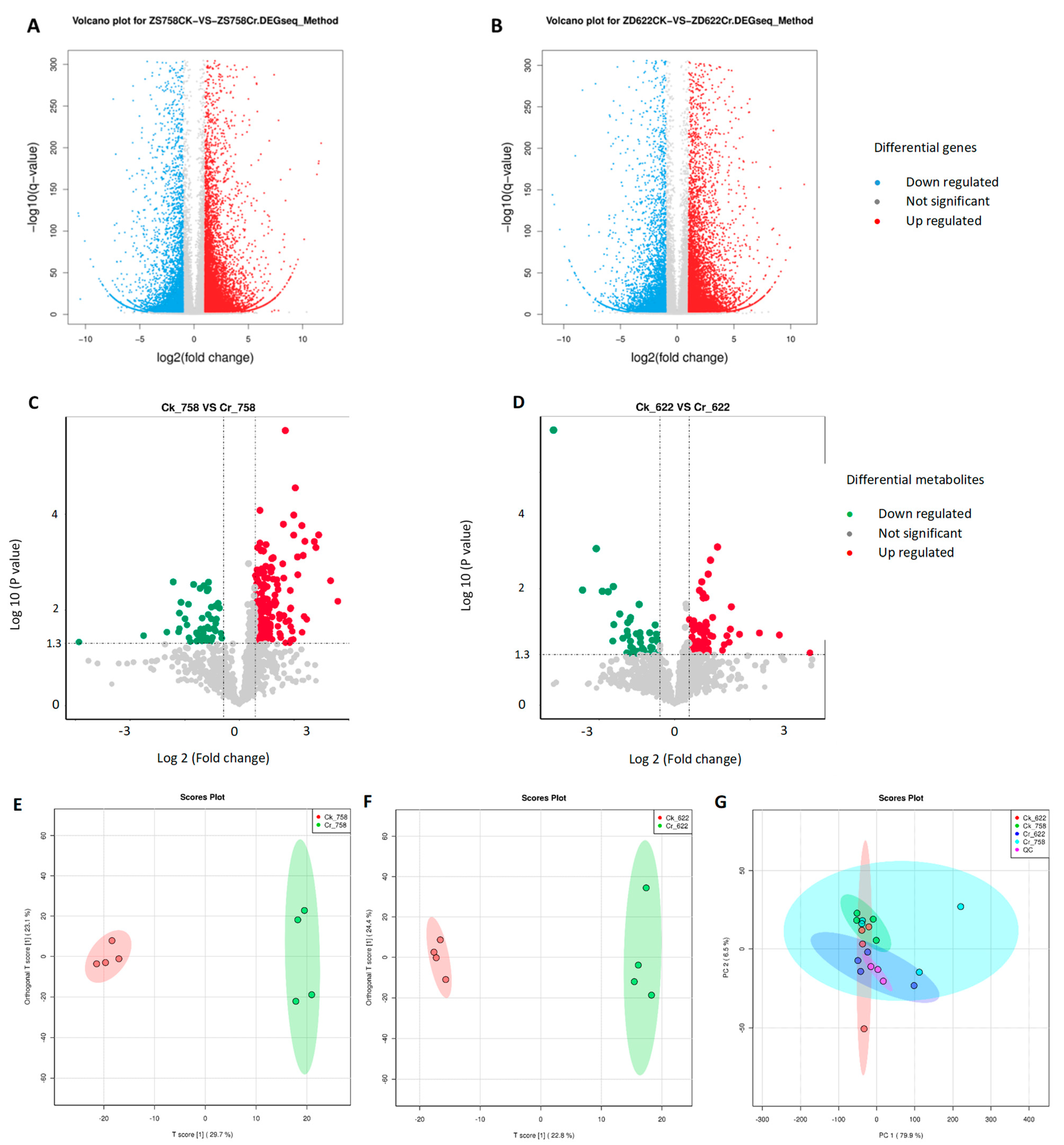
After the RNA-seq analysis, 19,978 clean reads were generated from twelve samples (Project number: F21FTSECKF8200_BRAoskvR) using the BGISEQ platform. The GC content was 51.53%, with Q20 and Q30 values of 96.21% and 86.45%, respectively. Based on average expression and log2 fold change values, the clean reads were further assembled and classified into five major modules (Figure S1). After the Corset software (version 1.09), clustered the data into modules, 11,556 and 4326 common genes were screened out with N50 and N90 values, respectively. In total, 19,978 genes were found with an average mapping ratio of 85.45% compared to the reference genome. The reference genome version GCF_000686985.2_Bra_napus_v2.0 was used as the reference sequence, and the HISAT (version 2.2.1) software tool was used to map the clean reads to the reference genome, with a total mapping ratio of 84.65% and a uniquely mapped ratio of 69.10%, respectively (Figure 1A and Figure 1B).
Differentially expressed genes (DEGs) among different treatments screened out based on fragments per kilobase of exon per million (FPKM) values with log2 transformation as a threshold level. Under Cr stress 15,882, (11,220 up regulated and 4662 down regulated) and 13,371 (8758 up regulated and 4613 down regulated) annotated genes were obtained in ZS758 and ZD622, respectively (Figure 1A and Figure 1B). These findings suggest that Cr-induced common 2691 DEGs can be categorized in five modules (Figure S1). The most substantial alterations in gene expression were detected in Cr-treated sensitive cultivar ZD622 compared to tolerant ZS758 plants.

3.4.2. Metabolomics Profile Analysis

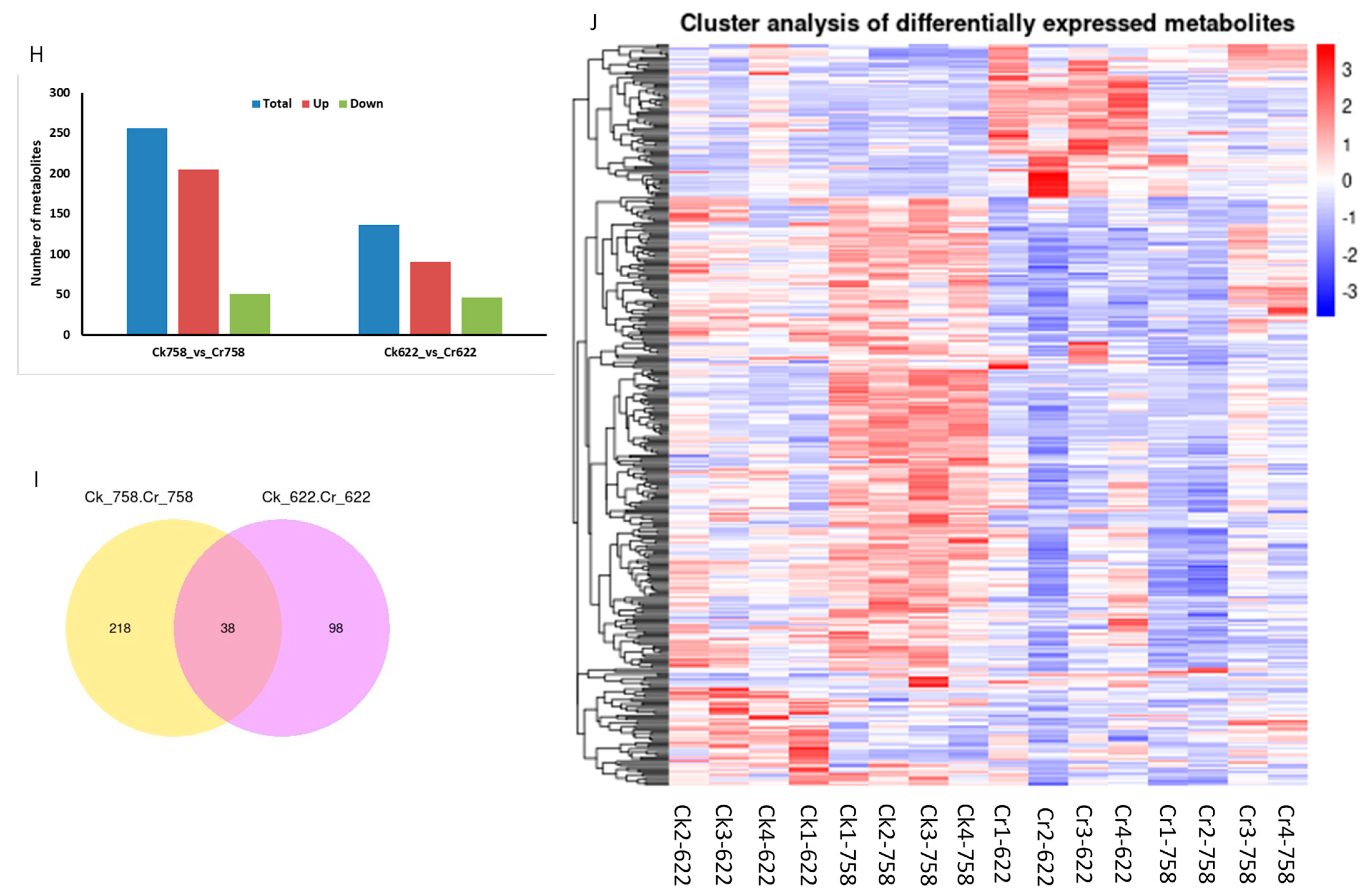
The 50 µM Cr treatment resulted in a total number of differentially expressed metabolites (DEMs) of 256 and 136 in leaf tissue of both cultivars ZS758 and ZD622, as shown in Figure 1. Whereas 205 and 136 DEMs showed upregulated expression, 51 and 46 DEMs showed downregulated expression in the rapeseed cultivars ZS758 and ZD622, respectively (Figure 1). According to the data, under 50-µM Cr treatment, cultivar ZS758 showed 218 unique DEMs compared to cultivar ZD622 with 98 DEMs, while 38 DEMs were found common to both rapeseed cultivars (Figure 1). Based on a multivariate approach using PCA, samples from the same group were categorized as either positive (ESI+ve) or negative (ESI−ve) ion detection modes in combination. There was an obvious metabolomics alteration in response to Cr stress in both cultivars ZS758 and ZD622, with a more pronounced increase in the tolerant cultivar ZS758, suggesting that the Cr treatments induced inherent differences in their metabolomic composition (Figure 1). Using a supervised multivariate approach, we found that Cr-stressed plants showed considerably more metabolite expression segregation than control plants [56,57]. Therefore, Cr treatment significantly altered the metabolomics signature of rapeseed seedlings. Our metabolomic data identified a core response in the tolerant ZS758 cultivar characterized by the accumulation of specific organic acids (e.g., citric, malic) and amino acids (e.g., proline, glutamic acid). This profile suggests a strategy to maintain ionic and osmotic balance while potentially chelating Cr ions, a mechanism also observed in Cd-stressed rice [57].
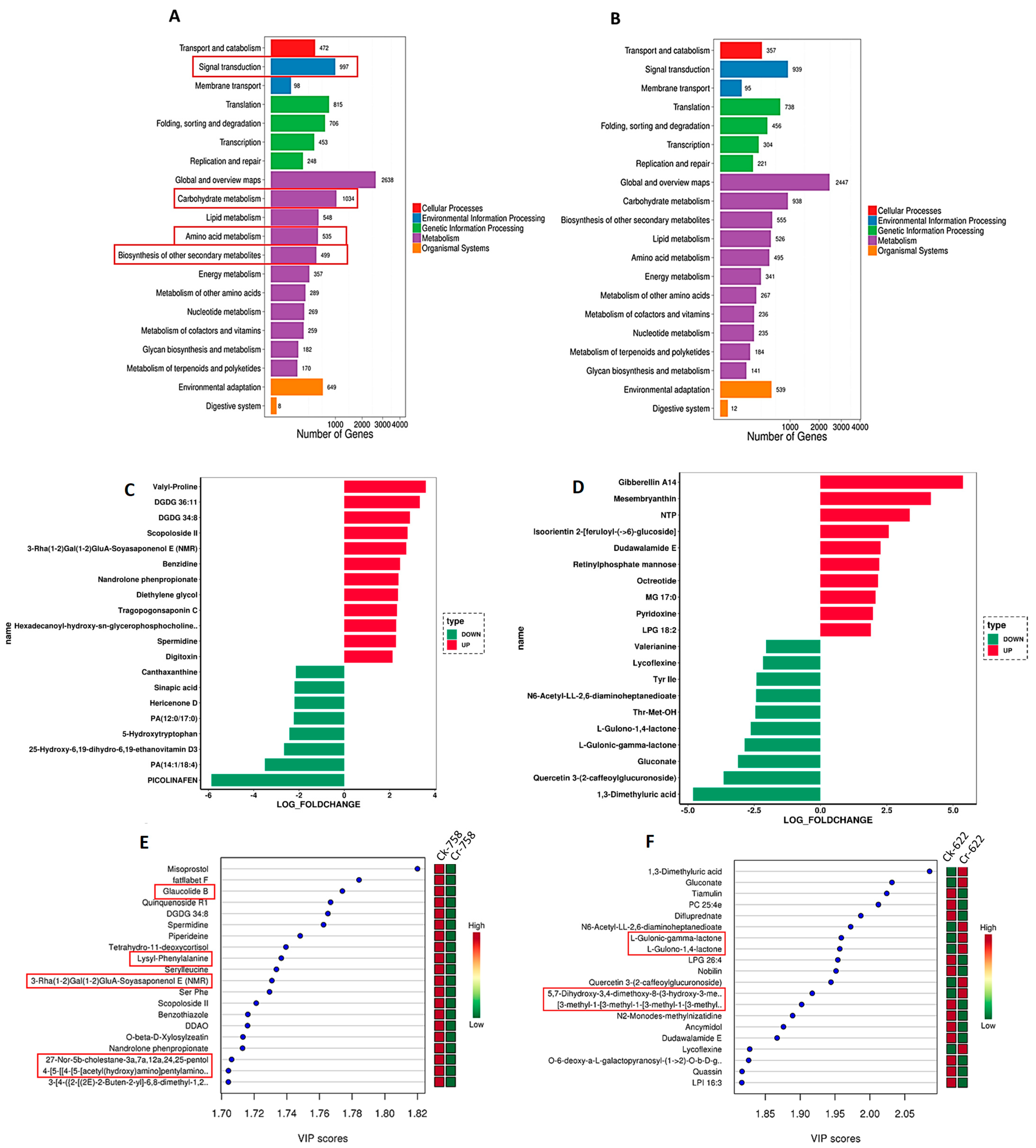
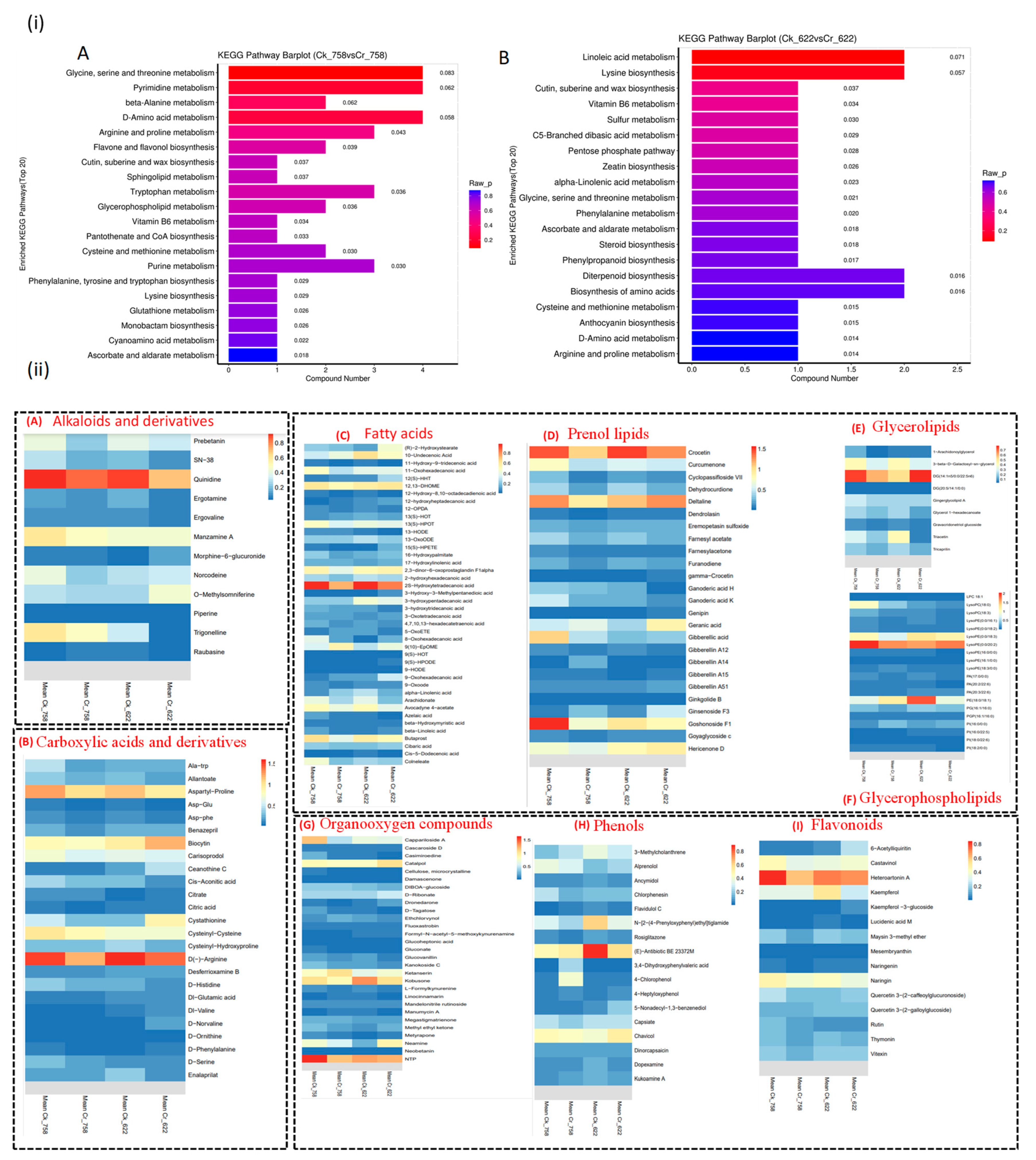
Under 50 µM Cr treatment, a high number of DEGs were identified, mainly related to signal transduction, carbohydrate metabolism, amino acid metabolism, and biosynthesis of secondary metabolites (Figure 2A,B). DEMs were primarily related to amino acid biosynthesis and metabolism, including proline, gibberellin metabolism, phenylalanine, and key secondary metabolism in cultivars ZS758 and ZD622 (Figure 2C–F). Although cultivar ZD622 under 50-µM Cr treatment showed a low abundance of metabolites compared to ZS758, this might be due to toxic effects of Cr stress, which were better addressed in the tolerant cultivar ZS758.
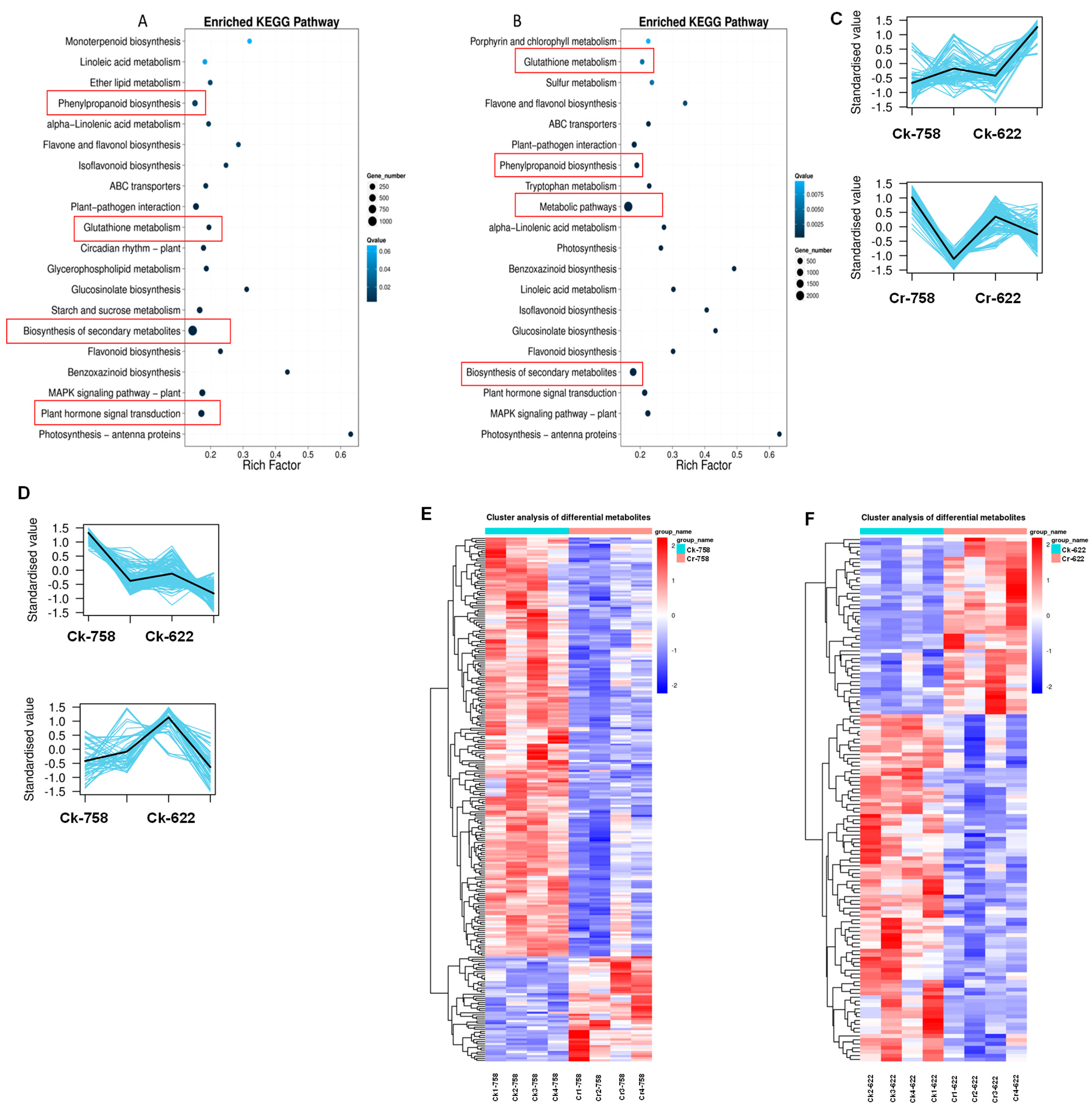
Similarly, KEGG enrichment pathway analysis indicated that tolerant cultivar ZS758 under Cr stress showed high expression of genes related to phenylpropanoid biosynthesis, flavone and flavonol biosynthesis, ABC transporters, glutathione metabolism, and plant hormone signal transduction (Figure 3A). In contrast, susceptible cultivar ZD622 exhibited lower expression of genes related to the above-mentioned cellular metabolic pathways, suggesting a higher damaging effect of Cr stress compared to ZS758 (Figure 3B). These findings correlate with the physiological attributes discussed in Table 1, Table 2 and Table 3, where tolerant cultivar ZS758 showed better growth and tolerance to Cr stress than ZD622.
To understand this phenomenon, metabolite expression of related pathways was analyzed and clustered into groups and subgroups (Figure 3C,D). According to the data (Figure 3E,F), the expression of metabolites related to zeatin biosynthesis, phenylalanine metabolism, lysine biosynthesis, linoleic acid metabolism, glycine, serine and threonine metabolism, cysteine and methionine metabolism, and arginine and proline metabolism was considerably higher in ZS758 than in ZD622, suggesting their role in plant growth under stressful conditions (Figure 3E,F). The accumulation of glycine in ZS758 is consistent with its reported roles in modulating photosynthesis and photorespiratory carbon metabolism under stress [58,59], suggesting a potential contribution to the observed maintenance of photosynthetic parameters. Sulfur is found in abundance in cysteine, and iron–sulfur clusters are a crucial part of electron transport proteins. In line with our results, it was reported that aspartic acid, leucine, L-tyrosine, glutamic acid, lysine, and L-glutamine were among the metabolites associated with amino acid metabolism that were in declining abundance [59,60].
Furthermore, the pool of Cr-responsive carbohydrate metabolites improved in tolerant cultivar ZS758 compared to sensitive cultivar ZD622 (Figure 3), with high abundance of glycerol, L-arabitol, and D-fructose-1,6-diphosphate. It was suggested that glycerol, a precursor of glycerol-3-phosphate (G3P), enhances plant growth and resistance. Cu stress was shown to cause significant biosynthesis of polyphenol, phenylalanine, tyrosine, and threonic acid in cucumbers [61]. Certain amino acids (glutamic acid, serine, aspartic acid, and threonine) and organic acids (glutamic acid, glyceric acid, and proline) can aid in the detoxification of excess Cu in Celosia argentea [61]. More distinctively, ZS758 displayed a pronounced accumulation of flavonoid metabolites (Figure 3). This targeted investment in secondary metabolism contrasts with the generalized suppression of metabolism often reported under high zinc toxicity [62,63,64] and aligns more closely with adaptive responses in metal-tolerant species, where flavonoids serve dual roles as antioxidants and metal chelators [65]. Therefore, our data highlight the specific induction of the flavonoid pathway as a hallmark of the Cr-tolerance phenotype in rapeseed. These metabolites regulate plant defense signals because they take part in glycolysis, glycerolipid production, and energy production in plant cells [66,67]. Fructose serves as a signaling molecule in plants under abiotic stress, influencing several physiological processes such as photosynthesis, seed germination, and flowering. The impact of these detrimental metabolomic modifications may become apparent in the field after repeated stressful situations or over a longer period of time [68,69].

3.5. Hierarchical Clustering of DEMs and Weighted Co-Expression Network Model

Primary Metabolic Shifts and Nutrient Homeostasis Underpin Growth Maintenance.
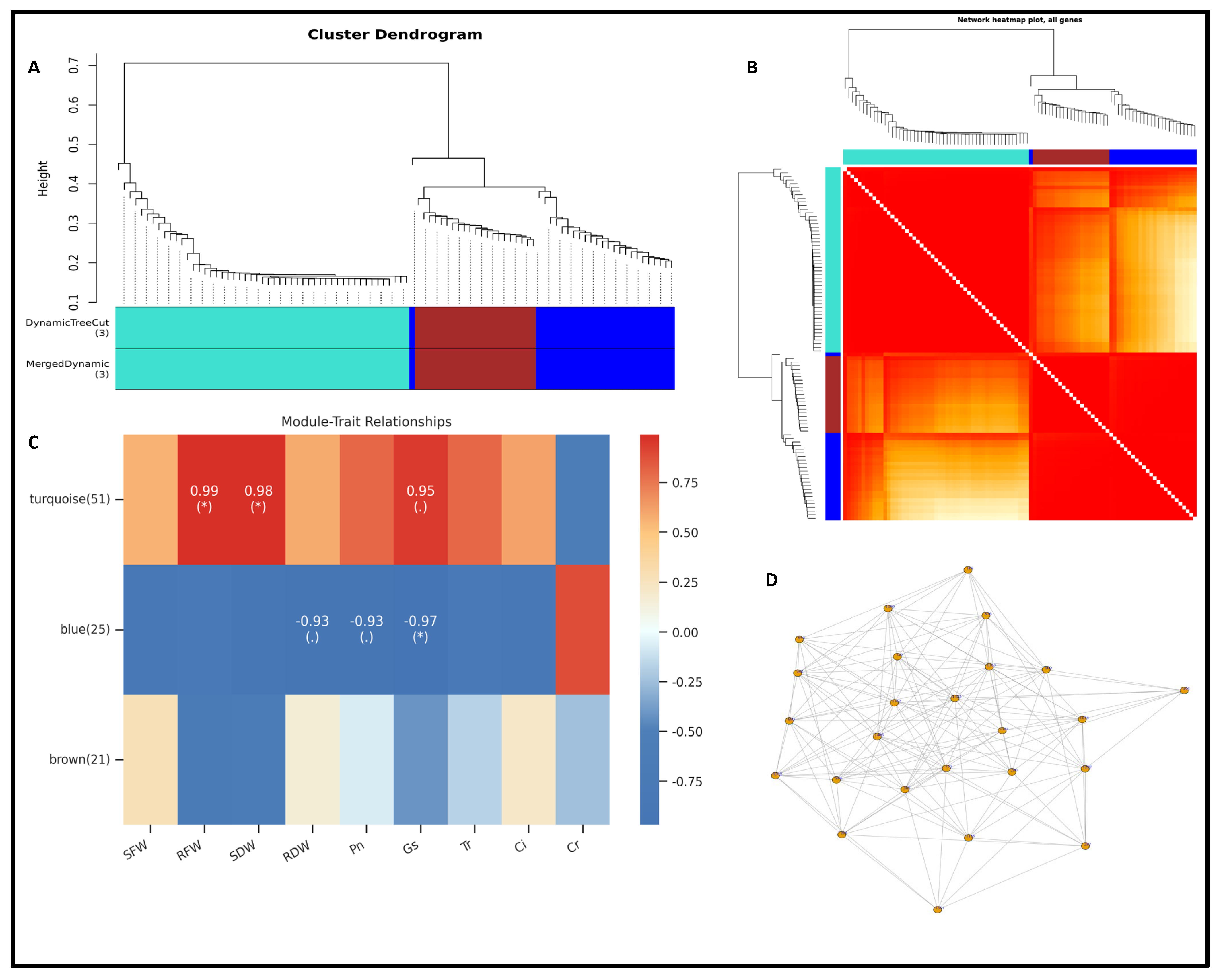
The ZS758 maintained better nutrient (K, Ca, P) and photosynthetic metrics despite similar Cr exposure. Based on the selected soft-thresholding power, a scale-free co-expression network was established. The 97 DEMs common to both cultivars were grouped into three distinct modules: blue (25 DEMs), brown (21 DEMs), and turquoise (51 DEMs). DEMs that could not be assigned to a module were placed in the gray module, which was excluded from further analysis as it holds no biological relevance (Figure 4A). Strong correlations among specific modules were observed in Cr-treated plants. The correlation between module eigengenes and plant traits was assessed using Pearson’s algorithm, with the correlation coefficients and corresponding p-values displayed in Figure 4B,C. WGCNA identified hub metabolites within key modules (blue, brown, turquoise) that were highly connected to the Cr-stress response phenotype. The strong upregulation of these hub metabolites, particularly those linked to amino acid and flavonoid pathways, highlights their central associative role in the metabolic reprogramming of the tolerant cultivar ZS758 (Figure 4D and Figure S3). Using a threshold of an absolute correlation coefficient ≥ 0.2 and a p-value < 0.03, modules significantly associated with each trait were identified. The blue, brown, and turquoise modules showed strong positive and negative correlations with plant traits in both cultivars. A more pronounced correlation between DEMs and traits was observed in the sensitive cultivar compared to the tolerant one, which is regarded as a characteristic stress response.
Correlation analysis of DEMs in three modules indicated that several metabolites expressed in the Cr-treated rapeseed were mostly associated with amino acid biosynthesis, including isoleucine, valine, leucine, and flavonoid formation in ZS758 and ZD622 as shown in (Figure 4A,B). The Cr-responsive secondary metabolites in both rapeseed plants changed significantly following the Cr stress (Figure 4). Tolerant cultivar ZS758 under Cr showed downregulated levels of 28 metabolites linked to carboxylic acids and derivatives, 18 metabolites related to flavonoids, 10 metabolites related to prenol lipids, 7 metabolites related to benzene and derivatives, 4 metabolites related to indoles and derivatives, and 6 metabolites related to phenols. Furthermore, alanine, aspartate, glutamate, and tyrosine, as well as L-tyrosine, L-tryptophan, and phenylalanine metabolism-related metabolites, showed upregulated expression in tolerant cultivar ZS758 (Figure 4).
The accumulation of aromatic amino acids (tyrosine, tryptophan, phenylalanine) coincides with the upregulation of phenylpropanoid/flavonoid pathways. Given their known roles as precursors for secondary metabolites and potential antioxidants, their accumulation may support the enhanced redox buffering capacity observed in ZS758. For instance, these aromatic rings of amino acids support electron transport during redox processes in plant cells, take part in acid–base catalysis as a member of catalytic triads, and stabilize polypeptide structures by stacking effects in cadmium stress on membrane lipid composition of Brassica juncea and Brassica napus leaves [70].
However, after exposure to Cr, the tolerant cultivar ZS758 showed a significant increase in C18 unsaturated fatty acids (USFA) in the current investigation (Figure 3). Consistent with previous study, our results imply a potentially positive function of membrane unsaturation in Cr tolerance, which is consistent with findings by Zemanova et al. [71], who observed elevated levels of USFA, particularly C18 FA, in Cd-hyperaccumulating and tolerant ecotypes of Noccaea caerulescens under Cd stress. Therefore, a thorough analysis across cultivars with different capabilities for metal accumulation is necessary to understand the consequences of fatty acid remodeling for metal tolerance.

3.6. Integration of Key Genes and Metabolites in Rapeseed

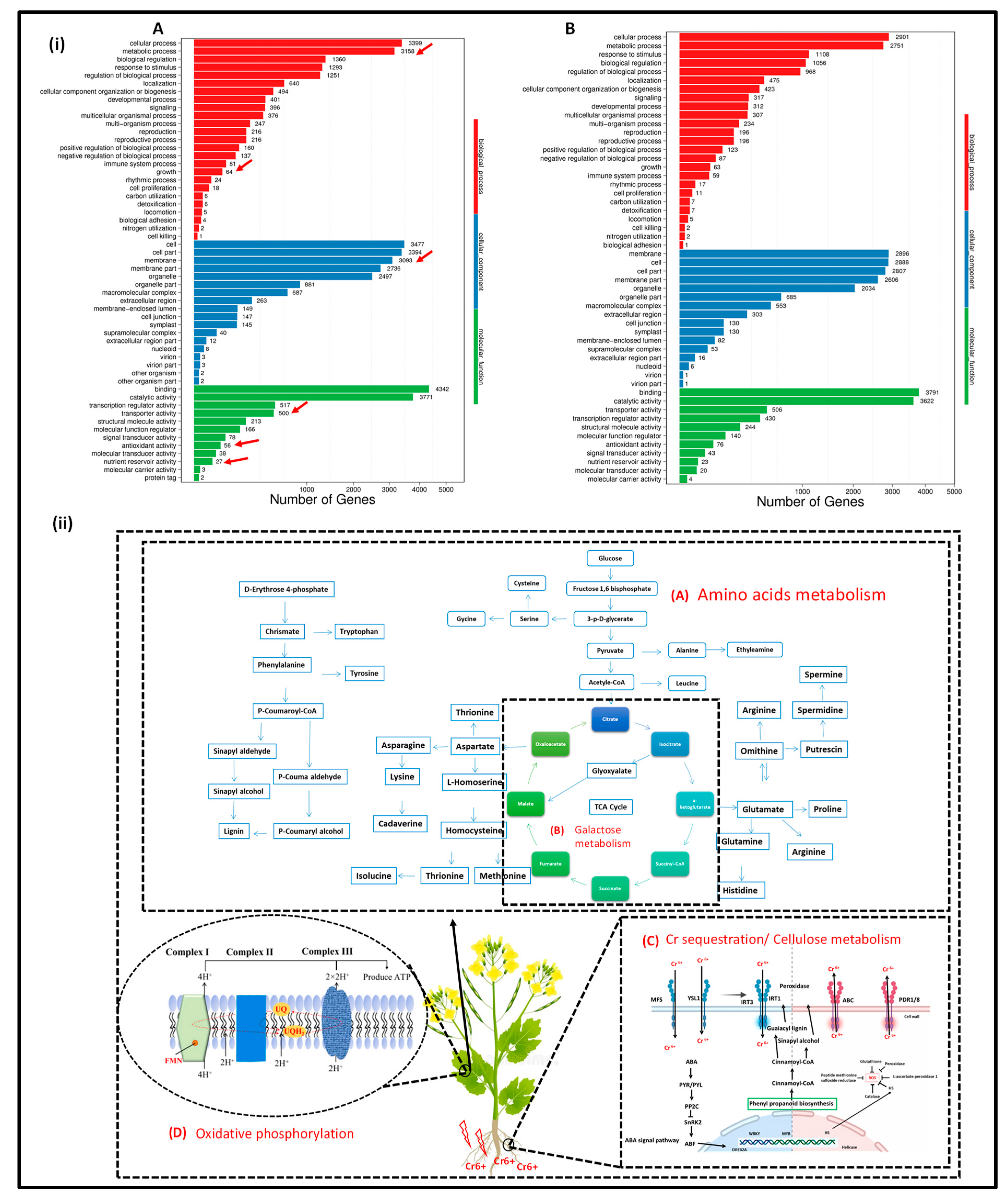
To generate hypotheses on mechanistic links, we correlated the transcriptomic and metabolomic datasets. The concurrent upregulation of genes in the phenylpropanoid pathway (e.g., PAL, CHS, F3′H) and the accumulation of related flavonoids/phenols suggests a coordinated transcriptional and metabolic investment in this antioxidant and chelation-associated pathway in ZS758 (Figure 5iA,iB). Specifically, the Cr treatment upregulated the expression of 136 and 72 genes linked to peptides, analogs, and amino acids and downregulated 32 and 56 genes in rapeseed cultivars ZS758 and ZD622, respectively (Figure 5iA, Figure 5iB). Interestingly, plants exposed to Cr expressed 23 genes at higher levels than plants beginning to feel the effects of Cr stress. Furthermore, genes associated with the production of amino acids were expressed at lower levels; these metabolites included cysteine/homocysteine, lysine, tryptophan, alanine, glutamate, and proline (Figure 5).
Lipid remodeling has gained more attention recently as a means of developing tolerance to unfavorable conditions [69]. Although plants can enhance membrane unsaturation to withstand challenges [70], the usual response to heavy metal stress is a decrease in the amount of unsaturated fatty acids [71]. Similarly, Navarro-Reig et al. [72] observed that Cd stress adversely affects the biosynthesis of key metabolites related to secondary metabolism and purine, amino acid, glycerolipid, and carbon metabolism in Oryza sativa L.
Furthermore, differential metabolite expression in heat maps for each comparison combination is shown in Figure 5iiA–iiD. Differential abundance analysis revealed that Cr-treated ZS758 plants showed metabolites involved in the regulation of alkaloids and derivatives, carboxylic acids and derivatives, fatty acids, prenol lipids, glycerol lipids, glycerol phospholipids, organooxygen compounds, phenols, and flavonoid metabolism compared to ZD622 (Figure 3A–D). Similarly, cultivar ZD622 under Cr stress showed an abundance of metabolites related to diterpenoid sulfur metabolism, pentose phosphate pathway, ascorbate and aldarate metabolism, and anthocyanin biosynthesis (Figure 5iiA–iiD).
Consistent with previous studies, Xie et al. [73] found that Amaranthus hypochon seedlings exposed to PCs and Cd showed a significant increase in the metabolomic profile related to antioxidation and osmotic balance. Similarly, Pidatala et al. [74] reported increased levels of organic acids, amino acids, and coenzymes like asparagine, proline, histidine, tryptophan, valine, isoleucine, threonine, nicotinamide, and methionine in plants under Pb stress. However, Wang et al. [75] revealed that increased uptake of Pb decreased amino acid biosynthesis in radish roots. Besides that, fructose, glucose, and isocaproate were increased and sucrose, citrate, and malate decreased in roots of the halophyte Suaeda salsa under Pb stress [76].
Additionally, genes related to cellular metabolism revealed that the common metabolites had decreased expression levels under Cr stress in the ZD622 cultivar, while these genes have high expression levels in ZS758 cultivar (Figure 6iA,iB). Since these metabolites belong to the metabolic categories previously mentioned, they could be crucial in distinguishing between Cr-responsive metabolic pathways in rapeseed (Figure 6iA,iB). The coordinated accumulation of sulfur-containing amino acids and upregulation of glutathione metabolism genes forms a correlated network that is strongly associated with maintained ROS homeostasis in ZS758, implying their crucial, interconnected role in the antioxidant defense response (Figure 6iiA,iiB).
To oxidize acetyl-CoA derived from proteins, lipids, and carbohydrates and produce ATP, all aerobic organisms use the TCA cycle, a series of chemical reactions. Our study revealed that the critical metabolic pathways including the TCA cycle intermediate, citric acid, was 2.0-fold higher regulated (Figure 6iiC,iiI). Regarding P. calomelamos, Campos et al. [77], demonstrated that following exposure to 10–30 mM As, P. calomelamos citrate and other intermediates, such as fumarate, aconitate, and malate, were downregulated. This was positively correlated with plant necrosis. Thus, the Cr-enhanced TCA cycle could be a unique occurrence in rapeseed, but further investigation is required to confirm this finding.
To support plant development, oxidative phosphorylation is a subsequent mechanism that converts reduced flavin and nicotinamide adenine dinucleotides produced in the TCA cycle to ATP. Plant cells’ capacity to make ATP is known to be reduced by the quick autohydrolysis and creation of Cr-ADP complexes, which can uncouple oxidative phosphorylation and photophosphorylation. Under As exposure, three important metabolites involved in oxidative phosphorylation—ubiquinone, ubiquinol, and riboflavin-5-phosphate were upregulated by 1.6–3.2-fold (q-value < 0.001) (Figure 6).
To the best of our knowledge, there is a huge research gap in metabolites studies that demonstrate the connections between Cr-enhanced rapeseed growth and oxidative phosphorylation at the metabolomics level. As we examined the associations between the metabolic alterations and plant growth in response to Cr exposure, more research is necessary to understand the underlying processes. Apart from the components that our study found, plant development is a very complicated phenomenon that is associated with other factors. Future research is necessary to confirm the physiological functions of the major metabolites in controlling rapeseed Cr-enhanced plant development. This study provides information about how rapeseed plants modify their metabolism to control development, which may help in the use of Cr-resistant cultivars in metal-contaminated areas.

3.7. Gene Expression Analysis of Phenylpropanoid and Flavonoid Biosynthesis Pathways

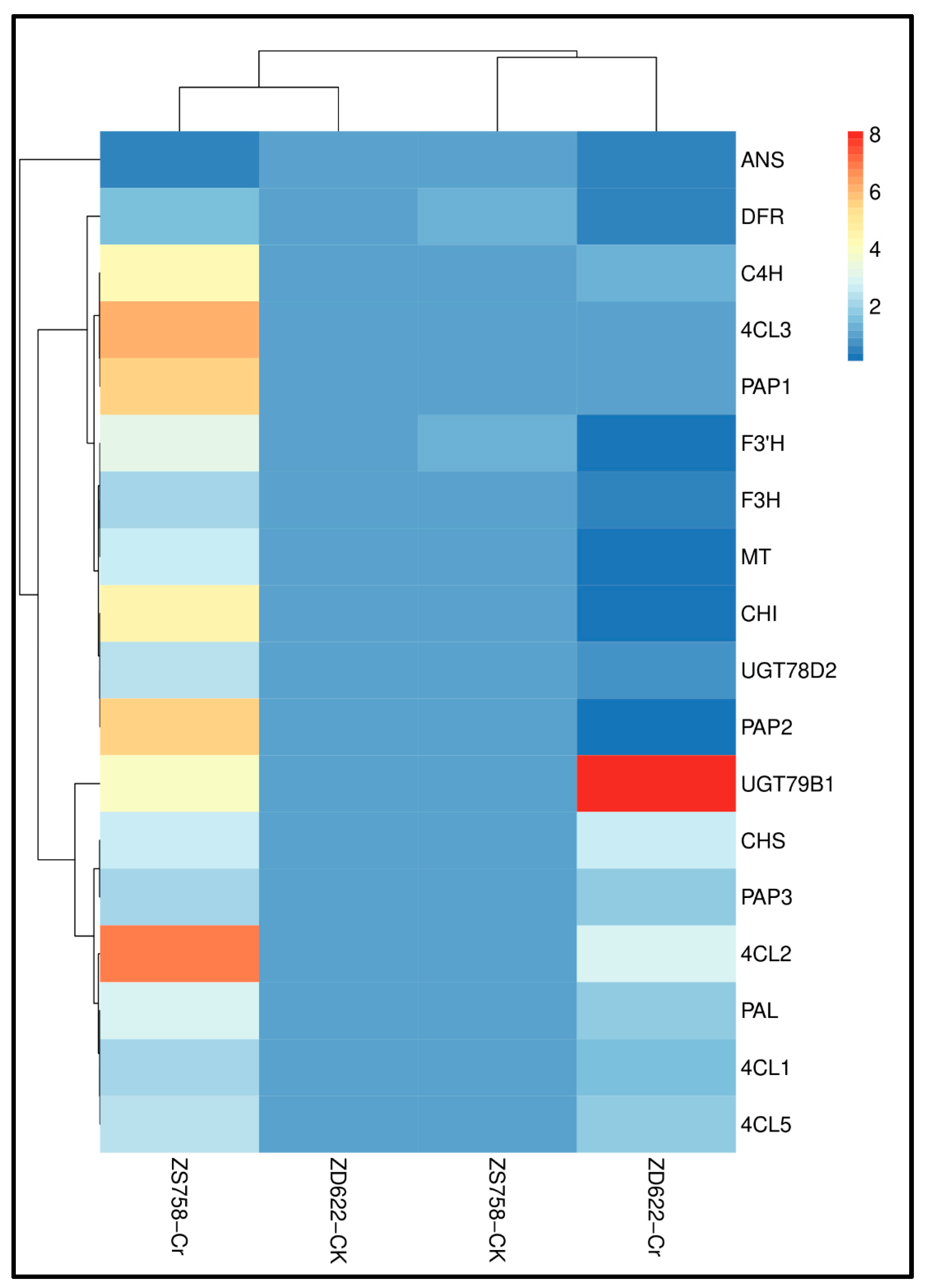
In rapeseed cultivars Cr treatment resulted in the up-regulated expression of up-stream genes CHS, CHI, F3′H, F3H involved in flavonoid biosynthesis (Figure 7). In addition, the early development genes such as PAL, C4H, 4CL1, 4CL5, DFR, ANS and late development genes UGT78D2, UGT79B1, MT, PAP1, PAP2 expression enrichment in Cr treatment further confirms its role in plant growth and stress alleviation by enhancing the major glycosyl-transferases involved in flavonol 3-O-glycosylation in leaves (Figure 7). In detail, the flavonoids in rapeseed synthesized through a branched pathway those results in the biosynthesis of colorless compounds (flavonol) and colored pigments (anthocyanin). Phenylalanine ammonia-lyase (PAL) imparts in the primary metabolism into the phenyl-propanoid pathway, which undergoes the biosynthesis of lignin and flavonoids. In the beginning of the flavonoid pathway, chalcone synthase (CHS) produces an intermediate that utilized in the synthesis of all flavonoids. The isomerization of naringenin chalcone to the flavanone naringenin catalyzed by the enzyme chalcone isomerase (CHI).
Flavanone 3-hydroxylase then hydroxylates naringenin to produce di-hydro-kaempferol. Flavonol synthase (FLS) produces flavonol from dihydrokaempferol or dihydroquercetin, while dihydroflavonols 4-reductase produces anthocyanin (DFR). The key flavonoid pathway enzymes, such as CHS, CHI, F3H, F3′H, DFR, ANS, and anthocyanin reductase, are all encoded by single genes with the exception of FLS, which is responsible for the production of flavonol (Figure 7). Rapeseed metabolomics-based response to Cr stress extended to a miscellaneous set of compounds, encompassing secondary metabolites other than the typical flavonoids: carboxylic acids (amino acids and derivatives), prenol lipids (terpenoids), benzene and derivatives, indoles and derivatives, organooxygen compounds (carbohydrates), and phenols. Subsequently, metabolomics analyses revealed the mechanism of Cr tolerance in rapeseed cultivars.
Our integrated analysis revealed a coherent defense strategy in ZS758, where the upregulation of key biosynthetic genes (e.g., PAL, CHS, F3′H) was directly mirrored by the accumulation of their downstream phenolic and flavonoid metabolites (Figure 6 and Figure 7 and the full gene expression dataset provided in Supplementary File S2). This tight transcriptional-metabolic coupling suggests an efficient channeling of resources into this antioxidant and chelation system. Our integrated data reveal that a reprogrammed amino acid metabolism is a fundamental component of the Cr tolerance strategy in ZS758. Beyond quantitative differences in DEM numbers, the quality and functional roles of the specific amino acids accumulated in ZS758 point to a coordinated defense strategy. We identify four key amino acids or families proline, the glutathione precursors (glutamate, cysteine, glycine), and aromatic amino acids (phenylalanine/tyrosine) as being particularly crucial for its enhanced resistance. While the role of proline in abiotic stress is well-established [78,79], our data specify that within the Cr stress context, the phenylpropanoid-flavonoid branch is a predominant sink for this reallocation. Second, the interconnected pool of glutamate, cysteine, and glycine forms the substrate for glutathione (GSH) biosynthesis. Our transcriptome data showed stronger upregulation of glutathione metabolism genes in ZS758 (Figure 3A), and the metabolome confirmed the attendant precursor accumulation. This provides ZS758 with a dual advantage: (1) superior ROS detoxification capacity and (2) potential for more efficient Cr chelation via phytochelatins, explaining its lower shoot Cr content.
Third, aromatic amino acids phenylalanine and tyrosine serve as the primary entry points into the phenylpropanoid pathway. Their elevated levels in ZS758 supply the metabolic flux for the robust synthesis of protective phenolic compounds and flavonoids. In contrast, ZD622 exhibited a less pronounced or disrupted amino acid profile. The lower accumulation of proline and GSH precursors likely renders it more vulnerable to Cr-induced osmotic and oxidative stress, while the weaker provision of phenylalanine may limit its investment in protective phenolic compounds. In synthesis, ZS758’s tolerance is defined by the synergistic reinforcement of multiple, interconnected amino acid pathways that bolster osmoregulation, redox homeostasis, metal chelation, and the biosynthesis of further protective compounds.
This response differs from the oxidative lipid metabolism reported in Cr-stressed sunflower roots, indicating that rapeseed, and particularly the tolerant ZS758 cultivar, employs a distinct, flavonoid-centric metabolic strategy for Cr detoxification. Zhao et al. [80,81], revealed that Cu stress caused an obvious increase in biosynthesis and accumulation of threonic acid, tyrosine, phenylalanine and polyphenol in cucumber. These compounds are essential for scavenging ROS produced under different stress circumstances, which helps to reduce oxidative stress. Activating these metabolic pathways during Cr treatment may improve plant performance, particularly in the face of various stresses. Furthermore, flavonoids have a variety of functions, such as controlling plant development, attracting pollinating insects, and offering defense against biotic and abiotic stressors. While our integrative analysis reveals strong correlations between transcriptional reprogramming and metabolic shifts, future functional validation using techniques such as mutant analysis or metabolite exogenous application is required to establish direct causal relationships between the identified key genes/metabolites and Cr tolerance.

4. Conclusions

This integrated transcriptomic and metabolomic study elucidates the distinct molecular mechanisms underpinning chromium (Cr) tolerance in rapeseed. We demonstrate that the contrasting phenotypes of the cultivars ZS758 (tolerant) and ZD622 (sensitive) arise from a multi-layered adaptive strategy. Under Cr stress (50 µM K2Cr2O7), ZS758 exhibited a superior capacity to limit shoot Cr accumulation, maintain photosynthetic function (Pn, Fv/Fm), and preserve biomass traits corresponding with a more robust and coordinated molecular response. Our multi-omics analysis revealed that this tolerance is orchestrated through the synergistic reprogramming of primary and specialized metabolism. The tolerant cultivar ZS758 displayed a more pronounced accumulation of specific protective metabolites, including key amino acids (proline, glutathione precursors) for osmoregulation and redox buffering, specific flavonoid and phenolic compounds (e.g., flavonol glycosides, flavan-3-ols) for antioxidant activity and metal chelation, and organic acids and lipid derivatives involved in detoxification and membrane stabilization. Critically, this metabolic reprogramming is underpinned by a coordinated transcriptional response. ZS758 showed stronger activation of genes related to glutathione metabolism, ABC transporters, phenylpropanoid or flavonoid biosynthesis, and plant hormone signal transduction. This highlights that phytohormonal signaling (e.g., ABA, JA, SA) is a crucial regulatory layer, potentially integrating defense activation with growth modulation in the tolerant genotype. In contrast, the sensitive cultivar ZD622 displayed a weaker and less coordinated activation of these pathways, resulting in higher Cr translocation, severe photosynthetic inhibition, and metabolic disruption. In summary, Cr tolerance in B. napus is not conferred by a single gene or metabolite but by an integrated network involving enhanced metal sequestration, potent antioxidant systems, cell wall reinforcement, and efficient hormone-mediated stress signaling. These findings provide a mechanistic framework for the targeted selection and breeding of Cr-resilient rapeseed cultivars for sustainable cultivation in slightly to moderately contaminated environments. Future work should focus on validating the functional role of the identified hub genes and metabolites to accelerate the development of improved oilseed crops.

Supplementary Materials

The following supporting information can be downloaded at: https://www.mdpi.com/article/10.3390/agronomy15122892/s1, Supplementary file S1: Figure S1 Dendrogram suggesting the clusters showing the genes classification in B. napus under Cr stress; Figure S2: Phenotype of two contrasting rapeseed cultivars ZS758 and ZD622 under Cr stress, respectively; Figure S3: The expression of DEMs in respective modules, blue, brown and turquoise (A-C), based on weighted metabolites co-expression network analysis (WGCNA) in rapeseed under Cr stress in different clusters related to biological pathways in rapeseed. Table S1 Statistics of RNA-Seq quality in rapeseed genotypes ZS758 and ZD622 under Cr stress. Supplementary file S2: Metabolomics profiling of rapeseed cultivars ZS758 and ZD622 under chromium stress.

Author Contributions

Conceptualization, Writing—original draft, Visualization, Methodology, Investigation, Data curation, Formal analysis, W.X. and A.A.; Data curation, Formal analysis, Writing—review and editing, F.H., M.U.R.K. and T.Q.; Writing—review and editing, Validation, Data curation., W.S., M.S.N. and L.X.; Methodology, Writing—review and editing, Funding acquisition, Conceptualization, W.Z. and I.B. All authors have read and agreed to the published version of the manuscript.

Funding

This work was supported by the Science and Technology Department of Zhejiang Province (2023C02002-3), Collaborative Innovation Center for Modern Crop Production co-sponsored by Province and Ministry (CIC-MCP), and Agriculture and Rural Affairs Department of Zhejiang Province (2023ZDXT01).

Data Availability Statement

The original contributions presented in this study are included in the article/Supplementary Material.

Acknowledgments

We thank Deli Sun and Ping Yang from Agricultural Experiment Station of Zhejiang University for their assistance.

Conflicts of Interest

The authors declare no conflicts of interest.

References

  1. Rahman, Z.; Singh, V.P. The relative impact of toxic heavy metals (THMs) (arsenic (As), cadmium (Cd), chromium (Cr)(VI), mercury (Hg), and lead (Pb)) on the total environment: An overview. Environ. Monit. Assess. 2019, 191, 419. [Google Scholar] [CrossRef]
  2. Kim, M.; Lee, M.; Lee, J.H.; Kim, K.H.; Owens, G.; Kim, K.R. Distribution and extent of heavy metal(loid) contamination in agricultural soils as affected by industrial activity. Appl. Biol. Chem. 2020, 63, 31. [Google Scholar] [CrossRef]
  3. Li, Z.; Su, H.; Wang, L.; Hu, D.; Zhang, L.; Fang, J.; Jin, M.; Fiati Kenston, S.S.; Song, X.; Shi, H. Epidemiological study on metal pollution of Ningbo in China. Int. J. Environ. Res. Public Health 2018, 15, 424. [Google Scholar] [CrossRef]
  4. Ranieri, E.; Fratino, U.; Petrella, A.; Torretta, V.; Rada, E.C. Ailanthus altissima and Phragmites australis for chromium removal from contaminated soil. Environ. Sci. Pollut. Res. 2016, 23, 15983–15989. [Google Scholar] [CrossRef]
  5. Ministry of Environmental Protection of the People’s Republic of China. Report on the National General Survey of Soil Contamination; Ministry of Land and Resources of the People’s Republic of China: Beijing, China, 2014.
  6. Qi, M.; Yang, S.; Wang, L.; Hong, L. Analysis of heavy metal pollution in real estate stem vegetables in haishu district, Ningbo City. Chin. J. Health Lab. Technol. 2021, 31, 3034–3043. [Google Scholar]
  7. Ali, W.; Zhang, H.; Mao, K.; Shafeeque, M.; Aslam, M.W.; Yang, X.; Zhong, L.; Feng, X.; Podgorski, J. Chromium contamination in paddy soil-rice systems and associated human health risks in Pakistan. Sci. Total Environ. 2022, 826, 153910. [Google Scholar] [CrossRef]
  8. Prasad, S.; Yadav, K.K.; Kumar, S.; Gupta, N.; Cabral-Pinto, M.M.S.; Rezania, S.; Radwan, N.; Alam, J. Chromium contamination and effect on environmental health and its remediation: A sustainable approaches. J. Environ. Manag. 2021, 285, 112174. [Google Scholar] [CrossRef] [PubMed]
  9. Xia, S.; Yu, C.; Wang, Q.; Liao, J.; Liu, C.; Huang, L.; Liu, Q.; Wen, Z.; Feng, Y. Chromium contamination and health risk assessment of soil and agricultural products in a rural area in southern China. Toxics 2022, 11, 27. [Google Scholar] [CrossRef] [PubMed]
  10. Hou, D.; O’Connor, D.; Igalavithana, A.D.; Alessi, D.S.; Luo, J.; Tsang, D.C.W.; Sparks, D.L.; Yamauchi, Y.; Rinklebe, J.; Ok, Y.S. Metal contamination and bioremediation of agricultural soils for food safety and sustainability. Nat. Rev. Earth Environ. 2020, 1, 366–381. [Google Scholar] [CrossRef]
  11. Ali, S.; Khan, E. Trophic transfer, bioaccumulation, and biomagnification of non-essential hazardous heavy metals and metalloids in food chains/webs Concepts and implications for wildlife and human health. Hum. Ecol. Risk Assess. 2018, 24, 1–25. [Google Scholar] [CrossRef]
  12. Gavrilescu, M. Enhancing phytoremediation of soils polluted with heavy metals. Curr. Opin. Biotechnol. 2022, 74, 21–31. [Google Scholar] [CrossRef]
  13. Dinu, C.; Vasile, G.G.; Buleandra, M.; Popa, D.E.; Gheorghe, S.; Ungureanu, E.M. Translocation and accumulation of heavy metals in Ocimum basilicum L. plants grown in a mining-contaminated soil. J. Soils Sediments 2020, 20, 2141–2154. [Google Scholar] [CrossRef]
  14. Batool, I.; Ayyaz, A.; Zhang, K.; Hannan, F.; Sun, Y.; Qin, T.; Athar, H.R.; Naeem, M.S.; Farooq, M.A.; Zhou, W. Transcriptome and Physiological Analyses Unravel Chromium Stress Tolerance Mechanism in Brassica napus L. J. Plant Growth Regul. 2025, 44, 4022–4038. [Google Scholar] [CrossRef]
  15. Zheng, M.; Liu, Y. Global rapeseed production and breeding strategies for climate resilience. Crop Sci. 2022, 62, 345–362. [Google Scholar]
  16. Nie, G.; Yang, Z.; He, J.; Liu, A.; Wang, M.; Zhu, S.; Zhang, X.; Peng, Y. RNA sequencing reveals the molecular mechanisms of chromium tolerance in Brassica napus. J. Hazard. Mater. 2021, 415, 125687. [Google Scholar]
  17. Westhoff, P.; Weber, A.P.M. The role of metabolomics in informing strategies for improving photosynthesis. J. Exp. Bot. 2024, 75, 1696–1713. [Google Scholar] [CrossRef]
  18. Singh, N.; Rai, S.; Farag, M.A.; Maurya, S.R.; Yerasu, S.R.; Bisen, M.S.; Prabha, R.; Shukla, R.; Behera, T.K. Metabolic diversity, biosynthetic pathways, and metabolite biomarkers analysed via untargeted metabolomics and the antioxidant potential reveal for high temperature tolerance in tomato hybrid. Plant Stress 2024, 11, 100420. [Google Scholar] [CrossRef]
  19. Shen, C.; Zhan, C.; Yang, C.; Fernie, A.R.; Luo, J. Metabolomics-centered mining of plant metabolic diversity and function: Past decade and future perspectives. Mol. Plant 2023, 16, 43–63. [Google Scholar] [CrossRef]
  20. Wei, C.; Zhongbing, C.; Xiuqin, Y.; Luying, S.; Huan, M.; Sixi, Z. Integrated transcriptomics and metabolomics reveal key metabolic pathway responses in Pistia stratiotes under Cd stress. J. Hazard. Mater. 2023, 452, 131214. [Google Scholar] [CrossRef]
  21. Yang, C.; Liu, C.; Li, M.; Li, Y.; Yan, Z.; Feng, G.; Liu, D. Integrated transcriptomics and metabolomics analysis reveals key regulatory network that response to cold stress in common Bean (Phaseolus vulgaris L.). BMC Plant Biol. 2023, 23, 85. [Google Scholar] [CrossRef]
  22. Wang, J.; Pang, J.; Zhang, F.; Sun, L.; Yang, L.; Zhao, Y.; Yang, Y.; Wang, Y.; Siddique, K.H.M. Integrated transcriptomics and metabolomics analysis to characterize alkali stress responses in canola (Brassica napus L.). Plant Physiol. Biochem. 2021, 166, 605–620. [Google Scholar] [CrossRef]
  23. Wang, Z.; Zhou, Z.; Liu, X.; Zhu, L.; Guo, B.; Lv, C.; Zhu, J.; Chen, Z.H.; Xu, R. Transcriptome and metabolome analyses reveal molecular insights into waterlogging tolerance in Barley. BMC Plant Biol. 2024, 24, 385. [Google Scholar] [CrossRef]
  24. Batool, I.; Ayyaz, A.; Zhang, K.; Hannan, F.; Qin, T.; Zafar, Z.U.; Farooq, M.A.; Zhou, W. Chromium uptake and its impact on antioxidant level, photosynthetic machinery, and related gene expression in Brassica napus cultivars. Environ. Sci. Pollut. Res. 2024, 31, 59363–59381. [Google Scholar] [CrossRef] [PubMed]
  25. Li, M.; Long, M.; Islam, F.; Farooq, M.A.; Wang, J.; Mwamba, T.M.; Shou, J.; Zhou, W. Synergistic effects of chromium and copper on photosynthetic inhibition, subcellular distribution, and related gene expression in Brassica napus cultivars. Environ. Sci. Pollut. Res. 2019, 26, 11827–11845. [Google Scholar] [CrossRef]
  26. Momoh, E.J.J.; Zhou, W.J.; Kristiansson, B. Variation in the development of secondary dormancy in oilseed rape cultivars under conditions of stress. Weed Res. 2002, 42, 446–455. [Google Scholar] [CrossRef]
  27. Tripathi, D.K.; Singh, V.P.; Kumar, D.; Chauhan, D.K. Impact of exogenous silicon addition on chromium uptake, growth, mineral elements, oxidative stress, antioxidant capacity, and leaf and root structures in rice seedlings exposed to hexavalent chromium. Acta Physiol. Plant. 2012, 34, 279–289. [Google Scholar] [CrossRef]
  28. Strasser, R.J.; Srivastava, A.; Tsimilli-Michael, M. The fluorescence transient as a tool to characterize and screen photosynthetic samples. In Probing Photosynthesis: Mechanisms, Regulation and Adaptation; Taylor and Francis: London, UK; New York, NY, USA, 2000; pp. 445–483. [Google Scholar]
  29. Gill, R.A.; Ali, B.; Islam, F.; Farooq, M.A.; Gill, M.B.; Mwamba, T.M.; Zhou, W. Physiological and molecular analyses of black and yellow seeded Brassica napus regulated by 5-aminolivulinic acid under chromium stress. Plant Physiol. Biochem. 2015, 94, 130–143. [Google Scholar] [CrossRef]
  30. Gill, R.A.; Zang, L.; Ali, B.; Farooq, M.A.; Cui, P.; Yang, S.; Ali, S.; Zhou, W. Chromium-induced physio-chemical and ultrastructural changes in four cultivars of Brassica napus L. Chemosphere 2015, 120, 154–164. [Google Scholar] [CrossRef]
  31. Hassan, A.; Parveen, A.; Hussain, S.; Hussain, I.; Rasheed, R. Investigating the role of different maize (Zea mays L.) cultivars by studying morpho-physiological attributes in chromium-stressed environment. Environ. Sci. Pollut. Res. 2022, 29, 72886–72897. [Google Scholar] [CrossRef] [PubMed]
  32. Singh, N.L.; Sharma, C.K.; Singh, C.K.; Sarkar, S.K.; Singh, I.; Dotaniya, M.L. Effect of chromium (VI) toxicity on morpho-physiological characteristics, yield, and yield components of two chickpea (Cicer arietinum L.) varieties. PLoS ONE 2020, 15, e0243032. [Google Scholar] [CrossRef] [PubMed]
  33. Kundu, S.; Dey, S.S.; Raychaudhuri, S.S. Chromium (VI) induced stress response in the plant Plantago ovata Forsk in vitro. Genes Environ. 2018, 40, 21. [Google Scholar] [CrossRef]
  34. Mishra, N.; Yadav, N.; Manasa, L.; Kumar, A.; Patnaik, A.; Panigrahy, M.; Biswal, D.P.; Rout, G.R.; Panigrahi, K.C. Chromium stress influences several parameters of leaf dynamics and morphology in Oryza sativa L. cultivars. Plant Stress 2024, 12, 100449. [Google Scholar] [CrossRef]
  35. Huang, Y.J.; Gao, Y.J.; Cao, Z.X.; Tian, Z.Q.; Bai, Y.F.; Tang, Z.X.; Ali, A.; Zhao, F.J.; Wang, P. Ecotoxicity of hexavalent chromium [Cr (VI)] in soil presents predominate threats to agricultural production with the increase of soil Cr contamination. J. Hazard. Mater. 2024, 465, 135091. [Google Scholar] [CrossRef] [PubMed]
  36. Zandi, P.; Xia, X.; Yang, J.; Liu, J.; Remusat, L.; Rumpel, C.; Bloem, E.; Krasny, B.B.; Schnug, E. Speciation and distribution of chromium (III) in rice root tip and mature zone: The significant impact of root exudation and iron plaque on chromium bioavailability. J. Hazard. Mater. 2023, 448, 130992. [Google Scholar] [CrossRef]
  37. Ali, S.; Bharwana, S.A.; Rizwan, M.; Farid, M.; Kanwal, S.; Ali, Q.; Ibrahim, M.; Gill, R.A.; Khan, M.D. Fulvic acid mediates chromium (Cr) tolerance in wheat (Triticum aestivum L.) through lowering of Cr uptake and improved antioxidant defense system. Environ. Sci. Pollut. Res. 2015, 22, 10601–10609. [Google Scholar] [CrossRef]
  38. Shomali, S.; Das, S.; Sarraf, M.; Johnson, R.; Janeeshma, E.; Kumar, V.; Aliniaeifard, S.; Puthur, J.T.; Hasanuzzaman, M. Modulation of plant photosynthetic processes during metal and metalloid stress, and strategies for manipulating photosynthesis-related traits. Plant Physiol. Biochem. 2023, 194, 108211. [Google Scholar] [CrossRef]
  39. Kumar, S.; Wang, S.; Wang, M.; Zeb, S.; Khan, M.N.; Chen, Y.; Zhu, G.; Zhu, Z. Enhancement of sweetpotato tolerance to chromium stress through melatonin and glutathione: Insights into photosynthetic efficiency, oxidative defense, and growth parameters. Plant Physiol. Biochem. 2024, 208, 108509. [Google Scholar] [CrossRef]
  40. Li, S.; Shi, S.; Zhang, Y.; Zhang, A.; Wang, Z.; Yang, Y. Copper stress-induced phytotoxicity associated with photosynthetic characteristics and lignin metabolism in wheat seedlings. Ecotoxicol. Environ. Saf. 2023, 254, 114739. [Google Scholar] [CrossRef] [PubMed]
  41. Strasser, R.J.; Tsimilli-Michael, M.; Srivastava, A. Analysis of the chlorophyll a fluorescence transient. In Chlorophyll a Fluorescence: A Signature of Photosynthesis; Springer: Berlin/Heidelberg, Germany, 2004; pp. 321–362. [Google Scholar]
  42. Kalaji, H.M.; Schansker, G.; Ladle, R.J.; Goltsev, V.; Bosa, K.; Allakhverdiev, S.I.; Strasser, R.J. Frequently asked questions about chlorophyll fluorescence, the sequel. Photosynth. Res. 2014, 122, 121–158. [Google Scholar] [CrossRef] [PubMed]
  43. Akhtar, M.; Zia-ur-Rehman, M.; Naeem, A.; Nawaz, R.; Ali, S.; Murtaza, G.; Maqsood, M.A.; Azhar, M.; Khalid, H.; Rizwan, M. Photosynthesis and growth response of maize (Zea mays L.) hybrids exposed to cadmium stress. Environ. Sci. Pollut. Res. 2017, 24, 5521–5529. [Google Scholar] [CrossRef]
  44. Hasanuzzaman, M.; Bhuyan, M.H.M.B.; Zulfiqar, F.; Raza, A.; Mohsin, S.M.; Mahmud, J.A.; Fujita, M.; Fotopoulos, V. Reactive oxygen species and antioxidant defense in plants under abiotic stress: Revisiting the crucial role of a universal defense regulator. Antioxidants 2020, 9, 681. [Google Scholar] [CrossRef]
  45. Sharma, A.; Kumar, V.; Shahzad, B.; Ramakrishnan, M.; Singh Sidhu, G.P.; Bali, A.S.; Handa, N.; Kapoor, D.; Yadav, P.; Khanna, K. Photosynthetic response of plants under different abiotic stresses: A review. J. Plant Growth Regul. 2020, 39, 509–531. [Google Scholar] [CrossRef]
  46. Mathur, S.; Kalaji, H.M.; Jajoo, A. Investigation of deleterious effects of chromium phytotoxicity and photosynthesis in wheat plant. Photosynthetica 2016, 54, 185–192. [Google Scholar] [CrossRef]
  47. Zsiros, O.; Nagy, G.; Patai, R.; Solymosi, K.; Gasser, U.; Polgár, T.F.; Garab, G.; Kovács, L.; Hörcsik, Z.T. Similarities and differences in the effects of toxic concentrations of cadmium and chromium on the structure and functions of thylakoid membranes in Chlorella variabilis. Front. Plant Sci. 2020, 11, 1006. [Google Scholar] [CrossRef]
  48. Cai, Y.; Qi, Y.; Zhu, S.; Nian, H.; He, G.; Xu, N. Effects of cadmium stress on photosynthetic apparatus of tobacco. Appl. Ecol. Environ. Res. 2023, 21, 1234–1245. [Google Scholar] [CrossRef]
  49. Kalariya, N.; Goswami, N.; Mehta, D.; Singh, A.; Saran, P. Chlorophyll fluorescence: A physiological mechanism and a physical tool in plant eco-physiological studies. Plant Physiol. Rep. 2019, 24, 203–215. [Google Scholar]
  50. Todorenko, D.A.; Timofeev, N.; Kovalenko, I.B.; Kukarskikh, G.P.; Matorin, D.N.; Antal, T.K. Chromium effects on photosynthetic electron transport in pea (Pisum sativum L.). Planta 2020, 252, 1–13. [Google Scholar] [CrossRef]
  51. Terzi, H.; Yıldız, M. Interactive effects of sulfur and chromium on antioxidative defense systems and BnMP1 gene expression in canola (Brassica napus L.) cultivars differing in Cr (VI) tolerance. Ecotoxicology 2015, 24, 1171–1182. [Google Scholar] [CrossRef]
  52. Akila, V. Effect of copper on growth and yield and macro and micro nutrient concentration of rice (Oryza sativa L.) in typic haplustalf. J. Curr. Crop Sci. Technol. 2023, 110, 45–56. [Google Scholar]
  53. Guarino, F.; Ruiz, K.B.; Castiglione, S.; Cicatelli, A.; Biondi, S. The combined effect of Cr (III) and NaCl determines changes in metal uptake, nutrient content, and gene expression in quinoa (Chenopodium quinoa Willd.). Ecotoxicol. Environ. Saf. 2020, 193, 110345. [Google Scholar] [CrossRef]
  54. Ullah, S.; Liu, Q.; Wang, S.; Jan, A.U.; Sharif, H.M.A.; Ditta, A.; Wang, G.; Cheng, H. Sources, impacts, factors affecting Cr uptake in plants, and mechanisms behind phytoremediation of Cr-contaminated soils. Sci. Total Environ. 2023, 887, 165726. [Google Scholar]
  55. Zaman, W.; Khattak, W.A.; Ihtisham, M.; Ilyas, M.; Ali, A.; Ali, A.; Khan, H.; Khan, K.A.; Ni, D.; Zhao, H. Assessing the health risks of heavy metals and seasonal minerals fluctuations in Camellia sinensis cultivars during their growth seasons. Food Chem. Toxicol. 2024, 187, 114586. [Google Scholar] [CrossRef]
  56. Zhu, W.; Zhao, W.; Sheng, L.; Yang, X.; Mao, H.; Sun, S.; Chen, Z. Integrated transcriptome and metabolomics analyses revealed key functional genes in Canna indica under Cr stress. Sci. Rep. 2024, 14, 14090. [Google Scholar] [CrossRef]
  57. Xie, Y.; Zhang, C.; Wang, X. Metabolic responses of rice seedlings to cadmium stress revealed by LC-MS based metabolomics. Environ. Exp. Bot. 2018, 156, 1–11. [Google Scholar]
  58. Kang, H.; Wu, H.; Lu, B.; Luo, X.; Gong, C.; Bai, J. Low concentrations of glycine inhibit photorespiration and enhance the net rate of photosynthesis in Caragana korshinskii. Photosynthetica 2018, 56, 512–519. [Google Scholar] [CrossRef]
  59. Lou, Y.; Yang, Y.; Zheng, S.; Ma, Z.; Chen, W.; Yu, C.; Song, L.; Wu, J. Identification of key genes contributing to amino acid biosynthesis in Torreya grandis using transcriptome and metabolome analysis. Food Chem. 2022, 379, 132078. [Google Scholar] [CrossRef]
  60. Gao, R.; Guo, R.; Liu, Z.; Hu, Y.; Guo, J.; Sun, M.; Shi, L. Integration of the transcriptome and metabolome reveals the mechanism of resistance to low phosphorus in wild soybean seedling leaves. Plant Physiol. Biochem. 2023, 194, 406–417. [Google Scholar]
  61. Wang, Y.; Li, X.; Zhang, M. Copper detoxification mechanisms in Celosia argentea revealed by metabolomic analysis. Chemosphere 2020, 258, 127–135. [Google Scholar]
  62. Wang, X.; Liu, Y.; Zhao, L. Zinc toxicity effects on cell membrane and chloroplast structures in Arabidopsis thaliana. Plant Cell Rep. 2009, 28, 1123–1132. [Google Scholar]
  63. Rouphael, Y.; Colla, G.; Bernardo, L.; Kane, D.; Trevisan, M.; Lucini, L. Zinc excess triggered polyamines accumulation in lettuce root metabolome, as compared to osmotic stress under high salinity. Front. Plant Sci. 2016, 7, 842. [Google Scholar] [CrossRef]
  64. Subba, P.; Mukhopadhyay, M.; Mahato, S.K.; Bhutia, K.D.; Mondal, T.K.; Ghosh, S.K. Zinc stress induces physiological, ultra-structural and biochemical changes in Mandarin orange (Citrus reticulata) seedlings. Physiol. Mol. Biol. Plants 2014, 20, 461–473. [Google Scholar] [CrossRef]
  65. Zhang, Y.; Wang, Y.; Ding, Z.; Wang, H.; Song, L.; Jia, S.; Ma, D. Zinc stress affects ionome and metabolome in tea plants. Plant Physiol. Biochem. 2017, 111, 318–328. [Google Scholar] [CrossRef]
  66. Tighanimine, J.A.; Nabuco Leva Ferreira Freitas, N.; Nemazanyy, I.; Bankolé, A.; Benarroch-Popivker, D.; Brodesser, S.; Doré, G.; Robinson, L.; Benit, P.; Ladraa, S. A homoeostatic switch causing glycerol-3-phosphate and phosphoethanolamine accumulation triggers senescence by rewiring lipid metabolism. Nat. Metab. 2024, 6, 323–342. [Google Scholar] [CrossRef]
  67. Koh, Y.K.; Chang, Y.K.; Kang, N.K. Enhancing lipid productivity in Nannochloropsis salina by overexpression of endogenous glycerol-3-phosphate dehydrogenase. J. Appl. Phycol. 2024, 36, 73–85. [Google Scholar] [CrossRef]
  68. Liu, J.; Leng, H.; Liu, Y.; Gao, H.; Yang, J.; Wang, S.; Wang, C. Lipid remodeling plays an important role in wheat (Triticum aestivum L.) defense against stripe rust. Plant Physiol. Biochem. 2019, 139, 131–140. [Google Scholar]
  69. Upchurch, R.G. Fatty acid unsaturation, mobilization, and regulation in the response of plants to stress. Biotechnol. Lett. 2008, 30, 967–977. [Google Scholar] [CrossRef]
  70. Nouairi, I.; Ammar, W.B.; Youssef, N.B.; Daoud, D.B.; Ghorbal, M.H.; Zarrouk, M. Comparative study of cadmium effects on membrane lipid composition of Brassica juncea and Brassica napus leaves. Plant Sci. 2006, 170, 511–519. [Google Scholar] [CrossRef]
  71. Zemanova, V.; Pavlik, M.; Pavlikova, D. Fatty acid accumulation in the model hyperaccumulator Noccaea caerulescens under cadmium stress. Plant Soil Environ. 2015, 61, 529–535. [Google Scholar]
  72. Navarro-Reig, M.; Jaumot, J.; Pina, B.; Tauler, R. Metabolomic analysis of the effects of cadmium and copper contamination in rice crops. Food Chem. 2017, 221, 1023–1030. [Google Scholar]
  73. Xie, Y.; Luo, H.; Du, Z.; Hu, L.; Fu, J. Phytochelatin-mediated cadmium detoxification mechanisms in Amaranthus hypochondriacus L. under cadmium stress. Ecotoxicol. Environ. Saf. 2019, 167, 50–58. [Google Scholar]
  74. Pidatala, V.R.; Li, K.; Sarkar, D.; Wusirika, R.; Datta, R. Comparative metabolic profiling of vetiver (Chrysopogon zizanioides) and maize (Zea mays) under lead stress. Chemosphere 2018, 193, 903–911. [Google Scholar] [CrossRef] [PubMed]
  75. Wang, Y.; Xu, L.; Shen, H.; Wang, J.; Liu, W.; Zhu, X.; Wang, R.; Sun, X.; Liu, L. Metabolomic analysis with GC-MS to reveal potential metabolites and biological pathways involved in Pb & Cd stress response of radish roots. Sci. Rep. 2015, 5, 18296. [Google Scholar] [CrossRef]
  76. Wu, H.; Liu, X.; Zhao, J.; Yu, J.; Pang, Q.; Feng, J. Toxicological effects of environmentally relevant lead and zinc in halophyte Suaeda salsa by NMR-based metabolomics. Ecotoxicology 2012, 21, 2363–2371. [Google Scholar] [CrossRef]
  77. Campos, N.V.; Araújo, T.O.; Arcanjo-Silva, S.; Freitas-Silva, L.; Azevedo, A.A.; Nunes-Nesi, A. Arsenic hyperaccumulation induces metabolic reprogramming in Pityrogramma calomelanos to reduce oxidative stress. Physiol. Plant. 2016, 157, 135–146. [Google Scholar] [CrossRef]
  78. Dubey, S.; Misra, P.; Dwivedi, S.; Chatterjee, S.; Bag, S.K.; Mantri, S.; Asif, M.H.; Rai, A.; Kumar, S.; Shri, M.; et al. Transcriptomic and metabolomic shifts in rice roots in response to Cr (VI) stress. BMC Genom. 2010, 11, 648. [Google Scholar] [CrossRef] [PubMed]
  79. Gonzalez Ibarra, A.A.; Wrobel, K.; Yanez Barrientos, E.; Corrales Escobosa, A.R.; Gutierrez Corona, J.F.; Enciso Donis, I.; Wrobel, K. Impact of Cr(VI) on the oxidation of polyunsaturated fatty acids in Helianthus annuus roots studied by metabolomic tools. Chemosphere 2019, 220, 442–451. [Google Scholar] [CrossRef]
  80. Zhao, L.; Huang, Y.; Paglia, K.; Vaniya, A.; Wancewicz, B.; Keller, A.A. Metabolomics reveals the molecular mechanisms of copper induced cucumber leaf (Cucumis sativus) senescence. Environ. Sci. Technol. 2018, 52, 7092–7100. [Google Scholar]
  81. Ahlawat, M.; Singh, M.; Manorama, K.; Lakra, N.; Zaid, A.; Zulfiqar, F. Plant phenolics: Neglected secondary metabolites in plant stress tolerance. Braz. J. Bot. 2023, 46, 703–721. [Google Scholar] [CrossRef]
Figure 1. Differentially expressed genes (DEGs) and differentially expressed metabolites (DEMs) expression, respectively (AD). Principle component analysis of observed DEMs and (EG) represents the ion detection modes in the form of PLS-DA model in observed DEMs, respectively. Number of up and down regulated DEMs (H), number of common and unique DEMs expressed in rapeseed cultivars ZS758 and ZD622 exposed to 50-µM Cr treatment for seven days (I,J), respectively.
Agronomy 15 02892 g001aAgronomy 15 02892 g001b
Figure 2. Gene Ontology (GO) terms of cellular processes, cellular metabolism and environmental information processing (A,B). Relative abundance of differentially expressed metabolites (DEMs) related to cellular metabolism (CF) observed mainly in the form of glauclide, phenylalanine metabolism in contrasting rapeseed cultivars ZS758 and ZD622 exposed to 50-µM Cr treatment for seven days.
Agronomy 15 02892 g002
Figure 3. General profiling and number of DEMs involved in the primary and secondary metabolism observed in the form of KEGG pathways, respectively (A,B). Number and classification of DEMs into clusters (sub-clusters) involved in the biological, cellular and molecular processes (C,D). While, illustration (E,F) represents the heat map analysis of DEMs in both the rapeseed cultivars ZS758 and ZD622 under Cr stress, respectively.
Agronomy 15 02892 g003
Figure 4. The hierarchical clustering of DEMs and weighted co-expression network model and traits. (AC) Heat maps represent the correlation and (D) network analysis of hub metabolites based on weighted metabolites co-expression network analysis (WGCNA) in rapeseed under Cr stress in different clusters related to biological pathways in rapeseed. * represents the criteria of an absolute correlation coefficient greater than or equal to 0.3 and a p-value less than 0.05 as the threshold.
Agronomy 15 02892 g004
Figure 5. (i), Classification of differentially expressed genes (DEGs) involved in the biological, cellular and molecular processes (iA,iB). (iiAiiD), the schematic presentation of differentially expressed metabolites (DEMs) involved in the biological, cellular and molecular metabolic processes in rapeseed tolerant cultivar ZS758 exposed to 50-µM Cr treatment for seven days.
Agronomy 15 02892 g005
Figure 6. (i), general profiling and number of differentially expressed metabolites (DEMs), involved in the primary and secondary metabolism observed in the form of KEGG pathways, respectively (iA,iB). (ii), The heat map illustration represents the expression of DEMs involved in the metabolic pathways related to alkaloids and derivatives, carboxylic acids, lipids and phynyl-propanoids related metabolites in rapeseed cultivars ZS758 and ZD622 exposed to 50-µM Cr treatment for seven days (iiAiiI). Red and blue color represents the up and down regulated DEMs expression, respectively.
Agronomy 15 02892 g006
Figure 7. Analysis of phenylpropanoid and flavonoid biosynthesis pathways genes expression after in rapeseed cultivars under Cr stress. The color bar represents log2 expression levels (FPKM, fragments per kilobase of exon per million fragments mapped) of each gene.
Agronomy 15 02892 g007
Table 1. Fresh and dry weight and gas exchange parameters including net photosynthesis (Pn), stomatal conductance (Gs), transpirational rate (Tr), intercellular carbon dioxide intake (Ci) and Cr uptake in shoot of B. napus cultivars onset to 50-µM Cr stress treatments. Different letters denote different levels of significance p < 0.001.
CultivarsTreatmentsShoot Fresh Weight (g−1 Plant)Root Fresh Weight (g−1 Plant)Shoot Dry Weight (g−1 Plant)Root Dry Weight (g−1 Plant)Pn (µmol CO2 m−2 s−1)Gs (mol H2O m−2 s−1)Tr (mmol H2O m−2 s−1)Ci (µmol CO2 mol−1)Cr (mg kg−1 Dry Weight)
ZS758Control14.08 ± 0.33 a2.61 ± 0.12 a2.90 ± 0.15 a1.02 ± 0.025 ab16.48 ± 0.45 a0.84 ± 0.045 a11.23 ± 0.18 a380 ± 1.20 a0.004 ± 0.0001 b
50 µM Cr10.67 ± 0.21 b2.04 ± 0.1 a2.68 ± 0.11 ab0.96 ± 0.01 b12.71 ± 0.32 b0.69 ± 0.038 b4.27 ± 0.2 c320 ± 2.02 c0.13 ± 0.001 a
ZD622Control14.00 ± 0.31 a1.39 ± 0.04 b2.04 ± 0.07 bc1.07 ± 0.016 a14.08 ± 0.33 a0.53 ± 0.025 c6.04 ± 0.19 b368 ± 2.65 b0.005 ± 0.0004 b
50 µM Cr8.00 ± 0.18 b1.29 ± 0.036 b1.71 ± 0.054 c0.61 ± 0.03 c9.73 ± 0.22 b0.21 ± 0.018 d2.74 ± 0.09 d285 ± 1.95 d0.26 ± 0.002 a
Table 2. OJIP parameters of B. napus cultivars onset to 50-µM Cr stress treatments. Different letters denote different levels of significance p < 0.001.
ParametersControl ZS758Cr ZS758Control ZD622Cr ZD622
Fo5456.4 ± 183 a6941.8 ± 184 b5337.4 ± 452 bc6545 ± 327 bc
Fm27,559.2 ± 1251 b36,599 ± 779 a25,566 ± 788 c21,488 ± 5234 cd
Fj14,380.6 ± 345 a21,5935 ± 827 c13,702.4 ± 1274 c16,550 ± 1549 b
Fi25,831.2 ± 1128 a24,262.6 ± 740 ab26,727.2 ± 1004 ab18,860.2 ± 3604 b
Fv27,842.6 ± 863 a32,527.4 ± 1620 b22,628.6 ± 725 bc27,360.2 ± 711 c
Vj0.3898 ± 0.06 b0.3524 ± 0.03 b0.4532 ± 0.03 c0.3254 ± 0.09 b
Vi0.678 ± 0.03 ab0.7158 ± 0.01 c0.4786 ± 0.02 c0.6252 ± 0.03 bc
Fm/Fo5.783 ± 0.34 a5.3448 ± 0.32 b5.238 ± 0.31 ab3.4432 ± 0.88 b
Fv/Fo4.473 ± 0.21 a4.3568 ± 0.32 c4.3138 ± 0.31 ab2.6432 ± 0.88 cd
Fv/Fm0.7086 ± 0.04 a0.6544 ± 0.11 ab0.7556 ± 0.01 bc0.5914 ± 0.01 bc
Mo0.4676 ± 0.03 c0.4882 ± 0.05 a0.4704 ± 0.07 bc0.4716 ± 0.16 ab
Sm326.4922 ± 34 b256.7988 ± 22 b315.3738 ± 30 b623.4732 ± 192 d
Ss0.6346 ± 0.04 a0.7024 ± 0.01 a0.6232 ± 0.04 cd0.6284 ± 0.04 bc
N426.447 ± 37 bc454.4188 ± 26 b477.0206 ± 35 bc353.14 ± 340 d
Phi_Po0.6566 ± 0.04 a0.6114 ± 0.01 a0.5856 ± 0.01 b0.4554 ± 0.11 ab
Psi_o0.6182 ± 0.05 b0.5556 ± 0.03 b0.6068 ± 0.03 a0.3736 ± 0.09 bc
Phi_Eo0.7498 ± 0.06 c0.5134 ± 0.03 a0.5292 ± 0.03 ab0.4292 ± 0.1 ab
Phi_Do0.1674 ± 0.04 a0.4686 ± 0.01 ab0.1244 ± 0.01 ac0.2646 ± 0.09 b
Phi_Pav765.8364 ± 4.73 a783.3306 ± 3.36 b722.8084 ± 4.47651.6812 ± 10 d
Pi_Abs3.346 ± 0.7464 b5.7696 ± 0.94 a3.1766 ± 1.22 bc3.0138 ± 0.11 cd
ABS/RC1.476 ± 0.05 a1.2974 ± 0.03 ab1.2768 ± 0.10 bc1.0682 ± 0.89 d
TRo/RC1.2634 ± 0.03 b1.3256 ± 0.02 a1.1114 ± 0.07 c1.0782 ± 0.09 cd
ETo/RC0.645 ± 0.02 a0.6654 ± 0.04 a0.4114 ± 0.02 ab0.6068 ± 0.11 bc
DIo/RC0.4328 ± 0.04 a0.254 ± 0.02 b0.315 ± 0.04 a1.3898 ± 0.87 d
Table 3. Mineral nutrients profiling in leaves of B. napus cultivars onset to 50-µM Cr stress treatments. Different letters denote different levels of significance p < 0.001.
CultivarsTreatmentsCa (mg kg−1 Dry Weight)K (mg kg−1 Dry Weight)P (mg kg−1 Dry Weight)Fe (mg kg−1 Dry Weight)Cu (mg kg−1 Dry Weight)Mn (mg kg−1 Dry Weight)
ZS758Control0.44 ± 0.005 a0.26 ± 0.001 a0.027 ± 0.004 c0.33 ± 0.005 a0.12 ± 0.0005 a0.031 ± 0.0001 ab
50 µM Cr0.28 ± 0.001 b0.16 ± 0.001 b0.020 ± 0.002 c0.25 ± 0.005 a0.04 ± 0.0001 bc0.016 ± 0.0005 b
ZD622Control0.33 ± 0.004 b0.31 ± 0.041 a0.31 ± 0.002 a0.29 ± 0.001 a0.067 ± 0.0005 b0.03 ± 0.0002 a
50 µM Cr0.16 ± 0.002 c0.11 ± 0.001 b0.12 ± 0.011 b0.18 ± 0.001 b0.011 ± 0.0004 c0.011 ± 0.0004 b
Disclaimer/Publisher’s Note: The statements, opinions and data contained in all publications are solely those of the individual author(s) and contributor(s) and not of MDPI and/or the editor(s). MDPI and/or the editor(s) disclaim responsibility for any injury to people or property resulting from any ideas, methods, instructions or products referred to in the content.