Article

Growth-Time-Controlled CuO Nanoflower Electrodes for H2O2 Sensing and Assessment of MgO Nanoparticle-Mediated Drought Stress Mitigation in Oat (Avena sativa) and Rye (Secale cereale)


G. Liberts’ Innovative Microscopy Centre, Department of Technology, Institute of Life Sciences and Technology, Daugavpils University, 1a Parades Str., LV-5401 Daugavpils, Latvia
*
Author to whom correspondence should be addressed.
Agronomy 2026, 16(5), 579; https://doi.org/10.3390/agronomy16050579
Submission received: 6 February 2026 / Revised: 2 March 2026 / Accepted: 5 March 2026 / Published: 7 March 2026

Abstract

Drought stress induces the excessive accumulation of hydrogen peroxide (H2O2), leading to oxidative damage and reduced crop productivity. This study presents a dual-function nanotechnology-based strategy for monitoring and mitigating drought-induced oxidative stress in cereal crops. Hierarchical CuO nanostructures were grown directly on copper substrates by hydrothermal oxidation, and the influence of growth time on morphology and hydrogen peroxide sensing performance was systematically evaluated. An optimal growth time of 3 h produced CuO nanoflower architectures with high surface area, yielding superior electrocatalytic activity toward H2O2 detection, with a low detection limit of 1.9 µM and high sensitivity of 11.92 mA·mM−1·cm−2. The optimized sensor enabled reliable quantification of H2O2 in oat (Avena sativa) and rye (Secale cereale) under drought stress, revealing species-dependent oxidative responses. In parallel, magnesium oxide (MgO) nanoparticles effectively alleviated drought-induced oxidative damage, reducing H2O2 accumulation by up to 63% in oat and 61% in rye and significantly improving plant growth and chlorophyll content. The integration of CuO-based sensing with MgO nanoparticle-assisted stress mitigation provides a robust framework for plant stress diagnostics and intervention, highlighting the potential of nanotechnology-enabled strategies for crop stress diagnostics and precision agriculture.

1. Introduction

Drought stress is one of the most critical abiotic factors limiting plant growth, development, and agricultural productivity worldwide [1,2]. A water deficit disturbs stomatal function, photosynthesis, and cellular metabolism, leading to an imbalance in redox homeostasis [3,4]. One of the major consequences is the excessive accumulation of reactive oxygen species (ROS) such as superoxide (O2·), hydroxyl radicals (·OH), and hydrogen peroxide (H2O2) [5,6,7]. While ROS function as important signaling molecules under controlled concentrations, their overproduction during drought induces oxidative stress, causing lipid peroxidation, protein oxidation, DNA damage, and eventually cell death [8,9]. Among them, H2O2 is particularly important due to its relative stability, ability to diffuse across membranes, and dual role as both a signaling molecule and an oxidative stress agent [10,11].
The accurate and sensitive detection of H2O2 in plants is therefore essential for understanding the dynamics of drought-induced oxidative stress and for evaluating the effectiveness of stress-mitigation strategies. Conventional analytical methods, such as spectrophotometry [12], fluorescence assays [13,14], and chemiluminescence [15], provide valuable insights but often suffer from limitations including high cost, complex sample preparation, and insufficient real-time applicability. In recent years, electrochemical sensors have emerged as a powerful alternative, offering high sensitivity, rapid response times, low detection limits, and the potential for in vivo and on-site monitoring [16,17,18,19]. Their ability to directly convert chemical information into measurable electrical signals makes them particularly attractive for studying ROS dynamics in stressed plant tissues [20,21]. Nanostructured metal oxide electrodes have emerged as highly effective platforms for this purpose because they combine desirable electrochemical properties with practical advantages of cost and stability [22,23,24]. Their nanoscale architectures provide high surface-to-volume ratios, increasing the density of electroactive sites and thereby enhancing sensitivity [25,26]. Furthermore, the ability to engineer nanostructures into specific morphologies such as rods, sheets, flowers, or spheres allows for the fine-tuning of porosity, surface area, and electron transport pathways, leading to improved catalytic efficiency [27,28]. In addition to their structural benefits, metal oxide electrodes are chemically stable, thermally robust, and environmentally benign, which distinguishes them from enzyme-based sensors that suffer from instability [29] and from noble metal electrodes that are costly and less sustainable. Collectively, these features make nanostructured metal oxides versatile, reproducible, and scalable materials for H2O2 sensing.
Among the many candidates, CuO nanostructures stand out as particularly promising for non-enzymatic electrochemical sensing [30,31,32]. CuO is a p-type semiconductor with a narrow bandgap (~1.2 eV), which imparts strong electrocatalytic activity through facile Cu2+/Cu+ redox cycling, enabling efficient electron transfer during the decomposition of H2O2 [33,34]. This intrinsic catalytic activity eliminates the need for enzyme immobilization or external mediators, simplifying sensor design while maintaining high performance. A major advantage of CuO is its morphology-dependent functionality: nanoflowers [35,36], nanorods [37], nanosheets [38], and hierarchical CuO architectures [39] all offer abundant active sites and favorable charge transport properties. For instance, hydrothermally synthesized CuO nanoflowers have demonstrated low detection limits in the submicromolar range, with high sensitivity and broad linear ranges suitable for biological applications [40]. Shuttlelike CuO nanocrystals have achieved ultralow detection limits in the nanomolar range, confirming the strong electrocatalytic capacity of these structures [41]. In addition, CuO electrodes exhibit rapid response times, high reproducibility, and good selectivity against common interfering molecules such as glucose and ascorbic acid [42]. Importantly, CuO is inexpensive, abundant, and environmentally compatible, making it an attractive alternative to noble metals like platinum and gold, which, although highly conductive, are costly and less practical for large-scale or field applications.
Plants possess an intricate antioxidant defense network to mitigate oxidative stress [43,44]. Enzymatic antioxidants such as superoxide dismutase (SOD), catalase (CAT), and peroxidases (POD) work synergistically with non-enzymatic antioxidants including ascorbate, glutathione, carotenoids, and flavonoids to maintain ROS homeostasis [45]. These defense strategies enable plants to adapt to fluctuating stress conditions; however, severe and prolonged drought often overwhelms intrinsic defense capacity. As a result, researchers are exploring novel approaches to enhance oxidative stress tolerance [46,47].
Nanotechnology has recently emerged as a promising strategy for improving plant resilience under drought conditions [48]. Engineered nanoparticles, including cerium oxide [49,50], zinc oxide [51,52], titanium dioxide [53,54,55], and carbon-based nanomaterials [56], have demonstrated antioxidant properties by mimicking enzymatic ROS scavenging or by stimulating the plant’s endogenous defense mechanisms. Beyond direct ROS detoxification, nanoparticles can also improve water retention, nutrient uptake, and photosynthetic efficiency, thereby alleviating multiple aspects of drought-induced stress. Their multifunctional properties highlight the potential of nanoparticle-based approaches as complementary or synergistic interventions alongside conventional breeding and biotechnological strategies.
MgO nanoparticles (NPs) have recently emerged as promising agents for enhancing drought tolerance [57,58,59]. Magnesium plays a central role in chlorophyll biosynthesis, enzyme activation, and photosynthetic efficiency [60], making MgO NPs a potential dual-function material both as a nutrient source and as an inducer of stress resilience. Studies have shown that foliar application of MgO NPs to drought-stressed coriander (Coriandrum sativum) improved plant growth, chlorophyll content, and photosynthetic activity, while reducing hydrogen peroxide and malondialdehyde accumulation compared to conventional MgSO4 treatments [57]. Similarly, lettuce treated with MgO NPs under water deficit exhibited enhanced pigment content and antioxidant activity, indicating improved tolerance to oxidative stress [61]. In Brassica napus, low concentrations of MgO NPs (≈10 mg·L−1) stimulated seed germination, biomass accumulation, and antioxidant enzyme activity, while reducing markers of oxidative damage; in contrast, excessive concentrations caused toxicity [62]. These findings suggest that MgO NPs, when applied at optimized levels, not only act as a magnesium source but also enhance plant antioxidant defenses, making them valuable for mitigating drought-induced oxidative stress.
In light of these considerations, this study focused on the integrated use of nanostructured materials for both the detection and mitigation of drought-induced oxidative stress in plants. CuO nanostructures were investigated as electrode materials for the development of a sensitive and stable electrochemical sensor for hydrogen peroxide determination. The sensor was applied to real plant extracts from oat (Avena sativa) and rye (Secale cereale), agriculturally important cereal crops, enabling quantitative assessment of oxidative stress under drought conditions. In parallel, MgO nanoparticles were evaluated for use in a mitigation strategy in the same plant systems. The results demonstrated that MgO nanoparticles significantly reduced reactive oxygen species accumulation and oxidative damage. These protective effects were detected electrochemically using the CuO-based sensor and independently confirmed by complementary analytical methods, providing robust validation of the observed physiological responses.
Beyond methodological advances in electrochemical sensing, this work contributes to the development of integrated strategies for sustainable agriculture. By coupling nanostructure-based stress diagnostics with nanoparticle-mediated stress alleviation, the proposed approach enables both the accurate monitoring of plant physiological responses and targeted intervention under drought conditions. Such combined sensing–mitigation frameworks offer a promising pathway for enhancing crop resilience, supporting precision agriculture, and improving sustainable crop production in the face of increasing climatic variability and resource limitations.

2. Materials and Methods

2.1. Materials

Ammonium persulfate ((NH4)2S2O8, CAS No.: 7727-54-0), sodium hydroxide (NaOH, CAS No.: 1310-73-2), magnesium nitrate (MgNO3·6H2O, CAS No.: 13446-18-9), sodium chloride (NaCl, CAS No.: 7647-14-5), potassium nitrate (KNO3, CAS No.: 7757-79-1), glucose (C6H12O6, CAS No.: 50-99-7), citric acid (HOC(COOH)(CH2COOH)2, CAS No.: 77-92-9), ascorbic acid (C6H8O6, CAS No.: 50-81-7), hydrogen peroxide solution (H2O2, 30%, CAS No.: 7722-84-1), and urea (CO(NH2)2, CAS No.: 57-13-6) were purchased from Merck (Merck KGaA, Darmstadt, Germany). All reagents had a purity of ≥99.8%. Copper wires (3 mm diameter, 99.9% purity) and carbon rods (5 mm diameter, 99.9% purity) were obtained from Sigma-Aldrich (St. Louis, MO, USA). The Ag/AgCl reference wire was sourced from A-M Systems (Sequim, WA, USA).
Oat seeds (Avena sativa, UAB “Baltic Agro,” Vilnius, Lithuania, batch EE22-69025), rye seeds (Secale cereale L., TORAF, Kujakowice Górne, Poland, batch PL81604335/27TDC/1), seedling containers, and universal peat substrate (Šepeta, Lithuania) were purchased from a local supplier. Distilled water was prepared on site in the laboratory.

2.2. Hydrothermal Synthesis of CuO

Nanostructured samples were synthesized through a single-step hydrothermal oxidation process, described in our previous study [42]. Initially, copper wires were cleaned with water and ethanol to eliminate any surface impurities. The reaction mixture was prepared by combining 10 mL of 10 M NaOH, 5 mL of 1 M (NH4)2S2O8, and 26 mL of deionized water. The copper wires were then immersed in this solution, which was transferred to a heat-resistant glass vessel with a lid. The vessel was placed in an oven maintained at 90 °C for 3 h, followed by natural cooling to room temperature. The resulting samples, coated with a nanostructured oxide layer, were thoroughly rinsed with distilled water to remove any remaining reactants and subsequently dried at 90 °C for 3 h to eliminate residual moisture. The growth pathway is governed by a dissolution–precipitation mechanism, described by the following sequence of reactions:
Cu + 2NaOH + (NH4)2S2O8 → Cu(OH)2 + Na2SO4 + (NH4)2SO4
Cu(OH)2 + 2OH → [Cu(OH)4]2−
[Cu(OH)4]2− → CuO + 2OH + H2O
At low NaOH concentrations (<5 M), a thin Cu(OH)2 film forms, passivating the surface and preventing further reaction (Equation (1)). However, at higher concentrations (10–15 M), Cu(OH)2 dissolves into [Cu(OH)4]2− complexes, which then decompose into crystalline CuO (Equations (2) and (3)). This generates numerous nuclei that deposit onto the surface, forming organized petal-like nanostructures across the copper wire. Compared with conventional hydrothermal growth, which requires Cu-containing salts and often a seed layer, this method is distinctive: the copper substrate simultaneously acts as the Cu2+ source and the growth platform. This not only simplifies synthesis but also improves coating adhesion. Finally, the synthesized samples were analyzed using FESEM (MAIA 3, Tescan, Brno, Czech Republic) to evaluate nanostructure morphology and coating quality.

2.3. MgO Nanoparticle Synthesis

MgO nanostructures were prepared through a hydrothermal synthesis method similar to that reported in [63]. In this process, 1.8 g of magnesium nitrate hexahydrate was dissolved in 100 mL of deionized water, followed by the addition of 0.1 M NaOH. The appearance of white suspended particles indicated the formation of Mg(OH)2 nanoparticles. The resulting mixture was magnetically stirred for approximately 60 min and subsequently transferred into a Teflon-lined stainless-steel autoclave. The autoclave was heated at 150 °C for 4 h. After cooling, the product was repeatedly washed with deionized water and ethanol the pH reached neutral (≈7). The obtained precipitate until was then centrifuged at 4000 rpm for 10 min and finally calcined at 400 °C for 4 h to yield MgO nanostructures.

2.4. Electrochemical Measurements

CuO nanowire plate as the working electrode, a carbon rod counter electrode, and an Ag/AgCl reference. Experiments were conducted in a thermostated glass cell at 25 °C with magnetic stirring to ensure uniform mixing of analytes. A 3D-printed ABS lid was used to fix the working electrode at a constant depth and provide an inlet for analyte injection, improving positioning reproducibility and allowing integration of auxiliary sensors when required. Electrochemical data were recorded using a Zahner Zennium workstation (Zahner-Elektrik GmbH & Co., Kronach, Germany).
Cyclic voltammetry was conducted in the potential range from 0.1 to −0.9 V (vs. Ag/AgCl) at a scan rate of 100 mV·s−1 in 0.1 M NaOH (pH = 12.7). Hydrogen peroxide solutions with concentrations ranging from 0 to 3 mM were used for calibration. To identify the most sensitive conditions, the effects of scan rate and CuO nanostructure growth time on sensor performance were systematically evaluated.
The electrocatalytic detection of hydrogen peroxide on CuO nanostructured electrodes in alkaline media proceeds through a non-enzymatic redox mechanism involving reversible Cu2+/Cu+ transitions. In alkaline solution, the CuO surface interacts with hydroxide ions to form surface Cu(OH)2 and CuOOH intermediates, which act as the active catalytic centers for the redox conversion of H2O2. Under applied potential, Cu2+ species are electrochemically reduced to Cu+ (Equation (4)). The reduced Cu+ then reacts chemically with hydrogen peroxide, regenerating Cu2+ (Equation (5)). This redox cycling sustains continuous electron transfer (Equation (6)).
Cu2+ + e → Cu+
2Cu+ + H2O2 → 2Cu2+ + 2OH
H2O2 + 2e → 2OH
The high electrocatalytic performance of CuO nanostructures is attributed to their large surface area and abundance of surface defects, which facilitate efficient H2O2 adsorption and rapid charge transfer. The presence of OH ions in the alkaline electrolyte further stabilizes the redox-active intermediates (Cu(OH)2/CuOOH), enhancing both sensitivity and stability of detection.
Before each DPV measurement, the electrode was pretreated for 30 s at −0.70 V vs. Ag/AgCl. The main measurement was then performed at potential range from 100 mV to −1.10 V using a pulse height of 50 mV, a pulse distance of 50 ms, and a pulse width of 25 ms. To evaluate potential interference effects, DPV responses were measured for 1 mM H2O2 in the presence of common plant-derived substances. Individual 1 mM solutions of citric acid, ascorbic acid, NaCl, glucose, KNO3, and urea were tested, followed by a mixed solution containing all interferents at 1 mM each to assess their combined influence. The pH of all solutions was maintained at 12.7 by adjustment with NaOH.
For real sample analysis, rye and oat extracts were prepared in 0.1 M NaOH and diluted 1:6 with the same electrolyte immediately prior to measurement. DPV scans were acquired under identical conditions, and the H2O2 concentration was quantified using the calibration curve obtained in supporting electrolyte. Each measurement employed 70 mL of sample, and reported peroxide values correspond to the mean of multiple independently prepared extract batches.

2.5. Plant Growth Conditions and Sample Preparation

Oat (Avena sativa) and rye (Secale cereale) seedlings were grown in a peat-based universal substrate in square containers (10 × 10 cm), with six containers assigned to each treatment. During the first week of germination, all plants were irrigated daily with 20 mL of deionized water. From the second week onward, seedlings were divided into six treatment groups. The control group continued to receive 20 mL of deionized water daily. Two additional well-watered groups were irrigated with MgO nanoparticle suspensions at concentrations of 50 and 100 mg·L−1. To induce drought stress, one group was watered every second day with 20 mL of deionized water, while two additional drought-stressed groups received MgO nanoparticle treatments (50 or 100 mg·L−1) under the same reduced irrigation regime. Well-watered plants maintained a soil volumetric water content (VWC) of approximately 30 ± 2%, whereas drought conditions are commonly imposed at around 10 ± 2% VWC. All treatments were maintained for three weeks, resulting in a total growth period of four weeks. Environmental conditions (22 °C, 50% relative humidity, and constant illumination) were maintained throughout the experiment. After one month, morphological parameters of oat and rye seedlings were assessed, including first-leaf length, total shoot length, and fresh and dry biomass. For optical and electrochemical analyses, plant material was processed into ethanolic or alkaline extracts. For optical absorption measurements, 125 mg of fresh tissue was extracted in 5 mL of 96% ethanol, while for electrochemical measurements, 10 g of fresh tissue was extracted in 250 mL of 0.1 M NaOH. For both ethanolic and alkaline extractions, the above-ground shoot tissue (including the first leaf and subsequent leaves, excluding roots) was collected from randomly selected seedlings per container. For each condition, plant tissues were homogenized and processed into a single representative extract reflecting the averaged physiological state of all plants in that group. All treatment groups were sampled at the same developmental stage and at the same time of day to ensure consistency in tissue source and physiological state. All extracts were incubated overnight in the dark at low temperatures to ensure complete pigment and metabolite release, and then filtered twice through fine-pore filter paper. The resulting clarified extracts were used for subsequent analyses.

2.6. Optical Measurements

In this work, the concentrations of chlorophyll a, chlorophyll b, total chlorophyll, and carotenoids were quantified in extracts obtained from oat and rye seedlings subjected to different treatments. Leaf pigments were extracted according to the procedure described previously [64] and transferred into 4 mL transparent cuvettes for spectrophotometric analysis. Five replicate measurements were performed for each treatment group, and mean values were used for further evaluation.
Absorption spectra were recorded using a SHIMADZU UV-2550PC double-beam spectrophotometer (Shimadzu Corporation, Kyoto, Japan). The quantitative determination of pigment concentrations was carried out using classical equations derived by Arnon, which relate absorbance at characteristic wavelengths to pigment content in the extract. The following formulas were applied:
Chlorophyll a (mg·g−1) = [12.7 × Abs663 − 2.69 × Abs645] × Vextr/(1000 × Mfr)
Chlorophyll b (mg·g−1) = [22.9 × Abs645 − 4.68 × Abs663] × Vextr/(1000 × Mfr)
Total chlorophyll (mg·g−1) = [20.2 × Abs645 + 8.02 × Abs663] × Vextr/(1000 × Mfr)
Carotenoid (mg/g) = [Abs480 + 0.114 × Abs663 − 0.638 × Abs645] × Vextr/(1000 × Mfr)
where Vextr is extract volume in mL; Mfr is fresh weight in g; and Abs663, Abs645, and Abs480 are solution absorbance values at a specified wavelength. These measurements allowed evaluation of pigment depletion or preservation under stress conditions and in response to nanoparticle treatments.

3. Results and Discussion

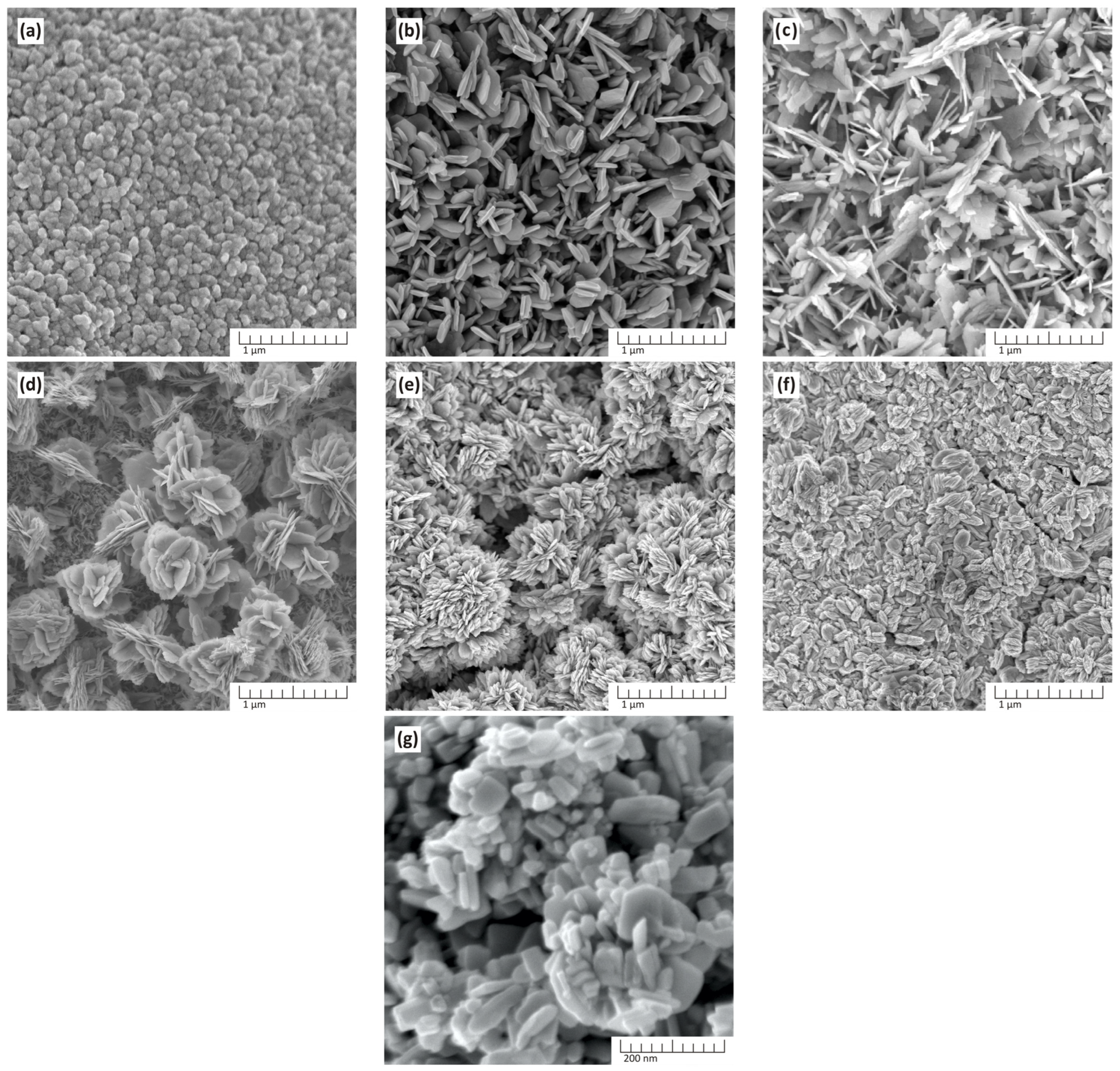
The time-dependent growth of CuO nanostructures was investigated by FESEM (Figure 1a–f), revealing a progressive transition from initial nucleation to complex hierarchical morphologies as the hydrothermal oxidation time increased from 30 min to 5 h.
After 30 min, the copper surface was uniformly covered with small, compact nuclei, characteristic of the early nucleation stage. At 1 h, these nuclei evolved into short nanosheets, giving the film a slightly rougher but still dense appearance. By 2 h, the nanosheets elongated and began to orient vertically, forming loosely organized petal-like structures. At 3 h, distinct three-dimensional microflowers emerged, composed of overlapping CuO petals. These features became larger and more densely packed after 4 h, creating a continuous network with high surface roughness and abundant open spaces. By 5 h, however, the morphology changed markedly: the individual nanoflowers coalesced into a more compact film in which petals were strongly intergrown. Although the coating remained hierarchical, the merging of adjacent structures reduced the number of accessible voids and led to a decrease in the effective surface area compared with the more open architectures observed at 3–4 h. This evolution aligns with the dissolution–precipitation growth mechanism of CuO. Extended reaction times promote secondary growth and aggregation of nanosheets, first enhancing surface complexity and then, at longer durations, driving structural coarsening and partial surface densification.
The FESEM image (Figure 1g) shows that the synthesized MgO nanoparticles consist of small primary nanostructures, typically below 20 nm in thickness, that aggregate into irregular secondary clusters upon drying. These clusters reach sizes of up to ~200 nm, forming a highly textured and porous morphology. The primary nanoparticles display a mixture of short rod-like, plate-like, and angular shapes, indicating rapid nucleation and anisotropic growth during the synthesis process. The dense packing of these nanoparticles produces agglomerates with numerous exposed edges, corners, and interparticle voids, features that are known to enhance surface reactivity. Energy-dispersive X-ray spectroscopy (EDS) microanalysis further confirms the elemental composition of the material, showing a dominant contribution from oxygen (62.29 wt %) and magnesium (37.71 wt %), consistent with the expected stoichiometry of MgO. The absence of significant impurity peaks in the EDS spectrum supports the successful formation of high-purity MgO nanoparticles.
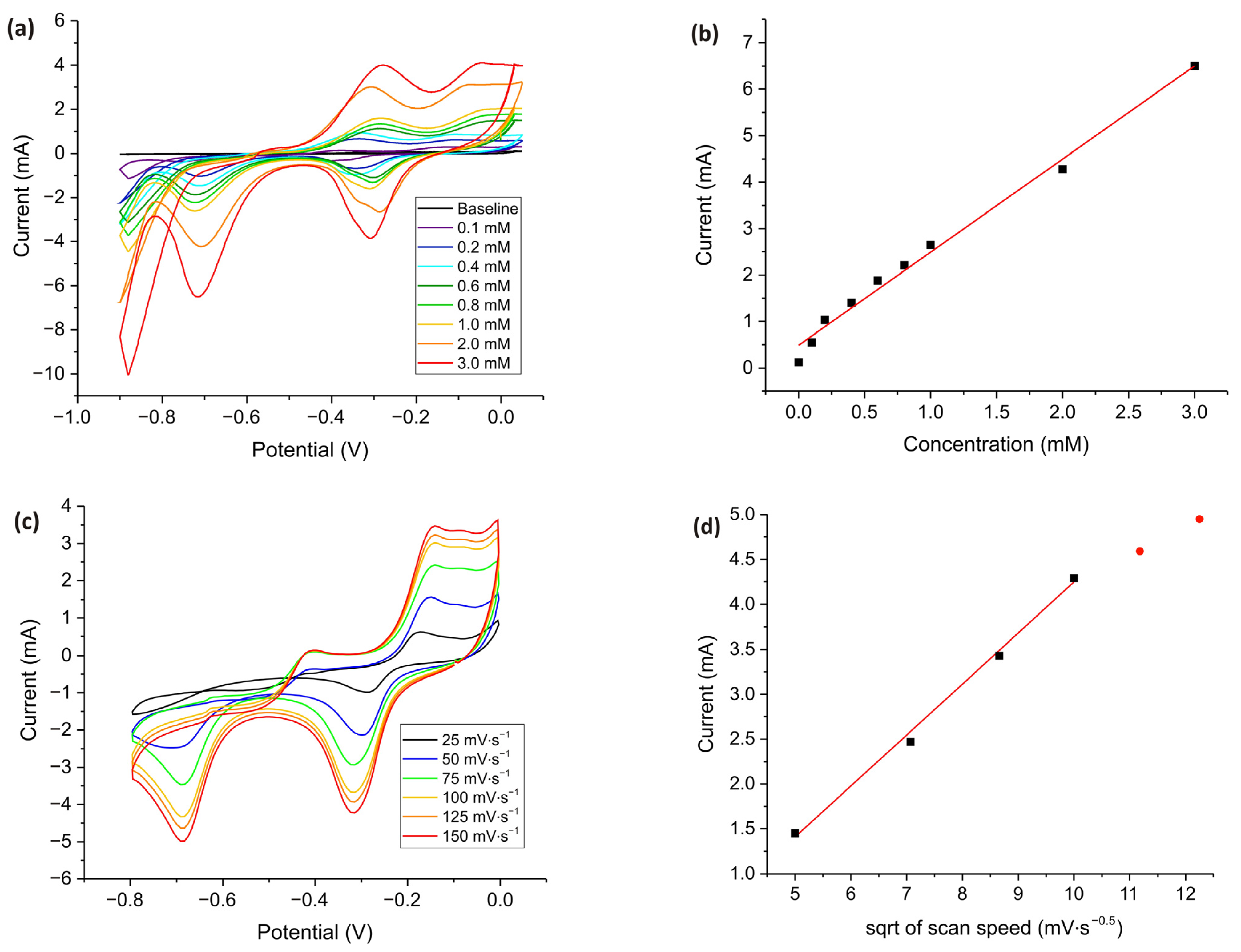
The electrocatalytic response of the CuO nanostructured electrode toward hydrogen peroxide was investigated by cyclic voltammetry in 0.1 M NaOH (Figure 2a). In the absence of H2O2 (baseline), only negligible current is observed, indicating electrode stability in the supporting electrolyte. Upon the addition of increasing H2O2 concentrations (0.1–3 mM), the CV curves exhibit a gradual enhancement of both cathodic and anodic peak currents, corresponding to the Cu0/Cu+/Cu2+ redox transitions coupled with peroxide oxidation and reduction. This systematic increase in current confirms the electrocatalytic activity of the CuO nanostructures. The H2O2 concentration range of 0–3 mM was selected because it encompasses the peroxide levels observed in our real plant extracts and aligns with calibration ranges commonly used for non-enzymatic H2O2 sensors. The upper boundary of this range is well above any physiologically relevant H2O2 concentrations found in plant tissues or other living organisms, which typically fall within the low-micromolar to low-hundreds-micromolar interval.
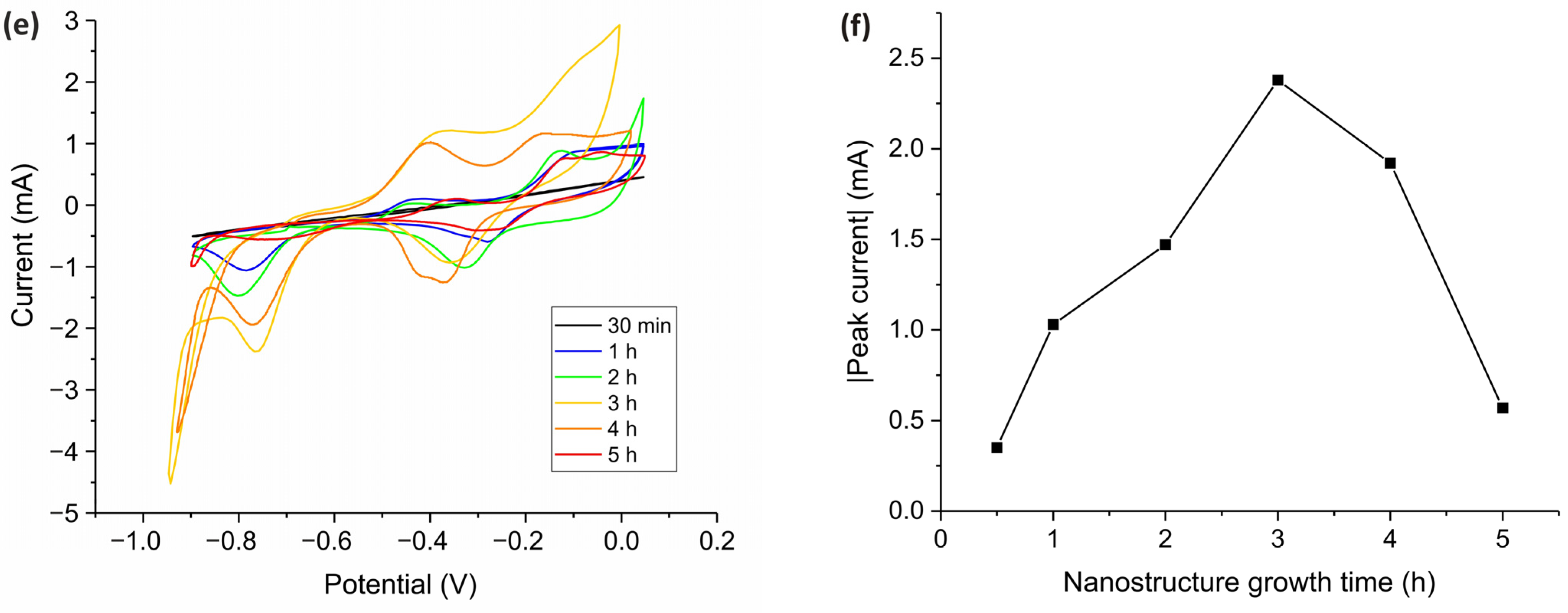
To further quantify this dependence, the cathodic peak current values were plotted against H2O2 concentration (Figure 2b). The CuO nanostructured electrode exhibited a linear current response to H2O2 in the concentration range of 0.2–3.0 mM (R2 = 0.989) indicating a diffusion-controlled electrochemical process, whereas lower concentrations (0–0.2 mM) deviated from linearity and were therefore excluded from the calibration analysis. Linear regression was performed strictly within this validated working range to ensure accurate quantification. The sensor demonstrated a sensitivity of 2.00 mA·mM−1, while the LOD was determined to be 12.3 µM, assuming a signal-to-noise ratio of 3. These results reflect the high density of electroactive sites and efficient charge-transfer pathways provided by the hierarchical CuO nanostructure, highlighting its suitability for non-enzymatic H2O2 sensing. The influence of scan rate on the electrochemical behavior of the CuO nanostructured electrode was investigated in the presence of H2O2 (Figure 2c). Cyclic voltammograms recorded at scan rates from 25 to 150 mV·s−1 show that both anodic and cathodic peak currents increase progressively with increasing scan rate, while the voltammogram shape remains consistent. The relationship between peak current and the square root of scan rate is presented in Figure 2d. The obtained linear correlation for scan rates below 100 mV·s−1 indicates that the redox process is primarily diffusion-controlled. At scan rates above 100 mV·s−1, the current increase becomes less pronounced, suggesting emerging kinetic limitations; therefore, 100 mV·s−1 was selected as the optimal scan rate. The catalytic activity of CuO electrodes synthesized at different growth durations was evaluated by cyclic voltammetry in the presence of H2O2 (Figure 2e). Distinct differences in electrochemical behavior are observed, which can be directly related to the morphology and surface features of the nanostructures formed at various synthesis times. At shorter durations (30 min and 1 h), the current response is relatively low, indicating insufficient surface development and a limited number of active sites. With increasing synthesis time to 2 h and 3 h, the electrodes display a significant enhancement in both anodic and cathodic peak currents, suggesting improved catalytic activity due to the formation of well-aligned, high-surface-area CuO nanostructures. However, for electrodes prepared at extended growth times (4 h and 5 h), the current response decreases again. This reduction is attributed to nanostructure aggregation and layer densification, as observed in SEM images (Figure 1), which reduce the accessible surface area and hinder mass transport. Overall, the electrode synthesized at 3 h exhibits the highest current response and the most pronounced redox features, highlighting it as the optimal morphology for H2O2 detection.
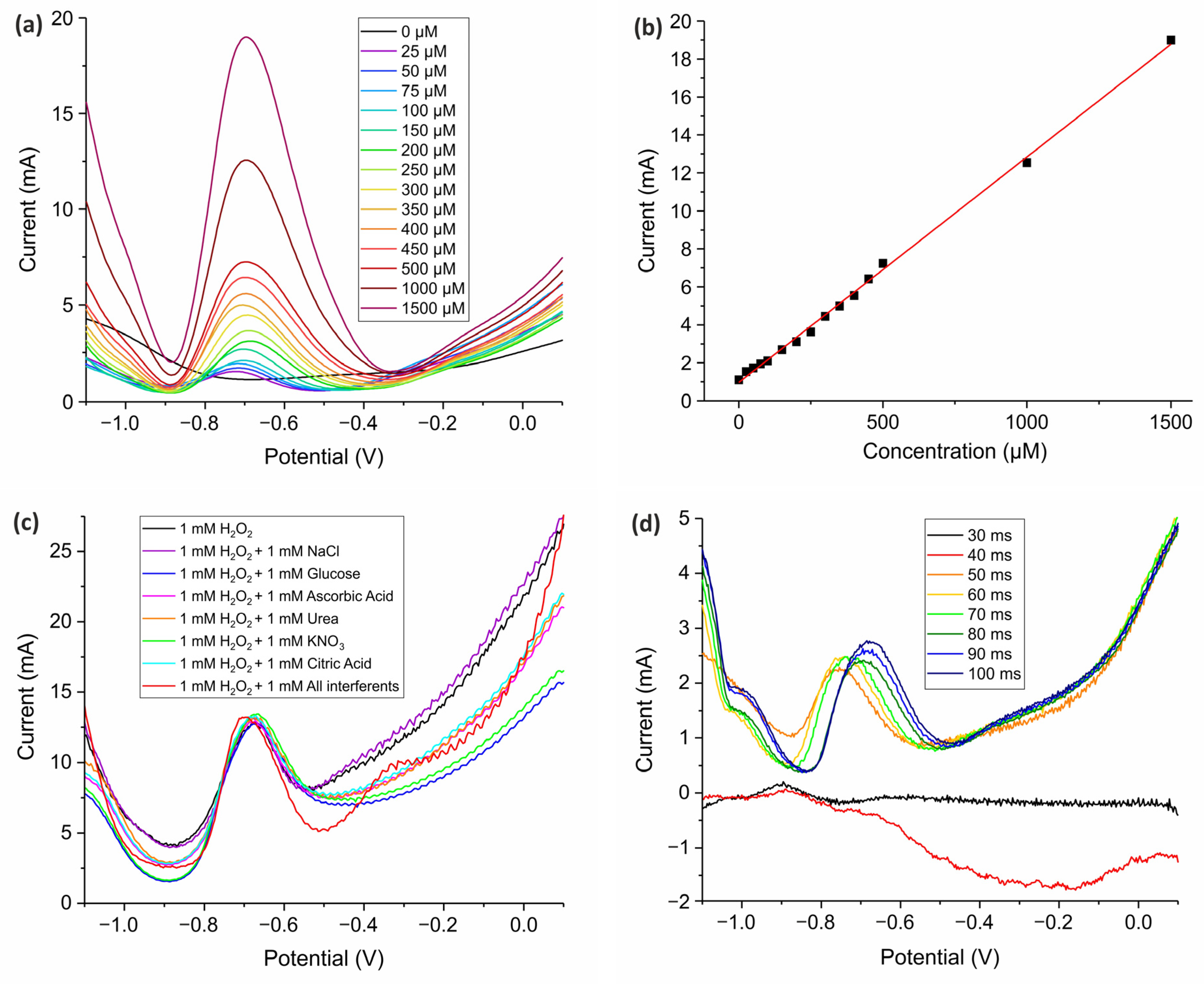
The electrocatalytic activity of the optimized CuO nanostructured electrode toward hydrogen peroxide detection was evaluated using DPV in 0.1 M NaOH solution containing varying H2O2 concentrations (0–1500 µM). The different H2O2 ranges in Figure 2 and Figure 3 reflect the distinct purposes of CV and DPV. CV used a broad 0–3 mM interval to characterize overall electrocatalytic behavior and define the electrode’s full linear range. DPV, offering higher sensitivity and lower detection limits, was applied over a narrower 0–1500 µM interval to emphasize its precision in the low-micromolar region, which is most relevant for physiological H2O2 levels. Although DPV remains linear across the full tested range, the reduced interval highlights its performance where sensitivity is greatest. As shown in Figure 3, a well-defined cathodic peak appeared around −0.7 V, which intensified progressively with increasing peroxide concentration, indicating efficient catalytic reduction of H2O2 on the CuO surface. This behavior reflects the strong electrocatalytic activity of the CuO nanostructure and its suitability for quantitative sensing applications.
The calibration curve (Figure 3b) exhibited a linear relationship between the reduction current and H2O2 concentration with an excellent correlation coefficient (R2 = 0.998). From this slope, the electrode sensitivity was determined to be 11.92 mA·mM−1. The calculated LOD was 1.9 µM, assuming a signal-to-noise ratio of 3. The sensitivity values obtained from the calibration plots clearly demonstrate the superior analytical performance of the DPV technique (Figure 3b) compared with CV (Figure 2b). This nearly sixfold increase in sensitivity underscores the greater suitability of DPV for the quantitative detection of low H2O2 concentrations. The enhanced response observed in DPV arises primarily from its pulsed potential waveform, which effectively minimizes capacitive (non-faradaic) currents that contribute to background noise in CV. In CV, the continuous potential sweep leads to significant double-layer charging, which partially obscures the faradaic signal and reduces apparent sensitivity. In contrast, DPV superimposes small potential pulses on an incremental base potential, allowing the current to be sampled after the decay of the capacitive component. This selective measurement enhances the signal-to-noise ratio, improves peak resolution, and enables more precise discrimination between closely spaced Cu0/Cu+ and Cu+/Cu2+ redox transitions involved in H2O2 reduction and oxidation. The higher sensitivity of DPV can also be attributed to more efficient utilization of electroactive surface sites and reduced diffusion limitations during the short pulse durations. To evaluate the selectivity of the CuO nanostructured electrode toward H2O2 detection in complex plant matrices, citric acid, ascorbic acid, NaCl, glucose, KNO3, and urea were selected as representative interferents (Figure 3c). These compounds represent the major classes of substances commonly present in plant extracts that may influence electrochemical measurements, including organic acids, antioxidants, carbohydrates, inorganic salts, and nitrogen-containing metabolites. Ascorbic acid and citric acid are abundant reducing agents capable of generating electrochemical signals in overlapping potential ranges, while glucose represents a prevalent plant carbohydrate that may affect surface adsorption or baseline currents. NaCl and KNO3 were selected as typical inorganic electrolytes influencing ionic strength and charge-transfer behavior, and urea was included as an important nitrogen metabolite that may accumulate under stress conditions and alter local pH or electrode–solution interactions. In plant tissues, many potential interfering species occur at relatively high physiological concentrations, such as Cl at 1–10 mM, SO42− at 1–5 mM, NO3 at 1–20 mM, glucose at 1–50 mM, ascorbic acid at 2–20 mM, and citric acid at 1–10 mM. During sample preparation, however, these metabolites partition into the aqueous extract and are subsequently diluted in the electrochemical measurements (5 mL extract adjusted to 70 mL total volume), resulting in their effective concentrations decreasing to the sub-millimolar or micromolar levels. The interference tests in Figure 3c were therefore performed at concentrations that reflect, or intentionally exceed, the expected levels in the diluted extracts. The interference study was conducted using DPV, with each compound tested at a concentration of 1 mM. As shown in Figure 3c, the DPV response toward H2O2 exhibited a well-defined cathodic peak near −0.7 V, corresponding to the electrochemical reduction of H2O2 at the CuO surface. Upon addition of individual interferents, the cathodic peak position and intensity remained largely unchanged, indicating negligible interference. Minor variations in current amplitude were attributed to changes in ionic strength or weak adsorption effects rather than direct electrochemical interference. When all interferents were added simultaneously (“All”), the cathodic peak at −0.7 V remained clearly visible and its height was essentially unchanged compared to pure H2O2, confirming the high selectivity of the CuO electrode even in a complex chemical environment. Background current variations were observed primarily outside the characteristic H2O2 reduction region, reflecting non-faradaic contributions rather than true analytical interference. The influence of pulse width on the DPV response of 0,1 mM H2O2 was evaluated in the range of 30–100 ms (Figure 3d). In all measurements, the cathodic reduction peak characteristic of H2O2 was consistently observed near −0.70 V, confirming the stability of the electrochemical process at the CuO surface. At lower pulse widths (30–40 ms), the peak was poorly developed, broader, and exhibited markedly reduced intensity, reflecting insufficient pulse duration for complete faradaic charge transfer. Under these conditions, the short sampling interval enhances capacitive contributions while limiting diffusion-controlled electron transfer, thereby diminishing the observable faradaic signal. Increasing the pulse width to 50–70 ms markedly enhanced the peak intensity and produced a sharper, well-defined signal. This improvement can be attributed to longer pulse intervals that allow more efficient relaxation and electron transfer at the electrode surface, enabling the system to reach a quasi-steady state where diffusion of H2O2 to surface-active CuO sites becomes dominant. Accordingly, both current amplitude and signal stability are maximized in this intermediate regime. Notably, the most pronounced and reproducible peak was obtained at 60 ms, indicating that this pulse width provides an optimal balance between faradaic response and the minimization of capacitive background. At pulse widths above 80 ms, the peak intensity continued to increase, indicating that saturation was not reached within the investigated range and that extended pulse durations promote more complete electrochemical reduction of H2O2. A noticeable feature of the voltammograms is a gradual rightward shift in the H2O2 reduction peak toward more positive potentials as pulse width increases, especially above 70–80 ms. This positive shift can be attributed to prolonged polarization of the CuO surface, which increases the degree of surface reduction and temporarily alters the interfacial electric field. Extended pulse durations promote the buildup of adsorbed intermediates (e.g., HO· species), local charge redistribution, and partial conversion of CuO to lower oxidation states (Cu(II)/Cu(I)), thereby lowering the kinetic overpotential required for H2O2 reduction. As a consequence, the reduction process occurs at slightly more positive potentials. Considering the balance between peak intensity, peak sharpness, and minimal potential displacement, a pulse width of 50–60 ms was selected as optimal for reliable quantitative measurements.
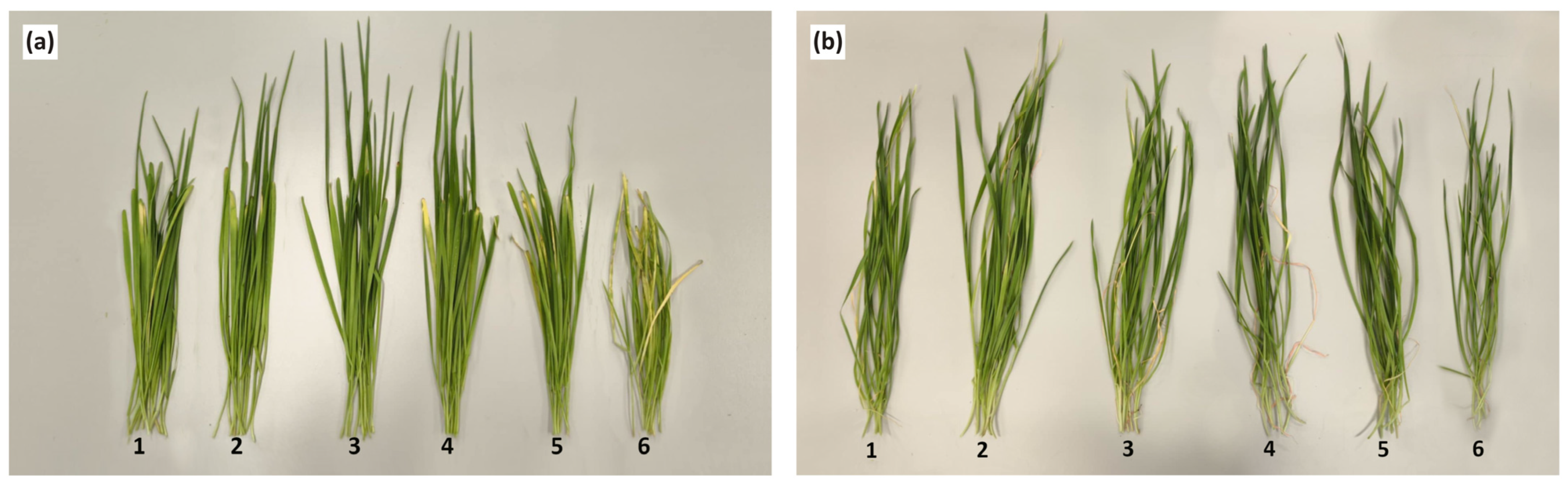
Figure 4 and Table 1 show the morphological measurements of oat and rye samples.
Overall, rye appears to be more resistant to drought, as evidenced by smaller differences in visual and morphological traits between drought-stressed and well-watered control plants. The application of MgO nanoparticles produced clear dose-dependent effects on plant growth and biomass in both oat and rye. In oat, supplementation with 50 or 100 mg·L−1 MgO nanoparticles under normal watering increased total length by 8% and 24%, respectively, while shoot elongation rose by 15% and 35%, fresh biomass by −3% and 22%, and dry weight by −33% and 0% compared to control samples. Under drought stress, plants exposed to 100 mg·L−1 MgO showed improvements of 53% in total length, 84% in fresh biomass, and 33% in dry weight over the drought control, whereas 50 mg·L−1 produced smaller gains of 26%, 21%, and 0%, indicating a concentration-dependent response. As shown in Figure 4, treatment with 100 mg·L−1 nanoparticles almost completely restored plant morphology: drought-stressed samples exhibited morphological indices comparable to those of plants receiving the same nanoparticle concentration under normal watering and were significantly longer than the well-watered control. In contrast, a twofold reduction in nanoparticle concentration resulted in marked differences. Under well-watered conditions, plants treated with 50 mg·L−1 displayed longer leaves than the untreated control and only a slight reduction compared with the higher dose. However, drought-stressed plants at this lower concentration, although improved relative to the drought control, still showed leaf lengths substantially shorter than both the well-watered control and the corresponding well-watered nanoparticle treatment. Moreover, these drought-stressed plants, like the drought controls, exhibited leaf yellowing, a symptom generally associated with reduced viability. In rye, under optimal watering, 50 mg·L−1 MgO enhanced total length by 23%, shoot elongation by 24%, and fresh and dry biomass by 79% and 96%, respectively; the higher dose yielded increases of 10% in length and 43% and 66% in fresh and dry biomass. Under drought, MgO still provided substantial protection, with gains of 8–11% in length, 78–118% in fresh biomass, and 97–125% in dry biomass compared with the drought control. Overall, MgO nanoparticles improved growth performance in both crops, with more pronounced dose dependence in oat.
Elemental (EDS) microanalysis of oat and rye leaves revealed that MgO nanoparticle treatments consistently enhanced Mg accumulation in both crops under well-watered and drought conditions. In oat, Mg content increased from 0.35 wt% (control) to 1.21–1.48 wt% with MgO NPs, and from 0.37 wt% (drought control) to 1.38–1.49 wt% under drought with nanoparticles. Similarly, rye showed Mg enrichment from 0.98 wt% (control) to 1.12–1.42 wt% with nanoparticles, and from 0.87 wt% (drought control) to 1.09–1.35 wt% under drought. These results demonstrate efficient Mg uptake in both species, with oat showing a slightly stronger relative response due to its lower baseline Mg levels. In both crops, drought stress increased carbon and reduced oxygen content, while nanoparticle treatment helped maintain a more balanced elemental composition. Other nutrients (P, S, K, Ca) exhibited only minor, non-systematic fluctuations, indicating that MgO nanoparticles primarily improved Mg availability without disrupting overall nutrient homeostasis. Overall, MgO nanoparticle supplementation enhanced foliar Mg status in both oat and rye and contributed to more stable nutrient profiles under drought conditions. Detailed micronutrient content is shown in Table A1 in the Appendix A section.
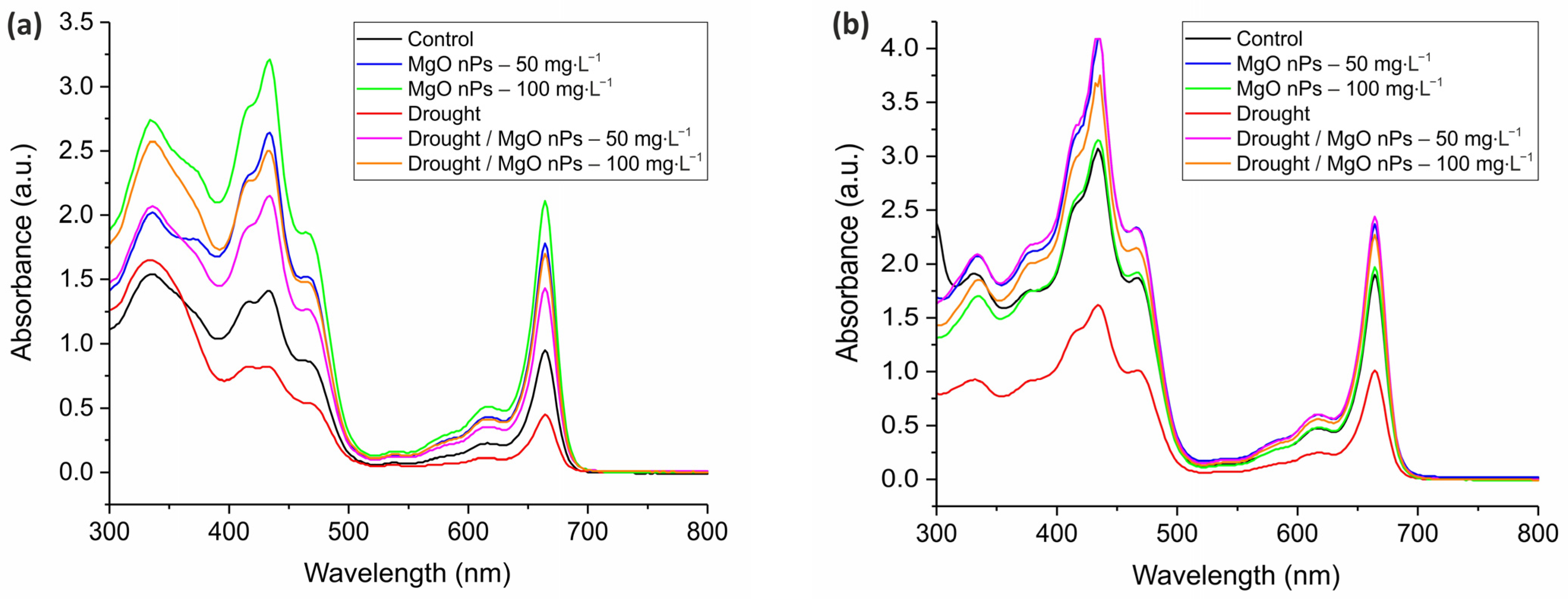
Figure 5 shows the absorption measurements of pigments in oat and rye samples. The UV–Vis absorption spectra display characteristic chlorophyll peaks and illustrate the impact of MgO nanoparticles on pigment content under control and drought conditions. Across all treatments, two major absorption regions can be distinguished: a broad band in the blue region (≈430–450 nm) corresponding mainly to chlorophyll a, and a band in the red region (≈660–680 nm) representing the Qy transition of chlorophyll a with some contribution from chlorophyll b. A shoulder around 460–480 nm reflects the Soret band of chlorophyll b and carotenoids, while a broad feature between 300 and 350 nm is attributed to phenolic compounds and UV-screening pigments.
Control plants showed typical chlorophyll absorption, whereas drought-stressed plants exhibited a pronounced decline in both the blue and red regions, indicating reduced chlorophyll content. Plants treated with MgO nanoparticles demonstrated clear improvements under both normal watering and drought stress. Under normal watering, MgO at 50 and 100 mg·L−1 increased absorbance in both chlorophyll a and b peaks compared with the control. Under drought, MgO supplementation also elevated chlorophyll absorption in a dose-dependent manner. Although absolute absorbance values for droughted samples remained lower than those of well-watered MgO-treated plants, they were higher than the well-watered control and significantly higher than the drought control. The UV–Vis spectra of rye leaves revealed a similar overall pattern. Drought stress caused a strong decline in absorbance at both chlorophyll peaks, reflecting pigment loss. Application of MgO nanoparticles effectively mitigated these effects. Under non-stress conditions, 50 mg·L−1 MgO produced the strongest enhancement of chlorophyll absorption, while 100 mg·L−1 provided a slightly lower but still substantial improvement. Under drought stress, both MgO doses significantly increased absorbance relative to the drought control, with 50 mg·L−1 yielding the greatest pigment recovery.
These results demonstrate that MgO nanoparticles effectively mitigate drought-induced losses of chlorophyll. Nanoparticulate MgO likely provides a more bioavailable source of Mg2+, enhancing chlorophyll formation, maintaining thylakoid membrane integrity, and improving the antioxidant capacity of the leaf tissue. By sustaining higher pigment levels and preserving photosynthetic activity under water deficit, MgO nanoparticles help plants maintain energy production and growth, explaining the improved biomass and stress resilience observed in the growth data.
The pigment data confirm the spectral trends and demonstrate a strong but species-dependent effect of MgO nanoparticles on chlorophyll and carotenoid content (Table 2). In oat, MgO supplementation under normal watering produced large relative gains in pigment concentrations compared with the untreated control: total chlorophyll increased by 87% at 50 mg·L−1 and by 123% at 100 mg·L−1, driven by increases in both chlorophyll a (+87–122%) and chlorophyll b (+87–126%). Carotenoids followed a similar trend, increasing by 69% and 110%, respectively. Drought alone caused severe pigment losses, reducing chlorophyll a, chlorophyll b, total chlorophyll, and carotenoids by approximately 53%, 46%, 52%, and 32%, respectively, relative to the well-watered control. MgO application partly offset these declines and enhanced pigment levels beyond the baseline: under drought, the 50 mg·L−1 dose increased total chlorophyll by 213% relative to the drought control (+52% relative to the well-watered control), whereas the 100 mg·L−1 dose produced an increase of 270% relative to the drought control (+80% relative to the well-watered control). Corresponding increases were observed for chlorophyll a (+281%/+78%) and chlorophyll b (+243%/+84%), while carotenoids increased by 146% relative to the drought control (+67% relative to the well-watered control).
In rye, pigment concentrations were consistently higher than in oat under all conditions, but the relative response to MgO was smaller in well-watered plants: total chlorophyll increased by 26% at 50 mg·L−1 and decreased by 6% at 100 mg·L−1 compared with the control. Drought reduced chlorophyll a, chlorophyll b, total chlorophyll, and carotenoids by approximately 47%, 45%, 46%, and 46%, respectively, relative to the rye control. Under drought, MgO markedly mitigated pigment depletion. The 50 mg·L−1 treatment increased total chlorophyll by 142% relative to the drought control (+30% relative to the well-watered control), while the 100 mg·L−1 dose produced an increase of 123% (+21% relative to the well-watered control). Chlorophyll a and b increased by approximately 142%/+29% and 127%/+33%, respectively, and carotenoids increased by approximately 124%/+21% relative to the drought and well-watered controls.
Drought reduced pigment pools by approximately 45–53% in both cereals, while MgO nanoparticles fully compensated these losses and, in several treatments, increased pigment concentrations above well-watered control levels. The magnitude of restoration varied with species and dose: oat exhibited larger proportional increases in pigment content, particularly at 100 mg·L−1 MgO, whereas rye showed more consistent improvement at 50 mg·L−1 in terms of both relative pigment recovery and absolute biomass gains. These results indicate that MgO nanoparticles protect and promote chlorophyll and carotenoid pools under water deficit, contributing to the maintenance of photosynthetic capacity.
Overall, the combined growth, pigment, and spectral data reveal distinct modes of stress mitigation by MgO nanoparticles in oat and rye. Oat exhibited stronger relative pigment losses under drought but also showed greater proportional recovery when treated with MgO, particularly at 100 mg·L−1. Rye maintained higher absolute pigment concentrations and biomass across all treatments, reflecting greater inherent drought tolerance, yet its relative gains with MgO were smaller. Thus, MgO nanoparticles provided stronger proportional remediation in oat, while in rye they primarily preserved high pigment pools and sustained biomass under drought.
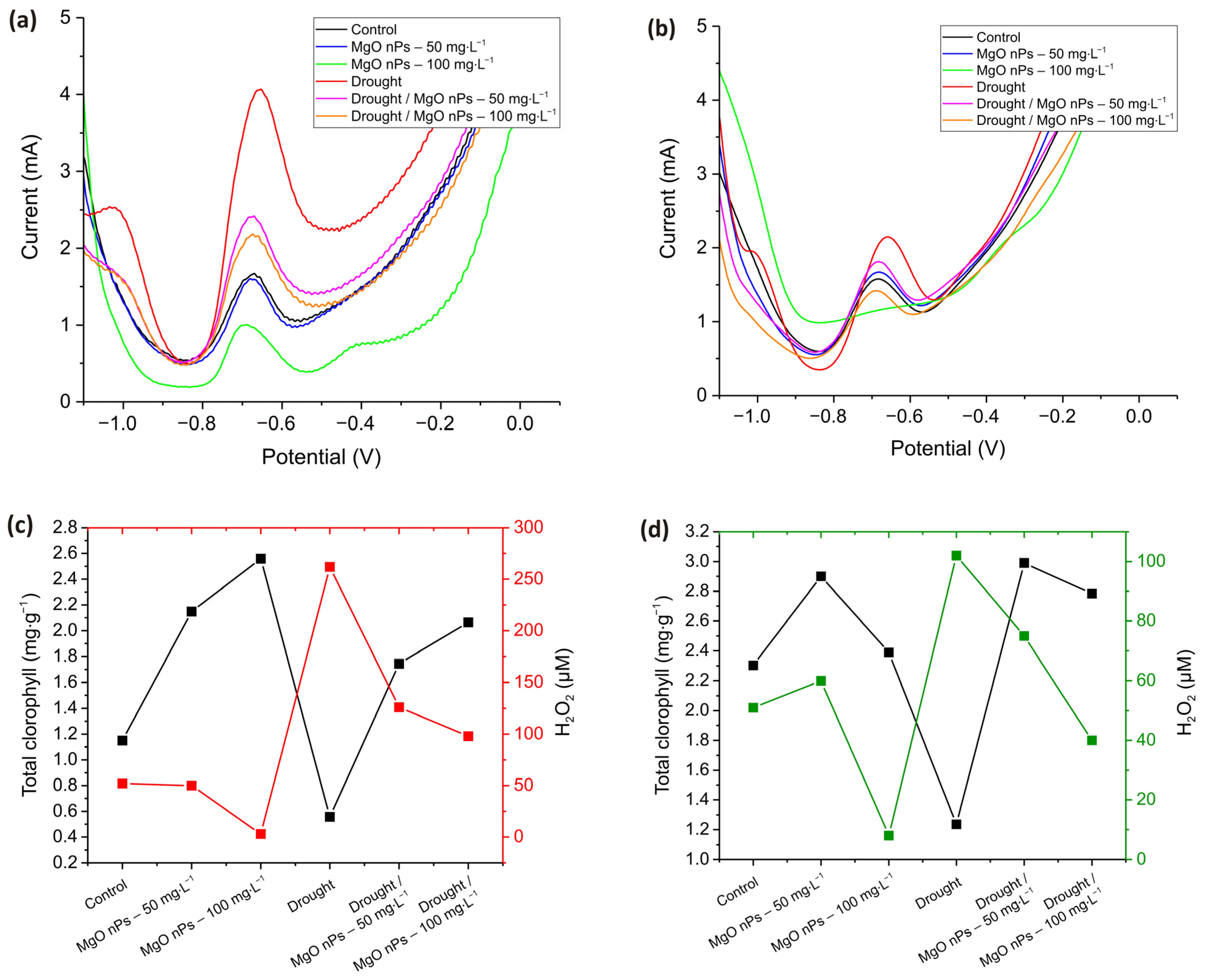
The applicability of the CuO nanostructured electrode for real-sample analysis was evaluated using DPV in plant extracts of Avena sativa and Secale cereale grown under different physiological conditions (Figure 6). Table 3 summarizes the H2O2 concentrations determined electrochemically in plants subjected to drought stress and nanoparticle treatments. The distinct cathodic peaks observed near −0.7 V correspond to the electrochemical reduction of H2O2 at the CuO surface, and the peak current intensity reflects the relative peroxide content. Under control conditions, both species exhibited comparable H2O2 concentrations (≈51–52 µM), indicating similar baseline redox states. Treatment with MgO nanoparticles at 50 mg·L−1 caused only minor changes, whereas exposure to 100 mg·L−1 markedly decreased H2O2 levels to 3 µM in oat and 8 µM in rye. This reduction suggests that MgO nanoparticles enhance antioxidant activity, promoting H2O2 decomposition and improving redox homeostasis.
Drought stress resulted in a pronounced increase in H2O2 accumulation in both species, as evidenced by amplified cathodic peak currents. Quantitatively, H2O2 concentrations increased to 262 µM in oat and 102 µM in rye, representing increases of approximately 414% and 96%, respectively, relative to the controls. These results confirm that drought induces severe oxidative stress, with oat exhibiting greater ROS accumulation and thus higher sensitivity to water deficit. Nanoparticle supplementation effectively mitigated this stress response. Under drought, treatment with 50 mg·L−1 MgO nanoparticles reduced H2O2 concentrations to 126 µM in oat and 75 µM in rye, while increasing the dose to 100 mg·L−1 further decreased the levels to 98 µM and 40 µM, respectively. These results demonstrate a clear dose-dependent antioxidant and protective effect of MgO nanoparticles against drought-induced oxidative damage. Comparative analysis revealed that oat accumulated substantially more H2O2 under drought stress than rye, whereas rye maintained comparatively lower peroxide levels across treatments, reflecting stronger intrinsic redox regulation and stress adaptation. This behavior reflects intrinsic physiological differences, with rye possessing stronger redox regulation and more efficient stress adaptation mechanisms. Interestingly, the larger relative decrease in H2O2 observed in oat following nanoparticle treatment indicates that oat may be more responsive to nanoparticle-mediated modulation of oxidative balance.
A strong inverse correlation was observed between electrochemically measured H2O2 levels and chlorophyll content in both species (Table 2 and Table 3). To further illustrate this trend, Figure 6c,d presents combined plots of chlorophyll content and H2O2 levels for each treatment, clearly visualizing the inverse relationship between oxidative stress and pigment preservation. Elevated H2O2 concentrations under drought conditions were associated with reduced chlorophyll content and lower optical absorbance in the visible region, indicating that excessive reactive oxygen species accumulation contributes to chloroplast damage and pigment degradation. Oat, which accumulated 262 µM H2O2, exhibited more pronounced pigment loss than rye (102 µM), underscoring its greater susceptibility to oxidative stress. Treatment with MgO nanoparticles effectively reversed these stress-induced effects. The decrease in H2O2 concentration was accompanied by a progressive recovery of chlorophyll content. These results indicate that MgO nanoparticles function as redox-active agents capable of scavenging or catalytically decomposing H2O2, thereby protecting the photosynthetic apparatus. Furthermore, based on the results of all experiments, one important point should be noted: oat exhibits a clear dose-dependent response, showing stronger improvement at 100 mg·L−1 MgO nanoparticles, whereas rye achieves its highest performance at 50 mg·L−1, with slight declines at the higher dose. Consistent with this pattern, oat plants treated with 50 mg·L−1 MgO under drought stress still displayed noticeable leaf yellowing, indicating insufficient mitigation of chlorophyll degradation and oxidative damage. This is consistent with the markedly higher drought-induced oxidative stress observed in oat, which accumulated 262 µM H2O2 compared with 102 µM in rye (Table 3). The greater ROS burden in oat likely exceeded the scavenging or antioxidant-enhancing capacity provided by the lower MgO dose. As a result, 50 mg·L−1 MgO only partially reduced H2O2 (to 126 µM) and did not prevent pigment loss, whereas 100 mg·L−1 lowered H2O2 more effectively (to 98 µM), aligning with improved chlorophyll retention and the absence of yellowing. In contrast, rye showed more consistent improvement at 50 mg·L−1 than at 100 mg·L−1, reflecting its inherently higher drought tolerance and lower oxidative stress burden, which reduced the amount of supplemental magnesium required to restore redox balance and pigment stability. For rye, the 50 mg·L−1 dose closely matched its physiological Mg requirements, producing the strongest gains in biomass and chlorophyll content, while the 100 mg·L−1 treatment offered no additional benefit and slightly reduced these parameters. This pattern suggests a mild hormetic response in rye, where low nanoparticle doses are stimulatory but higher doses provide diminishing returns due to subtle ionic or metabolic imbalance.
Table 4 summarizes the effectiveness of MgO nanoparticles reported in this study in comparison with similar nanoparticle-based studies from the literature.
Previously reported nanomaterials, including FeO, MnO, CuO, CeO2, ZnO, and Ag nanoparticles, typically reduce hydrogen peroxide accumulation by 23–56%, depending on crop species and stress conditions. The MgO nanoparticles investigated in this study showed a clearly stronger mitigation effect, reducing H2O2 levels by up to 63% in oat and 61% in rye at 100 mg·L−1, with substantial reductions already observed at 50 mg·L−1. These reductions exceed the mitigation efficiencies reported for the majority of nanoparticles summarized in Table 4, indicating that under the conditions of this study MgO performed comparatively better than most previously tested nanomaterials. By promoting redox homeostasis and supporting Mg-dependent physiological functionsMgO nanoparticles provide an effective and comparatively high-performing strategy for alleviating oxidative damage in drought-stressed cereal crops. The demonstrated CuO-based electrochemical sensor, combined with MgO-nanoparticle-assisted stress mitigation, highlights a promising dual-function platform for both plant stress diagnostics and targeted agricultural intervention.
The high sensitivity and selectivity of the developed DPV method toward H2O2 provide a practical alternative to commonly used optical and enzymatic assays, which although often highly sensitive, typically suffer from enzyme instability, limited selectivity in complex plant matrices, and the need for extensive sample purification prior to measurement. In contrast, the proposed CuO nanostructure-based electrochemical approach operates directly on unpurified plant extracts while offering sensitivity comparable to, and in some cases higher than, other reported non-enzymatic electrochemical sensors [64,69,72], fully covering the concentration ranges relevant for oxidative-stress monitoring in crops. This capability makes the method suitable for early detection of abiotic stress, assessment of plant responses to agronomic treatments, and routine monitoring of plant health in precision agriculture systems. The observed reduction in H2O2 levels together with the partial restoration of chlorophyll content further indicates that engineered nanomaterials may serve not only as effective stress sensors but also as stress-mitigating agents. These findings highlight the potential for integrated sensing–remediation strategies, such as nanoparticle-enabled “smart” fertilizers or soil amendments that simultaneously monitor and modulate plant redox status. Although the developed CuO nanoflower electrode demonstrates high analytical sensitivity toward H2O2, the present workflow still requires overnight incubation of plant material in 0.1 M NaOH. This step is necessary because CuO nanostructures and, as shown in our previous publications [42,64,72], most nanostructured metal-oxide sensors exhibit strong electrocatalytic activity only under highly alkaline conditions (pH ≈ 12–13). Under neutral pH, the Cu2+/Cu+ redox transitions that drive the electrocatalytic decomposition of H2O2 become strongly suppressed, leading to significantly lower current responses. Since such alkaline conditions cannot be directly applied to intact plant tissue, the current method is not yet suitable for real-time or in vivo measurements. Despite this limitation, the method can still be adapted for faster and more practical on-field use. Instead of overnight extraction which ensures maximum penetration of endogenous H2O2 contained in all types of tissues into the solution, plant material may be rapidly crushed, squeezed, and filtered on-site to obtain fresh sap, which can then be directly mixed with NaOH supporting electrolyte. This approach bypasses the need for long incubation, provides sufficient alkaline conditions for CuO electrocatalysis, and allows H2O2 measurement within minutes of sample collection. While this does not constitute in vivo sensing, it represents a feasible intermediate step toward rapid field-deployable diagnostics especially in cases where it is not so much the precise quantitative determination of H2O2 that is important, but rather the overall detection of its excess in the range of relative values of oxidative stress. To ultimately achieve direct real-time or in vivo detection, our ongoing work focuses on developing alternative metal-oxide systems based on mixed-oxide nanostructures—that retain electrocatalytic activity at neutral pH. Such materials would eliminate the need for strong alkaline media, enable rapid measurement from minimally processed samples, and open the possibility for biocompatible electrode probes suitable for continuous or in vivo monitoring of plant oxidative stress.
Future research should focus on advancing the CuO-based sensing platform toward practical field-deployable formats. Priorities include sensor miniaturization and integration with portable or wireless potentiostats to support rapid on-site measurements, as well as continued optimization of CuO nanostructure growth parameters—such as precursor concentration, temperature, and substrate geometry—to tailor electrode performance for different crop species and stress conditions. In addition, long-term stability testing and repeated-use evaluations under realistic agricultural environments will be essential to ensure reliable operation in diverse plant matrices. From an agronomic perspective, extended investigations into MgO nanoparticle–plant interactions are required to optimize dosage, application frequency, and delivery methods while ensuring environmental safety. Expanding this dual sensing–mitigation strategy to other abiotic stresses, including salinity, heat, and heavy-metal toxicity, as well as to additional nanomaterials with multifunctional redox activity, could provide a broader framework for precision stress management. Ultimately, the integration of nanostructured electrochemical sensors with nanoparticle-enabled interventions may support the development of smart agricultural systems capable of both diagnosing and actively regulating plant stress responses in a sustainable manner.

4. Conclusions

This study presents a dual-function nanotechnology-based approach for both the quantitative detection and mitigation of drought-induced oxidative stress in plants. Hierarchical CuO nanostructures were grown directly on copper substrates via a simple hydrothermal oxidation process, and the effect of growth time on nanostructure morphology and electrochemical sensing performance was systematically investigated. The results clearly demonstrate that CuO growth duration is a critical parameter governing electrocatalytic activity toward hydrogen peroxide detection. Short growth times (≤1 h) resulted in underdeveloped surfaces with limited electroactive area, whereas prolonged growth (≥4 h) caused aggregation and densification of the CuO layer, restricting mass transport and active-site accessibility. An optimal growth time of 3 h produced well-defined, open nanoflower architectures with high surface area and abundant accessible active sites, yielding the highest sensing performance.
The optimized CuO electrode exhibited excellent analytical characteristics, including a low detection limit of 1.9 µM, high sensitivity of 11.92 mA·mM−1·cm−2, a wide linear range, and strong selectivity against common plant-derived interferents. The application of the sensor to real extracts of oat (Avena sativa) and rye (Secale cereale) enabled reliable quantification of hydrogen peroxide as a direct indicator of oxidative stress. Electrochemical measurements revealed pronounced drought-induced increases in H2O2 levels, particularly in oat, confirming species-dependent sensitivity to water deficit.
In parallel, MgO nanoparticles were shown to effectively alleviate drought-induced oxidative damage in both crops. MgO treatment reduced H2O2 accumulation in a clear dose-dependent manner, achieving reductions of up to 63% in oat and 61% in rye under drought conditions. These reductions were accompanied by substantial improvements in plant growth, biomass accumulation, and photosynthetic pigment content, with total chlorophyll levels increasing by up to 270% in oat and 142% in rye relative to drought-stressed controls. A strong inverse correlation between electrochemically measured H2O2 concentrations and chlorophyll preservation further validated the CuO-based sensor as a reliable tool for oxidative stress assessment.
The integration of high-performance CuO-based H2O2 sensing with MgO-nanoparticle-assisted stress mitigation provides a robust framework for simultaneous plant stress diagnostics and intervention. Future efforts should focus on sensor miniaturization, long-term operational stability, and in-field deployment, as well as on optimizing nanoparticle dosage and application strategies to ensure agronomic efficiency and environmental safety. Extending this integrated sensing–mitigation concept to other abiotic stresses and crop systems could support the development of smart, sustainable precision-agriculture technologies capable of real-time monitoring and targeted regulation of plant stress responses.

Author Contributions

Conceptualization, V.G., I.M. and M.K.; methodology, M.K. and I.M.; formal analysis, J.K. and V.M.; investigation, M.K., E.S. and V.M.; visualization, E.S.; writing—original draft preparation, M.K. and E.S.; writing—review and editing, A.B., I.M., J.K. and V.M.; supervision, V.G.; resources, I.M. All authors have read and agreed to the published version of the manuscript.

Funding

This research was supported by 1.1.1.9 Research application No 1.1.1.9/LZP/1/24/185 of the Activity “Post-doctoral Research” “Development of Electrochemical Multisensor System for Biomarker Detection (EMS-Bio)”.

Institutional Review Board Statement

Not applicable.

Informed Consent Statement

Not applicable.

Data Availability Statement

Data are contained within the article.

Conflicts of Interest

The authors declare no conflicts of interest.

Appendix A

Table A1. EDS microanalysis of elemental composition in oat and rye leaves under different treatment conditions.
Oat, Weight %
ElementsControlMgO nPs 50 mg·L−1MgO nPs 100 mg·L−1DroughtDrought
MgO nPs 50 mg·L−1
Drought
MgO nPs 100 mg·L−1
C52.0951.2050.6048.9951.4854.81
O38.8839.2638.3139.6039.0636.09
Na1.150.160.200.26
Mg0.351.211.481.381.490.37
Si0.140.200.270.10
P1.271.401.691.191.671.55
S0.841.452.321.420.621.13
Cl0.510.120.520.43
K3.953.793.656.114.084.46
Ca0.681.371.380.830.581.00
Cu0.140.120.140.160.140.16
Total100100100100100100
Rye, Weight %
C51.1350.2051.4049.6950.7852.41
O39.540.3939.3140.2039.2637.09
Na1.250.300.260.280.421.34
Mg0.981.421.121.351.090.87
Si0.140.370.400.340.20
P0.881.181.521.341.581.55
S0.841.251.321.120.611.13
Cl0.510.120.220.820.43
K3.952.793.784.114.084.40
Ca0.571.370.781.120.580.22
Cu0.250.980.140.170.440.36
Total100.00100.00100.00100.00100.00100.00

References

  1. Seleiman, M.F.; Al-Suhaibani, N.; Ali, N.; Akmal, M.; Alotaibi, M.; Refay, Y.; Dindaroglu, T.; Abdul-Wajid, H.H.; Battaglia, M.L. Drought Stress Impacts on Plants and Different Approaches to Alleviate Its Adverse Effects. Plants 2021, 10, 259. [Google Scholar] [CrossRef] [PubMed]
  2. Dong, M.; Luo, H.; Wang, Q. Effects of Water Stress on Growth and Leaf Water Physiology of Major Plants in the Qaidam Basin. Diversity 2025, 17, 652. [Google Scholar] [CrossRef]
  3. Lu, X.; Yin, Y.; Yang, M.; Zhang, S.; Niu, Z.; Wu, L.; Chen, C. Effects of Drought Stress on the Growth and Physiological Characteristics of Idesia polycarpa Maxim. Horticulturae 2025, 11, 834. [Google Scholar] [CrossRef]
  4. Qiao, M.; Hong, C.; Jiao, Y.; Hou, S.; Gao, H. Impacts of Drought on Photosynthesis in Major Food Crops and the Related Mechanisms of Plant Responses to Drought. Plants 2024, 13, 1808. [Google Scholar] [CrossRef]
  5. Nurnaeimah, N.; Mat, N.; Suryati Mohd, K.; Badaluddin, N.A.; Yusoff, N.; Sajili, M.H.; Mahmud, K.; Mohd Adnan, A.F.; Khandaker, M.M. The Effects of Hydrogen Peroxide on Plant Growth, Mineral Accumulation, as Well as Biological and Chemical Properties of Ficus deltoidea. Agronomy 2020, 10, 599. [Google Scholar] [CrossRef]
  6. Asaeda, T.; Rahman, M.; Liping, X.; Schoelynck, J. Hydrogen Peroxide Variation Patterns as Abiotic Stress Responses of Egeria densa. Front. Plant Sci. 2022, 13, 855477. [Google Scholar] [CrossRef]
  7. Qureshi, M.K.; Gawroński, P.; Munir, S.; Jindal, S.; Kerchev, P. Hydrogen peroxide-induced stress acclimation in plants. Cell. Mol. Life Sci. 2022, 79, 129. [Google Scholar] [CrossRef]
  8. Černý, M.; Habánová, H.; Berka, M.; Luklová, M.; Brzobohatý, B. Hydrogen Peroxide: Its Role in Plant Biology and Crosstalk with Signalling Networks. Int. J. Mol. Sci. 2018, 19, 2812. [Google Scholar] [CrossRef]
  9. Rao, M.J.; Duan, M.; Zhou, C.; Jiao, J.; Cheng, P.; Yang, L.; Wei, W.; Shen, Q.; Ji, P.; Yang, Y.; et al. Antioxidant Defense System in Plants: Reactive Oxygen Species Production, Signaling, and Scavenging During Abiotic Stress-Induced Oxidative Damage. Horticulturae 2025, 11, 477. [Google Scholar] [CrossRef]
  10. Khan, T.A.; Yusuf, M.; Fariduddin, Q. Hydrogen peroxide in regulation of plant metabolism: Signalling and its effect under abiotic stress. Photosynthetica 2018, 56, 1237–1248. [Google Scholar] [CrossRef]
  11. Anjum, N.A.; Gill, S.S.; Corpas, F.J.; Ortega-Villasante, C.; Hernandez, L.E.; Tuteja, N.; Sofo, A.; Hasanuzzaman, M.; Fujita, M. Editorial: Recent Insights Into the Double Role of Hydrogen Peroxide in Plants. Front. Plant Sci. 2022, 13, 843274. [Google Scholar] [CrossRef]
  12. Hsu, C.-C.; Lo, Y.-R.; Lin, Y.-C.; Shi, Y.-C.; Li, P.-L. A Spectrometric Method for Hydrogen Peroxide Concentration Measurement with a Reusable and Cost-Efficient Sensor. Sensors 2015, 15, 25716–25729. [Google Scholar] [CrossRef] [PubMed]
  13. Zhang, M.; Hao, J.; Wu, C.; Shi, S.; Ma, Z.; Ren, X.; Han, F.; Wu, J.; Zhang, H.; Zhang, B. A Self-Assembled Fluorescent Probe for H2O2 Detection in NAFLD Diagnosis. Org. Biomol. Chem. 2025, 23, 7962–7968. [Google Scholar] [CrossRef] [PubMed]
  14. Wang, K.; Yao, T.; Xue, J.; Guo, Y.; Xu, X. A Novel Fluorescent Probe for the Detection of Hydrogen Peroxide. Biosensors 2023, 13, 658. [Google Scholar] [CrossRef] [PubMed]
  15. Teniou, A.; Madi, I.A.; Mouhoub, R.; Marty, J.L.; Rhouati, A. One-Step Chemiluminescent Assay for Hydrogen Peroxide Analysis in Water. Chemosensors 2023, 11, 455. [Google Scholar] [CrossRef]
  16. Lan, C.W.; Kubendhiran, S.; Sison, G.; Hsu, H.P. Monitoring hydrogen peroxide using an electrochemical method during Metal Assisted Chemical Etching for Silicon. Silicon 2022, 14, 5673–5681. [Google Scholar] [CrossRef]
  17. Manibalan, G.; Murugadoss, G.; Krishnamoorthy, D.; Dharuman, V.; Gouse Peera, S. Sensitive and Selective Electrochemical Detection of Hydrogen Peroxide Using a Silver-Incorporated CeO2/Ag2O Nanocomposite. Biosensors 2025, 15, 617. [Google Scholar] [CrossRef]
  18. Balasubramaniyan, N.G.; Perumal, P. Highly efficient electrochemical detection of H2O2 utilizing an innovative copper porphyrinic nanosheet decorated bismuth metal–organic framework modified electrode. Anal. Methods 2024, 16, 624–638. [Google Scholar] [CrossRef]
  19. Kaur, G.; Ahmad, A.; Singh, I. Recent progress in nanomaterial-based electrochemical biosensors for hydrogen peroxide detection & their biological applications. Talanta 2025, 286, 127447. [Google Scholar] [CrossRef]
  20. Doménech-Carbó, A.; Cervelló-Bulls, P.; González, J.M.; Soriano, P.; Estrelles, E.; Montoya, N. Electrochemical monitoring of ROS influence on seedlings and germination response to salinity stress of three species of the tribe inuleae. RSC Adv. 2019, 9, 17856–17867. [Google Scholar] [CrossRef]
  21. Akter, S.; Khan, M.S.; Smith, E.N.; Flashman, E. Measuring ROS and redox markers in plant cells. RSC Chem. Biol. 2021, 2, 1384–1401. [Google Scholar] [CrossRef] [PubMed]
  22. Yassin, M.A.; Abou-Hadid, A.F.; Mousa, H.M.; Park, C.H.; Kim, C.S.; Salem, A.; Mattar, M.A. Enzymeless electrochemical detection of hydrogen peroxide using NiO octahedron decorated 3D graphene hydrogel. Sci. Rep. 2025, 15, 28293. [Google Scholar] [CrossRef] [PubMed]
  23. Fernández, L.; Alvarez-Paguay, J.; González, G.; Uribe, R.; Bolaños-Mendez, D.; Piñeiros, J.L.; Celi, L.; Espinoza-Montero, P.J. Electrochemical Sensor for Hydrogen Peroxide Based on Prussian Blue Electrochemically Deposited at the TiO2-ZrO2–Doped Carbon Nanotube Glassy Carbon-Modified Electrode. Front. Chem. 2022, 10, 884050. [Google Scholar] [CrossRef] [PubMed]
  24. Silwana, B.; Matoetoe, M. Heterostructure of Metal Oxides Integrated on a GCE for Estimation of H2O2 Capacity in Milk and Fruit Juice Samples. Electrochem 2023, 4, 56–67. [Google Scholar] [CrossRef]
  25. Adeniji, T.M.; Stine, K.J. Nanostructure Modified Electrodes for Electrochemical Detection of Contaminants of Emerging Concern. Coatings 2023, 13, 381. [Google Scholar] [CrossRef]
  26. Trujillo, R.M.; Barraza, D.E.; Zamora, M.L.; Cattani-Scholz, A.; Madrid, R.E. Nanostructures in Hydrogen Peroxide Sensing. Sensors 2021, 21, 2204. [Google Scholar] [CrossRef]
  27. Mashhadian, A.; Jian, R.; Tian, S.; Wu, S.; Xiong, G. An Overview of Electrochemical Sensors Based on Transition Metal Carbides and Oxides: Synthesis and Applications. Micromachines 2024, 15, 42. [Google Scholar] [CrossRef]
  28. Fu, K.; Seo, J.-W.; Kesler, V.; Maganzini, N.; Wilson, B.D.; Eisenstein, M.; Murmann, B.; Soh, H.T. Accelerated Electron Transfer in Nanostructured Electrodes Improves the Sensitivity of Electrochemical Biosensors. Adv. Sci. 2021, 8, 2102495. [Google Scholar] [CrossRef]
  29. Reyes-De-Corcuera, J.I.; Olstad, H.E.; García-Torres, R. Stability and Stabilization of Enzyme Biosensors: The Key to Successful Application and Commercialization. Annu. Rev. Food Sci. Technol. 2018, 9, 293–322. [Google Scholar] [CrossRef]
  30. Lete, C.; Spinciu, A.-M.; Alexandru, M.-G.; Calderon Moreno, J.; Leau, S.-A.; Marin, M.; Visinescu, D. Copper(II) Oxide Nanoparticles Embedded within a PEDOT Matrix for Hydrogen Peroxide Electrochemical Sensing. Sensors 2022, 22, 8252. [Google Scholar] [CrossRef]
  31. Kulkarni, R.; Kunwar, S.; Mandavkar, R.; Jeong, J.-H.; Lee, J. Hydrogen Peroxide Detection by Super-Porous Hybrid CuO/Pt NP Platform: Improved Sensitivity and Selectivity. Nanomaterials 2020, 10, 2034. [Google Scholar] [CrossRef]
  32. Niharika, M.P.; Manmadha, R.B. Low cost detection of H2O2 in blood for oxidative stress monitoring using anodized CuO nanostructures. J. Electrochem. Soc. 2025, 172, 037505. [Google Scholar] [CrossRef]
  33. Zhang, Q.; Zhang, K.; Xu, D.; Yang, G.; Huang, H.; Nie, F.; Liu, C.; Yang, S. CuO nanostructures: Synthesis, characterization, growth mechanisms, fundamental properties, and applications. Prog. Mater. Sci. 2014, 60, 208–337. [Google Scholar] [CrossRef]
  34. Pishkar, P.; Sheibani, S.; Sillanpää, M. A review of morphological studies on CuO nanostructures: Comparative analysis of synthesis methods and predictions by machine learning. Emergent Mater. 2025, 8, 7043–7078. [Google Scholar] [CrossRef]
  35. Khan, M.A.; Nayan, N.; Shadiullah; Ahmad, M.K.; Fhong, S.C.; Tahir, M.; Mohamed Ali, R.A.; Mohamed Ali, M.S. Advanced Nanoscale Surface Characterization of CuO Nanoflowers for Significant Enhancement of Catalytic Properties. Molecules 2021, 26, 2700. [Google Scholar] [CrossRef] [PubMed]
  36. Sun, S.; Zhang, X.; Sun, Y.; Yang, S.; Song, X.; Yang, Z. Hierarchical CuO Nanoflowers: Water-Required Synthesis and Their Application in a Nonenzymatic Glucose Biosensor. Phys. Chem. Chem. Phys. 2013, 15, 10904–10913. [Google Scholar] [CrossRef] [PubMed]
  37. Wang, L.; Lu, X.; Deng, B. Hierarchical CuO Nanorods via Cyclic Voltammetry Treatment: Freestanding Electrodes for Selective CO2-to-Formate Conversion. Nanomaterials 2025, 15, 1349. [Google Scholar] [CrossRef]
  38. Ibupoto, Z.H.; Khun, K.; Beni, V.; Liu, X.; Willander, M. Synthesis of Novel CuO Nanosheets and Their Non-Enzymatic Glucose Sensing Applications. Sensors 2013, 13, 7926–7938. [Google Scholar] [CrossRef]
  39. Sharma, V.; Parihar, V.S.; Ali-Löytty, H.; Vihinen, J.; Ukale, D.; Yiannacou, K.; Lahtonen, K.; Kellomäki, M.; Sariola, V. Fractal-like Hierarchical CuO Nano/Microstructures for Large-Surface-to-Volume-Ratio Dip Catalysts. ACS Appl. Nano Mater. 2022, 5, 14591–14601. [Google Scholar] [CrossRef]
  40. Song, M.-J.; Hwang, S.W.; Whang, D. Non-enzymatic electrochemical CuO nanoflowers sensor for hydrogen peroxide detection. Talanta 2010, 80, 1648–1652. [Google Scholar] [CrossRef]
  41. Yang, G.; Chen, F.; Yang, Z. Electrocatalytic Oxidation of Hydrogen Peroxide Based on the Shuttlelike Nano-CuO-Modified Electrode. Int. J. Electrochem. 2012, 2012, 194183. [Google Scholar] [CrossRef]
  42. Mihailova, I.; Gerbreders, V.; Krasovska, M.; Sledevskis, E.; Mizers, V.; Bulanovs, A.; Ogurcovs, A. A non-enzymatic electrochemical hydrogen peroxide sensor based on copper oxide nanostructures. Beilstein J. Nanotechnol. 2022, 13, 424–436. [Google Scholar] [CrossRef] [PubMed]
  43. Haghpanah, M.; Hashemipetroudi, S.; Arzani, A.; Araniti, F. Drought Tolerance in Plants: Physiological and Molecular Responses. Plants 2024, 13, 2962. [Google Scholar] [CrossRef] [PubMed]
  44. Oguz, M.C.; Aycan, M.; Oguz, E.; Poyraz, I.; Yildiz, M. Drought Stress Tolerance in Plants: Interplay of Molecular, Biochemical and Physiological Responses in Important Development Stages. Physiologia 2022, 2, 180–197. [Google Scholar] [CrossRef]
  45. Cannea, F.B.; Padiglia, A. Antioxidant Defense Systems in Plants: Mechanisms, Regulation, and Biotechnological Strategies for Enhanced Oxidative Stress Tolerance. Life 2025, 15, 1293. [Google Scholar] [CrossRef]
  46. García-Coronado, H.; Ojeda-Contreras, A.-J.; Berumen-Varela, G.; Robles-Parra, J.-M.; Handa, A.K.; Tiznado-Hernández, M.-E. Engineering Crops for Enhanced Drought Stress Tolerance: A Strategy for Sustainable Agriculture. Agronomy 2025, 15, 1912. [Google Scholar] [CrossRef]
  47. Şimşek, Ö.; Isak, M.A.; Dönmez, D.; Dalda Şekerci, A.; İzgü, T.; Kaçar, Y.A. Advanced Biotechnological Interventions in Mitigating Drought Stress in Plants. Plants 2024, 13, 717. [Google Scholar] [CrossRef]
  48. Cao, Y.; Turk, K.; Bibi, N.; Ghafoor, A.; Ahmed, N.; Azmat, M.; Ahmed, R.; Ghani, M.I.; Ahanger, M.A. Nanoparticles as catalysts of agricultural revolution: Enhancing crop tolerance to abiotic stress: A review. Front. Plant Sci. 2025, 15, 1510482. [Google Scholar] [CrossRef]
  49. Djanaguiraman, M.; Nair, R.; Giraldo, J.P.; Prasad, P.V.V. Cerium Oxide Nanoparticles Decrease Drought-Induced Oxidative Damage in Sorghum Leading to Higher Photosynthesis and Grain Yield. ACS Omega 2018, 3, 14406–14416. [Google Scholar] [CrossRef]
  50. Soleymani, S.; Piri, S.; Aazami, M.A.; Salehi, B. Cerium oxide nanoparticles alleviate drought stress in apple seedlings by regulating ion homeostasis, antioxidant defense, gene expression, and phytohormone balance. Sci. Rep. 2025, 15, 11805. [Google Scholar] [CrossRef]
  51. Raza, M.A.S.; Muhammad, F.; Farooq, M.; Aslam, M.U.; Akhter, N.; Toleikienė, M.; Binobead, M.A.; Ali, M.A.; Rizwan, M.; Iqbal, R. ZnO-nanoparticles and stage-based drought tolerance in wheat (Triticum aestivum L.): Effect on morpho-physiology, nutrients uptake, grain yield and quality. Sci. Rep. 2025, 15, 5309. [Google Scholar] [CrossRef] [PubMed]
  52. Karimian, Z.; Samiei, L. ZnO nanoparticles efficiently enhance drought tolerance in Dracocephalum kotschyi through altering physiological, biochemical and elemental contents. Front. Plant Sci. 2023, 14, 1063618. [Google Scholar] [CrossRef] [PubMed]
  53. Rehman, M.; Salam, A.; Ulhassan, Z.; Ali, B.; Haider, Z.; Ahmad, I.; Yasin, M.U.; Javaid, M.H.; Yang, C.; Fayyaz, M.; et al. Titanium dioxide nanoparticles in crop stress management: Mechanisms, applications, and abiotic stress mitigation. Plant Nano Biol. 2025, 14, 100207. [Google Scholar] [CrossRef]
  54. Daler, S.; Kaya, O.; Korkmaz, N.; Kılıç, T.; Karadağ, A.; Hatterman-Valenti, H. Titanium Nanoparticles (TiO2-NPs) as Catalysts for Enhancing Drought Tolerance in Grapevine Saplings. Horticulturae 2024, 10, 1103. [Google Scholar] [CrossRef]
  55. Gohari, G.; Mohammadi, A.; Akbari, A.; Panahirad, S.; Dadpour, M.R.; Fotopouls, V.; Kimura, S. Titanium dioxide nanoparticles (TiO2 NPs) promote growth and ameliorate salinity stress effects on essential oil profile and biochemical attributes of Dracocephalum moldavica. Sci. Rep. 2020, 10, 912. [Google Scholar] [CrossRef]
  56. Bakry, B.A.; Sadak, M.S.; Al Ashkar, N.M.; Ibrahim, O.M.; Okla, M.K.; El-Tahan, A.M. The Role of Carbon Nanotubes in Improving Drought Tolerance via Upregulation of the Physiological Processes of Peanut Plants Grown in Sandy Soils. Agronomy 2024, 14, 611. [Google Scholar] [CrossRef]
  57. Kaleem, M.; Shah, A.A.; Usman, S.; Xu, W.; Alsahli, A.A. Magnesium Oxide Nanoparticles Improved Drought Resilience in Coriandrum sativum L. through Lifting Antioxidant Level, Redox Balancing, and Improving Photosynthetic Efficiency. ACS Omega 2025, 10, 32813–32828. [Google Scholar] [CrossRef]
  58. Gautam, A.; Kumar, V.; Guleria, P. Magnesium oxide nanoparticles improved biochemical and antioxidant parameters of radish to induce salt stress tolerance. Plant Nano Biol. 2025, 13, 100176. [Google Scholar] [CrossRef]
  59. Abbas, Z.; Hassan, M.A.; Huang, W.; Yu, H.; Xu, M.; Chang, X.; Fang, X.; Liu, L. Influence of Magnesium Oxide (MgO) Nanoparticles on Maize (Zea mays L.). Agronomy 2024, 14, 617. [Google Scholar] [CrossRef]
  60. Ishfaq, M.; Wang, Y.; Yan, M.; Wang, Z.; Wu, L.; Li, C.; Li, X. Physiological Essence of Magnesium in Plants and Its Widespread Deficiency in the Farming System of China. Front. Plant Sci. 2022, 13, 802274. [Google Scholar] [CrossRef]
  61. Silva, S.; Dias, M.C.; Silva, A.M.S. Potential of MgO and MgCO3 nanoparticles in modulating lettuce physiology to drought. Acta Physiol. Plant. 2023, 45, 31. [Google Scholar] [CrossRef]
  62. Gautam, A.; Sharma, P.; Ashokhan, S.; Yaacob, J.S.; Kumar, V.; Guleria, P. Magnesium oxide nanoparticles improved vegetative growth and enhanced productivity, biochemical potency and storage stability of harvested mustard seeds. Environ. Res. 2023, 29, 116023. [Google Scholar] [CrossRef] [PubMed]
  63. Abinaya, S.; Kavitha, H.P. Magnesium Oxide Nanoparticles: Effective Antilarvicidal and Antibacterial Agents. ACS Omega 2023, 8, 5225–5233. [Google Scholar] [CrossRef] [PubMed]
  64. Gerbreders, V.; Krasovska, M.; Sledevskis, E.; Mihailova, I.; Mizers, V.; Keviss, J.; Bulanovs, A. Enhancing Salt Stress Tolerance in Rye with ZnO Nanoparticles: Detecting H2O2 as a Stress Biomarker by Nanostructured NiO Electrochemical Sensor. Crystals 2024, 14, 423. [Google Scholar] [CrossRef]
  65. Rizwan, H.M.; Shafqat, U.; Ishfaq, A.; Batool, F.; Mahmood, F.; Su, Q.; Yaseen, N.; Raza, T.; Altihani, F.A. Identifying the Phytotoxicity of Biosynthesized Metal Oxide Nanoparticles and Their Impact on Antioxidative Enzymatic Activity in Maize Under Drought Stress. Plants 2025, 14, 1075. [Google Scholar] [CrossRef]
  66. Maduraimuthu, D.; Alagarswamy, S.; Prabhakaran, J.; Karuppasami, K.M.; Venugopal, P.B.R.; Koothan, V.; Natarajan, S.; Dhashnamurthi, V.; Veerasamy, R.; Rathinavelu, S.; et al. Drought Tolerance of Mungbean Is Improved by Foliar Spray of Nanoceria. Agronomy 2023, 13, 201. [Google Scholar] [CrossRef]
  67. Ahmed, M.; Marrez, D.A.; Rizk, R.; Zedan, M.; Abdul-Hamid, D.; Decsi, K.; Kovács, G.P.; Tóth, Z. The Influence of Zinc Oxide Nanoparticles and Salt Stress on the Morphological and Some Biochemical Characteristics of Solanum lycopersicum L. Plants. Plants 2024, 13, 1418. [Google Scholar] [CrossRef]
  68. Wahid, I.; Kumari, S.; Ahmad, R.; Hussain, S.J.; Alamri, S.; Siddiqui, M.H.; Khan, M.I.R. Silver Nanoparticle Regulates Salt Tolerance in Wheat Through Changes in ABA Concentration, Ion Homeostasis, and Defense Systems. Biomolecules 2020, 10, 1506. [Google Scholar] [CrossRef]
  69. Mihailova, I.; Krasovska, M.; Sledevskis, E.; Gerbreders, V.; Keviss, J.; Mizers, V.; Kokina, I.; Plaksenkova, I.; Jermalonoka, M.; Mosenoka, A. Hydrothermally Synthesized TiO2 Nanostructures for Electrochemical Detection of H2O2 in Barley (Hordeum vulgare) Under Salt Stress and Remediation with Fe3O4 Nanoparticles. Chemosensors 2025, 13, 256. [Google Scholar] [CrossRef]
  70. Mukhtar, A.; Jabeen, S.; Asad, M.S.; Jaffar, M.T.; Abdel-Maksoud, M.A.; Alrokayan, S.; Chen, X.; Ren, X. Iron nanoparticles mitigatencadmium-induced abiotic stress in soybean by modulating reactive oxygen species accumulation and cellular integrity. Front. Plant Sci. 2026, 16, 1727507. [Google Scholar] [CrossRef]
  71. Jabeen, S.; Mukhtar, A.; Hussain, S.; Hussain, S.; Hussan, M.U.; Ahmad, M.; Ahmad, M.; Lixin, Z. Silver nanoparticles mitigated cadmium toxicity in tobacco by modulating biochemical, cellular and genetic responses. Environ. Sci. Nano 2025, 12, 4081–4095. [Google Scholar] [CrossRef]
  72. Gerbreders, V.; Krasovska, M.; Sledevskis, E.; Mihailova, I.; Mizers, V. Co3O4 Nanostructured Sensor for Electrochemical Detection of H2O2 as a Stress Biomarker in Barley: Fe3O4 Nanoparticles- Mediated Enhancement of Salt Stress Tolerance. Micromachines 2024, 15, 311. [Google Scholar] [CrossRef]
Figure 1. FESEM images of the obtained CuO nanostructures depending on the synthesis time. Here (a) 30 min, (b) 1 h, (c) 2 h, (d) 3 h, (e) 4 h, (f) 5 h. FESEM image of obtained MgO nPs (g).
Agronomy 16 00579 g001
Figure 2. (a) CV curves recorded at increasing H2O2 concentrations (0–3 mM), measured at a scan rate of 100 mV·s−1 in 0.1 M NaOH supporting electrolyte (pH = 12.7). (b) Calibration plot showing the dependence of the cathodic current at −0.7 V on H2O2 concentration, calculated from the CV curves presented in panel (a). (c) CV curves illustrating the dependence of the electrochemical response on the scan rate. Measurements were carried out in 0.1 M NaOH solution in the presence of 2 mM H2O2. (d) Dependence of the electrochemical response on the square root of the scan rate at an applied potential of −0.7 V. (e) CV curves of electrodes grown for 0.5–5 obtained in 0.1 M NaOH solution containing 1 mM H2O2 at a scan rate of 100 mV·s−1. (f) Dependence of the cathodic current at −0.7 V on CuO growth duration, calculated from the CV curves presented in (e). All measurements used the CuO electrode grown for 3 h unless otherwise noted.
Agronomy 16 00579 g002aAgronomy 16 00579 g002b
Figure 3. (a) DPV curves recorded for H2O2 concentrations ranging from 0 to 1500 μM in 0.1 M NaOH supporting electrolyte. Measurements were performed in the potential window from +0.10 to −1.10 V using a pulse height of 50 mV, a pulse distance of 50 ms, and a pulse width of 25 ms, (b) Calibration plot showing the dependence of the electrochemical response on the H2O2 concentration. (c) DPV responses obtained in the presence of 1 mM H2O2 and common interfering species characteristic of plant-derived substances. (d) Dependence of the electrochemical response on the pulse frequency (pulse distance). Measurements were carried out in 0.1 M NaOH containing 100 μM H2O2 using a pulse height of 50 mV and a pulse width of 25 ms. All measurements used the CuO electrode grown for 3 h unless otherwise noted.
Agronomy 16 00579 g003
Figure 4. Photographs of oat (a) and rye (b) seedlings under different treatments: (1) control; (2) MgO NPs 50 mg·L−1; (3) MgO NPs 100 mg·L−1; (4) drought + MgO NPs 100 mg·L−1; (5) drought + MgO NPs 50 mg·L−1; (6) drought only. Images illustrate treatment-dependent differences in shoot length, leaf size, and overall morphology.
Agronomy 16 00579 g004
Figure 5. Chlorophyll and carotenoid levels in oat (a) and rye (b) seedlings across treatments.
Agronomy 16 00579 g005
Figure 6. DPV measurements of real plant extracts using the CuO electrode grown for 3 h. (a) Oat extracts under control, MgO treatments, and drought conditions. (b) Rye extracts under identical treatments. A pulse height of 50 mV, pulse distance of 50 ms, and pulse width of 25 ms were used for all measurements. Combined plots showing chlorophyll content and electrochemically measured H2O2 levels for oat (c) and rye (d), illustrating the inverse relationship between oxidative stress and pigment preservation across treatments.
Agronomy 16 00579 g006
Table 1. Morphological measurements of oat and rye samples subjected to drought stress and treatment with MgO nanoparticles. Data are presented as mean with relative standard deviation (RSD%) shown in parentheses.
Oat
ControlMgO nPs 50 mg·L−1MgO nPs 100 mg·L−1DroughtDrought
MgO nPs 50 mg·L−1
Drought
MgO nPs 100 mg·L−1
Total length, cm25 (5.5%)27 (5.8%)31 (6.1%)19 (6.6%)24 (6.9%)29 (6.4%)
Length from 1st leaf nod, cm20 (5.2%)23 (5.5%)27 (5.8%)16 (6.3%)20 (6.5%)26 (6.2%)
Fresh weight of 5 plants, g1.80 (5.7%)1.75 (5.2%)2.19 (5.7%)1.16 (6.7%)1.40 (6.8%)2.13 (6.1%)
Dry weight of 5 plants, g0.21 (5.2%)0.14 (6.0%)0.21 (5.8%)0.14 (6.3%)0.14 (5.9%)0.20 (7.2%)
Rye
Total length, cm39 (5.2%)48 (5.4%)43 (5.9%)38 (5.8%)42 (5.9%)41 (6.1%)
Length from 1st leaf, cm38 (4.8%)47 (5.9%)42 (5.5%)35 (5.8%)41 (6.2%)40 (6.0%)
Fresh weight of 5 plants, g3.39 (5.6%)6.05 (5.7%)4.84 (5.2%)2.06 (6.1%)4.49 (5.7%)3.67 (6.0%)
Dry weight of 5 plants, g0.47 (5.7%)0.92 (5.5%)0.78 (5.4%)0.36 (5.7%)0.71 (5.5%)0.81 (5.6%)
Table 2. Calculated content of chlorophyll a, b, total chlorophyll and carotenoids for oat and rye samples. Values represent the mean of three replicates, with the corresponding relative standard deviation (RSD%) shown in parentheses.
Oat
ControlMgO nPs 50 mg·L−1MgO nPs 100 mg·L−1DroughtDrought
MgO nPs 50 mg·L−1
Drought
MgO nPs 100 mg·L−1
Chl(a), mg·g−10.8768
(4.0%)
1.6413
(3.8%)
1.9446
(3.5%)
0.4105
(5.6%)
1.3207
(5.1%)
1.5644
(5.0%)
Chl(b), mg·g−10.2728
(4.6%)
0.5081
(4.3%)
0.6154
(3.8%)
0.1467
(5.7%)
0.4247
(6.1%)
0.5014
(5.8%)
Chl(total), mg·g−11.1493
(3.9%
2.1490
(3.6%)
2.5595
(3.5%)
0.5570
(5.6%)
1.7450
(5.2%)
2.0653
(4.9%)
Carot., mg·g−10.0416
(5.9%)
0.0699
(5.5%)
0.0865
(5.7%)
0.0281
(6.9%)
0.0591
(7.3%)
0.0694
(6.6%)
Rye
Chl(a), mg·g−11.7474
(3.9%)
2.1801
(3.5%)
1.8132
(4.2%)
0.9313
(5.4%)
2.2509
(5.2%)
2.0911
(5.6%)
Chl(b), mg·g−10.5567
(4.3%)
0.7215
(5.0%)
0.5763
(4.6%)
0.3053
(5.3%)
0.7392
(5.8%)
0.6929
(5.5%)
Chl(total), mg·g−12.3035
(4.0%)
2.9008
(4.8%)
2.3889
(3.7%)
1.2363
(5.9%)
2.9894
(3.9%)
2.7833
(4.1%)
Carot., mg·g−10.0916
(5.2%)
0.1136
(5.8%)
0.0926
(6.0%)
0.0494
(6.5%)
0.1107
(6.8%)
0.1010
(6.6%)
Table 3. Determined H2O2 content in real oat and rye samples. Values represent the mean of three replicates, with the corresponding relative standard deviation (RSD%) shown in parentheses.
H2O2 Found, µMControlMgO nPs 50 mg·L−1MgO nPs 100 mg·L−1Drought Drought
MgO nPs 50 mg·L−1
Drought
MgO nPs 100 mg·L−1
Oat52 (4.9%)50 (5.8%)3 (7.2%)262 (3.5%)126 (4.3%)98 (5.0%)
Rye51 (4.6%)60 (5.0%)8 (7.9%)102 (3.9%)75 (5.8%)40 (5.6%)
Table 4. Overview of plant stress mitigation achieved through the application of various nanoparticles.
Plant (Crop), StressNanoparticle (Formulation) & Conc. (Application)H2O2 Detection MethodReported % Decrease in H2O2 (NPs vs. Stressed Control)Reference
Maize (Zea mays L.), drought stressFeO nPs, MnO nPs, CuO nPs 25–100 ppm,
seed priming
Biochemical H2O2 assay23–27% depending on drought level[65]
Sorghum (Sorghum bicolor), drought stressCeO2 nPs,
foliar spray 10 mg·L−1
Spectrophotometric H2O2 assay36%[49]
Mungbean (Vigna radiata), drought stressCeO2 nPs,
foliar spray 100 mg·L−1
Spectrophotometric H2O2 assay28%[66]
Tomato (Solanum lycopersicum), salt stressZnO nPs, foliar spray
75 mg·L−1 and 150 mg·L−1
KI colorimetric H2O2 assay41.1% for 75 mg·L−1 nPs and 51.8% for 150 mg·L−1 nPs[67]
Wheat (Triticum aestivum), salt stressAg nPs, foliar spray—300 ppmBiochemical colorimetric assay56%[68]
Barley (Hordeum vulgare), salt stressFe3O4 nPs, 36 mg mg·L−1 and 72 mg·L−1, irrigationElectrochemical detection, TiO2 nanowire electrode30% for 36 mg·L−1 nPs and 60% for 72 mg·L−1 nPs[69]
Rye (Secale cereale), salt stressZnO nPs at 50 and 100 mg·L−1, irrigationElectrochemical detection, NiO nanowall electrode60% for 50 mg·L−1 nPs and 75% for 100 mg·L−1 nPs[64]
Soybean (Glycine max L.), Cd-induced stressFeNPs, 50 mg·L−1, irrigation Histochemical detection34–56%[70]
Tobaccco (Nicotiana tabacum L.), Cd-induced stress50 μM Ag nPs suspension, irrigationGuaiacol method and ultraviolet absorption spectrometry-[71]
Oat (Avena sativa) and Rye (Secale cereale), droughtMgO nPs at 50 and 100 mg·L−1, irrigationElectrochemical detection, CuO nanoleaf electrode52% for 50 mg·L−1 nPs and 63% for 100 mg·L−1 nPs in oat. 27% for 50 mg·L−1 nPs and 61% for 100 mg·L−1 nPs in rye This study
Disclaimer/Publisher’s Note: The statements, opinions and data contained in all publications are solely those of the individual author(s) and contributor(s) and not of MDPI and/or the editor(s). MDPI and/or the editor(s) disclaim responsibility for any injury to people or property resulting from any ideas, methods, instructions or products referred to in the content.