Article

Metabolomics-Based Analysis of the Growth-Promoting Function of Endophytic Fungi

Yunnan International Joint R&D Center for Integrated Utilization of Ornamental Grass/College of Landscape and Horticulture, Southwest Forestry University, Kunming 650224, China
*
Author to whom correspondence should be addressed.
Agronomy 2026, 16(5), 558; https://doi.org/10.3390/agronomy16050558
Submission received: 14 January 2026 / Revised: 21 February 2026 / Accepted: 27 February 2026 / Published: 2 March 2026
(This article belongs to the Section Agricultural Biosystem and Biological Engineering)

Abstract

Medicago sativa is one of the world’s most important forage plants, possessing strong nitrogen-fixing and regrowth capabilities. Promoting its growth not only enhances stress resistance but also reduces the use of chemical fertilizers. The value of Centella asiatica is primarily reflected in its medicinal properties. Currently, endophytic fungal resources of C. asiatica are scarce, and their potential to promote medicinal components and the underlying mechanisms remains unclear. This study employed DNA extraction techniques to isolate and identify endophytic fungi from different parts of C. asiatica. We systematically analyzed the plant growth-promoting traits of endophytic fungi. After screening for the optimal strain and inoculating it into Medicago sativa, we elucidated the mechanisms underlying its growth-promoting effect using metabolomic sequencing. Research findings: A total of 18 endophytic fungal strains were isolated, belonging to 12 genera. Among them, five indole-3-acetic acid (IAA) strains were identified, with strain J4 demonstrating the highest IAA production (17.157 mg·L−1). The J4 strain has iron-transporting carrier activity, while 15 strains exhibit nitrogen-fixing activity. Inoculation with the Plectosphaerella plurivora strain significantly increases M. sativa’s germination rate, fresh weight, dry weight, and plant height. Metabolomic analysis indicates that P. plurivora may promote anthocyanin and jasmonic acid accumulation by regulating pathways such as flavonoid biosynthesis and pyrimidine metabolism, thereby promoting growth. This study reveals the mechanism by which endophytic fungi enhance M. sativa growth at the metabolomic level. This study reveals the growth-promoting mechanism of endophytic fungi in M. sativa from a metabolomic perspective, providing a theoretical basis for increasing forage yield and offering new insights into sustainable agricultural development.

1. Introduction

With the development of modern agriculture, the excessive use of chemical fertilizers and pesticides has led to serious problems, including soil compaction and acidification [1]. Therefore, there is a need for new strategies to restore and maintain soil function [2]. Currently, issues related to sustainable agricultural development are usually addressed through the application of organic fertilizers and the cultivation of green manure crops [3,4]. Plant endophytic fungi play a vital role in soil structure and plant development, providing new strategies to address sustainable soil management challenges [5].
Plant endophytic fungi are essential factors regulating plant growth and development and are also key components of biogeochemical cycles [6]. Endophytic fungi can regulate plant nutrient utilization efficiency by solubilizing phosphorus, potassium, nitrogen fixation, and siderophore production [7,8]. In addition, the secretion of plant hormone deaminase IAA and 1-aminocyclopropane-1-carboxylate (ACC) deaminase enables endophytes to regulate hormone homeostasis and enhance host stress tolerance [9,10]. Endophytic fungi such as Falciphora oryzae produce indole derivatives upon colonization of Arabidopsis thaliana, thereby promoting root growth [11]. The introduction of Acrocalymma vagum isolated from the gramineae into tomato plants increased the chlorophyll content in tomato leaves and enhanced root activity [12]. Among medicinal plants, Schizophyllum commune can promote ginseng root growth and enhance ginsenoside biosynthesis [13]. Talaromyces coprophilus (CA3-A) regulates the biosynthesis of core bioactive compounds such as astragalosides and flavonoids [14]. Therefore, conducting in-depth research on the pathways through which endophytic fungi promote plant growth is of great significance for enhancing crop yield and promoting sustainable agricultural development.
Centella asiatica is a plant of the genus Centella in the Umbelliferae family. At present, the research on C. asiatica mainly focuses on developing its medicinal value and studying its molecular mechanisms [15,16]. Studies on medicinal ingredients have shown that the main active ingredients include triterpene glycosides, polyphenolic compounds, essential oils, and alkaloids [17]. Optimizing growth conditions can significantly improve its medicinal value [18]. In telomere-to-telomere (T2T) genome studies, the Wan-ling Song team found that the UGT73 gene cluster plays a potentially critical role in enhancing triterpenoid saponin production [19]. CYP716 and CYP714 are distinct members of the C. asiatica gene family and play key roles in hydroxylation, highlighting their importance in saponin biosynthesis [20,21]. Currently, there are few reports on endophytes of C. asiatica, and the mechanisms by which these endophytes regulate growth and the synthesis of medicinal components are unclear. Accordingly, this study aims to isolate endophytic fungi with growth-promoting functions from C. asiatica, examine their growth-promoting effects on the model forage M. sativa, and explore the underlying metabolic regulation mechanisms. This research will provide new experimental evidence for studying plant growth-promoting strategies based on endophytic fungi.
Medicago sativa is a herbaceous species taxonomically classified under the genus Medicago in the family Fabaceae. With its high nutritional quality, strong nitrogen-fixing ability, and strong regenerative ability, it is considered one of the most important forage crops in the world [22]. M. sativa also contains large amounts of flavonoids, polysaccharides, and sulfate derivatives and other metabolites, and has potential commercial value [23,24]. Currently, research on M. sativa primarily focuses on molecular, physiological, and stress resistance aspects. This species exhibits relatively high tolerance to major abiotic stresses such as cold and drought [25,26,27]. By integrating transcriptome and metabolome analyses, researchers revealed the effects of temperature on the growth and development of M. sativa, thereby providing a theoretical foundation for heat-tolerant M. sativa breeding [28]. At the molecular level, Chen Shen’s team assembled the chromosome-level genome of M. sativa “the Zhongmu No. 1”. This achievement laid an important foundation for molecular breeding and functional gene exploration [29]. At present, research on endophytic fungi of M. sativa mainly focuses on their regulation of growth, stress tolerance, and nutritional quality of M. sativa. Arbuscular mycorrhizal fungi significantly improve M. sativa productivity and phosphorus use efficiency after symbiosis [30]. About heavy metals and saline-alkali conditions [31]: Dark septate endophytes (DSE) enhance plant adaptation to drought and salinity. It achieves this by improving water use efficiency. It also achieves plant adaptation to drought and salinity. It achieves this by improving water use efficiency. It also achieves this by regulating antioxidant enzyme activity [32]. AM fungi significantly alleviate biomass loss, mitigate the reduction in photosynthetic rate, and reduce cellular damage in M. sativa caused by iron deficiency. Additionally, they can enhance the growth status, defense enzyme activities, and total volatile organic compound (VOC) content of M. sativa [33,34]. In various agricultural practices, Cladosporium halotolerans has been shown to mitigate the effects of salt stress on crop productivity [35].
In summary, this study isolated and identified endophytic fungi from C. asiatica and evaluated the effects of transferring Plectosphaerella plurivora to M. sativa on its growth parameters. Furthermore, the study used metabolomics to assess the impact of P. plurivora on M. sativa metabolic mechanisms. The aim is to provide an innovative approach to M. sativa cultivation and to offer new insights into sustainable agricultural development. This study provides a theoretical basis for further elucidating the metabolic mechanisms underlying the growth-promoting effects of P. plurivora on plants, as well as the growth-enhancing mechanisms of cross-host endophytic fungi.

2. Materials and Methods

2.1. Plant Materials and Growing Conditions

This study utilized wild C. asiatica seeds preserved by the research team as experimental materials. The seeds were planted in the Arboretum of Southwest Forestry University (25.066° N, 102.768° E), with a substrate mixture of the Pin Shi Peat Moss, perlite, and vermiculite in a ratio of 2:1:1, and cultivated in pots 35 cm high and 20 cm in diameter. Daytime and nighttime temperatures were maintained at 28 °C and 22 °C, respectively, with a 14 h light/10 h dark cycle and a photosynthetic light intensity of 200 μmol/(m2·s). Fresh, disease-free C. asiatica plants were collected as research subjects.

2.2. Isolation and Purification of Endophytic Fungi from C. asiatica

Collect fresh, healthy, and disease-free main roots, stem segments 1 cm above the ground, and the first leaf of Centella asiatica. Rinse with PBS buffer (Dalian Meilun Biotechnology Co., Ltd., Dalian, China) for 20 min (Table A1). Sterilized explants were cut into small fragments of around 1 cm2 using a sterile surgical blade, and these pieces were then inoculated onto PDA medium plates (Ararat (Guangzhou) Biotechnology Co., Ltd., Guangzhou, China) for static cultivation. A 0.1 mL aliquot of sterile rinse water from the final plant tissue-washing step was spread onto a PDA plate as a blank control. The absence of fungal growth in the control group confirms the effectiveness of the disinfection. Following a 48 h incubation period at 28 °C, observe daily. Each experimental group has three replicates. Once colonies develop and reach an appropriate size, pick them out for purification culture.

2.3. DNA Extraction and Identification of Endophytic Fungi

Molecular identification of the isolated fungal strains was performed using ITS sequence analysis. Genomic DNA was extracted from the target fungal strains using the Magen Fungal DNA Extraction Kit (D3171-02, Magen Biotechnology Co., Ltd., Guangzhou, China) according to the kit’s standard operating procedure. The universal fungal primers ITS5 and ITS4 were utilized to amplify the internal transcribed spacer (ITS). Following amplification, PCR products were evaluated for quality by agarose gel electrophoresis (Beijing Longfang Technology Co., Ltd., Beijing, China); amplicons meeting predefined quality standards were sent to Sangon Biotech Co., Ltd. (Kunming, China) for sequencing, generating the corresponding raw sequence data. After obtaining the raw sequences, database alignment was performed using the BLASTN function on the NCBI website (https://www.ncbi.nlm.nih.gov, accessed on 2 January 2026). To determine the taxonomic affiliation of the isolated strains, a phylogenetic tree was built using the neighbor-joining (NJ) algorithm of MEGA 11.0.

2.4. IAA Production, Nitrogen Fixation Ability, and Siderophore Production

The Salkowski colorimetric method was used in this investigation to produce IAA. After inoculating the strain into liquid medium containing L-tryptophan and incubating the medium in an oscillator, the supernatant was collected and mixed with a color developer; the appearance of red or pink indicated IAA production. A spectrophotometer (Beijing Purkinje General Instrument Co., Ltd., Beijing, China) was used to measure the absorbance at 530 nm, and a standard calibration curve was utilized for quantification. Five subcultures of the strain were conducted after it was inoculated into Ashby’s nitrogen-free medium in order to evaluate its nitrogen-fixing capacity. After these subcultures, the strain showed possible nitrogen fixation abilities if it was still able to proliferate. For siderophore production, CAS blue agar plates were used. After inoculation, observe whether an orange or red halo appears around the colonies. The carrier manufacturing capacity was first established by the ratio of the halo diameter to the initial diameter. Subsequently, the CAS detection solution was mixed with the sample and allowed to stand for 1 h. After standing, the siderophore concentration was determined by UV spectrophotometry at OD600 nm.

2.5. Inoculation of Endophytic Fungi onto Medicago sativa and Validation of Its Growth-Promoting Activity

The preparation protocol for the fungal inoculum used in this research differs marginally from the spore-suspension seed immersion method reported by Emel [36,37]. Activate the fungi by inoculating them onto PDA medium. After three days, isolate the fungal mycelium and transfer it to the PDB liquid medium. The culture was then placed in a shaker at 28 °C and 180 revolutions per minute (rpm) for continuous cultivation over 5 days. The mycelium was filtered through double-layered filter paper, which was followed by centrifugation at 8000 rpm for 15 min [38]. After that, the supernatant was collected and retained for subsequent experimental use. Select plump, uniformly sized M. sativa seeds for disinfection. Soak the seeds in 75% ethanol for 60 s, then rinse them 3 times with sterile water. A 2% sodium hypochlorite solution was then used to disinfect the samples for 10 min, followed by three successive rinses with sterile water. Sterilized seeds were inoculated into the centrifuged supernatant and cultured at 28 °C with shaking at 180 rpm for 24 h. This experimental group was designated J4; the control group, designated CK, was treated with sterile water as a blank control and maintained under identical experimental conditions. At the 24 h time point, seeds were collected for germination assays and transferred to sterile Petri dishes with two layers of sterile filter paper pre-moistened using sterile water. These plates were subsequently placed in an artificial climate chamber for incubation under controlled conditions: 25 °C constant temperature, a photoperiod of 16 h illumination/8 h darkness, and an illumination intensity of 200 μmol/(m2·s). Each treatment group included 5 replicates. Treatments with the first pair of cotyledons were selected, and germination percentage, bud length, and bud diameter were further measured based on whether the first pair of cotyledons appeared the next day. Seeds of the same batch were sown in plastic pots with equal volumes of growth medium, and 30 seedlings were allocated to each experimental group. Five homogeneous seedlings were randomly selected from each treatment group after a 25-day culture period, and plant height, root diameter, basal stem diameter, fresh weight, and dry weight were measured.

2.6. Metabolomics

Samples were prepared according to established methods for seed germination determination. Plants used in pot experiments were mixed as analytical samples and instantly flash-frozen in liquid nitrogen (the experimental group was named J4, and the control group was named CK). These samples were then stored at −80 °C for long-term preservation to facilitate subsequent metabolomics analysis.
Sample preparation for metabolomic analysis was adapted from Vasilev et al. [39]. To increase the effectiveness of metabolite extraction, the tissue grinding time was optimized from 30 to 60 s. The target sample’s precisely weighed aliquots were placed in a 2 mL centrifugation tube, to which 600 µL methanol was subsequently added, followed by vigorous vortexing for 30 s. Two steel grinding balls were then placed into tubes and subsequently processed in a tissue homogenizer at 55 Hz for 60 s. The mixture was ultrasonically extracted at ambient temperature for 15 min, centrifuged for 10 min at 12,000 rpm and 4 °C. A 0.22 μm organic filter membrane (Tianjin Jinteng Experimental Equipment Co., Ltd., Tianjin, China) was used to filter the resulting supernatant, and the resulting filtrate was dispensed into a sample bottle for subsequent experimental use and analysis.
A Vanquish ultra-high-performance liquid chromatography (UHPLC) system (Thermo Fisher Scientific, Waltham, MA, USA) was used to perform liquid chromatography (LC) separations. The ACQUITY UPLC® HSS T3 column (2.1 × 100 mm, 1.8 µm), procured from Waters Corporation (Waters, Milford, MA, USA), was used for the separations. The stationary phase in the positive ion mode consisted of 0.1% formic acid in water (A2) and 0.1% formic acid in acetonitrile (B2). Chromatographic elution was performed with the following linear gradiont program: 8% B2 maintained for 0–1 min; B2 proportion elevated to 98% within 1–8 min; 98% B2 held constant from 8 to 10 min; B2 rapidly decreased back to 8% over 10–10.1 min; finally, 8% B2 re-established and sustained for column re-equilibration from 10.1 to 12 min. In contrast, the LC-ESI (-)-MS analysis employed a distinct mobile phase system, with phase A3 being a 5 mM ammonium formate aqueous solution and phase B3 being pure acetonitrile. The gradient elution program for this mode was identical to that used in the positive ion mode: 8% B3 (0–1 min), elevated to 98% B3 within 1–8 min, held constant at 98% B3 (8–10 min), reverted to 8% B3 (10–10.1 min), and the initial 8% B3 over 10.1 to 12 min [40].
Thermo Q Exactive mass spectrometer (MS detector) (Thermo Fisher Scientific, Waltham, MA, USA). The optimized instrumental parameters were configured as follows: sheath gas pressure was adjusted to 40 arb units, and the auxiliary gas flow rate was held at 10 arb units. For electrospray ionization (ESI) analysis, spray voltage was set to 3.50 kV for the positive ion mode (ESI+) and −2.50 kV for the negative ion mode (ESI). The capillary temperature was kept at 325 °C, respectively, and a resolving power of 70,000 FWHM was set for the full MS scan (MS1). Under data-dependent acquisition (DDA) mode, 10 MS/MS scans were performed per cycle, with the resolving power for MS/MS fragmentation calibrated to 17,500 FWHM. The normalized collision energy was calibrated to 30 eV, with dynamic exclusion duration set to automatic mode [41].
Raw metabolite data were processed using Proteowizard software (v3.0.8789) for peak identification, and the SIMCA-P13.0 software was used to perform Orthogonal Partial Least Squares-Discriminant Analysis (OPLS-DA) and Principal Component Analysis (PCA). Differentially expressed metabolites were screened using thresholds of p ≤ 0.05 and VIP ≥ 1. Functional pathway enrichment analysis and topological assessment of screened differentially expressed metabolites were conducted via the MetaboAnalyst software package (report15). Notably enriched metabolic pathways were identified with cut-off values of p < 0.05 and FDR < 0.1.

3. Results

3.1. Isolation and Characterization of Endophytic Fungi Derived from C. asiatica

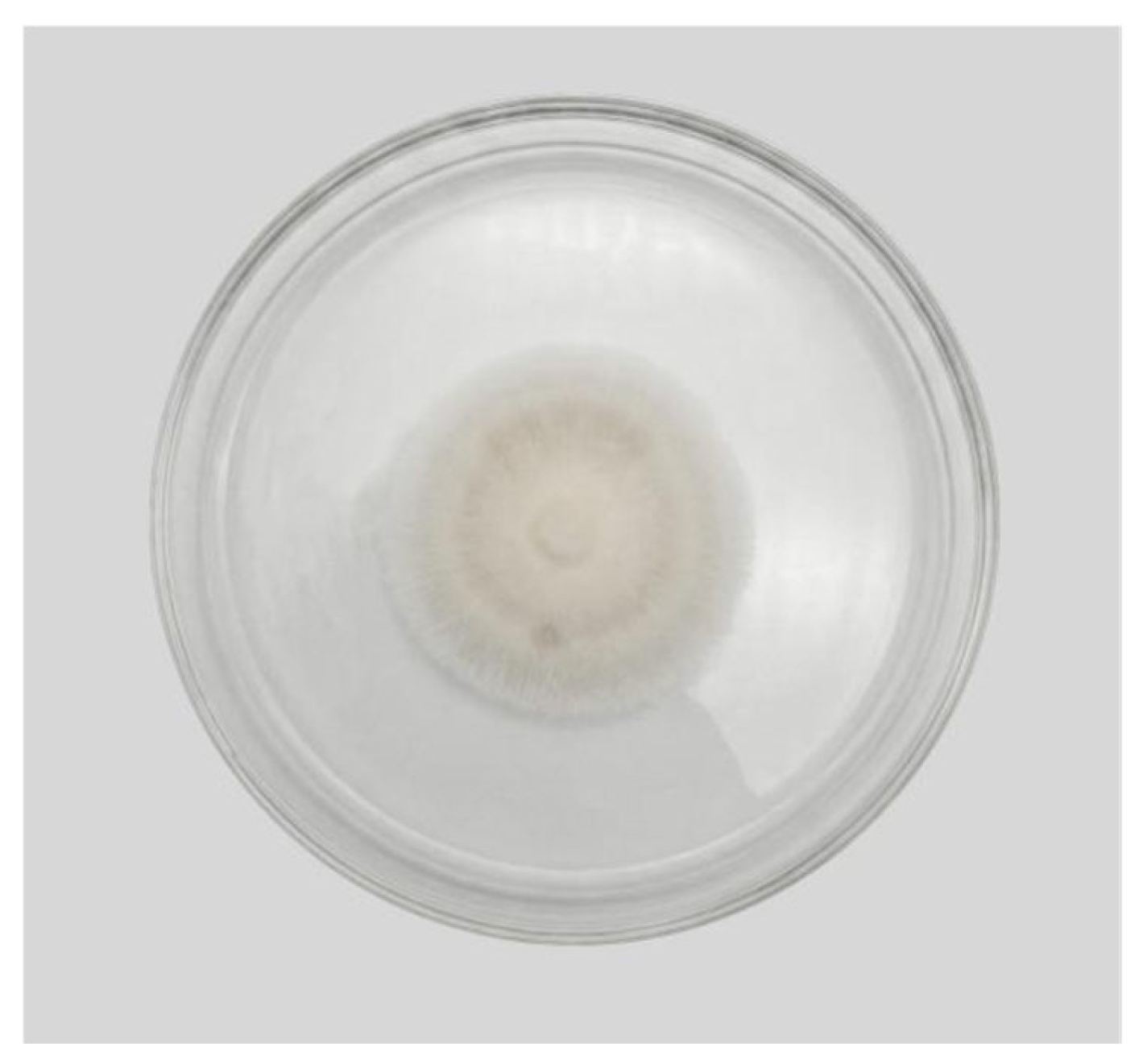
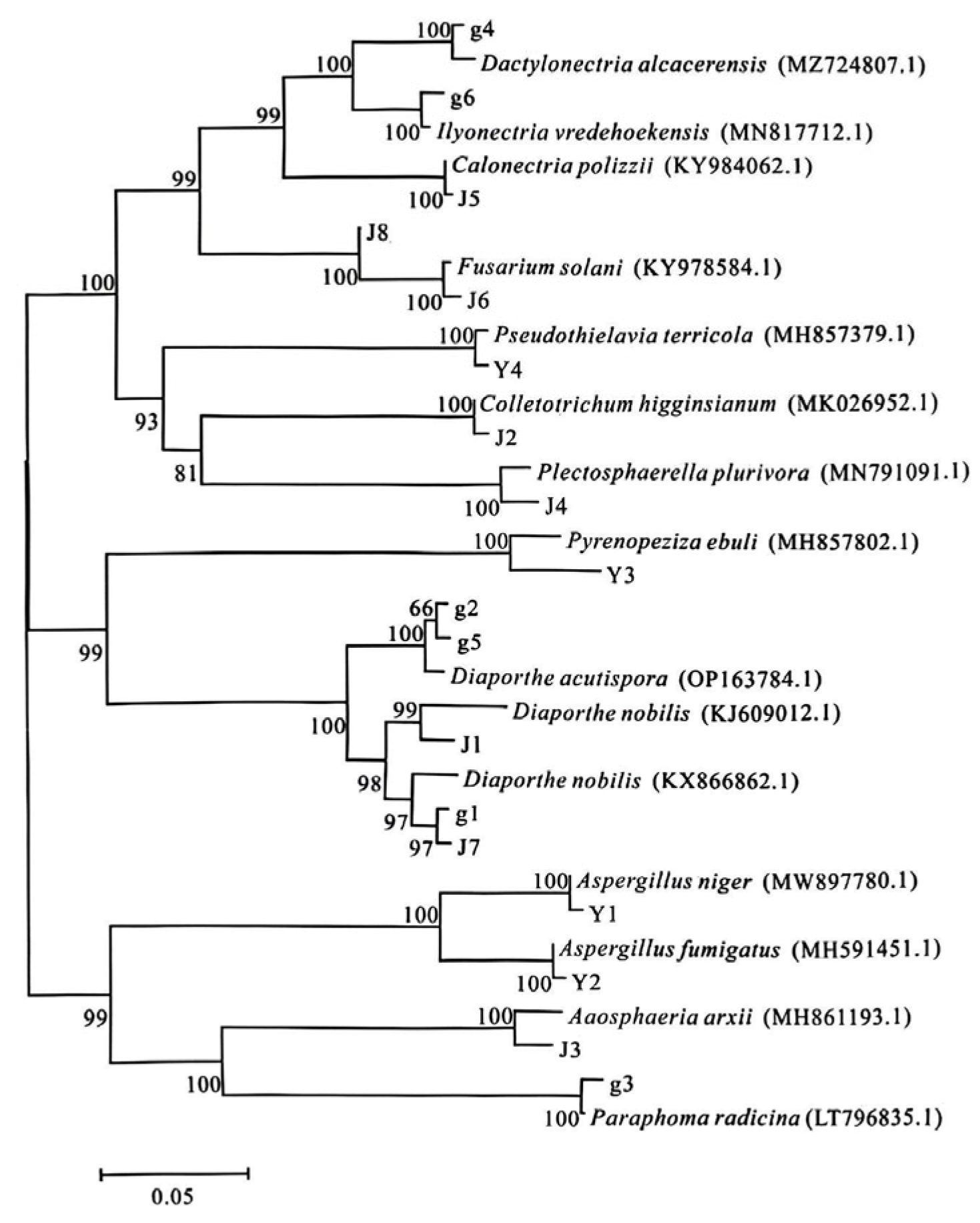
A total of 18 endophytic fungi strains were isolated from three plant parts of C. asiatica: stems (8 strains), roots (6 strains), and leaves (4 strains). Phylogenetic analysis indicates that the isolated fungi belong to 12 genera (Table A2). After culturing on PDA medium for 2 weeks, the strain formed adherent colonies (Figure 1). The medium formulation used is provided in Appendix A Table A4. Based on morphological characteristics and molecular identification results, the fungus J4 was identified as Plectosphaerella plurivora (Figure A1).

3.2. Growth-Promoting Properties of Endophytic Fungi from Centella asiatica

Preliminary screening for IAA production among the 18 endophytic fungi showed that 5 strains were capable of synthesizing IAA, among which strain J4 had the highest concentration (17.157 mg·L−1), which was significantly higher thanthat of the other four strains. When the nitrogen-fixing ability of the isolated strains was verified using Ashby’s nitrogen-free medium, 15 out of the 18 strains showed potential nitrogen-fixing capability, including strain J4. The siderophore-producing ability of the 18 endophytic fungal strains was detected using the Chrome Azurol S (CAS) method. Only the J4 strain exhibited siderophore-producing ability. Further quantitative analysis revealed that the relative siderophore content (As/Ar) of the J4 strain was 0.447. Strain J4 was the only one that possessed three capabilities: IAA production, nitrogen fixation, and siderophore production. Considering its growth characteristics, sporulation capacity, and growth-promoting potential, strain J4 was selected as the experimental strain for subsequent research.

3.3. Growth-Promoting Effects of Endophytic Fungi on M. sativa

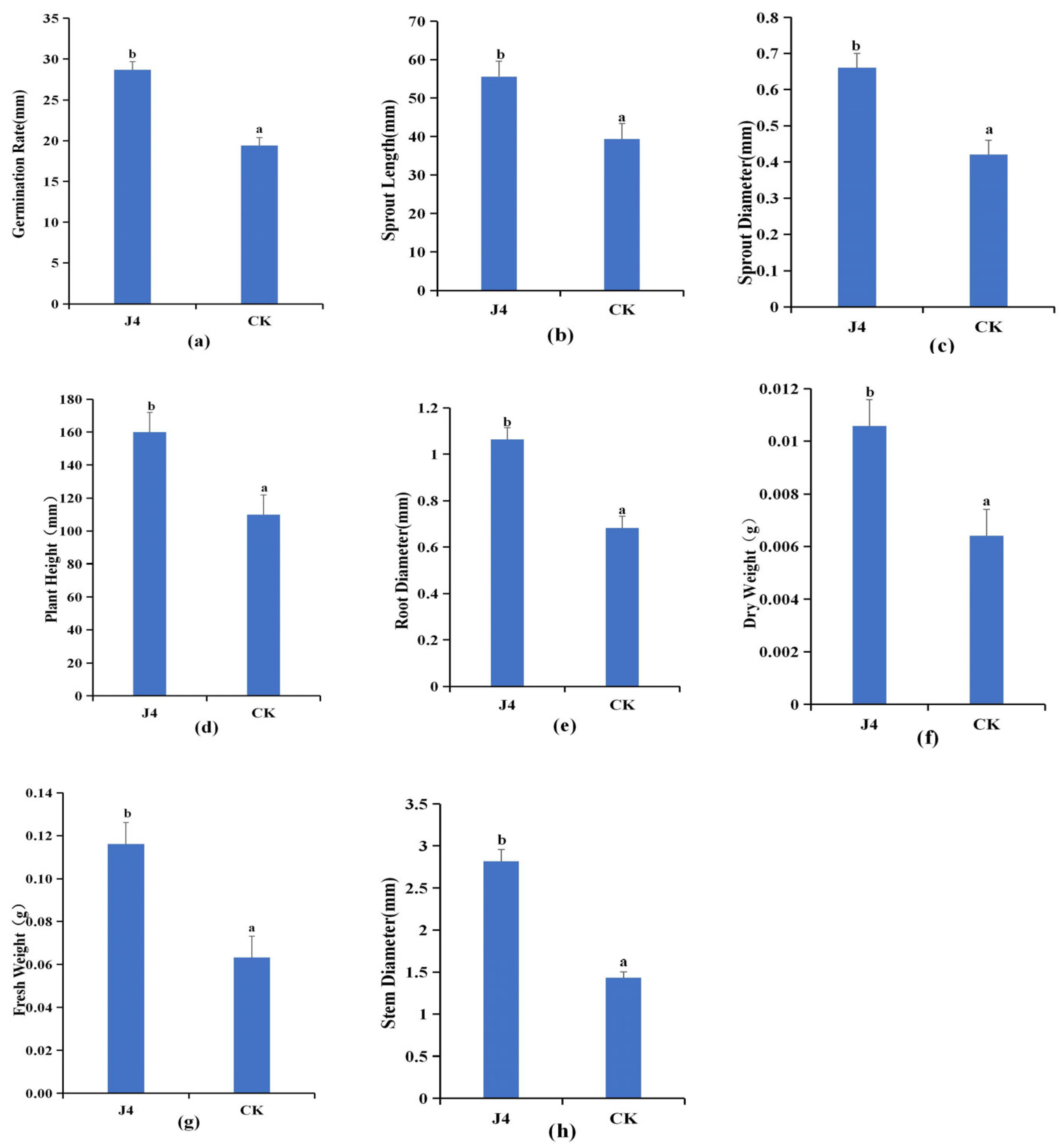
The results showed that M. sativa inoculated with P. plurivora showed overall improved growth indicators when compared to the control group. During the germination stage, post-inoculation germination rate was significantly increased by 31% compared with the CK group (Figure 2a). Compared with the CK group, the mean bud length increased significantly by 16.24 mm (Figure 2b), and the mean bud diameter increased significantly by 0.24 mm compared with the CK group (Figure 2c). During this period, P. plurivora significantly promoted the growth of M. sativa. After 30 days, the physiological parameters of M. sativa showed an upward trend, and the plants showed a significant growth advantage during this period relative to the germination stage. During this period, dry biomass was significantly increased by 95% in the J4 group relative to the CK control group (Figure 2f), while fresh weight was significantly increased by 168% (Figure 2g). The plant height of the treated plants increased from the initial 122.02 mm to 158.14 mm (Figure 2d), the root diameter increased from 0.683 mm to 1.064 mm (Figure 2e), and the stem diameter increased from 1.432 mm to 2.816 mm (Figure 2h). Fungal-inoculated M. sativa exhibited a marked acceleration in growth, accompanied by significant elevations in key growth parameters.

3.4. PCA and OPLS-DA Analysis

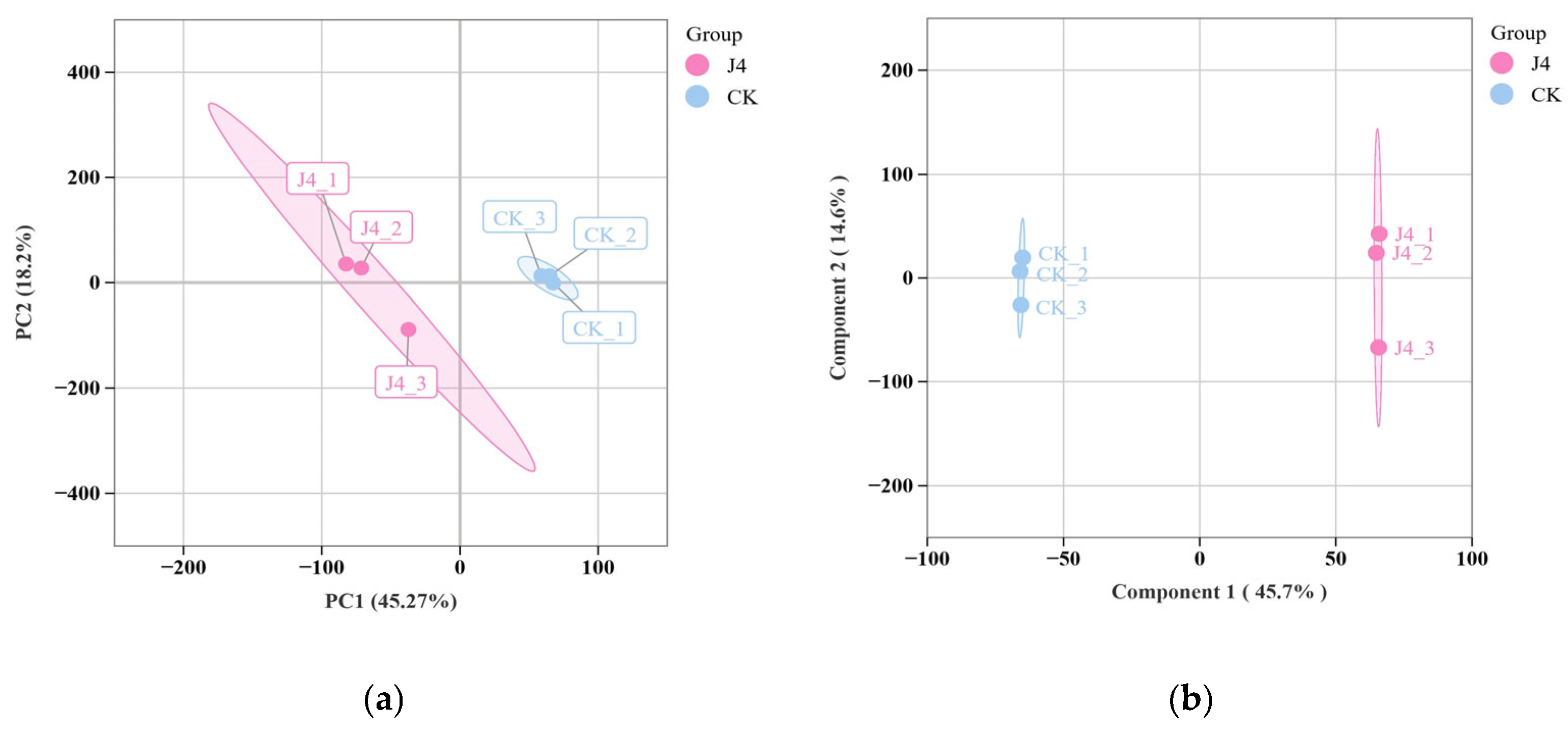
PCA and OPLS-DA analyses showed that PC1 accounted for 45.27% of the variance, with PC2 accounting for 18.2% (Figure 3a). The R2X value was 0.571 (>0.5). This value fell within an acceptable range. The two groups of samples showed a distinct separation trend. To clarify the metabolic variation patterns in M. sativa induced by treatment with J4 fermentation broth. OPLS-DA was applied to integrate compound types and abundances to identify metabolite differences between treatments. Based on the OPLS-DA results (Figure 3b). M. sativa samples treated with J4 fungal fermentation broth were distributed on the right side of the confidence interval. The control samples were distributed on the left side of the confidence interval. A clear distinction was observed between the two sample groups. These results indicate that the samples in this study were informative.

3.5. Differential Metabolite Analysis

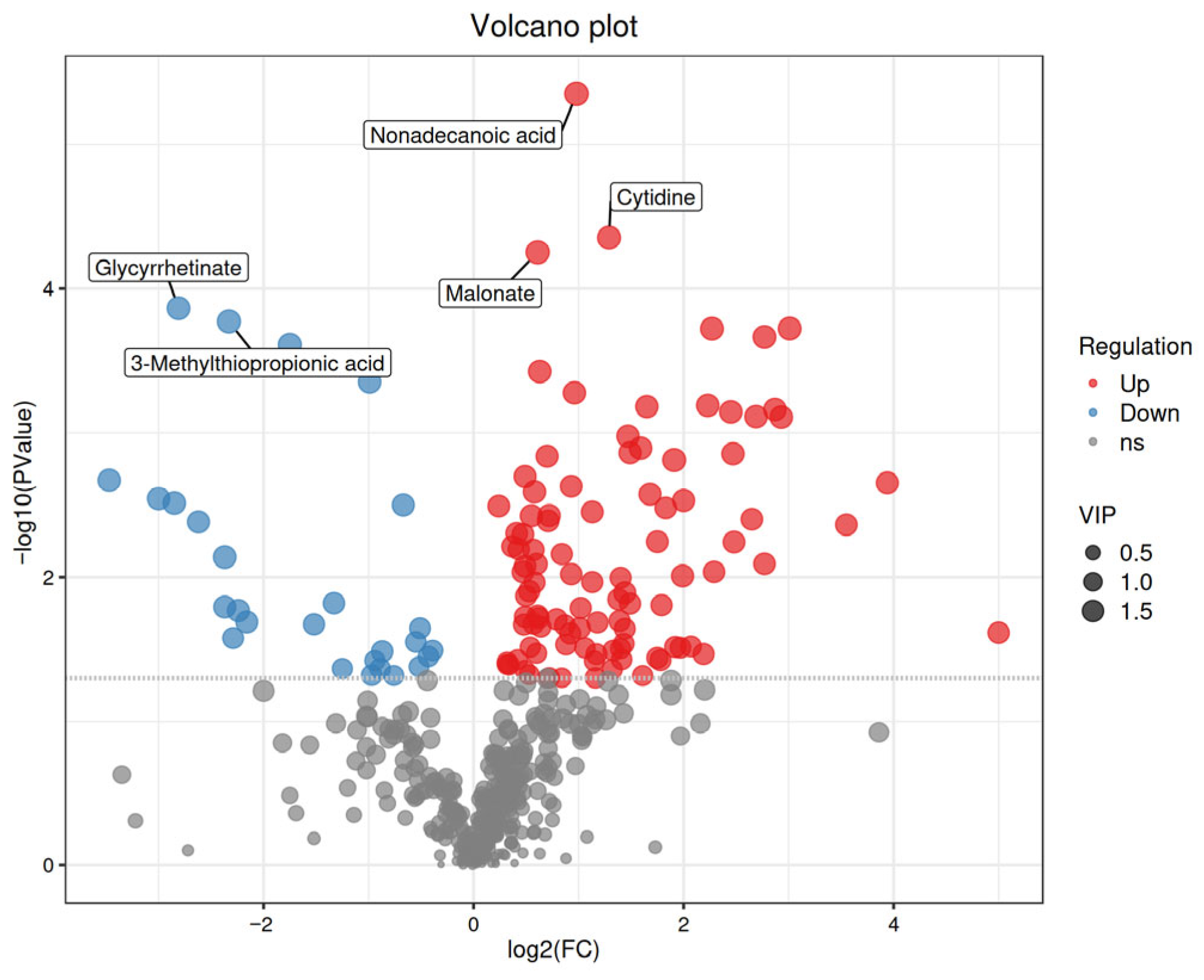
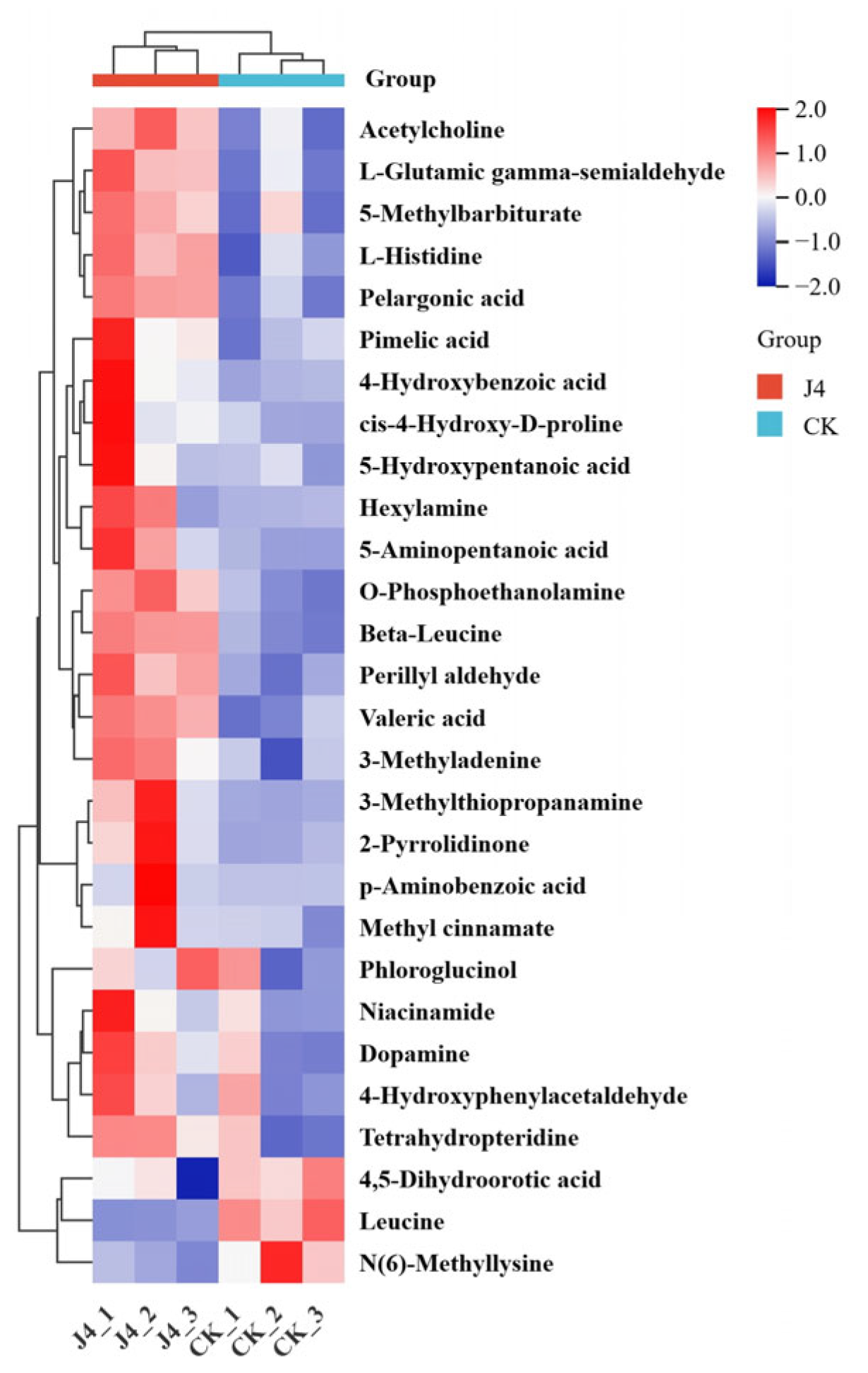
Metabolomic profiling was performed in the present study, and differential metabolites were identified with p < 0.05 and VIP > 1. Results were obtained from the analysis. M. sativa was inoculated with the J4 strain. Compared with the control group, this inoculated M. sativa had 127 secondary differential metabolites. These differential metabolites included 100 upregulated ones and 27 downregulated ones (Figure 4). Differential metabolites were classified into nine categories, including one nucleotide and its derivatives, one phenolic compound, three amino acids and their derivatives, one vitamin and its derivatives, one pyrimidine metabolic intermediate, and one aromatic aldehyde. The greatest difference was observed in p-aminobenzoic acid (Figure 5); significant differences were also noted for Sphingosine, Methyl jasmonate, Protoporphyrin IX, and α-cryptochrome.
Based on a comprehensive analysis of various substances, sphingosine is the core component of the cell membrane. Methyl jasmonate plays a key role in enhancing the biosynthesis of plant secondary metabolites. Protoporphyrin IX is an important phytoporphyrin compound. It mainly participates in the processes of heme and chlorophyll production. α-cryptoxanthin plays a key role in plant photosynthesis, photoprotection, antioxidant defense, and developmental regulation.

3.6. KEGG Pathway Enrichment Analysis

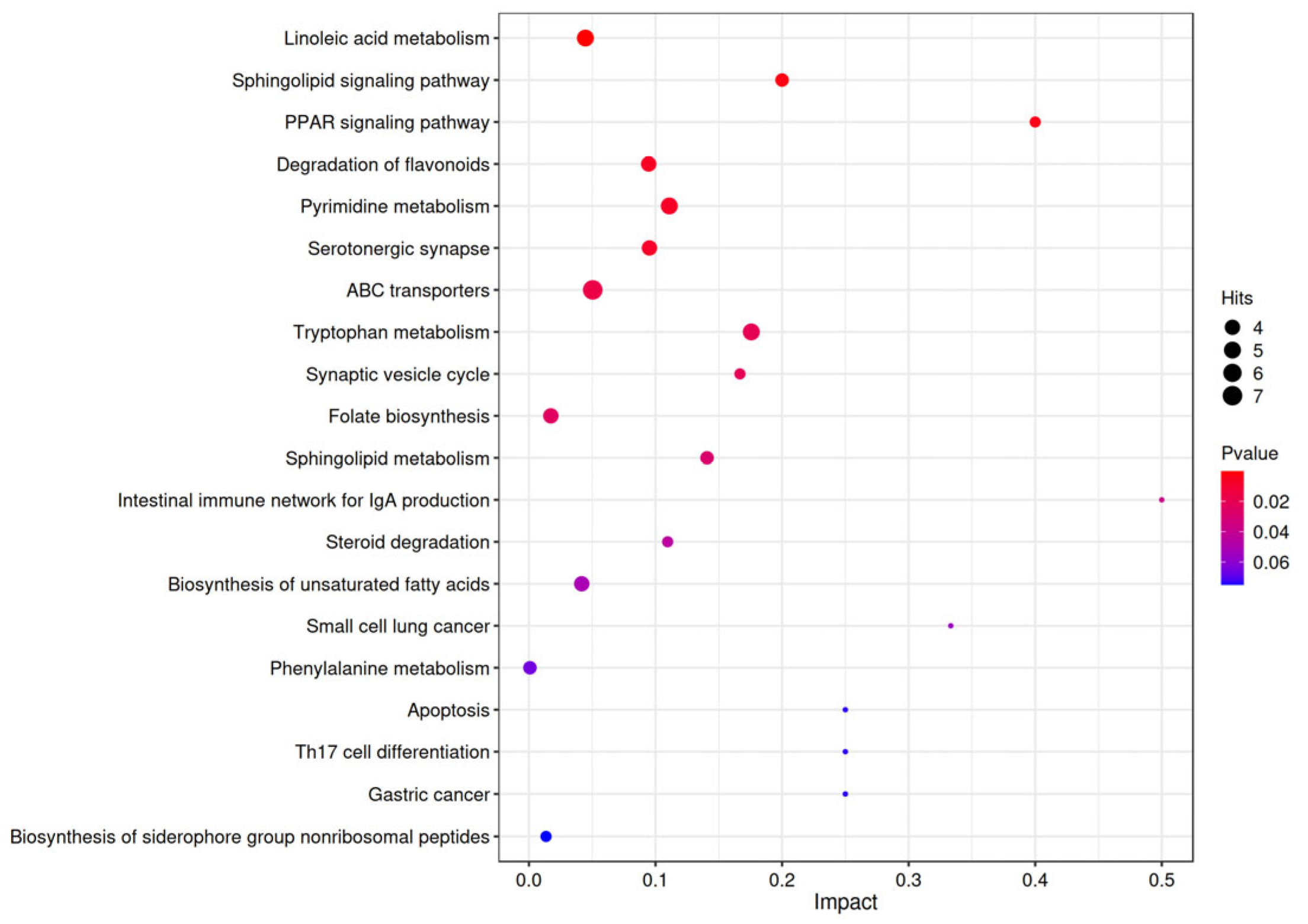
Differential metabolic pathways between the J4 treatment and the control group were screened based on influence values and log(p) values. The analysis identified 130 KEGG metabolic pathways (Figure 6), 13 of which showed significant differences (p < 0.05). It is worth noting the key finding. The Linoleic acid metabolism pathway was the most abundant. Its statistical significance is approaching extreme levels (p < 0.01). This pathway includes five metabolites that are differentially accumulated. Two of them are 13-L-hydroxyperoxylinoleic acid and 13S-hydroxyoctadecadienoic acid. These two compounds serve as representative ones. They participate in the defense mechanism. The second pathway was the Sphingolipid signaling pathway (p < 0.05). This pathway involved three different substances. Two of these substances are sphingosine and O-phosphoethanolamine. These two substances are essential for growth and development [42]. The third was the degradation of flavonoids, which was extremely significantly enriched (p < 0.05) and involved 4 substances, including luteolin and phloroglucinol; the flavonoid metabolic pathway can regulate salt tolerance in M. sativa [43]. The fourth was pyrimidine metabolism, which was significantly enriched (p < 0.05), and involved five differentially expressed compounds, namely 4,5-dihydrouracil acid, malic acid, and malo. The fifth pathway was ABC transporters (p < 0.05), which contained 7 differential substances, including l-histidine, inosine, and cytidine. These substances are crucial for plant development [44].

4. Discussion

This study elucidates the growth-promoting activity of endophytic fungi from C. asiatica on seed germination and seedling growth of M. sativa. Using metabolomics, we conducted an in-depth analysis of metabolic pathway changes in M. sativa plants inoculated with P. plurivora. Metabolomic analysis revealed a key result. Some metabolic pathways are associated with anthocyanins and jasmonic acid. These pathways thereby promote plant growth and development.

4.1. Study on the Growth-Promoting Properties of P. plurivora on M. sativa

The growth-promoting functions of plant endophytic fungi typically depend on their synergistic interactions with host plants, such as synthesizing plant hormones (IAA) and facilitating nutrient cycling (nitrogen fixation, siderophore production) [45,46]. As a key signaling molecule, IAA regulates every facet of plant growth and development. Specifically, IAA can trigger transcriptional activation of cell-cycle-related genes. This transcriptional activation, in turn, promotes cell division and extension. This cascade of physiological effects eventually expanded the contact interface between plant roots and the soil matrix, further improving nutrient uptake [47]. Endophytic fungi exhibit broader host fitness compared to traditional leguminous symbiotic rhizobia, providing plants with a constant nitrogen supply [48]. This study demonstrates that P. plurivora exhibits three growth-promoting characteristics: IAA production, nitrogen fixation, and siderophore production. After inoculation with this strain, the growth indices of M. sativa were significantly improved. It thereby provides a novel approach for M. sativ cultivation to a certain extent.

4.2. Effects of P. plurivora on Plant Metabolites

By analyzing the differential metabolites of M. sativa, the mechanism of increasing germination rate and biomass of M. sativa by polysporium was elucidated. In this study, the fermentation broth of P. plurivora was selected. This selection effectively avoided the uncertainty of strain colonization. It also avoided the risk of false-positive results. It thereby enables better exploration of the growth-promoting effects of its metabolites on M. sativa [49]. Soaking M. sativa in the fermentation broth of P. plurivora increased the levels of five plant growth-promoting compounds in M. sativa. Among them, p-aminobenzoic acid serves as a precursor for folic acid synthesis and participates in the metabolism of purines, pyrimidines, and amino acids. It promotes the synthesis of DNA, RNA, and various proteins and plays a vital role in cell growth, differentiation, repair, and host defense mechanisms [50]. The study of p-aminobenzoic acid revealed its potential to promote rooting and seedling growth in tomato seedlings, as well as its active involvement in plant growth and chlorophyll biosynthesis [51]. Protoporphyrin IX is a key precursor in the synthesis of chlorophyll and heme. Magnesium chelatase (Mg-chelatase) catalyzed this compound. It then formed Mg-protoporphyrin IX. Mg-protoporphyrin IX subsequently synthesizes chlorophyll [52]. Methyl jasmonate has been widely reported to play a central role in plant growth and development, stress responses, and defense reactions [53,54]. In addition, α-Cryptoxanthin is an oxygenated carotenoid widely distributed in plants, algae, and other organisms [55]. Its upregulation may enhance the photosynthetic efficiency and stress resistance of M. sativa.

4.3. Effects of P. plurivora on Plant-Associated Metabolic Pathways

Among the 13 metabolic pathways identified in M. sativa, five were closely associated with promoting plant growth. These five pathways included Linoleic acid metabolism, Sphingolipid signaling pathway, Flavonoid degradation, and Pyrimidine metabolism. The linoleic acid metabolic pathway is closely linked to multiple facets of plant growth and development. Jasmonates (JAs) are a class of vital phytohormones. They represent the ultimate metabolic derivatives of linoleic acid. Their immediate precursor is 12-oxo-phytodienoic acid (OPDA). OPDA is biosynthesized exclusively via the lipoxygenase (LOX)-mediated pathway [56]. As confirmed in Arabidopsis. Exogenous or endogenous jasmonates can inhibit primary root elongation. They can also stimulate the initiation and proliferation of the lateral root system [57]. The sphingolipid signaling pathway is crucial for plant adaptation to stress and regulation of plant immunity [58]. Both Cadophora fastigiata and Paraphoma fimeti promote root development in ryegrass and spring barley [59]. The degradation of flavonoids is a key pathway that affects plant growth and development, as flavonoid compounds are essential regulators of plant defense mechanisms. These mechanisms counteract biotic and abiotic factors [60]. Especially under drought stress, plants can accumulate anthocyanins, thereby reducing water loss by decreasing stomatal transpiration [61]. Pyrimidine metabolism plays a crucial role in plants by enhancing photosynthetic efficiency through the regulation of chloroplast gene expression [62]. Additionally, ABC transporters are among the largest groups of transmembrane proteins in plants and can actively mediate the transport of various molecules. These molecules include organic acids, plant hormones, and secondary metabolites [63,64]. ABC transporters are essential for tomato plant growth and development [65].
In conclusion, P. plurivora was inoculated into M. sativa. The strain exhibited a growth-promoting function in M. sativa. Physiological indicators of M. sativa were increased after inoculation. These changes were related to five specific metabolites. The metabolites are p-aminobenzoic acid, sphingosine, methyl jasmonate, protoporphyrin IX, and α-cryptoxanthin. The changes were also related to five key metabolic pathways. The pathways are linoleic acid metabolism, sphingolipid signaling pathway, flavonoid degradation, pyrimidine metabolism, and ABC transporters. In summary, these differential metabolites and their associated pathways may collectively mediate the growth-promoting effect of P. plurivora on M. sativa by regulating the enzyme activities and signal transduction related to seed germination.

5. Conclusions

This metabolomics study initially reveals a potential metabolic mechanism by which P. plurivora affects M. sativa growth. The results demonstrate that pathways such as flavonoid biosynthesis and pyrimidine metabolism may regulate M. sativa growth by promoting the accumulation of anthocyanins and jasmonic acid. It is not known whether the accumulation of these substances is directly associated with the yield of M. sativa. This study provides a theoretical basis for elucidating the mechanism by which P. plurivora promotes plant growth through metabolic regulation. Also, it offers potential insights for related research on this strain as a growth-promoting fungus for regulating M. sativa growth.

Author Contributions

Conceptualization, M.M., F.Z. and Y.Y. (Yinxin Yang); methodology, M.M. and F.Z.; software, F.Z.; validation, M.M. and F.Z.; formal analysis, M.M.; investigation, Y.M., Q.C., and Y.Y. (Yanbo Yang); resources, Q.C., Y.Y. (Yanbo Yang), and Y.Y. (Yinxin Yang); data curation, M.M., F.Z., and Y.M.; writing—original draft preparation, M.M. and Y.M.; writing—review and editing, M.M., Y.M., Q.C., Y.Y. (Yanbo Yang), Y.Y. (Yinxin Yang), and Z.S.; visualization, Q.C., Y.Y. (Yanbo Yang), and Y.Y. (Yinxin Yang); supervision, Z.S.; project administration, Z.S.; funding acquisition, Z.S. All authors have read and agreed to the published version of the manuscript.

Funding

This research was funded by The Key Research and Development Program of Yunnan Province (202403AP140045; 202403AP140026). The Basic Research and Development Program of Yunnan Province (202501BD070001-019).

Data Availability Statement

The authors will provide the raw data used to support this article’s conclusions upon request.

Conflicts of Interest

The authors declare no conflict of interest.

Appendix A

Table A1. C. asiatica disinfection protocol.
ReagentPartDisinfection Time
75% ethanolroot3 min
stem2 min
leaf1 min
Sterile water flushingroot, stem, leaf3 times
Soak in a 2% sodium hypochlorite (NaClO) solutionroot10 min
stem5 min
leaf3 min
Sterile water flushingroot, stem, leaf5 times
Table A2. Taxonomy of Some Endophytic Fungal Strains in C. asiatica.
FamilyGenusSourceNumber
DiaporthostomataceaeDiaporthestem/root (2)6
AspergillaceaeAspergillusleaf2
ChaetomiaceaePseudothielavialeaf1
Dermateaceaepyrenopezizaleaf1
NectriaceaeCalonectriastem1
Fusariumstem1
Ilyonectriaroot1
Dactylonectriaroot1
GlomerellaceaeColletotrichumstem1
PlectosphaerellaceaePlectosphaerellastem1
Didymellaceaeparaphomaroot1
Aaosphaeriaroot1
Table A3. Growth-promoting traits of isolated endophytic fungal strains.
Strain
Number
IAA Concentration (mg·L−1)Nitrogen
Fixation
Siderophore
Concentration
J16.237 ± 0.03+
J2+
J3+
J417.157 ± 0.03+0.447 ± 0.04
J55.397 ± 0.04+
J6-
J76.21 ± 0.55+
J8+
Y1+
Y2+
Y3
Y4+
G19.321 ± 0.15+
G3+
G4
G6+
Note: The data in the table are the average ± standard error. +: Having growth-promoting property, −: having no growth-promoting property.
Table A4. Formulation for Endogenous Fungal Culture Medium.
Culture Medium NameIngredients and DosagePH
PDAglucose 20 g, potato 200 g, agar 20 g, purified water to a final volume of 1 LNature
PDBglucose 20 g, potato 200 g, purified water to a final volume of 1 LNature
Nitrogen-Free ASBE Mediummannitol 10 g, magnesium sulfate 0.2 g, potassium dihydrogen phosphate 0.2 g, calcium sulfate 0.1 g, calcium carbonate 5 g, Sodium chloride 0.2 g, purified water to a total volume of 1 LPH 6.8–7.0
PKOglucose 10 g, ammonium sulfate 0.5 g, sodium chloride 0.3 g, potassium chloride 0.3 g, magnesium sulfate 0.3 g, ferrous sulfate 0.3 g, manganese sulfate 0.3 g, tricalcium phosphate 5 g, purified water 1 LPH 7.0–7.5
Iron-free Czapek mediumsodium nitrate 2 g, dipotassium hydrogen phosphate 1 g, potassium chloride 0.5 g, magnesium sulfate 0.5 g, sucrose 30 g, purified water 1 LNature
Alexandrov mediumsucrose 10 g, magnesium sulfate 0.5 g, calcium carbonate 1 g, ammonium sulfate 1 g, sodium chloride 0.1 g, yeast extract 0.5 g, disodium hydrogen phosphate 2 g, potassium feldspar 10 gPH 7.2–7.4
Figure A1. Phylogenetic tree of evolution. Numbers at the nodes indicate bootstrap values (1000 replicates). The scale bar (0.05) represents the number of nucleotide substitutions per site.
Agronomy 16 00558 g0a1

References

  1. Guo, K.; Zhao, Y.; Liu, Y.; Chen, J.; Wu, Q.; Ruan, Y.; Li, S.; Shi, J.; Zhao, L.; Sun, X.; et al. Pyrolysis Temperature of Biochar Affects Ecoenzymatic Stoichiometry and Microbial Nutrient-Use Efficiency in a Bamboo Forest Soil. Geoderma 2020, 363, 114162. [Google Scholar] [CrossRef]
  2. Țopa, D.-C.; Căpșună, S.; Calistru, A.-E.; Ailincăi, C. Sustainable Practices for Enhancing Soil Health and Crop Quality in Modern Agriculture: A Review. Agriculture 2025, 15, 998. [Google Scholar] [CrossRef]
  3. Wang, H.; Zhong, L.; Liu, J.; Liu, X.; Xue, W.; Liu, X.; Yang, H.; Shen, Y.; Li, J.; Sun, Z. Systematic Analysis of the Effects of Different Green Manure Crop Rotations on Soil Nutrient Dynamics and Bacterial Community Structure in the Taihu Lake Region, Jiangsu. Agriculture 2024, 14, 1017. [Google Scholar] [CrossRef]
  4. Ali, A.; Liu, X.; Yang, W.; Li, W.; Chen, J.; Qiao, Y.; Gao, Z.; Yang, Z. Impact of Bio-Organic Fertilizer Incorporation on Soil Nutrients, Enzymatic Activity, and Microbial Community in Wheat–Maize Rotation System. Agronomy 2024, 14, 1942. [Google Scholar] [CrossRef]
  5. Anand, U.; Pal, T.; Yadav, N.; Singh, V.K.; Tripathi, V.; Choudhary, K.K.; Shukla, A.K.; Sunita, K.; Kumar, A.; Bontempi, E.; et al. Current Scenario and Future Prospects of Endophytic Microbes: Promising Candidates for Abiotic and Biotic Stress Management for Agricultural and Environmental Sustainability. Microb. Ecol. 2023, 86, 1455–1486. [Google Scholar] [CrossRef]
  6. Baron, N.C.; Rigobelo, E.C. Endophytic Fungi: A Tool for Plant Growth Promotion and Sustainable Agriculture. Mycology 2022, 13, 39–55. [Google Scholar] [CrossRef]
  7. Gao, Y.; Xu, Y.; Dong, Z.; Guo, Y.; Luo, J.; Wang, F.; Yan, L.; Zou, X. Endophytic Fungal Diversity and Its Interaction Mechanism with Medicinal Plants. Molecules 2025, 30, 1028. [Google Scholar] [CrossRef]
  8. Long, H.H.; Schmidt, D.D.; Baldwin, I.T. Native Bacterial Endophytes Promote Host Growth in a Species-Specific Manner; Phytohormone Manipulations Do Not Result in Common Growth Responses. PLoS ONE 2008, 3, e2702. [Google Scholar] [CrossRef]
  9. Goswami, S.K.; Kashyap, A.S.; Kumar, R.; Gujjar, R.S.; Singh, A.; Manzar, N. Harnessing Rhizospheric Microbes for Eco-Friendly and Sustainable Crop Production in Saline Environments. Curr. Microbiol. 2023, 81, 14. [Google Scholar] [CrossRef]
  10. Slama, H.B.; Chenari Bouket, A.; Alenezi, F.N.; Pourhassan, Z.; Golińska, P.; Oszako, T.; Belbahri, L. Potentials of Endophytic Fungi in the Biosynthesis of Versatile Secondary Metabolites and Enzymes. Forests 2021, 12, 1784. [Google Scholar] [CrossRef]
  11. Sun, X.; Wang, N.; Li, P.; Jiang, Z.; Liu, X.; Wang, M.; Su, Z.; Zhang, C.; Lin, F.; Liang, Y. Endophytic Fungus Falciphora oryzae Promotes Lateral Root Growth by Producing Indole Derivatives after Sensing Plant Signals. Plant Cell Environ. 2020, 43, 358–373. [Google Scholar] [CrossRef] [PubMed]
  12. Feng, X.; Jin, Y.; Zhong, Z.; Zheng, Y.; Wu, H. Growth-Promoting Effects of Dark Septate Endophytes Fungus Acrocalymma on Tomato (Solanum lycopersicum). J. Fungi 2025, 11, 510. [Google Scholar] [CrossRef] [PubMed]
  13. Xie, X.-G.; Zhang, Z.-Z.; Chen, L.; Ming, Q.-L.; Sheng, K.-X.; Chen, X.; Rahman, K.; Feng, K.-M.; Su, J.; Han, T. An Endophytic Fungus Schizophyllum commune Isolated from Panax ginseng Enhances Hairy Roots Growth and Ginsenoside Biosynthesis. Can. J. Microbiol. 2023, 69, 296–308. [Google Scholar] [CrossRef] [PubMed]
  14. Feng, D.-H.; Cui, J.-L. The Effect of Endophytic Fungus CA3-A with Biotransformation or Catalysis Activity on the Metabolite Formation of Traditional Chinese Medicinal Astragalus membranaceus Var. Mongholicus (Bunge) P. K. Hsiao. Plant Foods Hum. Nutr. 2025, 80, 69. [Google Scholar] [CrossRef]
  15. Sun, B.; Wu, L.; Wu, Y.; Zhang, C.; Qin, L.; Hayashi, M.; Kudo, M.; Gao, M.; Liu, T. Therapeutic Potential of Centella asiatica and Its Triterpenes: A Review. Front. Pharmacol. 2020, 11, 568032. [Google Scholar] [CrossRef]
  16. Razali, N.N.M.; Ng, C.T.; Fong, L.Y. Cardiovascular Protective Effects of Centella asiatica and Its Triterpenes: A Review. Planta Med. 2019, 85, 1203–1215. [Google Scholar] [CrossRef]
  17. Torbati, F.A.; Ramezani, M.; Dehghan, R.; Amiri, M.S.; Moghadam, A.T.; Shakour, N.; Elyasi, S.; Sahebkar, A.; Emami, S.A. Ethnobotany, Phytochemistry and Pharmacological Features of Centella asiatica: A Comprehensive Review. Adv. Exp. Med. Biol. 2021, 1308, 451–499. [Google Scholar] [CrossRef]
  18. Jo, H.; Lim, K.; Ibal, J.C.; Kim, M.-C.; Kim, H.-B.; Baek, C.; Heo, Y.M.; Lee, H.; Kang, S.; Lee, D.-G.; et al. Growth Increase in the Herbaceous Plant Centella asiatica by the Plant Growth-Promoting Rhizobacteria Priestia megaterium HyangYak-01. Plants 2023, 12, 2398. [Google Scholar] [CrossRef]
  19. Song, W.-L.; Chen, B.-Z.; Feng, L.; Chen, G.; He, S.-M.; Hao, B.; Zhang, G.-H.; Dong, Y.; Yang, S.-C. Telomere-to-Telomere Genome Assembly and 3D Chromatin Architecture of Centella asiatica Insight into Evolution and Genetic Basis of Triterpenoid Saponin Biosynthesis. Hortic. Res. 2025, 12, uhaf037. [Google Scholar] [CrossRef]
  20. Kim, O.T.; Um, Y.; Jin, M.L.; Kim, J.U.; Hegebarth, D.; Busta, L.; Racovita, R.C.; Jetter, R. A Novel Multifunctional C-23 Oxidase, CYP714E19, Is Involved in Asiaticoside Biosynthesis. Plant Cell Physiol. 2018, 59, 1200–1213. [Google Scholar] [CrossRef]
  21. Alcalde, M.A.; Cusido, R.M.; Moyano, E.; Palazon, J.; Bonfill, M. Metabolic Gene Expression and Centelloside Production in Elicited Centella asiatica Hairy Root Cultures. Ind. Crops Prod. 2022, 184, 114988. [Google Scholar] [CrossRef]
  22. Zhang, Y.; Wang, L. Advances in Basic Biology of Alfalfa (Medicago sativa L.): A Comprehensive Overview. Hortic. Res. 2025, 12, uhaf081. [Google Scholar] [CrossRef] [PubMed]
  23. Stochmal, A.; Piacente, S.; Pizza, C.; De Riccardis, F.; Leitz, R.; Oleszek, W. Alfalfa (Medicago sativa L.) Flavonoids. 1. Apigenin and Luteolin Glycosides from Aerial Parts. J. Agric. Food Chem. 2001, 49, 753–758. [Google Scholar] [CrossRef] [PubMed]
  24. Li, Z.; Wang, Y.; Liu, J.; Chen, D.; Feng, G.; Chen, M.; Feng, Y.; Zhang, R.; Yan, X. The Potential Role of Alfalfa Polysaccharides and Their Sulphated Derivatives in the Alleviation of Obesity. Food Funct. 2023, 14, 7586–7602. [Google Scholar] [CrossRef]
  25. Xu, H.; Tong, Z.; He, F.; Li, X. Response of Alfalfa (Medicago sativa L.) to Abrupt Chilling as Reflected by Changes in Freezing Tolerance and Soluble Sugars. Agronomy 2020, 10, 255. [Google Scholar] [CrossRef]
  26. Ferchichi, Y.; Rouz, S.; Mhara, Y.B.; Elimem, M.; Aranjuelo, I.; Soba, D. Medicago sativa and M. Tunetana Reveal Contrasting Physiological and Metabolic Responses to Drought. J. Plant Physiol. 2023, 280, 153885. [Google Scholar] [CrossRef]
  27. Wang, Y.; Wang, J.; Guo, D.; Zhang, H.; Che, Y.; Li, Y.; Tian, B.; Wang, Z.; Sun, G.; Zhang, H. Physiological and Comparative Transcriptome Analysis of Leaf Response and Physiological Adaption to Saline Alkali Stress across pH Values in Alfalfa (Medicago sativa). Plant Physiol. Biochem. 2021, 167, 140–152. [Google Scholar] [CrossRef]
  28. Zhou, J.; Tang, X.; Li, J.; Dang, S.; Ma, H.; Zhang, Y. Comparative Transcriptomic and Metabolomic Analyses Provide Insights into the Responses to High Temperature Stress in Alfalfa (Medicago sativa L.). BMC Plant Biol. 2024, 24, 776. [Google Scholar] [CrossRef]
  29. Shen, C.; Du, H.; Chen, Z.; Lu, H.; Zhu, F.; Chen, H.; Meng, X.; Liu, Q.; Liu, P.; Zheng, L.; et al. The Chromosome-Level Genome Sequence of the Autotetraploid Alfalfa and Resequencing of Core Germplasms Provide Genomic Resources for Alfalfa Research. Mol. Plant 2020, 13, 1250–1261. [Google Scholar] [CrossRef]
  30. Fan, J.-W.; Chen, M.; Tian, F.; Yao, R.; Turner, N.C.; Yang, L.; Fang, W.-Y.; Abbott, L.; Li, F.-M.; Du, Y.-L. Arbuscular Mycorrhizal Fungi Enhance Alfalfa Production by Changing Root Morphology and Physiology. J. Exp. Bot. 2025, 76, 6987–7002. [Google Scholar] [CrossRef]
  31. Ameen, M.; Mahmood, A.; Sahkoor, A.; Zia, M.A.; Ullah, M.S. The Role of Endophytes to Combat Abiotic Stress in Plants. Plant Stress 2024, 12, 100435. [Google Scholar] [CrossRef]
  32. Bi, Y.; Xue, Z. Dark Septate Endophyte Inoculation Enhances Antioxidant Activity in Astragalus membranaceus Var. Mongholicus under Heat Stress. Physiol. Plant. 2023, 175, e14054. [Google Scholar] [CrossRef]
  33. Rahman, M.A.; Parvin, M.; Das, U.; Ela, E.J.; Lee, S.-H.; Lee, K.-W.; Kabir, A.H. Arbuscular Mycorrhizal Symbiosis Mitigates Iron (Fe)-Deficiency Retardation in Alfalfa (Medicago sativa L.) Through the Enhancement of Fe Accumulation and Sulfur-Assisted Antioxidant Defense. Int. J. Mol. Sci. 2020, 21, 2219. [Google Scholar] [CrossRef] [PubMed]
  34. Wang, Y.; Li, Y.; Tian, Z.; Duan, T. Arbuscular Mycorrhizal Fungus Alters Alfalfa (Medicago sativa) Defense Enzyme Activities and Volatile Organic Compound Contents in Response to Pea Aphid (Acyrthosiphon pisum) Infestation. J. Fungi 2022, 8, 1308. [Google Scholar] [CrossRef] [PubMed]
  35. Alzahrani, S.; Najjar, A.; Noor, S.; Zabermawi, N.M.; Qattan, S.Y.; Hassoubah, S.A.; Makki, R.M.; El-Zohri, M. Phaseolus vulgaris (L.) Growth Promotion by Cladosporium halotolerans Inoculation Under Salinity Stress. Soil. Syst. 2024, 8, 135. [Google Scholar] [CrossRef]
  36. Ünlü, E.; Yilmaz, S.; Yetişir, H.; Karim, A.A.; Gün, B.; Idris, A.B. Characterization of Multi-Trait Plant Growth-Promoting Rhizobacteria Isolated from Alfalfa Rhizosphere and Evaluation of Their Efficacy on Tomato and Watermelon Growth. Discov. Agric. 2024, 2, 117. [Google Scholar] [CrossRef]
  37. Wang, Q.; Zhang, X.; Xie, Q.; Tao, J.; Jia, Y.; Xiao, Y.; Tang, Z.; Li, Q.; Yuan, M.; Bu, T. Exploring Plant Growth-Promoting Traits of Endophytic Fungi Isolated from Ligusticum chuanxiong Hort and Their Interaction in Plant Growth and Development. J. Fungi 2024, 10, 713. [Google Scholar] [CrossRef]
  38. Tian, M.; Zhang, C.; Zhang, Z.; Jiang, T.; Hu, X.; Qiu, H.; Li, Z. Aspergillus niger Fermentation Broth Promotes Maize Germination and Alleviates Low Phosphorus Stress. Microorganisms 2023, 11, 1737. [Google Scholar] [CrossRef]
  39. Vasilev, N.; Boccard, J.; Lang, G.; Grömping, U.; Fischer, R.; Goepfert, S.; Rudaz, S.; Schillberg, S. Structured Plant Metabolomics for the Simultaneous Exploration of Multiple Factors. Sci. Rep. 2016, 6, 37390. [Google Scholar] [CrossRef]
  40. Zelena, E.; Dunn, W.B.; Broadhurst, D.; Francis-McIntyre, S.; Carroll, K.M.; Begley, P.; O’Hagan, S.; Knowles, J.D.; Halsall, A.; HUSERMET Consortium; et al. Development of a Robust and Repeatable UPLC-MS Method for the Long-Term Metabolomic Study of Human Serum. Anal. Chem. 2009, 81, 1357–1364. [Google Scholar] [CrossRef]
  41. Want, E.J.; Masson, P.; Michopoulos, F.; Wilson, I.D.; Theodoridis, G.; Plumb, R.S.; Shockcor, J.; Loftus, N.; Holmes, E.; Nicholson, J.K. Global Metabolic Profiling of Animal and Human Tissues via UPLC-MS. Nat. Protoc. 2013, 8, 17–32. [Google Scholar] [CrossRef] [PubMed]
  42. Yang, B.; Peng, Y.; Zhang, G.; Liu, R.; Hao, S.; Ren, Y.; Lu, S.; Wang, X.; Guo, L. Regulation of Glucosylceramide Synthase and Sphingolipid Remodeling in the Plant Response to Phosphate Deficiency. Plant Cell 2025, 37, koaf138. [Google Scholar] [CrossRef] [PubMed]
  43. Su, L.; Lv, A.; Wen, W.; Fan, N.; You, X.; Gao, L.; Zhou, P.; Shi, F.; An, Y. MsMYB206–MsMYB450–MsHY5 Complex Regulates Alfalfa Tolerance to Salt Stress via Regulating Flavonoid Biosynthesis during the Day and Night Cycles. Plant J. 2025, 121, e17216. [Google Scholar] [CrossRef] [PubMed]
  44. Do, T.H.T.; Martinoia, E.; Lee, Y. Functions of ABC Transporters in Plant Growth and Development. Curr. Opin. Plant Biol. 2018, 41, 32–38. [Google Scholar] [CrossRef]
  45. Lu, H.; Wei, T.; Lou, H.; Shu, X.; Chen, Q. A Critical Review on Communication Mechanism within Plant-Endophytic Fungi Interactions to Cope with Biotic and Abiotic Stresses. J. Fungi 2021, 7, 719. [Google Scholar] [CrossRef]
  46. Gowtham, H.G.; Hema, P.; Murali, M.; Shilpa, N.; Nataraj, K.; Basavaraj, G.L.; Singh, S.B.; Aiyaz, M.; Udayashankar, A.C.; Amruthesh, K.N. Fungal Endophytes as Mitigators against Biotic and Abiotic Stresses in Crop Plants. J. Fungi 2024, 10, 116. [Google Scholar] [CrossRef]
  47. Sanadhya, S.; Jain, D.; Saheewala, H.; Sharma, D.; Chauhan, P.K.; Singh, G.; Upadhyay, S.K.; Mohanty, S.R. Efficacy of Molecularly Diversified Phosphorus-Solubilizing Rhizobacterial Isolates in Phytostimulation, Antimicrobial Attributes and Phosphorus-Transporter Genes Mediated Plant Growth Performance in Maize (Zea mays L.). Plant Physiol. Biochem. 2025, 220, 109521. [Google Scholar] [CrossRef]
  48. Wen, S.; Sun, J.; Zeng, W.; Xiang, H.; Zhao, M.; Xiang, D. Effects of Different Arbuscular Mycorrhizal Fungi on Tobacco Seedling Growth and Their Rhizosphere Microecological Mechanisms. BMC Plant Biol. 2025, 25, 1578. [Google Scholar] [CrossRef]
  49. Li, M.; Liu, X.; Wu, F.; Shi, X.; Kong, D.; Li, X.; Mu, C.; Qu, D.; Wang, L.; Su, H. Fermentation Broth of a Novel Endophytic Fungus Enhanced Maize Salt Tolerance by Regulating Sugar Metabolism and Phytohormone Biosynthesis or Signaling. Plant Physiol. Biochem. 2024, 216, 109125. [Google Scholar] [CrossRef]
  50. Basset, G.J.C.; Ravanel, S.; Quinlivan, E.P.; White, R.; Giovannoni, J.J.; Rébeillé, F.; Nichols, B.P.; Shinozaki, K.; Seki, M.; Gregory, J.F., III; et al. Folate Synthesis in Plants: The Last Step of the p-Aminobenzoate Branch Is Catalyzed by a Plastidial Aminodeoxychorismate Lyase. Plant J. 2004, 40, 453–461. [Google Scholar] [CrossRef]
  51. Sumalan, R.-L.; Croitor, L.; Petric, M.; Radulov, I.; Bourosh, P.; Sumalan, R.-M.; Crisan, M. P-Aminobenzoate Organic Salts as Potential Plant Growth Regulators for Tomatoes. Molecules 2020, 25, 1635. [Google Scholar] [CrossRef]
  52. Castelfranco, P.A.; Walker, C.J.; Weinstein, J.D. Biosynthetic Studies on Chlorophylls: From Protoporphyrin IX to Protochlorophyllide. Ciba Found. Symp. 1994, 180, 194–204; discussion 205–209. [Google Scholar] [CrossRef]
  53. Kianersi, F.; Amin Azarm, D.; Fatemi, F.; Pour-Aboughadareh, A.; Poczai, P. Methyl Jasmonate Induces Genes Involved in Linalool Accumulation and Increases the Content of Phenolics in Two Iranian Coriander (Coriandrum sativum L.) Ecotypes. Genes 2022, 13, 1717. [Google Scholar] [CrossRef] [PubMed]
  54. Nazir, F.; Jahan, B.; Iqbal, N.; Rajurkar, A.B.; Siddiqui, M.H.; Khan, M.I.R. Methyl Jasmonate Influences Ethylene Formation, Defense Systems, Nutrient Homeostasis and Carbohydrate Metabolism to Alleviate Arsenic-Induced Stress in Rice (Oryza sativa). Plant Physiol. Biochem. 2023, 202, 107990. [Google Scholar] [CrossRef] [PubMed]
  55. Wang, Y.; Zhang, C.; Xu, B.; Fu, J.; Du, Y.; Fang, Q.; Dong, B.; Zhao, H. Temperature Regulation of Carotenoid Accumulation in the Petals of Sweet Osmanthus via Modulating Expression of Carotenoid Biosynthesis and Degradation Genes. BMC Genom. 2022, 23, 418. [Google Scholar] [CrossRef] [PubMed]
  56. Scala, A.; Allmann, S.; Mirabella, R.; Haring, M.A.; Schuurink, R.C. Green Leaf Volatiles: A Plant’s Multifunctional Weapon against Herbivores and Pathogens. Int. J. Mol. Sci. 2013, 14, 17781–17811. [Google Scholar] [CrossRef]
  57. Pullagurla, N.J.; Shome, S.; Yadav, R.; Laha, D. ITPK1 Regulates Jasmonate-Controlled Root Development in Arabidopsis Thaliana. Biomolecules 2023, 13, 1368. [Google Scholar] [CrossRef]
  58. Zeng, H.-Y.; Yao, N. Sphingolipids in Plant Immunity. Phytopathol. Res. 2022, 4, 20. [Google Scholar] [CrossRef]
  59. Pašakinskienė, I.; Stakelienė, V.; Matijošiūtė, S.; Martūnas, J.; Rimkevičius, M.; Būdienė, J.; Aučina, A.; Skridaila, A. Growth-Promoting Effects of Grass Root-Derived Fungi Cadophora Fastigiata, Paraphoma Fimeti and Plectosphaerella Cucumerina on Spring Barley (Hordeum vulgare) and Italian Ryegrass (Lolium multiflorum). Microorganisms 2025, 13, 25. [Google Scholar] [CrossRef]
  60. Wang, L.; Chen, M.; Lam, P.-Y.; Dini-Andreote, F.; Dai, L.; Wei, Z. Multifaceted Roles of Flavonoids Mediating Plant-Microbe Interactions. Microbiome 2022, 10, 233. [Google Scholar] [CrossRef]
  61. Lv, Z.; Zhang, C.; Shao, C.; Liu, B.; Liu, E.; Yuan, D.; Zhou, Y.; Shen, C. Research Progress on the Response of Tea Catechins to Drought Stress. J. Sci. Food Agric. 2021, 101, 5305–5313. [Google Scholar] [CrossRef]
  62. Adamiec, M.; Luciński, R. The Roles of RNA Modifications in Regulating Chloroplast Performance and Photosynthesis Efficiency. Int. J. Mol. Sci. 2024, 25, 11912. [Google Scholar] [CrossRef]
  63. Hwang, J.-U.; Song, W.-Y.; Hong, D.; Ko, D.; Yamaoka, Y.; Jang, S.; Yim, S.; Lee, E.; Khare, D.; Kim, K.; et al. Plant ABC Transporters Enable Many Unique Aspects of a Terrestrial Plant’s Lifestyle. Mol. Plant 2016, 9, 338–355. [Google Scholar] [CrossRef]
  64. Borghi, L.; Kang, J.; Ko, D.; Lee, Y.; Martinoia, E. The Role of ABCG-Type ABC Transporters in Phytohormone Transport. Biochem. Soc. Trans. 2015, 43, 924–930. [Google Scholar] [CrossRef]
  65. Ofori, P.A.; Mizuno, A.; Suzuki, M.; Martinoia, E.; Reuscher, S.; Aoki, K.; Shibata, D.; Otagaki, S.; Matsumoto, S.; Shiratake, K. Genome-Wide Analysis of ATP Binding Cassette (ABC) Transporters in Tomato. PLoS ONE 2018, 13, e0200854. [Google Scholar] [CrossRef]
Figure 1. Mycelial diagram of Plectosphaerella plurivora. The strain was cultured on PDA medium for 5 days after inoculation.
Agronomy 16 00558 g001
Figure 2. Physiological index parameters of M. sativa after inoculation with P. plurivora. (ac): Germination experiment growth parameters of M. sativa. (a) Average germination rate. (b) Average sprout length. (c) Average sprout thickness. (dh): Potted experiment growth indices of M. sativa. (d) Plant height. (e) Root diameter. (f) Plant dry weight. (g) Plant fresh weight. (h) Stem thickness. Significance level designation. Significance level notation: with the identical letter a, while significant differences relative to the mean value are labeled with the subsequent letter b. CK: control group, J4: P. plurivora inoculated treatment group.
Agronomy 16 00558 g002
Figure 3. Principal component analysis (PCA) and Orthogonal partial least squares-discriminant analysis (OPLS-DA) analysis in different plant tissues of M. sativa. (a) PCA score plot: the X-axis indicates the first principal component score, and the Y-axis indicates the second principal component score. Dots indicate samples, circles indicate 95% confidence intervals, and colors indicate different subgroups. (b): OPLS-DA score plot: the X-axis indicates the score of the first principal component, and the Y-axis indicates the first orthogonal component score value. Dots indicate experimental samples, and colors indicate different subgroups. The horizontal coordinate shows differences between groups, and the vertical coordinate shows differences within groups. The more closely aggregated samples are within clusters and the more distinctly separated they are between clusters, the more credible the analytical results become. CK: control group, J4: P. plurivora inoculated treatment group.
Agronomy 16 00558 g003
Figure 4. Volcano plot of differentially accumulated metabolites between comparison groups. The X-axis corresponds to the Log2 fold change in metabolite quantification values between the two samples, and the Y-axis represents the −log10 of the p value. Each data point in the plot corresponds to a single metabolite. The size of the dots represented the VIP value; red dots indicate differentially upregulated metabolites, blue dots indicate differentially downregulated metabolites, and gray dots indicate metabolites that fail to meet differential screening thresholds.
Agronomy 16 00558 g004
Figure 5. Heatmap of differentially accumulated metabolites in M. sativa. The X-axis represents samples, and the Y-axis represents metabolites, with hierarchical cluster trees of differentially expressed metabolites shown on the left and sample cluster trees on the top. The color gradient reflects the magnitude of metabolite quantification values, with red indicating higher expression and blue lower expression. CK: control group, J4: P. plurivora inoculated treatment group.
Agronomy 16 00558 g005
Figure 6. KEGG enrichment analysis of differentially accumulated metabolites in M. sativa tissues. The X-axis shows enrichment impact values for various metabolic pathways, and the Y-axis shows the pathways with significant enrichment factor. Dot size reflects the number of corresponding metabolites in each metabolic pathway. Color correlates with p values: darker red tones correspond to lower p values, while darker blue tones indicate higher p values.
Agronomy 16 00558 g006
Disclaimer/Publisher’s Note: The statements, opinions and data contained in all publications are solely those of the individual author(s) and contributor(s) and not of MDPI and/or the editor(s). MDPI and/or the editor(s) disclaim responsibility for any injury to people or property resulting from any ideas, methods, instructions or products referred to in the content.