Article

Synergistic Interaction of AMF and Phosphorus Enhances Drought Resilience and Regrowth Capability in Agropyron via Root Architecture Remodeling


1
Key Laboratory of Grassland Resources and Ecology of Western Arid Region, Ministry of Education, Xinjiang Agricultural University, Urumqi 830052, China
2
College of Grassland Science, Xinjiang Agricultural University, Urumqi 830052, China
3
Karamay Municipal Bureau of Forestry and Grassland, Karamay 834000, China
*
Author to whom correspondence should be addressed.
Agronomy 2026, 16(5), 557; https://doi.org/10.3390/agronomy16050557
Submission received: 21 January 2026 / Revised: 14 February 2026 / Accepted: 26 February 2026 / Published: 2 March 2026
(This article belongs to the Section Grassland and Pasture Science)

Abstract

Drought and soil nutrient deficiency are critical constraints on plant growth and ecological restoration in desert steppes; however, the interactive mechanisms between arbuscular mycorrhizal fungi (AMF) and phosphorus fertilization remain poorly elucidated. To investigate the regulatory mechanisms governing root system architecture (RSA) remodeling and regrowth capability in Agropyron under drought stress, a controlled experiment was conducted using two genotypes: Inner Mongolia (NM) and Xinjiang (XJ). The experimental design comprised three water regimes (70%, 50%, and 30% field capacity [FC]), two P levels (P0, P1), and two inoculation treatments (A0, A1). The results indicated the following: (1) Although drought significantly inhibited Agropyron growth, the combined application of AMF and P (A1P1) induced a highly significant synergistic effect, augmenting total aboveground biomass by 66.08–160.58% compared to the control. This synergy exhibited distinct “environmental dependency,” being most pronounced under moderate drought conditions (50% FC). (2) Mechanistic analysis revealed that A1P1 optimized RSA by significantly increasing total root length, root surface area, and root volume (e.g., total root length increased by 281.4–375.1% under severe stress), thereby enhancing water and nutrient acquisition. (3) The A1P1 treatment significantly mitigated the decline in regrowth potential induced by successive clipping, sustaining a higher tiller number (increasing by up to 1.8-fold in the 3rd clipping). (4) The XJ genotype was characterized by higher basal biomass and root investment “high-yield phenotype”, whereas the NM genotype demonstrated greater sensitivity to AMF-P regulation “highly responsive phenotype”. In conclusion, the synergistic interaction between AMF and P mitigates drought stress by reshaping RSA and enhancing regrowth capability, providing a theoretical basis for the efficient management of arid grasslands.

1. Introduction

Drought is the primary abiotic factor constraining the productivity and stability of terrestrial ecosystems globally. In arid and semi-arid grassland ecosystems, water deficit not only directly limits plant physiological metabolism by reducing cellular turgor pressure but also significantly impedes root phosphorus interception by disrupting the diffusion pathway of P in the soil solution. Consequently, plants face a severe “water–P dual deficit” [1]. This synergistic stress has become a critical bottleneck restricting the persistence and productivity of perennial forage grasses [2]. Agropyron cristatum, a dominant species and high-quality forage widely distributed across Eurasian arid steppes, plays an irreplaceable role in the ecological restoration of degraded grasslands and the establishment of cultivated pastures. For such perennial grasses, which undergo multiple defoliations (mowing) within a single growing season, strong root foraging ability and efficient P acquisition strategies are decisive factors supporting rapid regrowth and population maintenance in low water potential habitats [3]. However, in the context of intensifying global climate change and frequent extreme drought events, relying solely on the physiological regulation of A. cristatum is often insufficient to overcome the limitation of reduced soil P availability. Therefore, it is imperative to explore enhancement measures based on rhizosphere micro-ecological regulation.
Arbuscular mycorrhizal fungi (AMF), which form mutualistic associations with approximately 80% of terrestrial plants, are regarded as “biological enhancers” for plants coping with abiotic stress. The extensive extraradical hyphal network of AMF can extend beyond the rhizosphere nutrient depletion zone, directly accessing soil micropore water and P inaccessible to root hairs, thereby significantly alleviating host water and nutrient deficits [4]. Nevertheless, the interaction between AMF and exogenous P addition is highly complex and controversial. The classical “functional equilibrium hypothesis” suggests that high P levels inhibit plant carbon allocation to roots, thereby reducing mycorrhizal colonization. Conversely, recent studies indicate that under drought stress, moderate P addition may alleviate plant carbon limitation (i.e., by promoting photosynthesis) and subsequently provide more carbon sources for AMF, creating a functional complementarity that optimizes plant resource acquisition strategies [5]. Whether this “fungal–P” synergistic effect is ubiquitous, and particularly how it changes dynamically under different moisture gradients, remains to be systematically proven in perennial forage systems.
Furthermore, the net benefit of this symbiosis strictly depends on the “trade-off” between plant carbon costs and fungal P benefits [6]. For perennial forages, periodic mowing removes a substantial amount of photosynthetic tissue, temporarily interrupting carbon allocation to belowground components [7]. Under carbon-limited conditions-such as severe drought coupled with defoliation disturbance-the energetic cost (carbon expenditure) of maintaining AMF may exceed its nutritional benefits, thereby disrupting the symbiotic balance. Consequently, investigating whether exogenous P addition can maintain AMF functional stability by compensating for metabolic carbon losses during continuous regrowth is crucial for sustainable grassland management.
Currently, research on the stress resistance of A. cristatum has largely focused on single factors, lacking an in-depth analysis of root system architecture (RSA) plasticity and biomass allocation strategies under the tripartite interaction of “water–P-AMF.” As the core interface for AMF colonization and nutrient absorption, the plasticity of root morphological traits (e.g., specific root length, fractal dimension) is key to determining plant adaptation to heterogeneous environments [8]. Simultaneously, given the broad geographical distribution of A. cristatum, different genotypes may have evolved differentiated adaptive mechanisms under long-term natural selection. However, it remains unclear whether intraspecific variation exists regarding their sensitivity to mycorrhizal dependency and P responsiveness.
In light of this, the present study selected two genotypes of A. cristatum from Xinjiang (XJ) and Inner Mongolia (NM) as experimental materials. By establishing a controlled experiment with water gradients, P fertilizer addition, and AMF inoculation treatments, we aimed to address the following scientific questions: (1) Do AMF and P fertilizer exert a synergistic enhancement effect on root morphological development, regrowth ability, and biomass accumulation of A. cristatum under varying degrees of drought? (2) Does this synergistic effect exhibit “environmental window” dependency (i.e., under which moisture conditions is the benefit maximized)? (3) Do different genotypes of A. cristatum possess divergent strategies regarding mycorrhizal dependency and phenotypic plasticity? We hypothesized that: (1) under drought stress, AMF and moderate P addition will produce a synergistic effect, significantly improving water use efficiency and biomass by optimizing root architecture (e.g., increasing effective absorption area); (2) P addition will alleviate carbon limitation induced by drought and mowing, thereby maintaining higher mycorrhizal colonization and function; and (3) the Xinjiang genotype, by virtue of its stronger root morphological plasticity, will demonstrate superior production potential compared to the Inner Mongolia genotype under coupled fungal–P management. This study aims to provide a theoretical basis for elucidating “plant–microbe–soil” interaction mechanisms in arid regions and for the efficient management of drought-resistant forages.

2. Materials and Methods

2.1. Experimental Design and Materials

This study employed a four-factor completely randomized design. The first factor comprised two Agropyron germplasms: Inner Mongolia genotype (NM) and Xinjiang genotype (XJ) (Table 1). The second factor included three water gradients: 70% field capacity (FC), 50% FC, and 30% FC. The third factor consisted of two phosphorus application levels: P0 (no P addition) and P1 (10 g P·m−2) [9]. The fourth factor involved two inoculation treatments: A0 (sterilized control) and A1 (AMF inoculation). This resulted in 24 treatment combinations, with six replicates per treatment, totaling 144 pots (Table 2). The P fertilizer used was superphosphate (P2O5 ≥ 12%), which was fully dissolved in water and added to the pots. The solution was evenly distributed across the soil surface to ensure uniform nutrient availability. The arbuscular mycorrhizal fungus (AMF) used in this study was Rhizophagus intraradices, provided by Yangtze University (Jingzhou, Hubei Province, China). The inoculum was prepared by propagating the fungus in pot cultures using tomato (Solanum lycopersicum L.) as the host plant under greenhouse conditions for 4 months. The final inoculum consisted of a mixture of the cultivation substrate (soil/sand), spores (density approx. 20.6 spores g−1), hyphae, and infected root fragments

2.2. Experimental Implementation and Management

The pot experiment was conducted using soil collected from the 0–30 cm plow layer at the Sanping Teaching and Practice Base of Xinjiang Agricultural University. The soil is classified as Grey Desert Soil (Chinese Soil Taxonomy), with a sandy loam texture. Prior to the experiment, the soil was air-dried, sieved through a 2-mm mesh, and analyzed for basic physicochemical properties. The background soil characteristics were: pH [8.5] (1:2.5 soil:water ratio), organic matter 13.69 g kg−1, total nitrogen 0.80 g·kg−1, total phosphorus 1.30 g·kg−1, total potassium 9.85 g·kg−1, available nitrogen 22.17 mg·kg−1, available phosphorus 7.37 mg·kg−1, available potassium 277.21 mg·kg−1, The field capacity (FC) was determined to be 21.37%. Plastic pots (19.6 cm × 15.6 cm × 19.5 cm) were used, each filled with 4.0 kg of soil. The experiment commenced on 25 May 2024. Plump and uniform Agropyron seeds were surface-sterilized (10% H2O2) and germinated. Seedlings were transplanted at the two-leaf stage, with eight seedlings thinned and maintained per pot.
Treatments were applied synchronously at transplanting. For AMF inoculation, a layering method was used, where 40 g of inoculum was evenly spread 10 cm below the soil surface in the rhizosphere. The non-inoculated treatment (A0) received an equal amount of autoclaved inoculum to eliminate substrate effects, along with benomyl (0.18 g·pot−1, equivalent to 6 g·m−2) to inhibit indigenous fungal activity while preserving the bacterial community [10]. To ensure persistent inhibition, benomyl dissolved in 50 mL of water was applied after each clipping event. For the P treatment, the P1 group received superphosphate (2.51 g·pot−1) mixed thoroughly into the soil as a basal fertilizer.
After transplanting, all plants were cultured under normal water conditions (70–75% FC) for 60 days to facilitate AMF colonization and seedling establishment. The experiment was carried out in a climate-controlled greenhouse. Environmental conditions were strictly regulated as follows: the temperature was maintained at 25–28 °C during the day and 18–22 °C at night, and the relative humidity was kept between 55% and 65%. Supplemental lighting was provided by LED plant growth lamps (covering the photosynthetically active radiation spectrum, PAR 400–700 nm) to ensure a consistent photoperiod of 14 h light/10 h dark. To minimize systematic errors caused by environmental heterogeneity, all pots were arranged in a completely randomized design and their positions were rotated periodically (e.g., weekly) throughout the experiment. Drought stress was initiated on 24 August 2024. Based on the determined field capacity (FC = 21.37%), soil moisture was monitored daily by the gravimetric method (±1 g) and replenished to strictly maintain the three gradients: 70% FC (control), 50% FC (moderate drought), and 30% FC (severe drought).

2.3. Measurement Indices and Methods

Plant Height: Six clipping events were conducted during the experiment. Plants were harvested at the vegetative growth stage. To simulate grazing or mowing management and maintain vegetative growth, the aboveground biomass was cut to a stubble height of 1–2 cm every 4 weeks. No reproductive structures (inflorescences) were observed during the experiment. Prior to each clipping, the natural height (vertical distance from the soil surface to the leaf tip) of all surviving plants (8 plants) in each pot was measured using a tape measure, and the average value was recorded as the plant height for that pot.
Tiller Number: Before each clipping, the number of tillers per plant was counted, and the average value per pot was recorded.
Aboveground Biomass: Aboveground biomass was measured for six consecutive harvests. The first clipping was performed 30 days after the initiation of drought treatment, followed by clipping every 30 days thereafter. Plants were clipped leaving a stubble height of 2–3 cm. The harvested aboveground parts (stems and leaves) were bagged, deactivated at 105 °C for 30 min, and then dried at 65 °C for at least 48 h. The constant weight was verified by re-weighing a random selection of samples until the mass difference between two consecutive weighings was negligible (<0.001 g). The dry weight was then recorded for each pot. The total aboveground biomass was calculated as the cumulative dry weight of the six clippings.
Root Phenotype and Belowground Biomass: At the end of the experiment, roots were harvested and washed over a 0.5 mm mesh sieve. To determine root morphological traits, a representative fresh root subsample (approximately one-quarter of the total root volume) was selected using a randomized approach. Specifically, the entire root system was first carefully washed and separated from the soil. The fresh roots were then gently and homogeneously mixed to ensure a uniform distribution of roots with varying diameters and lengths. Subsequently, a subsample representing approximately 25% of the total volume was obtained through proportional sampling. This subsample was spread in a transparent tray filled with water to minimize overlapping and scanned using an Epson Expression 12000XL scanner (Seiko Epson Corp., Suwa, Nagano, Japan) at a resolution of 400 dpi. Both the scanned subsample and the remaining roots were weighed after drying at 65 °C to constant weight. Total root length, surface area, and volume were then calculated by extrapolating the scanned data based on the ratio of total root dry weight to scanned root dry weight. Finally, belowground biomass was recorded as the total dry weight.
Mycorrhizal Colonization Rate: Roots were collected destructively after the stress treatment concluded. Plants were removed from the pots, and roots were washed, fixed in FAA solution, and stored at 4 °C. For measurement, roots were cut into approximately 1 cm segments, cleared in 5% potassium hydroxide (KOH) at 90 °C for 30 min, rinsed with distilled water, and acidified with 2% hydrochloric acid (HCl) for 5 min. After discarding the acid, roots were stained with 0.05% Trypan Blue at 90 °C for 10 min [11]. Stained root segments were observed under an optical microscope (Olympus, Japan). Fifty root segments were randomly selected per sample, and the number of segments containing fungal structures (hyphae, vesicles, or arbuscules) was recorded. The colonization rate was calculated as follows: Mycorrhizal Colonization Rate (%) = (Number of colonized segments/Total number of observed segments) × 100 [12].

2.4. Calculations and Statistical Analysis

Prior to statistical analysis, all data were checked for normality using the Shapiro–Wilk test and for homogeneity of variance using Levene’s test. Data were organized using Excel 2021. Multi-way analysis of variance (ANOVA) was performed using SPSS 24.0 to evaluate the main effects and interactions of the factors. Differences between treatments were assessed using Tukey’s HSD test (p < 0.05). Figures were generated using Origin 2022.
The drought stress index, also known as the stress tolerance index (STI), was calculated using the following formula, STI = Bc × Bs/Mc2, where Bc and Bs are the plant biomass under control and stress conditions, respectively, and Mc is the mean biomass over all plants under the control condition [13].
Mycorrhizal dependency (MD) was calculated using the following formula [14]:
M D % = D A D N A D A × 100
DA refers to Dry weight of mycorrhizal plants and DNA is Dry weight of non-mycorrhizal plants.

3. Results and Analysis

3.1. Plant Height

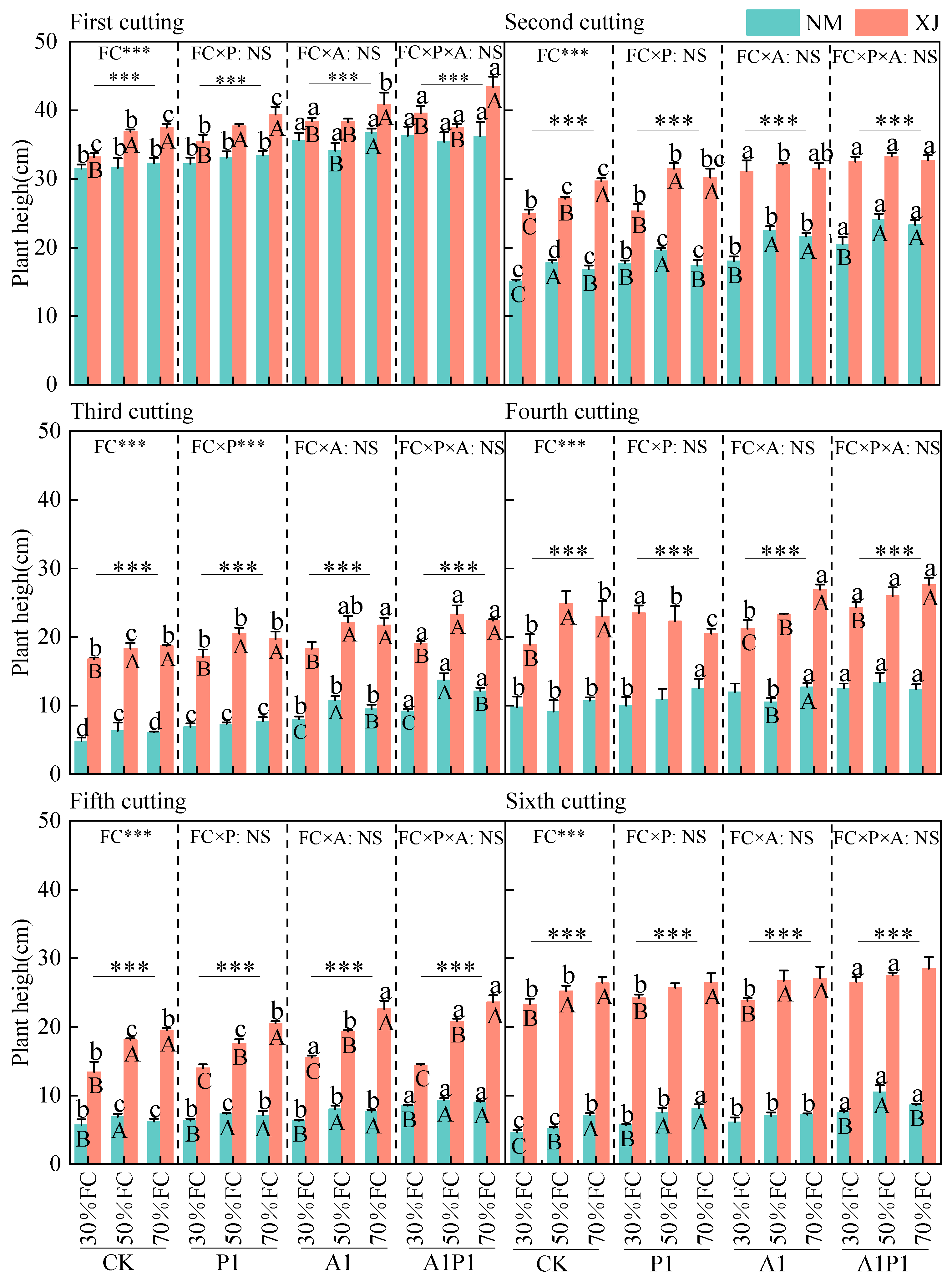
Soil water status, AMF inoculation, and P fertilization significantly affected the plant height of both Agropyron genotypes (p < 0.05, Figure 1). Multi-way ANOVA indicated significant interactions among soil water status, AMF inoculation, P fertilization, and clipping events (p < 0.05, Table S1). Plant height increased significantly with increasing soil moisture content (from 30% FC to 70% FC) (p < 0.05). Under identical water conditions, sole AMF inoculation (A1) or sole P application (P1) promoted plant height, but their combined application (A1P1) demonstrated a significant synergistic effect. For example, at the 1st clipping under 70% FC, the plant heights of XJ and NM genotypes in the A1P1 treatment increased by 15.83% and 12.07% compared to the control (CK), respectively, which were significantly higher than those in single-factor treatments (p < 0.05). Interspecific comparison showed that the XJ genotype consistently maintained significantly greater plant height than the NM genotype across all treatment combinations and clipping events (p < 0.01). As the number of clipping events increased, both genotypes exhibited a typical declining pattern of regrowth, decreasing from 36.20 cm at the 1st clipping to 16.52 cm at the 6th clipping. However, the combined application of AMF and P significantly mitigated the growth decline caused by successive clipping. Notably, in the later stages of regrowth (4th–6th clippings), plant height under the A1P1 treatment was significantly superior to that of CK (p < 0.05).

3.2. Tiller Number

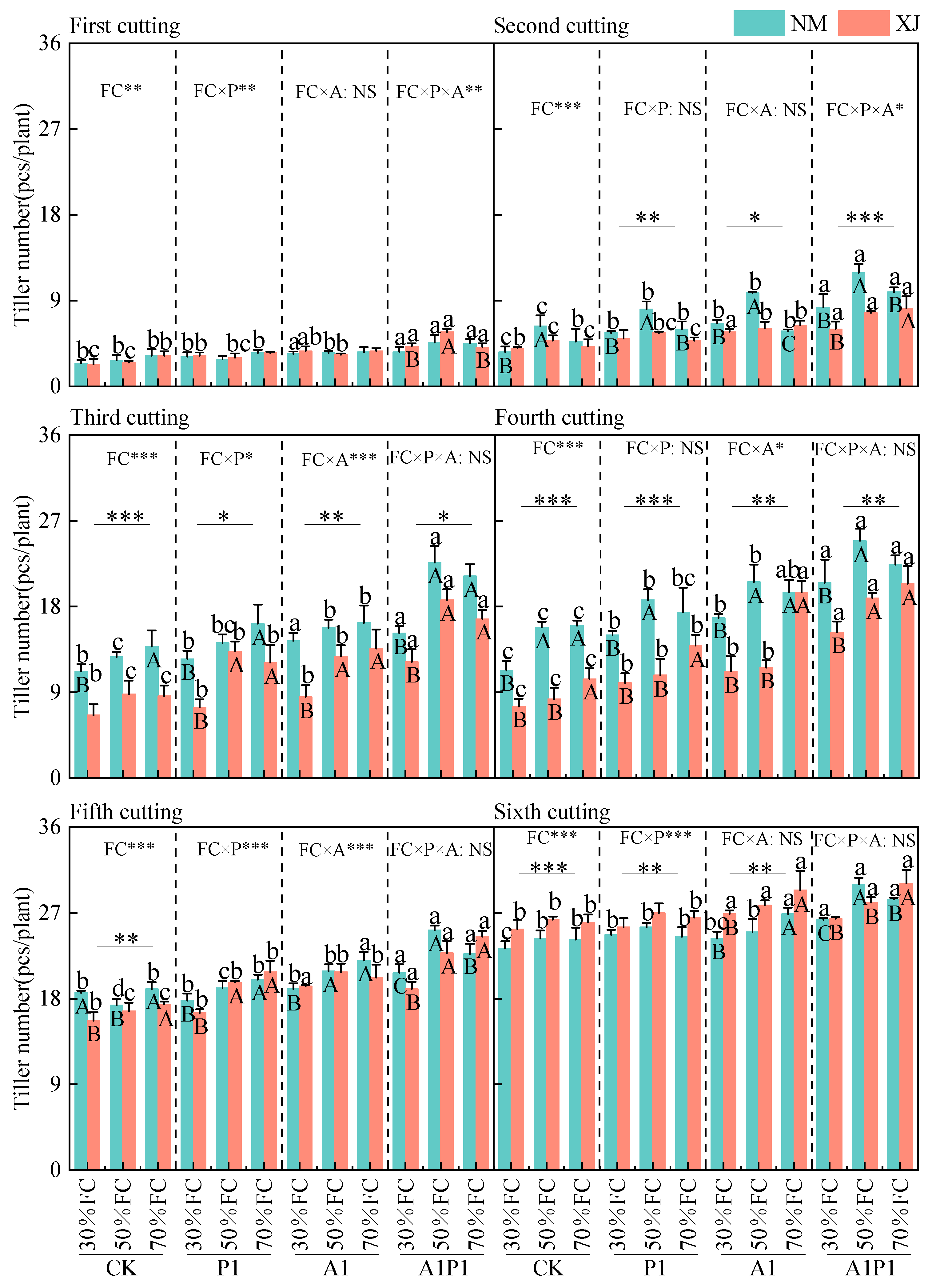
The tiller number of both Agropyron genotypes showed a significant increasing trend with improved soil moisture (from 30% FC to 70% FC) (p < 0.05, Figure 2). For instance, in the 1st clipping of the CK treatment, tiller numbers at 70% FC increased by 32.92–36.05% compared to 30% FC, an effect consistent across all clipping events. Both single AMF inoculation (A1) and P application (P1) significantly promoted tiller number, while the combined application (A1P1) exhibited a significant synergistic effect (p < 0.05). Taking the 3rd clipping at 50% FC as an example, tiller numbers for NM and XJ genotypes under A1P1 reached 22.57 and 18.70, respectively, significantly exceeding those of the control (12.71 and 8.83) and single treatments (15.78 and 12.83 for A1; 14.24 and 13.33 for P1) (p < 0.05). Notably, this synergistic promotion of tillering gradually intensified as the number of clipping events increased and was most pronounced under moderate drought (50% FC).
In contrast to plant height, the tillering capacity of the NM genotype was significantly stronger than that of the XJ genotype in most treatments (p < 0.05), Particularly during the mid-to-late growth stages (3rd–5th clippings). For example, at the 4th clipping under 30% FC, tiller numbers for NM ranged from 11.32 to 20.46, significantly higher than the 7.54–15.29 observed for XJ (p < 0.05). As clipping events progressed, tiller numbers for both genotypes showed a highly significant increasing trend, surging from 2–4 at the 1st clipping to 23–30 at the 6th clipping. The A1P1 treatment further magnified this compensatory effect; particularly in the 4th–6th clippings, tiller numbers under A1P1 were significantly higher than in the control and other single-factor treatments (p < 0.05). Multi-way ANOVA confirmed significant interactions between treatment factors and clipping events (p < 0.05, Table S1), with the sustained promotional effect of mycorrhiza and P on tillering being more significant in the NM genotype (p < 0.05).

3.3. Plant Biomass Accumulation and Allocation

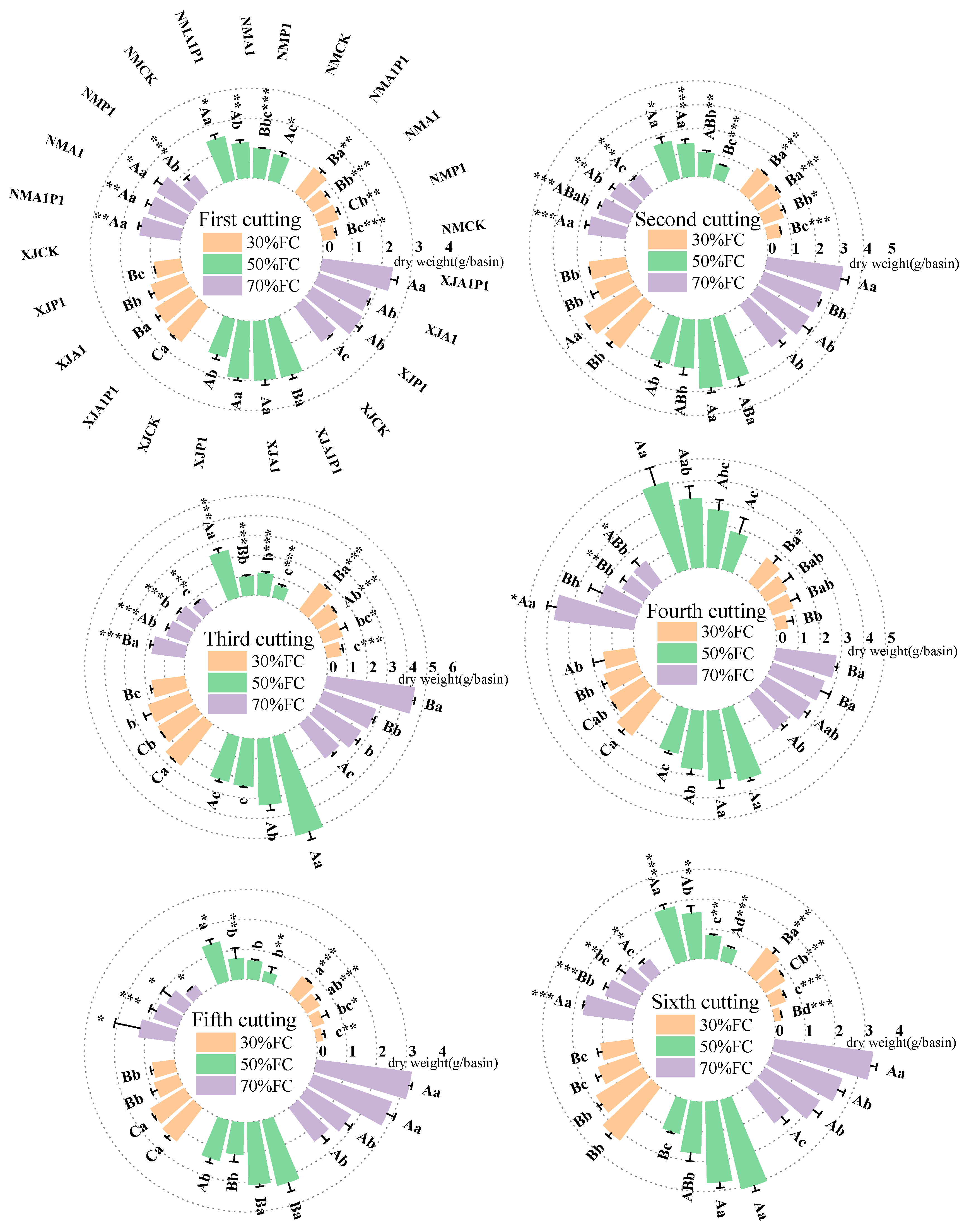
Soil water status significantly influenced aboveground biomass accumulation in both genotypes (p < 0.05, Figure 3). Multi-way ANOVA revealed highly significant interactions among soil water status, AMF inoculation, P fertilization, and clipping events (p < 0.001, Table S1). Generally, aboveground biomass increased significantly with increasing soil moisture (from 30% FC to 70% FC). During the early growth stages (1st–3rd clippings), the positive effect of soil moisture was particularly significant (p < 0.05); however, in the later stages (4th–6th clippings), some treatments exhibited maximal biomass accumulation under moderate drought (50% FC).
Both AMF inoculation and P application significantly promoted aboveground biomass accumulation (p < 0.05), with the combined A1P1 treatment demonstrating a highly significant synergistic effect in the majority of cases (p < 0.05). Taking the 3rd clipping at 50% FC as an example, the aboveground biomass of NM and XJ genotypes under A1P1 reached 2.43 g·pot−1 and 5.10 g·pot−1, respectively, representing increases of 285.17% and 119.83% over CK, and were significantly higher than single treatments (A1 and P1) (p < 0.05). This synergistic effect was most prominent under moderate drought (50% FC) and during the vigorous growth period (3rd–4th clippings).
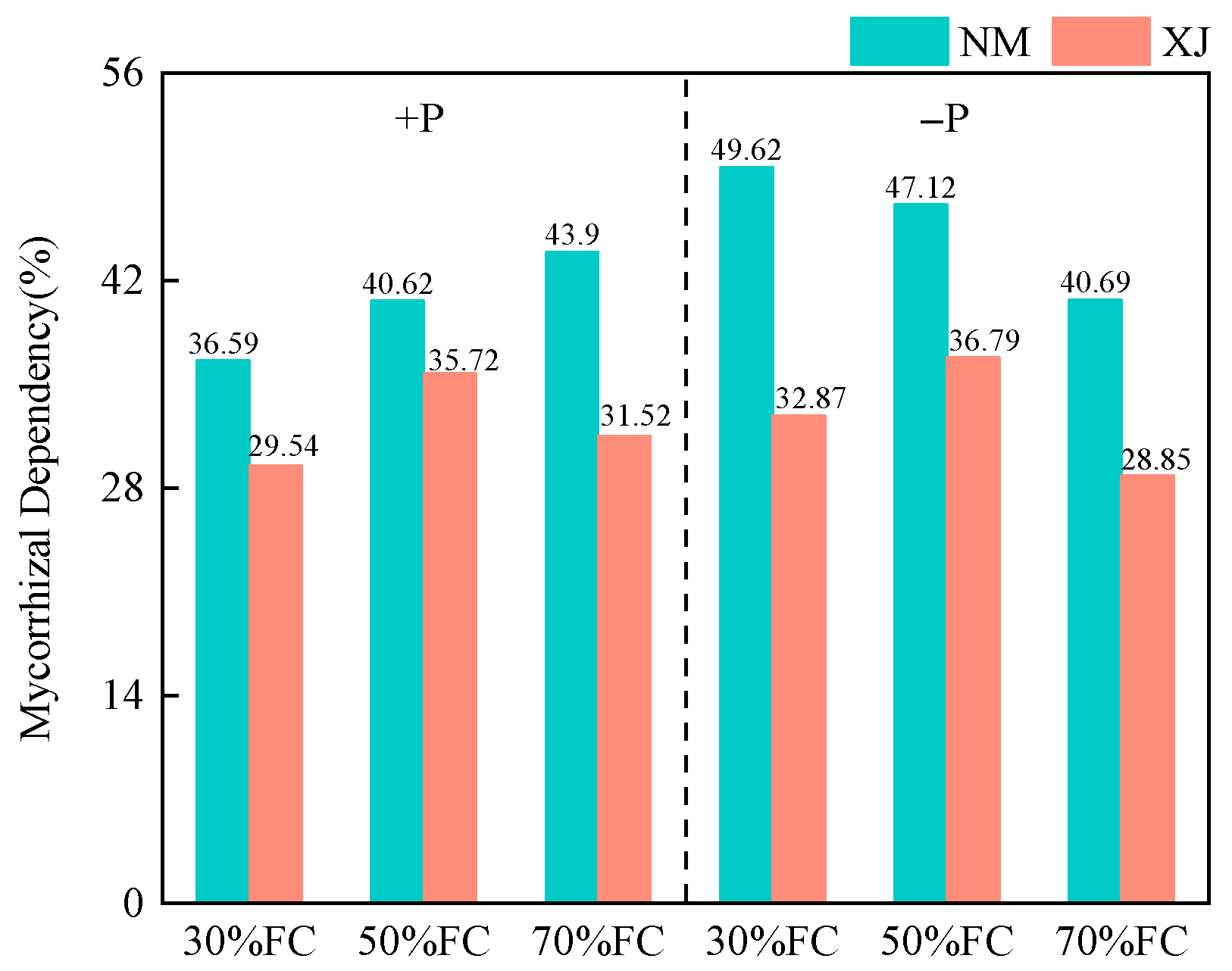
Biomass comparison showed that the XJ genotype (2.15 g·pot−1) significantly outperformed the NM genotype (1.61 g·pot−1) across all treatments and clippings (p < 0.05). Furthermore, the NM genotype exhibited stronger mycorrhizal dependency (MD). For instance, under drought conditions (50% FC) with P addition, the MD of NM (39.62%) was significantly higher than that of XJ (29.54%) (Figure 4, p < 0.05). Successive clipping significantly altered the dynamics of biomass accumulation. As the number of clipping events increased, aboveground biomass followed a hump-shaped pattern (increasing then decreasing), with peaks appearing at the 2nd–4th clippings. Compared with the control, the A1P1 treatment not only significantly increased the absolute biomass of each clipping but also effectively delayed the biomass decline caused by continuous clipping in the later stages.
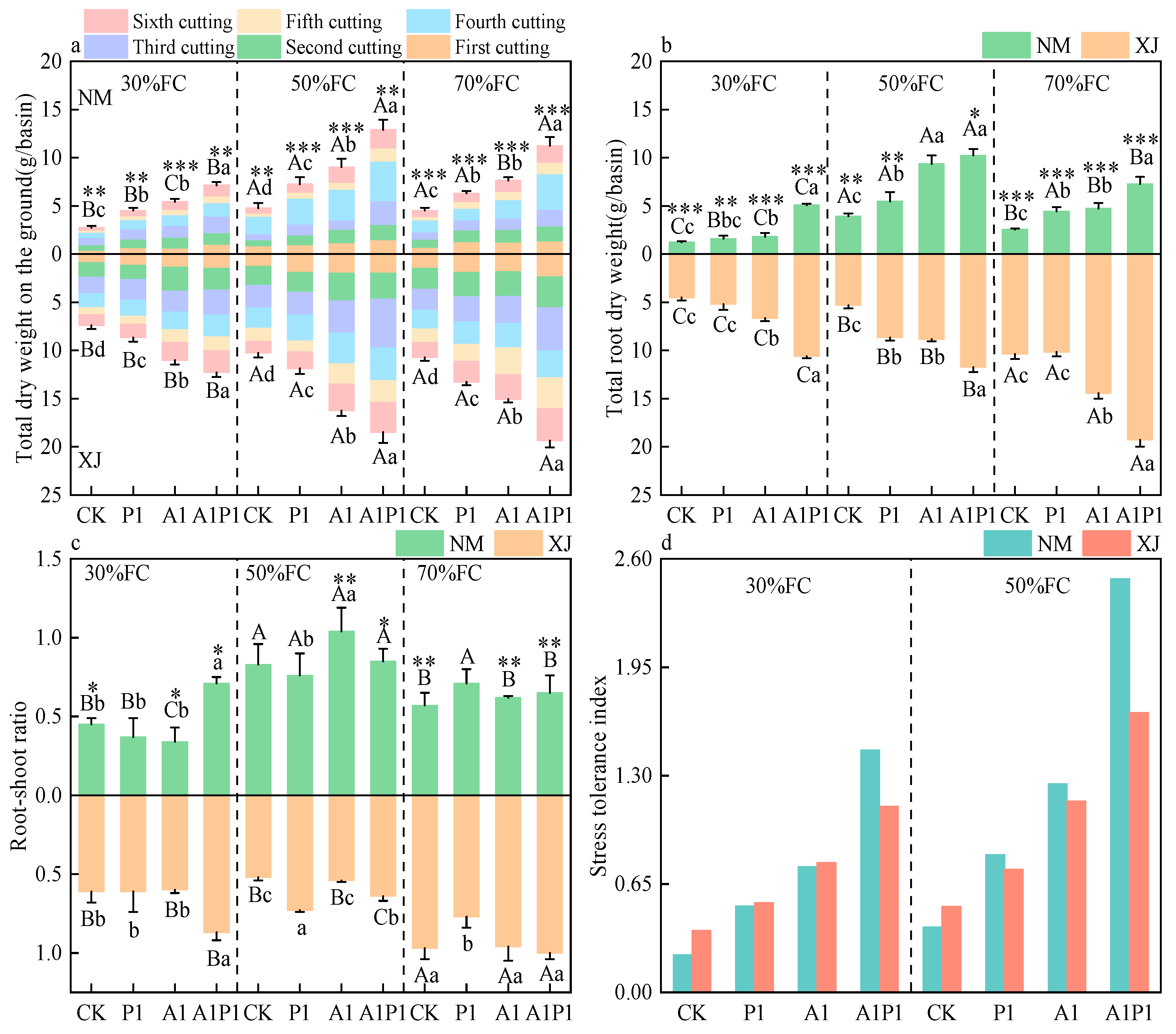
In addition to the accumulated aboveground biomass, we also analyzed the total biomass and root-to-shoot ratio. Soil water status, AMF inoculation, and P fertilization had highly significant effects on total biomass accumulation and partitioning in both genotypes (p < 0.05, Table S2). Overall, both aboveground and belowground biomass increased significantly with increasing soil moisture (from 30% FC to 70% FC) (p < 0.05, Figure 5a,b). AMF inoculation (A1) and P application (P1) significantly promoted biomass accumulation, with the combined treatment (A1P1) showing the strongest synergistic effect. For example, at 50% FC, A1P1 increased the belowground biomass of the NM genotype by 87.73% compared to the P1 treatment. Under the same treatment, the XJ genotype possessed higher total aboveground and belowground biomass than the NM genotype (p < 0.05). Notably, the two genotypes exhibited significant divergence in biomass partitioning patterns: the NM genotype reached its peak belowground biomass under moderate drought (50% FC), whereas the XJ genotype peaked under mild drought (70% FC).
The response pattern of the root/shoot ratio (R/S) further confirmed these interspecific differences (Figure 5c). With changes in soil water status (from 30% FC to 70% FC), the R/S of the NM genotype showed a non-linear response, peaking under moderate drought (50% FC; CK = 0.83, A1 = 1.04), which was significantly higher than under other water conditions. Conversely, the R/S of the XJ genotype was highest under mild drought (70% FC) and relatively lower under severe drought. The regulation of R/S by the “fungus–P” interaction increased significantly with the severity of water stress. Under severe drought (30% FC), the A1P1 treatment significantly increased the R/S values of both genotypes, reaching the highest levels for that water condition (p < 0.05). Additionally, under moderate and severe drought (50% and 30%), mycorrhizal inoculation (A1) significantly increased R/S. For instance, the mean R/S in M-A1-50% reached 1.04, far exceeding the non-inoculated M-A0-50% (0.83). Under mild drought (70%), the promotional effect of inoculation weakened or disappeared (e.g., M-A1-70% was 0.62 and M-A0-70% was 0.57, with no significant difference).

3.4. Root Phenotypic Characteristics

Soil water status, AMF inoculation, and P fertilization had highly significant effects on root morphological development in both genotypes (Table S3). Overall, total root length, surface area, and volume significantly increased with improved soil moisture (from 30% FC to 70% FC) (p < 0.05). AMF inoculation (A1) and P fertilization (P1) exerted significant promotional effects on root indices, with the combined treatment (A1P1) producing synergistic efficacy. The total root length and root surface area of the XJ genotype were significantly higher than those of the NM genotype across all treatments (p < 0.05).
The growth-promoting effect of mycorrhizal fungi was extremely significant, particularly under severe drought (30% FC), where inoculation treatments (A1 and A1P1) increased the total root length of the XJ genotype by 281.44–375.12% compared to CK. Under moderate drought (50% FC), the synergistic effect of mycorrhiza and P reached its peak, with both genotypes attaining maximum root length and surface area under A1P1. The trend in root volume was largely consistent with root length and surface area (Table 3). A1P1 significantly increased root volume, especially at 70% FC, where the XJ genotype reached 340.97 cm3, significantly higher than other treatments (p < 0.05). Average root diameter increased under A1 and A1P1 treatments, particularly at 50% FC. Analysis of fractal dimension (fractal cone number) showed that values for the XJ genotype were generally higher than for NM, indicating a more complex root system architecture (Table 3). P fertilization (P1) and the combined treatment (A1P1) significantly increased the fractal dimension, especially at 50% and 70% FC. Three-way ANOVA indicated that water, AMF inoculation, P fertilization, and genotype had highly significant main effects (p < 0.001) and significant interactions (p < 0.05) on all root indices (Table S3). Among these, the Water × AMF and AMF × P interactions were most critical.

3.5. Root Mass Fraction

The data showed that soil water status significantly affected the root mass fraction (RMF) of both genotypes (p < 0.05), yet the regulatory patterns exhibited distinct interspecific differences (Table 4). For the NM genotype, the variation pattern of RMF across moisture gradients was highly consistent with the previously observed R/S ratio, being significantly higher under moderate drought (50% FC) than under 30% FC and 70% FC treatments (p < 0.05). The XJ genotype generally maintained high RMF levels under mild drought (70% FC) but relatively lower levels under severe drought (30% FC).
Under severe drought (30% FC), the combined treatment of mycorrhiza and P (A1P1) had the most significant promotional effect on RMF. For the NM genotype, the RMF under A1P1 (0.42) was significantly higher than in CK (0.31), P1 (0.26), and A1 (0.25) treatments. Similarly, for the XJ genotype, the A1P1 treatment (0.46) was significantly higher than other treatments. Under moderate and mild drought conditions, treatment effects became more complex. For instance, at 50% FC, sole AMF inoculation (A1) resulted in the highest RMF for the NM genotype (0.51), whereas the A1P1 treatment showed a slight decrease (0.46).

3.6. Specific Root Length

Specific root length (SRL) showed extremely significant interspecific differences. Across all water and treatment combinations, the SRL of the NM genotype was significantly higher than that of the XJ genotype (p < 0.05, Table 4). For example, in the control (CK) under severe drought (30% FC), the SRL of NM was 1.7 times that of XJ; this difference expanded to 2.8 times following AMF inoculation (A1). AMF inoculation significantly enhanced the SRL of both genotypes, with the magnitude of enhancement increasing with the severity of water stress. Under severe drought (30% FC), A1 treatment increased the SRL of NM and XJ genotypes by 65.26% and 159.31%, respectively, compared to CK. As water conditions improved (from 50% FC to 70% FC), this promotional effect weakened, yet the SRL of inoculated plants remained significantly higher than that of non-inoculated plants (A0). The influence of soil water status on SRL followed a non-linear pattern with interspecific variation. The NM genotype typically reached peak SRL under severe drought (30% FC) (e.g., 5.09 m g−1 under A1), whereas the XJ genotype showed different responses across moisture levels. Notably, while both P fertilization and AMF inoculation significantly increased SRL, the A1P1 treatment did not exhibit a synergistic effect (p > 0.05).

3.7. AMF Mycorrhizal Colonization Rate

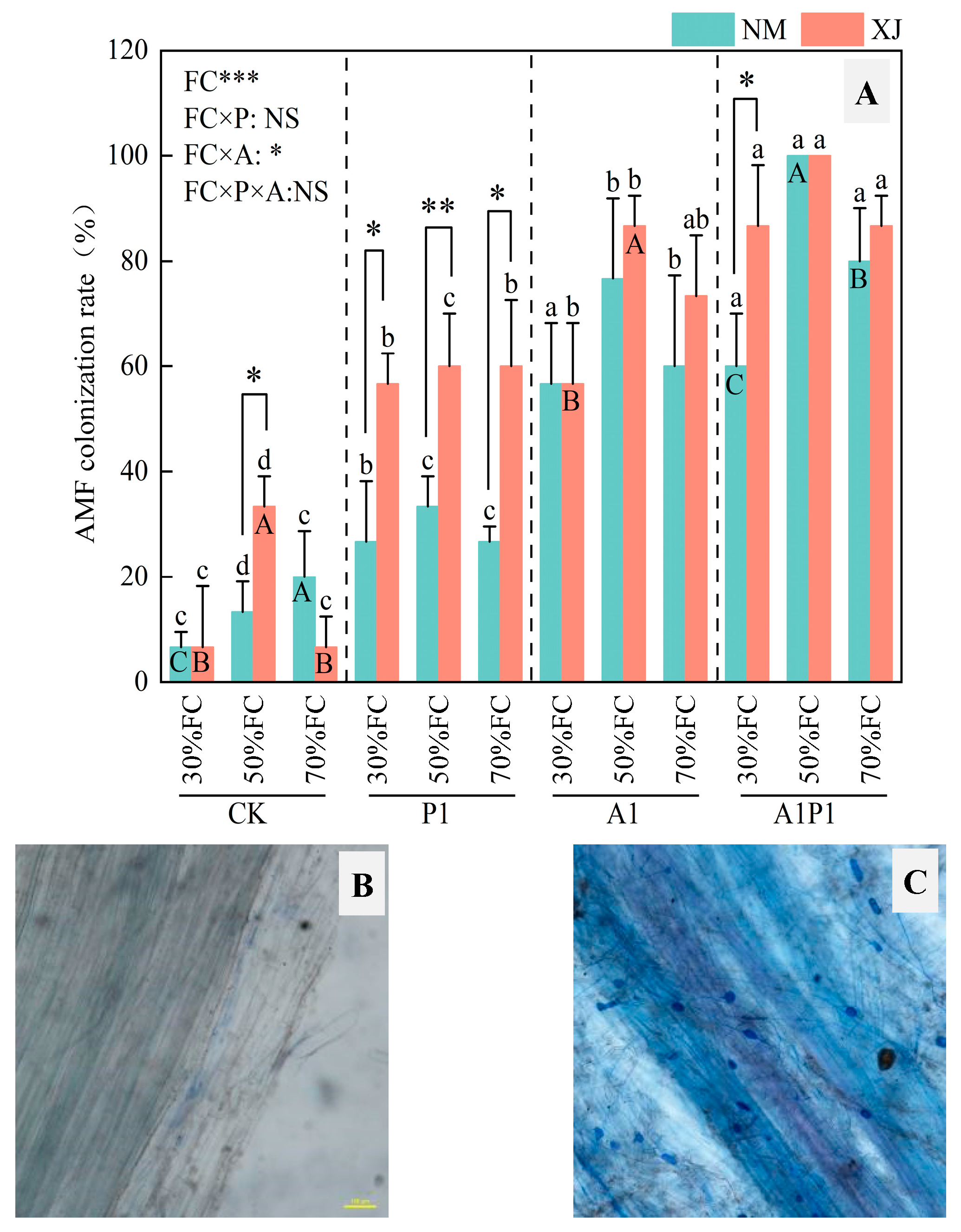
Soil water status, AMF inoculation, and phosphorus fertilization significantly influenced the root mycorrhizal colonization rate of both Agropyron genotypes (p < 0.05, Figure 6). Generally, the AMF colonization rate exhibited a significant upward trend as soil drought stress was alleviated (from 30% FC to 70% FC). The average colonization rates under AMF inoculation (A1) were significantly higher than those in the non-inoculated treatment (A0) (p < 0.05). Specifically, the colonization rates for Xinjiang (XJ) and Inner Mongolia (NM) genotypes under A1 were 72.22% and 64.44%, respectively, compared to 15.57% and 13.33% under A0. The effect of P fertilization (P1) on colonization was dependent on soil water status and inoculation status. For instance, under non-inoculated conditions, P application had no significant effect on colonization; however, under inoculated conditions, P significantly promoted colonization rates (p < 0.05). Furthermore, the colonization rate of the XJ genotype (59.44%) was significantly higher than that of the NM genotype (46.67%) (p < 0.05). Under moderate and mild drought conditions, the combined “AMF + P” treatment (A1P1) yielded the highest colonization rates for XJ and NM genotypes, reaching 93.33% and 90.00%, respectively, which were significantly higher than other treatments (p < 0.05).

3.8. Stress Tolerance Index

AMF inoculation and P fertilization significantly enhanced the Stress Tolerance Index (STI) of both genotypes, effectively alleviating the negative impacts of drought stress (30% FC and 50% FC). Although STI values declined with intensifying water stress, the combined A1P1 treatment demonstrated a highly significant synergistic effect under identical water conditions (p < 0.05, Figure 5d). Taking the NM genotype under severe drought (30% FC) as an example, sole P fertilization (P1) and sole AMF inoculation (A1) increased STI by 1.4-fold and 2.4-fold compared to the control (CK), respectively, whereas the A1P1 treatment resulted in a 5.6-fold increase (STI reaching 1.45). The STI values exceeded 1.0 in the synergistic treatments, whereas they remained below 1.0 in the control group.
The intensity of this synergy was significantly regulated by the water gradient. Under moderate drought (50% FC), the enhancement of STI by A1P1 reached its peak (2.48 for NM; 1.68 for XJ), which was significantly higher than under severe drought. It is noteworthy that despite the higher absolute biomass of the XJ genotype, the NM genotype exhibited significantly higher STI values under both moderate and severe drought (p < 0.05). For instance, under the A1P1 treatment at 50% FC, the STI of the NM genotype was 1.5 times that of the XJ genotype (Figure 5d).

3.9. Mantel Test and Correlation Analysis of Plant Biomass and Morphological Traits

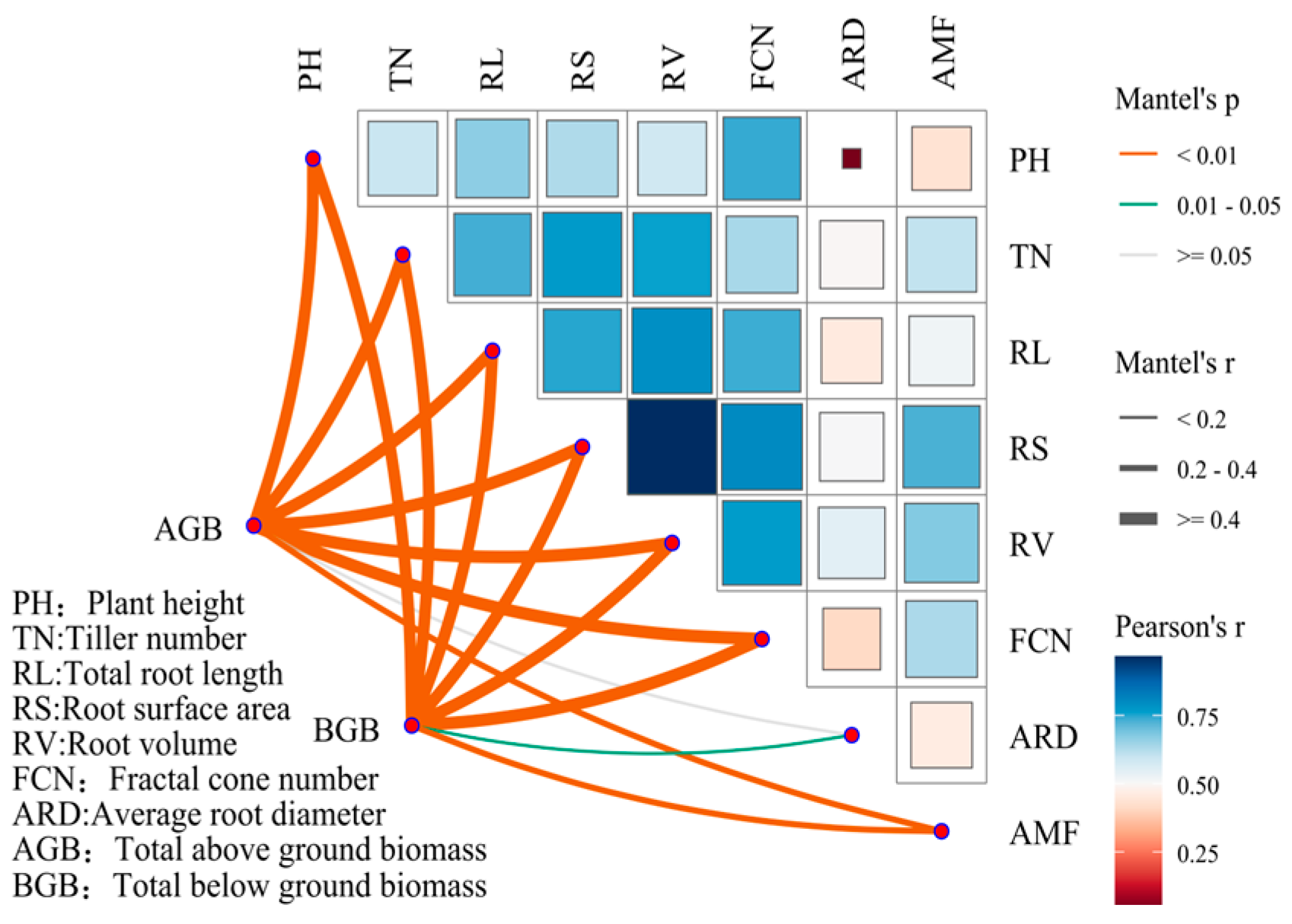
Figure 7 illustrates the relationships among plant morphological traits and biomass accumulation using Mantel tests and Pearson correlation analysis. The Mantel plot (left panel)shows that both aboveground biomass (AGB) and belowground biomass (BGB) were significantly correlated with root morphological traits (RL, RS, RV) and shoot traits (PH, TN)with stronger correlations observed for BGB-root trait pairs (p < 0.01). The correlation heatmap (right panel) reveals strong positive correlations among root traits (RL, RS, RV; r > 0.75),indicating coordinated root system development. Notably, average root diameter (ARD) was negatively correlated with root length and surface area (r < 0.50),suggesting a trade-off between root elongation and thickening.

4. Discussion

4.1. Interactive Regulation of AMF Colonization by Water and Phosphorus

The symbiotic relationship between arbuscular mycorrhizal fungi (AMF) and host plants is strongly driven by edaphic factors. This study found that AMF colonization rates in both Agropyron genotypes significantly increased with improved soil moisture conditions (from 30% FC to 70% FC). This aligns with previous findings indicating that severe drought stress inhibits AMF spore germination and hyphal growth, thereby reducing colonization [15]. However, it is noteworthy that AMF inoculation and phosphorus addition demonstrated a significant synergistic effect in promoting Agropyron growth, which was most pronounced under moderate drought (50% FC). This result contradicts the traditional “functional equilibrium hypothesis,” which posits that high P levels suppress AMF colonization and function [16]. In the present study, the P application rate (10 g·m−2) likely fell within the “threshold” range of plant demand, avoiding P-induced inhibition. Conversely, moderate P supplementation may have improved the carbon nutritional status of the host plant, enabling greater allocation of carbohydrates to belowground parts to sustain symbiosis, thereby maintaining high colonization rates (e.g., the colonization rate of the Xinjiang genotype approached 100% under the A1P1 treatment). This is consistent with Ma et al., who found that nutrient addition (especially P) significantly alters belowground biomass allocation patterns and may regulate microbial communities via root exudates [17]. Furthermore, long-term fertilization experiments have demonstrated that specific nitrogen-to-phosphorus ratios can significantly enhance AMF biomass and colonization intensity [18], confirming that in nutrient-poor soils (such as the gray desert soil used in this study), rational P addition facilitates the establishment of a more robust mycorrhizal symbiotic system.

4.2. Synergistic Mitigation of Drought Stress and Promotion of Biomass Accumulation by AMF and Phosphorus

Drought is a critical factor limiting forage productivity in arid regions, significantly inhibiting plant height, tillering, and aboveground biomass in Agropyron [19]. However, this study found that AMF colonization effectively alleviated this growth inhibition, and the dependency of Agropyron on AMF significantly increased with the severity of drought, exhibiting the strongest biomass compensatory effect under severe drought (30% FC). This finding not only corroborates the view that plants tend to overcome root functional limitations through symbiotic associations under extreme adversity [20] but also aligns highly with global meta-analyses on AMF-enhanced plant stress resistance [21,22]. Of particular note is the highly significant synergistic effect of the combined AMF and P application (A1P1), which peaked under moderate drought (50% FC). The potential mechanisms likely involve a dual “physical–physiological” regulation: physically, the extensive extraradical hyphal network of AMF expands the root absorption area, directly assisting the plant in the uptake of water and immobile phosphorus [23]; physiologically, given that P is a key element for energy metabolism (ATP) and photosynthesis, the high P absorption efficiency under the A1P1 treatment optimized stomatal regulation and the synthesis of osmoprotectants (e.g., proline), thereby maintaining high cellular turgor pressure and growth rates [24,25].
Existing research indicates that although drought often reduces mycorrhizal colonization, mycorrhizal plants can still achieve significant biomass accumulation by maintaining higher net photosynthetic rates and water use efficiency; for instance, the biomass of switchgrass can be more than three times that of non-mycorrhizal plants [20]. Consistent with this, our study found that the combined application of AMF and P (A1P1) significantly enhanced the drought resistance potential of Agropyron by flexibly regulating allometric growth relationships and physiological metabolic networks. This synergistic effect exhibited a clear “environmental window” dependency. Regarding biomass allocation strategies, severe drought (30% FC) forced plants to adopt a “conservative growth strategy,” where the A1P1 treatment significantly increased the root/shoot ratio (R/S) and root mass fraction (RMF), prioritizing the construction of a robust root system to cope with extreme deficits. In contrast, under moderate drought (50% FC), the fungal–P synergy alleviated water limitations on aboveground parts, enabling plants to shift toward an “acquisitive growth strategy,” maximizing biomass through increased tillering and plant height. The response pattern of the Stress Tolerance Index (STI) further confirmed this: the peak STI under A1P1 occurred under moderate drought (reaching 2.48 for NM and 1.68 for XJ), presenting a significant “over-compensation” effect. The physiological basis of this over-compensation may be attributed to the dual protection of the antioxidant and photosynthetic systems by AMF: on one hand, AMF maintains reactive oxygen species (ROS) homeostasis and root cell membrane integrity by upregulating host antioxidant enzyme activities and the proline synthesis pathway [26,27,28]; on the other hand, AMF effectively protects Photosystem II (PSII) activity, preventing photoinhibition and promoting the sustained synthesis and translocation of photosynthates to belowground parts [24,29]. In summary, only under moderate drought (50% FC), where water and nutrient limitations coexist, do the water transport function of AMF and the nutritional function of P achieve optimal complementarity, maximally stimulating plant production potential. This implies that in regions or seasons where rainfall is approximately 50% of field capacity, synergistic fungal–P management can yield the highest ecological and economic benefits.

4.3. Root Phenotypic Plasticity and Nutrient Acquisition Strategies

Roots are the primary organ through which plants perceive various signals of soil environmental change. Plants typically employ two strategies for phosphorus acquisition: the “scavenging strategy,” relying on alterations in their own root morphology, and the “outsourcing strategy,” relying on fungal symbiosis [30]. Although Reinhart et al. [31] did not find evidence of plants completely “outsourcing” P acquisition to AMF in calcareous soils, emphasizing the importance of root morphology itself, our study found that the A1P1 treatment significantly increased total root length, root surface area, and fractal dimension in Agropyron, with the increase in root volume being particularly pronounced. This indicates that Agropyron adopts a “dual strategy”: AMF inoculation not only provides hyphal pathways to physiologically assist in nutrient and water uptake but also induces changes in Root System Architecture (RSA) to adapt to the environment [32]. This modification of root morphology is crucial for water absorption. A well-developed root system (greater root volume and surface area) maintains higher efficiency in water and nutrient uptake. For immobile nutrients like P, roots must increase surface area to contact more soil particles [33]; for mobile resources like water and nitrogen, greater root volume and depth effectively expand the absorption zone [34,35].

4.4. Regrowth Capability After Clipping and Genotypic Differences

The regrowth capability of forage grasses determines their persistent utilization value. In this study, plant vigor and productivity significantly declined over six successive clippings, whereas the combined application of AMF and P (A1P1) significantly delayed this decline, maintaining higher tiller numbers, plant height, and biomass. Regrowth capability after clipping primarily depends on carbohydrate reserves in the root stub system and remobilization capacity [36].
AMF not only improved the water status of the host but may have also promoted the germination of basal dormant buds by regulating hormone levels (e.g., cytokinins), thereby maintaining a high tiller number [37]. Furthermore, the significant increase in root volume under the A1P1 treatment implies an enhanced capacity of the root system as a resource reservoir. This fully demonstrates that the combined application of AMF and P may have optimized source–sink relationships, increasing reserves of non-structural carbohydrates (NSC) in roots, thus providing energy substrates for rapid regrowth after clipping [3]. Additionally, this study confirmed a significant genotype effect: the Xinjiang genotype (XJ) outperformed the Inner Mongolia genotype (NM) in growth performance (biomass, root indices) across all treatment combinations. This is similar to the ecotypic differences found in tall wheatgrass by Sheikh-Mohamadi et al., where significant genetic diversity existed in physiological responses to stress among materials of different provenances [38]. The XJ genotype was more sensitive to AMF (showing greater increases in colonization rate and biomass), which may be related to its root exudates being more effective at recruiting beneficial microbes or a better symbiotic compatibility with Rhizophagus intraradices. This suggests that in the ecological restoration of arid grasslands, priority should be given to “highly responsive” grass species (such as the XJ genotype) that possess strong affinity with local AMF and well-developed root systems.

4.5. Limitations and Future Perspectives

Although this study revealed the regulatory mechanisms of fungal–P interaction on drought resistance and regrowth capability in Agropyron, certain limitations remain. First, the pot experiment was constrained by container size; the limited space may have restricted the deepening and proliferation of perennial Agropyron roots and could not fully simulate the complex soil structure and water dynamics of the field. Future long-term in situ field trials are needed to validate these pot-based results. Second, this study utilized a single model AMF species (Rhizophagus intraradices), whereas plants in natural ecosystems typically associate with diverse fungi. The functional complementarity among different fungal species and their interactive effects with indigenous microbes require further investigation. Finally, the discussion on regrowth mechanisms was primarily based on phenotypic data. Although roles for hormonal regulation and carbohydrate reserves (NSC) were hypothesized, direct physiological and biochemical evidence is lacking. Future research should integrate transcriptomics and metabolomics to deeply elucidate the molecular mechanisms by which AMF regulates host regeneration gene expression and carbon/nitrogen metabolic fluxes.

5. Conclusions

This study confirms that under dual drought and nutrient stress, AMF inoculation and moderate P application (10 g·m−2) do not simply produce an additive effect but generate a significant synergistic effect by establishing a positive feedback loop of “P–fungus mutual promotion.” This synergy exhibits clear environmental dependency, peaking under moderate drought (50% FC), where it significantly delays the decline in regrowth capability caused by successive clipping by alleviating water and nutrient limitations. In terms of adaptive mechanisms, Agropyron did not trade off “autonomous root absorption” against “hyphal outsourcing” but instead adopted a dual adaptive strategy of “morphological plasticity + symbiotic assistance”: while relying on hyphal extension to expand the absorption range, it constructed a more efficient root network by substantially increasing root length, surface area, and fractal dimension. Furthermore, different genotypes displayed divergent adaptive strategies: the Xinjiang genotype adopted an aggressive strategy of “high root investment–high biomass return” and was more sensitive to the fungal–P interaction, whereas the Inner Mongolia genotype tended toward a conservative strategy of “dense tillering”.
In summary, “fungal–P synergistic coupling” is a key bio-agronomic measure for enhancing productivity and system stability in arid grasslands. Mechanistically, our results suggest that AMF symbiosis enhances drought tolerance not only by increasing nutrient uptake but also by modulating biomass allocation patterns, favoring root growth under water-limiting conditions. Practically, these findings highlight the potential of using AMF inoculation as a sustainable tool for ecological restoration and forage production in arid and semi-arid grasslands. In ecological restoration practices, it is recommended to prioritize germplasm with “highly responsive” characteristics (such as the Xinjiang genotype) accompanied by integrated fungal and P management. Future research should focus further on rhizosphere microbiome recruitment mechanisms mediated by root exudates and evaluate the long-term ecological after-effects of this management model on forage nutritional quality (crude protein, fiber, etc.).

Supplementary Materials

The following supporting information can be downloaded at: https://www.mdpi.com/article/10.3390/agronomy16050557/s1, Table S1. Analysis of variance of plant height, tiller number and above-ground dry weight under different treatments. Table S2. Analysis of variance for total above ground/below ground biomass and root-shoot ratio under different treatments. Table S3. Analysis of variance for root phenotype, root mass fraction, and specific root length under different treatments.

Author Contributions

H.C.: conceptualization, methodology, investigation, data curation, and writing—original draft preparation; A.Y.: conceptualization and writing—review and editing; L.Z., L.Y., X.W. and X.M.: data curation and investigation; J.W.: investigation and formal analysis; K.X.: methodology, writing—review and editing, and funding acquisition. All authors have read and agreed to the published version of the manuscript.

Funding

This research was financially supported by the Key Research and Development Program of the Xinjiang Uygur Autonomous Region (Grant No. 2023B02031) and the Xinjiang Autonomous Region “Tianshan Talent” Training Program Project (Grant No. 2022TSYCCX0044).

Data Availability Statement

The original contributions presented in the study are included in the article; further inquiries can be directed to the corresponding author.

Conflicts of Interest

The authors declare no conflicts of interest.

References

  1. He, M.; Dijkstra, F.A. Drought effect on plant nitrogen and phosphorus: A meta-analysis. New Phytol. 2014, 204, 924–931. [Google Scholar] [CrossRef] [PubMed]
  2. Hou, E.; Luo, Y.; Kuang, Y.; Chen, C.; Lu, X.; Jiang, L.; Luo, X.; Wen, D. Global meta-analysis shows pervasive phosphorus limitation of aboveground plant production in natural terrestrial ecosystems. Nat. Commun. 2020, 11, 637. [Google Scholar] [CrossRef]
  3. Lambers, H. Phosphorus acquisition and utilization in plants. Annu. Rev. Plant Biol. 2022, 73, 17–42. [Google Scholar] [CrossRef] [PubMed]
  4. Smith, S.E.; Smith, F.A. Roles of arbuscular mycorrhizas in plant nutrition and growth: New paradigms from cellular to ecosystem scales. Annu. Rev. Plant Biol. 2011, 62, 227–250. [Google Scholar] [CrossRef]
  5. Begum, N.; Ahanger, M.A.; Zhang, L. AMF inoculation and phosphorus supplementation alleviates drought induced growth and photosynthetic decline in Nicotiana tabacum by up-regulating antioxidant metabolism and osmolyte accumulation. Environ. Exp. Bot. 2020, 176, 104088. [Google Scholar] [CrossRef]
  6. Kiers, E.T.; Duhamel, M.; Beesetty, Y.; Mensah, J.A.; Franken, O.; Verbruggen, E.; Fellbaum, C.R.; Kowalchuk, G.A.; Hart, M.M.; Bago, A.; et al. Reciprocal rewards stabilize cooperation in the mycorrhizal symbiosis. Science 2011, 333, 880–882. [Google Scholar] [CrossRef]
  7. Gehring, C.A.; Whitham, T.G. Interactions between aboveground herbivores and the mycorrhizal mutualists of plants. Trends Ecol. Evol. 1994, 9, 251–255. [Google Scholar] [CrossRef]
  8. Koevoets, I.T.; Venema, J.H.; Elzenga, J.T.M.; Testerink, C. Roots withstanding their environment: Exploiting root system architecture responses to abiotic stress to improve crop tolerance. Front. Plant Sci. 2016, 7, 1335. [Google Scholar] [CrossRef]
  9. Ding, Q.; He, J.; Guo, W.L.; Bai, H.T.; Zhang, J.J.; Yang, X.; Shen, Y. Effects of nitrogen and phosphorus addition and mycorrhizal fungicide on net primary productivity of desert steppe grassland. China Grassl. J. 2024, 46, 25–32. [Google Scholar]
  10. Callaway, R.M.; Thelen, G.C.; Barth, S.; Ramsey, P.W.; Gannon, J.E. Soil fungi alter interactions between the invader Centaurea maculosa and North American natives. Ecology 2004, 85, 1062–1071. [Google Scholar] [CrossRef]
  11. Phillips, J.M.; Hayman, D.S. Improved procedures for clearing roots and staining parasitic and vesicular-arbuscular mycorrhizal fungi for rapid assessment of infection. Trans. Br. Mycol. Soc. 1970, 55, 158–161. [Google Scholar] [CrossRef]
  12. Biermann, B.; Linderman, R.G. Quantifying vesicular-arbuscular mycorrhizae: A proposed method towards standardization. New Phytol. 1981, 87, 63–67. [Google Scholar] [CrossRef]
  13. Clarke, J.M.; DePauw, R.M.; Townley-Smith, T.F. Evaluation of methods for quantification of drought tolerance in wheat. Crop. Sci. 1992, 32, 723–728. [Google Scholar] [CrossRef]
  14. Satir, N.Y.; Ortas, I. Comparing the effects of different mycorrhizal species on physiological development and mycorrhizal dependency of citrus plant. Not. Bot. Horti Agrobot. Cluj-Napoca 2025, 53, 14565. [Google Scholar] [CrossRef]
  15. Xu, Y.H.; Dang, L.; Bai, Y.F.; Wang, Y.J. Arbuscular mycorrhizal fungi increase tolerance of fruit trees to abiotic and biotic stresses: A meta analysis. Appl. Soil Ecol. 2025, 214, 106354. [Google Scholar] [CrossRef]
  16. Johnson, N.C. Resource stoichiometry elucidates the structure and function of arbuscular mycorrhizas across scales. New Phytol. 2010, 185, 631–647. [Google Scholar] [CrossRef]
  17. Ma, S.; Guo, R.; Wang, Y.; Yan, Y.; Chu, Q.; Cui, N.; Zhang, Y.; Zhang, L.; Jiang, L.; Shi, L.; et al. Nitrogen and phosphorus addition affected soil organic carbon storage and arbuscular mycorrhizal fungi contributions. J. Environ. Manag. 2025, 393, 126904. [Google Scholar] [CrossRef]
  18. Wang, Y.; Wang, Z.; Kang, Y.; Zhang, Z.; Bao, D.; Sun, X.; Su, J. Assessing the win–win situation of forage production and soil organic carbon through a short-term active restoration strategy in alpine grasslands. Front. Plant Sci. 2024, 14, 1290808. [Google Scholar] [CrossRef]
  19. Huang, B.; Fu, J. Photosynthesis, respiration, and carbon allocation of two cool-season perennial grasses in response to surface soil drying. Plant Soil 2000, 227, 17–26. [Google Scholar] [CrossRef]
  20. Basyal, B.; Walker, B.J. Arbuscular mycorrhizal fungi enhance yield and photosynthesis of switchgrass (Panicum virgatum L.) under extreme drought and alters the biomass composition of the host plant. Biomass Bioenergy 2023, 177, 106936. [Google Scholar] [CrossRef]
  21. Li, J.; Zhou, L.; Chen, G.; Yao, M.; Liu, Z.; Li, X.; Yang, X.; Yang, Y.; Cai, D.; Tuerxun, Z.; et al. Arbuscular mycorrhizal fungi enhance drought resistance and alter microbial communities in maize rhizosphere soil. Environ. Technol. Innov. 2025, 37, 103947. [Google Scholar] [CrossRef]
  22. Augé, R.M. Water relations, drought and vesicular-arbuscular mycorrhizal symbiosis. Mycorrhiza 2001, 11, 3–42. [Google Scholar] [CrossRef]
  23. Chowdhary, N.A.; Songachan, L.S. Boosting sustainable agriculture by arbuscular mycorrhizal fungi under abiotic stress condition. Plant Stress 2025, 17, 100945. [Google Scholar] [CrossRef]
  24. Tariq, A.; Pan, K.; Olatunji, O.A.; Graciano, C.; Li, Z.; Sun, F.; Sun, X.; Song, D.; Chen, W.; Zhang, A.; et al. Phosphorous application improves drought tolerance of Phoebe zhennan. Front. Plant Sci. 2017, 8, 1561. [Google Scholar] [CrossRef] [PubMed]
  25. Guo, S.; Xia, L.; Xia, D.; Li, M.; Xu, W.; Liu, L. Enhancing plant resilience: Arbuscular mycorrhizal fungi’s role in alleviating drought stress in vegetation concrete. Front. Plant Sci. 2024, 15, 1401050. [Google Scholar] [CrossRef] [PubMed]
  26. Hashem, A.; Kumar, A.; Al-Dbass, A.M.; Alqarawi, A.A.; Al-Arjani, A.-B.F.; Singh, G.; Farooq, M.; Abd Allah, E.F. Arbuscular mycorrhizal fungi and biochar improves drought tolerance in chickpea. Saudi J. Biol. Sci. 2019, 26, 614–624. [Google Scholar] [CrossRef]
  27. Song, F.; Yang, Q.; Huang, J.; Guo, Z.; Li, Y.; Deng, W. Plant drought stress: Physiological, biochemical and molecular mechanisms. Plant Stress 2025, 19, 101153. [Google Scholar] [CrossRef]
  28. Begum, N.; Qin, C.; Ahanger, M.A.; Raza, S.; Khan, M.I.; Ashraf, M.; Ahmed, N.; Zhang, L. Role of arbuscular mycorrhizal fungi in plant growth regulation: Implications in abiotic stress tolerance. Front. Plant Sci. 2019, 10, 1068. [Google Scholar] [CrossRef]
  29. Wen, Z.; White, P.J.; Shen, J.; Lambers, H. Linking root exudation to belowground economic traits for resource acquisition. New Phytol. 2022, 233, 1620–1635. [Google Scholar] [CrossRef]
  30. Gutjahr, C.; Paszkowski, U. Multiple control levels of root system remodeling in arbuscular mycorrhizal symbiosis. Front. Plant Sci. 2013, 4, 204. [Google Scholar] [CrossRef]
  31. Reinhart, K.O.; Vermeire, L.T.; Penn, C.J.; Lekberg, Y. Experimental evidence that poor soil phosphorus solubility typical of drylands due to calcium co-precipitation favors autonomous plant P acquisition over collaboration with mycorrhizal fungi. Soil Biol. Biochem. 2024, 199, 109605. [Google Scholar] [CrossRef]
  32. Jungk, A. Root hairs and the acquisition of plant nutrients from soil. J. Plant Nutr. Soil Sci. 2001, 164, 121–129. [Google Scholar] [CrossRef]
  33. Lynch, J. Root architecture and plant productivity. Plant Physiol. 1995, 109, 7–13. [Google Scholar] [CrossRef]
  34. Hodge, A. The plastic plant: Root responses to heterogeneous supplies of nutrients. New Phytol. 2004, 162, 9–24. [Google Scholar] [CrossRef]
  35. Donaghy, D.J.; Fulkerson, W.J. The importance of water-soluble carbohydrate reserves on regrowth and root growth of Lolium perenne (L.). Grass Forage Sci. 1997, 52, 401–407. [Google Scholar] [CrossRef]
  36. Pons, S.; Fournier, S.; Chervin, C.; Bécard, G.; Rochange, S.; Frei Dit Frey, N.; Puech Pagès, V. Phytohormone production by the arbuscular mycorrhizal fungus Rhizophagus irregularis. PLoS ONE 2020, 15, e0240886. [Google Scholar] [CrossRef] [PubMed]
  37. Ma, Y.; Gao, G.; Wang, S.; Ren, H.; Liu, Z.; Chen, Y.; Guo, Q.; Gu, J. Divergent arbuscular mycorrhizal growth responses in woody and herbaceous plants across inoculum richness. Environ. Exp. Bot. 2024, 224, 105811. [Google Scholar] [CrossRef]
  38. Sheikh-Mohamadi, M.-H.; Etemadi, N.; Aalifar, M.; Pessarakli, M. Salt stress triggers augmented levels of Na+, K+ and ROS alters salt-related gene expression in leaves and roots of tall wheatgrass (Agropyron elongatum). Plant Physiol. Biochem. 2022, 183, 9–22. [Google Scholar] [CrossRef] [PubMed]
Figure 1. Effect of phosphorus addition and inoculation with AMF on plant height of two Agropyron materials under drought stress. Note: NM denotes Mongolian Agropyron; XJ denotes Xinjiang Agropyron; FC denotes field capacity; CK denotes control; P1 denotes phosphorus addition; A1 denotes inoculation with AMF; A1P1 denotes inoculation with AMF plus phosphorus addition. Lowercase letters indicate significant differences (p < 0.05) between phosphorus addition and AMF inoculation treatments under drought stress. Uppercase letters indicate significant differences (p < 0.05) between water conditions for phosphorus addition and AMF inoculation treatments under drought stress. *, ** and *** denote significant differences among varieties within the same treatment at the 0.05 level (p < 0.05), 0.01 level (p < 0.01), and 0.001 level (p < 0.001), respectively, at the 0.05, 0.01, and 0.001 significance levels, respectively.
Agronomy 16 00557 g001
Figure 2. Effect of phosphorus addition and inoculation with AMF on the number of tillers of two Agropyron materials under drought stress. Note: explanations as in Figure 1.
Agronomy 16 00557 g002
Figure 3. The effect of phosphorus addition and AMF inoculation on dry weight of two Agropyron materials under drought stress. Note: explanations as in Figure 1.
Agronomy 16 00557 g003
Figure 4. Effects of phosphorus addition and AMF inoculation on mycorrhizal dependency in two Agropyron materials under drought stress. Note: NM denotes Mongolian Agropyron; XJ denotes Xinjiang Agropyron; +P indicates phosphorus addition, -P indicates no phosphorus addition.
Agronomy 16 00557 g004
Figure 5. Effects of phosphorus addition and AMF inoculation on biomass allocation and stress tolerance index in two Agropyron materials under drought stress. Note: (a) denotes total above ground dry weight, (b) denotes total below ground dry weight, (c) denotes root–shoot ratio, and (d) denotes stress tolerance index, the remaining explanations are the same as in Figure 1.
Agronomy 16 00557 g005
Figure 6. Effect of phosphorus addition and inoculation with AMF on AMF colonization rates in two Agropyron materials under drought stress. Note: (A) indicates the AMF colonization rate between the two Agropyron materials, (B) displays photos of non-inoculated Agropyron roots, and (C) shows photos of Agropyron roots after inoculation; the remaining explanations are the same as in Figure 1.
Agronomy 16 00557 g006
Figure 7. Mantel tests and correlation analyses of plant biomass and morphological traits. Note: (Left) Mantel plots showing correlations between aboveground biomass (AGB) and belowground biomass (BGB) with various indicators. Line thickness indicates the magnitude of Mantel’s r coefficient, while color denotes significance levels (orange: p < 0.01; green: 0.01 ≤ p < 0.05; gray: p ≥ 0.05), with pink nodes indicating significant correlations (p < 0.05). (Right) The Pearson correlation coefficient heatmap displays correlations among morphological traits, where blue indicates positive correlations and red indicates negative correlations. The shade of color represents the absolute value of the correlation coefficient (0.25–0.75).
Agronomy 16 00557 g007
Table 1. Characteristics of two Agropyron materials.
Agropyron cristatumAgropyron mongolicum Keng
RegionJimenai County, Altay Prefecture, XinjiangBaoshaodai Sumu, Zhenglan Banner, Xilingol League, Inner Mongolia Autonomous Region
Latitude and longitude86°13′08.9706″ E, 47°40′41.1813″ N116° 35′ 12.89″ E, 42° 54′ 29.38″ N
Elevation835 m1200–1400 m
Germination rate96%75%
Table 2. The arrangement of factors in this experiment.
Treatment No.DroughtP FertilizationAMF InoculationCultivarCode
1W1P0A0NMNMW1
2W1P0A0XJXJW1
3W1P0A1NMNMA1W1
4W1P0A1XJXJA1W1
5W1P1A0NMNMP1W1
6W1P1A0XJXJP1W1
7W1P1A1NMNMA1P1W1
8W1P1A1XJXJA1P1W1
9W2P0A0NMNMW2
10W2P0A0XJXJW2
11W2P0A1NMNMA1W2
12W2P0A1XJXJA1W2
13W2P1A0NMNMP1W2
14W2P1A0XJXJP1W2
15W2P1A1NMNMA1P1W2
16W2P1A1XJXJA1P1W2
17W3P0A0NMNMW3
18W3P0A0XJXJW3
19W3P0A1NMNMA1W3
20W3P0A1XJXJA1W3
21W3P1A0NMNMP1W3
22W3P1A0XJXJP1W3
23W3P1A1NMNMA1P1W3
24W3P1A1XJXJA1P1W3
Note: NM denotes Mongolian Agropyron; XJ denotes Xinjiang Agropyron; Water Regimes: W1 (70% FC), W2 (50% FC), W3 (30% FC); Phosphorus: P0 (No P), P1 (P added); AMF: A0 (Non-inoculated), A1 (Inoculated).
Table 3. Effects of phosphorus addition and AMF inoculation on root phenotype of two Agropyron materials under drought stress.
DroughtTreatmentTotal Root Length (cm)Root Surface Area (cm2)Root Volume (cm3)Fractal Cone NumberAverage Root Diameter (mm)
NMXJNMXJNMXJNMXJNMXJ
30% FCCK372.95 ± 65.71 Bd**654.10 ± 69.15 Bc143.35 ± 17.55 Bc**268.34 ± 36.59 Cb20.28 ± 2.50 Bc*29.53 ± 2.78 Cd1.37 ± 0.02 Cb***1.48 ± 0.01 Cb0.76 ± 0.10 Bc0.76 ± 0.06 Bb
P1557.52 ± 124.59 Bc**850.73 ± 27.7 Cc192.18 ± 14.12 Cb**273.78 ± 19.46 Cb29.33 ± 3.52 Cb**44.72 ± 3.50 Cc1.37 ± 0.02 Bb**1.51 ± 0.03 Bb0.79 ± 0.04 Bbc0.78 ± 0.03 Bb
A1895.54 ± 24.81 Cb***2495 ± 231.68 Bb253.38 ± 28.20 Ba**343.28 ± 13.45 Ca30.35 ± 1.86 Cb***55.40 ± 2.79 Cb1.41 ± 0.03 Ca***1.56 ± 0.02 Ca0.95 ± 0.15 Bab1.04 ± 0.03 Aa
P1A11093.08 ± 121.19 Ba***3107.77 ± 1.16 Aa264.99 ± 3.68 Ca***373.32 ± 14.06 Ca35.32 ± 1.24 Ca***65.56 ± 1.48 Ca1.43 ± 0.00 Ca***1.59 ± 0.02 Ca1.09 ± 0.02 Ba*1.05 ± 0.01 Ca
50% FCCK892.40 ± 4.55 Ac811.49 ± 41.37 Bd370.16 ± 1.45 Ac*442.83 ± 35.47 Bd54.01 ± 5.52 Ad56.95 ± 3.89 Bd1.49 ± 0.01 Ac*1.56 ± 0.03 Bc1.13 ± 0.12 Abc1.01 ± 0.08 Ab
P11317.27 ± 12.18 Abc**2208.49 ± 142.54 Ac434.52 ± 6.81 Bc*844.09 ± 124.94 Bc97.81 ± 8.93 Ac112.00 ± 23.16 Bc1.59 ± 0.01 Ab**1.68 ± 0.02 Aa1.03 ± 0.10 Ac0.95 ± 0.05 Ab
A11803.28 ± 132.31 Ab***2669.58 ± 34.63 Bb647.75 ± 90.68 Ab***1132.83 ± 21.94 Bb136.57 ± 9.54 Ab***185.28 ± 3.93 Bb1.53 ± 0.01 Ac**1.61 ± 0.02 Bb1.38 ± 0.05 Aab***1.02 ± 0.03 Ab
P1A12616.68 ± 285.27 Aa3093.04 ± 185.26 Aa1262.78 ± 180.96 Aa1293.44 ± 37.65 Ba229.84 ± 15.15 Aa239.6 ± 11.31 Ba1.66 ± 0.05 Aa1.66 ± 0.01 Ba1.59 ± 0.25 Aa*1.16 ± 0.03 Ba
70% FCCK964.11 ± 40.82 Ab1175.02 ± 188.05 Ab356.62 ± 10.19 Ad***671.56 ± 19.90 Ac46.90 ± 3.42 Ac***86.21 ± 0.89 Ad1.45 ± 0.03 Bc***1.64 ± 0.01 Ac1.02 ± 0.11 Aa1.01 ± 0.04 Ab
P11268.73 ± 209.94 Ab1447.98 ± 143.00 Bb485.04 ± 10.22 Ac***1174.39 ± 13.16 Ab73.43 ± 6.01 Bb***166.37 ± 5.18 Ac1.59 ± 0.07 Aa1.68 ± 0.01 Aab1.01 ± 0.10 Aa1.00 ± 0.04 Ab
A11149.99 ± 124.66 Bb***3394.96 ± 236.19 Aa554.00 ± 18.35 Ab***1257.22 ± 14.76 Ab85.13 ± 2.49 Ba***248.85 ± 0.35 Ab1.48 ± 0.01 Bbc***1.66 ± 0.01 Abc1.03 ± 0.05 Ba1.04 ± 0.09 Ab
P1A11746 ± 228.66 ABa***3417.95 ± 264.57 Aa644.08 ± 13.47 Ba*1774.29 ± 219.08 Aa89.35 ± 4.54 Ba***340.97 ± 11.47 Aa1.53 ± 0.02 Bab***1.72 ± 0.04 Aa1.16 ± 0.07 Ba1.24 ± 0.05 Aa
Note: explanations as in Figure 1.
Table 4. Effects of phosphorus addition and AMF inoculation on root mass fraction and specific root length of two Agropyron materials under drought stress.
DroughtTreatmentRoot Mass FractionSpecific Root Length
MXMX
30% FCCK0.31 ± 0.02 Bb*0.38 ± 0.03 Bb3.08 ± 0.71 bc*1.45 ± 0.16 Ac
P10.26 ± 0.06 Bb0.38 ± 0.05 b3.48 ± 0.27 Ab**1.66 ± 0.24 Bc
A10.25 ± 0.05 Cb**0.38 ± 0.01 Bb5.09 ± 0.94 Aa3.76 ± 0.47 Aa
P1A10.42 ± 0.01 a*0.46 ± 0.01 Ba2.16 ± 0.29 c2.93 ± 0.05 Ab
50% FCCK0.45 ± 0.04 A*0.34 ± 0.01 Bc2.28 ± 0.16 B**1.53 ± 0.04 Ac
P10.43 ± 0.05 Ab0.42 ± 0.00 a2.46 ± 0.44 B2.55 ± 0.08 Ab
A10.51 ± 0.03 Aa**0.35 ± 0.00 Bc1.94 ± 0.25 B**3.02 ± 0.05 Ba
P1A10.46 ± 0.02 A**0.39 ± 0.01 Cb2.54 ± 0.642.64 ± 0.14 Bb
70% FCCK0.36 ± 0.03 B**0.49 ± 0.02 Aa3.78 ± 0.12 Aa***1.13 ± 0.13 Bd
P10.41 ± 0.03 A0.43 ± 0.02 b2.88 ± 0.58 b*1.42 ± 0.09 Bc
A10.38 ± 0.01 B***0.49 ± 0.02 Aa2.48 ± 0.52 Bb2.36 ± 0.20 Ca
P1A10.39 ± 0.04 B*0.5 ± 0.01 Aa2.39 ± 0.14 b**1.77 ± 0.17 Cb
Note: explanations as in Figure 1.
Disclaimer/Publisher’s Note: The statements, opinions and data contained in all publications are solely those of the individual author(s) and contributor(s) and not of MDPI and/or the editor(s). MDPI and/or the editor(s) disclaim responsibility for any injury to people or property resulting from any ideas, methods, instructions or products referred to in the content.