Article

Combined Straw and Plastic Film Mulching Enhances Cauliflower Yield, Quality, and Irrigation Water Use Efficiency in Arid and Semi-Arid Regions

1
State Key Laboratory of Aridland Crop Science, Gansu Agricultural University, Lanzhou 730070, China
2
College of Horticulture, Gansu Agricultural University, Lanzhou 730070, China
*
Author to whom correspondence should be addressed.
Agronomy 2026, 16(4), 482; https://doi.org/10.3390/agronomy16040482
Submission received: 27 December 2025 / Revised: 28 January 2026 / Accepted: 18 February 2026 / Published: 21 February 2026
(This article belongs to the Section Soil and Plant Nutrition)

Abstract

Although plastic film mulching enhances crop yield, it impedes water infiltration, potentially restricting agricultural productivity. To address this issue, we evaluated the effects of different mulching methods on cauliflower growth, yield performance, quality traits, soil properties, and irrigation water use efficiency. We implemented three mulching treatments and two control groups: combined straw and plastic film mulching (T1), partial straw mulching (T2), full straw mulching (T3), no mulching (CK1), and plastic film mulching alone (CK2). These treatments were applied to two consecutive crops of cauliflower over a two-year period (2019–2020) in the arid and semi-arid regions of Gansu Province, China. Our findings revealed that T1 significantly enhanced plant height, stem diameter, and both above- and belowground fresh biomass compared to CK2. Moreover, T1, T2, and T3 promoted the accumulation of nitrogen, phosphorus, and potassium in the roots, stems, and leaves, as well as the concentrations of macro- (N and K), meso- (Ca and Mg), and micro-elements (Fe, Mn, Cu, and Zn) in the cauliflower heads. Compared to CK2, the soluble sugar and vitamin C contents increased by 17.43% and 8.68% in T1, and the soluble protein contents increased by 13.10% and 9.50% in T2 and T3 compared to CK2. Conversely, the nitrate content decreased by 28.28%, 42.06%, and 31.54% in T1, T2, and T3, respectively. Additionally, T1 increased economic yield and irrigation water use efficiency by 16.36–23.80% and 23.94–36.88% in the two years, along with notable improvements in the soil’s total nitrogen, total phosphorus, available phosphorus, and organic matter content. Multivariate classification modeling using principal component analysis (PCA) and hierarchical cluster analysis (HCA) further indicated that T1 enhanced cauliflower quality, yield, and irrigation water use efficiency and boosted soil fertility. These findings provide valuable insights for sustainable agricultural practices in arid and semi-arid regions.

1. Introduction

With the continued growth of the global population, the demand for vegetable production has increased steadily. Meeting this demand in a sustainable manner necessitates improvements in both soil quality and water use efficiency [1]. However, conventional intensive agricultural practices, particularly the overreliance on chemical fertilizers, have often resulted in environmental degradation, including soil compaction, fertility decline, and pollution [2]. These challenges are especially pronounced in arid and semi-arid regions, which account for approximately 40% of the world’s land area and where water scarcity is a primary constraint on agricultural development [3]. A pertinent example is Gansu Province in northwestern China, where chronic water shortages severely limit agricultural productivity [4]. Consequently, the development and promotion of water-efficient and soil-friendly agricultural practices are critical for sustainable vegetable production in such regions.
Plastic film mulching is widely recognized as an effective soil management practice for improving crop productivity and water use efficiency. Nevertheless, its extensive application has also raised serious environmental concerns. Plastic film mulching has led to soil compaction, poor permeability, and reduced water infiltration, which in turn contribute to soil degradation and organic matter loss [5,6]. Additionally, the residual plastic left behind can result in microplastic pollution [7]. In contrast, straw mulching has been shown to improve soil moisture retention, reduce irrigation needs, and enhance water use efficiency [8]. Similarly, in corn cultivation, straw mulching has been found to lower irrigation requirements by 20%, increase soil organic carbon and organic matter content, and enhance corn yields by 16.10% [9].
Straw mulching also facilitates root development, enhances soil organic carbon content, and improves soil pore structure, thereby enhancing soil quality [10]. Furthermore, the integration of straw and plastic film mulching creates a more favorable soil thermal and moisture environment, which promotes plant development and further boosts yield [11]. Northwestern China is a major agricultural production region and generates substantial amounts of straw as a byproduct of crop production. The incorporation of nutrient-rich straw, containing N, P, and K, into the soil helps to decrease the need for external fertilizer inputs [12]. In addition, incorporating straw into the field helps lower harmful emissions and alleviates the environmental impact of agricultural waste [13]. Previous studies have reported that straw mulching regulated the soil thermal environment of wheat, thereby improving growth and yield [14]. Similarly, straw mulching was found to promote maize growth and dry matter accumulation, resulting in an 18% increase in yield [15]. Straw mulching was found to promote spinach growth, increase soil organic matter content, improve soil nutrient availability, and increase spinach yield [16]. The combination of drip irrigation and straw mulching enhanced the vitamin C, soluble solid, and sugar contents of tomato fruits and increased the yield of individual tomato plants [17]. Straw mulching combined with N fertilization was shown to significantly increase the total N, total P, total K, and organic C contents of soybean soil, resulting in a 75% increase in yield [18]. Straw mulching combined with biochar amendment enhanced the chlorophyll content, photosynthetic rate, and amino acid accumulation in maize leaves [19]. When the amount of straw returned to the field was 6000 kg·hm−2, it increased the total K and available K contents in the soil [20]. Compared with conventional fertilization, returning straw to the field was shown to reduce soil bulk density, improve soil enzyme activity and soil fertility, and achieve an 8.15–39.52% increase in corn yield and a 6.21–36.83% increase in water use efficiency over five years [21]. However, the effects of straw mulching on vegetable growth, yield, quality and water use efficiency in open-field vegetable production in the northwestern plateau still need to be studied.
Cauliflower is a major summer vegetable crop in the plateau regions of Gansu Province. However, severe water shortages in the main production areas of plateau summer vegetables have significantly constrained the development of the vegetable industry [22]. Studies have shown that straw mulching can effectively increase soil water content and nutrient content, especially significantly increasing the soil organic matter level, thereby improving crop water use efficiency, yield, and quality [10]. Nevertheless, this practical technology has not been studied in open-field vegetable production in Gansu Plateau. We hypothesize that applying straw mulching in vegetable production can improve soil moisture and temperature conditions, enhance soil fertility, create a favorable soil microenvironment, and provide sustained benefits for vegetable growth and development. Therefore, our study aims to evaluate the effects of straw mulching on crop growth and development, soil nutrient content, yield, quality, and irrigation water use efficiency in open-field cauliflower production. This study is expected to provide valuable insights and a practical basis for optimizing straw mulching practices, improving irrigation water use efficiency, and enhancing the yield and quality of vegetable cultivation in this region.

2. Materials and Methods

2.1. Experimental Site

The field experiment was conducted in Yuzhong County, Lanzhou City, Gansu Province, China (35°87′ N, 104°23′ E), at an average elevation of 1790 m. The region is characterized by a semi-arid climate, with a mean annual temperature of 6–8 °C and average annual precipitation of 300–400 mm. The experimental soil used was loessal soil [22]. In April 2019, the basic soil (0–20 cm) properties were determined as follows: bulk density, 1.61 g·cm−3; total nitrogen, 0.15 g·kg−1; total phosphorus, 0.70 g·kg−1; total potassium, 22.40 g·kg−1; available phosphorus, 107.31 mg·kg−1; available potassium, 91.18 mg·kg−1; pH, 7.95; electrical conductivity, 502 µS·cm−1.

2.2. Experimental Design and Field Management

The experiment followed a random block design with five treatment groups and three replicates, totaling fifteen plots. All cultivation was carried out with a double-furrow system on ridges. Cauliflower was planted on the ridges, which are 70 cm wide, with 45 cm wide furrows in between. The plant spacing is 60 cm, and the row spacing is 45 cm. The planting density of cauliflower is 37,037 plants·ha−1. Each plot covered an area of 52.8 m2. Five experimental treatments were set up in this study: no mulching (CK1), plastic film mulching alone (CK2), combined straw and plastic film mulching (T1), partial straw mulching (T2), and full straw mulching (T3). Among them, CK1 and CK2 were used as control groups, while the other three treatments (T1, T2, and T3) were straw mulching treatments [22]. A detailed description of the treatments is provided in Figure S1.
The samples were tightly covered with a colorless, transparent polyethylene mulch with a thickness of 0.008 mm and a width of 700 mm. The straw is naturally air-dried corn straw (2–3 cm long), the whole straw was laid in the experimental field, and the total treatment amount of mulching straw is 6000 kg·ha−1. Corn straw mulching was implemented in April 2019. In October 2019, the straw applied in 2019 was incorporated into the soil using in situ rotary tillage, followed by the reapplication of fresh straw at the same rate. Under the two-year planting system, cauliflower (‘Qinggeng Songhua 100 Days’) was planted in April and harvested in June of both 2019 and 2020. Before planting cauliflowers, they were covered with plastic film, and the corn stalks were evenly covered.
Fertilization management during the whole experimental period was strictly carried out in accordance with local production standards, and the fertilization amount was consistent among treatments. The fertilizer was purchased from Guangming Huagong Co., Ltd., Yunnan, China. The fertilizers consist of urea (46%), superphosphate (16%), and potassium sulfate (52%). Bio-organic fertilizer was supplied by Green Energy Agricultural Technology Co., Ltd., Gansu, China. The fertilizer contained N (1.60%), P2O5 (0.52%), and K2O (1.11%), with an organic matter content of at least 40% and humic acid content greater than 25%, and it included Bacillus subtilis and Pseudomonas stutzeri with an effective viable count of at least 20 million CFU/g. Fertilization was conducted according to local traditional practices. Bio-organic fertilizer, calcium superphosphate, potassium sulfate, and 30% nitrogen (provided by urea) were applied as base fertilizer at one time. The remaining 70% nitrogen (provided by urea) was topdressed at 50% and 20% in the rosette stage and flower bulb formation stage, respectively. Each treatment applied the same amount of fertilizer. The total fertilizer application for 2019/2020 was as follows: nitrogen—368.5 kg·ha−1; phosphorus—410.86 kg·ha−1 (as P2O5); potassium—268.86 kg·ha−1 (as K2O).

2.3. Determination of Growth Indices

In June 2020, during the spring harvest of cauliflower, plant growth was evaluated by measuring plant height (from the stem base to the growing point at the tip). The diameter of the main stem base was measured using a straight ruler, while the diameter of the lateral stem bases was measured with a Vernier caliper. Leaves longer than 5 cm were selected for counting. To determine the aboveground fresh weight, we separately weighed the stems, leaves, and heads, while root weight was recorded as the belowground fresh weight. The plant components (roots, stems, leaves, and heads) were dried at 105 °C for 30 min, then at 80 °C until a constant weight was achieved, to measure their dry weight.
The above growth indicators are based on data measured in 2020 only.

2.4. Determination of Quality Indicators

In June 2020, at the spring harvest stage of cauliflower, head quality and soluble sugar, soluble protein, vitamin C, and nitrate contents were determined using the anthrone colorimetric, Coomassie Brilliant Blue G-250, 2,6-dichloroindophenol titration, and salicylic acid methods, respectively [23]. The measurement of quality indicators is based on data from 2020 only.

2.5. Determination of Mineral Element Content

At the spring harvest of cauliflower in June 2020, each cauliflower plant was fixed at 105 °C, dried at 80 °C to a constant weight, ground into powder, and sieved through a 0.25 mm sieve for the determination of mineral elements. The concentrations of phosphorus (P), calcium (Ca), magnesium (Mg), iron (Fe), manganese (Mn), zinc (Zn), and copper (Cu) in the cauliflower heads, and P in the roots, stems, and leaves, were analyzed using atomic absorption spectroscopy (ZEEnit700P, Analytik Jena AG, Jena, Germany). Nitrogen (N) and potassium (K) were determined using the Kjeldahl method and flame photometry across all plant tissues. The determination of mineral element content is based on data from 2020 only. The first experimental campaign was conducted primarily to evaluate the overall feasibility and stability of the mulching treatments under local agro-climatic conditions. Based on the consistency of treatment effects observed in the first year, the second experimental campaign was designed to include a more comprehensive assessment of plant growth indicators, quality parameters, and mineral element contents.

2.6. Determination of Yield and Irrigation Water Use Efficiency

On 27 June of 2019 and 2020, cauliflowers were harvested. We measured their yields and collected soil samples to determine soil bulk density. We employed five-point random sampling in each plot, with sampling areas of 1 m × 1 m. We collected a total of 10 cauliflower plants for economic and biological yield determination.
IWUE = EY/IM
where IWUE is the irrigation water use efficiency (kg·m−3), Y is the economic yield (EY) or biological yield (BY) (kg·ha−1), and IM is the total amount irrigated throughout the growth period (m3).
The economic coefficient (EC) was calculated as follows:
EC = EY/BY
The experiment used traditional flooding. The lower limit of each treatment is set at 60% of the maximum field water holding capacity, and the upper limit is set at 95% of the maximum field water holding capacity. In the two years of experiments, seedling establishment irrigation (1.7 m3 per plot) was applied once after transplanting. The drying method was used to monitor the soil moisture content at the junction of the ridge and ditch. When the lower limit of irrigation is reached, irrigation begins.
The irrigation amount (IM) was calculated according to the following formula:
IM = S × r × h × Q × ρ × (Q1 − Q2)
where S is the area of the plot (m2), r is the soil bulk density (kg·m−3), h is the wetting depth (0.2 m), Q is the maximum field water capacity (%), ρ is the soil moisture ratio, Q1 is the upper limit of irrigation, and Q2 is the lower limit of irrigation (%).

2.7. Soil Nutrient Determination

During the harvest of cauliflower in June 2020, rhizosphere soil samples (0–20 cm depth) were collected from each plot. A five-point sampling method was employed within each plot, with each sampling point covering 1 × 1 m2. The sampling process is as follows: A shovel was used to remove the top soil in the depth range of 0 to 5 cm. The plant’s root system was dug out, trying to keep it as integral as possible, and large chunks of soil attached to the roots were gently shaken off. Subsequently, the soil samples around the root system were collected with a brush, sealed in a sampling bag, and used to determine soil nutrients after air drying. Total N, P, K, and organic matter contents were quantified using the Kjeldahl method, molybdenum–antimony colorimetry, flame photometry, and potassium dichromate oxidation, while available P and K content was determined using the Olsen and ammonium acetate extraction/flame photometry methods, respectively.

2.8. Statistical Analyses

Multiple comparisons among the different mulching treatments were performed using Duncan’s multiple range test to evaluate statistical significance (SPSS version 20.0) for an analysis of variance (p < 0.05) and significance testing and GraphPad Prism 8.3 for mapping. Principal component analysis (PCA) and hierarchical cluster analysis (HCA) were performed using Origin 2021 (Origin Inc., San Francisco, CA, USA). Principal component analysis uses the Z-score to standardize the data and is based on the correlation matrix; the principal components are screened according to the criterion of an eigenvalue greater than 1. Cluster analysis uses Euclidean distance to measure the similarity between samples and uses the Ward method (sum of square deviation method) as the cluster connection method. By combining the morphological observation of dendrogram and the principle of maximizing the contour coefficient, the cluster division of samples is finally determined.

3. Results

3.1. Effects of Different Mulching Treatments on Cauliflower Growth

Significant differences in cauliflower growth were observed among the different mulching treatments (Figure 1). Plant height was the greatest under the T1 treatment (21.29 cm), which was 39.06%, 4.11%, 37.35%, and 86.43% higher than that in the CK1, CK2, T2, and T3 treatments, respectively. Plant height in the CK2 treatment was notably greater than that observed in the CK1, T2, and T3 treatments (Figure 1A). The stem diameter was the greatest under the T1 treatment (27.44 mm), and it was 26.40%, 8.48%, 21.56%, and 47.54% higher under this treatment than under the CK1, CK2, T2, and T3 treatments, respectively. The stem diameter in the CK2 treatment was markedly larger than that measured in the CK1, T2, and T3 treatments (Figure 1B). Different treatments did not significantly affect the number of leaves (Figure 1C). The T1 treatment significantly increased the shoot fresh weight, root fresh weight, and whole plant fresh weight by 11.97%, 14.72%, and 12.03%, respectively, compared with CK2. The shoot fresh weight, root fresh weight, and whole plant fresh weight were significantly lower in T2 and T3 than in CK2.

3.2. Effects of Different Mulching Treatments on Nutrient Accumulation in Cauliflower Plant

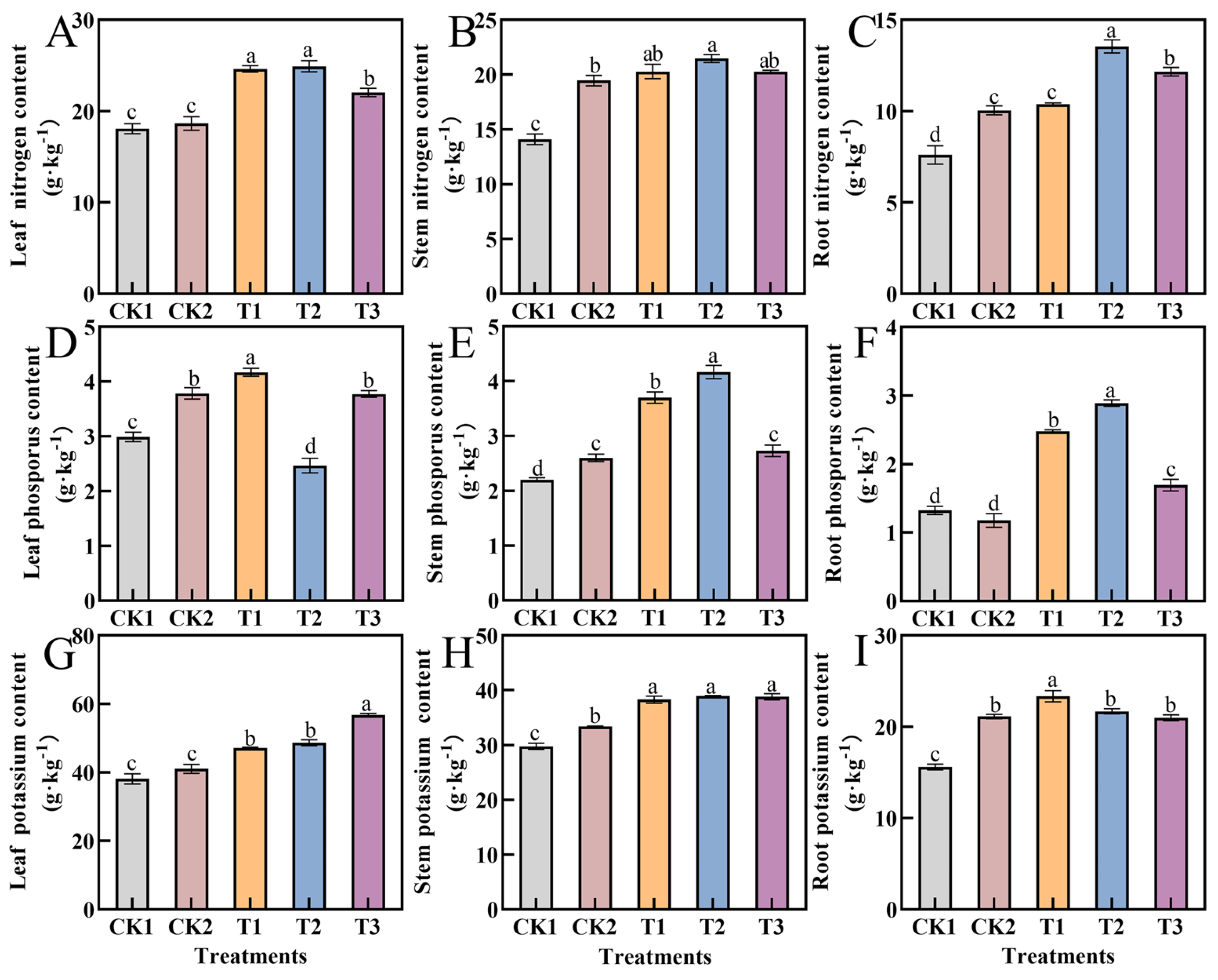
As shown in Figure 2, straw mulching promoted the accumulation of N, P, and K in the leaves, stems, and roots. For nitrogen (N), T2 maintained the highest level in all organs of plants (leaves: 24.92 g·kg−1; stems: 21.48 g·kg−1; roots: 13.55 g·kg−1), which increased by 33.50%, 10.40%, and 34.83% compared to CK2, respectively. Leaf phosphorus (P) content was the highest under the T1 treatment (4.17 g·kg−1), which was 39.41%, 10.17%, 68.83%, and 10.51% higher than that under CK1, CK2, T2, and T3, respectively. The P content in both the stems and roots reached its maximum under T2 (4.17 and 2.89 g·kg−1), which increased by 60.29% and 145.26% compared to CK2, respectively. The K content in the leaves reached the maximum under T3 (47.25 g·kg−1), being 147.81% and 130.11% higher than that under CK1 and CK2, respectively. The stem K content was the highest under T2 (38.98 g·kg−1), exceeding that of CK1 and CK2 by 30.89% and 16.77%. Meanwhile, the root K content reached the maximum under T1 (20.98 g·kg−1), being 49.68%, 10.49%, 7.60%, and 11.28% higher than that under CK1, CK2, T2, and T3, respectively.

3.3. Effect of Different Mulching Treatments on Nutritional Quality of Cauliflower Heads

3.3.1. Analysis of Soluble Sugar, Soluble Protein, Vitamin C, and Nitrate Content in Cauliflower Heads

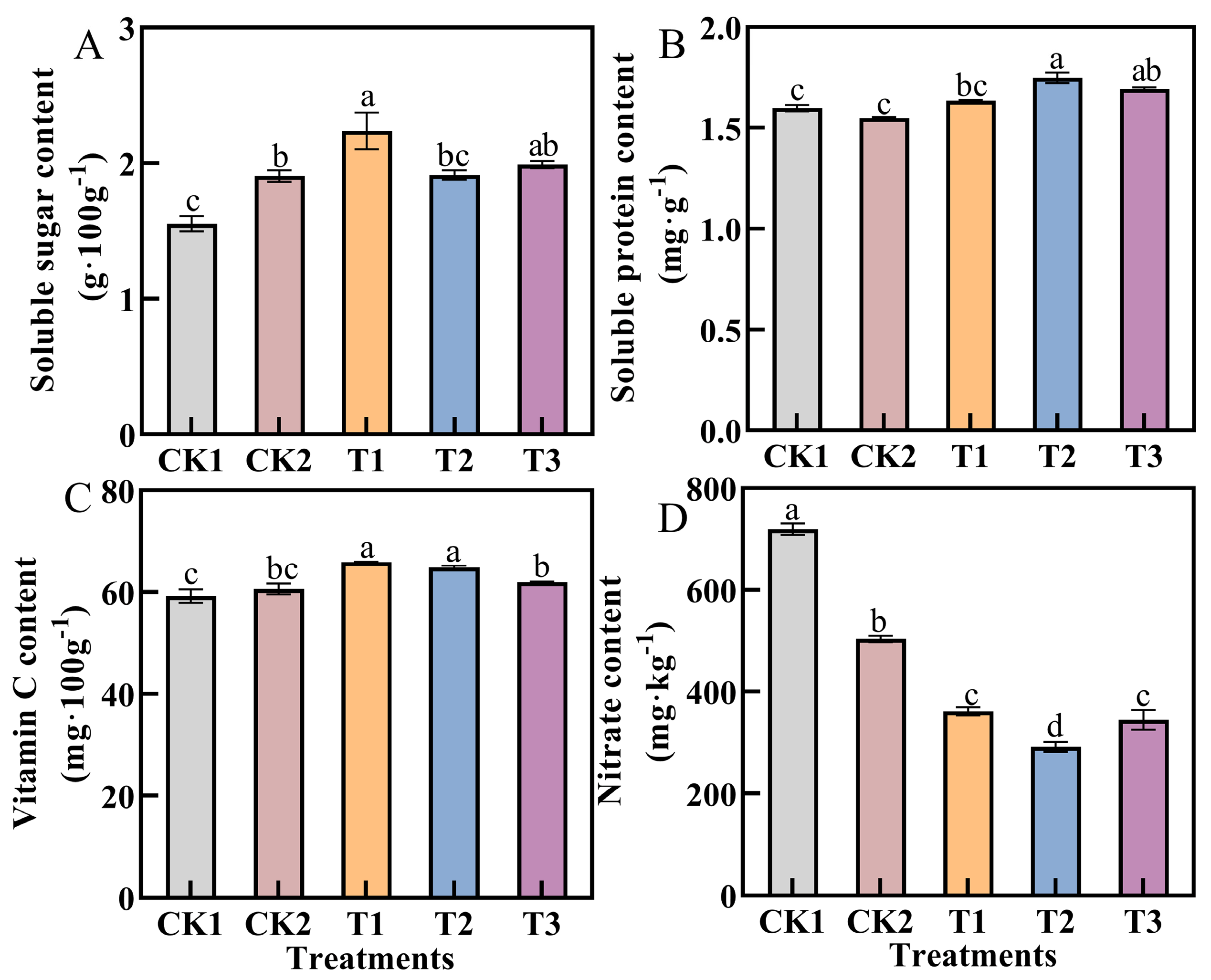
Different mulching treatments had significant effects on the soluble sugar, soluble protein, vitamin C, and nitrate contents of cauliflower heads. The soluble sugar content was the highest under the T1 treatment (2.24 g·100 g−1), being 44.21%, 17.43%, and 25.69% higher than that under the CK1, CK2, and T2 treatments, respectively. No significant differences were observed between the T1 and T3 treatments (Figure 3A). The soluble protein content reached the maximum under the T2 treatment (1.75 mg·g−1), being 9.35%, 13.10%, and 6.87% higher than that under the CK1, CK2, and T1 treatments, respectively. The soluble protein content under T3 was also significantly higher than that under the CK1 and CK2 treatments, while no significant difference was observed between the T2 and T3 treatments (Figure 3B). For vitamin C, the maximum content was recorded under T1 (65.91 mg·100 g−1), exceeding that in CK1, CK2, and T3 by 11.25%, 8.68%, and 6.42%, respectively. T1 and T2 showed no significant difference in vitamin C content (Figure 3C). The nitrate content under the T1, T2, and T3 treatments was significantly lower than that under the CK1 and CK2 treatments, while no significant differences were observed among the T1 and T3 treatments (Figure 3D).

3.3.2. Analysis of Mineral Element Contents in Cauliflower Heads

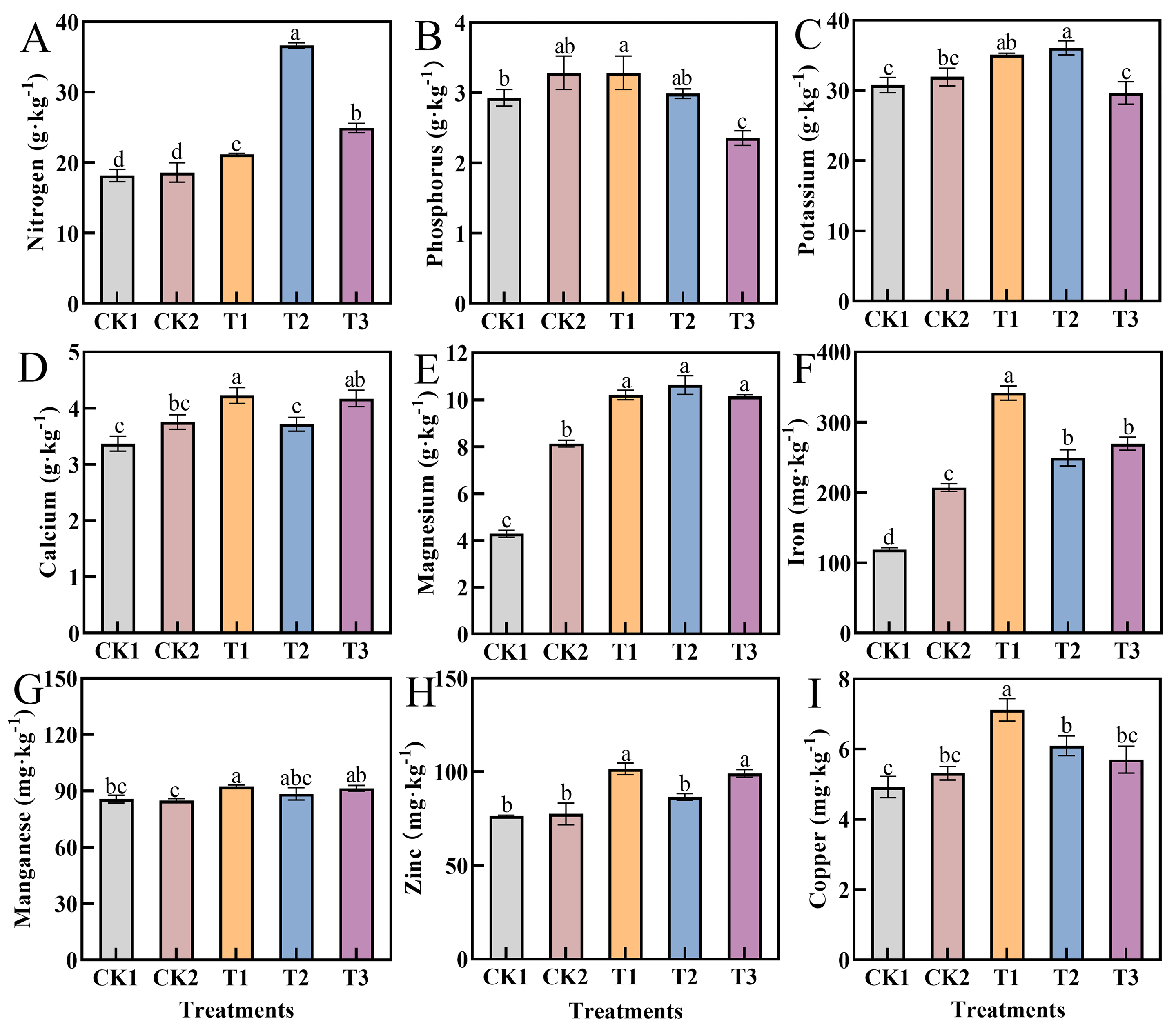
Different mulching treatments had significant effects on the mineral element contents of the cauliflower heads (Figure 4). Overall, straw mulching (T1, T2, and T3) consistently led to higher mineral content compared to the control group (CK2), with T1 and T2 showing distinct advantages for different sets of elements. Specifically, the T1 treatment had a significant effect in promoting the accumulation of meso- (calcium) and micro-elements (iron, manganese, zinc, copper), and their contents increased by 12.44%, 64.81%, 9.07%, 31.04%, and 33.94% compared to the CK2 treatment, respectively (Figure 4D,F–I). In contrast, the T2 treatment had a significant effect in promoting the accumulation of macro- (nitrogen, potassium) and meso- (magnesium) elements, and their contents increased by 96.88%, 45.83%, and 30.47% compared to the CK2 treatment, respectively (Figure 4A,C,E). However, the phosphorus (P) content did not differ significantly among the CK2, T1, and T2 treatments (Figure 4B).

3.3.3. Principal Component Analysis and Hierarchical Cluster Analysis of Nutritional Quality of Cauliflower Heads

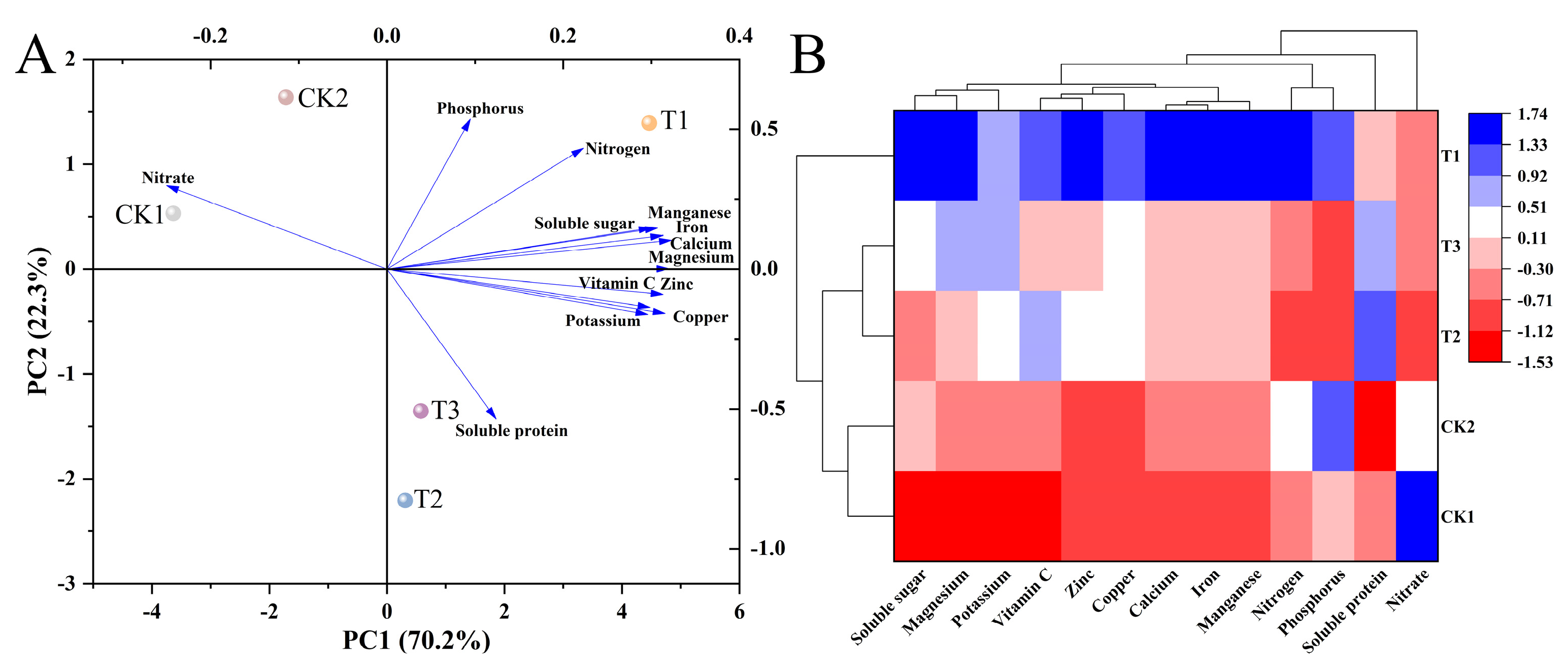
The comprehensive multivariate classification results for cauliflower nutritional quality under different mulching treatments are shown in Figure 5. The combined model of principal component analysis (PCA) and hierarchical cluster analysis (HCA) effectively distinguished the five treatments into three groups based on 13 nutritional quality parameters. The PCA revealed that the first two principal components accounted for 92.5% of the total variance (PC1: 70.2%; PC2: 22.3%). The loading plot shows that calcium, magnesium, and copper had higher loading values on the first principal component, while nitrogen, phosphorus, and nitrate similarly showed higher loading values on the second principal component, indicating that these six nutrients can representatively reflect the response characteristics under different mulching treatments. The PCA results showed that the T1 treatment was located in the first quadrant, the CK1 and CK2 treatments were distributed in the second quadrant, and the T2 and T3 treatments were located in the fourth quadrant. The HCA results showed that each treatment could be divided into three groups: T1 alone constituted the first group, CK1 and CK2 were classified into the second group, and T2 and T3 were clustered into the third group.

3.4. Effects of Different Mulching Treatments on Cauliflower Yield and Water Utilization

3.4.1. Analysis of Cauliflower Yield and Water Utilization in Cauliflower

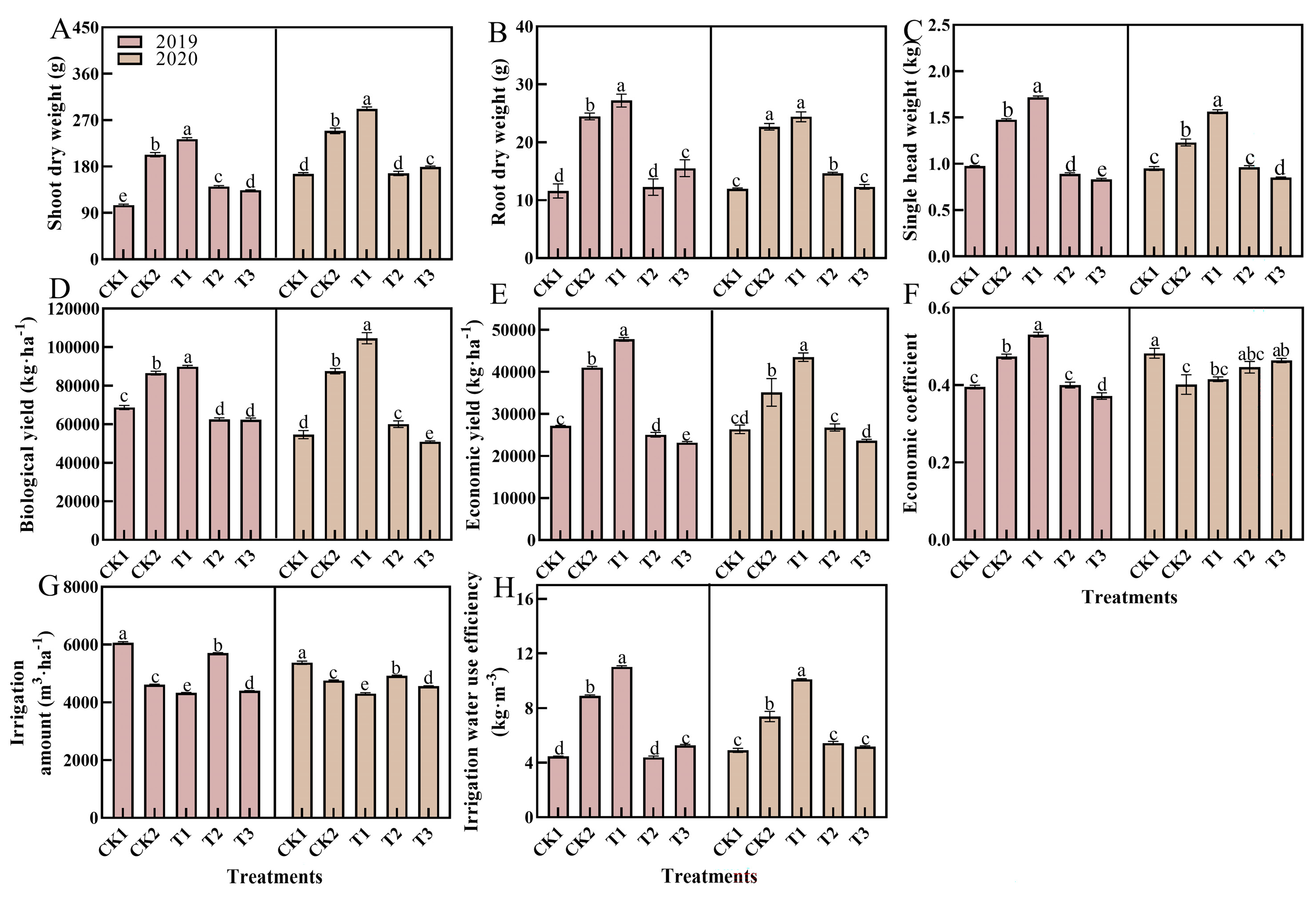
The different mulching treatments had significant effects on the dry matter accumulation, yield, and water utilization of the cauliflowers. In both 2019 and 2020, the T1 treatment resulted in significantly higher shoot and root dry weights compared to all the other treatments (CK1, CK2, T2, and T3) (Figure 6A,B). Similarly, the single head weight under T1 was the greatest, significantly exceeding that of the other treatments (Figure 6C). The biological yield under T1 reached 89,896.61 and 104,681.94 kg·ha−1 in 2019 and 2020, respectively, which was 30.82% to 105.45% higher than the yields in the other treatments (Figure 6D). Economic yield also peaked under T1 (47,715.20 kg·ha−1 in 2019 and 43,466.17 kg·ha−1 in 2020), representing a significant increase of 16.36% to 106.14% over the other treatments (Figure 6E). Notably, the economic coefficient was the highest under T1 in 2019 but decreased significantly in 2020, falling below that of CK1 (Figure 6F). The irrigation amount was the lowest under T1 (4331.86 m3·ha−1 in 2019 and 4302.47 m3·ha−1 in 2020), representing reductions of 6.52–28.64% compared with the other treatments (Figure 6G). Consequently, irrigation water use efficiency was the highest under T1 (11.01 kg·m−3 in 2019 and 10.10 kg·m−3 in 2020), being 23.94–151.27% higher than that under CK1, CK2, T2, and T3 (Figure 6H).

3.4.2. Principal Component Analysis and Hierarchical Cluster Analysis of Yield and Water Utilization

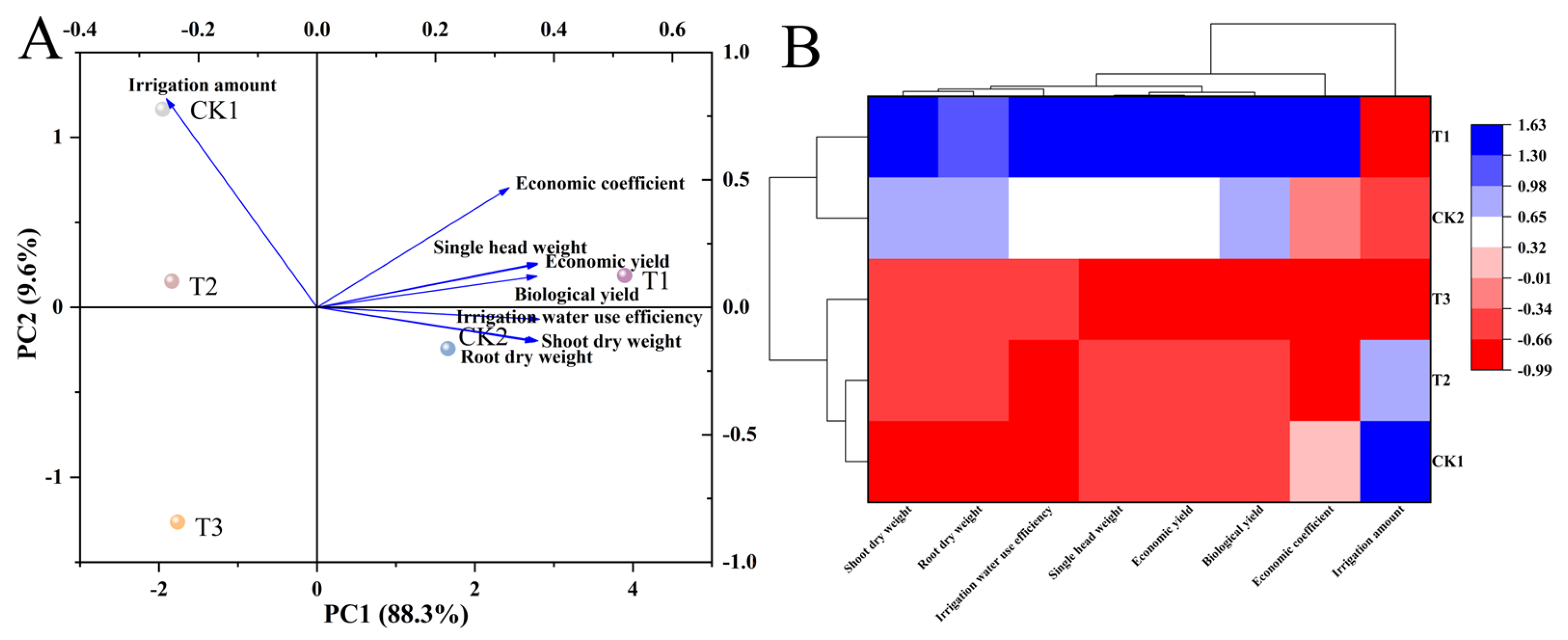
Figure 7 shows the comprehensive multivariate classification results of cauliflower yield and water utilization under different mulching treatments. The model combines principal component analysis (PCA) and hierarchical cluster analysis (HCA) and can effectively distinguish five treatment groups based on seven yield and water utilization parameters. The PCA results showed that the first two principal components cumulatively explained 97.9% of the total variance (PC1: 88.35%; PC2: 9.6%). The load plot shows that irrigation water use efficiency, shoot dry weight, and single head weight have higher load values on the first principal component, while irrigation amount and economic coefficient weight also show higher load values on the second principal component, indicating that these six indices can representatively reflect the response characteristics of yield and water use efficiency under different mulching treatments. The PCA results showed that the T1 treatment was located in the first quadrant, the CK1 and T2 treatments were distributed in the second quadrant, the T3 treatment was located in the third quadrant, and the CK2 treatment was located in the fourth quadrant. The HCA results showed that each treatment could be divided into three groups: T1 and CK2 were classified into the first group, T3 alone constituted the second group, and T2 and CK1 were clustered into the third group.

3.5. Effects of Different Mulching Treatments on Soil Properties

3.5.1. Analysis of Soil Properties in Cauliflower Soil

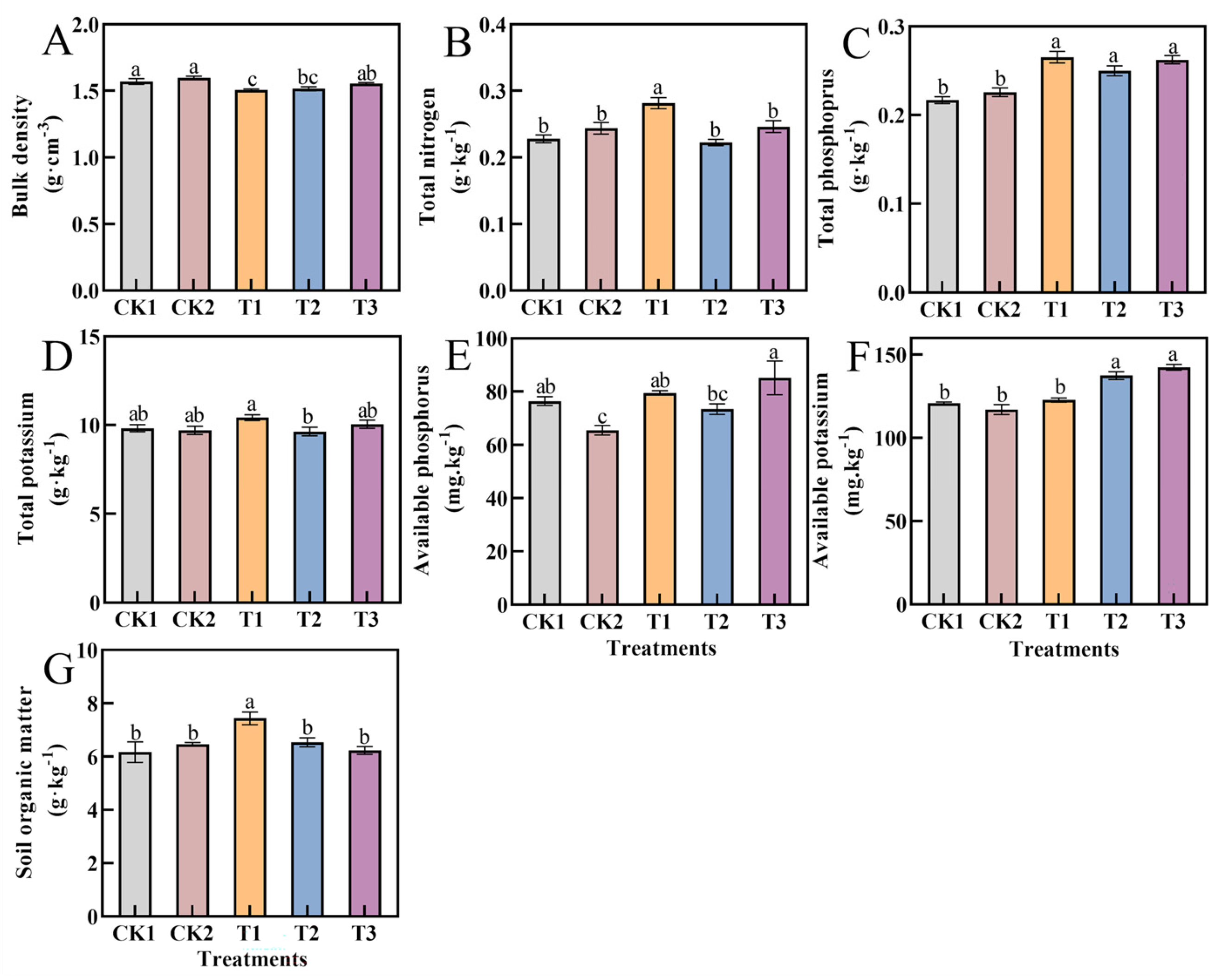
Different mulching treatments significantly affected soil properties. Soil bulk density was the lowest under T1 (1.51 g·cm−3), being 4.17%, 5.75%, and 3.25% lower than that under CK1, CK2, and T3, respectively. No significant difference in bulk density was observed between T1 and T2 (Figure 8A). The contents of soil total nitrogen, total phosphorus, and organic matter were all the highest under the T1 treatment, showing increases of 15.48%, 17.59%, and 14.90%, respectively, compared to CK2 (Figure 8B,C,G). There was no significant difference in soil total potassium content among the CK1, CK2, T2, and T3 treatments (Figure 8D). For soil available nutrients, both available phosphorus and available potassium reached their highest levels under the T3 treatment, with contents 29.98% and 21.65% higher than those in CK2, respectively (Figure 8E,F).

3.5.2. Principal Component Analysis and Hierarchical Cluster Analysis of Soil Properties

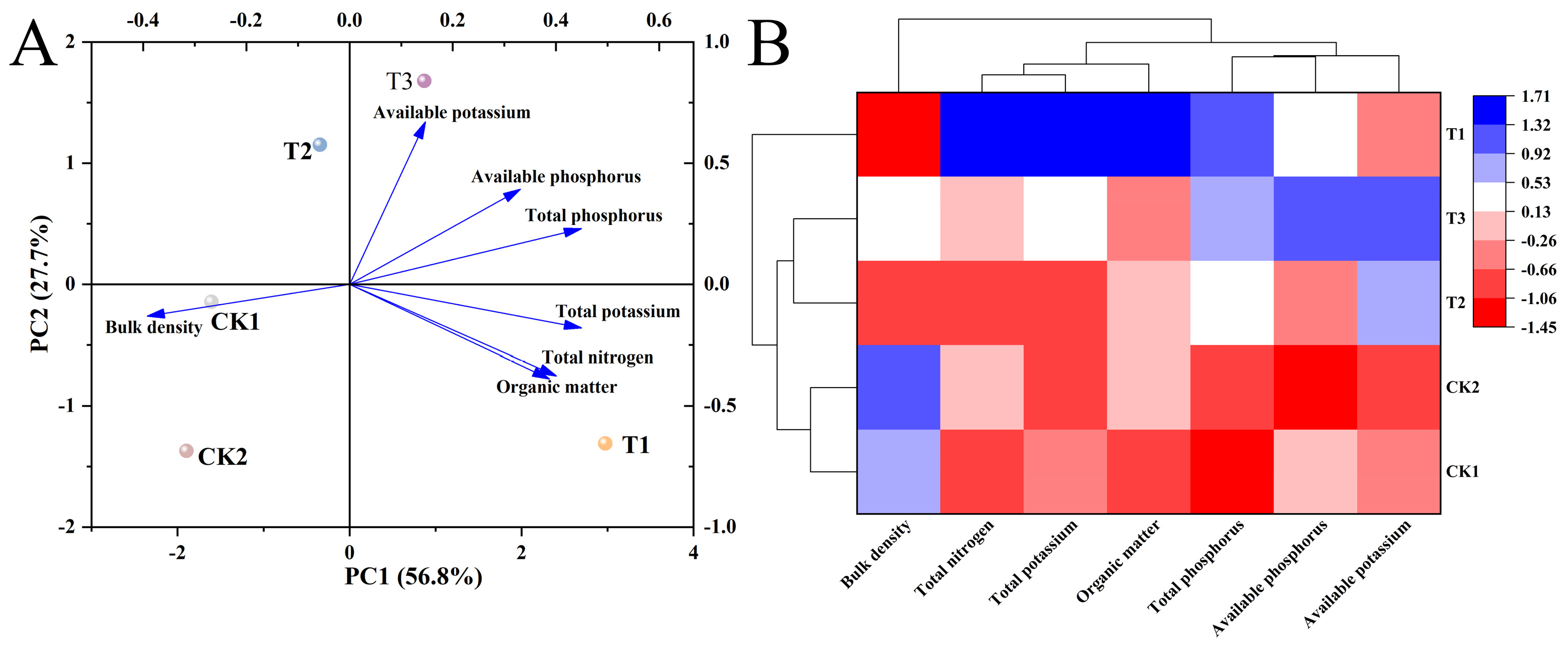
Figure 9 shows the comprehensive multivariate classification results of cauliflower soil properties under different mulching treatments. The model combines principal component analysis (PCA) and hierarchical cluster analysis (HCA) and can effectively classify five treatment groups based on seven soil property parameters. The PCA results showed that the first two principal components cumulatively explained 84.5% of the total variance (PC1: 56.8%; PC2: 27.7%). The loading diagram showed that total potassium, total phosphorus, and total nitrogen had higher loading values on the first principal component, while soil bulk density, available phosphorus, and available potassium also showed higher loading values on the second principal component, which indicated that these six soil properties indices could representatively reflect the response characteristics of different mulching methods. The PCA showed that T3 was located in the first quadrant, T2 was located in the second quadrant, CK1 and CK2 were located in the third quadrant, and T1 was located in the fourth quadrant. The HCA showed that each treatment could be divided into three groups: CK1 and CK2 were classified into the first group, T1 alone constituted the second group, and T2 and T3 were clustered into the third group.

4. Discussion

Plant height, stem diameter, and biomass are key morphological indicators reflecting the growth and development of vegetables. Straw mulching, as an effective agronomic practice, has been shown to promote crop growth and improve farmland ecosystem health [24]. For instance, previous studies reported that straw mulching and its combined application with a corn straw layer were found to promote the growth of sunflowers by increasing plant height, biomass, and the leaf area index [25]. In the present study, we found that compared to plastic film mulching alone, combined straw and plastic film mulching enhanced the growth of cauliflower, as manifested by increases in plant height, stem diameter, and whole plant fresh weight. This result could be attributed to the synergistic effect of straw and plastic film mulching improving the soil microenvironment [26,27]. On the one hand, plastic film mulching can increase soil temperature and reduce water evaporation; on the other hand, straw mulching can increase soil organic matter content and improve soil aeration. The combination of the two is beneficial to root growth and nutrient absorption, thus promoting the growth of aboveground parts. In contrast, full straw mulching may lead to excessively low soil temperature and high humidity, thereby inhibiting the growth and development of cauliflower. The results revealed that, compared to not applying mulching, applying straw mulch at a rate of 6000 kg·ha−1 promoted soybean growth and increased root dry and fresh weights [28]. The combined application of straw mulching and biochar enhanced multiple growth parameters of dryland maize, including plant height, stem diameter, leaf area index, and aboveground and belowground dry and fresh biomass [19]. Our study provides new insight by demonstrating that combined straw and plastic film mulching is an effective strategy for achieving optimal growth in cauliflower cultivation.
Nitrogen, phosphorus, and potassium are the three essential elements to maintain the normal growth and yield formation of a crop, and their distribution pattern in various organs of plants plays a decisive role in photosynthetic product accumulation, nutrient transportation, and economic yield formation [29]. The mineral element contents of a crop are influenced by factors such as crop variety, soil fertility, climatic conditions, and fertilizer type and quantity [30,31]. In this study, we found that straw mulching enhanced the contents of N, P, and K in the roots, stems, and leaves of cauliflower compared to no mulching and plastic film mulching alone. The mechanism behind this is analyzed as follows: Firstly, the decomposition process of straw can gradually release the N, P, and K contained in it; increase the content of available nutrients in the soil; and promote organic matter mineralization and nutrient cycling, thereby improving soil fertility [32]. Secondly, straw mulching helps to maintain the stability of soil moisture and temperature, improve soil aeration and aggregate structure, and then provide a more favorable environment for root growth. Enhanced root development not only enlarges the absorption area but also improves nutrient absorption efficiency [33]. Thirdly, straw mulching promotes the activity of soil microorganisms, which plays a key role in the process of organic matter decomposition and nutrient transformation, and allows for fuller nitrogen mineralization and fixation, phosphorus dissolution, and potassium activation, thus improving nutrient availability [34]. Similarly, a previous study found that, compared to no covering, organic covering promoted the accumulation of N, P, and K in lychee leaves [35]. A study on broad beans showed that applying rice straw mulch to the ridges promoted the accumulation of N, P, and K in the roots, stems, and leaves [36], which was consistent with the results of the current study. The main reason for this is that the decomposition of straw directly releases nutrients and enhances the activity of soil microorganisms, thereby significantly improving the supply capacity of available nitrogen, phosphorus and potassium in the soil [4]. As an effective agricultural management measure, straw mulching can improve soil fertility and optimize the rhizosphere microenvironment through various pathways (physical, chemical, and biological mechanisms). Thus, straw mulching practices are better for the absorption and accumulation of key nutrients (N, P, and K) in cauliflower.
The accumulated levels of soluble sugar, soluble protein, vitamin C, and mineral elements not only reflect the growth and metabolism of vegetables but also directly determine their nutritional quality and health value [37]. Straw mulching can gradually release a variety of nutrients during the decomposition process, which helps the crop achieve more balanced nutrient absorption during the whole growth period, thus effectively avoiding the occurrence of growth imbalance. This process steadily promotes the accumulation of beneficial components such as protein, sugar, and vitamins in fruit and significantly improves the quality and nutritional value of products [38]. Abouziena et al. [39] demonstrated that applying biodegradable paper made from plant straw as a mulch increased the vitamin C content and reduced the nitrate content of tomato fruits. We found that, compared with no mulching and plastic film mulching alone, combined straw and plastic film mulching significantly increased the soluble sugar content of cauliflower heads, and partial and full straw mulching substantially enhanced the soluble protein content. The combination of straw and plastic film mulching, as well as partial straw mulching, enhanced the vitamin C content in cauliflower heads, whereas full straw mulching decreased the nitrate content. Double mulching significantly improved the soluble sugar content. This may be due to the improvement in soil moisture retention and temperature stability caused by straw and plastic film mulching, enhancing the photosynthetic efficiency of leaves and thus promoting the accumulation of photosynthetic products in flower heads [40]. At the same time, the decomposition of straw releases nitrogen and promotes microbial activity and nitrogen mineralization, which enhances the ability of plants to absorb and assimilate nitrogen, thus promoting soluble protein synthesis [41]. Straw mulching has been shown to improve soil water and heat conditions, reduce environmental stress and increase vitamin C content [42]. Straw mulching decomposition releases carbon sources, promotes the fixation of nitrogen by soil microorganisms, and reduces the accumulation of nitrate nitrogen in soil [43]. A previous study demonstrated that straw mulching enhanced the soluble sugar content in tomatoes, a finding that aligns with the results of the present study [44]. One study also found that straw mulching increased the soluble protein content of corn kernels compared with no mulching [45]. Our results indicated that, compared with no mulching and plastic film mulching alone, straw mulching promoted the accumulation of N, K, Mg, Fe, Mn, Zn, and Cu in cauliflower heads. Consistent with these findings, a previous study demonstrated that straw mulching increased the contents of N, P, K, Ca, Mg, Fe, Mn, and Cu in tomatoes [46]. Straw supplements soil nutrients during decomposition, improves soil structure, increases cation exchange capacity and promotes the availability of trace elements; plastic film mulching can reduce water evaporation and nutrient leaching, stabilize soil temperature and humidity, and accelerate microbial activity and nutrient mineralization [47,48]. Although the results of this study show that straw mulching and plastic film mulching have significant advantages in promoting growth and improving cauliflower quality, growth physiological indices and quality traits are highly sensitive to climate factors, and their response effects may be affected by interannual climate variability. Therefore, it is necessary to carry out long-term localization tests in different years and climatic conditions to systematically evaluate the stability of these responses and their applicability in different environmental scenarios.
PCA and HCA can be used to clarify the changes in nutritional quality under different conditions. Jin et al. [49] used PCA and HCA to evaluate changes in the nutritional and flavor quality of tomatoes under different water deficit conditions. In our study, PCA indicated that calcium and nitrogen were identified as the key characterization factors for evaluating the nutritional quality of cauliflower under different mulching treatments. Calcium and nitrogen had strong loading values on the first and second principal components, respectively, and they could effectively reflect changes in nutritional quality resulting from different mulching methods. The PCA results showed that the T1 treatment was located in the first quadrant, the CK1 and CK2 treatments were distributed in the second quadrant, the T2 and T3 treatments were located in the fourth quadrant, and the T1 treatment was obviously separated from other treatments. This spatial pattern was verified with HCA.
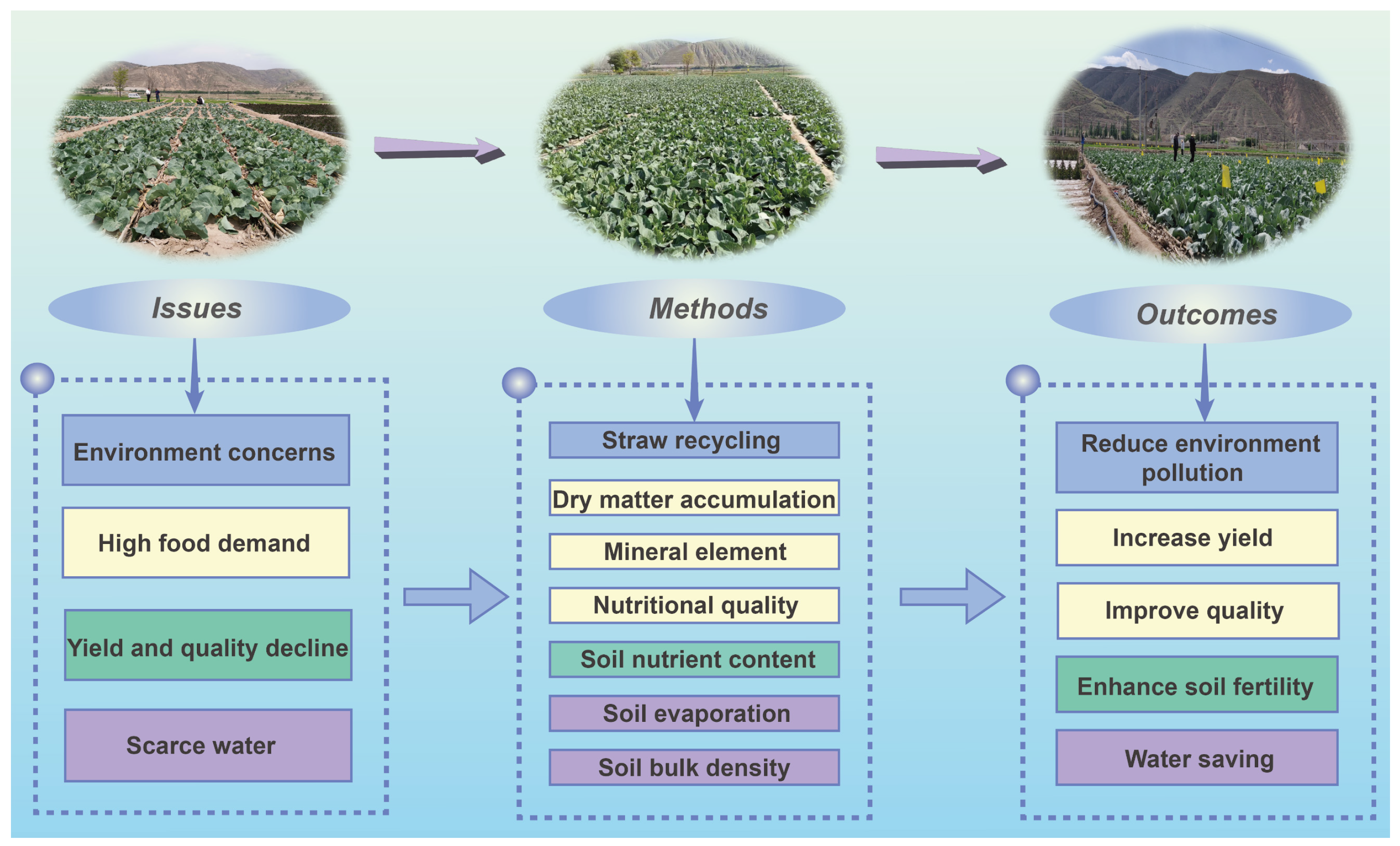
Straw mulching and straw return are considered effective production strategies for improving soil nutrient content and enhancing water use efficiency, which are very important for improving crop yield and conserving water resources [50,51]. Research found that the combination of straw and plastic film mulching increased grain yield by 4.9–15.8% and wheat yield by 4.7–14.8% [52]. The results of this study indicate that, compared with plastic film mulching, the combination of straw and plastic film mulching increased the economic yield and biological yield of cauliflower by an average of 20.08% and 11.73%, respectively, in two years. The practice of applying straw mulching in the furrows while using plastic film mulching on the ridges creates favorable temperature and moisture conditions for the growth of cauliflower. Moreover, seasonal straw return to the field can enhance soil microbial activity, enrich soil nutrient content, optimize soil structure, and stimulate crop growth and development, ultimately leading to higher crop yields [34]. Chen et al. [26] reported that, in a three-year field experiment conducted on the Loess Plateau, combined plastic film and straw mulching increased the water use efficiency of wheat by an average of 25.13% compared to plastic film mulching alone. Similarly, in a two-year field experiment conducted in northwestern China, we found that combined plastic film and straw mulching reduced irrigation requirements by 6.12–9.54% and enhanced IWUE by 23.94–36.88% in open-field cauliflower cultivation compared to plastic film mulching alone. Firstly, combined plastic film and straw mulching can better inhibit the evaporation of soil moisture and increases the infiltration rate of rainwater. Meanwhile, straw mulching can improve soil structure and increase soil water content, which is beneficial for efficient water utilization [53]. Therefore, combined straw and plastic film mulching is an effective measure for increasing the yield potential of crops in semi-arid areas. We observed that straw mulching decreased soil bulk density and enhanced the total P and available K contents in the soil. The combination of straw and plastic film mulching increased the total N, total K, and organic matter contents in the soil, while straw mulching alone elevated the available P content. When straw is incorporated into the field, its decomposition in the soil releases nutrients and promotes soil fertility. A previous study demonstrated that, compared to plastic film mulching, straw mulching raises the soil organic matter content and lowers soil bulk density [54]. Compared with no coverage, applying straw mulch at a depth of 10 cm and a rate of 5000 kg·ha−1 significantly increased the contents of organic C, total N, total P, total K, and alkaline N in the soil in the semi-arid Guanzhong region of China [55]. Multivariate statistical analysis (PCA and HCA) showed that yield and irrigation water use efficiency were the main driving factors to distinguish mulching treatments, and the binary mulching methods of straw and plastic film increased yield and IWUE at the same time. The findings of this study offer a practical foundation for enhancing the yield, IWUE, and quality of cauliflower through the integration of straw mulching and plastic film mulching (Figure 10). However, our next work will focus on the effects of straw mulching on soil temperature, soil properties, and soil microorganisms to verify the proposed mechanism of action.

5. Conclusions

In this study, we found that the combination of straw and plastic film mulching significantly promoted cauliflower growth by enhancing plant height, stem diameter, and both above- and belowground fresh weights. Straw mulching facilitated the accumulation of macronutrients (N, P, and K) in the roots, stems, and leaves. In particular, combined straw and plastic film mulching enhanced the content of soluble sugar and vitamin C while reducing nitrate levels. Furthermore, it stimulated the accumulation of essential nutrients (N, K, Ca, Mg, Fe, Mn, Zn, and Cu) in the cauliflower heads. Straw mulching also improved soil structure by reducing bulk density and increasing total phosphorus content. The full straw mulching treatment elevated available P and K levels in the soil, whereas combined straw and plastic film mulching significantly increased total N, total K, and organic matter contents, thereby markedly improving crop yield and irrigation water use efficiency by 20.08% and 30.41% compared to plastic film mulching, respectively. Overall, combined straw and plastic film mulching effectively enhanced cauliflower growth, increased yield, improved nutritional quality, and promoted soil fertility and water conservation by optimizing soil properties. These findings offer both theoretical support and practical guidance for optimizing the water conservation, yield, and quality of cauliflowers in arid and semi-arid regions.

Supplementary Materials

The following supporting information can be downloaded at https://www.mdpi.com/article/10.3390/agronomy16040482/s1, Figure S1: Detailed description of treatments. CK1, no mulching: No mulching applied to the plot; CK2, plastic film mulching: Film mulching applied to ridges; no mulching applied to trenches; T1, Straw and plastic film mulching: Film mulching applied to ridges; straw mulching applied to trenches; T2, Partial straw mulching: Straw mulching applied to trenches; no mulching applied to ridges; T3, Full straw mulching: Straw mulching applied to ridges and trenches.

Author Contributions

Conceptualization, J.Y. and Y.X.; Methodology, J.L.; Software, S.W.; Formal analysis, L.J. and S.W.; Investigation, L.J. and J.Y.; Resources, L.J., G.Z. and N.J.; Data curation, Y.X., J.L., S.W., L.J. and N.J.; Writing—original draft, Y.X.; Writing—review and editing, Y.X. and G.Z.; Visualization, J.L. and G.Z.; Funding acquisition, J.Y. and J.L. All authors have read and agreed to the published version of the manuscript.

Funding

This work was supported by the Major Science and Technology Special Projects in Gansu Province (23ZDNA008); Modern agricultural science and technology support project with cold and drought characteristics (KJZC-2026-10); Gansu Province Key Research and Development Program (24YFNA018); the Special Project of Central Government Guiding Local Science and Technology Development (23ZYQA0322); Longyuan Youth Talent Project in Gansu Province (LYYC-2023-02); and Fuxi Young Talents Fund of Gansu Agricultural University (GAUfx-04Y03).

Institutional Review Board Statement

Not applicable.

Informed Consent Statement

Not applicable.

Data Availability Statement

The original contributions presented in this study are included in the article. Further inquiries can be directed to the corresponding author.

Conflicts of Interest

The authors declare no conflicts of interest.

Abbreviations

HCAHierarchical Cluster Analysis
PCAPrincipal Component Analysis
IWUEIrrigation Water Use Efficiency

References

  1. Angon, P.B.; Anjum, N.; Akter, M.M.; Suma, R.P.; Jannat, S. An overview of the impact of tillage and cropping systems on soil health in agricultural practices. Adv. Agric. 2023, 2023, 8861216. [Google Scholar] [CrossRef]
  2. Pahalvi, H.N.; Rafiya, L.; Rashid, S.; Nisar, B.; Kamili, A.N. Chemical fertilizers and their impact on soil health. Microbiota Biofertil. 2021, 2, 1–20. [Google Scholar] [CrossRef]
  3. Chukalla, A.D.; Reidsma, P.; Vliet, M.T.; Silva, J.V.; van Ittersum, M.K.; Jomaa, S.; Rode, M.; Merbach, I.; van Oel, P.R. Balancing indicators for sustainable intensification of crop production at field and river basin levels. Sci. Total Environ. 2020, 705, 135925. [Google Scholar] [CrossRef] [PubMed]
  4. Chai, Y.W.; Chai, Q.; Han, F.X.; Li, Y.W.; Ma, J.T.; Li, R.; Cheng, H.; Chang, L.; Chai, S. Increasing yields while reducing soil nutrient accumulation by straw strip mulching in the dryland wheat (Triticum aestivum L.) cropping system of Northwest China. Agric. Ecosyst. Environ. 2022, 326, 107797. [Google Scholar] [CrossRef]
  5. Qi, R.M.; Tang, Y.Y.; Jones, D.L.; He, W.Q.; Yan, C.G. Occurrence and characteristics of microplastics in soils from greenhouse and open-field cultivation using plastic mulch film. Sci. Total Environ. 2023, 905, 166935. [Google Scholar] [CrossRef]
  6. Francioni, M.; Kishimoto-Mo, A.W.; Tsuboi, S.; Hoshino, Y.T. Evaluation of the mulch films biodegradation in soil: A methodological review. Ital. J. Agron. 2022, 17, 1936. [Google Scholar] [CrossRef]
  7. Khalid, N.; Aqeel, M.; Noman, A.; Rizvi, Z.F. Impact of plastic mulching as a major source of microplastics in agroecosystems. J. Hazard. Mater. 2023, 445, 130455. [Google Scholar] [CrossRef]
  8. Kaur, L.; Kaur, A.; Brar, A. Water use efficiency of green gram (Vigna radiata L.) impacted by paddy straw mulch and irrigation regimes in north-western India. Agric. Water Manag. 2021, 258, 107184. [Google Scholar] [CrossRef]
  9. Mubarak, M.; Salem, E.M.; Kenawey, M.K.; Saudy, H.S. Changes in calcareous soil activity, nutrient availability, and corn productivity due to the integrated effect of straw mulch and irrigation regimes. J. Soil Sci. Plant Nutr. 2021, 21, 2020–2031. [Google Scholar] [CrossRef]
  10. Visconti, F.; Peiró, E.; Pesce, S.; Balugani, E.; Baixauli, C.; de Paz, J.M. Straw mulching increases soil health in the inter-row of citrus orchards from Mediterranean flat lands. Eur. J. Agron. 2024, 155, 127115. [Google Scholar] [CrossRef]
  11. Ramadhan, M.N. Significance of tillage techniques on amelioration of some soil properties and maize production: A review. Int. J. Agric. Stat. Sci. 2023, 19. [Google Scholar] [CrossRef]
  12. Yang, L.; Zhou, J.; Zamanian, K.; Zhang, K.; Zhao, J.; Zang, H.; Yang, Y.; Zeng, Z. Peanut straw application rate had a greater effect on decomposition and nitrogen, potassium and phosphorus release than irrigation. Plant Soil 2024, 499, 193–205. [Google Scholar] [CrossRef]
  13. Yin, W.; Chai, Q.; Guo, Y.; Feng, F.; Zhao, C.; Yu, A.; Hu, F. Analysis of leaf area index dynamic and grain yield components of intercropped wheat and maize under straw mulch combined with reduced tillage in arid environ-ments. J. Agric. Sci. 2016, 8, 26–42. [Google Scholar] [CrossRef]
  14. Yin, W.; Fan, Z.; Hu, F.; Fan, H.; He, W.; Zhao, C.; Yu, A.; Chai, Q. No-tillage with straw mulching promotes wheat production via regulating soil drying-wetting status and reducing soil-air temperature variation at arid regions. Eur. J. Agron. 2023, 145, 126778. [Google Scholar] [CrossRef]
  15. Noor, M.A.; Nawaz, M.M.; Ma, W.; Zhao, M. Wheat straw mulch improves summer maize productivity and soil properties. Ital. J. Agron. 2021, 16, 1623. [Google Scholar] [CrossRef]
  16. Yan, W.W.; Jiang, J.Z.; Zhu, L.L.; Zhang, L.; Li, H.P.; Gu, J.F. Straw mulching improves soil fertility and productivity of water spinach (ipomoea aquatica forsk.) under plastic tunnel. Commun. Soil Sci. Plant Anal. 2021, 52, 2958–2970. [Google Scholar] [CrossRef]
  17. Samui, I.; Skalicky, M.; Sarkar, S.; Brahmachari, K.; Sau, S.; Ray, K.; Hossain, A.; Ghosh, A.; Nanda, M.K.; Bell, R.W.; et al. Yield response, nutritional quality and water productivity of tomato (Solanum lycopersicum L.) are influenced by drip irrigation and straw mulch in the coastal saline ecosystem of Ganges delta, India. Sustainability 2020, 12, 6779. [Google Scholar] [CrossRef]
  18. Akhtar, K.; Wang, W.; Ren, G.; Khan, A.; Feng, Y.; Yang, G.H.; Wang, H. Integrated use of straw mulch with nitrogen fertilizer improves soil functionality and soybean production. Environ. Int. 2019, 132, 105092. [Google Scholar] [CrossRef]
  19. Khan, I.; Luan, C.; Qi, W.; Wang, X.; Yu, B.; Rehman, A.; Khan, A.A.; Khan, J.; Li-Xue, W. The residual impact of straw mulch and biochar amendments on grain quality and amino acid contents of rainfed maize crop. J. Plant Nutr. 2023, 46, 1283–1295. [Google Scholar] [CrossRef]
  20. Zhang, Z.Y.; Liu, D.B.; Wu, M.Q.; Xia, Y.; Zhang, F.L.; Fan, X.P. Long-term straw returning improve soil K balance and potassium supplying ability under rice and wheat cultivation. Sci. Rep. 2021, 11, 22260. [Google Scholar] [CrossRef]
  21. Wang, X.; Jia, Z.; Liang, L.; Zhao, Y.; Yang, B.; Ding, R.; Wang, J.; Nie, J. Changes in soil characteristics and maize yield under straw returning system in dryland farming. Field Crops Res. 2018, 218, 11–17. [Google Scholar] [CrossRef]
  22. Xie, Y.; Li, J.; Jin, L.; Wei, S.; Wang, S.; Jin, N.; Wang, J.; Xie, J.; Feng, Z.; Zhang, G.; et al. Combined straw and plastic film mulching can increase the yield and quality of open field loose-curd cauliflower. Front. Nutr. 2022, 9, 888728. [Google Scholar] [CrossRef]
  23. Jin, L.; Jin, N.; Wang, S.; Huang, S.; Yang, X.; Xu, Z.; Jiang, S.; Lyu, J.; Yu, J. Moderate salt stress aids in the enhancement of nutritional and flavor quality in tomato (Solanum lycopersicum L.) fruits. Food Chem. X 2025, 26, 102330. [Google Scholar] [CrossRef] [PubMed]
  24. Mazuecos-Aguilera, I.; Salazar, S.; Hidalgo-Castellanos, J.; Ortiz-Liébana, N.; López-Bornay, P.; González-Andrés, F. Combined application of N-fixing PGPB and rice straw mulch compensates N immobilization by straw, improving crop growth. Chem. Biol. Technol. Agric. 2024, 11, 31. [Google Scholar] [CrossRef]
  25. Zhao, Y.G.; Pang, H.C.; Wang, J.; Huo, L.; Li, Y.Y. Effects of straw mulch and buried straw on soil moisture and salinity in relation to sunflower growth and yield. Field Crops Res. 2014, 161, 16–25. [Google Scholar] [CrossRef]
  26. Chen, Y.L.; Liu, T.; Tian, X.H.; Wang, X.F.; Li, M.; Wang, S.X.; Wang, Z. Effects of plastic film combined with straw mulch on grain yield and water use efficiency of winter wheat in Loess Plateau. Field Crops Res. 2015, 172, 53–58. [Google Scholar] [CrossRef]
  27. Thakur, M.; Kumar, R. Mulching: Boosting crop productivity and improving soil environment in herbal plants. J. Appl. Res. Med. Aroma. 2021, 20, 100287. [Google Scholar] [CrossRef]
  28. Akhtar, K.; Wang, W.; Khan, A.; Ren, G.; Afridi, M.Z.; Feng, Y.; Yang, G. Wheat straw mulching offset soil moisture deficient for improving physiological and growth performance of summer sown soybean. Agric. Water Manag. 2019, 211, 16–25. [Google Scholar] [CrossRef]
  29. Jiaying, M.; Tingting, C.; Jie, L.; Weimeng, F.; Baohua, F.; Guangyan, L.; Hubo, L.; Juncai, L.; Zhihai, W.; Longxing, T.; et al. Functions of nitrogen, phosphorus and potassium in energy status and their influences on rice growth and development. Rice Sci. 2022, 29, 166–178. [Google Scholar] [CrossRef]
  30. Wang, G.P.; Wang, J.Z.; Han, X.P.; Chen, R.; Xue, X.M. Effects of spraying calcium fertilizer on photosynthesis, mineral content, sugar–acid metabolism and fruit quality of Fuji apples. Agronomy 2022, 12, 2563. [Google Scholar] [CrossRef]
  31. Iglesias, I.; Giné-Bordonaba, J.; Garanto, X.; Reig, G. Rootstock affects quality and phytochemical composition of ‘Big Top’nectarine fruits grown under hot climatic conditions. Sci. Hortic. 2019, 256, 108586. [Google Scholar] [CrossRef]
  32. Chen, L.M.; Yang, S.Q.; Gao, J.F.; Chen, L.; Ning, H.Y.; Hu, Z.; Lu, J.; Tan, X.; Zeng, Y.; Pan, X.; et al. Long-term straw return with reducing chemical fertilizers application improves soil nitrogen mineralization in a double rice-cropping system. Agronomy 2022, 12, 1767. [Google Scholar] [CrossRef]
  33. Yang, H.K.; Li, J.H.; Wu, G.; Huang, X.L.; Fan, G.Q. Maize straw mulching with no-tillage increases fertile spike and grain yield of dryland wheat by regulating root-soil interaction and nitrogen nutrition. Soil Tillage Res. 2023, 228, 105652. [Google Scholar] [CrossRef]
  34. Nyamwange, M.M.E.; Njeru, E.M.; Mucheru-Muna, M. Tillage, mulching and nitrogen fertilization differentially affects soil microbial biomass, microbial populations and bacterial diversity in a maize cropping system. Front. Sustain. Food Syst. 2021, 5, 614527. [Google Scholar] [CrossRef]
  35. Das, K.; Sau, S.; Sarkar, T.; Dutta, P. Effect of organic mulches on yield, physico-chemical qualities and leaf mineral composition of litchi cv. Bombai Indo-Gangetic Plain West Bengal. J. Crop Weed 2016, 12, 67–69. [Google Scholar]
  36. Li, B.; Chen, X.Y.; Shi, X.X.; Liu, J.; Wei, Y.F.; Xiong, F. Effects of ridge tillage and straw mulching on cultivation the fresh faba beans. Agronomy 2021, 11, 1054. [Google Scholar] [CrossRef]
  37. Kamal, M.M.; Haque, S.; Suvo, T.K.; Akter, P.; Mia, M.S.; Shah, M.S.S.; Islam, N.; Chowdhury, G.F. Nutritional Composition, Mineral Profile, Bioactive Phytochemicals, and Antioxidant Activities of Selected Edible Weeds: A Comprehensive Analysis. Food Sci. Nutr. 2025, 13, 70635. [Google Scholar] [CrossRef]
  38. Sekhon, K.S.; Kaur, A.; Thaman, S.; Sidhu, A.S.; Garg, N.; Choudhary, O.P.; Buttar, G.; Chawla, N. Irrigation water quality and mulching effects on tuber yield and soil properties in potato (Solanum tuberosum L.) under semi-arid conditions of Indian Punjab. Field Crops Res. 2020, 247, 107544. [Google Scholar] [CrossRef]
  39. Abouziena, H.F.; Hafez, O.M.; El-Metwally, I.M.; Sharma, S.D.; Singh, M. Comparison of weed suppression and mandarin fruit yield and quality obtained with organic mulches, synthetic mulches, cultivation, and glyphosate. Hortscience 2008, 43, 795–799. [Google Scholar] [CrossRef]
  40. Al-Qthanin, R.N.; AbdAlghafar, I.M.; Mahmoud, D.S.; Fikry, A.M.; AlEnezi, N.A.; Elesawi, I.E.; AbuQamar, S.F.; Gad, M.M.; El-Tarabily, K.A. Impact of rice straw mulching on water consumption and productivity of orange trees [Citrus sinensis (L.) Osbeck]. Agric. Water Manag. 2024, 298, 108862. [Google Scholar] [CrossRef]
  41. Hou, R.J.; Li, T.X.; Fu, Q.; Liu, D.; Li, M.; Zhou, Z.Q.; Li, Q.; Zhao, H.; Yu, P.; Yan, J. The effect on soil nitrogen mineralization resulting from biochar and straw regulation in seasonally frozen agricultural ecosystem. J. Clean. Prod. 2020, 255, 120302. [Google Scholar] [CrossRef]
  42. Meyer, M.; Diehl, D.; Schaumann, G.E.; Muñoz, K. Multiannual soil mulching in agriculture: Analysis of biogeo-chemical soil processes under plastic and straw mulches in a 3-year field study in strawberry cultivation. J. Soils Sediments 2021, 21, 3733–3752. [Google Scholar] [CrossRef]
  43. Li, Z.K.; Shen, Y.; Zhang, W.Y.; Zhang, H.; Liu, L.J.; Wang, Z.Q.; Gu, J.; Yang, J. Effects of long-term straw returning on rice yield and soil properties and bacterial community in a rice-wheat rotation system. Field Crops Res. 2023, 291, 108800. [Google Scholar] [CrossRef]
  44. Feng, X.; Xu, Y.; Liu, D.; Peng, L.; Dong, J.; Yao, S.; Feng, Y.; Feng, Z.; Li, F.; Hu, B. Effects of organic cultivation pattern on tomato production: Plant growth characteristics, quality, disease resistance, and soil physical and chemical properties. Acta Sci. Pol. Hortorum Cultus 2020, 19, 71–84. [Google Scholar] [CrossRef]
  45. Fahad, S.; Ali, I.; Hussain, I.; Ahmad, D.; Saud, S.; Dawar, K.; Danish, S.; Datta, R.; Hassan, S.; Liu, H.; et al. Modulation of maize growth, yield and soil enzymes activities by introducing wheat straw mulching and tillage practices. Plant Soil 2024, 496, 699–719. [Google Scholar] [CrossRef]
  46. Dukare, A.; Kannaujia, P.; Kale, S.; Indore, N.; Singh, R.K.; Ram, S. Plastic film and organic mulching increases rhizosphere microbial population, plant growth, and mineral uptake in low input grown tomato in the northwest-ern region of India. J. Plant Nutr. 2020, 44, 814–828. [Google Scholar] [CrossRef]
  47. Ren, A.T.; Li, J.Y.; Zhao, L.; Zhou, R.; Ye, J.S.; Wang, Y.B.; Zhang, X.-C.; Wesly, K.; Ma, M.-S.; Xiong, Y.-C. Reduced plastic film mulching under zero tillage boosts water use efficiency and soil health in semiarid rainfed maize field. Resour. Conserv. Recycl. 2023, 190, 106851. [Google Scholar] [CrossRef]
  48. Luo, L.C.; Hui, X.L.; Zheng, X.F.; Wang, Z.H.; Chen, Y.L.; Wu, J. Integrated straw return and nitrogen management improve grain zinc in wheat grown on calcareous soils. Field Crops Res. 2025, 334, 110139. [Google Scholar] [CrossRef]
  49. Jin, N.; Zhang, D.; Jin, L.; Wang, S.Y.; Yang, X.T.; Lei, Y.Z.; Meng, X.; Xu, Z.; Sun, J.; Lyu, J.; et al. Controlling water deficiency as an abiotic stress factor to improve tomato nutritional and flavour quality. Food Chem. X 2023, 19, 100756. [Google Scholar] [CrossRef]
  50. Qin, X.L.; Huang, T.T.; Lu, C.; Dang, P.F.; Zhang, M.M.; Guan, X.-K.; Wen, P.-F.; Wang, T.-C.; Chen, Y.; Siddique, K.H. Benefits and limitations of straw mulching and incorporation on maize yield, water use efficiency, and nitrogen use efficiency. Agric. Water Manag. 2021, 256, 107128. [Google Scholar] [CrossRef]
  51. Li, H.T.; Wang, L.; Peng, Y.; Lv, S.Q.; Li, J.; Yang, Z.Y.; Zhang, S.; Abdo, A.I.; Zhou, C.; Wang, L. Fate of fertilizer nitrogen from a winter wheat field under film mulching and straw retention practices. Nutr. Cycl. Agroecosystems 2023, 125, 123–136. [Google Scholar] [CrossRef]
  52. Yin, W.; Chai, Q.; Guo, Y.; Fan, H.; Fan, Z.L.; Hu, F.L.; Zhao, C.; Yu, A. The physiological and ecological traits of strip man-agement with straw and plastic film to increase grain yield of intercropping wheat and maize in arid conditions. Field Crops Res. 2021, 271, 108242. [Google Scholar] [CrossRef]
  53. Yin, W.; Chai, Q.; Fan, Z.L.; Hu, F.L.; Fan, H.; Guo, Y.; Zhao, C.; Yu, A. Energy budgeting, carbon budgeting, and carbon footprints of straw and plastic film management for environmentally clean of wheat-maize intercropping system in northwestern China. Sci. Total Environ. 2022, 826, 154220. [Google Scholar] [CrossRef]
  54. Javed, A.; Iqbal, M.; Shehzadi, R. Effect of plastic film and straw mulch on wheat yield, water use efficiency and soil properties in Punjab, Pakistan. J. Bioresour. Manag. 2020, 7, 5. [Google Scholar] [CrossRef]
  55. Akhtar, K.; Wang, W.Y.; Ren, G.X.; Khan, A.; Feng, Y.Z.; Yang, G.H. Changes in soil enzymes, soil properties, and maize crop productivity under wheat straw mulching in Guanzhong, China. Soil Tillage Res. 2018, 182, 94–102. [Google Scholar] [CrossRef]
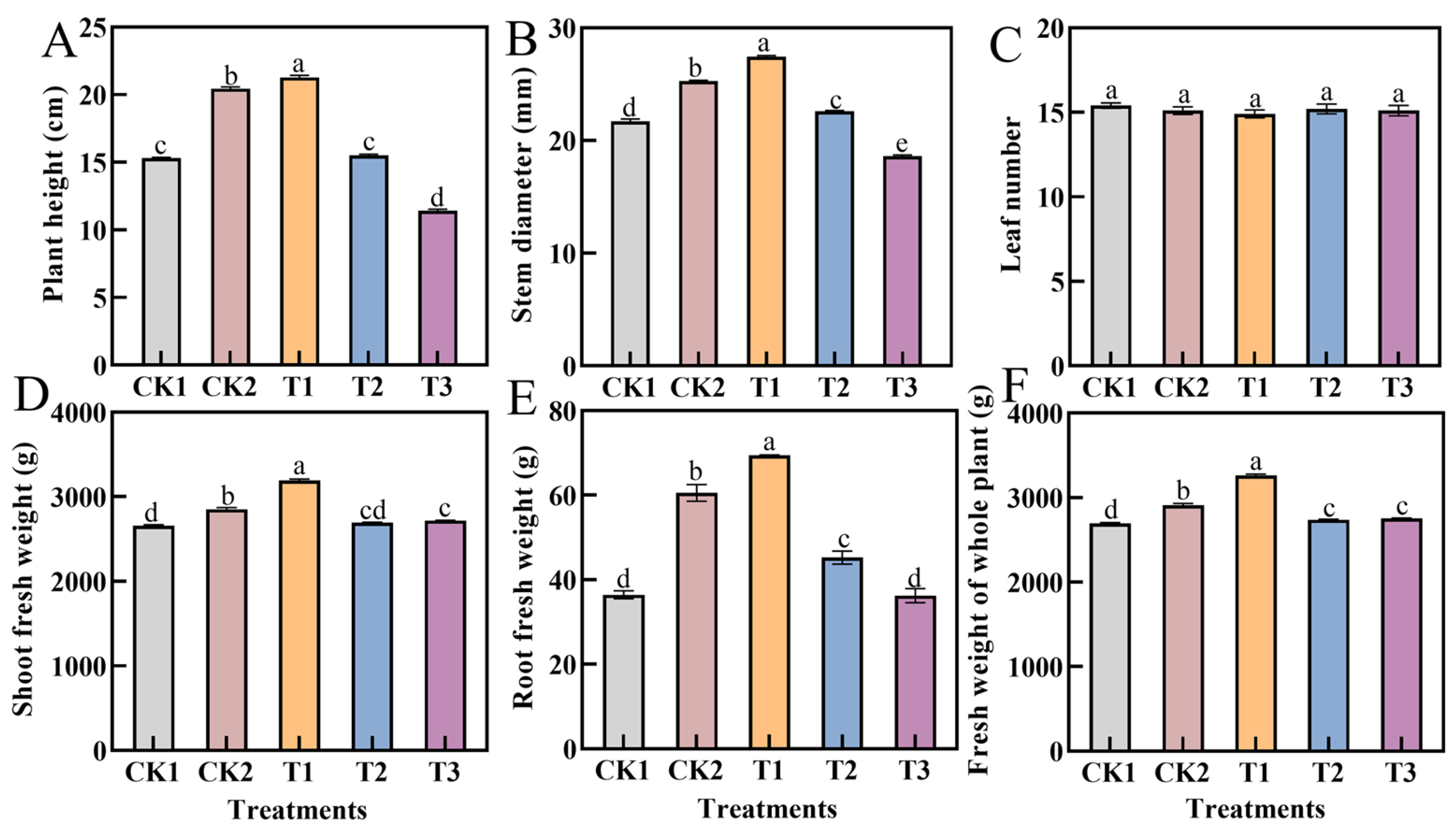
Figure 1. Effects of different mulching treatments on plant height (A), stem diameter (B), leaf number (C), shoot fresh weight (D), root fresh weight (E), and fresh weight of whole plant (F) of cauliflower. Values represent mean ± standard error (n = 10); n represents sub-samples nested within plots. Different lowercase letters indicate statistically significant differences among treatments (p < 0.05). Combined straw and plastic film mulching, T1; partial straw mulching, T2; full straw mulching, T3; no mulching, CK1; plastic film mulching alone, CK2.
Agronomy 16 00482 g001
Figure 2. The effects of different mulching treatments on total nitrogen (AC), total phosphorus (DF), and total potassium (GI) accumulation in cauliflower. The data are presented as the mean ± SE of three biological replicates. Different lowercase letters indicate statistically significant differences among treatments (p < 0.05). The abbreviations (CK1, CK2, T1, T2, and T3) are defined in the legend in Figure 1.
Agronomy 16 00482 g002
Figure 3. Effects of different mulching treatments on soluble sugar (A), soluble protein (B), vitamin C (C), and nitrate content (D) of cauliflower head. Data are presented as mean ± SE of three biological replicates. Different lowercase letters indicate statistically significant differences among treatments (p < 0.05). Abbreviations (CK1, CK2, T1, T2, and T3) are defined in legend in Figure 1.
Agronomy 16 00482 g003
Figure 4. Effects of different mulching treatments on nitrogen (A), phosphorus (B), potassium (C), calcium (D), magnesium (E), iron (F), manganese (G), zinc (H), and copper (I) of cauliflower heads. Data are presented as mean ± SE of three biological replicates. Different lowercase letters indicate statistically significant differences among treatments (p < 0.05). Abbreviations (CK1, CK2, T1, T2, and T3) are defined in legend in Figure 1.
Agronomy 16 00482 g004
Figure 5. Principal component analysis (A) and hierarchical cluster analysis (B) of nutritional quality of cauliflower heads under different mulching treatments. Abbreviations (CK1, CK2, T1, T2, and T3) are defined in legend in Figure 1.
Agronomy 16 00482 g005
Figure 6. Effects of different mulching treatments on dry matter accumulation, yield, and irrigation water use efficiency of cauliflowers in 2019 and 2020 (AH). Data are presented as mean ± SE of three biological replicates. Different lowercase letters indicate statistically significant differences among treatments (p < 0.05). Abbreviations (CK1, CK2, T1, T2, and T3) are defined in legend in Figure 1.
Agronomy 16 00482 g006
Figure 7. Principal component analysis (A) and hierarchical cluster analysis (B) of yield and water utilization in cauliflower under different mulching treatments. Abbreviations (CK1, CK2, T1, T2, and T3) are defined in legend in Figure 1.
Agronomy 16 00482 g007
Figure 8. Effects of different mulching treatments on soil bulk density (A), total nitrogen (B), total phosphorus (C), total potassium (D), available phosphorus (E), available potassium (F), and organic matter (G) of cauliflower soil. Data are presented as mean ± SE of three biological replicates. Different lowercase letters indicate statistically significant differences among treatments (p < 0.05). Abbreviations (CK1, CK2, T1, T2, and T3) are defined in legend in Figure 1.
Agronomy 16 00482 g008
Figure 9. Principal component analysis (A) and hierarchical cluster analysis (B) of soil properties in cauliflower soil under different mulching treatments. Abbreviations (CK1, CK2, T1, T2, and T3) are defined in legend in Figure 1 legend.
Agronomy 16 00482 g009
Figure 10. The effects of different mulching treatments on the growth and development, yield, quality, water utilization, and soil nutrient content of cauliflower in an open field.
Agronomy 16 00482 g010
Disclaimer/Publisher’s Note: The statements, opinions and data contained in all publications are solely those of the individual author(s) and contributor(s) and not of MDPI and/or the editor(s). MDPI and/or the editor(s) disclaim responsibility for any injury to people or property resulting from any ideas, methods, instructions or products referred to in the content.