Article

Ecological Trade-Offs of Plastic Film and Straw Mulching: Mechanistic Insights from Soil Structure and Carbon–Nitrogen


1
State Key Laboratory of Aridland Crop Science, Gansu Agricultural University, Lanzhou 730070, China
2
College of Agronomy, Gansu Agricultural University, Lanzhou 730070, China
3
Experimental Teaching Center of Plant Production, Gansu Agricultural University, Lanzhou 730070, China
4
College of Water Resources and Hydropower Engineering, Gansu Agricultural University, Lanzhou 730070, China
*
Author to whom correspondence should be addressed.
These authors contributed equally to this work.
Agronomy 2026, 16(4), 470; https://doi.org/10.3390/agronomy16040470
Submission received: 5 January 2026 / Revised: 14 February 2026 / Accepted: 14 February 2026 / Published: 18 February 2026
(This article belongs to the Section Agroecology Innovation: Achieving System Resilience)

Abstract

Mulching practices are key technologies for addressing soil degradation and increasing crop yields in the dryland farming regions of the Loess Plateau. However, it remains unclear how they synergistically influence soil health and sustainability by regulating soil physical, moisture, and nutrient processes while ensuring yield improvement. In particular, the ecological trade-off effects between crop yield enhancement and soil fertility improvement under different mulching measures still require further research. This study was conducted in 2022 at the Dryland Agriculture Experimental Station of Gansu Academy of Agricultural Sciences to evaluate the effect of straw strip mulching (TSM), straw crushed mulching (TSR), and plastic film mulching (TPM), with flat planting without mulching (TCK) as the control. The investigation focuses on soil moisture distribution, aggregate composition, soil carbon and nitrogen contents, and yield components in maize fields. The sStudy results showed that all mulching treatments reduced soil bulk density, increased soil porosity, and enhanced soil water content and water storage while reducing evapotranspiration. TSM most effectively increased soil organic carbon and total nitrogen contents. All mulching treatments improved soil aggregate stability, with TSM achieving the most significant reduction in soil erodibility by 40%. Compared with TCK, TPM, TSR, and TSM increased maize grain yield by 71.26%, 44.67%, and 38.04%, respectively. The most influential factors contributing to maize yield are soil water content, soil erodibility, mechanically stable micro-aggregates, and water-stable macro-aggregates. Analysis of the fitting relationship between key influencing factors and yield indicates that soil erodibility demonstrates the optimal fit with yield (R2 = 0.73), followed by the fit between soil water content and yield (R2 = 0.69). Overall, plastic film mulching primarily enhances short-term yield, while straw strip mulching ensures stable maize production and promotes soil health and sustainable development in dryland farming systems of the Loess Plateau, thus providing a clear theoretical basis for selecting mulching practices based on ecological trade-offs in the Loess Plateau region.

1. Introduction

The arid region of Northwest China is characterized by low annual precipitation, uneven temporal and spatial rainfall distribution, and a persistently dry climate, leading to inadequate agricultural water supply and reduced crop production [1]. In this region, surface mulching is widely adopted to improve crop yields by enhancing soil moisture retention and regulating the crop responses to the field environment. This practice plays a vital role in promoting sustainable agricultural development. However, determining the most suitable mulching and cropping patterns for specific local conditions remains a major challenge. Currently, plastic film mulching is a dominant practice on the Loess Plateau; however, its long-term use has led to environmental pollution and degradation [2]. Consequently, increasing attention has been directed toward straw return and straw-based mulching as eco-friendly alternatives to improve soil quality and identify optimal management practices suitable for the arid region of Northwest China.
Soil moisture is vital for crop growth and represents the most dynamic component of soil fertility, with root absorption serving as the primary source. Among the key physical properties of soil, bulk density directly affects soil porosity and pore size distribution, thereby influencing soil microbial activity and enzyme function. Soil aggregates are the fundamental units that make up the soil structure [3] and play an important role in improving soil physical properties while providing habitats and binding sites for soil nutrients and microorganisms [4]. Mechanically stable soil aggregates are obtained by dry sieving air-dried soil samples, reflect the mechanical stability of soil structure, and serve as an important indicator for its condition. However, water-stable aggregates are more sensitive indicators of soil structural stability and resistance to erosion [5]. The stability of soil aggregates is usually characterized by indicators such as mean weight diameter (MWD), geometric mean diameter (GMD), and the unstable aggregate index (ELT). In addition, the soil erodibility factor (K value) can be calculated based on the particle size composition of the soil [6].
Soil aggregates play a central role in regulating the stabilization and turnover of soil carbon and nitrogen. Organic matter (e.g., plant residues, microbial metabolites) acts as a key cementing agent, promoting the aggregation of mineral particles to form structural units across different scales [7]. The stable aggregate structure retains organic carbon and nitrogen through physical protection mechanisms, thereby slowing down their mineralization and decomposition. Simultaneously, this hierarchical pore structure regulates soil moisture, aeration, and thermal conditions, thereby jointly influencing soil hydrological processes and biogeochemical cycles, serving as the material foundation for maintaining soil health and fertility. Previous studies [8,9] have shown that organic mulching improves soil structure and increases soil organic carbon content. Large soil aggregates contribute more to soil organic carbon than aggregates of other size classes [10]. Functionally, large aggregates act as “rapid turnover agents”, supplying short-term active carbon and nitrogen, whereas microorganisms serve as “stable reservoirs” that support long-term carbon and nitrogen sequestration. Additionally, other researchers have developed a novel multi-domain reactive transport model to assess the regulatory mechanisms of greenhouse gas emissions from soil pores in agricultural settings. This model also provides key insights into how complex soil structural characteristics influence greenhouse gas cycling and emissions in agricultural soils [11,12]. During the crop mulching period, crop growth and development, soil quality [13], and yield are all affected by the type of mulch applied. Mulching improves the soil environmental conditions [14] and regulates crop physiological processes, thereby affecting productivity. Numerous studies have shown that plastic film mulching increases grain yield [15,16], improving soil hydrothermal conditions [17], promoting aboveground dry matter accumulation [18], and enhancing microbial carbon metabolism [19]. Similarly, Yu et al. [20] indicated that returning ammoniated straw to the field can further improve the soil structural stability, while plastic film mulching enhances soil Nitrogen mineralization and consequently lower soil pH [21].
In summary, while the benefits of mulching practices on soil improvement and yield increase are widely recognized, traditional straw mulching significantly reduces soil temperature despite its notable effects on moisture retention and temperature regulation, thereby prolonging crop growth cycles. With the introduction of straw strip mulching technology, which adopts an alternating arrangement of straw-mulched strips and planting strips—where the planting strips remain uncovered and the mulched strips are not planted—soil moisture and temperature conditions are effectively regulated. Currently, existing research still faces the following key limitations. First, studies on straw strip mulching technology have predominantly focused on crops such as wheat and potatoes, while its effects in maize fields remain unclear. Second, most studies have primarily focused on isolated aspects, such as soil moisture and temperature, lacking integrated research on how different mulching practices synergistically influence maize yield through their effects on soil structure, soil carbon and nitrogen dynamics, and moisture distribution. Additionally, there remains a research gap regarding the ecological trade-offs between short-term productivity and long-term soil health under different mulching regimes. Therefore, to address the research gaps, this study systematically investigates: (i) changes in soil physical structure and erodibility; (ii) variations in the spatial distribution characteristics of soil moisture; and (iii) alterations in soil carbon and nitrogen pools. It aims to elucidate the mechanisms by which straw strip mulching enhances both maize production and soil health synergistically, thereby providing theoretical and technical foundations for the sustainable intensification of dryland farming on the Loess Plateau.

2. Materials and Methods

2.1. Experimental Site

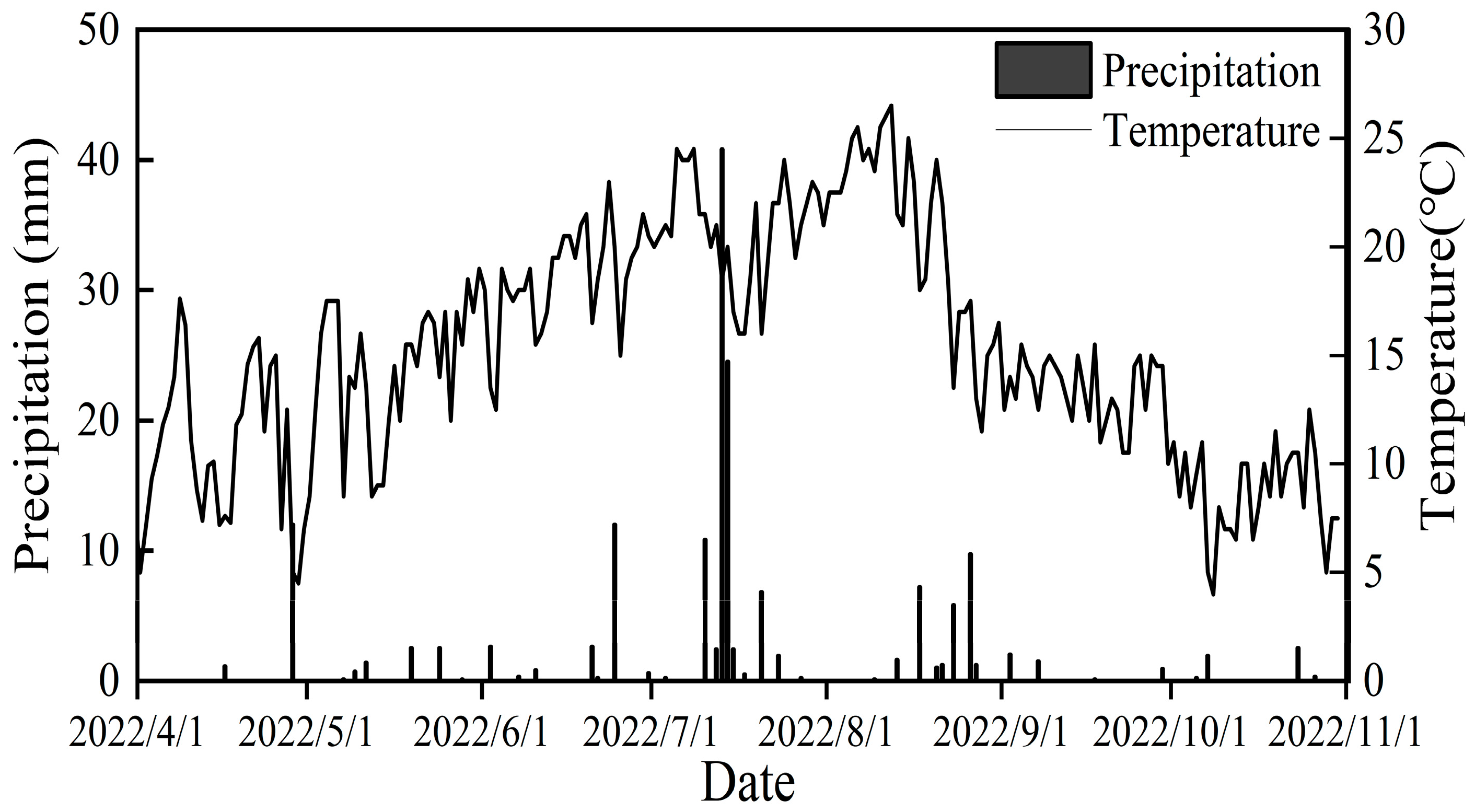
The field experiment was conducted at the Dryland Agriculture Experimental Station of the Gansu Academy of Agricultural Sciences, located in Tangjiabao Town, Anding District, Dingxi City, Gansu Province, China (104°36′ E, 35°35′ N). This region is a typical rain-fed dryland agricultural area. Its climate (low precipitation, high evaporation), soil (dominated by loessal soil), topography (hilly and gully terrain), and agricultural practices are highly representative of similar ecological zones across the Loess Plateau and globally. The site is situated at an altitude of 1970 m, with a mean annual temperature of 6.2 °C, an annual total solar radiation of 5898 MJ m−2, and an annual sunshine duration of 2500 h. The accumulated temperature above 10 °C is 2075.1 °C, and the frost-free period lasts about 140 days. The region is classified as a temperate semi-arid climate zone. The mean annual precipitation is 415 mm, with about 68% of it occurring between June and September. The precipitation variability is 24%; the probability of receiving at least 400 mm of precipitation is 48%. The contents of soil-available nitrogen, available phosphorus, and available potassium are 5.60 mg kg−1, 7.89 mg kg−1, and 128.25 mg kg−1, respectively, with a soil pH of 7.75. Daily precipitation and average temperatures during the 2022 growing season (meteorological data sourced from the weather station at the Dingxi Experimental Station in Gansu Province) are shown in Figure 1.

2.2. Experimental Design

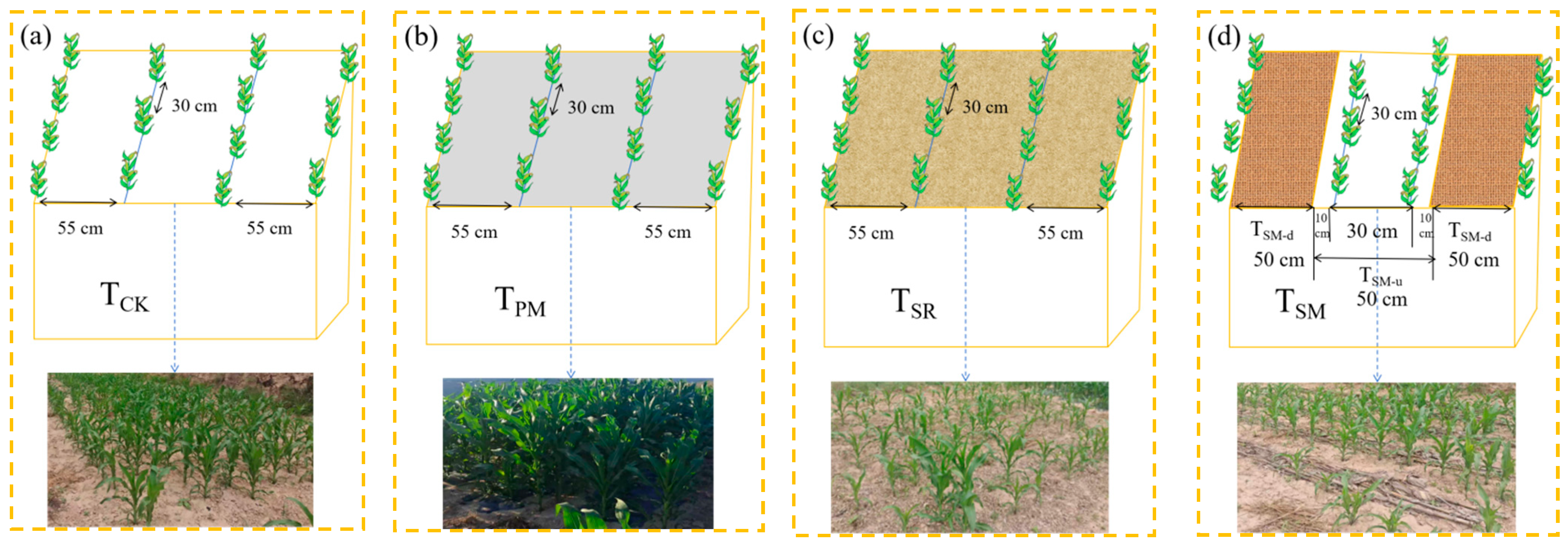
Four treatments were established in this experiment: strip straw mulching (TSM), crushed straw mulching (TSR), plastic film mulching (TPM), and bare land (TCK, control). Each treatment was replicated three times, resulting in a total of 12 plots arranged in a randomized block design. Each plot covered an area of 35 m2 (7 m × 5 m). The specific treatments were as follows (Figure 2): (1) TCK: traditional flat cultivation without any mulching, with a row spacing of 55 cm, and a plant spacing of 30 cm; (2) TPM: the soil surface was fully covered with black plastic film, with row and plant spacing the same as TCK (55 cm × 30 cm), a film width of 1.2 m, and a thickness of 0.01 mm; (3) TSR: maize straw was chopped into 5 cm pieces and evenly spread over the soil surface at a rate of 9000 kg ha−1 (air-dried basis), with maize sown in holes at a row spacing of 55 cm and plant spacing of 30 cm; and (4) TSM: intact maize stalks were arranged in strips on the soil surface, consisting of a 50 cm-wide straw-covered strip and a 50 cm-wide planting strip, with a straw application rate of 9000 kg ha−1 (air-dried basis). Two rows of maize were planted within each planting strip, with hole-sowing in a “pin” (triangular) pattern; the planting holes were positioned 10 cm away from the edge of the straw strip with a row and plant spacing of 30 cm. The preceding crops were maize. The experiment was sown on 4 May 2022, and harvested on 26 October 2022. The maize cultivar used was “Xianyu 335.” Sampling zones and yield measurement zones were established in all plots. Fertilization consisted of urea (N: 46.4%) at 200 kg ha−1 and diammonium phosphate (P2O5: 46%, N: 18%) at 250 kg ha−1. All fertilizers were applied as a basal dose before sowing through manual broadcasting, followed by immediate rotary tillage, and were incorporated once during seedbed preparation. No topdressing was applied during the growing season.

2.3. Soil Sampling and Processing

2.3.1. Soil Carbon and Nitrogen Measurement

After harvesting, soil samples were collected using a soil auger following an “S”-shaped five-point sampling pattern with three replicates, at a depth of 0–20 cm [22]. For the TSM treatment, soils were separately collected from the inter-row space of the planting strip (TSM-u) and underneath the straw-mulched strip (TSM-d). The final TSM value was calculated as the weighted average of TSM-u and TSM-d. Soils for the TPM treatment were taken from the inter-row space under the plastic film, while those for TCK and TSR treatments were collected from the inter-row spaces. The soil samples from each plot were mixed thoroughly, brought back to the laboratory, and divided into two portions: one portion was air-dried and passed through a 2 mm sieve for the determination of soil organic carbon (TOC) by following the potassium dichromate method [23], and total nitrogen (TN) by using the semi-micro Kjeldahl N determination method [23], Based on these results, the soil C/N and carbon/nitrogen storage were calculated using the following formulas (1)–(2). The other portion was kept as fresh soil, sieved through 2 mm, and stored at 4 °C for subsequent analysis of carbon and nitrogen components [22].
(1)
Soil carbon-to-nitrogen ratio (C/N):
C / N = TOC / TN
(2)
Soil carbon and nitrogen stock calculation:
TOC S = i = 1 k D i × B i × C TNi × 0.1
TN S = i = 1 k D i × B i × C TNi × 0.1
In the formula, TOCS and TNS represent the soil carbon and nitrogen stocks per unit area (t ha−1), respectively; Di is the thickness of the i-th soil layer (cm); Bi is the bulk density of the i-th soil layer (g cm−3); CTNi is the soil organic carbon and total nitrogen content in the i-th soil layer (g kg−1); and 0.1 is the unit conversion factor.

2.3.2. Soil Structure Measurement

Undisturbed soil cores were collected from each plot using an “S”-shaped five-point sampling method during the harvest period, with three replicates. During sampling, a standard steel cutting ring (diameter 50.46 mm, height 50 mm, volume 100 cm3) was vertically pressed into the soil layer to collect samples at depths of 0–10 cm, 10–20 cm, and 20–30 cm. For the TSM treatment, soil samples were collected separately from the inter-row space of the planting strip (TSM-u) and beneath the straw-mulched strip (TSM-d). The overall soil physical indicators for the TSM treatment were calculated as the weighted average of TSM-u and TSM-d. For the TPM treatment, soil samples were collected from the inter-row space under the plastic film, while for the TCK and TSR treatments, soil samples were collected from the inter-row spaces. Two sets of soil cores were collected at each sampling point: one set was kept intact within the cutting ring and transported to the laboratory for the determination of soil bulk density (SBD). The other set of soil samples was air-dried to the plastic limit, then gently broken along soil structural planes into approximately 1 cm3 aggregates, further air-dried in a shaded location, sieved through a 10 mm mesh to remove coarse debris, and used for soil aggregate analysis [24,25]. The values were calculated using Equations (1)–(3) for soil total porosity (STP), soil capillary porosity (SCP) and soil non-capillary porosity (SNCP). Aggregate stability was calculated using the formula provided in (4).
Soil mechanically stable aggregates were measured using the dry-sieving procedure [24,25]. Soil sieves with pore sizes of 5 mm, 2 mm, 1 mm, 0.5 mm, and 0.25 mm were stacked in order from the largest to smallest pore size. Then, 200 g of air-dried soil was sieved into aggregates of different sizes, weighed, and the weight proportions were calculated.
Water-stable soil aggregates were determined using the wet-sieving procedure [24,25]. Sampled soil sieves with pore sizes of 5 mm, 2 mm, 1 mm, 0.5 mm, and 0.25 mm were stacked in order from the largest to smallest pore size and placed in a sieve bucket. A 200 g air-dried soil sample was poured onto the sieves; distilled water was added until the water surface covered the sieves. The sample was left to stand for 5 min. Then, the sieve stack was vibrated 50 times with a 3 cm amplitude for 2 min. The aggregates from each sieve layer were washed into small aluminum boxes, dried at 60 °C to a constant weight, and then weighed. The weight proportions of the aggregates in each size fraction were calculated as follows.
  • Soil total porosity (STP) = (1 − Soil Bulk Density/Soil Particle Density) × 100% (Soil particle density is taken as 2.65 g cm−3);
  • Soil capillary porosity (SCP) = Field Capacity − Wilting Point Water Content;
  • Soil non-capillary porosity (SNCP) = Soil Total Porosity − Soil Capillary Porosity;
  • The formulas for calculating the content of soil macro-aggregates (R>0.25 mm) [3] mean weight diameter (MWD), geometric mean diameter (GMD), unstable aggregate index (ELT), and soil erodibility (K factor) [26] are as follows:
R > 0.25 = M R > 0.25 M T × 100 %
MWD = i = 1 n x i ¯ w i
GMD = exp i = 1 n w i ln x i ¯
E LT = M T M R > 0.25 / M T × 100 %
K = 7.954 × 0.0017 + 0.0494 × e x p 0.5 × l o g G M D + 1.675 0.6989 2 .
In the formula, n is the number of particle size groups. x i ¯ n is the mean particle diameter. w i is the mass fraction of aggregates in each particle size class. M T is the total mass of aggregates (g). M R > 0.25 is the mass of aggregates with particle size > 0.25 mm (g). R>0.25 is the mass percentage of aggregates with particle size > 0.25 mm (%).

2.3.3. Soil Water Content Measurement

Soil samples were collected using a soil auger following an “S”-shaped five-point sampling method at the maize seedling, flowering, and harvesting stages, with three replicates. Sampling depths were 0–20 cm, 20–40 cm, 40–60 cm, 60–90 cm, and 90–120 cm. For the TSM treatment, soils were separately collected from the inter-row space of the planting strip (TSM-u) and underneath the straw-mulched strip (TSM-d), with the final TSM value representing the weighted average of TSM-u and TSM-d. For TPM, soil was taken from the inter-row space under the plastic film. Soils for TCK and TSR treatments were collected from the inter-row spaces. Later samples were analyzed by the oven-dry method [17]. Soil water content (SWC), soil water storage (W), and field water consumption (ET) were analyzed [27]. The calculation formula is as follows:
SWC = [(M0 − M1)/(M1 − M2)] × 100%
W = h × ρ × ω × 10
ET = △W + P
In the formula: SWC is the soil water content (%); M0 is the mass of the moist soil plus the mass of the aluminum box (g); M1 is the mass of the oven-dried soil plus the mass of the aluminum box (g); M2 is the mass of the aluminum box (g); W is the soil water storage (mm); h is the soil layer thickness (cm); ρ is the soil bulk density (g cm−3); ω is the soil moisture content by mass (%). According to the actual conditions of the experimental area, groundwater recharge, deep infiltration, and surface runoff are neglected. ΔW is the difference in soil water storage between pre-sowing and harvest periods (mm); P is the effective rainfall during the growing period (mm).

2.4. Plant Sampling and Analysis

During maize harvesting, a random sample of 10 plants was collected from the designated sampling area of each plot to measure the ear diameter (ED), ear length (PL), ear row number (ERN), row grain number (RGN), grain number per ear (GNC), grain weight per ear (GWP), and hundred-grain weight (HGW). Subsequently, all plants within the measured yield area were entirely harvested, threshed, air-dried to a standard moisture content (14%), and then weighed to obtain the actual dry grain weight of the area, which was converted to yield per hectare. A list of abbreviations used in this study is provided in Table 1.

2.5. Statistical Analysis

All data were organized using Excel 2016. Prior to statistical analysis, Shapiro–Wilk tests were performed in SPSS 22.0 to assess data normality, and Levene’s tests were conducted to evaluate homogeneity of variance (Table S1). For data conforming to normal distribution, one-way analysis of variance (ANOVA) was performed using SPSS 22.0. For indicators showing significant differences among groups, Duncan’s multiple comparison test was further applied for pairwise comparisons. Data are presented as mean ± standard error (SE), and graphs were plotted using Origin 2021 software based on the mean values of treatment groups. The significance level was set at α ≤ 0.05. Random forest models were constructed using the “randomForest” package in R 4.0.2, and Mantel tests were performed with the “linkET” package in R 4.0.2 to explore the key factors influencing maize yield.

3. Results

3.1. Effects of Mulching Methods on Soil Bulk Density and Porosity

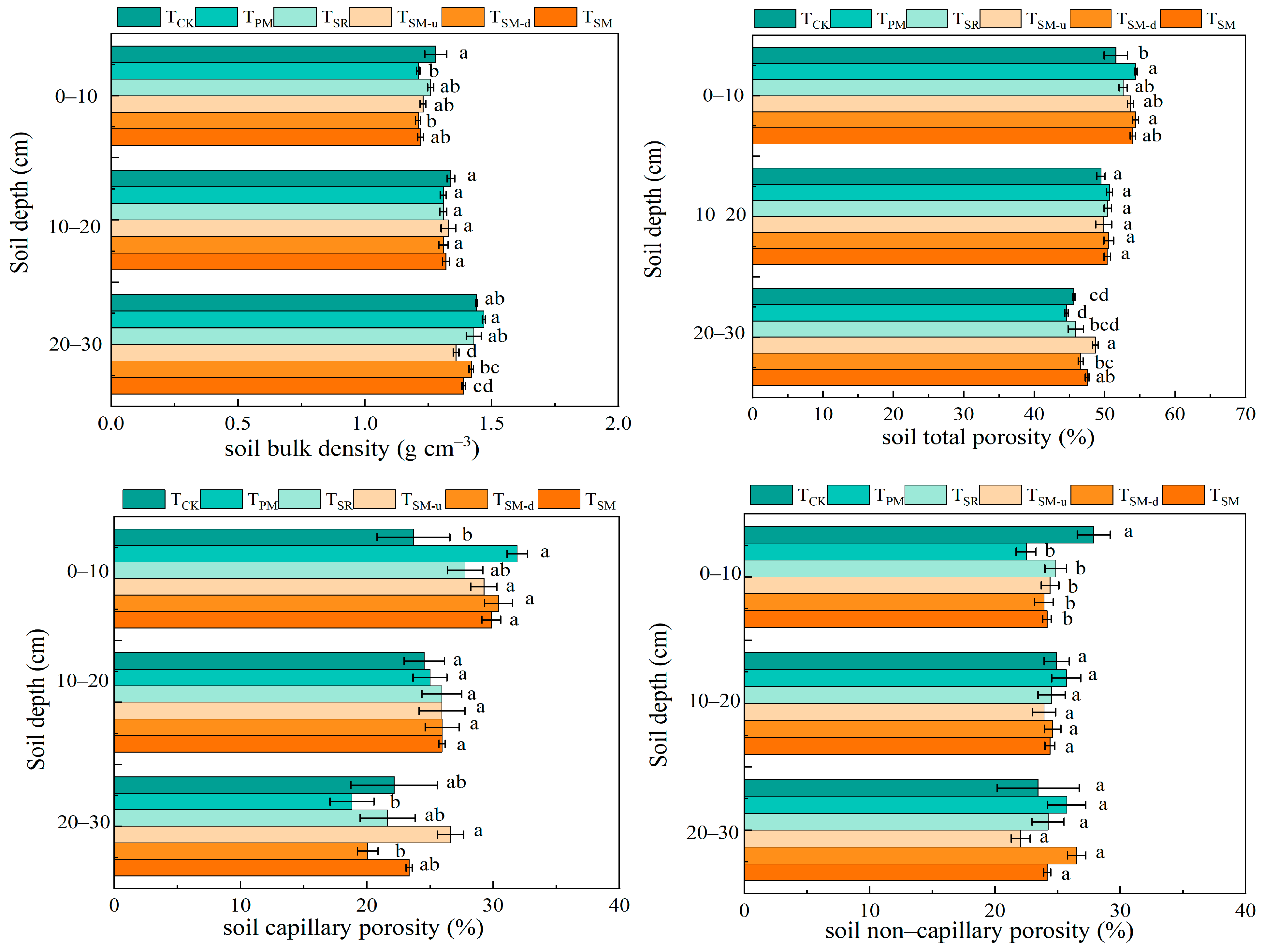
Under all mulching treatments, soil bulk density decreased in the 0–30 cm soil layer, with bulk density gradually increasing as the soil depth increased (Figure 3). In the 0–10 cm soil layer, soil bulk density decreased under all treatments, with TPM and TSM-d showing a significant reduction of 5.47% compared to TCK (p ≤ 0.05). In the 10–20 cm soil layer, the coverage treatments did not reach a significant level. In the 20–30 cm soil layer, the TPM treatment showed a trend of increasing soil bulk density, while the other treatments reduced it. Under different mulching treatments, both total soil porosity and capillary porosity increased, while non-capillary porosity decreased. In the 0–10 cm soil layer, the increase in total soil porosity was greatest under TPM (5.47%) > TSM-d (5.39%). In the 10–30 cm soil layer, no significant differences in soil capillary porosity were observed among the treatments.

3.2. Effects of Mulching Methods on Soil Water Content

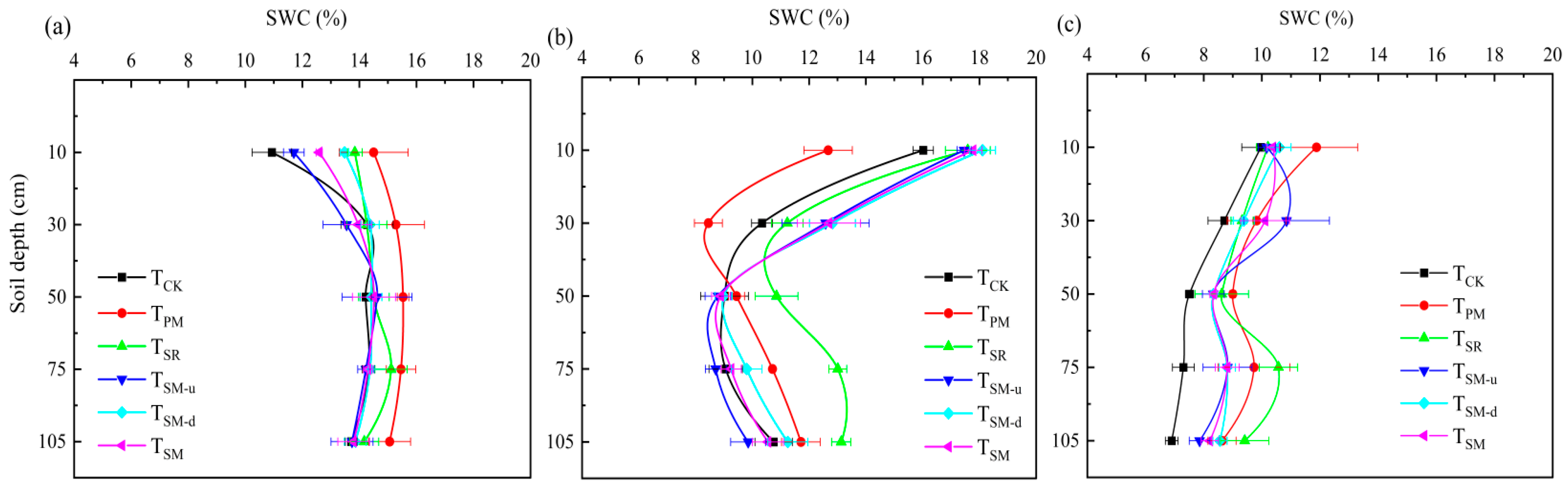
Mulching can improve the temporal and spatial variation of soil moisture in different soil layers during various growth stages. Plastic film mulching increased soil moisture in the 0–120 cm soil layer during the seedling stage; all mulching treatments increased soil moisture in the 0–120 cm soil layer at harvest (Figure 4). During the seedling stage, in the 0–20 cm soil layer, all mulching treatments increased soil moisture. Compared to TCK, the TPM, TSR, and TSM-d treatments increased soil moisture by 32.66%, 26.62%, and 23.33%, respectively (p ≤ 0.05). In the 40–120 cm soil layers, soil moisture increased under all mulching treatments; however, the differences were not significant. During the flowering stage, in the 0–20 cm soil layer, the TSM-d treatment significantly increased soil moisture by 13.05% compared to TCK (p ≤ 0.05). The TSM, TSR, and TSM-u treatments increased soil moisture by 10.99%, 9.80%, and 8.99%, respectively, compared to TCK. In the 20–40 cm soil layer, the TSM-d, TSM, TSM-u, and TSR treatments increased soil moisture by 23.98%, 22.82%, 21.66%, and 8.61%, respectively, compared to TCK. However, under the TPM treatment, soil moisture in the 0–40 cm soil layers decreased. At harvest, due to rainfall replenishment, soil moisture in the 0–40 cm soil layer under all mulching treatments did not show significant differences compared to TCK. In the 0–20 cm soil layer, soil moisture followed the order of: TPM > TSM-d > TSM > TSR > TSM-u > TCK. In the 40–60 cm soil layer, TPM was 19.84% higher than TCK (p ≤ 0.05), with no significant differences among the other treatments. In the 60–120 cm soil layers, soil moisture was higher under all mulching treatments compared to TCK.

3.2.1. Effects of Mulching Methods on Soil Water Storage

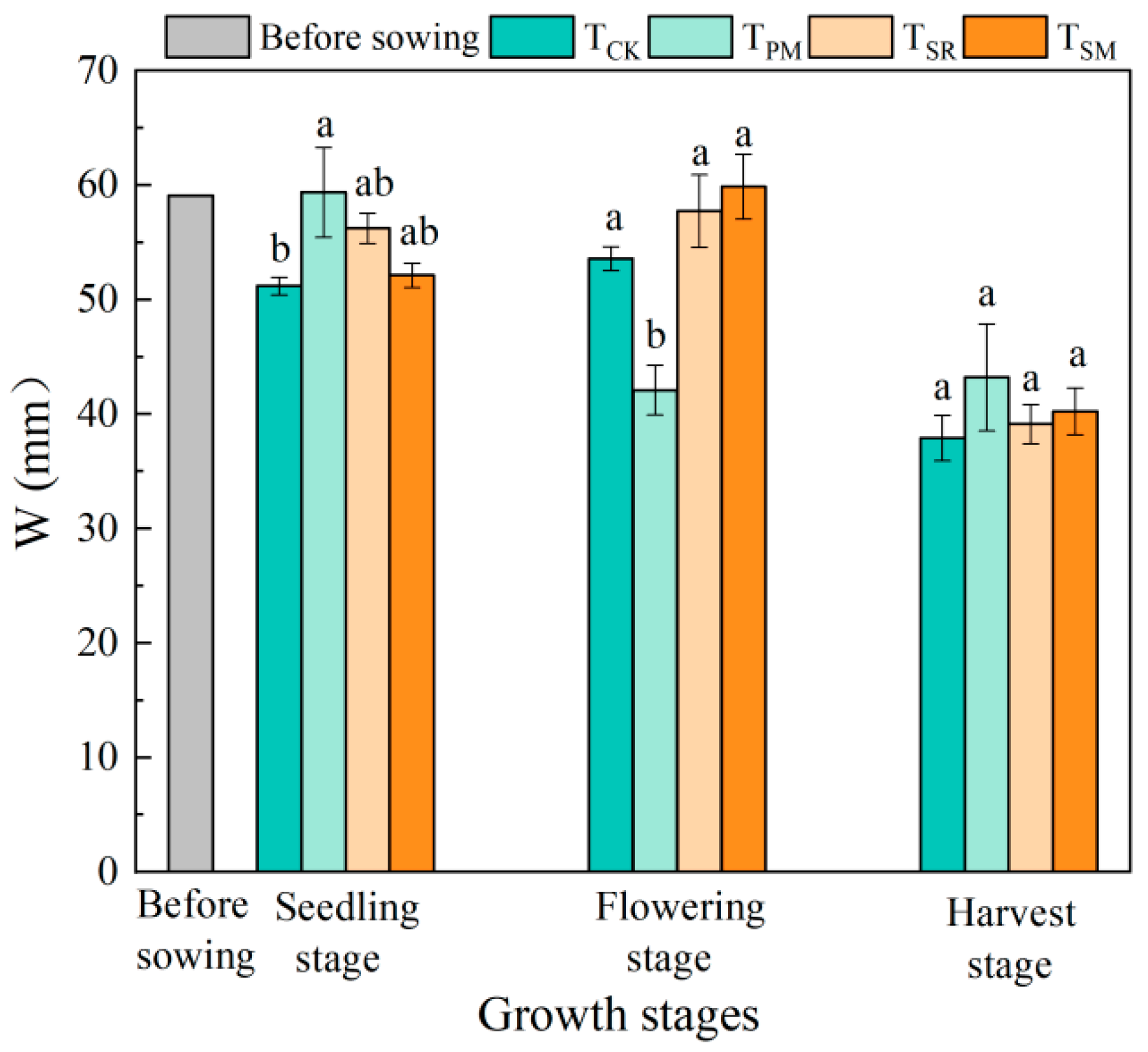
As the growing season progressed, the soil water storage was highest during the flowering stage for bare-land flat planting (TCK), crushed straw mulching (TSR), and straw strip mulching (TSM), while soil water storage under plastic film mulching (TPM) gradually decreased with the advancement of the growing season (Figure 5). During the seedling stage, compared to TCK, TPM significantly increased soil water storage by 15.98% (p ≤ 0.05), while TSR and TSM increased soil water storage by 9.87% and 1.82%, respectively. At the flowering stage, TSM and TSR increased soil water storage by 11.70% and 7.77%, respectively, compared to TCK, while TPM significantly reduced soil water storage by 21.47% (p ≤ 0.05). At harvest, compared to TCK, TPM, TSM, and TSR treatments increased soil water storage by 13.98%, 6.12%, and 3.19%, respectively.

3.2.2. Effects of Mulching Methods on Field Water Consumption

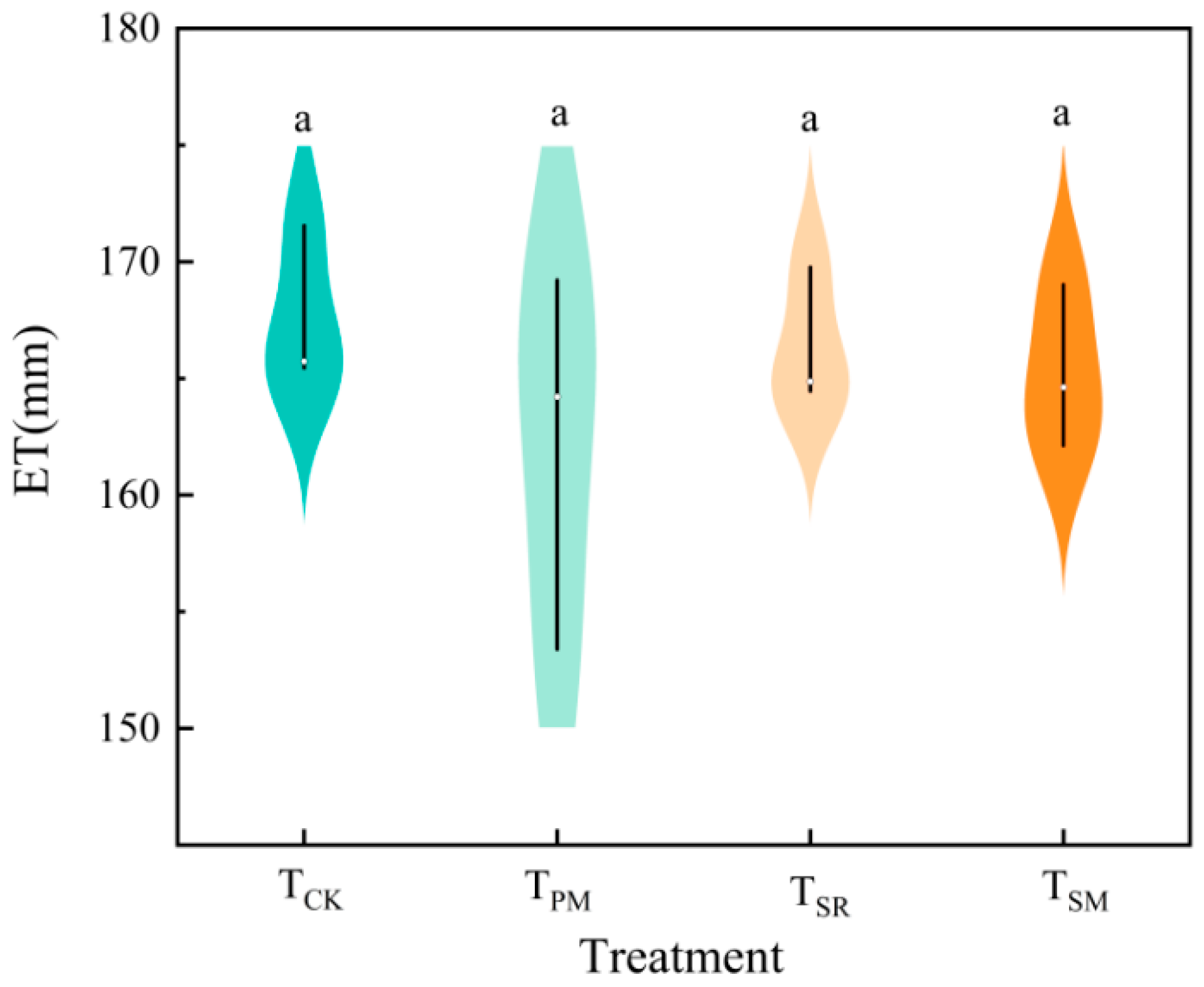
All mulching treatments reduced field water consumption during the entire maize growth period (Figure 6). Compared with TCK, TPM, TSM, and TSR reduced water consumption by 3.16%, 1.38% and 0.72%, respectively. TPM decreased water consumption by 2.46% and 1.80% compared with TSR and TSM, respectively. These results indicate that plastic film mulching was more effective in reducing water consumption than straw strip mulching and crushed straw mulching.

3.3. Effects of Mulching Methods on Soil Carbon and Nitrogen Contents and Stocks

3.3.1. Effects of Mulching Methods on Soil Carbon and Nitrogen Contents and Carbon-to-Nitrogen Ratio

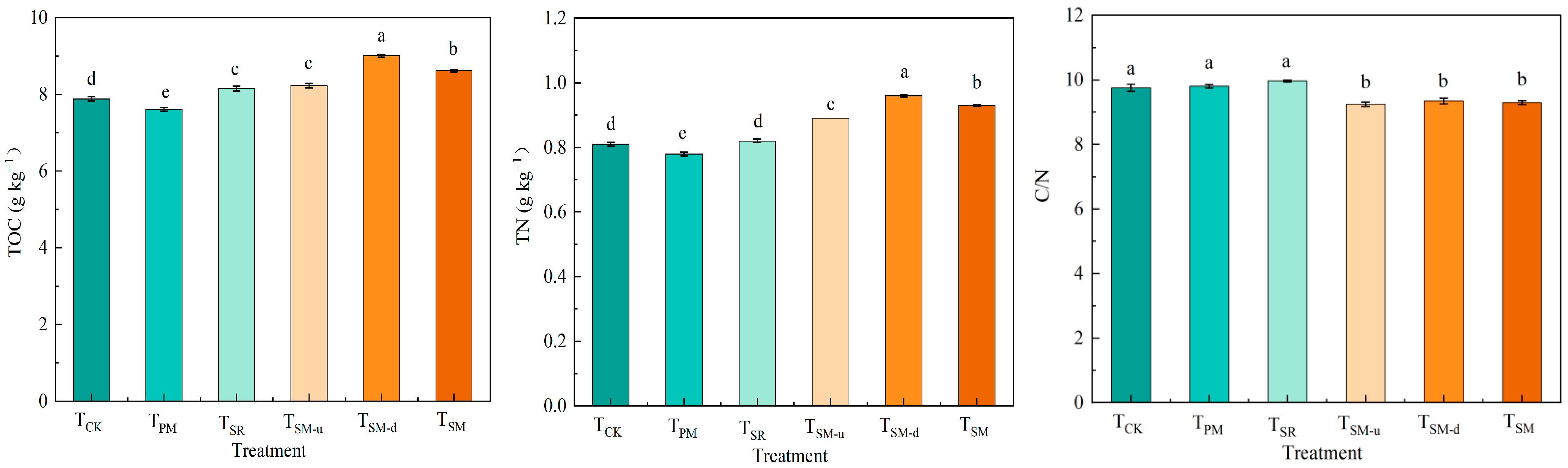
Crushed straw mulching and straw strip mulching increased soil organic carbon (TOC) and total nitrogen (TN) contents, whereas plastic film mulching decreased soil TOC and TN contents (Figure 7). Compared with TCK, treatments TSM-d, TSM, TSM-u, and TSR significantly increased soil TOC by 14.34%, 9.39%, 4.44%, and 3.43%, respectively (p ≤ 0.05), while TPM decreased TOC by 3.43% compared to TCK (p ≤ 0.05). Straw strip mulching can increase soil TOC content beneath the mulched strip, with TSM-d being 9.48% higher than TSM-u (p ≤ 0.05). Compared with TCK, treatments TSM-d, TSM, and TSM-u significantly increased soil TN content by 18.52%, 14.81%, and 9.88%, respectively (p ≤ 0.05), while TSR increased TN by 1.23% and TPM decreased TN by 3.70% compared to TCK. Straw strip mulching can increase soil TN content beneath the mulched strip, with TSM-d being 7.87% higher than TSM-u (p ≤ 0.05). Straw strip mulching significantly reduced the soil carbon-to-nitrogen ratio (C/N), while crushed straw mulching and plastic film mulching increased the soil C/N compared to TCK, although the differences were not significant (Figure 7). Compared with TCK, treatments TSM-u, TSM, and TSM-d significantly decreased C/N by 5.13%, 4.62%, and 4.10%, respectively (p ≤ 0.05).

3.3.2. Effects of Mulching Methods on Soil Carbon and Nitrogen Stocks

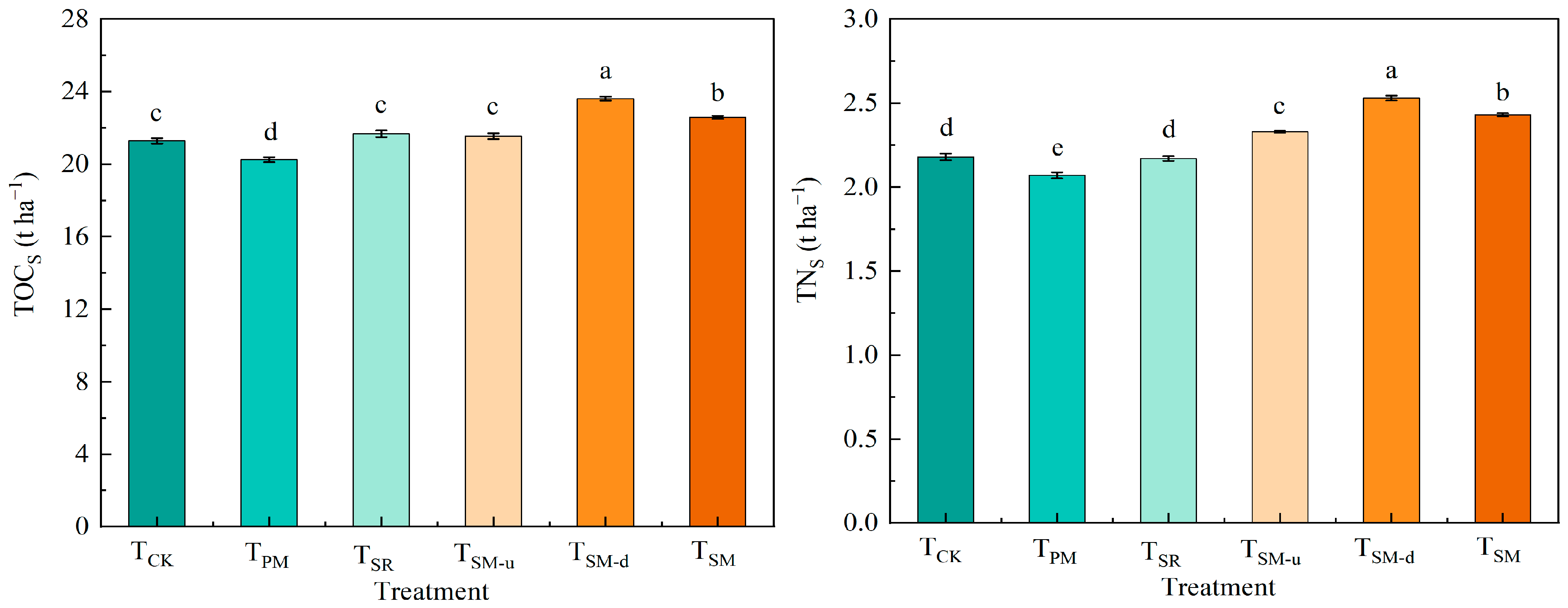
Both straw strip mulching and crushed straw mulching increased soil organic carbon stock (TOCS) and total nitrogen stock (TNS), whereas plastic film mulching reduced both soil organic carbon stock and total nitrogen stock (Figure 8). Compared with TCK, TSM significantly increased TOCS (6.11%) and TNS (11.46%) (p ≤ 0.05), while TPM significantly decreased TOCS (4.84%) and TNS (5.05%) compared to TCK (p ≤ 0.05).

3.4. Effects of Mulching Methods on Soil Aggregates

3.4.1. Effects of Mulching Methods on Mechanically Stable Soil Aggregates

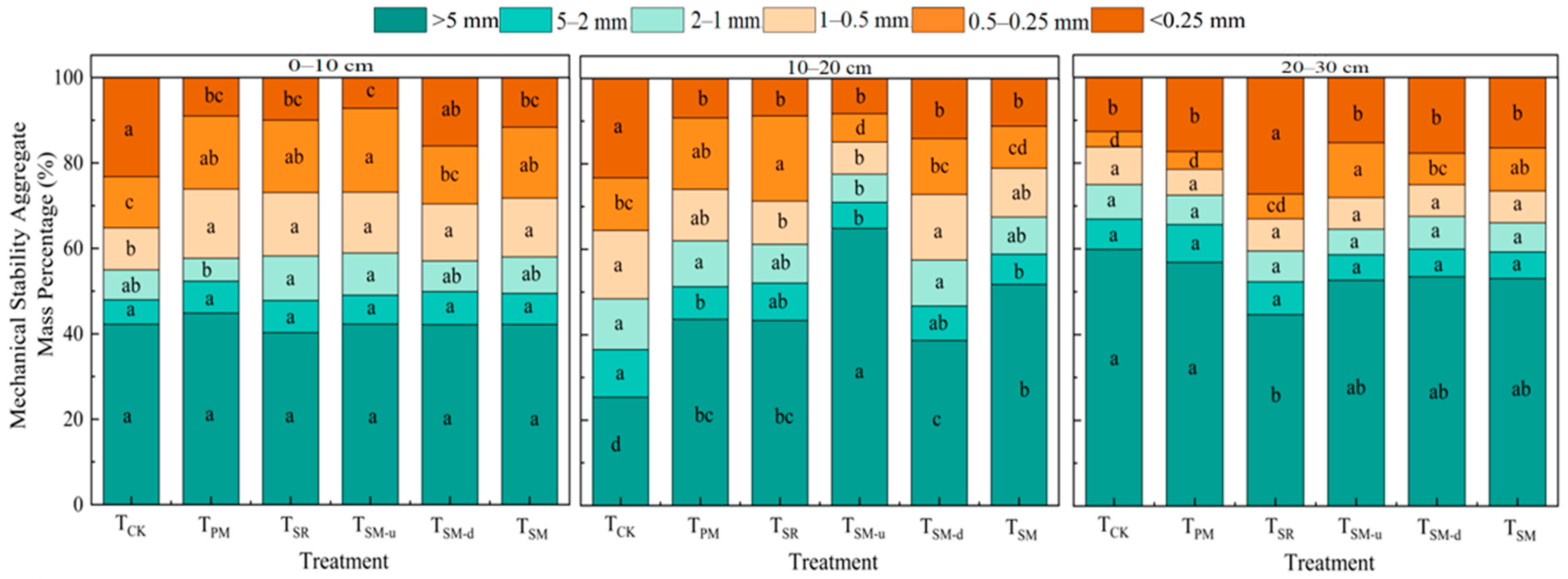
In the 0–30 cm soil layer, all treatments were dominated by large macro-aggregates (DR>0.25), while the proportion of micro-aggregates (DR<0.25) was relatively small (Figure 9). In the 0–10 cm soil layer, the proportion of mechanically stable large macro-aggregates (DR>0.25) increased under all mulching treatments, with the highest increase observed under TSM-u (20.88%), followed by TPM. For aggregates < 0.25 mm (DR<0.25), their mechanically stable content decreased across all mulching treatments. In the 10–20 cm soil layer, the increase in mechanically stable macro-aggregates ranged from 11.96% to 19.55%, following the order TSR (18.91%) > TPM (8.26%) > TSM (15.76%), and TSM-u (19.55%) > TSM-d (11.96%). In the 20–30 cm soil layer, for the <0.25 mm fraction (DR<0.25), TSR significantly increased the aggregate content by 115.35% compared with that of TCK (p ≤ 0.05).

3.4.2. Effects of Mulching Methods on Water-Stable Soil Aggregates

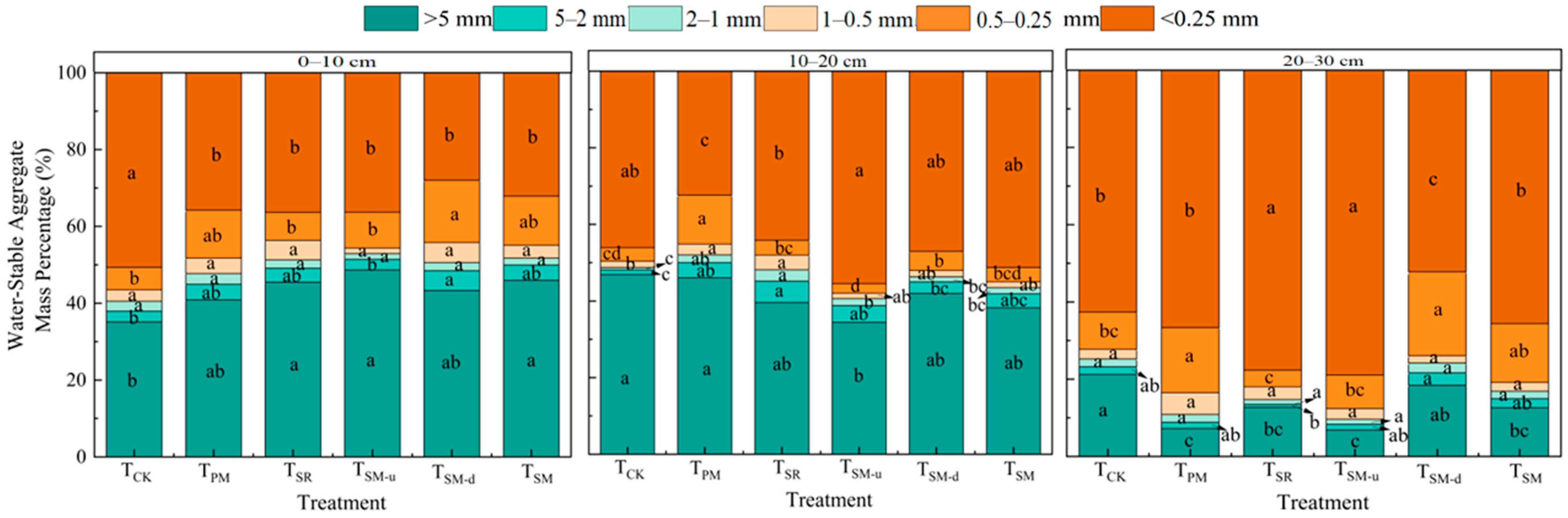
Compared with mechanically stable aggregates, the proportion of large water-stable macro-aggregates (WR>0.25) decreased markedly, while the proportion of micro-aggregates (WR<0.25) increased (Figure 10). In the 0–10 cm soil layer, mulching treatments significantly increased the proportion of water-stable large macro-aggregates (WR>0.25), with the order of increase being TSM (37.25%) > TPM (30.35%) > TSR (28.53%), and with the TSM-d being 12.52% higher than TSM-u. For the <0.25 mm fraction, all mulching treatments significantly reduced the content of water-stable aggregates. In the 10–20 cm soil layer, TSM increased the content of water-stable aggregates with <0.25 mm particle size. In the 20–30 cm soil layer, the content of <0.25 mm aggregates under TSM-u and TSR increased by 26.04% and 24.70%, respectively, compared with that of TCK (p ≤ 0.05). Therefore, straw strip mulching was the most effective in enhancing the content of water-stable large macro-aggregates in the surface soil (0–10 cm); it also promoted the formation of micro-aggregates in the 10–30 cm soil layer.

3.4.3. Effects of Mulching Methods on Soil Aggregate Stability

All mulching treatments increased the mean weight diameter (MWD) and geometric mean diameter (GMD) of mechanically stable aggregates in the 0–20 cm soil layer, while reducing the unstable aggregate index (ELT) (Table 2). In the 0–10 cm layer, ELT reductions ranged from 49.98% to 68.96%. In the 10–20 cm layer, TSM increased MWD and GMD by 64.79% and 111.32%, respectively (p ≤ 0.05). ELT was significantly reduced under all mulching treatments. In the 20–30 cm layer, the effects of mulching treatments on soil aggregate stability were not significant.
Water-stable aggregates better characterize soil properties compared to mechanically stable aggregates. In the 0–10 cm layer, TSM and TSR were more effective than TPM in enhancing aggregate stability. TSM reduced the unstable aggregate index (ELT) of water-stable aggregates under the mulched strip, with TSM-d being 22.12% lower than TSM-u. In the 10–20 cm layer, the TPM treatment increased the mean weight diameter (MWD) and geometric mean diameter (GMD) of water-stable aggregates, and decreased ELT. Compared to TCK, TPM reduced the unstable aggregate index by 29.95% (p ≤ 0.05). In the 20–30 cm layer, the effects of mulching treatments on soil aggregate stability varied. Overall, all mulching treatments contributed to improved soil aggregate stability, with straw strip mulching and crushed straw mulching showing superior effects on enhancing the stability of water-stable aggregates in the 0–10 cm layer compared to plastic film mulching.

3.5. Effects of Mulching Methods on Soil Erodibility (K)

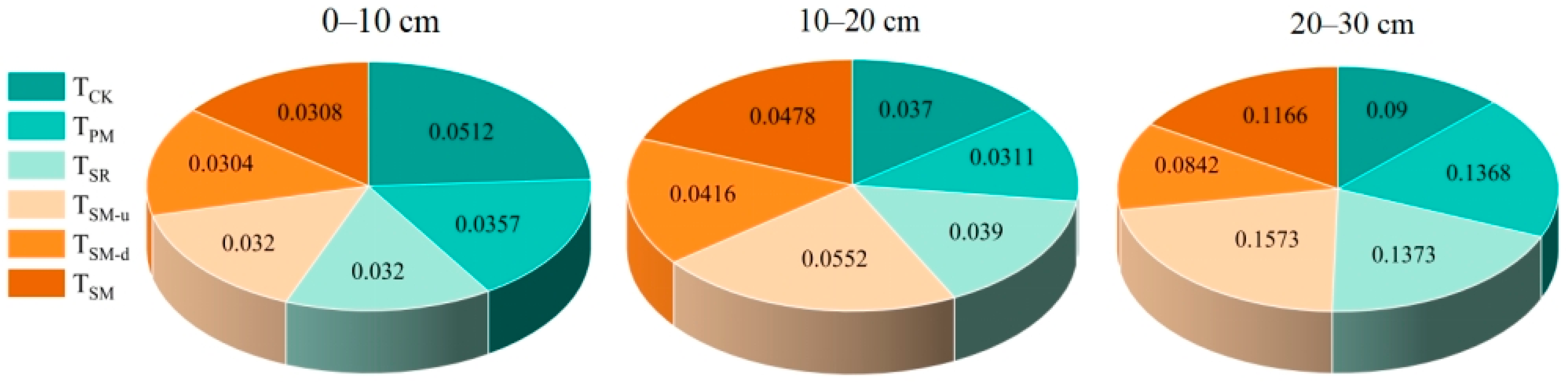
Soil erodibility (K) showed significant differences under different mulching treatments (Figure 11). In the 0–10 cm layer, the K-value ranged from 0.03 to 0.06 across treatments. Among the mulching treatments, TSM demonstrated the most pronounced reduction in the K-value, decreasing it by 40% (p ≤ 0.05), followed by TSR. Straw strip mulching reduced the K-value under the mulched strip, with TSM-d being 5% lower than TSM-u. In the 20–30 cm layer, soil erodibility varied among mulching treatments but showed no consistent decreasing trend. Therefore, different mulching treatments contributed to mitigating soil erosion risk, with straw strip mulching exhibiting the most effective performance.

3.6. Effects of Mulching Methods on Maize Yield and Yield Components

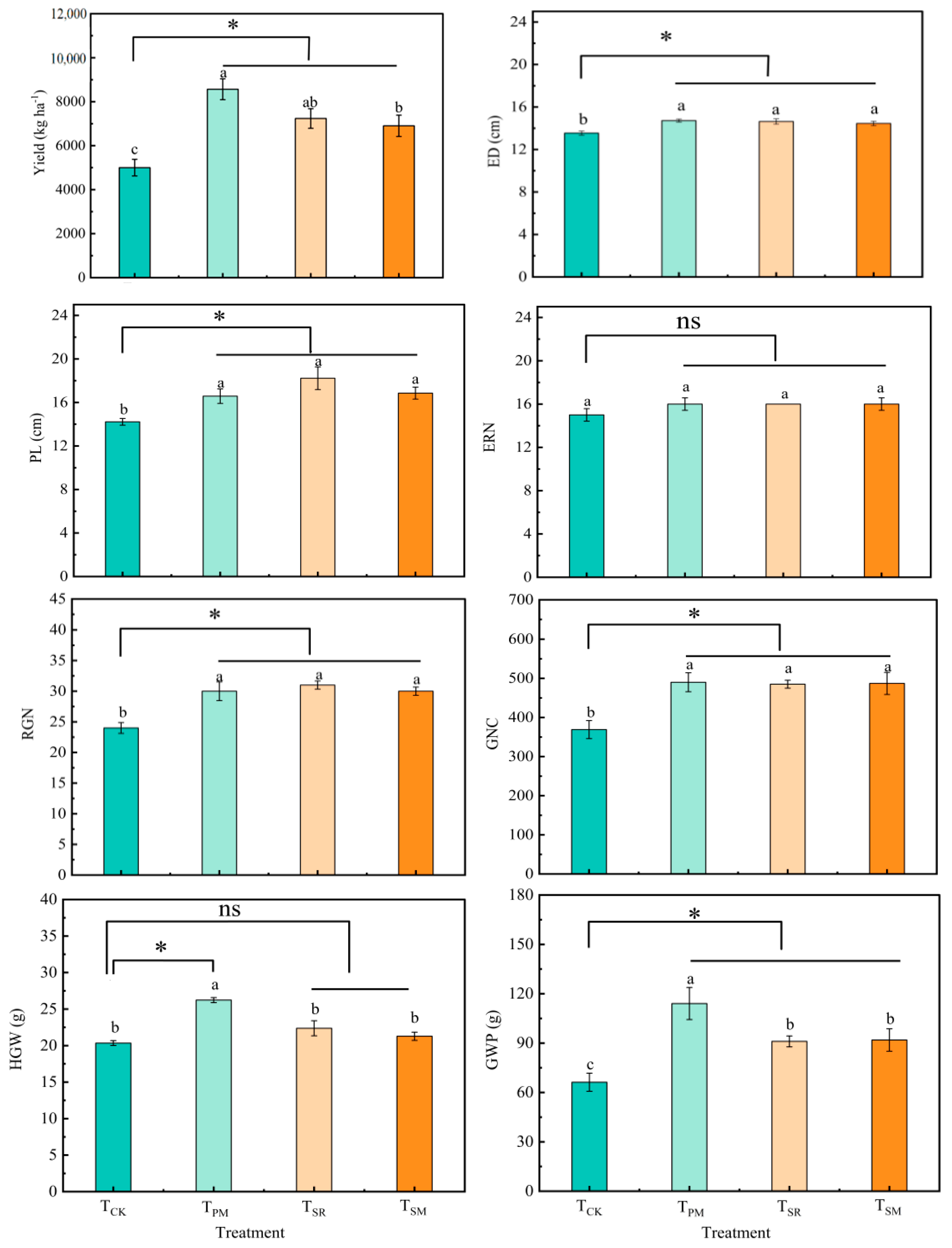
All mulching treatments significantly increased maize grain yield, with plastic film mulching outperforming both crushed straw mulching and straw strip mulching (Figure 12). Compared with TCK, TPM, TSR, and TSM increased grain yield by 71.26%, 44.67%, and 38.04%, respectively (p ≤ 0.05). TPM increased grain yield by 24.06% (p ≤ 0.05) and 18.38% compared to TSM and TSR, respectively, while TSR yielded 4.80% higher than TSM.
Different mulching practices increased ear diameter (ED), ear length (PL), kernels per row (RGN), kernel number per ear (GNC), grain weight per ear (GWP), and hundred-kernel weight (HGW); however, no significant differences in the ear row number (ERN) were observed among treatments (Figure 12). Compared with TCK, TPM, TSR, and TSM increased ear diameter by 8.71%, 8.05%, and 6.72%, respectively (p ≤ 0.05). TSR, TSM, and TPM increased ear length by 28.20%, 18.57%, and 16.60%, respectively, compared to TCK (p ≤ 0.05). Similarly, kernels per row was also significantly increased. Compared with TCK, TPM, TSM, and TSR increased the kernel number per ear by 32.79%, 31.98%, and 31.44% (p ≤ 0.05), and grain weight per ear by 72.21%, 38.76%, and 37.45% (p ≤ 0.05), respectively. For hundred-kernel weight, the order across mulching treatments was TPM > TSR > TSM > TCK, with TPM being significantly higher than TSR and TSM. TPM increased hundred-kernel weight by 28.89% compared to TCK (p ≤ 0.05).

3.7. Correlation Analysis of Yield and Yield Components

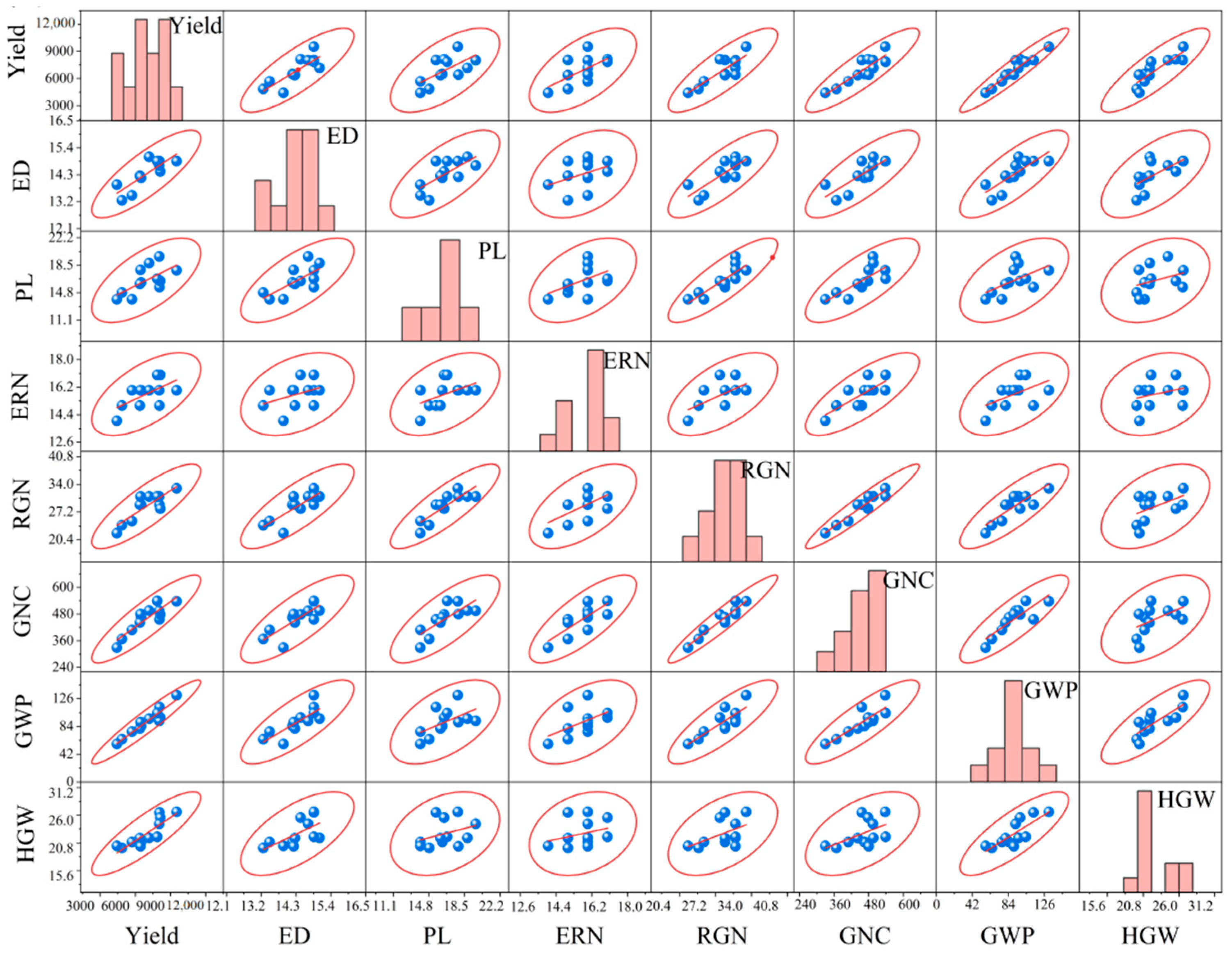
The correlation analysis between the yield and yield components is presented in Figure 13. Yield was positively correlated with ear diameter (ED), ear length (PL), ear row number (ERN), kernels per row (RGN), kernel number per ear (GNC), grain weight per ear (GWP), and hundred-kernel weight (HGW). Ear diameter was positively correlated with ear length, kernels per row, kernel number per ear, grain weight per ear, and hundred-kernel weight. Ear length was positively correlated with kernels per row and kernel number per ear. Ear row number was positively correlated with kernels per row, kernel number per ear, and grain weight per ear. Kernels per row was positively correlated with kernel number per ear and grain weight per ear. Grain weight per ear was positively correlated with hundred-kernel weight.

3.8. Analysis of Influencing Factors on Maize Yield

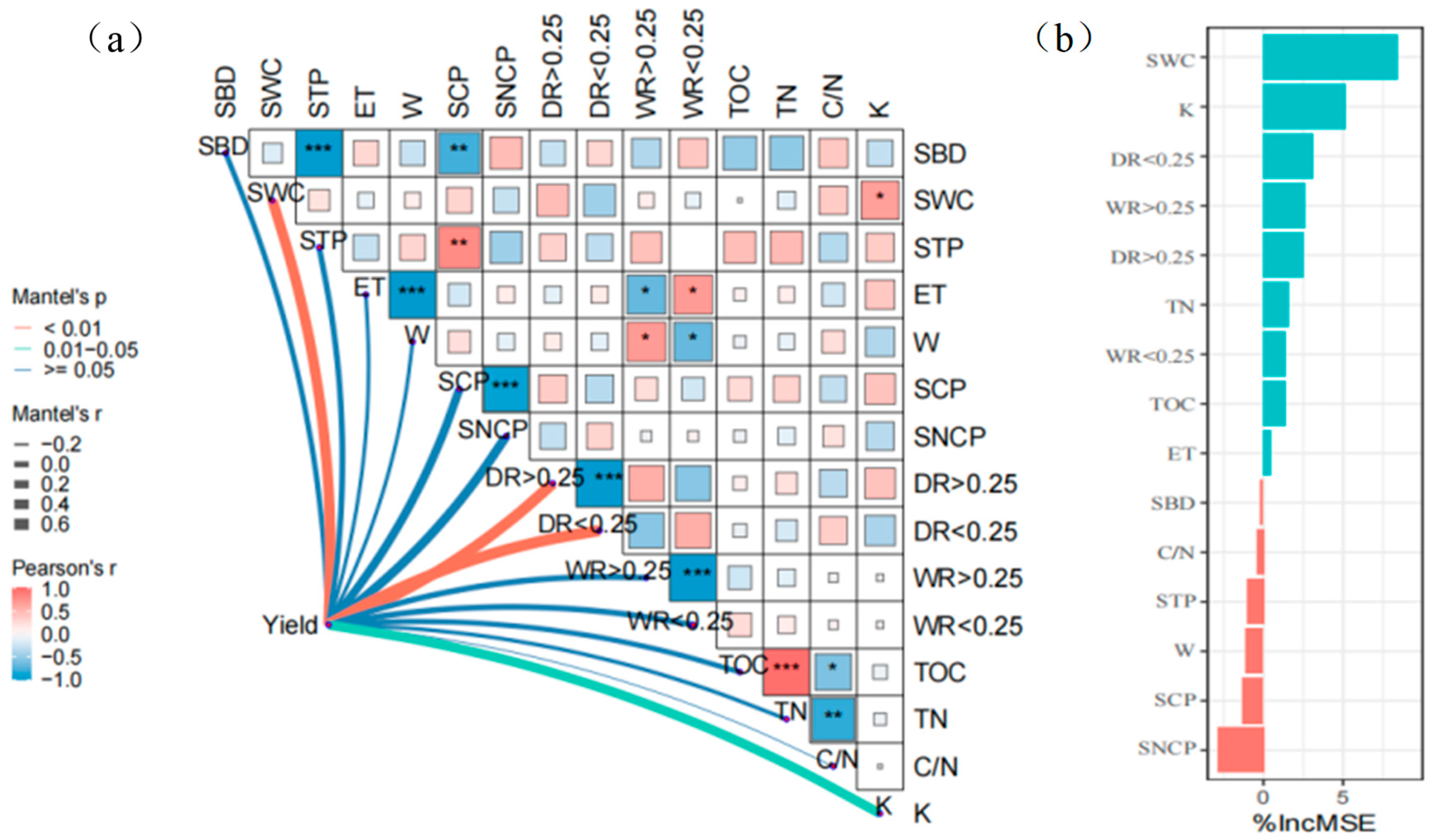
Based on the Mantel test analysis (Figure 14a), maize yield showed strong correlations with soil water content (SWC), mechanically stable macro-aggregates (DR>0.25), mechanically stable micro-aggregates (DR<0.25), and soil erodibility (K). Meanwhile, although water-stable macro-aggregates (WR>0.25) exhibited some influence on yield, the correlation did not reach a statistically significant level. Quantification of key influencing factors on maize yield via random forest modeling (Figure 14b) revealed that soil water content (SWC), soil erodibility (K), mechanically stable micro-aggregates (DR<0.25), and water-stable macro-aggregates (WR>0.25) contributed most substantially to maize yield.

3.9. Regression Relationships Between Key Influencing Factors and Maize Yield

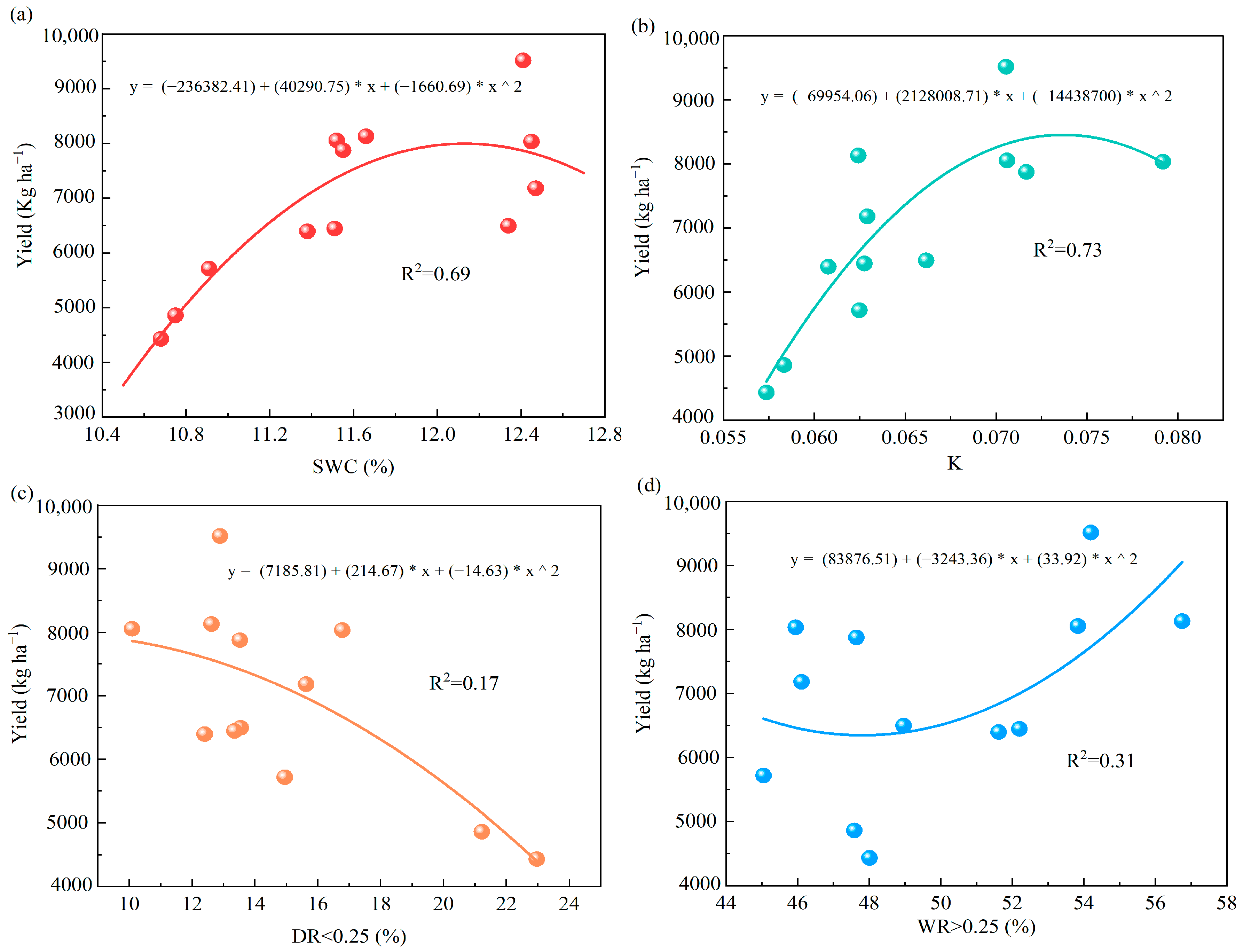
The fitting analysis between key influencing factors and maize yield is showing in Figure 15. The results are as follows. Soil water content (SWC) showed a significant quadratic relationship with maize yield, characterized by a downward-opening curve. The fitting equation was y = −236382.41 + 40290.75*x − 1660.69*x2, with a goodness of fit R2 = 0.69, indicating that the model explained 69% of the yield variation (Figure 15a). Soil erodibility (K) exhibited a downward-opening quadratic relationship with maize yield, with a goodness of fit of R2 = 0.73, indicating that the model explained 73% of the yield variation (Figure 15b). The contents of mechanically stable micro-aggregates (DR<0.25) showed a downward-opening quadratic relationship with maize yield. The fitting equation was y = 7185.81 + 241.67*x − 14.63*x2, with a goodness of fit of R2 = 0.17, indicating that the model explained 17% of the yield variation (Figure 15c). The content of water-stable macro-aggregates (WR>0.25) exhibited an upward-opening quadratic relationship with maize yield. The fitting equation was y = 83876.51 − 3243.36*x + 33.92*x2, with a goodness of fit of R2 = 0.31, indicating that the model explained only 31% of the yield variation (Figure 15d).

4. Discussion

Soil bulk density is determined by the relative amounts of soil pores and solid particles. It serves as an indicator of soil fertility status and influences soil microbial activity and enzyme dynamics. Soil porosity, as a key parameter of soil structure, reflects the permeability of water and air within the soil and affects the supply and storage of soil nutrients. The results of this study indicate that both strip straw mulching and crushed straw mulching treatments reduced soil bulk density and increased soil porosity. More importantly, we also observed, during the harvest period, that straw mulching similarly increased soil organic carbon content. This indicates that the organic material input from straw mulching effectively enhanced the soil carbon pool. As a core cementing substance for the formation and stabilization of soil aggregates, the increase in soil organic carbon content likely directly promoted the formation and stability of soil macro-aggregates, thereby reducing soil bulk density and increasing porosity. This finding aligns with the conclusions of Kooch et al. [28] and Fan et al. [29] that straw incorporation improves soil structure through organic matter input. Under the plastic film mulching treatment, this study found that soil bulk density decreased and porosity increased, while soil organic carbon content decreased compared to open-field planting. We speculate that the primary reason is not organic carbon accumulation, but rather that the soil warming effect induced by plastic film mulching accelerated the metabolism and turnover of the original soil organic matter, promoting microbial activity in the short term [30]. Mulching practices can improve the soil environment and increase crop yield. Different mulching methods affect soil moisture differently, with straw mulching, crushed straw returning, and plastic film mulching all capable of inhibiting soil water evaporation and enhancing soil water content [31]. Straw mulching helps to reduce crop water consumption and decrease evapotranspiration [32]. However, some studies have shown that plastic film mulching can reduce rainfall infiltration, leading to soil compaction and adversely affecting soil structural stability, which in turn may negatively impact crop yield. Jordán et al. [33] found that implementing no-till with straw mulching effectively increases soil water content. The results of this study demonstrate that straw strip mulching, crushed straw mulching, and plastic film mulching all significantly increased soil water content across different soil layers during the entire maize growth period, with the highest water content observed in the surface soil under all treatments. This indicates that different mulching practices can enhance rainfall infiltration and improve soil water storage. Furthermore, soil water content gradually decreased as the growth period progressed, which may be attributed to higher water demand during the later growth stages, leading to substantial water uptake by the plants. The significant increase in soil water content under plastic film mulching at the seedling and harvest stages may be due to rainfall supplementation and the suppression of water evaporation by the plastic film. At the seedling stage, plants are small; at harvest, the plants have senesced, resulting in reduced water absorption. The present study demonstrates that all mulching treatments increased soil water content in the 0–40 cm layer at the seedling stage and in the 0–60 cm layer at the harvest stage. During the flowering stage, however, soil water content in the 0–40 cm layer under plastic film mulching decreased, which may be attributed to reduced evaporation and rapid crop growth in the early stages, leading to insufficient rainwater replenishment coupled with continuous water uptake by plants during later growth stages, ultimately resulting in lower soil water content under film mulching compared to bare land. Plastic film mulching, strip straw mulching, and crushed straw mulching all enhanced soil water storage and reduced crop water consumption, which aligns with the findings reported by Gu et al. [34], indicating that these mulching practices effectively improve soil water retention and conservation.
Soil carbon and nitrogen content are influenced by various environmental factors such as fertilization, mulching, nitrogen application rate, and crop growth. Moreover, soil carbon and nitrogen play crucial roles in assessing soil fertility and enhancing soil quality and function [35]. Soil carbon and nitrogen storage serve as key parameters for characterizing soil quality and fertility status, playing a significant role in the assessment of carbon and nitrogen in farmland and in understanding soil degradation. The results of this study indicate that both strip straw mulching and crushed straw mulching increased soil organic carbon and total nitrogen content, whereas plastic film mulching led to a reduction in soil organic carbon and total nitrogen levels. These findings are consistent with the research results reported by Pang et al. [36]. Moreover, this study observed that crushed straw mulching increased the soil carbon-to-nitrogen ratio. We speculate that straw, as an exogenous organic material with a high carbon-to-nitrogen ratio, contributes additional organic carbon to the soil through its decomposition process, thereby raising soil organic carbon content. During the initial decomposition stage, readily decomposable components (such as pectin and organic acids) rapidly stimulate microbial activity. To meet their growth demands, microorganisms temporarily immobilize soil-available nitrogen, which may reduce plant nitrogen availability in the short term. As decomposition progresses into the later stage, the accumulation of recalcitrant components (such as lignin) facilitates the formation of a more stable organic carbon pool [37]. During this dynamic process, due to the continuous input of exogenous carbon and the formation of stable carbon pools, the net accumulation of soil carbon ultimately exceeded the net accumulation of nitrogen, which may be the fundamental reason for the overall increase in the carbon-to-nitrogen ratio [38]. This increase in the carbon-to-nitrogen ratio presents a typical trade-off effect on soil nitrogen availability: during the initial stage of straw decomposition, the short-term immobilization of nitrogen by microorganisms may reduce nitrogen availability for the current season’s crops. However, in the long term, it helps to enhance the soil’s nitrogen retention capacity, promotes the formation of stable organic matter, and thereby provides a more sustained nitrogen supply for crops. Soil aggregates are the fundamental units of soil structure and serve as key indicators for assessing soil quality and fertility. The stability of aggregates influences the stability of soil organic carbon, the magnitude of soil porosity [39], and enzyme activity [40], among other factors. Tillage practices primarily alter the distribution of soil organic carbon within aggregates, leading to changes in the quantity of soil aggregates, thereby creating favorable conditions for the decomposition and transformation of soil organic carbon. Zhao et al. [7] demonstrated that crop straw returning enhances soil microbial activity and increases microbial population due to the input of exogenous organic matter, thereby facilitating the transformation of micro-aggregates into macro-aggregates. In this study, after dry sieving, all treatments in the 0–30 cm soil layer were dominated by macro-aggregates (>0.25 mm). Moreover, all mulching treatments increased the content of mechanically stable macro-aggregates, indicating that these practices promoted the formation of mechanically stable granular structures. Compared to mechanically stable aggregates, the content of water-stable micro-aggregates (<0.25 mm) significantly increased. This finding is consistent with the research results of Sun et al. [41]. On the one hand, this is due to the higher content of soluble organic carbon in the soil. After wet sieving, the dissolution of soluble organic carbon caused the disintegration of soil macro-aggregates, leading to the accumulation of micro-aggregates. On the other hand, the increase in soil organic matter content under straw mulching promoted microbial activity and crop root growth, thereby facilitating the formation of macro-aggregates [42]. Additionally, the stability of mechanically stable aggregates was significantly enhanced, resulting in reduced soil bulk density and increased porosity. This improved soil water infiltration and further enhanced aeration. Simultaneously, the continuous transformation of organic matter into stable cementing substances, such as humus, promoted an increase in the content of water-stable aggregates, particularly micro-aggregates. Second, this study found that as the soil layer deepened, the content of mechanically stable micro-aggregates and water-stable micro-aggregates under different mulching measures gradually increased with soil depth. Furthermore, soil water content gradually decreased with increasing soil depth during the harvest period. Correlation analysis showed that soil water content was negatively correlated with both mechanically stable and water-stable micro-aggregates. This phenomenon is mainly attributed to the fact that in the semi-arid region of the Loess Plateau, deep soil water is often heavily depleted during the mid to late stages of crop growth, creating a persistent water-stress environment. Under such conditions, the formation mechanism of soil aggregates shifts. Water deficiency first restricts soil microbial activity and the supply of root exudates, thereby weakening the biological process-dependent “cementation” effect, which limits the formation of soil macro-aggregates in this environment [43]. Moreover, under drought conditions, aggregation processes dominated by physical forces become prominent. During the drying and water loss process, intense physical shrinkage stress causes fine particles, such as clay and silt, in the soil to aggregate, forming a micro-aggregate structure, which thereby becomes key to shaping the stability of micro-aggregates. The stability of soil structure is commonly characterized by parameters such as mean weight diameter (MWD), geometric mean diameter (GMD), and unstable aggregate index (ELT). The study by Ma et al. [44] demonstrated that straw mulching increases the MWD and GMD of aggregates, which aligns with the findings of this research. This indicates that surface mulching promotes the formation of aggregate structures and enhances their stability. Soil erodibility refers to the susceptibility of soil to erosion and is the inverse of soil resistance to erosion, generally denoted by the K value. The magnitude of soil erodibility depends on the physicochemical properties of the soil itself; however, different management practices can also alter the risk of soil erosion. It is commonly assessed by measuring the composition of water-stable aggregates. A lower erodibility (K) value indicates stronger soil resistance to erosion [45]. This study demonstrates that all mulching treatments reduced the K value in the 0–10 cm soil layer, with straw strip mulching showing the most significant effect. The primary reason is that mulching practices provide physical resistance, thereby mitigating soil susceptibility to erosion. Specifically, strip straw mulching involves covering the soil surface with whole straws, which reduces the direct impact of rainfall and the intensity of hydraulic erosion, consequently enhancing soil stability.
Mulching practices improve the soil environment and subsequently influence crop yield by regulating crop growth. Plastic film mulching, crushed straw returning, and straw mulching contribute to temperature increase and moisture conservation [46,47,48]. The elevated temperature, in turn, promotes root growth and development as well as dry matter accumulation [49]. The results of this study show that all mulching treatments significantly increased maize grain yield, which aligns with the findings of Zhou et al. [50], Wang et al. [51], and Wang et al. [52]. This is primarily attributed to the dual mechanism of “temperature increase and moisture conservation” under plastic film mulching. On the one hand, it significantly increases soil temperature and promotes crop growth. On the other hand, the barrier formed by the plastic film prevents the ineffective evaporation of soil moisture, resulting in highly efficient water conservation, which directly creates an optimal growing environment for crops and thereby enhances crop yield in the short term [17]. The increase in crop yield under straw mulching is primarily attributed to reduced soil evaporation, which lowers total field water consumption during the entire growth period, thereby improving crop water use efficiency [17]. Second, the increase in aggregate content leads to soil loosening, which significantly reduces soil bulk density and increases soil porosity. This markedly improves soil aeration and, to some extent, promotes water infiltration while reducing surface runoff, thereby enhancing water use efficiency. All mulching treatments significantly influenced yield components. Specifically, straw strip mulching, crushed straw mulching, and plastic film mulching increased ear diameter, ear length, kernels per row, kernel number per ear, grain weight per ear, and hundred-kernel weight. These findings align with the research conclusions of Zhao et al. [53] and Guo et al. [54], indicating that mulching practices enhance grain yield by improving these yield components [55]. To identify the dominant factors influencing maize yield, this study further employed the Mantel test and random forest models for analysis. The results revealed that the driving factors contributing most to maize yield were soil water content, soil erodibility, mechanically stable micro-aggregates, and water-stable macro-aggregates. Furthermore, correlation and fitting analysis between key driving factors and yield demonstrated that the goodness of fit for soil moisture content, erodibility, and water-stable macro-aggregates with yield was relatively high. However, the goodness of fit between the content of mechanically stable micro-aggregates and maize yield was only 0.17, indicating a weak regression relationship. This primarily indicates that soil water content is a key determinant of productivity in rain-fed agricultural systems. Second, soil erodibility (K value) also demonstrated the strongest explanatory power. This suggests that, in this region, the soil’s resistance to erosion is closely coupled with crop yield. A lower K value (indicating stronger erosion resistance) corresponds to a more stable soil structure, which enhances the effective retention of water and nutrients, thereby directly supporting high crop yield.

5. Conclusions

This study concludes that, in the semi-arid rainfed region of the Loess Plateau, different mulching practices significantly influence maize production and farmland ecology by regulating soil properties and moisture dynamics. All mulching treatments effectively enhanced soil water-holding capacity, increased water storage, and reduced water consumption intensity, while optimizing soil physical properties by reducing bulk density, improving pore structure, and stabilizing aggregates. A comprehensive comparison revealed that strip straw mulching demonstrated overall advantages in enhancing soil health: it effectively increased soil organic carbon and total nitrogen content, improved aggregate stability, and reduced soil erodibility. Although plastic film mulching showed a higher yield-enhancing effect in the short term, strip straw mulching not only ensured stable maize yield but also promoted soil carbon and nitrogen sequestration, structural improvement, and erosion resistance, demonstrating more significant long-term ecological benefits. Therefore, from the perspective of agricultural system sustainability, strip straw mulching is a suitable management strategy that not only ensures yield but also synergistically enhances soil health, making it appropriate for widespread adoption in rain-fed agricultural production in the semi-arid regions of Northwest China.
A limitation of this study is that it is based on only one year of field experimental data. While it reveals the short-term effects of mulching practices on soil physical structure, soil carbon and nitrogen, and maize yield, the long-term effects remain unclear. Future research should determine how long-term application of different mulching practices affects soil aggregate composition, water distribution characteristics, and crop yield. Further investigation is needed to explore the underlying microbial community response mechanisms, as well as changes in soil texture (e.g., clay, silt, sand content) across different soil layers under mulching conditions. aiming to provide a solid theoretical foundation for selecting suitable mulching patterns in the semi-arid rainfed regions of the Loess Plateau. However, the conclusions of this study are based on single-year experiments in a typical region of the Loess Plateau and provide reference value for areas with similar soil textures and climatic conditions. Nevertheless, their applicability may be limited in other soil types with notably different clay or sand contents, or when assessing the effects of long-term continuous application. It is recommended to validate the findings under local conditions.

Supplementary Materials

The following supporting information can be downloaded at: https://www.mdpi.com/article/10.3390/agronomy16040470/s1, Table S1: Tests for normality of distribution and homogeneity of variance of the data.

Author Contributions

N.H. Writing—original draft; X.W. Data curation; L.P. Writing—review and editing and Project administration; J.L., J.Y., X.X. and K.S.K. Data curation. All authors have read and agreed to the published version of the manuscript.

Funding

This research was funded by the National Natural Science Foundation of China (32160525), Gansu Provincial Natural Science Foundation (20JR5RA034), Industry-University Research Collaboration Project (GSAU-JSYF-2024-22 and GSAU-JSYF-2024-23), Graduate Education and Teaching and Key Course Construction Project of Gansu Agricultural University (GSAU-ZDKC-1909). Special Research on Curriculum and Teaching Materials for Primary, Secondary and Tertiary Education of the Education Department of Gansu Province (GSJC-Y2024057).

Institutional Review Board Statement

Not applicable.

Informed Consent Statement

Not applicable.

Data Availability Statement

The original contributions presented in this study are included in the article/Supplementary Materials. Further inquiries can be directed to the corresponding author.

Conflicts of Interest

The authors declare no conflicts of interest.

References

  1. Xu, A.X.; Khan, K.S.; Wei, X.X.; Chen, Y.F.; Zhou, Y.X.; Sun, C.R.; Effah, Z.; Li, L.L. Fertilizer nitrogen use efficiency and its fate in the spring wheat-soil system under varying N-fertilizer rates: A two-year field study using 15N tracer. Soil Tillage Res. 2025, 252, 106612. [Google Scholar] [CrossRef]
  2. Pan, L.; Yang, H.; Xu, H.; Shen, H.; Gu, M.; Luo, W.; Wu, F.; Gu, F.; Ren, G.; Hu, Z. Mechanized Recycling of Residual Film from Typical Ridge and Mulching Crops in China: Current Status, Problems, and Recommendations for Sustainable Agricultural Development. Sustainability 2024, 16, 8989. [Google Scholar] [CrossRef]
  3. Mikha, M.M.; Rice, C.W. Tillage and manure effects on soil and aggregate-associated carbon and nitrogen. Soil Sci. Soc. Am. J. 2004, 68, 809–816. [Google Scholar] [CrossRef]
  4. Six, J.; Bossuyt, H.; Degryze, S.; Denef, K. A history of research on the link between (micro)aggregates, soil biota, and soil organic matter dynamics. Soil Tillage Res. 2004, 79, 7–31. [Google Scholar] [CrossRef]
  5. Liang, P.; Wang, X.; Xu, Q.; Zhang, J.; Fang, R.; Fu, Z.; Chen, H. Lithology-mediated soil erodibility characteristics after vegetation restoration in the karst region of Southwest China. Land Degrad. Dev. 2024, 35, 1074–1086. [Google Scholar] [CrossRef]
  6. Shirazi, S.S.D.; Ahmadi, A.; Abdi, N.; Toranj, H.; Khaleghi, M.R. Long-term grazing exclosure: Implications on water erosion and soil physicochemical properties (case study: Bozdaghin rangelands, North Khorasan, Iran). Environ. Monit. Assess. 2021, 193, 51. [Google Scholar] [CrossRef]
  7. Zhao, X.; Virk, A.L.; Ma, S.T.; Kan, Z.R.; Qi, J.Y.; Pu, C.; Yang, X.G.; Zhang, H.L. Dynamics in soil organic carbon of wheat-maize dominant cropping system in the North China Plain under tillage and residue management. J. Environ. Manag. 2020, 265, 110549. [Google Scholar] [CrossRef]
  8. Blanco-Canqui, H.; Lal, R. Soil structure and organic carbon relationships following 10 years of wheat straw management in no-till. Soil Tillage Res. 2007, 95, 240–254. [Google Scholar] [CrossRef]
  9. Liu, X.; Zhou, F.; Hu, G.Q.; Shao, S.; He, H.B.; Zhang, W.; Zhang, X.D.; Li, L.J. Dynamic contribution of microbial residues to soil organic matter accumulation influenced by maize straw mulching. Geoderma 2019, 333, 35–42. [Google Scholar] [CrossRef]
  10. Zhang, X.F.; Xin, X.L.; Zhu, A.N.; Zhang, J.B.; Yang, W.H. Effects of tillage and residue managements on organic C accumulation and soil aggregation in a sandy loam soil of the North China Plain. Catena 2017, 156, 176–183. [Google Scholar] [CrossRef]
  11. Jia, M.Q.; Blume, O.; Amos, R.T.; Su, D.Y.; Lapen, D.R.; Mayer, K.U. Assessing GHG cycling in agricultural and riparian soils using a uniform reactive transport modeling approach. Geoderma 2022, 425, 116078. [Google Scholar] [CrossRef]
  12. Jia, M.Q.; Lapen, D.R.; Su, D.Y.; Mayer, K.U. Multi-Domain Reactive Transport Modeling of GHG Emissions From Macroporous Agricultural Soils with a Focus on N2O Hotspots and Hot Moments. Water Resour. Res. 2025, 61, e2025WR040588. [Google Scholar] [CrossRef]
  13. Fernando, M.; Scott, N.; Shrestha, A.; Gao, S.D.; Hale, L. A native plant species cover crop positively impacted vineyard water dynamics, soil health, and vine vigor. Agric. Ecosyst. Environ. 2024, 367, 108972. [Google Scholar] [CrossRef]
  14. Pandino, G.; Salicola, S.A.; Formenti, C.; Bannò, M.; Scavo, A.; Mauromicale, G.; Lombardo, S. Mulching with Cynara cardunculus Residues Affects Selected Soil Properties, Weed Pressure and Potato Yield. Potato Res. 2025, 68, 2067–2083. [Google Scholar] [CrossRef]
  15. Li, C.; Luo, X.Q.; Li, Y.; Wang, N.J.; Zhang, T.B.; Dong, Q.G.; Feng, H.; Zhang, W.X.; Siddique, K.H.M. Ridge planting with transparent plastic mulching improves maize productivity by regulating the distribution and utilization of soil water, heat, and canopy radiation in arid irrigation area. Agric. Water Manag. 2023, 280, 108230. [Google Scholar] [CrossRef]
  16. Shangguan, X.D.; Wang, X.; Yuan, M.; Gao, M.L.; Liu, Z.D.; Li, M.; Zong, R.; Sun, C.T.; Zhang, M.M.; Li, Q.Q. Effects of long-term biodegradable film mulching on yield and water productivity of maize in North China Plain. Agric. Water Manag. 2024, 304, 109094. [Google Scholar] [CrossRef]
  17. Ma, J.T.; Chang, L.; Li, Y.W.; Lan, X.M.; Ji, W.N.; Zhang, J.T.; Han, F.X.; Cheng, H.B.; Chai, Y.W.; Chai, S.X. Straw strip mulch improves soil moisture similar to plastic film mulch but with a higher net income. Agric. Ecosyst. Environ. 2024, 362, 108855. [Google Scholar] [CrossRef]
  18. Xu, J.; Li, C.F.; Liu, H.T.; Zhou, P.L.; Tao, Z.Q.; Wang, P.; Meng, Q.F.; Zhao, M. The Effects of Plastic Film Mulching on Maize Growth and Water Use in Dry and Rainy Years in Northeast China. PLoS ONE 2015, 10, e0125781. [Google Scholar] [CrossRef]
  19. Kong, M.; Huang, M.J.; Zhang, Z.X.; Long, J.; Siddique, K.H.M.; Zhang, D.M. Effects of plastic film mulching on soil microbial carbon metabolic activity and functional diversity at different maize growth stages in cool, semi-arid regions. Front. Microbiol. 2024, 15, 1492149. [Google Scholar] [CrossRef]
  20. Yu, K.; Dong, Q.G.; Chen, H.X.; Feng, H.; Zhao, Y.; Si, B.C.; Li, Y.; Hopkins, D.W. Incorporation of Pre-Treated Straw Improves Soil Aggregate Stability and Increases Crop Productivity. Agron. J. 2017, 109, 2253–2265. [Google Scholar] [CrossRef]
  21. Wang, L.; Li, X.G.; Lv, J.T.; Fu, T.T.; Ma, Q.J.; Song, W.Y.; Wang, Y.P.; Li, F.M. Continuous plastic-film mulching increases soil aggregation but decreases soil pH in semiarid areas of China. Soil Tillage Res. 2017, 167, 46–53. [Google Scholar] [CrossRef]
  22. Bao, S.D. Soil and Agro-Chemistry Analytical Methods, 3rd ed.; China Agriculture: Beijing, China, 2016. [Google Scholar]
  23. Cui, Y.X.; Fang, L.C.; Guo, X.B.; Wang, X.; Zhang, Y.J.; Li, P.F.; Zhang, X.C. Ecoenzymatic stoichiometry and microbial nutrient limitation in rhizosphere soil in the arid area of the northern Loess Plateau, China. Soil Biol. Biochem. 2018, 116, 11–21. [Google Scholar] [CrossRef]
  24. Liu, H.F.; Wang, X.K.; Liang, C.T.; Ai, Z.M.; Wu, Y.; Xu, H.W.; Xue, S.; Liu, G.B. Glomalin-related soil protein affects soil aggregation and recovery of soil nutrient following natural revegetation on the Loess Plateau. Geoderma 2020, 357, 113921. [Google Scholar] [CrossRef]
  25. Zhang, S.; Cui, J.W.; Wu, H.; Zheng, Q.; Song, D.L.; Wang, X.B.; Zhang, S.Q. Organic carbon, total nitrogen, and microbial community distributions within aggregates of calcareous soil treated with biochar. Agric. Ecosyst. Environ. 2021, 314, 107408. [Google Scholar] [CrossRef]
  26. Dou, Y.X.; Yang, Y.; An, S.S.; Zhu, Z.L. Effects of different vegetation restoration measures on soil aggregate stability and erodibility on the Loess Plateau, China. Catena 2020, 185, 104294. [Google Scholar] [CrossRef]
  27. Chen, Y.Z.; Chai, S.X.; Tian, H.H.; Chai, Y.W.; Li, Y.W.; Chang, L.; Cheng, H.B. Straw strips mulch on furrows improves water use efficiency and yield of potato in a rainfed semiarid area. Agric. Water Manag. 2019, 211, 142–151. [Google Scholar] [CrossRef]
  28. Kooch, Y.; Ghorbanzadeh, N.; Haghverdi, K.; Francaviglia, R. Soil quality cannot be improved after thirty years of land use change from forest to rangeland. Sci. Total Environ. 2023, 856, 159132. [Google Scholar] [CrossRef]
  29. Fan, Y.F.; Gao, J.L.; Sun, J.Y.; Liu, J.; Su, Z.J.; Hu, S.P.; Wang, Z.G.; Yu, X.F. Potentials of straw return and potassium supply on maize (Zea mays L.) photosynthesis, dry matter accumulation and yield. Sci. Rep. 2022, 12, 799. [Google Scholar] [CrossRef]
  30. Deng, L.; Peng, C.H.; Huang, C.B.; Wang, K.B.; Liu, Q.Y.; Liu, Y.L.; Hai, X.Y.; Shangguan, Z.P. Drivers of soil microbial metabolic limitation changes along a vegetation restoration gradient on the Loess Plateau, China. Geoderma 2019, 353, 188–200. [Google Scholar] [CrossRef]
  31. Wang, X.; Jia, Z.; Liang, L. Effect of straw incorporation on soil moisture, evapotranspiration, and rainfall-use efficiency of maize under dryland farming. J. Soil Water Conserv. 2014, 69, 449–455. [Google Scholar] [CrossRef]
  32. Li, R.; Chai, S.X.; Chai, Y.W.; Li, Y.W.; Lan, X.M.; Ma, J.T.; Cheng, H.B.; Chang, L. Mulching optimizes water consumption characteristics and improves crop water productivity on the semi-arid Loess Plateau of China. Agric. Water Manag. 2021, 254, 106965. [Google Scholar] [CrossRef]
  33. Jordán, A.; Zavala, L.M.; Gil, J. Effects of mulching on soil physical properties and runoff under semi-arid conditions in southern Spain. Catena 2010, 81, 77–85. [Google Scholar] [CrossRef]
  34. Gu, X.B.; Li, Y.N.; Du, Y.D. Biodegradable film mulching improves soil temperature, moisture and seed yield of winter oilseed rape (Brassica napus L.). Soil Tillage Res. 2017, 171, 42–50. [Google Scholar] [CrossRef]
  35. Singh, N.; Dhaliwal, J.K.; Sekaran, U.; Kumar, S. Soil hydrological properties as influenced by long-term nitrogen application and landscape positions under switchgrass seeded to a marginal cropland. Glob. Change Biol. Bioenergy 2019, 11, 1026–1040. [Google Scholar] [CrossRef]
  36. Pang, L.; Wu, H.M.; Lu, J.L.; Zheng, H.F.; Wang, X.H.; Mumtaz, M.Z.; Zhou, Y.L. Microbially Mediated Carbon Regulation by Straw Mulching in Rainfed Maize Rhizosphere. Agronomy 2025, 15, 1412. [Google Scholar] [CrossRef]
  37. Gao, H.J.; Chen, X.; Wei, J.L.; Zhang, Y.J.; Zhang, L.G.; Chang, J.; Thompson, M.L. Decomposition Dynamics and Changes in Chemical Composition of Wheat Straw Residue under Anaerobic and Aerobic Conditions. PLoS ONE 2016, 11, e0158172. [Google Scholar] [CrossRef]
  38. Peng, X.H.; Horn, R.; Hallett, P. Soil structure and its functions in ecosystems: Phase matter & scale matter. Soil Tillage Res. 2015, 146, 1–3. [Google Scholar] [CrossRef]
  39. Huang, B.C.; Zhu, M.K.; Liu, Z.Y.; Sheng, M.H.; Chen, M.; Yang, Q.Q.; Yang, Y.X.; Ai, Y.W. The formation of small macro-aggregates induces soil organic carbon stocks in the restoration process used on cut slopes in alpine regions of China. Land Degrad. Dev. 2022, 33, 3283–3293. [Google Scholar] [CrossRef]
  40. Zhang, D.B.; Yao, Z.Y.; Chen, J.; Yao, P.W.; Zhao, N.; He, W.X.; Li, Y.Y.; Zhang, S.Q.; Zhai, B.N.; Wang, Z.H.; et al. Improving soil aggregation, aggregate-associated C and N, and enzyme activities by green manure crops in the Loess Plateau of China. Eur. J. Soil Sci. 2019, 70, 1267–1279. [Google Scholar] [CrossRef]
  41. Sun, F.H.; Zhang, Z.C.; Jiang, P.A.; Zhou, S.L.; Ou, J.F. Structure and stability characteristics of zonal soil aggregates in the Three Rivers Source of the Qinghai-Tibetan Plateau. Soil Sci. Soc. Am. J. 2023, 87, 1042–1055. [Google Scholar] [CrossRef]
  42. Li, Y.Z.; Yang, J.B.; Shi, Z.; Pan, W.H.; Liao, Y.C.; Li, T.; Qin, X.L. Response of root traits to plastic film mulch and its effects on yield. Soil Tillage Res. 2021, 209, 104930. [Google Scholar] [CrossRef]
  43. Webb, J.S.; Givskov, M.; Kjelleberg, S. Bacterial biofilms: Prokaryotic adventures in multicellularity. Curr. Opin. Microbiol. 2003, 6, 578–585. [Google Scholar] [CrossRef] [PubMed]
  44. Ma, Z.; Ma, J.T.; Chai, Y.W.; Song, W.H.; Han, F.X.; Huang, C.X.; Cheng, H.B.; Chang, L. Mulching Improves the Soil Hydrothermal Environment, Soil Aggregate Content, and Potato Yield in Dry Farmland. Agronomy 2024, 14, 2470. [Google Scholar] [CrossRef]
  45. Zhou, Y.; Ma, H.; Xie, Y.; Lu, Q.; Shen, Y.; Ma, J. Response of soil aggregate stability and erodibility to different treatments on typical steppe in the Loess Plateau, China. Restor. Ecol. 2022, 30, e13593. [Google Scholar] [CrossRef]
  46. Zhao, X.D.; Qin, X.R.; Li, T.L.; Cao, H.B.; Xie, Y.H. Effects of planting patterns plastic film mulching on soil temperature, moisture, functional bacteria and yield of winter wheat in the Loess Plateau of China. J. Integr. Agric. 2023, 22, 1560–1573. [Google Scholar] [CrossRef]
  47. Kader, M.A.; Senge, M.; Mojid, M.A.; Nakamura, K. Mulching type-induced soil moisture and temperature regimes and water use efficiency of soybean under rain-fed condition in central Japan. Int. Soil Water Conserv. Res. 2017, 5, 302–308. [Google Scholar] [CrossRef]
  48. Zhang, G.X.; Zhang, S.B.; Xia, Z.Q.; Bai, J.X.; Wu, M.K.; Lu, H.D. Integrated effects of polyethylene/biodegradable residual film on soil hydrothermal conditions and spring maize growth in rain-fed dryland. Agric. Water Manag. 2024, 305, 109103. [Google Scholar] [CrossRef]
  49. Xia, Z.; Zhang, G.; Zhang, S.; Wang, Q.; Lu, H. Efficacy of Root Zone Temperature Increase in Root and Shoot Development and Hormone Changes in Different Maize Genotypes. Agriculture 2021, 11, 477. [Google Scholar] [CrossRef]
  50. Zhou, B.Y.; Ma, D.; Sun, X.F.; Ding, Z.S.; Li, C.F.; Ma, W.; Zhao, M. Straw Mulching under a Drip Irrigation System Improves Maize Grain Yield and Water Use Efficiency. Crop Sci. 2019, 59, 2806–2819. [Google Scholar] [CrossRef]
  51. Wang, C.J.; Wang, J.D.; Zhang, Y.Q.; Qin, S.S.; Zhang, Y.Y.; Liu, C.Q. Effects of Different Mulching Materials on the Grain Yield and Water Use Efficiency of Maize in the North China Plain. Agriculture 2022, 12, 1112. [Google Scholar] [CrossRef]
  52. Wang, J.Q.; Han, Y.H.; Zhou, C.; Xu, T.; Qu, Z.C.; Ma, B.; Yuan, M.; Wang, L.X.; Liu, Y.; Li, Q.C.; et al. Effects of depth of straw returning on maize yield potential and greenhouse gas emissions. Front. Plant Sci. 2024, 15, 1344647. [Google Scholar] [CrossRef]
  53. Zhao, L.; Xie, G.M.; Fan, M.Y.; Anwar, S.; Zhang, Q.; Lu, J.Y.; Zhang, L.G.; Gao, F.; Wang, C.Y. Mulching and Planting Density on Photosynthesis, Lodging Resistance, and Yield of Maize. Int. J. Plant Prod. 2023, 17, 651–665. [Google Scholar] [CrossRef]
  54. Guo, Y.; Fan, H.; Li, P.; Wei, J.G.; Qiu, H.L. Photosynthetic Physiological Basis of No Tillage with Wheat Straw Returning to Improve Maize Yield with Plastic Film Mulching in Arid Irrigated Areas. Plants 2023, 12, 1358. [Google Scholar] [CrossRef]
  55. Chai, Y.W.; Chai, Q.; Li, R.; Li, Y.W.; Yang, C.G.; Cheng, H.B.; Chang, L.; Chai, S.X. Straw strip mulching in a semiarid rainfed agroecosystem achieves winter wheat yields similar to those of full plastic mulching by optimizing the soil hydrothermal regime. Crop J. 2022, 10, 879–892. [Google Scholar] [CrossRef]
Figure 1. Distribution of rainfall and temperature during the crop growing season in 2022.
Agronomy 16 00470 g001
Figure 2. Planting pattern maps: (a) bare-land flat planting; (b) plastic film mulching; (c) crushed straw mulching; and (d) straw strip mulching.
Agronomy 16 00470 g002
Figure 3. Effects of mulching methods on soil bulk density and porosity. Note: different lowercase letters indicate significant differences between treatments within the same soil layer.
Agronomy 16 00470 g003
Figure 4. Effects of mulching methods on soil water content at different soil depths during maize growth stages: (a) maize seedling stage; (b) maize flowering stage; and (c) maize harvest stage. SWC stands for soil water content.
Agronomy 16 00470 g004
Figure 5. Effects of mulching methods on soil water storage at different growth stages of maize. Note: W represents soil water storage. Lowercase letters indicate significant differences among different treatments within the same growth period.
Agronomy 16 00470 g005
Figure 6. Effects of mulching methods on farmland water consumption. Note: ET represents farmland water consumption. Lowercase letters indicate significant differences among different treatments.
Agronomy 16 00470 g006
Figure 7. Effects of mulching methods on soil carbon and nitrogen contents and carbon-to-nitrogen ratio. Note: Different lowercase letters indicate significant differences between treatments. TOC represents soil organic carbon content, TN represents soil total nitrogen content, and C/N represents the soil carbon-to-nitrogen ratio.
Agronomy 16 00470 g007
Figure 8. Effects of mulching methods on soil carbon and nitrogen stocks. Note: Different lowercase letters indicate significant differences between treatments. TOCS represents soil carbon storage and TNS represents soil nitrogen storage.
Agronomy 16 00470 g008
Figure 9. Effects of mulching methods on soil mechanically stable aggregates. Note: Small letters indicate significant differences between different treatments of the same size.
Agronomy 16 00470 g009
Figure 10. Effects of mulching methods on water-stable aggregates. Note: Small letters indicate significant differences between different treatments of the same particle size.
Agronomy 16 00470 g010
Figure 11. Effects of mulching methods on soil erodibility.
Agronomy 16 00470 g011
Figure 12. Effects of mulching methods on maize yield and yield components. Note: Small letters indicate significant differences between different treatments of the same index. * indicates significant correlation at the 0.05 level, and ns indicates no significant relationship. ED indicates ear diameter, PL indicates ear length, ERN indicates ear row number, RGN indicates row grain number, GNC indicates grain number per ear, GWP indicates grain weight per ear, and HGW indicates hundred-grain weight.
Agronomy 16 00470 g012
Figure 13. Correlation analysis of yield and yield components. Note: ED indicates ear diameter, PL indicates ear length, ERN indicates ear row number, RGN indicates row grain number, GNC indicates grain number per ear, GWP indicates grain weight per ear, and HGW indicates hundred-grain weight.
Agronomy 16 00470 g013
Figure 14. Analysis of influencing factors on maize yield: (a) shows the Mantel test, where line thickness indicates the strength of the relationship between maize yield and soil indicators. * denotes significant correlation at the 0.05 level, ** at the 0.01 level, and *** at the 0.001 level; and (b) presents a random forest model quantifying the importance ranking of variables affecting maize yield using the %IncMSE (percentage increase in mean squared error) metric. A higher %IncMSE value indicates greater predictive contribution of the corresponding variable. The green bars represent positive contributions to yield, and the red bars represent negative contributions to yield. SBD represents soil bulk density, SWC represents soil water content, STP represents soil porosity, ET represents farmland water consumption, W represents soil water storage, SCP represents soil capillary porosity, SNCP represents soil non-capillary porosity, DR>0.25 represents mechanically stable macro-aggregates, DR<0.25 represents mechanically stable micro-aggregates, WR>0.25 represents water-stable macro-aggregates, WR<0.25 represents water-stable micro-aggregates, TOC represents soil organic carbon content, TN represents soil total nitrogen content, C/N represents soil carbon-to-nitrogen ratio, and K represents soil erodibility.
Agronomy 16 00470 g014
Figure 15. Regression relationships between key influencing factors and maize yield. Note: SWC represents soil water content, K represents soil erodibility, DR<0.25 represents mechanically stable micro-aggregates, and WR>0.25 represents water-stable macro-aggregates. Figures (a), (b), (c), and (d) show the fitting of soil SWC, K, DR<0.25, and WR>0.25 with yield, respectively.
Agronomy 16 00470 g015
Table 1. List of abbreviations.
AbbreviationsFull NameAbbreviationsFull NameAbbreviationsFull Name
SWCSoil water contentC/NSoil carbon-to-nitrogen ratioELTUnstable aggregate index
WSoil water storageTOCSSoil carbon stockKSoil erodibility
ETField water consumptionTNSSoil nitrogen stock EDEar diameter
SBDsoil bulk densityDR>0.25Mechanically stable macro-aggregatesPLEar length
STPSoil total porosityDR<0.25Mechanically stable micro-aggregatesERNEar row number
SCPSoil capillary porosity WR>0.25Water-stable macro-aggregatesRGNRow grain number
SNCPSoil non-capillary porosityWR<0.25Water-stable micro-aggregatesGNCGrain number per ear
TOC Soil organic carbonMWDMean weight diameterGWPGrain weight per ear
TNSoil total nitrogenGMDGeometric mean diameterHGWHundred grain weight
Table 2. Effects of mulching methods on soil aggregate stability.
IndexTreatmentSoil Depth (cm)
Mechanically Stable AggregatesWater-Stable Aggregates
0–1010–2020–300–1010–2020–30
MWD (mm)TCK3.62 ± 0.61 a2.67 ± 0.22 d4.95 ± 0.38 a2.88 ± 0.22 b3.66 ± 0.12 a1.83 ± 0.06 a
TPM3.90 ± 0.63 a3.86 ± 0.54 c4.76 ± 0.57 a3.36 ± 0.07 ab3.73 ± 0.44 a0.82 ± 0.24 bc
TSR3.63 ± 0.07 a3.86 ± 0.12 c3.84 ± 0.32 b3.69 ± 0.12 a3.32 ± 0.33 ab1.14 ± 0.42 bc
TSM-u3.75 ± 0.35 a5.27 ± 0.15 a4.37 ± 0.36 ab3.85 ± 0.71 a2.84 ± 0.42 b0.74 ± 0.24 c
TSM-d3.71 ± 0.36 a3.52 ± 0.30 c4.46 ± 0.12 ab3.61 ± 0.36 a3.36 ± 0.35 ab1.69 ± 0.01 a
TSM3.73 ± 0.36 a4.40 ± 0.22 b4.41 ± 0.12 ab3.73 ± 0.41 a3.10 ± 0.35 ab1.21 ± 0.12 b
GMD (mm)TCK1.42 ± 0.40 a1.06 ± 0.22 d2.77 ± 0.55 a0.70 ± 0.09 b0.97 ± 0.06 ab0.39 ± 0.04 a
TPM1.91 ± 0.60 a1.91 ± 0.50 bc2.43 ± 0.64 ab1.01 ± 0.12 ab1.22 ± 0.29 a0.25 ± 0.03 bc
TSR1.70 ± 0.05 a1.85 ± 0.15 bc1.47 ± 0.22 c1.15 ± 0.15 a0.92 ± 0.13 ab0.25 ± 0.05 bc
TSM-u1.83 ± 0.31 a3.17 ± 0.13 a2.01 ± 0.17 bc1.23 ± 0.44 a0.67 ± 0.17 b0.21 ± 0.03 c
TSM-d1.61 ± 0.22 a1.58 ± 0.07 c2.07 ± 0.14 bc1.23 ± 0.22 a0.88 ± 0.17 b0.42 ± 0.02 a
TSM1.72 ± 0.26 a2.24 ± 0.06 b2.04 ± 0.05 bc1.21 ± 0.22 a0.76 ± 0.16 b0.29 ± 0.01 b
ELT (%)TCK23.23 ± 4.85 a23.27 ± 8.04 a12.64 ± 4.92 b50.59 ± 4.18 a46.15 ± 1.44 ab62.63 ± 4.89 b
TPM9.03 ± 5.51 bc9.26 ± 5.59 b17.30 ± 4.72 b35.58 ± 6.72 b32.33 ± 5.22 c67.32 ± 7.97 b
TSR9.98 ± 2.27 bc8.76 ± 1.59 b27.22 ± 3.47 a36.48 ± 6.39 b44.41 ± 1.83 b78.10 ± 4.99 a
TSM-u7.21 ± 4.48 c8.27 ± 1.23 b15.26 ± 4.59 b36.17 ± 5.33 b55.24 ± 7.35 a78.94 ± 2.28 a
TSM-d16.03 ± 2.78 ab14.09 ± 4.49 b17.69 ± 4.33 b28.17 ± 3.97 b46.89 ± 5.15 ab51.68 ± 1.23 c
TSM11.62 ± 3.46 bc11.18 ± 2.76 b16.47 ± 0.66 b32.17 ± 1.58 b51.06 ± 6.02 ab65.31 ± 0.82 b
Note: Small letters indicate significant differences between different treatments of the same soil layer. MWD represents mean weight diameter, GMD represents geometric mean diameter, and ELT represents unstable aggregate index.
Disclaimer/Publisher’s Note: The statements, opinions and data contained in all publications are solely those of the individual author(s) and contributor(s) and not of MDPI and/or the editor(s). MDPI and/or the editor(s) disclaim responsibility for any injury to people or property resulting from any ideas, methods, instructions or products referred to in the content.