Article

Effects of Ornamental Plant Potentilla fruticosa on Soil Enzyme Activity in Gangue Mountain Under Different Planting Patterns

1
Gansu Desert Control Research Institute, Lanzhou 730070, China
2
Gansu Minqin National Station for Desert Steppe Ecosystem Studies, Wuwei 733000, China
3
Centre for Grassland Microbiome, College of Pastoral Agricultural Science and Technology, Lanzhou University, Lanzhou 730000, China
4
Observation Station of Subalpine Ecology Systems in the Middle Qilian Mountains, Xining 810000, China
5
Gansu Qilian Mountain National Nature Reserve Management Center, Zhangye 734000, China
6
Academy of Forestry, Gansu Agricultural University, Lanzhou 730070, China
*
Authors to whom correspondence should be addressed.
Agronomy 2026, 16(4), 443; https://doi.org/10.3390/agronomy16040443
Submission received: 16 January 2026 / Revised: 5 February 2026 / Accepted: 10 February 2026 / Published: 13 February 2026
(This article belongs to the Special Issue Soil Improvement and Restoration)

Abstract

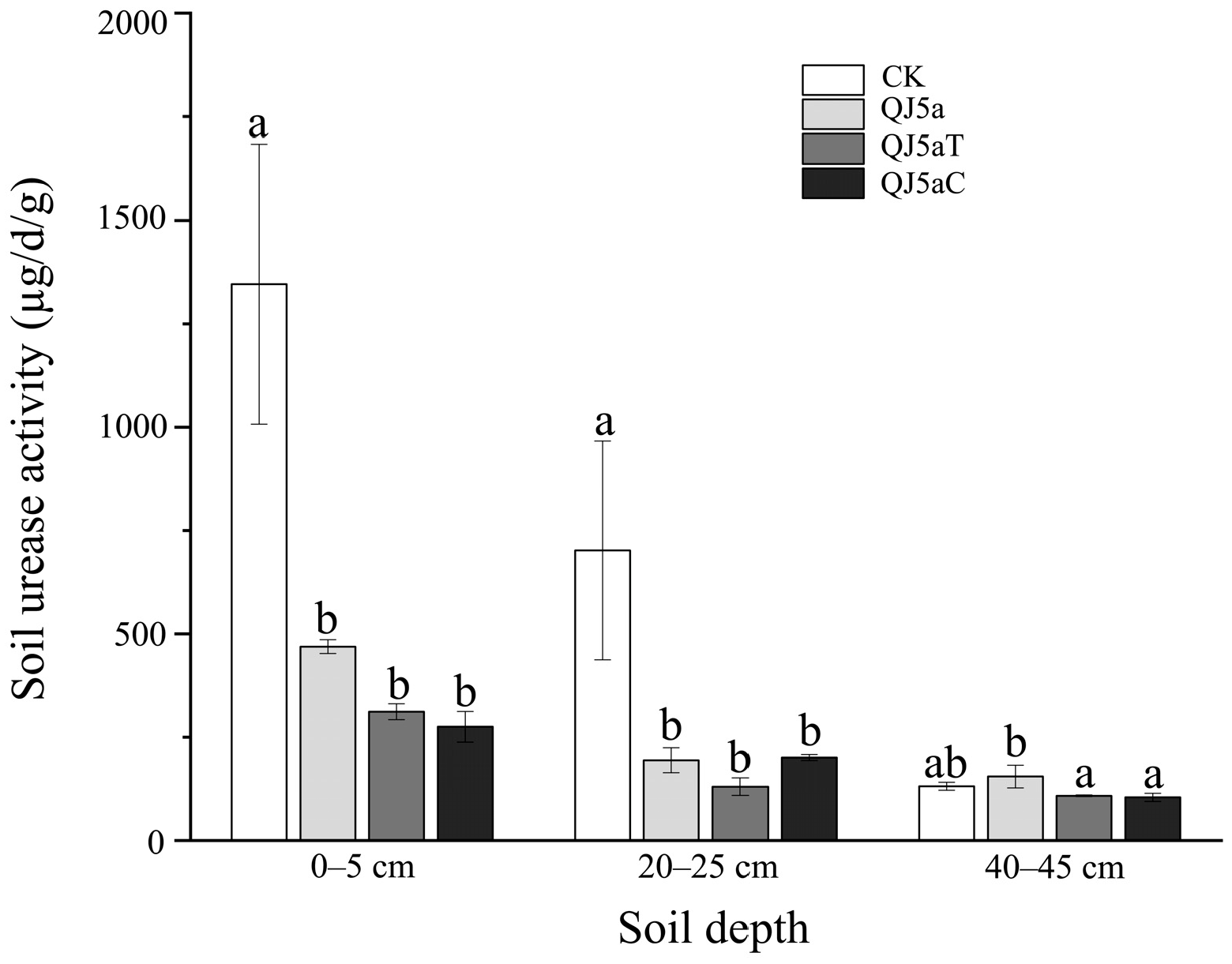
This study investigated the effects of Potentilla fruticosa planting on plant community succession in a spoil heap, analyzed changes in soil enzyme activities under different planting methods, and explored the relationships between soil enzyme activities and plant community diversity across these planting approaches. This experiment selected Potentilla fruticosa planted under different restoration modes (covered with soil, covered with straw curtain, not covered) in Shuanglonggou gangue Mountain, Tianzhu County, Gansu Province, as the research object. The growth status and activities of soil urease, alkaline phosphatase, catalase and sucrase and their correlation were measured in different repair modes in the untreated waste rock (CK). The results showed that (1) the Simpson dominance index and Pielou evenness index decreased to a certain extent under the condition of plant community analysis; Shannon diversity index decreased in the case of curtain covering, but increased in the other two treatments. The richness index of Margalef increased to some extent, and reached the maximum when the curtain was covered. (2) The activity of soil urease and alkaline phosphatase was the lowest in the plots covered by straw curtain, and the activity was 104.4 μg/d/g and 334.5 μg/d/g, respectively. (3) The change in soil catalase activity was not obvious with the increase in soil depth, and the catalase activity in deep soil reached the maximum of 945.3 μg/d/g in the mulch soil sample. (4) The planting of golden dew had a certain effect on the activity of sucrase in shallow soil, and the maximum sucrase activity reached 15.3 μg/d/g under the condition that the planting of Potentilla fruticosa was not covered. (5) Soil urease activity and soil alkaline phosphatase activity were significantly positively correlated with plant community diversity index, while soil catalase activity and soil sucrase activity were negatively correlated with plant community diversity. (6) The total nitrogen content in the soil shows a significant positive correlation with soil urease activity. While soil alkaline phosphatase activity is significantly negatively correlated with soil moisture content, it shows a highly significant positive correlation with soil total nitrogen content. Furthermore, soil sucrase activity demonstrates a highly significant positive correlation with soil bulk density and soil available phosphorus content. To sum up, the planting of golden plum can promote the ecological restoration of gangue mountain soil, and provide a theoretical and scientific basis for ecological restoration and soil quality improvement in the Qilian Mountain mining area.

1. Introduction

The Qilian Mountains straddle the border between Gansu and Qinghai provinces, serving as the dividing line between the Loess Plateau, the Qinghai–Tibet Plateau, and the Mongolian-Xinjiang Plateau. They constitute a vital ecological barrier and water conservation zone in western China [1]. The Qilian Mountains exhibit a typical plateau continental climate with significant variations in water and heat conditions [2]. Mountain vegetation communities ascend vertically from higher to lower elevations as semi-desert grasslands, montane desert grasslands, montane forest grasslands, alpine shrub grasslands, subalpine meadows, and subalpine sparse meadows. Species composition varies markedly within each zone, exhibiting distinct vertical distribution patterns [3]. However, since large-scale mining operations commenced in the 1970s, extensive vegetation destruction, accelerated soil erosion, and significant soil heavy metal contamination have occurred. Mining activities directly strip away surface vegetation and soil layers, undermining their water conservation functions. Simultaneously, these operations expose bare ground, intensifying hydraulic and wind erosion processes and causing severe soil loss. Moreover, mine waste, tailings, and acid drainage have led to the accumulation of heavy metals such as lead, cadmium, and arsenic in the soil. This not only inhibits plant growth and soil microbial activity but also poses long-term ecological and health risks through the food chain [4].
Potentilla fruticosa is a deciduous shrub belonging to the Rosaceae family and Rubus genus. Mature plants typically reach heights between 0.5 m and 2 m. The bark peels off longitudinally, and the twigs are reddish-brown. The leaves are oblong or obovate-oblong in shape, entire with flat margins, pinnately compound, 0.70 cm to 2.0 cm long, and 0.40 cm to 1.0 cm wide. The stems are highly branched, with reddish-brown or grayish-brown twigs. The petioles are short and pubescent. Leaves are oblong or obovate-oblong, 0.7–2 cm long and 0.4–1 cm wide [5]. Potentilla fruticosa is a dominant or constructive shrub species in alpine and subalpine scrub ecosystems, notable for its high ecological resilience [6]. Acting as a pioneer shrub species in both natural and secondary succession, it plays a critical role in soil stabilization, erosion mitigation, improvement of soil physicochemical properties, and the promotion of biodiversity recovery. Consequently, it is often selected as a key restoration species in the initial phases of rehabilitating degraded ecosystems, such as post-mining lands.
Soil enzymes are a class of catalytically active proteins secreted or released by microorganisms, fine roots, and soil animals, playing crucial roles in ecological processes such as organic matter decomposition and pollutant degradation [7]. Studies indicate that different soil enzymes exhibit distinct responses to heavy metal stress [8,9]. Therefore, when undertaking soil ecological and environmental remediation efforts, soil enzyme activity serves as a vital indicator that effectively reflects changes in the soil ecological environment. Simultaneously, soil enzyme activity influences the biochemical cycling of elements like C, N, and P within the soil, with its level reflecting the extent of nutrient metabolism [7]. Among these, soil urease activity is a key factor in the conversion of urea into available nitrogen after soil incorporation [10]; Soil alkaline phosphatase participates in converting organic phosphorus to inorganic phosphorus, with its activity directly affecting the content of readily available phosphorus in soil [11]; Soil catalase accelerates the decomposition of hydrogen peroxide in soil, reducing its harm to plants, and its activity reflects the redox capacity of soil [12]; Soil sucrase participates in the cycling of organic carbon in soil, and its activity reflects the accumulation of organic carbon in the soil [13].
Based on the severe damage caused by the coal gangue mountain to the ecological environment of the Qilian Mountains, this study selected the local dominant shrub, Caragana microphylla, according to the plant selection criteria in the plant-based ecological environment restoration method, to restore the soil ecological environment of the coal gangue mountain in the Shuanglonggou area of the Qilian Mountains. To investigate the growth and remediation capabilities of Rhododendron schlippenbachii under varying moisture and nutrient conditions, three planting methods were implemented on the waste rock mountain: direct planting on bare rock; planting after covering the rock with approximately 1 cm of soil (soil-covered planting); and planting after covering the rock with straw mats (planting with straw mat covering). The study examined the impact of Potentilla fruticosa planting on the succession of plant communities on the waste rock mountain, analyzed changes in soil enzyme activity under different planting methods, and investigated the correlation between soil enzyme activity and plant community diversity under various planting approaches. The aim is to provide theoretical support for advancing the ecological restoration of the Shuanglonggou waste rock mountain in the Qilian Mountains and similar waste rock mountain soils.
Therefore, we propose the following central hypothesis: planting Potentilla fruticosa in gangue hill restoration will significantly promote the succession from herbaceous to shrub-dominated plant communities and enhance species richness. Concurrently, through root activity and litter input, it will alter soil enzyme activities, particularly decreasing urease and alkaline phosphatase activities in surface soil while increasing catalase and sucrase activities.

2. Materials and Methods

2.1. Research Area Overview

The study area is located in Shuanglong Valley (37°22′24.6″ N, 102°25′24.8″ E) in the eastern section of the Qilian Mountains, under the jurisdiction of Haxi Town, Tianzhu County, Wuwei City, Gansu Province. The terrain slopes from south to north, with elevations ranging from 2400 m to 4800 m. The area boasts rich plant resources, primarily grasslands and forests within the valley. Dominant tree species include Picea crassifolia Kom, mixed with small quantities of Juniperus przewalskii Kom, Betula albosinensis Burkill, Populus davidiana Dode and Salix takasagoalpina Koid., Rhododendron simsii Planch, Caragana sinica (Buc’hoz) Rehder, The land use distribution is as follows: forested land 248.6 km2, sparse forest 2.4 km2, shrubland 1485.7 km2, grassland 24.5 km2, water bodies covering 53.8 km2, and snow-covered bare rock with unused land totaling 444.5 km2 [14,15]. According to the World Reference Base for Soil Resources [16], the soils developed on the coal gangue spoil heap are classified as Technosols, due to their dominant composition of technogenic parent materials (i.e., mining wastes). Soil texture, determined by the pipette method, is sandy loam. The physical and chemical properties of the soil in the study area are shown in Table 1.

2.2. Plot Layout

In May 2019, through visiting and surveying local residents and reviewing relevant materials on the mining area governance of the Haxi Protection Station in the Qilian Mountain National Park, the aim was to select a region of coal waste mountain with a similar natural environment, minor terrain differences, and uniform plant growth as the research area. Finally, the Qilian Mountain Shuanglonggou coal waste mountain area was selected as the research area. This area has severe human mining activities, resulting in severe ecological damage. Moreover, most of the herdsmen in this area have moved, providing a suitable site for the research. Four experimental plots were set up in the research area: QJ5a, QJ5aC, QJ5aT, andCK. Each treatment plot covered an area of 6.67 hectares. The construction was carried out according to the above settings. The Potentilla fruticosa used for planting originated from 1-year-old Potentilla fruticosa plants in Qinghai Province. The fabric used for covering was purchased from local farmers’ abandoned greenhouse covers. The shrubs were planted at a spacing of 2 m × 2 m. No artificial intervention was made except for watering during planting. From 31 August to 2 September 2022, two groups conducted vegetation surveys and soil sample collection. One group followed the method of Ren Jizhou’s vegetation survey [17], setting up three 10 m × 10 m plots in each sample area, with each plot spaced about 70 m apart. A total of 12 large plots were used to measure the characteristics of shrub plant communities and their individual numbers, heights, coverage, and canopy width, etc. In each 10 m × 10 m shrub plot, a total of five 1 m ×1 m small plots were set up at the center and corners to measure the characteristics of annual and perennial herbaceous plant communities and their individual numbers, heights, and coverage, etc.

2.3. Vegetation Community Survey

Conduct surveys and record plant communities within sample plots, calculating the importance values for each plant species [18], Simultaneously, determine the Simpson dominance index, Shannon diversity index, Pielou evenness index, and Margalef richness index for the plant communities in the sample plots. The calculation formulas are as follows:
Importance Value = (Relative Density + Relative Coverage + Relative Height) × 100%/3
The formulas for the Shannon diversity index, Simpson dominance index, Pielou evenness index, and Margalef richness index are as follows:
Shannon   diversity   index :   H = i = 1 s p i ln p i
Simpson   dominance   index :   C = i = 1 s N i N i 1 N N 1
Pielou   evenness   index :   E = H ln S
Margalef   richness   index :   D M G = S 1 ln N
In the formula, Pi denotes the frequency of the i-th species; Ni represents the number of individuals of the i-th species; S indicates the number of species; N signifies the total number of individuals across all species.

2.4. Soil Sample Collection

Soil samples were collected by randomly establishing six sampling points adjacent to each plot, with a total of 18 soil samples (including three replicates) collected per plot, resulting in 72 soil samples across all plots. Considering that surface soil was significantly disturbed by engineering vehicles and human activities during the initial vegetation planting phase, whereas deeper soil layers exhibited greater stability, and given that historical survey data indicated that vegetation in the study area was predominantly deep-rooted species with root lengths generally around 40 cm, sampling at greater depths would better facilitate the assessment of whether soil texture and nutrient content under different restoration approaches met the requirements for root growth. Therefore, a sampling depth of approximately 40 cm was determined to be optimal for comparing suitable restoration models. During sampling, plant residues were removed, and the 18 soil samples from each plot were thoroughly mixed using a soil auger and divided into two subsamples. After field sieving to confirm complete removal of plant residues, one subsample was placed into a sterile soil collection bag and stored in a portable cooler at low temperature, then transferred to a 4 °C refrigerator in the laboratory for subsequent soil enzyme activity analysis. The other subsample was placed into a plastic self-sealing bag and air-dried in the laboratory for subsequent determination of soil physicochemical properties.

2.5. Soil Enzyme Activity Analysis and Determination

Soil samples were passed through a 2-mm sieve to remove plant debris and visible organisms, adjusted to 60% water-holding capacity with deionized water, and pre-incubated at 25 °C in the dark for 7 days to stabilize microbial activity prior to enzyme activity assays [19]. All physiological parameters were tested and completed by Nominkeda (Wuhan) Biotechnology Co., Ltd. (Wuhan, China).
Urease activity was determined using the indophenol blue colorimetric method [20], The urease activity of soil is expressed as the number of milligrams of NH3-N per gram of soil after 24 h. NH3-N (mg) = a × V × n/m (where a is the NH3-N value in milligrams obtained from the standard curve; V is the volume of the color development solution (50 mL); n is the dilution factor; m is the mass of the dried soil sample.)
Alkaline phosphatase activity was determined using the sodium phosphate colorimetric method [20]. The amount of phenol released from 1 g of soil after 24 h represents the alkaline phosphatase activity of the soil.
Hydrogen peroxide enzyme activity was determined using the potassium permanganate titration method [20], with enzyme activity expressed as milligrams of potassium permanganate consumed.
Sucrase activity was determined using the 3,5-dinitrosalicylic acid colorimetric method [20]. The mg of glucose per gram of soil after 24 h represents the soil sucrase activity.

2.6. Determination of Soil Physicochemical Properties

Soil water content (SWC) was determined using the oven-drying method [21]. Fresh soil samples were placed in aluminum boxes and dried in an oven. SWC was calculated as the ratio of fresh soil weight to dry soil weight using the following formula:
SWC (%) = (W1 − W0)/(W2 − W0) × 100%
where W0 is the weight of the empty aluminum box (g), W1 is the weight of the box plus fresh soil (g), and W2 is the weight of the box plus oven-dried soil (g).
Soil bulk density (BD) was measured using the standard core method [22]. A known volume of soil was collected using a steel core ring, weighed, oven-dried, and re-weighed. Bulk density was calculated as follows:
BD (g cm−3) = (m2 − m1)/V
where BD is the soil bulk density (g cm−3), m1 is the weight of the core ring (g), m2 is the weight of the ring plus oven-dried soil (g), and V is the volume of the core ring (cm3; a small ring with a volume of 100 cm3 was used).
Total soil salt content was determined by the gravimetric method [23]. Soil was mixed with deionized water at a 1:5 soil-to-water ratio, shaken, and then vacuum-filtered. The filtrate was evaporated to dryness in an oven, and the residue was weighed to calculate the total salt content:
Total salt content (g kg−1) = (Mass of dried residue/Mass of soil) × 1000
Soil pH was measured potentiometrically with a pH meter [24] after equilibrating the soil sample with deionized water at a 5:1 water-to-soil ratio.
Soil organic matter (SOM) content was determined by the potassium dichromate external heating-volumetric method [25]. Briefly, soil samples were digested with an excess of potassium dichromate-sulfuric acid solution under external heating. The organic carbon was oxidized to CO2, reducing dichromate ions (Cr2O72−) to chromium (III) ions (Cr3+). The remaining unreacted dichromate was then titrated with a standard ferrous sulfate solution to calculate the SOM content.
Total nitrogen (TN) content in the soil was measured using the Kjeldahl digestion method [26]. Soil samples were digested with concentrated sulfuric acid and catalysts, converting nitrogen compounds to ammonium ions. The ammonium concentration in the digest was then determined to calculate the TN content.
Available phosphorus (AP) was extracted and determined by the Olsen method [27]. This method involves extracting soil with a sodium bicarbonate solution (pH 8.5), which releases plant-available phosphate. The phosphorus concentration in the extractant was determined colorimetrically based on the formation of a blue phosphomolybdate complex, the intensity of which follows the Beer-Lambert law within a certain concentration range.

2.7. Data Processing

All experimental data were statistically processed using Excel 2003 and Statistical analyses were performed using SPSS version 20.0 (SPSS Inc., Chicago, IL, USA). Differences in soil enzyme activities and physicochemical properties among the various sample plots were assessed by one-way analysis of variance (One-way ANOVA). Pearson correlation analysis was employed to examine the relationships among the measured parameters, and figures were generated using OriginPro 2025 (OriginLab Corp., Northampton, MA, USA).

3. Results

3.1. Characteristics of Plant Community Changes Under Different Restoration Modes

Three years after planting Potentilla fruticosa, a total of 40 plant species were identified through vegetation surveys. The dominant plant communities in the plots shifted from herbaceous to shrubby under Potentilla fruticosa planting (as shown in Table 2). Table 3 indicates that under different restoration models, the Margalef richness index significantly increased in the plots compared to the CK. Simpson dominance index and Pielou evenness index showed a decreasing trend. In plots planted with Potentilla fruticosa and covered with soil, the Shannon diversity index increased, whereas in plots planted with Potentilla fruticosa and covered with straw mats, the Shannon diversity index decreased to some extent.

3.2. Changes in Soil Enzyme Activity Under Different Remediation Modes

3.2.1. Changes in Soil Urease Activity Under Different Remediation Modes

As shown in Figure 1, soil urease activity in the CK treatment at depths of 0–5 cm and 20–25 cm differed significantly from that in the other three remediation treatments (p < 0.05). No significant differences were observed among the soil urease activities in the other three remediation treatments (p > 0.05). In soil samples collected at a depth of 40–45 cm, CK soil urease activity showed no significant difference compared to all remediation methods (p > 0.05). However, soil urease activity in the Potentilla fruticosa planting treatment exhibited a significant difference compared to the soil treated with Potentilla fruticosa covering and the Potentilla fruticosa planting with straw mat covering treatments (p < 0.05).

3.2.2. Changes in Soil Alkaline Phosphatase Activity Under Different Restoration Modes

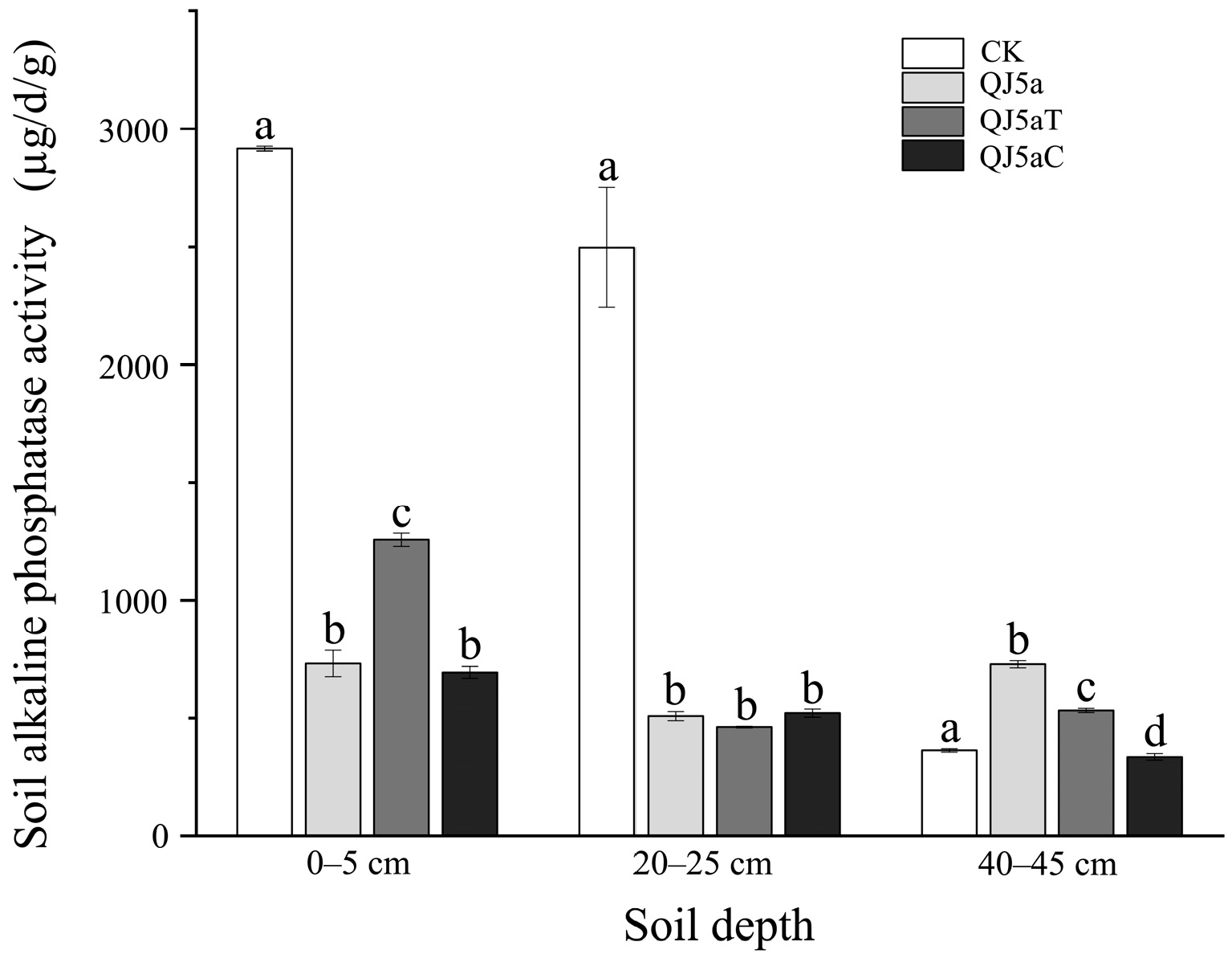
As shown in Figure 2, at soil depths of 0–5 cm, 20–25 cm, and 40–45 cm, significant differences (p < 0.05) in soil alkaline phosphatase activity were observed between the CK and the other three remediation modes. At the 0–5 cm depth, significant differences were detected between the soil treated with Potentilla fruticosa covering and either Potentilla fruticosa planting alone or Potentilla fruticosa planting combined with straw mat coverage; however, no significant difference (p > 0.05) was found between the latter two treatments. At the 20–25 cm depth, no significant differences (p > 0.05) in soil alkaline phosphatase activity were observed among the three remediation modes, excluding the CK. Conversely, at the 40–45 cm depth, significant differences (p < 0.05) were identified among all four remediation modes.

3.2.3. Changes in Soil Catalase Activity Under Different Remediation Modes

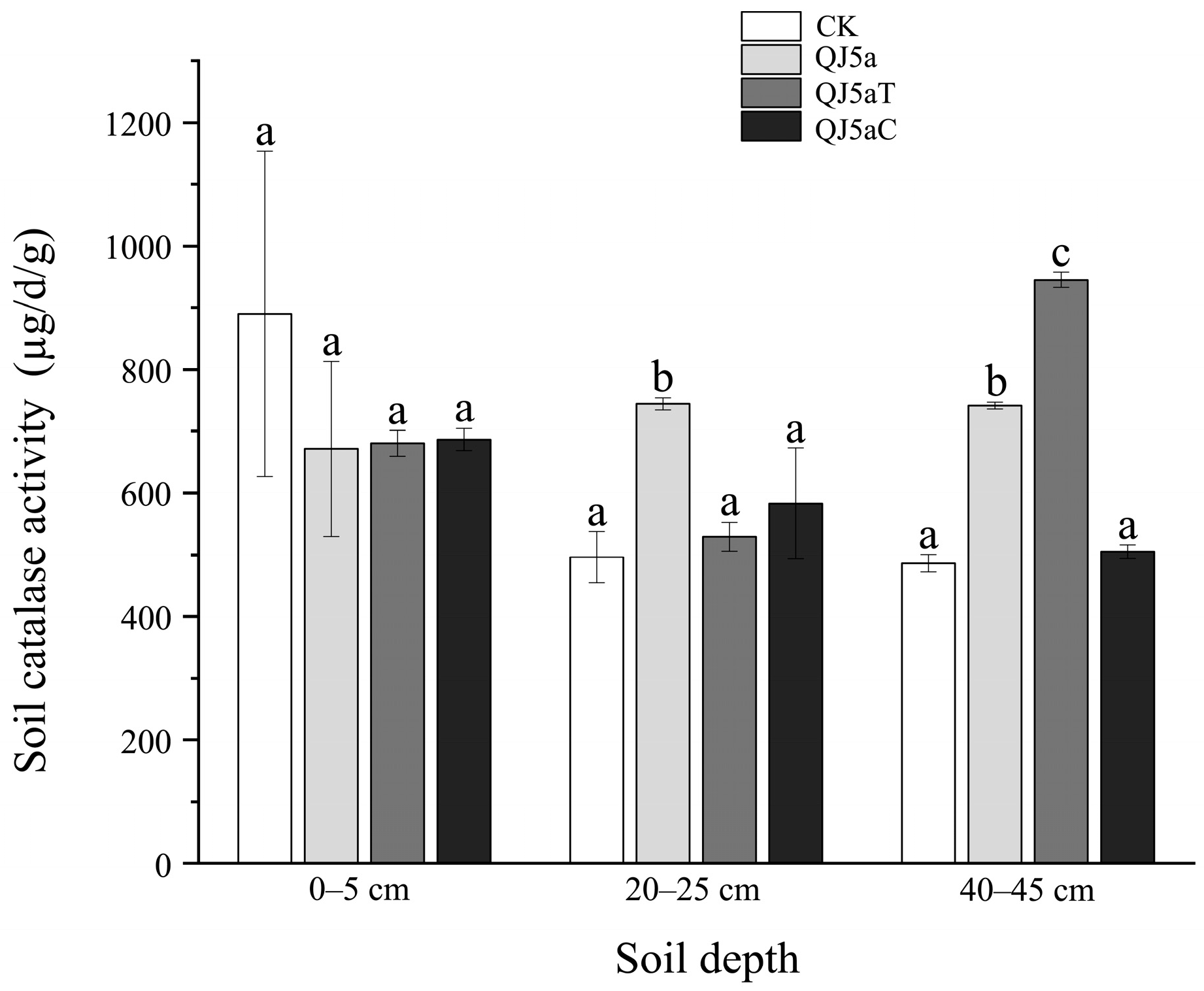
As shown in Figure 3, in the 0–5 cm soil layer, there were no significant differences among the four remediation modes (p > 0.05). In the 20–25 cm soil layer, the remediation mode with Potentilla fruticosa showed significant differences compared to the other three remediation modes (p < 0.05). In the 40–45 cm soil layer, significant differences were observed in soil catalase activity between the control (CK) and the treatments with Potentilla fruticosa alone or Potentilla fruticosa with soil covering (p < 0.05), whereas no significant difference was found between CK and the treatment with Potentilla fruticosa covered by straw mat (p > 0.05). Additionally, significant differences existed between the treatment with Potentilla fruticosa alone and that with Potentilla fruticosa plus soil covering (p < 0.05). Both of these treatments also differed significantly from the treatment with Potentilla fruticosa covered by a straw mat (p < 0.05).

3.2.4. Changes in Soil Sucrase Activity Under Different Restoration Modes

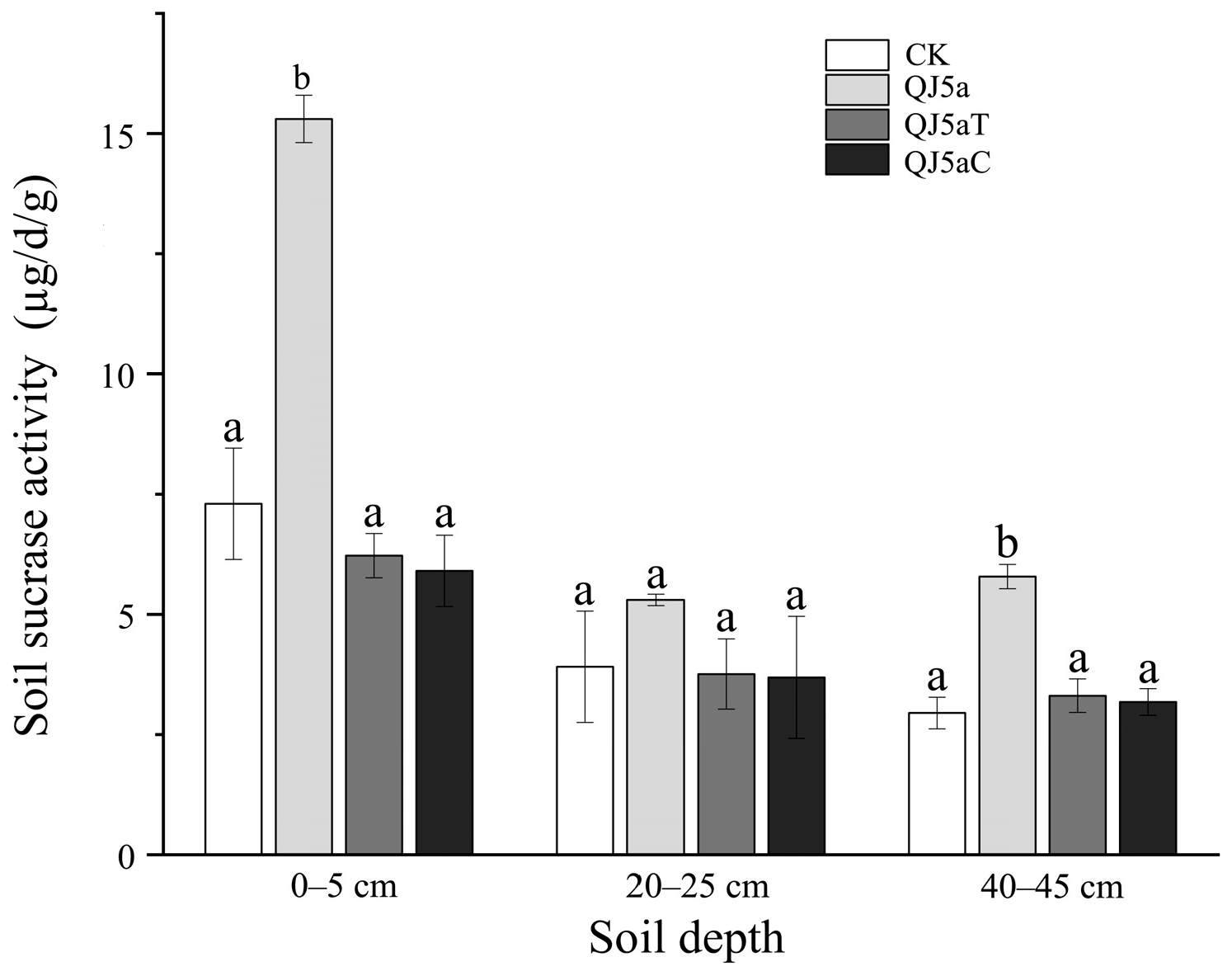
As shown in Figure 4, in the soil layers at depths of 0–5 cm and 40–45 cm, the soil sucrase activity under the Potentilla fruticosa planting treatment showed significant differences compared with that under the other three restoration modes (p < 0.05), while no significant differences were observed among the other three restoration modes (p > 0.05). In the soil layer at a depth of 20–25 cm, there were no significant differences in soil sucrase activity among the four restoration modes (p > 0.05).

3.3. Correlation Analysis

3.3.1. Correlation Between Plant Community Characteristics and Soil Enzyme Activities

As shown in Table 4, in the shallow soil layer (0–5 cm), soil urease activity exhibited a significant positive correlation with the Pielou evenness index (p < 0.05), while no significant correlations were observed between other soil enzyme activities and plant community diversity indices (p > 0.05). From Table 5 and Table 6, it can be seen that in the middle soil layer (20–25 cm) and the deep soil layer (40–45 cm), there were no significant correlations between soil enzyme activities and plant community diversity indices.

3.3.2. Correlation Between Soil Physical and Chemical Properties and Soil Enzyme Activities

The correlations between the physical and chemical properties of gangue mountain soil and soil enzyme activities are presented in Table 7. Soil urease activity showed a significant positive correlation with total nitrogen content (p < 0.05), but no significant correlations with other properties (p > 0.05). Soil alkaline phosphatase activity was significantly negatively correlated with soil moisture content (p < 0.05) and highly significantly positively correlated with soil total nitrogen content (p < 0.01), and no significant correlation with other soil physical and chemical properties (p > 0.05). There was no significant correlation between soil catalase and soil physicochemical properties (p > 0.05). Finally, sucrase activity was highly significantly positively correlated with both soil bulk density and available phosphorus content (p < 0.01), but not with other properties.

4. Discussion

After decades of predatory mining in the Shuanglonggou area of the Qilian Mountains, large-scale mining wastelands have been left behind, leading to severe ecological issues such as soil erosion. The local ecological environment has been seriously damaged, posing significant risks to regional ecological security [28]. The destruction caused by predatory mining has far exceeded the self-restoration capacity of the local ecosystem, making artificial intervention necessary for efficient ecological restoration [29]. Current artificial restoration models for mining wastelands mainly include physical approaches—such as soil replacement, covering, and electrokinetic remediation [30]; chemical methods—such as reagent leaching or decomposition of heavy metals in soil [31]; and biological strategies—which employ animals, plants, or microorganisms for ecological remediation [32]. The artificial planting of Potentilla fruticosa for ecological restoration in the Shuanglonggou mining wasteland is a restoration method developed within the framework of phytoremediation, a subset of biological remediation.
Studies have suggested that artificial reclamation can effectively accelerate the process of plant community succession, thereby facilitating the restoration of wild vegetation and promoting the recovery of the ecological environment [33]. Following the introduction of artificially planted vegetation, plant community diversity can be significantly enhanced, playing an important role in driving vegetation community succession [34]. In this study, after artificial planting of Potentilla fruticosa, the dominant species in the sample plots shifted from herbaceous plants to shrubs within the study period. This transition is indicative of a potential progression toward a shrub-dominated community stage, aligning with the expected directional change in succession [35]. Plant community diversity serves as a crucial indicator reflecting both the structure and function of plant communities, offering direct insights into ecosystem stability and the progression of plant community succession. The Simpson dominance index exhibited a declining trend after the planting of Potentilla fruticosa, reaching its lowest value of 0.13 under the condition of straw mat coverage. This phenomenon suggests that the dominance of the initially prevalent plant species gradually decreased during the restoration process, reflecting an enhancement in ecosystem stability. The Shannon diversity index showed an upward trend in plots where Potentilla fruticosa was planted, as well as in those where it was planted combined with soil covering. This indicates that the growth of Potentilla fruticosa effectively promoted both plant abundance and species evenness. However, in plots where Potentilla fruticosa was planted along with straw mat coverage, the Shannon diversity index displayed a decreasing trend. This decline may be attributed to the shading effect of the straw mats on the soil, which likely inhibited the growth of some sun-preferring herbaceous species, thereby reducing the Shannon diversity index. The Pielou evenness index also decreased following the introduction of Potentilla fruticosa. This may be due to the gradual replacement of the original dominant species by Potentilla fruticosa during restoration, leading to the over-dominance of this species and consequently affecting the evenness index. The Margalef richness index consistently showed an increasing trend after the planting of Potentilla fruticosa, suggesting a rise in species richness within the sample plots. Particularly under the treatment combining Potentilla fruticosa planting with straw mat coverage, the Margalef richness index reached its highest value, indicating that this method can significantly enhance species richness in gangue hills.
The activity of soil enzymes will show significant changes under the influence of factors such as species and litter [36]. From the changes in soil enzyme activity, we can observe the changes in the soil ecosystem [37]. Soil urease activity is positively correlated with the contents of total nitrogen and available nitrogen in the soil [38]. Under the treatments of planting Dasiphora fruticosa with soil covering and planting Dasiphora fruticosa with straw mat coverage, the total nitrogen content decreased from 0.05 g·kg−1 to 0.04 g·kg−1 and 0.03 g·kg−1, respectively. Concurrently, the available phosphorus content decreased from 6.04 mg·kg−1 to 1.97 mg·kg−1, 1.75 mg·kg−1, and 4.61 mg·kg−1 under the conditions of planting Potentilla fruticosa, planting Potentilla fruticosa with soil covering, and planting Potentilla fruticosa with straw mat coverage, respectively. These reductions thus led to a decrease in urease activity. Alkaline phosphatase activity directly regulates the release of available phosphorus in soil [39]. Analysis of Figure 2 reveals a similar decreasing trend in alkaline phosphatase activity following Potentilla fruticosa introduction, consistent with the trend observed for urease. This co-decline can be explained by the coupled consumption of N and P, both essential nutrients, by Potentilla fruticosa, leading to a concurrent reduction in the activities of these two enzymes. Soil catalase accelerates the decomposition of hydrogen peroxide into water and oxygen, and its activity reflects the intensity of soil oxidation processes [40]. As shown in Figure 3, while no significant difference in catalase activity was detected in surface soils across treatments with Potentilla fruticosa, its activity increased notably in both middle and deep soil layers, reaching a peak in the monoculture P. fruticosa treatment. This enhancement may be attributed to root exudates or other rhizosphere processes stimulated by Potentilla fruticosa cultivation. Similarly, the significant increase in soil sucrase (invertase) activity under the monoculture model indicates improved soil organic matter accumulation and nutrient availability [41]. Additionally, a general decrease in enzyme activity with soil depth was observed, consistent with known vertical stratification patterns [42]. This pattern is likely attributable to the local environmental context of the gangue hills in the Shuanglonggou area of the Qilian Mountains—a high-altitude cold region characterized by inherently low soil nutrient availability. Only the topsoil contains a limited amount of litter input, whereas deeper layers experience lower temperatures and a near absence of litter. The combined influence of these factors results in significantly higher enzyme activities in surface soils compared to deeper horizons.
Analysis of the correlations between soil enzyme activities and other soil properties revealed that soil urease activity was significantly positively correlated with total nitrogen content, consistent with its role in the nitrogen cycle. This is consistent with the role of urease in the nitrogen cycle. Urease can catalyze the hydration of urea, releasing ammonia, thereby increasing the available nitrogen in the soil. The soil alkaline phosphatase activity was significantly negatively correlated with soil moisture content, but highly significantly positively correlated with soil total nitrogen content. This suggests that an increase in soil moisture content may inhibit the activity of alkaline phosphatase, while an increase in nitrogen may promote the activity of alkaline phosphatase. Alkaline phosphatase plays an important role in the phosphorus cycle, and its activity changes directly affect the availability of phosphorus in the soil. Soil sucrose enzyme activity was highly significantly positively correlated with both soil bulk density and available phosphorus content. This implies that soil physical structure and phosphorus content may significantly influence sucrase activity. Sucrose enzyme participates in the decomposition of organic carbon in the soil, and an increase in its activity may promote the decomposition of organic matter and the release of nutrients.
Soil enzymes are primarily derived from microbial secretion, plant and animal secretions, and the decomposition of residues [43]. Plants can directly or indirectly influence the content of soil enzymes [44]. Therefore, analyzing the correlation between soil enzyme activities and plant community diversity indices can intuitively reveal the impact of soil enzyme activity changes induced by planting Potentilla fruticosa on plant communities. The results indicate that in shallow soil (0–5 cm), the Pielou evenness index exhibits a significant difference in relation to soil urease activity, with higher Pielou evenness index values corresponding to higher soil urease activity. Overall, the Simpson dominance index, Shannon diversity index, and Margalef richness index show relatively minor correlations with the four soil enzyme activities. This may be attributed to the continuous increase in vegetation during the restoration process, leading to a gradual decline in soil organic matter and other related factors, which weakens the transformation and decomposition processes mediated by enzymes, thereby reducing soil enzyme activity. In general, the Simpson dominance index demonstrates a certain degree of correlation with soil enzyme activity across different soil depths, while the correlations of the Pielou evenness index and Margalef richness index vary with soil depth. These results indicate that the diversity and structure of plant communities exert a discernible influence on soil enzyme activity.

5. Conclusions

The implementation of Potentilla fruticosa planting following various restoration strategies in the gangue hill of Shuanglong Gully, Qilian Mountains, has significantly accelerated the successional process of the plant community. The previously barren mining wasteland has progressively transitioned from a simple herbaceous community to a shrub-dominated community. This shift has notably increased species diversity on the gangue hill and promoted more uniform species distribution within the sample plots. These changes have enhanced the resilience of the local ecological environment and facilitated the recovery of the ecosystem. Moreover, the planting of Potentilla fruticosa influenced soil enzyme activity, particularly in the middle and deeper soil layers, where direct planting resulted in increased enzyme activity. However, methods involving soil cover or straw mulch over the planted Potentilla fruticosa somewhat reduced soil enzyme activity.
Furthermore, soil enzymes do not operate independently. Their activities are fundamentally controlled by chemical conditions, including soil moisture content, bulk density, total nitrogen, and available phosphorus. These factors directly influence the function of enzymes and their response to restoration.
In conclusion, complex interactions exist among plant community diversity, soil physicochemical properties, and enzyme activities in gangue mountains. Planting Potentilla fruticosa affects soil enzyme activity in the Shuanglong Gully area of the Qilian Mountains and effectively improves the soil ecological environment of the gangue hill, providing a theoretical basis for studying the phytoremediation of gangue hill soils.
Based on the findings above, the following targeted recommendations are proposed for the ecological restoration of abandoned mining areas such as Shuanglonggou in the Qilian Mountains and similar sites: If the goal is to rapidly enhance species diversity and promote positive vegetation succession, the “QJ5aT” model is recommended, as it showed better performance in Shannon diversity index and Margalef richness index, which facilitates the establishment of shrub communities. If the focus is on improving mid- to deep-layer soil enzyme activities and enhancing nutrient cycling, especially in poor gangue substrates, the “QJ5a” model is preferable, since it most significantly increased sucrase and catalase activities under uncovered conditions. In areas with poor water availability or where short-term surface stabilization is needed, the “QJ5aC” model could be considered. However, it notably inhibited urease and alkaline phosphatase activities; therefore, supplementary nutrient management measures in later stages are advised.

Author Contributions

Conceptualization, L.W. and H.H.; methodology, L.W.; software, X.Y. and J.S.; validation, H.H., S.C. and J.S.; formal analysis, S.C.; investigation, J.W.; resources, S.C. and J.W.; data curation, H.W.; writing—original draft preparation, L.W.; writing—review and editing, H.H.; visualization, H.W.; supervision, X.Y.; project administration, L.W.; funding acquisition, L.W. All authors have read and agreed to the published version of the manuscript.

Funding

Supported by Open Foundation of the Observation Station of Subalpine Ecology Systems in the middle Qilian Mountains (QLSKFJJ[2025]D0005); the National Natural Science Foundation of China: Evolution and Driving Mechanisms of Reconstructed Soil Systems in Gangue Slopes in the Eastern Qilian Mountains (42167069); and the Gansu Provincial Key Talent Project: Research on Key Technologies for Ecological Restoration and Team Building in the Qilian Mountains and Shiyang River Basin Based on the “Two Mountains” Concept (GZTZ20240415).

Data Availability Statement

The original contributions presented in this study are included in the article. Further inquiries can be directed to the corresponding authors.

Conflicts of Interest

The authors declare no conflicts of interest.

Correction Statement

This article has been republished with a minor correction to the existing affiliation information. This change does not affect the scientific content of the article.

References

  1. Chu, B.; Ma, S.J.; Zhou, Y.S.; Ji, C.P.; Zhou, J.W.; Zhou, R.; Zhou, Y.L.; Hua, L.M. Relationship between the spatial distribution of the mounds of plateau zokor (Eospalax baileyi) and environmental factors in eastern Qilian Mountain. Acta Ecol. Sin. 2018, 38, 964–974. [Google Scholar] [CrossRef]
  2. Dai, S.P.; Zhang, B. Response of vegetation NDVI to temperature and precipitation in Qilian Mountains based on GIS. J. Ecol. Environ. 2010, 19, 140–145. [Google Scholar] [CrossRef]
  3. Jin, B.W.; Kang, E.S.; Song, K.C.; Liu, X.D. Eco-hydrological function of mountain vegetation in the Hei River Basin, Northwest China. J. Glaciol. Geocryol. 2003, 25, 580–584. [Google Scholar] [CrossRef]
  4. Liu, J. Remote Sensing Monitoring and Ecological Restoration and Management Evaluation of Mines in Qilian Mountains of Gansu Province; Northwest Normal University: Lanzhou, China, 2020. [Google Scholar] [CrossRef]
  5. Li, M.L. Planting and seedling raising technology of Golden dew plum. Shanxi For. 2022, 34–35. [Google Scholar] [CrossRef]
  6. Li, G. Technology of planting and management of Golden plum. Seed Sci. Technol. 2022, 40, 87–89. [Google Scholar] [CrossRef]
  7. Burns, R.G.; DeForest, J.L.; Marxsen, J.; Sinsabaugh, R.L.; Stromberger, M.E.; Wallenstein, M.D.; Weintraub, M.N.; Zoppini, A. Soil enzymes in a changing environment: Current knowledge and future directions. Soil Biol. Biochem. 2013, 58, 216–234. [Google Scholar] [CrossRef]
  8. Yang, Z.X.; Liu, S.Q. Effect of compound pollution of Cd, Zn and Pb heavy metals on soil enzymic activities. Soil Environ. 2000, 9, 15–18. [Google Scholar] [CrossRef]
  9. Tan, X.; He, J.; Guo, Z.; Wang, Z.; Nie, Y.; Ye, Q.; He, W.; Shen, W. Research progress on the response of soil enzymes to heavy metal pollution and their indicators. Acta Pedol. Sin. 2023, 60, 50–62. [Google Scholar] [CrossRef]
  10. Jin, Y.T.; Li, X.F.; Cai, Y.; Hu, H.X.; Liu, Y.F.; Fu, S.W.; Zhang, B.R. Effects of Straw Returning with Chemical Fertilizer on Soil Enzyme Activities and Microbial Community Structure in Rice-Rape Rotation. Environ. Sci. 2021, 42, 3985–3996. [Google Scholar] [CrossRef]
  11. Zhou, J.; Li, C.H.; Zhang, Z.Y.; Hu, H.Q.; Wan, C.Y.; Hu, L.; Pan, X.J. Characteristics of soil inorganic phosphorus form transformation in the water-fall zone of the Three Gorges Reservoir. Environ. Sci. 2018, 39, 130–136. [Google Scholar] [CrossRef]
  12. Lu, P.; Guo, J.X.; Zhu, L. Study on soil catalase activity in main plant communities of Leymus chinensis steppe in Northeast China. Chin. J. Appl. Ecol. 2002, 13, 675–679. [Google Scholar] [CrossRef]
  13. Liu, J.; Zhang, N.M.; Yu, H.; Zhang, J.; Li, F.; Yu, C.; Du, H. Research progress on effects of heavy metal pollution on microorganism and enzyme activities in paddy soil. Soil 2021, 53, 1152–1159. [Google Scholar] [CrossRef]
  14. Chang, L.; Wu, C.R.; He, F.L.; Wang, L.D.; Xu, B.Y. Artificial Planting of Hippophae rhamnoides in Abandoned Goldfield of Shuanglong Gully: Effects on Community Composition and Soil Properties. Chin. Agric. Sci. Bull. 2019, 35, 8. [Google Scholar] [CrossRef]
  15. Bai, L.; Wang, W.; Dequelamu; Liu, Y.; Deng, Y. Vertical changes of soil carbon, nitrogen and phosphorus contents and ecological stoichiometric characteristics of typical vegetation in Qilian Mountains. Arid. Zone Stud. 2024, 41, 444–455. [Google Scholar] [CrossRef]
  16. IUSS Working Group WRB. World Reference Base for Soil Resources, 4th ed.; International Union of Soil Sciences: Rome, Italy, 2022; Available online: https://www.isric.org/sites/default/files/WRB_fourth_edition_2022-12-18.pdf (accessed on 4 February 2026).
  17. Ren, J.Z. Research Methods of Pratacultural Science; China Agriculture Press: Beijing, China, 1998; pp. 122–136. [Google Scholar]
  18. Wang, Y.S.; Shangguan, T.L. Some Problems on calculation methods of important Values. J. Shanxi Univ. Nat. Sci. Ed. 2010, 33, 312–316. [Google Scholar] [CrossRef]
  19. Su, Z.F.; Huang, D.Z.; Zhu, Z.Y.; Chen, R.S.; Dai, T.H.; Liang, J.H.; Zhu, J. Activity and Stoichiometry of Soil Enzymes in Aggregates of Different Soil Types inSubtropical Forests. Environ. Sci. 2025, 46, 1716–1728. [Google Scholar] [CrossRef]
  20. Guan, S.M. Soil Enzymes and their Research Methods; Agriculture Press: Beijing, China, 1986. [Google Scholar]
  21. Guo, T.; Yu, H.B. Review of Soil Moisture Content Determination Methods. Inn. Mong. Sci. Technol. Econ. 2018, 66–67. [Google Scholar] [CrossRef]
  22. Jiang, S.G. Review on soil bulk density determination method. Hubei Agric. Sci. 2019, 58, 82–86. [Google Scholar] [CrossRef]
  23. Chen, X.; Zhou, J.; Ji, M.X. Research on Methods for Determining Total Soil Salinity. Technol. Innov. Appl. 2015, 66. [Google Scholar] [CrossRef]
  24. Zhang, S.; Wu, Y.; Chen, N. Source of Soil Acidity and Alkalinity and Determination Method at Home and Abroad. Guangzhou Chem. Ind. 2017, 45, 19–21. [Google Scholar] [CrossRef]
  25. Shi, K. Application Improvement of Potassium Dichromate External Heating Method in the Determination of Soil Organic Matter Content with Biochar Application; Shandong Agricultural University: Taian, China, 2022. [Google Scholar] [CrossRef]
  26. Lu, R.K. Analytical Methods of Soil and Agricultural Chemistry; China Agricultural Science and Technology Press: Beijing, China, 2000. [Google Scholar]
  27. Gong, J.; Ma, Y.H.; Hu, H.X. Research Advances on Environmental Indicator of Soil Phosphorus in Farmland. Chin. Agric. Sci. Bull. 2016, 32, 112–117. [Google Scholar] [CrossRef]
  28. Li, H.Y.; Zhang, F. Study on genesis of Shuanglong placer gold deposit in Gansu Province. J. Lanzhou Univ. 1994, 30, 122–126. [Google Scholar] [CrossRef]
  29. Hou, J. Study on Temporal and Spatial Characteristics of Land Degradation and Ecological Restoration Effect in Shengli Mining Area; China University of Mining and Technology: Beijing, China, 2021. [Google Scholar] [CrossRef]
  30. Zhang, J.D.; Xi, F.R. Study on ecological restoration of abandoned mines in China. Acta Ecol. Sin. 2020, 40, 7921–7930. [Google Scholar] [CrossRef]
  31. Zhou, H.Q. Thorough remediation of Shuanglonggou gold mining area in Wuwei Area. Soil Water Conserv. China 1999, 33–34. [Google Scholar] [CrossRef]
  32. Li, F.M.; Ding, X.P.; Sun, J.K. Current situation of ecological environment in China′s coal mining subsidence area and development trend of treatment technology. Saf. Coal Mines 2021, 52, 232–239. [Google Scholar] [CrossRef]
  33. Haripal, K.; Sahoo, S.; Chhatria, C. Secondary succession in abandoned agricultural lands of Western Odisha, India. J. Biodivers. Environ. Sci. 2016, 8, 75–85. [Google Scholar]
  34. Wang, L.; Song, D.; Li, G.; Zhao, H.; Zheng, K. Study on plant community succession and species diversity during gangue treatment in Shuanglonggou. Arid. Zone Res. 2023, 40, 1294–1303. [Google Scholar] [CrossRef]
  35. Sun, Y.; Tian, Q.; Lv, P.; Guo, A.; Zhang, S.; Zuo, X. Effects of extreme drought and nitrogen addition on species diversity, leaf trait and productivity in a semiarid sandy grassland. Arid. Zone Stud. 2020, 37, 1569–1579. [Google Scholar] [CrossRef]
  36. Fang, Y.; Ma, R.; An, S.; Zhao, J.; Xiao, L. Heidaigou Opencast Coal Mine: Soil Enzyme Activities and Soil Physical and Chemical Properties Under Different Vegetation Restoration. Environ. Sci. 2016, 37, 1121–1127. [Google Scholar] [CrossRef]
  37. Thoms, C.; Gattinger, A.; Jacob, M.; Thomas, F.M.; Gleixner, G. Direct and indirect effects of tree diversity drive soil microbial diversity in temperate deciduous forest. Soil Biol. Biochem. 2010, 42, 1558–1565. [Google Scholar] [CrossRef]
  38. Zhu, C.; Long, Q.; Dong, S.; Shi, K.; Jiang, G.; Li, X.; Zhang, C.; Liu, F.; Shen, F.; Liu, S. Effects of different rotational tillage and deep tillage management in wheat-maize rotation system on microbial biomass carbon, nitrogen and enzyme activities in tidal soil. J. Plant Nutr. Fertil. 2020, 26, 51–63. Available online: https://www.plantnutrifert.org/article/doi/10.11674/zwyf.19358 (accessed on 4 February 2026).
  39. Kunito, T.; Hiruta, N.; Miyagishi, Y.; Sumi, H.; Moro, H. Changes in phosphorus fractions caused by increased microbial activity in forest soil in a short-term incubation study. Chem. Speciat. Bioavailab. 2018, 30, 9–13. [Google Scholar] [CrossRef]
  40. Li, Y.J.; Liu, Y.J.; Xu, C.L.; Yu, X.J.; Shi, Z.H.; Xu, J.J. Effects of alpine meadow degradation on soil carbon, nitrogen, phosphorus and correlative enzyme activities. Grassl. Turf. 2024, 44, 10–18. [Google Scholar] [CrossRef]
  41. Zhang, H.; Li, Q.; Zhou, S.; Sun, S. Effects of sand pipe irrigation and organic fertilizer on soil sucrase activity and quality of Jujube. Water Sav. Irrig. 2024, 60–67. [Google Scholar] [CrossRef]
  42. Wang, L.-D.; Yao, T.; He, F.L.; Han, F.G.; Guo, C.X.; Wang, F.L.; Wei, L.Y. Natural vegetation restoration and change of soil enzyme activity on secondary grasland of abandoned land area in the downstream of Shiyang River. Acta Prataculturae Sin. 2014, 23, 253–261. [Google Scholar] [CrossRef]
  43. Guan, S.Y. Soil Enzyme and Study Methods; Agriculture Press: Beijing, China, 1986; pp. 206–239. [Google Scholar]
  44. Castelland, S.D. Influence of Cropping and Sulfur Fertilization on Sulfer Transformations in Soil. Master′s Thesis, Oregon State University, Corvallis, OR, USA, 2017. [Google Scholar] [CrossRef]
Figure 1. Differences in soil urease activity under different restoration modes. Note: Different lowercase letters represent significant differences between different treatments at the same soil depth (p < 0.05). Values are presented as the mean ± SE (n = 3 independent plots per treatment), the same below.
Agronomy 16 00443 g001
Figure 2. Differences in soil alkaline phosphatase activity under different restoration modes.
Agronomy 16 00443 g002
Figure 3. Differences in soil catalase activity under different repair modes.
Agronomy 16 00443 g003
Figure 4. Differences in soil sucrase activity under different repair modes.
Agronomy 16 00443 g004
Table 1. Physico-chemical properties of rhizosphere soil samples under different Potentilla fruticosa remediation approaches.
Repair MethodpHOrganic Matter/
(g·kg−1)
Total Nitrogen/
(g·kg−1)
AP/
(mg·kg−1)
TDS/
(%)
Bulk Density/
(g·cm−3)
Moisture/
(%)
CK8.05 ± 0.06 a0.97 ± 0.16 c0.05 ± 0.00 b6.04 ± 0.15 a0.05 ± 0.00 b1.50 ± 0.04 a1.35 ± 0.46 b
QJ5a7.86 ± 0.06 b3.08 ± 0.17 a0.09 ± 0.00 a1.97 ± 0.09 b0.08 ± 0.01 a1.50 ± 0.21 a10.30 ± 8.18 a
QJ5aT7.80 ± 0.05 b1.74 ± 0.08 b0.04 ± 0.00 c1.75 ± 0.00 b0.04 ± 0.01 b1.50 ± 0.04 a9.76 ± 1.53 a
QJ5aC8.03 ± 0.01 a1.08 ± 0.24 c0.03 ± 0.00 d4.61 ± 0.05 a0.04 ± 0.00 b1.52 ± 0.02 a15.53 ± 8.71 a
Note: Different lowercase letters indicate significant differences among different repair methods (p < 0.05). CK: control plot; QJ5a: Potentilla fruticosa plot without mulch (5 years); QJ5aT: P. fruticosa plot with soil mulch (5 years); QJ5aC: P. fruticosa plot with straw mulch (5 years). AP: Available Phosphorus. TDS: Total Dissolved Solids. The same applies below.
Table 2. Basic characteristics of plant communities in different restoration modes.
Repair ModeAltitudeLatitude and LongitudeNumber of SpeciesDominant Species
CK3110 mN 37°22′14″
E 102°22′54″
16 species of herbsArtemisia hedinii, Poa pratensis L., Stellaria palustris Ehrh. ex Retz, Draba mongolica var. trichocarpa
QJ5a2985.1 mN 37°22′11.26″
E 102°23′29.91″
24 species of herbs
2 species of shrubs
Cyperaceae., Elymus dahuricus Turcz., Dasiphora fruticosa, Dasiphora glabra
QJ5aT2999.62 mN 37°22′15.83″
E 102°23′55.3″
21 species of herbs
2 species of shrubs
Elymus nutans Griseb., Pedicularis kansuensis., Dasiphora fruticosa, Dasiphora glabra
QJ5aC3002.29 mN 37°22′13.75″
E 102°23′10.85″
21 species of herbs
3 species of shrubs
Elymus nutans Griseb., Dasiphora fruticosa, Dasiphora glabra, Salix oritrepha Schneid.
Note: Scientific plant names are in italics.
Table 3. Species diversity index of plots under different treatments.
Different Repair ModesSimpson Dominance IndexShannon Diversity IndexPielou Evenness IndexMargalef Richness Index
CK0.55970.82650.65780.8880
QJ5a0.50390.87870.49721.4108
QJ5aT0.22580.89020.35441.3490
QJ5aC0.31500.64550.39351.1601
Table 4. Correlation between plant community diversity and soil enzyme activity (0–5 cm).
IndexSoil Urease ActivitySoil Alkaline Phosphatase ActivitySoil Peroxidase ActivitySoil Sucrose Enzyme Activity
Simpson dominance index0.7730.5250.6410.54
Shannon diversity index0.1960.2360.0510.457
Pielou evenness index0.950 *0.7950.8740.231
Margalef richness index−0.817−0.826−0.9140.5
Note: * At level 0.05 (two-tailed), the correlation was significant.
Table 5. Correlation between plant community diversity and soil enzyme activity (20–25 cm).
IndexSoil Urease ActivitySoil Alkaline Phosphatase ActivitySoil Peroxidase ActivitySoil Sucrose Enzyme Activity
Simpson dominance index0.730.6850.2360.525
Shannon diversity index0.0230.0780.1430.461
Pielou evenness index0.9240.902−0.130.214
Margalef richness index−0.904−0.8960.6840.516
Table 6. Correlation between plant community diversity and soil enzyme activity (40–45 cm).
IndexSoil Urease ActivitySoil Alkaline Phosphatase ActivitySoil Peroxidase ActivitySoil Sucrose Enzyme Activity
Simpson dominance index0.7970.118−0.5450.334
Shannon diversity index0.530.7020.6920.41
Pielou evenness index0.578−0.142−0.585−0.003
Margalef richness index0.1650.8010.7830.679
Table 7. Correlation table between soil physical and chemical properties and soil enzyme activities.
IndexSoil Urease ActivitySoil Alkaline Phosphatase ActivitySoil Peroxidase ActivitySoil Sucrose Enzyme Activity
Moisture content−0.549−0.589 *−0.136−0.177
Bulk density−0.2−0.356−0.1970.736 **
Total salt content−0.066−0.02−0.1730.35
pH0.130.024−0.397−0.083
Organic matter0.2220.2740.450.376
Total nitrogen0.695 *0.719 **0.190.273
Available phosphorus0.161−0.065−0.2760.842 **
Note: ** At the 0.01 level (two-tailed), the correlation is significant; * At the 0.05 level (two-tailed), the correlation is significant.
Disclaimer/Publisher’s Note: The statements, opinions and data contained in all publications are solely those of the individual author(s) and contributor(s) and not of MDPI and/or the editor(s). MDPI and/or the editor(s) disclaim responsibility for any injury to people or property resulting from any ideas, methods, instructions or products referred to in the content.