Article

Uptake and Partitioning Characteristics of Calcium, Magnesium, and Sulfur in Young Dwarf ‘Fuji’ Apple Trees and Their Relations to the Uptake and Partitioning of Nitrogen, Phosphorus, and Potassium

1
College of Natural Resources and Environment, Northwest A&F University, Xianyang 712100, China
2
Institute of Agricultural Resources and Environment, Xinjiang Academy of Agricultural Sciences, Urumqi 830091, China
3
Key Laboratory of Plant Nutrition and the Agri-Environment in Northwest China, Ministry of Agriculture, Xianyang 712100, China
*
Author to whom correspondence should be addressed.
Agronomy 2026, 16(4), 442; https://doi.org/10.3390/agronomy16040442
Submission received: 20 December 2025 / Revised: 4 February 2026 / Accepted: 11 February 2026 / Published: 13 February 2026
(This article belongs to the Section Horticultural and Floricultural Crops)

Abstract

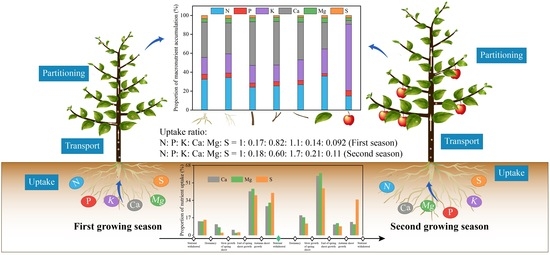
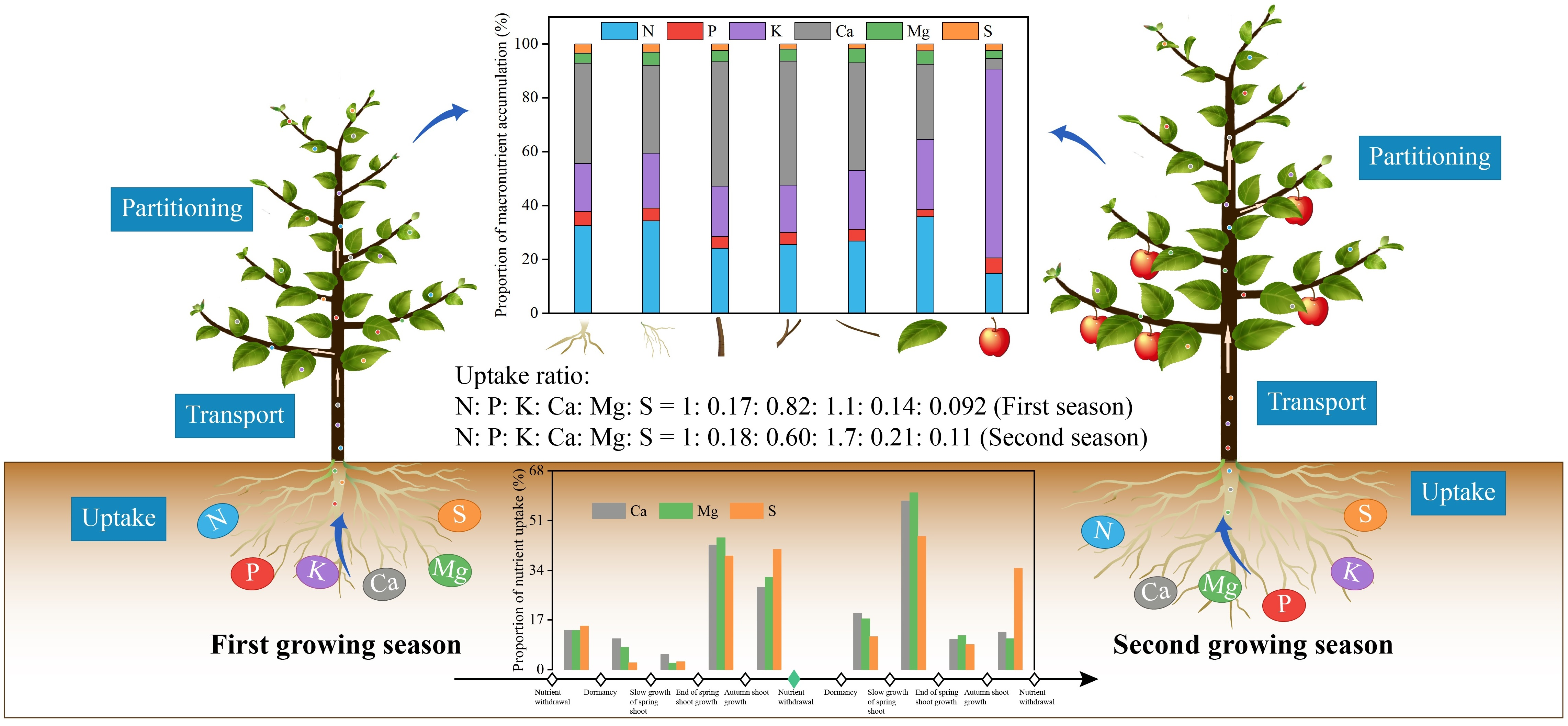
Although a balanced supply of macronutrients is essential for apple tree growth and orchard productivity, the relationship between macronutrient uptake and partitioning in the entire apple tree remains ambiguous. To address this gap, a 2-year field experiment was conducted from 2019 to 2021 in a newly established dwarf ‘Fuji’ apple orchard in Shaanxi, one of the main apple production areas in China. The results showed that the annual uptake was 11.2−15.0 kg ha–1 for calcium, 1.5−1.9 kg ha–1 for magnesium, and 1.0 kg ha–1 for sulfur. During the 2019–2020 season, trees absorbed most of the calcium, magnesium, and sulfur from the end of spring shoot growth to nutrient withdrawal, accounting for 70.8%, 76.7%, and 80.0% of the annual calcium, magnesium, and sulfur uptake, respectively. During the 2020–2021 season, 57.7%, 61.6%, and 45.5% of the annual calcium, magnesium, and sulfur uptake occurred from the slow growth of the spring shoot to the end of spring shoot growth, respectively. The ratio of nitrogen, phosphorus, potassium, calcium, magnesium, and sulfur absorbed by the tree was 1:0.17:0.82:1.1:0.14:0.092 during the first season, and during the second season, it was 1:0.18:0.60:1.7:0.21:0.11. Regarding the accumulation and partitioning of macronutrients in different organs, calcium accumulation and partitioning were higher than those of the other nutrients in trunks. In coarse roots, branches, and shoots, calcium accumulation was also higher compared to other nutrients. In fine roots, nitrogen accumulation was slightly higher than calcium. In leaves, nitrogen accumulation was higher than the other nutrients, whereas in fruits, potassium accumulation and partitioning were higher than those of the other nutrients. These findings reveal distinct macronutrient requirement patterns across the whole apple tree and specific organs, providing new insights into maintaining nutrient homeostasis in apple trees and optimizing nutrient resource allocation for efficient orchard production.

Graphical Abstract

1. Introduction

Calcium (Ca), magnesium (Mg), and sulfur (S) are essential nutrients for plant growth and development. These elements play crucial roles in maintaining cellular structure, signal transduction, protein synthesis, photosynthesis, and enzyme activation [1,2,3]. The apple tree (Malus domestica Borkh.) is a commercially important fruit tree that is widely cultivated in temperate regions. The growth of young and mature apple trees, as well as the improvement of fruit yield and quality, are closely linked to an appropriate supply of Ca, Mg, and S. However, improper fertilization can result in nutrient imbalances, which constrain the apple tree and reduce fruit quality due to interactions between Ca, Mg, S, and other macronutrients. Research has shown that an excess of nitrogen (N) increases the N/Ca ratio in fruits, thereby exacerbating the incidence of physiological disorders [4,5]. Similarly, an excess of potassium (K) can inhibit Ca and Mg uptake by the tree, and an excess of Ca or ammonium can also reduce Mg uptake [1,6,7,8]. Furthermore, as evidenced by plant uptake, the interactions between N and S are synergistic at optimal rates and antagonistic at excessive levels of one or the other [9], and a decrease in S uptake was also observed under low levels of phosphorus (P) [10]. It is therefore of great significance to gain detailed knowledge about the uptake and partitioning of Ca, Mg, and S in apple trees, along with their relations to the uptake and partitioning of N, P, and K, in order to maintain nutrient homeostasis in trees and ensure a balanced nutrient supply in apple orchards.
Compared to the relatively complex processes of nutrient uptake and partitioning, directly determining nutrient content provides a simpler and more intuitive method for evaluating the nutritional status of trees. Previous studies have mainly focused on seasonal changes in the contents of Ca, Mg, and S in specific organs of apple trees. For example, researchers have investigated the dynamics of Ca, Mg, and S contents in the fruit [11,12,13,14,15] and leaves [16,17,18,19]. In contrast, there is limited information on the uptake and partitioning of Ca, Mg, and S in apple trees due to the labor-intensive cost and sampling challenge, obscuring their relations to N, P, and K uptake and partitioning. The available results on the seasonal uptake of Ca, Mg, and S by trees in field and controlled environments are controversial, possibly due to differences in growing conditions. It has been reported that the peak of Ca uptake by 9-year-old ‘Fuji’/Malus robusta Rehd. apple trees grown in the field occurred from fruit expansion (30 July) to fruit harvest (21 October), and a small amount of Ca uptake occurred from the young fruit stage (30 April) to fruit expansion, while almost no Ca was absorbed from budbreak (26 March) to the young fruit stage [12]. Under sand culture conditions, 6-year-old ‘Gala’/‘M26’ trees showed continuous uptake of Ca, Mg, and S from flowering to fruit harvest [20]. Furthermore, the partitioning of Ca, Mg, and S in apple trees throughout the annual growth cycle is not yet well understood. Since apple trees are perennial plants, it remains unclear whether their uptake and partitioning patterns for Ca, Mg, S, N, P, and K are consistent across different growing seasons.
The cultivation of apple trees on dwarfing rootstocks in high-density plantings presents several advantages, including intensive resource utilization, high yields and quality, and ease of management. This planting mode meets the requirements for the scalable, standardized, and mechanized development of the apple industry, making it a widely adopted and highly regarded emerging approach to apple orchard cultivation. In the current study, a field experiment was conducted over two growing seasons in a region well-known for apple production in China. Sequential sampling of entire dwarf ‘Fuji’ apple trees at key growth periods enabled the analysis of the contents of Ca, Mg, S, N, P, and K in various organs, allowing for the quantification of macronutrient uptake and partitioning. The main objectives of this study were to (1) elucidate the uptake patterns of Ca, Mg, and S and the uptake ratio of macronutrients by apple trees and (2) investigate the variations in the partitioning and accumulation of macronutrients in different organs of apple trees. These findings will improve our understanding of the macronutrient requirements of apple trees and allow for more effective macronutrient management practices in apple orchards.

2. Materials and Methods

2.1. Study Site

This study was conducted from 2019 to 2021 at Xiaxuhezhuo village, Baishui County, Shaanxi Province, China (35°12′36″ N, 109°33′36″ E), a region recognized as one of the world’s premier apple-producing areas. The county has a temperate monsoon climate, with an annual mean air temperature of 11.4 °C and annual precipitation of 577.8 mm. The mean air temperature during the 2019–2020 and 2020–2021 growing seasons was 12.8 °C and 12.9 °C, respectively, and precipitation was 513.2 mm and 831.1 mm, respectively. The soil is classified as Haplustalfs (USDA Soil Taxonomy). At the outset of the field experiment, the physicochemical properties of the topsoil (0–20 cm) were as follows: bulk density: 1.21 g cm−3; pH: 8.37; organic matter: 17.1 g kg−1; total N: 0.93 g kg−1; mineral N: 2.58 mg kg−1; available P: 16.5 mg kg−1; available K: 207.6 mg kg−1; exchangeable Ca: 11.3 g kg−1; exchangeable Mg: 0.19 g kg−1.

2.2. Experimental Design

In March 2019, 3-year-old ‘Fuji’/‘M9-T337’ dwarfing rootstock apple trees were planted at a spacing of 1.5 m × 4.0 m, oriented in a south–north direction. There were 8 rows of trees with 16 trees in each row. These trees were branchless at planting and started to produce fruit in the second growing season. Half of the trees were applied with 75 kg ha−1 year−1 of N fertilizer, while the other half were not. All trees received 33 kg ha−1 year−1 of P fertilizer and 37 kg ha−1 year−1 of K fertilizer. Urea, calcium superphosphate, and potassium sulfate were used for the N, P, and K fertilizers, respectively. Following the conventional practices, 60% of the N fertilizer and all of the P and K fertilizers were applied on 2 October 2019. The fertilizers were spread evenly in two strip trenches 25−30 cm away from the tree trunk, on either side of the row. The trenches were 50 cm long, 15 cm wide, and 25 cm deep. The fertilizers were then mixed with the soil, and the trenches were backfilled with a shovel. The remaining N fertilizer was applied along the rows on 28 May 2020. The fertilization sites were in the zones of absorbing roots. In the first growing season, the soil had an extremely high nitrate concentration under N fertilization [21]. As a result, no N fertilizer was applied in the second season, during which the apple trees exhibited normal growth. The amount of P and K fertilizer applied was the same as in the first season at a ratio of 2:2:1 for the P fertilizer and 2:1:2 for the K fertilizer on 1 October 2020, 30 May 2021, and 16 August 2021. The fertilization sites were moved approximately 5 cm outward from their original position.
Trees were pruned during the first growing season in mid-March, early May, and mid-July 2020. Pruning and thinning in the following season were carried out in mid-March and early May 2021, respectively. Senescent leaves were collected by encircling the trees with fine nylon netting in autumn. Weeds surrounding the trees were manually removed every half to one month and returned to the soil surface. All other field management practices were aligned with local practices.

2.3. Plant Sampling and Measurements

Four trees, both with and without N fertilization, were randomly selected and excavated at five key phenological periods during the two growing seasons, including dormancy (2 January), slow growth of spring shoot (30 May), end of spring shoot growth (10 July), autumn shoot growth (11 August), and nutrient withdrawal (30 September). The time of fruit maturity corresponded to the sampling time of nutrient withdrawal. In addition, three trees were excavated prior to fertilization in 2019 to assess their basal nutrient status. To sample as many roots as possible, we dug in the direction of root growth, collecting most of the roots with a shovel. The width of the opening was approximately 1.5 times the width of the tree canopy and 80 cm deep. Once the root system expanded and deepened, the extent of excavation would have increased accordingly. Subsequently, the remaining root systems present in the soil were meticulously inspected and collected. Each tree was divided into fine roots (≤2 mm diameter), coarse roots (>2 mm diameter), branches (one-year-old or more), trunks, shoots (current-year), leaves, and fruits. All samples were washed three times with tap water and ultrapure water. Coarse roots, trunks, branches, and shoots were further cut into sections no longer than 1 cm using stainless steel scissors. The plant samples were oven-dried at 105 °C for 30 min and then dried at 70 °C until they reached a constant weight. After drying, the samples were weighed and milled into a powder using a ball mill.
To determine the concentrations of Ca, Mg, and S in each organ, the ground samples were mixed with nitric acid in a microwave digester (Multiwave PRO, Anton Paar, Graz, Austria) and then analyzed using an inductively coupled plasma emission spectrometer (ARCOS, SPECTRO, Kleve, Germany) [22]. According to Bao [23], the plant samples were digested using the sulfuric acid–hydrogen peroxide method. After digestion, the N concentration in the solution was analyzed using a continuous flow analyzer (Bran and Luebbe AA3, Norderstedt, Germany), the P concentration was determined using the molybdenum-blue method with a spectrophotometer (UV 2450, Shimadzu, Kyoto, Japan), and the K concentration was measured with a flame atomic absorption spectrometer (PinAAcle 900F, PerkinElmer, Waltham, MA, USA).

2.4. Data Calculation and Analysis

There were no significant differences in dry weight, nutrient content, partitioning, and uptake between trees treated with and without N fertilizer [24,25]. Therefore, only the results with the application of N fertilizer are presented in this study.
During a growing season, the uptake of Ca, Mg, and S by the tree was the net accumulation of these nutrients in the tree, respectively. Nutrient accumulation and partitioning for Ca, Mg, and S were calculated as follows:
Tree   nutrient   accumulation   ( g   tree 1 ) = organ   dry   weight   ( g   tree 1 ) × nutrient   content   ( g   kg 1 ) / 1000
Nutrient   partitioning   ( % ) = organ   dry   weight   ( g   tree 1 ) × nutrient   content   ( g   kg 1 ) / tree   nutrient accumulation   ( g   tree 1 ) / 10
Proportion   of   nutrient   uptake   at   a   specific   growth   stage   ( % ) = Tree   nutrient   uptake   at   this   stage   ( g   tree 1 ) / tree   nutrient   uptake   in   a   season   ( g   tree 1 )

3. Results

3.1. Partitioning of Tree Biomass

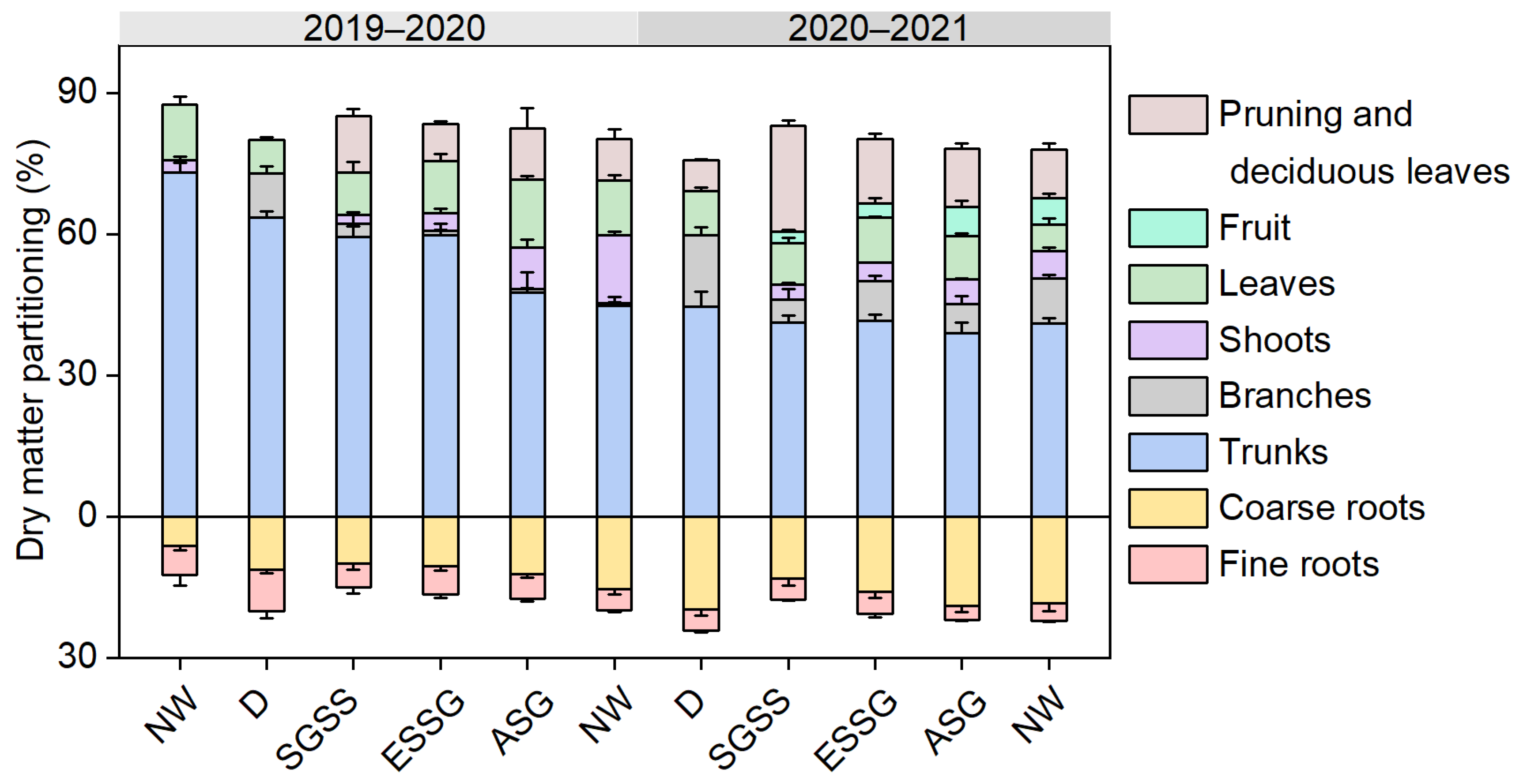
Before nitrogen fertilization, the dry weight of the trees was 133.7 g tree–1. It then increased to 880.0 g tree–1 at the end of the first season and to 1871.6 g tree–1 at the end of the second season. Although the dry matter partitioning of trunks at nutrient withdrawal decreased from 73.0% in the first growing season to 40.9% in the second growing season, the trunks had the highest dry matter of all the organs, increasing 6.8-fold in dry weight between the two growing seasons (Figure 1). The contribution of the roots to tree biomass was second only to that of the trunks, with the dry weight of coarse roots being much higher than that of fine roots. In contrast to the trunks, the proportion of dry matter partitioned to coarse roots increased from 6.3% to 18.4% during the same period. For new organs, the dry weight of shoots and leaves in the second season was comparable to that in the first season, but their dry weight accounted for a smaller proportion of the overall tree biomass compared to the first season. At nutrient withdrawal (fruit harvest) in the second season, the dry matter partitioning of fruits was similar to that of the leaves.

3.2. Contents and Partitioning Dynamics of Ca, Mg, and S in Trees

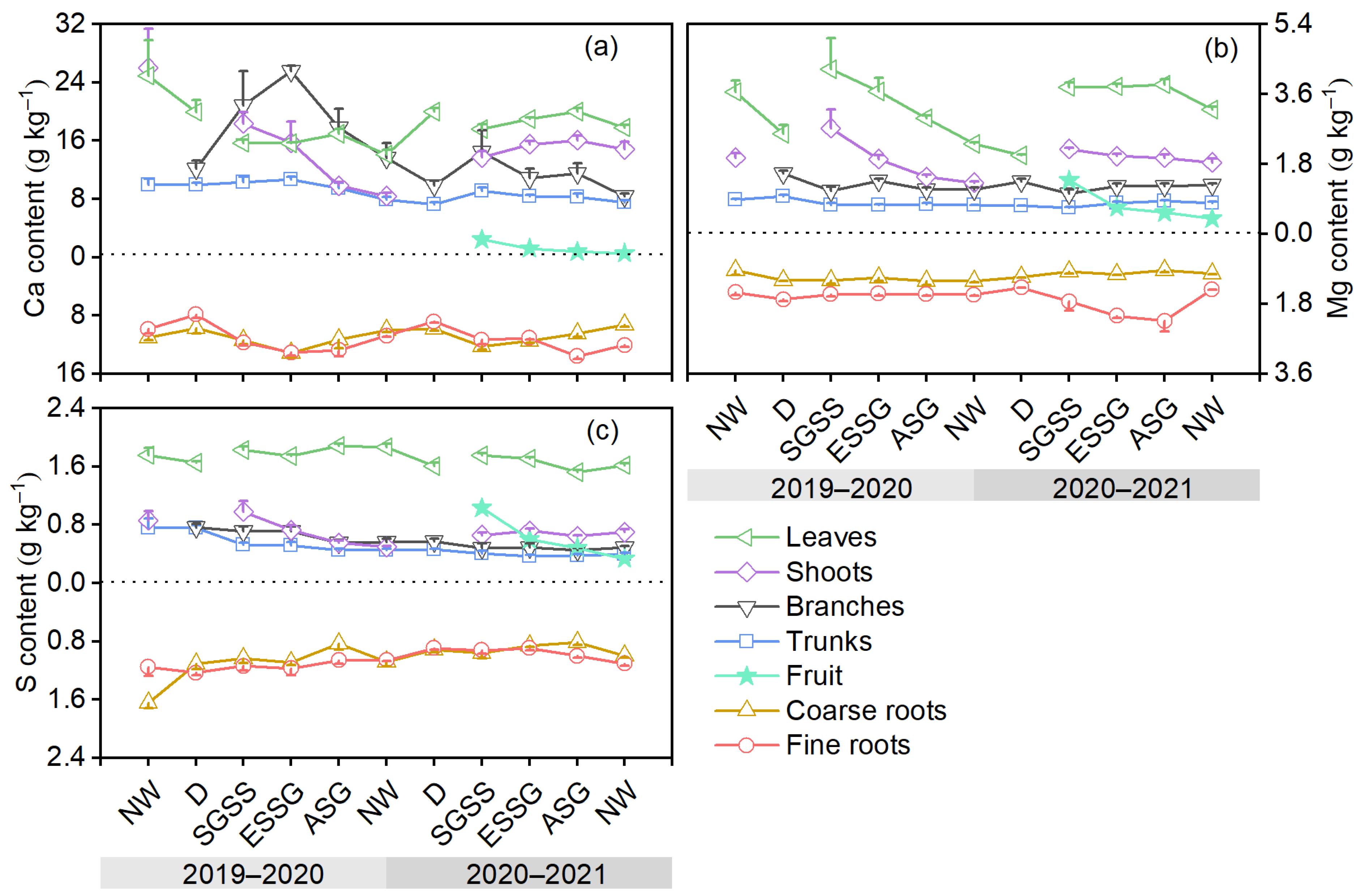
The Ca content in different organs was higher than their Mg and S contents (Figure 2). The Ca, Mg, and S contents in leaves were almost the highest among all the organs, with the S content remaining relatively stable across the two seasons. There was a gradual decrease in the Ca, Mg, and S contents in shoots during the first season, while the changes during the second season showed less variability. Similarly, a gradual decrease in the contents of these three nutrients in fruits was observed during the second season, with levels lower than those of any other organ at nutrient withdrawal. The contents of these three nutrients in trunks and branches remained stable, except for the Ca content in branches. Roots contained higher levels of Ca than trunks but lower levels than shoots. Roots also had higher S content of all plant parts, surpassed only by leaves. Fine roots exhibited slightly higher Mg content than coarse roots; however, both root types had more Mg than trunks.
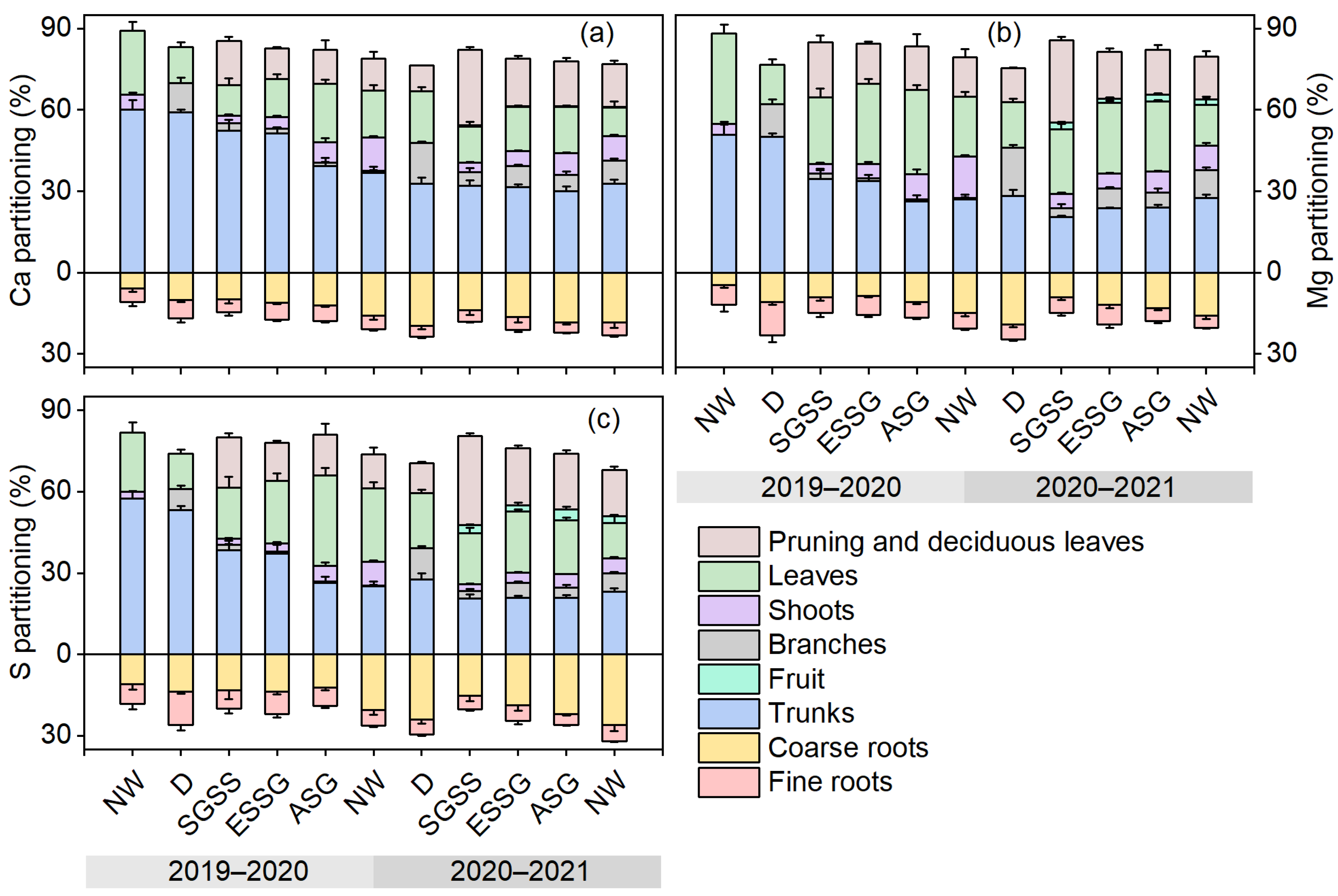
The amount of Ca partitioned to trunks was the highest among all organs, gradually decreasing with the periods during the first season before stabilizing during the second season (Figure 3). Calcium partitioning in leaves was lower than that in trunks, with peak values observed at autumn shoot growth. In shoots, Ca partitioning increased progressively throughout growth periods, while in fruits, it remained relatively stable, ranging from 0.3% to 0.5%, making the fruit the organ with the lowest Ca partitioning. Calcium present in roots comprised 10.8% to 23.7% of the total Ca in the tree, with a higher partitioning in coarse roots compared to fine roots. Furthermore, Ca partitioning in coarse roots increased as the trees grew, while partitioning in fine roots remained relatively stable. Pruning and deciduous leaves constituted 11.9% of the total Ca in the tree in the first season, and this proportion increased to 15.7% in the subsequent season.
In general, the partitioning of Mg and S in various tree organs showed a similar pattern to that of Ca across different growth periods. The difference was that Mg partitioning in coarse roots remained relatively consistent between the two seasons. With the exception of dormancy, Mg and S partitioning in leaves exceeded that of Ca. Conversely, S partitioning in branches and shoots was lower than Ca and Mg partitioning, and partitioning of Mg and S in trunks was lower than Ca partitioning, but S partitioning in coarse roots was higher than Ca and Mg partitioning. The fruit was the organ with the lowest Mg and S partitioning, although these levels were still higher than Ca partitioning.
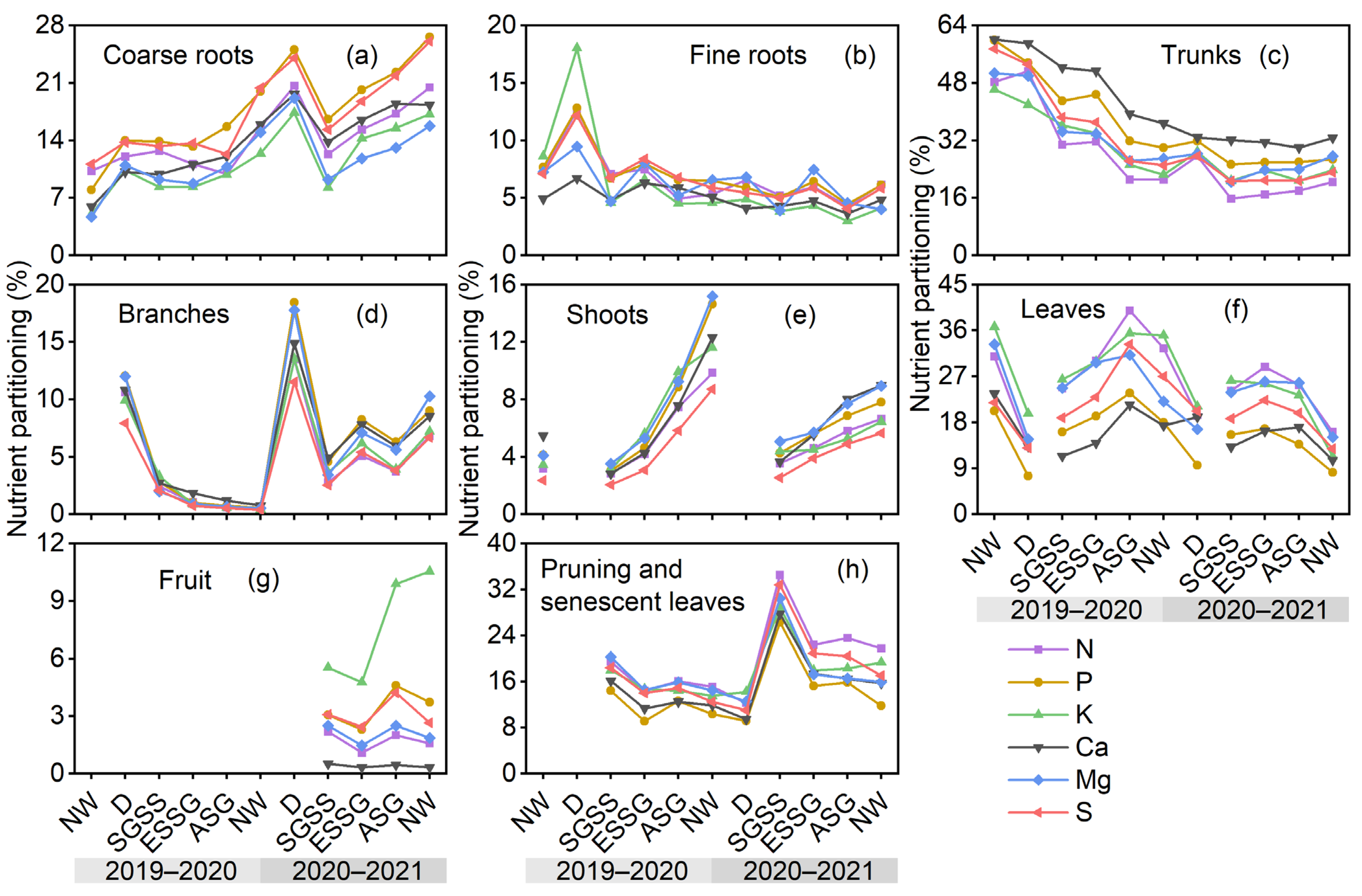
When combined with macronutrient partitioning, the partitioning of P and S in coarse roots was higher than the partitioning of N, K, Ca, and Mg (Figure 4). In trunks, the partitioning of Ca and P exceeded that of N, K, Mg, and S. In leaves, the partitioning of P and Ca was lower than that of N, K, Mg, and S, while in fruits, the partitioning of N, P, Ca, Mg, and S was much lower than that of K.

3.3. Accumulation of Ca, Mg, and S in New Organs

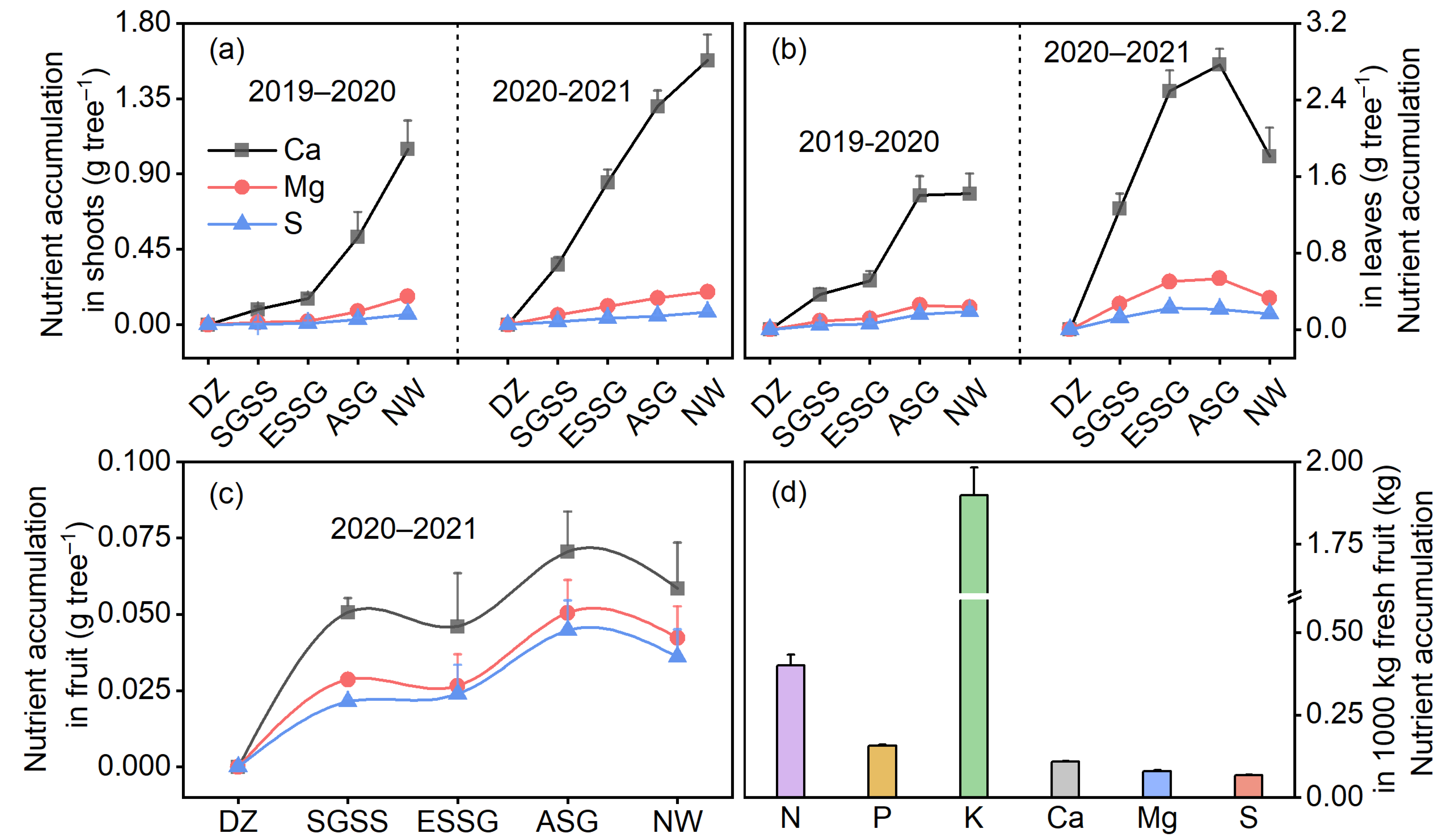
During the two growing seasons, the accumulation of Ca, Mg, and S in shoots continued to increase, with higher amounts recorded in the second season compared to the first (Figure 5a). In the first season, the accumulation of Ca, Mg, and S accelerated after the end of spring shoot growth, while the accumulation rates in the second season were consistently fast. At nutrient withdrawal, the total Ca in shoots was the highest at 6.3 and 16.9 times the total Mg and S in the first season, respectively, and at 8.0 and 21.1 times in the second season, respectively.
The accumulation of Ca, Mg, and S in leaves showed slight variations across two growing seasons (Figure 5b). In the first season, nutrient accumulation accelerated from the end of spring shoot to autumn shoot growth. During autumn shoot growth and nutrient withdrawal, Ca accumulation remained relatively stable. However, Mg accumulation declined by 8.0%, while S accumulation increased by 17.6%. In the second season, the accumulation of Ca, Mg, and S in leaves increased rapidly until the end of spring shoot growth. Subsequently, the accumulation of these nutrients slowed down until autumn shoot growth, after which Ca accumulation decreased by 34.6% between autumn shoot growth and nutrient withdrawal, accompanied by declines in both Mg and S accumulation. At nutrient withdrawal, total Ca in leaves was 6.1 times and 7.5 times that of the total Mg and total S in the first season, respectively, and it was 5.6 times and 11.1 times that of the total Mg and total S in the second season, respectively.
The accumulation of Ca, Mg, and S in the fruit increased until autumn shoot growth, and then, it decreased slowly between autumn shoot growth and nutrient withdrawal (Figure 5c). At maturity, the accumulation of these nutrients decreased by 17.0% for Ca, 16.3% for Mg, and 19.4% for S compared to autumn shoot growth. Notably, the accumulation of Ca in fruits was 1.4 times higher than that of Mg and 1.6 times than that of S. Combined with the accumulation of N, P, and K in the fruit, the nutrient accumulation in 1000 kg of fruit was 0.40 kg of N, 0.16 kg of P, 1.90 kg of K, 0.11 kg of Ca, 0.079 kg of Mg, and 0.067 kg of S. In addition, at nutrient withdrawal in the first season, the accumulation of Ca, Mg, and S in new organs accounted for 36.2%, 43.7%, and 43.0% of the Ca, Mg, and S absorbed by the tree that season, respectively (Figure 5d). At nutrient withdrawal in the second season, the accumulation of Ca, Mg, and S in new organs accounted for 38.0%, 50.3%, and 45.5% of the Ca, Mg, and S absorbed by the tree that season, respectively.

3.4. Relationship Between the Accumulation of Ca, Mg, and S with N, P, and K in Trees

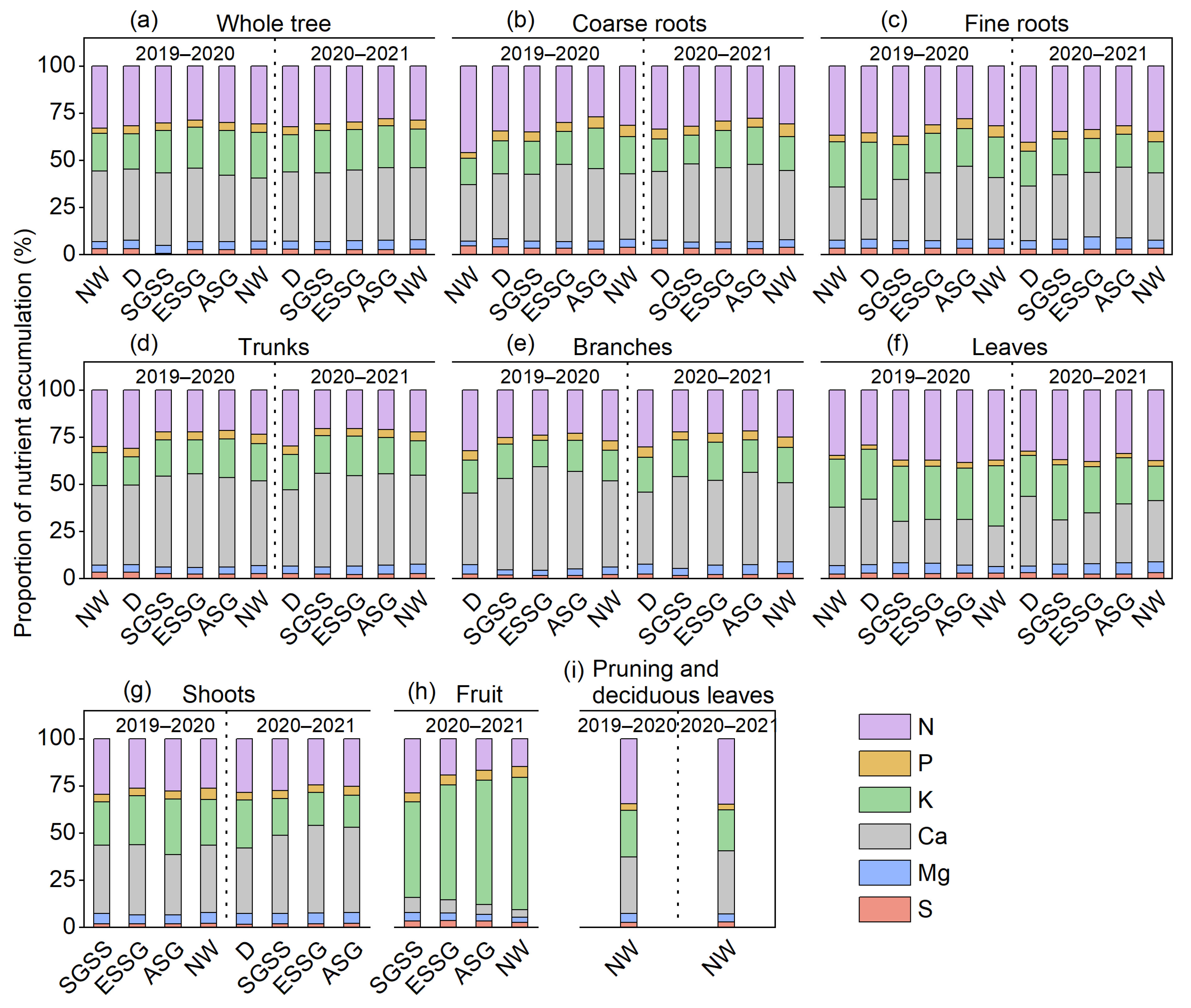
During the two growing seasons, Ca accumulation in the entire tree constituted the largest portion of the total macronutrient (N, P, K, Ca, Mg, and S) accumulation, reaching between 33.5% and 39.1% (Figure 6a). The total N accounted for 28.1% to 32.9% of the total macronutrients in the tree, second only to Ca, followed by K, which accounted for 18.8% to 24.1%. The proportions of P and Mg were similar, ranging from 2.9% to 4.8% and 4.0% to 4.9%, respectively. Sulfur had the lowest proportion, ranging from 0.5% to 3.2%. Specifically, Ca was also the most abundant nutrient in coarse roots, followed by N and K. Notably, the proportion of P in coarse roots (3.2–6.6%) was slightly higher than that of Mg (2.6– 4.3%) and S (2.8–4.5%) (Figure 6b). In fine roots, the proportion of N was slightly higher than that of Ca, followed by K, and the proportions of P (3.4–5.9%) and Mg (4.2–6.5%) were similar (Figure 6c). The proportion of S in fine roots was the lowest, ranging from 2.8% to 3.4%, while the proportion of K was slightly higher in fine roots than in coarse roots. The proportions of each nutrient in trunks and branches were similar, with Ca being the highest at 1.9 times in trunks and 1.8 times in branches compared to N (Figure 6d,e). The proportion of K in these two organs was lower than that of N, and the proportions of P and Mg were similar, with S remaining the lowest. From the slow growth of the spring shoot to the autumn shoot growth, the proportion of N in roots, trunks, and branches decreased compared to dormancy, whereas Ca showed an increasing trend.
In leaves, N had the highest proportion among the six nutrients, ranging from 29.3% to 37.4%, which was 1.3 times that of Ca and 1.4 times that of K (Figure 6f). Meanwhile, the proportion of Mg ranged from 3.5% to 6.0%, being slightly higher than that of P (2.0% to 3.2%) and S (2.2% to 3.0%). From the end of spring shoot growth to nutrient withdrawal, the proportion of N in leaves was higher than that at dormancy. In shoots, the proportion of Ca was the highest, ranging from 32.0% to 50.0%, which was 1.5 times that of N and 1.8 times that of K (Figure 6g). The proportion of Mg ranged from 3.9% to 5.7%, slightly higher than that of P (2.9%−5.9%). The proportion of S was the lowest at 1.7% to 2.1%. In fruits, the proportion of K was the highest, and it increased during the growth period, rising from 50.7% at the slow growth of the spring shoot to 70.1% at nutrient withdrawal (Figure 6h). Conversely, the proportion of N decreased gradually throughout the growth process, dropping from 28.3% at the slow growth of the spring shoot to 14.7% at nutrient withdrawal. During fruit development, the proportions of Ca, Mg, and S also decreased gradually, while the proportion of P increased slightly. At nutrient withdrawal, the proportions of P, Ca, Mg, and S were 5.8%, 4.0%, 2.9%, and 2.5%, respectively. In pruning and deciduous leaves, the proportion of N was slightly higher than that of Ca, followed by K, P, Mg, and S.

3.5. Uptake of Ca, Mg, and S by the Tree and Their Relations to Uptake of N, P, and K

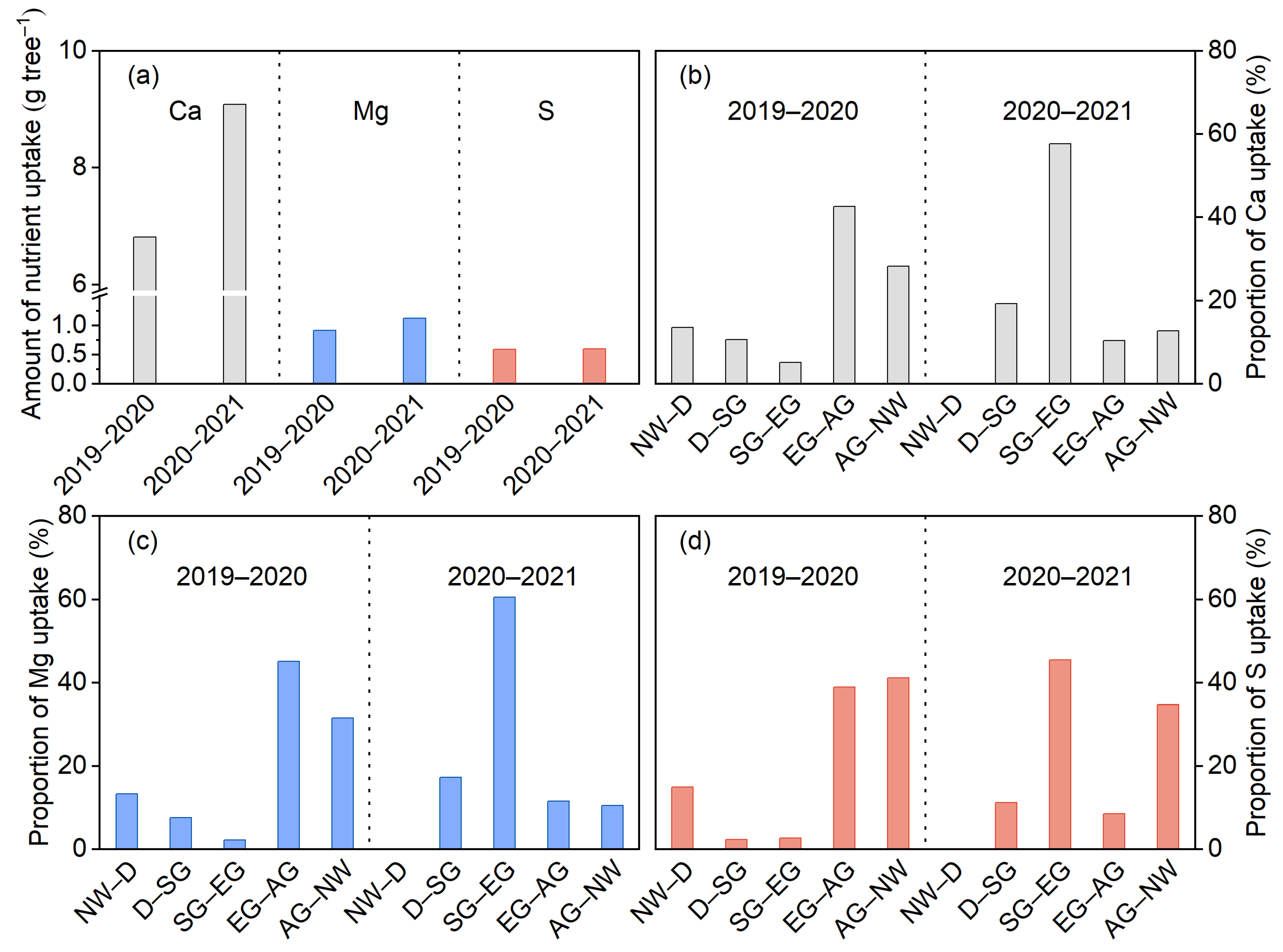
The tree absorbed much more Ca than Mg and S (Figure 7a). During the 2019−2020 growing season, the tree absorbed 6.8 g tree−1 for Ca, 0.91 g tree−1 for Mg, and 0.59 g tree−1 for S, equivalent to 11.2 kg ha−1 for Ca, 1.5 kg ha−1 for Mg, and 0.97 kg ha−1 for S. During the 2020−2021 growing season, the tree absorbed 9.1 g tree−1 for Ca, 1.1 g tree−1 for Mg, and 0.60 g tree−1 for S, equivalent to 15.0 kg ha−1 for Ca, 1.9 kg ha−1 for Mg, and 0.99 kg ha−1 for S.
The seasonal uptake of Ca, Mg, and S by the tree varied between the two seasons (Figure 7b–d). In the first season, most Ca uptake occurred from the end of spring shoot growth to autumn shoot growth and from autumn shoot growth to nutrient withdrawal, accounting for 42.6% and 28.2% of the annual Ca uptake, respectively. This proportion decreased to 13.5% from nutrient withdrawal to dormancy and to 10.6% from dormancy to slow growth of the spring shoot. In the second season, however, the maximum proportion of Ca uptake (57.7%) occurred from the slow growth of the spring shoot to the end of spring shoot growth, followed by the duration of dormancy and slow growth of the spring shoot (19.2%), and it was 12.8% from autumn shoot growth to nutrient withdrawal. The seasonal uptake of Mg and S was similar to that of Ca uptake, with 45.1% of the annual Mg and 38.9% of the annual S uptake occurring from the end of spring shoot growth to autumn shoot growth in the first season, respectively. The proportion of Mg and S absorbed by the tree was 31.6% and 41.1%, respectively, from the end of spring shoot growth to nutrient withdrawal. In the second season, the amount of Mg and S absorbed by the tree from the slow growth of the spring shoot to the end of spring shoot growth accounted for 60.5% and 45.1%, respectively. From autumn shoot growth to nutrient withdrawal, the proportion of S absorbed by the tree was 34.7%, higher than the proportion of Ca and Mg absorbed at the same stage. During dormancy and the slow growth of the spring shoot, the proportion of Mg uptake equaled that of Ca uptake, while the proportion of S uptake was slightly lower than both.
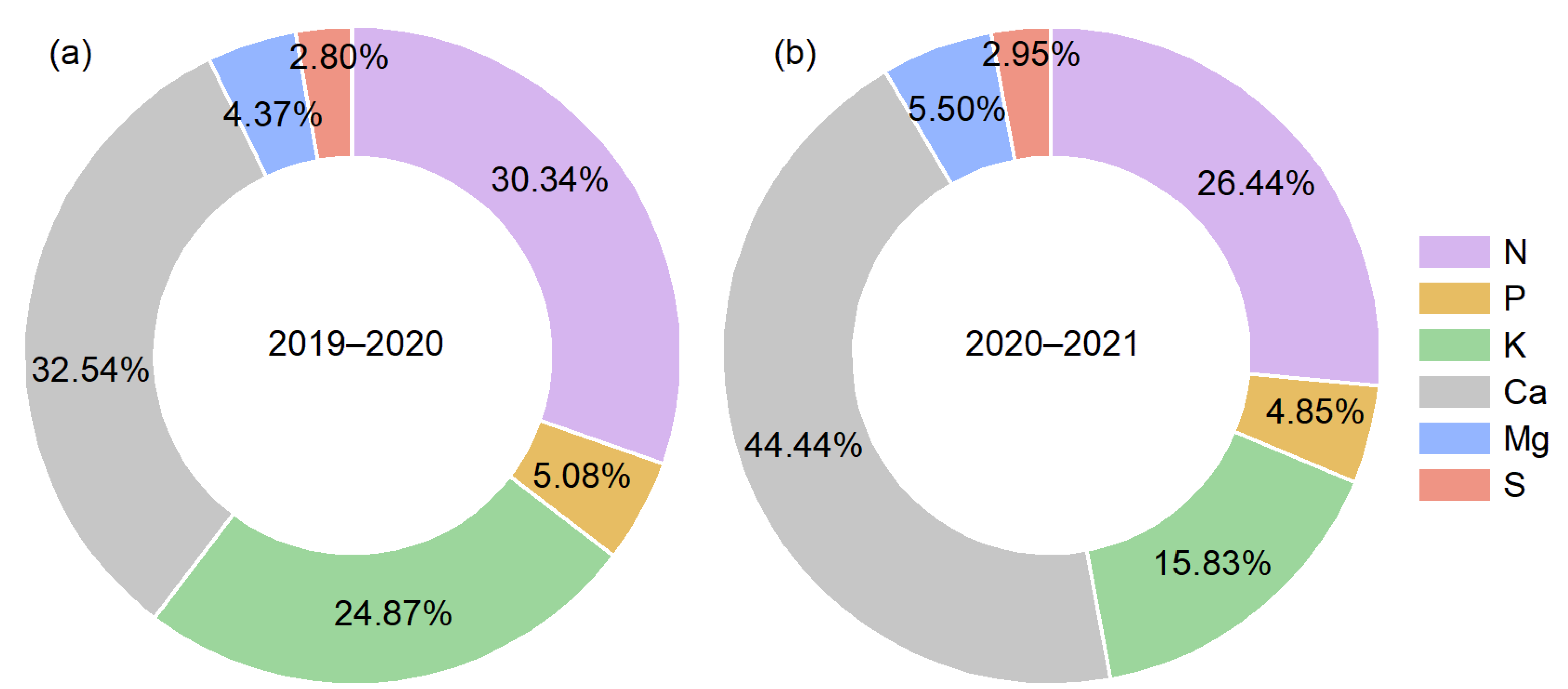
In the first season, the uptake ratio of N, P, K, Ca, Mg, and S was 1:0.17:0.82:1.1:0.14:0.092 (Figure 8). Calcium uptake as a proportion of total macronutrients was slightly higher than that of N uptake, being 6.4 times, 1.3 times, 7.5 times, and 11.6 times that of P, K, Mg, and S, respectively. In the second season, the uptake ratio of N, P, K, Ca, Mg, and S uptake was 1:0.18:0.60:1.7:0.21:0.11, and the proportion of Ca uptake in the total macronutrients remained the highest, being 1.7 times, 9.2 times, 2.8 times, 8.1 times, and 15.1 times of N, P, K, Mg, and S, respectively. Based on the macronutrient uptake ratios (Table 1), the amount of Ca absorbed by the tree exceeded that of the other five nutrients from dormancy to the slow growth of spring shoot and from the slow growth of spring shoot to the end of spring shoot growth in the two seasons. Meanwhile, during dormancy and the slow growth of the spring shoot in both seasons, the tree absorbed more K than N. From autumn shoot growth to nutrient withdrawal, the tree absorbed more N than the other nutrients. In addition, from the end of spring shoot growth to autumn shoot growth in the second season, the tree absorbed more Ca and K than N, P, Mg, and S.

4. Discussion

4.1. Dwarf ‘Fuji’ Apple Trees Absorb More Ca than Other Macronutrients

During the two growing seasons, the tree exhibited normal growth, and according to the mineral element analysis standards for apple leaves [26], the contents of Ca, Mg, and S in leaves fell within the normal range (Figure 2). Therefore, the nutrient characteristics of Ca, Mg, and S in the tree, as presented in this study, can be used as an important reference for understanding their requirements in dwarf apple trees. Although this study focuses on young dwarf apple trees, the findings regarding nutrient uptake, partitioning, and accumulation in trees are also valuable for managing macronutrients in apple trees at other developmental stages.
The uptake of Ca, Mg, and S by the tree, along with their ratios relative to the uptake of N, P, and K, and the proportions of these six nutrient accumulation in the whole tree and various organs (Figure 6, Figure 7 and Figure 8) showed that the macronutrient requirements for young dwarf ‘Fuji’ apple trees were ranked as follows: Ca > N > K > P ≈ Mg > S. This differs slightly from the findings of Cheng and Raba [20], who noted that 6-year-old ‘Gala’/‘M26’ apple trees grown in sand culture had the highest requirement for K, followed by N, Ca, Mg, P, and S. However, Scandellari et al. [27] demonstrated that 6-year-old ‘Gala’/‘M9’ apple trees grown in the field showed the highest requirement for Ca, followed by K, N, Mg, P, and S. Similarly, research by Fan [28] and Fan et al. [12] indicated that 9-year-old ‘Fuji’/‘Malus robusta Rhed.’ apple trees had a higher requirement for Ca than for N, P, and K. These variations in nutrient requirements among apple trees can be attributed to several factors, including cultivar, rootstock, tree age, and growing environment. Furthermore, it has been reported that other fruit trees, such as grapevines, require more Ca than N, P, K, and Mg. Consequently, Ca management in apple orchards warrants attention for effective production practices. It is recommended that Ca can be supplemented during peak uptake through soil application and foliar spraying of Ca fertilizer.
The seasonal uptake patterns of Ca, Mg, and S by the tree were similar to those of N, P, and K. Due to the influence of interannual air temperature and precipitation on the growth process of the tree, the seasonal uptake of Ca, Mg, and S also varied between the two growing seasons (Figure 7). In the first season, peaks in the uptake of Ca, Mg, and S occurred from the end of spring shoot growth to nutrient withdrawal. However, during the second season, these peaks occurred from the slow growth of the spring shoot to the end of spring shoot growth. Correspondingly, the accumulation of Ca, Mg, and S in shoots and leaves from the end of spring shoot growth to autumn shoot growth was faster than before the end of spring shoot growth in the first season (Figure 5). Similarly, in the second season, the accumulation of these nutrients in the same organs occurred faster than before the end of spring shoot growth. In contrast, the amount of N, P, K, Ca, Mg, and S absorbed by the tree from dormancy to the slow growth of the spring shoot did not exceed 20% of the annual uptake, except for the K uptake in the second season, which accounted for 34.5% (Figure 7). However, the uptake ratio of these six nutrients (Table 1) indicated that the tree had the highest requirement for Ca from dormancy to the slow growth of spring shoot or from the subsequent slow growth of spring shoot to the end of spring shoot growth, followed by N and K.
From the onset of budbreak, the key components of the tree, e.g., the coarse roots and trunks forming the tree’s skeletal structure, the branches and shoots constituting the canopy, the fine roots serving as primary absorbers of nutrients, and the leaves functioning as principal photosynthetic organs, and fruits enter a state of active metabolism. Given the pivotal role of Ca in maintaining the structural integrity of cell walls and membranes, as well as facilitating cell elongation, a substantial amount of Ca is required during this vigorous growth phase of cell proliferation and elongation. From the slow growth of the spring shoot to the end of spring shoot growth across the two growing seasons, Ca also accounted for the highest proportion of macronutrient accumulation in coarse roots, trunks, branches, and shoots, followed by N and K, with the increased proportion of Ca and the decreased proportion of N compared to dormancy (Figure 6). Concurrently, physiological processes such as protein synthesis, photosynthesis, and the transport of photosynthetic products from leaves to other organs require higher levels of N and K. As a result, N accounted for a higher proportion than Ca in leaves, exceeding its proportion in dormancy. In fruits, K constituted an obviously higher proportion than N and Ca, and in fine roots, N and Ca account for comparable proportions. Phosphorus, Mg, and S are also essential for these physiological processes, although the tree’s requirement for these nutrients was relatively lower. Notably, substantially reduced precipitation [24] led to extensive fine root mortality from the end of spring shoot growth to autumn shoot growth in the second season (Figure 1). At this duration, the roots absorbed almost no N or P from the soil but relatively more Ca and K. This phenomenon may be related to the important role of Ca and K in cellular osmotic regulation, which enhances the tree’s drought resistance and helps it cope with drought stress during this stage.

4.2. Macronutrient Partitioning Within Dwarf ‘Fuji’ Apple Trees Reflects the Trade-Offs Among the Functions of Different Organs

Nutrient partitioning is a vital strategy that enables plants to adapt to environmental changes, reflecting the trade-offs between the functions of different plant organs [29]. In this context, the partitioning of Ca and P in trunks was found to be higher than that of N, K, Mg, and S (Figure 4). This also exceeds the partitioning of Ca and P in the trunks of 9-year-old ‘Fuji’/‘Malus robusta Rhed.’ apple trees, as calculated by Fan et al. [12,30,31,32]. Trunks constituted a larger proportion of the total tree biomass than other organs (Figure 1), indicating that young trees allocate more assimilates to trunks to rapidly establish a skeletal framework and improve their capacity for nutrient and water transport, which in turn promotes trunk thickening and height growth. Within the plant, Ca2+ binds as calcium pectate in the middle lamella, thereby stabilizing cell walls. Calcium also bridges phosphate groups and the carboxyl groups of phospholipids and proteins, thereby stabilizing cell membranes. Phosphorus, an essential component of nucleic acids and phospholipids, plays a crucial role in maintaining cellular structural stability and genetic traits [3]. Therefore, allocating more Ca and P to trunks during the juvenile stage will be beneficial for promoting trunk growth.
To expand their underground habitat, young trees allocated assimilates to coarse roots, which were second only to trunks (Figure 1), and the proportion of nutrients allocated to coarse roots was larger as well (Figure 4). Furthermore, dry matter partitioning in coarse roots increased in the second season compared to the first. This biomass allocation strategy enhances the anchoring and transport functions of coarse roots, simultaneously expanding the surface area for water and nutrient uptake by fine roots attached to coarse roots. Since nutrient transport consumes energy and P plays a pivotal role in energy transfer, along with S participating in respiration [33], the partitioning of P and S in coarse roots exceeded that of the other four nutrients (Figure 4). Although leaf biomass was lower than that of trunks and coarse roots, leaves serve as the primary site for photosynthesis and exhibit particularly active metabolic processes. Of all the organs, leaves basically had the highest content of N, P, K, Ca, Mg, and S (Figure 2). The partitioning of N, K, Mg, and S in leaves was higher than that of P and Ca, exceeding the corresponding partitioning in coarse roots (Figure 4). Nitrogen and S are key components of protein, while N and Mg are components of chlorophyll, and K and Mg promote protein synthesis and the transport of photosynthetic products [3]. Consequently, the tree appropriately increased the relative partitioning of these four elements in its leaves, not only facilitating photosynthesis and carbohydrate synthesis but also promoting the transport of assimilates to other organs, thus supporting coordinated and balanced growth throughout the entire tree.
The survival strategy of young trees prioritizes vegetative growth over reproductive growth, resulting in limited partitioning of assimilates and nutrients to the fruit in this study (Figure 1 and Figure 3). The K content in fruits was higher than the content of N, P, Ca, Mg, and S, consistent with the findings of Nachtigall and Dechen [14], Cheng and Raba [20], and Palmer and Dryden [34] regarding the nutrient content in fruits of mature apple trees. Concurrently, K accumulation and partitioning in fruits were higher than those of the other five nutrients (Figure 4), underscoring potassium’s critical role in fruit development and quality formation throughout the tree’s life cycle. Although Ca also significantly impacts fruit development, its low mobility within the phloem, the decreasing specific surface area of fruits, reduced transpiration during maturation, and the gradual loss of xylem function due to structural damage [35,36,37,38] result in the lowest Ca partitioning among the six examined elements. Notably, Ca accumulation in fruits even showed a decreasing trend from autumn shoot growth to nutrient withdrawal (Figure 5). Research from the last century had already observed outward Ca transfer in fruits during later developmental stages [39,40]. Calcium absorbed by roots is primarily transported to fruits via the xylem; however, the apple fruit exhibits xylem sap reflux into the tree [41], which could lead to Ca flowing back to the tree. Additionally, the outflow of Ca from fruits may correlate with the Ca sink intensity of newly formed organs [42]. While a decrease in Ca accumulation was observed in fruits, leaf Ca accumulation also declined (Figure 5). Conversely, the metabolically active organs, such as shoots, continued to accumulate Ca. During this stage, shoots act as strong Ca sinks, potentially receiving Ca displaced from leaves and fruits. However, the specific mechanisms underlying this effect require further investigation. Alternatively, timely Ca supplementation could be considered to meet the Ca requirement of shoot growth, or pruning might be employed to control vegetative growth of shoots, thereby reducing competition for Ca and increasing Ca partitioning to fruits.

5. Conclusions

Young dwarf ‘Fuji’ apple trees absorbed 11.2−15.0 kg ha–1 of Ca, 1.5−1.9 kg ha–1 of Mg, and 1.0 kg ha–1 of S in one season. The seasonal uptake of Ca, Mg, and S varied interannually, with peak uptake occurring during the end of spring shoot growth to nutrient withdrawal or during the slow growth of spring shoot to the end of spring shoot growth. The ratio of N, P, K, Ca, Mg, and S uptake by the tree was 1:0.17:0.82:1.1:0.14:0.092 during the first season, and it was 1: 0.18: 0.60: 1.7: 0.21: 0.11 during the second season. Therefore, the macronutrient requirements of the trees ranked as Ca > N > K > P ≈ Mg > S. Concurrently, the N, P, K, Ca, Mg, and S accumulation in 1000 kg of fruit was 0.40 kg, 0.16 kg, 1.90 kg, 0.11 kg, 0.079 kg, and 0.067 kg, respectively. Fruits had the highest requirement for K, while coarse roots, trunks, branches, and shoots showed the highest requirement for Ca. In terms of leaves, their highest requirement was for N, and in fine roots, the requirement for N was slightly higher than that for Ca. Apple orchard management should therefore focus on providing sufficient Ca that can be quickly utilized by the trees during the peak of Ca uptake while sustaining a balanced macronutrient ratio to meet the specific requirements of each tree organ.

Author Contributions

Z.Z.: Conceptualization, data curation, formal analysis, investigation, visualization, writing—original draft, writing—review and editing. C.S.: Investigation and writing—review and editing. A.Z.: Investigation and writing—review and editing. Q.Z.: Investigation and writing—review and editing. W.Z.: Conceptualization, formal analysis, funding acquisition, and writing—review and editing. Z.L.: Conceptualization and writing—review and editing. B.Z.: Conceptualization, data curation, formal analysis, funding acquisition, project administration, resources, supervision, visualization, writing—original draft, and writing—review and editing. All authors have read and agreed to the published version of the manuscript.

Funding

This study was supported by the National Key Research and Development Program of China (2023YFD2301003), the Major Project of Science and Technology of Shaanxi (2020zdzx03-02-01), the China Agriculture Research System of MOF and MARA (CARS-27), and the National Natural Science Foundation of China (42577151).

Data Availability Statement

The data that support the findings of this study are available from the corresponding author upon reasonable request.

Conflicts of Interest

The authors declare no conflicts of interest.

References

  1. Gerendás, J.; Führs, H. The significance of magnesium for crop quality. Plant Soil 2013, 368, 101–128. [Google Scholar] [CrossRef]
  2. Jez, J.M. Structural biology of plant sulfur metabolism: From sulfate to glutathione. J. Exp. Bot. 2019, 70, 4089–4103. [Google Scholar] [CrossRef]
  3. Marschner, P. Marschner’s Mineral Nutrition of Higher Plants, 3rd ed.; Academic Press: Waltham, MA, USA, 2012. [Google Scholar]
  4. Qin, Y.F.; Liang, J.; Han, M.M.; He, X.X.; Zhao, Z.Y. A study on the relationship between occurrence of bitter pit and contents of main nutritional elements in ‘Ruiyang’ apple. J. Fruit Sci. 2020, 37, 1907–1913, (In Chinese with English abstract). [Google Scholar]
  5. Raese, J.T.; Staiff, D.C. Fruit calcium, quality and disorders of apples (Malus domestica) and pears (Pyrus communis) influenced by fertilizers. In Physiology and Applications, Proceedings of the Eleventh International Plant Nutrition Colloquium, Wageningen, The Netherlands, 30 July–4 August 1990; Springer: Wageningen, The Netherlands, 1990; pp. 619–623. [Google Scholar]
  6. Alva, A.K.; Mattos, D.; Paramasivam, S.; Patil, B.; Dou, H.; Sajwan, K.S. Potassium management for optimizing citrus production and quality. Int. J. Fruit Sci. 2006, 6, 3–43. [Google Scholar] [CrossRef]
  7. Shen, C.W.; Shi, X.Q.; Xie, C.Y.; Li, Y.; Yang, H.; Mei, X.L.; Xu, Y.C.; Dong, C.X. The change in microstructure of petioles and peduncles and transporter gene expression by potassium influences the distribution of nutrients and sugars in pear leaves and fruit. J. Plant Physiol. 2019, 232, 320–333. [Google Scholar] [CrossRef] [PubMed]
  8. Xie, K.L.; Cakmak, I.; Wang, S.Y.; Zhang, F.S.; Guo, S.W. Synergistic and antagonistic interactions between potassium and magnesium in higher plants. Crop J. 2021, 9, 249–256. [Google Scholar] [CrossRef]
  9. Fismes, J.; Vong, P.C.; Guckert, A.; Frossard, E. Influence of sulfur on apparent N-use efficiency, yield and quality of oilseed rape (Brassica napus L.) grown on a calcareous soil. Eur. J. Agron. 2000, 12, 127–141. [Google Scholar] [CrossRef]
  10. Courbet, G.; Gallardo, K.; Vigani, G.; Brunel-Muguet, S.; Trouverie, J.; Salon, C.; Ourry, A. Disentangling the complexity and diversity of crosstalk between sulfur and other mineral nutrients in cultivated plants. J. Exp. Bot. 2019, 70, 4183–4196. [Google Scholar] [CrossRef] [PubMed]
  11. Dong, Z.F.; Wang, Y.Z.; Wang, L.; Liu, C.L.; Dong, X.Y.; Liu, G.S.; Yuan, Y.B. Effect of different bag treatments on the absorption of calcium in ‘Red Fuji’ apple fruit. Acta Hortic. Sin. 2007, 34, 835–840, (In Chinese with English abstract). [Google Scholar]
  12. Fan, H.Z.; Tong, Y.A.; Lv, S.H. Study on seasonal change of calcium concentration and accumulation in different organs of apple tree. Soil Fert. Sci. China 2009, 3, 51–54. (In Chinese) [Google Scholar]
  13. Kalcsits, L.; van der Heijden, G.; Reid, M.; Mullin, K. Calcium absorption during fruit development in ‘Honeycrisp’ apple measured using 44Ca as a stable isotope tracer. HortScience 2017, 52, 1804–1809. [Google Scholar] [CrossRef]
  14. Nachtigall, G.R.; Dechen, A.R. Seasonality of nutrients in leaves and fruits of apple trees. Sci. Agric. 2006, 63, 493–501. [Google Scholar] [CrossRef]
  15. Walton, E.F.; Wünsche, J.N.; Palmer, J.W. Estimation of the bioenergetic costs of fruit and other organ synthesis in apple. Physiol. Plant. 1999, 106, 129–134. [Google Scholar] [CrossRef]
  16. Chuntanaparb, N.; Cummings, G. Seasonal trends in concentration of nitrogen, phosphorus, potassium, calcium, and magnesium in leaf portions of apple, blueberry, grape, and peach. J. Am. Soc. Hortic. Sci. 1980, 105, 933–935. [Google Scholar] [CrossRef]
  17. Holb, I.J.; Nagy, P.T. Availability of calcium, magnesium, sulfur, copper, zinc, and manganese in the plant-soil system of integrated and organic apple orchards. Commun. Soil Sci. Plant Anal. 2009, 40, 682–693. [Google Scholar] [CrossRef]
  18. Nagy, P.T.; Holb, I.J. Study on the macronutrient content of apple leaves in an organic apple orchard. J. Cent. Eur. Agric. 2006, 7, 329–336. [Google Scholar]
  19. Zhang, Y.Z.; Zhao, D.Y.; Zhou, J.T.; Chen, Y.H.; Xie, B.; Yang, A.; Zhang, H.T.; Chen, C.G. Comparative analysis of calcium dynamics and fruit quality in ‘Hanfu’ apples grafted on different intermediate rootstocks. China Fruits 2021, 3, 51–55, 62. [Google Scholar]
  20. Cheng, L.; Raba, R. Accumulation of macro- and micronutrients and nitrogen demand-supply relationship of ‘Gala’/‘Malling 26′ apple trees grown in sand culture. J. Am. Soc. Hortic. Sci. 2009, 134, 3–13. [Google Scholar] [CrossRef]
  21. Zheng, Z.X.; Shi, C.; Zhang, A.; Zhang, Q.; Zhao, Z.Y.; Sompouviset, T.; Cai, S.B.; Zheng, W.; Jakhro, M.I.; Zhai, B.N. Tracing the contribution and fate of synthetic nitrogen fertilizer in young apple orchard agrosystems. Sci. Total Environ. 2024, 932, 173103. [Google Scholar] [CrossRef] [PubMed]
  22. Tabatabai, M.A. Microwave digestion of plant tissue in a closed vessel. In Handbook of Reference Methods for Plant Analysis; Kalra, Y.P., Ed.; CRC Press: Boca Raton, FL, USA, 1998; pp. 69–73. [Google Scholar]
  23. Bao, S.D. Agrochemical Analysis of Soil, 1st ed.; China Light Industry Press: Beijing, China, 2011. [Google Scholar]
  24. Zheng, Z.X.; Zhang, Q.; Zhang, A.; Wang, T.T.; Zhao, Z.Y.; Sompouviset, T.; Cai, S.B.; Zheng, W.; Zhai, B.N. Distinguishing the contribution of nitrogen fertilizer and native soil nitrogen to young apple trees. Nutr. Cycl. Agroecosys. 2023, 126, 101–114. [Google Scholar] [CrossRef]
  25. Zheng, Z.X.; Shi, C.; Zhang, A.; Sukkaew, E.; Zhang, X.C.; Li, Z.Y.; Zheng, W.; Zhai, B.N. Optimizing phosphorus and potassium input based on phosphorus and potassium uptake characteristics in young dwarf apple trees. Sci. Hortic. 2025, 341, 113994. [Google Scholar] [CrossRef]
  26. Shear, C.B.; Faust, M. Horticultural Reviews; American Society for Horticultural Science: Alexandria, VA, USA; AVI Publishing Company: Westport, CT, USA, 1980; Volume 2. [Google Scholar]
  27. Scandellari, F.; Ventura, M.; Malaguti, D.; Ceccon, C.; Menarbin, G.; Tagliavini, M. Net primary productivity and partitioning of absorbed nutrients in field-grown apple trees. In VI International Symposium on Mineral Nutrition of Fruit Crops; ISHS: Faro, Portuga, 2008; pp. 115–122. [Google Scholar]
  28. Fan, H.Z. The Growth, Nutrients Uptake, Utilization and Accumulation in Apple Tree; Northwest A&F University: Yangling, China, 2006; (In Chinese with English abstract). [Google Scholar]
  29. Yan, Z.B.; Li, P.; Chen, Y.H.; Han, W.X.; Fang, J.Y. Nutrient allocation strategies of woody plants: An approach from the scaling of nitrogen and phosphorus between twig stems and leaves. Sci. Rep. 2016, 6, 20099. [Google Scholar] [CrossRef]
  30. Fan, H.Z.; Tong, Y.A.; Zhao, Y.; Liu, R.L. Phosphorus dynamics and fertilization management of apple tree. Agric. Res. Arid Area. 2007, 25, 73–77. (In Chinese) [Google Scholar]
  31. Fan, H.Z.; Tong, Y.A.; Lv, S.H.; Liu, R.L. Annual change of potassium content and accumulation in apple tree. J. Northwest A&F Univ. (Nat. Sci. Ed.) 2007, 35, 169–172, (In Chinese with English abstract). [Google Scholar]
  32. Fan, H.Z.; Tong, Y.A.; Lv, S.H.; Liu, R.L. Annual change of nitrogen content and accumulation in apple tree. Soil Fert. Sci. China 2008, 4, 15–17, 25. (In Chinese) [Google Scholar]
  33. Bhatla, S.C.; Lal, M.A. Plant Physiology, Development and Metabolism; Springer Nature: Singapore, 2018. [Google Scholar]
  34. Palmer, J.W.; Dryden, G. Fruit mineral removal rates from new zealand apple (Malus domestica) orchards in the nelson region. N. Z. J. Crop Hortic. Sci. 2006, 34, 27–32. [Google Scholar] [CrossRef]
  35. Dražeta, L.; Lang, A.; Hall, A.J.; Volz, R.K.; Jameson, P.E. Causes and effects of changes in xylem functionality in apple fruit. Ann. Bot. 2004, 93, 275–282. [Google Scholar] [CrossRef]
  36. Himelrick, D.G.; McDuffie, R.F. The calcium cycle: Uptake and distribution in apple trees. HortScience 1983, 18, 147–151. [Google Scholar] [CrossRef]
  37. Miqueloto, A.; do Amarante, C.V.T.; Steffens, C.A.; dos Santos, A.; Mitcham, E. Relationship between xylem functionality, calcium content and the incidence of bitter pit in apple fruit. Sci. Hortic. 2014, 165, 319–323. [Google Scholar] [CrossRef]
  38. Wang, Y.F.; Ye, Z.; Liu, H.; Liu, Q.L.; Zhang, B.; Hao, Y.Y. Changes of vascular bundles structure and water transport of apple fruit in different development period. Plant Physiol. J. 2015, 51, 1414–1418, (In Chinese with English abstract). [Google Scholar]
  39. Cline, J.A.; Hanson, E.J.; Bramlage, W.J.; Cline, R.A.; Kushad, M.M. Calcium accumulation in delicious apple fruit. J. Plant Nutr. 1991, 14, 1213–1222. [Google Scholar] [CrossRef]
  40. Wilkinson, B.G. Mineral composition of apples IX.—Uptake of calcium by the fruit. J. Sci. Food Agric. 1968, 19, 646–647. [Google Scholar] [CrossRef]
  41. Lang, A. Xylem, phloem and transpiration flows in developing apple fruits. J. Exp. Bot. 1990, 41, 645–651. [Google Scholar] [CrossRef]
  42. Vang-Petersen, O. Calcium nutrition of apple trees: A review. Sci. Hortic. 1980, 12, 1–9. [Google Scholar] [CrossRef]
Figure 1. Biomass partitioning in young ‘Fuji’ apple trees on dwarfing rootstock over two growing seasons. NW, nutrient withdrawal; D, dormancy; SGSS, slow growth of spring shoot; ESSG, end of spring shoot growth; ASG, autumn shoot growth. Values are the mean ± standard error (n = 4).
Agronomy 16 00442 g001
Figure 2. Seasonal changes in calcium (a), magnesium (b), and sulfur contents (c) of different organs over two growing seasons. NW, nutrient withdrawal; D, dormancy; SGSS, slow growth of spring shoot; ESSG, end of spring shoot growth; ASG, autumn shoot growth. Values are the mean ± standard error (n = 4).
Agronomy 16 00442 g002
Figure 3. Seasonal changes in calcium (a), magnesium (b), and sulfur partitioning (c) of different organs over two growing seasons. NW, nutrient withdrawal; D, dormancy; SGSS, slow growth of spring shoot; ESSG, end of spring shoot growth; ASG, autumn shoot growth. Values are the mean ± standard error (n = 4).
Agronomy 16 00442 g003
Figure 4. Nitrogen, phosphorus, potassium, calcium, magnesium, and sulfur partitioning of different organs over two growing seasons. NW, nutrient withdrawal; D, dormancy; SGSS, slow growth of spring shoot; ESSG, end of spring shoot growth; ASG, autumn shoot growth. Values are the mean of four trees (n = 4).
Agronomy 16 00442 g004
Figure 5. Accumulation of calcium, magnesium, and sulfur in shoots (a), leaves (b), fruit (c), and nutrient accumulation of 1000 kg fruit at maturity (d). DZ, zero-day of the new growth; SGSS, slow growth of spring shoot; ESSG, end of spring shoot growth; ASG, autumn shoot growth; NW, nutrient withdrawal. Values are the mean ± standard error (n = 4).
Agronomy 16 00442 g005
Figure 6. The proportion of nitrogen, phosphorus, potassium, calcium, magnesium, and sulfur accumulation in the entire tree and various organs. NW, nutrient withdrawal; D, dormancy; SGSS, slow growth of spring shoot; ESSG, end of spring shoot growth; ASG, autumn shoot growth. Values are the mean of four trees (n = 4).
Agronomy 16 00442 g006
Figure 7. Annual amount of calcium, magnesium, and sulfur uptake (a) by young ‘Fuji’ apple trees on dwarfing rootstock and seasonal uptake of calcium (b), magnesium (c), and sulfur (d) over two growing seasons. NW, nutrient withdrawal; D, dormancy; SG, slow growth of spring shoot; EG, end of spring shoot growth; AG, autumn shoot growth. The calculation was based on an average of four trees.
Agronomy 16 00442 g007
Figure 8. The proportion of nitrogen, phosphorus, potassium, calcium, magnesium, and sulfur uptake by young ‘Fuji’ apple trees on dwarfing rootstock in 2019–2020 (a) and 2020–2021 (b) growing seasons. The calculation was based on an average of four trees.
Agronomy 16 00442 g008
Table 1. Uptake ratio of nitrogen, phosphorus, potassium, calcium, magnesium, and sulfur in young ‘Fuji’ apple trees on dwarfing rootstock at different stages over two growing seasons.
Growing SeasonGrowth PhaseN:P:K:Ca:Mg:S
2019–2020Nutrient withdrawal–dormancy1:0.23:0.56:1.26:0.17:0.12
Dormancy–slow growth of spring shoot1:0.11:1.55:1.80:0.17:0.035
Slow growth of spring shoot–end of spring shoot growth1:0.14:0.98:2.76:0.16:0.12
End of spring shoot growth–autumn shoot growth1:0.14:0.84:0.99:0.14:0.078
Autumn shoot growth–nutrient withdrawal1:0.19:0.73:0.89:0.13:0.11
2020–2021Dormancy–slow growth of spring shoot1:0.044:1.36:1.42:0.17:0.062
Slow growth of spring shoot–end of spring shoot growth1:0.16:0.72:1.43:0.20:0.084
End of spring shoot growth–autumn shoot growth0:0:0.57:1:0.15:0.062
Autumn shoot growth–nutrient withdrawal1:0.46:0:0.93:0.10:0.19
Disclaimer/Publisher’s Note: The statements, opinions and data contained in all publications are solely those of the individual author(s) and contributor(s) and not of MDPI and/or the editor(s). MDPI and/or the editor(s) disclaim responsibility for any injury to people or property resulting from any ideas, methods, instructions or products referred to in the content.