Article

Genome-Wide Identification and Functional Characterization of the Phytochelatin Synthase (PCS) Gene Family in Potato Reveals StPCS1′s Role in Cadmium Tolerance

1
Dingxi Academy of Agricultural Sciences, Dingxi 743000, China
2
State Key Laboratory of Aridland Crop Science, Gansu Agricultural University, Lanzhou 730070, China
*
Authors to whom correspondence should be addressed.
Agronomy 2026, 16(4), 432; https://doi.org/10.3390/agronomy16040432
Submission received: 15 January 2026 / Revised: 4 February 2026 / Accepted: 11 February 2026 / Published: 12 February 2026
(This article belongs to the Section Crop Breeding and Genetics)

Abstract

Phytochelatin synthase (PCS) is crucial for synthesizing phytochelatins, cysteine-rich peptides vital for heavy metal detoxification in plants. Potato, a key staple crop in China, faces risks from soil heavy metal contamination, yet the genes involved in its detoxification, particularly PCS genes, remain underexplored. This study systematically identified and characterized the StPCS gene family in potato using genomic databases, uncovering five StPCS members distributed across three of the 12 potato chromosomes. Phylogenetic analysis classified StPCS proteins into three clades, while gene structure and motif analyses revealed high conservation in domain organization. Promoter region investigations identified stress-responsive elements in nearly all StPCS genes. Under cadmium (Cd) stress conditions, qPCR analysis indicated a significant upregulation of StPCS1 (5.73-fold) and StPCS2 (1.61-fold) transcript levels after 21 days compared to the control, whereas no obvious differences were observed at 7 days post-stress. Subsequent functional verification in yeast revealed that StPCS1 overexpression markedly improved Cd tolerance in transgenic yeast. In addition, analysis of cis-acting elements in the StPCS gene promoter combined with qPCR verification under MeJA and ABA stress conditions suggested that StPCS1 might be involved in Cd stress responses in potato through certain hormone signaling pathways. This study represents the first comprehensive analysis of the StPCS gene family in potato, clarifying its structural characteristics and characterizing the function of StPCS1 as a long-term Cd stress-responsive gene, which lays a solid foundation for investigating its role in heavy metal detoxification.

1. Introduction

Industrial activities, such as mining, smelting, and refining, are primary sources of heavy metal (HM) contamination in soil [1]. In recent years, soil heavy metal pollution has emerged as a global environmental issue, not only reducing crop yields but also posing severe threats to human health through bio-accumulation in the food chain [2]. Among existing chemical, physical, and biological remediation technologies, phytoremediation has shown promising potential as a green, environmentally friendly, and cost-effective method for removing pollutants from contaminated soil or water by utilizing plants [3,4].
Toxic heavy metals (e.g., cadmium, lead, and mercury) or excessive essential heavy metals (e.g., zinc) in soil exert significant toxic effects on most plants, potentially leading to imbalances in nutrient ion homeostasis, inhibition of photosynthesis, and disruption of DNA integrity [5,6]. To cope with heavy metal stress, plants have evolved various detoxification mechanisms, among which the most common is the chelation of heavy metals by specific ligands, such as phytochelatins (PCs) or metallothioneins [7,8]. PCs are one of the most important and extensively studied ligands in plants, effectively compensating for the limitations of metallothioneins in cadmium detoxification [7,9].
PCs are a class of cysteine-rich peptides with the general structure (γ-Glu-Cys)n-Gly [10,11]. PCs were initially identified as cadmium-binding proteins in Schizosaccharomyces pombe and have since been widely found in plants, algae, fungi, and some animals [12]. After heavy metals are absorbed by root cells, they can bind to the thiol groups of PCs, forming PC-HM complexes in the cytoplasm [13]. A portion of these complexes are transported into vacuoles via vacuolar membrane transporters, such as ATP-binding cassette subfamily C (ABCC) transporters, while another portion is translocated from roots to shoots, following a mechanism similar to that in roots. For example, in Arabidopsis and barley, ABCC transporters can transport cadmium/arsenic-PC complexes into vacuoles, thereby achieving heavy metal sequestration and detoxification [14,15].
The synthesis of PCs relies on phytochelatin synthase (PCS, EC 2.3.2.15), which catalyzes the production of PCs using glutathione as a substrate [16]. The cadmium sensitivity of Arabidopsis PCS-deficient mutants is significantly higher than that of wild-type plants, a finding that first revealed the critical role of PCS in heavy metal detoxification in plants [17]. In recent years, the introduction of PCS genes from various species into plants through transgenic technology has demonstrated their immense potential in phytoremediation. For instance, heterologous expression of Arabidopsis AtPCS1 in rapeseed significantly enhanced its tolerance to zinc and cadmium [18]; overexpression of the PCS gene from the zinc/cadmium hyperaccumulator Thlaspi caerulescens in tobacco markedly increased cadmium tolerance and accumulation capacity [19]; and overexpression of the Populus tomentosa PCS gene in tobacco further enhanced cadmium tolerance and accumulation efficiency [20]. These studies indicate that PCS genes hold significant application value in plant heavy metal detoxification and remediation, providing a theoretical foundation and genetic resources for the development of efficient phytoremediation technologies in the future.
Notably, PCS gene functions are conserved across the Solanaceae, as evidenced by cadmium-induced expression and enhanced metal chelation in Solanum lycopersicum SlPCS1 [21] and Capsicum annuum CaPCS [22]. Moreover, alternative splicing (AS) represents a key regulatory layer, generating diverse PCS transcript variants in response to metal stress. These variants can produce truncated proteins with modified activity or act as dominant-negative regulators to fine-tune phytochelatin synthesis, as demonstrated in Triticum aestivum TaPCS1 under Cd exposure [23]. This underscores the functional versatility of PCS genes and the sophisticated AS-mediated regulation of plant metal tolerance.
Potato, a globally vital food crop, is highly susceptible to cadmium accumulation, posing significant risks to food safety and yield [24]. Cadmium, a non-essential and highly toxic heavy metal, is a widespread soil contaminant, making it an ideal model for studying plant detoxification mechanisms. Despite extensive research on PCS genes in other Solanaceae species, their function in potato remains systematically uncharacterized. Therefore, elucidating the role of potato PCS genes under Cd stress is essential to bridge this knowledge gap and provide a foundation for developing cadmium-resilient potato varieties [25,26]. The molecular mechanisms underlying potato responses to various environmental stresses have been increasingly clarified through the application of advanced omics technologies. For instance, transcriptomic analyses have been effectively utilized to dissect the adaptive responses of potato to abiotic stresses and nutrient regulation. A recent study employed RNA sequencing (RNA-seq) to identify key genes and pathways associated with potato responses to nitrogen nutrition and its associated stresses, thereby establishing a methodological framework for exploring gene expression dynamics under specific treatment conditions [27]. Building on these methodological advances, the roles of specific gene families, particularly those associated with metal detoxification, in mediating stress tolerance in potato warrant further investigation. Therefore, in this study, we focused on the PCS gene family, which is pivotal for heavy metal chelation, to explore their expression profiles and potential functional roles in potato seedlings under cadmium stress. This research lays a foundation for elucidating the biological functions of PCS genes in Cd tolerance in potato while also providing target genes for comprehensively understanding the Cd tolerance mechanisms in potato and developing Cd-tolerant, low-Cd-accumulating potato varieties for cultivation in Cd-contaminated regions.

2. Materials and Methods

2.1. Plant Materials

The experimental plant material, specifically the potato cultivar “Atlantic”, was obtained from the College of Agriculture, Gansu Agricultural University. Axenic plantlets propagated in vitro were incubated in a climate-controlled growth chamber under defined conditions: a 16 h light/8 h dark photoperiod, a stable temperature of 25 °C, and a relative humidity of 60%. Following 30 days of cultivation after initiation, these plantlets were prepared for subsequent stress induction treatments.

2.2. Identification of Members of Potato PCS Genes

The reference genome sequence (DM v6.1) and GFF annotation file of potato were downloaded from the Potato Genome Database (http://spuddb.uga.edu/, accessed on 10 March 2025), whereas the AtPCS protein sequences were obtained from The Arabidopsis Information Resource (TAIR; https://www.arabidopsis.org/, accessed on 10 March 2025). With TBtools software (v1.09876), StPCS protein sequences in potato were screened and identified via sequence alignment. These sequences were further subjected to functional annotation in multiple databases (Pfam, SMART, EnsemblPlants and NCBI) for confirmation of the final StPCS protein set, and incomplete sequences were completed using the Softberry online platform.

2.3. Molecular Characterization of Potato PCS Genes

We further characterized the molecular properties of StPCS genes. Conserved motifs and structural domains of StPCS proteins were identified via the online MEME platform (http://meme.nbcr.net/meme/intro.html, accessed on 15 March 2025) and NCBI Batch CD-search tool (https://www.ncbi.nlm.nih.gov/Structure/bwrpsb/bwrpsb.cgi, accessed on 15 March 2025), with the resultant data visualized using TBtools software. Moreover, the exon/intron organization and chromosomal distribution of StPCS family members were systematically analyzed and graphically illustrated by virtue of TBtools’ visualization function.

2.4. Multiple Sequence Alignment of Potato PCS Genes

First, PCS protein sequences from Arabidopsis thaliana, Oryza sativa, Glycine max, Arundo donax and Morus were acquired from the NCBI database. Subsequently, multiple sequence alignment and phylogenetic analysis of PCS proteins across these species were performed using ClustalX and MEGA11 software (11.0). The maximum likelihood (ML) method was adopted with the Poisson model, coupled with gamma-distributed rate variation among sites (G), a 95% site coverage threshold and 1000 bootstrap replications. The resultant phylogenetic tree was constructed and stored in the Newick format, and ultimately visually optimized via the online EvolView platform (http://www.evolgenius.info/evolview/#/login, accessed on 20 March 2025).

2.5. Intraspecific/Interspecific Collinearity Analysis of Potato PCS Genes

The potato reference genome sequence and corresponding GFF annotation file underwent self-alignment in TBtools to assess collinearity relationships among StPCS family members. Meanwhile, genomic sequences and GFF annotation files of Arabidopsis thaliana, Glycine max, Solanum lycopersicum, Fagopyrum tataricum, Vitis vinifera, and Helianthus annuus were retrieved from EnsemblPlants (http://plants.ensembl.org/index.html, accessed on 22 March 2025) and submitted to comparative analysis against the potato genome via TBtools. Eventually, the collinearity profiles of StPCS genes were visualized using the same software.

2.6. Sequence Analysis of Potato PCS Gene Promoters

A 2000 bp segment of the promoter sequence upstream of the start codon of StPCS genes was retrieved using TBtools software. The types and copy numbers of cis-acting elements embedded within these promoter regions were identified and quantified via the PlantCARE online platform (http://bioinformatics.psb.ugent.be/webtools/plantcare/html/, accessed on 26 March 2025). Ultimately, the outcomes derived from this analysis were graphically visualized with TBtools.

2.7. Exogenous Cd and Hormonal Treatments

Following 21 days of normal cultivation, seedlings with uniform growth status were cut into 2 cm segments, each containing one bud and several leaves, which were then transferred to culture media supplemented with 100 μM Cd for stress treatment [28]. For hormonal stress induction, in vitro potato seedlings were treated with foliar spraying of 100 μM ABA, MeJA, and SA [29]. Control seedlings were treated with ethanol solution under normal environmental conditions. At 0, 1, 3, 6, and 12 h after treatment initiation, seedlings were harvested, flash-frozen in liquid nitrogen immediately, and stored at −80 °C for subsequent RNA isolation.

2.8. qRT-PCR

The expression patterns in tissues and under different stress conditions were validated via qRT-PCR. Primer sequences for qRT-PCR were designed using the Primer3 online tool (https://www.primer3plus.com/, accessed on 2 May 2025), with the potato EF1α gene serving as the internal control. Primer specificity was verified via Sanger sequencing, and primer efficiency was determined using a 5-fold serial dilution of cDNA templates. Only primers with amplification efficiency ranging from 90% to 110% and R2 values ≥ 0.99 were used in subsequent experiments.
The qRT-PCR reaction mixture (10 μL) comprised 5 μL of PrimeSTAR® Max DNA Polymerase (Takara Bio Inc., Kusatsu, Japan), 1 μL of each primer (10 mM), 1 μL of cDNA, and 3 μL of ddH2O. Thermal cycling conditions were set as follows: initial denaturation at 95 °C for 3 min, followed by 45 cycles of 95 °C for 5 s and 60 °C for 30 s. A melting curve analysis was performed after amplification (temperature gradient from 60 °C to 95 °C at a rate of 0.5 °C per 5 s), and a single melting peak was observed for all target and reference genes, confirming the absence of non-specific amplification products. Relative gene expression levels were quantified using the 2–ΔΔCT method. The related primers used in the article are shown in Table S1.

2.9. Cd Stress Tolerance Assay and Growth Curve in Yeast

The StPCS1 gene was synthesized and individually cloned into the yeast expression vector pYES2-NTB. The resulting plasmids were transformed into the cadmium-sensitive yeast mutant YCF1 via the lithium acetate method, using the empty pYES2-NTB vector as a negative control. Solid SG-U medium (with galactose replacing glucose) was supplemented with 0, 40, 50, 60, 80, and 100 μM Cd. PCR-verified single colonies from both experimental and control groups were uniformly diluted to the same OD600 value and spotted onto SG-U plates containing varying concentrations of cadmium. The plates were incubated at 30 °C for 7 days to assess colony growth.

2.10. Statistical Analysis

All experimental procedures were conducted with three independent biological replicates, each comprising a minimum of three technical replicates. For comparisons involving more than two groups, one-way analysis of variance (ANOVA) was conducted, followed by Tukey’s Honestly Significant Difference (HSD) test for multiple comparisons to correct for type I errors. For pairwise comparisons between the experimental group and the control group, Student’s t-test was applied. A p-value of less than 0.05 was deemed statistically significant. All statistical analyses were performed using SPSS 26.0 software.

3. Results

3.1. Identification of StPCS Genes

In this study, leveraging known PCS domain sequences, two StPCS genes were identified in potato through the application of two BLAST methodologies (https://www.ncbi.nlm.nih.gov/, accessed on 12 May 2025), with StPCS2 notably encompassing four distinct transcripts. For enhanced clarity and differentiation, these genes were designated as StPCS1, StPCS2a, StPCS2b, StPCS2c, and StPCS2d, as delineated in Table 1. Following this, an analysis was conducted to predict the physicochemical properties of the StPCS genes, including the length of the coding sequence (CDS), isoelectric point (pI), and molecular weight (MW). The protein lengths varied from 407 amino acids (aa) in StPCS1 to 503 aa in StPCS2b, averaging 467 aa. The MW spanned from 44.96 KDa (StPCS1) to 55.63 KDa (StPCS2b), with an average of 51.63 KDa. The pI values ranged from a minimum of 6.02 (StPCS1) to a maximum of 6.44 (StPCS2a and StPCS2c), averaging at 6.23.

3.2. Structural Analysis and Motif Composition of StPCS Genes

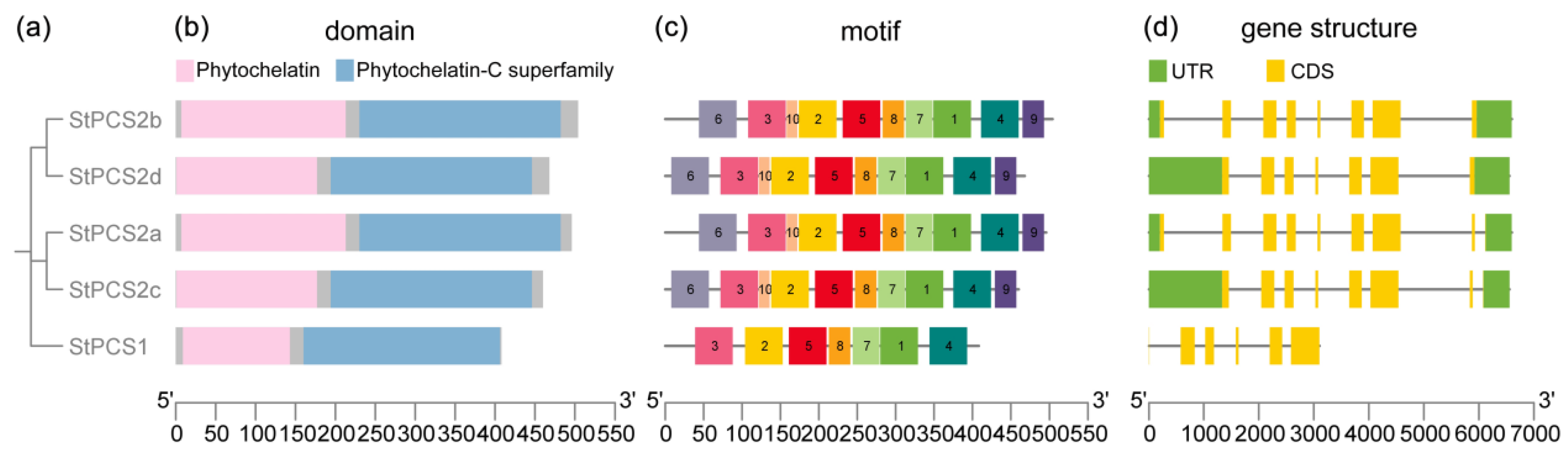
Initial analysis of conserved domains revealed that all StPCS2 protein sequences possess highly conserved PCS domains or PCS superfamily domains (Figure 1). To further investigate the characteristic regions and predict the functional attributes of StPCS proteins, 10 conserved motifs were identified using the MEME suite and subsequently visualized using TBtools (Figure 1). The number of motifs in StPCS proteins ranged from 7 to 10. Notably, the motifs within StPCS proteins exhibited a high degree of conservation, with motifs 3, 2, 5, 8, 7, 1, and 4 being present in all StPCS proteins. However, StPCS1 lacked motifs 6, 9, and 10. In contrast, StPCS2a, StPCS2b, StPCS2c, and StPCS2d shared an identical motif composition, underscoring their structural similarity within the StPCS2 subfamily. These findings highlight both the conserved and divergent features of the StPCS protein family.
Sequence alignment of these absent motifs (6, 9, 10) with PCS proteins from other plant species revealed that they are conserved in the PCS homologs of Solanaceae crops such as Solanum lycopersicum (SlPCS1, GenBank: NP_001234215.1) and Capsicum annuum (CaPCS, GenBank: XP_016568894.1). Previous functional studies have demonstrated that motif 6 is associated with allosteric regulation of PCS enzyme activity upon heavy metal binding, while motifs 9 and 10 participate in protein–protein interactions with vacuolar membrane transporters (e.g., ABCC proteins) to facilitate PC-HM complex sequestration. The absence of these motifs in StPCS1 implies potential functional divergence between StPCS1 and StPCS2 isoforms, possibly affecting its catalytic efficiency or subcellular transport capacity under cadmium stress.
To further elucidate the structural architecture of StPCS genes, the exon/intron organization was analyzed by aligning their genomic DNA sequences (Figure 1). The analysis revealed that the coding sequences of all StPCS genes are interrupted by introns, with the number of introns varying between 5 and 8, indicating notable structural diversity among the five StPCS genes. Specifically, StPCS2a and StPCS2c, which belong to the same subfamily, exhibited the highest number of introns. In contrast, StPCS1, characterized by the fewest introns, was classified into a distinct group. These findings highlight the structural heterogeneity within the StPCS gene family.

3.3. Multiple Sequence Alignment and Phylogenetic Analysis of StPCSs

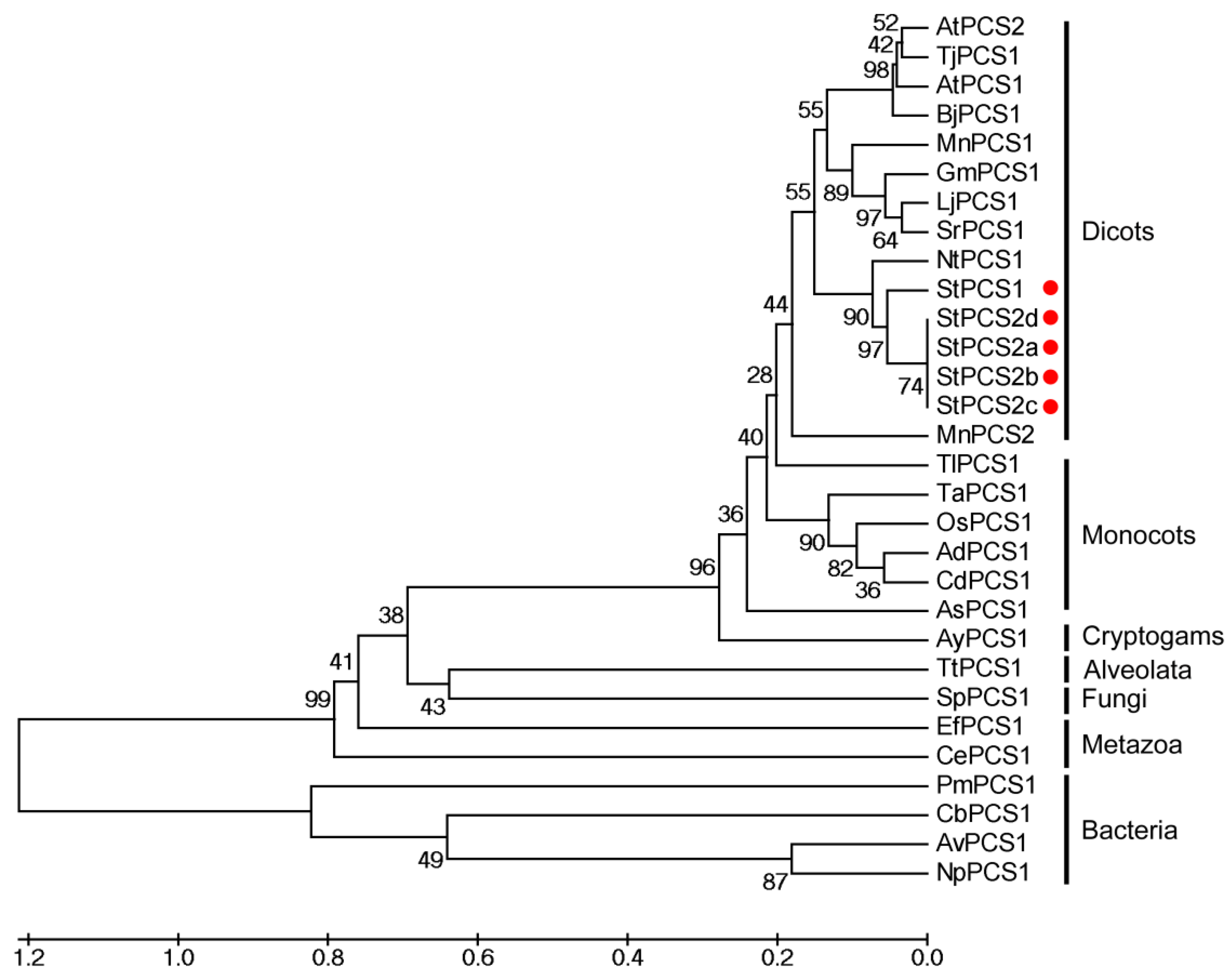
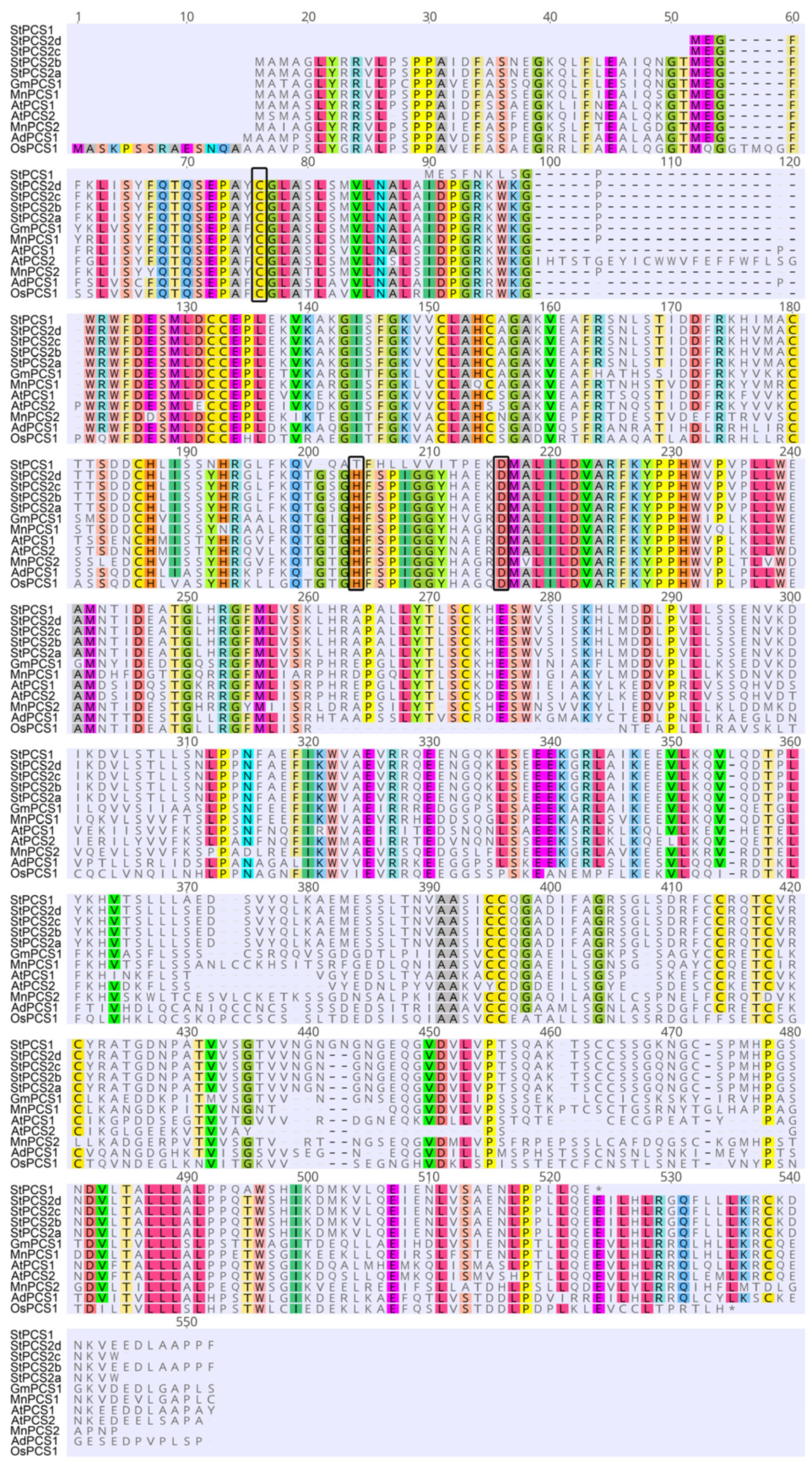
Further multiple sequence alignment analyses revealed that the protein sequences of potato StPCSs exhibit a high degree of conservation compared to those of other species (Figure 2). Notably, among the three conserved amino acid residues constituting the PCS catalytic triad, StPCS1 displayed two amino acid substitutions, whereas these residues remained entirely conserved in StPCS2. To elucidate the evolutionary relationships of potato StPCS proteins, a phylogenetic tree was constructed using MEGA software (11.0), incorporating StPCS sequences along with known PCS representatives from various taxonomic groups, including bacteria, fungi, angiosperms (both monocots and dicots), and metazoans. The resulting unrooted phylogenetic analysis revealed that PCS proteins from plants, bacteria, protozoa, and fungi formed distinct clades (Figure 3). Notably, the StPCS proteins clustered most closely with PCS homologs from other dicotyledonous plants, demonstrating their highest phylogenetic affinity within this group.

3.4. Chromosomal Localization and Synteny Analysis of StPCS Genes

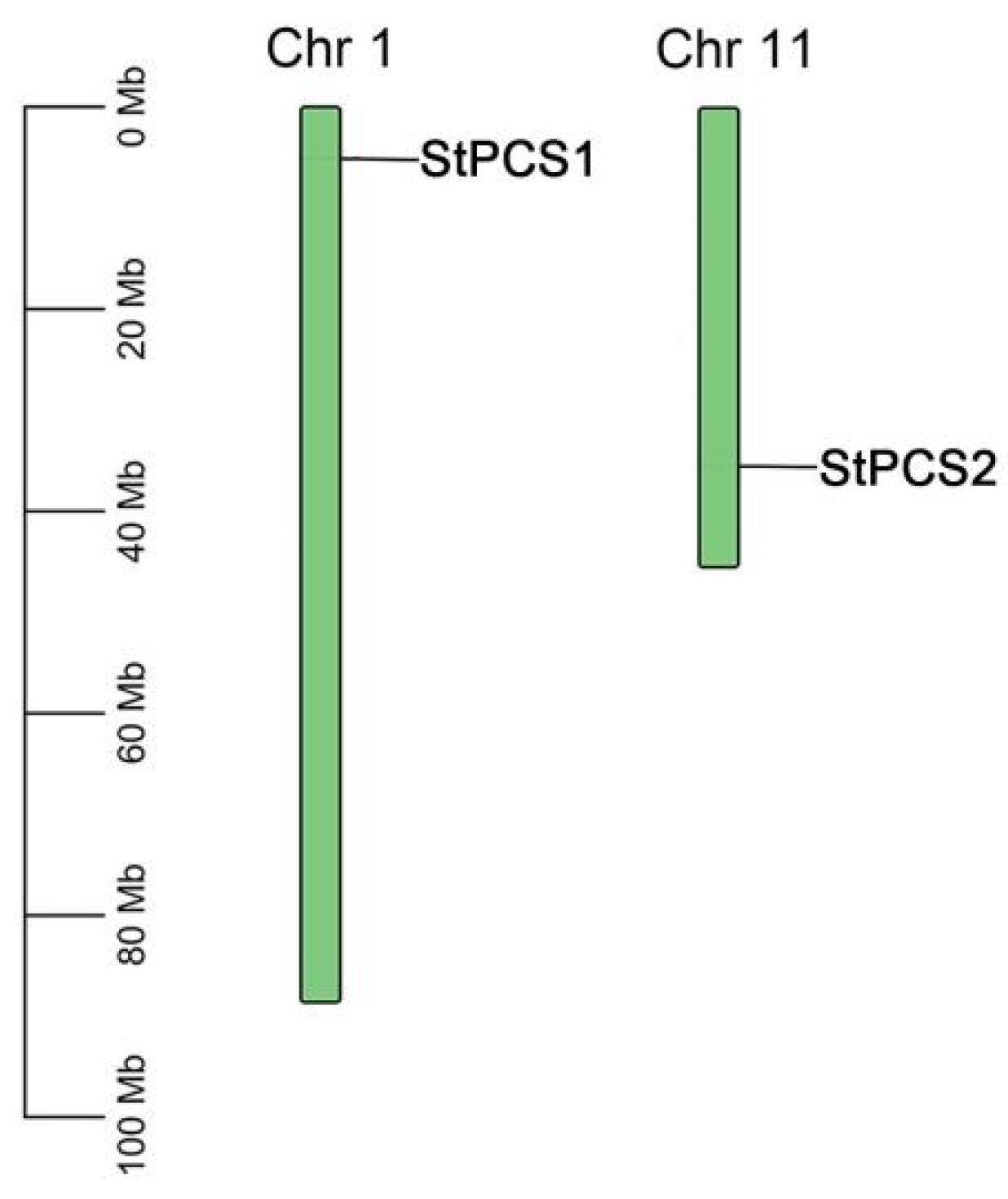
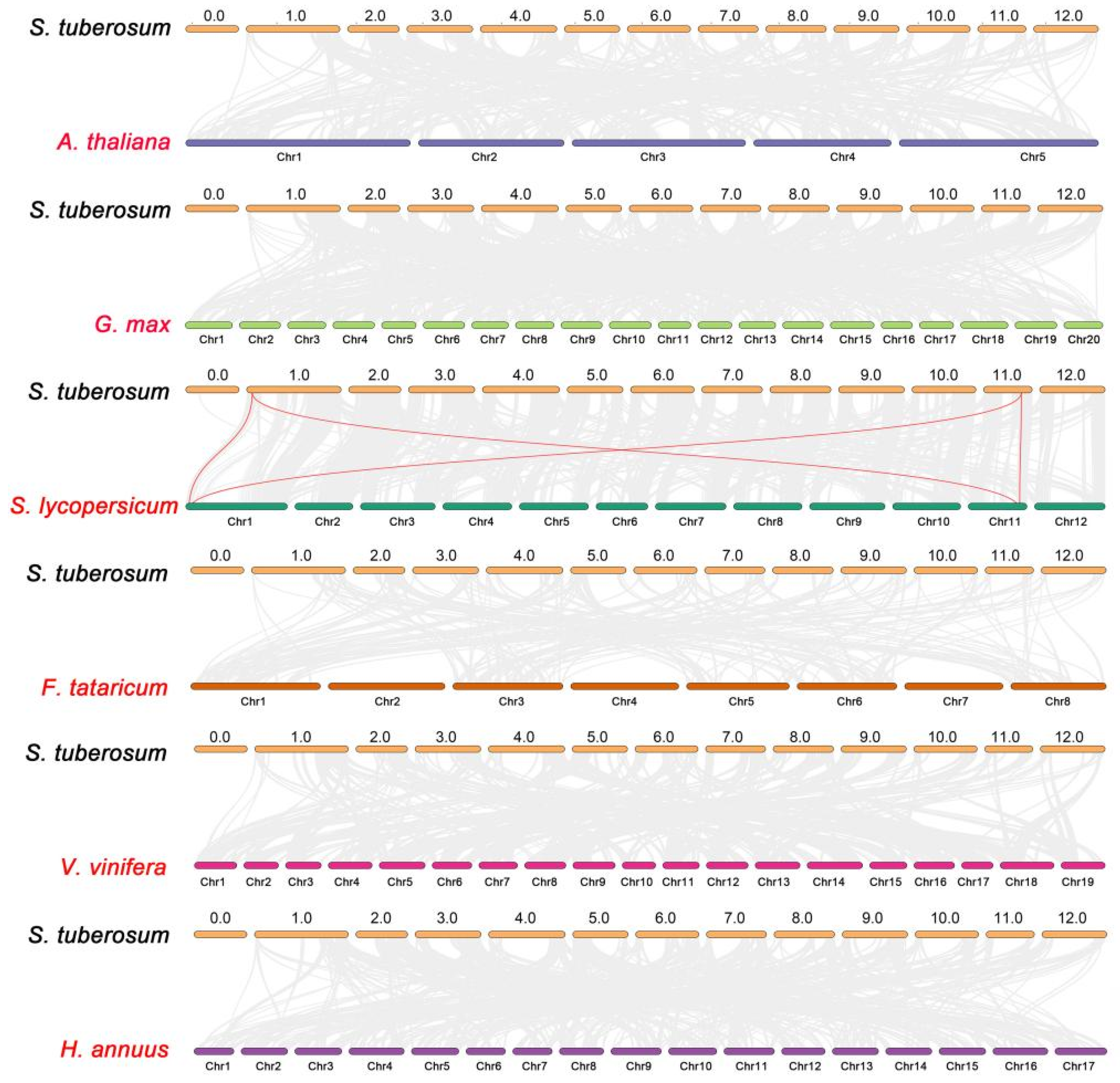
The chromosomal distribution of StPCS genes was mapped (Figure 4) using the online potato genome database (http://spuddb.uga.edu/dm_v6_1_download.shtml, accessed on 22 May 2025). The analysis revealed that StPCS1 and StPCS2 are located on chromosome 1 and chromosome 11, respectively. To investigate the evolutionary conservation of StPCS genes, a comparative synteny analysis was performed across multiple species, including Arabidopsis, tomato, soybean, grape, sunflower, and tartary buckwheat (Figure 5). The results demonstrated that StPCS genes do not exhibit syntenic relationships with the PCS gene family in Arabidopsis, soybean, tartary buckwheat, grape, or sunflower. However, in tomato, two collinear gene pairs were identified for both StPCS1 and StPCS2, suggesting potential functional conservation within the Solanaceae family.
A comparative analysis of PCS gene structure between potato and tomato revealed that SlPCS1 and StPCS1 share a similar exon/intron arrangement (5 introns in total), while SlPCS2 and StPCS2 contain 8 introns, further supporting the conserved structural features of PCS genes in Solanaceae. Additionally, the promoter regions of StPCS and SlPCS genes both harbor abundant MeJA and ABA responsive elements, implying conserved hormonal regulatory mechanisms of PCS genes in response to heavy metal stress across Solanaceae crops.

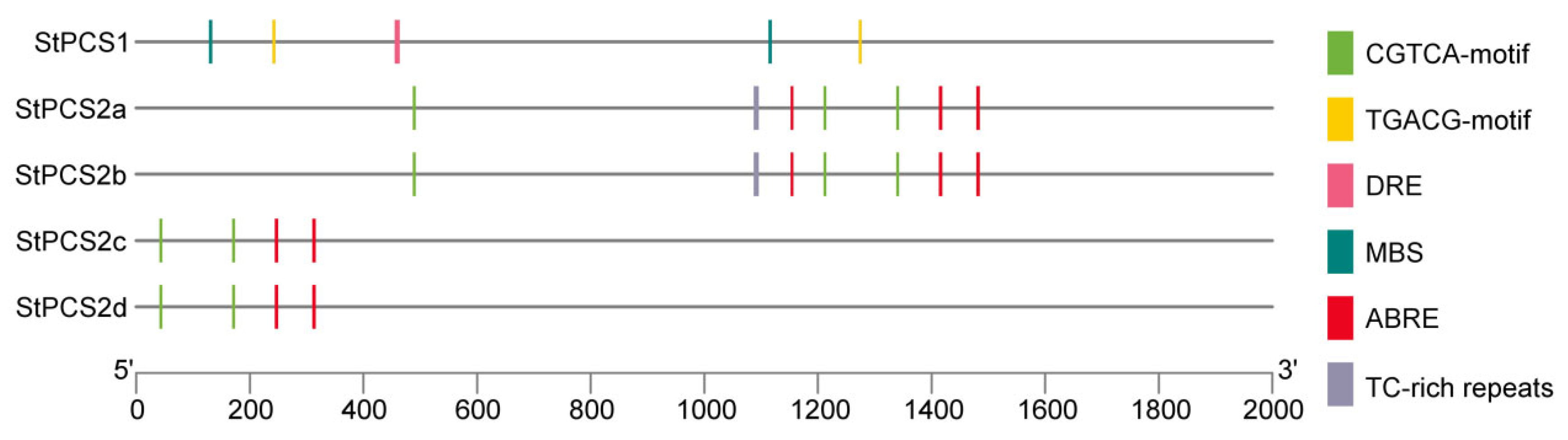
3.5. Cis-Regulatory Element Analysis of StPCS Promoters

Cis-acting elements are critical modulators of transcriptional regulation, influencing gene expression patterns in response to developmental cues and environmental stimuli. To elucidate the potential regulatory mechanisms governing StPCS genes, we conducted an in silico analysis of their promoter regions, with particular emphasis on stress- and hormone-responsive elements (Figure 6). The StPCS promoters were enriched with diverse cis-regulatory motifs, predominantly associated with hormonal signaling (e.g., ABRE, CGTCA-motif, TGACG-motif) and abiotic stress responses (e.g., MBS, DRE, TC-rich repeats). Notably, the MeJA-responsive TGACG-motif was the most abundant (24), followed by ABA-related elements (18). Additionally, stress-responsive motifs such as MBS (drought inducibility, 2) and DRE (responsive to dehydration, low temperature, and salinity, 1) were identified. The predominance of hormone-related motifs suggests that StPCS genes may be primarily regulated by phytohormone-mediated pathways, particularly those involving jasmonate and abscisic acid.

3.6. The Response of StPCS Genes to Cd and Hormonal Stress

To elucidate the response mechanisms of StPCS genes to Cd stress, this study analyzed the expression patterns of StPCS genes based on previous transcriptome data. Preliminary experiments were conducted to detect the expression of StPCS genes at early time points (0, 1, 3, 6, 12 h) after Cd treatment. The results showed that there was no significant difference in the expression levels of StPCS1 and StPCS2 compared with the control group, indicating that StPCS genes do not exhibit an immediate transcriptional response to Cd stress. This may be attributed to the fact that potato requires a certain period of time to perceive Cd stress signals and initiate the transcriptional regulation of downstream detoxification genes. Therefore, we selected 7 d and 21 d as the key time points to analyze the long-term response of StPCS genes to Cd stress.
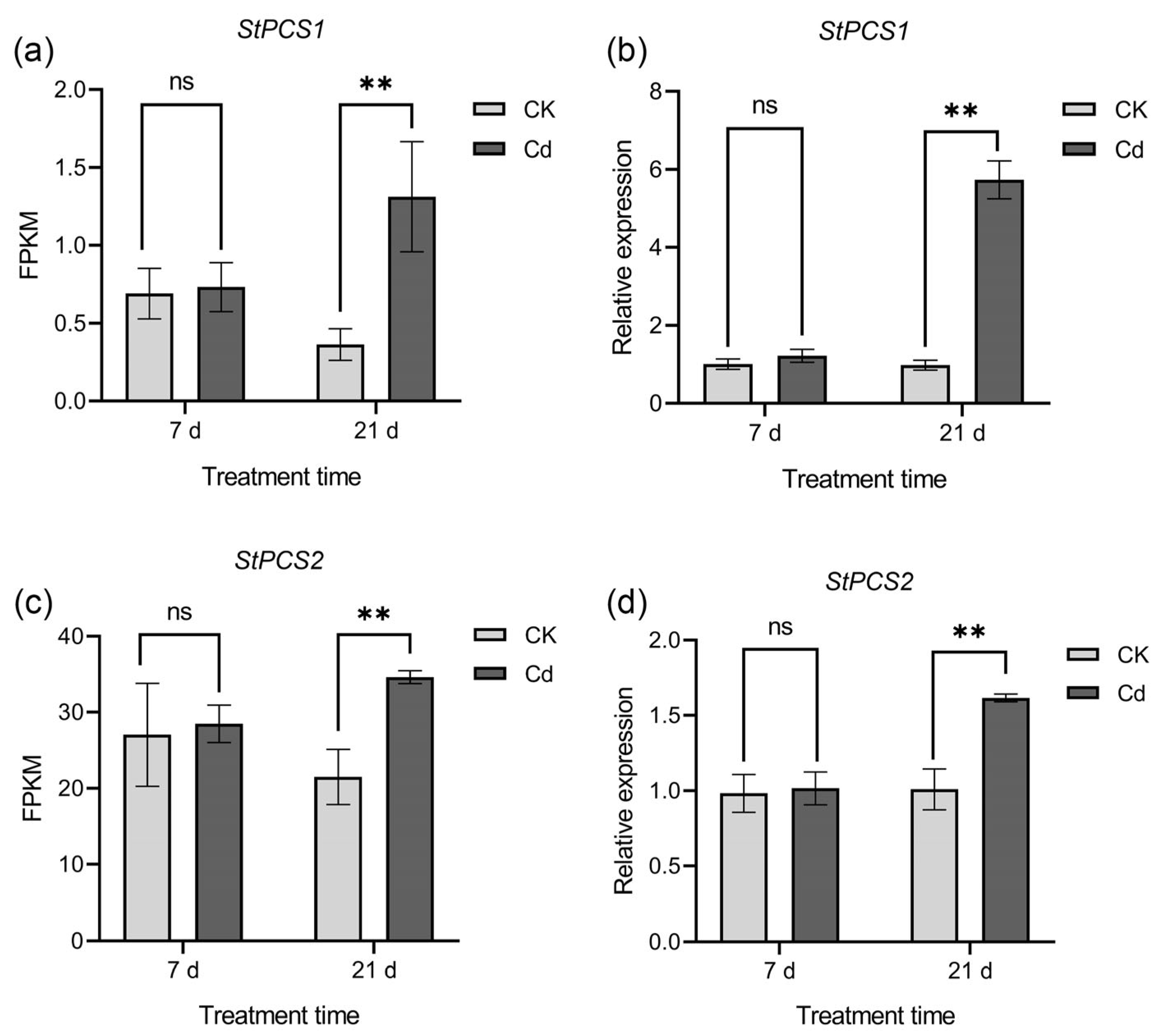
The results showed that the expression of StPCS1 did not change significantly after 7 days of Cd stress but was significantly upregulated to 3.64-fold of the control level (p < 0.01) after 21 days. StPCS2 exhibited a similar but weaker expression trend, reaching 1.61-fold of the control (p < 0.01) at 21 days. qPCR validation confirmed that StPCS1 expression increased by 5.73-fold after 21 days of Cd stress, consistent with the transcriptome data (Figure 7). Meanwhile, stress-related physiological indicators were also measured. Under Cd stress, MDA content in potato seedlings was significantly higher in Cd-treated groups than CK at 7 d and 21 d (p <0.01), with a larger increase at 21 d. Proline content showed a similar significant elevation (p < 0.01). Conversely, chlorophyll content was markedly reduced by Cd stress at both time points (p < 0.01) (Figure S1).
To investigate the differential expression of StPCS2 transcription subtypes under cadmium stress, we designed subtype-specific primers for StPCS2a, StPCS2b, StPCS2c, and StPCS2d and conducted qPCR analysis. After 21 days of Cd treatment, all four StPCS2 subtypes were upregulated, with no significant difference observed in their expression levels. These results indicate that the alternative splicing of StPCS2 does not alter its sensitivity to cadmium stress (Figure S2).
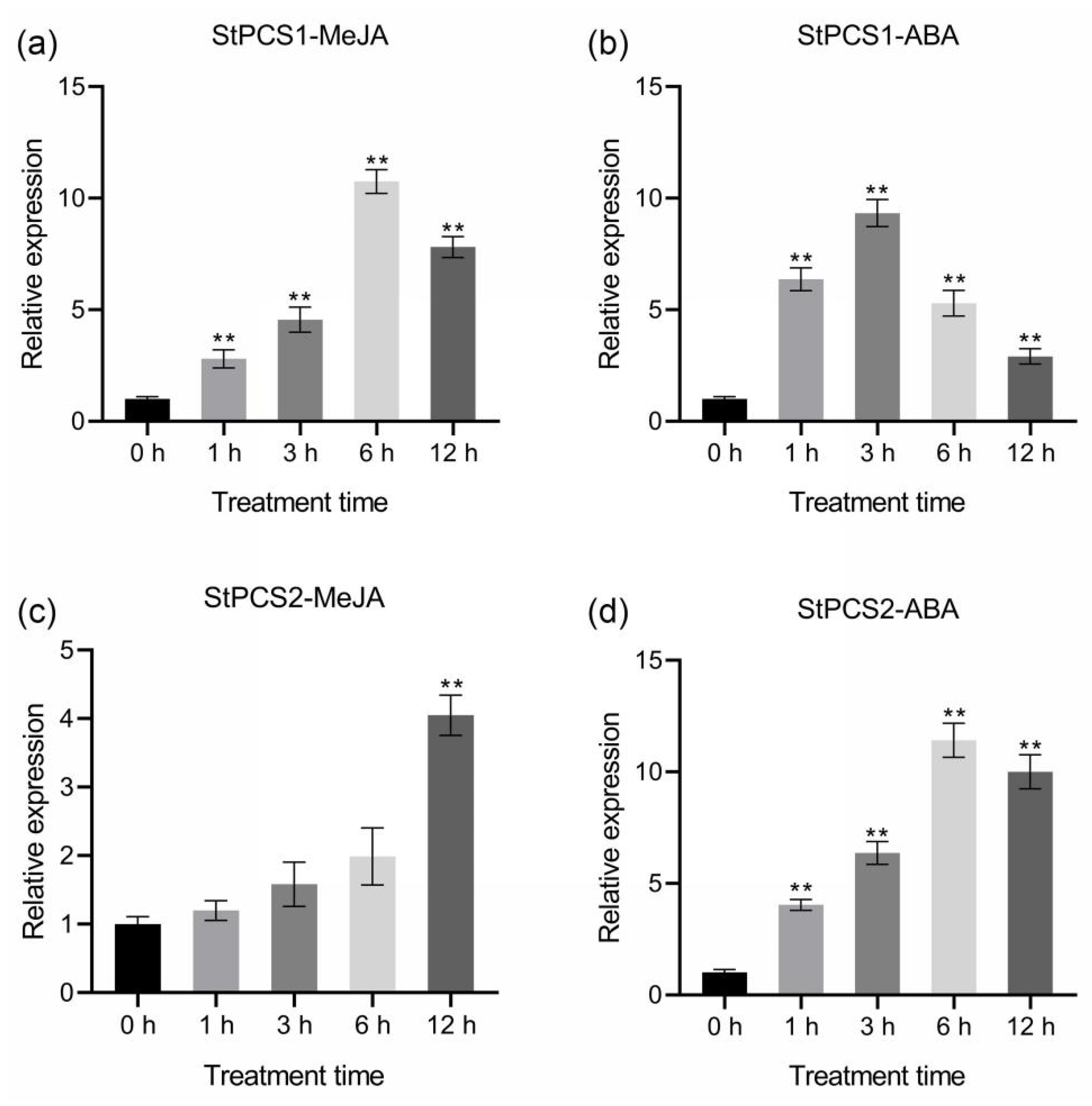
Promoter sequence analysis revealed that the StPCS promoter region contains multiple MeJA- and ABA-responsive elements, suggesting its potential involvement in Cd stress response through hormone signaling pathways. Hormone induction experiments demonstrated that StPCS genes responded significantly to both MeJA and ABA treatments but exhibited distinct expression patterns (Figure 8). Under MeJA treatment, StPCS1 expression increased in a time-dependent manner, peaking at 6 h (10.71-fold of the control) before slightly declining at 12 h. In contrast, StPCS2 showed no significant change within the first 6 h but reached its peak at 12 h. Upon ABA treatment, StPCS1 expression peaked at 3 h and then declined, whereas StPCS2 was significantly upregulated as early as 1 h, peaked at 6 h, and remained at a high level thereafter. These findings suggest that StPCS genes may participate in plant responses to Cd stress through different hormone-mediated regulatory pathways.

3.7. Overexpression of StPCS1 Gene Enhances Cd Tolerance in Transgenic Yeast

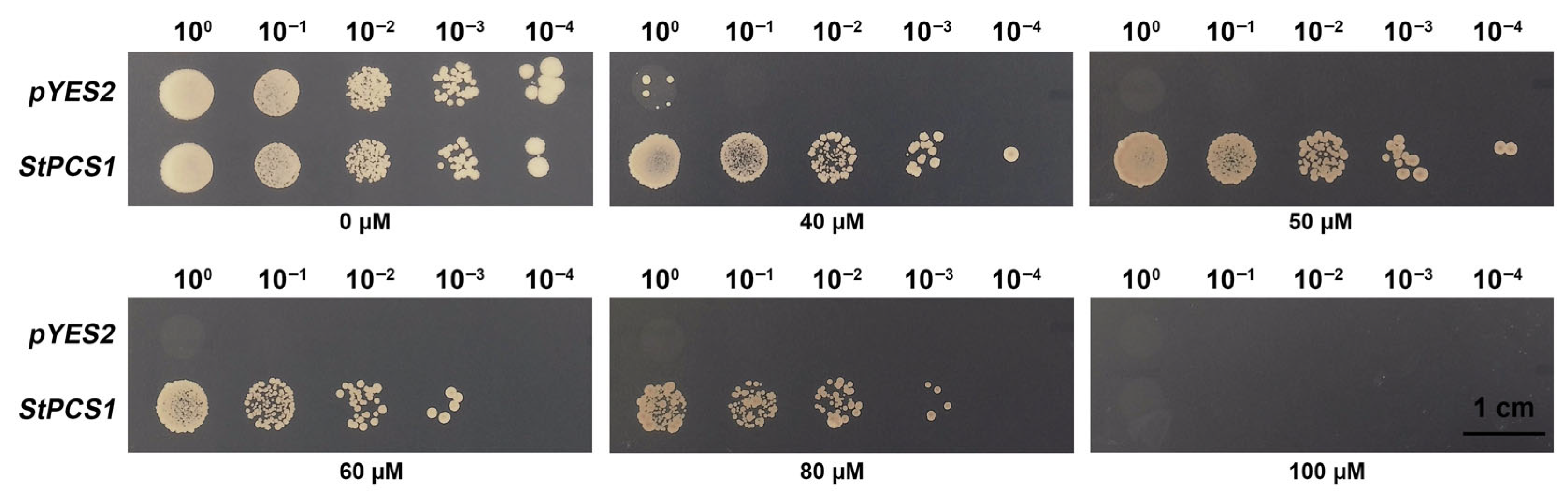
To further characterize the cadmium tolerance function of the StPCS gene, in this study, we selected the StPCS1 gene that exhibits the most significant response to cadmium stress as the research subject, heterologously overexpressed it in yeast, and determined the growth performance of the transgenic yeast strains cultured on media supplemented with different cadmium concentrations, so as to evaluate its role in cadmium tolerance (Figure 9).
The results showed that all transgenic yeast strains grew normally under control conditions, with a gradual decrease in colony density across serial dilutions, indicating consistent growth behavior among all transgenic lines. Under Cd stress, however, a marked contrast in growth was observed between the transgenic and control strains. At 40 μM Cd, the growth of the control strain was almost completely inhibited, with only limited colony formation. As the Cd concentration increased, the growth of the control strain was entirely suppressed, whereas the transgenic yeast continued to grow normally. Complete growth inhibition was observed for all strains at 100 μM Cd.
To quantify the Cd tolerance of transgenic yeast, we measured the optical density at 600 nm (OD600) of liquid cultures every 2 h over a 24 h period to generate growth curves. The results showed that under control conditions, the growth rates of StPCS1-overexpressing yeast and the empty vector control were comparable, with a lag phase of 2 h and a logarithmic growth phase from 2 to 12 h. Under 40 μM Cd stress, the control strain entered a stationary phase at 4 h with a maximum OD600 of 0.21, while the StPCS1-overexpressing yeast maintained logarithmic growth until 10 h, reaching a maximum OD600 of 0.87. At 50 μM Cd, the control strain showed almost no growth (maximum OD600 = 0.12), whereas the transgenic yeast still achieved an OD600 of 0.53 at 12 h, confirming the enhanced Cd tolerance conferred by StPCS1 overexpression in a quantitative manner. These results demonstrate that overexpression of StPCS1 significantly enhances cadmium tolerance in transgenic yeast.

4. Discussion

A central mechanism for plants to cope with heavy metal stress involves the detoxification of ionic metals through chelation into non-toxic complexes [8,30]. Our experimental data demonstrate two PCS gene copies (StPCS1 and StPCS2) in the potato genome, with StPCS2 exhibiting four alternatively spliced transcript variants. This observation parallels the dual-copy phenomenon reported in Arabidopsis (AtPCS1/AtPCS2) and Bermuda grass, suggesting that PCS gene duplication events in plants may underlie functional diversification [31,32]. Sequence alignment revealed that StPCSs possess the characteristic N-terminal catalytic domain (Glu/Cys-rich region) and C-terminal variable region, sharing 40–50% similarity with previously characterized Arabidopsis AtPCS1 [33] and wheat TaPCS1 [34], further supporting the evolutionary conservation of PCS protein function. Notably, interspecies synteny analysis demonstrated that StPCSs show orthologous relationships with Solanaceae crops (e.g., tomato), but weaker synteny with Brassicaceae species (e.g., Arabidopsis), which may account for the subsequent observed differences in expression regulation. We speculate this evolutionary divergence may account for the observed differences in PCS expression regulation between potato and Arabidopsis under cadmium stress.
Interspecies synteny analysis revealed that StPCS genes reside in conserved genomic blocks and exhibit orthology with tomato SlPCS (Figure 5). Our genome structure analysis confirms that potato-specific whole-genome duplication events have resulted in greater copy numbers compared to diploid plants like Arabidopsis. This finding supports the “gene dosage effect” hypothesis [35], whereby polyploid plants may enhance heavy metal adaptability through retention of multiple PCS copies. Notably, unlike the characteristic low-expression but high-activity PCS profile observed in the hyperaccumulator Thlaspi caerulescens [36], our expression profiling demonstrated predominant StPCS expression in underground tissues. This pattern likely reflects the specialized soil metal response strategy of potato as a tuber crop.
The root-predominant expression pattern of StPCS genes is consistent with the root-localized expression of Arabidopsis AtPCS1 [37], but markedly differs from the leaf-dominant expression observed in Cynodon dactylon PCS [38]. This tissue-specific divergence likely reflects evolutionary adaptations in heavy metal uptake and translocation strategies across plant species. Our promoter cis-element analysis experimentally identifies a high abundance of hormone-responsive motifs (ABRE, MeJA-box) in StPCS promoters. This result directly corroborates their pronounced transcriptional activation in response to ABA and MeJA treatments observed in our hormone induction assays (Figure 8), establishing a clear link between cis-regulatory elements and hormone-mediated gene expression.
Notably, while Cd has long been recognized as the most potent inducer of phytochelatin synthase (PCS) expression, as consistently demonstrated in numerous studies [39,40], our short-term Cd exposure assays (0–12 h) experimentally show no significant upregulation of StPCS genes. This finding stands in sharp contradiction to the robust Cd-induced PCS expression reported in Allium sativum, where AsPCS transcripts were shown to be markedly elevated under Cd stress [41,42]. To account for this discrepancy, we propose several potential mechanisms. Firstly, genotypic variation in Cd sensitivity may play a critical role. The specific potato cultivar examined in our study might possess intrinsic hyposensitivity to Cd, analogous to the Cd-tolerant rice genotypes that have been documented to exhibit attenuated PCS transcriptional responses under Cd exposure [43,44]. Secondly, experimental parameters, such as the applied Cd concentration or the duration of exposure, could be insufficient to trigger the transcriptional activation of StPCS, as PCS induction may be dependent on reaching a threshold of Cd accumulation or a prolonged stress period. Thirdly, post-transcriptional regulatory mechanisms, particularly miRNA-mediated suppression, could be involved. For instance, similar to the osa-miR408-dependent regulation of OsPCS1 in rice [45], specific miRNAs in potato might target StPCS transcripts, thereby attenuating their accumulation despite potential transcriptional activation signals.
A particularly significant finding is the differential induction of StPCS2 transcript variants under MeJA treatment (Figure 8). This experimental observation, coupled with our promoter cis-element analysis that detects enriched TGACG-motifs (a canonical jasmonate-responsive cis-element) in the StPCS2 promoter region, strongly demonstrates that the jasmonic acid signaling pathway may modulate heavy metal defense responses through alternative splicing regulation. This proposed mechanism is further supported by recent reports demonstrating JAZ-MYB module-mediated regulation of AtPCS1 expression [33], thereby advancing our understanding of the molecular basis for “cross-resistance” phenomena that link biotic stress defense systems with heavy metal detoxification pathways in plants.
Beyond MeJA and ABA, salicylic acid (SA) also plays a non-negligible role as a morphoregulator in plant abiotic stress responses, including heavy metal tolerance. Recent studies have highlighted the synergistic or antagonistic crosstalk between SA, jasmonates, abscisic acid, and even strigolactones in modulating stress-responsive gene expression [29,46]. For example, strigolactones can enhance ABA-mediated stomatal closure to reduce heavy metal uptake and synergize with MeJA to upregulate detoxification-related genes in Solanaceae crops [47,48]. In our study, although SA treatment was included in the experimental design, the response of StPCS genes to SA was relatively weak compared to MeJA and ABA. We speculate this may be attributed to the tissue-specific crosstalk between SA signaling and heavy metal detoxification pathways, which prioritizes leaf defense responses rather than the root-localized PCS-mediated detoxification in potato. Elaborating on the regulatory network of these hormones is critical for developing integrated agronomic strategies, such as exogenous hormone application combined with genetic modification, to improve potato Cd tolerance in contaminated soils. This approach may offer a more practical and cost-effective alternative to genome editing for agricultural applications, especially in regions with limited access to advanced biotechnologies.
The notable discrepancies between our experimental outcomes and certain prior reports such as the enhanced cadmium tolerance observed in Arabidopsis upon PCS overexpression [40,49] may stem from multiple interconnected mechanisms. Firstly, glutathione substrate limitation could be a key factor. Phytochelatin biosynthesis is tightly coupled to glutathione consumption, and overexpression of PCS under conditions of glutathione deficiency might disrupt redox balance, potentially triggering oxidative stress [50,51]. Secondly, vacuolar transport constraints may play a role. The sequestration of phytochelatin–cadmium complexes into vacuoles relies on ABCC transporters, which could act as a critical rate-limiting step in the detoxification pathway, thereby limiting the efficacy of PCS overexpression [52]. Thirdly, species-specific regulatory mechanisms are likely involved. Unlike hyperaccumulator species, potato, as a non-hyperaccumulator, may have evolved distinct regulatory networks for maintaining metal ion homeostasis, which could modulate the functional outcome of PCS manipulation [53].
Based on the aforementioned findings, we put forward three potential biotechnological applications by leveraging potato StPCS genes. Firstly, precision genome editing holds promise. Through CRISPR-Cas9-mediated modification of the alternative splicing sites of StPCS1, it is expected to develop potato cultivars with enhanced responsiveness to heavy metal stress. This approach can precisely target specific genetic regions, thereby regulating the expression and function of StPCS1 to improve the plant’s ability to cope with heavy metal stress. Secondly, synthetic pathway engineering is a viable option. Coordinated transformation of optimized StPCS allelic variants with vacuolar transporter genes, such as StABCC1, can be employed to construct artificial phytochelatin-mediated detoxification pathways. This coordinated transformation can enhance the efficiency of phytochelatin synthesis and the sequestration of phytochelatin–metal complexes into vacuoles, thereby improving the detoxification capacity of potatoes. Thirdly, environmental biosensing is another potential application. The development of StPCS promoter-driven biosensors can enable real-time monitoring of soil heavy metal contamination. The StPCS promoter is responsive to heavy metals, so the biosensor constructed based on it can specifically detect the presence and concentration of heavy metals in the soil.

5. Study Limitations

This study has certain inherent limitations that merit acknowledgment when interpreting the findings and designing follow-up research. First, the functional validation of StPCS1 was exclusively performed using a heterologous yeast expression system. Yeast lacks the intricate cellular milieu inherent to plant systems, including the complex crosstalk of hormone signaling pathways, co-expression of vacuolar transporters, and tissue-specific regulatory networks. Thus, the Cd tolerance phenotype observed in transgenic yeast cannot fully recapitulate the in vivo function of StPCS1 in potato plants. Future investigations should employ stable or transient genetic transformation of potato to validate the biological function of StPCS1 in planta. Second, this study did not incorporate a comprehensive assessment of StPCS protein subcellular localization and in vitro enzyme activity, both of which are paramount for delineating the precise molecular mechanisms underlying PCS-mediated Cd detoxification. Third, the research was confined to a single potato cultivar, “Atlantic”; as such, the expression profiles and functional characteristics of StPCS genes are likely to exhibit genotypic variability across diverse potato cultivars. Finally, the hypothesized miRNA-mediated regulatory mechanism governing StPCS gene expression is predicated solely on indirect evidence from the existing literature, rather than direct experimental verification, such as miRNA target prediction assays and dual-luciferase reporter validation. Resolving these limitations will facilitate a more thorough and mechanistic understanding of the roles of StPCS genes in mediating Cd tolerance in potato.

6. Conclusions

This study comprehensively characterizes the potato PCS gene family, including its structure, chromosomal localization, phylogeny, promoter elements, and expression patterns under Cd and hormone stress. StPCS genes respond to long-term Cd stress and exhibit divergent expression profiles under ABA/MeJA treatments, implying mediation via distinct pathways. Notably, functional evidence for StPCS1 is solely derived from heterologous yeast assays, and these findings should not be overgeneralized to whole-plant Cd tolerance. StPCS genes are potential targets for potato Cd-tolerance breeding/editing, with future work needing to generate transgenic potato lines and validate in planta gene functions.

Supplementary Materials

The following supporting information can be downloaded at: https://www.mdpi.com/article/10.3390/agronomy16040432/s1. Figure S1. Determination of stress-related physiological indicators. a, b, and c represent the contents of malondialdehyde (MDA), proline, and chlorophyll under control and stress conditions, respectively. Whole potato seedlings from each treatment group were sampled for the determination of these physiological indicators at 7 days and 21 days post stress exposure, respectively. Data are expressed as means ± standard deviation (SD) of three independent biological replicates. Statistically significant differences between the control and cadmium-treated groups are indicated by asterisks (** p ≤ 0.01). Figure S2. Potato tissue-cultured seedlings were exposed to cadmium stress by culturing in MS medium supplemented with 100 μM Cd, while untreated MS medium served as the control. Whole-plant samples were collected for gene expression analysis after 7 and 21 days of treatment. The expression levels of all target genes in the control group (CK) were normalized to 1 for comparative analysis. a, b, c, d represent the expression level of StPCS2a, StPCS2b, StPCS2c, StPCS2d gene were detected by qPCR after cadmium stress, respectively. Data are expressed as means ± standard deviation (SD) of three independent biological replicates. Statistically significant differences between the control and cadmium-treated groups are indicated by asterisks (** p ≤ 0.01). Table S1 The sequences of primers were used for StPCSs in qRT-PCR.

Author Contributions

Conceptualization, Y.Z. and P.Y.; methodology, Y.L. and T.Z.; validation, Y.L., T.Z. and H.D.; investigation, Y.Z. and P.Y.; resources, Y.L.; data curation, T.Z., H.D. and F.Y.; writing—original draft preparation, Y.Z. and F.Y.; writing—review and editing, Y.Z. and P.Y.; visualization, H.D. and F.Y.; supervision, Y.Z. and P.Y.; project administration, P.Y.; funding acquisition, Y.Z. and P.Y. All authors have read and agreed to the published version of the manuscript.

Funding

This work is supported by the Dingxi Science and Technology Plan Project (DX2024AR05); the National Natural Science Foundation of China (32560446); the Natural Science Foundation of Gansu Province of China (24JRRA838); the China Agricultural University Corresponding Support Research Joint Fund (GSAU-DKZY-2024-005).

Informed Consent Statement

This study is not related to a clinical trial or does not conduct clinical trial experiments.

Data Availability Statement

The original contributions presented in this study are included in the article/Supplementary Material. Further inquiries can be directed to the corresponding authors.

Conflicts of Interest

The authors declare no conflicts of interest.

References

  1. Adnan, M.; Xiao, B.; Ali, M.U.; Xiao, P.; Zhao, P.; Wang, H.; Bibi, S. Heavy metals pollution from smelting activities: A threat to soil and groundwater. Ecotoxicol. Environ. Saf. 2024, 274, 116189. [Google Scholar] [CrossRef]
  2. Ali, H.; Khan, E. Trophic transfer, bioaccumulation, and biomagnification of non-essential hazardous heavy metals and metalloids in food chains/webs—Concepts and implications for wildlife and human health. Hum. Ecol. Risk Assess. Int. J. 2019, 25, 1353–1376. [Google Scholar] [CrossRef]
  3. Jeevanantham, S.; Saravanan, A.; Hemavathy, R.; Kumar, P.S.; Yaashikaa, P.; Yuvaraj, D. Removal of toxic pollutants from water environment by phytoremediation: A survey on application and future prospects. Environ. Technol. Innov. 2019, 13, 264–276. [Google Scholar] [CrossRef]
  4. Kalousek, P.; Holátko, J.; Schreiber, P.; Pluháček, T.; Širůčková Lónová, K.; Radziemska, M.; Tarkowski, P.; Vyhnánek, T.; Hammerschmiedt, T.; Brtnický, M. The effect of chelating agents on the Zn-phytoextraction potential of hemp and soil microbial activity. Chem. Biol. Technol. Agric. 2024, 11, 23. [Google Scholar] [CrossRef]
  5. Dutta, S.; Mitra, M.; Agarwal, P.; Mahapatra, K.; De, S.; Sett, U.; Roy, S. Oxidative and genotoxic damages in plants in response to heavy metal stress and maintenance of genome stability. Plant Signal. Behav. 2018, 13, e1460048. [Google Scholar] [CrossRef] [PubMed]
  6. Mansoor, S.; Ali, A.; Kour, N.; Bornhorst, J.; AlHarbi, K.; Rinklebe, J.; Abd El Moneim, D.; Ahmad, P.; Chung, Y.S. Heavy metal induced oxidative stress mitigation and ROS scavenging in plants. Plants 2023, 12, 3003. [Google Scholar] [CrossRef] [PubMed]
  7. Seregin, I.V.; Kozhevnikova, A.D. Phytochelatins: Sulfur-containing metal (loid)-chelating ligands in plants. Int. J. Mol. Sci. 2023, 24, 2430. [Google Scholar] [CrossRef]
  8. Ghuge, S.A.; Nikalje, G.C.; Kadam, U.S.; Suprasanna, P.; Hong, J.C. Comprehensive mechanisms of heavy metal toxicity in plants, detoxification, and remediation. J. Hazard. Mater. 2023, 450, 131039. [Google Scholar] [CrossRef] [PubMed]
  9. Goncharuk, E.A.; Zagoskina, N.V. Heavy metals, their phytotoxicity, and the role of phenolic antioxidants in plant stress responses with focus on cadmium. Molecules 2023, 28, 3921. [Google Scholar] [CrossRef]
  10. Morelli, E.; Cruz, B.H.; Somovigo, S.; Scarano, G. Speciation of cadmium–γ-glutamyl peptides complexes in cells of the marine microalga Phaeodactylum tricornutum. Plant Sci. 2002, 163, 807–813. [Google Scholar] [CrossRef]
  11. Hirata, K.; Tsuji, N.; Miyamoto, K. Biosynthetic regulation of phytochelatins, heavy metal-binding peptides. J. Biosci. Bioeng. 2005, 100, 593–599. [Google Scholar] [CrossRef]
  12. Ha, S.-B.; Smith, A.P.; Howden, R.; Dietrich, W.M.; Bugg, S.; O’Connell, M.J.; Goldsbrough, P.B.; Cobbett, C.S. Phytochelatin synthase genes from Arabidopsis and the yeast Schizosaccharomyces pombe. Plant Cell 1999, 11, 1153–1163. [Google Scholar] [CrossRef] [PubMed]
  13. Hossain, Z.; Komatsu, S. Contribution of proteomic studies towards understanding plant heavy metal stress response. Front. Plant Sci. 2013, 3, 310. [Google Scholar] [CrossRef]
  14. Song, W.-Y.; Park, J.; Mendoza-Cózatl, D.G.; Suter-Grotemeyer, M.; Shim, D.; Hörtensteiner, S.; Geisler, M.; Weder, B.; Rea, P.A.; Rentsch, D. Arsenic tolerance in Arabidopsis is mediated by two ABCC-type phytochelatin transporters. Proc. Natl. Acad. Sci. USA 2010, 107, 21187–21192. [Google Scholar] [CrossRef]
  15. Zhang, Z.; Tong, T.; Fang, Y.; Zheng, J.; Zhang, X.; Niu, C.; Li, J.; Zhang, X.; Xue, D. Genome-wide identification of barley ABC genes and their expression in response to abiotic stress treatment. Plants 2020, 9, 1281. [Google Scholar] [CrossRef] [PubMed]
  16. Blum, R.; Beck, A.; Korte, A.; Stengel, A.; Letzel, T.; Lendzian, K.; Grill, E. Function of phytochelatin synthase in catabolism of glutathione-conjugates. Plant J. 2007, 49, 740–749. [Google Scholar] [CrossRef] [PubMed]
  17. De Benedictis, M.; Brunetti, C.; Brauer, E.K.; Andreucci, A.; Popescu, S.C.; Commisso, M.; Guzzo, F.; Sofo, A.; Ruffini Castiglione, M.; Vatamaniuk, O.K. The Arabidopsis thaliana knockout mutant for phytochelatin synthase1 (cad1-3) is defective in callose deposition, bacterial pathogen defense and auxin content, but shows an increased stem lignification. Front. Plant Sci. 2018, 9, 19. [Google Scholar] [CrossRef]
  18. Zanella, L.; Fattorini, L.; Brunetti, P.; Roccotiello, E.; Cornara, L.; D’Angeli, S.; Della Rovere, F.; Cardarelli, M.; Barbieri, M.; Sanità di Toppi, L. Overexpression of AtPCS1 in tobacco increases arsenic and arsenic plus cadmium accumulation and detoxification. Planta 2016, 243, 605–622. [Google Scholar] [CrossRef]
  19. Fan, W.; Guo, Q.; Liu, C.; Liu, X.; Zhang, M.; Long, D.; Xiang, Z.; Zhao, A. Two mulberry phytochelatin synthase genes confer zinc/cadmium tolerance and accumulation in transgenic Arabidopsis and tobacco. Gene 2018, 645, 95–104. [Google Scholar] [CrossRef]
  20. Chen, Y.; Liu, Y.; Ding, Y.; Wang, X.; Xu, J. Overexpression of PtPCS enhances cadmium tolerance and cadmium accumulation in tobacco. Plant Cell Tissue Organ Cult. 2015, 121, 389–396. [Google Scholar] [CrossRef]
  21. Aziz, L.; Hamayun, M.; Rauf, M.; Iqbal, A.; Husssin, A.; Khan, S.A.; Irshad, M.; Lee, I.-j. Aspergillus flavus reprogrammed morphological and chemical attributes of Solanum lycopersicum through SlGSH1 and SlPCS1 genes modulation under heavy metal stress. J. Plant Interact. 2021, 16, 104–115. [Google Scholar] [CrossRef]
  22. Zhang, Y.; Sa, G.; Zhang, Y.; Hou, S.; Wu, X.; Zhao, N.; Zhang, Y.; Deng, S.; Deng, C.; Deng, J. Populus euphratica annexin1 facilitates cadmium enrichment in transgenic Arabidopsis. J. Hazard. Mater. 2021, 405, 124063. [Google Scholar] [CrossRef] [PubMed]
  23. Li, J.; Guo, J.; Xu, W.; Ma, M. Enhanced cadmium accumulation in transgenic tobacco expressing the phytochelatin synthase gene of Cynodon dactylon L. J. Integr. Plant Biol. 2006, 48, 928–937. [Google Scholar] [CrossRef]
  24. Haverkort, A.; Struik, P. Yield levels of potato crops: Recent achievements and future prospects. Field Crops Res. 2015, 182, 76–85. [Google Scholar] [CrossRef]
  25. Zhang, J.; Liu, K.; He, X.; Li, W.; Zhang, M.; Cai, Q. Evaluation of heavy metal contamination of soil and the health risks in four potato-producing areas. Front. Environ. Sci. 2023, 11, 1071353. [Google Scholar] [CrossRef]
  26. Musilova, J.; Bystricka, J.; Vollmannova, A.; Volnova, B.; Hegedusova, A. Factors affecting heavy metals accumulation in potato tubers. Environ. Prot. Nat. Resour. 2015, 26, 65. [Google Scholar] [CrossRef]
  27. Han, Y.; Han, Z.; Lu, Y.; Han, Z.; Zhang, J.; Zhang, J.; Qiao, H.; He, H. Expression and analysis of StNR and StNiRs, key enzyme genes of nitrogen assimilation in potato (Solanum tuberosum L.) with different nitrogen efficiencies. Czech J. Genet. Plant Breed. 2025, 61, 193–209. [Google Scholar] [CrossRef]
  28. Wu, J.; Guo, J.; Hu, Y.; Gong, H. Distinct physiological responses of tomato and cucumber plants in silicon-mediated alleviation of cadmium stress. Front. Plant Sci. 2015, 6, 453. [Google Scholar] [CrossRef]
  29. Zheng, L.; Yang, P.; Niu, Z.; Tian, M.; Wang, J.; Sun, C.; Zhang, S.; Peng, Z.; Zhu, J.; Yang, Z. Dissecting in vivo responses of phytohormones to Alternaria solani infection reveals orchestration of JA-and ABA-mediated antifungal defenses in potato. Hortic. Res. 2022, 9, uhac188. [Google Scholar] [CrossRef]
  30. Ovečka, M.; Takáč, T. Managing heavy metal toxicity stress in plants: Biological and biotechnological tools. Biotechnol. Adv. 2014, 32, 73–86. [Google Scholar] [CrossRef]
  31. Kühnlenz, T.; Schmidt, H.; Uraguchi, S.; Clemens, S. Arabidopsis thaliana phytochelatin synthase 2 is constitutively active in vivo and can rescue the growth defect of the PCS1-deficient cad1-3 mutant on Cd-contaminated soil. J. Exp. Bot. 2014, 65, 4241–4253. [Google Scholar] [CrossRef]
  32. Cazalé, A.-C.; Clemens, S. Arabidopsis thaliana expresses a second functional phytochelatin synthase. Febs Lett. 2001, 507, 215–219. [Google Scholar] [CrossRef] [PubMed]
  33. Vatamaniuk, O.K.; Mari, S.; Lu, Y.-P.; Rea, P.A. AtPCS1, a phytochelatin synthase from Arabidopsis: Isolation and in vitro reconstitution. Proc. Natl. Acad. Sci. USA 1999, 96, 7110–7115. [Google Scholar] [CrossRef]
  34. Clemens, S.; Schroeder, J.I.; Degenkolb, T. Caenorhabditis elegans expresses a functional phytochelatin synthase. Eur. J. Biochem. 2001, 268, 3640–3643. [Google Scholar] [CrossRef]
  35. Hanikenne, M.; Talke, I.N.; Haydon, M.J.; Lanz, C.; Nolte, A.; Motte, P.; Kroymann, J.; Weigel, D.; Krämer, U. Evolution of metal hyperaccumulation required cis-regulatory changes and triplication of HMA4. Nature 2008, 453, 391–395. [Google Scholar] [CrossRef]
  36. Ebbs, S.; Lau, I.; Ahner, B.; Kochian, L. Phytochelatin synthesis is not responsible for Cd tolerance in the Zn/Cd hyperaccumulator Thlaspi caerulescens (J. & C. Presl). Planta 2002, 214, 635–640. [Google Scholar] [CrossRef]
  37. Lee, S.; Moon, J.S.; Ko, T.-S.; Petros, D.; Goldsbrough, P.B.; Korban, S.S. Overexpression of Arabidopsis phytochelatin synthase paradoxically leads to hypersensitivity to cadmium stress. Plant Physiol. 2003, 131, 656–663. [Google Scholar] [CrossRef]
  38. Liu, D.; He, L.; Yu, Z.; Liu, Z.; Lin, J. Net primary production predicted by the proportion of C: N: P stoichiometric ratio in the leaf-stem and root of Cynodon dactylon (Linn.) in the riparian zone of the three gorges reservoir. Water 2020, 12, 3279. [Google Scholar] [CrossRef]
  39. Vatamaniuk, O.K.; Mari, S.; Lu, Y.-P.; Rea, P.A. Mechanism of heavy metal ion activation of phytochelatin (PC) synthase: Blocked thiols are sufficient for PC synthase-catalyzed transpeptidation of glutathione and related thiol peptides. J. Biol. Chem. 2000, 275, 31451–31459. [Google Scholar] [CrossRef] [PubMed]
  40. Zhang, X.; Rui, H.; Zhang, F.; Hu, Z.; Xia, Y.; Shen, Z. Overexpression of a functional Vicia sativa PCS1 homolog increases cadmium tolerance and phytochelatins synthesis in Arabidopsis. Front. Plant Sci. 2018, 9, 107. [Google Scholar] [CrossRef]
  41. Jiang, Y.-N.; Feng, B.-M.; Zhang, H.-Y.; Ma, M. Improving heavy metal tolerance of yeast by transferring a phytochelatin synthase gene from garlic. Chin. J. Plant Ecol. 2005, 29, 659. [Google Scholar]
  42. Ai, P.; Xue, J.; Zhu, Y.; Tan, W.; Wu, Y.; Wang, Y.; Li, Z.; Shi, Z.; Kang, D.; Zhang, H. Comparative analysis of two kinds of garlic seedings: Qualities and transcriptional landscape. BMC Genom. 2023, 24, 87. [Google Scholar] [CrossRef] [PubMed]
  43. Li, D.; Wang, L.; Wang, Y.; Li, H.; Chen, G. Soil properties and cultivars determine heavy metal accumulation in rice grain and cultivars respond differently to Cd stress. Environ. Sci. Pollut. Res. 2019, 26, 14638–14648. [Google Scholar] [CrossRef]
  44. Zhang, J.; Sun, W.; Li, Z.; Liang, Y.; Song, A. Cadmium fate and tolerance in rice cultivars. Agron. Sustain. Dev. 2009, 29, 483–490. [Google Scholar] [CrossRef]
  45. Liu, A.; Zhou, Z.; Yi, Y.; Chen, G. Transcriptome analysis reveals the roles of stem nodes in cadmium transport to rice grain. BMC Genom. 2020, 21, 127. [Google Scholar] [CrossRef]
  46. Khan, M.K.; Pandey, A.; Hamurcu, M.; Vyhnánek, T.; Zargar, S.M.; Kahraman, A.; Topal, A.; Gezgin, S. Exploring strigolactones for inducing abiotic stress tolerance in plants. Czech J. Genet. Plant Breed. 2024, 60, 55–69. [Google Scholar] [CrossRef]
  47. Korek, M.; Marzec, M. Strigolactones and abscisic acid interactions affect plant development and response to abiotic stresses. BMC Plant Biol. 2023, 23, 314. [Google Scholar] [CrossRef] [PubMed]
  48. Bano, A.; Singh, K.; Singh, S.P.; Sharma, P. Abscisic acid: Metabolism, signaling, and crosstalk with other phytohormones under heavy metal stress. Stresses 2023, 3, 665–686. [Google Scholar] [CrossRef]
  49. Li, Y.; Dhankher, O.P.; Carreira, L.; Lee, D.; Chen, A.; Schroeder, J.I.; Balish, R.S.; Meagher, R.B. Overexpression of phytochelatin synthase in Arabidopsis leads to enhanced arsenic tolerance and cadmium hypersensitivity. Plant Cell Physiol. 2004, 45, 1787–1797. [Google Scholar] [CrossRef]
  50. Han, Y.; Fan, T.; Zhu, X.; Wu, X.; Ouyang, J.; Jiang, L.; Cao, S. WRKY12 represses GSH1 expression to negatively regulate cadmium tolerance in Arabidopsis. Plant Mol. Biol. 2019, 99, 149–159. [Google Scholar] [CrossRef]
  51. Deng, X.; Xia, Y.; Hu, W.; Zhang, H.; Shen, Z. Cadmium-induced oxidative damage and protective effects of N-acetyl-L-cysteine against cadmium toxicity in Solanum nigrum L. J. Hazard. Mater. 2010, 180, 722–729. [Google Scholar] [CrossRef] [PubMed]
  52. Thomas, C.; Tampé, R. Structural and mechanistic principles of ABC transporters. Annu. Rev. Biochem. 2020, 89, 605–636. [Google Scholar] [CrossRef] [PubMed]
  53. Ważny, R.; Rozpądek, P.; Domka, A.; Jędrzejczyk, R.J.; Nosek, M.; Hubalewska-Mazgaj, M.; Lichtscheidl, I.; Kidd, P.; Turnau, K. The effect of endophytic fungi on growth and nickel accumulation in Noccaea hyperaccumulators. Sci. Total Environ. 2021, 768, 144666. [Google Scholar] [CrossRef] [PubMed]
Figure 1. The phylogenetic relationship, conserved motifs, and gene structure of StPCS. (a) Phylogenetic tree. (b) The conserved domain of StPCS protein. (c) The conserved motifs of StGH3 protein. (d) Exon/intron structure were constructed. The green box represents the untranslated 5’ and 3’ regions; The orange box represents the exon; The black line represents introns.
Agronomy 16 00432 g001
Figure 2. Multiple sequence alignment of StPCSs and PCS protein from other species. Dashes indicate gaps. The amino acids of the catalytic triad in the StPCS proteins are highlighted with black boxes. The accession numbers of proteins: Glycine max GmPCS1 (GenBank: XP_003522080.1), Morus notabilis MnPCS1 (GenBank: XP_010098488.1), Arabidopsis thaliana AtPCS1 (TAIR: AT5G44070.1), Arabidopsis thaliana AtPCS2 (TAIR: AT5G44070.1), Solanum lycopersicum SlPCS1 (GenBank: NP_001234215.1), Arundo donax AdPCS1 (GenBank: KAF0328457.1), Oryza sativa OsPCS1 (GenBank: NP_001054799.1).
Agronomy 16 00432 g002
Figure 3. Phylogenetic analysis was performed using PCS protein sequences obtained from publicly available databases, encompassing diverse taxonomic groups including bacteria, fungi, cryptogams, and angiosperms (with representative species from both monocotyledons and dicotyledons). An unrooted phylogenetic tree was constructed based on multiple sequence alignment using Clustal Omega (1.2.4), followed by maximum-likelihood (ML) estimation with the PhyML algorithm. Branch support was assessed using 100 bootstrap replicates, with bootstrap values (%) indicated at each node. The red dots represent the potato StPCS proteins.
Agronomy 16 00432 g003
Figure 4. Schematic diagram of chromosome distribution of StPCS genes. The chromosome number is displayed on the left side of each chromosome.
Agronomy 16 00432 g004
Figure 5. Collinearity analysis of PCS gene between potato and six other plants. Gray lines represent collinear blocks in potato genome and other plant genomes, and red curves represent collinear PCS genes.
Agronomy 16 00432 g005
Figure 6. The element analysis of StPCS promoters. The environmental response elements are shown.
Agronomy 16 00432 g006
Figure 7. Potato tissue-cultured seedlings were exposed to cadmium stress by culturing in MS medium supplemented with 100 μM Cd, while untreated MS medium served as the control. Whole-plant samples were collected for gene expression analysis after 7 and 21 days of treatment. The expression levels of all target genes in the control group (CK) were normalized to 1 for comparative analysis. (a,b) represent the expression level of StPCS1 gene detected by transcriptome sequencing (FPKM) and validated by qPCR after cadmium stress, respectively. (c,d) represent the expression level of StPCS2 gene detected by transcriptome sequencing (FPKM) and validated by qPCR after cadmium stress, respectively. Data are expressed as means ± standard deviation (SD) of three independent biological replicates. Statistically significant differences between the control and cadmium-treated groups are indicated by asterisks (** p ≤ 0.01). ns indicates no significant difference.
Agronomy 16 00432 g007
Figure 8. Seedlings were subjected to treatment using liquid 1/2 MS medium supplemented with or without (control) 100 μM ABA or MeJA. The expression levels of StPCS genes at 0 h were normalized to 1 and used as the baseline for subsequent comparisons. Data are expressed as means ± standard deviation (SD) of three independent biological replicates. Statistically significant differences between the control and cadmium-treated groups are indicated by asterisks (** p ≤ 0.01).
Agronomy 16 00432 g008
Figure 9. Functional analysis of StPCS1 gene in the yeast cells. pYES2 (control) carrying empty vectors and recombinant plasmids carrying target gene were grown on SG solid medium containing 0, 40, 50, 60, 80, and 100 µM Cd for 10 days.
Agronomy 16 00432 g009
Table 1. Basic molecular characteristics of StPCS genes.
NameChrChromosome LocationStrandTranscript IDCDSAAPIMW (kDa)
StPCS1Chr0151011662–51014762Soltu.DM.07G020520.112244076.0244,962.75
StPCS2aChr1156803722–56810316+Soltu.DM.09G021610.114884956.4454,848.15
StPCS2bChr1156803722–56810316+Soltu.DM.09G021610.215125036.1355,631.98
StPCS2cChr1156803761–56810316+Soltu.DM.09G021610.313804596.4450,958.65
StPCS2dChr1156803761–56810316+Soltu.DM.09G021610.414044676.1251,742.48
Disclaimer/Publisher’s Note: The statements, opinions and data contained in all publications are solely those of the individual author(s) and contributor(s) and not of MDPI and/or the editor(s). MDPI and/or the editor(s) disclaim responsibility for any injury to people or property resulting from any ideas, methods, instructions or products referred to in the content.