Article

Comparative Study of Induced Tetraploid and Diploid Gooseberry (Ribes grossularia L.): Growth, Stomatal, and Leaf Anatomical Traits


by
Aleksandra Trzewik
*,
Agnieszka Marasek-Ciołakowska
and
Monika Działkowska
The National Institute of Horticultural Research, 96-100 Skierniewice, Poland
*
Author to whom correspondence should be addressed.
Agronomy 2026, 16(4), 433; https://doi.org/10.3390/agronomy16040433
Submission received: 19 November 2025 / Revised: 20 January 2026 / Accepted: 10 February 2026 / Published: 12 February 2026
(This article belongs to the Section Crop Breeding and Genetics)

Abstract

This study aimed to assess the phenotypic changes in tetraploids of two gooseberry genotypes (‘White Triumph’ and AGR9, 2n = 4x = 32) in relation to their diploid counterparts (2n = 2x = 16). Tetraploid plants of the ‘White Triumph’ cultivar were characterized by lower growth dynamics than the diploid (control) plants, with the exception of clone A7/2-4x, whose height was increased. Tetraploid plants from three AGR9 gooseberry clones exhibited enhanced growth dynamics compared to control plants. The stomatal length of tetraploid gooseberry genotypes was greater than that of the control, but the stomatal density was lower in tetraploids. The leaf blades and petiole lengths of the tetraploid, ‘White Triumph’, and AGR9 plants were significantly larger than those of their diploid counterparts. Almost all nine evaluated anatomical traits (upper and lower epidermis thickness, palisade and sponge tissue thickness, amount of intercellular spaces, midrib diameter, phloem and xylem thickness, and surface of midrib cells) of the leaves in tetraploids were significantly greater than those of their diploid counterparts. Principal component analysis (PCA) distinguished genotypes according to the ploidy level. The first two principal components explained 74.8% of the total variance, with PC1 (49.99%) representing the primary axis separating diploid (2x) and tetraploid (4x) genotypes. To the best of our knowledge, there have been no published reports on the phenotypic assessment of gooseberry tetraploids. The vigorous gooseberry tetraploids characterized in this study are likely the first of their kind to be reported.

1. Introduction

Polyploidy, defined as the multiplication of the total number of chromosomes naturally present in cells, plays a crucial role in plant evolution and agricultural innovation. It can occur spontaneously in nature, often influenced by environmental factors, or can be induced artificially through the application of antimitotic agents that disrupt normal cell division [1]. Polyploidy is a widespread natural phenomenon. Examples of natural polyploidization include hexaploid bread wheat (Triticum aestivum L.), tetraploid durum wheat (T. turgidum L.) [2], tetraploid cotton species (Gossypium hirsutum L. and G. barbadense L.) [3], tetraploid tobacco (Nicotiana tabacum L.) [4], tetraploid coffee (Coffea arabica L.) [5], octoploid strawberries [6], and triploid banana species (Musa acuminata Colla and M. balbisiana Colla) [7].
Multiplication of the entire chromosome set induces a number of changes that affect the cellular structure, tissue function, and physiology of plants [8]. The process of genome doubling not only introduces an increased gene dose but also modifies gene regulation through epigenetic mechanisms, which in turn influences morphological development and adaptive plant responses to environmental conditions. Polyploidization leads to changes in the anatomical structures of plants. The increase in cell size plays a key role in both physiological and developmental changes in plants and is usually manifested by the most noticeable effect of polyploidization, known as the ‘gigas’ effect, which causes a change in the plant phenotype—larger organs are observed [9]. Induced polyploids often produce large rhizomes, tubers, and roots, as demonstrated in ginger (Zingiber officinale Rosc.) [10,11]. Polyploids are also characterized by larger flowers, such as in Luculia pinceana Hook., Hemerocallis sp. L., and Anthurium andraeanum Linden ex André [12,13,14]; larger leaves, such as in hemp (Cannabis L.) [15]; and seeds, as observed in polyploid forms of Cucumis melo L. [16]. Additionally, polyploids exhibit better photosynthetic efficiency and higher biomass production than diploids [17]. Polyploids are often characterized by delayed flowering and slower growth, which leads to an extended vegetative phase and increased biomass production, as observed in tetraploids of Arabidopsis thaliana L. (Heynh) [18].
While polyploidy has been extensively studied in numerous plant species, including various fruit crops, there remains a significant knowledge gap regarding the phenotypic and anatomical responses of induced tetraploid gooseberry (Ribes grossularia L.). Studies on closely related Ribes species, such as blackcurrant, have shown that polyploidization can induce significant morphological changes according to Podwyszyńska and Pluta 2019 [19], suggesting a similar potential for gooseberry. However, comprehensive reports specifically on the assessment of growth, stomatal, and leaf anatomical traits in gooseberry tetraploids are currently unavailable in the scientific literature.
Gooseberry is a valuable fruit crop, appreciated for its nutritional content and unique flavor. Despite its importance, gooseberry breeding faces challenges, including susceptibility to fungal diseases such as American gooseberry powdery mildew, as well as the need to improve fruit quality and yield. Polyploidy induction presents a promising strategy to overcome these limitations by enhancing desirable traits.
In this context, breeding work was conducted at the National Institute of Horticultural Research (NIHR) in Skierniewice, Poland, to develop new and improved gooseberry cultivars for the production of healthy functional foods.
The objective of our study was to assess phenotypic changes in tetraploid gooseberry plants (2n = 4x = 32) in relation to their diploid counterparts (2n = 2x = 16).

2. Materials and Methods

2.1. Plant Material

Tetraploids of two gooseberry (Ribes grossularia L.) genotypes, ‘White Triumph’ and AGR9, and their diploid counterparts were used for this study. Tetraploid clones of ‘White Triumph’ (A7/2-4x, A8/1-4x, A15/1-4x, A23-4x, and AGR9: A51/1-4x, B15/3-4x, and B20/1-4x) were obtained using in vitro techniques [20]. Briefly, to induce gooseberry polyploids, four-week-old axillary shoot cultures were treated with antimitotic agents added to the multiplication medium: 2.5 and 5.0 mg L−1 amiprophos-methyl (APM), 75 and 150 mg L−1 colchicine, 2.5 and 5.0 mg L−1 oryzalin, and 25 and 50 mg L−1 trifluralin. Shoots were incubated on media containing antimitotics in the dark for two weeks and subsequently exposed to light (photoperiod 16/8) for an additional two weeks. After a further four weeks, young leaves from newly developed shoots were collected, and ploidy levels were assessed using flow cytometry (FCM). Leaf samples from diploid shoot cultures not treated with antimitotics (controls) were used as an external standard. Tetraploids were obtained exclusively as a result of colchicine treatment. Tetraploids were cloned into 20–25 plants, rooted, acclimatized, and grown in a greenhouse (GPS data 51°57′36.8″ N 20°08′36.4″ E). The plants were grown in pots with a diameter of 12 cm and TS1 substrate (Klasmann-Deilmann GmbH, Geeste, Germany). Every three weeks, the plants were watered with the multi-component fertilizer Kristalon Green (Yara, Szczecin, Poland) at a concentration of 0.1%.

2.2. Confirmation of Tetraploidy by Chromosome Counting

Somatic chromosomal analysis was performed using the method described by Marasek-Ciolakowska et al. [21]. Briefly, root tips were pre-treated with 2 mM 8-hydroxyquinoline for 4 h and then fixed in a 3:1 ethanol-to-glacial-acetic-acid solution for at least 12 h. Subsequently, they were digested in an enzyme mixture containing 20% pectinase (Sigma-Aldrich, St. Louis, MO, USA), 1% cellulase (Calbiochem, San Diego, CA, USA), and 1% cellulase ‘Onozuka R-10’ (Duchefa Biochemie, Haarlem, The Netherlands) at 37 °C for 1 h. Root meristems were squashed in a drop of 45% acetic acid (v/v). After freezing in liquid nitrogen, coverslips were carefully removed using a razor blade. The samples were then dehydrated in absolute ethanol, air-dried, and stained with 2.5 g mL−1 4,6-diamidino-2-phenylindole (DAPI) (Serva, Heidelberg, Germany). For each genotype, at least ten metaphase instances were captured using a digital CCD camera PS-Fi1 (Nikon, Tokyo, Japan) attached to an Optiphot-2 epifluorescent microscope (Nikon Instruments Inc., Tokyo, Japan) with UV excitation for DAPI visualization.

2.3. Phenotypic Evaluation

The following plant growth parameters and morphological traits were evaluated: length (MSH) and diameter of shoots (DS), number of lateral shoots (NLS), relative chlorophyll content (CCI) measured using a CCM-200 Chlorophyll Content Meter (Opti-Sciences Int., Hudson, NH, USA), and stomatal size (SL) and density (SD) measured using a VHX-7000N digital microscope (Keyence, Mechelen, Belgium). Stomatal density was calculated from five leaves per clone, with 10 fields of view per leaf, at 200× magnification, whereas stomatal length was measured at 500× magnification (500 stomata per clone). Measurements were conducted on 3–5 month-old, healthy, pest- and disease-free plants (with the exception of clone A23-4x, whose leaves were infested with greenhouse thrips (Heliothrips haemorrhoidalis Bouché) after 5 months). Shoot length and diameter, as well as the number of lateral shoots, were evaluated in September; relative chlorophyll content was assessed in May and July; and stomatal size and density were evaluated in May.

2.4. Observation of Leaf Morphology and Anatomy

For histological analysis, sections measuring 0.5 × 1.5 cm were obtained from the leaf midrib for histological analysis. Five leaf samples were collected in July from each genotype or clone (with the exception of clone A23-4x, whose leaves were infested with greenhouse thrips (H. haemorrhoidalis)). The leaf structure was assessed using paraffin sectioning, as outlined by Marasek-Ciołakowska et al. [22]. Briefly, the samples were fixed in a mixture of chromic acid, acetic acid, and formalin (CrAF) for 48 h at room temperature, dehydrated using a series of alcohol concentrations (70%, 80%, 90%, and 100%), and embedded in paraffin. Cross-sections (12 µm thick) were sliced using a rotary microtome (Leica, Wetzlar, Germany) and stained with safranin (1% in ultrapure water), followed by fast green (1% in 95% ethanol). The sections were mounted in Canada balsam and observed under a light microscope (Eclipse 80i; Nikon, Tokyo, Japan) using the imaging software NIS-Elements BR ver. 4.00 (Nikon Instruments Inc., Tokyo, Japan) for photographic documentation. Eight characteristics were evaluated: upper (UET) and lower epidermis thickness (LET), palisade (PTT) and sponge tissue thickness (STT), midrib diameter (DM), phloem (PT) and xylem thickness (XT), and the number of intercellular spaces (AIS). The AIS was assessed on a three-point scale: + low AIS, ++ moderate AIS, and +++ high AIS. For the statistical analysis, three replicates were used for each genotype, and each replicate consisted of 30 measurements. Before histological analysis, leaf length (LL), leaf width (LW), and petiole length (PL) were measured to evaluate leaf morphology. All evaluated characteristics are summarized in Table 1.

2.5. Statistical Analyses

The collected data were analyzed statistically by one-way analysis of variance (ANOVA) using STATISTICA software, version 13.1 (StatSoft Inc., Tulsa, OK, USA) separately for each genotype, and the means were compared using Duncan’s test at p = 0.05. Pearson’s correlation coefficient was used for correlation analysis. To examine the relationships among the studied parameters, principal component analysis (PCA) was performed using data from both tested genotypes using STATISTICA software 13.1.

3. Results

3.1. Confirmation of Tetraploidy by Chromosome Counting

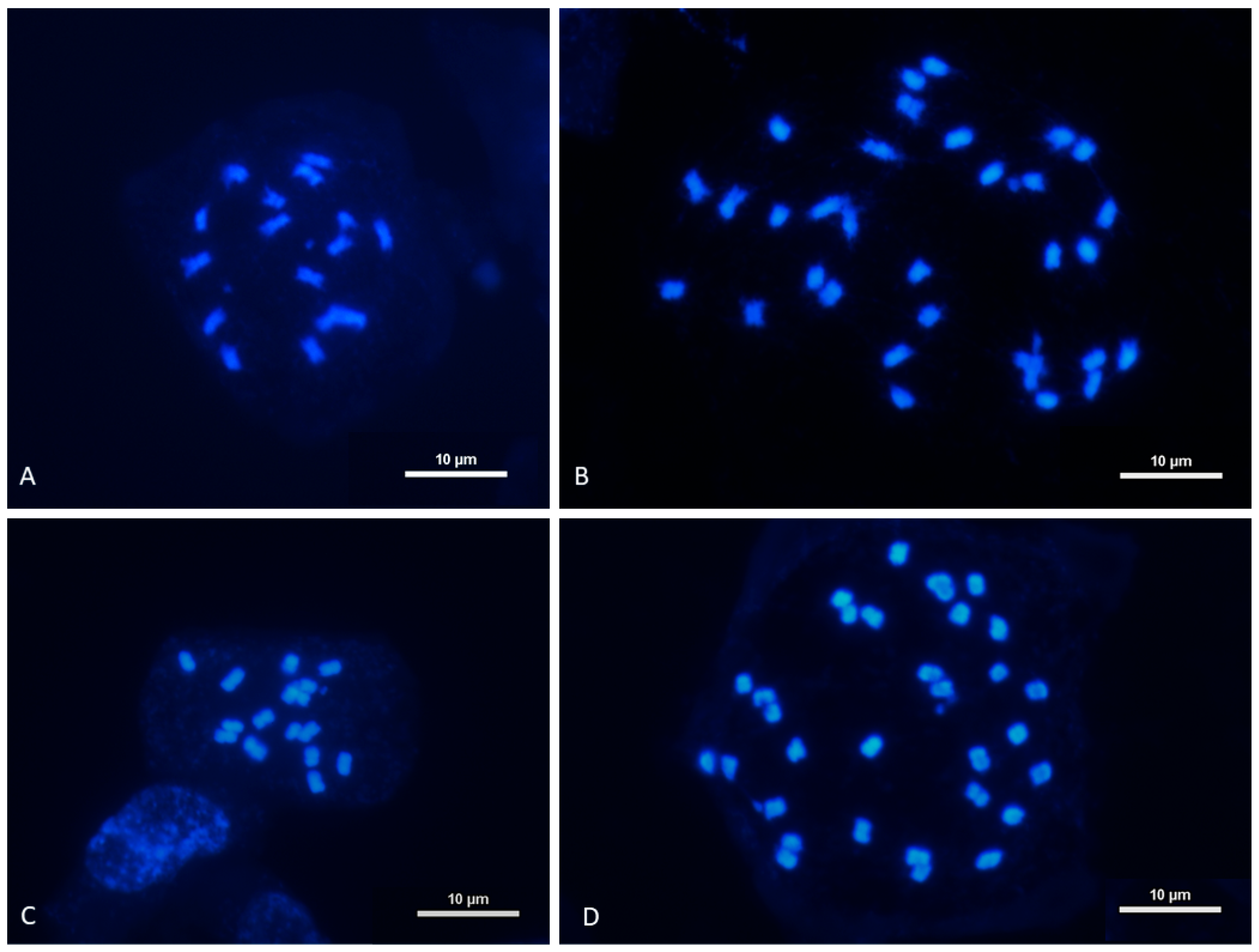
To confirm the ploidy status of the gooseberry tetraploids maintained under greenhouse conditions, somatic chromosome analyses were performed at the metaphase stage. These analyses confirmed the doubling of the chromosome number in all the tested plants (2n = 4x = 32) compared to the diploid control plant (2n = 2x = 16) (Figure 1).

3.2. Phenotypic Evaluation

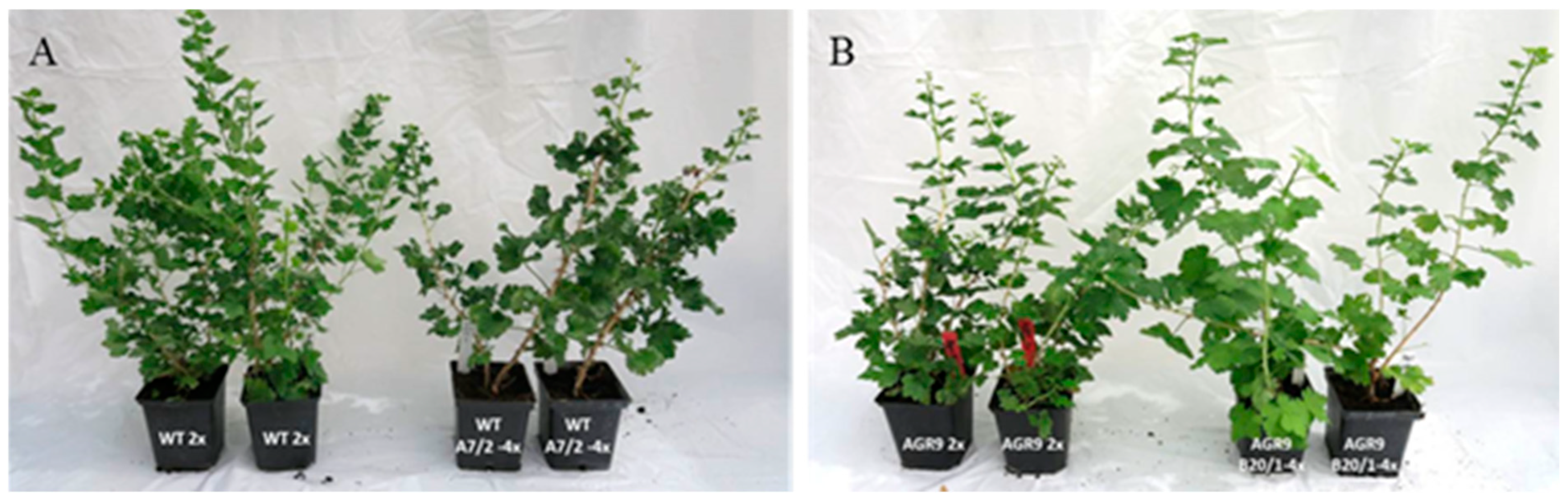
For ‘White Triumph’, the main shoot height showed varied responses among the tetraploid clones. Clone A7/2-4x exhibited significantly greater height (62.0 cm, a 11.3% increase) compared to the diploid control (55.7 cm, p < 0.05). In contrast, clones A8/1-4x, A15/1-4x, and A23-4x had significantly lower heights (48.0–50.7 cm) than the control. For genotype AGR9, all three tetraploid clones (A51/1-4x, B15/3-4x, and B20/1-4x) showed significantly greater main shoot heights (ranging from 50.4 to 60.2 cm) than their diploid control (48.5 cm), representing an average increase of 14.4% (p < 0.05). In contrast, diploid control plants produced more lateral shoots than tetraploids (Table 2, Figure 2).
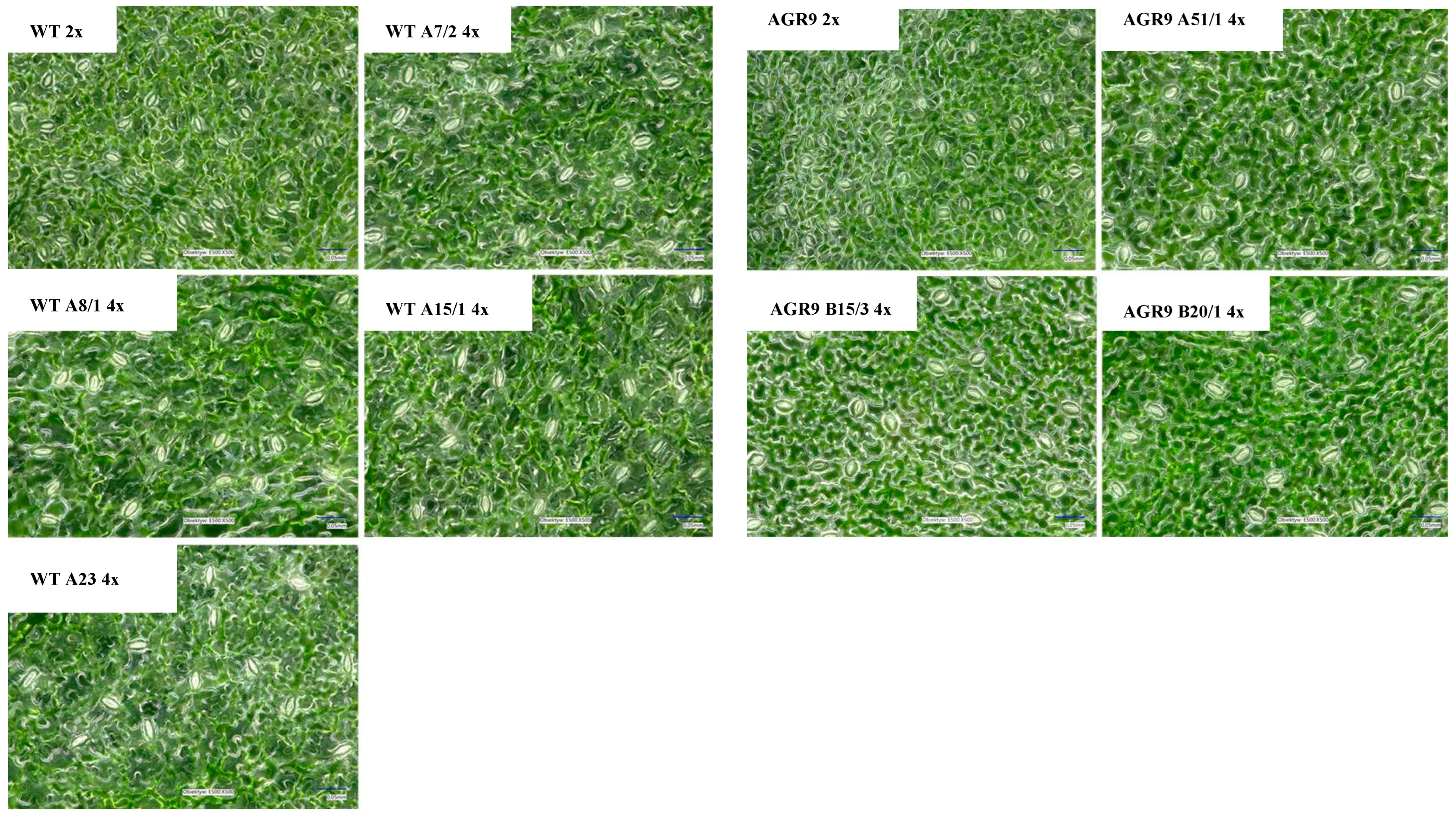
Across both genotypes, tetraploid clones consistently exhibited significantly greater stomatal length (ranging from 36.2 to 39.4 µm) compared to their diploid controls (29.2–31.3 µm), representing an average increase of 25% (p < 0.05). Conversely, stomatal density was significantly lower in all tetraploid clones (68–102 stomata/mm2) than in diploid controls (129–137 stomata/mm2), with an average reduction of 36% (p < 0.05) (Table 3, Figure 3). Tetraploid gooseberry plants were characterized by a higher chlorophyll content index than the diploid control plants after both three and five months of growth in the greenhouse (Table 3).

3.3. Leaf Morphology and Anatomy

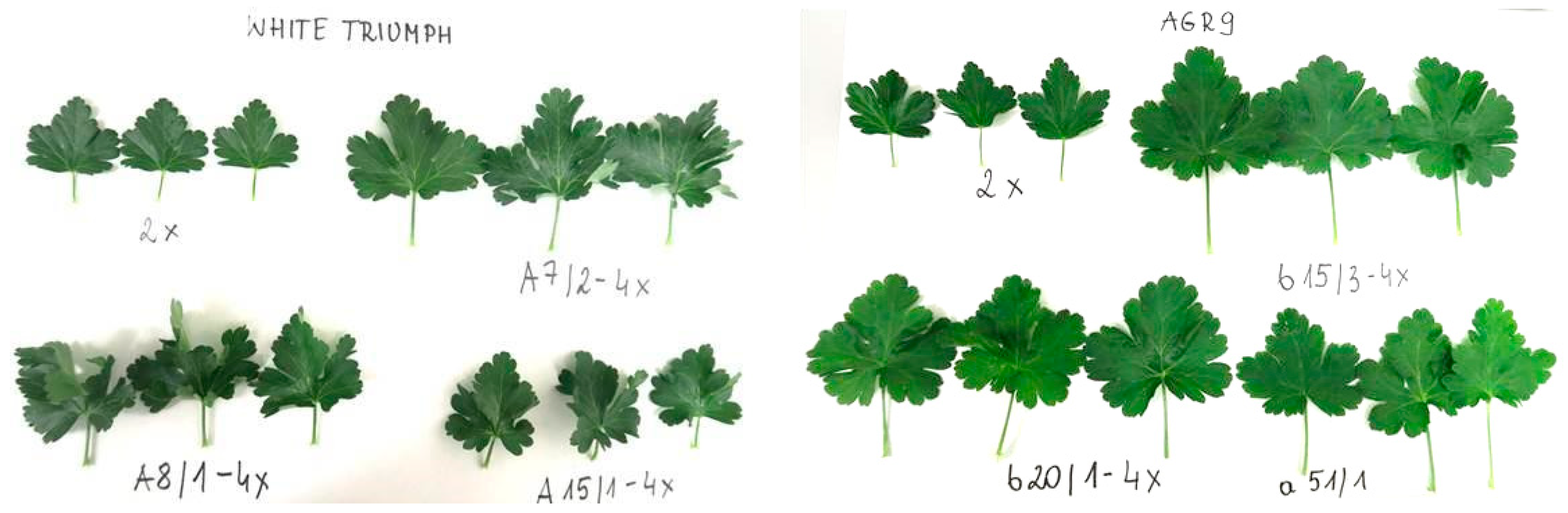
Tetraploid gooseberry leaves showed a different morphology than their diploid counterparts in both genotypes (Table 4, Figure 4). The leaf blades and petiole lengths of the tetraploid, ‘White Triumph’, and AGR9 plants were significantly larger than those of their diploid counterparts. In the ‘White Triumph’ tetraploids, the leaf blades did not form a single plane; they were folded (Figure 4). Among the tetraploid ‘White Triumph’, clone A7/2-4x was characterized by the greatest leaf length and width, as well as the longest petiole. The leaf length, leaf width, and petiole length of clone A7/2-4x were 34.5%, 32.3%, and 52.7% greater, respectively, than those of the diploid form ‘White Triumph’. Among the AGR9 tetraploids, clone B15/3-4x showed the greatest leaf length and width, as well as the longest petioles. The leaf length, leaf width, and leaf petiole length of the B15/3-4x clone were 49.1%, 41.1%, and 54.9% greater, respectively, than those of the diploid form AGR9 (Table 4, Figure 4).
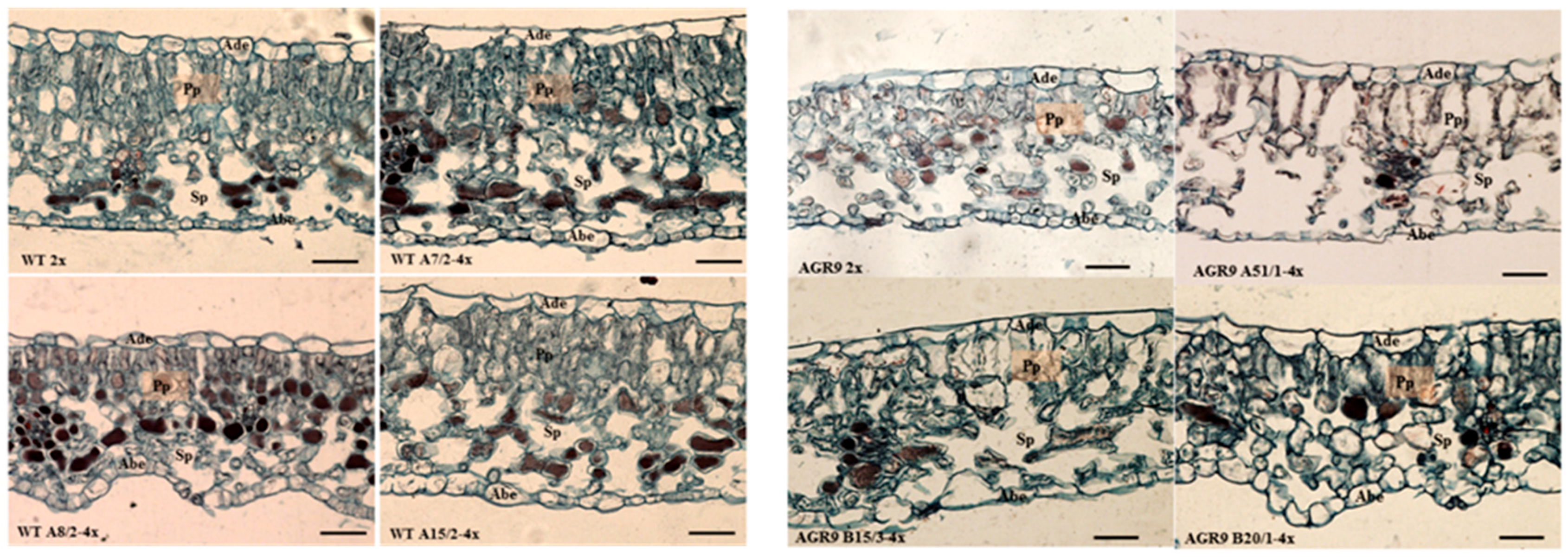
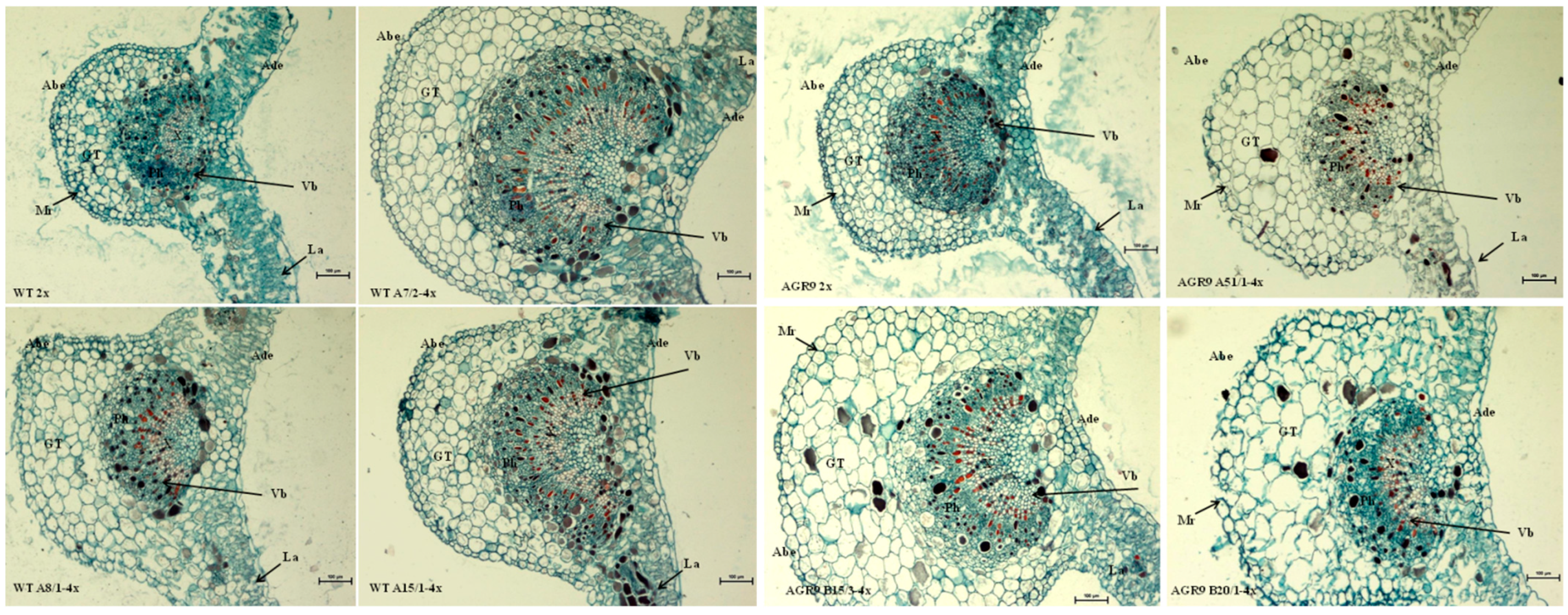
All nine evaluated anatomical traits of the leaves in tetraploids were significantly greater than those of their diploid counterparts (Table 5 and Table 6, Figure 5 and Figure 6). Exceptions included the thickness of the upper epidermis in ‘White Triumph’, the thickness of the phloem in genotype AGR9, and the number of intercellular spaces in both ‘White Triumph’ and AGR9. In the diploid ‘White Triumph’ plants, epidermal thickness was similar to that in clones A51/2-4x and A8/1-4x, averaging 28.45 µm. In genotype AGR9, phloem thickness was the lowest in clone A51/1-4x, measuring 57.73 µm. A large amount of intercellular space was characteristic of the diploid forms of both genotypes, while a moderate amount was observed in all tetraploid clones.
The greatest thickness of the lower epidermis, spongy mesophyll, midrib diameter, and phloem and xylem thickness were observed in the leaves of clone A7/2-4x of the ‘White Triumph’ cultivar. The thicknesses of the lower epidermis, spongy mesophyll, midrib diameter, phloem, and xylem in clone A7/2-4x were 14.0%, 13.8%, 39.6%, 16.5%, and 40% greater, respectively, than their diploid counterparts. In the case of the genotype AGR9, the greatest upper epidermis thickness, midrib diameter, and xylem thickness were observed in clone B15/3-4x. The upper epidermal thickness, midrib diameter, and xylem thickness of clone B15/3-4x were 20.2%, 39.8%, and 24.15% greater, respectively, than those of its diploid counterpart.

3.4. Analysis of Correlations and Principal Component Analysis

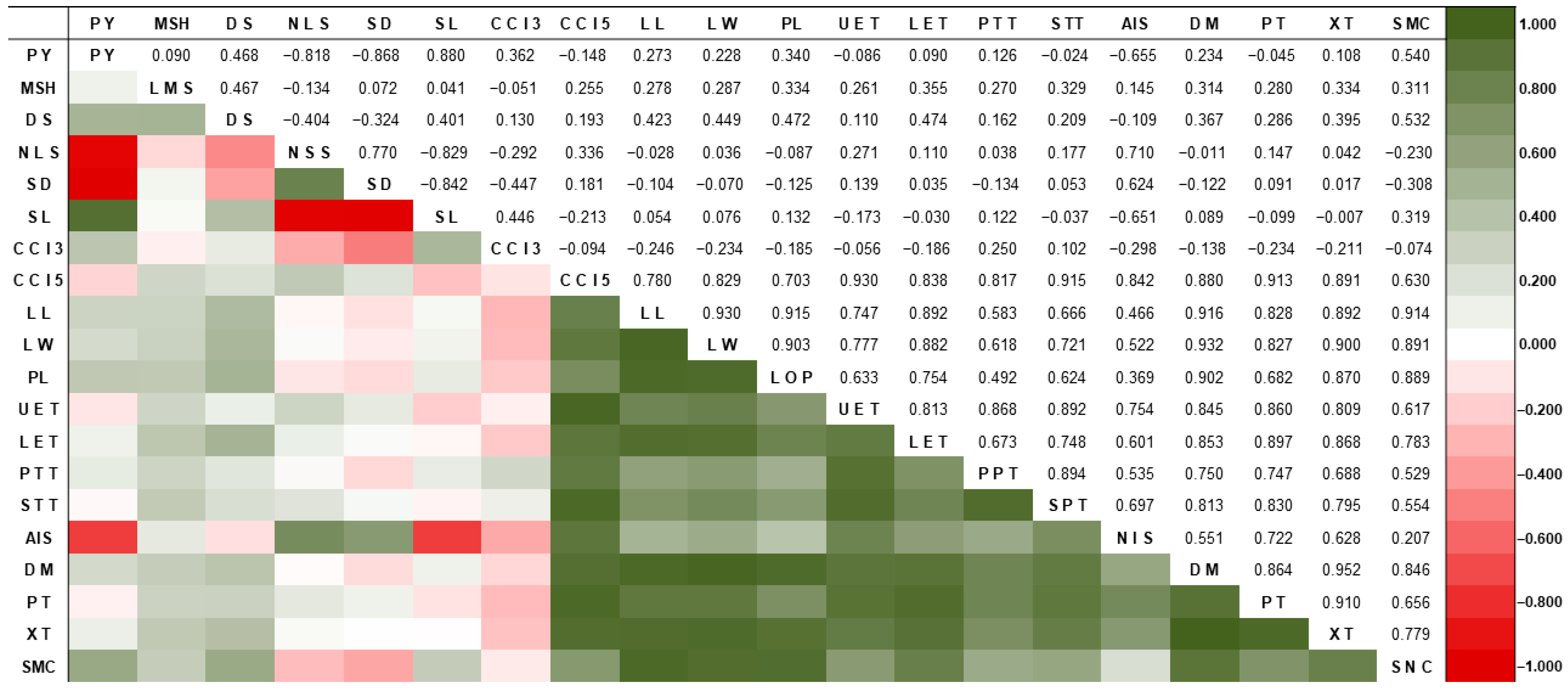
Pearson correlation analysis showed that ploidy level (PY), reflecting differences between diploids and tetraploids, was strongly associated with shoot morphological traits and selected leaf anatomical characteristics. Ploidy exhibited a strong positive correlation with main shoot length (MSH; r = 0.880) and a negative correlation with the number of lateral shoots (NLS; r = −0.818) and stomatal density (SD; r = −0.868), indicating pronounced differences in plant architecture between diploids and tetraploids (Figure 7).
Significant relationships were also observed between ploidy and stomatal traits, including a positive correlation with stomatal length (SL; r = 0.880), suggesting an increase in stomatal size at higher ploidy levels. Ploidy was moderately positively correlated with leaf traits such as leaf length (LL; r = 0.273), leaf width (LW; r = 0.228), and petiole length (PL; r = 0.340). Regarding leaf anatomical traits and vascular tissue, ploidy showed positive correlations with phloem thickness (PT; r = 0.234), xylem thickness (XT; r = 0.108), and vein cell area (SMC; r = 0.540), indicating changes in vascular tissue structure associated with polyploidization. These relationships confirm that differences between diploids and tetraploids involve not only individual traits but also complex changes in overall plant morphological and anatomical organization (Figure 7).
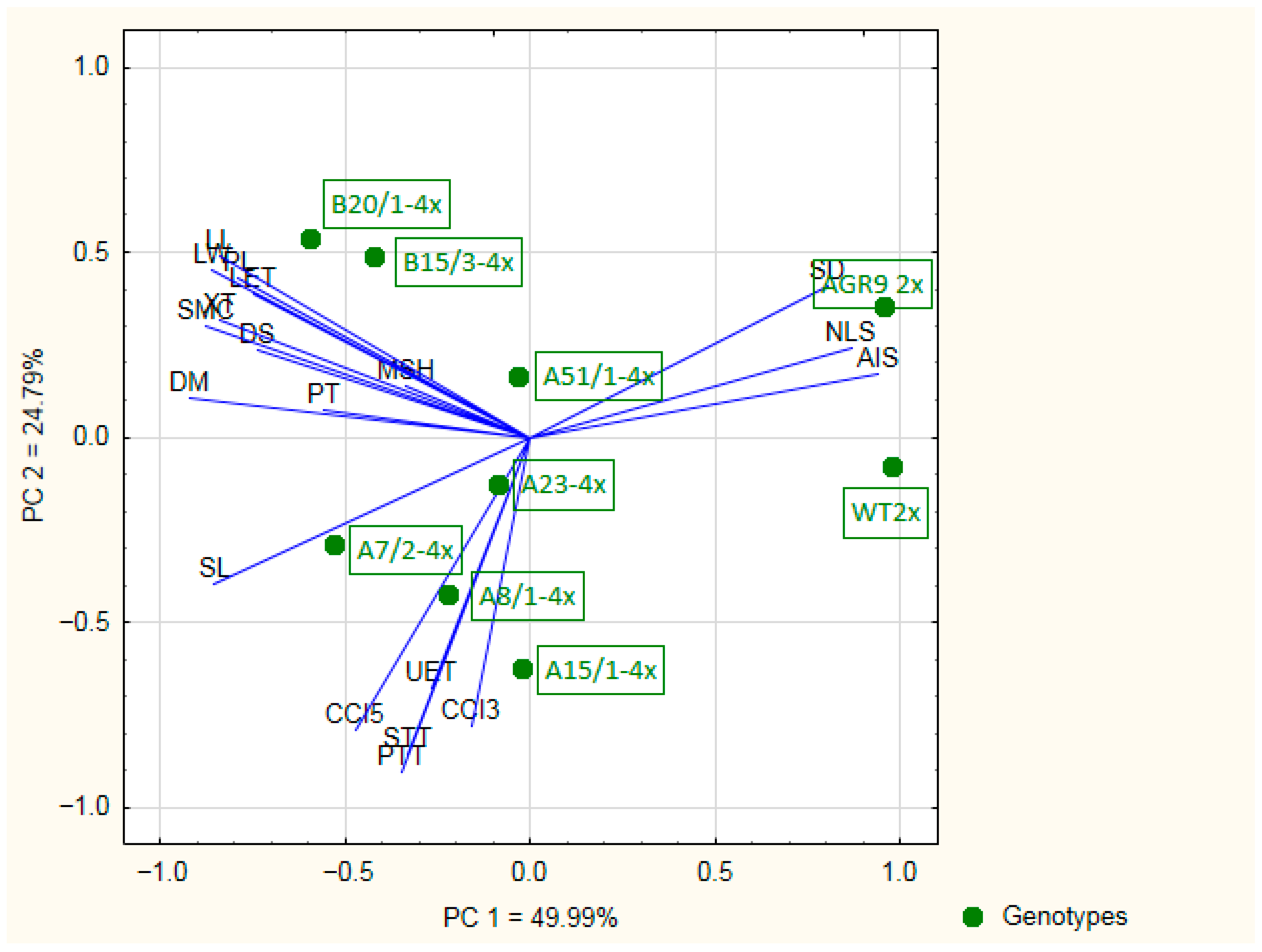
Principal component analysis (PCA) revealed differentiation of the genotypes according to ploidy level. The first two principal components together explained 74.8% of the total variability, with PC1 (49.99%) representing the main axis separating diploid (2x) and tetraploid (4x) genotypes (Figure 8).
The 2x genotypes were mainly located on the positive side of PC1 and were associated with traits such as AIS, NLS, and SD, whereas the 4x genotypes clustered on the negative side, showing relationships with traits such as SMT, IS, PT, and DM. This indicates a significant effect of polyploidization on the shaping of phenotypic traits.

4. Discussion

Polyploidy plays a pivotal role in plant evolution by enhancing genetic diversity and enabling adaptation to diverse environmental conditions and is widely distributed throughout the plant kingdom [23]. Whole-genome duplication may modify gene expression and function, thereby enhancing plant growth and adaptive potential [24]. The effects of polyploidy vary substantially among species and are influenced by specific induction events. Chromosomal duplication often leads to morphological changes such as larger stomata, thicker leaves, and larger inflorescences, contributing to increased biomass and overall plant size. Although polyploids have been obtained from a large number of crop plants, they do not always exhibit higher quality and/or yield than their diploid counterparts [25].
In our study, tetraploid clones of two gooseberry genotypes were characterized by larger shoot diameters, and in the case of genotype AGR9, by a higher main shoot. However, both tetraploid clones of ‘White Triumph’ and AGR9 had fewer lateral shoots than their diploid counterparts. Our observations correspond well with the results obtained for tetraploids of blackcurrant (Ribes nigrum L.) ‘Gofert’ by Podwyszyńska and Pluta [19]. Six-month-old tetraploid plants did not produce lateral shoots, in contrast to the diploid plants. Some authors have reported the phenotypic evaluation of tetraploids of apple (Malus × domestica Borkh.), blackcurrant, bilberry (Vaccinium myrtillus L.) derived from in vitro polyploidization [26,27]. Compared to diploids, one- and two-year-old shoots of tetraploid plants were shorter and contained much lower leaf numbers, but shoot diameter was larger, and leaves contained significantly more chlorophyll. In our study, the shoot diameter of both tetraploid genotypes was larger, and the chlorophyll index was higher than that of their diploid counterparts. Polyploids usually have larger stomata than diploids; however, their density per unit leaf area is considerably lower [28]. For example, in hemp (Cannabis sativa L.), tetraploid plants have half as many stomata as diploids, and they are approximately 30% larger [29]. Our results support these observations. The stomatal density in the ‘White Triumph’ cultivar was, on average, 42%, and in the AGR9 genotype, it was 27% lower than in their diploid counterparts. The stomatal length in the ‘White Triumph’ cultivar was, on average, 25%, and that in the AGR9 genotype was 14% higher than in their diploid counterparts. A similar increase in stomatal size and decrease in stomatal density are commonly observed in tetraploids of various species, such as spathiphyllum (Spathiphyllum wallisii Regel) [30], bilberry [27], and hibiscus (Hibiscus syriacus L.) [31]. The strong positive correlation between stomatal size, density, and ploidy level is considered a morphological marker of ploidy in many plant species, including gooseberry. Moreover, the increased chlorophyll index and larger stomatal size noted in tetraploid plants could facilitate greater photosynthetic efficiency, as observed in chickpea (Cicer arietinum L.) [32].
The most widespread consequence of polyploidy in plants is an increase in cell size caused by a larger number of gene copies. Consequently, polyploid individuals may exhibit larger organs than their diploid counterparts, such as leaves, fruits, flowers, and seeds. In our study, the leaf blades and petiole lengths of the tetraploid ‘White Triumph’ and AGR9 were significantly larger than those of their diploid counterparts (Table 4, Figure 4). Additionally, the leaves of tetraploid clones of ‘White Triumph’ were folded (Figure 4). The leaf morphology of tetraploid clones of both genotypes corresponded to their anatomical structures. Almost all the examined anatomical parameters of the leaves of tetraploid plants were higher than those of their diploid counterparts (Table 5 and Table 6). Similar observations have been reported for other plants, such as banana [33], apple [34,35], Rangpur lime (Citrus limonia Osbeck) [36], cassava (Manihot esculanta Grantz) [37], and Brassica L. [38]. Some authors have observed that only individual anatomical characteristics of the leaves of tetraploid plants were larger than those of their diploid counterparts [31,39]. Changes in leaf anatomy and stomatal dimensions affect the tissue water potential, transpiration rate, and stomatal conductance during periods of drought. Diallo et al. [40] demonstrated that genome polyploidization increased drought tolerance in Acacia senegal (L.) Willd., which was attributed to increased stomatal length and decreased stomatal density compared with diploids. Bai et al. [41] postulated that the superior drought tolerance observed in apples could be related to the anatomical and morphological features of their leaves. In cultivar ‘Honeycrisp’, the leaves, cuticle, and palisade mesophyll were thicker than those in the less-drought-tolerant cultivar ‘Yanfu 3’. Our results indicated that palisade tissue thickness was 18–31% and 30–21% greater than that of the diploid control in ‘White Triumph’ and AGR9, respectively. Our observations correspond well with the results obtained for the tetraploids of poplar (Populus alba L.) [39] and mulberry (Broussonetia papyrifera (L.) L’Hér. ex Vent.) [42]. We also found differences in the amount of intercellular space; the tetraploid gooseberry clones had a smaller amount of intercellular space than their diploid counterparts. Marasek-Ciołakowska et al. [43] and Seki [44] showed that the presence of small intercellular spaces in the palisade and spongy mesophyll of savoy cabbage (Brassica oleracea var. sabauda L.) and carnation (Dianthus caryophyllus L) was related to lower numbers of all forms of cabbage whiteflies (Aleyrodes proletella L.) and low infestation with spider mites (Tetranychus urticae (Koch.), respectively. Our plant material was not colonized by any pests, except for plants of the ‘White Triumph’ clone A23-4x, which were infested by thrips (H. haemorrhoidalis).
Our studies indicate that both xylem and phloem thicknesses were significantly greater in all tetraploid clones of both genotypes than in their diploid counterparts (Table 6, Figure 6). Furthermore, the diameter of the midrib and its cell surface area were significantly greater in the tetraploid gooseberry clones than in their diploid counterparts. Yao et al. [45] showed that the area of triploid xylem was three times larger than that of the diploid in leaves of tea (Camellia sinensis (L.) Kuntze), but no significant differences were observed in the size of the phloem. Zhang et al. [31] indicated that hexaploids of Hibiscus syriacus L. exhibited greater midrib diameter than triploids and tetraploids, but xylem and phloem thickness were not affected by ploidy level.
In our study, the ploidy level was positively correlated with main shoot length, leaf length and width, petiole length, stomatal length, phloem and xylem thickness, and the surface of the midrib cells. These results indicate that polyploidization in gooseberry promotes coordinated increases in both morphological and anatomical traits. Our results contrast with those reported by Zhang et al. (2024) [31] in hibiscus, where ploidy was negatively correlated with leaf length, leaf width, and petiole length.
To the best of our knowledge, no reports have been published on gooseberry tetraploids. The vigorous gooseberry tetraploids we obtained are probably the first such plants. Due to the fact that studies on diverse species have shown that the anatomical and physiological changes generated by either natural or artificial polyploidization can increase tolerance to abiotic and biotic stresses as well as disease resistance, the next step of our research will involve testing drought tolerance and assessing the susceptibility of the obtained tetraploids to American gooseberry powdery mildew caused by Podosphaera mors-uvae.

5. Conclusions

The results of this study demonstrate that polyploidization significantly affects the growth, morphology, and leaf anatomy of gooseberry plants, with responses depending on the genotype and clone. Tetraploid clones generally exhibited increased main shoot height, larger leaves, and enhanced anatomical traits compared to their diploid counterparts, although variability among clones was evident, particularly in the cultivar ‘White Triumph’.
Tetraploids were characterized by increased stomatal length and reduced stomatal density, reflecting the typical cytological consequences of genome duplication. In addition, tetraploid plants showed higher chlorophyll content, suggesting an improved photosynthetic potential under greenhouse conditions. Leaf morphology and anatomy were markedly altered in tetraploids, with larger leaf blades, longer petioles, and increased thickness of most anatomical tissues, including palisade and sponge tissues, phloem, and xylem.
Overall, the observed phenotypic and anatomical changes indicate that tetraploid gooseberry plants possess traits that may be advantageous for their vigor and physiological performance. However, the considerable variation among tetraploid clones highlights the importance of selecting clones for breeding programs.

Author Contributions

Conceptualization, A.T.; methodology, A.T., M.D. and A.M.-C.; investigation, A.T., M.D. and A.M.-C.; data curation, A.T., M.D. and A.M.-C.; writing—original draft, A.T. and A.M.-C.; writing—review and editing, A.T. and A.M.-C.; funding acquisition, A.T.; project administration, A.T.; supervision, A.T. All authors have read and agreed to the published version of the manuscript.

Funding

This research was funded by the Ministry of Agriculture and Rural Development as part of the basic research for biological progress in plant production, Task 46.

Data Availability Statement

The original contributions presented in this study are included in the article. Further inquiries can be directed to the corresponding author.

Acknowledgments

During the preparation of this manuscript, the authors used Paperpal Editage (4.4.0) for the purposes of grammar and spelling revision. The authors have reviewed and edited the output and take full responsibility for the content of this publication. The authors would like to thank Małgorzata Grzelak and Justyna Trzeciak for their technical assistance, as well as Robert Maciorowski and Monika Markiewicz for their help with statistical analyses.

Conflicts of Interest

The authors declare no conflicts of interest.

References

  1. Madani, H.; Escrich, A.; Hosseini, B.; Sanchez-Munoz, R.; Khojasteh, A.; Palazon, J. Effect of Polyploidy Induction on Natural Metabolite Production in Medicinal Plants. Biomolecules 2021, 11, 899. [Google Scholar] [CrossRef] [PubMed]
  2. Haider, N. The origin of the B-genome of bread wheat (Triticum aestivum L.). Russ. J. Genet. 2013, 49, 303–314. [Google Scholar] [CrossRef]
  3. Yu, Y.; Yuan, D.; Liang, S.; Li, X.; Wang, X.; Lin, Z.; Zhang, X. Genome structure of cotton revealed by a genome-wide SSR genetic map constructed from a BC1 population between Gossypium hirsutum and G. barbadense. BMC Genom. 2011, 12, 15. [Google Scholar] [CrossRef]
  4. Leitch, I.J.; Hanson, L.; Lim, K.Y.; Kovarik, A.; Chase, M.W.; Clarkson, J.J.; Leitch, A.R. The ups and downs of genome size evolution in polyploid species of Nicotiniana (Solanaceae). Ann. Bot. 2008, 101, 805–814. [Google Scholar] [CrossRef]
  5. Clarindo, W.R.; Carvalho, C.R. First Coffea arabica karyogram showing that this species is a true allotetraploid. Plant Syst. Evol. 2008, 274, 237–241. [Google Scholar] [CrossRef]
  6. Whitaker, V.M. Applications of molecular markers in strawberry. J. Berry Res. 2011, 1, 115–127. [Google Scholar] [CrossRef]
  7. Tomaszewska, P. Understanding polyploid banana origins. A commentary on: ‘Unravelling the complex story of intergenomic recombination in ABB allotriploid bananas’. Ann. Bot. 2021, 127, 7–20. [Google Scholar] [CrossRef]
  8. Trojak-Goluch, A.; Kawka-Lipińska, M.; Wielgusz, K.; Praczyk, M. Polyploidy in industrial crops: Applications and perspectives in plant breeding. Agronomy 2021, 11, 2574. [Google Scholar] [CrossRef]
  9. Doyle, J.; Coate, J. Polyploidy, the nucleotype, and novelty: The impact of genome doubling on the biology of the cell. Int. J. Plant Sci. 2019, 180, 1–52. [Google Scholar] [CrossRef]
  10. Wei, K.-H.; Miao, J.-H.; Huang, H.-P.; Gao, S.-L. Generation of autotetraploid plant of ginger (Zingiber officinale Rosc.) and its quality evaluation. Pharmacogn. Mag. 2011, 7, 200–206. [Google Scholar] [CrossRef] [PubMed]
  11. Hannweg, K.; Visser, G.; de Jager, K.; Bertling, I. In vitro-induced polyploidy and its effect on horticultural characteristics, essential oil composition and bioactivity of Tetradenia riparia. S. Afr. J. Bot. 2016, 106, 186–191. [Google Scholar] [CrossRef]
  12. Podwyszyńska, M.; Gabryszewska, E.; Dyki, B.; Stępowska, A.A.; Kowalski, A.; Jasiński, A. Phenotypic and genome size changes (variation) in synthetic tetraploids of daylily (Hemerocallis) in relation to their diploid counterparts. Euphytica 2015, 203, 1–16. [Google Scholar] [CrossRef]
  13. Wang, L.; Li, Y.; Li, H.; Li, S.; Song, J.; Guan, W. Comparison of the morphological and physiological characteristics of diploid and tetraploid Luculia pinceana Hook. BMC Plant Biol. 2025, 25, 1–16. [Google Scholar] [CrossRef]
  14. Zhang, Y.; Qiao, Y.; Zhang, W.; Liu, X.; Gong, R.; Wang, Z.; Zhang, Y. In vitro induction and characterization of Anthurium andraeanum ‘Pink Champion’ tetraploids. In Vitro Cell Dev. Biol. Plant 2025, 61, 249–257. [Google Scholar] [CrossRef]
  15. Jafari, M.; Paul, N.; Hesami, M.; Jones, A.M.P. Machine learning-aided optimization of in vitro tetraploid induction in cannabis. Int. J. Mol. Sci. 2025, 26, 1746. [Google Scholar] [CrossRef]
  16. Cho, W.Y.; Deepo, D.M.; Islam, M.M.; Nam, S.C.; Kim, H.Y.; Han, J.S.; Kim, C.K.; Chung, M.Y.; Lim, K.B. Induction of polyploidy in cucumis melo ‘chammel’ and evaluation of morphological and cytogenetic changes. Horticult. Sci. Technol. 2021, 39, 625–636. [Google Scholar] [CrossRef]
  17. Urwin, N.A.R. Generation and characterisation of colchicine-induced polyploid Lavandula × intermedia. Euphytica 2014, 197, 331–339. [Google Scholar] [CrossRef]
  18. Del Pozo, J.C.; Ramirez-Parra, E. Deciphering the molecular bases for drought tolerance in Arabidopsis autotetraploids. Plant Cell Environ. 2014, 37, 2722–2737. [Google Scholar]
  19. Podwyszyńska, M.; Pluta, S. In vitro tetraploid induction of the blackcurrant (Ribes nigrum L.) and preliminary phenotypic observations. Zemdirbyste-Agriculture 2019, 106, 151–158. [Google Scholar] [CrossRef]
  20. Trzewik, A.; Podwyszyńska, M.; Cieślińska, M. In vitro tetraploid induction of the gooseberry (Ribes glossularia L.). Sci. Hortic. 2025, 352, 114431. [Google Scholar] [CrossRef]
  21. Marasek-Ciołakowska, A.; He, H.; Bijman, P. Assessment of intergenomic recombination through GISH analysis of F1, BC1 and BC2 progenies of Tulipa gesneriana and T. fosteriana. Plant Sys. Evol. 2012, 298, 887–899. [Google Scholar] [CrossRef]
  22. Marasek-Ciołakowska, A.; Saniewski, M.; Dziurka, M.; Kowalska, U.; Koniarska-Góraj, J.; Ueda, J.; Miyamoto, K. Formation of the Secondary Abscission Zone Induced by the Interaction of Methyl Jasmonate and Auxin in Bryophyllum calycinum: Relevance to Auxin Status and Histology. Int. J. Mol. Sci. 2020, 21, 2784. [Google Scholar] [CrossRef]
  23. Alix, K.; Gérard, P.R.; Schwarzacher, T.; Heslop-Harrison, J.S. Polyploidy and interspecific hybridization: Partners for adaptation, speciation and evolution in plants. Ann. Bot. 2017, 120, 183–194. [Google Scholar] [CrossRef] [PubMed]
  24. Dhooghe, E.; Van Laere, K.; Eeckhaut, T.; Leus, L.; Van Huylenbroeck, J. Mitotic chromosome doubling of plant tissues in vitro. Plant Cell Tissue Organ Cult. 2011, 104, 359–373. [Google Scholar]
  25. Sattler, M.C.; Carvalho, C.R.; Clarindo, W.R. The polyploidy and its key role in plant breeding. Planta 2016, 243, 281–296. [Google Scholar] [PubMed]
  26. Podwyszyńska, M.; Markiewicz, M.; Broniarek-Niemiec, A.; Matysiak, B.; Marasek-Ciołakowska, A. Apple Autotetraploids with Enhanced Resistance to Apple Scab (Venturia inaequalis) Due to Genome Duplication-Phenotypic and Genetic Evaluation. Int. J. Mol. Sci. 2021, 22, 527. [Google Scholar] [CrossRef]
  27. Podwyszyńska, M.; Mynett, K.; Markiewicz, M.; Pluta, S.; Marasek-Ciołakowska, A. Chromosome Doubling in Genetically Diverse Bilberry (Vaccinium myrtillus L.) Accessions and Evaluation of Tetraploids in Terms of Phenotype and Ability to Cross with Highbush Blueberry (V. corymbosum L.). Agronomy 2021, 11, 2584. [Google Scholar] [CrossRef]
  28. Gomes, S.S.L.; Saldanha, C.W.; Neves, C.S.; Trevizani, M.; Raposo, N.R.B.; Notini, M.M.; de Oliveira Santos, M.; Campos, J.M.S.; Otoni, W.C.; Viccini, L.F. Karyotype, genome size, and in vitro chromosome doubling of Pfaffia glomerata (Spreng.) Pedersen. Plant Cell Tissue Organ Cult. 2014, 118, 45–56. [Google Scholar]
  29. Parsons, J.L.; Martin, S.L.; James, T.; Golenia, G.; Boudko, E.A.; Hepworth, S.R. Polyploidization for the genetic improvement of Cannabis sativa. Front. Plant Sci. 2019, 10, 476. [Google Scholar] [CrossRef]
  30. Van Laere, K.; França, S.C.; Vansteenkiste, H.; Van Huylenbroeck, J.; Steppe, K.; Van Labeke, M.-C. Influence of ploidy level on morphology, growth and drought susceptibility in Spathiphyllum wallisii. Acta Physiol. Plant 2011, 33, 1149–1156. [Google Scholar]
  31. Zhang, J.; Cheng, C.; Xiao, F.; Zhang, X.; Zhang, C.; Zhao, Y.; Xu, J.; Zhang, S.; Wang, X. Effects of ploidy level on leaf morphology, stomata, and anatomical structure of Hibiscus syriacus L. BMC Plant Biol. 2024, 24, 1133. [Google Scholar] [CrossRef]
  32. Vessal, S.; Amirchakhmaghi, N.; Parsa, M. Variation in Morpho-Physiological Responses of Desi Chickpea (Cicer arietinum L.) Seedlings to Progressive Water Stress. Agrotech. Ind. Crops 2024, 4, 113–125. [Google Scholar]
  33. Madail, R.H.; Pio, L.A.S.; Silva Rezende, R.A.L.; Pasqual, M.; de Oliveira e Silva, S. Banana leaf anatomy characteristics related to ploidy levels. Acta Sci. Agron. 2022, 44, e55709. [Google Scholar] [CrossRef]
  34. Wójcik, D.; Marat, M.; Marasek-Ciołakowska, A.; Klamkowski, K.; Buler, Z.; Podwyszyńska, M.; Tomczyk, P.P.; Wójcik, K.; Treder, W.; Filipczak, J. Apple Autotetraploids—Phenotypic Chracterisation and Response to Drought Stress. Agronomy 2022, 12, 161. [Google Scholar]
  35. Hias, N.; Leus, L.; Davey, M.W.; Vanderzande, S.; Van Huylenbroeck, J.; Keulemans, J. Effect of polyploidization on morphology in two apple (Malus × domestica) genotypes. Hort. Sci. 2017, 44, 55–63. [Google Scholar] [CrossRef]
  36. Allario, T.; Brumos, J.; Colmenero-Flores, J.M.; Tadeo, F.; Froelicher, Y.; Talon, M.; Navarro, L.; Ollitrault, P.; Morillon, R. Large changes in anatomy and physiology between diploid Rangpur lime (Citrus limonia) and its autotetraploid are not associated with large changes in leaf gene expression. J. Exp. Bot. 2011, 62, 2507–2519. [Google Scholar] [CrossRef]
  37. Zhou, H.-W.; Zeng, W.-D.; Yan, H.-B. In vitro induction of tetraploids in cassava variety ‘Xinxuan 048’ using colchicine. Plant Cell Tissue Organ Cult. 2017, 128, 723–729. [Google Scholar] [CrossRef]
  38. Baker, R.L.; Yarkhunova, Y.; Vidal, K.; Ewers, B.E.; Weinig, C. Polyploid and the relationship between leaf structure and function: Implications for correlated evolution of anatomy, morphology, and physiology in Brassica. BMC Plant Biol. 2017, 17, 3. [Google Scholar] [CrossRef]
  39. Liu, Y.; Wang, X.; Li, S.; Zhou, Y.; He, R.; Chen, S. Analysis of change in morphological characters and drought resistance of tetraploid Populus alba L. Plant Cell Tissue Ogran Cult. 2025, 162, 27. [Google Scholar] [CrossRef]
  40. Diallo, A.M.; Nielsen, L.R.; Kjaer, E.D.; Petersen, K.K.; Raebild, A. Polyploidy can Confer Superiority to West African Acacia senegal (L.) Willd. Trees. Front. Plant Sci. 2016, 7, 821. [Google Scholar] [CrossRef] [PubMed]
  41. Bai, T.; Li, Z.; Song, C.; Song, S.; Jiao, J.; Liu, Y.; Dong, Z.; Zheng, X. Contrasting drought tolerance in two apple cultivars associated with difference in leaf morphology and anatomy. Am. J. Plant Sci. 2019, 10, 709–722. [Google Scholar] [CrossRef]
  42. Lin, J.; Zhang, B.; Zou, J.; Luo, Z.; Yang, H.; Zhou, P.; Chen, X.; Zhou, W. Induction of tetraploids in Paper Mulberry (Broussonetia papyrifera (L.) L’Hér. ex Vent.) by colchicine. BMC Plant Biol. 2023, 23, 574. [Google Scholar] [CrossRef] [PubMed]
  43. Marasek-Ciołakowska, A.; Sojka, G.; Warabieda, W.; Kowalska, U.; Rybczyński, D. Investigation on the Relationship between Morphological and Anatomical Characteristic of Savoy Cabbage and Kale Leaves and Infestation by Cabbage Whitefly (Aleyrodes proletella L.). Agromony 2021, 11, 275. [Google Scholar] [CrossRef]
  44. Seki, K. Leaf-morphology-assisted selection for resistance to two-spotted spider mite Tetranychus urticae Koch (Acari: Tetranychidae) in carnations (Dianthus caryophyllus L). Pest Manag. Sci. 2016, 72, 1926–1933. [Google Scholar] [CrossRef]
  45. Yao, X.; Qi, Y.; Chen, H.; Zhang, B.; Chen, Z.; Lu, L. Study of Camellia sinensis diploid and triploid leaf development mechanism based on transcriptome and leaf characteristics. PLoS ONE 2023, 18, e0275652. [Google Scholar] [CrossRef]
Figure 1. Metaphase chromosomes of genotype AGR9: diploid (2n = 2x = 16) (A); tetraploid A51/1-4x (2n = 4x = 32) (B); ‘White Triumph’: diploid (2n = 2x = 16) (C); tetraploid A7/2-4x (2n = 4x = 32) (D).
Agronomy 16 00433 g001
Figure 2. Gooseberry plants after 5 months of greenhouse growth: ‘White Triumph’ (A) and AGR9 (B); diploids on the left and tetraploids on the right.
Agronomy 16 00433 g002
Figure 3. The size and density of gooseberry stomata: on the (left) ‘White Triumph’; on the (right) genotype AGR9.
Agronomy 16 00433 g003
Figure 4. Leaf morphology of gooseberry: on the (left) ‘White Triumph’; on the (right) genotype AGR9.
Agronomy 16 00433 g004
Figure 5. Leaf anatomical structure in tetraploid and control plants of the gooseberry ‘White Triumph’ (left) and genotype AGR9 (right). Abe, abaxial epidermis; Ade, adaxial epidermis; Pp, palisade parenchyma; Sp, spongy parenchyma. Scale bars represent 50 µm.
Agronomy 16 00433 g005
Figure 6. Cross-sections of the midrib in tetraploid and control plants of the gooseberry ‘White Triumph’ (left) and genotype AGR9 (right). Abe, abaxial epidermis; Ade, adaxial epidermis; GT, ground tissue; La, lamina; Mr, midrib; Ph, phloem; Vb, vascular bundle; X, xylem.
Agronomy 16 00433 g006
Figure 7. Analysis of correlations between each characteristic and ploidy. PY, ploidy; MSH, main shoot height; DS, shoot diameter; NLS, number of lateral shoots; SD, stomatal density; SL, stomatal length; CCI3, chlorophyll index after 3 months of growth; CCI5, chlorophyll index after 5 months of growth; LL, leaf length; LW, leaf wide; PL, petiole length; UET, upper epidermis thickness; LET, lower epidermis thickness; PTT, palisade tissue thickness; STT, sponge tissue thickness; AIS, amount of intercellular space; DM, midrib diameter; PT, phloem thickness; XT, xylem thickness; SMC, surface of midrib cells.
Agronomy 16 00433 g007
Figure 8. Principal component analysis (PCA) biplot showing the relationships between the studied traits and gooseberry genotypes with different ploidy levels (2x and 4x). The first two principal components (PC1 and PC2) explain 49.99% and 24.79% of the total variance, respectively. Arrows represent the analyzed traits, while points indicate individual genotypes. MSH, main shoot height; DS, shoot diameter; NLS, number of lateral shoots; SD, stomatal density; SL, stomatal length; CCI3, chlorophyll index after 3 months of growth; CCI5, chlorophyll index after 5 months of growth; LL, leaf length; LW, leaf wide; PL, petiole length; UET, upper epidermis thickness; LET, lower epidermis thickness; PTT, palisade tissue thickness; STT, sponge tissue thickness; AIS, amount of intercellular space; DM, midrib diameter; PT, phloem thickness; XT, xylem thickness; SMC, surface of midrib cells.
Agronomy 16 00433 g008
Table 1. The characteristics studied in tetraploid gooseberry plants and their diploid counterparts.
NoCodeTrait/UnitNoCodeTrait/Unit
1MSHMain shoot height/(cm)11UETUpper epidermis thickness (µm)
2DSShoot diameter/(mm)12LETLower epidermis thickness (µm)
3NLSNumber of lateral shoots13PTTPalisade tissue thickness (µm)
4SDStomatal density/(no/mm2)14STTSponge tissue thickness (µm)
5SLStomatal length (µm)15AISAmount of intercellular space
6CCI3Chlorophyll index after 3 months of growth16DMMidrib diameter (µm)
7CCI5Chlorophyll index after 5 months of growth17PTPhloem thickness (µm)
8LLLeaf length (mm)18XTXylem thickness (µm)
9
10
LW
PL
Leaf width (mm)
Petiole length (mm)
19SMCSurface of midrib cells (µm2)
Table 2. Height, shoot diameter, and number of lateral shoots in tetraploid and control plants of the gooseberry cultivar ‘White Triumph’ and genotype AGR9 after 5 months of greenhouse growth.
TetraploidMain Shoot Height (cm)Shoot Diameter (mm)Number of Lateral Shoots
‘White Triumph’
Control 2x55.7 1 ab ± 8.615.2 c ± 1.074
A7/2-4x62.0 a ± 6.788.2 a ± 1.150
A8/1-4x49.0 b ± 8.606.6 b ± 1.131
A15/1-4x50.7 b ± 7.306.1 bc ± 0.601
A23-4x48.0 b ± 5.525.9 bc ± 0.760
AGR9
Control 2x48.5 1 c ± 0.845.4 a ± 1.023
A51/1-4x56.0 ab ± 1.237.3 b ± 1.232
B15/3-4x50.4 bc ± 1.346.1 ab ± 1.341
B20/1-4x60.2 a ± 1.329.7 a ± 1.231
1 Means in the columns followed by the same letter are not significantly different using Duncan’s multiple range test at p = 0.05, ±SD (standard deviation).
Table 3. Stomatal density and length, chlorophyll index in tetraploids and control plants of the gooseberry cultivar ‘White Triumph’ and genotype AGR9.
TetraploidStomataChlorophyll Index After 3 Months of GrowthChlorophyll Index After 5 Months of Growth
Density (No. Per mm2)Length (µm)
‘White Triumph’
Control 2x137 1 a ± 10.0029.2 b ± 1.0426.8 b ± 0.5027.5 b ± 0.39
A7/2-4x91 b ± 4.739.0 a ± 2.0628.0 a ± 0.6828.9 a ± 0.37
A8/1-4x68 c ± 8.0039.1 a ± 1.3428.3 a ± 0.6729.0 a ± 0.76
A15/1-4x78 bc ± 7.539.4 a ± 0.8829.0 a ± 0.3628.5 a ± 0.58
A23-4x81 bc ± 5.539.1 a ± 0.4628.0 a ± 0.482
AGR9
Control 2x129 1 a ± 10.8531.3 b ± 2.0426.6 b ± 0.5427.0 b ± 0.59
A51/1-4x98 b ± 7.536.2 a ± 0.8928.5 a ± 0.6127.4 ab ± 0.45
B15/3-4x90 b ± 12.636.3 a ± 1.5625.4 c ± 0.6827.2 b ± 0.26
B20/1-4x94 b ± 11.5837.5 a ± 1.5126.9 b ± 0. 6127.8 a ± 0.30
1 Means in the columns followed by the same letter are not significantly different using Duncan’s multiple range test at p = 0.05, ±SD (standard deviation). 2 No data; leaves were infested by greenhouse thrips (Heliothrips haemorrhoidalis).
Table 4. Leaf morphologies in tetraploid and control plants of the gooseberry cultivar ‘White Triumph’ and genotype AGR9.
TetraploidLeaf Length (mm)Leaf Width (mm)Petiole Length (mm)
‘White Triumph’
Control 2x26.6 1 b ± 3.3629.8 c ± 2.3917.4 c ± 2.07
A7/2-4x40.6 a ± 4.6244.0 a ± 2.6536.8 a ± 2.17
A8/1-4x38.8 a ± 4.5544.6 a ± 4.1030.0 b ± 2.24
A15/1-4x34.8 a ± 4.0037.6 b ± 3.9118.8 c ± 1.30
AGR9
Control 2x28.4 1 c ± 3.6533.2 c ± 3.1919.2 b ± 3.77
A51/1-4x43.6 b ± 4.6146.4 b ± 3.0540.0 a ± 6.12
B15/3-4x55.8 a ± 5.1256.4 a ± 5.7342.6 a ± 4.93
B20/1-4x52.8 a ± 3.1154.4 a ± 6.6537.2 a ± 6.38
1 Means in the columns followed by the same letter are not significantly different using Duncan’s multiple range test at p = 0.05, ±SD (standard deviation).
Table 5. Leaf anatomies in tetraploid and control plants of the gooseberry cultivar ‘White Triumph’ and genotype AGR9.
TetraploidUpper Epidermis Thickness (µm)Lower Epidermis Thickness (µm)Palisade Tissue Thickness (µm)Sponge Tissue Thickness (µm)Amount of Intercellular Spaces
‘White Triumph’
Control 2x28.62 1 b ± 2.8518.70 b ± 2.1761.71 d ± 6.89147.07 c ± 15.84+++ 2
A7/2-4x28.72 b ± 2.8421.76 a ± 2.9782.06 b ± 9.36170.52 a ± 19.04++
A8/1-4x28.01 b ± 2.6120.26 a ± 2.8275.31 c ± 9.39164.30 a ± 17.61++
A15/1-4x30.68 a ± 3.8121.06 a ± 2.9789.56 a ± 9.84157.54 b ± 12.96++
AGR9
Control 2x23.03 1 c ± 2.9316.84 d ± 2.1939.60 c ± 5.04109.37 b ± 13.98+++
A51/1-4x26.27 b ± 4.2819.74 c ± 3.7157.03 a ± 6.69130.89 a ± 15.23++
B15/3-4x28.85 a ± 4.9623.99 b ± 3.7654.85 a ± 7.16125.00 a ± 11.41++
B20/1-4x24.81 b ± 2.9329.85 a ± 3.9650.57 b ± 6.19128.86 a ± 20.35++
1 Means in the columns followed by the same letter are not significantly different using Duncan’s multiple range test at p = 0.05, ±SD (standard deviation); 2 three-point scale: ++ moderate amount of intercellular spaces, +++ high amount of intercellular spaces.
Table 6. Comparison of the midrib anatomy in tetraploid and control plants of the gooseberry ‘White Triumph’ and genotype AGR9.
TetraploidMidrib Diameter (µm)Phloem Thickness (µm)Xylem Thickness (µm)Surface of Midrib Cells (µm2)
‘White Triumph’
Control 2x563.45 1 d ± 30.2575.15 c ± 5.6968.60 d ± 10.73765.7 b ± 120.12
A7/2-4x933.04 a ± 54.5190.03 a ± 8.29114.36 a ± 9.102371.5 a ± 245.52
A8/1-4x870.58 b ± 45.0883.51 b ± 6.0987.46 b ± 7.282219.1 a ± 213.14
A15/1-4x724.20 c ± 49.4782.45 b ± 5.7380.70 c ± 6.762295.5 a ± 215.18
AGR9
Control 2x596.22 1 c ± 65.9674.18 c ± 6.2581.58 b ± 10.551011.8 b ± 230.08
A51/1-4x818.57 b ± 51.4357.73 d ± 6.5387.33 b ± 10.833182.5 a ± 329.84
B15/3-4x990.94 a ± 79.4286.74 b ± 8.99107.52 a ± 11.593324.7 a ± 318.45
B20/1-4x849.50 b ± 56.60100.70 a ± 7.58107.35 a ± 12.033432.4 a ± 312.15
1 Means in the columns followed by the same letter are not significantly different using Duncan’s multiple range test at p = 0.05, ±SD (standard deviation).
Disclaimer/Publisher’s Note: The statements, opinions and data contained in all publications are solely those of the individual author(s) and contributor(s) and not of MDPI and/or the editor(s). MDPI and/or the editor(s) disclaim responsibility for any injury to people or property resulting from any ideas, methods, instructions or products referred to in the content.