Article

Mechanically Deep-Placed Nitrogen Fertilizer Modulates Rice Yield and Nitrogen Recovery Efficiency in South China

1
College of Agriculture, South China Agricultural University, Guangzhou 510642, China
2
Scientific Observing and Experimental Station of Crop Cultivation in South China, Ministry of Agriculture of China, Guangzhou 510642, China
3
Research Institute of Oil Crop, Academy of Hezhou Agricultural Science, Hezhou 542813, China
*
Author to whom correspondence should be addressed.
Agronomy 2026, 16(2), 213; https://doi.org/10.3390/agronomy16020213
Submission received: 9 December 2025 / Revised: 31 December 2025 / Accepted: 12 January 2026 / Published: 15 January 2026
(This article belongs to the Special Issue Crop Productivity and Management in Agricultural Systems)

Abstract

Mechanical deep fertilization is an efficient fertilization method. However, the effects of different types of nitrogen fertilizer on rice grain yield and nitrogen use efficiency under deep-application conditions remain unclear. In this study, field experiments were carried out in 2021 and 2022. The experimental treatments consisted of three types of nitrogen fertilizer, i.e., urea (T1), slow/controlled-release fertilizer (T2), and super rice special fertilizer (T3), applied at a rate of 150 kg N ha−1 via mechanical deep placement using Meixiangzhan 2 (MX) and Y liangyou 1378 (YL) as experimental materials. No fertilizer application was used as a control (T0) to calculate nitrogen use efficiency. The T2 treatment produced 29.03% and 25.52% higher grain yield for MX and YL because of the increase in productive panicles per ha and spikelet number per panicle, 21.20% and 13.68% higher nitrogen recovery efficiency, and 24.57% and 23.29% higher nitrogen agronomy efficiency than T1, respectively. In addition, the T2 treatment significantly improved the leaf area index and total aboveground biomass at the panicle initiation and heading stages. We also found that the POD, CAT, NR, and GOGAT of T2 for MX and YL at the heading stage were significantly enhanced compared to other treatments. Significant interaction was also observed in spikelet per panicle and 1000-grain weight between rice variety and nitrogen fertilizer type. Therefore, slow/controlled-release fertilizer application at the rate of 150 kg N per ha is a more feasible nitrogen fertilizer management strategy under mechanical deep placement, with the merit of increasing grain yield and improving nitrogen use efficiency in South China.

1. Introduction

Rice, an important food crop, can provide food for 50% of the world’s population. China has the largest rice-growing area, accounting for almost 28% of the world’s rice production [1]. Nitrogen is a necessary nutrient element that influences grain yield [2,3]. Due to the adoption of some ineffective fertilization methods in rice planting, the nitrogen recovery efficiency of rice plants in China is much lower than in Western countries [4]. Farmers often apply excessive chemical N fertilizer to paddy fields to obtain higher rice grain yields; in some planting areas, surprisingly, more than 300 kg N per ha was applied in a single rice-growing season [5,6].
Unreasonable N fertilization practices, such as excessive N fertilizer application, unsuitable application time, or unsuitable application methods, lead to low nitrogen use efficiency and environmental degradation [7,8]. Thus, many approaches have been adopted to improve nitrogen use efficiency, such as reducing nitrogen amount, selecting rice cultivars with a high nitrogen use efficiency [9,10], changing the fertilization time and splitting fertilizer application [11,12], choosing slow/controlled-release fertilizer [13], mechanically deep-placed nitrogen fertilizer [14], and straw incorporation into the field [10].
Urea is widely used in agricultural production, with the advantages of high concentration of N, facile storage, convenient use, and low price. In addition, it is a neutral fertilizer which can adapt to different soil [15]. Slow/controlled-release fertilizer (SRF) is a type of fertilizer that can regulate the release of N nutrition to match the nutrient absorption of plants coated with a special resin [16,17]. Compared to conventional fertilizers, SRFs offer advantages such as reducing labor through a single basal fertilization and higher nitrogen use efficiency by progressive nutrient release [18]. Super rice special fertilizer (SSF) is a new type of fertilizer invented by the College of Agriculture, South China Agricultural University, which consists of 15.0% N, 4.0% P2O5, 6.0% K2O, and 15.0% organic matter [15]. Both the N fertilization method and N fertilizer type significantly affect nitrogen use efficiency [19]. Slow/controlled-released N fertilizer and super rice special fertilizer have been introduced in recent years, which can bring about an increase in N uptake and grain yield using traditional manual surface broadcasting.
To our knowledge, little information is available on the effect of different nitrogen fertilizer types under mechanical deep placement on grain yield and nitrogen use efficiency in machine-transplanted rice. Thus, the aims of the present study were to (a) address the effects of different nitrogen fertilizer types on grain yield and their components under mechanical deep placement in machine-transplanted rice, (b) explore the nitrogen use efficiency of the nitrogen fertilizer type under mechanized deep placement, and (c) find a suitable nitrogen management practice with a higher nitrogen use efficiency without yield loss.

2. Materials and Methods

2.1. Experimental Site

The experiments were conducted at the farm of the College of Agriculture, South China Agricultural University (SCAU), Guangzhou, China, in 2021 and 2022. According to the five-point sampling method, the upper 20 cm of the experimental soil was collected before the experiment began. The soil properties are displayed in Table 1.

2.2. Fertilizer Applicator

A machine capable of mechanizing pot-seedling rice transplanting while simultaneously applying deeply placed fertilizer was used (produced by Changzhou YaMeiKe Mechanical Co., Ltd., Changzhou, China). Briefly, while transplanting the rice, the machine applied the fertilizer in the middle of two adjacent rows of rice with about 6 cm depth. More detailed information is given in Li et al. [14].

2.3. Experimental Treatments and Design

The experimental treatments comprised three types of N fertilizer and two rice varieties. Three types of N fertilizer were used, which were urea, slow/controlled-release fertilizer (total nitrogen contents TN = 25%, P2O5 = 6%, K2O = 19%; produced by Guangdong Tianhe Zhongjia Fertilizer Co., Ltd., Guangzhou, China), and super rice special fertilizer (total nitrogen contents TN = 15%, P2O5 = 4%, K2O = 6%; produced by Dongguan Fute Fertilizer Co., Ltd., Dongguan, China), respectively. The two rice varieties Meixiangzhan 2 and Y liangyou 1378 were selected, both widely planted in the area of South China. Meixiangzhan 2 (the inbred rice) was developed by the Rice Institute, Guangdong Academy of Agricultural Science, China, and Y liangyou 1378 (a two-line hybrid rice) was cultivated by the College of Agriculture, SCAU. The nitrogen fertilizer rate of 150 kg ha−1 was used. All treatments included the same quantities: 75 kg ha−1 of P2O5 ha−1 and 150 kg ha−1 of K2O. Calcium superphosphate (16% P2O5) acted as the P fertilizer, and potassium chloride (60% K2O) as the K fertilizer. The combined N and P fertilizers were applied as a basal application. For potassium, 50% was applied at the basal stage, and the rest was top-dressed 25 days post-transplanting. There were three N fertilizer treatments, i.e., all-N fertilizer as urea (T1), slow/controlled-release fertilizer (T2), and super rice special fertilizer (T3). All fertilizers were applied via mechanized transplanting with simultaneous deep placement. No N fertilizer application was used as a control (T0) in order to calculate N use efficiency. The study utilized a triplicate split-plot arrangement, with nitrogen fertilizer type allocated to the main plots and rice cultivars assigned to subplots. The area of every plot was 90 m2 (9 m × 10 m).
In 30 March 2021 and 31 March 2022, eighteen-day-old wet-bed nursery seedlings were transplanted at four per hill in a 30 cm × 14 cm space. Harvesting took place on 11 July 2021 and 12 July 2022. Water and crop management adhered to local agricultural policies, and chemical products were used to mitigate yield and quality risks. Plots were maintained under 5 cm water depth until grain filling, followed by an eight-day drainage period before maturity.

2.4. LAI and TAB

During the mid-tillering (MT), panicle initiation (PI), and heading stage (HS), eight rice plants per plot were randomly chosen. After meticulous washing, the samples were divided into leaves, sheaths plus stems, and panicles. The green leaf area was quantified with a Li-Cor Model 3100 device (Li-Cor Biosciences Co., Ltd., Lincoln, Nebraska), and LAI was calculated following the protocol of Pan et al. [15]. All rice plants were oven-dried at 70 °C until constant weight to calculate total aboveground biomass (TAB).

2.5. Nitrogen Metabolic Enzymatic Activity Including NR and GOGAT

Both nitrate reductase (NR) and glutamine oxoglutarate aminotransferase (GOGAT) were decided using the method of [10]. Briefly, homogenization of 0.5 g fresh leaves in 4.0 mL extraction solution (25 mM phosphate buffer pH 7.5, 5 mMcysteine, 5 mM EDTA-Na2) was performed on ice. After centrifugation at 10,000 rpm for 15 min at 4 °C, the supernatant was mixed with 1.6 mL reaction reagent (1.4 mL 0.1 M KNO3 phosphate buffer + 0.2 mL 2.0 mg/mL NADH) and incubated at 25 °C for 30 min. Controls used 0.2 mL phosphate buffer instead of NADH. The reaction was stopped by adding 1.0 mL 1% 4-aminobenzene sulfonic acid and 1.0 mL 0.2% 1-naphthyamine; the samples were incubated at room temperature for 15 min and centrifuged at 4000 rpm for 10 min, and absorbance was measured at 540 nm.
GOGAT activity was measured as follows. Homogenization of 0.4 g fresh leaves in 25 mmol/L Tris-HCl buffer (pH 7.6) was performed in a chilled mortar. The homogenate was centrifuged at 13,000 rpm for 25 min, and the supernatant was mixed with a reaction solution (0.4 mL 20 mmol/L glutamine, 0.5 mL 20 mmol/L α-ketoglutarate, 0.1 mL 10 mmol/L KCl, 0.2 mL 3 mmol/L NADH, 0.3 mL enzyme extract) and incubated at 25 °C for 30 min. GOGAT activity was assessed by monitoring NADH oxidation at 340 nm with a 752UV-Vis spectrophotometer.

2.6. Anti-Oxidant Enzyme Activities Including POD and CAT

Both peroxidase (POD) and catalase (CAT) contents were determined according to Pan et al. [15]. Homogenization of fresh leaf segments (<2 mm, 0.25 g) was performed in an ice bath using 5 mL of 50 mM borate buffer (pH 8.7) with 5.0 mM sodium hydrogen sulfite and 0.1 g PVP. The homogenate was centrifuged at 9000× g for 15 min at 4 °C, and the supernatant was used as the enzyme extract. POD activity was assessed by mixing 0.1 mL of the extract with a substrate solution (0.1 mol/L acetate buffer pH 5.4, 0.25% ortho-dianisidine in ethanol) and 0.1 mL 0.8% H2O2. The absorbance change at 460 nm due to guaiacol oxidation was recorded, with POD activity expressed as U g−1 FW min−1.
Catalase (CAT) activity was measured by tracking the decrease in absorbance at 240 nm, corresponding to the breakdown of H2O2, with a molar extinction coefficient of 39.4 mM/cm. Results are reported as micromoles of H2O2 decomposed per milligram of protein per minute (μmol/mg protein/min).

2.7. Nitrogen Absorption and Utilizaiton

At maturity, ten rice plants per plot were collected and separated into leaves, sheaths with stems, and panicles. These components were subsequently oven-dried at 70 °C, ground into powder, and analyzed for total nitrogen content via the Kjeldahl method. Nitrogen use efficiency parameters—namely, nitrogen recovery efficiency (NRE), agronomic efficiency (NAE), grain production efficiency (NGPE), and harvest index (NHI)—were computed based on established methodologies [15].

2.8. Yield and Its Components

A total of 15 rice plants per plot were randomly selected to determine productive panicles per hill. A total of 8 representative plants were then measured for spikelet number per panicle, grain-filling percentage, and 1000-grain weight. Grain yield was obtained from a 5 m2 harvest area excluding border rows and adjusted to 14% moisture content.

2.9. Data Analysis

Experimental data were analyzed using Statistix 9.0. Treatment differences were evaluated by LSD test at p ≤ 0.05. Year, cultivar, nitrogen type, and their interactions were examined using the general linear model for grain yield, its components, and nitrogen use efficiency. Figures were prepared with SigPlot 11.0.

3. Results

3.1. Grain Yield and Its Components

Grain yield and its components differed significantly under deep nitrogen fertilization in 2021 and 2022 (Table 2). T2 yielded the highest, reaching 6.36 t ha−1 and 7.50 t ha−1 for MX and YL, respectively, representing increases of 29.03% and 25.52% compared to T1. T2 also outperformed T3 by 10.91% (MX) and 9.33% (YL). Productive panicles per hectare and spikelet number per panicle in T2 were significantly higher than those in T1 and T0, respectively. For both cultivars, T2 achieved the highest productive panicle number, spikelet number per panicle, and grain-filling percentage. Compared with T1, productive panicles per 104 ha for T2 were increased by 11.80% (MX) and 17.73% (YL). The grain-filling rates of MX and YL were 83.82% and 83.37% in T2, which were 6.73% and 5.31% higher than T1. Spikelets per panicle and 1000-grain weight of T2 were 149.51, 159.80, 21.64 g, and 23.36 g, which were 10.96, 8.02, 4.44, and 2.66% higher than T1, respectively. Interactions involving year, cultivar, and nitrogen type significantly affected spikelet number per panicle, while cultivar and nitrogen type interaction influenced 1000-grain weight.

3.2. Nitrogen Use Efficiency

Nitrogen use efficiency varied with deep placement of nitrogen fertilizer type in the early season of 2021 and 2022 (Table 3). There were significant differences in NRE, NAE, NGPE, and NHI between T1 and T2. The T2 treatment had the highest values of NRE, NAE, NGPE, and NHI, followed by T3, while the lowest values were found in T1. Compared with T1, the NRE and NAE values of T2 were 36.53%, 21.17 kg·kg−1, 37.73%, and 23.75 kg·kg−1, which were 21.20, 24.57, 13.68, and 23.29% higher than T1, for MX and YL, respectively. For MX in the early season of 2021, the NRE and NAE showed no significant difference between T2 and T3, but significance emerged in 2022. Both T2 and T3 resulted in higher NGPE and NHI compared with T1 for MX and YL, respectively, though NGPE and NHI did not differ significantly between T2 and T3 for MX. Interactions between year and nitrogen type, as well as year × variety × nitrogen type, were significant for NAE and NHI, respectively. YL exhibited higher NRE, NAE, and NGPE than MX, with values increased by 7.40%, 14.73%, and 10.28%, respectively.

3.3. Leaf Area Index (LAI)

LAI values at MT, PI, and HS were shown in Figure 1. For MX, T2 increased LAI by 28.51% at PI and 21.43% at HS compared with T1 across two years, with no significant difference observed between T2 and T3. T3 showed an LAI of 2.28 (MT), 6.04 (PI), and 5.33 (HS). For YL, T2 exhibited 31.38% and 13.04% higher LAI than T1 at MT and HS, respectively, while no significant difference was found between T2 and T3. YL also had significantly higher LAI than MX at the HS (5.67 vs. 5.17).

3.4. Total Aboveground Biomass (TAB)

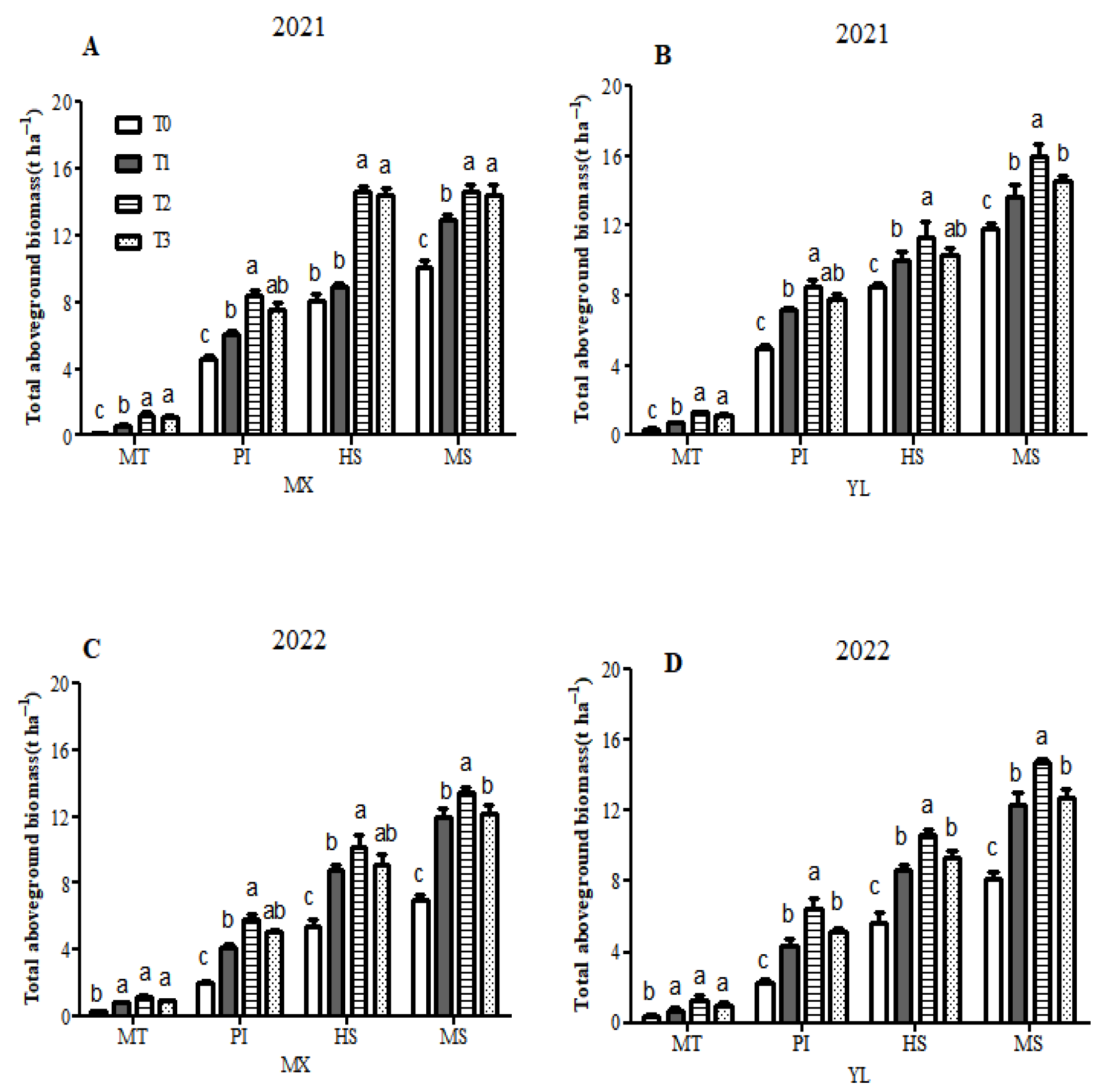
TAB at the MT, PI, HS, and MS were displayed in Figure 2. The highest TAB was found in T2 at MT, PI, HS, and MS, followed by T3 and T1; the lowest TAB was observed in T0 for the two rice cultivars. The TAB of MX in T2 at MT, PI, HS, and MS was 1.21, 7.15, 10.32, and 14.05 t ha−1, which was 70.92, 40.75, 16.74, and 13.26% higher than T1, respectively. The TAB of YL in T2 at MT, PI, HS, and MS was 1.31, 7.51, 11.03, and 15.34 t ha−1, which was 81.25, 29.84, 18.61, and 17.91% higher than T1, respectively. As for the two rice cultivars, significantly higher TAB at HS was observed for YL than for MX.

3.5. Nitrate Reductase (NR) and GOGAT Activities

3.5.1. Nitrate Reductase (NR) Activity

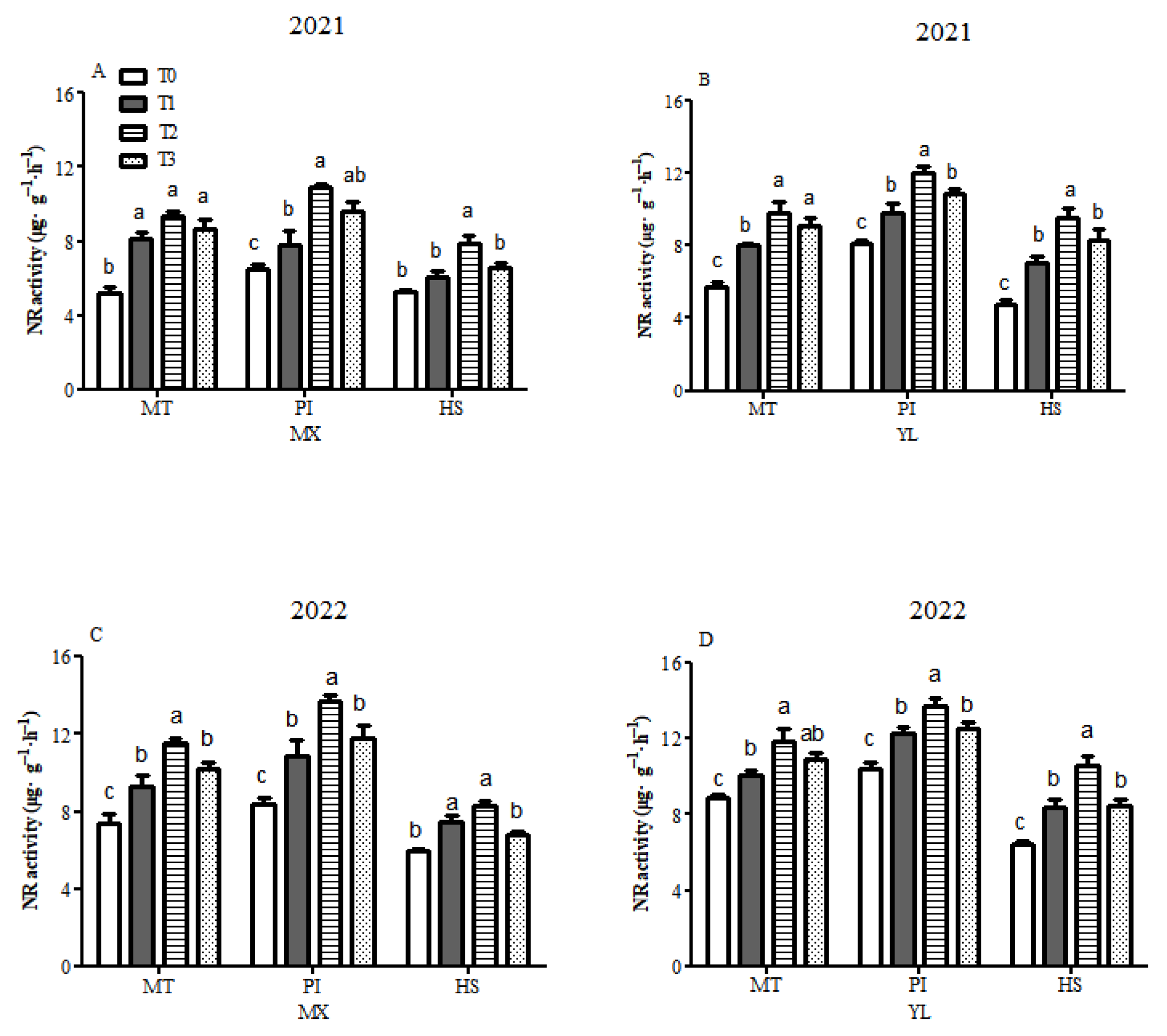
NR activity in the uppermost leaves differed between deep placement treatments for both rice cultivars in 2021 and 2022 (Figure 3). T2 improved the NR activity of rice for the two rice cultivars MX and YL in 2021 and 2022. The highest NR activity was found in T2 at PI and HS for MX and YL at 12.31, 7.12, 12.84, and 9.01 μg·g−1·h−1, respectively. The second-highest NR activity was observed in T3, followed by T1; the lowest NR activity was found in T0. Regarding rice cultivar, the NR activity of YL was 11.28 μg·g−1·h−1 and 7.56 μg·g−1·h−1 at PI and HS, which was 7.84% and 17.76% higher than MX, respectively.

3.5.2. GOGAT Activity

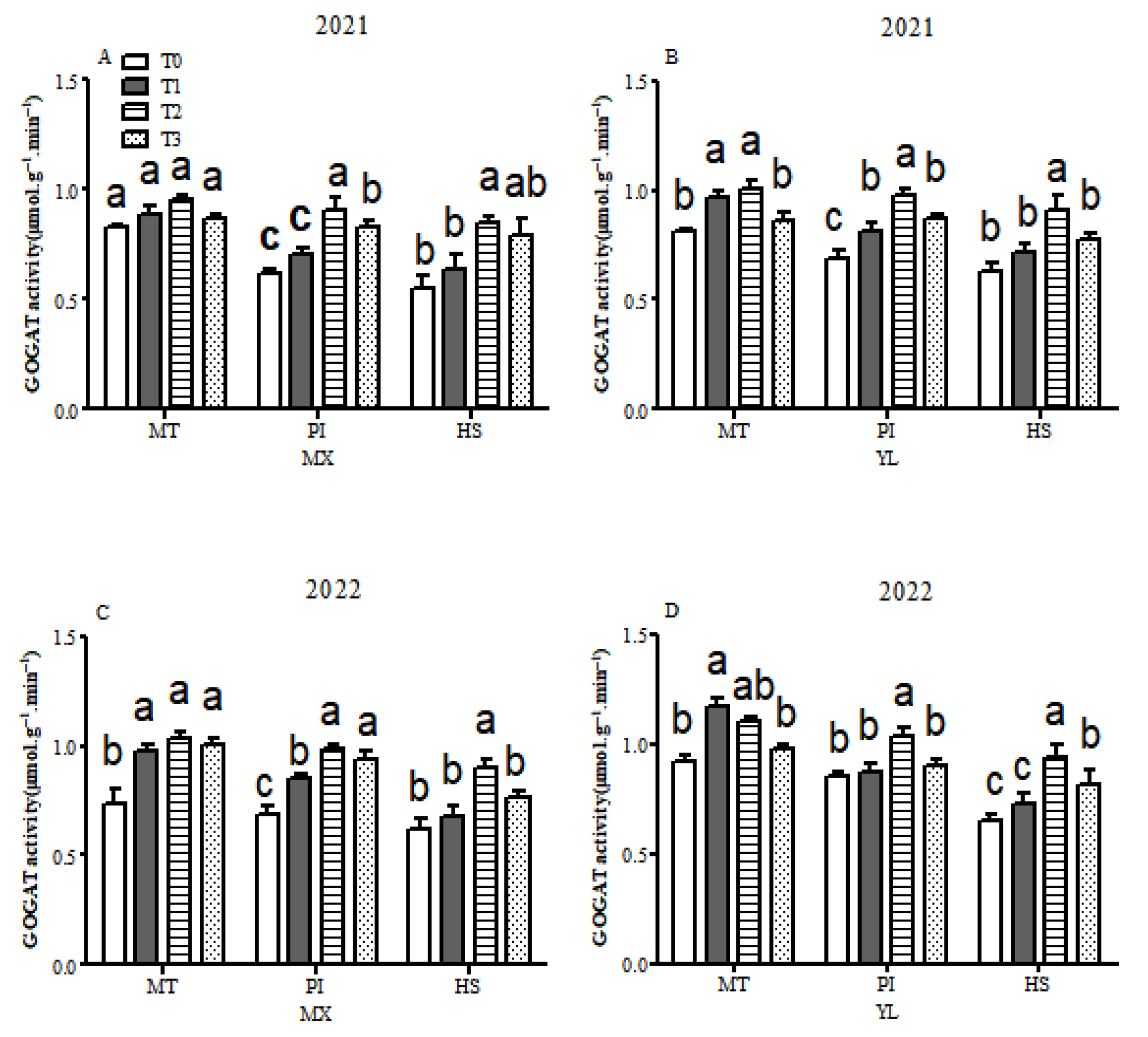
Nitrogen fertilizer treatments remarkably influenced the GOGAT activity of rice (Figure 4). T2 markedly increased the GOGAT activity of rice. The highest GOGAT activity was found in the T2 treatment at PI and HS for MX and YL at 0.95, 0.88, 1.01, and 0.93 μ mol·g−1·min−1, respectively. Significant higher GOGAT activity was found in T2 than T3 at PI and HS for YL, respectively. The lowest GOGAT activity was observed for T0 at MT, PI, and HS for MX and YL, respectively. The GOGAT activity of YL at MT, PI, and HS was higher than that of MX.

3.6. Anti-Oxidant Enzyme Activities in the Uppermost Leaves of Rice

3.6.1. Peroxydase (POD) Activity in the Uppermost Leaves of Rice

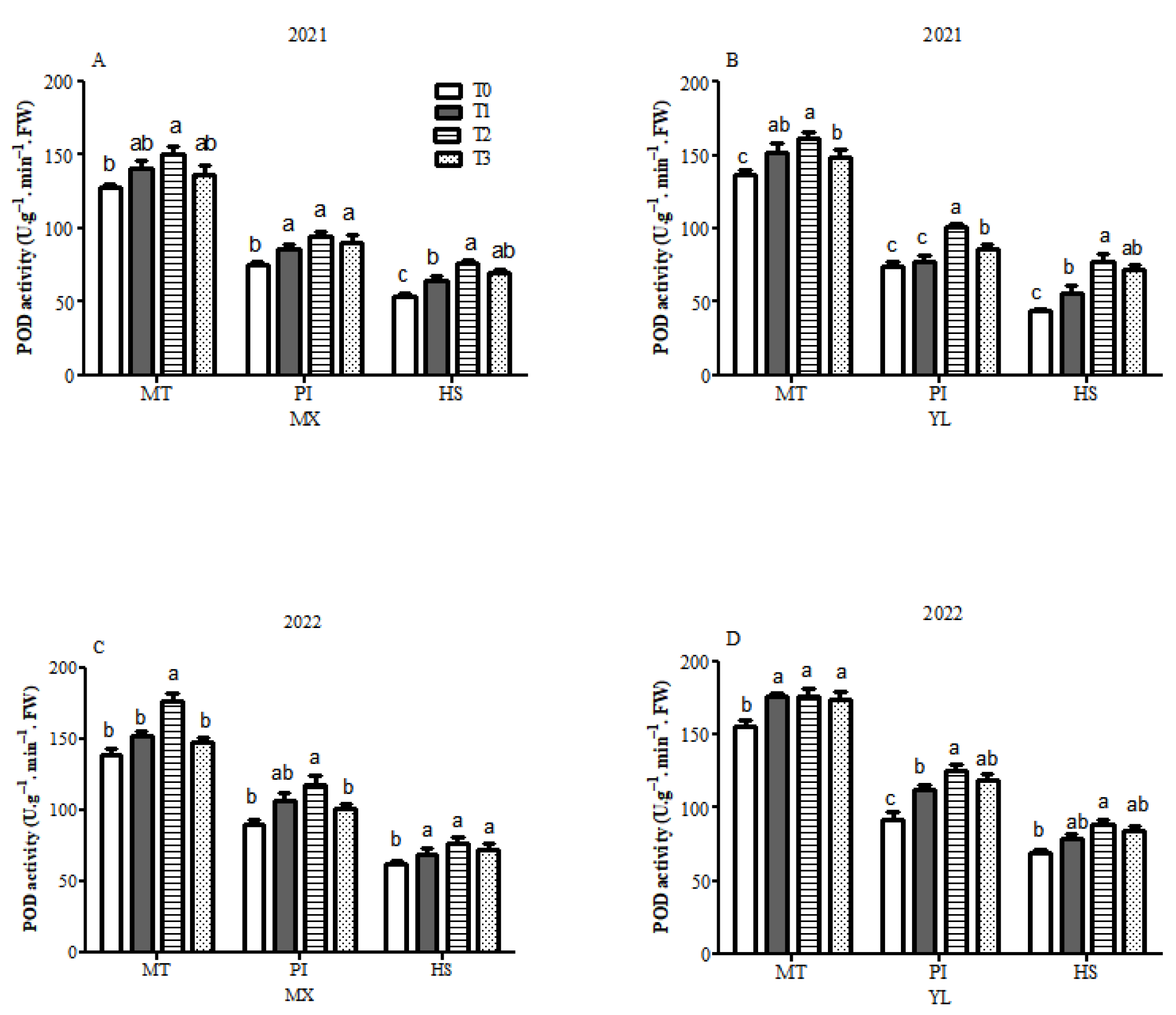
Significant effects of deep placement of nitrogen fertilizer on POD activities of rice were observed for YL at PI and HS and for MX at HS in the early season of 2021 and 2022 (Figure 5). The T2 treatment had the highest POD activity for MX at HS, which was 75.97 U·g−1·min−1 FW, followed by T1; the lowest POD activity was observed in T0. There was no remarkable difference in POD activity between T2 and T3. Significant differences were observed in POD activity among all treatments for YL at PI and HS in 2021 and 2022. The highest POD activity of YL was observed for T2 at PI and HS at 113.46 U·g−1·min−1 FW and 82.66 U·g−1·min−1 FW, respectively. Both 19.34% and 22.40% higher POD activities at PI and HS were also found for T2 in comparison to T1, respectively. The lowest POD activity was observed for T0. As for the two rice cultivars, the POD activities of YL at MT, PI, and HS were significantly higher than those of MX at 159.97, 98.46, and 71.14 U·g−1·min−1 FW, respectively.

3.6.2. Catalase (CAT) Activity in the Uppermost Leaves of Rice

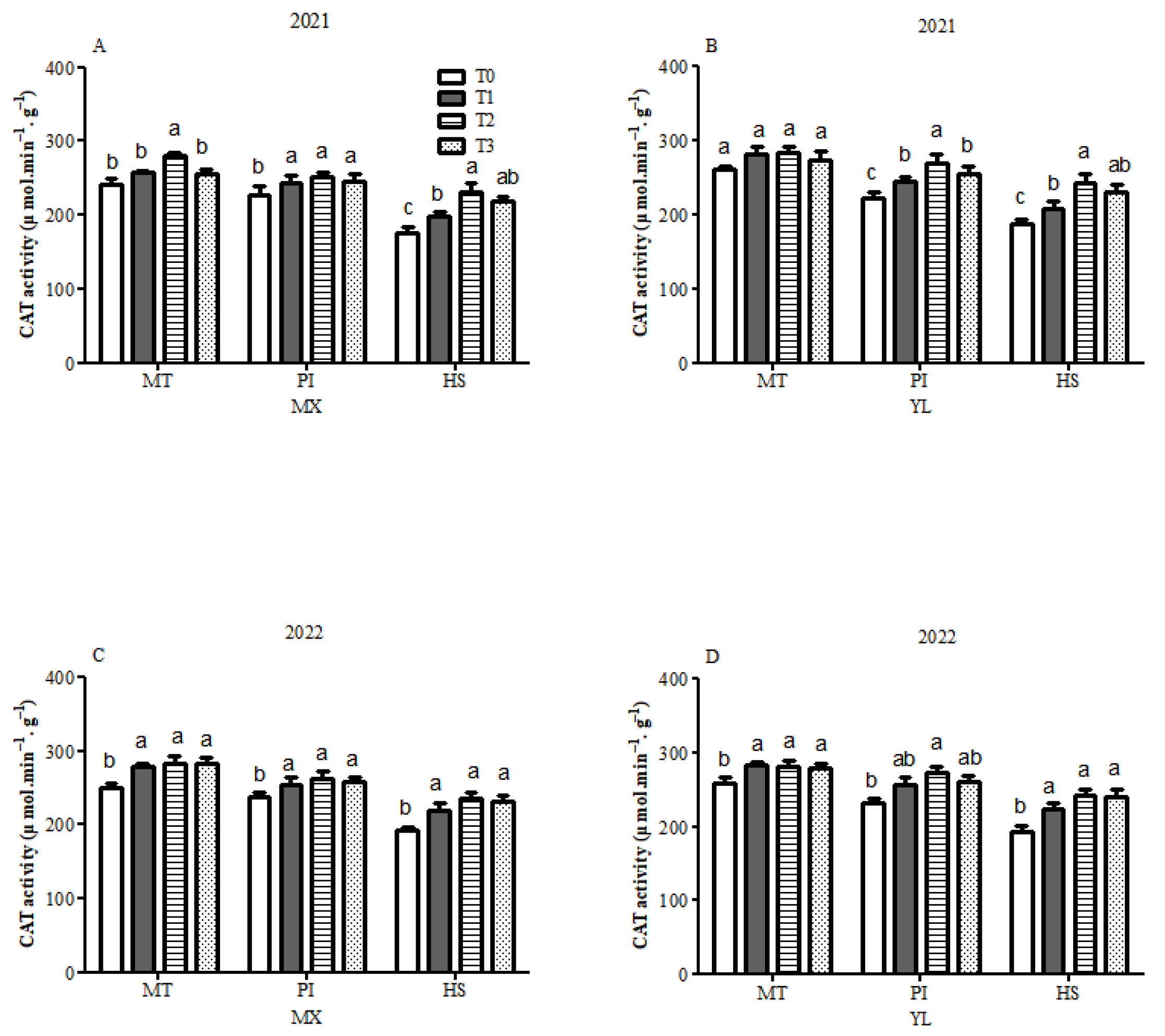
The CAT activity in the uppermost leaves of rice at MT, PI, and HS are shown in Figure 6. The CAT activity of T2 was significantly higher than T1 at MT and HS, at 4.73% and 11.89% higher than T1 for MX, respectively. No remarkable difference was observed between T2 and T3; the lowest CAT activity was observed in T0. The highest CAT activity of YL at PI was also found in T2, followed by T3, and the lowest CAT activity was observed in T1. And there was significant difference in CAT activity seen in YL between all treatments.

3.7. Correlation Between Yield and Its Components, Nitrogen Use Efficiency, LAI, and Biomass

The correlation relationship between yield and its components, nitrogen use efficiency, LAI, and biomass is shown in Table 4. There was a significant positive correlation between yield and productive panicle per hill (PP), total grain number per panicle (GN), and 1000-grain-weight (GW). A significant positive correlation was found between yield and nitrogen recovery efficiency (NRE), nitrogen agronomic efficiency (NAE), nitrogen grain production efficiency (NGPE), and nitrogen harvest index (NHI). Furthermore, there was a significant positive correlation between yield and total aboveground biomass at maturity stage (BM), leaf area index at panicle initiation stage (LAIPI), and leaf area index at heading stage (LAIHS). There was a remarkable positive correlation between PP and NGPE, NHI, BM, and LAIHS; however, a significant negative correlation was observed between PP and GN. For GN, a significant positive correlation with GW, NRE, NAE, NGPE, NHI, and BM was observed. There was a significant positive correlation between GW and NGPE, NHI, and LAIHS. We found that there was a significant positive correlation between NRE and NAE, NGPE, NHI, BM, LAIPI, and LAIHS. The same trend occurred for NAE and NGPE. For NHI, a significant positive correlation with BM and LAIHS was observed. There was a significant positive correlation between BM and LAIPI and LAIHS. Overall, a significant correlation relationship was observed between yield and nitrogen use efficiency, LAI, and total aboveground biomass at the heading and maturity stages (Table 4).

4. Discussion

4.1. Grain Yield

Previous studies indicated that nitrogen fertilizer type significantly influences rice grain yield [20]. Urea deep placement has been shown to increase grain yield by approximately 12% compared with surface broadcasting [21]. Eldridge et al. [22] found that the grain yield of urea-briquetted deep placement was almost equal to or higher than surface-broadcast urea at 78 or 100 kg N ha−1 because of the increase in total crop dry biomass. Zhu et al. [18] reported that mechanically deep-placed blended urea (102 kg N ha−1) and controlled-release urea (48 kg N ha−1) raised grain yield by 4.0–11.0% compared to conventional fertilization, despite a lower nitrogen application rate. However, there were no significant differences in grain yield between the three N fertilizer types (NPK briquette, NPK briquette with nitrification inhibitor, and controlled-released N fertilizer) and two split ratios (one-time basal fertilization and basal-plus-tillering fertilization) at the same application rate [23]. Here, our report showed that mechanized deep-placed slow/controlled-release fertilizer performed better in terms of grain yield than urea and super rice special fertilizer ascribed to increase productive panicles per ha and spikelet number per panicle.

4.2. Nitrogen Use Efficiency

It was very important to enhance nutrition use efficiency by choosing a suitable N fertilizer type with a reasonable fertilization method [24]. Mi et al. showed that urea combined with a nitrification inhibitor outperformed conventional urea in double-rice systems [25]. Additionally, deep fertilizer placement has been demonstrated as an effective strategy for enhancing nitrogen use efficiency by reducing nitrogen loss in rice cultivation [14]. Xu et al. reported that N fertilizer type was the predominant factor that affected nitrogen use efficiency in direct-seeded rice fields. There were higher AV losses for ammonium bicarbonate than for urea or controlled-release fertilizer in direct-seeded rice fields [26]. N fertilizer deep placement resulted in lower AV losses than surface-broadcast fertilizer [27]. Machine-transplanted rice with side-deep fertilization with a nearly 20% lower N application rate could result in a higher nitrogen recovery efficiency relative to that of the conventional fertilization method at the same N rate [28]. Our study indicates that mechanized deep placement of slow- or controlled-release fertilizers yields higher nitrogen use efficiency compared to deep-placed urea at equivalent application rates. While urea deep placement elevates soil NH4+-N concentration temporarily, the gradual nutrient release from slow/controlled-release formulations ensures more prolonged nitrogen availability. This sustained supply aligns better with rice nitrogen demand, thereby enhancing overall nitrogen utilization efficiency [21]. In addition, the present study also showed that higher nitrogen use efficiency was observed in YL compared to MX, which was responsible for larger leaf area (Figure 1) and higher N metabolic enzymes, i.e., NR and GOGAT activities as a hybrid rice (Figure 3, Figure 4 and Figure 5). The result was consistent with a previous study [21]. Rice cultivars exhibiting high nitrogen use efficiency are able to increase nitrogen uptake, thereby improving both nitrogen recovery efficiency and agronomic efficiency [29].

4.3. Physiological Traits

Nitrogen fertilizer type and application methods notably influence rice growth and associated physiological traits [13]. For instance, Zhang et al. reported that combining basal surface broadcast (90 kg N ha−1) with mechanized deep placement of tillering fertilizer (45 kg N ha−1, 10 cm depth) significantly enhanced leaf area index and leaf photosynthetic capacity [30]. In this study, mechanical deep placement of slow/controlled-release fertilizer at 150 kg N ha−1 substantially increased leaf area index and total aboveground biomass at the panicle initiation and heading stages for both MX and YL. Concurrently, NR, GOGAT, and POD activities in leaves were elevated compared with other treatments, potentially attributable to improved root absorption capacity and nitrogen use efficiency [10]. Correlation analysis further revealed a significant positive relationship between total aboveground biomass at maturity and leaf area index at the panicle initiation and heading stages, as well as with nitrogen use efficiency (Table 4).

5. Conclusions

Nitrogen fertilizer type influences rice growth and development. Mechanized deep placement of slow/controlled-release fertilizer at 150 kg N ha−1 significantly enhanced leaf area index and total aboveground biomass at the panicle initiation and heading stages in both Meixiangzan 2 and Y liangyou 1378. Moreover, key nitrogen metabolism enzyme activities—nitrate reductase (NR) and glutamine oxoglutarate aminotransferase (GOGAT)—as well as antioxidant enzyme activities (peroxidase, POD; catalase, CAT) were increased. Compared with urea deep placement at the same nitrogen rate, this treatment raised grain yield by approximately 30.0% and improved nitrogen use efficiency by around 20.0% in both cultivars. Therefore, the application of slow/controlled-release fertilizer at 150 kg N ha−1 via mechanical deep placement represents an efficient nitrogen management strategy, delivering higher grain yield and improved nitrogen use efficiency.

Author Contributions

S.P. and Z.M. initiated and designed the research; H.G., L.X., Y.W., H.L., S.Y. and M.J. performed the experiments; H.G., L.X. and Y.W. analyzed the data and wrote the manuscript; S.P., Z.M. and J.Q. revised and edited the manuscript, and also provided advice on the experiments. All authors have read and agreed to the published version of the manuscript.

Funding

The research was funded by the Special Project for Promoting the Coordinated Development of Urban and Rural Areas and Regions by Introducing Scientific and Technological Achievements of Guangdong Province into Counties and Towns (2025B0202010031), the National Natural Science Foundation of China (31471442) and the Guangdong Basic and Applied Basic Research Foundation (2021A1515011255).

Data Availability Statement

Data available from the authors.

Conflicts of Interest

The authors declare that they have no competing interests that affect the work reported in this paper.

References

  1. Luo, Z.; Song, H.X.; Huang, M.; Zhang, Z.H.; Peng, Z.; Yang, Z.C.; Shen, T.; Luo, G.W. Dense planting with reducing nitrogen rate increased nitrogen use efficiency and translocated nitrogen in grains in double-cropped rice. Agronomy 2022, 12, 1090. [Google Scholar] [CrossRef]
  2. Wang, Z.Q.; Zhang, W.Y.; Beebout, S.S.; Zhang, H.; Liu, L.J.; Yang, J.C.; Zhang, J.H. Grain yield, water and nitrogen use efficiencies of rice as influcecs by irrigation regimes and their interaction with nitrogen rates. Field Crops Res. 2016, 193, 54–69. [Google Scholar] [CrossRef]
  3. Yang, Y.L.; Liu, X.H.; Gao, P.L.; Chen, Y.L.; Wei, H.H.; Zhang, H.C.; Dai, Q.G. Response of grain yield to nitrogen application and optimal nitrogen application rate in a rice-wheat rotation system. Agronomy 2025, 15, 2506. [Google Scholar] [CrossRef]
  4. Zhao, C.; Huang, H.; Qian, Z.H.; Jiang, H.X.; Liu, G.M.; Xu, K.; Hu, Y.J.; Dai, Q.G.; Huo, Z.Y. Effects of side deep placement of nitrogen on yield and nitrogen use efficiency of single season late japonica rice. J. Integr. Agric. 2021, 20, 1487–1502. [Google Scholar] [CrossRef]
  5. Hofmeier, M.; Roelcke, M.; Han, Y.; Lan, T.; Bergmann, H.; Bohm, D.; Cai, Z.C.; Nieder, R. Nitrogen management in a rice-wheat system in the Taihu Region: Recommendations based on field experiments and surveys. Agric. Ecosyst. Environ. 2015, 209, 60–73. [Google Scholar] [CrossRef]
  6. Sun, L.; Lu, Y.F.; Yu, F.W.; Kronzuker, H.J.; Shi, W.M. Biological nitrification inhibition by rice root exudates and its relationship with nitrogen use efficiency. New Phytol. 2016, 212, 646–656. [Google Scholar] [CrossRef]
  7. Zhu, C.H.; Xiang, J.; Zhang, Y.P.; Zhang, Y.K.; Zhu, D.F.; Chen, H.Z. Mechanized transplanting with side deep fertilization increases yield and nitrogen use efficiency of rice in Eastern China. Sci. Rep. 2019, 9, 5653. [Google Scholar] [CrossRef]
  8. Han, X.M.; Hu, C.; Chen, Y.F.; Qiao, Y.; Liu, D.H.; Fan, J.; Li, S.L.; Zhang, Z. Crop yield stability and sustainability in a rice-wheat cropping system based on 34-year field experiment. Eur. J. Agron. 2020, 113, 125965. [Google Scholar] [CrossRef]
  9. Fan, X.R.; Jia, L.J.; Li, Y.L.; Smith, S.J.; Miller, A.J.; Shen, Q.R. Comparing nitrate storage and remobilization in two rice cultivars that differ in theri nitrogen use efficiency. J. Exp. Bot. 2007, 58, 1729–1740. [Google Scholar] [CrossRef]
  10. Chen, Y.Y.; Fan, P.S.; Mo, Z.W.; Kong, L.L.; Tian, H.; Duan, M.Y.; Li, L.; Wu, L.J.; Wang, Z.M.; Tang, X.R.; et al. Deep placement of nitrogen fertilizer affects grain yield, nitrogen recovery efficiency, and root characteristics in direct-seeded rice in South China. J. Plant Growth Regul. 2021, 40, 379–387. [Google Scholar] [CrossRef]
  11. Tao, W.K.; Li, J.Q.; Li, W.W.; Wen, C.X.; Gao, S.; Wang, Y.H.; Liu, D.; Xu, L.; Jiang, Y.; Liu, Z.; et al. Higher rice productivity and low paddy nitrogen loss with optimized irrigation and fertilization practices in a rice-upland system. Agric. Ecosyst. Environ. 2024, 374, 109716. [Google Scholar] [CrossRef]
  12. He, H.B.; Yang, K.; Xu, H.C.; Yao, B.; Li, G.H.; Zhang, X.N.; Yang, R.; You, C.C.; Ke, J.; Wu, L.Q. Precision nitrogen management regimes to obtain high yield and good eating quality of medium indica hybrid rice in mechanical transplanting with bowl-type nursery tray (MTB) based on the critical nitrogen concentration. Eur. J. Agron. 2023, 143, 126711. [Google Scholar] [CrossRef]
  13. Ding, W.C.; Xu, X.P.; He, P.; Ulah, S.; Zhang, J.J.; Cui, Z.L.; Zhou, W. Improving yield and nitrogen use efficiency through alternative fertilizaiton options for rice in China: A meta-analysis. Field Crops Res. 2018, 227, 11–18. [Google Scholar] [CrossRef]
  14. Li, L.; Wang, Y.F.; Nie, L.X.; Ashraf, U.; Wang, Z.M.; Zhang, Z.; Wu, T.Y.; Tian, H.; Yousef Alhaj Hamound Tang, X.R.; Pan, S.G. Deep placement of nitrogen fertilizer increases rice yield and energy production efficiency under different mechanical rice production system. Field Crops Res. 2022, 276, 108359. [Google Scholar] [CrossRef]
  15. Pan, S.G.; Wen, X.C.; Wang, Z.M.; Ashraf, U.; Tian, H.; Duan, M.Y.; Mo, Z.W.; Fan, P.S.; Tang, X.R. Benefits of mechanized deep placement of nitrogen fertilizer in direct-seeded rice in South China. Field Crops Res. 2017, 203, 139–149. [Google Scholar] [CrossRef]
  16. Propper, C.R.; Sedlock, J.L.; Smedley, R.E.; Frith, O.; Shuman-Goodier, M.E.; Grajal-Puche, A.; Stuart, A.M.; Singleton, G.R. Balancing food security, vertebrate biodiversity, and healthy rice agroecosystems in Southeast Asia. Crop Environ. 2024, 3, 43–50. [Google Scholar] [CrossRef]
  17. Nayak, P.; Nandipamu, T.M.K.; Chaturvedi, S.; Dhyani, V.C.; Chandra, S. Synthesis, properties, and mechanistic release-kinetics modeling of biochar-based slow-release nitrogen fertilizers and their field efficacy. J. Soil. Sci. Plant Nutr. 2024, 24, 7460–7469. [Google Scholar] [CrossRef]
  18. Zhu, C.H.; Ouyang, Y.Y.; Diao, Y.; Yu, J.Q.; Luo, X.; Zheng, J.G.; Li, X.Y. Effects of mechanized deep placement of nitrogen fertilizer rate and type on rice yield and nitrogen use efficiency in Chuanxi Plain, China. J. Integr. Agric. 2021, 20, 581–592. [Google Scholar] [CrossRef]
  19. Xie, Q.H.; Yao, X.B.; Yang, Y.; Li, D.J.; Qi, J.Y. Effects of deep application of fertilizer on soil carbon and nitrogen functions in rice paddies. Agronomy 2025, 15, 938. [Google Scholar] [CrossRef]
  20. Datta, A.; Santra, S.C.; Adhya, T.K. Environmental and economic opportunities of applications of different types and application methods of chemical fertilizer in rice paddy. Nutr. Cycl. Agroecosyst. 2017, 107, 413–431. [Google Scholar] [CrossRef]
  21. Yao, Y.L.; Zhang, M.; Tian, Y.H.; Zhao, M.; Zhang, B.W.; Zhao, M.; Zeng, K.; Yin, B. Urea deep placement for minimizing NH3 loss in an intensive rice cropping system. Field Crops Res. 2018, 218, 254–266. [Google Scholar] [CrossRef]
  22. Eldridge, S.M.; Pandey, A.; Weatherley, A.; Willett, I.R.; Myint, A.K.; Oo, A.N.; Ngwe, K.; Mang, Z.T.; Singh, U.; Chen, D.L. Recovery of nitrogen fertilizer can be doubled by urea-briquette deep placement in rice paddies. Eur. J. Agron. 2022, 140, 126605. [Google Scholar] [CrossRef]
  23. Ming, J.; Sun, H.J.; Wang, Y.; Pan, Y.F.; Kronzucker, H.J.; Zhao, D.Q.; Shi, W.M. Mechanical side-deep fertilization mitigates ammonia volatilization and nitrogen runoff and increase profitability in rice production independent of fertilizer type and split ratio. J. Clean. Prod. 2021, 316, 128370. [Google Scholar] [CrossRef]
  24. Liu, H.Y.; Won, P.L.P.; Banayo, N.P.M.; Nie, L.X.; Peng, S.B.; Kato, Y. Late-season nitrogen applications improve grain yield and fertilizer-use efficiency of dry-seeded rice in the tropics. Field Crops Res. 2019, 233, 114–120. [Google Scholar] [CrossRef]
  25. Mi, W.H.; Zheng, S.Y.; Yang, X.; Wu, L.H.; Liu, Y.L.; Chen, J.Q. Comparison of yield and nitrogen use efficiency of different types of nitrogen fertilizers for different rice cropping systems under subtropical monsoon climate in China. Eur. J. Agron. 2017, 90, 79–86. [Google Scholar] [CrossRef]
  26. Xu, J.Z.; Liao, L.X.; Tan, J.Y.; Shao, X.H. Ammonia volatilization in gemmiparous and early seedling stages from direct seeding rice fields with different nitrogen management strategies: A pots experiment. Soil Till. Res. 2013, 126, 169–176. [Google Scholar] [CrossRef]
  27. Ke, J.; He, R.C.; Hou, P.F.; Ding, C.; Ding, Y.F.; Wang, S.H.; Liu, Z.H.; Tang, S.; Ding, C.Q.; Chen, L.; et al. Combined controlled-released nitrogen fertilizers and deep placement effect of N leaching, rice yield and N recovery in machine-transplanted rice. Agric. Ecosyst. Environ. 2018, 265, 402–412. [Google Scholar] [CrossRef]
  28. Zhong, X.M.; Zhou, X.; Fei, J.C.; Huang, Y.; Wang, G.; Kang, X.R.; Hu, W.F.; Zhang, H.R.; Rong, X.M.; Peng, J.W. Reducing ammonia volatilization and increasing nitrogen use efficiency in machine-transplanted rice with side-deep fertilization in a double-cropping rice system in Southern China. Agric. Ecosyst. Environ. 2021, 36, 107183. [Google Scholar] [CrossRef]
  29. Chen, G.; Chen, Y.; Zhao, G.; Cheng, W.; Guo, S.; Zhang, H.; Shi, W. Do high nitrogen use efficiency rice cultivars reduce nitrogen losses from paddy field? Agric. Ecosyst. Environ. 2015, 209, 26–33. [Google Scholar] [CrossRef]
  30. Zhang, Z.; Wang, Y.F.; Wang, Z.M.; Ashraf, M.; Mo, Z.W.; Tian, H.; Duan, M.Y.; Li, Y.Q.; Tang, X.R.; Pan, S.G. Precise delivery of nitrogen at tillering stage enhances grain yield and nitrogen use efficiency in double rice cropping systems of South China. Field Crops Res. 2022, 289, 108739. [Google Scholar] [CrossRef]
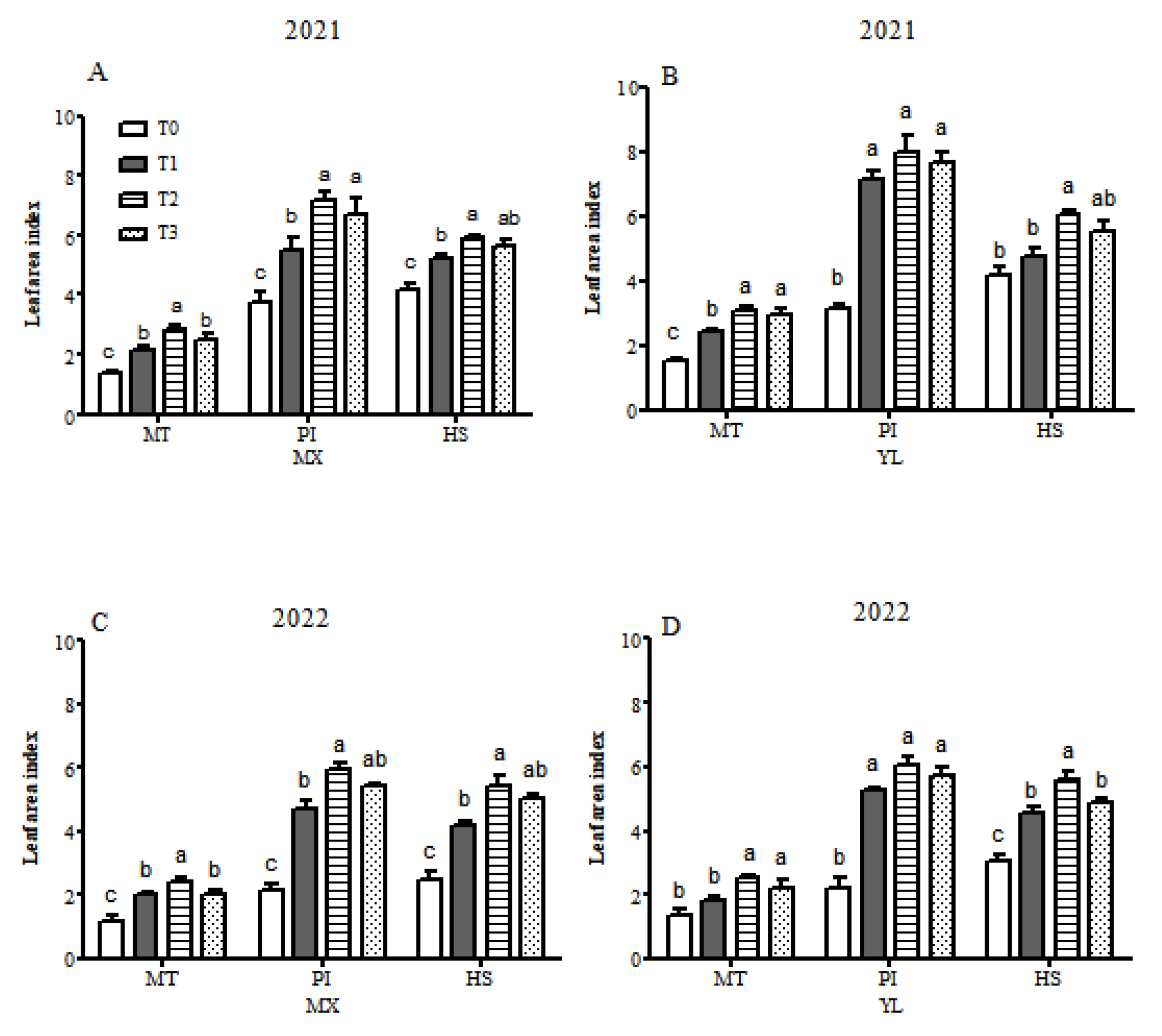
Figure 1. Effects of deep placement of nitrogen fertilizer on leaf area index in machine-transplanted rice in 2021 and 2022. Note: (A,C) MX, (B,D) YL; T0: CK; T1: urea, T2: slow/controlled-release fertilizer, and T3: super rice special fertilizer; MT: mid-tillering stage; PI: panicle initiation stage; HS: heading stage. The different letters (a, b, c) on the error line are significantly different at the 0.05 probability level according to least significant difference test (LSD 0.05).
Agronomy 16 00213 g001
Figure 2. Effects of deep placement of nitrogen fertilizer on total aboveground biomass in machine-transplanted rice in 2021 and 2022. Note: (A,C) MX, (B,D) YL; T0: CK; T1: urea, T2: slow/controlled-release fertilizer, and T3: super rice special fertilizer; MT: mid-tillering stage; PI: panicle initiation stage; HS: heading stage; MS: maturage stage. The different letters (a, b, c) on the error line are significantly different at the 0.05 probability level according to least significant difference test (LSD 0.05).
Agronomy 16 00213 g002
Figure 3. Effects of deep placement of nitrogen fertilizer on leaf NR activity in machine-transplanted rice in 2021 and 2022. Note: (A,C) MX, (B,D) YL; T0: CK; T1: urea, T2: slow/controlled-release fertilizer, and T3: super rice special fertilizer; MT: mid-tillering stage; PI: panicle initiation stage; HS: heading stage. The different letters (a, b, c) on the error line are significantly different at the 0.05 probability level according to least significant difference test (LSD 0.05).
Agronomy 16 00213 g003
Figure 4. Effects of deep placement of nitrogen fertilizer on leaf GOGAT activity in machine-transplanted rice in 2021 and 2022. Note: (A,C) MX, (B,D) YL; T0: CK; T1: urea, T2: slow/controlled-release fertilizer, and T3: super rice special fertilizer; MT: mid-tillering stage; PI: panicle initiation stage; HS: heading stage; The different letters (a, b, c) on the error line are significantly different at the 0.05 probability level according to least significant difference test (LSD 0.05).
Agronomy 16 00213 g004
Figure 5. Effects of deep placement of nitrogen fertilizer on leaf POD activity in machine-transplanted rice in 2021 and 2022. Note: (A,C) MX, (B,D) YL; T0: CK; T1: urea, T2: slow/controlled-release fertilizer, and T3: super rice special fertilizer; MT: mid-tillering stage; PI: panicle initiation stage; HS: heading stage; The different letters (a, b, c) on the error line are significantly different at the 0.05 probability level according to least significant difference test (LSD 0.05).
Agronomy 16 00213 g005
Figure 6. Effects of deep placement of nitrogen fertilizer on leaf CAT activity in machine-transplanted rice in 2021 and 2022. Note: (A,C) MX, (B,D) YL; T0: CK; T1: urea, T2: slow/controlled-release fertilizer, and T3: super rice special fertilizer; MT: mid-tillering stage; PI: panicle initiation stage; HS: heading stage; The different letters (a, b, c) on the error line are significantly different at the 0.05 probability level according to least significant difference test (LSD 0.05).
Agronomy 16 00213 g006
Table 1. Soil properties from the upper 20 cm of soil in the early season of 2021 and 2022.
TimepHSoil Organic
Matter (g kg−1)
Total Nitrogen
(g kg−1)
Total Phosphorus
(g kg−1)
Total Potassium
(g kg−1)
20215.6920.633.261.1620.83
20225.6220.963.471.2719.87
Table 2. Effects of deep placement of nitrogen fertilizer on grain yield and its components in machine-transplanted rice in early season of 2021 and 2022.
YearCultivarTreatmentsProductive
Panicles
(104 ha−1)
Spikelets
Per Panicle
Grain-Filling Rate
(%)
1000-Grain Weight (g)Grain Yield
(t ha−1)
2021MXT0229.13 c127.54 c69.58 c19.95 c3.48 c
T1281.21 b139.20 b75.55 b20.65 b5.29 b
T2315.92 a152.56 a80.83 a21.64 a6.86 a
T3305.51 a145.90 ab78.31 ab21.42 a6.43 a
mean282.94141.2976.0720.925.52
YLT0194.41 c145.09 c72.42 c21.69 c4.10 d
T1256.90 b152.15 bc75.15 bc22.71 b6.07 c
T2295.09 a162.33 a80.95 a23.46 a8.29 a
T3284.68 a158.13 ab78.01 ab22.88 ab7.56 b
mean257.77154.4376.6322.696.51
2022MXT0187.47 c121.63 c76.64 c20.19 c2.88 c
T1277.73 b130.28 bc81.52 b20.78 b4.56 b
T2308.98 a146.46 a86.81 a21.63 a5.85 a
T3298.56 ab134.81 ab83.84 ab21.55 a5.03 b
mean268.19133.3082.2021.044.58
YLT0177.06 c137.53 c79.97 b20.88 b3.62 c
T1232.60 b143.71 b83.19 ab22.79 a5.88 b
T2281.21 a157.26 a85.79 a23.25 a6.71 a
T3260.38 a152.85 a84.46 a22.02 a6.16 b
mean237.81147.8483.3522.245.59
Anova
Y (year) nsns*nsns
C (cultivar) **nsns****
F (fertilizaiton) **********
Y × C ns**nsnsns
Y × F ns**nsns**
C × F ns**ns*ns
Y × C × F ns**nsnsns
Note: MX, Meixiangzhan 2; YL, Y liangyou 1378. Within a column, means followed by the same letter are not significantly different at the 0.05 probability level according to least significant difference test (LSD 0.05). **: (p < 0.01); *: (p < 0.05); ns: not significant variance.
Table 3. Effects of deep placement of nitrogen fertilizer on nitrogen use efficiency in machine-transplanted rice in early season of 2021 and 2022.
YearCultivarTreatmentsNRE
(%)
NAE
(kg·kg−1)
NGPE
(kg·kg−1)
NHI
(%)
2021MXT0 30.91 c46.08 c
T126.54 b12.08 b34.63 b49.46 b
T237.11 a22.53 a40.20 a52.00 a
T331.22 ab19.69 a39.77 a51.03 ab
mean31.6218.1036.3849.64
YLT0 33.29 b47.99 d
T129.54 b13.17 c36.30 b50.95 c
T238.80 a27.93 a45.73 a54.12 a
T333.28 ab23.12 b43.75 a52.80 a
mean33.8721.4139.7751.47
2022MXT0 29.34 b44.53 b
T124.80 b11.16 b33.61 ab47.26 a
T235.95 a19.81 a38.45 a48.96 a
T329.06 b14.30 b35.44 a48.86 a
mean29.9215.0934.2147.40
YLT0 33.93 b43.44 b
T126.91 b15.06 b39.93 a49.45 a
T236.66 a19.56 a40.51 a51.12 a
T333.10 a15.40 b37.94 a49.40 a
mean32.2216.6738.0848.35
Anova
Y (year) nsnsnsns
C (cultivar) ns**ns
F (fertilizer) ********
Y × C nsnsnsns
Y × F ns**ns
C × F nsnsnsns
Y × C × F ns**ns
Note: NRE, nitrogen recovery efficiency; NAE, nitrogen agronomic efficiency; NGPE, nitrogen grain production efficiency; NHI, nitrogen harvest index. Within a column, means followed by the same letter are not significantly different at the 0.05 probability level according to least significant difference test (LSD 0.05). **: (p < 0.01); *: (p < 0.05); ns: not significant variance.
Table 4. Correlation analyses between yield and its components, nitrogen use efficiency, LAI, and biomass.
YieldPPGNGFGWNRENAENGPENHIBHBMLAIPILAIHS
Yield 0.691 *0.786 **0.3810.752 **0.651 *0.894 **0.935 **0.877 **0.3220.584 *0.3010.840 **
PP0.691 * −0.576 *0.4380.3380.4270.4420.578 *0.687 *0.1740.766 *0.1970.531 *
GN0.786 **−0.576 * 0.3410.858 **0.707 *0.653 *0.773 **0.708 *0.2160.774 *0.2110.288
GF0.3810.4380.341 0.4400.2880.1210.4340.1860.3280.3110.2740.333
GW0.752 **0.3380.858 **0.44 0.4990.4830.744 **0.658 *0.4170.2690.3530.545 *
NRE0.651 *0.4270.707 **0.2880.499 0.759 *0.523 *0.621 *0.629 *0.641 *0.528 *0.629 *
NAE0.894 **0.4420.653 *0.1210.4830.759 * 0.908 **0.768 *0.663 *0.795 *0.702 *0.764 *
NGPE0.935 **0.578 *0.773 **0.4340.744 **0.523 *0.908 ** 0.779 *0.718 **0.812 **0.784 *0.770 *
NHI0.877 **0.687 *0.708 **0.1860.658 *0.621 *0.768 *0.779 * 0.1750.644 *0.2350.823 **
BH0.3220.1740.2160.3280.4170.629 *0.663 *0.718 *0.175 0.713 *0.846 **0.870 **
BM 0.584 *0.766 *0.774 *0.3110.2690.641 *0.795 *0.812 **0.644 *0.713 * 0.668 *0.715 *
LAIPI0.3010.1970.2110.2740.3530.528 *0.702 *0.784 *0.2350.846 **0.668 * 0.548 *
LAIHS0.840 **0.531 *0.2880.3330.545 *0.629 *0.764 *0.77 *0.823 **0.870 **0.715 *0.548 *
Note: PP: productive panicle per hill; GN: grain number per panicle; GF: grain-filling percentage; GW: 1000-grain-weight; NRE: nitrogen recovery efficiency; NAE: nitrogen agronomic efficiency; NGPE: nitrogen grain production efficiency; NHI: nitrogen harvest index; BH: total aboveground biomass at heading stage; BM: total aboveground biomass at maturity stage; LAIPI: leaf area index at panicle initiation stage; LAIHS: leaf area index at heading stage. **: (p < 0.01); *: (p < 0.05).
Disclaimer/Publisher’s Note: The statements, opinions and data contained in all publications are solely those of the individual author(s) and contributor(s) and not of MDPI and/or the editor(s). MDPI and/or the editor(s) disclaim responsibility for any injury to people or property resulting from any ideas, methods, instructions or products referred to in the content.