Article

Post-Silking Nitrogen Topdressing Optimizes Nitrogen Accumulation and Enhances Yield in Densely Planted Maize


1
Agricultural College, Inner Mongolia Agricultural University, Hohhot 010018, China
2
Institute of Western Agriculture, Chinese Academy of Agricultural Sciences/Xinjiang Key Laboratory for Crop Gene Editing and Germplasm Innovation, Changji 831100, China
3
Institute of Crop Sciences, Chinese Academy of Agricultural Sciences/Key Laboratory of Crop Physiology and Ecology, Ministry of Agriculture and Rural Affairs, Beijing 100081, China
*
Authors to whom correspondence should be addressed.
These authors contributed equally to this work.
Agronomy 2026, 16(1), 26; https://doi.org/10.3390/agronomy16010026
Submission received: 21 November 2025 / Revised: 12 December 2025 / Accepted: 19 December 2025 / Published: 22 December 2025
(This article belongs to the Special Issue Crop Productivity and Management in Agricultural Systems)

Abstract

Nitrogen is pivotal for high-yield maize (Zea mays L.), but excessive nitrogen application and improper timing remain common in production. Clarifying nitrogen strategies and population nitrogen accumulation under high density is urgent. This study set two density levels (7.5 × 10⁴ plants ha−1; 12.0 × 10⁴ plants ha−1) and eight nitrogen management methods: the no nitrogen (N0), all-basal nitrogen (Fbase, total nitrogen: 360 kg ha−1), and post-silking topdressing methods (total nitrogen: 360 kg ha−1) with nitrogen proportions of 0% (F0%, post-silking topdressing: 0 kg ha−1), 20% (F20%, post-silking topdressing: 72 kg ha−1), 40% (F40%, post-silking topdressing: 144 kg ha−1), 60% (F60%, post-silking topdressing: 216 kg ha−1), 80% (F80%, post-silking topdressing: 288 kg ha−1), and 100% (F100%, post-silking topdressing: 360 kg ha−1). Fertilization was applied via drip irrigation. Results demonstrated that the highest yield was obtained under F60% at 7.5 × 10⁴ plants ha−1 and under F40% at 12.0 × 10⁴ plants ha−1. Appropriate post-silking nitrogen increments synergistically improved kernel number per ear and 1000-kernel weight. The post-silking nitrogen topdressing proportion significantly affected maize stand nitrogen accumulation. At maturity, the highest nitrogen accumulation was observed under F60% at 7.5 × 10⁴ plant ha−1 density and under F40% at 12.0 × 10⁴ plants ha−1 density. For the 7.5 × 10⁴ condition, the duration of the rapid nitrogen accumulation period was extended by 11.9–39.2 days and maximum nitrogen accumulation increased by 15.52–57.20%; at 12.0 × 10⁴, maximum nitrogen accumulation rose by 15.89–64.46%. In summary, appropriately increasing the proportion of post-silking nitrogen application can enhance maize yield, nitrogen accumulation, and nitrogen uptake efficiency. Specifically, a 60% post-silking nitrogen application ratio is recommended for a 7.5 × 10⁴ plants ha−1 density and a 40% ratio for a 12.0 × 10⁴ plants ha−1 density. These two strategies can significantly increase kernel number per ear and 1000-kernel weight, thereby improving maize yield and nitrogen use efficiency.

1. Introduction

Against the backdrop of sustained global population growth, food security has emerged as an increasingly pressing concern. Studies have projected that by 2050, the global population will exceed 9 billion, with food demand expected to rise by 50–70% [1,2]. For most countries, further boosting food production faces growing challenges. As the world’s most populous nation, China supports 22% of the global population with only 9% of the world’s arable land. Amid growing consumer demand and improved living standards, China can only overcome resource constraints and secure food supply by sustainably enhancing crop yield per unit area [3]. Thus, enhancing crop yield per unit area is not only a necessary approach to mitigate the decline in arable land but also a core strategic measure to safeguard national food security.
Increasing planting density is a critical approach to enhancing maize yield, as it can significantly promote dry matter accumulation and crop productivity per unit area [4]. Since the 1930s, maize planting density in the United States has been continuously increasing [5]. A multi-site study by a Chinese research team confirmed that appropriate increases in planting density can significantly enhance grain yield across diverse maize-producing regions [6], with a maximum recorded yield of 24.95 t ha−1 [7].
However, high-density planting also presents a series of challenges. Excessive density increases can intensify inter-plant competition, restrict individual plant development, and induce premature senescence during the late growth stage [8]. In addition, under high-density conditions, stalk development is impaired, root growth is restricted, and lodging resistance is significantly decreased, thereby elevating the risk of lodging at the late stage [9]. Therefore, optimizing yield-enhancing strategies under high density through precise nitrogen management is critically important.
Nitrogen plays a pivotal role in crop yield formation and crop nitrogen use efficiency [10]. Appropriate nitrogen application can modulate the distribution of photosynthates and extend the grain-filling period, thereby synergistically increasing both kernel number per ear and 1000-kernel weight, and ultimately contributing to higher yields [11,12]. However, excessive nitrogen application tends to cause excessive vegetative growth and inhibited reproductive development, leading to an increased barren stalk rate and decreased kernel number per ear [13]. Therefore, nitrogen supply should be synchronized with crop nitrogen demand. Maize has two critical nitrogen-requiring stages: the jointing (V6) to tasseling (VT) stage and the silking (R1) to grain-filling (R2–R4) stage. Nitrogen application during the jointing (V6) to tasseling (VT) stage primarily supports the establishment and development of vegetative organs, significantly promoting leaf cell division and increasing the leaf area index [14]. The grain-filling (R2–R4) stage represents a key period for determining 1000-kernel weight; nitrogen topdressing during this period facilitates the translocation of photosynthetic assimilates to kernels, thereby ensuring nutrient accumulation in grains [15].
A split nitrogen application technique, while maintaining a constant total nitrogen input, can improve nitrogen use efficiency by 15–20% [16]. A basal-to-topdressing nitrogen ratio of 1:2 has been demonstrated to increase the photosynthetic rate by 25% [17]. Similarly, a nitrogen allocation ratio of 3:2 between the jointing (V6) and silking (R1) stages optimizes dry matter accumulation [18], effectively delays leaf senescence, and facilitates both dry matter accumulation and nitrogen remobilization to kernels, thereby achieving synergistic improvements in yield and nitrogen use efficiency [19]. Currently, excessive nitrogen application in maize production remains a prevalent problem in China, largely stemming from farmers’ traditional perception that “more fertilizer guarantees higher yield” [20]. However, excessive nitrogen application not only induces excessive vegetative growth of maize, elevating the risk of lodging and the incidence of pests and diseases, but also causes prominent environmental problems. Surplus nitrogen is lost primarily through leaching, runoff, and denitrification, thereby contributing to water eutrophication, soil acidification, and increased greenhouse gas emissions [21,22]. The traditional “one-time basal fertilization” practice, where nitrogen is intensively applied at the seedling stage, is misaligned with the nutrient demand pattern of maize. This not only results in nutrient loss but also exacerbates nitrogen deficiency during the late growth stage. In contrast, drip fertigation (fertigation via drip irrigation systems) enables precise regulation of nitrogen application, directly delivering dissolved fertilizers to the crop rhizosphere and realizing integrated water–nutrient management. By allowing nitrogen-rich solutions to infiltrate the rhizosphere soil via water droplets, this approach minimizes nitrogen volatilization and leaching losses [23].
Our previous studies have demonstrated that under drip irrigation conditions in Northwest China, increasing maize planting density necessitates a commensurate increase in nitrogen input. Specifically, at a planting density of 12 × 104 plants ha−1, the recommended total nitrogen application rate throughout the growing season is 360 kg ha−1, with split application recommended [24]. However, the patterns of nitrogen uptake in maize before and post-silking under high-density planting conditions remain inadequately characterized.
Therefore, building on our earlier experimental findings, the present study employed a total nitrogen application rate of 360 kg ha−1 and established eight nitrogen management methods under two planting densities, namely, 7.5 × 10⁴ plants ha−1 (farmers’ typical plant density) and 12 × 104 plants ha−1 (high-yield planting density). Through the determination of nitrogen accumulation, translocation, nitrogen use efficiency, and grain yield, this study aims to elucidate the response of grain yield on different ratios of post-silking nitrogen topdressing under high planting densities, thereby providing a theoretical basis for a precision nitrogen management strategy for densely planted maize.

2. Materials and Methods

2.1. Experimental Site

A field experiment was used from 2023 to 2024 in Qitai County, Xinjiang Uygur Autonomous Region, China (43°50′ N, 89°46′ E). Over the past decade, precipitation during the maize growing season (April to September) has ranged from 91.2 to 192.7 mm, and solar radiation has ranged from 3207.9 and 3577.8 MJ m−2. The annual accumulated temperature ≥ 10 °C was 3160–3499.5 °C, and the frost-free period ranged from 156 to 181 days (Figure 1).
The experimental soil was sandy loam. Prior to sowing, the nutrient status of the 0–60 cm soil layer was determined, with the following values: organic matter 15.9 g kg−1, nitrate-N 31.7 mg kg−1, available phosphorus 51.1 mg kg−1, available potassium 378.3 mg kg−1, and pH 7.9. Deep tillage (30–40 cm in depth) was performed annually after harvest, followed by shallow rotary tillage. Additionally, the preceding crop was maize.

2.2. Experimental Design

The experiment was conducted from 2023 to 2024 using a split-plot design, with planting density as the main plot factor and nitrogen application level as the subplot factor. The experimental material was Xianyu 335, a maize hybrid ranked as the second most widely planted maize hybrid in China. Two planting densities were established annually: 7.5 × 10⁴ plants ha−1 (farmers’ typical density) and 12.0 × 10⁴ plants ha−1 (high-yield density). Based on previous research findings [24], 360 kg N ha−1 was uniformly applied to all treatment groups in the present study to ensure consistent fertilization conditions for subsequent analyses, with urea (46% nitrogen) as the nitrogen source. Nitrogen management included no nitrogen application (N0); full nitrogen as basal fertilizer (Fbase); and post-silking topdressing method with nitrogen proportions of 0% (F0%, post-silking topdressing 0 kg ha−1), 20% (F20%, post-silking topdressing 72 kg ha−1), 40% (F40%, post-silking topdressing 144 kg ha−1), 60% (F60%, post-silking topdressing 216 kg ha−1), 80% (F80%, post-silking topdressing 288 kg ha−1), and 100% (F100%, post-silking topdressing 360 kg ha−1). For the N0 treatment, no nitrogen fertilizer was applied throughout the growth period; for the Fbase treatment, the full 360 kg N ha−1 was applied as a basal fertilizer at sowing. For the post-silking split-application method, 36 kg N ha−1 was applied at sowing, with the remaining nitrogen topdressed in splits. Specific nitrogen application proportions and timings for each treatment are detailed in Table 1. Each experimental plot had an area of 66 m2, with three replications per nitrogen treatment. A 0.5 m buffer zone was established between adjacent plots to prevent fertilizer leaching and runoff. Sowing dates were 15 April 2023 and 20 April 2024, with corresponding harvest dates on 22 September 2023 and 26 September 2024, respectively.
During 2023–2024, maize was sown using an integrated precision planter (ACME-BZQ, ACME Group, Beijing, China), which synchronized drip tape installation, plastic film mulching (70 cm × 0.01 mm, width × thickness; Tianye Co., Shihezi, China), and seed metering. Plants were established with alternating wide-narrow row spacing (alternating row widths of 70 and 40 cm, respectively) [25], and precision sowing at a depth of 5.0 cm. For all treatment, 108 kg ha−1 of P2O5 (from triple superphosphate, 46% P2O5) and 37.5 kg ha−1 of K2O (from potassium sulfate, 50% K2O) were applied as basal fertilizers at sowing. Additionally, 142.5 kg KH2PO4 ha−1 was applied in three splits: at the 12-leaf stage, 4 days before silking, and 6 days after silking. All treatment utilized a film-mulched drip irrigation and fertigation system. Nitrogen application was regulated using a 30-L differential-pressure fertigation tank equipped with a fertilizer valve and water meter. Within 24 h after sowing, 22.5 mm of water was applied via drip irrigation to ensure uniform emergence. Total irrigation amount during the growing season was 540 mm, applied in 9 increments at 9–10 day intervals starting 60 days after sowing. At the V7 stage, 600 mL ha−1 of a maize-specific growth regulator was foliar-applied to enhance lodging resistance and reduce the risk of stalk lodging.

2.3. Sampling and Measurements

2.3.1. Key Phenological Stage Recording

Accurate observation and recording of the key phenological stages for each treatment were conducted. The main stages included sowing date, emergence, 6-leaf stage (V6), 9-leaf stage (V9), 12-leaf stage (V12), silking stage (R1), milk stage (R3), and physiological maturity (R6), with the specific dates of occurrence documented for each stage [26].

2.3.2. Determination of Plant Nitrogen Content

Sampling was conducted at the V12, R1, R3, and R6 stages of maize. For each treatment, five uniform and representative plants were selected. Plant tissues were separated starting from the basal stem near the soil surface. Before silking, plants were divided into stems and leaves; after silking, they were separated into stems, leaves, husks, female ears, male tassels, and kernels. Each organ was placed in a paper bag, blanched at 105 °C for 30 min, and then oven-dried at 65 °C to constant weight [27]. The dried maize plant samples were pulverized and passed through a 40-mesh sieve, with nitrogen content analyzed by the Kjeldahl method [28].
Whole plant nitrogen (kg ha−1) = Nitrogen content × whole plant nitrogen dry matter
PSNT (kg ha−1) = Nitrogen accumulation amount at R1 − Nitrogen accumulation amount at R6
CR-PSNT (%) = PSNT/grain nitrogen
PSNA (kg ha−1) = whole plant nitrogen at R6 − whole plant nitrogen at R1
PSNT: pre-silking nitrogen translocation, PSNA: post-silking nitrogen accumulation, CR-PSNT: contribution of pre-silking nitrogen translocation to grain nitrogen.
NUE = (Nuptake-NNuptake-N0)/Napplied
NUE: Nitrogen uptake efficiency; Nuptake-N: Total nitrogen uptake by crop plants under the nitrogen-applied treatment; Nuptake-N0: Total nitrogen uptake by crop plants under the no-nitrogen application (N0); Napplied: Total amount of nitrogen fertilizer actually applied to the soil.
NPE = (YNYN0)/(Nuptake-NNuptake-N0)
NPE: Nitrogen physiological efficiency; YN: Grain yield of crops under the nitrogen-applied treatment; YN0: Grain yield of crops under the no-nitrogen application (N0).

2.3.3. Yield Determination

At physiological maturity, yield was determined by manually harvesting 10-m row segments from the middle of each plot. Twenty ears were sampled from the middle two rows of each plot for the determination of kernel number per ear. For each plot, ear number, grain moisture content, and grain yield were determined. Grain moisture content was measured using a PM-8188 portable moisture meter (Kett Electric Laboratory, Tokyo, Japan), and grain yield was adjusted to a 14% moisture basis. Both grain yield and 1000-kernel weight were reported on a 14% moisture basis.

2.3.4. Data Processing and Analysis

A split-plot two-way analysis of variance (ANOVA) with repeated measures was employed, where the statistical factors included planting density (main plot factor, fixed), nitrogen management (subplot factor, fixed), and year (replication factor, random). The independence of observations and homogeneity of variances were ensured through a randomized grouping design. Fisher’s least significant difference (LSD) test was employed for mean comparison. Visual charts were plotted using OriginPro 2025 (Origin Lab Corporation, Northampton, MA, USA), and data were tabulated in Microsoft Excel 2019 (Microsoft Corporation, Redmond, WA, USA). Principal component analysis (PCA) was performed via the multivariate analysis module of OriginPro 2025.

3. Results

3.1. Yield and Yield Components

Year, planting density, post-silking nitrogen topdressing ratio, and their interactions (year × density, year × post-silking nitrogen topdressing ratio, density × post-silking nitrogen topdressing ratio, and year × density × post-silking nitrogen topdressing ratio) all significantly affected grain yield, kernel number per ear, and 1000-kernel weight. Year and planting density also significantly affected the number of harvested ears (Table 2).
Compared with the no-nitrogen factor (N0), nitrogen application significantly increased yield by 1.85–4.57 t ha−1 at 7.5 × 10⁴ plants ha−1 and by 5.30–8.02 t ha−1 at 12 × 104 plants ha−1, confirming a stronger yield-promoting effect of nitrogen supply in the 12 × 104 plants ha−1 population. At a planting density of 7.5 × 10⁴ plants ha−1, the highest grain yield was obtained under F60%, which was a 16.61% increase compared with the all-basal nitrogen application (Fbase). At a planting density of 12 × 104 plants ha−1, the optimal post-silking nitrogen topdressing proportion decreased to 40%, with a yield 14.38% higher than Fbase.
These results indicate that, under the same total nitrogen application rate, maize at a planting density of 12 × 104 plants ha−1 requires more pre-silking nitrogen supply than 7.5 × 10⁴ plants ha−1. As the proportion of post-silking nitrogen topdressing increased, both kernel number per ear and 1000-kernel weight exhibited a trend of first increasing and then decreasing. The highest kernel number per ear and 1000-kernel weight at 7.5 × 10⁴ plants ha−1 and 12 × 104 plants ha−1 densities were observed in F60% and F40%.

3.2. Effects of Post-Silking Nitrogen Topdressing on Nitrogen Accumulation in Maize

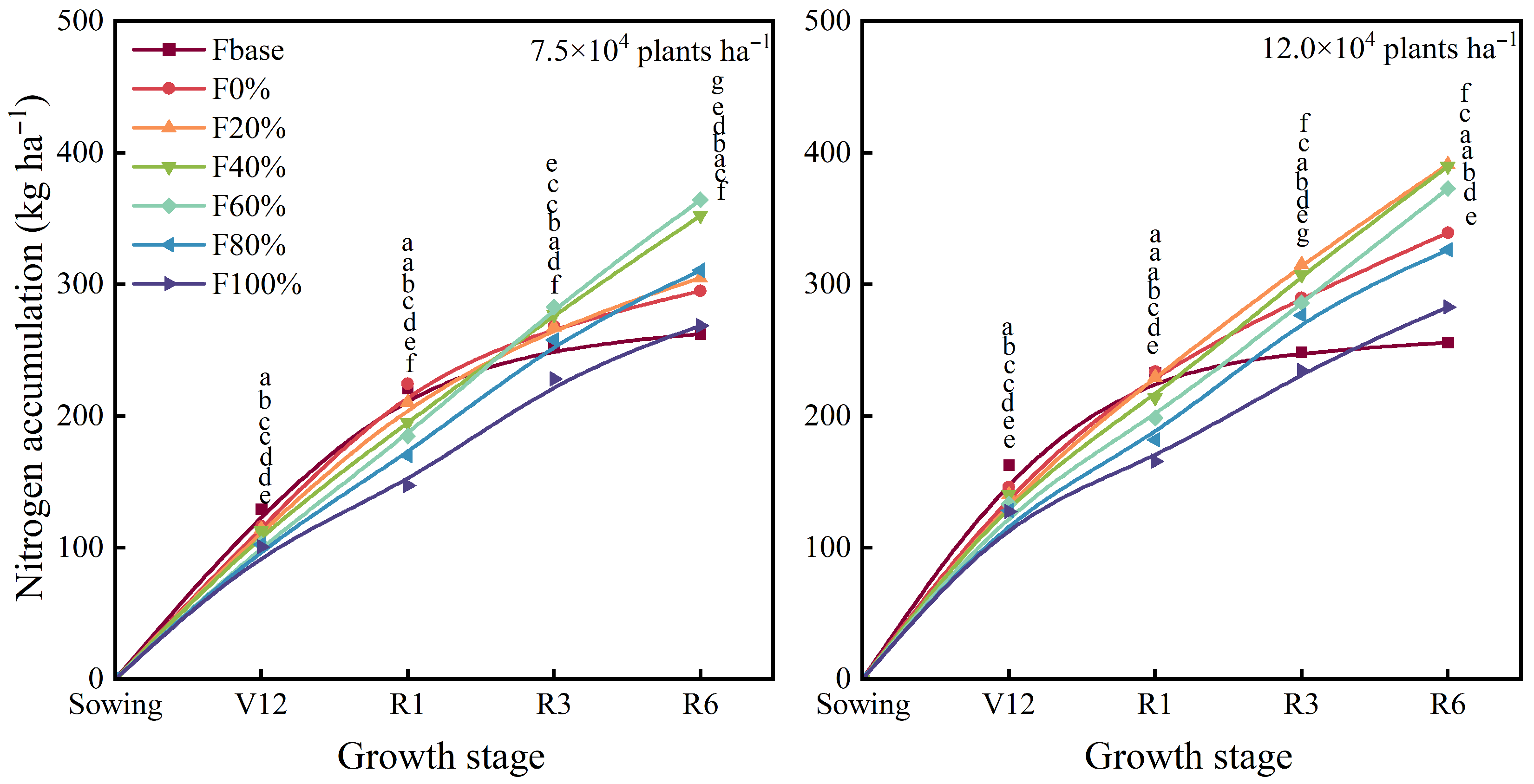
Maize nitrogen accumulation increased continuously throughout the growing season, with all treatments exhibited similar accumulation dynamics (Figure 2). At the V12, R1, R3, and R6 stages, nitrogen accumulation at 12 × 104 plants ha−1 exceeded that at 7.5 × 10⁴ plants ha−1 by 28.60, 13.99, 20.97, and 30.55 kg ha−1, respectively, demonstrating that increasing planting density enhances the population nitrogen uptake capacity.
Post-silking nitrogen topdressing proportion significantly affected maize nitrogen accumulation at each growth stage. Nitrogen accumulation at silking (R1) decreased with increasing post-silking nitrogen topdressing, while nitrogen accumulation at physiological maturity (R6) initially increased and then stabilized. The highest R6 nitrogen accumulation at 7.5 × 10⁴ plants ha−1 and 12 × 104 plants ha−1 was observed in F60% and F40%, respectively.
Logistic equation fitting analysis (Table 3) demonstrated that, relative to 7.5 × 10⁴ plants ha−1, 12 × 104 plants ha−1 delayed the onset of rapid nitrogen accumulation (t1) by 6.7 days, advanced the termination of rapid nitrogen accumulation (t2) by 3.5 days, and shortened the duration of rapid nitrogen accumulation (T) by 10.2 days. However, 12 × 104 plants ha−1 increased the maximum rate of nitrogen accumulation (Vmax) by 12.10%, resulting in an 8.47% increase in total nitrogen accumulation, indicating that 12 × 104 plants ha−1 promoted overall nitrogen accumulation by accelerating nitrogen uptake rate.
At 7.5 × 10⁴ plants ha−1, increasing the proportion of post-silking nitrogen topdressing delayed t1 by 0.6–5.7 days and t2 by 12.5–43.6 days, extending T by 11.9–39.2 days; this offset the 24.39% decrease in Vmax and increased maximum nitrogen accumulation (Wmax) by 15.52–57.20%. At 12 × 104 plants ha−1, increasing the proportion of post-silking nitrogen topdressing delayed t1 by 3.6–6.1 days and t2 by 25.6–50.9 days, extending T by 26.9–44.8 days; Vmax decreased by 33.53%, and Wmax increased by 15.89–64.46%. These results indicate that an excessive post-silking nitrogen topdressing (≥80%) at 12 × 104 plants ha−1 reduced pre-silking nitrogen accumulation, thereby impairing vegetative organ development.

3.3. Effects of Post-Silking Nitrogen Topdressing on Nitrogen Translocation in Maize

We analyzed the effects of post-silking nitrogen topdressing on nitrogen translocation from maize vegetative organs (Table 4). At 7.5 × 10⁴ plants ha−1, leaf and stem nitrogen translocation accounted for 50.72% and 49.28% of total vegetative nitrogen translocation, respectively; at 12 × 104 plants ha−1, the corresponding proportions were 53.65% and 46.35%, indicating a stronger dependence on leaf nitrogen for kernel development in the 12.0 × 10⁴ plants ha−1 stand.
Both the vegetative nitrogen translocation rate and its contribution to kernel nitrogen exhibited a trend of first decreasing and then increasing with increasing post-silking nitrogen topdressing, with the lowest values in F60% (7.5 × 10⁴ plants ha−1) and F40% (12 × 104 plants ha−1). This suggests that optimal post-silking nitrogen topdressing balances post-silking nitrogen accumulation and pre-silking nitrogen translocation, preventing excessive vegetative nitrogen remobilization and maintaining photosynthate synthesis duration, which is critical for 12 × 104 plants ha−1, where pre-silking nitrogen reserves support early vegetative growth.
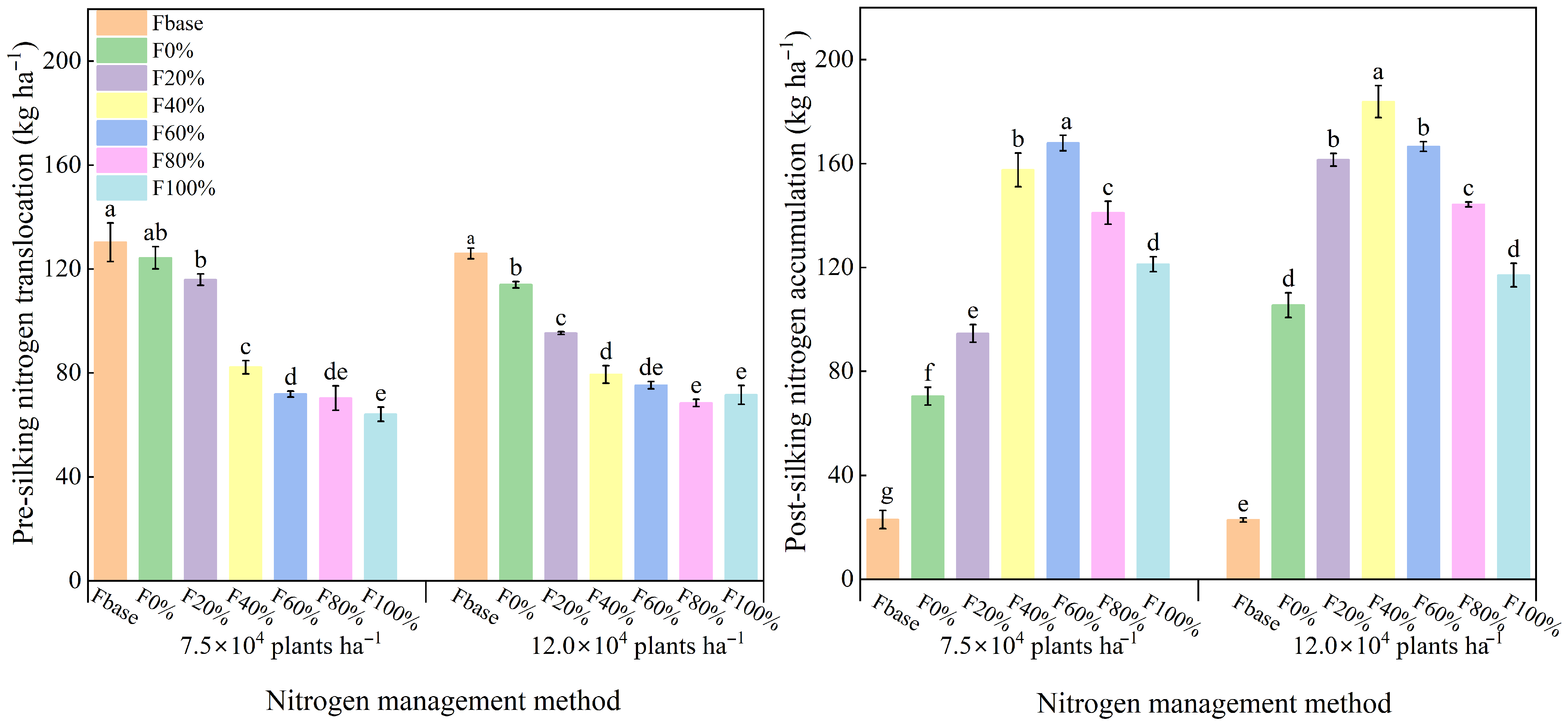
The pre-silking nitrogen translocation rate (PSNTR) decreased significantly with increasing post-silking nitrogen topdressing (Figure 3): increasing post-silking nitrogen topdressing from 0% to 40% reduced pre-silking nitrogen translocation (PSNT) by 37.98% and 35.94%; further increasing it to 60% reduced PSNT by 44.01% and 42.04%. Post-silking nitrogen accumulation (PSNA) first increased then decreased with post-silking nitrogen topdressing: at post-silking nitrogen topdressing of 40%, PSNA increased by 83.80% and 87.58% relative to F0%; beyond 40% post-silking nitrogen topdressing, PSNA continued to increase by 6.01% but decreased by 9.42%. This divergence confirms that 12 × 104 plants ha−1 has a stronger reliance on pre-silking nitrogen reserves, and excessive post-silking nitrogen topdressing cannot compensate for insufficient pre-silking nitrogen, thereby limiting PSNA.

3.4. Effects of Post-Silking Nitrogen Topdressing on Nitrogen Use Efficiency

Nitrogen uptake efficiency (NUE) first increased then decreased with increasing post-silking nitrogen topdressing (Table 5). At 7.5 × 10⁴ plants ha−1, F60% exhibited the highest NUE, with a 13.04–32.22% increase relative to Fbase; at 12 × 104 plants ha−1, the optimal factor was F20%, resulting in a 7.43–37.54% higher NUE than Fbase.
Nitrogen physiological efficiency (NPE) was negatively correlated with post-silking nitrogen topdressing: increasing the post-silking nitrogen topdressing from 0% to 60% reduced NPE by 15.4–15.6%. The lower optimal post-silking nitrogen topdressing for 12 × 104 plants ha−1 further illustrates that 12 × 104 plants ha−1 requires more pre-silking nitrogen to optimize NUE and mitigate NPE loss induced by excessive post-silking nitrogen topdressing.

3.5. Principal Component Analysis of Yield and Related Parameters Under Different Post-Silking Nitrogen Proportions

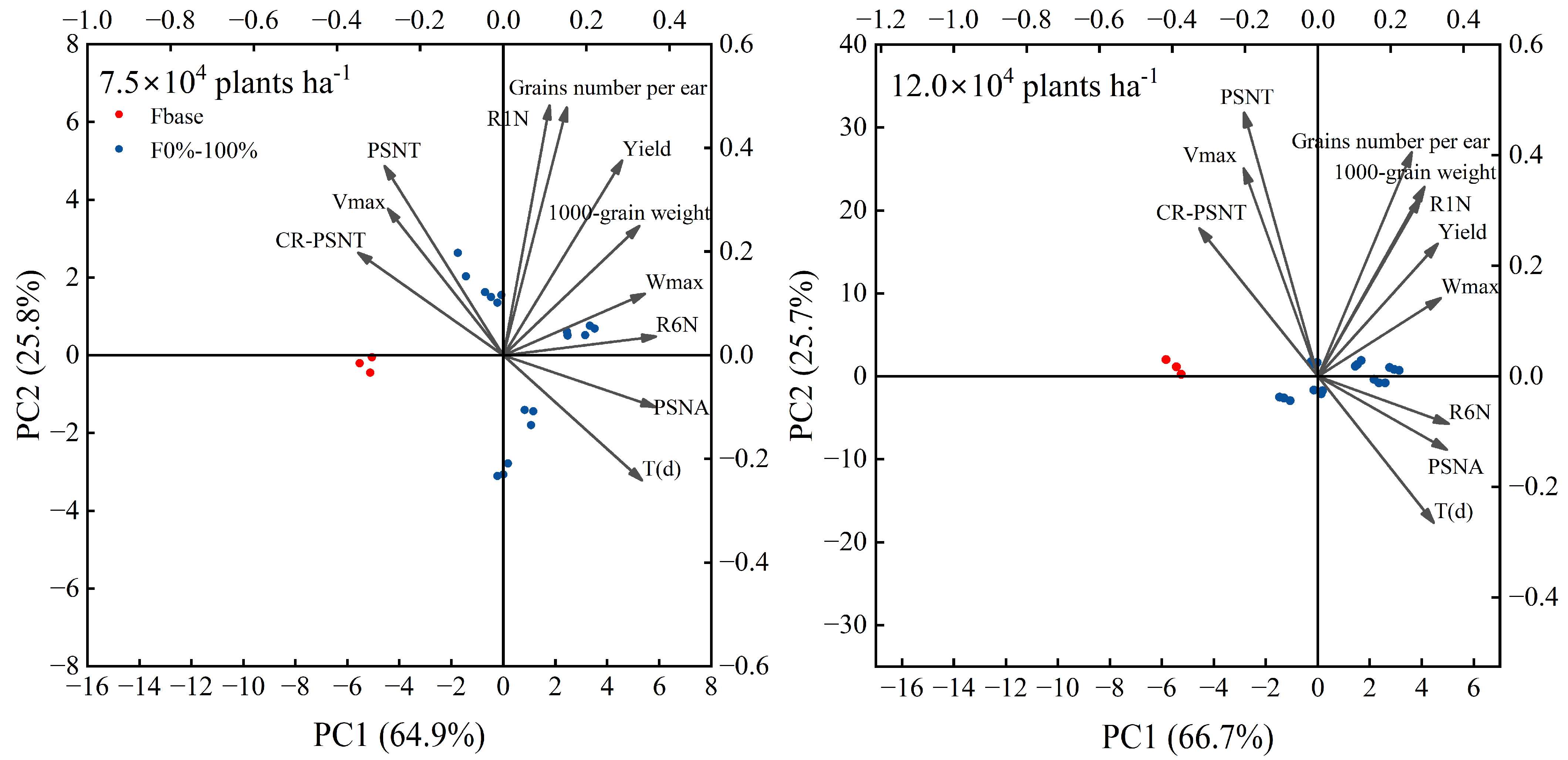
Principal component analysis (PCA, Figure 4) demonstrated that nitrogen accumulation at the silking and maturity stages was positively associated with the grain yield. Pre-silking nitrogen translocation (PSNT) and post-silking nitrogen accumulation (PSNA) also positively affected yield. At a planting density of 12 × 104 plants ha−1, PSNT was more strongly positively correlated with kernel number per ear. In contrast, at 7.5 × 10⁴ plants ha−1, PSNT had a stronger positive correlation with both grain yield and 1000-kernel weight. This directly confirms that the 12.0 × 10⁴ plants ha−1 density exhibits a stronger reliance on pre-silking nitrogen to support kernel formation, whereas the 7.5 × 10⁴ plants ha−1 density derives greater benefits from post-silking nitrogen, reinforcing the core conclusion that increasing density requires increased pre-silking nitrogen supply.

4. Discussion

4.1. Effects of Fertilization Methods on Maize Yield

Nitrogen management modulates maize yield by regulating photosynthate partitioning and grain-filling duration [29], with pre-silking nitrogen availability regulating floret differentiation and kernel number per ear via cytokinin synthesis [30]. Within the nitrogen application rate range of 0–300 kg ha−1, nitrogen supply promotes floret differentiation and kernel development, thereby leading to the achievement of peak kernel number per ear and 1000-kernel weight. However, excessive nitrogen application tends to induce excessive vegetative growth, inhibit reproductive organ development, and increase the incidence of barren stalks [31]. Previous studies have demonstrated that conventional all-basal nitrogen application (Fbase) often causes early nitrogen excess and late nitrogen deficiency, reducing kernel number per ear and 1000-kernel weight [32].
This study demonstrates that 12 × 104 plants ha−1 required a lower optimal post-silking nitrogen topdressing (40%) than 7.5 ×10⁴ plants ha−1 to achieve the maximum yield. At 12 × 104 plants ha−1, F40% increased the yield by 16.61% relative to Fbase, with kernel number per ear and 1000-kernel weight increasing by 11.02% and 5.80%, respectively. In contrast, excessive post-silking nitrogen topdressing (≥80%) at 12 × 104 plants ha−1 reduced pre-silking nitrogen accumulation, impairing vegetative organ development and limiting yield. These results align with previous findings that split nitrogen application increases yield by 12–18% [33,34], but they further revealed that high-density maize requires a higher proportion of pre-silking nitrogen to satisfy the high nitrogen demand for early vegetative growth and floret differentiation.

4.2. Effects of Fertilization Methods on Nitrogen Accumulation

Maize nitrogen accumulation exhibits a stage-specific uptake pattern, with the jointing (V6) to 12-leaf (V12) stages and silking (R1) to kernel formation (R2–R3) stages being the peak periods of nitrogen [35]. Pre-silking nitrogen is primarily allocated to leaves and stems, accounting for 68–72% of total plant nitrogen, while post-silking nitrogen is translocated to the kernels [36,37]. Conventional nitrogen fertilization regimes tend to result in excessive nitrogen accumulation during the early growth stages of maize, which in turn leads to nitrogen deficiency during the grain-filling period [38]. By appropriately adjusting the timing of nitrogen application, post-silking nitrogen uptake can be significantly increased by 15–20%, thereby notably enhancing kernel nitrogen accumulation [39]. Our results demonstrated that increasing post-silking nitrogen topdressing extended the duration of rapid nitrogen accumulation (T) by 11.9–44.8 days and improved maximum nitrogen accumulation (Wmax) by 15.52–64.46% at 12 × 104 plants ha−1. Optimizing pre-silking nitrogen supply not only supports the establishment of vegetative organs to maintain the capacity for photosynthate synthesis but also provides reserves for the nitrogen demand of grains after the end of the rapid nitrogen accumulation stage. Therefore, under high-density planting conditions (12 × 104 plants ha−1), the post-silking nitrogen topdressing proportion should be maintained at 40%, which helps balance the nutrient requirements of pre-silking vegetative organ establishment and post-silking kernel filling in maize.
Precise nitrogen management for maize via regulated application timing and proportions can extend the soil nitrogen release period to 60–80 days [40,41], thereby synchronizing soil nitrogen supply with maize nitrogen demand throughout the entire growth cycle [42]. This synchronization secures nitrogen availability during grain filling, promotes deep rooting, and enhances post-silking nitrogen uptake efficiency. These effects ultimately increase the nitrogen use efficiency by 12–15% and grain yield by 8–10% [43]. Nitrogen use efficiency further reflects density-dependent pre-silking nitrogen demand, and 12 × 104 plants ha−1 achieved the maximum NUE at 20% post-silking nitrogen topdressing, with a 7.43–37.54% increase relative to Fbase. These findings complement previous studies on split-nitrogen strategies [44].

5. Conclusions

This study demonstrates that under a constant total nitrogen application rate, the optimal post-silking nitrogen topdressing proportion of maize is density-dependent: allocating 60% of the total nitrogen application to post-silking increased grain yield by 16.61% at 7.5 × 10⁴ plants ha−1. In contrast, allocating 40% of the total nitrogen application to post-silking under a higher planting density of 12 × 104 plants ha−1 increased grain yield by 14.38%. Mechanistically, split nitrogen application (especially optimized post-silking topdressing) extends the duration of the rapid nitrogen accumulation period by 11.9–39.2 days and increases the maximum nitrogen accumulation by 15.52–64.46%. Under high-density conditions, nitrogen application should be shifted to the pre-silking stage to resolve the trade-off between early nutritional demands and late grain-filling requirements, thereby providing targeted nitrogen management strategies for high-yield, high-efficiency maize production across varying planting densities.

Author Contributions

Conceptualization, J.X. and Z.W.; methodology, Y.Z., G.Z., J.X. and J.Z.; soft ware, Y.Z. and J.X.; validation, Y.Z., J.Z., J.X., G.Z., Z.W. and S.L.; formal analysis, Y.Z., Z.W. and J.X.; investigation, Y.Z., G.Z., J.Z., Y.C. and W.X.; resources, S.L. and Z.W.; data curation, Y.Z.; writing—original draft preparation, Y.Z., J.X. and G.Z.; writing—review and editing, Y.Z., J.X., G.Z., J.Z., R.X., B.M., K.W., Z.W. and S.L.; visualization, S.L. and Z.W.; supervision, J.X., Z.W. and S.L.; project administration, J.X. and Z.W.; funding acquisition, Z.W. All authors have read and agreed to the published version of the manuscript.

Funding

This research was financed by Key Research and Development Program of Xinjiang (2023B02040-1), the earmarked fund for China Agriculture Research System (CARS-02-15), National Natural Science Foundation (32460534).

Data Availability Statement

The original contributions presented in this study are included in the article. Further inquiries can be directed to the corresponding authors.

Conflicts of Interest

The authors declare that they have no known competing financial interests or personal relationships that could have appeared to influence the work reported in this paper.

References

  1. Stagnari, F.; Maggio, A.; Galieni, A.; Pisante, M. Multiple benefits of legumes for agriculture sustainability: An overview. Chem. Biol. Technol. Agric. 2017, 4, 2. [Google Scholar] [CrossRef]
  2. Mccarthy, U.; Uysal, I.; Badia, M.R.; Mercier, S.; Donnell, C.O.; Ktenioudaki, A. Global food security-issues, challenges and technological solutions. Trends Food Sci. Technol. 2018, 77, 11–20. [Google Scholar] [CrossRef]
  3. Zhang, W.F.; Ma, L.; Huang, G.Q.; Wu, L.; Chen, X.P.; Zhang, F.S. The development and contribution of nitrogenous fertilizer in China and challenges faced by the country. Sci. Agric. Sin. 2013, 46, 3161–3171. [Google Scholar]
  4. Greveniotis, V.; Zotis, S.; Sioki, E.; Ipsilandis, C. Field population density effects on field yield and morphological characteristics of maize. Agriculture 2019, 9, 160. [Google Scholar] [CrossRef]
  5. Zhou, W.Q.; Lian, X.R.; Liu, Z.X.; Zhou, Y.Q.; Zhao, X.Q. Research progress on the mechanism of controlling maize plant height and ear height. Mol. Plant Breed. 2021, 19, 7965–7976. [Google Scholar]
  6. Li, S.K.; Zhao, J.R.; Dong, S.T.; Zhao, M.; Li, C.H.; Cui, Y.H.; Liu, Y.H.; Gao, J.L.; Xue, J.Q.; Wang, L.C.; et al. Advances and prospects of maize cultivation in China. Sci. Agric. Sin. 2017, 50, 1941–1959. [Google Scholar]
  7. Cheng, Y.T.; Li, R.F.; Wang, K.R.; Xie, R.Z.; Hou, P.; Ming, B.; Xue, J.; Zhang, G.Q.; Liu, G.Z.; Li, S.K. Creation and thinking of China’s spring maize high-yield record. J. Maize Sci. 2021, 29, 56–59. [Google Scholar]
  8. Zhang, Z.B.; Qu, X.Y.; Yu, N.N.; Ren, B.Z.; Liu, P.; Zhao, B.; Zhang, J.W. Effects of nitrogen application rate on grain filling characteristics and endogenous hormones in summer maize. Acta Agron. Sin. 2022, 48, 2366–2376. [Google Scholar]
  9. Alam, S.; Khan, A.; Ashraf, U.; Liu, H.H.; Li, J.C. Characterization of the Effect of Increased Plant Density on Canopy Morphology and Stalk Lodging Risk. Front. Plant Sci. 2018, 9, 1047. [Google Scholar] [CrossRef]
  10. Asibi, A.E.; Chai, Q.; Coulter, J.A. Mechanisms of Nitrogen Use in Maize. Agronomy 2019, 9, 775. [Google Scholar] [CrossRef]
  11. Cheng, Y.; Zhao, J.; Liu, Z.X.; Huo, Z.J.; Liu, P.; Dong, S.; Zhang, J.; Zhao, B. Modified fertilization management of summer maize (Zea mays L.) in northern China improves grain yield and efficiency of nitrogen use. J. Integr. Agric. 2016, 14, 1644–1657. [Google Scholar] [CrossRef]
  12. Xu, T.J.; Lü, T.F.; Zhao, J.R.; Wang, R.H.; Zhang, Y.; Cai, W.T.; Liu, Y.E.; Liu, X.Z.; Chen, C.Y.; Xing, J.F.; et al. Grain filling characteristics of summer maize varieties under different sowing dates in the Huang-Huai-Hai region. Acta Agron. Sin. 2021, 47, 566–574. [Google Scholar] [CrossRef]
  13. Han, B.W.; Wang, J.Q.; Li, C.J.; Liu, S.P. Impacts of nitrogen application rates and tillage modes on yield, nitrogen use efficiency of spring maize and economic benefit. Soil Fertil. Sci. China 2011, 2, 28–34. [Google Scholar]
  14. Chen, L.; Li, K.K.; Shi, W.J.; Wang, X.L.; Wang, E.T.; Liu, J.F.; Sui, X.H.; Mi, G.H.; Tian, C.F.; Chen, W.X. Negative impacts of excessive nitrogen fertilization on the abundance and diversity of diazotrophs in black soil under maize monocropping. Geoderma 2021, 393, 114999. [Google Scholar] [CrossRef]
  15. Wei, T.B.; Hu, F.L.; Zhao, C.; Feng, F.X.; Yu, A.Z.; Liu, C.; Chai, Q. Response of dry matter accumulation and yield components of maize under n-fertilizer postponing application in oasis irrigation areas. Sci. Agric. Sin. 2017, 50, 2916–2927. [Google Scholar]
  16. Wang, Y.L.; Li, C.H.; Tan, J.F.; Zhang, X.; Liu, T.X. Effect of postponing n application on yield, nitrogen absorption and utilization in super-high-yield summer maize. Acta Agron. Sin. 2011, 37, 339–347. [Google Scholar] [CrossRef]
  17. Li, E.Z.; Jin, C.W.; Yan, H.; Liu, J.; Wang, J. Effect of application period and ratio of nitrogen fertilizer on photosynthetic and yield of spring maize. Soil Fertil. Sci. China 2017, 5, 12–16. [Google Scholar]
  18. Cheng, Y.; Chen, X.Y.; Ren, H.; Zhang, J.W.; Zhao, B.; Ren, B.Z.; Liu, P. Deep nitrogen fertilizer placement improves the yield of summer maize (Zea mays L.) by enhancing its photosynthetic performance after silking. BMC Plant Biol. 2025, 25, 172. [Google Scholar] [CrossRef] [PubMed]
  19. Tang, L. Effects of Mulching and Nitrogen Application on Transportation and Utilization of Water and Nitrogen and Productivity in Dryland Spring Maize; Northwest A&F University: Xianyang, China, 2021. [Google Scholar]
  20. Jia, X.P.; Huang, J.K.; Xiang, C.; Powlson, D. Reducing excessive nitrogen use in Chinese wheat production through knowledge training: What are the implications for the public extension system? Agroecol. Sustain. Food Syst. 2015, 39, 189–208. [Google Scholar] [CrossRef]
  21. Liu, X.J.; Zhang, Y.; Han, W.X.; Tang, A.H.; Shen, J.L.; Cui, Z.L.; Vitousek, P.; Erisman, J.W.; Goulding, K.; Christie, P.; et al. Enhanced nitrogen deposition over China. Nature 2013, 494, 459–462. [Google Scholar] [CrossRef] [PubMed]
  22. Qin, W.; Hu, C.H.; Oenema, O. Soil mulching significantly enhances yields and water and nitrogen use efficiencies of maize and wheat: A meta-analysis. Sci. Rep. 2015, 5, 16210. [Google Scholar] [CrossRef]
  23. Jiang, C.Q.; Lu, D.J.; Chen, X.Q.; Wang, H.Y.; Zu, C.L.; Zhou, J.M. How can urea-N one-time management achieve high yield and high NUE for rainfed and irrigated maize? Nutr. Cycl. Agroecosyst. 2022, 1222, 241–254. [Google Scholar] [CrossRef]
  24. Zhai, J.; Zhang, Y.M.; Zhang, G.Q.; Xu, W.Q.; Xie, R.Z.; Ming, B.; Xue, J.; Li, S.K. Nitrogen application and dense planting to obtain high yields from maize. Agronomy 2022, 12, 1308. [Google Scholar] [CrossRef]
  25. Zhang, G.Q.; Liu, C.W.; Xiao, C.H.; Xie, R.Z.; Ming, B.; Hou, P.; Liu, G.Z.; Xu, W.J.; Shen, D.P.; Wang, K.R.; et al. Optimizing water use efficiency and economic return of super high yield spring maize under drip irrigation and plastic mulching in arid areas of China. Field Crop Res. 2017, 211, 137–146. [Google Scholar] [CrossRef]
  26. Shandong Agricultural University. Crop Cultivation; Beijing Agricultural Press: Beijing, China, 1989; pp. 98–206. [Google Scholar]
  27. Hall, M.B.; Mertens, D.R. Technical Note: Effect of Sample Processing Procedures on Measurement of Starch in Corn Silage and Corn Grain. J. Dairy Sci. 2008, 91, 4830–4833. [Google Scholar] [CrossRef] [PubMed]
  28. Bremner, J.M. Determination of nitrogen in soil by the Kjeldahl method. J. Agric. Sci. 1960, 55, 11–33. [Google Scholar] [CrossRef]
  29. Li, Z.Z.; Sun, Z.H. Optimized single irrigation can achieve high corn yield and water use efficiency in the corn belt of Northeast China. Eur. J. Agron. 2016, 75, 12–24. [Google Scholar] [CrossRef]
  30. Bänziger, M.; Edmeades, G.O.; Lafitte, H.R. Physiological mechanisms contributing to the increased N stress tolerance of tropical maize selected for drought tolerance. Field Crop Res. 2002, 75, 223–233. [Google Scholar] [CrossRef]
  31. Mason, S.; Kmail, Z.; Galusha, T.; Jukic, Z. Path analysis of drought tolerant maize hybrid yield and yield components across planting dates. J. Cent. Eur. Agric. 2019, 20, 194–207. [Google Scholar] [CrossRef]
  32. Qian, C.R.; Yang, Y.; Gong, X.J.; Jiang, Y.B.; Zhao, Y.; Yang, Z.L.; Hao, Y.B.; Liang, L.; Song, Z.W.; Zhang, W.J. Response of grain yield to plant density and nitrogen rate in spring maize hybrids released from 1970 to 2010 in Northeast China. Crop J. 2016, 4, 459–467. [Google Scholar] [CrossRef]
  33. Shen, S.; Zhang, L.; Liang, X.G.; Zhao, X.; Lin, S.; Qu, L.; Liu, Y.P.; Gao, Z.; Ruan, Y.; Zhou, S.L. Delayed pollination and low availability of assimilates are major factors causing maize kernel abortion. J. Exp. Bot. 2018, 69, 1599–1613. [Google Scholar] [CrossRef] [PubMed]
  34. Mueller, S.M.; Messina, C.D.; Vyn, T.J. The role of the exponential and linear phases of maize (Zea mays L.) ear growth for determination of kernel number and kernel weight. Eur. J. Agron. 2019, 111, 125939. [Google Scholar] [CrossRef]
  35. Bo, Q.F.; Ma, T.; Wei, X.X.; Chen, J.; Zhang, Z.H.; Li, Y.; Tang, A.; Gao, J.R.; Zhang, J.; Wei, Y.N.; et al. Improvement of maize post-silking agronomic traits contributes to high grain yield under N-efficient cultivars. Field Crop Res. 2024, 313, 12. [Google Scholar] [CrossRef]
  36. Gallais, A.; Coque, M.; Gouis, J.; Prioul, J.; Hirel, B.; Quilleré, I. Estimating the proportion of nitrogen remobilization and of post-silking nitrogen uptake allocated to maize kernels by nitrogen-15 labeling. Crop Sci. 2007, 47, 685–691. [Google Scholar] [CrossRef]
  37. Peng, N.; Fritschi, F.B.; Li, C.J. Temporal dynamics of post-silking nitrogen fluxes and their effects on grain yield in maize under low to high nitrogen inputs. J. Integr. Agric. 2019, 18, 1882–1892. [Google Scholar]
  38. Zheng, W.K.; Liu, Z.G.; Zhang, M.; Shi, Y.F.; Zhu, Q.; Sun, Y.B.; Zhou, H.Y.; Li, C.L.; Yang, Y.C.; Geng, J.B. Improving crop yields, nitrogen use efficiencies, and profits by using mixtures of coated controlled-released and uncoated urea in a wheat-maize system. Field Crop Res. 2017, 205, 106–115. [Google Scholar] [CrossRef]
  39. Zhao, S.C.; Pei, X.X.; He, P.; Zhang, X.Z.; Li, K.J.; Zhou, W.; Liang, G.Q.; Jin, J.Y. Effects of reducing and postponing nitrogen application on soil N supply, plant N uptake and utilization of summer maize. J. Plant Nutr. Fertil. 2010, 16, 492–497. [Google Scholar]
  40. Díez, J.; Caballero, R.; Bustos, A.; Román, R.; Cartagena, M.; Vallejo, A. Control of nitrate pollution by application of controlled release fertilizer (CRF), compost and an optimized irrigation system. Nutr. Cycl. Agroecosyst. 1995, 43, 191–195. [Google Scholar]
  41. Ye, Y.S.; Liang, X.Q.; Chen, Y.X.; Liu, J.; Gu, J.T.; Guo, R.; Li, L. Alternate wetting and drying irrigation and controlled-release nitrogen fertilizer in late-season rice. Effects on dry matter accumulation yield, water and nitrogen use. Field Crop Res. 2013, 144, 212–224. [Google Scholar] [CrossRef]
  42. Zhang, L.; Liu, H.H.; Sun, J.Q.; Li, J.C.; Song, Y.H. Seedling characteristics and grain yield of maize grown under straw retention affected by sowing irrigation and splitting nitrogen use. Field Crop Res. 2018, 225, 22–31. [Google Scholar] [CrossRef]
  43. Kosgey, J.R.; Moot, D.J.; Fletcher, A.L.; McKenzie, B.A. Dry matter accumulation and post-silking N economy of ‘stay green’ maize (Zea mays L.) hybrids. Eur. J. Agron. 2013, 51, 43–52. [Google Scholar] [CrossRef]
  44. Jin, L.B.; Cui, H.Y.; Li, B.; Yang, J.S.; Dong, S.T.; Zhao, B.; Liu, P.; Zhang, J.W. Effects of integrated agronomic practices on nitrogen efficiency and soil nitrate nitrogen of summer maize. Acta Agron. Sin. 2013, 39, 2009–2015. [Google Scholar] [CrossRef]
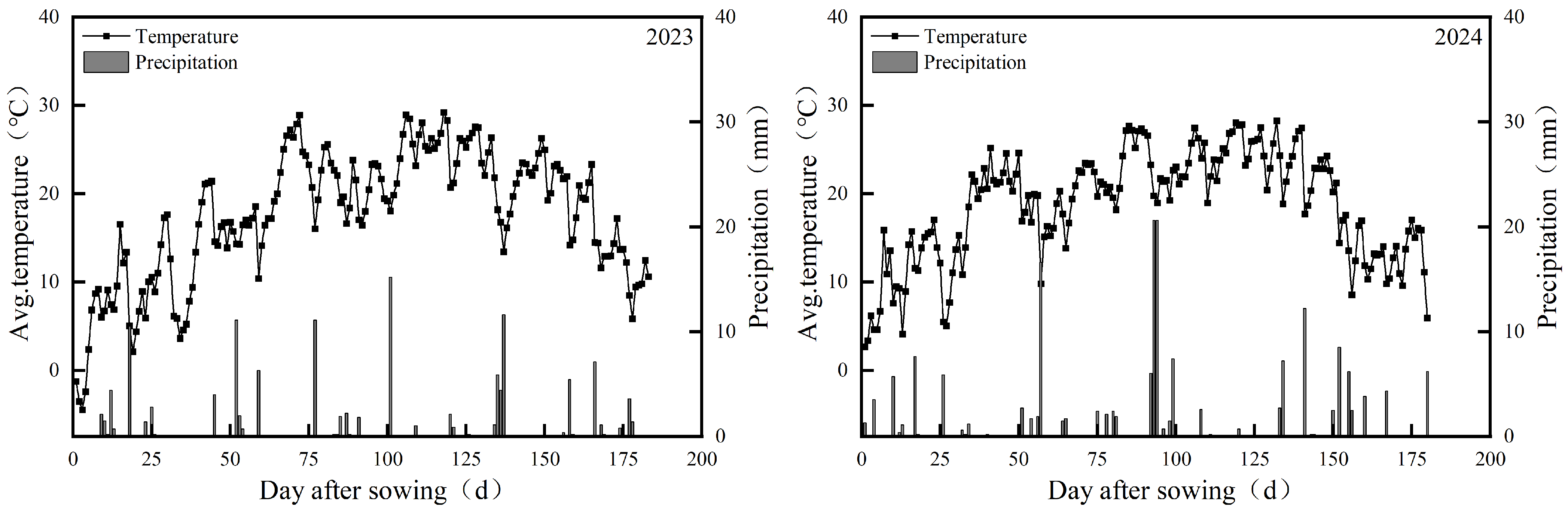
Figure 1. The average daily temperature and average precipitation during the growth period of maize in the experimental field (2023–2024).
Agronomy 16 00026 g001
Figure 2. Nitrogen accumulation under different nitrogen fertilizer managements. Note: V12 is 12-leaf stage, R1 is silking stage, R3 is milky stage, R6 is physiological maturity. Different lowercase letters denote significant differences (p < 0.05) among treatments within the same density, the order of lowercase letters from top to bottom is as follows: Fbase, F0%, F20%, F40%, F60%, F80%, and F100%. Full nitrogen as basal fertilizer (Fbase); and post-silking topdressing method with nitrogen proportions of 0% (F0%), 20% (F20%), 40% (F40%), 60% (F60%), 80% (F80%), and 100% (F100%) of the total nitrogen rate. All data presented in this figure represent the two-year average values (2023–2024).
Agronomy 16 00026 g002
Figure 3. Nitrogen translocation before silking and nitrogen accumulation after silking in maize under different post-silking nitrogen application. Note: Different lowercase letters denote significant differences (p < 0.05) among treatments within the same density. Full nitrogen as basal fertilizer (Fbase); and post-silking topdressing method with nitrogen proportions of 0% (F0%), 20% (F20%), 40% (F40%), 60% (F60%), 80% (F80%), and 100% (F100%) of the total nitrogen rate. All data presented in this figure represent the two-year average values (2023–2024).
Agronomy 16 00026 g003
Figure 4. Principal component analysis of yield and related parameters under different post-silking nitrogen topdressing ratios at planting densities of 7.5 × 10⁴ plants ha−1 and 12.0 × 10⁴ plants ha−1. Note: R1N, Silking stage nitrogen accumulation; R6N, Maturity stage nitrogen accumulation; PSNT: Pre-silking nitrogen translocation; PSNA: Post-silking nitrogen accumulation; CR-PSNT: Contribution of Pre- silking nitrogen translocation to grain nitrogen. PC1 corresponds to yield while PC2 represents Grains number per ear. All data presented in this figure represent the two-year average values (2023–2024).
Agronomy 16 00026 g004
Table 1. Timing and ratios of nitrogen application.
Nitrogen Application (kg ha−1)TreatmentTiming and Ratios of Nitrogen Application (%)
Basal FertilizerV9V12V15R1 − 4dR1 + 6dR1 + 13dR3R3 + 9d
0N0000000000
360Fbase10000000000
F0%0252525250000
F20%0202020205555
F40%01515151510101010
F60%01010101015151515
F80%0555520202020
F100%0000025252525
Note: V9 is 9-leaf stage, V12 is 12-leaf stage, V15 is 15-leaf stage, R1 − 4d is 4 days before silking stage, R1 + 6d is 6 days after silking stage, R1 + 13d is 13 days after silking stage, R1 is silking stage, R3 is milky stage, R3 + 9d is 9 days after milky stage. No nitrogen application (N0); full nitrogen as basal fertilizer (Fbase); and post-silking topdressing method with nitrogen proportions of 0% (F0%, post-silking topdressing 0 kg ha−1), 20% (F20%, post-silking topdressing 72 kg ha−1), 40% (F40%, post-silking topdressing 144 kg ha−1), 60% (F60%, post-silking topdressing 216 kg ha−1), 80% (F80%, post-silking topdressing 288 kg ha−1), and 100% (F100%, post-silking topdressing 360 kg ha−1) of the total nitrogen rate.
Table 2. Yield under different nitrogen fertilizer management in two years.
YearDensity (× 104 Plant ha−1)Nitrogen Application
(kg ha−1)
TreatmentYield (kg·ha−1)Ears Number (Ears·ha−1)Kernel Number per Ear1000-Kernel Weight (g)
20237.50N014.49 f7.03 a442.67 f305.94 f
360Fbase15.96 e7.21 a561.33 d334.68 e
F0%17.7 bc7.21 a59.00 c355.54 c
F20%17.44 cd7.27 a592.67 bc357.83 bc
F40%17.89 b7.03 a605.33 ab360.00 ab
F60%18.29 a7.03 a610.00 a363.74 a
F80%17.12 d7.33 a536.67 e354.15 c
F100%16.25 e7.03 a536.00 e341.25 d
12.00N012.46 g10.55 a386.00 e296.03 f
360Fbase19.31 e10.79 a454.00 c327.71 e
F0%21.36 b10.91 a496.67 b341.35 bc
F20%21.57 ab10.79 a504.67 a343.47 b
F40%21.83 a10.97 a509.33 a352.36 a
F60%21.01 c10.97 a492.67 b338.46 c
F80%20.30 d10.91 a451.33 c332.47 d
F100%18.98 f10.79 a440.67 d324.93 e
20247.50N014.33 g7.33 a382.67 e352.04 f
360Fbase16.94 f7.33 a626.00 cd390.01 e
F0%19.07 c7.33 a640.00 bc411.29 c
F20%19.28 bc7.39 a641.33 ab404.87 d
F40%19.47 b7.45 a647.33 ab419.77 ab
F60%20.00 a7.33 a655.33 a423.47 a
F80%18.38 d7.39 a616.00 d414.74 bc
F100%17.41 e7.27 a617.33 d399.85 d
12.00N014.78 f10.85 a331.33 d343.50 f
360Fbase18.53 e10.79 a495.33 c353.34 e
F0%20.91 b10.85 a522.00 b363.76 c
F20%20.98 ab10.91 a536.67 ab367.35 ab
F40%21.45 a10.91 a544.67 a368.50 a
F60%21.32 ab10.97 a524.00 b366.09 b
F80%20.32 c10.85 a486.00 c354.76 de
F100%19.57 d10.85 a486.00 c355.48 d
Source of variation
Year (Y)*******
Density (D)********
Treatment (T)**ns****
Y × D**ns****
Y × T**ns****
D × T**ns****
Y × D × T**ns****
Note: Different lowercase letters denote significant differences (p < 0.05) among treatments within the same density. **: p < 0.01, *: p < 0.05, ns: not significant (p > 0.05). No nitrogen application (N0); full nitrogen as basal fertilizer (Fbase); post-silking topdressing method with nitrogen proportions of 0% (F0%), 20% (F20%), 40% (F40%), 60% (F60%), 80% (F80%), and 100% (F100%) of the total nitrogen rate.
Table 3. Characteristic parameters of logistic curve of nitrogen accumulation in maize under different nitrogen fertilizer treatments.
Density (×104 Plant ha−1)TreatmentModelR2Calculated Values
t1 (d)t2 (d)T (d)VmaxWmax
7.5FbaseY = 260.01/(1 + 243.44 × 10−0.08x)0.9998 **51.0483.2232.185.32260.01
F0%Y = 288.82/(1 + 199.96 × 10−0.07x)0.9986 *54.1589.9735.825.31288.82
F20%Y = 302.91/(1 + 74.97 × 10−0.06x)0.9988 **52.2698.1445.884.35302.91
F40%Y = 369.89/(1 + 36.04 × 10−0.04x)0.9987 **54.98118.8463.863.81369.89
F60%Y = 386.06/(1 + 46.94 × 10−0.04x)0.9994 **59.81122.0262.214.09386.06
F80%Y = 324.13/(1 + 44.44 × 10−0.04x)0.9995 **55.73114.9859.253.60324.13
F100%Y = 282.06/(1 + 34.00 × 10−0.04x)0.9981 *52.31114.6662.352.98282.06
12.0FbaseY = 253.56/(1 + 196.72 × 10−0.09x)0.9998 **45.3175.4130.105.55253.56
F0%Y = 339.04/(1 + 33.05 × 10−0.05x)0.9979 **45.46100.3554.894.07339.04
F20%Y = 406.00/(1 + 31.06 × 10−0.04x)0.9985 **51.10114.6163.514.21406.00
F40%Y = 414.88/(1 + 26.53 × 10−0.04x)0.9983 **51.71121.1469.433.93414.88
F60%Y = 403.77/(1 + 24.53 × 10−0.04x)0.9978 **52.41125.7373.323.63403.77
F80%Y = 342.81/(1 + 29.45 × 10−0.04x)0.9977 *50.35114.5464.193.52342.81
F100%Y = 295.75/(1 + 19.13 × 10−0.04x)0.9955 *43.61113.8870.282.77295.75
Note: t1, the initial period of rapid nitrogen accumulation (days); t2, the termination period of rapid nitrogen accumulation (days); T, duration of rapid accumulation (days); Vmax, the maximum rate of nitrogen accumulation (kg ha−1 d−1); Wmax, the maximum biomass of nitrogen accumulation (kg ha−1). **: p < 0.01, *: p < 0.05. Full nitrogen as basal fertilizer (Fbase); and post-silking topdressing method with nitrogen proportions of 0% (F0%), 20% (F20%), 40% (F40%), 60% (F60%), 80% (F80%), and 100% (F100%) of the total nitrogen rate. All data presented in this table represent the two-year average values (2023–2024).
Table 4. Effects of different post-silking nitrogen application ratios on nitrogen translocation and accumulation in vegetative organs and plant populations.
Density (×104 Plant ha−1)TreatmentPSNT (kg ha−1)PSNTR (%)CR-PSNT (%)
LeafStemTotalLeafStemTotalLeafStemTotal
7.5Fbase69.34 a60.95 a130.29 a64.27 a70.27 a66.96 a39.32 a34.02 a73.35 a
F0%62.77 ab61.59 a124.35 ab60.33 a66.21 b63.15 b28.99 b28.24 b57.22 b
F20%58.78 b57.13 b115.91 b59.65 a66.36 b62.67 b25.99 b25.20 c51.19 c
F40%38.68 c43.51 c82.19 c39.93 c52.56 c45.77 c15.78 cd17.74 d33.52 d
F60%35.00 c36.86 d71.86 de37.49 c47.98 d42.19 d13.75 d14.45 e28.21 e
F80%41.35 c38.98 d80.32 cd44.67 b53.95 c48.93 c18.60 c17.69 d36.29 d
F100%34.22 c29.90 e64.12 e46.01 b49.63 d47.73 c18.20 c15.73 e33.93 d
12Fbase61.96 a64.03 a137.65 a60.93 a62.29 a68.74 a35.78 a35.80 a76.75 a
F0%54.71 b59.24 b124.73 b51.57 b58.04 b61.27 b22.65 b23.84 b52.34 b
F20%45.31 c50.05 c116.77 c42.18 cd51.56 c59.32 c16.16 cd17.67 c44.22 c
F40%41.50 cd37.95 d92.90 d40.44 d40.38 e48.91 e15.41 d13.67 d34.39 e
F60%43.08 cd32.23 e78.69 e43.99 c39.86 e44.32 f16.59 cd12.36 d30.00 f
F80%40.73 d27.73 f78.87 e42.83 cd39.31 e48.35 e18.10 c12.41 d35.57 e
F100%44.26 cd27.28 f79.90 e48.93 b44.86 d53.11 d22.50 b13.89 d41.17 d
Note: Different lowercase letters denote significant differences (p < 0.05) among treatments within the same density. Multiple comparisons were conducted using Fisher’s least significant difference (LSD) test. PSNT: Pre-silking nitrogen translocation; PSNTR: pre-silking nitrogen translocation rate; CR-PSNT: contribution of pre-silking nitrogen translocation to grain nitrogen. Full nitrogen as basal fertilizer (Fbase); post-silking topdressing method with nitrogen proportions of 0% (F0%), 20% (F20%), 40% (F40%), 60% (F60%), 80% (F80%), and 100% (F100%) of the total nitrogen rate. All data presented in this table represent the two-year average values (2023–2024).
Table 5. Effects of different post-silking nitrogen application ratios on nitrogen fertilizer uptake efficiency and physiological efficiency.
Density (×104 Plant ha−1)TreatmentNUE (%)NPE (kg kg−1)
7.5Fbase31.01 g17.84 e
F0%44.05 e24.88 a
F20%46.76 d23.13 b
F40%60.04 b19.56 cd
F60%61.08 a21.88 c
F80%48.41 c19.09 de
F100%36.04 f18.36 e
12Fbase34.46 g42.69 a
F0%57.57 d36.48 b
F20%71.09 b30.55 d
F40%72.81 a30.33 d
F60%64.73 c32.54 c
F80%53.79 e33.59 c
F100%41.89 f36.69 b
Note: Different lowercase letters denote significant differences (p < 0.05) among treatments within the same density. NUE: nitrogen uptake efficiency; NPE: nitrogen physiological efficiency; full nitrogen as basal fertilizer (Fbase); post-silking topdressing method with nitrogen proportions of 0% (F0%), 20% (F20%), 40% (F40%), 60% (F60%), 80% (F80%), and 100% (F100%) of the total nitrogen rate. All data presented in this table represent the two-year average values (2023–2024).
Disclaimer/Publisher’s Note: The statements, opinions and data contained in all publications are solely those of the individual author(s) and contributor(s) and not of MDPI and/or the editor(s). MDPI and/or the editor(s) disclaim responsibility for any injury to people or property resulting from any ideas, methods, instructions or products referred to in the content.