A Novel Granular Formulation of Filamentous Fungi (Aspergillus tubingensis and Trichoderma virens): Development, Characterization, and Evaluation for Enhanced Phosphorus Availability in Agricultural Soils
 ,
,  and
and
Abstract
1. Introduction
2. Materials and Methods
2.1. Microorganisms
2.2. Clinoptilolite Zeolite (CZ)
2.3. In Vitro Evaluation of Formulation Components
2.4. Standardization of Conidia Obtention Process and Germination Tests
2.5. Granule Elaboration
2.6. Quantitative Characterization of Conidia Content in Bioinoculant Granules
2.7. Physicochemical Characterization of the Granules
2.7.1. Granular Size Analysis
2.7.2. Determination of the Percentage of Moisture
2.7.3. Determining the Purity Level
2.8. In Vivo Evaluation of Bioinoculant Granules Performance
2.9. Statistical Analysis
3. Results
3.1. In Vitro Effect of Formulation Components
3.2. Optimization of Conidia Production
3.3. Granule Analysis
3.4. Quantitative Characterization of Bioinoculant Granules
3.5. Physicochemical Characterization of the Bioinoculant Granules
3.5.1. Size
3.5.2. Percentage of Moisture
3.5.3. Purity Level
3.6. Evaluation of Bioinoculant Granules Performance
3.6.1. Phosphorus Quantification in the Substrate
3.6.2. Foliar Phosphorus (FP)
3.6.3. Plant Growth Promotion
4. Discussion
5. Limitations, Practical Implications, and Future Recommendations
6. Conclusions
Author Contributions
Funding
Data Availability Statement
Acknowledgments
Conflicts of Interest
Abbreviations
| P | Phosphorus |
| CZ | Clinoptilolite |
| SP | Soluble Phosphorus |
| FP | Foliar Phosphorus |
| Po | Organic Phosphorus |
| Pi | Inorganic Phosphorus |
| CEC | Cationic Exchange Capacity |
| PSMF | Phosphorus Solubilizing and Mineralizing Fungi |
| At | Aspergillus tubingensis |
| Tv | Trichoderma virens |
| PR | Phosphate Rock |
| AS | Alkaline Soil |
| DAI | Days After Incubation |
| CFU | Colony-Forming Units |
| daa | days after application |
References
- Vera-Morales, M.; López Medina, S.E.; Naranjo-Morán, J.; Quevedo, A.; Ratti, M.F. Nematophagous Fungi: A Review of Their Phosphorus Solubilization Potential. Microorganisms 2023, 11, 137. [Google Scholar] [CrossRef] [Scilit]
- Kayoumu, M.; Iqbal, A.; Muhammad, N.; Li, X.; Li, L.; Wang, X.; Gui, H.; Qi, Q.; Ruan, S.; Guo, R.; et al. Phosphorus Availability Affects the Photosynthesis and Antioxidant System of Contrasting Low-P-Tolerant Cotton Genotypes. Antioxidants 2023, 12, 466. [Google Scholar] [CrossRef] [Scilit]
- Varga, T.; Hixson, K.K.; Ahkami, A.H.; Sher, A.W.; Barnes, M.E.; Chu, R.K.; Battu, A.K.; Nicora, C.D.; Winkler, T.E.; Reno, L.R.; et al. Endophyte-Promoted Phosphorus Solubilization in Populus. Front. Plant Sci. 2020, 11, 567918. [Google Scholar] [CrossRef] [Scilit]
- Wang, Z.; Zhang, H.; Liu, L.; Li, S.; Xie, J.; Xue, X.; Jiang, Y. Screening of phosphate-solubilizing bacteria and their abilities of phosphorus solubilization and wheat growth promotion. BMC Microbiol. 2022, 22, 296. [Google Scholar] [CrossRef] [Scilit] [PubMed]
- Ros, M.B.; Koopmans, G.F.; van Groenigen, K.J.; Abalos, D.; Oenema, O.; Vos, H.M.; van Groenigen, J.W. Towards optimal use of phosphorus fertiliser. Sci. Rep. 2020, 10, 17804. [Google Scholar] [CrossRef] [Scilit] [PubMed]
- Kalayu, G. Phosphate solubilizing microorganisms: Promising approach as biofertilizers. Int. J. Agron. 2019, 2019, 4917256. [Google Scholar] [CrossRef] [Scilit]
- Vassileva, M.; Mendes, G.O.; Deriu, M.A.; Benedetto, G.D.; Flor-Peregrin, E.; Mocali, S.; Martos, V.; Vassilev, N. Fungi, P-Solubilization, and Plant Nutrition. Microorganisms 2022, 10, 1716. [Google Scholar] [CrossRef] [Scilit]
- Sun, X.R.; Li, P.S.; Qiao, H.; Kong, W.L.; Wang, Y.H.; Wu, X.Q. Systematic Investigation of Phosphate Decomposition and Soil Fertility Modulation by the Filamentous Fungus Talaromyces nanjingensis. Microorganisms 2025, 13, 1574. [Google Scholar] [CrossRef] [Scilit]
- Nirbhavane, H.M.; Kale, A.P. Efficiency study of phosphate solubilizing bacterial and fungal species and effects on moth gram seed germination. Indian J. Microbiol. Res. 2020, 7, 335–341. [Google Scholar] [CrossRef] [Scilit]
- Divjot, K.O.U.R.; Rana, K.L.; Tanvir, K.A.U.R.; Yadav, N.; Yadav, A.N.; Kumar, M.; Kumar, V.; Dhaliwal, H.S.; Saxena, A.K. Biodiversity, current developments and potential biotechnological applications of phosphorus-solubilizing and-mobilizing microbes: A review. Pedosphere 2021, 31, 43–75. [Google Scholar] [CrossRef] [Scilit]
- Timofeeva, A.; Galyamova, M.; Sedykh, S. Prospects for Using Phosphate-Solubilizing Microorganisms as Natural Fertilizers in Agriculture. Plants 2022, 11, 2119. [Google Scholar] [CrossRef] [Scilit]
- Mercl, F.; García-Sánchez, M.; Kulhánek, M.; Košnář, Z.; Száková, J.; Tlustoš, P. Improved phosphorus fertilisation efficiency of wood ash by fungal strains Penicillium sp. PK112 and Trichoderma harzianum OMG08 on acidic soil. Appl. Soil Ecol. 2020, 147, 103360. [Google Scholar] [CrossRef] [Scilit]
- Doilom, M.; Guo, J.-W.; Phookamsak, R.; Mortimer, P.E.; Karunarathna, S.C.; Dong, W.; Liao, C.-F.; Yan, K.; Pem, D.; Suwannarach, N.; et al. Screening of Phosphate-Solubilizing Fungi From Air and Soil in Yunnan, China: Four Novel Species in Aspergillus, Gongronella, Penicillium, and Talaromyces. Front. Microbiol. 2020, 11, 585215. [Google Scholar] [CrossRef] [Scilit] [PubMed]
- Etesami, H.; Adl, S.M. Plant Growth-Promoting Rhizobacteria (PGPR) and Their Action Mechanisms in Availability of Nutrients to Plants. In Environmental and Microbial Biotechnology; Phyto-Microbiome in Stress Regulation; Kumar, M., Kumar, V., Prasad, R., Eds.; Springer: Singapore, 2020. [Google Scholar] [CrossRef] [Scilit]
- Bolo, P.; Kihara, J.; Mucheru-Muna, M.; Njeru, E.M.; Kinyua, M.; Sommer, R. Application of residue, inorganic fertilizer and lime affect phosphorus solubilizing microorganisms and microbial biomass under different tillage and cropping systems in a Ferralsol. Geoderma 2021, 390, 114962. [Google Scholar] [CrossRef] [Scilit]
- Teng, Z.; Zhu, J.; Shao, W.; Zhang, K.; Li, M.; Whelan, M.J. Increasing plant availability of legacy phosphorus in calcareous soils using some phosphorus activators. J. Environ. Manag. 2020, 256, 109952. [Google Scholar] [CrossRef] [Scilit]
- Daniel, A.I.; Fadaka, A.O.; Gokul, A.; Bakare, O.O.; Aina, O.; Fisher, S.; Burt, A.F.; Mavumengwana, V.; Keyster, M.; Klein, A. Biofertilizer: The Future of Food Security and Food Safety. Microorganisms 2022, 10, 1220. [Google Scholar] [CrossRef] [Scilit] [PubMed]
- Khan, A.; Singh, A.V.; Gautam, S.S.; Agarwal, A.; Punetha, A.; Upadhayay, V.K.; Kukreti, B.; Bundela, V.; Jugran, A.K.; Goel, R. Microbial bioformulation: A microbial assisted biostimulating fertilization technique for sustainable agriculture. Front. Plant Sci. 2023, 14, 1270039. [Google Scholar] [CrossRef] [Scilit]
- Fadiji, A.E.; Xiong, C.; Egidi, E.; Singh, B.K. Formulation challenges associated with microbial biofertilizers in sustainable agriculture and paths forward. J. Sustain. Agric. Environ. 2024, 3, e70006. [Google Scholar] [CrossRef] [Scilit]
- Seenivasagan, R.; Babalola, O.O. Utilization of Microbial Consortia as Biofertilizers and Biopesticides for the Production of Feasible Agricultural Product. Biology 2021, 10, 1111. [Google Scholar] [CrossRef] [Scilit]
- Nur Aainaa, H.; Haruna Ahmed, O.; Ab Majid, N.M. Effects of clinoptilolite zeolite on phosphorus dynamics and yield of Zea Mays L. cultivated on an acid soil. PLoS ONE 2018, 13, e0134172. [Google Scholar] [CrossRef] [Scilit]
- Zúñiga-Silgado, D.; Rivera-Leyva, J.C.; Coleman, J.J.; Sánchez-Reyez, A.; Valencia-Díaz, S.; Serrano, M.; de-Bashan, L.E.; Folch-Mallol, J.L. Soil Type Affects Organic Acid Production and Phosphorus Solubilization Efficiency Mediated by Several Native Fungal Strains from Mexico. Microorganisms 2020, 8, 1337. [Google Scholar] [CrossRef] [Scilit]
- Zúñiga-Silgado, D.; Sánchez-Reyes, A.; Ortiz-Hernández, M.L.; Otero, M.; Balcázar-López, E.; Valencia-Díaz, S.; Serrano, M.; Coleman, J.J.; Sarmiento-López, L.; De-Bashan, L.E.; et al. Soil Type Influences Novel “Milpa” Isolates of Trichoderma virens and Aspergillus tubingensis That Promote Solubilization, Mineralization, and Phytoabsorption of Phosphorus in Capsicum annuum L. J. Fungi 2022, 8, 1178. [Google Scholar] [CrossRef] [Scilit]
- Osorio, N.W.; Habte, M. Soil Phosphate Desorption Induced by a Phosphate-Solubilizing Fungus. Commun. Soil Sci. Plant Anal. 2014, 45, 451–460. [Google Scholar] [CrossRef] [Scilit]
- Murphy, J.; Riley, J.P. A Modified Single Solution Method for the Determination of Phosphate in Natural Waters. Anal. Chim. Acta 1962, 27, 31–36. [Google Scholar] [CrossRef] [Scilit]
- Zehra, A.; Dubey, M.K.; Meena, M.; Upadhyay, R.S. Effect of different environmental conditions on growth and sporulation of some Trichoderma species. J. Environ. Biol. 2017, 38, 197. [Google Scholar] [CrossRef] [Scilit]
- Singh, A.; Shahid, M.; Srivastava, M.; Pandey, S.; Sharma, A.; Kumar, V. Optimal Physical Parameters for Growth of Trichoderma Species at Varying pH, Temperature and Agitation. Virol. Mycol. 2014, 3, 127. [Google Scholar] [CrossRef]
- Divya, V.; Malarkodi, K.; Mathiyazhagan, S.; Manonmani, V.; Anand, T.; Velayutham, A. Effect of PH on the Mycelial Growth of Aspergillus Niger and Aspergillus Flavus. Int. J. Environ. Clim. Chang. 2023, 13, 1104–1109. [Google Scholar] [CrossRef] [Scilit]
- Hoagland, D.R.; Arnon, D.I. The Water Culture Method for Growing Plants Without Soil; California Agricultural Experiment Station, University of California: Berkeley, CA, USA, 1938; Volume 150, 32p. [Google Scholar]
- Urrea-López, R.; Díaz de la Garza, R.I.; Valiente-Banuet, J.I. Effects of Substrate Salinity and Nutrient Levels on Physiological Response, Yield, and Fruit Quality of Habanero Pepper. HortScience 2014, 49, 812–818. [Google Scholar] [CrossRef] [Scilit]
- Yousefi, A.A.; Khavazi, K.; Moezi, A.A.; Rejali, F.; Nadian, H.A. Phosphate solubilizing bacteria and arbuscular mycorrhizal fungi impacts on inorganic phosphorus fractions and wheat growth. World Appl. Sci. J. 2011, 15, 1310–1318. [Google Scholar]
- Rawat, P.; Das, S.; Shankhdhar, D.; Shankhdhar, S.C. Phosphate-solubilizing microorganisms: Mechanism and their role in phosphate solubilization and uptake. J. Soil Sci. Plant Nutr. 2021, 21, 49–68. [Google Scholar] [CrossRef] [Scilit]
- Achal, V.; Savant, V.V.; Reddy, M.S. Phosphate solubilization by a wild type strain and UV-induced mutants of Aspergillus tubingensis. Soil Biol. Biochem. 2007, 39, 695–699. [Google Scholar] [CrossRef] [Scilit]
- Reddy, M.S.; Kumar, S.; Babita, K.; Reddy, M.S. Biosolubilization of poorly soluble rock phosphates by Aspergillus tubingensis and Aspergillus niger. Bioresour. Technol. 2002, 84, 187–189. [Google Scholar] [CrossRef] [Scilit]
- Inayati, A.; Setyowati, L.; Aini, L.Q.; Yusnawan, E. Plant growth promoter produced by Trichoderma virens and its effect on mungbean (Vigna radiata (L.) Wilczek) seedling. Earth Environ. Sci. 2021, 803, 012013. [Google Scholar] [CrossRef] [Scilit]
- Rudresh, D.L.; Shivaprakash, M.K.; Prasad, R.D. Tricalcium phosphate solubilizing abilities of Trichoderma spp. in relation to P uptake and growth and yield parameters of chickpea (Cicer arietinum L.). Can. J. Microbiol. 2005, 51, 217–222. [Google Scholar] [CrossRef] [Scilit] [PubMed]
- Abdi, G.; Khosh-Khui, M.; Eshghi, S. Effects of Natural Zeolite on Growth and Flowering of Strawberry (F ragariaxrmanassa Duch.). Int. J. Agric. Res. 2006, 1, 384–389. [Google Scholar] [CrossRef] [Scilit]
- Hua, Q.X.; Zhou, J.M.; Wang, H.Y.; Du, C.W.; Chen, X.Q.; Li, J.Y. Effects of modified clinoptilolite on phosphorus mobilization and potassium or ammonium release in Ferrosols. Soil Res. 2006, 44, 285–290. [Google Scholar] [CrossRef] [Scilit]
- Mihajlović, M.; Perišić, N.; Pezo, L.; Stojanović, M.; Milojković, J.; Petrović, M.; Petrović, J. Optimization of process parameters to obtain NH4-clinoptilolite as a supplement to ecological fertilizer. Clay Miner. 2014, 49, 735–745. [Google Scholar] [CrossRef] [Scilit]
- Aanuoluwa, E.E.; Kehinde, A.; Esther, B.B.; Juliet, A.B.; Clement, A.F. Optimizing culture conditions for the antagonistic activities of Trichoderma viride against Sclerotium rolfsii causative agent of southern blight disease of tomato. Malays. J. Microbiol. 2015, 11, 240–245. [Google Scholar] [CrossRef] [Scilit]
- Ali, H.Z.; Aboud, H.M.; Dheyab, N.S.; Musa, N.K.; Gasam, F.H. Effects of pH and ECW on Growth and Sporulation of Indigenous Trichoderma spp. Int. J. Phytopathol. 2015, 4, 15–20. [Google Scholar] [CrossRef] [Scilit]
- Ghildiyal, A.; Pandey, A. Isolation of cold tolerant antifungal strains of Trichoderma sp. from glacial sites of Indian Himalayan region. Res. J. Microbiol. 2008, 3, 559–564. [Google Scholar] [CrossRef] [Scilit]
- Sutthisa, W.; Popranom, A.; Taddeetrakool, A.; Khankhum, S. Development of Trichoderma Formulation and Application to Control Durian Anthracnose Disease. Trends Sci. 2023, 21, 7276. [Google Scholar] [CrossRef] [Scilit]
- Hadi, S. Effects of pH on Inoculum Production of Aspergillus tubingensis on the Acid Rice Media. Int. J. Sci. Eng. Appl. Sci. 2017, 3. Available online: https://ijseas.com/volume3/v3i7/ijseas20170709.pdf (accessed on 5 January 2026).
- Steyaert, J.M.; Weld, R.J.; Mendoza-Mendoza, A.; Stewart, A. Reproduction without sex: Conidiation in the filamentous fungus Trichoderma. Microbiology 2010, 156, 2887–2900. [Google Scholar] [CrossRef] [Scilit] [PubMed]
- Vitale, S.; Salzano, F.; Staropoli, A.; Marra, R.; Turrà, D.; Lorito, M.; Vinale, F. Nitrogen source orchestrates pH modulation and secondary metabolism in Trichoderma harzianum. Chem. Biol. Technol. Agric. 2025, 12, 1–15. [Google Scholar] [CrossRef] [Scilit]
- Daryaei, A.; Jones, E.E.; Glare, T.R.; Falloon, R.E. Nutrient amendments affect Trichoderma atroviride conidium production, germination and bioactivity. Biol. Control 2016, 93, 8–14. [Google Scholar] [CrossRef] [Scilit]
- Khalil, A.M.A.; Hashem, A.H. Morphological changes of conidiogenesis in two Aspergillus species. J. Pure Appl. Microbiol. 2018, 12, 2041–2048. [Google Scholar] [CrossRef] [Scilit]
- Novodvorska, M.; Stratford, M.; Blythe, M.J.; Wilson, R.; Beniston, R.G.; Archer, D.B. Metabolic activity in dormant conidia of Aspergillus niger and developmental changes during conidial outgrowth. Fungal Genet. Biol. 2016, 94, 23–31. [Google Scholar] [CrossRef] [Scilit]
- Hallsworth, J.E.; Magan, N. Culture Age, Temperature, and pH Affect the Polyol and Trehalose Contents of Fungal Propagules. Appl. Environ. Microbiol. 1996, 62, 2435–2442. [Google Scholar] [CrossRef] [Scilit]
- Vassilev, N.; Vassileva, M.; Lopez, A.; Martos, V.; Reyes, A.; Maksimovic, I.; Eichler-Löbermann, B.; Malusà, E. Potencial no explotado de algunas técnicas biotecnológicas para la producción y formulación de biofertilizantes. Appl. Microbiol. Biotechnol. 2015, 99, 4983–4996. [Google Scholar] [CrossRef] [Scilit]
- Locatelli, G.O.; dos Santos, G.F.; Botelho, P.S.; Finkler, C.L.L.; Bueno, L.A. Development of Trichoderma sp. formulations in encapsulated granules (CG) and evaluation of conidia shelf-life. Biol. Control 2018, 117, 21–29. [Google Scholar] [CrossRef] [Scilit]
- Hohmann, P.; Jones, E.E.; Hill, R.A.; Stewart, A. Ecological studies of the bio-inoculant Trichoderma hamatum LU592 in the root system of Pinus radiata. FEMS Microbiol. Ecol. 2012, 80, 709–721. [Google Scholar] [CrossRef] [Scilit]
- Tut, G.; Magan, N.; Brain, P.; Xu, X. Critical evaluation of two commercial biocontrol agents for their efficacy against B. cinerea under in vitro and in vivo conditions in relation to different abiotic factors. Agronomy 2021, 11, 1868. [Google Scholar] [CrossRef] [Scilit]
- Jambhulkar, P.P.; Sharma, P. Development of bioformulation and delivery system of Pseudomonas fluorescens against bacterial leaf blight of rice (Xanthomonas oryzae pv. oryzae). J. Environ. Biol. 2014, 35, 843–849. [Google Scholar]
- Samavat, S.; Heydari, A.; Rezaee, S.; Zamanizadeh, H.R.; Aliabadi, A.A. Application of new bioformulations of Pseudomonas aureofaciens for biocontrol of cotton seedling damping-off. J. Plant Prot. Res. 2014, 54, 334–339. [Google Scholar] [CrossRef] [Scilit]
- Malusá, E.; Vassilev, N. A contribution to set a legal framework for biofertilisers. Appl. Microbiol. Biotechnol. 2014, 98, 6599–6607. [Google Scholar] [CrossRef] [Scilit]
- Kumar, D.; Kumar, R.; Sakshi, D.; Kumar, A. Commercialization and Market Perspectives of Biofertilizers Through Advanced Approaches. In Metabolomics, Proteomics and Gene Editing Approaches in Biofertilizer Industry: Volume II; Springer Nature: Singapore, 2024; pp. 339–357. [Google Scholar]
- dos Reis, G.A.; Martínez-Burgos, W.J.; Pozzan, R.; Pastrana Puche, Y.; Ocán-Torres, D.; de Queiroz Fonseca Mota, P.; Rodrigues, C.; Lima Serra, J.; Scapini, T.; Karp, S.G.; et al. Comprehensive Review of Microbial Inoculants: Agricultural Applications, Technology Trends in Patents, and Regulatory Frameworks. Sustainability 2024, 16, 8720. [Google Scholar] [CrossRef] [Scilit]
- Agarwal, S.; Kumari, S.; Khan, S. Quality control of biofertilizers. In Biofertilizers: Study and Impact; John Wiley & Sons: Hoboken, NJ, USA; Scrivener Publishing: Beverly, MA, USA, 2021; pp. 413–428. [Google Scholar] [CrossRef] [Scilit]
- Soumare, A.; Boubekri, K.; Lyamlouli, K.; Hafidi, M.; Ouhdouch, Y.; Kouisni, L. From Isolation of Phosphate Solubilizing Microbes to Their Formulation and Use as Biofertilizers: Status and Needs. Front. Bioeng. Biotechnol. 2020, 7, 425. [Google Scholar] [CrossRef] [Scilit]
- Billah, M.; Khan, M.; Bano, A.; Hassan, T.U.; Munir, A.; Gurmani, A.R. Phosphorus and phosphate solubilizing bacteria: Keys for sustainable agriculture. Geomicrobiol. J. 2019, 36, 904–916. [Google Scholar] [CrossRef] [Scilit]
- Mishra, B.K.; Barolia, S.K. Quality assessment of microbial inoculants as biofertilizer. Int. J. Curr. Microbiol. Appl. Sci. 2020, 9, 3715–3729. [Google Scholar] [CrossRef] [Scilit]
- Herrmann, L.; Lesueur, D. Challenges of formulation and quality of biofertilizers for successful inoculation. Appl. Microbiol. Biotechnol. 2013, 97, 8859–8873. [Google Scholar] [CrossRef] [Scilit]
- Favaro, C.P.; Klaic, R.; Bettiol, W.; Ribeiro, C.; Farinas, C.S. Bio-based composite granules with simultaneous biocontrol and phosphorus fertilization roles: Outcomes from a lab-scale in vitro assessment. Biotechnol. Prog. 2022, 38, e3242. [Google Scholar] [CrossRef] [Scilit]
- Morgan, C.; Vesey, G. Freeze-Drying of Microorganisms. Biomed. Sci. 2009, 1, 162–173. [Google Scholar] [CrossRef] [Scilit]
- Michaelsen, A.; Pinzari, F.; Barbabietola, N.; Piñar, G. Monitoring the effects of different conservation treatments on paper-infecting fungi. Int. Biodeterior. Biodegrad. 2013, 84, 333–341. [Google Scholar] [CrossRef] [Scilit] [PubMed]
- Arora, N.K.; Tiwari, S.; Singh, R. Comparative study of different carriers inoculated with nodule forming and free living plant growth promoting bacteria suitable for sustainable agriculture. J. Plant Pathol. Microbiol. 2014, 5, 1–3. [Google Scholar] [CrossRef]
- Sohaib, M.; Zahir, Z.A.; Khan, M.Y.; Ans, M.; Asghar, H.N.; Yasin, S.; Al-Barakah, F.N.I. Comparative evaluation of different carrier-based multi-strain bacterial formulations to mitigate the salt stress in wheat. Saudi J. Biol. Sci. 2020, 27, 777–787. [Google Scholar] [CrossRef] [Scilit]
- Martinez, Y.; Ribera, J.; Schwarze, F.W.M.R.; De France, K. Biotechnological development of Trichoderma-based formulations for biological control. Appl. Microbiol. Biotechnol. 2023, 107, 5595–5612. [Google Scholar] [CrossRef] [Scilit]
- Pedreschi, F.; Aguilera, J. Viability of dry Trichoderma harzianum spores under storage. Bioprocess Eng. 1997, 17, 177–183. [Google Scholar] [CrossRef] [Scilit]
- Lopes, R.B.; Faria, M. Influence of two formulation types and moisture levels on the storage stability and insecticidal activity of Beauveria bassiana. Biocontrol Sci. Technol. 2019, 29, 437–450. [Google Scholar] [CrossRef] [Scilit]
- Moore, D.; Douro-Kpindou, O.K.; Jenkins, N.E.; Lomer, C.J. Effects of moisture content and temperature on storage of Metarhizium flavoviride conidia. Biocontrol Sci. Technol. 1996, 6, 51–62. [Google Scholar] [CrossRef] [Scilit]
- Ahmad, W.; Nepal, J.; Zou, Z.; Munsif, F.; Khan, A.; Ahmad, I.; Zaheer, S.; Khan, M.S.; Jadoon, S.A.; Tang, D. Biochar particle size coupled with biofertilizer enhances soil carbon-nitrogen microbial pools and CO2 sequestration in lentil. Front. Environ. Sci. 2023, 11, 1114728. [Google Scholar] [CrossRef] [Scilit]
- Tao, S.; Wu, Z.; He, X.; Ye, B.C.; Li, C. Characterization of biochar prepared from cotton stalks as efficient inoculum carriers for Bacillus subtilis SL-13. Bioresources 2018, 13, 1773–1786. [Google Scholar] [CrossRef] [Scilit]
- Ibrahim, H.M.; Alghamdi, A.G. Effect of the particle size of clinoptilolite zeolite on water content and soil water storage in a loamy sand soil. Water 2021, 13, 607. [Google Scholar] [CrossRef] [Scilit]
- Huang, Z.T.; Petrovic, A.M. Physical Properties of Sand as Affected by Clinoptilolite Zeolite Particle Size and Quantity. J. Turfgrass Manag. 1994, 1, 1–15. [Google Scholar] [CrossRef] [Scilit]
- Eberle, S.; Börnick, H.; Stolte, S. Granular natural zeolites: Cost-effective adsorbents for the removal of ammonium from drinking water. Water 2022, 14, 939. [Google Scholar] [CrossRef] [Scilit]
- Trinchera, A.; Rivera, C.M.; Rinaldi, S.; Salerno, A.; Rea, E.; Sequi, P. Granular size effect of clinoptilolite on maize seedlings growth. Open Agric. J. 2010, 4, 23–30. [Google Scholar] [CrossRef] [Scilit]
- Sánchez-Cruz, R.; Mehta, R.; Atriztán-Hernández, K.; Martínez-Villamil, O.; Sánchez-Carbente, M.d.R.; Sánchez-Reyes, A.; Lira-Ruan, V.; González-Chávez, C.A.; Tabche-Barrera, M.L.; Bárcenas-Rodríguez, R.C.; et al. Effects on Capsicum annuum Plants Colonized with Trichoderma atroviride P. Karst Strains Genetically Modified in Taswo1, a Gene Coding for a Protein with Expansin-like Activity. Plants 2021, 10, 1919. [Google Scholar] [CrossRef] [Scilit] [PubMed]
- Leyva-Morales, R.; Vega-Arreguín, J.; Amezcua-Romero, J.C.; González-Rodríguez, A.; Alarcón, A.; Diaz, T.; Jensen, B.; Larsen, J. Soil fungal communities associated with chili pepper respond to mineral and organic fertilization and application of the biocontrol fungus Trichoderma harzianum. Appl. Soil Ecol. 2024, 201, 105523. [Google Scholar] [CrossRef] [Scilit]
- Finch-Savage, W.E.; Bassel, G.W. Seed vigour and crop establishment: Extending performance beyond adaptation. J. Exp. Bot. 2016, 67, 567–591. [Google Scholar] [CrossRef] [Scilit] [PubMed]
- Bandara, A.Y.; Kang, S. Trichoderma application methods differentially affect the tomato growth, rhizomicrobiome, and rhizosphere soil suppressiveness against Fusarium oxysporum. Front. Microbiol. 2024, 15, 1366690. [Google Scholar] [CrossRef] [Scilit]
- Jain, R.; Saxena, J.; Sharma, V. The evaluation of free and encapsulated Aspergillus awamori for phosphate solubilization in fermentation and soil–plant system. Appl. Soil Ecol. 2010, 46, 90–94. [Google Scholar] [CrossRef] [Scilit]
- López, J.E.; Gallego, J.L.; Vargas-Ruiz, A.; Peña-Mosquera, A.L.; Zapata-Zapata, A.D.; López-Sánchez, I.J.; Botero-Botero, L.R. Aspergillus tubingensis and Talaromyces islandicus solubilize rock phosphate under saline and fungicide stress and improve Zea mays growth and phosphorus nutrition. J. Soil Sci. Plant Nutr. 2020, 20, 2490–2501. [Google Scholar] [CrossRef] [Scilit]
- Priyadarshani, T.D.C.; Karunarathna, D.D.N.; Wijesundara, W.W.M.T.C.K.; Egodawatta, W.C.P.; De Costa, D.M.; Herath, H.M.A.M.; Tarafder, E.; Elgorban, A.M.; Karunarathna, S.C. Evaluating the growth-promoting potential of Trichoderma virens on rice plants (Oryza sativa L.) under in-vitro and semi in-vivo conditions. N. Z. J. Bot. 2025, 63, 2090–2105. [Google Scholar] [CrossRef] [Scilit]
- Contreras-Cornejo, H.A.; Macías-Rodríguez, L.; Cortés-Penagos, C.; López-Bucio, J. Trichoderma virens, a plant beneficial fungus, enhances biomass production and promotes lateral root growth through an auxin-dependent mechanism in Arabidopsis. Plant Physiol. 2009, 149, 1579–1592. [Google Scholar] [CrossRef] [Scilit] [PubMed]
- Yadav, L.S.; Kushwaha, V.; Jain, A. Isolation and screening of phosphate solubilizing fungi from okra rhizosphere soil and their effect on the growth of okra plant (Abelmoschous esculentus L.). Trop. Plant Res. 2020, 7, 277–284. [Google Scholar] [CrossRef] [Scilit]


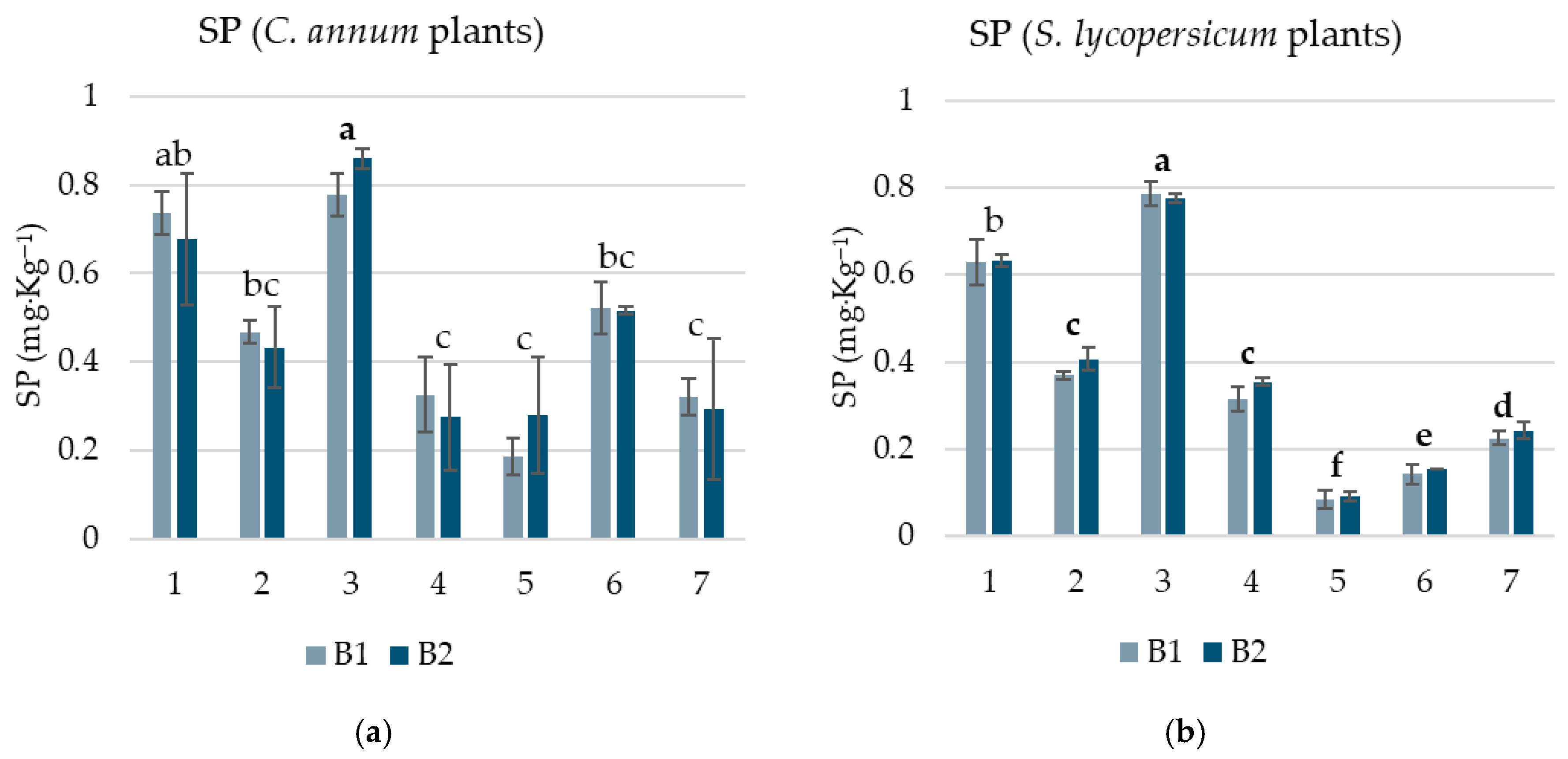
 B1;
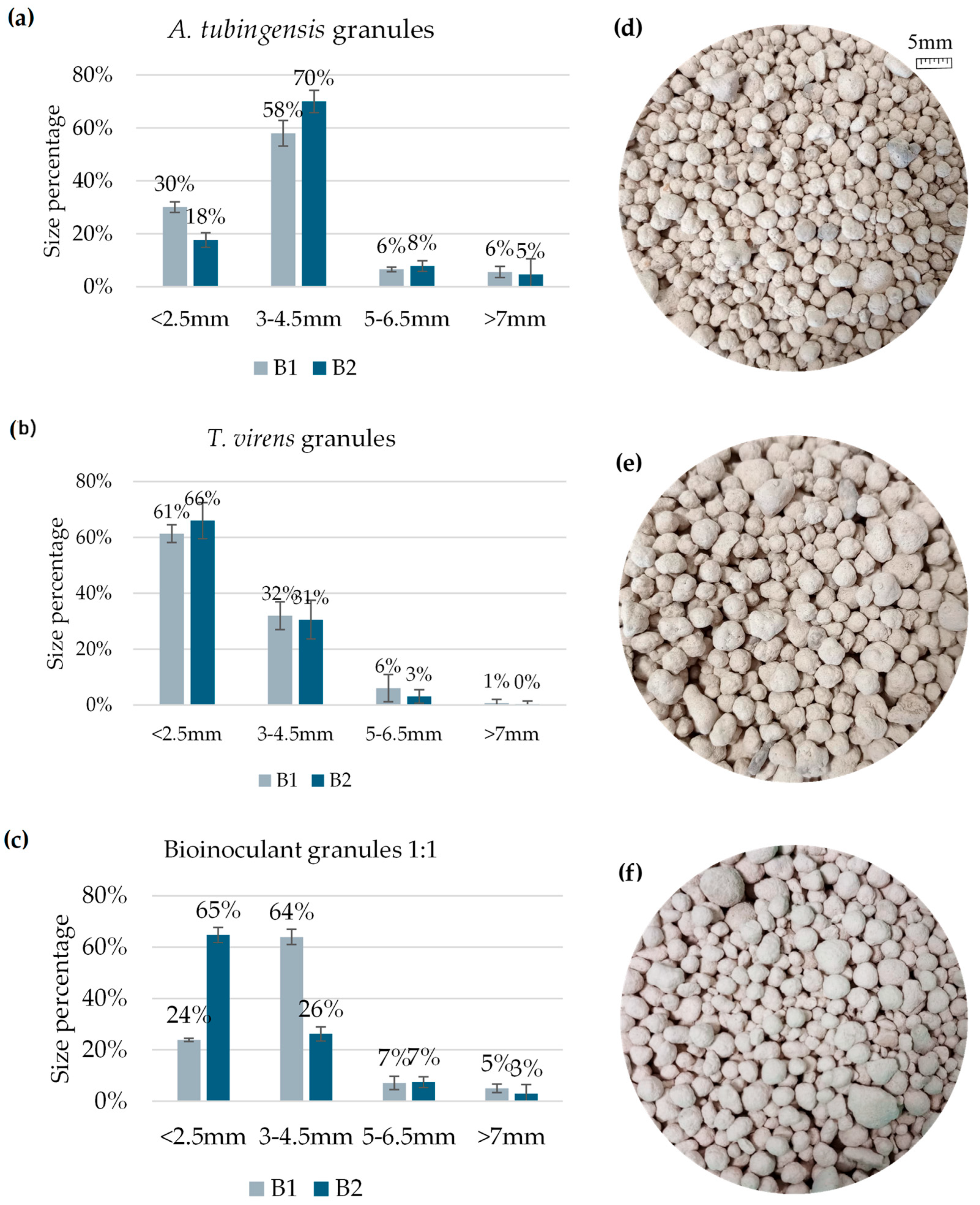
B1;  B2; (d) Representative sample from Aspergillus tubingensis granules; (e) Representative sample from Trichoderma virens granules; (f) Representative sample from bioinoculant 1:1 granules.
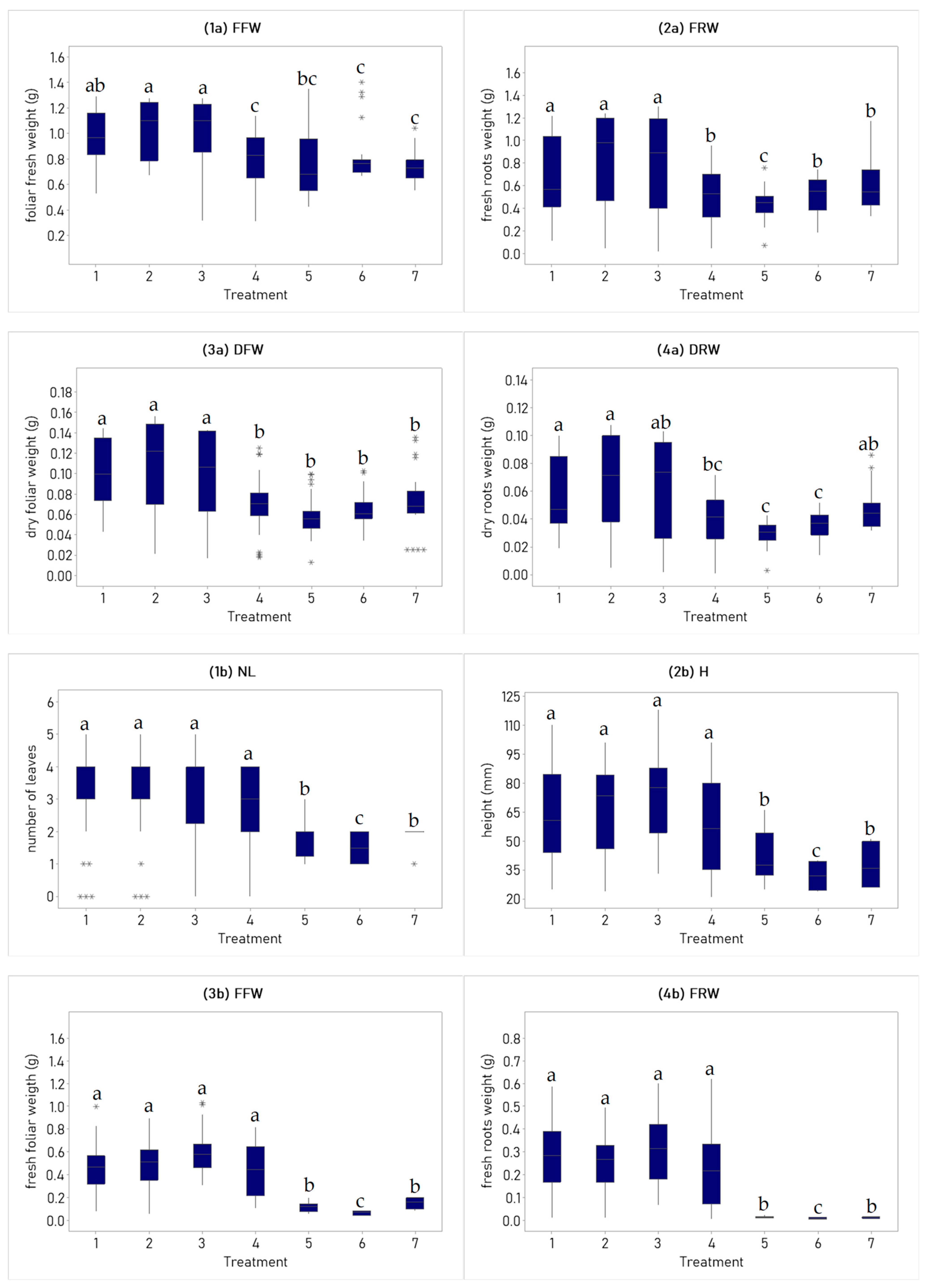
B1; B2; (d) Representative sample from Aspergillus tubingensis granules; (e) Representative sample from Trichoderma virens granules; (f) Representative sample from bioinoculant 1:1 granules.
B2; (d) Representative sample from Aspergillus tubingensis granules; (e) Representative sample from Trichoderma virens granules; (f) Representative sample from bioinoculant 1:1 granules.
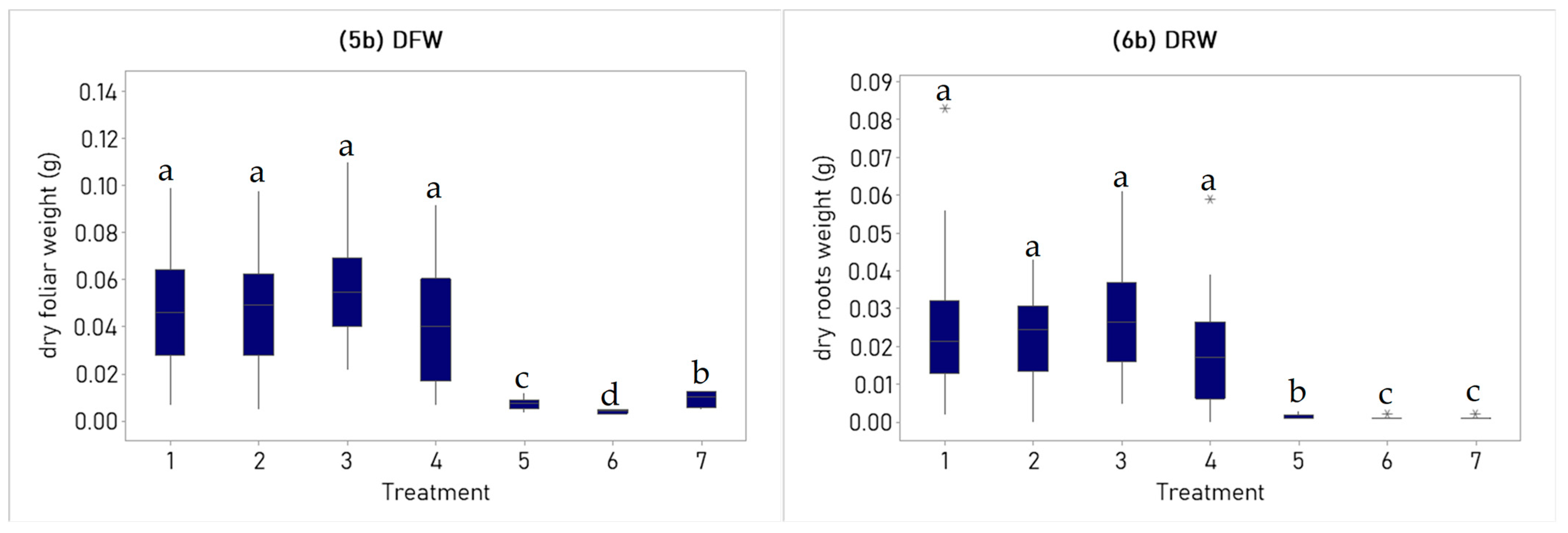
B1; B2; (d) Representative sample from Aspergillus tubingensis granules; (e) Representative sample from Trichoderma virens granules; (f) Representative sample from bioinoculant 1:1 granules.

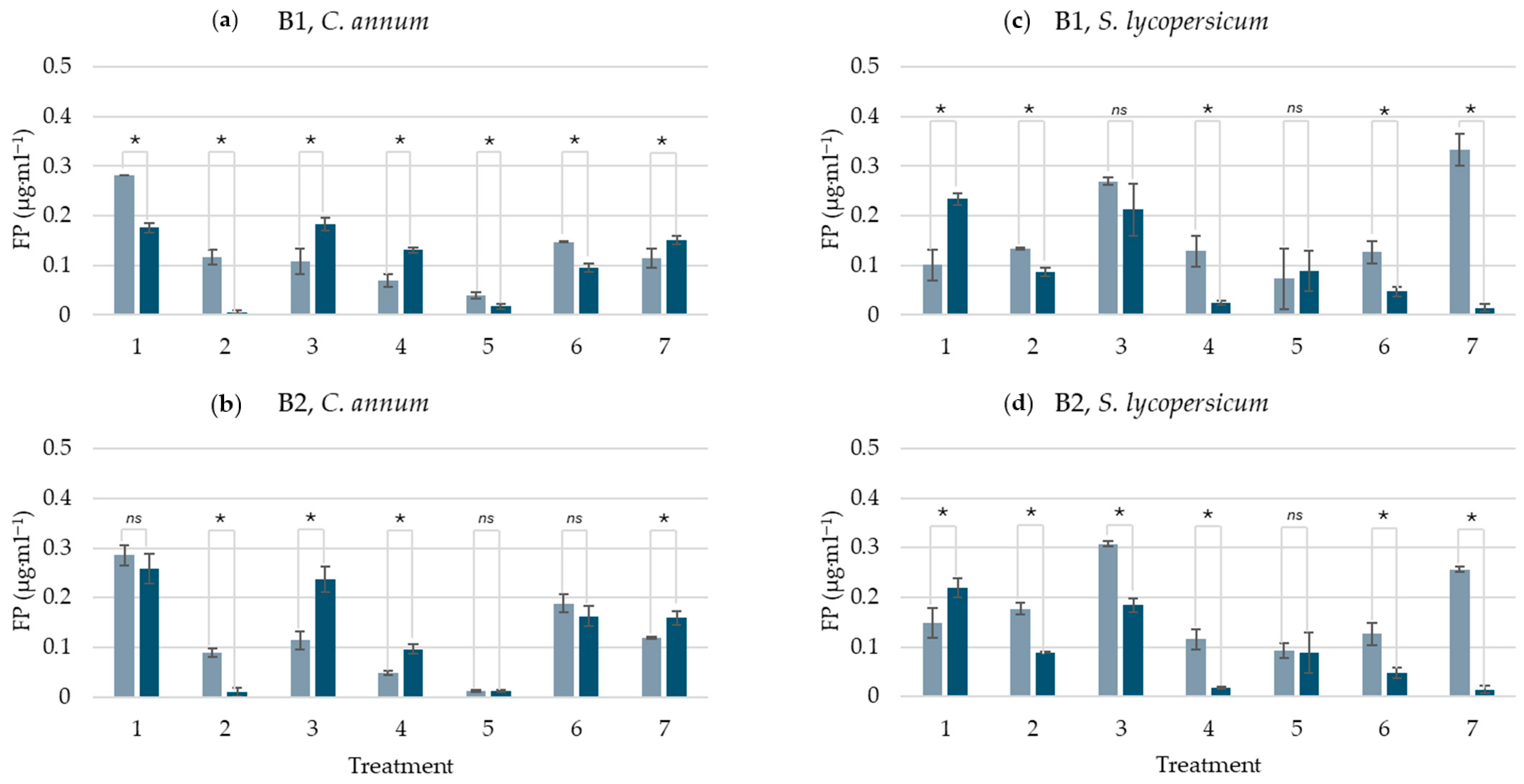
 and 45 days after application (daa). Treatments: 1: Aspergillus tubingensis granules; 2: Trichoderma virens granules; 3: Bioinoculant granules. 4: CZ granules; 5: Control − (No added P); 6 = Control + (Soluble P). Results are shown in media for each treatment, and a comparison was made between the two days of monitoring, (*) indicates significant differences (Tukey, p ≤ 0.05). ns: not significant.
and 45 days after application (daa). Treatments: 1: Aspergillus tubingensis granules; 2: Trichoderma virens granules; 3: Bioinoculant granules. 4: CZ granules; 5: Control − (No added P); 6 = Control + (Soluble P). Results are shown in media for each treatment, and a comparison was made between the two days of monitoring, (*) indicates significant differences (Tukey, p ≤ 0.05). ns: not significant.
and 45 days after application (daa). Treatments: 1: Aspergillus tubingensis granules; 2: Trichoderma virens granules; 3: Bioinoculant granules. 4: CZ granules; 5: Control − (No added P); 6 = Control + (Soluble P). Results are shown in media for each treatment, and a comparison was made between the two days of monitoring, (*) indicates significant differences (Tukey, p ≤ 0.05). ns: not significant.
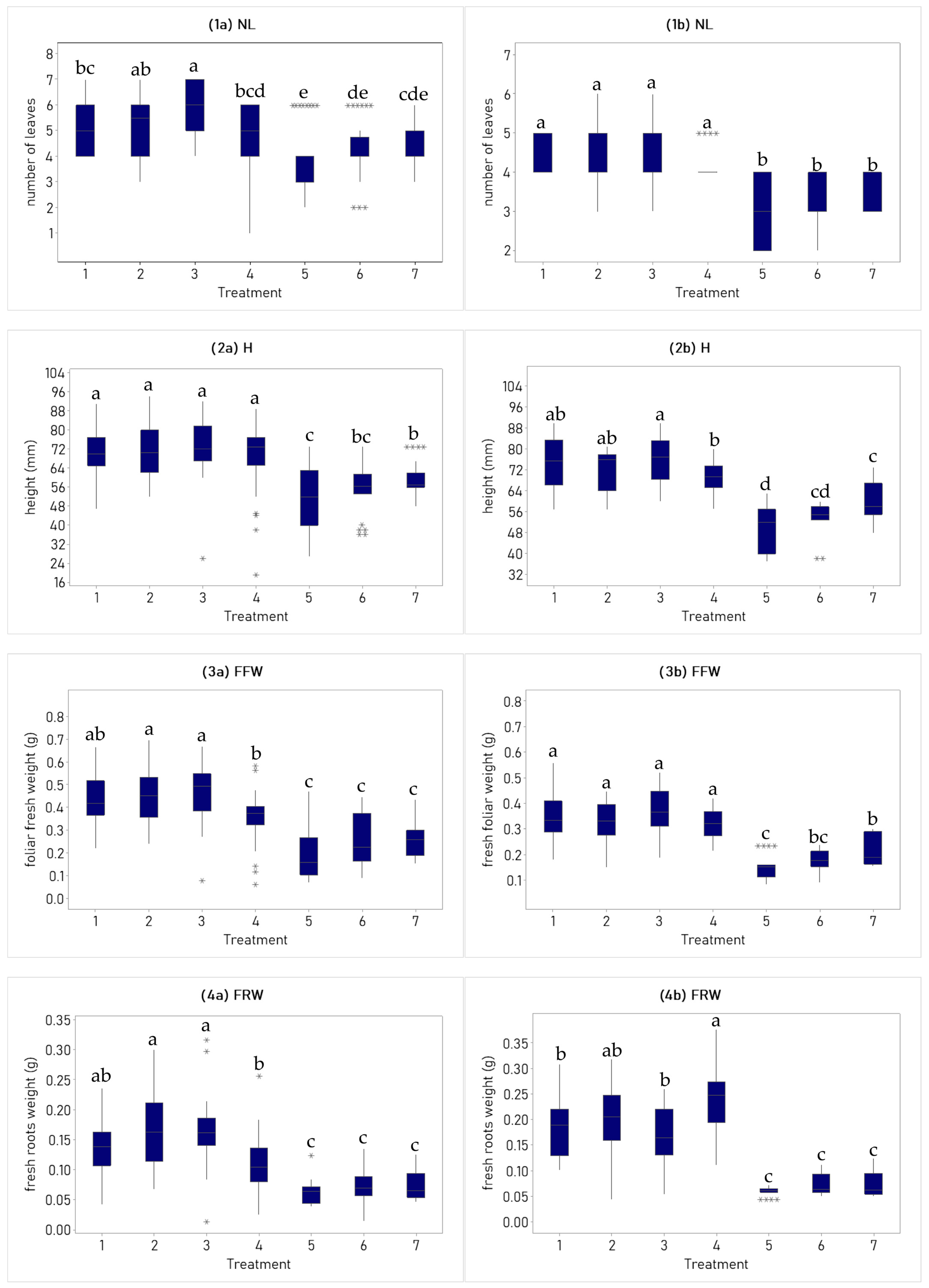
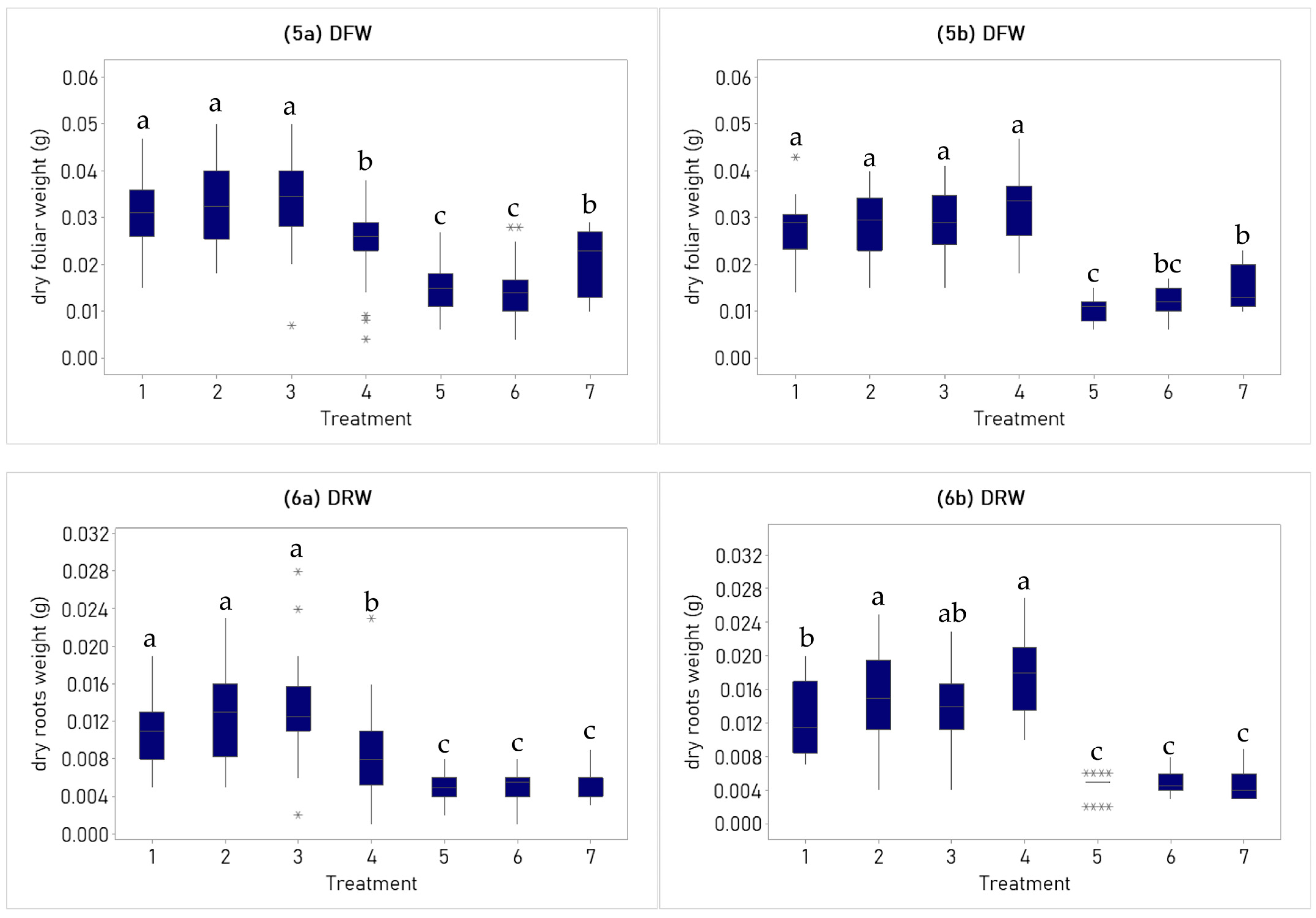



| Fungal Strain | Medium | Days of Incubation (DoI) | ** p-Value | |||
|---|---|---|---|---|---|---|
| 4 DAI | 7 DAI | 10 DAI | 14 DAI | |||
| Aspergillus tubingensis strain BMH-0060 | V8A | 31.2 ± 6.53 ABb | 46.3 ± 5.5 ABab | 52.8 ± 11.07 Aa | 48.2 ± 10.77 Ba | 0.004 |
| MA | 10.3 ± 12.76 Bb | 13.8 ± 13.96 Bb | 58.2 ± 15.21 Aa | 58.3 ± 14.3 Ba | 0.000 | |
| PIA | 54.7 ± 9.85 Ab | 64.1 ± 26.78 ABb | 77.7 ± 26.78 Ab | 130 ± 34.57 Aa | 0.001 | |
| PDA | 45.2 ± 2.42 Aa | 82.1 ± 57.23 Aa | 84.5 ± 38.16 Aa | 82.8 ± 38.18 ABa | 0.370 | |
| * p-value | 0.001 | 0.022 | 0.120 | 0.001 | ||
| Trichoderma virens strain BMH 0059 | V8A | 56.2 ± 14.29 Aa | 46 ± 6.31 ABa | 51.3 ± 10.40 ABa | 55 ± 4.26 ABa | 0.374 |
| MA | 0.09 ± 0.01 Ba | 0.12 ± 0.09 Ba | 0.12 ± 0.07 Ba | 0.05 ± 0.03 Ba | 0.450 | |
| PIA | 30 ± 23.69 ABa | 42.6 ± 32.1 ABa | 65.4 ± 55.14 ABa | 78 ± 43.59 Aa | 0.262 | |
| PDA | 51.8 ± 27.38 Aa | 95.2 ± 56.4 Aa | 105 ± 55.14 Aa | 88.9 ± 59.96 Aa | 0.404 | |
| * p-value | 0.001 | 0.002 | 0.004 | 0.006 | ||
| Media | pH Value | Fungal Strain | |
|---|---|---|---|
| Aspergillus tubingensis (BMH-0060) | Trichoderma virens (BMH-0059) | ||
| V8A | 6.674 | 52.8 ± 11.07 | 51.3 ± 10.40 |
| 5.0 | 65.6 ± 19.2 (+21.64%) | 66.5 ± 14.63 (+23.01%) | |
| MA | 6.404 | 58.2 ± 15.21 | 0.12 ± 0.07 |
| 5.0 | 5.20 ± 2.49 (−19.54%) | 0.37 ± 0.03 (+3.11%) | |
| PIA | 6.370 | 77.7 ± 26.78 | 65.4 ± 55.14 |
| 5.0 | 123 ± 61.48 (+16.03%) | 74.8 ± 20.07 (+14.54%) | |
| PDA | 5.91 | 84.5 ± 38.16 | 105 ± 55.14 |
| 5 | 106 ± 8.38 (+3.92%) | 69.7 ± 5.86 (32.98%) | |
| Fungal Strain | Incubation Time (Days After Inoculation) | Media | p-Value | ||
|---|---|---|---|---|---|
| V8A | PIA | PDA | |||
| Aspergillus tubingensis-strain BMH-0060 | 7 DAI | 11.39 ± 2.89 a | 12.32 ± 6.39 a | 6.059 ± 0.75 a | 0.059 |
| 10 DAI | 13.48 ± 2.13 ab | 23.12 ± 1.39 a | 10.91 ± 1.00 b | 0.036 | |
| Trichoderma virens strain BMH-0069 | 7 DAI | 3.93 ± 0.25 a | 8.287 ± 3.86 a | 5.240 ± 0.69 a | 0.122 |
| 10 DAI | 8.389 ± 1.88 b | 17.64 ± 6.70 ab | 25.20 ± 12.9 a | 0.001 | |
| Aspergillus tubingensis (BMH-0060) | ||||
| Media | Incubation Time (Days After Inoculation) | Conidia Obtained | Germination Percentage | Production/Germination |
| V8A | 7 DAI | 1.142 × 10⁹ | 39.99% | 4.568 × 10⁸ |
| 10 DAI | 1.347 × 10⁹ | 49.47% | 6.664 × 10⁸ | |
| PIA | 7 DAI | 1.351 × 10⁹ | 14.35% | 1.939 × 10⁸ |
| 10 DAI | 2.312 × 10⁹ | 22.86% | 5.287 × 10⁸ | |
| PDA | 7 DAI | 6.657 × 10⁸ | 26.79% | 1.783 × 10⁸ |
| 10 DAI | 1.091 × 10⁸ | 30.24% | 3.295 × 10⁷ | |
| Trichoderma virens (BMH-0059) | ||||
| Media | Incubation Time (Days After Inoculation) | Conidia Obtained | Germination Percentage | Production/Germination |
| V8A | 7 DAI | 4.112 × 10⁸ | 38.73% | 1.593 × 10⁸ |
| 10 DAI | 8.289 × 10⁸ | 29.42% | 2.439 × 10⁸ | |
| PIA | 7 DAI | 8.882 × 10⁸ | 19.70% | 1.750 × 10⁸ |
| 10 DAI | 1.764 × 10⁹ | 35.98% | 6.348 × 10⁸ | |
| PDA | 7 DAI | 5.732 × 10⁸ | 23.17% | 1.327 × 10⁸ |
| 10 DAI | 2.520 × 10⁹ | 56.14% | 1.414 × 10⁹ | |
| Fungal Strain | ||||
|---|---|---|---|---|
| Aspergillus tubingensis (BMH-0060) | Trichoderma virens (BMH-0059) | |||
| B1 | B2 | B1 | B2 | |
| CCS (conidia·mL−1) | 2.013 × 10⁸ a | 1.35 × 10⁸ b | 1.35 × 10⁸ a | 1.35 × 10⁸ a |
| VCS (mL) | 725 | 750 | 800 | 750 |
| CZU (g) | 1700 | 1675 | 1970 | 1650 |
| EC (CFU·g−1) | 8.588 × 10⁷ | 6.041 × 10⁷ | 5.512 × 10⁷ | 6.136 × 10⁷ |
| GP | 100% | 37% | 55% | 70% |
| B1 | B2 | |||
|---|---|---|---|---|
| CFU·g−1 (104) | CFU·g−1 (105) | CFU·g−1 (104) | CFU·g−1 (105) | |
| Aspergillus tubingensis granules | 0 | 0 | 1 | 0 |
| Trichoderma virens granules | 0 | 0 | 0 | 0 |
| Bioinoculant granules 1:1 | 0 | 0 | 2 | 0 |
| Granules without inoculum | 0 | 0 | 0 | 0 |
| Source | DF | SP | FP (28 daa) | FP (45 daa) | NL | H | FFW | FRW | DFW | DRW | ||
|---|---|---|---|---|---|---|---|---|---|---|---|---|
| Chili (Capsicum annum) | Batch 1 | F1: T | 6 | 0.000 | 0.000 | 0.000 | 0.000 | 0.000 | 0.000 | 0.000 | 0.000 | 0.000 |
| F2: AM | 1 | 0.001 | 0.158 | 0.575 | 0.958 | 0.815 | 0.938 | 0.941 | 0.930 | 0.765 | ||
| F3: FT | 1 | 0.085 | 0.413 | 0.081 | 0.958 | 0.263 | 0.569 | 0.120 | 0.537 | 0.711 | ||
| T × AM | 6 | 0.000 | 0.865 | 0.941 | 0.976 | 0.908 | 0.819 | 0.511 | 0.564 | 0.799 | ||
| T × FT | 6 | 0.003 | 0.614 | 0.867 | 0.921 | 0.582 | 0.573 | 0.688 | 0.618 | 0.398 | ||
| AM × FT | 1 | 0.000 | 0.536 | 0.829 | 0.272 | 0.257 | 0.936 | 0.243 | 0.854 | 0.449 | ||
| T × AM × FT | 6 | 0.000 | 0.922 | 0.678 | 0.798 | 0.713 | 0.613 | 0.073 | 0.237 | 0.133 | ||
| Batch 2 | F1: T | 6 | 0.000 | 0.014 | 0.000 | 0.000 | 0.000 | 0.000 | 0.000 | 0.000 | 0.000 | |
| F2: AM | 1 | 0.461 | 0.891 | 0.235 | 0.547 | 0.387 | 0.927 | 0.884 | 0.861 | 0.512 | ||
| F3: FT | 1 | 0.364 | 0.332 | 0.291 | 0.718 | 0.408 | 0.810 | 0.781 | 0.966 | 0.953 | ||
| T × AM | 6 | 0.304 | 0.824 | 0.524 | 0.937 | 0.811 | 0.988 | 0.965 | 0.911 | 0.895 | ||
| T × FT | 6 | 0.992 | 0.528 | 0.048 | 0.976 | 0.801 | 0.854 | 0.389 | 0.793 | 0.636 | ||
| AM × FT | 1 | 0.383 | 0.812 | 0.957 | 0.547 | 0.561 | 0.216 | 0.229 | 0.215 | 0.884 | ||
| T × AM × FT | 6 | 0.065 | 0.999 | 0.878 | 0.967 | 0.956 | 0.912 | 0.907 | 0.936 | 0.977 | ||
| Tomato (Solanum lycopersicum) | Batch 1 | F1: T | 6 | 0.000 | 0.000 | 0.000 | 0.355 | 0.003 | 0.000 | 0.000 | 0.000 | 0.000 |
| F2: AM | 1 | 0.198 | 0.279 | 0.624 | 0.123 | 0.415 | 0.575 | 0.265 | 0.716 | 0.878 | ||
| F3: FT | 1 | 0.588 | 0.531 | 0.589 | 0.623 | 0.008 | 0.228 | 0.457 | 0.227 | 0.457 | ||
| T × AM | 6 | 0.001 | 0.243 | 0.765 | 0.440 | 0.037 | 0.817 | 0.703 | 0.501 | 0.871 | ||
| T × FT | 6 | 0.000 | 0.082 | 0.549 | 0.927 | 0.786 | 0.945 | 0.987 | 0.992 | 0.899 | ||
| AM × FT | 1 | 0.053 | 0.802 | 0.445 | 0.060 | 0.003 | 0.175 | 0.038 | 0.228 | 0.574 | ||
| T × AM × FT | 6 | 0.276 | 0.424 | 0.434 | 0.047 | 0.022 | 0.982 | 0.966 | 0.985 | 0.979 | ||
| Batch 2 | F1: T | 6 | 0.000 | 0.000 | 0.003 | 0.000 | 0.000 | 0.000 | 0.000 | 0.000 | 0.000 | |
| F2: AM | 1 | 0.513 | 0.729 | 0.425 | 0.186 | 0.695 | 0.090 | 0.030 | 0.049 | 0.403 | ||
| F3: FT | 1 | 0.058 | 0.934 | 0.659 | 0.956 | 0.003 | 0.657 | 0.367 | 0.219 | 0.956 | ||
| T × AM | 6 | 0.930 | 0.768 | 0.000 | 0.088 | 0.004 | 0.069 | 0.000 | 0.685 | 0.930 | ||
| T × FT | 6 | 0.667 | 0.783 | 0.007 | 0.000 | 0.027 | 0.000 | 0.001 | 0.280 | 0.667 | ||
| AM × FT | 1 | 0.685 | 0.427 | 0.471 | 0.203 | 0.035 | 0.001 | 0.296 | 0.423 | 0.685 | ||
| T × AM × FT | 6 | 0.036 | 0.847 | 0.882 | 0.618 | 0.000 | 0.000 | 0.000 | 0.000 | 0.079 | ||
Disclaimer/Publisher’s Note: The statements, opinions and data contained in all publications are solely those of the individual author(s) and contributor(s) and not of MDPI and/or the editor(s). MDPI and/or the editor(s) disclaim responsibility for any injury to people or property resulting from any ideas, methods, instructions or products referred to in the content. |
© 2026 by the authors. Licensee MDPI, Basel, Switzerland. This article is an open access article distributed under the terms and conditions of the Creative Commons Attribution (CC BY) license.
Share and Cite
Tavarez-Arriaga, J.T.; Flores-Samaniego, B.; Sánchez-Carbente, M.d.R.; Folch-Mallol, J.L. A Novel Granular Formulation of Filamentous Fungi (Aspergillus tubingensis and Trichoderma virens): Development, Characterization, and Evaluation for Enhanced Phosphorus Availability in Agricultural Soils. Agronomy 2026, 16, 169. https://doi.org/10.3390/agronomy16020169
Tavarez-Arriaga JT, Flores-Samaniego B, Sánchez-Carbente MdR, Folch-Mallol JL. A Novel Granular Formulation of Filamentous Fungi (Aspergillus tubingensis and Trichoderma virens): Development, Characterization, and Evaluation for Enhanced Phosphorus Availability in Agricultural Soils. Agronomy. 2026; 16(2):169. https://doi.org/10.3390/agronomy16020169
Chicago/Turabian StyleTavarez-Arriaga, José Tomás, Beatriz Flores-Samaniego, María del Rayo Sánchez-Carbente, and Jorge Luis Folch-Mallol. 2026. "A Novel Granular Formulation of Filamentous Fungi (Aspergillus tubingensis and Trichoderma virens): Development, Characterization, and Evaluation for Enhanced Phosphorus Availability in Agricultural Soils" Agronomy 16, no. 2: 169. https://doi.org/10.3390/agronomy16020169
APA StyleTavarez-Arriaga, J. T., Flores-Samaniego, B., Sánchez-Carbente, M. d. R., & Folch-Mallol, J. L. (2026). A Novel Granular Formulation of Filamentous Fungi (Aspergillus tubingensis and Trichoderma virens): Development, Characterization, and Evaluation for Enhanced Phosphorus Availability in Agricultural Soils. Agronomy, 16(2), 169. https://doi.org/10.3390/agronomy16020169