Article

Effects of Mulching Measures on Growth of Haloxylon ammodendron Seedlings in an Arid Mining Area

1
College of Geography and Remote Sensing Sciences, Xinjiang University, Urumqi 830046, China
2
Faculty of Geographical Science, Beijing Normal University, Beijing 100875, China
3
Xinjiang Institute of Ecology and Geography, Chinese Academy of Sciences, Urumqi 830011, China
4
Institute of Desert Meteorology, China Meteorological Administration, Urumqi 830000, China
*
Author to whom correspondence should be addressed.
Agronomy 2026, 16(17), 1732; https://doi.org/10.3390/agronomy16171732 (registering DOI)
Submission received: 2 July 2026 / Revised: 1 September 2026 / Accepted: 2 September 2026 / Published: 5 September 2026
(This article belongs to the Section Grassland and Pasture Science)

Abstract

To explore the suitable surface mulching measures for vegetation restoration in abandoned mining areas in arid regions, this study investigated the water conservation effects of various surface mulching practices on H. ammodendron restoration in arid mining zones. The results showed that (1) The survival rates of sandalwood under different coverage measures are ranked as follows: coal gangue mulching > control > fine sand mulching > liquid film mulching > agricultural plastic film mulching. (2) Different mulching measures had a significant effect on the height growth of H. ammodendron (p = 0.001) (p < 0.05). The agricultural plastic film group yielded the greatest annual increments in plant height and crown width (36.50 cm and 33.49 cm, respectively), with agricultural plastic film and fine sand exhibiting superior water retention capacity. (3) Overall, each mulching practice had distinct advantages and drawbacks. Agricultural plastic film mulching achieved the best plant growth-promoting effect yet suffered from soil contamination and high costs. Coal gangue mulching, capable of solid waste recycling while delivering favorable restoration outcomes, was the preferred option for vegetation restoration in local mining areas. These findings provide technical references and practical support for vegetation restoration in abandoned mining areas of arid regions.

1. Introduction

H. ammodendron is an ultra-xerophytic small arbor belonging to the genus Haloxylon Bunge of the Chenopodiaceae family. The desert formation dominated by H. ammodendron is the most widely distributed desert vegetation type in the arid desert regions of Asia. As a major component of the desert ecosystem and one of the constructive species with the highest biomass in deserts, H. ammodendron is commonly used as a windbreak and sand-fixation plant, and it is an excellent afforestation tree species in the desert areas of northwest China [1]. Natural H. ammodendron forests are widely distributed in China, mainly in the northwest desert regions, where the annual precipitation ranges from 40 mm to 180 mm. The site types include gravel Gobi, loamy Gobi, mobile sandy land, and fixed or semi-fixed sand dunes [1,2], and the soil types consist of lithosol, gravelly soil, clay and sandy soil [3]. At present, the existing natural H. ammodendron forests are distributed in the Ganjiahu Lake area of Xinjiang [4], the Hexi Corridor of Gansu [5], the eastern edge of the Badain Jaran Desert in Inner Mongolia [6], the northern part of Alxa Left Banner [7] and the Kubuqi Desert [8], with the geographical coordinates of the distribution areas ranging from 60° E to 111° E and 36° N to 48° N. Except for the Qaidam Basin (3535 m above sea level) [9], the average altitude of other distribution areas is below 2000 m [1].
Arid and semi-arid regions in China are rich in mineral resources [10]. Mineral resource exploitation has triggered a series of ecological problems such as soil degradation, reduced vegetation coverage and loss of biodiversity [11]. The fragile ecosystems and intense human disturbances in these regions have increased the difficulty of ecological restoration in arid mining areas. However, due to human disturbances, the soil and vegetation in the native ecosystems of arid mining areas have been severely damaged. Natural seed regeneration of H. ammodendron in the wild is subject to numerous limitations from factors including soil moisture, seed germination characteristics [12], precipitation events [13] and competition with other herbaceous plants [14]. Its adaptability to seed germination in arid and disturbed environments is extremely poor. Therefore, it is crucial to study water storage and soil moisture conservation measures via surface mulching for vegetation restoration through the planting of H. ammodendron seedlings.
Dump sites in arid mining areas of northwest China are confronted with problems such as low precipitation and concentrated seasonal rainfall, which easily lead to severe surface runoff and soil-water erosion, thus causing soil and water loss. To reduce soil and water loss in mining areas, improving the soil water-holding capacity of mine dump sites for vegetation restoration is the optimal approach to ecological restoration in arid mining areas. In arid regions, surface mulching plays a vital role in improving soil hydrothermal conditions and structure [15], inhibiting evaporation and weed growth, increasing plant survival rates [16], and enhancing soil water use efficiency [17]. For instance, plastic film mulching can effectively reduce soil water evaporation [18], regulate surface temperature [19], and prevent soil and water loss [20]. Mixing exogenous attapulgite with sandy soil can improve soil water retention capacity [21], while mixing coal gangue with soil can reduce the evaporation rate by 5–9.13% [22] and promote plant growth [23]. Spraying liquid film on the surface features degradability and low pollution, and it also has the advantages of effectively increasing soil temperature [24], enhancing soil water retention and thermal insulation capacity [25], and improving water infiltration [26]. Mulching with fine gravel (particle size less than 2 mm) can regulate soil respiration [27] and increase soil moisture content by 15–40%, with a more significant effect especially in high-temperature and arid seasons [28].
In summary, current research on the artificial planting technology of H. ammodendron mainly focuses on damaged ecosystems such as sandy, loamy, and gravelly deserts. After planting H. ammodendron shrub seedlings in the open-pit dump sites of dry mining areas, there no studies have included technical research on what surface-covering measures to adopt to promote the restoration of shrub vegetation. Therefore, this study analyzed the growth indicators of H. ammodendron vegetation after adopting different surface-covering measures and interpreted the influence laws of different surface-covering measures and the growth of H. ammodendron shrub seedlings. This is helpful to effectively fill the technical gap in the restoration of shrub vegetation in dry mining areas and provide a theoretical basis and technical support for ecological restoration in dry mining areas and similar habitats.

2. Materials and Methods

2.1. Study Area Overview

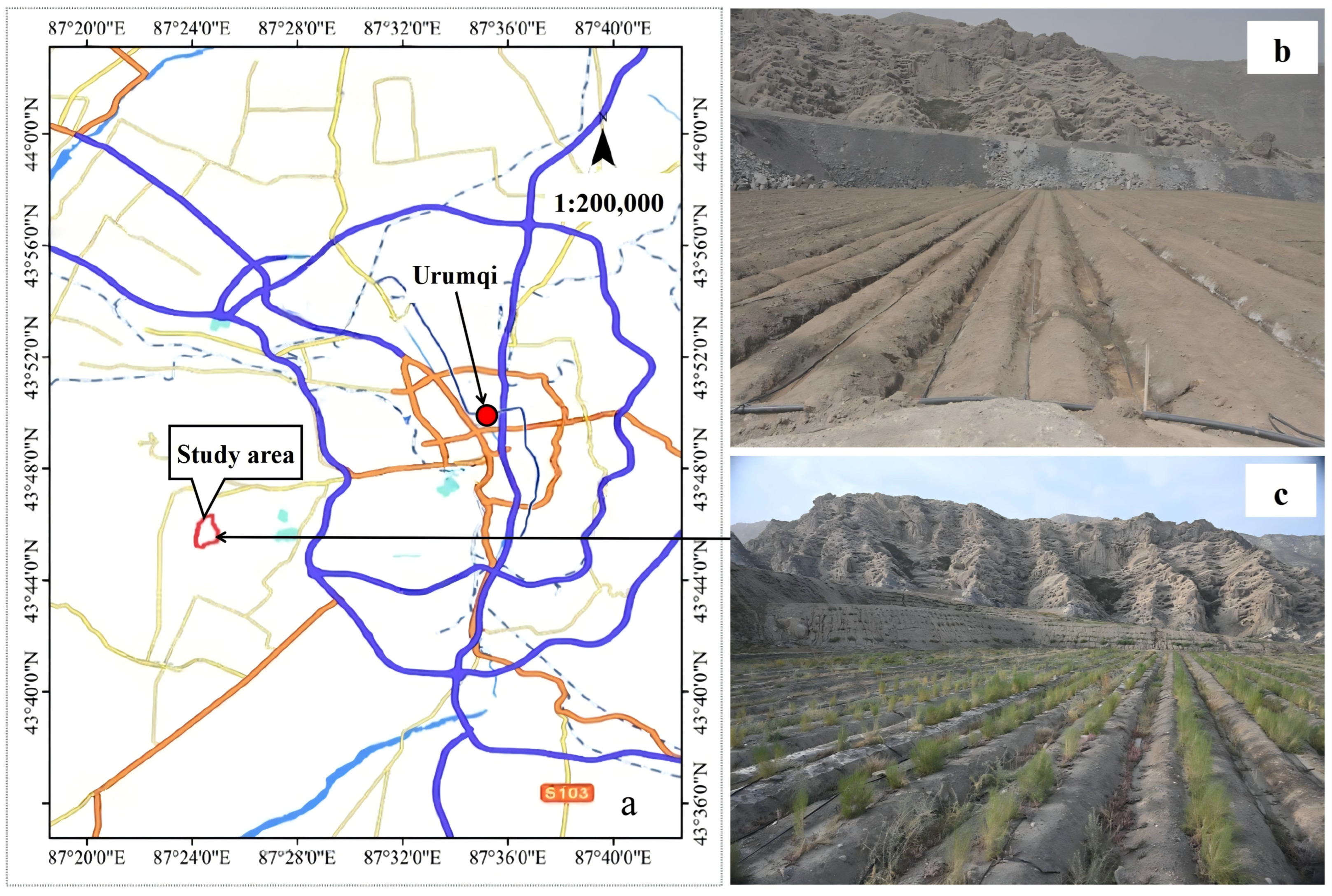
The study area is located on the northern slope of the Tianshan Mountains (Figure 1), belonging to the 104th Regiment of the 12th Division of Xinjiang Production and Construction Corps (42°5′35″ N, 81°55′50″ E), 20 km away from Urumqi City. It has an average altitude ranging from 990 m to 1240 m and a temperate continental climate with cold winters and arid summers. According to previous literature, the mean annual temperature of the study area was approximately 7.2 °C from 2023 to 2025, with a daily maximum temperature of 42.1 °C and a minimum of −32.8 °C. The annual precipitation was between 131.3 mm and 210.6 mm, showing an uneven seasonal distribution and concentrating mainly in June to August, accounting for about 70% of the annual total. Snowfall occurs from November to February in winter, with an average annual snowfall of 36.5 mm [29], which provides favorable snow conditions for the growth and development of shrubs. The soil is dominated by brown calcic soil [30], and the vegetation composition is relatively simple. The zonal vegetation type is semi-shrub desert, in which Nanophyton erinaceum is the dominant shrub species, accompanied by other associated shrubs such as Caragana leucophloea and Krascheninnikovia ceratoides. The dominant species in the herb layer is Artemisia frigida, with companion species including Peganum harmala and Halogeton glomeratus. The overall vegetation coverage of the mountainous reference ecosystem in this region is less than 8% [31].
The coal mining operation studied here involves stacking the coal waste in layers at the spoil dump to create a terrain consisting of platforms and slopes alternating with each other. More than a decade after the completion and abandonment of coal mining, the experimental site remains a gangue pile with no soil components on the surface, being almost bare land (Figure 1). After the gangue pile and spoil dump are completed, only the local mountain brown calcareous soil can be used for covering, with a coverage thickness of 60 cm. Then, mechanical construction is used to create micro-topography (drainage ditches). Engineering measures of cutting the high and filling the low were adopted at the site in March 2023 for vegetation restoration. Mountain brown calcareous soil was excavated from the nearby mountain as the planting substrate for vegetation restoration, and a 50 cm thick layer of mountain brown calcareous soil was covered on the gangue pile. Some physicochemical properties of the mountain brown calcareous soil planting substrate are shown in Table 1. The substrate is mainly composed of sand and gravel, with the content of gravel with a particle size of more than 5 mm exceeding 59.14% in the 20 cm surface layer, this soil exhibits an alkaline reaction and weak capacity for retaining moisture and soil nutrients.

2.2. Experimental Design

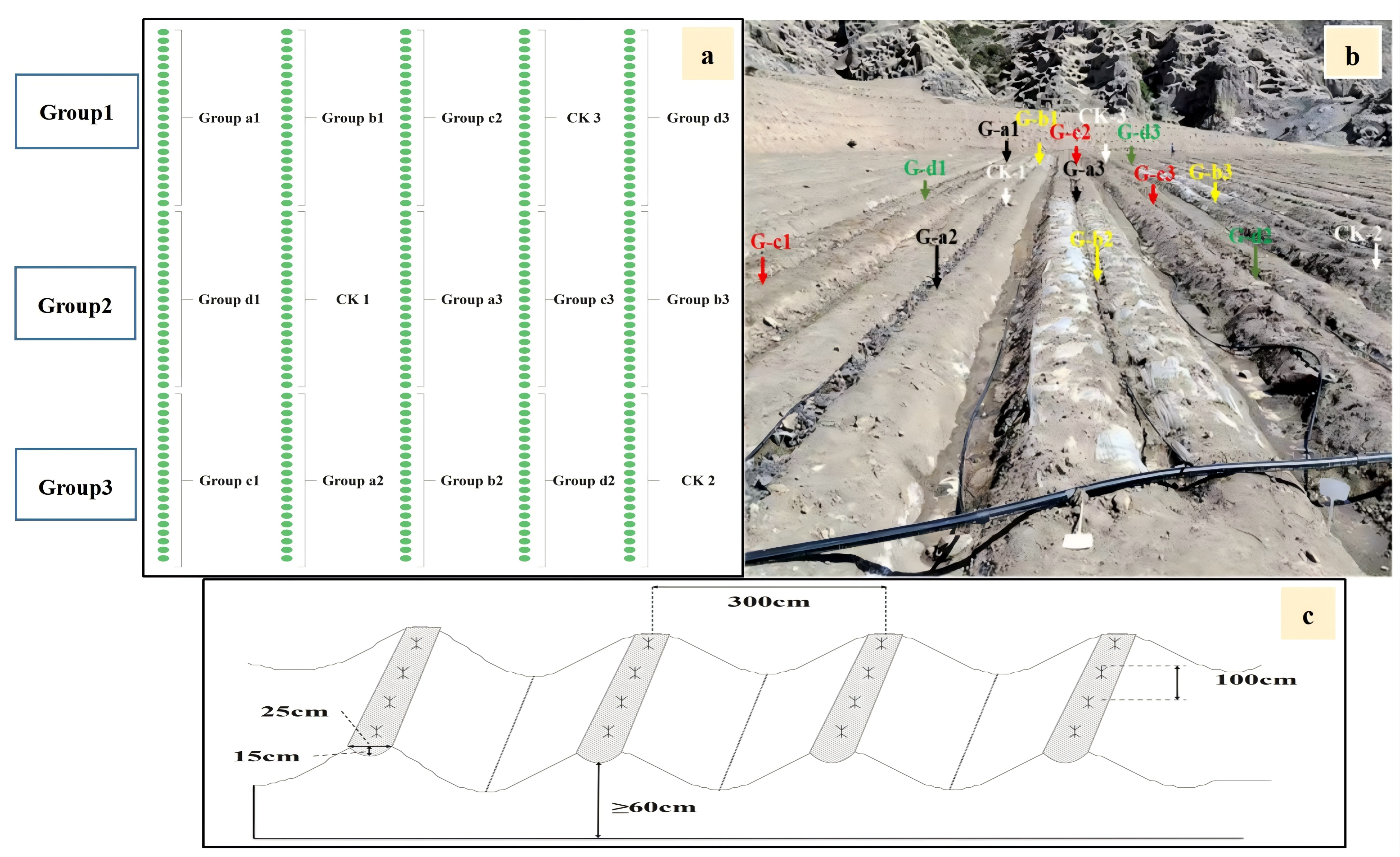
After the backfilling work was completed in April 2023, the micro-topography of the water storage ditch was modified. The ditch spacing was 3 m and the ditch depth was 30 cm. To ensure that the thickness of the planting soil layer met the requirements for the growth of shrub plants (soil layer thickness ≥ 60 cm), the planting was carried out on the platform between the two sides of the water storage ditch. The platform was modified into a shallow ditch micro-topography, so that the soil layer thickness in the shallow ditch exceeded 60 cm. The shallow ditch was trimmed to be 25 cm wide and 15 cm deep. In the shallow ditch, planting holes for the seedlings were dug, with a hole depth of 10 cm and a width of 10 cm. Next, 10 cm of fine sand was laid in the planting holes to improve the planting substrate. In mid-April 2023, healthy-growing, approximately 30 cm tall, bare-root shrub seedlings of Tamarix were selected and planted in the shallow ditch as 1-year-old natural bare-root seedlings of H. ammodendron, with a plant spacing of 1 m (Figure 2).
After the platform of the coal mine waste dump site was reshaped, it became an approximately flat terrain. Only at the edges of the waste dump site, close to the slope, showed a reverse slope with a gradient of 2% to 5% form. Meanwhile, in arid regions, the annual precipitation is below 200 mm, and the probability of runoff and erosion problems occurring in flat terrain is extremely low.
To reduce the interference of soil spatial heterogeneity and micro-topographic fluctuations in the experimental area on observation results, a randomized block design was adopted in this study with four surface mulching groups and one blank control, forming five groups in total. There were 15 experimental plots, and the area of each experimental plot was 30 square meters. Each measurement was conducted by the experimental groups. There were 15 experimental groups, with 30 seedlings in each group. To eliminate the edge effect, 5 H. ammodendron seedlings were planted between each group. Each measurement was carried out on 20 H. ammodendron seedlings. Each group included three replicate plots randomly distributed across the test site, and the detailed experimental layout is shown in Table 2 and Figure 2. Thirty (growth period: 8 months) H. ammodendron seedlings were planted in each plot, with a total of 450 seedlings for the whole experiment. After the planting of the seedlings was completed, 20 L of rooting water was immediately irrigated. Subsequently, no further irrigation was carried out. The survival and growth of the H. ammodendron seedlings are solely dependent on natural precipitation.

2.3. Indicator Measurement

From May to October 2023, plant height, crown width, and planting substrate moisture were monitored every 30 days. After randomly selecting moisture-monitoring points, soil samples were collected from different depths (0–10 cm, 10–20 cm, 20–30 cm, 30–40 cm, 40–50 cm, 50–60 cm) of the planting substrate using a soil auger. Three parallel samples were taken for each layer, and the gravimetric method (drying method) was used to determine the substrate moisture content, yielding a total of 270 moisture data points. The final collection of plant growth and soil moisture data was conducted in June 2024.

2.4. Data Processing and Analysis

Data processing was performed using Microsoft Excel, statistical analysis was carried out with SPSS 31.0, and graphs were plotted using Origin 2022. One-way analysis of variance (ANOVA) was used to test the differences in plant growth and moisture content among different groups. Various comparative analyses (LSD) were applied to explore the effects of planting substrate moisture on the growth of H. ammodendron.
The coefficient of variation (Cv) was used to indicate the variability of soil moisture under different Groups: Cv < 0.1: weak variability; 0.1 < Cv < 1: moderate variability; Cv > 1: strong variability. The calculation formula is as follows:
Cv = SD/MN
where SD is the standard deviation; MN is the mean soil moisture content; Cv is the coefficient of variation.

3. Results

3.1. Growth Status of H. ammodendron Under Different MEASURES

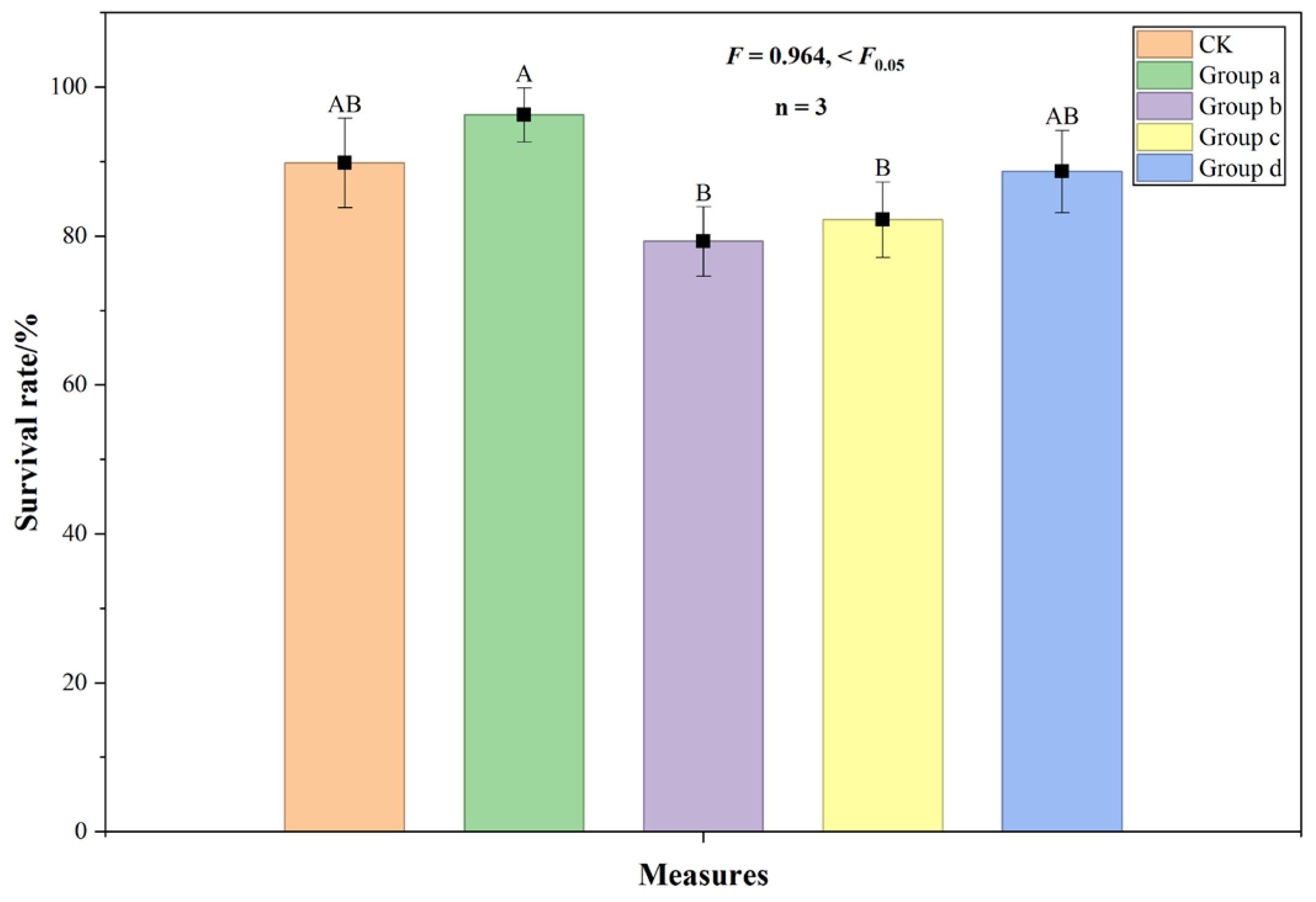
The survival rates of H. ammodendron in different groups are shown in Figure 3. The survival rates were in the order of Group a > CK > Group d > Group c > Group b.
This indicates that in the study area, Group b is the most effective at improving the survival rate of seedlings. The survival rates under other mulching groups are slightly lower, while the survival rate is the lowest under the agricultural plastic film mulching group.
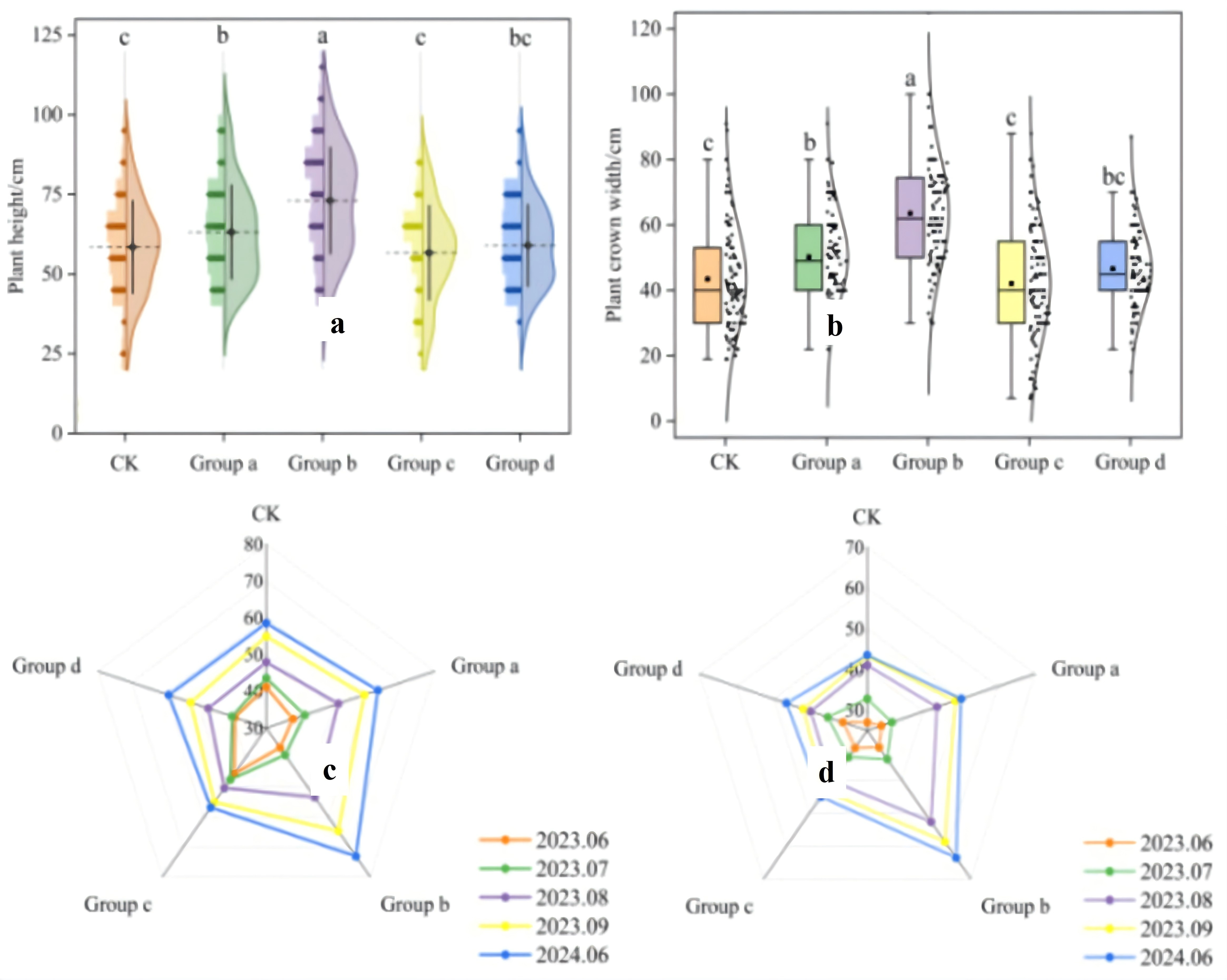
Results regarding seedling height, crown width, and their annual growth under various mulching groups revealed that plant height and crown width were significantly greater in Group b than in all other groups (p ≤ 0.05). Conversely, the blank control (CK) and liquid membrane (Group c) showed significantly lower values in these two growth indices relative to other groups (p ≤ 0.05). Group b exhibited the maximum annual increments of plant height and crown width, whereas Group c displayed the minimum annual growth rates. All groups followed a similar growth trend, with the most rapid increase occurring from July to August 2023. These results indicate that plastic film mulching is more effective in promoting height and crown width development of H. ammodendron seedlings (Figure 4 and Table 3).

3.2. Soil Moisture Dynamics Under Different Mulching Groups

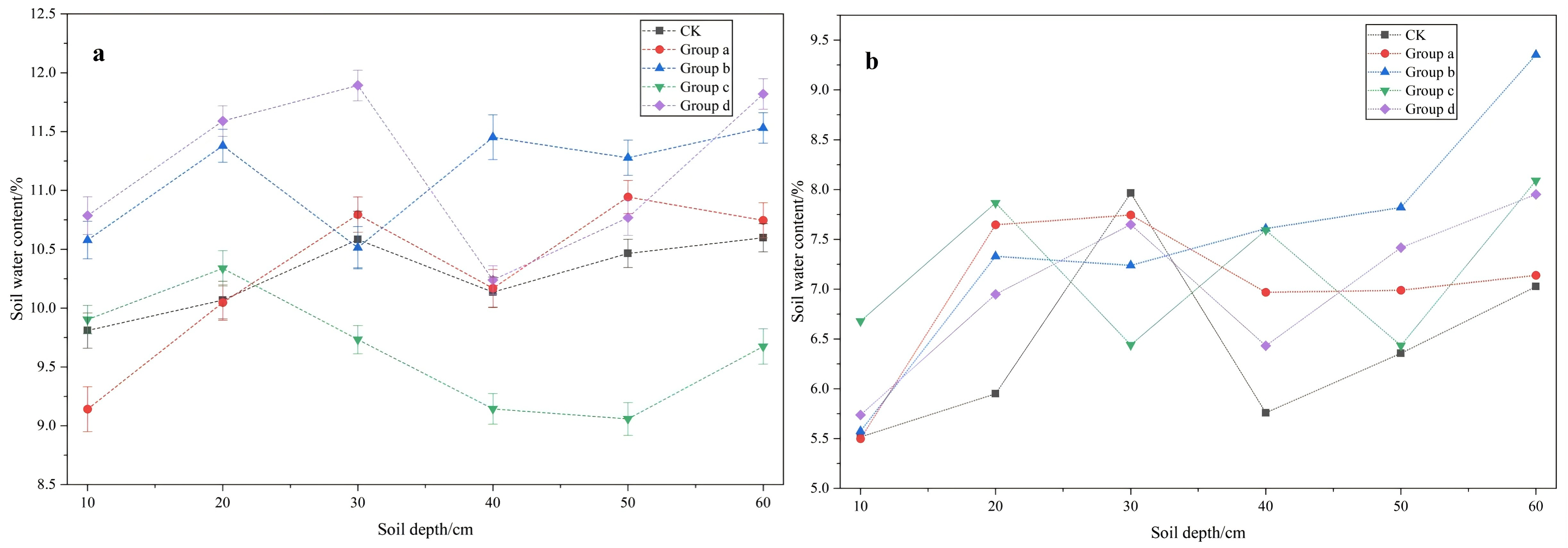
Soil gravimetric moisture content within the 0–60 cm profile under various mulching groups is illustrated in Figure 5. The results indicated that the average moisture content across all groups ranged from 9.06% to 11.82% during June to September 2023. Planting substrate moisture in Groups b and d was superior to that in the other groups. All groups displayed relatively low fluctuation in both amplitude and frequency, with a pronounced turning point occurring at the 20–40 cm soil layer. In June 2024, the average moisture content of the planting substrate varied from 5.50% to 9.35% among groups, and moisture content increased progressively with increasing depth, a pattern that was most evident in Group b. At depths greater than 40 cm, the mean soil moisture content in the 0–60 cm profile of the control group was lower than that in all other groups, suggesting that mulching promoted water infiltration.
Results regarding the coefficient of variation (CV) of moisture content in the planting substrate revealed that Groups b and c exhibited the lowest CV values among all layers. The overall coefficients of variation across all groups ranged from 0.10 to 0.15. The magnitude of soil moisture variability followed the order Group b (0.15) > CK (0.13) > Group a (0.11) = Group d (0.11) > Group c (0.10), with all groups demonstrating moderate variability (Table 4).

3.3. Analysis of Growth Differences in H. ammodendron Under Different Mulching Groups

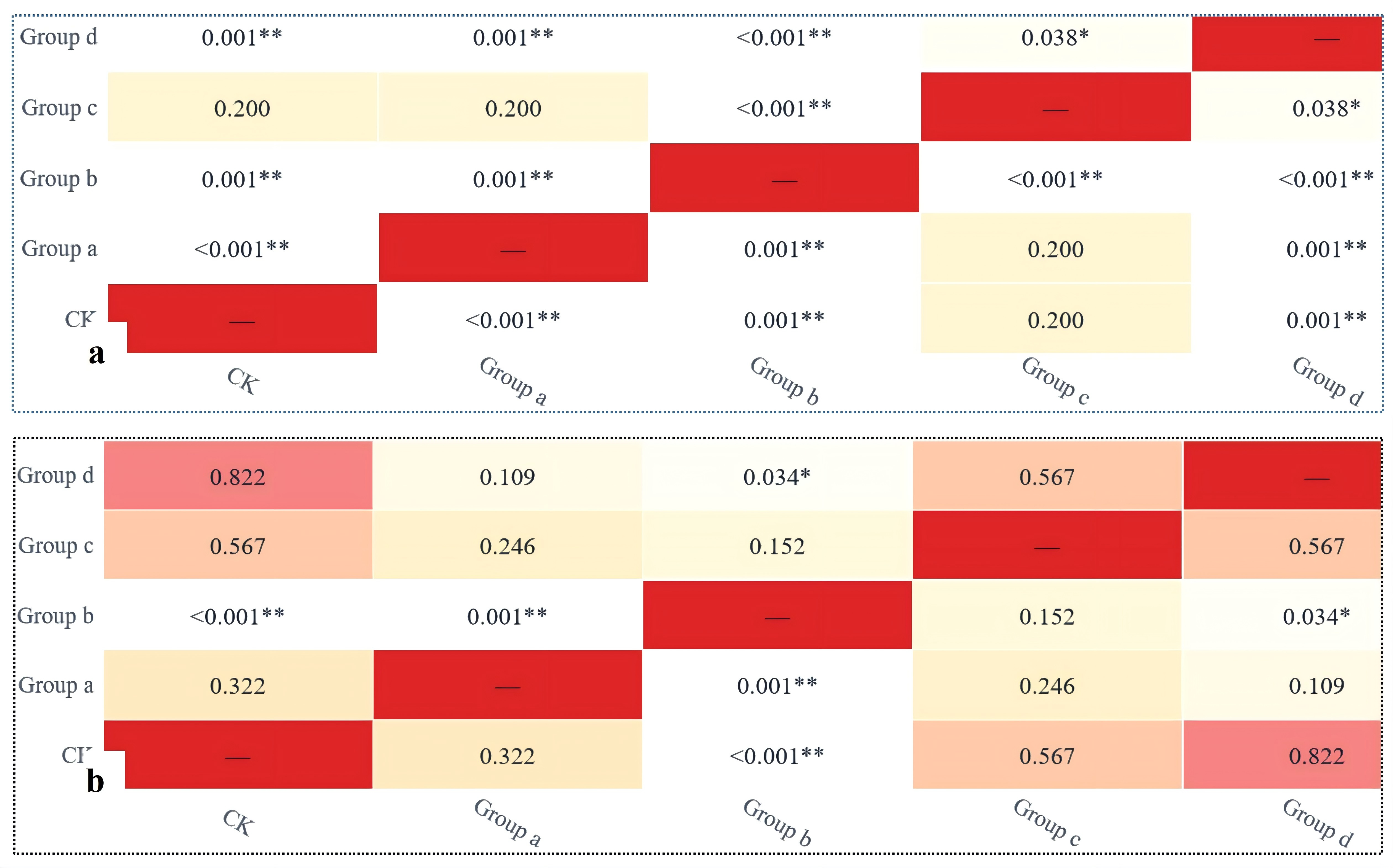
One-way ANOVA was performed to evaluate the effects of different groups on the survival rate and plant height of H. ammodendron seedlings (Figure 6). For survival rate, the ANOVA test yielded a p-value of 0.087 (>0.05), suggesting that no significant differences existed among all groups. In contrast, for plant height, the ANOVA result was p = 0.001 (<0.05), indicating that mulching significantly affected seedling height growth. Further multiple comparisons demonstrated that the control group (CK) did not differ significantly from any other group in terms of seedling height. However, coal gangue mulching (Group a) exhibited significant differences from both agricultural plastic film mulching (Group b) and liquid film mulching (Group c).

4. Discussion

4.1. Effects of Covering Measures on the Growth of H. ammodendron and Soil Moisture

The survival rate of plants, plant height and canopy width are important indicators for evaluating the effectiveness of vegetation restoration and the health status of plant growth [32,33]. We set up five surface coverage groups for this experiment. The coal gangue coverage group (a) had the highest survival rate of H. ammodendron seedlings, while the agricultural land film coverage group (b) had the lowest; the control group had a higher survival rate than the agricultural land film group (b), the liquid film group (c), and the fine river sand group (d). After June 2023, the mining area entered the rainy season. Compared with materials such as coal gangue, covering with agricultural land film in shallow ditches is more likely to cause waterlogging at the root level. H. ammodendron seedlings are intolerant of waterlogging [34], which subsequently led to the death of the seedlings. Agricultural land film coverage is a mature water retention method in agriculture [35,36,37,38]. Its effects of increasing temperature and retaining moisture, as well as improving water use efficiency, have been widely verified.
In this study, the group with agricultural land film (b) had the optimal plant height, canopy width, and monthly increment. The land film can reduce the surface roughness of the planting furrow, collect runoff, and improve the water utilization efficiency of H. ammodendron [39,40]; at the same time, the land film can increase the ground temperature [41,42]. Since the accumulated temperature above 0 °C is relatively low in the study area, plastic film mulching promotes the growth of H. ammodendron seedlings (e.g., plant height and crown expansion) in this high-altitude mountain zone. The growth rate of H. ammodendron is significantly influenced by soil quality and climate. In sandy soil conditions, the annual average increments of stem height and canopy width of sandalwood are 12 cm and 11.20 cm, respectively [43], while in clay soil conditions, the annual average increments do not exceed 20 cm [44]. In this experiment, the control group and the liquid film group (c) showed relatively weak growth performance, but the increments of stem height and canopy width were still higher than 11.33 cm and 11.81 cm respectively. This indicates that when the climate and substrate conditions are suitable, H. ammodendron bare-root seedlings can be directly planted after shallow trench micro-topography modification, which can reduce the restoration cost while achieving better restoration effects [45].
Excess or insufficient soil moisture is not conducive to the growth of H. ammodendron. Previous studies have shown that the moisture content of sandy soil should be maintained at more than 60% of the field capacity to ensure the normal physiological activities of H. ammodendron seedlings [46], while excessive moisture will inhibit root respiration; for example, when the moisture content of clay exceeds 30%, it will hinder the development of H. ammodendron [34]. In this experiment, the average moisture content of the agricultural mulching group (b) and the fine river sand group (d) was higher; the moisture content variation coefficient of the fine river sand group (d) was the smallest. The fine river sand cover has the functions of conserving moisture and storing water, as well as removing salts and reducing alkalinity [47].
Precipitation is the main source of replenishment for soil moisture in the study area. The moisture content of the substrates in each measure showed a seasonal fluctuation pattern of first decreasing and then increasing. Summer is a period of vigorous growth of H. ammodendron, with significant soil moisture consumption [48], and it is also the rainy season in the local area. Precipitation can sustain the growth of H. ammodendron. The evaporation under the canopy of the plants during the growing season was higher than that of the bare ground in April and May, lower in June to August, and showed no significant difference from the bare ground in September and October [49], causing the growth of H. ammodendron to slow down in September, and the soil moisture content of each group recovered synchronously and gradually stabilized. Although the moisture content of the agricultural land film substrate was the highest, the moisture conditions of the other groups were all sufficient for the growth of the H. ammodendron seedlings.

4.2. Analysis of Differences in H. ammodendron Growth Under Different Surface Mulching Measures

During vegetation restoration in arid zones, surface mulching stabilizes soil moisture, inhibits evaporative water loss, and mitigates the detrimental effects of excessive water consumption on seedlings under conventional transplantation [47]. This study found that several surface mulching groups had basically consistent effects on the survival rate of H. ammodendron seedlings. This indicates that all these surface mulching groups effectively improved soil moisture (the minimum soil moisture content was > 5.05%). However, since H. ammodendron seedlings can grow at a soil moisture content of more than 2% in the root zone [50], these surface mulching groups did not reach the drought limit of soil moisture content for H. ammodendron seedling growth, and thus failed to cause significant differences in the survival rate of H. ammodendron seedlings. Nevertheless, different surface mulching groups had significant effects on the plant height growth of H. ammodendron seedlings. Among them, the plant height under agricultural plastic film mulching (Group b) was significantly greater than that under other groups, as agricultural plastic film was significantly superior to the other mulching measures in terms of increasing soil temperature and preserving soil moisture. This is mainly because plastic film mulching can promote organic matter decomposition by increasing soil temperature, which may increase carbon dioxide (CO2) emissions, but its soil moisture preservation effect helps reduce nitrous oxide (N2O) emissions [51], thereby significantly improving seedling biomass and root-shoot ratio [46]. Mulching with materials such as fine sand, coal gangue, or liquid film can regulate the soil microenvironment and reduce greenhouse gas emissions, but their effects are greatly influenced by material properties and environmental conditions [52,53].
In this study, compared with the non-mulching group, the four mulching groups had no significant difference in their effects on the survival rate of H. ammodendron seedlings, but there were significant differences in their effects on the plant height and crown width growth of H. ammodendron seedlings. Plastic film mulching had the best effect on improving the plant height and crown width growth of H. ammodendron seedlings, followed by coal gangue mulching, while the effects of the other mulching groups were relatively similar and lower than those of the first two. Under the non-mulching group, although the survival rate, plant height, and crown width growth of H. ammodendron seedlings were slightly lower, they still met the standard for shrub afforestation survival rate in arid areas (more than 80%), which is crucial for controlling the cost of vegetation restoration under the special and harsh site conditions of arid mining areas. Although plastic film mulching can improve the plant height, crown width, and enhance the soil’s ability to retain moisture of restored vegetation, attention should be paid to its potential soil pollution, ecological risks, and mulching costs. Coal gangue mulching has a restoration effect similar to that of plastic film mulching and has the potential for solid waste utilization in mining areas of arid and semi-arid regions, but its long-term effects on vegetation growth still need further research.

5. Conclusions

The vegetation restoration of abandoned coal mine spoil areas in arid regions, under the condition of having only mountain brown calcareous soil as the soil substrate with limited thickness, adopts surface-covering measures (coal gangue covering, agricultural land film covering, liquid film covering and fine sand covering) to inhibit soil evaporation and retain soil moisture, providing an important role for vegetation restoration in arid mining areas. Different surface-covering measures have their own advantages and disadvantages. The coal gangue-covering measure has the potential for coal-based solid waste utilization and the recovery effect of increasing the survival rate of H. ammodendron seedlings, and is a preferred option to consider. However, without surface covering, the survival rate of H. ammodendron seedlings, plant height and crown width growth indicators also reached the afforestation standards under special difficult site conditions, and the cost is the lowest among other measures. In areas where the soil substrate is not particularly poor, this measure will be used as an important reference measure.

Author Contributions

Conceptualization, Z.Z. and H.W.; methodology, H.W. and Z.Z.; software, M.A. and J.X.; validation, Z.Z. and H.W.; formal analysis, Z.J. and Z.W.; investigation, Z.Z., M.A. and Z.W.; resources, H.W. and Z.J.; data curation, Z.Z. and H.W.; writing—original draft, Z.Z., M.A., Z.J. and J.X.; writing—review and editing, Z.Z. and Z.W.; supervision, H.W.; project administration, H.W.; funding acquisition, H.W. and Z.J. All authors have read and agreed to the published version of the manuscript.

Funding

This research was funded by Ecological Restoration Project for Historical Abandoned Mines in the 12th Division of the Northern Sand Prevention Belt (Whole-Process Consulting Services)-Engineering Monitoring (E5440201).

Data Availability Statement

The original contributions presented in this research are included in the article. Further inquiries can be directed to the corresponding author.

Conflicts of Interest

The authors declare no conflicts of interest.

References

  1. Guo, Q.S.; Wang, C.L.; Guo, Z.H.; Tan, D.Y.; Shi, Z.M. Geographic distribution of existing Haloxylon desert vegetation and its patch character in China. Sci. Silvae Sin. 2005, 41, 2–7. [Google Scholar]
  2. Zou, T.; Li, Y.; Xu, H.; Xu, G.Q. Physiological response and morphological adjustment of Haloxylon ammodendron in different habitats against precipitation variation. J. Desert Res. 2011, 31, 428–435. [Google Scholar]
  3. Wang, X.; Li, Y.; Zhang, H. Classification and physical properties of stony, gravelly, clay and sandy soils. J. Soil Water Conserv. 2007, 14, 45–52. [Google Scholar]
  4. Liu, L.Y.; Cai, X.B.; Jiang, X.H.; Wan, X.C. Species composition and floral components of vascular plants in Ganjiahu Nature Reserve of Xinjiang. Plant Sci. J. 2016, 34, 695–704. [Google Scholar]
  5. Zhang, J.C.; Wang, J.H.; An, F.B.; Sun, T.; Liu, Y.J.; Li, Y.K.; Xiao, B. Population characteristics of natural Haloxylon ammoderon in Minqin Gansu of China. J. Desert Res. 2009, 29, 1124–1128. [Google Scholar]
  6. Wang, M.; Wang, J.; Meng, Z.J.; Chai, X.X.; Lv, S.J.; Wang, D.H.; Wu, Y.G. Spatial heterogeneity of natural Haloxylon ammodendron populations at Ta-Mu-Su, Badain Jaran Desert, China. Acta. Ecol. Sin. 2016, 36, 4055–4063. [Google Scholar] [CrossRef] [Scilit]
  7. Zhu, X.L.; Si, J.H.; He, X.H.; Jia, B.; Zhou, D.M.; Wang, C.L.; Qin, J.; Liu, Z.J.; Ndayambaza, B.; Bai, X.; et al. Effects of ecological afforestation on soil inorganic carbon in arid region: A case study of desert margin in Alxa region, China. Restor. Ecol. 2025, 34, e70132. [Google Scholar] [CrossRef] [Scilit]
  8. Chen, F.; Zhang, J.; Han, E.N.; Li, S.L.; Wang, G.L.; Wang, L.; Wang, S.K. Soil microbial diversity and its relationship with soil physicochemical properties in Urat natural Haloxylon ammodendron forest. J. Desert Res. 2022, 42, 207–214. [Google Scholar]
  9. Yang, Y.N. National Nature Reserve in Qinghai Chaidamu Haloxylon ammodendron Forest Landscape Protection and Restoration. Master’s Thesis, Central South University of Forestry and Technology, Changsha, China, 2015. [Google Scholar]
  10. Xu, J.; Cao, X.F.; Wang, X.Z.; Xing, X.F.; Xu, R. Evaluation on soil conservation function of a mining area ecosystem in semi-arid areas-a case study at Shen fu-Dong sheng mining area. Bull. Soil Water Conserv. 2023, 43, 178–185. [Google Scholar]
  11. Peng, J.Y.; Wang, S.D.; Pan, J.Y. Study on ecological quality evaluation of mining area based on remote sensing green index-taking Yima mining area as an example. J. Min. Sci. Technol. 2023, 8, 704–713. [Google Scholar]
  12. Zhu, S.J.; Wang, F.L.; Liu, Y.J.; Sun, T.; Chai, C.W.; Zhang, J.H.; Zhang, H.Y. Effects of soil moisture and seed size on the germination, sprouting and sapling growth of Haloxylon ammodendron. J. Northwest For. Univ. 2021, 36, 16–21. [Google Scholar]
  13. Cheng, X.L.; An, S.Q.; Li, B.; Chen, J.Q.; Lin, G.H.; Liu, Y.H.; Luo, Y.Q.; Liu, S.R. Summer rain pulse size and rainwater uptake by three dominant desert plants in a desertified grassland ecosystem in northwestern China. Plant Ecol. 2006, 184, 1–12. [Google Scholar] [CrossRef] [Scilit]
  14. Tian, Y. The Lethal Factors and Survival Strategy in Haloxylon Ammodendron Germination and Ecesis Process. Ph.D. Thesis, Xinjiang University, Urumqi, China, 2014. [Google Scholar]
  15. Li, Y.G.; Wang, Z.H.; Zhang, J.Z.; Zheng, X.R.; Li, W.H.; Jiang, G.J. Effects of liquid film mulching on the growth of drip irrigated cotton and soil moisture, temperature and salts. Acta Agric. Boreali-Occident. Sin. 2014, 23, 110–115. [Google Scholar]
  16. Sun, B.; Xie, J.C.; Wang, N.; Wang, T.P.; Li, C.J. Effect of straw mulching on water-salt dynamic of saline soil. Agr. Res. Arid Areas 2011, 29, 180–184. [Google Scholar]
  17. Zhao, R.W.; Zhang, J.J.; Chen, B.Q.; Wang, Y.Q.; Sun, R.X.; Feng, H.C.; Ru, H. Effects of different mulching measures on soil moisture and the first-year survival rate of afforestation. J. Beijing For. Univ. 2016, 38, 87–93. [Google Scholar]
  18. Jin, T.; Liu, X.W.; Cui, J.X.; Peng, J.W.; Liu, Q. Macroplastics quantity and its influence on soil nutrients in typical plastic film mulching farmland in Northern Xinjiang. Agriculture 2024, 14, 734. [Google Scholar] [CrossRef] [Scilit]
  19. Yang, N.; Sun, Z.X.; Feng, L.S.; Zheng, M.Z.; Chi, D.C.; Meng, W.Z.; Hou, Z.Y.; Bai, W.; Li, K.Y. Plastic film mulching for water-efficient agricultural applications and degradable films materials development research. Mater. Manuf. Process. 2015, 30, 143–154. [Google Scholar] [CrossRef] [Scilit]
  20. Cao, J.H.; Li, C.J.; Gao, X.D.; Cai, Y.H.; Song, X.L.; Siddique, K.H.M.; Zhao, X.N. Agricultural soil plastic as a hidden carbon source stimulates microbial activity and increases carbon dioxide emissions. Resour. Conserv. Recy. 2023, 198, 107151. [Google Scholar] [CrossRef] [Scilit]
  21. Tao, T.; Ma, D.H.; Wu, S.C.; Hu, Y.W.; Chen, J.L.; Zhang, J.B.; Zhang, C.Z.; Tan, J.; Pan, H.; Ma, H.J. Effects of exogenous attapulgite addition on water conservation function of reclaimed soils in a semi-arid mining area. Chin. J. Appl. Ecol. 2022, 33, 901–908. [Google Scholar] [CrossRef] [Scilit]
  22. Han, X.N.; Dong, Y.; Geng, Y.Q.; Li, N.; Zhang, C.Y. Influence of coal gangue mulching with various thicknesses and particle sizes on soil water characteristics. Sci. Rep. 2021, 11, 15368. [Google Scholar] [CrossRef] [Scilit]
  23. Wang, C.; Liang, H.Q.; Bie, Q.Q.; Zhang, S.; Gao, Y.; Shu, Y.F.; Zhu, K.C.; Wang, Y.J.; Xu, Z.S.; Shu, X.Q. Research progress of coal gangue soil amendment. Chin. Coal. 2021, 47, 49–56. [Google Scholar]
  24. Li, Y.G.; Wang, Z.H.; Zhang, J.Z.; Li, W.H. Effects of liquid film mulching on soil temperature, Moisture and the growth of cotton under drip irrigation. Soils 2015, 47, 1170–1175. [Google Scholar]
  25. Ning, R.X.; Liu, C.J.; Cheng, X.C.; Lei, F.H.; Zhang, F.L.; Xu, W.; Zhu, L.W.; Jiang, J.X. Fabrication of multi-functional biodegradable liquid mulch utilizing xyloglucan derived from tamarind waste for agricultural application. Int. J. Biol. Macromol. 2024, 257, 128627. [Google Scholar] [CrossRef] [Scilit]
  26. Bai, X.M.; Zhang, Y.; Zhong, Y.; Du, Y. Effects of liquid film mulching on the soil structure and infiltration characteristics of drylands. Arid Zone Res. 2021, 38, 665–671. [Google Scholar]
  27. Zhao, C.Z.; Wang, Y.J.; Xie, Z.K.; Zhang, Y.B.; Guo, Z.H.; Qiu, Y.; Zhou, L.J. Long-term effects of Gravel-Sand mulch on diurnal variation of soil respiration in Semi-arid Loess Plateau, China. J. Desert Res. 2020, 40, 232–239. [Google Scholar]
  28. Xie, Z.K.; Wang, Y.J.; Cheng, G.D.; Malhi, S.S.; Vera, C.L.; Guo, Z.H.; Zhang, Y.B. Particle-size effects on soil temperature, evaporation, water use efficiency and watermelon yield in fields mulched with gravel and sand in semi-arid Loess Plateau of northwest China. Agric. Water Manag. 2010, 97, 917–923. [Google Scholar] [CrossRef] [Scilit]
  29. Li, Y.T.; Chen, G. Climatic characteristics of gale and snowfall weather and disaster prevention and mitigation measures in Urumqi, Xinjiang. J. Agric. Catastrophol 2025, 15, 248–250. [Google Scholar]
  30. He, X.L.; Yi, L.K.; Yan, C.; Li, H.P. Investigation on soils in the waste-mountains in Urban greening—A case study in the highland zone of Urumqi suburb. Arid Zone Res. 2010, 27, 409–414. [Google Scholar]
  31. Li, N.; Yi, L.K.; Wang, X.Y.; Yan, C. The main Vegetation types and their distribution in Urumqi. Xinjiang Agric. Sci. 2009, 46, 818–823+929. [Google Scholar]
  32. Zhang, C.; Lu, D.S.; Chen, X.; Zhang, Y.M.; Maisupova, B.; Tao, Y. The spatiotemporal patterns of vegetation coverage and biomass of the temperate deserts in Central Asia and their relationships with climate controls. Remote Sens. Environ. 2016, 175, 271–281. [Google Scholar] [CrossRef] [Scilit]
  33. Zhang, L.X.; Fan, J.W.; Zhou, D.C.; Zhang, H.Y. Ecological protection and restoration program reduced grazing pressure in the Three-River Headwaters Region, China. Rangel. Ecol. Manag. 2017, 70, 540–548. [Google Scholar] [CrossRef] [Scilit]
  34. Zhang, J.J.; Wang, H.; Li, J. Regulation effects of coal-gangue mulching on infiltration and evaporation of reconstructed soil in arid mining areas[J]. J. Environ. Eng. Technol. 2024, 14, 721–729. [Google Scholar]
  35. Iqbal, M.A. Productivity and quality of direct seeded rice under different types of mulches and planting patterns: A review. Am. Eurasian J. Agric. Environ. Sci. 2015, 14, 1240–1247. [Google Scholar]
  36. Yang, D.Q.; Liu, Y.; Wang, Y.; Gao, F.; Zhao, J.H.; Li, Y.; Li, X.D. Effects of soil tillage, management practices, and mulching film application on soil health and peanut yield in a continuous cropping system. Front. Microbiol. 2020, 11, 570924. [Google Scholar] [CrossRef] [Scilit]
  37. Han, X.Y.; Feng, Y.; Zhao, J.; Ren, A.X.; Lin, W.; Sun, M.; Gao, Z.Q. Hydrothermal conditions impact yield, yield gap and water use efficiency of dryland wheat under different mulching practice in the Loess Plateau. Agric. Water Manag. 2022, 264, 107422. [Google Scholar] [CrossRef] [Scilit]
  38. Liu, Q.G.; Wang, Z.H.; Zhang, J.H.; Wen, Y.; Chen, R.; Liu, N.N.; Li, M.; Luo, P.C. How residual plastic film affects the soil water—Salt and cotton growth at the seeding stage. Soil Use Manag. 2024, 40, e13084. [Google Scholar] [CrossRef] [Scilit]
  39. El-Hendawy, S.; Alsamin, B.; Mohammed, N.; Al-Suhaibani, N.; Refay, Y.; Alotaibi, M.; Tola, E.; Mattar, M.A. Combining planting patterns with mulching bolsters the soil water content, growth, yield, and water use efficiency of spring wheat under limited water supply in arid regions. Agron. J. 2022, 12, 1298. [Google Scholar] [CrossRef] [Scilit]
  40. Zhang, D.K.; Mak-Mensah, E.; Zhou, X.J.; Wang, Q.; Obour, P.B. Impact of plastic film with wheat straw mulching on maize water use efficiency, evapotranspiration, and grain yield in northern China: A meta-analysis. J. Soil. Sci. Plant. Nut. 2023, 23, 867–880. [Google Scholar] [CrossRef] [Scilit]
  41. Zhang, C.; Kong, J.Y.; Tang, M.; Lin, W.; Ding, D.Y.; Feng, H. Improving maize growth and development simulation by integrating temperature compensatory effect under plastic film mulching into the Aqua-crop model. Crop J. 2023, 11, 1559–1568. [Google Scholar] [CrossRef] [Scilit]
  42. Jones, H.; Black, T.A.; Jassal, R.S.; Nesic, Z.; Johnson, M.S.; Smukler, S. Characterization of shortwave and longwave properties of several plastic film mulches and their impact on the surface energy balance and soil temperature. Sol. Energ. 2021, 214, 457–470. [Google Scholar] [CrossRef] [Scilit]
  43. Su, L.; Wang, Z.; Luo, Y.L.; Ma, H.; Ren, C.Z.; Zhang, L.W.; Tong, B.K. Study on eco-environmental factors and growth of seedlings habitats of Haloxylon ammodendron in the southeastern margin of Junggar Basin. Xinjiang J. Agric. 2019, 56, 1527. [Google Scholar]
  44. Huang, N.; Li, X.Y.; Liu, H.Y.; Tang, J.N.; Ji, Y.F.; Zhao, C.M.; Li, J.H. Effects of stand structure on ecological benefits and tree growth of Haloxylon ammodendron plantations: A meta-analysis. Land Degrad. Dev. 2024, 35, 4406–4418. [Google Scholar] [CrossRef] [Scilit]
  45. Khalid, N.; Aqeel, M.; Noman, A.; Rizvi, Z.F. Impact of plastic mulching as a major source of microplastics in agroecosystems. J. Hazard. Mater. 2023, 445, 130455. [Google Scholar] [CrossRef] [Scilit]
  46. Zheng, H.H.; Wang, Z.; Ren, C.; Shi, Y.X.; Gu, L.Z.; Tang, L.; Wang, X.M.; Chen, S.H. The growth physiological characteristics of Haloxylon ammodendron seedlings under different drought gradients. J. Xinjiang Agric. Univ. 2023, 46, 295–300. [Google Scholar]
  47. Kong, K.K.; Han, W.; Guan, W.K.; Wen, Q. Effects of covering materials on soil moisture and photosynthetic characteristics and growth of populus euphratica seedlings. Acta Agric. Boreali-Occident. Sin. 2019, 28, 988–997. [Google Scholar]
  48. Hao, X.T.; Huang, Y.R.; Ma, Y.B.; Zhang, S.; Han, C.X.; Pang, J.C.; Xu, G.P.; Hao, H.Z.; Liu, Y.J. Study on soil moisture dynamics in growing season of sand-fixing Haloxylon ammodendron forest in Ulan Buhe desert. J. Agric. Sci. 2023, 25, 187–196. [Google Scholar]
  49. Chen, Y.B.; Hu, S.J.; Zhu, H.; Luo, G. Soil Evaporation of Haloxylon ammodendron community in the southern Gurbantunggut desert. J. Desert Res. 2016, 36, 190–198. [Google Scholar]
  50. Tian, Y.; Li, J.G.; Zhao, Y. Relationship between Haloxylon ammodendron seedling mortality and water content in soil and atmosphere. J. Desert Res. 2010, 30, 878–884. [Google Scholar]
  51. Zhang, L.; Wei, H.H.; Zhang, K.P.; Li, Z.S.; Li, F.M.; Zhang, F. Plastic film mulching increases crop yields and reduces global warming potential under future climate change. Agric. For. Meteorol. 2024, 349, 109963. [Google Scholar] [CrossRef] [Scilit]
  52. Zhao, C.Z.; Wang, Y.J.; Qiu, Y.; Xie, Z.K.; Zhang, Y.B. Response of soil respiration to hydrothermal effects of gravel-sand mulch in arid regions of the Loess Plateau, China. Soil Tili. Res. 2023, 231, 105733. [Google Scholar] [CrossRef] [Scilit]
  53. Wang, D.L.; Li, Y.; Zhang, T.B.; Zhou, L.F.; Ge, J.K.; Zhuang, L.; Dyck, M.; Feng, H. Greenhouse gas emissions and carbon footprint under gravel mulching on China’s Loess Plateau. Agron. J. 2020, 112, 733–747. [Google Scholar] [CrossRef] [Scilit]
Figure 1. Location map of abandoned mines in the 12th Division of Xinjiang Production and Construction Corps: (a) is the location map of the mine dump, (b) is the study area before vegetation restoration, and (c) is the study area in the second year of H. ammodendron planting restoration.).
Agronomy 16 01732 g001
Figure 2. Schematic diagram of experimental setup: (a) is a schematic plan of the experimental setup, (b) is a real-life layout of the planting area, and (c) is a schematic cross-section of the planting area.
Agronomy 16 01732 g002
Figure 3. Survival rate of H. ammodendron seedlings under different groups. The different capital letters in the figure indicate that the survival rates of the seedlings in each group were significantly different at the 0.05 confidence level.
Agronomy 16 01732 g003
Figure 4. Diagram of average plant height, crown width, and monthly growth changes of H. ammodendron under different groups: (a) depicts the average plant height variation, (b) illustrates the average crown width variation, (c) displays the monthly average growth variation of plant height, and (d) shows the monthly average growth variation of crown width. The different lowercase letters in the figure indicate that plant height, crown width of the seedlings in each group were significantly different at the 0.05 confidence level.
Agronomy 16 01732 g004
Figure 5. Soil moisture content in different groups: (a) shows the mean soil moisture content from June to September 2023 in different groups and (b) presents the mean soil moisture content in June 2024 for different groups.
Agronomy 16 01732 g005
Figure 6. Correlation heatmaps of pairwise comparison p-value matrix—survival rate (a) and plant height (b). Note: * p < 0.05; ** p < 0.01.
Agronomy 16 01732 g006
Table 1. Physicochemical properties of sandstone planting substrate.
Soil Cover ThicknesspH (mol/L)Soil Bulk Density (g/cm3)Soil Hardness (N/cm2)Organic Matter (g/kg)Total Salt (g/kg)Soil Particle Size Content (%)
d ≥ 5 mm5 mm > d ≥ 1 mmd < 1 mm
0–20 cm8.451.78525.034.420.8859.1434.965.90
20–40 cm8.371.69496.323.580.9635.9035.5728.53
40–60 cm8.731.75456.883.220.8516.6330.8252.55
Table 2. Experimental setup—the five mulching measures tested.
Name of the MeasurePlanting Measures for SeedlingImplementation Specifics
Group aEach group was divided into three planting plots, with 30 seedlings planted in each plotAfter seedling planting, coal gangue was evenly covered in the shallow ditches, with an average particle size of less than 5 cm and a covering thickness of 10 cm.
Group bAfter seedling planting, agricultural plastic film from Xinjiang Tianye Co., Ltd. (Shihezi City, China). in China was evenly covered on the shallow ditches and their two sides, with the film thickness being 0.08 mm.
Group cAfter seedling planting, degradable liquid plastic film, Yangling Mingrui Chemical Technology Co., Ltd. (Xi’an City, China). in China, was evenly sprayed on the shallow ditches and their flanks (its main components are asphalt, water, vegetable oil and emulsifier, diluted 6-fold with fresh water and applied at a rate of 750 kg per hectare).
Group dAfter seedling planting, fine sand was evenly spread in the shallow ditches, with an average particle size of less than 5 mm and a thickness of 10 cm.
CKAfter seedling planting, no surface mulching was applied in the shallow ditches.
Table 3. Annual average vegetation growth of H. ammodendron under different groups.
GroupMean Plant Height in June 2023/cmMean Plant Height in June 2024/cmAnnual Mean Plant Height Growth Rate/%Mean Crown Width in June 2023/cmMean Crown Width in June 2024/cmAnnual Mean Plant Crown Growth Rate/%
CK41.12 ± 11.30 ab58.46 ± 14.35 bc17.34 ± 3.76 c27.02 ± 12.05 b43.47 ± 16.06 c16.45 ± 3.96 c
Group a37.88 ± 6.97
c
63.14 ± 14.57 b25.26 ± 5.61 b28.75 ± 11.45 b50.20 ± 13.97 b21.45 ± 5.66 b
Group b36.58 ± 9.53
c
73.08 ± 16.47 a36.50 ± 7.59 a30.10 ± 10.97 a63.59 ± 16.88 a33.49 ± 8.47 a
Group c45.35 ± 7.38
a
56.68 ± 14.64 c11.33 ± 2.27 d30.27 ± 13.04 a42.08 ± 17.49 c11.81 ± 2.58 d
Group d39.38 ± 9.60 bc59.00 ± 12.67 bc19.62 ± 4.75 c31.52 ± 12.54 a46.66 ± 12.37 bc15.14 ± 3.81 c
Note: In the table, different lowercase letters in the same column indicate that there are significant differences in the height or canopy width of the seedlings among different experimental groups at the 0.05 confidence level.
Table 4. Substrate water content and its coefficient of variation in the 0–60 cm soil layer.
Substrate Depth/cmCKGroup aGroup bGroup cGroup d
Coefficient of Variation
0–100.360.190.150.070.22
10–200.140.270.130.090.15
10–300.400.180.190.030.23
30–400.460.190.040.040.15
40–500.220.240.100.090.36
50–600.220.190.110.160.22
0–600.130.110.150.100.11
Disclaimer/Publisher’s Note: The statements, opinions and data contained in all publications are solely those of the individual author(s) and contributor(s) and not of MDPI and/or the editor(s). MDPI and/or the editor(s) disclaim responsibility for any injury to people or property resulting from any ideas, methods, instructions or products referred to in the content.