Article

Proline Raises Maize Yield Under Low Temperature by Regulating Photosynthesis, Leaf Senescence and Nitrogen Metabolism


1
Liaoning Agricultural Vocational and Technical College, Yingkou 115009, China
2
College of Agronomy, Northeast Agricultural University, Harbin 150030, China
*
Author to whom correspondence should be addressed.
Agronomy 2026, 16(14), 1367; https://doi.org/10.3390/agronomy16141367
Submission received: 15 June 2026 / Revised: 15 July 2026 / Accepted: 16 July 2026 / Published: 18 July 2026

Abstract

Maize (Zea mays L.) is a global staple crop for food, feed and industrial use in China. As a thermophilic crop, its seedlings suffer from cold stress. Heilongjiang, China’s major maize producer, faces worsening early cold that impedes germination and seedling growth, causing heavy yield losses. Improving germination cold tolerance stabilizes yields. Ubiquitous proline (Pro) works as a key osmoprotectant and core stress-resistance regulator in plants. In this field experiment, the maize cultivar Damin 3307 was used to explore the effects and regulatory mechanisms of Pro seed soaking on low-temperature-stressed maize. We analyzed seedling emergence, plant growth, photosynthetic performance, nitrogen metabolism, dry matter accumulation, ear traits and grain yield of treated maize under low temperature. The results showed that seed soaking with 15 mmol·L−1 Pro effectively improved the seedling emergence rate of early-sown maize under low temperature and compensated for cold-induced population decline. It significantly increased plant height at the seedling and jointing stages, which enhanced vegetative growth. Exogenous Pro regulated the activities of key nitrogen metabolism enzymes, including NR, GS, GOGAT, GDH, GOT and GPT, alleviating low-temperature-induced nitrogen metabolism inhibition and accelerating ammonia assimilation as well as protein and amino acid synthesis to promote maize growth. Additionally, Pro soaking mitigated the cold-induced suppression of leaf photosynthetic indices (Pn, Gs, Tr, Ci) and key photosynthetic enzymes (RuBPCase, PEPCase). It maintained higher leaf chlorophyll content and green leaf area, delayed leaf senescence, and sustained stable carbon and energy supply for nitrogen metabolism. These improvements strengthened maize cold resistance, promoted dry matter accumulation, optimized ear and kernel traits by increasing ear number and kernels per ear and reducing empty kernels, and ultimately improved the grain yield of early-sown maize under low-temperature stress.

1. Introduction

Maize (Zea mays L.) is one of the most widely cultivated crops across the globe. Faced with the pressure of food demand as the global population is projected to exceed 9.7 billion by 2050, stable and high maize yields are of great significance for safeguarding food security and animal husbandry development in China and worldwide [1]. Global warming has intensified temperature anomalies and extreme weather events, leading to a rising risk of low-temperature stress for crops [2]. Maize, a thermophilic crop, is vulnerable to low temperature throughout its whole growth cycle, with damage most frequently occurring at the seedling stage [3]. Major maize-producing regions at high latitudes and high elevations globally are constrained by low temperatures [4]. Severe chilling disasters strike China every 3 to 5 years, with worsening cold damage in Northeast China; yield losses exceed 15% in severely affected years [5]. Apart from breeding cold-tolerant cultivars and adjusting sowing dates, exploring maize physiological responses to low temperature, adaptive strategies, and regulatory mechanisms of exogenous substances has become an urgent research priority. Proline (Pro) is a ubiquitous small soluble organic molecule and protein constituent in plants, which accumulates massively under stress conditions. As an osmoprotectant, it preserves cell membrane integrity and stabilizes proteins and subcellular structures [6]. Low-temperature injury occurs when low temperatures prevail during the vegetative growth stage, postponing crop phenological development. As a result, crops fail to ripen normally before frost arrives, leading to higher grain moisture content, decreased 1000-kernel weight, and ultimately reduced grain yield and quality [7]. Plant proline metabolism consists of three processes: biosynthesis, degradation and translocation [8,9].
Previous research indicates that seed soaking or foliar Pro treatment restores net photosynthetic rate (Pn), stomatal conductance (Gs) and intercellular CO2 concentration (Ci) to varying degrees in maize leaves under drought stress and strengthens photosynthetic capacity. Pro also facilitates carbon uptake and regulates transpirational water loss [10]. These findings verify that Pro improves water use efficiency under stress-induced dehydration and strengthens plant survival under adverse environments. Under abiotic stress, gene expression of proteolytic enzymes responsible for chlorophyll breakdown (e.g., chlorophyllase) is activated, which reduces chlorophyll concentration and impairs the photosynthetic apparatus [11]. Photosynthesis serves as the primary pathway for organic matter accumulation in plants and is tightly correlated with biomass production. Numerous previous studies have documented that photosynthesis is suppressed when plants suffer low-temperature stress, and the magnitude of inhibition varies with plant species and stress severity [12]. This indicates that cold-tolerant genotypes enhance cold resistance via rapid stomatal regulation under low temperature. Low temperature also alters NR activity in a species-dependent manner. In cold-stressed tomato leaves, daytime NR activity decreased significantly [13]. The GS-GOGAT cycle relies on two enzymes, GS and GOGAT, and serves as the primary route for incorporating NH4+ into carbon skeletons in plants [14]. The GDH pathway fulfills unique physiological functions, including the reassimilation of NH3 released during photosynthesis, the recycling of ammonia from senescent tissues, and the alleviation of ammonium toxicity [15]. Low temperature globally depresses nitrogen metabolism and amino acid biosynthesis, which disrupts the morphological formation of vegetative and reproductive organs, ultimately diminishing crop yield and quality [16]. Accordingly, this study investigates the alleviative effects of exogenous proline (Pro) on maize seed germination under low-temperature stress and verifies the practical production efficacy of Pro seed soaking through early-sowing field trials under cold conditions. The findings will help refine the regulatory network of maize cold tolerance, lay a theoretical foundation for the practical application of Pro seed priming and offer technical references for cold-resistant maize cultivation, bearing substantial theoretical and practical significance.

2. Materials and Methods

2.1. Experimental Materials and Design

Based on preliminary experiments, the maize cultivar Damin 3307 (cold-sensitive genotype) was chosen as the test material. L-proline was obtained from Sigma Corporation (UNSPSC Code: 12352209, EC Number: 205-702-2, MDL number: MFCD00064318, Beilstein/REAXYS Number: 80810, Sigma-Aldrich Company, Burlington, MA, USA). Field experiments were conducted in 2018 and 2019 at the experimental station of Northeast Agricultural University (Harbin, Heilongjiang Province, E 126°75′, N 45°75′). Precipitation and temperature data for the experimental station are shown in Figure 1, indicating normal climatic conditions for both growing seasons. The experimental soil was classified as chernozem, with soil fertility characteristics presented in Table 1.
A randomized block experimental design was adopted. Seeds were soaked in distilled water and 15 mmol·L−1 Pro solution before sowing, respectively. Detailed procedures were as follows: plump maize seeds with uniform size were surface-sterilized in 0.1% HgCl2 solution for 10 min, thoroughly rinsed with distilled water, and surface moisture was blotted with filter paper. Seeds were placed in 500 mL beakers and soaked in Pro solutions at concentrations of 15 mmol·L−1 inside an artificial incubator (Model HPG-280HX, Bingu Technology Co., Ltd., Shanghai, China) at 22 °C for 24 h. After soaking, seeds were rinsed with distilled water and air-dried naturally. An early sowing scheme with three sowing dates was established: April 10 (B1), April 20 (B2), and April 30 (CK). Six treatments were ultimately formed: B1, B1+P, B2, B2+P, CK, and CK+P. Each treatment contained three replicates, amounting to 18 plots in total.
B1-Water means “April 10” sowing date + “distilled water”.
B1-Pro means “April 10” sowing date + “15 mmol/L proline”.
B2-Water means “April 20” sowing date + “distilled water”.
B2-Pro means “April 20” sowing date + “15 mmol/L proline”.
CK-Water, means “April 30” sowing date + “distilled water”.
CK+Pro means “April 30” sowing date + “15 mmol/L proline”.
Each plot covered an area of 48 m2, with an 8 m row length and 0.6 m row spacing; each plot had 10 rows. The planting density was 50,000 plants per hectare. Thinning was carried out at the three-leaf stage, defined as when over 60% of plants within a plot reached this developmental phase. A total of 75 kg·hm−1 P2O5 and 120 kg·hm−1 K2O were applied entirely as a basal fertilizer in one dose. The total nitrogen application rate was 220 kg·hm−1; half of the nitrogen fertilizer was incorporated as a basal fertilizer, and the remaining half was top-dressed at the jointing stage. All other field management practices followed local conventional farming protocols.

2.2. Determination of Seedling Emergence Rate

Seedling emergence was defined as seedlings protruding 2–3 cm above the soil surface. The seedling emergence rates of all treatments were counted on 28 May 2018 and 1 June 2019.
Seedling emergence rate (%) = (number of emerged seeds/total sown seeds) × 100%

2.3. Determination of Plant Height

At the seedling, jointing, tasseling, and grain-filling stages, five representative plants were selected from each plot. A tape measure with 1 mm graduations was used to measure the vertical distance from the base of the stalk to the highest naturally stretched leaf, and the average value was calculated.

2.4. Determination of Dry Matter Accumulation

Five representative plants were sampled from each plot at the seedling, jointing, tasseling, and grain-filling stages. Whole plants were cleaned and wiped dry, deactivated at 105 °C for 30 min, then oven-dried to constant weight at 80 °C. Dry weight was recorded, and the average value was calculated.

2.5. Determination of Gas Exchange Parameters

At the seedling, jointing, tasseling, and grain-filling stages of each treatment in the field experiment, a portable photosynthesis system Li-6400 (Li-COR Inc., Lincoln, NE, USA) was adopted to measure four gas exchange parameters on fully expanded functional leave (the third fully expanded leaf from the top) of six plants, including net photosynthetic rate (Pn), intercellular CO2 concentration (Ci), stomatal conductance (Gs) and transpiration rate (Tr). The measurement conditions were set as follows: leaf temperature 24 °C, photosynthetic photon flux density 1200 μmol·m−2·s−1, airflow rate 300 μmol·s−1, and reference CO2 concentration 550 μmol·mol−1. To eliminate interference from ambient CO2 concentration, a small gas cylinder supplying a constant 550 μmol·mol−1 CO2 was connected to the inlet of the instrument during determination. All measurements were conducted between 9:00 and 11:00 a.m. on sunny days.

2.6. Determination of SPAD Value

At the seedling, jointing, tasseling, and grain-filling stages for each treatment of the field experiment, six representative plants were selected per plot. The relative chlorophyll content (SPAD readings) of fully expanded functional leaves was measured using a portable chlorophyll meter CCM-200 Plus (Opti-Sciences Int., Hudson, NH, USA).

2.7. Determination of Photosynthetic Enzyme Activities

At the seedling, jointing, tasseling, and grain-filling stages of maize, functional leaves (the fully expanded third leaf from the top) were sampled. The activities of PEPCase and RuBPCase were assayed according to the following protocols. Fresh leaf tissue (0.2 g) was placed into a pre-cooled mortar with 1 mL extraction solution consisting of 100 mM Tris-HCl buffer (pH 7.8), 10 mM MgCl2, 1 mM EDTA, 10 mM β-mercaptoethanol, 2 mM phenylmethylsulfonyl fluoride (PMSF), and 2% (w/v) polyvinylpyrrolidone (PVP). Samples were ground into a homogenate on ice, then centrifuged at 12,000× g for 5 min, and the supernatant was collected for enzyme activity measurement. For the PEPCase activity assay (Omoto et al.’s method): The supernatant was desalted with a pre-cooled Sephadex G-25 column. The reaction mixture contained 100 mM Tris-HCl buffer (pH 7.6), 1 mM NaHCO3, 5 mM MgCl2, 0.2 mM NADH, 5 U·mL−1 NADH-malate dehydrogenase (NADH-MDH), 5 mM dithiothreitol (DTT), and 0.5 mM phosphoenolpyruvate (PEP). The reaction was initiated by adding 50 μL of crude enzyme extract. For the RuBPCase activity assay (Du et al.’s method): The reaction system contained 50 mM HEPES-KOH buffer (pH 8.0), 10 mM NaHCO3, 0.2 mM NADH, 2.5 mM ATP, 10 mM KCl, 1 mM EDTA-NaOH, 20 mM MgCl2, 5 mM DTT, 5 mM phosphocreatine, 6 U·mL−1 3-phosphoglycerate kinase plus glyceraldehyde-3-phosphate dehydrogenase, and 20 U·mL−1 creatine phosphokinase.

2.8. Determination of Leaf Senescence Characteristics

The measurement was performed as follows. Individual plant leaf area and the number of green leaves were recorded at 10-day intervals from the tasseling stage to physiological maturity. Leaf area (LA) = midrib length × maximum leaf width × 0.75; GLA refers to green leaf area. The dynamic senescence process from tasseling to maturity was fitted using a regression equation of relative green leaf area (RGLA). y = a e b c x ÷ ( 1 + e b c x ) . In the equation: y = relative green leaf area (RGLA, %); x = days after tasseling; a = initial RGLA at tasseling (RGLAs, RGLAs = 1 in this experiment); parameter b is associated with the onset of leaf senescence; and parameter c correlates with senescence rate.
RGLA: Relative green leaf area at a given time post-tasseling
RGLA = (green leaf area at sampling time/maximum green leaf area at tasseling) × 100%
RGLAm (%): RGLA at maturity
RGLAm = (GLA at maturity/GLA at tasseling) × 100%
Vm: mean decline rate of RGLA
Vm = (RGLAs − RGLAm)/T
T = total days from tasseling to maturity
Vmax: maximum reduction rate of RGLA; Vmax = c/4
tmax: days from tasseling to the occurrence of maximum senescence rate Vmax,
tmax = b/c
LAD: leaf area duration; LAD = (GLAs + GLAm) × T/2

2.9. Determination of Nitrate Reductase (NR) Activity

NR activity was assayed as follows. Briefly, 0.1 g tissue was homogenized on ice with 2 mL extraction buffer consisting of 100 mM potassium phosphate buffer (pH 7.5), 5 mM EDTA-Na2, and 4% n-propanol. The homogenate was centrifuged at 4000× g for 15 min at 4 °C. Subsequently, 0.4 mL of crude enzyme extract was mixed with 25 mM KNO3 solution and 0.4 mL of 2 mM NADH, followed by incubation at 30 °C in darkness for 30 min. The reaction converting NO3 to NO2 was terminated by boiling the mixture at 100 °C for 5 min. Then, 500 μL of 0.3% 1-naphthylamine and 500 μL of 1% sulfanilamide (dissolved in 30% acetic acid) were added to form nitrite derivatives detectable via colorimetry. After a 15-min color development period, all samples were centrifuged at 4000× g for 5 min, and the absorbance of the supernatant was determined spectrophotometrically at 540 nm. Nitrite (NO2) concentrations were calculated against a NO2 standard curve to quantify NR activity, which was expressed as μg·g−1 FW·h−1.

2.10. Determination of Glutamine Synthetase (GS), Glutamate Synthase (GOGAT) and Glutamate Dehydrogenase (GDH) Activities

Determination of Crude Enzyme Extraction. A total of 0.5 g tissue was placed in a pre-cooled mortar and homogenized with 2 mL pre-chilled extraction buffer. The buffer consisted of 0.05 M Tris-HCl (pH 7.6) supplemented with 9.6% glycerol, 1 mM β-mercaptoethanol, 1 mM EDTA-Na2 and 1 mM MgCl2. The homogenate was centrifuged at 12,000× g for 30 min at 4 °C, and the supernatant was harvested for subsequent enzyme activity assays.
GS Activity Assay. The reaction mixture contained 50 mM imidazole, 18 mM ATP-Na2, 28 mM MgCl2, 25 mM hydroxylamine and 92 mM monosodium L-glutamate (pH 7.2). In total, 100 μL supernatant was mixed with 250 μL reaction solution, and the mixture was incubated in a water bath at 30 °C for 20 min. The enzymatic reaction was terminated by adding 500 μL stop solution (370 mM FeCl3, 200 mM TCA, 700 mM HCl). After centrifugation at 13,000× g for 5 min, the absorbance of the supernatant was measured at 540 nm. The production of γ-glutamyl monohydroxamate was quantified using a standard curve with known concentrations of this compound. One unit of GS activity was defined as the enzyme amount required to catalyze the formation of 1 μM γ-glutamyl hydroxamate per hour.
GOGAT Activity Assay. The reaction system contained 0.1 mL 3 mM NADH, 0.2 mL 20 mM L-glutamine, 50 μL 10 mM KCl, 25 μL 0.1 M α-ketoglutarate and 0.25 mL crude enzyme extract. The decrease in absorbance at 340 nm was recorded over 5 min. Enzyme activity was calculated based on a NADH standard curve and expressed as μmol NADH ·g−1 FW·min−1.
GDH Activity Assay. The 3 mL final reaction system comprised 0.4 mL 20 mM L-glutamine, 0.3 mL 0.1 M 2-oxoglutarate, 0.3 mL 1 M NH4Cl, 0.2 mL 3 mM NADH, 1.2 mL 25 mM Tris-HCl buffer (pH 8.0) and 1 mL enzyme extract. The reaction was initiated immediately by adding L-glutamine and NADH after the enzyme extract was incorporated. Changes in absorbance at 340 nm were monitored for 3 min. GDH activity was expressed as μmol NADH·g−1 FW·h−1.

2.11. Determination of Glutamic-Oxaloacetic Transaminase (GOT) and Glutamic-Pyruvic Transaminase (GPT) Activities

GOT and GPT activities were assayed as follows. A total of 0.5 g embryonic tissue was placed into a pre-cooled mortar and homogenized on ice with 5 mL of 50 mM Tris-HCl buffer (pH 7.2). The homogenate was centrifuged at 20,000× g for 20 min at 4 °C, and the supernatant was collected for enzyme activity analysis.
GOT Activity Assay. The 0.6 mL reaction system consisted of 0.1 M phosphate buffer (pH 7.4), 200 mM DL-aspartic acid, 2 mM α-ketoglutarate, and 0.1 mL crude enzyme extract.
GPT Activity Assay. The 0.6 mL reaction mixture contained 0.1 M phosphate buffer (pH 7.4), 200 mM L-alanine, 2 mM α-ketoglutarate, and 0.1 mL crude enzyme extract.
Each reaction mixture was incubated in a water bath at 37 °C for 1 h, then 0.5 mL of a 2,4-dinitrophenylhydrazine solution was added to terminate the reaction. Samples were incubated again at 37 °C for 20 min, mixed thoroughly with 5 mL 0.4 M NaOH, and left to stand for 10 min before absorbance was measured at 500 nm. One activity unit of GOT or GPT was defined as the amount of enzyme that catalyzes the production of 1 μmol pyruvate within a 30 min reaction period under the assay conditions. Enzyme activities of GOT and GPT were expressed as μmol·g−1·30 min−1.

2.12. Determination of Ear Traits and Grain Yield

After full physiological maturity, the number of effective ears per unit area was counted for each plot. Excluding border rows, two unharvested sampling rows in each plot were selected, and 20 maize ears were harvested for laboratory ear trait analysis. The measured indices included ear length, ear diameter, kernel number per ear, 100-kernel weight, and barren tip length. Grain yield was adjusted to a uniform moisture content of 14.0%.

2.13. Statistical Analysis

The data were summarized to calculate the mean value and standard error (SE). The mean value was compared by analysis of variance (ANOVA) to analyze the significant differences between samples with different treatments (p < 0.05). All statistical analyses were performed using SPSS 19.0 procedures (SPSS Inc., Chicago, IL, USA). Microsoft Excel 2010 was used to draw tables.

3. Results

3.1. Emergence Rate

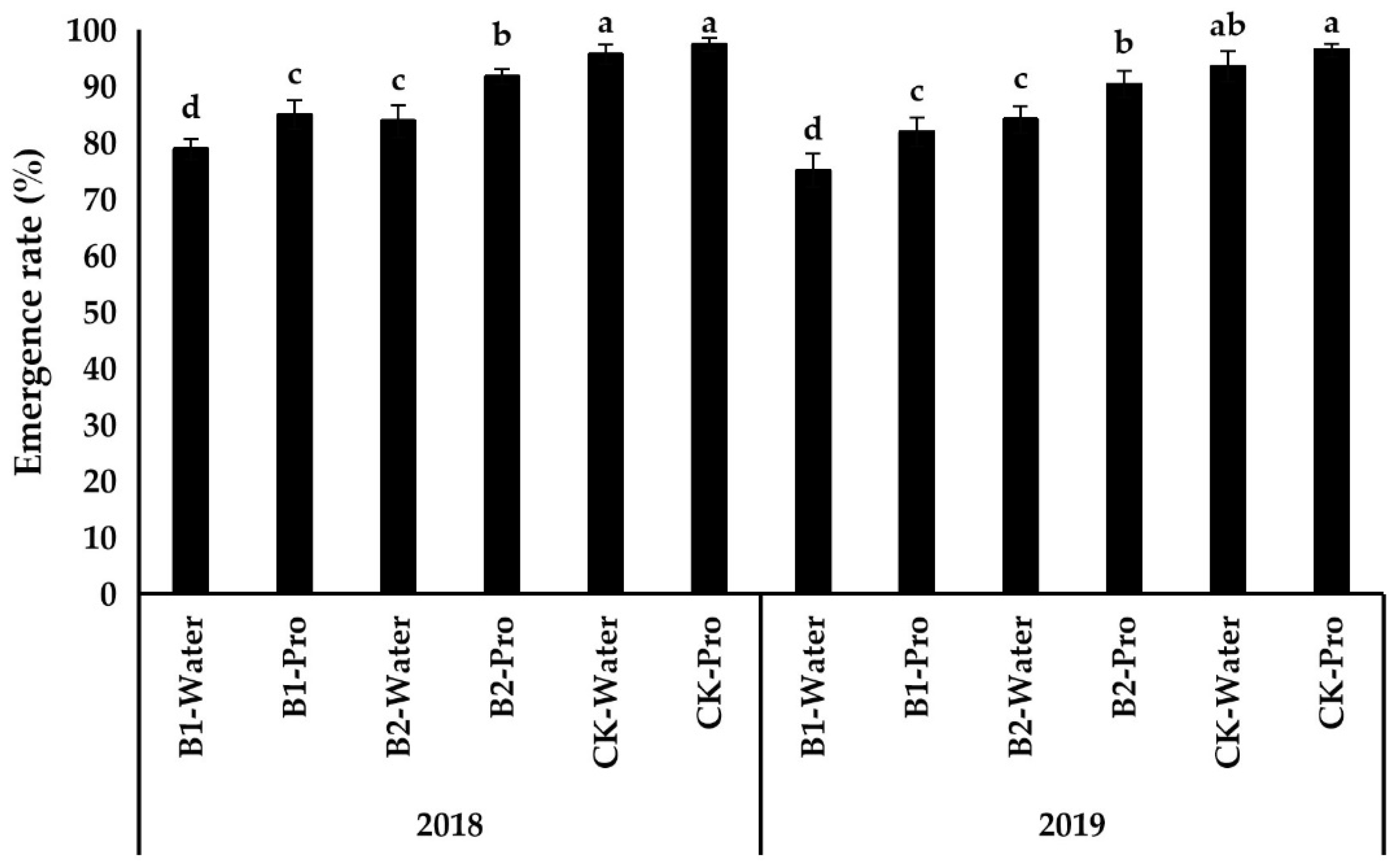
As shown in Figure 2, compared with the normal sowing date (CK), both early sowing treatments significantly reduced the seedling emergence rate of maize. In contrast to distilled water seed soaking, proline (Pro) seed soaking elevated seedling emergence rates to varying degrees across all sowing dates. In 2018 and 2019, the Pro-soaked group under the B1 sowing date exhibited a significant increase of 7.64% and 9.18% relative to the water-soaked control, respectively. For the B2 sowing date, Pro soaking raised emergence rates significantly by 9.40% (2018) and 7.37% (2019). Exogenous Pro also improved emergence rate under the normal sowing date, yet this difference was not statistically significant (Figure 2).

3.2. Plant Height

As illustrated in Table 2, maize plant height was significantly higher under proline (Pro) seed soaking than under water soaking. In 2018, Pro soaking significantly increased plant height compared with water soaking for sowing dates B1, B2 and CK, respectively, indicating that Pro soaking exerted the most pronounced growth-promoting effect at the B2 sowing date. The promoting effect of Pro soaking remained significant at the jointing stage, yet its influence on plant height gradually weakened at the tasseling and grain-filling stages. Particularly at the grain-filling stage, no significant differences in plant height were detected between Pro-soaked and water-soaked groups across all three sowing dates. The overall trend observed in 2019 was largely consistent with that of 2018 (Table 2).

3.3. Dry Matter Accumulation

As shown in Table 3, compared with the normal sowing date (CK), maize plants under water soaking for the B1 sowing date exhibited significant growth inhibition to varying degrees across all growth stages. For water-soaked plants of the B2 sowing date, notable growth suppression occurred from the seedling stage to the tasseling stage; this gap gradually narrowed during the grain-filling and maturity stages. At maturity, their dry matter accumulation slightly exceeded that of water-soaked CK plants, without statistical significance. Across all sowing dates, proline (Pro) seed soaking yielded higher dry matter accumulation than water soaking, with the largest increment observed at the seedling stage for B1, B2 and CK relative to their respective water-soaked controls. At maturity, the dry matter weight of Pro-soaked B2 plants surpassed that of Pro-soaked CK plants, though the difference was not significant. These results indicate that moderate early sowing can boost maize dry matter accumulation, and Pro seed soaking effectively improves maize growth under low-temperature conditions induced by early sowing (Table 3).

3.4. Gas Exchange Parameters

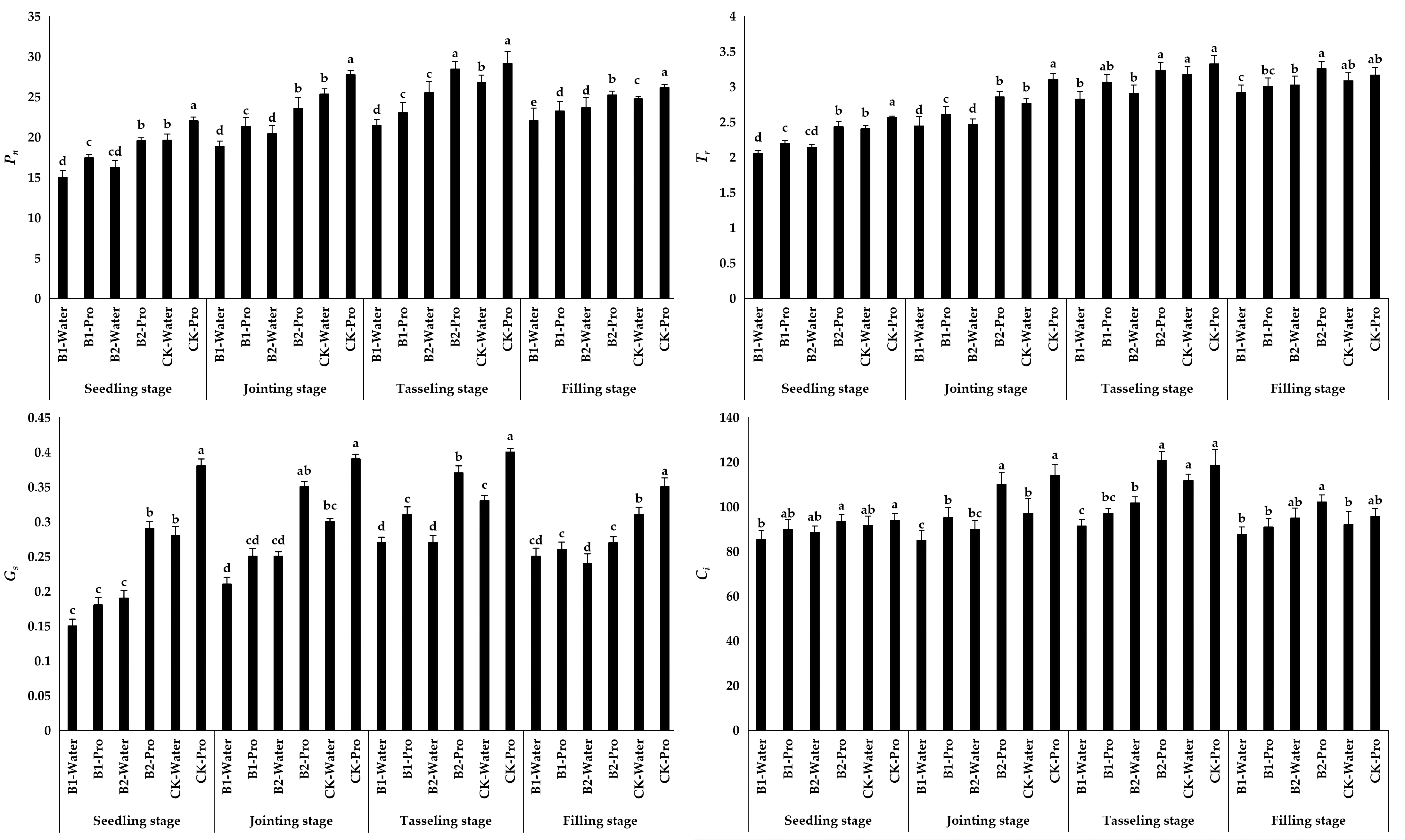
As presented in Figure 3, the net photosynthetic rate (Pn) of maize leaves rose gradually with delayed sowing time, and photosynthetic capacity peaked under the normal sowing date. At the seedling stage, Pro seed soaking significantly elevated leaf Pn by 21.11%, 18.95% and 10.42% relative to water soaking for sowing dates B1, B2 and CK, respectively. The Pn of Pro-treated plants also remained markedly higher than the water-soaked group at the jointing stage. Excluding physiological maturity, Pro soaking significantly increased leaf Pn of B2 by 19.95%, 3.27% and 15.35% compared with water soaking. This demonstrated that the growth-promoting effect of Pro seed soaking weakened progressively as the growing season advanced. At the grain-filling stage, leaf Pn in all three sowing dates was higher under Pro soaking than water soaking. Transpiration rate (Tr) of maize leaves under CK was consistently higher than that of B1 and B2 across all developmental stages to varying extents. At the seedling and jointing stages, Pro soaking produced significantly higher leaf Tr values than water soaking for B1, B2 and CK. Specifically, seedling-stage Tr was increased by 7.00%, 13.73% and 7.95% in Pro treatments versus water controls. For B2, Pro soaking significantly boosted leaf Tr by 13.73%, 16.15% and 11.39% at the seedling, jointing, and tasseling stages, respectively. Overall, the facilitating impact of Pro priming on photosynthesis diminished over the crop growth cycle. At grain filling, Pro soaking raised leaf Tr by 3.10% (B1), 7.85% (B2) and 2.38% (CK) relative to water soaking, yet none of these differences reached statistical significance.
Stomatal conductance (Gs) of maize leaves increased as sowing was delayed, with the highest photosynthetic performance observed under the normal sowing date. For the B1 sowing date, Pro seed soaking increased leaf Gs by 20.45%, 19.05%, 16.25% and 5.41% compared with water soaking at the seedling, jointing, tasseling, and grain-filling stages, respectively, yet none of these differences were statistically significant. For B2, Pro soaking significantly elevated leaf Gs by 52.63%, 36.84% and 38.75% relative to water soaking at all stages except grain filling. At grain filling, leaf Gs values for Pro treatments were numerically higher than water controls across B1, B2 and CK, without significant differences. This revealed that the promoting effects of early sowing and Pro seed soaking gradually declined as plant development proceeded. Intercellular CO2 concentration (Ci) of maize leaves also rose with delayed sowing, peaking under normal sowing conditions. At the seedling stage, Pro soaking raised leaf Ci by 5.28% (B1), 5.58% (B2) and 2.17% (CK) relative to water soaking, with no significant differences among treatments. At the jointing and tasseling stages, Pro soaking for B2 produced significant increases in Ci of 22.34% and 18.78% versus water soaking. At grain filling, leaf Ci was slightly higher in Pro-soaked plants for all three sowing dates, but differences remained non-significant. Collectively, the impacts of sowing date and Pro priming on leaf Ci diminished over the growing season (Figure 3).

3.5. SPAD Value

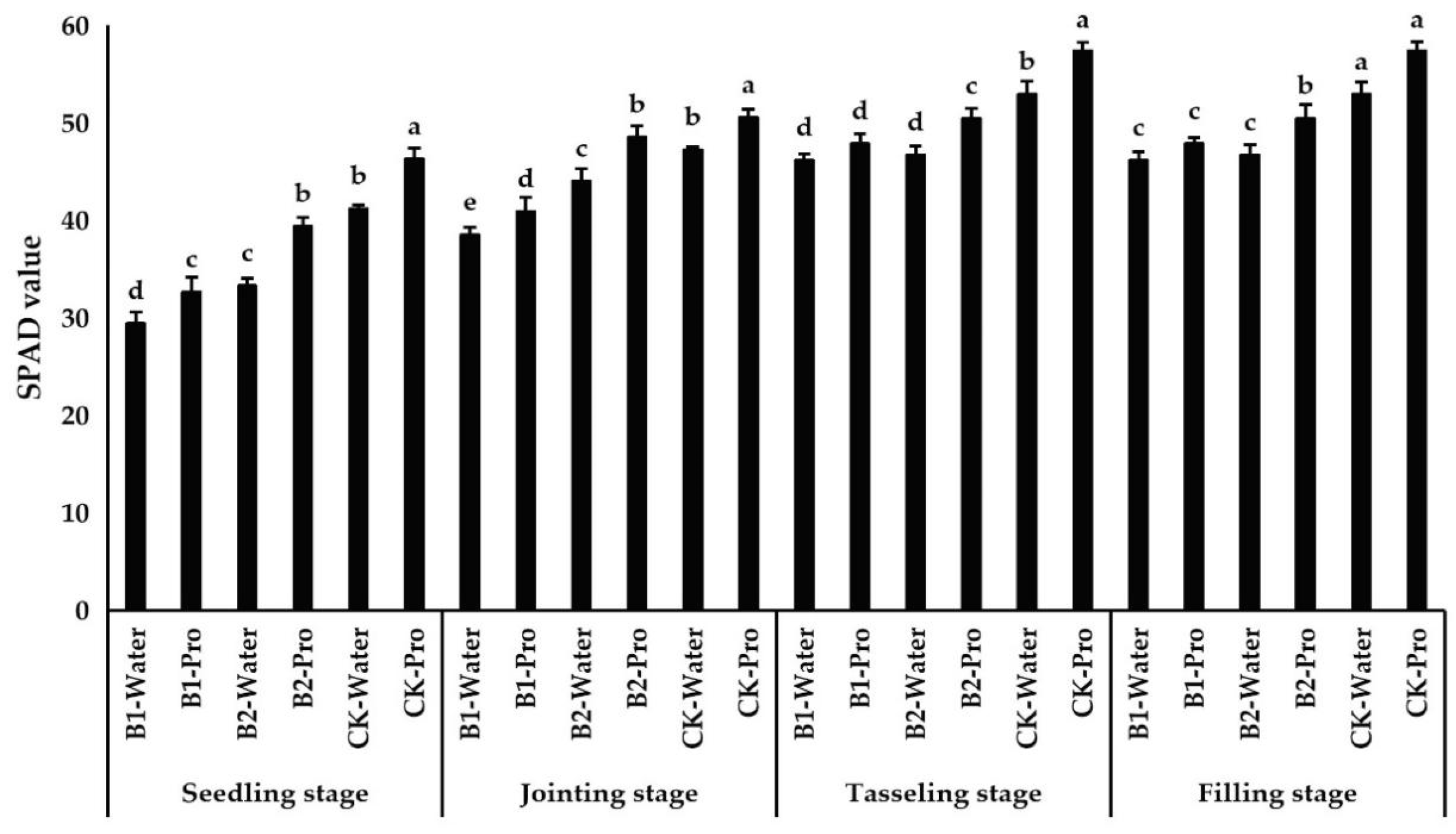
As shown in Figure 4, the leaf SPAD values of the B1 and B2 sowing dates were lower than those of the CK treatment to varying degrees compared with normal sowing. At the seedling stage of maize, Pro seed soaking significantly increased SPAD values by 10.99%, 18.22% and 12.38% for B1, B2 and CK sowing dates, respectively, relative to water soaking. At the tasseling and grain-filling stages, SPAD values of the Pro-soaked group under B1 were higher than the control, though the differences were not statistically significant. Across all four growth stages, SPAD values of the Pro-soaked group for B2 were markedly higher than those of the water-soaked group, with increases of 18.22%, 10.22%, 8.07% and 6.79%, respectively. This indicated that the capacity of Pro seed soaking to elevate SPAD values gradually weakened as development progressed. Meanwhile, no significant differences in SPAD values existed between Pro-soaked and water-soaked groups for B1 and CK at the grain-filling stage (Figure 4).

3.6. Photosynthetic Enzyme Activities

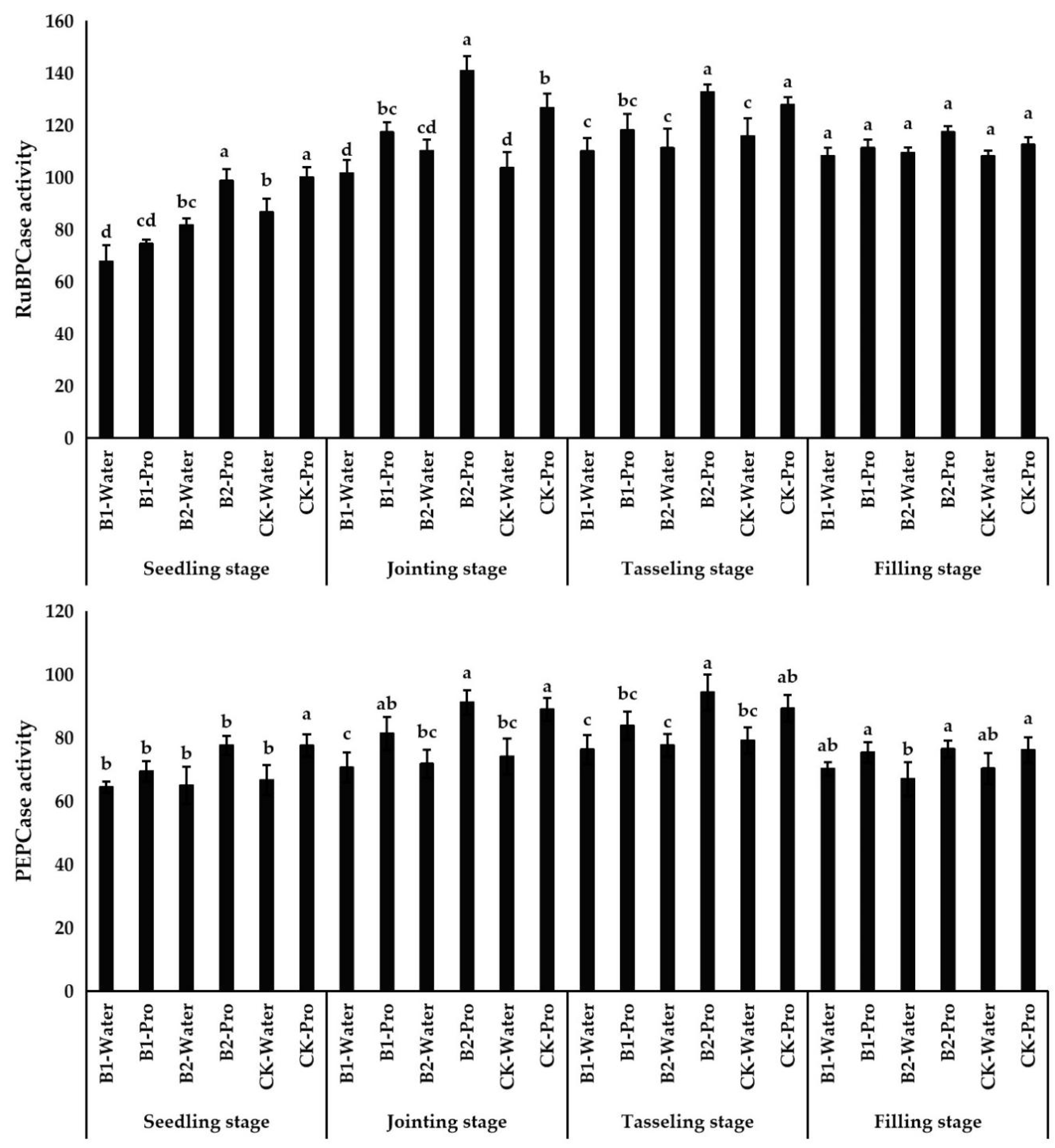
PEPCase activity in maize leaves increased with a delayed sowing date, with the maximum photosynthetic enzyme activity detected under normal sowing conditions. At the seedling stage, Pro seed soaking significantly elevated leaf PEPCase activity by 19.46% (B2) and 16.42% (CK) relative to water soaking. Across the seedling, jointing, tasseling, and grain-filling stages, PEPCase activity in Pro-treated B2 leaves rose by 19.46%, 27.09%, 21.47% and 14.19% compared with the water-soaked counterpart. The data illustrated that the stimulatory effect of Pro priming on leaf PEPCase activity gradually diminished as the maize growing season advanced under ambient field conditions. At grain filling, PEPCase activity was numerically higher in Pro-soaked plants for B1, B2 and CK, yet no significant differences were observed between the Pro and water-soaking groups. RuBPCase activity in maize leaves under the normal sowing date exceeded that of B1 and B2 at all four developmental stages (seedling, jointing, tasseling, grain filling) to varying extents. At the seedling stage, Pro soaking significantly boosted leaf RuBPCase activity by 20.92% for B2 and 15.48% for CK versus water soaking. For B2, Pro treatment induced significant increases in RuBPCase activity of 27.85%, 19.27% and 7.25% at the seedling, jointing, and tasseling stages, respectively. This demonstrated that the beneficial influence of Pro seed soaking on leaf RuBPCase activity weakened progressively with crop development. At grain filling, RuBPCase activity was slightly higher in Pro-soaked samples across all three sowing dates, but the differences were not statistically significant (Figure 5).

3.7. Leaf Senescence Characteristics

As shown in Table 4, compared with normal sowing, early sowing reduced RGLAm, tmax and LAD at the grain-filling stage, while resulting in higher Vm and Vmax. Meanwhile, proline (Pro) seed soaking increased RGLAm, tmax and LAD, and decreased Vm and Vmax. Across the three sowing dates, Pro soaking increased RGLAm by 4.86%, 10.18% and 6.08%, tmax by 4.51%, 8.86% and 4.94%, and LAD by 4.89%, 8.90% and 6.90% relative to water soaking. In contrast, Vm was reduced by 8.05%, 14.17% and 3.51%, and Vmax was reduced by 10.76%, 18.94% and 2.99%. These data revealed that the alleviating effect of Pro seed soaking on maize leaf senescence was most pronounced under the B2 sowing date (Table 4).

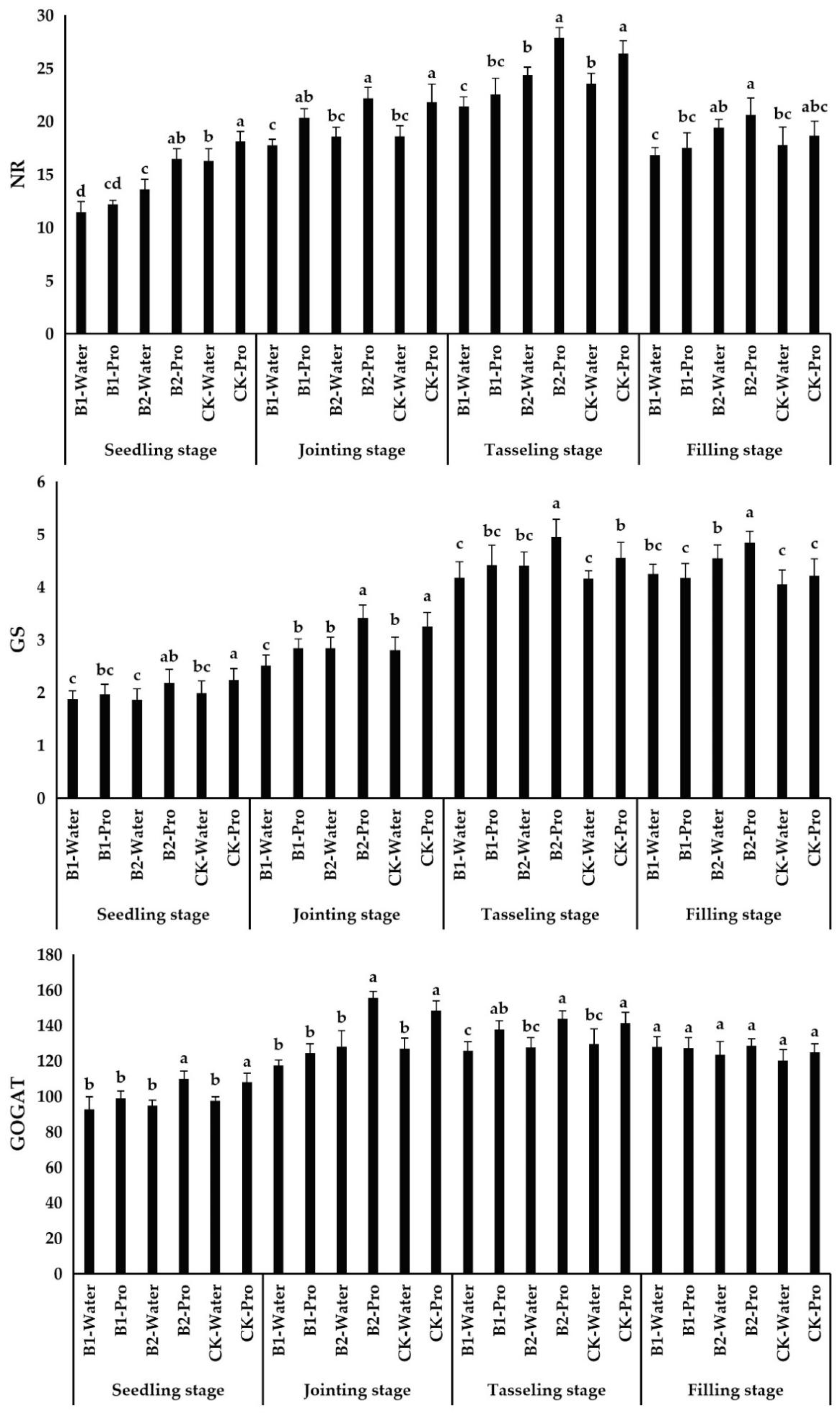
3.8. NR, GS and GOGAT Activity

As illustrated in Figure 6, the nitrate reductase (NR) activity in maize leaves rises continuously along with sowing delay, and the normal sowing control group obtains the highest NR activity. Seed priming with proline (Pro) exerts the most obvious facilitating influence on NR activity during the jointing stage; relative to hydropriming, proline treatment produces a statistically significant elevation in NR activity under all three sowing schedules. For the delayed sowing treatment B2, proline seed soaking distinctly enhances leaf NR activity at the seedling, jointing and tasseling stages separately. With the postponement of sowing date, glutamine synthetase (GS) activity in maize leaves presents an upward trend as well, and the normal sowing group maintains the maximum GS activity from the seedling stage through the jointing, tasseling and grain-filling stages. At the seedling phase, proline priming leads to a notable increase in leaf GS activity in both B2 and normal sowing groups compared with hydropriming. During the jointing stage, GS activity is significantly improved by proline soaking under each of the three sowing treatments. In the B2 sowing condition, proline seed soaking significantly elevates GS activity across seedling, jointing, tasseling and grain-filling periods. Throughout the four key growth periods, the glutamate synthase (GOGAT) activity of the normal sowing group is consistently higher than that of the two delayed sowing groups to different degrees, and multiple comparison groups show remarkable statistical differences. At the seedling stage, proline priming markedly boosts leaf GOGAT activity in B2 and normal sowing treatments relative to water soaking. Proline application also significantly promotes GOGAT activity for all three sowing groups at the jointing stage. Apart from the grain-filling period, proline soaking significantly improves the GOGAT activity of the B2 treatment at the seedling, jointing and tasseling stages. In general, the promoting effect of proline seed soaking on leaf NR, GS and GOGAT activities of maize sown early under low-temperature conditions diminishes gradually with plant growth and development, and the facilitation effect is most pronounced during jointing and tasseling stages. At the grain-filling stage, proline-treated groups exhibit obviously higher GS activity under all three sowing dates; meanwhile, NR and GOGAT activities are slightly higher in proline priming groups than hydropriming groups, though such differences do not reach a statistically significant level (Figure 6).

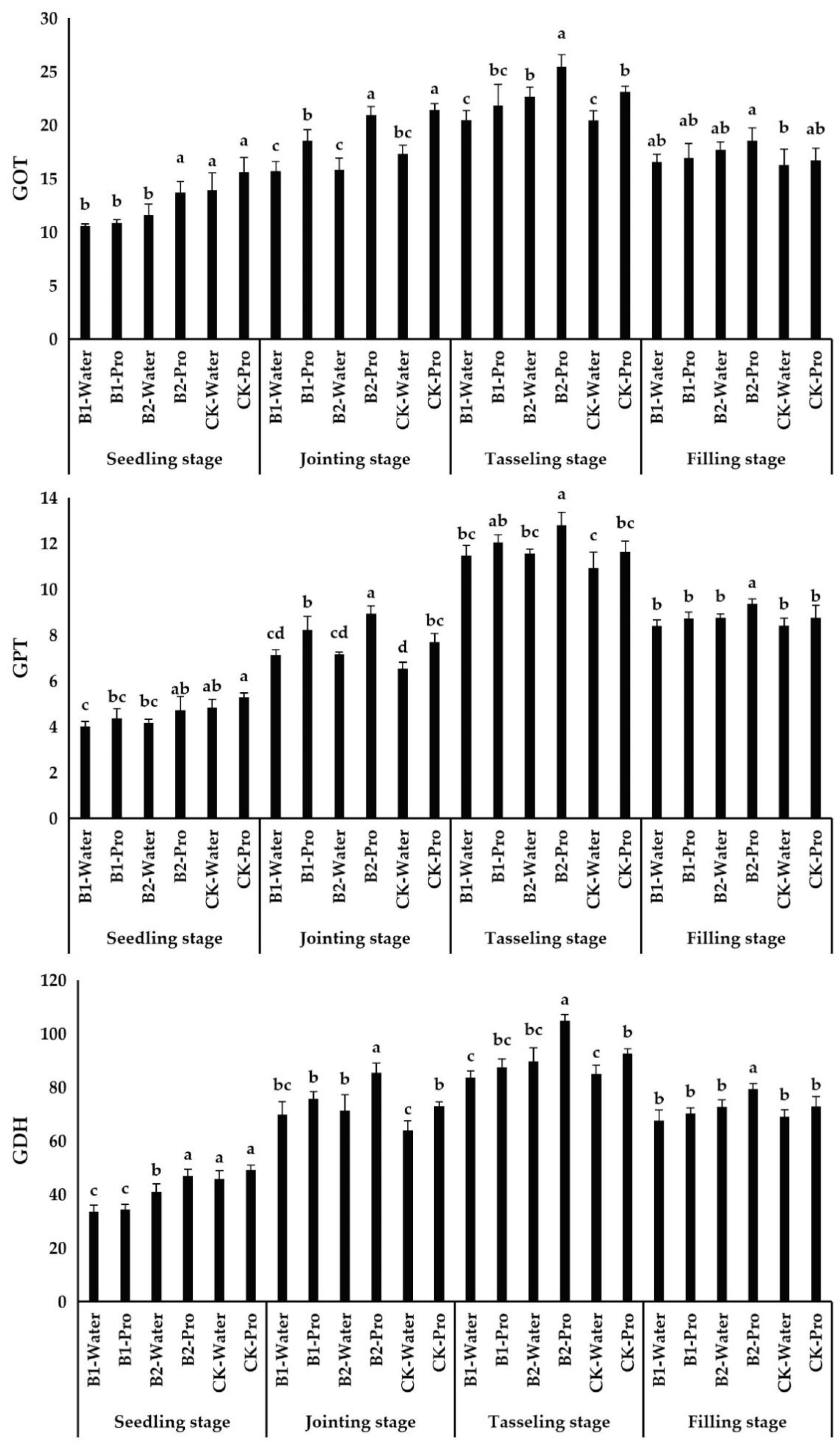
3.9. GOT, GPT and GDH Activity

As presented in Figure 7, during the seedling, jointing, tasseling and grain-filling stages, the glutamate-oxaloacetate transaminase (GOT) activity in maize leaves under the control CK treatment was consistently superior to that under the two delayed sowing treatments B1 and B2 with varying gaps, and several comparison groups showed statistically meaningful differences. At the jointing stage, seed soaking with proline (Pro) markedly improved leaf GOT activity in all three sowing groups compared with the treatment using only water for seed soaking. Except for the grain-filling period, proline seed soaking could significantly enhance GOT activity of the B2 sowing group relative to the water-soaked counterpart. The glutamate-pyruvate transaminase (GPT) activity of maize leaves went up along with the delay in sowing time, and the normal sowing CK group attained the peak GPT activity. Pro seed soaking brought about a prominent rise in leaf GPT activity for B1, B2 and CK groups at the jointing stage when contrasted with water soaking. With the seedling stage excluded, proline application distinctly elevated GPT activity of the B2 treatment group throughout the jointing, tasseling and grain-filling phases. Glutamate dehydrogenase (GDH) activity also displayed an upward trend with postponed sowing across all four measured growth periods, and the CK normal sowing group possessed the maximum GDH activity. At the jointing stage, proline soaking significantly boosted leaf GDH activity in the B2 and CK groups rather than the B1 group relative to water soaking. For the B2 sowing treatment, proline seed soaking significantly increased leaf GDH activity at every one of the four monitored growth stages. Overall, the facilitating influence of proline seed priming on leaf GOT, GPT and GDH activities of early-sown maize exposed to low temperature faded step by step alongside plant growth, and the most obvious promoting effects emerged at the seedling and jointing stages. In the grain-filling stage, the three enzyme activities tended to be slightly higher in proline-soaked seedlings under all sowing arrangements, but these discrepancies failed to reach statistical significance (Figure 7).

3.10. Maize Yield and Its Components

As shown in Table 5, low temperature from early sowing reduced the number of effective ears, while exogenous proline (Pro) significantly increased ear counts for B1 and B2. In 2018, ear numbers of Pro-soaked B1 and B2 rose by 8.49% and 3.54% relative to water soaking, and the trend in 2019 was consistent with 2018. Early sowing decreased ear diameter, ear length, and kernel number per ear to varying extents, whereas barren tip length shortened with earlier sowing. Pro seed soaking enlarged ear diameter, elongated ears, and raised kernel number per ear and lessened barren tip length, though these differences were not statistically significant. Compared with CK, 100-kernel weight slightly increased under B2 without significance, while it declined significantly under B1. Pro soaking numerically elevated 100-kernel weight across all sowing dates, with no significant differences. In terms of grain yield, data from 2018 and 2019 illustrated that Pro soaking markedly boosted yield for B2 and CK; yield of B1 was also improved but not significantly. In 2018, yields of Pro-treated B1 and B2 increased by 11.60% and 11.05% versus water soaking; in 2019, the increments reached 15.19% and 12.21%, respectively. These results confirm that Pro seed soaking exerts a positive effect on enhancing maize yield under low-temperature stress induced by early sowing (Table 5).

4. Discussion

Global warming extends crop growing periods, making earlier sowing a common cultivation measure. However, early sowing faces multiple risks dominated by spring chilling injury [17]. Spring low-temperature stress delays maize emergence, disrupts seedling consistency, causes weak seedlings and empty holes, reduces seedling survival and population density, and ultimately degrades maize yield and grain quality [18]. Improving maize cold tolerance under early sowing conditions helps improve light use efficiency, tap variety yield potential, avoid grain-filling heat stress and preharvest frost damage, ensure normal maturity, and boost yield and quality [19]. This study conducted low-temperature early-sowing field experiments to clarify how exogenous proline (Pro) alleviates maize cold stress. Results show that maize emergence rate declines with prolonged low-temperature exposure; the B1 treatment experienced seed mildew and rot under persistent cold, aligning with existing research [20]. Pro seed soaking increases emergence rates of early-sown maize, mitigates cold injury during germination, homogenizes seedling growth and synchronizes maturity. It also reduces seed decay caused by failed emergence and prevents yield loss from insufficient stand density. Moreover, Pro priming elevates plant height at seedling and jointing stages, accelerating vegetative growth, prolonging photosynthesis, promoting nutrient absorption and plant vitality, and raising final grain yield.
Plants convert solar energy into chemical energy via photosynthesis, which serves as the fundamental resource for synthesizing substances required to sustain plant growth and development [21]. Crop yield formation is tightly linked to photosynthetic efficiency; maintaining high leaf net photosynthetic rate (Pn) and chlorophyll content during the middle and late growth stages lays the foundation for high yields [22,23]. Low temperature disrupts the source–sink balance, and regulating photosynthesis is essential to stabilize energy flow. Therefore, enhancing cold tolerance of photosynthetic organs is a critical prerequisite for improving whole-plant cold resistance and boosting dry matter accumulation. In this experiment, earlier sowing gradually reduced leaf Pn, transpiration rate (Tr), stomatal conductance (Gs) and intercellular CO2 concentration (Ci) at identical growth stages. As development proceeded, gaps in these parameters between B2 and CK narrowed, with no significant differences detected at the grain-filling stage. Exogenous proline (Pro) elevated leaf Pn, Tr, Gs and Ci across all three sowing dates and growth stages, with the most prominent improvements occurring at the seedling and jointing stages; Gs and Pn exhibited the largest increases. By the jointing stage, differences in these indices between Pro-treated B2 and CK were no longer significant, while only Tr and Gs showed non-significant differences between Pro-treated B1 and its water control. These observations align with prior research on melon: Exogenous Pro alleviates damage to biomembrane systems, optimizes reactive oxygen species (ROS) metabolism, elevates Gs and Pn, strengthens photosynthesis, boosts dry matter accumulation, and accelerates seedling growth under stress [24]. In the present study, early sowing and cold stress significantly reduced SPAD value, LAD, relative green leaf area at maturity (RGLAm) and tmax during grain filling, accelerating leaf senescence and impairing photosynthetic capacity. Beyond regulating the tricarboxylic acid (TCA) cycle, PEPCase enables plants to recapture respired CO2 under stress, playing a vital role in minimizing carbon loss [25]. Earlier sowing significantly depressed leaf RuBPCase activity at the seedling stage in this trial. Exogenous Pro upregulated both RuBPCase and PEPCase activities across all three sowing dates and four developmental stages. This indicates that Pro boosts photosynthetic enzyme activity; elevated RuBPCase and PEPCase levels enhance the recapture and fixation of respiratory CO2 even when Gs is limited, cutting carbon loss and lifting Pn [26]. Pro may stimulate photosynthetic enzyme expression indirectly via second messengers, protein kinases, and transcription factors that modulate pathways controlling PEPCase and RuBPCase gene expression. Additionally, Pro preserves membrane integrity, mitigates oxidative injury, and delays leaf senescence [27]. Collectively, these results confirm that Pro application mitigates photosynthetic declines driven by stomatal limitation under early-sowing cold stress.
Photosynthetic assimilates constitute the primary component of accumulated dry matter [28]. The improved late-season dry matter accumulation in Pro-primed plants can be attributed to sustained high leaf chlorophyll content, net photosynthetic rate (Pn) and leaf area duration (LAD), elevated photosynthetic enzyme activity, retarded leaf senescence, an extended functional photosynthetic period, and overall higher photosynthetic efficiency. As a fundamental metabolic pathway in planta, nitrogen metabolism not only regulates crop growth and development but also closely correlates with grain yield. Together with photosynthesis, nitrogen metabolism jointly governs final yield formation in maize [29]. Higher plants assimilate nitrogen from sources including ammonium (NH4+), nitrate (NO3), and water-soluble organic nitrogen compounds such as amino acids [30]. Previous studies have verified that environmental factors, including light intensity and temperature, modulate plant nitrogen uptake; low temperature represses NO3 absorption while promoting NH4+ uptake [31]. Even so, NO3 remains the preferential nitrogen form taken up by plants [32]. Nitrate reductase (NR) catalyzes the initial step converting NO3 to NH4+ in nitrogen metabolism. As an inducible enzyme, NR activity is drastically altered by fluctuations in NO3 supply, temperature, carbon and nitrogen metabolites, light, and CO2 concentration. NR activity serves as a reliable indicator of a plant’s capacity to absorb and utilize nitrogen [33]. Severe cold or drought stress triggers a sharp decline in NR activity [34]. In this study, advancing sowing dates progressively reduced leaf NR activity at the seedling and jointing stages. The disparity between B2 and CK narrowed as growth proceeded, indicating that cold stress from early sowing markedly suppresses NR activity at the seedling stage, with excessively early sowing extending this inhibitory effect across the whole growing season. This suppression arises from cold-induced reductions in membrane fluidity, which hinder NO3 uptake and subsequently lower NR activity [35]. Later in development, NR activity in B2 gradually surpassed that of CK, presumably because mild low-temperature exposure hardened seedlings and enhanced their cold tolerance [36]. Exogenous proline (Pro) elevated leaf NR activity to varying magnitudes across all three sowing dates and developmental stages, with significant enhancements observed prior to grain filling. Existing research confirms that Pro boosts endogenous NO3 concentrations, which constitutes a primary mechanism behind Pro-stimulated NR activity [37]. Additionally, Pro functions as a key osmoprotectant that preserves biomembrane integrity and fluidity under cold conditions. It also raises total phenolic contents in plants; phenolics prevent auxin degradation, and elevated auxin concentrations may further upregulate NR activity—another contributing factor to increased NR in Pro-treated plants [38]. During reproductive growth, Pro-mediated increases in NR activity are largely attributed to Pro’s activation of oxidative metabolism and improved photosynthetic performance, which supply ample energy and reducing equivalents for NO3 reduction.
Ammonium ions (NH4+) must undergo assimilation before being incorporated into organic nitrogenous compounds. The primary pathways for NH4+ assimilation are the GS-GOGAT cycle and the GDH pathway, with glutamine synthetase (GS), glutamate synthase (GOGAT) and glutamate dehydrogenase (GDH) acting as the key enzymes for nitrogen assimilation [39]. In this experiment, early sowing reduced GS, GOGAT and GDH activities to varying extents, yet only GDH activity showed a significant drop at the seedling stage. This discrepancy arises from differences in stress imposition: previous trials applied abrupt temperature drops, and the decline in GS represented an acute plant stress response. Here, low temperature from early sowing mainly restrained the GDH pathway for NH4+ assimilation at the seedling stage. Prior work indicates that the GDH pathway primarily functions to alleviate toxicity caused by excess NH4+. The marked reduction in GDH activity likely stems from cold-suppressed nitrate reductase (NR) activity, which slows the conversion of NO3 to NH4+ and prevents massive NH4+ accumulation. Meanwhile, low temperature triggers reactive oxygen species (ROS) production, which accelerates oxidative degradation of GDH protein [40]. Exogenous proline (Pro) elevated GS, GOGAT and GDH activities across all sowing dates, with significant improvements observed throughout all four growth stages for the B2 treatment. Pro exerts these effects by enhancing osmotic adjustment, preserving cell membrane integrity under early-sowing cold stress, facilitating ROS scavenging, and safeguarding macromolecules such as proteins and DNA. It also upregulates NR activity, raising endogenous NH4+ levels. Research on cassava has demonstrated that increased NH4+ supply substantially boosts chlorophyll concentrations. Higher chlorophyll levels retard leaf senescence, stimulate photosynthetic enzyme activity, and elevate overall photosynthetic capacity [41]. Glutamate and α-ketoglutarate, metabolites derived from photosynthetic enzyme reactions and proline catabolism, serve as carbon and nitrogen skeletons to fuel multiple metabolic cascades including photosynthesis and nitrogen metabolism. They boost GS, GOGAT and GDH activities, accelerate NH4+ assimilation, restore normal nitrogen metabolic flux, augment dry matter accumulation, and ultimately raise grain yield [42].
Glutamic-oxaloacetic transaminase (GOT) and glutamic-pyruvic transaminase (GPT) catalyze the formation of aspartic acid (Asp) and alanine (Ala), respectively, providing amino acid precursors for plant protein biosynthesis [43]. As a hydrophilic amino acid, Asp contributes to the synthesis of water-binding proteins under cold stress, mitigating chilling-induced mechanical cell damage and enhancing cold tolerance. Both Asp and Ala also serve as precursors for multiple amino acids and secondary metabolites, sustaining cellular homeostasis and metabolic stability under adverse conditions [44]. Previous work has shown that modulating leaf glutamic acid (Glu) metabolism improves cold tolerance in rice and reduces yield losses and spikelet sterility caused by chilling [45]. In this study, early-sowing low temperatures suppressed seedling GOT and GPT activities. As development proceeded, enzyme activities in the B2 treatment exceeded those in B1 and CK, with CK showing the sharpest declines during grain filling. Exogenous proline (Pro) significantly elevated leaf GOT and GPT activities across all sowing dates, suggesting that Pro priming enhances gluconeogenesis and cold resistance in maize under early-sowing chilling stress. Collectively, Pro application accelerates protein and amino acid synthesis by boosting transaminase activities, thereby promoting vegetative growth.
Sowing date is a key determinant of maize yield; reasonable early-sowing increases output by boosting ear quantity and 1000-kernel weight [46]. Existing studies indicate inadequate effective ears dominate yield reduction in early-sown maize [47], while some work regards kernel weight as the yield component most sensitive to sowing date [48]. This experiment shows extreme early-sowing drastically decreases ear number, kernels per ear and 100-kernel weight, shortens ear length and reduces ear diameter, weakening sink capacity and lowering final yield. Moderate early sowing only raises 100-kernel weight without altering ear number and kernels per ear. Previous work found 100 mmol·L−1 proline (Pro) foliar application improves kernels per ear and grain weight in salt-stressed maize [49]. In this study, Pro seed soaking significantly increases ear number, kernels per ear and total grain yield in early-sown maize under low temperature, with other yield components showing non-significant numerical improvements. The yield of the Pro-treated moderately early sowing group (B2) was slightly higher than the control (CK), with no statistical difference, verifying that Pro alleviates chilling-caused yield loss mainly by increasing population ear count and kernels per ear. Mechanistically, Pro promotes germination and emergence under cold early sowing to ensure planting density, optimizes photosynthesis and delays leaf senescence to extend photosynthetic duration, and upregulates nitrogen metabolism enzymes including nitrate reductase (NR) and glutamine synthetase (GS). These effects facilitate dry matter accumulation, reduce blighted ears and unfilled grains, and raise kernels per ear to improve yield. Overall, exogenous Pro enhances maize yield via regulating photosynthesis, suppressing leaf senescence and balancing nitrogen metabolism. Pro seed soaking is low-cost, easy to operate and promising for mitigating early sowing chilling damage. Nevertheless, Pro priming effects vary with concentration, soaking time, maize genotype and stress intensity. Most current research focuses on short-term stress relief, with limited data on long-term growth and grain quality. Future research should combine Pro seed priming with fine-tuned sowing date, planting density and water–fertilizer management. Moreover, molecular breeding such as marker-assisted selection and gene editing can be adopted to develop cold-tolerant maize varieties with strong Pro responsiveness. Such integrated strategies can better address spring chilling risks in maize production under global climate warming.

5. Conclusions

Proline seed soaking improves seedling emergence and stand establishment of early-sown maize under low temperature. By regulating key nitrogen-metabolizing enzymes (NR, GS, GOGAT, GDH, GOT, GPT), it facilitates ammonium assimilation and the synthesis of amino acids and proteins to optimize nitrogen metabolism. Meanwhile, proline sustains photosynthetic performance and delays leaf senescence to provide carbon skeletons and energy for nitrogen metabolism. Overall, this treatment alleviates growth retardation triggered by low temperature, promotes dry matter accumulation, raises ear quantity and kernels per ear, and ultimately increases maize grain yield.

Author Contributions

Conceptualization, S.Z., X.H., B.Q. and J.L.; Data curation, S.Z., X.H., B.Q. and J.L.; Formal analysis, S.Z., Y.Z. and X.Z.; Funding acquisition, S.Z. and J.L.; Investigation, X.Z., Y.Z., L.S., Z.H., X.H. and Y.Z.; Methodology, X.H., Y.Z. and J.L.; Project administration, S.Z. and J.L.; Resources, S.Z. and B.Q.; Software, X.Z., B.Q., S.Z., L.S. and J.L.; Supervision, J.L.; Validation, X.Z., S.Z., L.S., Z.H. and J.L.; Visualization, B.Q., Z.H. and Y.Z.; Writing—original draft, S.Z. and X.H.; Writing—review and editing, S.Z., L.S. and B.Q. All authors have read and agreed to the published version of the manuscript.

Funding

This work was financially supported by the Joint Cultivation Project of Heilongjiang Provincial Natural Science Foundation (PL2025C003).

Data Availability Statement

The original contributions presented in this study are included in the article. Further inquiries can be directed to the corresponding author.

Conflicts of Interest

The authors declare no conflicts of interest.

References

  1. Gao, L. Characteristics and Reduction Potentials of Losses and Waste of Major Grains of the Food Supply Chain in China. Ph.D. Thesis, Chinese Academy of Agricultural Sciences, Beijing, China, 2019. [Google Scholar]
  2. Lobell, D.B.; Gourdji, S.M. The Influence of Climate Change on Global Crop Productivity. Plant Physiol. 2012, 160, 1686–1697. [Google Scholar] [CrossRef] [PubMed]
  3. Turk, H.; Erdal, S.; Dumlupinar, R. Carnitine-Induced Physio-Biochemical and Molecular Alterations in Maize Seedlings in Response to Cold Stress. Arch. Agron. Soil Sci. 2020, 66, 925–941. [Google Scholar] [CrossRef]
  4. Jończyk, M.; Sobkowiak, A.; Trzcinska-Danielewicz, J.; Skoneczny, M.; Solecka, D.; Fronk, J.; Sowiński, P. Global Analysis of Gene Expression in Maize Leaves Treated with Low Temperature. II. Combined Effect of Severe Cold (8 °C) and Circadian Rhythm. Plant Mol. Biol. 2017, 95, 279–302. [Google Scholar] [CrossRef] [PubMed]
  5. Zhang, Y.; Li, J.; Li, W.; Gao, X.; Xu, X.; Zhang, C.; Yu, S.; Dou, Y.; Luo, W.; Yu, L. Transcriptome Analysis Reveals POD as an Important Indicator for Assessing Low-Temperature Tolerance in Maize Radicles during Germination. Plants 2024, 13, 1362. [Google Scholar] [CrossRef] [PubMed]
  6. Hamilton, E.W.; Heckathorn, S.A. Mitochondrial Adaptations to NaCl. Complex I Is Protected by Anti-Oxidants and Small Heat Shock Proteins, Whereas Complex II Is Protected by Proline and Betaine. Plant Physiol. 2001, 126, 1266–1274. [Google Scholar] [CrossRef] [PubMed]
  7. Tang, Y.; Guo, J. Risk Assessment of Chilling Injury of Maize in Northeast China. J. Appl. Meteorol. Sci. 2016, 27, 352–360. [Google Scholar] [CrossRef]
  8. Verslues, P.E.; Sharma, S. Proline metabolism and its implications for plant-environment interaction. Arab. Book 2010, 8, e0140. [Google Scholar] [CrossRef] [PubMed]
  9. Alvarez, M.; Savouré, A.; Szabados, L. Proline metabolism as regulatory hub. Trends Plant Sci. 2021, 27, 39–55. [Google Scholar] [CrossRef] [PubMed]
  10. Ali, Q.; Ashraf, M.; Athar, H.U.R. Exogenously Applied Proline at Different Growth Stages Enhances Growth of Two Maize Cultivars Grown under Water Deficit Conditions. Pak. J. Bot. 2007, 39, 1133–1144. [Google Scholar]
  11. Rezende, R.A.L.S.; Rodrigues, F.A.; Soares, J.D.R.; Silveira, H.R.D.O.; Pasqual, M.; Dias, G.D.M.G. Salt Stress and Exogenous Silicon Influence Physiological and Anatomical Features of in Vitro-Grown Cape Gooseberry. Cienc. Rural 2018, 48, e20170176. [Google Scholar] [CrossRef]
  12. Wang, D.; Naidu, S.L.; Portis, A.R.; Moose, S.P.; Long, S.P. Can the Cold Tolerance of C4 Photosynthesis in Miscanthus×giganteus Relative to Zea mays Be Explained by Differences in Activities and Thermal Properties of Rubisco? J. Exp. Bot. 2007, 59, 1779–1787. [Google Scholar] [CrossRef] [PubMed]
  13. Jones, T.L.; Tucker, D.E.; Ort, D.R. Chilling Delays Circadian Pattern of Sucrose Phosphate Synthase and Nitrate Reductase Activity in Tomato. Plant Physiol. 1998, 118, 149–158. [Google Scholar] [CrossRef] [PubMed]
  14. Ferreira, M.J.; Vale, D.; Cunha, L.; Melo, P. Role of the C-Terminal Extension Peptide of Plastid Located Glutamine Synthetase from Medicago truncatula: Crucial for Enzyme Activity and Needless for Protein Import into the Plastids. Plant Physiol. Biochem. 2017, 111, 226–233. [Google Scholar] [CrossRef] [PubMed]
  15. Fontaine, J.X.; Tercé-Laforgue, T.; Armengaud, P.; Clément, G.; Renou, J.P.; Pelletier, S.; Catterou, M.; Azzopardi, M.; Gibon, Y.; Lea, P.J.; et al. Characterization of a NADH-Dependent Glutamate Dehydrogenase Mutant of Arabidopsis Demonstrates the Key Role of This Enzyme in Root Carbon and Nitrogen Metabolism. Plant Cell 2012, 24, 4044–4065. [Google Scholar] [CrossRef] [PubMed]
  16. Liu, G.; Du, Q.; Jiao, X.; Li, J. Irrigation at the Level of Evapotranspiration Aids Growth Recovery and Photosynthesis Rate in Tomato Grown under Chilling Stress. Acta Physiol. Plant. 2018, 40, 2. [Google Scholar] [CrossRef]
  17. Zhao, C.; Chen, J.; Du, P.; Yuan, H. Characteristics of Climate Change and Extreme Weather from 1951 to 2011 in China. Int. J. Environ. Res. Public Health 2018, 15, 2540. [Google Scholar] [CrossRef] [PubMed]
  18. Costa Silva Neta, I.; Vilela De Resende Von Pinho, É.; De Abreu, V.M.; Rezende Vilela, D.; Santos, M.C.; Oliveira Dos Santos, H.; Diniz Cabral Ferreira, R.A.; Garcia Von Pinho, R.; Coelho De Castro Vasconcellos, R. Gene Expression and Genetic Control to Cold Tolerance during Maize Seed Germination. BMC Plant Biol. 2020, 20, 188. [Google Scholar] [CrossRef] [PubMed]
  19. Haldimann, P.; Fracheboud, Y.; Stamp, P. Photosynthetic Performance and Resistance to Photoinhibition of Zea mays L. Leaves Grown at Sub-optimal Temperature. Plant Cell Environ. 1996, 19, 85–92. [Google Scholar] [CrossRef]
  20. Li, J.; Xu, J.; Lin, C.; Guan, Y.; Hu, J. Effect of priming on germination and physiological characteristics of different types of corn seeds under low-temperature stress. Plant Physiol. J. 2016, 52, 157–166. [Google Scholar] [CrossRef]
  21. Dann, M.; Leister, D. Enhancing (Crop) Plant Photosynthesis by Introducing Novel Genetic Diversity. Phil. Trans. R. Soc. B 2017, 372, 20160380. [Google Scholar] [CrossRef] [PubMed]
  22. Athanasiou, K.; Dyson, B.C.; Webster, R.E.; Johnson, G.N. Dynamic Acclimation of Photosynthesis Increases Plant Fitness in Changing Environments. Plant Physiol. 2009, 152, 366–373. [Google Scholar] [CrossRef] [PubMed]
  23. Marchiori, P.E.R.; Machado, E.C.; Ribeiro, R.V. Photosynthetic Limitations Imposed by Self-Shading in Field-Grown Sugarcane Varieties. Field Crops Res. 2014, 155, 30–37. [Google Scholar] [CrossRef]
  24. Yan, Z.; Guo, S.; Shu, S.; Sun, J.; Tezuka, T. Effects of Proline on Photosynthesis, Root Reactive Oxygen Species (ROS) Metabolism in Two Melon Cultivars (Cucumis melo L.) under NaCl Stress. Afr. J. Biotechnol. 2011, 10, 18381–18390. [Google Scholar] [CrossRef]
  25. Deng, X.; Cai, J.; Li, Y.; Fei, X. Expression and Knockdown of the PEPC1 Gene Affect Carbon Flux in the Biosynthesis of Triacylglycerols by the Green Alga Chlamydomonas reinhardtii. Biotechnol. Lett. 2014, 36, 2199–2208. [Google Scholar] [CrossRef] [PubMed]
  26. Gai, Z.; Liu, L.; Zhang, N.; Liu, J.; Cai, L.; Yang, X.; Zhang, A.; Zhang, P.; Ding, J.; Zhang, Y. Proline-Nitrogen Metabolic Coordination Mediates Cold Priming-Induced Freezing Tolerance in Maize. Plants 2025, 14, 1415. [Google Scholar] [CrossRef] [PubMed]
  27. Meng, H.; Zhou, L.; Qin, Y.; Ji, S.; Wang, P.; Liu, Y.; Liu, J.; Ma, J.; Sun, H.; Zhu, X.; et al. Transcriptome and Biochemical Analysis of the Mechanism of Low-Temperature Germination in Acer truncatum Bunge Seeds. Int. J. Mol. Sci. 2025, 26, 11193. [Google Scholar] [CrossRef] [PubMed]
  28. Bermejo, N.F.; Munné-Bosch, S. Mixing Chia Seeds and Sprouts at Different Developmental Stages: A Cost-Effective Way to Improve Antioxidant Vitamin Composition. Food Chem. 2023, 405, 134880. [Google Scholar] [CrossRef] [PubMed]
  29. Kwok, D.; Shetty, K. Effects of proline and proline analogs on total phenolic and rosmarinic acid levels in shoot clones of thyme (Thymus vulgaris L.). J. Food Biochem. 1998, 22, 37–51. [Google Scholar] [CrossRef]
  30. Ma, J.; Lv, C.; Xu, M.; Chen, G.; Lv, C.; Gao, Z. Photosynthesis Performance, Antioxidant Enzymes, and Ultrastructural Analyses of Rice Seedlings under Chromium Stress. Environ. Sci. Pollut. Res. 2016, 23, 1768–1778. [Google Scholar] [CrossRef] [PubMed]
  31. Boczulak, S.A.; Hawkins, B.J.; Roy, R. Temperature Effects on Nitrogen Form Uptake by Seedling Roots of Three Contrasting Conifers. Tree Physiol. 2014, 34, 513–523. [Google Scholar] [CrossRef] [PubMed]
  32. Britto, D.T.; Kronzucker, H.J. Ecological Significance and Complexity of N-Source Preference in Plants. Ann. Bot. 2013, 112, 957–963. [Google Scholar] [CrossRef] [PubMed]
  33. Foyer, C.H.; Valadier, M.H.; Migge, A.; Becker, T.W. Drought-Induced Effects on Nitrate Reductase Activity and mRNA and on the Coordination of Nitrogen and Carbon Metabolism in Maize Leaves. Plant Physiol. 1998, 117, 283–292. [Google Scholar] [CrossRef] [PubMed]
  34. Yanagisawa, S. Transcription Factors Involved in Controlling the Expression of Nitrate Reductase Genes in Higher Plants. Plant Sci. 2014, 229, 167–171. [Google Scholar] [CrossRef] [PubMed]
  35. Peppino Margutti, M.; Vilchez, A.C.; Sosa-Alderete, L.; Agostini, E.; Villasuso, A.L. Lipid Signaling and Proline Catabolism Are Activated in Barley Roots (Hordeum vulgare L.) during Recovery from Cold Stress. Plant Physiol. Biochem. 2024, 206, 108208. [Google Scholar] [CrossRef] [PubMed]
  36. Piwpuan, N.; Zhai, X.; Brix, H. Nitrogen Nutrition of Cyperus laevigatus and Phormium tenax: Effects of Ammonium versus Nitrate on Growth, Nitrate Reductase Activity and N Uptake Kinetics. Aquat. Bot. 2013, 106, 42–51. [Google Scholar] [CrossRef]
  37. Nogueirol, R.C.; Mello, S.D.C.; Junior, J.C.D.S.; Neto, D.D.; Monteiro, F.A. Exogenous Proline Affects Nitrogen Assimilation, Mineral Uptake, and Antioxidant Activity in Tomato Plants under NO3/NH4+ Proportions. Aust. J. Crop Sci. 2018, 12, 1578–1586. [Google Scholar] [CrossRef]
  38. Hayat, Q.; Hayat, S.; Ali, B.; Ahmad, A. Auxin Analogues and Nitrogen Metabolism, Photosynthesis, and Yield of Chickpea. J. Plant Nutr. 2009, 32, 1469–1485. [Google Scholar] [CrossRef]
  39. Srivastava, H.S.; Singh, R.P. Role and Regulation of L-Glutamate Dehydrogenase Activity in Higher Plants. Phytochemistry 1987, 26, 597–610. [Google Scholar] [CrossRef]
  40. Wang, Y.; Lv, D.; Qin, S.; Zhang, Y.; Ma, H.; Liu, G.; Meng, Q. Effects of Low-temperature on Enzymes Activities of Nitrogen Metabolism and Free Amino Acids Contents in Root of Malus baccata Borkh. and Malus hupehensis Rehd Seedlings. Acta Hortic. Sin. 2010, 37, 179–184. [Google Scholar] [CrossRef]
  41. Cruz, J.L.; Alves, A.A.C.; LeCain, D.R.; Ellis, D.D.; Morgan, J.A. Effect of Elevated CO2 Concentration and Nitrate: Ammonium Ratios on Gas Exchange and Growth of Cassava (Manihot esculenta Crantz). Plant Soil 2014, 374, 33–43. [Google Scholar] [CrossRef]
  42. Paleg, L.G.; Douglas, T.J.; Van Daal, A.; Keech, D.B. Proline, Betaine and Other Organic Solutes Protect Enzymes against Heat Inactivation. Aust. J. Plant Physiol. 1981, 8, 107–114. [Google Scholar] [CrossRef]
  43. Thu Hoai, N.T.; Shim, I.S.; Kobayashi, K.; Kenji, U. Accumulation of Some Nitrogen Compounds in Response to Salt Stress and Their Relationships with Salt Tolerance in Rice (Oryza sativa L.) Seedlings. Plant Growth Regul. 2003, 41, 159–164. [Google Scholar] [CrossRef]
  44. Joshi, V.; Joung, J.G.; Fei, Z.; Jander, G. Interdependence of Threonine, Methionine and Isoleucine Metabolism in Plants: Accumulation and Transcriptional Regulation under Abiotic Stress. Amino Acids 2010, 39, 933–947. [Google Scholar] [CrossRef] [PubMed]
  45. Yu, J.; Nie, L.; Zheng, H.; Zhang, W.; Song, S.; Tang, J.; Lin, Z.; Qi, H. Effect of Matter Production and Yield Formation on Sowing Date and Density in Maize. J. Maize Sci. 2013, 21, 76–80. [Google Scholar] [CrossRef]
  46. Lu, H.; Xue, J.; Hao, Y.; Zhang, H.; Gao, J. Effects of Sowing Time on Spring Maize (Zea mays L.) Growth and Water Use Efficiency in Rainfed Dryland. Acta Agron. Sin. 2015, 41, 1906–1914. [Google Scholar] [CrossRef]
  47. Hasan, M.; Kibria, M.; Jahiruddin, M.; Murata, Y.; Hoque, M. Improvement of Salt Tolerance in Maize by Exogenous Application of Proline. J. Environ. Sci. Nat. Resour. 2015, 8, 13–18. [Google Scholar] [CrossRef]
  48. Dong, X.; Li, P.; Xu, Y. Effect of Sowing Date on Growth and Yield of Summer Maize. Shandong Agric. Sci. 2015, 47, 39–41. [Google Scholar] [CrossRef]
  49. Farooq, M.; Nawaz, A.; Chaudhry, M.A.M.; Indrasti, R.; Rehman, A. Improving Resistance against Terminal Drought in Bread Wheat by Exogenous Application of Proline and Gamma-aminobutyric Acid. J. Agron. Crop Sci. 2017, 203, 464–472. [Google Scholar] [CrossRef]
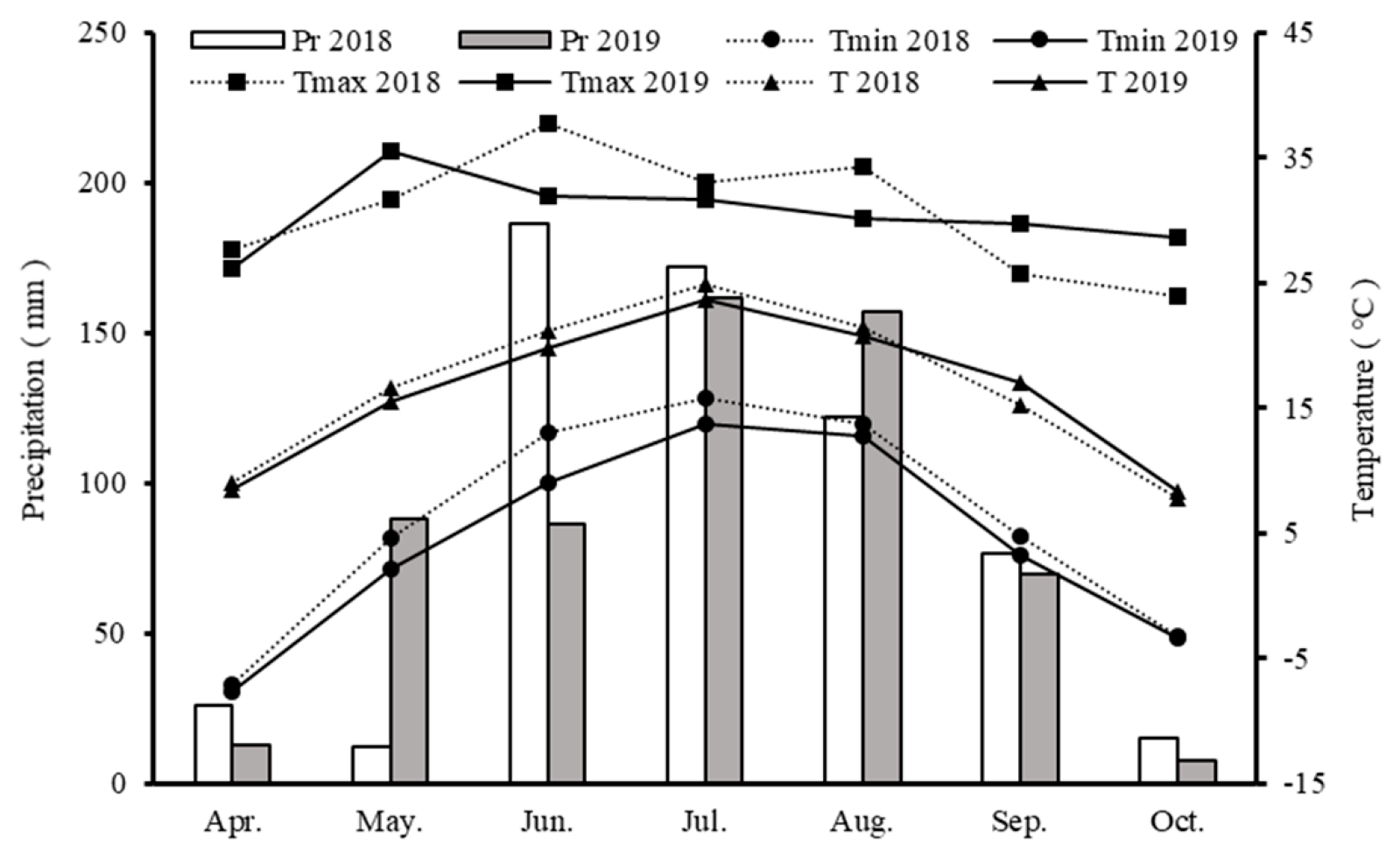
Figure 1. Changes in climatic variables during the 2018 and 2019 maize growing periods. Note: Pr means precipitation; T means average temperature; Tmax means maximum temperature; Tmin means minimum temperature.
Agronomy 16 01367 g001
Figure 2. Effect of soaking maize seeds in proline on emergence rate. Note: Different lowercase letters are significant difference at p < 5% on treatment.
Agronomy 16 01367 g002
Figure 3. Effect of soaking seeds in proline on Pn, Tr, Gs and Ci of leaves in 2019. Note: Different lowercase letters are significant difference at p < 5% on treatment.
Agronomy 16 01367 g003
Figure 4. Effect of soaking maize seeds in proline on leaf SPAD in 2019. Note: Different lowercase letters are significant difference at p < 5% on treatment.
Agronomy 16 01367 g004
Figure 5. Effect of soaking maize seeds in proline on the RuBPCase and PEPCase activity of leaves at tasseling stage in 2019. Note: Different lowercase letters are significant difference at p < 5% on treatment.
Agronomy 16 01367 g005
Figure 6. Effect of soaking maize seeds in proline on the NR, GS and GOGAT activity of leaves in 2019. Note: Different lowercase letters are significant difference at p < 5% on treatment.
Agronomy 16 01367 g006
Figure 7. Effect of soaking maize seeds in proline on GOT, GPT and GDH activity of leaves in 2019. Note: Different lowercase letters are significant difference at p < 5% on treatment.
Agronomy 16 01367 g007
Table 1. Physical and chemical characteristics of the soil in 0–20 cm plow layer.
Organic Matter
(g·kg−1)
Available Phosphorus
(mg·kg−1)
Available Potassium
(mg·kg−1)
Alkaline Nitrogen
(mg·kg−1)
pH
21.259.5166.4121.27.1
Table 2. Effect of soaking maize seeds in proline on plant height (cm).
StageTreatment20182019
Seedling stageB1Water27.97 ± 0.51 e30.17 ± 1.46 c
Pro30.45 ± 0.88 d31.02 ± 2.89 c
B2Water30.3 ± 0.92 d34.79 ± 2.83 c
Pro35.23 ± 0.67 c39.59 ± 1.91 b
CKWater37.03 ± 0.71 b42.53 ± 2.48 ab
Pro40.6 ± 1.15 a45.55 ± 3.73 a
Jointing stageB1Water92.57 ± 1.95 c85.48 ± 1.32 d
Pro104.6 ± 3 b93.04 ± 2.67 bc
B2Water95.77 ± 1.12 c89.84 ± 1.97 cd
Pro111.57 ± 2.95 a101.72 ± 4.52 a
CKWater101.3 ± 3.04 b96.37 ± 1.06 b
Pro113.97 ± 4.44 a105.6 ± 3.05 a
Tasseling stageB1Water223.83 ± 4.11 b219.78 ± 1.93 c
Pro226.1 ± 5.07 b221 ± 4.07 c
B2Water227.87 ± 2.58 ab226.65 ± 4.2 abc
Pro233.83 ± 4.14 a234.1 ± 4.12 a
CKWater228.27 ± 3.31 ab224.35 ± 6.02 bc
Pro230.77 ± 4.1 ab230.66 ± 3.75 ab
Filling stageB1Water231.93 ± 4.25 a237.2 ± 5.56 a
Pro235.4 ± 4.69 a239.08 ± 2.97 a
B2Water230.5 ± 3.46 a238.53 ± 3.58 a
Pro237.63 ± 2.05 a241.83 ± 3.36 a
CKWater232.5 ± 3.46 a240.23 ± 4.9 a
Pro235.5 ± 3.27 a242.58 ± 3.03 a
Note: Different lowercase letters are significant difference at p < 5% on treatment.
Table 3. Effect of soaking seeds in proline on dry matter accumulation in 2019.
TreatmentSeedling Stage Jointing StageTasseling StageFilling Stage
B1Water4.20 ± 0.26 d55.38 ± 3.03 d173.28 ± 2.91 c224.94 ± 2.79 d
Pro5.36 ± 0.20 b63.54 ± 4.10 c176.92 ± 2.91 bc241.63 ± 2.17 c
B2Water4.96 ± 0.11 c68.48 ± 7.72 c180.40 ± 4.97 b252.08 ± 3.99 bc
Pro6.23 ± 0.22 a75.72 ± 4.40 ab188.75 ± 4.82 a259.19 ± 3.31 ab
CKWater5.57 ± 0.13 b73.86 ± 7.33 b189.15 ± 6.39 a260.72 ± 8.27 ab
Pro6.27 ± 0.31 a83.10 ± 1.76 a193.03 ± 5.34 a270.38 ± 6.36 a
Note: Different lowercase letters are significant difference at p < 5% on treatment.
Table 4. Effect of soaking maize seeds in proline on senescence characteristics of leaves in 2019.
TreatmentRGLAm (%)Vm (%)Vmax (%)tmax (d)Leaf Area Duration (m2 d)
B1Water47.941.492.5134.1818.40
Pro50.271.372.2435.7219.30
B2Water54.121.272.2737.9219.10
Pro59.631.091.8441.2820.80
CKWater58.371.142.0141.0920.30
Pro61.921.101.9543.1221.70
Table 5. Effect of soaking maize seeds in proline on yield and maize components.
YearTreatmentsNumber of Effective Ears
(Plants·hm−2)
Ear Diameter
(mm)
Ear Length
(cm)
Barren Tip Length
(cm)
Kernel Number Per Ear100-Kernel Weight
(g)
Grain Yield
(kg/hm2)
2018B1Water39,648 e53.81 ± 2.05 b20.60 ± 1.15 c0.48 ± 0.20 cd652 ± 13 c31.59 ± 1.94 c7036.13 ± 711.39 d
Pro43,013 d54.24 ± 1.81 b20.80 ± 1.18 c0.43 ± 0.21 d658 ± 11 c32.26 ± 1.92 c7852.34 ± 615.00 d
B2Water45,810 c56.07 ± 2.20 ab21.23 ± 0.91 bc0.87 ± 0.15 b670 ± 5 bc37.59 ± 0.21 ab9929.14 ± 312.04 c
Pro47,433 b57.12 ± 2.16 ab22.37 ± 0.85 abc0.60 ± 0.10 bcd691 ± 20 ab39.09 ± 0.21 a11,026.31 ± 402.60 ab
CKWater47,977 ab58.49 ± 1.97 a22.97 ± 0.75 ab1.23 ± 0.25 a692 ± 17 ab36.93 ± 0.72 b10,548.91 ± 292.68 bc
Pro49,130 a58.89 ± 1.10 a23.60 ± 1.01 a0.8 ± 0.26 bc702 ± 11 a38.39 ± 0.41 ab11,394.53 ± 344.79 a
2019B1Water37,431 e55.48 ± 1.10 c19.68 ± 0.42 a0.40 ± 0.11 cd633 ± 7 b30.15 ± 1.15 b6144.11 ± 351.98 e
Pro40,877 d55.77 ± 1.60 c19.60 ± 0.40 a0.25 ± 0.13 d646 ± 8 b31.19 ± 1.53 b7077.33 ± 284.94 d
B2Water43,850 c56.83 ± 1.51 bc20.80 ± 0.67 a0.63 ± 0.15 bc643 ± 7 b36.17 ± 0.21 a8765.26 ± 159.40 c
Pro46,057 b58.48 ± 1.60 abc21.62 ± 1.47 a0.43 ± 0.12 cd666 ± 14 a37.28 ± 0.72 a9835.81 ± 149.46 ab
CKWater46,180 ab59.75 ± 2.52 ab21.43 ± 1.19 a1.13 ± 0.12 a670 ± 16 a35.43 ± 1.26 a9425.90 ± 383.22 b
Pro47,605 a60.25 ± 0.99 a21.75 ± 1.48 a0.87 ± 0.23 b683 ± 8 a37.00 ± 1.23 a10,339.74 ± 367.34 a
Note: Different lowercase letters are significant difference at p < 5% on treatment.
Disclaimer/Publisher’s Note: The statements, opinions and data contained in all publications are solely those of the individual author(s) and contributor(s) and not of MDPI and/or the editor(s). MDPI and/or the editor(s) disclaim responsibility for any injury to people or property resulting from any ideas, methods, instructions or products referred to in the content.