Article

Assessment of Hand-Applied Pheromone Dispenser Densities and Efficacy of Mating Disruption Plots on Management of Plutella xylostella (L.) (Lepidoptera: Plutellidae)


by
Taylore A. Tomlinson
1,†,
Thomas P. Kuhar
1 and
Alejandro I. Del Pozo-Valdivia
2,*,‡
1
Department of Entomology, Virginia Tech, Blacksburg, VA 24061, USA
2
Division of Agriculture and Natural Resources, University of California Cooperative Extension, Salinas, CA 95112, USA
*
Author to whom correspondence should be addressed.
This work was part of the PhD dissertation of the first author Taylor A. Tomlinson, PhD program in the Department of Entomology, Virginia Tech, Blacksburg, United States, 2026.
Current address: Department of Entomology, Virginia Tech Hampton Roads Agricultural Research and Extension Center, Virginia Beach, VA 23455, USA.
Agronomy 2026, 16(14), 1309; https://doi.org/10.3390/agronomy16141309
Submission received: 22 May 2026 / Revised: 24 June 2026 / Accepted: 7 July 2026 / Published: 9 July 2026
(This article belongs to the Section Agroecology Innovation: Achieving System Resilience)

Abstract

The diamondback moth, Plutella xylostella (L.), is a significant threat to brassica producers around the globe. Insecticide-resistant P. xylostella populations are increasing across the United States as frequent insecticide applications remain common. Alternative control tactics, such as mating disruption, have been developed for P. xylostella and can be useful for managing populations in brassica systems. To measure the efficacy of mating disruption for reducing P. xylostella trap captures in the field, two experimental studies were designed to: (1) evaluate the dispenser density needed to reduce P. xylostella trap captures and (2) test hand-applied dispensers under commercial field conditions. Results from the dispenser density study showed P. xylostella trap captures were significantly reduced in plots treated with 32 dispensers per 0.4 ha. In plots treated with zero dispensers, a total of 78.1% of plants scouted were damaged by larval feeding. In Experiment 2, P. xylostella trap captures were significantly reduced in treated plots. Larval abundance and plant damage ratings did not differ between plots. These studies indicate that hand-applied pheromone dispensers at 32 dispensers per 0.4 ha can reduce adult P. xylostella trap captures in commercial broccoli fields.

1. Introduction

Brassica producers around the world experience the threat of diamondback moth, Plutella xylostella (L.) (Lepidoptera: Plutellidae), every year. Globally, control expenses and losses associated with P. xylostella management can be as high as $4–5 billion and are increasing with the rise in insecticide-resistant populations [1]. In California alone, a leading producer of broccoli in the United States, a single outbreak can lead to economic losses of approximately $6 million in one season [2,3,4]. On the opposite side of the country, brassica producers in Virginia are also experiencing significant economic losses due to the abundance of P. xylostella insecticide-resistant populations. Management costs for controlling P. xylostella have increased, as producers proactively and routinely treat crops with insecticides to manage populations [5,6,7]. However, this can significantly increase selection pressure of resistance development [6,8].
Plutella xylostella is known for developing resistance to many different insecticides [4,9,10,11,12,13]. Furthermore, the hot and dry climate in California provides conditions that are known to be conducive to P. xylostella outbreaks, leading to an abundance of both susceptible and resistant populations [4,14]. In many regions, significant rainfall and cold temperatures can be a major mortality factor for P. xylostella larvae [15,16]. However, much of California is dry and does not experience lethal cold temperatures. These suitable conditions, combined with uninterrupted crop production and infrequent rotation of non-host crop plants, has led to increased P. xylostella abundance in California [14,17]. To reduce further development of insecticide resistance for P. xylostella, alternative tactics for integrated pest management (IPM) programs, such as mating disruption, are being explored to manage this key pest.
Mating disruption is a control tactic that has been developed for the management of lepidopteran pests in different cropping systems, such as tree fruit orchards and perennial systems [18,19,20,21,22,23,24,25,26]. It utilizes the release of synthetic sex pheromones of target pests at a high output to disrupt mating behavior [27]. The Plutella xylostella sex pheromone has been identified as an equal ratio of (Z)-11-hexadecenal and (Z)-11-hexadecenyl acetate [28]. Mating disruption can be implemented in a variety of methods for P. xylostella, including sprayable liquid formulations, hand-applied dispensers, tablets, and pastes. However, in the 1990s, management efforts shifted away from the acceptance of mating disruption potentially due to lack in confidence of technology, along with practicality of insecticide applications [29,30]. It has not been widely adopted in annual row crops due to high crop turnover, labor and management costs, and challenges with technology deployment. With increasing insecticide-resistant populations, implementing an IPM program is now on the forefront of managing P. xylostella. Researchers have previously experimented with hand-applied mating disruption dispensers for P. xylostella and have shown efficacy in reducing pheromone-baited male trap captures [29,30,31,32]. In this set of two experiments, our goal was to determine the density of hand-applied sex pheromone dispensers at which mating disruption can be a viable option for reducing male P. xylostella trap captures in the field. In mating disruption studies, a reduction in pheromone-baited trap captures demonstrates a disruption in male orientation behavior [33]. This differs from actual pest suppression, which is measured by reduction in egg densities and population growth [33]. In the first experiment, we focused on evaluating the efficacy of dispenser pheromone densities as point sources on reducing P. xylostella trap captures. During the second experiment and using the results from the first experiment, along with findings from other case studies, mating disruption plots were designed to determine the ability of dispensers to reduce P. xylostella trap captures in experimental brassica fields.

2. Materials and Methods

2.1. Pheromone Dispenser Setup

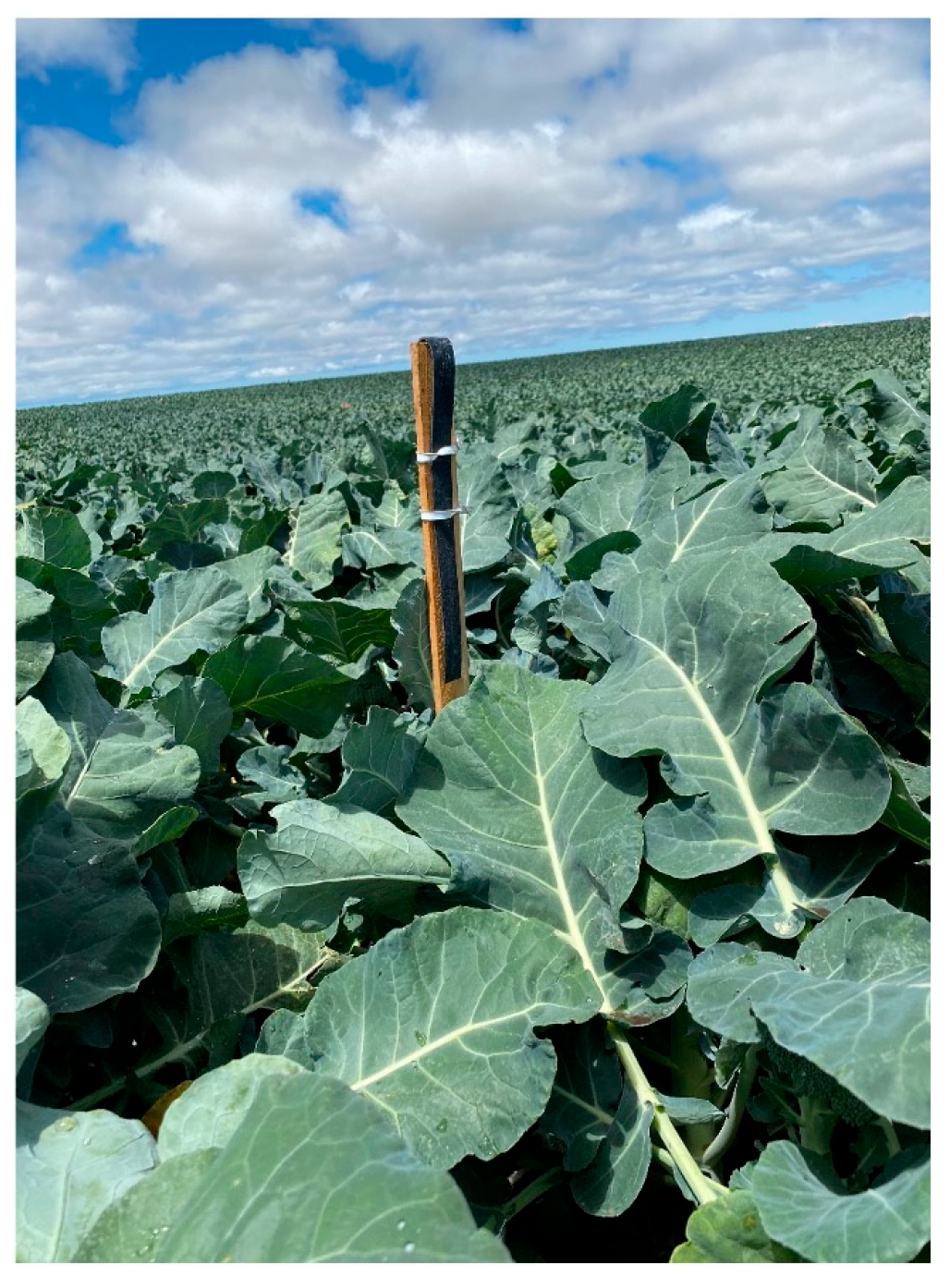
Experiments were run in commercial broccoli fields in California during 2020 and in Virginia during 2021. The hand-applied pheromone dispensers consisted of one polyvinyl chloride strip (MESO™; 0.5 × 2.5 × 38.5 cm; Trécé Inc., Adair, OK, USA) per dispenser, attached to a wooden stake with a rubber band (Figure 1). Each strip contained 780 mg of a 1:1 ratio of synthetic P. xylostella female sex pheromone (Z-11-hexadecenal and Z-11-hexadecenyl acetate; 1.56% by weight). Dispensers were deployed at least 30.5 cm above the crop canopy, equidistant from one another inside each experimental plot, and were not adjusted throughout the duration of the experiment in respect to being at equal height level to machinery used for crop management. At each site, collaborating producers were asked to continue their insecticide spray programs for controlling P. xylostella and other brassica pests. Three pheromone-baited PHEROCON IC® sticky traps (Trécé Inc., Adair, OK, USA) were placed equidistant at least 45 m apart, 10 m from edge rows, along the middle of each experimental plot, and used to monitor male adult moth activity. Traps were checked weekly (California) or biweekly (Virginia) to identify and record P. xylostella adult moth captures.

2.2. Experiment 1—Determining Density of Pheromone Dispensers

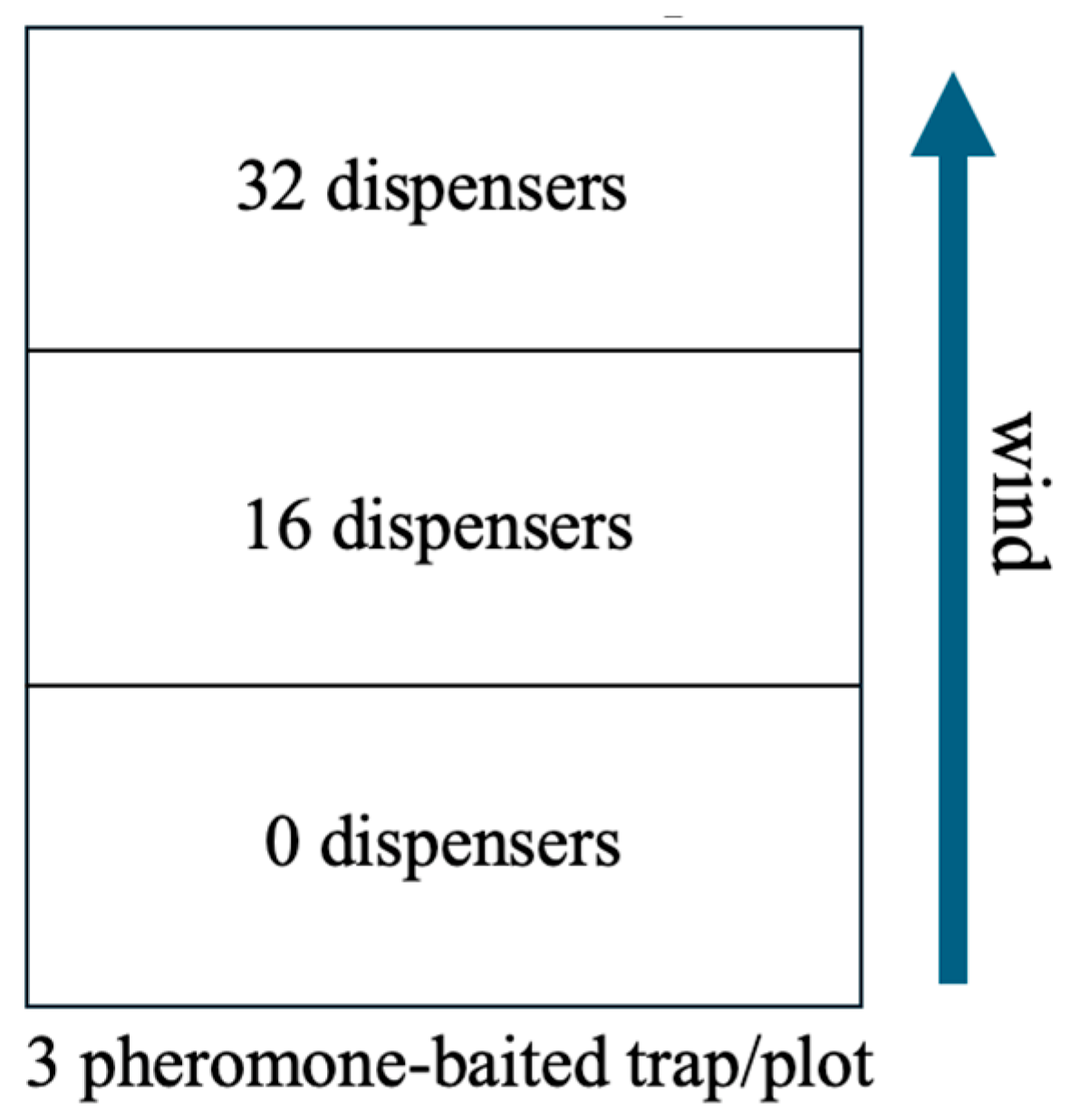
In Castroville (location 1 and location 2) and Gonzales, California, experimental trials were conducted in commercial broccoli fields to test the efficacy of three hand-applied dispenser densities to reduce P. xylostella activity: 0, 16, and 32 dispensers per 0.4 ha. Plots containing zero dispensers served as the untreated control. Dispensers were deployed from mid-June to early August in 2020 in three individual 2.4 ha commercial broccoli fields, which were divided into three 0.4 ha experimental plots for each dispenser density (Figure 2). Plots were set up in a block design, with the increasing density of dispensers (0 to 32) placed downwind to minimize the effects of plume drift. Pheromone-baited PHEROCON IC ® traps were checked weekly, where liners were replaced and adult moth captures were recorded (Trécé Inc., Adair, OK, USA). Pheromone lures and hand-applied dispensers were replaced monthly. In each plot, 22 randomly selected plants were also sampled throughout each plot every 14 days for P. xylostella larval presence and damage. Damage ratings were conducted by recording the number of old leaves vs. new leaves with or without one or more holes for each plant. Due to COVID-19 restrictions, larval presence/damage sampling and harvested head damage recordings were interrupted after two sampling dates in late-July and early-August. This also resulted in only three pheromone-baited trap monitoring collection dates: mid-July, late-July, and early August.

2.3. Experiment 2—Testing the Efficacy of Pheromone Dispensers in Field Plots

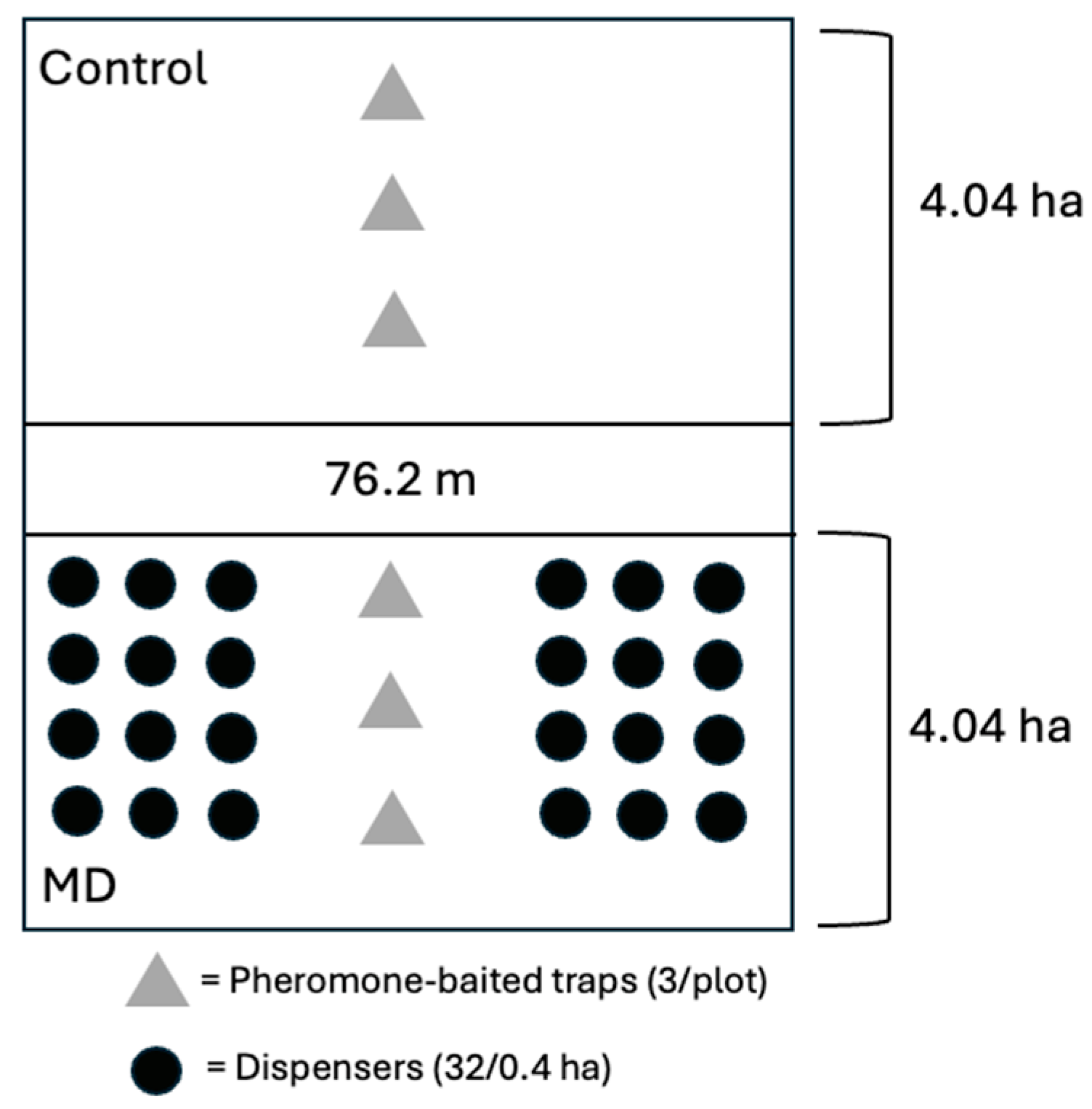
From September to November 2021, experimental trials using hand-applied mating disruption dispensers were set up in three commercial broccoli fields in King George, Virginia. Each field was separated into two 4.04 ha (10 acres) experimental plots, one control and one mating disruption (MD) plot separated by 76.20 m (250 ft) in a randomized complete block design (Figure 3). Commercial fields were separated by >3.22 km of distance. Pheromone-baited PHEROCON IC® trap liners were replaced bi-weekly and pheromone lures were replaced monthly. Based on the findings of Experiment 1 and previous case studies, dispensers were placed equidistant from each other at a density of 32 per 0.4 ha in the MD treatment plots (Trécé Inc., Adair, OK, USA) and remained in the field for the entire duration of the experiment. Additionally, 20 randomly selected broccoli heads were scouted four times during the trial period to assess P. xylostella larval and pupal presence. Damage ratings were conducted at the end of the growing season by harvesting 20 randomly selected broccoli heads per experimental plot and 100 florets inside the harvested heads were assessed for damage presence. Damage presence was recorded if any florets displayed signs of P. xylostella feeding damage.

2.4. Statistical Analysis

For both experiments, the number of P. xylostella adult moth captures and larval/pupal counts were analyzed using a generalized linear mixed model (GLMM) with a negative binomial distribution to account for overdispersion. In Experiment 1, larval presence and damage ratings from the California locations were unable to be statistically analyzed due to COVID-19 interruptions leading to only two sampling dates. However, the means and standard error associated with those damage ratings and presence of larvae are presented. In Experiment 2, broccoli floret proportion damage ratings were subjected to a GLMM with a binomial distribution, with the number of damaged florets out of the total number of florets examined (100 per head) as the response variable. GLMMs were run using the ‘glmmTMB’ package, with pairwise comparisons of the estimated marginal means calculated with the ‘emmeans’ package with α = 0.05 in R Studio (R Studio Team 2023, version 2023.12.1+402). Dispenser density (0, 16, 32—in California) or treatment (MD vs. control plots—in Virginia) were included as the fixed effects, sampling date as repeated measure, and replicates (n = 3) as the random effect. Model fit and dispersion were evaluated using the ‘DHARMa’ package (R Studio Team 2023, version 2023.12.1+402).

3. Results

3.1. Experiment 1

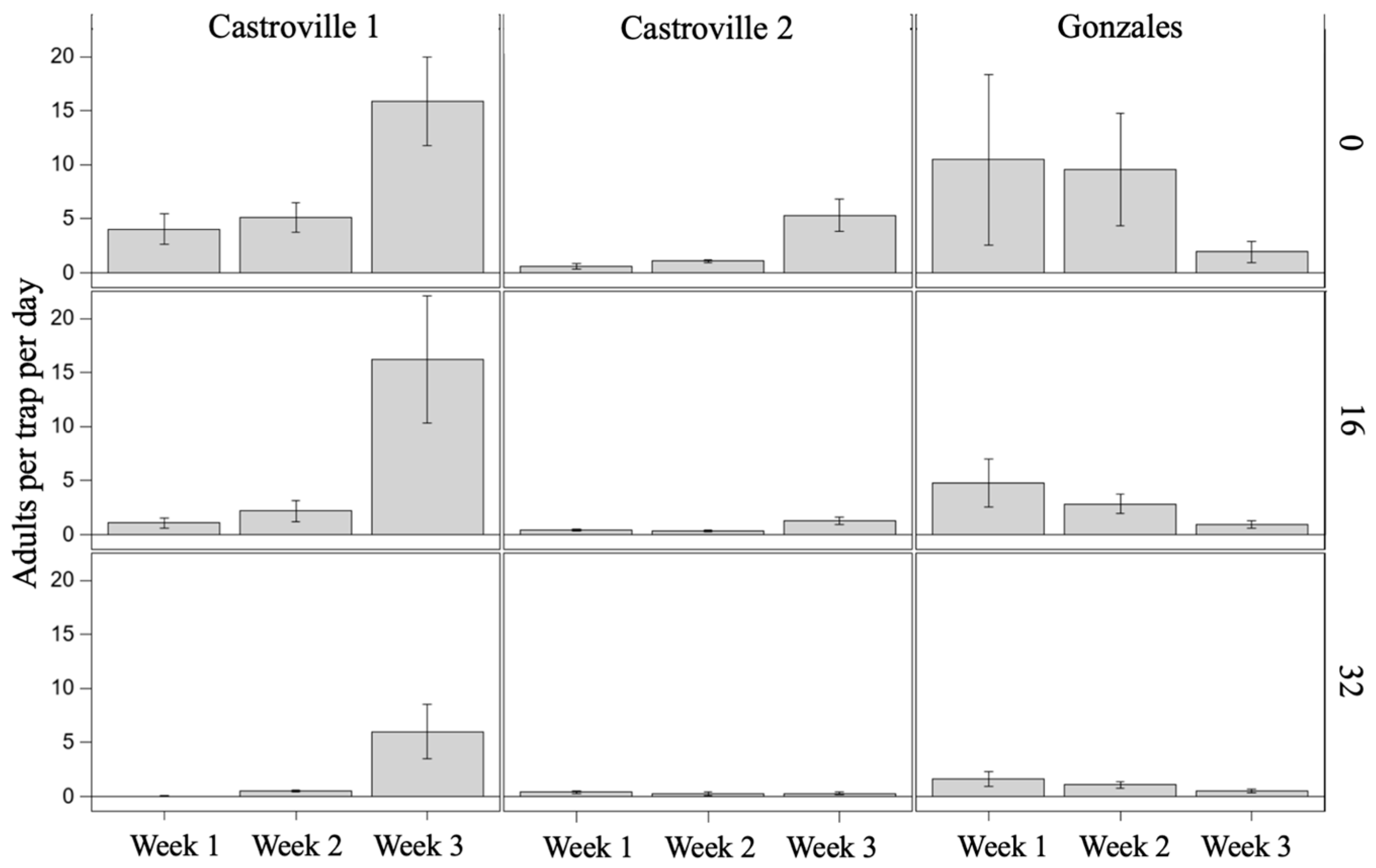
In the dispenser density study, results indicate that densities at 16 and 32 per 0.4 ha significantly reduced P. xylostella trap captures compared to plots treated with zero dispensers. Compared to plots treated with zero dispensers, P. xylostella trap captures were significantly lower in plots treated with 16 dispensers (z = −4.189, p < 0.001; Figure 4) and 32 dispensers (z = −8.619, p < 0.001; Figure 4). Pairwise comparisons further showed that captures in 32-dispenser plots were significantly lower than in 16-dispenser plots (p < 0.001). In total, 1998 P. xylostella were captured with an average of 3.51 moths per trap per day across collection dates and locations. During the two sampling dates for larval presence and damage ratings, descriptive observations showed 492 plants were scouted with 66 P. xylostella larvae and 53 P. xylostella pupae recorded. During the first sampling date in late-July, an average of 0.11 larvae per plant was recorded in plots with 32 dispensers per 0.4 ha. In the plots treated with zero dispensers, an average of 0.33 larvae were recorded. Moreover, 71% of plants had at least one leaf with feeding damage from all zero dispenser density plots, displaying holes with the “window” effect. From these damage ratings, a total of 3.40% of new leaves and 23.07% of old leaves had feeding damage. On the second sampling date in early-August, an average of 0.16 larvae per plant were found in the 32 dispenser density plots. Plots with zero dispensers showed an average presence of 0.50 larvae with 78.1% of scouted plants showing feeding damage. Out of the damaged plants scouted, cumulative damage was recorded from 1.54% of new leaves and 25.95% of old leaves. In plots containing 16 dispensers, an average of 18.53% of plants showed feeding damage. In 32 dispenser plots, an average of 12.80% of plants were recorded with feeding damage.

3.2. Experiment 2

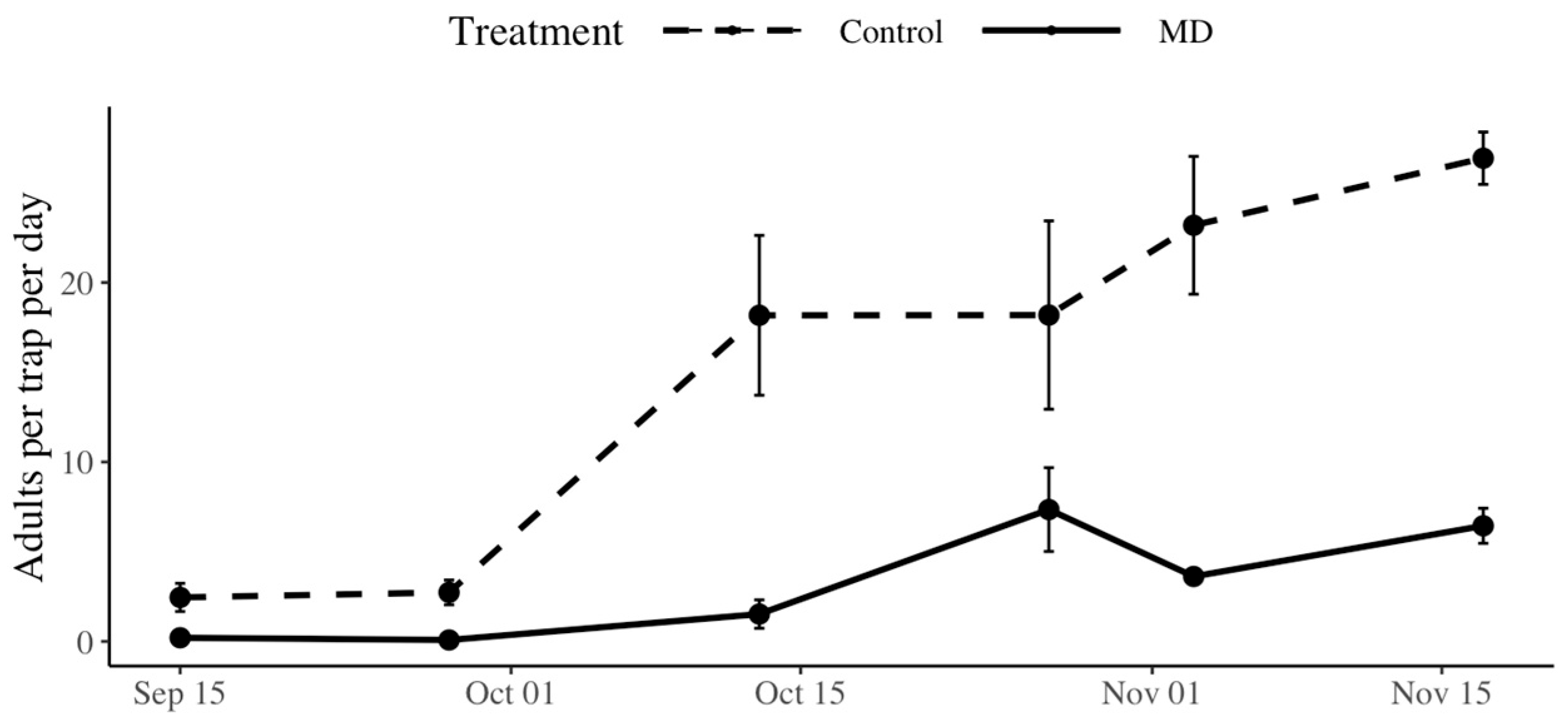
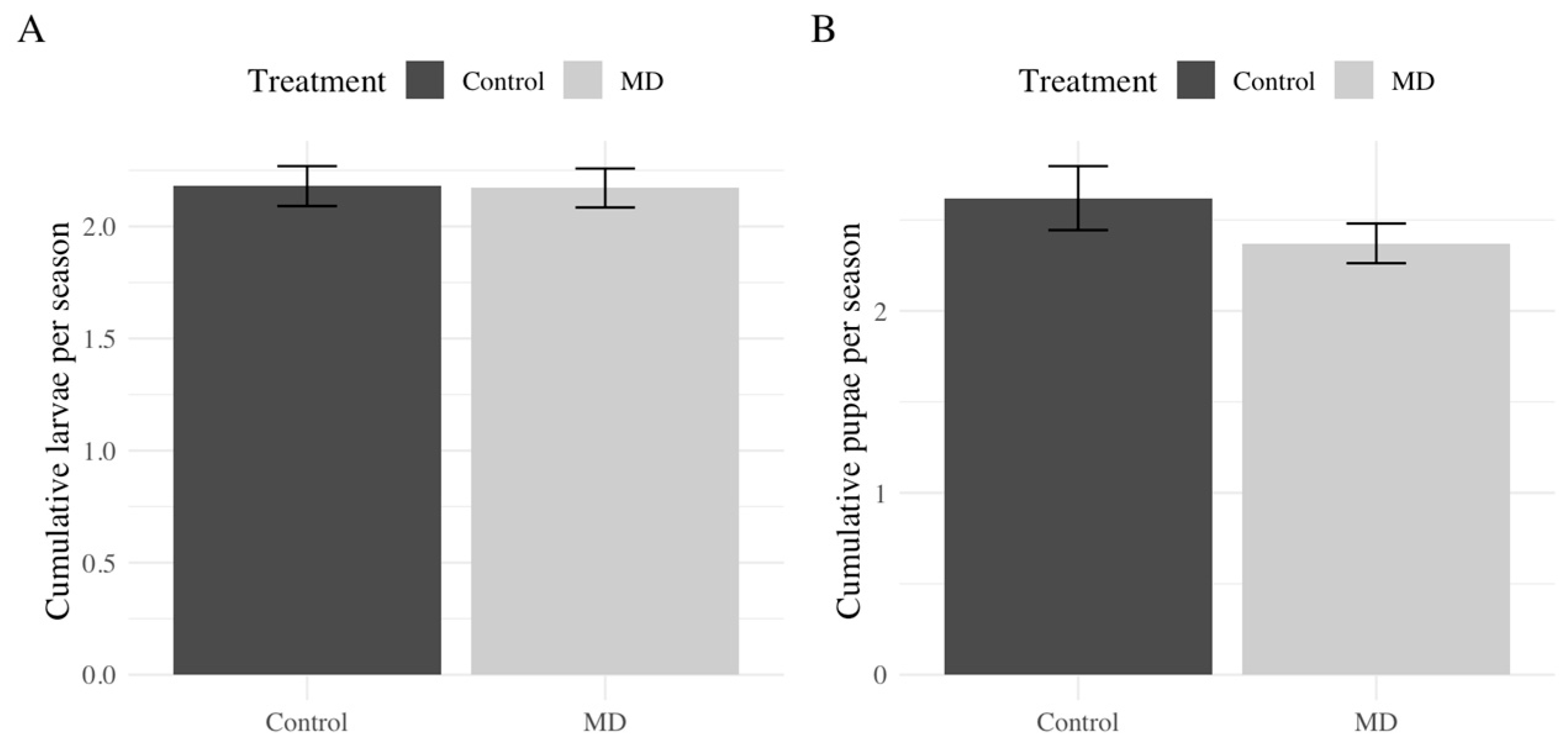
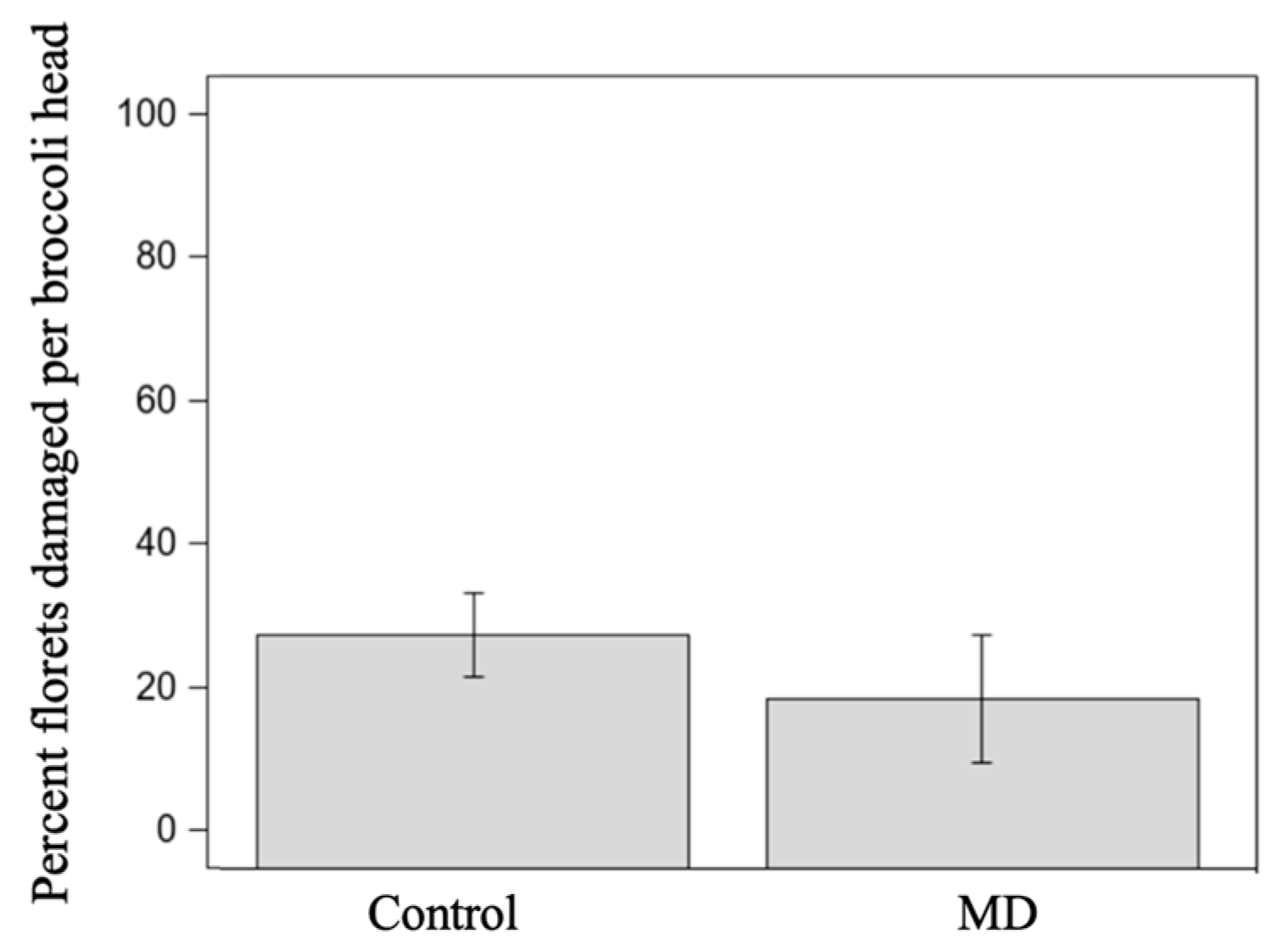
Plutella xylostella adult trap captures were significantly reduced in MD treatment plots compared to control plots (z = −5.16, p < 0.001; Figure 5). Cumulative trap captures were approximately 78% lower in MD treatment plots than control plots. During the scouting of broccoli heads, there was no significant difference in P. xylostella larvae (z = −0.382, p = 0.702; Figure 6A) or pupae (z = −1.44, p = 0.149; Figure 6B) found between treatment plots. Additionally, proportion damage ratings showed there was no significant difference in florets damaged by P. xylostella feeding per broccoli head in control plots compared to MD treatment plots (z = −0.955, p = 0.34; Figure 7).

4. Discussion

The use of hand-applied dispensers reduced the number of adult P. xylostella moth trap captures under field conditions. Our results showed that dispenser densities of 32 and 16 dispensers per 0.4 ha significantly reduced adult P. xylostella moth captures in pheromone-baited traps within experimental plots. Zero captures of adult P. xylostella were only recorded once from traps located at the 32-dispenser treatment in a California location during a mid-July sampling week in 2020. Based on visual scouting, the density of pheromone dispensers did not appear to influence damage ratings or larval presence recorded from sampling of broccoli plants in Experiment 1 but sampling efforts interrupted by COVID-19. This limitation reduced the ability to conduct proper sampling methods and data analysis of larval densities and damage ratings during the study. In the Virginia plots, larval presence and damage ratings were not significantly different between treatment plots. This was likely due to high rates of insecticide applications affecting larval populations in each experimental plot. Growers were encouraged to continue their spray regimens to manage other brassica pests in the field. These insecticide applications could have masked the effect of the treatment on larval and pupal densities. Despite this, the higher pheromone-baited trap captures of P. xylostella in control plots indicated the existence of pest presence.
Pest activity is an important factor when implementing mating disruption and utilizing synthetic pheromones. Mating disruption can be highly pest density-dependent and has a better success rate when applied during windows of low pest abundance [27]. This could be due to the likelihood of males being able to encounter a high number of females in the field [27]. Sites were selected based on historical knowledge of being ‘hot spots’ with known P. xylostella presence and damage. California sites are known to have continuous growing seasons with overlapping generations of P. xylostella throughout the year, with the potential for high activity peaks. This causes producers to frequently apply insecticide applications to effectively target different life stages and protect crop growth as harvest approaches. Mating disruption can be valuable as a part of broader IPM programs, working in collaboration with other management tactics, rather than used as a stand-alone tool.
In Virginia, our results documented a significant difference in P. xylostella moth captures between the control and MD treatment plots across a whole sampling season in broccoli field plots. However, there could be an influence on the results due to close proximity of treatment plots. Male P. xylostella adult moths could potentially travel between plots and interfere with pheromone-baited trap captures. Mated female moths could oviposit eggs in MD treatment plots, resulting in higher densities. Negative binomial GLMMs were conducted in the analysis of both experiments to account for the overdispersion of the data and the potential non-independence of observations [34,35].
In addition to the experimental design, findings in both experiments could have been affected by environmental factors interfering with dispenser pheromone output. Wind direction, overhead irrigation, and significant weather conditions, such as dry hot climates, can influence pheromone dispersion [36,37]. While dispenser densities were placed downwind to minimize wind interference, pheromone plumes could have drifted into control plots with no MD dispensers during high winds directed from experimental plots treated with pheromone dispensers. Plutella xylostella have also been documented to travel via wind, and this could have an effect on adult moths, especially mated females, moving short distances between plots [38,39,40,41]. Plant architecture may also play a role in pest abundance and dispenser efficiency, where broccoli plant canopies may have influenced the movement of the pheromone plume or adult moths. Canopy architecture could affect male flight behavior due to limited plume reach and dispenser height. In orchard systems, areas with dense canopies can influence pheromone plume reach based on spatial distribution and location of the mating disruption technologies [42,43].

5. Conclusions

Overall, these findings indicate that hand-applied dispensers, particularly at 32 dispensers per 0.4 ha, can reduce adult P. xylostella trap captures under field conditions and may be useful as one component of IPM programs for brassica crops. The significant reduction in P. xylostella trap captures from the two experiments indicates a disruption in male orientation behavior. However, additional studies evaluating the impacts on larval densities, crop damage, and economic outcomes are needed to assess the effect of hand-applied dispensers on overall pest suppression. The implications and results of these studies pave the way for future mating disruption experiments utilizing hand-applied mating disruption dispensers.

Author Contributions

Conceptualization, A.I.D.P.-V., T.P.K. and T.A.T.; methodology, A.I.D.P.-V., T.P.K. and T.A.T.; software, T.A.T.; validation, A.I.D.P.-V. and T.P.K.; formal analysis, T.A.T. and A.I.D.P.-V.; investigation, A.I.D.P.-V., T.P.K. and T.A.T.; resources, A.I.D.P.-V., T.P.K. and T.A.T.; data curation, A.I.D.P.-V. and T.A.T.; writing—original draft preparation, T.A.T.; writing—review and editing, A.I.D.P.-V. and T.P.K.; visualization, T.A.T.; supervision, A.I.D.P.-V. and T.P.K.; project administration, A.I.D.P.-V. and T.P.K.; funding acquisition A.I.D.P.-V. and T.P.K. All authors have read and agreed to the published version of the manuscript.

Funding

This research was partially funded by UC Cooperative Extension Capacity Funds and a 2021 Virginia Department of Agriculture and Consumer Services-Specialty Crop Block Grant—“Improving Pest Management for Virginia Cole Crops”.

Data Availability Statement

The original contributions presented in this study are included in the article. Further inquiries can be directed to the corresponding author.

Acknowledgments

We would like to thank our collaborators in California for their contribution to the West Coast part of this study. We would also like to thank Julie Brindley, Elidah Sisk, Eleanor Lane, Shannon Bradley, and Kelly Bekelja for their efforts in Virginia. The authors thank Trécé Inc. for providing the hand-applied pheromone dispensers, traps and lures used in both experiments.

Conflicts of Interest

The authors declare no conflicts of interest.

References

  1. Zalucki, M.P.; Shabbir, A.; Silva, R.; Adamson, D.; Shu-Sheng, L.; Furlong, M.J. Estimating the Economic Cost of the World’s Major Insect Pests, Plutella xylostella (Lepidoptera: Plutellidae): Just How Long Is a Piece of String? J. Econ. Entomol. 2012, 105, 115–1129. [Google Scholar] [CrossRef] [PubMed]
  2. Sances, F.V. Grower loss report, March-November of 1997. In Report on file in the California Department of Pesticide Registration; The Alliance for Alternative Agriculture: San Luis Obispo, CA, USA, 1997. [Google Scholar]
  3. U.S. Department of Agriculture, National Agriculture Statistics Service. Vegetables, final estimates. In USDA-NASS Statistical Bulletin; Department of Agriculture, Economic Research Service: Kansas City, MO, USA, 1997; Volume 946b. [Google Scholar]
  4. Shelton, A.M.; Sances, F.V.; Hawley, J.; Tang, J.D.; Boune, M.; Jungers, D.; Collins, H.L.; Farias, L. Assessment of insecticide resistance after the outbreak of diamondback moth (Lepidoptera: Plutellidae) in California in 1997. J. Econ. Entomol. 2000, 93, 931–936. [Google Scholar] [CrossRef] [PubMed]
  5. Andaloro, J.T.; Hoy, C.W.; Rose, K.B.; Tette, J.P.; Shelton, A.M. A Review of Cabbage Pest Management in New York: From the Pilot Project to the Private Sector, 1978–1982. N. Y. Food Life Sci. Bull. 1983, 105, 362. [Google Scholar]
  6. Mazlan, N.; Mumford, J. Insecticide use in cabbage pest management in the Cameron Highlands, Malaysia. Crop Prot. 2005, 24, 31–39. [Google Scholar] [CrossRef]
  7. Grzywacz, D.; Rossbach, A.; Rauf, A.; Russell, D.A.; Srinivasan, R.; Shelton, A.M. Current control methods for diamondback moth and other brassica insect pests and the prospects for improved management with lepidopteran-resistant Bt vegetable brassicas in Asia and Africa. Crop Prot. 2010, 29, 68–79. [Google Scholar] [CrossRef]
  8. Atumurarava, F.; Furlong, M.J. Diamondback Moth Resistance to Commonly Used Insecticides and Its Management in Fiji. Master’s Thesis, School of Biological Sciences, The University of Queensland, Brisbane, QLD, Australia, 2011. [Google Scholar] [CrossRef]
  9. Shelton, A.M.; Robertson, J.L.; Tang, J.D.; Perez, C.; Eigenbrode, S.D.; Preisler, H.K.; Wilsey, W.T.; Cooley, R.J. Resistance of diamondback moth (Lepidoptera: Plutellidae) to Bacillus thuringiensis subspecies in the field. J. Econ. Entomol. 1993, 86, 607–705. [Google Scholar] [CrossRef]
  10. Zhao, J.Z.; Grafius, E. Assessment of different bioassay techniques for resistance monitoring in the diamondback moth (Lepidoptera: Plutellidae). J. Econ. Entomol. 1993, 86, 995–1000. [Google Scholar] [CrossRef]
  11. Zhao, J.Z.; Collins, H.; Li, Y.X.; Mau, R.; Thompson, G.; Hertlein, M.; Andaloro, J.; Shelton, A.M. Monitoring of diamondback moth (Lepidoptera: Plutellidae) resistance to spinosad, indoxacarb, and emamectin benzoate. J. Econ. Entomol. 2006, 99, 176–181. [Google Scholar] [CrossRef]
  12. Bhandari, K.B.; Torrance, P.; Huffman, E.; Bennett, J.; Riley, D.G. Insecticide resistance in diamondback moth (Lepidoptera: Plutellidae) in Georgia. J. Entomol. Sci. 2020, 55, 416–420. [Google Scholar] [CrossRef]
  13. Riley, D.G.; Smith, H.; Bennett, J.; Torrance, P.; Huffman, E.; Sparks, A.; Gruver, C.; Dunn, T.; Champagne, D. Regional survey of diamondback moth (Lepidoptera: Plutellidae) response to maximum dosages of insecticides in Georgia and Florida. J. Econ. Entomol. 2020, 113, 2458–2464. [Google Scholar] [CrossRef] [PubMed]
  14. Talekar, N.S.; Shelton, A.M. Biology, ecology, and management of the diamondback moth. Annu. Rev. Entomol. 1993, 38, 275–301. [Google Scholar] [CrossRef]
  15. Harcourt, D.G. Major mortality factors in the population dynamics of the diamondback moth, Plutella maculipennis (Curt.) (Lepidoptera: Plutellidae). Mem. Entomol. Soc. Can. 1963, 95, 55–66. [Google Scholar] [CrossRef]
  16. Liu, S.S.; Chen, F.Z.; Zalucki, M.P. Development and Survival of the Diamondback Moth (Lepidoptera: Plutellidae) at Constant and Alternating Temperatures. Environ. Entomol. 2002, 31, 221–231. [Google Scholar] [CrossRef]
  17. Furlong, M.J.; Wright, D.J.; Dosdall, L.M. Diamondback moth ecology and management: Problems, progress, and prospects. Annu. Rev. Entomol. 2013, 58, 517–541. [Google Scholar] [CrossRef] [PubMed]
  18. Rothschild, G.L. Mating disruption of lepidopterous pests: Current status and future prospects. In Management of Insect Pests with Semiochemicals; Mitchell, E.R., Ed.; Springer: Boston, PA, USA, 1981. [Google Scholar] [CrossRef]
  19. Michereff, F.M.; Vilela, E.F.; Jham, G.N.; Attygalle, A.; Svatos, A.; Meinwald, J. Initial studies of mating disruption of the tomato moth, Tuta absoluta (Lepidoptera: Gelechiidae) using synthetic sex pheromone. J. Braz. Chem. Soc. 2000, 11, 621–628. [Google Scholar] [CrossRef]
  20. Il’ichev, A.L.; Gut, L.J.; Williams, D.G.; Hossain, M.S.; Jerie, P.H. Area-wide approach for improved control of oriental fruit moth, Grapholita molesta, (Busck)(Lepidoptera: Tortricidae) by mating disruption. Gen. Appl. Entomol. 2002, 31, 7–15. [Google Scholar] [CrossRef]
  21. Kovanci, O.B.; Schal, C.; Walgenbach, J.F.; Kennedy, G.G. Comparison of mating disruption with pesticides for management of oriental fruit moth (Lepidoptera: Tortricidae) in North Carolina apple orchards. J. Econ. Entomol. 2005, 98, 1248–1258. [Google Scholar] [CrossRef] [PubMed]
  22. Welter, S.C.; Pickel, C.; Millar, J.; Cave, F.; Van Steenwyk, R.A.; Dunley, J. Pheromone mating disruption offers selective management options for key pests. Cali. Ag. 2005, 59, 16–22. Available online: https://escholarship.org/uc/item/2tc8k3gc (accessed on 19 January 2026). [CrossRef]
  23. Angeli, G.; Anfora, G.; Baldessari, M.; Germinara, G.S.; Rama, F.; De Cristofaro, A.; Ioriatti, C. Mating disruption of codling moth Cydia pomonella with high densities of Ecodian sex pheromone dispensers. J. App. Entomol. 2007, 131, 311–318. [Google Scholar] [CrossRef]
  24. Kong, W.N.; Li, J.; Fan, R.J.; Li, S.C.; Ma, R.Y. Sex-pheromone-mediated mating disruption technology for the oriental fruit moth, Grapholita molesta (Busck)(Lepidoptera: Tortricidae): Overview and prospects. Psych. J. Entomol. 2014, 2014, 1–8. [Google Scholar] [CrossRef]
  25. Lance, D.R.; Leonard, D.S.; Mastro, V.C.; Walters, M.L. Mating disruption as a suppression tactic in programs targeting regulated lepidopteran pests in U.S. J. Chem. Entomol. 2016, 42, 590–605. [Google Scholar] [CrossRef] [PubMed]
  26. Porcel, M.; Sjöberg, P.; Swiergiel, W.; Dinwiddie, R.; Rämbert, B.; Tasin, M. Mating disruption of Spilonata ocellana and other apple orchard tortricids using a multispecies reservoir dispenser. Pest. Manag. Sci. 2014, 71, 562–570. [Google Scholar] [CrossRef] [PubMed]
  27. Miller, J.R.; Gut, L.J. Mating disruption for the 21st century: Matching technology with mechanism. Environ. Entomol. 2015, 44, 427–453. [Google Scholar] [CrossRef] [PubMed]
  28. Tamaki, Y.; Kawasaki, Y.; Yamada, H.; Koshihara, T.; Osaki, N.; Ando, T.; Yoshida, S.; Kakinohana, H. (Z)-11-hexadecenal and (Z)-11-hexadecenyl acetate: Sex-pheromone components of the diamondback moth (Lepidoptera: Plutellidae). Appl. Entomol. Zool. 1977, 12, 208–210. [Google Scholar] [CrossRef]
  29. McLaughlin, J.R.; Mitchell, E.R.; Kirsch, P. Mating disruption of diamondback moth (Lepidoptera: Plutellidae) in cabbage: Reduction of mating and suppression of larval populations. J. Econ. Entomol. 1994, 87, 1198–1204. [Google Scholar] [CrossRef]
  30. Mitchell, E.R.; Hu, G.Y.; Okine, J.S. Mating disruption of diamondback moth (Lepidoptera: Plutellidae) and cabbage looper (Lepidoptera: Noctuidae) in cabbage using a blend of pheromones emitted from the same dispenser. J. Entomol. Sci. 1997, 32, 120–137. [Google Scholar] [CrossRef]
  31. Wu, Q.J.; Zhang, S.F.; Yao, J.L.; Xu, B.Y.; Wang, S.L.; Zhang, Y.J. Management of diamondback moth, Plutella xylostella (Lepidoptera: Plutellidae) by mating disruption. Insect Sci. 2012, 19, 643–653. [Google Scholar] [CrossRef]
  32. Tomlinson, T.A.; Del Pozo-Valdivia, A.I.; Walgenbach, J.F.; Bilbo, T.R.; Short, B.D.; Kennedy, G.G.; Edwards, A.L.; Kuhar, T.P. Control of diamondback moth (Lepidoptera: Plutellidae) in Eastern US commercial brassica fields using hand-applied pheromone dispensers for mating disruption. J. Econ. Entomol. 2026, 119, 2041–2049. [Google Scholar] [CrossRef] [PubMed]
  33. Cardé, R.T.; Minks, A.K. Control of Moth Pests by Mating Disruption: Successes and Constraints. Annu. Rev. Entomol. 1995, 40, 559–585. [Google Scholar] [CrossRef]
  34. Lloyd-Smith, J. Maximum likelihood estimation of the negative binomial dispersion parameter for highly overdispersed data, with applications to infectious diseases. PLoS ONE 2007, 2, e180. [Google Scholar] [CrossRef] [PubMed]
  35. Lindén, A.; Mäntyniemi, S. Using negative binomial distribution to model overdispersion in ecological count data. Ecology 2011, 92, 1414–1421. [Google Scholar] [CrossRef]
  36. Baker, P.B.; Shelton, A.M.; Andaloro, J.T. Monitoring Diamondback Moth (Lepidoptera: Yponomeutidae) in Cabbage with Pheromones. J. Econ. Entomol. 1982, 75, 1025–1028. [Google Scholar] [CrossRef]
  37. Maa, C.W. Ecological approach to male diamondback moth response to sex pheromone. Diamondback moth management. Proc. First Int. Workshop 1986, 170, 109–123. [Google Scholar]
  38. Shaw, M.W. The diamond-back moth migration of 1958. Weather 1962, 17, 221–234. [Google Scholar] [CrossRef]
  39. Chapman, J.W.; Reynolds, D.R.; Smith, A.D.; Riley, J.R.; Pedgley, D.E.; Woiwod, I.P. High-altitude migration of the diamondback moth Plutella xylostella to the U.K.: A study using radar, aerial netting, and ground trapping. J. Econ. Entomol. 2002, 27, 641–650. [Google Scholar] [CrossRef]
  40. Mo, J.; Baker, G.; Keller, M.; Roush, R. Local dispersal of the diamondback moth (Plutella xylostella (L.)) (Lepidoptera: Plutellidae). J. Eviron. Entomol. 2003, 32, 71–79. [Google Scholar] [CrossRef]
  41. Fu, X.; Xing, Z.; Liu, Z.; Ali, A.; Wu, K. Migration of diamondback moth, Plutella xylostella, across the Bohai sea in northern China. Crop Prot. 2014, 64, 143–149. [Google Scholar] [CrossRef]
  42. Willett, D.S.; Stelinski, L.L.; Lapointe, S.L. Using response surface methods to explore and optimize mating disruption of the leafminer Phyllocnistis citrella (Lepidoptera: Gracillariidae). Front. Ecol. Evol. 2015, 3, 30. [Google Scholar] [CrossRef]
  43. Hasan, M.M.; Mahroof, R.M.; Aikins, M.J.; Athanassiou, C.G.; Philips, T.W. Pheromone-based auto-confusion for mating disruption of Plodia interpunctella (Lepidoptera: Pyralidae) in structures with raw and processed grain products. J. Store. Prod. Res. 2023, 104, 102201. [Google Scholar] [CrossRef]
Figure 1. Hand-applied dispenser used in both experiments during the study. A PVC strip (MESOTM; 0.5 × 2.5 × 38.5 cm; Trécé Inc., Adair, OK, USA) containing 780 mg of a 1:1 ratio of synthesized P. xylostella female sex pheromone (Z-11-hexadecenal and Z-11-hexadecenyl acetate; 1.56% by weight) was attached to a 30.5 cm wooden stake with a rubber band. Hand-applied dispensers were placed equidistant within each MD treatment plot.
Agronomy 16 01309 g001
Figure 2. Plot map for Experiment 1—the hand-applied dispenser density study, in Castroville (Locations 1 and 2) and Gonzales, California, in 2020. Three densities of dispensers (number inside each experimental plot) were suggested for 0.4 ha of treated area. Total number of dispensers per experimental plot (density × 0.4 ha) were secured on a wood stake and placed equidistant from one another.
Agronomy 16 01309 g002
Figure 3. Plot map for Experiment 2—mating disruption field plot study [mating disruption (MD) treatment vs. control plots with no dispensers] in three commercial broccoli fields in King George, Virginia, in 2021. A single density of dispensers (32 per 0.4 ha) was suggested for the treated areas. Dispensers were secured on a wood stake and placed equidistant from one another.
Agronomy 16 01309 g003
Figure 4. Raw mean adult captures ± standard error of P. xylostella per trap per day during each sampling week (X-axis; Week 1 = mid-July, Week 2 = late-July, Week 3 = early August) by location (Castroville 1, Castroville 2, Gonzales; vertical panels) and by dispenser density (0, 16, 32; horizontal panels) for Experiment 1 in California in 2020.
Agronomy 16 01309 g004
Figure 5. Model-estimated means ± standard error of P. xylostella adult captures per trap per day across sampling dates (X-axis) during the entire season recorded from Experiment 2 in King George, Virginia, in 2021. Control plots with no pheromone dispensers are represented by the dashed line and mating disruption (MD) treatment plots are represented by the solid line. MD treatment plots had significantly lower P. xylostella adult captures per trap per day.
Agronomy 16 01309 g005
Figure 6. Cumulative P. xylostella larvae (A) and pupae (B) per plant ± standard error recorded from treatment plots [control with no pheromone dispensers vs. mating disruption (MD); X-axis] across the entire season for Experiment 2 in King George, Virginia, 2021. No significance was shown between treatment plots.
Agronomy 16 01309 g006
Figure 7. Cumulative ± standard error of percent florets damaged per broccoli head recorded in experimental plots [control with no pheromone dispensers vs. mating disruption (MD); X-axis] from Experiment 2 in King George, Virginia, in 2021. No significance was shown between treatment plots.
Agronomy 16 01309 g007
Disclaimer/Publisher’s Note: The statements, opinions and data contained in all publications are solely those of the individual author(s) and contributor(s) and not of MDPI and/or the editor(s). MDPI and/or the editor(s) disclaim responsibility for any injury to people or property resulting from any ideas, methods, instructions or products referred to in the content.