Article

Resistance of Winter Triticale Cultivars as a Key Determinant of Their Agricultural Use

1
Department of Monitoring and Signaling of Agrophages, Institute of Plant Protection—National Research Institute, Węgorka 20, 60-318 Poznań, Poland
2
VCU Assessment Department, Research Centre for Cultivar Testing, Słupia Wielka 34, 63-022 Słupia Wielka, Poland
3
Department of Mathematical and Statistical Methods, Poznań University of Life Sciences, Wojska Polskiego 28, 60-637 Poznań, Poland
*
Author to whom correspondence should be addressed.
Agronomy 2026, 16(12), 1188; https://doi.org/10.3390/agronomy16121188
Submission received: 29 April 2026 / Revised: 9 June 2026 / Accepted: 14 June 2026 / Published: 18 June 2026

Abstract

Triticale (×Triticosecale) is an important cereal crop in Poland, valued for its high yield potential and tolerance to biotic and abiotic stresses; however, fungal diseases remain a major constraint to production. This study aimed to assess the resistance and yield performance of selected winter triticale cultivars under varying levels of chemical crop protection across diverse environmental conditions. Field experiments were conducted during the 2023/2024 and 2024/2025 growing seasons at 16 locations in Poland within the framework of Post-Registration Variety Testing (PRVT). Three cultivars (Medalion, Fanfaro, and SU Atletus) were evaluated under two agrotechnical levels differing in fertilization and protection intensity. Disease severity for powdery mildew, brown rust, and septoria leaf blotch was assessed using a 9-point scale, and yield data were analyzed using four-way ANOVA and multivariate methods. The results demonstrated significant effects of management intensity, cultivar, growing season, environment as well as interactions: management intensity × environment, cultivar × environment, growing season × environment, management intensity × growing season × environment and cultivar× growing season × environment were significant for all four traits of the study. Management intensity × cultivar as well as management intensity × cultivar × environment interactions were significant for powdery mildew, brown rust and septoria leaf blotch. Management intensity × growing season interaction was significant for powdery mildew and septoria leaf blotch. Management intensity × cultivar × growing season × environment interaction was significant for powdery mildew and brown rust. The cultivar × growing season interaction was significant only for brown rust and management intensity × cultivar × growing season interaction for septoria leaf blotch. Increased protection intensity generally reduced disease severity and improved yield. Medalion exhibited the highest yield stability, whereas SU Atletus achieved the highest yields under favorable conditions but with greater variability. Fanfaro showed intermediate performance. The findings highlight the importance of cultivar selection and management intensity in optimizing triticale production and support the role of PRVT in guiding agricultural practice under variable climatic conditions.

1. Introduction

Triticale (×Triticosecale) is one of the most important cereal species cultivated in Poland, combining favorable traits of wheat (Triticum spp.) and rye (Secale cereale). These include high yield potential, good adaptation to diverse environmental conditions, and a relatively high tolerance to environmental stresses [1]. Triticale also exhibits greater resistance to diseases and soil acidity than wheat, as well as an enhanced tolerance to abiotic stresses such as drought and frost [2,3,4,5,6]. Due to these characteristics, triticale is widely used in feed production, and in recent years there has been a growing interest in its use in alternative farming systems, including organic and low-input agriculture [2,6].
Triticale is the third most commonly cultivated cereal in Poland, after wheat and maize. In 2025, the area under triticale cultivation exceeded 1.1 million hectares, while grain yields averaged approximately 4.8 t/ha [7]. Currently, Poland is the largest producer of triticale in the European Union. Triticale cultivars bred in Poland are characterized by high productivity and account for 70–80% of the global cultivation area of this crop [8].
Under field conditions, one of the main factors limiting triticale yield is fungal diseases, which cause losses in both the quantity and quality of grain. Among the most important pathogens is powdery mildew (Blumeria graminis), which is manifested by a white-grey, powdery growth on leaves and stems, reducing photosynthetic activity and weakening the plants. Brown rust (Puccinia recondita) leads to the formation of brown urediniospores on leaf surfaces, thereby decreasing the assimilative area and reducing grain yield [9,10]. Septoria leaf blotch (Zymoseptoria tritici) causes necrotic lesions on leaves and their premature senescence, which further limits the photosynthetic capacity of plants [11,12,13,14].
Infections by these pathogens result not only in yield reduction but also in deterioration of grain quality; therefore, effective control of fungal diseases is one of the key elements of triticale crop management [15,16]. Consequently, the selection of resistant cultivars adapted to local environmental conditions, as well as the implementation of Post-Registration Variety Testing (PRVT) conducted under multi-environmental conditions, are essential to ensure yield stability and high-quality harvests.
Breeding progress leads to the continuous introduction of new cultivars into agricultural practice, differing in yield potential, morphological traits, disease resistance, and responses to environmental conditions and agronomic practices. In this context, PRVT plays a crucial role, as its primary objective is the objective evaluation of the agronomic value of cultivars under field conditions that closely reflect commercial production systems. The PRVT system enables the comparison of cultivars across multi-environment and multi-year trials, allowing for the identification of genotypes characterized by high yield stability and optimal adaptation to regional conditions.
Post-registration trials constitute an important source of information for both agricultural practice and advisory services, supporting the rational selection of cultivars suited to specific site conditions and cropping systems [17,18,19]. They also allow for the analysis of genotype × environment interactions, which significantly determine the variability of yield and agronomic traits of triticale across years and regions of the country [20]. Under conditions of ongoing climate change and increasing weather variability, the importance of such studies continues to grow.
PRVT is an essential component of the system for evaluating and implementing biological progress in agriculture. This system has been developed and is coordinated by the Research Centre for Cultivar Testing (RCCT) in Słupia Wielka, which aligns national variety testing with market-oriented agricultural conditions and the requirements of the European Union [18]. In summary, PRVT plays a key role in transferring knowledge from science to agricultural practice. It enables rational cultivar selection, increases production efficiency, and allows for better adaptation of crop cultivation to local environmental conditions, which is of particular importance in modern agriculture.
In light of the requirements of the European Green Deal (EGD), Integrated Pest Management (IPM) is a key component of sustainable agricultural production. Restrictions on the use of chemical plant protection products necessitate the application of alternative methods, such as the selection of resistant cultivars, monitoring of pests and diseases, and the integration of biological and agronomic strategies. The implementation of IPM makes it possible to minimize yield losses while simultaneously reducing pesticide residues in the environment and in food. These solutions also contribute to improving biodiversity, yield stability, and the resilience of production systems to variable climatic conditions [21].
In integrated crop production, the selection of appropriate cultivars is of great importance. For many years, the RCCT has recommended the introduction of varieties showing at least moderate resistance or tolerance to pests and diseases into cultivation. The annually published Variety Descriptive Lists (VDL) contain information on yield performance and other important agronomic and utility traits of cultivars, including their resistance to the most important diseases, as well as a list of cultivars entered in the National Register (NR) and descriptions of cultivars newly introduced in a given year. Data on the level of cultivar resistance are also available from the results of trials conducted within the framework of the PRVT [22]. Cultivars best adapted to specific soil and climatic conditions are subsequently included in the List of varieties recommended for cultivation within the territory of the Voivodeship for a given voivodeship [23]. The withdrawal of many active substances used in plant protection products in the European Union makes the rapid introduction of new cultivars resistant and tolerant to pests and diseases increasingly necessary, in line with the principles of integrated pest management. An increase in the number of such cultivars is expected in the coming years. Equally important is the tolerance of cultivars to abiotic stress factors, such as drought or frost [24,25]. The aim of the study was to assess the resistance of different winter triticale cultivars under varying levels of chemical crop protection intensity in Poland. The susceptibility of the cultivars to diseases such as powdery mildew (B. graminis), brown rust (P. recondita), and septoria leaf blotch (Z. tritici) was evaluated. The research results constitute a valuable source of information for the selection of cultivars for specific farming conditions in terms of protection intensity, as well as for their choice under different soil conditions. An additional challenge for agricultural practice is the conclusion of the EU–Mercosur partnership agreement in December 2024. This represents a serious challenge for European agricultural producers, who will have to compete with countries that have access to a much broader arsenal of plant protection products. In the context of the progressive restriction of pesticide availability in the EU and the growing pressure from producers in countries with far greater chemical protection options, careful selection of crop varieties with increased resistance to diseases and pests becomes critically important. The use of conventional plant protection products alone will prove insufficient; therefore, it will be necessary to implement an integrated approach combining agronomic practices—such as crop rotation, appropriate sowing dates, and optimal seeding density—with biological methods and other alternative crop protection tools. Meeting the challenge posed by the Mercosur agreement thus requires a systemic rethinking of agricultural production strategies in Europe, based on a holistic approach to plant protection that goes far beyond traditional chemical methods [26].
The aim of the study was to assess the resistance of different winter triticale cultivars under varying levels of chemical crop protection intensity in Poland. The susceptibility of the cultivars to diseases such as powdery mildew (B. graminis), brown rust (P. recondita), and septoria leaf blotch (Z. tritici) was evaluated. The research results constitute a valuable source of information for the selection of cultivars for specific farming conditions in terms of protection intensity, as well as for their choice under different soil conditions.
The research hypotheses assumed that the intensity of chemical protection, the cultivar, the year of the study, and the location of the experiments had no effect on yield performance or the health status of winter triticale.

2. Materials and Methods

2.1. Experimental Sites of the Conducted Study

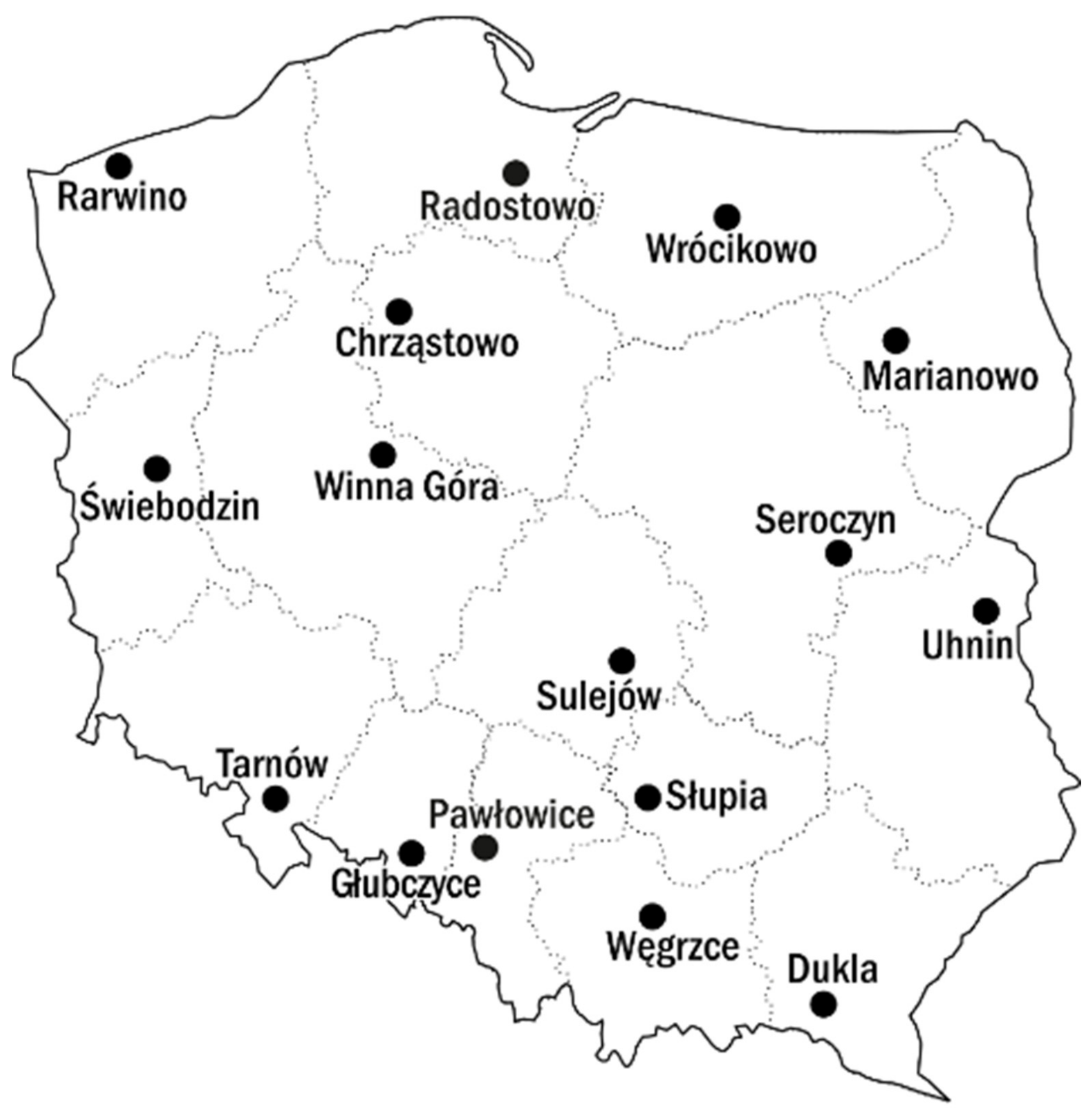
The research results were obtained from field experiments conducted at sixteen experimental sites (one in each voivodeship), including fifteen sites belonging to the RCCT: Variety Testing Station (VTS) in Chrząstowo, Głubczyce, Pawłowice, Seroczyn, Słupia, Sulejów, Świebodzin, Węgrzce, Wrócikowo, Variety Testing Department (VTD) in Dukla, Marianowo, Radostowo, Rarwino, Tarnów, Uhnin and at Agricultural Experimental Station (AES) belonging to Institute of Plant Protection—National Research Institut (IPP—NRI) (Figure 1).
Observations were carried out over two growing seasons, i.e., 2023/2024 and 2024/2025. The subject of the study was winter triticale (×Triticosecale). The experiments were conducted within the framework of the PRVT, in accordance with the “Methodology for testing the value for cultivation and use of cereal varieties” [27].
Three winter triticale cultivars were selected for the analysis: Medalion, Fanfaro, and SU Atletus. In the analyzed growing seasons, these cultivars served as standards in PRVT.
The experimental sites:
-
VTS Pawłowice—voivodeship: śląskie, county: Gliwice (φ = 50°28′, λ = 18°29′, H = 240 m a.s.l.). Agricultural land suitability complexes of soils: good wheat. Soil bonitation classes: IIIa, IIIb.
-
VTS Chrząstowo—voivodeship: kujawsko-pomorskie, county: Nakło nad Notecią (φ = 53°11′, λ = 17°35′, H = 10 m a.s.l.). Agricultural land suitability complexes of soils: good wheat. Soil bonitation classes: IIIb, IIIa.
-
VTS Głubczyce—voivodeship: opolskie, county: Głubczyce (φ = 50°11′, λ = 17°50′, H = 280 m a.s.l.). Agricultural land suitability complexes of soils: very good wheat. Soil bonitation classes: II.
-
VTS Seroczyn—voivodeship: mazowieckie, county: Siedlce (φ = 52°00′, λ = 21°56′, H = 150 m a.s.l.). Agricultural land suitability complexes of soils: very good rye, good rye. Soil bonitation classes: IIIb, IVa.
-
VTS Słupia—voivodeship: świętokrzyskie, county: Jędrzejów (φ = 50°38′, λ = 19°58′, H = 290 m a.s.l.). Agricultural land suitability complexes of soils: good wheat. Soil bonitation classes: IIIa.
-
VTS Sulejów—voivodeship: łódzkie, county: Piotrków Trybunalski (φ = 51°21′, λ = 19°52′, H = 188 m a.s.l.). Agricultural land suitability complexes of soils: good wheat. Soil bonitation classes: IIIb.
-
VTS Świebodzin—voivodeship: lubuskie, county: Świebodzin (φ = 52°14′, λ = 15°35′, H = 90 m a.s.l.). Agricultural land suitability complexes of soils: very good rye. Soil bonitation classes: IIIb, IIIa.
-
VTS Węgrzce—voivodeship: małopolskie, county: Kraków (φ = 50°07′, λ = 19°59′, H = 285 m a.s.l.). Agricultural land suitability complexes of soils: very good wheat. Soil bonitation classes: II.
-
VTS Wrócikowo—voivodeship: warmińsko-mazurskie, county: Olsztyn (φ = 53°49′, λ = 20°40′, H = 142 m a.s.l.). Agricultural land suitability complexes of soils: good wheat. Soil bonitation classes: IIIb.
-
VTD Dukla—voivodeship: podkarpackie, county: Krosno (φ = 49°34′, λ = 21°41′, H = 324 m a.s.l.). Agricultural land suitability complexes of soils: mountain cereal soil complex. Soil bonitation classes: IVb.
-
VTD Marianowo—voivodeship: podlaskie, county: Łomża (φ = 53°13′, λ = 22°07′, H = 140 m a.s.l.). Agricultural land suitability complexes of soils: very good rye. Soil bonitation classes: IIIb, IVa.
-
VTD Radostowo—voivodeship: pomorskie, county: Tczew (φ = 53°59′, λ = 18°45′, H = 40 m a.s.l.). Agricultural land suitability complexes of soils: very good wheat, good wheat. Soil bonitation classes: II.
-
VTD Rarwino—voivodeship: zachodniopomorskie, county: Kamień Pomorski (φ = 53°56′, λ = 14°50′, H = 10 m a.s.l.). Agricultural land suitability complexes of soils: good rye. Soil bonitation classes: IVa.
-
VTD Tarnów—voivodeship: dolnośląskie, county: Ząbkowice Śląskie (φ = 50°35′, λ = 16°47′, H = 300 m a.s.l.). Agricultural land suitability complexes of soils: very good wheat. Soil bonitation classes: IIIa.
-
VTD Uhnin—voivodeship: lubelskie, county: Parczew (φ = 51°34′, λ = 23°02′, H = 157 m a.s.l.). Agricultural land suitability complexes of soils: very good rye. Soil bonita-tion classes: IVa.
-
AES Winna Góra—voivodeship: wielkopolskie, county: Środa Wielkopolska (φ = 52°12′, λ = 17°26′, H = 86 m a.s.l.). Agricultural land suitability complexes of soils: good wheat. Soil bonitation classes: IIIa.
The experiments were most frequently conducted on soil belonging to the good wheat, very good rye, and very good wheat suitability complexes. Land quality classes IIIa, IIIb, and IVa were predominant.

2.2. Levels of Agricultural Technology Applied in the Experiments

The experiments were carried out under two levels of agrotechnical management: standard (a1) and high (a2). The high agrotechnical level differed from the standard one by an additional nitrogen fertilization of 40 kg/ha (Table 1).
Growth regulators were applied to prevent lodging and were used when all plants were at the same developmental stage. The dose was often split and applied at different times. In some cases, due to the occurrence of drought or poor crop condition, the treatment was omitted. Growth regulators were applied from March to May.
Fungicide treatments were applied two times: the first aimed at controlling stem base diseases (eyespot) and leaf diseases, while the second targeted leaf and ear diseases (at the heading stage or later). The second treatment was carried out using a different active substance than that used in the first application. Registered plant protection products approved for winter triticale were used in accordance with label recommendations. At the a2 level, foliar fertilization with multi-nutrient preparations was also applied. Under unfavorable weather conditions (e.g., drought), the application of preparations (multi-nutrient fertilizers and growth regulators) was omitted.
Disease severity was assessed on a 1.0–9.0° scale, where 9.0° indicated a healthy plant with no disease symptoms and 1.0° indicated a plant completely infected by pathogens. This scoring system follows the methodology used in the Polish Post-Registration Variety Testing (PRVT) program [25]. A score of 9.0 should not be interpreted as immunity, but rather as the highest level of resistance observed under field conditions. Observations for cultivars were conducted on all replications. In two-factor experiments, disease assessments at the a1 level were carried out for all cultivars, whereas at the a2 level they were performed only for reference cultivars [27]. Observations were made regularly from the appearance of the first disease symptoms. Assessments were performed during the period of the highest disease severity.
Nitrogen, phosphorus, and potassium fertilization was applied in the experiments, and foliar fertilization with multi-nutrient fertilizers was also used. Each year before the establishment of the experiment, soil samples were collected to determine soil pH and the content of available macronutrients—phosphorus (P, P2O5), potassium (K, K2O), and magnesium (Mg, MgO)—in order to define fertilization requirements for a given experiment. Chemical analyses determining soil nutrient status were performed by Regional Agrochemical Laboratories. The adopted fertilization rates were applied to the entire experimental block. Fertilizers were spread parallel to the direction of plots before ploughing for sowing.
The most common preceding crops for triticale experiments were winter oilseed rape (Winna Góra, Chrząstowo, Pawłowice, Radostowo, Sulejów, Świebodzin, Tranów, Uhnin, Węgrzce) and grain legumes (Słupia, Rarwino, Seroczyn, Wrócikowo). Cereals were also used as preceding crops (Dukla, Marianowo), and at one experimental site (Głubczyce) sugar beet was used. The harvest plot area was 16.5 m2.
The type and number of post-harvest tillage operations depended on the preceding crop, soil tilth, and soil compaction, as well as on the course of the disease. The depth of ploughing for sowing ranged from 20 to 25 cm. Ploughing was carried out parallel to the experimental strips and perpendicular to the plots. The type and frequency of pre-sowing tillage operations were adjusted each time to the soil condition.
The sowing material consisted of selected winter triticale cultivars chosen from all cultivars among those designated for PRVT experiments. In the experiments, seeds were treated with the seed dressing Gizmo 060 FS, containing tebuconazole (a triazole group compound) as the active substance at a concentration of 60 g/L (5.67%).
Plant protection treatments were applied at both the a1 and a2 levels. Treatments were carried out from two-meter-wide paths between experimental strips using sprayers. Weed infestation was controlled with herbicides, with the choice of products and the number of applications depending on weed pressure. In the event of pest occurrence likely to affect yield, appropriate insecticides were applied.
Cultivars were harvested at the same time, when the vast majority of cultivars in the experiment reached physiological maturity, usually in the last decade of July or the first decade of August. Harvesting was performed using plot combine harvesters.

2.3. Weather Conditions During the Experimental Period

Meteorological conditions during the 2023/2024 and 2024/2025 growing seasons varied with respect to both air temperature and total precipitation (Table 2 and Table 3).
In the 2023/2024 growing season, the highest precipitation totals were generally recorded in June, which was the wettest month at most sites. In contrast, the lowest precipitation totals most often occurred in February or March, indicating periodic water shortages at the end of winter. In the 2024/2025 growing season, precipitation distribution was more uneven: relatively high totals were recorded in May and June, whereas February was the driest month, with very low precipitation values observed at many experimental sites.
With regard to air temperature, both seasons showed a similar overall pattern, although some differences were evident. In the 2023/2024 growing season, higher temperatures were observed in the spring months (especially April and May), which may have accelerated plant development. In contrast, the 2024/2025 growing season was characterized by lower winter temperatures (particularly in February), along with locally slightly higher values in June.
In the 2023/2024 growing season, sites with higher precipitation totals relative to the long-term average were clearly distinguished, such as Świebodzin, Radostowo, and Słupia (127–134% of the long-term mean). This indicates locally more humid conditions, which may have favored plant growth but could also potentially increase the risk of plant diseases. In contrast, Tarnów was characterized by a markedly lower share of precipitation relative to the long-term average (approximately 81%), indicating relatively drier conditions at this site.
In the 2024/2025 growing season, spatial variability among locations was even more pronounced. The most humid conditions were recorded, among others, in Wrócikowo and Radostowo (approximately 87–92% of the long-term average), whereas particularly dry conditions occurred in Głubczyce, Sulejów, and Węgrzce (approximately 53–59%). This indicates that, at some locations, precipitation deficits may have been much more severe than the average for the entire experiment.
With respect to air temperature, differences among experimental sites were smaller than those observed for precipitation. Nevertheless, it can be noted that sites located in warmer regions (e.g., Pawłowice, Tarnów) were characterized by slightly higher temperatures during the spring–summer period, whereas northern and western locations (e.g., Chrząstowo, Świebodzin) exhibited a somewhat cooler temperature regime.
A comparison of the two growing seasons indicates that precipitation was the main factor differentiating the growing conditions for winter triticale. The 2023/2024 growing season was characterized by more evenly distributed and generally higher moisture conditions, with maximum precipitation occurring in June. In contrast, the 2024/2025 growing season was clearly drier, with precipitation deficits particularly evident in February and partly during the spring period. Differences in temperature were less pronounced. Consequently, the 2023/2024 growing season can be considered more favorable for yield formation, whereas the 2024/2025 growing season was associated with a higher risk of water stress.

2.4. Statistical Analysis

The normality of distribution of the traits was tested using the Shapiro–Wilk’s normality test [28]. Homogeneity of variances was evaluated using Bartlett’s test. Four-way analyses of variance (ANOVA) were carried out to determine the effects of management intensity, cultivar, growing season, environment as well as all interactions on the variability of yield, powdery mildew, brown rust and septoria leaf blotch. The minimal and maximal values, arithmetic means and standard deviations of traits were calculated. The distribution of observed traits was graphically presented in density plots. Fisher’s least significant differences (LSDs) were estimated at a significance level of α = 0.05. Homogeneous groups for the analyzed traits were determined based on LSDs. The relationships between the observed traits were estimated using Pearson correlation coefficients and presented graphically as a heatmap. A canonical variate analysis was applied in order to present a multi-trait assessment of the similarity of the tested experimental treatments in a lower number of dimensions with the least possible loss of information [29]. This facilitated graphic presentation of any variation in the experimental treatments in terms of all the observed traits. The Mahalanobis distance was suggested as a measure of similarity for “polytrait” experimental treatments [30], the significance of which was verified by means of critical value Dα called “the least significant distance” [31]. Mahalanobis distances were calculated for all pairs of experimental treatments. All analyses were conducted using the Genstat 24.2 statistical software package [32].

3. Results

The empirical distribution of all observed characteristics followed a normal distribution. The results of the Bartlett test indicated homogeneity of variance. These results justify the use of analysis of variance. Analysis of variance indicated that the main effects of management intensity, cultivar, growing season, environment as well as interactions: management intensity × environment, cultivar × environment, growing season × environment, management intensity × growing season × environment and cultivar × growing season × environment were significant for all four traits of the study (Table 4 and Table 5). Management intensity × cultivar as well as management intensity × cultivar × environment interactions were significant for powdery mildew, brown rust and septoria leaf blotch (Table 4). Management intensity × growing season interaction was significant for powdery mildew and septoria leaf blotch. Management intensity × cultivar × growing season × environment interaction was significant for powdery mildew and brown rust. The cultivar × growing season interaction was significant only for brown rust and management intensity × cultivar × growing season interaction for septoria leaf blotch (Table 4).

3.1. Infection of Winter Triticale Cultivars by Powdery Mildew (B. graminis)

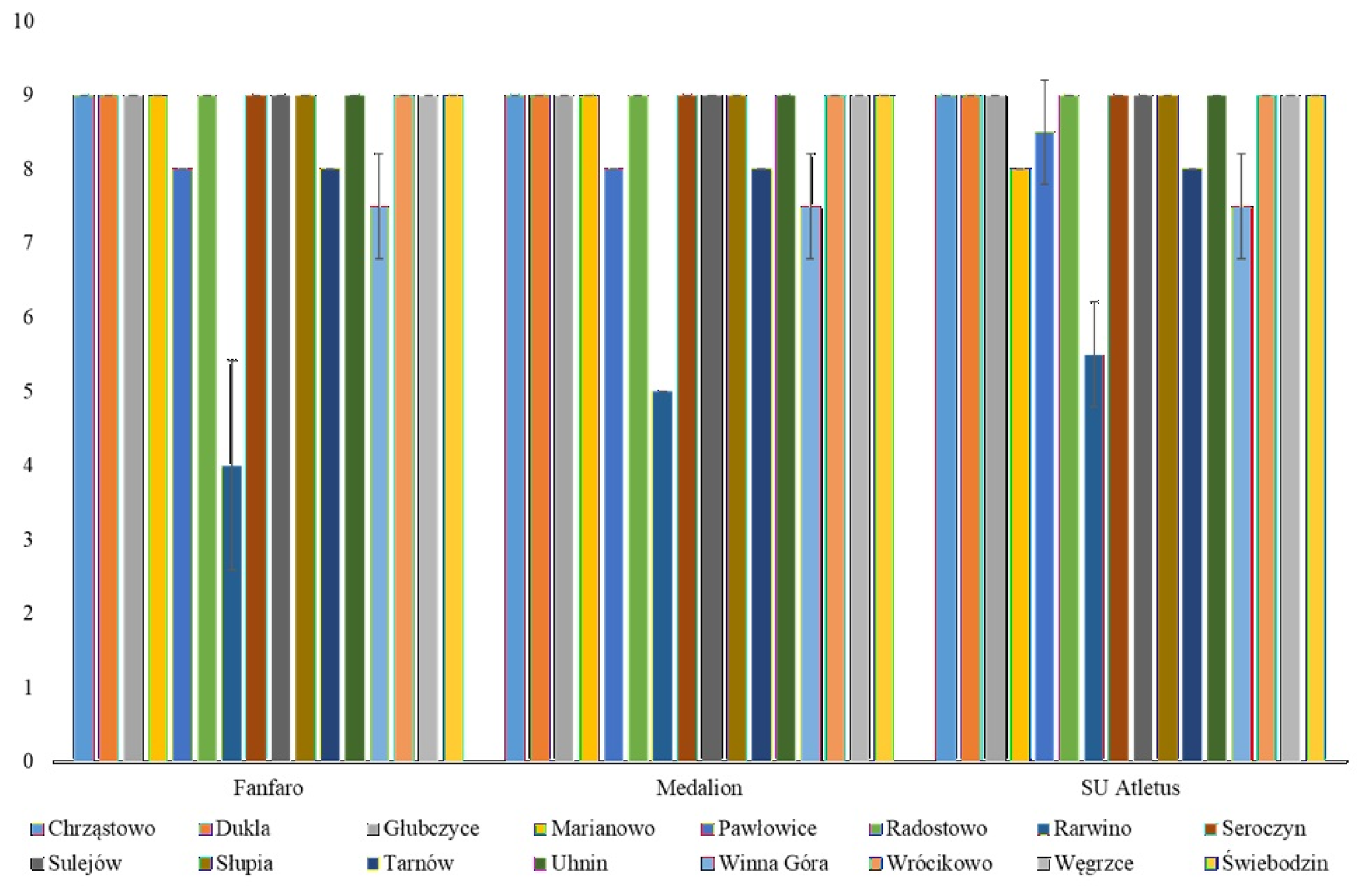
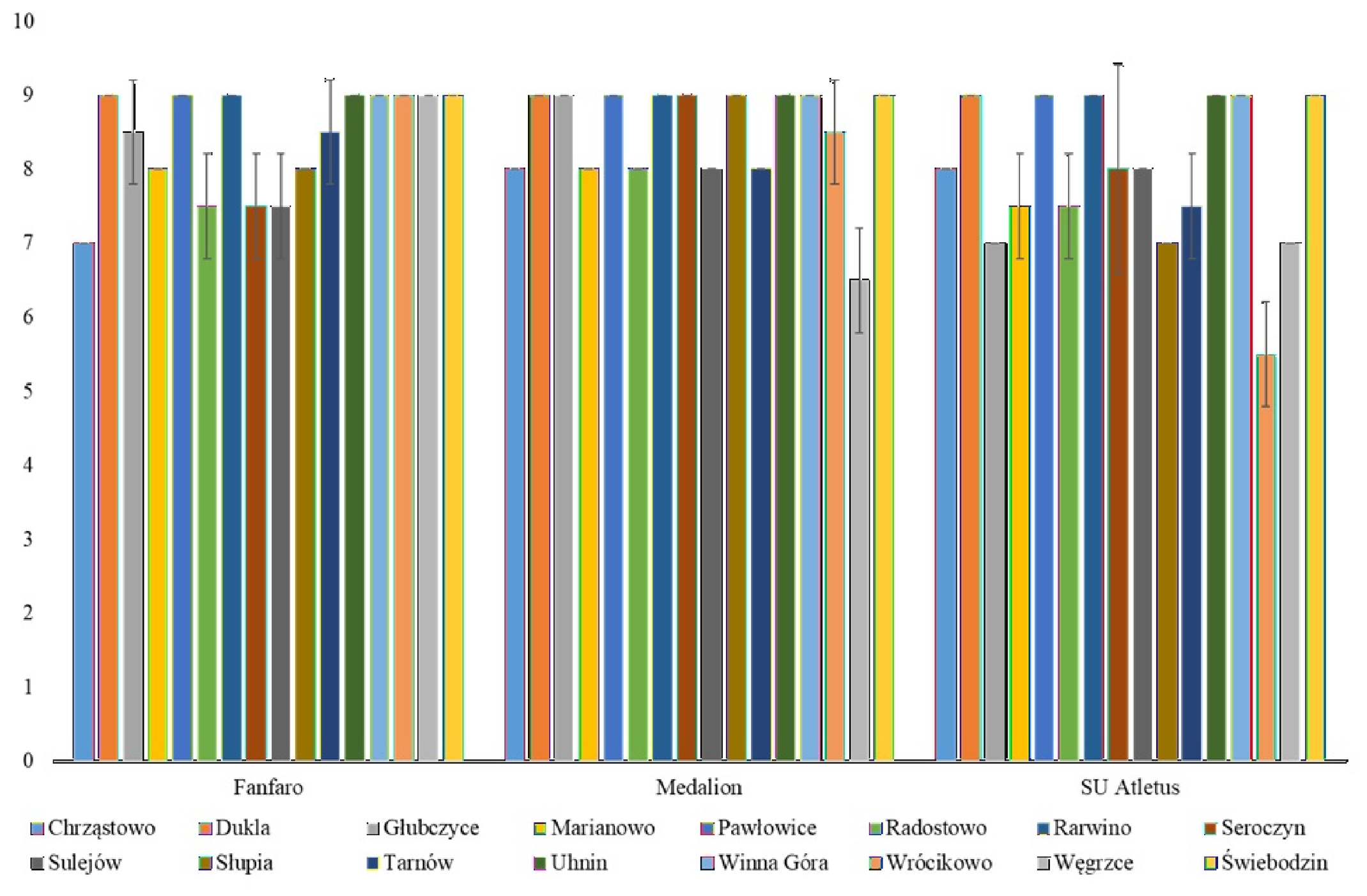
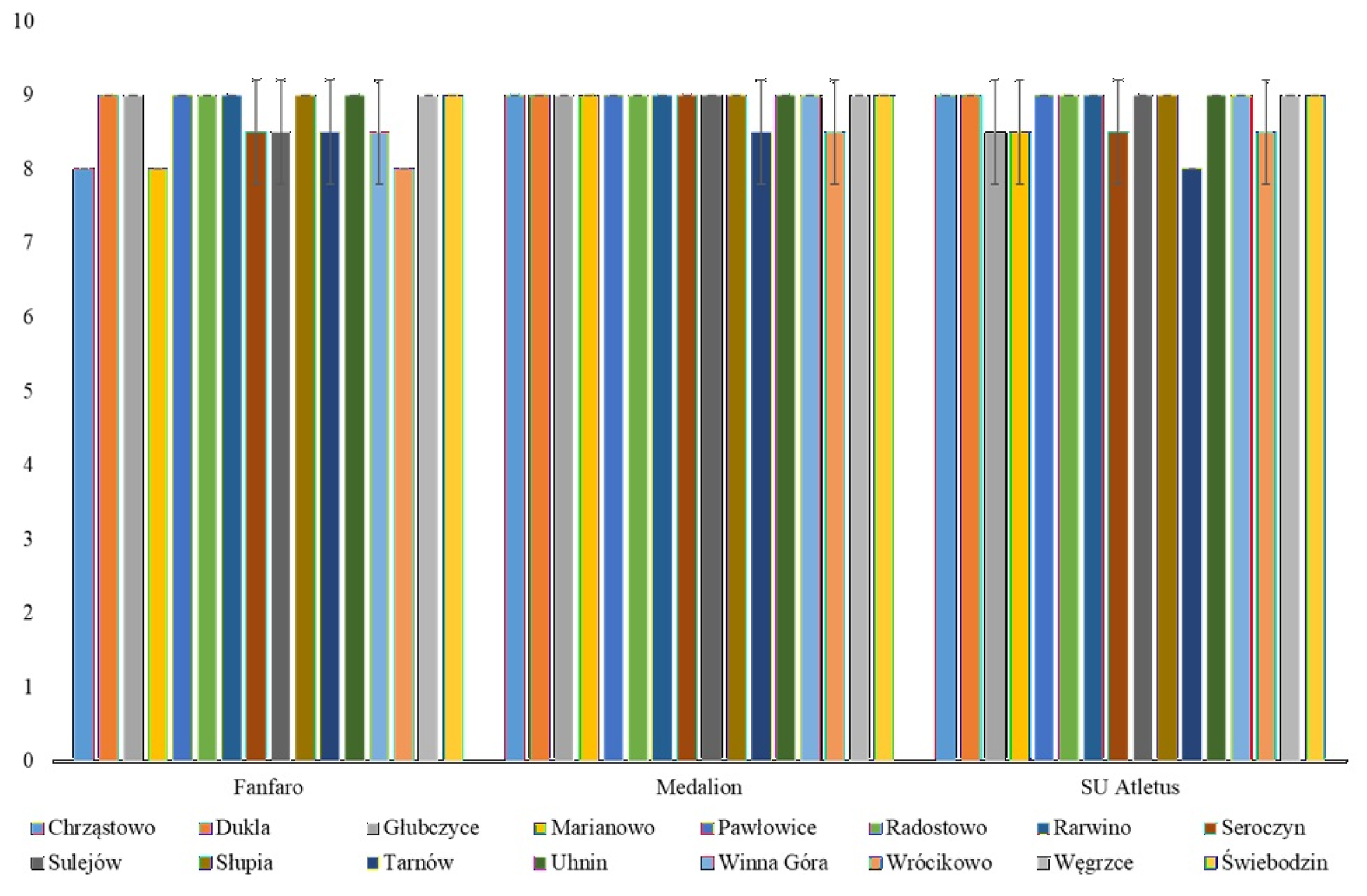
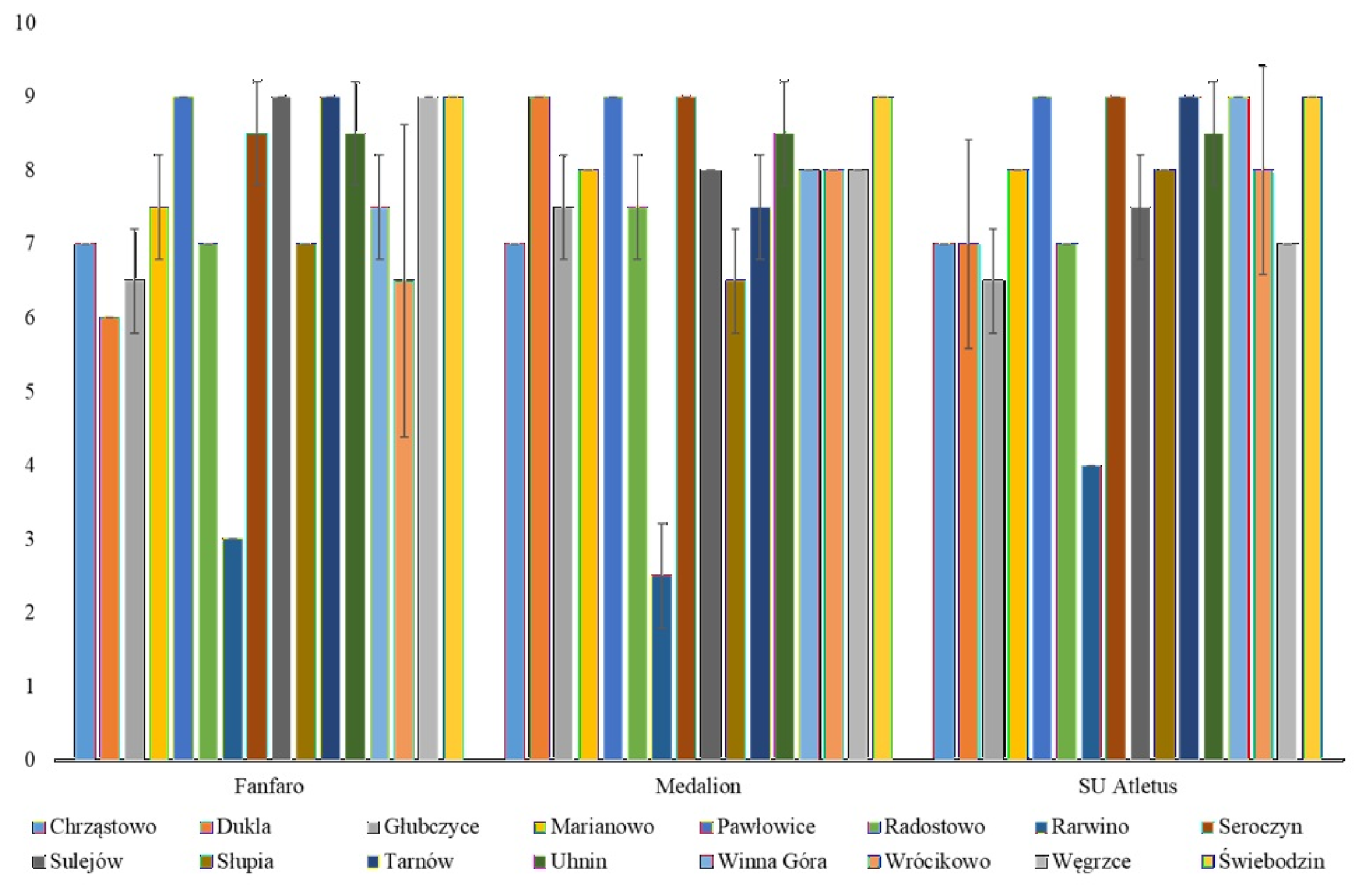
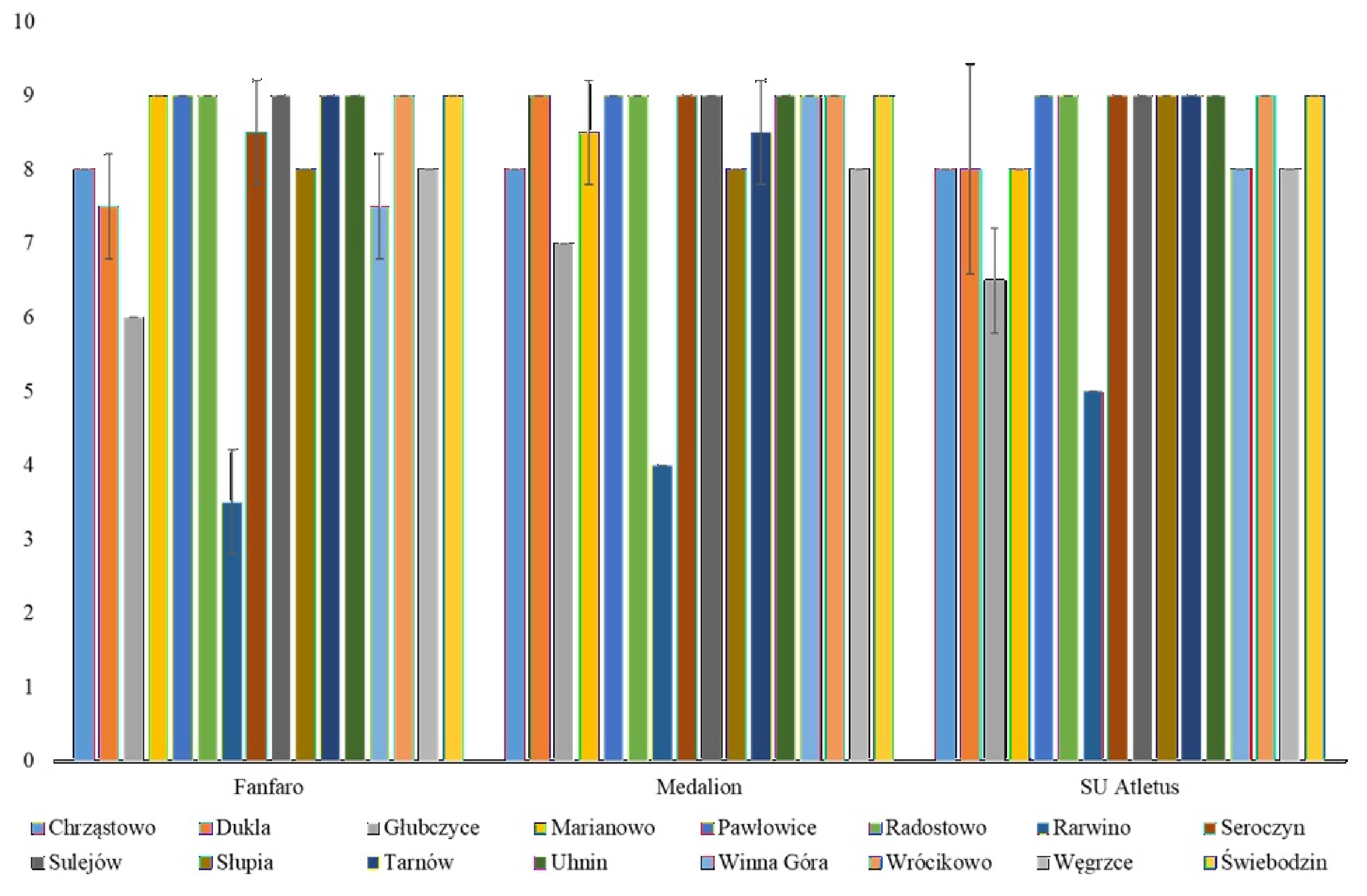
During the years of the study, winter triticale cultivars showed varied levels of infection by powdery mildew depending on the location and the intensity level of crop protection (Figure 2, Figure 3, Figure 4 and Figure 5, Table 5).
In the 2023/2024 growing season, cultivar Fanfaro at the a1 level showed no visible powdery mildew symptoms at five locations (Dukla, Głubczyce, Sulejów, Uhnin, and Węgrzce). In the first year of the study, the highest infection of Fanfaro at the a1 level was recorded at Rarwino, Pawłowice, and Tarnów, with disease severity ranging from 5.0° to 6.0° on the 9.0-point scale (Figure 2, Table 5).
At the a2 level in the 2023/2024 growing season, under more intensive crop protection and fertilization, the cultivar Fanfaro received the maximum disease score (9.0°) at 12 locations. At the Rarwino site, however, Fanfaro received a disease score of 4.0°, indicating substantial disease severity (Figure 3, Table 5).
The second cultivar examined, Medalion, at the a1 level in the 2023/2024 growing season, was characterized by relatively good resistance. At seven locations, no visible powdery mildew symptoms were recorded. At Rarwino, Pawłowice, and Tarnów, plants were more severely affected, with values ranging from 5.0° to 6.0° on the 9-point scale. At the a2 level, again at the Rarwino location, the cultivar was strongly infected by B. graminis, while at the remaining locations the cultivar showed good resistance (Figure 2 and Figure 3).
The cultivar SU Atletus, in the 2023/2024 growing season at the a1 level, was more heavily infected at Głubczyce, Pawłowice, Rarwino, and Tarnów, with disease severity ranging from 4.0° to 5.5°. At the a2 level, increased infection was recorded at Rarwino (5.5°) (Figure 2 and Figure 3).
In the second growing season (2024/2025), cultivar Fanfaro at the a1 level showed disease scores ranging from 7.0° (Chrząstowo) to 9.0° at eight locations (Dukla, Pawłowice, Rarwino, Uhnin, Winna Góra, Wrócikowo, Węgrzce, and Świebodzin) (Figure 4, Table 5).
At the a2 level, the cultivar was also characterized by good resistance, with values ranging from 8.0° (Chrząstowo, Marianowo) to 9.0° at several locations (Dukla, Głubczyce, Pawłowice, Radostowo, Rarwino, Słupia, Uhnin, Węgrzce, and Świebodzin) (Figure 5, Table 5).
Cultivar Medalion, at the a1 level in the 2024/2025 growing season, showed low powdery mildew severity. At nine locations, no powdery mildew infection was recorded. At the Węgrzce site, Medalion received a score of 6.5° on the 9-point scale. At the a2 level, in the vast majority of locations (14), the cultivar scored 9.0°, indicating the absence of visible disease symptoms. At the Tarnów and Wrócikowo sites, Medalion was only slightly affected, with a disease severity score of 8.5° (Figure 4 and Figure 5, Table 5).
In the 2024/2025 season, cultivar SU Atletus at the a1 level was most severely infected at the Wrócikowo site (5.5°). At Dukla, Pawłowice, Rarwino, Uhnin, Winna Góra, and Świebodzin, SU Atletus showed no visible disease symptoms (9.0°). At the a2 level, the lowest resistance score recorded was 8.0° at Tarnów (Figure 4 and Figure 5).

3.2. Infection of Winter Triticale Cultivars by Brown Rust (P. recondita)

With regard to another disease—brown rust (P. recondita)—winter triticale cultivars also showed varied levels of infection depending on location and the intensity of crop protection (Figure 6, Figure 7, Figure 8 and Figure 9, Table 5).
In the 2023/2024 season, cultivar Fanfaro at the a1 level showed complete resistance at nine locations (Chrząstowo, Marianowo, Pawłowice, Rarwino, Seroczyn, Sulejów, Tarnów, Uhnin, and Wrócikowo). In the first year of the study, the highest infection of Fanfaro at the a1 level was recorded at Dukla (4.5°) and Głubczyce (6.0°) on the 9.0-point scale (Figure 6, Table 5).
At the a2 level in the 2023/2024 season, under more intensive protection and fertilization, Fanfaro received the maximum disease score (9.0°) at thirteen locations. At the Dukla and Węgrzce sites, however, the cultivar was more strongly affected by brown rust, with a disease severity score of 7.0° (Figure 7, Table 5).
The second cultivar examined, Medalion, at the a1 level in the 2023/2024 growing season was characterized by low brown rust severity. At eleven locations, no visible brown rust symptoms were recorded (9.0°). Higher disease severity was noted at Winna Góra (7.5°). At the a2 level, again at the Winna Góra site, the cultivar was more severely affected by brown rust (7.5°), while high disease scores were recorded at the remaining locations (Figure 6 and Figure 7).
In the 2023/2024 season, cultivar SU Atletus at the a1 level was more strongly affected at the Słupia and Winna Góra sites (7.5°). At the a2 level, increased infection was again recorded at Winna Góra (7.0°) (Figure 6 and Figure 7, Table 5).
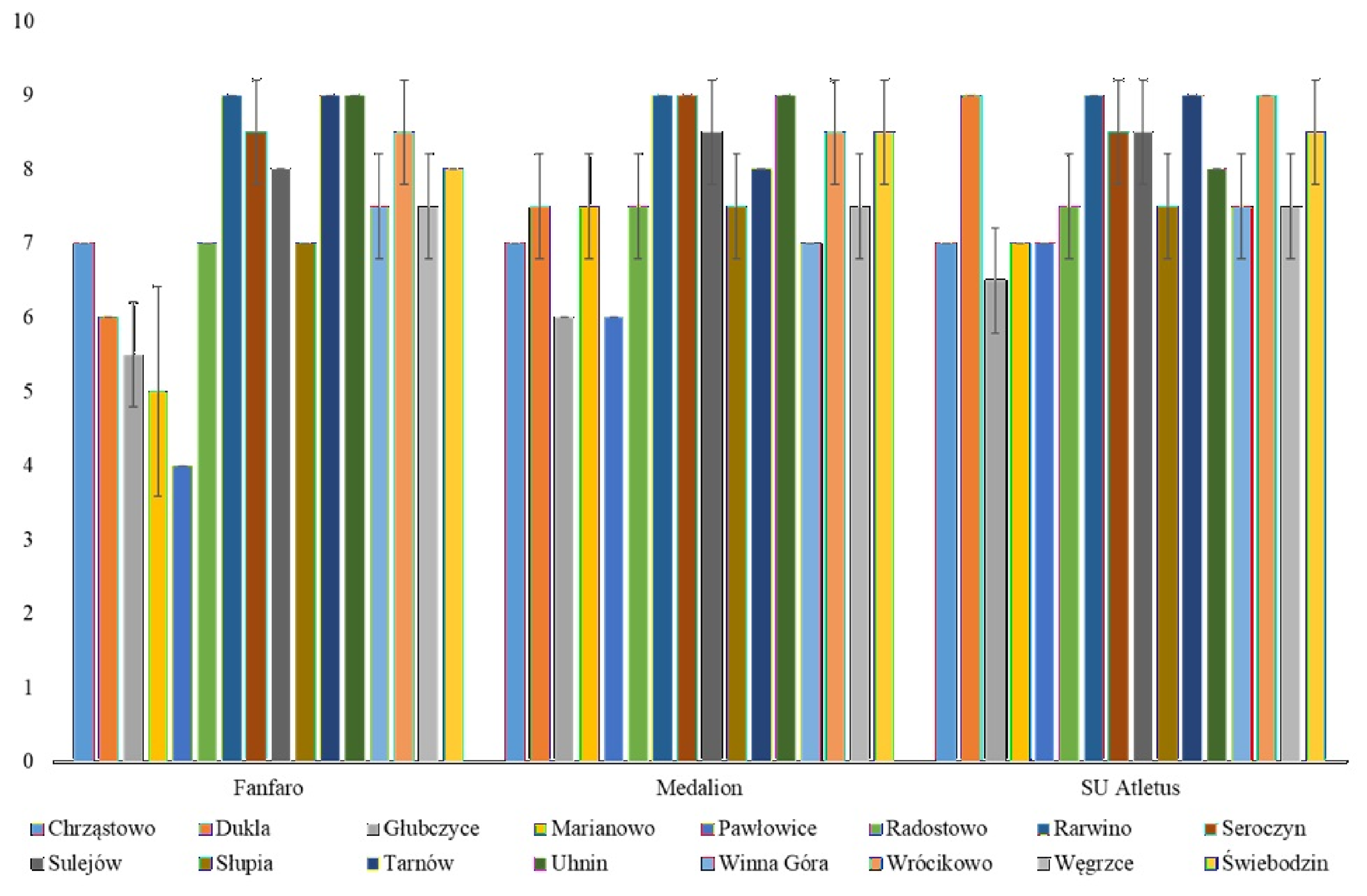
In the second growing season (2024/2025), cultivar Fanfaro at the a1 level showed highly variable responses to Puccinia recondita. Disease severity ranged from 3.0° at the Rarwino site to 9.0° at nine locations (Dukla, Marianowo, Pawłowice, Seroczyn, Tarnów, Uhnin, Winna Góra, Wrócikowo, and Świebodzin) (Figure 8, Table 5).
At the a2 level, with the exception of Rarwino (4.0°), the cultivar showed full resistance, with values ranging from 8.0° (Węgrzce) to 9.0° at the remaining locations (Figure 9, Table 5).
Cultivar Medalion at the a1 level in the 2024/2025 growing season also exhibited variable disease responses. At the Rarwino site, similarly to cultivar Fanfaro, very high disease severity was observed (3.5° on the 9-point scale). At the other locations, disease severity ranged from 7.0° (Węgrzce) to 9.0° at ten locations. At the a2 level, in the vast majority of locations (14), the cultivar received a score of 9.0°, indicating the absence of visible disease symptoms. At Rarwino, however, Medalion was severely affected, with a score of 4.0° (Figure 8 and Figure 9).
In the 2024/2025 season, cultivar SU Atletus at the a1 level was most severely affected at the Rarwino site (3.5°). At eleven locations, the cultivar received the maximum disease score (9.0°). At the a2 level, except for Rarwino (4.5° on the 9-point scale), SU Atletus received the maximum disease score (9.0°) (Figure 8 and Figure 9, Table 5).

3.3. Infection of Winter Triticale Cultivars by Septoria Leaf Blotch (Z. tritici)

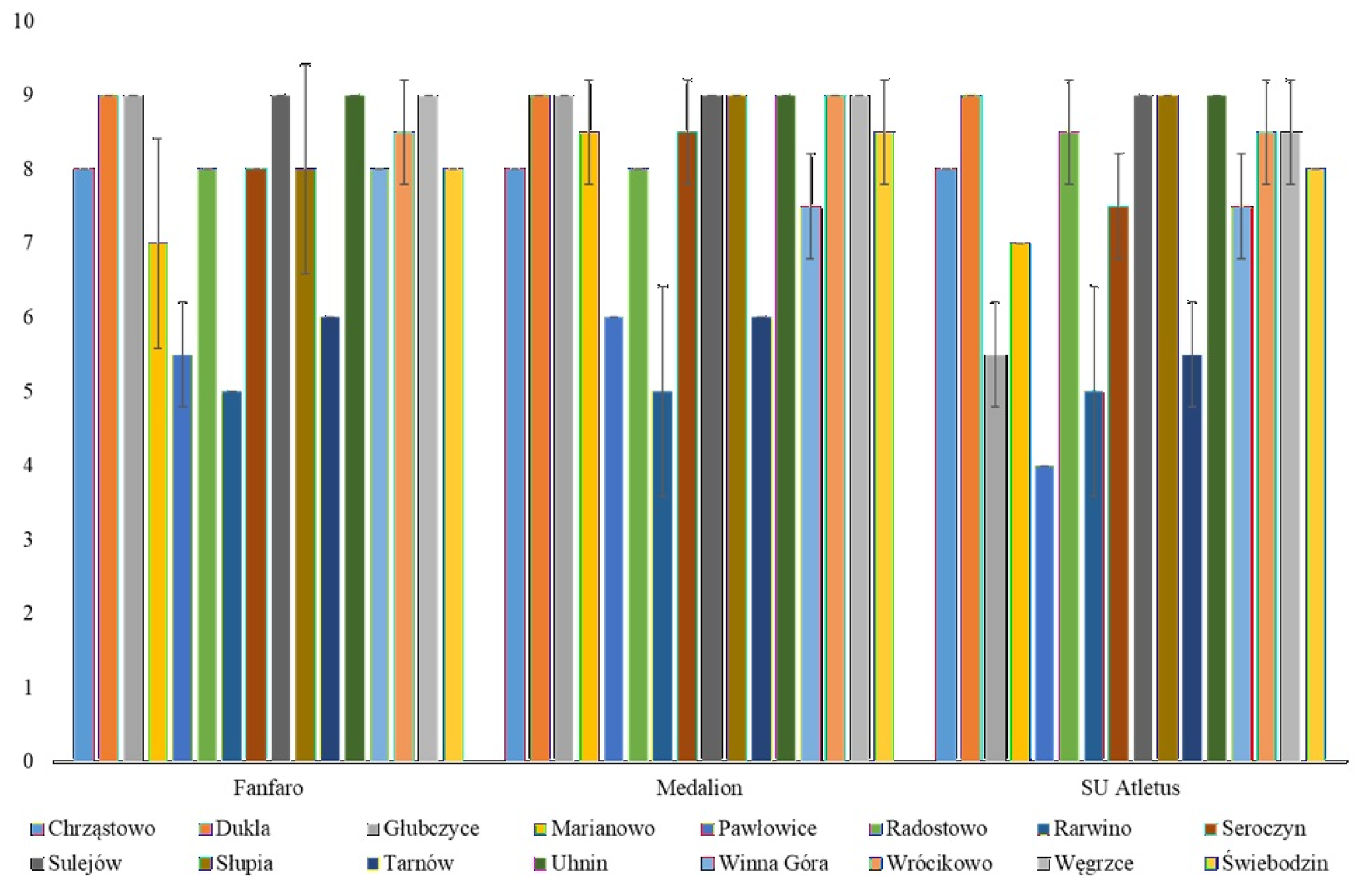
Winter triticale cultivars, depending on the location and the level of intensity of crop protection, showed varying degrees of infection by septoria leaf blotch (Figure 10, Figure 11, Figure 12 and Figure 13, Table 5).
The cultivar Fanfaro, in the 2023/2024 growing season at the a1 level, showed no visible disease symptoms in only three locations (Rarwino, Tarnów, and Uhnin). High disease severity was recorded in Marianowo (5.0°) and Głubczyce (5.5°) on a 9.0-point scale (Figure 10, Table 5).
At the a2 level, in the 2023/2024 season, under more intensive crop protection and fertilization, Fanfaro received a disease score of 9.0° in eight locations (Głubczyce, Pawłowice, Rarwino, Seroczyn, Słupia, Tarnów, Wrócikowo, and Świebodzin). Higher disease severity was observed in Dukla (7.0°) (Figure 11, Table 5).
The cultivar Medalion, at the a1 level in the 2023/2024 season, was characterized by variable resistance. In three locations, no disease infection was recorded. High disease severity was observed in Głubczyce and Pawłowice (6.0° on the 9.0-point scale). At the a2 level, disease severity ranged from 8.0° to 9.0° (Figure 10 and Figure 11).
The cultivar SU Atletus, in the 2023/2024 season at the a1 level, was most severely infected in Głubczyce (6.5°). In four locations—Dukla, Rarwino, Tarnów, and Wrócikowo—SU Atletus showed no visible disease symptoms (9°). At the a2 level, the lowest disease severity recorded was 7.0° (Uhnin) (Figure 10 and Figure 11, Table 5).
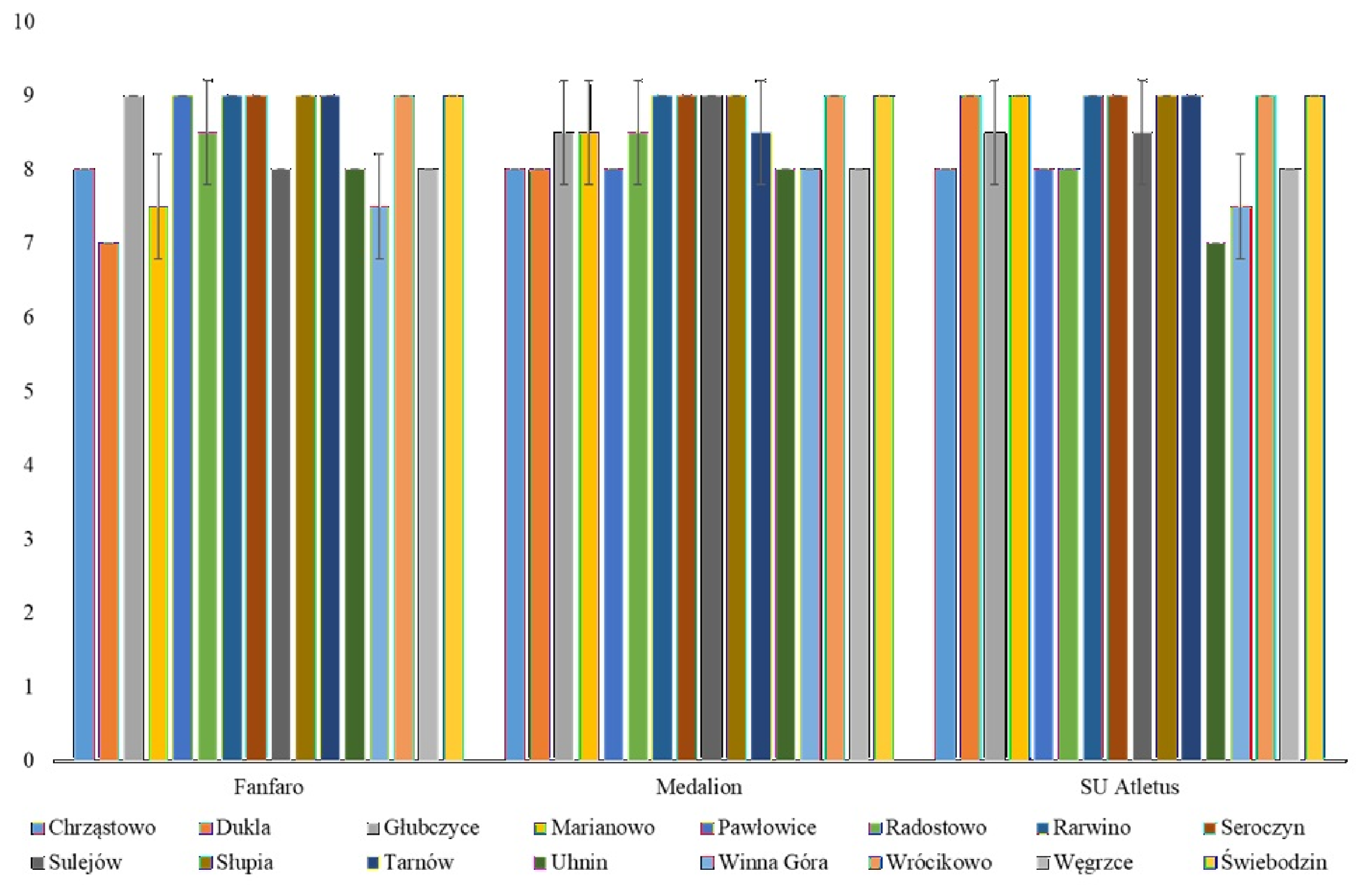
In the 2024/2025 season, at the a1 level, the cultivar Fanfaro showed no visible disease symptoms (9°) in five locations (Pawłowice, Sulejów, Tarnów, Węgrzce, and Świebodzin). Very severe infection of Fanfaro was recorded in Rarwino (3.0°) (Figure 12, Table 5).
At the a2 level, the cultivars were also characterized by resistance, ranging from 3.5° (Rarwino) to 9.0° (Marianowo, Pawłowice, Radostowo, Sulejów, Tarnów, Uhnin, Wrócikowo, and Świebodzin) (Figure 13, Table 5).
In the second year of the study, the Medalion cultivar at the a1 level showed resistance ranging from 2.5° (Rarwino) to 9.0° (Dukla, Pawłowice, Seroczyn, and Świebodzin). At the a2 level, the cultivar achieved a score of 9.0° (no infection) in nine locations. In Rarwino, infection was very severe (4.0°) (Figure 12 and Figure 13, Table 5).
The SU Atletus cultivar, in the 2024/2025 season at the a1 level, was most severely infected in Rarwino (4.0°) and Głubczyce (6.5°). In Pawłowice, Seroczyn, Tarnów, Winna Góra, and Świebodzin, SU Atletus showed no visible disease symptoms (9°). At the a2 level, disease severity ranged from 5.0° (Rarwino) to 9.0° (nine locations) (Figure 12 and Figure 13, Table 5).

3.4. Winter Triticale Cultivars Yielding

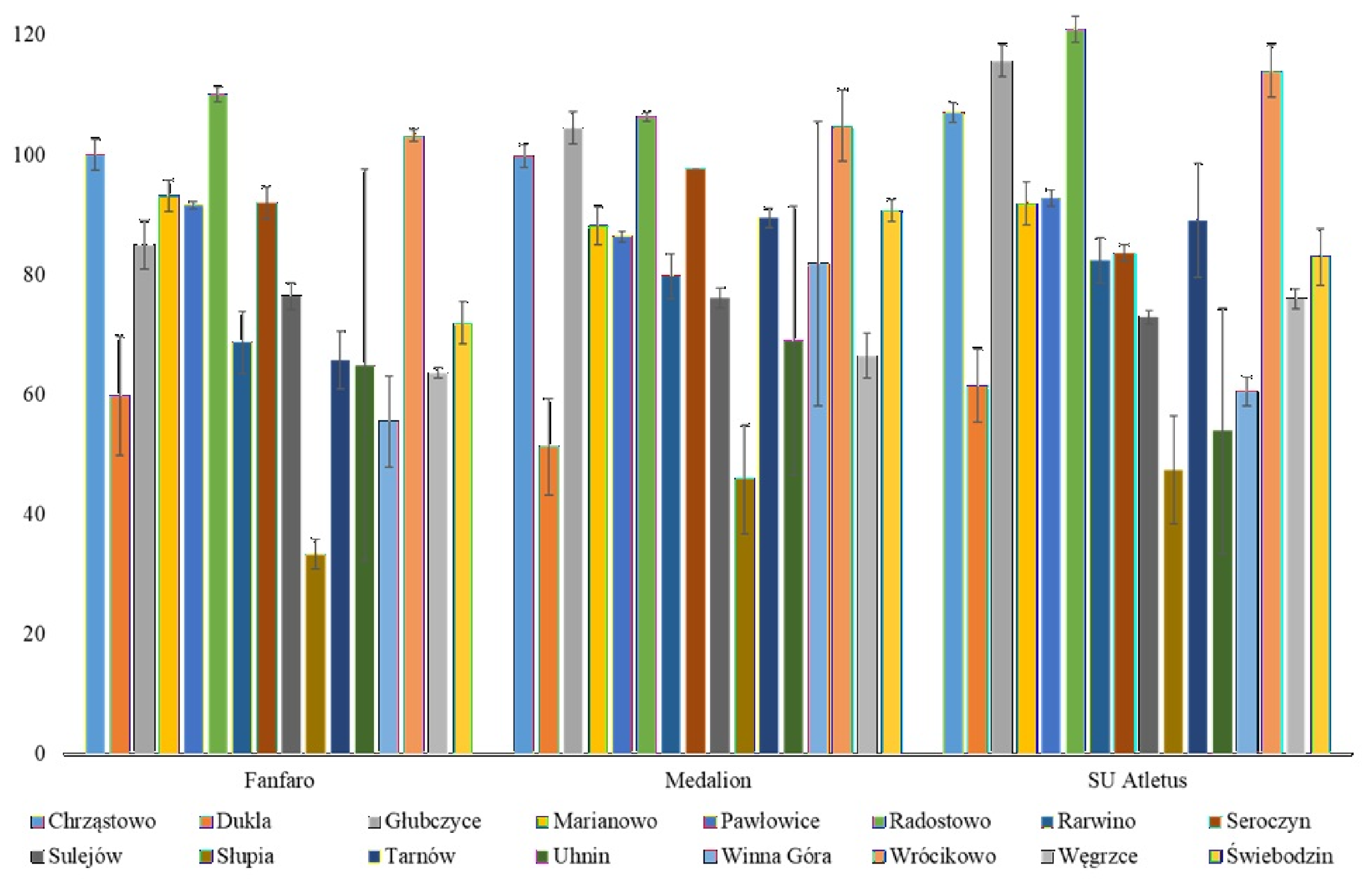
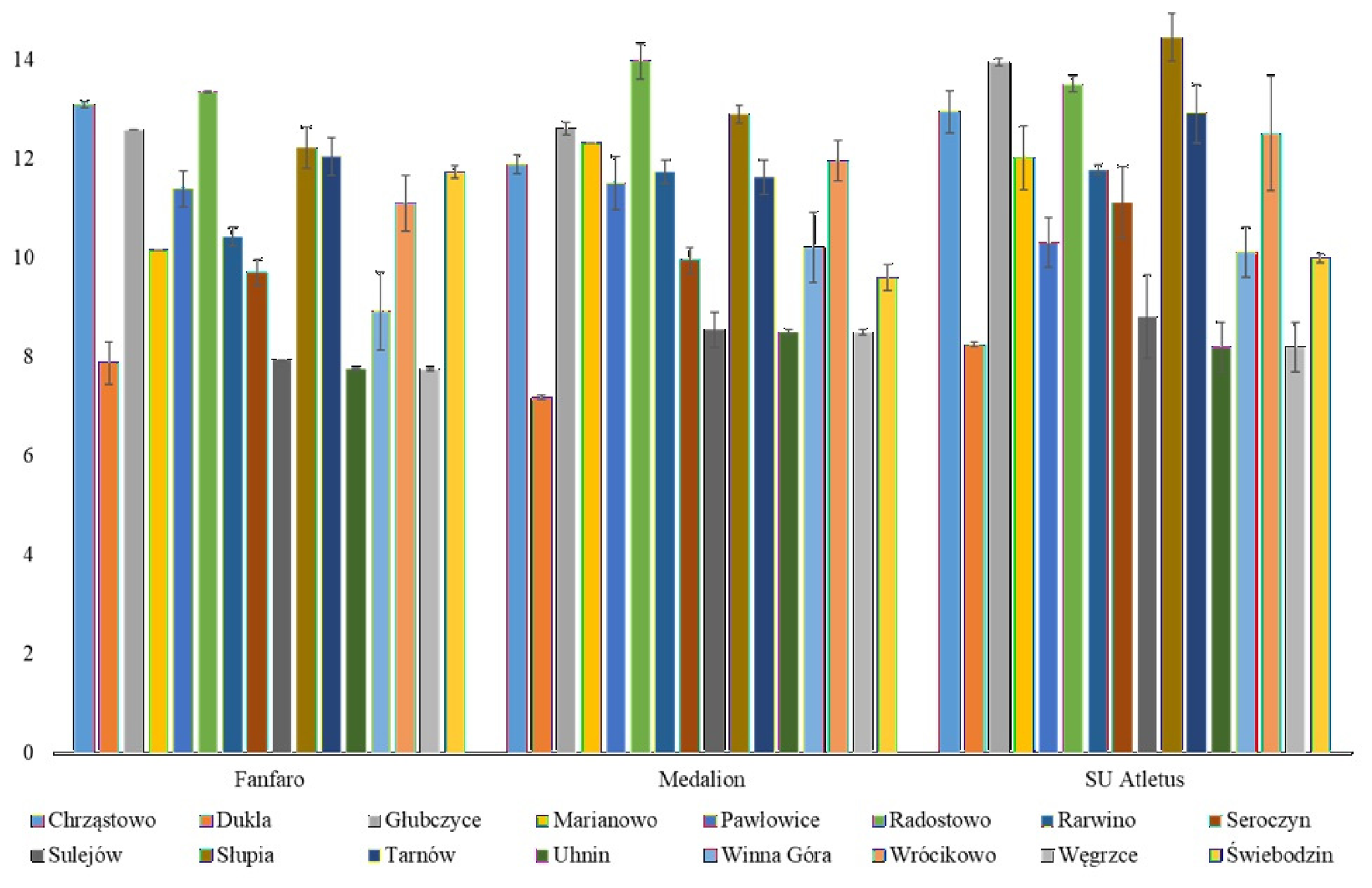
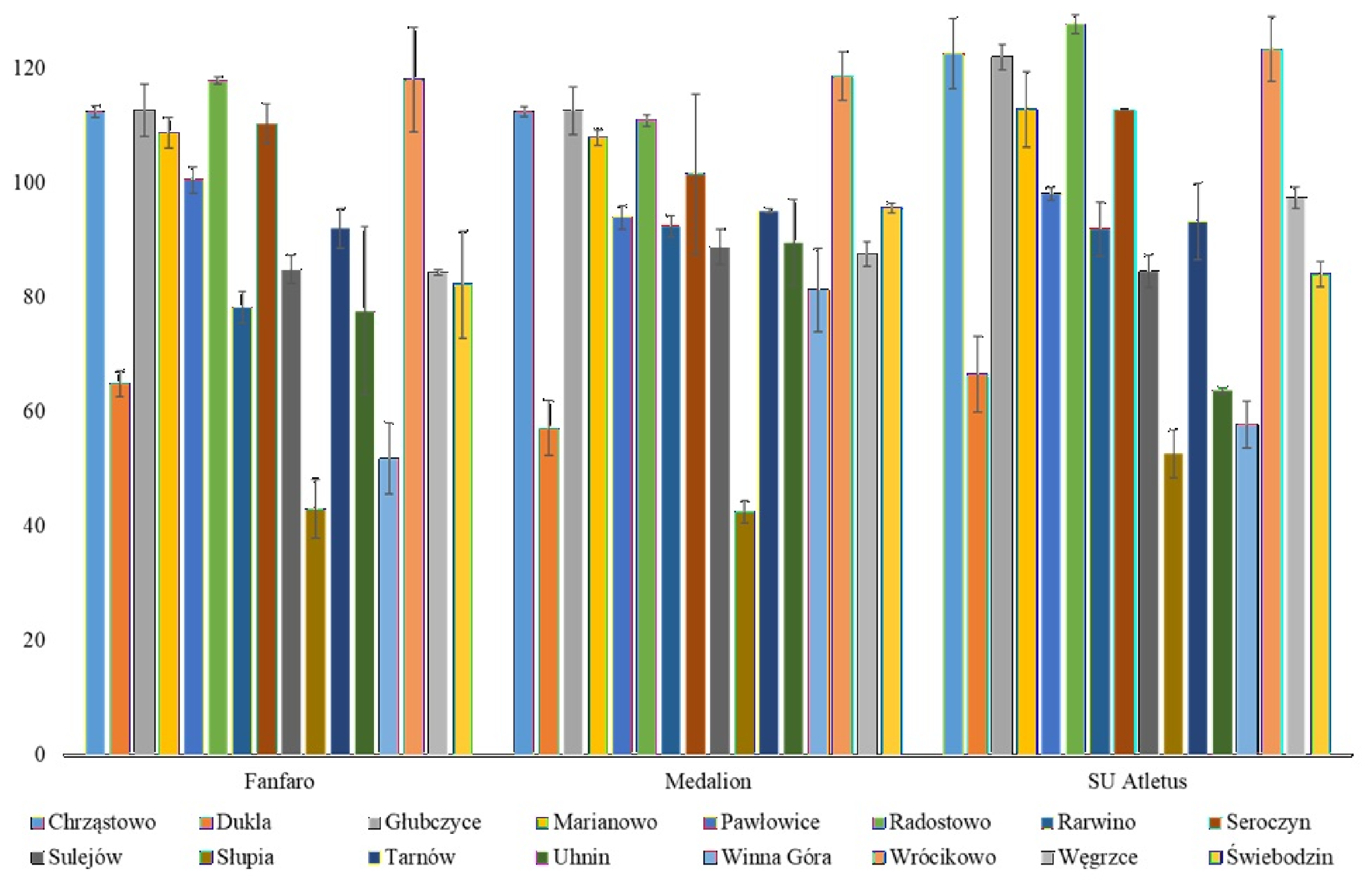
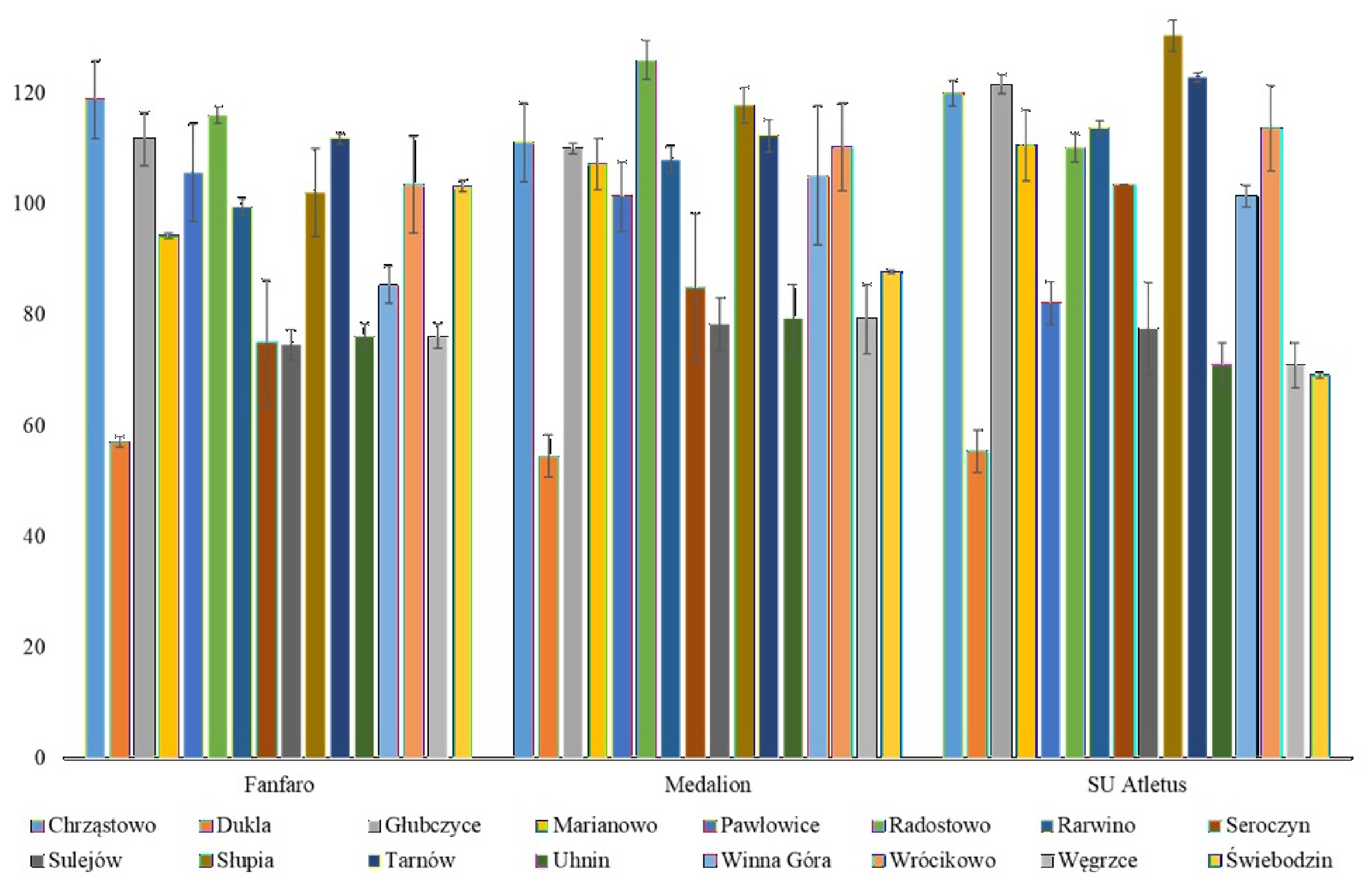
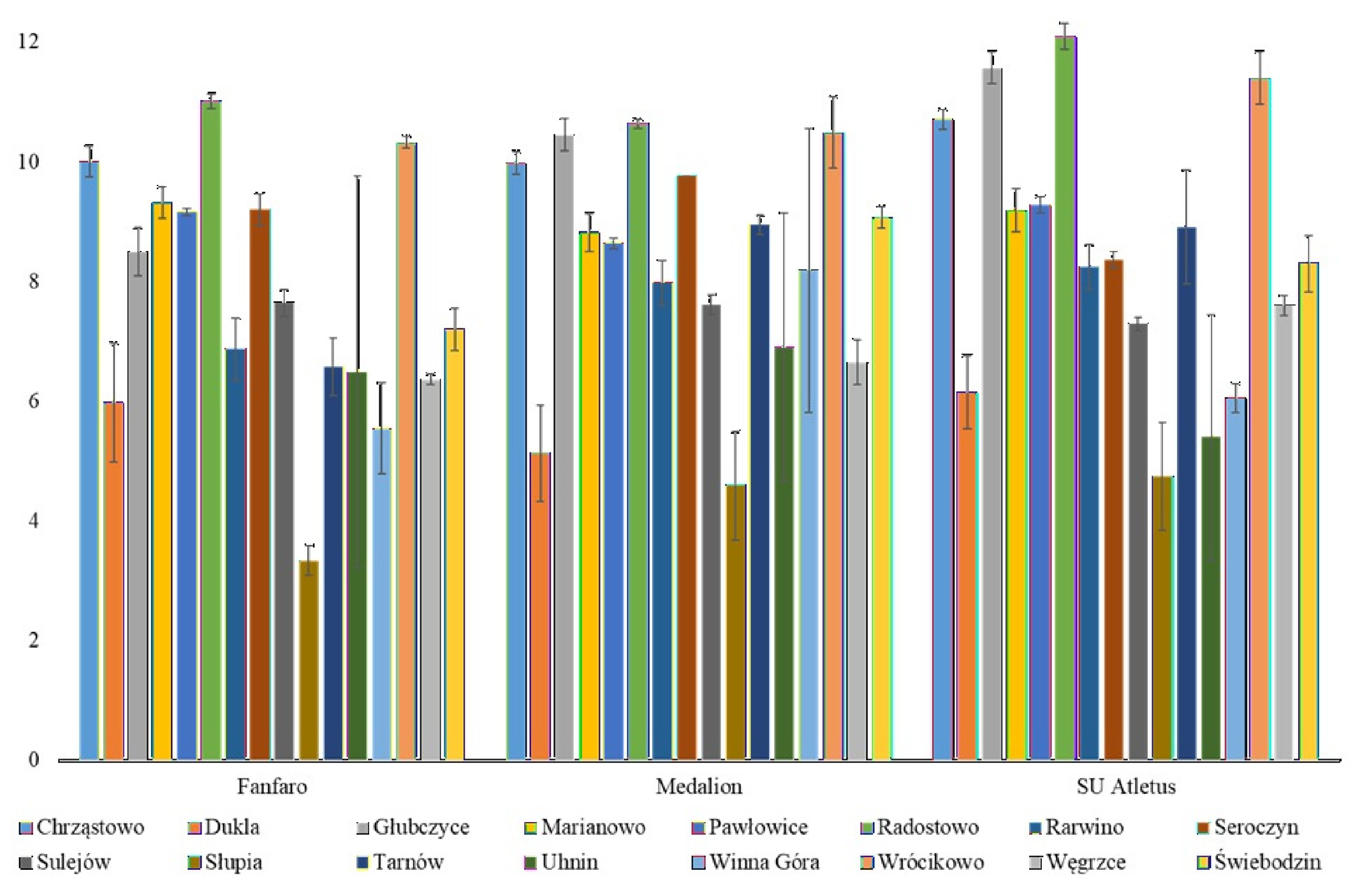
At the a1 level in the first year of the study (2023/2024) the cultivar Medalion was characterized by the most stable yield performance, showing relatively small yield fluctuations among locations. At most sites, its yield ranged from approximately 8.50 to 10.50 t/ha (Pawłowice—8.56 t/ha–8.70 t/ha; Świebodzin—8.95 t/ha–9.20 t/ha; Radostowo—10.58 t/ha–10.69 t/ha; and Chrząstowo—9.84 t/ha–10.11 t/ha).
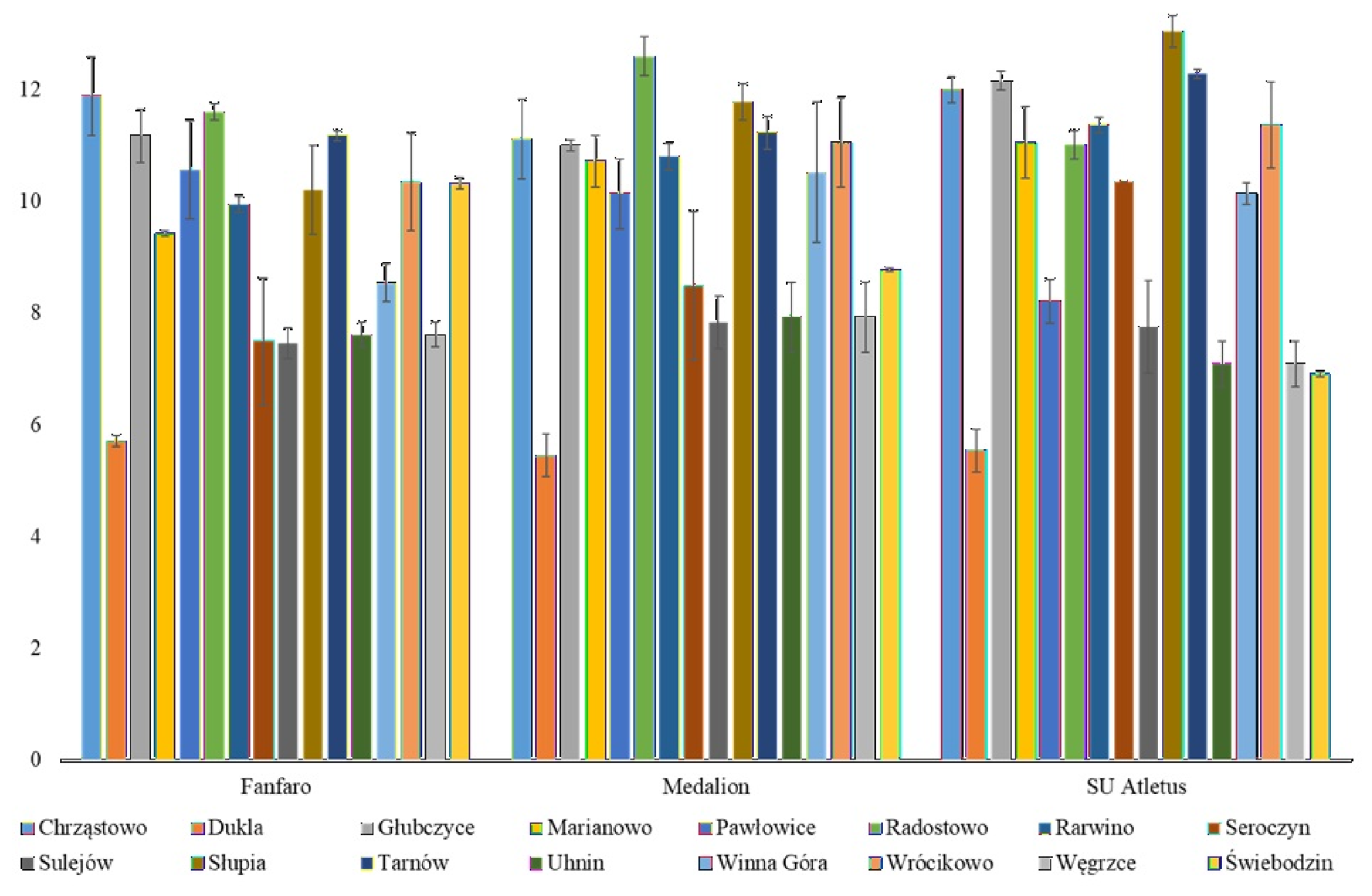
In contrast, cultivar Fanfaro exhibited much greater yield variability, ranging from very low values at Słupia (3.16 t/ha–3.51 t/ha) to high yields at locations with more favorable conditions, such as Radostowo (10.93 t/ha–11.09 t/ha) and Wrócikowo (10.25 t/ha–10.39 t/ha). Wider yield amplitude was observed for SU Atletus, whose yield ranged from 3.95 t/ha at Uhnin to 12.25 t/ha at Radostowo. At several high-potential locations (e.g., Głubczyce—11.38 t/ha–11.75 t/ha; Chrząstowo—10.56 t/ha–10.82 t/ha), this cultivar achieved very high yields; however, its performance was strongly dependent on environmental conditions.
These results indicate that Medalion has the most relatively consistent yield under lower agrotechnical intensity, whereas Fanfaro and SU Atletus are more sensitive to site-related variability (Figure 14).
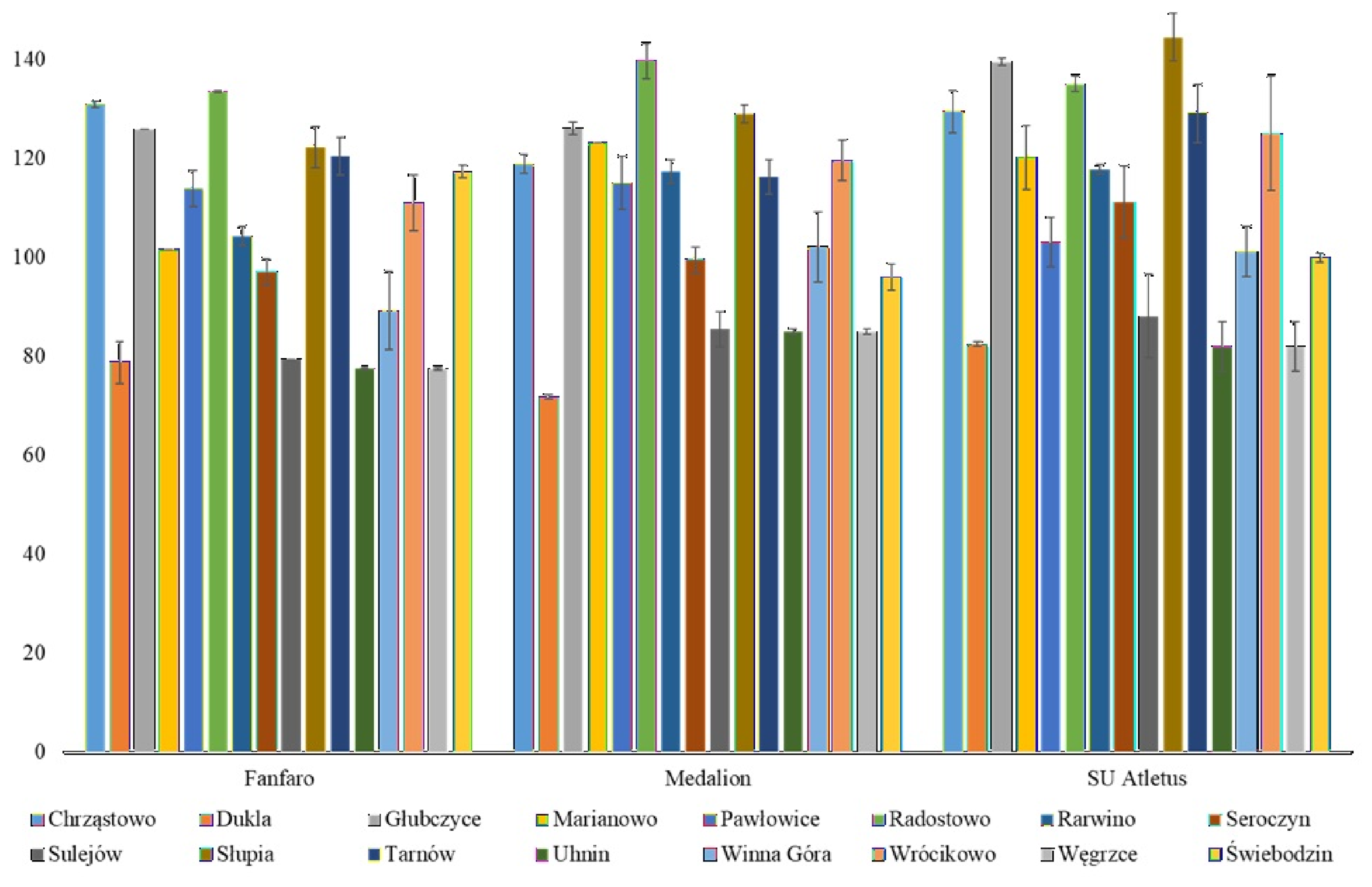
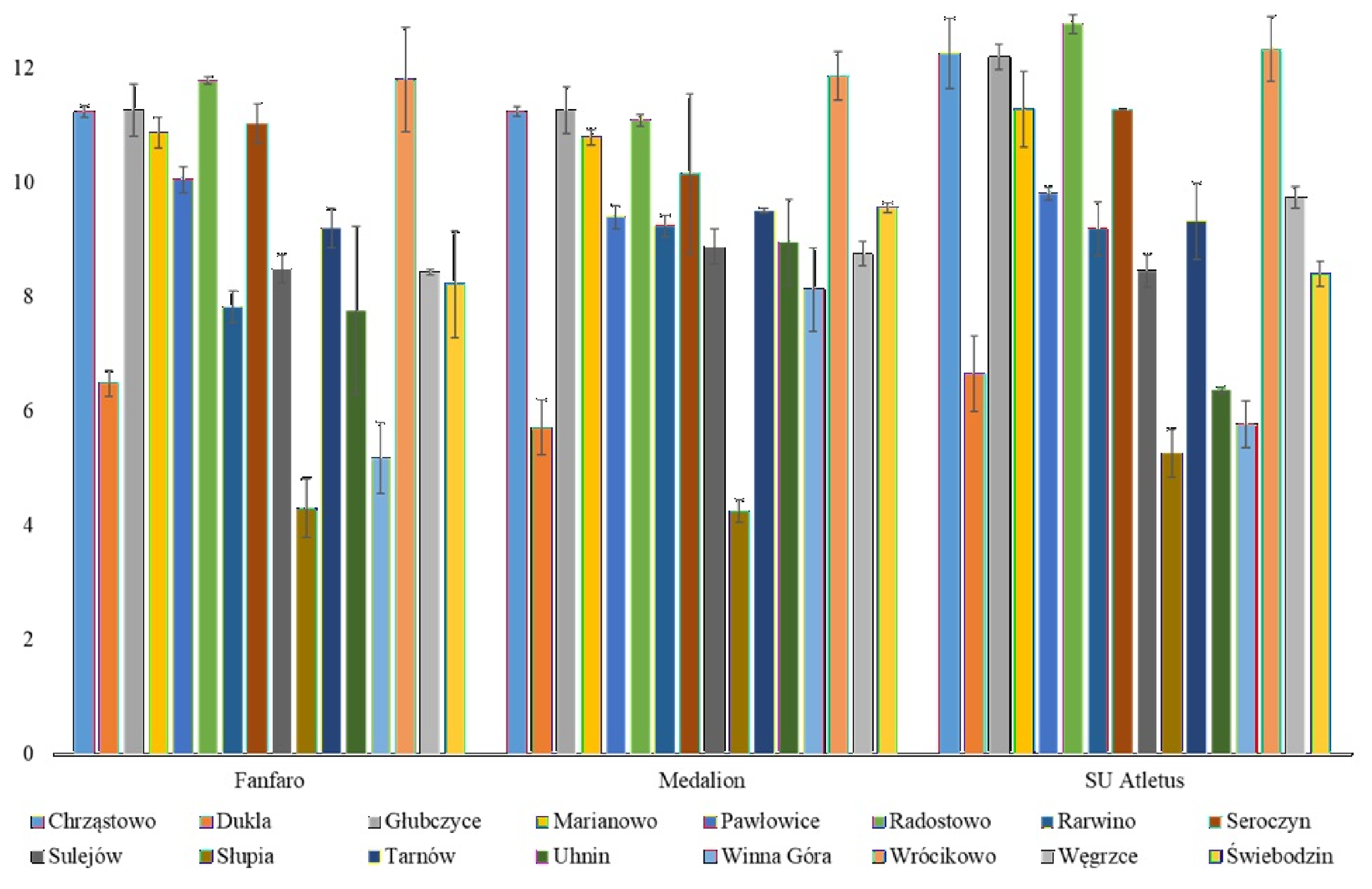
At the a2 level, in the 2023/2024 season, a clear increase in yield levels was observed across all locations and cultivars (Table 5). Yields of the cultivar Medalion remained relatively uniform, most often ranging from 9.00 t/ha to 11.50 t/ha (e.g., Pawłowice–9.25 t/ha–9.54 t/ha; Świebodzin–9.50 t/ha–9.63 t/ha; Chrząstowo—11.19 t/ha–11.31 t/ha), confirming relatively high yield consistency of this cultivar also under a higher level of agrotechnical intensity.
Cultivar Fanfaro continued to show considerable yield variability (Table 5), although at a distinctly higher yield level—from 3.93 t/ha–4.67 t/ha at Słupia to as much as 12.46 t/ha at Wrócikowo and 11.75 t/ha–11.84 t/ha at Radostowo. The highest yields were obtained by cultivar SU Atletus, reaching up to 12.89 t/ha at Radostowo and 12.70 t/ha at Chrząstowo, while maintaining high yield levels at other locations as well (e.g., Głubczyce—12.05 t/ha–12.36 t/ha). Nevertheless, substantial variability was still observed, particularly at less favorable sites (e.g., Uhnin—6.32 t/ha–6.41 t/ha).
At the a2 level, yield increased on average by several to more than a dozen t/ha, depending on the location (e.g., in Głubczyce, the yield of Fanfaro increased by approximately 2.50 t/ha–3.00 t/ha), with the greatest effects observed in environments with high production potential (Figure 15).
In the 2024/2025 season, under the a1 level, a pronounced differentiation in yield among locations was recorded. The range of yields was wide—from 5.19 t/ha–5.77 t/ha in Dukla to over 12.00 t/ha–13.20 t/ha in Słupia (SU Atletus–12.84 t/ha–13.24 t/ha) and Radostowo (Medalion–12.35 t/ha–12.84 t/ha).
The cultivar Medalion also showed greater variability than in the previous season, with yields ranging from 5.19 t/ha–5.72 t/ha in Dukla to 12.35 t/ha–12.84 t/ha in Radostowo, and from approximately 11.00 t/ha to 11.60 t/ha in Chrząstowo and Wrócikowo. Cultivar Fanfaro was characterized by high yield variability, ranging from 5.64 t/ha–5.78 t/ha in Dukla and 6.70 t/ha–8.30 t/ha in Seroczyn to 11.39 t/ha–12.39 t/ha in Chrząstowo, as well as exceeding 11.00 t/ha in Tarnów and Radostowo.
Once again, the highest yields were achieved by cultivar SU Atletus; however, these were accompanied by considerable variability—from 6.80 t/ha–7.38 t/ha in Uhnin and Węgrzce, and 6.88 t/ha–6.94 t/ha in Świebodzin, to 12.84 t/ha–13.24 t/ha in Słupia and 12.22 t/ha–12.34 t/ha in Tarnów. The obtained results confirm that under a lower level of agrotechnical intensity (a1), the influence of environmental conditions was very strong, leading to large differences among locations and increased yield variability for all cultivars (Figure 16).
In the 2024/2025 season, the application of the a2 agrotechnical level clearly increased yield levels at all locations and reduced yield variability. In many cases, yields exceeded 12.00 t/ha with maximum values reaching up to 14.79 t/ha (SU Atletus at the Słupia). The cultivar Medalion maintained relatively high consistent yield, most often achieving 11.00 t/ha–13.00 t/ha (e.g., Słupia–12.76 t/ha–13.02 t/ha; Radostowo–13.71 t/ha–14.21 t/ha; Głubczyce–12.52 t/ha–12.69 t/ha).
Cultivar Fanfaro also showed a marked increase in yield—from 7.58 t/ha–8.18 t/ha at Dukla and approximately 7.70 t/ha–7.90 t/ha at the Uhnin and Węgrzce sites to over 13.00 t/ha at Chrząstowo (13.04 t/ha–13.14 t/ha) and 13.34 t/ha–13.36 t/ha at Radostowo. Once again, the highest yields were obtained by cultivar SU Atletus, which achieved very high values under favorable conditions—14.10 t/ha–14.79 t/ha at Słupia, 13.25 t/ha at Chrząstowo, 13.90 t/ha–14.00 t/ha at Głubczyce, and 13.40 t/ha–13.61 t/ha at Radostowo. Even at less favorable locations, yields of this cultivar remained relatively high (e.g., Dukla—8.21 t/ha–8.28 t/ha) (Figure 17).
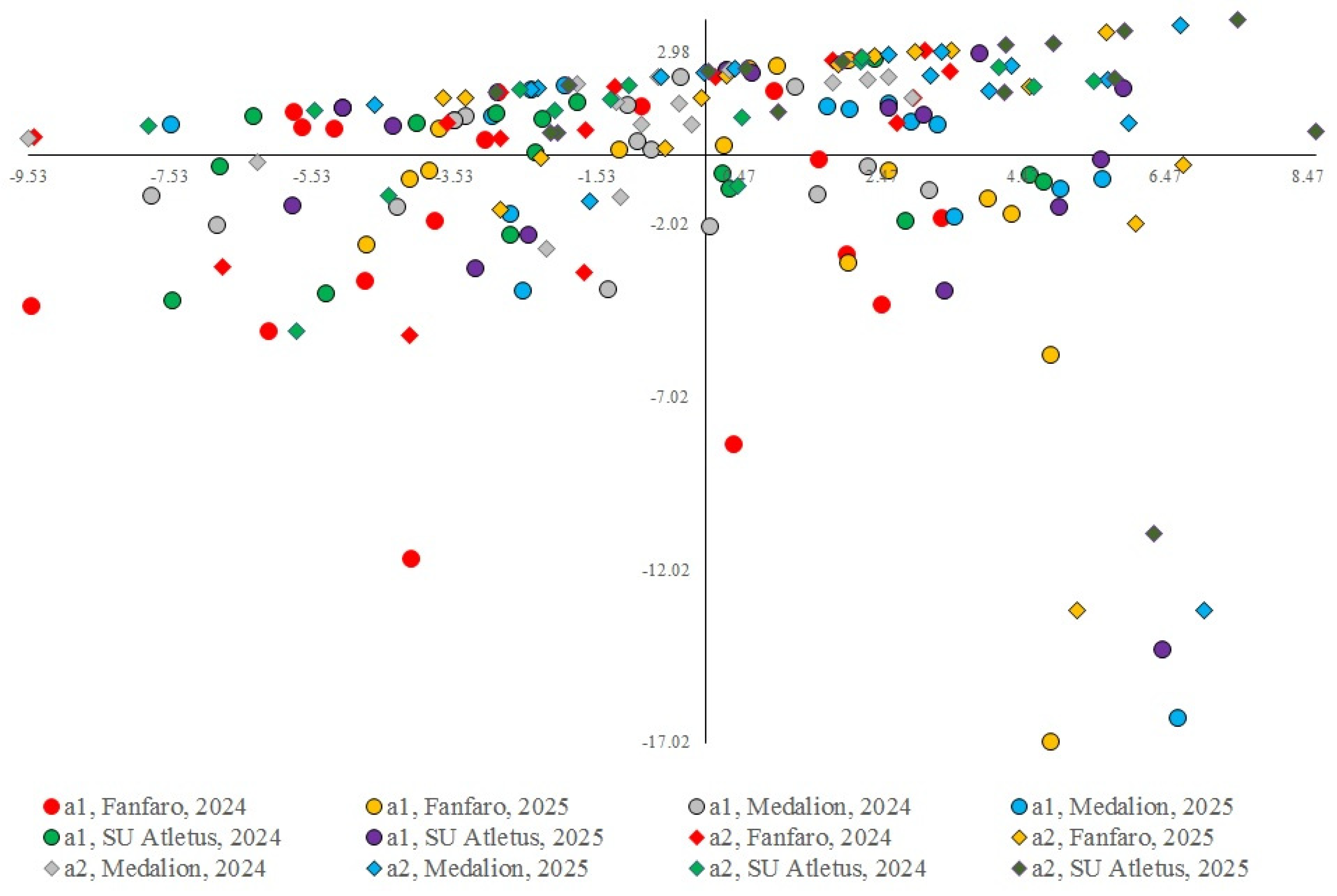
Individual traits had varying importance and contributed differently to the total multivariate variability across the studied combinations of differentiating factor levels. The analysis of the first two canonical variates for the 192 combinations across the four quantitative traits is presented in Figure 18. The first two canonical variates accounted for 74.42% of the total variability between the individual combinations (Figure 18). The most significant positive linear relationship with the first canonical variate was found for yield (0.969), while a significant negative relationship was found for brown rust (−0.146) and septoria leaf blotch (−0.229). The second canonical variate was significantly positively correlated with brown rust (0.933), septoria leaf blotch (0.855), and yield (0.224).
The distribution of treatment combinations in the canonical variate space allowed identification of agronomically contrasting groups. Combinations located in the region of high V1 and low V2 values were characterized by a favorable combination of high grain yield and low disease incidence. This group included mainly the 2024/2025 season combinations from the Rarwino location, particularly Medalion and SU Atletus under both management levels (a1 and a2), as well as Fanfaro, indicating superior overall performance across the four analyzed traits. In contrast, combinations positioned on the negative side of V1, especially Fanfaro, Medalion and SU Atletus at location SW in the 2023/2024 season, represented the least favorable multivariate profiles, associated with lower overall performance. The highest values of the first canonical variate were observed mainly for SU Atletus under the intensive management level (a2), confirming the high yield potential of the cultivar under favorable production conditions. However, some of these combinations were simultaneously associated with relatively high V2 values, indicating increased contributions of brown rust and septoria leaf blotch to their multivariate profiles. Therefore, although SU Atletus expressed the greatest production potential, Medalion showed a more balanced combination of yield and disease resistance. Overall, the canonical variate analysis demonstrated that intensive management (a2), particularly in the 2024/2025 season, generally shifted treatment combinations toward the region representing superior agronomic performance.
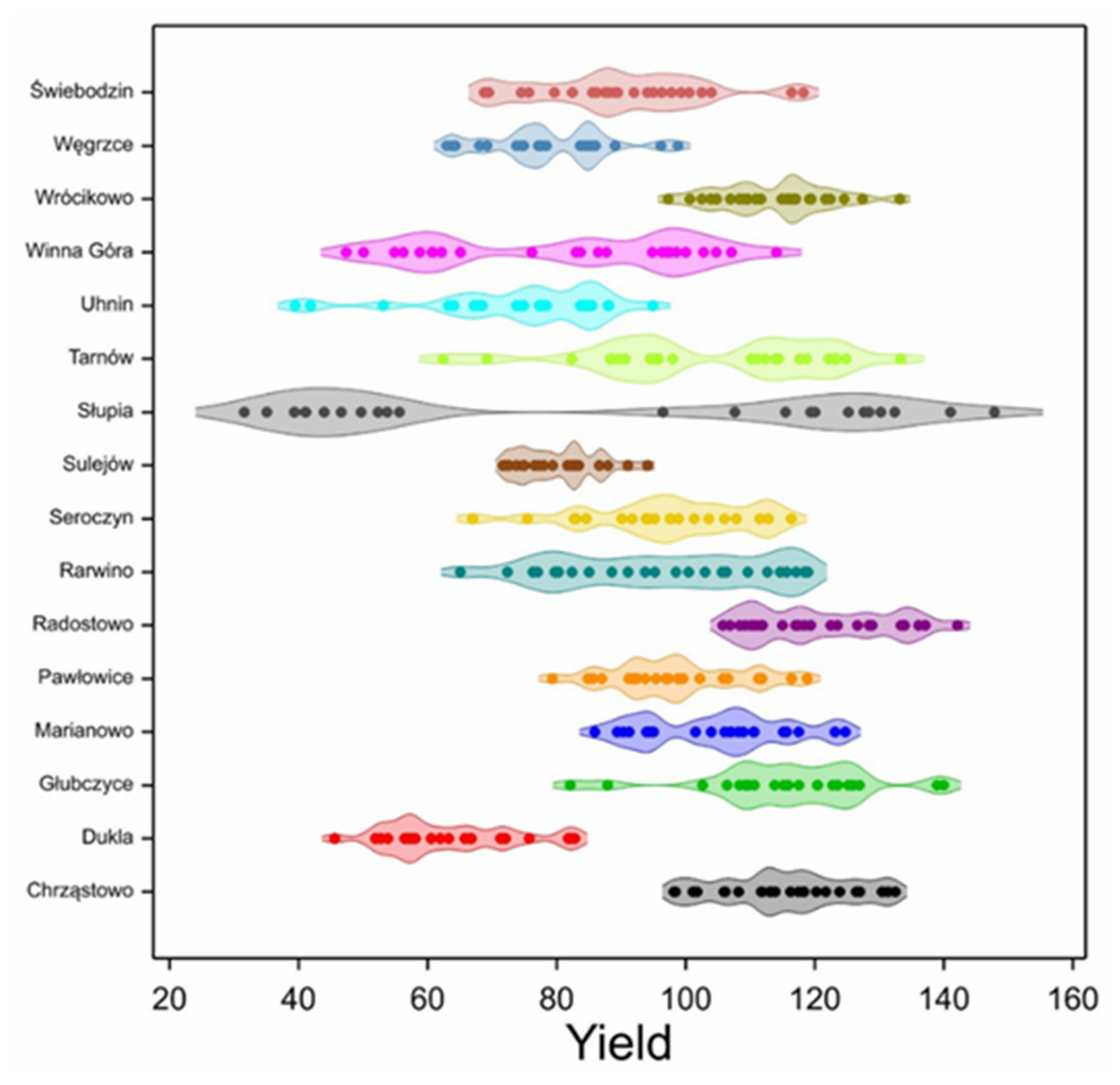
The greatest yield variability was observed in Słupia, whereas the lowest variability was recorded in Sulejów (Figure 19).
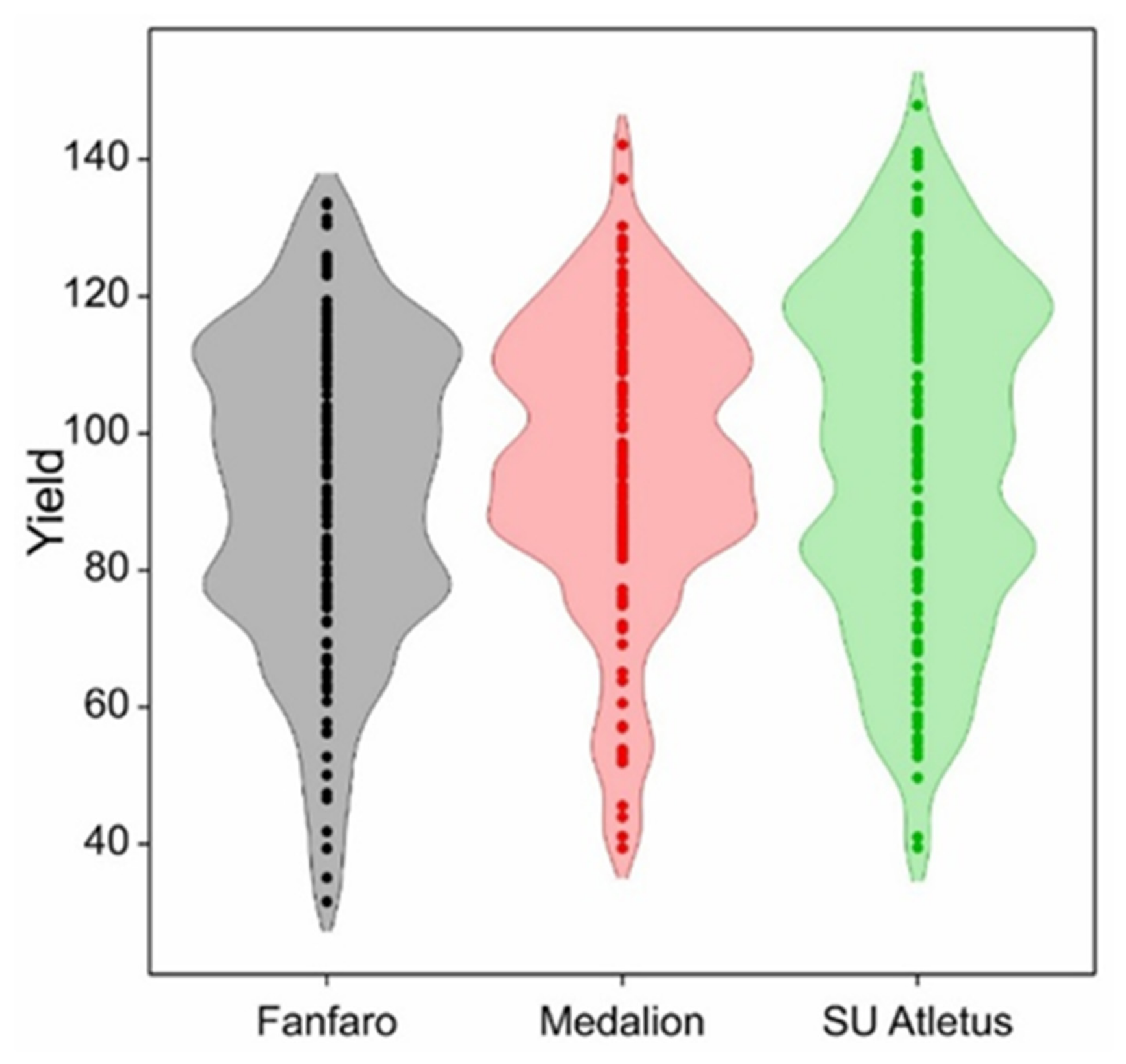
Yield variability among individual locations was characterized by a very similar range of variation (Figure 20).
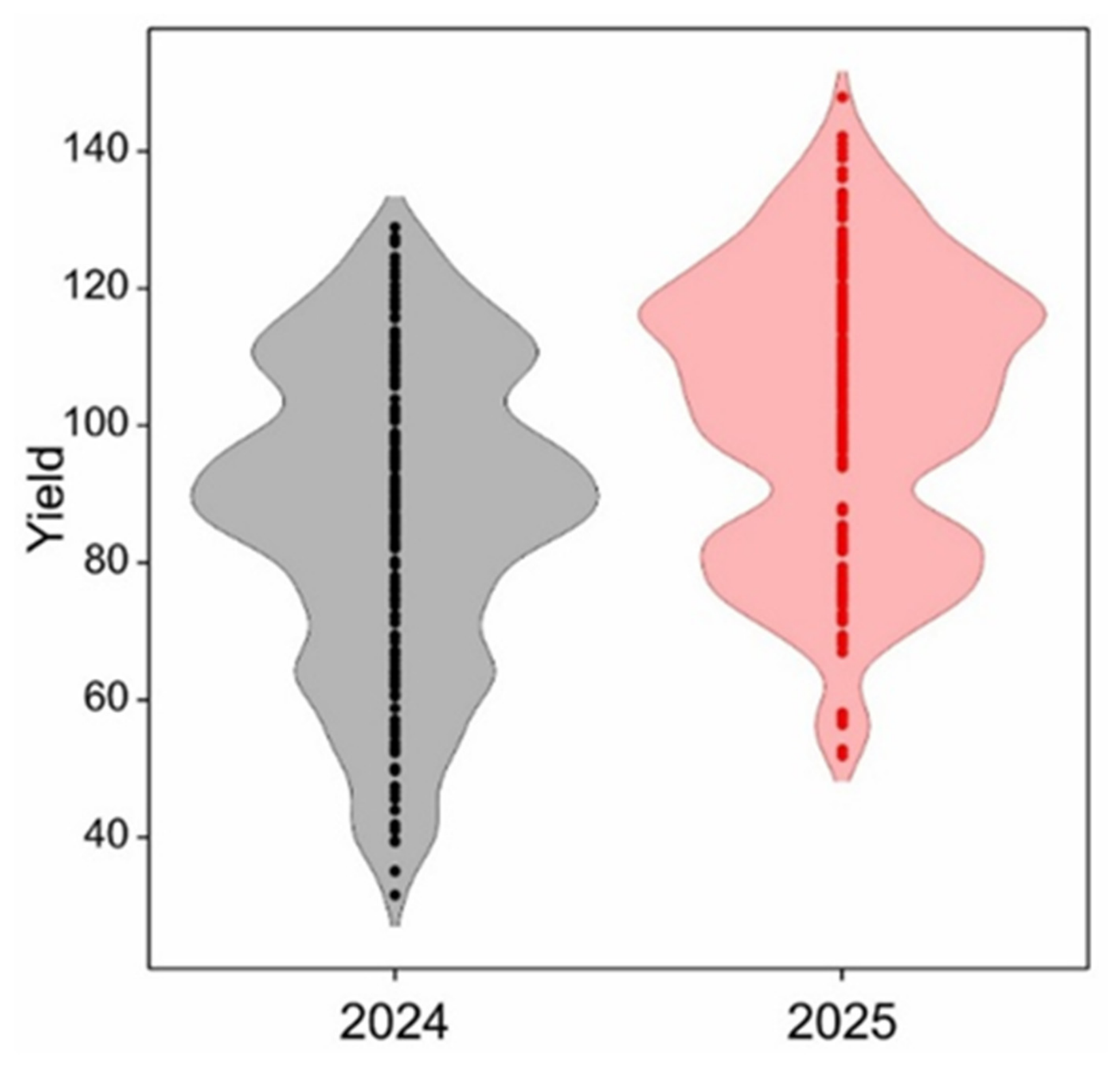
A higher yield was recorded in the second year of observations (2025); however, yield variability in both years was similar (Figure 21).
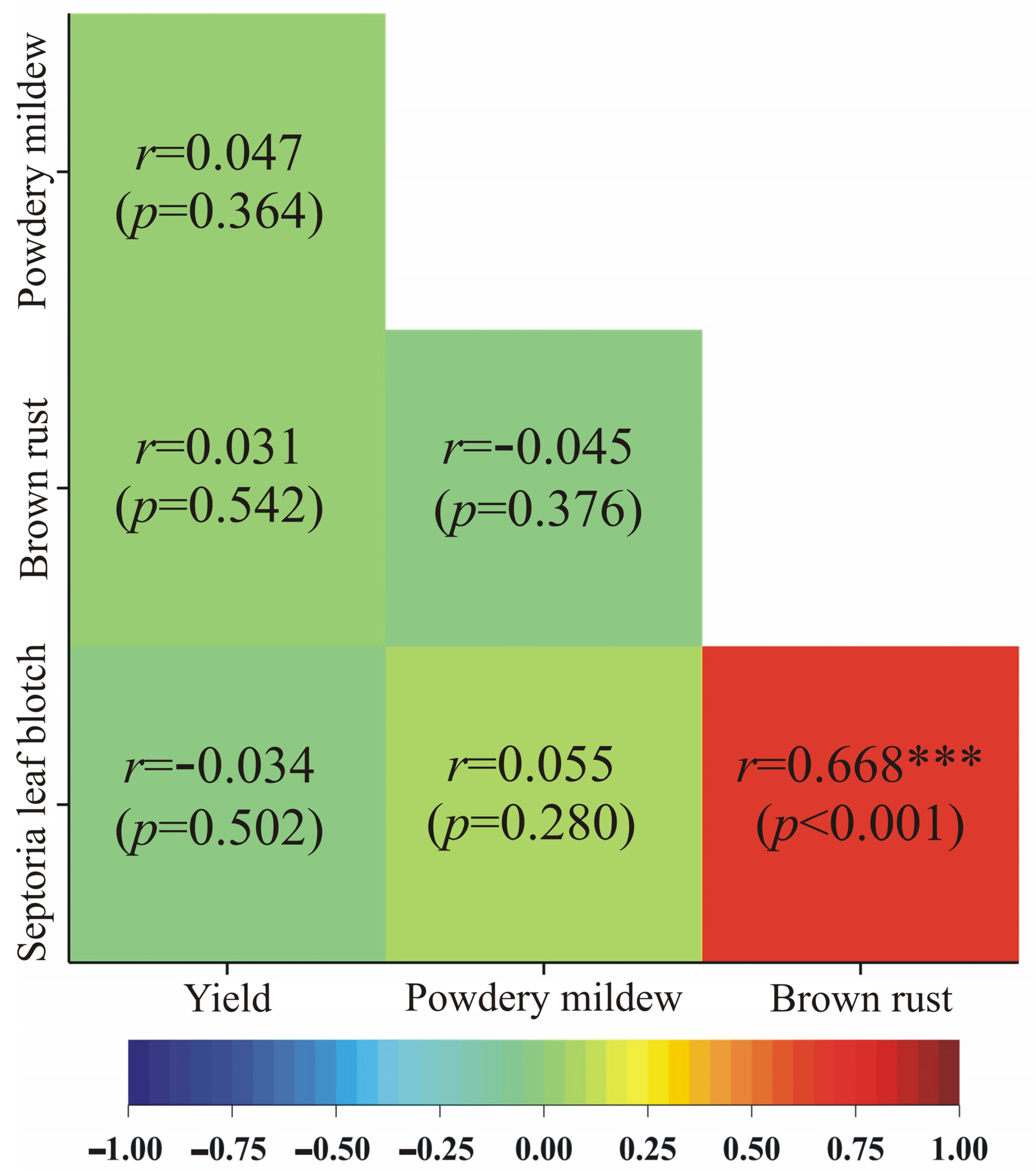
A statistically significant positive correlation (at the 0.001 significance level) was observed between brown rust and septoria leaf blotch (r = 0.668) (Figure 22). No correlations were found for the remaining trait pairs (Figure 22).

4. Discussion

Protecting crop fields against plant pathogens is one of the most important components of cereal production [19,20]. As the use of plant protection products and mineral fertilizers is becoming increasingly restricted, the cultivation of varieties with natural resistance to plant diseases and enhanced tolerance to abiotic stress factors represents one of the most effective and sustainable solutions. Owing to the research conducted within the PRVT system, agricultural practice has direct access to the results of scientific experiments, including information on the susceptibility of individual varieties to the most important diseases. The results obtained from these studies indicate the suitability of specific varieties for particular regions of Poland. The selection of resistant varieties that simultaneously show the highest level of resistance under local conditions is a fundamental decision made before establishing a plantation and determines the achievement of satisfactory income. In addition to their practical value, the experimental results also constitute a rich scientific database on the basis of which numerous further statistical analyses can be carried out [31,32].
The significant positive correlation between brown rust and septoria leaf blotch may be associated with environmental conditions favorable for the development of both diseases, particularly high humidity and prolonged leaf wetness. Similar environmental factors have been identified as important drivers of foliar disease development in cereals [15]. In addition, cultivars susceptible to one foliar pathogen may also exhibit increased susceptibility to other diseases. However, because the present study was conducted under natural infection conditions across multiple locations and growing seasons, the observed correlation should not be interpreted as evidence of a direct causal relationship between the two diseases.
Overall, a higher yield level was obtained in the 2024/2025 growing season compared with 2023/2024. At the a1 level, this increase was particularly pronounced—for example, in Słupia. Yields of SU Atletus increased from approximately 4.10 t/ha–5.40 t/ha (2023/2024) to 12.80 t/ha–13.20 t/ha (2024/2025). In Radostowo, yields of Medalion increased from about 10.60 t/ha to 12.30 t/ha–12.80 t/ha.
At the same time, greater variability in results at the a1 management intensity was observed in 2024/2025, especially at less favorable locations (e.g., Dukla and Uhnin), indicating a stronger influence of environmental conditions. At the a2 management intensity, both growing seasons were characterized by high and more uniform yields; however, the 2024/2025 growing season also produced higher maximum values. The highest yields of SU Atletus increased from approximately 12.60 t/ha–12.90 t/ha (2023/2024) to 14.10 t/ha–14.80 t/ha (2024/2025).
At high-yielding locations (e.g., Radostowo, Głubczyce), yield increases most often ranged from 1.00 t/ha to 2.00 t/ha, whereas at less favorable sites (e.g., Dukla), intensification still resulted in clear benefits, raising yields from approximately 6.00 t/ha–7.00 t/ha to 7.00 t/ha–8.00 t/ha. In both growing seasons, cultivar Medalion demonstrated relatively high and consistent yield, whereas SU Atletus achieved the highest yields under favorable conditions but exhibited greater variability. Cultivar Fanfaro occupied an intermediate position, responding clearly to improvements in cultivation conditions [32,33].
The Medalion variety showed relatively consistent yield across locations, while the SU Atletus variety achieved the highest yields under favorable conditions but with greater variability. The Fanfaro variety also showed significant variability in grain yield and disease response across environments, reflecting significant cultivar × environment interactions. Increasing the intensity of management practices (a2) resulted in a 12.4% increase in average grain yield (from 8.88 to 9.98 t/ha) compared to the a1 management intensity, and improved disease resistance scores by 10.3% for powdery mildew, 6.3% for brown rust, and 9.3% for leaf spot. These results indicate a beneficial effect of more intensive cultivation technology on both yield levels and reduced disease pressure in winter triticale.
The relatively consistent yield of the Medalion cultivar across locations is consistent with previous studies conducted within the Polish PRVT system, which demonstrated that cultivar responses are strongly influenced by environmental conditions and management intensity, although some cultivars maintain greater yield stability across environments [22,25,34]. In turn, the greater yield variability observed for the Fanfaro and SU Atletus cultivars confirms the importance of genotype × environment interactions in winter triticale cultivation.
The higher yields recorded in the 2024/2025 season may have been related to drier weather conditions during this growing season. Lower rainfall and shorter leaf wetness likely limited the development of leaf spot and other leaf diseases, thereby reducing yield losses. Consequently, despite lower rainfall, reduced disease pressure may have contributed to better plant development and higher grain yields.
The main objective of PRVT is to provide agricultural producers with reliable and objective information on the economic value of crop cultivars listed in the NR and the Common Catalogue of Varieties (CCV) [18]. These studies are practical in nature—their purpose is to support farmers in selecting cultivars best adapted to local environmental and technological conditions [25]. As a result, it is possible to make more effective use of the yield-forming potential of crops and to better adjust plant production to changing farming conditions.
The PRVT system is based on an extensive network of field trials conducted in various regions of the country. These experiments are implemented by numerous entities, including experimental stations, agricultural advisory centers, scientific institutions, and breeding and seed companies [18,19].
One of the most important outcomes of the PRVT system is the development of the “ List of varieties recommended for cultivation within the territory of the Voivodeship” The recommended cultivars are usually characterized by stable yield performance; however, in some cases, specialized genotypes that adapt well to specific environmental conditions are also preferred [34].
Research conducted within the PRVT framework also has a cognitive value, as it enables the analysis of genotype × environment interactions. It has been demonstrated that yield level and yield stability are significantly influenced by climatic factors, soil properties, and the level of agrotechnical management [33,34].
The PRVT system provides practical information supporting cultivar selection under diverse environmental and agronomic conditions. However, in the context of this study, its role is primarily methodological, as it enables the evaluation of cultivar performance across multi-location field trials and supports the interpretation of genotype × environment interactions. The results of this study demonstrate clear differences in winter triticale performance depending on cultivar, management intensity, and environmental conditions. Cultivar Medalion showed the most stable performance across locations and seasons, while SU Atletus expressed the highest yield potential under favorable conditions but greater environmental sensitivity. Fanfaro exhibited intermediate performance in both yield and disease response. Increasing management intensity (a2) significantly improved grain yield and reduced disease severity across cultivars, although the magnitude of these effects depended strongly on the location and growing season. The significant interactions observed in the ANOVA confirm that cultivar performance and disease development are highly environment-dependent, highlighting the importance of adapting cultivar choice to local conditions. A limitation of this study is the lack of continuous monitoring of disease development stages and the absence of modelling linking disease severity with detailed meteorological variables. Future research should integrate phenology-based disease assessments with high-resolution weather data to better understand epidemic dynamics and improve cultivar recommendation systems.

5. Conclusions

  • It was confirmed that management intensity has a significant effect on both grain yield and the health status of winter triticale.
  • Management intensity (a2) resulted in higher grain yield and reduced disease severity across all tested cultivars.
  • Significant differences among cultivars were observed in both yield level and stability; ‘Medalion’ showed the most stable performance, whereas ‘SU Atletus’ expressed the highest yield potential under favorable conditions.
  • Environmental conditions, including growing season and location, had a significant effect on both yield and disease development.
  • The observed genotype × environment interactions indicate that cultivar performance is strongly dependent on local environmental conditions.

Author Contributions

Conceptualization, A.T. and K.M.; methodology, A.T., K.M., K.R. and J.B.; software, J.B.; validation, A.T., K.M., K.R. and J.B.; formal analysis, A.T. and J.B.; investigation, K.M. and K.R.; resources, K.M. and J.B.; data curation, A.T., K.R. and J.B.; writing—original draft preparation, A.T.; writing—review and editing, K.M., K.R. and J.B.; visualization, K.R. and J.B.; supervision, A.T.; project administration, A.T. and K.M.; funding acquisition, A.T. and K.R. All authors have read and agreed to the published version of the manuscript.

Funding

This research received no external funding.

Data Availability Statement

The data presented in this study are available on request from the corresponding author.

Conflicts of Interest

The authors declare no conflicts of interest.

References

  1. Myer, R.O.; Barnett, R.D. Triticale Grain in Swine Diets; University of Florida IFAS Extension: Gainesville, FL, USA, 2004; Available online: http://edis.ifas.ufl.edu (accessed on 15 April 2026).
  2. Gradzielewska, A.; Gruszecka, D.; Paczos-Grzęda, E. Evaluation of hybrids between triticale and Aegilops crassa 4× Boiss applying RAPD and ISSR methods. Folia Pomer. Univ. Technol. Stetin. Agric. Aliment. Pisc. Zootech. 2010, 276, 19–30. [Google Scholar]
  3. Labudda, M.; Machczyńska, J.; Woś, H.; Bednarek, P.T. Selected aspects of biological progress in the breeding of triticale (×Triticosecale WITTM. ex A. CAMUS)]. Post. Nauk. Roln. 2011, 4, 3–10. [Google Scholar]
  4. Cantale, C.; Petrazzuolo, F.; Correnti, A.; Farneti, A.; Felici, F.; Latini, A.; Galeffi, P. Triticale for bioenergy production. Agric. Agric. Sci. Procedia 2016, 8, 609–616. [Google Scholar] [CrossRef]
  5. Peña, R.J. Food uses of triticale. In Triticale Improvement and Production; Mergoum, M., Gómez-Macpherson, H., Eds.; Food and Agriculture Organization of the United Nations: Rome, Italy, 2004; pp. 37–48. [Google Scholar]
  6. Wang, M.; Jiang, N.; Jia, T.; Leach, L.; Cockram, J.; Waugh, R.; Ramsay, L.; Thomas, B.; Luo, Z. Genome-wide association mapping of agronomic and morphologic traits in highly structured populations of barley cultivars. Theor. Appl. Genet. 2012, 124, 233–246. [Google Scholar] [CrossRef] [PubMed]
  7. Główny Urząd Statystyczny. Rocznik Statystyczny Rolnictwa, GUS; Central Statistical Office: Warszawa, Poland, 2025. [Google Scholar]
  8. Jaśkiewicz, B. Wartość paszowa ziarna pszenżyta w zależności od czynnika pogodowego. Stud. I Rap. IUNG-PIB 2018, 57, 25–35. [Google Scholar]
  9. Arseniuk, E.; Woś, H.; Woźniak-Strzembicka, A. Aspect of triticale diseases research in Poland. Vortr. Pflanzenzüchtg 2000, 49, 63–72. [Google Scholar]
  10. Bartosiak, S.F.; Arseniuk, E.; Szechyńska-Hebda, M.; Bartosiak, E. Monitoring of leaf and glume blotch diseases of winter triticale and wheat. Agronomy 2021, 11, 967. [Google Scholar] [CrossRef]
  11. Bennett, F.G.A. Resistance to powdery mildew in wheat: A review of its use in agriculture and breeding programmes. Plant Pathol. 1984, 33, 279–300. [Google Scholar] [CrossRef]
  12. Zeller, F.J.; Lutz, J.; Stephan, U. Present status of wheat mildew resistance genetics. In Proceedings of the 8th International Wheat Genetics Symposium, Beijing, China, 20–25 July 1993. [Google Scholar]
  13. Miedaner, T.; Flath, K.; Starck, N.; Weißmann, S.; Maurer, H.P. Quantitative genetic evaluation of resistances to multiple fungal diseases in a large winter triticale diversity panel. Crops 2022, 2, 218–232. [Google Scholar] [CrossRef]
  14. Zamorski, C.; Schollenberger, M. Występowanie chorób pszenżyta w Polsce. Biul. IHAR 1995, 195/196, 197–207. [Google Scholar]
  15. Różewicz, M.; Wyzińska, M.; Grabiński, J. The Most Important Fungal Diseases of Cereals—Problems and Possible Solutions. Agronomy 2021, 11, 714. [Google Scholar] [CrossRef]
  16. Arseniuk, E. Triticale Abiotic and Biotic Stresses—An Overview. In Triticale; Eudes, F., Ed.; Springer: Cham, Switzerland, 2015; pp. 69–81. [Google Scholar] [CrossRef]
  17. Gacek, E. Program porejestrowego doświadczalnictwa odmianowego w Polsce. Hod. Roślin I Nasienn. 1998, 3, 32–34. [Google Scholar]
  18. Gacek, E.; Behnke, M. Wdrażanie postępu biologicznego do praktyki rolniczej w warunkach gospodarki rynkowej. Biul. IHAR 2006, 240/241, 83–90. [Google Scholar] [CrossRef]
  19. Niedbała, G.; Tratwal, A.; Piekutowska, M.; Wojciechowski, T.; Uglis, J. A Framework for Financing Post-Registration Variety Testing System: A Case Study from Poland. Agronomy 2022, 12, 325. [Google Scholar] [CrossRef]
  20. Pour-Aboughadareh, A.; Bocianowski, J.; Jamshidi, B. An Introductory Guide to the Usage of Statistical Softwares for Investigating G × E Interaction: From Theory to Application. In Genotype × Environment Interactions and Its Implications for Plant Breeding; Mohammadi, R., Jalal Kamali, M.R., Amri, A., Kehel, Z., Sadeghzadeh, B., Eds.; Springer: Singapore, 2026; pp. 419–464. [Google Scholar] [CrossRef]
  21. Matyjaszczyk, E.; Zapłata, S. The quality system of good experimental practice (GEP) and its role in environmental safety. Econ. Environ. 2025, 93, 994. [Google Scholar] [CrossRef]
  22. Madajska, K.; Tratwal, A.; Roik, K.; Pietrusińska-Radzio, A.; Bocianowski, J. Evaluation of Oat Varieties Under Different Levels of Fertilization and Crop Protection in Conventional and Organic Systems. Agriculture 2025, 15, 2538. [Google Scholar] [CrossRef]
  23. Research Centre for Cultivar Testing (COBORU). Postregistration Variety Trials. Available online: https://www.coboru.gov.pl/pdo/pdo (accessed on 15 April 2026).
  24. Czembor, E.; Tratwal, A.; Pukacki, J.; Krystek, M.; Czembor, J.H. Managing fungal pathogens of field crops in sustainable agriculture and AgroVariety internet application as a case study. J. Plant Prot. Res. 2025, 65, 1–26. [Google Scholar] [CrossRef]
  25. Tratwal, A.; Roik, K.; Kardasz, P.; Bocianowski, J. Plonowanie wybranych odmian pszenżyta ozimego w ramach porejestrowego doświadczalnictwa odmianowego. Zagadnienia Doradz. Rol. 2018, 94, 73–88. [Google Scholar]
  26. Strażyński, P.; Korbas, M.; Danielewicz, J.; Jajor, E.; Horoszkiewicz-Janka, J.; Mrówczyński, M.; Marcinkowska, K.; Kierzek, R.; Flaszka, M. Regulatory Differences in Crop Protection Systems for Soybean Production: Implications of the EU–Mercosur Trade Agreement. J. Plant Prot. Res. 2026, 66, 9998. [Google Scholar]
  27. COBORU. Metodyka Badania Wartości Gospodarczej Odmian (WGO); Zboża; COBORU: Słupia Wielka, Poland, 2020. [Google Scholar]
  28. Shapiro, S.S.; Wilk, M.B. An analysis of variance test for normality (complete samples). Biometrika 1965, 52, 591–611. [Google Scholar] [CrossRef]
  29. Rencher, A.C. Interpretation of Canonical Discriminant Functions, Canonical Variates, and Principal Components. Am. Stat. 1992, 46, 217–225. [Google Scholar] [CrossRef]
  30. Seidler-Łożykowska, K.; Bocianowski, J. Evaluation of Variability of Morphological Traits of Selected Caraway (Carum carvi L.) Genotypes. Ind. Crops Prod. 2012, 35, 140–145. [Google Scholar] [CrossRef]
  31. Mahalanobis, P.C. On the Generalized Distance in Statistics. Natl. Inst. Sci. India 1936, 1, 49–55. [Google Scholar]
  32. VSN International. VSN International Genstat for Windows, 24th ed.; VSN International: Hemel Hempstead, UK, 2024. [Google Scholar]
  33. Ojdowska, P.; Oleksiak, T.; Studnicki, M.; Iwańska, M. Certified Seed Use Enhances Yield Stability in Cereal Production Under Temperate Climate Conditions. Agronomy 2025, 15, 1886. [Google Scholar] [CrossRef]
  34. Weber, R.; Bujak, H.; Kaczmarek, J.; Gacek, E. Analiza przestrzennego podobieństwa plonowania odmian pszenicy ozimej na obszarze województwa śląskiego i opolskiego. Agron. Sci. 2012, 67, 61–73. [Google Scholar] [CrossRef]
Figure 1. Locations of experimental sites in Poland.
Agronomy 16 01188 g001
Figure 2. Powdery mildew infection on winter triticale cultivars in PRVT, a1 management intensity in growing season 2023/2024 (statistical significance is given in Table 4).
Agronomy 16 01188 g002
Figure 3. Powdery mildew infection on winter triticale cultivars in PRVT, a2 management intensity in growing season 2023/2024 (statistical significance is given in Table 4).
Agronomy 16 01188 g003
Figure 4. Powdery mildew infection on winter triticale cultivars in PRVT; a1 management intensity in growing season 2024/2025 (statistical significance is given in Table 4).
Agronomy 16 01188 g004
Figure 5. Powdery mildew infection on winter triticale cultivars in PRVT, a2 management intensity in growing season 2024/2025 (statistical significance is given in Table 4).
Agronomy 16 01188 g005
Figure 6. Brown rust infection on winter triticale cultivars in PRVT; a1 management intensity in vegetation season 2023/2024 (statistical significance is given in Table 4).
Agronomy 16 01188 g006
Figure 7. Brown rust infection on winter triticale cultivars in PRVT; a2 management intensity in vegetation season 2023/2024 (statistical significance is given in Table 4).
Agronomy 16 01188 g007
Figure 8. Brown rust infection on winter triticale cultivars in PRVT; a1 management intensity in vegetation season 2024/2025 (statistical significance is given in Table 4).
Agronomy 16 01188 g008
Figure 9. Brown rust infection on winter triticale cultivars in PRVT; a2 management intensity in vegetation season 2024/2025 (statistical significance is given in Table 4).
Agronomy 16 01188 g009
Figure 10. Septoria leaf blotch infection on winter triticale cultivars in PRVT; a1 management intensity in vegetation season 2023/2024 (statistical significance is given in Table 4).
Agronomy 16 01188 g010
Figure 11. Septoria leaf blotch infection on winter triticale cultivars in PRVT; a2 management intensity in vegetation season 2023/2024 (statistical significance is given in Table 4).
Agronomy 16 01188 g011
Figure 12. Septoria leaf blotch infection on winter triticale cultivars in PRVT; a1 management intensity in vegetation season 2024/2025 (statistical significance is given in Table 4).
Agronomy 16 01188 g012
Figure 13. Septoria leaf blotch infection on winter triticale cultivars in PRVT; a2 management intensity in vegetation season 2024/2025 (statistical significance is given in Table 4).
Agronomy 16 01188 g013
Figure 14. Winter triticale yielding in PRVT; a1 management intensity; 2023/2024 growing season (statistical significance is given in Table 4).
Agronomy 16 01188 g014
Figure 15. Winter triticale yielding in PRVT; a2 management intensity; 2023/2024 growing season (statistical significance is given in Table 4).
Agronomy 16 01188 g015
Figure 16. Winter triticale yielding in PRVT; a1 management intensity; 2024/2025 growing season (statistical significance is given in Table 4).
Agronomy 16 01188 g016
Figure 17. Winter triticale yielding in PRVT; a2 management intensity; 2024/2025 growing season (statistical significance is given in Table 4).
Agronomy 16 01188 g017
Figure 18. The distribution of combinations of the levels of the four factors in the system of the first two canonical variates calculated on the basis of all four observed characteristics. V1 = 41.83% and V2 = 32.59%.
Agronomy 16 01188 g018
Figure 19. Density plot of yield by localities.
Agronomy 16 01188 g019
Figure 20. Density plot of yield by level of treatments.
Agronomy 16 01188 g020
Figure 21. Density plot of yield by growing season.
Agronomy 16 01188 g021
Figure 22. Correlation coefficients (p-values) between pairs of observed traits, *** p < 0.001.
Agronomy 16 01188 g022
Table 1. Treatments performed at agrotechnical levels.
TreatmentManagement Levels
a1a2
Nitrogen fertilization (kg N/ha)+a1 + 40
Growth regulators +
Fungicide treatments 
- first treatment (stem and leaves protection)+
- second treatment (leaves and ear protection)+
Foliar fertilization +
a1—standard management level, a2—high management level.
Table 2. Meteorological conditions at the experimental sites during the 2023/2024 growing season.
VTS/VTD/AESMonthPercentage of Long Term
Average
OctoberNovemberDecemberJanuaryFebruaryMarchAprilMayJune
 Sum of rainfall (mm) 
Chrząstowo558148335318363846120
Dukla8094549760675430100113
Głubczyce5690292043224448119116
Marianowo935441336122351862117
Pawłowice737953486016602253113
Radostowo577231268435432461127
Rarwino786662385512664079117
Seroczyn5349535751353311151120
Słupia665937577133344391127
Sulejów684643453723277495114
Świebodzin864758357226354178134
Tarnów42623520441516303781
Uhnin564053644844412887116
Węgrzce585737515734452394107
Winna Góra 373657376724418181109 
Wrócikowo765943467535432223108
 average air temperature at a height of 2 m (°C) 
Chrząstowo10.03.51.7−0.25.26.610.316.818.5 
Dukla11.74.11.0−0.96.57.211.315.319.3 
Głubczyce12.64.92.80.07.07.710.515.618.3 
Marianowo9.72.71.0−2.34.75.510.717.319.4 
Pawłowice12.15.02.30.06.98.011.216.919.6 
Radostowo9.93.31.7−0.54.55.89.315.317.6 
Rarwino11.25.33.31.85.87.510.016.517.3 
Seroczyn10.63.71.5−0.95.86.211.217.519.3 
Słupia11.54.21.7−0.66.16.711.116.319.0 
Sulejów11.34.22.1−0.36.37.011.016.619.0 
Świebodzin11.75.43.30.96.87.811.216.918.7 
Tarnów12.35.03.20.46.78.311.616.019.3 
Uhnin11.13.71.3−1.05.86.111.516.519.4 
Węgrzce12.14.42.2−0.16.76.611.816.619.5 
Winna Góra 11.33.93.10.86.98.011.317.118.6 
Wrócikowo9.32.91.3−1.94.55.59.515.518.0 
Table 3. Meteorological conditions at the experimental sites during the 2024/2025 growing season.
VTS/VTD/AESMonthPercentage of Long Term Average
OctoberNovemberDecemberJanuaryFebruaryMarchAprilMayJune
 Sum of rainfall (mm) 
Chrząstowo3518232212123579784
Dukla512621341432961195879
Głubczyce291291123210675957
Marianowo362116189259784672
Pawłowice2925182122514475356
Radostowo3522244617928538192
Rarwino745025631225384875
Seroczyn34243128113027814776
Słupia34191632143328587078
Sulejów18208983011624953
Świebodzin10361538161316346367
Tarnów3020141132234793366
Uhnin4318192483719535468
Węgrzce39161018193917346059
Winna Góra 35213427192530477365
Wrócikowo35275132143319804987
 average air temperature at a height of 2 m (°C) 
Chrząstowo9.63.73.11.5−0.66.010.711.517.0 
Dukla10.12.51.11.5−1.26.310.210.618.5 
Głubczyce10.23.21.61.4−0.16.210.611.117.9 
Marianowo9.33.52.31.9−1.66.210.711.317.7 
Pawłowice10.83.82.11.90.26.511.411.719.0 
Radostowo9.64.23.62.0−0.55.49.110.516.5 
Rarwino11.15.64.52.41.25.710.211.617.2 
Seroczyn9.53.52.02.3−1.56.610.911.218.0 
Słupia9.73.01.91.3−0.96.411.011.518.5 
Sulejów10.03.32.62.0−0.66.111.211.618.4 
Świebodzin11.14.73.42.50.36.412.013.019.2 
Tarnów11.14.22.62.60.86.811.411.818.9 
Uhnin9.43.41.72.3−1.96.810.711.318.4 
Węgrzce10.53.42.02.0−0.37.212.212.220.3 
Winna Góra 10.84.33.32.4−0.16.111.411.420.0 
Wrócikowo9.23.83.01.9−1.55.19.510.016.3 
Table 4. Mean squares from four-way analysis of variance for individual traits.
Source of Variationd.f.YieldPowdery MildewBrown RustSeptoria Leaf Blotch
Management intensity111.63 ***38.1276 ***10.0104 ***46.0651 ***
Cultivar210.94 ***3.2839 ***2.9401 ***3.1484 ***
Growing Season123.21 ***15.4401 ***3.7604 ***1.6276 **
Environment1568.73 ***6.804 ***10.4833 ***10.9179 ***
Management intensity × Cultivar20.49 ns2.7526 ***0.7214 **0.7057 *
Management intensity × Growing Season10.08 ns0.9401 *0.1667 ns1.1484 *
Cultivar × Growing Season20.12 ns0.0182 ns0.5807 *0.1589 ns
Management intensity × Environment 150.94 ***1.4887 ***0.7271 ***1.6707 ***
Cultivar × Environment302.37 ***0.6977 ***0.6151 ***0.9595 ***
Growing Season × Environment1525.12 ***9.979 ***12.5438 ***13.8998 ***
Management intensity × Cultivar × Growing Season20.68 ns0.237 ns0.362 ns0.7578 *
Management intensity × Cultivar × Environment300.27 ns0.472 ***0.263 **0.428 ***
Management intensity × Growing Season × Environment151.21 ***1.679 ***0.5389 ***2.3762 ***
Cultivar × Growing Season × Environment301.81 ***0.3655 ***0.8724 ***0.8311 ***
Management intensity × Cultivar × Growing Season × Environment300.33 ns0.4342 ***0.2092 *0.2856 ns
Residual1920.350.16410.13020.2005
* p < 0.05; ** p < 0.01; *** p < 0.001; ns—not-significant.
Table 5. Mean values of all main effects and least significant differences (LSD0.05).
FactorYield (t/ha)Powdery MildewBrown RustSeptoria Leaf Blotch
Management intensity    
a18.948.0318.387.646
a210.048.6618.7038.339
LSD0.050.11950.08150.07260.0901
Cultivar    
Fanfaro9.168.3448.3677.812
Medalion9.578.5088.6418.063
SU Atletus9.738.1878.6178.102
LSD0.050.14630.09990.0890.1104
Growing Season    
20248.718.1468.6418.057
202510.278.5478.4437.927
LSD0.050.11950.08150.07260.0901
Environment    
Chrząstowo11.538.3338.2927.5
Dukla6.3498.4177.75
Głubczyce11.568.4588.7087
Marianowo10.508.12597.792
Pawłowice9.877.83398
Radostowo12.118.4588.4587.958
Rarwino9.626.9586.4176.333
Seroczyn9.748.45898.833
Sulejów8.068.6678.758.5
Słupia8.428.6678.6257.958
Tarnów10.317.54298.708
Uhnin7.41998.458
Winna Góra8.118.258.2087.833
Wrócikowo11.388.41798.542
Węgrzce7.888.5837.9177.875
Świebodzin9.018.7928.8758.833
LSD0.050.33790.23060.20550.255
Disclaimer/Publisher’s Note: The statements, opinions and data contained in all publications are solely those of the individual author(s) and contributor(s) and not of MDPI and/or the editor(s). MDPI and/or the editor(s) disclaim responsibility for any injury to people or property resulting from any ideas, methods, instructions or products referred to in the content.