Review

A Review of Non-Thermal Plasma Technology and Plasma–Artificial Intelligence Integration in Agriculture


School of Agricultural Engineering, Jiangsu University, Zhenjiang 212013, China
*
Author to whom correspondence should be addressed.
Agronomy 2026, 16(11), 1067; https://doi.org/10.3390/agronomy16111067
Submission received: 11 April 2026 / Revised: 20 May 2026 / Accepted: 26 May 2026 / Published: 28 May 2026
(This article belongs to the Special Issue High-Voltage Plasma Applications in Agriculture)

Abstract

As agriculture moves towards green transformation and low-carbon production, the high energy consumption, environmental burden, and residue risks associated with conventional chemical fertilisers, pesticides, and disinfectants have become increasingly prominent. Non-thermal plasma (NTP) can generate reactive oxygen and nitrogen species (RONS) under near-ambient temperature and pressure conditions, while offering low chemical residue, high reactivity, and modular equipment design. It has therefore attracted growing attention in agricultural engineering and green agricultural input preparation. This review focuses primarily on studies published within the past five years, together with the selected foundational literature retrieved from Web of Science, Scopus, PubMed, MDPI, and ScienceDirect. It systematically examines the fundamental mechanisms, application modes, and representative agricultural scenarios of NTP, with particular emphasis on agricultural nitrogen fixation and fertilisation, seed treatment and seedling raising, crop growth regulation and protection, soil improvement and remediation, and postharvest preservation and safety treatment of agricultural products. Key technological advances are then summarised, including optimisation of discharge systems and reactor configurations, plasma–catalysis synergy, preparation of plasma-activated water (PAW) and plasma-activated mist (PAM), and the development and integration of specialised agricultural equipment. In addition, the current state-of-the-art (SOA) of artificial intelligence (AI) applications in plasma-process modelling, process-parameter optimisation, agricultural performance evaluation, and intelligent control is discussed. Existing evidence indicates that NTP is particularly relevant to controlled-environment agriculture, including greenhouse cultivation, hydroponics, and aeroponics, where discharge processes, water or nutrient solutions, and crop root-zone management can be coupled for in situ nitrogen supply, activated-medium preparation, and crop protection. However, reported effects remain strongly dependent on discharge type, energy input, reactive-species composition, treatment dose, crop species, cultivation system, and application route. Therefore, NTP-based agricultural technologies should be evaluated using consistent indicators, including energy consumption, product selectivity, reactive-species stability, treatment throughput, crop response, ecological safety, and system-level integration with AI and IoT. Future research should prioritise high-efficiency reactors, standardised evaluation frameworks, cross-scale mechanistic understanding, reliable datasets, and closed-loop intelligent control, thereby supporting the transition from laboratory studies to reproducible and application-oriented agricultural systems.

1. Introduction

1.1. Research Background and Significance

Modern agriculture is shifting from the traditional paradigm of “high input for high yield” towards a new stage characterised by green development, low-carbon production, high efficiency, and precise coordination. Chemical nitrogen fertilisers, pesticides, and disinfectants have long supported modern agricultural production; however, the high-energy manufacturing processes, environmental burdens, and residue risks associated with these inputs have increasingly become key constraints on agricultural sustainability. In particular, the industrial nitrogen-fixation route represented by the Haber–Bosch process relies on high temperature, high pressure, and centralised installations, and is characterised by substantial energy consumption and carbon emissions, making it difficult to satisfy emerging scenarios such as controlled-environment agriculture, distributed production, and in situ fertiliser supply [1,2,3]. By contrast, NTP can generate reactive oxygen species (ROS), reactive nitrogen species (RNS), and reactive oxygen and nitrogen species (RONS) under near-ambient temperature and pressure conditions, while combining high reactivity, low chemical residue, and modular equipment design. It has therefore been regarded as an important candidate technology for the preparation of green agricultural inputs and for process intensification in agriculture [4,5,6,7,8].
Studies published over the past five years have shown that the role of NTP in agriculture has expanded from early surface sterilisation and seed treatment to multiple directions, including seed priming, regulation of plant growth, disease suppression, treatment of soil and nutrient solutions, postharvest preservation, and nitrogen fixation [4,5,6,7,8,9,10,11]. Among these, PAW has become an important carrier linking laboratory research to agricultural application because transient plasma effects can be transformed into a liquid medium that can be stored, transported, and applied [4,9]. Several authors have pointed out that the synergistic action of nitrate, nitrite, H2O2, and other reactive components in PAW endows it with simultaneous growth-promoting, antimicrobial, and nutrient-regulatory potential [4,9,12]. At the seed and plant levels, NTP is widely considered capable of enhancing germination percentage, seedling vigour, and environmental adaptability through pathways including seed-coat etching, improved wettability, enzyme activation, hormone regulation, and the induction of stress-response signalling; however, these effects are strongly dependent on crop species, treatment dose, and discharge conditions [10,13,14,15].
The strategic significance of NTP is particularly pronounced in agricultural nitrogen management. Although conventional nitrogen fertiliser production has reached industrial maturity, its high energy consumption and carbon intensity are inconsistent with current goals for the green transformation of agriculture. Non-thermal plasma nitrogen-fixation technology seeks to establish a route distinct from the Haber–Bosch process through N2 activation, NOx generation, and the accumulation of nitrogen-containing liquid products [1,2,3]. This approach is especially attractive for greenhouses, soilless cultivation, aeroponics, and drip-irrigation systems because air, discharge, and water can be directly coupled to generate nitrate-rich water or PAW in situ near crops, to be used as a liquid nitrogen source or as a functional irrigation medium [3,4,16,17,18]. Studies have already begun to introduce this concept into hydroponic and aeroponic scenarios, revealing the application potential of plasma-based in situ nitrogen supply and closed-loop nutrient regulation [15,16,17].
Nevertheless, agricultural NTP processes exhibit the typical characteristics of multivariable coupling. Discharge voltage, frequency, power, gas composition, humidity, flow rate, liquid volume, crop status, and environmental factors jointly affect reactive-species composition, treatment intensity, and the final agricultural outcome [4,10,11,19]. This means that plasma technology in agriculture is not a simple “single-parameter–single-response” system, but rather a complex system spanning plasma physics, chemical reaction engineering, plant physiology, and agricultural engineering. Against this background, AI—particularly machine learning, optimisation algorithms, digital twins, and intelligent sensing and control—has begun to be regarded as an important tool for moving plasma agriculture from laboratory-level proof of concept towards stable engineering operation [19,20,21,22,23]. Studies have shown that AI can be used for discharge-state identification, process-parameter optimisation, nitrogen-fixation efficiency prediction, evaluation of crop responses, and closed-loop equipment control, thereby improving the controllability of plasma-agriculture systems and the efficiency of parameter optimisation, while also providing methodological support for subsequent scale-up [19,20,21,22,23,24].
From the viewpoints of green agricultural transformation, low-carbon nitrogen supply, and intelligent controlled-environment agriculture, NTP should be evaluated not only as a treatment technology but also as a process platform that links reactive-species generation, activated-medium preparation, crop response, and equipment control. This platform perspective is particularly relevant to agricultural systems in which air, water, nutrient solutions, root-zone environments, and crop growth responses are already coupled, such as greenhouses, hydroponics, and aeroponics. However, the agricultural performance of NTP cannot be assessed only through qualitative claims of growth promotion, sterilisation, or nitrogen supply. It requires comparison using measurable indicators, including energy input, reactive-species composition, nitrogen-product distribution, treatment dose, crop species, cultivation system, biological response, and long-term stability [3,4,5,15,16,17,18,19,20,21,22,23].
Although recent reviews have summarised important aspects of plasma agriculture, including PAW formation and application, seed treatment, plant-growth responses, plasma–liquid interactions, and general development roadmaps [4,5,6,7,8,13,14,22,23], most of them have focused on either specific plasma products, individual crop-treatment stages, or particular cultivation systems. The present review makes a distinct contribution by treating agricultural NTP as an integrated engineering and intelligent-control system. Specifically, it connects reactive-species generation, plasma-based nitrogen fixation, PAW/PAM-mediated activated-medium delivery, crop-production scenarios, reactor and specialised equipment development, and AI/IoT-enabled modelling and control within a unified agricultural framework. This perspective allows NTP to be discussed not only as a biological stimulation, sterilisation, or postharvest-treatment technology, but also as a framework for evaluating in situ fertiliser production, controlled-environment agriculture, data-driven process optimisation, and green agricultural input management.

1.2. Review Methodology

This review was intended to systematically assess the applications and technological advances of NTP in agriculture, with particular attention to current research progress, practical constraints, and system-integration issues arising from its combination with AI and the IoT. The methodological design was developed to ensure comprehensive literature coverage while remaining aligned with the research objectives. To guide the literature analysis, the following research questions were formulated:
  • Which aspects of agricultural application have received the greatest attention in recent years with respect to NTP?
  • What key technological breakthroughs have been achieved in the agricultural application of NTP?
  • What challenges still constrain the promotion and large-scale deployment of NTP in agriculture?
  • In agriculture, what examples are available of AI technologies, such as machine learning, intelligent control, and predictive modelling, being used for process optimisation, effect evaluation, or automated control in NTP applications?
  • What application cases have been reported for the integration of AI and NTP, and what difficulties or bottlenecks have been encountered when these integrated technologies are applied in real agricultural scenarios?
To address these questions, a structured literature search and review methodology was adopted. The literature was drawn primarily from published research articles covering NTP, PAW/PAM, and the agricultural applications of AI. Searches were performed across several academic databases, including Web of Science, Scopus, PubMed, MDPI, and ScienceDirect, with the principal focus placed on English language research and review articles published from January 2021 to May 2026. Selected earlier studies were also retained when they provided foundational evidence, widely cited mechanisms, or historically important findings in plasma agriculture.
The search strategy employed Boolean combinations of keywords to ensure coverage of NTP technology, agricultural applications, and studies concerning integration with AI/IoT. The main search terms were as follows:
Plasma-related terms: “cold plasma” OR “low-temperature plasma” OR “non-thermal plasma” OR “low-pressure plasma” OR “radiofrequency plasma” OR “microwave plasma” OR “plasma-activated water” OR PAW OR “plasma-activated mist” OR PAM OR “dielectric barrier discharge” OR DBD OR “atmospheric pressure plasma”.
Agriculture-related terms: “agriculture” OR “crop” OR “plant” OR “greenhouse” OR “hydroponics” OR “aeroponics” OR “seed treatment” OR “fertilisation”.
AI- and IoT-related terms: “artificial intelligence” OR AI OR “machine learning” OR ML OR “deep learning” OR DL OR “prediction model” OR “intelligent control” OR “IoT” OR “Internet of Things” OR “sensor network”.
These terms were combined using the operators AND and OR; for example, “plasma-related terms AND agriculture-related terms” was used to ensure broad coverage while excluding studies unrelated to the research topic. During the initial screening, duplicate records and studies irrelevant to NTP, agricultural application, or AI/IoT were removed on the basis of titles and abstracts. Full-text review was then conducted according to predefined inclusion and exclusion criteria. Studies were included when they showed direct relevance to NTP, PAW, PAM, plasma-based nitrogen fixation, plasma-assisted crop production, postharvest treatment, or AI/IoT-assisted plasma applications; provided a clear description of the plasma source, treatment conditions, activated-medium preparation method, or modelling/control strategy; and reported measurable physicochemical, biological, agronomic, or engineering outcomes. Studies were excluded when they focused only on thermal plasma or non-agricultural plasma applications without transferable relevance, lacked essential treatment parameters or outcome indicators, were duplicate reports, or were abstracts and conference summaries without sufficient methodological information.
As shown in Figure 1, the search strategy and selected keywords guided data extraction, which included titles, keywords, abstracts, authors, and references. Studies involving the integration of plasma with AI/IoT were labelled separately so that traditional NTP applications could be distinguished from intelligent-management applications during the analysis.
Through this structured approach, the present review seeks to reflect simultaneously the fundamental principles of NTP, the current state of its agricultural applications, and research progress and remaining constraints associated with its combination with AI and the IoT, thereby providing a reference base for subsequent research and application-oriented evaluation.

2. Fundamental Theory Underpinning Agricultural Applications of Non-Thermal Plasma

2.1. Definition and Classification of Non-Thermal Plasma

2.1.1. Concepts of Non-Thermal Plasma and Thermal Plasma

Plasma is generally defined as a quasi-neutral ionised gas composed of electrons, ions, neutral particles, radicals, photons, and related reactive species. According to its thermodynamic characteristics, plasma can be broadly classified into thermal plasma and non-thermal plasma. In thermal plasma, the electron temperature is close to the temperature of heavy particles, and the gas phase as a whole remains at a high temperature. This type of plasma is therefore suitable for high-heat-flux material processing, high-temperature chemical reactions, and metallurgical applications. By contrast, non-thermal plasma is characterised by a pronounced non-equilibrium state, in which the electron temperature is much higher than the temperatures of ions and neutral particles. Energetic electrons can therefore drive excitation, dissociation, ionisation, and radical formation while the bulk gas and treated materials remain at relatively low temperature, thereby reducing thermal injury to heat-sensitive biological materials [5,6,7,8,25].
Seeds, seedlings, leaves, rhizosphere microorganisms, nutrient solutions, topsoil, and postharvest agricultural products involved in agricultural applications are generally highly heat sensitive. Accordingly, agricultural applications mainly use low-temperature and non-equilibrium plasma systems rather than thermal plasma. Depending on the target material, treatment objective, and equipment configuration, these NTP processes may operate either at atmospheric pressure or under low-pressure conditions. In both cases, high-energy electrons selectively excite and dissociate gas molecules to generate ROS, RNS, and RONS, while the overall thermal load imposed on the treated material remains limited. This enables surface modification, preparation of activated media, pathogen suppression, and nutrient conversion without substantially disrupting the integrity of biological tissues [4,5,6,7,8,25].

2.1.2. Discharge Types Commonly Used in Agriculture

From the perspectives of discharge mode and device configuration, the common sources of agricultural NTP include dielectric barrier discharge (DBD), atmospheric-pressure plasma jet (APPJ), gliding arc discharge, corona discharge, surface dielectric barrier discharge (SDBD), and certain radiofrequency or microwave plasma systems [5,18,25]. These discharge types differ in electron-energy distribution, discharge uniformity, treatment area, gas–liquid mass-transfer pathway, and action scale, and such differences determine their suitability for seed treatment, nutrient-solution activation, atmospheric nitrogen fixation, and pathogen suppression [5,8,18,25].
The selection of a discharge type for a specific agricultural application is mainly determined by the geometry of the target object, the required treatment uniformity, the dominant mass-transfer pathway, the desired reactive-species composition, treatment throughput, and the tolerance of biological materials. As summarised in Table 1, DBD and SDBD systems are generally suitable for seed treatment, surface modification, and PAW preparation because they can generate relatively uniform and mild atmospheric-pressure discharges over dielectric or planar surfaces with limited thermal damage. APPJ systems are more appropriate for localised treatment of plant tissues, growth points, or liquid interfaces because the plasma plume can be directed toward a specific target region. Gliding arc and microwave/radiofrequency plasma systems, under suitable reactor configurations, are more favourable for plasma-based nitrogen fixation and high-throughput activated-medium preparation because they can sustain higher gas fluxes and promote continuous activation of N2/O2 mixtures. Microbubble-assisted discharge is particularly suitable for PAW or PAM preparation because the enlarged gas–liquid interfacial area and extended residence time enhance the transfer of reactive species into the liquid phase [3,5,8,18,25].
In agriculture, NTP should not be regarded as a single device, but rather as a class of technologies that share the common feature of low-temperature non-equilibrium discharge and serve to regulate plant–microbe–medium systems. Differences among discharge forms are reflected mainly in the target object, the discharge region, the mode of mass transfer, and the reaction pathway.

2.1.3. Atmospheric-Pressure and Low-Pressure Plasma Treatment Processes

In addition to discharge configuration, operating pressure is an important factor that distinguishes different plasma-treatment processes in agriculture. Atmospheric-pressure plasma systems, including DBD, APPJ, corona discharge, gliding arc discharge, and SDBD, are attractive for agricultural use because they do not require vacuum equipment and can be more readily integrated into seed treatment, liquid activation, postharvest decontamination, greenhouse production, hydroponics, and aeroponics. Their main advantages include operational simplicity, compatibility with continuous or semi-continuous agricultural processes, and direct interaction with air, water, nutrient solutions, or plant surfaces. However, atmospheric-pressure discharges are often more sensitive to humidity, gas flow, electrode geometry, treatment distance, and local surface morphology, all of which can affect discharge stability and dose uniformity [25,44].
By contrast, low-pressure RF or microwave plasma systems usually require a vacuum chamber and are more commonly operated in a batch-treatment mode. Nevertheless, they can provide more uniform and controllable plasma environments, reduce the influence of external environmental fluctuations, and allow clearer analysis of plasma-induced surface effects. These characteristics have made low-pressure systems important in mechanistic studies of seed treatment. For example, cold RF plasma treatment of bean seeds was performed under low-pressure conditions and was shown to modify seed wettability, hydrophilisation, and water imbibition, while microwave plasma treatment was used in early studies on the germination of Chenopodium album [42,43,44]. Therefore, atmospheric-pressure systems are generally more compatible with scalable agricultural equipment and in situ activated-medium preparation, whereas low-pressure systems remain valuable for controlled surface modification and mechanistic investigation [25,42,43,44].

2.2. Core Mechanisms Underpinning Plasma Action in Agriculture

2.2.1. Generation and Action of Reactive Species (ROS/RNS/RONS)

The central role of reactive oxygen and nitrogen species in plasma–biological interactions was established before the recent expansion of plasma agriculture. Graves [45] emphasised that ROS and RNS are not merely toxic oxidants, but can also act as redox-signalling mediators, with biological effects that depend strongly on species composition, concentration, exposure conditions, and cellular context. This concept provides an important mechanistic basis for agricultural NTP. The same reactive environment may promote germination, regulate antioxidant responses, or suppress microorganisms at appropriate doses, but it may also induce oxidative injury when the dose is excessive. In agricultural NTP systems, these effects arise mainly from ROS, RNS, and their combined reactive environment, collectively referred to as RONS, generated during discharge. In air, N2, O2, Ar, and mixed gases, collisions between energetic electrons and neutral molecules drive excitation, dissociation, ionisation, recombination, and related reactions, thereby forming short- and long-lived reactive species such as O, O3, OH, H2O2, NO, NO2, NO3, and NO2 [3,4,8,26,45,46]. These species can act directly at plant or microbial interfaces in the gas phase, or they can enter the aqueous phase through gas–liquid transfer to form agriculturally applicable media such as PAW, PAM, or activated nutrient solutions.
Mechanistically, NTP introduces into agricultural systems not a single chemical agent, but a reactive environment shaped by redox activity, acid–base variation, conductivity changes, and interfacial reactions. When reactive-species concentrations remain within an appropriate range, they can function as signalling molecules involved in seed germination, antioxidant regulation, nutrient transport, and defence responses. When concentrations become excessive, or when treatment duration is prolonged, lipid peroxidation, protein oxidation, and cellular injury may occur instead [4,10,11,46]. The effects of reactive species are therefore strongly dose-dependent and are determined by species composition, exposure dose, treatment time, and the physiological state of the target organism. In agricultural applications, reactive species act at three interconnected levels. First, they provide the chemical basis for nitrogen fixation, antimicrobial activity, growth regulation, and medium activation. Second, they determine the composition of activated liquid media, including nitrate, nitrite, hydrogen peroxide, and acidity-related changes. Third, by modifying the microenvironment surrounding plants and microorganisms, they influence downstream physiological responses and ecological processes. The agricultural effects of NTP should therefore be understood as the integrated outcome of gas-phase reactions, interfacial transfer, liquid-phase conversion, and biological response.

2.2.2. Mechanism of Plasma-Based Nitrogen Fixation

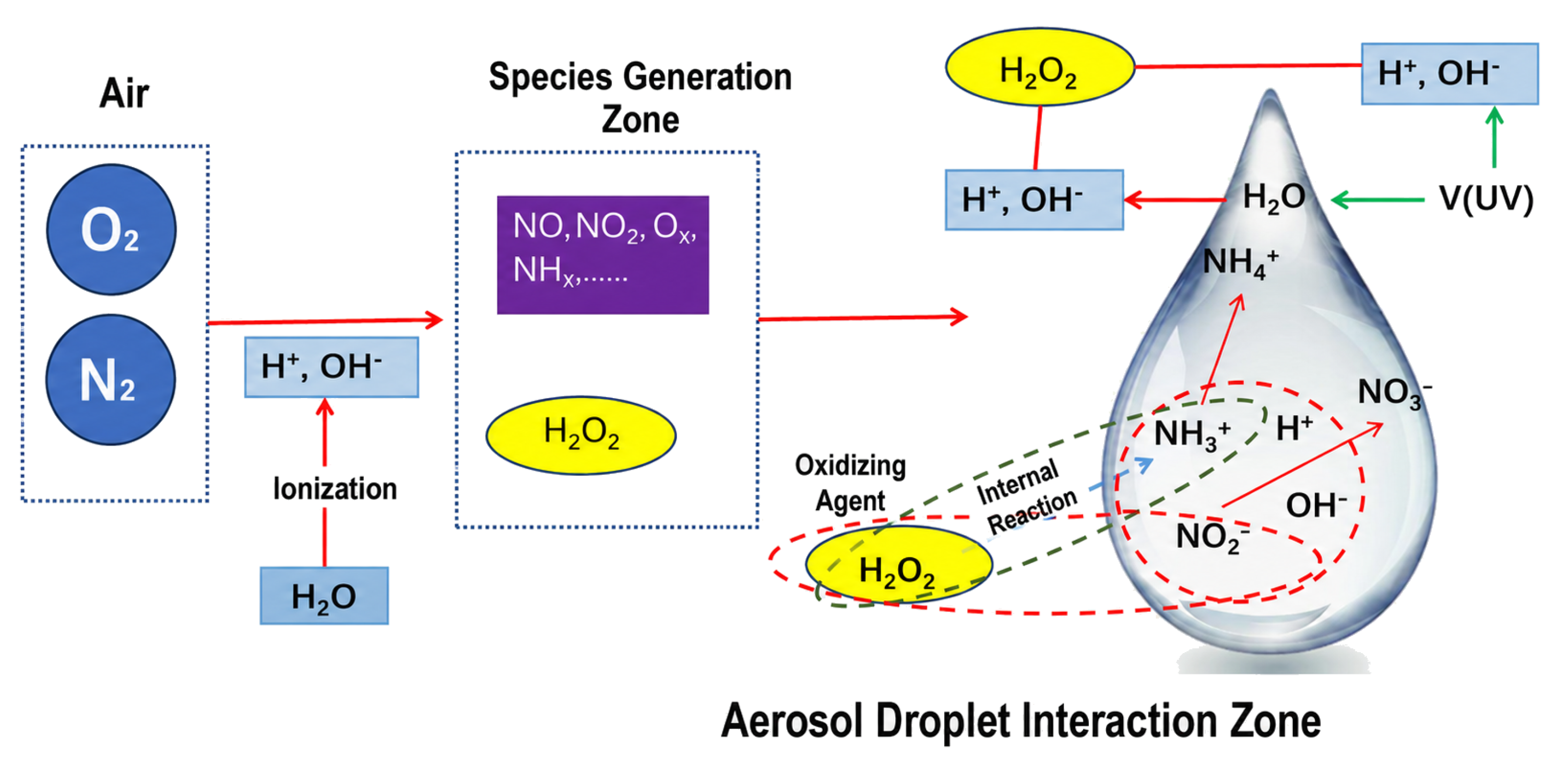
The fundamental process of plasma-based nitrogen fixation is the activation of the N≡N bond in N2 under non-equilibrium conditions, thereby converting atmospheric nitrogen into reactive nitrogen-containing intermediates. Unlike the Haber–Bosch process, which relies on high temperature and high pressure to drive equilibrium conversion, non-thermal plasma mainly uses energetic electrons to excite and dissociate N2, O2, and H2O. This process generates intermediates such as N, O, and NO, which can further react to form nitrogen oxides, including NO, NO2, and N2O5 [1,2,3,18]. In agricultural systems, these gas-phase products are usually not the final target products. Instead, they are absorbed across the gas–liquid interface into water, nutrient solutions, or culture media, where they are further converted into plant-available nitrogen forms such as NO3, NO2, and, in some systems, NH4+ [3,16,17,18,47]. The overall water-based plasma nitrogen-fixation pathway is illustrated in Figure 2.
From the perspective of the reaction sequence, plasma-based nitrogen fixation involves at least four linked stages: electron-impact excitation and dissociation of gas molecules, formation and recombination of gas-phase intermediates, transfer of gaseous products such as NOx into the liquid phase, and absorption, disproportionation, and subsequent chemical transformation in the liquid medium. In agricultural scenarios, the key question is therefore not only whether N2 activation has been achieved, but also in what chemical form, at what concentration, and through which delivery pathway the activated nitrogen finally enters the crop system.
This process is jointly influenced by discharge type, input power, gas composition, humidity, gas–liquid contact area, liquid volume, flow rate, and absorption pathway. Highly reactive discharges such as gliding arc and microwave plasma are favourable for continuous gas-phase NOx generation, whereas DBD, SDBD, and microbubble-coupled systems are more suitable for gas–liquid transfer and the accumulation of nitrogen-containing liquid products under milder conditions [18,26,30,33,37,38,47,48]. For engineering evaluation, plasma-based nitrogen fixation should therefore be assessed not only by the final concentration of nitrogen-containing products, but also by energy-efficiency metrics. Commonly used indicators include specific energy input, energy consumption per mole of fixed nitrogen, and energy yield, expressed as the amount of fixed nitrogen or nitrogen-containing product obtained per unit electrical energy. These indicators should be interpreted together with production rate and product distribution, including NOx, NO3, NO2, NH3, and NH4+, because these products differ in fertilisation value, stability, acidity contribution, oxidative effect, and crop availability. In agricultural scenarios, higher nitrate, nitrite, or ammonium concentrations are meaningful only when they are achieved with acceptable energy input, stable production, suitable product composition, and positive crop responses [18,30,33,38,40,41].

2.2.3. Growth-Promotion Mechanisms: Seed-Surface Modification, Metabolic Activation, and Enhanced Nutrient Uptake

The growth-regulating effects of NTP on plants generally arise from the combined action of seed-surface modification, metabolic activation, and signalling regulation. In seeds, one of the most important early responses is increased surface hydrophilicity. Reactive species, ultraviolet radiation, and local electric fields generated during discharge can modify seed-coat roughness, remove or oxidise hydrophobic surface layers, and introduce polar oxygen- or nitrogen-containing functional groups. These changes reduce the water-contact angle and improve wettability. Bormashenko et al. showed that cold radiofrequency plasma treatment of bean seeds modified the wetting properties of both the cotyledon and seed coat, enhanced hydrophilisation, and affected water imbibition, indicating that plasma-related changes in germination behaviour are closely linked to seed-surface water transport [42]. More broadly, improved wettability can accelerate water uptake and gas exchange during imbibition, thereby supporting the activation of early metabolic processes and more uniform germination. This process is usually associated with mild etching, surface cleaning, chemical functionalisation, and hydrophilisation rather than mechanical damage to the seed structure [10,11,12,42,49].
At the chemical level, plasma-induced seed-surface modification involves both functionalisation and mild etching. Reactive oxygen and nitrogen species can oxidise waxy or lipid-like hydrophobic layers on the seed coat, break weak surface bonds, and introduce polar functional groups such as hydroxyl, carbonyl, carboxyl, peroxide, nitrate-related, or amine-containing groups, depending on the working gas and discharge conditions. These changes can increase the O/C or N/C ratio on the outer seed surface and alter surface charge, adhesion, permeability, and interactions with water and microorganisms. Because many plasma-induced surface effects are limited to the near-surface layer, surface chemistry provides a direct link between plasma parameters and biological responses such as water imbibition, oxygen diffusion, microbial inactivation, and activation of early germination metabolism [10,11,42,49,50].
At the genome-stability level, plasma-induced changes in seeds should be distinguished from the DNA damage intentionally induced in microorganisms during decontamination. In plant seeds, moderate plasma exposure may primarily act as a redox signal that activates stress-response and repair-related processes, whereas excessive exposure or unsuitable working gases may increase primary DNA lesions. Tomeková et al. evaluated DNA damage in seedlings derived from plasma-treated pea seeds using the comet assay and showed that the response depended on working gas composition and exposure time, with ambient-air plasma showing a more favourable balance between seed response and genome stability [51]. Peťková et al. further reported that plasma exposure altered germination parameters and enzyme activities in barley, while longer exposures produced genotoxic effects [52]. These findings indicate that DNA-related responses form part of the dose-dependent boundary between beneficial plasma stimulation and oxidative injury in seed treatment.
Within the seed, plasma treatment can also affect enzyme activation, respiratory metabolism, and the initiation of signalling pathways. Moderate oxidative stimulation may promote earlier activation of physiological processes associated with storage-reserve mobilisation, antioxidant balance, and hormonal regulation [10,11]. However, the response remains strongly dose-dependent. When stimulation is moderate, earlier germination, improved seedling vigour, and enhanced stress adaptability may be observed; when stimulation is excessive, the response may shift from signalling activation to oxidative injury.
In liquid-phase systems, growth regulation is also closely related to the composition of the activated medium. NO3, NO2, H2O2, dissolved oxygen, oxidation–reduction potential, and pH in PAW or activated nutrient solutions jointly influence plant responses. NO3 and NO2 can serve nutritional and signalling functions, H2O2 can participate in antioxidant regulation and stress-signal transduction, and changes in liquid physicochemical properties can further affect the root-zone uptake environment [4,26,27,53,54]. Therefore, the plant response to NTP should be understood as a physiological process arising from the coupling of seed-surface modification, metabolic activation, liquid-phase chemistry, and signalling regulation.

2.2.4. Antimicrobial and Disease-Suppressive Mechanisms: Membrane Disruption, DNA Damage, and Oxidative Stress

The role of NTP in agricultural disease control derives mainly from a multifactorial synergistic inactivation mechanism. Unlike conventional single-agent chemicals, plasma and plasma-activated media can simultaneously provide ROS/RNS, short-wavelength radiation, charge effects, local acidification, and changes in the redox environment. These factors act together on microbial cell surfaces and internal structures, thereby damaging membrane integrity, protein activity, nucleic-acid stability, and metabolic balance [7,46,55].
Reactive species can oxidise membrane lipids and membrane proteins, leading to increased membrane permeability, disruption of membrane potential, and leakage of intracellular contents. Certain short-lived radicals and secondary oxidants can further attack intracellular proteins and nucleic acids, causing enzyme inactivation, DNA damage, and obstruction of replication and transcription. In liquid media such as PAW, the coordinated variation of nitrate, nitrite, hydrogen peroxide, and acidity can maintain oxidative pressure over longer timescales, allowing antimicrobial effects to extend from instantaneous surface damage to sustained inactivation [46,55,56].
Within plant disease systems, the disease-suppressive role of NTP includes not only direct antimicrobial action but also the induction of plant defence responses. Under moderate treatment conditions, plasma and plasma-activated media can induce changes in the activities of defence-related enzymes, promote activation of disease-resistance signalling pathways, and enhance local defensive responses [7,55,56]. At the same time, the antimicrobial efficacy of plasma is influenced by pathogen type, reactive-species composition, medium conditions, and exposure dose.

2.2.5. Mechanisms of Soil Improvement: Mineral Activation, Microbial Regulation, and Pollutant Degradation

The action of plasma on soil systems does not usually involve direct modification by a single factor, but rather the combined influence of physicochemical environmental change, pollutant transformation, and microbial-community regulation on overall soil health. After entering the soil surface layer, ROS and RNS can alter local redox status and pH, thereby affecting mineral-surface activity, the solubility of nutrient elements, and the reactivity of organic matter. Plasma and plasma-activated media can also promote cleavage, oxidation, and degradation of certain organic pollutants, thereby reducing their toxicity and improving the plant-growth environment [25,57,58].
At the microbial level, plasma action generally exhibits bidirectional regulatory characteristics. On the one hand, it can suppress certain pathogens, spoilage organisms, and pollution-associated microorganisms; on the other hand, it may disturb the original microbial-community structure and affect beneficial rhizosphere microorganisms and soil-enzyme activity. Outcomes of plasma action in soil systems are therefore usually determined by background conditions such as pore structure, organic matter content, moisture content, and microbial composition [57,58].
Thus, plasma action on soil systems is reflected mainly in pollutant transformation, microbial regulation, and modification of the physicochemical environment. Compared with short-term pollutant transformation and microbial suppression effects, the long-term effects of PAW, PAM, or activated gases on rhizosphere microbial networks, soil-enzyme activity, and nutrient cycling are still less well characterised [5,6,25,57,58].

2.3. Modes of Agricultural Application of Plasma

2.3.1. Direct Plasma Treatment (Seeds, Plants, Soil, and Agricultural Products)

Direct treatment refers to the direct action of the discharge region on the target object, including seed surfaces, leaf surfaces, the rhizosphere, soil particles, and agricultural-product surfaces. Its advantage lies in the ability of reactive species, local electric fields, and radiation signals to act intensively on the target interface within a short period of time, making this mode suitable for seed-surface modification, local pathogen inactivation, surface decontamination, and postharvest sterilisation [5,6,7,10,11,12]. In seed-surface treatment, the main manifestations are changes in seed-coat wettability and microstructure, whereas treatment of plant and agricultural-product surfaces is more strongly associated with short-term antimicrobial action and local surface modification.
Direct treatment also has certain limitations. Discharge uniformity, target-surface morphology, and treatment distance all influence local dose distribution, so differences in treatment intensity may occur among different parts of the target. For agricultural systems with large treatment areas, complex canopy structures, or a need for continuous operation, scale-up and online integration of direct treatment remain relatively difficult [5,6,8,15].

2.3.2. Indirect Applications: Plasma-Activated Water (PAW), Plasma-Activated Mist (PAM), and Plasma-Activated Air

Compared with direct plasma treatment, indirect application improves operational flexibility and engineering compatibility by transferring plasma-generated effects into water, droplets, or air. PAW is currently the most widely used indirect form. It is a chemically activated aqueous medium enriched with NO3, NO2, H2O2, and other RONS, and can be introduced into agricultural systems through seed soaking, irrigation, spraying, or nutrient-solution replenishment [4,8,26,46]. Its key feature is that a transient discharge process is converted into a liquid-phase medium that can be stored, transported, diluted, and applied in a controlled manner.
PAM is more suitable for aeroponic systems and microdroplet-based delivery. Because microdroplets have a high specific surface area, plasma-generated reactive species can be transferred more efficiently into the liquid phase at gas–liquid microinterfaces. This allows droplets to serve simultaneously as carriers of nutrients, reactive species, and local root-zone signals [16,17,23]. In aeroponic systems and high-humidity controlled environments, PAM links discharge, nitrogen fixation, droplet transport, and rhizosphere contact within the same delivery pathway.
Plasma-activated air or gaseous plasma products provide another indirect treatment route. In this mode, liquid preparation is not always required before application. Instead, gaseous species such as NOx, O3, and NO generated by air discharge can act directly on the cultivation environment, or they can be absorbed into water or nutrient solutions to provide nitrogen supplementation [3,32]. This route is particularly relevant to enclosed greenhouses, recirculating hydroponic systems, and precision environmental-control systems, but it also requires careful management of exposure dose, gas safety, by-product accumulation, and long-term ecological effects.
Overall, direct and indirect plasma treatments have complementary strengths and limitations. Direct treatment delivers reactive species, photons, charged particles, local electric fields, and radiation signals directly to the target interface, making it suitable for rapid seed-surface modification, local pathogen inactivation, surface decontamination, and short-duration postharvest treatment. Its main limitations include heterogeneous dose distribution, sensitivity to treatment distance and surface morphology, limited penetration into complex plant or canopy structures, and difficulty in large-area or continuous agricultural operations. Indirect treatment through PAW, PAM, or plasma-activated air converts transient plasma effects into transportable media that can be applied through soaking, irrigation, spraying, nutrient-solution circulation, or aeroponic misting. This improves dosing flexibility and compatibility with existing cultivation systems, but also requires control of reactive-species decay, pH, EC, ORP, NO3, NO2, H2O2, storage time, and application frequency. Therefore, the choice between direct and indirect treatment should be based on the crop stage, target object, desired biological response, delivery route, and feasibility of integration into agricultural equipment [3,4,5,6,7,8,15,16,17,23,26,46].

3. Typical Applications of Non-Thermal Plasma in Agriculture

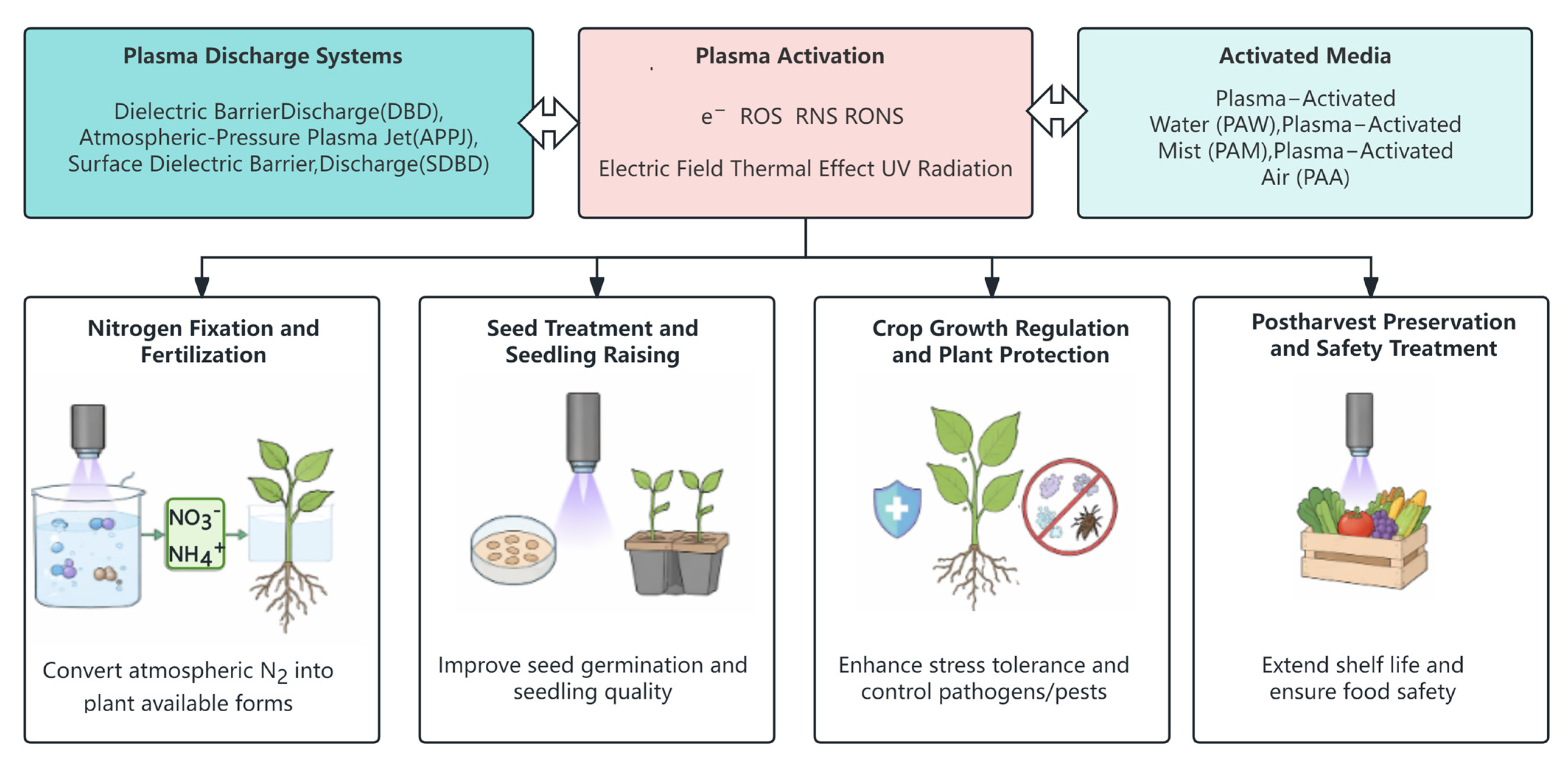
Figure 3 summarises four major application pathways of NTP in agriculture. The first is nitrogen fixation and fertilisation, in which atmospheric nitrogen is converted into plant-available forms and then delivered through water, nutrient solutions, mist, or soil-related media. The second is seed treatment and seedling raising, where surface sterilisation, seed-surface modification, wettability regulation, and dormancy breaking are linked to germination and seedling-establishment responses. The third is crop growth regulation and crop protection, in which root-zone chemistry, nutrient uptake, oxidative signalling, stress responses, and pathogen suppression jointly determine plant performance. The fourth is postharvest preservation and safety treatment, where microbial load, disease development, shelf life, and quality attributes need to be evaluated together. Accordingly, the following sections discuss these application pathways using scenario-specific indicators, including nitrogen-product composition and energy consumption for nitrogen fixation, germination and seedling traits for seed treatment, biomass and defence responses for crop regulation and protection, and microbial load and quality attributes for postharvest treatment.

3.1. Plasma-Based Agricultural Nitrogen Fixation and Fertilisation

Research on plasma-based agricultural nitrogen fixation has mainly focused on fixation pathways and the formation of agriculturally usable nitrogen products. The core objective is not simply to prepare “activated water”, but to activate N2, O2, and H2O under near-ambient temperature and pressure through discharge processes, allowing atmospheric nitrogen to enter agricultural systems through two main routes. In the first route, gaseous intermediates such as NO and NO2 are generated and then converted into liquid inorganic nitrogen species, mainly NO3 and NO2. In the second route, under specific catalytic or coupled conditions, the pathway may be extended towards NH3/NH4+ formation [1,2,3,29,48,59]. Compared with the Haber–Bosch process, the current advantage of this route does not lie in a higher nitrogen yield per unit energy. Rather, it lies in the possibility of converting air, water, and electricity directly into nitrogen-containing products that can be produced and used on site, especially in greenhouses, hydroponics, aeroponics, and distributed fertilisation systems [1,2,3,18]. From an agricultural perspective, plasma-based nitrogen fixation should therefore be evaluated not only by whether nitrogen is produced, but also by product form, production rate, energy or power efficiency, process controllability, and compatibility with liquid delivery systems. Nieduzak et al. developed a digitally manufactured air plasma-on-water reactor for nitrate production and evaluated the effects of electrode–water spacing, air flow rate, and voltage level. The maximum nitrate production rate reached 72.5 mg L−1 min−1, and the maximum efficiency reached 2.1 mg L−1 min−1 W−1 under an electrode–water spacing of 10 mm, a voltage level of 60%, corresponding to an rms voltage of approximately 1.6 kV, and an air flow rate of 0.1 slpm. The nitrate production rate also varied linearly with dimensionless plasma volume [47]. These results provide a quantitative basis for treating the air–discharge–liquid absorption route as a controllable nitrate-generation process rather than only as a proof-of-concept reactor. Pandey et al. further showed that a surface DBD plasma source can selectively generate nitrate- and nitrite-enriched PAW, with physicochemical properties regulated by applied voltage, frequency, treatment time, and water volume. This supports the view that nitrogen-product composition is an adjustable process output rather than a fixed result of discharge [26].
From the standpoint of fertilisation, plasma-fixed nitrogen must enter agricultural systems in usable medium forms. At least three application routes can be distinguished. The first is PAW or activated nutrient solution, which can be integrated directly into irrigation and soilless-cultivation systems and is suitable for continuous, low-dose application near the rhizosphere [4,8,26,47]. The second is PAM or related droplet and aerosol media, through which nitrogen fixation and delivery can occur simultaneously at high-specific-surface-area gas–liquid interfaces. This route is particularly relevant to aeroponics and local root-zone nitrogen supply [16]. The third route involves NOx gases generated by air discharge, which enter cultivation systems after absorption or in situ dissolution and then form nitrate-rich nutrient sources [30,32,33]. Gao Haotian et al. proposed a non-thermal plasma nitrogen-fixation method based on microdroplet interfaces, aiming to link discharge, gas–liquid reaction, and aeroponic fertiliser supply [16]. Takeshi et al. used air-derived dinitrogen pentoxide (N2O5) as a nitrogen source for plant cultivation and reported that basal N2O5 fertilisation showed almost 100% dissolution efficiency as nitrate in the culture medium and supported plant growth without clear damage symptoms. By contrast, top-dressing also transferred nitrogen into soil as nitrate, but excessive dosing caused adverse effects [32]. van Raak et al. examined NOx synthesis intensification through numbering-up and scaling-up of gliding arc reactors. Connected gliding-arc reactors achieved 124.6–158.3 mmol N h−1 and 2.29–2.42 MJ mol−1 N, corresponding to a 20.9% reduction in energy consumption compared with a single reactor [33].
Fertilisation outcomes must ultimately be evaluated through crop responses. Plasma nitrogen fixation can be regarded as an agricultural fertilisation technology only when the fixed nitrogen is converted into crop-available forms and produces measurable growth or nutrient-uptake responses. In a hydroponic pak choi system, Veerana et al. found that plasma-treated nutrient solution affected shoot and root growth, chlorophyll accumulation, protein accumulation, and nitrogen uptake. Compared with the untreated solution, total plant dry weight increased by 36.8% after 5 min treatment and by 80.5% after 10 min treatment, while the 10 min treatment increased shoot length by 25.6% and root length by 97.2% [53]. In hydroponically grown rocket, Sodini et al. showed that the effect of plasma-treated nutrient solution on yield, pigments, and mineral accumulation depended strongly on nitrogen fertilisation level. At 10 mM N, fresh biomass increased by 61% and 82% in the first and second cycles, respectively, whereas at 20 mM N, biomass decreased by 55% and 92% [54]. Chen et al. compared PAW prepared under different N2/O2 ratios in soybean seed germination and seedling growth tests and found that greater nitrate accumulation in the liquid phase corresponded to more pronounced seedling-growth responses, suggesting a relatively clear link between nitrogen fixation, fertilisation, and growth response [27]. A more system-oriented example was reported by Han et al., who used microbubble-enhanced cold-plasma activation in a commercial hydroponic system. Continuous-flow activation increased total fresh weight and flower number of chrysanthemum by 31.8% and 53.8%, respectively [36]. Together, these studies show that the fertilisation value of plasma-fixed nitrogen should be assessed using linked indicators, including nitrogen-product composition in the activated medium, crop nitrogen uptake, biomass accumulation, root and shoot development, and yield- or quality-related traits. They also show that plasma-treated nutrient solutions do not function as universally positive fertiliser inputs; their effects depend on treatment duration, background nitrogen level, activated-medium composition, and cultivation system.
The engineering value and application boundaries of in situ nitrogen-supply systems have also become important research topics. In agricultural scenarios, the focus has gradually shifted from physicochemical characterisation of activated media to the feasibility of using in situ nitrogen supply to reduce reliance on external nitrogen inputs. Existing studies suggest three main advantages. First, on-site production and application can be achieved in greenhouses, hydroponic systems, and aeroponic systems, thereby reducing storage and transport losses and shortening the time between production and use. Second, by adjusting the discharge source, gas–liquid interface, and reactor structure, the form of nitrogen-containing products can be modified so that plasma nitrogen fixation can be co-designed with fertilisation prescriptions. Third, coupling with recirculating nutrient-solution systems may enable low-dose and continuous nitrogen replenishment [16,32,33,36,47]. At the same time, the application boundaries are clear. NO3, NO2, H2O2, and acidity often change simultaneously, and the fertilisation effect is difficult to separate completely from oxidative-stimulation effects [4,26,53]. Moreover, most experiments remain limited to hydroponic, aeroponic, or small-scale controlled-environment conditions. Energy efficiency and operational stability therefore remain major constraints before plasma nitrogen fixation can be extended to field fertilisation or high-load continuous nitrogen supply [1,2,3,18,48,60].
A quantitative comparison of energy consumption across plasma nitrogen-fixation routes is essential for assessing agricultural feasibility. For gas-phase NOx synthesis, techno-economic analysis has used approximately 2.4 MJ mol−1 N as a representative high-performance plasma benchmark and estimated that energy consumption would need to decrease to about 0.7 MJ mol−1 N to become fully competitive with commercial nitrogen fertiliser production routes [61]. This benchmark should not be interpreted as the lowest value reported in all recent plasma systems, but as an economic reference point for judging whether new reactor designs are approaching the energy range required for practical fertiliser production. Product concentration alone is not a sufficient indicator unless it is considered together with energy cost, production rate, throughput, product recovery, and operational stability.
Recent atmospheric-pressure NTP systems have reported energy costs close to or below the 2.4 MJ mol−1 N benchmark, particularly in microwave, spark, and optimised gliding-arc configurations. In an electrode-free microwave plasma reactor, isolation of the plasma filament in a vortex flow produced approximately 0.77 L min−1 NOx, corresponding to a relative conversion of about 3.8%, with an energy cost of about 2 MJ mol−1 [62]. A more recent atmospheric-pressure microwave plasma torch coupled with a microbubble reactor reached an energy cost of 1.86 MJ mol−1 total NOx at an N2/O2 ratio of 1:1 and a specific input energy of 1500 J L−1. This system also achieved an energy efficiency of 82 g NOx kWh−1 and directly produced concentrated PAW containing 5 wt.% NO3 [41]. For gliding-arc reactors, numbering-up and series connection increased production rate while reducing energy consumption. Connected gliding-arc reactors achieved 2.29–2.42 MJ mol−1 N and 124.6–158.3 mmol N h−1, corresponding to a 20.9% reduction in energy consumption compared with a single reactor [33]. High-frequency spark discharge has also reached a comparable low-energy range, achieving high NO selectivity of approximately 95% at an energy cost of about 2.1 MJ mol−1 under a relatively high gas flow rate of 4 L min−1 [63]. These comparisons indicate that recent reactor optimisation has moved some plasma NOx systems into the 1.86–2.42 MJ mol−1 range, although product definitions and calculation bases differ among studies. This range remains above the approximately 0.7 MJ mol−1 N target estimated for full economic competitiveness [61].
DBD systems show a different energy–economic profile from microwave, spark, and gliding-arc routes. Their current value lies less in achieving the lowest gas-phase NOx energy cost and more in flexible reactor design, atmospheric-pressure operation, compatibility with packed beds or liquid interfaces, and controllable regulation of NOx concentration and product selectivity. Packed-bed DBD studies show that support materials, particle size, dielectric properties, and local microdischarge behaviour can substantially affect NOx formation. For example, γ-Al2O3 particles of 250–160 μm produced the highest NOx concentration and the lowest specific energy consumption among the tested packing materials and loading 5% WO3 on γ-Al2O3 further increased NOx concentration by about 10% compared with γ-Al2O3 alone [64]. In needle-array packed-bed DBD reactors driven by nanosecond pulses, pulse width, rising time, repetition rate, oxygen fraction, and packing material were shown to regulate NOx concentration, product selectivity, and energy cost [30]. DBD-based nitrogen fixation should therefore be evaluated mainly through NOx concentration, NO/NO2 or nitrate/nitrite selectivity, specific energy consumption, packing or catalyst stability, and compatibility with liquid-phase absorption. By contrast, microwave, spark, and gliding-arc systems currently provide stronger benchmarks for low-energy gas-phase NOx production.
For agricultural applications, liquid-phase nitrogen fixation and PAW/PAM preparation require separate evaluation because gas-phase energy cost expressed as MJ mol−1 N cannot be directly compared with aqueous RNS synthesis efficiency. In a continuous streamer–spark PAW reactor, dissolved NOx production reached 48.5 μmol min−1 with a standard energy efficiency of approximately 16 mmol MJ−1 [65]. In a large-volume water-cathode glow-type PAW reactor operated in atmospheric-pressure air, a 5 L water volume reached 8 mM RNS after activation, with an RNS synthesis efficiency of 61 nmol J−1 and an RNS production rate of 526 μmol min−1 [66]. These results show that agricultural evaluation should distinguish at least three levels: gas-phase NOx energy cost, aqueous RNS synthesis efficiency, and crop-level nitrogen use or yield response. A plasma system with low gas-phase energy cost is not automatically optimal for agriculture unless it can efficiently transfer fixed nitrogen into water or nutrient solution and maintain suitable NO3/NO2/NH4+ composition, pH, ORP, H2O2 level, treatment volume, and biological compatibility.
Research on agricultural nitrogen fixation has therefore evolved from simple characterisation of nitrogen-containing components in activated media towards validation of in situ nitrogen supply within crop systems. Existing studies have reported measurable crop responses under hydroponic, aeroponic, and controlled-environment conditions, including changes in dry weight, shoot and root growth, biomass accumulation, flower number, and nitrogen-use-related traits [36,53,54]. However, the practical value of plasma-fixed nitrogen depends on quantitative performance indicators across three linked levels: gas-phase NOx generation, liquid-phase nitrogen retention, and crop-level utilisation. These indicators include gas-phase NOx energy cost, aqueous RNS synthesis efficiency, NO3/NO2/NH4+ composition, treated liquid volume, treatment throughput, product selectivity, operational stability, equipment durability, and crop-level nitrogen-use or yield response [1,2,3,4,16,18,32,33,41,47,60,61,62,63,64,65,66].

3.2. Plasma-Based Seed Treatment and Seedling Raising

In seed treatment and seedling production, germination performance and emergence uniformity are among the most frequently reported outcomes. Several foundational studies provided early evidence that plasma treatment can affect seed germination and early growth, while also showing that the response depends on discharge mode, treatment dose, and seed species. Šerá et al. reported that microwave plasma treatment affected the germination response of Chenopodium album, indicating that plasma-induced seed responses had already been observed in early microwave-plasma systems [43]. In subsequent work, Šerá et al. further showed that plasma treatment influenced wheat and oat germination and early growth, providing evidence that plasma effects were not limited to a single plant species [67]. Bormashenko et al. examined the interaction between cold radiofrequency plasma and bean seeds (Phaseolus vulgaris) and linked the biological response to seed-surface modification, particularly changes in wettability, hydrophilisation, and water uptake [42]. These early studies are important because they show that plasma seed treatment should be interpreted not only as a germination-regulation method, but also as a surface-mediated process involving discharge conditions, seed-coat properties, and water-imbibition behaviour.
More recent studies have confirmed seed treatment as one of the most extensively investigated directions in plasma agriculture. However, the central conclusion is not that plasma treatment universally improves seed performance, but that different discharge sources, treatment doses, and seed species correspond to different response windows. Durcanyova et al. compared three atmospheric-pressure plasma sources for soybean seed treatment and found that, even under the same treatment objective, the discharge sources differed markedly in their effects on seed-surface properties and germination outcomes. This indicates that treatment conditions cannot be transferred directly among devices or crop species [28]. Tephiruk et al. used gas–liquid interface plasma induced by electrohydraulic discharge to prime green oakleaf lettuce seeds. Under immersed treatment, germination reached 98.3%, compared with approximately 80% in the control; germination synchrony was shortened from approximately 15 h to about 5 h, and mean germination time was reduced from about 2.5 d to 1.87 d, while no significant negative effects on subsequent plant height, leaf number, or root length were observed [68]. This result suggests that, in seedling-production scenarios, plasma treatment may be more valuable for improving germination synchrony and shortening germination time than for simply increasing final germination percentage. In soybean, Sayahi et al. further evaluated cold-plasma seed treatment using indicators including germination, root length, surface decontamination, and antioxidant-enzyme activity, while Bansemer et al. compared different direct-treatment reactor concepts across seed types and showed that device configuration itself is an important determinant of treatment outcome [69,70,71].
In addition to direct seed treatment, indirect treatment media have also been studied in seedling production. Across different crops and seedling systems, direct seed treatment and indirect PAW treatment do not act through identical pathways. Direct plasma treatment mainly modifies the seed surface through etching, hydrophilisation, surface functionalisation, and decontamination, whereas PAW introduces soluble reactive species and nitrogen-containing products into the imbibition or irrigation environment. Chen et al. prepared PAW using N2/O2 gas ratios of 100/0, 80/20, 50/50, 20/80, and 0/100 and found that, at an N2/O2 ratio of 50/50, the nitrate concentration in PAW increased to 166.4 mg L−1, compared with approximately 0.2 mg L−1 in untreated distilled water. Compared with seeds immersed in distilled water, soybean seedling plant length was nearly doubled after treatment with PAW prepared at N2/O2 ratios of 80/20 and 50/50, indicating that the seedling response was closely associated with electrical conductivity and nitrate accumulation in the activated liquid [27]. In soybean, Mahanta et al. used PAW generated under different voltage levels and activation times, including 30, 50, and 70 kV and 3, 5, and 7 min, and monitored germination and early growth for 10 d. The treatment that produced the best growth response was then used to evaluate heavy-metal uptake under Pb and ZnO nanoparticle exposure, where the uptake rate of heavy metals by soybean plants was reported to be approximately fivefold lower in the presence of ZnO nanoparticles [72]. These results show that indirect PAW treatment should not be evaluated only by germination percentage, but also by liquid-phase chemistry, nitrate accumulation, electrical conductivity, seedling length, early biomass response, and stress- or contaminant-related uptake behaviour.
Some studies have extended the observation period from germination to the seedling stage and later growth, showing that plasma seed treatment should be assessed beyond early germination indices alone. Ercan Karaayak et al. exposed sweet basil seeds to air cold plasma for 30 s, allowed them to germinate for 14 d under controlled conditions, and then cultivated them in a laboratory hydroponic system for a further 21 d. The treated group showed higher fresh weight, dry weight, plant height, leaf index, leaf length, and leaf width than the control group, whereas leaf colour, texture, and root length did not differ significantly [73]. Inanoglu et al. further combined plasma seed treatment with plasma-activated nutrient solution in a greenhouse ebb-and-flow hydroponic system. After 21 d of cultivation, the combined treatment produced higher plant height, longer root length, more branches, larger leaves, and higher leaf zinc content than the untreated-seed and standard-nutrient-solution control, while dry weight, wet weight, moisture content, greenness, texture, aroma content, and sensory attributes did not differ significantly [74]. These results indicate that, for aromatic leafy crops such as basil, plasma treatment may affect plant architecture and mineral composition more consistently than biomass or sensory-quality traits.
In studies more closely linked to later cultivation stages, Jankaityte et al. cultivated two lettuce cultivars, ‘Pearl Gem’ and ‘Cervanek’, in an aeroponic system for 45 d after seed treatment with low-pressure air plasma for 3 min or atmospheric DBD plasma for 3 and 5 min. Although seed treatments affected germination and early growth, they did not change biomass gain or the head/root ratio in either cultivar. Instead, they increased the photosynthetic performance index and photosynthetic pigments in ‘Pearl Gem’, enhanced phenolic compounds and antioxidant activity in ‘Pearl Gem’, and increased anthocyanin content in ‘Cervanek’ [75]. Judickaite et al. compared low-pressure cold plasma and atmospheric DBD plasma treatments in Stevia rebaudiana grown under soil and aeroponic conditions, showing that cultivation environment can modify the response of morphometric and biochemical traits to seed processing [76]. Mehrabifard et al. further compared nitrogen-, oxygen-, and air-plasma-activated water in lettuce germination and seedling-growth tests, indicating that activated-medium type and RONS composition should be considered when evaluating seedling-production outcomes [77]. Together, these studies show that plasma seed or PAW treatment should not be evaluated only by final germination percentage, but also by later-stage indicators such as plant architecture, root development, biomass distribution, photosynthetic performance, secondary metabolites, mineral composition, and cultivar- or cultivation-system-specific responses.
Seed treatment and seedling raising therefore represent one of the most developed application areas in plasma agriculture. Across the reviewed studies, the most consistently reported indicators include germination percentage, germination synchrony, mean germination time, seed-surface wettability, early root development, and seedling-establishment traits. However, the evidence also shows that these responses are not uniform across discharge sources, treatment doses, seed species, and activated media. Direct plasma treatment is more closely associated with seed-surface modification, hydrophilisation, decontamination, and early germination behaviour, whereas indirect PAW treatment additionally depends on liquid-phase chemistry, including nitrate/nitrite accumulation, EC, pH, ORP, and RONS composition. Later-stage responses, such as biomass accumulation, photosynthetic performance, secondary metabolites, mineral composition, and sensory or quality traits, are less consistent and are more strongly affected by crop type, cultivar, cultivation system, and nutrient background [10,11,12,13,14,27,28,42,43,67,68,72,73,74,75,76,77]. Plasma-based seed treatment should therefore be evaluated through a stage-specific indicator system rather than only by final germination percentage.

3.3. Plasma-Based Regulation of Crop Growth and Crop Protection

When plasma applications extend from seed treatment to nutrient solutions, the rhizosphere, and crop-growth-stage interventions, their effects should be evaluated through crop growth, physiology, nutrient uptake, and stress-response indicators rather than through a general statement of growth promotion. In an NFT lettuce system, Nicoletto et al. reported that NTP-treated nutrient solution increased lettuce yield by 12% compared with the untreated control. The treated plants also showed higher total soluble solids, significantly higher electrical conductivity and titratable acidity, and, under high-ionisation treatment, higher N, P, K, and leaf pigment contents, whereas antioxidant content did not change significantly [15]. In hydroponic pak choi, Veerana et al. treated Hoagland solution with plasma gas for 0, 5, or 10 min once per week and found that total plant dry weight increased by 36.8% after 5 min treatment and by 80.5% after 10 min treatment. The 10 min treatment also increased shoot length from 11.2 to 14.1 cm and root length from 13.8 to 27.2 cm, corresponding to increases of approximately 25.6% and 97.2%, respectively [53]. In hydroponically grown rocket [Diplotaxis tenuifolia (L.) DC.], Sodini et al. showed that the response to plasma-treated nutrient solution depended strongly on background nitrogen level. At 10 mM N, fresh biomass increased by 61% and 82% in the first and second cycles, respectively, whereas at 20 mM N, fresh biomass decreased by 55% and 92%; at 1 mM N, the treatment had no positive effect on fresh biomass and also reduced dry biomass in both cycles [54]. Empirical studies in controlled-environment agriculture have further expanded to plasma-enhanced aeroponics and PAW-based nutrient delivery. In plasma-enhanced aeroponic lettuce, Qureshi et al. reported that the 38 kV indirect mist configuration produced 259.4 g plant−1 fresh biomass and 15.1 g plant−1 dry biomass, with 70 cm plant−1 root length and a peak photosynthetic rate of 21 µmol CO2 m−2 s−1. Leaf nitrite remained low at 2.29 mg kg−1 FW, nitrate remained within reported dietary safety limits at 2900 mg kg−1 FW, soluble sugars reached 29.41 g kg−1, and antioxidant capacity increased by 102% compared with soil cultivation [78]. In aeroponic baby leaf lettuce, Puccinelli et al. found that low-frequency application of NTP-activated nutrient solution, up to 5% of irrigation events, increased leaf biomass by 18–19%, flavonoids by 16–18%, phenols by 20–21%, and antioxidant capacity by 29–53%, whereas application frequencies of 25% or above reduced fresh weight, dry weight, and root biomass [79]. Dahal et al. applied atmospheric-pressure-air-plasma-activated water to maize and pea and found that the optimal PAW treatment duration differed between crops, with 6 min treatment more suitable for maize and 2 min treatment more suitable for pea. The evaluated responses included germination, growth, chlorophyll, phosphorus, NO2, NO3, NH4+, and leaf area [80]. In maize landraces under cold stress, Galan et al. showed that PAW responses were genotype-dependent: PAW increased root length in the cold-exposed SVGB-11742 variety and increased relative water content in cold-exposed SVGB-718, whereas chlorophyll-related responses were not consistently improved across genotypes [81]. Wang et al. reported the use of multitubular DBD-generated PAW for promoting the growth of young lettuce plants, while Priatama et al. showed in tomato that PAW irrigation increased cotyledon area by up to 4-fold and seedling biomass by up to 3.6-fold. At harvest, PAW irrigation produced a 3-fold increase in fruit number and up to a 3.9-fold increase in plant biomass, although the response depended on PAW concentration [82,83]. Taken together, these studies show that plasma-based crop growth regulation is not a uniform yield-stimulation effect, but a treatment- and system-dependent response involving root-zone chemistry, nutrient availability, oxidative signalling, crop species, developmental stage, and cultivation mode.
In crop-protection scenarios, NTP should be evaluated through both pathogen-suppression indicators and host-defence indicators. In a mango anthracnose system, Wu et al. found that 9 min DBD treatment reduced the spore germination rate and spore viability of Colletotrichum asianum by 95.48% and 98.82%, respectively, and reduced mango disease incidence and lesion diameter by 48.00% and 62.95% [84]. The work of Liu Qianchen et al. on the kiwifruit canker pathogen Pseudomonas syringae pv. actinidiae showed that DBD-prepared PAW produced an activation-time-dependent bactericidal effect. After 120 s PAW treatment, the pathogen population decreased by 4.38 log10 CFU mL−1, accompanied by DNA damage, membrane-barrier disruption, intracellular-content leakage, and ROS accumulation [55]. In a hydroponic lettuce soft-rot system, Ran et al. further found that ultra-long-lasting PAW decreased pathogen levels by approximately 1 log10 CFU mL−1 and increased leaf area, leaf weight, root length, and root weight by 75%, 20%, 108.33%, and 150%, respectively. Defence-related enzymes such as catalase and β-1,3-glucanase also increased by 112.5% and 5.13% [56]. These results indicate that plasma-based crop protection should not be interpreted only as direct microbial inactivation, but as a combined process involving pathogen suppression, plant-growth recovery, defence-enzyme activation, and host-resistance responses. Beyond biotic stress, plasma-treated media have also been evaluated using abiotic-stress-related physiological indicators. Veerana et al. reported that, under 20 mM NaCl stress, pak choi grown with 10 min plasma-gas-treated Hoagland solution showed higher plant length and leaf number, while the salinity-related genes HHP3 and WRKY2 were upregulated in roots by approximately 6.2- and 5.0-fold, respectively [53]. Mahanta et al. suggested in soybean that plasma-related treatment altered subsequent heavy-metal uptake behaviour, with Pb uptake reported to be approximately fivefold lower under ZnO nanoparticle-associated treatment conditions [72]. Nevertheless, current evidence for stress mitigation still comes mainly from studies of single crops, single stress factors, and relatively short treatment periods. Therefore, stress-related plasma applications should be evaluated using pathogen load, disease severity, defence-enzyme activity, stress-gene expression, growth recovery, and contaminant-uptake indicators rather than by the general statement that plasma enhances crop resistance [10,11,53,55,56,72,84].
Differences in crop response can be further explained from the perspective of treatment dose. In crop growth regulation, dose is not determined only by exposure duration, but also by discharge intensity, activation time, application frequency, spraying interval, activated-medium chemistry, and background nutrient status. In hydroponic pak choi, increasing nutrient-solution plasma treatment from 5 to 10 min increased total plant dry weight from 36.8% above the control to 80.5% above the control, indicating that biomass accumulation responded strongly to treatment duration within the tested range [53]. In NFT lettuce, both low- and high-ionisation treatments affected crop performance, but high-ionisation treatment was more strongly associated with mineral accumulation and leaf pigment formation, whereas the overall yield increase was approximately 12%. This suggests that treatment intensity may influence quality-related and yield-related traits to different extents [15]. In aeroponic baby leaf lettuce, low-frequency application of NTP-activated nutrient solution, up to 5% of irrigation events, increased leaf biomass by 18–19% and enhanced flavonoids by 16–18%, phenols by 20–21%, and antioxidant capacity by 29–53%. However, application frequencies of 25% or above reduced fresh weight, dry weight, and root biomass [79]. The nutrient background also altered the dose response. In hydroponically grown rocket [Diplotaxis tenuifolia (L.) DC.], the same NTP treatment increased fresh biomass by 61% and 82% in the first and second cycles under 10 mM N but decreased fresh biomass by 55% and 92% under 20 mM N [54]. Similarly, in aeroponic lettuce, the combination of plasma intensity and spraying interval determined the final response. Compared with the low-intensity 45 min interval treatment, high plasma intensity combined with a 45 min spraying interval increased leaf area by 97%, stem diameter by 72%, leaf number by 49%, edible yield by 210%, and total biomass by 203%. Mineral uptake also increased, with N, K, P, Ca, and Mg rising by 18.2%, 16.7%, 32.3%, 20.2%, and 11.2%, respectively [85]. These comparisons indicate that crop-specific responses are jointly determined by plasma dose and cultivation context. Therefore, higher intensity, longer activation, or more frequent application cannot be assumed to be universally beneficial; evaluation should be based on dose–response windows defined for each crop, cultivation system, and target indicator.
Plasma applications in crop growth regulation and crop protection therefore involve nutrient solutions, rhizosphere environments, plant tissues, pathogens, and stress-response processes at multiple levels. The reviewed studies show that NTP and plasma-activated media can affect biomass accumulation, root and shoot development, mineral uptake, photosynthetic performance, antioxidant-related quality traits, pathogen load, disease severity, defence-enzyme activity, and stress-gene expression. However, these effects are strongly dose-dependent, crop-specific, and system-specific. Treatment intensity, activation duration, application frequency, spraying interval, activated-medium composition, and nutrient background can shift the response from growth regulation and defence activation to weak effects or inhibition. Therefore, the agricultural effects of plasma treatment should be interpreted through a linked indicator framework covering crop growth, physiological status, nutrient uptake, pathogen suppression, host-defence response, and stress tolerance, rather than as a universal growth-promoting or antimicrobial effect [15,53,54,55,56,72,78,79,80,81,82,83,84,85].

3.4. Plasma-Based Soil Improvement and Remediation

Compared with seed treatment, hydroponics, and postharvest treatment, soil applications are more complex because soil contains mineral particles, organic matter, water films, pores, roots, and diverse microbial communities. The objective is usually not complete sterilisation, but the reduction in excessive microbial or pathogen pressure while maintaining soil ecological function. Ketya et al. showed that gas generated by atmospheric-pressure DBD plasma inactivated more than 90% of bacterial cells and fungal spores after 5 and 20 min of treatment, respectively, in suspension and vermiculite. In nursery soil, gas generated using four pairs of DBD electrodes eliminated approximately 50% of bacterial cells and 40% of fungal spores, whereas in field soil, 60 min treatment reduced aerobic natural microbiota by approximately 10–29% [58]. The same study also reported that plasma-gas treatment did not drastically alter the overall soil microbial community composition, although microbial diversity became slightly lower and the relative abundances of Proteobacteria and Basidiomycota decreased; H2O2, NOx, and nitrate levels, as well as spinach growth, increased in plasma-gas-treated soil [58]. These results indicate that soil plasma treatment should be evaluated through microbial-load reduction, microbial-community structure, nitrate or RONS accumulation, and plant-growth response rather than through a single sterilisation indicator.
From the perspective of nutrient regulation, PAW, activated air, and nitrogen-containing activated mist may influence local nitrogen cycling and nutrient availability after entering soil through changes in NO3, NO2, pH, ORP, EC, and RONS composition [3,4,26]. However, compared with nutrient-solution systems, soil introduces additional buffering and transformation processes, including mineral adsorption, organic matter reactions, water retention, pore diffusion, and microbial metabolism. Therefore, the behaviour of plasma-generated nitrate, nitrite, H2O2, and other reactive components in soil cannot be directly inferred from hydroponic or PAW experiments. A more cautious interpretation is that plasma-activated media can participate in soil nutrient-transformation processes, whereas long-term fertility effects and practical agronomic benefits should be evaluated through soil nitrate and ammonium dynamics, pH and EC changes, enzyme activities, microbial-community stability, crop uptake, and yield-related indicators [5,6,25,26].
In pollution remediation, plasma is more appropriately regarded as an intensification tool for soil pretreatment or phytoremediation than as a stand-alone agronomic input. In diesel-contaminated soil, Zhao et al. found that, at the 50th day of ryegrass growth, NTP pretreatment increased diesel removal efficiency by 16–30% compared with the non-plasma control. Both clean and diesel-polluted soils pretreated with NTP also promoted ryegrass shoot length and biomass, especially after the 35th day [57]. The study further suggested that nitrate nitrogen fixed by NTP stimulated nitrate reductase activity in leaves and contributed to plant growth, while part of the fixed nitrogen was transformed into ammonium nitrogen for biological activity [57]. This result indicates that plasma pretreatment can link pollutant degradation, nitrogen transformation, and plant establishment, but these effects should be assessed together rather than interpreted as simple soil “improvement”.
For heavy-metal systems, more direct evidence currently comes from seed or hydroponic studies rather than from genuine soil environments [72]. Therefore, plasma is more appropriately positioned at present as an auxiliary technology for pollution-remediation systems. In heavy-fuel-oil-contaminated soil, Zaltauskaite et al. combined cold-plasma-treated alfalfa with individual and bioaugmentation-assisted phytoremediation. The study reported that bioaugmentation-assisted phytoremediation was up to 18% more efficient in heavy-fuel-oil removal, and that cold plasma seed treatment further enhanced heavy-fuel-oil removal by alfalfa while supporting plant growth and microbial symbiotic capacity [86]. These findings suggest that plasma treatment may improve remediation performance mainly by strengthening the plant–microbe remediation system, rather than by replacing phytoremediation or bioaugmentation.
Overall, soil-related plasma research remains less extensive than seed treatment, nutrient-solution treatment, or postharvest treatment. Available studies nevertheless show that soil applications involve at least three linked evaluation dimensions: microbial-load control, physicochemical and nutrient transformation, and pollutant-remediation performance. Because soil systems involve microbial communities, nutrient cycling, pollutant migration, adsorption–desorption processes, and plant–microbe interactions, plasma should currently be regarded as a tool for soil-environment regulation and remediation intensification rather than as a direct equivalent of conventional fertilisation or chemical disinfection [5,6,25,26,57,58,86].

3.5. Postharvest Preservation and Safety Treatment of Agricultural Products Using Plasma

Postharvest treatment is one of the agricultural NTP application areas in which evaluation indicators are relatively well defined. These indicators include microbial load, pathogen viability, disease incidence, lesion development, shelf life, storage quality, colour, texture, enzyme activity, and nitrite-related safety indices. In a mango anthracnose system, Wu et al. showed that 9 min DBD treatment reduced the spore germination rate and spore viability of Colletotrichum asianum by 95.48% and 98.82%, respectively, and decreased mango disease incidence and lesion diameter by 48.00% and 62.95% [84]. In blueberries, Gan et al. found that PAW inactivated surface microorganisms through membrane damage and DNA denaturation induced by plasma-generated reactive oxygen species, while PAW treatment maintained better storage quality than water treatment during storage [87]. For fresh-cut pears, Zhang et al. reported that in-package atmospheric cold plasma inhibited mesophilic aerobic bacteria, yeasts, and moulds during cold storage, with the CP3 treatment, 65 kV for 1 min, producing the greatest shelf-life extension. The same treatment also retarded respiration and helped maintain organoleptic and quality attributes, although decontamination did not simply increase with plasma intensity [88]. In vegetable-juice preservation, Lin et al. used cold nitrogen plasma to modify a cuminaldehyde/β-cyclodextrin inclusion complex and found that the plasma-modified complex showed stronger antibacterial activity against Escherichia coli O157:H7 than the untreated inclusion complex, with TEM observations showing membrane disruption after treatment [89]. For fermented and pickled vegetables, the evaluation target shifts from microbial inactivation alone to microbial-community regulation and nitrite-risk control. In pickled radish, Wei et al. showed that DBD cold plasma treatment at 40 kV for 60 s preferentially reduced Gram-negative nitrite-producing bacteria while retaining lactic acid bacteria. The nitrite peak decreased from 27.03 mg kg−1 in the control to 11.2 mg kg−1, and total nitrite accumulation decreased to 42.6% of the control [90]. Related work on fermented cabbage also positioned cold plasma as a strategy for controlling nitrite accumulation by regulating microbial-community structure [91]. These studies indicate that postharvest plasma applications should be evaluated through product-specific safety and quality indicators rather than through microbial reduction alone.
In cereal and feed systems, plasma applications have focused mainly on surface fungal contamination, storage-risk reduction, germination preservation, mycotoxin-related safety, and quality regulation. In buckwheat grains, Mravlje et al. showed that oxygen-plasma glow treatment reduced initial fungal contamination to less than 30% in common buckwheat and to about 10% in Tartary buckwheat, although the stronger decontamination effect was accompanied by a marked reduction or even cessation of germination capacity [92]. Further work on fungi colonising buckwheat grains confirmed that plasma sensitivity is species-specific: after 60 s cold-plasma treatment, more than 50% reduction in contamination rate was observed for Alternaria alternata, Aspergillus flavus, A. niger, Cladosporium cladosporioides, and Fusarium graminearum, whereas some other Fusarium species showed only up to 20% decontamination. The dose of oxygen atoms required for a 1-log reduction was estimated at 1024–1025 m−2 [93]. These results show that grain decontamination should be assessed together with seed viability, fungal species, and evaluation method rather than by a single fungal-reduction value. Research on Fusarium and mycotoxin control has likewise suggested that NTP is more appropriately positioned as a tool for reducing fungal-contamination pressure and supporting integrated storage-risk management, rather than as a universal complete-detoxification method across all cereal and feed systems [94,95]. In rice systems, cold plasma has also been used for enzyme inactivation and quality regulation. Zhou et al. reported that air plasma did not significantly inactivate lipase and lipoxygenase in lightly milled rice, although peroxidase activity decreased from 148.59 to 68.60 U g−1 min−1 [96]. In argon DBD-treated lightly milled rice, treatment at 2 kV for 10 min reduced the water-droplet contact angle from 66.66° to 58.99°, shortened optimal cooking time by 5.4 min, and increased water absorption capacity and volume expansion rate by 54.19% and 68.42%, respectively [97]. For brown rice, atmospheric-pressure plasma treatment for 15 min reduced cooking time, hardness, and chewiness by 27.40%, 30.68%, and 40.23%, respectively [98]. Compared with milling, plasma treatment also better retained the nutritional quality of brown rice; milling reduced protein and dietary fibre contents to 66.23% and 29.31% of their original levels, whereas plasma-treated brown rice preserved a more complete structure and showed reduced hardness, chewiness, and gumminess after 60 s treatment [99]. Therefore, in cereal and feed applications, plasma treatment should be evaluated through linked safety and quality indicators, including fungal contamination rate, log reduction, germination capacity, mycotoxin risk, enzyme activity, cooking time, water absorption, texture, volatile compounds, and nutrient retention [92,93,94,95,96,97,98,99].
For animal-derived agricultural products, NTP and PAW applications should be evaluated through both microbial-safety indicators and quality-structure indicators, including pathogen reduction, biofilm disruption, chilled-storage stability, lipid and protein oxidation, water-holding capacity, gel strength, texture, colour, and sensory acceptability. On eggshells, Cui et al. showed that thyme oil and cold nitrogen plasma acted synergistically against Salmonella, indicating that plasma-assisted essential-oil treatment can reduce pathogen risk on egg surfaces more effectively than either treatment alone [100]. In pork loin, cold nitrogen plasma-assisted lemongrass oil treatment increased the anti-Listeria monocytogenes effect, with bacterial reduction reaching approximately 2.8 log under the combined treatment [101]. In poultry meat, cold-plasma-treated thyme oil/silk fibroin nanofibers reduced Salmonella Typhimurium by 6.10 log CFU g−1 in chicken meat and 6.06 log CFU g−1 in duck meat at 25 °C, showing that plasma modification of antimicrobial packaging materials can markedly strengthen pathogen inhibition [102]. Lin et al. further applied cold nitrogen plasma to S. Typhimurium biofilms on poultry eggshells, showing that plasma treatment could disrupt biofilm structure and reduce egg-surface contamination risk [103]. In processed meat systems, plasma-enhanced nutmeg essential-oil solid liposomes reduced microbial growth, lipid oxidation, protein oxidation, and protein degradation in pork meat batters during 4 d storage at 4 °C, while also improving water-holding capacity and maintaining texture and colour [104]. In aquatic products and protein-gel systems, PAW–gelatin coatings, PAW rinsing, and atmospheric cold plasma treatment have been used to regulate microbial quality, gelatin oxidation, controlled PAW release, myofibrillar-protein conformation, and thermal gelation behaviour in snakehead fillets, bighead carp surimi, and beef myofibrillar proteins [105,106,107]. These studies indicate that plasma treatment of animal-derived products should not be assessed only by immediate pathogen reduction, but also by oxidation control, protein structural modification, gel-network formation, storage stability, and sensory-quality retention [100,101,102,103,104,105,106,107].
For drying-process intensification and biofilm control, the evaluation focus shifts from direct microbial inactivation to mass-transfer efficiency, energy-related drying performance, tissue microstructure, bioactive-compound retention, and surface-attached microbial communities. In yam slices, cold plasma pretreatment combined with far-infrared drying shortened drying time by 16, 24, and 32 min for 3, 5, and 7 mm slices at 60 °C, respectively, indicating that plasma pretreatment can accelerate moisture migration under thickness-dependent conditions [108]. In green peas, cold plasma pretreatment reduced drying time by up to 18.18% and increased the effective moisture diffusivity coefficient by up to 66.31%, with reported diffusivity values ranging from 5.9629 to 9.9172 × 10⁻¹⁰ m2 s−1 [109]. In blueberry drying, gliding-arc discharge low-temperature plasma pretreatment at 900 W for 18 s reduced drying time by 31.25%, showing that very short plasma exposure can alter subsequent drying behaviour when power and exposure time are properly matched [110]. Related drying studies on garlic slices, yam, tomato, and jackfruit further show that plasma or PAW-based pretreatments can affect drying kinetics, moisture migration, microstructure, active ingredients, volatile components, and physicochemical quality [108,109,110,111,112,113,114,115,116]. In biofilm-control studies, cold nitrogen plasma eliminated Listeria monocytogenes biofilms at 600 W for 220 s, while sequential treatment with cold nitrogen plasma and bacteriophages reduced E. coli O157:H7 biofilm counts by 5.71 log CFU cm−2 on vegetable surfaces [117,118]. PAW also reduced Pseudomonas fluorescens biofilm biomass by up to 1.29 log CFU mL−1 and downregulated quorum-sensing-related genes, including AHL synthesis/receptor and AI-2 transporter genes [119]. Therefore, plasma-assisted drying and biofilm control should be assessed using drying time, effective moisture diffusivity, energy consumption, microstructure, nutritional retention, biofilm log reduction, extracellular-matrix disruption, and quorum-sensing regulation rather than by a general statement of processing improvement [108,109,110,111,112,113,114,115,116,117,118,119,120].
Overall, postharvest preservation and safety treatment represent an application field in which NTP and PAW have been tested across fruits, vegetables, cereals, feed, animal-derived products, drying-process systems, and biofilm-control scenarios. The reviewed studies show that plasma treatment can affect microbial load, pathogen viability, fungal contamination, disease incidence, nitrite accumulation, enzyme activity, drying kinetics, protein structure, gel properties, texture, colour, and storage quality. However, the applicability of plasma treatment cannot be judged by microbial inactivation alone. Excessive treatment may reduce seed viability in grains, alter product texture or oxidation status, or produce quality changes that are undesirable for specific products. Therefore, postharvest plasma applications should be evaluated through a combined safety–quality framework, including pathogen reduction, disease suppression, toxin or nitrite control, biofilm disruption, shelf-life extension, sensory acceptability, nutrient retention, structural stability, and processing efficiency. This framework better reflects the dose-sensitive nature of plasma treatment and the product-specific balance between decontamination efficiency and quality preservation [6,84,87,88,89,90,91,92,93,94,95,96,97,98,99,100,101,102,103,104,105,106,107,108,109,110,111,112,113,114,115,116,117,118,119,120].
Table 2 summarises the typical agricultural applications of NTP and their principal outcomes, illustrating its roles in nitrogen fixation and fertilisation, seed treatment and seedling raising, crop growth regulation and crop protection, and postharvest preservation and safety treatment, including effects on plant growth, nutrient uptake, microbial control, and quality maintenance.

4. Key Technologies and Equipment Advances in Plasma Agriculture

4.1. Optimisation of Discharge Systems and Reactor Configuration

From an engineering perspective, the central issue in agricultural plasma systems is not only whether a discharge can be generated, but whether the required combination of RONS can be delivered continuously, controllably, and with acceptable energy consumption in the target medium and application scenario [1,2,3,4,18,48]. Accordingly, discharge-system optimisation should be evaluated using linked technical indicators, including reactive-species yield, product selectivity, gas–liquid mass-transfer efficiency, treatment throughput, medium compatibility, thermal load, and operational stability, rather than by discharge intensity alone.
With respect to power-supply mode, pulsed power, RF/ICP excitation, and microwave plasma correspond to different technical targets. Pulsed power can provide high instantaneous electric fields under relatively low average thermal load, making it suitable for systems in which electron-energy utilisation must be balanced with thermal protection of biological or liquid media. In nanosecond-pulsed DBD plasma-assisted catalytic ammonia synthesis, Xu et al. reported that the DBD/Ni-MOF-74 system reached an ammonia synthesis rate of 5145.16 μmol g−1 h−1 and an energy efficiency of 1.27 g kWh−1, showing that pulsed-discharge performance should be evaluated through both product formation rate and energy efficiency [29]. RF/ICP systems can provide more uniform discharge and continuous operation, but their equipment complexity, power-coupling requirements, and system cost remain higher [37]. Microwave plasma is more closely associated with high-throughput NOx generation and high-concentration activated-medium preparation because high-energy-density discharge can be maintained under relatively large gas fluxes [38,39]. For example, microwave plasma combined with a catalyst achieved an NO2 concentration of 9.6% with an energy cost of 1.28 MJ mol−1 under a gas flow rate of 30 L min−1 [38]. Therefore, the choice of power-supply mode should be linked to the target application: mild seed or surface treatment requires low thermal load and dose uniformity; PAW/PAM preparation requires efficient gas–liquid transfer and stable liquid chemistry; and nitrogen-fixation equipment requires simultaneous optimisation of gas throughput, product concentration, selectivity, and energy cost.
In terms of reactor configuration, gas–liquid interface intensification, packed-bed structures, gliding-arc systems, microdroplet routes, and microbubble-assisted systems correspond to different agricultural tasks. For PAW preparation, reactor configuration directly affects liquid-phase RONS composition and therefore determines whether the output is more suitable for oxidation, nitrogen enrichment, or antimicrobial treatment. Kooshki et al. used a fountain-type DBD reactor to selectively tune RONS production in PAW by changing the central electrode material and cooling conditions, indicating that reactor structure can regulate target-component output rather than merely increase total reactivity [121]. Fujera et al. realised dissolved NOx production of 48.5 μmol min−1 with a standard energy efficiency of approximately 16 mmol MJ−1 in a flowing streamer–spark discharge system over a water surface, while also demonstrating biocidal performance [65]. For high-throughput gas-phase NOx synthesis, packed-bed and gliding-arc structures provide different routes. Li et al. used a nanosecond-pulse-driven needle-array packed-bed DBD reactor and obtained NOx concentrations of 1.12% in an unfilled reactor and 0.97% in a γ-Al2O3 packed-bed reactor, with corresponding energy costs of 17 and 33 MJ mol−1. The same study also showed that pulse width, pulse rising time, repetition rate, oxygen fraction, and packing material could regulate NOx concentration, selectivity, and energy cost [30]. By contrast, van Raak et al. showed that connected gliding-arc reactors achieved 124.6–158.3 mmol N h−1 and 2.29–2.42 MJ mol−1 N, corresponding to a 20.9% reduction in energy consumption compared with a single reactor [33]. In addition, microdroplet and microbubble-assisted structures are more closely aligned with agricultural end-use delivery because they combine interfacial reaction, mass transfer, and medium delivery within the same design. Microdroplet-based plasma nitrogen fixation links gas–liquid reaction with aeroponic fertiliser supply [16], while microbubble-enabled and microbubble-enhanced cold-plasma systems improve the transfer of plasma-generated species into flowing water and support continuous PAW production [21,34,35]. Therefore, reactor configuration should be selected according to the target output: selective PAW chemistry, dissolved RNS production, low-energy gas-phase NOx generation, or direct coupling with irrigation, hydroponic, or aeroponic delivery systems.
Operating conditions also determine the reactive-species spectrum, product selectivity, and process window of agricultural plasma systems. In air or N2/O2/H2O systems, humidity strongly affects the formation pathways of OH, H2O2, NO, NO2, and NOx-derived liquid products, thereby influencing whether the activated medium is dominated by oxidative species, nitrogen-containing species, or mixed RONS [3,4]. Pandey et al. demonstrated that voltage, frequency, and treatment time significantly altered the NO3/NO2 ratio in PAW and the associated physicochemical parameters, indicating that PAW composition can be regulated through operating parameters rather than treated as a fixed product of discharge [26]. In continuous-production systems, flow rate and local thermal state further determine discharge stability, product concentration, and energy-consumption behaviour, and pronounced sensitivity to the process window has been observed in microwave plasma torches, gliding arcs, and high-throughput gas–liquid interface systems [33,38,39,65]. In addition, studies of magnetically stabilised atmospheric-pressure glow discharge have shown that electric-field distribution and gas temperature significantly affect nitrogen-fixation performance, while Schuettler et al. showed that the gas composition of He–H2O–N2–O2 plasma jets can alter the co-generation of nitrogen-fixation products and H2O2 [122,123,124]. Therefore, operating conditions should be reported and compared not only as device settings, but also as variables controlling product composition, energy cost, treated volume, and biological suitability of the activated medium.
Research on discharge systems and reactor configuration has therefore shifted from the basic question of “whether plasma can be generated” to the application-oriented question of “which discharge mode, reactor structure, and operating window can deliver the required products for a specific agricultural task”. For seed treatment, the priority is dose uniformity, limited thermal load, and surface compatibility. For PAW/PAM preparation, the key indicators are gas–liquid mass-transfer efficiency, liquid-phase RONS composition, treated volume, and stability of the activated medium. For plasma-based nitrogen fixation, the main indicators are NOx or NH3/NH4+ production rate, product selectivity, energy cost, gas throughput, and continuous-operation stability. Therefore, discharge-system optimisation should be understood as task-specific matching among power-supply mode, reactor geometry, gas–liquid interface design, operating conditions, and agricultural delivery route, rather than as a simple increase in discharge intensity or reactive-species concentration [18,25,30,33,36,38,39,65,121,122,123,124,125].

4.2. Plasma–Catalysis Synergy and Improvement of Nitrogen-Fixation Performance

An important recent trend in non-thermal plasma nitrogen-fixation research is the shift from discharge-only systems towards plasma–catalysis synergy. This shift is mainly driven by the difficulty of achieving high target-product formation, favourable product selectivity, and acceptable energy efficiency simultaneously in discharge-only systems [1,2,48]. Common catalyst platforms include metals such as Ru, Ni, Fe, and Co; metal oxides such as TiO2 and CeO2; and metal–organic frameworks (MOFs) or MOF-derived materials [29,48,59]. Among these platforms, MOF-based systems are attractive because their pore structures and metal sites can be tuned. In nanosecond-pulsed DBD plasma-assisted ammonia synthesis, Xu et al. reported that the DBD/Ni-MOF-74 system reached an NH3 synthesis rate of 5145.16 μmol g−1 h−1 and an energy efficiency of 1.27 g kWh−1, with the synthesis rate approximately 3.7 times higher than that under the plasma-only condition [29]. Liu et al. further used a Co-Ni/MOF-74 packed-bed DBD plasma system and reported an NH3 synthesis rate of 2608.70 μmol g−1 h−1 at 200 °C under an N2/H2 ratio of 1:1 and a specific energy input of 33.27 kJ L−1 [59]. These results show that plasma–catalysis synergy should be evaluated through product-specific indicators. For ammonia-oriented systems, the key indicators include NH3/NH4+ synthesis rate, nitrogen conversion, and energy efficiency; for oxidative nitrogen-fixation systems, they include NO, NO2, or total NOx production rate, product selectivity, energy cost, and downstream conversion into liquid-phase nitrate or nitrite. Therefore, catalytic addition should not be described simply as “improving” performance without specifying the target product and evaluation metric.
The mechanism of plasma–catalysis synergy lies in the simultaneous regulation of gas-phase activation, surface adsorption, interfacial reaction, and local discharge behaviour. Plasma provides electron excitation, vibrational excitation, and reactive intermediates, whereas catalysts regulate adsorption pathways, target-product selectivity, and side reactions [1,2,48]. The nanosecond-pulsed DBD/Ni-MOF-74 system reported by Xu et al. and the packed-bed Co-Ni/MOF-74 system reported by Liu et al. both indicate that catalysts not only alter surface chemistry but also feed back on local discharge distribution and electric-field structure [29,59]. For NOx synthesis, Li et al. showed in a needle-array packed-bed DBD reactor that electrode-array and packing structure can regulate NOx concentration, product selectivity, and energy cost. In their comparison, NOx concentrations of 1.12% and 0.97% were obtained in the unfilled reactor and the γ-Al2O3 packed-bed reactor, respectively, with corresponding energy costs of 17 and 33 MJ mol−1 [30]. In a later microwave-plasma–catalyst system, Li et al. introduced WO3/HZSM-5 into a microwave plasma torch and obtained a maximum NO2 concentration of 9.6%. The catalyst increased NO2 concentration by nearly 30% compared with plasma alone, and the lowest energy cost reached 1.17 MJ mol−1 at a gas flow rate of 30 L min−1 [38]. These studies indicate that quantitative regulation of nitrogen-fixation performance arises from the coupled effects of power-supply mode, reactor geometry, packing structure, catalyst composition, and gas-flow conditions. In addition, routes linking plasma with electrocatalysis, together with studies combining gas-phase spectroscopy and global modelling of humid nitrogen plasma intermediates, further extend the evaluation framework from product concentration alone to reaction pathways, intermediate distributions, and downstream usability [126,127].
Catalyst stability is an unavoidable issue in the transition of plasma nitrogen fixation towards practical agricultural equipment. Compared with conventional thermocatalysis, catalysts operating in plasma environments must withstand local high-energy particles, strongly oxidative or nitriding atmospheres, rapid temperature variation, and structural perturbations induced by transient discharges [1,2,48]. In MOF and MOF-derived systems, structural tunability provides clear advantages for adjusting metal sites and pore environments, but current studies still provide limited long-term data on framework stability, resistance to deactivation under continuous-flow conditions, regenerability, and cost [29,59]. Therefore, catalyst evaluation criteria for agricultural nitrogen-fixation equipment should not emphasise short-term NH3 or NOx yield alone. They should also include operating time, catalyst lifetime, regeneration feasibility, resistance to plasma-induced structural change, product selectivity, energy cost, and compatibility with subsequent liquid-phase absorption or fertiliser preparation.
Overall, nitrogen-fixation intensification through plasma–catalysis synergy is best understood as the coordinated regulation of catalytic materials, power-supply mode, reactor geometry, packing structure, and operating conditions. Compared with earlier studies that focused mainly on product yield, recent work places greater emphasis on quantitative indicators such as NH3 or NOx production rate, energy efficiency, product selectivity, catalyst stability, liquid-phase usability, and agricultural-end accessibility. Therefore, plasma–catalysis should not be discussed simply as a route for “performance improvement”, but as a multi-parameter strategy for matching nitrogen-fixation chemistry with energy cost, product form, catalyst durability, and application-oriented delivery requirements [29,30,38,48,59,126,127].

4.3. Preparation, Stabilisation, and Component Regulation of PAW/PAM

PAW/PAM technology has gradually moved from qualitative preparation towards quantitative control of production rate, treated volume, reactive-species composition, storage behaviour, and application route. Microbubble enhancement and high-intensity electric-field concentration represent two principal routes for improving gas–liquid transfer and increasing nitrogen-containing product accumulation. In microbubble-enhanced cold-plasma activation, Han et al. reported that coupling a Venturi tube with air cold plasma produced PAW containing relatively stable nitrate and nitrite concentrations of approximately 28 and 5 mg L−1, respectively. The same system increased sprout length in peanut, garlic, and soybean by 1.66-, 1.5-, and 1.8-fold compared with untreated groups, and a 32 d recycling experiment in a commercial hydroponic system increased garlic fresh weight and dry weight by 1.53- and 1.46-fold, respectively, in the final growth cycle [36]. Man et al. developed a nanosecond-pulsed microbubble plasma reactor for PAW generation and bacterial inactivation. At 10 °C, the generated PAW produced a 2.43 ± 1.02 log10 reduction in Escherichia coli, and the energy efficiency of total RONS production reached 10.37 g kW−1 h−1 [34]. In high-concentration nitrated-water preparation, Lv et al. developed a catalytic concentrated high-intensity electric-field process for continuous production under ambient conditions. The highest nitrogen-species yield rate reached 48.28 μmol min−1, and the lowest energy consumption was 23.5 MJ mol−1 N [128]. Ghorui et al. further reported an atmospheric-pressure portable catalytic thermal-plasma system that produced aqueous nitrate and nitrite directly from air and water, with synthesis rates as high as 1035 mg min−1 for nitrate and 635 mg min−1 for nitrite [129]. These studies indicate that PAW/PAM preparation should be evaluated not only by final NO3/NO2 concentration, but also by production rate, energy cost, liquid throughput, RONS-transfer efficiency, biological activity, and compatibility with irrigation or hydroponic circulation systems.
Beyond efficient production, the maintenance and storage of active components determine whether PAW/PAM can function as a practical agricultural input medium. Short-lived radicals are inherently difficult to preserve over long periods, so engineering evaluation should focus on measurable and relatively traceable indicators such as NO3, NO2, NH4+, H2O2, pH, ORP, EC, storage time, and residual biological activity [4,26,56]. Ran et al. reported ultra-long-lasting PAW for soft-rot-infected hydroponic lettuce. Compared with untreated lettuce, the treated solution decreased pathogen levels by approximately 1 log10 CFU mL−1 and increased leaf area, leaf weight, root length, and root weight by 75%, 20%, 108.33%, and 150%, respectively [56]. Although these data show that biological activity can be retained beyond immediate preparation, they also indicate that “stability” should not be described only as prolonged activity. It should be quantified through time-dependent changes in liquid chemistry and through residual functional effects such as pathogen suppression, defence response, and plant-growth recovery.
As PAW enters the application stage, precise regulation of target components becomes more important than simply extending treatment time. Pandey et al. showed that the NO3/NO2 ratio and physicochemical properties of PAW can be regulated through voltage, frequency, treatment time, and water volume. This supports the interpretation that PAW is not a fixed product, but a tunable medium whose composition depends on operating conditions [26]. Kooshki et al. further demonstrated that reactor configuration can selectively bias PAW towards different RONS modes. In a fountain-type DBD reactor, a ceramic electrode and higher reactor temperature increased H2O2 production to approximately 16 mg L−1 within 30 min with minimal nitrite formation, whereas a cooled copper electrode increased nitrite concentration to approximately 80 mg L−1 within the same treatment time while producing negligible H2O2 [121]. This difference means that PAW intended for crop growth regulation, nutrient supplementation, antimicrobial treatment, or oxidation-dominated decontamination should not be prepared using a single empirical recipe. Instead, the target scenario should determine the desired NO3/NO2/H2O2 balance, pH, ORP, EC, treatment volume, storage duration, and application dose.
PAW/PAM preparation technologies are therefore evolving towards continuous production, high-concentration nitrogen-containing products, and component-by-design control. Compared with early experimental modes based mainly on small liquid volumes and short treatment durations, recent studies place greater emphasis on production rate, liquid throughput, energy cost, RONS-transfer efficiency, target-component windows, storage stability, and compatibility with agricultural delivery systems. Therefore, PAW/PAM should be evaluated as an engineered input medium rather than simply as “activated water”. Its practical value depends on whether the preparation system can reproducibly deliver target components at appropriate concentration, stability, dose, and cost for the intended agricultural scenario [4,26,34,36,56,121,128,129].
To provide a clearer comparison of the main technical pathways, Table 3 summarises the representative plasma-based nitrogen-fixation and activated-medium preparation routes, together with their discharge forms, products, advantages, limitations, and applicable agricultural scenarios.

4.4. Specialised Plasma Equipment for Agriculture and System Integration

Research on specialised plasma equipment for agriculture has gradually moved from the development of single discharge units towards task-oriented device design, scale-up, and system integration. Unlike general laboratory plasma reactors, agricultural equipment must be matched to specific operating objects, including seeds, irrigation water, nutrient solutions, root-zone environments, and on-site nitrogen-supply systems. Its evaluation should therefore include not only discharge stability, but also processing capacity, treatment uniformity, energy consumption, medium throughput, biological response, compatibility with agricultural workflows, and long-term operation under humid, dusty, or recirculating-fluid conditions.
In seed-treatment scenarios, equipment design needs to address batch size, treatment uniformity, exposure dose, seed-surface compatibility, and energy efficiency. Šrámková et al. employed a scalable dielectric-barrier surface-discharge system to treat pea seeds and analysed germination, growth, surface-property changes, scalability, and energy-efficiency behaviour under an expandable device configuration [132]. This type of equipment is relevant to bulk seed-treatment systems because it shifts the evaluation target from whether plasma can affect seed germination to whether the same treatment effect can be maintained when seed number, treatment area, and exposure uniformity are enlarged. For agricultural seed-processing equipment, the key indicators should therefore include treated seed quantity, dose uniformity, surface hydrophilisation, germination percentage, seedling establishment, energy consumption per batch, and consistency between batches.
For activated-medium preparation, equipment development has moved towards continuous liquid supply and larger treated volumes. Nisoa et al. developed an industrial prototype water-activation device based on a plasma jet and used an adjustable 500 W radiofrequency power supply to realise continuous plasma activation, indicating a transition from small laboratory plasma jets to prototype PAW liquid-supply equipment [31]. Ferreyra et al. constructed a 5 L large-volume PAW reactor and used the prepared PAW in tomato and sweet pepper growth experiments, thereby linking equipment capacity with crop-level validation rather than evaluating liquid activation alone [66]. These studies show that PAW equipment should be assessed through treated volume, liquid throughput, RONS composition, pH, ORP, EC, storage stability, microbial or crop response, and interface compatibility with irrigation or nutrient-solution circulation systems.
For in situ nitrogen-supply equipment, the engineering target differs from that of seed treatment or general PAW preparation. Such equipment must convert air and water into plant-available nitrogen-containing products at a usable rate and then deliver them into the cultivation system. Ghorui et al. proposed an atmospheric-pressure portable catalytic thermal-plasma system that directly prepared water-soluble NO3/NO2 fertilisers from air and water, with reported synthesis rates of 1035 mg min−1 for nitrate and 635 mg min−1 for nitrite [129]. This type of system is closer to on-site fertiliser-production equipment than to conventional laboratory PAW devices. However, its agricultural value should be evaluated not only by nitrate or nitrite generation rate, but also by energy cost, product selectivity, solution concentration, equipment portability, safety control, continuous-operation stability, and compatibility with greenhouse, hydroponic, aeroponic, or drip-irrigation systems.
Overall, specialised agricultural plasma equipment is currently concentrated in three main directions: scalable seed-treatment systems, continuous or large-volume activated-water production systems, and modular in situ nitrogen-supply units. These studies indicate that plasma agriculture is moving from single-device validation towards equipment-scale and system-level evaluation. Nevertheless, prototyping does not automatically imply deployability. For practical agricultural use, plasma equipment must be assessed through standardised treatment protocols, equipment throughput, unit energy consumption, maintenance requirements, environmental robustness, interface adaptation with irrigation or recirculation systems, and long-term stability under real cultivation conditions [5]. Therefore, the engineering maturity of agricultural plasma systems should be judged by whether the equipment can reproducibly deliver target reactive components or biological effects at the required scale, dose, cost, and operational stability, rather than by laboratory discharge performance alone.

5. Research on the Integration of Artificial Intelligence and Plasma Agriculture

To clarify the current state-of-the-art (SOA), AI-assisted plasma agriculture can be divided into four technical levels: plasma-process modelling and diagnostics, activated-medium preparation and optimisation, agricultural sensing and crop-response evaluation, and closed-loop decision-making for controlled-environment systems. These levels are developing at different speeds. At the plasma-process level, machine learning has already been used to predict nitrogen-fixation efficiency, identify key discharge-related variables, accelerate process modelling, and support real-time plasma diagnostics [19,20,133,134,135]. At the activated-medium level, data-driven models have begun to connect reactor structure, flow parameters, and discharge conditions with activation efficiency, reactive-species production, and energy-related outputs [21]. At the agricultural-system level, AI and IoT technologies have been widely used for crop phenotyping, nutrient-status detection, physiological-state recognition, environmental monitoring, disease identification, and aeroponic control, but these sensing and control methods have not yet been fully coupled with plasma modules [130,131,132,133,134,135,136,137,138,139,140,141,142,143,144,145,146,147,148,149,150,151,152,153,154,155,156,157,158,159,160,161,162,163,164,165]. Therefore, the current SOA should be understood as a partially connected technical chain rather than as a mature integrated NTP–AI agricultural system: plasma-side modelling and agriculture-side sensing have both advanced, but crop-coupled closed-loop validation remains limited.

5.1. Intelligent Optimisation of Process Parameters

In the integration of AI and plasma agriculture, process-parameter optimisation is currently one of the most developed AI application directions on the plasma side. The central challenge is that agricultural NTP systems involve many coupled variables, including voltage, frequency, power, gas composition, gas and liquid flow rate, humidity, liquid volume, discharge geometry, treatment time, activated-medium chemistry, crop species, and cultivation environment. These variables rarely produce linear or single-factor responses. The role of AI is therefore not to replace experiments, but to identify dominant control variables, reduce the parameter-search space, and support multi-objective optimisation under measurable constraints such as product yield, energy consumption, reactive-species composition, treatment throughput, and crop response [19,20,21].
For plasma nitrogen fixation, Li et al. built machine-learning models across five classes of air-plasma devices and quantitatively analysed the effects of rotational temperature, vibrational temperature, and electron temperature on nitrogen-fixation efficiency. Their feature-importance analysis showed that vibrational temperature played the dominant role in most devices, accounting for more than 80% of the contribution in magnetically stabilised glow discharge, whereas electron temperature was more important in pin–pin glow discharge and rotating gliding arc systems [20]. This result is important because it shows that AI can distinguish device-specific control variables rather than assuming that the same plasma parameter governs all nitrogen-fixation systems. For plasma agriculture, model outputs should therefore be interpreted according to discharge type, target product, and energy-efficiency metric, rather than treated as a universal prediction of “better performance”.
In activated-medium preparation, AI has begun to move from plasma-state prediction towards optimisation of liquid-treatment outcomes. Gao et al. used machine learning for microbubble-enhanced cold-plasma activation of flowing water and compared multiple linear regression with artificial neural-network models. Their analysis identified air-inlet width, flow rate, and discharge position as key factors affecting activation efficiency [21]. The significance of this work lies in linking reactor structure and flow conditions with output indicators such as the NO3/NO2 ratio, total reactive-species window, and energy consumption per unit output. However, this type of model still mainly describes the plasma–liquid process itself. For agricultural use, the next evaluation layer should include whether the predicted activated-medium composition produces stable crop responses under irrigation, hydroponic, or aeroponic conditions.
Related modelling work has gradually extended from operating-parameter screening to device-structure optimisation. Ko et al. combined deep-learning surrogate models with plasma simulation to accelerate optimisation search in plasma processes [133]. Shahbazian et al. trained a deep neural-network surrogate model using 500 sets of COMSOL simulations and achieved R2 values above 0.97 and errors below 1% for the principal parameters on an independent test set. When coupled with a genetic algorithm, this approach identified optimum operating conditions balancing electron density and uniformity, including an RF power of 478.2 W and a gas pressure of 35.7 mTorr, with a predicted electron density of 5.12 × 10¹⁷ m−3 and a uniformity of 93.1% [134]. Although these results were obtained from non-agricultural plasma systems, they are relevant to agricultural plasma equipment because they show that AI can optimise not only treatment settings, but also structure-related variables and operating windows. In addition, coordinated optimisation of discharge intensity and spray interval in aeroponic lettuce indicates that agricultural parameter optimisation has begun to combine plasma dose with cultivation-execution parameters rather than treating plasma operation and crop management separately [85]. Figure 4 illustrates the closed-loop relationship among environmental sensing, state identification, and execution control within aeroponic systems.
Overall, intelligent process optimisation has already produced concrete results in plasma-side modelling, nitrogen-fixation prediction, activated-water optimisation, and plasma-source design. The current SOA is therefore not a general claim that AI can improve plasma agriculture, but a set of specific modelling functions: feature attribution, surrogate modelling, optimisation search, and preliminary coupling of plasma dose with cultivation-management variables. The main limitation is that most existing models still optimise plasma outputs or device variables, whereas large datasets that synchronously connect discharge parameters, activated-medium composition, crop physiological responses, and yield-quality indicators remain insufficient [19,20,21,85,133,134].

5.2. Diagnosis, Prediction, and Digital Twins

In diagnosis and prediction, identifying the discharge state and treatment outcome is a prerequisite for closed-loop control. For agricultural PAW/PAM preparation, plasma-based nitrogen fixation, and activated-medium delivery, key diagnostic targets include discharge stability, voltage–current characteristics, spectral features, gas composition, liquid-phase NO3/NO2/NH4+/H2O2 levels, pH, ORP, EC, treatment volume, and biological response. Salimian et al. used emission-spectroscopy data, unsupervised-learning procedures, conversion of single spectra into two-dimensional images, self-organising maps, and convolutional neural networks to predict sputtering-plasma characteristics, including impurity level, working-gas composition, plasma power, and chamber pressure [166]. Although this study was conducted in thin-film sputtering rather than agriculture, it provides a transferable diagnostic route: high-dimensional spectral data can be converted into machine-readable state information and used to identify plasma operating conditions. For agricultural plasma systems, spectra, voltage, current, gas-flow parameters, and liquid-phase composition could therefore be combined to construct online state recognisers for PAW/PAM production or nitrogen-fixation output.
Recent work on real-time plasma diagnostics further shows that machine learning can shorten the pathway from diagnostic signals to process-state estimation. Srikar et al. integrated random forest and deep neural-network models with optical emission spectroscopy and an argon collisional–radiative model to predict electron temperature in a non-thermal atmospheric-pressure argon plasma jet [135]. This approach is relevant to agricultural plasma systems because direct measurement of electron temperature, active species, or discharge stability is often difficult during continuous water activation, greenhouse operation, or root-zone delivery. If coupled with online measurements, such diagnostic models may provide real-time estimates of discharge state, active-species formation tendency, and process drift. However, their agricultural use still requires calibration under humid air, air–water interfaces, nutrient solutions, and variable liquid loads, rather than only under single-gas laboratory plasma conditions.
On the food and biological-treatment side, spectroscopy–learning methods provide another transferable route for non-destructive prediction after plasma treatment. Studies combining hyperspectral imaging and deep learning have been used for quality prediction after atmospheric cold-plasma treatment, and related work has linked plasma-related biological or food-processing systems with near-infrared monitoring [167,168,169]. These studies indicate that AI-based diagnosis does not need to be limited to the plasma source itself; it can also be applied to treated materials. For plasma agriculture, discharge-side signals and object-side signals should ideally be analysed together. For example, the same PAW treatment could be evaluated through liquid chemistry, crop reflectance spectra, leaf-water status, biomass prediction, and stress-related physiological indicators. The main limitation is that most existing studies still treat plasma-state diagnosis and biological-effect prediction as separate tasks, whereas agricultural deployment requires a shared data chain linking discharge state, activated-medium composition, and crop or product response.
On this basis, digital twins provide a more complete process framework for plasma-agriculture systems. Mitchell et al. proposed a digital-twin approach for plasma processing and presented both subcomponent-level and process-level frameworks, with particular emphasis on the closed loop linking data acquisition, model updating, and parameter optimisation [170]. This framework is compatible with agricultural scenarios because greenhouse, hydroponic, and aeroponic systems already include basic sensing, flow control, nutrient-solution circulation, and environmental regulation. However, the main difficulty lies not in constructing a digital-twin framework conceptually, but in obtaining standardised, continuous, and cross-scale datasets. A crop-coupled plasma digital twin would need to synchronise discharge parameters, spectral signals, power input, gas and liquid flow, PAW/PAM chemistry, environmental conditions, crop phenotypes, nutrient uptake, and yield-quality indicators over time. At present, this complete data chain has not yet been established in plasma agriculture.
The objects of AI application are also extending from plasma-process variables to the prediction of agricultural effects. Tang et al. reviewed modern aeroponic systems and pointed out that temperature, humidity, light, EC, pH, and atomisation parameters can all be incorporated into intelligent monitoring and regulation frameworks [130]. On this basis, output parameters from plasma modules, such as discharge intensity, activation time, NO3/NO2/H2O2 composition, ORP, pH, and application frequency, can also be used as input variables for crop-response models. As a transferable foundation on the agricultural side, existing smart-agriculture systems already use inspection robots, structure-from-motion multi-view stereo, deep vision, terahertz and near-infrared hyperspectral methods, and CNN–LSTM architectures for non-destructive identification and prediction of lettuce phenotypes, fresh weight, nitrogen status, water status, trace cadmium, and seed categories [136,137,138,139,140,141,142,143,144,145]. Figure 5 shows the graphical abstract of a meta-learning-based data-fusion approach for lettuce physiological-state recognition in IoT aeroponic systems [162].
Overall, diagnosis, prediction, and digital twins serve as the bridge between plasma-side process modelling and crop-side intelligent management. The current SOA is not a mature agricultural plasma digital twin, but a set of partially developed components: spectral diagnosis of plasma state, machine-learning-based estimation of plasma parameters, non-destructive sensing of treated materials, and smart-agriculture phenotyping. The main open challenge is to integrate these components into a shared temporal and spatial data framework. Therefore, future NTP–AI systems should not be evaluated only by model accuracy in a single task, but also by whether they can synchronise discharge diagnosis, activated-medium chemistry, environmental sensing, crop response, and decision feedback in long-duration agricultural experiments [130,135,136,137,138,139,140,141,142,143,144,145,162,166,167,168,169,170].

5.3. Intelligent Decision-Making and Closed-Loop Control

At the level of intelligent decision-making, the key issue is how to convert sensed agricultural states into plasma-treatment decisions with defined dose, target, timing, and safety constraints. In crop-protection scenarios, plasma application involves two coupled decision layers: first, the recognition of disease, nutrient deficiency, contamination, or environmental abnormality; and second, the selection of a treatment strategy, including direct plasma, PAW, PAM, activated air, discharge intensity, treatment duration, target area, and application frequency. Existing smart-agriculture systems can already identify crop diseases, nutrient deficiencies, and environmental anomalies through machine vision and multi-sensor approaches [24]. However, once plasma treatment is introduced, the decision boundary becomes more complex because different pathogens, plant tissues, and crops show different sensitivities to PAW or direct discharge [55,56,84,146]. Therefore, plasma-based crop protection requires simultaneous modelling of disease-recognition results, treatment-dose windows, crop tolerance, and expected pathogen reduction. Existing smart-agriculture studies have already demonstrated key elements of the “recognition–decision–execution” chain, including UAV-based weed identification, Transformer/CNN-based disease recognition, mobile detection of rice false smut, spore capture and Raman identification, variable-rate spraying, and visual-navigation spray systems [145,147,148,149,150,151,152,153,154]. These studies provide a methodological basis for incorporating plasma modules into precision crop protection, but they do not yet constitute a validated plasma-specific closed-loop system because plasma dose, reactive-species composition, and plant-response feedback are usually absent from the same control loop.
For continuous PAW/PAM production and in situ nitrogen-supply systems, adaptive control is even more important because the target output must remain stable during operation. In these systems, controlled variables may include voltage, current, power, gas flow rate, liquid flow rate, treatment time, pH, EC, ORP, NO3, NO2, NH4+, H2O2, dissolved oxygen, liquid throughput, and energy consumption. The studies of Li et al. and Gao et al. have shown that data-driven models can predict nitrogen-fixation efficiency or liquid-activation outcomes from plasma characteristics, temperature, spectral information, structural parameters, or flow-related variables [20,21]. If such models are connected with online sensors and actuators, input power, discharge state, gas–liquid flow conditions, liquid-phase composition, and application feedback could be incorporated into the same control chain. In agricultural systems, however, additional disturbances must also be considered, including incoming water quality, environmental temperature and humidity, nutrient-solution recirculation load, crop growth stage, and root-zone response [136]. Therefore, the current control challenge is not only to predict plasma output, but also to maintain the desired activated-medium composition under fluctuating cultivation conditions.
Reinforcement learning and multi-objective optimisation provide transferable ideas for the control of complex plasma systems, but their use in agricultural NTP remains largely indirect at present. In broader plasma-control research, Seo et al., Wakatsuki et al., and Kerboua-Benlarbi et al. demonstrated multi-objective plasma control in KSTAR, JT-60SA, and WEST systems, respectively [155,156,157]. These studies are not agricultural plasma studies, but they show that AI-based control can coordinate multiple objectives in dynamic plasma systems. For plasma agriculture, corresponding control objectives would include maintaining NO3/NO2/NH4+ composition, limiting H2O2 or acidity to crop-tolerable ranges, reducing energy consumption per unit output, stabilising flow rate and treatment volume, suppressing pathogens to a target threshold, and avoiding excessive oxidative stress in crops. Because these objectives are often conflicting, closed-loop control should be formulated as a multi-objective optimisation problem rather than as a single-parameter adjustment.
Intelligent decision-making and closed-loop control therefore constitute the most engineering-oriented direction in the integration of AI and plasma agriculture. The current SOA consists mainly of transferable components, including disease and stress recognition, smart spraying and navigation, plasma-output prediction, activated-water optimisation, and multi-objective plasma-control algorithms. A mature agricultural NTP–AI closed loop would require the continuous connection of sensing, state recognition, dose decision, plasma actuation, activated-medium monitoring, crop-response feedback, and model updating. At present, the main limitation is not the absence of algorithms, but the lack of long-duration datasets, real-time sensors for reactive species and crop response, validated actuator-control strategies, and cross-system model transferability. Therefore, closed-loop control in plasma agriculture should be evaluated by whether it can simultaneously maintain target reactive-species composition, energy cost, treatment throughput, crop tolerance, and biological effect under real cultivation conditions [20,21,24,55,56,84,136,145,146,147,148,149,150,151,152,153,154,155,156,157].

5.4. Current State-of-the-Art and Open Opportunities in AI-Assisted Plasma Agriculture

The current SOA in AI-assisted plasma agriculture is characterised by progress in separate technical modules rather than by fully integrated agricultural systems. On the plasma side, machine learning has been applied to nitrogen-fixation efficiency prediction, key-feature identification, water-activation optimisation, plasma-process modelling, plasma-source design, and real-time diagnostic acceleration [20,21,133,134,135]. On the agricultural side, AI and IoT methods have been used for crop phenotyping, nutrient-status detection, environmental monitoring, physiological-state recognition, disease identification, smart spraying, and aeroponic control [136,137,138,139,140,141,142,143,144,145,146,147,148,149,150,151,152,153,154,155,156,157,158,159,160,161,162,163,164,165]. However, these two technical lines remain only partially connected. Most plasma-side AI studies still optimise discharge behaviour, nitrogen-fixation efficiency, activated-medium preparation, or diagnostic variables, whereas most agriculture-side AI studies focus on crop or environmental sensing without directly controlling plasma devices or PAW/PAM delivery. Therefore, the current SOA should be defined as a module-level technical chain rather than as a mature crop-coupled NTP–AI closed-loop system.
The first open opportunity lies in cross-scale data integration. A crop-coupled NTP–AI system requires matched datasets that record discharge parameters, voltage–current characteristics, power, frequency, spectral features, gas and liquid flow conditions, pH, EC, ORP, NO3, NO2, NH4+, H2O2, dissolved oxygen, treatment volume, energy consumption, environmental variables, crop phenotypes, nutrient uptake, disease or stress indicators, and yield-quality traits. Such datasets would allow AI models to move beyond single-output prediction towards simultaneous interpretation of activated-medium composition, nitrogen-supply efficiency, biological response, energy cost, and safety-related indicators. At present, however, most datasets are still generated for a single device, crop, treatment stage, or response variable. This limits cross-system comparison, model transferability, and the development of generalisable decision-support tools for plasma agriculture.
The second open opportunity is the development of interpretable and transferable models. Purely data-driven models can identify correlations among discharge conditions, activated-medium properties, and crop responses, but their reliability may decrease when the plasma source, liquid composition, crop species, or cultivation system changes. For this reason, hybrid models that combine plasma chemistry, gas–liquid mass transfer, nutrient-solution chemistry, crop physiology, and machine learning are more suitable than purely black-box models for agricultural NTP systems. Such models should not only predict whether a treatment is effective, but also explain which variables control the response, such as electron-energy-related parameters in nitrogen fixation, the NO3/NO2/H2O2 balance in PAW/PAM, or crop-specific tolerance to oxidative and nitrogen-containing species [19,20,21,170].
The third open opportunity is the transition from offline optimisation to closed-loop control. Digital-twin frameworks for plasma processing have already proposed the integration of data acquisition, model updating, parameter optimisation, and decision feedback [170]. In controlled-environment agriculture, the most relevant control targets include continuous PAW/PAM preparation, in situ nitrogen-supply regulation, root-zone activated-medium delivery, pathogen suppression, and coordination among plasma modules, irrigation systems, nutrient-solution circulation, and environmental control. A mature NTP–AI system should therefore be evaluated not only by model accuracy, but also by whether it can maintain target NO3/NO2/NH4+/H2O2 composition, acceptable pH and ORP ranges, stable liquid throughput, reduced energy cost, crop tolerance, and reproducible biological effects during long-duration cultivation. Thus, AI–plasma integration has moved beyond conceptual feasibility at the process-modelling level, but it has not yet reached mature, crop-coupled, long-duration intelligent operation.

5.5. Typical Algorithmic Applications

Table 4 summarises the main algorithmic directions relevant to the integration of AI and plasma agriculture. These algorithms should not be treated as interchangeable modelling tools. Their applicability depends on the type of input data, the target output, the degree of process dynamics, and whether the task involves prediction, optimisation, diagnosis, or closed-loop control.
Artificial neural networks and their deep-learning extensions are currently the most widely used algorithmic class in “plasma + AI” research. He et al. pointed out that neural networks are suitable for approximate modelling and diagnostic analysis in complex plasma systems [19]. Li et al. used an optimised deep neural network to predict nitrogen-fixation efficiency across different air-plasma devices and combined the model with integrated-gradient analysis to identify the dominant input features [20]. Ko et al. and Shahbazian et al. further employed deep-learning surrogate models for plasma-process optimisation and inductively coupled plasma-source design, respectively, demonstrating the role of ANN-type models in the chain of “high-cost simulation or experiment–rapid prediction–parameter optimisation” [133,134]. In agricultural plasma systems, this class of method is most suitable for modelling non-linear relationships among discharge parameters, activated-medium composition, and crop-response indicators. However, its limitation is also clear: without sufficient cross-device and crop-coupled datasets, ANN or DNN models may remain accurate only within the experimental domain in which they were trained.
Swarm intelligence and evolutionary algorithms, including genetic algorithms, particle swarm optimisation, and genetic programming, are more suitable for global search in high-dimensional parameter spaces. Shahbazian et al. combined a genetic algorithm with a deep neural-network surrogate model for optimisation of an inductively coupled plasma reactor, showing that this type of method is useful for non-linear and multi-constraint design problems [134]. Moriya et al. used genetic programming to optimise the uniformity of a plasma-ashing process and reported that the method could support both optimisation and identification of the contributions of key parameters [158]. In agricultural NTP, direct applications of genetic algorithms or particle swarm optimisation to end-use crop systems or PAW/PAM production remain limited. Their most realistic near-term use is not to replace biological experiments, but to reduce the number of experimental combinations when optimising voltage, power, gas composition, flow rate, treatment time, activation volume, spraying frequency, and crop-response indicators. ANFIS-type neuro-fuzzy methods also provide a useful option for noisy equipment signals and agricultural sensor environments, as shown by their use in optimisation of loss sensors in agricultural equipment [159].
Reinforcement learning is better suited to dynamic, continuous, and feedback-driven control problems than to one-time prediction tasks. Seo et al., Wakatsuki et al., and Kerboua-Benlarbi et al. demonstrated reinforcement learning or deep reinforcement learning for multi-objective plasma control in systems such as KSTAR, JT-60SA, and WEST [155,156,157]. Although these studies are not agricultural plasma studies, they provide a transferable control logic for situations in which state variables are high-dimensional, control actions are coupled, and target outputs must be tracked over time. For agricultural plasma systems, the corresponding tasks include continuous PAW/PAM preparation, stabilisation of NO3/NO2/NH4+/H2O2 composition, adaptive control of pH and ORP, root-zone delivery in aeroponics, and localised crop-protection treatment in greenhouses. At present, however, reinforcement learning in agricultural plasma remains mainly a methodological opportunity rather than a validated application route, because long-duration state–action–response datasets and safe exploration strategies are still lacking [23,155,156,157].
Digital twins and simulation-driven optimisation represent a higher level of integration between AI and plasma equipment. Mitchell et al. proposed a digital-twin framework for plasma processing, emphasising the closed-loop relationship among data acquisition, state synchronisation, model updating, parameter optimisation, and decision feedback [170]. In agricultural scenarios, digital twins are relevant because plasma processes, activated media, crop growth, and environmental regulation evolve over different time scales. A practical NTP–agriculture digital twin would need to connect discharge state, power input, spectral features, liquid chemistry, flow conditions, crop phenotypes, and environmental variables in real time. The current limitation is that plasma agriculture does not yet have stable real-time datasets or validated mechanistic and surrogate models covering the full chain from discharge to crop response. Therefore, digital twins should be regarded as a framework for future system integration rather than as a mature technical module already implemented in agricultural plasma equipment [19,23,170].
Different AI algorithms therefore correspond to different positions in the NTP–agriculture technical chain. Neural networks and deep-learning models are mainly suited to prediction, diagnosis, and surrogate modelling; evolutionary algorithms are suited to offline multi-parameter optimisation; reinforcement learning is suited to dynamic control; and digital twins integrate data, models, equipment state, and decision feedback. The key issue is not to introduce more algorithm names, but to match each algorithm with measurable agricultural and plasma outputs, such as nitrogen-fixation efficiency, RONS composition, energy consumption, treated liquid volume, crop growth, disease suppression, or equipment stability. In this sense, algorithmic applications in plasma agriculture should be evaluated by their ability to reduce experimental burden, improve interpretability, support transfer across devices or crops, and enable reproducible control under real cultivation conditions.

6. Analysis of Key Issues, Challenges, and Bottlenecks

Although NTP has been tested in agricultural nitrogen fixation, activated-medium preparation, seed treatment, crop protection, soil remediation, postharvest preservation, and controlled-environment cultivation, its wider agricultural deployment is still constrained by several systemic bottlenecks. These bottlenecks are not limited to whether plasma can generate reactive species or produce short-term biological responses. Rather, they involve the simultaneous requirements of energy efficiency, product selectivity, medium stability, treatment reproducibility, equipment robustness, ecological safety, and data-driven control under real agricultural operating conditions.
First, energy efficiency and cost remain central constraints for plasma-based nitrogen fixation and large-volume activated-medium preparation. In gas-phase NOx synthesis, recent systems have reached energy costs in the approximate range of 1.86–2.42 MJ mol−1 N or total NOx in selected microwave and gliding-arc configurations, while techno-economic analysis has suggested that about 0.7 MJ mol−1 N would be required for full competitiveness with commercial nitrogen fertiliser production routes [33,41,61,62,63,64]. In liquid-phase systems, PAW or RNS production is often reported using different metrics, such as dissolved NOx production rate, RNS synthesis efficiency, treated liquid volume, or energy yield [65,66,122,123,124,125,126,127,128,129,130,131]. Direct comparison among studies therefore remains difficult unless gas-phase energy cost, aqueous RNS synthesis efficiency, liquid throughput, product recovery, and crop-level utilisation are reported together. For agricultural use, low reactor-level energy cost is meaningful only when fixed nitrogen or reactive components can be transferred into water, nutrient solution, mist, or the root-zone environment at a usable concentration, dose, and cost.
Second, product selectivity and by-product control remain unresolved issues. Different plasma systems can simultaneously generate NO, NO2, NOx, O3, H2O2, NO3, NO2, NH4+, and other reactive components, and these products differ in fertilisation value, oxidative strength, antimicrobial activity, acidity contribution, stability, and biosafety implications [4,26,171]. For example, PAW that is suitable for antimicrobial treatment may not be optimal for seed priming or root-zone irrigation if H2O2, acidity, ORP, or nitrite level exceeds the crop tolerance range. Similarly, nitrogen-fixation systems intended for fertilisation should be evaluated not only by total fixed nitrogen, but also by NO3/NO2/NH4+ distribution, pH, EC, ORP, residual H2O2, and downstream crop response. Thus, a higher concentration of reactive or nitrogen-containing products is not necessarily equivalent to better agricultural suitability.
Third, the stability and transferability of PAW, PAM, and activated nutrient solutions remain major barriers between laboratory preparation and field or greenhouse use. Short-lived radicals decay rapidly, while longer-lived species such as NO3, NO2, H2O2, and acidity-related components continue to change during storage, transport, recirculation, and dilution [34,46,56]. As a result, physicochemical parameters measured immediately after preparation cannot be directly equated with the composition delivered to seeds, leaves, roots, or postharvest products. In recirculating hydroponic or aeroponic systems, additional factors such as pipe length, reservoir volume, spray interval, root-zone contact time, nutrient background, microbial load, and repeated circulation may further alter the effective plasma dose. Treatment reproducibility therefore requires not only standardised preparation conditions but also monitoring of the delivered medium at the point of agricultural contact.
Fourth, biological and ecological responses are strongly dose-, species-, and system-dependent. In seed treatment, moderate plasma exposure may enhance wettability, germination synchrony, and early seedling establishment, whereas excessive exposure can reduce germination or induce genotoxic and oxidative stress responses [10,11,42,43,44,49,50,51,52,67]. In crop growth regulation, the same plasma-treated nutrient solution can produce positive, weak, or negative effects depending on crop species, background nitrogen level, treatment duration, application frequency, and cultivation system [15,53,54,79,85]. In soil and rhizosphere systems, microbial-load reduction must be balanced against microbial-community stability, enzyme activity, nutrient cycling, and beneficial plant–microbe interactions [57,58,86]. In postharvest treatment, stronger antimicrobial action may be accompanied by changes in colour, texture, oxidation status, germination capacity, or sensory quality [84,87,88,89,90,91,92,93,94,95,96,97,98,99,100,101,102,103,104,105,106,107,108,109,110,111,112,113,114,115,116,117,118,119,120]. These findings indicate that agricultural NTP cannot be standardised through a single universal dose. Instead, crop-, product-, and system-specific dose windows must be established using both efficacy and safety indicators.
Fifth, specialised plasma equipment still faces engineering constraints in agricultural environments. Many laboratory systems are not designed for high humidity, dust, variable water quality, recirculating fluids, organic residues, unstable load conditions, or long-duration operation. For seed treatment, equipment must maintain dose uniformity and batch-to-batch consistency; for PAW/PAM preparation, it must maintain liquid throughput, RONS composition, and storage stability; for in situ nitrogen supply, it must balance nitrogen-product generation rate, energy cost, safety control, and compatibility with irrigation, hydroponic, aeroponic, or drip-irrigation systems [5,31,36,66,129,132]. Cost, maintenance requirements, electrode ageing, catalyst deactivation, fouling, gas supply, and safety management also affect the transition from prototype devices to deployable agricultural equipment. Engineering maturity should therefore be judged by treatment throughput, unit energy consumption, operating time, component durability, maintenance cost, and integration with existing agricultural workflows, rather than by laboratory discharge performance alone.
Sixth, the integration of AI introduces new modelling and control capabilities but also creates additional bottlenecks. Current AI studies have shown value in nitrogen-fixation efficiency prediction, activated-water optimisation, plasma-process modelling, diagnostic acceleration, crop phenotyping, environmental sensing, and smart-agriculture decision support [19,20,21,133,134,135,136,137,138,139,140,141,142,143,144,145,146,147,148,149,150,151,152,153,154,155,156,157,158,159,160,161,162,163,164,165,170]. However, most existing datasets are still limited to single devices, single crops, single treatment stages, or single response variables. The lack of standardised data structures, long-duration crop-coupled datasets, real-time reactive-species sensors, and cross-system validation limits the generalisability of AI models. In addition, many models still optimise plasma-side outputs or agriculture-side sensing tasks separately, whereas practical NTP–AI systems require a connected data chain linking discharge parameters, activated-medium chemistry, environmental variables, crop responses, actuator commands, and feedback control.
Overall, the key bottleneck in plasma agriculture is not a single unsolved problem, but the coupling among energy efficiency, reactive-product selectivity, medium stability, biological dose windows, equipment robustness, ecological safety, and AI-based system integration. The next stage of evaluation should therefore move from isolated indicators, such as final NO3 concentration, microbial reduction, or germination percentage, towards linked performance frameworks that include energy cost, product composition, treatment throughput, delivered dose, biological response, long-term stability, and operational reproducibility. Only within such a framework can NTP-based agricultural technologies be compared across devices, crops, cultivation systems, and application scenarios.

7. Future Directions and Prospects

Based on the preceding analysis, the next stage of NTP agriculture should be developed around an application-oriented roadmap rather than around general claims of growth promotion, antimicrobial action, or nitrogen supply. This roadmap should connect five levels: high-efficiency reactor and equipment development, component-by-design PAW/PAM preparation, crop- and product-specific dose windows, long-term ecological and quality-safety evaluation, and AI-assisted closed-loop control. These directions correspond to the main bottlenecks identified in current studies, including energy cost, product selectivity, medium stability, variability in biological responses, equipment robustness, and insufficient cross-scale datasets. As shown in Figure 6, future NTP–AI integration in agriculture should proceed through a coordinated roadmap that connects reactor optimisation, activated-medium regulation, dose-window establishment, safety validation, and AI-assisted closed-loop control.
First, reactor and specialised-equipment development should be guided by energy–economic and throughput indicators. For plasma-based nitrogen fixation, future comparisons should report gas-phase NOx or NH3/NH4+ production rate, energy cost, product selectivity, gas throughput, liquid absorption efficiency, and crop-level utilisation in a unified manner. Recent gas-phase NOx systems have reached an approximate energy-cost range of 1.86–2.42 MJ mol−1 N or total NOx in selected microwave and gliding-arc configurations, but this remains above the approximately 0.7 MJ mol−1 N target estimated for full economic competitiveness [33,41,61,62,63,64]. For PAW and RNS production, indicators such as dissolved NOx production rate, RNS synthesis efficiency, treated volume, liquid throughput, and energy yield should be reported together [65,66,122,123,124,125,126,127,128,129,130,131]. Therefore, the next development step is not simply to increase nitrogen-product concentration, but to reduce unit energy cost, improve continuous-operation stability, and ensure that fixed nitrogen can be transferred into water, nutrient solution, mist, or the root zone in a biologically usable form.
Second, PAW/PAM preparation should move towards component-by-design control. Different agricultural scenarios require different NO3/NO2/NH4+/H2O2 balances, pH, ORP, EC, storage stability, and application doses. For seed priming and root-zone irrigation, excessive acidity, nitrite, or H2O2 may shift the response from stimulation to inhibition; for antimicrobial or postharvest treatment, stronger oxidative properties may be useful, but they must be balanced against possible quality loss. Future studies should therefore define target component windows for different uses, including seed treatment, hydroponic nutrient supplementation, aeroponic misting, disease suppression, soil treatment, and postharvest decontamination. PAW/PAM evaluation should include not only preparation conditions, but also composition changes during storage, dilution, recirculation, spraying, and root-zone contact [4,26,34,36,56,121,128,129].
Third, biological evaluation should be based on crop-, product-, and system-specific dose windows. Available evidence shows that plasma effects are strongly affected by treatment intensity, activation time, application frequency, spraying interval, activated-medium composition, crop species, cultivar, developmental stage, and nutrient background [15,53,54,72,78,79,80,81,82,83,84,85]. Future studies should therefore avoid treating NTP as a universal growth-promoting or antimicrobial treatment. For seed and seedling studies, germination synchrony, mean germination time, root development, seed-surface wettability, and later seedling establishment should be evaluated together. For crop growth regulation, biomass, nutrient uptake, photosynthetic performance, antioxidant-related traits, yield, and quality indicators should be linked with dose and cultivation conditions. For postharvest applications, microbial reduction should be assessed together with colour, texture, flavour, oxidation status, shelf life, and sensory acceptability [84,87,88,89,90,91,92,93,94,95,96,97,98,99,100,101,102,103,104,105,106,107,108,109,110,111,112,113,114,115,116,117,118,119,120]. This approach would help distinguish effective treatment windows from weak, excessive, or product-damaging treatments.
Fourth, long-term ecological and safety assessment should become a necessary part of plasma-agriculture evaluation. In soil and rhizosphere applications, plasma treatment affects not only microbial load, but also microbial-community structure, nutrient cycling, soil enzymes, pollutant transformation, and plant–microbe interactions [57,58,86]. In recirculating hydroponic and aeroponic systems, repeated PAW/PAM application may alter nutrient-solution chemistry, root-zone microbial communities, and cumulative oxidative exposure. In postharvest and food-related applications, quality stability, oxidation products, sensory attributes, and residue-related safety should be monitored alongside microbial inactivation. Future long-duration experiments should therefore include repeated treatment cycles, multi-stage crop observations, rhizosphere or soil microbial monitoring, and product-quality tracking, rather than relying only on short-term laboratory endpoints.
Fifth, NTP–AI integration should move from module-level modelling towards crop-coupled closed-loop systems. Current AI applications have already shown value in nitrogen-fixation prediction, feature identification, activated-water optimisation, plasma-source design, real-time diagnosis, crop phenotyping, environmental sensing, and smart-agriculture control [19,20,21,133,134,135,136,137,138,139,140,141,142,143,144,145,146,147,148,149,150,151,152,153,154,155,156,157,158,159,160,161,162,163,164,165,170]. However, these components remain only partially connected. The next research priority is to build standardised datasets that synchronise discharge parameters, voltage–current signals, spectral features, gas and liquid flow conditions, NO3/NO2/NH4+/H2O2 composition, pH, ORP, EC, environmental variables, crop phenotypes, nutrient uptake, disease indicators, and yield-quality traits. Such datasets would support interpretable models, digital twins, and closed-loop control strategies that link plasma operation, activated-medium chemistry, environmental regulation, and crop response within the same temporal framework.
Overall, the future development of NTP agriculture should move from single-effect validation towards integrated system evaluation. The key research priorities are reducing energy cost per unit fixed nitrogen or activated-medium output, controlling reactive-product composition according to application scenario, establishing crop- and product-specific dose windows, validating ecological and quality safety over longer time scales, and developing AI-supported closed-loop systems that can maintain target plasma outputs and biological effects under real agricultural conditions. This roadmap provides a more operational basis for comparing devices, media, crops, and control strategies, and for moving NTP agriculture from laboratory demonstrations towards reproducible, application-oriented systems.

8. Conclusions

This review systematically examined the mechanisms, application modes, technological advances, and AI-assisted development of NTP in agriculture, with emphasis on agricultural nitrogen fixation and fertilisation, seed treatment and seedling raising, crop growth regulation and protection, soil improvement and remediation, postharvest preservation, specialised equipment, and intelligent optimisation. The reviewed literature shows that agricultural NTP should be understood as a coupled process linking reactive-species generation, gas–liquid or gas–solid transfer, activated-medium chemistry, biological response, and equipment control. Therefore, its performance cannot be assessed only by qualitative descriptions such as growth promotion, antimicrobial action, or nitrogen supply; it requires linked indicators covering reactive-species composition, treatment dose, energy input, crop response, ecological safety, and system stability.
At the application level, the evidence indicates that different agricultural scenarios require different evaluation frameworks. In seed treatment and seedling raising, the key indicators include germination percentage, germination synchrony, mean germination time, seed-surface wettability, root development, and seedling-establishment traits. In crop growth regulation and protection, evaluation should include biomass, root and shoot development, mineral uptake, photosynthetic performance, antioxidant-related quality traits, pathogen load, disease severity, defence-enzyme activity, and stress-gene expression. In soil applications, microbial-load reduction should be assessed together with microbial-community structure, nutrient transformation, pollutant degradation, soil function, and plant–microbe interactions. In postharvest treatment, microbial inactivation must be balanced against colour, texture, flavour, oxidation status, protein or starch structure, shelf life, and sensory acceptability. These findings show that NTP effects are strongly dependent on crop species, product type, treatment dose, activated-medium composition, and cultivation or storage system.
For plasma-based nitrogen fixation and activated-medium preparation, the review shows that agricultural feasibility depends on quantitative performance at multiple levels. Gas-phase NOx or NH3/NH4+ generation should be evaluated by production rate, product selectivity, energy cost, gas throughput, and operation stability. Liquid-phase PAW/PAM or RNS production should be evaluated by NO3/NO2/NH4+/H2O2 composition, pH, ORP, EC, treated volume, storage behaviour, and biological compatibility. Crop-level utilisation should be assessed through nitrogen uptake, biomass accumulation, yield or quality response, and tolerance to oxidative or acidification effects. Thus, low reactor-level energy cost or high nitrogen-product concentration alone is insufficient unless the fixed nitrogen or reactive components can be delivered to the crop system at an appropriate dose, cost, stability, and biological effect.
At the technological level, recent progress has been concentrated in discharge-system optimisation, reactor-configuration design, plasma–catalysis synergy, PAW/PAM preparation, and specialised agricultural equipment. DBD, gliding arc, microwave plasma, spark discharge, microbubble-assisted systems, packed-bed reactors, and plasma–catalysis combinations differ in energy cost, reactive-product selectivity, mass-transfer pathway, treatment throughput, and compatibility with agricultural delivery systems. Therefore, reactor and equipment development should be evaluated according to task-specific indicators rather than by discharge intensity alone. For seed treatment, the priority is dose uniformity and thermal safety; for PAW/PAM preparation, it is liquid throughput, RONS composition, and medium stability; for in situ nitrogen supply, it is energy cost, product selectivity, continuous operation, and integration with irrigation, hydroponic, aeroponic, or greenhouse systems.
The integration of AI provides a methodological basis for modelling, diagnosis, optimisation, and control, but the current state-of-the-art remains a module-level technical chain rather than a mature crop-coupled NTP–AI agricultural system. Machine learning has been applied to nitrogen-fixation efficiency prediction, key-feature identification, activated-water optimisation, plasma-source design, and real-time plasma diagnostics, while agricultural AI and IoT methods have been used for crop phenotyping, nutrient-status detection, disease recognition, environmental monitoring, and aeroponic control. However, these two technical lines are still only partially connected. The main limitation is the lack of standardised, long-duration, cross-scale datasets that synchronise discharge parameters, activated-medium chemistry, environmental variables, crop physiological responses, yield-quality traits, and actuator feedback.
Overall, NTP agriculture is moving from single-effect laboratory validation towards application-oriented system evaluation. Its future development should be organised around measurable objectives: lower energy cost per unit fixed nitrogen or activated-medium output, controllable NO3/NO2/NH4+/H2O2 composition, reproducible crop- and product-specific dose windows, long-term ecological and quality-safety validation, robust specialised equipment, and AI-supported closed-loop operation. Under this framework, NTP can be more rigorously compared across devices, media, crops, products, and cultivation systems, thereby supporting its transition from experimental demonstration to reproducible and engineering-oriented agricultural application.

Author Contributions

L.Y.: Conception, Methodology, Formal Analysis, Draft composition, Manuscript review and editing, Visualisation. J.G.: Conception, Validation, Manuscript review and editing, Oversight, Project management, Funding procurement. All authors have read and agreed to the published version of the manuscript.

Funding

The authors acknowledged that this work was financially supported by the Priority Academic Program Development of Jiangsu Higher Education Institutions (No. PAPD2023-87).

Data Availability Statement

No new data were created or analysed in this study. Data sharing is not applicable to this article.

Conflicts of Interest

The authors declare that there are no financial or personal conflicts of interest that could affect the research or results of this paper.

References

  1. Zhang, J.; Li, X.; Zheng, J.; Du, M.; Wu, X.; Song, J.; Cheng, C.; Li, T.; Yang, W. Non-thermal plasma-assisted ammonia production: A review. Energy Convers. Manag. 2023, 293, 117482. [Google Scholar] [CrossRef]
  2. Gharahshiran, V.S.; Zheng, Y. Sustainable ammonia synthesis: An in-depth review of non-thermal plasma technologies. J. Energy Chem. 2024, 96, 1–38. [Google Scholar] [CrossRef]
  3. Aceto, D.; Ambrico, P.F.; Esposito, F. Air cold plasmas as a new tool for nitrogen fixation in agriculture: Underlying mechanisms and current experimental insights. Front. Phys. 2024, 12, 1455481. [Google Scholar] [CrossRef]
  4. Gao, Y.; Francis, K.; Zhang, X. Review on formation of cold plasma activated water (PAW) and the applications in food and agriculture. Food Res. Int. 2022, 157, 111246. [Google Scholar] [CrossRef] [PubMed]
  5. Bilea, F.; Garcia-Vaquero, M.; Magureanu, M.; Mihaila, I.; Mildaziene, V.; Mozetic, M.; Pawlat, J.; Primc, G.; Puac, N.; Robert, E.; et al. Non-Thermal Plasma as Environmentally-Friendly Technology for Agriculture: A Review and Roadmap. Crit. Rev. Plant Sci. 2024, 43, 428–486. [Google Scholar] [CrossRef]
  6. Desai, M.; Chandel, A.; Chauhan, O.P.; Semwal, A.D. Uses and future prospects of cold plasma in agriculture. Food Humanit. 2024, 2, 100262. [Google Scholar] [CrossRef]
  7. Pal, P.; Sehgal, H.; Joshi, M.; Arora, G.; Simek, M.; Lamba, R.P.; Maurya, S.; Pal, U.N. Advances in using non-thermal plasmas for healthier crop production: Toward pesticide and chemical fertilizer-free agriculture. Planta 2025, 261, 109. [Google Scholar] [CrossRef] [PubMed]
  8. Puac, N.; Skoro, N. Plasma-Liquid Interaction for Agriculture—A Focused Review. Plasma Process. Polym. 2025, 22, e2400208. [Google Scholar] [CrossRef]
  9. Panka, D.; Jeske, M.; Lukanowski, A.; Baturo-Ciesniewska, A.; Prus, P.; Maitah, M.; Maitah, K.; Malec, K.; Rymarz, D.; Muhire, J.D.D.; et al. Can Cold Plasma Be Used for Boosting Plant Growth and Plant Protection in Sustainable Plant Production? Agronomy 2022, 12, 841. [Google Scholar] [CrossRef]
  10. Priatama, R.A.; Pervitasari, A.N.; Park, S.; Park, S.J.; Lee, Y.K. Current Advancements in the Molecular Mechanism of Plasma Treatment for Seed Germination and Plant Growth. Int. J. Mol. Sci. 2022, 23, 4609. [Google Scholar] [CrossRef]
  11. Mildaziene, V.; Ivankov, A.; Sera, B.; Baniulis, D. Biochemical and Physiological Plant Processes Affected by Seed Treatment with Non-Thermal Plasma. Plants 2022, 11, 856. [Google Scholar] [CrossRef] [PubMed]
  12. Thakur, M.; Tiwari, S.; Kataria, S.; Anand, A. Recent advances in seed priming strategies for enhancing planting value of vegetable seeds. Sci. Hortic. 2022, 305, 111355. [Google Scholar] [CrossRef]
  13. Veerana, M.; Mumtaz, S.; Rana, J.N.; Javed, R.; Panngom, K.; Ahmed, B.; Akter, K.; Choi, E.H. Recent Advances in Non-Thermal Plasma for Seed Germination, Plant Growth, and Secondary Metabolite Synthesis: A Promising Frontier for Sustainable Agriculture. Plasma Chem. Plasma Process. 2024, 44, 2263–2302. [Google Scholar] [CrossRef]
  14. Ahmed, N.; Yong, L.X.; Yang, J.H.C.; Siow, K.S. Review of Non-Thermal Plasma Technology and Its Potential Impact on Food Crop Seed Types in Plasma Agriculture. Plasma Chem. Plasma Process. 2025, 45, 421–462. [Google Scholar] [CrossRef]
  15. Nicoletto, C.; Falcioni, V.; Locatelli, S.; Sambo, P. Non-Thermal Plasma and Soilless Nutrient Solution Application: Effects on Nutrient Film Technique Lettuce Cultivation. Horticulturae 2023, 9, 208. [Google Scholar] [CrossRef]
  16. Gao, H.; Liu, D. Non-Thermal Plasma Nitrogen Fixation Based on Micron Droplets and Its Application in Aeroponics. Acta Pet. Sin. (Pet. Process. Sect.) 2023, 39, 1184–1193. [Google Scholar] [CrossRef]
  17. Shen, P.; Abdallah, H.M.; Osama, E.; Qureshi, W.A.; Gao, J. Water-based nitrogen fixation in lettuce cultivated by low-temperature plasma aeroponic system. Trans. Chin. Soc. Agric. Eng. 2025, 41, 193–200. [Google Scholar] [CrossRef]
  18. Xu, X.; Chen, Q.; Zhang, H. Recent Progress in Nitrogen Fixation via Gliding Arc Plasma. Chin. J. Appl. Chem. 2023, 40, 923–937. [Google Scholar] [CrossRef]
  19. He, M.; Bai, R.; Tan, S.; Liu, D.; Zhang, Y. Data-driven plasma science: A new perspective on modeling, diagnostics, and applications through machine learning. Plasma Process. Polym. 2024, 21, e2400020. [Google Scholar] [CrossRef]
  20. Li, Z.; Teng, X.; Wu, E.; Pei, X.; Nie, L.; Mesbah, A.; Lu, X. Machine learning-based evaluation of impact of nonequilibrium plasma characteristics on nitrogen fixation efficiency. J. Environ. Chem. Eng. 2025, 13, 118605. [Google Scholar] [CrossRef]
  21. Gao, Y.; Saedi, Z.; Shi, H.; Zeng, B.; Zhang, B.; Zhang, X. Machine Learning-Assisted Optimization of Microbubble-Enhanced Cold Plasma Activation for Water Treatment. ACS EST Water 2024, 4, 735–750. [Google Scholar] [CrossRef]
  22. Shelar, A.; Singh, A.V.; Dietrich, P.; Maharjan, R.S.; Thissen, A.; Didwal, P.N.; Shinde, M.; Laux, P.; Luch, A.; Mathe, V.; et al. Emerging cold plasma treatment and machine learning prospects for seed priming: A step towards sustainable food production. RSC Adv. 2022, 12, 10467–10488. [Google Scholar] [CrossRef]
  23. Qureshi, W.A.; Gao, J.; Elsherbiny, O.; Mosha, A.H.; Tunio, M.H.; Qureshi, J.A. Boosting Aeroponic System Development with Plasma and High-Efficiency Tools: AI and IoT—A Review. Agronomy 2025, 15, 546. [Google Scholar] [CrossRef]
  24. Dhal, S.B.; Kar, D. Transforming Agricultural Productivity with AI-Driven Forecasting: Innovations in Food Security and Supply Chain Optimization. Forecasting 2024, 6, 925–951. [Google Scholar] [CrossRef]
  25. Stryczewska, H.D.; Boiko, O. Applications of Plasma Produced with Electrical Discharges in Gases for Agriculture and Biomedicine. Appl. Sci. 2022, 12, 4405. [Google Scholar] [CrossRef]
  26. Pandey, S.; Jangra, R.; Ahlawat, K.; Mishra, R.; Mishra, A.; Jangra, S.; Prakash, R. Selective generation of nitrate and nitrite in plasma activated water and its physicochemical parameters analysis. Phys. Lett. A 2023, 474, 128832. [Google Scholar] [CrossRef]
  27. Chen, C.H.; Lai, Y.T.; Hsu, S.Y.; Chen, P.Y.; Duh, J.G. Effect of Plasma-Activated Water (PAW) Generated with Various N2/O2 Mixtures on Soybean Seed Germination and Seedling Growth. IEEE Trans. Plasma Sci. 2023, 51, 3518–3530. [Google Scholar] [CrossRef]
  28. Durcanyova, S.; Slovakova, L.; Klas, M.; Tomekova, J.; Durina, P.; Stupavska, M.; Kovacik, D.; Zahoranova, A. Efficacy Comparison of Three Atmospheric Pressure Plasma Sources for Soybean Seed Treatment: Plasma Characteristics, Seed Properties, Germination. Plasma Chem. Plasma Process. 2023, 43, 1863–1885. [Google Scholar] [CrossRef]
  29. Xu, X.; Sun, M.; Song, Q.; Wu, X.; Chen, C.; Chen, Q.; Zhang, H. Dielectric barrier discharge plasma-assisted catalytic ammonia synthesis: Synergistic effect of Ni-MOF-74 catalyst and nanosecond pulsed plasma. Plasma Sci. Technol. 2024, 26, 064005. [Google Scholar] [CrossRef]
  30. Li, Y.; Qin, L.; Wang, H.L.; Li, S.S.; Yuan, H.; Yang, D.Z. High efficiency NOx synthesis and regulation using dielectric barrier discharge in the needle array packed bed reactor. Chem. Eng. J. 2023, 461, 141922. [Google Scholar] [CrossRef]
  31. Nisoa, M.; Sirisathitkul, Y.; Sirisathitkul, C. Development of Industrial Prototype for Activating Water by Plasma Jet. Proc. Rom. Acad. Ser. A 2022, 23, 353–359. [Google Scholar]
  32. Takeshi, S.; Takashima, K.; Sasaki, S.; Higashitani, A.; Kaneko, T. Plasma nitrogen fixation for plant cultivation with air-derived dinitrogen pentoxide. Plasma Process. Polym. 2024, 21, e2400096. [Google Scholar] [CrossRef]
  33. van Raak, T.; van den Bogaard, H.; De Felice, G.; Emmery, D.; Gallucci, F.; Li, S. Numbering up and sizing up gliding arc reactors to enhance the plasma-based synthesis of NOx. Catal. Sci. Technol. 2024, 14, 5405–5421. [Google Scholar] [CrossRef]
  34. Man, C.; Zhang, C.; Fang, H.; Zhou, R.; Huang, B.; Xu, Y.; Zhang, X.; Shao, T. Nanosecond-pulsed microbubble plasma reactor for plasma-activated water generation and bacterial inactivation. Plasma Process. Polym. 2022, 19, e2200004. [Google Scholar] [CrossRef]
  35. Saedi, Z.; Kuddushi, M.; Gao, Y.; Panchal, D.; Zeng, B.; Pour, S.E.; Shi, H.; Zhang, X. Stable and efficient microbubble-enhanced cold plasma activation for treatment of flowing water. Sustain. Mater. Technol. 2024, 40, e00887. [Google Scholar] [CrossRef]
  36. Han, S.; Gao, Y.; Panchal, D.; Shi, H.; Saedi, Z.; Lu, Q.; Zhang, X. Microbubble-Enhanced Cold Plasma Activation (MB-CPA) for Promoting Vegetable Growth in Hydroponics. ACS Agric. Sci. Technol. 2025, 5, 990–1004. [Google Scholar] [CrossRef]
  37. Matveev, I.B.; Zinchenko, A.E. Comparative Analysis of Plasma-Based Nitrogen Fixation with ICP/RF Systems. IEEE Trans. Plasma Sci. 2025, 54, 1322–1327. [Google Scholar] [CrossRef]
  38. Li, Y.; Li, S.S.; Lu, K.; Zheng, Z.; Feng, Y.; Yang, D.Z. Energy efficient NO2 synthesis using microwave plasma torch combined with catalyst: A method for sustainable nitrogen fixation. J. Environ. Chem. Eng. 2025, 13, 115887. [Google Scholar] [CrossRef]
  39. Brown, S.; Ibrahim, S.A.; Robinson, B.R.; Caiola, A.; Tiwari, S.; Wang, Y.; Bhattacharyya, D.; Che, F.; Hu, J. Ambient Carbon-Neutral Ammonia Generation via a Cyclic Microwave Plasma Process. ACS Appl. Mater. Interfaces 2023, 15, 23255–23264. [Google Scholar] [CrossRef] [PubMed]
  40. Mckinney, I.; Rao, Q.; Grushnikova, E.; Ushiroda, K.; Kesler, T.; Dvorak, S.; Jevtic, J. High-Power Closed-Loop Pilot System for Nitric Acid Production Using Inductively Coupled Microwave Plasma. Nitrogen 2025, 6, 51. [Google Scholar] [CrossRef]
  41. Yang, G.W.; Lee, H.; Song, J.S.; Jung, S.; Ahn, G.R.; Chun, S.M.; Kim, K.; Lim, J.S.; Hong, Y.C. Atmospheric-pressure microwave plasma torch for energy-efficient NOx generation and direct production of high-concentration plasma-activated water for on-site fertilizer. Chem. Eng. J. Adv. 2026, 26, 101063. [Google Scholar] [CrossRef]
  42. Bormashenko, E.; Shapira, Y.; Grynyov, R.; Whyman, G.; Bormashenko, Y.; Drori, E. Interaction of cold radiofrequency plasma with seeds of beans (Phaseolus vulgaris). J. Exp. Bot. 2015, 66, 4013–4021. [Google Scholar] [CrossRef]
  43. Šerá, B.; Stranák, V.; Šerý, M.; Tichý, M.; Špatenka, P. Germination of Chenopodium album in response to microwave plasma treatment. Plasma Sci. Technol. 2008, 10, 506–511. [Google Scholar] [CrossRef]
  44. Šimek, M.; Homola, T. Plasma-assisted agriculture: History, presence, and prospects—A review. Eur. Phys. J. D 2021, 75, 210. [Google Scholar] [CrossRef]
  45. Graves, D.B. The emerging role of reactive oxygen and nitrogen species in redox biology and some implications for plasma applications to medicine and biology. J. Phys. D Appl. Phys. 2012, 45, 263001. [Google Scholar] [CrossRef]
  46. Guo, L.; Zhao, P.; Huang, L.; Chen, M.; Liu, D.; Rong, M. Significance and Current Status of Plasma-activated Water for Microbial Inactivation. High Volt. Eng. 2024, 50, 2955–2971. [Google Scholar] [CrossRef]
  47. Nieduzak, T.B.; Veng, V.; Prees, C.N.; Boutrouche, V.D.; Trelles, J.P. Digitally manufactured air plasma-on-water reactor for nitrate production. Plasma Sources Sci. Technol. 2022, 31, 035016. [Google Scholar] [CrossRef]
  48. Panchal, D.; Lu, Q.; Sakaushi, K.; Zhang, X. Advanced cold plasma-assisted technology for green and sustainable ammonia synthesis. Chem. Eng. J. 2024, 498, 154920. [Google Scholar] [CrossRef]
  49. Holc, M.; Primc, G.; Iskra, J.; Titan, P.; Kovač, J.; Mozetič, M.; Junkar, I. Wettability Increase in Plasma-Treated Agricultural Seeds and Its Relation to Germination Improvement. Agronomy 2021, 11, 1467. [Google Scholar] [CrossRef]
  50. Waskow, A.; Howling, A.; Furno, I. Mechanisms of plasma-seed treatments as a potential seed processing technology. Front. Phys. 2021, 9, 617345. [Google Scholar] [CrossRef]
  51. Tomeková, J.; Kyzek, S.; Medvecká, V.; Gálová, E.; Zahoranová, A. Influence of cold atmospheric pressure plasma on pea seeds: DNA damage of seedlings and optical diagnostics of plasma. Plasma Chem. Plasma Process. 2020, 40, 1571–1584. [Google Scholar] [CrossRef]
  52. Peťková, M.; Švubová, R.; Kyzek, S.; Medvecká, V.; Slováková, Ľ.; Ševčovičová, A.; Gálová, E. The effects of cold atmospheric pressure plasma on germination parameters, enzyme activities and induction of DNA damage in barley. Int. J. Mol. Sci. 2021, 22, 2833. [Google Scholar] [CrossRef]
  53. Veerana, M.; Ketya, W.; Choi, E.H.; Park, G. Non-thermal plasma enhances growth and salinity tolerance of bok choy (Brassica rapa subsp. chinensis) in hydroponic culture. Front. Plant Sci. 2024, 15, 1445791. [Google Scholar] [CrossRef]
  54. Sodini, M.; Traversari, S.; Cacini, S.; Gonfiotti, I.; Lenzi, A.; Massa, D. The effect of plasma-treated nutrient solution on yield, pigments, and mineral content of rocket [Diplotaxis tenuifolia (L.) DC.] grown under different nitrogen fertilization levels. Front. Plant Sci. 2024, 15, 1511335. [Google Scholar] [CrossRef] [PubMed]
  55. Liu, Q.; Xu, M.; Lei, Y.; Shi, W.; Jiang, H. Investigation of the antimicrobial activity and mechanism of cold plasma activated water against kiwifruit canker pathogens. Trans. Chin. Soc. Agric. Eng. 2024, 40, 264–272. [Google Scholar] [CrossRef]
  56. Ran, C.; Zhou, X.; Dong, P.; Liu, K.; Ostrikov, K. Ultralong-lasting plasma-activated water inhibits pathogens and improves plant disease resistance in soft rot-infected hydroponic lettuce. Plasma Process. Polym. 2024, 21, e2400039. [Google Scholar] [CrossRef]
  57. Zhao, J.; Cai, L.; Zhang, A.; Li, G.; Zhang, Y.; Filatova, I.; Liu, Y. Simultaneous remediation of diesel-polluted soil and promoted ryegrass growth by non-thermal plasma pretreatment. Sci. Total Environ. 2024, 912, 169295. [Google Scholar] [CrossRef]
  58. Ketya, W.; Yu, N.N.; Acharya, T.R.; Choi, E.H.; Park, G. Reduction of microbial load in soil by gas generated using non-thermal atmospheric pressure plasma. J. Hazard. Mater. 2025, 483, 136643. [Google Scholar] [CrossRef] [PubMed]
  59. Liu, Y.; Xu, X.; Song, Q.; Guo, Z.; Wu, X.; Chen, C.; Chen, Q.; Zhang, H. Co-Ni/MOF-74 catalyst packed-bed DBD plasma for ammonia synthesis. Plasma Process. Polym. 2024, 21, e2300086. [Google Scholar] [CrossRef]
  60. Andrade, P.E.; Savi, P.J.; Almeida, F.S.; Carciofi, B.A.; Pace, A.; Zou, Y.; Eylands, N.; Annor, G.; Mattson, N.; Nansen, C. Plasma-Activated Water as a Sustainable Nitrogen Source: Supporting the UN Sustainable Development Goals (SDGs) in Controlled Environment Agriculture. Crops 2025, 5, 35. [Google Scholar] [CrossRef]
  61. Rouwenhorst, K.H.R.; Jardali, F.; Bogaerts, A.; Lefferts, L. From the Birkeland–Eyde process towards energy-efficient plasma-based NOx synthesis: A techno-economic analysis. Energy Environ. Sci. 2021, 14, 2520–2534. [Google Scholar] [CrossRef]
  62. Kelly, S.; Bogaerts, A.; Turner, M.M. Nitrogen fixation in an electrode-free microwave plasma. Joule 2021, 5, 3006–3030. [Google Scholar] [CrossRef]
  63. Abdelaziz, A.A.; Teramoto, Y.; Nozaki, T.; Kim, H.-H. Performance of high-frequency spark discharge for efficient NO production with tunable selectivity. Chem. Eng. J. 2023, 470, 144182. [Google Scholar] [CrossRef]
  64. Patil, B.S.; Cherkasov, N.; Lang, J.; Ibhadon, A.O.; Hessel, V.; Wang, Q. Low temperature plasma-catalytic NOx synthesis in a packed DBD reactor: Effect of support materials and supported active metal oxides. Appl. Catal. B Environ. 2016, 194, 123–133. [Google Scholar] [CrossRef]
  65. Fujera, J.; Hoffer, P.; Prukner, V.; Rotondo, P.R.; Arora, G.; Jirasek, V.; De Miccolis Angelini, R.M.; Lukes, P.; Simek, M. Streamer-spark discharge at the water surface as a source of plasma-activated water: Nitrogen fixation yields and biocidal efficiency. Green Chem. 2025, 27, 8203–8215. [Google Scholar] [CrossRef]
  66. Ferreyra, M.G.; Santamaria, B.; Caffaro, M.M.; Zilli, C.; Hernandez, A.; Fina, B.L.; Balestrasse, K.B.; Prevosto, L. Large-Scale Plasma-Activated Water Reactor: The Differential Impact on the Growth of Tomato and Bell Pepper Plants in Nutrient-Rich and Nitrogen-Free Substrates. Agronomy 2025, 15, 829. [Google Scholar] [CrossRef]
  67. Šerá, B.; Špatenka, P.; Šerý, M.; Vrchotová, N.; Hrušková, I. Influence of Plasma Treatment on Wheat and Oat Germination and Early Growth. IEEE Trans. Plasma Sci. 2010, 38, 2963–2968. [Google Scholar] [CrossRef]
  68. Tephiruk, N.; Ruangwong, K.; Suwannarat, S.; Kanokbannakorn, W.; Srisonphan, S. Electrohydraulic Discharge Induced Gas-Liquid Interface Plasma for Seed Priming in Hydroponics. IEEE Access 2023, 11, 124634–124642. [Google Scholar] [CrossRef]
  69. Sayahi, K.; Sari, A.H.; Hamidi, A.; Nowruzi, B.; Hassani, F. Application of cold argon plasma on germination, root length, and decontamination of soybean cultivars. BMC Plant Biol. 2024, 24, 59. [Google Scholar] [CrossRef]
  70. Sayahi, K.; Sari, A.H.; Hamidi, A.; Nowruzi, B.; Hassani, F. Evaluating the impact of Cold plasma on Seedling Growth properties, seed germination, and soybean antioxidant enzyme activity. BMC Biotechnol. 2024, 24, 93. [Google Scholar] [CrossRef]
  71. Bansemer, R.; Wannicke, N.; Nishime, T.; Wallis, J.; Brust, H.; Reich, R.; Wagner, R.; Kolb, J.; Weltmann, K.D. Comparison of Reactor Concepts for the Direct Plasma Treatment of Seeds of Different Species. Plasma Process. Polym. 2026, 23, e70158. [Google Scholar] [CrossRef]
  72. Mahanta, S.; Habib, M.R.; Moore, J.M. Effect of High-Voltage Atmospheric Cold Plasma Treatment on Germination and Heavy Metal Uptake by Soybeans (Glycine max). Int. J. Mol. Sci. 2022, 23, 1611. [Google Scholar] [CrossRef]
  73. Ercan Karaayak, P.; Inanoglu, S.; Karwe, M.V. Impact of Cold Plasma Treatment of Sweet Basil Seeds on the Growth and Quality of Basil Plants in a Lab-Scale Hydroponic System. ACS Agric. Sci. Technol. 2023, 3, 675–682. [Google Scholar] [CrossRef]
  74. Inanoglu, S.; Specca, D.; Tepper, B.J.; Simon, J.E.; Karwe, M.V. Cold Plasma Treatment of Sweet Basil Seeds and Nutrient Water in Hydroponics: Impact on Growth and Quality. J. Food Sci. 2025, 90, e70224. [Google Scholar] [CrossRef] [PubMed]
  75. Jankaityte, E.; Nauciene, Z.; Degutyte-Fomins, L.; Judickaite, A.; Zukiene, R.; Januskaitiene, I.; Kudirka, G.; Koga, K.; Shiratani, M.; Mildaziene, V. Seed Treatment with Cold Plasma Induces Changes in Physiological and Biochemical Parameters of Lettuce Cultivated in an Aeroponic System. Agronomy 2025, 15, 1371. [Google Scholar] [CrossRef]
  76. Judickaite, A.; Jankaityte, E.; Ramanciuskas, E.; Degutyte-Fomins, L.; Nauciene, Z.; Kudirka, G.; Okumura, T.; Koga, K.; Shiratani, M.; Mildaziene, V.; et al. Effects of Seed Processing with Cold Plasma on Growth and Biochemical Traits of Stevia rebaudiana Bertoni Under Different Cultivation Conditions: In Soil Versus Aeroponics. Plants 2025, 14, 271. [Google Scholar] [CrossRef]
  77. Mehrabifard, R.; Misuthova, A.; Machala, Z. Comparison of the Impacts of Three Types of Plasma-Activated Water on the Seed Germination and Plant Growth of Lettuce (Lactuca sativa). Plasma Process. Polym. 2025, 22, 70083. [Google Scholar] [CrossRef]
  78. Qureshi, W.A.; Gao, J.; Tunio, M.H.; Elsherbiny, O.; Gao, X.; Wang, L.; Mosha, A.H. Smart plasma-enhanced aeroponic cultivation of lettuce (Lactuca sativa L.): Comparative evaluation with soil and hydroponic systems on growth responses, nitrogen absorption, and nutritional quality. Smart Agric. Technol. 2026, 13, 101776. [Google Scholar] [CrossRef]
  79. Puccinelli, M.; Carmassi, G.; Lanza, D.; Maggini, R.; Vernieri, P.; Incrocci, L. Effect of Nutrient Solution Activated with Non-Thermal Plasma on Growth and Quality of Baby Leaf Lettuce Grown Indoor in Aeroponics. Agriculture 2025, 15, 405. [Google Scholar] [CrossRef]
  80. Dahal, R.; Dhakal, O.B.; Acharya, T.R.; Lamichhane, P.; Gautam, S.; Chalise, R.; Kaushik, N.; Choi, E.H.; Kaushik, N.K. Investigating plasma activated water as a sustainable treatment for improving growth and nutrient uptake in maize and pea plant. Plant Physiol. Biochem. 2024, 216, 109203. [Google Scholar] [CrossRef]
  81. Galan, P.M.; Strajeru, S.; Murariu, D.; Enea, C.I.; Petrescu, D.E.; Tanasa, A.C.; Blaga, D.D.; Leti, L.I. The Effect of Plasma-Activated Water on Zea mays L. Landraces Under Abiotic Stress. Agriculture 2025, 15, 2037. [Google Scholar] [CrossRef]
  82. Wang, T.C.; Hsu, S.Y.; Lai, Y.T.; Duh, J.G. Improving the Growth Rate of Lettuce Sativa Young Plants via Plasma-Activated Water Generated by Multitubular Dielectric Barrier Discharge Cold Plasma System. IEEE Trans. Plasma Sci. 2022, 50, 2104–2109. [Google Scholar] [CrossRef]
  83. Priatama, R.A.; Beak, H.K.; Park, S.; Song, I.; Park, S.J.; Kim, S.B.; Lee, Y.K. Tomato yield enhancement with plasma-activated water as an alternative nitrogen source. BMC Plant Biol. 2025, 25, 668. [Google Scholar] [CrossRef]
  84. Wu, Y.; Cheng, J.H.; Sun, D.W. Subcellular damages of Colletotrichum asianum and inhibition of mango anthracnose by dielectric barrier discharge plasma. Food Chem. 2022, 381, 132197. [Google Scholar] [CrossRef]
  85. Mosha, A.H.; Shen, P.; Gao, J.; Elsherbiny, O.; Qureshi, W.A. Optimizing Plasma Discharge Intensities and Spraying Intervals for Enhanced Growth, Mineral Uptake, and Yield in Aeroponically Grown Lettuce. Horticulturae 2025, 11, 650. [Google Scholar] [CrossRef]
  86. Zaltauskaite, J.; Meistininkas, R.; Diksaityte, A.; Degutyte-Fomins, L.; Mildaziene, V.; Nauciene, Z.; Zukiene, R.; Koga, K. Heavy fuel oil-contaminated soil remediation by individual and bioaugmentation-assisted phytoremediation with Medicago sativa and with cold plasma-treated M. sativa. Environ. Sci. Pollut. Res. 2024, 31, 30026–30038. [Google Scholar] [CrossRef] [PubMed]
  87. Gan, Z.; Zhang, Y.; Gao, W.; Wang, S.; Liu, Y.; Xiao, Y.; Zhuang, X.; Sun, A.; Wang, R. Effects of nonthermal plasma-activated water on the microbial sterilization and storage quality of blueberry. Food Biosci. 2022, 49, 101857. [Google Scholar] [CrossRef]
  88. Zhang, Y.; Zhang, J.; Zhang, Y.; Hu, H.; Luo, S.; Zhang, L.; Zhou, H.; Li, P. Effects of in-Package Atmospheric Cold Plasma Treatment on the Qualitative, Metabolic and Microbial Stability of Fresh-Cut Pears. J. Sci. Food Agric. 2021, 101, 4473–4480. [Google Scholar] [CrossRef]
  89. Lin, L.; Liao, X.; Li, C.; Abdel-Samie, M.A.; Siva, S.; Cui, H. Cold Nitrogen Plasma Modified Cuminaldehyde/β-Cyclodextrin Inclusion Complex and Its Application in Vegetable Juices Preservation. Food Res. Int. 2021, 141, 110132. [Google Scholar] [CrossRef]
  90. Wei, W.; Yang, S.; Yang, F.; Hu, X.; Wang, Y.; Guo, W.; Yang, B.; Xiao, X.; Zhu, L. Cold Plasma Controls Nitrite Hazards by Modulating Microbial Communities in Pickled Radish. Foods 2023, 12, 2550. [Google Scholar] [CrossRef] [PubMed]
  91. Zhu, L.; Cheng, M.; Wang, Y.; Hu, X.; Wang, R.; Yang, B.; Xiao, X.; Wei, W. A Novel Strategy for Controlling Nitrite Accumulation in Fermented Cabbage by Regulating Microbial Community Structure via Cold Plasma. Food Control 2026, 180, 111628. [Google Scholar] [CrossRef]
  92. Mravlje, J.; Regvar, M.; Staric, P.; Zaplotnik, R.; Mozetic, M.; Vogel-Mikus, K. Decontamination and Germination of Buckwheat Grains upon Treatment with Oxygen Plasma Glow and Afterglow. Plants 2022, 11, 1366. [Google Scholar] [CrossRef] [PubMed]
  93. Mravlje, J.; Kobal, T.; Regvar, M.; Staric, P.; Zaplotnik, R.; Mozetic, M.; Vogel-Mikus, K. The Sensitivity of Fungi Colonising Buckwheat Grains to Cold Plasma Is Species Specific. J. Fungi 2023, 9, 609. [Google Scholar] [CrossRef] [PubMed]
  94. Doshi, P.; Sera, B. Role of Non-Thermal Plasma in Fusarium Inactivation and Mycotoxin Decontamination. Plants 2023, 12, 627. [Google Scholar] [CrossRef]
  95. Prakash, S.D.; Siliveru, K.; Zheng, Y. Emerging applications of cold plasma technology in cereal grains and products. Trends Food Sci. Technol. 2023, 141, 104177. [Google Scholar] [CrossRef]
  96. Zhou, C.; Hu, Y.; Zhou, Y.; Yu, H.; Li, B.; Yang, W.; Zhai, X.; Wang, X.; Liu, J.; Wang, J.; et al. Air and Argon Cold Plasma Effects on Lipolytic Enzymes Inactivation, Physicochemical Properties and Volatile Profiles of Lightly-Milled Rice. Food Chem. 2024, 445, 138699. [Google Scholar] [CrossRef] [PubMed]
  97. Zhou, C.; Zhou, Y.; Tang, Q.; Sun, Y.; Ji, F.; Wu, J.; Yu, H.; Liu, T.; Yang, W.; Wang, X.; et al. Impact of Argon Dielectric Barrier Discharge Cold Plasma on the Physicochemical and Cooking Properties of Lightly-Milled Rice. Innov. Food Sci. Emerg. Technol. 2024, 92, 103580. [Google Scholar] [CrossRef]
  98. Yang, X.; Ma, L.; Zheng, J.; Qiao, Y.; Bai, J.; Cai, J. Effects of Atmospheric Pressure Plasma Treatment on the Quality and Cellulose Modification of Brown Rice. Innov. Food Sci. Emerg. Technol. 2024, 96, 103744. [Google Scholar] [CrossRef]
  99. Yang, X.; Ma, L.; Yu, P.; Qiao, Y.; Feng, Z.; Bai, J.; Zhou, R.; Wang, C.; Cai, J. The Comparative Evaluation of the Quality of Brown Rice by Plasma Treatment and Milling Treatment: Appearance, Cooking Characteristics, Texture Characteristics, and Nutrient Composition. J. Cereal Sci. 2025, 122, 104127. [Google Scholar] [CrossRef]
  100. Cui, H.; Ma, C.; Li, C.; Lin, L. Enhancing the antibacterial activity of thyme oil against Salmonella on eggshell by plasma-assisted process. Food Control 2016, 70, 183–190. [Google Scholar] [CrossRef]
  101. Cui, H.; Wu, J.; Li, C.; Lin, L. Promoting anti-listeria activity of lemongrass oil on pork loin by cold nitrogen plasma assist. J. Food Saf. 2017, 37, e12316. [Google Scholar] [CrossRef]
  102. Lin, L.; Liao, X.; Cui, H. Cold plasma treated thyme essential oil/silk fibroin nanofibers against Salmonella Typhimurium in poultry meat. Food Packag. Shelf Life 2019, 21, 100337. [Google Scholar] [CrossRef]
  103. Lin, L.; Liao, X.; Li, C.; Abdel-Samie, M.A.; Cui, H. Inhibitory effect of cold nitrogen plasma on Salmonella Typhimurium biofilm and its application on poultry egg preservation. LWT 2020, 126, 109340. [Google Scholar] [CrossRef]
  104. Zhu, Y.L.; Li, C.Z.; Cui, H.Y.; Lin, L. Plasma enhanced-nutmeg essential oil solid liposome treatment on the gelling and storage properties of pork meat batters. J. Food Eng. 2020, 266, 109696. [Google Scholar] [CrossRef]
  105. Gao, R.; Zhang, X.; Cao, X.; Shi, T.; Wang, X.; Li, M.; Lu, C.; Liu, Y.; Tian, Y.; Jin, W.; et al. Plasma activated water (PAW)–gelatin coatings: Moderate oxidation of gelatin and controlled release of PAW for preservation of snakehead (Channa argus) fillets. LWT 2025, 228, 118103. [Google Scholar] [CrossRef]
  106. Wang, X.; Li, M.; Shi, T.; Xie, Y.; Jin, W.; Yuan, L.; Gao, R. Effect of plasma-activated water rinsing on the gelling properties of myofibrillar protein from Aristichthys nobilis surimi: Insights from molecular conformational transitions. Food Chem. 2025, 496, 146726. [Google Scholar] [CrossRef]
  107. Li, H.; Nunekpeku, X.; Zhang, W.; Adade, S.Y.S.S.; Zhao, J.; Hassan, M.M.; Chen, Q. Atmospheric cold plasma-enhanced thermal gelation of beef myofibrillar proteins: Structural modifications and underlying mechanisms. Innov. Food Sci. Emerg. Technol. 2025, 107, 104381. [Google Scholar] [CrossRef]
  108. Shen, C.; Chen, W.; Aziz, T.; Khojah, E.; Al-Asmari, F.; Alamri, A.S.; Alhomrani, M.; Cui, H.; Lin, L. Drying kinetics and moisture migration mechanism of yam slices by cold plasma pretreatment combined with far-infrared drying. Innov. Food Sci. Emerg. Technol. 2024, 95, 103730. [Google Scholar] [CrossRef]
  109. Bai, J.W.; Li, D.D.; Abulaiti, R.; Wang, M.; Wu, X.; Feng, Z.; Zhu, Y.; Cai, J. Cold Plasma as a Novel Pretreatment to Improve the Drying Kinetics and Quality of Green Peas. Foods 2025, 14, 84. [Google Scholar] [CrossRef] [PubMed]
  110. Yu, P.; Zhu, W.; Qiao, Y.; Yang, X.; Ma, L.; Cai, Y.; Cai, J. The Effect of Gliding Arc Discharge Low-Temperature Plasma Pretreatment on Blueberry Drying. Foods 2025, 14, 1344. [Google Scholar] [CrossRef] [PubMed]
  111. Bai, J.W.; Li, D.D.; Aheto, J.H.; Qi, Z.Y.; Abulaiti, R.; Cai, J.R.; Tian, X.Y. Effects of Three Emerging Non-thermal Pretreatments on Drying Kinetics, Physicochemical Quality, and Microstructure of Garlic Slices. Food Bioprocess Technol. 2024, 17, 4325–4340. [Google Scholar] [CrossRef]
  112. Shen, C.; Chen, W.; Li, C.; Cui, H.; Lin, L. The effects of cold plasma (CP) treatment on the inactivation of yam peroxidase and characteristics of yam slices. J. Food Eng. 2023, 359, 111693. [Google Scholar] [CrossRef]
  113. Nedamani, A.R.; Hashemi, S.J. Energy consumption computing of cold plasma-assisted drying of apple slices (Yellow Delicious) by numerical simulation. J. Food Process Eng. 2022, 45, e14019. [Google Scholar] [CrossRef]
  114. Bai, W.; Guan, P.; Liu, J.; Lian, J.; Song, Z.; Chen, H.; Xing, R.; Lu, J.; Ding, C. Effects of ultrasound-assisted plasma-activated water pretreatment combined with electrohydrodynamics on drying characteristics, active ingredients and volatile components of yam (Dioscorea opposita). Ultrason. Sonochem. 2025, 112, 107192. [Google Scholar] [CrossRef] [PubMed]
  115. Obajemihi, O.I.; Cheng, J.-H.; Sun, D.-W. Novel cold plasma functionalized water pretreatment for improving drying performance and physicochemical properties of tomato (Solanum lycopersicum L.) fruits during infrared-accelerated pulsed vacuum drying. J. Food Eng. 2024, 379, 112050. [Google Scholar] [CrossRef]
  116. Seelarat, W.; Sangwanna, S.; Chaiwon, T.; Panklai, T.; Chaosuan, N.; Bootchanont, A.; Wattanawikkam, C.; Porjai, P.; Khuangsatung, W.; Boonyawan, D. Impact of pretreatment with dielectric barrier discharge plasma on the drying characteristics and bioactive compounds of jackfruit slices. J. Sci. Food Agric. 2024, 104, 3654–3664. [Google Scholar] [CrossRef]
  117. Cui, H.; Li, H.; Abdel-Samie, M.A.; Surendhiran, D.; Lin, L. Anti-Listeria monocytogenes biofilm mechanism of cold nitrogen plasma. Innov. Food Sci. Emerg. Technol. 2021, 67, 102571. [Google Scholar] [CrossRef]
  118. Cui, H.; Bai, M.; Yuan, L.; Surendhiran, D.; Lin, L. Sequential effect of phages and cold nitrogen plasma against Escherichia coli O157:H7 biofilms on different vegetables. Int. J. Food Microbiol. 2018, 268, 1–9. [Google Scholar] [CrossRef] [PubMed]
  119. Zhao, Y.-M.; Zhang, L.; Bao, Y.; Guo, Y.; Ma, H.; He, R.; Bourke, P.; Sun, D.-W. The Inhibitory Mechanisms of Plasma-Activated Water on Biofilm Formation of Pseudomonas fluorescens by Disrupting Quorum Sensing. Food Res. Int. 2025, 221, 117436. [Google Scholar] [CrossRef]
  120. Cui, H.; Ma, C.; Lin, L. Synergetic antibacterial efficacy of cold nitrogen plasma and clove oil against Escherichia coli O157:H7 biofilms on lettuce. Food Control 2016, 66, 8–16. [Google Scholar] [CrossRef]
  121. Kooshki, S.; Pareek, P.; Janda, M.; Machala, Z. Selective reactive oxygen and nitrogen species production in plasma-activated water via dielectric barrier discharge reactor: An innovative method for tuning and its impact on dye degradation. J. Water Process Eng. 2024, 63, 105477. [Google Scholar] [CrossRef]
  122. Li, Z.; Nie, L.; Liu, D.; Lu, X. An atmospheric pressure glow discharge in air stabilized by a magnetic field and its application on nitrogen fixation. Plasma Process. Polym. 2022, 19, e2200071. [Google Scholar] [CrossRef]
  123. Li, Z.; Wu, E.; Nie, L.; Liu, D.; Lu, X. Magnetic field stabilized atmospheric pressure plasma nitrogen fixation: Effect of electric field and gas temperature. Phys. Plasmas 2023, 30, 083502. [Google Scholar] [CrossRef]
  124. Schuettler, S.; Kaufmann, J.; Golda, J. Nitrogen fixation and H2O2 production by an atmospheric pressure plasma jet operated in He–H2O–N2–O2 gas mixtures. Plasma Process. Polym. 2024, 21, e2300233. [Google Scholar] [CrossRef]
  125. Wang, Z.; Liu, L.; Liu, D.; Zhu, M.; Chen, J.; Zhang, J.; Zhang, F.; Jiang, J.; Guo, L.; Wang, X.; et al. Combination of NOx mode and O3 mode air discharges for water activation to produce a potent disinfectant. Plasma Sources Sci. Technol. 2022, 31, 05LT01. [Google Scholar] [CrossRef]
  126. Ding, J.; Li, W.; Chen, Q.; Liu, J.; Tang, S.; Wang, Z.; Chen, L.; Zhang, H. Sustainable ammonia synthesis from air by the integration of plasma and electrocatalysis techniques. Inorg. Chem. Front. 2023, 10, 5762–5771. [Google Scholar] [CrossRef]
  127. Jayanarasimhan, A.; Pierrard, R.; Peyres, S.M.; Yatom, S.; Curreli, D.; Sankaran, R.M. Insights into Sustainable Nitrogen Fixation by Gas-phase Spectroscopic Measurements and Global Modeling of Reaction Intermediates in Humid Nitrogen Plasma. ACS Sustain. Chem. Eng. 2024, 13, 140–150. [Google Scholar] [CrossRef]
  128. Lv, Y.; Chen, L.; Zhou, N.; Dai, L.; Cheng, Y.; Ma, Y.; Liu, J.; Cobb, K.; Chen, P.; Ruan, R. Continuous Production of High-Concentration Nitrated Water with Catalytic Concentrated High-Intensity Electric Field Process at Ambient Conditions. Plasma Chem. Plasma Process. 2024, 44, 411–427. [Google Scholar] [CrossRef]
  129. Ghorui, S.; Tiwari, N.; Parab, H. Atmospheric Pressure Portable Catalytic Thermal Plasma System for Fast Synthesis of Aqueous NO3 and NO2 Fertilizer from Air and Water. Plasma Chem. Plasma Process. 2025, 45, 371–402. [Google Scholar] [CrossRef]
  130. Kosca, L.; Almatrooshi, M.; Ahmad, K.; Singh, S.; Gacesa, M.; Polychronopoulou, K. Sparks to synthesis: A roadmap to feasible ammonia production via plasma catalysis. Energy Convers. Manag. 2025, 333, 119802. [Google Scholar] [CrossRef]
  131. Zhang, T.; Zhou, R.; Zhang, S.; Ding, J.; Li, F.; Hong, J.; Dou, L.; Shao, T.; Murphy, A.B.; Ostrikov, K.; et al. Sustainable Ammonia Synthesis from Nitrogen and Water by One-Step Plasma Catalysis. Energy Environ. Mater. 2023, 6, e12344. [Google Scholar] [CrossRef]
  132. Šrámková, P.; Švubová, R.; Kostoláni, D.; Kyzek, S.; Bathoová, M.; Gálová, E.; Ďurčányová, S.; Stupavská, M.; Kováčik, D.; Zahoranová, A. Effect of cold atmospheric pressure plasma treatment on germination, growth, and surface properties of pea seeds: A scalability and energy efficiency analysis of DCSBD plasma systems. Innov. Food Sci. Emerg. Technol. 2026, 107, 104385. [Google Scholar] [CrossRef]
  133. Ko, J.; Bae, J.; Park, M.; Jo, Y.; Lee, H.; Kim, K.; Yoo, S.; Nam, S.K.; Sung, D.; Kim, B. Computational approach for plasma process optimization combined with deep learning model. J. Phys. D Appl. Phys. 2023, 56, 344001. [Google Scholar] [CrossRef]
  134. Shahbazian, A.; Salem, M.K.; Ghoranneviss, M. Artificial intelligence-driven optimization of ICP source design using COMSOL simulations. Phys. Plasmas 2025, 32, 113503. [Google Scholar] [CrossRef]
  135. Srikar, P.S.N.S.R.; Suresh, I.; Gangwar, R.K. Accelerated real-time plasma diagnostics: Integrating argon collisional-radiative model with machine learning methods. Spectrochim. Acta Part B At. Spectrosc. 2024, 215, 106909. [Google Scholar] [CrossRef]
  136. Tang, L.; Syed, A.U.A.; Otho, A.R.; Junejo, A.R.; Tunio, M.H.; Hao, L.; Asghar Ali, M.N.H.; Brohi, S.A.; Otho, S.A.; Channa, J.A. Intelligent Rapid Asexual Propagation Technology-A Novel Aeroponics Propagation Approach. Agronomy 2024, 14, 2289. [Google Scholar] [CrossRef]
  137. Zhang, X.; Han, X.; Zhang, Y.; Hu, L.; Li, T. Multi-Trait Phenotypic Extraction and Fresh Weight Estimation of Greenhouse Lettuce Based on Inspection Robot. Agriculture 2025, 15, 1929. [Google Scholar] [CrossRef]
  138. Li, T.; Zhang, Y.; Hu, L.; Zhao, Y.; Cai, Z.; Yu, T.; Zhang, X. Multi-Trait Phenotypic Analysis and Biomass Estimation of Lettuce Cultivars Based on SFM-MVS. Agriculture 2025, 15, 1662. [Google Scholar] [CrossRef]
  139. Li, A.; Wang, C.; Wang, A.; Sun, J.; Gu, F.; Zhang, T. YOLO-MSRF: A Multimodal Segmentation and Refinement Framework for Tomato Fruit Detection and Segmentation with Count and Size Estimation Under Complex Illumination. Agriculture 2026, 16, 277. [Google Scholar] [CrossRef]
  140. Zhang, Y.; Zheng, J.; Zhi, J.; Guo, J.; Hu, J.; Liu, W.; Li, T.; Zhang, X. Research on Non-Destructive Detection Method and Model Optimization of Nitrogen in Facility Lettuce Based on THz and NIR Hyperspectral. Agronomy 2025, 15, 2261. [Google Scholar] [CrossRef]
  141. Shi, L.; Sun, J.; Cong, S.; Zhang, B.; Zhou, X.; Wu, X. Nondestructive detection of trace cadmium in lettuce leaves using deep fusion of fluorescence hyperspectral imaging and near-infrared spectroscopy. J. Food Compos. Anal. 2025, 147, 108038. [Google Scholar] [CrossRef]
  142. Taha, M.F.; Mao, H.; Mousa, S.; Zhou, L.; Wang, Y.; Elmasry, G.; Al-Rejaie, S.; Elwakeel, A.E.; Wei, Y.; Qiu, Z. Deep Learning-Enabled Dynamic Model for Nutrient Status Detection of Aquaponically Grown Plants. Agronomy 2024, 14, 2290. [Google Scholar] [CrossRef]
  143. Zhang, X.; Duan, Z.; Mao, H.; Gao, H.; Zuo, Z. A lettuce moisture detection method based on terahertz time-domain spectroscopy. Ciênc. Rural 2022, 52, e20210002. [Google Scholar] [CrossRef]
  144. Zhao, Y.; Zhang, X.; Sun, J.; Yu, T.; Cai, Z.; Zhang, Z.; Mao, H. Low-Cost Lettuce Height Measurement Based on Depth Vision and Lightweight Instance Segmentation Model. Agriculture 2024, 14, 1596. [Google Scholar] [CrossRef]
  145. Zhu, Q.; Liu, Q.; Ma, D.; Zhu, Y.; Zhang, L.; Wang, A.; Fan, S. Maize Seed Variety Classification Based on Hyperspectral Imaging and a CNN-LSTM Learning Framework. Agronomy 2025, 15, 1585. [Google Scholar] [CrossRef]
  146. Zhao, Y.M.; Zhang, Q.Y.; Zhang, L.; Bao, Y.L.; Guo, Y.T.; Huang, L.R.; He, R.H.; Ma, H.L.; Sun, D.W. Inhibition of Quorum Sensing-Mediated Biofilm Formation and Spoilage Factors in Pseudomonas fluorescens by Plasma-Activated Water. Foods 2025, 14, 3773. [Google Scholar] [CrossRef]
  147. Pei, H.; Sun, Y.; Huang, H.; Zhang, W.; Sheng, J.; Zhang, Z. Weed Detection in Maize Fields by UAV Images Based on Crop Row Preprocessing and Improved YOLOv4. Agriculture 2022, 12, 975. [Google Scholar] [CrossRef]
  148. Zhu, W.; Sun, J.; Wang, S.; Shen, J.; Yang, K.; Zhou, X. Identifying Field Crop Diseases Using Transformer-Embedded Convolutional Neural Network. Agriculture 2022, 12, 1083. [Google Scholar] [CrossRef]
  149. Yang, N.; Chang, K.; Dong, S.; Tang, J.; Wang, A.; Huang, R.; Jia, Y. Rapid image detection and recognition of rice false smut based on mobile smart devices with anti-light features from cloud database. Biosyst. Eng. 2022, 218, 229–244. [Google Scholar] [CrossRef]
  150. Zhang, X.; Bian, F.; Wang, Y.; Hu, L.; Yang, N.; Mao, H. A Method for Capture and Detection of Crop Airborne Disease Spores Based on Microfluidic Chips and Micro Raman Spectroscopy. Foods 2022, 11, 3462. [Google Scholar] [CrossRef]
  151. Li, W.; Luo, Y.; Jiang, P.; Dong, X.; Tang, K.; Liang, Z.; Shi, Y. A sustainable crop protection through integrated technologies: UAV-based detection, real-time pesticide mixing, and adaptive spraying. Sci. Rep. 2025, 15, 35748. [Google Scholar] [CrossRef]
  152. Wang, A.; Li, W.; Men, X.; Gao, B.; Xu, Y.; Wei, X. Vegetation detection based on spectral information and development of a low-cost vegetation sensor for selective spraying. Pest Manag. Sci. 2022, 78, 2467–2476. [Google Scholar] [CrossRef] [PubMed]
  153. Zheng, K.; Zhao, X.; Han, C.; He, Y.; Zhai, C.; Zhao, C. Design and Experiment of an Automatic Row-Oriented Spraying System Based on Machine Vision for Early-Stage Maize Corps. Agriculture 2023, 13, 691. [Google Scholar] [CrossRef]
  154. Ou, M.; Zhang, Y.; Zhang, T.; Wu, M.; Jia, W.; Dai, S.; Dong, X. Development and experiment of an air-assisted electrostatic nozzle and sprayer for vineyard pesticide application. Crop Prot. 2026, 200, 107455. [Google Scholar] [CrossRef]
  155. Seo, J.; Na, Y.S.; Kim, B.; Lee, C.Y.; Park, M.S.; Park, S.J.; Lee, Y.H. Development of an operation trajectory design algorithm for control of multiple 0D parameters using deep reinforcement learning in KSTAR. Nucl. Fusion 2022, 62, 086049. [Google Scholar] [CrossRef]
  156. Wakatsuki, T.; Yoshida, M.; Narita, E.; Suzuki, T.; Hayashi, N. Simultaneous control of safety factor profile and normalized beta for JT-60SA using reinforcement learning. Nucl. Fusion 2023, 63, 076017. [Google Scholar] [CrossRef]
  157. Kerboua-Benlarbi, S.; Nouailletas, R.; Faugeras, B.; Nardon, E.; Moreau, P. Magnetic Control of WEST Plasmas Through Deep Reinforcement Learning. IEEE Trans. Plasma Sci. 2024, 52, 3698–3703. [Google Scholar] [CrossRef]
  158. Moriya, T.; Suzuki, Y.; Yonemichi, H.; Moki, H. Optimization of uniformity in plasma ashing process using genetic programming. J. Phys. D Appl. Phys. 2023, 56, 354002. [Google Scholar] [CrossRef]
  159. Jin, M.; Zhao, Z.; Chen, S.; Chen, J. Improved piezoelectric grain cleaning loss sensor based on adaptive neuro-fuzzy inference system. Precis. Agric. 2022, 23, 1174–1188. [Google Scholar] [CrossRef]
  160. Rath, S.; Das, P.; Pandey, P.M.; Kar, S. Uncertainty-aware machine learning-based prediction of plasma parameters in a microwave atmospheric pressure plasma jet. Phys. Chem. Chem. Phys. 2026, 28, 5138–5160. [Google Scholar] [CrossRef]
  161. Mohamed, T.M.K.; Gao, J.; Tunio, M. Development and experiment of the intelligent control system for rhizosphere temperature of aeroponic lettuce via the Internet of Things. Int. J. Agric. Biol. Eng. 2022, 15, 225–233. [Google Scholar] [CrossRef]
  162. Elsherbiny, O.; Gao, J.; Ma, M.; Guo, Y.; Tunio, M.H.; Mosha, A.H. Advancing lettuce physiological state recognition in IoT aeroponic systems: A meta-learning-driven data fusion approach. Eur. J. Agron. 2024, 161, 127387. [Google Scholar] [CrossRef]
  163. Zhao, J.; Li, H.; Chen, C.; Pang, Y.; Zhu, X. Detection of Water Content in Lettuce Canopies Based on Hyperspectral Imaging Technology under Outdoor Conditions. Agriculture 2022, 12, 1796. [Google Scholar] [CrossRef]
  164. Ge, X.; Wu, S.; Wen, W.; Shen, F.; Xiao, P.; Lu, X.; Liu, H.; Zhang, M.; Guo, X. LettuceP3D: A tool for analysing 3D phenotypes of individual lettuce plants. Biosyst. Eng. 2025, 251, 73–88. [Google Scholar] [CrossRef]
  165. Luka, B.S.; Kar, S.; Rath, S.; Siddiqui, M.H.; Osama, K. Deep optimizer-informed empirical twin for cold plasma jet-assisted carrot drying: Towards a smarter alternative to black-box AI-based models. J. Stored Prod. Res. 2026, 116, 102939. [Google Scholar] [CrossRef]
  166. Salimian, A.; Haine, E.; Pardo-Sanchez, C.; Abul, H.; Upadhyaya, H. Implementing Supervised and Unsupervised Deep-Learning Methods to Predict Sputtering Plasma Features, a Step toward Digitizing Sputter Deposition of Thin Films. Coatings 2022, 12, 953. [Google Scholar] [CrossRef]
  167. Li, H.; Wang, Y.; Li, C.; Nunekpeku, X.; Chen, Y.; Zhang, W.; Sheng, W. Non-Destructive Visualization and Prediction of Surimi Gel Quality under Atmospheric Cold Plasma via Hyperspectral Imaging and Deep Learning. Food Control 2026, 183, 111942. [Google Scholar] [CrossRef]
  168. Sun, C.; Zhang, L.; Zhai, L.; Guo, Z. Automatic early bruise detection in strawberry fruit by hyperspectral imaging and deep learning techniques. Postharvest Biol. Technol. 2026, 232, 113966. [Google Scholar] [CrossRef]
  169. Sun, L.; Wang, Y.; Yue, M.; Ding, X.; Yu, X.; Ge, J.; Sun, W.; Song, L. Rapid Screening of High-Yield Gellan Gum Mutants of Sphingomonas paucimobilis ATCC 31461 by Combining Atmospheric and Room Temperature Plasma Mutation with Near-Infrared Spectroscopy Monitoring. Foods 2022, 11, 4078. [Google Scholar] [CrossRef]
  170. Mitchell, A.; Wei, X.; Sun, R.; Yamamura, K.; Ye, L.; Corney, J.; Yu, N. A proposed methodology to develop digital twin framework for plasma processing. Results Eng. 2024, 24, 103462. [Google Scholar] [CrossRef]
  171. Liu, K.; Geng, W.; Zhou, X.; Duan, Q.; Zheng, Z.; Ostrikov, K. Transition mechanisms between selective O3 and NOx generation modes in atmospheric-pressure plasmas: Decoupling specific discharge energy and gas temperature effects. Plasma Sources Sci. Technol. 2023, 32, 025005. [Google Scholar] [CrossRef]
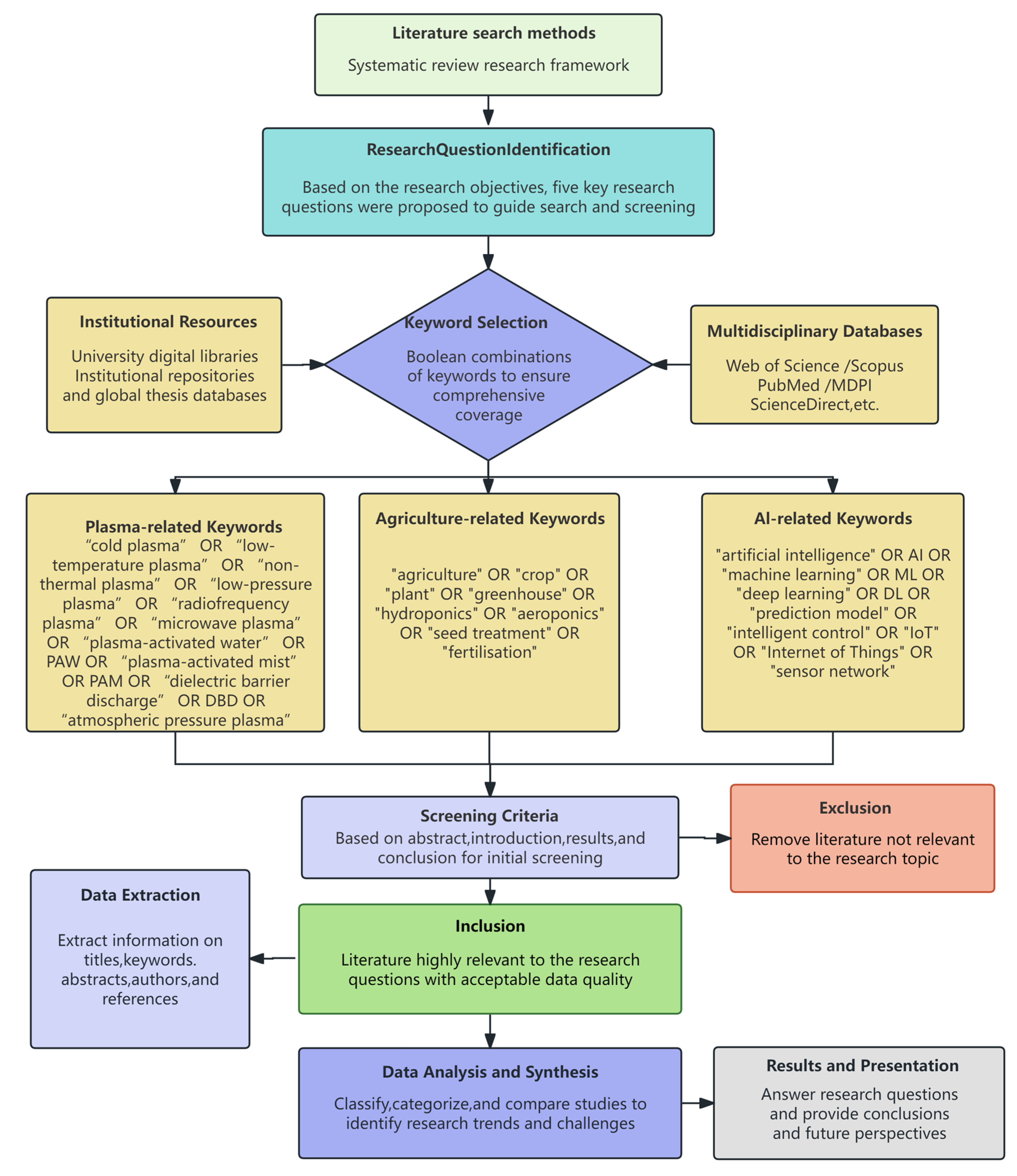
Figure 1. The literature retrieval and review workflow of the present study.
Agronomy 16 01067 g001
Figure 2. Water-based plasma nitrogen-fixation process. Figure 2 is adapted from Ref. [23].
Agronomy 16 01067 g002
Figure 3. Major application pathways of non-thermal plasma in agriculture.
Agronomy 16 01067 g003
Figure 4. Intelligent sensing and control in an aeroponic environment. Figure 4 is reproduced from Ref. [161].
Agronomy 16 01067 g004
Figure 5. Graphical abstract of intelligent lettuce physiological state recognition based on meta-learning and data fusion in IoT aeroponic systems. Figure 5 is reproduced from Ref. [162].
Agronomy 16 01067 g005
Figure 6. Future roadmap for NTP–AI integration in agriculture.
Agronomy 16 01067 g006
Table 1. Common NTP discharge types used in agriculture and their characteristics.
Discharge TypeTypical Physical CharacteristicsPrincipal Reactive-Species CharacteristicsTypical Agricultural ApplicationsReferences
Dielectric barrier discharge (DBD)An insulating dielectric is placed between the electrodes; large-area, relatively uniform non-equilibrium discharges are readily formed at atmospheric pressureO, OH, O3, NOx, and their liquid-phase conversion products are readily generated, making the discharge suitable for mild treatmentSeed treatment, surface modification, PAW preparation, pathogen suppression[5,8,26,27,28,29,30]
Atmospheric-pressure plasma jet (APPJ)The discharge region can be separated from the treatment region, providing strong directionality and localised treatment capabilityReactive particles can be transported directionally to the target surface or liquid interface, resulting in pronounced local actionLocalised treatment of seeds/growth points, liquid-interface activation, surface sterilisation[5,8,25,31]
Gliding arc dischargeThe discharge channel is stretched and displaced along the gas flow, combining relatively high reactivity with continuous-treatment capabilityFavourable for continuous generation of gaseous nitrogen species such as NO and NO2Atmospheric nitrogen fixation, NOx synthesis, continuous nitrogen-supply equipment[3,18,32,33]
Surface dielectric barrier discharge (SDBD)/surface ionisation wave (SIW)The discharge propagates along the dielectric surface and acts relatively mildly, making it suitable for interfacial modificationMore suitable for surface activation and local regulation of RONSSeed-surface modification, biological-interface treatment, liquid-surface activation[5,8,26]
Microbubble-assisted dischargeMicrobubbles intensify gas–liquid interfacial mass transfer, increasing reaction area and residence timeFacilitates rapid transfer of reactive species into the liquid phase and improves PAW generation efficiencyActivation of flowing water, continuous PAW preparation, water-treatment-coupled agricultural applications[21,34,35,36]
Microwave/radiofrequency plasmaLow-pressure or atmospheric-pressure operation; high energy density; controllable plasma environmentFavourable for high-throughput NOx generation and preparation of high-concentration activated mediaLow-pressure seed-surface modification; high-throughput NOx synthesis; high-concentration PAW and in situ nitrogen supply[37,38,39,40,41,42,43,44]
Table 2. Typical applications of non-thermal plasma in agriculture and their principal outcomes.
Application AreaTreatment ObjectTreatment Mode/MediumMain Evaluation IndicesPrincipal ResultsReferences
Agricultural nitrogen fixation and fertilisationAir–water systems/soilless cultivation systemsair plasma-on-water, PAW, PAMNO3, NO2, yield, crop growth indicesPreparation of liquid nitrogen-containing products was achieved, and fertilisation potential was demonstrated in hydroponic/aeroponic scenarios[16,17,26,32,47,60]
Seed treatment and seedling raisingSoybean, basil, lettuce, and related seedsDBD, non-thermal plasma, PAW, gas–liquid interface plasmaGermination percentage, germination uniformity, mean germination time, seedling-establishment qualityGermination synchrony can be improved, germination time shortened, and subsequent seedling growth influenced[27,28,68,69,70,71,73,74]
Growth regulationPak choi, rocket, lettuce, and related cropsActivated nutrient solution, PAW, continuous-flow activation treatmentBiomass, chlorophyll, protein, nitrogen uptake, yieldRoot and shoot growth can be improved, while nutrient uptake and metabolic status can be regulated[15,36,53,54,78,79,81,82]
Crop protection and disease suppressionMango, kiwifruit, lettuce, and related cropsDBD, PAW, ultra-long-lasting PAWPathogen load, disease progression, defence-enzyme activityBoth direct antimicrobial action and induction of plant disease resistance can be achieved[55,56,84]
Soil improvement and remediationDiesel-contaminated soil, general soil microbial systemsNon-thermal plasma pretreatment, activated gasPollutant removal rate, microbial load, plant growthPollution remediation can be intensified, while soil microbial load and the soil environment are altered[57,58,86]
Postharvest preservation and safety treatmentBlueberry, mango, fresh-cut pear, buckwheat, lightly milled rice, and related productsDBD, PAW, non-thermal plasma, cold nitrogen plasmaMicrobial load, disease progression, quality, flavour, storage stabilitySurface contamination can be reduced, decay delayed, and selected quality parameters affected[84,87,88,89,90,91,92,93,96,97,98,99]
Preservation of animal-derived agricultural productsEggs, poultry meat, surimi, minced meat, and related productsCold nitrogen plasma, PAW coating, PAW rinsingPathogen control, protein structure, gel properties, chilled qualityBoth antimicrobial action and structural/quality regulation can be achieved[100,101,102,103,104,105,106,107,108,109,110,111,119]
Drying-process intensificationYam slices, garlic slices, peas, blueberries, and related materialsNon-thermal plasma pretreatment, non-thermal plasma + far-infrared dryingDrying kinetics, microstructure, physicochemical qualityDrying behaviour can be improved while quality is preserved to some extent[112,113,114,115,116]
Table 3. Comparison of different plasma-based nitrogen-fixation and activated-medium preparation routes.
Technology RouteTypical Discharge FormPrincipal ProductsPrincipal AdvantagesPrincipal LimitationsApplicable Agricultural ScenariosRepresentative References
Air plasma–water reactorDBD, SDBD, jetNO3, NO2, PAWRelatively simple structure; liquid media can be obtained directlyProduct concentration and stability are constrained by gas–liquid mass transferHydroponics, irrigation, seed soaking[26,27,47,121]
Microbubble-enhanced activation routeMicrobubble-coupled non-thermal plasmaHigh-concentration PAW, RONSHigh gas–liquid contact efficiency; suitable for continuous-flow treatmentSystem structure is more complex and operating parameters are sensitiveCommercial hydroponics, recirculating nutrient-solution systems[21,34,35,36]
Gliding-arc NOx synthesis routeGliding arc dischargeNO, NO2, and, after absorption, NO3/NO2High gas-phase reactivity; suitable for continuous operation and scale-upTighter requirements for temperature and energy-consumption controlIn situ nitrogen supply, continuous NOx supply[18,32,33]
Microwave/radiofrequency high-throughput routeMicrowave plasma, ICP/RFHigh-throughput NOx, high-concentration activated mediaLarge throughput; suitable for exploration towards scale-upEquipment is complex and relatively costlyPilot-scale nitrogen fixation, on-site fertiliser production[37,38,39,40,41]
Plasma–catalysis-synergistic ammonia synthesisDBD + catalyst, packed bedNH3, and certain nitrogen-containing intermediatesConducive to improving selectivity and lowering reaction barriersCatalyst stability and lifetime still require validationHigh-value nitrogen-fixation routes, mechanistic studies[29,48,59,126,127,130,131]
Continuous production under high-intensity electric fieldsHigh-intensity electric-field concentration systemsHigh-concentration nitrated waterSuitable for continuous production at high concentrationNarrow operating window; equipment compatibility still needs improvementPreparation of high-concentration liquid nitrogen-containing media[128]
Portable on-site fertiliser-production equipmentPortable catalytic thermal plasmaWater-soluble NO3/NO2 fertilisersCompact equipment suitable for on-site deploymentLong-term stability and large-scale compatibility remain to be verifiedGreenhouses, controlled-environment agriculture, distributed nitrogen supply[129]
Prototype PAW equipmentPlasma jet and related configurationsPAWHas already entered the prototype-validation stageInterface adaptation with agricultural systems still needs strengtheningMobile liquid supply, controlled-environment agriculture[31,66]
Table 4. Main application directions of the integration of artificial intelligence and plasma agriculture.
AI Application DirectionMain Input DataCommon MethodsMain Output TargetsAgricultural/Plasma RelevanceRepresentative References
Discharge-process modellingVoltage, current, power, frequency, temperature, spectral parametersMachine learning, neural networksDischarge-state identification, operating-condition mapping, process predictionReduces the modelling cost of complex discharge systems[19,20,119,120,151]
Prediction of nitrogen-fixation efficiencyVibrational temperature, electron temperature, rotational temperature, device parametersSupervised learning, feature-importance analysisNitrogen-fixation efficiency, identification of key control variablesIdentifies the dominant parameters governing yield in different devices[20,107,108]
Optimisation of PAW preparation/flow-activation processesFlow rate, inlet width, discharge position, liquid parametersANN, regression models, surrogate modelsOptimisation of activation efficiency, parameter optimisation for continuous-flow systemsImproves the preparation efficiency of activated media[21,34,35,105]
Optimisation of seed treatment and seedling raisingTreatment time, atmosphere, crop type, germination indicesMachine learning, hybrid empirical modelsOptimum dose window, matching of treatment conditionsReduces reliance on empirical tuning and improves reproducibility[22,54,55,56]
Evaluation of agricultural effectsPhenotypes, nutrient uptake, disease indices, environmental dataDeep learning, statistical learningPrediction of growth responses, identification of nutritional statusLinks plasma treatment with crop phenotypes[23,63,64,65,127,128,129,130,131,132,133,134,135,138]
Intelligent sensing of crop phenotype, nutritional status, and aeroponic environmentImage, depth, spectral, environmental, and rhizosphere-temperature dataMachine vision, meta-learning, spectral analysis, 3D phenotyping, IoT controlPhysiological-state identification, water-status estimation, three-dimensional phenotype quantification, rhizosphere-environment regulationProvides state-sensing, phenotype-quantification, and environmental-control interfaces for plasma-enhanced aeroponic/controlled-environment systems[152,153,154,155]
Intelligent sensing and precision operationImage, spectral, depth, and sensor dataCNN, Transformer, fusion modelsDisease recognition, nutrient detection, spray controlProvides the sensing foundation for linkage between plasma equipment and agricultural systems[136,139,140,141,142,143,144,145,150]
Closed-loop control and reinforcement learningMulti-source sensor data, discharge parameters, environmental variablesReinforcement learning, deep reinforcement learningDynamic parameter tuning, multi-objective controlSupports real-time control of complex systems[146,147,148]
Digital twins and virtual–real integrationProcess data, equipment state, crop and environmental dataDigital twins, empirical models + optimiserState synchronisation, predictive maintenance, online optimisationPromotes the evolution of plasma-agriculture systems towards intelligent equipment[126,156]
Disclaimer/Publisher’s Note: The statements, opinions and data contained in all publications are solely those of the individual author(s) and contributor(s) and not of MDPI and/or the editor(s). MDPI and/or the editor(s) disclaim responsibility for any injury to people or property resulting from any ideas, methods, instructions or products referred to in the content.