Article

Seed Priming with PEG Improves the Growth, Photosynthesis, and Recovery Capacity of SUB1DRO1 and DRO1 Near-Isogenic Lines Under Drought

by
Alex Tamu
1,2,
Aquilino Lado Legge Wani
1,3,
Sheik Hassan Gbla
1,2 and
Jui-Ichi Sakagami
1,4,*
1
The United Graduate School of Agricultural Sciences, Kagoshima University, Kagoshima 890-8580, Japan
2
Sierra Leone Agricultural Research Institute, Tower Hill, Freetown PMB 1313, Sierra Leone
3
Directorate of Research and Training, Ministry of Agriculture and Food Security, Juba P.O. Box 33, South Sudan
4
Faculty of Agriculture, Kagoshima University, Kagoshima 890-8580, Japan
*
Author to whom correspondence should be addressed.
Agronomy 2026, 16(11), 1066; https://doi.org/10.3390/agronomy16111066
Submission received: 18 April 2026 / Revised: 21 May 2026 / Accepted: 26 May 2026 / Published: 28 May 2026

Abstract

This study evaluated the effects of polyethylene glycol concentrations in enhancing the physiological performance of the rice varieties and their recovery ability after drought stress. The experiment comprised of IR64, NIL-SUB1DRO1, and NILDRO1. Seed priming was conducted by submerging 5 g of samples in petri dishes containing 100 mL of 5% and 10% PEG solutions. Drought stress significantly reduced all the growth traits, with the susceptible genotypes IR64 recorded highest reduction of shoot length 36%, tiller number 41.3%, shoot dry weight 77%, and root dry weight 72% compared to non-primed NILDRO1 and NIL-SUB1DRO1 with reduction in shoot length 34–35%, tiller number 34–45%, root dry weight 60–66%, and shoot dry weight (70–71%). Similar results were recorded for IR64, Pn, 63%, gs 78% E 66%, and RWC 66%, respectively, compared with NILDRO1 (55%, 60%, and 58%), while NIL-SUB1DRO1 showed reductions of 55%, 50%, and 54%. PEG 5% and 10% significantly enhanced primed IR64 Pn (29–57%), gs (70%), E (56–64%), and RWC 65%. During the recovery phase, primed seedlings showed a more rapid restoration of growth and photosynthetic efficiency than the non-primed seedlings. PEG 5% and 10% were effective in mitigating drought stress and enhanced recovery ability of rice.

1. Introduction

Since over half of the world’s population primarily eats rice, it is imperative to address the detrimental effects of drought stress on rice production to guarantee global food security [1]. It provides up to 76% of Southeast Asian populations’ calorific consumption and more than 21% of human caloric requirements [2]. Nevertheless, the growing need for rice production is a major issue that needs to be maximized. Asia and Africa’s agricultural nations will be at risk from climate change (CC), which would cause frequent water shortages and unpredictable rainfall [3].
Over one-third of the world’s agricultural area is affected by drought, which poses a threat to livelihoods and food security [4]. It can have a substantial impact on rice at different phases of growth, with seed germination being particularly vulnerable due to decreased water intake into the seed because of hydraulic constraints, impacting all metabolic and physiological germination processes [5]. Water deficit condition has been reported to reduce plant metabolic activities, stomata conductance, gaseous exchange, ultimately resulting in poor agronomic performance of plants [6]. Restricted water transport inside the plant limits cell division, elongation, and expansion during extreme water deficit circumstances, which lowers plant height and canopy development [7,8].
Furthermore, it promotes the accumulation of ROS which identifies cell membrane damage and lipid peroxidation [9]. Despite efforts to employ drought tolerance rice cultivars, problems including poor germination poor rice growth when directly seeded in the fields still exist [10]. Therefore, to meet the ever-increasing demand for rice, particular measures are required to improve rice tolerance, and specific strategies are needed to enhance rice tolerance and impact seedling recovery after drought stress [11,12]. Mitigating drought stress effect requires various strategies including development of tolerance varieties, application of growth regulators and osmo protectant and adjusting of cropping schemes, and as well as genetic engineering of stress response metabolites. These strategies may require high production costs. Therefore, a practical and efficient way to increase a plant’s resistance to several kinds of stress, particularly under unfavorable circumstances, is seed priming [13]. This method is comparatively simple to use and has improved plant development and establishment, especially when abiotic stress is present [14]. Primed seeds promote uniform germination through enzyme activation, cellular repair mechanisms, protein synthesis, and enhanced antioxidant defenses compared to non-primed seeds [15]. Several studies revealed that priming techniques like hydropriming, Osmo priming, UV-B priming, and chemical priming have shown proven effects in enhancing drought stress tolerance in plants [16].
However, PEG6000 priming concentrations in enhancing the growth, photosynthesis, and recovery capacity of near-isogenic lines after drought stress has not been fully exploited. This hypothesized that different levels of polyethylene glycol (PEG) priming could enhance physiological performance, photosynthetic traits recovery capacity of rice genotypes after drought stress conditions. Therefore, this study aimed to evaluate the effects of polyethylene gycol (PEG) concentrations in enhancing growth, gas exchange traits recovery capacity of near isogenic lines under drought stress. Hence, polyethylene glycol priming may serve as a cost-effective measure for mitigating drought stress resilience.

2. Materials and Methods

2.1. Plant Materials

Three rice genotypes were investigated for these studies: NSDI = NIL-SUB1DRO1 (drought resistant progeny); IR64 (susceptible check), from International Rice Research Institute (IRRI) in the Philippines; and NDI = NILDRO1 (progeny). The Near Isogenic Lines (NILs) NIL-SUB1 and NIL-DRO1 (as well as their combined derivatives NIL-SUB1DRO1) were developed through Marker -Selected backcross breeding into genetic background of IR64. The experiment was conduction from 29 May–22 August 2025. Seeds of these varieties were obtained from the bioresource and production science laboratory in Kagoshima, Japan. The experiments were conducted at the bioresources and production science screen house laboratory, Kagoshima University, Japan.

2.2. Seed Priming

Seed quality was assessed using a salt floatation method, in which seeds were immersed in a sodium chloride (NaCl) solution adjusted to a specific gravity of 1.13. Seeds that sank were considered good, while as floating seeds were regarded as poor or non- viable and were discarded. The seeds were then taken out, rinsed three times with distilled water, and allowed seeds to air dry at 28 °C in a petri dish covered with filter paper.
In a 100 mL solution, two PEG 6000 levels at 5% and 10% were created, together with water potential levels of −0.1 MPa and −0.15 MPa. Seed priming was carried out by submerging 5 g of seed samples into petri dishes containing 100 mL of 5% PEG and 10% PEG solutions. Following a 24-h incubation period at 28 °C, seed samples were removed, rinsed, and allowed to air dry on filter paper at room temperature until the initial dry weight was reached.

2.3. Experimental Design and Growth Conditions

This research was conducted in a complete randomized design (CRD) with three replications. This study consisted of two factors; seed priming treatments at two levels, and water regimes comprising of well-watered and drought stress period. Seed samples were pre-germinated in incubator for 3 days at 28 °C. The pre-germinated seeds were transplanted in 2.6 kg of commercial and sandy soil combined with 10 g of N.P.K. 8.8.8 fertilizer in polyvinyl chloride pipes (PVC) that were 40 cm tall and had an inner diameter of 8 cm. Each pipe received four pre-germinated seeds from each treatment, which were then reduced to one after a week. The seedlings received daily irrigation for three weeks, followed by a 21-day drought treatment. Physiological, biochemical and gas exchange data were collected under control and drought stress conditions. Drought-stressed seedlings were then given daily irrigation for two weeks as a recovery phase. Following the recovery period, all suggested data was measured.

2.4. Data Collection

2.4.1. Microclimate Data

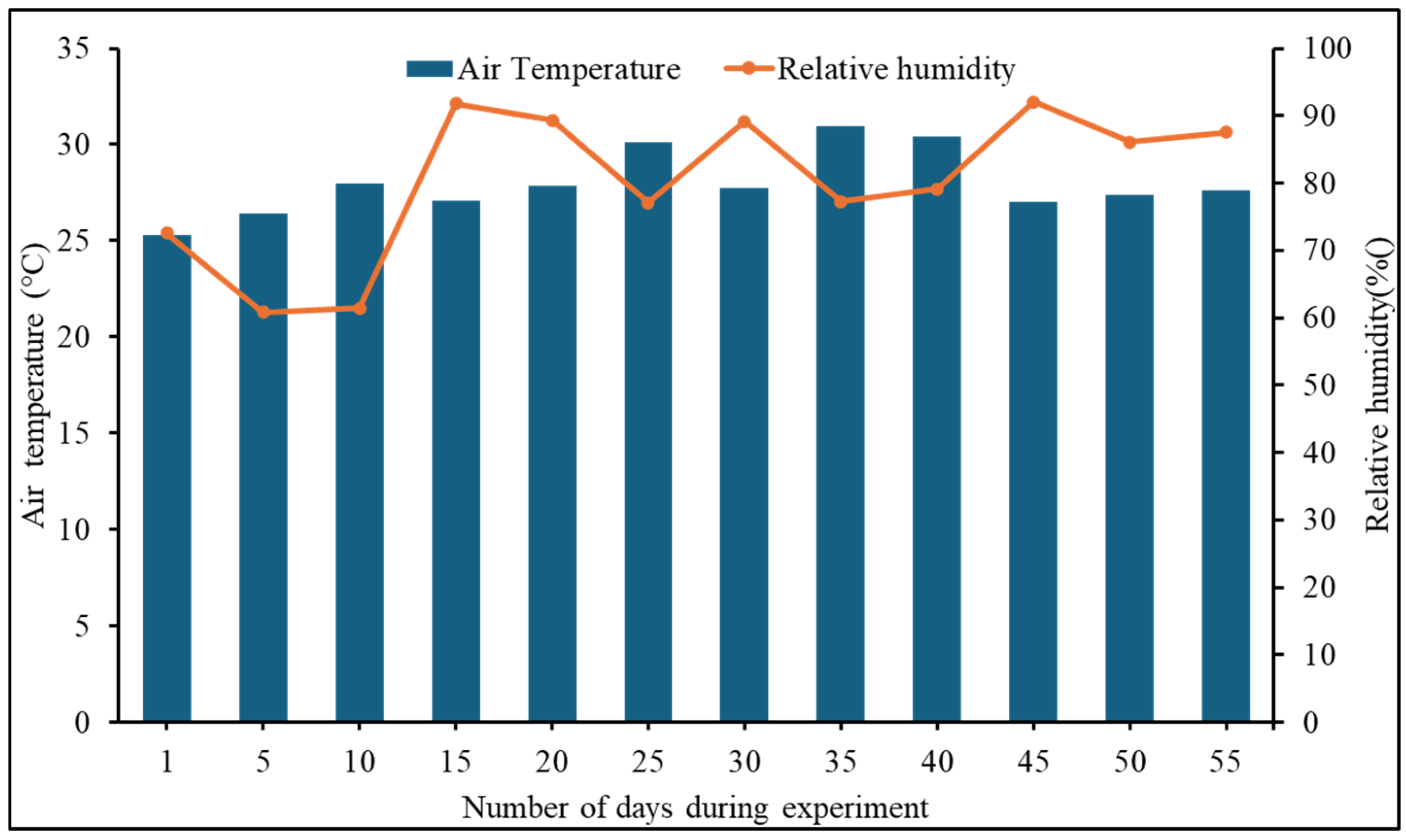
Average daily air temperature, relative humidity, soil moisture meter and average soil temperature were determined during the experimental period. The equipment knows as data logger (RTR 505, T&D Cooperation Ltd., Tokyo, Japan) measured daily air temperature and relative humidity, sensor (5TE, METER Group Inc; Pullman, MA, USA) was used to monitored soil temperature and soil moisture content (Figure 1).

2.4.2. Photosystem II (Fv/Fm)

Photosystem II (quantum yield) was determined using Aqua Pen (AP 100-P, Photon systems Instruments, Drasov, Czech Republic). It was measured from three randomly selected fully developed leaves under two hours of dark adaptation period in each replication. The quantum yield (Fv/Fm) was recorded after 22 days of drought stress period, and two weeks of recovery period.

2.4.3. Soil Plant Analysis Development (SPAD)

Soil plant analysis development (SPAD) was determined by SPAD meter (SPAD-502, Plus, Konica Minolta sensing Co., Ltd., Tokyo, Japan). This measurement was recorded on third fully developed leaves that were randomly selected in each replication. The recordings were obtained from the tip, middle and edge of each sample leaf. The average mean value was recorded.

2.4.4. Morphological Data

The growth-related traits such as Plant height and tiller number were determined. A meter tape was used for measuring plant height from the tip of flag leaf to the base of stem in each treatment per replication. Tiller numbers were manually counted per treatment after 22 days of drought stress, and two weeks of recovery period in each replication.

2.4.5. Plant Biomass

Shoot and root biomass were determined by separating leaves, stems, and roots. Sample stems and leaves dry weight were obtained by oven drying the samples in (FC-610 Forced Convection Oven., ADVANTEC Ltd., Osaka, Japan) at 80 °C for three days. For the root analysis, WinRHIZO (Regent Instruments Inc., Québec, QC, Canada) was used to determined root length, root surface area, and root volume. After the root analysis, the sample roots were dried to obtain root dry weight.

2.4.6. Photosynthetic Traits

LI6400XT, LI-COR Inc., Lincoln, NE, USA portable machine was used to measure photosynthetic rate (Pn), transpiration rate (E), and stomata conductance (gs). The standard 2 × 3 cm calibrated chamber (6400-08) was clipped on the center leaflet of the fully developed flag leaf from the randomly selected plants in each treatment per replication. During the measurement, the block temperature and vapor pressure deficit were regulated at 28 °C and air flow rate maintained at 500 µmol s−1. The leaf samples were allowed to acclimatize at saturating light (1500 µmol m−2 s−1 and the CO2 concentration of 400 µmol mol−1 inside the chamber.

2.4.7. Relative Water Content

Measurement of relative water content was obtained by harvesting the second well-developed randomly selected leaf in each treatment per replication. 5 cm length was measured by cutting lamina base, and the raw weighed (FW) recorded using (GR-202 Sensitive scale (A&D Company, Limited., Tokyo, Japan). Five (5 cm) leaf length samples were placed in test tube submerged with water at 28 °C for 4 h. After blotting, turgid weight was measured and later oven dried for 24 h at 80 °C for dry weight (DW). Relative water content was determined by the following equations.
RWC (%) = [(FW − DW)/(TW − DW)] × 100
where FW = fresh weight of the sample immediately after collection.
DW = dry weight of the sample after being oven-dried at 80 °C for 48 h.
TW = turgid weight of the sample after hydration for 4 h and blotting dry.

2.4.8. Chlorophyll Determination

Fresh leaves of (40 mg) from primed and non-primed seedlings were cut into small pieces and extracted with 5 mL of 80% acetone in 15 mL covered centrifuge tubes. Samples were placed in −4 °C refrigerator for 72 h. The UV-V spectrophotometer was used to measure the absorbance at 663, 647, and 450 nm. Chlorophyll a, b, and total chlorophyll contents were determined by the formula described by [17].
Chl a (mg g−1 FW) = 12.25 × A663 − 2.79 × A647
Chl b (mg g−1 FW) = 21.50 × A647 − 5.10 × A663
Chl T (mg g−1 FW) = Chl a + Chl b.

2.5. Data Analysis

All data collected regarding growth traits; gas exchange parameters were entered into MS Excel. Analysis of variance was done using SPSS vision 30. To compare the means of individual parameters among treatment, Tukey’s honest significance difference (HSD) test with significant level set at (p ≤ 0.05). Correlation analysis was done to determine relationship amongst growth traits, photosynthetic related parameters under drought stress and recover condition.

3. Results

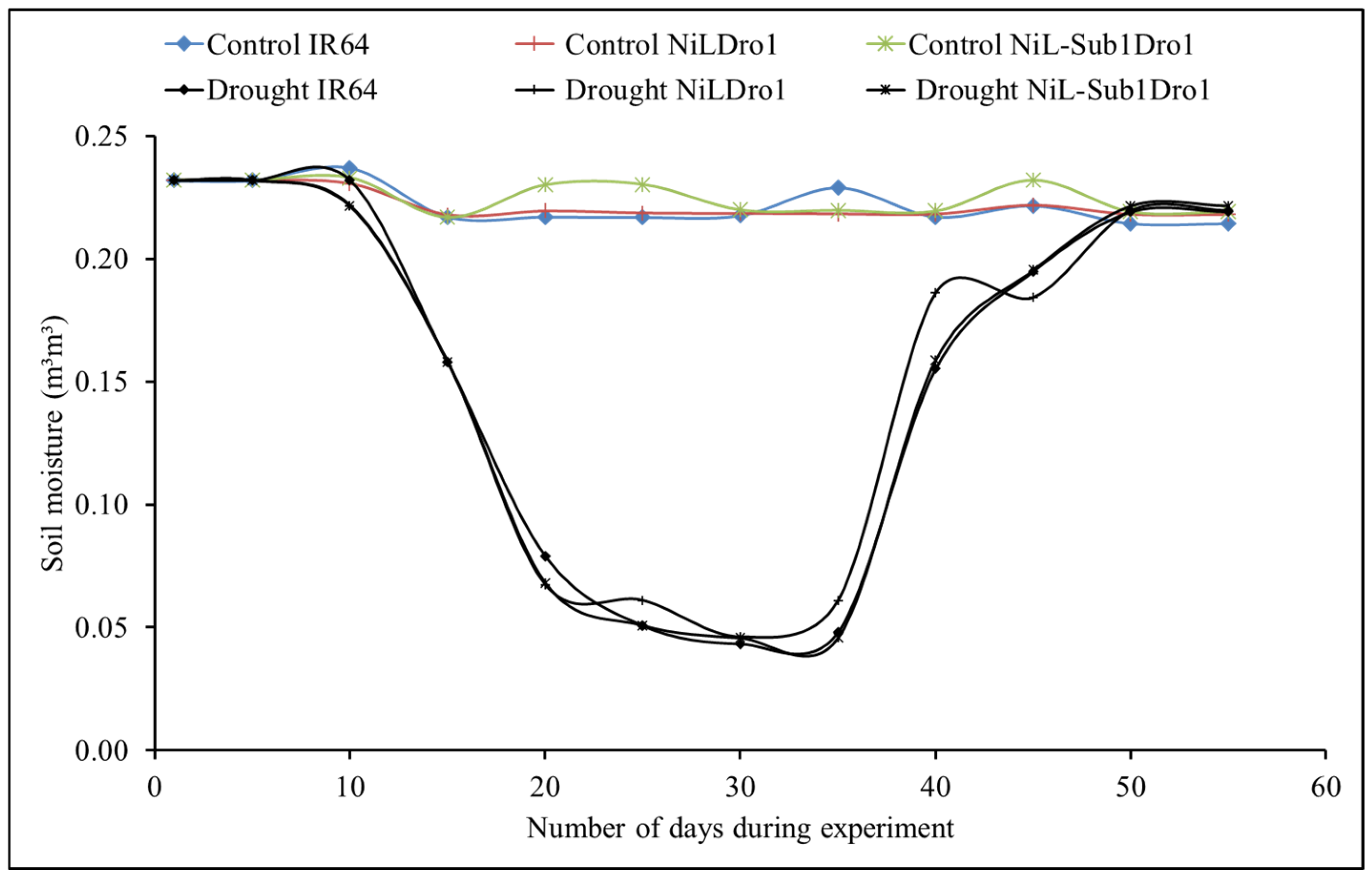
This figure illustrates temporal changes in soil moisture content for different rice genotypes under well-watered conditions, drought stress, and recovery periods. Under well-watered conditions, all genotypes maintained relatively stable soil moisture content ranging from 0.22–0.25 m3/m3 throughout the experimental period, indicating consistent irrigation and soil water availability. The soil moisture content in drought-treated pots sharply declined at day 20, reaching a minimum of 0.04–0.07 m3/m3 between days 27–35, before gradually recovering by day 42 as irrigation was applied to 55 days (Figure 2).
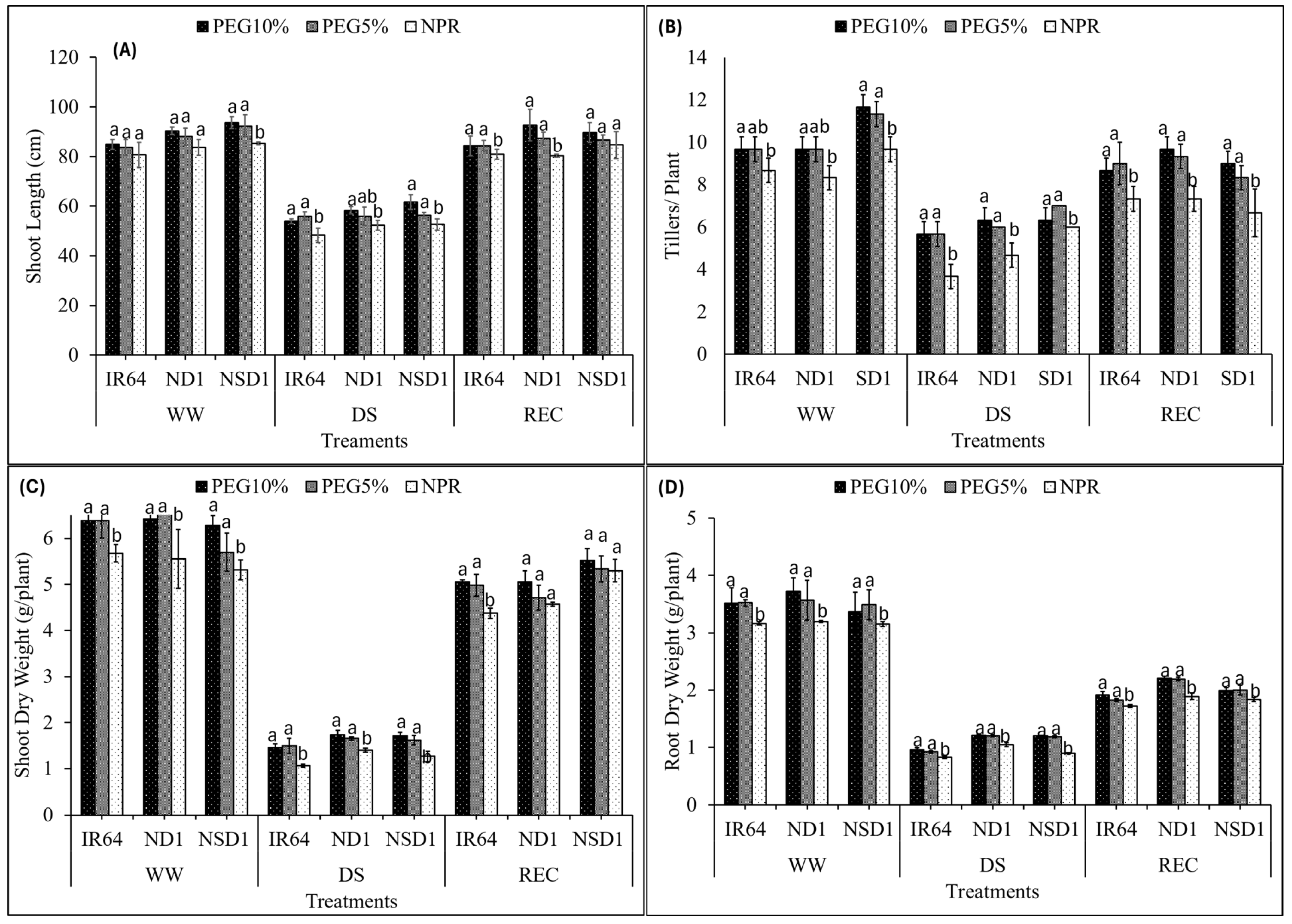
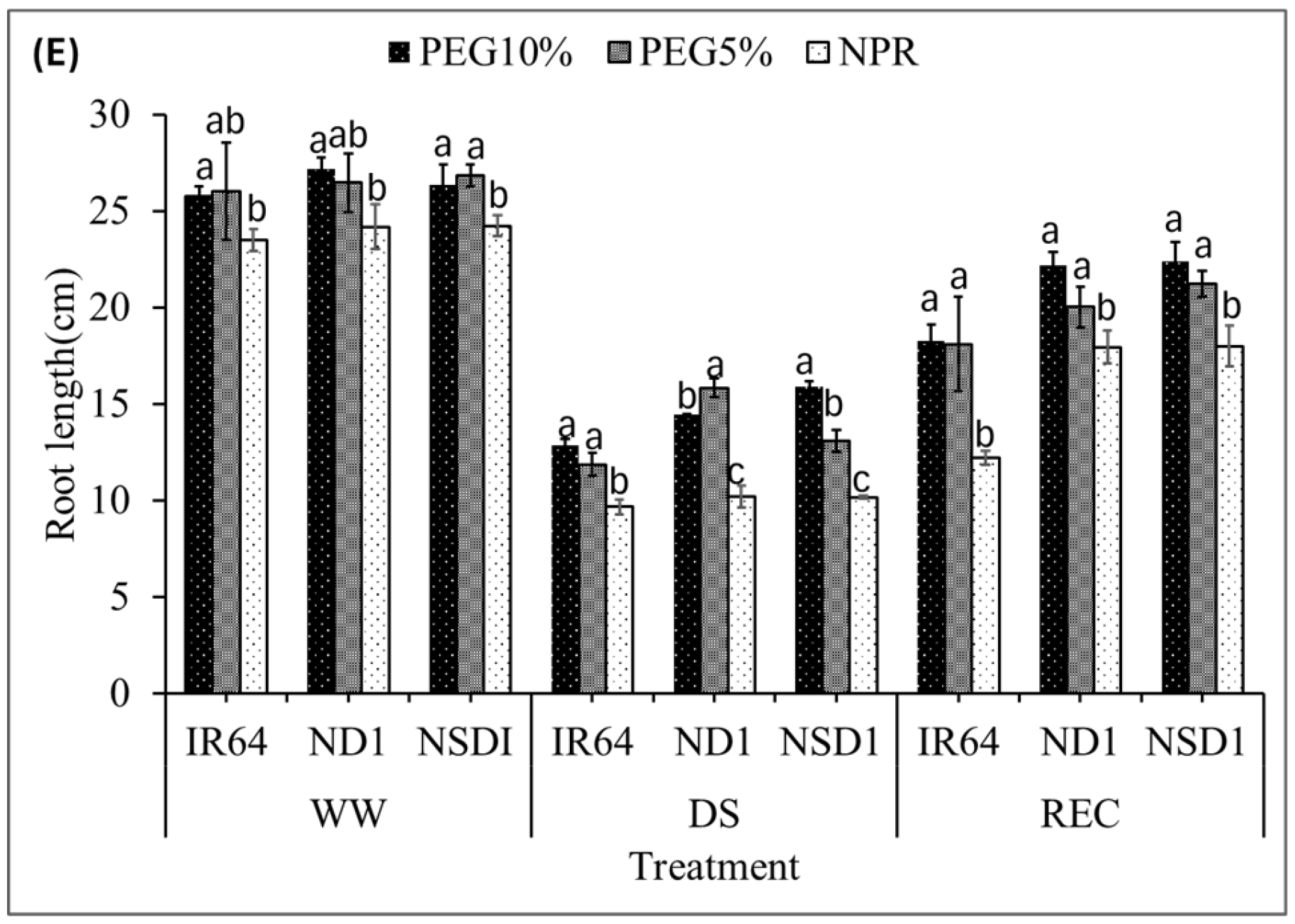
Figure 3A–E displays the impact of various levels of PEG priming (PEG 10%, PEG 5%, and non-primed), on shoot length, tiller number, shoot dry weight, root dry weight, and root length of IR64, NILDRO1, and NIL-SUB1DRO1 grown under well-watered (WW), drought stress (DS), and recovery (REC) scenarios. There were no significant differences in shoot length, tiller number, shoot dry weight, root dry weight, and root length among non-primed genotypes under WW conditions. Phenotypic priming with 10% and 5% PEG revealed very significant differences with higher values of all the three traits across genotypes under WW conditions.
As expected, DS led to a significant decrease in all growth characteristics. However, the extent of the decrease differed among the genotypes (Figure 3A–E). Non-primed IR64 exhibited declines in shoot length by 36%, tiller number by 41.3%, shoot dry weight by 77%, and root dry weight by 72%. On the other hand, non-primed NILDRO1 and NIL-SUB1DRO1 showed reductions in shoot length by 34%, 35%, tiller number by 34%, 45%, root dry weight by 60%, 66%, and shoot dry weight 70%, 73%. On the other hand, PEG priming (5% and 10%) preserved a higher level of all growth traits, thereby confirming better stress adaptation.
For instance, in IR64 shoot length was increased by 15% on average by 5% and 10% PEG treatments, while NILDRO1 and NIL-SUB1DRO1 were on average 13% increased. Root dry weight was also improved in IR64 (12%, 20%), NILDRO1 (15%, 20%), and NIL-SUB1DRO1 (31%, 34%). Shoot dry weight was significantly increased in IR64 (37%, 40%), NILDRO1 (14%, 22%), and NIL-SUB1DRO1 (28%, 43%).
Seedling recovery post-priming continued to offer a significant benefit in the regrowth of the part of the seedling above ground (shoot length), the number of side shoots or tillers, the dry weight of shoots, dry weight of roots, and root length for all genotypes when compared to non-primed seedlings. This implies that priming improved drought resilience and post-stress vigor in these plants.
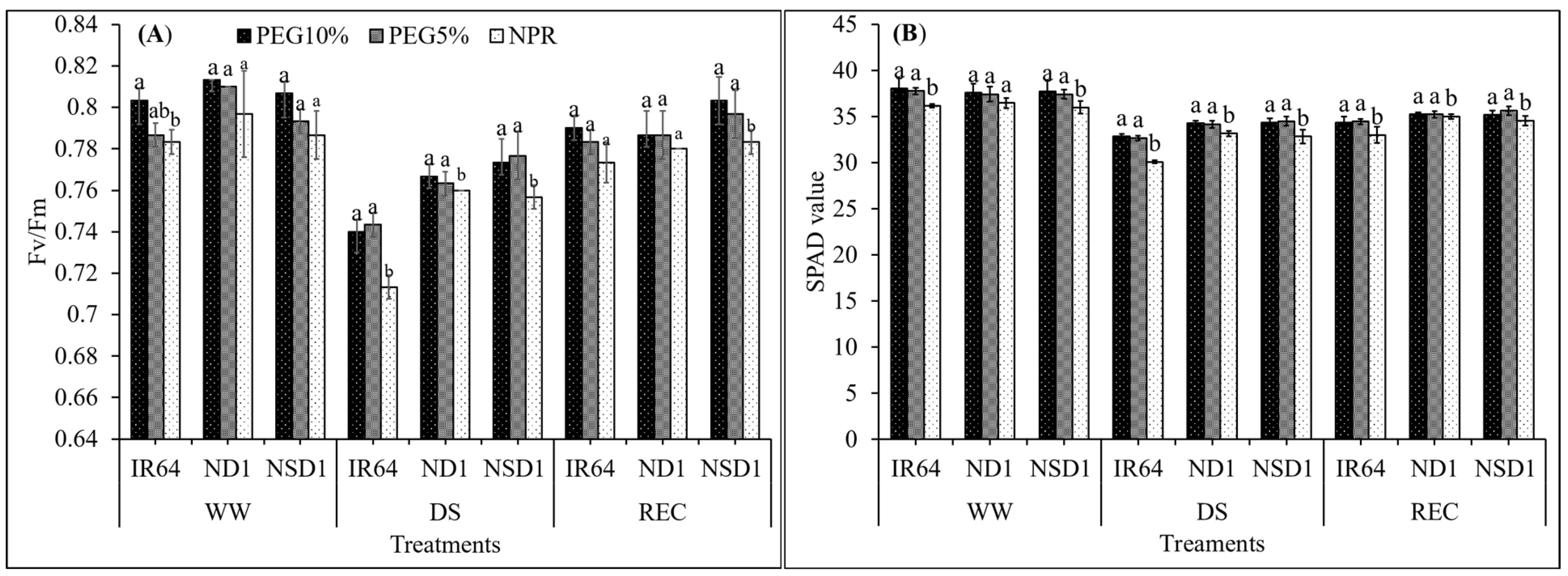
The impact of different PEG concentrations for seed priming (PEG 10%, PEG 5%, and non-primed, NPR) on Fv/Fm and SPAD values in IR64, NILDRO1, and NIL-SUB1DRO1 under WW, DS, and recovery conditions are shown in this result. The three non-primed genotypes under WW conditions showed no significant variation in the Fv/Fm and SPAD values. However, seed priming with 10% and 5% PEG resulted in a significant increase in these traits for all genotypes under WW conditions.
Figure 4A,B depict the drought stress effect of Fv/Fm and SPAD values decrease with the amount of decline differing among genotypes. The non-primed IR64 showed the highest decrease in the Fv/Fm and SPAD values (12%, 21%), whereas NILDRO1 and NIL-SUB1DRO1 exhibited less decrease (5%, 12% and 6.2%, 12%, respectively). PEG priming not only relieved the drought effects but also significantly increased the values above the control levels for these traits in all genotypes. Both 5% and 10% PEG facilitated an 8% increase in Fv/Fm in IR64, whereas SPAD values increased by 9%, 10%. Under the 5% and 10% PEG treatments, SPAD values were raised by 5%, 7% in NIL-SUB1DRO1 and NILDRO, respectively.
PEG priming (5% and 10%) during the recovery stage further greatly increased Fv/Fm and SPAD values of all genotypes compared to the non-primed ones. This is evidence that PEG priming hastened restoration of PSII function and improved photochemical recovery. PEG priming indeed enhanced the ability to tolerate drought through different ways such as sustaining photosystem efficiency, reducing chlorophyll degradation, and enabling quicker recovery. Comparing two drought-tolerant genotypes, NILDRO1 and NIL-SUB1DRO1 showed better resilience than IR64.
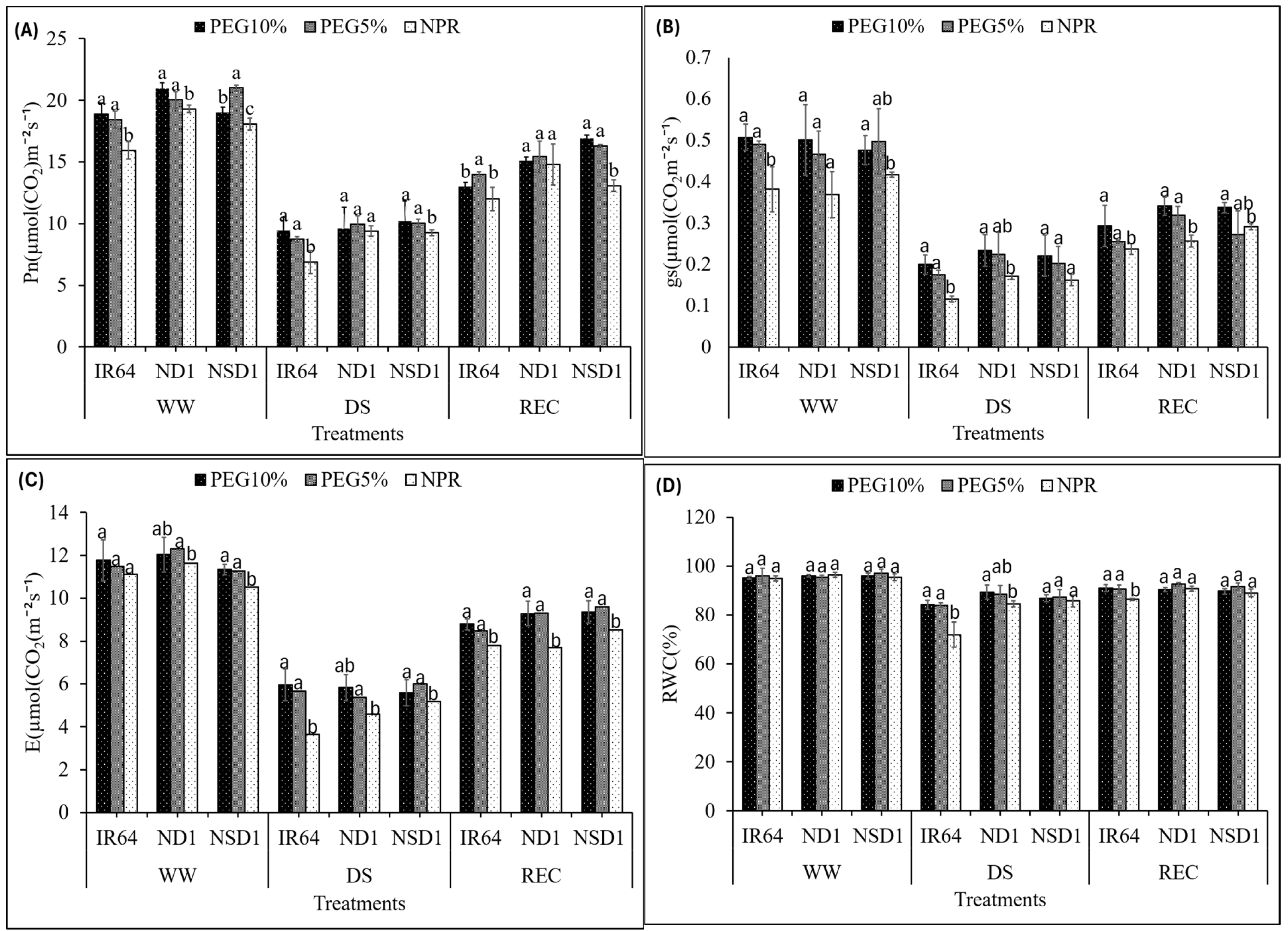
This result shows the impact of PEG priming treatments (PEG 10%, PEG 5%, and non-primed) on photosynthetic rate (Pn), stomatal conductance (gs), transpiration rate (E), and relative water content of IR64, NILDRO1, and NIL-SUB1DRO1 under WW, DS, and recovery (REC) conditions. Non-primed genotypes under WW conditions did not show significant differences in Pn, gs, E, and RWC in all varieties (Figure 5A,D). On the other hand, seed priming drastically enhanced these traits in the genotypes under WW conditions.
Drought stress (DS) remarkably decreased Pn, gs, E, and RWC in all rice genotypes, though the extent decreases varied (Figure 5A,D). Compared with NILDRO1 (55%, 60%, and 58%), non-primed IR64 exhibited the largest decrease in Pn, gs, E, and RWC by 63%, 78%, 66%, and 66%, respectively, while NIL-SUB1DRO1 displayed reductions in the ranges of 55%, 50%, and 54%, respectively. PEG priming (5% and 10%) substantially alleviated drought-triggered reductions compared to non-primed seedlings. Under drought stress, PEG of 5% and 10% increased Pn in IR64 by 29%, 57%, gs by 70%, E by 56%, 64%, and RWC by 65%.
Priming during the recovery phase drastically promoted Pn, gs, E, and RWC in all genotypes relative to the non-primed seedlings. Rewatering resulted in significant recovery of photosynthetic activity by all genotypes. Pn, gs, E, and RWC increased by 25%, 40% relative to drought-stressed levels, like the control to WW levels. PEG-primed seedlings recovered faster and better than NPR controls, especially in the tolerant NIL-SUB1DRO and NILDRO1, respectively. This indicates that priming not only counteracted the drought-induced photosynthetic decline but also assisted with the post-stress metabolic recovery.
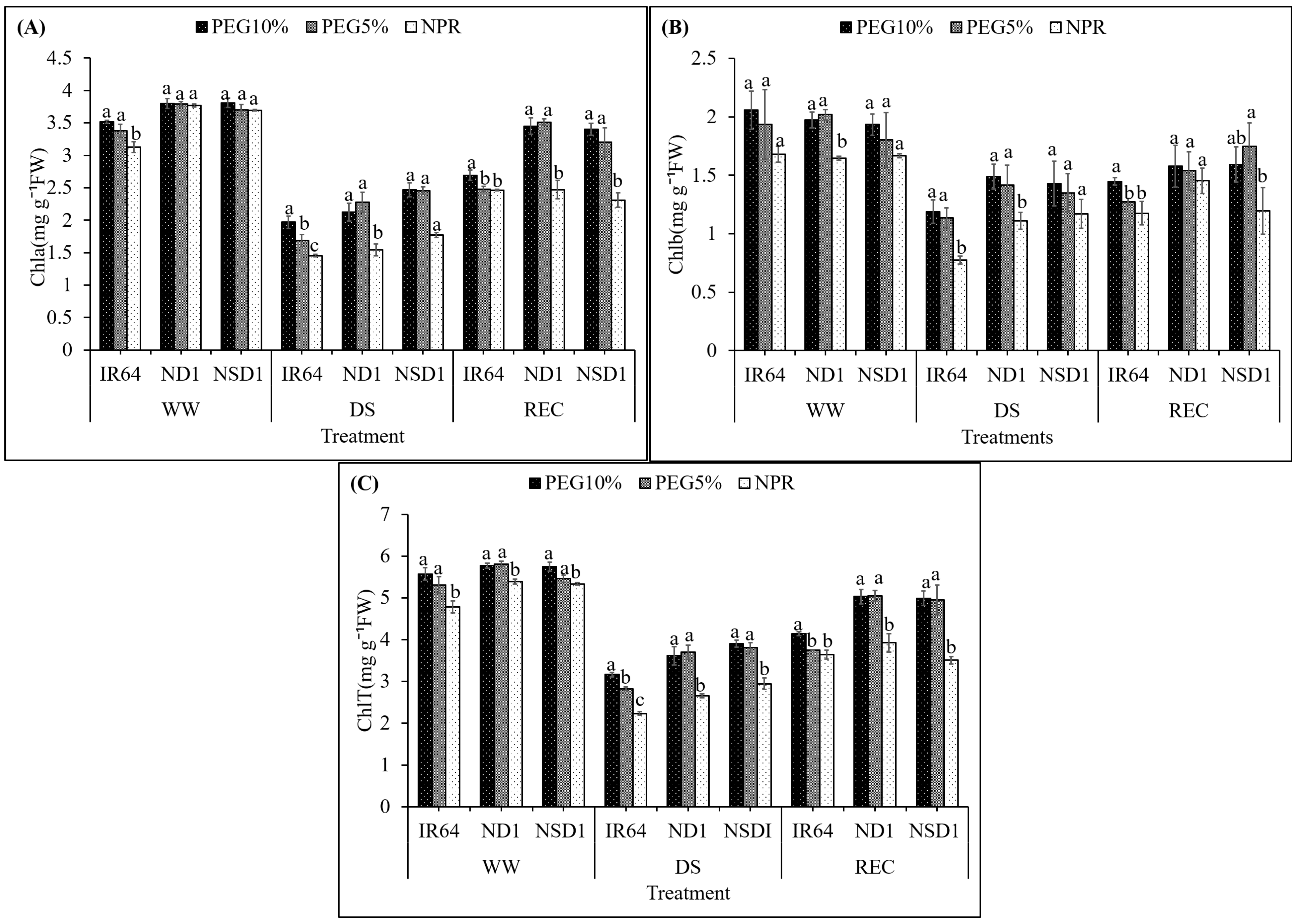
Figure 6A–C illustrates the impact of PEG priming with different concentrations (PEG 10%, PEG 5%, and non-primed) on chlorophyll a, chlorophyll b, and total chlorophyll in IR64, NILDRO1, and NIL-SUB1DRO1 subjected to WW, DS, and recovery conditions. There was no marked difference under WW conditions among the non-primed seedlings in terms of chlorophyll a, b, and total chlorophyll content, however, seed priming continuously resulted in higher values comparing different genotypes to non-primed seedlings.
Drought stress detrimentally affected all chlorophyll parameters in all genotypes, but the degree of reduction was different among them. Non-primed IR64 experienced the largest drop in Chl a (59%), Chl b (62%), and total chlorophyll (58%) in comparison with NILDRO1 (52%, 42%, 50%) and NIL-SUB1DRO1 (44%, 29%, 44%), respectively.
PEG priming (5% and 10%) eased the drought stress influence on the chlorophyll parameters, and 10% PEG became the one that was constantly showing higher values across all genotypes under DS. The NIL-SUB1DRO1 seedlings that were primed with 5% and 10% PEG exhibited higher chlorophyll a (44–47%), chlorophyll b (24–27%), and total chlorophyll (24–34%) while NILDRO1 showed increases in Chl a (38%), Chl b (27%), and total chlorophyll (38%) when compared with primed IR64 under drought stress. PEG priming sped up the restoration of chlorophyll during the recovery phase. Importantly, the application of 5% and 10% PEG as osmopriming has significantly increased the total chlorophyll in NIL-SUB1DRO1 and NILDRO1 (72–85%) like those under well-watered conditions.
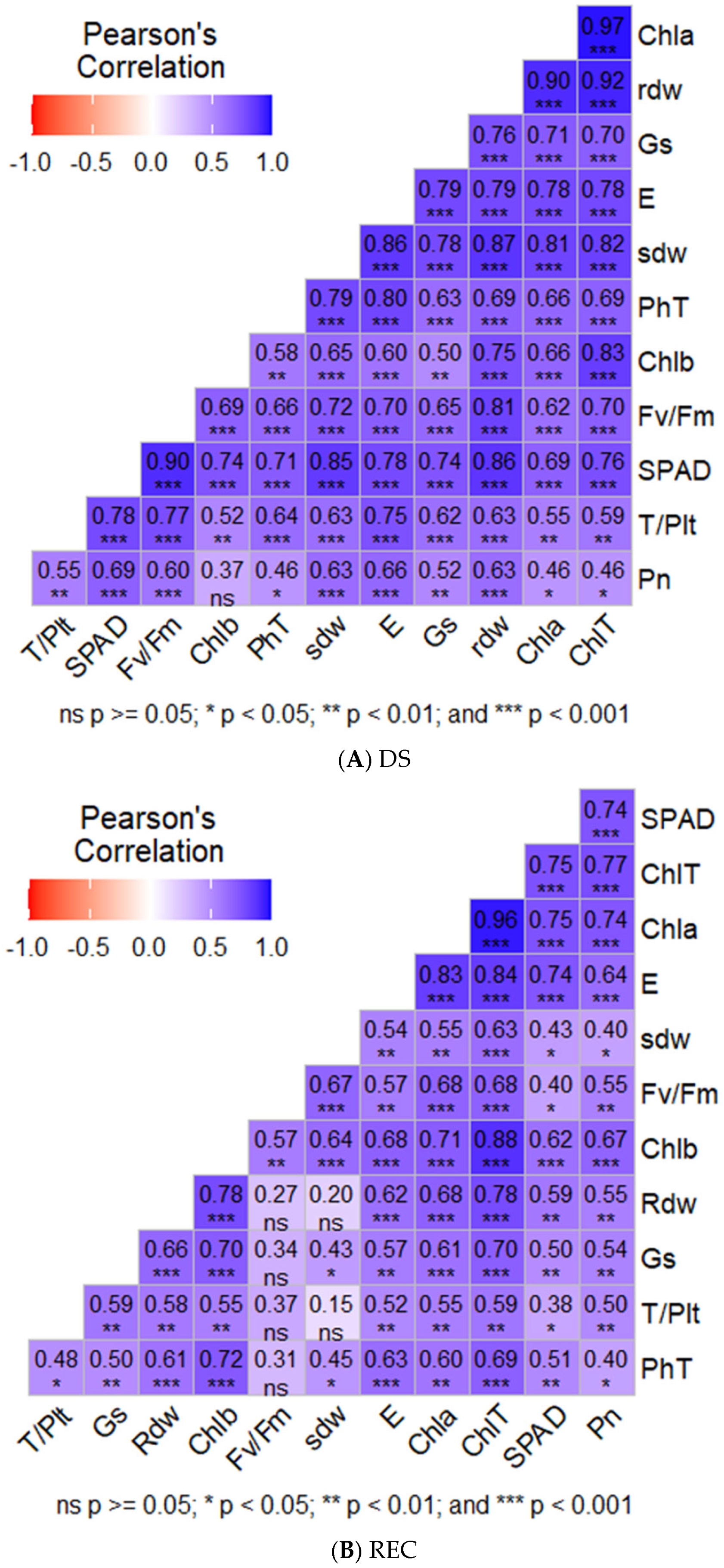
These figures demonstrate a Pearson correlation matrix of physiological, biochemical, and growth traits of IR64 and near isogenic lines under drought stress and recovery. Chlorophyll traits (Chl a, Chl b, and total chlorophyll) showed strong positive correlations with root and shoot dry weight, stomatal conductance, transpiration rate, and SPAD. SPAD and Fv/Fm were also strongly associated with chlorophyll traits. Biomass traits correlated highly with transpiration rate, stomatal conductance, and photosynthetic rate. Plant height showed moderate to strong associations with biomass and gas exchange traits under drought (Figure 7A).
During recovery (Figure 7B), strong positive correlations were observed among growth, physiological, and biochemical traits. Chlorophyll traits were strongly related to biomass, gas exchange traits, and SPAD. SPAD and Fv/Fm were also strongly associated with chlorophyll traits and plant height. Stomatal conductance, transpiration rate, and photosynthetic rate were strongly correlated with root and shoot dry weight.

4. Discussion

This study investigated whether different levels of polyethylene glycol (PEG) priming could boost physiological performance and enhance post-stress recovery capacity of rice genotypes after the drought stress. To prove the assumption, we studied how PEG 6000 concentrations affected physiological performance and recovery from drought stress at the seedling stage. PEG 6000 does not harm the proteins, and it is too big to get inside the seed cells’ membrane [18]. This is a very popular osmopriming agent to counteract the negative effects of stress in the environment. In addition, PEG is usually used to make water solutions whose potentials correlate with both normal and drought conditions so that these solutions can be used to simulate osmotic stress during seed germination [19]. Our experiment showed that drought stress had a major impact on the growth characteristics of different rice varieties. The result corroborates the data published by [20], who also found similar observations and reported this phenomenon. This may be due to lower moisture percentage in soil of drought-treated pots, which changed the air temperature during drought period (Figure 1 and Figure 2).
The impact of drought was not the same for all the varieties as indicated by reductions of 36% in shoot length, 41% in tiller number, 77% in shoot dry weight, and 72% in root dry weight, and root length for non-primed IR64 (Figure 3A,E). These findings corresponded to the results cited by authors [21,22]. NILDRO1 and NIL-SUB1DRO1, which showed even lesser reductions, thus imply the adaptive capacity associated with deep-rooted genes vis-a-vis non-primed IR64. What is more, PEG 5% and PEG 10% priming counteracted the negative effect of drought on growth parameters. Besides this, shoot length, shoot dry weight, root dry weight, and root length were increased in all genotypes that were tested. The research of [23] showed a similar pattern of results.
There are several studies which indicate that PEG priming helps in minimizing the negative impacts of water deficit and salinity in plants [24,25,26]. The authors of [27] have found that seed priming may affect the processes of cellular expansion and elongation, which may explain the results of their experiments. The more intense reaction in DRO1 lines provides an addition to the evidence of the role of deep rooting in physically complementing the priming-induced physiological benefits to water uptake and biomass production. Root development is one of the most important factors for drought resistance since it controls the acquisition of water and nutrients. Increased root length in these experiments is consistent with the findings of [28,29]. Besides, refs. [30,31] have mentioned that the major research has recognized the beneficial effects of osmopriming with PEG on better root growth. During the period of recovery, primed seedlings exhibited restoration of shoot length, tiller number, shoot and root dry weight more quickly as compared with non-primed plants, which is in line with the evidence that priming enhances post-stress recovery through membrane stability and antioxidant activity [32]. Drought stress also severely lowered SPAD and Fv/Fm in non-primed plants (Figure 4). It was finding that the most susceptible genotype IR64 had the greatest decrease in the value of SPAD by 12% and Fv/Fm by 21%, while as NILSUB1DRO1 and NILDRO1 showed smaller declines (5–12%), thus referring to inherent tolerance of these two genotypes as compared to non-primed IR64 (Figure 4). These findings are in line with the results of [33]. Chlorophyll loss during drought is correlated to the inhibition of chlorophyll synthesis and the acceleration of degradation, which substantially results in affecting plant growth and yield under drought [34]. However, PEG priming 5% and 10% has significantly counteracted these losses by a higher degree of SPAD values and Fv/Fm in different genotypes. Such changes indicate that osmopriming is beneficial in enhancing osmotic adjustment, chlorophyll stability, and protection of the photosynthetic machinery under drought conditions [35] further mentioned that the increased SPAD value in the osmopriming treatment might be due to the increased root mass density, which probably enhanced the supply of resources including water and nutrients to the crop plants through greater uptake as compared to the control treatment. Interestingly, primed seedlings during recovery not only restored PSII efficiency and chlorophyll content faster but also reached higher levels than the non-primed ones, which showed the recovery of photochemically improved. Similar findings were published by [20].
Photosynthesis is one of the main metabolic processes that control plant growth and production, and it is strongly affected by water scarcity. Its primary component is stomatal conductance, but biochemical limitations contribute as well [36]. When under DS, non-primed seedlings exhibited larger decreases in photosynthetic rate (Pn), stomatal conductance (gs), and transpiration rate (E). Stomatal closure during drought is the plant’s water-conservation strategy to enhance water use efficiency [37]. Other factors such as lowered turgor pressure, limited gas exchange, and reduced CO2 assimilation together lead to damage of the photosynthetic system [28,31]. These declines were most drastic in the sensitive IR64. The Pn was down by 68%, gs by 78%, and E by 66% (Figure 5). While NILSUB1DRO1 and NILDRO1 exhibited relatively smaller decreases, possibly due to their drought-adaptive features [38]. also observed that the decline in photosynthetic activities may be associated with the breakdown of pigment complexes encoded by the cab gene family, or through the oxidation of chloroplast lipids caused by the buildup of reactive oxygen species (ROS) [39]. Thus, inhibiting plant photosynthetic capacity [40]. Additionally reported that decline in photosynthesis could also be due to metabolic impairment as well as stomatal closure, which are critical responses to water limitation in rice.
However, PEG priming significantly enhanced gas exchange traits under drought stress, consistent with [41] who reported enhanced drought tolerance through PEG-induced improvements in gas exchange traits. During recovery, PEG priming significantly enhanced restoration of Pn, gs, and E, indicating improved physiological resilience. Rapid post-stress recovery is associated with greater drought tolerance [42]. Stomatal conductance and transpiration were strongly correlated with shoot and root dry weight, indicating that restored stomatal function supports biomass recovery.
According to [43] relative water content (RWC) is a good measure of cell and tissue hydration, crucial for optimal metabolic activity and a key drought tolerance indicator. RWC reflects the hydration status of metabolic tissues and plays an important role in assessing dehydration tolerance. Under WW conditions, RWC was stable across genotypes, with PEG-primed seeds (10% and 5%) showing moderate but consistent increases compared with non-primed controls (Figure 5D). Higher RWC indicates better internal water availability, which is essential for cellular function and photosynthesis. Drought stress (DS) caused a significant decline in RWC across all genotypes, with a more pronounced reduction in non-primed IR64. Similar declines in RWC under drought have been widely reported across plant species [44]. PEG priming mitigated this decline in all genotypes under DS compared with non-primed seedlings. However, during recovery, primed seedlings showed significantly higher RWC than non-primed plants, indicating that PEG 5% and 10% improved restoration of plant water status in rice.
There was no significant variation among non-primed seedlings under well-watered drought and recovery conditions for chlorophyll a, b, and total chlorophyll showed (Table 1). Enhance chlorophyll content can contribute to improved photosynthetic efficiency and overall plant vigor [35]. Under WW condition, PEG priming significantly enhance chlorophyll a, b and total chlorophyll content in all the genotypes However, drought stress markedly reduced chlorophyll a, b and total chlorophyll content in all genotypes (Figure 6A–C) Leaf chlorophyll content decreased could be attributed to the chloroplast damage by reactive oxygen species (ROS) [45]. IR64 shows the greatest decline in Chl a 59%, (Chl b 62%, and total chlorophyll by 58%. This might be because of increased photo-oxidative damage and impaired nitrogen assimilation [36,46]. Interestingly, NILSUB1DRO1 and NILDRO1 showed smaller reductions, likely due to better osmotic adjustment, membrane stability, and antioxidant capacity [47]. PEG priming alleviated chlorophyll loss, with PEG 10% showing the strongest effect. These findings aligned with results reported [38,48], likely through improved hydration, stomatal regulation, and reduced reactive oxygen species accumulation.
The recovery ability of plants in post-drought stress is considered an important factor over drought stress tolerance itself [49]. During recovery period, chlorophyll content increased rapidly in all genotypes because of PEG priming effect on drought recovery plants. However, PEG 5% and 10% priming significantly increased total chlorophyll by 72–85% relative to drought stress. This aligns with the findings [50], suggesting stress memory effects because of enhanced antioxidant activity and repair mechanisms by primed seedlings. Overall, PEG priming, particularly 10%, significantly improve chlorophyll stability during drought and accelerated post-stress recovery.
Chlorophyll-related traits showed strong correlations with biomass, stomatal conductance, transpiration rate, and SPAD, indicating that pigment stability is closely linked to gas exchange efficiency (Figure 7). SPAD and Fv/Fm also showed strong positive associations with chlorophyll traits, demonstrating that improved pigment retention enhances PSII efficiency under drought. Physiological, biochemical, and molecular analysis would provide a more comprehensive understanding of the underlying mechanism involved. We have suggested that future studies incorporate broader analysis, such antioxidant activities, osmolyte accumulation, and gene expression profiling.

5. Conclusions

From this result, it is concluded that drought significantly affected the growth traits, photosynthetic rate stomata conductance and transpiration, chlorophyll a, b and total chlorophyll and root length. However, 5%PEG and 10% PEG osmopriming significantly mitigated the drought effects thereby enhancing the plant height, shoot dry weight, root dry weight, stabilize chlorophyll a, chlorophyll b and total chlorophyll content, maintain photosynthetic rate, stomata conductance, transpiration rate and promote root system development, which contributes to improved performance under drought stress and faster recovery. NILSUB1DOR1 and NILDRO1 performed relatively better compared to IR64 when primed or non-primed under drought and recovery conditions. Thus, these results show that osmopriming could be used as a cost recovery measure in mitigating drought stress effects and recovery capacity in rice. Therefore, suggested that future studies on molecular analysis and antioxidant activities would provide a more comprehensive understanding of the underlying mechanism of recovery plants after drought stress.

Author Contributions

Conceptualization, methodology, project administration, investigation, formal analysis, writing original draft, validation, visualization, data curation, A.T. and J.-I.S.; Data curation, validation, review & editing; data analysis, A.L.L.W. and S.H.G.; Conceptualization, methodology, resources, formal analysis, supervision, data validation review & editing, visualization, J.-I.S. All authors have read and agreed to the published version of the manuscript.

Funding

This research was funded by Japan International Cooperation Agency (JICA) through the Agriculture Studies Networks for Food Security Scholarship.

Data Availability Statement

The data presented in this study are available on request from the corresponding author due to institutional and university regulations.

Acknowledgments

Authors acknowledged the Japan International cooperation agency (JICA) through the Agricultural Studies networks for food security (Agri-Net) scholarship program for providing the financial support. Special thanks to Taiichiro Ookawa and Abdelgagi M. Ismail for developing NILSUB1DRO1 and NILDRO rice varieties. The use of grammar editing too was utilized at the initial drafting of the methodology section to assist with the proofreading and correction of grammatic errors. We also thank ENAGO (http://www.enago.jp) for the English language review accessed on 11 April 2026.

Conflicts of Interest

The authors declare no conflict of interest.

Abbreviations

The following abbreviations are used in this manuscript:
DATDays after drought treatments
DSDrought stress
IRRIInternational Rice Research Institute
NILNear-isogenic lines
PVCPolyvinyl chloride
RDWRoot dry weight
RWCRelative water content
SDWShoot dry weight
SPADSoil Plant Analysis Development
TWTurgid weight
WUEWater utilizing efficiency
WWWell-watered

References

  1. Nyasulu, M.; Zhong, Q.; Li, X.; Liu, X.; Wang, Z.; Chen, L.; He, H.; Bian, J. Uncovering novel genes for drought stress in rice at germination stage using genome wide association study. Front. Plant Sci. 2024, 15, 1421267. [Google Scholar] [CrossRef]
  2. Zhao, M.; Lin, Y.; Chen, H. Improving nutritional quality of rice for human health. Theor. Appl. Genet. 2020, 133, 1397–1413. [Google Scholar] [CrossRef]
  3. Mazhar, M.W.; Ishtiaq, M.; Hussain, I.; Parveen, A.; Bhatti, K.H.; Azeem, M.; Thind, S.; Ajaib, M.; Maqbool, M.; Sardar, T.; et al. Seed nano-priming with Zinc Oxide nanoparticles in rice mitigates drought and enhances agronomic profile. PLoS ONE 2022, 17, e0264967. [Google Scholar] [CrossRef]
  4. Mazhar, M.W.; Ali, Q.; Ishtiaq, M.; Ghani, A.; Maqbool, M.; Hussain, T.; Mushtaq, W. Zinc-Aspartate-Mediated drought amelioration in maize promises better growth and agronomic parameters than zinc sulfate and L-Aspartate. SABRAO J. Breed. Genet. 2021, 53, 290–310. [Google Scholar]
  5. Nurrahma, A.H.I.; Putri, H.H.; Nuraini, L.; Fatmawati; Harsonowati, W.; Jumiatun; Junaedi, A. The application of seed priming agents in enhancing drought resilience of rice: A comprehensive review. IOP Conf. Ser. Earth Environ. Sci. 2024, 1377, 012013. [Google Scholar] [CrossRef]
  6. Hussain, H.A.; Men, S.; Hussain, S.; Chen, Y.; Ali, S.; Zhang, S.; Zhang, K.; Li, Y.; Xu, Q.; Liao, C.; et al. Interactive effects of drought and heat stresses on mor-pho-physiological attributes, yield, nutrient uptake and oxidative status in maize hybrids. Sci. Rep. 2019, 9, 3890. [Google Scholar] [CrossRef] [PubMed]
  7. Khan, M.A.R.; Mahmud, A.; Ghosh, U.K.; Hossain, M.S.; Siddiqui, M.N.; Islam, A.A.; Tran, L.-S.P. Exploring the phenotypic and genetic variabilities in yield and yield-related traits of the diallel-crossed F5 population of Aus rice. Plants 2023, 12, 3601. [Google Scholar] [CrossRef] [PubMed]
  8. Ghosh, U.K.; Mahmud, A.; Hossain, M.S.; Tahiat, T.; Khan, A.R. Seed priming enhances plant tolerance to drought stress by influencing mor-pho-physiological traits and molecular mechanisms. Cereal Res. Commun. 2025, 53, 2023–2045. [Google Scholar] [CrossRef]
  9. Hossain, M.S.; Khan, M.A.R.; Mahmud, A.; Ghosh, U.K.; Anik, T.R.; Mayer, D.; Das, A.K.; Mostofa, M.G. Differential drought responses of soybean genotypes in relation to photosynthesis and growth-yield attributes. Plants 2024, 13, 2765. [Google Scholar] [CrossRef]
  10. Samota, M.K.; Sasi, M.; Awana, M.; Yadav, O.P.; Mithra, S.V.A.; Tyagi, A.; Kumar, S.; Singh, A. Elicitor-induced biochemical and molecular manifestations to improve drought tolerance in rice (Oryza sativa L.) through seed-priming. Front. Plant Sci. 2017, 8, 934. [Google Scholar] [CrossRef] [PubMed]
  11. Marthandan, V.; Geetha, R.; Kumutha, K.; Renganathan, V.G.; Karthikeyan, A.; Ramalingam, J. Seed prim-ing: A feasible strategy to enhance drought tolerance in crop plants. Int. J. Mol. Sci. 2020, 21, 8258. [Google Scholar] [CrossRef]
  12. Bapela, T.; Shimelis, H.; Tsilo, T.J.; Mathew, I. Genetic improvement of wheat for drought tolerance: Progress, challenges and opportunities. Plants 2022, 11, 1331. [Google Scholar] [CrossRef]
  13. Jisha, K.C.; Vijayakumari, K.; Puthur, J.T. Seed priming for abiotic stress tolerance: An overview. Acta Physiol. Plant. 2013, 35, 1381–1396. [Google Scholar] [CrossRef]
  14. Adhikari, S.; Subedi, R. Effect of seed priming agents (GA3, PEG, hydropriming) in the early development of maize. Russ. J. Agric. Soc. Econ. Sci. 2022, 129, 113–120. [Google Scholar]
  15. Aswathi, K.P.R.; Kalaji, H.M.; Puthur, J.T. Seed priming of plants aiding in drought stress tolerance and faster recovery: A review. Plant Growth Regul. 2022, 97, 235–253. [Google Scholar] [CrossRef]
  16. Wojtyla, Ł.; Lechowska, K.; Kubala, S.; Garnczarska, M. Molecular processes induced in primed seeds—Increasing the potential to stabilize crop yields under drought conditions. J. Plant Physiol. 2016, 203, 116–126. [Google Scholar] [CrossRef] [PubMed]
  17. Lichtenthaler, H.K.; Wellburn, A.R. Determinations of total carotenoids and chlorophylls a and b of leaf extracts in different solvents. Biochem. Soc. Trans. 1983, 11, 591–592. [Google Scholar] [CrossRef]
  18. Whitesides, G.M. Poly(ethylene glycol) chemistry biotechnical and biomedical applications. App. Biochem. Biotech. 1993, 41, 233–234. [Google Scholar] [CrossRef]
  19. Guo, Y.; Li, D.; Liu, L.; Sun, H.; Zhu, L.; Zhang, K.; Zhao, H.; Zhang, Y.; Li, A.; Bai, Z.; et al. Seed priming with melatonin promotes seed germination and seedling growth of Triticale hexaploide L. under PEG-6000 induced drought stress. Front. Plant Sci. 2022, 13, 932912. [Google Scholar] [CrossRef]
  20. Libron, J.A.M.A.; Putri, H.H.; Bore, E.K.; Chepkoech, R.; Akagi, I.; Odama, E.; Goto, K.; Tamaru, S.; Yabuta, S.; Sakagami, J.I. Halopriming in the submergence-tolerant rice variety improved the resilience to salinity and combined salinity-submergence at the seedling stage. Plant Physiol. Biochem. 2024, 208, 108494. [Google Scholar] [CrossRef] [PubMed]
  21. Soe, I.; Odama, E.; Tamu, A.; Wani, A.L.L.; Ookawa, T.; Ismail, A.M.; Sakagami, J.-I. Assessing Stress Tolerance of SUBI and DRO1 Introgression Lines under Flooding and Drought Conditions at Different Growth Stages. Phyton-Int. J. Exp. Bot. 2025, 94, 303–316. [Google Scholar] [CrossRef]
  22. Tamu, A.; Wani, A.L.L.; Soe, I.; Odama, E.; Ookawa, T.; Ismail, A.M.; Sakagami, J.-I. Enhancing drought stress tolerance of NIL-SUB1DRO1 rice strain through different seed priming treatments. Sci. Rep. 2026, 16, 4693. [Google Scholar] [CrossRef]
  23. Hussain, M.; Farooq, M.; Lee, D.J. Evaluating the role of seed priming in improving drought tolerance of pigmented and non-pigmented rice. J. Agron. Crop Sci. 2017, 203, 269–276. [Google Scholar] [CrossRef]
  24. Ali, E.; Kamel, S.G. Effects of seed priming on growth and yield of chickpea under saline soil. Recent Res. Sci. Technol. 2009, 1, 282–286. [Google Scholar]
  25. Mouradi, M.; Bouizgaren, A.; Farissi, M.; Kabbadj, A.; Véry, A.; Sentenac, H.; Makoudi, B. Osmopriming improves seed germination, growth, antioxidant responses and membrane stability under water deficit. Chil. J. Agric. Res. 2016, 76, 265–272. [Google Scholar] [CrossRef][Green Version]
  26. Tavili, A.; Zare, S.; Moosavi, S.A.; Enayati, A. Effects of seed priming on germination characteristics of Bromus species under salt and drought conditions. Am.-Eurasian J. Agric. Environ. Sci. 2011, 10, 163–168. [Google Scholar]
  27. Yadav, S.P.S.; Adhikari, R.; Paudel, P.; Shah, B.; Pokhrel, S.; Puri, S.; Adhikari, R.; Bhujel, S. Effect of different chemical priming agents on physiological and morphological characteristics of rice (Oryza sativa L.). Heliyon 2023, 9, e22389. [Google Scholar] [CrossRef]
  28. Islam, M.; Ahmed, S.; Urmi, T.; Raihan, M.; Islam, M. Evaluation of moisture regime on agronomic traits of rice genotypes. Ann. Bangladesh Agric. 2022, 25, 89–104. [Google Scholar] [CrossRef]
  29. Uga, Y.; Okuno, K.; Yano, M. Dro1, a major QTL involved in deep rooting of rice under upland field conditions. J. Exp. Bot. 2011, 62, 2485–2494. [Google Scholar] [CrossRef]
  30. Pame, A.R.; Kreye, C.; Johnson, D.; Heuer, S.; Becker, M. Effects of genotype, seed P concentration and seed priming on seedling vigor of rice. Exp. Agric. 2015, 51, 370–381. [Google Scholar] [CrossRef][Green Version]
  31. Yuan-Yuan, S.U.; Yong-Jian, S.U.; Ming-Tian, W.A.; Xu-Yi, L.I.; Xiang, G.U.; Rong, H.U.; Jun, M.A. Effects of seed priming on germination and seedling growth under water stress in rice. Acta Agron. Sin. 2010, 36, 1931–1940. [Google Scholar] [CrossRef]
  32. Chen, K.; Arora, R. Priming memory invokes seed stress-tolerance. Environ. Exp. Bot. 2013, 94, 33–45. [Google Scholar] [CrossRef]
  33. Abid, M.; Hakeem, A.; Shao, Y.; Liu, Y.; Zahoor, R.; Fan, Y.; Suyu, J.; Ata-ul-Karim, S.T.; Tian, Z.; Jiang, D.; et al. Seed osmopriming invokes stress memory against post-germinative drought stress in wheat (Triticum aestivum L.). Environ. Exp. Bot. 2018, 145, 12–20. [Google Scholar] [CrossRef]
  34. Muller, O.; Cohu, C.; Stewart, J.; Protheroe, J.; Demmig-Adams, B.; Adams, W. Association between photosynthesis and contrasting features of minor veins in leaves of summer annuals loading phloem via symplastic versus apoplastic routes. Physiol. Plant. 2014, 152, 174–183. [Google Scholar] [CrossRef] [PubMed]
  35. Dhillon, B.S.; Kumar, V.; Sagwal, P.; Kaur, N.; Singh Mangat, G.; Singh, S. Seed Priming with Potassium Nitrate and Gibberellic Acid Enhances the Performance of Dry Direct Seeded Rice (Oryza sativa L.) in North-Western India. Agronomy 2021, 11, 849. [Google Scholar] [CrossRef]
  36. Chaves, M.M.; Flexas, J.; Pinheiro, C. Photosynthesis under drought and salt stress: Regulation mechanisms from whole plant to cell. Ann. Bot. 2009, 103, 551–560. [Google Scholar] [CrossRef]
  37. Rouhi, V.; Samson, R.; Lemeur, R.; Van Damme, P. Photosynthetic gas exchange characteristics in three different almond species during drought stress and subsequent recovery. Environ. Exp. Bot. 2007, 59, 117–129. [Google Scholar] [CrossRef]
  38. Farouk, S.; Amany, A.R. Improving growth and yield of cowpea by foliar application of chitosan under water stress. Egypt J. Biol. 2012, 14, 14–26. [Google Scholar] [CrossRef]
  39. Abdelaal, K.A.A.; Hafez, Y.M.; El-Afry, M.M. Effect of some osmoregulators on photosynthesis, lipid peroxidation, antioxida tive capacity, and productivity of barley (Hordeum vulgare L.) under water deficit stress. Env. Sci. Pollut. Res. 2018, 25, 30199 30211. [Google Scholar] [CrossRef]
  40. Souza, A.P.R.; Bastos, S.D.S.; Bastos, J.D.S.; Barbosa, V.D.M.; Dresch, D.M.; Mussury, R.M.; Scalon, S.D.P.Q. Photosynthetic and enzymatic metabolism of Ormosia arborea (Vell.) Harms under different water availabilities. Ciência Florest. 2023, 32, 1772–1789. [Google Scholar] [CrossRef]
  41. Khalaf, Y.B.; Aldahadha, A.; Migdadi, O.; Alkaabnh, A. Seed priming with polyethylene glycol improved drought tolerance of late sown wheat by enhanced gas exchange attributes. Agron. Res. 2025, 23, 805–821. [Google Scholar] [CrossRef]
  42. Torrecillas, A.; Alarcon, J.J.; Domingo, R.; Planes, J.; S’anchez-Blanco, M.J. Strategies for drought resistance in leaves of two almond cultivars. Plant Sci. 1996, 118, 135–143. [Google Scholar] [CrossRef]
  43. Alam, A.U.; Ullah, H.; Himanshu, S.K.; Tisarum, R.; Cha-Um, S.; Datta, A. Seed priming enhances germination and morphological, physio-biochemical, and yield traits of cucumber under water-deficit stress. J. Soil. Sci. Plant. Nutr. 2023, 23, 3961–3978. [Google Scholar] [CrossRef]
  44. Nayyar, H.; Bains, T.S.; Kumar, S. Chilling stressed chickpea seedlings: Effect of cold acclimation, calcium and abscisic acid on cryoprotective solutes and oxidative damage. Environ. Exp. Bot. 2005, 54, 275–285. [Google Scholar] [CrossRef]
  45. Yiu, J.C.; Liu, C.W.; Fang, Y.-T.; Lai, D. Waterlogging tolerance of Welsh onion (Allium fistulosum L.) enhanced by exogenous spermidine and spermine. Plant Physiol. Biochem. 2009, 47, 710–716. [Google Scholar] [CrossRef] [PubMed]
  46. Ashraf, M.; Harris, P.J.C. Photosynthesis under stressful environments: An overview. Photosynthetica 2013, 51, 163–190. [Google Scholar] [CrossRef]
  47. Kumar, A.; Dixit, S.; Ram, T.; Yadaw, R.B.; Mishra, K.K.; Mandal, N.P. Breeding high-yielding drought-tolerant rice: Genetic variations and conventional and molecular approaches. J. Exp. Bot. 2014, 65, 6265–6278. [Google Scholar] [CrossRef]
  48. Hussain, S.; Khan, F.; Hussain, H.A.; Nie, L. Physiological and biochemical mechanisms of seed priming-induced chilling tolerance in rice cultivars. Front. Plant Sci. 2016, 7, 116. [Google Scholar] [CrossRef] [PubMed]
  49. Kumar, A.; Basu, S.; Ramegowda, V.; Pereira, A. Mechanisms of drought tolerance in rice. In Achieving Sustainable Cultivation of Rice; Sasaki, T., Ed.; Burleigh Dodds Science Publishing Limited: Cambridge, UK, 2016. [Google Scholar] [CrossRef]
  50. Bruce, T.J.A.; Matthes, M.C.; Napier, J.A.; Pickett, J.A. Stressful “memories” of plants: Evidence and possible mechanisms. Plant Sci. 2007, 173, 603–608. [Google Scholar] [CrossRef]
Figure 1. Air temperature (°C) and relative humidity (%) during the experimental Period.
Agronomy 16 01066 g001
Figure 2. Changes in soil volumetric moisture content across the entire experimental period.
Agronomy 16 01066 g002
Figure 3. Effect of PEG priming on morphological traits of IR64 and near-Isogenic lines under well-watered, drought stress, and recovery conditions. (A) plant height, (B) tiller number, (C) shoot dry weight, (D) root dry weight, and (E) root length of IR64, ND1 = NILDRO1, and NSDI1 = NIL-SUB1DRO1 following seed priming with PEG 10%, PEG 5%, and non-primed (NPR) treatments. Bars represent mean ± SE. Different lower-case letters above the bars indicate significant differences among treatments (p < 0.05).
Agronomy 16 01066 g003aAgronomy 16 01066 g003b
Figure 4. Effect of PEG priming on chlorophyll traits of IR64 and near-isogenic lines under WW, drought stress, and recovery conditions. (A) Fv/Fm and (B) SPAD values of IR64, NDI = NILDRO1, and NSD1 = NIL-SUB1DRO1 following seed priming with PEG 10%, PEG 5%, and non-primed (NPR) treatments. Bars represent mean ± SE. Different lowercase letters above the bars indicate significant differences among treatments (p < 0.05).
Agronomy 16 01066 g004
Figure 5. Effect of PEG priming on gas exchange traits of IR64 and near-isogenic lines under well-watered, drought stress, and recovery conditions. (A) photosynthetic rate (Pn), (B) stomatal conductance, (C) transpiration rate, and (D) relative water content of IR64, NDI = NILDRO1, and NSDI = NIL-SUB1DRO1 following seed priming with PEG 10%, PEG 5%, and non-primed (NPR) treatments. Bars represent mean ± SE. Different lowercase letters above the bars indicate significant differences among treatments (p < 0.05).
Agronomy 16 01066 g005
Figure 6. Effect of PEG priming on chlorophyll-related traits of IR64 and near-isogenic lines under well-watered, drought stress, and recovery conditions. (A) chlorophyll a, (B) chlorophyll b, and (C) total chlorophyll of IR64, NDI = NILDRO1, and NSDI = NIL-SUB1DRO1 following seed priming with PEG 10%, PEG 5%, and non-primed (NPR) treatments. Bars represent mean ± SE. Different lowercase letters above the bars indicate significant differences among treatments (p < 0.05).
Agronomy 16 01066 g006
Figure 7. Pearson’s correlation matrix of changes in growth, leaf gas exchange, and photosynthetic traits of IR64 and near isogenic lines under drought (A) and recovery (B). Darker colors indicate stronger correlations, while lighter colors indicate weaker correlations. Values near zero indicate no correlation, while values near one indicate strong correlations (positive—blue; negative—red) between parameters. *, **, and *** represent significance levels at p < 0.005, p < 0.01, and p < 0.001, respectively. NS indicates nonsignificant at p < 0.05.
Agronomy 16 01066 g007
Table 1. ANOVA showing the effect of seed osmo priming of NIL genomes under well-watered, drought stress, and recovery conditions on morphological traits (plant height, tiller number, root dry weight, shoot dry weight, total root length), photosynthetic related traits (SPAD, Fv/Fm, chlorophyll a, b, total chlorophyll), leaf gas exchange traits (Pn, gs, E) and relative water content at the seedling stage.
TreatmentFactorsPhtT/NSPADFV/FMRDWSDWTRLPngsERWCChlaChlbChlT
ControlVariety****nsnsns**ns*nsnsns**ns**
Treatment ****ns*******************
Vty *Trtmns*nsnsnsnsns***nsnsns**ns*
DroughtVariety*************************************
Treatment ***********************************
Vty *Trtmns**nsns******nsnsns*****
RecoveryVarietyns********************************
Treatment *********************************
Vty *Trtmnsnsnsns**nsns**nsns***nsns***
* significant at p < 0.05; ** significant at p < 0.01; *** Significant at p < 0.001, and ns, not significant; Pht = plant height, T/N = tiller number, RDW = root dry weight, SDW = shoot dry weight, TRL = total root length, Pn = photosynthetic rate, gs = stomatal conductance, E = transpiration rate, RWC = relative water content, and Chla = chlorophyll a, Chb = Chlorophyll b, and ChT = total chlorophyll content.
Disclaimer/Publisher’s Note: The statements, opinions and data contained in all publications are solely those of the individual author(s) and contributor(s) and not of MDPI and/or the editor(s). MDPI and/or the editor(s) disclaim responsibility for any injury to people or property resulting from any ideas, methods, instructions or products referred to in the content.