1. Introduction
In recent decades, the integration of artificial intelligence (AI) and machine learning (ML) into agriculture has substantially transformed practices related to crop management, plant disease detection, yield prediction, and nutritional planning [
1,
2]. This transformation, commonly referred to as precision agriculture or smart farming, plays a crucial role in addressing global challenges such as food security, environmental sustainability, and economic efficiency.
Modern agricultural systems are increasingly challenged by climate change, population growth, and the demand for sustainable production practices. Within this context, early and accurate detection of plant diseases is essential for preserving crop health, maintaining product quality, and minimizing economic losses. Conventional disease identification approaches, which rely primarily on expert visual inspection, are often time-consuming, subjective, and difficult to scale. These limitations have accelerated the adoption of AI-driven solutions, particularly ML-based methods, for automated and consistent disease diagnosis.
Machine learning techniques have demonstrated strong potential across a wide range of agricultural applications, including yield forecasting, soil classification, pest management, and plant disease detection [
3]. Among these approaches, deep learning—especially convolutional neural networks (CNNs)—has achieved strong performance in analyzing leaf images and capturing subtle visual patterns associated with plant diseases [
4,
5]. Furthermore, transfer learning has significantly enhanced the practical applicability of deep learning models by enabling effective feature extraction even with limited labeled training data [
6].
Despite their effectiveness, CNN-based models often produce high-dimensional feature representations that may contain redundant or weakly informative components [
7]. Such high dimensionality increases computational cost, storage requirements, and inference complexity, potentially limiting practical deployment in resource-constrained agricultural environments. These limitations become particularly important in precision agriculture scenarios involving mobile devices, embedded systems, and edge-based monitoring platforms. Feature selection has therefore emerged as an important preprocessing step in constructing compact, computationally efficient classification pipelines. By identifying the most discriminative features, feature selection can reduce model complexity, improve generalization capability, and enhance interpretability [
8,
9].
Metaheuristic optimization algorithms provide an effective alternative to exhaustive search strategies for feature selection, especially in high-dimensional search spaces where combinatorial complexity becomes prohibitive. Algorithms such as genetic algorithms, grey wolf optimization, and related nature-inspired techniques iteratively refine candidate feature subsets to balance classification performance against feature compactness [
10]. While these approaches often yield strong predictive performance, they may incur substantial computational overhead due to iterative optimization, limiting scalability in lightweight agricultural applications [
11].
In parallel, ensemble learning has become a widely adopted strategy for improving predictive performance by combining the outputs of multiple models or feature representations [
12,
13]. By exploiting model diversity, ensemble methods can reduce variance, mitigate overfitting, and improve generalization compared with single-model approaches. Common ensemble strategies include bagging, boosting, and voting-based schemes. In high-dimensional, heterogeneous feature settings, hybrid ensemble frameworks that integrate classifier selection and adaptive weighting mechanisms have shown additional promise for enhancing robustness and decision stability.
Recent advances in computer vision have also introduced transformer-based architectures and end-to-end representation learning frameworks for plant disease analysis. Vision Transformers (ViTs) and related hybrid CNN-transformer models have demonstrated strong representational capability in several agricultural imaging tasks [
14,
15]. However, these approaches typically require larger datasets, higher computational resources, and more extensive optimization procedures. In contrast, practical precision agriculture applications—particularly those targeting edge deployment or low-resource environments—often require computationally efficient pipelines that maintain competitive accuracy on constrained hardware.
Motivated by these observations, this study aims to develop a computationally efficient framework for olive leaf disease detection by integrating deep feature extraction, composite filter-based feature selection, and ensemble learning techniques. Rather than proposing a fundamentally new deep neural architecture, the primary objective of this work is to systematically investigate how to derive compact, discriminative feature subsets from pretrained deep representations while preserving near-baseline classification performance. In this respect, the study focuses on the engineering optimization of deep representations through lightweight feature selection and ensemble integration strategies suitable for resource-constrained precision agriculture applications.
To achieve this objective, pretrained ResNet101 and MobileNet architectures are employed as fixed deep feature extractors, and multiple filter-based feature selection strategies are investigated under different feature budgets. In addition to classical filter methods, several composite selection mechanisms—including score fusion, union-based, intersection-based, hybrid, and class-wise filtering—are evaluated to assess how complementary feature-relevance signals affect classification performance and model compactness.
The main contributions of this work are summarized as follows:
We propose a multi-stage, composite, filter-based feature selection framework that combines classical filter ranking methods with aggregation-based refinement strategies to generate compact, discriminative feature subsets from deep representations.
We systematically investigate multiple composite filter variants—including class-wise filtering, score fusion, hybrid fusion, union-based, and intersection-based strategies—under different feature budgets to analyze the trade-off between dimensionality reduction and predictive performance.
We develop a hybrid voting-based ensemble framework integrating Genetic Algorithm (GA)-based model subset selection, Bayesian Optimization (BO)-based weight tuning, and Iterative Majority Voting (IMV) to improve robustness across heterogeneous reduced-feature classifiers.
We conduct a comprehensive experimental evaluation on an olive leaf disease dataset using stratified 5-fold cross-validation, demonstrating that near-baseline classification performance can be maintained even under substantial dimensionality reduction.
We analyze the computational efficiency and practical deployment implications of compact deep-feature representations for precision agriculture applications operating under resource-constrained environments.
2. Related Work
In recent years, there has been growing interest in computer-aided systems for plant disease detection, driven by the need for scalable, accurate, and objective diagnostic tools in precision agriculture. Beyond accuracy, current research increasingly emphasizes practical constraints such as deployability on edge devices, robustness under varying field conditions, multimodal integration with sensor streams, and explainability to support trustworthy decision-making. These trends reflect the broader evolution of computer and electronic technologies applied to agriculture, including IoT-enabled monitoring, lightweight deep learning models for real-time inference, and interpretable AI components [
1,
2,
3].
A substantial body of work has investigated deep learning and transfer learning for plant and crop disease recognition. Many studies leverage pretrained networks and optimization-based enhancements (e.g., metaheuristic search, wrapper/embedded selection, or hyperparameter tuning) to improve predictive performance and reduce computational overhead [
8,
9,
10,
16,
17]. Recent studies investigate multimodal fusion strategies that integrate imagery with environmental variables and diverse sensing modalities (e.g., RGB, thermal, spectral, and IoT streams). This approach enhances robustness and early-warning capabilities, though it often increases model complexity [
12,
13,
18,
19]. In parallel, explainable AI (XAI) methods (e.g., Grad-CAM, SHAP, concept-based explanations) are increasingly integrated to enhance transparency and user trust in agricultural decision support [
1,
3,
20].
Within the olive leaf disease domain, early studies largely relied on transfer learning, optimized augmentation, and tuned CNN backbones. Alruwaili et al. [
6] proposed a transfer learning-based approach combined with optimized hyperparameter tuning and intelligent data augmentation to address class imbalance. Similarly, Uğuz [
4] employed transfer learning with parameter optimization and data augmentation to achieve competitive results, and Uğuz and Uysal [
21] investigated VGG-16, VGG-19, and a custom CNN for multi-class olive leaf disease recognition, reporting an overall accuracy of 95%.
More recent studies on olive-focused technologies have explored hybrid and feature-fusion architectures. Ksibi et al. [
5] introduced MobiResNet by combining deep features of ResNet and MobileNet to exploit complementary representational strengths. Lachgar et al. [
22] studied multiple olive diseases and reported strong performance with MobileNet under optimized training configurations. Beyond conventional CNNs, Alshammari et al. [
23] combined CNN and transformer representations and applied an optimization-based feature selection mechanism, highlighting the benefit of selection-driven compactness. Bocca et al. [
24] presented an end-to-end field pipeline using Mask R-CNN for segmentation, detection networks for localization, and a deep classifier for final recognition, further illustrating the importance of robust preprocessing and field-aware processing.
Despite these advances, several limitations remain. Many existing studies rely on high-dimensional deep representations and computationally intensive end-to-end architectures, which may limit deployment in resource-constrained agricultural environments. Similarly, optimization-based feature selection approaches often introduce considerable computational overhead due to iterative search procedures [
17]. Furthermore, while transformer-based and hybrid deep architectures have shown promising performance, they generally require larger datasets and increased training complexity.
In contrast to studies that focus primarily on maximizing predictive accuracy through increasingly complex architectures, the present work emphasizes computational efficiency and feature compactness while preserving competitive classification performance. Specifically, this study investigates the interaction among pretrained deep representations, composite filter-based feature selection strategies, and lightweight voting-based ensemble learning in aggressive dimensionality reduction settings. To the best of our knowledge, a systematic analysis of composite filter aggregation strategies—including score fusion, union/intersection mechanisms, hybrid filtering, and class-wise selection—combined with lightweight ensemble integration remains limited in the literature on olive leaf disease detection.
3. Method and Materials
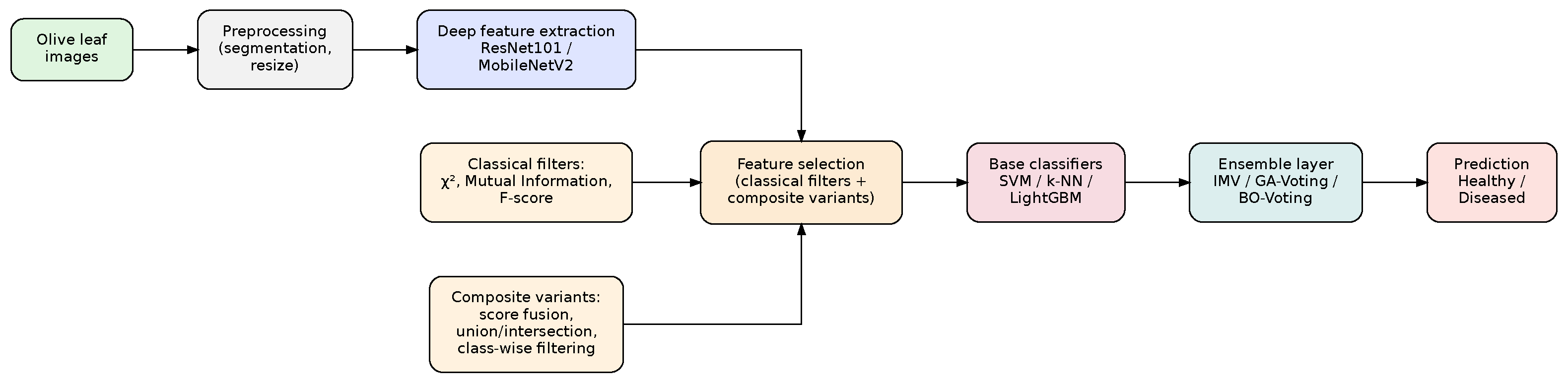
Figure 1 illustrates the overall architecture of the proposed framework through a graphical abstract.
The proposed framework consists of four main stages: (i) deep feature extraction using pretrained CNN architectures, (ii) filter-based and composite feature selection, (iii) classification using machine learning models, and (iv) voting-based ensemble integration. Deep features extracted from ResNet101 and MobileNetV2 are processed using classical filter-based feature selection methods—Mutual Information (MI), F-score, and Chi-square—together with several composite variants including hybrid voting, score fusion, union-based, and intersection-based strategies. The resulting compact feature subsets are evaluated with multiple classifiers, and their outputs are subsequently combined via voting-based ensemble methods. Finally, a hybrid ensemble strategy integrates Genetic Algorithm (GA)-based classifier selection, Bayesian Optimization (BO)-based weight tuning, and Iterative Majority Voting (IMV).
3.1. Dataset
The study uses an olive leaf dataset summarized in
Table 1. The dataset comprises 954 samples collected from the Edincik region in the Bandırma district, Balıkesir, Turkey.
The images of the leaves were originally collected from natural field environments; however, image acquisition was performed under controlled conditions to ensure consistency and reduce variability. Specifically, each leaf was placed individually inside a
cm LED-lit light box, and images were captured using a 48-megapixel camera positioned 52 cm above the sample. This setup ensured uniform illumination, fixed scale, and a clean white background across all images [
25].
Therefore, the dataset represents a controlled imaging setting of field-collected samples rather than direct in-field acquisition. This design enables a consistent and reliable evaluation of feature extraction and selection mechanisms by minimizing external variability. However, it does not fully capture real-world agricultural conditions such as varying illumination, complex backgrounds, and occlusions. Consequently, while the proposed framework demonstrates strong performance under controlled conditions, further validation on in-field datasets is required to assess its robustness and generalizability in practical deployment scenarios.
3.2. Preprocessing Pipeline
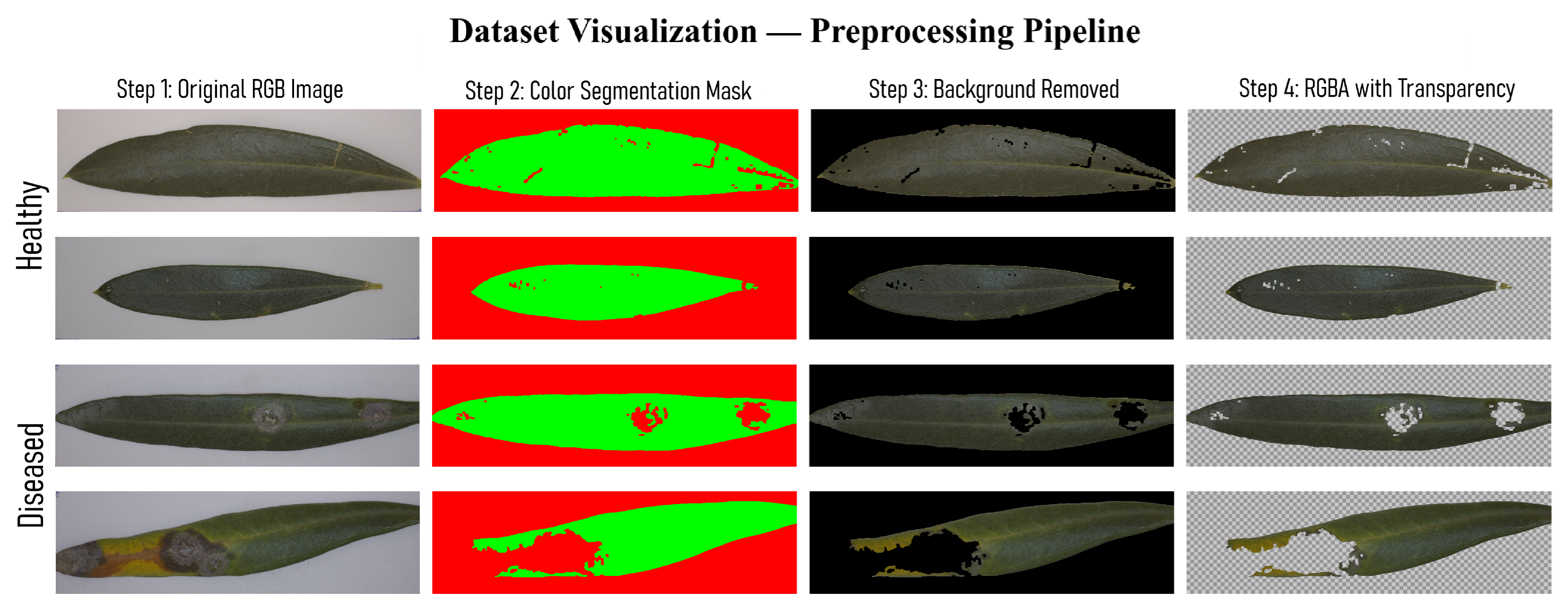
To ensure consistency across the dataset (
), a standardized three-stage preprocessing pipeline was implemented (
Figure 2). First, images were converted from RGB to RGBA format to integrate an explicit alpha channel for transparency mapping. Second, color-based segmentation was employed to isolate foliage from the background. Specifically, white pixels (all channels
) and blue-tinted regions (blue
; red and green
) were identified and excluded. Finally, a morphological closing operation using a
kernel was applied to refine the smoothness of the leaf contours and fill internal gaps.
3.3. Transfer Learning and Feature Extraction
Deep feature extraction was performed using pretrained ResNet101 and MobileNetV2 architectures [
26,
27]. In this study, both networks were employed as fixed feature extractors without fine-tuning, and the extracted deep representations were subsequently used as inputs to classical machine learning classifiers.
Feature vectors were obtained from the penultimate layer of each network, prior to the final classification layer. ResNet101 produced 2048-dimensional feature vectors, whereas MobileNetV2 generated 1024-dimensional representations.
The selected architectures provide complementary characteristics. MobileNetV2 was preferred for its lightweight architecture and computational efficiency, achieved through depthwise separable convolutions, making it suitable for resource-constrained agricultural applications [
26,
28]. In contrast, ResNet101 utilizes residual connections across deeper layers, enabling stronger representational capacity for complex visual patterns [
27].
Although transformer-based architectures have recently demonstrated promising performance in agricultural image analysis, they generally require larger datasets and higher computational resources [
14,
15]. Since the primary objective of this study is to investigate compact, computationally efficient feature representations, lightweight CNN-based transfer learning architectures were preferred over transformer-based end-to-end models.
3.4. Feature Selection Methods
Deep feature extractors often generate high-dimensional representations containing redundant or weakly informative components. Feature selection is therefore employed to reduce dimensionality and improve computational efficiency while preserving discriminative capability. In this study, both classical filter-based methods and several composite variants are investigated.
Three widely used filter criteria were considered due to their low computational complexity and suitability for high-dimensional feature spaces [
29].
F-score: The F-score evaluates the discriminative capability of a feature by comparing between-class separability and within-class variability.
Chi-square (
) Test: The
statistic measures the dependency between a feature and the class label.
Mutual Information (MI): Mutual Information captures both linear and non-linear dependencies between features and class labels.
Since different filter methods produce scores with different numerical scales, all scores were normalized using min-max normalization:
Let denote the top-k features selected by method m.
Hybrid Voting:
Hybrid Voting retains features that are supported by multiple filter criteria, aiming to improve robustness to method-specific ranking biases.
Score Fusion:
Score Fusion aggregates normalized relevance scores from different filters into a unified ranking score.
Intersect:
The intersection strategy retains only features consistently selected by all filter methods, resulting in a more conservative feature subset.
Union:
The union strategy combines all features selected by at least one filter method to preserve complementary discriminative information.
Classwise Filtering:
Class-wise filtering evaluates feature relevance independently for each class, thereby better capturing class-specific discriminative patterns.
These composite strategies generate compact feature subsets while maintaining computational complexity lower than that of wrapper-based or metaheuristic feature selection approaches. Unlike end-to-end representation learning approaches that introduce additional trainable parameters and optimization stages, the proposed composite filter-based framework operates directly on deep pretrained representations with low computational overhead [
30]. This design enables systematic investigation of compact, discriminative feature subsets while preserving the computational efficiency advantages of transfer learning-based feature extraction. Consequently, the proposed framework is particularly suitable for resource-constrained precision agriculture applications where lightweight deployment and reduced inference complexity are important practical considerations.
3.5. Classifiers
After feature extraction and feature selection, the resulting vectors were evaluated using k-NN, SVM, and LightGBM classifiers.
3.5.1. Support Vector Machines (SVM)
SVM classifiers with radial basis function (RBF) and polynomial kernels were employed due to their strong performance in high-dimensional feature spaces [
31]. The regularization parameter
C controls the trade-off between margin maximization and training error minimization.
3.5.2. k-Nearest Neighbors (k-NN)
A 1-NN classifier using Euclidean distance was employed as a lightweight non-parametric baseline [
32]. The value of
was selected based on preliminary cross-validation experiments.
3.5.3. LightGBM (LGB)
LightGBM was included as an efficient tree-based boosting model capable of capturing non-linear feature interactions in reduced deep feature representations [
33].
3.6. Majority Voting-Based Ensemble Methods
The reduced feature subsets generated by different selection strategies may induce complementary decision boundaries across classifiers and feature extractors. To improve robustness and reduce sensitivity to individual model configurations, multiple classifiers were combined using voting-based ensemble schemes.
Three ensemble mechanisms were investigated: Iterative Majority Voting (IMV), Genetic Algorithm-Based Voting (GA–Voting), and Bayesian Optimization-Based Voting (BO–Voting). In addition, a hybrid GA+BO configuration was evaluated, where GA performs model subset selection, and BO optimizes classifier fusion weights.
3.6.1. Iterative Majority Voting (IMV):
IMV starts from the best individual classifier
and progressively builds an ensemble by adding models from the pool
. At iteration
t, predictions are obtained by majority vote over the selected subset
:
A candidate classifier
is retained only if adding it improves validation accuracy, i.e.,
. The procedure terminates when no further improvement is observed [
34].
3.6.2. Genetic Algorithm-Based Voting (GA–Voting):
GA–Voting treats ensemble construction as a binary optimization problem. Each chromosome is a binary vector.
indicating whether classifier
is included (
) or excluded (
). The resulting ensemble label is computed by majority voting among the selected models:
The fitness
is defined as the validation accuracy of the ensemble:
where
denotes the indicator function. Standard GA operators (selection, crossover, and mutation) are then applied to evolve the population toward higher fitness [
35].
3.6.3. Bayesian Optimization-Based Voting (BO–Voting):
In BO–Voting, we employ soft voting by assigning a weight
to each classifier, resulting in a weight vector
with
. For class
c, the aggregated score is computed as:
The predicted label follows from:
Bayesian Optimization is used to identify the optimal weights
that maximize validation accuracy:
This approach allows the ensemble to emphasize strong classifiers while down-weighting weaker ones.
Overall, IMV employs a greedy inclusion strategy, GA–Voting performs a global search over base-classifier subsets, and BO–Voting tunes continuous fusion weights. These complementary mechanisms enable a systematic comparison of ensemble construction strategies for olive leaf disease detection.
3.7. Model Evaluation
Model performance was evaluated using accuracy, F1-score, and Matthews Correlation Coefficient (MCC):
3.8. Experimental Protocol and Data Leakage Prevention
To ensure fair and unbiased evaluation, all feature selection, hyperparameter tuning, and ensemble optimization steps were performed exclusively within the training portion of each cross-validation fold.
The dataset was evaluated using stratified 5-fold cross-validation, preserving class distributions across folds. A 5-fold protocol was preferred instead of higher-fold settings (e.g., 10-fold) to provide a balance between reliable performance estimation and computational efficiency, particularly considering the large number of evaluated feature-selection and ensemble configurations.
For each fold:
The dataset was split into training (80%) and validation (20%) subsets.
Deep feature extraction using pretrained ResNet101 and MobileNetV2 models was performed independently for training and validation samples.
Feature selection methods were applied only on the training data. The selected top-k features () were then transferred to the validation fold.
Hyperparameter tuning for k-NN, SVM, and LightGBM was performed using grid search within the training fold.
Ensemble optimization (GA-based selection and BO-based weighting) was also performed exclusively on the training data.
This protocol ensures that no information from the validation fold is used during feature selection, hyperparameter optimization, or ensemble construction, thereby providing unbiased estimates of generalization performance.
4. Experimental Results
This section reports the experimental results for olive leaf disease classification under three settings: (i) baseline classification using the full deep feature vectors, (ii) classification after applying the proposed (devised) filter-based feature selection variants, and (iii) model fusion using voting-based ensembles.
Rather than proposing a new end-to-end representation learning architecture, the primary objective of these experiments is to investigate whether compact feature subsets derived from pretrained deep representations can preserve near-baseline classification performance under aggressive dimensionality reduction settings. Therefore, the experiments focus not only on predictive accuracy but also on the trade-off between feature compactness, computational efficiency, and classification stability.
All experiments were conducted in Python 3.11.3 using TensorFlow 2.4.1 and HuggingFace Transformers 4.5.1 on a system equipped with an Intel Ultra7–265K CPU, 64 GB RAM, and an NVIDIA RTX 5070 Ti GPU. Model performance was assessed using 5-fold stratified cross-validation. Hyperparameters for each classifier were tuned via grid search (
Table 2).
We applied eight feature selection strategies—three classical filters (Chi-square, Mutual Information, and F-score) and five devised composite selectors (hybrid, score fusion, union, intersect, and class-wise filtering). Each selector was applied independently to deep features extracted by both ResNet101 and MobileNetV2, producing 16 feature subsets (8 selectors × 2 feature extractors).
Each feature subset was evaluated using three classifiers (k-NN, SVM, and LightGBM), resulting in 48 model configurations (16 feature subsets × 3 classifiers). All configurations were ranked by classification accuracy, and the top-performing models are summarized in the following tables.
4.1. Baseline Performance Without Feature Selection
Table 3 reports the baseline results obtained using the full deep feature vectors from ResNet101 (2048 features) and MobileNetV2 (1024 features). This setting represents the upper-bound performance of the classifiers when no dimensionality reduction is applied.
Across both feature extractors, SVM achieves the highest accuracy and MCC, indicating a strong ability to separate healthy and diseased leaves in the original feature space. However, using thousands of features increases both training time and memory consumption, motivating subsequent experiments to reduce feature dimensionality while preserving classification performance.
4.2. Performance with Devised Filter-Based Feature Selection
To systematically analyze the effect of the proposed filter-based feature selection strategies on classification performance, we conducted a series of experiments using compact feature subsets of fixed sizes: 32, 64, and 128 features. The primary goal of this stage was to investigate whether competitive or near-baseline performance could be maintained under aggressive dimensionality reduction by prioritizing the most discriminative components of the deep feature representations.
The devised feature selection strategies include score fusion, union, intersection, hybrid combinations, and class-wise filtering mechanisms, which aim to integrate complementary relevance information from multiple filter criteria. All experiments were again evaluated using a stratified 5-fold cross-validation scheme to ensure class balance across folds and to obtain reliable performance estimates.
Table 4 reports the top-performing configurations when only 32 features are retained. Despite the severe reduction in dimensionality, the results demonstrate that high classification performance can still be achieved.
In particular, the best-performing configuration is MobileNetV2 + Mutual Information (SVM), which achieves an accuracy of 0.976, an F1-score of 0.980, and an MCC of 0.950. Several other configurations, including Hybrid and F-score-based selections, yield comparable performance, indicating that the proposed composite and classical filter strategies are effective in isolating highly informative features even under strict feature constraints.
When the number of selected features is increased to 64, the performance trends become more pronounced, as shown in
Table 5. Both ResNet101- and MobileNet-based models exhibit consistent improvements in both central tendency and stability, as reflected by increased mean accuracy and reduced variance across folds. At this level, multiple configurations achieve comparable top performance. In particular, ResNet101 + Union (SVM) and ResNet101 + Mutual Information (LightGBM) both reach an accuracy of 0.980 with MCC values around 0.959. Similarly, MobileNetV2 + Hybrid (SVM) slightly exceeds this level, achieving an accuracy of 0.981, the highest observed value for this feature budget. These results indicate that increasing feature dimensionality enables models to capture additional discriminative information while maintaining computational efficiency. Notably, MobileNet-based models paired with score fusion and hybrid selection strategies also perform competitively, highlighting the robustness of the devised filters across different backbone architectures.
Finally,
Table 6 presents the results obtained using 128 selected features. At this level, the top-performing models approach or match the baseline performance achieved with much higher-dimensional representations. The ResNet + F-Score (SVM) configuration yields the highest overall performance, with an accuracy of 0.988, an F1-score of 0.990, and an MCC of 0.976. These results confirm that the devised filter-based selection strategies scale effectively with increasing subset sizes, allowing models to exploit richer feature representations while still benefiting from reduced dimensionality.
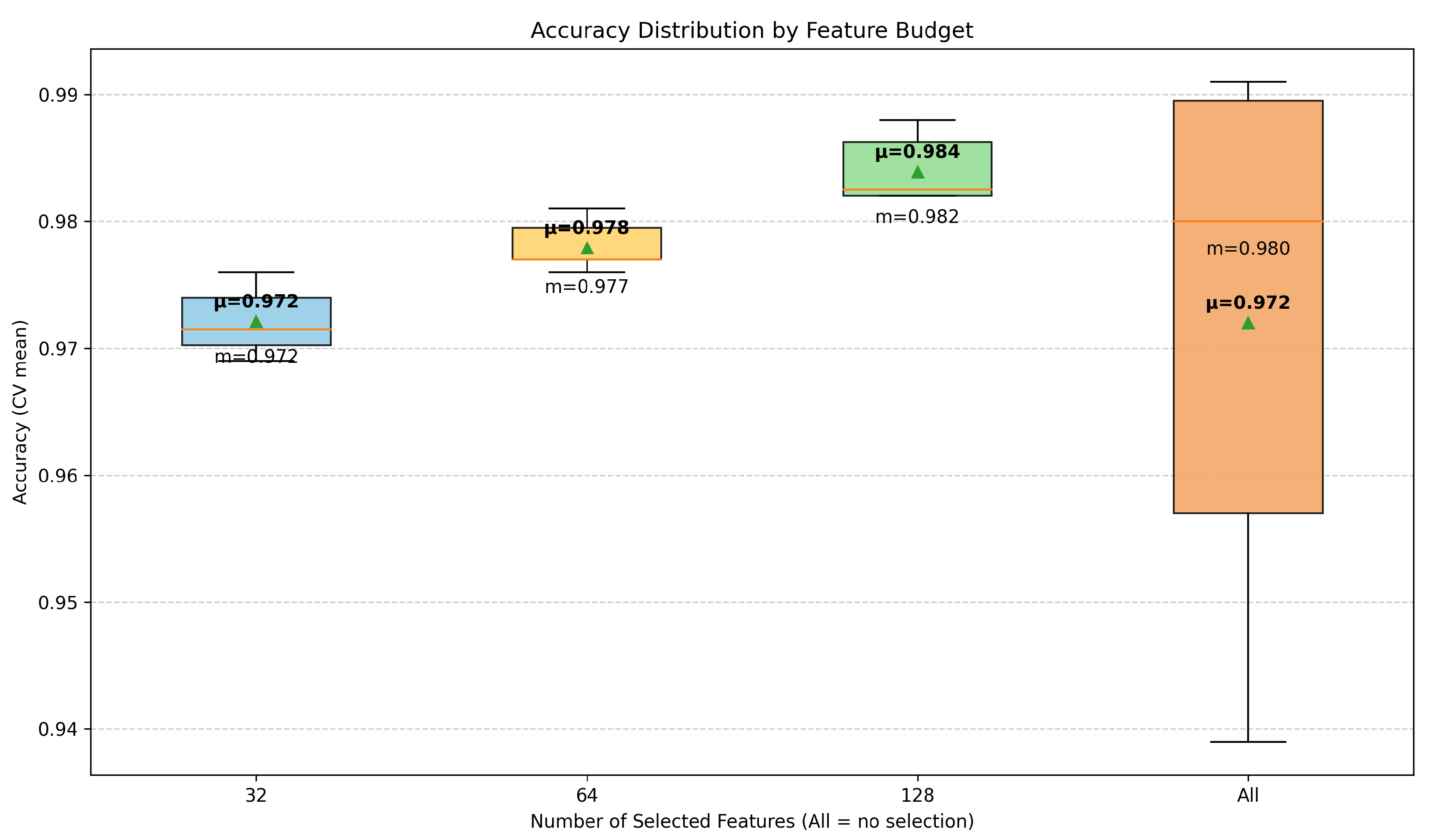
Figure 3 provides a consolidated view of the accuracy–efficiency trade-off across different feature budgets. As the number of selected features increases from 32 to 128, both the median accuracy and the overall stability of the models improve, while the performance gap with the full-feature baseline narrows substantially. Notably, the full-feature setting exhibits higher variance across configurations, whereas compact feature subsets—particularly at 64 and 128 features—yield more consistent accuracy distributions, highlighting the robustness of the proposed composite filter-based selection strategies.
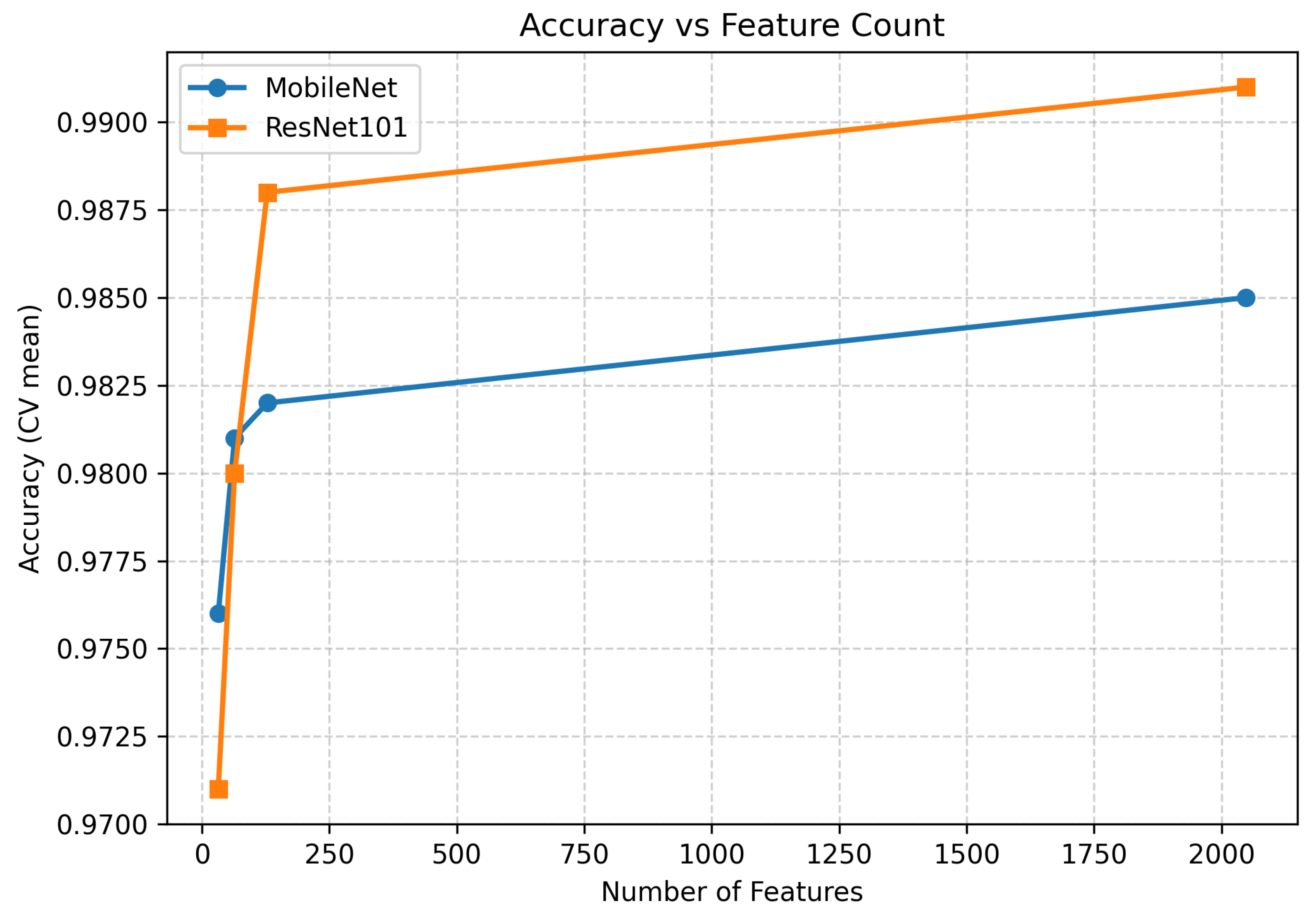
Figure 4 further highlights the accuracy–efficiency trade-off achieved by the proposed feature selection framework. Both MobileNet- and ResNet101-based models exhibit a monotonic increase in accuracy as the feature budget grows, with diminishing performance gains beyond 128 features. Notably, ResNet101 benefits more from increased feature dimensionality, whereas MobileNet achieves competitive performance with fewer features, underscoring the suitability of compact representations for resource-constrained agricultural applications.
Table 7 summarizes the computational efficiency characteristics of the best-performing configurations under different feature budgets. As the number of selected features increases, storage requirements and inference overhead also increase, although the overall computational costs remain relatively low. Notably, compact feature subsets substantially reduce storage requirements while preserving near-baseline classification performance. For example, the 32-feature configuration requires only 119.25 KB of feature storage while still achieving 0.976 accuracy. Similarly, the 64-feature configuration provides an effective balance between predictive performance and computational efficiency, achieving 0.980 accuracy with the lowest inference time among the evaluated settings. These findings further support the suitability of the proposed framework for lightweight and resource-constrained precision agriculture applications.
To sum up, the findings from
Table 4,
Table 5 and
Table 6 and the accuracy distributions shown in
Figure 3 demonstrate that the proposed composite filter-based feature selection methods provide a strong trade-off between classification accuracy and computational efficiency. Even with highly compact feature subsets, the devised strategies preserve the most discriminative information embedded in deep feature vectors. In contrast, larger subsets enable a smooth and consistent convergence toward baseline performance. This behavior highlights the practical suitability of the proposed selection framework for real-world applications where both performance and efficiency are critical considerations.
4.3. Ensemble-Based Model Performance
Table 8 summarizes the performance of the voting-based ensemble strategies evaluated in terms of accuracy, F1-score, Matthews Correlation Coefficient (MCC), and computational time. The motivation for introducing an ensemble layer is that reduced feature subsets generated by different selection strategies (e.g., score fusion, union, intersection, hybrid, and class-wise filtering) induce complementary decision boundaries across base classifiers. Aggregating these predictors improves robustness by reducing sensitivity to individual model configurations and exploiting complementary decision boundaries.
The ensemble pool consists of the base models obtained from the top-performing 64-feature setting. This choice provides a balance between model diversity and computational efficiency. Specifically, the pool includes models derived from different feature extractors (ResNet101 and MobileNetV2), feature selection strategies, and classifier types (SVM, k-NN, LightGBM), resulting in a heterogeneous set of candidate predictors. The 64-feature setting was selected because it offers strong performance while maintaining compact representations, thereby enabling efficient ensemble construction.
IMV employs a greedy strategy that incrementally constructs an ensemble by adding candidate models only if they improve validation accuracy. As shown in
Table 8, IMV achieves strong performance (Accuracy = 0.9906, MCC = 0.9804) with negligible computational cost (0.49 s), demonstrating that simple majority voting can effectively exploit complementary decision boundaries while remaining computationally efficient.
GA–Voting formulates ensemble selection as a combinatorial optimization problem, identifying a subset of classifiers that maximizes validation accuracy. This approach reduces redundancy by excluding weaker or correlated models. GA–Voting achieves competitive performance (Accuracy = 0.9895, MCC = 0.9783), slightly below IMV, while requiring a higher computational cost due to evolutionary search.
BO–Voting introduces weighted soft voting, where classifier contributions are optimized via Bayesian Optimization. This approach yields an accuracy of 0.9853 (MCC = 0.9697), indicating that adaptive weighting can refine predictions, although it does not exceed the performance of majority-based approaches in this setting.
The hybrid GA+BO approach combines subset selection (GA) with weight optimization (BO). This configuration achieves the highest mean performance among the evaluated ensemble methods (Accuracy = 0.9916, F1-score = 0.9931, MCC = 0.9826), slightly improving upon the IMV strategy. However, the absolute performance gain remains limited relative to the substantial increase in optimization time (394.29 s). Considering the overlapping standard deviations across cross-validation folds, the observed improvement should be interpreted as a marginal gain rather than a substantial statistical difference.
From a practical perspective, the additional computational overhead introduced by GA+BO may not always be justified for real-time or resource-constrained deployment scenarios. Nevertheless, the GA+BO strategy may still be valuable in offline analytical settings where maximizing predictive performance is prioritized over runtime efficiency. In contrast, IMV provides a considerably stronger performance–efficiency trade-off, achieving near-best performance with negligible computational overhead, making it particularly suitable for lightweight agricultural decision-support systems operating under limited computational resources.
The results suggest that optimization-based ensemble strategies can lead to modest improvements in performance. In contrast, lightweight majority-based voting methods can retain most of the benefits of ensemble techniques while significantly reducing computational complexity. These findings highlight the effectiveness of compact feature representations and lightweight ensemble integration for practical applications in precision agriculture.
4.4. Ablation Study
To better understand the contribution of each component in the proposed framework, we conduct an ablation analysis focusing on three key aspects: (i) the effect of feature selection, (ii) the contribution of composite filter strategies, and (iii) the impact of ensemble learning.
We first analyze the impact of dimensionality reduction by comparing baseline results obtained with full deep feature vectors (
Table 3) against reduced feature subsets (
Table 4,
Table 5 and
Table 6). The baseline ResNet101 + SVM model achieves an accuracy of 0.991 using 2048 features. When the feature dimensionality is reduced to 128, the best-performing configuration still achieves 0.988 accuracy, corresponding to a reduction of over 93% in feature dimensionality with only a marginal drop in performance. Even with an aggressive reduction to 32 features, the accuracy remains at 0.976. These results demonstrate that feature selection plays a critical role in removing redundant information while preserving the most discriminative components of deep representations.
We next examine the benefit of the proposed composite filter strategies compared with individual filter methods. As shown in
Table 4,
Table 5 and
Table 6, classical filters such as Mutual Information and F-score already yield strong performance. However, composite strategies such as Hybrid and Score Fusion consistently appear among the top-performing configurations across different feature budgets. This indicates that combining multiple relevance signals can enhance feature quality by capturing complementary statistical properties, leading to more robust and stable classification performance.
Finally, we evaluate the contribution of ensemble learning by comparing individual models with voting-based ensembles (
Table 8). The best single-model performance (ResNet101 + SVM with full features) reaches approximately 0.991 accuracy, while the proposed GA+BO hybrid ensemble achieves 0.9916 accuracy with improved MCC. Although the absolute improvement is modest, ensemble methods provide increased robustness by aggregating diverse decision boundaries. Notably, the IMV approach achieves near-optimal performance (accuracy of 0.9906) with minimal computational cost, demonstrating that even simple ensemble strategies can significantly enhance model stability.
The ablation analysis confirms that all three components—feature selection, composite filtering, and ensemble learning—contribute to the overall performance of the proposed framework. Feature selection provides the most substantial efficiency gains with minimal loss in accuracy; composite filters improve feature quality and stability; and ensemble learning offers additional robustness and marginal performance improvements. Together, these components form a complementary pipeline that balances accuracy, efficiency, and generalization. The findings indicate that the key contribution of the proposed framework does not stem from introducing a new deep architecture. Instead, it systematically explores how compact feature selection and lightweight ensemble optimization can maintain the discriminative power of pretrained deep representations in resource-constrained environments.
5. Discussion
This section discusses the experimental findings presented in the previous section to contextualize the observed performance trends and highlight their practical implications for olive leaf disease detection. First, the impact of the proposed composite filter-based feature selection strategies is examined in terms of their ability to preserve discriminative power under aggressive dimensionality reduction. Next, the accuracy–efficiency trade-off under varying feature budgets is analyzed, followed by a discussion of classifier behavior and backbone-specific trends. Finally, the benefits of ensemble learning and the comparative performance of the proposed framework with respect to existing studies are addressed.
5.1. Impact of Composite Filter-Based Feature Selection
This study demonstrates that filter-based feature selection, when carefully devised through composite strategies (i.e., score fusion, union, intersect, hybrid, and class-wise filtering), can deliver a strong accuracy–efficiency trade-off for olive leaf disease classification. Unlike meta-heuristic feature selection pipelines that require extensive iterative searches, the proposed framework relies on fast relevance-driven ranking and aggregation of deep features extracted from ResNet101 (2048-d) and MobileNetV2 (1024-d). This design enables aggressive dimensionality reduction while preserving most of the discriminative information embedded in deep representations.
Baseline results (
Table 3) confirm that full deep feature vectors already provide near-ceiling separability for the task. In particular, ResNet101 combined with SVM or LightGBM achieves baseline accuracy close to 0.99, establishing a strong upper bound. However, operating with 1024–2048 features substantially increases storage and inference costs, which may limit practical deployment in resource-constrained agricultural environments.
5.2. Accuracy–Efficiency Trade-Off Under Feature Budget Constraints
The feature selection experiments demonstrate that high classification performance can be maintained even with compact feature subsets. With only 32 selected features (
Table 4), the best configurations achieve Accuracy
and MCC
, indicating that the devised selectors can isolate a small set of highly informative deep features. Increasing the feature budget to 64 features yields a consistent improvement (
Table 5), with peak accuracy approaching 0.981 and MCC values exceeding 0.96, while maintaining extreme compactness relative to the original feature space.
The strongest reduced-feature results are obtained with 128 selected features (
Table 6), where the best configuration (ResNet101 + F-score + SVM) achieves Accuracy
and MCC
. This corresponds to using only approximately 6.25% of the original ResNet101 feature dimensionality, yet approaching baseline performance. These results highlight the effectiveness of the proposed composite filter strategies in balancing dimensionality reduction and predictive accuracy.
5.3. Classifier Behavior and Backbone-Specific Trends
Across the reduced-feature experiments, SVM consistently dominates the top-ranked configurations, particularly for 64 and 128 feature settings. This observation suggests that margin-based learning is especially well-suited to the compact deep feature manifolds produced by the proposed selection strategies. While MobileNet-based subsets remain highly competitive—especially under hybrid, mutual information, and union selectors—ResNet101-based subsets tend to yield the best peak performance at larger subset sizes. This trend indicates that the richer ResNet embedding space retains additional discriminative cues that become exploitable as the feature budget increases.
5.4. Ensemble Learning and Robustness Considerations
Table 9 compares the proposed framework with recent olive leaf disease detection studies under different datasets, acquisition conditions, and evaluation protocols. Unlike several prior studies that rely on simple train/test splits, the proposed framework was evaluated using stratified 5-fold cross-validation to obtain more reliable and unbiased performance estimates. In addition, while many previous approaches focus primarily on end-to-end deep learning classification, the proposed method emphasizes compact deep representations combined with lightweight composite feature selection and ensemble optimization.
It should be noted that direct comparisons across studies should be interpreted with caution, since different datasets, acquisition conditions, preprocessing pipelines, class distributions, and evaluation strategies can substantially influence reported performance metrics. Therefore, the comparisons presented in
Table 9 are intended to provide contextual insight rather than definitive superiority claims.
Beyond single-model performance, the ensemble results (
Table 8) demonstrate that voting-based fusion can further improve robustness by leveraging complementary decision boundaries among reduced-feature models derived from different feature extractors and selection strategies. The proposed GA+BO hybrid ensemble achieved the highest overall performance (Accuracy
, MCC
), slightly improving upon the best individual reduced-feature configurations.
However, this performance gain should be interpreted in light of computational cost considerations. The GA+BO strategy introduces additional optimization overhead due to iterative selection of classifier subsets and adaptive weight tuning. In contrast, Iterative Majority Voting (IMV) achieved highly competitive performance (Accuracy , MCC ) with substantially lower computational complexity and near-negligible optimization overhead.
These findings indicate that lightweight voting strategies can preserve most of the ensemble benefits while being more suitable for practical agricultural deployments under resource-constrained conditions. Overall, the proposed framework demonstrates that compact deep representations, composite filter-based selection, and lightweight ensemble integration can collectively provide strong classification performance without relying on computationally intensive end-to-end architectures.
5.5. Comparison with Existing Studies and Practical Implications
Table 9 compares the proposed framework with representative studies on olive leaf disease detection. The best-performing configuration achieves an accuracy of 99.16%, exceeding previously reported results. Importantly, this improvement is achieved while preserving feature compactness and computational efficiency. Strong performance is already observed with 64–128 selected features, and the lightweight IMV ensemble yields nearly identical accuracy with minimal runtime.
Beyond olive leaf disease detection, the proposed framework offers practical advantages for broader applications in precision agriculture. The filter-composition strategy scales linearly with feature dimensionality, supports mobile and edge deployments via compact representations, and is model-agnostic, enabling transfer to different CNN backbones and crop-disease datasets. The transparency of filter-based selection further facilitates interpretability and system analysis in agricultural decision-support pipelines.
6. Conclusions
This study presented an efficient and robust olive leaf disease detection framework that integrates deep feature extraction, composite filter-based feature selection, and voting-based ensemble learning. The experimental results confirm that the proposed selection strategies preserve near-baseline classification performance under substantial dimensionality reduction, and that ensemble fusion can further enhance robustness and peak accuracy.
The findings demonstrate that compact feature subsets derived from pretrained deep representations can maintain strong discriminative capability while substantially reducing feature dimensionality and computational overhead. In this respect, the contribution of the proposed framework lies not in introducing a new end-to-end deep architecture but in systematically investigating how lightweight feature selection and ensemble optimization strategies can improve the efficiency, compactness, and deployment suitability of transfer learning-based disease detection systems.
From a practical perspective, two deployment modes emerge: (i) a lightweight mode using 64–128 selected features with SVM and optional IMV for low-latency applications, and (ii) a maximum-accuracy mode employing GA+BO-based ensemble optimization for offline analysis. These modes allow practitioners to balance accuracy, efficiency, and computational cost according to application requirements.
Future work will focus on validating the proposed framework across additional olive cultivars and disease types, as well as evaluating its robustness to domain shifts, including variations in lighting conditions, acquisition devices, and background clutter. Another promising direction is to combine the fast filter-composition stage with selective, budgeted meta-optimization to reduce optimization overhead. In addition, future studies will investigate integrating representation learning approaches, such as lightweight vision transformers, autoencoder-based latent embeddings, and self-supervised representation learning techniques, to improve compactness and generalization further. Finally, incorporating multispectral or temporal information and exploring cross-crop transfer learning may further strengthen real-world applicability.