Article

Soybean Intercropping Improves Bacterial Community and Nutrient Status in Soil of Citrus Orchards

1
Hunan Horticultural Research Institute, Hunan Academy of Agricultural Sciences, Changsha 410125, China
2
Yuelushan Laboratory, Changsha 410128, China
3
Hunan Institute of Nuclear Agriculture Sciences and Chinese Herbal Medicines, Hunan Academy of Agricultural Sciences, Changsha 410125, China
4
Xiangxi Tujia and Miao Autonomous Prefecture Citrus Science Research Institute, Jishou 416208, China
*
Author to whom correspondence should be addressed.
Co-first authors of the article.
Agronomy 2026, 16(11), 1024; https://doi.org/10.3390/agronomy16111024
Submission received: 10 April 2026 / Revised: 15 May 2026 / Accepted: 20 May 2026 / Published: 22 May 2026

Abstract

Soil microbes play pivotal roles in nutrient cycling and ecosystem functioning across diverse farmland systems. Orchard grass coverage has been demonstrated to effectively alter microbial community structure and promote nutrient cycling. However, the effects of soybean intercropping on soil bacterial community characteristics and nutrient contents in citrus orchards remain poorly understood. In this study, a field experiment was conducted in a citrus orchard involving three planting patterns: clean tillage (CT), natural grass (NG), and soybean intercropping (SI). The physicochemical properties and bacterial community structure of the topsoil (0–40 cm depth) were determined. Results showed that compared with CT, NG and SI significantly increased cation exchange capacity (CEC), soil organic matter (SOM), alkali-hydrolyzable nitrogen (AN), and available potassium (AK). SI further elevated soil pH and available phosphorus (AP) relative to CT and NG. Bacterial diversity ranked SI > NG > CT, with PCoA showing lower community variation under SI. A total of 31 bacterial phyla were detected in the citrus orchard soil, with Cyanobacteria (17.20~40.81%), Proteobacteria (15.04~24.19%), Acidobacteriota (8.95~14.66%), and Chloroflexi (3.93~21.13%) identified as the dominant phyla. SI enriched Cyanobacteria and Proteobacteria but reduced Acidobacteriota, Chloroflexi, and Actinobacteriota. Mantel tests confirmed CEC and SOM as key drivers of bacterial community structure. Overall, soybean intercropping improves soil microecology and exhibits great potential for soil quality improvement in citrus orchards under local conditions.

1. Introduction

Citrus is the fruit with the largest cultivation area and yield in China. In 2023, China’s citrus cultivation area exceeded 3.06 million hectares and its yield surpassed 64.34 million tons, ranking first globally in terms of citrus production scale [1]. In recent years, the “wide-row and narrow-plant” cultivation pattern has been widely adopted in the construction of standard citrus orchards [2]. However, in traditional orchard management, farmers usually practice clean tillage between orchard rows due to concerns that orchard grass growth may compete with fruit trees for water and nutrients, thereby reducing fruit yield [3,4]. Therefore, extensive research is needed to assess the impact of appropriate orchard management practices on soil quality.
Orchards in southern China are characterized by poor site conditions [5] and low soil fertility [6]; thus, the key to high-quality orchard production lies in the maintenance of soil and root systems [7,8]. Compared with the traditional clean tillage management pattern, orchard intercropping refers to a planting method that involves growing two or more crops alternately on the same plot of land to achieve temporal and spatial intensification [9,10]. Intercropping leguminous crops between orchard rows can improve the utilization rate of the space between fruit tree rows. It can also effectively avoid issues such as soil erosion caused by long-term clean tillage in orchards, as well as pesticide residues and environmental pollution resulting from excessive herbicide use [11]. Numerous studies have shown that intercropping can increase belowground biomass, root activity, and topological structure, thereby increasing rhizodeposition and soil carbon (C) flux [12,13]. This rhizosphere effect can promote the formation of soil aggregates, improve the availability and exchange capacity of soil nutrients, and thereby stimulate the biomass, activity, and functions of soil microbial communities [14,15]. However, limited information is available regarding the effects of citrus orchard intercropping on soil nutrients and their associated microorganisms in previous studies.
As an important component of the soil ecosystem, soil microorganisms are involved in the circulation and utilization of soil nutrients [16]. Wang et al. [17] found that long-term leguminous green mulching enhances microbial diversity, stability, and nutrient cycling. Additionally, the relative abundance of Ascomycota and Basidiomycota significantly increased during the citrus fruit swelling to withering period and fruit maturity to seeding period, reaching 63.65–73.80% and 79.73–84.51%, respectively. Xie et al. [16] observed that pH, total phosphorus, and total carbon were important environmental factors affecting the relative abundance of soil dominant bacteria in hilly apple orchards. Liu et al. [18] reported that compared with proso millet and mung bean monocultures, the potential nitrogen limitation of rhizosphere soil microorganisms of both species was more intense in intercropping. Notably, different land use and management practices can significantly alter bacterial community structure and functional characteristics by modifying soil physicochemical environments. However, the responses of microbial communities to nutrient limitation under citrus–soybean intercropping conditions remain unclear. Therefore, systematic investigation of the interaction between soil physicochemical properties and bacterial communities in citrus orchards under different planting patterns holds substantial theoretical and practical significance for optimizing orchard land management strategies and enhancing soil ecological functions.
In recent years, Hunan Province has vigorously developed citrus cultivation, and the area of citrus orchards has expanded rapidly [19]. However, citrus cultivation and management practices are relatively backward, and excessive reliance on chemical fertilizers, herbicides, and chemical pesticides has caused the deterioration of the ecological environment of citrus orchards and the decline of citrus quality. In 2025, the No. 1 Document of the Hunan Provincial Party Committee clearly proposed to build a higher level of “Dongting Granary” and innovatively carry out interplanting of soybeans in 6.67 × 10⁴ hectares of citrus standard gardens [20]. Nevertheless, existing studies on citrus orchard intercropping mainly focus on crop yield and single soil physicochemical indicators, while few studies systematically reveal the coupling relationship between soil physicochemical properties and bacterial community structure under citrus–soybean intercropping, especially the key environmental drivers mediating microbial community shifts in hilly citrus orchards. Our study fills this gap by elucidating how citrus–soybean intercropping improves soil quality via regulating soil–microbe interactions, which provides targeted theoretical support for sustainable soil management of citrus orchards in subtropical hilly regions.
To address these questions, a field experiment was conducted to analyze the soil physicochemical properties and bacterial community characteristics of citrus orchards under three patterns: clean tillage (CT), natural grass (NG), and soybean intercropping (SI). We hypothesized that citrus–soybean intercropping can improve soil physicochemical properties and bacterial community characteristics. Thus, this study focused on (i) investigating the effects of different planting patterns on soil physicochemical properties and bacterial communities, (ii) determining the succession patterns and key species of these communities, and (iii) revealing the key environmental factors driving population succession by analyzing soil bacterial communities and physicochemical properties. The above objectives contribute to screening the farming system suitable for southern mountainous orchards and providing a theoretical reference for orchard soil improvement.

2. Materials and Methods

2.1. Experimental Sites

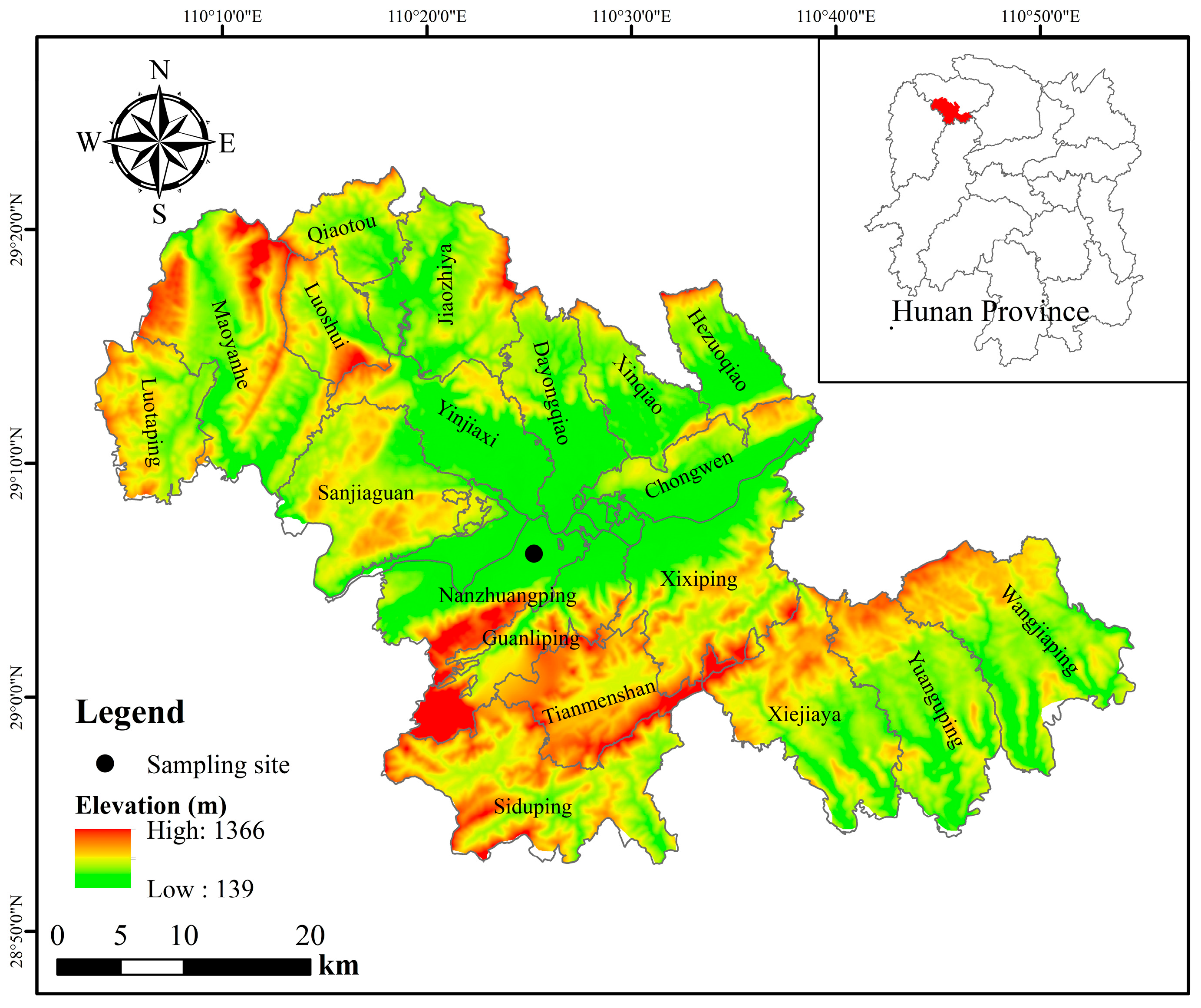
The field experiment was located in the citrus orchard planting area of Munali Village, Nanzhuangping Street, Yongding District, Zhangjiajie City, Hunan Province (29°06′10″ N, 110°25′11″ E). The experimental area is located in the humid subtropical monsoon climate zone, with an annual average temperature and precipitation of 17.8 °C and 1415.2 mm, respectively, during 2021–2025 [21]. The dominant soil type is red soil derived from Quaternary red clay, and the soil texture is silty loam. At the beginning of the experiment, the soil properties (0~40 cm) were as follows: soil bulk density of 1.57 g cm−3, soil porosity of 40.75%, soil hardness of 43.90 kg cm−2, soil pH of 4.17, soil cation exchange capacity (CEC) of 12.50 cmol kg−1, soil organic matter (SOM) of 17.85 g kg−1, total nitrogen (TN) of 2.08 g kg−1, total phosphorus (TP) of 1.38 g kg−1 and total potassium (TK) content of 22.70 g kg−1, respectively. The main cultivar in the orchard is Newhall navel orange grafted onto trifoliate orange [Poncirus trifoliata (L.) Raf.], with an average plant age of approximately 15 years. The citrus cultivation density (row spacing 400 ± 15 cm, plant spacing 300 ± 15 cm) ranges from 765 to 910 plants per hectare. The location distribution of the test site is shown in Figure 1.

2.2. Experimental Design

The field experiment was conducted from 2020 to 2024, with three planting patterns established: clean tillage between citrus tree rows (control, CT), natural grass growing between citrus tree rows (dominated by Galium spurium L. and Stellaria media (L.) Vill., NG), and soybean intercropping between citrus tree rows (SI). A single-factor randomized block design was adopted, with 3 replicates per treatment. Each treatment plot had an area of 667 m2, and a 4 m wide isolation belt was set between different treatments to ensure complete independence. Citrus–soybean intercropping was implemented by sowing early-maturing spring soybeans at equal row spacing, 1 m away from the main trunk at the outer edge of the citrus canopy. The soybean variety used was Xiangchundou 26, a nationally approved early-maturing cultivar with a growth period of 96 days. The sowing specifications were as follows: row spacing of 40 cm, plant spacing of 25 cm, 2–3 seeds per hole, and shallow sowing with thin soil coverage. Sowing was carried out in late March and harvesting in early July; after the soybean harvest, the straw was turned into the soil for incorporation. For citrus trees, organic manure (8000 kg ha−1) and complex fertilizer (N:P2O5:K2O = 15:15:15, m/m/m, 750 kg ha−1) were applied as basal fertilizer via furrow application along the vertical edges beneath tree canopies each mid-December. An additional top-dressing of 750 kg ha−1 complex fertilizer was supplied in mid-July of the following year. For soybeans, 100 kg ha−1 of 45% compound fertilizer was broadcasted as base fertilizer in a single application before sowing. On the day of soybean sowing, S-metolachlor was applied once for pre-emergence weed control; after soybean canopy closure, post-emergence weed control was conducted based on the field weed growth status. In the clean tillage plots, manual weeding was performed regularly to remove surface residues, while other field management measures were consistent with those of the natural grass growing plots.

2.3. Soil Sampling

One week after soybean harvest in July 2024, soil samples were collected when the field soil moisture content was approximately 15% (optimal moisture content) to minimize disturbance to soil microorganisms. Undisturbed soil samples from the 0–40 cm soil layer were collected using the five-point sampling method. Individual soil clods were gently separated along natural fracture points, and all visible impurities such as gravel and root residues were removed by passing through an 8 mm sieve; the remaining soil was thoroughly mixed to form a composite soil sample. For the clean tillage treatment (single citrus cultivation), soil samples were collected at the drip line of the citrus canopy, avoiding fertilizer application holes. For the intercropping treatment, soil samples were collected from the area between the citrus planting strips and the soybean planting strips. Each collected sample was divided into two subsamples: one fresh subsample was used for soil microbial analysis, while the other was naturally air-dried and sieved before determining soil physicochemical properties.

2.4. Soil Characteristics Analyses

Soil bulk density and porosity were measured using the ring-knife method. Soil hardness was determined with a TYD-2 soil penetrometer. Soil pH was measured in 1:2.5 (soil:water) suspensions using a pH meter. Cation exchange capacity (CEC) was analyzed via the ammonium acetate exchange procedure. Soil organic matter (SOM) was quantified by potassium dichromate oxidation with external heating. Total nitrogen (TN) was determined using the Kjeldahl digestion method. Total phosphorus (TP) and total potassium (TK) were measured by alkali fusion-molybdenum-antimony colorimetry and alkali fusion-flame photometry, respectively. Alkali-hydrolyzable nitrogen (AN), available phosphorus (AP), and available potassium (AK) were assayed using the alkali diffusion method, Olsen method, and ammonium acetate extraction-flame photometry, respectively. All soil physicochemical analyses were conducted following the analytical protocols described by Bao [22].

2.5. Soil Bacterial Community Analysis

Total DNA was extracted from 0.5 g fresh soil using HiPure Soil DNA Kits (Genepioneer Biotechnologies, Nanjing, China) according to the manufacturer’s instructions. The quantity and quality of the extracted DNA were checked by 2% agarose gel electrophoresis and a UV spectrophotometer (ND-1000, NanoDrop Technologies, Wilmington, DE, USA). The V3–V4 variable region of the 16S rDNA was amplified by PCR using primers 341F (5′-CCTACGGGNGGCWGCAG-3′) and 806R (5′-GGACTACHVGGGTWTCTAAT-3′). All amplifications were performed in a 30-μL mixture including 15 μL Master Mix (Vazyme Biotech Co., Ltd., Nanjing, China), 1 μL forward and reverse primers, 1 μL template DNA, and nuclease-free water up to 30 μL. The PCR conditions were 95 °C for 5 min, followed by 27 cycles of 95 °C for 30 s, 55 °C for 30 s, and 72 °C for 45 s, with a final extension of 10 min at 72 °C. After amplification, the obtained products were purified using a Qiagen Gel Extraction Kit (Qiagen, Hilden, Germany). Sequencing was performed on the Miseq PE300 platform at Novogene Bioinformatics Technology Co., Ltd., Beijing, China.

2.6. Statistical Analysis

All data were organized using Microsoft Excel 2013. To analyze significant differences in soil nutrients and bacterial diversity indices among all treatment groups, one-way analysis of variance (ANOVA) combined with Duncan’s multiple-range test was employed, and Origin 2024 was used for constructing graphs. ArcGIS 10.5 software was used to draw maps of the Yongding District. Alpha diversity (Chao1, Coverage, Shannon, and Simpson) was calculated with QIIME2. The “linkET” package in RStudio 4.5.0 was used to perform Mantel correlation analysis to examine the correlations between the soil bacterial communities and the soil environmental factors (pH, CEC, SOM, AN, AP, and AK).

3. Results

3.1. Soil Physicochemical Properties

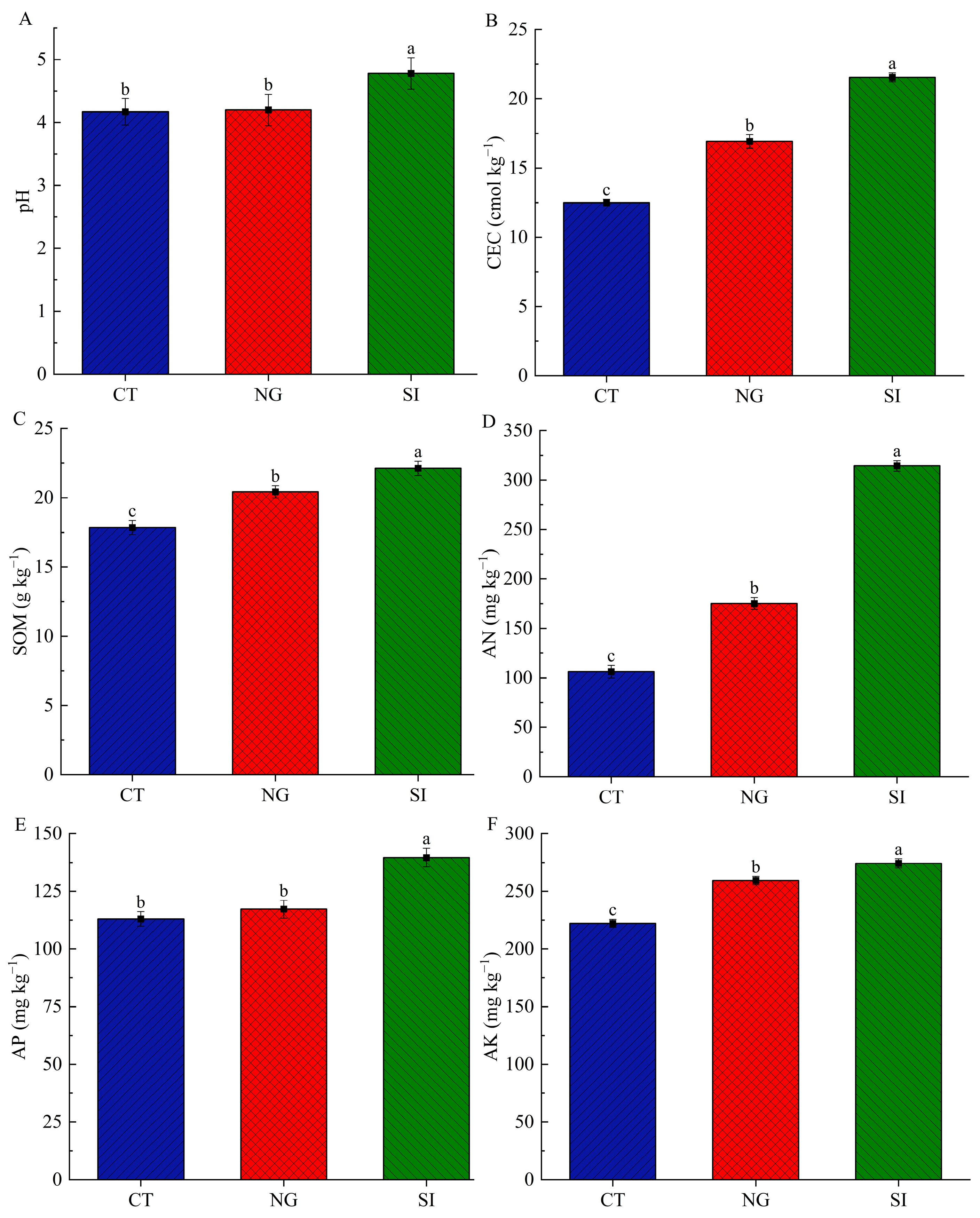
As shown in Figure 2, the contents of soil pH, CEC, SOM, AN, AP, and AK were the highest in SI, followed by NG, and the lowest in CT. Significant differences were observed in soil CEC, SOM, AN, and AK among the three treatments (p < 0.05). Compared with CT, NG and SI treatments significantly increased soil CEC, SOM, AN, and AK by 35.36~72.40%, 14.45~23.92%, 64.79~195.63%, and 16.71~23.41%, respectively. For soil pH and AP, only SI exhibited significantly higher values (0.58~0.61 pH units and 19.09~23.55% higher, respectively) relative to CT and NG (p < 0.05), whereas no significant differences were detected between CT and NG for both soil pH and AP (p > 0.05).

3.2. Soil Bacterial Alpha Diversity

High-throughput sequencing was performed on soil samples. After paired-end quality control and sequence assembly, a total of 215,530 valid bacterial sequences were obtained from the tested soil samples. As shown in Table 1, clustering was conducted at a 97.0% similarity level, and the number of soil bacterial operational taxonomic units (OTUs) across the three cultivation patterns ranged from 1288 to 1519. The number of soil bacterial OTUs in NG and SI treatments was significantly higher than that in CT, increasing by 14.21% and 17.93%, respectively.
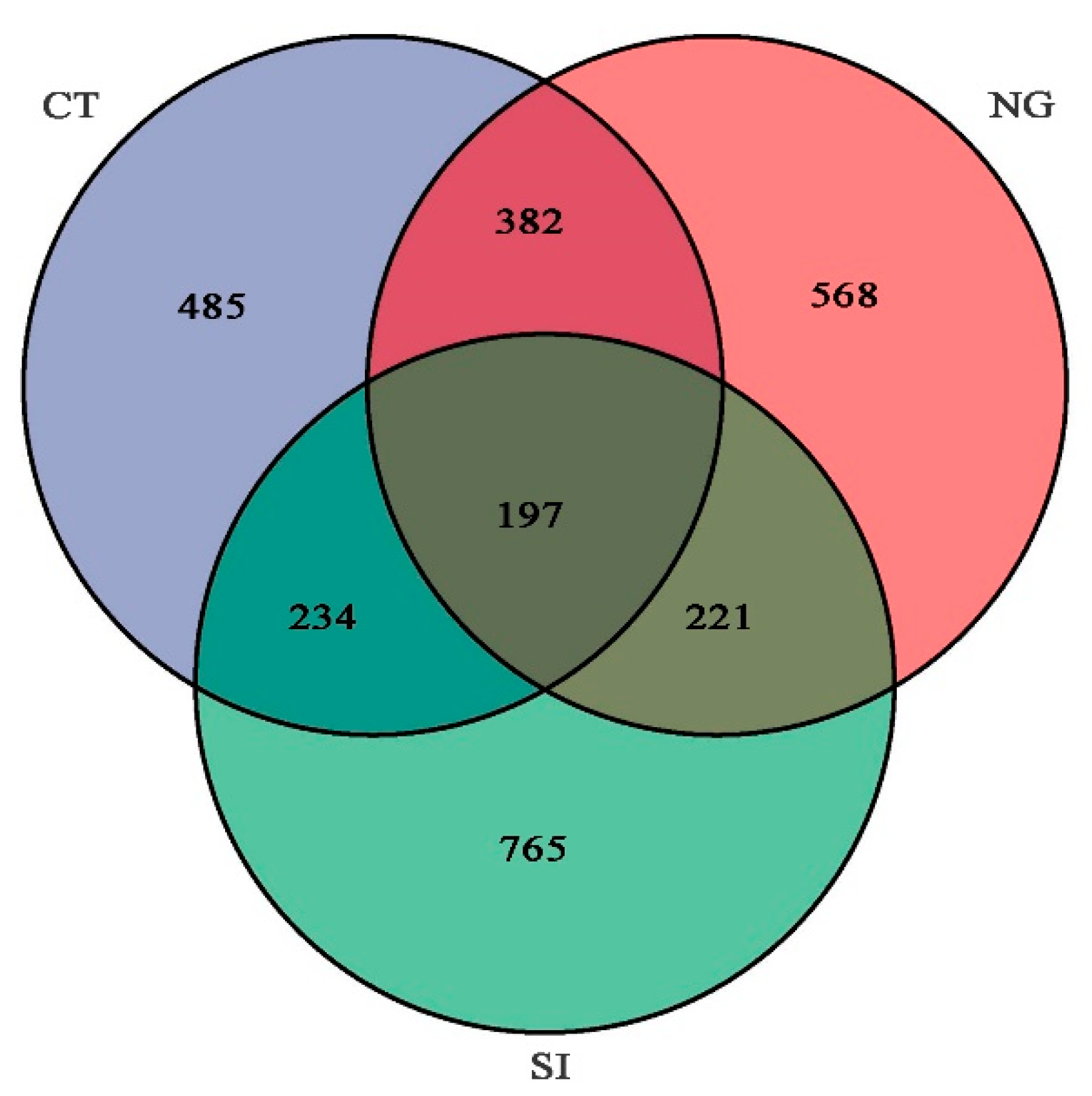
The Venn diagram illustrates the number of unique and shared OTUs of bacteria among different groups. Combined with the species represented by OTUs, the core soil bacteria in soil environments under different cultivation treatments can be identified. As shown in Figure 3, a total of 2852 bacterial OTUs were obtained from three groups of soil samples, including 197 shared OTUs. Specifically, CT had 485 unique bacterial OTUs, accounting for 17.01% of the total; NG possessed 568 unique bacterial OTUs, representing 19.92% of the total; and SI harbored 765 unique bacterial OTUs, making up 26.82% of the total. The number of soil bacterial OTUs in the natural grass growing and soybean intercropping treatments was significantly higher than that in the clean tillage treatment. These results indicate that natural grass growing and soybean intercropping treatments are conducive to increasing the number of soil bacterial communities in citrus orchards, among which soybean intercropping between citrus tree rows exhibits the optimal effect.
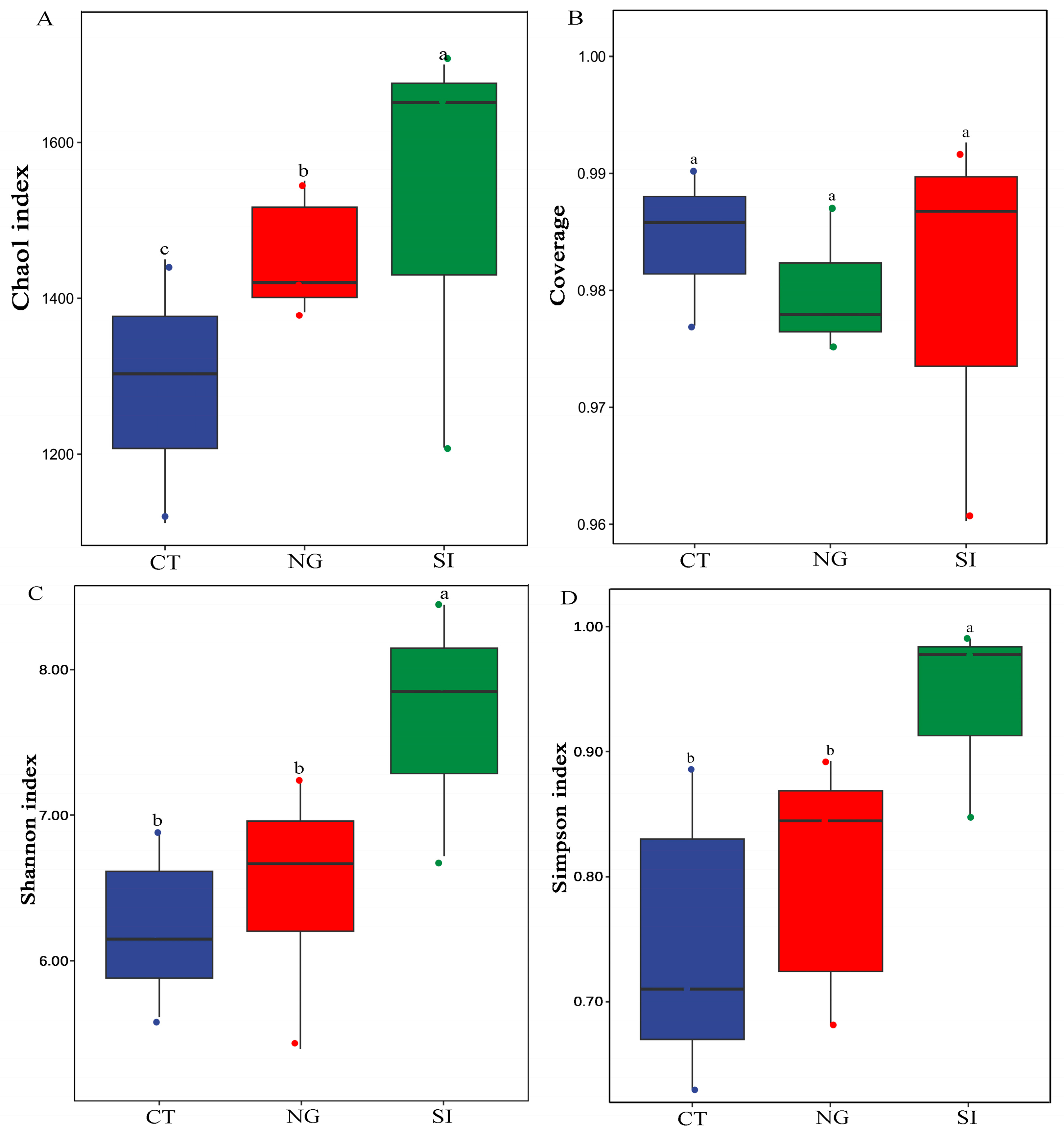
Alpha diversity primarily includes the Chao1 index, Shannon index, and Simpson index. Among these, the Chao1 index reflects the richness of soil bacterial communities, while the Shannon index and Simpson index reflect the diversity of soil bacterial communities. The richness and diversity of soil bacterial communities under different treatments were compared using microbial community α-diversity indices. As shown in Figure 4, the bacterial diversity indices followed the order of SI > NG > CT. Specifically, the Chao1 index of bacterial communities in the natural grass growing and soybean intercropping treatments was significantly higher than that in the clean tillage treatment (p < 0.05), with increases of 14.26% and 17.99%, respectively. Additionally, the Shannon index and Simpson index of bacterial communities in the natural grass growing and soybean intercropping treatments were both higher than those in the clean tillage treatment. Notably, compared with CT, the Shannon index and Simpson index in SI significantly increased by 24.29% and 32.43%, respectively. The Coverage index of all samples was approximately 98%, indicating that the sequencing results could reflect the true status of microorganisms in the samples. Overall, the soybean intercropping treatment between citrus tree rows significantly enhances the richness and diversity of the soil bacterial community.

3.3. Soil Bacterial Beta Diversity

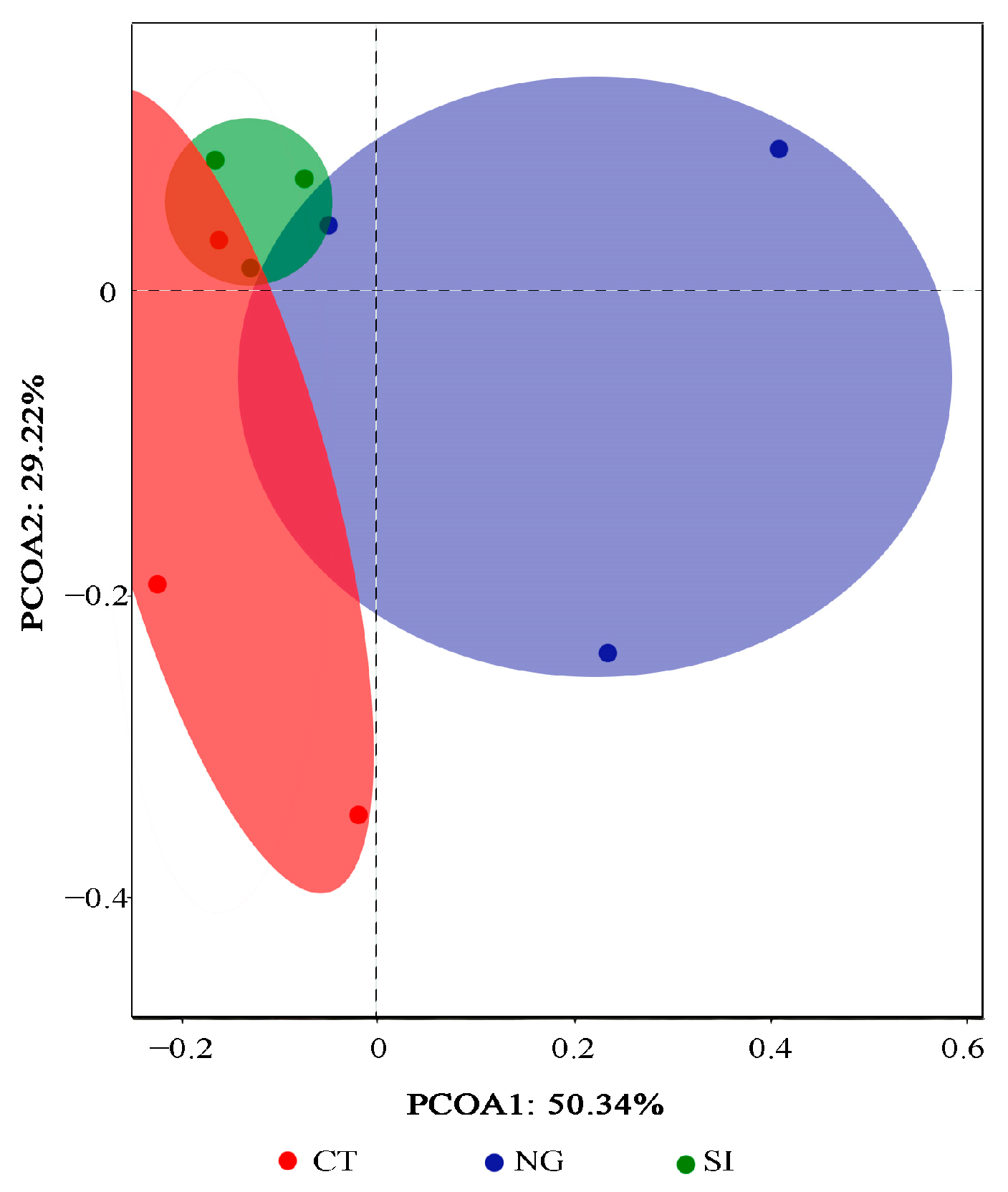
Principal coordinates analysis (PCoA) of soil bacterial community composition was performed based on Bray-Curtis distance. As shown in Figure 5, the explanation rates of the first principal coordinate (PCoA1) and the second principal coordinate (PCoA2) were 50.34% and 29.22%, respectively, with a cumulative contribution rate of 79.56%. There were significant differences in bacterial communities among different cultivation patterns (p < 0.05). Bacterial communities in the CT treatment were distributed in the second and third quadrants, those in the NG treatment were distributed in the first, second, and fourth quadrants, and bacterial communities in the SI treatment were concentrated in the second quadrant. This indicates that the species composition within the soybean intercropping treatment group was relatively similar, and both the inter-group and intra-group differences in bacterial community composition of the soybean intercropping treatment between citrus tree rows were smaller than those of the natural grass growing treatment and clean tillage control.

3.4. Soil Bacterial Community Structure

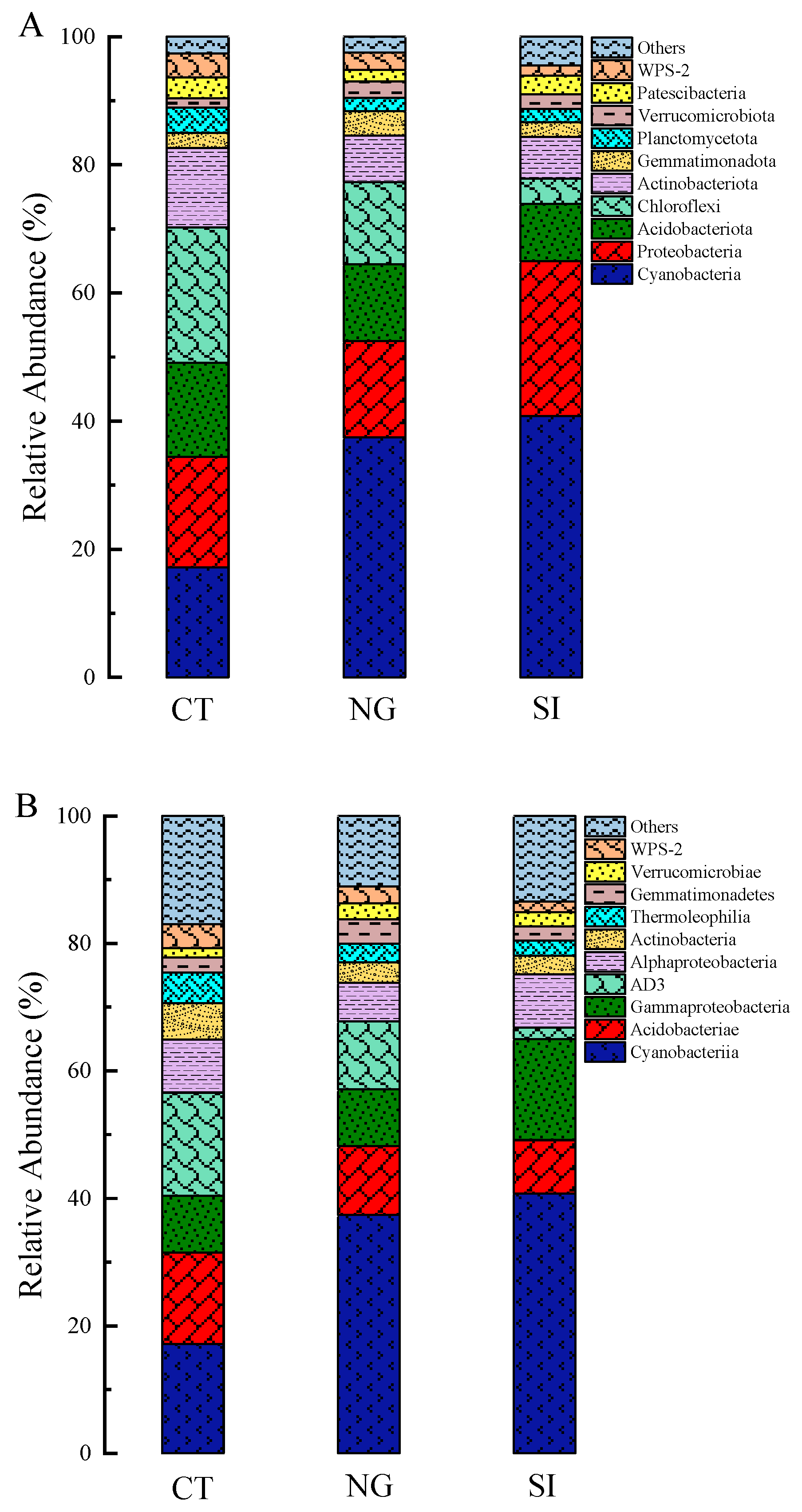
Different cultivation treatments altered the soil bacterial community composition in citrus orchards. The bacterial taxa with the top 10 relative abundances at the phylum and class levels are presented in Figure 6. Bacteria detected under the three different treatments were classified into 31 phyla, 78 classes, 192 orders, 290 families, and 464 genera. At the bacterial phylum level (Figure 6A), Cyanobacteria, Proteobacteria, Acidobacteriota, and Chloroflexi were the dominant phyla in the soil across all treatments, with relative abundances ranging from 17.20% to 40.81%, 15.04% to 24.19%, 8.95% to 14.66%, and 3.93% to 21.13%, respectively. The relative abundances of soil microorganisms in citrus orchards varied among different cultivation treatments. Compared with CT, SI significantly increased the relative abundances of Cyanobacteria and Proteobacteria by 137.27% and 40.31%, respectively, while decreasing the relative abundances of Acidobacteriota, Chloroflexi, and Actinobacteriota by 38.95%, 81.40%, and 47.46%, respectively. NG increased the relative abundance of Cyanobacteria by 117.97%, but decreased the relative abundances of Proteobacteria, Acidobacteriota, Chloroflexi, and Actinobacteriota by 12.76%, 18.49%, 39.19%, and 41.40%, respectively. No significant differences were observed among other treatments (p > 0.05). At the bacterial class level (Figure 6B), Cyanobacteriia, Acidobacteria, and Gammaproteobacteria were the dominant bacterial classes in the soil, with relative abundances ranging from 17.14% to 40.79%, 8.36% to 14.35%, and 8.92% to 15.83%, respectively. Compared with CT, NG and SI increased the relative abundance of Cyanobacteriia by 118.15% and 137.90%, respectively, while decreasing the relative abundance of Acidobacteria by 24.74% and 41.74%, respectively. The citrus–soybean intercropping treatment increased the relative abundance of Gammaproteobacteria by 77.48%, whereas no significant difference in the relative abundance of Gammaproteobacteria was found in the natural grass growing treatment.

3.5. Correlation Between Bacterial Community Structure and Soil Environmental Factors

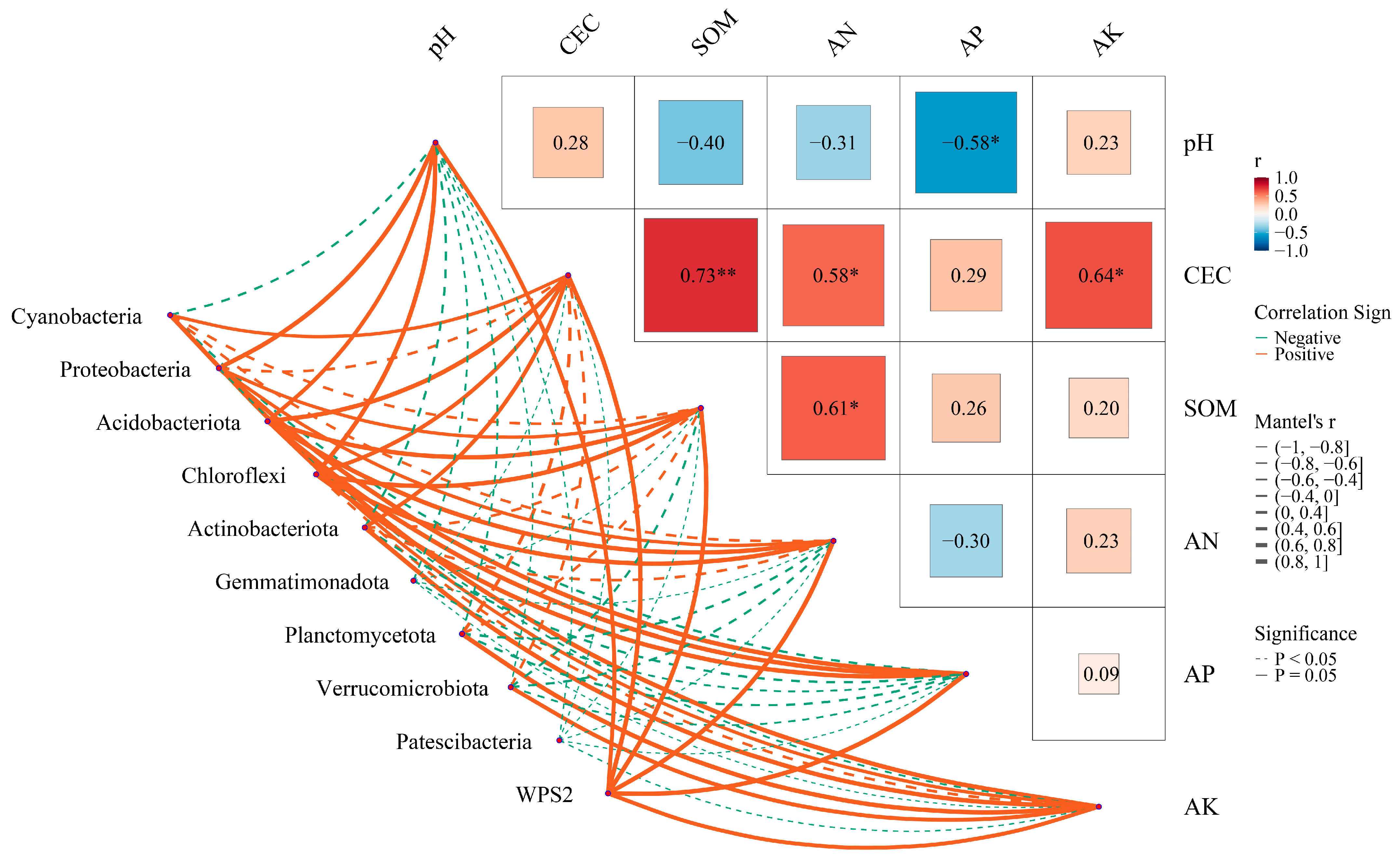
A complex interaction network was observed among soil environmental factors (Figure 7). Soil CEC was significantly positively correlated with SOM (r = 0.73, p < 0.01), AN (r = 0.58, p < 0.05) and AK (r = 0.64, p < 0.05), suggesting that CEC may regulate soil fertility via organic matter accumulation and nutrient adsorption. SOM was positively correlated with AN (r = 0.61, p < 0.05), whereas pH was negatively correlated with AP (r = −0.58, p < 0.05). Correlation analysis between the top 10 bacterial phyla and soil properties revealed distinct phylum-level responses. Cyanobacteria was positively correlated with CEC and AK (r = 0.85, 0.54, respectively, p < 0.01). Proteobacteria showed strong positive correlations with pH, SOM, AN and AP (r = 0.50~0.80, p < 0.01), but a negative correlation with AK (r = −0.45, p < 0.05). Acidobacteriota, Chloroflexi and WPS-2 were positively associated with CEC, SOM and AN (r = 0.60~0.89, p < 0.01), with Acidobacteriota exhibiting an extremely strong correlation with SOM (r = 0.85, p < 0.01). Actinobacteriota and Verrucomicrobiota were both positively correlated with AK (r = 0.64, 0.68, respectively, p < 0.01), while Gemmatimonadota and Patescibacteria were negatively correlated with key fertility indicators (r = −0.65, −0.62, respectively, p < 0.01). These results demonstrate that soil bacterial community composition is closely linked to soil nutrient availability and cation exchange capacity.

4. Discussion

4.1. Effects of Different Cultivation Patterns on Soil Nutrients

Soil acidification and low organic matter content are prominent issues limiting the sustainable utilization of upland red soils in southern China [23,24]. Previous studies have shown that grass growing between orchard rows and intercropping with leguminous green manure can improve soil quality [4,25]. Cao et al. [26] suggested that with the extension of soybean intercropping years between citrus orchard rows, the organic carbon content of soil aggregates across all particle size classes showed an increasing trend. In this study, compared with clean tillage, natural grass growing and soybean intercropping promoted the accumulation of soil organic matter and increased soil cation exchange capacity (CEC), with a significant increase of 14.45–23.92% in organic matter content.
Changes in orchard tillage practices induce significant variations in soil fertility. Li et al. [27] demonstrated that grass growing in orchards significantly increased the contents of soil OM, TN, and AN in the 0–20 cm soil layer. Cao et al. [26] found that soybean intercropping in citrus orchards significantly increased the content of organic carbon and total nitrogen in >5 mm aggregates. In this study, soil nutrient contents were significantly increased under the soybean intercropping treatment between orchard rows. On one hand, soybean roots in the intercropping system can form a symbiotic relationship with rhizobia for nitrogen fixation, transferring a large amount of nitrogen to the soil to improve soil fertility, and affecting the transformation rates of important soil nutrients such as carbon and nitrogen [28]. On the other hand, grass growing in orchards enhances the diversity of plant communities; when soybean straw is incorporated into the soil and decomposed, it forms nutrients such as humus, thereby increasing soil organic matter and total nitrogen contents [29]. In addition, soybean intercropping in orchards increases soil pH and ameliorates the soil acid–base environment, indicating that intercropped crop type was an important driving factor for changes in soil fertility.

4.2. Effects of Different Cultivation Patterns on Soil Microbial Communities

As the most active component in soil, soil microorganisms directly or indirectly participate in numerous biochemical reactions and play a crucial role in promoting soil material cycling, stabilizing soil productivity, and maintaining soil health [30,31]. Grass growing in orchards facilitates the accumulation of various plant residues and diverse plant root exudates in the soil, providing rich and balanced nutrients required for the growth and reproduction of soil microorganisms, thereby enhancing the community diversity of soil microorganisms [25,32]. In this study, amplicon sequencing revealed that the number of soil bacterial OTUs under the natural grass growing and soybean intercropping treatments was 1471 and 1519, respectively, which were significantly higher than that under the clean tillage control. This indicates that grass growing is conducive to the reproduction of soil bacteria in orchards. Alpha diversity indices are used to characterize the richness and diversity of soil microbial communities. The Chao1 index, Shannon diversity index and Simpson dominance index of soil bacterial community under citrus–soybean intercropping treatment were significantly higher than those under clean tillage treatment. Among these treatments, the soybean intercropping treatment exhibited the most pronounced effect, suggesting that grass growing cultivation patterns can significantly improve the richness and diversity of microbial communities. These findings are generally consistent with previous studies that reported grass growing cultivation promotes the growth and reproduction of orchard microorganisms [17,33]. To further clarify the differences in community species composition among different treatments, PCoA was employed to analyze the similarity of soil microbial community species composition in citrus orchards under different cultivation patterns. The results of this study showed that the cumulative contribution rate of PCoA reached 79.56%. Specifically, the bacterial communities under the soybean intercropping treatment exhibited strong clustering, indicating relatively similar species composition within the group, while significant differences in species composition were observed among groups.
This study demonstrated that different grass growing practices not only affected bacterial community diversity but also altered the structural composition of bacterial communities. In orchards, grass growing increased the variety of crop species, which in turn changed the structural composition of rhizosphere soil bacterial communities. This is conducive to optimizing the microecological environment of crop roots and effectively addressing the potential negative impacts of long-term clean tillage in orchards. Deng et al. [34] investigated the composition of soil microbial communities under different intercropping durations of citrus and soybean, and identified Acidobacteriota, Proteobacteria, Chloroflexi, Actinobacteriota, and Gemmatimonadota as the dominant bacterial phyla. Wang et al. [17] studied the evolution of soil bacterial communities in citrus orchards under 8-year and 4-year Vicia villosa mulching treatments as well as clean tillage. They found that Proteobacteria and Actinobacteria were the most dominant bacterial phyla in the leguminous green manure mulching and clean tillage treatments, respectively.
The results of this study indicated that Cyanobacteria, Proteobacteria, Acidobacteriota, and Chloroflexi were the top four bacterial phyla in terms of relative abundance. Microbial community composition is strongly influenced by cultivation practices. In this study, the relative abundance of Cyanobacteria in the soil under artificial grass growing (soybean intercropping) was 137.27% and 8.86% higher than that under clean tillage control and natural grass growing, respectively. Li et al. [35] noted that Cyanobacteria possess nitrogen-fixing and photosynthetic capabilities, which can increase soil nitrogen and carbon contents. Hong et al. [36] suggested that most Acidobacteriota are acidophilic bacteria that prefer soil environments with low nutrient content. In this study, the relative abundance of Acidobacteriota in the soil under natural grass growing and artificial grass growing treatments was 18.49% and 38.95% lower than that under the clean tillage control, respectively. Additionally, the relative abundance of Proteobacteria under the soybean intercropping treatment increased by 40.31%. These findings indicate that the soybean intercropping treatment effectively altered the soil bacterial community structure, improved nitrogen supply and nutrient status, promoted the proliferation of Proteobacteria (which play a role in nitrogen cycling), and inhibited the growth of Acidobacteriota.

4.3. Relationship of Soil Microorganisms to Environmental Variables

Numerous studies have shown that the relationships among various factors of orchard soil nutrients are highly complex, with synergistic and antagonistic interactions existing between elements [37,38,39]. Mantel test results showed that soil pH was significantly negatively correlated with AP, SOM showed a significant positive correlation with AN, and soil CEC was significantly positively correlated with SOM, AN, and AK. Environmental factors such as soil pH and SOM are important driving factors affecting soil microbial diversity [40,41]. Different orchard cultivation and management patterns can influence soil nutrient contents to varying degrees, thereby affecting the soil microbial community structure [17,27]. Hu et al. [42] investigated the effects of different cover crops on the soil bacterial community structure in Carya cathayensis plantations, and found that C and N storage, and pH directly influenced bacterial richness and composition positively or negatively. However, the interactions between these environmental factors and bacterial communities vary, indicating that the effect of any single variable on bacterial populations is selective [43]. According to Mantel test results, Xu et al. [29] found that soil water content was the dominant environmental factor affecting the soil bacterial community. Our study shows that the phylum Cyanobacteria in soil was negatively correlated with soil pH, but extremely significantly positively correlated with CEC and AK; the phylum Proteobacteria was extremely significantly positively correlated with SOM as well as N and P nutrients. These results indicate that during orchard cultivation and management, optimizing the microbial community composition by regulating soil pH, increasing SOM through additional organic fertilizer application, and enhancing nutrient retention capacity can increase the abundance of beneficial soil microorganisms, which is conducive to improving the quality of fruit trees.
In this study, we investigated the effects of three planting patterns on soil physicochemical properties and bacterial communities in citrus orchards. Future research should verify the regional adaptability of the citrus–soybean intercropping system through long-term multi-site field trials, and employ metagenomics to elucidate the key mechanisms by which intercropping modulates the functional characteristics of soil bacterial communities and enhances soil fertility.

5. Conclusions

In summary, this study demonstrated that citrus–soybean intercropping is an effective sustainable practice to mitigate soil quality degradation in citrus orchards by regulating soil physicochemical conditions and reshaping soil bacterial communities. Specifically, this intercropping system modulated soil pH, improved cation exchange capacity and soil organic matter, and enhanced soil nitrogen, phosphorus, and potassium nutrient supply. It further increased soil bacterial richness and diversity and optimized community composition dominated by Cyanobacteria, Proteobacteria, Acidobacteriota, and Chloroflexi. Correlation analysis confirmed that CEC and SOM were the key environmental drivers structuring soil bacterial communities, revealing a potential nutrient-mediated microbial regulation mechanism underlying intercropping-induced soil improvement. Collectively, these findings provide empirical evidence and practical strategy for sustainable citrus orchard management via intercropping-mediated soil–microbe feedback regulation.

Author Contributions

S.C.: Writing—review and editing, writing—original draft, software, methodology, funding acquisition, formal analysis, data curation, conceptualization. M.O.: Writing—review and editing, writing—original draft, validation, software, formal analysis, data curation, conceptualization. S.Y.: Writing—review and editing, formal analysis, data curation, conceptualization. C.Y.: Investigation, methodology, software. M.Z.: Resources, methodology, investigation. J.M.: Investigation, project administration. B.Z.: Writing—review and editing, project administration, funding acquisition, formal analysis. All authors have read and agreed to the published version of the manuscript.

Funding

This research was supported by the Natural Science Foundation of Hunan Provence (grant No. 2026JJ80704) to S.C., and the Hunan Agriculture Research System (grant No. HARS-09) to B.Z.

Data Availability Statement

Data will be made available on request.

Conflicts of Interest

The authors declare that they have no conflicts of interest.

Abbreviations

The following abbreviations are used in this manuscript:
CTClean tillage
NGNatural grass
SIIntercropped soybean
CECSoil cation exchange capacity
SOMSoil organic matter
TNSoil total nitrogen
TPSoil total phosphorus
TKSoil total potassium
ANSoil alkali-hydrolyzable nitrogen
APSoil available phosphorus
AKSoil available potassium
PCoAPrincipal Coordinates Analysis
OTUsOperational taxonomic units

References

  1. Zhao, Y.S.; Li, Y.S.; Yang, J.L.; Xiang, X.H.; Su, F.; Chang, Y.Y.; Huang, Q.Y.; Liu, X.; Chen, Y.W.; Yang, J.F.; et al. Water requirement patterns and water management strategies of Bingtang sweet orange (Citrus sinensis Osbeck) in Hunan Province, China. Sci. Hortic. 2026, 359, 114756. [Google Scholar] [CrossRef]
  2. Dian, Y.Y.; Liu, X.Y.; Hu, L.; Zhang, J.Z.; Hu, C.G.; Liu, Y.Z.; Zhang, J.X.; Zhang, W.B.; Hu, Q.Q.; Zhang, Y.H.; et al. Characteristics of photosynthesis and vertical canopy architecture of citrus trees under two labor-saving cultivation modes using unmanned aerial vehicle (UAV)-based LiDAR data in citrus orchards. Hortic. Res. 2023, 10, 1–9. [Google Scholar] [CrossRef]
  3. Xiang, Y.Z.; Li, Y.; Liu, Y.; Zhang, S.Y.; Yue, X.J.; Yao, B.; Xue, J.M.; Lv, W.Q.; Zhang, L.Y.; Xu, X.Y.; et al. Factors shaping soil organic carbon stocks in grass covered orchards across China: A meta-analysis. Sci. Total Environ. 2022, 807, 150632. [Google Scholar] [CrossRef]
  4. Chen, L.D.; Bao, Y.H.; He, X.B.; Yang, J.; Wu, Q.; Lv, J.R. Nature-based accumulation of organic carbon and nitrogen in citrus orchard soil with grass coverage. Soil Till. Res. 2025, 248, 106419. [Google Scholar] [CrossRef]
  5. Zhang, Y.; Xie, D.T.; Ni, J.P.; Zeng, X.B. Conservation tillage practices reduce nitrogen losses in the sloping upland of the Three Gorges Reservoir area: No-till is better than mulch-till. Agr. Ecosyst. Environ. 2020, 300, 107003. [Google Scholar] [CrossRef]
  6. Xu, Z.Q.; Zhou, Y.Z.; Liu, R.; Cui, H.J.; Tan, J.; Zhou, W.J.; Ouyang, K. Available medium and micronutrients in the soils of major citrus-producing areas in Southeast China. J. Environ. Manag. 2025, 389, 126078. [Google Scholar] [CrossRef]
  7. Zhang, B.B.; Hu, Y.J.; Hill, R.L.; Wu, S.F.; Song, X.L. Combined effects of biomaterial amendments and rainwater harvesting on soil moisture, structure and apple roots in a rainfed apple orchard on the Loess Plateau, China. Agric. Water Manag. 2021, 248, 106776. [Google Scholar] [CrossRef]
  8. Taguali, S.C.; Pöter, R.; Aloi, F.; Fernández-Trujillo, C.; Acedo, A.; Spada, F.L.; Nicosia, M.G.L.D.; Pane, A.; Schena, L.; Cacciola, S.O. Influence of environmental and agronomic variables on soil microbiome in citrus orchards: A comparative analysis of organic and conventional farming system. Microbiol. Res. 2025, 299, 128260. [Google Scholar] [CrossRef] [PubMed]
  9. Zhu, Y.L.; Gao, Z.; Wang, X.L.; Gong, S.X.; Lu, Y.P.; Yao, D.L.; Yang, F. Quantifying the impacts of intercropping practices on above- and belowground biodiversity in China’s orchards: A meta-analysis. Ecol. Eng. 2025, 216, 107619. [Google Scholar] [CrossRef]
  10. Li, C.J.; Hoffland, E.; Kuyper, T.W.; Yu, Y.; Zhang, C.C.; Li, H.G.; Zhang, F.S.; Werf, W.V.D. Syndromes of production in intercropping impact yield gains. Nat. Plants 2020, 6, 653–660. [Google Scholar] [CrossRef] [PubMed]
  11. Li, W.Q.; Liu, Y.J.; Duan, J.; Liu, G.P.; Nie, X.D.; Li, Z.W. Leguminous cover orchard improves soil quality, nutrient preservation capacity, and aggregate stoichiometric balance: A 22-year homogeneous experimental site. Agric. Ecosyst. Environ. 2024, 363, 108876. [Google Scholar] [CrossRef]
  12. Wang, Y.Z.; Zhang, H.F.; Zhang, Y.P.; Fei, J.C.; Rong, X.M.; Peng, J.W.; Luo, G.W. Crop rotation-driven changes in rhizosphere metabolite profiles regulate soil microbial diversity and functional capacity. Agric. Ecosyst. Environ. 2023, 358, 108716. [Google Scholar] [CrossRef]
  13. Wang, D.; Yu, W.C.; Ming, C.Y.; Chen, L.K.; Zhao, P.; Shi, X.J.; Zhao, Z.X.; Fan, M.P.; Long, G.Q. Intercropping enhances stable soil organic carbon pool through macroaggregate protection and biochemical recalcitrance interactions. Agric. Ecosyst. Environ. 2025, 388, 109654. [Google Scholar] [CrossRef]
  14. Duan, Y.; Wang, G.; Liang, L.Y.; Wang, M.H.; Jiang, J.; Ma, Y.C.; Zhu, X.J.; Wu, J.; Fang, W.P. Intercropping fruit trees in tea plantation improves soil properties and the formation of tea quality components. Plant Physiol. Biochem. 2024, 210, 108574. [Google Scholar] [CrossRef]
  15. Zhu, Q.R.; Yang, Z.Y.; Zhang, Y.P.; Wang, Y.Z.; Fei, J.C.; Rong, X.M.; Peng, J.W.; Wei, X.M.; Luo, G.W. Intercropping regulates plant- and microbe-derived carbon accumulation by influencing soil physicochemical and microbial physiological properties. Agric. Ecosyst. Environ. 2024, 364, 108880. [Google Scholar] [CrossRef]
  16. Xie, B.; Chen, Y.H.; Cheng, C.G.; Ma, R.P.; Zhao, D.Y.; Li, Z.; Li, Y.Q.; An, X.H.; Yang, X.Z. Long-term soil management practices influence the rhizosphere microbial community structure and bacterial function of hilly apple orchard soil. Appl. Soil Ecol. 2022, 180, 104627. [Google Scholar] [CrossRef]
  17. Wang, N.; Li, L.; Gou, M.M.; Hu, J.W.; Chen, H.L.; Xiao, W.F.; Liu, C.F. Leguminous green mulching alters the microbial community structure and increases microbial diversity by improving nitrogen availability in subtropical orchard systems in China. Sci. Total Environ. 2024, 955, 176891. [Google Scholar] [CrossRef] [PubMed]
  18. Liu, C.J.; Wang, X.L.; Li, X.Y.; Yang, Z.H.; Dang, K.; Gong, X.W.; Feng, B.L. Effects of intercropping on rhizosphere microbial community structure and nutrient limitation in proso millet/mung bean intercropping system. Eur. J. Soil Biol. 2024, 122, 103646. [Google Scholar] [CrossRef]
  19. National Bureau of Statistics of China. Available online: https://www.stats.gov.cn/sj/ndsj/2025/indexch.htm (accessed on 14 May 2026).
  20. The People’s Government of Hunan Province. Available online: http://www.hunan.gov.cn/ (accessed on 14 May 2026).
  21. Zhangjiajie Government Network. Available online: https://www.zjj.gov.cn/ (accessed on 14 May 2026).
  22. Bao, S.D. Methods of Soil and Agrochemistry Analysis; China Agriculture Science & Technology Press: Beijing, China, 2000. [Google Scholar]
  23. Wang, H.X.; Xu, J.L.; Liu, X.J.; Zhang, D.; Li, L.W.; Li, W.; Sheng, L.X. Effects of long-term application of organic fertilizer on improving organic matter content and retarding acidity in red soil from China. Soil Tillage Res. 2019, 195, 104382. [Google Scholar] [CrossRef]
  24. Zou, H.Y.; Li, W.F.; Guo, X.; Jiang, Y.F.; Cai, Y.J.; Wang, H.Y.; Zhu, Q.C. Spatial heterogeneity of soil acidification driven by cropping patterns and soil types in red soil dryland of Southern China. Eur. J. Agron. 2025, 170, 127783. [Google Scholar] [CrossRef]
  25. Li, M.Q.; He, M.X.; Lu, Y.M.; Lu, W.C.; Wang, P.; Zhang, Y.T.; Li, H.; Yang, Y.H.; Xi, W.P.; Zhang, T. Synergistic benefits of leguminous green manure intercropping for weed control and productivity improvement in pear orchards. Sci. Hortic. 2025, 340, 113955. [Google Scholar] [CrossRef]
  26. Cao, S.; Zeng, B.; Deng, S.F.; Gong, B.Y.; Zhang, W.; Luo, S.N.; Yang, S.Z. Effects of citrus and soybean intercropping on soil aggregate structure, organic carbon and nitrogen distribution. Soils 2024, 56, 735–741. (In Chinese) [Google Scholar] [CrossRef]
  27. Li, T.F.; Wang, Y.Y.; Kamran, M.H.; Chen, X.Y.; Tan, H.; Long, M.X. Effects of grass inter-planting on soil nutrients, enzyme activity, and bacterial community diversity in an apple orchard. Front. Plant Sci. 2022, 13, 901143. [Google Scholar] [CrossRef]
  28. Oladele, O.P.; Yao, S.; Huang, M.Z.; Tian, Y.G.; Zhao, X.; Dang, Y.P.; Bai, W.; Zhang, H.L. Intercropping maize and soybean promotes specialized soil microbial communities and boosts carbon and nitrogen cycling in a semi-arid agroecosystem. Appl. Soil Ecol. 2026, 217, 106553. [Google Scholar] [CrossRef]
  29. Xu, C.; Liu, X.P.; Qian, Z.Z.; Yang, T.; Wang, B.; Ge, X.M.; Tang, L.Z. Poplar–wheat intercropping and fertilizer application significantly improve soil bacterial community characteristic and nutrient contents. Appl. Soil Ecol. 2025, 215, 106415. [Google Scholar] [CrossRef]
  30. Wu, H.W.; Cui, H.L.; Fu, C.X.; Li, R.; Qi, F.Y.; Liu, Z.L.; Yang, G.; Xiao, K.Q.; Qiao, M. Unveiling the crucial role of soil microorganisms in carbon cycling: A review. Sci. Total Environ. 2024, 909, 168627. [Google Scholar] [CrossRef]
  31. Zhang, B.; Hu, X.Y.; Zhao, D.L.; Wang, Y.P.; Qu, J.H.; Tao, Y.; Kang, Z.H.; Yu, H.Q.; Zhang, J.Y.; Zhang, Y. Harnessing microbial biofilms in soil ecosystems: Enhancing nutrient cycling, stress resilience, and sustainable agriculture. J. Environ. Manag. 2024, 370, 122973. [Google Scholar] [CrossRef]
  32. Castellano-Hinojosa, A.; Kanissery, R.; Strauss, S.L. Cover crops in citrus orchards impact soil nutrient cycling and the soil microbiome after three years but effects are site-specific. Biol. Fertil. Soils 2023, 59, 659–678. [Google Scholar] [CrossRef]
  33. Muhammad, I.; Wang, J.; Sainju, U.M.; Zhang, S.H.; Zhao, F.Z.; Khan, A. Cover cropping enhances soil microbial biomass and affects microbial community structure: A meta-analysis. Geoderma 2021, 381, 114696. [Google Scholar] [CrossRef]
  34. Deng, S.F.; Huang, B.B.; Zeng, B.; Cao, S.; Gong, B.Y.; Liao, W.; Zhang, W.; Luo, S.N.; Yang, S.Z. Soybean green manure intercropping improves citrus quality by improving soil quality and altering microbial communities. Front. Plant Sci. 2025, 16, 1560550. [Google Scholar] [CrossRef]
  35. Li, S.; Huang, W.G.; Peng, C.R.; Jing, X.Y.; Ding, J.X.; Chen, T.; Huang, R.L.; Hu, H.; Zhou, J.Z.; Zhang, J.B.; et al. Enhancement of rice production and soil carbon sequestration utilizing nitrogen-fixing cyanobacteria. Appl. Soil Ecol. 2025, 207, 105940. [Google Scholar] [CrossRef]
  36. Hong, L.D.; Yao, Y.L.; Lei, C.T.; Hong, C.L.; Zhu, W.J.; Zhu, F.X.; Wang, W.P.; Lu, T.; Qi, X.J. Declined symptoms in Myrica rubra: The influence of soil acidification and rhizosphere microbial communities. Sci. Hortic. 2023, 313, 111892. [Google Scholar] [CrossRef]
  37. Milošević, N.; Glišić, I.; Đorđević, M.; Marić, S.; Radičević, S.; Milinković, M.; Milošević, T. Influence of cultivar on macro- and micronutrient composition, potential toxic elements accumulation and their interrelationships in leaves and fruits of European plum (Prunus domestica L.). J. Food Compos. Anal. 2025, 147, 107979. [Google Scholar] [CrossRef]
  38. Wang, Y.H.; Kang, F.R.; Yu, B.; Long, Q.; Xiong, H.Y.; Xie, J.W.; Li, D.; Shi, X.J.; Lakshmanan, P.; Zhang, Y.Q.; et al. Magnesium supply is vital for improving fruit yield, fruit quality and magnesium balance in citrus orchards with increasingly acidic soil. J. Integr. Agric. 2025, 24, 3641–3655. [Google Scholar] [CrossRef]
  39. He, M.F.; Liu, Z.L.; Ni, W.L.; Lei, S.C.; Yin, H.Z.; Dyck, M.F.; Quideau, S.A.; Wang, Y.J.; Duan, Z.L.; Zhao, X.N.; et al. Clover cover alters soil organic matter composition, diversity, and complexity in apple orchards on the loess plateau: Temporal and vertical variations. Soil Tillage Res. 2026, 255, 106817. [Google Scholar] [CrossRef]
  40. Matthews, K.E.; Breed, M.F.; Stirling, E.; Macdonald, L.M.; Cavagnaro, T.R. Comparing apples and apples; evaluating the impact of conventional and organic management on the soil microbial communities of apple orchards. Appl. Soil Ecol. 2025, 215, 106470. [Google Scholar] [CrossRef]
  41. Zhang, R.Q.; Liu, Z.L.; Wang, Y.J.; Jiang, Z.F.; Li, M.; Li, H.K.; Zhao, X.N.; Duan, Z.L.; Song, X.L. Effects of intercropping on composition and molecular diversity of soil dissolved organic matter in apple orchards: Different roles of bacteria and fungi. Agric. Ecosyst. Environ. 2025, 382, 109509. [Google Scholar] [CrossRef]
  42. Hu, Y.B.; Jin, J.; Ding, K.; Ye, Z.H.; Wang, X.X.; Palansooriya, K.N.; Fu, W.J.; Wu, J.S. Long-term cover cropping improved soil bacterial community and soil multifunctionality in a Carya cathayensis plantation. Agric. Ecosyst. Environ. 2023, 347, 108372. [Google Scholar] [CrossRef]
  43. Xue, Y.F.; Tian, J.; Quine, T.A.; Powlson, D.; Xing, K.X.; Yang, L.Y.; Kuzyakov, Y.; Dungait, J.A.J. The persistence of bacterial diversity and ecosystem multifunctionality along a disturbance intensity gradient in karst soil. Sci. Total Environ. 2020, 748, 142381. [Google Scholar] [CrossRef] [PubMed]
Figure 1. The location of the study site.
Agronomy 16 01024 g001
Figure 2. Soil pH (A), cation exchange capacity (B), organic matter (C), alkali-hydrolyzable nitrogen (D), available phosphorus (E), and available potassium (F) in the three treatments. Different lowercase letters denote significant differences between treatments as determined by Duncan’s tests (p < 0.05). CT: clean tillage, NG: natural grass, SI: intercropped soybean.
Agronomy 16 01024 g002
Figure 3. Venn diagram displaying the numbers of unique and shared OTUs of bacterial communities. CT: clean tillage, NG: natural grass, SI: intercropped soybean.
Agronomy 16 01024 g003
Figure 4. Soil bacterial community alpha diversity in the three treatments. Chao1 index (A), Coverage index (B), Shannon index (C), Simpson index (D). Different lowercase letters indicate the significance of the difference between treatments at the p < 0.05 level. CT: clean tillage, NG: natural grass, SI: intercropped soybean.
Agronomy 16 01024 g004
Figure 5. Beta diversity of bacterial community under different treatments. CT: clean tillage, NG: natural grass, SI: intercropped soybean, PCoA: principal coordinates analysis.
Agronomy 16 01024 g005
Figure 6. Community composition of bacterial relative abundance at the phylum level (A) and class level (B). CT: clean tillage, NG: natural grass, SI: intercropped soybean.
Agronomy 16 01024 g006
Figure 7. Mantel tests: correlation between bacterial community structure and soil environmental factors. CEC: soil cation exchange capacity, SOM: soil organic matter, AN: alkali-hydrolyzable nitrogen, AP: available phosphorus, AK: available potassium. * and ** indicate significant differences at p < 0.05 and p < 0.01, respectively.
Agronomy 16 01024 g007
Table 1. The sequence readings and OTUs of soil bacteria under different treatments.
TreatmentsRaw-TagsValid-TagsEffective/%OTUs
CT74,72170,26894.041288
NG76,55971,65093.591471
SI78,39473,61293.901519
Note: CT, clean tillage; NG, natural grass; SI, soybean intercropping; OTUs, operational taxonomic units.
Disclaimer/Publisher’s Note: The statements, opinions and data contained in all publications are solely those of the individual author(s) and contributor(s) and not of MDPI and/or the editor(s). MDPI and/or the editor(s) disclaim responsibility for any injury to people or property resulting from any ideas, methods, instructions or products referred to in the content.