The Zinc-Finger Protein MsCCCH20 Is Predicted to Regulate Salt-Stress Response in Alfalfa (Medicago sativa L.) by Binding to Conserved 3′UTR Motifs

Abstract
1. Introduction
2. Materials and Methods
2.1. Genome-Wide Association Study (GWAS) Analysis
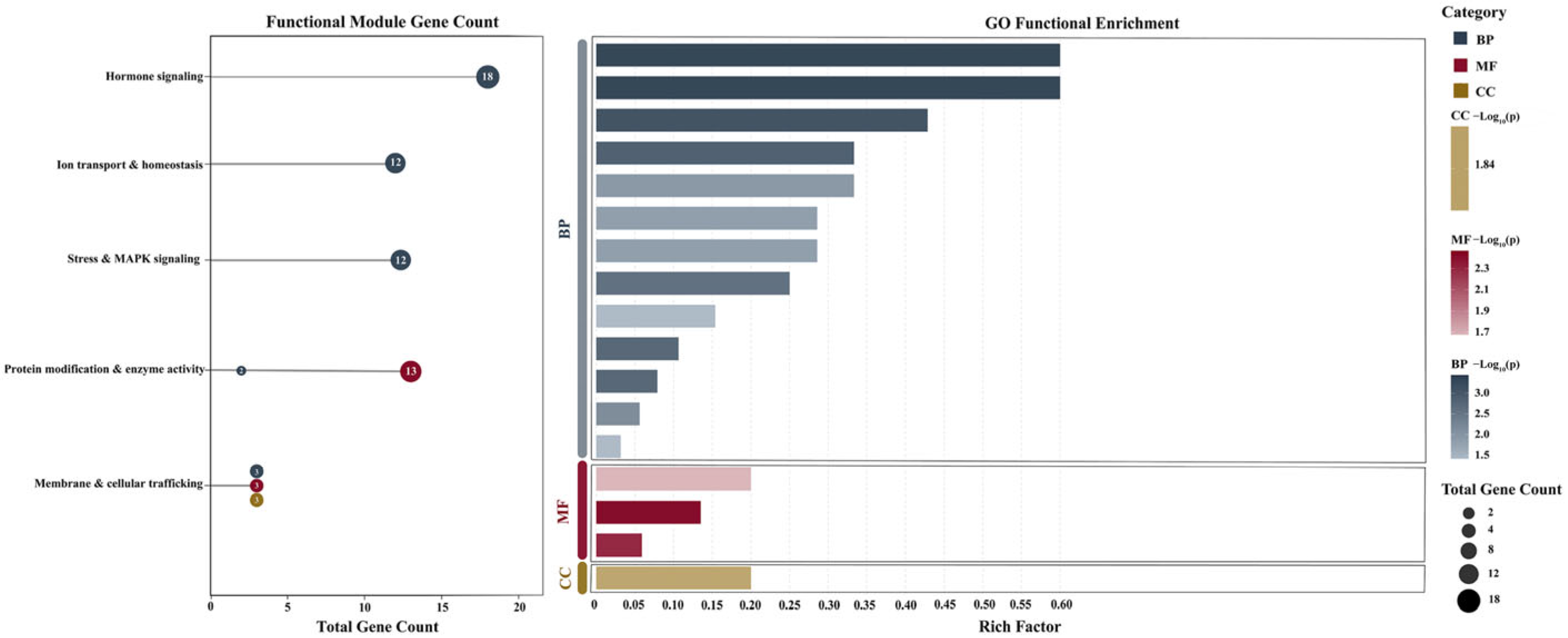
2.2. GO Enrichment Analysis
2.3. Identification of Salt-Responsive Genes Using RNA-Seq Data
2.3.1. Transcriptome Data Analysis
2.3.2. Candidate Gene Integration and Identification of MsCCCH20
2.4. Co-Expression Analysis
2.5. Gene Structure and MEME Conserved Motif Analysis
2.6. Three-Dimensional Structure Prediction of Core Protein–RNA Complexes via AlphaFold2
3. Results
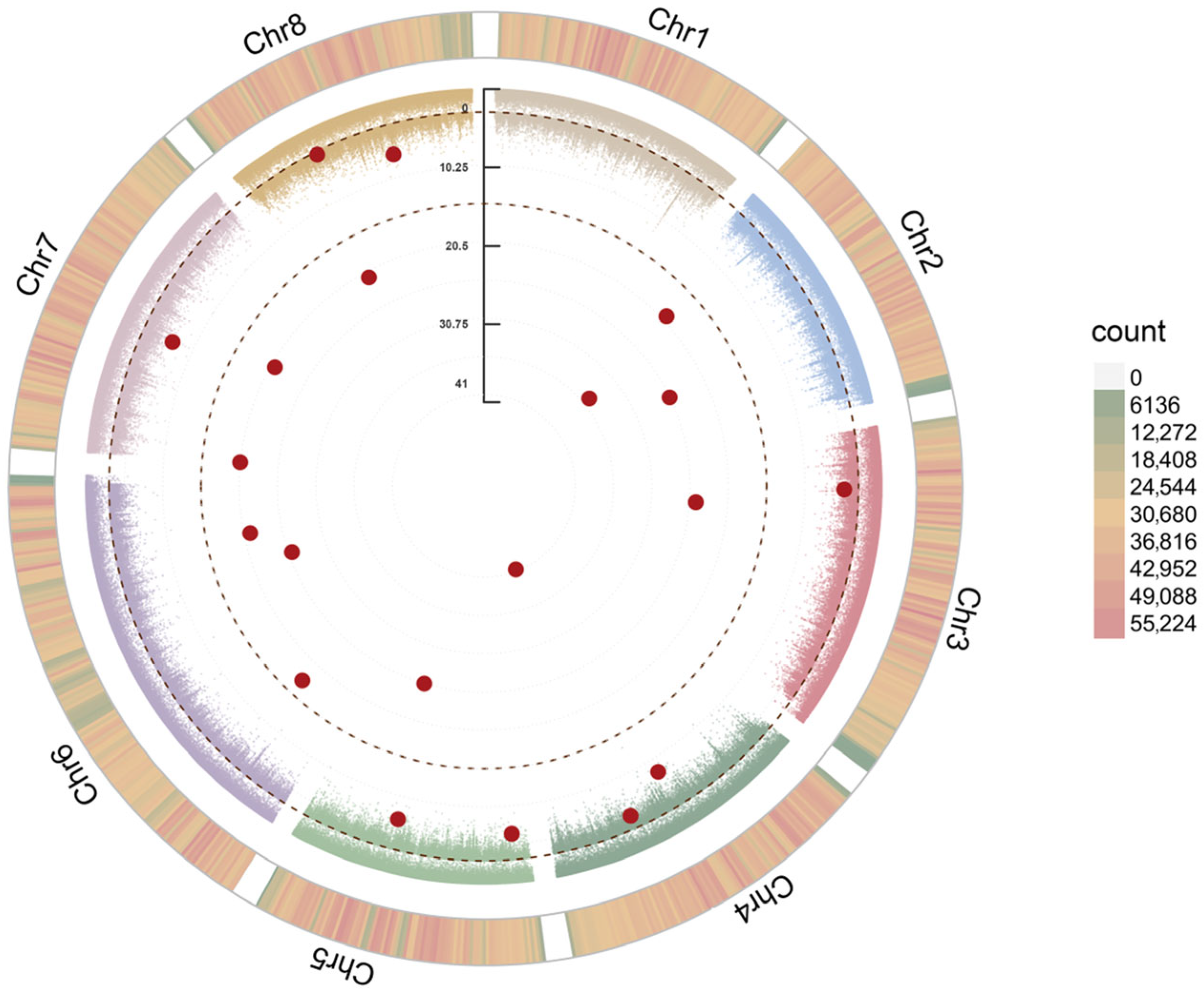
3.1. Genome-Wide Association Mapping Reveals Major Loci Underlying Salt Tolerance
3.2. Identification of Candidate Genes
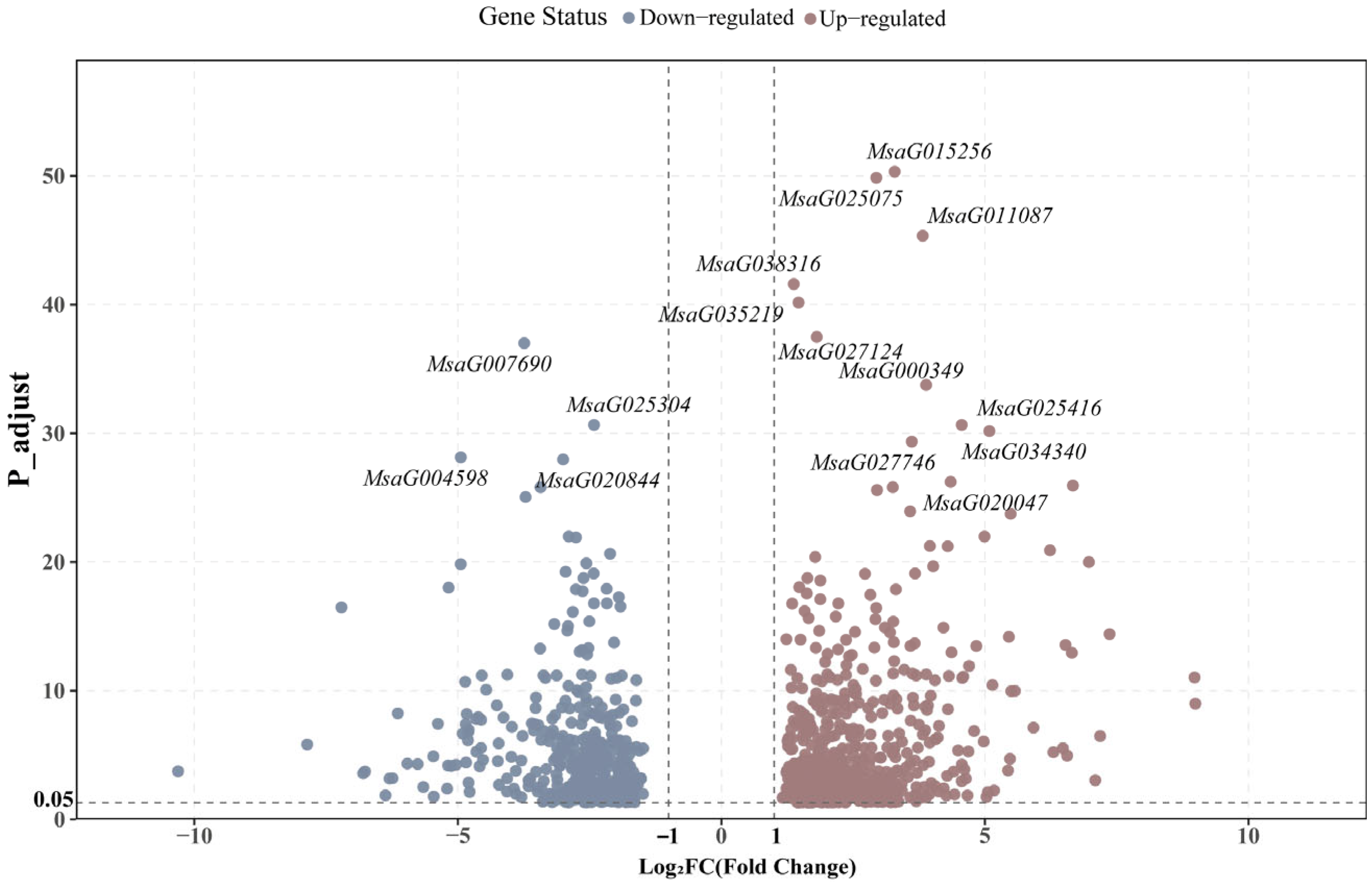
3.3. Screening of Core Salt-Stress Responsive Genes
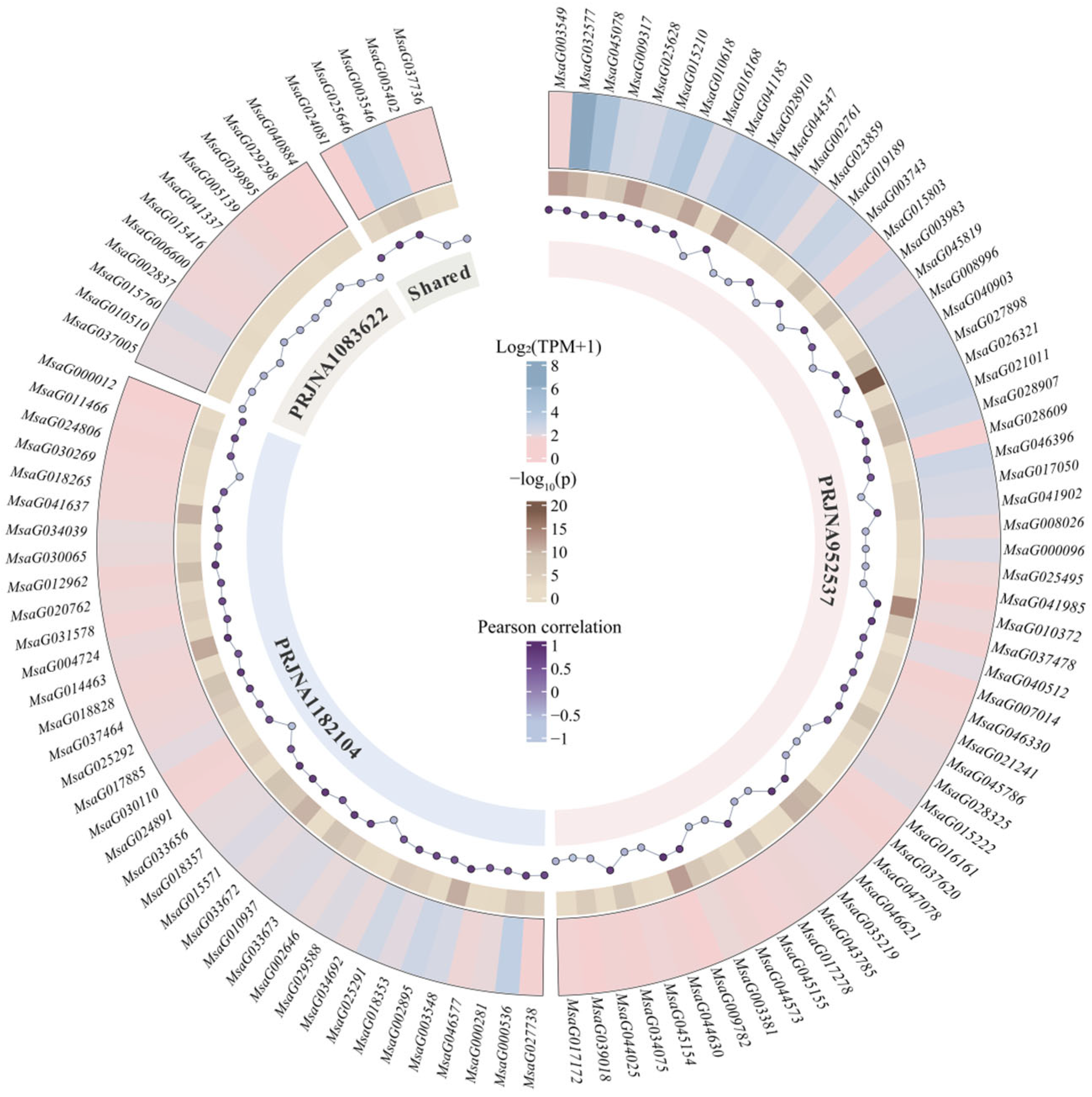
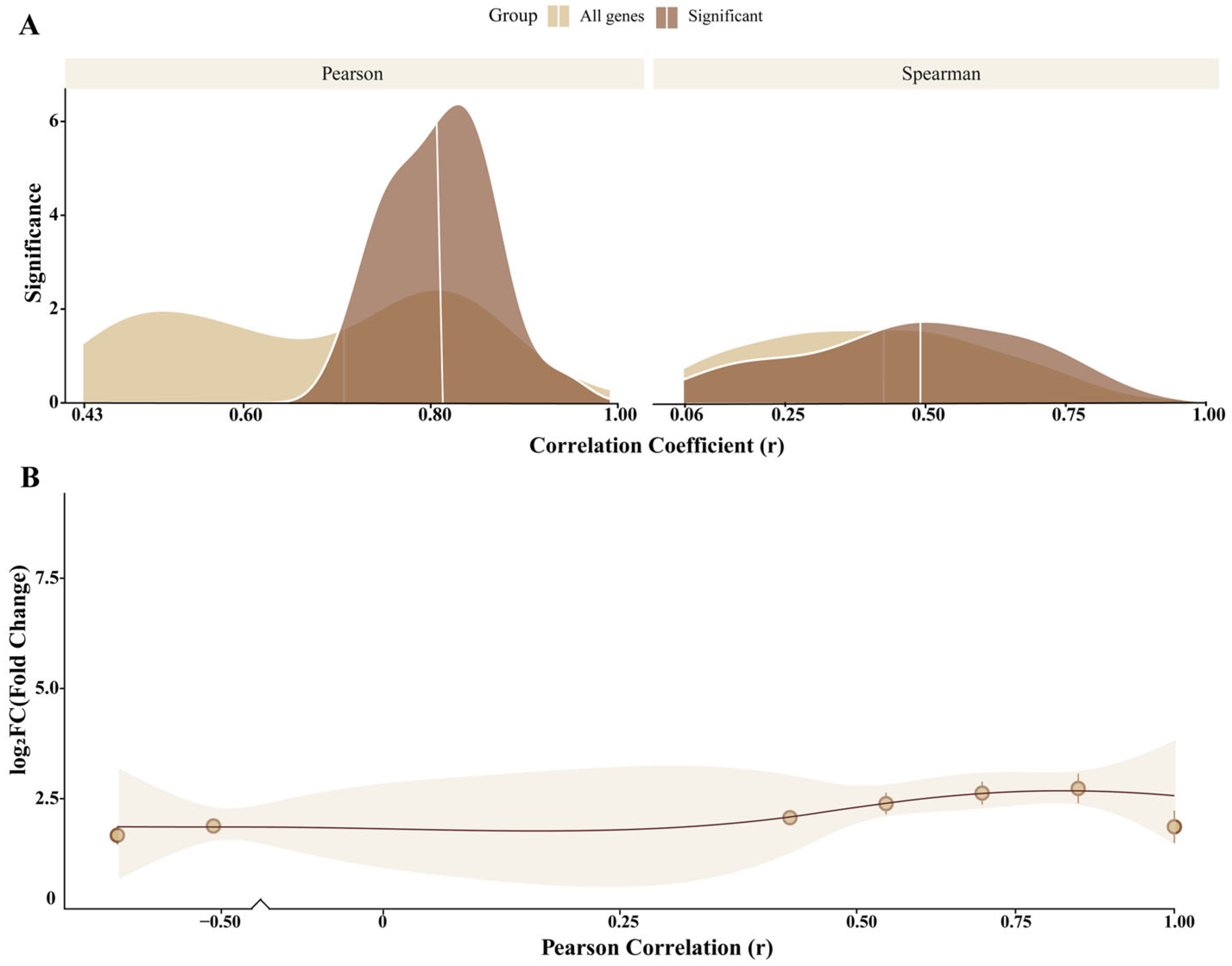
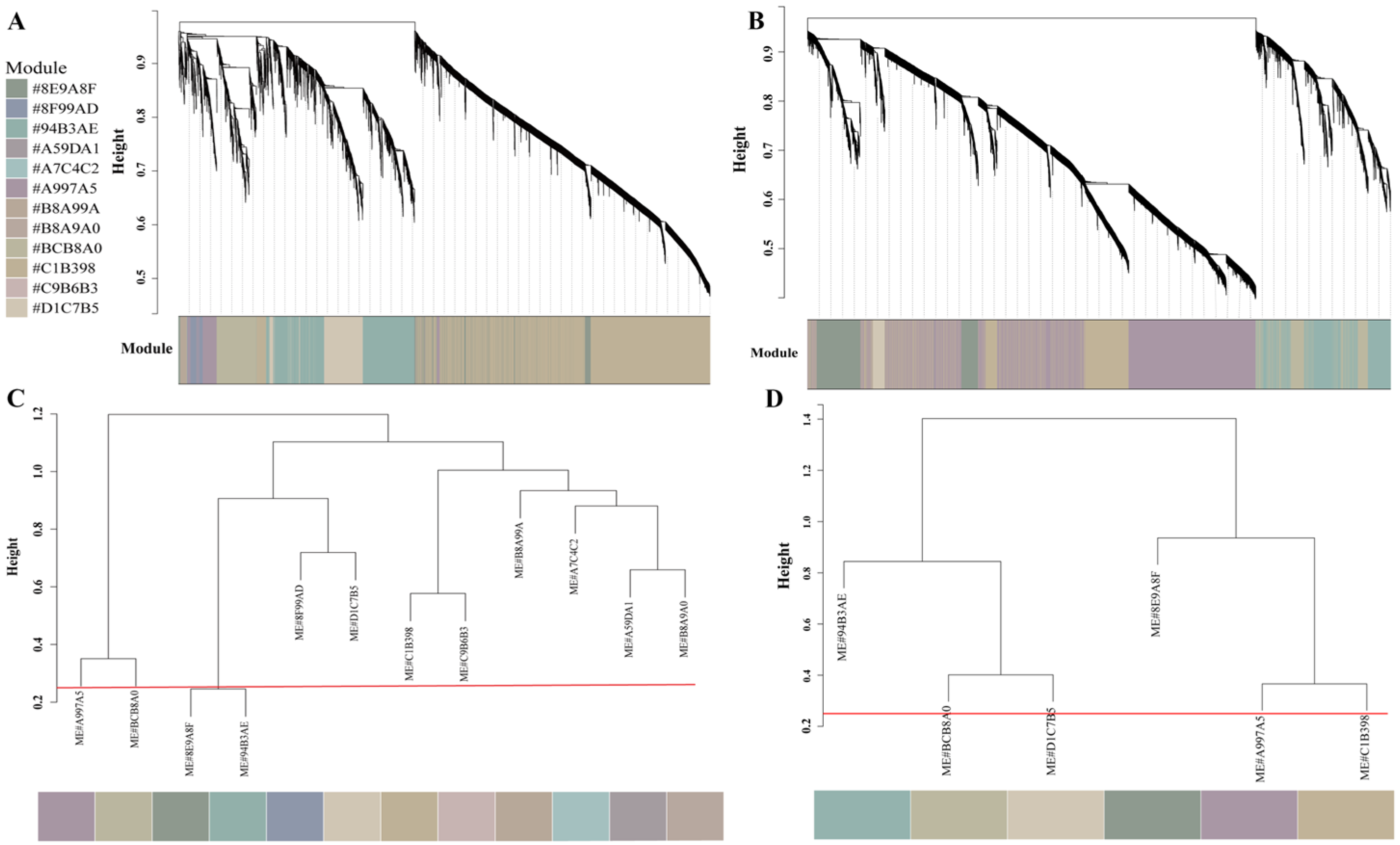
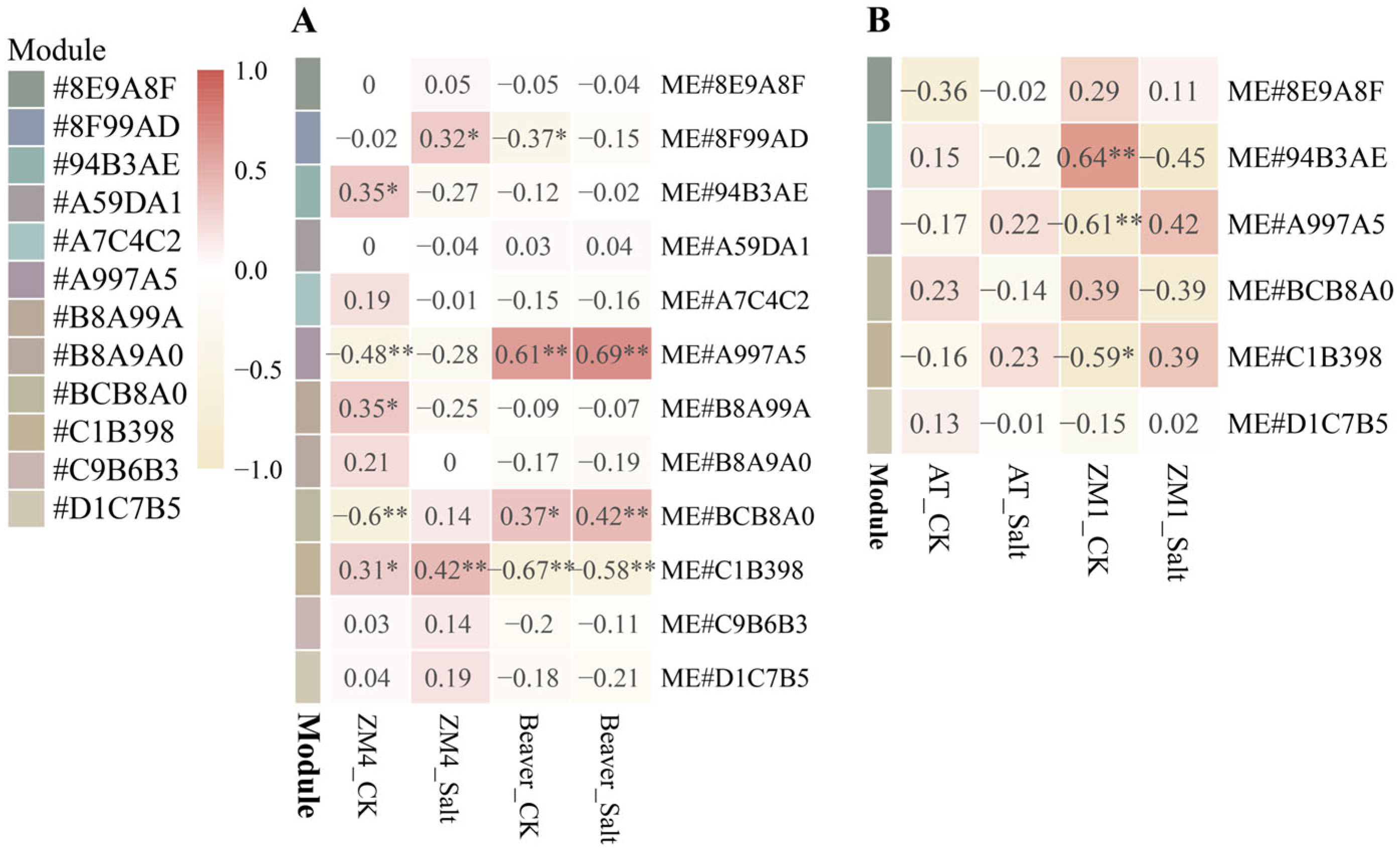
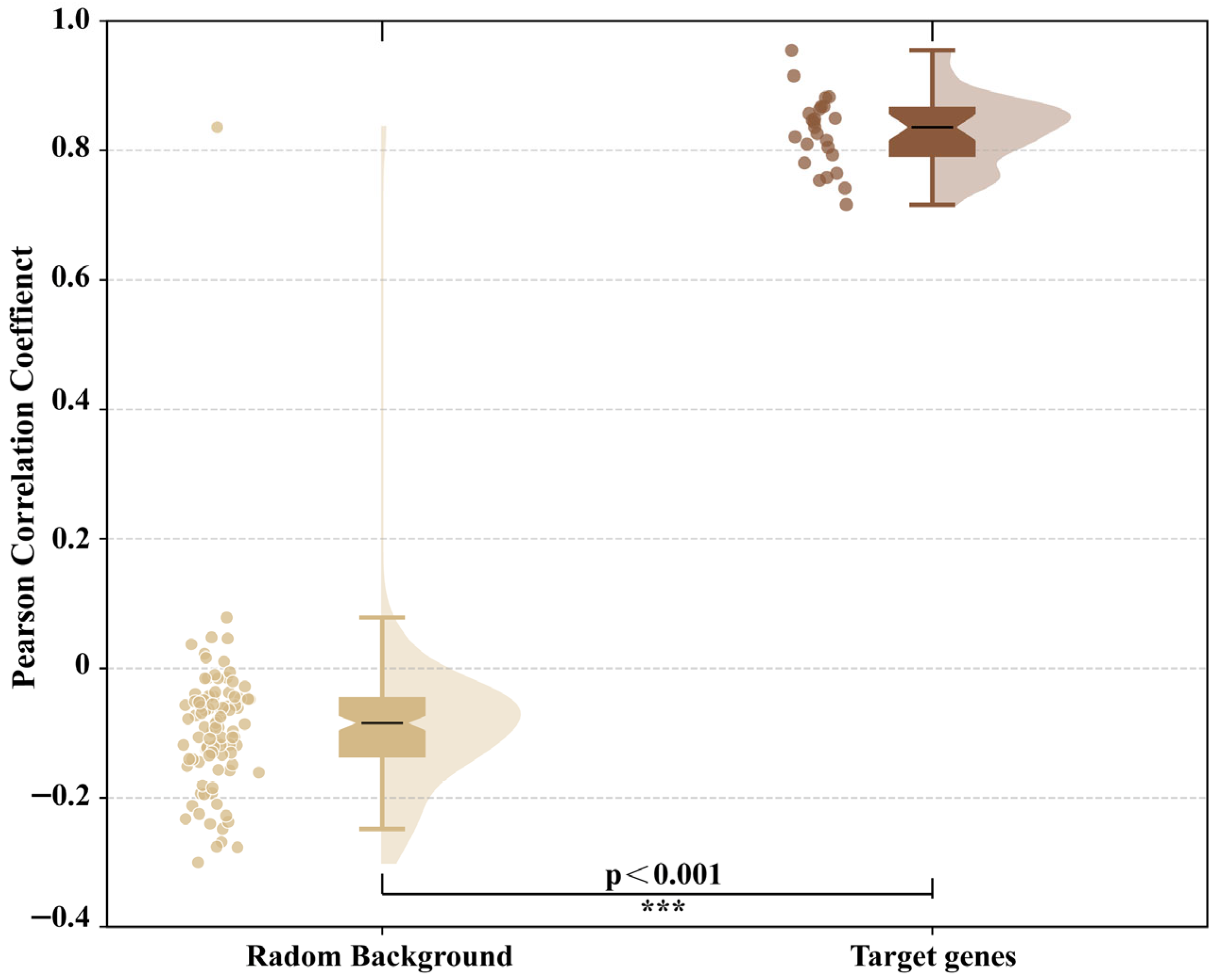
3.4. Co-Expression Network Analysis
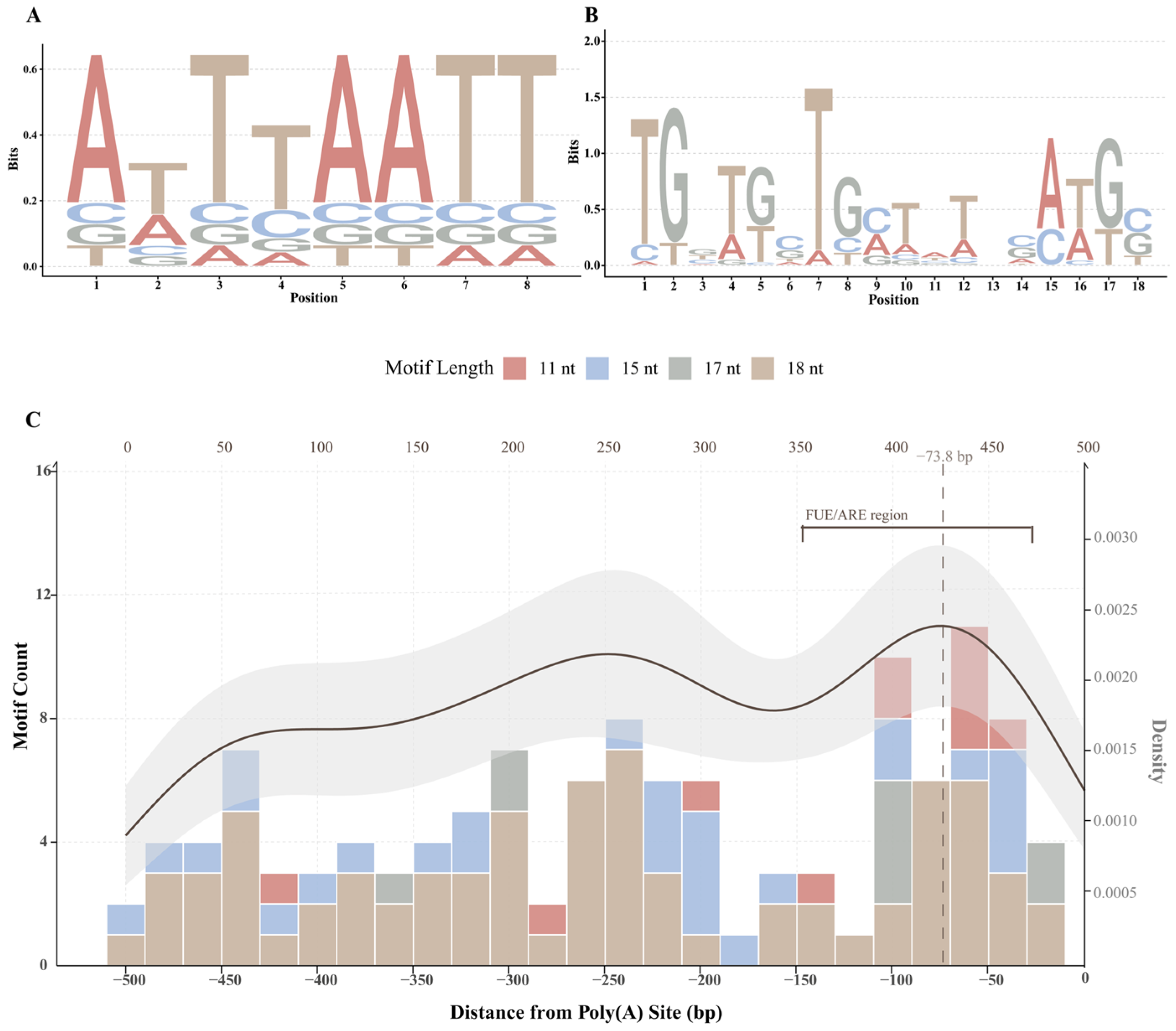
3.5. 3′UTR Motif Analysis
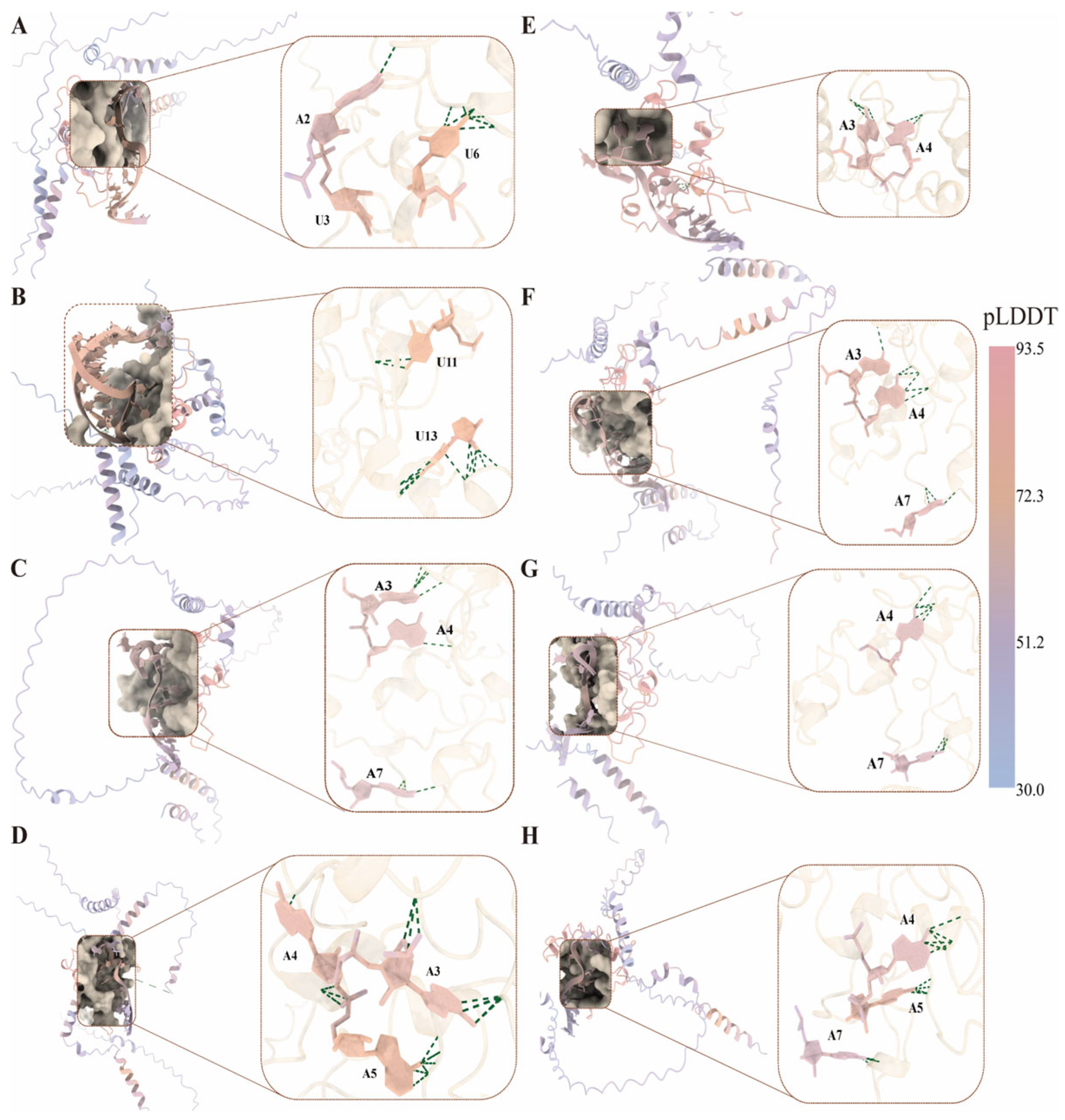
3.6. Structural Prediction of MsCCCH20–RNA Interactions
4. Discussion
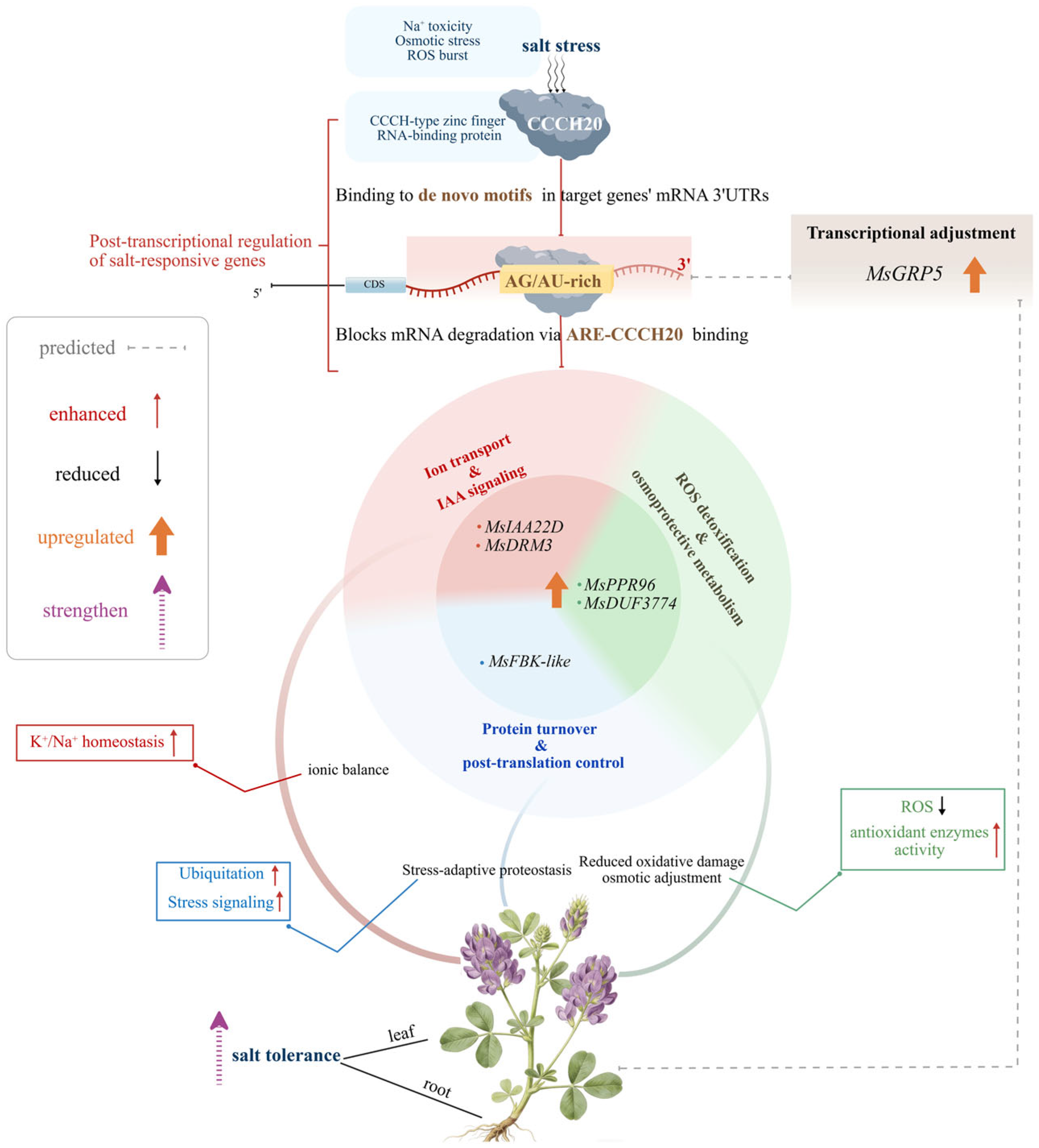
5. Conclusions
Supplementary Materials
Author Contributions
Funding
Data Availability Statement
Acknowledgments
Conflicts of Interest
Abbreviations
| 3′UTR | 3′ Untranslated Region |
| ARE | AU-Rich Element |
| AF2 | AlphaFold2 |
| CCCH | Cys-Cys-Cys-His (zinc-finger motif) |
| DEG | Differentially Expressed Gene |
| FDR | False Discovery Rate |
| GO | Gene Ontology |
| GWAS | Genome-Wide Association Study |
| ipTM | Interface Predicted TM-Score |
| LD | Linkage Disequilibrium |
| LOD | Logarithm of Odds |
| MAF | Minor Allele Frequency |
| PCA | Principal Component Analysis |
| PVE | Phenotypic Variance Explained |
| RBP | RNA-Binding Protein |
| ROS | Reactive Oxygen Species |
| SNP | Single Nucleotide Polymorphism |
| TPM | Transcripts Per Million |
| TZF | Tandem CCCH Zinc-Finger |
| WGCNA | Weighted Gene Co-Expression Network Analysis |
References
- Noushahi, H.A.; Inostroza, L.; Barahona, V.; Espinoza, S.; Ovalle, C.; Quitral, K.; Lobos, G.A.; Guerra, F.P.; Kefauver, S.C.; del Pozo, A. Selecting high forage-yielding alfalfa populations in a mediterranean drought-prone environment using high-throughput phenotyping. Remote. Sens. 2025, 17, 1517. [Google Scholar] [CrossRef]
- Miao, X.; Wang, G.; Li, R.; Xu, B.; Zheng, H.; Tian, D.; Wang, J.; Ren, J.; Li, Z.; Zhou, J. Study on modeling and evaluating alfalfa yield and optimal water use efficiency in the agro-pastoral ecotone of northern china. Plants 2024, 13, 229. [Google Scholar] [CrossRef]
- Zhu, X.; Chen, W.; Li, M.; Liu, B.; Zhao, S.; Hu, M.; Li, J.; Li, D.; Shi, Y.; Sun, H.; et al. Comprehensive evaluation of the nutritional value and contaminants of alfalfa (Medicago sativa L.) in china. Front. Nutr. 2025, 12, 1539462. [Google Scholar] [CrossRef]
- Ma, J.; Huangfu, W.; Yang, X.; Xu, J.; Zhang, Y.; Wang, Z.; Zhu, X.; Wang, C.; Shi, Y.; Cui, Y. “King of the forage”—Alfalfa supplementation improves growth, reproductive performance, health condition and meat quality of pigs. Front. Vet. Sci. 2022, 9, 1025942. [Google Scholar] [CrossRef]
- Wang, Y.; Li, M.; Guo, J.; Yan, H. Alfalfa (Medicago sativa L.) nitrogen utilization, yield and quality respond to nitrogen application level with center pivot fertigation system. Agronomy 2024, 14, 48. [Google Scholar] [CrossRef]
- Bicakci, T.; Aksu, E.; Arslan, M. Effect of seed coating on germination, emergence and early seedling growth in alfalfa (Medicago sativa L.) under salinity conditions. Fresenius Environ. Bull. 2018, 27, 6978–6984. [Google Scholar]
- Bai, G.; He, F.; Shan, G.; Wang, Y.; Tong, Z.; Cao, Y.; Yuan, Q. Effect of saline irrigation water on alfalfa growth and development in saline–alkali soils. Agronomy 2024, 14, 2790. [Google Scholar] [CrossRef]
- Liu, X.; Elzenga, J.T.M.; Venema, J.H.; Tiedge, K.J. Thriving in a salty future: Morpho-anatomical, physiological and molecular adaptations to salt stress in alfalfa (Medicago sativa L.) and other crops. Ann. Bot. 2024, 134, 1113–1130. [Google Scholar] [CrossRef] [PubMed]
- Deinlein, U.; Stephan, A.B.; Horie, T.; Luo, W.; Xu, G.; Schroeder, J.I. Plant salt-tolerance mechanisms. Trends Plant Sci. 2014, 19, 371–379. [Google Scholar] [CrossRef] [PubMed]
- Tu, Y.; Fu, L.; Wang, F.; Wu, D.; Shen, Q.; Zhang, G. Gwas and transcriptomic integrating analysis reveals key salt-responding genes controlling na+ content in barley roots. Plant Physiol. Biochem. 2021, 167, 596–606. [Google Scholar] [CrossRef] [PubMed]
- Singh, D. Juggling with reactive oxygen species and antioxidant defense system—A coping mechanism under salt stress. Plant Stress 2022, 5, 100093. [Google Scholar] [CrossRef]
- Kesawat, M.S.; Satheesh, N.; Kherawat, B.S.; Kumar, A.; Kim, H.-U.; Chung, S.-M.; Kumar, M. Regulation of reactive oxygen species during salt stress in plants and their crosstalk with other signaling molecules—Current perspectives and future directions. Plants 2023, 12, 864. [Google Scholar] [CrossRef]
- Danquah, A.; de Zelicourt, A.; Colcombet, J.; Hirt, H. The role of aba and mapk signaling pathways in plant abiotic stress responses. Biotechnol. Adv. 2014, 32, 40–52. [Google Scholar] [CrossRef]
- Bhattarai, S.; Biswas, D.; Fu, Y.-B.; Biligetu, B. Morphological, physiological, and genetic responses to salt stress in alfalfa: A review. Agronomy 2020, 10, 577. [Google Scholar] [CrossRef]
- Muthusamy, M.; Kim, J.H.; Kim, J.A.; Lee, S.I. Plant rna binding proteins as critical modulators in drought, high salinity, heat, and cold stress responses: An updated overview. Int. J. Mol. Sci. 2021, 22, 6731. [Google Scholar] [CrossRef]
- Wu, J.; Ma, L.; Cao, Y. Alternative polyadenylation is a novel strategy for the regulation of gene expression in response to stresses in plants. Int. J. Mol. Sci. 2023, 24, 4727. [Google Scholar] [CrossRef]
- Zheng, D.; Wang, R.; Ding, Q.; Wang, T.; Xie, B.; Wei, L.; Zhong, Z.; Tian, B. Cellular stress alters 3′utr landscape through alternative polyadenylation and isoform-specific degradation. Nat. Commun. 2018, 9, 2268. [Google Scholar] [CrossRef]
- Wang, T.; Meng, K.; Zhu, Z.; Pan, L.; Okita, T.W.; Zhang, L.; Tian, L. The regulatory roles of rna-binding proteins in plant salt stress response. Plants 2025, 14, 1402. [Google Scholar] [CrossRef] [PubMed]
- Guo, Y.; Shang, X.; Ma, L.; Cao, Y. Rna-binding protein-mediated alternative splicing regulates abiotic stress responses in plants. Int. J. Mol. Sci. 2024, 25, 10548. [Google Scholar] [CrossRef] [PubMed]
- Ding, F.; Cui, P.; Wang, Z.; Zhang, S.; Ali, S.; Xiong, L. Genome-wide analysis of alternative splicing of pre-mrna under salt stress in arabidopsis. BMC Genom. 2014, 15, 431. [Google Scholar] [CrossRef]
- Gao, Y.; Tang, Y.; Shen, S.; Deng, X.; Sun, S.; Chong, K.; Xu, Y. Osaly4 acts as an m5c-mrna reader facilitating mrna export and contributing to chilling and salt tolerance in rice. Cell Rep. 2026, 45, 117276. [Google Scholar] [CrossRef] [PubMed]
- Lyons, J.; Merchante, C.; Stepanova, A.N.; Alonso, J.M. Translational control in plants: From basic mechanisms to environmental and developmental responses. Plant J. 2026, 125, e70647. [Google Scholar] [CrossRef] [PubMed]
- Rehman, S.; Bahadur, S.; Xia, W.; Runan, C.; Ali, M.; Maqbool, Z. From genes to traits: Trends in rna-binding proteins and their role in plant trait development: A review. Int. J. Biol. Macromol. 2024, 282, 136753. [Google Scholar] [CrossRef]
- Bogamuwa, S.; Jang, J.-C. Tandem ccch zinc finger proteins in plant growth, development and stress response. Plant Cell Physiol. 2014, 55, 1367–1375. [Google Scholar] [CrossRef]
- Ryu, I.; Kim, Y.K. Au-rich element-mediated mrna decay via the butyrate response factor 1 controls cellular levels of polyadenylated replication-dependent histone mrnas. J. Biol. Chem. 2019, 294, 7558–7565. [Google Scholar] [CrossRef]
- Zhang, Q.; Zhang, J.; Wei, F.; Fu, X.; Wei, H.; Lu, J.; Ma, L.; Wang, H. The ccch-type zinc-finger protein ghc3h20 enhances salt stress tolerance in arabidopsis thaliana and cotton through aba signal transduction pathway. Int. J. Mol. Sci. 2023, 24, 5057. [Google Scholar] [CrossRef]
- Hu, X.; Zuo, J. The ccch zinc finger family of soybean (Glycine max L.): Genome-wide identification, expression, domestication, gwas and haplotype analysis. BMC Genom. 2021, 22, 511. [Google Scholar] [CrossRef]
- Zhang, Q.; Zhang, W.-j.; Yin, Z.-g.; Li, W.-j.; Zhao, H.-h.; Zhang, S.; Zhuang, L.; Wang, Y.-x.; Zhang, W.-H.; Du, J.-D. Genome- and transcriptome-wide identification of c3hs in common bean (Phaseolus vulgaris L.) and structural and expression-based analyses of their functions during the sprout stage under salt-stress conditions. Front. Genet. 2020, 11, 564607. [Google Scholar] [CrossRef]
- Pradhan, S.; Kant, C.; Verma, S.; Bhatia, S. Genome-wide analysis of the ccch zinc finger family identifies tissue specific and stress responsive candidates in chickpea (Cicer arietinum L.). PLoS ONE 2017, 12, e0180469. [Google Scholar] [CrossRef]
- Bao, P.; Sun, J.; Qu, G.; Yan, M.; Cheng, S.; Ma, W.; Hu, R. Identification and expression analysis of ccch gene family and screening of key low temperature stress response gene cbuc3h24 and cbuc3h58 in Catalpa bungei. BMC Genom. 2024, 25, 779. [Google Scholar] [CrossRef] [PubMed]
- Wang, D.; Guo, Y.; Wu, C.; Yang, G.; Li, Y.; Zheng, C. Genome-wide analysis of ccch zinc finger family in arabidopsis and rice. BMC Genom. 2008, 9, 44. [Google Scholar] [CrossRef]
- Zhang, H.; Gao, X.; Zhi, Y.; Li, X.; Zhang, Q.; Niu, J.; Wang, J.; Zhai, H.; Zhao, N.; Li, J.; et al. A non-tandem ccch-type zinc-finger protein, ibc3h18, functions as a nuclear transcriptional activator and enhances abiotic stress tolerance in sweet potato. New Phytol. 2019, 223, 1918–1936. [Google Scholar] [CrossRef] [PubMed]
- Lan, Y.; Chen, F.; Zhang, K.; Wang, L.; Zhang, S.; Wu, M.; Xiang, Y. The ccch zinc finger protein pec3h74 of moso bamboo (Phyllostachys edulis) positively regulates drought and salinity tolerances in transgenic plants. Ind. Crops Prod. 2023, 206, 117683. [Google Scholar] [CrossRef]
- Zhang, T.; Yu, L.X.; Zheng, P.; Li, Y.; Rivera, M.; Main, D.; Greene, S.L. Identification of loci associated with drought resistance traits in heterozygous autotetraploid alfalfa (Medicago sativa L.) using genome-wide association studies with genotyping by sequencing. PLoS ONE 2015, 10, e0138931. [Google Scholar] [CrossRef] [PubMed]
- Shen, C.; Du, H.; Chen, Z.; Lu, H.; Zhu, F.; Chen, H.; Meng, X.; Liu, Q.; Liu, P.; Zheng, L.; et al. The chromosome-level genome sequence of the autotetraploid alfalfa and resequencing of core germplasms provide genomic resources for alfalfa research. Mol. Plant 2020, 13, 1250–1261. [Google Scholar] [CrossRef]
- He, F.; Xu, M.; Long, R.; Zhu, K.; Du, M.; Ma, W.; Xue, H.; Peng, Y.; Chen, L.; Kang, J.; et al. Integrative multi-omics and genomic prediction reveal genetic basis of salt tolerance in alfalfa. J. Genet. Genom. 2026, 53, 447–457. [Google Scholar] [CrossRef]
- Long, R.; Zhang, F.; Zhang, Z.; Li, M.; Lin, C.; Wang, X.; Liu, W.; Zhang, T.; Yu, L.-X.; He, F.; et al. Genome assembly of alfalfa cultivar zhongmu-4 and identification of snps associated with agronomic traits. Genom. Proteom. Bioinform. 2022, 20, 14–28. [Google Scholar] [CrossRef]
- Wang, J.; Chen, Y.; Shu, G.; Zhao, M.; Zheng, A.; Chang, X.; Li, G.; Wang, Y.; Zhang, Y.M. Fast3vmrmlm: A fast algorithm that integrates genome-wide scanning with machine learning to accelerate gene mining and breeding by design for polygenic traits in large-scale gwas datasets. Plant Commun. 2025, 6, 101385. [Google Scholar] [CrossRef]
- Yin, L.; Zhang, H.; Tang, Z.; Xu, J.; Yin, D.; Zhang, Z.; Yuan, X.; Zhu, M.; Zhao, S.; Li, X.; et al. Rmvp: A memory-efficient, visualization-enhanced, and parallel-accelerated tool for genome-wide association study. Genom. Proteom. Bioinform. 2021, 19, 619–628. [Google Scholar] [CrossRef] [PubMed]
- Yang, L.; He, W.; Zhu, Y.; Lv, Y.; Li, Y.; Zhang, Q.; Liu, Y.; Zhang, Z.; Wang, T.; Wei, H.; et al. Gwas meta-analysis using a graph-based pan-genome enhanced gene mining efficiency for agronomic traits in rice. Nat. Commun. 2025, 16, 3171. [Google Scholar] [CrossRef]
- Cantalapiedra, C.P.; Hernandez-Plaza, A.; Letunic, I.; Bork, P.; Huerta-Cepas, J. Eggnog-mapper v2: Functional annotation, orthology assignments, and domain prediction at the metagenomic scale. Mol. Biol. Evol. 2021, 38, 5825–5829. [Google Scholar] [CrossRef] [PubMed]
- Chen, S. Fastp 1.0: An ultra-fast all-round tool for fastq data quality control and preprocessing. iMeta 2025, 4, e70078. [Google Scholar] [CrossRef]
- Patro, R.; Duggal, G.; Love, M.I.; Irizarry, R.A.; Kingsford, C. Salmon provides fast and bias-aware quantification of transcript expression. Nat. Methods 2017, 14, 417–419. [Google Scholar] [CrossRef]
- Love, M.I.; Huber, W.; Anders, S. Moderated estimation of fold change and dispersion for rna-seq data with deseq2. Genome Biol. 2014, 15, 550. [Google Scholar] [CrossRef]
- Blum, M.; Andreeva, A.; Florentino, L.C.; Chuguransky, S.R.; Grego, T.; Hobbs, E.; Pinto, B.L.; Orr, A.; Paysan-Lafosse, T.; Ponamareva, I.; et al. Interpro: The protein sequence classification resource in 2025. Nucleic Acids Res. 2025, 53, D444–D456. [Google Scholar] [CrossRef]
- Camacho, C.; Boratyn, G.M.; Joukov, V.; Vera Alvarez, R.; Madden, T.L. Elasticblast: Accelerating sequence search via cloud computing. BMC Bioinform. 2023, 24, 117. [Google Scholar] [CrossRef]
- Stecher, G.; Suleski, M.; Tao, Q.; Tamura, K.; Kumar, S. Mega 12.1: Cross-platform release for macos and linux operating systems. J. Mol. Evol. 2026, 94, 14–18. [Google Scholar] [CrossRef]
- Barah, P.; B, N.M.; Jayavelu, N.D.; Sowdhamini, R.; Shameer, K.; Bones, A.M. Transcriptional regulatory networks in Arabidopsis thaliana during single and combined stresses. Nucleic Acids Res. 2016, 44, 3147–3164. [Google Scholar] [CrossRef] [PubMed]
- Gu, Z.; Eils, R.; Schlesner, M. Complex heatmaps reveal patterns and correlations in multidimensional genomic data. Bioinformatics 2016, 32, 2847–2849. [Google Scholar] [CrossRef]
- Gu, Z.; Gu, L.; Eils, R.; Schlesner, M.; Brors, B. Circlize implements and enhances circular visualization in r. Bioinformatics 2014, 30, 2811–2812. [Google Scholar] [CrossRef] [PubMed]
- Bailey, T.L.; Johnson, J.; Grant, C.E.; Noble, W.S. The meme suite. Nucleic Acids Res. 2015, 43, W39–W49. [Google Scholar] [CrossRef]
- Chen, Z.; Feng, Y.; Zhang, S.; Xia, P. The multifaceted mechanisms of ccch zinc finger proteins in conferring plant stress resilience. Plant Sci. 2026, 364, 112932. [Google Scholar] [CrossRef]
- Kim, S.K.; Kang, H.; Jung, H.; Lee, S.-J. Arabidopsis zinc finger proteins atc3h49/tzf3 and atc3h20/tzf2 are involved in aba and ja responses. Plant Cell Physiol. 2012, 53, 673–686. [Google Scholar] [CrossRef]
- Kawaguchi, S.; Xu, X.; Soga, T.; Yamaguchi, K.; Kawasaki, R.; Shimouchi, R.; Date, S.; Kai, T. In silico screening by alphafold2 program revealed the potential binding partners of nuage-localizing proteins and pirna-related proteins. eLife 2025, 13, RP101967. [Google Scholar] [CrossRef]
- Meng, E.C.; Goddard, T.D.; Pettersen, E.F.; Couch, G.S.; Pearson, Z.J.; Morris, J.H.; Ferrin, T.E. Ucsf chimerax: Tools for structure building and analysis. Protein Sci. 2023, 32, e4792. [Google Scholar] [CrossRef]
- Sun, J.; Jiang, H.; Xu, Y.; Li, H.; Wu, X.; Xie, Q.; Li, C. The ccch-type zinc finger proteins atszf1 and atszf2 regulate salt stress responses in arabidopsis. Plant Cell Physiol. 2007, 48, 1148–1158. [Google Scholar] [CrossRef]
- Admas, T.; Shu, J.; Bimpong, D.; Pan, R.; Zhang, W. Identification of c2h2 zinc finger proteins revealed that hvzfp1 plays a regulatory role for ros detoxification in response to salt stress in barley. Int. J. Biol. Macromol. 2026, 355, 151511. [Google Scholar] [CrossRef]
- Pomeranz, M.C.; Hah, C.; Lin, P.C.; Kang, S.G.; Finer, J.J.; Blackshear, P.J.; Jang, J.C. The arabidopsis tandem zinc finger protein attzf1 traffics between the nucleus and cytoplasmic foci and binds both DNA and rna. Plant Physiol. 2010, 152, 151–165. [Google Scholar] [CrossRef]
- Qu, J.; Kang, S.G.; Wang, W.; Musier-Forsyth, K.; Jang, J.-C. The Arabidopsis thaliana tandem zinc finger 1 (attzf1) protein in rna binding and decay. Plant J. 2014, 78, 452–467. [Google Scholar] [CrossRef]
- Lin, P.-C.; Pomeranz, M.C.; Jikumaru, Y.; Kang, S.-G.; Hah, C.; Fujioka, S.; Kamiya, Y.; Jang, J.-C. The arabidopsis tandem zinc finger protein attzf1 affects aba- and ga-mediated growth, stress and gene expression responses. Plant J. 2011, 65, 253–268. [Google Scholar] [CrossRef]
- He, S.-L.; Li, B.; Zahurancik, W.J.; Arthur, H.C.; Sidharthan, V.; Gopalan, V.; Wang, L.; Jang, J.-C. Overexpression of stress granule protein tzf1 enhances salt stress tolerance by targeting aca11 mrna for degradation in arabidopsis. Front. Plant Sci. 2024, 15, 1375478. [Google Scholar] [CrossRef]
- Lin, Y.; Li, Y.; Wang, Y.; Soe, H.; Yang, X.; Li, W.; Li, H.; Zhang, Z.; Yu, P.; Wu, W.; et al. Genome-wide identification and expression profiling of the aux/iaa gene family in eggplant (Solanum melongena L.) reveals its roles in abiotic stress and auxin responses. Int. J. Mol. Sci. 2026, 27, 350. [Google Scholar] [CrossRef]
- Ren, Y.; Li, M.; Wang, W.; Lan, W.; Schenke, D.; Cai, D.; Miao, Y. Microrna840 (mir840) accelerates leaf senescence by targeting the overlapping 3’utrs of ppr and whirly3 in Arabidopsis thaliana. Plant J. 2022, 109, 126–143. [Google Scholar] [CrossRef]
- Kelley, D.R.; Estelle, M. Ubiquitin-mediated control of plant hormone signaling. Plant Physiol. 2012, 160, 47–55. [Google Scholar] [CrossRef]
- Kang, Y.; Torres-Jerez, I.; An, Z.; Greve, V.; Huhman, D.; Krom, N.; Cui, Y.; Udvardi, M. Genome-wide association analysis of salinity responsive traits in Medicago truncatula. Plant Cell Environ. 2019, 42, 1513–1531. [Google Scholar] [CrossRef]
- He, F.; Wei, C.; Zhang, Y.; Long, R.; Li, M.; Wang, Z.; Yang, Q.; Kang, J.; Chen, L. Genome-wide association analysis coupled with transcriptome analysis reveals candidate genes related to salt stress in alfalfa (Medicago sativa L.). Front. Plant Sci. 2021, 12, 826584. [Google Scholar] [CrossRef]
- Ma, L.; Zhang, M.; Chen, J.; Qing, C.; He, S.; Zou, C.; Yuan, G.; Yang, C.; Peng, H.; Pan, G.; et al. Gwas and wgcna uncover hub genes controlling salt tolerance in maize (Zea mays L.) seedlings. Theor. Appl. Genet. 2021, 134, 3305–3318. [Google Scholar] [CrossRef]
- An, Y.; Suo, X.; Niu, Q.; Yin, S.; Chen, L. Genome-wide identification and analysis of the nf-y transcription factor family reveal its potential roles in salt stress in alfalfa (Medicago sativa L.). Int. J. Mol. Sci. 2022, 23, 6426. [Google Scholar] [CrossRef]
- Chai, G.; Hu, R.; Zhang, D.; Qi, G.; Zuo, R.; Cao, Y.; Chen, P.; Kong, Y.; Zhou, G. Comprehensive analysis of ccch zinc finger family in poplar (Populus trichocarpa). BMC Genom. 2012, 13, 253. [Google Scholar] [CrossRef]





Disclaimer/Publisher’s Note: The statements, opinions and data contained in all publications are solely those of the individual author(s) and contributor(s) and not of MDPI and/or the editor(s). MDPI and/or the editor(s) disclaim responsibility for any injury to people or property resulting from any ideas, methods, instructions or products referred to in the content. |
© 2026 by the authors. Licensee MDPI, Basel, Switzerland. This article is an open access article distributed under the terms and conditions of the Creative Commons Attribution (CC BY) license.
Share and Cite
Wang, M.; Zhu, X.; Jiang, H.; Dong, L.; Zhang, R.; Guo, C.; Shu, Y. The Zinc-Finger Protein MsCCCH20 Is Predicted to Regulate Salt-Stress Response in Alfalfa (Medicago sativa L.) by Binding to Conserved 3′UTR Motifs. Agronomy 2026, 16, 987. https://doi.org/10.3390/agronomy16100987
Wang M, Zhu X, Jiang H, Dong L, Zhang R, Guo C, Shu Y. The Zinc-Finger Protein MsCCCH20 Is Predicted to Regulate Salt-Stress Response in Alfalfa (Medicago sativa L.) by Binding to Conserved 3′UTR Motifs. Agronomy. 2026; 16(10):987. https://doi.org/10.3390/agronomy16100987
Chicago/Turabian StyleWang, Meng, Xiaoyue Zhu, Huixin Jiang, Lina Dong, Ruixin Zhang, Changhong Guo, and Yongjun Shu. 2026. "The Zinc-Finger Protein MsCCCH20 Is Predicted to Regulate Salt-Stress Response in Alfalfa (Medicago sativa L.) by Binding to Conserved 3′UTR Motifs" Agronomy 16, no. 10: 987. https://doi.org/10.3390/agronomy16100987
APA StyleWang, M., Zhu, X., Jiang, H., Dong, L., Zhang, R., Guo, C., & Shu, Y. (2026). The Zinc-Finger Protein MsCCCH20 Is Predicted to Regulate Salt-Stress Response in Alfalfa (Medicago sativa L.) by Binding to Conserved 3′UTR Motifs. Agronomy, 16(10), 987. https://doi.org/10.3390/agronomy16100987