1. Introduction
Kazakhstan has approximately 32 million hectares of arable land, over half of which lies in the arid steppe. Soils in the northern, eastern, and central regions are primarily Chernozems, while western areas include Kastanozems [
1]. These soils are generally favorable for agricultural production, with soil organic matter (SOM) contents ranging from 3 to 6% in Chernozems and 1 to 3% in Kastanozems in the topsoil horizons.
However, since the 1950s, large areas of virgin land have been converted into cropland and subjected to long-term monoculture, mainly with spring wheat (
Triticum aestivum L.). After nearly 70 years of continuous cultivation, these soils have experienced a substantial decline in SOM. Previous studies reported SOM losses of 11% to 30% in arable Chernozems of northern Kazakhstan [
2,
3,
4]. Given that SOM is a key factor regulating soil fertility, nutrient cycling, and ecosystem stability—especially in arid and semi-arid regions—its depletion poses a serious threat to soil health and agricultural sustainability [
5]. Therefore, restoring SOM and improving soil fertility have become critical priorities in Kazakhstan.
In recent years, sustainable agricultural practices, including crop rotation and reduced reliance on mineral fertilizers, have been promoted to enhance soil quality. Although these approaches can partially improve soil conditions, they do not consistently ensure long-term SOM accumulation, and their effectiveness remains uncertain under local conditions [
6].
Composting of cattle manure is considered an effective strategy for increasing SOM and improving soil fertility. Composting transforms organic waste into a stable product rich in nutrients and beneficial microorganisms, thereby enhancing soil structure, nutrient availability, and biological activity [
7,
8,
9]. In addition, proper composting reduces environmental risks associated with raw manure, such as greenhouse gas emissions, water contamination, and pathogen spread.
The efficiency of composting largely depends on microbial activity and the physicochemical properties of the substrate. In particular, the use of selected microbial inoculants has been reported to accelerate organic matter degradation, enhance thermophilic activity, and improve compost maturity and nutrient availability. However, the effectiveness of such inoculants is often influenced by the availability of suitable carbon substrates and environmental conditions. Recent studies suggest that the addition of carbon-rich materials can enhance composting processes by improving aeration, moisture retention, and nutrient stabilization [
10]. In this context, oxidized low-grade coal (e.g., Leonardite) has attracted attention due to its high humic substance content and its ability to act as a sorbent and microbial carrier. Due to their high humic substance content and porous structure, such materials can enhance microbial habitat conditions, improve cation exchange capacity, and reduce nutrient losses during composting. Furthermore, coal-derived substrates can provide a favorable environment for the development of diverse microbial communities involved in organic matter decomposition [
11].
The combined application of carbon-rich adsorbents and functional microbial consortia may create synergistic effects by simultaneously improving substrate structure and stimulating microbial-driven biochemical processes. Despite these potential benefits, there is still limited information on the combined application of oxidized coal and coal-derived microbial consortia in manure composting systems, particularly under the soil and climatic conditions of northern Kazakhstan. In addition, the effects of such combined amendments on compost biochemical properties, microbial dynamics, and nutrient transformation processes remain insufficiently understood.
Recent studies have increasingly highlighted the synergistic effects of combining carbon-based amendments, such as biochar and coal-derived materials, with microbial inoculants to enhance composting efficiency. These integrated approaches improve substrate structure, aeration, and nutrient retention while simultaneously stimulating microbial activity and accelerating organic matter mineralization [
12,
13]. Furthermore, such combinations have been shown to enhance microbial diversity and promote compost stabilization, resulting in improved agronomic quality and reduced environmental impacts [
14,
15].
However, most existing studies focus on biochar-based systems, and limited information is available on the use of oxidized coal in combination with microbial consortia derived from coal-associated environments. This gap is particularly relevant for Kazakhstan, where such materials are locally abundant and may offer a cost-effective solution for sustainable composting.
The aim of this study was to evaluate the effects of adding oxidized coal (Leonardite) in combination with microbial consortia isolated from low-grade coal on the physicochemical and microbiological parameters of cattle manure compost. We hypothesize that the integration of carbon adsorbents with functional microbial consortia will enhance composting efficiency, promote microbial activity, and improve the stability and nutrient quality of the final product, thereby contributing to the development of effective organic fertilizers for restoring soil fertility in northern Kazakhstan.
2. Materials and Methods
During the preparation of this work, the authors used ChatGPT (GPT-5.3 version, OpenAI, San Francisco, CA, USA; accessed in Kazakhstan) Translate (2025) in order to translate part of results and discussion from Russian to English. After using this tool, the authors reviewed and edited the content as needed and take full responsibility for the content of the published article.
2.1. Isolation of Strains and Determination of Microbial Populations
Microbial strains were isolated from brown coal samples collected from the Kumyskuduk and Kuznetsk deposits (Karaganda region, Kazakhstan) and from fresh cattle manure. A serial dilution and plating method were employed using selective nutrient media to determine microbial abundance and diversity.
Bacterial, fungal, and actinomycete communities were quantified using selective culture media to assess microbial dynamics during composting. Bacterial populations were grown on nutrient agar (MPA), starch agar (SAA), and Ashby medium, while filamentous fungi were isolated on Czapek–Dox medium (CD). Actinomycetes were cultivated on Gauze and Hutchinson media following standard microbiological procedures [
16,
17,
18].
For each sample, 1 g of compost was suspended in 100 mL of distilled water, agitated, and serially diluted. Triplicate plates were prepared for each dilution and medium. Incubation was performed at 30 ± 2 °C for 7 days, except for Hutchinson medium, which was incubated for 14 days. Colony-forming units (CFU) per milliliter were calculated using the formula:
where a is the number of colonies, 10
n is the dilution factor, and V is the inoculated volume (0.1 mL).
This approach allowed for the quantitative estimation of microbial abundance and diversity, directly supporting the study objective of evaluating microbial consortia efficiency in composting.
2.2. Preparation of Bacterial Consortia
From 27 isolates obtained from coal samples, 15 strains with plant growth-promoting properties (nitrogen fixation, phosphorus solubilization, cellulose degradation, pathogen suppression) were selected. The strains were grouped into three consortia based on compatibility, and two consortia (Consortium 1 and Consortium 3) were tested experimentally. Consortium 1 includes the following five strains: Priestia megaterium st. 9U, Brevundimonas nasdae st. 12U, Pseudomonas mandelii st. 15U, Microbacterium profundi st. 20U, and Streptomyces coelicoflavus st. 24U. Consortium 3 consists of the following five strains: Bacillus firmus st. 2U, Microbacterium shaanxiense st. 13U, Azospirillum brasilense st. 18U, Pseudomonas mandelii st. 25U, and Streptomyces parvus st. 26U.
The selected bacterial strains were identified at the species level based on 16S rRNA gene sequencing. Genomic DNA from bacterial isolates was extracted using the GeneJET PCR Purification Kit (Thermo Fisher Scientific, Waltham, MA, USA) following the manufacturer’s protocol, with DNA concentrations ranging from 3.3 to 76 ng μL−1. For fungal isolates, DNA extraction was performed using the classical phenol–chloroform method, yielding a final concentration of approximately 86 ng μL−1.
Amplification of the 16S rRNA gene was carried out using universal primers 8F (5′-AGAGTTTGATCCTGGCTCAG-3′) and 806R (5′-GGACTACCAGGGTATCTAAT-3′). PCR reactions were performed in a total volume of 25 μL, containing 25 ng of DNA template, 1 U DNA polymerase (Thermo Scientific, Waltham, MA, USA), 0.2 mM of each dNTP, 1× PCR buffer, 2.5 mM MgCl2, and 10 pmol of each primer. Amplification was conducted using a SimpliAmp Thermal Cycler (Thermo Fisher Scientific, Waltham, MA, USA).
PCR products were verified by electrophoresis on a 1.5% agarose gel using a horizontal electrophoresis system (Max HU10, BioSan, Riga, Latvia) with a Consort EV243 power supply (Consort, Turnhout, Belgium) and 1× TAE buffer.
Amplified fragments were sequenced using the Sanger method with a BigDye Terminator kit (Applied Biosystems, Foster City, CA, USA). Sequencing reactions were performed in a total volume of 25 μL and carried out in both forward and reverse directions. Sequencing products were analyzed using an ABI 3130XL Genetic Analyzer (Applied Biosystems, Foster City, CA, USA). Chromatograms were processed using Sequencing Analysis Software v5.2 (Applied Biosystems, Foster City, CA, USA). Sequence identification and phylogenetic analysis were performed using the NCBI database (
https://www.ncbi.nlm.nih.gov) accessed on 4 December 2024 with the BLAST (BLASTn, version 2.14.1) algorithm. A similarity threshold of ≥97% was used for species-level identification.
Each strain was cultured individually on nutrient agar in 500 mL Erlenmeyer flasks at 30–32 °C, pH 7.0, under constant agitation (125 rpm) for 48 h. Strains were combined in sterile liquid nutrient medium and incubated in a fermenter (45 L) at 30–32 °C, pH 7.0, with 125 rpm agitation and continuous oxygen flow. pH, temperature, and biomass were monitored using EloChek (Elo Systems, Astana, Kazakhstan) software.
This preparation ensured a standardized inoculum with reproducible microbial activity, which directly aligns with the objective of enhancing compost biochemical and microbiological properties.
2.3. Composting Experiment and Design
Composting was conducted at ZHANA BEREKE REPRODUCTOR Ltd., near Mailan village, Yereymentau District, Akmola Region, Kazakhstan (51°43′16.11″ N, 72°17′10.86″ E, UTM-WGS84). Bedding manure contained approximately 62% moisture and comprised a mixture of cattle dung and straw. A total of 70 tons of manure was used, with 10 tons allocated per compost pile. Each pile was formed into windrows with approximate dimensions of 2.5 m (width) × 1.5 m (height) × 10 m (length). The initial carbon-to-nitrogen (C:N) ratio of the composting mixture was approximately 25–30:1, which falls within the optimal range for aerobic composting.
Seven experimental treatments were established, each in triplicate (n = 3):
Control–no additives.
Consortium 1 + oxidized coal, 5% w/w.
Consortium 1 + oxidized coal, 10% w/w.
Consortium 1 + oxidized coal, 20% w/w.
Consortium 3 + oxidized coal, 5% w/w.
Consortium 3 + oxidized coal, 10% w/w.
Consortium 3 + oxidized coal, 20% w/w.
Compost piles were aerated using a mechanical compost turner (HECTOTITAN CT-3000), with turning performed every two days to maintain aerobic conditions and ensure uniform decomposition. Temperature was monitored daily throughout the composting process. Moisture content was maintained at 50–60% by periodic water additions and monitored using standard methods.
At each sampling point (every 10 days), approximately 1 kg of compost material was collected from multiple locations within each pile, homogenized, and transported to the laboratory for subsequent physicochemical and microbiological analyses.
2.4. Physicochemical and Gas Measurements
Moisture content and pH of a 1:10 (
w/
v) aqueous extract were determined to characterize substrate conditions throughout the composting process. Key nutrient parameters, including total nitrogen, ammonium (NH
4+–N), nitrate (NO
3−–N), and phosphorus, were analyzed using established analytical methods [
19]. Organic matter content was determined using the loss-on-ignition method, providing an estimate of decomposition and humification dynamics [
20].
Gas emissions (CO2, CH4, H2S, and CO) were monitored using a portable gas analyzer (GasAlertMicroClip XL, BW Technologies, Canada) capable of detecting CO2, H2S, CO, and O2. Gas measurements were performed by inserting a probe directly into the compost mass. Approximately 1 kg of compost sample was collected and analyzed under laboratory conditions at the Institute of Chemistry. The instrument was calibrated prior to measurements according to the manufacturer’s instructions to ensure accuracy and reliability.
2.5. Statistical Analysis
All experiments were conducted in triplicate (n = 3), and mean values ± standard deviations (SDs) are reported. Data were tested for normality (Shapiro–Wilk test) and homogeneity of variances (Levene’s test) prior to statistical analysis. Differences among treatments were evaluated using one-way analysis of variance (ANOVA), followed by Tukey’s honestly significant difference (HSD) post hoc test to determine pairwise comparisons. Significance was accepted at p < 0.05.
All statistical analyses were performed using SPSS v.25 (IBM, Armonk, NY, USA). Graphical representations, including mean ± SD graphs and treatment comparisons, were created using OriginPro 2022 (OriginLab, Northampton, MA, USA).
3. Results and Discussion
3.1. Microbial Abundance on Low-Grade Coal Substrates
The abundance of bacteria, actinomycetes, and fungi associated with low-grade coals from the Kumyskuduk and Kuznetsk deposits was quantified using selective culture media (
Table 1). Overall, both coal types supported substantial microbial populations, confirming their suitability as substrates for microbial colonization and potential use in biofertilizer development.
However, clear differences in microbial composition were observed between the two coal sources. Kuznetsk coal exhibited significantly higher bacterial abundance, particularly on MPA and SAA media (up to 6.0 × 10⁶ and 3.0 × 10⁶ CFU mL−1, respectively), indicating a strong potential for organic matter degradation. In contrast, Kumyskuduk coal showed higher or comparable actinomycete abundance on certain media (e.g., SAA and Hutchinson), suggesting a greater contribution of filamentous microorganisms to the decomposition of complex organic compounds.
Differences were also evident across media types, reflecting functional specialization of microbial groups. Bacterial populations were dominant on MPA, SAA, and Ashby media, whereas actinomycetes were more abundant on SAA, Gauze, and Hutchinson media. Fungal populations, detected on Czapek–Dox medium, were relatively small in both coal types (103 CFU mL−1 range), indicating a minor but potentially important role in early-stage organic matter transformation.
These patterns highlight a structure–function relationship, where the physicochemical properties of coal substrates influence microbial community composition. The higher bacterial abundance in Kuznetsk coal suggests enhanced capacity for rapid mineralization processes, whereas the presence of actinomycetes in Kumyskuduk coal indicates potential for degradation of recalcitrant compounds such as cellulose and lignin.
Following functional screening for phosphate solubilization, nitrogen fixation, and antifungal activity, ten strains were selected for the development of microbial consortia. These strains were identified at the species level using 16S rRNA gene sequencing, enabling the construction of stable consortia for subsequent composting experiments.
Overall, the results demonstrate that low-grade coal serves not only as a physical substrate, but also as a biologically active matrix supporting diverse microbial communities. This provides the mechanistic basis for its use in combination with microbial consortia to enhance composting processes and improve the quality of organo-mineral fertilizers.
3.2. Composting Dynamics and Stages
All treatments followed the typical composting progression, including mesophilic, thermophilic, and maturation phases. The mesophilic phase (Day 1–7) was characterized by moderate temperatures (17–31 °C), reflecting the initial decomposition of readily available organic substrates. This phase was followed by a rapid transition to the thermophilic stage (Day 14–21), during which, temperatures increased significantly, indicating intensified microbial metabolism and active degradation of complex organic compounds. The final maturation phase (after Day 21) was marked by a gradual decline in temperature, corresponding to reduced microbial activity and stabilization of the compost matrix [
21,
22].
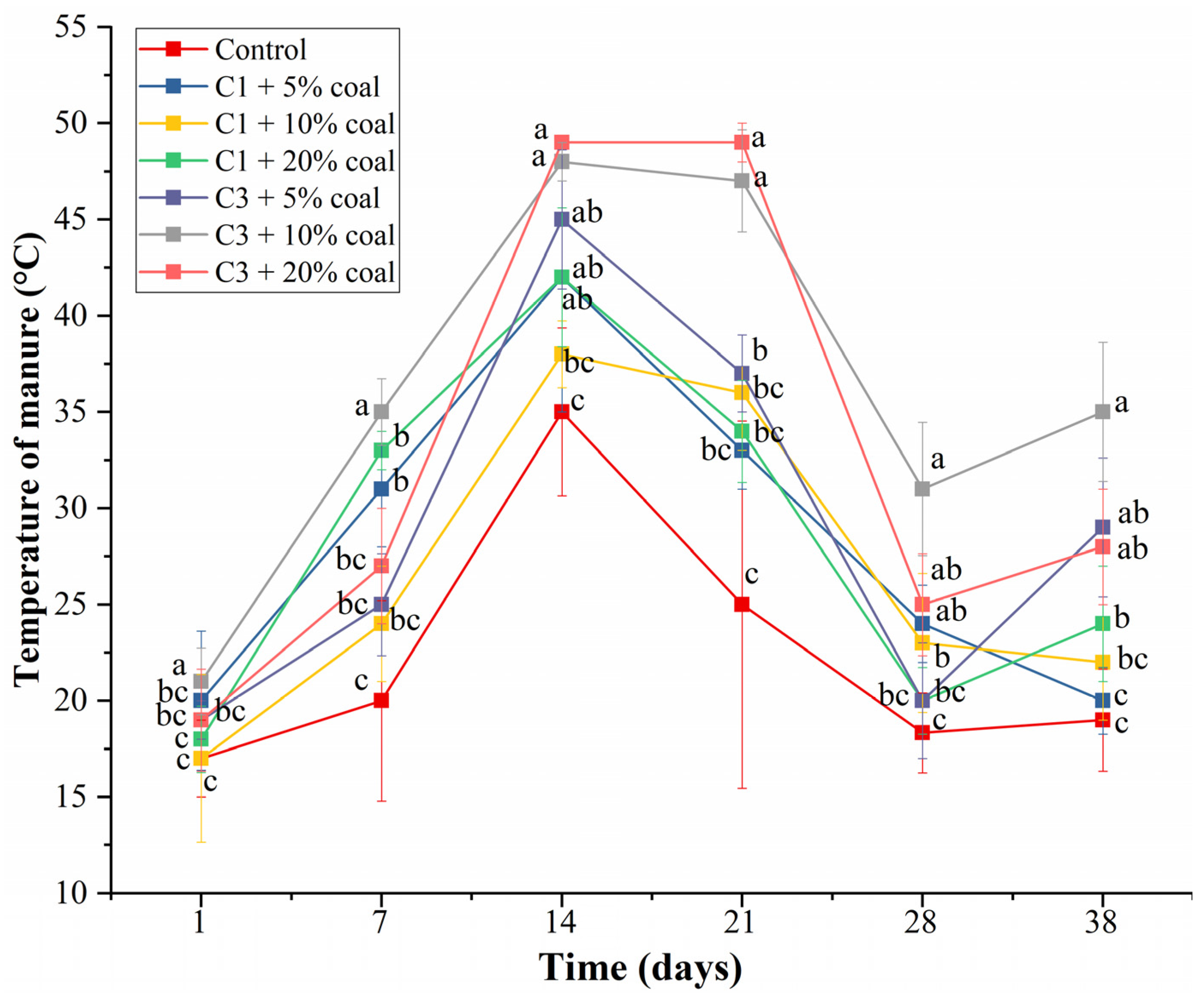
Temperature dynamics differed significantly among treatments (
p < 0.05), as shown in
Figure 1. At Day 14, treatments amended with microbial consortia and oxidized coal exhibited significantly higher temperatures compared to the control. In particular, Consortium 3 combined with 10% and 20% oxidized coal reached the highest temperatures (48–49 °C), indicating enhanced thermophilic activity. In contrast, the control remained significantly lower (35 °C), suggesting limited microbial activity. Treatments with Consortium 1 generally showed intermediate values, reflecting moderate stimulation of thermogenesis.
On Day 21, a similar trend was observed, with C3 + 10% and C3 + 20% treatments maintaining significantly higher temperatures, indicating prolonged thermophilic conditions and sustained microbial activity. However, by Day 28, temperatures declined across all treatments, marking the transition toward the maturation phase. Despite this decline, treatments with microbial consortia, particularly C3 + 10%, maintained relatively higher temperatures, suggesting a more gradual stabilization process compared to the control.
The enhanced thermogenesis observed in amended treatments can be attributed to a synergistic effect between microbial consortia and oxidized coal. The microbial inoculants accelerate organic matter degradation, while oxidized coal improves aeration, moisture retention, and substrate structure, thereby supporting sustained microbial activity. Similar effects have been reported in composting systems amended with carbon-rich materials such as biochar, which promote rapid temperature increases and prolong the thermophilic phase [
13,
23,
24].
In addition to temperature changes, physical observations (color, texture, and odor) supported the progression of composting. By the second month, treated composts exhibited darker coloration, improved friability, and reduced odor, indicating advanced decomposition and stabilization. These changes were most pronounced in treatments containing Consortium 3 with 5–10% oxidized coal, consistent with their superior thermal performance.
Overall, the results demonstrate a clear cause–effect relationship between treatment composition and composting dynamics. The combination of microbial consortia and oxidized coal enhances microbial metabolism, leading to faster temperature increases, higher thermophilic peaks, and improved compost maturation compared to untreated controls.
3.3. Moisture and pH Dynamics
Moisture content is a key factor regulating microbial activity and composting efficiency, as it directly affects aeration, substrate availability, and biochemical reactions. As shown in
Table 2, moisture levels declined over time in all treatments due to evaporation and microbial heat generation. Periodic water additions maintained moisture within the optimal range (50–60%) during the early composting stages, ensuring favorable conditions for microbial metabolism.
Significant differences among treatments were observed throughout the process. The control exhibited a steady decline from 53.6% to 33.3%, reflecting natural substrate drying. In contrast, composts amended with microbial consortia and oxidized coal displayed more variable moisture patterns, highlighting the combined influence of microbial activity and the physicochemical properties of the carbon amendment. For example, Consortium 3 + 10% coal experienced a rapid decline from 62.5% to 30.8% by Day 20, suggesting enhanced microbial metabolism and heat production. Conversely, treatments with higher coal dosages (20%) retained or re-accumulated moisture at later stages (e.g., 38.7% at Day 50 in C3 + 20%), likely due to the water adsorption capacity of oxidized coal.
These observations demonstrate a clear cause–effect relationship: moderate coal additions (5–10%) promote optimal moisture regulation by balancing water retention and evaporation, whereas excessive coal (20%) can disrupt this balance, leading to either over-drying or uneven moisture distribution. Such deviations may suppress microbial activity and reduce overall composting efficiency, emphasizing the need for carefully optimized coal amendments.
Changes in pH further reflected the progression of microbial metabolic processes during composting (
Table 3). In the early stages, most treatments showed a significant decrease in pH (down to 5.2–5.6), indicating the accumulation of organic acids produced during the rapid decomposition of readily available substrates. As composting progressed into the thermophilic phase, pH values gradually increased toward neutral or slightly alkaline conditions, reflecting ammonia production associated with nitrogen mineralization.
Significant differences among treatments were observed (p < 0.05). Treatments amended with 5–10% oxidized coal maintained relatively stable pH values (6.0–6.8) during the later stages, providing optimal conditions for microbial activity and compost maturation. In contrast, treatments with higher coal dosage (20%) exhibited greater pH fluctuations (5.6–7.2), suggesting less stable biochemical conditions and potential stress on microbial communities. The control treatment showed only minor variations (7.7–7.1), indicating comparatively lower microbial-driven transformations.
These results demonstrate a clear cause–effect relationship between amendment composition and compost chemistry. Moderate coal addition improves pH buffering capacity and stabilizes microbial activity, whereas excessive coal disrupts this balance. Together with moisture dynamics, these findings confirm that 10% oxidized coal provides optimal physicochemical conditions, promoting efficient decomposition and compost stabilization. This is consistent with previous studies highlighting the role of carbon-rich amendments in regulating pH and enhancing microbial-mediated composting processes [
25].
3.4. Nutrient Transformation
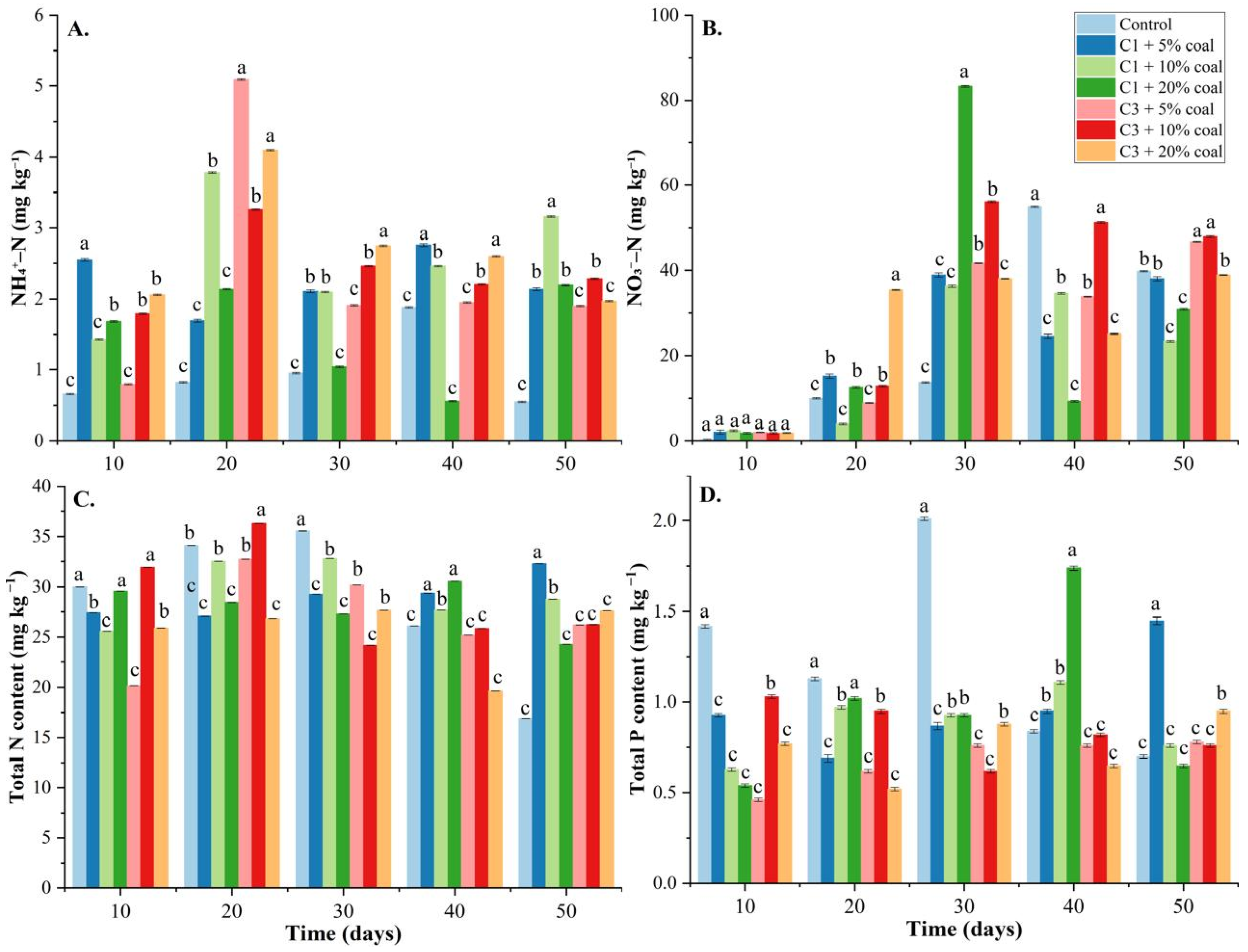
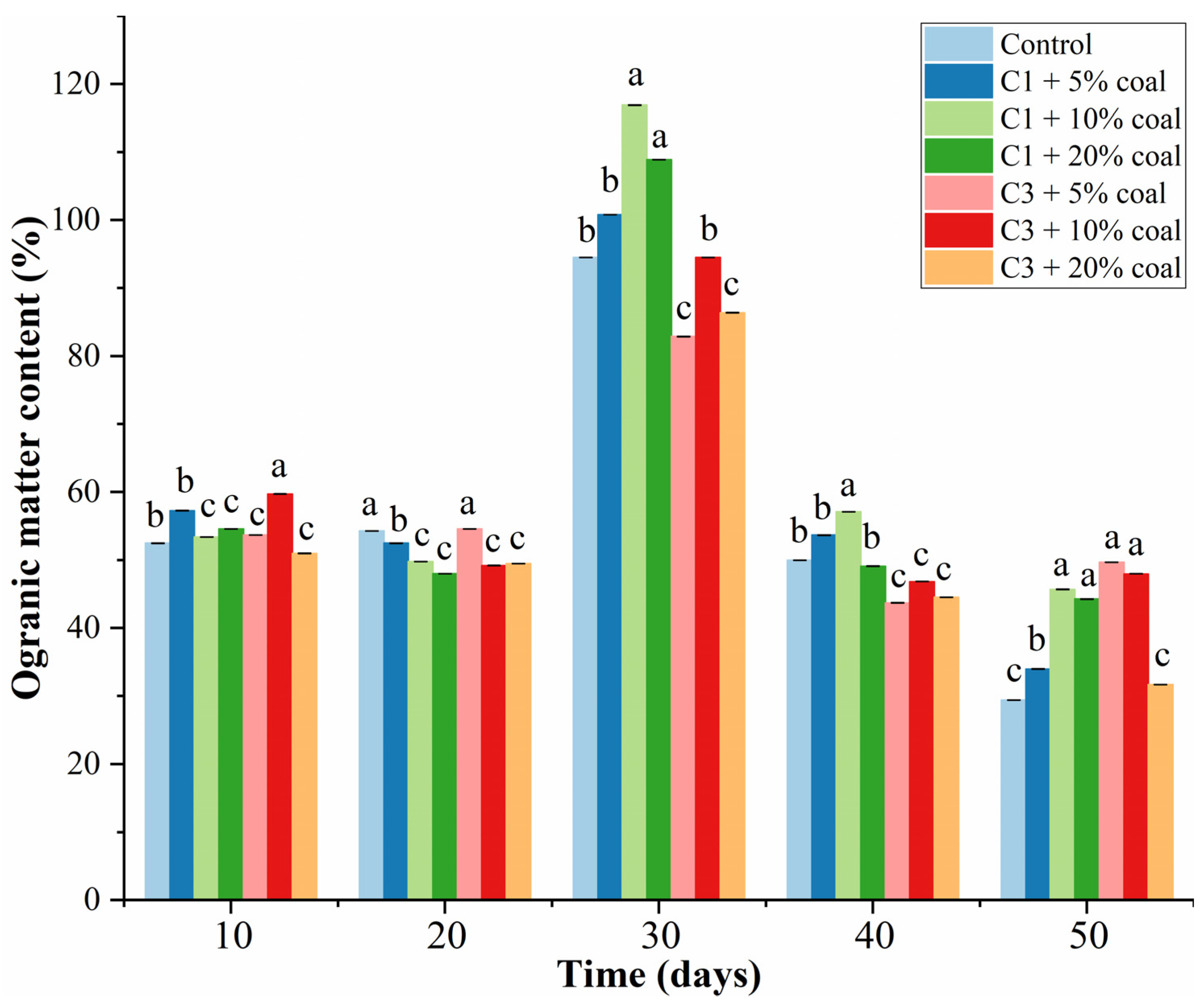
The dynamics of nitrogen forms (NH
4+–N, NO
3−–N), total nitrogen, phosphorus, and organic matter during composting are presented in
Figure 2 and
Figure 3. These parameters collectively reflect the biochemical transformation of organic substrates and the progression of compost maturity. Nutrient transformations are closely linked to physicochemical changes in the substrate, where microbial activity drives mineralization, immobilization, and stabilization processes [
26].
Ammonium nitrogen (NH
4+–N) increased markedly during the first 20–30 days, indicating active mineralization of organic nitrogen under intensive microbial activity in the mesophilic and thermophilic phases (
Figure 2A). This accumulation reflects the breakdown of proteinaceous compounds and release of plant-available nitrogen forms [
12]. Subsequently, NH
4+–N concentrations declined, coinciding with increased nitrate (NO
3−–N) levels (
Figure 2B), suggesting a shift from ammonification to nitrification as the compost transitioned toward the maturation phase. This pattern confirms the establishment of stable aerobic conditions and enhanced microbial succession.
Total nitrogen (TN) exhibited relatively moderate variation throughout the composting process (
Figure 2C), indicating a balance between nitrogen mineralization, volatilization losses, and microbial assimilation. Although some decrease in TN was observed at later stages, likely due to ammonia volatilization, the presence of oxidized coal appeared to mitigate nitrogen losses by adsorption and retention mechanisms, as reported in previous studies [
27].
Phosphorus (P) concentrations remained relatively low and stable across treatments (
Figure 2D), suggesting limited mobilization and possible microbial immobilization during composting. Phosphorus availability is typically governed by microbial uptake and mineral interactions, which can restrict its immediate release despite ongoing organic matter decomposition [
28]. Given its essential role in plant growth and root development, the relatively stable P levels indicate gradual nutrient release and potential long-term fertilization benefits [
29].
Organic matter (OM) content showed a dynamic pattern (
Figure 3), with an initial decrease during the early composting stages, reflecting rapid decomposition of easily degradable substrates. A transient increase or stabilization around Day 30 was observed in coal-amended treatments, likely due to microbial biomass accumulation and partial transformation into more stable organic fractions. Subsequently, OM content declined in the final stages (Days 40–50), indicating progressive mineralization and humification. Organic matter is a key determinant of compost quality as it governs soil structure improvement, nutrient retention, and long-term fertility [
30].
Notably, treatments combining microbial consortia with oxidized coal exhibited enhanced nutrient transformation efficiency, particularly in terms of NH
4+–N accumulation and NO
3−–N formation. This demonstrates a clear cause–effect relationship: oxidized coal provides a porous matrix with high adsorption capacity, improving microbial habitat conditions and nutrient retention, while microbial consortia accelerate biochemical decomposition processes. These synergistic effects promote efficient mineralization and stabilization, consistent with findings from other composting studies involving carbon-rich amendments [
27,
28].
Overall, the integrated analysis of nitrogen forms, phosphorus, and organic matter highlights the importance of optimizing amendment composition to regulate nutrient cycling processes and enhance compost maturity and agronomic value.
3.5. Gas Emissions and Aerobic Activity
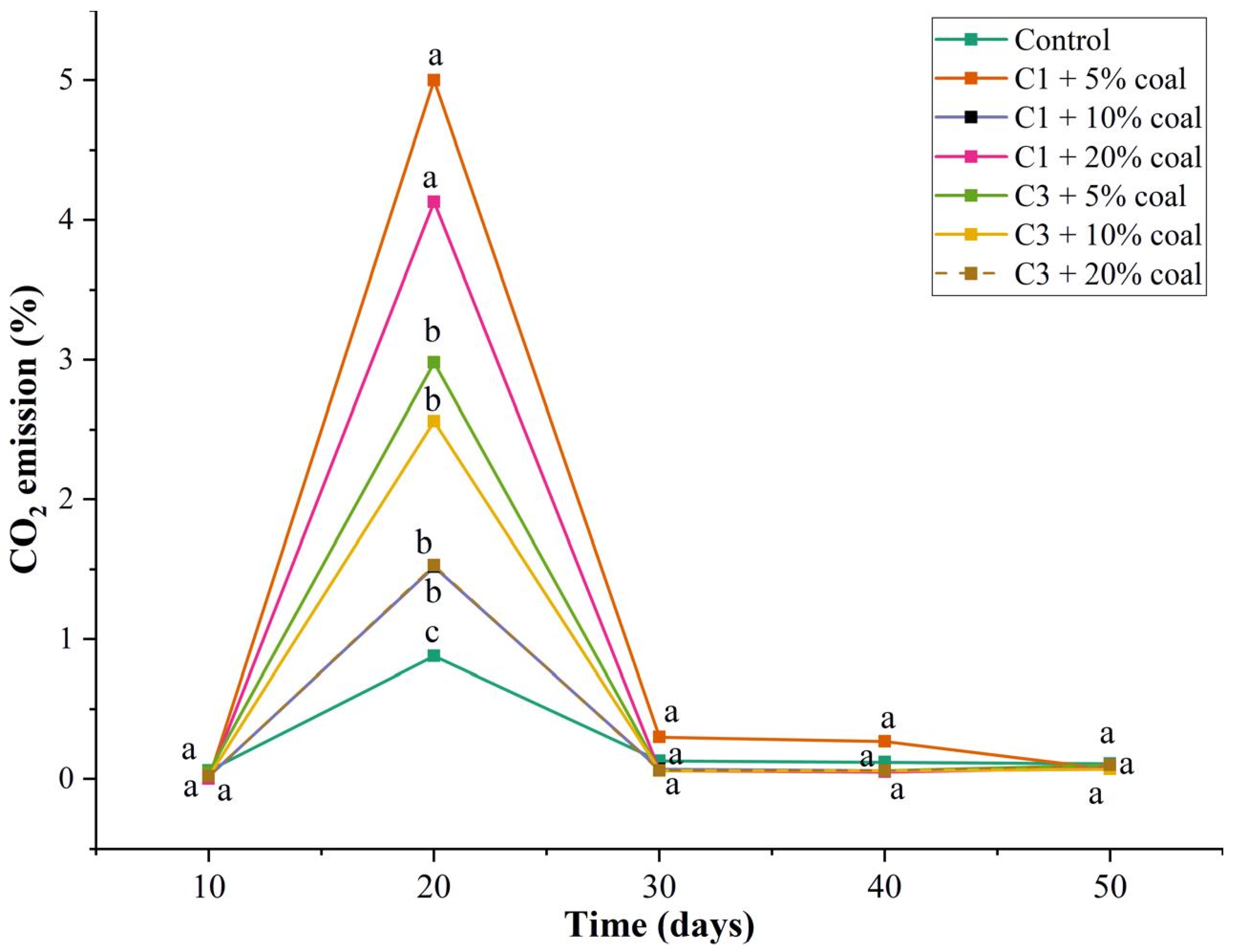
CO
2 emission dynamics clearly reflected microbial respiration intensity and decomposition activity during composting (
Figure 4). A pronounced peak in CO
2 emission was observed on Day 20 across all treatments amended with microbial consortia and oxidized coal, indicating the onset of the thermophilic phase and maximum microbial metabolic activity. This phase is typically associated with rapid degradation of labile organic compounds and intensified microbial respiration [
12,
26]. In contrast, the control exhibited substantially lower CO
2 emission (0.88%), whereas treated systems reached up to 5.0%, demonstrating that the addition of microbial consortia and carbon-rich amendments significantly stimulated organic matter mineralization and microbial activity [
27].
Following this peak, CO
2 emissions declined sharply by Day 30 and remained low and stable through Days 40–50, indicating depletion of readily degradable substrates and a transition toward the maturation phase. This temporal pattern is consistent with typical composting dynamics, where an initial phase of intense microbial activity is followed by stabilization and reduced respiration rates [
26].
No detectable emissions of CH
4, H
2S, or CO were recorded in any treatment, confirming that aerobic conditions were maintained throughout the process. This suggests that the incorporation of oxidized coal improved aeration and prevented the development of anaerobic microsites, thereby minimizing the formation of undesirable gases such as methane and hydrogen sulfide [
28,
31]. Maintaining aerobic conditions is critical for efficient composting and for reducing greenhouse gas emissions and environmental risks.
Among treatments, Consortium 3 combined with 10% oxidized coal exhibited the most balanced CO
2 emission profile, characterized by a high but controlled peak followed by a rapid decline. This indicates efficient substrate utilization and accelerated stabilization. In contrast, higher coal dosage (20%) resulted in reduced CO
2 emissions after Day 30, likely due to excessive adsorption of labile organic compounds and moisture limitations, which can restrict microbial accessibility and reduce metabolic activity [
31].
Overall, these results demonstrate a clear structure–function relationship: microbial consortia enhance biochemical decomposition, while oxidized coal acts as a porous matrix that improves aeration, moisture retention, and substrate availability. The optimal combination (Consortium 3 + 10% coal) maximizes aerobic microbial activity while promoting rapid stabilization, highlighting its potential for efficient and environmentally sustainable compost production.
3.6. Microbial Community Dynamics in Compost
The baseline microbial composition of unprocessed cattle manure was characterized using selective nutrient media (
Table 4), revealing a functionally diverse microbiome with clear differentiation across trophic groups. Bacterial populations predominated on MPA, SAA, Ashby, and Gauze media, whereas actinomycetes were mainly detected on SAA, Ashby, Gauze, and Hutchinson media. Filamentous fungi were exclusively isolated on Czapek–Dox medium, confirming its selectivity.
These baseline results indicate that raw manure contains a complex microbial consortium capable of supporting multiple stages of organic matter decomposition. Bacteria are primarily responsible for the rapid degradation of readily available substrates, while actinomycetes and fungi contribute to the breakdown of more recalcitrant compounds, including cellulose and lignin. This functional diversity provides the biological foundation for subsequent composting processes.
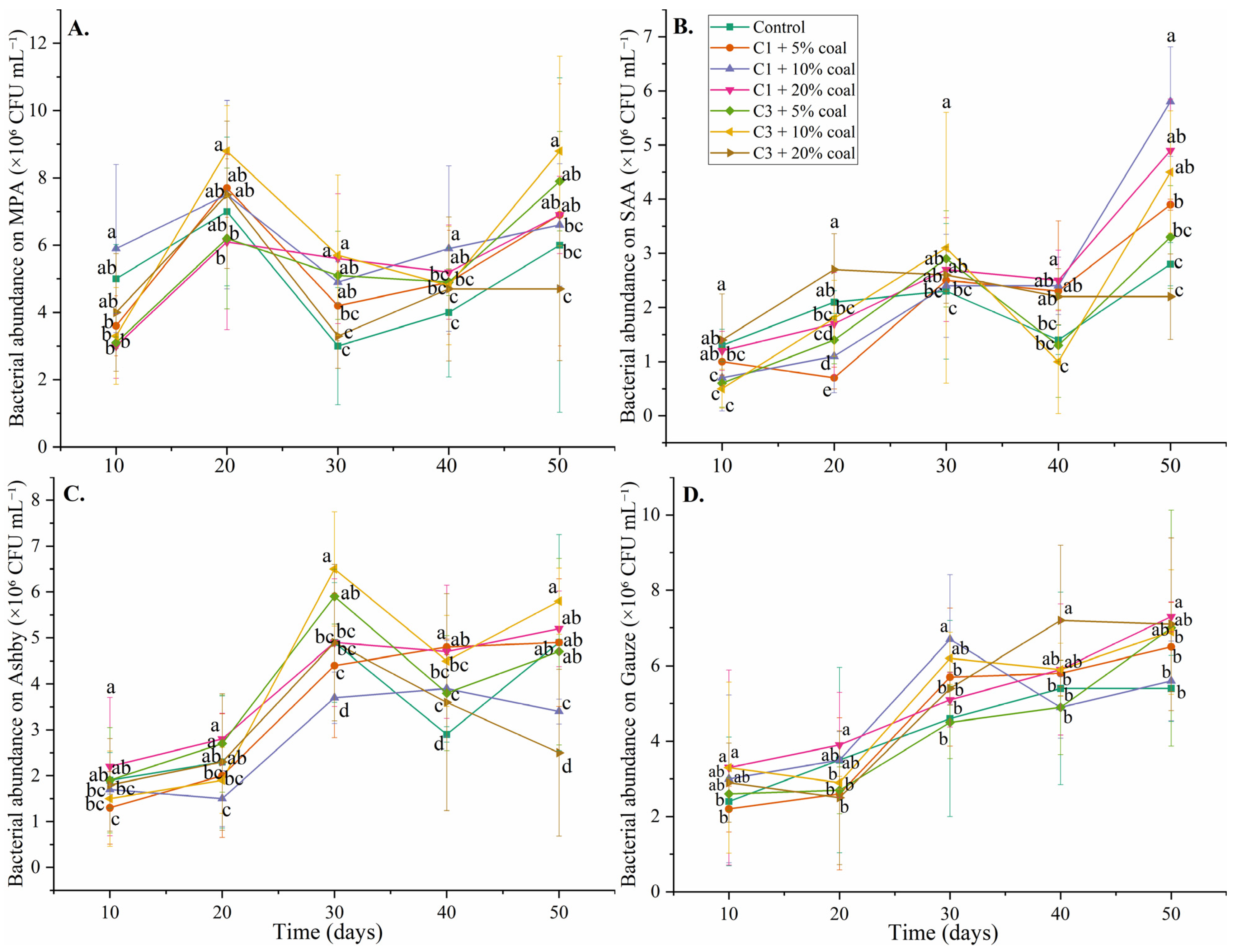
During composting, bacterial population dynamics (
Figure 5) exhibited a clear temporal pattern. Abundance increased significantly from Day 10 to Day 20–30, corresponding to the transition from the mesophilic to thermophilic phase, and reflecting enhanced microbial metabolism driven by elevated temperature and substrate availability. This increase was more pronounced in treatments amended with microbial consortia and oxidized coal, indicating that these additions stimulated bacterial proliferation and activity.
Populations quantified on MPA and SAA media continued to increase or remained stable through Day 50, suggesting sustained microbial activity under favorable composting conditions. This trend can be attributed to improved substrate accessibility and environmental stability provided by oxidized coal, which enhances aeration, moisture retention, and nutrient availability. Similar responses have been reported in composting systems supplemented with microbial inoculants and carbon-rich amendments, where enhanced bacterial activity accelerates organic matter mineralization [
32,
33].
In contrast, bacterial dynamics differed among functional groups. On Ashby medium, bacterial abundance increased during the early stages but stabilized or declined after Day 40, likely reflecting depletion of easily available nutrients and a shift toward more recalcitrant substrates. Conversely, populations on Gauze medium exhibited a gradual and sustained increase, particularly during the later stages, indicating the progressive involvement of microorganisms capable of degrading more complex organic compounds [
34].
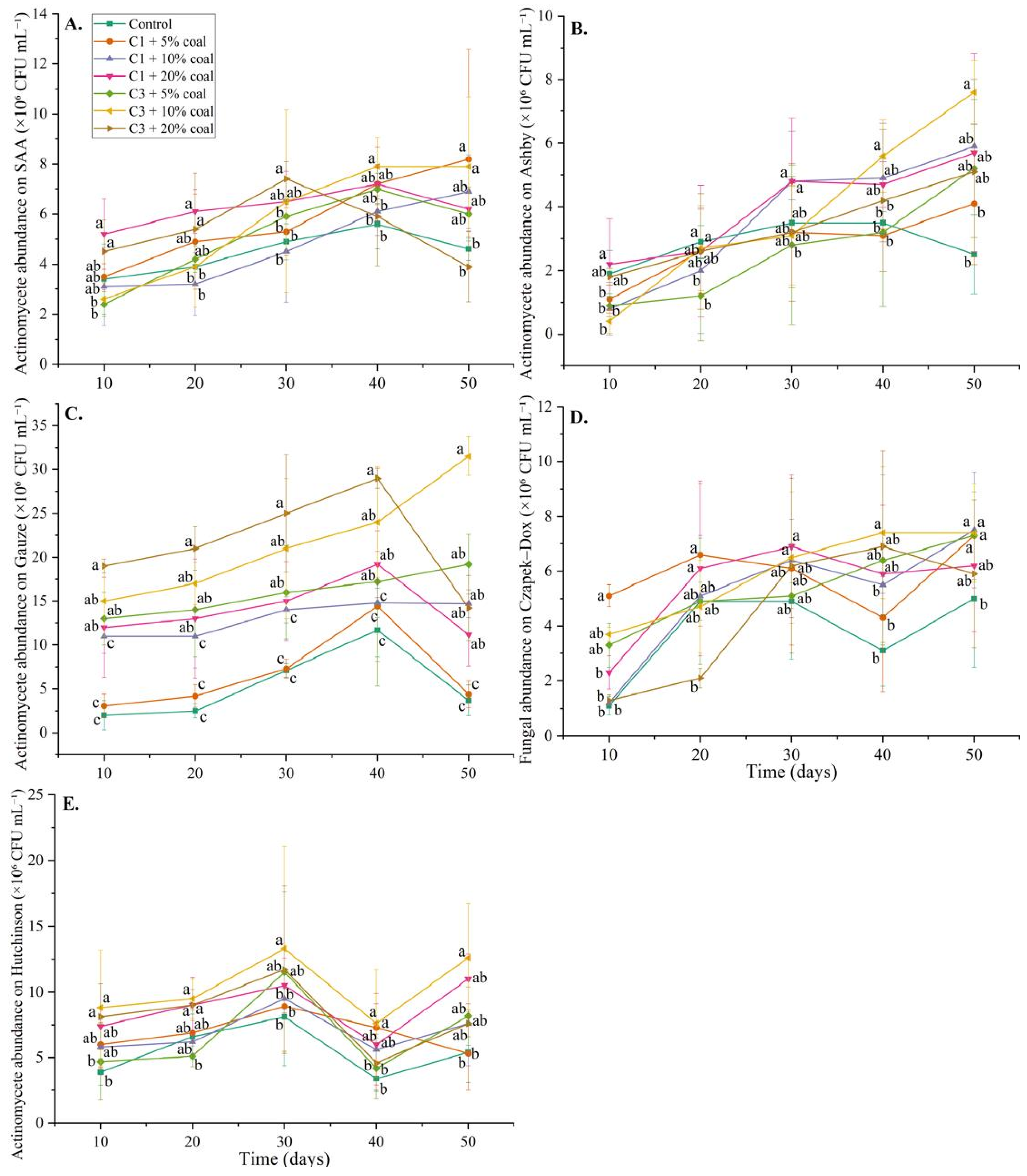
The dynamics of actinomycetes and fungi (
Figure 6) further support a succession-driven composting process. Fungal populations, assessed using Czapek–Dox medium, were significantly higher in treatments amended with microbial consortia and oxidized coal compared to the control. In control samples, fungal abundance declined sharply after the thermophilic phase, whereas treated samples maintained relatively high levels throughout the process. This suggests that oxidized coal improved habitat conditions, particularly moisture stability and aeration, thereby supporting fungal persistence even under elevated temperatures. These findings are consistent with previous studies reporting fungal resilience and functional importance during thermophilic composting stages [
35].
Actinomycete populations increased progressively during composting, reaching peak values between Days 30 and 50, especially in treatments containing Consortium 3 with 10% oxidized coal. This pattern reflects their ecological role in degrading recalcitrant substrates such as cellulose and lignin during the maturation phase [
34]. The enhanced abundance in amended treatments indicates that the combined application of microbial consortia and oxidized coal promotes favorable conditions for actinomycete growth, likely through improved substrate structure and nutrient retention [
33].
However, treatments with higher coal dosage (20%) exhibited a decline in actinomycete abundance after Day 40. This may be attributed to reduced substrate availability, altered carbon-to-nitrogen balance, or physical constraints affecting microbial accessibility. Similar inhibitory effects of excessive carbon amendments on microbial activity have been reported in previous composting studies [
33].
Overall, these results demonstrate a clear succession pattern and a strong cause–effect relationship between treatment conditions and microbial dynamics. Bacteria dominate the early stages of decomposition, while fungi and actinomycetes become increasingly important during later stages, contributing to the degradation of complex organic matter and compost stabilization [
32,
33,
34,
35]. The combined application of microbial consortia and oxidized coal enhances these processes by improving substrate structure, environmental stability, and microbial interactions, ultimately leading to more efficient composting and improved compost quality.
3.7. Mechanistic Insights
The results of this study demonstrate that the combined application of microbial consortia and oxidized coal significantly enhanced composting efficiency through coordinated physicochemical and biological processes. Treatments amended with both components exhibited a faster transition to the thermophilic phase and higher peak temperatures, indicating intensified microbial metabolism and accelerated decomposition of organic substrates [
23,
24]. This effect is likely associated with the combined influence of microbial activity and improved substrate structure provided by the carbon-rich amendment [
13,
36].
The superior performance observed in treatments containing Consortium 3 was consistently reflected in higher thermophilic temperatures, enhanced nitrogen transformation (NH4+–N accumulation followed by NO3−–N formation), and increased CO2 emissions, indicating more intensive microbial activity compared to Consortium 1. These results suggest that Consortium 3 promoted more efficient organic matter degradation and nutrient cycling under the tested conditions.
This enhanced performance may be associated with the functional diversity of its constituent microorganisms. For instance, Azospirillum brasilense is commonly linked to nitrogen transformation processes, while Bacillus and Pseudomonas species are known for their capacity to produce extracellular enzymes involved in organic matter degradation. In addition, Streptomyces species are associated with the breakdown of more recalcitrant organic compounds. However, it is important to emphasize that these functional roles were not directly measured in the present study. Therefore, the observed differences between consortia should be interpreted as system-level responses rather than direct evidence of specific metabolic pathways. The superiority of Consortium 3 was observed at the system level but was not mechanistically validated through targeted analyses such as enzyme activity profiling, growth kinetics, or functional gene characterization. Consequently, the mechanistic interpretations proposed here remain hypothesis-based and require further validation through targeted approaches, such as enzyme activity assays, functional gene analysis, or metagenomic sequencing.
Oxidized coal was associated with improved moisture retention and pH buffering capacity, creating a more stable microenvironment for microbial growth [
37]. Its porous structure provides a physical scaffold for microbial colonization and biofilm formation, thereby acting as a microbial carrier, while its high humic substance content enhances cation exchange capacity and nutrient retention. In addition, oxidized coal may improve aeration and moisture stability, functioning as a physical conditioner that supports sustained microbial activity throughout the composting process. As a result, enhanced nitrogen transformation and more efficient organic matter degradation were observed in amended treatments compared to the control [
38,
39].
In contrast, the reduced performance observed at higher coal application rates (20%) may be explained by multiple interacting factors. Excessive coal addition can dilute the proportion of readily degradable organic substrates, alter the carbon-to-nitrogen balance, and limit microbial accessibility to nutrients. Furthermore, changes in the physical structure of the compost matrix, such as reduced substrate contact or altered porosity, may restrict microbial activity, particularly during later composting stages. These interpretations remain hypothetical as the corresponding physicochemical parameters were not directly measured in this study.
Microbial community analysis further revealed a clear succession pattern, with bacteria dominating the early stages of composting, followed by increased activity of fungi and actinomycetes during later stages [
32,
33,
34,
35]. This shift reflects the transition from the degradation of readily available substrates to the breakdown of more complex organic compounds, such as lignocellulose [
34]. Notably, treatments containing Consortium 3 combined with 10% oxidized coal consistently showed optimal performance across multiple parameters, including temperature development, microbial abundance, and nutrient transformation.
Overall, these findings highlight a clear association between treatment variables and composting outcomes. Oxidized coal likely functions as both a structural conditioner and microbial carrier, enhancing aeration, moisture balance, and nutrient retention, while microbial consortia drive biochemical decomposition and nutrient cycling [
13,
23]. The integration of these components results in a more efficient and stable composting process, leading to the production of high-quality organo-mineral fertilizers. This approach provides a scientifically grounded and practically applicable strategy with potential to improve soil fertility and support sustainable agricultural production under the conditions of northern Kazakhstan [
36,
38,
39].
However, it should be noted that the present study is limited to composting process evaluation, and further research is required to assess the effects of the produced compost on soil properties, plant growth, and long-term humus dynamics under field conditions.
A limitation of this study is the absence of soil-based validation, such as phytotoxicity assays, humification indices, or plant growth experiments, which should be addressed in future research.
Although the present study relied on culture-based enumeration methods, further investigation using molecular approaches would provide deeper insight into microbial community dynamics. Techniques such as quantitative PCR (qPCR) targeting functional genes (e.g., amoA for nitrification and nifH for nitrogen fixation), as well as high-throughput sequencing (16S rRNA gene amplicon sequencing or metagenomics), could be employed to elucidate shifts in microbial diversity and functional potential across treatments. Such approaches would strengthen the mechanistic understanding of microbial succession and its role in composting efficiency.
4. Conclusions
This study demonstrated that the combined application of microbial consortia and oxidized coal significantly enhanced composting performance by improving microbial activity, physicochemical conditions, and nutrient transformation dynamics. Compared to the control, amended treatments exhibited higher thermophilic temperatures, increased microbial abundance, and more efficient nitrogen transformation, as evidenced by the sequential accumulation of NH4+–N and NO3−–N.
Oxidized coal acted as both a structural and functional amendment, improving moisture retention, pH buffering, and aeration, thereby creating favourable conditions for sustained microbial metabolism. These effects contributed to enhanced organic matter degradation and improved stabilization of the composting mass. However, excessive coal application (20%) reduced microbial activity at later stages, highlighting the importance of optimizing amendment dosage for efficient composting.
Among the tested treatments, the combination of Consortium 3 with 10% oxidized coal consistently showed the most balanced performance, characterized by enhanced thermophilic activity, efficient nutrient transformation, and stable microbial dynamics, indicating optimal conditions for compost maturation.
Overall, the results confirm a clear structure–function relationship between amendment composition and composting efficiency. The integration of microbial consortia with oxidized coal represents an effective method for improving compost quality and process stability, with potential for producing high-quality organic amendments. In addition, the development of more performant organic fertilizers can be a sustainable alternative, reducing mineral fertilizer application. This will promote the adoption of regenerative agricultural practices in the broader strategy to improve soil fertility and prevent the decline of organic matter in northern Kazakhstan soils. However, future studies evaluating the agronomic performance and long-term effects of the compost applications are needed.





 ,
,