Article

Yield Change in Winter Wheat and Rapeseed in Water Shortage Under the Influence of Plant Growth-Promoting Microorganisms and Calcium


by
Mariam Zareyan
1,*,
Rima Mockevičiūtė
1,
Virgilija Gavelienė
1,
Jose Luis Araus
2,3,
Sigita Jurkonienė
1,* and
Vaidevutis Šveikauskas
1
1
Laboratory of Plant Physiology, Nature Research Centre, Akademijos Str. 2, 08412 Vilnius, Lithuania
2
Integrative Crop Ecophysiology Group, University of Barcelona, Av. Diagonal, 643, 08028 Barcelona, Spain
3
Agrotecnio, Rovira Roure 191, 25198 Lleida, Spain
*
Authors to whom correspondence should be addressed.
Agronomy 2026, 16(10), 969; https://doi.org/10.3390/agronomy16100969 (registering DOI)
Submission received: 10 April 2026 / Revised: 8 May 2026 / Accepted: 11 May 2026 / Published: 13 May 2026

Abstract

Due to drought stress caused by climate change, a growing global population, and limited land resources, interest in sustainable agriculture is growing. In this study, we evaluate the impact of commercial plant-based probiotics, several beneficial microorganisms, and calcium salts on the growth and yield of winter wheat and winter rapeseed under limited water resources. The study was conducted in field conditions in two countries simultaneously with different climatic conditions: Spain and Lithuania. Soil was supplemented with calcium in two forms: CaCO3 and CaCl2. Seeds were treated with microorganisms before sowing, and plants were sprayed with them in the spring. The plants inoculated with beneficial microorganisms showed improvement in yield, with harvest index increasing by 5–10% in treated plants. Grain yield was enhanced across treatments, with ProbioHumus + CaCO3 showing the highest yield in Lithuania. Additionally, treated plants exhibited significantly lower stress indicators, with Bacillus subtilis + CaCl2 decreasing lipid peroxidation by 27%. This study provides further evidence that plant treatment with beneficial microorganisms and calcium can contribute to a more environmentally sustainable agriculture.

1. Introduction

Abiotic stress includes any environmental condition, or their combination, that negatively affects the expression of genetic potential for growth, development, and reproduction [1], and is a major barrier to crop production around the world. Decreasing precipitation and shifting rainfall patterns are leading to frequent droughts worldwide [2]. Drought and heat stress have become the most important factors limiting crop yields and ultimately, food security [3,4]. A drought that lasts one growing season can impact food supplies for years to come. In recent years, droughts have had substantial impacts on nearly all regions of the EU, affecting several critical systems such as agriculture, water supply, and ecosystems. These impacts are projected to further increase due to climate change [5]. Autumn 2025 was warmer and severely drier than usual. The drought affected water resources and has already caused significant yield losses of summer crops in Hungary, Romania, Bulgaria, Greece, Ukraine, and Turkey [6]. The situation is even more dire in developing nations in tropical regions, with wheat yields predicted to decline by roughly 15% in African and South Asian countries by 2050 [7].
Approximately 80–95% of a plant’s fresh biomass consists of water, which plays a vital role in physiological processes, including many aspects of its growth and metabolism [8,9]. Plants respond to drought stress by using several mechanisms, and they can use them consecutively or simultaneously [10].
Wheat (Triticum aestivum) is an irreplaceable cereal crop cultivated extensively in many regions of the world [11,12]. Rapeseed (Brassica napus) is one of the most important oil-protein plants in the world [13,14]. Factors such as drought and rising temperatures significantly reduce wheat and rapeseed yields, and, given the growing global population and increasing demand, this is a serious concern [15].
Increasing crop production to meet the demands of consumer markets and a growing global population relies on large quantities of chemical fertilizers. The use of chemical fertilizers in crop production increases crop yields compared to production without them; however, in the long term, chemical fertilization is highly detrimental to soils, causing severe soil degradation, significant groundwater pollution, potential risks to human health, and negative impacts on wildlife and biodiversity, creating a cycle of dependence and environmental damage for short-term gain [16].
Many studies have demonstrated the ability of plant growth-promoting microorganisms to improve plant nutritional status [17,18,19]. There is growing interest in using plant-beneficial microorganisms to replace chemical fertilizers in crop production and help reduce the environmental impact of agriculture. Microbial species that increase plant growth or crop yield, regardless of mechanism, have been defined as plant growth-promoting microorganisms (PGPMs) [20]. Microorganisms that are beneficial to plants can colonize plant roots and positively affect plant growth, development, and nutrient use efficiency through various mechanisms, including organic matter mineralization, biological control of soil pathogens, biological nitrogen fixation, phosphorus solubilization, potassium and zinc solubilization, and root growth increase [16]. Many microorganisms [21], including Bacillus subtilis [22,23], have demonstrated these abilities. Concerning water status, some microorganisms secrete plant growth regulators [24], others produce enzymes that reduce ethylene levels in plants [25], and some others work by secreting molecules called exopolysaccharides, which provide structure to the biofilms that surround the roots and keep them from losing water [26]. It has been shown that many of these microorganisms do not appear to affect plant growth under normal conditions; they only start working when drought hits. Drought induces hormonal changes in microbes that are useful for plants as well [27]. Scientists have been trying to harness the potential of drought-resistant microorganisms and use them more effectively for food-producing crops. In 2017, Chen and his colleagues isolated a novel strain LTYR-11ZT from the surface-sterilized leaves of Alhagi sparsifolia Shap. (Leguminosae), which is one of the top drought-tolerant plants in north-west China. Wheat seedlings were treated with LTYR-11ZT strain, which resulted in wheat growth promotion, enhancing its resistance to drought stress. Wheat samples showed increased accumulation of soluble sugars, decreased accumulation of proline and malondialdehyde (MDA), and decreased degradation of chlorophyll in the leaves of drought-stressed wheat [28]. A similar experiment was conducted by scientists from the University of Milan, using drought-resistant strains isolated from grapevines to increase pepper yields, which proved to improve the pepper resistance [21].
Numerous studies have demonstrated the important role of mineral nutrition in enhancing plant resistance to abiotic stress [29,30]. Calcium is a vital nutrient for plants, playing a crucial role in their growth and development [31]. Microorganisms play a crucial role in mineral transformation processes, influencing biogeochemical cycles and the bioavailability of essential nutrients required for healthy plant growth [32,33]. Compared with research on how microorganisms use calcium in soil to benefit plants [34,35], less research has focused on this topic. However, very little research has examined the effects of microorganisms on plants in combination with calcium under drought conditions. Based on positive effects observed in laboratory studies, we hypothesized that treating wheat and rapeseed with selected microorganisms in combination with calcium could increase yields, so field experiments were conducted in two different climatic zones—Eastern Spain and Lithuania. The European Drought Observatory showed that the Combined Drought Indicator for eastern Spain indicated drought warning conditions from December 2023 to June 2024, and for Lithuania, drought warning conditions were marked in March and June–July 2024 [36]. The experiments were conducted with the commercial plant probiotic ProbioHumus, some of its ingredient microorganisms separately, and an additional one (including Bacillus subtilis, Lactobacillus paracasei, Zygosaccharomyces bailii, and Geotrichum silvicola), some of which have never been investigated for their potential in agriculture.
This study aimed to investigate how the effects of different microorganisms and Ca could affect wheat and rapeseed yields under water shortage, limited by rainfall, in two different climatic zones. The main objective of this work was to compare the yields of the treated and control groups of the plants.

2. Materials and Methods

2.1. Plant Material and Growth Conditions

Winter wheat seeds (Triticum aestivum L. cv. ‘Skagen’) at a planting density of 180 kg/ha and winter rapeseed seeds (Brassica napus L. cv. ‘Visby’) at 100 kg/ha were sown in small plots (1 m2) at the Experimental Field Station of the Nature Research Centre (Lithuania) (54°68′ N 25°26′ E) in a 3-fold repetition in randomized blocks. The main agrochemical parameters of the arable soil layer were pH 7.0–7.3, Nmin ~ 3 kg/ha, P2O5 ~ 250 mg/ha, and K2O ~ 215 mg/kg. Another field experiment was conducted in the Experimental Field of the University of Barcelona (Barcelona, Spain) (41°23′ N 2°07′ E), where wheat seeds (Triticum aestivum L. cv. ‘Skagen’) at a planting density of 180 kg/ha were sown in bigger plots (2.25 m2) in a 3-fold repetition in randomized blocks. To maintain agrochemical parameters similar to those of the Lithuanian field, a basic NPK 15-15-15 fertilizer (90 g per plot) was used in the Spanish field.
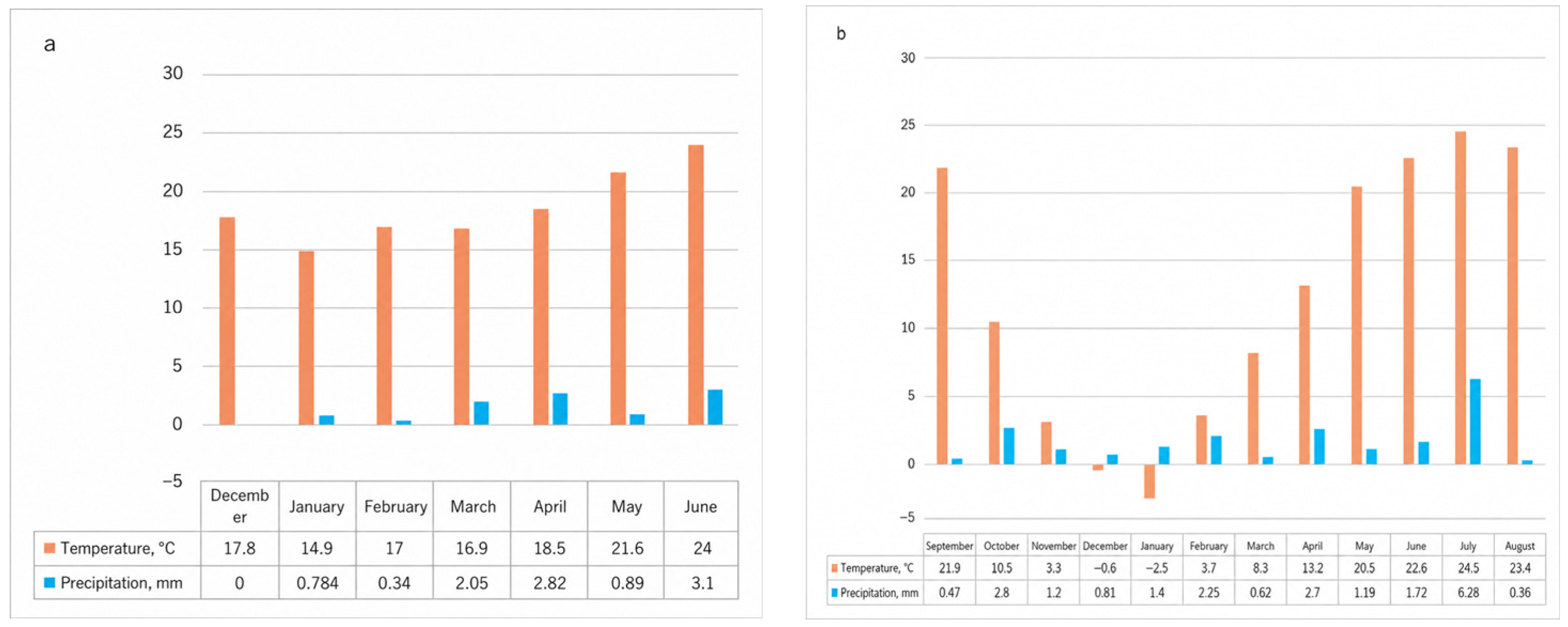
Due to climatic differences, crops were sown in Lithuania in early September 2023, while in Spain, in early December 2023. In Barcelona, the vegetation period was 6 months, and the harvest was mid-June 2024. In Vilnius, Lithuania, the vegetation period was 11 months, and the harvest ended in early August 2024. The averages of maximum temperatures and precipitation during vegetation are presented in Figure A1.

2.2. Plant and Soil Treatments, Experimental Design, and Sampling

ProbioHumus, Bacillus subtilis, Lactobacillus paracasei, Zygosaccharomyces bailii, and Geotrichum silvicola were used as biostimulants to enhance growth, productivity, and yield quality. CaCO3 and CaCl2 were used as a Ca source. In the Lithuanian field, the experiment with winter wheat was conducted using all the treatments mentioned above. In the case of winter rapeseed, due to the limits of the field, only ProbioHumus and Bacillus subtilis with Ca salts were used. In the Spanish field, the experiment was conducted only with winter wheat treated with Bacillus subtilis and Ca salts.
  • Ca was added to the soil in the form of CaCO3, based on a 70 g m−2 concentration, and in the form of CaCl2 prediluted in water based on a 10 g m−2 concentration (recommended for MICP).
  • Microbial biostimulants were used for seed priming in 105 CFU/mL concentrations (microorganisms were grown in their specific liquid media (Bacillus subtilis in Nutrient media, Lactobacillus paracasei in MRS media, and the yeast in YPD media)) to the log phase and then diluted with distilled water to obtain the required concentration and neutral pH (1:10), and later, in the same concentration, for foliar application in spring. ProbioHumus (Baltic Probiotics, Rucavas pagasts, Latvia) was used for seed priming and diluted with water to 1:100, and later for foliar application in the same ratio with water. ProbioHumus’s composition of microorganisms: Bacillus subtilis (103 CFU/mL), Saccharomyces cerevisiae, Bifidobacterium animalis, B. bifidum, B. longum (104 CFU/mL), Lactobacillus diacetylactis, L. casei, L. delbrueckii, L. plantarum (105 CFU/mL), Lactococcus lactis (102 CFU/mL), Streptococcus thermophilus, Rhodopseudomonas palustris, and R. sphaeroides (104 CFU/mL).
In the Spanish field, there were five treatments (CaCO3, CaCl2, Bacillus subtilis, B. subtilis + CaCO3, and B. subtilis + CaCl2) as well as the untreated control group (Control), and in the Lithuanian field, there were 17 treatments for wheat (CaCO3, CaCl2, Bacillus subtilis, B. subtilis + CaCO3, B. subtilis + CaCl2, ProbioHumus, ProbioHumus + CaCO3, ProbioHumus + CaCl2, Lactobacillus paracasei, L. paracasei + CaCO3, L. paracasei + CaCl2, Zygosaccharomyces bailii, Z. bailii + CaCO3, Z. bailii + CaCl2, Geotrichum silvicola, G. silvicola + CaCO3, and G. silvicola + CaCl2), as well as the untreated Control. There were also eight treatments for rapeseed (CaCO3, CaCl2, Bacillus subtilis, B. subtilis + CaCO3, B. subtilis + CaCl2, ProbioHumus, ProbioHumus + CaCO3, and ProbioHumus + CaCl2), as well as the Control.
Both the Lithuanian and the Spanish trials were conducted under rainfed conditions.
Shoot length and biomass were measured for wheat in BBCH 87–89 [37] and for rapeseed in BBCH 85–89 [38], using a ruler and scales. For further assessment of agronomic components, like harvest index (HI) and grain yield [39], plants, spikes, and seed number per m2 were counted by hand. HI was calculated by the following equation and expressed in %:
HI = Seed total number/shoot total dry biomass × 100
Grain yield was calculated using the following equation:
Grain yield = Spike number × seed number per spike × 100 grain weight/10000
For biochemical analysis, only wheat samples from the Spanish trial were analyzed due to prolonged rainfall in Lithuania during the flag leaf formation stage. Flag leaf blades during the BBCH 37–39 stage [37] were sampled. Three independent samples were collected per plot for a total of three plots per treatment. For malondialdehyde (MDA), hydrogen peroxide (H2O2), and proline assays, the samples were collected using liquid nitrogen and stored in a low-temperature freezer at −80 °C until analysis.

2.3. Determination of Hydrogen Peroxide (H2O2) and Malondialdehyde (MDA) Content

For analysis of H2O2 and MDA, leaf material (0.5 g) was homogenized using 5% trichloracetic acid (TCA) (Sigma-Aldrich, St. Louis, MO, USA). The homogenates were centrifuged for 15 min at 10,000× g (centrifuge MPW-351 R, Warsaw, Poland). Using previously described methodology, the H2O2 content in leaves was determined by [40]. The supernatant was mixed with 10 mM, pH 7.0 potassium phosphate buffer (Alfa Aesar, Heysham, UK) and 1 M potassium iodide (Alfa Aesar) in a ratio of 1:1:2. The reaction solution was incubated for 30 min at room temperature in the dark. The absorbance of the supernatant was measured at 390 nm by a spectrophotometer (Analytik Jena Specord 210 Plus, Analytik Jena, Jena, Germany). The amount of H2O2 was calculated using a standard curve. The results were expressed in µmol g−1 FW.
To estimate the MDA content in leaves, the thiobarbituric acid reactive substances assay, with some modification, was used [41]. The supernatant was added to 20% TCA containing 0.5% thiobarbituric acid (TBA) (Alfa Aesar, Haverhill, MA, USA). The homogenate was incubated in a heater (Blockthermostat BT 200, Vernon Hills, IL, USA) for 30 min at 95 °C and then cooled on ice. The optical density was measured at 532 and 660 nm by a spectrophotometer (Analytik Jena Specord 210 Plus, Analytik Jena, Jena, Germany). The results were expressed in µmol g−1 FW.

2.4. Determination of Proline Content

The proline content in leaves was determined by a ninhydrin-based method [42]. Proline was extracted by mixing 0.5 g of the leaf sample with 8 mL of an ethanol:water (40:60 v/v) solution. The resulting mixture was left overnight at 4 °C and then centrifuged for 5 min at 14,000× g (centrifuge MPW-351 R), and the supernatant was added to the reaction mix (1% ninhydrin, 60% acetic acid, 20% ethanol) in a 1:2 ratio. The homogenate was incubated in a heater (Blockthermostat BT 200) at 95 °C for 20 min. The optical density was measured at 520 nm by a spectrophotometer (Analytik Jena Specord 210 Plus, Analytik Jena, Jena, Germany). The proline content was determined using the standard curve. The calculations were made using the equation of the method [42]. The results were expressed in µmol g−1 FW.

2.5. Statistical Analysis

Data were analyzed using jamovi software, version 2.7.27 (The jamovi Project, 2023). Results are presented as the mean ± standard deviation (SD) of three independent replicates (n = 3). Differences among treatments were assessed using one-way analysis of variance (ANOVA). Homogeneity of variance was evaluated before analysis; when this assumption was met, standard (Fisher’s) ANOVA followed by Tukey’s honestly significant difference (HSD) test was applied. When the assumption of equal variances was violated, Welch’s ANOVA followed by the Games–Howell post hoc test was used. Statistical significance was set at p < 0.05; p-values between 0.05 and 0.10 were considered indicative of trends, particularly given the limited sample size and inherent variability, and are discussed where relevant.

3. Results

3.1. Biostimulants’ Effect on Morphometric Parameters

3.1.1. Shoot Biomass

The Spain field results show that all applied treatments somewhat increased the biomass of winter wheat shoots. Welch’s one-way analysis of variance (ANOVA) revealed a significant effect of treatments, p = 0.040. Games–Howell post hoc analysis indicated that only the Bacillus subtilis treatment differed significantly from the control (p = 0.035) (Figure 1a). In the case of the Lithuanian field, the treatment that increased the biomass of wheat the most was Lactobacillus paracasei in combination with Ca salts (Figure 1b), and for rapeseed, treatments included CaCO3 itself, Bacillus subtilis in combination with CaCl2, and ProbioHumus by itself and in combination with CaCO3 (Figure 1c).

3.1.2. Shoot Length

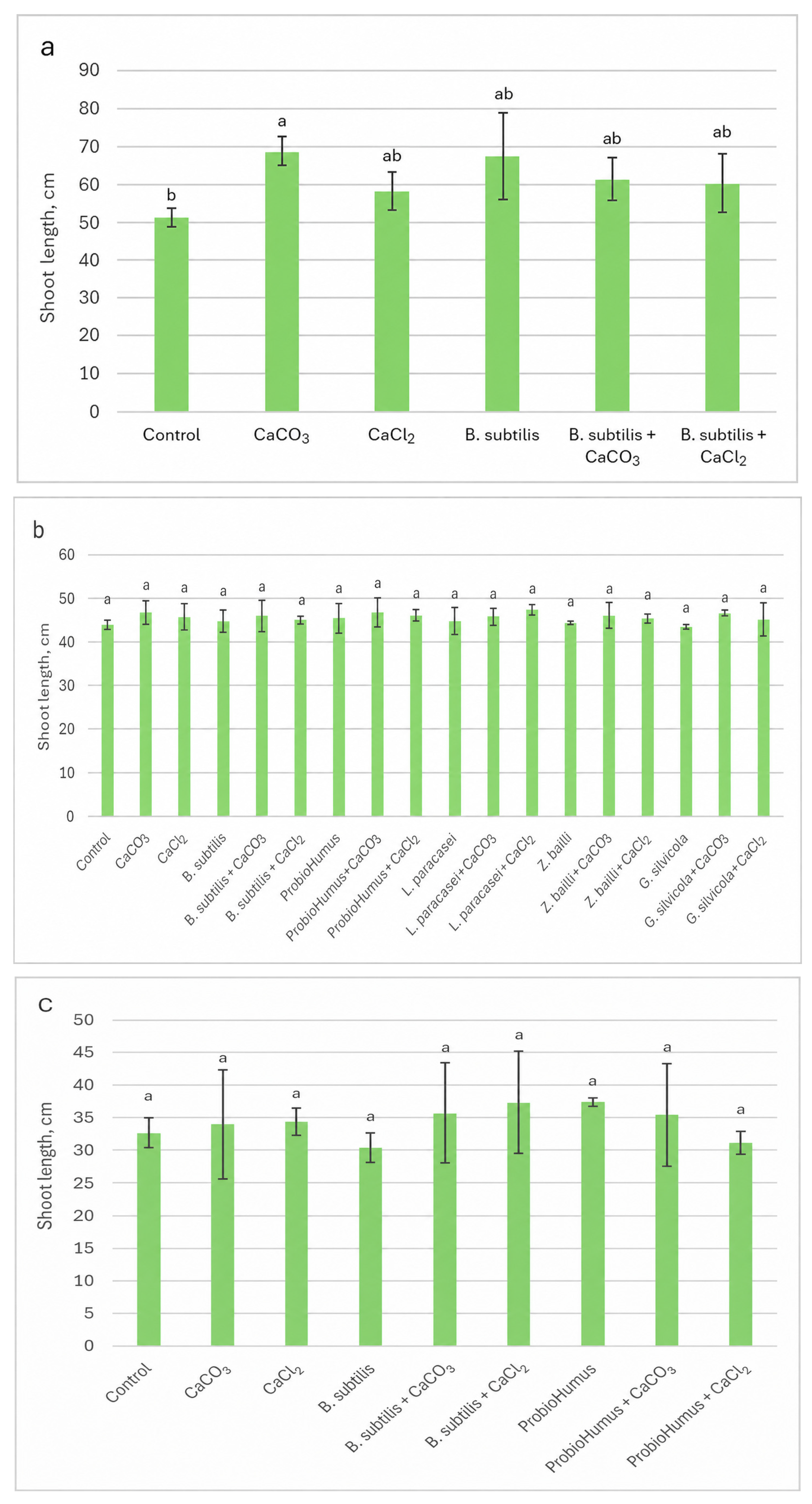
Welch’s one-way analysis of variance (ANOVA) revealed the significant effect of treatments (p = 0.022) on winter wheat from the Spanish field. Games–Howell post hoc analysis indicated that the control group differed significantly from the CaCO3 treatment (p = 0.017) (Figure 2a). Winter wheat shoot length from the Lithuanian field did not show any specific effect of treatments (Figure 2b). Regarding rapeseed data, Welch’s one-way analysis of variance (ANOVA) revealed a general positive effect of treatments on shoot length, with p = 0.024 (Figure 2c).

3.1.3. Thousand Grain Weight (TGW)

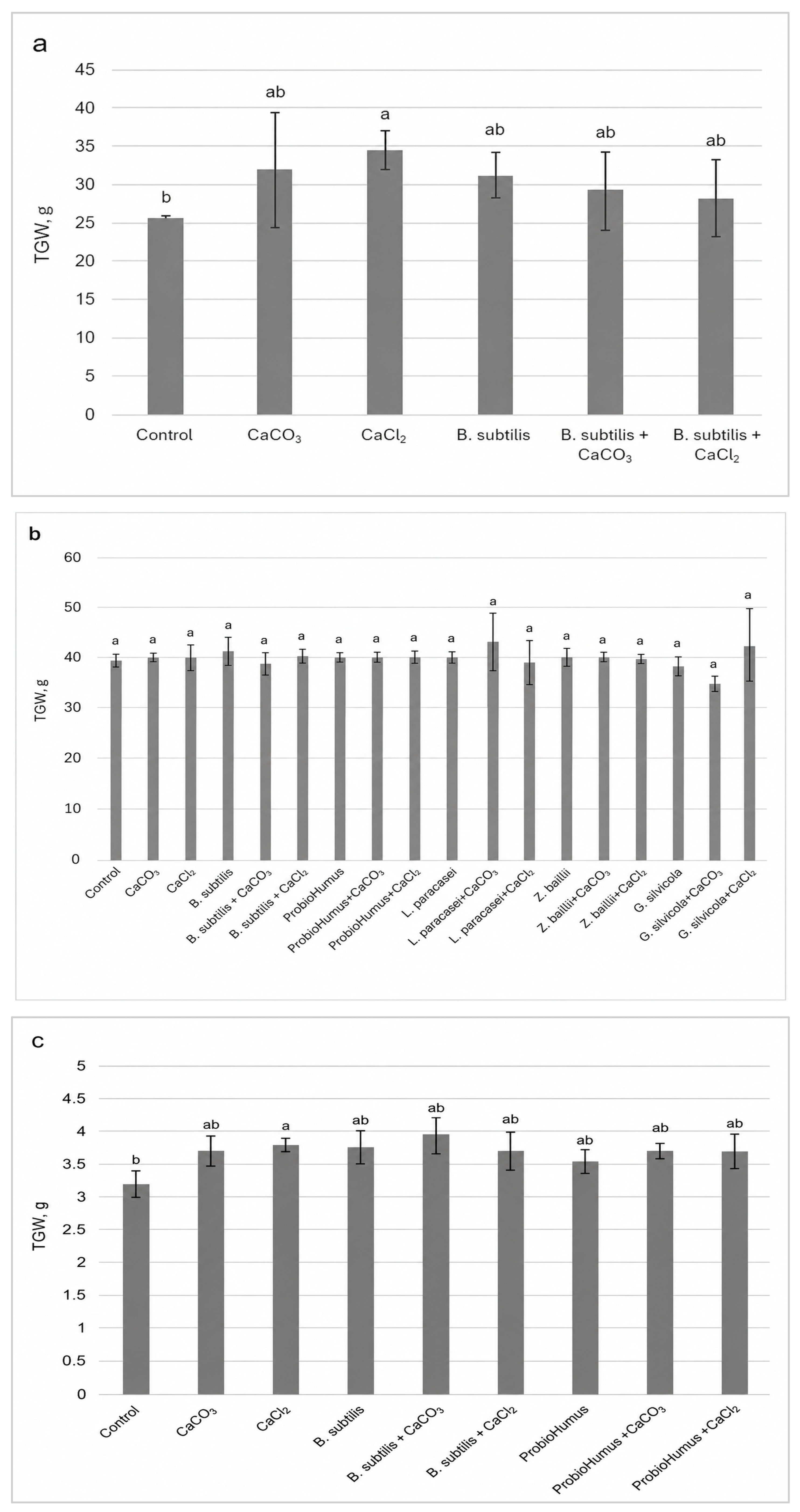
Welch’s one-way analysis of variance (ANOVA) revealed a significant effect of treatment on the TGW of Spanish field winter wheat, with p = 0.029. Games–Howell post hoc analysis detected a trend toward a difference between the control and CaCl2 treatments (p = 0.086) (Figure 3a). Winter wheat TGW from the Lithuanian field did not show any specific effect of treatments (Figure 3b). For rapeseed, Games–Howell post hoc analysis detected a trend toward a difference between the control and CaCl2 treatments (p = 0.073) (Figure 3c).

3.2. Biostimulants’ Effect on Yield and Agronomic Components

3.2.1. Harvest Index (HI)

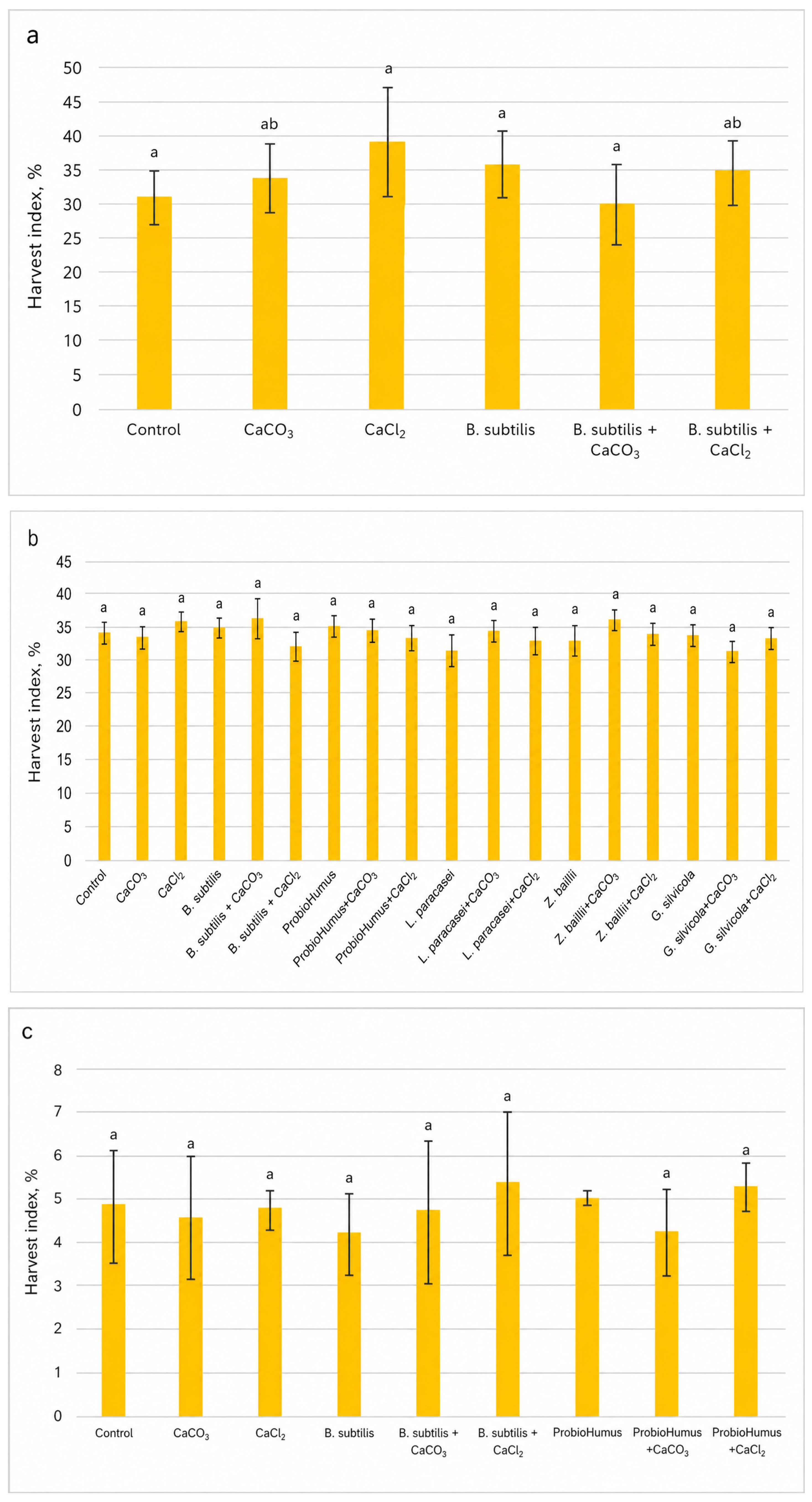
HI was 5–10% higher in treated plants than in the Control for wheat harvested in Spain (Figure 4a). In the case of Lithuanian field wheat, Welch’s one-way analysis of variance (ANOVA) revealed a significant effect of treatments on HI with p = 0.024 (Figure 4b); while on rapeseed, they did not have any significant effect (Figure 4c).

3.2.2. Grain Yield

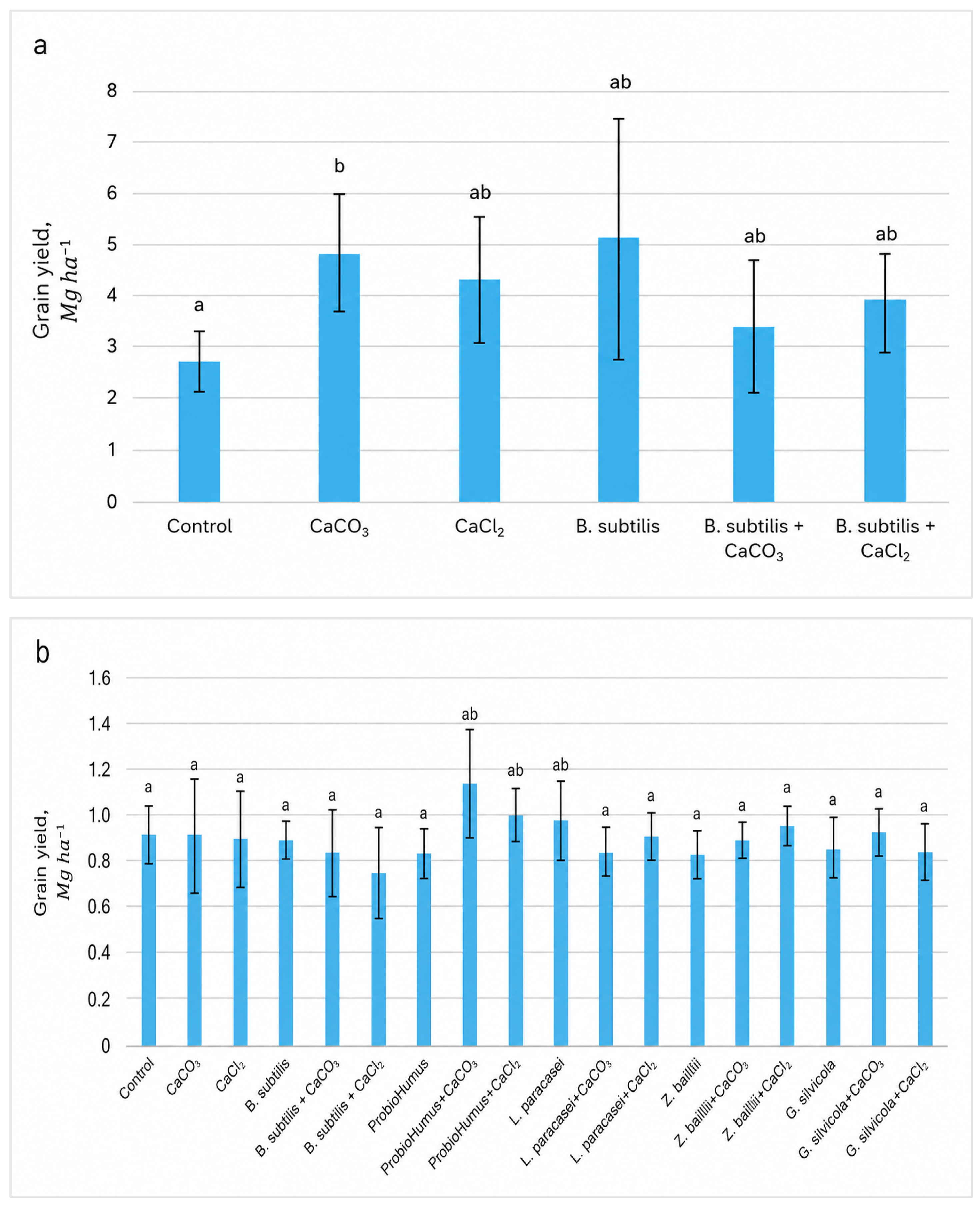
Grain yield in the Spanish field increased in the presence of biostimulants. Especially noticeable was the effect of CaCO3 treatment (Figure 5a). In the Lithuanian field, the highest grain yield was shown in ProbioHumus + CaCO3 plots (Figure 5b).

3.3. Biochemical Responses of the Spanish Winter Wheat Trial

3.3.1. Hydrogen Peroxide (H2O2)

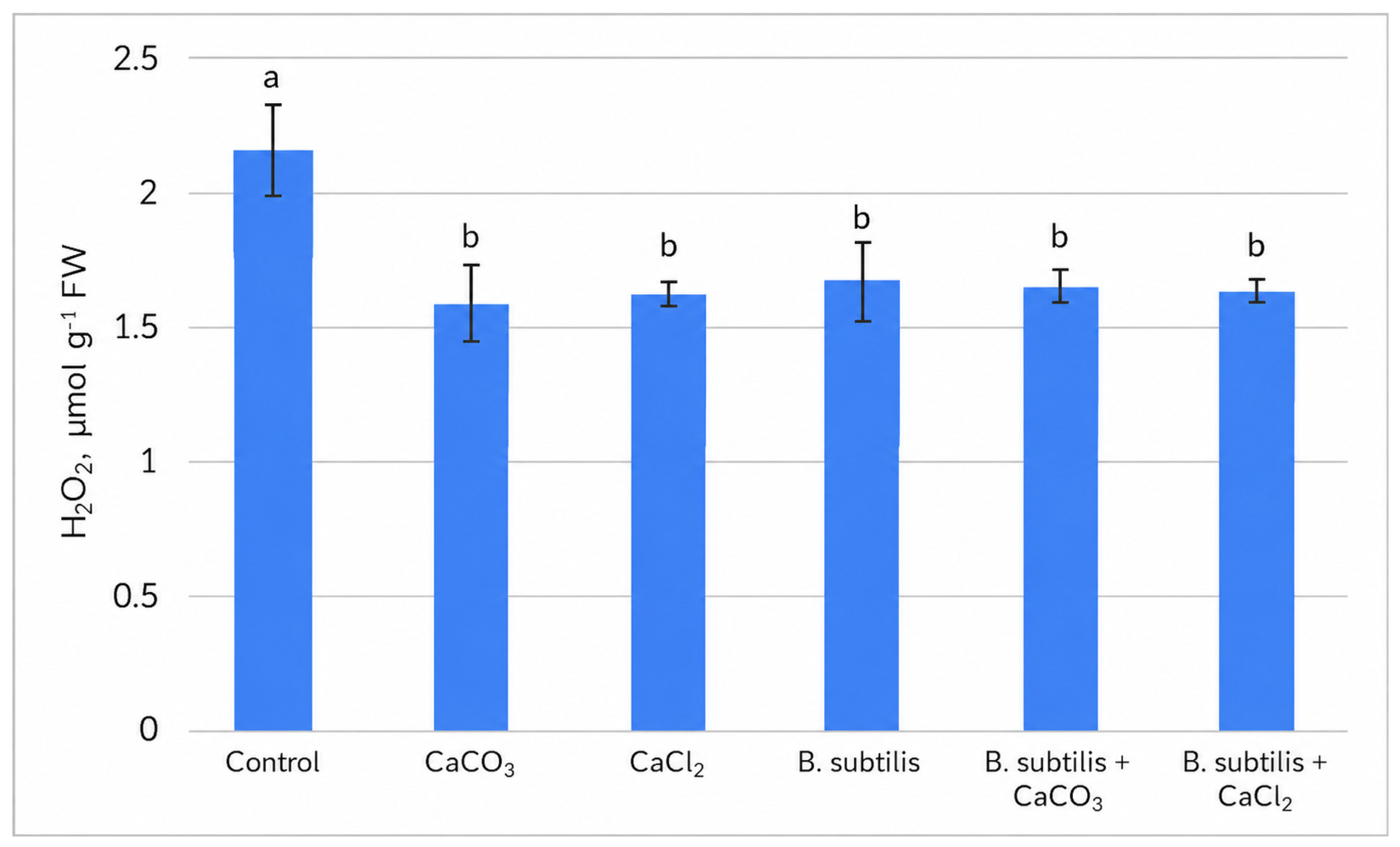
A one-way analysis of variance (ANOVA) revealed a significant effect of treatments, with p < 0.001. Tukey’s post hoc test showed that the control group differed significantly from all other treatments (Figure 6).

3.3.2. Malondialdehyde (MDA)

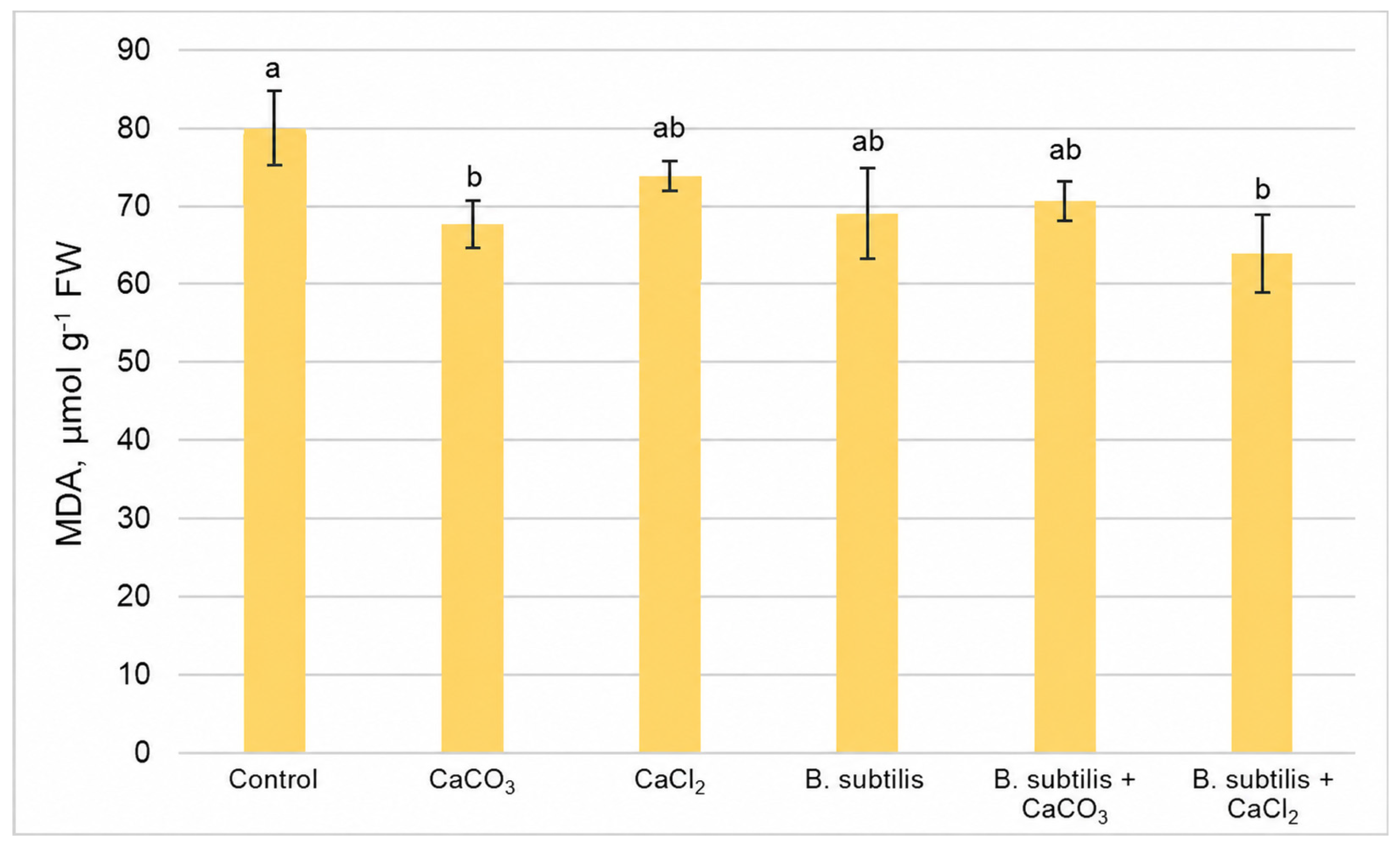
The most effective treatment in maintaining lower lipid peroxidation levels under water stress was Bacillus subtilis + CaCl2. A one-way analysis of variance (ANOVA) revealed a significant effect of treatments, with p = 0.007. Tukey’s post hoc test showed that the control group differed significantly from the CaCO3 (p = 0.030) and B. subtilis + CaCl2 (p = 0.005) treatment groups (Figure 7).

3.3.3. Free Proline

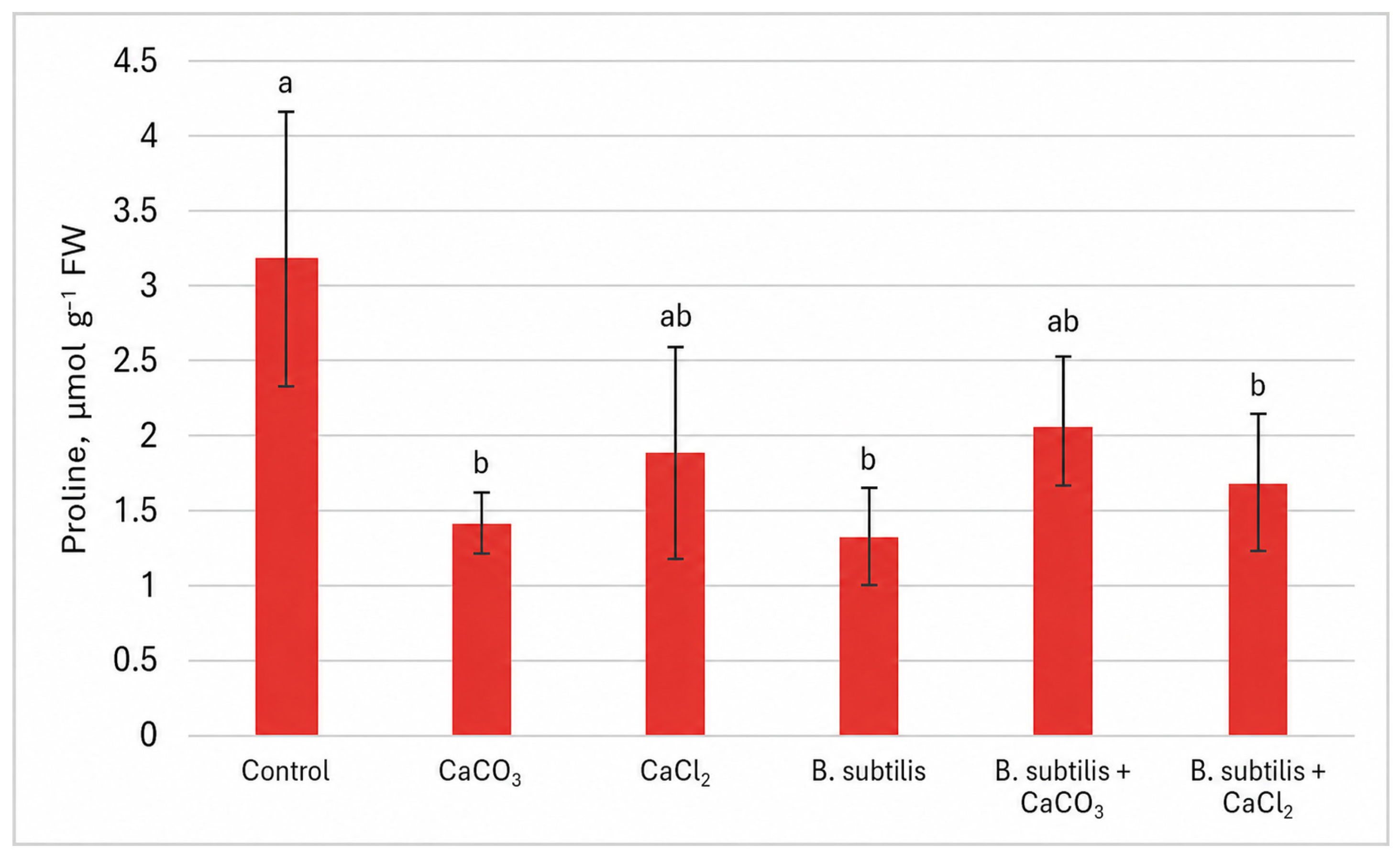
All treatments helped to maintain significantly lower free proline levels in the water-stressed plants. A one-way analysis of variance (ANOVA) revealed a significant effect of treatments, with p = 0.012. Tukey’s post hoc test showed that the control group differed significantly from the CaCO3 (p = 0.014), Bacillus subtilis (p = 0.011), and B. subtilis + CaCl2 (p = 0.041) treatments (Figure 8).

4. Discussion

Over recent decades, drought and heatwaves have increasingly threatened agricultural productivity. In Europe, the negative impact of these stressors on grain production has approximately tripled, rising from 2.2% between 1964 and 1990 to more than 7% between 1991 and 2015. Furthermore, drought-related crop production losses have intensified by more than 3% annually during the last decade [43]. As global population growth continues, improving crop productivity under limited water availability has become increasingly important.
To address this challenge, we conducted a field study investigating the effects of selected microorganisms combined with calcium under water-limited conditions, building on our previous laboratory studies [44,45,46]. Earlier controlled experiments demonstrated that combinations of microorganisms and calcium positively affected plants exposed to drought stress. Therefore, field trials were established to evaluate whether these beneficial effects could also be observed under natural environmental conditions. The present study demonstrated that selected biostimulant treatments improved the growth and related yield.
Environmental conditions differed substantially between the experimental sites in Spain and Lithuania, particularly regarding the timing and severity of drought periods. In Barcelona, rainfall was limited during germination and was followed by an exceptionally dry winter, whereas Vilnius experienced sufficient winter precipitation, with the driest period occurring in early spring (Figure A1) [47]. Overall, the rapeseed plants were more affected by that dry period. However, treatment efficacy was generally greater under more severe drought conditions, suggesting that microbial biostimulants in combination with calcium may provide the greatest benefits when plants experience substantial water stress. This trend was particularly evident in the Spanish winter wheat field and the Lithuanian winter rapeseed field, where improvements in shoot biomass, shoot length, thousand grain weight (TGW), and harvest index (HI) were observed (Figure 1, Figure 2, Figure 3 and Figure 4).
It was particularly interesting to observe that Lactobacillus paracasei + CaCl2 treatment showed the highest shoot biomass and TGW of winter wheat (Figure 1 and Figure 3). Research has been conducted in animal models that shows the positive effect of calcium on Lactobacillus spp. growth and biofilm formation [48]. A review paper was dedicated to the promising application of lactic acid bacteria in agriculture [49]. Our results can further suggest their potential in sustainable agriculture.
Biochemical stress indicator analysis of the flag leaves of winter wheat from the field in Spain showed that treated plants were less stressed than the control group (Figure 6, Figure 7 and Figure 8). The Bacillus subtilis + CaCl2 treatment proved very effective in reducing lipid peroxidation due to water deficit; MDA content was 27% lower than in the control (Figure 7). A strong negative correlation (r ≈ −0.85) was observed between proline levels (Figure 8) and morphometrical and agronomical traits (Figure 1, Figure 2, Figure 3, Figure 4 and Figure 5), indicating that lower proline accumulation is associated with improved yield performance, likely reflecting reduced stress conditions.
The advantage of B. subtilis in maintaining plants’ lower stress indicator levels can be explained by its Gram-positive cell wall, which contains peptidoglycans and teichoic acid. These provide numerous Ca2+ binding sites and prompt the formation of calcite crystals, which hold water in the soil [50,51]. In recent years, there has been a growing interest in Microbially Induced Calcite Precipitation (MICP). It is considered an effective, sustainable, and natural solution for improving water retention under drought conditions. It reduces evaporation and prevents erosion. MICP is formed by bacterial cells, which act as nucleation sites, where negatively charged cell surfaces attract Ca2+ ions, which react with carbonate ions to form calcite crystals that act as an adhesive to bind loose soil particles, strengthening the soil. MICP lowers water evaporation rates and reduces water loss thanks to the calcite clogging the pores, creating a denser surface crust. The reduction in pore size (bioclogging) increases the soil’s ability to retain moisture, serving as a natural solution to drought [52,53,54]. CaCl2 in the right concentration is a superior calcium source for calcite formation compared to other calcium sources [34,55]. B. subtilis is a soil PGPM that plays a key role in plant abiotic stress tolerance [56]. Our results confirmed the effectiveness of B. subtilis in combination with calcium in water-limited conditions. B. subtilis alone and in combination with CaCl2 increased grain yield in the Spanish field.
ProbioHumus was previously used in other field research by our lab, and its positive effect on strawberry and carrot yield was shown [57,58]. This research further confirmed that this commercial probiotic has potential for field usage. It is particularly beneficial for shoot biomass and length increase in the case of winter wheat in combination with CaCO3, and in the case of winter rapeseed, just by itself (Figure 1 and Figure 2). It also proved to increase winter wheat grain yield in combination with CaCO3 (Figure 5).
Zygosaccharomyces bailli had a noticeable positive effect on shoot biomass when applied with CaCO3 (Figure 1). In combination with CaCl2, it increased TGW and the HI compared to the control (Figure 3 and Figure 4). Geotrichum silvicola alone was effective in increasing TGW and grain yield (Figure 3 and Figure 5), and in combination with CaCO3, in increasing shoot length (Figure 2).
Taken together, the results of this field study demonstrate that microbial biostimulants combined with calcium can improve crop performance under water-limited conditions. The effectiveness of the treatments depends on both environmental severity and crop species, with the greatest benefits generally observed under stronger drought stress.

5. Conclusions

The results of this study suggest that microbial biostimulants, particularly ProbioHumus in combination with CaCO3, as well as Bacillus subtilis and Lactobacillus paracasei combined with CaCl2, have potential for improving crop performance under water-limited conditions. These treatments may contribute to the development of sustainable and environmentally friendly agricultural practices aimed at mitigating drought stress. Further research is needed to better understand the long-term effects of these microbial–calcium combinations on crop productivity, grain quality, and soil health, as well as to support their practical application in sustainable agriculture.

Author Contributions

Conceptualization, M.Z. and V.Š.; methodology, S.J., V.G., R.M. and J.L.A.; formal analysis, M.Z.; investigation, M.Z.; data curation, M.Z. and V.Š.; supervision, S.J., J.L.A. and V.Š.; writing—original draft preparation, M.Z.; writing—review and editing, J.L.A., S.J., V.G. and R.M. All authors have read and agreed to the published version of the manuscript.

Funding

The research in Spain was funded through the Project PID2022-138307OB-C21 (HolisticWheat), from the Ministerio de Ciencia, Innovación y Universidades, Spain. The research in Lithuania received no external funding.

Data Availability Statement

The data supporting the reported results can be found in the archive of scientific reports in the Nature Research Centre.

Acknowledgments

We thank Xavier Aranda Frattarola, Josep Matas Jorba, and Francesc Prenyanosa Alonso from the University of Barcelona, Nijolè Bareikienè, and the staff of the Laboratory of Plant Physiology at the Nature Research Centre for the support and help provided, and Algimantas Paškevičius for providing the necessary microorganisms.

Conflicts of Interest

The authors declare no conflicts of interest.

Abbreviations

The following abbreviations are used in this manuscript:
MICPMicrobially Induced Calcite Precipitation
TGWThousand Grain Weight
HIHarvest Index
MDAMalondialdehyde
PGPMsPlant growth-promoting microorganisms

Appendix A

Figure A1. Average monthly maximum temperatures and monthly average of the daily precipitation during vegetation: (a) Barcelona; (b) Vilnius.
Agronomy 16 00969 g0a1

References

  1. Acevedo, E.; Silva, P.; Silva, H. Wheat Growth and Physiology; Food and Agriculture Organization: Rome, Italy, 2009; pp. 1–24. [Google Scholar]
  2. Pizzorni, M.; Innocenti, A.; Tollin, N. Droughts and floods in a changing climate and implications for multi-hazard urban planning: A review. City Environ. Interact. 2024, 24, 100169. [Google Scholar] [CrossRef]
  3. Fahad, S.; Bajwa, A.A.; Nazir, U.; Anjum, S.A.; Farooq, A.; Zohaib, A.; Sadia, S.; Nasim, W.; Adkins, S.; Saud, S.; et al. Crop production under drought and heat stress: Plant responses and management options. Front. Plant Sci. 2017, 8, 1147. [Google Scholar] [CrossRef] [PubMed]
  4. Deihimfard, R.; Rahimi-Moghaddam, S.; Eyni-Nargeseh, H.; Collins, B. An optimal combination of sowing date and cultivar could mitigate the impact of simultaneous heat and drought on rainfed wheat in arid regions. Eur. J. Agron. 2023, 147, 126848. [Google Scholar] [CrossRef]
  5. European Drought Risk Atlas. Publications Office of the European Union. 2023. Available online: https://data.europa.eu/doi/10.2760/608737 (accessed on 5 February 2026).
  6. Toreti, A.; Bavera, D.; Acosta Navarro, J.; Barbosa, P.; De Jager, A.; Ben Aoun, W.; Biavetti, I.; Bussay, A.; Claverie, M.; Ficchì, A.; et al. Drought in South-Eastern Europe October 2025—GDO Analytical Report; Publications Office of the European Union: Luxembourg, 2025; Available online: https://data.europa.eu/doi/10.2760/7855749 (accessed on 10 April 2026).
  7. Pequeno, D.; Hernandez, I.; Reynolds, M.; Sonder, K.; MoleroMilan, A.; Robertson, R.; Lopes, M.; Xiong, W.; Kropff, M.; Asseng, S. Climate impact and adaptation to heat and drought stress of regional and global wheat production. Environ. Res. Lett. 2021, 16, 054070. [Google Scholar] [CrossRef]
  8. Abbasi, T.; Abbasi, S.A. Biomass energy and the environmental impacts associated with its production and utilization. Renew. Sustain. Energy Rev. 2010, 14, 919–937. [Google Scholar] [CrossRef]
  9. Haider, S.; Bibi, K.; Munyaneza, V.; Zhang, H.; Zhang, W.; Ali, A.; Ahmad, I.A.; Mehran, M.; Xu, F.; Yang, C.; et al. Drought-induced adaptive and ameliorative strategies in plants. Chemosphere 2024, 364, 143134. [Google Scholar] [CrossRef]
  10. Abid, M.; Ali, S.; Qi, L.K.; Zahoor, R.; Tian, Z.; Snider, J.L.; Dai, T. Physiological and biochemical changes during drought and recovery periods at tillering and jointing stages in wheat (Triticum aestivum L.). Sci. Rep. 2018, 8, 4615. [Google Scholar] [CrossRef]
  11. Turki, N.; Shehzad, T.; Okuno, K. Mapping novel QTLs for tolerance to salt stress at the late vegetative stage in durum wheat (Triticum durum L.). J. King Saud Univ. Sci. 2022, 35, 102506. [Google Scholar] [CrossRef]
  12. Ishfaq, N.; Waraich, E.A.; Ahmad, M.; Hussain, S.; Zulfiqar, U.; Din, K.U.; Haider, A.; Yong, J.W.H.; Askri, S.M.H.; Ali, H.M. Mitigating drought-induced oxidative stress in wheat (Triticum aestivum L.) through foliar application of sulfhydryl thiourea. Sci. Rep. 2024, 14, 15985. [Google Scholar] [CrossRef]
  13. Abdulkhaleq, D.A.; Hama, S.J.; Ahmad, R.M.; Ismael, T.S. Response of some rapeseed (Brassica napus L.) varieties to Zn fertilizer under dryfarming conditions. Sulaimani J. Pure Appl. Sci. 2018, 1, 143–156. [Google Scholar] [CrossRef]
  14. Weise, S.; Hoekstra, R.; Kutschan, K.J.; Oppermann, M.; van Treuren, R.; Lohwasser, U. Analysis of gaps in rapeseed (Brassica napus L.) collections in European genebanks. Front. Plant Sci. 2023, 14, 1244467. [Google Scholar] [CrossRef]
  15. Vicente-Serrano, S.M.; Quiring, S.M.; Pena-Gallardo, M.; Yuan, S.; Dominguez-Castro, F. A review of environmental droughts: Increased risk under global warming? Earth-Sci. Rev. 2020, 201, 102953. [Google Scholar] [CrossRef]
  16. Nascimento, F.C.; Kandasamy, S.; Lazarovits, G.; Rigobelo, E.C. Effect of chemical fertilization on the impacts of plant growth-promoting Rhizobacteria in maize crops. Curr. Microbiol. 2020, 77, 3878–3887. [Google Scholar] [CrossRef]
  17. Hartman, K.; Tringe, S.G. Interactions between plants and soil shaping the root microbiome under abiotic stress. Biochem. J. 2019, 476, 2705–2724. [Google Scholar] [CrossRef] [PubMed]
  18. Salwan, R.; Sharma, M.; Sharma, A.; Sharma, V. Insights into plant beneficial microorganism-triggered induced systemic resistance. Plant Stress 2023, 7, 100140. [Google Scholar] [CrossRef]
  19. Khoso, M.A.; Wagan, S.; Alam, I.; Hussain, A.; Ali, Q.; Saha, S.; Poudel, T.R.; Manghwar, H.; Liu, F. Impact of plant growth-promoting rhizobacteria (PGPR) on plant nutrition and root characteristics: Current perspective. Plant Stress 2024, 11, 100341. [Google Scholar] [CrossRef]
  20. Sanjuán, J.; Nápoles, M.C.; Pérez-Mendoza, D.; Lorite, M.J.; Rodríguez-Navarro, D.N. Microbials for agriculture: Why do they call them biostimulants when they mean probiotics? Microorganisms 2023, 11, 153. [Google Scholar] [CrossRef]
  21. Rolli, E.; Marasco, R.; Vigani, G.; Ettoumi, B.; Mapelli, F.; Deangelis, M.L.; Gandolfi, C.; Casati, E.; Previtali, F.; Gerbino, R.; et al. Improved plant resistance to drought is promoted by the root-associated microbiome as a water stress-dependent trait. Environ. Microbiol. 2015, 17, 316–331. [Google Scholar] [CrossRef]
  22. Arkhipova, T.; Galimsyanova, N.; Kuzmina, L.; Vysotskaya, L.; Sidorova, L.; Gabbasova, I.; Melentiev, A.; Kudoyarova, G. Effect of seed bacterization with plant growth-promoting bacteria on wheat productivity and phosphorus mobility in the rhizosphere. Plant Soil. Environ. 2019, 65, 313–319. [Google Scholar] [CrossRef]
  23. Sudakov, K.; Rana, A.; Faigenboim-Doron, A.; Gordin, A.; Carmeli, S.; Shimshoni, J.A.; Cytryn, E.; Minz, D. Diverse effects of Bacillus sp. NYG5-emitted volatile organic compounds on plant growth, rhizosphere microbiome, and soil chemistry. Microbiol. Res. 2025, 295, 128089. [Google Scholar] [CrossRef]
  24. Koza, N.A.; Adedayo, A.A.; Babalola, O.O.; Kappo, A.P. Microorganisms in plant growth and development: Roles in abiotic stress tolerance and secondary metabolites secretion. Microorganisms 2022, 10, 1528. [Google Scholar] [CrossRef]
  25. Gamalero, E.; Glick, B.R. Bacterial modulation of plant ethylene levels. Plant Physiol. 2015, 169, 13–22. [Google Scholar] [CrossRef]
  26. Ahluwalia, O.; Singh, P.C.; Bhatia, R. A review on drought stress in plants: Implications, mitigation and the role of plant growth promoting rhizobacteria. Resour. Environ. Sustain. 2021, 5, 100032. [Google Scholar] [CrossRef]
  27. Poudel, M.; Mendes, R.; Costa, L.A.S.; Bueno, C.G.; Meng, Y.; Folimonova, S.Y.; Garrett, K.A.; Martins, S.J. The role of plant-associated bacteria, fungi, and viruses in drought stress mitigation. Front. Microbiol. 2021, 12, 743512. [Google Scholar] [CrossRef] [PubMed]
  28. Chen, C.; Xin, K.; Liu, H.; Cheng, J.; Shen, X.; Wang, Y.; Zhang, L. Pantoea alhagi, a novel endophytic bacterium with ability to improve growth and drought tolerance in wheat. Sci. Rep. 2017, 7, 41564, Correction in Sci. Rep. 2021, 11, 8160. https://doi.org/10.1038/s41598-021-86899-4. [Google Scholar] [CrossRef]
  29. Wang, T.; Chen, X.; Ju, C.; Wang, C. Calcium signaling in plant mineral nutrition: From uptake to transport. Plant Commun. 2023, 4, 100678. [Google Scholar] [CrossRef] [PubMed]
  30. Houmani, H.; Corpas, F.J. Can nutrients act as signals under abiotic stress? Plant Physiol. Biochem. 2024, 206, 108313. [Google Scholar] [CrossRef]
  31. Martín-Cardoso, H.; San Segundo, B. Impact of nutrient stress on plant disease resistance. Int. J. Mol. Sci. 2025, 26, 1780. [Google Scholar] [CrossRef]
  32. Dong, H.; Lu, A. Mineral-microbe interactions and implications for remediation. Elements 2012, 8, 95–100. [Google Scholar] [CrossRef]
  33. Pradhan, N.; Singh, S.; Saxena, G.; Pradhan, N.; Koul, M.; Kharkwal, A.C.; Sayyed, R. A review on microbe-mineral transformations and their impact on plant growth. Front. Microbiol. 2025, 16, 1549022. [Google Scholar] [CrossRef]
  34. Achal, V.; Pan, X. Influence of calcium sources on microbially induced calcium carbonate precipitation by Bacillus sp. CR2. Appl. Biochem. Biotechnol. 2014, 173, 307–317. [Google Scholar] [CrossRef] [PubMed]
  35. Chaparro-Acuña, S.P.; Becerra-Jiménez, M.L.; Martínez-Zambrano, J.J.; Rojas-Sarmiento, H.A. Soil bacteria that precipitate calcium carbonate: Mechanism and applications of the process. Acta Agronómica 2018, 67, 277–288. [Google Scholar] [CrossRef]
  36. EDO European Drought Observatory 2023–2024. Available online: https://joint-research-centre.ec.europa.eu (accessed on 15 March 2026).
  37. Neugschwandtner, R.W.; Böhm, K.; Hall, R.M.; Kaul, H.P. Development, growth, and nitrogen use of autumn- and spring-sown facultative wheat. Acta Agric. Scand. Sect. B—Soil Plant Sci. 2015, 65, 6–13. [Google Scholar] [CrossRef]
  38. Böttcher, U.; Rampin, E.; Hartmann, K.; Zanetti, F.; Flenet, F.; Morison, M.; Kage, H. A phenological model of winter oilseed rape according to the BBCH scale. Crop Pasture Sci. 2016, 67, 345–358. [Google Scholar] [CrossRef]
  39. A Brief Guide To Estimating Crop Yields. Available online: https://agriculture.vic.gov.au (accessed on 5 February 2026).
  40. Velikova, V.; Yordanov, I.; Edreva, A. Oxidative stress and some antioxidant systems in acid rain-treated bean plants: Protective role of exogenous polyamines. Plant Sci. 2000, 151, 59–66. [Google Scholar] [CrossRef]
  41. Hodges, D.; DeLong, J.; Forney, C.; Prange, R.K. Improving the thiobarbituric acid-reactive-substances assay for estimating lipid peroxidation in plant tissues containing anthocyanin and other interfering compounds. Planta 1999, 207, 604–611. [Google Scholar] [CrossRef]
  42. Carillo, P.; Gibon, Y. Extraction and Determination of Proline. Available online: https://www.researchgate.net/publication/211353600_PROTOCOL_Extraction_and_determination_of_prolineproline (accessed on 10 July 2016).
  43. Brás, T.A.; Seixas, J.; Carvalhais, N.; Jägermeyr, J. Severity of drought and heatwave crop losses tripled over the last five decades in Europe. Environ. Res. Lett. 2021, 16, 065012. [Google Scholar] [CrossRef]
  44. Mockevičiūtė, R.; Jurkonienė, S.; Šveikauskas, V.; Zareyan, M.; Jankovska-Bortkevič, E.; Jankauskienė, J.; Kozeko, L.; Gavelienė, V. Probiotics, proline and calcium induced protective responses of Triticum aestivum under drought stress. Plants 2023, 12, 1301. [Google Scholar] [CrossRef]
  45. Gavelienė, V.; Mockevičiūtė, R.; Jankovska-Bortkevič, E.; Šveikauskas, V.; Zareyan, M.; Žalnierius, T.; Jankauskienė, J.; Jurkonienė, S. Synergistic effects of microbial biostimulants and calcium in alleviating drought stress in oilseed rape. Microorganisms 2025, 13, 530. [Google Scholar] [CrossRef]
  46. Zareyan, M.; Mockevičiūtė, R.; Jurkonienė, S.; Gavelienė, V.; Paškevičius, A.; Šveikauskas, V. Physiological, biochemical, and genetic reactions of winter wheat to drought under the influence of plant growth promoting microorganisms and calcium. Microorganisms 2025, 13, 1042. [Google Scholar] [CrossRef]
  47. World Weather, Climate and Accurate Forecast Information. 2026. Available online: https://worldweather.wmo.int/en/home.html (accessed on 10 January 2026).
  48. Huynh, U.; King, J.; Zastrow, M.L. Calcium modulates growth and biofilm formation of Lactobacillus acidophilus ATCC 4356 and Lactiplantibacillus plantarum ATCC 14917. Sci. Rep. 2025, 15, 14246. [Google Scholar] [CrossRef]
  49. Raman, J.; Kim, J.-S.; Choi, K.R.; Eun, H.; Yang, D.; Ko, Y.-J.; Kim, S.-J. Application of Lactic Acid bacteria (LAB) in sustainable agriculture: Advantages and limitations. Int. J. Mol. Sci. 2022, 23, 7784. [Google Scholar] [CrossRef]
  50. Rajagopal, M.; Walker, S. Envelope Structures of Gram-Positive Bacteria; Current Topics in Microbiology and Immunology; Springer: Cham, Switzerland, 2017; Volume 404, pp. 1–44. [Google Scholar] [CrossRef]
  51. Bin Mansoor, A.; Yousaf, S.; Gulzar, A.; Iqbal, R.; Qurashi, A.W. A review on role of Bacillus Species in bio-calcification: A way forward in carbonate precipitation. J. Bioresour. Manag. 2024, 11, 21–29. [Google Scholar]
  52. Anbu, P.; Kang, C.H.; Shin, Y.J.; So, J.S. Formations of calcium carbonate minerals by bacteria and its multiple applications. SpringerPlus 2016, 5, 250. [Google Scholar] [CrossRef] [PubMed]
  53. Konstantinou, C.; Wang, Y.; Biscontin, G.; Soga, K. The role of bacterial urease activity on the uniformity of carbonate precipitation profiles of bio-treated coarse sand specimens. Sci. Rep. 2021, 11, 6161. [Google Scholar] [CrossRef] [PubMed]
  54. Liu, B.; Tang, C.-S.; Pan, X.-H.; Zhu, C.; Cheng, Y.-J.; Xu, J.-J.; Shi, B. Potential drought mitigation through microbial induced calcite precipitation-MICP. Water Resour. Res. 2021, 57, e2020WR029434. [Google Scholar] [CrossRef]
  55. Ditta, Z.M.; Laohana, P.; Tanapongpisit, N.; Saenrang, W.; Boonlue, S.; Sata, V.; Baalousha, M.; Chindaprasirt, P.; Ekprasert, J. Mechanical and self-healing properties of cement paste containing incinerated sugarcane filter cake and Lysinibacillus sp. WH bacteria. Sci. Rep. 2024, 14, 6716. [Google Scholar] [CrossRef]
  56. Mahapatra, S.; Yadav, R.; Ramakrishna, W. Bacillus subtilis impact on plant growth, soil health and environment: Dr. Jekyll and Mr. Hyde. J. Appl. Microbiol. 2022, 132, 3543–3562. [Google Scholar] [CrossRef]
  57. Gavelienė, V.; Šocik, B.; Jankovska-Bortkevič, E.; Jurkonienė, S. Plant Microbial Biostimulants as a promising tool to enhance the productivity and quality of carrot root crops. Microorganisms 2021, 9, 1850. [Google Scholar] [CrossRef]
  58. Mockevičiūtė, R.; Jurkonienė, S.; Gavelienė, V.; Jankovska-Bortkevič, E.; Šocik, B.; Armalytė, G.; Budrys, R. Effects Induced by the agricultural application of probiotics on antioxidant potential of strawberries. Plants 2022, 11, 831. [Google Scholar] [CrossRef]
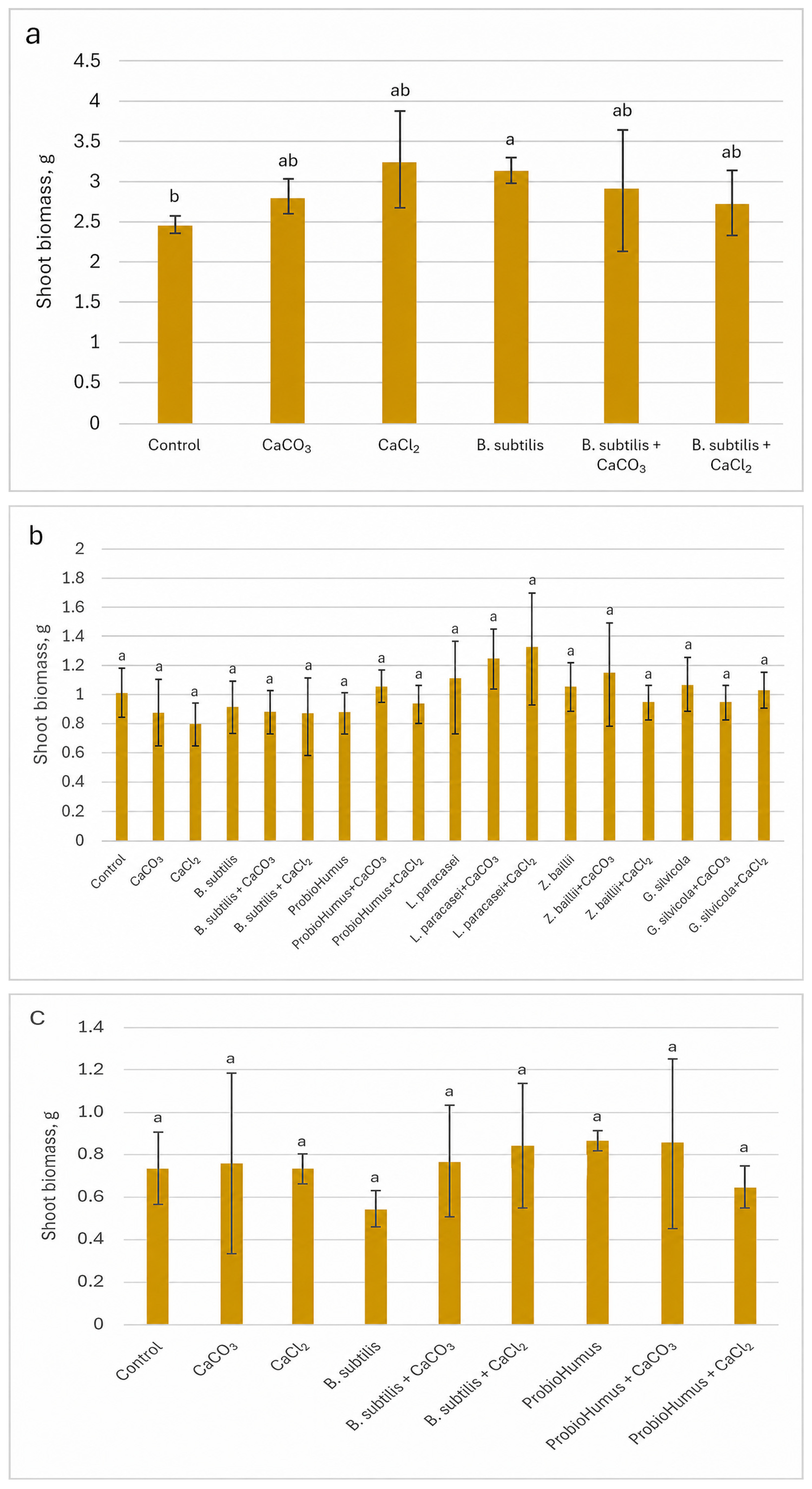
Figure 1. Impact of used biostimulants on shoot biomass. (a) Winter wheat Spanish field results. (b) Winter wheat Lithuanian field results. (c) Winter rapeseed Lithuanian field results. Bars represent the mean ± standard deviation (SD) of three independent replicates (n = 3). Different letters indicate significant differences among treatments based on the Games–Howell post hoc test (p < 0.05).
Agronomy 16 00969 g001
Figure 2. Impact of used biostimulants on shoot length. (a) Winter wheat Spanish field results. (b) Winter wheat Lithuanian field results. (c) Winter rapeseed Lithuanian field results. Bars represent the mean ± standard deviation (SD) of three independent replicates (n = 3). Different letters indicate significant differences among treatments based on the Games–Howell post hoc test (p < 0.05).
Agronomy 16 00969 g002
Figure 3. Impact of used biostimulants on thousand grain weight (TGW). (a) Winter wheat Spanish field results. (b) Winter wheat Lithuanian field results. (c) Winter rapeseed Lithuanian field results. Bars represent the mean ± standard deviation (SD) of three independent replicates (n = 3). Different letters indicate differences among treatments based on the Games–Howell post hoc test (p < 0.10), with p-values between 0.05 and 0.10 considered indicative of statistical trends.
Agronomy 16 00969 g003
Figure 4. Impact of used biostimulants on the harvest index. (a) Winter wheat Spanish field results. (b) Winter wheat Lithuanian field results. (c) Winter rapeseed Lithuanian field results. Bars represent the mean ± standard deviation (SD) of three independent replicates (n = 3). Different letters indicate significant differences among treatments based on the Games–Howell post hoc test (p < 0.05).
Agronomy 16 00969 g004
Figure 5. Impact of used biostimulants on grain yield. (a) Winter wheat Spanish field results. (b) Winter wheat Lithuanian field results. Bars represent the mean ± standard deviation (SD) of three independent replicates (n = 3). Different letters indicate significant differences among treatments based on the Games–Howell post hoc test (p < 0.05).
Agronomy 16 00969 g005
Figure 6. The effect of Bacillus subtilis and Ca salts application on winter wheat H2O2 content. Bars represent the mean ± standard deviation (SD) of three independent replicates (n = 3). Data were analyzed using one-way ANOVA followed by Tukey’s HSD test. Different letters indicate significant differences at p < 0.05.
Agronomy 16 00969 g006
Figure 7. The effect of Bacillus subtilis and Ca salts application on the MDA content of winter wheat. Bars represent the mean ± standard deviation (SD) of three independent replicates (n = 3). Data were analyzed using one-way ANOVA followed by Tukey’s HSD test. Different letters indicate significant differences at p < 0.05.
Agronomy 16 00969 g007
Figure 8. The effect of Bacillus subtilis and Ca salts application on proline content in winter wheat. Bars represent the mean ± standard deviation (SD) of three independent replicates (n = 3). Data were analyzed using one-way ANOVA followed by Tukey’s HSD test. Different letters indicate significant differences at p < 0.05.
Agronomy 16 00969 g008
Disclaimer/Publisher’s Note: The statements, opinions and data contained in all publications are solely those of the individual author(s) and contributor(s) and not of MDPI and/or the editor(s). MDPI and/or the editor(s) disclaim responsibility for any injury to people or property resulting from any ideas, methods, instructions or products referred to in the content.