1. Introduction
Triterpenoids, as a major class of plant secondary metabolites, play indispensable roles in maintaining membrane stability, regulating growth and development, and responding to biotic and abiotic stresses [
1,
2,
3,
4]. Squalene, the central precursor for triterpenoid and sterol biosynthesis, has become a focal point in plant metabolic engineering [
5,
6]. As a critical intermediate in the synthesis of steroidal hormones and vitamin D, squalene also possesses remarkable pharmacological properties, including antioxidant, antitumor, and immunomodulatory activities, making it a high-value compound with substantial commercial potential in the pharmaceutical, cosmetic, and nutraceutical industries [
7,
8,
9,
10,
11,
12,
13]. In recent years, growing emphasis on sustainable development and green manufacturing has heightened interest in using plant bioreactors for efficient squalene production [
14].
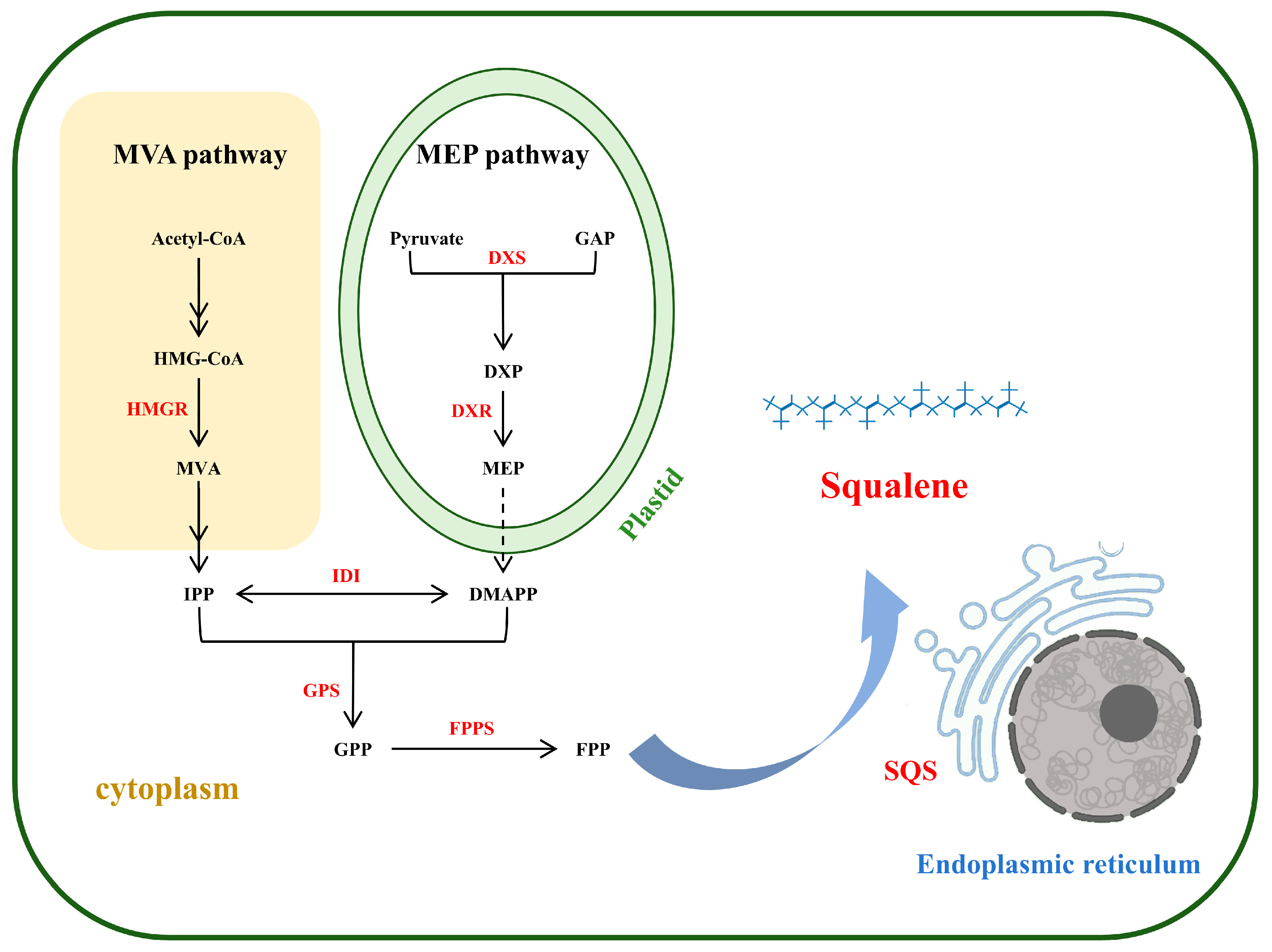
Two distinct routes supply the isoprenoid building blocks for squalene biosynthesis in plants: one is the cytosolic mevalonate (MVA) pathway, and the other is the plastidial methylerythritol phosphate (MEP) pathway [
15,
16]. Most evidence points to the MVA pathway as the principal origin of the precursors used to build squalene [
17]. Both pathways converge at the formation of farnesyl diphosphate (FPP), which is subsequently condensed by squalene synthase (SQS) to produce squalene (
Figure 1) [
18]. As the key regulatory enzyme directing carbon flux toward triterpenoids, SQS not only controls metabolic partitioning but may also exert feedback regulation on upstream pathways [
19,
20,
21]. Therefore, identifying SQS variants with high catalytic efficiency and characterizing their regulatory behavior in heterologous hosts are critical for engineering efficient squalene production systems.
Amaranthus tricolor (red amaranth), an important member of the
Amaranthaceae family, has traditionally served both dietary and therapeutic purposes [
22]. Previous studies have indicated that its seeds and tissues contain relatively high levels of squalene, suggesting the presence of an efficient squalene synthesis machinery [
23,
24]. To date, little work has been done on the isolation and functional analysis of the
SQS gene from
A. tricolor. The structural features, catalytic efficiency, and expression characteristics of its encoded enzyme in heterologous systems have yet to be systematically explored. Unlike the well-studied SQS from
Withania somnifera, the enzyme from red amaranth may possess unique catalytic properties or regulatory patterns shaped by its distinct evolutionary background and metabolic environment [
25,
26].
Functional characterization can be facilitated by pharmacological tools that specifically modulate SQS activity. Notably, recent studies have identified zaragozic acid A (ZAA) as a natural microbial metabolite and one of the most potent specific inhibitors of SQS [
27,
28]. Through efficient occupation of the SQS active site, ZAA competitively prevents the enzymatic conversion of FPP to squalene, thereby effectively blocking squalene biosynthesis in both plants and microorganisms [
29,
30]. This property not only provides a valuable molecular tool for studying the function and regulation of SQS but also offers new perspectives for enhancing the synthesis efficiency of triterpenoid products through metabolic engineering strategies. Consequently, when investigating the function of SQS and its applications in metabolic engineering, it is essential to comprehensively consider factors such as enzyme activity, inhibitor sensitivity, and interactions within the host’s endogenous regulatory network.
Despite the high squalene content reported in A. tricolor, the molecular basis underlying its efficient squalene accumulation has remained unknown, and no SQS gene from this species has been functionally characterized. Moreover, although several plant SQS genes have been shown to increase squalene levels upon overexpression, the broader systemic impact of SQS overexpression on the host metabolic network, including transcriptional reprogramming, competitive pathway suppression, and inhibitor regulation, has rarely been investigated in a comprehensive manner. Given that A. tricolor SQS may possess unique catalytic properties distinct from well-characterized SQS enzymes, we hypothesized that its heterologous expression could efficiently redirect carbon flux toward squalene in planta. Here, we cloned and functionally characterized AtrSQS, a novel squalene synthase gene isolated from A. tricolor, for the first time by overexpressing it in tobacco and measuring squalene accumulation. Furthermore, we performed integrated transcriptomic and metabolomic analyses to dissect the systemic metabolic reprogramming triggered by AtrSQS overexpression, with a focus on the terpenoid backbone biosynthesis pathway and related branches. This work provides a new enzymatic resource for squalene biosynthesis and reveals the multi-level metabolic redirection strategy that underpins enhanced squalene production in plants.
2. Materials and Methods
2.1. Plant Samples and Growth Conditions
Plants of Amaranthus tricolor L. and Nicotiana tabacum L. cv. K326 were cultivated in a greenhouse at 25 °C under a long-day regimen (14 h light, 10 h dark). Fresh leaf tissues of A. tricolor were harvested from healthy 4-week-old plants, immediately frozen in liquid nitrogen, and stored at −80 °C for RNA extraction and subsequent cloning of AtrSQS. Once the seedlings of K326 grew to about 5 cm tall, they were subjected to transformation.
A total of 12 independent T0 transgenic lines were obtained, with an average transformation efficiency of approximately 25% (hygromycin-resistant shoots per inoculated leaf disc). After positive identification, T0 plants were used for qRT-PCR analysis, GC-MS quantification of squalene, and transcriptomic/metabolomic profiling. Confirmed positive T1 lines were subsequently sent to BioRun Biotech (Wuhan, China) for homozygosity screening; the resulting homozygous plants were bagged for self-pollination to produce T2 seeds. T2 seedlings were then used for phenotypic observation and analysis. Both transgenic and wild-type plants were maintained under the same environmental conditions throughout the study.
2.2. Molecular Cloning of AtrSQS from Amaranthus tricolor
Fresh
A. tricolor leaves were subjected to RNA extraction using the GenePure Plant RNA Kit (Vazyme, Nanjing, China). RNA quality was checked via gel electrophoresis and NanoDrop 2000(Thermo, Waltham, MA, USA), followed by reverse transcription into cDNA (PrimeScript RT kit, Takara). The RT Primer Mix within the kit contains a blend of oligo (dT) and random 6-mer primers. Based on the conserved sequences of squalene synthase genes reported in the NCBI database and the
A. tricolor genome annotation (LOC130821625), primers flanking the complete open reading frame of the
AtrSQS gene were designed using Primer3 (v. 2.3.6) (
Table S1). After verification by 1% agarose gel electrophoresis, PCR products were purified and subsequently sequenced to acquire the complete
AtrSQS coding sequence.
2.3. Sequence and Phylogenetic Analysis
To characterize the
AtrSQS protein, its predicted amino acid sequence was submitted to the Expasy ProtParam web interface (
https://web.expasy.org/protparam/, accessed on 13 October 2025). Employing the tool’s default parameters, we obtained several computed properties: molecular mass, theoretical isoelectric point (pI) and others. For comparing amino acid sequences, BioEdit (version 7.7.1.0) served as the alignment software. A Neighbor-Joining evolutionary tree incorporating 1000 bootstrap resamplings was constructed with MEGA 6.0 to perform the phylogenetic assessment.
2.4. Vectors Construction and Transgenic Plant Development
A synthetic version of the
AtrSQS coding sequence was obtained. Its nucleotide sequence was first placed into the pENTR-D-TOPO plasmid (Invitrogen, Carlsbad, CA, USA) as an initial cloning step. Thereafter, the sequence was recombined into the pBin19-attR-HA vector via Gateway LR recombination to build the overexpression construct pBin19-AtrSQS-HA, with transcription driven by the CaMV 35S promoter (
Figure S1) [
31]. The finished plasmid was then delivered into
Agrobacterium tumefaciens LBA4404 cells by means of freeze–thaw transformation. The leaf-disk method [
32] was employed to generate transgenic calli and regenerated plantlets. A total of 12 independent T0 transgenic lines were obtained, with an average transformation efficiency of approximately 25% (hygromycin-resistant shoots per inoculated leaf disc). After self-pollination and selection, three independent homozygous T1 lines (OE-
AtrSQS lines 1–3) of comparable growth status were selected and subjected to transcript-level analysis, squalene quantification, and subsequent multi-omics analyses. Throughout all growth stages, both transgenic lines and wild-type controls received identical watering and fertilization regimens.
2.5. Isolation and Quantification of Squalene
Squalene extraction, purification, and GC-MS analysis were performed as described previously [
33]. This includes leaf drying/grinding, saponification with KOH-ethanol, n-hexane extraction, and analysis using an Agilent 8890 GC-5977C MS system under identical chromatographic conditions (injector set to 280 °C, with the oven temperature ramping from 80 °C to 260 °C).
Quantification was achieved using an external standard calibration curve (1.0–16.0 µg/mL in n-hexane, R
2 > 0.999), following the same method validated in [
33]. This ensures methodological consistency and direct comparability of squalene accumulation data across studies.
2.6. Transcriptome Analysis Using a Reference Genome
Transcriptome analysis of tobacco samples, conducted using a reference genome, was carried out by OE Biotech Co., Ltd. (Shanghai, China). The RNA extraction, quality assessment, and library preparation followed standard protocols. DEGs were identified using DESeq2 with q < 0.05 and |fold change|> 2. PCA (R software, version 4.2.3) and KEGG pathway annotation were also conducted.
2.7. Non-Targeted Metabolite Profiling
Untargeted metabolomics of tobacco samples was performed by OE Biotech Co., Ltd. (Shanghai, China). Briefly, metabolites were extracted using methanol containing an internal standard, followed by LC-MS analysis. The identification of differential metabolites used thresholds of VIP > 1 and p < 0.05. PCA and KEGG pathway analysis were conducted using R and the KEGG database, respectively.
2.8. Polymerase Chain Reaction (PCR) and Quantitative Real-Time PCR (qRT-PCR) Analysis
For PCR, we utilized a rapid amplification kit (Phire Plant Direct PCR Master Mix, Thermo, Waltham, MA, USA). Leaf discs (0.3 mm across) excised from transgenic plants provided the direct template.
In qRT-PCR analysis, first-strand cDNA synthesis from total RNA relied on the PrimeScript RT kit (Takara Bio, Kusatsu, Japan). The subsequent amplification was carried out on a Roche LightCycler 480 II platform (Roche, Basel, Switzerland), using PerfectStart® Green qPCR SuperMix (TransGen Biotech, Beijing, China) as the reaction mix. To account for sample variation, the NtActin gene served as a normalization standard; expression values were then derived via the 2−ΔΔCT formula.
2.9. Data Analysis
Data quantification was followed by statistical processing using two software packages: Microsoft Excel (2511) and GraphPad Prism 9. All experiments were conducted with three independent biological replicates. For qRT-PCR analysis and GC-MS quantification, the mean of three technical replicate injections was used as the measurement for each biological sample. Data are presented as mean ± SD from the three biological replicates. Prior to pairwise comparisons with Student’s t-test, normality of the data distribution was assessed; a p-value < 0.05 was considered statistically significant.
3. Results
3.1. Cloning of AtrSQS Gene
To identify potential
SQS orthologs in
A.
tricolor, the reference genome database of
A. tricolor was queried [
22]. Using the sole functional
SQS from
Arabidopsis thaliana as the query sequence [
34], a BLAST (version 2.12.0) search against the latest
A. tricolor genome database identified a single gene (LOC130821625) annotated as squalene synthase, exhibiting 75.67% sequence identity. For subsequent RT-PCR cloning of the
SQS gene from
A. tricolor, primers were designed to amplify the complete putative open reading frame of this gene (
Table S1). A 1242 bp DNA fragment, encoding a polypeptide of 413 amino acids, was successfully obtained by PCR. In silico analysis predicted that the encoded enzyme has a molecular mass of approximately 47.44 kDa, a theoretical isoelectric point (pI) of 6.89, an instability index of 40.52, an aliphatic index of 93.97, and a grand average of hydropathicity (GRAVY) of −0.051.
3.2. Sequence Analysis of AtrSQS
By querying the NCBI conserved domain database, we found that
AtrSQS is a member of the SQS family (TIGR01559). The squalene synthase domain of
AtrSQS is located at amino acids 35 to 367. Sequence alignment of
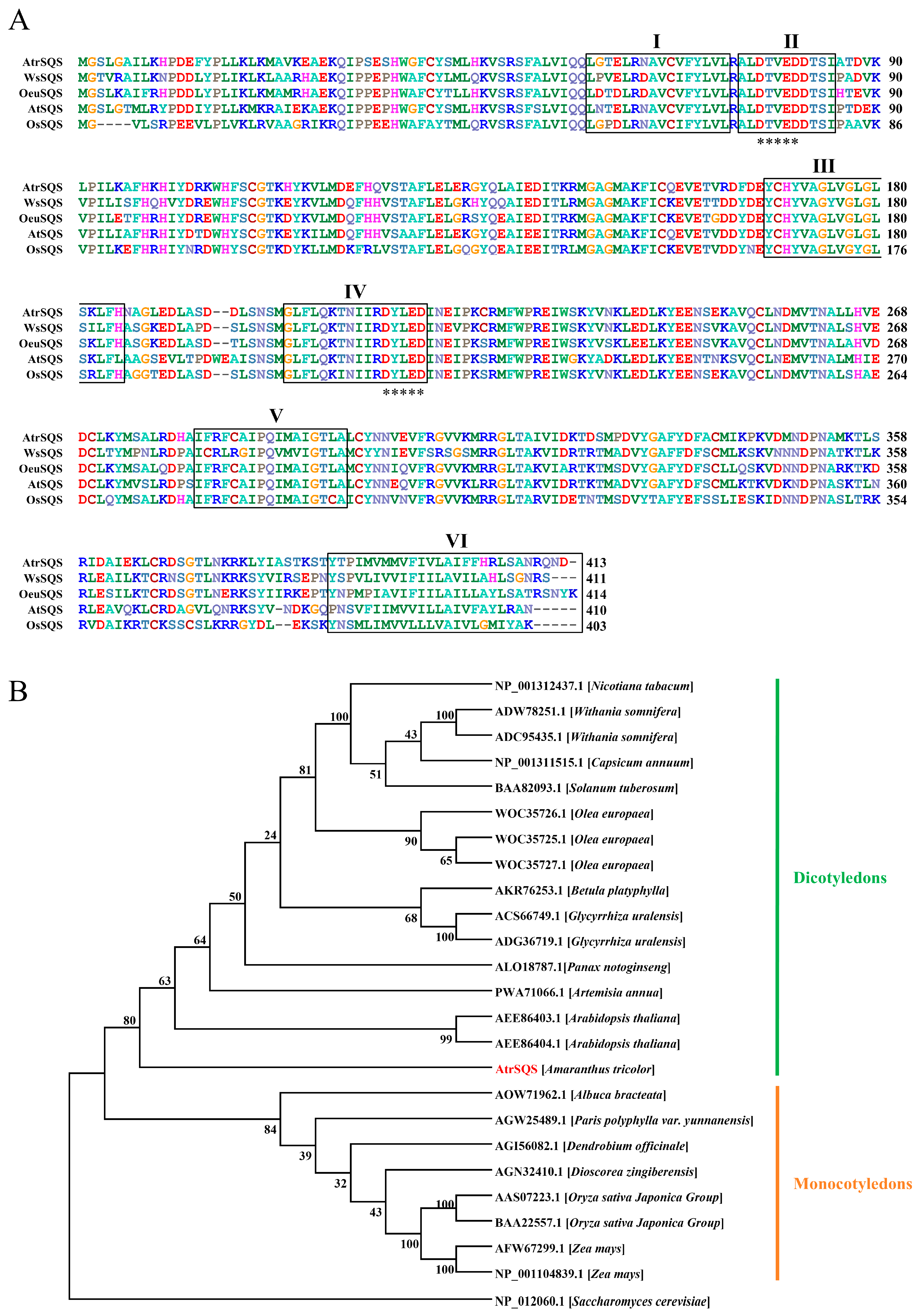
AtrSQS with other known SQS proteins revealed that this protein also contains six highly conserved peptide domains (
Figure 2A). Among these, domains II and IV exhibited identical sequences and both possessed two aspartate-rich motifs (DTVED and DYLED). Domain III was also highly conserved, showing near-identical sequences to those of other species. In contrast, domains I, V, and VI showed lower sequence conservation.
Phylogenetic analysis revealed that all plant SQS proteins clustered into two major clades corresponding to dicotyledons and monocotyledons.
AtrSQS fell within the dicotyledonous clade but formed a distinct branch clearly separated from the Solanaceae SQS proteins, including those from
Nicotiana tabacum,
Withania somnifera,
Capsicum annuum, and
Solanum tuberosum (
Figure 2B). This distinct phylogenetic position suggests that
AtrSQS has undergone considerable evolutionary divergence, which may be associated with the high squalene-accumulating capacity observed in
Amaranthus species.
3.3. Development of AtrSQS-Overexpressing Plants
To explore the in vivo biological role of
AtrSQS, an overexpression construct (35S:
AtrSQS) was generated and introduced into
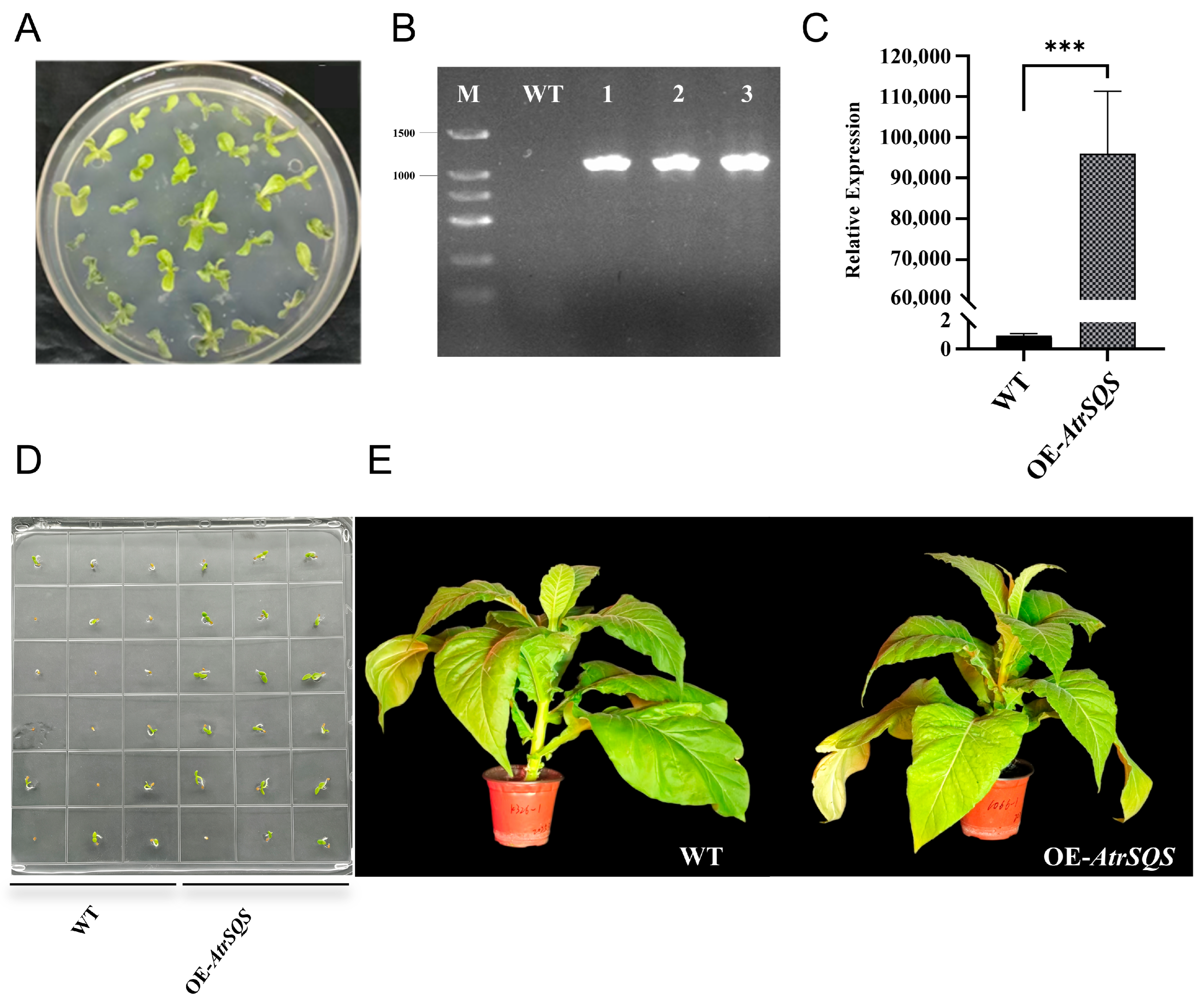
Nicotiana tabacum K326. Following the growth of calli and regenerated shoots on hygromycin-containing medium (
Figure 3A), the identity of putative transgenic plants was confirmed via genomic PCR. As shown in
Figure 3B, the predicted 1.2 kb amplicon was detected in
AtrSQS-transformed plants but absent in WT controls. Additionally, qRT-PCR was carried out to quantify target gene transcript levels in the transgenic lines, revealing that
AtrSQS expression was markedly higher in transgenic plants than in WT plants (
Figure 3C). Collectively, these findings confirm that heterologous overexpression of
AtrSQS was successfully achieved in cultivated tobacco. Furthermore, qRT-PCR analysis of the endogenous tobacco
SQS gene (
NtSQS) revealed no significant difference in transcript levels between wild-type and OE-
AtrSQS plants, indicating that the introduction of the exogenous
AtrSQS had little impact on the expression of the host’s native
SQS gene (
Figure S2).
Seeds harvested from T0 transgenic plants were sown to generate T1 progeny. Homozygous lines were screened, self-pollinated to collect homozygous seeds, and then germinated on sterile culture medium. Seeds from the OE-
AtrSQS group began germinating on day 3, whereas WT seeds germinated between days 4 and 6. Furthermore, four seeds from the WT group failed to germinate, while all seeds from the OE-
AtrSQS group germinated normally (
Figure 3D). After being transplanted into soil at approximately 2 weeks of age, however, no marked phenotypic variation was detected among the groups (
Figure 3E).
3.4. Overexpression of AtrSQS Promotes Squalene Production in Tobacco
To confirm the in vivo functionality of
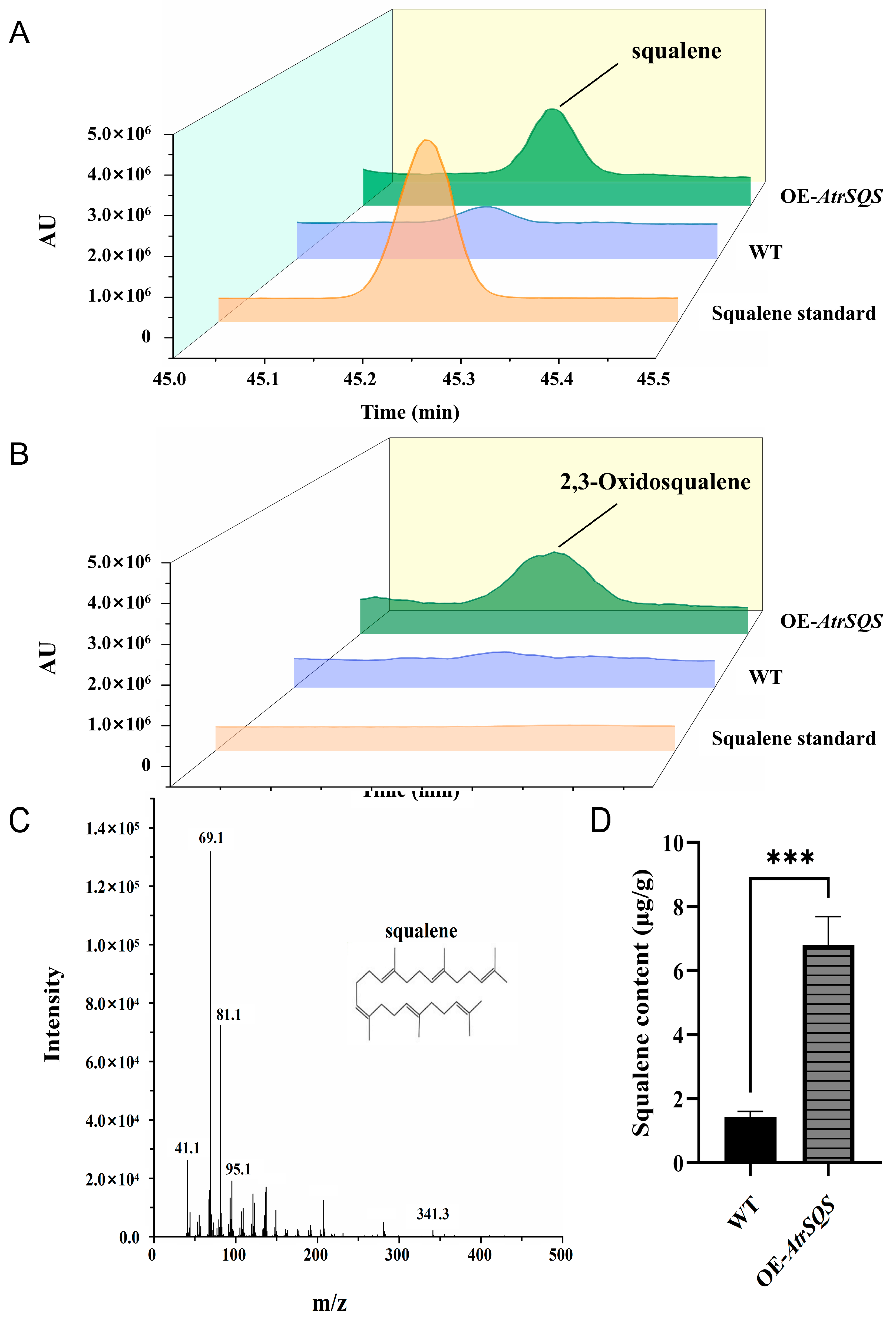
AtrSQS, squalene was extracted from the leaves of overexpression lines and subjected to GC-MS analysis, employing a squalene standard (≥98% pure) for calibration and n-hexane as a negative control. The chromatogram revealed peaks at the same retention time as the squalene reference in both wild-type (WT) K326 and transgenic lines (
Figure 4A), confirming the presence of squalene in all tested tobacco plants. Furthermore, the downstream product of squalene, 2,3-oxidosqualene, was also detected in all samples, with a peak time of approximately 49.95 min (
Figure 4B). Characteristic fragment ions consistent with an authentic squalene standard were observed in the mass spectra of the target peaks (
Figure 4C), further validating the identity of squalene in the samples. Quantitative analysis revealed that the average squalene content in the leaves of OE-
AtrSQS lines reached 6.81 μg/g dry weight (DW), which was significantly higher than that in WT plants (1.43 μg/g DW), representing a 4.76-fold increase. Notably, the 2,3-oxidosqualene content in OE-
AtrSQS lines was also significantly higher than that in WT plants, further supporting that
AtrSQS overexpression not only enhances squalene accumulation but also facilitates its efficient conversion toward downstream triterpenoid and sterol biosynthetic pathways. Collectively, these findings indicate that
AtrSQS overexpression significantly enhances squalene buildup in transgenic plants, confirming the functional activity of this gene in tobacco.
To explore how squalene biosynthesis is controlled at the expression level in OE-
AtrSQS lines, we conducted transcriptome sequencing on leaf tissues. The PCA plot (
Figure S3A) showed tight clustering of biological replicates, pointing to a high correlation among them. Across the six libraries, each sample produced on average 6.83 Gb of high-quality bases; the fraction of bases with a sequencing error rate below 0.1% (Q30) ranged from 96.54% to 96.99% (
Table S3). Reads that aligned to the reference genome averaged 96.99%, and the GC content spanned 42.15–43.59%. Together, these quality parameters confirmed that the RNA-seq dataset was reliable and ready for further investigation.
3.5. Transcriptome Sequencing of OE-AtrSQS Plants
In the OE-
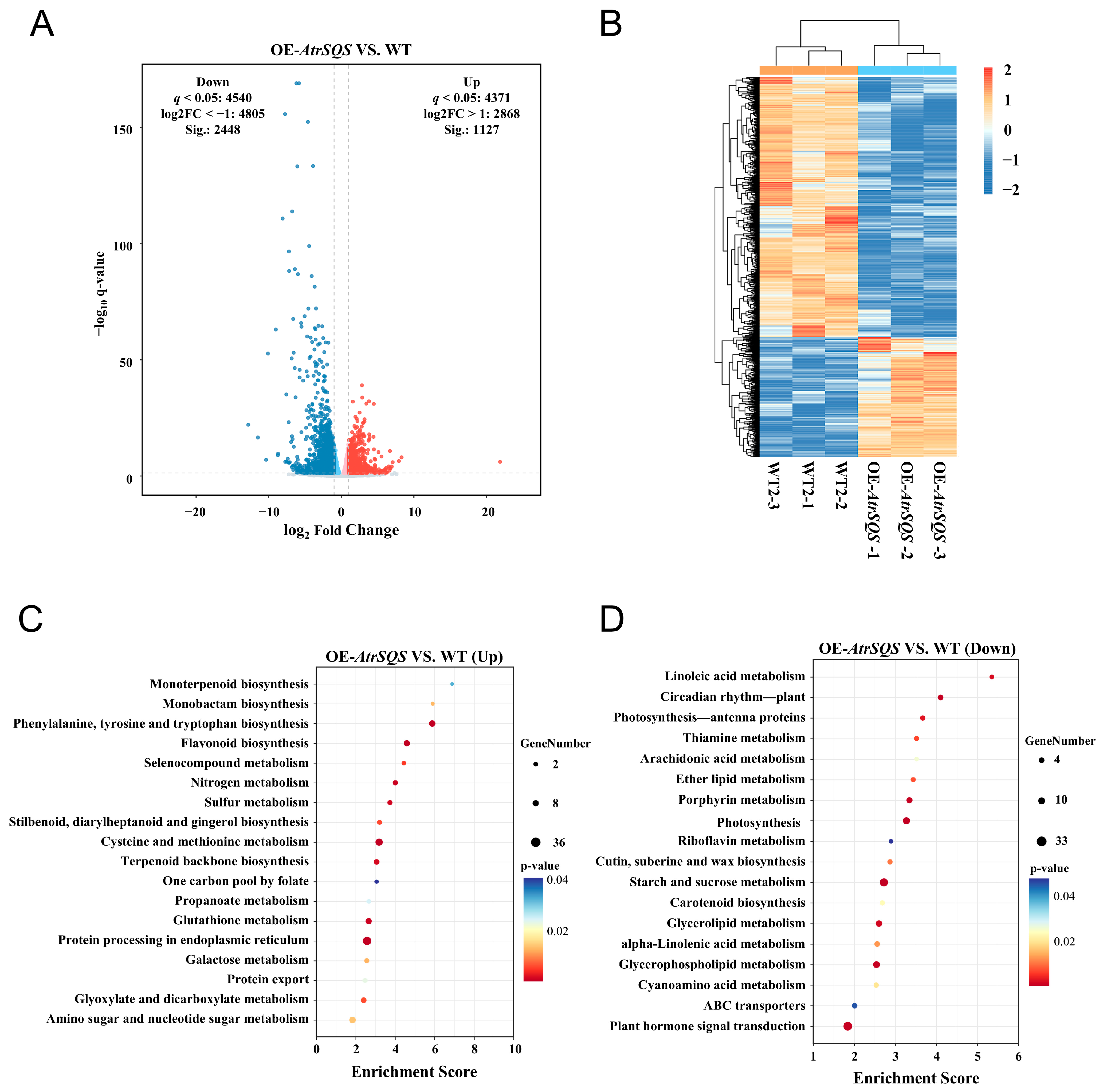
AtrSQS line relative to WT, 3575 DEGs were detected, consisting of 1127 genes with increased expression and 2448 genes with decreased expression (
Figure 5A). A heat map visualization demonstrated marked differences in transcript abundance between the two groups (
Figure 5B). These observations suggest that overexpression of
AtrSQS triggers substantial transcriptional reprogramming, reflecting its wide-ranging regulatory influence on plant metabolic or signaling networks.
KEGG pathway analysis of DEGs between OE-
AtrSQS and WT revealed that, among all DEGs, 107 pathways were enriched, 24 of which were significantly enriched (
Figure S3B). When only up-regulated DEGs were considered, 84 pathways were enriched, including 18 with significant enrichment. Most of these significantly enriched pathways participate in primary and secondary metabolism, including cysteine and methionine metabolism (nta00270), terpenoid backbone biosynthesis (nta00900), and monobactam biosynthesis (nta00261) (
Figure 5C). For down-regulated DEGs, 98 pathways were enriched, 18 of which were significantly enriched, such as starch and sucrose metabolism (nta00906), circadian rhythm (plant) (nta04712), and carotenoid biosynthesis (nta04075) (
Figure 5D). Based on the KEGG pathway enrichment analysis, the upregulation of the terpenoid backbone biosynthesis pathway, which directly leads to enhanced squalene production, indicates that overexpression of
AtrSQS successfully elevates squalene biosynthesis. The concurrent upregulation of monobactam biosynthesis and downregulation of carotenoid biosynthesis further support a coordinated metabolic shift towards enhancing secondary metabolite production, particularly within the terpenoid pathway.
3.6. Metabolomics Sequencing of OE-AtrSQS Plants
To holistically profile the metabolic alterations, a full-spectrum metabolomics analysis was conducted on the leaf samples from both the OE-
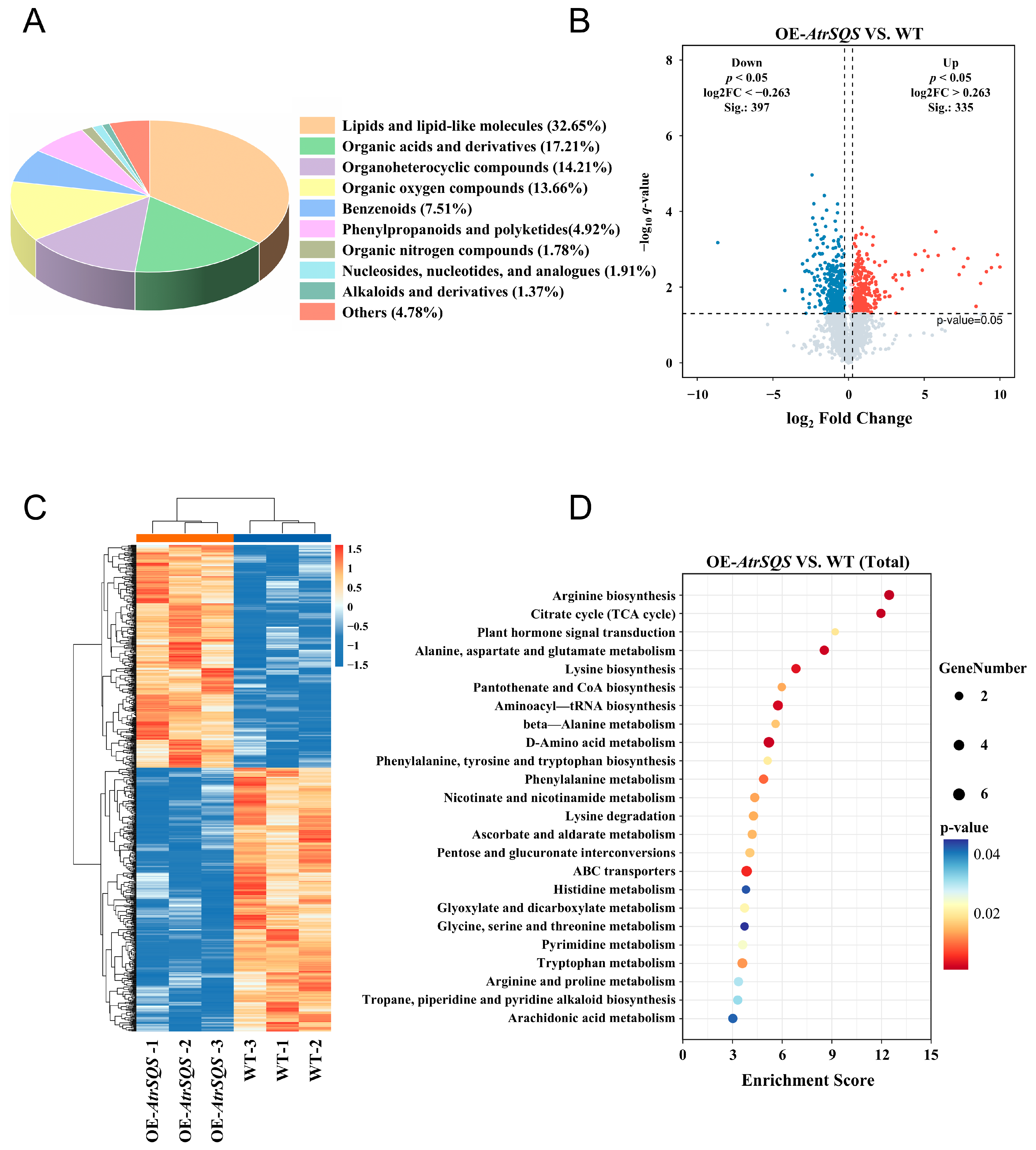
AtrSQS and WT groups. A total of 732 differentially accumulated metabolites (DAMs) were identified out of a total of 3446 detected metabolites, and these were classified into lipids and lipid-like molecules (32.65%), organic acids and derivatives (17.21%), organoheterocyclic compounds (14.21%), organic oxygen compounds (13.66%), benzenoids (7.51%), phenylpropanoids and polyketides (4.92%), organic nitrogen compounds (1.78%), nucleosides, nucleotides, and analogues (1.91%), Alkaloids and derivatives (1.37%), and others (4.78%), as shown in
Figure 6A. Among these metabolites, 335 were significantly enriched and 397 were depleted.
Hierarchical Clustering Analysis (HCA) results further validated the data quality and the distinct metabolic differences between groups (
Figure S4A). The Volcano plot of these DAMs also clearly showed distinct metabolic profiles between the OE-
AtrSQS and WT groups (
Figure 6B). The heat map demonstrated distinct metabolite profiles between the OE-
AtrSQS and WT groups (
Figure 6C).
KEGG analysis of differential metabolites between the OE-
AtrSQS line and WT yielded 67 enriched pathways in the total DAM set, with 24 being significantly enriched (
Figure 6D). Restricting to up-regulated DAMs gave 52 enriched pathways, 17 of which were significantly so. A considerable share of the enriched KEGG pathways concerned the synthesis, interconversion, and degradation of amino acids (illustrated by arginine, lysine, and tryptophan pathways) (
Figure S4B). As for down-regulated DAMs, 41 pathways were enriched, with only 7 pathways significant enriched, such as citrate cycle (nta00020), arachidonic acid metabolism (nta00590), and glyoxylate and dicarboxylate metabolism (nta00630) (
Figure S4C).
Critically, squalene itself was identified as a significantly enriched metabolite, confirming the success of AtrSQS overexpression. Together with the observed metabolic reprogramming, these data provide a systems-level view of how the host metabolism adapts to channel flux into the enhanced terpenoid backbone pathway, leading to the successful accumulation of the target product, squalene.
3.7. Identification of Key Transcriptional and Metabolic Alterations in the Squalene Biosynthesis Pathway
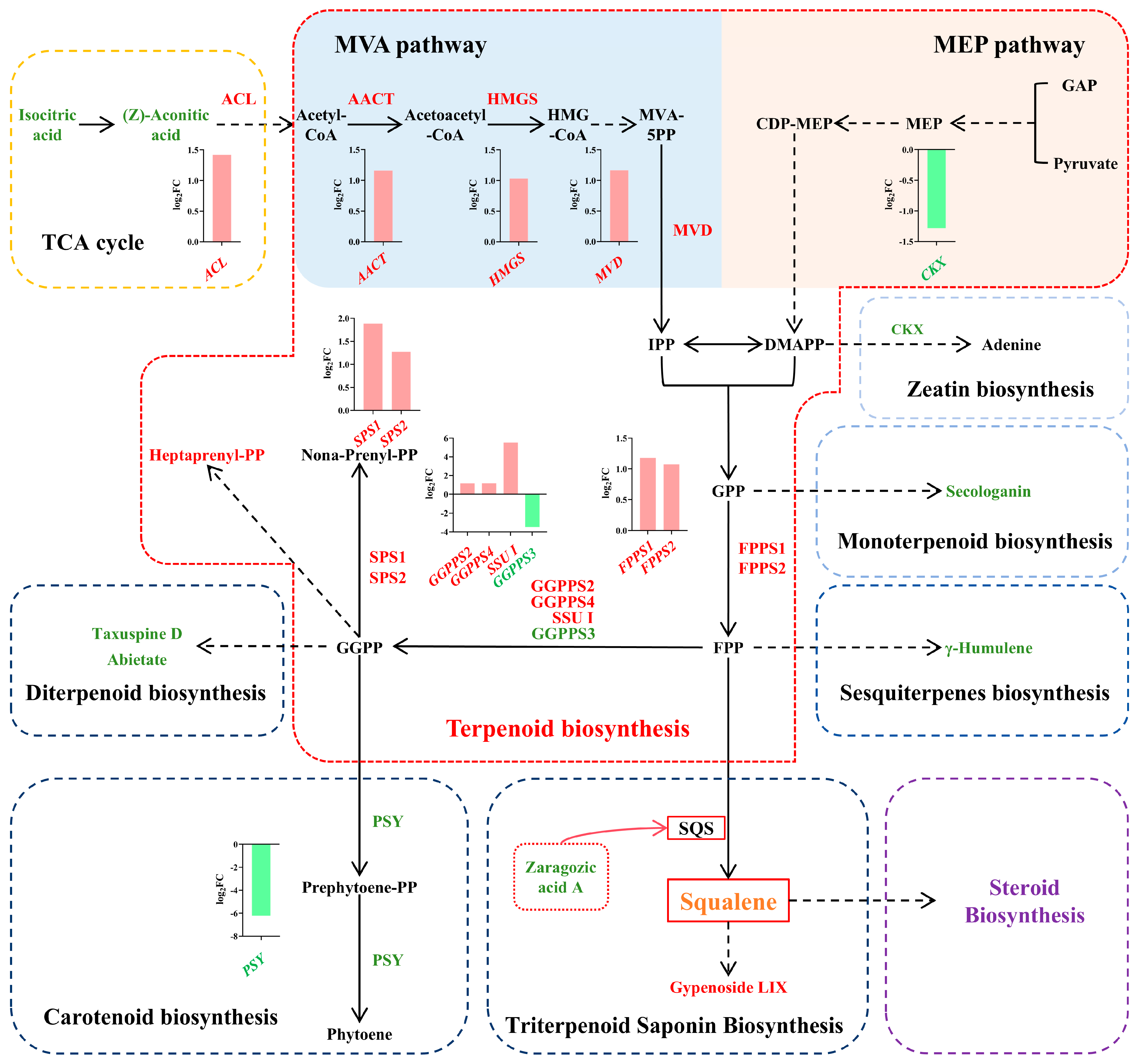
We analyzed DEGs and DAMs within the full terpenoid biosynthesis pathway (which is also involved in squalene synthesis) to better elucidate the role and mode of action of
AtrSQS (
Figure 7). Relative to the WT group, the OE-
AtrSQS group showed increased expression of ten genes in this pathway:
AACT,
HMGS, and
MVD from the MVA pathway, together with
FPPS1/
2,
GGPPS2/
4,
SSU I,
SPS1, and
SPS2 from the terpenoid biosynthesis pathway. By contrast, the up-regulation of
SSU I was exceptionally pronounced. Notably,
GGPPS3 in this pathway was significantly down-regulated. In contrast, genes involved in the MEP pathway showed no significant changes in expression. Furthermore, genes in related upstream and downstream pathways, such as
ACL,
CKX, and
PSY, also showed varying degrees of up- or down-regulation. In particular, a large number of genes in the steroid biosynthesis pathway were differentially expressed at different levels.
In addition, metabolomic results revealed significant alterations in the terpenoid metabolic network of the OE-AtrSQS group. Several key DAMs in the MVA and downstream terpenoid pathways were significantly altered. Notably, the level of Zaragozic acid A, a specific inhibitor of squalene synthase, was markedly reduced. Concurrently, several metabolites in the sesquiterpene and diterpene branches, such as γ-humulene, abietic acid, and specific ent-kaurane diterpenoids (e.g., ent-16b,19-Kauranediol 19-acetate), also showed significant down-regulation. In contrast, specific downstream triterpenoids (e.g., gypenoside LIX) and steroidal compounds showed an upward trend.
Integrated transcriptomic and metabolomic data reveal a coordinated upregulation of the terpenoid biosynthetic pathway in the OE-AtrSQS line. Specifically, upstream genes (e.g., AACT, HMGS, MVD) and the squalene synthase subunit gene SSU I were significantly upregulated, while the squalene synthase inhibitor Zaragozic acid A was markedly downregulated. Correspondingly, metabolomic profiling showed a decrease in sesquiterpenes and an accumulation trend in downstream triterpenoids/sterols. Moreover, the sterol biosynthesis pathway underwent significant reprogramming.
Validation of the transcriptomic data was performed using qRT-PCR, targeting four DEGs involved in squalene biosynthesis. A strong correlation was observed between the qRT-PCR-derived expression dynamics of the four genes (
AACT,
MVD,
HMGS,
GGPPS3) and their RNA-seq counterparts (
Figure S5), lending credence to the validity and trustworthiness of the transcriptomic dataset.
4. Discussion
In the present study, a squalene synthase gene, designated
AtrSQS, was identified in
Amaranthus tricolor for the first time. To elucidate its functional mechanism,
AtrSQS was heterologously overexpressed in tobacco, followed by integrated transcriptomic and metabolomic analyses to investigate the underlying molecular mechanisms [
35].
Amaranthus species are recognized as high squalene accumulators among plants [
22,
36]. To investigate the enzymatic activities of
AtrSQS in vivo, the gene was first codon-optimized and then stably transformed into tobacco. In transgenic tobacco plants,
AtrSQS exhibited significant overexpression, accompanied by a substantial increase in squalene content. Moreover, the content of 2,3-oxidosqualene, the direct downstream product of squalene produced by squalene epoxidase, was also significantly elevated in the transgenic lines, indicating that the enhanced squalene pool was efficiently channeled toward downstream triterpenoid and sterol biosynthesis pathways. This indicates that the introduced enzyme successfully redirected the tobacco FPP pool toward squalene synthesis, confirming its functional activity. Notably, compared to
WsSQS and
WsSQS2,
AtrSQS showed higher expression levels in tobacco, and the squalene content in its overexpression lines was 4.76-fold higher than in wild-type plants and 1.88-fold higher than in
WsSQS transgenic plants [
33]. These results demonstrate that
AtrSQS is a more efficient squalene synthase gene than
WsSQS and
WsSQS2.
Interestingly, homozygous progeny of tobacco (OE-
AtrSQS group) exhibited significantly higher seed germination rates and faster germination than WT plants. Previous studies have shown that squalene synthase activity increases significantly during the early stages of seed germination in
Pinus pinea, suggesting that overexpression of squalene may awaken seeds in advance and promote germination [
37]. Given that squalene serves as a key precursor for the biosynthesis of sterols and triterpenoids, and that sterols play important roles in regulating membrane integrity and hormone signal transduction during seed development and germination [
38], it is speculated that heterologous expression of
AtrSQS may enhance the accumulation of squalene and its downstream metabolites in seeds, thereby promoting the seed germination process.
Compared to the WT, 3575 DEGs and 732 DAMs were identified in OE-
AtrSQS group. This suggests that the introduction of
AtrSQS induced transcriptional reprogramming and metabolic restructuring. DEGs significantly activated key upstream pathways of squalene biosynthesis, most directly targeting terpenoid backbone biosynthesis, along with glyoxylate and dicarboxylate metabolism, sulfur metabolism, and cysteine and methionine metabolism. Interestingly, the monoterpenoid biosynthesis pathway, which represents a competing metabolic branch for precursor utilization, was also upregulated. Moreover, multiple pathways were coordinately down-regulated. Notably, the carotenoid pathway, which competes directly with squalene synthesis for FPP, was strongly suppressed. This down-regulation suggests that the highly active squalene biosynthetic pathway may compete with other native pathways for shared cytosolic precursor pools (e.g., acetyl-CoA), potentially leading to a systemic reallocation of cellular resources [
39]. More importantly, although the downstream steroid biosynthesis pathway was not significantly enriched, it was notably perturbed at the transcriptional level, with a substantial number of its constituent genes being differentially expressed, exhibiting both up- and down-regulation patterns.
Regarding the transcriptional and metabolic reprogramming associated with squalene biosynthesis, upstream carbon flux was enhanced, as indicated by decreased levels of isocitric acid and (Z)-aconitic acid in the TCA cycle, together with upregulation of
ACL. The lack of significant transcriptional changes in the MEP pathway is consistent with previous findings that the cytosolic MVA pathway serves as the principal source of FPP for sterol and triterpenoid biosynthesis, while plastidial MEP-derived precursors are primarily directed toward other isoprenoid branches [
17,
40]. In the mevalonate (MVA) pathway, key genes including
AACT,
HMGS, and
MVD were upregulated, and two
FPPS genes were also induced, collectively supporting increased farnesyl diphosphate (FPP) supply. The specific SQS inhibitor Zaragozic acid A at the committed step of squalene synthesis was downregulated, which likely contributes to the elevated squalene and downstream sterol levels (e.g., Gypenoside LIX) [
27]. Meanwhile, competition for FPP was reduced:
NtGGPPS3 was downregulated, and upstream terpenoids such as γ-humulene and abietic acid decreased, whereas
NtGGPPS2,
NtGGPPS4, and
NtSSU I were upregulated. Additionally, genes involved in carotenoid biosynthesis (
PSY) and cytokinin degradation (
CKX) were downregulated. Together with the reprogramming of sterol biosynthesis, these changes demonstrate a systematic rerouting of metabolic flux toward squalene and sterol production. The suppression of carotenoid biosynthesis is noteworthy as this pathway competes with sterol biosynthesis for common isoprenoid precursors; downregulation of PSY may therefore reflect a metabolic trade-off that favors squalene accumulation [
41].
Taken together, these results demonstrate that AtrSQS is a highly efficient squalene synthase that, upon heterologous expression in tobacco, not only markedly increases squalene and 2,3-oxidosqualene accumulation but also promotes seed germination, likely through enhanced sterol precursor supply. The multi-omics analyses further reveal a systemic metabolic reprogramming: AtrSQS activates upstream carbon flux and MVA pathway genes, upregulates FPPS, downregulates the specific inhibitor Zaragozic acid A, and simultaneously suppresses competitive branches such as carotenoid and certain terpenoid pathways. This coordinated redirection of metabolic resources explains the observed high squalene yield and provides a mechanistic framework for engineering triterpenoid production in plants.




 ,
,