Article

Culture of Flower Buds and Ovaries in Miscanthus × giganteus

by
Przemysław Kopeć
1,*,
Kamila Laskoś
1 and
Agnieszka Płażek
2
1
The Franciszek Górski Institute of Plant Physiology, Polish Academy of Sciences, Niezapominajek 21, 30-239 Kraków, Poland
2
Department of Plant Breeding, Physiology and Seed Science, University of Agriculture, Podłużna 3, 30-239 Kraków, Poland
*
Author to whom correspondence should be addressed.
Agronomy 2025, 15(4), 962; https://doi.org/10.3390/agronomy15040962

Submission received: 8 January 2025 / Revised: 3 March 2025 / Accepted: 14 April 2025 / Published: 15 April 2025
(This article belongs to the Section Horticultural and Floricultural Crops)

Abstract

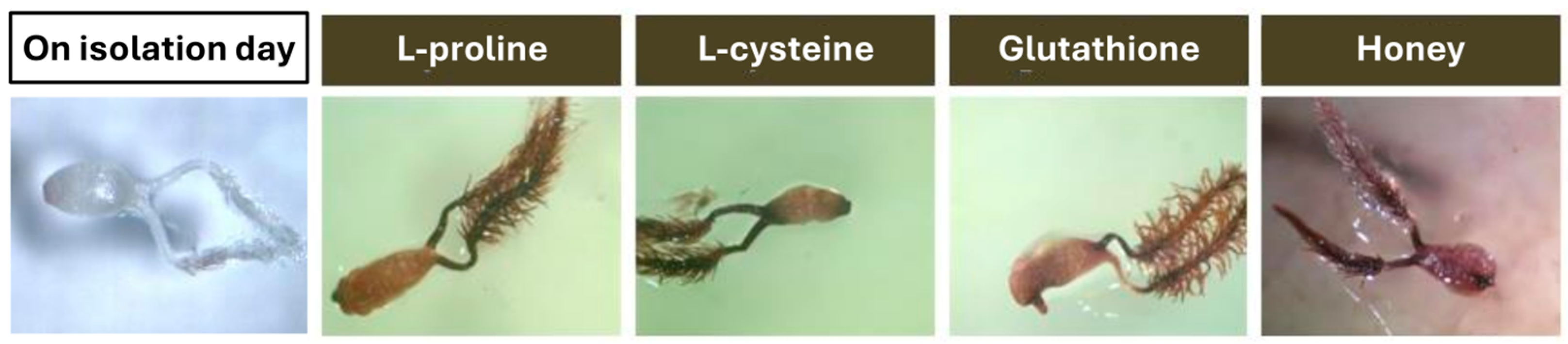
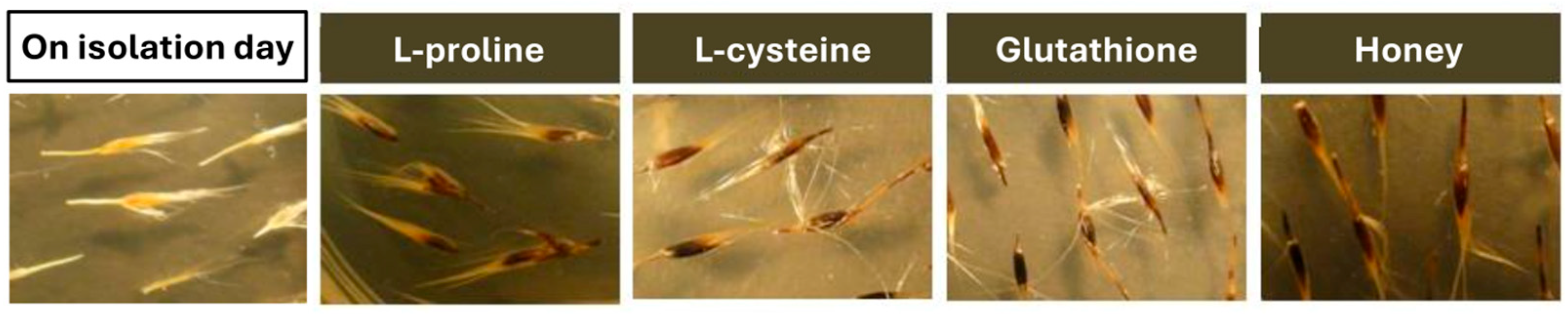
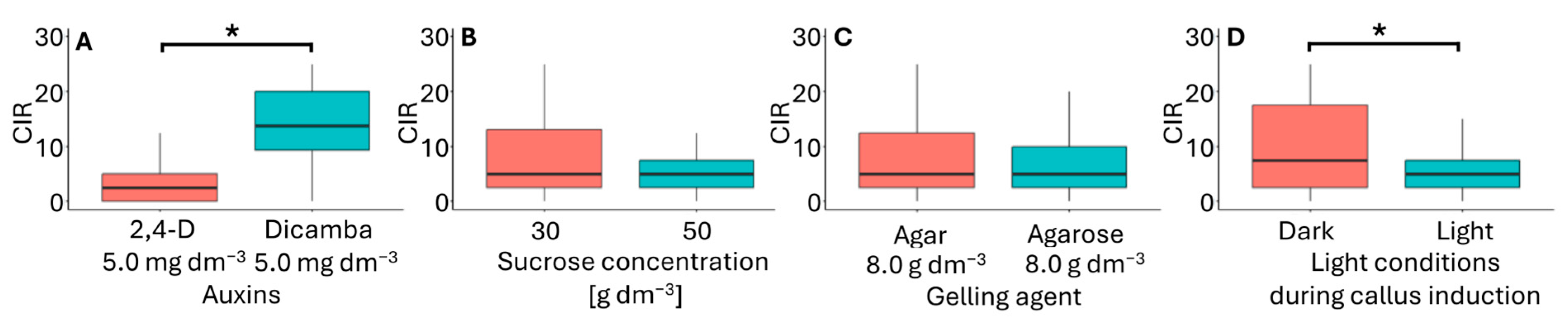
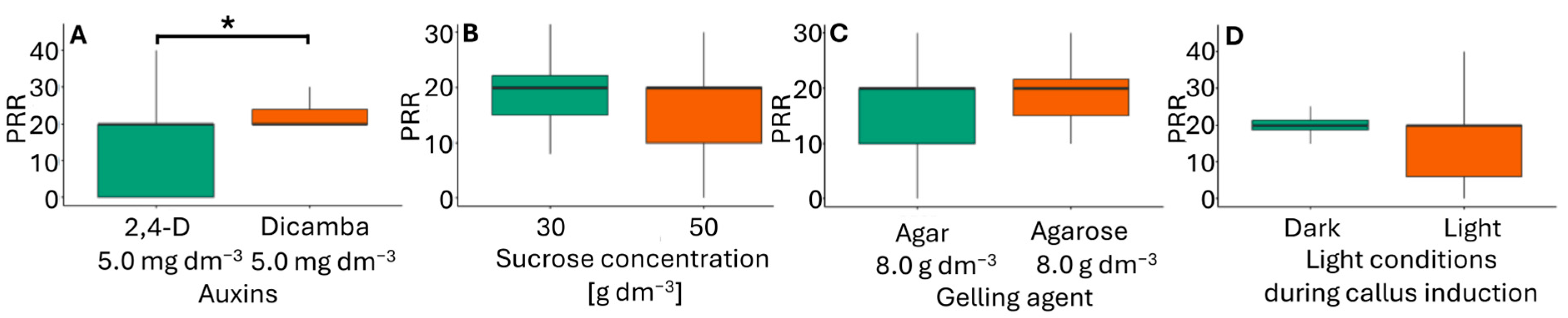
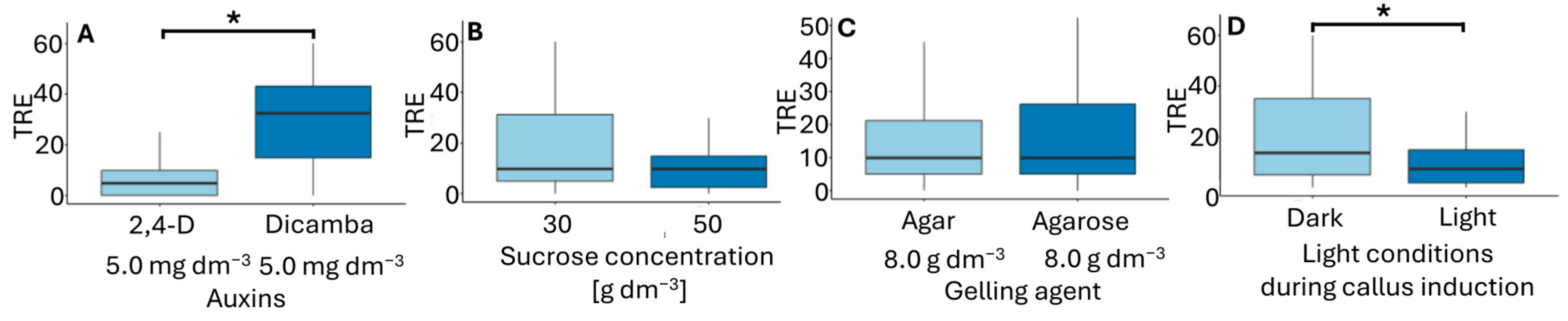
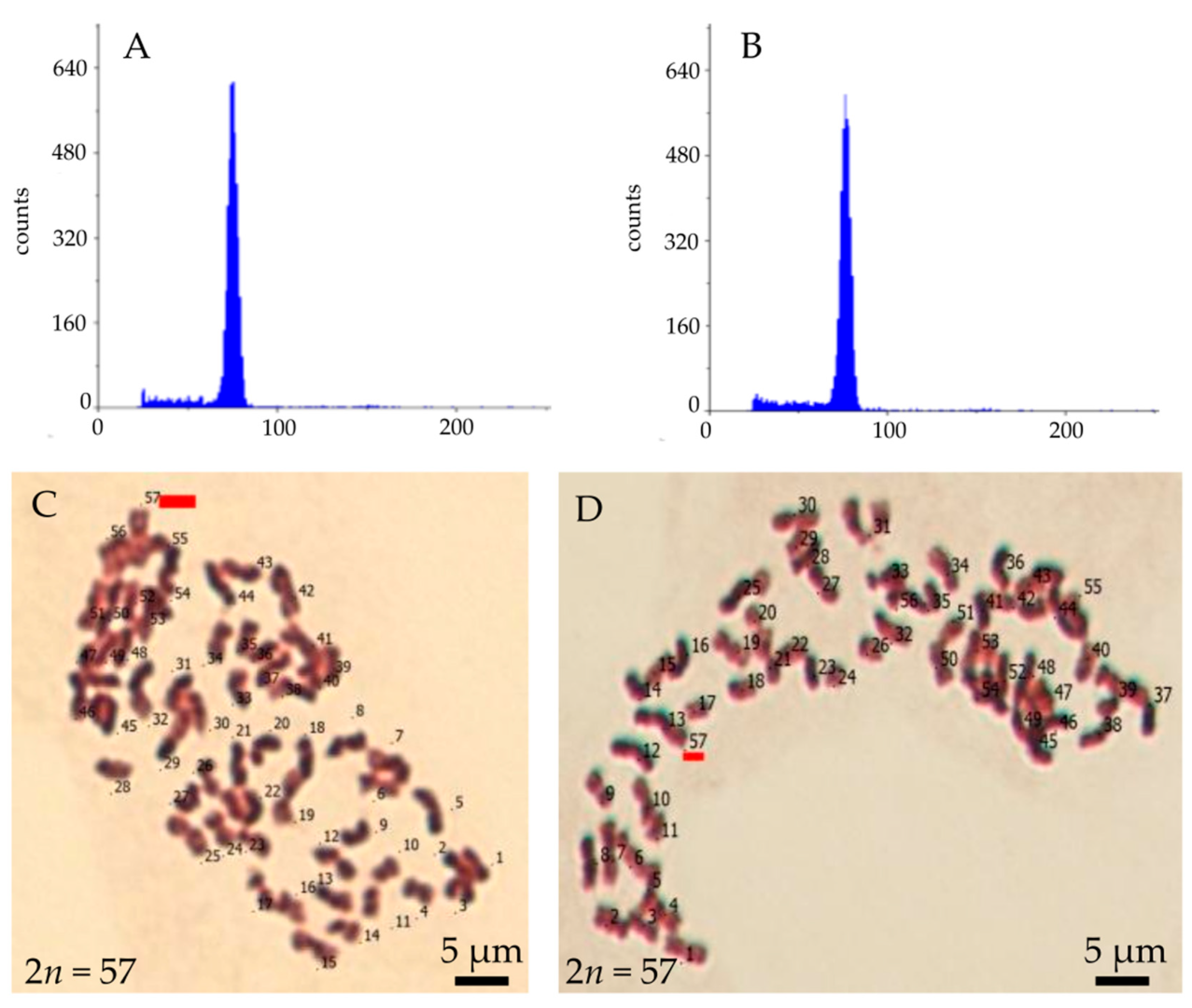
Miscanthus × giganteus (Greef and Deuter ex Hodkinson and Renvoize) is a perennial, rhizomatous grass that has gained significant attention as an industrial crop, particularly as a bioenergy feedstock. It is a natural interspecific hybrid with 57 chromosomes (2n = 3x = 57). Due to its sterility, M. × giganteus has limited genetic variability, making traditional breeding methods ineffective for its improvement. Consequently, alternative approaches are being explored to enhance its cultivation and utility. The study aimed to investigate the potential for M. × giganteus plant regeneration through ovary and flower bud cultures. Indirect in vitro regeneration of M. × giganteus plants was successfully achieved using flower bud cultures. Embryogenic-like callus was derived from explants originating from inflorescences that had undergone a four-day pretreating at 10 °C. The most effective medium for callus induction was a modified MS medium supplemented with 5 mg·dm−3 dicamba, 0.2 mg dm−3 6-benzylaminopurine, 30 g dm−3 sucrose, and solidified with 8 g dm−3 agar or agarose. The optimal conditions for callus induction were achieved by culturing in the dark. The regenerated plants exhibited the characteristic chromosome number of the species, confirming that the regenerants did not develop from embryo sac cells. In contrast, ovary culture failed to produce callus or regenerated plants, highlighting its ineffectiveness for M. × giganteus regeneration. These findings underscore the potential of flower bud culture as a successful in vitro regeneration method while demonstrating the limitations of ovary culture for this species.
Keywords: gynogenesis in vitro; Miscanthus; flower buds; ovaries; regenerants gynogenesis in vitro; Miscanthus; flower buds; ovaries; regenerants