
Article

Identification of Major QTLs and Candidate Genes Determining Stem Strength in Soybean

1
Department of Agronomy, Jilin Agricultural University, Changchun 130118, China
2
Key Laboratory of Molecular Epigenetics of the Ministry of Education (MOE), Northeast Normal University, Changchun 130024, China
3
Key Laboratory of Hybrid Soybean Breeding of Ministry of Agriculture and Rural Affairs, Soybean Research Institute, Jilin Academy of Agricultural Sciences, Changchun 130033, China
4
Baicheng Academy of Agricultural Sciences, Baicheng 137099, China
*
Authors to whom correspondence should be addressed.
These authors contributed equally to this study.
Agronomy 2025, 15(12), 2905; https://doi.org/10.3390/agronomy15122905
Submission received: 13 November 2025 / Revised: 11 December 2025 / Accepted: 13 December 2025 / Published: 17 December 2025

Abstract

Stem strength is a key factor influencing lodging resistance in soybeans and other crops. To identify quantitative trait loci (QTLs) associated with stem strength in soybean, we assessed the peak forces required to break a 20 cm stem base segment for each individual within a collection of 2138 plants from eight F2 and F3 segregating populations in 2023 and 2024. These populations were derived from four crosses between soybean varieties with contrasting stem strength. Most populations exhibited an approximately normal distribution of stem strength. Using BSA-seq, we identified 17 QTLs associated with stem strength from four populations. Among these, one QTL overlapped with a previously reported locus, while the remaining 16 represented novel loci. Notably, nine loci overlapped with known lodging QTLs, suggesting a genetic relationship between stem strength and lodging. Three QTLs were repeatedly detected in multiple populations, indicating their stability. Further linkage mapping with molecular markers confirmed these three stable QTLs. Among them, qSS10 and qSS19-2 were identified as major QTLs, refined to 1.06 Mb and 1.54 Mb intervals, with phenotypic variation explained (PVE) 23.31–25.15% and 14.21–19.93%, respectively. Within these stable QTL regions, we identified 13 candidate genes and analyzed their sequence variation and expression profiles. Collectively, our findings provide a valuable foundation for future research on stem strength in soybeans and reveal novel genetic loci and candidate genes that may be utilized for the genetic improvement of soybean lodging resistance and yield stability.

1. Introduction

Soybean (Glycine max (L.) Merr.) is one of the most important crops worldwide, serving as a primary source of plant-based protein and oil. It contributes approximately one-quarter of the global plant protein supply and more than half of all oilseeds used for both human and livestock consumption [1]. The global demand for soybeans continues to rise steadily, driven by population growth and improvements in living standards [2]. This trend underscores the urgent need to enhance soybean yields.
Increasing planting density has emerged as a promising strategy to boost soybean productivity [3,4]. However, lodging significantly reduces both seed yield and quality, particularly under high-density planting conditions [5,6,7]. The soybean lodging is a complex trait influenced by both genetic and environmental factors [8]. As the stem provides mechanical support throughout the plant’s life cycle, its mechanical properties are crucial determinants of lodging resistance [9]. Stem bending strength, in particular, is a critical trait that shows a positive correlation with lodging resistance [7]. Among various contributing factors, stem strength has been identified as the most important in conferring lodging resistance in soybean [10]. Enhanced stem bending resistance is consistently associated with improved lodging tolerance [7,9,10].
As an important indicator of lodging, the stem strength can be measured in various ways, with pushing resistance and stem breaking force being two commonly used assays [11]. The pushing resistance method measures the amount of force required to manually push a plant stem to a certain angle from a vertical position [12,13]. The stem breaking force method assesses the maximum force needed to break a segment of stem base [14]. Both types of stem bending strength, along with stem diameter, contribute to stem lodging which can occur at any point on the stem due to weakened stem bending strength.
Quantitative trait locus (QTL) mapping has been widely employed to elucidate the genetic basis of complex traits in soybeans. However, only a limited number of QTLs related to stem strength have been reported. Eight QTLs for stem bending strength from the study by Chen et al. (2011) have been documented in SoyBase (https://legacy.soybase.org/, accessed on 21 October 2025), including one stable QTL detected across three environments and seven environment-specific QTLs, all identified using a population of 165 recombinant inbred lines (RILs) [13]. Most of QTLs for stem strength overlapped with those for other stem traits, such as stem diameter and number of nodes, indicating their pleiotropic effects [13]. With the advancement of sequencing technologies, next-generation sequencing (NGS)-based approaches have become increasingly prevalent in QTL research. A genome-wide association study (GWAS) on a diverse panel of 130 Canada soybean varieties identified two major QTLs for stem pushing resistance on chromosome 5 and chromosome 7, and each QTL accounted for 16% phenotypic variation [12]. A recent study identified a major QTL for stem breaking force using both QTL mapping and GWAS, explaining 22% phenotypic variations, within a 0.2 Mb genomic interval on chromosome 17, containing 15 genes [14]. Another GWAS reported two QTLs for pushing resistance located on chromosomes 5 and 11 [12].
The mechanical strength of the stem is largely determined by the composition and accumulation of cell wall components, particularly cellulose and lignin [15,16,17]. Increased levels of these components are positively correlated with stem strength in several major crops, including rice, wheat, maize, and soybean [17,18,19,20]. In soybean, shading stress has been shown to reduce the content of soluble sugars, sucrose, lignin, and cellulose, leading to decreased stem strength [17]. Conversely, shade-tolerant soybean varieties exhibit higher cellulose accumulation and enhanced activity of related biosynthetic enzymes, resulting in improved basal internode strength and enhanced lodging resistance [21].
Recently, several genes involved in regulating stem strength and lodging resistance have been characterized. The Creeping Stem 1 (CS1) gene, located on chromosome 19, has been revealed to play a crucial role in conferring stem strength and lodging resistance in soybeans [22]. Loss of CS1 function disrupts polar auxin transport, vascular bundle development and the biosynthesis of cellulose and lignin, ultimately leading to premature lodging and aberrant root development [22]. Another gene, Lodging-related Mutant 3 (LRM3), located on chromosome 18, encodes a U-box domain-containing E3 ubiquitin ligase that regulates stem strength by interacting with MYB6 and promoting its degradation via the 26S proteasome [23]. MYB6 binds to the promoter regions of PHENYLALANINE AMMONIA LYASE 1 and 2 (PAL1, 2) and represses their expression, downregulating lignin biosynthesis and thereby reducing stem strength [23].
Bulked segregant analysis sequencing (BSA-seq) has emerged as a popular method for mapping QTLs in crop species, owing to its reliability and efficiency in detecting QTLs without the necessity for prior marker development [24,25]. It is primarily used to detect QTLs with major effects in early generations, such as F2 or F3, and has gained popularity as a method for mapping QTL in crop species [26,27,28]. However, BSA-seq has several limitations compared to traditional QTL mapping methods, including limited power in detecting QTLs with minor effects and inability to estimate allelic effect sizes or interactions. To mitigate these shortcomings, recent studies have integrated BSA-Seq with linkage mapping and RNA-seq to enhance identification of QTL and candidate genes [28,29,30,31].
Despite the importance of stem strength in soybean development and agricultural performance, the underlying genetic and molecular mechanisms remain poorly understood. In this study, we compared stem strength among six soybean varieties and investigated the inheritance of stem strength in eight F2/F3 populations derived from four crossing combinations. A total of 17 QTLs associated with stem strength were identified using bulked segregant analysis sequencing (BSA-seq), and three stable QTLs were further validated through molecular marker analysis and linkage mapping. By integrating gene annotation data with RNA-seq analysis, we identified 13 candidate genes located within stable QTL intervals that may contribute to stem strength in soybean.

2. Materials and Methods

2.1. Plant Materials, Growth Condition and Phenotyping

The six soybean advanced breeding lines and varieties, GMX333, GMX398, GMX441, H5147, J2307, and SUZUMARU (SUZU), were obtained from the germplasm collection of the Jilin Academy of Agricultural Sciences (JAAS). Four crosses were generated between varieties exhibiting significant differences in stem strength: GMX333 × GMX398 (C1), GMX441 × GMX398 (C2), H5147 × SUZU (C3), and J2307 × SUZU (C4). In 2023, the four F2 populations (C1-F2, C2-F2, C3-F2, C4-F2), along with their respective parental lines, were cultivated at the Fanjiatun Experimental Station of JAAS (Tables S1 and S2). In 2024, plants of four F3 populations (C1-F3, C2-F3, C3-F3, C4-F3) were grown under field conditions at the same location (Tables S1 and S2). Leaf samples were collected from each individual plant for downstream analysis. The plants of each population were arranged in blocks of rows, with row length of 5 m and row-spacing of 0.65 m. The parental lines were planted in an adjacent block of three rows with same dimensions and spacing. Once mature, the plants were harvested and stored in a ventilated room for approximately two weeks to ensure a uniform hydration state. Stem strength was evaluated by measuring the peak force required to break a 20 cm segment from the base of the stem using a plant stem strength tester (TP-YYD-1, Zhejiang Top Instrument Co., Ltd., Hangzhou, China). For each plant, a 20 cm stem segment above the cotyledon trace was placed in the instrument, and the maximum force (N) was recorded as the probe was pressed vertically onto the middle of the stem until it broke.

2.2. DNA Extraction and Sequencing

When the field-grown plants developed five trifoliate leaves, a plastic tag with a unique ID was attached to each plant. Fresh leaves were then harvested, frozen in liquid nitrogen, and stored in a refrigerator at −20 °C. Genomic DNA was extracted from young leaves of the six parental varieties and individuals from the eight populations using the PlantZol Kit (EE141-01, TransGen Biotech Co., Beijing, China), following the manufacturer’s instructions (https://www.transgen.com/, accessed on 10 November 2025). Whole-genome sequencing of five parental varieties was performed on the DNBSEQ-T7 platform using a 150 bp paired-end strategy, obtaining approximately 10× coverage per sample (~10 Gb of clean data per sample). For the parental variety SUZU, previously published whole-genome sequencing data were downloaded [32]. High and low bulks were selected from 363, 385, 243, 193 plants in C1-F2, C2-F2, C3-F3, C4-F3, respectively. Due to the relatively small population size (193–363), 25 individuals with the highest stem strength and 25 with the lowest were selected based on phenotypic data from the F2 or F3 population. The mean and standard deviation of each pool are shown in Table S3. Two DNA pools were constructed per cross by mixing equal amounts of DNA from the selected individuals. Over 30 Gb of clean data were sequenced for each pool to ensure adequate sequencing depth for further analysis (Table S4).

2.3. Analysis of Genomic Variants Between the Parental Varieties

Genomic variant analysis was performed using the pipeline established in the previous study [32]. Briefly, raw DNA sequencing reads were filtered and trimmed using Trimmomatic (version 0.39) with the parameter “LEADING:5 TRAILING:5 HEADCROP:10 MINLEN:75” [33]. Clean reads from each pair of parental varieties were aligned to the Glycine max Williams 82 reference genome (Phytozome v13, Wm82.a4.v1) using BWA-MEM with default parameters [34]. Variant calling and genotyping were conducted in GATK (version 4.1.3.0) with “HaplotypeCaller” and “GenotypeGVCFs” functions and in BCFtools (version 1.15.1) with “mpileup” and “call” functions, respectively. Only overlapping SNPs identified by both tools were retained and further filtered using VCFtools (version 0.1.16) [35]. Biallelic SNPs and InDels were functionally annotated using snpEff (version 5.0c) [36]. In addition, InDels ranging from 50 to 200 bp were identified using Manta (version 1.6.0) [37] and subsequently used for InDel marker development.

2.4. Analysis of BSA-Seq Data and Preliminary Identification of QTLs

For each cross, raw sequencing data from high-bulk and low-bulk DNA pools were preprocessed and mapped using the same pipeline as described for the parental varieties. Based on the identified biallelic SNPs between parents, allele-specific read counts were obtained using CollectAllelicCounts from GATK (version 4.1.3.0). SNPs were filtered for minimum read depth 15 in each bulk and minimum total read depth 30 across both bulks. The ΔSNP-index and confidence interval were calculated using the method described in Takagi et al. (2013) [25]. The G’ analysis was performed with 1Mb window size in the QTLseqr package (version 0.7.5.2) [38]. Benjamini–Hochberg false discovery rate (FDR) adjusted p-values were calculated for each SNP [38]. The G′ q-value < 0.01 and SNP index confidence interval > 0.95 were used as the thresholds to identify QTLs, any windows with fewer than 5 SNPs were excluded. Identified QTLs were named using the format “qSS” (for stem strength), followed by the chromosome number and a sequential identifier (e.g., qSS2-1).

2.5. RNA Extraction, Sequencing and Analysis

Stem segments located between the second and third trifoliate leaves at the V3 developmental stage were collected from each soybean variety. For each variety, stems from five individual plants were pooled to constitute one biological replicate, and three biological replicates were prepared per variety. Fresh stem tissues were immediately frozen in liquid nitrogen and ground into a fine powder. Total RNA was extracted using Tripure Isolation Reagent (Roche Diagnostics, Mannheim, Germany) according to the manufacturer’s instructions. RNA-seq libraries were constructed and sequenced on the BGI T7 platform using a 150 bp paired-end strategy at Shanghai Personalbio Technology Co., Ltd. (Shanghai, China). Approximately 6 Gb of clean data were generated per replicate. Clean reads were aligned to the soybean reference genome (Glycine max Wm82.a4. v1, Phytozome v13) using HISAT2 (version 2.2.1). Gene-level read counts were obtained using featureCounts (version 2.0.1). Differentially expressed genes (DEGs) were identified using DESeq2 (version 1.34.0), with significance thresholds set at a false discovery rate (FDR)-adjusted p-value < 0.05 [39]. Gene Ontology (GO) enrichment analysis was performed using a one-tailed hypergeometric test, and p-values were adjusted for multiple testing using the FDR method. GO terms with adjusted p-values < 0.05 were considered significantly enriched.

2.6. Linkage Mapping and Candidate Gene Exploration

Primers for InDel markers were designed based on the flanking sequences of large InDels identified between parental varieties. Marker validation was performed using 1.5% agarose gel electrophoresis. To validate QTL regions, individuals from the F2 and F3 populations were genotyped using these markers (Table S5). Linkage map construction and QTL mapping were conducted using IciMapping (version 4.2.53) [40]. Briefly, the distance between markers were calculated using “MAP” function in IciMapping and marker orders were manually checked. The “ICIM-ADD” method with default parameters (1cM step and 2.5 LOD threshold) was used for QTL analysis. The left and right 95% confidence interval was calculated by one-LOD drop. For each identified QTL, annotated genes located within the flanking markers of the 95% confidence interval were retrieved from the reference genome. To identify potential candidate genes, BLASTp searches were performed against the Arabidopsis thaliana protein database to find homologous genes. Genes with known functions, or those whose Arabidopsis homologs are associated with stem strength or related traits, were selected as candidate genes for further investigation.

2.7. Statistical Analysis

Descriptive statistics and the Shapiro–Wilk test for normality of stem strength in each population were calculated in R (version 4.5.2). The skewness and kurtosis were calculated using “e1071” package. In the analysis of variance among six parental varieties across different years, the stem strength was treated as the response variable, and the variety, environment (years), and the interactions between the variety and the year were treated as factor variables using the following formular: Stem strength ~ Variety + Year + Variety*Year.

3. Results

3.1. Comparative Analysis of Stem Strength Among Six Soybean Varieties

Stem breaking strength was measured for six soybean varieties over two consecutive years, 2023 and 2024 (Table S1). The stem strength ranged from 37.72 N to 84.46 N in 2023, and from 30.67 N to 109.38 N in 2024, showing considerable variation among the tested varieties (Table S1). To assess the influence of year, genotype, and their interaction on stem strength, we performed an analysis of variance (ANOVA). The results indicated that all three factors had statistically significant effects on stem strength (p < 0.01, Figure 1; Table S6). In addition, we compared stem strength between the parental lines of the four biparental crosses used for further mapping population development (GMX333 vs. GMX398, GMX441 vs. GMX398, H5147 vs. SUZU, J2307 vs. SUZU). The results revealed significant differences in stem strength between the parental lines for all crosses in both years (t-test, p < 0.01; Table S6), suggesting that stem strength is primarily governed by genetic factors in these varieties.

3.2. Analysis of Stem Strength Variation in Four Segregating Populations

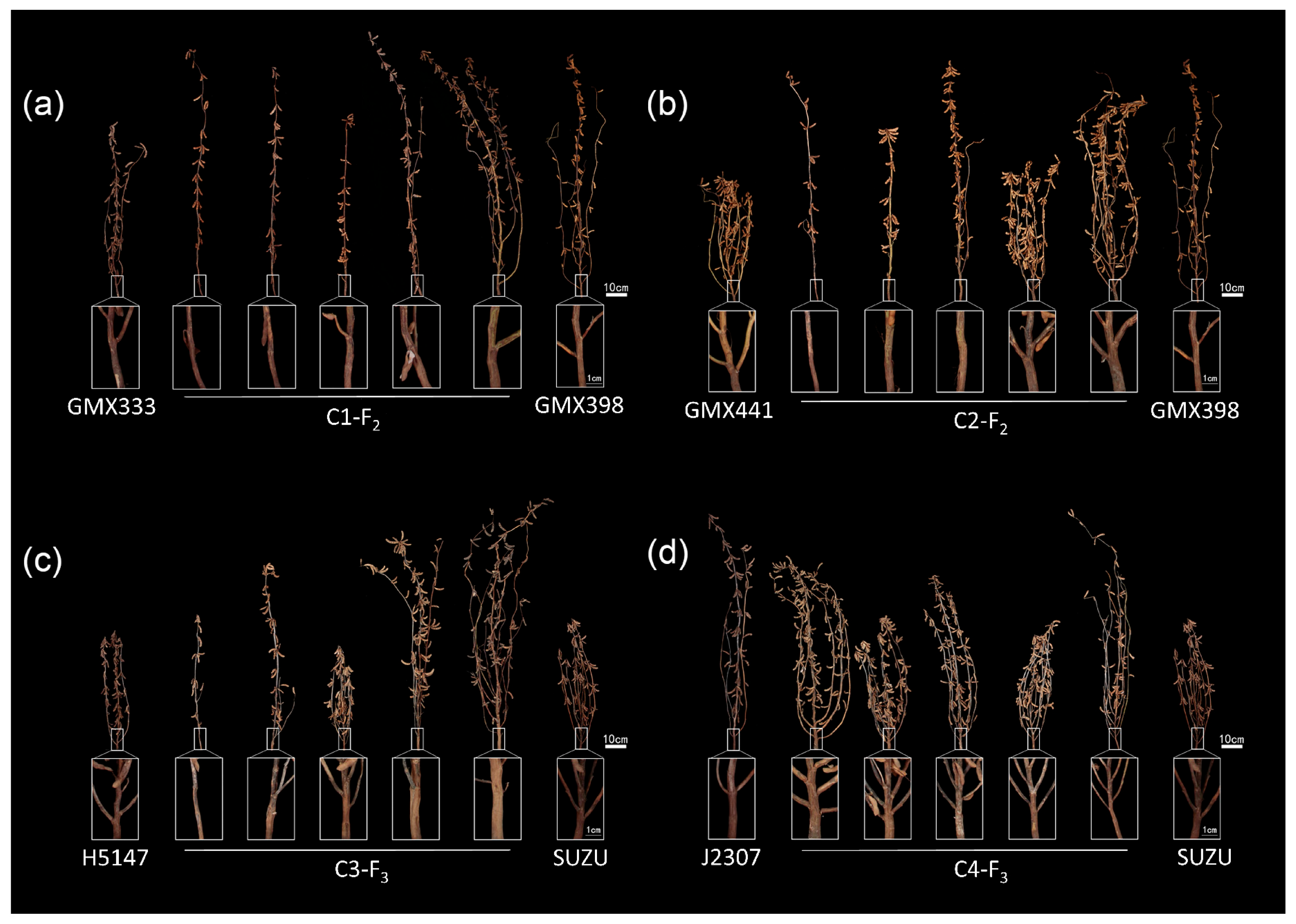
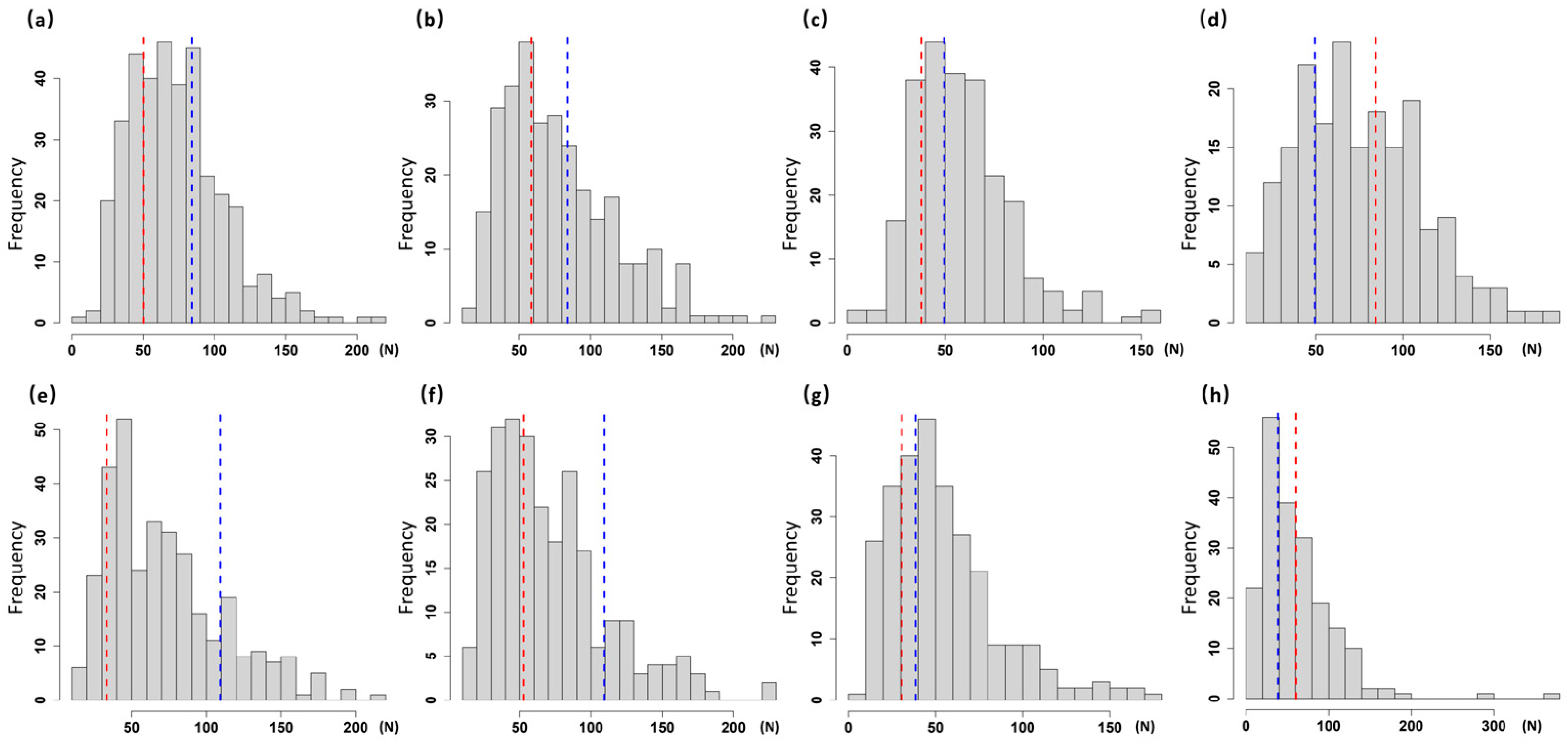
Stem strength was measured in a total of 2138 individual plants from F2 and F3 generations of four biparental crosses during the 2023 and 2024 growing seasons. All eight resulting populations exhibited continuous variation in stem strength, indicative of quantitative inheritance (Figure 2 and Table S2). In 2023, the C2-F2 population exhibited the highest mean stem strength (77.8 N), while the C3-F2 population had the lowest mean value (58.3 N). In 2024, the C1-F3 population showed the highest mean stem strength (72.3 N), whereas the C3-F3 population recorded the lowest mean (54.2 N). Normality of stem strength distribution was assessed using the Shapiro–Wilk test. The test results were statistically significant (p < 0.05) for all populations, indicating deviations from the normal distribution. However, in most populations, the absolute skewness values were close to or less than 1, and kurtosis values were below 3-except for the C4-F3 population, which showed higher skewness (2.6) and kurtosis (11.4) (Table S2). These results suggest that the stem strength distributions in most populations were approximately normal, consistent with the observed frequency histograms (Figure 3).

3.3. Identification of Genetic Loci for Stem Strength Through BSA-Seq

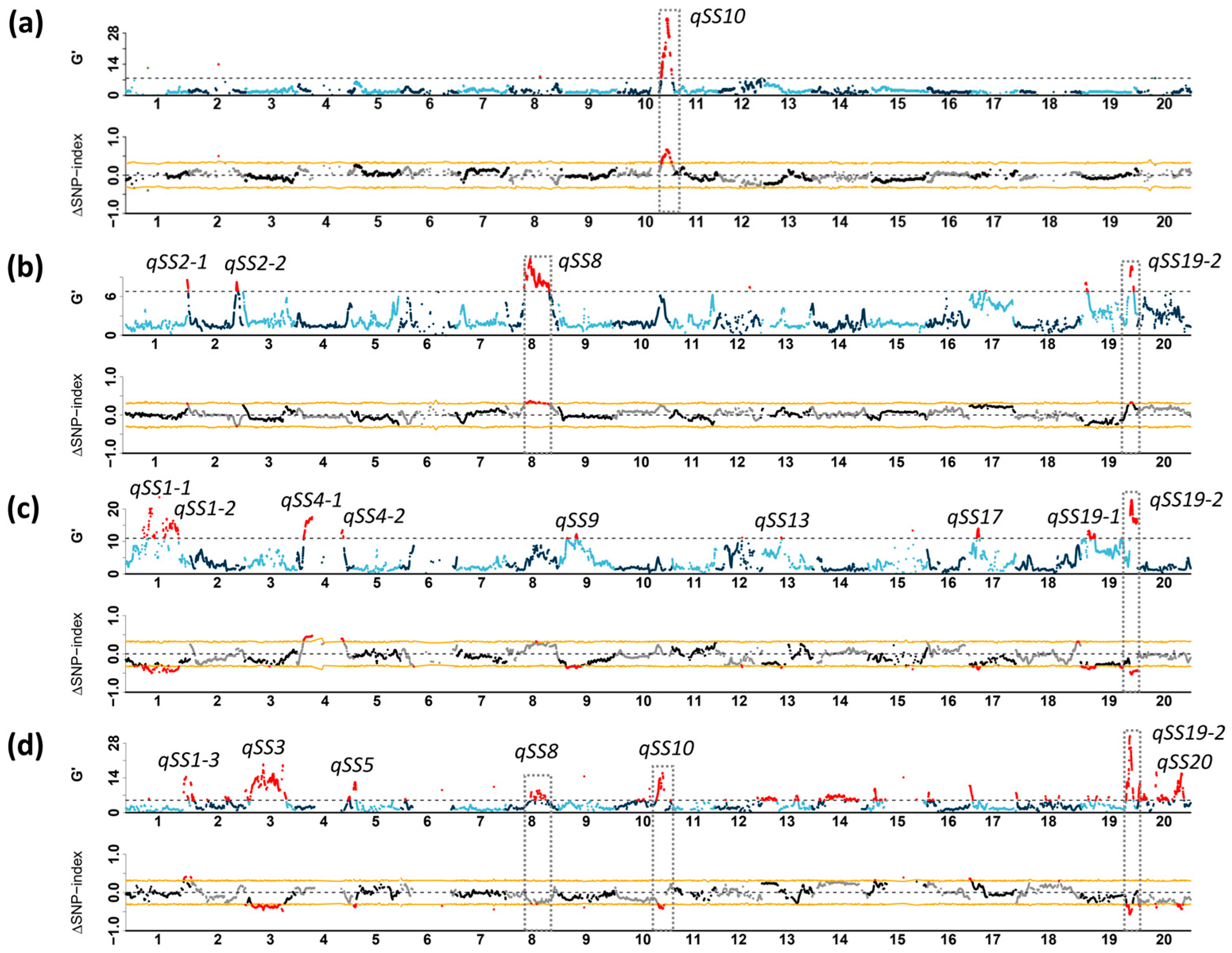
A total of 17 genetic loci associated with stem strength were identified in the offspring populations of the four crosses using BSA-seq, employing two analytical strategies: the G’ method and the ΔSNP-index method (Table 1 and Table S7). The physical intervals of these loci ranged from 0.24 Mb to 32.33 Mb. Among them, 15 loci were consistently detected by both methods and showed substantial overlap, while the remaining two loci were characterized by large contiguous regions identified using the G’ method and multiple smaller segments identified using the ΔSNP-index approach. Notably, three QTLs, qSS8 (16.66–39.21 Mb on chromosome 8), qSS10 (39.93–49.31 Mb on chromosome 10), and qSS19-2 (40.42–51.23 Mb on chromosome 19), were consistently detected across multiple populations (Figure 4 and Figure S1). Specifically, qSS8 was identified in two populations (C2-F2 and C4-F3), qSS10 in two populations (C1-F2 and C4-F3), qSS19-2 in three populations (C2-F2, C3-F3 and C4-F4), indicating their potential stability and significance (Figure 4 and Figure S1, Table 1 and Table S7).
Comparative analysis with previously reported QTLs for stem strength revealed that qSS4-1 overlapped with a known QTL, uq.C1-1, reported by Chen et al. [13], while the remaining 16 QTLs represent novel discovered loci. Further comparison with QTLs documented in SoyBase for stem diameter and lodging resistance showed that nine of the identified QTLs overlapped with known lodging-related QTLs [41,42,43,44,45,46,47,48,49], and three overlapped with QTLs for stem diameter [50,51,52] (Table S8). These overlaps suggest possible pleiotropic effects and highlight the potential utility of these loci in soybean breeding programs aimed at improving structural robustness and lodging resistance.

3.4. Linkage Mapping of Three Stable QTLs

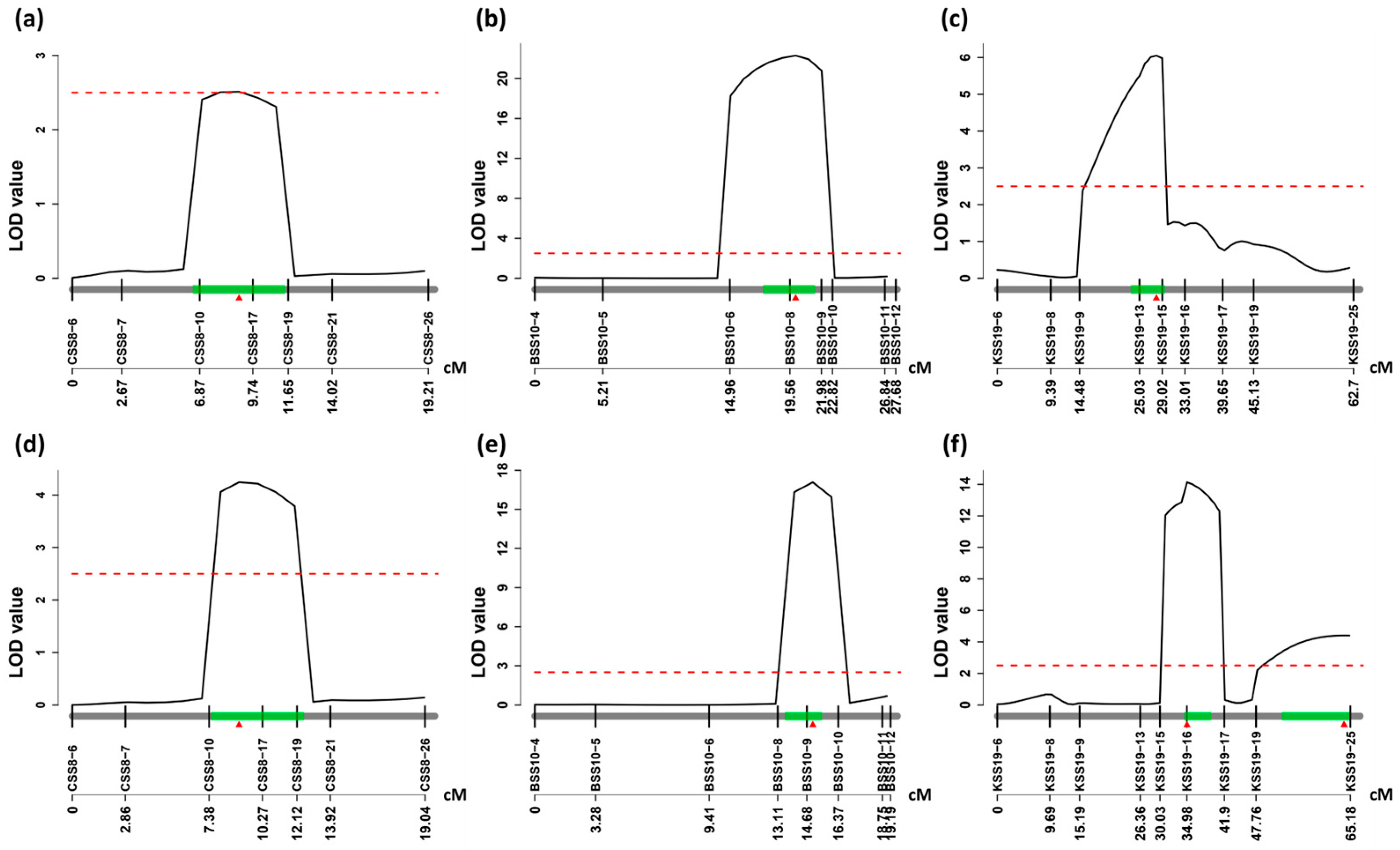
To further validate and refine the three most stable QTLs, we performed linkage mapping using InDel markers. For qSS8, seven InDel markers were used for linkage mapping in both the C2-F2 and C2-F3 populations (Figure 5a,d; Table 2 and Table S5). A single QTL was consistently detected between markers CSS8-10 and CSS8-17 in both populations. The LOD scores were 2.51 in the C2-F2 population and 4.24 in the C2-F3 population, with corresponding phenotypic variance explained (PVE) of 5.65% and 9.07%, respectively. In this QTL, the high stem strength parental variety GMX398 contributed alleles that positively affect stem strength in both the C2-F2 and C2-F3 populations. Based on the C2-F3 population, the 95% confidence interval for qSS8 was refined to the region between CSS8-10 and CSS8-19, corresponding to a 4.68 Mb interval on chromosome 8.
In the candidate region of qSS10, eight InDel markers were applied for linkage mapping in the C1-F2 and C1-F3 populations (Figure 5b,e; Table 2 and Table S5). The QTL was mapped between BSS10-8 and BSS10-9 in the F2 population, and between BSS10-9 and BSS10-11 in the F3 population. The LOD scores were 22.30 and 17.08 in the F2 and F3 populations, respectively, with corresponding PVE of 25.15% and 23.31%. The allele from the high stem strength parental variety GMX398 exhibited positive effects on stem strength in both the C1-F2 and C1-F3 populations. The 95% confidence interval for qSS10 was defined between BSS10-6 and BSS10-9, narrowing the QTL region to a 1.06 Mb interval on chromosome 10.
For qSS19-2, one QTL was identified in the C4-F2 population between markers KSS19-13 and KSS19-15, with a LOD of 6.05 and a PVE of 14.21% (Figure 5c,f; Table 2 and Table S5). The J2307 alleles contributed positively to stem strength in this population. In the C4-F3 population, two QTLs were detected: one between markers KSS19-16 and KSS19-17, with a LOD of 14.13 and PVE of 19.93%, where the J2307 alleles had a positive effect, and another between markers KSS19-19 and KSS19-25, with a LOD of 4.40 and PVE of 5.70%, where the SUZU alleles contributed positively to stem strength. Based on these results, the 95% confidence interval for qSS19-2 was defined between markers KSS19-15 and KSS19-17, corresponding to a 1.54 Mb region on chromosome 19. These findings further support the significance of the three stable QTLs in regulating stem strength in soybeans. Notably, qSS10 and qSS19-2 are major QTLs (PVE > 10%) in their respective populations, underscoring their potential utility in marker-assisted selection for improving lodging resistance in soybean breeding programs.

3.5. Genetic Variation and Expression Differentiation in Candidate Genes of Stable QTLs

To further explore the genetic basis underlying the three stable QTLs, we analyzed the genes located within the 95% confidence intervals defined by linkage mapping. A total of 98, 102, and 162 genes were identified within the qSS8, qSS10, and qSS19-2 regions, respectively. Among these, 13 genes had homologs in Arabidopsis thaliana known to be involved in processes critical for stem strength, e.g., lignin biosynthesis, cellulose synthesis, pectin synthesis, xylem development, and cell wall formation (Table 3).
In the qSS8 region, five candidate genes were identified. One of these has an Arabidopsis homolog that regulates fiber length and lignin content in stems. The remaining four genes have homologs implicated in the regulation of cell wall synthesis and composition (Table 3). In the qSS10 region, five genes were identified with putative functions related to lignin biosynthesis, xylem differentiation, and cellulose synthesis, suggesting their potential roles in enhancing stem mechanical strength (Table 3). Within the qSS19-2 interval, we identified a gene involved in secondary cell wall biosynthesis and another gene associated with the integration of hormonal and environmental signals during plant growth. Notably, this region also harbors DT1, a well-characterized pleiotropic gene known to regulate soybean plant architecture. The presence of DT1 within this QTL suggests a potential link between stem strength and overall plant structural traits (Table 3). These findings highlight a set of promising candidate genes that may contribute to the genetic control of stem strength in soybeans and provide valuable targets for future functional validation and molecular breeding efforts.
Additionally, we analyzed sequence variation among parental varieties based on whole-genome resequencing data. Most sequence variants were located in untranslated regions (UTRs), introns, and upstream or downstream regulatory regions of the candidate genes (Table 3). Notably, in the qSS8 region, we identified a missense variant in Glyma.08G273500 between the two parental varieties of C2, from which the QTL was derived. The variant was predicted to be tolerated with a SIFT score of 0.51 (https://sift.bii.a-star.edu.sg/, accessed on 10 December 2025). In the qSS19-2 region, Glyma.19G195200 exhibited a start codon loss and a conserved in-frame deletion between the parental varieties of C3, suggesting high functional disruption.
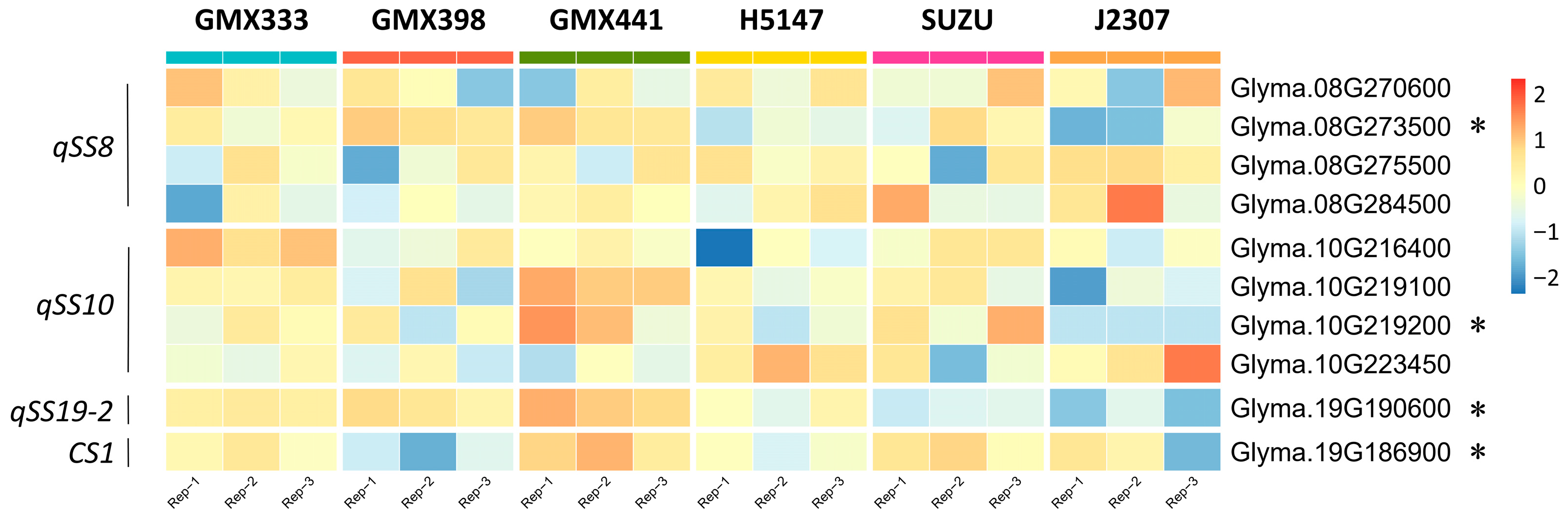
To further investigate the regulatory differentiations of these candidate genes, we analyzed their expression profiles using RNA-seq data from stem tissues collected at the V3 developmental stage. A total of 9192, 8051, 3282, and 11,205 differentially expressed genes (DEGs) were identified between the parental lines of populations C1, C2, C3, and C4, respectively (Table 3 and Table S9). Gene Ontology (GO) enrichment analysis revealed several significantly over-represented terms among the DEGs. The ADP binding function was enriched in DEGs from C1, C2, and C3. Cellular glucan metabolic process was enriched in DEGs from C2, and the cell wall category was significantly over-represented in DEGs from C3 (Figure S2). Among the 13 candidate genes, four exhibited very low expression levels across all parental varieties and were therefore classified as unexpressed (Table S10). Three genes were identified as differentially expressed between the parental varieties of the populations in which their corresponding QTLs were detected (Figure 6). Specifically, Glyma.08G273500 (within the qSS8 region) and Glyma.10G219200 (within the qSS10 region) were differentially expressed between the parental varieties of the C4 population (Figure 6). In addition, Glyma.19G190600, located within the qSS19-2 region, was differentially expressed between the parental varieties of the C3 population (Figure 6). Notably, Glyma.19G186900, also known as CS1, a previously characterized gene involved in stem strength regulation, is located just 3.92 kb from the qSS19-2 interval. This gene was also differentially expressed between the parental varieties of both the C1 and C2 populations, with qSS19-2 being detected in the C2–F2 population, further supporting its potential role in regulating stem strength (Figure 6).

4. Discussion

4.1. Identification of Novel Stable Major QTL for Stem Strength in Soybean

Compared to other agronomic traits, research on the genetic basis of stem strength in soybeans remains limited. To date, only eight QTLs associated with stem strength have been documented in SoyBase, all of which were reported in a study by Chen et al. (2011) using a population of 165 recombinant inbred lines (RILs) [13]. Among these, only one was identified as a stable major QTL, consistently detected across three environments with a PVE ranging from 9.2% to 18.1%. The remaining QTLs were environment-specific, with one explaining 10.4% of phenotypic variation, while the others had relatively smaller effects (PVE of 6.2–9.4%) [13]. With the advancement of genome-wide association studies (GWAS), Kato et al. (2021) [12] reported two QTLs associated with pushing resistance on chromosomes 5 and 11 [12]. More recently, Liu et al. (2025) [14] identified a major QTL for stem strength that explained 22% of the phenotypic variation in their population using both linkage mapping and GWAS. This QTL was fine-mapped to a 0.2 Mb interval on chromosome 17 containing 15 candidate genes [14].
Various experimental factors such as population size, pool proportion, and population type, could influence BSA-seq outcomes [53]. Pooling individuals in BSA-seq reduces genetic information, resulting in lower statistical power compared to individual segregant analysis [26]. BSA-seq with tentative populations like F2 or F3 might also be affected by environmental or seasonal effects, due to limitations in assessing these influences. Most BSA-seq studies identified three or fewer QTL [26]. In this study, we also observed the increased number QTLs reported in smaller populations, indicating a higher possibility of false positives. Therefore, for QTLs detected from small populations, it is crucial to select stable QTLs identified across multiple populations or validate them with linkage mapping to obtain reliable genetic loci for further study.
In the present study, we evaluated stem strength in six soybean varieties and their 2138 offspring derived from crosses between varieties with contrasting stem strength, across two growing seasons (2023 and 2024) (Table S2). Using BSA-seq, we identified a total of 17 QTLs associated with stem strength. One of them, qSS4-1 overlapped with a known QTL for stem strength, uq.C1-1 [13]. Further comparison with QTLs documented in SoyBase for stem diameter and lodging resistance revealed that nine of the identified QTLs overlapped with known lodging-related QTLs [41,42,43,44,45,46,47,48,49], and three overlapped with QTLs for stem diameter [50,51,52] (Table S8). These overlaps suggest possible pleiotropic effects and highlight the potential utility of these loci in soybean breeding programs aimed at improving structural robustness and lodging resistance. Among the recently reported major QTLs, the two on chromosome 5 (SNP position: 32,834,159 bp) and chromosome 11 (SNP position: 34,203,032) for stem pushing strength reported by Kato et al. (2021) [12], and one major QTL on chromosome 17 (39.6–40 Mb) for stem breaking strength reported by Liu et al. (2025) [14], did not overlap with the QTLs identified in this study. This suggests the complex genetic regulation of stem strength in soybeans. None of the recently reported functional genes, CS1 and LRM3, regulating stem strength were found in our QTLs; however, CS1 is located 3.92 Kb away from qSS19-2.
Three QTLs were found to be stable, as they were detected in more than one population. These stable QTLs were further validated using linkage mapping with InDel markers. The QTL qSS8 exhibited a moderate effect, with a PVE ranging from 5.66% to 9.08%, while qSS10 and qSS19-2 showed higher effects, explaining 23.31–25.15% and 14.21–19.93% of the phenotypic variation, respectively (Table 2). These results indicate that qSS10 and qSS19-2 are major QTLs for stem strength in soybean. Interestingly, the genetic architecture of the qSS19-2 region appears to be complex. In the C3-F2 population, a single major QTL was detected, whereas in the C3-F3 population, two QTLs, a major and a minor, were identified within the same region. This suggests the presence of multiple linked loci contributing to variation in stem strength at this locus. Overall, our findings contribute valuable insights into the genetic control of stem mechanical strength in soybeans and provide promising targets for marker-assisted selection and molecular breeding aimed at improving lodging resistance.

4.2. Genetic Connections Between Stem Strength and Logging in Soybean

Lodging has a significant negative impact on soybean yield and seed quality, as it interferes with photosynthesis, nutrient allocation, and harvest efficiency [5,6,7]. Multiple factors contribute to lodging, including environmental conditions, agronomic management practices, and genetic background [8]. For instance, high planting density is known to increase the risk of lodging in soybeans [5,6,7]. Nonetheless, certain soybean varieties have demonstrated tolerance to high-density planting and exhibit improved lodging resistance [3,6]. To date, 88 QTLs associated with lodging have been documented in SoyBase, reflecting the complex genetic architecture underlying this trait. Among the contributing factors, the mechanical properties of the stem, particularly stem strength, have been identified as key determinants of lodging resistance [7,9,10]. Therefore, improving stem strength is a critical strategy for enhancing lodging resistance in soybean breeding programs.
Lodging is a complex trait influenced by multiple factors, including stem strength, stem diameter, plant height, root anchorage, and canopy architecture. In our study, we identified 17 QTLs associated with stem strength using BSA-seq, of which nine QTLs overlapped with previously reported lodging QTLs in SoyBase (Table 1 and Table S8) [41,42,43,44,45,46,47,48,49]. This substantial overlap highlights strong genetic connections between stem strength and lodging resistance in soybeans. Among the three stable QTLs identified in our study, qSS8 and qSS19-2 co-localized with known lodging QTLs. Notably, for qSS19-2, there are ten documented lodging QTLs clustered in the 10.82 Mb interval defined by BSA-seq, suggesting that this region may harbor key genes contributing to both stem mechanical strength and lodging tolerance. Interestingly, qSS10, despite being a major and stable QTL for stem strength (PVE: 23.31–25.15%), did not overlap with any previously reported lodging QTLs. This suggests that qSS10 may represent a novel genetic locus specifically associated with stem strength and potentially offers a new target for breeding soybean varieties with improved structural integrity and lodging resistance. Moreover, we identified three QTLs that overlapped with reported genes or loci for stem diameter (Table S8) [52]. Two candidate genes for stem diameter were found in qSS10, suggesting that qSS10 may have a pleiotropic role or be linked with QTLs regulating stem traits (Table S8). Future studies should investigate stem strength, plant height, stem diameter, and other related traits together to elucidate the genetic network among these characteristics. These findings provide valuable genomic resources for the development of lodging-resistant soybean cultivars through marker-assisted selection.

4.3. Prediction of Candidate Genes in qSS8, qSS10, and qSS19-2

Radial stem growth in plants is a precisely regulated process involving various transcription factor families and plant hormones. In soybeans, most of the previously reported functional and candidate genes associated with stem diameter and strength are involved in plant hormone signaling, as well as lignin and cellulose biosynthesis [14,22,23,51,52]. In this study, we analyzed genome-wide gene expression differences between parental varieties exhibiting distinct stem strength phenotypes. Across comparisons of the four crosses, we identified between 3282-11,205 DEGs (Table S9). GO enrichment analysis revealed several significantly overrepresented terms. Notably, ADP binding was enriched in DEGs from three comparisons, while the cell wall was significantly overrepresented in DEGs from the C3 cross (Figure S2). These results suggest that these biological processes are likely involved in the observed differences in stem strength among the parental lines.
Within the qSS8, we pinpointed five candidate genes. Glyma.08G270600 is the homolog of Arabidopsis AT2G23910, which has been predicted to be the candidate gene for a QTL that controls fiber length and lignin content in Arabidopsis thaliana stems [54]. Glyma.08G273500 is the homolog of INDOLE-3-ACETIC ACID INDUCIBLE 9 (IAA9), which involves in regulatory network for secondary cell wall synthesis in Arabidopsis [55]. Notably, a missense variant was found in the coding sequence of Glyma.08G273500. Both Glyma.08G275500 and Glyma.08G275600 are homologs of RHAMNOGALACTURONAN LYASE 1 (RGL1), which exhibits rhamnogalacturonan lyase activity, influencing the composition of cell wall pectin [56]. Glyma.08G284500 is the homolog of TRICHOME BIREFRINGENCE-LIKE 2 (TBL2) a member of the TBL gene family known to be involved in the synthesis and deposition of secondary wall cellulose [57].
In the qSS10 region, we highlighted five candidate genes. Glyma.10G215700 is the homolog of O-METHYLTRANSFERASE 1 (OMT1), which is involved in lignin biosynthetic process [58,59]. Glyma.10G216400 is the homolog of VASCULAR RELATED NAC-DOMAIN PROTEIN 7 (VND7), encoding a NAC-domain transcription factor with a role in xylem formation [60]. Glyma.10G219100 and Glyma.10G219200 are homologs of LACCASE-LIKE 15 (LAC15), involved in the biosynthesis of lignin and flavonoids [61,62]. Glyma.10G223450 is the homolog of CELLULOSE SYNTHASE 6 (CESA6), encoding a cellulose synthase isomer. Mutants of CESA6 exhibit defects in cellulose in the primary cell wall [63]. Notably, two candidate genes showed differential expression between parental varieties. Glyma.10G216400 exhibited significantly different expression levels in C1; meanwhile, Glyma.10G219100 showed significant expression differences in C4.
Within the qSS19-2, only three candidate genes were selected. Glyma.19G190600 is the homolog of CELLULOSE SYNTHASE LIKE A9 (CSLA9), which is involved in the regulation of secondary cell wall formation [64]. Meanwhile, Glyma.19G190600 was differentially expressed in C3. Glyma.19G195200 is the homolog of SMALL AUXIN UPREGULATED RNA 45 (SAUR45), a member of the SAUR protein family that acts as effectors of hormonal and environmental signals in plant growth [65]. A start lost and conservative in-frame deletion were found within Glyma.19G195200 in C3. Notably, DT1, a well-known regulator of soybean stem growth habit was found in the qSS19-2 region, suggesting it might be a pleiotropic gene regulating multiple stem traits, including stem strength [66]. Moreover, CS1 (Glyma.19G186900), located very close to qSS19-2 (3.92 Kb), was also differentially expressed between the parental varieties of C1 and C2 where qSS19-2 was identified, which suggests it is a strong candidate of these loci.
A few genes, such as Glyma.08G273500, Glyma.10G223450, Glyma.19G190600, and CS1, exhibited relatively higher expression profiles across parental varieties, suggesting their significant roles in biological processes (Figure 6 and Table S10). However, due to the limited size of the mapping population, pinpointing the functional genes within these QTLs remains challenging. To validate the functional genes and elucidate the genetic mechanisms, further efforts are needed to narrow down QTL regions using secondary mapping populations, such as residual heterozygous lines (RHLs) or near-isogenic lines (NILs), and to perform knockout or overexpression studies of candidate genes.

5. Conclusions

In this study, we identified 17 QTLs associated with soybean stem strength, including three that were consistently detected across multiple populations. These three stable QTLs were further validated through linkage mapping using InDel markers, with two of them, qSS10 and qSS19-2, highlighted as major loci. Furthermore, we identified several candidate genes within these QTL regions and analyzed their sequence variations and expression patterns. Future studies employing secondary mapping populations, such as large RHL or NIL population will aid in the fine mapping the functional genes underlying these QTLs. Moreover, further studies including over-expression and/or knock-out of the candidate genes in soybean, along with anatomical comparison and biochemical assays, are required, elucidating the genetic and molecular mechanisms governing stem strength in soybean. Overall, the genetic loci and candidate genes identified in this work provide a foundation for future studies and offer valuable targets for improving stem strength through marker-assisted selection.

Supplementary Materials

The following supporting information can be downloaded at: https://www.mdpi.com/article/10.3390/agronomy15122905/s1, Figure S1. The distribution of allele frequencies, G’ values, and delta–SNP index in stable QTLs; Figure S2: GO enrichment analysis of DEGs between parental varieties in four crosses; Table S1. Statistical summary of stem strength in six parental soybean varieties evaluated in 2023 and 2024; Table S2. Descriptive statistics of stem strength in F2 and F3 populations derived from four biparental crosses; Table S3. Design of high and low bulks for BSA-seq of stem strength in each population; Table S4. Summary of mapped reads and depth in parental varieties and pools; Table S5. Primer sequences of InDel markers used for linkage mapping of the qSS8, qSS10, and qSS19-2 loci; Table S6. Comparison of stem strength between two parental soybean varieties; Table S7. Detailed information on QTLs detected by BSA-seq in four populations; Table S8. Summary of QTLs reported by previous studies overlapping with QTLs detected in this study; Table S9. Summary of DEGs between parental varieties; Table S10. Summary of expression profiles of candidate genes.

Author Contributions

Conceptualization, N.Z. and C.X.; methodology, C.X. and Y.C.; formal analysis, X.W. and L.L.; investigation, X.W., L.L., Y.C., X.D., P.L., H.G., W.X. and W.J.; resources, X.D.; data curation, J.Y., P.L., H.G., W.X. and W.J.; writing—original draft preparation, X.W., L.L., Y.C., X.D., J.Y., P.L., W.X. and W.J.; writing—review and editing, N.Z. and C.X.; supervision, N.Z.; project administration, N.Z.; funding acquisition, N.Z., X.D. and C.X.; All authors have read and agreed to the published version of the manuscript.

Funding

This research was funded by the National Key Research and Development Program of China (2022YFD1200804), the Biological Breeding-National Science and Technology Major Project (2023ZD0403702), the National Natural Science Foundation of China (grant no. U21A20215) and the earmarked Fund for China Agriculture Research System (grant no. CARS-04).

Data Availability Statement

The WGS data and RNA-seq data for this study have been submitted to the NCBI SRA database and can be found under the following accession numbers: PRJNA1359760 and PRJNA1359573.

Acknowledgments

We thank Yong Zeng and Meiyu Jin for their help in collecting the phenotype data.

Conflicts of Interest

The authors declare no conflicts of interest.

References

  1. Graham, P.H.; Vance, C.P. Legumes: Importance and constraints to greater use. Plant Physiol. 2003, 131, 872–877. [Google Scholar] [CrossRef] [PubMed]
  2. Messina, M. Perspective: Soybeans Can Help Address the Caloric and Protein Needs of a Growing Global Population. Front. Nutr. 2022, 9, 909464. [Google Scholar] [CrossRef] [PubMed]
  3. Gao, H.W.; Yang, M.Y.; Yan, L.; Hu, X.Z.; Hong, H.L.; Zhang, X.; Sun, R.J.; Wang, H.R.; Wang, X.B.; Liu, L.K.; et al. Identification of tolerance to high density and lodging in short petiolate germplasm M657 and the effect of density on yield-related phenotypes of soybean. J. Integr. Agr. 2023, 22, 434–446. [Google Scholar] [CrossRef]
  4. Liu, S.L.; Zhang, M.; Feng, F.v; Tian, Z.X. Toward a “Green Revolution” for Soybean. Mol. Plant 2020, 13, 688–697. [Google Scholar] [CrossRef]
  5. Board, J. Reduced lodging for soybean in low plant population is related to light quality. Crop Sci. 2001, 41, 379–384. [Google Scholar] [CrossRef]
  6. Di Mauro, G.; Rotundo, J.L. Lodging dynamics and seed yield for two soybean genotypes with contrasting lodging-susceptibility. Eur. J. Agron. 2025, 163, 127445. [Google Scholar] [CrossRef]
  7. Zhao, W.; Zeng, D.; Zhao, C.; Han, D.; Li, S.; Wen, M.; Liang, X.; Zhang, X.; Liu, Z.; Ali, S.; et al. Identification of QTLs and Key Genes Enhancing Lodging Resistance in Soybean Through Chemical and Physical Trait Analysis. Plants 2024, 13, 3470. [Google Scholar] [CrossRef]
  8. Hwang, S.; Lee, T.G. Integration of lodging resistance QTL in soybean. Sci. Rep. 2019, 9, 6540. [Google Scholar] [CrossRef]
  9. Niu, Y.A.; Chen, T.X.; Zhao, C.C.; Zhou, M.X. Improving Crop Lodging Resistance by Adjusting Plant Height and Stem Strength. Agronomy 2021, 11, 2421. [Google Scholar] [CrossRef]
  10. Wang, J.-s.; Pu, G.-f.; Ma, L.; He, W.-j.; Wu, J.-j. Study on Lodging Resistance Evaluation Method of Soybean Based on Model Method. Soybean Sci. 2023, 42, 64–69. [Google Scholar]
  11. Shah, D.U.; Reynolds, T.P.S.; Ramage, M.H. The strength of plants: Theory and experimental methods to measure the mechanical properties of stems. J. Exp. Bot. 2017, 68, 4497–4516. [Google Scholar] [CrossRef] [PubMed]
  12. Kato, S.; Samanfar, B.; Morrison, M.J.; Bekele, W.A.; Torkamaneh, D.; Rajcan, I.; O’Donoughue, L.; Belzile, F.; Cober, E.R. Genome-wide association study to identify soybean stem pushing resistance and lodging resistance loci. Can. J. Plant Sci. 2021, 101, 663–670. [Google Scholar] [CrossRef]
  13. Chen, H.F.; Shan, Z.H.; Sha, A.H.; Wu, B.D.; Yang, Z.L.; Chen, S.L.; Zhou, R.; Zhou, X.N. Quantitative trait loci analysis of stem strength and related traits in soybean. Euphytica 2011, 179, 485–497. [Google Scholar] [CrossRef]
  14. Liu, L.; Cao, H.; Yao, H.; Zhuang, Y.; Chen, B.; Zhang, C.; Li, X.; Zhang, D. Identification of a major QTL and its candidate genes controlling stem strength in soybean via QTL mapping and GWAS. Crop J. 2025, in press. [Google Scholar] [CrossRef]
  15. Hussain, S.; Liu, T.; Iqbal, N.; Brestic, M.; Pang, T.; Mumtaz, M.; Shafiq, I.; Li, S.X.; Wang, L.; Gao, Y.; et al. Effects of lignin, cellulose, hemicellulose, sucrose and monosaccharide carbohydrates on soybean physical stem strength and yield in intercropping. Photoch Photobio Sci. 2020, 19, 462–472. [Google Scholar] [CrossRef]
  16. Miao, W.; Li, F.C.; Lu, J.C.; Wang, D.L.; Chen, M.K.; Tang, L.; Xu, Z.J.; Chen, W.F. Biochar application enhanced rice biomass production and lodging resistance via promoting co-deposition of silica with hemicellulose and lignin. Sci. Total Environ. 2023, 855, 158818. [Google Scholar] [CrossRef]
  17. Hussain, S.; Iqbal, N.; Rahman, T.; Liu, T.; Brestic, M.; Safdar, M.E.; Asghar, M.A.; Farooq, M.U.; Shafiq, I.; Ali, A.; et al. Shade effect on carbohydrates dynamics and stem strength of soybean genotypes. Environ. Exp. Bot. 2019, 162, 374–382. [Google Scholar] [CrossRef]
  18. Wang, J.; Zhu, J.M.; Lin, Q.Q.; Li, X.J.; Teng, N.J.; Li, Z.S.; Li, B.; Zhang, A.M.; Lin, J.X. Effects of stem structure and cell wall components on bending strength in wheat. Chin. Sci. Bull. 2006, 51, 815–823. [Google Scholar] [CrossRef]
  19. Yang, J.P.; Li, M.; Yin, Y.; Liu, Y.; Gan, X.K.; Mu, X.H.; Li, H.Q.; Li, J.K.; Li, H.C.; Zheng, J.; et al. Spatial accumulation of lignin monomers and cellulose underlying stalk strength in maize. Plant Physiol. Biochem. 2024, 214, 108918. [Google Scholar] [CrossRef]
  20. Wu, L.M.; Zhang, W.J.; Ding, Y.F.; Zhang, J.W.; Cambula, E.D.; Weng, F.; Liu, Z.H.; Ding, C.Q.; Tang, S.; Chen, L.; et al. Shading Contributes to the Reduction of Stem Mechanical Strength by Decreasing Cell Wall Synthesis in Japonica Rice (Oryza sativa L.). Front. Plant Sci. 2017, 8, 881. [Google Scholar] [CrossRef]
  21. Raza, A.; Asghar, M.A.; Javed, H.H.; Ullah, A.; Cheng, B.; Xu, M.; Wang, W.Y.; Liu, C.Y.; Rahman, A.; Iqbal, T.; et al. Optimum nitrogen improved stem breaking resistance of intercropped soybean by modifying the stem anatomical structure and lignin metabolism. Plant Physiol. Biochem. 2023, 199, 107720. [Google Scholar] [CrossRef] [PubMed]
  22. Xu, Z.Y.; Zhang, L.Y.; Kong, K.K.; Kong, J.J.; Ji, R.H.; Liu, Y.; Liu, J.; Li, H.Y.; Ren, Y.L.; Zhou, W.B.; et al. Creeping Stem 1 regulates directional auxin transport for lodging resistance in soybean. Plant Biotechnol. J. 2025, 23, 377–394. [Google Scholar] [CrossRef] [PubMed]
  23. Ye, Y.H.; Cheng, Z.Y.; Yang, X.J.; Yang, S.X.; Tang, K.Q.; Yu, H.; Gao, J.S.; Zhang, Y.H.; Leng, J.T.; Zhang, W.; et al. LRM3 positively regulates stem lodging resistance by degradating MYB6 transcriptional repressor in soybean. Plant Biotechnol. J. 2025, 23, 2978–2993. [Google Scholar] [CrossRef] [PubMed]
  24. Li, Z.Q.; Xu, Y.H. Bulk segregation analysis in the NGS era: A review of its teenage years. Plant J. 2022, 109, 1355–1374. [Google Scholar] [CrossRef]
  25. Takagi, H.; Abe, A.; Yoshida, K.; Kosugi, S.; Natsume, S.; Mitsuoka, C.; Uemura, A.; Utsushi, H.; Tamiru, M.; Takuno, S.; et al. QTL-seq: Rapid mapping of quantitative trait loci in rice by whole genome resequencing of DNA from two bulked populations. Plant J. 2013, 74, 174–183. [Google Scholar] [CrossRef]
  26. Zheng, Y.; Khine, E.E.; Thi, K.M.; Nyein, E.E.; Huang, L.K.; Lin, L.H.; Xie, X.F.; Lin, M.H.W.; Oo, K.T.; Moe, M.M.; et al. Multi-environment BSA-seq using large F3 populations is able to achieve reliable QTL mapping with high power and resolution: An experimental demonstration in rice. Crop J. 2024, 12, 549–557. [Google Scholar] [CrossRef]
  27. Zhang, S.R.; Abdelghany, A.M.; Azam, M.; Qi, J.; Li, J.; Feng, Y.; Liu, Y.T.; Feng, H.Y.; Ma, C.Y.; Gebregziabher, B.S.; et al. Mining candidate genes underlying seed oil content using BSA-seq in soybean. Ind. Crop Prod. 2023, 194, 116308. [Google Scholar] [CrossRef]
  28. Zhang, K.; Yuan, M.; Xia, H.; He, L.; Ma, J.; Wang, M.; Zhao, H.; Hou, L.; Zhao, S.; Li, P.; et al. BSA-seq and genetic mapping reveals AhRt2 as a candidate gene responsible for red testa of peanut. Theor. Appl. Genet. 2022, 135, 1529–1540. [Google Scholar] [CrossRef]
  29. Win, K.T.; Vegas, J.; Zhang, C.Y.; Song, K.; Lee, S. QTL mapping for downy mildew resistance in cucumber via bulked segregant analysis using next-generation sequencing and conventional methods. Theor. Appl. Genet. 2017, 130, 199–211. [Google Scholar] [CrossRef]
  30. Li, R.; Jiang, H.; Zhang, Z.; Zhao, Y.; Xie, J.; Wang, Q.; Zheng, H.; Hou, L.; Xiong, X.; Xin, D.; et al. Combined Linkage Mapping and BSA to Identify QTL and Candidate Genes for Plant Height and the Number of Nodes on the Main Stem in Soybean. Int. J. Mol. Sci. 2019, 21, 42. [Google Scholar] [CrossRef]
  31. Wang, H.D.; Liu, J.J.; Huang, J.; Xiao, Q.; Hayward, A.; Li, F.Y.; Gong, Y.Y.; Liu, Q.; Ma, M.; Fu, D.H.; et al. Mapping and Identifying Candidate Genes Enabling Cadmium Accumulation in Revealed by Combined BSA-Seq and RNA-Seq Analysis. Int. J. Mol. Sci. 2023, 24, 10163. [Google Scholar] [CrossRef] [PubMed]
  32. Wang, M.; Ding, X.Y.; Zeng, Y.; Xie, G.; Yu, J.X.; Jin, M.Y.; Liu, L.; Li, P.Y.; Zhao, N.; Dong, Q.L.; et al. Identification of Multiple Genetic Loci and Candidate Genes Determining Seed Size and Weight in Soybean. Agronomy 2024, 14, 1957. [Google Scholar] [CrossRef]
  33. Bolger, A.M.; Lohse, M.; Usadel, B. Trimmomatic: A flexible trimmer for Illumina sequence data. Bioinformatics 2014, 30, 2114–2120. [Google Scholar] [CrossRef] [PubMed]
  34. Li, H.; Handsaker, B.; Wysoker, A.; Fennell, T.; Ruan, J.; Homer, N.; Marth, G.; Abecasis, G.; Durbin, R.; Genome Project Data Processing, S. The Sequence Alignment/Map format and SAMtools. Bioinformatics 2009, 25, 2078–2079. [Google Scholar] [CrossRef]
  35. Danecek, P.; Auton, A.; Abecasis, G.; Albers, C.A.; Banks, E.; DePristo, M.A.; Handsaker, R.E.; Lunter, G.; Marth, G.T.; Sherry, S.T.; et al. The variant call format and VCFtools. Bioinformatics 2011, 27, 2156–2158. [Google Scholar] [CrossRef]
  36. Cingolani, P.; Platts, A.; Wang, L.L.; Coon, M.; Nguyen, T.; Wang, L.; Land, S.J.; Lu, X.; Ruden, D.M. A program for annotating and predicting the effects of single nucleotide polymorphisms, SnpEff: SNPs in the genome of Drosophila melanogaster strain w1118; iso-2; iso-3. Fly 2012, 6, 80–92. [Google Scholar] [CrossRef]
  37. Chen, X.; Schulz-Trieglaff, O.; Shaw, R.; Barnes, B.; Schlesinger, F.; Kallberg, M.; Cox, A.J.; Kruglyak, S.; Saunders, C.T. Manta: Rapid detection of structural variants and indels for germline and cancer sequencing applications. Bioinformatics 2016, 32, 1220–1222. [Google Scholar] [CrossRef]
  38. Mansfeld, B.N.; Grumet, R. QTLseqr: An R Package for Bulk Segregant Analysis with Next-Generation Sequencing. Plant Genome 2018, 11, 180006. [Google Scholar] [CrossRef]
  39. Love, M.I.; Huber, W.; Anders, S. Moderated estimation of fold change and dispersion for RNA-seq data with DESeq2. Genome Biol. 2014, 15, 550. [Google Scholar] [CrossRef]
  40. Meng, L.; Li, H.H.; Zhang, L.Y.; Wang, J.K. QTL IciMapping: Integrated software for genetic linkage map construction and quantitative trait locus mapping in biparental populations. Crop J. 2015, 3, 269–283. [Google Scholar] [CrossRef]
  41. Kim, K.S.; Diers, B.W.; Hyten, D.L.; Mian, M.A.R.; Shannon, J.G.; Nelson, R.L. Identification of positive yield QTL alleles from exotic soybean germplasm in two backcross populations. Theor. Appl. Genet. 2012, 125, 1353–1369. [Google Scholar] [CrossRef]
  42. Reinprecht, Y.; Poysa, V.W.; Yu, K.; Rajcan, I.; Ablett, G.R.; Pauls, K.P. Seed and agronomic QTL in low linolenic acid, lipoxygenase-free soybean (Glycine max (L.) Merrill) germplasm. Genome 2006, 49, 1510–1527. [Google Scholar] [CrossRef]
  43. Guzman, P.S.; Diers, B.W.; Neece, D.J.; Martin, S.K.S.; Leroy, A.R.; Grau, C.R.; Hughes, T.J.; Nelson, R.L. QTL associated with yield in three backcross-derived populations of soybean. Crop Sci. 2007, 47, 111–122. [Google Scholar] [CrossRef]
  44. Lee, S.; Jun, T.H.; Michel, A.P.; Mian, M.A.R. SNP markers linked to QTL conditioning plant height, lodging, and maturity in soybean. Euphytica 2015, 203, 521–532. [Google Scholar] [CrossRef]
  45. Rossi, M.E.; Orf, J.H.; Liu, L.J.; Dong, Z.; Rajcan, I. Genetic basis of soybean adaptation to North American vs. Asian mega-environments in two independent populations from Canadian x Chinese crosses. Theor. Appl. Genet. 2013, 126, 1809–1823. [Google Scholar] [CrossRef]
  46. Lee, S.H.; Bailey, M.A.; Mian, M.A.R.; Carter, T.E.; Ashley, D.A.; Hussey, R.S.; Parrott, W.A.; Boerma, H.R. Molecular markers associated with soybean plant height, lodging, and maturity across locations. Crop Sci. 1996, 36, 728–735. [Google Scholar] [CrossRef]
  47. Fang, C.; Ma, Y.; Wu, S.; Liu, Z.; Wang, Z.; Yang, R.; Hu, G.; Zhou, Z.; Yu, H.; Zhang, M.; et al. Genome-wide association studies dissect the genetic networks underlying agronomical traits in soybean. Genome Biol. 2017, 18, 161. [Google Scholar] [CrossRef]
  48. Vuong, T.D.; Sonah, H.; Meinhardt, C.G.; Deshmukh, R.; Kadam, S.; Nelson, R.L.; Shannon, J.G.; Nguyen, H.T. Genetic architecture of cyst nematode resistance revealed by genome-wide association study in soybean. BMC Genom. 2015, 16, 593. [Google Scholar] [CrossRef]
  49. Li, D.D.; Pfeiffer, T.W.; Cornelius, P.L. Soybean QTL for yield and yield components associated with Glycine soja alleles. Crop Sci. 2008, 48, 571–581. [Google Scholar] [CrossRef]
  50. Keim, P.; Diers, B.W.; Olson, T.C.; Shoemaker, R.C. RFLP mapping in soybean: Association between marker loci and variation in quantitative traits. Genetics 1990, 126, 735–742. [Google Scholar] [CrossRef]
  51. Sun, C.Y.; Yang, Y.M.; Jia, L.; Liu, X.Q.; Xu, H.Q.; Lv, H.Y.; Huang, Z.W.; Zhang, D. QTL mapping of the genetic basis of stem diameter in soybean. Planta 2021, 253, 109. [Google Scholar] [CrossRef] [PubMed]
  52. Wang, J.; Yang, Q.C.; Chen, Y.J.; Liu, K.L.; Zhang, Z.Q.; Xiong, Y.J.; Yu, H.; Yu, Y.D.; Wang, J.; Song, J.; et al. QTL mapping and genomic selection of stem and branch diameter in soybean (Glycine max L.). Front. Plant Sci. 2024, 15, 1388365. [Google Scholar] [CrossRef] [PubMed]
  53. Huang, L.K.; Tang, W.Q.; Wu, W.R. Optimization of BSA-seq experiment for QTL mapping. G3-Genes. Genom. Genet. 2022, 12, jkab370. [Google Scholar] [CrossRef] [PubMed]
  54. Capron, A.; Chang, X.F.; Hall, H.; Ellis, B.; Beatson, R.P.; Berleth, T. Identification of quantitative trait loci controlling fibre length and lignin content in Arabidopsis thaliana stems. J. Exp. Bot. 2013, 64, 185–197. [Google Scholar] [CrossRef]
  55. Taylor-Teeples, M.; Lin, L.; de Lucas, M.; Turco, G.; Toal, T.W.; Gaudinier, A.; Young, N.F.; Trabucco, G.M.; Veling, M.T.; Lamothe, R.; et al. An Arabidopsis gene regulatory network for secondary cell wall synthesis. Nature 2015, 517, 571–575. [Google Scholar] [CrossRef]
  56. Min, J.H.; Park, C.R.; Gong, Y.; Chung, M.S.; Nam, S.H.; Yun, H.S.; Kim, C.S. Rhamnogalacturonan lyase 1 (RGL1), as a suppressor of E3 ubiquitin ligase Arabidopsis thaliana ring zinc finger 1 (AtRZF1), is involved in dehydration response to mediate proline synthesis and pectin rhamnogalacturonan-I composition. Plant J. 2024, 119, 942–959. [Google Scholar] [CrossRef]
  57. Bischoff, V.; Selbig, J.; Scheible, W.R. Involvement of TBL/DUF231 proteins into cell wall biology. Plant Signal Behav. 2010, 5, 1057–1059. [Google Scholar] [CrossRef]
  58. de Vries, L.; Vanholme, R.; Van Acker, R.; De Meester, B.; Sundin, L.; Boerjan, W. Stacking of a low-lignin trait with an increased guaiacyl and 5-hydroxyguaiacyl unit trait leads to additive and synergistic effects on saccharification efficiency in Arabidopsis thaliana. Biotechnol. Biofuels 2018, 11, 257. [Google Scholar] [CrossRef]
  59. Wang, P.; Guo, L.Y.; Morgan, J.; Dudareva, N.; Chapple, C. Transcript and metabolite network perturbations in lignin biosynthetic mutants of Arabidopsis. Plant Physiol. 2022, 190, 2828–2846. [Google Scholar] [CrossRef]
  60. Phookaew, P.; Ma, Y.; Suzuki, T.; Stolze, S.C.; Harzen, A.; Sano, R.; Nakagami, H.; Demura, T.; Ohtani, M. Active protein ubiquitination regulates xylem vessel functionality. Plant Cell 2024, 36, 3298–3317. [Google Scholar] [CrossRef]
  61. Liang, M.; Davis, E.; Gardner, D.; Cai, X.; Wu, Y. Involvement of AtLAC15 in lignin synthesis in seeds and in root elongation of Arabidopsis. Planta 2006, 224, 1185–1196. [Google Scholar] [CrossRef]
  62. Berthet, S.; Demont-Caulet, N.; Pollet, B.; Bidzinski, P.; Cezard, L.; Le Bris, P.; Borrega, N.; Herve, J.; Blondet, E.; Balzergue, S.; et al. Disruption of LACCASE4 and 17 results in tissue-specific alterations to lignification of Arabidopsis thaliana stems. Plant Cell 2011, 23, 1124–1137. [Google Scholar] [CrossRef]
  63. Huang, L.; Zhang, C.H. The Mode of Action of Endosidin20 Differs from That of Other Cellulose Biosynthesis Inhibitors. Plant Cell Physiol. 2020, 61, 2139–2152. [Google Scholar] [CrossRef]
  64. Kim, W.C.; Kim, J.Y.; Ko, J.H.; Kang, H.; Han, K.H. Identification of direct targets of transcription factor MYB46 provides insights into the transcriptional regulation of secondary wall biosynthesis. Plant Mol. Biol. 2014, 85, 589–599. [Google Scholar] [CrossRef]
  65. Ren, H.; Gray, W.M. SAUR Proteins as Effectors of Hormonal and Environmental Signals in Plant Growth. Mol. Plant 2015, 8, 1153–1164. [Google Scholar] [CrossRef]
  66. Liu, B.; Watanabe, S.; Uchiyama, T.; Kong, F.; Kanazawa, A.; Xia, Z.; Nagamatsu, A.; Arai, M.; Yamada, T.; Kitamura, K.; et al. The soybean stem growth habit gene Dt1 is an ortholog of Arabidopsis TERMINAL FLOWER1. Plant Physiol. 2010, 153, 198–210. [Google Scholar] [CrossRef]
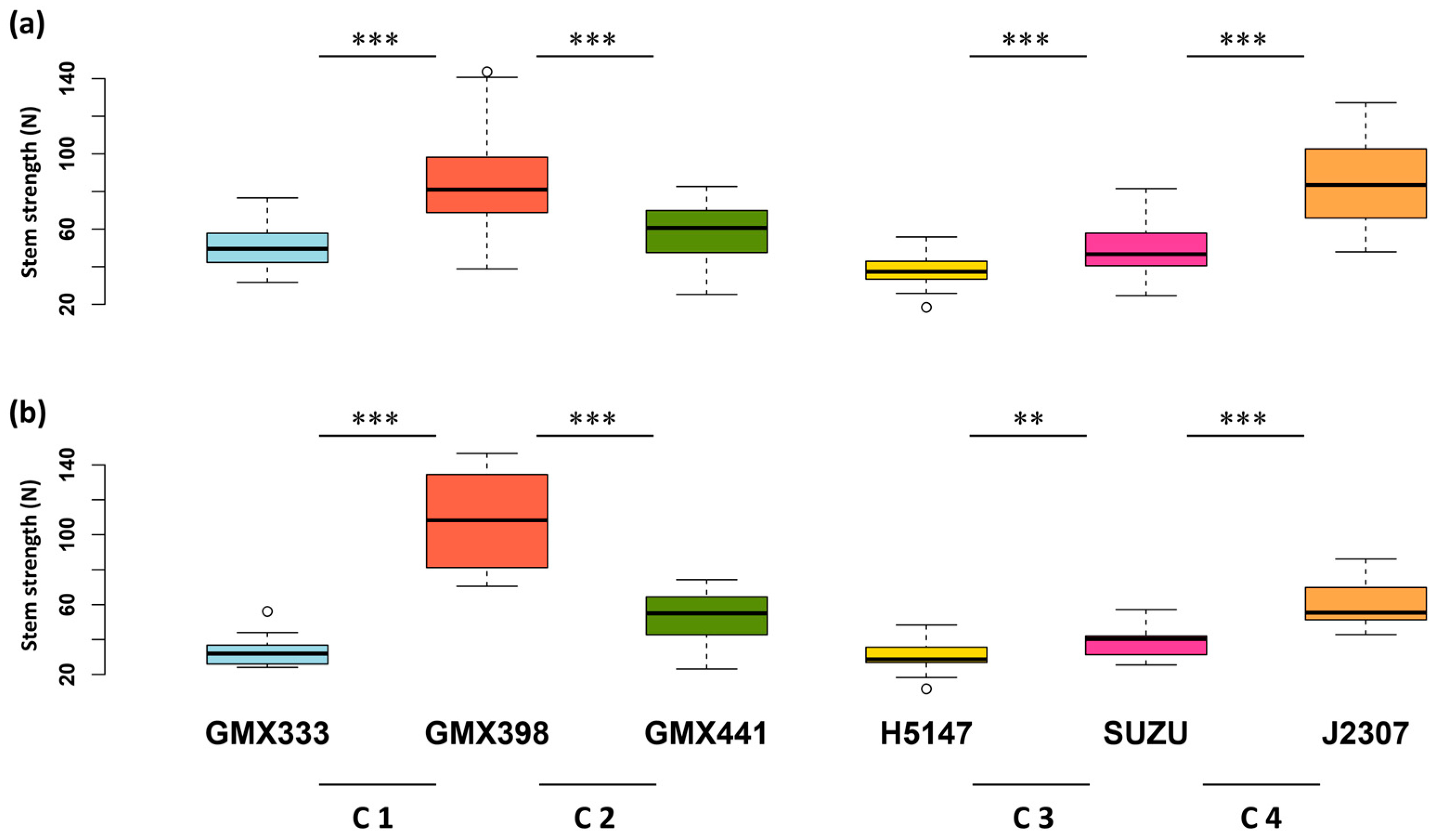
Figure 1. Boxplots of stem strength for six soybean varieties and statistical comparisons between the parental varieties of the four biparental crosses for further mapping population construction. (a) boxplot of stem strength for six soybean varieties in 2023; (b) boxplot of stem strength for six soybean varieties in 2024. ** denotes t-test p-value < 0.01; *** denotes t-test p-value < 0.001. C1, C2, C3, and C4 represent GMX333 × GMX398, GMX441 × GMX398, H5147 × SUZU, and J2307 × SUZU, respectively.
Agronomy 15 02905 g001
Figure 2. Representative individuals from four segregating populations and parental varieties. (a) C1-F2; (b) C2-F2; (c) C3-F3; (d) C4-F3. Insets show enlarged views of the stem base.
Agronomy 15 02905 g002
Figure 3. Frequency distribution of stem strength in eight populations. (a) C1-F2; (b) C2-F2; (c) C3-F2; (d) C4-F2; (e) C1-F3; (f) C2-F3; (g) C3-F3; (h) C4-F3; red and blue dashed lines represent maternal and paternal mean values.
Agronomy 15 02905 g003
Figure 4. The distribution of G’ value and delta–SNP index detected by BSA-seq analysis in four populations. (ad) represent the BSA-seq analysis results for C1-F2, C2-F2, C3-F3, and C4-F3, respectively. The black dashed boxes denote the regions of the three stable QTLs qSS8, qSS10, and qSS19-2. The significant SNPs are shown in red.
Agronomy 15 02905 g004
Figure 5. Linkage mapping of the qSS8, qSS10 and qSS19-2 loci. (a) QTL mapping of qSS8 in C2-F2. (b) QTL mapping of qSS10 in C1-F2. (c) QTL mapping of qSS19-2 in C4-F2. (d) QTL mapping of qSS8 in C2-F3. (e) QTL mapping of qSS10 in C1-F3. (f) QTL mapping of qSS19-2 in C4-F3. The red dashed line represents the LOD threshold (LOD = 2.5). Red triangles indicate the peak positions of the QTLs, and green segments represent the 95% confidence intervals.
Agronomy 15 02905 g005
Figure 6. The heatmap of candidate gene expression in different parental varieties. Reads counts were log2-transferred and scaled across samples. * denotes DEGs.
Agronomy 15 02905 g006
Table 1. Summary of QTLs Associated with Stem Strength Identified by BSA-Seq.
QTLChromosomeRegion (Mb)Max G’q-ValueΔSNP IndexPopulationPositive Allele *
qSS1-1Chr120.67–26.2320.145.27 × 10−3−0.50C3-F3H5147
qSS1-2Chr139.73–47.1516.374.13 × 10−3−0.46C3-F3H5147
qSS1-3Chr152.62–53.9614.401.25 × 10−30.41C4-F3SUZU
qSS2-1Chr20.00–0.908.573.67 × 10−30.30C2-F2GMX398
qSS2-2Chr244.28–44.538.244.86 × 10−3−0.30C2-F2GMX441
qSS3Chr35.84–33.6819.411.69 × 10−4−0.49C4-F3J2307
qSS4-1Chr46.35–13.8017.532.76 × 10−30.48C3-F3SUZU
qSS4-2Chr440.22–41.9713.485.81 × 10−30.40C3-F3SUZU
qSS5Chr51.34–3.2912.281.06 × 10−5−0.39C4-F3J2307
qSS8Chr816.92–38.3811.86, 8.243.19 × 10−3, 4.98 × 10−30.34, −0.31C2-F2, C4-F3GMX398, J2307
qSS9Chr914.96–16.4812.248.18 × 10−3−0.37C3:F3H5147
qSS10Chr1039.93–49.3134.40, 16.001.26 × 10−4, 1.15 × 10−30.66, −0.43C1-F2, C4-F3GMX398, J2307
qSS13Chr1317.02–17.2511.269.96 × 10−3−0.37C3-F3H5147
qSS17Chr176.76–8.8513.965.93 × 10−3−0.41C3:F3H5147
qSS19-1Chr196.51–8.5613.295.71 × 10−3−0.40C3:F3H5147
qSS19-2Chr1944.91–45.6710.69, 22.80, 30.851.97 × 10−3, 1.70 × 10⁻³, 3.55 × 10−40.33, −0.54, −0.57C2:F2, C3:F3, C4:F3GMX441, H5147, J2307
qSS20Chr2035.87–40.8215.802.43 × 10−40.44C4:F3SUZU
* Parental varieties contributing alleles that have a positive effect on stem strength.
Table 2. Summary of linkage mapping results for qSS8, qSS10 and qSS19-2.
QTLChrPosition (bp) aLODPVE(%) bLeft MarkerRight MarkerPopulation/
Size c
Length
(cM)
Positive Allele d
qSS8834,203,399–38,888,5942.515.66CSS8-10CSS8-17C2-F2/28419.21GMX398
4.259.08CSS8-10CSS8-17C2-F3/25419.03GMX398
qSS101044,824,364–45,886,46522.3025.15BSS10-8BSS10-10C1-F2/35727.67GMX398
17.0823.31BSS10-9BSS10-10C1-F3/29519.19GMX398
qSS19-21945,099,480–46,637,6506.0514.21KSS19-13KSS19-15C4-F2/19362.7J2307
14.1319.93KSS19-16KSS19-17C4-F3/18365.18J2307
4.405.70KSS19-19KSS19-25SUZU
a Position defined by flaking markers of 95% confidence intervals for QTL with the highest LOD. b PVE, phenotypic variation explained. c population and number of individuals used for linkage mapping. d Parental varieties contributing alleles that have a positive effect on stem strength.
Table 3. Candidate genes within the intervals of qSS8, qSS10 and qSS19-2.
QTLIDAt LocusName aDEG bVariation c
qSS8Glyma.08G270600AT2G23910/ intron/upstream/downstream (C2), Intron (C3, C4)
Glyma.08G273500AT5G65670IAA9C4missense/downstream (C2)
Glyma.08G275500AT2G22620RGL1 3′ UTR/intron/downstream (C2),
downstream (C3), NA (C4)
Glyma.08G275600AT2G22620RGL1NAupstream/downstream (C2)
Glyma.08G284500AT1G60790TBL2 upstream/downstream (C2)
qSS10Glyma.10G215700AT5G54160OMT1NA
Glyma.10G216400AT1G71930VND7
Glyma.10G219100AT5G48100LAC15 upstream (C1)
Glyma.10G219200AT5G48100LAC15C4upstream (C1)
Glyma.10G223450AT5G64740CESA6
qSS19-2Glyma.19G190600AT5G03760CSLA9C3intron/upstream (C2), upstream/downstream (C3), downstream (C4)
Glyma.19G194300(DT1)AT5G03840TFL1NAupstream/downstream (C2), intron/upstream (C3),
Glyma.19G195200AT2G36210SAUR45NAupstream/downstream (C2), 5′ UTR/3′ UTR/upstream/start lost & conservative in-frame deletion (C3)
a gene name in Arabidopsis thaliana. b the cross in which the candidate genes were differentially expressed between parental varieties. c variant types and crosses in which the variants were identified.
Disclaimer/Publisher’s Note: The statements, opinions and data contained in all publications are solely those of the individual author(s) and contributor(s) and not of MDPI and/or the editor(s). MDPI and/or the editor(s) disclaim responsibility for any injury to people or property resulting from any ideas, methods, instructions or products referred to in the content.