Article

Effects of Nitrogen Form and Application Rate on Cadmium and Mineral Element Uptake and Translocation in Rice


1
Modern Agricultural and Forestry Engineering College, Ganzhou Polytechnic, Ganzhou 341008, China
2
National Engineering and Technology Research Center for Red Soil Improvement, Jiangxi Institute of Red Soil and Germplasm Resources, Key Laboratory of Arable Land Improvement and Quality Improvement of Jiangxi Province, Nanchang 331717, China
3
College of Agronomy, Hunan Agricultural University, Changsha 410128, China
*
Authors to whom correspondence should be addressed.
These authors contributed equally to this work.
Agronomy 2025, 15(12), 2904; https://doi.org/10.3390/agronomy15122904
Submission received: 17 November 2025 / Revised: 11 December 2025 / Accepted: 15 December 2025 / Published: 17 December 2025
(This article belongs to the Special Issue Heavy Metal Pollution and Prevention in Agricultural Soils)

Abstract

The simultaneous challenges of cadmium (Cd) contamination and mineral nutrient imbalance in paddy systems necessitate the development of effective agronomic strategies. This study systematically investigated the coordinated effects of different nitrogen fertilizer forms on the accumulation and translocation of Cd and mineral elements in rice. A hydroponic experiment was conducted using four N sources, including urea (U), nitrate-N (N), ammonium-N (AN), and a mixed ammonium-nitrate source (NN), which were applied at two concentrations (2.9 and 5.8 mM L−1). We evaluated Cd accumulation, mineral element uptake, and translocation in rice seedlings under Cd stress. The results indicated that both the form and level of nitrogen markedly affected Cd accumulation. The AN treatment exhibited a strong Cd-reduction effect, especially at the higher nitrogen level, where it significantly reduced Cd concentration in roots and shoots by 68.75% and 26.81%, respectively. In contrast, the N treatment increased Cd accumulation in roots. Nitrogen fertilization also differentially influenced the accumulation of mineral elements, resulting in notable alterations in root Ca, Mg, Cu, and Zn concentrations, while shoot mineral concentrations remained relatively stable. Correlation and random forest analyses revealed a highly significant positive correlation between root Cd concentration and Mg and Cu concentrations, a significant negative correlation with Zn concentration, and a synergistic relationship between the translocation of Cd and that of Ca, Mg, and Cu. Analysis of ion channel tolerance rates further indicated that the AN treatment suppressed Cd uptake by reducing the permeability of root trace element channels to Cd. These findings demonstrate that nitrogen forms modulate Cd accumulation and partitioning by regulating competitive ion uptake and coordinated translocation. In particular, the AN treatment shows promising potential for reducing Cd accumulation while maintaining mineral nutrient balance, thereby providing a theoretical foundation for precise nitrogen management in Cd-contaminated paddy fields.

1. Introduction

Heavy metal contamination of agricultural soils represents a significant global environmental challenge, directly threatening food safety and ecosystem integrity. Such contamination stems primarily from anthropogenic activities, including mining, industrial emissions, atmospheric deposition, and intensive agricultural practices [1,2,3]. Among the various toxic heavy metals, cadmium (Cd) is of particular concern due to its pronounced toxicity, high mobility in soil–plant systems, and efficient transfer into the food chain, posing serious risks to human health [4]. For non-smoking populations, dietary intake constitutes the predominant route of Cd exposure, accounting for approximately 90% of the total body burden [5]. Rice (Oryza sativa L.), a staple food for over half of the world’s population and a primary dietary energy source across Asia, exhibits a strong physiological propensity to absorb and accumulate Cd from soil, making it a critical vector for human dietary Cd exposure [6,7]. In China, an estimated 7.0% of cultivated soils exceed national Cd standards, with contamination being especially severe in southern rice-growing regions [8]. Consequently, approximately 10% of marketed cereal grains are Cd-contaminated, establishing rice consumption as the central pathway for dietary Cd exposure—contributing to about 56% of the intake for the general Chinese population and up to 40% for the population in Japan [9,10,11,12]. Chronic dietary intake of Cd-contaminated rice leads to its accumulation in the human body, which is associated with various pathologies, including osteoporosis, hepatic and renal dysfunction, and an increased risk of cancer [13]. Therefore, controlling Cd accumulation in rice grains is a pivotal strategy for mitigating farmland Cd pollution and ensuring food security and public health.
A fundamental aspect of Cd toxicity in plants is its lack of specific transport pathways. Cd2+ ions primarily enter root cells by competing with essential divalent cations, such as Fe2+ and Zn2+, for shared transmembrane transporter proteins, including OsIRT1 and OsNRAMP5 [14,15]. This common transport mechanism implies that Cd accumulation inevitably disrupts the uptake and translocation of essential mineral nutrients in rice, potentially leading to a nutritional imbalance in grains characterized by “high Cd but low mineral nutrient” concentrations [16]. This phenomenon not only exacerbates the direct toxic risk of Cd but also compromises the nutritional quality of rice. Mineral elements such as calcium (Ca), magnesium (Mg), iron (Fe), and zinc (Zn) are vital for plant physiology and are indispensable nutrients for humans, crucial for immune function and skeletal health [17]. Consequently, achieving the dual objectives of reducing Cd while preserving or even enhancing mineral nutrients in rice has emerged as an urgent challenge at the intersection of agriculture and public health [18]. Current strategies to mitigate Cd in rice include breeding low-Cd-accumulating cultivars [19], optimizing water management [20], and applying immobilizing soil amendments [21]. However, the large-scale implementation of these approaches is often constrained by factors such as long development timelines, high economic costs, and operational complexity.
Among various agronomic interventions, nitrogen fertilizer management presents considerable promise due to its cost-effectiveness, operational simplicity, and proven efficacy in modifying plant metal accumulation [22]. Nitrogen, as a central regulator of crop growth and metabolism, is known to significantly influence the accumulation of both Cd and mineral elements in rice [23,24,25,26]. However, existing research has largely been conducted in isolation: studies have either investigated the impact of nitrogen on Cd uptake under contaminated conditions or focused on nitrogen regulation of mineral nutrition under non-stressed conditions. This fragmented approach has failed to provide an integrated understanding of how nitrogen modulates the interconnected processes of Cd and mineral element uptake and translocation under Cd stress, ultimately governing their antagonistic accumulation patterns in rice. Thus, a systematic understanding is currently lacking regarding whether and how different nitrogen forms and supply levels can co-regulate the Cd and mineral element balance in rice. To address this knowledge gap, we conducted a hydroponic experiment to evaluate the effects of different nitrogen forms and application rates on the uptake and translocation of Cd and key mineral elements in rice seedlings. This study aims to elucidate the interaction between Cd and mineral nutrients under nitrogen mediation and to provide a theoretical foundation for developing sustainable rice production strategies characterized by “low Cd and high mineral” concentrations.

2. Materials and Methods

2.1. Experimental Materials and Treatments

A hydroponic experiment was conducted in a rainout shelter at the Rice Research Institute of Hunan Agricultural University (Furong District, Changsha City, Hunan Province, China) from 28 March to 26 April 2022. The early-season rice variety Zhuliangyou 819, widely cultivated in Hunan Province, China, and obtained from Hunan Yahua Seed Industry Co., Ltd. (Changsha, China), was used in this study. The nutrient solution was prepared based on the standard formulation from the International Rice Research Institute (IRRI). The full-strength nutrient solution had the following composition (mM L−1): 2.9 N/CH4N2O (Urea), Ca(NO3)2, (NH4)2SO4, NH4NO3 (depending on treatment), 0.32 P/NaH2PO4·2H2O, 1.0 K/K2SO4, 1.0 Ca/CaCl2, 1.7 Mg/MgSO4·7H2O, 9.1 × 10⁻³ Mn/MnCl2·4H2O, 5.21 × 10⁻⁴ Mo/Na2MoO4·2H2O, 1.8 × 10⁻² B/H3BO3, 1.6 × 10⁻⁴ Zn/ZnSO4·7H2O, 1.5 × 10⁻⁴ Cu/CuSO4·5H2O, and 3.6 × 10⁻² Fe/FeCl3·6H2O. They are analytically pure and purchased from Sinopharm Chemical Reagent Co., Ltd., Shanghai, China. A Cd stock solution was prepared using CdCl2·5H2O. Black polyethylene pots (5 L volume; 20 cm internal diameter, 28.2 cm height) served as experimental containers. Each pot lid contained four evenly spaced holes (3 cm diameter) for plant placement.
Healthy and plump seeds were surface-sterilized with 30% (v/v) H2O2 and thoroughly rinsed with deionized water. After dark germination at 30 °C for 24 h in a constant-temperature incubator, uniformly germinated seeds were sown in quartz sand and cultivated for 14 days. In the present solution culture experiment, a three-stage regime was established. At stage I, the healthy, uniform seedlings were selected and placed in planting foam (two seedlings per hole). Seedlings were pre-cultured for 1 day in 5 L of deionized water. At stage II, lasting for 3 days to acclimate seedlings to the new growth environmental conditions, the seedlings were separated into five groups and were grown in a 5 L half-strength nutrient solution (pH 5.5) with urea (U), Ca(NO3)2 (N), (NH4)2SO4 (AN), or NH4NO3 (NN), respectively, with the remaining grown in a without-nitrogen (N0) solution accordingly. The Ca2+ concentration difference between U, AN, NN, and N0 treatments and the N treatment was supplemented by a 1 mM L−1 CaCl2 solution. Following acclimation, the main treatments commenced. At stage III, seedlings with nitrogen treatments were each separated into two groups, grown in full-strength nutrient solution with the respective nitrogen source at two nitrogen levels, 2.9 (N1) or 5.8 (N2) mM L−1, without nitrogen (N0) served as the control, and their growth continued for the next 10 days in the corresponding nutrient solutions with 50 μΜ L−1 Cd, which were allotted to each group individually. There was a total of nine treatments, each replicated in six pots, resulting in 54 experimental units. Upon completion of the treatments, two pots from each treatment were combined as one replicate, yielding a total of 27 samples for laboratory analysis. The nutrient solution was completely renewed every three days to prevent nutrient depletion, and the solution pH was adjusted to 5.5 with the addition of 0.1 M L−1 HCl or NaOH to the media [23].

2.2. Sample Preparation and Analysis

After treatment, roots were immersed in 5 mM L−1 CaCl2 solution for 15 min to remove apoplastically adsorbed Cd2+ and then rinsed four times with distilled water and ultrapure water. Shoots and roots were separated, blotted dry, placed in paper envelopes, and heat-deactivated at 110 °C for 30 min before drying at 70 °C to constant weight. Dried samples were ground into a fine powder. A 0.2500 g (±0.0005 g) subsample was accurately weighed into a 50 mL conical flask, and 10 mL of a mixed acid solution (HNO3:HClO4 = 9:1, v/v; guaranteed reagent grade) was added. Flasks were covered with a funnel, sealed with plastic film, and cold-digested in a fume hood for over 10 h. Digestion was completed using a programmable graphite digestion block: the temperature was raised to 80 °C and held for 1 h, increased to 150–180 °C until the digest became clear or pale yellow, and finally raised to 220 °C until the volume was reduced to 1 mL. Three blank controls and three standard reference material samples (GBW07603-GSV-2, plant) [24] (from the Chinese Academy of Geological Sciences in Beijing, China) were included for quality assurance. The digest was transferred to a 50 mL volumetric flask, diluted to the mark with ultrapure water, mixed thoroughly, and allowed to clarify for 30 min. The solution was then filtered through a 0.45 μm syringe filter into centrifuge tubes. Concentrations of Cd and other mineral ions were determined using inductively coupled plasma mass spectrometry (ICP-MS; Agilent, Santa Clara, CA, USA). Samples not analyzed immediately were stored at 4 °C. All glassware was pre-soaked in 5% (v/v) nitric acid for 24 h and thoroughly rinsed with distilled and ultrapure water before use.

2.3. Data Analysis

Data were processed and analyzed using Microsoft Excel 2016 and IBM SPSS Statistics 24.0 (International Business Machines Corporation, New York, NY, USA). Multiple comparisons were performed using the LSD test. Pearson correlation analysis was used to evaluate relationships between variables, and factor importance was ranked using the Random Forest model in R (version 4.3.3) (the Cd concentration in roots and shoots and the Cd translocation factor were set as target variables, and the mineral element concentrations in roots and shoots and the mineral element translocation factor were taken as variable factors, respectively). Figures were generated with Origin 2021 (Origin Lab Corporation, Northampton, MA, USA). The transport coefficient was calculated as the ratio of element concentration in shoots to that in roots. The fault tolerance rate of mineral ion channels for Cd (FTR) was represented by the ratio of Cd concentration to the concentration of essential elements [27], FTR of macroelement (%) = [Cd]/[macronutrient]; FTR of microelement (%) = [Cd]/[micronutrient].

3. Results

3.1. Effects of Nitrogen Forms and Levels on Rice Dry Matter and Cd Concentration

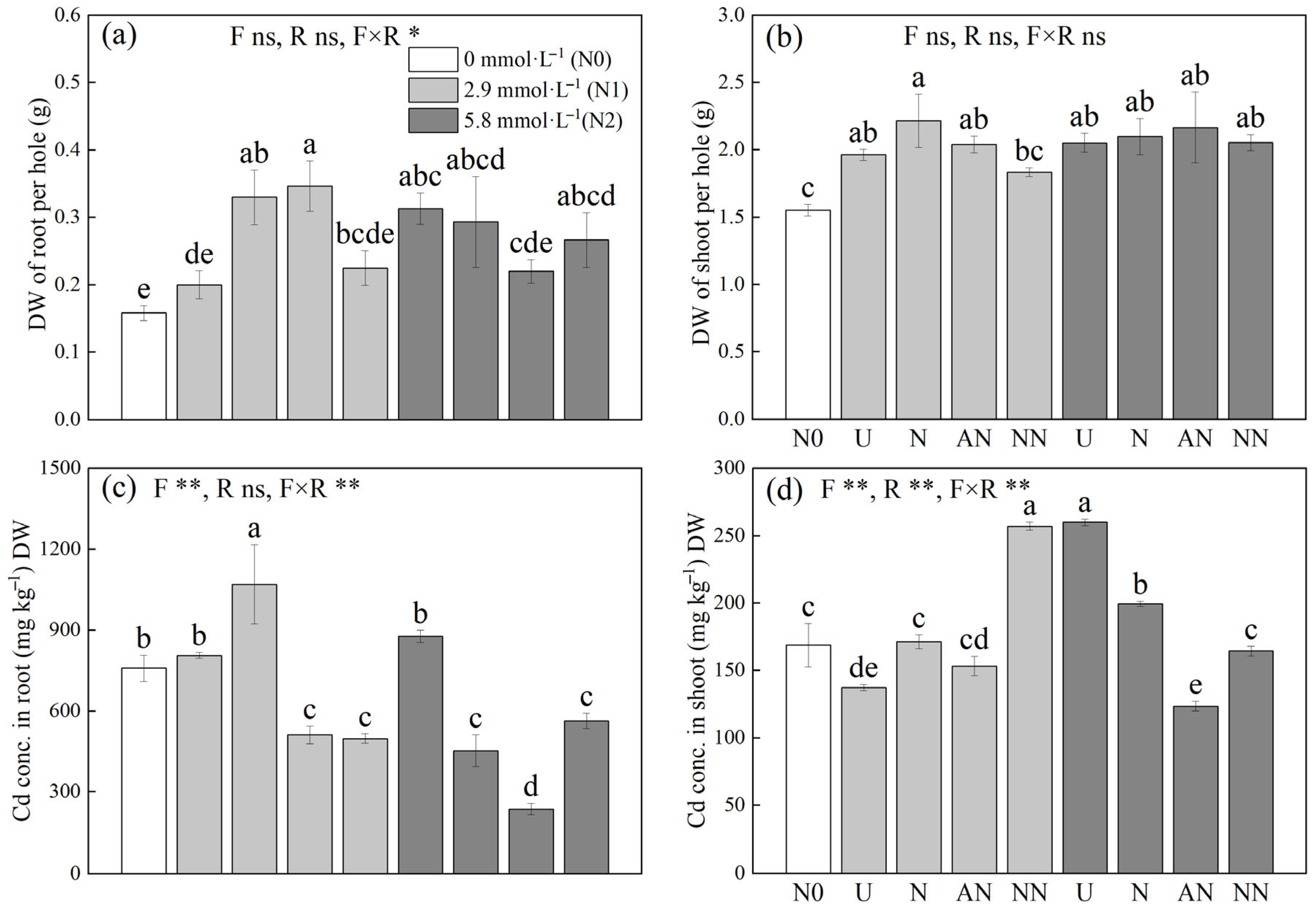
Figure 1a shows that neither nitrogen form, application rate, nor their interaction significantly affected shoot dry weight. In contrast, root dry weight was strongly influenced by the interaction between nitrogen form and application rate (Figure 1b). Specifically, root dry weight under U treatment was significantly higher at the N2 rate than at N1, whereas AN exhibited the opposite trend. Compared to the control (N0), root dry weight under the N and AN treatments increased by 106% and 119%, respectively, at the N1 level. At the N2 level, the U, N, and NN treatments also significantly enhanced root dry weight by 94%, 81%, and 69%, respectively (Figure 1a). Shoot dry weight increased by 19% to 43% in all nitrogen treatments relative to N0 (Figure 1b). Notably, with the exception of the NN treatment at N1, all treatments differed significantly from the control, with the N treatment at N1 producing the highest shoot dry weight.
Nitrogen form, application rate, and their interaction significantly influenced Cd concentration in rice plants. Specifically, increased application rates of N and AN effectively reduced Cd concentration in roots. In shoots, Cd concentration was significantly higher at the N2 rate than at N1 under both U and N treatments, whereas the AN and NN treatments showed a pronounced decrease at the higher nitrogen level (Figure 1c,d). At the N1 level, root Cd concentration in the N treatment increased markedly by 41% compared to N0, whereas the AN and NN treatments reduced it by 33% and 34%, respectively. At the N2 level, root Cd concentration decreased significantly by 40%, 69%, and 26% in the N, AN, and NN treatments, respectively (Figure 1c). Shoot Cd concentration varied significantly among treatments. At the N1 level, it decreased significantly by 19% under the U treatment but increased by 52% under the NN treatment relative to N0. At the N2 level, the U and N treatments led to significant increases in shoot Cd concentration by 54% and 18%, respectively. In contrast, the AN treatment resulted in a 27% reduction (Figure 1d).

3.2. Effects of Nitrogen Forms and Levels on Mineral Element Concentration in Rice

3.2.1. Macronutrients

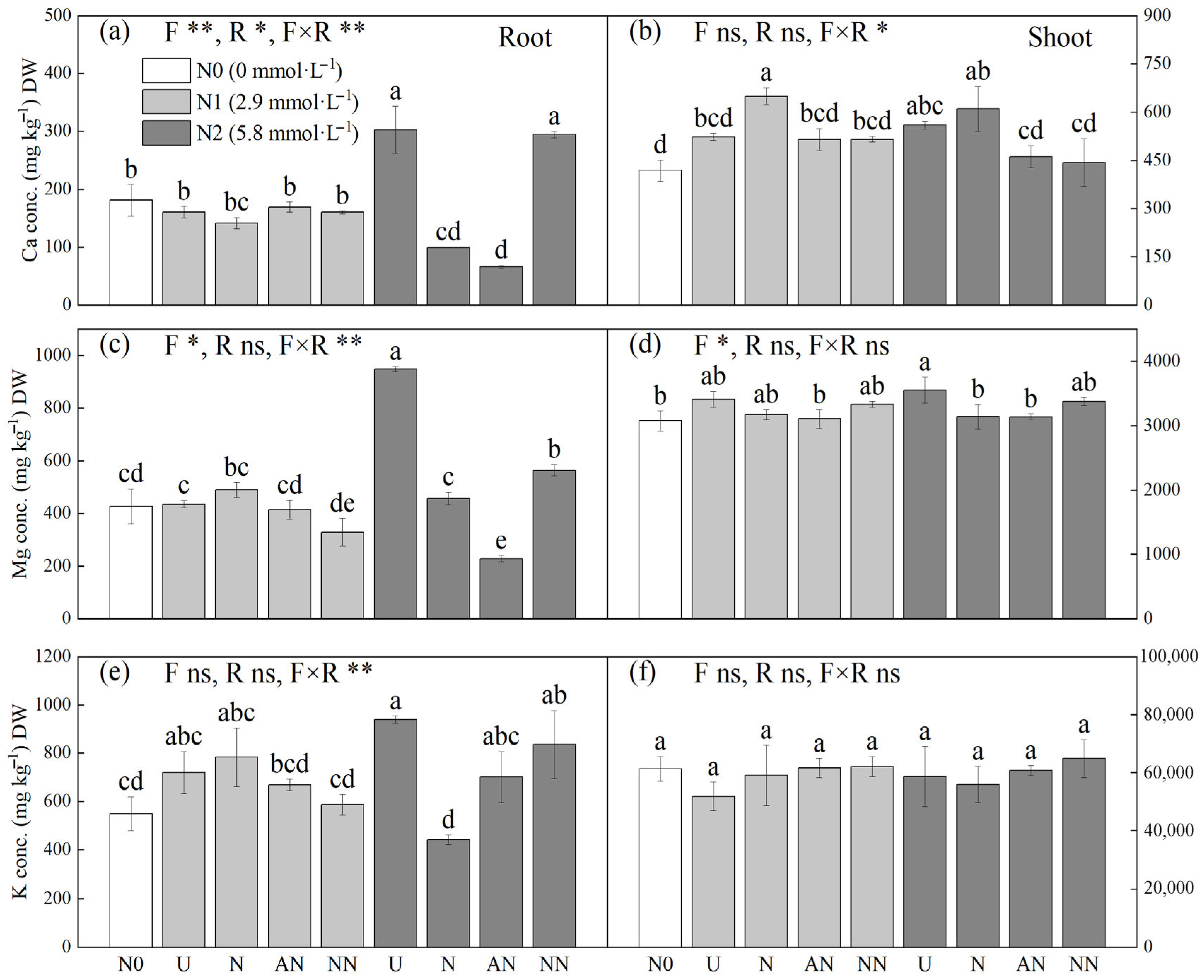
Nitrogen forms significantly influenced root Ca and Mg concentrations, as well as shoot Mg concentration (p < 0.05 or p < 0.01; Figure 2a–f). Nitrogen application rate had a significant effect on root Ca concentration, while the interaction between nitrogen form and rate exerted highly significant effects on root Ca, Mg, and K concentrations and a significant effect on shoot Ca concentration. The response of root macronutrient concentration to increasing nitrogen levels varied with nitrogen form: Ca and Mg concentrations in the U and NN treatments, as well as K concentration in the NN treatment, were markedly higher at N2 than at N1. Conversely, Ca and Mg concentrations in the AN treatment and K concentration in the N treatment decreased significantly with increasing nitrogen rate (Figure 2a,c,e). Furthermore, increasing the nitrogen rate had no significant effect on shoot Ca, Mg, or K concentration (Figure 2b,d,f).
At the N1 level, no significant differences in root Ca, Mg, or K concentrations were observed among treatments compared to the N0 control (Figure 2a,c,e). At the N2 level, root Ca concentration was significantly higher in the U and NN treatments than in the N and AN treatments. Root Mg concentration also varied significantly across all treatments at this level. Root K concentration followed the order U > NN > AN > N. Relative to N0, the U and NN treatments significantly increased root Ca concentration by 67% and 63%, Mg concentration by 122% and 32%, and K concentration by 71% and 52%, respectively. In comparison, the N treatment reduced root Ca concentration by 82%, while the AN treatment decreased Ca and Mg concentrations by 63% and 47%, respectively.
For shoot Ca concentration at the N1 level, the N treatment resulted in the highest value, which was 55% greater than that in N0 and significantly exceeded the U, AN, and NN treatments (Figure 2b). At the N2 level, shoot Ca concentration in the U and N treatments increased by 34% and 46%, respectively, relative to N0, and both were significantly higher than the AN and NN treatments. Shoot Mg and K concentrations did not differ significantly from N0 across treatments, although at the N2 level, Mg concentration in the U treatment was significantly higher than that in the N and AN treatments (Figure 2d,f).

3.2.2. Micronutrients

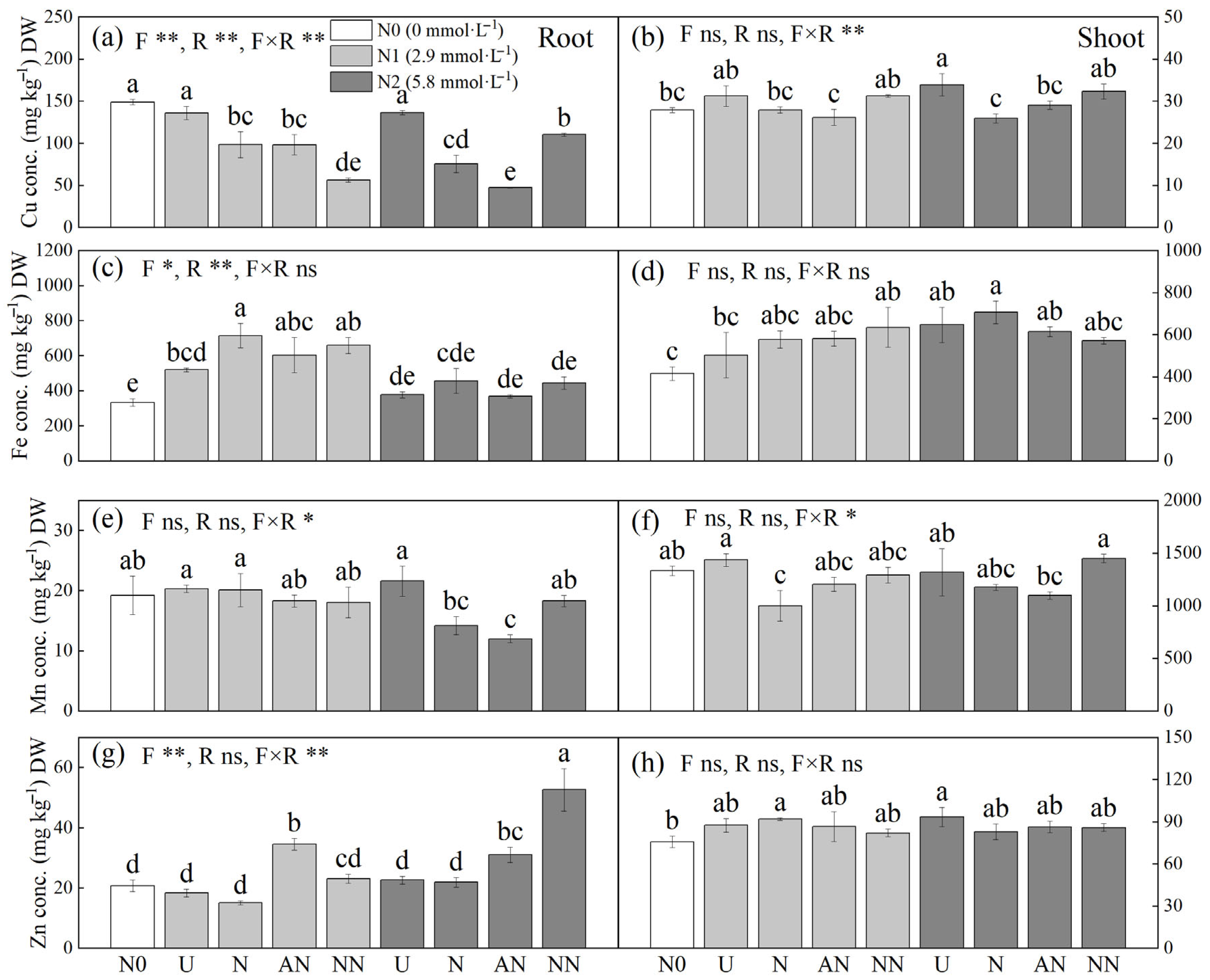
Nitrogen form, application rate, and their interaction significantly influenced the micronutrient concentrations in rice roots and shoots (Figure 3a–h). ANOVA revealed that nitrogen form had a significant or highly significant effect on root Cu, Fe, and Zn concentrations. Nitrogen application rate also showed highly significant effects on root Cu and Fe concentrations. Moreover, the interaction between nitrogen form and rate significantly or highly significantly affected root Cu, Mn, and Zn concentrations, as well as shoot Cu and Mn concentrations.
The influence of increased nitrogen rate on root micronutrient concentrations varied depending on nitrogen form. Under N treatment, Fe and Mn concentrations decreased significantly at the N2 level. In the AN treatment, Cu, Fe, and Mn concentrations all declined significantly with increasing nitrogen rate. In contrast, under NN treatment, the N2 level significantly increased Cu and Zn concentrations while reducing Fe concentration (Figure 3a,c,e,g). However, there are no significant differences in shoot micronutrient concentrations observed between the N1 and N2 levels for any treatment.
At the N1 level, root Cu concentration was significantly reduced by 34% to 62% under the N, AN, and NN treatments compared to N0, whereas Fe concentration was significantly increased by 56% to 115% across all nitrogen treatments. Only the AN treatment led to a significant increase in root Zn concentration (by 67%), while no significant change was observed in root Mn concentration. At the N2 level, root Cu concentration in the N, AN, and NN treatments decreased significantly by 26% to 68% relative to N0. No significant difference in Fe concentration was detected among treatments at this level. Root Mn concentration was significantly reduced by 38% in the AN treatment, while Zn concentration increased significantly by 50% and 154% in the AN and NN treatments, respectively.
In general, shoot micronutrients showed a weaker response to nitrogen treatments (Figure 3b,d,f,h). At the N1 level, aside from a 53% increase in Fe concentration under the NN treatment and a 25% decrease in Mn concentration under the N treatment, no significant changes were detected for Cu or Zn concentrations. At the N2 level, Cu concentration increased markedly by 21% in the U treatment, and Fe concentration rose significantly by 48% to 70% in the U, N, and AN treatments. Mn and Zn concentrations remained unaltered across treatments.

3.3. Effects of Nitrogen Forms and Levels on the Translocation of Cd and Mineral Elements

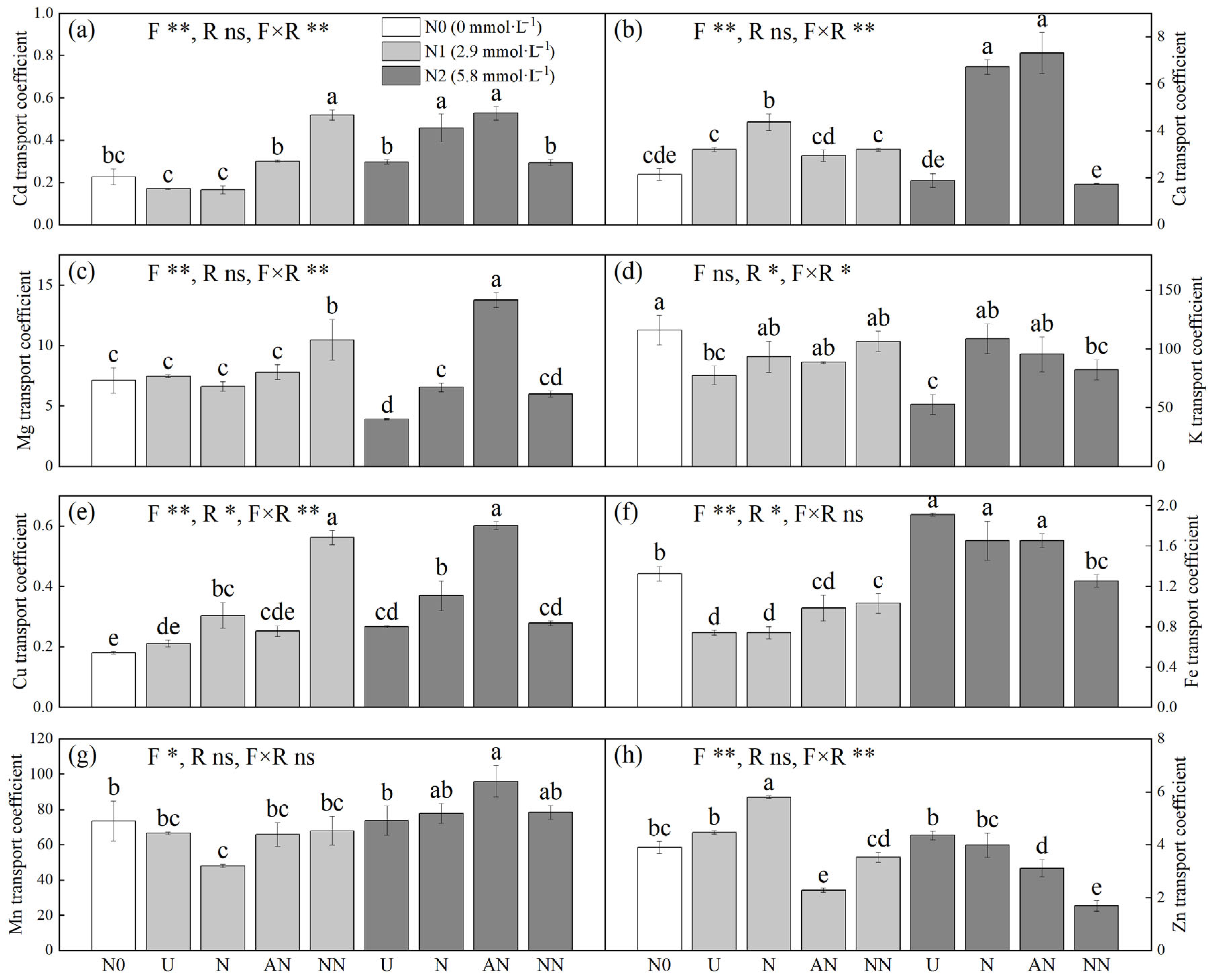
Nitrogen form significantly influenced the translocation of Cd and all measured mineral elements except K (Figure 4a–h). Nitrogen application rate had a significant effect on the translocation of K, Cu, and Fe, while the interaction between nitrogen form and rate significantly regulated the translocation of all cations except Fe and Mn.
Increasing nitrogen application rates within the same nitrogen form significantly influenced the translocation of Cd and essential mineral elements, with distinct response patterns among the different nitrogen forms. Under U treatment, the translocation of Cd and Fe increased markedly, whereas that of Ca and Mg decreased significantly. Under N treatment, the translocation of Cd, Ca, Fe, and Mn showed significant increases, while Zn translocation declined significantly. For AN treatment, the translocation of all measured cations except K increased significantly. In contrast, NN treatment led to pronounced reductions in the translocation of Cd, Ca, Mg, Cu, and Zn.
At the N1 level, the Fe translocation factor was markedly reduced by 26% to 44% across treatments relative to N0. The U treatment significantly decreased K translocation by 33%. The N treatment markedly promoted the translocation of Ca, Cu, and Zn, with increases of 104%, 67%, and 49%, respectively, but reduced Mn translocation by 35%. The AN treatment notably lowered the Zn translocation factor by 42%. Under the NN treatment, translocation factors of Cd, Mg, and Cu were significantly enhanced by 126%, 47%, and 211%, respectively, differing significantly from other treatments.
At the N2 level, translocation capacities for Cd, Ca, Mg, K, Cu, and Mn were generally higher in the N and AN treatments than in the U and NN treatments. Specifically, translocation factors for Cd, Ca, and Cu in the N and AN treatments increased several-fold compared to N0. The AN treatment also markedly raised Mg and Mn translocation by 94% and 31%, respectively. In the U treatment, Mg and K translocation decreased significantly by 45% and 54%, respectively, while Cu translocation increased by 50%. The Fe translocation factor was significantly elevated by 24% to 44% in the U, N, and AN treatments, whereas the Zn translocation factor was significantly reduced by 20% and 57% in the AN and NN treatments, respectively.

3.4. Correlation Between Plant Mineral Element Concentrations and Cd Concentration/Cd Translocation, and Random Forest Importance Ranking

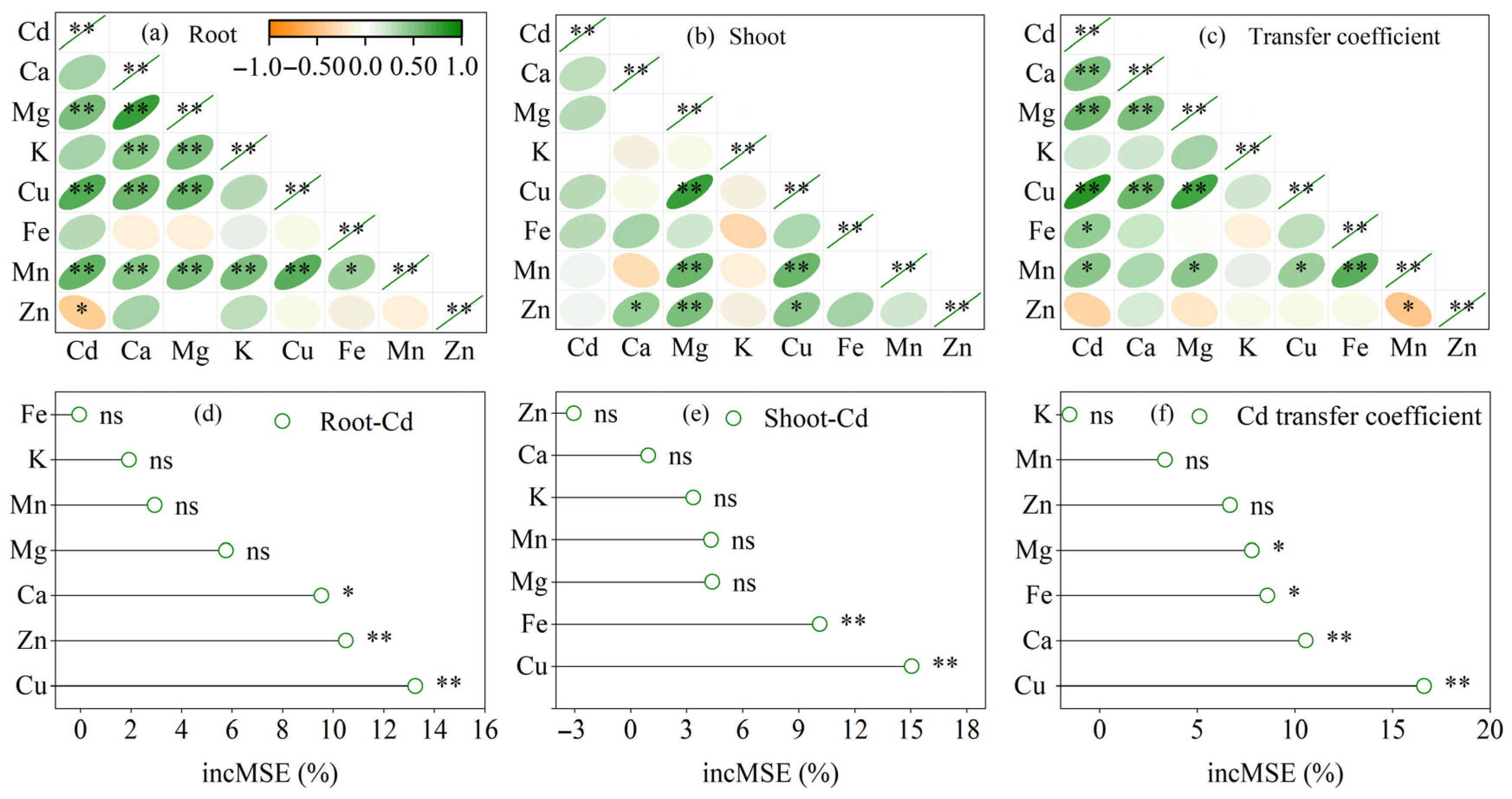
Correlation analysis indicated that root Cd concentration exhibited a highly significant positive correlation with Mg and Cu concentrations, and a significant negative correlation with Zn concentration (Figure 5a). Root Ca concentration was highly significantly positively correlated with Mg concentration, and both elements showed highly significant positive correlations with K, Cu, and Mn concentrations. Mn concentration was positively correlated with all other measured mineral elements except Zn. In shoots, no pronounced correlations were detected between Cd concentration and mineral nutrient concentrations. However, shoot Mg concentration was highly significantly positively correlated with Cu, Mn, and Zn concentrations. Zn concentration showed highly significant or significant positive correlations with Ca, Mg, and Cu, while Cu concentration was highly significantly positively correlated with Mn concentration.
With respect to element translocation, Cd translocation was highly significantly positively correlated with Ca, Mg, and Cu translocation and significantly positively correlated with Fe and Mn translocation (Figure 5a). Ca translocation was highly significantly positively correlated with the translocation of Mg and Cu. Mg translocation showed highly significant or significant positive correlations with Cu and Zn translocation, and Mn translocation was strongly positively correlated with the translocation of Cu and Fe.
Random Forest analysis revealed that root Cd concentration was significantly influenced by the concentrations of Cu, Zn, and Ca (Figure 5d). In shoots, Cd concentration was predominantly affected by Cu and Fe concentrations (Figure 5e). Furthermore, the translocation of Cd from roots to shoots was significantly regulated by the translocation of Cu, Ca, Fe, and Mg.

3.5. Effects of Nitrogen Forms and Levels on FTR of Macro/Micro-Nutrient Cation Channels for Cd

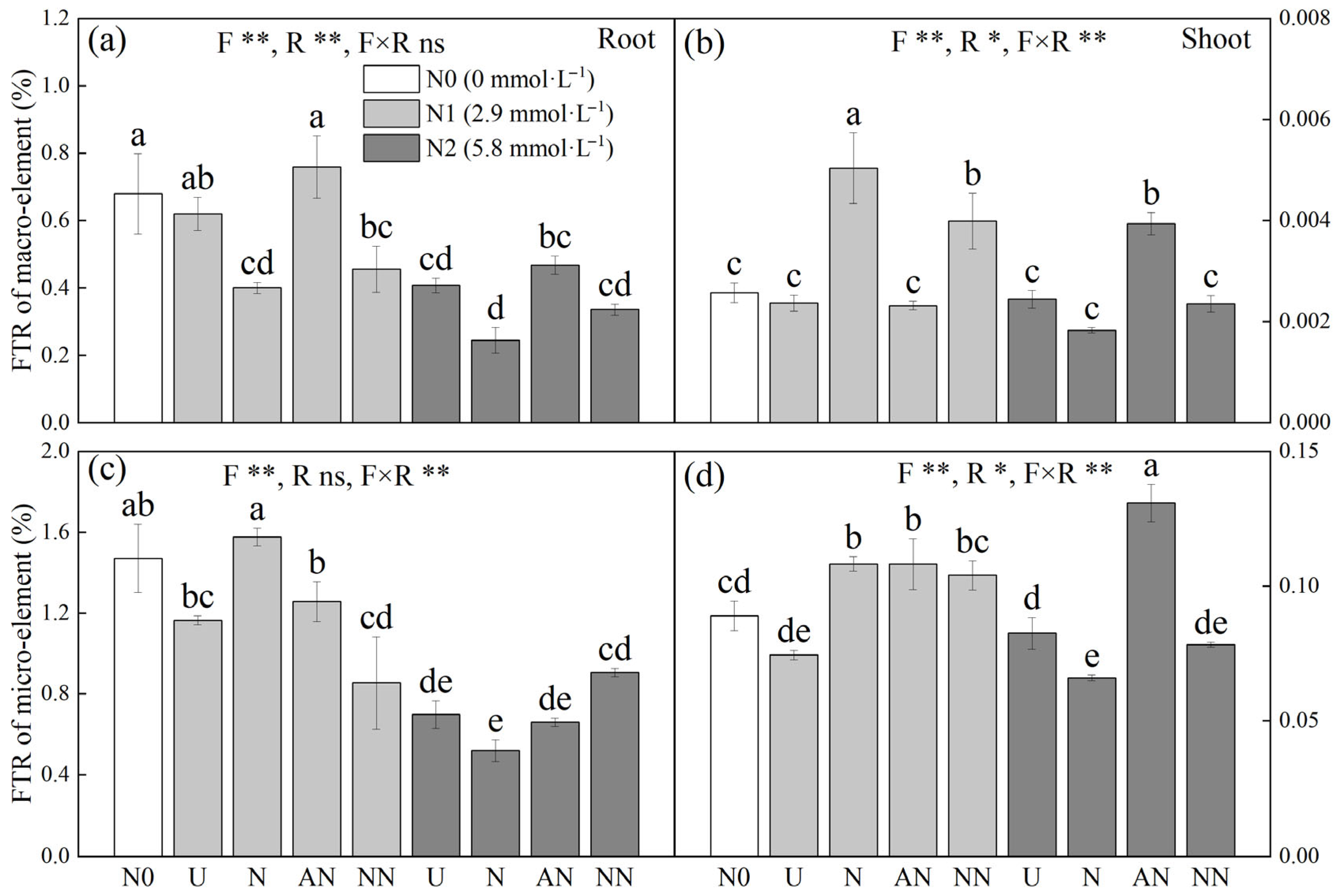
Nitrogen form and application rate exerted highly significant effects on FTR of macronutrients in the roots (Figure 6a). Nitrogen form and its interaction with application rate also strongly influenced the FTR of micronutrients in the root (Figure 6c).
Increasing nitrogen application rates generally reduced the FTR of macronutrients and micronutrients in roots (except for the FTR of micronutrients in the root under the NN treatment) (Figure 6a,c). The FTR of macronutrients and micronutrients in shoots in the N and NN treatments was significantly lower at N2 than at N1, while the AN treatment exhibited a significant increase (Figure 6b,d).
Across both N1 and N2 levels, FTR of macronutrients in the roots consistently followed the order AN > U > NN > N. At the N1 level, the N and NN treatments markedly reduced this rate compared to N0. In contrast, only the NN treatment significantly decreased the FTR of micronutrients in the roots at the N1 level. At the N2 level, all treatments resulted in significantly lower FTR of macronutrients and micronutrients in the roots relative to N0.
Nitrogen form, application rate, and their interaction significantly or highly significantly affected the FTR of macronutrients and micronutrients in the shoots (Figure 6b,d). For FTR of macronutrients at the N1 level, the N and NN treatments showed significantly higher rates than N0. At the N2 level, the AN treatment also led to a significant increase compared to N0. Regarding the FTR of micronutrients in shoots, the FTR of macronutrients and micronutrients was significantly increased in the N and AN treatments at the N1 level relative to N0. At the N2 level, the rate in the N treatment decreased significantly, whereas the AN treatment showed a further significant increase.

4. Discussion

Nitrogen, a fundamental element for plant architecture and physiological metabolism, plays a critical role in mitigating heavy metal stress [23,28]. This study confirms that nitrogen supply effectively alleviates Cd-induced growth inhibition in rice, although the effects vary significantly depending on the nitrogen form applied (Figure 1a,b). This observed variability aligns with findings from Jalloh et al. [29,30], Hassan et al. [31,32], and Wu et al. [23], collectively indicating that the regulatory outcome of nitrogen forms is co-modulated by rice cultivar, Cd stress level, and environmental conditions, demonstrating pronounced context-dependence. The central finding of this work, however, is that distinct nitrogen forms and application rates differentially regulate the balance between Cd and essential mineral element uptake and translocation, thereby providing crucial physiological insights for achieving the synergistic goal of “Cd reduction with mineral nutrients preservation.”
When interrogating the underlying mechanisms, our results challenge conventional theories. The traditional view posits that nitrogen forms modulate Cd bioavailability primarily by altering rhizosphere pH [33]. Contrary to this expectation, both root and shoot Cd contents in the NO3-N treatment were significantly higher than those in the NH4+-N treatment in our study (Figure 1c,d), a result consistent with reports by Jalloh [29,30] and Hassan et al. [31,32]. This direct contradiction to the rhizosphere pH theory is further supported by our previous field observations showing no significant fluctuation in soil pH or available Cd concentration following nitrogen application [24], combined with the strictly controlled pH conditions in this hydroponic system. These findings strongly suggest that rhizosphere pH is not the dominant mechanism at play here. Similarly, the “physiological dilution” hypothesis fails to provide a satisfactory explanation. While previous studies reported an inverse relationship between biomass and Cd concentration, suggesting a potential dilution effect [22,23,29,30], a key observation in our study at the N2 level was the significant divergence in Cd accumulation among treatments despite no corresponding significant differences in biomass (Figure 1a–d). This key evidence rules out physiological dilution as a primary mechanism and instead indicates that nitrogen form triggers an active physiological regulatory pathway.
This active regulation is first evident in the selective ion uptake at the root level. We found a highly significant positive correlation (p < 0.01) between root Cd concentration and the concentrations of Mg, Cu, and Mn, but a significant negative correlation (p < 0.05) with Zn concentration (Figure 5a). These correlations reveal underlying ion interaction mechanisms: the positive relationships suggest that Cd2+ may share absorption or sequestration pathways with certain divalent cations, a process known to involve transporters such as OsNramp5 and OsIRT1 [2,15,34]. The Random Forest model further demonstrated tha Cu, Zn, and Ca influenced root Cd uptake (Figure 5d), lending additional support to the involvement of multiple ion pathways. Most notably, the significant negative correlation between root Cd and Zn directly points to a competitive inhibition mechanism. Given their similar ionic radii and chemical properties, Cd2+ and Zn2+ are known to compete for binding sites on transporter families like ZIP [35,36,37,38]. Our study provides direct evidence for this: the NH4+-N treatment led to a concurrent significant increase in root Zn concentration and a decrease in Cd concentration, whereas the NO3-N treatment showed the opposite trend (Figure 1b and Figure 3g). This contrasting pattern strongly supports the hypothesis that NH4+-N may competitively inhibit Cd uptake by preferentially activating Zn absorption systems, echoing findings by Cheng et al. [39] in wheat and underscoring a positive role for NH4+-N in regulating Zn/Cd uptake balance. Analysis of the FTR offers physiological validation for this uptake selectivity: variations in root Cd concentration closely tracked changes in the FTR of micronutrients. The NH4+-N treatment significantly lowered this rate (Figure 2b and Figure 6), thereby enhancing root selectivity at the uptake and reducing Cd influx.
The regulation of translocation and partitioning by nitrogen form and level involves greater complexity. Correlation analysis revealed that the translocation factor of Cd was highly significantly positively correlated with those of Ca, Mg, and Cu, and significantly positively correlated with those of Fe and Mn (Figure 5c). This suggests that the root-to-shoot transport of Cd may involve “co-transport” with these essential elements. Hassan et al. [32] reported that NO3-N, compared to NH4+-N and mixed nitrogen treatments, increased the levels of organic acids like citrate, oxalate, lactate, and acetate in rice plants, correlating with higher Cd accumulation. This provides a plausible explanation: different nitrogen forms may regulate the synthesis of organic chelators, thereby synchronously influencing the efficiency of root–shoot transport via organic acid–Cd complexes. Furthermore, research by Yang et al. [40] offers a molecular perspective: under Cd stress, a standard NO3-N supply (2.86 mM L−1) upregulated the expression of OsNramp1 and OsIRT1 in roots, while an excessive supply (5.72 mM L−1) suppressed OsNramp1 but further elevated OsIRT1 expression. This pattern mirrors our observations where standard NO3-N significantly increased root Cd concentration while causing no significant change in shoots, whereas excessive NO3-N resulted in significant changes in Cd roots and shoots (Figure 1c,d). This indicates that nitrogen levels can reshape Cd uptake and distribution patterns via a coordinated, multi-gene regulatory network.
A notable observation is that while different nitrogen forms significantly altered mineral element concentrations in the roots, shoot mineral concentrations remained relatively stable across treatments (Figure 2 and Figure 3), a phenomenon also noted by Wu et al. [23]. This maintenance of shoot homeostasis likely stems from the plant’s robust systemic regulation of essential elements, which prioritizes nutrient supply to active growth centers. For instance, under Fe deficiency, plants not only upregulate root OsIRT1 to enhance uptake but also remobilize stored Fe from vegetative tissues [41]. Crucially, the upregulation of OsIRT1 can concurrently affect the uptake of other divalent cations, including Cd [42,43,44], underscoring the inherent cross-talk and complexity in the regulation of elemental uptake pathways.
The conclusions drawn here are based on controlled hydroponic experiments. Their stability and applicability in complex field soil environments warrant further validation. Future studies employing molecular techniques should aim to dissect the precise signaling pathways through which nitrogen regulates the expression of key metal transporter proteins.

5. Conclusions

This study demonstrates that both the form and application rate of nitrogen fertilizer have significant regulatory effects on the absorption and transportation of Cd in rice. Specifically, ammonium nitrogen (NH4+-N) shows a distinct advantage in reducing Cd concentration compared with nitrate nitrogen (NO3-N). These effects are not an isolated single process, but the result of the comprehensive regulation of nitrogen on the absorption and transport of essential mineral elements in rice. In summary, these findings provide new physiological insights into how nitrogen forms regulate Cd accumulation in rice. They also establish a theoretical basis for achieving the agricultural objective of “reducing Cd accumulation while preserving mineral nutrients” through optimized nitrogen management.
However, it is important to acknowledge that these conclusions are based on a hydroponic system, which simplifies the complex rhizospheric interactions occurring in field soils. Factors such as nitrogen transformation, soil buffering capacity, and microbial activity may modulate the observed effects under real agricultural conditions. Therefore, while this study clarifies key physiological mechanisms, further validation in field trials is essential to translate these findings into reliable agronomic practices.

Author Contributions

Y.Z.: data curation, formal analysis, methodology, visualization, and writing—original draft. X.L.: data curation, formal analysis, methodology, visualization, and writing—review and editing. X.F.: investigation and project administration. X.T.: investigation and project administration. W.J.: investigation and project administration. X.Z.: investigation and project administration. Z.C.: investigation and project administration. H.A.: funding acquisition, supervision, and writing—review and editing. All authors have read and agreed to the published version of the manuscript.

Funding

This work was financially supported by the Joint Funds of the National Natural Science Foundation of China (32172107) and the National Rice Industry Technology System Cultivation and Soil Fertilizer Post Expert Project of China (CARS-01).

Data Availability Statement

The original contributions presented in this study are included in the article. Further inquiries can be directed to the corresponding authors.

Acknowledgments

Special thanks are given to the anonymous reviewers for their valuable comments. In addition, the authors gratefully acknowledge every teacher, classmate, and friend who helped the authors with their experiment and writing.

Conflicts of Interest

The authors declare no conflicts of interest.

References

  1. Zeng, Y.; Shen, C.; Zhang, B.; Ren, J.; Huang, Z.; Hou, H. Unraveling the threshold and interaction effects of environmental variables on cadmium contamination in rice grains. Environ. Sci. 2025, 160, 450–460. [Google Scholar] [CrossRef]
  2. Zhang, A.; Wang, K.; Wang, S.; Ye, D.; Liu, T.; Zhang, X.; Huang, H.; Wang, Y.; Zhang, L.; Li, T.; et al. Iron restricts radial cadmium transport via Casparian strip development to reduce root-to-shoot translocation in low cadmium-accumulating rice (Oryza sativa L.). J. Hazard. Mater. 2025, 500, 140402. [Google Scholar] [CrossRef]
  3. Alengebawy, A.; Khalek, S.T.A.; Qureshi, S.R.; Wang, M. Heavy Metals and Pesticides Toxicity in Agricultural Soil and Plants: Ecological Risks and Human Health Implications. Toxics 2021, 9, 42. [Google Scholar] [CrossRef]
  4. Chen, Y.; Zheng, X.; Li, J.; Li, X. Regulation of cadmium accumulation in plants by the transcription factor GTL1: Potential for minimizing grain cadmium. J. Hazard. Mater. 2025, 499, 140302. [Google Scholar] [CrossRef]
  5. Chen, H.; Yang, X.; Wang, P.; Wang, Z.; Li, M.; Zhao, F. Dietary cadmium intake from rice and vegetables and potential health risk: A case study in Xiangtan, southern China. Sci. Total Environ. 2018, 639, 271–277. [Google Scholar] [CrossRef]
  6. Wu, W.; Yang, W.; Zheng, F.; Zhang, Q.; Ma, Q.; Zhao, Y.; Luo, S.; Yang, Y.; Zeng, Q.; Deng, X. Strategic attenuation of Cd accumulation in rice through stage-specific flooding: Synergistic coordination of rhizospheric Cd bioavailability, microbial communities, and iron plaque speciation. Environ. Pollut. 2025, 377, 126455. [Google Scholar] [CrossRef]
  7. Wiggenhauser, M.; Aucour, A.M.; Bureau, S.; Campillo, S.; Telouk, P.; Romani, M.; Landrot, G.; Sarret, G. Cadmium transfer in contaminated soil-rice systems: Insights from solid-state speciation analysis and stable isotope fractionation. Environ. Pollut. 2021, 269, 115934. [Google Scholar] [CrossRef] [PubMed]
  8. Li, S.; Li, G.; Huang, X.; Chen, Y.; Lv, C.; Bai, L.; Zhang, K.; He, H.; Dai, J. Cultivar-specific response of rhizosphere bacterial community to uptake of cadmium and mineral elements in rice (Oryza sativa L.). Ecotoxicol. Environ. Saf. 2023, 249, 114403. [Google Scholar] [CrossRef] [PubMed]
  9. Wang, P.; Chen, H.; Kopittke, P.M.; Zhao, F. Cadmium contamination in agricultural soils of China and the impact on food safety. Environ. Pollut. 2019, 249, 1038–1048. [Google Scholar] [CrossRef]
  10. Pan, S.; Ji, X.; Liu, X.; Xie, Y.; Xiao, S.; Tian, F.; Xue, T.; Liu, S. Influence of landform, soil properties, soil Cd pollution and rainfall on the spatial variation of Cd in rice: Contribution and pathway models based on big data. Sci. Total Environ. 2024, 912, 168687. [Google Scholar] [CrossRef] [PubMed]
  11. Huang, B.; Zhao, F.; Wang, P. The relative contributions of root uptake and remobilization to the loading of Cd and As into rice grains: Implications in simultaneously controlling grain Cd and As accumulation using a segmented water management strategy. Environ. Pollut. 2022, 293, 118497. [Google Scholar] [CrossRef]
  12. Zhang, C.; Chu, Q.; Sha, Z.; Zhou, F.; Liu, H.; Wu, Y.; Zhao, J.; Zeng, R.; Xiang, L. Trade-off of phosphate mediated iron plaque formation and cell chemical remodeling on cadmium uptake and translocation in rice. Plant Physiol. Biochem. 2025, 230, 110702. [Google Scholar] [CrossRef]
  13. Wang, X.; Cao, Z.; Bakulski, K.M.; Paulson, H.L. Exposure to cadmium and cerebrovascular mortality in the United States. Hyg. Environ. Health Adv. 2025, 16, 100156. [Google Scholar] [CrossRef]
  14. Zhang, T.; Jiku, M.A.S.; Li, L.; Ren, Y.; Li, L.; Zeng, X.; Colinet, G.; Sun, Y.; Huo, L.; Su, S. Soil ridging combined with biochar or calcium-magnesium-phosphorus fertilizer application: Enhanced interaction with Ca, Fe and Mn in new soil habitat reduces uptake of As and Cd in rice. Environ. Pollut. 2023, 332, 121968. [Google Scholar] [CrossRef]
  15. Zhang, Y.; Jiang, S.; Wang, H.; Yu, L.; Li, C.; Ding, L.; Shao, G. Interactions of Fe, Mn, Zn, and Cd in Soil–Rice Systems: Implications for Reducing Cd Accumulation in Rice. Toxics 2025, 13, 633. [Google Scholar] [CrossRef]
  16. Yue, J.; Zhang, N.; Wu, D.; Gao, F. Molecular insights into cadmium transport and micronutrient crosstalk in rice: Towards minimizing grain Cd. J. Integr. Plant Biol 2025. [Google Scholar] [CrossRef]
  17. Amanda, G.A.S.; Moreno, Y.M.; Carciofi, B.A.M. Plant proteins as high-quality nutritional source for human diet. Trends Food Sci. Tech. 2020, 97, 170–184. [Google Scholar] [CrossRef]
  18. Jan, B.; Bhat, T.; Sheikh, T.; Wani, O.; Bhat, M.; Nazir, A.; Fayza, S.; Mushtaq, T.; Farooq, A.; Wani, S.; et al. Agronomic Bio-fortification of Rice and Maize with Iron and Zinc: A Review. Int. Res. J. Pure App. Chem. 2020, 16, 28–37. [Google Scholar] [CrossRef]
  19. Ji, M.; Ning, W.; Su, L.; Wei, Z.; Shi, D.; Liao, D.; Ouyang, X.; Fang, B.; Mao, B.; Chang, S. Reducing cadmium uptake without compromising nitrogen uptake, photosynthesis, or yield in low-Cd hybrid rice. Field Crops Res. 2025, 322, 109759. [Google Scholar] [CrossRef]
  20. Liu, Y.; Ma, J.; Chu, J.; Sun, W.; Wang, Q.; Liu, Y.; Zou, P.; Ma, J. Machine learning and structural equation modeling for revealing the influence factors and pathways of different water management regimes acting on brown rice cadmium. Sci. Total Environ. 2024, 954, 176033. [Google Scholar] [CrossRef] [PubMed]
  21. Zhao, B.; Xu, Z.; Li, S.; Yang, Z.; Wu, Z.; Gao, J.; Wang, Y. Reduction of the exchangeable cadmium content in soil by appropriately increasing the maturity degree of organic fertilizers. J. Environ. Manag. 2024, 365, 121599. [Google Scholar] [CrossRef]
  22. Yang, Y.; Xiong, J.; Tao, L.; Cao, Z.; Tang, W.; Zhang, J.; Yu, X.; Fu, G.; Zhang, X.; Lu, Y. Regulatory Mechanisms of Nitrogen (N) on Cadmium (Cd) Uptake and Accumulation in Plants: A Review. Sci. Total Environ. 2019, 708, 135186. [Google Scholar] [CrossRef] [PubMed]
  23. Wu, Z.; Zhang, W.; Xu, S.; Shi, S.; Wen, D.; Huang, Y.; Peng, L.; Deng, T.; Du, R.; Li, F. Increasing ammonium nutrition as a strategy for inhibition of cadmium uptake and xylem transport in rice (Oryza sativa L.) exposed to cadmium stress. Environ. Exp. Bot. 2018, 155, 734–741. [Google Scholar] [CrossRef]
  24. Zhang, Y.; Zhang, Y.; Chen, P.; Xiao, H.; Ao, H. Effects of Nitrogen Fertilizer Management on Cadmium Concentration in Brown Rice. Agronomy 2024, 14, 2488. [Google Scholar] [CrossRef]
  25. Jaksomsak, P.; Rerkasem, B.; Prom-u-thai, C. Responses of grain zinc and nitrogen concentration to nitrogen fertilizer application in rice varieties with high-yielding low-grain zinc and low-yielding high grain zinc concentration. Plant Soil 2017, 441, 101–109. [Google Scholar] [CrossRef]
  26. Wang, Z.; Zhang, F.; Feng, X.; Tao, Y.; Liu, Z.; Li, G.; Wang, S.; Ding, Y. Contribution of mineral nutrients from source to sink organs in rice under different nitrogen fertilization. Plant Growth Regul. 2018, 86, 159–167. [Google Scholar] [CrossRef]
  27. Zhang, X.; Xue, W.; Qi, L.; Zhang, C.; Wang, C.; Huang, Y.; Wang, Y.; Peng, L.; Liu, Z. Malic acid inhibits accumulation of cadmium, lead, nickel and chromium by down-regulation of OsCESA and up-regulation of OsGLR3 in rice plant. Environ. Pollut. 2024, 341, 122934. [Google Scholar] [CrossRef]
  28. Jiang, Y.; Yang, X.; Jiang, S.; Tientega, A.; Cao, H.; Li, Z.; Wang, M.; Huang, R.; Long, T. Nitrogenous fertilizers affect Cd accumulation in the soil-mulberry-silkworm system: Implications for safe utilization of contaminated farmland. Environ. Monit. Assess. 2025, 197, 1108. [Google Scholar] [CrossRef]
  29. Jalloh, M.A.; Chen, J.; Zhen, F.; Zhang, G. Effect of different N fertilizer forms on antioxidant capacity and grain yield of rice growing under Cd stress. J. Hazard. Mater. 2009, 162, 1081–1085. [Google Scholar] [CrossRef]
  30. Jalloh, M.A.; Chen, J.; Zhang, G. Effect of Nitrogen Fertilizer Forms on Growth, Photosynthesis, and Yield of Rice Under Cadmium Stress. J. Plant Nutr. 2009, 32, 306–317. [Google Scholar] [CrossRef]
  31. Hassan, M.J.; Wang, F.; Ali, S.; Zhang, G. Toxic Effect of Cadmium on Rice as Affected by Nitrogen Fertilizer Form. Plant Soil 2005, 277, 359–365. [Google Scholar] [CrossRef]
  32. Hassan, M.J.; Shafi, M.; Zhang, G.; Zhu, Z.; Qaisar, M. The growth and some physiological responses of rice to Cd toxicity as affected by nitrogen form. J. Plant Growth Regul. 2008, 54, 125–132. [Google Scholar] [CrossRef]
  33. Chen, B.; Deng, X.; Ma, Q.; Zhao, Y.; Wang, A.; Zhang, X.; Zeng, Q. Cadmium accumulation in brown rice (Oryza sativa L.) depends on environmental factors and nutrient transport: A three-year field study. Sci. Total Environ. 2023, 903, 11. [Google Scholar] [CrossRef]
  34. Chang, J.; Huang, S.; Konishi, N.; Wang, P.; Chen, J.; Huang, X.; Ma, J.; Zhao, F. Overexpression of the manganese/cadmium transporter OsNRAMP5 reduces cadmium accumulation in rice grain. J. Exp. Bot. 2020, 71, 5705–5715. [Google Scholar] [CrossRef] [PubMed]
  35. He, X.; Fan, S.; Zhu, J.; Guan, M.; Liu, X.; Zhang, Y.; Jin, C. Iron supply prevents Cd uptake in Arabidopsis by inhibiting IRT1 expression and favoring competition between Fe and Cd uptake. Plant Soil 2017, 416, 10. [Google Scholar] [CrossRef]
  36. Chen, Y.; Chao, Z.; Jin, M.; Wang, L.; Li, Y.; Wu, J.; Xiao, Y.; Peng, Y.; Lv, Q.; Gui, S.; et al. A heavy metal transporter gene ZmHMA3a promises safe agricultural production on cadmium-polluted arable land. J. Genet. Genom. 2023, 50, 130–134. [Google Scholar] [CrossRef]
  37. Tan, L.; Zhu, Y.; Fan, T.; Peng, C.; Wang, J. OsZIP7 functions in xylem loading in roots. Biochem. Biophys. Res. Commun. 2019, 512, 112–118. [Google Scholar] [CrossRef]
  38. Chen, X.; Ouyang, Y.; Fan, Y.; Qiu, B.; Zhang, G.; Zeng, F. The Pathway of Transmembrane Cadmium Influx via Calcium-Permeable Channels and Its Spatial Characteristics along Rice Root. Exp. Bot. 2018, 21, 5279–5291. [Google Scholar] [CrossRef]
  39. Cheng, Y.; Bao, Y.; Chen, X.; Yao, Q.; Wang, C.; Chai, S.; Zeng, J.; Fan, X.; Kang, H.; Sha, L.; et al. Different nitrogen forms differentially affect Cd uptake and accumulation in dwarf Polish wheat (Triticum polonicum L.) seedlings. J. Hazard. Mater. 2020, 400, 123209. [Google Scholar] [CrossRef]
  40. Yang, Y.; Xiong, J.; Chen, R.; Fu, G.; Chen, T.; Tao, L. Excessive nitrate enhances cadmium (Cd) uptake by up-regulating the expression of OsIRT1 in rice (Oryza sativa). Environ. Exp. Bot. 2016, 122, 141–149. [Google Scholar] [CrossRef]
  41. Sperotto, R.A. Zn/Fe remobilization from vegetative tissues to rice seeds should I stay or should I go Ask Zn/Fe supply! Front Plant Sci. 2013, 4, 464. [Google Scholar] [CrossRef] [PubMed]
  42. Lei, G.; Sun, L.; Sun, Y.; Zhu, X.; Li, G.; Zheng, S. Jasmonic acid alleviates cadmium toxicity in Arabidopsis via suppression of cadmium uptake and translocation. J. Integr. Plant Biol. 2020, 62, 218–227. [Google Scholar] [CrossRef] [PubMed]
  43. Zhu, Y.; Du, W.; Fang, X.; Zhang, L.; Jin, C. Knockdown of BTS may provide a new strategy to improve cadmium-phytoremediation efficiency by improving iron status in plants. J. Hazard. Mat. 2019, 384, 121473. [Google Scholar] [CrossRef]
  44. You, Y.; Wang, Y.; Zhang, S.; Sun, X.; Liu, H.; Guo, E.; Du, S. Different pathways for exogenous ABA-mediated down-regulation of cadmium accumulation in plants under different iron supplies. J. Hazard. Mat. 2022, 440, 129769. [Google Scholar] [CrossRef] [PubMed]
Figure 1. Dry weights of roots (a) and shoots (b) and Cd concentration in roots (c) and shoots (d). Values are means ± standard error (SE) (n = 3). F, R, and F × R represent nitrogen form, nitrogen application rate, and the interaction between form and application rate, respectively. Different letters indicate significant differences between treatments (p < 0.05). * and ** represent significant differences at the 0.05 and 0.01 levels, respectively, and ns represents no significant differences at the 0.05 level.
Agronomy 15 02904 g001
Figure 2. Ca, Mg, and K concentrations in roots (a,c,e) and shoots (b,d,f). Values are means ± standard error (SE) (n = 3). F, R, and F × R represent nitrogen form, nitrogen application rate, and the interaction between form and application rate, respectively. Different letters indicate significant differences between treatments (p < 0.05). * and ** represent significant differences at the 0.05 and 0.01 levels, respectively, and ns represents no significant differences at the 0.05 level.
Agronomy 15 02904 g002
Figure 3. Cu, Fe, Mn, and Zn concentrations in roots (a,c,e,g) and shoots (b,d,f,h). Values are means ± standard error (SE) (n = 3). F, R, and F × R represent nitrogen form, nitrogen application rate, and the interaction between form and application rate, respectively. Different letters indicate significant differences between treatments (p < 0.05). * and ** represent significant differences at the 0.05 and 0.01 levels, respectively, and ns represents no significant differences at the 0.05 level.
Agronomy 15 02904 g003
Figure 4. Cd (a) and mineral element (bh) translocation from to shoot. Values are means ± standard error (SE) (n = 3). F, R, and F × R represent nitrogen form, nitrogen application rate, and the interaction between form and application rate, respectively. Different letters indicate significant differences between treatments (p < 0.05). * and ** represent significant differences at the 0.05 and 0.01 levels, respectively, and ns represents no significant differences at the 0.05 level.
Agronomy 15 02904 g004
Figure 5. Correlation heat map and random forest model map. (a,b) Represent the correlation between the mineral element concentrations and Cd concentration in roots and shoots, and (c) represents the correlation between the mineral element transfer coefficient and the Cd transfer coefficient. (d,e) Represent the contribution rate of mineral element concentration to Cd concentration in roots and shoots, respectively, and (f) represents the contribution rate of the mineral element transfer coefficient to the Cd transfer coefficient. Orange and green represent negative and positive correlations, respectively, with darker colors representing higher correlations. * and ** mean significant at the 0.05 and 0.01 levels, respectively, and ns represents no significant differences at the 0.05 level.
Agronomy 15 02904 g005
Figure 6. The FTR of macro/micro-nutrients in roots (a,c) and shoots (b,d). Values are means ± standard error (SE) (n = 3). F, R, and F × R represent nitrogen form, nitrogen application rate, and the interaction between form and application rate, respectively. Different letters indicate significant differences between treatments (p < 0.05). * and ** represent significant differences at the 0.05 and 0.01 levels, respectively, and ns represents no significant differences at the 0.05 level.
Agronomy 15 02904 g006
Disclaimer/Publisher’s Note: The statements, opinions and data contained in all publications are solely those of the individual author(s) and contributor(s) and not of MDPI and/or the editor(s). MDPI and/or the editor(s) disclaim responsibility for any injury to people or property resulting from any ideas, methods, instructions or products referred to in the content.