Article

Design and Experiment of an Inter-Plant Obstacle-Avoiding Oscillating Mower for Closed-Canopy Orchards


1
College of Agricultural Engineering, Shanxi Agricultural University, Jinzhong 030801, China
2
Dryland Farm Machinery Key Technology and Equipment Key Laboratory of Shanxi Province, Jinzhong 030801, China
*
Author to whom correspondence should be addressed.
Agronomy 2025, 15(12), 2893; https://doi.org/10.3390/agronomy15122893
Submission received: 4 November 2025 / Revised: 13 December 2025 / Accepted: 13 December 2025 / Published: 16 December 2025
(This article belongs to the Section Weed Science and Weed Management)

Abstract

To address the challenges of narrow, confined spaces in traditional closed-canopy orchards, where complex terrain between and within rows hinders the operation of large and medium-sized mowers. A self-propelled intra-plant obstacle-avoiding oscillating mower was developed. Its core innovation is an integrated oscillating mechanism that achieves one-pass, full-coverage operation by coordinating a 110° fan-shaped cutting path for inter-row areas with an adaptive flipping contour-cutting action for intra-plant areas. The power and transmission systems were optimized according to the shear and bending forces of three common weed species. The integrated prototype was then built and subjected to field tests. The results showed that the shear and bending forces of all three weed species peaked at 30 mm from the root and stabilized beyond 50 mm. Field tests demonstrated a 100% intra-plant obstacle passage rate, 96.9% cutting width utilization rate, 92.07% stubble height stability coefficient, and a 1.66% missed-cutting rate, which meets the operational requirements of closed-canopy orchards.

1. Introduction

China, the world’s leading fruit producer, ranks among the top globally in both fruit cultivation area and yield [1]. Growing demand has established the fruit industry as a primary economic pillar in key production regions [2]. Mechanized orchard management is essential for standardizing operations [3] and represents a fundamental component of China’s agricultural mechanization [4]. However, traditional closed-canopy orchards account for approximately 73% of the total orchard area in China [5]. These orchards are typically established using densely planted standard rootstocks. As trees grow, their canopies overlap, leading to disordered canopy structure, insufficient light penetration, and multi-layered weed growth between and within rows [6,7]. Furthermore, the narrow layout of these orchards hiders the access of large and medium-sized mowing equipment [8]. Recent research indicates that cover crop cultivation in orchards could enhance soil stability, improve soil structure, increase porosity, reduce bulk density, and improve water infiltration and retention, thereby boosting tree drought resistance [9,10]. Nonetheless, regular mowing was necessary to prevent overgrowth and competition with trees for water and nutrients [11]. Manual weed control was labor-intensive, inefficient [12,13], and struggled to maintain consistent stubble height and neatness, which undermined the potential benefits of cover crops for orchard management. Therefore, improving mowing quality and efficiency in closed-canopy orchards and strengthening mechanized management are crucial for advancing orchard mechanization in China.
It is well known that the characteristics of orchard weeds are fundamental to mower design. Key parameters such as species, stem diameter, and moisture content directly guide the development of cutting components, the matching of power systems, and the optimization of operating parameters like cutting height [14,15]. Furthermore, factors such as weed species and cutting position significantly influence cutting performance [5,16]. Zhao et al. [17] conducted tensile and shear tests on the stems of four forage species at the cutting stage: two perennial legumes (Alfalfa and Crownvetch) and two grasses (Crested Wheatgrass and Smooth Bromegrass). The findings revealed a negative correlation between the tensile strength of the forage stems and their diameter. Both legume and grass stems exhibited a decreasing trend in shear strength with increasing diameter. Chu et al. [18] selected three herbaceous species from Kunming—Crofton Weed, Tall Fleabane, and Beggar-ticks—and performed bending tests. They obtained that the stem diameter had a negative correlation with the bending strength and its relationship can be fitted by an exponential function. The aforementioned research provides methodological and technical support for the study of the mechanical properties of weeds in closed-canopy orchards.
At the same time, the cutting device is essential for ensuring the continuous, stable, and efficient operation of mowers [19]. Existing mowing devices are primarily categorized into types such as the rotary, reciprocating, and flail, which can be selected as needed [20]. Liu et al. [21] developed the 9GS-2.0 mower, which employed a flail-type cutting mechanism with swing knives. It provided excellent shredding quality, high cutting efficiency, stable performance, and good wear resistance. Field tests demonstrated satisfactory performance, with an average stubble height of 52 mm. Xiong et al. [22] developed a reciprocating mower for orchards. Its cutter bar reciprocated at 650 r/min. Field tests confirmed that the mower provided effective ground contour following. Kouwenhoven [23] developed a field brush mower, and field experiments showed that brush size, spacing, and rotational speed all significantly influence mowing performance. Yang et al. [5] designed a crawler-based, self-propelled, remote-controlled mower with video transmission for the narrow and confined interiors of traditional closed-canopy orchards. The blades were hinged to the disc periphery in a flail arrangement and rotated with it. Cutting height was adjustable via a remotely controlled mechanism that raises and lowers the disc. The above analysis shows that most research, both domestically and internationally, has focused on flail, reciprocating, and brush-type cutting devices. In contrast, relatively little exploration has been conducted on oscillating cutting mechanisms suitable for intra-plant obstacle-avoidance operations.
To improve orchard mowing efficiency, mowers should be capable of both inter-row cutting and intra-plant obstacle avoidance. The intra-plant obstacle avoidance device protects the cutting blades and the machine from collisions with fruit trees, thereby preventing damage [24]. Yang et al. [25] designed an intra-plant obstacle-avoiding mower for pedestrian orchards. The system used the deformation of the sensing rod upon tree contact as a trigger signal for the hydraulic system, which then retracted the cylinder to achieve avoidance. Yu et al. [26] developed a bilateral automatic intra-plant weeding machine with obstacle avoidance for trellis-trained vineyards. As the mower was pulled by a tractor along the grape rows, its bilateral automatic obstacle-avoidance devices enabled simultaneous intra-plant weeding on both sides of the vines, significantly improving work efficiency. Current obstacle-avoidance technologies are prone to interference from branches, leaves, and light, making them unsuitable for the complex conditions of closed-canopy orchards. However, they provide essential theoretical support for formulating integrated mowing plans and for the design optimization of intra-plant obstacle-avoidance mechanisms.
This study addresses the challenge of operating in traditional closed-canopy orchards, where narrow spaces and complex terrain limit larger mowers. An intra-plant obstacle-avoiding oscillating mower was designed for this purpose, meeting the specific agronomic requirements of such orchards. The working principles of mowing and obstacle avoidance are described. The structures and parameters of key components are analyzed. These components include the inter-row oscillating cutting device, intra-plant cutting device, obstacle-avoidance mechanism, power transmission system, and control system—are analyzed. Biomechanical experiments on common orchard weeds were performed to determine the mowing power consumption. And field trials were performed to evaluate key performance metrics, including obstacle avoidance pass rate, cutting width utilization, stubble height stability, and missed-cutting rate. Field experiments evaluated performance indicators such as the obstacle avoidance pass rate, cutting width utilization, stubble height stability, and missed-cutting rate. This research provides theoretical and practical support for the development of unmanned vehicles equipped with intra-plant obstacle-avoiding oscillating mowers for closed-canopy orchards. The research results will contribute to lowering costs in closed-canopy orchards by offering a practical alternative to manual intra-plant weeding and facilitating sustainable ground cover management.

2. Materials and Methods

2.1. Shear and Bending Tests of Orchard Weeds

The biomechanical properties of weeds are a critical basis for designing mower cutting mechanisms, as both weed species and cutting position significantly affect cutting performance [5,16]. Accordingly, this study conducted biomechanical experiments on common orchard weeds to provide theoretical support for designing mowers for closed-canopy orchards.
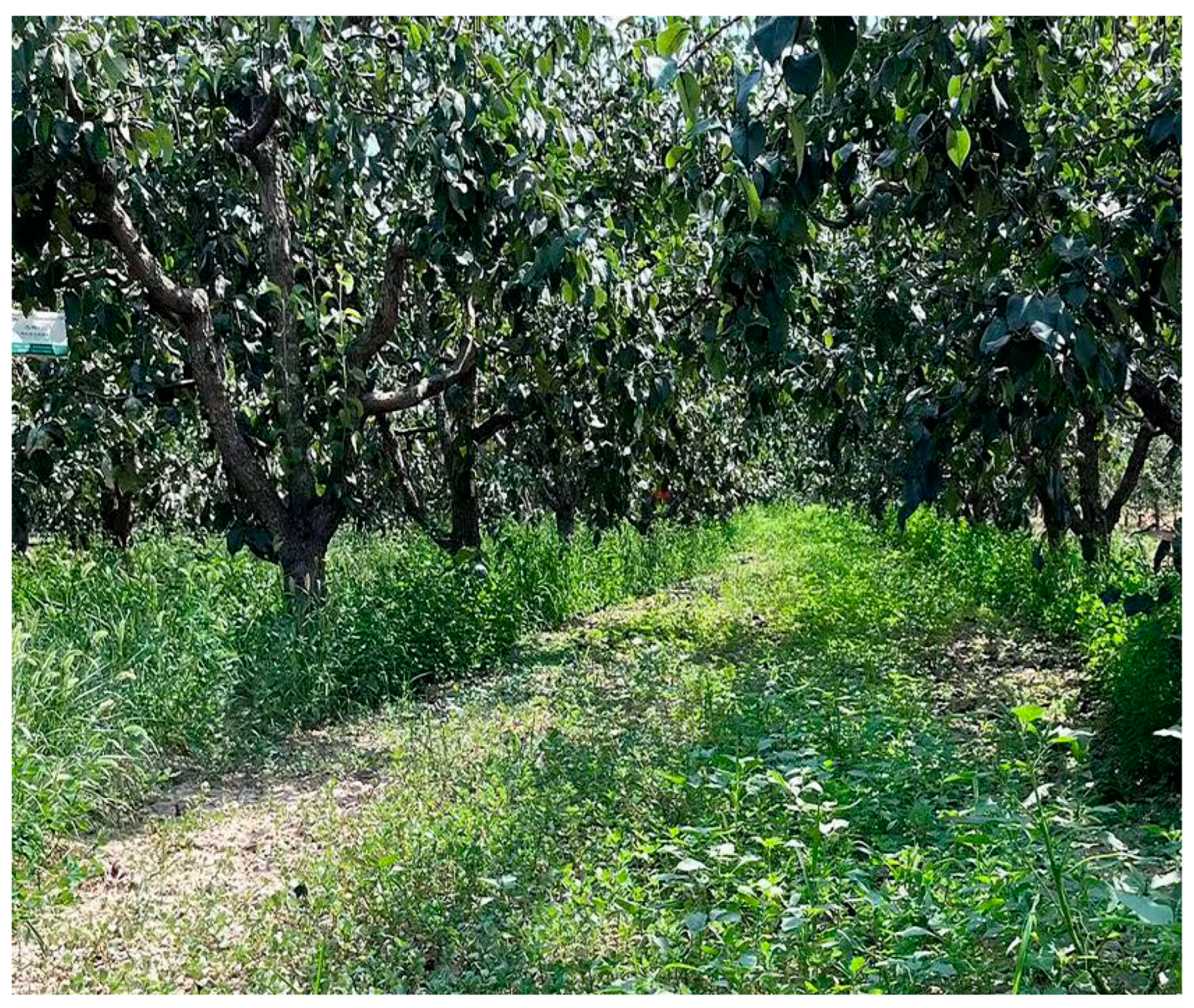
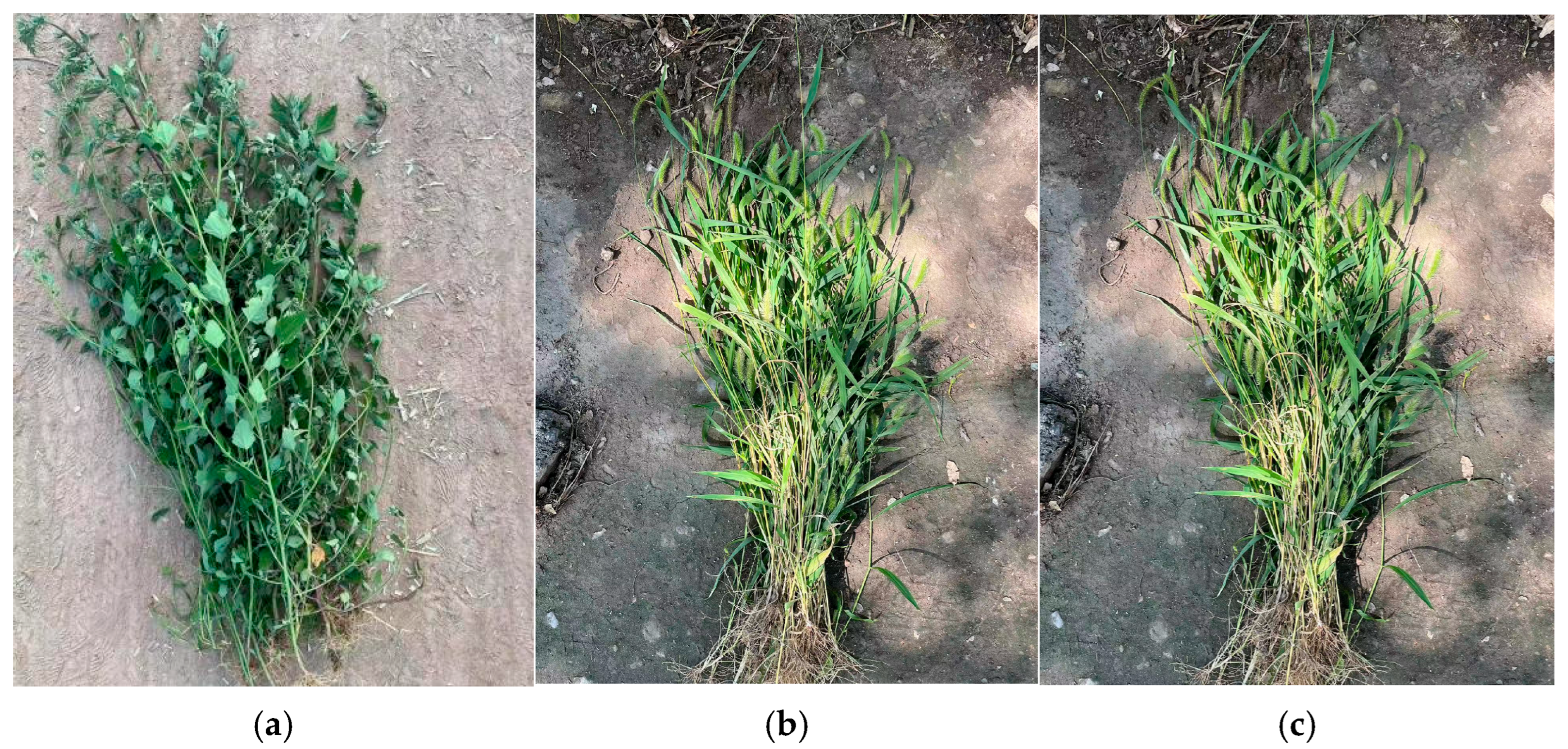
The experimental samples were common weeds collected on 21 September 2023, from orchards in Taigu District, Shanxi Province (Figure 1), at an ambient temperature of 23 °C. Straight stems free from pests and diseases were randomly selected, uprooted, sorted by species, wrapped in plastic film, and stored in a constant-temperature refrigerator at 3–5 °C. To minimize moisture loss, shear and bending experiments were promptly conducted using a microcomputer-controlled electronic universal testing machine (INSTRON-5544, Instron, MA, USA). The primary weed species included Amaranthus retroflexus L., Echinochloa crus-galli (L.) P. Beauv., and Setaria viridis (L.) P. Beauv. (Figure 2).
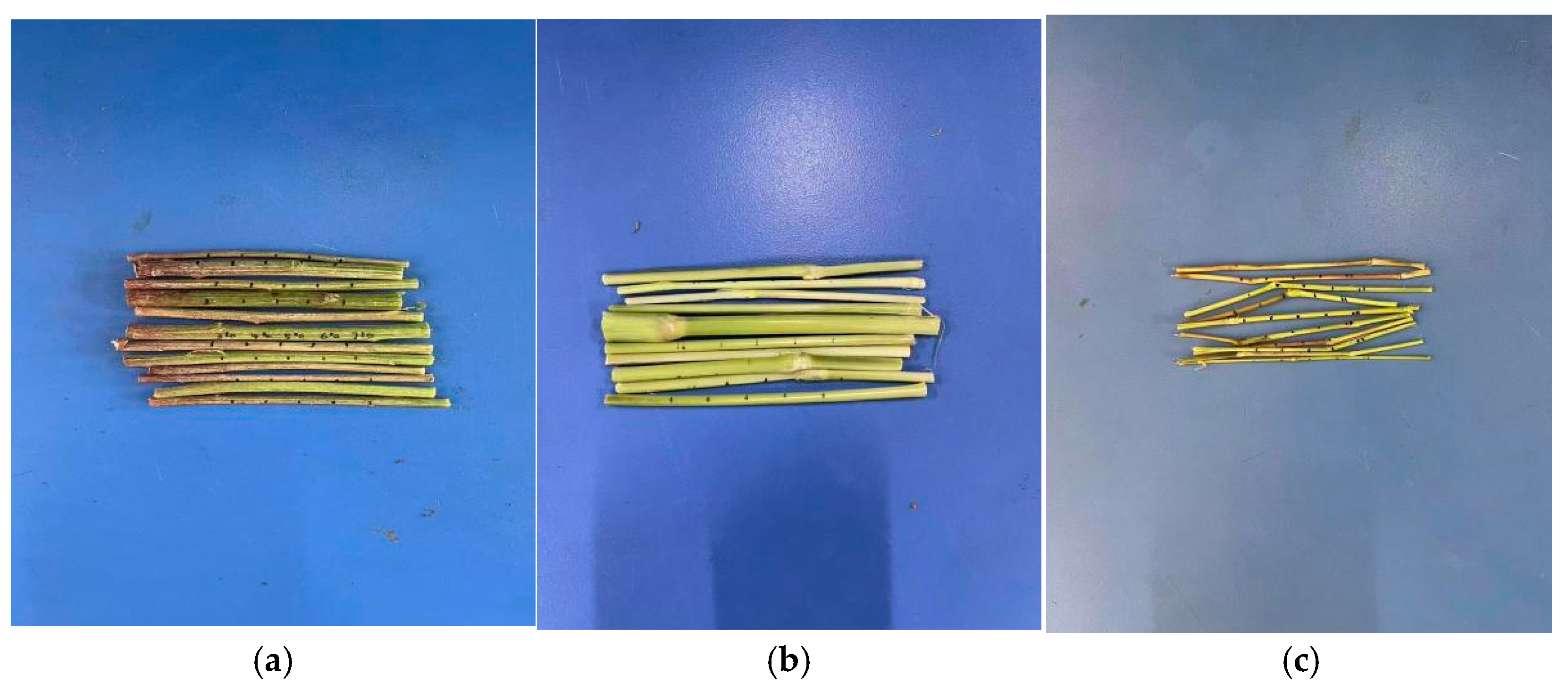
In accordance with mower operational requirements, the shear force and bending resistance of the weed stems were measured. The three weed species were trimmed by removing superfluous branches, leaving only the main stems (Figure 3). Shear and bending experiments were performed at distances of 30, 40, 50, 60, and 70 mm from the root. The 30–70 mm test range was selected to systematically analyze the mechanical gradient from the sturdy stem base at 30 mm, which provides the maximum load safety boundary, to the target agronomic height of 70 mm. This design ensures that the obtained data can directly validate the mower’s cutting performance and power consumption at the actual operating height, thereby providing clear engineering guidance for the power system design [5]. For the bending experiments, the fixture gauge length was set to 30 mm, and a loading speed of 10 mm/min was applied for all experiments. Each experiment was repeated 10 times per stem section. The average stem diameters of Amaranthus retroflexus L., Echinochloa crus-galli (L.) P. Beauv., and Setaria viridis (L.) P. Beauv. were 5.26 mm, 2.76 mm, and 1.77 mm, respectively.

2.2. Overall Design Complete Machine Structure and Working Principles

2.2.1. Design Requirements

The design of mowers for closed-canopy orchards should successfully integrate agricultural machinery with agronomic practices. According to the literature [5] and field surveys, typical row spacing in these orchards ranges from 2 to 4 m, with plant spacing between 1–3 m. The tree canopies overlap, resulting in a clearance of less than 1.2 m beneath them. To address these cultivation characteristics, the designed intra-plant obstacle-avoiding oscillating mower should meet the following technical requirements:
(1)
Adaptability and Trafficability. To operate effectively in the interlacing canopies, disordered tree structures, narrow rows and complex terrain of mountainous closed-canopy orchards, the mower should have a compact and simplified structure. The total cutting width should be under 2 m, and the overall height should not exceed 1.2 m to ensure smooth passage through the confined, low-clearance environment [5].
(2)
Mowing Quality and Adjustability. During mowing operations, if the stubble height exceeds 10 cm, it encourages weed regrowth; if it falls below 5 cm, it severely damages the grass and undermines soil and water conservation [27]. Given the dense and complex growth of weeds in closed-canopy orchards, to accommodate varying agronomic requirements for different weed species, growth stages, and regions, the mower should be equipped with an adjustable stubble height mechanism, providing a cutting height range of 50–100 mm [5].
(3)
Obstacle Avoidance and Lightweight Design. Since the propulsion power in a mobile system’s energy model is approximately proportional to its total mass, weight reduction directly lowers the energy cost for travel, steering, and obstacle avoidance [28]. The mower should be capable of intra-plant obstacle avoidance to prevent damage to fruit trees. A lightweight design is crucial to minimize the load on the unmanned crawler vehicle and ensure adequate operating time for the power system.

2.2.2. Complete Machine Structure and Working Principles

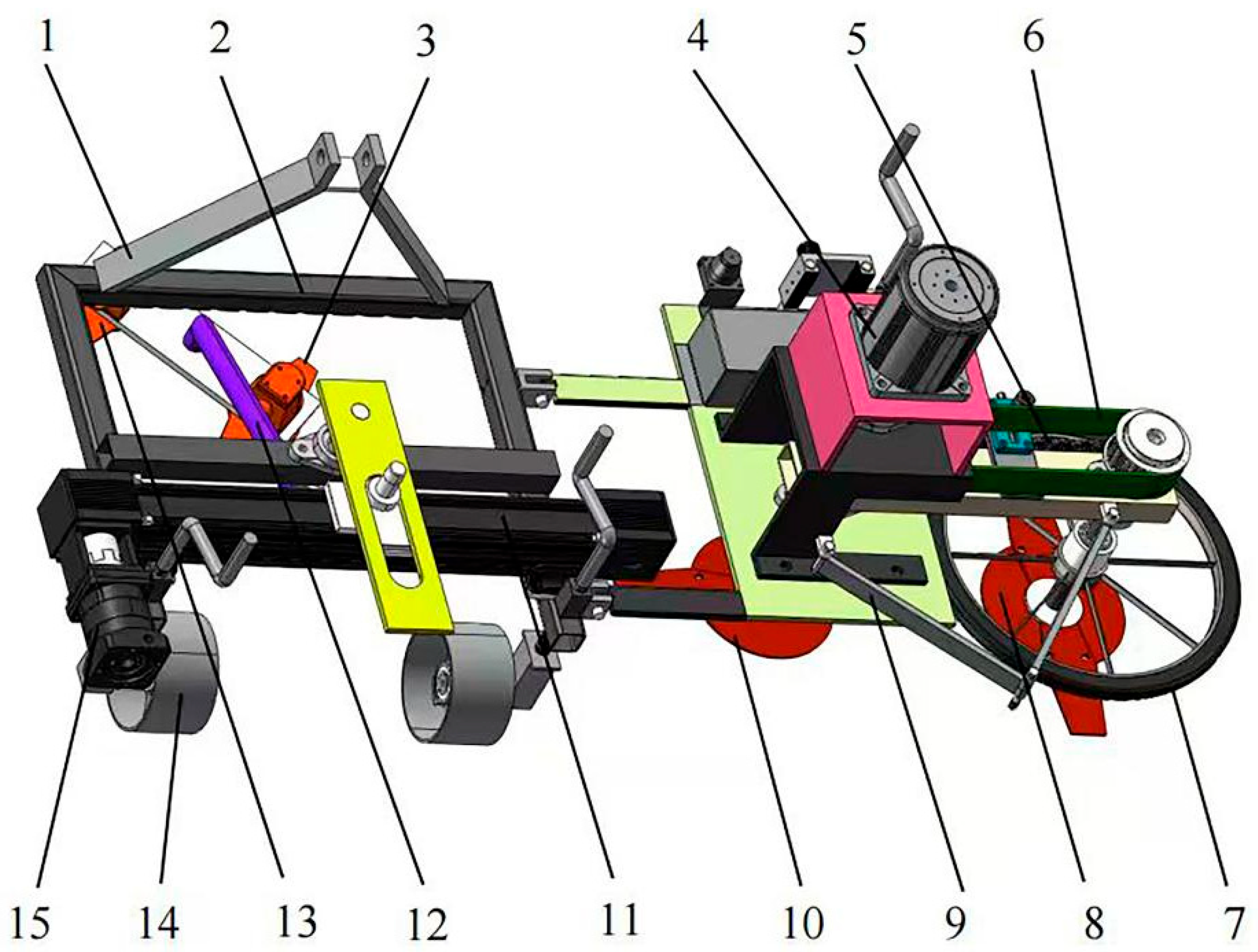
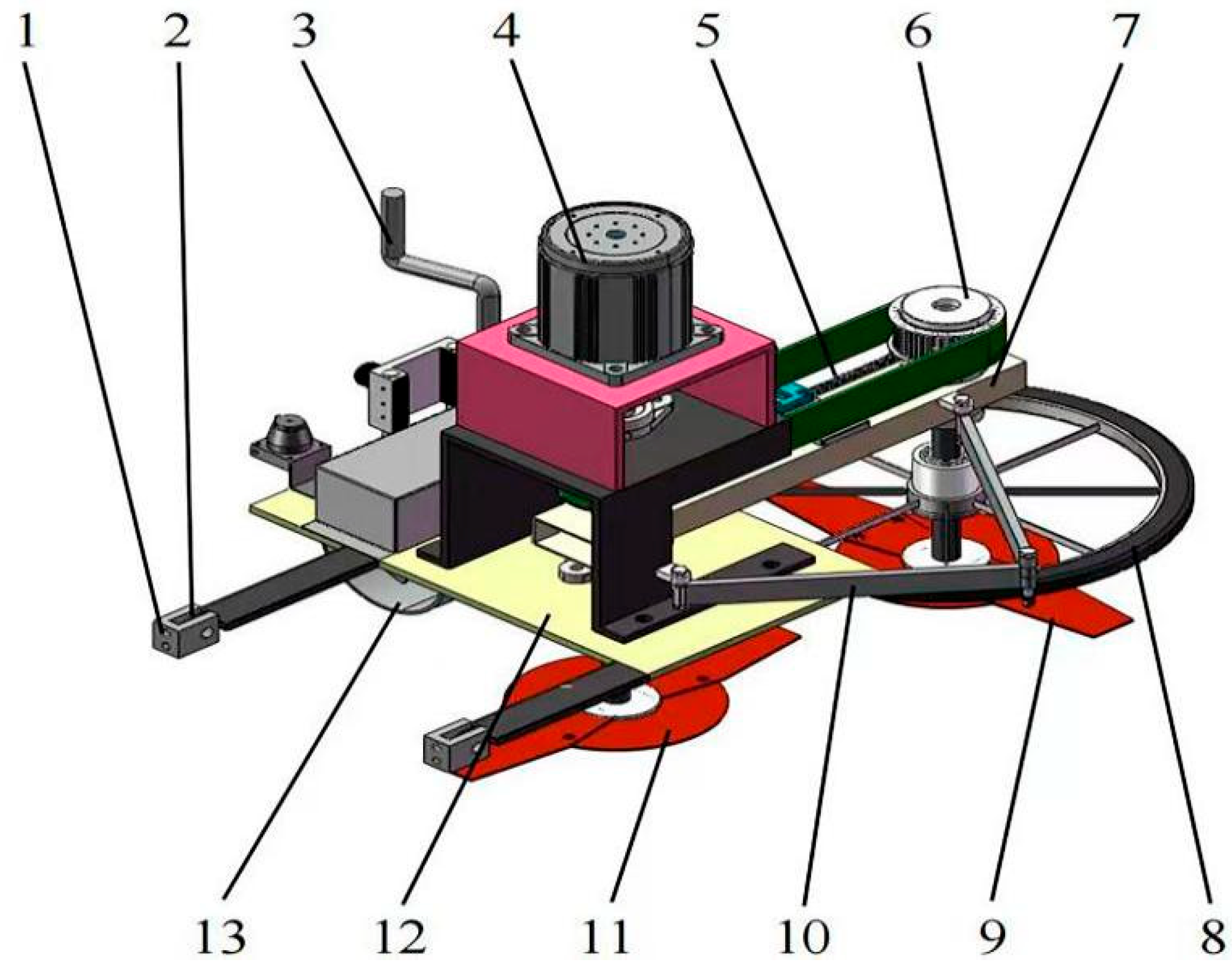
The intra-plant obstacle-avoiding oscillating mower for closed-canopy orchards was primarily composed of a hitch mechanism, frame, inter-row cutting disc, intra-plant mowing motor, synchronous belt drive, inter-row reciprocating mowing mechanism, reciprocating mechanism motor, profiling ground wheel, oscillating arm, intra-plant cutting disc, and intra-plant obstacle-avoiding rotating plate, with its schematic diagram shown in Figure 4.
The mower utilized a self-propelled unmanned tracked vehicle as its power source and was hitched to the rear of the vehicle via a three-point hitch system. Prior to mowing, the target stubble height was set by adjusting the profiling ground wheel handle, based on orchard grass management requirements and field conditions. During operation, the inter-row mowing unit was powered by an independent battery. The inter-row reciprocating mechanism drove the oscillating arm, which actuated the cutting blade in a fan-shaped oscillating motion, enabling continuous fan-shaped coverage in the inter-row area. The inter-row cutting blades adopted an offset dual-blade configuration and were driven by a brushless motor at 8000 r/min to ensure high-efficiency cutting. The intra-plant mowing unit was powered by the onboard battery and featured a DC motor that operates two cutting blades. It was mounted on the right side of the frame through a shaft connection and featured a flip-type structure. When the ground was uneven, the intra-plant ground wheel contacted the surface, causing the unit to pivot vertically around the shaft to achieve profiling cutting in the intra-plant space. When the intra-plant obstacle-avoiding tire contacted a fruit tree, the force from the tree caused the obstacle-avoiding disc and rotating plate to pivot away, clearing the tree. After the tire passed the tree, the obstacle-avoiding disc and rotating plate returned to their initial position under the tension of the return spring, resuming intra-plant mowing. Key technical parameters of the intra-plant obstacle-avoiding oscillating mower are listed in Table 1.

2.3. Key Components and Main Parameters

2.3.1. Frame Design

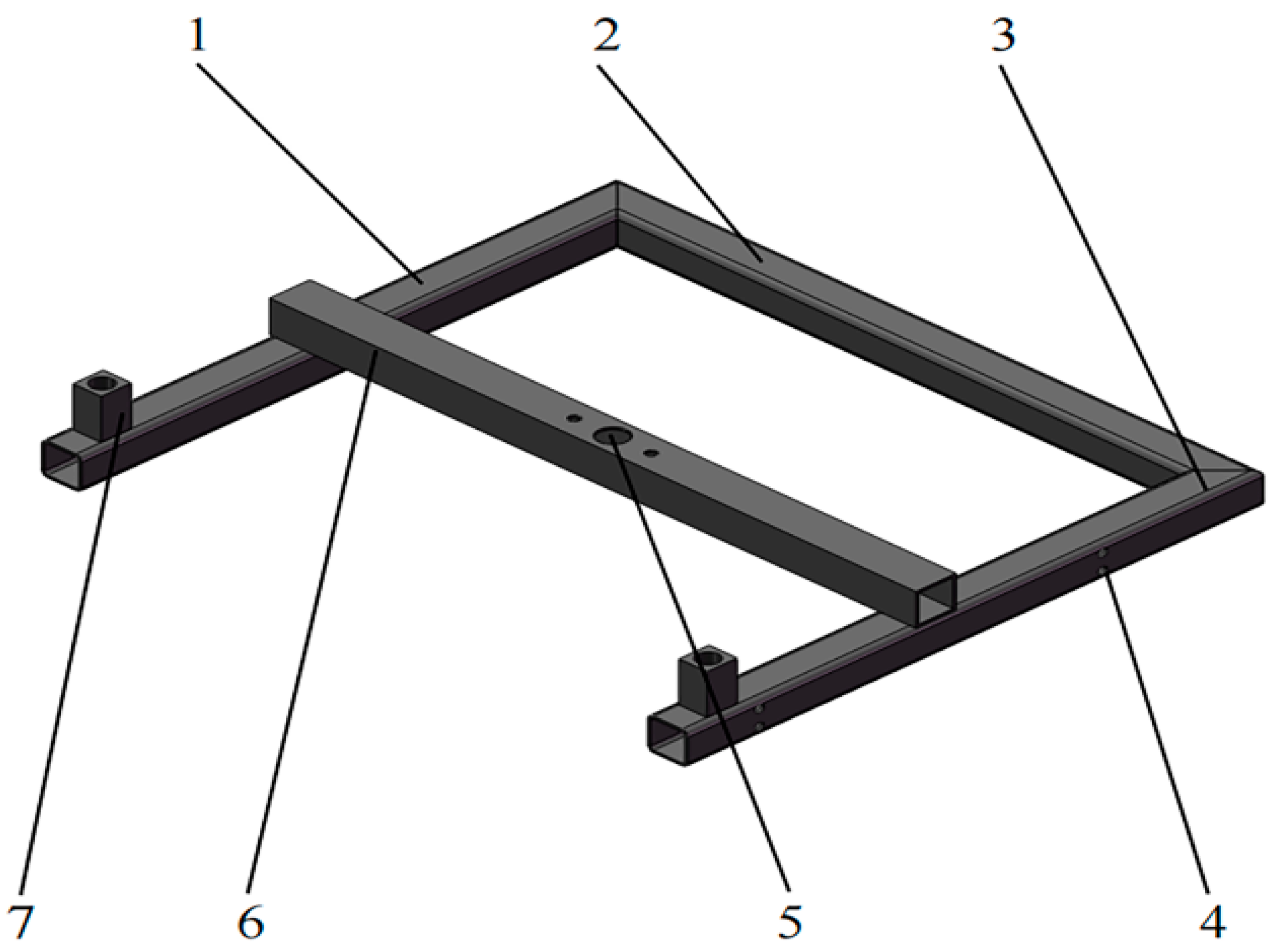
Due to the high planting density and dense vegetation in closed-canopy orchards, mowing machinery should be designed to be compact and low-profile. The mower frame is a critical component that supports and connects all parts. Its design should prioritize structural simplification while meeting strength requirements [29,30]. The mower frame featured a modular structure, primarily composed of two cross members and two side beams. The front load-bearing cross member, arranged horizontally, was a 40 mm × 40 mm × 5 mm rectangular square tube. It formed a stable support structure together with the two longitudinal side beams, which were also made of 40 mm × 40 mm × 5 mm rectangular square tubes to effectively enhance bending resistance. The reinforced central cross member in the load-bearing section of the frame was a 40 mm × 20 mm × 5 mm rectangular square tube, featuring bearing mounting holes. The ends of the longitudinal side beams were designed with through-adjustment bolt holes for installing height-adjustment lead screws, enabling control of the cutting blade’s height above the ground. Additionally, the right side beam featured connection holes for mounting the intra-plant mowing bearing plate. A simplified diagram of the frame structure is shown in Figure 5.

2.3.2. Cutting System Design

The mower employed a rotary cutting method to address challenges including a wide variety of weeds, uneven density distribution, and potential tangling at low blade speeds in densely weeded areas. This approach also aligned with orchard management and cover cropping practices that required a low cutting height. The cutting system primarily consisted of an inter-row cutting device and an intra-plant obstacle-avoiding cutting device.
(1) Inter-row cutting device design
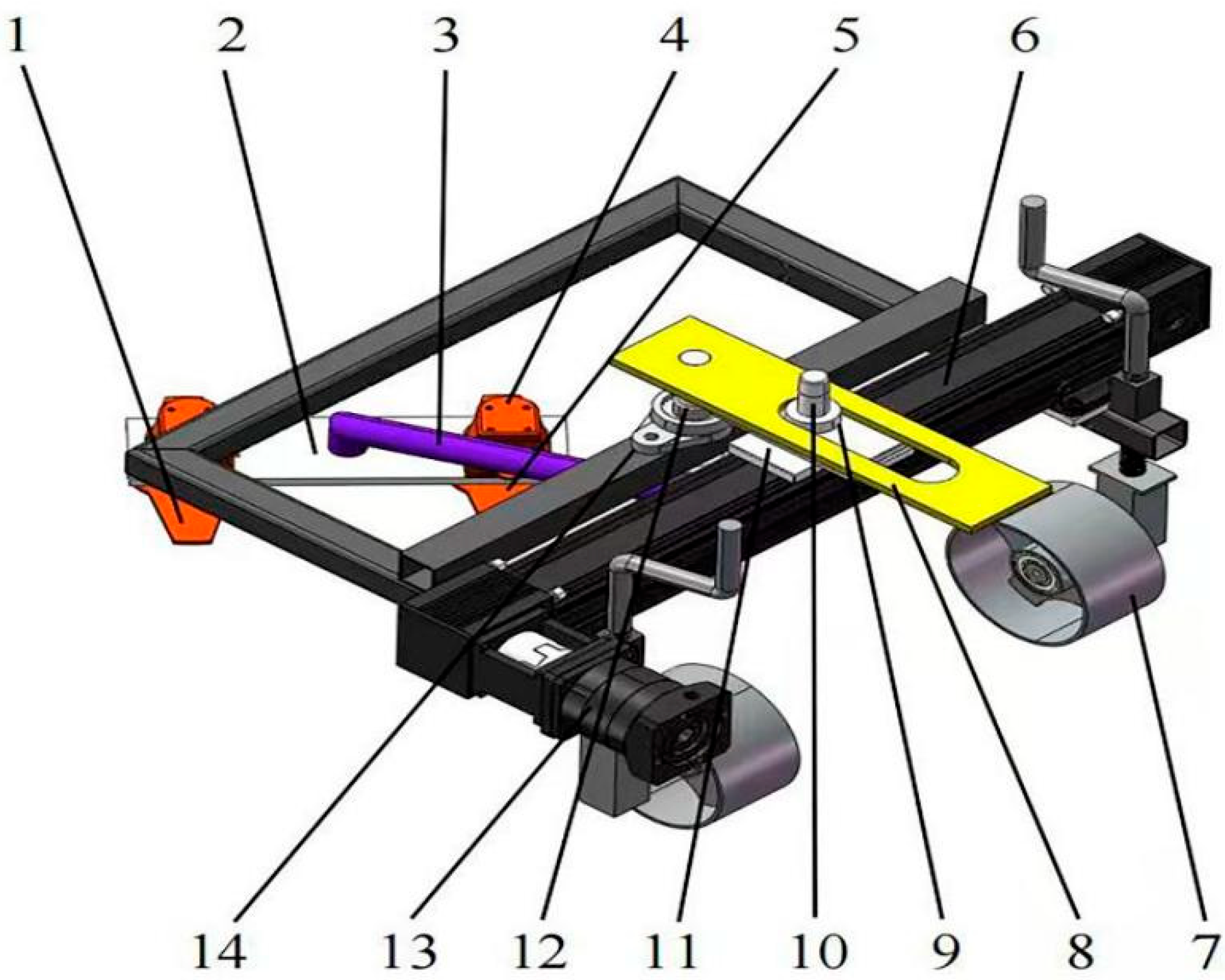
The inter-row cutting unit was mainly composed of a reciprocating mechanism, oscillating arm, cutting disc, and cutter mounting plate (Figure 6). When powered, the reciprocating mechanism drove the upper inter-row rotating arm to oscillate on a servo motion platform. This rotating arm featured a central sliding long slot and a front shaft hole. A connecting base on the platform’s motion slider had a vertical shaft (Shaft I) with a roller that engaged the arm’s sliding slot. The front of the rotating arm was connected to the reinforced cross beam via another shaft (Shaft II). Shaft II was secured by a central bearing (facilitating rotation) and two pillow block bearings (preventing vertical displacement). It passed through the reinforced cross beam and was welded at its lower end to the oscillating arm, whose front connected to the cutter mounting plate. This plate contained eight threaded holes and two positioning holes for installing and securing two inter-row cutting blades. The blades were powered by an independent battery, with control wiring routed through the hollow channel inside the oscillating arm. To increase the working width, the oscillating arm was mounted at a 30° tilt. The reciprocating motion drove the front cutting blades in a fan-shaped arc of 55° to each side (110° in total), effectively converting the rear linear oscillation into front fan-shaped motion. This design significantly reduced the overall machine size and enhanced its maneuverability.
(2) Intra-plant cutting device design
The intra-plant cutting device of the mower was primarily composed of a load-bearing plate, intra-plant cutter discs, a rotating arm, a mowing motor, a return spring, and an obstacle-avoiding tire (Figure 7). Among the two sets of cutter discs in the intra-plant cutting device, Cutter Disc I cuts weeds on the ridge surface between plants, while Cutter Disc II handles the remaining weeds in the intra-plant area. When the intra-plant mowing motor was powered, it transmitted power to both Cutter Disc I and II via a plum-flower coupling and synchronous pulleys, driving them to perform the mowing operation. The blade shaft of Cutter Disc II was mounted on the rotating arm using rhomboid-shaped pillow block bearings. The obstacle-avoiding tire was installed concentrically with the blade shaft. When the tire contacted a fruit tree and was subjected to force from the tree, the intra-plant rotating arm drove Cutter Disc II to pivot around the rotation center, avoiding the tree. After bypassing the tree, the assembly returned to its original position under the force of the return spring, preparing for the next intra-plant mowing operation. The main technical parameters of the cutting unit are listed in Table 2.
(3) Design determination of cutter disc
Based on preliminary field surveys of orchard row spacing and topography, and with the objective of covering half the inter-row area and one intra-plant side in a single pass, the working width of a single intra-plant cutter disc was set at 400 mm, following the National Agricultural Machinery Standard [31].
The formula for calculating the inter-row working width is as follows:
L h = 2 L 1 L 2 cos θ L 3
where Lh represents the inter-row working width, m; L1 represents the length of the inter-row oscillating arm, m; L2 represents half of the reciprocating mechanism’s working stroke, m; L3 represents the vertical distance from the center of the reciprocating mechanism to the inter-row rotating arm, m; θ represents the angle between the inter-row oscillating arm and the horizontal plane, °. When L1 = 0.40 m, L2 = 0.18 m, L3 = 0.125 m, and θ = 30°, substituting into Formula (1) yielded an inter-row working width of Lh = 1 m.
(4) Determination of cutting blade parameters
Too small a cutting blade edge angle could lead to edge rolling or chipping, while an excessively large angle increased cutting resistance and resulted in ragged weed cross-sections. If the blade thickness was too small, the blade became prone to deformation due to vibration and other external forces, compromising the mowing operation; conversely, excessive thickness required greater driving power for high-speed rotation, raising economic costs [32]. According to research by Wang et al. [33], setting the blade edge angle to 25° and the blade thickness to 5 mm resulted in no significant edge damage after cutting and achieved a 100% weed severance rate. Based on this, the mower’s blade edge angle and thickness were designed as 25° and 5 mm, respectively. To enhance blade strength, No. 65 manganese steel (65Mn) was selected as the blade material and underwent quenching treatment to improve its hardness and wear resistance. Considering the row spacing of 2–4 m in closed-canopy orchards and the need to meet operational requirements, the inter-row cutter disc diameter was designed to be 255 mm, and the intra-plant cutter disc diameter 400 mm.
(5) Blade kinematic analysis and cutting speed calculation
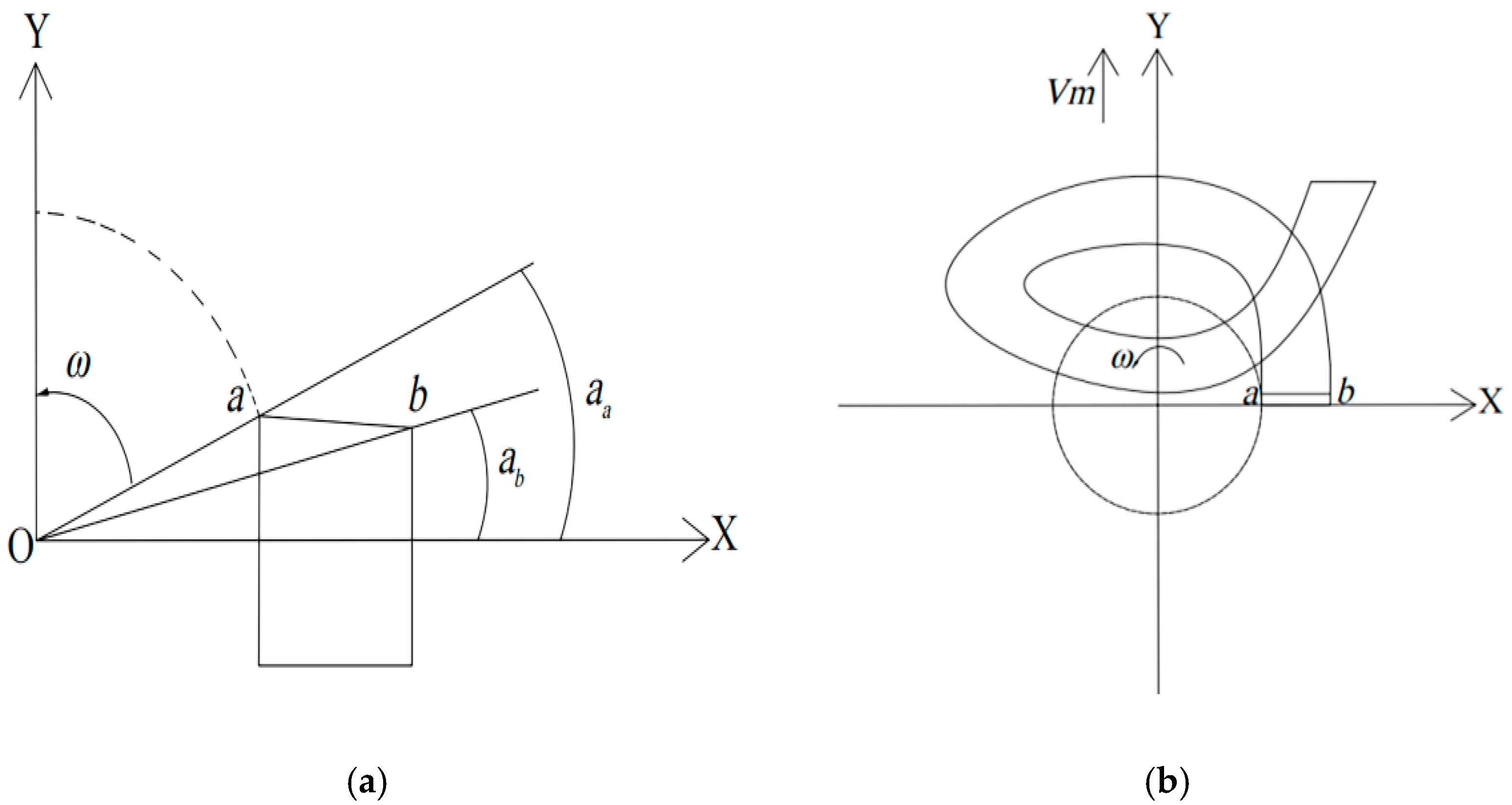
A displacement and velocity analysis was conducted for the intra-plant cutter disc, selecting the left-side blade as the analysis object. A coordinate system was established with the center of the cutter disc as the origin and the positive Y-axis aligned with the forward direction of the unmanned vehicle for kinematic parameter analysis. When the cutter disc rotated counterclockwise at an angular velocity ω, the paths of points a and b on the blade, along with the trajectory of the cutting edge ab, are shown in Figure 8. Figure 8b indicates that the area swept by the cutting edge ab during mowing forms a trochoidal band [34]. That is, the motion trajectory of the cutter was a band whose width equals the effective length of the cutting edge [34]. The displacement of any point on the cutting edge could be expressed using a system of equations, which could be formulated with the aid of a planar coordinate system (Figure 8). In Figure 8, the center of the cutter disc was taken as the coordinate origin O, and the positive direction of the Y-axis aligned with the forward direction of the unmanned vehicle.
Since the displacement of any point on the cutting edge could be described by a set of equations, the displacement equations for the blade tip point a are as follows:
X a = r a cos ω t + α a Y a = V m t + r a sin ω t + α a
where ra is the distance from the tip point a of the blade to the center O of the cutter disc, m; ω is the rotational speed of the cutter disc r/min; α a is the angle between Oa and the x-axis, °; Vm is the forward speed of the mower, m/s; t is the time, s.
The displacement equations for root point b are as follows:
X b = r b cos ω t + α b Y b = V m t + r b sin ω t + α b
where rb is the radius of the cutter disc, m; α b is the angle between Ob and the x-axis, °.
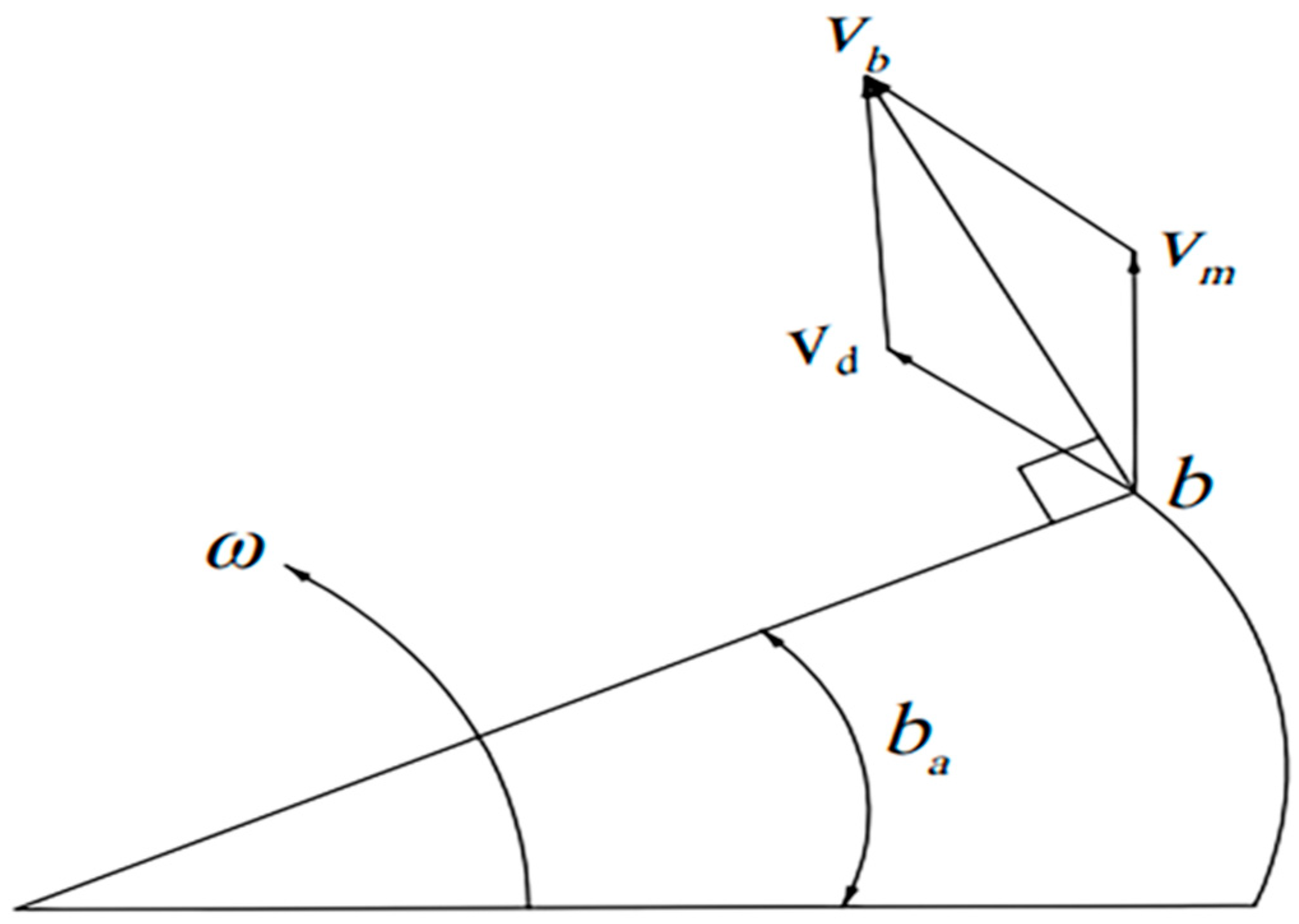
The velocity at any point on the cutting blade was the vector sum of the mower’s forward speed and the blade’s rotational speed. A schematic diagram of the velocity at root point b is shown in Figure 9.
The velocity at point b is as follows:
V b = r b 2 ω 2 + 2 V m ω r b cos ω t + α b + V m 2
where Vb is the linear velocity at point b, m/s.
The rotational speed of the cutter disc is as follows:
n d = 30 π r b v b + v m
where nd is the rotational speed of the cutter disc (r/min).
Given an operating speed of 1 m/s for the mower hitch-mounted to the unmanned tracked vehicle, a cutter disc radius of 0.1275 m, and a minimum linear velocity of 30 m/s for unsupported cutting, Formula (5) yielded a minimum required cutter disc rotational speed of 2323 r/min. Accordingly, the rotational speeds for the intra-plant and inter-row cutter discs are set to 3000 r/min and 8000 r/min, respectively.

2.3.3. Obstacle Avoidance Mechanism Design

Given the narrow plant spacing in closed-canopy orchards, the mower employed a contact-based obstacle avoidance method for intra-plant navigation [35]. The mechanism operated as follows: during forward mowing, when the rubber tire contacted a fruit tree, the force from the tree caused the rotating arm and the intra-plant obstacle-avoiding cutter disc to pivot around the blade shaft of intra-plant Cutter Disc I. After avoiding the tree, the assembly returned to its original position via the return spring, and readied for the next intra-plant mowing cycle. To prevent the rotating arm from over-rotating upon return and damaging other components, a rubber stop block was installed between the motor mounting plate and the rotating arm. This block ensured the arm could not impact the motor plate due to spring tension and guaranteed accurate repositioning.
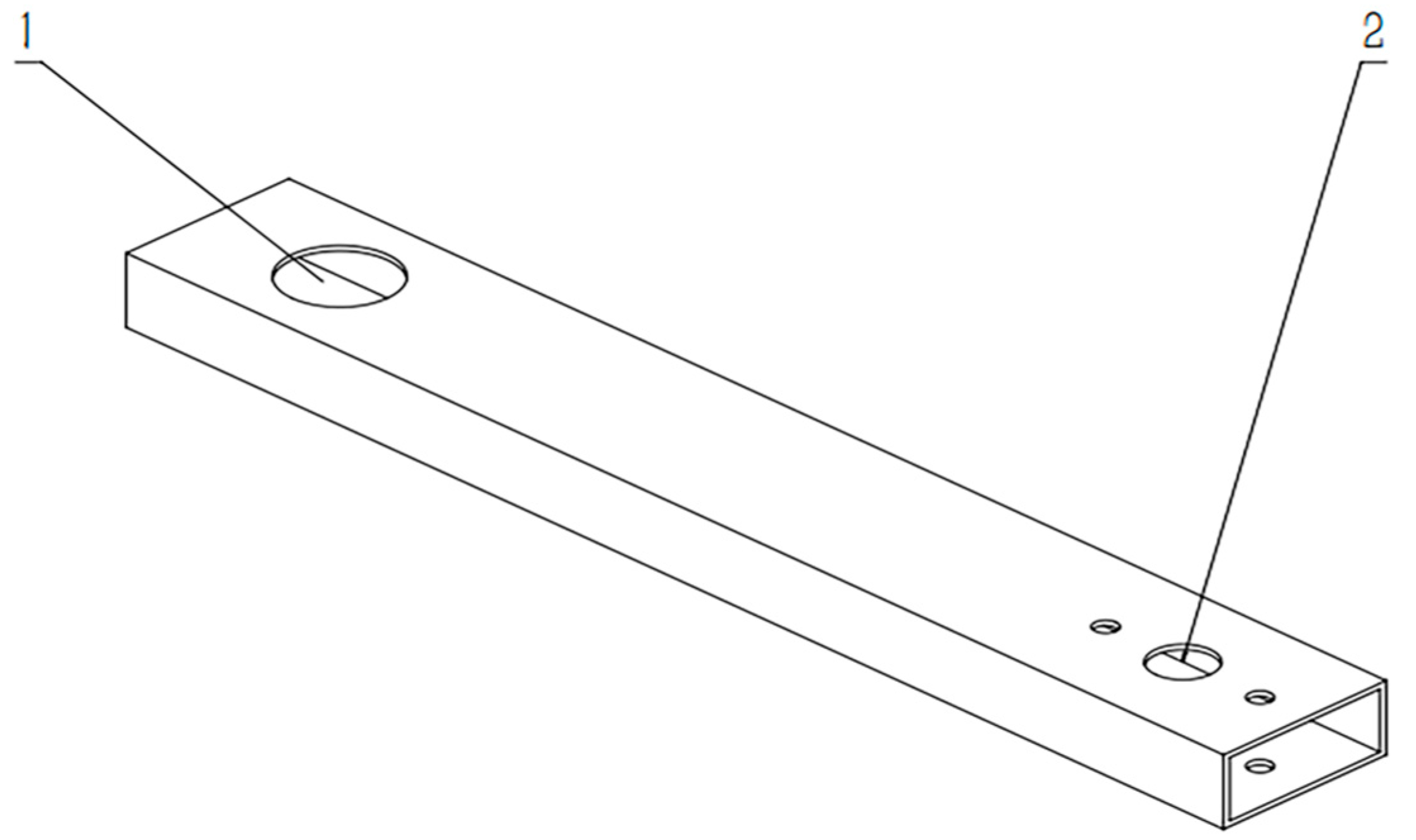
The rotating arm was essential for obstacle avoidance, as it carried the rubber tire and the obstacle-avoiding cutter disc, pivoting them around the shaft of Cutter Disc I. Since the working width of both cutter discs was 400 mm, the center-to-center distance should be set to exceed 400 mm to avoid collisions between them. However, an excessively large distance would increase the unmowed area within the plant row. Therefore, the center distance was set at 420 mm—a value that satisfied the safe tool trajectory threshold while maintaining vegetation clearance in the effective working area within an acceptable range [36,37]. Furthermore, to accommodate the installation of the rhomboid pillow block bearings that supported the two blade shafts on the rotating arm, the total length of the rotating arm was set to 540 mm. Its main body was an 80 mm × 40 mm × 5 mm square tube, as shown in Figure 10.
The primary function of the obstacle-avoiding spring is to return the cutter disc to its intra-plant mowing position after it bypasses a fruit tree. To minimize tree damage and ensure quick reset after obstacle avoidance, a stainless steel spring was selected with the following specifications: a wire diameter of 3 mm, an outer diameter of 30 mm, 80 active coils, and a free length of 235 mm [37].
The obstacle-avoiding tire was designed to reduce damage to fruit trees caused by the obstacle-avoidance mechanism. It was mounted concentrically with the obstacle-avoiding cutter disc on the same blade shaft via a bearing. To prevent the cutting blade from contacting the tree, the tire diameter must be larger than the working width of the cutter disc. Given that the working width of the intra-plant obstacle-avoiding cutter disc was 400 mm, and to avoid increasing the uncut area due to an excessively large tire, a diameter of 440 mm was determined as the optional choice [37].

2.4. Design of the Mowing Control System

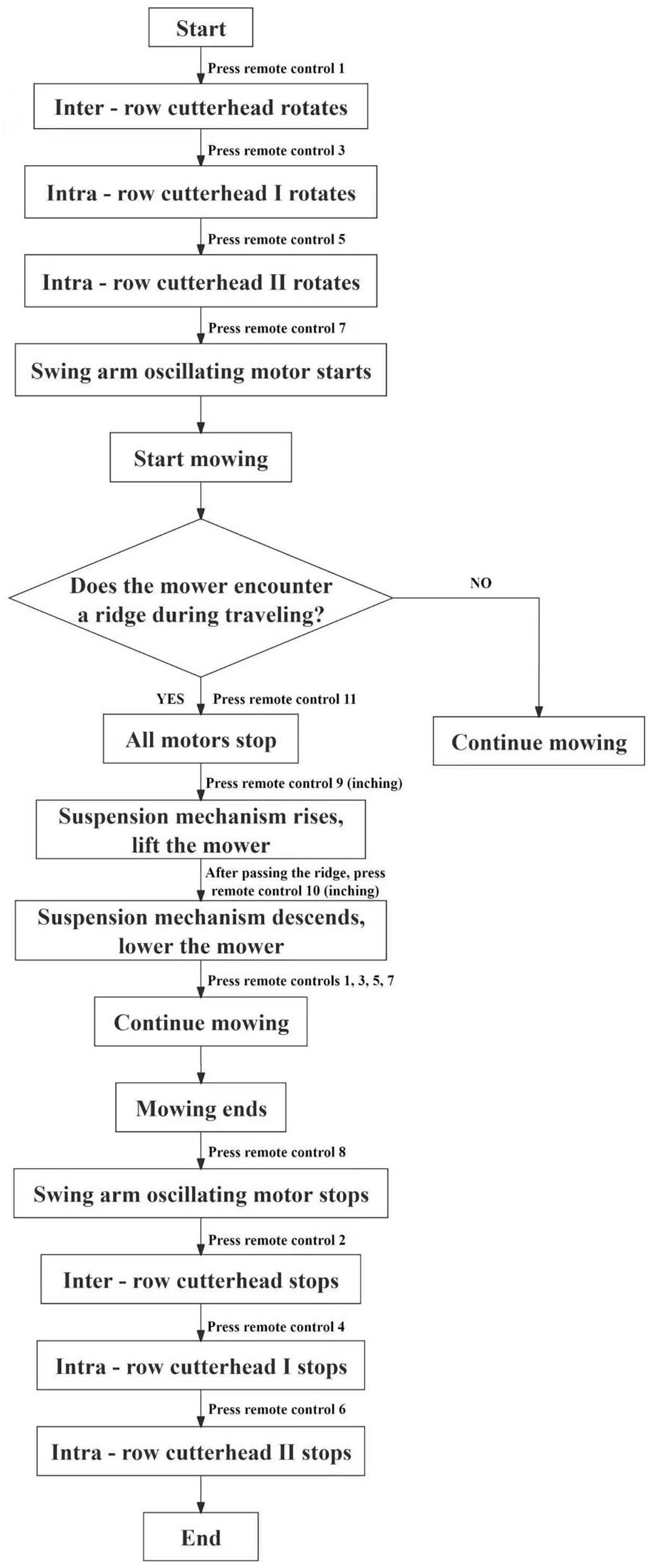
The mowing machine’s control system consisted of a remote command reception module, relays, an inter-row oscillating mechanism, an inter-row cutting disc, and an intra-plant cutting disc. Remote control signals activated the relays, enabling remote control of the mechanical movements of the inter-row oscillating arm, the inter-row cutting disc, and the intra-plant straight cutting discs of the mower. The overall flowchart of the mowing machine’s control system is shown in Figure 11.
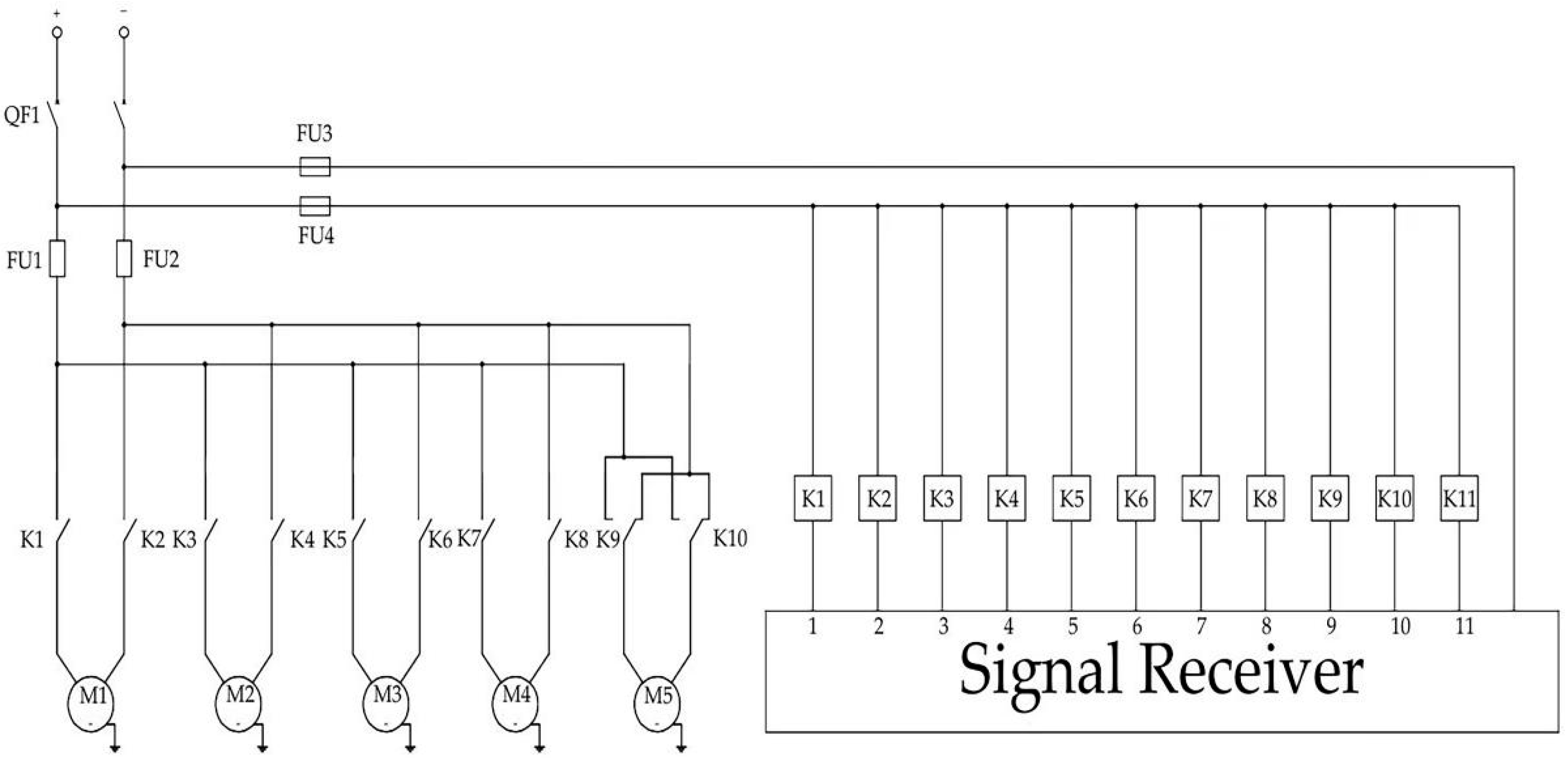
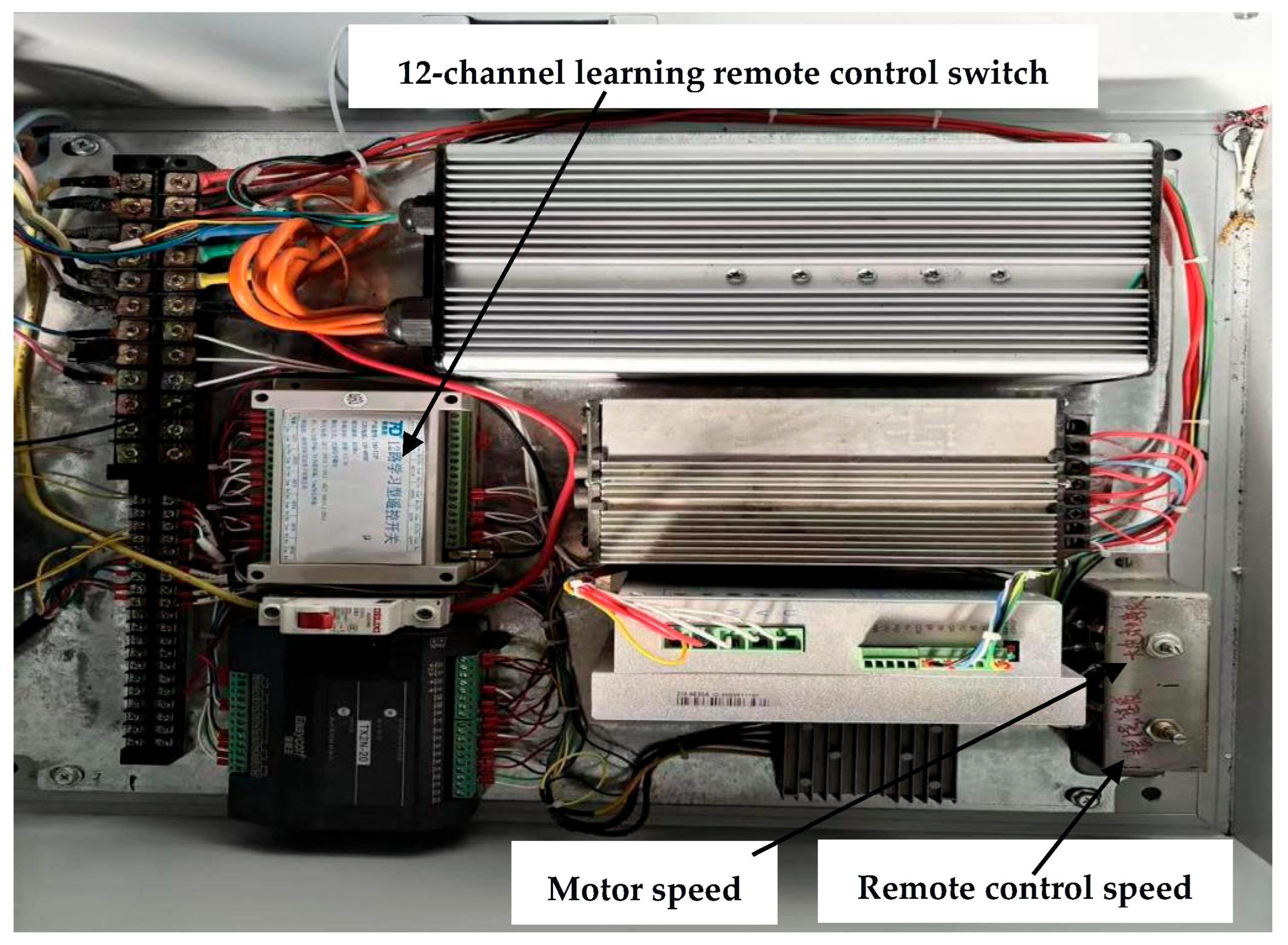
The control of the inter-row oscillating mechanism, inter-row cutting disc, and intra-plant cutting discs adopted relays to form independent control circuits for the start and stop of these three components. A schematic diagram of the mowing system’s control circuit is shown in Figure 12. As seen in Figure 12, the direct current power supply used a dedicated direct current circuit breaker (QF1) for short-circuit protection. The main circuit used fuses (FU1, FU2) for short-circuit protection, and the control circuit used fuses (FU3, FU4) for short-circuit protection. As further shown in Figure 13, the direct current motor M1 controlled the start/stop of the inter-row cutting disc via relays KA1 and KA2. The DC motor M2 controlled the start/stop of Intra-plant Cutting Disc I via relays KA3 and KA4. The direct current motor M3 controlled the start/stop of Intra-plant Cutting Disc II via relays KA5 and KA6. The direct current motor M4 controlled the start/stop of the oscillating arm motor via relays KA7 and KA8. The direct current motor M5 controlled the forward/reverse operation of the suspension mechanism motor via relays KA9 and KA10. The integrated wiring diagram of the mower’s control system is shown in Figure 13.

2.5. Field Operation Performance Test

2.5.1. Test Conditions

The performance test of the intra-plant obstacle-avoiding oscillating mower was conducted on 22 September 2025, in Taigu District, Shanxi Province. The primary weeds in the test area were Amaranthus retroflexus L., Echinochloa crus-galli (L.) P. Beauv., and Setaria viridis (L.) P. Beauv., with a density of approximately 93 plants/m2, a grass height ranging from 200 to 600 mm, and stem diameters between 3 and 6 mm. The main testing equipment and tools included display units for mower forward speed, oscillating arm speed, and cutting disc rotational speed; a test data measurement frame; a tape measure; and a steel ruler, among others.

2.5.2. Test Method

(1) Obstacle Avoidance Performance Test Method
Three adjacent tree rows, each containing over 20 fruit trees, were selected as the test area within an orchard with a planting spacing of 2 m × 1.5 m (rows spacing × trees spacing). The trunk diameters were approximately 120–150 mm, and the measured canopy density was 0.57, indicating a typical moderately closed-canopy orchard. During the test, the mower obstacle avoidance passage and any visible damage to the trunks were observed and recorded. Between tree rows there are ridge slopes with a horizontal length of 30–40 cm, a height of 20–30 cm, and an inclination of 20–30° relative to the horizontal plane. The soil texture is sandy loam. The obstacle avoidance pass rate was calculated based on the test results using the following formula:
λ b = n b N b × 100 %
where λb is the obstacle-avoidance pass rate in percent, %; nb is the number of successfully passed trees, plants; Nb is the total number of trees per row, plants.
(2) Cutting Width, Stubble Height and Missed-Cutting Rate Test Methods
The stubble height stability coefficient, cutting width utilization rate, and missed-cutting rate are key indicators for evaluating the operational quality of the mower. To analyze the mowing effectiveness, a 2 m × 30 m grassy area in the orchard inter-row space was selected as the test section. Within this area, each 10-m segment was defined as one working pass, resulting in a total of three working passes for the test. With reference to [5], the following operating parameters were set: a travel speed of 0.6 m/s, a stubble height of 70 mm, an inter-row cutting disc speed of 8000 r/min, an intra-plant cutting disc speed of 3000 r/min, and a reciprocating mechanism speed of 800 mm/s. The mower was started, the cutting disc height was adjusted to the predetermined stubble height, and the mower was remotely controlled to complete the mowing operation at the preset speed.
During a single working pass, cutting width parameters were collected using the equidistant continuous sampling method. A set of measurements was taken at 1-m intervals, yielding 10 measurement sets in total. The cutting width utilization rate is calculated based on the measured data as described in [38]:
γ = A s A 1 × 100 %
where γ is the cutting width utilization rate in the measured area in percent, %; As is the actual cutting width in the measured area, m; A1 is the theoretical cutting width in the measured area, m.
During a single measurement pass, the equidistant sampling method was employed. Stubble height data were collected at two locations per 1-m interval. The measurement points in each set were staggered with a 0.5-m spatial offset, forming a complementary sampling array. A total of 20 valid data points were obtained per pass.
The calculation formula for the stubble height stability coefficient is as follows [39]:
u j = 1 S j h × 100 %
where uj is the stubble stability coefficient for a specific pass in percent, %; hj is the average stubble height for a specific pass, mm; Sj is the standard deviation of the stubble height for a specific pass, mm.
During the field test, a rectangular sample area—10 m in length and 1 m in cutting width (area of 10 m2)—was defined as the basic unit for measuring the missed-cutting rate. After the operation, a stratified sampling method was used to randomly select five 1 m2 subplots within this sample area. A grid method was applied for weed counting. The total number of uncut weeds and the total number of weeds in each of the five subplots were recorded manually. The missed-cutting rate was then calculated using the following formula.
The calculation formula is as follows [39]:
λ = n N × 100 %
where λ is the weed missed-cutting rate for weeds in percent, %; n is the number of uncut (missed) weeds, plant; N is the total number of weeds, plant.

2.6. Data Processing

In order to compare differences among different stem parts of the same weed species, significance analysis was performed using Duncan’s multiple range test within the ANOVA procedure of SAS, version 8 (SAS Institute, Cary, NC, USA). Differences were assessed at a 95% confidence interval.

3. Results and Discussion

3.1. Analysis of Shear Force and Bending Resistance of Orchard Weeds

The mean value and standard error of weed shear and bending force are shown in Table 3. It could be seen from Table 3 that the mean shear and bending forces varied both among parts within a species and among species at the same plant part. For any given part, these forces were consistently highest in Amaranthus retroflexus L. stems, and peaked at 30 mm from the root for three weeds. While differences across parts were not significant for Amaranthus retroflexus L. and Echinochloa crus-galli (L.) P. Beauv., Setaria viridis (L.) P. Beauv. showed a significant difference (p < 0.05) only between the 30 mm and 70 mm positions. Table 3 is also shown that the high dispersion of forces at the same part across species underscores that weed stems are heterogeneous materials, with fundamental differences in microstructure, composition, and morphology.
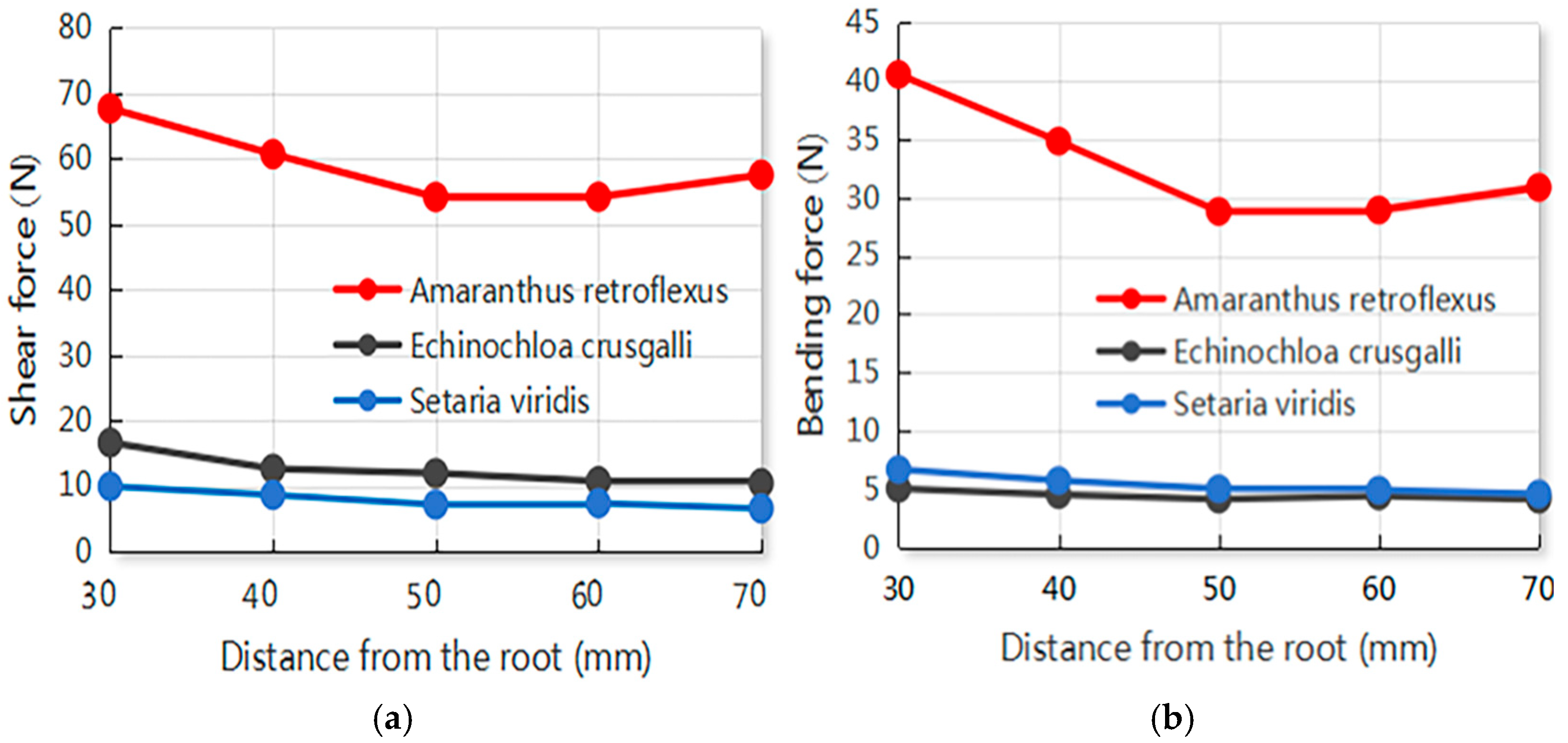
The average shear and bending forces for the three weed species at different stem sections are shown in Figure 14. As shown in Figure 14a, the shearing force of the three weed stems generally decreased as the cutting position moved upward. Both Amaranthus retroflexus L. and Setaria viridis (L.) P. Beauv. exhibited valley values in shearing force at 50 mm from the root. The shearing forces at 30 mm and 40 mm from the root were higher than that at 50 mm. For Amaranthus retroflexus L., the shearing forces at 30 mm and 40 mm were 1.25 and 1.12 times the value at 50 mm, respectively. Similarly, the forces for Echinochloa crus-galli (L.) P. Beauv. were 1.39 and 1.06 times, and for Setaria viridis (L.) P. Beauv., 1.39 and 1.21 times the value at 50 mm. In contrast, the ratio of the shearing force at 50 mm to that at higher positions approached 1 for all three weeds.
Figure 14b shows that the bending resistance of the three weed stems followed a similar trend to the shearing force, decreasing as the bending position moves upward. Similarly, Amaranthus retroflexus L. and Setaria viridis (L.) P. Beauv. showed valley values in bending resistance at 50 mm from the root. The bending resistances at 30 mm and 40 mm were higher than that at 50 mm. Specifically, the bending resistance for Amaranthus retroflexus L. at 30 mm and 40 mm was 1.41 and 1.21 times that at 50 mm, respectively. The corresponding values for Echinochloa crus-galli (L.) P. Beauv. were 1.22 and 1.09 times, and for Setaria viridis (L.) P. Beauv., 1.33 and 1.14 times. Similarly, the ratio of bending resistance at 50 mm to that at higher positions approached 1 for all three weeds.
In summary, at the same stem position, Amaranthus retroflexus L. exhibited the highest shearing force and bending resistance among the three weeds. The mechanical properties of all three weeds were strongest at 30 mm from the root and weakened upward. Within the 30–40 mm range from the root, the shearing force and bending resistance varied considerably. In contrast, within the 50–70 mm range, the changes in shearing force and bending resistance were gradual. Therefore, setting the mowing height in orchards to 50 mm or above could effectively reduce cutting energy consumption.

3.2. Mowing Power Consumption

Taking the bending resistance as the supporting force at the other end of the weed during cutting, and assuming a stubble height of 5 mm, the power required to cut a single weed is calculated as follows:
W d a n = ( F d x F b )   v t
where W d a n is the power required to cut a single weed, W; v is the shearing speed, m/s; F d x is the shearing force required to cut a single weed, N; F b is the bending force required to cut a single weed, N; t is the duration of the shearing process, s.
Using the average experimental values of shearing force and bending force obtained at 50 mm from the root for the three weed species, where Fdx = 24.38 N and Fb = 12.66 N, and taking t as the maximum shearing time of 60 s from repeated experiments, the power consumption could be calculated. Given the inter-row and intra-plant shearing speeds corresponding to rotational speeds of 8000 r/min and 3000 r/min, respectively, substitution into Formula (10) yielded average power requirements of 12.27 W for the inter-row area and 18.81 W for the intra-plant area for cutting a single weed stem.
The instantaneous cutting power of the mower is as follows:
p s = M V m D
where ps is the instantaneous cutting power, W; M is the power required to cut weeds per square meter, N·m/m2; D is the diameter of the cutter disc, m.
If the operating speed of the mower was 1 m/s, and the weed density in hilly and mountainous orchards was calculated as 200 plants/m2 [40], then for an intra-plant cutter disc diameter of 400 mm, the required cutting power from Formula (11) was 0.98 kW. For an inter-row cutter disc diameter of 255 mm, the required cutting power was 0.96 kW. However, in actual mowing operations, there were not only multiple cutting events, but the power required to maintain the rotation of the cutter should also be considered. Therefore, the actual power required for the mower to cut weeds was higher.

3.3. Power and Transmission System Design

To ensure the mower has sufficient power to drive the cutting blades, an appropriate motor should be selected. This prevents blade stalling or motor damage due to power deficiency during operation.
Both cutting discs of the intra-plant mechanism were driven by a single motor via synchronous pulley. Therefore, the power for the intra-plant motor is calculated as follows:
P = P 1 + P 2 η 2
where P is the motor power, kW; P1 is the power required for cutting by Disc I, kW; P2 is the power required for cutting by Disc II, kW; η is the transmission efficiency of the synchronous belt.
Assuming a synchronous belt transmission efficiency (η) of 0.95, substituting the values into Formula (12) gave a required power of approximately 2.06 kW for the intra-plant cutting motor and 2.03 kW for the inter-row cutting motor. A sufficient dynamic load margin is included in the motor selection to account for complex field conditions, such as uneven weed distribution, varying stem diameters, hidden obstructions, and undulating terrain. This effectively prevents overload and extends service life. Based on the cutting power consumption obtained from tests on the mechanical properties of orchard weeds, a direct current motor with a maximum speed of 3000 r/min and a power of 3 kW was selected for intra-plant cutting. For inter-row cutting, a direct current motor with a maximum speed of 8000 r/min and a power of 2.2 kW was selected.

3.4. Field Performance Test Results and Analysis of Mower

3.4.1. Field Performance Test Results and Analysis

(1) Mower Integration
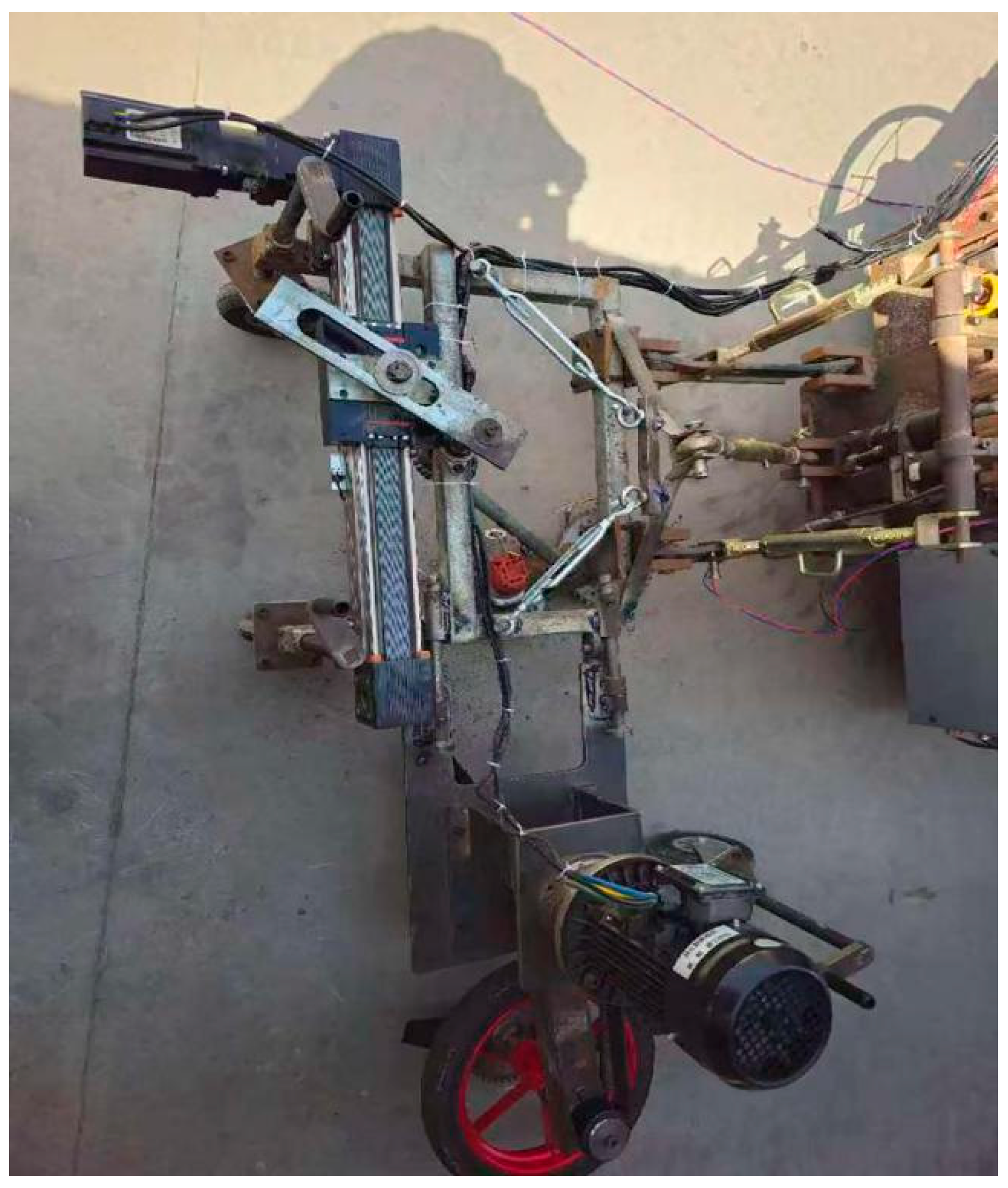
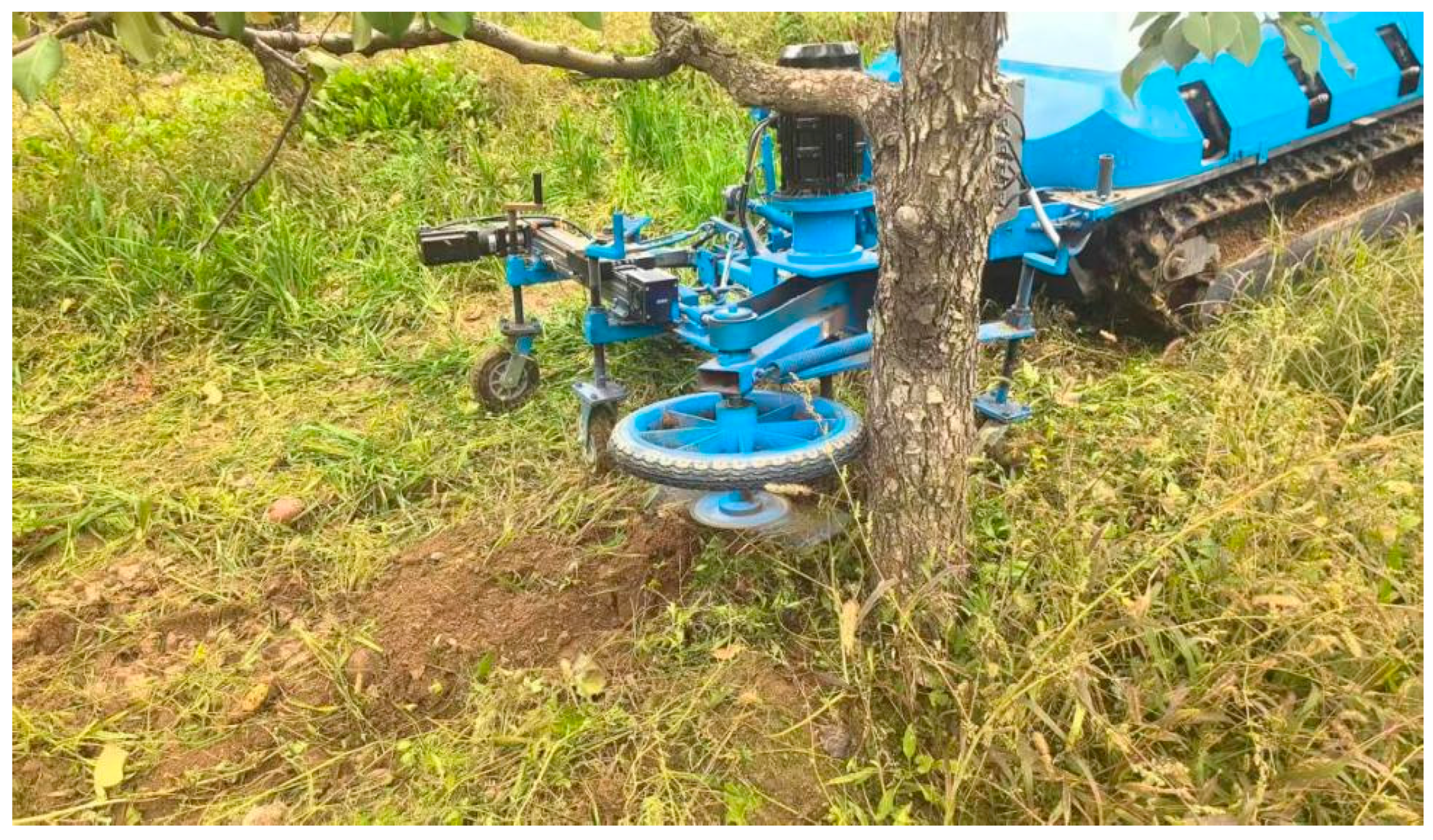
Following the finalization of the overall orchard mower design, a prototype was fabricated and assembled. Figure 15 shows the real picture of the intra-plant obstacle-avoiding oscillating mower for closed-canopy orchards. On-site test scene of the intra-plant obstacle-avoiding oscillating mower is as shown in Figure 16.
(2) Obstacle Avoidance Performance Results and Analysis
The obstacle avoidance performance test data for the intra-plant mower are presented in Table 4. From Table 4, when operating at a speed of 0.6 m/s, the mower, mounted on the intelligent unmanned vehicle, achieved a 100% obstacle avoidance pass rate. No collision marks from the cutting blades were found on the tree trunks, and the fruit tree trunks sustained no damage. These results meet the requirements in the experimental specifications [41].
(3) Inter-Row Cutting Width Results and Analysis
Test data for the inter-row cutting width are shown in Table 5. The results indicated that the average cutting width across the three working passes ranged from 965 to 972 mm, yielding a cutting width utilization rate of 96.9%. This met the relevant standard (cutting width utilization rate ≥ 85%) specified in the mowing operation quality standards and orchard mechanization technical specifications [42]. The approximately 3% fluctuation in inter-row cutting width utilization can be attributed to the combined effects of several factors, including width pulsation from velocity changes at the swing arm’s reversal, lateral machine instability due to terrain unevenness, and cutter disc vibrations or deformation from non-uniform weed resistance.
(4) Stubble Height Results and Analysis
The stubble height test data are shown in Table 6. The average stubble height across the three working passes ranged from 70.7 to 71.8 mm. The coefficient of variation for stubble height was between 7.51% and 8.39%, and the stability coefficient ranged from 92.10% to 92.49%. The average stability coefficient was 92.07%, which meets the relevant standard (stubble height stability coefficient ≥ 90%) [41]. Furthermore, the observed instability in stubble height (approximately 8%) stems from the response lag of the profiling wheel on undulating terrain as well as minor backlash and elastic deformation in the height adjustment mechanism’s linkage.
(5) Missed-Cutting Rate Results and Analysis
The missed-cutting rate data from the three passes are shown in Table 7. The total weed count in the five 1 m2 subplots ranged from 445 to 478 plants per pass. The corresponding missed-cutting rate ranged from 1.35% to 1.88%, with an average of 1.66%. This performance satisfied the relevant standard (missed-cutting rate ≤ 2%) [41]. Regarding the 1.66% missed-cutting rate, its root cause may lie in the coupling of multiple factors during the dynamic operation of the oscillating mower, such as instantaneous trajectory gaps at motion reversal points and cutting overload in dense weed areas.

3.4.2. Advantages of the Oscillating Mechanism

To address the challenge of confined spaces in closed-canopy orchards, this study designed an intra-plant obstacle-avoiding mower that integrates a 110° oscillating mechanism with an inward-flipping profiling design. Field tests demonstrated that the prototype met relevant operational standards, achieving a 100% obstacle avoidance rate, 96.9% cutting width utilization, 92.07% average stubble height stability, and a low missed-cutting rate of 1.66%. Unlike traditional rotary cutters, its oscillating mechanism converts short-stroke linear reciprocation into a large-arc cutting motion. This design maintains the working width and a low missed-cutting rate while yielding a more compact machine size, thereby significantly enhancing passability and adaptability in narrow intra-plant spaces. Furthermore, the inward-flipping design, combined with profiling wheels, improves traction and ground conformity on hilly and ridged terrain, which facilitates effective mowing on both sides of the ridges typical in orchard cultivation.
In contrast to prior studies on orchard mowers that primarily address intra-plant operation or general obstacle avoidance [41,43,44], the present design offers targeted optimization of the oscillation angle and profiling structure. This tailored approach makes it particularly well-suited to specific agronomic requirements, such as ridge planting, and demonstrates superior spatial adaptability and terrain-conforming capability compared to traditional rotary devices. Crucially, by transforming linear motion into a specific-angle arc, the design achieves a compact form factor without compromising cutting width or performance, as evidenced by the low missed-cutting rate. This makes it specifically optimized for the demanding intra-plant environment of ridged orchards. For farmers, the primary practical significance of this mower is its ability to efficiently replace the labor-intensive manual weeding traditionally required in intra-plant areas. By maintaining a low missed-cutting rate, it helps reduce management costs and can promote the adoption of ecological grass-cover practices in orchards.

3.4.3. Practical Limitations and Future Work

However, this study has limitations. The scope of field trials was limited; tested conditions (weed species, terrain, humidity) do not encompass all orchard scenarios, necessitating broader validation for generalizability. The research focused on prototype functionality and initial performance, lacking long-term durability data for key components (e.g., oscillating mechanism, cutter discs); thus, their wear life and long-term performance impact remain unquantified. Furthermore, the mechanical contact-based obstacle detection system, while robust, has inherent drawbacks—response delay and an inability to predict obstacles—which constrain operational efficiency and speed. Additional limitations include battery life restricting continuous operation and unverified adaptability to extreme conditions (e.g., steep slopes, extremely dense weeds), alongside potential reliability issues of the tactile system with irregular obstacles.
Future improvements should focus on upgrading the power system and integrating non-contact sensing technologies—for example, ToF (Time-of-Flight) combined with binocular vision fusion and AI image recognition—to enable adaptive speed control and more intelligent predictive obstacle avoidance, thereby comprehensively enhancing the machine’s intelligence and operational robustness.

4. Conclusions

For the same stem part, Amaranthus retroflexus L. exhibited the highest average shear force and bending resistance among Amaranthus retroflexus L., Echinochloa crus-galli (L.) P. Beauv., and Setaria viridis (L.) P. Beauv. All three weeds showed maximum shear and bending forces at 30 mm from the root. As the test location moved upward, both forces decreased. Setting the cutting height to 50 mm or above for orchard weed cutting could reduce the energy consumption required for the operation.
The inter-row mowing device used an inter-row reciprocating mechanism to drive the oscillating arm, which in turn moved the cutting disc to perform a fan-shaped oscillating cutting action. This allowed the blade to cover a continuous 110° fan-shaped area between rows. The cutting discs had a diameter of 255 mm, operated at 8000 r/min, and provided an inter-row cutting width of 1000 mm. The intra-plant mowing device featured a flip mechanism for contour cutting around trees. The intra-plant obstacle-avoiding tire rotated away from fruit trees by rotating on an avoidance plate and returned to its initial position under the tension of a return spring, allowing intra-plant mowing to continue. The intra-plant cutting discs had a diameter of 400 mm, operated at 3000 r/min, and provided an intra-plant cutting width of 800 mm.
The average power required to cut a single weed stem in the inter-row and intra-plant areas was determined to be 12.27 W and 18.81 W, respectively. With the mower’s travel speed set at 1 m/s, the power required for the intra-plant cutter to mow weeds per square meter was 0.98 kW, while the power required for the inter-row cutter was 0.96 kW. A motor with a maximum speed of 3000 r/min and a power of 3 kW was selected for the inter-row cutting unit. For the intra-plant cutting unit, a motor with a maximum speed of 8000 r/min and a power of 2.2 kW was selected.
The intra-plant obstacle avoidance pass rate reached 100%. In the mowing performance tests, with an operating speed of 0.6 m/s, an intra-plant cutting disc speed of 3000 r/min, an inter-row cutting disc speed of 8000 r/min, a reciprocating mechanism speed of 800 mm/s, and a stubble height of 70 mm, the inter-row cutting width utilization rate reached 96.9%, the stubble height stability coefficient was 92.07%, and the missed-cutting rate was maintained at a low value of 1.66%.

Author Contributions

Conceptualization, J.W.; methodology, J.W., W.P. and Y.A.; software, W.P. and J.W.; data curation, F.Z., F.H. and N.A.; investigation, J.W., X.W. and X.D.; writing—original draft, J.W.; writing—review and editing, J.W.; funding acquisition, J.W. All authors have read and agreed to the published version of the manuscript.

Funding

This research was funded by the Key Research Project of Shanxi Province (202102020101012), the National Natural Science Foundation of China (11802167), and the Applied Basic Research Project of Shanxi Province (201801D221297).

Institutional Review Board Statement

Not applicable.

Data Availability Statement

The data reported in this study are contained within the article and are available upon request from the corresponding author. The data are not publicly available due to copyright implications.

Acknowledgments

The authors would like to thank the technical editor and anonymous reviewers for their constructive comments and suggestions on this study.

Conflicts of Interest

The authors declare no conflicts of interest.

References

  1. Wang, Y.; Han, L.; Qi, K.; Hou, J. Transaction Costs and Farm-to-Market Linkages in China: Empirical Evidence from Apple Producers. J. Agric. Sci. 2024, 12, 82. [Google Scholar] [CrossRef]
  2. Deng, X.X. Thoughts on the development of China’s fruit industry. J. Fruit Sci. 2021, 38, 121–127. [Google Scholar] [CrossRef]
  3. Zheng, Y.J.; Jiang, S.J.; Chen, B.T.; Lü, H.T.; Wan, C.; Kang, F. Review on Technology and Equipment of Mechanization in Hilly Orchard. J. Agric. Mach. 2020, 51, 1–20. [Google Scholar] [CrossRef]
  4. Wang, G.C. Application Status and Development Suggestion of Orchard Agriculture Mechanization in Shanxi Province. J. Fruit Res. 2022, 3, 85–86. [Google Scholar] [CrossRef]
  5. Yang, F.Z.; Sun, J.B.; Li, Y.N.; Zhang, Y.Z.; Liu, Z.J. Design and performance test of image transmission remote control mower in closed orchard. J. Jilin Univ. Eng. Tech. Ed. 2024, 54, 281–293. [Google Scholar] [CrossRef]
  6. Yu, L.; Zhao, Q.F.; Li, L.; Zhang, J.C.; Du, J.J.; Niu, Z.M. Major cultivation techniques suitable for fruit high quantityand efficiency production Shanxi Province in 2020. J. Fruit Res. 2020, 1, 52–56. [Google Scholar] [CrossRef]
  7. Zhang, J.N.; Wang, C.; He, J.Z.; Zhang, D. Causes and Reformation Strategies of Apple Closed-in Orchards. Xiandai Nongcun Keji 2019, 12, 43+99. [Google Scholar]
  8. Shang, G.K. Causes of Canopy Closure and Improvement Measures in Standard Apple Orchards. Northwest Hortic. 2022, 12, 15–16. [Google Scholar]
  9. Ren, J.S.; Li, F.; Yin, C.J. Orchard grass safeguards sustainable development of fruit industry in China. J. Clean. Prod. 2023, 382, 135291. [Google Scholar] [CrossRef]
  10. Song, Y.P.; Zhang, T.; Pan, G.J.; Gao, D.S.; Wang, Z.; Gao, X. Research Progress of Domestic and Foreign Growing Grass Technologies and Cutting Machines in Orchard. J. Chin. Agric. Mech. 2017, 38, 111–117. [Google Scholar] [CrossRef]
  11. Wei, H.; Xiang, Y.Z.; Liu, Y.; Zhang, J.E. Effects of sod cultivation on soil nutrients in orchards across China: A meta-analysis. Soil Till. Res. 2017, 169, 16–24. [Google Scholar] [CrossRef]
  12. Pan, G.T.; Yang, F.Z.; Sun, J.B.; Liu, Z.J. Analysis and test of the obstacle negotiation performance of a small hillside crawler tractor during climbing process. J. Agric. Mach. 2020, 51, 374–383. [Google Scholar] [CrossRef]
  13. Wang, J.F.; Weng, W.X.; Ju, J.Y.; Chen, J.S.; Wang, J.W.; Wang, H.L. Design and experiment of weeder between rows in rice field based on remote control steering. J. Agric. Mach. 2021, 52, 97–105. [Google Scholar] [CrossRef]
  14. Zhang, L.; Li, M.; Pei, Y.; Liu, Z.H. Cutting weed with an improved test bench and measurement of cutting resistance. J. Hunan Agric. Univ. (Nat. Sci.) 2013, 39, 99–102. [Google Scholar] [CrossRef]
  15. Dai, F.B. Design and Experimental Study on Profiling Obstacle Avoidance Mower for Mountain Orchard. Master’s Thesis, Jiangsu University, Zhenjiang, China, 2021. [Google Scholar] [CrossRef]
  16. Liu, Z.N. Design and Optimization of a Remote-Controlled Weeding Machine for Hilly and Mountainous Orchards. Master’s Thesis, Chongqing Three Gorges University, Chongqing, China, 2025. [Google Scholar] [CrossRef]
  17. Zhao, C.H.; Zhang, F.W.; Cao, Z.Z. Experiment on stalk mechanical properties of legume forage and grasses. Tran. Chin. Soc. Agric. Eng. 2009, 25, 122–126. [Google Scholar] [CrossRef]
  18. Chu, Y.X.; Xue, K.X.; Feng, G.J.; Zhu, X.W.; Wang, R.Y.; Liu, X. Experimental Study on Mechanical Properties of Roots and Stems of Three Herbaceous Plants in Kunming. For. Eng. 2022, 38, 15–26. [Google Scholar] [CrossRef]
  19. Liu, Z.P. Design and Experimental Study of Electronic Controlled Lawn Mower for Mountain Orchard. Master’s Thesis, Jiangsu University, Zhenjiang, China, 2020. Available online: https://d.wanfangdata.com.cn/thesis/CiBUaGVzaXNOZXdTMjAyNTA2MTMyMDI1MDYxMzE2MTkxNhIJRDAyMzg3MDI5Ggh5YXluNmxseQ%3D%3D (accessed on 8 November 2024).
  20. Xie, S.Y.; Zhao, H.; Yang, S.H.; Xie, Q.J.; Yang, M.J. Design, Analysis and Test of Small Rotary Lawn Mower of Single-Disc Type. INMATEH Agric. Eng. 2020, 62, 89–98. [Google Scholar] [CrossRef]
  21. Liu, X.C.; Zhong, B.; Min, L.Q.; Liu, X.F.; Sun, S.G.; Zhang, Q.F. Design and Test of 9GS-2.0 Field Mower. Trans. Chin. Soc. Agric. Mach. 2020, 41, 79–84. [Google Scholar] [CrossRef]
  22. Xiong, Y.S.; Wang, J.S.; Xu, Z.W. The Small Type Reciprocating Mower of Orchard. J. Agric. Mech. Res. 2007, 06, 68–69. [Google Scholar] [CrossRef]
  23. Kouwenhoven, J.K. Intra-row mechanical weed control—Possibilities and problems. Soil Till. Res. 1997, 41, 87–104. [Google Scholar] [CrossRef]
  24. Wang, Y.; Xi, X.B.; Chen, M.; Shi, Y.J.; Zhang, Y.F.; Zhang, B.F.; Qu, J.W.; Zhang, R.H. Design of and experiment on reciprocating inter-row weeding machine for strip-seeded rice. Agriculture 2022, 12, 1956. [Google Scholar] [CrossRef]
  25. Yang, Y.; Yi, X.K.; He, Y.C.; Tang, Z.H.; Liu, W.T. Design and experiment of obstacle avoidance mower for trunk orchards. J. Tarim Univ. 2023, 35, 78–87. [Google Scholar]
  26. Yu, C.C.; Xu, L.M.; Wang, Q.J.; Yuan, Q.C.; Ma, S.; Niu, C.; Yuan, X.T.; Zeng, J.; Wang, S.S.; Chen, C. Design and experiment of bilateral operation intra-row auto obstacle avoidance weeder for trellis cultivated grape. Tran. Chin. Soc. Agric. Eng. 2019, 35, 1–9. [Google Scholar] [CrossRef]
  27. Wang, J.W.; Hao, M.D.; Tang, T. Effects of Stubble Application on Soil and Water Loss Under Simulated Rainfall. Bull. Soil Water Conserv. 2009, 29, 134–137. [Google Scholar] [CrossRef]
  28. Zhang, G.M.; Li, Z.S.; Yang, L.; Ren, K.X.; Yang, F.Y.; Wang, K. Overall design of long-endurance multi-rotor fuel cell UAV. J. Aerosp. Power 2025, 40, 20230551. [Google Scholar] [CrossRef]
  29. Li, J.P.; Liu, J.F.; Li, J.Y. The Analysis and Design of Orchard Mower Stubble Height of the Mechanism Motion. J. Agric. Mech. Res. 2013, 35, 43–45+49. [Google Scholar] [CrossRef]
  30. Zhu, H.Y.; Li, Q.J. Orchard simulation environment construction based on undulating terrain and SLAM algorithm testing. J. For. Eng. 2024, 9, 133–142. [Google Scholar] [CrossRef]
  31. GB/T 10395.25-2020; National Technical Committee for Standardization of Agricultural Machinery (SAC/TC 201). Agricultural and Forestry Machinery—Safety—Part 25:Rotary Disc and Drum Mowers and Flail Mowers. Standards Press of China: Beijing, China, 2020. Available online: https://kns.cnki.net/kcms2/article/abstract?v=m8Pzpa6JQHJHTjsuMUtOKYWD-WgPYF-SVOebD4lVO9vM3ydOO6ZOD-CSkoTKeKfoVlVkVbnKcYpUyUeFFHedgvEAbT_4w9wWqHkILjnjt7wTbOp3l11ZgZGv-92g1aEJlx2-TKGE8SVbAwwEJJfWxA14vr14xCcDc43ikeWWTx8H5UgGd4wg8Q==&uniplatform=NZKPT&languag (accessed on 10 November 2024).
  32. Cheng, X.L. Design and Experimental Research of Self-Propelled Riding of Orchard Mower. Master’s Thesis, Hebei Agriculture University, Baoding, China, 2016. Available online: https://kns.cnki.net/kcms2/article/abstract?v=m8Pzpa6JQHLBlbFQfBYNvNkE6zY_LdNUykBIbM9WVohrZvR-NK2750GjvEOwCd-I1lL7hpOYcfKKdcQKTuYLZyp31N4SgTP-iSPmiqlwZ7MJLIKeiq-AiXQZsXg3vLn84ocQ9aVQgzJiYAGNKu-6J_fTrDDmO0W4CgbilR2Ec9id_HkT0T6xXLNloEfr5pnh&uniplatform=NZKPT (accessed on 9 November 2024).
  33. Wang, P.F.; Liu, J.F.; Cheng, X.L.; Li, J.P. Experimental Study on Riding Mower’s Cutting Blade Performance. J. Agric. Mech. Res. 2015, 37, 181–183. [Google Scholar] [CrossRef]
  34. Cao, L.J. Discussion about the Design and Dynamic Characteristics of Lawn Mower. Tim. Agric. Mach. 2016, 43, 80–81. [Google Scholar]
  35. Li, C.F.; Lai, X.M.; Li, H.T.; Ni, J. Modeling of three-dimensional cutting forces in micro-end-milling. J. Micromech. Microeng. 2007, 17, 671–678. [Google Scholar] [CrossRef]
  36. Yang, H.C.; Huang, X.D.; Fang, C.G.; Guo, E.K. Key parameter optimization of duplex cutter gear milling based on space envelope theory. Compu. Integr. Manuf. Syst. 2014, 20, 2194–2202. [Google Scholar] [CrossRef]
  37. An, N. Design and Experimental Research on Closed Orchard Lawn Mowers. Master’s Thesis, Shanxi Agricultural University, Jinzhong, China, 2024. [Google Scholar] [CrossRef]
  38. Duan, T.Q. Development of Double Disc Mower. Master’s Thesis, Lanzhou Agricultural University, Lanzhou, China, 2007. [Google Scholar] [CrossRef]
  39. Ma, P.Y. Design and Test of Mountain Orchard Profile Mower. Master’s Thesis, Huazhong Agricultural University, Wuhan, China, 2019. [Google Scholar] [CrossRef]
  40. Bertozzi, M.; Bombini, L.; Cerri, P.; Coati, A.; Debattisti, S.; Grisleri, P.C.; Medici, P.; Panciroli, M.; Zani, P. Obstacle detection and classification fusing radar and vision. In Proceedings of the 2008 IEEE Intelligent Vehicles Symposium, Eindhoven, The Netherlands, 4–6 June 2008; pp. 608–613. [Google Scholar] [CrossRef]
  41. Yao, Z.G.; Yang, X.; Jiang, Z.H.; Wang, P.F. Dynamics Analysis and Experiment of Obstacle Avoidance Cutting Mechanism for Ridge Grass in Orchard. J. Agric. Mech. Res. 2024, 46, 27–32+41. [Google Scholar] [CrossRef]
  42. Li, J.P.; Liu, J.F.; Li, J.Y.; Wang, P.F.; Hao, Y.J.; Zheng, C. The Performance and Working Quality Analysis of the Orchard Mower. J. Agric. Mech. Res. 2013, 35, 198–201+206. [Google Scholar]
  43. Wang, Y.S.; Kang, J.M.; Peng, Q.J.; Chen, Y.K.; Fang, H.M.; Niu, M.M.; Wang, S.W. Design and experiment of obstacle avoidance weeding machine for fruit trees. J. Jilin Univ. Eng. Tech. Ed. 2023, 53, 2410–2420. [Google Scholar] [CrossRef]
  44. Shen, Q.Y.; Lei, X.H.; Ma, Z.B.; Li, J. Experimental Study on F. US–UFO Mower for Avoiding Obstacles in Orchards. J. Chin. Agric. Mech. 2021, 42, 65–71+77. [Google Scholar] [CrossRef]
Figure 1. On-site orchard photos.
Agronomy 15 02893 g001
Figure 2. The main weed species in orchards: (a) Amaranthus retroflexus L.; (b) Echinochloa crus-galli (L.) P. Beauv.; and (c) Setaria viridis (L.) P. Beauv.
Agronomy 15 02893 g002
Figure 3. Partial weed samples for testing: (a) Amaranthus retroflexus L.; (b) Echinochloa crus-galli (L.) P. Beauv.; and (c) Setaria viridis (L.) P. Beauv.
Agronomy 15 02893 g003
Figure 4. Structural diagram of the intra-plant obstacle-avoiding oscillating mower. Note: 1—hitch mechanism; 2—frame; 3—inter-row cutting disc I; 4—intra-plant mowing motor; 5—return spring; 6—synchronous belt drive; 7—obstacle-avoiding tire; 8—intra-plant cutting disc I; 9—intra-plant obstacle-avoiding rotating plate; 10—intra-plant cutting disc II; 11—inter-row reciprocating mowing mechanism; 12—oscillating arm; 13—inter-row cutting disc II; 14—profiling ground wheel; 15—reciprocating mechanism motor.
Agronomy 15 02893 g004
Figure 5. Layout sketch of the frame structure. Note: 1—left side beam of the frame; 2—frame cross beam; 3—right side beam of the frame; 4—mounting hole for intra-plant load-bearing plate; 5—mounting hole for inter-row bearing; 6—frame reinforced cross beam; 7—mounting hole for height-adjustment lead screw.
Agronomy 15 02893 g005
Figure 6. Layout sketch of the inter-row cutting device. Note: 1—inter-row cutting blade I; 2—inter-row cutter mounting plate; 3—oscillating arm; 4—inter-row cutting blade drive motor; 5—inter-row cutting blade II; 6—reciprocating mechanism servo motion platform; 7—profiling ground wheel; 8—inter-row rotating arm; 9—roller; 10—shaft I; 11—connecting base; 12—shaft II; 13—reciprocating mechanism drive motor; 14—bearing.
Agronomy 15 02893 g006
Figure 7. Layout sketch of the intra-plant cutting device. Note: 1—concave block; 2—convex block; 3—adjustment handle; 4—intra-plant mowing motor; 5—return spring; 6—synchronous pulley for intra-plant cutter disc I; 7—intra-plant rotating arm; 8—obstacle-avoiding tire; 9—intra-plant cutter disc I; 10—intra-plant obstacle-avoiding rotating rod; 11—intra-plant cutter disc II; 12—intra-plant mowing load-bearing plate; 13—profiling ground wheel.
Agronomy 15 02893 g007
Figure 8. Motion trajectory diagram: (a) Paths of points a and b on the blade; and (b) Cutting edge ab trajectory.
Agronomy 15 02893 g008
Figure 9. Schematic diagram of the velocity at root point b.
Agronomy 15 02893 g009
Figure 10. Intra-plant Rotating Arm. Note: 1—Shaft I rotation hole; 2—Shaft II rotation hole.
Agronomy 15 02893 g010
Figure 11. General flowchart of the mowing control system.
Agronomy 15 02893 g011
Figure 12. Schematic diagram of the mowing system’s control circuit.
Agronomy 15 02893 g012
Figure 13. Integrated wiring diagram of the mowing control system.
Agronomy 15 02893 g013
Figure 14. Shear force and bending resistance at different parts of stems from various weed species: (a) Shear force; (b) Bending resistance.
Agronomy 15 02893 g014
Figure 15. Real picture of the inter-plant obstacle-avoiding oscillating mower.
Agronomy 15 02893 g015
Figure 16. On-site test scene of the intra-plant obstacle-avoiding oscillating mower.
Agronomy 15 02893 g016
Table 1. Main technical parameters of the intra-plant obstacle-avoiding oscillating mower.
ItemValue
Unmanned vehicle chassis power (kW)13.4
Mower overall size (L × W × H mm)1510 × 610 × 510
Mower overall weight (kg)80
Walking modeSelf-propelled
Operation modeRemote mode
Operation speed (m/s)0–1.5
Reciprocating mechanism motor power (kW)0.75
Inter-row cutting disc motor power (kW)2 × 2.2
Intra-plant mowing motor power (kW)3
Inter-row cutting disc rotational speed (r/min)8000
Intra-plant cutting disc rotational speed (r/min)3000
Inter-row working width (mm)1000
Intra-plant working width (mm)800
Table 2. Main technical parameters of the cutting device.
ItemValue
Inter-row cutter disc diameter (mm)255
Intra-plant cutter disc diameter (mm)400
Oscillating arm diameter (mm)33
Oscillating arm length (mm)400
Reciprocating speed (mm/s)800
Pulley Width (mm)40
Synchronous belt model8M-1072
Synchronous pulley model8 M-30 teeth
Synchronous pulley diameter (mm)75
Table 3. Mean Value and Standard Error of Weed Shear and Bending Force.
Distance from the RootShear Force (N)Bending Force (N)
Amaranthus
retroflexus
Echinochloa
crus-galli
Setaria
viridis
Amaranthus
retroflexus
Echinochloa
crus-galli
Setaria
viridis
30 (mm)67.66 ± 49.53 a16.59 ± 11.68 a9.90 ± 2.83 a40.53 ± 27.24 a5.06 ± 3.28 a6.70 ± 2.30 a
40 (mm)60.66 ± 50.02 a12.59 ± 6.77 a8.59 ± 3.40 ab34.82 ± 23.88 a4.53 ± 2.89 a5.75 ± 1.70 ab
50 (mm)54.11 ± 37.13 a11.92 ± 6.72 a7.12 ± 3.03 ab28.80 ± 20.04 a4.15 ± 2.69 a5.05 ± 1.71 ab
60 (mm)54.13 ± 43.04 a10.69 ± 9.13 a7.33 ± 3.00 ab28.91 ± 18.31 a4.42 ± 3.10 a4.94 ± 1.69 ab
70 (mm)57.49 ± 46.05 a10.39 ± 9.13 a6.52 ± 1.83 b30.85 ± 19.22 a4.14 ± 3.12 a4.61 ± 1.91 b
Note: Means within column with a different lowercase letter are significantly different (p ≤ 0.05).
Table 4. Obstacle avoidance performance test data.
Row NumberNumber of Fruit Trees Planted
(Plant)
Number of Successfully Passed Trees
(Plant)
Obstacle Avoidance Pass Rate
(%)
Row 12626100
Row 22222100
Row 32323100
Table 5. Inter-row cutting width test data.
Working PassInter-Row Cutting Width (mm)Mean ± SD (mm)Cutting Width Utilization Rate
(%)
12345678910
1971962953956963984949981958973965 ± 11.8396.5%
2967981948957985989956964978975970 ± 13.7097.0%
3982964979989949969956976974982972 ± 12.5497.2%
Table 6. Stubble height test data.
Working PassStubble Height (mm)Mean ± SD (mm)Coefficient of Variation
(%)
Stability Coefficient
(%)
12345678910
17369766277797075696170.7 ± 5.587.9092.10
65727967746364737571
27365747576617978647471.8 ± 5.397.5192.49
78726866767173746375
36772656372717978646671.1 ± 5.968.3991.61
78757662647877737665
Table 7. Missed-cutting rate test data.
Working PassNumber of Uncut Weeds
(Plant)
Total Number of Weeds
(Plant)
Missed-Cutting Rate
(%)
184611.74%
294781.88%
364451.35%
Mean7.67461.31.66%
Disclaimer/Publisher’s Note: The statements, opinions and data contained in all publications are solely those of the individual author(s) and contributor(s) and not of MDPI and/or the editor(s). MDPI and/or the editor(s) disclaim responsibility for any injury to people or property resulting from any ideas, methods, instructions or products referred to in the content.